
Plain Talk
969 episodes — Page 7 of 20
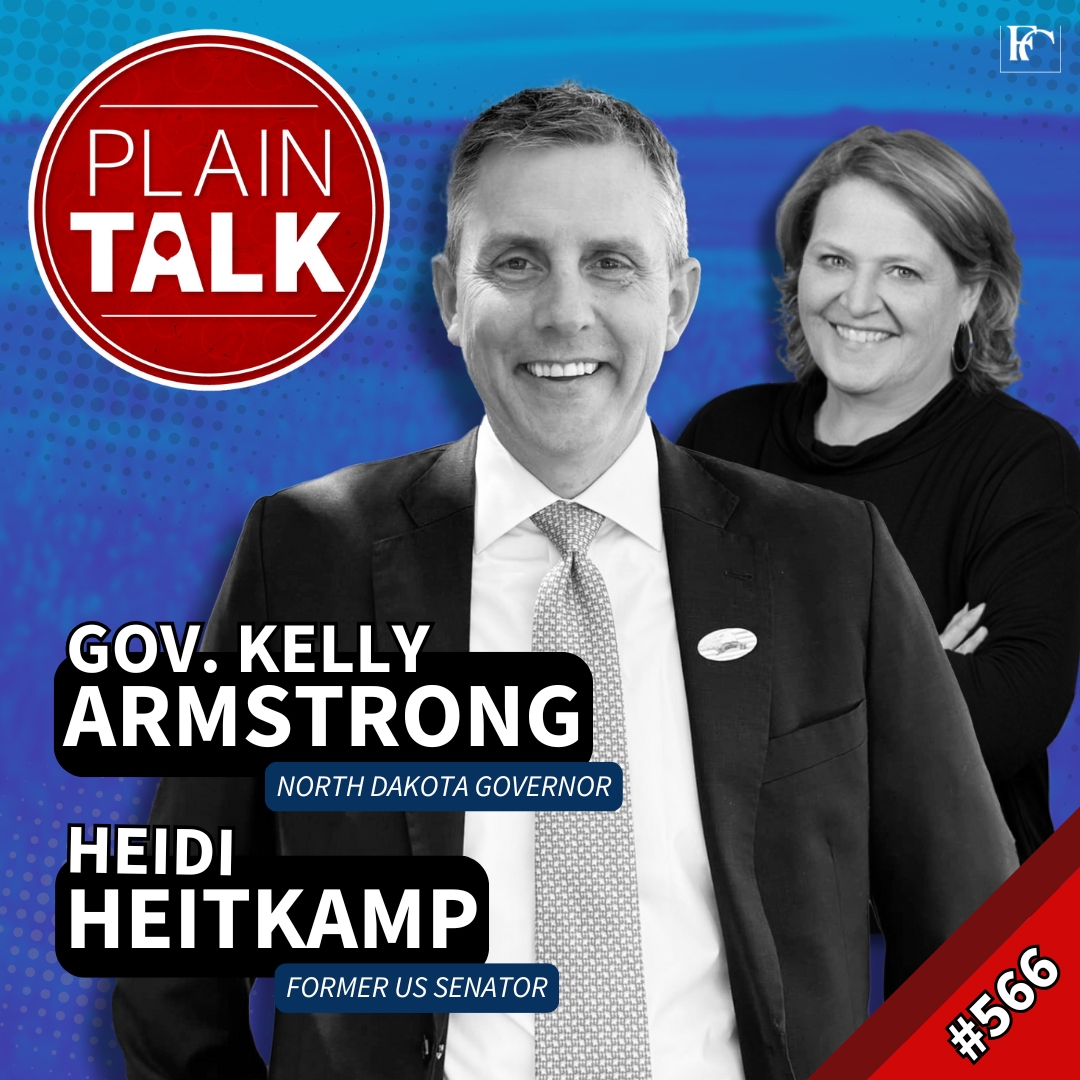
566: Gov. Armstrong and Attorney General Wrigley are at odds over criminal justice reform
The public and media reaction to Gov. Kelly Armstrong's first address to the state Legislature has focused on his bold and aggressive plan for property taxes. That's understandable. There's a near-consensus in the state's political circles over property taxes being the most pressing issue facing this legislature. But Armstrong's state-of-the-state address telegraphed another hot issue that could put him at swords' points with another of North Dakota's top elected officials. During the 2023 session, Attorney General Drew Wrigley was combative with lawmakers who opposes his efforts to implement new mandatory minimum sentences in state law. Ahead of the 2025 session, he told reporter April Baumgarten that he will "lock horns" on the issue again. But during Armstrong's address, he made blunt reference to the fact that North Dakota's jails are full. On this episode of Plain Talk, I asked the governor if there's tension between his stance and Wrigley's. It seems there is. "I don't think we have the space" in the state's jails and prisons, Armstrong said. He added that his staff was briefed on Wrigley's plan the same day as his address and that he "hasn't even looked" at the legislation Wrigley is backing. When asked directly if it were something he'd support, Armstrong said, "I don't know yet," though he added that he's never seen a mandatory minimum sentencing bill that he's supported. "It's expensive to incarcerate people," he said. He promised during his address, and during our interview to be working on what he described as the "cheapest and quickest way to free up prison space," but wasn't ready to provide details, saying he'll announce the plan during a budget address further into he session. Armstrong is a former defense attorney — he described himself as an "old street lawyer" during our interview — and has been passionate about criminal justice reform since he was first elected to the Legislature as a state Senator in 2012. Wrigley, too, is outspoken on the issue. We could see some fireworks. Armstrong also discussed his property tax plan with co-host Chad Oban and I, and former U.S. Senator Heidi Heitkamp also joined to discuss the demise of the so-called "Chevron doctrine" in American jurisprudence, which may be the most consequential political issue you've never heard of. Why is Congress so dysfunctional? Because they aren't writing laws anymore, instead punting them to regulatory agencies in the executive branch. Why are presidential politics out of control? Because the power Congress has ceded to the executive branch has raised the stakes for presidential elections through the roof. "Congress needs to exercise its Article I authority and write the laws," Heitkamp said. She's leading a bipartisan group creating a roadmap for Congress on how to reclaim that authority. It's a fascinating discussion, and not nearly as boring as it may seem. If you want to participate in Plain Talk, just give us a call or text at 701-587-3141. It's super easy — leave your message, tell us your name and where you're from, and we might feature it on an upcoming episode. To subscribe to Plain Talk, search for the show wherever you get your podcasts or use one of the links below. Apple Podcasts | Spotify | YouTube | Pocket Casts | Episode Archive

565: Tax Relief, Energy Policy and the Pledge of Allegiance
Guest hosts Jessica and Michael Bell welcome Representative Anna S. Novak for a wide-ranging conversation on the upcoming legislative session. From property tax proposals to requiring the Pledge of Allegiance in schools, they explore the policies that will shape classrooms and communities statewide. Rep. Novak and the hosts also tackle energy reliability, including the role of coal and the potential for nuclear power. The Bells wrap up the episode with their perspectives on upcoming legislative priorities and President Trump's cabinet appointments. If you want to participate in Plain Talk, just give us a call or text at 701-587-3141. It's super easy — leave your message, tell us your name and where you're from, and we might feature it on an upcoming episode. To subscribe to Plain Talk, search for the show wherever you get your podcasts or use one of the links below. Apple Podcasts | Spotify | YouTube | Pocket Casts | Episode Archive
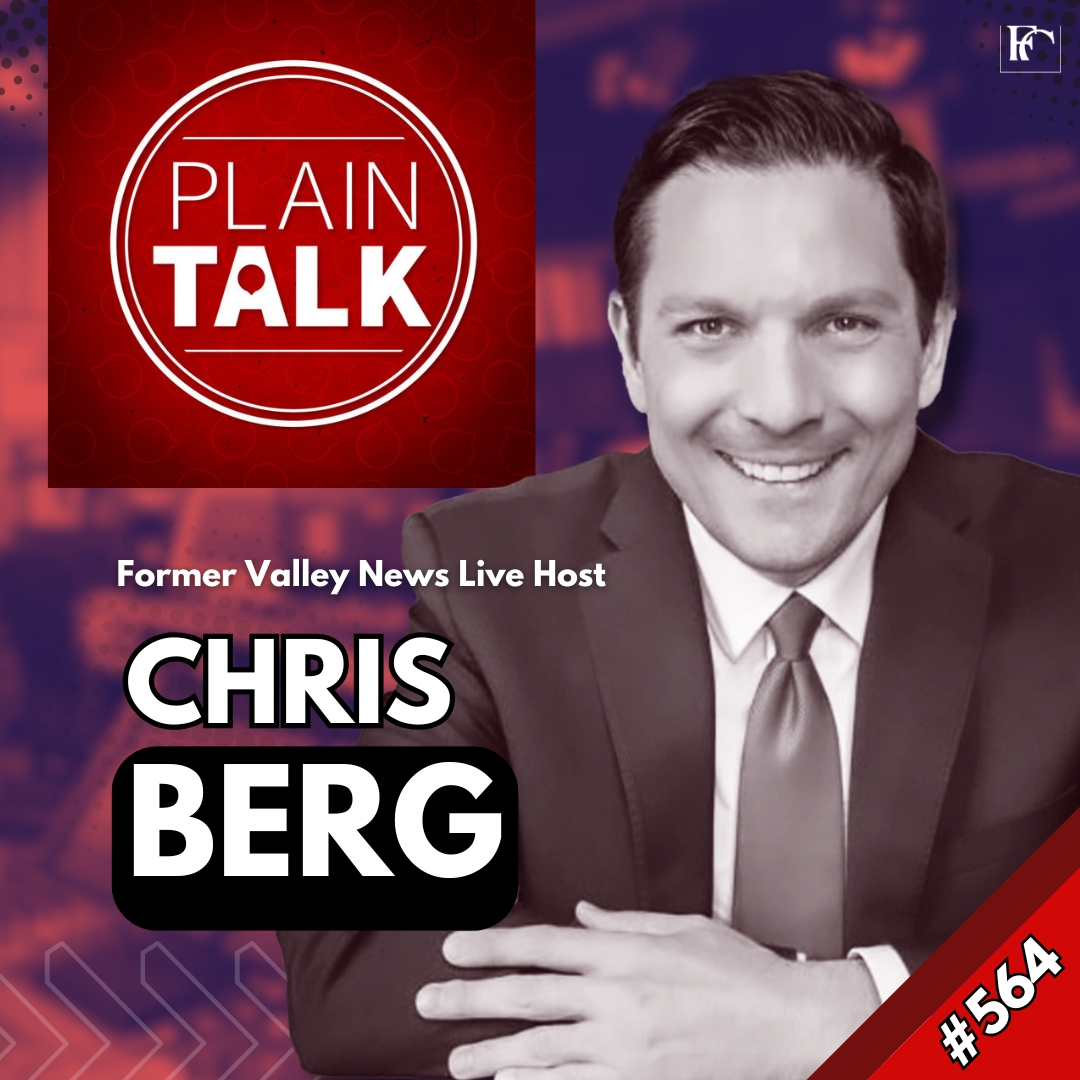
564: Rerun interview with former Fargo television personality Chris Berg
"Turn off the TV and talk radio," Chris Berg said in this February 6, 2024 interview, which we're re-publishing during our holiday break. Berg worked in those media for over a decade, earning the most notoriety (and, depending on your perspective, infamy) as a television host in the Fargo market. But Berg says he now has some regrets. I invited him to talk on this episode of Plain Talk after he responded to an article I posted on Twitter saying that leaving talk radio and television behind was the best decision he could make for his mental health. "I felt like I was dragging myself to the microphone," he told me. He ultimately decided to step back from that line of work, and decamp to the west coast. He said that shortly after he moved to California, news broke of a school shooting in Tennessee, and despite the awful news, he felt a sense of relief that he wouldn't have to spend hours having the same old shout-fest about it without anything meaningful getting done. "The sad thing about the media business is the more anger and hate you sow, the more money you make," he said. "Take off the red or blue glasses and challenge yourself," he added. If you want to participate in Plain Talk, just give us a call or text at 701-587-3141. It's super easy — leave your message, tell us your name and where you're from, and we might feature it on an upcoming episode. To subscribe to Plain Talk, search for the show wherever you get your podcasts or use one of the links below. Apple Podcasts | Spotify | YouTube | Pocket Casts | Episode Archive
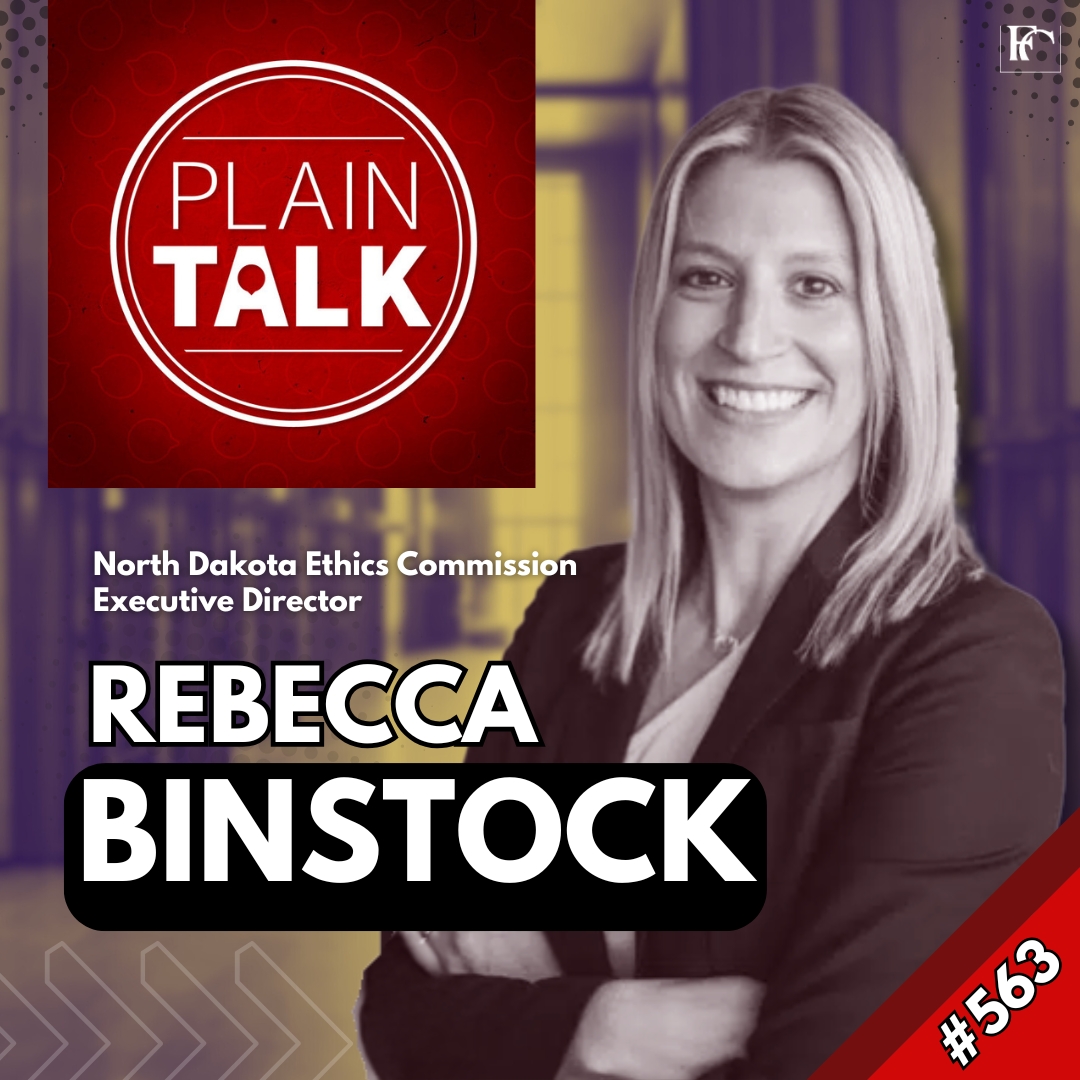
563: Rerun interview with Ethics Commission executive director Rebecca Binstock
We're in holiday mode here at Plain Talk, so we thought we'd bring you some reruns of a few of our best interviews from 2024. This interview with Rebecca Binstock, the executive director of the North Dakota Ethics Commission, was originally published on July 26, 2024. "Ethics commissions alone do not create ethical government," Binstock told us, adding that it also requires a robust news media and an engaged electorate. Binstock also noted that, while complaints filed with the commission tend to get the most attention, her goal is to reduce the number of complaints filed by holding seminars and information sessions to prevent them from happening in the first place. The voters created the ethics commission on the ballot, and since then it's become a larger part of North Dakota government. And, unfortunately, politics. This election cycle we saw multiple incidents of politicians and activists announcing that they had filed ethics complaints against individuals on the ballot, with a clear intent to manipulate voters, even though the complaints are officially confidential, and those they're filed against are prohibited by law from speaking about them. We hope you enjoy this rerun, and enjoy your holidays. If you want to participate in Plain Talk, just give us a call or text at 701-587-3141. It's super easy — leave your message, tell us your name and where you're from, and we might feature it on an upcoming episode. To subscribe to Plain Talk, search for the show wherever you get your podcasts or use one of the links below. Apple Podcasts | Spotify | YouTube | Pocket Casts | Episode Archive

562: A very Plain Talk Christmas
It was an excellent year for the Plain Talk podcast. Our audience grew by leaps and bounds and is larger than ever. For that ,we have you to thank, dear listener. Thank you for tuning in. This Christmas, we wanted to reflect on the year that was, and the year that's ahead of us. On this episode of Plain Talk, Chad Oban and I talk about the highlights (and lowlights) of 2024. The Doug Burgum era of North Dakota politics came to an end, and the Kelly Armstrong era has begun. The North Dakota Republican went through a bruising primary season, but emerged after the general election as dominant as ever. At the national level, former President Donald Trump became president once again. We talk about all that, and more, and also look ahead to what 2025 might have in store for us. And, most of all, Chad and I and everyone involved in producing the Plain Talk podcast hope you and yours have a wonderful holiday. If you want to participate in Plain Talk, just give us a call or text at 701-587-3141. It's super easy — leave your message, tell us your name and where you're from, and we might feature it on an upcoming episode. To subscribe to Plain Talk, search for the show wherever you get your podcasts or use one of the links below. Apple Podcasts | Spotify | YouTube | Pocket Casts | Episode Archive
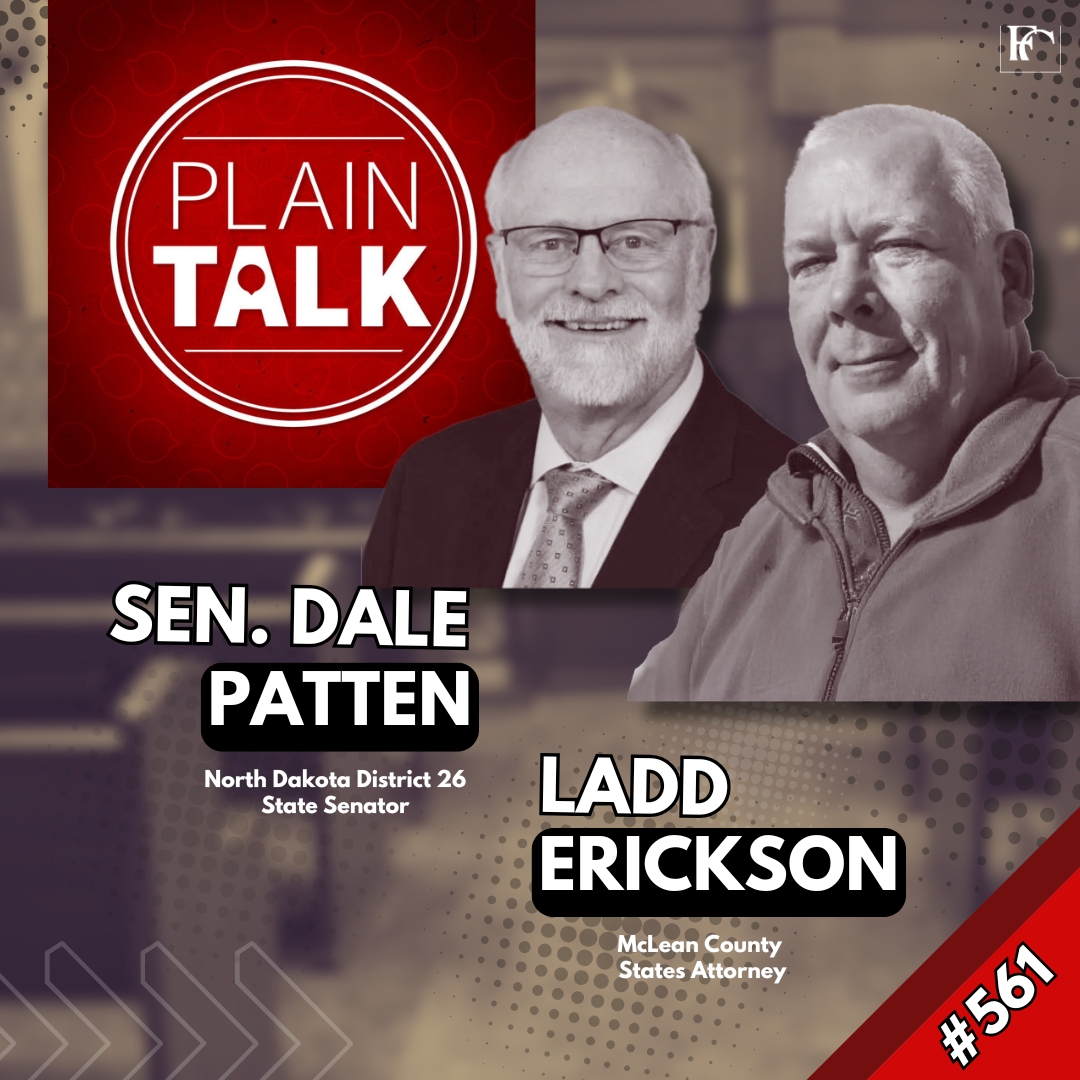
561: Biden's commutation of North Dakota man 'despicable' says prosecutor
McLean County State's Attorney Ladd Erickson has not been mincing words in his reaction to some of President Joe Biden's pardons that impact our region. He's called them "ridiculous" and "despicable," though he wants to be clear that this didn't have anything to do with politics. "Some of the stuff that President Trump said he's going to pardon is despicable," he said on this episode of Plain Talk. But at least one of Biden's pardons is very, very personal to him. Erickson was involved in bringing Hunter Hanson to justice. Hanson defrauded dozens of people to the tune of about $11 million, but as Erickson explained to us on the show, his victim pool is larger than that. Whole businesses, some of which were the pillars of their small, rural communities, collapsed as a result of Hanson's actions. And President Biden commuted his sentence. Why? "I have no idea," Erickson told us, "and that's one of the frustrations." Also on this episode, Sen. Dale Patten, a Republican from Watford City, weighs in on the controversy over the proposed Maah Daah Hey National Monument. A group of activists are pushing hard to get President Biden to create this monument with an executive order on his way out of office, but Patten says it's far too big a decision to be made unilaterally in Washington D.C. "This is 140,000 acres," he said. "This is twice the size of Theodore Roosevelt National Park." He also said that Biden using the authority of the Antiquities Act would be in appropriate. "It's a circumvention of congressional intent when wilderness is declared a national monument." Patten said his criticism of the project isn't political. "As the proposal sits, I don't care who the president is, there would be opposition." He would prefer that local stakeholders in North Dakota -- from agricultural interests to industrial interests to tribes and all levels of state and local government -- work together on a plan to address whatever protections these lands need. "Do we need to include the federal to do that? No we don't," he said. If you want to participate in Plain Talk, just give us a call or text at 701-587-3141. It's super easy — leave your message, tell us your name and where you're from, and we might feature it on an upcoming episode. To subscribe to Plain Talk, search for the show wherever you get your podcasts or use one of the links below. Apple Podcasts | Spotify | YouTube | Pocket Casts | Episode Archive
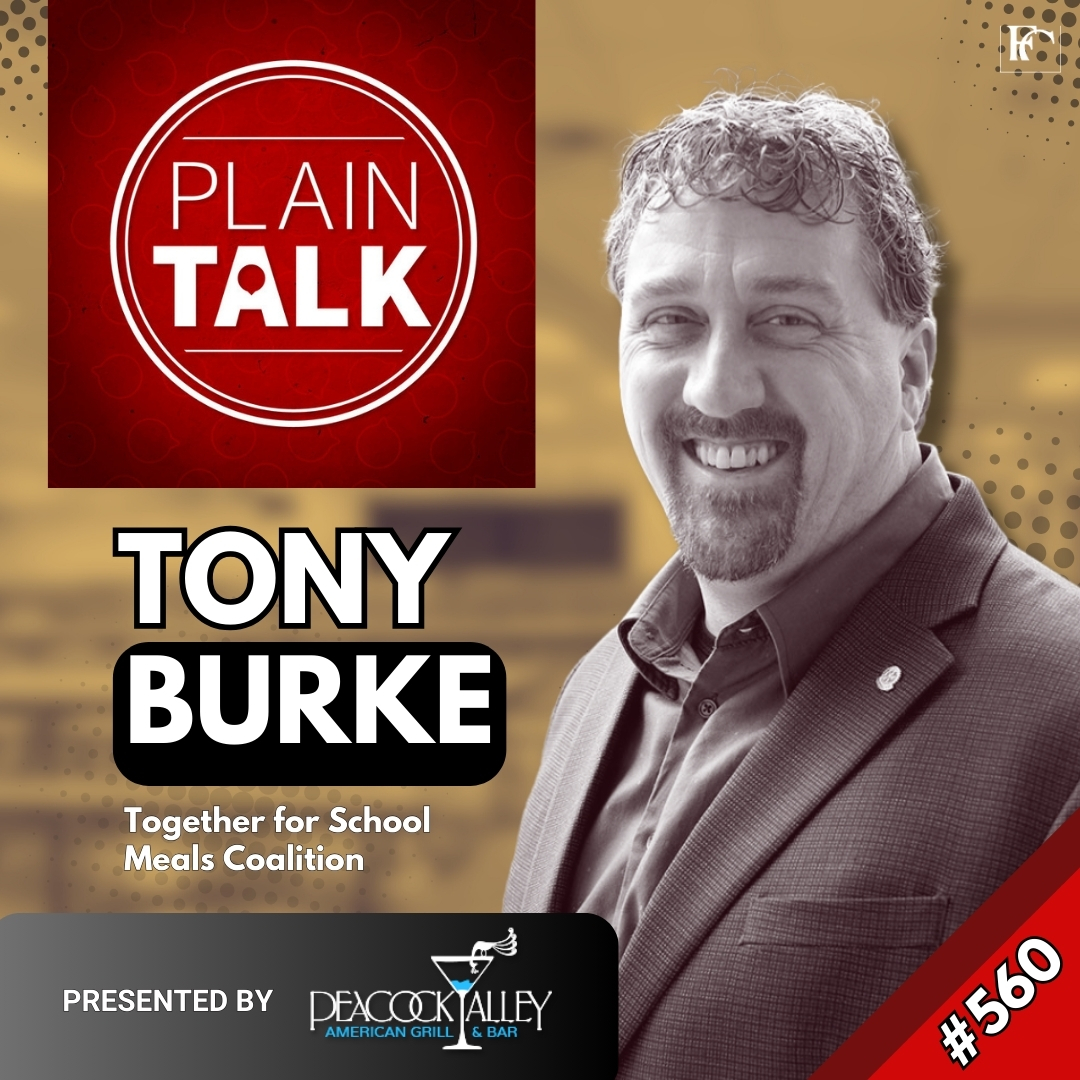
560: Paying for school lunches, and Luigi Mangione is no hero
A national survey reports that a shocking number of Americans under the age of 30 condone the murder of health industry CEO Brian Thompson, an act allegedly committed by Luigi Mangione. Me and Chad Oban discuss that survey on this episode of Plain Talk. Do the people justifying the murder of Thompson understand that people they don't like so much might decide to play by the same rules? What happens when other sorts of political extremists begin justifying violence this way? Also on this episode, a coalition calling itself Together for School Meals has formed to begin advocacy for legislation that would pay for school lunches for all North Dakota students. Tony Burke, a government affairs director for the American Heart Association, which is one of the groups in this coalition, joined us to make the case for the initiative. "It's broader than just school lunches," he told us, arguing that it's "about healthy students." How much will the initiative cost? How will it be implemented? What impacts will it have on existing federal funding for North Dakota's school lunch program? We asked, and Burke answered. If you want to participate in Plain Talk, just give us a call or text at 701-587-3141. It's super easy — leave your message, tell us your name and where you're from, and we might feature it on an upcoming episode. To subscribe to Plain Talk, search for the show wherever you get your podcasts or use one of the links below. Apple Podcasts | Spotify | YouTube | Pocket Casts | Episode Archive

559: 'It's damning. It's aboslutely horrible.'
If you get into an accident involving a local political subdivision in North Dakota -- maybe a garbage truck side-swipes your car, or you slip on some ice outside of a school -- you may find yourself dealing with what's called the North Dakota Insurance Reserve Fund. This self-insurance fund, paid for by local entities, handles those claims. And, according to a scathing report from Insurance Commissioner Jon Godfread's office, it hasn't been handling them fairly. "It's damning," Rep. Austen Schauer said on this episode of Plain Talk. "It's absolutely horrible." Schauer, a Republican from Fargo, sits on the Legislative Audit and Fiscal Review Committee, which received Godfread's report. He called NDIRF's treatment of claimants "callous" and "an abuse of public dollars." He argues that the way NDIRF handles claims, "the victim has to prove they were victimized." "There's no appeals process other than you hire an attorney," he added. Schauer says he'd like to see the current fund eliminated, and replaced with something new, be it a new fund with a better governance structure, or a private sector option. "If there's a legitimate claim, you pay it," he said. "If you have to raise premiums, you raise premiums." Also on this episode, Chad Oban and I discuss Gov. Doug Burgum's comments about his biggest regret from eight years in office. He says it's not doing more to put the blame for property taxes on the local governments that levy them. If you want to participate in Plain Talk, just give us a call or text at 701-587-3141. It's super easy — leave your message, tell us your name and where you're from, and we might feature it on an upcoming episode. To subscribe to Plain Talk, search for the show wherever you get your podcasts or use one of the links below. Apple Podcasts | Spotify | YouTube | Pocket Casts | Episode Archive
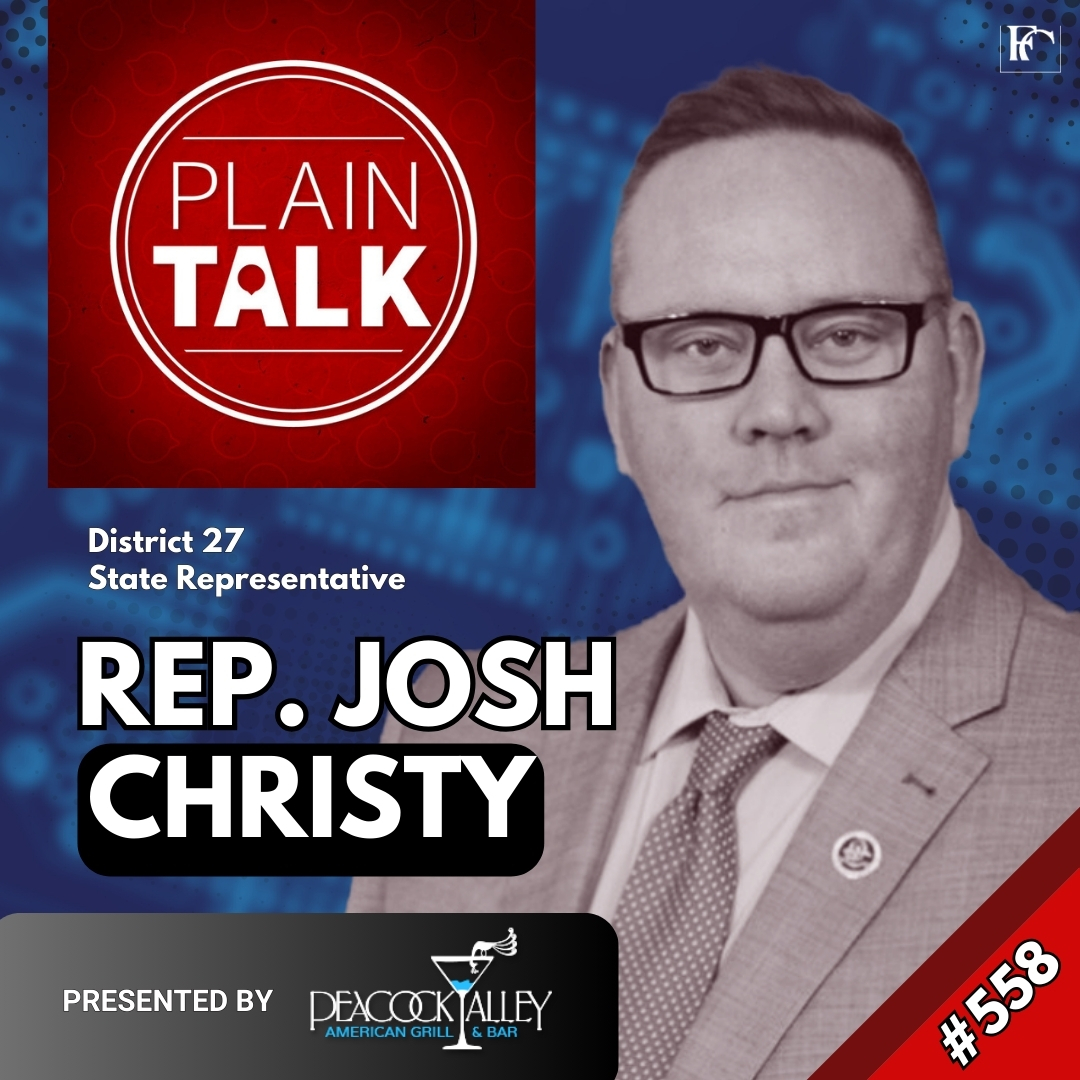
558: 'The good, the bad, and the ugly' of artificial intelligence
Artificial intelligence. Whether you love it, hate it, or are indifferent, it's here, and there are important questions about how it will be used, and what sort of opportunities it presents for our region, which policymakers need to discuss. Rep. Josh Christy is a first-term Republican lawmaker from Fargo who is heading into his second legislative session. He's also what you could call an AI professional. He's an entrepreneur, a software development executive, and a consultant who works with AI and AI policies on a regular basis. "Two years ago, generative AI was not something anyone was talking about," he said, referring to his first session in Bismarck. But now it's here. Teachers are using it. Students are using it. The business community is using it. On this episode of Plain Talk, Christy argued that it's time for North Dakota's laws to catch up. "With any type of technology, there's the good, the bad, the ugly," Christy said, and he's got legislative proposals for each of those. One bill he has developed in conjunction with Attorney General Drew Wrigley's office would address abusive uses of AI. Say, to develop images or videos of public figures for nefarious purposes or of children for sexual gratification. "People are using this to generate images of children in compromising positions," Christy said, and current law doesn't necessarily address that. But other initiatives Christy proposes would seek to welcome the AI industry into North Dakota as a partner. Christy proposes leveraging North Dakota's oil, gas, and coal resources to help power data centers. He wants to develop "computing credits" that could help facilitate the data industry's move into the state. He'll be pushing this bills during the upcoming legislative session, which begins in January. Also on this episode, Chad Oban and I discuss the on-going controversies around Burleigh County auditor Mark Spolonskowski, the efforts to recall Dickinson city commissioner Jason Fridrich, the arrest of Luigi Mangione, who is accused of gunning down an insurance industry executive in Manhattan, and what all those stories mean for our society's notions about right and wrong. If you want to participate in Plain Talk, just give us a call or text at 701-587-3141. It's super easy — leave your message, tell us your name and where you're from, and we might feature it on an upcoming episode. To subscribe to Plain Talk, search for the show wherever you get your podcasts or use one of the links below. Apple Podcasts | Spotify | YouTube | Pocket Casts | Episode Archive
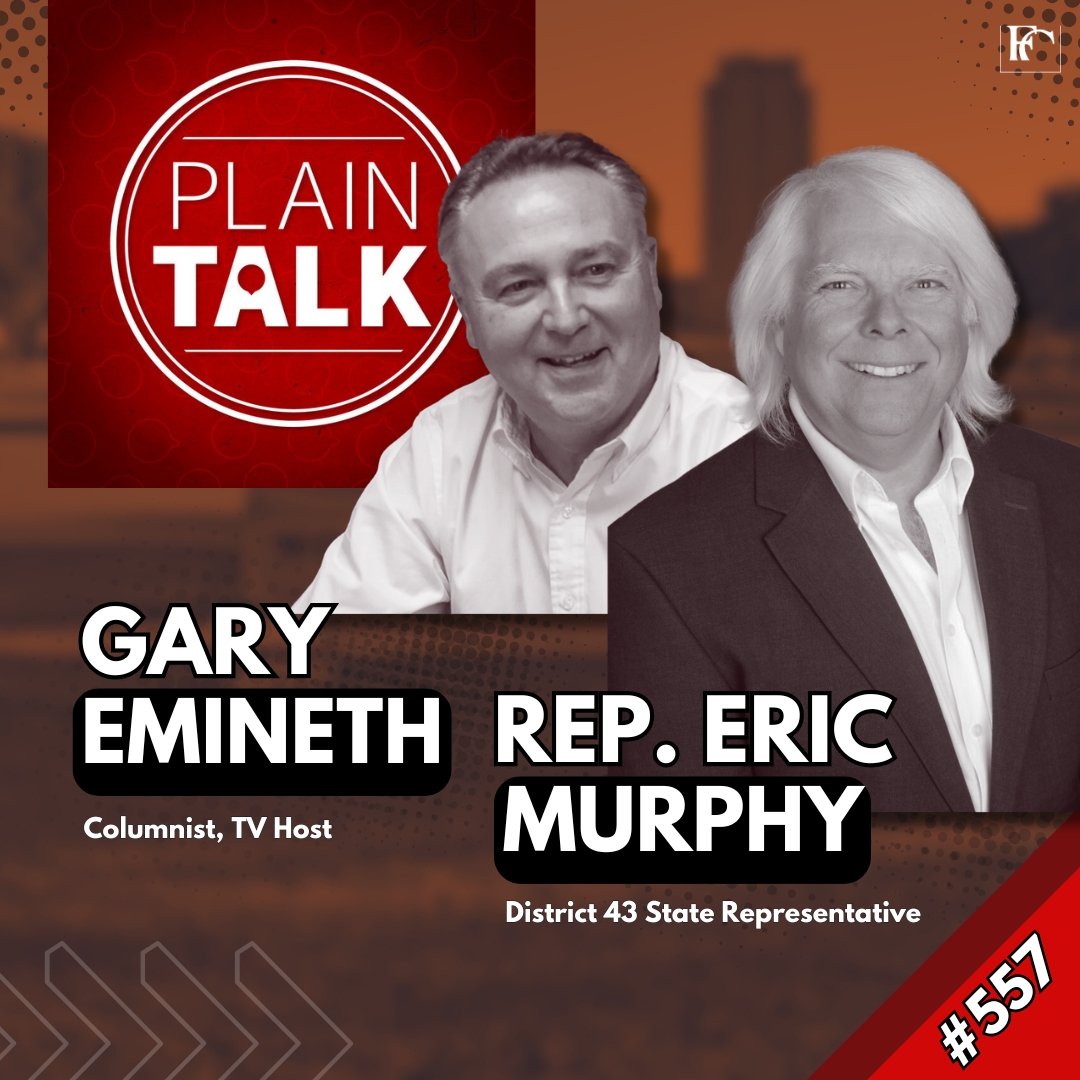
557: 'Nobody's getting what they want'
When state Rep. Eric Murphy decided to introduced an abortion bill that, while perhaps representing where most of the public is on the issue, is likely to incite blowback from activists on both sides, he decided he wasn't going to ask any of his fellow lawmakers to co-sponsor it. "This is going to be a charged bill," he said of the draft legislation, which he'll introduce next month during North Dakota's legislative session. He said he felt "no need to expose anyone" to the threats and vitriol the bill could inspire. Murphy joined this episode of Plain Talk to discuss the proposal, which would make abortion legal as an elective for the first 15 weeks of of a pregnancy, illegal after 26 weeks, and allowable between 16 and 26 weeks only with approval from a panel of medical professionals who deem it medically necessary. Is Murphy's bill a pro-life bill? That side of the argument would probably say no, because abortion would be completely legal for the first 15 weeks. Is it a pro-choice bill? That side of the debate would likely say no, because abortion is restricted after 15 weeks, and completely banned after 26. But that middle ground between the two extremes on the issue is precisely where Murphy wants to be, and where he thinks most Americans, and most North Dakotans are. He told co-host Chad Oban and I that "we have to move away from the morality play" that the abortion issue is typically cast as. "Nobody is getting what they want," on this contentious issue, Murphy argued. He says it's time to start creating laws we can live with. Also on this episode, columnist Gary Emineth joined us to discuss property taxes. In a recent column, Emineth, who supported the constitutional amendment to abolish all taxes on property values which failed on the November ballot, argued for the Legislature to pass a somewhat narrower ban on property taxes, specifically removing them from only residential properties. If you want to participate in Plain Talk, just give us a call or text at 701-587-3141. It's super easy — leave your message, tell us your name and where you're from, and we might feature it on an upcoming episode. To subscribe to Plain Talk, search for the show wherever you get your podcasts or use one of the links below. Apple Podcasts | Spotify | YouTube | Pocket Casts | Episode Archive
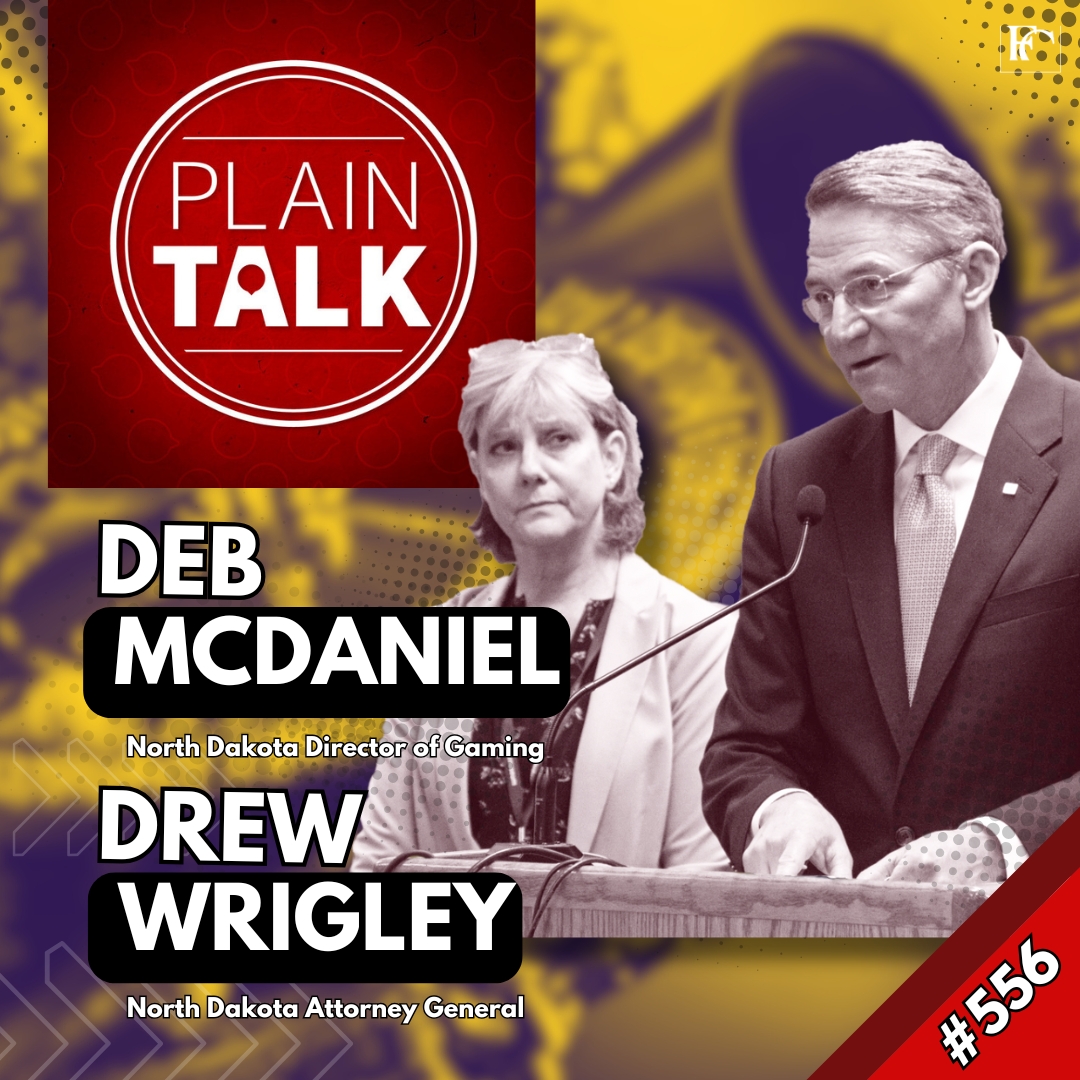
556: 'The bounds are being pushed' on gambling in North Dakota
I don't make a habit of referencing things Plain Talk podcast guests say off the air, but Deb McDaniel, the director of the gaming division in Attorney General Drew Wrigley's office, casually mentioned this jaw-dropping statistic on co-host Chad Oban and I after our interview on today's episode. In October 2024, electronic pull-tab machines in North Dakota saw over 200 million button pushes. The machines saw $80 million in cash run through them that month. That's one month, a state with just over 783,000 citizens. That works out to roughly $100 for every beating heart in the state. It's an astounding figure, and it illustrates how acute the issue of charitable gaming has become in North Dakota. Both Wrigley and McDaniel joined this episode of Plain Talk to talk about their efforts to regulate this exploding industry, as well as a looming push in the upcoming legislative session to take gaming regulation authority away from Wrigley's office. Also on this episode, we react to Gov. Doug Burgum's last budget address as a lame-duck governor, and the tightrope Sen. Kevin Cramer is walking around some of President-elect Donald Trump's nominees. If you want to participate in Plain Talk, just give us a call or text at 701-587-3141. It's super easy — leave your message, tell us your name and where you're from, and we might feature it on an upcoming episode. To subscribe to Plain Talk, search for the show wherever you get your podcasts or use one of the links below. Apple Podcasts | Spotify | YouTube | Pocket Casts | Episode Archive
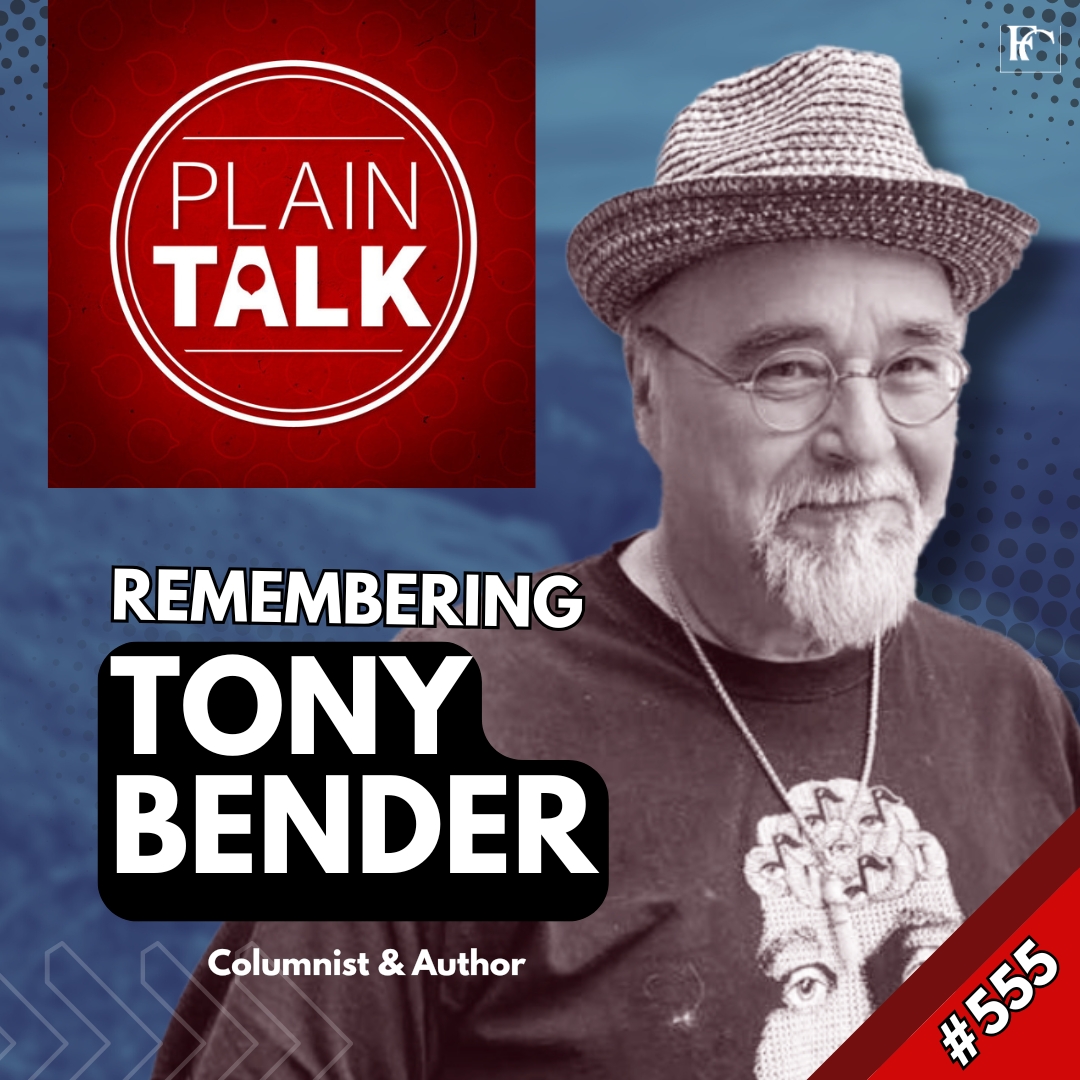
555: Tony Bender remembered
Chad Oban and I are off for the holiday, so today's podcast is a rerun. This is an interview I recorded with columnist Tony Bender three years ago this month, in November of 2021. In it, we discuss divides in the North Dakota Republican Party that were apparent at the time, and still are today. We also discussed the tribalism of American politics in 2021, redistricting, and the special session of the Legislature in Bismarck. Tony was a good friend of mine, and passed away recently. Missing him, I went back and listened to this old interview, and thought you, the audience, might enjoy it, too, as a holiday rerun. Especially since so many in my audience were part of Tony's audience, too. Regular episodes of Plain Talk will resume next week If you want to participate in Plain Talk, just give us a call or text at 701-587-3141. It's super easy — leave your message, tell us your name and where you're from, and we might feature it on an upcoming episode. To subscribe to Plain Talk, search for the show wherever you get your podcasts or use one of the links below. Apple Podcasts | Spotify | YouTube | Pocket Casts | Episode Archive
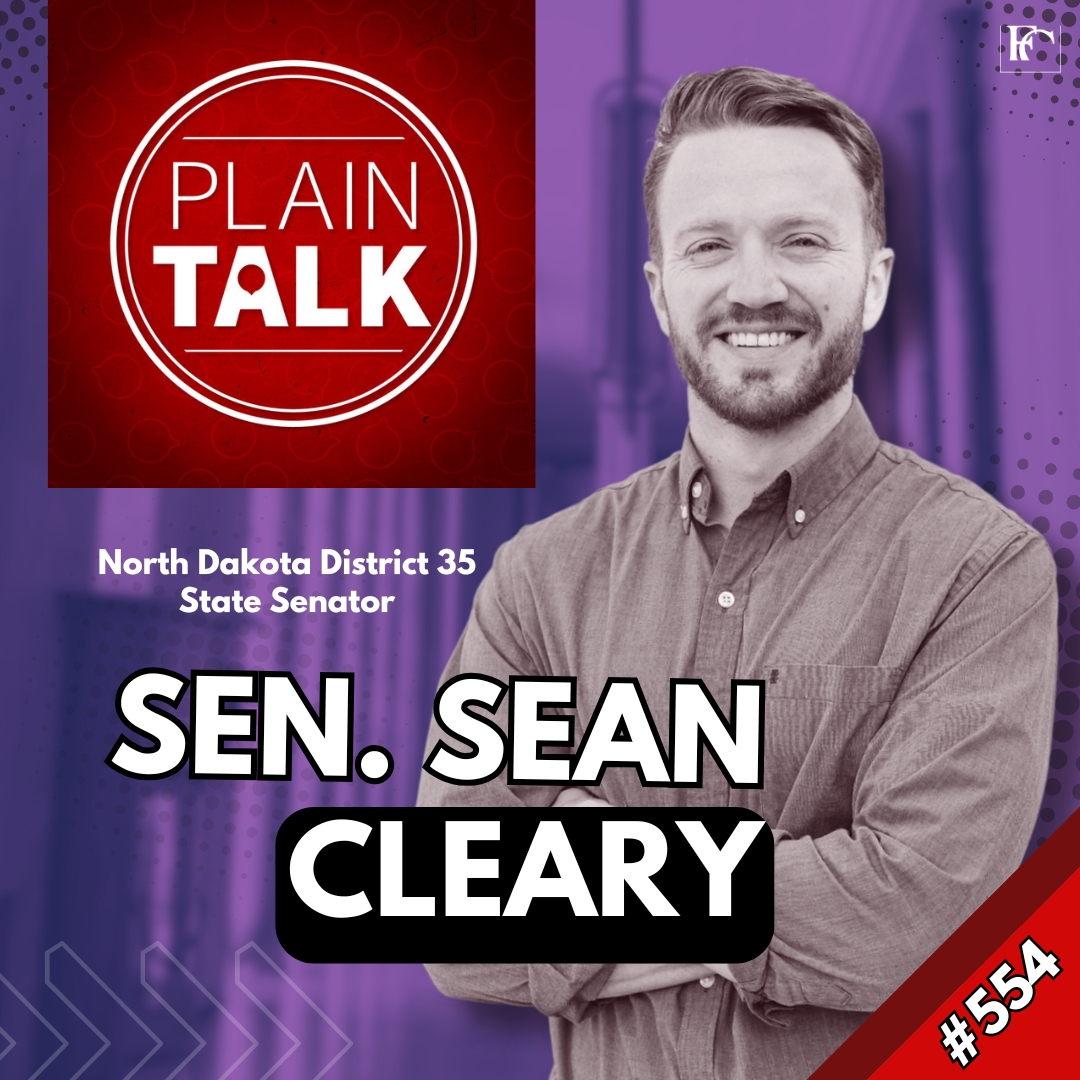
554: Reforming North Dakota's campaign finance laws
Plain Talk co-host Chad Oban says North Dakota's campaign finance laws are a joke. They're not transparent, he argues, and there's little in the way of consequence for those who flout them. Sen. Sean Cleary, a Republican from Bismarck, wants to change that. He joined this episode of Plain Talk to discuss his idea for putting more information about campaigns and candidates before the voters, and creating some stiffer penalties for those who don't comply. Legislation Cleary is drafting for the upcoming legislative session, which commences in January, aims to require more frequent campaign finance reports from candidates and expand the information being reported. It also seeks to make reporting requirements more consistent across different types of campaigns, from those run by candidates to those backing ballot measures. Cleary is also looking at increasing the fines for non-compliance to put more of a "stick behind it," and he wants to require that both candidates and incumbents have to file statements of interest more regularly, disclosing certain facts about their holdings so that voters can scrutinize how they might intersect with the public's business. Also on this episode, Oban and I discuss my recent story about a plan for the University of North Dakota Alumni Association and Foundation to pay retention bonuses to UND President Andrew Armacost. We also honor the passing of my friend and fellow columnist Tony Bender. If you want to participate in Plain Talk, just give us a call or text at 701-587-3141. It's super easy — leave your message, tell us your name and where you're from, and we might feature it on an upcoming episode. To subscribe to Plain Talk, search for the show wherever you get your podcasts or use one of the links below. Apple Podcasts | Spotify | YouTube | Pocket Casts | Episode Archive
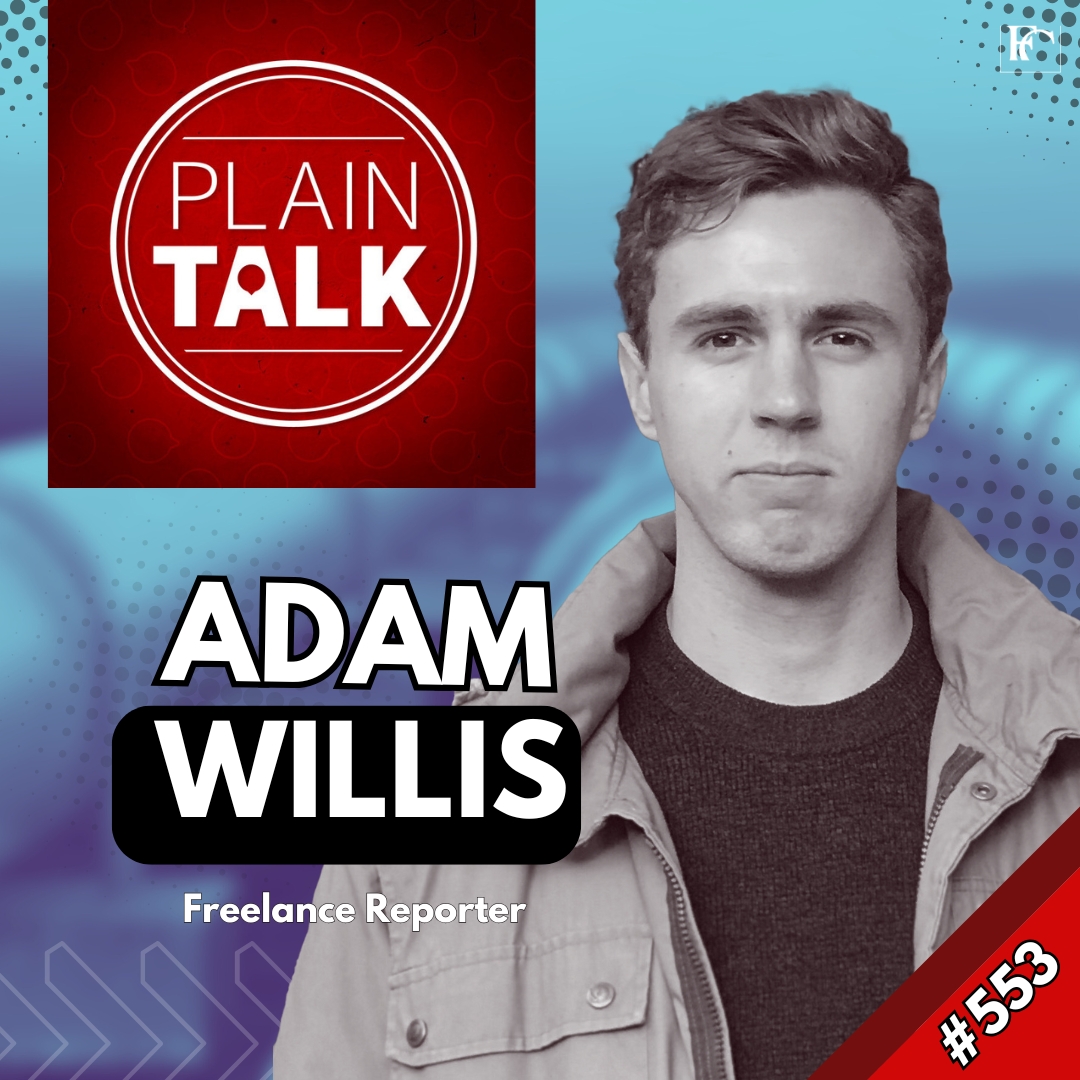
553: The strange bedfellows in the carbon capture debate
When reporter Adam Willis set out to profile the debate in North Dakota over Summit's Midwest Carbon Express pipeline for Bloomberg, he wanted to focus on the people who are for it, rather than against it. Much of the reporting on that topic, to date, has focused on the naysayers, he told Chad Oban and I on this episode of Plain Talk. During out interview, Willis described what he learned about the people who are working to make carbon capture projects, including Summit's, a reality in North Dakota, as well as some of the strange political bedfellows between the left and right the debate has created. Also on this episode, Oban and I discuss what may be the new political divide in America, which is less along the lines of ideology than the vagaries of pragmatism. The debate, increasingly, seems to be between people who are unflinchingly loyal to their party or buried to their necks in ideology, and those who just want to pursue good ideas. We also discussed the state of President-elect Donald Trump's cabinet appointments, and some of the blowback Governor-elect Kelly Armstrong has received for appointing an outgoing Democratic lawmaker to his cabinet. If you want to participate in Plain Talk, just give us a call or text at 701-587-3141. It's super easy—leave your message, tell us your name and where you're from, and we might feature it on an upcoming episode. To subscribe to Plain Talk, search for the show wherever you get your podcasts or use one of the links below. Apple Podcasts | Spotify | YouTube | Pocket Casts | Episode Archive
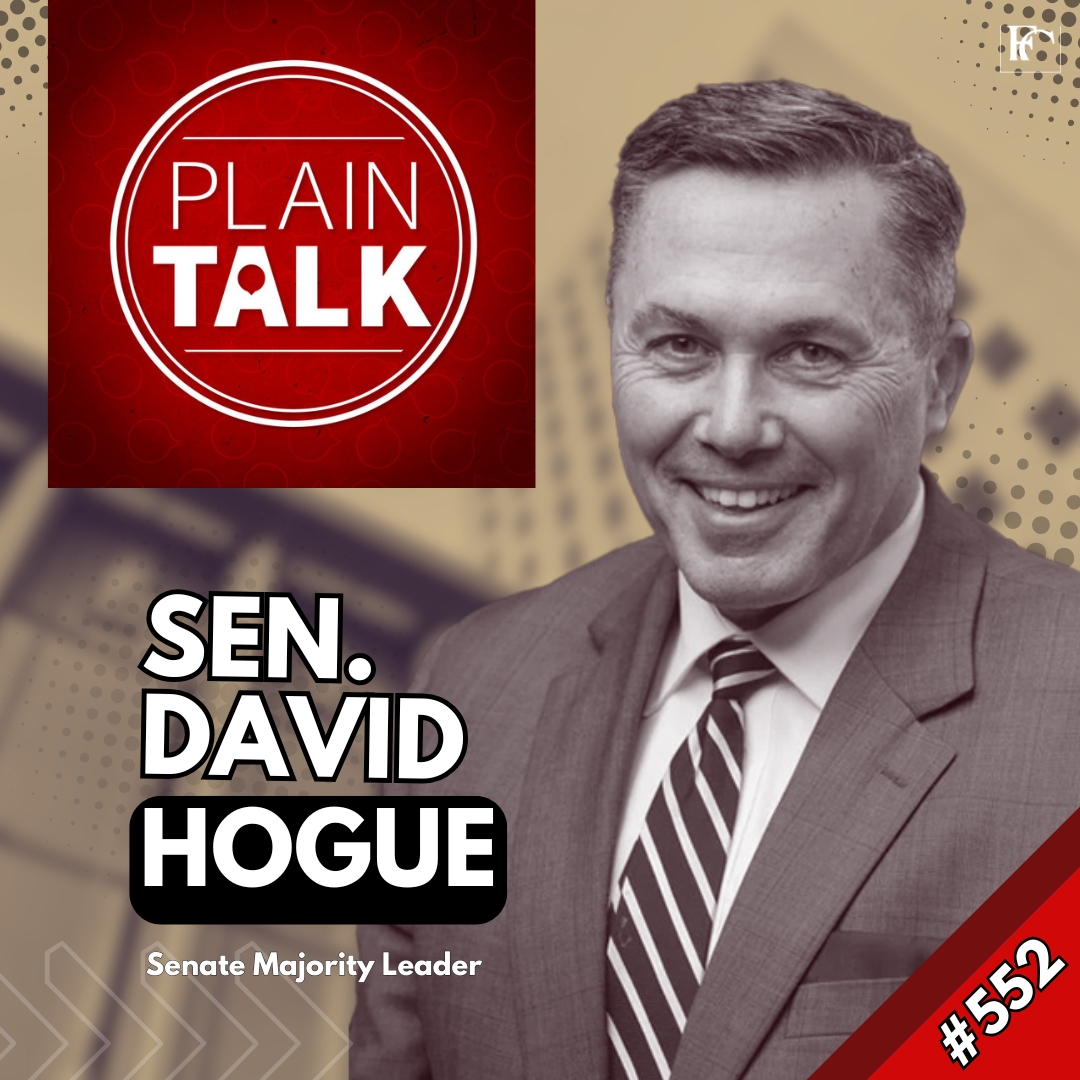
552: 'There will be caps'
Heading into their 2025 legislative session, which starts in January, North Dakota lawmakers will consider dozens and dozens of bills dealing with property taxes. That makes sense because despite a ballot measure aimed at abolishing property taxes face planting on the statewide ballot, North Dakotans are not satisfied with the status quo. What property tax reform and relief will look like coming out of this legislative session is an open question, but Senate Majority Leader David Hogue told Chad Oban and me on this episode of Plain Talk that there is one certainty. "There will be caps," he said. Which is to say, lawmakers will be capping property tax increases, though Hogue explained that how those caps will be structured will be an open debate. Will the caps apply to all local spending or only that funded by property taxes? Will the caps be a flat percentage or tied to inflation? We'll see, but after years of demuring on caps, won over, Hogue said, by the local control argument, the Legislature is ready to get it done. Hogue also spoke about steps the Legislature plans to take to strengthen its oversight role in policy. The majority leader says the plan is to move dozens of executive branch officials who evaluate policy to the legislative branch. Which makes sense. If the Legislature wants to measure the success or failure of a given policy, it might not make a lot of sense to get that analysis from someone working for an agency head who lobbied for the policy in the first place. This move is also aimed at addressing the challenges presented by term limits. Now that the legislature is going to see more turnover, by law, it's going to be losing some level of institutional knowledge. Moving these workers to the legislative branch serves as a buttress to that brain drain. Hogue also spoke to impending debates over state jail and prison populations and state-provided mental health services, including the push to build a new state hospital in Jamestown, which he said is far too expensive. Also on this episode, Oban and I discuss Gov.-elect Kelly Armstrong's decision to appoint Democrat (and erstwhile Plain Talk gust host) Rep. Corey Mock to his administration, and provide some local analysis of President-elect Donald Trump's cabinet choices. If you want to participate in Plain Talk, just give us a call or text at 701-587-3141. It's super easy—leave your message, tell us your name and where you're from, and we might feature it on an upcoming episode. To subscribe to Plain Talk, search for the show wherever you get your podcasts or use one of the links below. Apple Podcasts | Spotify | YouTube | Pocket Casts | Episode Archive
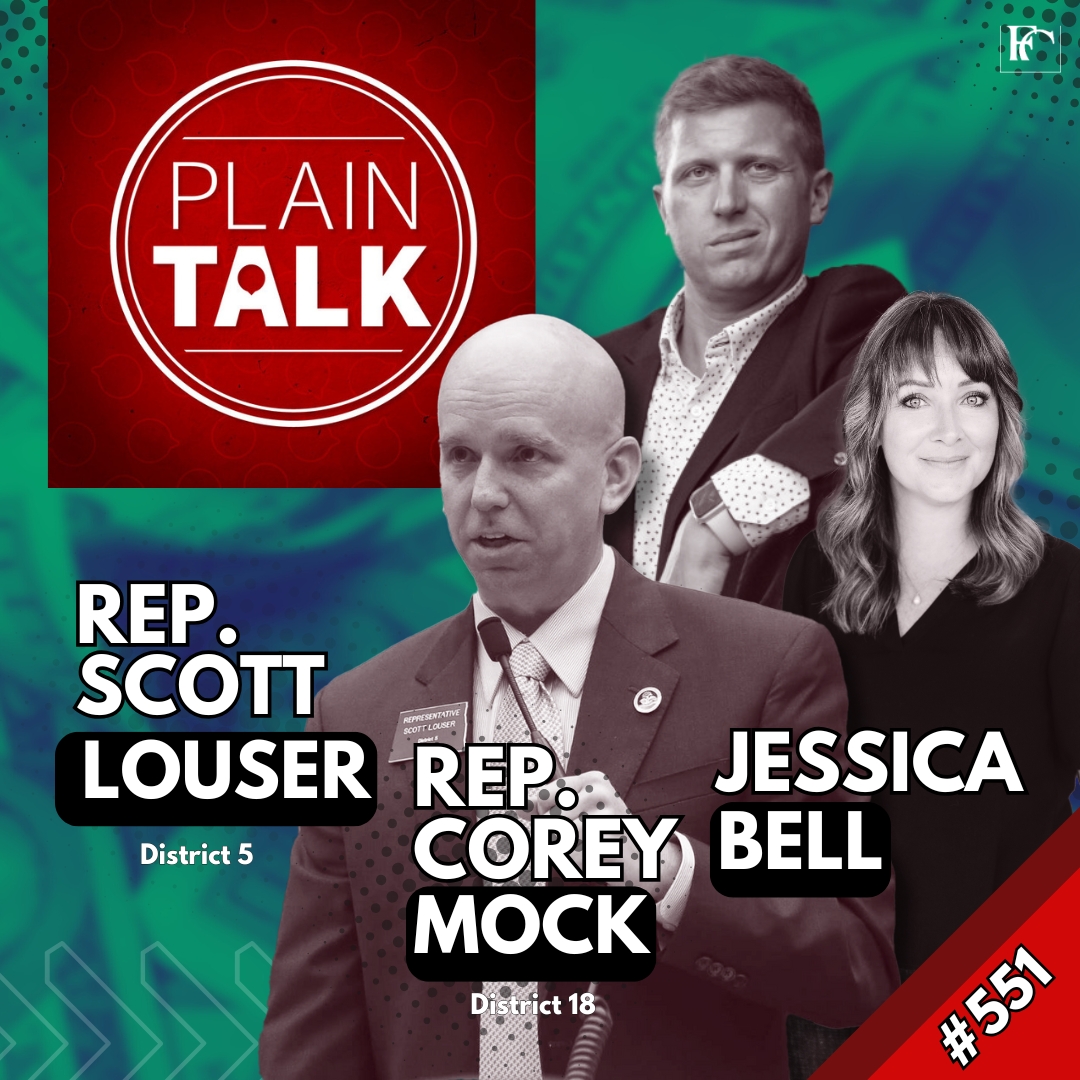
551: Tackling Property Taxes & Trump's Cabinet Picks
In this episode of Plain Talk, guest hosts Corey Mock and Jessica Unruh Bell are joined by Minot Representative Scott Louser. Together, they dive deep into the complexities of North Dakota's property tax system, dissecting the legislative response to the failed Measure 4 and exploring innovative proposals for property tax relief and reform. Mock and Bell close the episode with their perspectives on upcoming legislative priorities and the latest developments in President Trump's cabinet appointments. If you want to participate in Plain Talk, just give us a call or text at 701-587-3141. It's super easy—leave your message, tell us your name and where you're from, and we might feature it on an upcoming episode. To subscribe to Plain Talk, search for the show wherever you get your podcasts or use one of the links below. Apple Podcasts | Spotify | YouTube | Pocket Casts | Episode Archive

550: The Bell Bump and the Mock Block
In this special episode of Plain Talk, guest hosts Corey Mock and Jessica Unruh Bell welcome Senator Dick Dever from District 32 for a candid conversation on legislative insights and challenges. Senator Dever shares reflections on his experience in the legislature, discussing the impact of term limits, the significance of interim committees, and his personal goal to restore honor and civility in North Dakota politics. The discussion also covers the evolving responsibilities of policy advisory roles and predictions on how term limits might reshape the state's government structure. Following the interview, Corey and Jessica exchange their own insights on the upcoming legislative session and the recent reporting about Securities Commissioner Karen Tyler. If you want to participate in Plain Talk, just give us a call or text at 701-587-3141. It's super easy—leave your message, tell us your name and where you're from, and we might feature it on an upcoming episode. To subscribe to Plain Talk, search for the show wherever you get your podcasts or use one of the links below. Apple Podcasts | Spotify | YouTube | Pocket Casts | Episode Archive
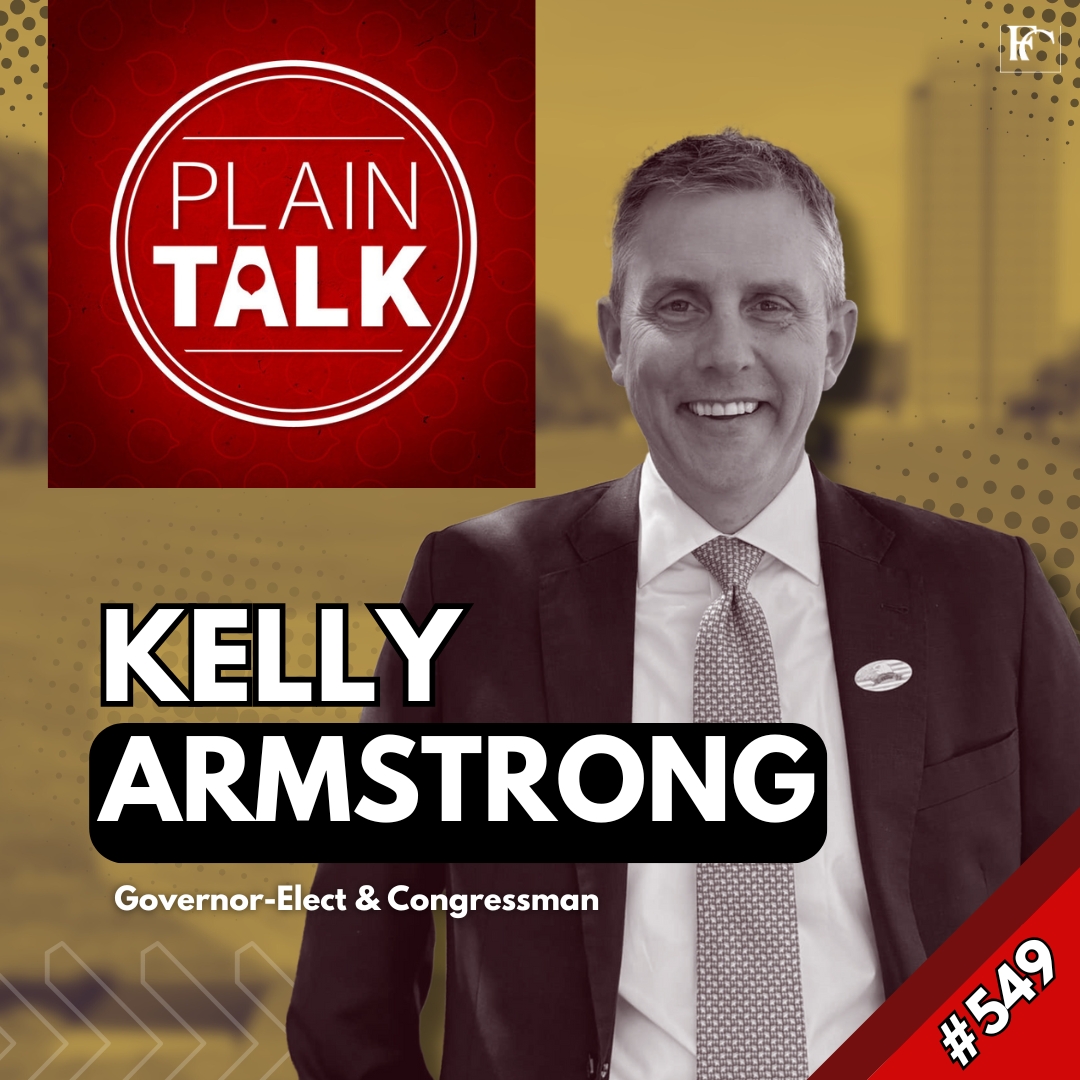
549: 'I don't give platitudes'
Governor-elect Kelly Armstrong, fresh off a landslide victory on the statewide ballot, is coming in hot. He's still got a term in Congress to finish out -- he's said he'll resign shortly before midnight the day before he's sworn in as governor on December 15 -- but he's got big plans for his time in Bismarck. "I don't give platitudes," he told me and Chad Oban on this episode of Plain Talk. Armstrong campaigned on property tax reform. He opposed Measure 4 -- he said in a previous Plain Talk interview that he hated the proposal -- but he also isn't a fan of what the Legislature has been doing to address the issue in previous sessions, which as amounted transferring local spending into the state budget. "Don't send me another buy down without significant reform," he told us. "It hasn't worked in the past. It's not going to work going forward." He also talked about his philosophy when it comes to staffing his new administration. "I have a small alaw firm mentality for how I operate," he said (Armstrong practiced as an attorney before his political career). "I hire smart people and empower them to make decisions. If you want to participate in Plain Talk, just give us a call or text at 701-587-3141. It's super easy—leave your message, tell us your name and where you're from, and we might feature it on an upcoming episode. To subscribe to Plain Talk, search for the show wherever you get your podcasts or use one of the links below. Apple Podcasts | Spotify | YouTube | Pocket Casts | Episode Archive
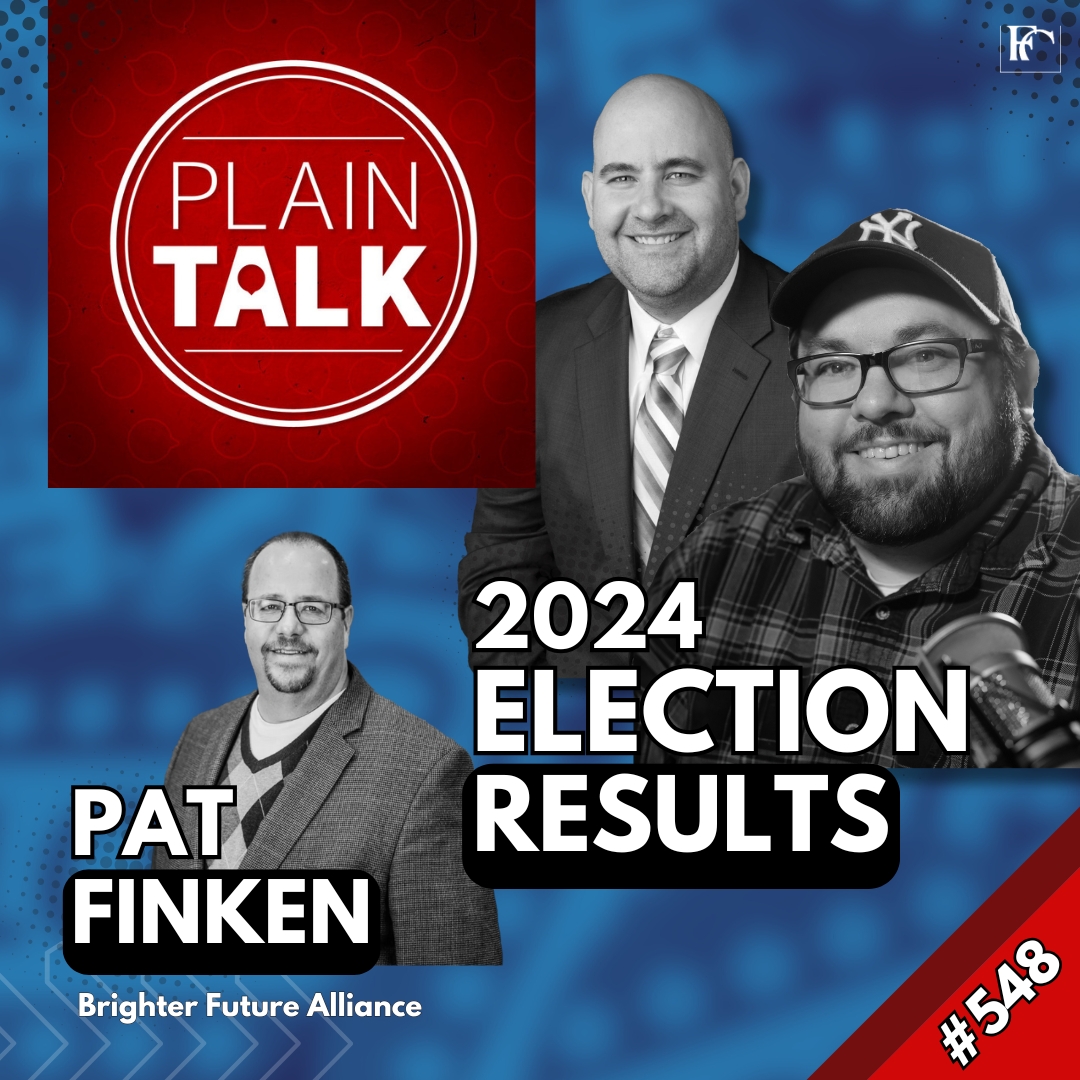
548: 'The importance of showing up'
The vote is in, and despite weeks of polling gurus telling us it was going to be a close election, it wasn't particularly close. It wasn't a Reaganesque national landslide, either, but former President Donald Trump won not only the Electoral College vote but the national popular vote as well. Legendary North Dakota political operative Pat Finken joined me and Chad Oban on this episode of Plain Talk to discuss the national election, as well as local elections, where Finken, through his Brighter Future Fund political action committee, campaigned against the Measure 5 legalization of marijuana and as well as a couple of Republican legislative candidates. The high turnout election, both in North Dakota and nationally, showed "the importance of showing up," Finken said. We also discussed how the election will impact the divides in the North Dakota Republican party, and how that coalition will govern in Bismarck. If you want to participate in Plain Talk, just give us a call or text at 701-587-3141. It's super easy—leave your message, tell us your name and where you're from, and we might feature it on an upcoming episode. To subscribe to Plain Talk, search for the show wherever you get your podcasts or use one of the links below. Apple Podcasts | Spotify | YouTube | Pocket Casts | Episode Archive
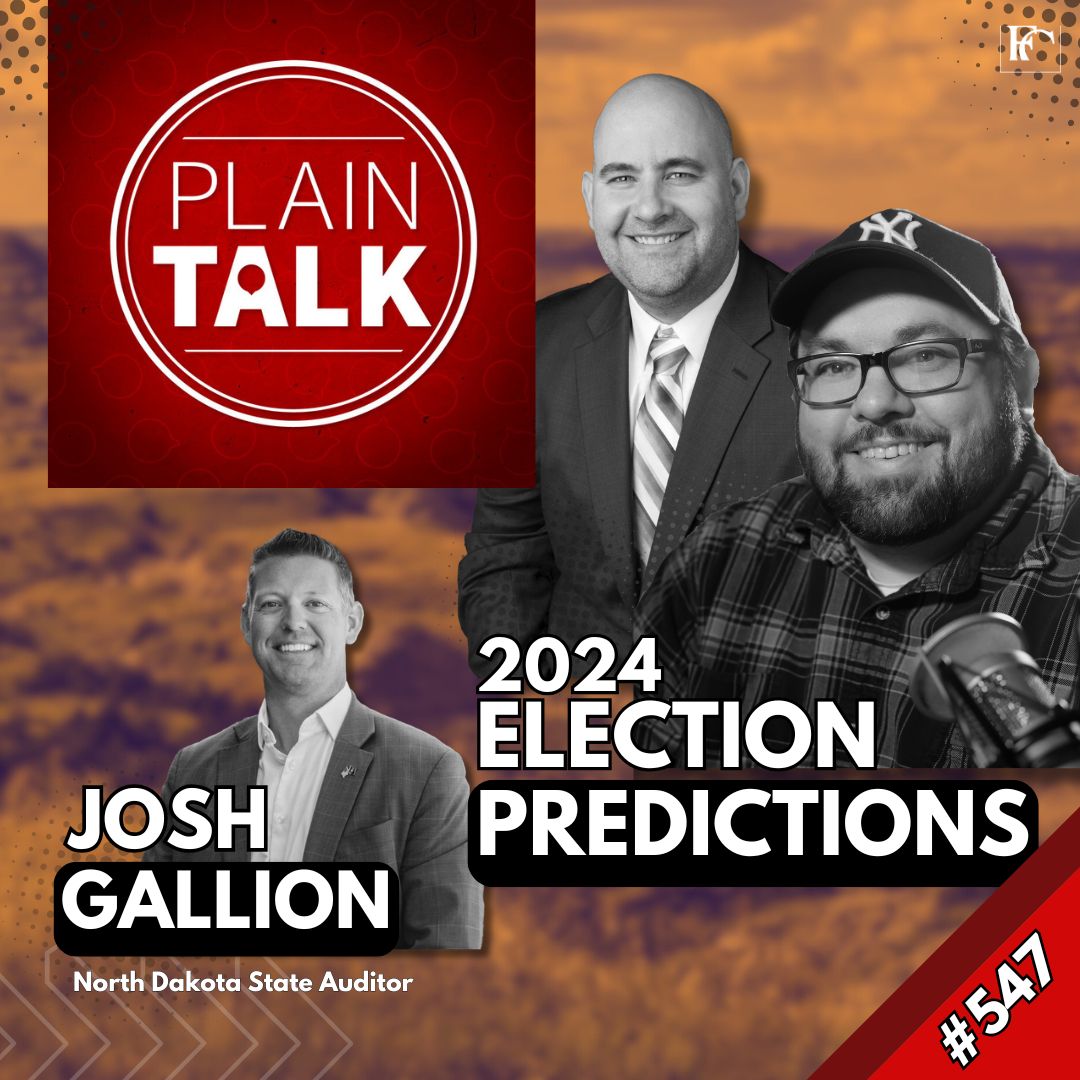
547: Expect better from the politicians
The legislative races in the Grand Forks area have gotten ugly. Incumbent state Sen. Scott Meyer, a Republican from District 18, sent his opponent threatening social media messages. Incumbent state Rep. Emily O'Brien from District 42 has been accused of not living in her district. Now Sarah Grossbauer, a Democratic-NPL candidate in District 42 -- one of O'Brien's opponents -- is dodging questions about drug use after a Republican (and former friend) leaked a photo of her allegedly using cocaine in the bathroom of a downtown Grand Forks bar. Me and Chad Oban talked about it all on this episode of Plain Talk (full disclosure, Oban works for North Dakota United, as does Grossbauer). One complicating factor in all of this is our propensity -- and I really mean "our" because we're all guilty of this -- of being hypercritical of candidates we don't like while rationalizing the behavior of those we do. It has to stop. We can expect more from our elected officials. Auditor Josh Gallion also joined this episode to talk about what he's done during his two terms in office to justify voters giving him a third. Among his arguments? He's modernized the office. "We had walls of filing cabinets with paper records," he said. Now, much of that data has been digitized, and is available online. Gallion also talked about his office's greater efforts to communicate audit information to the public, but at times that's gotten the incumbent in some hot water. His critics in the Legislature, and in local government, have accused him of sensationalizing funding. Gallion responded to those criticisms, and others related to the costs of his office's audits. Finally, Chad and made our 2024 election predictions. How will North Dakota's statewide races shake out? Which ballot measures will be approved? Will the partisan balance in the Legislature change much? And who is going to win the national election? You'll have to listen to find out what we think. And, after Tuesday, maybe you can make fun of us for being wrong. Speaking of which, we have a new way for you to communicate with us. Just give us a call or text at 701-587-3141. It's super easy—leave your message, tell us your name and where you're from, and we might feature it on an upcoming episode. To subscribe to Plain Talk, search for the show wherever you get your podcasts or use one of the links below. Apple Podcasts | Spotify | YouTube | Pocket Casts | Episode Archive
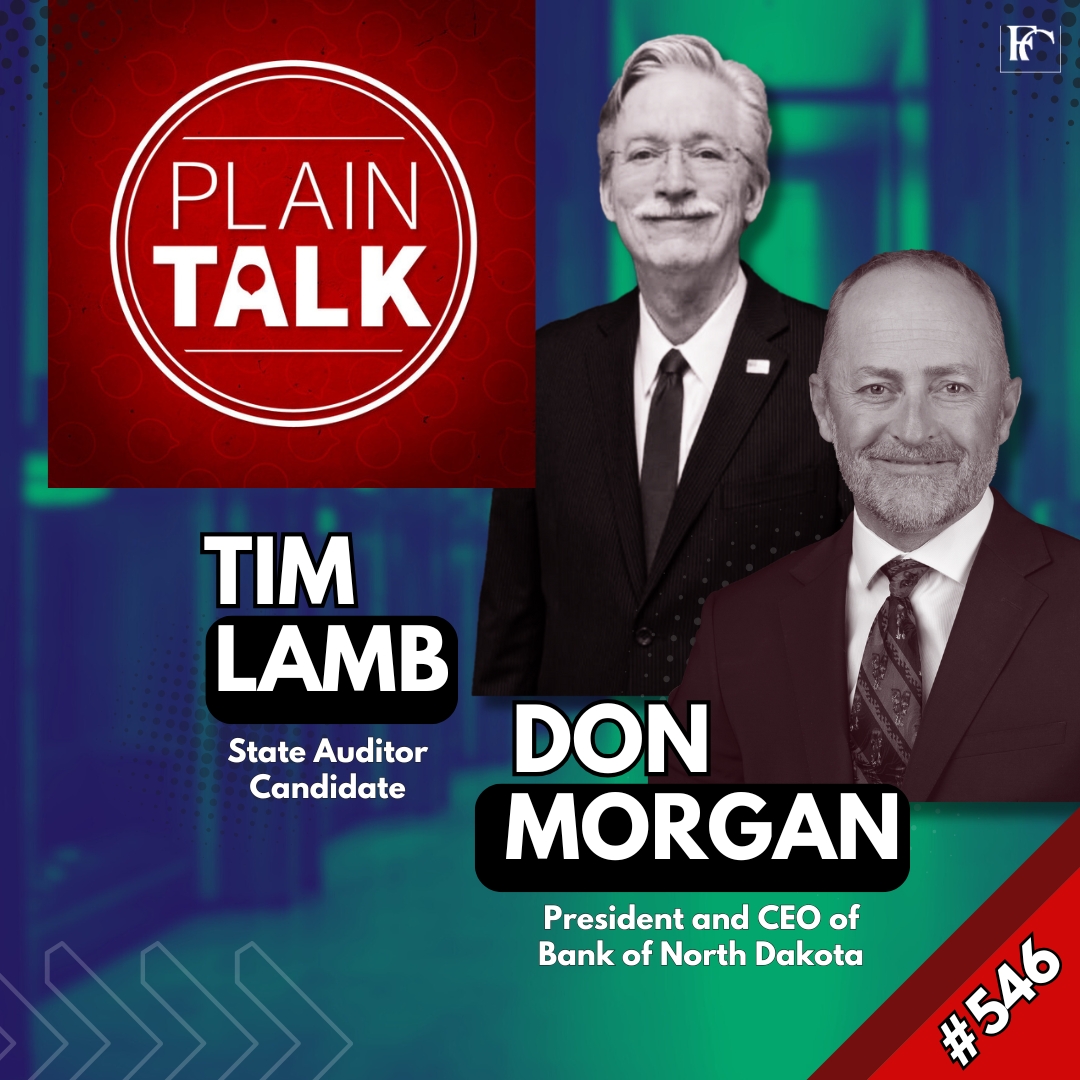
546: Bank of North Dakota president responds to conspiracy theories
We live in an age of misinformation. The internet is chock full of false narratives and egregious bunkum that can seem plausible to some if for no other reason than the sheer volume of it orr, perhaps, because it confirms certain biases and attitudes the audience already has. Recently a website called the Gateway Pundit, which was forced to print a retraction as a part of a settlement in a defamation lawsuit brought by Georgia election workers published what it purports to be a news story about the Bank of North Dakota. Citing anonymous sources and critics, the "story" insinuates that the BND is involved in a cover-up of bad loans, bailouts, and other nefarious activities. The one on-the-record statement was given by Sen. Kent Weston, a Republican who serves in District 9. Normally, one might think it unwise to respond to internet cranks, but we live in an era where talk radio host Alex Jones was able to convince 1 in 5 Americans that the Sandy Hook school shooting was a hoax. These things can't be taken lightly. BND President Don Morgan joined this episode of Plain Talk to provide factual answers. "The only part of the article that is true is they got our name right," Morgan told Chad Oban and me. "As it kind of got picked up by some locals, we decided we want to get some facts out there," he continued. Morgan says the bank is in strong financial shape, and it hasn't received bailouts. He also said that Sen. Weston hasn't, to his knowledge, contacted the bank about the claims made in the article. Also on this episode, Democratic-NPL auditor candidate Tim Lamb joined to discuss his campaign. To subscribe to Plain Talk, search for the show wherever you get your podcasts or use one of the links below. Apple Podcasts | Spotify | YouTube | Pocket Casts | Episode Archive
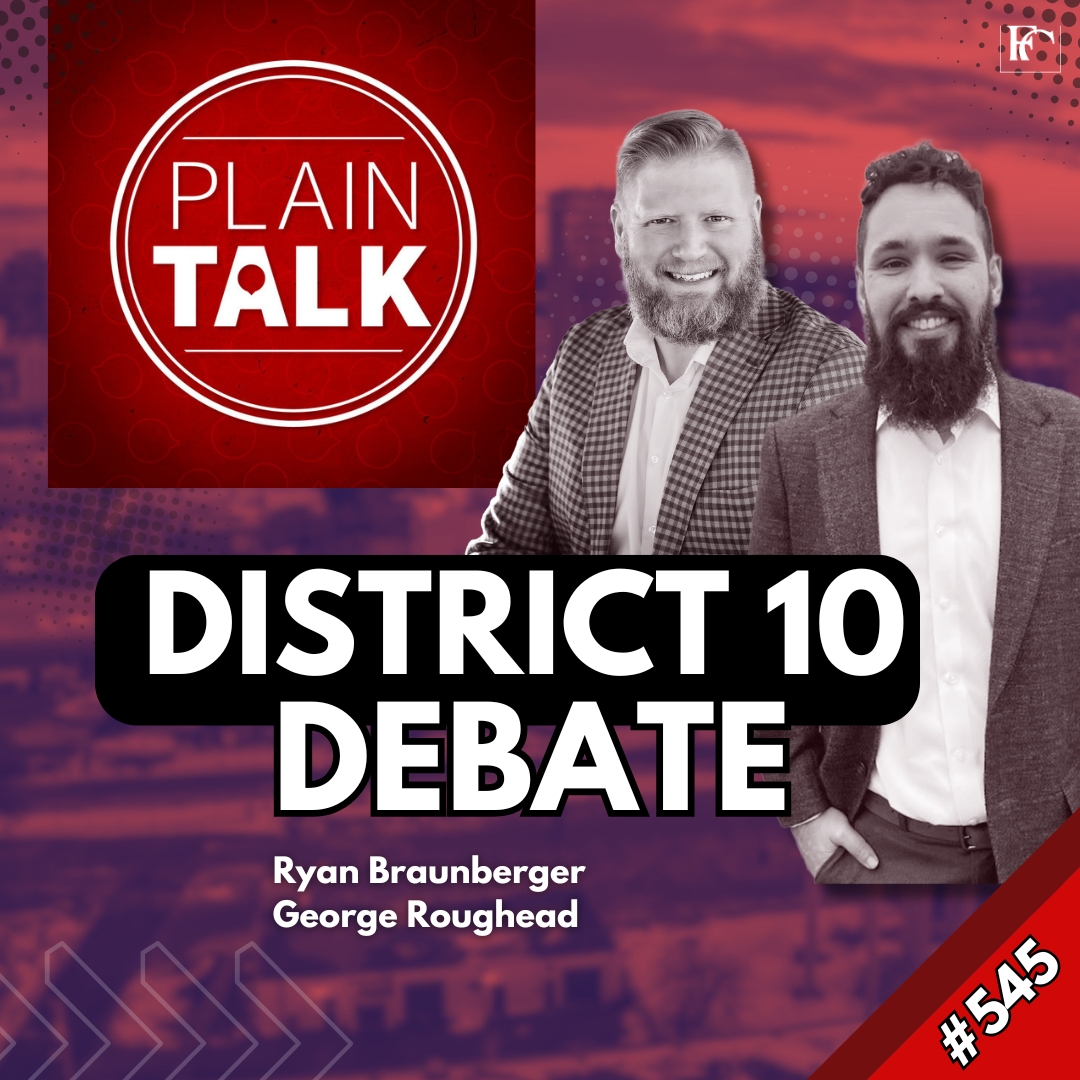
545: A legislative debate all of North Dakota should listen to
"Even the most extreme ends of our legislature vote the same way 60+ percent of the time," a Plain Talk listener and sitting state lawmaker texted me recently. He was making a point about the way we talk about politics, where we emphasize our disagreements more than our agreements. "Difference in ideology is great. We need more civil debate and strengthening ideas through discourse," he said. "But the gap between left and right is much narrower than most people realize." He's right, and the voting records bear it out. We do agree more than we disagree, what gets the heat, what draws our attention for reasons having to do with human nature (and, if we're being honest, the sort of content that drives clicks and shares and views) is our differences. I was thinking about while recording this episode of Plain Talk, which featured Chad Oban and I moderating a debate between District 10 Sen. Ryan Braunberger, a Democrat, and challenger George Roughead, a Republican. As we covered education topics like student performance, school choice, and school lunches, and as we hit on working-class issues like child care, and as we delved into culture war issues like LGTBQ issues and book bans, these two bright, engaged, well-informed candidates spent a lot of time agreeing on what North Dakota's challenges are. They often disagreed, sometimes sharply, on what the solutions to those problems are, but when it comes to what the job before them would be if elected to another term in the Legislature? Both men were over the target. "I was a very good voice for my district," Braunberger told us when asked why voters should give him another term. He mentioned his work on child care and his efforts to work with Republicans. "Being one of only four Democrats in the Senate, you have to work across the aisle," he said. Roughead, who works as a teacher, said he wants to focus on education. "The Senate doesn't have any active teachers," he said. District 10 features one of the few competitive races in North Dakota, and that's probably because it's one of the few places with mixed partisan representation. The debate in District 10 can tell us a lot about the debates that are happening (or that would be happening if they featured competitive races) in legislative campaigns around North Dakota. To subscribe to Plain Talk, search for the show wherever you get your podcasts, or use one of the links below. Apple Podcasts | Spotify | YouTube | Pocket Casts | Episode Archive
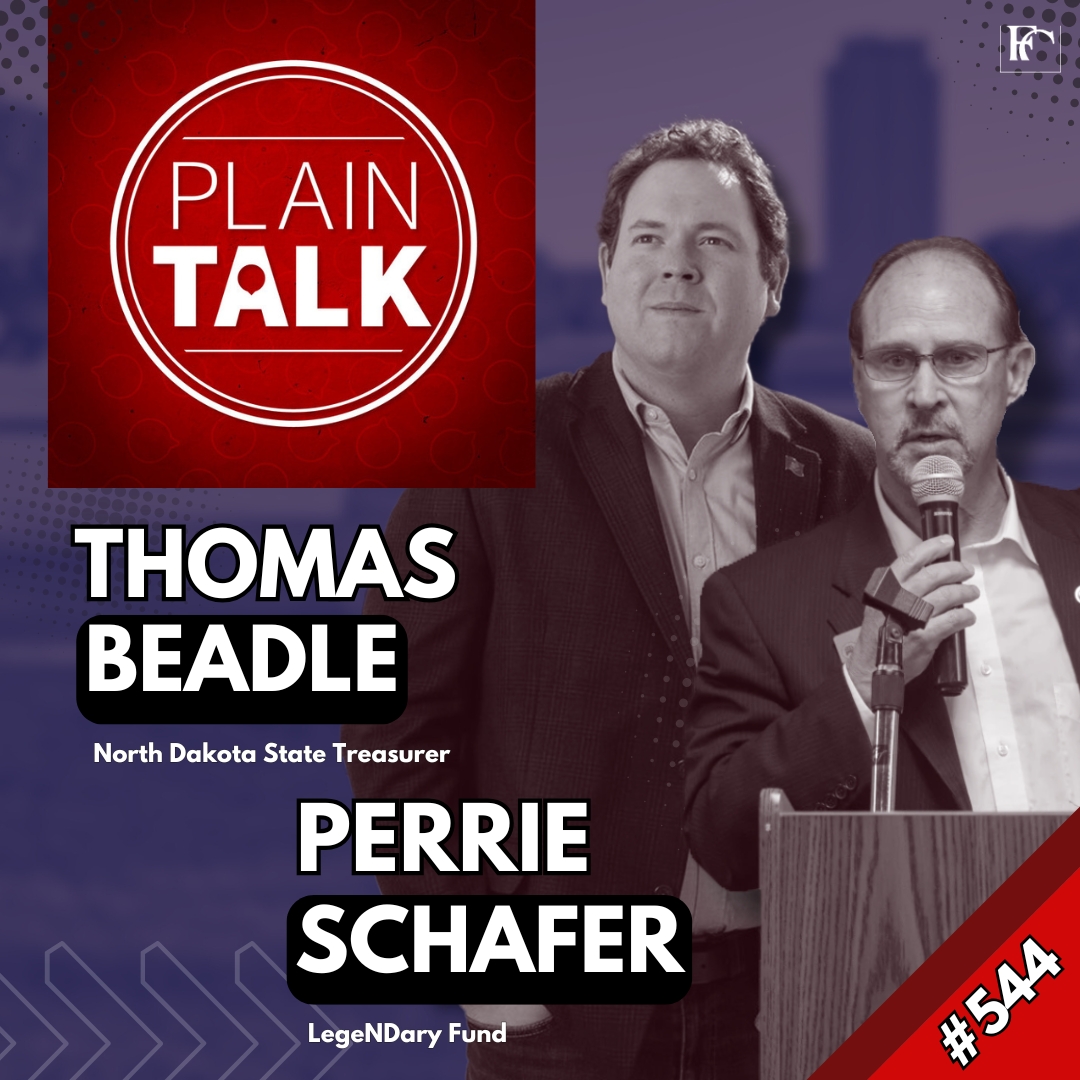
544: Sen. Scott Meyer should resign
Chad Oban and I have a lot of disagreements while hosting the Plain Talk podcast, which is what you'd expect. He's left-of-center; I'm right-of-center. Today, however, we were singing from the same choirbook. Sen. Scott Meyer, a Republican running for re-election in Grand Forks-area District 18, who admitted to me that he got drunk and sent threatening messages to his opponent, Democratic-NPL candidate Kyle Thorson, should resign. We each made our case for why on today's episode of Plain Talk. Also joining us was former NDGOP chairman Perrie Schafer to discuss the work his LegeNDary Fund is doing to promote traditional, "normie" conservatism in North Dakota. "There are a certain group of people who are loud and make a lot of noise," he said. "They are not the majority." He said he wants to bring what he calls the "80%" of reasonable North Dakota Republicans back into active engagement with the NDGOP. "When the loud side of either party makes a lot of noise, the 80% are quiet." Also joining us was Treasurer Thomas Beadle to respond to criticisms of the State Investment Board made by two of our previous guests, Rep. Bernie Satrom and Rep. Mitch Ostlie of Jamestown. They claim that North Dakota's Legacy Fund investments are transparent enough, and have proposed legislation to require an online database detailing where the fund's money is at. Beadle says he supports the idea, but pointed out some limitations. To subscribe to Plain Talk, search for the show wherever you get your podcasts, or use one of the links below. Apple Podcasts | Spotify | YouTube | Pocket Casts | Episode Archive
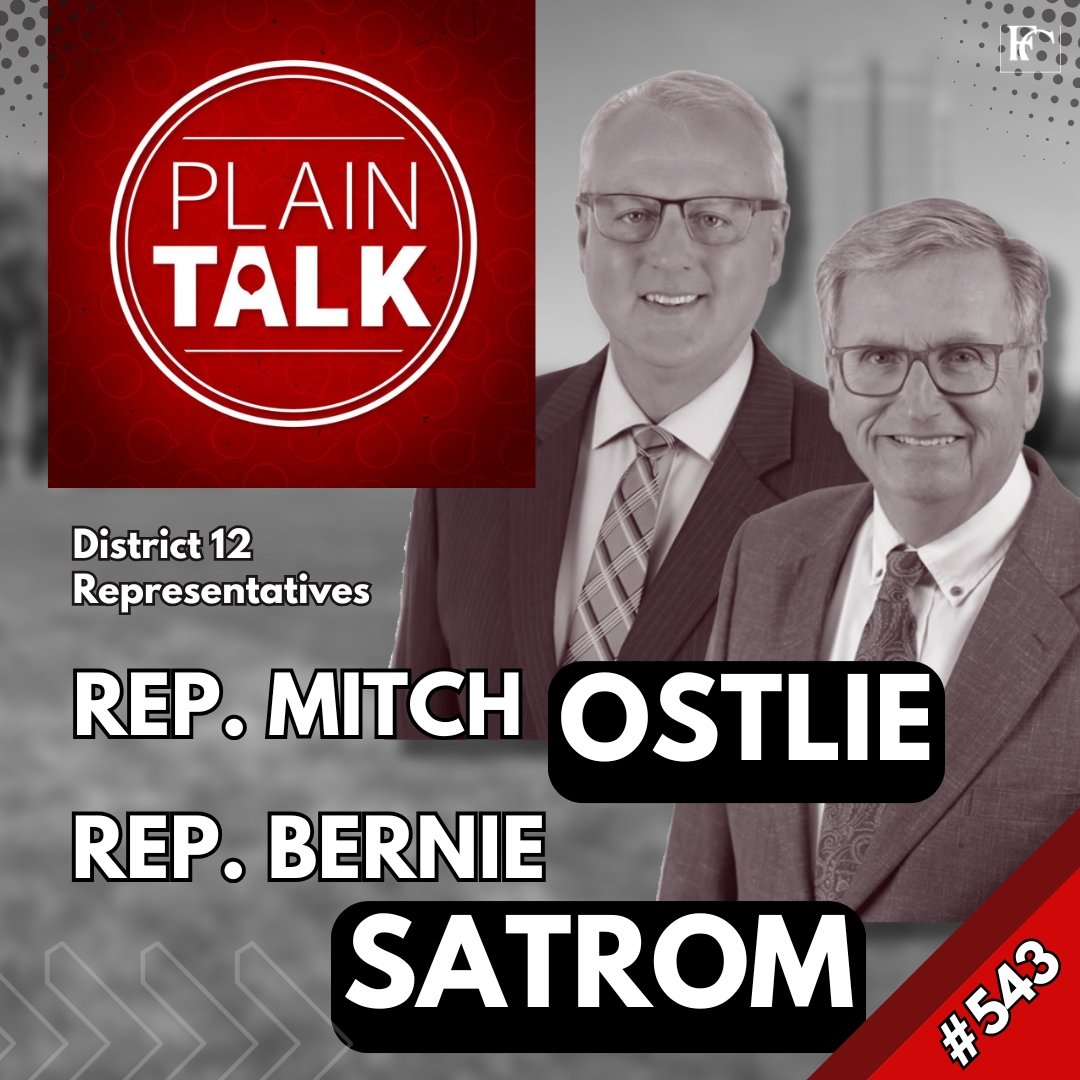
543: 'Where are the dollars invested?'
The Legacy Fund was launched in 2010 when North Dakota voters approved a legislatively-initiated constitutional amendment to create it. Now, thanks to the share of oil tax revenues it receives, as well as the investment returns its generated, it sits with a balance of about $10.7 billion. And it's become something of a political football. It can seem as though we are endlessly debating how the fund is invested and what we should do with the fund and its earnings. On this episode of Plain Talk, a couple of Republican lawmakers from District 12, in the Jamestown area, talked about legislation they'd like to see passed during the 2025 session which, they feel, would help inform those debates. Because one of the biggest problems of the Legacy Fund is that we don't know how a lot of the money is invested. Rep. Mitch Ostlie, and Rep. Bernie Satrom, estimate that about $3.1 billion of the fund's investments are opaque to public scrutiny. "Where are the dollars invested?" Rep. Ostlie asked. Their proposal is called the Legacy Fund Transparency Act, and it's pretty simple. It would require that the State Investment Board list the Legacy Fund's investments in a public way. Perhaps on the SIB's website. The lawmakers feel this would not only help inform debates over what we should be doing with the Legacy Fund, but also help us identify problematic investments, like when the fund was invested in Russian bonds. "We were literally funding the Russian government," Rep. Satrom said. The lawmakers were also somewhat critical of the current members of the State Investment Board, which includes among its number elected officials like Lt. Gov. Tammy Miller, Treasurer Thomas Beadle, Rep. Glenn Bosch, and Sen. Jerry Klein. "This has just been incredibly hands off," Rep. Satrom said. "We were able to find out...that we were in Russian bonds," he continued at another point in the interview. "Couldn't they see? They're just trusting the experts and not having common sense." Also on this episode, Chad Oban and I discuss what are probably the most important legislative races in the North Dakota, in Districts 10, 24, and 46, and we also talk about U.S. House candidate Trygve Hammer's recent criticisms of his opponent Julie Fedorchak. To subscribe to Plain Talk, search for the show wherever you get your podcasts, or use one of the links below. Apple Podcasts | Spotify | YouTube | Pocket Casts | Episode Archive
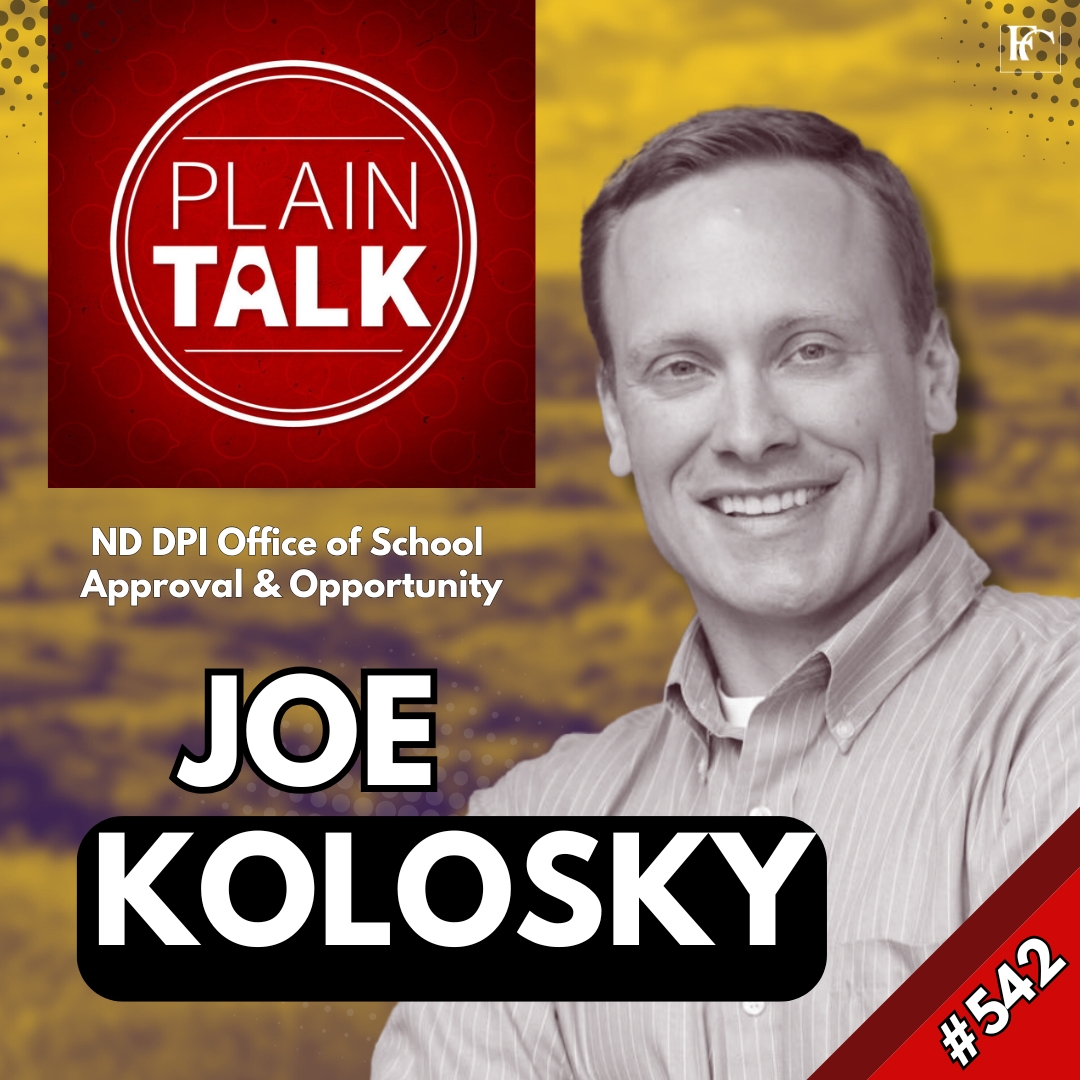
542: A nostrum for our civic despair
People who are familiar with my body of work probably aren't inclined to think of me when they have an appetite for warm, fuzzy, feel-good stories, and yet that's precisely the sort of story we began today's episode of Plain Talk with. Which is a good thing, because as we survey the political landscape, there's not a lot to feel positive about. Joe Kolosky works for the North Dakota Department of Public Instruction. He says one of the favorite parts of his job is overseeing a program through which veterans of World War II, the Korean War, and Vietnam, can apply to receive the high school diplomas they missed out on when they shipped out to war zones. The Legislature created the program in 2001 for WWII veterans, and expanded it to include Korea and Vietnam veterans in 2003, and since then it's issued over 300 honorary high school diplomas including, most recently, two Korean War veterans. Koslosky says it means a lot to him that he gets to help these veterans, but more important, it means a great deal to the veterans themselves. Those who feel they or someone they know may qualify for it should contact the Department of Public Instruction. Officials only need you to fill out a one-page application, and provide a the veteran's paperwork verifying their service. Also on this episode, Chad Oban and I discuss the recent FEC filngs in North Dakota's federal races, our thoughts on the likely outcomes of those races, and the future of the North Dakota Republican Party's dominance in electoral office. To subscribe to Plain Talk, search for the show wherever you get your podcasts, or use one of the links below. Apple Podcasts | Spotify | YouTube | Pocket Casts | Episode Archive
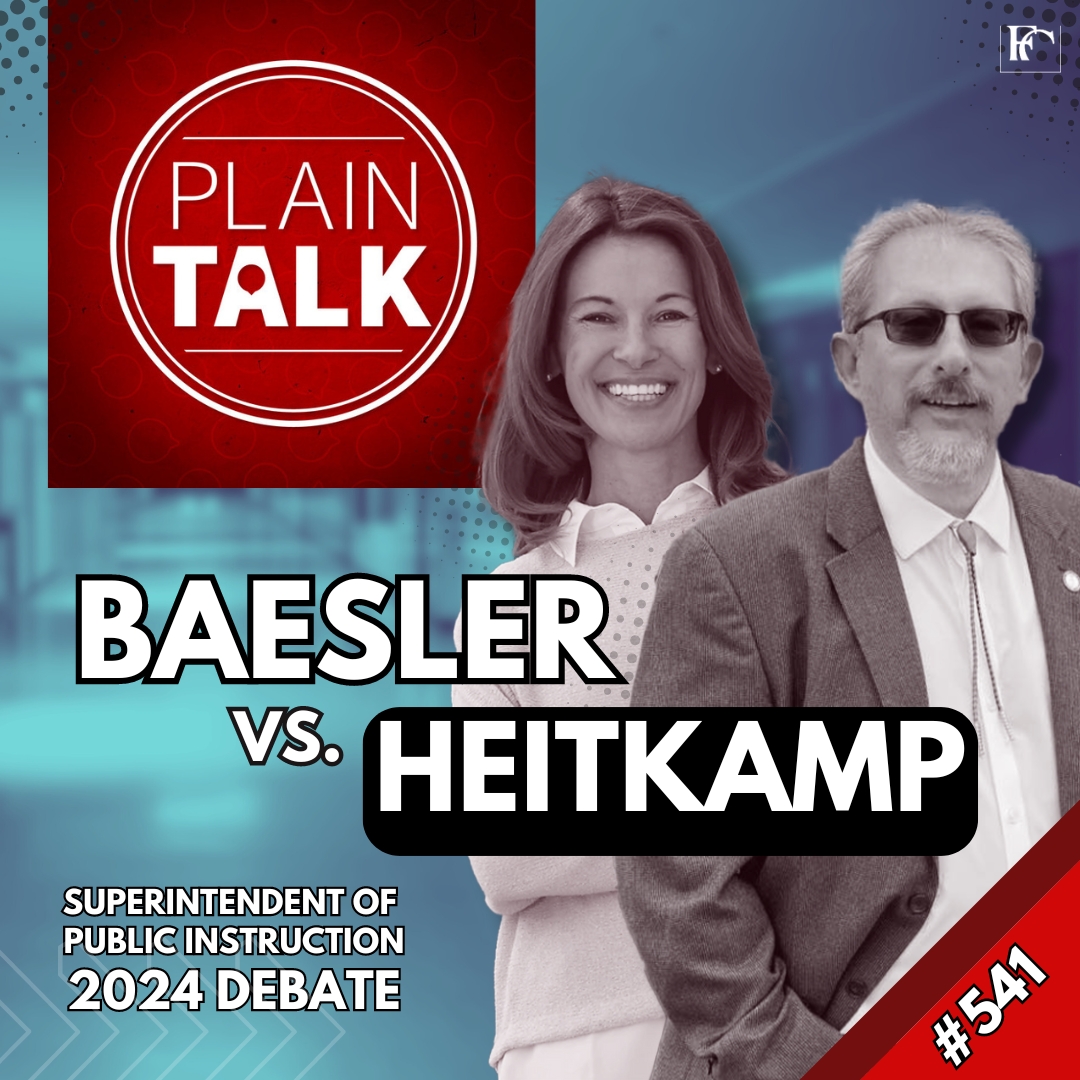
541: A feisty debate between superintendent candidates
By the time her current term ends, Kirsten Baesler will have been the Superintendent of Public Schools in North Dakota for 12 years, having first been elected in 2012. She's currently running against Jason Heitkamp, a distant relative of former U.S. Senator Heidi Heitkamp and a former lawmaker who served one abbreviated, two-term in the state Senate as a Republican from 2021 to 2022 (redistricting forced him to run for re-election after two years, a campaign he lost). Heitkamp and Baesler met on this episode of Plain Talk for what has been, and perhaps will be, their only debate. Each presented sharply contrasting views of the job of superintendent, and repeatedly accused one another of lying or misleading. For her part, Baesler championed her performance in office since 2012. "I've accomplished a lot," she said, noting that she's reduced the number of employees in her office from 101 to 82 while simultaneously maintaining the highest level of job satisfaction among state agencies. She also touted her background as an educator. She's worked as a teacher, and served in administrative and governing positions at the local level. "A lot of people don't know who I am," Heitkamp said by way of introduction but pointed out that in addition to his legislative service, he's also served on two city councils and as a county commissioner. He also accused both the incumbent and public school educators generally of performing poorly. "We can't afford another four years of what's happening in our state," he said. The candidates took questions about student attendance issues, teacher recruitment and retention, vaccination rates, and classroom challenges related to mental health and education. To subscribe to Plain Talk, search for the show wherever you get your podcasts, or use one of the links below. Apple Podcasts | Spotify | YouTube | Pocket Casts | Episode Archive
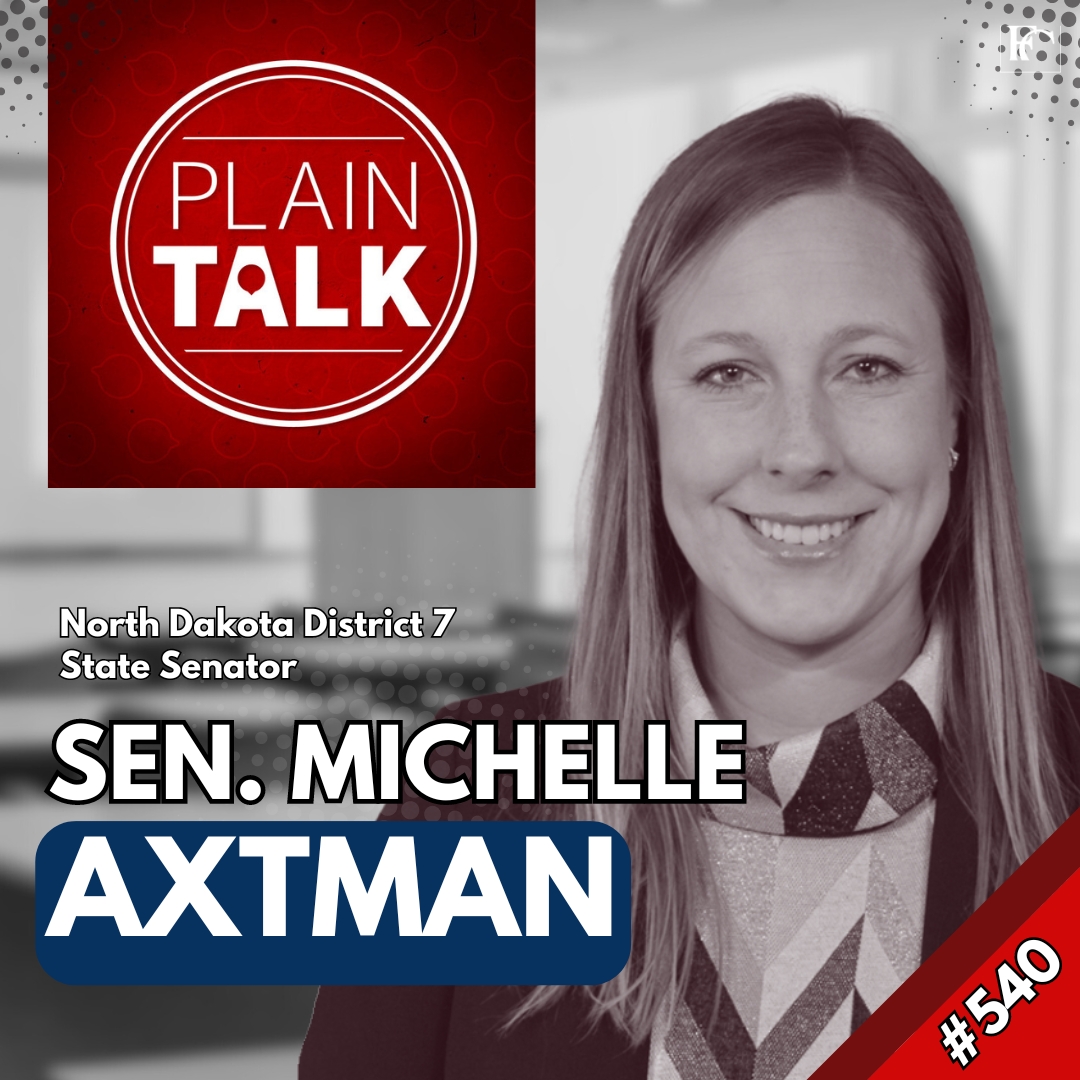
540: A school choice debate, and a conservative's case for voting for Harris
On this episode of Plain Talk, Chad Oban and I spent some time talking about the column in which I outed myself as a Kamala Harris voter. Or, more accurately, I spent some time expanding on my explanation, and Chad listened. But the more important part of this episode was our conversation with Sen. Michelle Axtman, a Republican from Bismarck who is something of a rising star in her party (she was transparent about her ambitions during our off-air conversation, saying her goal is to be elected governor one day). Axtman is heading up a legislative tax force on the school choice issue that has drawn some heat for not being as open as it should be to the public, and some criticssay (including Chad, who works for North Dakota United) not including as wide a swath of education stakeholders as it could have. Axtman took those questions, and answered them, but also delivered a clearer picture of just what it is they're working on. School choice is a fraught topic because, when most people think about it, their minds turn to vouchers. They envision parents getting money to use for private school tuition. That's the part that many public school educators and their advocates don't like. They're afraid that the money will drain resources from public schools and create more profits for private schools that are, for the most part, doing pretty well. But what Sen. Axtman describes is a program that goes far beyond that. Yes, it would provide some money for tuition, but the framework she and her colleagues are working toward could also make money available for people with children in public schools. Money that could be used to get a tutor for a student struggling with a subject, or to pay for online lessons to help a student pursue a particular interest like coding or languages, or even to help a student with special needs -- maybe they're dealing with dyslexia or another challenge -- get some help beyond what the schools can provide. It's a fascinating proposal, and it will be a fascinating debate in the upcoming legislative session. To subscribe to Plain Talk, search for the show wherever you get your podcasts, or use one of the links below. Apple Podcasts | Spotify | YouTube | Pocket Casts | Episode Archive
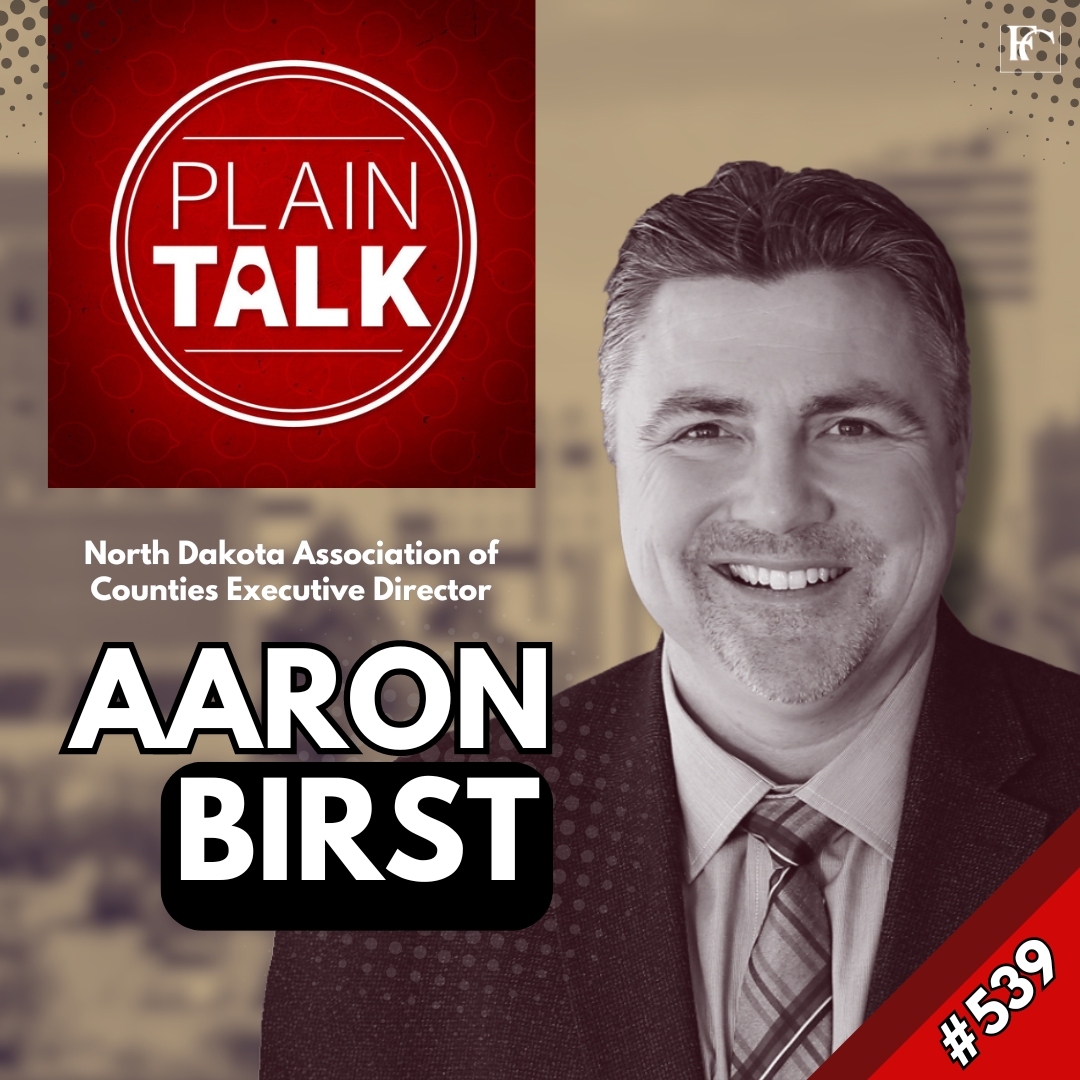
539: 'The only tax people like is the one somebody else pays'
We are 31 days away from election day and, here in North Dakota, the hottest race in the state probably isn't for the U.S. Senate, or the U.S. House, or even the governor's seat. It is, arguably, Measure 4 which, if passed, would eliminate taxes on property values and order the Legislature to compensate local governments for that loss of revenue at 2024 levels. It's such a hot issue that when Prairie Public recently hosted a debate between U.S. Senate candidates Kevin Cramer and Katrina Christiansen, they asked the candidates about Measure 4, even though that issue really has nothing to do with the federal office they're running for. Aaron Birst joined this episode of Plain Talk to discuss Measure 4, and what's driving both the support for it and opposition to it. Aaron is the executive director of the North Dakota Association of Counties. "The only tax people like is the one somebody else pays," he told Chad Oban and I. Birst isn't arguing that there are no problems with local taxing and spending. "Do we need to have a conversation about how much we spend at the local level? Sure," he said, though he argued that Measure 4 just isn't the right fix. "We can try something different. I'm just not sure we're going to find something better," he said. He also argued that passing Measure 4 could create legal and policy-making chaos that would be with North Dakota for a long time. "If this passes...we're probably going to have a decade of court cases to figure out what this means." Also on this episode, Oban and I discuss the recently-released polling in North Dakota's statewide races, and some intrigue at the North Dakota Industrial Commission. To subscribe to Plain Talk, search for the show wherever you get your podcasts, or use one of the links below. Apple Podcasts | Spotify | YouTube | Pocket Casts | Episode Archive
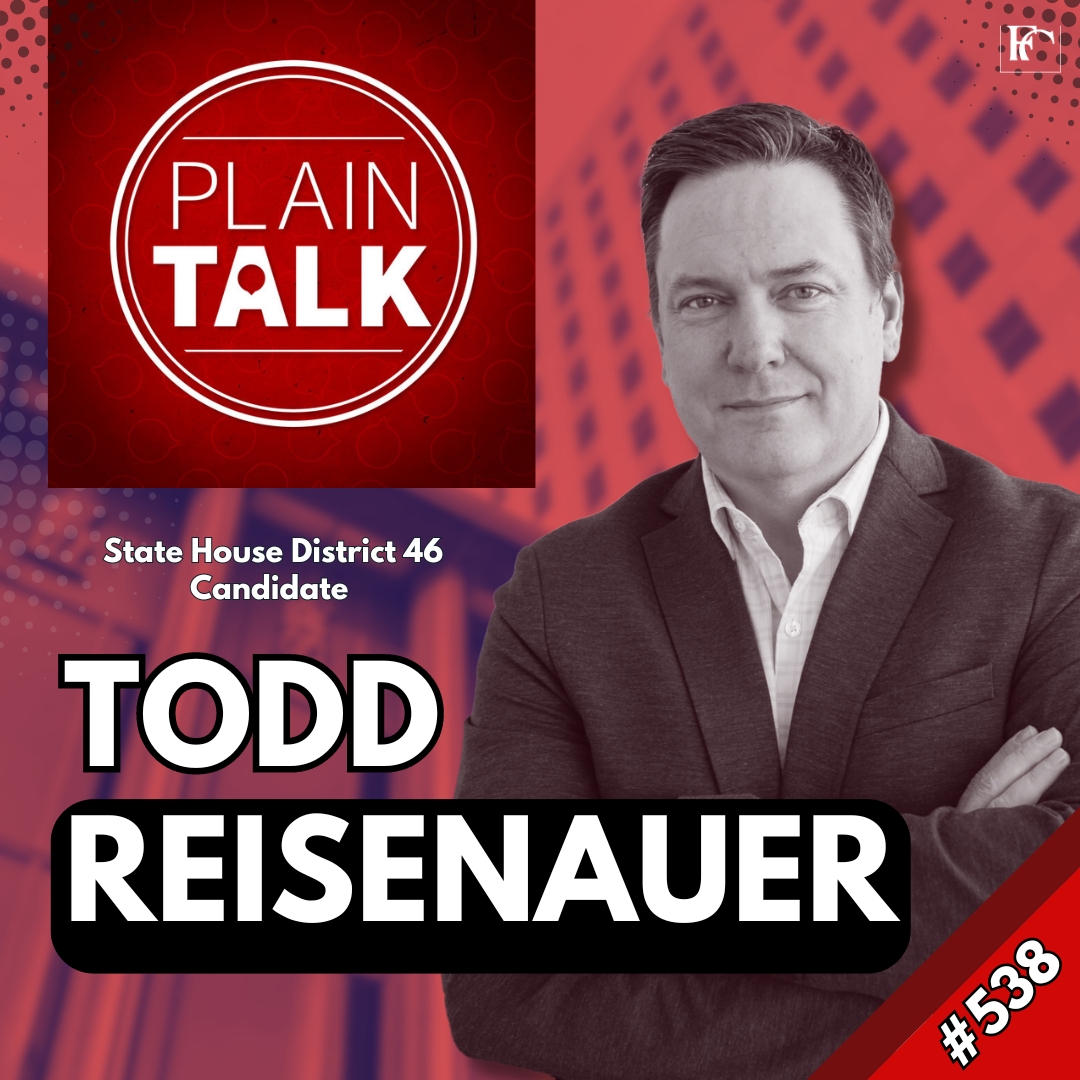
538: 'We can't have District 46 be the front lines of a culture war'
Todd Reisenauer says he'd like to get elected to the North Dakota House of Representatives so that he can take Fargo-area District 46 in a new direction. He said he'd like to focus on issues like housing, healthcare, childcare, and property taxes. What he doesn't want to do, he says, is emulate the approach taken by one of incumbents in that district, state Rep. Jim Kasper, who has been in the center of debates over social issues like book bans and issues surrounding our transgender neighbors. "We can't have District 46 be the front lines of a culture war," Reisenauer told Chad Oban and I on this episode of Plain Talk. The legislative races in District 46 are worth watching. The jurisdiction represents one of the few purple districts in North Dakota and has a history of mixed-partisan leadership. Reisenauer said he admired the work done by another of the Republican incumbents in the district, outgoing Rep. Shannon Roers, who opted not to run for reeelction. He said he got interested in the race when he heard Roers was retiring, and that he wants to continue her work of making District 46 "a bipartisan, get things done kind of district." "We're burning people out," Reisenauer said, addressing the polarized nature of politics in 2024. "I'm not an activist," he added, saying he has no interested in playing partisan politics and "selling fear." "I don't want to be a part of that," he said, adding that he's "not afraid to say conservatives have good policy ideas, and that sometimes Demcorats overshoot." Also on this episode, Oban and I discuss the vice presidential debate between Sen. J.D. Vance and Gov. Tim Walz, and the news of a North Dakota man, the son of a Republican legislative candidate in District 24, getting arrested for his alleged participation in the January 6 attack on Congress. To subscribe to Plain Talk, search for the show wherever you get your podcasts, or use one of the links below. Apple Podcasts | Spotify | YouTube | Pocket Casts | Episode Archive
537: Debating Measure 5's legalization of recreational marijuana
Steve Bakken is the former mayor of Bismarck, and the chair of the committee backing Measure 5, which seeks to legalize recreational marijuana in North Dakota. Pat Finken is a long-time advertising professional and political activist. He's a part of the coalition opposing Measure 5. These gentleman came together on Plain Talk to make their respective cases. The contrasts in their arguments, as you might expect, were sharp. Bakken says Measure 5 is a "very conservative" legalization that gives state officials plenty of latitude to regulate lawful use of the drug. The measure "gives all the power to the state," he said. But Finken painted the measure as exacerbating North Dakota's existing problems with substance abuse. "The marijuana of today is not safe," he said. "It's ten times more powerful" than what Americans have may been smoking in past decades. He rejected the argument that marijuana legalization is inevitable, saying that even if North Dakota were the last state in the union without legal access for recreational use, he wouldn't mind it. "I'm perfectly content for North Dakota to remain an island," he said. Bakken, for his part, argued that Finken's alarmism is out of date. "That reefer madness mentality goes back to the 50s." To subscribe to Plain Talk, search for the show wherever you get your podcasts, or use one of the links below. Apple Podcasts | Spotify | YouTube | Pocket Casts | Episode Archive
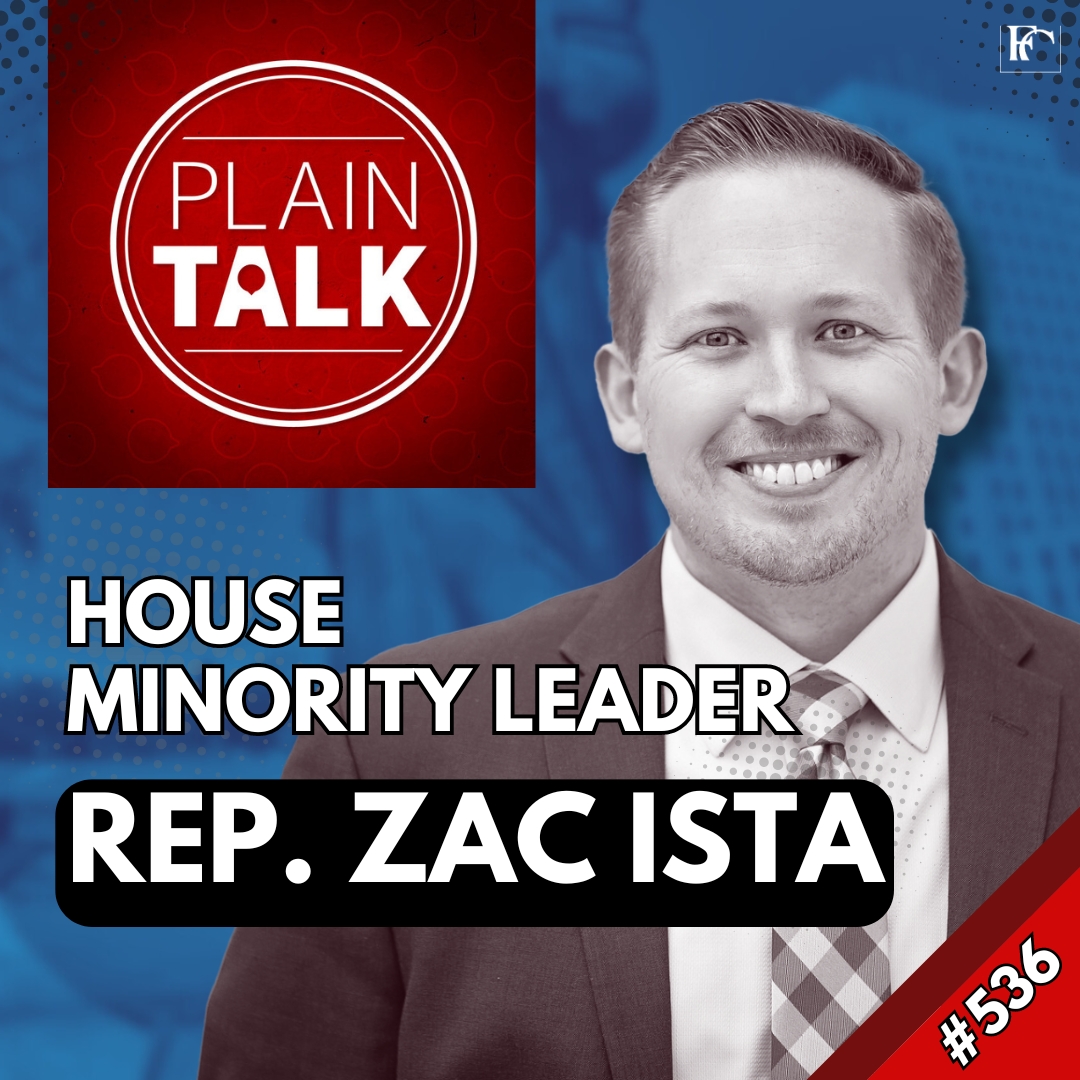
536: Litigation costs, abortion, and 'raging Rob'
Is Attorney General Drew Wrigley's office wasting money on unnecessary litigation? Is North Dakota's Republican majority in the Legislature being something less than good stewards of our fiscal resources by passing controversial bills that invite litigation? House Minority Leader Zac Ista, who led his caucus in voting against approving attitional litigation funds for Wrigley's office at a recent meeting of the Legislature's Budget Section committee, joined this episode of Plain Talk to discuss it. Though, given that one of the laws currently being litigated is North Dakota's restrictive ban on most abortions, that dominated the conversation, which had my co-host Chad Oban calling me "raging Rob." Admittedly, I have been a bit feisty lately. But abortion litigation isn't the only cost North Dakota is facing. The biggest line item for litigation costs recently is related to our state's suit against the federal government over the expenses associated with responding to the violent, protracted protests against the Dakota Access Pipeline. And aren't we prone to seeing the efficacy of any given litigation through the lens of our feelings about the policy being litigated? Isn't it natural that Democrats might not like the policy and legal priorities of a Republican majority, and a Republican attorney general? Rep. Ista answered those questions and more. Also on this episode, we discuss the odds of Measure 4 passing on the November ballot. To subscribe to Plain Talk, search for the show wherever you get your podcasts, or use one of the links below. Apple Podcasts | Spotify | YouTube | Pocket Casts | Episode Archive
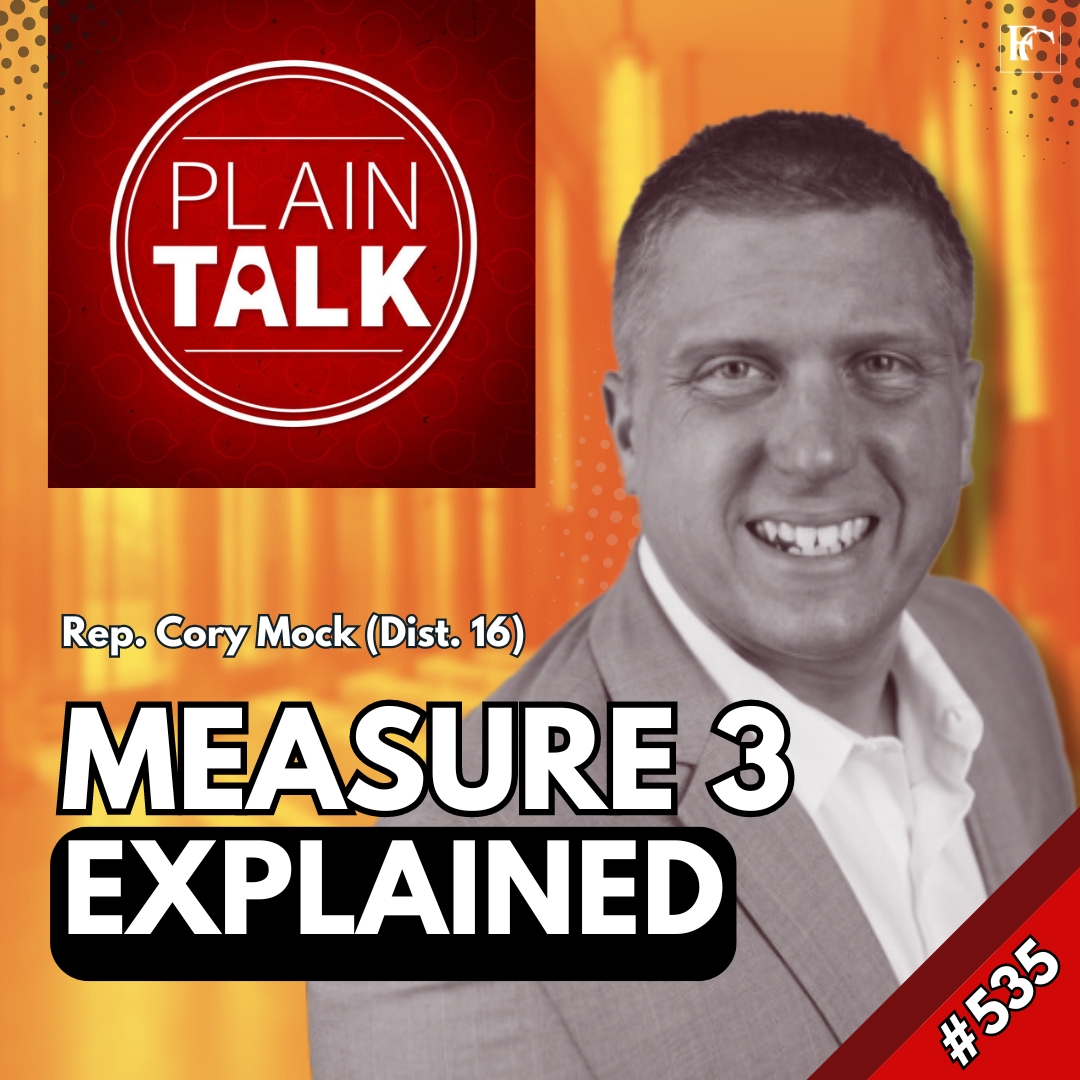
535: A totally not boring conversation about Measure 3
If you read the ballot language for Measure 3 and still didn't understand just what it is the proposed constitutional amendment does, I wouldn't blame you. I don't think that's anyone's fault. It's just a somewhat arcane topic, but that doesn't mean it's not important. State Rep. Corey Mock joined us on this episode of Plain Talk to discuss the proposal, which would make some changes around the Legacy Fund, which these days is sporting a balance of around $11 billion. Currently, lawmakers have the statutory authority to spend up to 15% of the principal of that fund. Mock said that was written into the original amendment that created the fund to ensure that at least some of it was available to lawmakers should some emergent situation make it necessary. But when the Legacy Fund was created, nobody expected it to grow as far and as fast as it has. Mock said the original projects for the fund expected it to cross the $1 billion threshold by like 2021. Clearly, we're well beyond that, but the Legislature's authority to spend as much as 15% of it has resulted in some lost opportunities. The fund managers have to keep those funds liquid, because theoretically the Legislature could come calling for them. Measure 3 shrinks that from 15% to 5%. Given that the Legacy Fund is much, much larger now than we expected when that original 15% limit was written into the constitution, lowering still leaves plenty of money available to lawmakers in an emergency, but allows the fund managers to invest more of the principal and get bigger returns. Also on this episode, guest co-host Jamie Selzler and I discuss the state of the presidential race. To subscribe to Plain Talk, search for the show wherever you get your podcasts, or use one of the links below. Apple Podcasts | Spotify | YouTube | Pocket Casts | Episode Archive
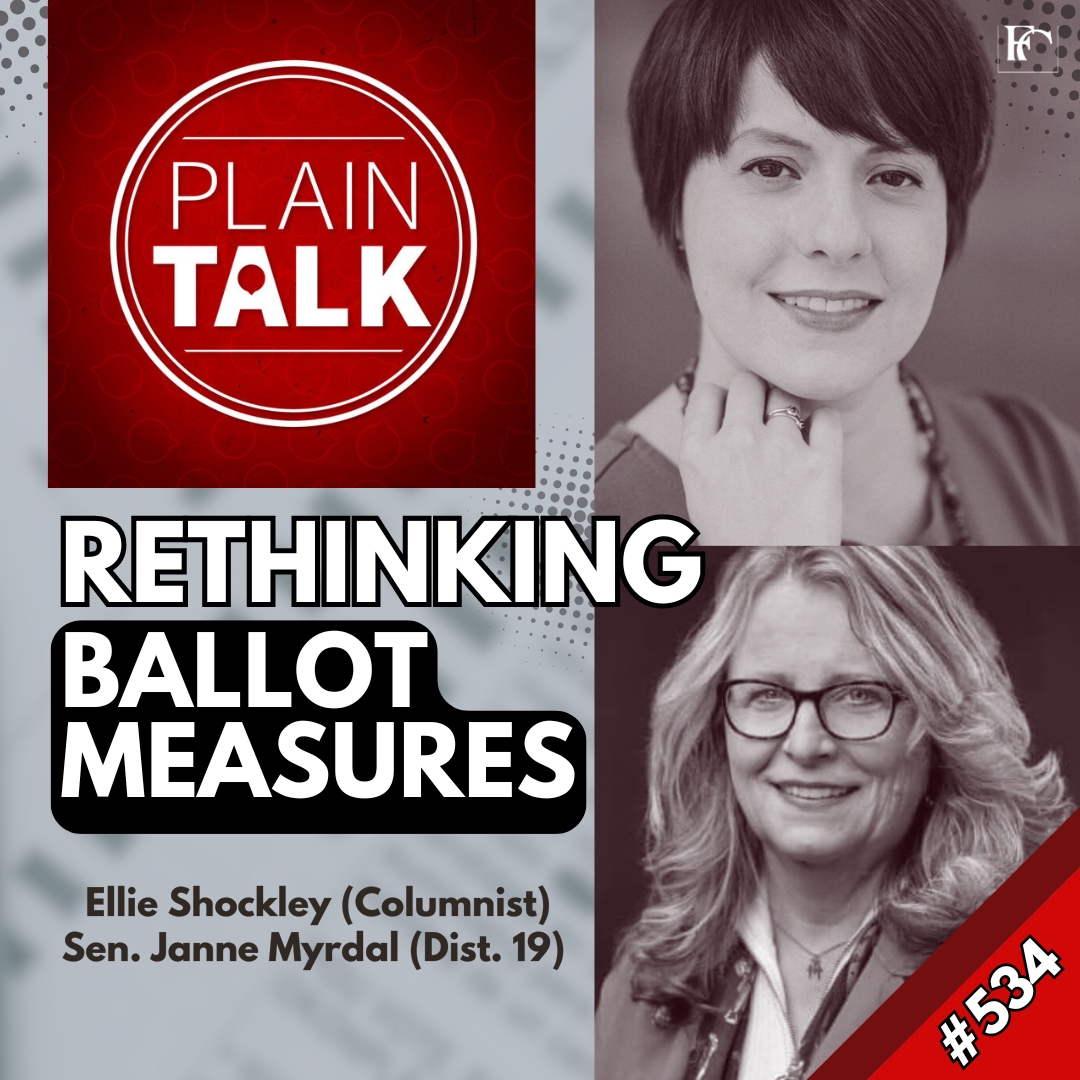
534: A sometimes heated conversation about Measure 2 and the limits of direct democracy
Are the proponents of Measure 2 "elite and out of touch?" Are they "condescending" and "disrespectful" to the electorate? Or do they view North Dakota's initiated measure process -- particularly when it comes to amending the state constitution -- as flawed and needing reform? Measure 2 is a constitutional amendment placed on the ballot by the Legislature, which would prohibit people who aren't North Dakota residents from collecting petition signatures for initiated measures. It would limit measures to a single subject. And, for constitutional measures, it would raise the signature requirement from 4% to 5% of the state's population and require that those proposals be approved through two statewide votes: once on the June primary ballot and again on the November general election ballot. Ellie Shockley, a columnist for the Bismarck Tribune, joined this episode of Plain Talk to make the case against the proposal. It's her words that I'm quoting above. She views this proposed amendment as motivated by a desire among lawmakers to diminish the will of the people in making policy. Sen. Janne Myrdal, a Republican from Edinburg, also joined this episode, and she argued that it's become too easy for deep-pocketed, often out-of-state interests to hire professional signature gatherers (who themselves are often not North Dakotans) to force a vote on complicated policy proposals that aren't often explained well to the voters. This point-and-counterpoint conversation at times got heated, because it deals with some of the bedrock assumptions we make about our system of government. The political power in our republic ultimately comes from the people, but as a question of process, is legislating what are often complicated policy proposals at the ballot box where a distracted electorate, already asked to evaluate candidates for everything from weed control boards to president of the United States, really a good way to make sound policy? The Plain Talk Podcast is the voice of North Dakota politics. To subscribe, search for the show wherever you get your podcasts, like Spotify, Apple Podcasts, or YouTube, or click here for more information.
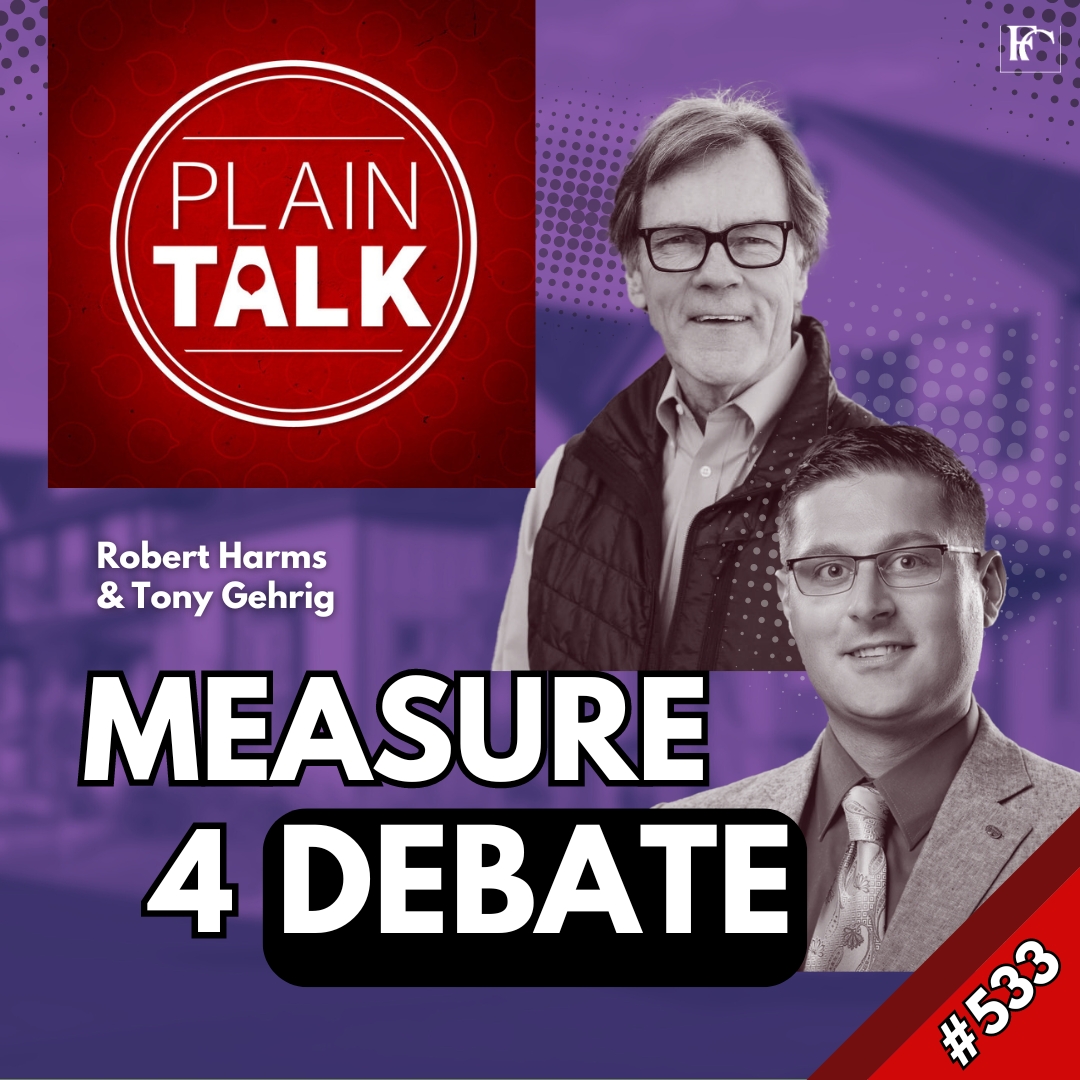
533: Should North Dakota end property taxes?
In November, North Dakota voters will be asked to decide the fate of Measure 4. If approved, it would amend the state constitution to prohibit taxes on property values. It would also lock in an obligation for the state legislature to replace current property tax revenues to local government with other revenues, but only at 2024 levels, with no mechanism to change that level in the future. On this episode of Plain Talk, we had a debate about that proposal. Making the affirmative case for it is former Fargo City Commissioner Tony Gehrig. Making the case against it is Robert Harms, a former chair of the North Dakota Republican Party who also served in the administrations of former governors Ed Schafer and John Hoeven. Former state lawmaker Rick Becker, the chair of the committee sponsoring the measure, declined to participate in the debate, saying the Plain Talk podcast is the only place where he won't speak about the proposal. Both Harms and Gehrig agree on some key issues. They say that property taxes are a problem in North Dakota in need of a solution. They both also agree that taxing property values is problematic. As property values rise, they drive almost automatic increases in tax burdens that aren't tied to local needs. Where they differ is the nature of the solution. Harms argues that abolishing property taxes would shift too much power over local spending to lawmakers in Bismarck. He also said that it "freezes some unfairness" in the state constitution by locking in funding for local governments at 2024 levels. A local government that made a big bond payment in 2024 would continue to be compensated for it by state taxpayers well into the future, even after the bond is paid off. A local government that kept property taxes low, on the other hand, would be punished for their conservative budgeting. For his part, Gehrig argued that eliminating property taxes would be an economic boon to the state, drawing new investment. During his time in office, Gehrig was an outspoken opponent of policies that seek to incent economic development by easing or eliminating property tax burdens, but he used that stance as an argument for Measure 4. "If you believe those policies work, then you have to believe in Measure 4," he said. The Plain Talk Podcast is the voice of North Dakota politics. To subscribe, search for the show wherever you get your podcasts, like Spotify, Apple Podcasts, or YouTube, or click here for more information.
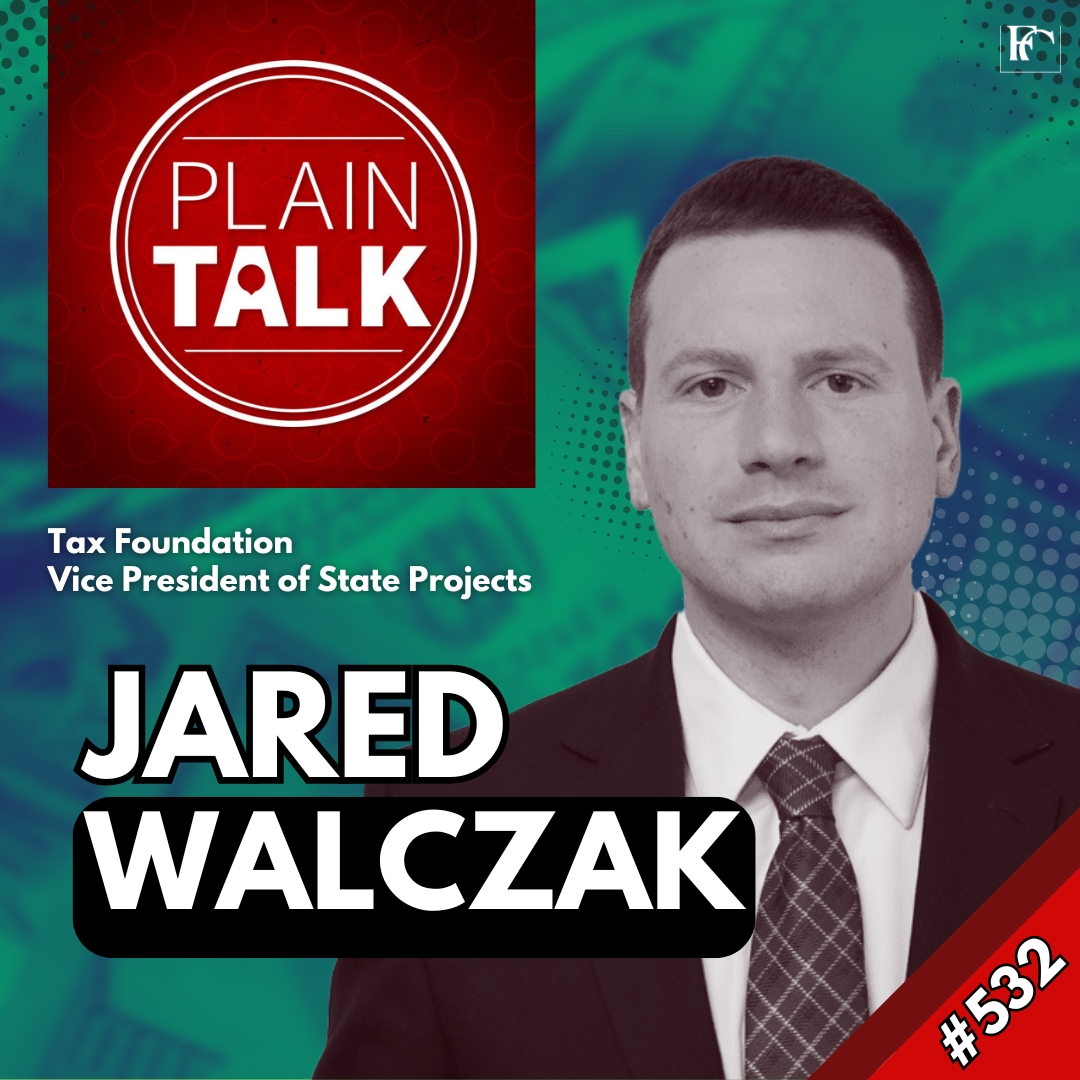
532: 'No one else has done this for pretty good reasons'
"The property tax is a good tax," Jared Walczak told Chad Oban and I on this episode of Plain Talk. "You may not love it, but you will not like the alternatives better." Walczak is the state projects director for the Tax Foundation, a right-of-center think tank that focuses on -- you guessed it -- tax policy. His organization recently published an article critical of Measure 4, a constitutional amendment that would prohibit taxes on property values. Walczak has also presented his group's arguments to state lawmakers. Walczak's argument is not that North Dakotan's shouldn't feel upset about their property taxes. "There's legitimate frustration," he said. The problem is that eliminating the property tax would produce "real economic upheaval" by shifting tax burdens from a tax that "has very little economic drag" to others, like income taxes or sales taxes, which do. Eliminating the billions collected locally in property taxes would mean replacing those revenues with tax dollars collected state wide. "You're talking about essentially doubling your other taxes at the state level," Walczak argued. "No one else has done this for pretty good reasons," he said, and he's not just talking about state governments in America. He said that no other country in the developed world has eliminated its property taxes. What should North Dakota do to address the genuine public consternation over property taxes? He says state policymakers should look at caps on how much locals can raise through property taxes, coupled with some pressure relief valves that would allow the taxing jurisdictions to exceed those caps in specific circumstances, like if the voters ok the increase on the ballot. Also on this episode, Chad and I discuss the presidential debate between former President Donald Trump and Vice President Kamala Harris, including everything from Harris's facial expressions to Trump's blood libel attack on immigrants. The Plain Talk Podcast is the voice of North Dakota politics. To subscribe, search for the show wherever you get your podcasts, like Spotify, Apple Podcasts, or YouTube, or click here for more information.

531: Gubernatorial debate, Kelly Armstrong vs. Merrill Piepkorn
North Dakota's gubernatorial race features to affable, well-liked candidates, who clearly like one another as well. Republican Kelly Armstrong was first elected to the North Dakota Senate in 2012, and served there until the 2018 election cycle, when he campaigned successfully for a seat in the U.S. House of Representatives. That's where he's currently finishing out a term, while also campaigning for governor. Democratic-NPL candidate Merrill Piepkorn has also served in the state Senate. He's been there since he was elected in 2016, and had a one-session overlap with Armstrong's service. On this Plain Talk, the two candidates compared and contrasted with one another under questioning from me and my co-host Chad Oban. We covered everything from internet pornography (Armstrong says he'd like to see North Dakota implement an ID requirement to access it), to political accountability (Piepkorn says long-time Republican supermajorities in North Dakota have created an "environment of entitlement"), to property taxes (both candidates oppose Measure 4 on the November ballot which, if passed, would abolish taxes on property values). To address North Dakota's chronic workforce shortages, Armstrong says "you have to concentrate on cops, teachers, and nurses." Piepkorn, meanwhile, says the state Legislature has been too-focused on the culture war, passing "bad bills that are repelling people." Armstrong said he's "really glad North Dakota has gotten to where it's at" on mental health issues, but added that if he's "blessed to win, in eight years we will still need more work." Piepkorn said that to address North Dakota's childcare shortages, he sees a three-pronged strategy: "help parents, help children, help businesses." These are two candidates who, again, are likable, and like one another, but they have very different visions for how North Dakota should be governed. It was our pleasure to bring their contrasting views to you on Plain Talk. Want to follow Plain Talk and be kept up to date on all of these debates? Click here for an archive of past shows and for information on how to subscribe, or just search for the show wherever you get your podcasts, including on YouTube.

530: How do we do politics in the classroom?
We all know the old saying. You don't talk about religion and politics in polite company. Only, does that advice make sense in a society like ours, where we practice self-governance? How can we govern ourselves if we can't talk to one another about politics? And, more pertinent to this episode of Plain Talk, how do we teach our kids how to participate in discourse over challenging issues like abortion or gun control if teachers are afraid to tackle politics in the classroom? Lindsey Galvao is a long-time educator -- the social studies curriculum specialist at GBH and a multiplatform creator for public media, and curriculum writer for the Civics Collection on PBS LearningMedia. Ben Klutsey is the executive director of the Mercatus Center at George Mason University whose work is featured in the documentary "Undivide US." They recently co-authored an op-ed about politics in the classroom, and joined my cohost Chad Oban and I to talk about that very conundrum. "We disagree and that's ok," Klutsey told us. The problem, he argues, is that so many people say "we disagree and you're a threat to my existence." Both Klutsey and Galvao say that teachers need to be unafraid to host discussions about even fraught social and political questions, but that their focus should be on listening and encouraging students to understand one another. But how do we deal with misinformation? Kids who might have gotten the idea that the Sandy Hook school shooting didn't really happen, as right-wing talk radio host Alex Jones has claimed, or that the world is flat? Galvao said she would encourage teachers to ask those kids, "How do you know what you know?" They should be encouraged to explore the basis for their point of view. "We have to think about abiding by certain core principles," Klutsey said, identifying them as respect, authenticity, and curiosity. Which is to say that we need to respect those who disagree with us, represent our own views authentically, and be curious about why others disagree with us. Though, he acknowledged, that doesn't mean making room for false information. "Facts are facts," he said, "and you have to engage on facts as an educator." Want to follow Plain Talk and be kept up to date on all of these debates? Click here for an archive of past shows and for information on how to subscribe, or just search for the show wherever you get your podcasts, including on YouTube.

529: Republican Julie Fedorchak and Democrat Trygve Hammer square off in the U.S. House debate
When U.S. House candidates Julie Fedorchak (a Republican) and Trygve Hammer (a Democrat) sat down for a debate on the Plain Talk podcast with me and my co-host Chad Oban, one of the first questions I asked them was why they wanted to be elected to Congress. Hammer, a Marine Corps veteran, said it's because less than 80 of the current 435 members of the House of Representatives have served in the military. He also said he wants to promote an atmosphere where leaders talk to one another instead of past one another. Fedorchak wants to focus on issues like border security, "record high inflation," and energy policy. One of the last questions I asked them was about their top priorities if elected. Hammer said a new farm bill and the national debt, as well as "talking to North Dakotans continuously" and taking his cues from the people. For her answer, Fedorchak said constituent services, arguing that, even if progress on making policy is stalled, members of Congress can still "be a force" for individual North Dakotans. Our debate covered a myriad of issues, from campaign promises made by national candidates to eliminating taxes on tips and Social Security benefits (Fedorchak wouldn't commit to supporting either, Hammer said he supports both with some caveats), to the national debt, to civility in politics, to America's foreign policy in Ukraine and Gaza. One area where the candidates agreed very closely was the need for a new farm bill. Both acknowledged that American agriculture has been operating under an old and badly out-of-date farm bill. An area where the candidates disagreed sharply was on the issue of abortion. Asked about her support for a national abortion ban -- something presidential candidate Donald Trump has come out against -- Fedorchak described her position as wanting a national "gestational limit" on abortions after around 15 or 16 weeks, with exceptions for the life of the mother and rape or incest. This "would allow states within that framework to be a little stricter," she argued that it would put the United States in line with "every civilized country in the world." Hammer said he does not support a national abortion ban and argued that even state-level bans are often "unnecessarily cruel." He pointed to the failure of a pro-life ballot measure in 2014 as evidence that North Dakotans don't want government interference in the abortion issue "at any level." Our intent with the Plain Talk debates is to foster conversations where the candidates can compare and contrast with one another on the issues. As with our previous U.S. Senate debate between Democrat Katrina Christiansen and Republican incumbent Kevin Cramer, Hammer and Fedorchak engaged civilly, providing robust answers while disagreeing without being disagreeable. Want to follow Plain Talk and be kept up to date on all of these debates? Click here for an archive of past shows and for information on how to subscribe, or just search for the show wherever you get your podcasts, including on YouTube.
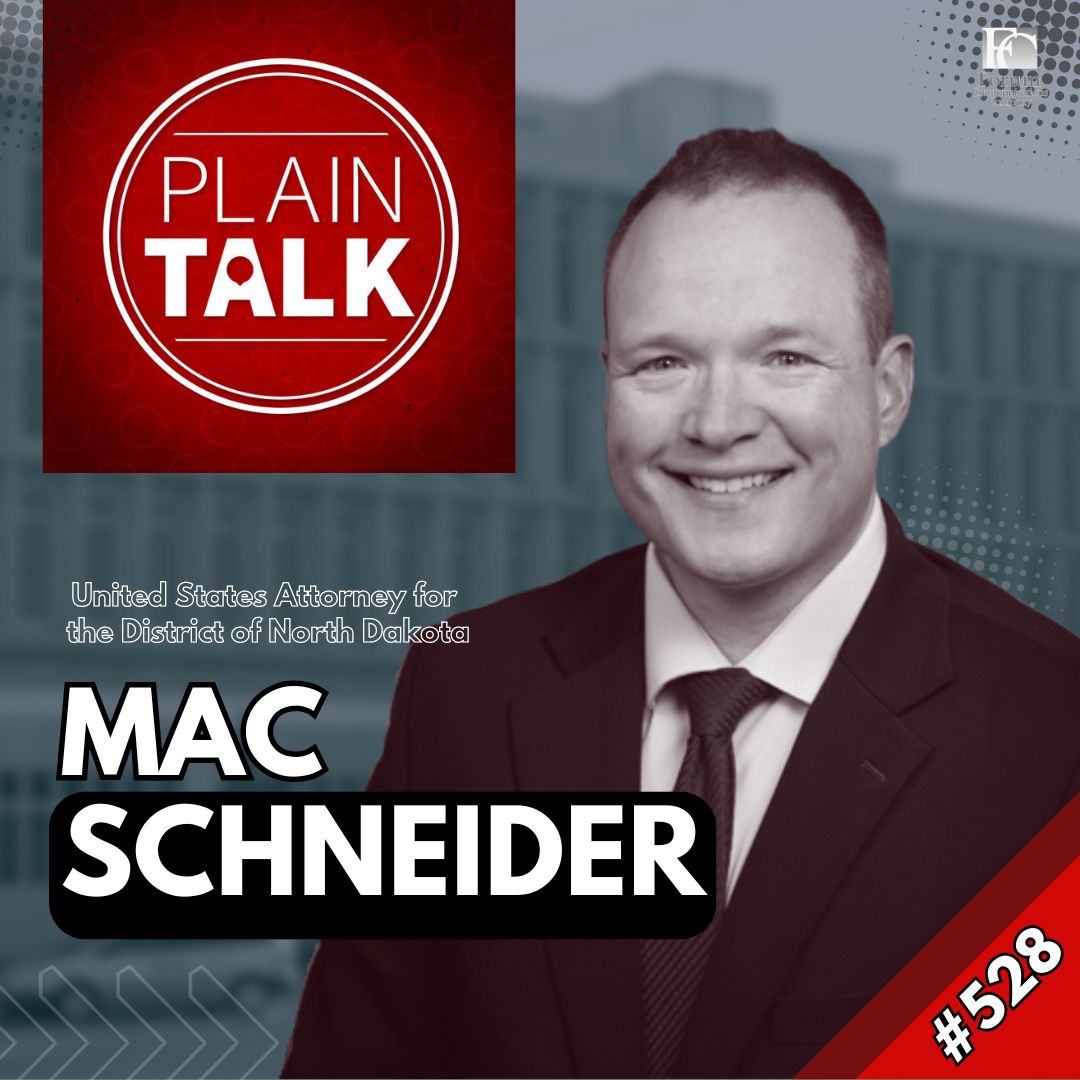
528: 'I'm grateful for every minute I have in this job'
"This is the best job I could ever imagine," North Dakota U.S. Attorney Mac Schneider said on this episode of Plain Talk. Schneider was appointed to that position by President Joe Biden. Later this year, when America elects a new president, he may be out of a job, depending on how the country casts its ballots. A Republican president isn't likely to keep a Democratic appointee, but if Vice President Kamala Harris wins, would Schneider want another term in the office? He says yes. "I'm grateful for every minute I have in this job." My co-host Chad Oban and I asked Schneider about whether his office has seen any local blowback from national politics, where the FBI and the Department of Justice have, in recent years, been accused of political bias by both Republicans and Democrats. FBI Director Christopher Wray, who has rejected demands to resign from former President Donald Trump, the man who appointed him, and who recently visited North Dakota, has frequently been at the center of interparty food fights. Schneider says national-level drama has had little impact on federal law enforcement operations in North Dakota. "Not at all," was his reply to our question. "In North Dakota, the FBI is, rightly so, seen as law enforcement," he said. "I don't pick that up at all that there's any distrust of federal law enforcement here in North Dakota," he continued. We also asked Schneider about the recent federal prosecution of former Republican state Sen. Ray Holmberg, which resulted in a guilty plea to crimes related to traveling to Europe to pay for sex with minors. Schneider was recused from the case by the Department of Justice because he, like Holmberg, served the Grand Forks community in the state Senate. "You can just about imagine how I feel," he said when asked what it was like to watch someone he worked closely with plead guilty to those crimes. Also on this episode, Oban and I discussed school schedules, and how their complexities can make things hard for parents, and also the on-going struggles of the North Dakota High School Activities Association to deal with terrible, often bigoted behavior at sporting events. Want to follow Plain Talk and be kept up to date on all of these debates? Click here for an archive of past shows and for information on how to subscribe, or just search for the show wherever you get your podcasts, including on YouTube.

527: U.S. Senate debate between Sen. Kevin Cramer and challenger Katrina Christiansen
When we organize candidate debates on the Plain Talk podcast, our intent is to foster a competition that's not bogged down by a lot of rules and restrictive formatting, nor plagued by shouting and candidates talking over one another. We don't really even want a competition. We want a conversation. A thoughtful discussion between two candidates on important issues of interest to the voters. I think we achieved that with the debate my co-host Chad Oban and I hosted between incumbent U.S. Sen. Kevin Cramer, a Republican, and his Democratic challenger Katrina Christiansen. Our conversation covered everything from partisanship, to social security, the national debt, the state of the farm bill and Congress's inability to pass an updated iteration of it, the wars in Ukraine and Israel, and the role of government in our lives. The candidates found places where they agree. Both say they're committed to America's continued backing of Ukraine against Russia's war of aggression. Both support Israel's right to defend itself against terrorism. Both described border security as a crisis for our country. In other areas, however, there was sharp disagreement. Christiansen hit Cramer for voting against a bipartisan border bill negotiated in part by Sen. James Lankford, one of the most conservative members of the Senate and, Cramer revealed, a roommate of the incumbent. Cramer, for his part, pointed out that while Christiansen may be more moderate than some of her national Demcoratic counterparts, her presence in the Senate is a vote toward liberal Democrats leading the chamber. Overall, it was precisely the conversation we were hoping to get. Specifically, a back and forth between two engaged, well-informed candidates. We will have more debates upcoming on Plain Talk. On August 30, the U.S. House candidates, Republican Julie Fedorchak and Democrat Trygve Hammer, will face off. On September 6 we'll host the gubernatorial candidates, Republican Kelly Armstrong and Democrat Merrill Piepkorn. On September 13, supporters and opponents of the Measure 4, the property tax proposal, will make their cases. We also have a preliminary agreement between the candidates for Superintendent of Public Schools, incumbent Kirsten Baesler and former state Sen. Jason Heitkamp. I'll have more on that once it's confirmed. Want to follow Plain Talk and be kept up to date on all of these debates? Click here for an archive of past shows and for information on how to subscribe, or just search for the show wherever you get your podcasts, including on YouTube.
526: Marijuana and the Democratic national convention
"Every law enforcement officer I've spoken to has said this has been hard on our state and hard on law enforcement." That's what Burleigh County Sheriff Kelly Leben had to say on this episode of Plain Talk. He's referring to Measure 5 on North Dakota's November ballot which, if passed, would legalize the recreational use of marijuana. "I'm very big on personal freedom," Sheriff Leben told co-host Chad Oban and I, but added that those liberties have to be balanced with the needs of public safety. He rejected the oft-made argument from marijuana supporters that legalization will make less work for law enforcement, arguing that "prices" for illicit marijuana will still "entice the black market." Leben did credit the backers of Measure 5 with taking a thoughtful approach to the issue. "I would have to concede that they're trying to get it right," he said, but added that the costs of legalization outweigh the benefits. Also on this episode, Jamie Selzler, a North Dakota delegate to the Democratic National Committee, spoke to us from his party's national convention in Chicago. He reflected on the speeches, the security and protests, and the heartbreak he felt when actor Mark Hamil, of Luke Skywalker fame, was too tired to pose with him for a selfie. Want to follow Plain Talk? Click here for an archive of past shows and for information on how to subscribe, or just search for the show wherever you get your podcasts, including on YouTube.
525: 'For many years the locals have blamed the legislature'
"Let's take valuations away." That's what state Rep. Ben Koppelman proposed on this episode of Plain Talk. He's referring to a plan for property tax reform that he's proposed should Measure 4 -- a constitutional ban on taxing property values -- fail on the statewide ballot in November. Koppelman would like to see property taxed on size, not value. His plan would levy mills on the square footage of properties, and the structures on those properties, with residential property owners seeing their bill defrayed by credits akin to the state's existing Homestead Tax Credit. "For many years the locals have blamed the Legislature" for the property tax problem, Koppelman said, arguing that, whatever happens with Measure 4, it's time for the Legislature to implement some more dramatic property tax reform to address what is a perennial source of consternation for North Dakota's voters. Koppelman said he's not for or against Measure 4, saying he's got his personal feelings but doesn't want to "twist the arm of voters." However, in the 2023 session, he did oppose Legislation that would have abolished property taxes. Also on this episode, co-host Chad Oban and I discuss the politics around the Measure 4 debate, recent polling in North Dakota's U.S. Senate race that shows Democratic candidate Katrina Christiansen putting up strong numbers, and some of the upcoming debates we have scheduled for the podcast. Want to follow Plain Talk? Click here for an archive of past shows and for information on how to subscribe, or just search for the show wherever you get your podcasts, including on YouTube.
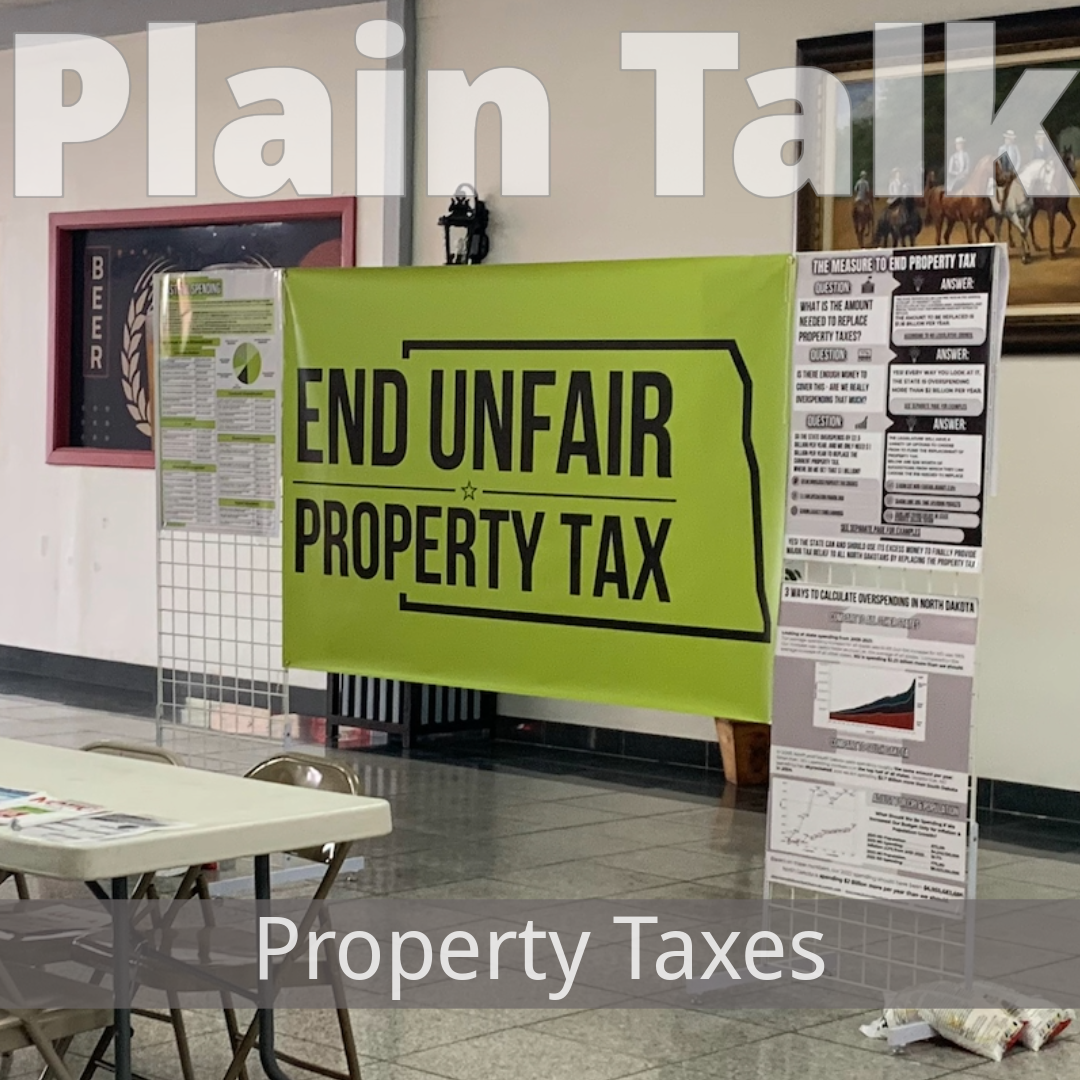
524: 'Bill Gates doesn't need another tax break'
Even if North Dakota voters approve Measure 4, a constitutional amendment that would disallow taxes on real estate values, our state and its elected leaders will still need to figure out how to replace the roughly $2.4 billion in revenues those taxes generate very budget cycle. We're going to pay for it. The question is how. Neal Messer, a farmer, businessman, and commissioner in Stark County, joined this episode of Plain Talk to discuss what that problem might look like from a local level. One upshot? Property owners may still be stuck with a property tax. "It does open the door where we could tax property based on square footage," Messer told us, though he added that the measure itself is "not very well written." "The challenge is five years from now," he added, pointing out that Measure 4 obligates state lawmakers to replace the revenues from property value taxes, but only at four years from now. Messer argues that, thanks to things like inflation, the cost of something like paving a road is going to cost more in five years than it does today, and yet Measure 4 would pin the Legislature's obligation for paying for local government eternally in 2024. Messer also says he's worried about giving big companies and out-of-state landowners a big tax break by eliminating the tax on property values. He pointed to Marathon Oil, which pays a big tax bill in his county that in turn does a lot to fund local schools, but would be able to keep that money in their out of state headquarters should Measure 4 pass. There are also wealthy, out-of-state landowners who would benefit as well, he argues. "Bill Gates doesn't need another tax break." Also on this episode, my co-host Chad Oban and I discuss why I was wrong about Minnesota Gov. Tim Walz being bad pick as runningmate for Vice President Kamala Harris. Want to follow Plain Talk? Click here for an archive of past shows and for information on how to subscribe, or just search for the show wherever you get your podcasts, including on YouTube.
523: 'There's a new pep in our step'
The emergence of Vice President Kamala Harris as the top-of-the-ticket candidate for Democrats, nationally, has created an undeniable wave of enthusiasm among our liberal friends. North Dakota's Democrats are no different. "There's a new pep in our step," state Rep. Zac Ista told my co-host Chad Oban and I on this episode of Plain Talk. Ista is a Democrat from Grand Forks and the House Minority Leader, and he had some very pragmatic things to say about the chances Democratic legislative candidates have on the ballot this year. Ista pointed out that Democrats already elected to the Legislature have been punching above their weight. They have only 16 seats in the state Legislature, but saw over 50 bills sponsored by Democratic lawmakers passed. He also praised his party's candidate recruitment efforts. Acknowledging that Democrats have struggled to fill all of the legislative races in past cycles, particularly in western North Dakota, he said his party has filled 80% of the races this cycle. Still, even if Democrats win every race they have a candidate in, they couldn't take a majority in either chamber of the Legislature. It's not mathematically possible. "We don't have enough candidates on the ballot," Ista said, but he does see an opportunity for Democrats to make up some ground. But that will require those candidates to get out into their communities and prove they're something more than "someone with a D in parentheses behind their name" on the ballot. Ista also said he's opposed to a constitutional measure that would abolish property taxes, which will almost certainly be on the ballot in November. Asked why voters should trust lawmakers to address the property tax problem meaningfully, given that it's an issue that has rankled voters for decades, Ista said that while dangling "carrots" in front of local governments to inspire them to lower property tax burdens, "we have to get more serious about talking about sticks," he said, referencing possible caps on property tax increases. Also on this episode, Oban and I talk about the controversy former President Donald Trump has created around Kamala Harris's racial background, and who Harris might choose as vice president. Want to follow Plain Talk? Click here for an archive of past shows and for information on how to subscribe, or just search for the show wherever you get your podcasts, including on YouTube.
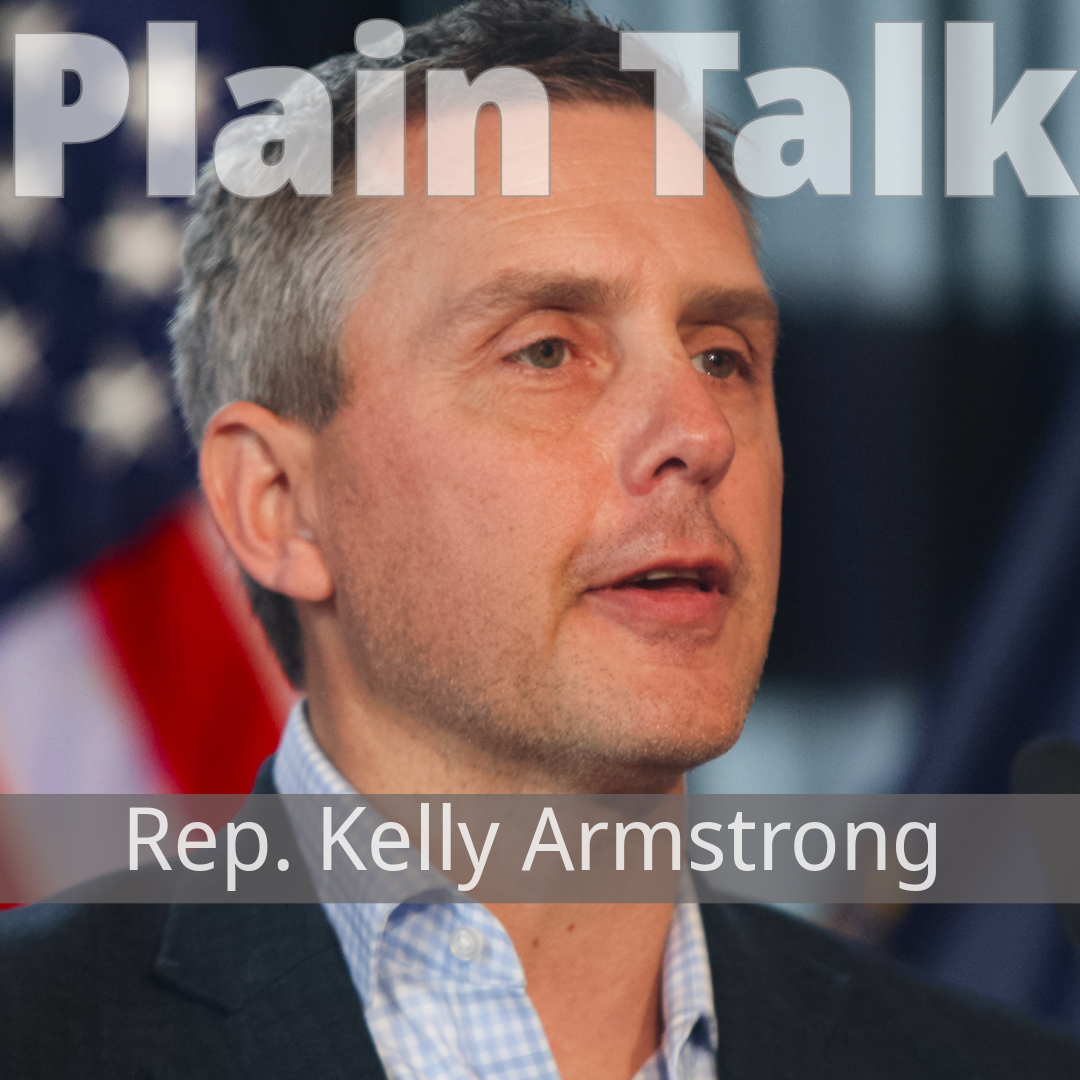
522: 'I get frustrated because we're pretending like we're doing something'
Rep. Kelly Armstrong, who is currently in the midst of a campaign to become North Dakota's next governor, has had a long career in public service. On this episode of Plain Talk, he told my co-host Chad Oban and I what his proudest moment has been from that career (so far, he's still a young man in political years). He said it was helping his hometown, Dickinson, build a new baseball complex. It was a reminder that Armstrong's track record of public service didn't begin in elected office. In fact, that's probably true of most of our elected leaders, even at the highest levels of government. We can be cynical about politics. We're certainly given good reason to be much of the time. But there's something nice in being reminded that political careers often start with public service at a granular level. Unfortunately, much of what we discussed on this episode is the sort of thing that justifies our cynicism about political leadership. Armstrong expressed frustration about the House of Representatives going out on recess without having completed the appropriations process. "I don't think Congress has done a budget in 25 years that's an actual budget," he said. "I get frustrated because we're pretending like we're doing something," he added. Armstrong also weighed in on the presidential race, saying Democrats are enjoying a "sugar high" around their new candidate, Vice President Kamala Harris, while acknowledging that the rollout of Sen. J.D. Vance as former President Donald Trump's running mate has been rocky. Armstrong also talked about what his priorities in Bismarck might be should he be elected come November, and one of them is the state's budget. "Our growth in spending has been pretty significant since 2012," he said, and while much of that was "necessary" when it happened, it may be time to curb the growth. Want to follow Plain Talk? Click here for an archive of past shows and for information on how to subscribe, or just search for the show wherever you get your podcasts, including on YouTube.
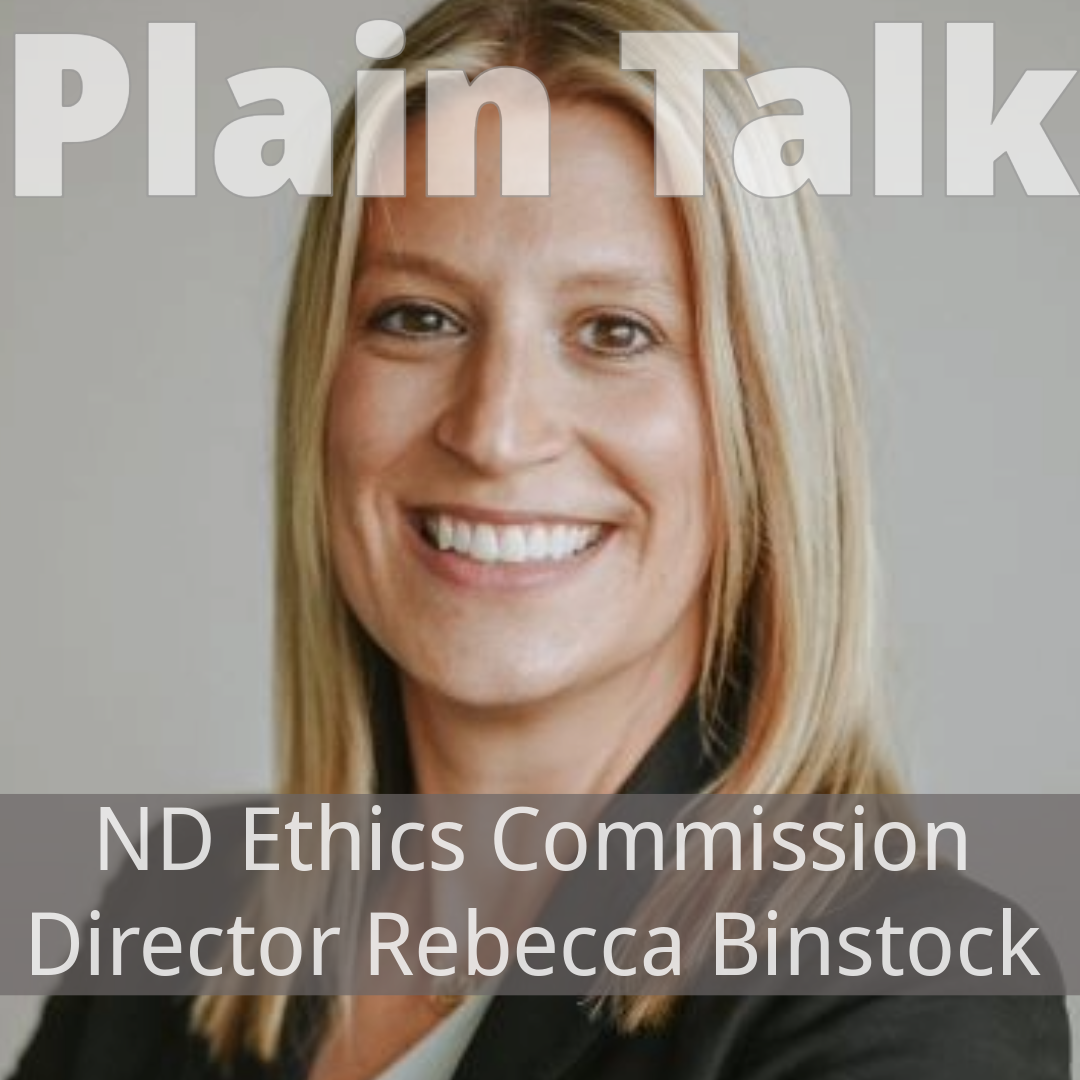
521: 'Ethics commissions alone do not create an ethical government'
In 2018, North Dakota voters approved a ballot measure creating the state Ethics Commission. The commission was implemented in 2019, and that first year, it received just 2 complaints. There were 3 in 2020, 9 in 2021, then a spike (right around election time) in 2022 to 14. There were 14 complaints again in 2023, and so far in 2024 (another election year) the number has spiked to 25 as of July 25. Those numbers came from Rebecca Binstock, the executive director of the ethics commission, who joined this episode of Plain Talk to advertise the fact that the commission is currently accepting applications for new members (find more on that in their press release). "Any North Dakota resident can serve on the ethics commission," Binstock told us, though there are some exemptions. For instance, if you're currently an elected official, or in a leadership position in a political party, you need not apply. But Binstock also discussed with my co-host Chad Oban the fact that the Ethics Commission has become much more visible in North Dakota politics, and governance, and what it does, and what it should do, are becoming increasingly important questions. "Ethics commissions alone do not create ethical government," Binstock told us, adding that it also requires a robust news media, and an engaged electorate. The Ethics Commission gets the most attention from its complaint process, where members of the public can allege unethical behavior by state officials that is then reviewed by the commission, but Binstock argued that some of its other missions, such as educating state and local officials about ethics policies and promoting more transparency, are as, if not more, important. She also discussed the commission taking a larger role in enforcing state campaign laws. Want to follow Plain Talk? Click here for an archive of past shows, and for information on how to subscribe, or just search for the show wherever you get your podcasts, including on YouTube.
520: 'I've never spoken to the chancellor'
Many Republicans are trying to argue that President Joe Biden opting to end his re-election campaign, and the subsequent consolidation of Democrats behind the candidacy of Vice President Kamala Harris, was a "coup." Was it? My co-host Chad Oban and I discussed it on this episode of Plain Talk, where we were also joined by Trista Keith, a now-former member of the Dickinson State University nursing faculty. That faculty has resigned, and the administration at DSU has moved on, opting to use personnel from Mayville State University to provide instruction to its nursing students. Craig, who came on the program to rebut claims made in our previous interview with North Dakota University System Chancellor Mark Hagerott, said she and her fellow nurses resigned because the credit hour requirements in their contracts were untenable. Hagerott, echoing claims made by DSU President Stephen Easton (who has also resigned though remains in his position as higher ed leaders work on finding a replacement), also claimed that the program was costing a half-million dollars a year to graduate just 16 students. Keith acknowledged that the program's graduation numbers were down, but attributed that to a blip from the COVID-19 pandemic. "It's completely unfair not to take COVID into consideration," she said. She said the pandemic scared a lot of prospective students away. "Nobody wanted to become a nurse," but she said things have been recovering, noting that the DSU program had 60 incoming students. She also said she was "disappointed" in Hagerott's comments, saying she expected that "someone int hat leadership position" would "get the other side of the story." "I've never spoken to the chancellor," she said. Want to follow Plain Talk? Click here for an archive of past shows, and for information on how to subscribe, or just search for the show wherever you get your podcasts, including on YouTube.
519: 'Nobody pushed President Biden out of anything'
When President Joe Biden announced an end to his re-election campaign, Adam Goldwyn, chairman of the North Dakota Democratic-NPL, participated in a call with his counterparts from around the country that resulted in a unanimous endorsement of Vice President Kamala Harris to replace the incumbent at the top of the party's national ticket. "There was overwhelming support for her in that group," Goldwyn told me and my co-host Chad Oban on this episode of Plain Talk. Responding to complaints from Republicans that Biden was pushed out undemocratically after Democratic voters around the country cast their primary ballots for him, Goldwyn said, "there was no cigar-filled back room." "Nobody pushed President Biden out of anything," he said, adding that the party's convention process is now "open" and that the delegates "could vote for anyone they want." Goldwyn says he senses a lot of enthusiasm from Democrats after the shake-up. Also on this episode, Chad and I discuss how Harris's ascendence may impact the race, what she should do to win a national election, and who her running mate might be. Want to follow Plain Talk? You can search for the show wherever you get your podcasts, listen to new episodes on YouTube, or click here for an archive of our episodes and to find subscribe links for some of the most popular podcasting services.
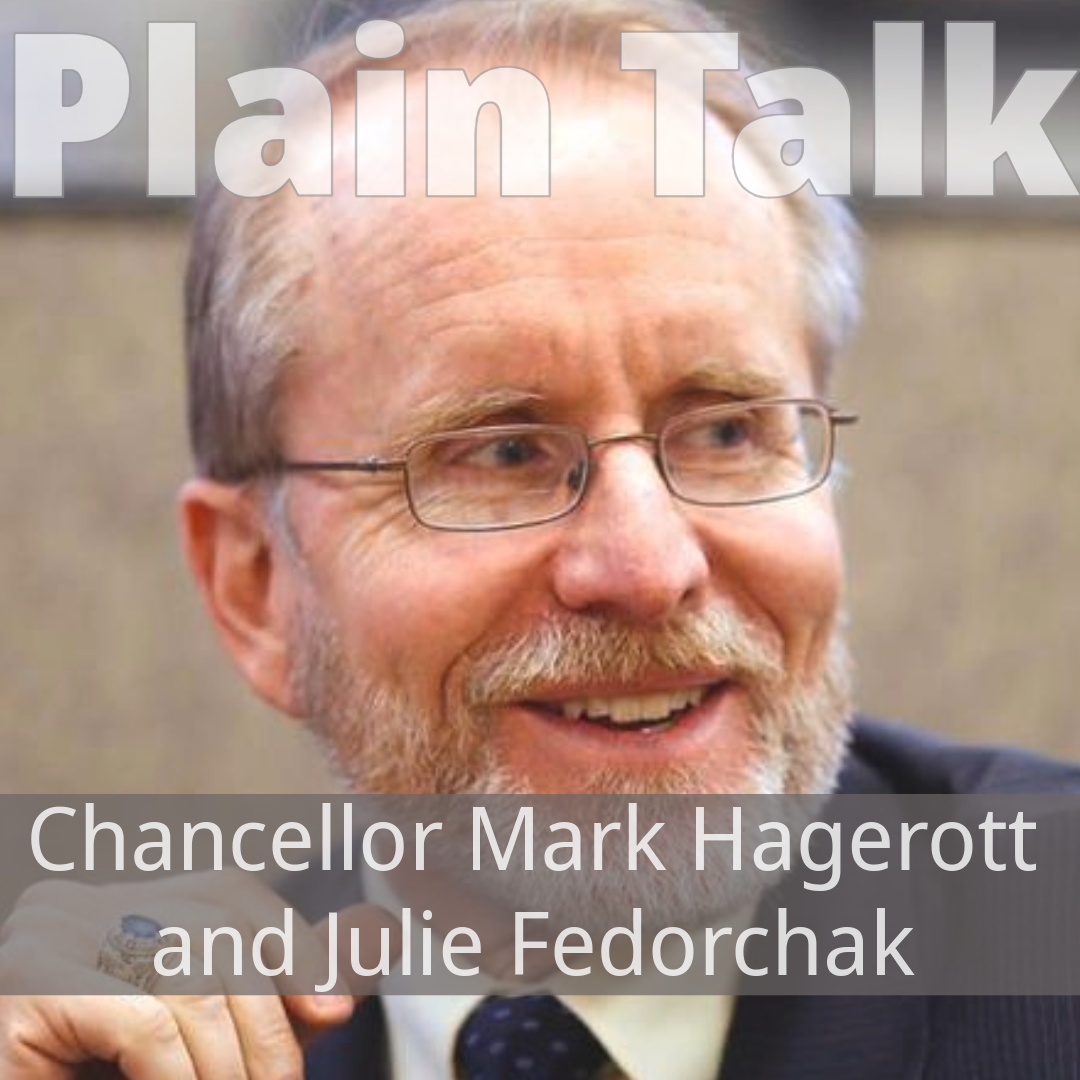
518: 'We're not going to be held hostage by 7 contract-rejecting faculty'
Dickinson State University, one of the North Dakota University System's four-year institutions, has been thrown into chaos by a labor dispute with a group of nursing faculty. First the faculty, after rejecting a new contract aimed at tamping down what DSU President Stephen Easton too much spending on a program that produces too few students, chose to resign en masse. Then Easton himself tendered his resignation alongside a lengthy statement in which he defended his approach to the dispute. "The simple reality is that, though we love DSU Nursing and want to help it survive, we cannot spend over half a million dollars in compensation expenses for 16 Registered Nurses," he wrote in that statement posted on DSU's website. "That does not work financially." "We're not going to be held hostage by 7 contract-rejecting faculty," Mark Hagerott, chancellor of the university system, said on this episode of Plain Talk. Hagerott told guest co-host Corey Mock and me that "the focus is on the students" who are set to resume classes for the fall semester in approximately five weeks, and said that Eason, who continues to serve as president until the State Board of Higher Education chooses a new leader, is still negotiating with the former nursing faculty to find a new contract. The chancellor noted that East was trying to apply the same standards for credit hours and instruction that apply to the rest of the faculty at DSU. "Seven people didn't sign their contract," he said. "Everybody else is moving forward." Will the DSU nursing program survive? And what will happen to the students currently enrolled in this program if the impasse continues? Hagerott said his expectation is that the program continues, and that if need be current students could be served by faculty at some of North Dakota's other public institutions. He also said he's had preliminary conversations with at least one state lawmaker about finding funds to help those students with scholarships to smooth over any hardships from that transition. Also on this episode, U.S. House candidate Julie Fedorchak joined to reflect on the Republican national convention she just attended in Milwaukee. "You could hear a pin drop when he was recapping the assassination attempt," she said of former President Donald Trump's speech accepting the convention's nomination. "You could see the weight on him," she continued, noting the less bombastic tone Trump struck during the address. She said it was "electric" in the convention hall, and that Trump's "drill baby drill" comments about expanding domestic energy production got the "loudest" reaction from the audience and was "music to my ears." Want to subscribe to Plain Talk? Search for the show wherever you get your podcasts, or click here for more information.
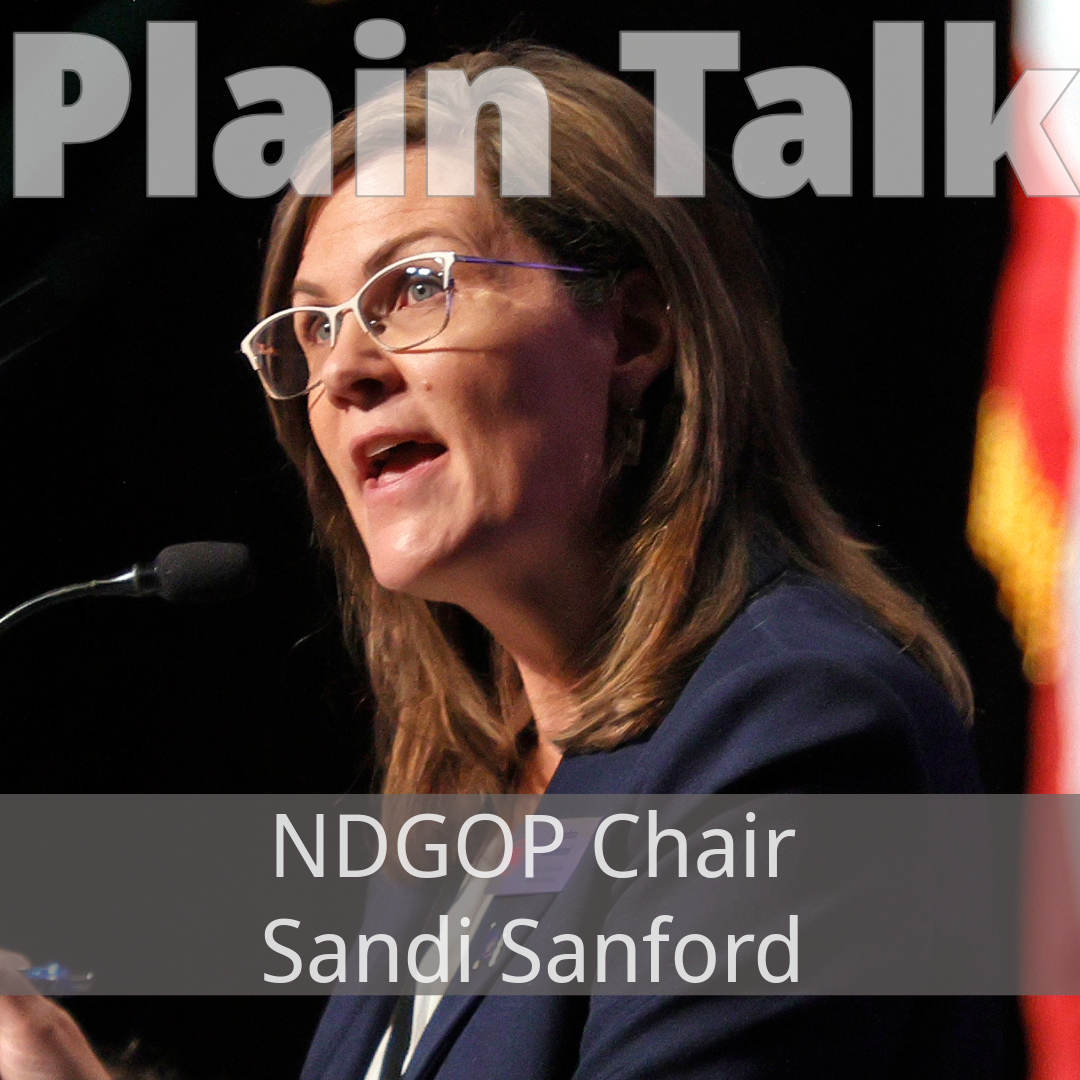
517: 'I'm bringing people together'
Sandi Sanford, chair of the North Dakota Republican Party, joined this episode of Plain Talk from the GOP's national convention in Milwaukee, where, she said, "the security plan changed drastically" after the attempted assassination of the party's presidential candidate Donald Trump. Republicans have been focused on unity at this event -- two of Trump's top rivals during the primaries, Gov. Ron DeSantis and former ambassador Nikki Haley, endorsed him in speeches at the convention -- but Sanford acknowledged to my co-host Chad Oban and I that this may be a heavy lift. "People know that what we're dealing with in North Dakota with the different factions," she said, initially calling the populist wing of the party the "far right" before correcting herself and describing them as "grassroots." The NDGOP delegation to the national convention wasn't necessarily behind Gov. Doug Burgum potentially being Trump's running mate (Burgum himself was passed over for a delegate slot by the NDGOP's state convention), but Sanford said she felt the delegates were "really confident in Donald Trump and his pick" "It gets dicey," she said of intraparty politics. "It can get cruel," but Sanford said her job is to keep the factions united. "I'm bringing people together." Sanford also addressed a visit to the North Dakota delegation from Matt Schlapp of the American Conservative Union (the organization which puts on the Conservative Political Action Conference). In March, Schlapp paid a nearly half-million settlement to a man he allegedly made unwanted sexual advances toward. "My delegation wanted to hear from CPAC," she said, adding that Schlapp was "on a speaking circle" addressing several state delegations. Also on this episode, we discuss how the assassination attempt on Trump might impact the rest of this presidential election cycle, and whether Democrats will replace incumbent President Joe Biden. Want to subscribe to Plain Talk? Search for the show wherever you get your podcasts, or click here for more information.