Parallax Views w/ J.G. Michael
1,045 episodes — Page 16 of 21
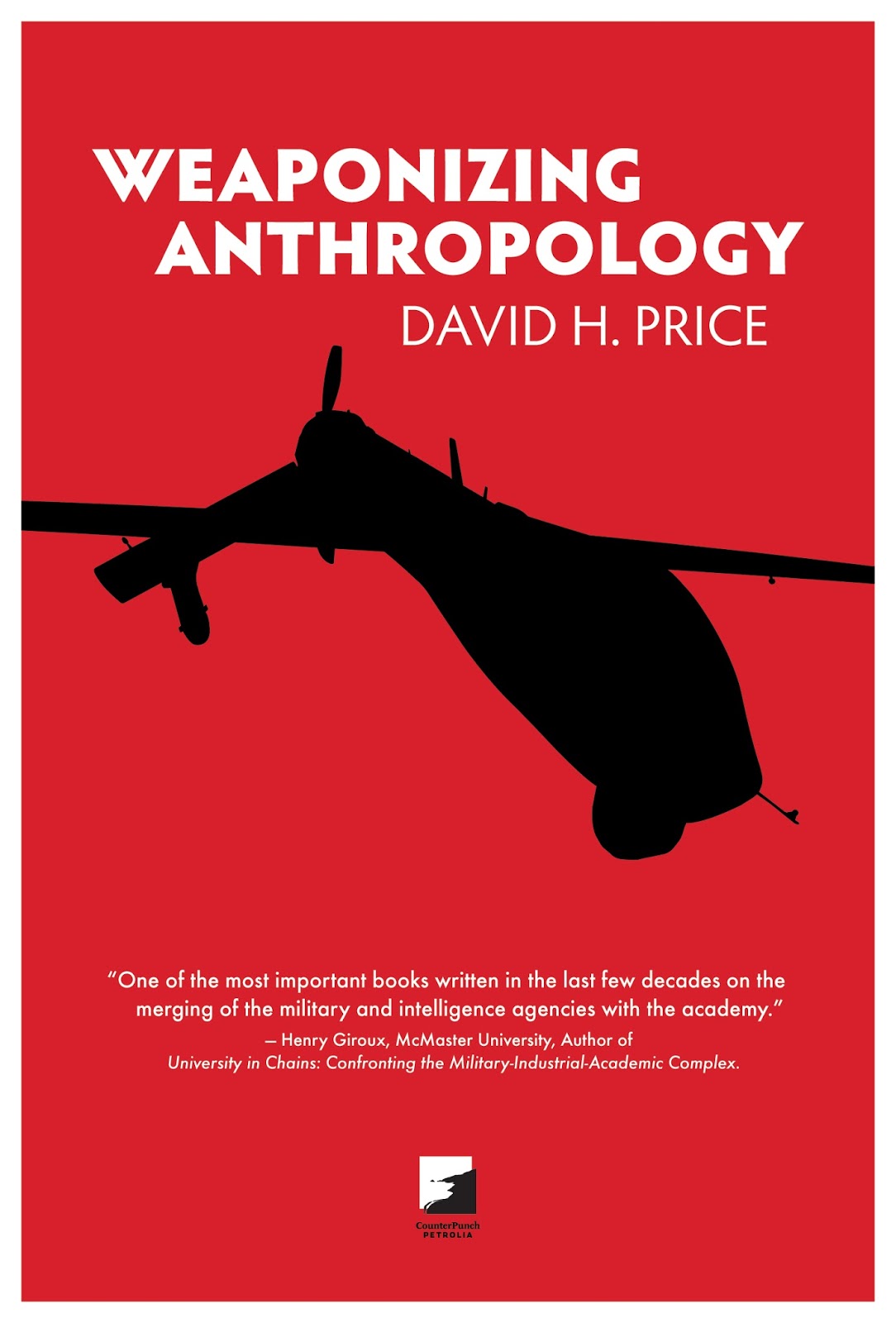
Ep 383Weaponizing Anthropology + the CIA & Publishing w/ David H. Price
If you appreciate Parallax Views and the work of J.G. Michael please consider supporting the show through Patreon at https://www.patreon.com/parallaxviews On this edition of Parallax Views, David H. Price is a scholar who has been studying aspects of the National Security State from the Cold War onward. In particular, he has written a great deal about the weaponizing of academic anthropology during the Cold War by the National Security establishment in America. His two books, Weaponizing Anthropology and Cold War Anthropology, cover the matters in-depth. Recently he also penned an article for Counterpunch entitled The CIA Book Publishing Operations: Fragments of Sol Chaneles’ Lost Manuscript detailing the CIA's involvement in book publishing during the Cold War (ie: the CIA's promotion of the book Doctor Zhiavago, the Ramparts investigation into the issue of CIA and the publishing world, and more). David Price joins us on this edition of the program to discuss both the weaponization of anthropology and his recent research into the CIA's involvement in the publishing industry as well as giving listeners an idea of how to file Freedom of Information Act (FOIA) requests and engage in quality research. We also touch on topics like MKULTRA, Don Delillo's observations about the CIA, Cold War liberals in the National Security State apparatus, and much, much more! NOTE FROM THE HOST: Late in the interview I mistakenly refer to William Casey as "Wild" Bill Casey when I was meaning to refer to OSS's "Wild" Bill Donovan.

Ep 392The Failings of the U.S. COVID-19 Vaccine Rollout & How to Correct It w/ Elisabeth Rosenthal
If you appreciate Parallax Views and the work of J.G. Michael please consider supporting the show through Patreon at https://www.patreon.com/parallaxviews On this edition of Parallax Views, the U.S COVID-19 vaccine rollout has not been off to the best start. What has led to these failings that have turned obtaining the vaccine into a Hunger Games-style Darwinian competition? And how can these failings be remedied? Elisabeth Rosenthal, editor-in-chief of Kaiser Health News and a contributing writer for the New York Times, joins us to discuss these issues and more. Rosenthal, author of the book An American Sickness: How Healthcare Became Big Business And How You Can Take It Back and the recent NYT op-ed "Yes, It Matters That People Are Jumping the Vaccine Line", takes us through the problems of inequity that have arisen due to a hollowed-out public health system, the mistakes made during the Trump administration's Operation Warp Speed, the lack of central planning in dealing with the vaccine rollout, people "jumping the line" to get the vaccine, how the most in need of the vaccine are not always the first in line to receive it, and what can be done under the Biden administration to remedy these issues.

Ep 389The Politicization of Intelligence Work, Biden, Trump's Carnage, and More w/ Former CIA Analyst Melvin Goodman
If you appreciate Parallax Views and the work of J.G. Michael please consider supporting the show through Patreon at https://www.patreon.com/parallaxviews On this edition of Parallax Views, former National Security insider Mevlin Goodman, who has worked for the CIA, the State Department, and the Department of Defense's National War College, joins us to discuss the problem of the politicization of intelligence work in the U.S. and President Joe Biden's picks for the CIA (William Burns, a career diplomat) and Secretary of Defense (Retired General and Raytheon official Lloyd Austin, who some analysts, including Goodman, will widen the the civil-military gap). We delve into Goodman's history in intelligence work and his views on what has gone wrong with how the National Security State has operated in the past few decades. We also discuss the dumbing down of America, U.S.-China relations, Michael Scheuer of the CIA's Bin Laden Unit Michael Scheuer, the idea of the "deep state", defense spending, the civil-military gap, and much, much more.

Ep 391BONUS: Gamestopocalypse w/ Mike Swanson
If you appreciate Parallax Views and the work of J.G. Michael please consider supporting the show through Patreon at https://www.patreon.com/parallaxviews On this bonus edition of Parallax Views, users of the "Wall Street Bets" Reddit have wreaked havoc on Wall Street hedge funds in relation to Gamestop and other stocks in the past day. What is this? The Gamestopocalypse? What should we make of this stock market mayhem? Mike Swanson of the Wall Street Window and author of the new book Why the Vietnam War (and previously The War State) joins us to discuss the matter and the problems with apps like Robinhood, which is currently coming under fire from figures like Congresswoman Rashida Taleb. Everyone from Tucker Carlson to Alexandria Ocasio-Cortez has chimed in on this controversy. Mike Swanson has a take you may disagree but I thought this conversation was worthwhile as some whose reactions to the events have thus far differed from Mike's own analysis.

Ep 390U.S. Foreign Policy, Joe Biden, the Crisis in Yemen, and More w/ Dave DeCamp
If you appreciate Parallax Views and the work of J.G. Michael please consider supporting the show through Patreon at https://www.patreon.com/parallaxviews On this edition of Parallax Views, a quick-and-dirty rundown of where U.S. foreign policy stands at this early stage in the Biden Presidency. Dave DeCamp, news editor for Antiwar.Com, joins us to talk Biden's Secretary of State Antony Blinken, hawkish figures like Samantha Power and Victoria Nuland's involvement in the administration, the War in Yemen, the prospects for renewing the Iran deal, Biden's Defense Secretary pick Lloyd Austin, the tensions between China and the U.S. especially as they regard to the South China Sea, and much, much more.

Ep 388GOP Operatives and the "Stop the Steal" Capitol Riots w/ Zach D. Roberts
If you appreciate Parallax Views and the work of J.G. Michael please consider supporting the show through Patreon at https://www.patreon.com/parallaxviews On this edition of Parallax Views, photojournalist Zach D. Roberts of the Palast Investigative Fund joins us to discuss the investigative journalism he and Greg Palast undertook in the aftermath of the January 6th Capitol riots. What Roberts and Palast found was the high-profile members of the GOP, including from the National Republican Senatorial Committee (NRSC) and Georgia Republican Party, had coordinated with Ali Alexander, an alt-right activist associated with Roger Stone and other far-right figures that played a role in organizing the "Stop the Steal" movement that stormed the Capitol on January 6th, 2021. We discuss this in detail as well as going over Zach and Greg's work on voter suppression, voter purges in the Georgia election, and much, much more.
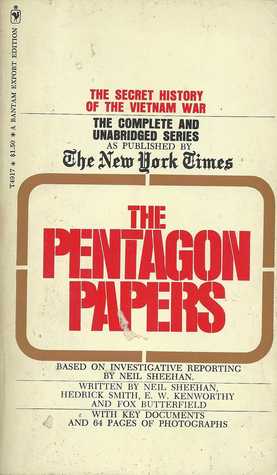
Ep 387The Late Neil Sheehan, The New York Times, Vietnam, and Daniel Ellsberg Pt. 2 w/ Jim Naureckas
On this edition of Parallax Views we continue our examination of the late New York Times journalist Neil Sheehan, this time covering a news story published in NYT after his death by reporter Janny Scott proclaiming to tell the true story of the Pentagon Papers and Sheehan's involvement in the affair that was not previously known. The article, entitled "Now It Can Be Told: How Neil Sheehan Got the Pentagon Papers", seems to treat Neil Sheehan as the true hero of the the saga while portraying the story's whistleblower Daniel Ellsberg as a fearful neurotic with a penchant for making foolish mistakes. The Pentagon Papers, which were a secret Pentagon study of the Vietnam War commissioned by Robert McNamara that exposed how the U.S. government had been deceiving the public about the war effort, is a monumental case in the history of 20th century politics and journalism. As such Janny Scott's story, in which Sheehan gives a different version of events, is an important development. Jim Naureckis of the media watchdog organization Fair and Accuracy in Media (FAIR), however, argues the Scott story is misleading. As such Naureckis and FAIR released an Action Alert to its readers entitled "What Can ‘Now Be Told’ by NYT About Pentagon Papers Isn’t Actually True". Jim joins us to discuss the problems with the NYT article purporting to tell a new truth about the Pentagon Papers as well as discussing the problems of valorizing journalists as heroes while downplaying the importance and bravery of whistleblowers like Ellsberg. All that and more on this edition of Parallax Views.
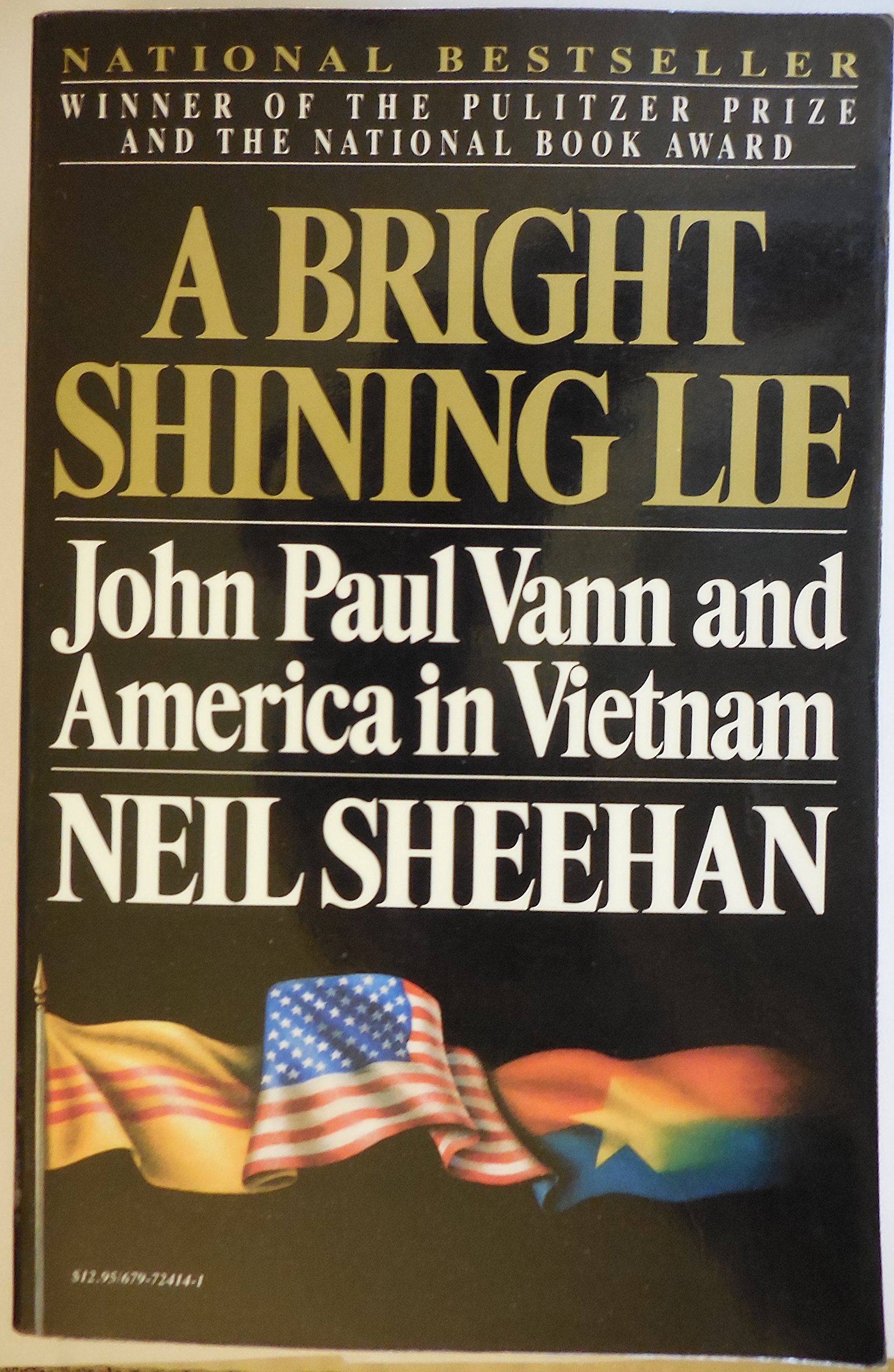
Ep 386The Late Neil Sheehan, The New York Times, Vietnam, and Daniel Ellsberg Pt. 1 w/ Jim DiEugenio
On this edition of Parallax Views, the acclaimed New York Times journalist Neil Sheehan passed away on January 7th, 2021. Sheehan is particularly known for his reporting on the Vietnam War, his bestseller A Bright Shining Lie: John Paul Vann and America in Vietnam, and his involvement in the story of whistleblower Daniel Ellsberg and the Pentagon Papers. Although highly regarded by most, Jim DiEugenio of Kennedys and King offered criticisms of Sheehan's journalistic oeuvre in his piece "Neil Sheehan: In Retrospect". Jim joins us on this edition of the program to offer a parallax view on the work of Neil Sheehan and his contemporary David Halberstam, author of The Best and the Brightest, as it relates to their work on the Vietnam war. DiEugenio argues in his heavily footnoted piece that, contrary to recognizing the Vietnam War as a folly, Sheenan offers a "Lost Cause" theory of the conflict that has since been taken up by journalists today like Max Boot (author of The Road Not Taken: Edward Lansdale and the Tragedy in Vietnam) and others. Additionally, DiEugenio makes thoughtful critiques of Sheehan in relation to the story of the Pentagon Papers and Sheehan's spat with attorney Mark Lane over Vietnam atrocity. This is a fascinating conversation that also manages to delve into foreign policy during the administration of President John F. Kennedy and a rundown of the story behind the Pentagon Papers. Additionally, Jim offers his thoughts on the Capitol riots of January 6th, 2021. All that and more on this edition of Parallax Views!

Ep 385Reflecting on The Rural-Urban Divide w/ Ross Benes
On this edition of Parallax VIews, Ross Benes, author of Rural Rebellion: How Nebraska Became a Republican Stronghold, joins us for a probing, sincere conversation on America's much discussed "rural-urban divide" and his experiences moving from a small-town in Nebraska to the cosmopolitan world of New York. Although Ross's book has a great deal of hard journalism and statistics regarding how the Republican Party has taken hold of Nebraska, we use the conversation to delve into the autobiographical and inter-personal elements of Rural Rebellion in this rousing discussion. Why is there such a divide between the America mid-west and the country's big cities? And can the divide be overcame? This conversation doesn't necessarily provide all the answers but it does raise important points to consider in regards to how we relate to each other in an increasingly atomizing society that is fraught with friction. This particular discussion seems particularly relevant in light of the pro-Trump elements, such as QAnon and the Stop the Steal movement, that caused much chaos on Capitol Hill on January 6th, 2021.

Ep 384The Acuity of the American Crisis w/ Conrad Hamilton
On this edition of Parallax Views, Conrad Hamilton, co-author of Myth and Mayhem: A Leftist Critique of Jordan Peterson (w/ Ben Burgis, Matt McManus, and Marion Trejo), joins us to give his take on the political situation in the U.S. from the perspective of someone currently watching the American turmoil from Paris, France. Conrad and I delve into the realm of theory in an attempt to explain the current situation as well as touching on areas related to left-wing debates concerning class reduction vs. identity politics, U.S. saber-rattling at China, the Capitol Hill riots, Trumpism, and much, much more. Is America in crisis? Conrad makes the case and argues that the political Left needs to step up to the plate for that very reason. All that and more on this edition of Parallax Views

Ep 382QAnon Has Woke Up the Real Deep State w/ Nicholas Grossman, National Security Scholar
If you appreciate Parallax Views and the work of J.G. Michael please consider supporting the show through Patreon at https://www.patreon.com/parallaxviews On this edition of Parallax Views, National Security scholar Nicholas Grossman recently penned an open letter to QAnon believers entitled "QAnon Woke Up the Real Deep State" warning them that the Capitol Hill riots is going to trigger a harsh reaction from the real National Security rather than the fevered conspiratorial fantasies they imagine in their minds. Nicholas joins us for a conversation about the piece and some of the points he raises in it as well as discussing the potential pitfalls of new domestic terrorist laws and elucidating what the real deep state is and how it works. Nicholas makes the case that QAnon, "Stope the Steal", and other fervent Trump supporters may have bitten off more than they can chew with the 1/6/21 incident on Capitol Hill. Is the National Security State's response going to be what QAnon and similar movements signed up for? Nicholas argues not and also discusses groups like The Oathkeepers and their relationship to the militia movements of the 1990s to help us better understand the situation involving domestic terrorism today and the National Security State's response to it. All that and more on this edition of Parallax Views.
Ep 380BONUS: Chip Berlet, Expert on the U.S. Far Right
The following was initially a video interview published by the Romanian left media outlet The Barricade. It is an discussion with Chip Berlet, a long time researcher into the movement and machinations of the American far-right, conducted after the events on Capitol Hill on 1/6/21. It is reposted here as a bonus episode for my listeners. Original description of the episode courtesy of The Barricade: On January 6th, 2021 pro-Trump supporters, from QAnon conspiracy believers to the members of the militia-oriented Oathkeepers organization, stormed Capitol Hill in the belief that sitting President Donald J. Trump had a potential second term in office stolen from him vis-a-vis election fraud. J.G. Michael, host of the Parallax Views podcast, reached out to Chip Berlet, long-time researcher into the machinations of the American far right, for comment. For decades Berlet, a former analyst at Political Research Associates and at one time Vice President of the National Lawyers Guild, has honed his skills as a scholar to become an expert on the topics of right-wing populism, fascism, and the spread of conspiracy theories in society. His writings have been features in such outlets as The New York Times, CovertAction Quarterly, The Progressive, The Public Eye, Z Magazine, and The Des Moines Register. He is also the author of Trumping Democracy: From Reagan to the Alt Right and co-author, with Matthew Lyons, of “Right-Wing Populism: Too Close for Comfort”. In this video interview, conducted exclusively for The Barricade, Berlet gives his thoughts on the Capitol Hill riots, the dangers of unleashing the National Security Apparatus in the aftermath of this event, and much more. J.G. Michael is the producer and host of Parallax Views, a program covering an eclectic variety of topics ranging from politics and pop culture to history and philosophy as well as everything in between. Previously he worked for Zero Books as the co-host of the Alternatives podcast with C. Derrick Varn. He has interviewed such well-known public figures as Noam Chomsky, Academy Award-nominated screenwriter John Sayles, Lt. Col. Lawrence Wilkerson, and many, many others.
Ep 379Victims and Perpetrators in America: A Post-Capitol Chaos Conversation w/ J.P. Sottile
If you appreciate Parallax Views and the work of J.G. Michael please consider supporting the show through Patreon at https://www.patreon.com/parallaxviews On this edition of Parallax Views, J.P. Sottile aka the Newsvandal joins us to unpack where America is at after the chaos on Capitol Hill last week in which angry, unruly Trump supporters, QAnon believers, Oath Keepers, and others stormed D.C. in the belief that Joe Biden's Presidential victory was the belief of election fraud and that a second term in the White House was stolen from Trump as a result. J.P., as someone who studied fascism during his years in academia and grew up in an evangelical Christian family, has an interesting take on these matters and believes that the Republican Party has unleashed a beast that has been caged since the McCarthy era. The discussion moves towards one of a philosophical nature as we delve into the idea of Victims and Perpetrators in society and politics with J.P. contending that we are all complicit in a deeply broken society. J.P. mentions the Iraq War in this regard and J.G. brings up Umberto Eco's "Ur-Fascism" essay, but the discussion goes down many different and varied rabbit holes. A deeply thoughtful conversation.

Ep 378Cultural Revolutions and Farcical Insurrections w/ C. Derick Varn
EIf you appreciate Parallax Views and the work of J.G. Michael please consider supporting the show through Patreon at https://www.patreon.com/parallaxviews On this edition of Parallax Views, C. Derick Varn of Zero Books makes his triumphant return to the program by providing a history lesson on the idea that "politics is downstream from culture" from the idea of cultural hegemony by the Italian Communist thinker Antonio Gramsci to its usage today. In addition, we delve into the storming of the Capitol by Trump supporters last week and attempt to tie together all the threads that lead us back to the "politics is downstream from culture" end of our conversation. Needless to say, this is an in-depth discussion that's a tour-de-force of thoughtful historical information, political conversation, and current events that you won't want to miss
Ep 376Gary Webb Revisited, the Importance of Journalism, & Reporting on the National Security State w/ Jefferson Morley
If you appreciate Parallax Views and the work of J.G. Michael please consider supporting the show through Patreon at https://www.patreon.com/parallaxviews On this edition of Parallax Views, recently I reached out to Jefferson Morley after Ishmael Reed mentioned that he was the reason his op-ed "The Word on the Vine", which dealt with the claims of the late journalsit Gary Webb and others that the CIA played a role in the LA crack epidemic vis-à-vis the Iran/Contra Affair, was published in The Washington Post. Morley, in addition to being the author of such books as The Ghost: The Secret Life of CIA Spymaster James Jesus Angleton, Our Man in Mexico: Winston Scott and the Hidden History of the CIA, and Snow-Storm in August: Washington City, Francis Scott Key, and the Forgotten Race Riot of 1835, was a reporter and editor for The Washington Post. He now runs the Deep States blog and reports on issues related to government secrecy, transparency, and intelligence agencies like the CIA and FBI. Morley was at the center of the storm so to speak when Gary Webb's Dark Alliance series, which connected to the CIA's involvement with the Iran/Contra scandal to the the LA crack epidemic, and the controversy it created. Many outlets, like The Post, pushed back hard on Webb. Morley lobbied for a closer examination of what Webb may have gotten right or been on the trail of getting correct rather than simply pointing out his errors. In this conversation we begin by revisiting Gary Webb's reporting and then begin delving into other areas of interest such as how Morley began reporting on the cloak and dagger world of intelligence agencies and how they have often been unaccountable for their actions over the decades. We also discuss the origins of the term "Deep State" and how it has been transformed into a snarl word Donald Trump uses against his critics, the pros and cons of news media today and the importance of journalism to a functioning democracy, the problems of a society which deeply distrusts its media, Steven Spielberg's movie The Post, the Amazon series The Last Narc about the death of Enrique "Kiki" Camarena, classified documents related to the JFK assassination, op-eds vs. hard reporting, government secrecy and why greater transparency is needed in regards to federal agencies, Morley's lawsuit against the CIA, and much, much more. A note that this was recorded before the January 6th, 2021 pro-Trump mob breach of the Capitol. The conversation, and some of the areas we delve into, seem particularly relevant in regards to this event. I hope you as a listener will find the conversation fascinating.

Ep 377BONUS: Chaos on Capitol Hill w/ Dr. Jack Rasmus
If you appreciate Parallax Views and the work of J.G. Michael please consider supporting the show through Patreon at https://www.patreon.com/parallaxviews On this bonus edition of Parallax Views, economist Dr. Jack Rasmus, host of the Alternative Visions radio show and author of The Scourge of Neoliberalism: US Economic Policy from Reagan to Trump, joins us to put the January 6th 2021 pro-Trump mob breach of Capitol Hill. On January 4th, 2021, Dr. Rasmus published an article entitled "What Happens January 6th, 20th & After? America’s Declining Democracy" (also available on Counterpunch as "America’s Continuing Crisis of Democracy" in which he offered his thoughts on Trump and his cohorts like Ted Cruz's game plan for January 6th and January 20th when he is slated to leave the White House. In said op-ed Dr. Rasmus commented on how the Proud Boys and other pro-Trump elements would be on-hand at Washington, D.C. on the 6th in droves. What, though, is the end game? Dr. Rasmus offers that it is not about keeping Trump in office past January 20th, but instead part of a longer term strategy on the Trump loyalists within the GOP to keep control of the Republican Party and further mobilize and radicalize its base going into 2022 and eventually 2024. In this conversation Dr. Rasmus lay out his thoughts from this article as well giving his comment on the events of January 6th, 2021.
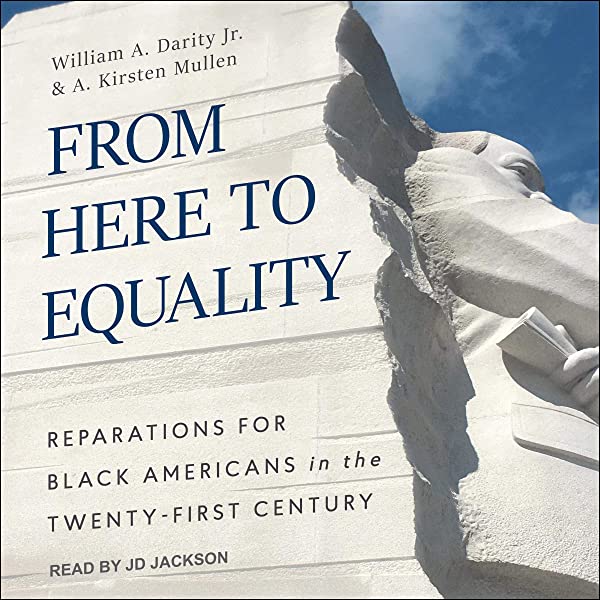
Ep 353From Here to Equality: The 21st Century Case for Reparations w/ William A. Darity and A. Kirsten Mullen
If you appreciate Parallax Views and the work of J.G. Michael please consider supporting the show through Patreon at https://www.patreon.com/parallaxviews On this edition of Parallax Views, Prof. William A. Darity, Jr. and A. Kirsten Mullen join us to discuss their book From Here to Equality: Reparations for Black Americans in the Twenty-First Century. What does reparations mean, who are the people fighting for it, and how can those fighting for it win in their efforts? Are there any issues with reparations? What of the controversial ADOS (American Descendants of Slavery) movement and its argument that reparations should only be afforded to the descendants of slavery in the United States? What does the term "40 acres and a mule" mean and what is it's relevance to the discussion of reparations for black Americans? Sandy Darity and Kirsten Mullen provide answers to all these questions and many more in the course of this fascinating discussion that deals with the history of slavery, the Civil War, the fight for freedom by black Americans, the racial wealth gap and the wealth differential between blacks and whites, the issue of general wealth vs personal savings and income as the key to wealth accumulation, black criticisms of reparations, the narrative that black Americans would not use reparations responsibly, savings and spending among black and white Americans, and other important subjects related to their book.

Ep 375A Gun in My Gucci: Two Outsiders Take Down the Chicago Mob w/ Former FBI Agent Elaine Smith
If you appreciate Parallax Views and the work of J.G. Michael please consider supporting the show through Patreon at https://www.patreon.com/parallaxviews Parallax Views returns from a New Year's break with a brand new and exciting episode detailing how one of the FBI's most successful female agents joined forces with a Japanese mobster to take down Chicago organized crime. Former FBI Agent Elaine Smith (aka E.C. Smith) joins us to discuss how she became involved in the FBI and ended up on the tail of Ken Eto, a Japanese mobster who acted as a gambling kingpin for the Chicago mob. Eto, after the mob attempted a hit on him in fear he'd rat on them, turned to Elaine Smith to get his revenge on them in court. What followed is a story that is fit for a major motion picture and led to dozens of organized crime figures to be taken down by this duo of two very different kinds of fish-out-of-water outsiders. Elaine also discusses what it was like getting into the FBI, the training (including brutal boxing matches she had to have with men), and her approach to FBI work. Did she experience sexism in her career and struggles as a female in the FBI? Find out in this fascinating conversation. If you're interested in Mafia tales, organized crime, FBI crime busts, or any other matter of true crime stories.
Ep 374REPLAY: The Sordid Saga of Jeffrey Epstein: The Les Wexner Connection
EOn this edition of Parallax Views, Les Wexner, the founder of L Brands and former CEO of Victoria's Secrets, has come under scrutiny in the past year for his close association with the late billionaire pedophile "International Man of Mystery" Jeffrey Epstein. In some ways Wexner's association with the wealthy abuser can be considered the "Ohio Connection" to the sordid saga of Jeffrey Epstein. Lawyer, professor of political science, and maverick Columbus, Ohio-based journalist Dr. Robert Fitrakis joins, who has been investigating the Wexner/Epstein story since the 1990s, joins us to discuss this aspect of the Epstein scandal. Our resident Epstein correspondent in France, Marlon Ettinger, joined J.G. to co-host this episode. In this conversation we discuss: - Bob's background in journalism and how he got on the trail of the billionaire Les Wexner in Columbus, Ohio - How Epstein and Wexner met - The 1985 mob-style murder/hit carried out against Wexner's tax attorney Arthur Shapiro and "The Shapiro Murder File" - Wexner's connections to public corruption and organized crime in central Ohio - State of Ohio Inspector General David Sturtz, who went after Epstein and Wexner and referred to Epstein as Wexner's "boyfriend" - Wexner's ties to the scandalous Iran/Contra affair through the CIA-connected Southern Air Transport (SAT) - The Wexner Foundation's involvement in the selling of the Iraq War - Epstein and sexual blackmail operations; the large sums of money transferred from Wexner to Epstein; why Bob believes that Wexner is still worth looking into rather than someone who didn't know Epstein's true nature; the arrest of Ghislaine Maxwell (does she have the goods?) and much, much more. SUPPORT PARALLAX VIEWS ON PATREON! FOR BONUS CONTENT AND ARCHIVED EPISODES!
Ep 373REPLAY: Could 9/11 Have Been Prevented? w/ Former FBI Agent Mark Rossini
EOn this edition of Parallax Views, was 9/11 preventable? Our guest on this September 11th anniversary edition of Parallax Views, Mark Rossini, who worked as the FBI's point man in the CIA's Bin Laden Unit (aka ALEC Station), makes the case it was in his piece "In Re: 9/11". As an FBI agent working in ALEC Station alongside fellow FBI agent Doug Miller, Mark became privy to the CIA's monitoring of two 9/11 hijackers, Flight 77's Nawaf al-Hazmi and Khalid al-Mihdhar, and a "Terror Summit" in Kuala Lumpur, Malyasia from January 5th-8th, 2000. Through their monitoring of these activities, the CIA discovered that the two future 9/11 terrorist had VISAs to the U.S. When Doug Miller wrote a report on the summit, however, the CIA told both he and Rossini not to send it to the FBI. For 19 years Mark Rossini has been troubled by the question of WHY the CIA did not share this vital bit of information with the CIA. His conclusions, which were independently corroborated by National Coordinator for Security, Infrastructure Protection, and Counter-terrorism Richard Clarke, is that elements of the CIA made a catastrophic decision after the Kuala Lumpur Summit that they kept under wraps to preserve their own careers and reputations. This decision, which Rossini makes a strong circumstantial case for having occurred, involved an illegal recruitment operation and Saudi Arabia's intelligence services aka the Mabahith. Rossini believes that, if this circumstantial case is true, then 9/11 may well have been preventable. And yes, this is the same Mark Rossini featured heavily in Lawrence Wright's book The Looming Tower and as a character in the TV series of the same name. PLEASE READ MARK ROSSINI'S ANALYSIS OF 9/11 https://undicisettembre.blogspot.com/p/mark-rossini-inre911.html In this conversation we discuss: - The FBI's John O'Neil, known as Bin Laden's arch-nemesis (who, after leaving the FBI shortly before 9/11 perished in the towers on that fateful day) and the conflicts between O'Neil and the CIA, specifically former BIn Laden Unit head honcho Michael Scheuer - The concept of "The Wall", which many believe led to botched communications before 9/11 between the FBI and CIA, and why Rossini believes "The Wall" isn't a sufficient explanation for the CIA's withholding information regarding the Malaysia terror summit from the FBI - The relationship between the CIA and Saudi Arabia's Mahabith; the special relationship between Saudi Arabia and the U.S. - FBI agent Steve Bongardt and his angry email to Dina Corsi in July of 2001 regarding the CIA, FBI, and al-Hazmi and al-Mihdhar; Bongardt wrote that, “Someday somebody will die—and, Wall or not, the public will not understand why we were not more effective.” - CIA Director George Tenet's comments pertaining to 9/11 - And much, much more. This Episode Brought to You By: The War State: The Cold War Origins of the Military-Industrial Complex and the Power Elite, 1945-1963 by Michael Swanson of The Wall Street Window
Ep 372REPLAY: The Program: Inside the Mind of Keith Raniere and The Rise and Fall of NXIVM w/ Toni Natalie & Chet Hardin
On this edition of Parallax Views, the multi-level marketing NXIVM has gained national infamy as the "Hollywood Sex Cult" that landed its founder Keith Raniere, Smallville actress Allison Mack, and others in prison on multiple counts related to horrifically abusive behaviors against its members. The sensational headlines, however, may not do justice to understanding the true depravity of Keith Raniere, known within the cult as "Vanguard", and the horror show of NXIVM. Joining us on this edition of the program to unravel the sordid story and provide insight into the mind of a cult leader is Keith Raniere's ex-girlfriend, the "Patient Zero" of NXIVM, Toni Natalie and journalist Chet Hardin, who has been one of the main journalists covering the cult. Together Natalie and Hardin have authored the new book The Program: Inside the Mind of Keith Raniere and The Rise and Fall of NXIVM. We discuss Toni's story from how she met Raniere through the company Consumers Byline Inc. to the gaslighting she experienced after crossing Raniere and finally bearing witness to the fall of NXIVM's founder at his trial. Chet fills us in on how he began reporting on NXIVM and his experiences with its members. Additionally, Chet notes that, while NXIVM may have connections to political campaigns of the Clinton family, Raniere and his cult's beliefs share a great deal in common with the right-wing ideologies espoused online by "incels" and "the red pill" in regards to women. Toni notes that the story of NXIVM is not over yet and that victims, like the late Kristin Snyder, still deserve justice. We close out the conversation by trying to offer some kind of light amidst all the darkness. NXIVM founders Keith Raniere and NLP (Neuro-Linguistic Programming) expert Nancy Salzman, known within the cult as "Vanguard" and "Prefect" The Smallville actress Allison was a particularly high-profile member of NXIVM and has admitted to coming up with the idea for the human branding of NXIVM members Sara and Clare Bronfman, heiresses to the immense wealth generated by the Seagram Company, were also high-profile figures associated with NXIVM THE PROGRAM: INSIDE THE MIND OF KEITH RANIERE AND THE RISE AND FALL OF NXIVM BY TONI NATALIE W/ CHET HARDIN AVAILABLE NOW FROM GRAND CENTRAL PUBLISHING SUPPORT PARALLAX VIEWS ON PATREON! WHERE YOU CAN HEAR... PARALLAX VIEWS THE WEEK THAT WAS CURRENT EVENTS PROGRAM

Ep 368Krampus and the Old Dark Christmas of Folklore w/ Al Ridenour
If you appreciate Parallax Views and the work of J.G. Michael please consider supporting the show through Patreon at https://www.patreon.com/parallaxviews The Parallax Views holiday series concludes with an exploration of Santa Claus's dark counterpart, Krampus. Although the figure of Krampus has become embedded in the popular consciousness in the last decade, especially since the release of the Hollywood horror-comedy Krampus, the folklore of the Krampus reaches much farther back and into the most isolated part of the European Alps. Joining us to unravel this history, and explain how remote parts of Europe still celebrate the winter season with rituals related to St. Nicholas and his dark companion Krampus, is Al Ridenour, a former member of the avant-provocateur Cacophony Society and author of The Krampus and the Old Dark Christmas: Roots and Rebirth of the Folkloric Devil (Feral House; 2016). We begin by discussing Al's involvement in the Cacophony Society, which once boasted the involvement of transgressive author extraordinaire Chuck Palahniuk, and it's most famous avant-garde provocation: SantaCon. From there we delve into how the winter season has always had a dark side within the popular imagination and discuss the popularity of Christmas horror movies with Al recommending 1980's unusual Christmas Evil and discussing Michael Dougherty's Krampus and whether it is true to the folklore. We then take a deep dive into the history of the lore around Krampus and how the figure is used in festive rituals during the month of December in the Alps of Europe like Gastein in Austria. What is the function of the Krampus? His relationship to St. Nicholas? Do these rituals have an erotic and courtship element? Is there subversive, anarchic element beyond to the Krampus beyond his being used to scare children into following social norms and rules? Who are the people behind the Krampus troupes and how do they approach these events? What's the connection the the gore theatre of the Grand Guignol and these Krampus events (known as a Krampus Run or Krampuslauf)? And what can we learn from it all? All that and more on this edition of Parallax Views.

Ep 367BLACK CHRISTMAS Actress Lynne Griffin on Her Amazing Career
If you appreciate Parallax Views and the work of J.G. Michael please consider supporting the show through Patreon at https://www.patreon.com/parallaxviews On this edition of Parallax Views we continue our holiday series by speaking with an actress from a Christmas movie classic. Well, maybe not a Christmas movie classic in the traditional sense but in a more unorthodox one. No, I'm not talking about Bonnie Bedelia from Die Hard. Instead I'm talking about Lynne Griffin, the Canadian actress who played the iconic-if-short-lived role of the doomed Claire in Bob Clarke's 1974 horror chiller Black Christmas. Since it's release all those decades ago, Black Christmas has inspired two remakes/reimaginings and a high-profile fan film called It's Me Billy from noted voice actor David McRae. It's also a movie that really predates and arguably helped insprie elements of later horror movies like Halloween and the lesser slasher films that would follow. With a few plot elements reminiscent to When a Stranger Calls, Black Christmas centers on a sorority house being menaced by an obscene phone caller who eventually takes to picking off each of the girls one by one. In addition to Lynne Griffin, the movie also featured the talents of Romeo and Juliet's Olivia Hussey, Superman's Margot Kidder, 2001: A Space Odyssey's Keir Dullea, and the veteran rugged character actor John Saxon (A Nightmare on Elm Street, Enter the Dragon) as Police Lt. Ken Fuller. The film's director, Bob Clarke, would go on to make a more traditional holiday classic in the form of A Christmas Story as well as helming such features Porky's, Murder by Decree, and Turk 182 among others. Lynne joins us to talk not only about Black Christmas but also some of her other acting credits including the Rick Moranis comedy Strange Brew, the cult classic horror obscurity Curtains (which feels particularly relevant in the age of the MeToo movement), and April Mullen's criminally underrated 88 starring Katherine Isabelle (Ginger Snaps, Freddy Vs. Jason, American Mary) and Christopher Lloyd (Back to the Future, Who Framed Roger Rabbit, The Addams Family Values). All that and more on this edition of Parallax Views

Ep 366Have Yourself a Very Merry Mumblecore Christmas w/ Stefanie Davis
If you appreciate Parallax Views and the work of J.G. Michael please consider supporting the show through Patreon at https://www.patreon.com/parallaxviews We begin the Christmas week run of Parallax Views with by bringing back the original Parallax Views theme as a gift to long-time listeners and then talking with filmmaker Stefanie Davis, director and writer of the unorthodox holiday-themed mumblecore movie The Christmas Ride. For the uninitiated mumblecore is a genre of independent film popularized by filmmakers like Joe Swanberg (Drinking Buddies, Happy Christmas, Kissing on the Mouth), Mark and Jay Duplass (The Puffy Chair, Cyrus, Baghead) and Andre Bujalski that generally empashizes low-budget, dialogue over plot, naturalistic acting, and heavy use of improvisation over scripting. Filmed with an outline of scenarios rather than a traditional script and featuring performance that were improvised and directed by the use of color psychology through color palettes meant to guide the actors in terms of what emotions they'd be displaying in the scene, The Christmas Ride isn't you're traditional Hollywood blockbuster for the holidays season. However, while The Christmas Ride may not be the Tim Allen-starring The Santa Clause movies or in A Miracle on 34th Street in terms of it's mumblecore characteristics or micro-budget, it does a sincere meditation on holiday hardships and what the Christmas spirit is really all about where Hollywood's holiday blockbuster sometimes manage to miss the mark. The synopsis, courtesy Stefanie Davis herself, is as follows: Georgia is a hard working young woman. On Christmas Day, she decides to spend the day driving to make some extra cash. As she takes on various riders, she finds that not everyone has a very merry Christmas. Many are not with their families, experiencing loss, and just not in the spirit. As a self-aware woman, she takes on the hardship of her riders and tries her best to overcome the energy surrounding her. Strangers have a tendency to open up to her. Will the magic of Christmas be enough to keep Georgia's spirit alive? Stefanie joins us on this edition of the show to discuss how The Christmas Ride, now available for streaming on Amazon Prime, about as well as providing details on the highly improvisational approach she took while making it including the use of color psychology and scenario outlines rather than detailed scripts in order to create a more naturalistic tone. We also delve into Stefanie's relationship to Georgia, the film's protagonist who serves as the symbolic embodiment of the Christmas spirit and experiences a crisis of faith in regards to her own holiday cheer. We also delve into the theme of active listening and empathy that pervades the film and why it is so important in this year of the COVID pandemic and political. Moreover we discuss the film's exploration of expressing vulnerability in interpersonal relationships and why we made need to apply that in our real lives much more often. All that and more on this edition of Parallax Views.
Ep 371REPLAY: Bit Tyrants: The Political Economy of Silicon Valley w/ Rob Larson
EOn this edition of Parallax Views, Silicon Valley is often hailed as pushing the world towards a better, more prosperous future through a model creative destruction and brave technological innovation. Economics professor Rob Larson, however, offers a competing viewpoint to this rose-colored narrative of darlings of the tech world like Microsoft, Apple, and Google in his new book Bit Tyrants: The Political Economy of Silicon Valley (Haymarket Books, 2020). In many ways picking up where his previous book, Capitalism vs Freedom: The Toll Road to Serfdom (Zero Books, 2018), left off, Rob launches a scathing but thoughtful critique on libertarian-style techno utopianism and reveals the often ignored aspect that the public sector has played in important technological innovations. Additionally, Rob details the less savory elements of the Silicon Valley story and how historically the Silicon Valley's current position of power and the effect it has on society bears a resemblance to the Gilded Age. Rob joins us to give an overview of this fascinating new book and fills us in on how it connects to his previous book Capitalism vs Freedom: The Toll Road to Serfdom in the course of this fascinating conversation. All that and more on this edition of Parallax Views. SUPPORT PARALLAX VIEWS ON PATREON! FOR BONUS CONTENT AND ARCHIVED EPISODES!
Ep 370REPLAY: Yellow Earth, Storytelling, and Filmmaking w/ John Sayles
EOn this edition of Parallax Views, legendary writer and filmmaker John Sayles joins us to discus his new novel Yellow Earth and other assorted topics of interest. For the uninitiated, John Sayles is an Academy Award-nominated screenwriter and Golden Globe-nominated filmmaker whose social conscious cinematic credits include 1980's highly influential Return of the Secaucus 7, the critically-acclaimed 1987 coal miner union drama Matewan, 1991's City of Hope, 1992's award-winning Passion Fish, the star-studded 1996 neo-western mystery Lone Star, 1997's Men With Guns, and 2010's Philippine-American War period dram Amigo among others. Additionally, John is an accomplished short story writer and novelist whose books include Pride of the Bimbos (1975), Union Dues (1977), The Anarchists' Convention (1979), Los Gusanos (1991), and A Moment in the Sun (2011). John joins us on this edition of Parallax Views to discuss his latest novel Yellow Earth (2020; Haymarket Books), which details the volatile social changes that occur in a small town in the aftermath of a shale oil boom. A timely novel that deals with the subject of fracking, John tells us the basic plot of Yellow Earth as well giving some details on the issues that arise from fracking and the economic impacts of boom-and-bust cycles that effect people in his story as well as real life. John and I then discuss some biographical details of his life, including being raised in Schenectady, New York. We then talk about John's thoughts on film school and how gaining experiences outside of the film world is invaluable. Additionally John and I talk a little about his coal mine union drama Matewan, his involvement in the subversive world of Roger Corman "B-Movies", the monster movie he wrote called Alligator (1980), the Ayn Rand-inspired character in Yellow Earth and why Rand's philosophy of Objectivism is so attractive to some people, what keeps him from giving into cynicism, working with the legendary cinematographer Haskell Wexler, and much more. SUPPORT PARALLAX VIEWS ON PATREON! FOR BONUS CONTENT AND ARCHIVED EPISODES! AND CHECK OUT OUR SPONSOR: FAILED STATE UPDATE A NEW PODCAST FROM JOURNALIST JOSEPH FLATLEY
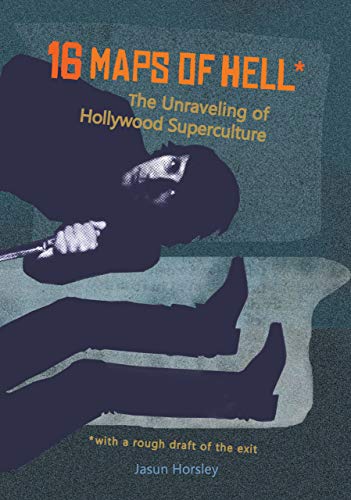
Ep 36916 Maps of Hell: The Unraveling of Hollywood Superculture w/ Jasun Horsley
EIf you appreciate Parallax Views and the work of J.G. Michael please consider supporting the show through Patreon at https://www.patreon.com/parallaxviews On this edition of Parallax Views, a listener recently requested that I interview Jasun Horsley, a writer who has been involved in parapolitical and alternative perceptions subculture for some time now. It turns out he has a new book out, 16 Maps of Hell: The Unraveling Superculture, so I thought this would be a good time to fulfill that request. In 16 Maps of Hell Jasun explores his obsessions with Hollywood over the years and his eventual disenchantment with it over the years. He also deals with ideas of cultural engineering and conspiracy in Hollywood. This leads him to examining the history of Hollywood and its dark side with a particular focus on Roman Polanski, the Manson Family, the Tate-LaBianca murders, the mobbed up lawyer Sidney Korhsak, Jeffrey Epstein, and other sordid goings on in tinsel town that he believes may relate to cultural psyops. We discuss the nature of this thesis, how Jasun questioned it after writing the book, Jasun's cinematic obsessions (including his love of Sam Peckinpah), conspiracy theories and scapegoating, Nikolas Schreck's work on the Charles Manson case, writing as therapy or psychodrama, and much, much more in this fascinating conversation. 16 Maps of Hell by Jasun Horsley Available Here
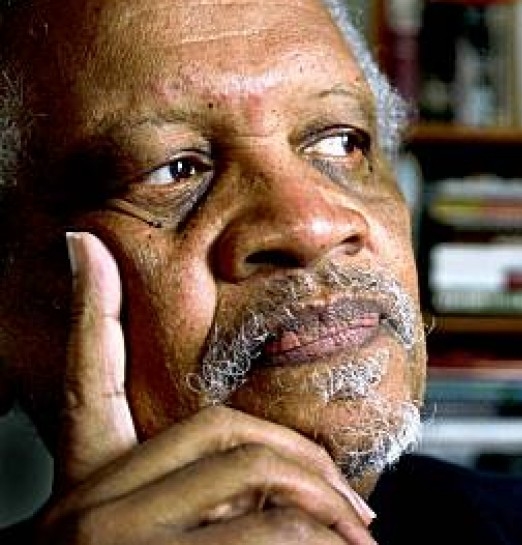
Ep 359An Hour with Legendary Novelist, Playwright, Poet, and Iconoclast Ishmael Reed
If you appreciate Parallax Views and the work of J.G. Michael please consider supporting the show through Patreon at https://www.patreon.com/parallaxviews On this edition of Parallax Views, legendary poet, playwright, novelist, activist, social critic, and all-around iconoclast Ishmael Reed joins us to discuss his amazing life and times as well as his thoughts on a wide variety of different topics. In particular we focus on his experiences in the literary and media worlds and how the "sausage is made" so to speak in those worlds by a corporate Establishment. In particular Ishmael helps us focus in on controversies like Gary Webb and the Iran/Contra affair's connection to the LA crack epidemic (which he wrote about in the Washington Post op-ed "The Word on the Vine"), tokenism and patronage in the literary and media worlds, the weaponization of the black men as scapegoats through the black boogeyman trope, antisemitism, the the musical Hamilton (which Reed critiqued in his recent play The Haunting of Lin-Manuel Miranda), Malcolm X and the Nation of Islam, Louis Farrakhan, black feminism, diversity and the lack of diversity, academic language and the elitism of academic cliques that operate on langue games and lingo, the great filmmaker Bill Gunn who made the classic black vampire film GANJA AND HESS, gatekeeping and cultural glass ceilings, Charles Murray's The Bell Curve and media promotion of it as well as the financing of infamous Murray book, the Scotch-Irish and the betrayal of one's heritage in the name of assimilation, conspiracy theories, and much, much more.
Ep 365REPLAY: The Global Police State w/ William I. Robinson
EIf you appreciate Parallax Views and the work of J.G. Michael please consider supporting the show through Patreon at https://www.patreon.com/parallaxviews On this edition of Parallax Views, how did we get to this moment of social uprisings and the repressive states, represented by ICE immigration detention centers and rising authoritarianism around the globe, that color the present? Sociologist William I. Robinson provides a theoretical framework for understanding how 21st century tumult came to be in his new book The Global Police State. Robinson argues that we are living in a world in which rapidly accelerating economic inequality have led the transnational capitalist class to create systems of control and repression that will quell dissent. Additionally, he argues that this unstable situation, in which the masses are angry and the power elites divided, has led to an encroaching, creeping, 21st century fascism that threatens to engulf the world. He joins us on this edition of the program to lay out what The Global Police State is, the green zones and gray zones that separate the "haves" from the "have nots", the three factions of the global power elite and how the third factions (reformists) can be pressured by the masses, how Trump and the movement of Trumpism is not a populist movement and is in fact backed by elements of the transnational capitalist class, technologies of repression and the modern surveillance society, the Black Lives Matter Movement (BLM) and why the transnational capitalist class are directly threatened by anti-police sentiments, the cooptation of social movements by the transnational capitalist class, the militarization of policing and security organizations, the capitalist and corporate elements that benefit from private military firms (ie: mercenary) and private policing, the major difference between the 20th century and 21st century crises (hint: there is no longer a strong left/labor movement), and much, much more!

Ep 364U.S. Biological Weapons in the Korean War? w/ Dr. Jeffrey Kaye
If you appreciate Parallax Views and the work of J.G. Michael please consider supporting the show through Patreon at https://www.patreon.com/parallaxviews On this edition of Parallax Views, allegations of U.S. germ warfare (or biological warfare) being used on populations in the Korean War have long been dismissed as a conspiracy theory hatched by the Soviet Union as a disinformation campaign on America. Dr. Jeffrey Kaye, author of Cover-Up at Guantanamo Bay: THE NCIS Investigation into the "Suicides" of Mohammad Al Hanashi and Abdul Rahman Al Amri, however, has been pouring over documents from the CIA's "Baptism by Fire" files on the Korean War that may lend credence to the claims of U.S. biowarfare being used in the conflict. In this conversation Dr. Kaye and I discuss his prior work on Guantanamo Bay and then take a deep dive into the history of biowarfare from Japan's Unit 731, a WWII program led by Gen. Shiro Ishii, to the claims of U.S. biowarfare in the Korean War. In regards to Unit 731, where grotesque war crimes and experiments took place, we discuss Gen. Shiro Ishii's involvement with the U.S. in the post-war period and the amnesty that was granted to Unit 731 after the war by the U.S.. We also make mention of the Tuskegee Institute Syphilis study. Biowarfare experiments of the past involved anthrax, live human dissections, cholera, plague infested fleas, dysentery, and more. From there we discuss the accusation that claims of biological warfare used by the U.S. in the Korean War are merely Soviet propaganda and hoax. Dr. Kaye makes the case that this isn't necessarily true and offers evidence to the contrary. In making this case Dr. Kaye specifically refers to the "Baptism by Fire" documents that were recently declassified by the CIA. Dr. Kaye explains in details the claims of CIA biological warfare in this time period and why the "Baptism by Fire" documents are such an important revelation.
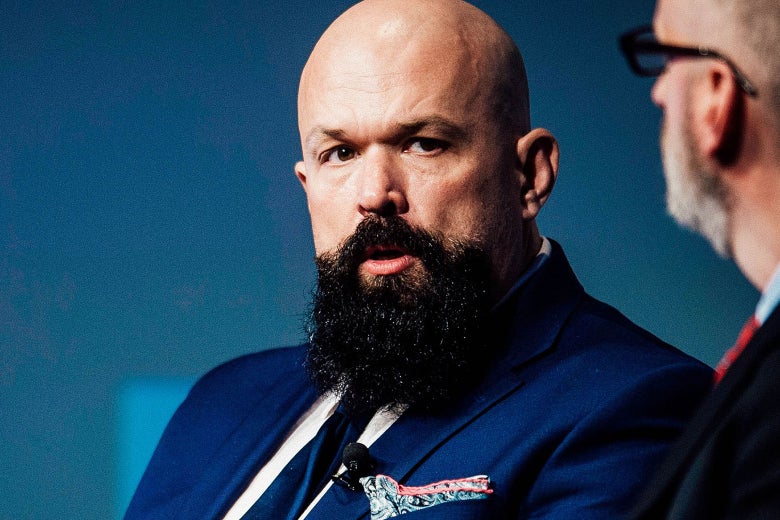
Ep 363A Refreshingly Frank Conversation w/ Kevin D. Williamson of the National Review
EIf you appreciate Parallax Views and the work of J.G. Michael please consider supporting the show through Patreon at https://www.patreon.com/parallaxviews On this edition of Parallax Views, over the course of this program's history J.G. Michael has been fairly open about his politics leaning to the leftward, sometimes called progressive, end of the political compass. Past guests of Parallax Views, like Noam Chomsky and Bill Ayers, have reflected J.G.'s own orientation. However, J.G. doesn't want himself or his listeners to live in a bubble. As such he recently reached out to the often controversial and stylish conservative commentator Kevin D. Williamson, the roving correspondent for the National Review and author of the new book Big White Ghetto: Dead Broke, Stone-Cold Stupid, and High on Rage in the Dank Woolly Wilds of the "Real America", with an invite to appear on Parallax Views. Kevin accepted and this conversation is the result. Those expecting a debate will likely be disappointed. This is a frank conversation, co-hosted by Nathan Myers of the unfortunately defunct Clash podcast, in which J.G. and Kevin cover a wide range of topics and clarify some of Kevin's views, which, depending on what you've heard about him, may surprise you. Among the subjects we discuss and the lines of inquiry we pursue are: - How Kevin became involved in journalism and his literary influences which include the arch-conservative William F. Buckley as well as, believe it or not, the counterculture gonzo journalist Hunter S. Thompson and Tom Wolfe of The Electric Kool-Aid Acid Test fame; J.G. draws a parallel between Thompson's work on the Hell's Angels, specifically in regards to what Thompson called "the ethic of total retaliation, and some of the themes in Kevin's new book Big White Ghetto; the attitude of James Dean-style teenage rebellion in the 60s and its relevance today; social anxiety about masculinity in a world where traditional masculinity (ie: violence, physical labor, etc.) is not as high in value as it used to be and how this ties into both the rebellions of the Hell's Angels and the cultural moment of Trumpism; why Kevin writes the way he does and his dislike for what he sees as "performative empathy" - Kevin's work covering the alt right which led him to interviewing figures like the white nationalist Richard Spencer; the sense of "disappointment", driven by social and moral entitlement, that Kevin believes drove the alt right and associated movement; the "Cowboys and Indians" nature of Trumpism and Kevin's description of Trumpism as less of an ideology than an enemy's list; what William F. Buckley thought of Trump and speculating as to what Buckley would think of Trumpism - Why Trumpism has been a tough nut to crack for many commentators and why it appeals to many people that think of themselves as conservative despite it not being, in Kevin's view, conservative in nature; Kevin's thoughts on Tucker Carlson and journalists in the Trump World who are from wealthy backgrounds that have appointed themselves as voices for the white working class, the rustbelt, and the forgotten areas of American society; the disconnect between those who know poverty and those who haven't experienced poverty; Kevin's criticisms of figures like Laura Ingraham and Sean Hannity within the conservative media - Politics as aesthetics and social affiliation; Kevin's article entitled "Acting White"; professionals pretending to be rednecks and what Kevin calls the "white minstrel show"; why Kevin included the phrase "The Real America" in the subtitle of his book; Ted Cruz and social posturing/affectation; careerism in conservative media and shifting values within said media; the ascent of the professional conservative; the different worlds that exist within conservative media; how Sean Hannity and others are terrified of there own audiences due to what Kevin calls the right-wing version of "Cancel Culture"; the problem of subservience to political power amongst journalists; Kevin's view of libertarianism; the financial pressures of AM right-wing radio and the freedom Kevin is afforded by working for the National Review rather than working in the radio-sphere. - Kevin's thoughts on paleoconservatives like Pat Buchanan as well as his thoughts on the libertarian thinker Murray Rothbard; Rothbard's idea of a pan-radical movement of antiwar activists and figures like David Duke against the Establishment; how conspiracy theories and the conspiratorial mindset of organizations like the John Birch Society rose in relation to the intellectual side of the conservative movement; the content of Rothbard being abandoned in favor of the style and rhetoric; the prevalence of a theater of "Us and Them" elites-betraying-we-the-people story-telling in the right-wing today; is paleoconservatism even conservative in an American context; conservatism in the American context as being tied to liberalism whereas conservatism in Europe is more tied to blood-and-s
Ep 362Organized Crime & Trump's Phony Election Fraud Outrage w/ Daniel Hopsicker
If you appreciate Parallax Views and the work of J.G. Michael please consider supporting the show through Patreon at https://www.patreon.com/parallaxviews On this edition of Parallax Views, Trump supporters are currently in full force claiming the 2020 Election's results, which delivered a win to Joe Biden, are the result of election fraud and a conspiracy involving the Democratic Party, Venezuela, a software firm SMARTMATIC, and Dominion Voting Systems. Returning guest, Daniel Hopsicker has a thing or two to say about that as someone whose been following the potentially shady owners and backgrounds of voting industry companies like ES&S, Sequoia Pacific Systems, Diebold, and Dominion Voting Systems. And his view doesn't line up with that of Sean Hannity's ranting about a Venezuela/Democratic Party conspiracy to steal the Presidential Election from Trump. Instead Hopsicker has found that these companies are owned by private interests with seeming ties to organized crime or, put more simply, the mob. But before discussing that we delve into some scoops that Daniel has on Steve Bannon. Bannon was arrested on the yacht of exiled Chinese billionaire Guo Wengui. This leads to a discussion about Wengui, the company HNA Group (which has had a bit of a feud with Wengui, espionage and intelligency agency spooks, and cocaine smuggling/drug trafficking. As always, Daniel takes the conversation into some interesting directions that deal with transnational organized crime and its relationship to drug trafficking and money laundering operations. How does Steve Bannon, as well as Bannon's buddy Andrew Badolato and what Daniel calls the "Sarasota" node of this story, fit into the whole picture? Find out in the first part of our conversation with Daniel Hopsicker. As I note in the interview, Daniel was tracking Badolato before he became the subject of mainstream media scrutiny with the We Build the Wall scam. Additionally, I mention in this conversation Daniel's coverage of Huffman Aviation and Rudi Dekkers, who was eventually arrested on cocaine related charges. From there we delve into Daniel's work on election fraud as examined in his documentary The Big Fix 2000. That documentary dealt with the voting industry companies around the time of the 2000 election and discussed an important story involving a Louisiana elections commissioner named Raymond Fowler and his connections to the mobbed up Pasquale "Rocco" Ricci among other things. This also leads us into the story of Louis Wolfson, a convicted criminal who may have invented the term "cover-up", and his relationship to Sequoia Voting Systems. A number of the companies that come up in Daniel's research end up being bought out by Dominion Voting Systems. However, Daniel doesn't buy Sean Hannity's communist conspiracy line about Dominion Voting Systems and the 2020 Presidential Election. In this conversation he explains why he believes that Biden won the election fair and square even if questions surrounding Dominion Voting Systems, which were first raised by Democratic Party Rep. Carolyn B. Maloney years before any Republicans were shouting their allegations about the company, should, in Hopsicker's opinion, be examined. From Hopsicker's purview these companies are owned by private interests and his research shows ties to organized crime that is in relationship with right-wing, rather than communist, political elements.

Ep 361UN Report Warns of ”Another Lost Decade” w/ Richard Kozul-Wright
If you appreciate Parallax Views and the work of J.G. Michael please consider supporting the show through Patreon at https://www.patreon.com/parallaxviews On this edition of Parallax Views, a recent United Nations Conference on Trade Development report warns of "another lost decade" that could repeat the same mistakes of the 07/08 financial crisis and its aftermath. Richar Kozul-Wright, one of the principal authors of the report and Director of the Globalisation and Development Strategies Division in UNCTAD, joins us to discuss the report. Titled "From Global Pandemic to Prosperity" the 2020 UNCTAD report warns of continued austerity and why it is dangerous as inequality rises globally. The report pushes back on neoliberal ideas about dealing with global crises and is primarily interested in the developing world, however, it has much to say to audiences in the developed world that are starting to more acutely feel the effects of a particular form of virulently predatory capitalism. Richard explains why "Build Back Better", the slogan of United States President-elect Joe Biden, must take not repeat the mistakes of the lost decade after the financial crisis. The pushing down of wages, government frugality, cutting of social safety nets, and more comes up in this fascinating conversation that details why it is time for society to reckon with the financial crisis of 07/08 if a better more robust recovery is to occur in the wake of the COVID-19 pandemic. In addition Richard and I also talk about Biden's Treasury Secretary pick Janet Yellen vs. Trump's Treasury Secretary Steven Mnuchin, changing opinions about neoliberalism, Modern Monetary Theory (MMT), the climate change crisis as a doomsday scenario, the Green New Deal, hyperglobalization, austerity, and more.
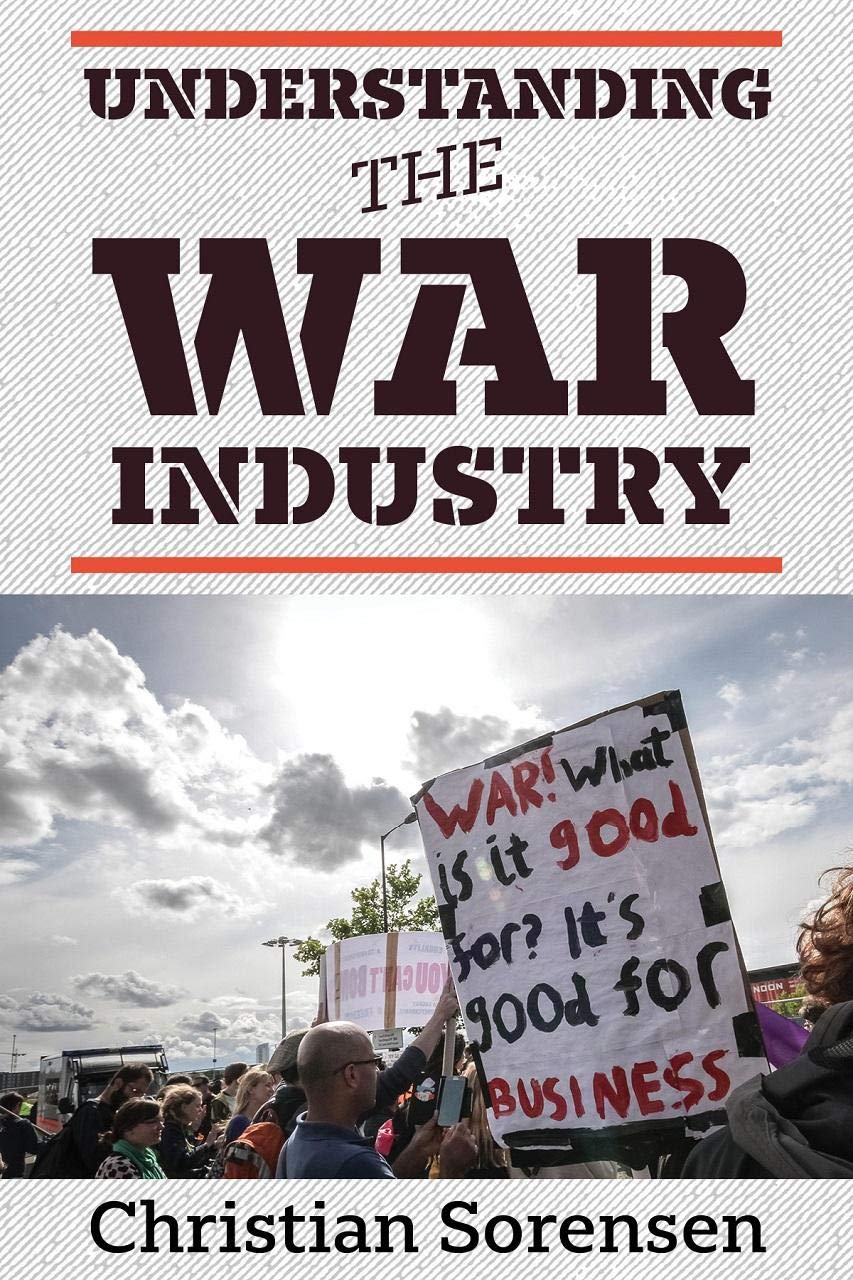
Ep 360Understanding the War Industry w/ Christian Sorensen
If you appreciate Parallax Views and the work of J.G. Michael please consider supporting the show through Patreon at https://www.patreon.com/parallaxviews On this episode of Parallax Views, President Eisenhower famously warned of the "military-industrial complex" in his farewell address. But what is the "military-industrial complex" and more broadly "The War Industry"? Christian Sorensen provides an excellent primary in his insightful new book Understanding the War Industry (Clarity Press; 2020). (Further Show Notes Forthcoming)

Ep 358Earth A.D. The Poisoning of The American Landscape and the Communities that Fought Back w/ Michael Lee Nirenberg
EIf you appreciate Parallax Views and the work of J.G. Michael please consider supporting the show through Patreon at https://www.patreon.com/parallaxviews On this edition of Parallax Views, filmmaker and writer Michael Lee Nirenberg joins us to discuss a tale of two American environmental disasters and the communities that fought for justice against those they deemed responsible for the incidents. Earth A.D.: The Poisoning of the American Landscape and the Communities That Fought Back is a tour-de-force oral history that chronicles the environmental devastation resulting from American Superfund sites at Tar Creek in Oklahoma and Newton Creek in Greenpoint, Brooklyn, NY. Nirenberg paints a picture that involves citizens, activists, politicians, and corporate leaders through hundreds of interviews that reveal not only the ways that wealth and racism intersect with how environmental disaster are dealt with in different communities but also how the urban-rural divide plays a role in this regard as well. Recalling the style of music journalist Legs McNeil, Nirenberg's oral history brims with a punk rock verve that extends far beyond its title referencing The Misfits. In this conversation we discuss a number of topics including the horrors of lead poisoning, environmentalism as an issue that should transcend the left/right divide, environmental racism, Michael's film work and his documentary on Hustler's Larry Flynt (as well as his interview with the controversial pornographer Al Goldstein of Screw Magazine infamy!), the Native American communities like the Quapaw tribe who are negatively impacted by environmental disasters and grassroots activists like Tar Creekkeeper Rebecca Jim and Don Ackerman, class and race as they relate to who is harmed most by environmental catastrophes, local corruption and how it effects the response to environmental disasters, nuclear power and energy needs, the difference between the Newton Creek and Tar Creek disasters, ecohorror, the influence of punk and metal on Michael's work, and much, much more.

Ep 357On the Edge of Globalization w/ Brian Francis Culkin
EIf you appreciate Parallax Views and the work of J.G. Michael please consider supporting the show through Patreon at https://www.patreon.com/parallaxviews On this edition of Parallax Views, globalization has led to culture shocks in societies around the world. What to make of this phenomenon, its interactions with culture and the way we live our lives, and what it means for the future? Critical theorist Brian Francis Culkin, co-author with Shipibo shaman Ricardo Amaringo of The Ayahuasca Dialogues: Globalization, Plant Medicine, and the Healing of the Human Heart, joins us to unpack the topic of globalization and it's relationship to what philosopher Byung Chul Han calls "The Burnout Society". In the first part of our conversation we focus on the aforementioned burnout is producing in citizens of various different nations as well as the ways in which globalization may be altering our social lives. In particular, Brian hones in on how the ever accelerating techno-society we are creating is moving away from the nuclear family unit as its foundation for society. Additionally, we delve into Brian's experiences with the indigenous Shipibo-Conibo people of the Amazon rainforest in Peru. This leads to a discussion of his collaboration with the previously mentioned healer Ricardo Amaringo and Brian's thoughts on the psychedelic plant drug ayahuasca. In this regard we discuss the the different perspectives on ayahuasca, ayahuasca tourism and its problems, ayahuasca as not merely a drug but also a medicine, and the importance of indigenous cultures. We also chat about ideas related to the apocalypse and End times, Byung-Chul Han's concept of "the autistic performance machine", the opening of the heart and seeing the other, neoliberalism and production, the human as a cosmic phenomenon and man as stardust, spirituality and materialism, Catholicism and Christianity, the humility of Carl Sagan vs. science and atheism as a theology, the value of friendship, and much, much more.
Ep 356Post-Election: No Blue Wave, Joe Biden, & The History of Neoliberal Democrats w/ Thomas Frank
EOn this edition of Parallax Views we wrap up our post-election analysis series by welcoming back Thomas Frank, author of such books as What's the Matter With Kansas, Listen, Liberal, and The People, No: A Brief History of Anti-Populism. Frank recently penned an op-ed for The Guardian entitled "Ding-dong, the jerk is gone. But read this before you sing the Hallelujah Chorus" which warned against Pollyanna-style beliefs that all is well and good in America now that Donald Trump was defeated by Joe Biden in the U.S. Presidential election. In this conversation we delve into why the Blue Wave didn't happen this year and how Frank was confident that it wouldn't occur as many had hoped it would. Additionally, he offers his historical research to unravel the history of the "Neoliberal" Democrat from the Democratic Leadership Council (DLC) onward. We even manage to work a critique of the antiwar Democratic Presidential candidate George McGovern in this regard. Believe it or not McGovern, despite his left antiwar stances, was not labor Democrat. Frank unravels the whole history of how the Democratic Party went from the "Party of the People" to the "Party of the Democrat" as well as making clear, in his lucid style, underlying ideology and aesthetics of this political formation that declares itself as being "post-politics". Moreover, Frank and I discuss Joe Biden, why the AFL-CIO endorsed Biden, and, perhaps most importantly, what Biden must do during his time in the White House. Trumpism, Frank warns, is not dead yet even if the Donald isn't in the White House.

Ep 354Post-Election: Fixing the Machinery of Democracy & Other Issues w/ Irami Osei-Frimpong
On this edition of Parallax Views, the 2020 U.S. Presidential Election is over but politics never sleeps. Although many are celebrating the defeat of Donald Trump, the fact is that politics, organizing, and activism won't end with the defeat of Donald Trump. And, as evidenced by the recent scuffles between the moderate and progressive wings of the Democratic Party, intra-party is very much alive and well. Although many have argued that such squabbles should be put aside, the provocative and intelligent Irami Osei Frimpong, also known as "The Funky Academic", joins us on this edition of the program to argue for the merits of divisive politics and what is needed to fix what he calls the "machinery of Democracy". We also discuss matters pertaining to media and particularly left media's blind-spots as well as Irami's critiques of white, upper middle class feminism, his critique of JD Vance's Hillbilly Elegy, Nancy Pelosi and the problem of glass floor/glass ceilings in politics, Pelosi' refusal to debate challenger, incumbent vs. the electorate as an anti-trust problem, the "voter disadvantage", the Defund the Police movement, the need for a communications infrastructure and its relation to production, corporate Democrats "punching left", the need for a federal jobs guarantee, freedom and the Left, the wealthy's distorted view of reality and why it occurs, and much, much more in this fascinating and provocative conversation.
Ep 355Post-Election: Shift Happens w/ Albert Lanier
On this edition of Parallax Views we present an election post-mortem featuring journalist Albert Lanier dissecting the 2020 Presidential Election. Albert argues the election can be summed up with the humorous line "Shift Happens". From Albert's point of view the election, when analyzed, indicates big shift for Democratic Party Centrists, the renegade progressive wing of the Democratic Party, and the GOP. He also argues that the Democrats win by "losing". He'll explain what that means in the course of our conversation as well as giving an election autopsy. What led to the outcome of the 2020 election? What of voter turnout and the voter suppression tactics Repulibcans were accused of in past election? And Trump cries of electoral fraud? Where do the progressives and leftists stand in all of this and what can be made of electoral victories made by the progressive wing of the Democratic Party led by Alexandria Ocasio-Cortez and "The Squad"? How did the Democrats manage to pull one over on the Donald? Why didn't the Hunter Biden laptop and Burisma stories work as the GOP's "October Surprise"? How did Trump lose the election? What of the mail-in ballots and what has been called the "Red Mirage" of election night? All that and more on this edition of Parallax Views.
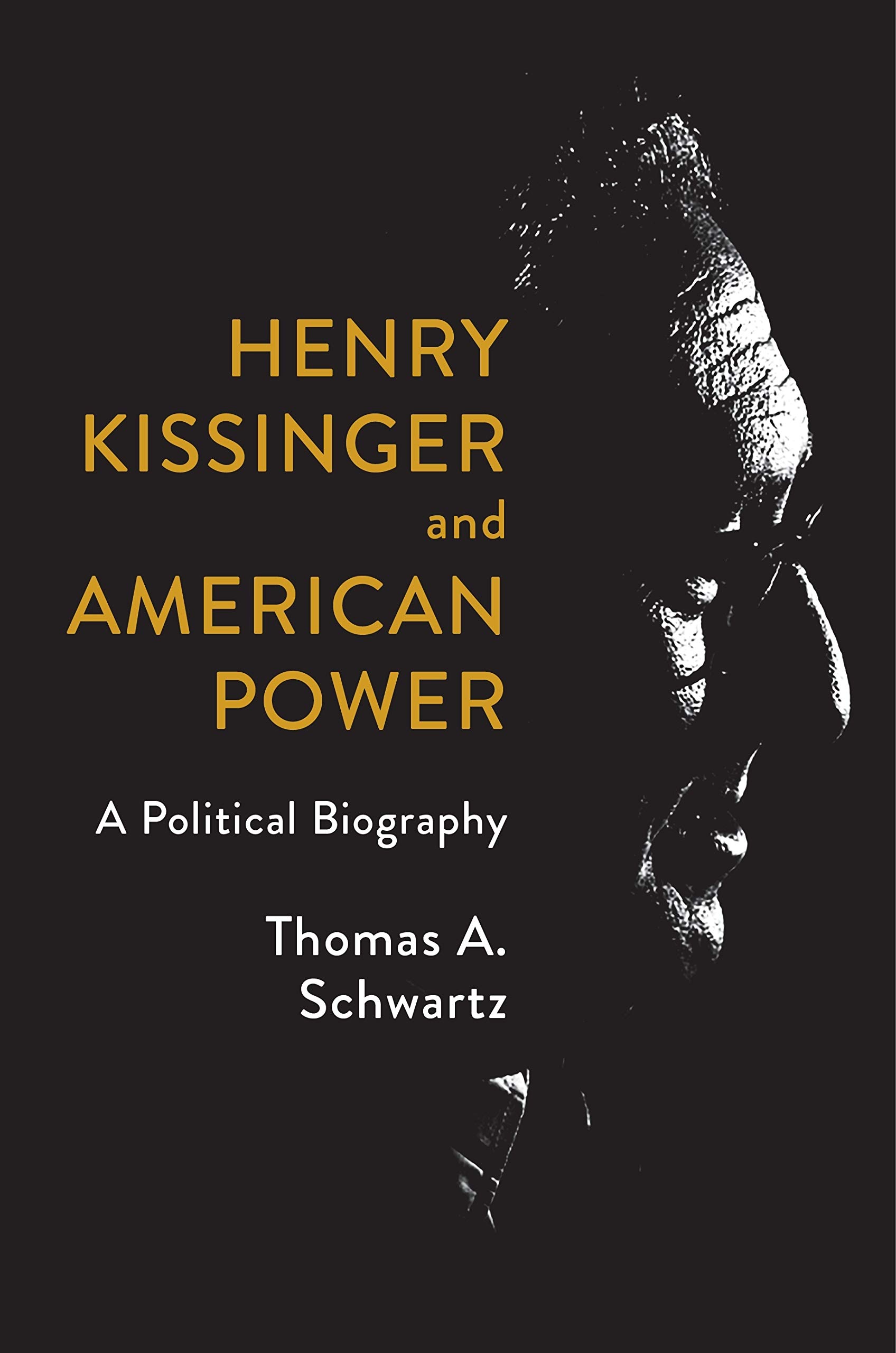
Ep 351Henry Kissinger and American Power: A Political Biography w/ Thomas A. Schwartz
On this edition of Parallax Views, Henry Kissinger is perhaps the most-well-known political figures associated with United State foreign policy and geopolitics since the post-WWII period. Reviled as a war criminal by many, such as Christopher Hitchens and Greg Grandin, and lauded as the 20th century's greatest statesman by others, Kissinger is, regardless of what one may think of him obviously someone who has left a lasting impact. Prof. Thomas A. Schwartz, author of Henry Kissinger and American Power: A Political Biography, joins us on this edition of the program to discuss the life and legacy of Kissinger. Unlike both Kissinger's detractors and his admirers, Schwartz attempts to come somewhere down the middle in his assessment of the former Secretary of State. We discuss Kissinger's early life, his image as a cold calculating figure politically, the Vietnam War and the Nixon/Watergate era, the harshest criticisms of Kissinger, and much, much more.
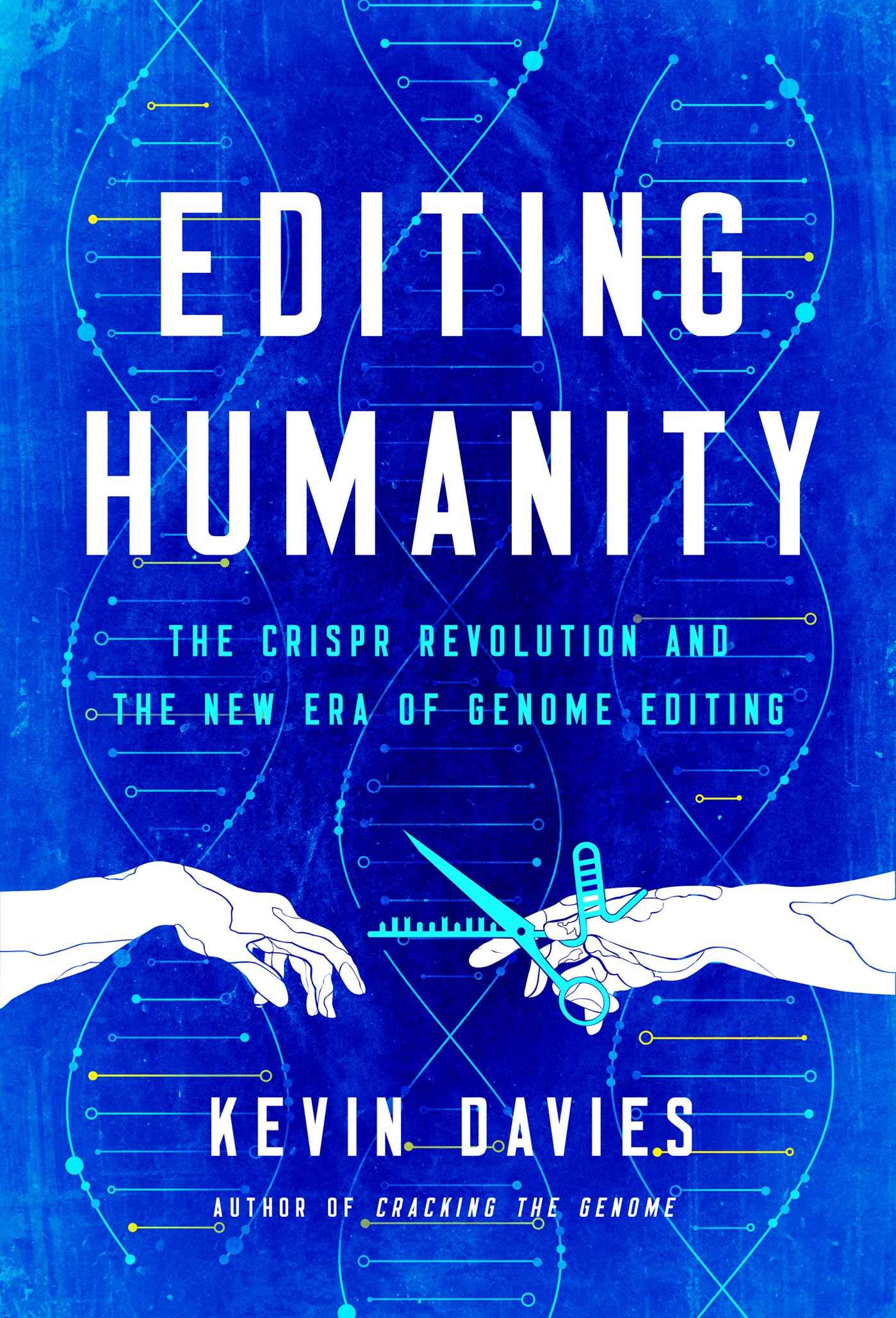
Ep 352Editing Humanity: The CRISPR Revolution and the New Era of Genome Editing w/ Kevin Davies
On this edition of Parallax Views, last month two female scientists, Jennifer Doudna and Emmanuele Charpentier, won the 2020 Nobel Prize in Chemistry for their revolutionary work on CRISPR-Cas9, a technology that opens the door gene editing in ways previously unimagined. The win has been, rightfully, seen as a pivotal moment for women in science, but what, beyond that, what is the broader story of CRISPR and gene editing? What are the broader implications of gene editing and what does it entail for bioethics (ie: could CRISPR be used for darker purposes such as eugenics or bioterrorism)? What are the potential uses of this incredible technology? And what are the stories of the people involved in this game-changing scientific discovery? Kevin Davis, Founding Editor of Nature Genetics, Executive Editor of The CRISPR Journal, and author of Editing Humanity: The CRISPR Revolution and the New Era of Genome Editing, joins us to answer those questions and much more. Among the topics we cover: - What is CRISPR-Cas9? - The troublesome story of Chinese scientist He Jiankui, who used CRISPR-Cas9 on two babies and caused a massive backlash in the scientific community as a result. - Where does the idea of gene editing arise?; The history of gene therapy; James Watson and the Double Helix - The potential agricultural uses of CRISPR - Harvard University geneticist George M. Church, who played a pivotal role in the story of CRISPR, and his notion that, theoretically, CRISPR could be used to resurrect the wholly mammoth and address the climate change crisis - Concerns about CRISPR technology related to misuses for eugenics and bioterrorism; CRISPR, bioterrorism, and COVID - "Biohacking" and the ready availability of CRISPR kits - And much, much more!
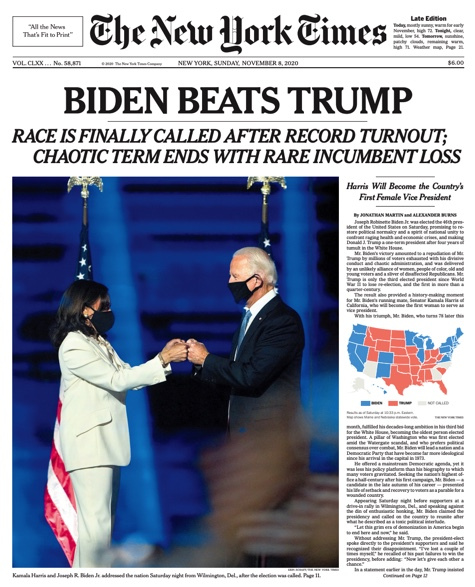
Ep 350Post-Election Analysis w/ JP Sottile
The U.S. Election is finally, it appears, over. It looks as if Joe Biden is the next President Elect of the United States and that Donald Trump and his will be out of the White House by 2021. Kamala Harris will join Joe Biden in the White House as Vice President replacing Mike Pence. Democrats are celebrating in the streets over the victory, believing it represents the defeat of a 21st century fascist threat, while Trump and his supporters accuse the election of being rigged through a voter fraud conspiracy. What will the future hold for a post-Trump America? Journalist JP Sottile aka the Newsvandal joins us to provide his always insightful analysis. In this conversation JP and I discuss: - The landscape of mainstream and alternative media; Chris Ruddy and Newsmax; class and making it journalism; what has the effect of the Trump Presidency been on journalism and the press?; Fox News - The projections of Presidential victories in the media, exit polling, and the 2000 election - The election as a referendum on Trump and how Trump has created a "distortion field" that obscures what the American people want in terms of policy; the Presidential Election as a Trump "reality show" - The off-year elections in 2022 and what it will say about what Americans want - Do Americans want progressivism?; Does progressivism have a messaging problem?; the "Defund the Police" movement; Democratic Party Strategist James Carville and others blaming progressives like Alexandria Ocasio-Cortez and Ilhan Omar for Democrats' downballot losses; AOC's New York Times interview; can progressives learn a thing or two from the long game of the evangelical Christian Right over the past half century? - The Lincoln Project; did it play a role in the election? - High voter turnout and how the conventional wisdom of higher turnout equaling a Democratic "Blue Wave" didn't pan out - Military Keynesianism and demand side economics; can Keynesian be applied to other areas rather than those the benefit what has been referred to as the military industrial complex?; the World Economic Forum and the transnational capitalist class; supply side economics vs demand side economics; is Reaganism/Thatcherism over and did Trump show the cracks in its acceptance? - Richard Spencer's support of Biden/Harris; is Spencer getting what he wanted in the sense that the focus of the Democratic Party's leadership is shifting toward an even more "law and order" route going forward; the history of "liberal" as an epithet during the Reagan era and how "socialist" has become the new epithet
Ep 349REPLAY: The Role of Big Money in Politics & 2020 Election Analysis w/ Dr. Thomas Ferguson
EI thought this episode would be interesting as we get through the election process this year. Enjoy! - J.G. On this edition of Parallax Views, much has been made about the role of money in the outcomes of political elections, at least within . In academic disciplines, however, this has often been seen as heresy. In fact, some view it as nothing more than conspiracy theory. And, truth be told, it would likely be overly simplistic to argue that a small handful of shadowy individuals select the two Presidential candidates every four years in U.S. elections. However, political scientist Dr. Thomas Ferguson, Professor Emeritus at the University of Massachusetts, Boston, dispenses with such oversimplifications while also making the case, through his extensive empirical research, that, yes, money in politics DOES, as a matter of fact, influence electoral outcomes. After receiving his Ph.D at Princeton University, Dr. Ferguson went on to teach, for a time, at MIT. During his academic travels he delved into the history undergirding FDR and the New Deal. In doing so he developed an alternative model to understanding elections that challenged the median voter theorem. This came to be known as the investment theory of part competition, which Dr. Ferguson elaborated upon in his landmark book Golden Rule: The Investment Theory of Party Competition and the Logic of Money-Driven Political Systems, he joins us on this edition of the program to discuss this theory, how he came to developing it, and his thoughts on the 2020 Presidential election pitting Republican incumbent Donald Trump against Democratic nominee Joe Biden. In the course of our conversation we also discuss: - Rahm Emmanuel's declaration that 2020 would be the year of the Biden Republican - Thoughts on the Alexandria Ocasio-Cortez wing of the Democratic Party and the development of small donor power in elections - Why conspiracy theories have become so popular - The stunning defeat of Joe Kennedy by Ed Markey in the Massachusetts Senate race - Thoughts on the panic-laden Deutsche Bank report by Jim Reid warning investors of an "Age of Disorder" - And much, much more! This Episode Brought to You By: The War State: The Cold War Origins of the Military-Industrial Complex and the Power Elite, 1945-1963 by Michael Swanson of The Wall Street Window
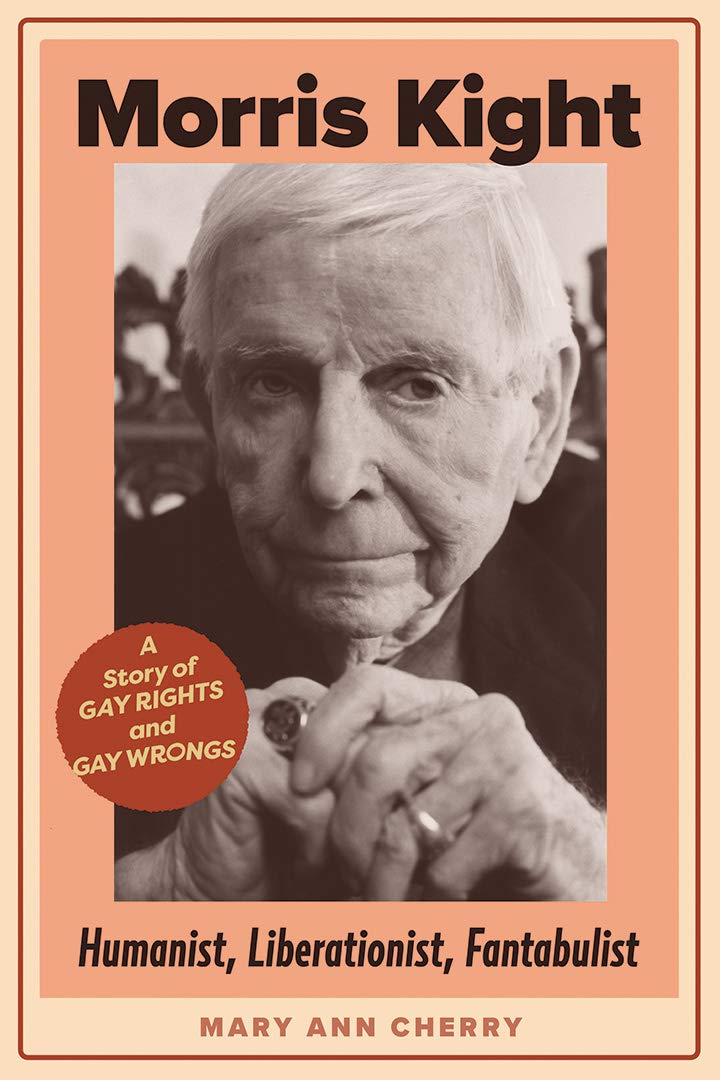
Ep 348Morris Kight: Humanist, Liberationist, Fantabulist w/ Mary Ann Cherry
EOn this edition of Parallax Views, Morris Kight was a radical antiwar, civil rights, and labor activist, but he's probably most remembered today as a gay rights icon. "Wait," you may be saying, "I've heard of Harvey Milk. I've heard of RuPaul. But I've never heard of Morris Kight." No, folks, I'm not exagerrating. Morris Kight had a long and storied life as an activist, especially within the burgeoning LGBTQ community, on the West Coast during the 20th century. So who was Morris Kight and why isn't he more well-known? Mary Ann Cherry, a friend of Kight in his later years and the author of the Feral House publication Morris Kight: Humanist, Liberationist, Fantabulist, joins us on this edition of program to answer both those questions. Among other things we discuss: - The charismatic, "dandy"-style of Morris Kight and it's similarities to fellow gay icon Gore Vidal - Morris Kight's antiwar activism, specifically his actions directed against Dow Chemical during the Vietnam War - Morris Kight's socialist tendencies and skepticism of the two-party political duopoly - The infamous homophobic sign at Barney's Beanery in West Hollywood that Morris and other activists protested to get taken down due to its discriminatory nature - Morris Kight's brush with the Los Angeles gangster Eddie Nash of Wonderland Avenue Murders infamy - And much, much more!
Ep 346Undead Uprising: Haiti, Horror, and the Zombie Complex w/ John Cussans
EFor the penultimate episode of our Parallax Views Halloween series, John Cussans joins us to discuss his book Undead Uprising: Haiti, Horror, and the Zombie Complex. Believe it or not, the zombie wasn't always simply a figure of flesh-ripping, brain eating apocalyptical disease and undead horror. The zombie begins as a figure within Haitian folklore and Voodoo (Voudon) before eventually coming to Western pop culture. John argues that the zombie's migration to the West was underpinned by white Western fears of voodoo-fueled black slave uprisings in Haiti and has evolved from there. In addition, he makes the case that the myths of Haitian voodoo has been used, at least in terms of its imagery and cultural power, as a weapon of control by Western elements such as intelligence agencies (WWII black ops; see: Ian Fleming's Live and Let Die), journalists, white liberals who seek to "carebearize" the religion, and transgressive revolutionaries like George Bataille, etc. We delve into all these topics as well as the connection between mesmerism and the early zombie in pop culture, Wade Davis' The Serpent and the Rainbow and John's critique of it, thoughts on Frank Wilderson III and Afropessimism, conspiracy theories and Videodrome, the dictatorship of Papa Doc Duvalier, Western "ju ju journalism", Baron Samedi, the Bizango secret society, and much, much more. This Episode Brought to You By: The War State: The Cold War Origins of the Military-Industrial Complex and the Power Elite, 1945-1963 by Michael Swanson of The Wall Street Window
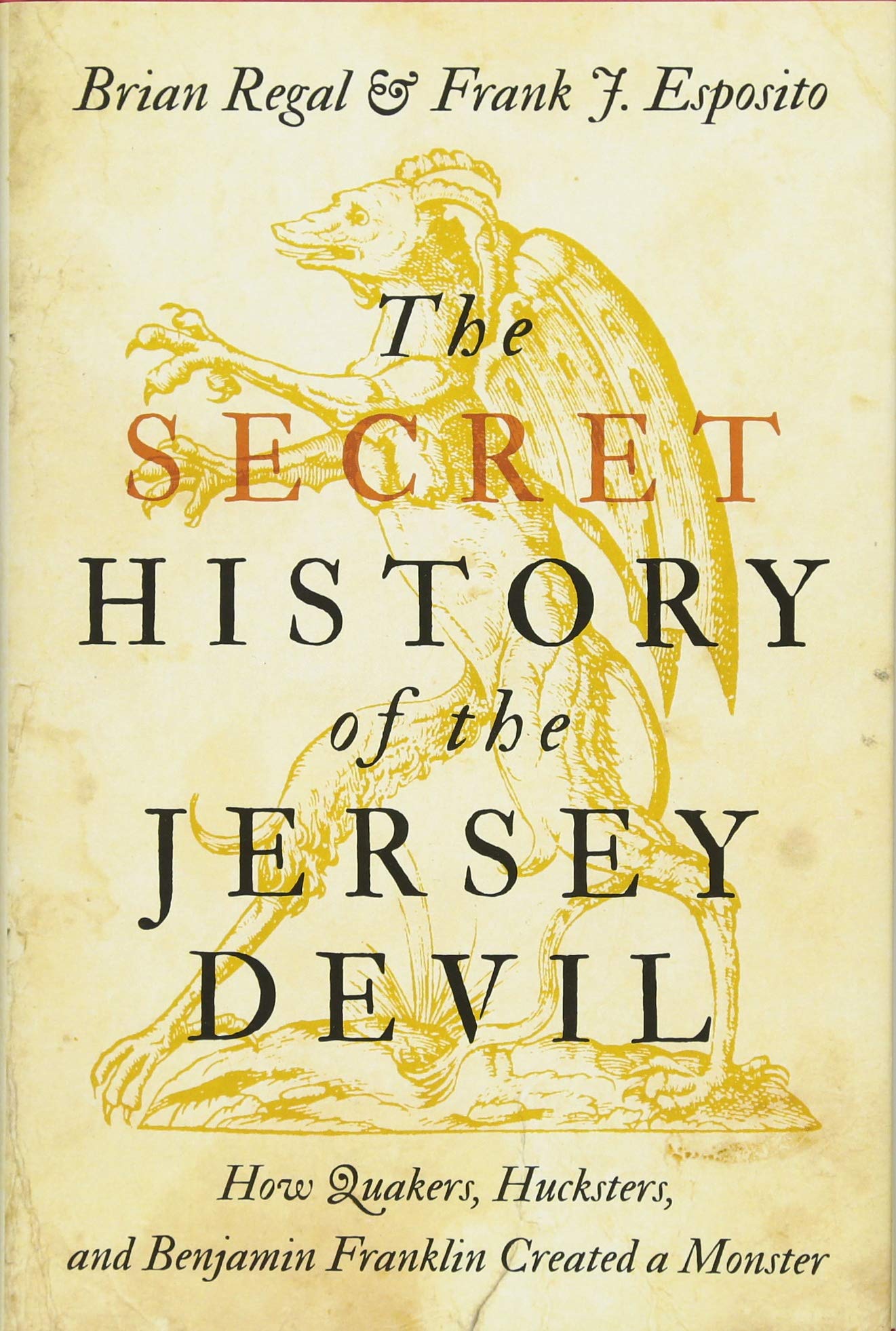
Ep 345Fake News and The Secret History of the Jersey Devil w/ Brian Regal
For the Devil's Night edition of the Parallax Views countdown to Halloween we delve into the real history of the New Jersey Devil myth and how it connects to today's problem fake news. Joining us to unravel the story is Prof. Brian Regal, co-author with Frank J. Esposito of The Secret History of the Jersey Devil: How Quakers, Hucksters, and Benjamin Franklin Created a Monster. In this fascinating book Regal and Esposito argue the the tale of the Jersey Devil, the hideous, pegasus-like, cursed "13th Child" monster spawn of Mother Leeds, is actually originates in the real-life figure of Daniel Leeds and his struggles against superstitious Quakers centuries ago. Leeds, a promoter of Scientific Enlightenment ideals, thought to spread knowledge in early America by way of an almanac. But due to his belief in astrology he ran afoul of New Jersey's Quakers, who saw him as an occultist and, later, "Satan's Harbinger". The tale of Daniel Leeds Vs. the Jersey Quakers, Regal says, shows that political mudslinging, despite how bad many consider it today, has been a bare-knuckled tradition in America since its earliest days. But the story doesn't end there as Daniel Leeds son, Titan Leeds, get smeared as a sorcerer by none other than one of America's Founding Fathers, Benjamin Franklin, in what may well be one of the earliest instances in America of the fake news phenomena... or at the very least show Franklin as a innovator of Fake News! And then, later on, the slanders against the Leeds morph into the myth of the Jersey Devil by way of P.T. Barnum carny hucksters looking to sucker a few rubes with wild stories of a monster in the Pine Barrens. It's a complicated and fascinating story that can't possibly be fully explained in this summary, but trust me when I say Regal lays it all out in riveting detail. He even manages to explain where the origins of the witch-like "Mother Leeds" in Jersey Devil lore. All that and more on this edition of Parallax Views. This Episode Brought to You By: The War State: The Cold War Origins of the Military-Industrial Complex and the Power Elite, 1945-1963 by Michael Swanson of The Wall Street Window

Ep 347BONUS: Get Your Booty to the Poll PSA Campaign w/ Filmmakers Angela Barnes and Paul Fox
On this bonus edition of Parallax Views we take a break from our Halloween series to chat about getting out the vote w/ filmmakers Angela Barnes (formerly Angela Gomes) and Paul Fox. In case your unfamiliar, Angela and Paul are the creators of the "Get Your Booty to Poll" Public Service Announcement that employed pole dancers and strippers to explain the importance of voting, specifically in local elections, in Atlanta. Targeted towards Atlanta's potential black male voters, "Get Your Booty to the Poll" has generated much controversy. Some argue that it perpetuates negative stereotypes of black men and women. Others argue it is pro-sex worker and only being attacked on grounds of "respectability politics". Angela and Paul join us, in light of the second "Get Your Booty to Poll" PSA (which addresses some of the 1st PSA's critics) being released), to discuss why they did it, what they hope it achieves, and thoughts on the debate and discussion it has generated. This Episode Brought to You By: The War State: The Cold War Origins of the Military-Industrial Complex and the Power Elite, 1945-1963 by Michael Swanson of The Wall Street Window

Ep 344Social Horror and Tales from the Hood w/ Rusty Cundieff
EThe Parallax Views Halloween special continues as we talk to a filmmaker who has been bringing together social issues, specifically racism, and horror together years before Jordan Peele's Get Out and Us. Pittsburgh-native Rusty Cundieff has directed episode of of Chappelle's Show, acted as a correspondent on Michael Moore's TV Nation, acted in Spike Lee's School Daze, and helmed the hip hop mockumentary Fear of a Black Hat. But he is perhaps best known for his 1995 horror anthology Tales from the Hood starring Clarence Williams III as the Crypt Keeper-esque storyteller "Mr. Simms", Psych's Corbin Bernsen, Rosalind Cash, David Alan Grier, and Wing Hauser among others. The film touched on a number of issues including police brutality and domestic abuse as well as pointedly commenting, in one specific segment, on then then hot topic of former Grand Wizard of the Ku Klux Klan David Duke. Duke, at that time, had once served as a Congressman in the Louisiana House of Representative and made campaign runs for Senate and Governor. If you ever wanted to see David Duke menaced by dolls possessed by the spirits of plantation slaves, well, then this is the movie for you. Or, for that matter, if you ever wanted to see corrupt, drug dealing, murderous cops get their just desserts or hearing Clarence Williams III repeatedly say "THE SHIT!" (this particular aspect of the film has become legendary) you'll have a ball with Tales from the Hood. Since its release Tales from the Hood has produced two sequels, Tales from the Hood 2 and Tales from the Hood 3, and the similarly-themed anthology, also made by the duo of Rusty Cundieff and Darin Scott, entitled American Nightmares. These three films have continued the tradition of social horror found in Tales from the Hood and featured such actors and actresses as Keith David, Candyman's Tony Todd, Saturday Night Live's Chris Kattan, Vivica A. Fox, and Danny Trejo among others. In this conversation we cover all of those films, the social power of the horror genre, Dave Chappelle and having one's art misinterpreted, the influence of the Twilight Zone's Rod Serling on Cundieff and Scott's horror anthology, different racial reactions to Tales from the Hood, a great Corbin Bernsen story, and much, much more. This Episode Brought to You By: The War State: The Cold War Origins of the Military-Industrial Complex and the Power Elite, 1945-1963 by Michael Swanson of The Wall Street Window

Ep 339Invasion of the Scream Queens! w/ Linnea Quigley & Deborah Voorhees
EThe count to Halloween continues as Parallax Views celebrates the ladies of horror movies otherwise known as "Scream Queens"! From Janet Leigh in Psycho to her daughter Jamie Lee Curtis in Halloween, a variety of actresses have appeared in scary movies over the years and made the role of women in horror a pivotal one to say the least. And, often times, the "Scream Queens" aren't just relegated to using their well-known superpowered lungs. Indeed many a horror film has featured females who fight back, especially in the form of the "Final Girl" trope, such as Nancy Thompson (Heather Langenkamp) in A Nightmare on Elm Street, Sydney Prescott (Neve Campbell) in the Scream franchise, and Alice Hardy (Adrienne King) in Friday the 13th among many others. So in order to celebrate the gals who add a feminine touch to the scary movies we all know and love I invited two actresses associated with the genre onto the program just in time for Halloween. That's right, it's another Parallax Views double feature! Two interviews for the price of one! First up... Linnea Quigley, the "Queen of the B's", joins us to discuss her long career in film and how she became one of the most recognizable "Scream Queens" of the 1980s due to her appearances in cult classics like Return of the Living Dead; Night of the Demons; Silent Night, Deadly Night; Graduation Day; Nightmare Sister; Sorority Babes in the Slimeball Bowl-O-Rama; and Hollywood Chainsaw Hookers. Hell, she's even had the chance to pop out of Freddy Krueger's chest in A Nightmare on Elm Street 4: The Dream Master, a scene which has an interesting behind-the-scenes story you'll here in our conversation. And if that wasn't enough she's been the subject of documentaries (including the great Screaming in High Heels), appeared in music videos by rock bands like the Revolting Cocks and Motorhead, written an autobiography (The Linnea Quigley Bio & Chainsaw Book) and a memoir (I'm Screaming As Fast As I Can: My Life in B-Movies), and has her very own workout video aptly entitled the Linnea Quigley's Horror Workout. Seriously, how many Scream Queens have their very own workout video? As I say to Linnea during our conversation, "Eat your heart out Jamie Lee Curtis!" We cover all the bases we can in fast-paced half hour conversation with Linnea that manages to touch on her surreal experiences in Hollywood (including a marriage proposal story you'll never forget, the trials and tribulations of having make-up FX put on you, a tale of topless guerrilla filmmaking, the famous "deer antlers" murder scene in Silent Night, Deadly Night, and what it's like doing nudity on camera), her experiences in the punk scene (Linnea was as regular at punk rock club The Masque in L.A.), and her love of animals that has led her to vegetarianism and animal rights advocacy! All that and much more with the "Queen of the B's" Linnea Quigley! Then... In our second interview we speak with actress, journalist, and teacher Deborah Voorhees (aka Debi Sue Voorhees). As fans of the 80s slasher movie juggernaut that made Jason Voorhees a household name will tell you, Deborah portrayed the "Tina", who suffered a grisly fate at by way of garden shears in 1985's Friday the 13th Part 5: A New Beginning. Since then, as previously mentioned, Deborah has gone on to careers in journalism and education, but lately horror movie fans have brought her back to the world of cinema. In fact, as of the recording of this interview, Deborah has just finished editing her directorial debut, 13: Fanboy. Returning to her horror roots, Deborah's 13: Fanboy is about a deranged fan who stalks the cast of the Friday the 13th series. The film features such Friday the 13th alumni as the original Friday the 13th's Adrienne King, Friday the 13th Part VII: The New Blood's Lar Park Lincoln and Jennifer Banko, two different Jason Voorhees actors in the form of Kane Hodder and C.J. Graham, Friday the 13th Part V: A New Beginning's Ron Sloan, Friday the 13th Part III's Tracie Savage, and even Corey Feldman (who fans will remember appeared in Friday the 13th: The Final Chapter and Friday the 13th Part V: A New Beginning). Hell, the movie even features a turn by Debra Sullivan who wrote the script for one of the Texas Chainsaw Massacre movies and an appearance by Dee Wallace of Joe Dante's The Howling, Steven Speilberg's E.T., Critters, Rob Zombie's The Lords of Salem, Stephen King's Cujo, and many other fan favorite genre features! Deborah describes the movie as both a psychological thriller that'll be enjoyed by viewers outside of the Friday the 13th fandom as well a a flick that promises a few good throwback and slasher moments for longtime fans of the Friday the 13th franchise. In this conversation Deborah and talk both about her experiences with Friday the 13th Part V: A New Beginning as well as the exciting project 13: Fanboy. Also, Deborah explains how her teaching career was abruptly ended when her students found out she was in Friday the 13th Part
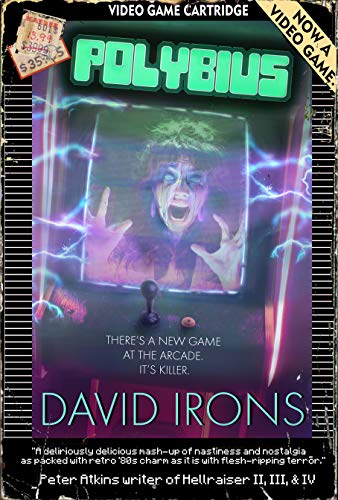
Ep 343Polybius w/ David Irons
EWith only a few days left till Halloween, we continue the #ParallaxViewsHalloweenMassacre by turning our attention the urban legend/creepypasta mash-up known as Polybius. According to internet a strange video game, known as Polybius, briefly popped up around arcades in or near Portland, Oregon during the height of arcade-mania in the 1980s. Allegedly the game cause strange, spooky side effect including being highly addictive, causing physical illness, and psychological impacts leading to outcomes like, most frighteningly, suicide. And that's not where the creepiness of this digital campfire tale ends. There also was allegedly mysterious "Men in Black" figures that would check on the game with unusual devices. Moreover, the game's developer was said to be a company called Sinneslöschen, which roughly translated from the German would mean something like "Sense Deletion" or "Sensory Deprivation". As the legend goes the enigmatic game disappeared from arcades as quickly as it had arrived. The earliest recorded references to Polybius date back to the 2000's vis-à-vis an entry on the arcade game website CoinOp.Org. Since then, Polybius has gained a life its own within pop culture eventually, among other things, being referenced in The Simpsons and a Nine Inch Nails music video. And, although there is no evidence to confirm the existence of the mysterious arcade game, the legend soon grew so great that actual Polybius video games began to make the rounds of the gaming world. There's even, believe it or not, a Playstation 4 game bearing the title that was released in 2017. But what of the a malevolent game that allegedly haunted Oregon arcades for a short time in the 80s? Most say it is a hoax or a mere myth. Others continue to believe that somewhere the game exists. Some speculate, due to the "Men in Black" referenced in the original legend, that the game was part of a CIA mind control experiment like MK-ULTRA. In any case, Polybius has become a staple of digital campfire tales on the World Wide Web and has certainly captured the imagination of the culture. This should come as no surprise, since details about the supposed game, beyond the original urban legend itself, are extremely sparse. As such it has been left to others to fill in the blanks and from there it's off to the races as imaginations run wild trying to answer the question: What was Polybius? Filmmaker and horror novelist David Irons, who often dabbles in "retro-novels" drenched in big hair, cocaine, and MTV aesthetics of the Reagan-era 80s, is just one person who asked that question. And he most certainly let his imagination run wild in answering it when writing his new book, Polybius. In this novel Irons, whose previous books include Graveyard Billy, Night Waves: Something Has Been Set Free, Wolf Moon, and Night Creepers, uses the Polybius legend as launching pad for a madcap story that crosses the teenaged coming-of-age hijinks of The Breakfast Club with the gory melodrama of 80s creature feature horror movies Return of the Living Dead, Night of the Creeps, and Chopping Mall. And, of course, he does it all with a more general aesthetic of retro nostalgia that is drenched in neon and looking to give Stranger Things a run for its money! He joins us on this edition of the program to discuss the book, horror more generally, and much, much more! This Episode Brought to You By: The War State: The Cold War Origins of the Military-Industrial Complex and the Power Elite, 1945-1963 by Michael Swanson of The Wall Street Window