Parallax Views w/ J.G. Michael
1,045 episodes — Page 17 of 21
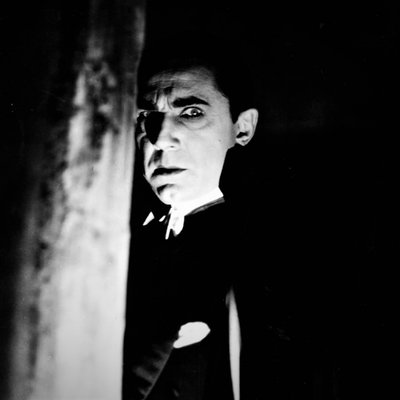
Ep 335The Political Life of Bela Lugosi And His Targeting by the OSS/FBI w/ Gary D. Rhodes
The Parallax Views countdown to Halloween continues as we revisit the life and times of the actor most associated with Count Dracula, Bela Lugosi, w/ the world's foremost Bela Lugosi scholar Gary D. Rhodes. Previously joined us to discuss Lugosi's cinematic career from his runaway success and rise to superstardom courtesy the Universal Studios classic Tod Browning's Dracula (1931) to his later years appearing in the notorious films of the infamous Ed Wood such as Plan 9 from Outer Space (1959) and Bride of the Monster (1955). In this conversation we shift our focus to the political life of Bela Lugosi including his involvement in the Hungarian Revolution of 1919, Gary's research into Bela's support of working classes causes, Lugosi's anti-fascism, and how Lugosi's early life may have shaped his politics. And then we delve into the little known story of how Lugosi headed up an organization called the Hungarian-American Council for Democracy. This led to Lugosi being monitored by the early U.S. intelligence agency known as the OSS, whom referred to the HUACD as the "Dracula Council" and believed it to be a communist front organization. It turns out, however, that Lugosi was also informing the OSS on the activities of Hungarian fascists in the U.S. while those very same fascists reported on Lugosi to the same agency! It's a wild tale that Gary has dubbed a "Horror Noir" and it doesn't end with the OSS. In fact, Gary's scholarship, which involved digging through national archives and making Freedom of Information Act requests, shows that after WWII the FBI was monitoring Lugosi well into the 1950s when the horror icon's star had faded and he was close to death. It's a fascinating story and definitely one you won't want to miss this Halloween season as Gary D. Rhodes returns to Parallax Views! This Episode Brought to You By: The War State: The Cold War Origins of the Military-Industrial Complex and the Power Elite, 1945-1963 by Michael Swanson of The Wall Street Window

Ep 342The Man Behind The Boogeyman w/ Actor Bill Oberst, Jr.
EThe Parallax Views #HalloweenPodcastMassacre continues as we turn our attention to the horror movies archetypal villain: the boogeyman. The cinematic boogeyman that haunt our nightmares comes in a variety of forms from classic monsters like Frankenstein's Creature, the Wolf Man, and Dracula to fictional serial killers (often with a supernatural twist!) like Michael Myers, Jason Voorhees, and Freddy Krueger. And they come in all shapes and sizes too from gigantic beasts like Godzilla and King Kong to pint-size terrors like Chucky the killer doll and the Leprechaun. Some are men of brilliance, like the ingeniously diabolical Dr. Hannibal Lecter, while others, like the Texas Chainsaw Massacre's Leatherface, have only the mind of child. And then there's the really weird ones like the sadomasochistic "Hell Priest" Pinhead and his army of demonic Cenobites in Clive Barker's Hellraiser and its many sequels or the shape-shifting Pennywise the Clown from Stephen King's It. From goblins and ghouls to ax-wielding madman and brain-eating zombies these are filmland's most frightful menaces that make up our culture's Horror Hall of Fame. But what of the men behind the monsters? Horror movie fanatics will point out to you that Robert Englund is the man behind the horribly burned face of Freddy Krueger, that men like Kane Hodder and C.J. Graham donned a hockey mask to become Camp Crystal Lake's machete-wielding madman Jason Voorhees in the Friday the 13th films, and that the Golden Globe Award-winning Brad Dourif provided the voice for the foul-mouthed, murderous doll Chucky in the Child's Play movies. Generally, however, the men behind cinema's favorite boogeymen remain in the shadow of the frightful figures they bring to life when it comes to the casual moviegoers whose pants they aim to scare off. Parallax Views, ever eager to provide listeners with a perspective they may not have considered before, decided it'd be interesting to seek out one of the men behind cinema's boogeymen. And few are better equipped to do that than our guest on this edition of the program, the legendary character actor Bill Oberst, Jr. An Emmy and Lon Chaney Award-winner, Bill Oberst has made a career of playing strange, menacing, and monstrous characters in everything from TV's Criminal Minds (where he portrayed the "Unsub", one of the series most memorable killers, in the season nine episode "Blood Relations") and Scream Queens to horror movies like Ditch Day, Circus of the Dead, and The Devil's Junction: Handy Dandy's Revenge. Additionally, he's also appeared as the doomed Tony Commando in Rob Zombie's 3 from Hell (a sequel to The Devil's Rejects and House of 1000 Corpses), played a zombie hunting Abraham Lincoln in Abe Lincoln Vs. Zombies, creeped out social media users as a "Facebook Stalker" in the interactive short film Take This Lollipop, played a 21st century update of Falling Down's D-Fens in Mark Savage's Stressed to Kill, and appeared on stage as such historical figures as the special effects maven Ray Bradbury and, believe it or not, Jesus Christ. And now he even has his own podcast, Bill Oberst's Gothic Midnight, where he puts his thespian skills to good work for theatre-of-the-mind adventures into the world of the macabre vis-à-vis dramatic readings of spooky short stories! Bill joins us to give an insight into what it's like playing the monsters and madmen that haunt the horror movie landscape. Check out Bill Oberst's Gothic Goodnight Podcast This Episode Brought to You By: The War State: The Cold War Origins of the Military-Industrial Complex and the Power Elite, 1945-1963 by Michael Swanson of The Wall Street Window

Ep 340Giallo Movies and Unsolved Murders w/ Jenny Ashford
The Parallax Views #HalloweenPodcastMassacre continues as the 13 O'Clock Podcast's Jenny Ashford returns to discuss her new game design venture Giallo Games, based on the 70 Italian horror/thriller movies of the 60s-80s, and spooky cases from her three volume book series The Faceless Villain: A Collection of the Eeriest Unsolved Murders of the 20th Century. We begin the discussion by talking about horror movies and Jenny's various board games based on giallos, or Italian murder mystery thrillers, like Dario Argento's Suspiria (arguably not a giallo but it gets lumped in) and Mario Bava's Blood and Black Lace. We talk about two games in particular, The Three Sorrows and A Crimson Drop on a Crystal Palette. We also talk about the various giallos that Jenny is a fan of like All the Colors of the Dark starring Euro-starlet Edwige Fenech and Lucio Fulci's The Psychic. And, of course, we take a detour to talk about the greatness of John Carpenter. And we note how Mario Bava's Bay of Blood aka Twitch of the Death Nerve is a proto-slasher as well as chatting about the weirdness of Dario Argento's cinematic collaborations with his daughter Asia Argento. Additionally, we talk about women in horror fandom and why women are attracted to the genre despite it's penchant for misogyny. In this regard we also discuss rape/revenge films like I Spit on Your Grave and Abel Ferrara's Ms. 45. Is there something cathartic about such films for some female viewers? We talk about how I Spit on Your Grave is completely unglamorous in it's depiction of violence against women whereas many films of its type glamorize said violence. We also talk about how horror films have been influenced by women and in this regard mention how Daria Nicolodi was instrumental in the early film's of her former husband Dario Argento. Then we pivot to the real-life horror of unsolved murders that Jenny writes about in the 3 volumes of The Faceless Villain trilogy. First, of course, we delve into how Jenny got the title for the series. Then we discuss a question that immediately pops up for readers of the trilogy: Why Iowa? In other words, why do so many cold cases occur in the mid-west. This leads us to a discussion of the Black Dahlia case and the theories of Steve Hodel, son of Black Dahlia murder suspect George Hodel. Additionally, we talk about ax murders and why they're connected to so many unsolved murders in the early 20th century. From there we delve into a potpourri of different cases from the trilogy including: - Unsolved murders that have been tied into the JFK assassination conspriacy theories, specifically the shooting of JFK's alleged mistress, who may have introduced the late President to LSD, Mary Pinochet Myers - Lover's lane murders and how they're not just something you see in movies or urban legends. In this regard we talk about the Texarkana Moonlight Murders and the movie The Town That Dreaded Sundown; this leads to an odd sidetrack conversation about the Amityville Horror and paranormal investigator Ed and Lorraine Warren, now famous for one of their investigations being the basis of The Conjuring - The murder of Larry Peyton and Beverly Allan; the potential connection of "The Serial Killer You've Never Heard Of" Edward Wayne Edwards; the problem with trying to close cold cases with characters like Edward Wayne Edwards or Henry Lee Lucas - Jane murders including the Lady of the Dunes case and it's potential connection to Steve Spielberg's Jaws thanks to... Stephen King's son Joe Hill? Yep. you read that right; oh, and one of the suspects is the notorious mobster Whitey Bulger - The gruesome cases of the Houston Icebox murders, the Tattington suitcase murder, the Pink Socks/Fred the Head murder, and the Nude in the Nettles - Hitchhikers murders including the Santa Rosa Hitchhiker Murders whose suspects include Ted Bundy, the Zodiac Killer, the Hillside Stranglers - Unsolved disappearances; the chilling case of Tara Calico's disappearance and the polaroid photos found that may or may not show or tied up along with a young boy - The Smiley Face murders, the so-called "Manchester Pusher", and conspiracy theories This Episode Brought to You By: The War State: The Cold War Origins of the Military-Industrial Complex and the Power Elite, 1945-1963 by Michael Swanson of The Wall Street Window

Ep 341The Historian of the Strange Returns! w/ Robert Damon Schneck
EOn this edition of Parallax Views' #HalloweenPodcastMassacreSeries, "The Historian of the Strange" Robert Damon Schneck shares with us macabre and ghoulish tales of autoerotic asphyxiation, man in black attacks, homicidal preachers, and... bigfoot porn? Robert Damon Schneck is the author of The President's Vampire: Strange-but-True Tales of the United States of America (later re-issued as The Bye Bye Man: And Other Strange-but-True Tales) and Mrs. Wakeman Vs. the Antichrist: And Other Strange-but-True Tales from American History. He covers all things eerie, strange, and "Fortean", but from a perspective closer to a folklorist than a believer in the paranormal. For Schneck whether or not strange stories have a paranormal explanation makes them no less strange and ultimately his interest is in what these stories say about our history. Lately, Schneck has been investigating the history of auto-erotic asphyxiation. That is to say the phenomenon of people, mostly men, who cut off their own oxygen supply for sexual pleasure. Yes, it's weird but has become well-known thanks to the death of Kill Bill actor David Carradine. Carradine's death led to the phenomenon being more widely hear of and since then it has even been the punchline of jokes in sitcoms and TV shows like South Park. However, auto-erotic asphyxiation didn't become a named phenomenon until the 1980s due to the work of researchers like forensic psychiatrist Park Dietz. Schneck's research delves into cases before the 1980s that are otherwise inexplicable without the auto-erotic asphyxiation explanation. From there we delve into a potential mass panic in 1935 involving a a person being beaten by a man in black using a silver ball. Yes, it does sound like a scene straight out of the cult classic horror franchise Phantasm featuring the villainous "Tall Man" played by Angus Scrimm. We then discuss other weird stories from America's past concerning "Man in Black" figures including the story of the Black Flash and tying in the tales of phantom leapers, like Spring-Heeled Jack, into our discussion. From there we pivot to a potpourri of strangeness that is wide-ranging and cover many different cases and even some movie talk! Among the other topics covered: - The serial child attacker known as the "Los Angeles Witch Woman" - A vile Detroit serial killer known who became nicknamed "Bigfoot" - Strangeness involving serial killers, specifically Charles Starkweather's weird journal entry claiming to have met a supernatural creature in his childhood (he called it "Death") and the Yosemite Killer Cary Stayner's peculiar obsession with sasquatch - Weird movie discussion! Strange Bigfoot movies involving Sasquatches ripping off people's lower parts, a one where Bigfoot is an interdimensional demon, and, yes, the existence of, believe it or not, Bigfoot erotica. Then we discuss one of the strangest zombie movies of the 1970s (and one of Robert Damon Schneck's favorite movies) Children Shouldn't Play With Dead Things. - The peculiar use of hair pins as weapons - Briefly revisiting the story that brought Schneck to the attention of movie studios, "The Bye Bye Man" - Insane, homicidal ministers, preachers, and religious men! - Stories of mesmerism and mind control (as an excuse for bad behavior?) in the 19th century - The Satanic Panic of the 1980s and Michelle Remembers! - The only piece of crime memorabilia Robert Schneck owns and its relationship to an electrocution story Yes, this is a barn-burner of a conversation clocking in at just a little over two hours that's perfect listen for the spooky season! This Episode Brought to You By: The War State: The Cold War Origins of the Military-Industrial Complex and the Power Elite, 1945-1963 by Michael Swanson of The Wall Street Window
Ep 337Gone At Midnight: The Mysterious Death of Elisa Lam w/ Jake Anderson
The Parallax Views #HalloweenPodcastMassacre continues as we delve into the infamously mysterious disappearance of a young woman at a scandalous hotel with journalist Jake Anderson, author of Gone at Midnight: The Mysterious Death of Elisa Lam. For the unfamiliar, Elisa Lam, a Canadian student with a history of mental health struggles, disappeared while visiting L.A. in January 2013. Lam was staying at the Cecil Hotel near L.A.'s skid row that has a very seedy history of scandals, suicides, and tenants of a rather morbid variety including serial killers like "The Night Stalker" Richard Ramirez and "The Austrian Ghoul" Jack Unterweger. The hotel has become so infamous that some speculate it was the basis for the setting of hit TV show American Horror Story: Hotel. Surveillance camera video prior to her disappearance shows Lam acting strangely around a hotel elevator. She seemed nervous or frantic and some speculate that she appeared to be hiding or running from someone. The video went viral and has captured the dark imagination of the online world. In February of 2013 tenants of the hotel reported that there water had turned black and was giving off an unpleasant odor and taste. This led to the discovery the 21 year old Lam's body in a water tank on the rooftop of the Cecil Hotel. Needless to say, the strangeness of this case has made it infamous. For example, Lam's death mirrors key plot points of the 2002 Japanase horror movie Dark Water and its 2005 American remake. And, of course, many amateur sleuths were pulled into the case after the surveillance camera footage leaked online and became a viral sensation. Conspiracy theories involving MK-ULTRA mind control and "invisibility cloak" experiments by the CIA have arisen out of the case. Yet the most common explanation for Lam's death is that her death was a tragic accident brought on by her struggles with mental illness. Jake Anderson first came to the case believing, like many others, that Lam's death was an open and shut case of a horribly tragic accident. However, in investigating the story more, he found possible corporate corruption and a potential police cover-up (LAPD was dealing with the blowback of the Christopher Dorner case at the time). Still, he stresses, that he has come to no firm conclusion about Lam's death. However, due to his own mental health struggles, he found himself drawn to the case and believes that it holds a sociological significance. Perhaps Lam's story is less a story of paranormal curses than it is of sociological curses. What hauntings aren't just about ghosts but the dark underbellies of our society that, metaphorically, haunt our cultural memory. Listen to this fascinating conversation if you'd like to find out more of what we mean by that turn of phrase! This Episode Brought to You By: The War State: The Cold War Origins of the Military-Industrial Complex and the Power Elite, 1945-1963 by Michael Swanson of The Wall Street Window
Ep 336The Good Things Devils Do w/ Filmmaker Jess Norvisgaard and Cinematographer James Suttles
Parallax Views initiates the #HalloweenPodcastMassacre, a series of episodes devoted to celebrating the Halloween season, by highlighting the brand new horror movie The Good Things Devils Do, a wild ride of gory vampire hijinks set appropriately on All Hallows' Eve, with the film's director Jess Norvisgaard and director of photography James Suttles. Boasting a a cast headlined by a trio of horror icons in the form of the Emmy Award and Lon Chaney Award-winning Bill Oberst Jr., scream queen Linnea Quigley, and the Friday the 13th franchise's Kane Hodder (aka the man behind the hockey mask of the machete wielding maniac Jason Voorhees!), follows in the footsteps of such fright flicks set on or around October 31st as James Roday's Gravy (2015), Patrick Lussier's Trick (2019), the anthology of terror Tales of Halloween (2015), and Michael Doughtery's Trick 'r Treat (2007) in vying to become a cult classic regarded as annual viewing for the spooky season. Taking its cues from such ghoulishly gory fear features as Kevin S. Tenney's Night of the Demons (1988), David DeCoteau's Witchhouse, and Dan O'Bannon's The Return of the Living Dead (1985), The Good Things Devils Do offers up a mix of wicked dark humor and dark humor. At the same time, however, Norvisgaard's first feature length effort may offer a bit more than just blood-soaked gore and B-movie camp thanks to some truly emotion-stirring moments that conjure chills, thrills, and maybe even a sincere tear or two. Provided below is a trailer for The Good Things Devils Do and a plot synopsis by the director himself, Jess Norvisgaard: Richard, a small-time gangster is retiring. Before he can, he must take one last job: to steal money from a rival gangster's house. Miles apart, Melvin is a reluctant family man who has dreams of becoming a famous curator for his Museum of the Macabre. His newest acquisition? The remains of the notorious Masquerade, a vampire born from the embers of hell, slain centuries ago. On Halloween Night, their paths will collide and they'll be forced to work together to fight centuries-old evil with everything on the line. This Episode Brought to You By: The War State: The Cold War Origins of the Military-Industrial Complex and the Power Elite, 1945-1963 by Michael Swanson of The Wall Street Window

Ep 338The Power Worshippers: Inside the Dangerous Rise of Religious Nationalism w/ Katherine Stewart
On this edition of Parallax Views, much has been made of the religious right's political power in America, especially in light of President Donald Trump's nomination of the ultra-conservative Amy Coney Barrett to fill the seat of the recently deceased Ruth Bader Ginsburg in the Supreme Court. Ginsburg along with Trump administration officials like Attorney General Bill Barr have a great deal of support coming from the religious right or what has alternately been called Christian Nationalist. Joining us on this edition of the show to detail how this small evengalical element of Christianity and society as a whole rose to prominence is Katherine Stewart, journalist and author of The Power Worshippers: Inside the Dangerous Rise of Religious Nationalism. In this conversation we detail: - How Katherine got onto the beat of the religious right, or as Katherine prefers to call it "religious nationalism", through an after school program called The Good News Club; Katherine argues The Good News Club indoctrinate children and engages in faith-based bullying - Claims that the religious right will soon be on the wane because demographic are not on their side and why Katherine doesn't buy the claim - The religious right's definitions of "religious freedom" and their ideas concerning America as a "Christian Nation"; the theocratic nature of the movement; major players of the religious right, past and present, like David Barton and R.J. Rushdoony - The relationship between Christian Nationalists and pro-corporate, libertarian, and states rights supporters - And much much more
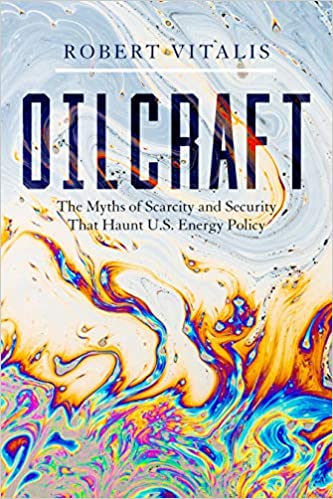
Ep 334Oilcraft: The Myths of Scarcity and Security That Haunt U.S. Energy Policy w/ Robert Vitalis
On this edition of Parallax Views, it's often been said that U.S. war in the Middle East are fought not to protect America from Weapons of Massa Destruction, terrorist threats, or to spread democracy but rather for the cynical purpose of gaining access to natural resources, specifically crude oil. "No more blood for oil!" cried many an antiwar protester and pro-peace activist during the the George W. Bush administration's Iraq War debacle. But Robert Vitalis, a Professor of Political Science at the University of Pennsylvania, argues in his provocative and controversial new book, Oilcraft: The Myths of Scarcity and Security That Haunt U.S. Foreign Policy, that we've been hoodwinked by the conventional wisdom, accepted by elements of the political Left, Right, and Center, about oil and U.S. policy. "Oilcraft", Vitalis says, does not represent a form of "Statecraft" but a form of magical thinking based on myth rather than reality that has negatively impacted U.S. energy policy for decades. Vitalis joins us on this edition of the program to lay out his controversial case. Among the topics covered are: - Robert's previous books When Capitalists Collide: Business Conflict and the End of Empire in Egypt (1995), America's Kingdom: Mythmaking on the Saudi Oil Frontier (2005), White World Order, Black Power Politics: The Birth of American International Relations; who these books, like Oilcraft, sought to undermine institutional myths and challenge our preconception about geopolitics and grand strategy in the 20th and 21st century - Why the title of the book is not a reference "statecraft" but rather the myths of witchcraft; the influence of Racecraft: The Soul of Inequality in American Life (2012) by Barbara J. Fields and Karen Fields on Oilcraft - The U.S.-Saudi Special Relationship and whether it's origins are as true as people have been led to believe since 9/11 - Why Robert, who himself opposes many U.S. interventions overseas from a left-wing perspective, believes the "Blood for Oil" narrative used to explain the the U.S.'s Middle East Wars is incorrect; why the idea of the Iraq War being a "War for Oil" doesn't, in view Robert's view, make sense - What Robert argues is the misrepresentation of Alan Greenspan's thoughts on oil and it's relation to the Iraq War based on a quote from Greenspan's book The Age of Turbulence: Adventures in a New World (2012) - Why should antiwar activists oppose the "War for Oil" narrative? Isn't opposition to the war, regardless of the reasons for it, what should matter most? - How the belief of oil's role in informing U.S. foreign policy and international cuts across political spectrum Left, Right, and Center; the libertarian Cato Institute as one of the few voices that stand in opposition to the conventional wisdom; What does the Cato Institute get right about this issue and why does Robert, himself left-leaning, agree with them on this matter? - The U.S. refrain of the "need to secure access" of resources and how the Left understands this as meaning "control" - Oil as a world market in which "the oil will simply flow" - Our oil addiction as being faith-base and akin to a cult - The story about President Franklin Delano Roosevelt (FDR) meeting King Abdul Aziz Ibn Saud of Saudi Arabia in 1945 that is used to explain the U.S.-Saudi strategic relationship - Douglas Feith, the under Secretary of Defense for President George W. Bush who has been described as one of the architects of the Iraq War, and his curious comments about oil, OPEC, Saudi Arabia during his involvement in the Ronald Reagan administration - Scarcity ideology and it's relationship to war and social Darwinism; specifically Robert points out the "Heritage of Mankind" argument and how notions like it and others are originate in deeply racist thinking born of Colonialism - The U.S.-Iran relationship and U.S concerns with who controls the profits or rents of oil production; Robert makes the case the countries like Iran and the wealth they gain from the oil market are seen as threats to the U.S. do to said countries opposing American aims and policies - Is it possible to "Break the Spell" of Oilcraft? - Robert's opinion on the Wall Street Journal review of Oilcraft that characterized him as a libertarian even though his arguments came from the Left This Episode Brought to You By: The War State: The Cold War Origins of the Military-Industrial Complex and the Power Elite, 1945-1963 by Michael Swanson of The Wall Street Window
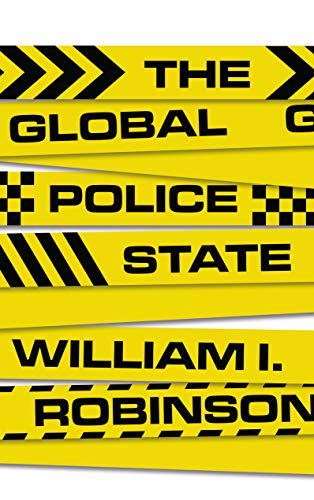
Ep 333The Global Police State w/ William I. Robinson
On this edition of Parallax Views, how did we get to this moment of social uprisings and the repressive states, represented by ICE immigration detention centers and rising authoritarianism around the globe, that color the present? Sociologist William I. Robinson provides a theoretical framework for understanding how 21st century tumult came to be in his new book The Global Police State. Robinson argues that we are living in a world in which rapidly accelerating economic inequality have led the transnational capitalist class to create systems of control and repression that will quell dissent. Additionally, he argues that this unstable situation, in which the masses are angry and the power elites divided, has led to an encroaching, creeping, 21st century fascism that threatens to engulf the world. He joins us on this edition of the program to lay out what The Global Police State is, the green zones and gray zones that separate the "haves" from the "have nots", the three factions of the global power elite and how the third factions (reformists) can be pressured by the masses, how Trump and the movement of Trumpism is not a populist movement and is in fact backed by elements of the transnational capitalist class, technologies of repression and the modern surveillance society, the Black Lives Matter Movement (BLM) and why the transnational capitalist class are directly threatened by anti-police sentiments, the cooptation of social movements by the transnational capitalist class, the militarization of policing and security organizations, the capitalist and corporate elements that benefit from private military firms (ie: mercenary) and private policing, the major difference between the 20th century and 21st century crises (hint: there is no longer a strong left/labor movement), and much, much more! This Episode Brought to You By: The War State: The Cold War Origins of the Military-Industrial Complex and the Power Elite, 1945-1963 by Michael Swanson of The Wall Street Window
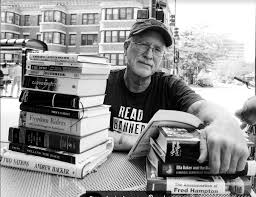
Ep 332Radical Stories from the Weather Underground w/ Bill Ayers
On this edition of Parallax Views, the Weather Underground have been variously described, depending on one's perspective, as radical activists who opposed the Vietnam War or, more pejoratively, terrorists. Bill Ayers was one of the leaders of the Weather Underground in those tumultuous days and has written about his experiences in his memoir Fugitive Days. He joins us on this edition of Parallax Views to discuss his time with the Weather Underground, why certain factions of the antiwar movement that came to be associated with the Weather Underground in the 1970s became more radicalized as the Vietnam War raged on, the Weather Underground's jailbreak of psychedelic guru Timothy Leary, and much, much more. Additionally, Bill give his thoughts on having dinner w/ the likes Andrew Breitbart and Tucker Carlson, the infamous Ayers hosted dinner with Barack H. Obama that the right used to claim that Obama was mentored by Bill, the FBI and COINTELPRO in the days of the Weather Underground, Bill's son and California District Attorney Chesa Boudin, James Baldwin and racial justice, universal healthcare and demanding the impossible, and much, much more! Bill's wife Bernadine Dorhn also makes a bit of a cameo as we delve into the history that led to the Weather Underground and thoughts on current hot topics like the Civil War statues debate and the need for political imagination in these trying times. All that and more on this edition of Parallax Views! This Episode Brought to You By: The War State: The Cold War Origins of the Military-Industrial Complex and the Power Elite, 1945-1963 by Michael Swanson of The Wall Street Window
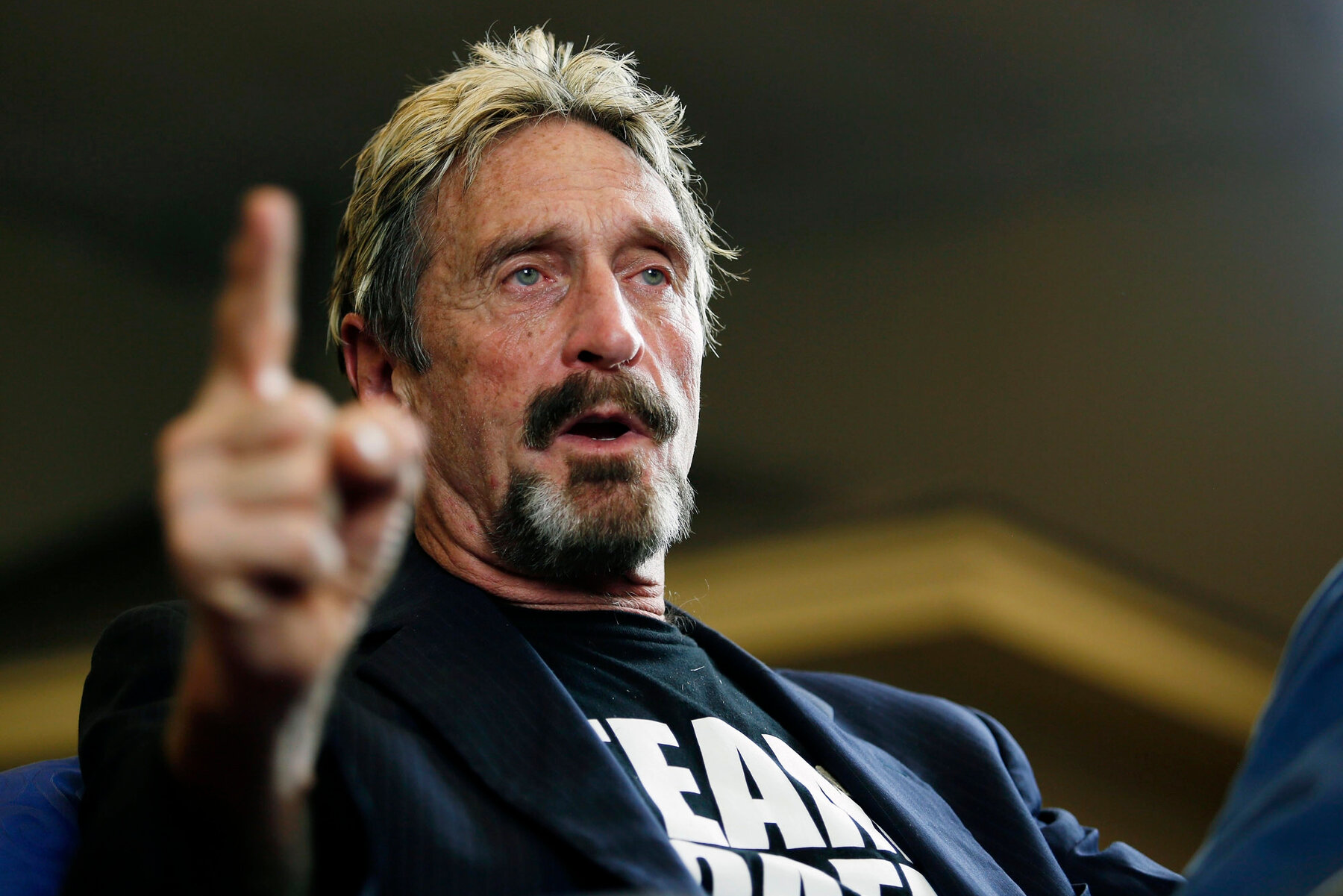
Ep 331REPLAY: The John McAfee Interview w/ Special Guest Co-Host Marlon Ettinger
In light of John McAfee recently being detained in Spain and facing charges leveled at him by the United State IRS we present this interview w/ McAfee that may serve to shed light on his psyche. On this edition of Parallax Views, an equal parts wild and tense conversation with the founder of McAfee associates (the creators of McAfee Antivirus), bitcoin bull, Presidential candidate, international fugitive, and person of interest in the Belize murder of Gregory Faull, John McAfee. Joining me to help ask some of the more probing questions in this interview is the inimitable freelance journalist Marlon Ettinger, who previously joined us to discuss his experiences at the NY trial of the now deceased Jeffrey Epstein. Marlon was helpful in trying to ask questions that dug a little deeper during the course of the conversation. I trust that, unlike some podcasts dealing with the controversial figure of McAfee, this is not an exploitative or "comedic" conversation and gives some insights into both the notorious John McAfee and some of the infamies associated with him. In any case Marlon and I tried to do something different with this interview and we hope that you, the listener, get something out of it. Special thanks to Jamie Curcio, author of Mask: Bowie & Artists of Artifice, for help with this episode PRE-ORDER JAMIE CURCIO'S MASKS: BOWIE & ARTISTS OF ARTIFICE FROM INTELLECT BOOKS This Episode Brought to You By: The War State: The Cold War Origins of the Military-Industrial Complex and the Power Elite, 1945-1963 by Michael Swanson of The Wall Street Window
Ep 329Opus Dei, QAnon, and Operation Gladio w/ Raul Diego
On this edition of Parallax Views, the ultra-conservative Catholic order Opus Dei has come under scrutiny due to the nomination of the devout Catholic Amy Coney Barrett to the Supreme Court after the passing Ruth Bader Ginsburg, Although Barrett is connected to similar order known as the People of Praise, Opus Dei has come up due to the connections of Attorney General Bill Barr and The Federalist Society's Leonard Leo, the latter of whom is a board members of the Opus Dei's Catholic Information Center and who played a role in getting Brett Kavanaugh and Neil Gorsuch nominated into the Supreme Court under President Trump. Mint Press News journalist Raul Diego joins us on this edition of the program to details why this matters and how the Opus Dei is connected to covert operation like Operation Gladio and Operation Condor that are tie together the Vatican, the mafia, and intelligence agencies like the CIA as outlined in Raul's recent article "The Court of God: How a Catholic Secret Society Took Over SCOTUS". He even manages to discuss how this saga ties into the scandal-prone Deutsche Bank through the figure of Herman Abs. Incidentally, Deutsche Bank has come under scrutiny in recent weeks due to the leaked FinCEN files. Raul also give his take on what he considers the more insidious implications of the COVID crisis in regards to the potential of the crisis being exploited for the furtherance of the surveillance state society that has grown since the Bush era War on Terror after the 9/11 terrorist attacks in 2001. In this regard I'm not sure that Raul and I are in complete agreement, but I do see the dangers of increased digital surveillance being normalize during the pandemic in a way that will not be reversed when it ends. Additionally, Raul and I also discuss his latest article "From British Israelism to the Miami Model: What’s Behind QAnon’s 2020 Resurgence?". Raul makes the case, much like Robbie Martin of Media Roots Radio, that QAnon is a sophisticated operation meant to stifle free speech in a "Strategy of Tension" that use's the phenomena's true believers as useful idiots. In other words, Raul believes that QAnon, which he ties into the bizarre antisemitic ideas of British Israelism (which is a belief that Anglo-Saxons are the true Jews and the real "Chosen People"), is a manufactured revolt designed by the very deep state it claims to oppose. And, as it turns out, figures like Richard Grenell, Former Acting Director of the United States National Intelligence, are boosting QAnon accounts on social media. In this regard Raul and I discuss the work of investigative journalist Gary Webb and how it created a fertile environment of independent journalists who threaten what has more or less been called "The Establishment". All that and more on this edition of Parallax Views! EDIT: Due to my busy schedule and how hard I've been working I made a rather ridiculous mistake in the outro... I called Raul Diego "Raul Julia"... yes, the famous actor. Oh well, bloopers are part of the fun. This Episode Brought to You By: The War State: The Cold War Origins of the Military-Industrial Complex and the Power Elite, 1945-1963 by Michael Swanson of The Wall Street Window
Ep 328Masonic History and Is QAnon an Op? w/ Robbie Martin
On this edition of Parallax Views, Robbie Martin of Media Roots joins us to discuss his recent podcast series on the history of Freemasonry in America as well as his thoughts on the QAnon phenomena. In Robbie's estimation, QAnon seems to be a political, or perhaps even intelligence, operation. But to what end? Find out on this edition of Parallax Views! Among the topics covered: - Is the history of Freemasonry in the U.S. is more interesting than the sensationalist interpretations of Masonic figures like Alex Jones? Robbie thinks so! - Anti-Masonry and the Anti-Masonic Party in the U.S. and the disappearance of William Morgan; the Catholic Church Vs. Freemasonry - How the sensationalism around fraternal organizations and secret societies actually undermines the fact that such organizations can potentially create networks of privilege and preferential treatment - What is going on with QAnon? Is it a psyop? What effect will it have on the stifling of information on the internet? - 8chan whistleblower Frederick Brennan and 8chan owner Jim Watkins, who has been discussed as the pivotal figure in pushing QAnon. Is there more to it than Watkins? - How the concept of the "deep state" has been denigrated by QAnon's nonsense; the Grand Unified Conspiracy subculture under QAnon... QAnon's followers infiltrating everything from UFO subculture to the 9/11 Truth Movement - The damage that QAnon and figures like Alex Jones have had on skepticism of intellectual and academics critiques of government, imperialism, etc. - Figures like former CIA Bin Laden Unit head honcho Michael Scheuer and Tom Clancy ghostwriter/former State Department figure Steve Pieczenick; Bin Laden's niece, Noora Bin Laden, is a QAnon supporter? - QAnon after Trump has gotten COVID; belief of some QAnon supporters that Trump is faking illness to bring about "The Storm" and the arrest of Hillary Clinton; Q's posts, called "Q Drops" becoming lazier and more akin to your average electoral conspiracy theories rather than the more outlandish theories that QAno's WWG1WGA army has become used to devouring - Russiagate and QAnon; does QAnon strive off energy from Russiagate; the Israeli private intelligence firm Psy Group and its relationship to the Trump-Russia story; Trump aggressing Russia ahead of arms treaty expiring; Russian bounties story - The faux populism and the big money (or dark money) behind the American Right and Trumpism This Episode Brought to You By: The War State: The Cold War Origins of the Military-Industrial Complex and the Power Elite, 1945-1963 by Michael Swanson of The Wall Street Window
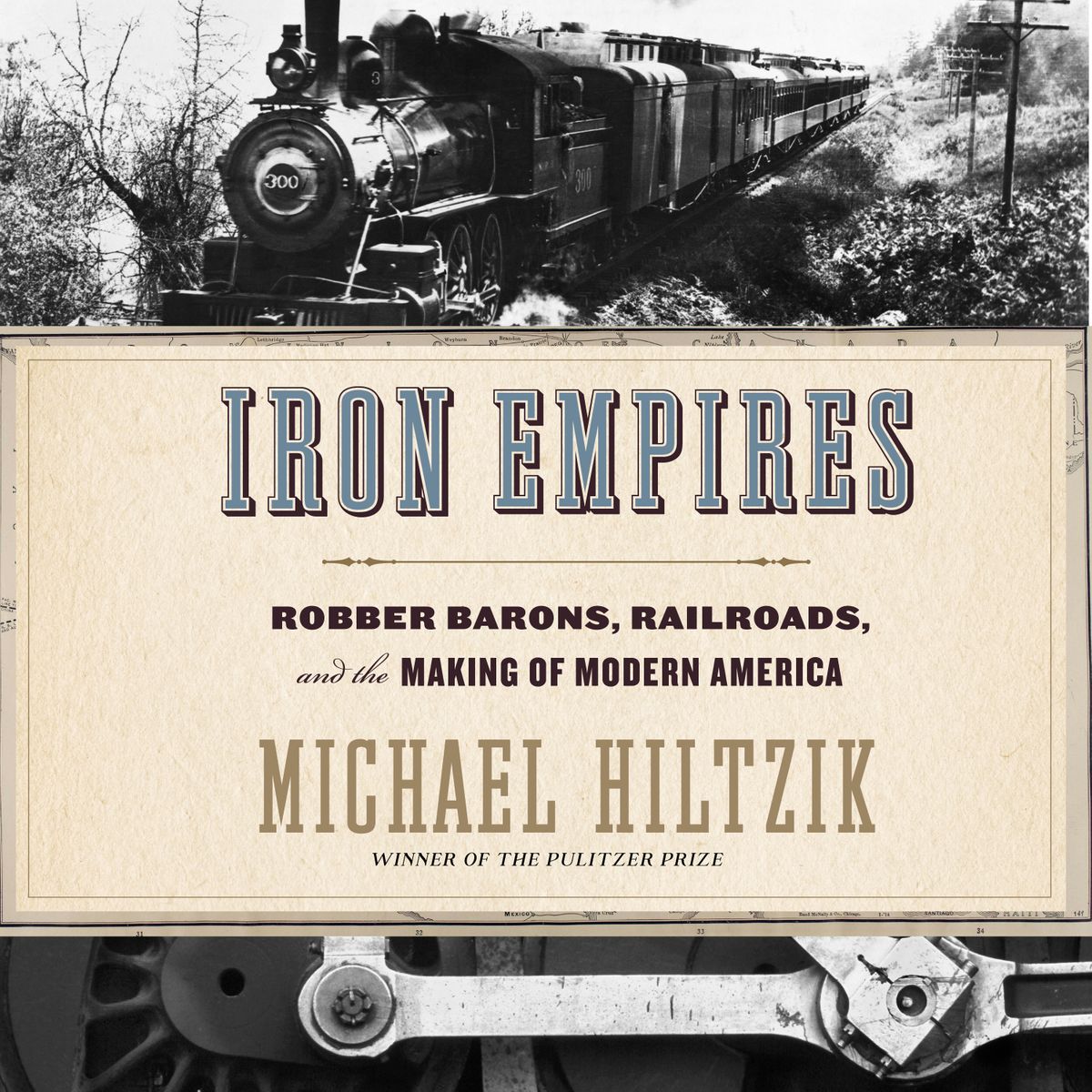
Ep 327Iron Empires: Robber Barons, Railroads, and the Making of Modern America w/ Michael Hiltzik
On this edition of Parallax Views, sometimes it is necessary to examine the historical past to understand our present. For example, the current moment of rapidly increasing economic inequality that has colored the opening salvo of the 21st century appears to have a great deal in common with the "The Gilded Age" of the 19th and 20th centuries. Pulitzer Prize winning journalist Michael Hiltzik, author of Iron Empires: Robbers Barons, Railroads, and the Making of Modern America, joins us on this edition of Parallax Views to explain how the U.S. railroad pioneers, or robber barons as their critics called them, like Cornelius Vanderbilt, E.H. Harriman, and J.P. Morgan gave birth to America's "Gilded Age" and the ways in which figures like Jeff Bezos and Mark Zuckerberg may be their 21st century equivalents in a "New Gilded Age". In addition to discuss this fascinating topic we also discuss, in the closing ten minutes of the program, Michael's thoughts on the state of journalism today. Among some of the issues covered in this conversation: - What was "The Gilded Age"? How figures like the American novelist Mark Twain criticized power during this era - How railroads were thought of in the 1800s; skepticism towards boosters of the railroad system back then (ie: being seen as a con job or a grift) and how, on the other hand, the railroads were seen as a technological marvel at the time; the Transcontinental railroad and it's significance; the "Golden Spike" - The "scoundrel" Daniel Drew and his role in the early history of the Iron Empires referred to in the title of Michael's book - The Union Pacific's Crédit Mobilier scandal involving railroad money's influencing of politics in D.C. through bribery - The Bradley-Martin Ball and the excesses of the super-wealthy in the late 1800's as society's less fortunate struggled - The role of the railroad barons in the economic crashes throughout the latter 1800s and before the Great Depression of the 1930s - The Great Man Theory of History and whether or not it is applicable in describing the railroad barons - The personality and beliefs of J.P. Morgan - The role that figures like Theodore Roosevelt and Eugene V. Debs had in combating the railroad barons and their excesses - The social changes brought upon by the railroad system including how it changed things for American women This Episode Brought to You By: The War State: The Cold War Origins of the Military-Industrial Complex and the Power Elite, 1945-1963 by Michael Swanson of The Wall Street Window
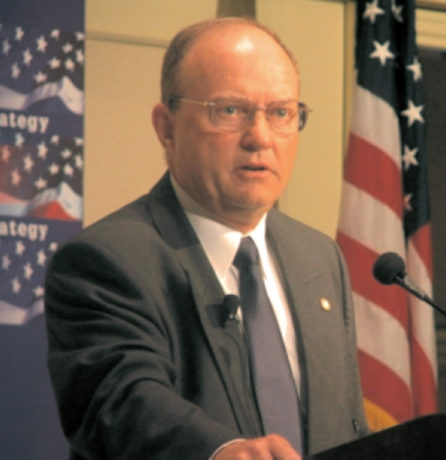
Ep 326America in Crisis from the 2020 Election to Foreign Policy w/ Ret. Col. Lawrence Wilkerson
On this edition of Parallax Views, we welcome a guest that has an inside track within the beltway. Namely, Ret. Col. Lawrence B. Wilkerson. For the unfamiliar, Col. Wilkerson served as the Chief of Staff under Secretary of State Colin Powell during the George W. Bush administration. He also served 31 years in the U.S. army and teaches as an adjunct professor of government and public policy at the College of William & Mary. Since retiring from the military Wilkerson has been an outspoken critic of the Iraq War as well current U.S. foreign policy in other parts of the Middle East and around the world. Right now, he is working with the Transition Integrity Project, among other groups, to "War Game" possible scenarios in which the 2020 Presidential election doesn't end with a peaceful transition of power. Among the topics covered: - The Transition Integrity Project (TIP) and possible scenarios that could cause chaos in the immediate aftermath of the general election. Is Trump not allowing a peaceful transition of power just alarmism? What are the simulations, or what the press calls "War Games", done by the TIP and what insights can it give us about human decision making processes in relation to governance? - Col. Wilkerson mention Bill Barr's Christianity conservatism (or is it Christian Nationalism?) and groups like the conservative Catholic sect Opus Dei. What does it mean for U.S. governance? Thoughts on Steve Bannon, Hillsdale, and more - What is the relationship between the past and the Age of Trump present? What role do the Presidencies of Bill Clinton, George W. Bush, etc. have in laying the groundwork for the Donald Trump White House. Predatory capitalism and the endless war state. - What to make of foreign policy under Trump? What is the state of foreign policy in the U.S. and relations with North Korea, Iran, Russia, etc. The Trump administration's "Maximum Pressure" campaign on Iran and the fallout it will likely create in our relationship with Iran. The ruination of agreements under Trump, the Venezuelan regime change efforts, and Trump's threatening of Russia. - President Barack Obama's foreign policy, Col. Wilkerson's telling experience with Obama, Obama and his National Security Advisor Ben Rhodes vs. the Washington, D.C. foreign policy "Blob" and the "D.C. Playbook"; the foreign policy consensus within the beltway and its pro-war bias - What is the extent of foreign influence on U.S. foreign policy, for example Israel and the Kingdom of Saudi Arabia? The strange alliance between Christian Zionists and Israel; the belief in end-times prophecy that drives Christian Zionists like Pastor John Hagee - The relationship between Iran and the U.S.; why can't the U.S. and Iran have a non-hostile relationship?; the role of the UAE, Saudi Arabia, Kuwait, and other countries in the hostile relationship between Iran and the U.S.; influencing buying and money; is their any possibility of a non-hostile relationship with Iran in the future after Trump's dismantling of the Iranian nuclear deal?; Wilkerson's view, based on experience, that Iran is extremely rational and willing to work out a decent relationship - The New Cold War with China? Nuclear weapons and China; we are at a moment where science can identify and fix our problems... but if we don't take that opportunity it may spell our peril. This Episode Brought to You By: The War State: The Cold War Origins of the Military-Industrial Complex and the Power Elite, 1945-1963 by Michael Swanson of The Wall Street Window

Ep 324Green Party Vice Presidential Candidate Angela Walker
On this edition of Parallax Views, 2016 Green Party Presidential Candidate Jill Stein is trending on social media after Ruth Bader Ginsberg's passing as many claim she acted as a "spoiler" against Hillary Clinton. As a result, they argue, Donald Trump will now be able to nominate another conservative Justice into the Supreme Court. Meanwhile, the Green Party continues to run the own Presidential campaign with Howie Hawkins and his Vice Presidential candidate Angela Walker. Walker joins us on this edition of the program to address criticisms of the Green Party and explain the policies she and Howie are pushing for, including an Ecosocialist New Deal, an end to the nuclear arms race, and a federal jobs guarantee. This Episode Brought to You By: The War State: The Cold War Origins of the Military-Industrial Complex and the Power Elite, 1945-1963 by Michael Swanson of The Wall Street Window
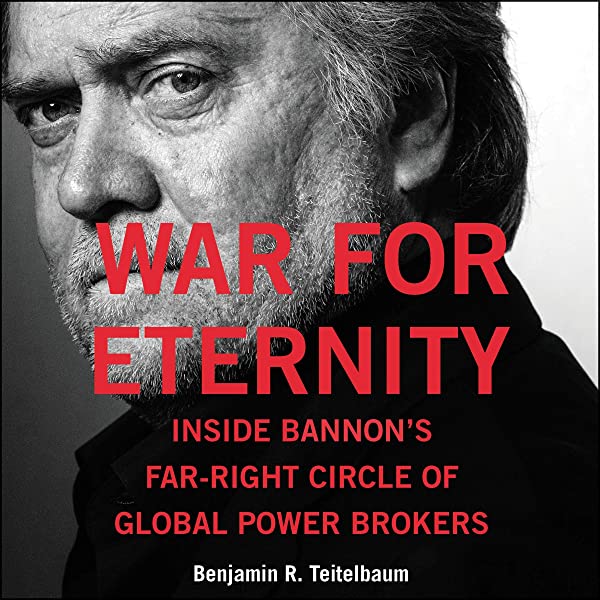
Ep 315War for Eternity: Inside Bannon's Far-Right Circle of Global Power Brokers w/ Benjamin Teitelbaum
On this edition of Parallax Views, we revisit the subject of Steve Bannon, who was recently arrested along with his business partners Andrew Badolato, Brian Kolfage, and Timothy Shea were arrested on charges related to fraudulent skullduggery in relation to their "We Build the Wall" campaign. In this conversation we turn away from the legal controversies to discuss the ideas that undergird Bannon's thinking. Many journalists, including previous Parallax Views guest Jean Guerrero, believe that Bannon is a bit of an empty shell intellectually. Which is to say that he is less an ideologue than a conman or a grifter. Our guest on this edition of the program, however, Prof. Benjamin R. Teiltelbaum, author of War for Eternity: Inside Bannon's Far-Right Circle of Global Power Brokers, argues otherwise. Teitelbaum makes the case that Bannon, who he conducted 21 hours of interviews with for the book, is influenced by a radical right-wing spiritual/political ideology known as Traditionalism. This would put Bannon in line with such strange thinkers today as Brazil's Olavo de Carvalho and Russia's Alexander Dugin, as well as past thinkers like the Perennialism Rene Guenon and the self-described "Super-Fascist" Julius Evola (who, during the WWII era criticized the Nazis from the RIGHT; in other words, he didn't see them as going far enough in their aims). These thinkers, says Teitelbaum, believe in a cyclical vision of history and time. They believe, he argues, that the Progressive vision of history has led us to a Dark Age, or what the Hindu faith knows as the Kali Yuga, and that, eventually, this age will overturned... either naturally or by force. Put country simple, the radical Traditionalists in War for Eternity are seeking a rollback of modernity. In addition to covering how all these thinkers connect with Bannon we also cover, briefly, how War for Eternity led Teitelbaum down a strange path investigating a private intelligence firm known as Jellyfish. One of the company's leaders, Michael Bagley, was interested in a project of building micro-cities for refugees, but was busted by the FBI after allegedly seeking to work with Mexican drug cartels like the Sinaloa cartel. Bagley and Jellyfish, which it should be noted was co-founded by a number of figures involved with Blackwater, it turns out had tie into the story of the "Alt Right" and attempts to start something called "Alt Right Corporation" with far-right personalities Richard Spencer, Daniel Frieberg, Henrik Palmgren of Red Ice, and Jason Reza Jorjani. Jorjani, who was seeking to influence the Trump administration to form alliances with Iranian ultra-nationalists, came to believe that Jellyfish was part of an intelligence operation. One of Teitelbaum's anti-fascist sources, it turns out, was also spooked by some things he found out about Jellyfish. With that in mind is there more to this story than Jorjani potentially having sour grapes? Teitelbaum weighs in on this matter later on in the conversation. This Episode Brought to You By: The War State: The Cold War Origins of the Military-Industrial Complex and the Power Elite, 1945-1963 by Michael Swanson of The Wall Street Window
Ep 321The Sordid Saga of Donald Trump w/ David Cay Johnston
On this edition of Parallax Views, much has been made of the scandal-ridden Presidency of Donald Trump. But how deep does the rabbit hole go and do the sordid saga of Donald Trump have a prequel in the form of his time as celebrity businessman? For 30 years, Pulitzer Prize winning investigative journalist David Cay Johnston of the DCReport (and author of the books The Making of Donald Trump and It's Even Worse Than You Think has been on what could be called the "Trump Beat". He joins us on this edition of the show to discuss the whole saga of Donald Trump including: - David's penchant for covering stories that challenge the powerful; from exposing tax cheaters to taking on the LAPD - How David first met Donald Trump while covering casinos in Atlantic City and his impression that Donald was a "P.T. Barnum" character - Trump's relationship to Iran/Contra arms dealer Adnan Khashoggi - Trump's ties to organized crime families, including the Gambino Crime Family and Genovese Crime family, and dealings with the mob - A story that indicates Trump protected a drug trafficker, Joseph Weichselbaum, who worked at Trump's Atlantic City casinos. Johnston maintains that this story connects Trump to the international cocaine trade - Trump's "Outsider" status among elites in terms of cultural and social practices - The financial chicanery of Donald Trump - Donald Trump's awkwardness and how it has repelled people over the years including women he took on dates; his inappropriate comments about his daughter Ivanka Trump and Tiffany Trump - Trump as a "cash extractor" rather than a businessman - Trump's forebears, including his grandfather Frederick Trump and his father Fred Trump, and the skeletons in their closet - David's thoughts on Trump supporters and how Trump takes advantage of them; David argues Trump took the economic ideas of his campaign from his work. - David's thoughts on tax issues and rising economic inequality in this country This Episode Brought to You By: The War State: The Cold War Origins of the Military-Industrial Complex and the Power Elite, 1945-1963 by Michael Swanson of The Wall Street Window
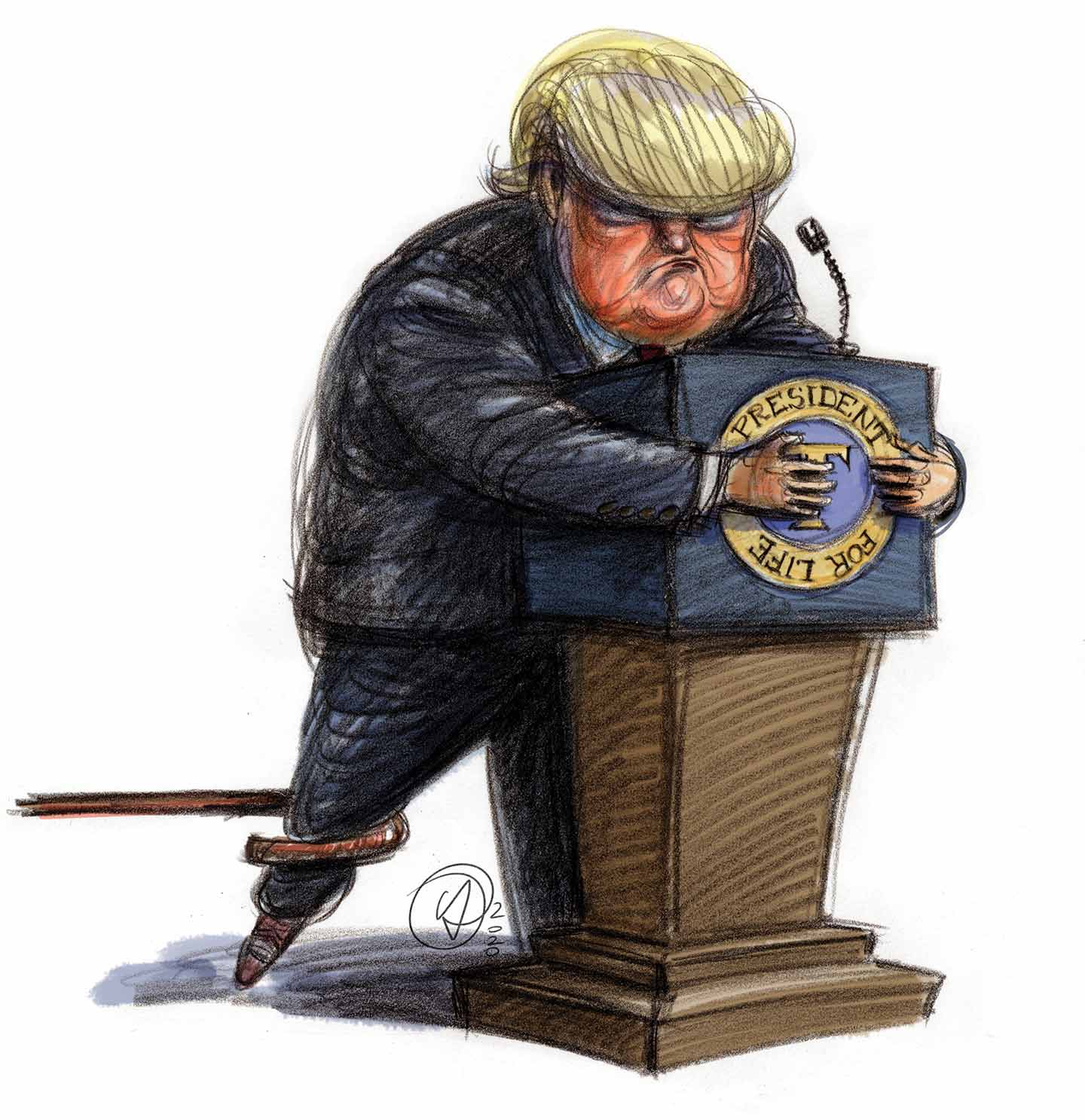
Ep 323Trump's Plan, the Supreme Court, and the Election w/ Dr. Jack Rasmus
On this edition of Parallax Views, Playboy's White House correspondent Brian Karem recently pressed President Trump at a White House briefing if he'd accept a peaceful transition of power on the chance that he is defeated by his Democratic Party challenger Joe Biden. Trump, refused to give a clear answer as concerns grows that sitting President in the White House will not accept the results of the November election if they are not in his favor. Hence why voices like the Transition Integrity Team, composed of both Republicans and Democrats, have arose with concerns that Trump will not leave office peaceful. Such concerns have grown louder thanks to the passing of Superem Court Justice Ruth Bader Ginsburg. Trump has already made controversial appointments to the federal appellates courts during his time in office and Trump, with the help of Mitch McConnell, is seeking to nominate a new judge to the Supreme Court before the election. Meanwhile, Attorney General Bill Barr is accusing protesters of "sedition" and Trump supporters like Steve Bannon are arguing that mail-in ballots during the coronavirus crisis are a voter fraud plot designed by the "deep state" to steal the election from Trump. But is it the other way around: Is Trump planning a "legal coup d'état" to steal the election? Dr. Jack Rasmus, political economist, author of The Neoliberal Scourge: U.S. Economic Policy from Reagan to Trump, and host of the Alternative Visions radio show on the Progressive Radio Network, joins us to assess the current situation. Dr. Jack's most recent articles, cover in this conversation, are "A Most Dire Warning" and "Ginsburg’s Death & Trump’s Emerging Legal Coup D’état". This Episode Brought to You By: The War State: The Cold War Origins of the Military-Industrial Complex and the Power Elite, 1945-1963 by Michael Swanson of The Wall Street Window
Ep 320Double Feature Pt. 2: Deutsche Bank Report on “The Age of Disorder” w/ Charles Hugh Smith
bonusFrom Today's Double Feature Episode - Charles Hugh Smith on Deutsche Bank's "Age of Disorder" Report (Request Was Made to Break the Episode Into Two Parts; I'm Happy to Oblige) Charles Hugh Smith of the Of Two Minds blog, which ranked at #7 on CNBC's list of the top alternative financial websites, and author of A Hacker's Teleology: Sharing the Wealth of Our Shrinking Planet joins us to discuss a Deutsche Bank report by Jim Reid warning of a forthcoming "Age of Disorder" that will disrupt and reverse the trends of globalization over the past few decades. For the unfamiliar, Deutsche Bank, which has come under scrutiny in recent years due to it's relationship with President Donald Trump, is the #17th largest bank in the entire world. As such it is important to understand this report and what it is saying. Charles fills us in and also discusses how this report ties into the generational cycles theory of historian Peter Turchen and Nicholas Nassim Taleb's thinking about fragility and anti-fragility. Charles believes we are living in what could more accurately, in his estimation, be called an "Age of Uncertainty" and details how we reached this point of grotesque economic inequality where the top 0.01% own more than the bottom 80%. Can we move in a different direction? Charles thinks so, but not through past ideologies that were popular in the 20th century.
Ep 319Double Feature Pt. 1.: OnlyFans or OnlyScams? w/ Scott Stedman & Sophie Pierce
bonusFrom Today's Double Feature Episode - Scott Stedman and Sophie Pierce on OnlyFans Skullduggery (Request Was Made to Break the Episode Into Two Parts; I'm Happy to Oblige) Journalists Scott Stedman and Sophie Pierce of Forensic News join us to discuss their recent work detailing allegations of fraud, theft, and other corruption by the newly popular modeling website OnlyFans and its mysterious owner Leonid Radvinsky. Sophie and Scott wrote a collaborative article "OnlyFans Faces Allegations of Fraud, Theft" that was published at Forensic News last month. Sophie, who is completing her Senior year at Seattle University while writing for Forensic News, explains how popular OnlyFans is amongst Generation Z and relates her experiences of interviewing OnlyFans models and users. Additionally, she shares a fascinating story about the strange data insecurity she expierenced courtesy of OnlyFans when she created a profile on the website as part of her investigation of it. Scott fills us in the OnlyFans enigmatic owner, Leonid Radvinsky, and the multiple lawsuits and scandals he has been embroiled in over the years. In fact, one OnlyFans content creators has argued that Radvinsky has been involved in shady activities involving drugs and Scott, although not jumping to conclusions, believe there is much more to Radvinsky, who has deftly avoided media attention, than meets the eye.

Ep 318OnlyFans or OnlyScams? w/ Scott Stedman & Sophie Pierce/Deutsche Bank Report on "The Age of Disorder" w/ Charles Hugh Smith
Time Stamps for the Interviews: Scott Stedman and Sophie Pierce Interview - 04:28 Charles Hugh Smith Interview - 53:30 Part 1: Sophie Pierce and Scott Steadman on OnlyFans fraud allegations - https://parallaxviews.podbean.com/e/scottsophie/ Part 2: Charles Hugh Smith on Deutsche Bank's "Age of Disorder" report - https://parallaxviews.podbean.com/e/chsmith/ A Parallax Views Two-for-One Double Feature... First Up, Journalists Scott Stedman and Sophie Pierce of Forensic News join us to discuss their recent work detailing allegations of fraud, theft, and other corruption by the newly popular modeling website OnlyFans and its mysterious owner Leonid Radvinsky. Sophie and Scott wrote a collaborative article "OnlyFans Faces Allegations of Fraud, Theft" that was published at Forensic News last month. Sophie, who is completing her Senior year at Seattle University while writing for Forensic News, explains how popular OnlyFans is amongst Generation Z and relates her experiences of interviewing OnlyFans models and users. Additionally, she shares a fascinating story about the strange data insecurity she expierenced courtesy of OnlyFans when she created a profile on the website as part of her investigation of it. Scott fills us in the OnlyFans enigmatic owner, Leonid Radvinsky, and the multiple lawsuits and scandals he has been embroiled in over the years. In fact, one OnlyFans content creators has argued that Radvinsky has been involved in shady activities involving drugs and Scott, although not jumping to conclusions, believe there is much more to Radvinsky, who has deftly avoided media attention, than meets the eye. Then... Charles Hugh Smith of the Of Two Minds blog, which ranked at #7 on CNBC's list of the top alternative financial websites, and author of A Hacker's Teleology: Sharing the Wealth of Our Shrinking Planet joins us to discuss a Deutsche Bank report by Jim Reid warning of a forthcoming "Age of Disorder" that will disrupt and reverse the trends of globalization over the past few decades. For the unfamiliar, Deutsche Bank, which has come under scrutiny in recent years due to it's relationship with President Donald Trump, is the #17th largest bank in the entire world. As such it is important to understand this report and what it is saying. Charles fills us in and also discusses how this report ties into the generational cycles theory of historian Peter Turchen and Nicholas Nassim Taleb's thinking about fragility and anti-fragility. Charles believes we are living in what could more accurately, in his estimation, be called an "Age of Uncertainty" and details how we reached this point of grotesque economic inequality where the top 0.01% own more than the bottom 80%. Can we move in a different direction? Charles thinks so, but not through past ideologies that were popular in the 20th century. This Episode Brought to You By: The War State: The Cold War Origins of the Military-Industrial Complex and the Power Elite, 1945-1963 by Michael Swanson of The Wall Street Window
Ep 314The Unraveling of America w/ Anthropologist Wade Davis
On this edition of Parallax VIews, Wade Davis is one of the world's foremost anthropologists and ethnobotanists. He's traversed the globe covering topics like Haitian Voodoo in The Serpent and the Rainbow, the wisdom of ancient in The Wayfinders: Why Ancient Wisdom Matters to the Modern World, the World War I era British expedition to Mount Everest in Into the Silence: The Great War, Mallory, and the Conquest of Everest, and most recently the culture and beauty of Columbia in Magdalena: River of Dreams: A Story of Colombia. Recently, in a piece for the Rolling Stone, Davis turned his attention towards understanding the dire moment the U.S. has been facing in light of political turmoil and polarization coupled with the COVID-19 pandemic or coronavirus crisis. The piece is entitled "The Unraveling of America: How Covid-19 Signals the End of the American Era", but should not be mistaken as a celebration. Rather, Davis laments what he believes could be the end of the American century if the U.S. doesn't choose to look in the mirror and reflect about the need for social democratic reforms. From his purview, the U.S. has become ensconced in a dangerous form of thinking that has led to greed being heralded, citizens becoming atomized, and stark polarization creating a divide amongst the American people. On this edition of the program we discuss his thoughts on this further as well as delving into the idea of conservatism, how his anthropological work informs his values and thinking, and much, much more. This Episode Brought to You By: The War State: The Cold War Origins of the Military-Industrial Complex and the Power Elite, 1945-1963 by Michael Swanson of The Wall Street Window

Ep 317Romania and the Political Economy of Fake News w/ Maria Cernat
On this edition of Parallax Views, much attention has been given to the issue of fake news and its permeation of the United States and Western Europe. However, it is worth keeping in mind that the infodemic is not a uniquely U.S. or even Western European dilemma. In fact, the problem exists in Eastern Europe as well. Academic and journalist Maria Cernat of The Barricade joins us to discuss the rise of COVID-19 conspiracy theories and fake news in Romania, and the political situation in Europe, on this fascinating edition of Parallax Views. Maria, who specializes in media and communications research, offers an insight into how the highly religious country of Romania faces similar issues to the U.S. in regards to fake news. At the same time, there are some unique aspects to the pandemic conspiracy theories arising in Romania, specifically the role elements of the Orthodox Church, whose clergy are paid by the Romanian state, play in spreading such paranoia. Maria believes that the problems facing Romania in regards to fake news have to do with structural issues such as economic inequality and the failures of the education system. It is not enough, she argues, to just say "people are stupid". Rather, she points, to deeper seated issues as leading the the current infodemic. In addition, we discuss the political situation in Romania, Romania's relationship with Russia, the extreme poverty facing many Romanians (including children), and a news story about Romania's recent purchase of U.S. Patriot missiles. From Maria (Minor Correction She Wanted to Make): I listened to the conversation again. I made a mistake: I said the there is no way for the premises to be false and the conclusion true, the correct formulation is : there is no way for the premises to be true and the conclusion false. Slip of the tongue... This Episode Brought to You By: The War State: The Cold War Origins of the Military-Industrial Complex and the Power Elite, 1945-1963 by Michael Swanson of The Wall Street Window

Ep 316The Press in the Age of Trump w/ Ken Silverstein of Washington Babylon
EOn this edition of Parallax Views, we get a "State of the Media" address from the veteran muckraking journalist Ken Silverstein of Washington Babylon. Ken has a lot of criticism for the approach of the press in the era of Trump, even though he himself has a great deal of contempt for Donald Trump and the way the current sitting President has attacked journalists over the course of the past four years. Before getting into that, however, Ken gives a background on how he became involved in journalism and his mentor Alexander Cockburn of Counterpunch fame (although it should be noted that Ken founded Counterpunch prior to Cockburn's involvement). From there we delve into: - Ken's thoughts on social media; the uproars over Matt Taibbi's recent op-eds; thoughts on what's been called "cancel culture" - Is there a lack of accountability in journalism?; the strange story of an Iranian who was asked to become a spy for the U.S.; the Democratic Party's movem right especially since the Bill Clinton Presidency and Rahm Emanuel's comments about 2020 being the "Year of the Biden Republican"; Ken's thoughts on Alexandria Ocasio-Cortez and "The Squad" - "The Trouble With Jeffrey: On Trump, The Atlantic, Goldberg and Cannon Fodder", Ken's recent piece on Jeffrey Goldberg's Atlantic piece alleging, vis-à-vis anonymous sources, alleging Trump's disrespect of troops at a cemetery; Ken's issues with Goldberg's piece and that fact that John Bolton did not corroborate the story; Goldberg's argument for why the sources needed to be anonymous; Goldberg's history of neocon warmongering during the Bush Administration and the Iraq War - The Donald Trump/Stormy Daniel affair and the Bill Clinton/Monica Lewinsky; the focus should be on power imbalances and hush money not the sex with porn stars - Trump's fights with the media and vice versa; Trump being seen as "authentic"; the media's strange focus on matters such as Trump's eating habits - Has the press coverage of Trump been reckless at times?; Ken's thoughts on the Russiagate story - Ken's controversial take on the death of Jeffrey Epstein as outlined in his piece "The Jeffrey Epstein Non-Conspiracy Theory"; Ken clarifies that he does think there's questions about the Epstein case but questions the conspiracy narrative around his death This Episode Brought to You By: The War State: The Cold War Origins of the Military-Industrial Complex and the Power Elite, 1945-1963 by Michael Swanson of The Wall Street Window
Ep 313The Role of Big Money in Politics & 2020 Election Analysis w/ Dr. Thomas Ferguson
On this edition of Parallax Views, much has been made about the role of money in the outcomes of political elections, at least within . In academic disciplines, however, this has often been seen as heresy. In fact, some view it as nothing more than conspiracy theory. And, truth be told, it would likely be overly simplistic to argue that a small handful of shadowy individuals select the two Presidential candidates every four years in U.S. elections. However, political scientist Dr. Thomas Ferguson, Professor Emeritus at the University of Massachusetts, Boston, dispenses with such oversimplifications while also making the case, through his extensive empirical research, that, yes, money in politics DOES, as a matter of fact, influence electoral outcomes. After receiving his Ph.D at Princeton University, Dr. Ferguson went on to teach, for a time, at MIT. During his academic travels he delved into the history undergirding FDR and the New Deal. In doing so he developed an alternative model to understanding elections that challenged the median voter theorem. This came to be known as the investment theory of part competition, which Dr. Ferguson elaborated upon in his landmark book Golden Rule: The Investment Theory of Party Competition and the Logic of Money-Driven Political Systems, he joins us on this edition of the program to discuss this theory, how he came to developing it, and his thoughts on the 2020 Presidential election pitting Republican incumbent Donald Trump against Democratic nominee Joe Biden. In the course of our conversation we also discuss: - Rahm Emmanuel's declaration that 2020 would be the year of the Biden Republican - Thoughts on the Alexandria Ocasio-Cortez wing of the Democratic Party and the development of small donor power in elections - Why conspiracy theories have become so popular - The stunning defeat of Joe Kennedy by Ed Markey in the Massachusetts Senate race - Thoughts on the panic-laden Deutsche Bank report by Jim Reid warning investors of an "Age of Disorder" - And much, much more! This Episode Brought to You By: The War State: The Cold War Origins of the Military-Industrial Complex and the Power Elite, 1945-1963 by Michael Swanson of The Wall Street Window
Ep 312Fear and Loathing in the Authoritarian Nightmare w/ John W. Dean
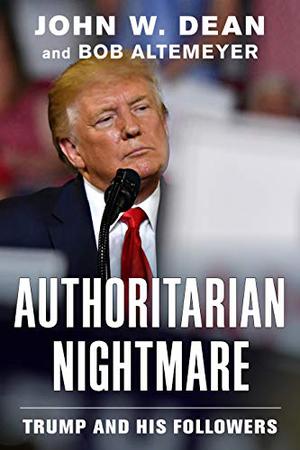
On this edition of Parallax Views, authoritarianism has been a hot topic since the election of Donald Trump to the Presidency of the United States in 2016. But there's actually a rich history of social science studies interrogating the dilemma of the authoritarian personality. In fact, according to our guest on this edition of the program, there's over half a century worth of research on the authoritarian personality type. John W. Dean, a former White House Counsel under President Richard Nixon who testified to Congress in the Watergate hearings, joins us to discuss his new book, co-authored with Bob Altemeyer, entitled Authoritarian Nightmare: Trump and His Followers. In this fascinating conversation, John and begin by referencing the work of Hunter S. Thompson and his idea of "Fear and Loathing" in politics being apropos of the current zeitgeist. John then details the different types of authoritarian personality types: social dominators, authoritarian followers, and "double highs". We discuss each of these type and how, despite key differences between them, they have coalesced in the era of the Trump Presidency. In this regard, we take some time to delve into the connection between Right-Wing Authoritarianism and the evangelical Christian Right. John makes the case that these types of authoritarian personality types are either impossible to persuade or, at the very least, very hard to persuade. In other words, converting authoritarian personalities may prove a Sisyphean task. We also discuss conservatism, the GOP, and right-wing authoritarianism. John relates how Authoritarian Nightmare is a sequel of sort to his previous book Conservatives Without Conscience. The prequel to Authoritarian Nightmare, John says, was actually a planned collaboration betwen John Dean and 1964 GOP Presidential nominee Sen. Barry Goldwater. I ask John a bit about his time as a "Goldwater conservative" and John gives some anecdotes about Barry Goldwater in this regard. According to John, Goldwater was disillusioned with the direction the Republican Party was going in by the time of the Reagan Presidency in the 1980s. John argues that Goldwater was unfairly smeared as a racist, nativist conservative, but in reality was more or less a libertarian. Jumping off from this point, John says that he can't really fault the GOP entirely for it's authoritarian voter base and that the base informs the make-up of the Party rather than the other way around. Before wrapping up John and I discuss whether Trump and his followers can really be considered conservative and if the GOP today is representative of a movement related to the historical tradition of political conservatism. We also chat about the similarities and differences between Richard Nixon and Donald Trump in this regard. All that and much more on this edition of Parallax Views. This Episode Brought to You By: The War State: The Cold War Origins of the Military-Industrial Complex and the Power Elite, 1945-1963 by Michael Swanson of The Wall Street Window

Ep 311J.G. Michael Talks Alternative Media on Along the Line
On this edition of Parallax Views, I recently appeared on the Along the Line podcast, an affiliate of our friends at Project Censored to discuss the importance of alternative media. Dr. Nolan Higdon, Nicolas Baham III, and Janice Domingo were gracious enough to have me on the program and I think we had a good chat about the need for alt media during this election season. This Episode Brought to You By: The War State: The Cold War Origins of the Military-Industrial Complex and the Power Elite, 1945-1963 by Michael Swanson of The Wall Street Window
Ep 309Freedom, the Social Bill of Rights, & the Federal Jobs Guarantee w/ Senatorial Candidate Richard Dien Winfield
On this edition of Parallax Views, Georgia is faced with an unusual electoral situation following the resignation of Senator Johnny Isakson's 2019 resignation. Since that time Kelly Loeffler has acted as Isakson's replacement until a November 3rd, 2020 special election, or "jungle primary", which will decide who gets Isakson's Senate seat. One of those candidates is Hegelian philosophy scholar and prolific author Prof. Richard Dien Winfield. Winfield previously made a foray into politics in 2018 when he made an attempt to run as a U.S. Representative for Georgia's 10th congressional district. During that time Winfield became known for being the one candidate pushing for a Federal Jobs Guarantee. He joins us on this edition of the program to discuss his run for Senate as well as to outline his ideas about freedom, the social bill of rights, and why we need a federal jobs guarantee as outlined in his tremendous new book Democracy Unchained: How We Should Fulfill Our Social Rights and Save Self-Government. Among the topics discussed: - Environmental crises facing America including the current wildfires; personal health and environmental health as a right that must be ensured not only for ourselves but also future generations; dealing with climate change and the Green New Deal - The question of Reparations for descendants of slavery and victims of Jim Crow; Winfield's unique answer to the question of Reparations may surprise you - A lengthy discussion on Winfield's federal jobs guarantee platform; why does he believe it is so necessary? - Running for Senate in the middle of the coronavirus pandemic - The issue of public education; the right to an education - The influence of philosophy and the idea of W.F. Hegel on Winfield's thought - Wealth inequality and income inequality; a fair minimum wage; taxation and fair taxation - Winfield's criticisms of Universal Basic Income (UBI) This Episode Brought to You By: The War State: The Cold War Origins of the Military-Industrial Complex and the Power Elite, 1945-1963 by Michael Swanson of The Wall Street Window

Ep 310Could 9/11 Have Been Prevented? w/ Former FBI Agent Mark Rossini
EOn this edition of Parallax Views, was 9/11 preventable? Our guest on this September 11th anniversary edition of Parallax Views, Mark Rossini, who worked as the FBI's point man in the CIA's Bin Laden Unit (aka ALEC Station), makes the case it was in his piece "In Re: 9/11". As an FBI agent working in ALEC Station alongside fellow FBI agent Doug Miller, Mark became privy to the CIA's monitoring of two 9/11 hijackers, Flight 77's Nawaf al-Hazmi and Khalid al-Mihdhar, and a "Terror Summit" in Kuala Lumpur, Malyasia from January 5th-8th, 2000. Through their monitoring of these activities, the CIA discovered that the two future 9/11 terrorist had VISAs to the U.S. When Doug Miller wrote a report on the summit, however, the CIA told both he and Rossini not to send it to the FBI. For 19 years Mark Rossini has been troubled by the question of WHY the CIA did not share this vital bit of information with the CIA. His conclusions, which were independently corroborated by National Coordinator for Security, Infrastructure Protection, and Counter-terrorism Richard Clarke, is that elements of the CIA made a catastrophic decision after the Kuala Lumpur Summit that they kept under wraps to preserve their own careers and reputations. This decision, which Rossini makes a strong circumstantial case for having occurred, involved an illegal recruitment operation and Saudi Arabia's intelligence services aka the Mabahith. Rossini believes that, if this circumstantial case is true, then 9/11 may well have been preventable. And yes, this is the same Mark Rossini featured heavily in Lawrence Wright's book The Looming Tower and as a character in the TV series of the same name. PLEASE READ MARK ROSSINI'S ANALYSIS OF 9/11 https://undicisettembre.blogspot.com/p/mark-rossini-inre911.html In this conversation we discuss: - The FBI's John O'Neil, known as Bin Laden's arch-nemesis (who, after leaving the FBI shortly before 9/11 perished in the towers on that fateful day) and the conflicts between O'Neil and the CIA, specifically former BIn Laden Unit head honcho Michael Scheuer - The concept of "The Wall", which many believe led to botched communications before 9/11 between the FBI and CIA, and why Rossini believes "The Wall" isn't a sufficient explanation for the CIA's withholding information regarding the Malaysia terror summit from the FBI - The relationship between the CIA and Saudi Arabia's Mahabith; the special relationship between Saudi Arabia and the U.S. - FBI agent Steve Bongardt and his angry email to Dina Corsi in July of 2001 regarding the CIA, FBI, and al-Hazmi and al-Mihdhar; Bongardt wrote that, “Someday somebody will die—and, Wall or not, the public will not understand why we were not more effective.” - CIA Director George Tenet's comments pertaining to 9/11 - And much, much more. This Episode Brought to You By: The War State: The Cold War Origins of the Military-Industrial Complex and the Power Elite, 1945-1963 by Michael Swanson of The Wall Street Window

Ep 308The Council for National Policy, Or the Radical Right‘s Shadow Network w/ Anne Nelson
On this edition of Parallax Views, Donald Trump recently opined, in a now infamous with Laura Ingraham for Fox News, that Democratic Party Presidential candidate Joe Biden was being controlled by "people in the dark shadows". This, of course, should come as no surprise given that conspiratorial mutterings about globalist elites hellbent on destroying the United States of America has become a hallmark of Trump's base. In fact, one can find ideations of a paranoid variety amongst rather visible elements of the American right-wing going back to the day of Senator Joe McCarthy and the Red Scare as well as in right-wing media outlets and organizations like WorldNetDaily and the John Birch Society. Even prior to Trump, figures like Alex Jones and Jerome Corsi promoted what historian Richard Hofstadter referred to as "The Paranoid Style in American Politics". In the 1990's, the militia and "Patriot" movement were driven by fears that the Clinton administration, specifically after Ruby Ridge and Waco, would usher in draconian martial law with the help of agencies like FEMA or, in some theories, the United Nations. Interestingly, then First Lady Hillary Clinton was roundly mocked at this time for offering a paranoid alternative to the right's vision of dystopia being ushered in by her husband. There existed, she said, a "vast right wing conspiracy" to undermine Bill Clinton's Presidency. This, of course, was roundly mocked as the delusional rantings of a "moonbat" or "wingnut". But was Clinton's accusation completely unfounded? Has the American right-wing been projecting when it lobs allegations of unpatriotic and sinister plots against Democrats and the Left? Veteran journalist Anne Nelson makes the case in her new book, Shadow Network: Media, Money, and the Secret Hub of the Radical Right, that the American Right, specifically through a sorely underdiscussed and shadowy organization, has been engaging in a certain kind of subterfuge that isn't far off from being a "vast right wing conspiracy". In this explosive new book Nelson, whose journalistic exploits includes covering the U.S. support of right-wing death squads in El Salvador during the Reagan Presidency, details the under-the-radar machinations of the Council for National Policy. Modeled as a conservative equivalent to the Council on Foreign Relations, a favorite target of right-wing paranoia, the CNP claims 501(c) 3 status. But, as Nelson notes, the CNP operates in a completely different way than the CFR. According to Nelson, it acts as a network that connects the right's ideologues to the money people that can fund their movements. Anne Nelson joins us on this edition of Parallax Views to tell the whole story of how this organization has sought to undermine democratic processes in the USA for decades. Among the topics covered: How three figures, Paul Weyrich, Morton Blackwell, and Richard Viguerie came together to help form the CNP with evangelical pastor and bestselling author of the Left Behind series Tim LaHaye as its President; Weyrich's curious comments on voting and the electoral majority; Viguerie's book Takeover: The 100-Year War for the Soul of the GOP and How Conservatives Can Finally Win It and the comments contained within it concerning Hillary Clinton's accusations of a "vast right wing conspiracy". - Putting the CNP in context; the war between supporters of the Barry Goldwater campaign and "Rockefeller Republicans" in the era before the CNP's founding; the Southern Baptist Church purges that preluded that CNP's founding; the arch-conservative Phyllis Schlafly, now the subject of the FX TV drama Mrs. America. - The Democratic Party's failures, including the neglect of "Fly Over Country" and the decay of the New Deal Coalition, that Anne criticizes in the book for leaving the CNP with a base to propagandize. - How the CNP ties into the U.S. support of death squads in El Salvador. - The CNP and the media; how the decline of media, journalism, and newspapers has created a fertile environment for the CNP's propaganda efforts; the deleterious effects of Ronald Reagan rolling back the Fairness Doctrine. - How connected are the Koch Bros. to the CNP?; how much of the CNP's agenda is driven by its financial backer's desire profits rather than religious beliefs of its idealogues? - The CNP vs. the CFR; the CNP's 501(c) 3 status - The CNP in the era of Donald Trump; the CNP's initial support of Ted Cruz over Donald Trump; the deal that the CNP cut with the Trump Presidency; the CNP's connections to the coronavirus pandemic through "America's Frontline Doctors" and Dr. [CENSORED] as outlined in her new Washington Spectator piece "Anatomy of Deception: Team Trump Deploys Doctors to Push Fake Cure for COVID" (see: hydroxychloroquine). All that and more on this edition of Parallax Views! This Episode Brought to You By: The War State: The Cold War Origins of the Military-Industrial Complex and the Power Elite, 1945-1963 by Michael Swanson of The Wall Street
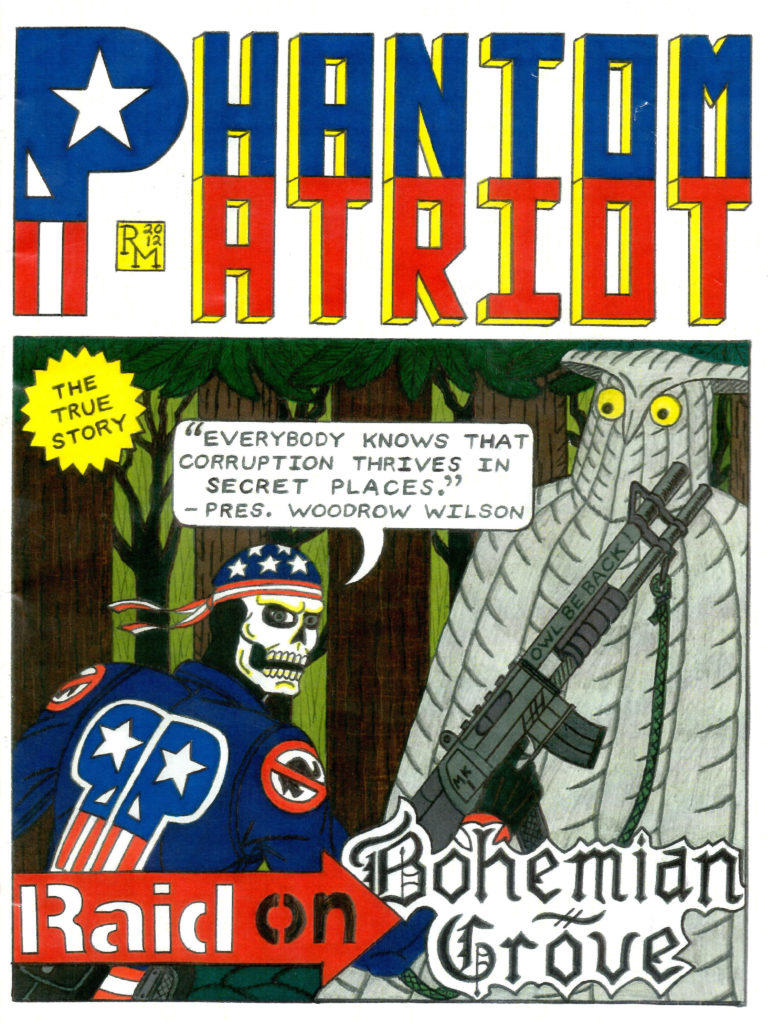
Ep 307The Phantom Patriot's Raid on Bohemian Grove! w/ Tea Krulos
Before there was QAnon Before there was Pizzagate Before there Plandemic There Was... THE PHANTOM PATRIOT! Believe it or not, there was a time when the "Deep State" wasn't a term in mainstream usage and Alex Jones hadn't appeared on national television dueling with media personalities like Megyn Kelly and Piers Morgan. In fact, there was a time when sitting U.S. Presidents didn't make cryptic statements about their political opponents being controlled by "people in dark shadows" (although Hillary Clinton did make a reference to the existence of a 'vast right-wing conspiracy' back in the day). But just because conspiracy theory is chic nowadays doesn't mean it been with us for a long time, although with incidents like the Comet Ping Pong arson by a Pizzagate truther or the child kidnapping by a QAnon mom conspiracy theories have come under greater scrutiny. For example, an internal FBI memo from 2019 named QAnon and Pizzagate believers as a potential domestic terrorist threat. Meanwhile, "Sandy Hook Truthers", who believe the Sandy Hook Elementary School shooting in 2012 was actually a hoax involving paid "crisis actors" to foment sweeping gun control legislation in the U.S., have been caught harassing victims' families. Not all conspiracy theorists are created equally though. For example, should the aging JFK assassination theorist Robert Groden really have been arrested 82 times by the Dallas Police Department for distributing conspiracy DVDs and literature in Dealey Plaza? Maybe not. That being said, incidents like the Comet Ping Pong arson and crimes with QAnon connections like the aforementioned child kidnapping or the murder of a Gambino Crime Family mob boss seem to be another matter entirely and not to be taken lightly. Prior to all these incidents, however, there was a rather strange case in the California's usually quiet Sonoma County that generally flew under the radar. On January 19th, 2002 a man dressed in superhero costume and wearing a skull mask attempted a raid on the Bohemian Grove under the belief that it was a location used by global Satanic elites to sacrifice children to the Babylonian owl god Moloch. After a stand-off in which the masked man pointed a rifle at confused and scared police officers, the vigilante raider was apprehended. That masked man's name was Richard McCaslin, a cosplayer and Batman stuntman at a Six Flags amusement. Cosplayer, however, may be a bit of an understatement. Richard was a member of what is known as the Real Life Superhero community. RLSH's usually engage in acts of community service like, say, neighborhood watch. Richard, on the other hand, engaged in vigilantism. After watching the Alex Jones documentary Dark Secrets: Inside Bohemian Grove, McCaslin donned his superhero attire and traveled to Sonoma County, California as his alter ego The Phantom Patriot in an attempt to stop what he believed was the nefarious activities Alex Jones alleged were occurring at Bohemian Grove. Granted, Bohemian Grove does raise an eyebrow or two upon initial examination. This is because the Grove is a vacation retreat for members of the highly exclusive Bohemian Club, whose motto is the slightly spooky "Weaving Spiders Come Not Here". Originally the Bohemian Club's membership was mainly artists. In fact, early members included the likes of Jack London and Mark Twain. What raises an eyebrow for more conspiratorially-minded though is the fact that the Bohemian Club's membership has since then gone on to include such global power players as former Secretary of State Henry Kissinger and former U.S. Presidents like Ronald Reagan and George W. Bush. In this way the Grove acts as a vacation getaway for elites to let loose once a year. On it's own that wouldn't seem to insidious. But then there's the rather odd ritual known as the "Cremation of Care" where the world's most powerful men dress in robes and sacrifice their "Dull Care" to a giant owl statue surrounded by fire in dead of night. Granted such strangeness could be chalked up to the goofy hijinks of the world's most powerful men letting their juvenile freak loose like they're at Burning Man. That's not what Richard McCaslin, The Phantom Patriot, believed though. For McCaslin the Grove was a location where Satan-worshipping elites committed ritual sacrifices of innocent children beneath a pagan moon... and it was the duty of the Phantom Patriot to thwart their sinister efforts. Now, the story of Richard McCaslin, alias the Phantom Patriot, may, upon initial inspection, seem to be nothing more than the story of a foolish crank. But upon closer examination can something more be gleaned from his story? What, for example, leads someone like McCaslin to become a conspiracy theory-prone vigilante? And is there a grain of truth to criticism of Bohemian Grove that is revealed through his story? After all, does a citizen like McCaslin, when put on trial, get the same treatment as a uber-wealthy man like Robert Durst, the subject of th
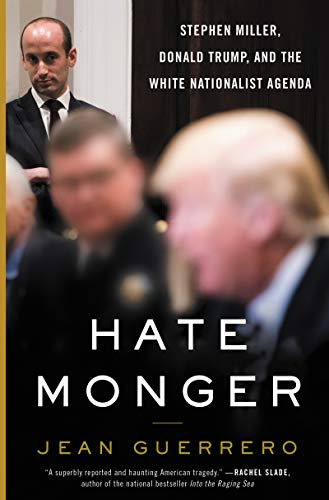
Ep 306Who Is Trump's Senior Policy Advisor Stephen Miller? w/ Jean Guerrero (+ The Gangster Presidency w/ JP Sottile)
Weekend Double Feature Episode! First Up, Investigative journalist Jean Guerrero, who has become known for her work reporting on the border, joins us to shine a much needed light on Donald Trump's Senior Policy Advisor Stephen Miller. In her new book, Hatemonger: Stephen Miller, Donald Trump, and the White Nationalist Agenda, applies her journalistic skills to cracking the enigma of Miller, from his youth in California and his radicalization by right-wing personalities like Rush Limbaugh, Larry Elder, and David Horowitz to his collaborating with the alt right's Richard Spencer while at Duke University and eventually gaining a key position in the Trump White House. In telling the story of Stephen Miller and his anti-immigration agenda, Guerrero also manages to tell the story of the the immigrants who are the greatest target of Miller's ire and fury. And, despite all his raging against elites and claiming the mantle of anti-elitism, Guerrero shows that Miller is the dark mirror image of the coastal liberals who he accuses of hypocrisy. Moreover, in the final analysis, Guerrero shows that Miller is not an anomaly but rather a product of politics and cultural paranoia that have existed within the U.S. for decades. In this way, Hatemonger is not just about Stephen Miller and the immigrants he despise, but also the bi-partisan efforts, from the Presidencies of Reagan to Obama, that define the backdrop of their stories. Some topics covered: - The unusual coincidence of Miller being born on the same day a U.S. spy plane in El Salvador; Jean explains how U.S. interference in El Salvador and Central America, supporting right-wing death squads, created much suffering. - Jean Gurrero's experience at Steve Bannon's border symposium and thoughts on Bannon's arrest; Bannon drove her back to her hotel and spoke to her for a bit; Bannon told her that Miller was his "little evil robot" - How can Stephen Miller, a Jewish man, hold white nationalist views?; Jean has a personal way of answering this question - Miller's connections to Peter Brimelow of the white nationalist website VDare and eugenics promoters like the anti-immigrant stalwart John Tanton and Jared Taylor's American Renaissance magazine - The paranoia and conspiracy theories that permeate American culture; Jean's essay "My Father is a Targeted Individual. Maybe We All Are'; what sets the CIA mind control and electronic harassment conspiracy theories espoused by her father and others claiming to be "Targeted Individuals" from the likes of Stephen Miller and promoters of the "White Genocide" conspiracy theory. - And more Then THE GANGSTER PRESIDENCY? The Newvandal himself, JP Sottile, joins us to discuss how the Trump White House and its associates are looking more and more like something out of a 1940s gangster B-movie. JP argues the Trump White House isn't so much a Presidency as a "big licensing deal". In particular JP hones in on the influencing scandals that have plagued the administration and its associates involving Elliot Broidy, the United Arab Emirates, the Turkish Halkbank, and others. JP says the buck doesn't stop at Steve Bannon and the "We Build the Wall" campaign, when it comes to scandals either directly involving the administration or, in the case of Bannongate, centering on former Trump White House officials. Are some of the characters in this real-life gangster movie worried about losing control of the Justice Department if Trump loses the election? JP weighs the possibilities. Additionally, JP and I have a nuanced discussion about Russiagate and money laundering at the beginning of our conversation. UPDATED Episode Time Stamps Time Stamps: Preview Segment - 00:34 Intro Segment - 02:17 Jean Guerrero Interview - 05:16 Transition Segment - 45:22 JP Sottile Interview - 48:48 Outro + Who Let the Dogs Out (Roger Stone House Remix) - 01:42:40 This Episode Brought to You By: The War State: The Cold War Origins of the Military-Industrial Complex and the Power Elite, 1945-1963 by Michael Swanson of The Wall Street Window

Ep 305The Bannon-Badolato Bust w/ Daniel Hopsicker
On this edition of Parallax Views, former Trump chief strategist Steve Bannon was recently charged with fraud, specifically conspiracy to commit money laundering alongside Andrew Badolato in relation to a private fundraiser to build a border wall. The Bannon and the other organizers of the "We Build the Wall" campaign are accused of ripping off their donors. The controversial Bannon is set to go on trial in May 2021. Enter Daniel Hopsicker of Mad Cow Morning News. As a journalist Hopsicker has been exploring dark, murky territory ever since investigating the commercial airline pilot, DEA (and many speculate CIA-connected) informant, and Medellin Cartel drug trafficker Barry Seal. Ever since then Hopsicker has been on the beat of transnational organized crime, specifically as it relates to drug trafficking and money laundering. According to Hopsicker, transnational organized crime's grip on power and politics effectively means we're living on a "Gangster Planet". Although his thesis may be controversial, some would say conspiratorial, Hopsicker often manages to hit a mark better than most other covering the murky depths where drugs, white-collar crime, and corrupt politics intersect with each other. Case in point with the Bannon-Badolato Bust. Through Mad Cow Morning News, Hopsicker has been tracking Badolato for the past 3 years. And he believes that Badolato is much more than the entrepreneurial "businessman" portrayed in recent news articles. Given recent events, I asked Daniel to return to the show to discuss his recent article "Bannon-Badolato Bust Exposes The Abyss" and further elaborate on his "Gangster Planet" thesis. Although he was admittedly a bit burned out from work on his new book when we conducted the interview, I think we had an interesting conversation that we'll have to follow up on in the future. This Episode Brought to You By: The War State: The Cold War Origins of the Military-Industrial Complex and the Power Elite, 1945-1963 by Michael Swanson of The Wall Street Window

Ep 304Rising Authoritarianism, the Neoliberal World Order, and the New Cold War w/ Richard Falk
On this edition of Parallax Views, Richard A. Falk is a professor emeritus of International Law at Princeton University and served from 2008-2014 as the UN Special Rapporteur on the Situation of Human Rights in the Palestinian Territories Occupied since 1967. Prof. Falk has dedicated a lifetime to the cause of human rights and was one of the key conceptualizers of a World Order that, in promoting peace and cooperation over war and politics, sought to counteract the realist school of foreign policy expressed former U.S. Secretary of State Henry Kissinger as well as former U.S. President George H.W. Bush's idea of a "New World Order" in the post-Cold War era that would be exemplified by American primacy and U.S. full spectrum dominance over the rest of the world. At 89 year old, Prof. Falk continues to tirelessly speak to matters of global import seeking justice, peace, cooperation, and the pursuit of human right for citizens around the world. After reading his recent Counterpunch op-ed "Trumpism, Where Does It Go From Here?", I reached out to Prof. Falk in the hopes that he could share his knowledge of expertise with Parallax Views listeners. He agreed to an interview and spoke with me for an hour on a number of topics including: - How did we get to this moment that has seen the rise of authoritarianism and autocratic demagogues in the U.S. vis-à-vis Trumpism and around the globe as exemplified figures like Rodrigo Duterte in the Phillipines, Viktor Orbán in Hungary, and Jair Bolsonaro in Brazil? - Discontent with elites and the inequities created by neoliberal globalization; the pluralism of elites and the divide over Donald Trump's Presidency amongst the elite elements of society; the rural vs. urban divide; the problem with and peculiarities of the Electoral College system in the United States; solution to the issues with face us in regard to U.S. elections due to the way the American electoral system is set up - The meaning of the concept of the "World Order" and how it differs from the right-wing, paranoid vision of a conspiratorial "New World Order" led by a globalist cabal. How Dr. Falk's belief in "World Order" differs from the both George H.W. Bush's concept of the "New World Order" in the aftermath of the Soviet Union's collapse and the feverish apocalyptic nightmares of the John Bircher Society-esque paranoid-style that pervades the American right today - The potential for the Digital Age to flatten the countryside vs. city distinction and the new inequities that could arise from the Digital Age; society is changing but not at the pace of the rising global changes facing the world like rapidly increasing economic inequality and climate change - The New Cold War with China and Washington, D.C.'s hawkish bi-partisan consensus on it; China as a different kind of adversary to the U.S. than the Soviet Union; Graham Ellison's Thucydides's Trap and applying it to understanding present U.S.-China relations - Are we living in a multipolar world of multiple superpower as opposed to the unipolar world of American hegemonic dominance as envisioned by many after the end of the Cold War?; U.S.'s "hard power" through military spending and might vs. China's "soft power" approach in the current geopolitical confrontation - Assessing the Obama Presidency in regards to geopolitics and foreign policy; the early Obama Presidency's hopes of manuevering past the Washington D.C. foreign policy "Blob" and why he gave way to the bi-partisan consensus on American foreign policy - the risk factors of a Biden Presidency and a Trump Presidency; what Biden's foreign and American security policy would likely look like; Biden's domestic policy and how it will likely be referential to the "Wall Street or Goldman Sachs View of the World"; the "Third Way" neoliberalism of Clinton Democrats and what effect movements like Black Lives Matter (BLM), arising in response to the police killing of George Floyd, will have on a Biden White House and that wing of the Democratic Party - The deep distrust that exists between both primary wings of the Democratic Party; much has been made of the progressive wing's distrust of Biden-style Clinton Democrat moderates/centrists, but the same hold true on the opposite end: moderate Democrats, specifically those with of material interests that would be impacted by addressing structural inequalities, like socially liberal policies but fear that the Bernie Sanders and Alexandria Ocasio Cortez wing of the party are too radical; the variation that exists even within the moderate wing of the party on economic inequality issues and the "trick" that prevents Democrats from progressing in regards to social justice and economic inequity issues facing the U.S. today - The risks of a second-term Trump Presidency in the White House; the cluster of primary and secondary concerns the U.S. would face in lieu of Trumps' potential second term in office; Saudi-Israel hegemony in the Middle East under Trump and its implic

Ep 302How A Ragtag Team of Inventors, Tinkerers, and Spies Took Down a Nazi Superweapon w/ Jamie Holmes
On this edition of Parallax Views, in June of 1944, shortly after D-Day, the Nazis unleashed a wave of devastation on London with a superweapon. The Allies had expected retaliation from the Axis powers, but they had not expected the death machine that was the V-1 or Vergeltungswaffe (Vengeance Weapon One). Few within the Allied powers thought that they could counteract this new obstacle to defeating the Axis forces. And yet, in a story of human ingenuity defying the odds, a rag tag band of inventors, tinkerers, and spies would ultimately bring about the invention of a fuse device would thwart this Nazi superweapon. In his new book 12 Seconds of Silence: How a Team of Inventors, Tinkerers, and Spies Took Down a Nazi Superweapon, journalist Jamie Holmes, whose work has appeared in such outlets as The New York Times, The New Republic, The Atlantic, and The Daily Beast, brings to light this heretofore overlooked bit of WWII history and, in the process, finds a parable about science, governance, leadership, and human ingenuity that may have something to tell us about how to handle the crisis we face today in the form of the coronavirus (COVID-19) pandemic. It's a story that includes a Nazi spy ring operating in New York, an scientific advisor to Britain's MI6 intelligence services and the beautiful French spy who aided him, and a small band of scientist who began working with little resources on a small farm in Virginia to stop the Nazi menace. All that and more on this edition of Parallax Views. This Episode Brought to You By: The War State: The Cold War Origins of the Military-Industrial Complex and the Power Elite, 1945-1963 by Michael Swanson of The Wall Street Window
Ep 303Hollywood, the CIA, and "Progressives" in Tinseltown w/ Jim DiEugenio
On this edition of Parallax Views, believe it or not it's an open secret in Tinseltown that the Pentagon and the CIA have liaisons in Hollywood that exert influence on various film and TV productions. For example, hit movies like Zero Dark Thirty, Enemy of the State, and The Sum of All Fears all received CIA consultation and the Pentagon has been involved in hit TV shows like Bones and 24. For all the talk of Hollywood as a bastion of progressive politics and the accusation from right-wing media that the entertainment industry has too much of a liberal bias, Tinseltown's connection to Uncle Sam's favorite intelligence agency and the Department of Defense may come as a surprise. However, Jim DiEugenio, proprietor of the website Kennedys and King, say the ties run deep and have created an environment in Hollywood where our favorites cinematic blockbuster and TV series are influenced by the intelligence community and the Department of Defense. In his most recent book, The JFK Assassination: The Evidence Today, DiEugenio devotes a whole section of his book to how movies like the Tom Hanks produced Charlie Wilson's War and Steven Spielberg's The Post actually act as revisionist history that whitewash over uncomfortable truths. He also details how figures like the CIA's Chase Brandon and the Pentagon's Phil Strub became involved with the entertainment industry and the extent of their influence. He joins us on this edition of the program to: - Dissect the true story of the Pentagon Papers and Daniel Ellsberg while critiquing Steven Spielberg's treatment of the topic with The Post - Examine Charlie Wilson's War and how it glosses over the way in which U.S. Congressman Charlie Wilson's (and Reagan era CIA director William Casey's) efforts to add Afghan rebels in the Soviet-Afghan conflict through Operation Cyclone actually lead to many of the crises that would become a fixture of politics after 9/11 and the advent of the Bush administration's War on Terror - Offer his thoughts on Oliver Stone's recent comments on Bill Maher's show questioning the import of Russia interference in the 2000 election - A tidbit about how famed prosecutor Vincent Bugliosi believed in an RFK assassination conspiracy despite rejecting the idea of a conspiracy in the assassination of JFK - Kill the Messenger, the cinematic biography of Gary Webb, the journalist whose career was famously ruined after he wrote a multi-part series on the connection between Iran/Contra and the L.A. crack epidemic - And much, much more! This Episode Brought to You By: The War State: The Cold War Origins of the Military-Industrial Complex and the Power Elite, 1945-1963 by Michael Swanson of The Wall Street Window
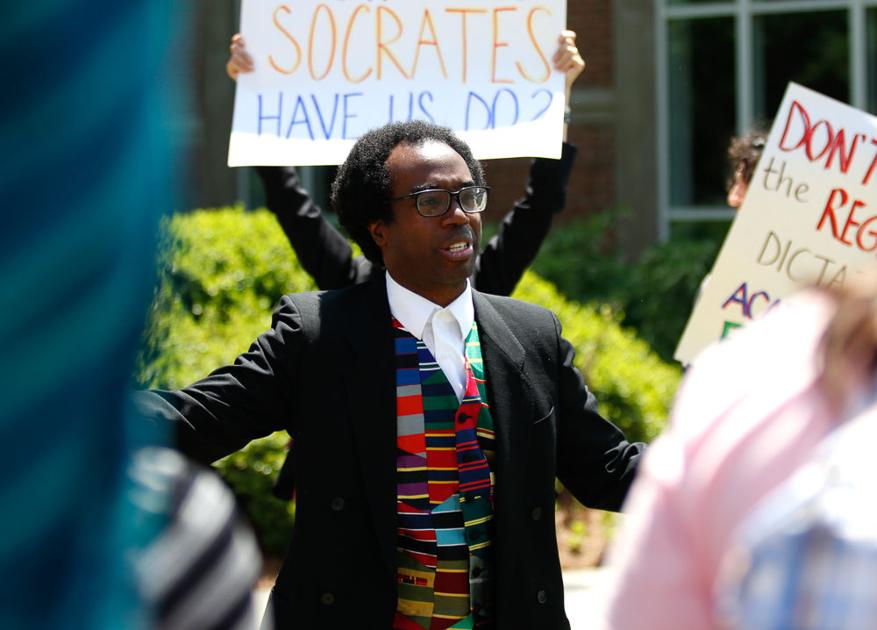
Ep 301Freedom, the Kenosha Shooting in Context, and More w/ Irami Osei-Frimpong
On this edition of Parallax Views, Athens, Georgia has a long history of racial justice activism due to its prevalent black community making up nearly 30% of its residents. Even amongst those against-the-grain activists, however, Irami Osei-Frimpong is considered something of a controversial gadfly. Currently a Ph.D. candidate in philosophy at the University of Georgia, Frimpong's pointed commentaries on issues like white supremacy, racism, police brutality, and reparation has, at times, attracted a degree of ire outrage. Specifically, he was scrutinized after tweeting, "Some white people may have to die for black communities to be made whole in this struggle to advance to freedom.” The tweet turned into a viral lightning rod for controversy as Frimpong, who works as a Teaching Assistant (TA), was put under investigation by his University and then, as a result, profiled in websites like Heavy.Com and the right-wing Campus-Watch.Org. What did Irami Osei-Frimpong actually mean in his controversial tweet? Was it a call to violence against white people? What does he really believe? The man himself joins us on this edition of Parallax Views in a conversation that hopefully provides an answer to those questions as well as providing an understanding of how Freedom, as a concept, and real autonomy is the driving forth behind Frimpong's thought and activism. In fact, it could be said that the idea of Freedom is the underlying theme of this discussion as Irami defines it's meaning, it's relation to black struggle, and how he seeks to reclaim the concept from the American libertarian and conservative right that has claimed a monopoly on its usage. Additionally Irami and I discuss: - The Kenosha shooting and and its suspected perpetrator, Kyle Rittenhouse, as an example of the type of white person who will violently oppose black freedom because they see it as a threat to their way of life - What Silicon Valley billionaire Peter Thiel and the Hulk Hogan vs. Gawker trial tell us about freedom and rights in the United States - The meaning of white supremacy; the need to "poke the bear" when it comes to white supremacism and why Irami disagrees with the "don't poke the beer" mentality of some within the black community - Irami's unique take on the subject of looting - The case of Amy Cooper and 2020's infamous Central Park birdwatching incident that saw Cooper calling the police in distress after a black birdwatcher, Christian Cooper (no relation), politely asked her to leash her dog; questioning the premise that Amy Cooper is an aberration or anomaly - Double standards: the Philadelphia heroin epidemic vs. the opioid epidemic - The controversial ADOS movement, founded by activists Yvette Carnell and Antonio Moore, which pushes for reparations, but primarily for American Descendants of Slavery rather than black immigrants; why Irami supports movement; the movement's effective; the accusations pertaining to ADOS's anti-immigration stance; Irami's solution to anti-immigrant attitudes - Why Bernie Sander's lost the black vote in the South; FDR and black America; how can the Left gain the trust of the black community - Thoughts on Adolph Reed, arguments in favor of alliances between right-wing populism and left-wing populism, and the why Irami believes class cannot be the sole, or even primary focus, of the Left - Irami's argument for reparations - Democratic Presidential nominee Joe Biden and his Vice President pick Kamala Harris; alt right leader Richard Spencer's recent endorsement of the Biden/Harris ticket; Democrats and the tendency of centrist politicians tp punch Left when in power This Episode Brought to You By: The War State: The Cold War Origins of the Military-Industrial Complex and the Power Elite, 1945-1963 by Michael Swanson of The Wall Street Window

Ep 300War in the Age of Trump w/ Patrick Cockburn
On this edition of Parallax Views, the prolific war correspondent Patrick Cockburn, who has been reporting on the Middle East since 1975, joins us to discuss his new book War in the Age of Trump: The Fall of ISIS, The Betrayal of the Kurds, and the Conflict with Iran. We begin the conversation with Patrick's thoughts on objectivity in journalism and whether war reporting takes a toll on journalists in that line of work. From there we discuss the foreign policy of Obama, Obama and his advisor Ben Rhodes taking issue with the "Washington Playboy" and the D.C. foreign policy "Blob", and Trump's foreign policy. In relation Trump and foreign policy Patrick shines a light on the assassination of Iran's Gen. Quasem Soleimani and his understanding of it beyond the way it's been covered in the beltway press. Patrick argues that these elements got Soleimani wrong and this leads us to discuss the role of hubris, whether coming from Iran, the U.S., or other players, in the great game taking place on the geopolitical Grand Chessboard and where Iraq falls in the conflicts. Also covered: - The strange relationship between Iran and the U.S. that features both conflict and underdiscussed cooperation. - Why is the U.S. always at odds with Iran? The overthrow of Mossadegh in 1953 and other events. Why would the Shia-dominant Iran not be a friend of the U.S. in the War on Terror against Sunni Wahabists and Salafists? - Ignorance in the D.C. beltway, the Western elite, and the media on the Middle East and its complexities as a region. - The Middle East as a political graveyard for multiple U.S. Presidents including Tony Blair, George W. Bush, Jimmy Carter, and Ronald Reagan. - The story of ISIS and its fall - Western elite failures in the Middle East such as Libya after the death of Gaddafi; Syria and Assad; the lack of learning lessons from past failures on the part of the Western elite class - The impossible position of the Kurd; Turkey and the Kurds; the U.S.'s relationship to the Kurds - Could we have seen the failures of U.S. foreign policy coming?; the style of War in the Age of Trump - Criticism of U.S. foreign policy is not necessarily about supporting figures like Gaddafi in Libya or Assad in Syria - News from Damascus involving coronavirus - Trump's isolation vs. the elite's interventionist failures; is another way, different from both of these approaches possible; the Cold War mindset of elite interventionist foreign policy - Preoccupation with Russia as a threat - And more! This Episode Brought to You By: The War State: The Cold War Origins of the Military-Industrial Complex and the Power Elite, 1945-1963 by Michael Swanson of The Wall Street Window
Ep 297Voter Suppression w/ Actress & Activist Mimi Kennedy/Hidden History of Monopolies w/ Thom Hartmann
Two Part Episode! First Up, Actress and progressive activist Mimi Kennedy, whose Hollywood credentials include notable reoccuring roles in the TV shows Dharma and Greg and the ongoing CBS sitcom Mom in addition to films like Midnight in Paris, In the Loop, Erin Brokovich, and (J.G.'s personal favorite) Pump Up the Volume, joins us to discuss how she became an activist as well her commendable efforts to promote election education among voters and prevent voter suppression. In particular, Mimi explains the dilemma of what she calls "The Surrender Rule" with regards to mail-in ballots. We also talk about how Mimi got involved with activism related to the issue of election integrity, her efforts to block the use of Diebold touchscreen voting machines in L.A. country, and why poll workers are needed now more than ever in the age of COVID-19. Mimi also provides her thoughts on the right wing media's portrayal of Hollywood as "too liberal" and the role Catholic social teachings played a role in developing her political consciousness. Then, Legendary progressive radio host Thom Hartmann joins us to discuss the latest entry in his Hidden History book series, The Hidden History of Monopolies: How Big Business Destroyed the American Dream. We begin by discussing the relevance of the Hidden History series in light of the George Floyd murder and how the history Thom is shedding light on is becoming less hidden and more well-known each and every day. From there we pivot into a conversation of what monopolies are and the adverse effect they have on We the People as a nation. Thom also fills us in on how monopolies tie into the story of the Boston Tea Party vis-à-vis the British East India company, Lewis Powell and the other players who sought to combat progressive activists like Ralph Nader (who provides the foreward for Thom's new book!) by promoting pro-business interest in various sectors of society like academia, the horrible legacy of Reaganomics and the Ronald Reagan presidency, and the problems of copyright and patent laws (which, as Thom points out, the founding fathers would have a thing or to say about!). All that and more on this edition of Parallax Views! This Episode Brought to You By: The War State: The Cold War Origins of the Military-Industrial Complex and the Power Elite, 1945-1963 by Michael Swanson of The Wall Street Window

Ep 299From Experimental Hip Hop to the BLM Moment w/ MC dälek
On this edition of Parallax Views, for over 20 years the iconoclastic Dälek is a hip hop group that eludes easy categorization. Influenced as much by band like the shoegaze legends My Bloody Valentine and the krautrock sensation Faust as much as they are rappers like NAS and Run DMC, Dälek has most often been described as experimental hip hop. Interestingly, due to their noisy, abrasive style, the group has been able to hang with the loudest of metal band playing live shows with bands like Godflesh, ISIS, The Melvins, and Tool thus winning the respect of many in the metal community. They've also been known for their political, or perhaps more accurately social, commentary that cuts deeper than ever in the age of the Black Lives Matter (BLM) movement. MC Dälek, the group's frontman, joins us on this edition of the program to discuss music, hip hop, metal, politics, conspiracy theories, and much, much more. Special thanks to Televangel for helping to make this episode possible! This Episode Brought to You By: The War State: The Cold War Origins of the Military-Industrial Complex and the Power Elite, 1945-1963 by Michael Swanson of The Wall Street Window
Ep 298COVID-19 and the Triple Crisis w/ Dr. Jack Rasmus
On this edition of Parallax Views, this week the Federal Reserve expressed that the handling of coronavirus of relief and stimulus packages handled by Congress has been woefully inadequate as unemployment tops 1 million yet again. Economist Dr. Jack Rasmus, author of The Scourge of Neoliberalism: U.S. Economic Policy from Reagan to Trump and host of the Alternative Vision radio program, joins us to discuss the economy under the COVID-19 crisis and warns of a triple crisis ahead accelerated by the pandemic. Dr. Rasmus argues that the triple crisis is composed of a health crisis, an economic crisis, and finally a financial crisis caused by the emergencies of bankruptcies building out of the first two crises. The third crisis, Dr. Rasmus believes, will likely come into full effect by 2021 unless drastic measures are taken to prevent it. Dr. Rasmus notes that we are not in an economic recovery but a weak rebound. Although there were hopes of a V-shaped recovery amidst the economic impacts of the coronavirus pandemic, Dr. Rasmus has been saying since March that the V-shaped recovery would not happen. It appears now that many in the media, Wall Street, and the Federal Reserve are beginning to catch up to his assessment. He says that the only way that this triple crisis can possibly be averted is through a strong stimulus that would $3-4 trillion fiscally. Because the economy is fundamental wounded, Dr. Rasmus says, this stimulus is necessary. In addition Dr. Rasmus and I discuss the political instability occurring right now and how it is likely to get worse going into Election Day. We discuss Trump's Plan A and, briefly, his Plan B for reelection. Dr. Rasmus believes that Trump's lack of response to the pandemic has been a strategic move to punish American blue states that will swing Democratic in the Presidential election. Moreover, he notes how the relevance of voter suppression to Trump's potential reelection. Other topics covered: - Trump's recent Executive Orders, how the EO's were part of a strategic plan by the GOP all along, and why Dr. Rasmus considers them a sham - The current negotiations between Democrats and Republicans over the stimulus - Why Democrats have been ineffective in fighting Trump and the GOP - Evictions in the COVID era and why eviction moratoriums are necessary - The crisis facing us due to job automation - And much, much more. This Episode Brought to You By: The War State: The Cold War Origins of the Military-Industrial Complex and the Power Elite, 1945-1963 by Michael Swanson of The Wall Street Window

Ep 296Feds Target BlueLeaks Publisher & Other Pressing Matters w/ Journalist Ali Winston
On this edition of Parallax Views, new documents show that the DHS (Department of Homeland Security) and other federal agencies are targeting the Distributed Denial of Secrets, a transparency organization specializing in publishing leaks the reveal the inner workings of powerful institutions, as a "criminal hacker group". The documents show that the DHS has its eyes on DDoSecrets in light of their publishing BlueLeaks (or #BlueLeaks), a collection of 269 gigabyte collection on U.S. law enforcement obtained by the hacker collective Anyonmous. DDoSecret, however, claims that it is not involved in hacking but rather is only a publisher of data like BlueLeaks. Independent journalist Ali Winston, whose work has been features in The Daily Beast, The Intercept, and The New York Times, fills as in on the whole story as outlined in his article "Feds are treating BlueLeaks organization as ‘a criminal hacker group,’ documents show" (The Verge; 8/13/20). In addition to discussing the federal targeting of the BlueLeaks publisher Distributed Denial of Secrets, Ali also discusses with us: - How he got involved in journalism; specifically journalism related to surveillance - Ali's coverage of far-right white supremacist extremist terrorist groups like The Base and the Satanic neo-nazi Order of Nine Angles. Ali notes how The Base's founder is ex-FBI analyst Ronaldo Nazzaro and relays how the Order of Nine Angles recently had a member, Ethan Melzer, infiltrate the military. Additionally, Ali briefly covers how members of the U.S. far-right are tied to international far-right organizations like the Azov Battalion in the Ukraine. In this regard we note how federal agencies focusing on organization like DDoSecrets or Antifa and Black Lives Matter (BLM) activists seems a bit misguided in light of the threat that these far-right groups represent. - Joe Biden's picking Kamala Harris as VP; Kamala Harris's framing of racism as a "National Security" issue due to allegations of Russian propaganda operations seeking to amplify existing social tensions in the U.S.; the history of the National Security State; how the National Security State is a reactionary force that has been supported by bipartisan efforts on the parts of both Republicans and Democrats; the employment of war-time language in the age of coronavirus ("The War on COVID") - The implications of DDoSecrets being targeted by the DHS and other federal agencies; Emma Best, the DDoS's founder, and her response to the documents; what this means for publishers of information and data as well as journalists and the media as a whole - Ali's podcast Surveillance and the City. - And more

Ep 295The People, No: A Brief History of Anti-Populism w/ Thomas Frank
On this edition of Parallax Views, populism has become a dirty word since the election of Donald J. Trump to the U.S. Presidency in 2016. But is Trumpism really representative of populism? And is populism really just the reign of the violent mob or the ignorant masses over more benevolent and enlightened souls? Thomas Frank, co-founder of The Baffler and the noted author of such books as What's the Matter With Kansas? and Listen, Liberal!, argues otherwise in his sweeping defense of populism The People, No: A Brief History of Anti-Populism. In examining the history of anti-populism in American thought from the late 1800s to today, Frank concludes that populism is pro-democracy while it's polar opposite, anti-populism, is, in fact, elitist. Thomas Frank joins us to discuss this fascinating history. Among the topics covered: - How populism became a dirty word - The early populist William Jennings Bryan, his accomplishments, and his eventual fall from grace - The populism of FDR - Demagogues of the 1930s like the anti-semitic radio personality Father Charles Coughlin and why he does not consider them populists - Pop culture that dealt with populism in that era, specifically the films of Frank Capra and the Orson Welles class Citizen Kane (which just happen to be Donald Trump's favorite movie; does Trump miss the message and is it really and anti-populist movie?) - The early 20th century progressive historians like Charles Beard and how the consensus historians of the mid-20th century, particularly Richard Hofstadter, thought to push back on their work vis-à-vis anti-populism - How Hofstadter and other anti-populists consensus historians were reactions to Joe McCarthy and the Red Scare's attacks on intellectuals of the time; Hofstadter's The Age of Reform, a key anti-populist text, and how, despite being debunked and refuted, still maintains an influence today. - The professionals and intellectuals of managerial class that were flattered by the work of Hofstadter and the consensus historians; the displacement of the old elite by the "Meritocracy" or new meritocratic elite. - How the new elites never considered their own pathologies and the potential of elite failure. - The consensus historians concepts of pluralism and representative democracy; Edward Shils' belief that "there must be affinity among the elites"; the so-called "end of ideology" and associated ideas like Francis Fukyama's "the end of history" - Interrogating the concept of meritocracy and "hereditary meritocracy"; the 2019 college admission bribery scandal (or "Collegegate") that was exposed by the FBI's Operation Varsity Blues and what it says about contradictions of the meritocracy espoused by the new elites. - The Best and Brightest by David Halberstam, the classic work on elite failure in the Vietnam War era. - Being part of the "liberal intelligentsia" after the success of What's the Matter With Kansas? and the mis-readings of What's the Matter With Kansas? - The cultural of liberal scolding and Frank's discomfort with its popularity; liberal and elite misanthropy; are people like Frank catching elites with their pants down by exposing the misanthropy underlying their supposedly compassionate image. - What does the future hold? Will the pessimism toward "the people" by elites continue or will a new zeitgeist emerge to challenge our current cultural moment?

Ep 294New Indictment Against Julian Assange w/ Taylor Hudak
On this edition of Parallax Views, an update on the court proceedings of Wikileaks founder Julian Assange with activist, journalist, and Action 4 Assange co-founder Taylor Hudak. Although Taylor is an unabashed supporter of Assange, she makes the point that, regardless of one's opinion of Assange, this case has ramifications for free speech advocates, hacktivists, journalists, and even publishers (specifically since Wikileaks is an outlet that publishes leaks given to them; as opposed to hacking for documents themselves). In this conversation Taylor updates us on yesterday's Friday court hearing, the new superseding indictment against Assange and the ramifications of this indictment for Assange and his legal counsel. Additionally, Taylor notes how two FBI informants, Sabu and Siggi the Hacker (the latter, Sigurdur Thordarson, is a known child sex offender), who have become universally hated within the Anoymous and general hacktivist communities tie into these recent updates. J.G. notes how the post-Wikileaks collective Distributed Denial of Secrets are now being targeted by the federal government as "a criminal hacker group" by the federal government. Also, Taylor notes health concerns about Assange and fills listeners in on how U.N. Special Rapporteur on Torture Nils Melzer has made the case that Assange's treatment constitutes torture. All that and more on this edition of Parallax Views.
Ep 293Becoming Human: Matter and Meaning in an Antiblack World w/ Zakkiyah Iman Jackson
On this edition of Parallax Views, we delve into the waters of critical theory and posthumanism as Dr. Zakkiyah Jackson joins us to discuss her recent book Becoming Human: Meaning and Matter in an Antiblack World. Using key African diasporic literary texts, from Frederick Douglas to Octavia E. Butler, Dr. Jackson attempts to grapple with the the way blackness and animality have often been linked in Western thought and perception as well as the way blackness, as a form, is experimented on through what she refer to as its' "plasticity". From the synopsis of Becoming Human: Matter and Meaning in an Antiblack World: Rewriting the pernicious, enduring relationship between blackness and animality in the history of Western science and philosophy, Becoming Human: Matter and Meaning in an Antiblack World breaks open the rancorous debate between black critical theory and posthumanism. Through the cultural terrain of literature by Toni Morrison, Nalo Hopkinson, Audre Lorde, and Octavia Butler, the art of Wangechi Mutu and Ezrom Legae, and the oratory of Frederick Douglass, Zakiyyah Iman Jackson both critiques and displaces the racial logic that has dominated scientific thought since the Enlightenment. In so doing, Becoming Human demonstrates that the history of racialized gender and maternity, specifically antiblackness, is indispensable to future thought on matter, materiality, animality, and posthumanism. Jackson argues that African diasporic cultural production alters the meaning of being human and engages in imaginative practices of world-building against a history of the bestialization and thingification of blackness—the process of imagining the black person as an empty vessel, a non-being, an ontological zero—and the violent imposition of colonial myths of racial hierarchy. She creatively responds to the animalization of blackness by generating alternative frameworks of thought and relationality that not only disrupt the racialization of the human/animal distinction found in Western science and philosophy but also challenge the epistemic and material terms under which the specter of animal life acquires its authority. What emerges is a radically unruly sense of a being, knowing, feeling existence: one that necessarily ruptures the foundations of "the human."
Ep 292How Trump Stole 2020 w/ Investigative Journalist Greg Palast
On this edition of Parallax Views, much has been said about election integrity in the last two decades from concerns over the potential for malfeasance with electronic voting machines to the discussions that ensued over allegations of Russian interference in the 2016 Presidential election. Investigative journalist Greg Palast, a long-time and accomplished muckraker, however, has spent the past two decades focusing on an aspect of election integrity far too often overlooked and without any speculation necessary a very real problem: vote purging. In others word, Palast has been on the trail of members of the American electorate who have been vanished, or purge, from the voter rolls. Palast joins us to discuss How Trump Stole 2020, his latest book on the subject, and how we can steal the vote back. Among the topics we cover: - What voter purging is and how it differs from other issues related to election integrity such as concerns about the integrity of electronic voting machine or the allegations of Russian interference in the 2016 election - Gov. Brian Kemp and other the billionaires behind the voter purges Greg has investigated. What is the motivation? Greg says, "Follow the money." - How the issue of voter purges and vanishing votes relates to issues related to racism, class, and the concerns of Black Lives Matter (BLM). - The voter suppression issue as it relates to students - The stories of those who have had their votes purged - The work of investigative journalist and voting rights attorney Bob Fitrakis in Ohio and "Bush's Brain" Karl Rove's curious comments from when Obama won the election in Ohio - And much, much more.

Ep 291Political Suicide: The Fight for the Soul of the Democratic Party w/ Political Cartoonist Ted Rall
On this edition of Parallax Views, many left-leaning and progressives Democrats, particularly those who loudly lent their support to insurgent candidate Bernie Sanders in the 2016 and 2020 elections, feel increasingly unwelcome in the Democratic Party of Joe Biden and the Clintons. But is the so-called "Democratic Party Civil War" a relatively new phenomena? Political cartoonist Ted Rall argues that the struggle between the Party's moderate (or, in the eyes of leftist, right-of-center) leadership and it's progressive base extend much farther back in recent history than 2016 and the Sanders insurgency. Ted and I begin the conversation by discussing how he became a progressive and a political cartoonist. From there we discuss the history of the Democratic Party in-fighting going back to Jimmy Carter, whom Rall takes a critical view of and believes began the Party's slow rightward turn. From there we discuss the domination of the Democratic Leadership Council (DLC) over the Democratic Party and its centrist tenets. This leads us to a discussion of the triangulation strategy that led to the rise of "Third Way Democrats" like Bill Clinton and Barack Obama. Although the DLC supporters claim that their strategy remain successful electorally speaking, Rall makes the argument that it has led to more defeat for the Party than victories. This brings us to a discussion of "spoilers", or the Third Party candidates often seen as costing the two major parties elections. Rall makes the case that independent Ross Perot's third party run allowed Bill Clinton to triumph over George H.W. Bush, but argues that the same is not true in regards to Ralph Nader (who is often blamed for Al Gore's defeat in the 2000 against George W. Bush). This opens us up for a conversation about whether or not the Democratic Party itself should take responsibility for losing progressive voters to Green Party candidates like Ralph Nader, Jill Stein, and Howie Hawkins. From there we delve into the 2020 election that'll be pitting Democratic nominee Joe Biden against Donald Trump. Rall expresses his issues with what he considers the "vote shaming" of progressives who are withholding support for Biden and his grievances with Biden as a candidate. This portion of the conversation also brings us around to tackling what Rall describes as the de-politicization of politics and the obsession with the cultural tastes and mannerisms of candidates rather than their policies. Perhaps more controversially Rall argues that it is time progressives begin considering the Third Party option. Before wrapping up we get around to discuss previous progressives insurgencies within the Democratic Party including Rev. Jesse Jackson and his Rainbow Coalition, Howard Dean (whose campaign was stopped dead in it's track by the now infamous "Dean Scream"), the 2008 "Two Americas" campaign of John Edwards, media blackouts of progressives candidates, institutional corruption within the DNC, Ted Kennedy's failed 1980 presidential campaign against Democratic incumbent Jimmy Carter, and Rall's thoughts on current debates raging over class, identity politics, and Black Lives Matter. Ted strongly believes that progressives can oppose misogyny, racism, transphobia, etc. while also having a class analysis at their core. Support Parallax Views on Patreon: https://www.patreon.com/parallaxviews

Ep 290Sleazy Mike Cernovich is Not a Friend of Epstein Victims w/ Marlon Ettinger
On this edition of Parallax Views, right-wing "journalist" and, by all accounts, all-around sleazeball Mike Cernovich has been taking credit for the recent unsealing of court documents related to the Jeffrey Epstein case, Ghislaine Maxwell, Harvard Law professor Alan Dershowitz, and Epstein survivor Virginia Giuffre. In a past life Cernovich grifted in the odious waters of GamerGate and the Pick-Up Artistry movement, (in)famously expressing his belief that "date rape doesn't exist" and hustling his self-help book The Gorilla Mindset. Since then, however, Cernovich has reinvented himself as a defender of children and women against human traffickers and sexual abusers. In particular, Cernovich has found himself in the middle of the Jeffrey Epstein case as part of litigation also involving Dershowitz and the Miami Herald. And, he's claimed, that he's played a big part in exposing the elite billionaire pedophile Jeffrey Epstein. In fact, the "Intellectual Dark Web" movement figurehead (and associate of Silicon Valley billionaire Peter Thiel) Eric Weinstein recently took to the social media platform Twitter to laud Cernovich for his role in the Epstein story and discourage his listeners from considering the right-wing journalist's notoriety prior to his involvement in the case. Freelance journalist Marlon Ettinger, who has been dubbed "The French Connection" correspondent in our various examinations of the Epstein case, joins us to challenge Cernovich's reputation for allegedly exposing the whole Jeffrey Epstein story. In particular we hone in on how according to Virginia Giuffre's own attorney argued that Mike Cernovich, far from wanting to help the Epstein survivor, was acting as a proxy for Alan Dershowitz. Marlon cites and quotes the documents in this conversation for the listener. Additionally J.G. relays a recent article on the Daily Dot that features Dershowtiz's interesting comment about Cernovich in light of Cernovich distancing himself from Dershowitz. Additionally, Marlon and I discuss the potential political motivations of Cernovich behind being a glory-hound upset that he's not accepted by the journalistic establishment. And, finally, Marlon offers his own comments on Eric Weinstein, why Weinstein is promoting Cernovich, and Peter Thiel. All that and more on this edition of Parallax Views! Links: "Panel Signals Epstein Files Likely to See Sunlight" by Adam Klasfeld (Courthouse News Service) "What exactly are Mike Cernovich and Alan Dershowitz doing in the Epstein case?" by Olga Lexell (The Daily Dot) "Someone Is Trying to Discredit the Story of Peter Thiel’s Interest in Young Blood" by J.K. Trotter (Gizmodo)
Ep 250Mrs. America and Arch-Conservative Phyllis Schlafly w/ Eileen Jones
EPREVIOUSLY UNRELEASED: On this edition of Parallax Views, 2020's began the "Prestige TV" season earlier this year with FX's Mrs. America leading the charge. This show, based on the battles of the feminist Women's Liberation Movement of the 1970s, centers on the anti-feminist arch-conservative Phyllis Schlafly. The show gained a lot of attention upon it's release for being "timely" in regards to the American political moment of polarization and dealing with the fights between the right (Schalfly) and the left (Gloria Steinem, who is also features in the series) that echo today. Eileen Jones, a film critic at Jacobin, however, has a different take on the series that is decidedly more critical. Eileen, J.G., and Casey discuss the real Phyllis Schalfly and her contributions to the American right wing in the 20th century as well as her often covered-up ties to the fringe John Birch Society. Then we begin to discuss the portrayal of Schlafly in Mrs. America as well as the portrayal of Gloria Steinem. Additionally we discuss the contradictions in Schalfly own life. We also talk about Schlafly's involvement with the Barry Goldwater movement and the role she played in promoting the elite Republican or RINO (Republican in Name Only) narrative within conservative circles through her book A Choice Not an Echo. Eileen and J.G. also note that Schlafly was a huge part of integral part of movement conservatism up until her death and, in fact, even after - her last book, The Conservative Case for Trump, was published posthumously after her death. Eileen expresses her issues with the way Mrs. America doesn't tackle the grotesqueness of Schlafly's legacy and the attempts to psychologize Schlafly and the liberal use of fictionalized dramatization. J.G., on the other hand, notes the conservative backlash against the TV series. This leads us into a discussion of the show's repeated "poor Phyllis" trope to explain Schlafly's politics and what Eileen considers the lame symbolism utilized in the series. And, of course we address the conservatism criticism of the show that claims Schlafly's is portrayed as a cynical operator rather than a true believer, anti-communist ideologue and the racist element of Schlafly's career and activism that is often overlooked. All that and much more on this previously unreleased edition of Parallax Views.