New Thinking for a New World - a Tallberg Foundation Podcast
259 episodes — Page 5 of 6
Heart of Darkness
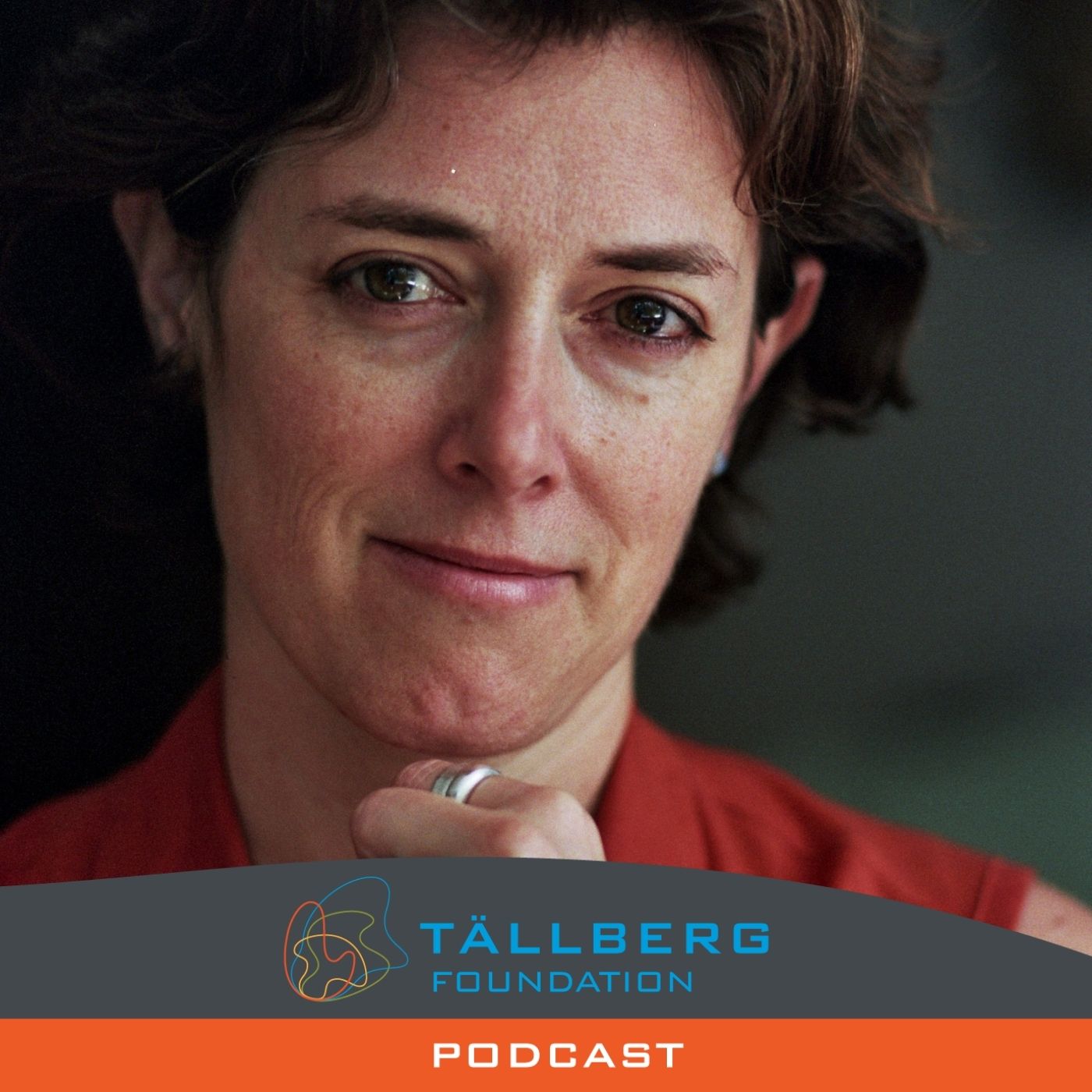
How is Africa doing? In one sense, that's a nonsensical question to ask about 55 countries and almost 1.4 billion people, but even dumb questions can sometimes have smart answers. In this episode, Michela Wrong, who has spent nearly three decades writing about Africa, as a journalist and author, talks about the people, the politics, and the day-to-day realities. Her book, Do Not Disturb, takes a deep dive into President Kagame’s Rwanda which can be read as a window into Africa’s present and its futur

Leadership Special: Fio Omenetto and Bright Simons
In this special episode, you will meet two Tällberg-SNF-Eliasson Global Leadership prize winners. Listen as two prize recipients and friends, scientist, inventor, and entrepreneur Fio Omenetto and social innovator and entrepreneur Bright Simons, discuss how great leaders can change everything.

The hope of our future
“Youth is the hope of our future.” When it comes to governance, is that a good thing in a world where there is a growing body of evidence that youth's satisfaction with democracy is declining in many countries? This episode is part of Tällberg Foundation's exploration of the future of democracy. Listen as Cristóbal Marín Rojas and Julien Richard, discuss the challenges of making democracy work. Both are students at the Paris School for International Affairs at Sciences Po.

Leadership Special: Jan Eliasson, Former Deputy Secretary-General of the United Nations
The Tällberg-SNF-Eliasson Global Leadership Prize named in honor of Jan Eliasson, one of the most accomplished global diplomats of our era. In this special episode, Jan and Alan Stoga, chairman of the Tällberg Foundation discuss how great leaders can change everything. What can you do? Take Jan’s call to action seriously and nominate someone who deserves to be honored at tallbergprize.org Music: "Without You" by Oxime © 2021. Permissions granted courtesy of Oxime Audio https://www.oxime-audio.com
Alone together: China and America
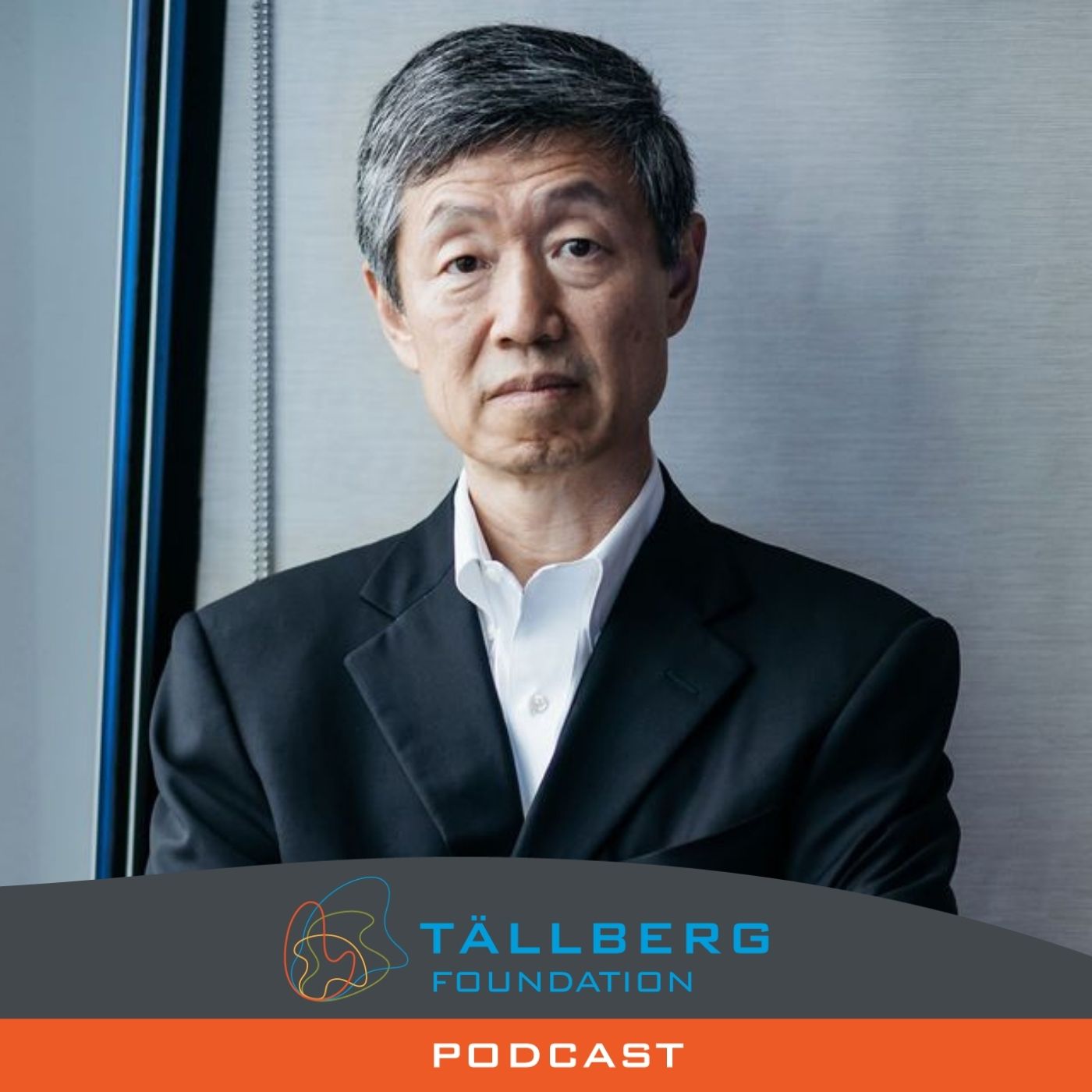
It wasn't that long ago that globalization was universally perceived as a good thing, when policymakers celebrated free trade agreements, and when countries competed to lower barriers to the free flow of goods. But we seem to be moving from a world where markets ruled to one where politics rules. Weijian Shan, chairman, and CEO of PAG, one of Asia's leading investment firms, shares his unique perspective, not just on global markets, but on how the world really works.
Girls, Interrupted
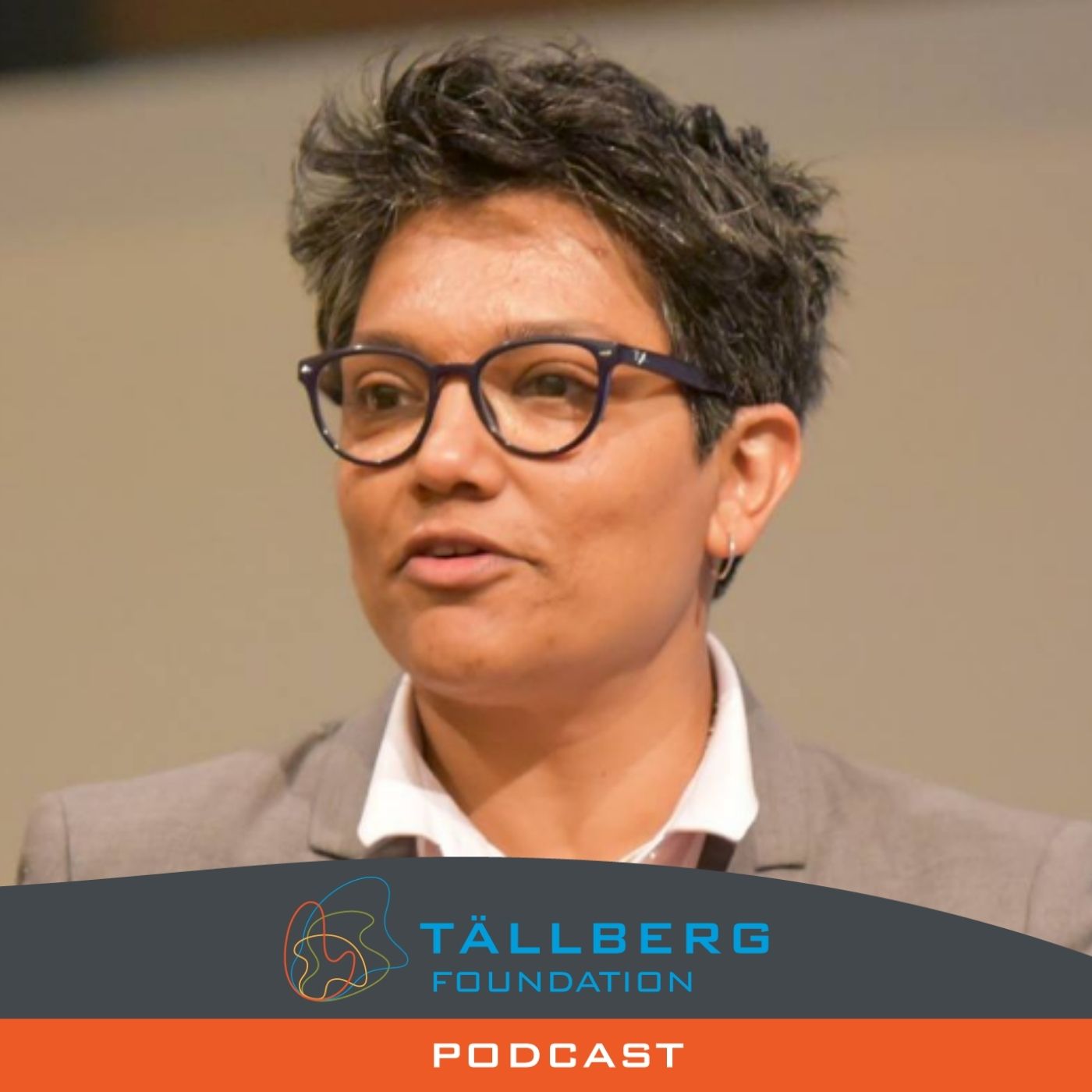
A shape-shifting event like the global pandemic affects almost everyone on the planet—especially children. They have seen their education, social and mental health development, nutrition, and health badly damaged. And, it is worse for girls, because in too many countries, girls don’t have anywhere near adequate access to schools, health care, even food. In this episode, Dr. Maliha Khan, one of the leaders of Malala Fund, talks about how the pandemic has made that goal even more difficult to achieve.

Leadership Special: Nithya Ramanathan,Engineer working to improve human health with sensory intelligence
In this episode you will meet Nithya Ramanathan, a 2020 prize winners. Nithya is an engineer and social entrepreneur, saving lives through the innovative application of technology, creating and applying data-driven solutions to global challenges. Listen, as she is interviewed by Cecilia Weckstrom, Sr Director, Diversity, Inclusion & People Innovation, Lego and a member of the 2020 prize jury. Music: “Without You” by Oxime © 2021. Permissions granted courtesy of Oxime Audio https://www.oxime-audio.co
The Chinese Puzzle
What does China—or, more particularly China’s leadership and the Chinese Communist Party— want from the rest of the world? Jonathan Ward, an American who is rapidly becoming one of that country's leading China experts, thinks they want victory. Dr. Ward, who has lived and worked in China and has a deep affinity for the Chinese people, recently published a new provocative book, China's Vision of Victory. Listen as he shares his perspective on the issue that could literally change the course of his
The kids are not alright!
Early in 2020, when the global pandemic was still gathering force, UNICEF published a prophetic, deeply disturbing document. If anything, what actually has happened—and continues to happen—to children everywhere is, if anything, probably worse than UNICEF imagined. Robert Jenkins is leading UNICEF's global education response to the pandemic and brings decades of experience and a global perspective to what might easily be the most important and longest lasting impact of COVID. How worried is he?
Leadership Special: Leadership Special: a profile in brief with Jared Genser, international human rights lawyer
bonusToday’s world is short of a lot of things—sustainable environment, peace, prosperity, equality—but what we lack most is innovative, global, values-based leadership. If we can find and nurture that kind of leadership, the rest will follow. In this special episode, Jared Genser (one of the three 2020 prize winners), an international human rights lawyer who is teaching and mentoring the next generation of human rights lawyers, is interviewed by Shahidul Alam, photographer, writer, activist and 2020 J
The best of times, and the worst of times
Increased poverty and malnutrition; greater inequality; damaged and depleted health care systems; rising social and political tensions. But is this crisis or opportunity? This week’s guests are dedicated to trying to make the world the kind of place it could and should be. Vidhya Ramalingam is a recognized expert on the use of technology to disrupt violent extremism online. Sarah Durieux focuses on mobilizing citizens online, to help them achieve policies they care about.
If it’s illiberal, is it democracy?
Europe is increasingly divided: between the frugal North and the Club Med South; between the illiberal East and the progressive West. In many ways, the latter is more profound at a time when democracy is under pressure almost everywhere. Our guests are engaged in this conflict. Zuzanna Rudzińska-Bluszcz, Poland's Office of the Commissioner for Human Rights and András Léderer, Hungarian Helsinki Committee. Listen as they discuss the profound conflicts that will shape their countries for decades to com

Leadership Special: Sylvia Earle, world-class oceanographer and educator
bonusToday's world is short of a lot of things, but what we lack most is innovative, global, values-based leadership. If we can find and nurture that kind of leadership, the rest will follow. In this special episode, you will meet Sylvia Earle, one of the three 2020 prize winners. Listen, as she is interviewed by Ashok Mirpuri, Singapore's ambassador to the U.S and a member of the 2020 prize jury Music: "Without You" by Oxime © 2021. Permissions granted courtesy of Oxime Audio https://www.oxime-audio.co
Casas Muertas
Venezuela has been in a death spiral for years. The country have been devastated by political repression and economic depression; its people suffer from huger, malnutrition, shortages of food, medicine and, perhaps worst of all, opportunity. More than 5 million have fled. David Smolansky was chased from his elected post of mayor of El Hatillo and avoided jail by seeking political asylum in the US. Listen as he imagines how his country can go from a failed, kleptocratic state to a prosperous democracy.
When is too much freedom too much?
Social media has become the lifeblood of modern culture. But it has evolved in ways which reward excessive outrage and which encourage hyper attention to the immediate—untethered from traditions, knowledge, and values. In this week's podcast, Lee Bollinger, President of Columbia University, is considered one of America's leading legal scholars on freedom of speech talks about the challenges of social media.
"Expect to have very violent reactions after the pandemic"
Europe has had a bad few years. The struggles between North and South mostly over economics, between East and West mostly over values. Brexit, which shifted the locus of power eastward and distracted European leaders from any possibility of a more positive agenda. The pandemic, which among all its other impacts led to interrupted borders in a Europe that prided itself on having no borders. Pierre Lellouche, former French parliamentarian and minister, worries that bad is likely to get worse.
Iran’s Annus Horribilis
2020 was an awful year for Iran. It started with the assassination of the country's leading general and ended with the assassination of its most important nuclear scientist. American “maximum pressure” combined with mismanagement took a huge toll on the country. Yet, the regime seems more firmly in power today than a year ago. How can that be? Sima Shine, Institute for National Security Studies (INSS) and Dr. Sanam Vakil, Chatham House's Middle East Africa Program, discuss Iran, today and tomorrow.
High Anxiety
Even amid optimism about vaccines and declining infection rates, there is mounting evidence that the pandemic is generating a global mental health crisis. How do we cope with the results? Could rising levels of child abuse, spousal abuse, drug abuse, homicide and suicide leave even deeper marks than COVID itself? Dr. Jonathan DePierro, Assistant Professor of Psychiatry at the Icahn School of Medicine, Mount Sinai and Michael Niconchuk, neuroscience researcher in Zaatari, try to answer these questions.
Do you believe in Magic?
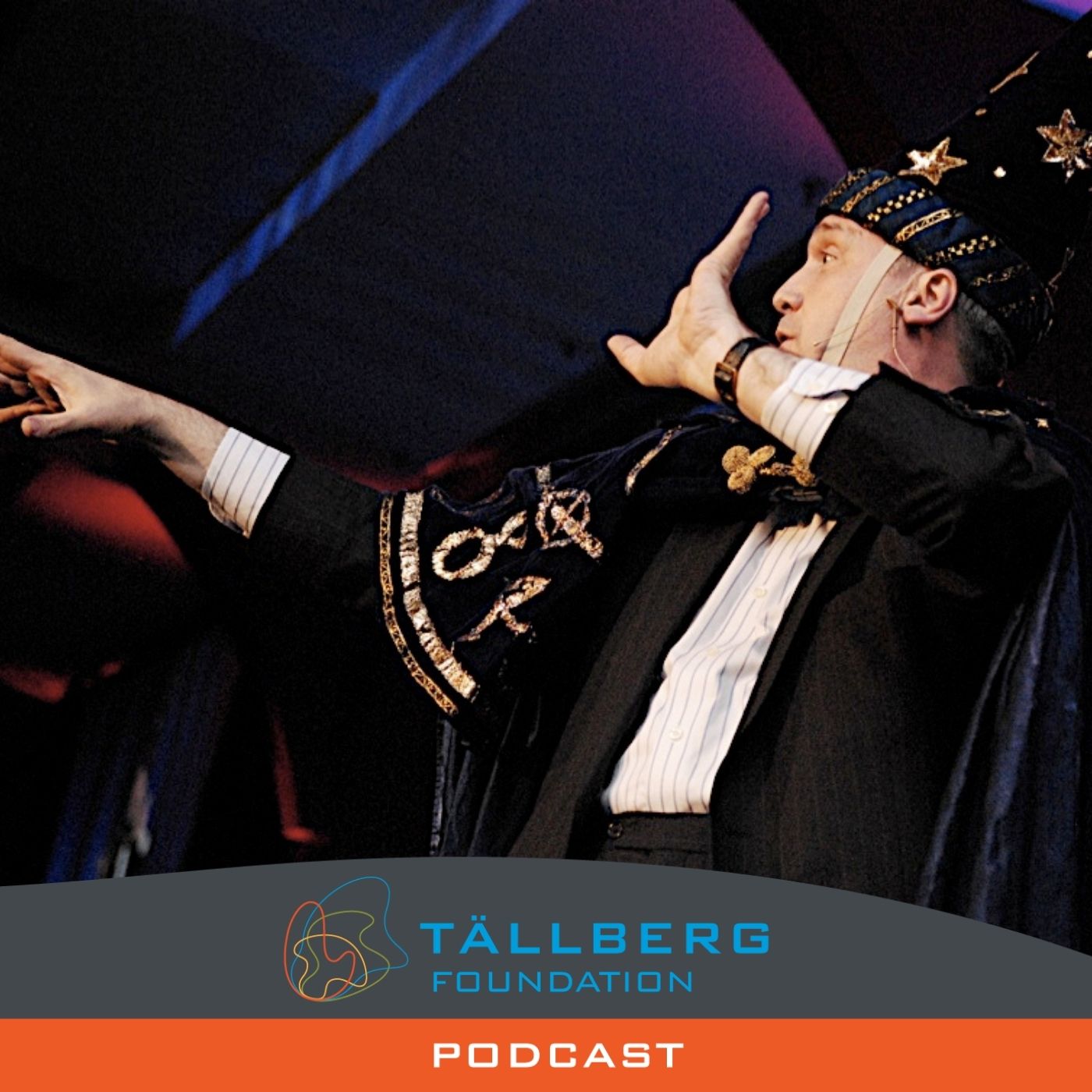
The pandemic has forced most of us to move from real life to virtual life and we are mostly unhappy about the results. Is there a cure for Zoom fatigue? For answers, we turned to a magician. Magic used to be fundamentally physical, requiring a lot of interaction between the magician and his audience. Mark Mitton, a world class magician, whose performances produced Springsteen-like enthusiasm explores how magical thinking (or, at least, a magician’s thinking) can help us through this crisis.

Worth repeating: African Possibilities
Worth Repeating: What are some of the challenges Africa faces in its future? At least so far, what plagues Africa is less Covid-19, than its consequences: collapsed economies, an industrial world that is closing to Africa, a deceleration (if not reversal) in globalization, a new “Cold War”, severe climate change, and the need to develop faster to serve its young population. Alan Stoga talks to Yvonne Aki-Sawyerr, mayor of Sierra Leone’s Freetown, and Carole Wainaina, a leader of Africa50.

Looking for a New Normal (or something like it)
We live at a time of pandemic, recession, challenges to democracy, shifts in global power. The response of many organizations, is to hunker down and survive. But some are embracing the challenges and opportunities of change. The Robert Bosch Stiftung, under the leadership of Sandra Breka and others, recently rethought, rebooted and relaunched its operations. Listen as she discusses how they fared and what kind of world she and her colleagues hope to help shape.

“A republic, if you can keep it”
The amazing events of recent weeks—Donald Trump’s efforts to undo an electoral outcome, the assault on the Capitol, and the impeachment of the former President —caused many Americans to worry about the stability of their government. Congressman Dick Gephardt, believes America needs bipartisanship to cope with the divisive spirits that are tearing at the country. He talks about some of the things that urgently need to be done, not just in the United States, but everywhere that democracy is under pr

Lines in the Sand
History is replete with leaders drawing real or metaphorical lines in the sand, challenging opponents to cross only if they dare. David Andelman, an American journalist and author, believes that one way to understand global risks and challenges is to explore the nexus of red lines that define global politics. Indeed, Andelman argues that never before have global affairs been so entangled by red lines. Moreover, he says that Donald Trump made everything worse. Can we recover without a catastrophe?

Welcome to the Brave New (digital) World
Since the onset of the pandemic, much of life has shifted from the real world to the virtual world. For many, it has been a painful, frustrating experience. For others, it has been liberating and highly productive. For all, we will inevitably emerge changed by the experience. We explore living online with a woman whose job it is to make the experience as productive and pleasant as possible. Jaime Teevan is Microsoft’s Chief Scientist for Experiences and Devices.

Why Europe?
Pascal Lamy, former Director General of the World Trade Organization, is arguably one of the most prominent, thoughtful and enthusiastic supporters of a global leadership role for Europe. But is the Europe that seems more divided—north versus south, east versus west—than united really ready to lead? If so, how? If so, who? In this episode of New Thinking for a New World, Lamy offers some intriguing answers, further developed in his Strange New World: Geoeconomics vs. Geopolitics

Follow the Science
2020 will probably be remembered as the year of COVID. But more importantly, to our collective futures, it's the year that saw the emergence of the scientist as an accepted, necessary player in public policymaking. Probably not since Sputnik and the space race have scientists and science been so visible in the halls of power. Our guest has long worked at the intersection of science, politics, and policy. Dr. Ali Nouri, a molecular biologist, is the President of the Federation of American Scientists.

Live and Let Live
2020 will be remembered as the Pandemic Year, when a deadly pathogen somehow moved from bat to human—and the rest is history still being written. Six out of 10 infectious diseases are zoonotic: everything from COVID and the other coronaviruses to rabies, West Nile, even the plague. Dr. Gladys Kalema-Zikusoka has a better idea, she believes that zoonotic disease is controllable by simultaneously working to improve the health of humans and animals, at the points where they meet.

Democracy in America
The U.S. election has come, but not quite gone as President Trump continues to resist the otherwise apparent victory of Joe Biden. Notwithstanding that drama, what did the voting tell us about America, Americans, and democracy? Scott Miller, political and business consultant, and Josh Steiner, investor and adviser to Bloomberg LP, are deeply immersed in U.S. politics, from significantly different perspectives.

Amazonian Armageddon
Once again, the Amazon is burning—and deforestation may be approaching a tipping point that could turn the world’s largest rain forest into dry savanna or even dessert. What are the potential consequences? Why aren’t we terrified? Who should be doing what? André Guimarães, executive director of IPAM Amazonia, one of the premier research organizations studying the Amazon, has answers in this episode of New Thinking for a New World.

Has China won?
The competition between China and the United States is the defining geopolitical reality of the 21st century. The evolution of its new Great Game will determine whether our collective future will be one of prosperity or disaster. This week, we talk to Kishore Mahbubani, the renowned Singaporean global strategist. He knows both super powers, understand the risks of a potential collision and has ideas about how to avoid one. His most recent book—as well as this conversation—asks, Has China Won?

Happy (?) Birthday
The United Nations turned 75 this year—but the pandemic overwhelmed its birthday party. The UN, built in a different world, has succeeded in its core mission: preventing World War III. But is the UN, as it is now constructed, relevant to the problems of the 21st century? In this episode Alan Stoga talks to Jan Eliasson, a Swedish and global diplomat who served as Deputy Secretary-General, about a world that seems unwilling to embrace global solutions for global problems.

Battlegrounds
Do you think we live in a world that is increasingly dangerous, full of not just Great Power competitors, but potential enemies? Such a world is described by General H.R. McMaster, a highly decorated U.S. military officer, former national security advisor and historian in his book, Battlegrounds. In this episode he discusses with Alan Stoga how he believes the U. S. and like-minded countries can maneuver through today’s complicated global realities to produce peace and prosperity for their citizens.

Migrants (barely) Surviving
Like a great magician, the pandemic has drawn our attention away from things that are hiding in plain sight. One of those has been the plight of millions of refugees and migrants who are in camps or trying to escape from war, violence or poverty. Myrto Xanthopoulou who recently was on Lesbos, Greece, Mike Niconchuk, neuroscientist and conflict researcher based in Jordan, and Megan Lopéz head of the International Rescue Committee's work in Latin America, describe the realities on the ground.

A World Divided
The world's a mess. The great powers today, the Chinese and the Americans, seem to disagree on most things. The UK has left the EU and the Europeans are split. China's pushing its neighbors. Russia's pecking at Europe's borders. Although each of those has its own story, is there something more fundamental going on? Are the geopolitical tectonic plates shifting? Alan Stoga looks for answers from Robin Niblett, director at Chatham House, and an expert on British, European and American foreign policies.

Africa Agonistes
South Sudan celebrated its hard-won independence in 2011, but today is considered one of the most fragile, even failed states in the world. What went wrong? Why are democratic governance and prosperity so elusive for the people of Sudan and much of the rest of the Horn of Africa? Peter Biar Ajak has answers and ideas for a better future. Ajak—a South Sudanese political activist, economist and former political prisoner—recently fled to asylum in the United States and spoke with Alan Stoga.

A Silver Lining to the Covid Disaster?
Closed borders, hoarded medical equipment, confused policies. By any measures, the pandemic has not been EU's finest hour. But could it been bad enough that Europe's leaders now know that they must do better? Might the failures of the last months produce a more successful future for Europe? Ana Palacio, former Minister of Foreign Affairs of Spain, Magnus Schöldtz, former Ambassador at the Swedish Ministry for Foreign Affairs, talk about Europes challenges with Alan Stoga in this week's podcast.

War, What is it Good For?
Turkey and Greece are locked in a struggle in the Eastern Mediterranean that feels like it belongs more in 1920 than in 2020. Is war possible? Will Greece’s European allies come to its rescue? What happens if Turkey’s aggressive president, Recep Tayyip Erdoğan miscalculates how far he can push the Greeks? In this New Thinking for a New World podcast, Alan Stoga looks for answers from Constantinos Filis, Executive Director at the Institute of International Relations of Panteion University in At

Sometimes History Rhymes
One hundred years ago to the month, the collapsing Ottoman Empire was finally out of its misery in the Treaty of Sevre. However, in an echo of American author Mark Twain’s dictum that history never repeats, but sometimes rhymes, President Erdogan of Turkey today seems set on creating a new Ottoman power. He is playing a high stakes game that some think could even lead to war between Turkey and Greece or Egypt. Egypt’s Nabil Fahmy and Turkey’s Cengiz Çandar discuss what Erdogan wants with Alan Stoga.

Are We Really All in This Together?
Why do we seem unable to work together to manage our common home? Is the Covid pandemic considered “global” while Ebola was not, because Covid has laid waste to rich countries, while Ebola did not? Is the failure of governments that we see almost everywhere actually the failure of citizens for not demanding more of their leaders? Cardinal Michael Czerny, who heads the Vatican’s work on refugees and migrants, offers uncomfortable answers in this conversation with Alan Stoga.

African Possibilities
At least so far, what plagues Africa is less Covid-19, than its consequences: collapsed economies, an industrial world that is closing to Africa, severe climate change, and the urgent need to grow and develop faster to serve its young, demanding population. How can Africa cope? Are solutions—or, at least, possibilities—to be found at the local, national or regional level? Alan Stoga talks to Yvonne Aki-Sawyerr, mayor of Sierra Leone’s capital Freetown, and Carole Wainaina, a leader of Africa50

STOP SLAVERY NOW!
Why do nations, rich and poor, tolerate widespread slavery, human trafficking and even the buying and selling of young children in the 21st century? These abominations exist everywhere and at a scale that makes them one of the largest global criminal enterprises. How is that possible? In this episode Alan Stoga explores the darkness of slavery—which consumes even very young children—with India’s Sunitha Krishnan. Sunitha, leads a dangerous, discouraging fight to rescue the enslaved and stop t

The Covid Economy: Your Bust, My Boom
Like everything in life, Covid is producing losers and winners, not the least from the global recession it has spawned. It’s even possible that the economic effects will linger long after the pandemic has faded—and that the winners will still be winners. That’s one of the issues explored in the conversation with German business leader Kurt Lauk and long-time top American central banker Terry Checki. What happens when the global economy collapses, but global financial markets boom?

Is America Finished?
Why has the US stopped investing in itself? Why do things—from cell phones to highways to schools to trains—work better in countries that used to look to the US as their model? We speak with Christine Loh who is a Hong Kong-based academic, environmentalist, and former government official with deep ties to the United States. Her conversation with Alan Stoga raises questions about how and if the country can recover its dynamism. Not to be trite or political but can America be great again?

America: Darkness Before the Crack of Dawn?
Maybe this mess—a pandemic, collapsing economy and racial inequalities laid bare—is exactly what the US needs. Maybe the outcome will be a more normal country, instead of one that thinks it is exceptional. That might be better for Americans and the rest of the world, argues Jorge Castañeda, a Mexican educator, author and former Foreign Minister. In this episode, Castañeda talks about his latest book, “America Through Foreign Eyes” and explains why the US is headed in exactly the right direction.

Are “we” capable of fixing all that is breaking? Or is it too late?
Looking for silver linings may be an integral part of the human condition. Even during the bleakest moments—like during a global pandemic, leadership failures and profound social stress everywhere—we try to find bits and pieces of positive energy and new ideas. Juan Enriquez, one of the world’s leading authorities on the economic and political impact of life science technology, and Fio Omenetto, who works at the cutting edge of living materials engineering, on a search for the upside of the global mes

Is America Racist — if so, will it ever not be?
American Carnage or American Dream? It matters to everyone everywhere whether or not the US is in terminal decline or resetting the basis of its democracy and its society. If the former, the global order will change in incalculable ways. If the latter, life after the pandemic could actually be better. Three global thinkers—a Mexican journalist (Ana Paula Ordorica), a Kenyan poet (Sitawa Namwalie) and a Congolese choreographer (Faustin Linyekula)—what they think is happening in America now.

First, help yourself - A Moroccan leader on coping with life after Covid
Like everywhere else, Morocco must cope with the potentially overwhelming health, economic and political consequences of the pandemic. But unlike most places, the country has a well-designed, focused strategy to mitigate the worst of what is happening and, possibly, to position itself—and the rest of Africa—for a better future. In this episode Ahmed Reda Chami—President of the Economic, Social and Environmental Council of Morocco—discussed the challenges facing his country as well as the rest of
The Millennial Future
In the midst of a global pandemic, leaders and people have turned local. That is not all bad: some people are working to strengthen their local communities, exploring new grassroots solutions and showing support for local businesses. Could these contribute to a new normal that is more people-oriented and more sustainable? Listen to Rosario Diaz Garavito, The Millennials Movement, Baiqu Gonkar, Art Represent and David Ross, Copia, discuss the different future that could emerge from the Covid crisis.
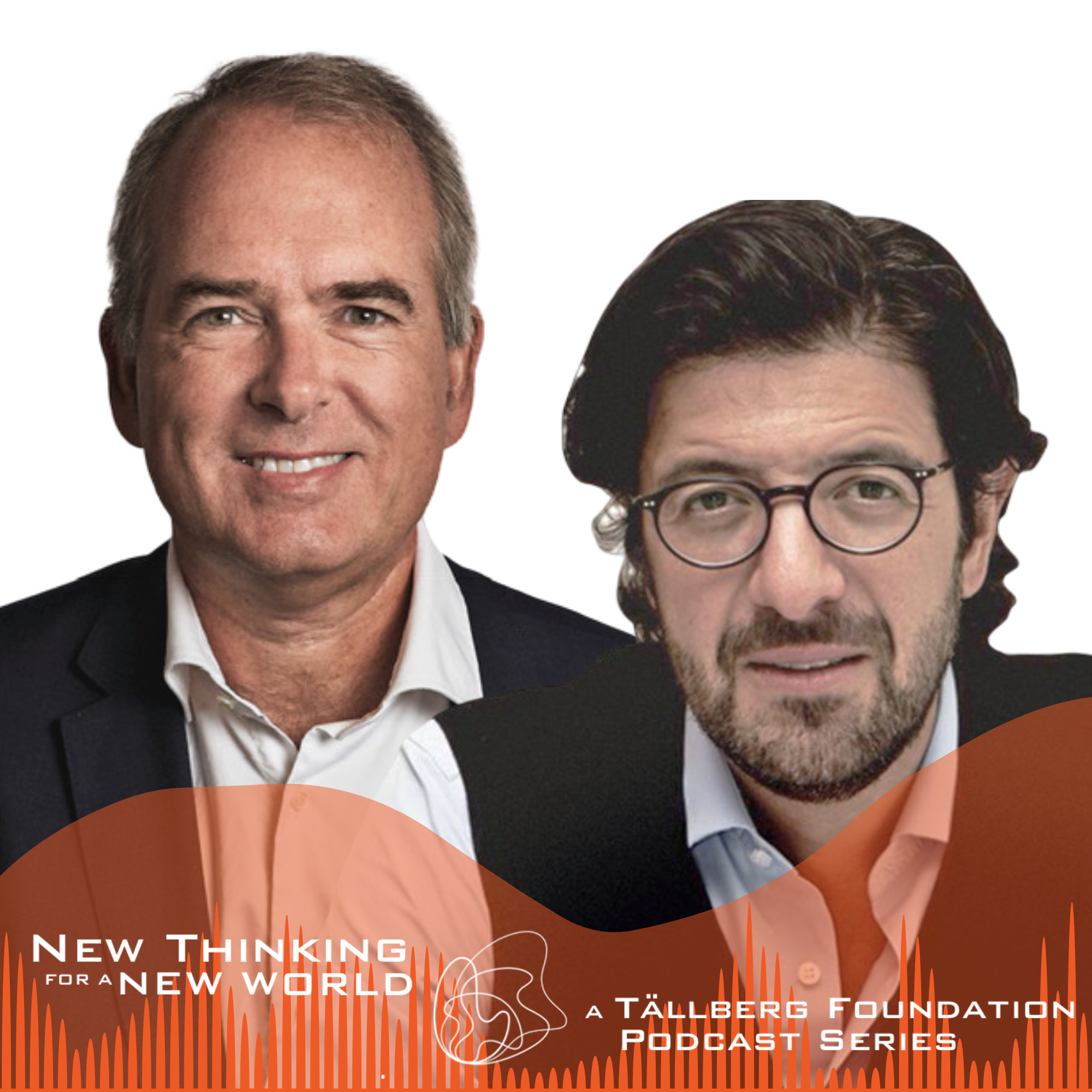
Is it possible to be optimistic about climate change?
Tomas Anker Christensen, Denmark’s Climate Ambassador, and Daniel Martinez-Valle, CEO of Orbia, discusses both the need and opportunity for urgent, positive creative climate activism in the wake of the pandemic. Also the need to develop effective partnerships between government and corporations, to find a better balance between globalism and nationalism, and to innovate solutions that assure the transformation to a low carbon economy creates, rather than destroys, jobs, growth and economic opportunity.

Is Europe’s future green or black?
The global Covid-19 pandemic has exposed deep fissures in the global political and economic fabric. For democracy to survive, the social contract needs to be reimagined; economies needs to be re-engineered and climate change needs to be confronted. In this episode, Danish politician and former President of the UN General Assembly Mogens Lykketoft argues that these inter-related challenges demand urgent action—and that if humanity moves fast, we could find new paths to a new, shared prosperity.