New Books in Literary Studies
2,780 episodes — Page 16 of 56
Ep 292Steve Mentz, "Sailing without Ahab: Ecopoetic Travels" (Fordham UP, 2024)
When I decided to try my hand at interviewing authors for the New Books Network, one of my dream guests was Steve Mentz. Steve’s work in the environmental humanities marries a rigorous archival work, pathbreaking close readings, and a fluent and innovative approach to scholarly writing. I think he’s charted a course for early modern ecocriticism that has been both impressive and energizing. Steve Mentz is a Professor of English at St. John’s University. He has produced numerous books that have shaped the emerging field of the blue humanities, including Shipwreck Modernity; At the Bottom of Shakespeare’s Ocean; the Bloomsbury Objects entry Ocean; and the recent An Introduction to the Blue Humanities. He has published a chapbook of poetry, Swim Poems. His Bookfish blog is also a wonderful index for scholarly and creative work happening right now. Today, I am excited to discuss his most recent book of blue poetry, Sailing Without Ahab, just published by Fordham University Press in 2024. Learn more about your ad choices. Visit megaphone.fm/adchoices Support our show by becoming a premium member! https://newbooksnetwork.supportingcast.fm/literary-studies
Ep 28Elizabeth Coggeshall, "On Amistà: Negotiating Friendship in Dante’s Italy" (U Toronto Press, 2023)
Although we often think of friendship today as an indisputable value of human social life, for thinkers and writers across late mediaeval Christian society friendship raised a number of social and ethical dilemmas that needed to be carefully negotiated. On Amistà: Negotiating Friendship in Dante’s Italy (University of Toronto Press, 2023) analyses these dilemmas and looks at how Dante’s strategic articulations of friendship evolved across the phases of his literary career as he manoeuvred between different social groups and settings. Dr. Elizabeth Coggeshall reveals that friendship was not an unequivocal moral good for the writers of late mediaeval Italy. Instead, it was an ambiguous term to be deployed strategically, describing a wide range of social relationships such as allies, collaborators, servants, patrons, rivals, and enemies. Drawing on the use of the language of friendship in the letters, correspondence poems, dedications, narratives, and treatises composed by Dante and his interlocutors, Dr. Coggeshall examines the way they skillfully negotiated around the dilemmas that friendship raised in the spheres of mediaeval Italian literary society. The book addresses instances of inclusivity and exclusivity, collaboration and self-interest, hierarchy and equality, and alterity and identity. Employing literary, historical, and sociological analysis, On Amistà presents a genealogy for the innovative and tactical use of the terms of friendship among the works of late mediaeval Italian authors. This interview was conducted by Dr. Miranda Melcher whose forthcoming book focuses on post-conflict military integration, understanding treaty negotiation and implementation in civil war contexts, with qualitative analysis of the Angolan and Mozambican civil wars. Learn more about your ad choices. Visit megaphone.fm/adchoices Support our show by becoming a premium member! https://newbooksnetwork.supportingcast.fm/literary-studies
Ep 258Eric Calderwood, "On Earth Or in Poems: The Many Lives of Al-Andalus" (Harvard UP, 2023)
During the Middle Ages, the Iberian Peninsula was home not to Spain and Portugal but rather to al-Andalus. Ruled by a succession of Islamic dynasties, al-Andalus came to be a shorthand for a legendary place where people from the Middle East, North Africa, and Europe; Jews, Christians, and Muslims lived together in peace. That reputation is not entirely deserved, yet, as On Earth Or in Poems: The Many Lives of Al-Andalus (Harvard UP, 2023) shows, it has had an enduring hold on the imagination, especially for Arab and Muslim artists and thinkers in Europe, the Middle East, and North Africa. From the vast and complex story behind the name al-Andalus, Syrians and North Africans draw their own connections to history’s ruling dynasties. Palestinians can imagine themselves as “Moriscos,” descended from Spanish Muslims forced to hide their identities. A Palestinian flamenco musician in Chicago, no less than a Saudi women’s rights activist, can take inspiration from al-Andalus. These diverse relationships to the same past may be imagined, but the present-day communities and future visions those relationships foster are real. Where do these notions of al-Andalus come from? How do they translate into aspiration and action? Eric Calderwood traces the role of al-Andalus in music and in debates about Arab and Berber identities, Arab and Muslim feminisms, the politics of Palestine and Israel, and immigration and multiculturalism in Europe. The Palestinian poet Mahmud Darwish once asked, “Was al-Andalus / Here or there? On earth … or in poems?” The artists and activists showcased in this book answer: it was there, it is here, and it will be. Eric Calderwood is Associate Professor of Comparative and World Literature at the University of Illinois Urbana-Champaign and the author of the award-winning Colonial al-Andalus. He is a contributor to NPR, the BBC, and Foreign Policy. Tugrul Mende holds an M.A in Arabic Studies. He is based in Berlin as a project coordinator and independent researcher Learn more about your ad choices. Visit megaphone.fm/adchoices Support our show by becoming a premium member! https://newbooksnetwork.supportingcast.fm/literary-studies
Ep 8Esra Mirze Santesso, "Muslim Comics and Warscape Witnessing" (Ohio State UP, 2023)
Recent decades have seen an unprecedented number of comics by and about Muslim people enter the global market. Now, Muslim Comics and Warscape Witnessing (Ohio State UP, 2023) offers the first major study of these works. Esra Mirze Santesso assesses Muslim comics to illustrate the multifaceted nature of seeing and representing daily lives within and outside of the homeland. Focusing on contemporary graphic narratives that are primarily but not exclusively from the Middle East--from blockbusters like Marjane Satrapi's Persepolis to more local efforts such as Leila Abdelrazaq's Baddawi--Santesso explores why the graphic form has become a popular and useful medium for articulating Muslim subjectivities. Further, she shows how Muslim comics "bear witness" to a range of faith-based positions that complicate discussions of global ummah or community, contest monolithic depictions of Muslims, and question the Islamist valorization of the shaheed, the "martyr" figure regarded as the ideal religious witness. By presenting varied depictions of everyday lives of Muslims navigating violence and militarization, this book reveals the connections between religious rituals and existence in warscapes and invites us to more deeply consider the nature of witnessing itself. Dr. Esra Santesso received her B.A. from Boğaziçi University in Istanbul, Turkey, and her PhD from the University of Nevada. She is currently Associate Professor in the Department of English at the University of Georgia. She specializes in postcolonial theory and literature with an emphasis on Muslim identity, diasporic and immigrant experiences, and human rights narratives. Her first book, Disorientation: Muslim Identity in Contemporary Anglophone Literature (Palgrave Macmillan, 2013) investigates the extent to which the questions and theories of postcolonial identity can be applied to Muslim subjects living in the West. She is the co-editor of Islam and Postcolonial Literature (Routledge, 2017), which offers a collection of essays on religion’s role in self-representation explored via film, theater, poetry, visual arts, performance pieces. Learn more about your ad choices. Visit megaphone.fm/adchoices Support our show by becoming a premium member! https://newbooksnetwork.supportingcast.fm/literary-studies
Ep 126E. G. Condé / Steve Gonzalez on Hurricanes, Fiction, and Speculative Ethnography (EF)
In this episode, Elizabeth talks with Steven Gonzalez, anthropologist and author of speculative fiction under the pen name E.G. Condé. They discuss the entanglement of politics, Taíno animism, and weather events in the form of a hurricane named Teddy. Steve describes the suffusion of sound he has experienced in Puerto Rico and the soundlessness at the heart of hurricanes, and tells us about his academic work on data centers, and a collaborative speculative film that imagines a world without clouds. Steve and Elizabeth reflect on current shifts within anthropology that are opening the discipline to other modes of expression, including speculative fiction, poetry, and creative nonfiction, in the tradition of Ursula K. Le Guin (the subject of a recent episode and of John's recent book Ursula Le Guin's Earthsea: My Reading) and of Arkady Martine, Byzantine historian and author of A Memory called Empire, and A Desolation Called Peace. As her Recallable Book, Elizabeth offers an anthropological space opera, The Expanse. Mentioned in the episode: "World without Clouds" by Jia Hui Lee, Luísa Reis Castro, Julianne Yip, Steven Gonzalez, and Gabrielle Robbins. Dreaming of Dry Land: Environmental Transformation in Colonial Mexico City by Vera S. Candiani. Haraway, Donna. "Situated knowledges: The science question in feminism and the privilege of partial perspective 1." In Women, science, and technology, pp. 455-472. Routledge, 2013. Marcus, George E. "On the unbearable slowness of being an anthropologist now: Notes on a contemporary anxiety in the making of ethnography." Cross Cultural Poetics 12, no. 12 (2003): 7-20. Read the episode here. Learn more about your ad choices. Visit megaphone.fm/adchoices Support our show by becoming a premium member! https://newbooksnetwork.supportingcast.fm/literary-studies
Ep 181Kyokutei Bakin, "Eight Dogs, Or Hakkenden: Part Two--His Master's Blade" (Cornell UP, 2024)
Glynne Walley, translator of classic Japanese novel Hakkenden, joins us on the podcast again to talk about his second translated volume: Hakkenden, Part 2: His Master’s Blade (Cornell East Asia Series: 2024). Unlike Part 1—which is all preamble!—in Part 2 we meet some of the fabled eight dog warriors and the Confucian virtues they represent: Shino, for filial piety; Gakuzo, for duty; Dosetsu, for loyalty. There’s betrayal, drama…and a lot of secret, intertwined family relationships. Glynne Walley is an Associate Professor of Japanese Literature at the University of Oregon and author of Good Dogs: Edification, Entertainment & Kyokutei Bakin's Nansō Satomi hakkenden (Cornell East Asia Series, 2017), the first monograph-length study of Hakkenden, a landmark of premodern Japanese fiction. Today, Glynne and I talk about Part 2, how the novel connected to readers at the time—and how Hakkenden ends up being a lot like our Marvel Cinematic Universe. Catch our first interview with Glynne on Part 1 here! You can find more reviews, excerpts, interviews, and essays at The Asian Review of Books. Follow on Twitter at @BookReviewsAsia. Nicholas Gordon is an editor for a global magazine, and a reviewer for the Asian Review of Books. He can be found on Twitter at @nickrigordon. Learn more about your ad choices. Visit megaphone.fm/adchoices Support our show by becoming a premium member! https://newbooksnetwork.supportingcast.fm/literary-studies
Ep 9Adapting Liu Cixin’s "Three-Body Problem" for Television
It’s the UConn Popcast, and today we discuss Netflix’s new screen adaptation of Chinese science fiction author Liu Cixin’s Three Body trilogy. We discuss the battle between the eye and the idea in film and television science fiction, and whether the new show strikes a successful balance. We consider some of the challenges involved in adapting this distinctively Chinese literary work for a non-Chinese audience, and what might have been lost in doing so. And we think more broadly about the genre of hard science fiction: to whom does it appeal and what is it trying to accomplish? Learn more about your ad choices. Visit megaphone.fm/adchoices Support our show by becoming a premium member! https://newbooksnetwork.supportingcast.fm/literary-studies
Ep 291Alessandro Columbu, "Zakariyya Tamir and the Politics of the Syrian Short Story: Modernity, Authoritarianism and Gender" (I. B. Tauris, 2023)
Zakariyya Tamir is Syria’s foremost writer of short stories, and his works are widely read across the Arab world. In Zakariyya Tamir and the Politics of the Syrian Short Story: Modernity, Authoritarianism, and Gender (I. B. Tauris, 2023), the first English-language monograph on Tamir’s entire oeuvre, Alessandro Columbu examines Tamir’s literary development in the context of changing political contexts, from his beginnings as a short story writer for local magazines in the late 1950s until the Syrian revolution of 2011. Thus, the movements from independence and Western-inspired modernisation to the rise of nationalism and socialism; war, defeat, and occupation in the 1960s; the emergence of authoritarianism, and the cult of personality of Hafiz al-Assad in the 1970s are charted in the context of Tamir’s works. Therein, the significance of masculinity and patriarchy and its changing nature in relation to nationalism and authoritarianism are revealed as Tamir’s foremost vehicles for social and political critique. The role of female sexuality and its disrupting/empowering nature vis-à-vis patriarchal institutions is also explored, as is the question of literary commitment and the relationship between authors and the authoritarian regime of Syria, homosexuality, and representations of unconventional sexualities in general. Ibrahim Fawzy is a literary translator and academic based in Egypt. His interests include translation studies, Arabic literature, ecocriticism, and disability studies. Learn more about your ad choices. Visit megaphone.fm/adchoices Support our show by becoming a premium member! https://newbooksnetwork.supportingcast.fm/literary-studies
Ep 204Aleksandar Bosković and Steven Teref, "Zenithism (1921-1927): A Yugoslav Avant-Garde Anthology" (Academic Studies Press, 2023)
Zenithism (1921-1927): A Yugoslav Avant-Garde Anthology (Academic Studies Press, 2023) is the first-ever English language anthology of zenithism – an eclectic avant-garde movement that operated in the Yugoslav region between 1921 and 1927. The founder of Zenithism – poet Ljubomir Micić – envisioned the movement as a fusion of futurism, dada, constructivism, expressionism, and proto-surrealism, with the movement’s philosophy embodied in the figure of the Balkan Barbarogenius (barbarian-genius). A hallmark of the movement was its embrace of cross-genre writing, from Micić’s ciné-poem Rescue Vehicle and Branko Ve Poljanski’s lyric novel 77 Suicides to MID’s lyric philosophic treatise The Sexual Equilibrium of Money. Reaching the wider international audience for the first time, this anthology sheds light on an untapped chapter in European modernism. Aleksandar Bošković is Lecturer in Bosnian-Croatian-Serbian within the Department of Slavic Languages and Literatures at Columbia University. He is a scholar of Russian and East European modernism, Yugoslav, post-Yugoslav and Balkan Studies, with a strong background in comparative literature, critical theory, and visual studies. Bošković specializes in avant-garde literature and experimental art practices explored through the lenses of comparative media. Steven Teref is a translator from Bosnian, Croatian, and Serbian. He specialists in translating Bosnian, Croatian, and Serbian poetry, focusing on writers from the early 20th century through to the present. Iva Glisic is a historian and art historian specialising in modern Russia and the Balkans. Learn more about your ad choices. Visit megaphone.fm/adchoices Support our show by becoming a premium member! https://newbooksnetwork.supportingcast.fm/literary-studies
Ep 290Jeffrey R. Di Leo, "Contemporary Literary and Cultural Theory: An Overview" (Bloomsbury, 2023)
The most exhaustive mapping of contemporary literary theory to date, Jeffrey R. Di Leo's book Contemporary Literary and Cultural Theory: An Overview (Bloomsbury, 2023) offers a comprehensive overview of the current state of the field of contemporary literary theory. Examining 75 key topics across 15 chapters, it provides an approachable and encyclopedic introduction to the most important areas of contemporary theory today. Proceeding broadly chronologically from early theory all the way through to postcritique, Di Leo masterfully unpacks established topics such as psychoanalysis, structuralism and Marxism, as well as newer topics such as trans* theory, animal studies, disability studies, blue humanities, speculative realism and many more. Featuring accessible discussion of the work of foundational theorists such as Lacan, Derrida and Freud as well as contemporary theorists such as Haraway, Braidotti and Hayles, it offers a magisterial examination of an enormously rich and varied body of work. Arnab Dutta Roy is Assistant Professor of World Literature and Postcolonial Theory at Florida Gulf Coast University. Learn more about your ad choices. Visit megaphone.fm/adchoices Support our show by becoming a premium member! https://newbooksnetwork.supportingcast.fm/literary-studies
Ep 289Colleen Taylor, "Irish Materialisms: The Nonhuman and the Making of Colonial Ireland, 1690-1830" (Oxford UP, 2024)
Coins, flax, spinning wheels, mud, pigs. Each of these objects were ubiquitous in the premodern cultural representation of the Irish. Through case studies of these five objects, Colleen Taylor’s new monograph Irish Materialisms: The Nonhuman and the Making of Colonial Ireland, 1690-1830 (Oxford University Press, 2024) recovers the sometimes-oppressive, sometimes-liberatory meanings invested in nonhuman matter. Irish Materialisms collects a rich archive of material from William Carleton’s “Phil Purcel, the Pig Driver,” to the it-narrative The Adventures of a Bad Shilling in the Kingdom of Ireland, Gulliver’s Travels to Sydney Owenson’s The Wild Irish Girl. Colleen Taylor is Professor of English at Boston College. She has held the National Endowment for the Humanities Fellowship at the University of Notre Dame and an Irish Research Council Postdoctoral Award at University College Cork. Irish Materialisms is her first monograph. Learn more about your ad choices. Visit megaphone.fm/adchoices Support our show by becoming a premium member! https://newbooksnetwork.supportingcast.fm/literary-studies
Ep 288Denise Kripper, "Narratives of Mistranslation: Fictional Translators in Latin American Literature" (Routledge, 2023)
Narratives of Mistranslation: Fictional Translators in Latin American Literature (Routledge, 2023) offers unique insights into the role of the translator in today’s globalized world, exploring Latin American literature featuring translators and interpreters as protagonists in which prevailing understandings of the act of translation are challenged and upended. It looks to the fictional turn as a fruitful source of critical inquiry in translation studies, showcasing the potential for recent Latin American novels and short stories in Spanish to shed light on the complex dynamics and conditions under which translators perform their task. Kripper unpacks how the study of these works reveals translation not as an activity with communication as its end goal but rather as a mediating and mediated process shaped by translators’ unique manipulations and motivations and the historical and cultural contexts in which they work. In exploring the fictional representations of translators, the book also outlines pedagogical approaches and offers discussion questions for the implementation of translators’ narratives in translation, language, and literature courses. Ibrahim Fawzy is a literary translator and academic based in Egypt. His interests include translation studies, Arabic literature, ecocriticism, and disability studies. Learn more about your ad choices. Visit megaphone.fm/adchoices Support our show by becoming a premium member! https://newbooksnetwork.supportingcast.fm/literary-studies
Ep 141Melodrama
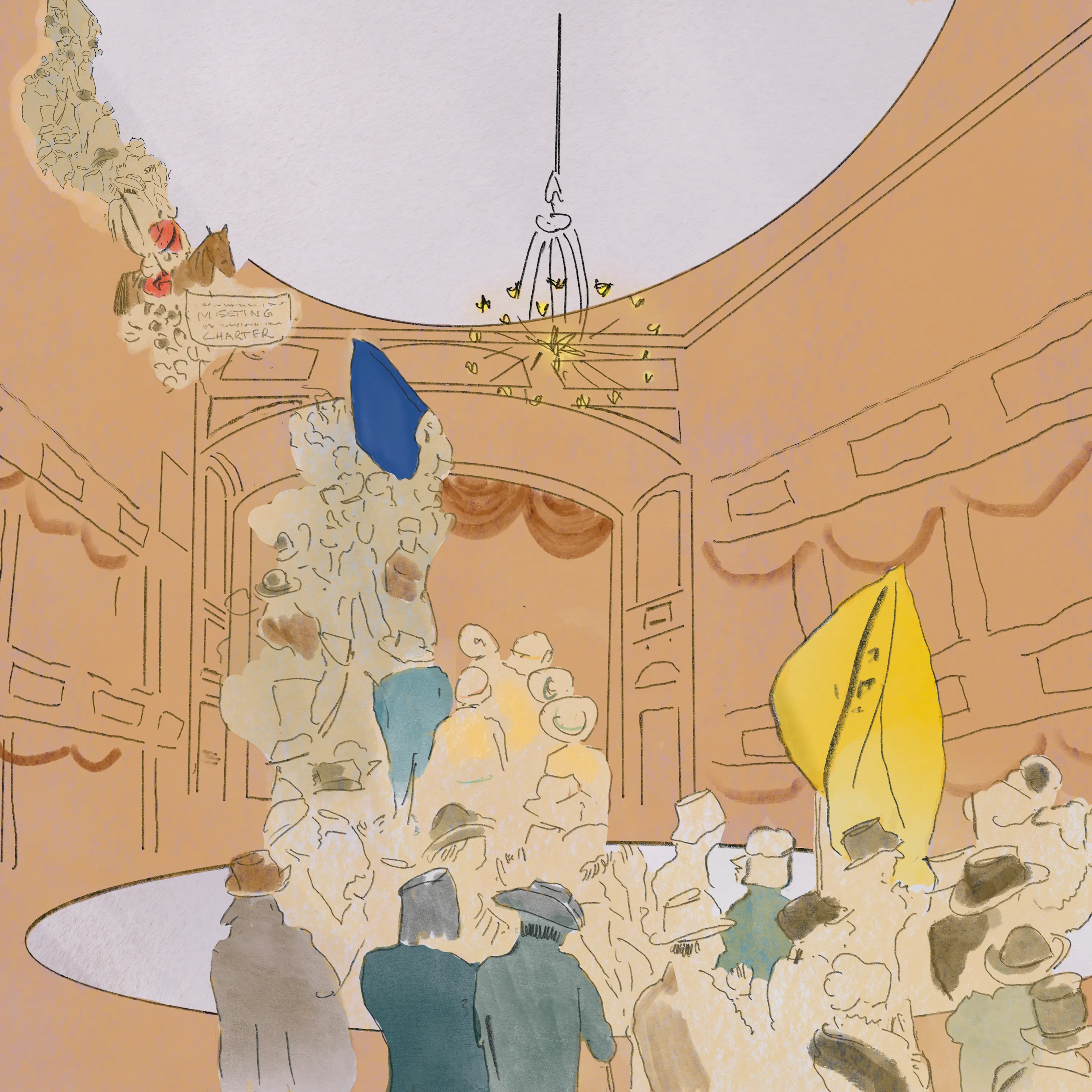
We often misuse the word melodrama with abandon, especially to characterize other people’s behaviors, but Greg Vargo defines it for us once and for all. Emerging in the eighteenth and nineteenth centuries as the predominant Western theatrical form, it is a genre of crisis. To that end, it employed hyperbolic language, extreme situations, extraordinary coincidences, stark oppositions and so on. Greg talks about his own ongoing work on melodramas about race, their histories of performance, and the storied career of the African American actor Ira Aldridge. Greg Vargo is Associate Professor at the Department of English, New York University. His research focuses on the literary and cultural milieu of nineteenth-century British protest movements and the interplay between politics, periodical culture, the novel and theater. His first book, An Underground History of Early Victorian Fiction: Chartism, Radical Print Culture, and the Social Problem Novel (Cambridge UP, 2018), won the 2019 North American Victorian Studies Association’s award for best book of the year in Victorian Studies. He has recently edited Chartist Drama (Manchester UP, 2020), a collection of four plays written or performed by members of the working-class movement for social and political rights known as Chartism. A new project focuses on anti-imperialism in nineteenth-century popular culture (across such media as penny novels and stage melodrama) as well as in radical politics. Image: © 2024 Saronik Bosu Learn more about your ad choices. Visit megaphone.fm/adchoices Support our show by becoming a premium member! https://newbooksnetwork.supportingcast.fm/literary-studies
Ep 287Tim Lanzendörfer, "Utopian Pasts and Futures in the Contemporary American Novel" (Edinburgh UP, 2023)
Tim Lanzendörfer's Utopian Pasts and Futures in the Contemporary American Novel (Edinburgh UP, 2023) highlights the emergence of a literary mode, speculative historism, over the past two decades in U.S. literature. Discussing in depth novels by writers such as Ken Kalfus, Joyce Carol Oates, and Colson Whitehead, among others, it integrates questions of critical method, genre, form, and literary theory, all of which have some urgency today. Addressing itself to the question of how to read this mode through a form of utopian hermeneutics, this study explores the formal constitution, narrative choices, and place in the wider literary market of a mode that it believes to be constitutively important for understanding American literature's struggle with the possibility of imagining hopeful futures. Learn more about your ad choices. Visit megaphone.fm/adchoices Support our show by becoming a premium member! https://newbooksnetwork.supportingcast.fm/literary-studies
Ep 321Shakuntala Gawde, "Narrative Analysis of Bhagavata Purana: Selected Episodes from the Tenth Skandha" (Dev Publishers, 2023)
Shakuntala Gawde's book Narrative Analysis of Bhagavata Purana: Selected Episodes from the Tenth Skandha (Dev Publishers, 2023) presents an analytical study of selected narratives of the tenth skandha of the Bhāgavata Purāṇa with the framework of Narratology. It checks the possibilities of interpretation of some popular narratives from Kṛṣṇa saga. Book gives an exhaustive introduction dealing with Purāṇas, the growth of Vaiṣṇnavism and Narratology with special reference to Bhāgavata Purāṇa which sets precursor to the further analysis. It undertakes hermeneutic interpretation of episodes – Lord Kṛṣṇa’s birth story, Lifting of Govardhana Mountain, Syamantaka jewel, exploits of Pūtanā and other demons, uprooting of Arjuna trees, the expulsion of Kāliya, Gopīcīraharaṇam, Rāsapaῆcādhyāyī, story of Kubjā, story of Śrīdāman and Rukmiṇī Svayaṁvara. All these narratives are categorised into three themes – 1) Assimilation and acculturation 2) Exploits of demons and 3) Bhakti Narratives. The Narrative structure of each episode is analysed to derive the meaning from it. Theoretical frameworks developed by K. Ayyappa Paniker, Genette and Roland Barthes are applied to the selected narratives of the tenth skandha of Bhāg. P. to understand the deeper meaning of the narratives. The toolbox approach is taken into consideration while doing textual exegesis and hermeneutic interpretation. It explores socio-historical, psychological and philosophical aspects of the above narratives through textual analysis of the tenth skandha of Bhāgavata Purāṇa using the tools like intertextuality and intratextuality. Learn more about your ad choices. Visit megaphone.fm/adchoices Support our show by becoming a premium member! https://newbooksnetwork.supportingcast.fm/literary-studies
Ep 125David Ferry, Roger Reeves, and the Underworld
In Memoriam: David Ferry (1924-2023) In this Recall This Book conversation from 2021, poets David Ferry and Roger Reeves talk about lyric, epic, and the underworld. The underworld, that repository of the Shades of the Dead, gets a lot of traffic from heroes (Gilgamesh, Theseus, Odysseus, Aeneas) and poets (Orpheus, Virgil, Dante). Some come down for information or in hopes of rescuing or just seeing their loved ones, or perhaps for a sense of comfort in their grief. They often find those they have loved, but they rarely can bring them back. Comfort they never find, at least not in any easy way. The poets talk about David’s poem Resemblance, in which he sees his father, whose grave he just visited, eating in the corner of a small New Jersey restaurant and “listening to a conversation/With two or three others—Shades of the Dead come back/From where they went to when they went away?” "I feel the feathers softly gather upon My shoulders and my arms, becoming wings. Melodious bird I'll fly above the moaning Bosphorus, more glorious than Icarus, I'll coast along above the coast of Sidra And over the fabled far north Hyperborean steppes." -- from "To Maecenas", The Odes of Horace, II: 20. Their tongues are ashes when they’d speak to us. David Ferry, “Resemblance” Roger reads “Grendel’s Mother,” in which the worlds of Grendel and Orpheus and George Floyd coexist but do not resemble each other, and where Grendel’s mother hears her dying son and refuses the heaven he might be called to, since entering it means he’d have to die. Henry Justice Ford, ‘Grendel’s Mother Drags Beowulf to the Bottom Of The Lake’, 1899 So furious. So furious, I was, When my son called to me, called me out Of heaven to come to the crag and corner store Where it was that he was dying, “Mama, I can’t breathe;” even now I hear it— Roger Reeves, “Grendel’s Mother” Mentioned in this episode David Ferry, Bewilderment: New Poems and Translations, University of Chicago Press Virgil, The Aeneid, translated by David Ferry, University of Chicago Press Horace, The Odes of Horace, translated by David Ferry, Farrar, Strauss, and Giroux Roger Reeves, King Me, Copper Canyon Press Roger Reeves, Best Barbarian, W.W. Norton Press Jonathan Culler, Theory of the Lyric, Harvard University Press Read transcript of the episode here. Listen to the episode here. Learn more about your ad choices. Visit megaphone.fm/adchoices Support our show by becoming a premium member! https://newbooksnetwork.supportingcast.fm/literary-studies
Ep 286Stephanie Li, "Ugly White People: Writing Whiteness in Contemporary America" (U Minnesota Press, 2023)
White Americans are confronting their whiteness more than ever before, with political and social shifts ushering in a newfound racial awareness. And with white people increasingly seeing themselves as distinctly racialized (not simply as American or human), white writers are exposing a self-awareness of white racialized behavior-from staunch antiracism to virulent forms of xenophobic nationalism. Ugly White People: Writing Whiteness in Contemporary America (U Minnesota Press, 2023) explores representations of whiteness from twenty-first-century white American authors, revealing white recognition of the ugly forms whiteness can take. Stephanie Li argues that much of the twenty-first century has been defined by this rising consciousness of whiteness because of the imminent shift to a "majority minority" population and the growing diversification of America's political, social, and cultural institutions. The result is literature that more directly grapples with whiteness as its own construct rather than a wrongly assumed norm. Li contextualizes a series of literary novels as collectively influenced by changes in racial and political attitudes. Turning to works by Dave Eggers, Sarah Smarsh, J. D. Vance, Claire Messud, Ben Lerner, and others, she traces the responses to white consciousness that breed shared manifestations of ugliness. The tension between acknowledging whiteness as an identity built on domination and the failure to remedy inequalities that have proliferated from this founding injustice is often the source of the ugly whiteness portrayed through these narratives. The questions posed in Ugly White People about the nature and future of whiteness are vital to understanding contemporary race relations in America. From the election of Trump and the rise of white nationalism to Karen memes and the war against critical race theory to the pervasive pattern of behavior among largely liberal-leaning whites, Li elucidates truths about whiteness that challenge any hope of national unity and, most devastatingly, the basic humanity of others. Learn more about your ad choices. Visit megaphone.fm/adchoices Support our show by becoming a premium member! https://newbooksnetwork.supportingcast.fm/literary-studies
Ep 227Coretta M. Pittman, "Literacy in a Long Blues Note: Black Women’s Literature and Music in the Late Nineteenth and Early Twentieth Centuries" (UP of Mississippi, 2022)
Literacy in a Long Blues Note: Black Women’s Literature and Music in the Late Nineteenth and Early Twentieth Centuries by Coretta M. Pittman (University Press of Mississippi, 2022) traces the evolution of Black women’s literacy practices from 1892 to 1934. Pittman explores two distinct but related eras of Black women’s writing—the Women’s Era of the 1890s and early 1900s, and the New Negro Movement of the 1920s and 1930s. Casting a wide net, Pittman analyzes fiction, nonfiction, and dramatic writing by Black women along with songs performed and written by classic blues singers like Bessie Smith, Ma Rainey, and Victoria Spivey. This innovative approach allows Pittman to show how women from these two generations approached issues of class, respectability, uplift, and empowerment. Learn more about your ad choices. Visit megaphone.fm/adchoices Support our show by becoming a premium member! https://newbooksnetwork.supportingcast.fm/literary-studies
Ep 487Rachel Gordan, "Postwar Stories: How Books Made Judaism American" (Oxford UP, 2024)
The period immediately following World War II was an era of dramatic transformation for Jews in America. At the start of the 1940s, President Roosevelt had to all but promise that if Americans entered the war, it would not be to save the Jews. By the end of the decade, antisemitism was in decline and Jews were moving toward general acceptance in American society. Drawing on several archives, magazine articles, and nearly-forgotten bestsellers, Postwar Stories: How Books Made Judaism American (Oxford University Press, 2024) by Dr. Rachel Gordan examines how Jewish middlebrow literature helped to shape post-Holocaust American Jewish identity. For both Jews and non-Jews accustomed to antisemitic tropes and images, positive depictions of Jews had a normalising effect. Maybe Jews were just like other Americans, after all. At the same time, anti-antisemitism novels and “Introduction to Judaism” literature helped to popularise the idea of Judaism as an American religion. In the process, these two genres contributed to a new form of Judaism—one that fit within the emerging myth of America as a Judeo-Christian nation, and yet displayed new confidence in revealing Judaism's divergences from Christianity. This interview was conducted by Dr. Miranda Melcher whose forthcoming book focuses on post-conflict military integration, understanding treaty negotiation and implementation in civil war contexts. Learn more about your ad choices. Visit megaphone.fm/adchoices Support our show by becoming a premium member! https://newbooksnetwork.supportingcast.fm/literary-studies
Ep 445Anna Kornbluh, "Immediacy: Or, The Style of Too Late Capitalism" (Verso, 2024)
What is the status of art and culture in a world dominated by apps, algorithms, and influencers? Anna Kornbluh’s newest book Immediacy, Or the Style of Too Late Capitalism (Verso, 2023) analyzes a swath of cultural forms from auto-fiction to Netflix binges and immersive art installations. For Kornbluh, neoliberalism’s economic disintermediation manifests itself in a new dominant cultural style that renounces complex forms of representation, abstraction, and mediation in favor of instantaneity, memoir, and literalism. An ambitious and far-reaching intervention into politics and aesthetics, Immediacy is ultimately an impassioned defense of the power of art to reflect, critique, and transform the world. Anna Kornbluh is Professor of English and a member of the United Faculty bargaining team at the University of Illinois, Chicago, where her research and teaching center on literature, film, and Marxist cultural theory. She is the author of The Order of Forms: Realism, Formalism, and Social Space, and Marxist Film Theory and Fight Club, and Realizing Capital. David Maruzzella is a writer, editor, and translator specializing in philosophy and contemporary art currently based in Chicago. He received his PhD in philosophy from DePaul University. Learn more about your ad choices. Visit megaphone.fm/adchoices Support our show by becoming a premium member! https://newbooksnetwork.supportingcast.fm/literary-studies
Ep 326Umme Al-wazedi and Afrin Zeenat, "Veil Obsessed: Representations in Literature, Art, and Media" (Syracuse UP, 2024)
In their edited volume Veil Obsessed: Representations in Literature, Art, and Media (Syracuse University Press, 2024), Umme Al-wazedi and Afrin Zeenat complicate discussions of the veil and highlight the prevalent anxieties surrounding it. The edited volume is unique in its focus and engagement of the veil as it appears in various literary, artistic, and popular cultures, such as of historical Algeria and contemporary Iranian television series, Bollywood films, and street art in Europe. The book locates these critical discussions and theoretical interventions within both a postcolonial and neocolonial critique of how the veil was orientalised and fetishized historically, for example in the Victorian transmissions of the 1001 Nights, and how the veil, specifically the burka, is deployed in reductive and harmful ways in contemporary state projects today, as seen in France, and even in popular liberal discourses (such as in the United States). The essays in this collection are sharp and accessibly written and will be useful as a teaching tool in various undergraduate courses. The book will also be of interest to those who work on literature, popular culture, gender, Islam, and much more. Learn more about your ad choices. Visit megaphone.fm/adchoices Support our show by becoming a premium member! https://newbooksnetwork.supportingcast.fm/literary-studies
Ep 128Amy Lidster and Sonia Massai, "Shakespeare at War: A Material History" (Cambridge UP, 2023)
Presenting engaging, thought-provoking stories across centuries of military activity, Shakespeare at War: A Material History (Cambridge UP, 2023) demonstrates just how extensively Shakespeare's cultural capital has been deployed at times of national conflict. Drawing upon scholarly expertise in Shakespeare and War Studies, first-hand experience from public military figures and insights from world-renowned theatre directors, this is the first material history of how Shakespeare has been used in wartime. Addressing home fronts and battle fronts, the collection's broad chronological coverage encompasses the Seven Years' War, the American War of Independence, the Napoleonic Wars, the Russian War, the First and Second World Wars, and the Iraq War. Each chapter reveals an archival object that tells us something about who 'recruited' Shakespeare, what they did with him, and to what effect. Richly illustrated throughout, the collection uniquely uncovers the agendas that Shakespeare has been enlisted to support (and critique) at times of great national crisis and loss. Morteza Hajizadeh is a Ph.D. graduate in English from the University of Auckland in New Zealand. His research interests are Cultural Studies; Critical Theory; Environmental History; Medieval (Intellectual) History; Gothic Studies; 18th and 19th Century British Literature. YouTube channel. Twitter. Learn more about your ad choices. Visit megaphone.fm/adchoices Support our show by becoming a premium member! https://newbooksnetwork.supportingcast.fm/literary-studies
Ep 221Eva De Clercq, ed. and trans., "The Life of Padma" (Harvard UP, 2023)
The Life of Padma, or the Paümacariu, is a richly expressive Jain retelling in the Apabhramsha language of the famous Ramayana tale. It was written by the poet and scholar Svayambhudeva, who lived in south India around the beginning of the tenth century. Like the epic tradition on which it is based, The Life of Padma narrates Prince Rama's exile, his search for his wife Sita after her abduction by King Ravana of Lanka, and the restoration of his kingship. The second volume recounts Rama's exile with Sita and his brother Lakshmana. The three visit various cities--rather than ashrams, as in most versions; celebrate Lakshmana's marriages; and come upon a new city built in Rama's honor. In Dandaka Forest, they encounter sages who are masters of Jain doctrine. Then, the discovery of Sita's disappearance sets the stage for war with Ravana. Eva De Clercq's The Life of Padma (Harvard UP, 2023) is the first direct translation into English of the oldest extant Apabhramsha work, accompanied by a corrected text, in the Devanagari script, of Harivallabh C. Bhayani's critical edition. Learn more about your ad choices. Visit megaphone.fm/adchoices Support our show by becoming a premium member! https://newbooksnetwork.supportingcast.fm/literary-studies
Ep 159Bodhisattva Chattopadhyay, "The Inhumans and Other Stories: A Selection of Bengali Science Fiction" (MIT Press, 2024)
Kalpavigyan—science fiction written to excite Bengali speakers about science, as well as to persuade them to evolve beyond the limitations of religion, caste, and class—became popular in the early years of the twentieth century. Translated into English for the first time, in The Inhumans and Other Stories (MIT Press, 2024) you'll discover The Inhumans (1935), Hemendrakumar Roy's satirical novella about a lost race of Bengali supermen in Uganda. Also included are Jagadananda Ray's “Voyage to Venus” (1895), Nanigopal Majumdar's “The Mystery of the Giant” (1931), and Manoranjan Bhattacharya's “The Martian Purana” (1931). The stories were selected and translated by Dr. Bohdisattva Chattopadhyay. This interview was conducted by Dr. Miranda Melcher whose forthcoming book focuses on post-conflict military integration, understanding treaty negotiation and implementation in civil war contexts, with qualitative analysis of the Angolan and Mozambican civil wars. Learn more about your ad choices. Visit megaphone.fm/adchoices Support our show by becoming a premium member! https://newbooksnetwork.supportingcast.fm/literary-studies
Ep 445Korey Garibaldi, "Impermanent Blackness: The Making and Unmaking of Interracial Literary Culture in Modern America" (Princeton UP, 2023)
In Impermanent Blackness: The Making and Unmaking of Interracial Literary Culture in Modern America (Princeton UP, 2023), Korey Garibaldi explores interracial collaborations in American commercial publishing—authors, agents, and publishers who forged partnerships across racial lines—from the 1910s to the 1960s. Garibaldi shows how aspiring and established Black authors and editors worked closely with white interlocutors to achieve publishing success, often challenging stereotypes and advancing racial pluralism in the process. Impermanent Blackness explores the complex nature of this almost-forgotten period of interracial publishing by examining key developments, including the mainstream success of African American authors in the 1930s and 1940s, the emergence of multiracial children’s literature, postwar tensions between supporters of racial cosmopolitanism and of “Negro literature,” and the impact of the Civil Rights and Black Power movements on the legacy of interracial literary culture. By the end of the 1960s, some literary figures once celebrated for pushing the boundaries of what Black writing could be, including the anthologist W. S. Braithwaite, the bestselling novelist Frank Yerby, the memoirist Juanita Harrison, and others, were forgotten or criticized as too white. And yet, Garibaldi argues, these figures—at once dreamers and pragmatists—have much to teach us about building an inclusive society. Revisiting their work from a contemporary perspective, Garibaldi breaks new ground in the cultural history of race in the United States. Korey Garibaldi is Assistant Professor of American Studies at the University of Notre Dame. Morteza Hajizadeh is a Ph.D. graduate in English from the University of Auckland in New Zealand. His research interests are Cultural Studies; Critical Theory; Environmental History; Medieval (Intellectual) History; Gothic Studies; 18th and 19th Century British Literature. YouTube channel. Twitter. Learn more about your ad choices. Visit megaphone.fm/adchoices Support our show by becoming a premium member! https://newbooksnetwork.supportingcast.fm/literary-studies
Ep 84Rebecca Rego Barry, "The Vanishing of Carolyn Wells" (Post Hill Press, 2024)
The Vanishing of Carolyn Wells: Investigations into a Forgotten Mystery Author (PostHill Press, 2024) by Rebecca Rego Barry is the first biography of one of the “lost ladies” of detective fiction who wrote more than eighty mysteries and hundreds of other works between the 1890s and the 1940s. Carolyn Wells (1862–1942) excelled at writing country house and locked-room mysteries for a decade before Agatha Christie entered the scene. In the 1920s, when she was churning out three or more books annually, she was dubbed “about the biggest thing in mystery novels in the US.” On top of that, Wells wielded her pen in just about every literary genre, producing several immensely popular children’s books and young adult novels; beloved anthologies; and countless stories, prose, and poetry for magazines such as Thrilling Detective, Life, The Saturday Evening Post, Harper’s, and The New Yorker. All told, Wells wrote over 180 books. Some were adapted into silent films, and some became bestsellers. Yet a hundred years later, she has been all but erased from literary history. Why? How? This investigation takes us on a journey to Rahway, New Jersey, where Wells was born and is buried; to New York City’s Upper West Side, where she spent her final twenty-five years; to the Library of Congress, where Carolyn’s world-class collection of rare books now resides; and to many other public and private collections where exciting discoveries unfolded. This interview was conducted by Dr. Miranda Melcher whose forthcoming book focuses on post-conflict military integration, understanding treaty negotiation and implementation in civil war contexts, with qualitative analysis of the Angolan and Mozambican civil wars. Learn more about your ad choices. Visit megaphone.fm/adchoices Support our show by becoming a premium member! https://newbooksnetwork.supportingcast.fm/literary-studies
Ep 285Amy Paeth, "The American Poet Laureate" A History of U.S. Poetry and the State" (Columbia UP, 2023)
The American Poet Laureate: A History of U.S. Poetry and the State (Columbia University Press, 2023) by Dr. Amy Paeth shows how the state has been the silent centre of poetic production in the United States since World War II. It is the first history of the national poetry office, the U.S. poet laureate, highlighting the careers of Elizabeth Bishop, Robert Frost, Gwendolyn Brooks, Robert Pinsky, Tracy K. Smith, Juan Felipe Herrera, and Joy Harjo at the nation’s Capitol. It is also a history of how these state poets participated in national arts programming during the Cold War. Drawing on previously unexplored archival materials at the Library of Congress and materials at the John F. Kennedy Presidential Library, Dr. Paeth describes the interactions of federal bodies, including the Central Intelligence Agency, the State Department, and the National Endowment for the Arts, with literary organisations and with private patrons, including “Prozac heiress” Ruth Lilly. The consolidation of public and private interests is crucial to the development of state verse culture, recognizable at the first National Poetry Festival in 1962, which followed Robert Frost’s “Mission to Moscow,” and which became dominant in the late 1990s and early 2000s. The American Poet Laureate contributes to a growing body of institutional and sociological approaches to U.S. literary production in the postwar era and demonstrates how poetry has played a uniquely important, and largely underacknowledged, role in the cultural front of the Cold War. This interview was conducted by Dr. Miranda Melcher whose forthcoming book focuses on post-conflict military integration, understanding treaty negotiation and implementation in civil war contexts, with qualitative analysis of the Angolan and Mozambican civil wars. Learn more about your ad choices. Visit megaphone.fm/adchoices Support our show by becoming a premium member! https://newbooksnetwork.supportingcast.fm/literary-studies
Ep 83Jad Adams, "Decadent Women: Yellow Book Lives" (Reaktion Books, 2023)
Decadent Women: Yellow Book Lives (Reaktion, 2023) by Jad Adams chronicles the vibrant and passionate women who wrote for the 1890s journal The Yellow Book. During the 1890s, British women for the first time began to leave their family homes to seek work, accommodation, and financial and sexual freedom. Decadent Women is an account of some of these women who wrote for the innovative art and literary journal The Yellow Book. For the first time, based on original research, Dr. Adams describes the lives and work of these vibrant and passionate women, from well-connected and fashionable aristocrats to the desperately poor. He narrates the challenges they faced in a literary marketplace, and within a society that overwhelmingly favoured men, showing how they were pioneers of a new style, living lives of lurid adventure and romance, as well as experiencing poverty, squalor, disease and unwanted pregnancy. This interview was conducted by Dr. Miranda Melcher whose forthcoming book focuses on post-conflict military integration, understanding treaty negotiation and implementation in civil war contexts, with qualitative analysis of the Angolan and Mozambican civil wars. Learn more about your ad choices. Visit megaphone.fm/adchoices Support our show by becoming a premium member! https://newbooksnetwork.supportingcast.fm/literary-studies
Ep 1425Jeremy Black, "The Age of Nightmare: The Gothic and British Culture, 1750-1900" (St. Augustine's Press, 2022)
Historian Jeremy Black is comprehensive, as ever, but in his treatment of the British Gothic novel his greatest service is the preservation of the detail--namely, the human impetus behind art that is often undervalued. Gothic novelists were purposeful, thoughtful, and engaged questions and feelings that ultimately shaped a century of culture. In The Age of Nightmare: The Gothic and British Culture, 1750-1900 (St. Augustine's Press, 2022), Black notes that the Gothic novel is also very much about "morality and deploying history accordingly." The true interest of the Gothic novel is more remarkable than it is grisly: the featured darkness and macabre are not meant to usurp heroism and purity, but will fall hard under the over-ruling hand of Providence and certainty of retribution. Black's understanding of the Gothic writer is a remarkable contribution to the legacy of British literature and the novel at large. Once again, in Black thoroughness meets fidelity and the reader is overcome with his own insights into the period on the merit of Black's efforts. In The Weight of Words Series, Black is devoted to the preservation of the memory of British literary genius, and in so doing he is carving out a niche for himself. As in the Gothic novel where landscapes give quarter to influences that seem to interact with the human fates that freely wander in, reading Black is an experience of suddenly finding oneself in possession of an education, and his allure takes a cue from the horrific Gothic tempt. Learn more about your ad choices. Visit megaphone.fm/adchoices Support our show by becoming a premium member! https://newbooksnetwork.supportingcast.fm/literary-studies
Ep 35Dune, Part Two: An Interview with Dr. Kara Kennedy
Part Two of director Denis Villeneuve’s Dune films embeds viewers among the Fremen, the Indigenous inhabitants of the planet Arrakis. The sole source of the valuable drug spice, Arrakis has been colonized and its resources extracted by the Imperium. The Fremen fight to liberate themselves and their planet from Imperial control under the messianic leadership of Paul Atreides. In Frank Herbert’s original series of Dune novels, the Fremen were inspired by the Bedouin, nomadic pastoralist inhabitants of the Middle East. Aspects of Bedouin culture and lifeways as well as episodes from Bedouin history, such as the effects of resource extraction on Bedouin landscapes and Bedouin participation in the Great Arab Revolt, heavily informed the novels’ themes and narratives. In this episode, Dr. Kara Kennedy joins me to discuss representations of nomadic peoples in the Dune novels and their onscreen adaptations as well as her latest book Adaptations of Dune: Frank Herbert's Story on Screen (Blue Key, 2024). Learn more about your ad choices. Visit megaphone.fm/adchoices Support our show by becoming a premium member! https://newbooksnetwork.supportingcast.fm/literary-studies
Ep 10AGNI magazine: A Discussion with Sven Birkerts
Sven Birkerts is the co-editor of AGNI magazine, an essayist, and a literary critic perhaps best known for his book The Gutenberg Elegies: The Fate of Reading in an Electronic Age (FSG, 2006), about the impact of the internet and “electronic culture” in general. He’s taught at Bennington College, Harvard University, and elsewhere. What is MFA culture, and how has the rise of writing programs in academia changed the course of literature for better and, at times, perhaps for worst? That’s this episode’s first major topic, with Sven Birkerts offering observations about the rise of braided essays (spurred by Wikipedia perhaps), plus tonal and other stylistic marks that have become common. This episode next features three essays, all with a duality to them. Sarah Khatry’s essay, “Afterlives,” has both an objective element to it (she’s a data scientist working on Covid-19 data) and a subjective component, too, as she navigates her grandmother’s death. Mara Naselli’s essay, “My Misogny,” takes on how Pablo Picasso “manhandled” the women who appeared in his paintings, even as Naselli battles with the lessons she’s gathered from interacting with her parents. Peter Balakian’s essay, “A Poetry Reading in Diyarbakir” is seasoned with lush description of the food to be found in eastern Turkey, juxtaposed with the ethnic hatreds that make life so tough in that region. In every case, Birkerts does an admirable job steering listeners through the material at hand. Dan Hill, PhD, is the author of ten books and leads Sensory Logic, Inc. Learn more about your ad choices. Visit megaphone.fm/adchoices Support our show by becoming a premium member! https://newbooksnetwork.supportingcast.fm/literary-studies
Ep 435Leona Toker, "Gulag Literature and the Literature of Nazi Camps: An Intercontexual Reading" (Indiana UP, 2019)
Devoted to the ways in which Holocaust literature and Gulag literature provide contexts for each other, Leona Toker's Gulag Literature and the Literature of Nazi Camps: An Intercontexual Reading (Indiana UP, 2019) shows how the prominent features of one shed light on the veiled features and methods of the other. Toker views these narratives and texts against the background of historical information about the Soviet and the Nazi regimes of repression. Writers at the center of this work include Varlam Shalamov, Primo Levi, Elie Wiesel, and Ka-Tzetnik, and others, including Aleksandr Solzhenitsyn, Evgeniya Ginzburg, and Jorge Semprún, illuminate the discussion. Toker's twofold analysis concentrates on the narrative qualities of the works as well as on the ways in which each text documents the writer's experience and in which fictionalized narrative can double as historical testimony. References to events might have become obscure owing to the passage of time and the cultural diversity of readers; the book explains them and shows how they form new meaning in the text. Toker is well-known as a skillful interpreter of Gulag literature, and this text presents new thinking about how Gulag literature and Holocaust literature enable a better understanding about testimony in the face of evil. Learn more about your ad choices. Visit megaphone.fm/adchoices Support our show by becoming a premium member! https://newbooksnetwork.supportingcast.fm/literary-studies
Ep 88Angie Chau, "Paris and the Art of Transposition: Early Twentieth Century Sino-French Encounters" (U Michigan Press, 2023)
A brief stay in France was, for many Chinese workers and Chinese Communist Party leaders, a vital stepping stone for their careers during the cultural and political push to modernize China after World War I. For the Chinese students who went abroad specifically to study Western art and literature, these trips meant something else entirely. Set against the backdrop of interwar Paris, Paris and the Art of Transposition: Early Twentieth Century Sino-French Encounters (U Michigan Press, 2023) uncovers previously marginalized archives to reveal the artistic strategies employed by Chinese artists and writers in the early twentieth-century transnational imaginary and to explain why Paris played such a central role in the global reception of modern Chinese literature and art. While previous studies of Chinese modernism have focused on how Western modernist aesthetics were adapted or translated to the Chinese context, Angie Chau does the opposite by turning to Paris in the Chinese imaginary and discussing the literary and visual artwork of five artists who moved between France and China: the painter Chang Yu, the poet Li Jinfa, the art critic Fu Lei, the painter Pan Yuliang, and the writer Xu Xu. Chau draws the idea of transposition from music theory where it refers to shifting music from one key or clef to another, or to adapting a song originally composed for one instrument to be played by another. Transposing transposition to the study of art and literature, Chau uses the term to describe a fluid and strategic art practice that depends on the tension between foreign and familiar, new and old, celebrating both novelty and recognition—a process that occurs when a text gets placed into a fresh context. Angie Chau is Assistant Professor of Chinese Literature and Film at the University of Victoria. Learn more about your ad choices. Visit megaphone.fm/adchoices Support our show by becoming a premium member! https://newbooksnetwork.supportingcast.fm/literary-studies
Ep 283Jessica Hooten Wilson, "Flannery O'Connor's 'Why Do the Heathen Rage?' A Behind-the-Scenes Look at a Work in Progress" (Brazos Press, 2024)
When celebrated American novelist and short story writer Flannery O’Connor died at the age of thirty-nine in 1964, she left behind an unfinished third novel titled Why Do the Heathen Rage? Scholarly experts uncovered and studied the material, deeming it unpublishable. It stayed that way for more than fifty years. Until now. For the past ten-plus years, award-winning author Jessica Hooten Wilson has explored the 378 pages of typed and handwritten material of the novel—transcribing pages, organizing them into scenes, and compiling everything to provide a glimpse into what O’Connor might have planned to publish. Flannery O'Connor's 'Why Do the Heathen Rage?' A Behind-the-Scenes Look at a Work in Progress (Brazos Press, 2024) is the result of Hooten Wilson's work. In it, she introduces O’Connor’s novel to the public for the first time and imagines themes and directions O’Connor’s work might have taken. Including illustrations and an afterword from noted artist Steve Prince (One Fish Studio), the book unveils scenes that are both funny and thought-provoking, ultimately revealing that we have much to learn from what O’Connor left behind. Jessica Hooten Wilson is the Fletcher Jones Endowed Chair of Great Books at Pepperdine University. She is the author of several books, including Giving the Devil his Due: Flannery O’Connor and The Brothers Karamazov, which received a 2018 Christianity Today book of the year in arts and culture award. In 2019 she received the Hiett Prize for Humanities from the Dallas Institute of Humanities and Culture. Daniel Moran earned his B.A. and M.A. in English from Rutgers University and his Ph.D. in History from Drew University. The author of Creating Flannery O’Connor: Her Critics, Her Publishers, Her Readers and articles on G. K. Chesterton and John Ford, he teaches research and writing at Rutgers and co-hosts the podcast Fifteen-Minute Film Fanatics, found here on the New Books Network and on X. Learn more about your ad choices. Visit megaphone.fm/adchoices Support our show by becoming a premium member! https://newbooksnetwork.supportingcast.fm/literary-studies
Ep 284Baidik Bhattacharya, "Colonialism, World Literature, and the Making of the Modern Culture of Letters" (Cambridge UP, 2024)
In a radical and ambitious reconceptualization of the field, Colonialism, World Literature, and the Making of the Modern Culture of Letters (Cambridge UP, 2024) argues that global literary culture since the eighteenth century was fundamentally shaped by colonial histories. By introducing the concept of ‘literary sovereignty’, the book argues that political sovereignty in colonial India went hand in hand with a massive project of textually understanding local cultures that colonial officials encountered. This in turn gave rise to paradigms such as those of comparison, fields of study such as literary history and most importantly – world literature. It offers a comprehensive account of the colonial inception of the literary sovereign – how the realm of literature was thought to be separate from history and politics – and then follows that narrative through a wide array of different cultures, multilingual archives, and geographical locations. Providing close studies of colonial archives, German philosophy of aesthetics, French realist novels, and English literary history, this book shows how colonialism shaped and reshaped modern literary cultures in decisive ways. It breaks fresh ground across disciplines such as literary studies, anthropology, history, and philosophy, and invites one to rethink the history of literature in a new light. The book also offers us tools to decolonise literary studies by highlighting the genealogies of modern ideas of world literature and comparative literature that are rooted in European colonialism. Baidik Bhattacharya works at the crossroads of literary studies, social sciences, and philosophy. His first book, Postcolonial Writing in the Era of World Literature: Texts, Territories, Globalizations (Routledge, 2018), explores the debates surrounding two dynamic fields-postcolonial studies and world literature. Contrary to many dominant narratives in critical theory, the book asserts that as an analytical framework the idea of world literature is dead: the nineteenth-century ideal of world literature had always and already been embedded in colonial histories; and, in our contemporary times, the promise of that ideal has been exhausted by postcolonial Anglophone literature. Through fresh and incisive readings of the postcolonial canon and some of its most prominent authors like Rudyard Kipling, V. S. Naipaul, J. M. Coetzee, and Salman Rushdie, the volume discusses how these Anglophone writings have used the banal and ordinary ideal of world literature to fashion out their own trajectories. Bhattacharya is the co-editor of two volumes: Baidik Bhattacharya and Sambudha Sen (eds.) Novel Formations: The Indian Beginnings of a European Genre (Permanent Black, 2018); Baidik Bhattacharya and Neelam Srivastava (eds.) The Postcolonial Gramsci (Routledge, 2012). His other works have appeared in Novel: A Forum on Fiction, Interventions, Postcolonial Studies among other places. Bhattacharya has held visiting scholarships at the University of Virginia and the University of Western Cape. He serves on the editorial board of the journal Postcolonial Studies. Learn more about your ad choices. Visit megaphone.fm/adchoices Support our show by becoming a premium member! https://newbooksnetwork.supportingcast.fm/literary-studies
Ep 27Roseen Giles, "Monteverdi and the Marvellous: Poetry, Sound, and Representation" (Cambridge UP, 2023)
The marvellous, a key concept in literary debates at the turn of the seventeenth century, involved sensory and perspectival transformation, a rhetoric built on the unexpected, contradictory, and thought-provoking. The composer Claudio Monteverdi (1567–1643) created a new practice in which the expressive materials of music and poetry were placed in concert. This innovative new study of Monteverdi's literary personality integrates musical and poetic analysis to create an approach to text-music relations that addresses scholars of both literature and music. Roseen Giles' book Monteverdi and the Marvellous: Poetry, Sound, and Representation (Cambridge UP, 2023) illuminates how experiments in language and perception at the turn of the seventeenth century were influenced and informed by the work of musicians of that era. Giles provides a new perspective on the music and poetry of Monteverdi's madrigals through the poetics of the marvellous. In his madrigals, Monteverdi created a reciprocity between poetry and music which encouraged audiences to contemplate their interactions, and, consequently, to listen differently. Kate Driscoll is Assistant Professor of Italian and Romance Studies at Duke University. She is a specialist of early modern Italian and European literary and cultural history, with interests in women’s and gender studies, performance history, and the cultures of diplomacy and reception. Email: [email protected]. Learn more about your ad choices. Visit megaphone.fm/adchoices Support our show by becoming a premium member! https://newbooksnetwork.supportingcast.fm/literary-studies

Ep 140Close Reading
In this episode of High Theory, Jonathan Kramnick talks about Close Reading. Contrary to the name, it is less a form of slow or focused reading than an immersive practice of writing. The classic methodology of New Criticism has become, in Kramnick’s estimation, the shared foundation of literary studies in the university. Our conversation was inspired by Jonathan’s new book, Criticism and Truth: On Method in Literary Studies (Chicago, 2023). In the book he aims to “present a view of literary criticism as it is practiced across the academy in order to defend its standing as a contribution to knowledge” (vii). His defense of this foundational critical method joins a slate of recent metacritical books on the discipline of literary study, and the state of the humanities today. Jonathan Kramnick is the Maynard Mack Professor of English at Yale University. His research and teaching are in eighteenth-century literature and philosophy, foundations of literary theory and criticism, and interdisciplinary approaches to the arts. His prior publications include Paper Minds: Literature and the Ecology of Consciousness (Chicago, 2018), Actions and Objects from Hobbes to Richardson (Stanford, 2010), and Making the English Canon: Print Capitalism and the Cultural Past, 1700-1770 (Cambridge, 1999). His current book project on Alexander Pope, William Cowper, and the poetics of designed environments is titled Earthworks: Two Before Romanticism. He is also director of the Lewis Walpole Library and the editor (with Steven Pincus) of the Lewis Walpole Series in Eighteenth-Century Culture and History for Yale University Press. The image accompanying this episode was drawn by Saronik Bosu in 2024. Learn more about your ad choices. Visit megaphone.fm/adchoices Support our show by becoming a premium member! https://newbooksnetwork.supportingcast.fm/literary-studies
Ep 9The Fine Art of Literary Fist-Fighting
Lee Gutkind is the founder of the literary magazine, Creative Nonfiction. He’s edited or authored over 30 books during his time on the faculty of, first, the University of Pittsburgh and, more recently, Arizona State University. His latest book is The Fine Art of Literary Fist-Fighting: How a Bunch of Rabble-Rousers, Outsiders, and Ne’er-do-wells Concocted Creative Nonfiction (Yale UP, 2024). This episode encapsulates the journey that Lee Gutkind has made, as a self-confessed former hippie motorcyclist who not only “fought” his way into academia but helped revitalize the essay genre along the way. When Gutkind began his Creative Nonfiction magazine in 1994, maybe two dozen creative writing programs existed. Today, there are over 200 such programs around the world, and essays have become well-accepted. As Gutkind recounts, back in the day the non-beige nature of New Journalism was the driving force in style and get-out-into-the-world subject matter. Today, a previous all but all-male preserve is driven more by the talents of female nonfiction writers, often exploring more personal, heartful subject matter. True stories told with narrative drive remain central to Gutkind’s literary passions. Should want an episode about the value of exploring the world, this is your ticket. Dan Hill, PhD, is the author of ten books and leads Sensory Logic, Inc. To check out his related “Dan Hill’s EQ Spotlight” blog, visit this site. Learn more about your ad choices. Visit megaphone.fm/adchoices Support our show by becoming a premium member! https://newbooksnetwork.supportingcast.fm/literary-studies
Ep 126Marchella Ward, "Blindness and Spectatorship in Ancient and Modern Theatres: Towards New Ways of Looking and Looking Back" (Cambridge UP, 2023)
The use of disability as a metaphor is ubiquitous in popular culture – nowhere more so than in the myths, stereotypes and tropes around blindness. To be 'blind' has never referred solely to the inability to see. Instead blindness has been used as shorthand for, among other things, a lack of understanding, immorality, closeness to death, special insight or second sight. Although these 'meanings' attached to blindness were established as early as antiquity, readers, receivers and spectators into the present have been implicated in the stereotypes, which persist because audiences can be relied on to perpetuate them. Marchella Ward's book Blindness and Spectatorship in Ancient and Modern Theatres: Towards New Ways of Looking and Looking Back (Cambridge UP, 2023) argues for a new way of seeing – and of understanding classical reception - by offering assemblage-thinking as an alternative to the presumed passivity of classical influence. And the theatre, which has been (incorrectly) assumed to be principally a visual medium, is the ideal space in which to investigate new ways of seeing. Corinne Doria is a historian specializing in the social history of medicine. She is a lecturer at the Chinese University of Hong Kong in Shenzhen and teaches Disability Studies at Sciences-Po (Paris). Her work focuses on the history of ophthalmology and visual impairment in the West. Learn more about your ad choices. Visit megaphone.fm/adchoices Support our show by becoming a premium member! https://newbooksnetwork.supportingcast.fm/literary-studies
Ep 282Erin Elizabeth Greer, "Fiction, Philosophy and the Ideal of Conversation" (Edinburgh UP, 2023)
The ideal of ‘conversation’ recurs in modern thought as a symbol and practice central to ethics, democratic politics, and thinking itself. Interweaving readings of fiction and philosophy in a ‘conversational’ style inspired by Stanley Cavell, Fiction, Philosophy and the Ideal of Conversation (Edinburgh UP, 2023) clarifies this lofty yet vague ideal, while developing a revitalizing model for interdisciplinary literary studies. It argues that conversation is key to exemplary responses to sceptical doubt in ordinary language and political philosophy – where scepticism threatens ethics and democratic politics – and in works of British fiction spanning from Jane Austen through Ali Smith. It shows that for these writers, conversation can shift attention from metaphysical doubts regarding our capacity to know ‘reality’ and other people, to ethical, democratic, and aesthetic action. The book moreover proposes – and models – ‘conversational criticism’ as a framework linking literary studies to broader political and ethical commitments, while remaining responsive to aesthetic form. Erin Elizabeth Greer is an Assistant Professor of Literature at the University of Texas at Dallas. She teaches and writes about modern and contemporary British and Anglophone literature, ordinary language philosophy, political philosophy, feminist theory, and critical new media studies. Her work has appeared or is forthcoming in Contemporary Literature, JML, Camera Obscura, Salmagundi, and Stanley Cavell and Aesthetic Experience. Tong He is Lecturer of English at Central China Normal University. Learn more about your ad choices. Visit megaphone.fm/adchoices Support our show by becoming a premium member! https://newbooksnetwork.supportingcast.fm/literary-studies
Ep 281Stanley Wells, "What Was Shakespeare Really Like?" (Cambridge UP, 2023)
Sir Stanley Wells is one of the world's greatest authorities on William Shakespeare. Here he brings a lifetime of learning and reflection to bear on some of the most tantalising questions about the poet and dramatist that there are. How did he think, feel, and work? What were his relationships like? What did he believe about death? What made him laugh? This freshly thought and immensely engaging study wrestles with fundamental debates concerning Shakespeare's personality and life. The mysteries of how Shakespeare lived, whom and how he loved, how he worked, how he produced some of the greatest and most abidingly popular works in the history of world literature and drama, have fascinated readers for centuries. What Was Shakespeare Really Like? (Cambridge UP, 2023) conjures illuminating insights to reveal Shakespeare as he was. Wells brings the writer and dramatist alive, in all his fascinating humanity, for readers of today. One of the world's foremost Shakespearians, Professor Sir Stanley Wells CBE, FRSL is a former Life Trustee (1975-2017) and former Chairman of the Shakespeare Birthplace Trust (1991-2011), Emeritus Professor of Shakespeare Studies of the University of Birmingham. Morteza Hajizadeh is a Ph.D. graduate in English from the University of Auckland in New Zealand. His research interests are Cultural Studies; Critical Theory; Environmental History; Medieval (Intellectual) History; Gothic Studies; 18th and 19th Century British Literature. YouTube channel. Twitter. Learn more about your ad choices. Visit megaphone.fm/adchoices Support our show by becoming a premium member! https://newbooksnetwork.supportingcast.fm/literary-studies
Ep 114Michael Johnston, "The Middle English Book: Scribes and Readers, 1350-1500" (Oxford UP, 2023)
Michael Johnston's The Middle English Book: Scribes and Readers, 1350-1500 (Oxford UP, 2023) addresses a series of questions about the copying and circulation of literature in late medieval England: How do we make sense of the variety of manuscripts surviving from this period? Who copied and disseminated these diverse manuscripts? Who read the literary texts that they transmit? And what was the relationship between those copying literature and those reading it? To answer these questions, this book examines 202 literary manuscripts from the period 1350 to 1500. First, this study suggests that most surviving manuscripts fall into four categories, depending on the proximity and relationship of that manuscript's scribes and readers. But beyond proposing these new categories, this book also looks at the history of writing practices, and demonstrates the ubiquity of bureaucracies within late medieval England. As a result, The Middle English Book argues that literary production was a decentered affair, one that took place within these numerous, modest, yet complex, bureaucracies. But this book also argues that, because literary production arose in such scattered bureaucracies, manuscripts were local products, produced within the cultural and economic milieu of their users. Manuscripts thus form a fundamentally different sort of cultural artefact than the printed books with which we are familiar--a form of centralized, urbanized, and commercialized textual production that was just over the historical horizon in late medieval England. Michael Johnston earned a BA in English and Religious Studies from John Carroll University in 2000, a M.Litt. in Mediaeval English from the University of St Andrews in 2002, and a PhD from Ohio State University in 2007. He is Associate Professor of English at Purdue University and he researches and teaches about literature and culture in late medieval England, with a specialization in the history of the book and Piers Plowman. Morteza Hajizadeh is a Ph.D. graduate in English from the University of Auckland in New Zealand. His research interests are Cultural Studies; Critical Theory; Environmental History; Medieval (Intellectual) History; Gothic Studies; 18th and 19th Century British Literature. YouTube channel. Twitter. Learn more about your ad choices. Visit megaphone.fm/adchoices Support our show by becoming a premium member! https://newbooksnetwork.supportingcast.fm/literary-studies
Ep 435Imani D. Owens, "Turn the World Upside Down: Empire and Unruly Forms of Black Folk Culture in the U.S. and Caribbean" (Columbia UP, 2023)
In the first half of the twentieth century, Black hemispheric culture grappled with the legacies of colonialism, U.S. empire, and Jim Crow. As writers and performers sought to convey the terror and the beauty of Black life under oppressive conditions, they increasingly turned to the labor, movement, speech, sound, and ritual of everyday “folk.” Many critics have perceived these representations of folk culture as efforts to reclaim an authentic past. Imani D. Owens recasts Black creators’ relationship to folk culture, emphasizing their formal and stylistic innovations and experiments in self-invention that reach beyond the local to the world. Turn the World Upside Down: Empire and Unruly Forms of Black Folk Culture in the U.S. and Caribbean (Columbia UP, 2023) explores how Black writers and performers reimagined folk forms through the lens of the unruly―that which cannot be easily governed, disciplined, or managed. Drawing on a transnational and multilingual archive―from Harlem to Havana, from the Panama Canal Zone to Port-au-Prince―Owens considers the short stories of Eric Walrond and Jean Toomer; the ethnographies of Zora Neale Hurston and Jean Price-Mars; the recited poetry of Langston Hughes, Nicolás Guillén, and Eusebia Cosme; and the essays, dance work, and radio plays of Sylvia Wynter. Owens shows how these figures depict folk culture―and Blackness itself―as a site of disruption, ambiguity, and flux. Their works reveal how Black people contribute to the stirrings of modernity while being excluded from its promises. Ultimately, these works do not seek to render folk culture more knowable or worthy of assimilation, but instead provide new forms of radical world-making. Omari Averette-Phillips is a doctoral student in the Department of History at UC Davis. He can be reached at [email protected]. Learn more about your ad choices. Visit megaphone.fm/adchoices Support our show by becoming a premium member! https://newbooksnetwork.supportingcast.fm/literary-studies
Ep 141Mara Josi, "Rome, 16 October 1943: History, Memory, Literature" (Legenda, 2023)
Today I talked to Mara Josi about her new book Rome, 16 October 1943: History, Memory, Literature (Legenda, 2023). Rome. Saturday 16 October 1943. This is where and when the largest single round-up and deportation of Jews from Italy happened. 1259 people were arrested by the German occupiers and gathered in a temporary detention centre for two days. They were eventually deported to Auschwitz-Birkenau from a local railway station, Stazione Tiburtina. From December 1944, literary texts of this event have facili-tated a national and international understanding and recollection of 16 October 1943. They have been bearers of historical awareness, channels of memory; not only outcomes of remembrance but also active ingredients in the process of forging cultural memory. In this pioneering interdisciplinary study drawing from literary and cultural memory studies, Mara Josi shows how 16 ottobre 1943 by Giacomo Debenedetti, La Storia by Elsa Morante, La parola ebreo by Rosetta Loy, and Portico d'Ottavia 13 by Anna Foa have operated on the personal and the collective level: in other words, on the reader and on society. Mara Josi obtained her PhD at the University of Cambridge. Before joining the University of Ghent as an FWO Post-doctoral Fellow, she was an IRC Postdoctoral Fellow at University College Dublin and a lecturer at the University of Manchester. Learn more about your ad choices. Visit megaphone.fm/adchoices Support our show by becoming a premium member! https://newbooksnetwork.supportingcast.fm/literary-studies
Ep 44Emily Legg, "Stories of Our Living Ephemera: Storytelling Methodologies in the Archives of the Cherokee National Seminaries, 1846-1907" (Utah State UP, 2023)
Stories of Our Living Ephemera: Storytelling Methodologies in the Archives of the Cherokee National Seminaries, 1846-1907 (Utah State University Press, 2023) recovers the history of the Cherokee National Seminaries from scattered archives and colonized research practices by critically weaving together pedagogy and archival artifacts with Cherokee traditional stories and Indigenous worldviews. This unique text adds these voices to writing studies history and presents these stories as models of active rhetorical practices of assimilation resistance in colonized spaces. Emily Legg turns to the Cherokee medicine wheel and cardinal directions as a Cherokee rhetorical discipline of knowledge making in the archives, an embodied and material practice that steers knowledge through the four cardinal directions around all relations. Going beyond historiography, Legg delineates educational practices that are intertwined with multiple strands of traditional Cherokee stories that privilege Indigenous and matriarchal theoretical lenses. Stories of Our Living Ephemera synthesizes the connections between contemporary and nineteenth-century academic experiences to articulate the ways that colonial institutions and research can be Indigenized by centering Native American sovereignty. By undoing the erasure of Cherokee literacy and educational practices, Stories of Our Living Ephemera celebrates the importance of storytelling, especially to those who are learning about Indigenous histories and rhetorics. This book is of cultural importance and value to academics interested in composition and pedagogy, the Cherokee Nation, and a general audience seeking to learn about Indigenous rhetorical devices and Cherokee history. Jen Hoyer is Technical Services and Electronic Resources Librarian at CUNY New York City College of Technology. Jen edits for Partnership Journal and organizes with the TPS Collective. She is co-author of What Primary Sources Teach: Lessons for Every Classroom and The Social Movement Archive. Learn more about your ad choices. Visit megaphone.fm/adchoices Support our show by becoming a premium member! https://newbooksnetwork.supportingcast.fm/literary-studies
Ep 280Torsa Ghosal, "Out of Mind: Mode, Mediation, and Cognition in Twenty-First-Century Narrative" (Ohio State UP, 2021)
What is the relationship between aesthetic presentation of thought and scientific conceptions of cognition? Torsa Ghosal’s Out of Mind: Mode, Mediation, and Cognition in Twenty-First-Century Narrative (Ohio State UP, 2021) answers this question by offering incisive commentary on a range of contemporary fictions that combine language, maps, photographs, and other images to portray thought. Situating literature within groundbreaking debates on memory, perception, abstraction, and computation, Ghosal shows how stories not only reflect historical beliefs about how minds work but also participate in their reappraisal. Out of Mind makes a compelling case for understanding narrative forms and cognitive-scientific frameworks as co-emergent and cross-pollinating. To this end, Ghosal harnesses narrative theory, multimodality studies, cognitive sciences, and disability studies to track competing perspectives on remembering, reading, and sense of place and self. Through new readings of the works of Kamila Shamsie, Aleksandar Hemon, Mark Haddon, Lance Olsen, Steve Tomasula, Jonathan Safran Foer, and others, Out of Mind generates unique insights into literary imagination’s influence on how we think and perceive amid twenty-first-century social, technological, and environmental changes. Arnab Dutta Roy is Assistant Professor of World Literature and Postcolonial Theory at Florida Gulf Coast University. Learn more about your ad choices. Visit megaphone.fm/adchoices Support our show by becoming a premium member! https://newbooksnetwork.supportingcast.fm/literary-studies
Ep 279Magalí Armillas-Tiseyra, "The Dictator Novel: Writers and Politics in the Global South" (Northwestern UP, 2019)
Where there are dictators, there are novels about dictators. But "dictator novels" do not simply respond to the reality of dictatorship. As this genre has developed and cohered, it has acquired a self-generating force distinct from its historical referents. The dictator novel has become a space in which writers consider the difficulties of national consolidation, explore the role of external and global forces in sustaining dictatorship, and even interrogate the political functions of writing itself. Literary representations of the dictator, therefore, provide ground for a self-conscious and self-critical theorization of the relationship between writing and politics itself. Magalí Armillas-Tiseyra's book The Dictator Novel: Writers and Politics in the Global South (Northwestern UP, 2019) positions novels about dictators as a vital genre in the literatures of the Global South. Primarily identified with Latin America, the dictator novel also has underacknowledged importance in the postcolonial literatures of francophone and anglophone Africa. Although scholars have noted similarities, this book is the first extensive comparative analysis of these traditions; it includes discussions of authors including Gabriel García Márquez, Ngũgĩ wa Thiong'o, Alejo Carpentier, Augusto Roa Bastos, Domingo Faustino Sarmiento, José Mármol, Esteban Echeverría, Ousmane Sembène, Chinua Achebe, Aminata Sow Fall, Henri Lopès, Sony Labou Tansi, and Ahmadou Kourouma. This juxtaposition illuminates the internal dynamics of the dictator novel as a literary genre. In so doing, Armillas-Tiseyra puts forward a comparative model relevant to scholars working across the Global South. Learn more about your ad choices. Visit megaphone.fm/adchoices Support our show by becoming a premium member! https://newbooksnetwork.supportingcast.fm/literary-studies
Ep 123Sheila Heti Speaks About Awe with Sunny Yudkoff (JP)
In this fantastic recent episode from our colleagues at Novel Dialogue, Sheila Heti sits down with Sunny Yudkoff and John to discuss her incredibly varied oeuvre. She does it all: stories, novels, alphabetized diary entries as well as a series of dialogues in the New Yorker with an AI named Alice. Drawing on her background in Jewish Studies, Sunny prompts Sheila to unpack the implicit and explicit theology of her recent Pure Colour (Sheila admits she “spent a lot of time thinking about …what God’s pronouns are going to be” )–as well as the protagonist’s temporary transformation into a leaf. The three also explore how life and lifelikeness shape How Should a Person Be. Sheila explains why “auto-fiction” strikes her as a “bad category” and “a lazy way of thinking about what the author is doing formally” since “the history of literature is authors melding their imagination with their lived experience.” if you enjoyed this Novel Dialogue crossover conversation, you might also check out earlier ones with Joshua Cohen, Charles Yu, Caryl Phillips, Jennifer Egan, Helen Garner and Orhan Pamuk. Mentioned in this Episode: By Sheila Heti: Pure Colour How Should a Person Be? Alphabetical Diaries Ticknor We Need a Horse (children’s book) The Chairs are Where the People Go (with Misha Glouberman) Also mentioned: Oulipo Group Autofiction: e.g. Ben Lerner, Rachel Cusk, Karl Ove Knausgard Craig Seligman, Sontag and Kael George Eliot, Middlemarch Clarice Lispector (e.g. The Hour of the Star) Kenneth Goldsmith Soliloquy Willa Cather , The Professor’s House (overlap of reality and recollection): “When I look into the Æneid now, I can always see two pictures: the one on the page, and another behind that: blue and purple rocks and yellow-green piñons with flat tops, little clustered houses clinging together for protection, a rude tower rising in their midst, rising strong, with calmness and courage–behind it a dark grotto, in its depths a crystal spring.”) William Steig, Sylvester and The Magic Pebble. Listen and Read: Transcript: 6.6 Overtaken by Awe: Sheila Heti speaks with Sunny Yudkoff Learn more about your ad choices. Visit megaphone.fm/adchoices Support our show by becoming a premium member! https://newbooksnetwork.supportingcast.fm/literary-studies

Ep 139Criticism
In this episode of High Theory, Matt Seybold tells us about Criticism, the glue that holds the bricks of culture together. Cultural critics are a necessary component of the intellectual ecosystem, who have the power to analyze both the material conditions and the myths that make up our world. Matt is the host of the American Vandal Podcast at the Center for Mark Twain Studies at Elmira College. In his recent podcast series, Criticism, LTD, Matt investigated the state of criticism in the academy and the public sphere. There is a nifty substack newsletter with the transcripts from Criticism, LTD, if you’re keen. Kim and Saronik were among the many podcasters, public intellectuals, and critics that Matt interviewed for the series, and we’re excited to have him back on High Theory to tell us about his investigations. In the episode he offers a recuperative reading of Mark Twain’s acerbic take on critics in his late notebooks: “The critic’s symbol should be the tumble-bug; he deposits his egg in somebody else’s dung, otherwise he could not hatch it.” (see p. 392 of this Harper & Brothers, 1935 edition of Twain’s Collected Works, on archive.org). He references Jacques Derrida’s book, Limited Inc (Northwestern UP, 1988), which contains the *famous* essay “Signature, Event, Context” and a critical debate about Apartheid. And he also discusses Jed Esty’s Future of Decline: Anglo-American Culture at Its Limits (Stanford UP, 2022) and our episode with Jed on the Rhetoric of Decline. You can also take a listen back to Matt’s earlier episode with us on Economics. Matt Seybold is Associate Professor of American Literature & Mark Twain Studies at Elmira College, as well as Resident Scholar at the Center For Mark Twain Studies. He is the executive producer and host of the American Vandal Podcast, and founding editor of MarkTwainStudies.org. He is co-editor (with Michelle Chihara) of of the Routledge Companion to Literature & Economics (2018)and (with Gordon Hutner) a 2019 special issue of American Literary History on “Economics & Literary Studies in The New Gilded Age.” Recent articles can be found in the Mark Twain Annual, American Studies, Reception, and Los Angeles Review of Books. He tweets (or exes?) @MEASeybold. The image for this episode was made by Saronik Bosu in 2024. Learn more about your ad choices. Visit megaphone.fm/adchoices Support our show by becoming a premium member! https://newbooksnetwork.supportingcast.fm/literary-studies
Ep 181Joshua Paul Dale, "Irresistible: How Cuteness Wired our Brains and Conquered the World" (Profile Books, 2023)
Why are some things cute, and others not? What happens to our brains when we see something cute? And how did cuteness go global, from Hello Kitty to Disney characters? Cuteness is an area where culture and biology get tangled up. Seeing a cute animal triggers some of the most powerful psychological instincts we have - the ones that elicit our care and protection - but there is a deeper story behind the broad appeal of Japanese cats and saccharine greetings cards. In Irresistible: How Cuteness Wired our Brains and Conquered the World (Profile Books, 2023) Dr. Joshua Paul Dale, a pioneer in the burgeoning field of cuteness studies, explains how the cute aesthetic spread around the globe, from pop brands to Lolita fashion, kids' cartoons and the unstoppable rise of Hello Kitty. Irresistible delves into the surprisingly ancient origins of Japan's kawaii culture, and uncovers the cross-cultural pollination of the globalised world. Understanding the psychology of cuteness can help answer some of the biggest questions in evolutionary history and the mysterious origins of animal domestication. This is the fascinating cultural history of cuteness, and a revealing look at how our most powerful psychological impulses have remade global style and culture. This interview was conducted by Dr. Miranda Melcher whose forthcoming book focuses on post-conflict military integration, understanding treaty negotiation and implementation in civil war contexts, with qualitative analysis of the Angolan and Mozambican civil wars. Learn more about your ad choices. Visit megaphone.fm/adchoices Support our show by becoming a premium member! https://newbooksnetwork.supportingcast.fm/literary-studies