
New Books in Critical Theory
2,326 episodes — Page 29 of 47
Ep 294Bryan D. Palmer, "James P. Cannon and the Origins of the American Revolutionary Left, 1890-1928" (U Illinois Press, 2010)
The history of revolutionary politics is rich enough that it includes the full spectrum of inspiration and tragedy. Those with revolutionary aspirations have a number of rocks in their shoes to deal with, perhaps most famously the failure of the Soviet Union and the shadow of Stalinism. Those looking to remain faithful to the spirit of revolutionary Marxism while still seriously reckoning with the tragedies of the past will need to develop new routes, and for that to happen, alternative figures and histories will need to be turned to. One such figure many have found inspiration in is James P. Cannon, the American activist and agitator, most famous as the leading founder of American Trotskyism, and no one knows his life and times better than Bryan D. Palmer, here to discuss the first entry in his multi-volume biography of Cannon. The volume discussed in this episode, James P. Cannon and the Origins of the American Revolutionary Left, 1890-1928 (U Illinois Press, 2010), covers Cannon’s life from his birth in a small town in Kansas to his expulsion in 1928 from the Communist Party. It’s a story of a small-town local agitator who ends up mired in international controversy, surrounded by factional infighting in his own country but also deeply rooted in the revolutionary degeneration happening in Moscow as Stalin took over the party. In the face of this, Cannon slowly became depressed and disillusioned, in a political fog that wouldn’t be cleared until he stumbled upon a document in 1928 by Leon Trotsky that would point the way towards a revolutionary alternative that neither succumbed to Stalinism or capitalist-capitulation. It’s for this reason that Palmer’s account of Cannon’s life allows him to tell a very different history of communism in the 20th century, one that has been banished and dismissed for too long, and that will no doubt provide inspiration for many in the 21st century. Originally published in 2007 as part of the Illinois University Press series The Working Class in American History, it won the Wallace K. Ferguson Prize of the Canadian Historical Association. Its sequel, the much longer James P. Cannon and the Emergence of Trotskyism in the United States, 1928-38, was published much more recently and will be discussed in a later episode. In both works Palmer’s command of the vast archives of material are combined with an incredible capacity for storytelling, hitting a sweet spot of rigorous research and compelling historical reading. Anyone interested in the history of Marxism, American labor, class struggle, or simply looking for an alternative to the rot and decay of our current order will find in this book richly rewarding. Bryan D. Palmer is professor emeritus of history at Trent University. He is the former editor of Labour/Le Travail, and is the author of numerous books on radical social movements and labor history including Revolutionary Teamsters: The Minneapolis Truckers Strike of 1934, Cultures of Darkness: Night Travels in the Histories of Transgression, and Marxism and Historical Practice (2 volumes). He was also a coeditor with Paul Le Blanc and Thomas Bias of the 3-volume document collection US Trotskyism 1928-1965. Learn more about your ad choices. Visit megaphone.fm/adchoices Support our show by becoming a premium member! https://newbooksnetwork.supportingcast.fm/critical-theory
Ep 105Joshua Citarella, "Politigram and the Post-Left" (Blurb, 2021)
EThe internet’s potential to perform political miracles has been a source of both hope and disappointment for many grassroots movements. We remember that the Sanders campaign tried to master the meme to mobilise a young, eager audience. Equally, we ascribe Trump’s electoral victory in 2016 to seemingly leaderless internet misinformation.Many of such events have been the subject of academic study - but research is often slow to keep up with the rapidly changing scene. If a researcher tracing the role of the meme to the politicisation and radicalisation of online communities struggles to keep up what hope does an artist have? Joshua Citarella’s practice starts with the understanding that it is impossible to predict what the next generation of meme posters will be interested in and whether their memes will reach beyond their tiny echo chambers. What is clear is that mainstream politics, particularly the politics of the left, remains afraid of these unruly communities that can just as easily turn to the dark corners of the demonised alt-right as they are to carry the flag for Bernie. Joshua Citarella speaks to Pierre d'Alancaisez about researching internet subcultures, playing politics with the extremely online, the multiple meanings of radicalisation, strategies for subverting right-wing content, and the role of art in internet political aesthetics. Joshua Citarella is an artist, content creator, and researcher. Politigram and the Post-left is one of many projects he has released through self-publishing channels and directly to his supporters. Joshua on Instagram and Patreon 20 Interviews with meme-posters Do Not Research, and online internet culture magazine When Guys Turn 20, Joshua's video series at dis.art Do Not Research exhibition at Lower Cavity Interview with Mike Watson on The Memeing of Mark Fisher Pierre d’Alancaisez is a contemporary art curator, cultural strategist, researcher. Sometime scientist, financial services professional. Learn more about your ad choices. Visit megaphone.fm/adchoices Support our show by becoming a premium member! https://newbooksnetwork.supportingcast.fm/critical-theory

Ep 53Sexual Difference
Emma Heaney talks about the social organization of the supposedly biologically derived terms of the sex binary into a hierarchy of persons and qualities. She speaks widely about the work that she and her colleagues are doing, drawing on a tradition of scholarship that includes the work of Luce Irigaray, Hortense Spillers, Cathy J. Cohen and others. Emma Heaney is a teacher, researcher, and writer living in Queens. Her first book, a study of the medicalization of trans femininity and the uptake of the diagnostic figure in works of twentieth-century literature and philosophy, is The New Woman: Literary Modernism, Queer Theory, and the Trans Feminine Allegory (Northwestern, 2017). Her forthcoming second book, Feminism Against Cisness, is an edited collection of essays by Trans Studies scholars who use anti-colonial, Black, and Marxist feminist methods to address the many legacies of the historical emergence of the idea that assigned sex determines sexed experience. Her introduction for that collection, entitled “Sexual Difference Without Cisness” provides the basis for this interview. Image: © 2021 Saronik Bosu Music used in promotional material: “Flow” by dustmotes Learn more about your ad choices. Visit megaphone.fm/adchoices Support our show by becoming a premium member! https://newbooksnetwork.supportingcast.fm/critical-theory
Ep 119Rosalind Galt, "Alluring Monsters: The Pontianak and Cinemas of Decolonization" (Columbia UP, 2021)
In Alluring Monsters: The Pontianak and Cinemas of Decolonization (Columbia University Press, 2021), film scholar Rosalind Galt offers a cinematic exploration of the pontianak, a female vampire ghost whose origins stem back to pre-Islamic animist tradition but who is continues to be feared and revered in Malay cultures to this day. In the 1950s, the pontianak haunted the screens of late colonial Singapore in a series of popular films that combined appeals to indigenous animism with the affective force of the horror genre. Although the pontianak would disappear from view following the breakdown of the studio system, she would once again wreak havoc in postcolonial Southeast Asian film and society from the early 2000s onwards. In this book, Galt explores the enduring appeal of the Pontianak, framing her as an ambivalent agent of gender subversion, a precolonial figure of disturbance within postcolonial cultures, and a haunting presence that sheds light on a range of questions—surrounding race, religion, nationalism, and modernity—in Malaysia and Singapore. As Alluring Monsters demonstrates, the Pontianak has much to tell us about intersecting issues of decolonisation: femininity and modernity; globalisation and indigeneity; racial identities and nation; Islam and animism; and heritage and environmental destruction. Jules O’Dwyer is Research Fellow in Film Studies and French at the University of Cambridge. Learn more about your ad choices. Visit megaphone.fm/adchoices Support our show by becoming a premium member! https://newbooksnetwork.supportingcast.fm/critical-theory
Ep 120Ryan Watson, "Radical Documentary and Global Crises: Militant Evidence in the Digital Age" (Indiana UP, 2021)
When independent filmmakers, activists, and amateurs document the struggle for rights, representation, and revolution, they instrumentalize images by advocating for a particular outcome. Ryan Watson calls this "militant evidence." In Radical Documentary and Global Crises: Militant Evidence in the Digital Age (Indiana UP, 2021), Watson centers the discussion on extreme conflict, such as the Iraq War, the occupation of Palestine, the war in Syria, mass incarceration in the United States, and child soldier conscription in the Congo. Under these conditions, artists and activists aspire to document, archive, witness, and testify. The result is a set of practices that turn documentary media toward a commitment to feature and privilege the media made by the people living through the terror. This footage is then combined with new digitally archived images, stories, and testimonials to impact specific social and political situations. Radical Documentary and Global Crises re-orients definitions of what a documentary is, how it functions, how it circulates, and how its effect is measured, arguing that militant evidence has the power to expose, to amass, and to adjudicate. Gustavo E. Gutiérrez Suárez is PhD candidate in Social Anthropology, and BA in Social Communication. His areas of interest include Andean and Amazonian Anthropology, as well as Film poetics and aesthetics. You can follow him on Twitter vía @GustavoEGSuarez. Learn more about your ad choices. Visit megaphone.fm/adchoices Support our show by becoming a premium member! https://newbooksnetwork.supportingcast.fm/critical-theory
Ep 292Paul Le Blanc, "Revolutionary Collective: Comrades, Critics, and Dynamics in the Struggle for Socialism" (Haymarket, 2022)
Revolutionary politics are experiencing a resurgence in popularity, and a quick look at today’s headlines make it easy to see why. For those dipping their toes in the massive history and theory under the revolutionary umbrella, however, it can be quite intimidating, with shelves upon shelves of massive tomes confronting readers, filled to the brim with dense jargon and obscure theories. Knowing which author and book to start with can throw new readers off. Fortunately Paul Le Blanc, a lifelong activist and historian of radical politics and movements, has stepped in with a short and accessibly written book that will serve as a refreshing primer to the revolutionary tradition. Revolutionary Collective: Comrades, Critics, and Dynamics in the Struggle for Socialism (Haymarket, 2022) looks at the resurgence of interest in radical politics and offers a series of essays on a number of key figures that will be of immense use to those looking for an onramp to Marxist theory. A number of well-known figures make an appearance, such as Lenin, Trotsky and Gramsci, but a number of lesser-known figures also receive attention, such as Karl Korsch, Daniel Bensaid and Dennis Brutus. What unites all of them for Le Blanc is their participation in a massive conversation, a revolutionary collective dialogue, in which everyone has tried to think critically about our present and in a way that opens up possibilities for a brighter future. Paul Le Blanc is a lifelong activist and recently retired professor of history at La Roche University in Pittsburgh. He is the author and editor of numerous books on radical politics and labor history, including The Living Flame: The Revolutionary Passion of Rosa Luxemburg, A Short History of the U.S. Working Class: From Colonial Times to the 21st Century and Lenin and the Revolutionary Party, all from Haymarket Books. Learn more about your ad choices. Visit megaphone.fm/adchoices Support our show by becoming a premium member! https://newbooksnetwork.supportingcast.fm/critical-theory
Ep 51Experimental Life
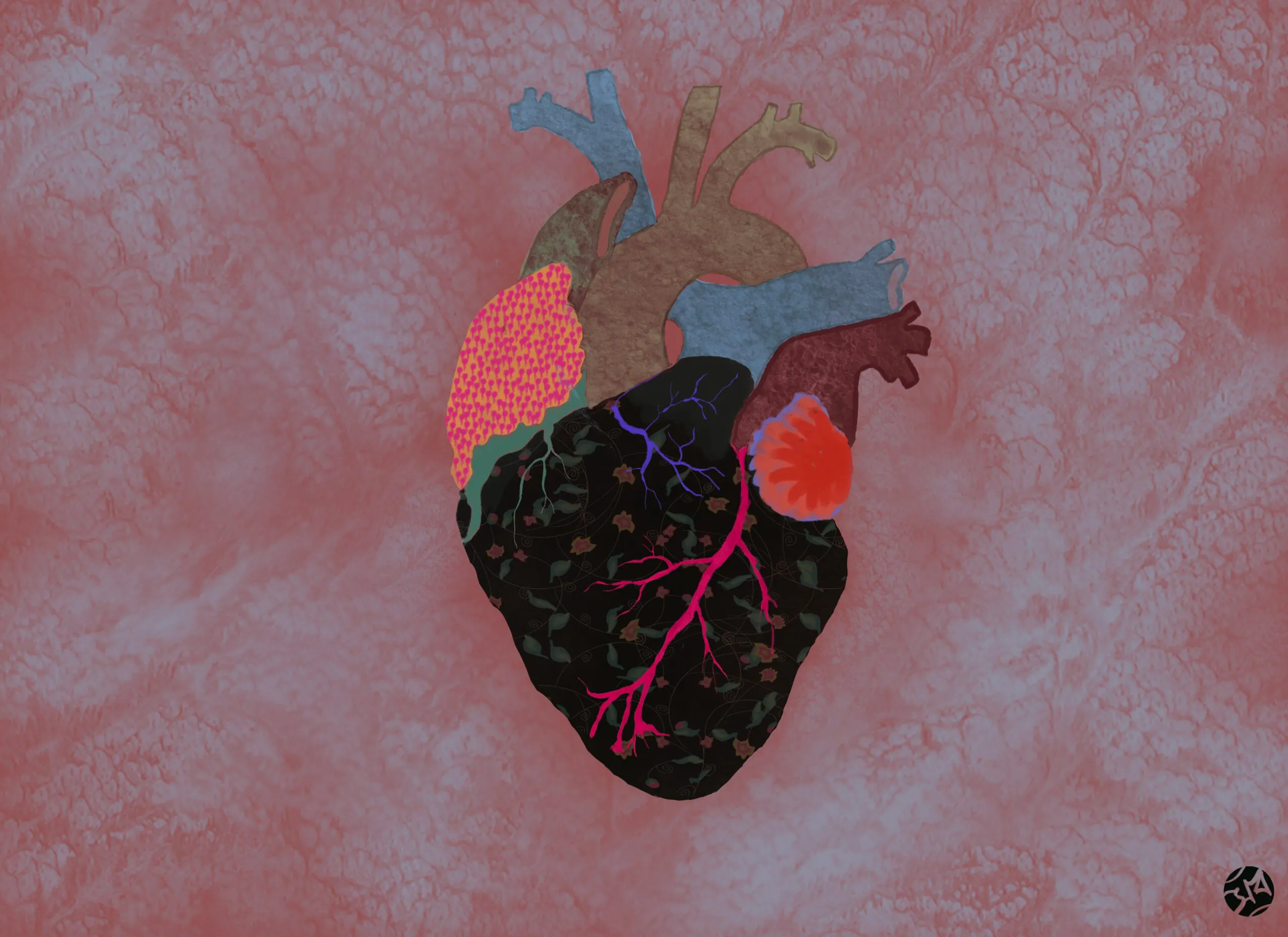
Travis Chi Wing Lau talks about the notion that one can experiment on the fundamental conditions and nature of life in order to perfect them. He looks at this idea in diverse literary, scientific, and cultural contexts from the vitality debate and Mary Shelley’s Frankenstein to the perils of the CRISPR technology and Kazuo Ishiguro’s Never Let Me Go. Travis Chi Wing Lau (he/him/his) is Assistant Professor of English at Kenyon College. His research and teaching focus on eighteenth- and nineteenth-century British literature and culture, health humanities, and disability studies. Alongside his scholarship, Lau frequently writes for venues of public scholarship like Synapsis: A Journal of Health Humanities, Public Books, Lapham’s Quarterly, and The Los Angeles Review of Books. His poetry has appeared in Barren Magazine, Wordgathering, Glass, South Carolina Review, Foglifter, and The New Engagement, as well as in two chapbooks, The Bone Setter (Damaged Goods Press, 2019) and Paring (Finishing Line Press, 2020). Image: “Experimental Life” © 2021 Saronik Bosu Music used in promotional material: “Future Life” by Ketsa Learn more about your ad choices. Visit megaphone.fm/adchoices Support our show by becoming a premium member! https://newbooksnetwork.supportingcast.fm/critical-theory
Ep 32Wen Liu, et al., "Reorienting Hong Kong’s Resistance: Leftism, Decoloniality, and Internationalism" (Palgrave MacMillan, 2022)
In this episode, I talk to two of the editors of Reorienting Hong Kong’s Resistance: Leftism, Decoloniality, and Internationalism (Palgrave MacMillan, 2022), Ellie Tse and JN Chien about this timely and important volume. The book brings together writing from activists and scholars that examine leftist and decolonial forms of resistance that have emerged from Hong Kong’s contemporary era of protests. Practices such as labor unionism, police abolition, land justice struggles, and other radical expressions of self-governance may not explicitly operate under the banners of leftism and decoloniality. Nevertheless, examining them within these frameworks uncovers historical, transnational, and prefigurative sightlines that can help to contextualize and interpret their impact for Hong Kong’s political future. This collection offers insights not only into Hong Kong's local struggles, but their interconnectedness with global movements as the city remains on the frontlines of international politics. Wen Liu is assistant research fellow at the Institute of Ethnology, Academia Sinica, in Taiwan. She received her Ph.D. from Critical Social Psychology at the Graduate Center, City University of New York. Broadly interested in issues of race, sexuality, and affect, she has published in journals such as American Quarterly, Feminism & Psychology, Journal of Asian American Studies, and Subjectivity. JN Chien is a Ph.D. candidate in American Studies and Ethnicity at the University of Southern California researching US-Hong Kong integration in the Cold War transpacific through economic history, labor, migration, and detention in the shadow of multiple imperialisms. His writing has been published in Hong Kong Studies, The Nation, Jacobin, and Lausan. Christina Chung is a Ph.D. candidate researching the intersections of decolonial feminism and Hong Kong contemporary art at the University of Washington, Seattle. Her writing has been published by Asia Art Archive, College Arts Association Reviews, and in the anthology: Creating Across Cultures: Women in the Arts from China, Hong Kong, Macau and Taiwan (East Slope Publishing, 2017). Ellie Tse is a Ph.D. student in Cultural and Comparative Studies at the Department of Asian Languages & Cultures at the University of California, Los Angeles. Her research addresses the aftermath of inter-imperial encounters via visual, spatial and architectural practices across the Sinophone Pacific with a focus on Hong Kong. Clara Iwasaki is an assistant professor of modern Chinese literature at the University of Alberta. Learn more about your ad choices. Visit megaphone.fm/adchoices Support our show by becoming a premium member! https://newbooksnetwork.supportingcast.fm/critical-theory
Ep 293Laura Clancy, "Running the Family Firm: How the Monarchy Manages Its Image and Our Money" (Manchester UP, 2021)
Why does the monarchy matter? In Running the Family Firm: How the Monarchy Manages Its Image and Our Money (Manchester UP, 2021), Laura Clancy, a Lecturer in Media and Lancaster University, considers the British monarchy in the context of contemporary financialised capitalism, exposing the tensions and contradictions between the public face of royalty and the reality of the infrastructures, labour relations, financial arrangements, and political economies of Britain’s ‘family firm’. The book uses a huge range of examples, from the monarchy’s role in politics and public life, through to the personalities that drive much media coverage. Rich with detailed case studies and analysis, the book is essential reading across the social sciences and humanities, as well as for anyone interested in understanding how power and elites function in Britain today. Dave O'Brien is Professor of Cultural and Creative Industries, at the University of Sheffield. Learn more about your ad choices. Visit megaphone.fm/adchoices Support our show by becoming a premium member! https://newbooksnetwork.supportingcast.fm/critical-theory
Ep 113Heather Davis, "Plastic Matter" (Duke UP, 2022)
Plastic is ubiquitous. It is in the Arctic, in the depths of the Mariana Trench, and in the high mountaintops of the Pyrenees. It is in the air we breathe and the water we drink. Nanoplastics penetrate our cell walls. Plastic is not just any material—it is emblematic of life in the twentieth and twenty-first centuries. In Plastic Matter (Duke UP, 2022), Heather Davis traces plastic’s relations to geology, media, biology, and race to show how matter itself has come to be understood as pliable, disposable, and consumable. The invention and widespread use of plastic, Davis contends, reveals the dominance of the Western orientation to matter and its assumption that matter exists to be endlessly manipulated and controlled by humans. Plastic’s materiality and pliability reinforces these expectations of what matter should be and do. Davis charts these relations to matter by mapping the queer multispecies relationships between humans and plastic-eating bacteria and analyzing photography that documents the racialized environmental violence of plastic production. In so doing, Davis provokes readers to reexamine their relationships to matter and life in light of plastic’s saturation. Adam Bobeck is a PhD candidate in Cultural Anthropology at the University of Leipzig. His PhD is entitled “Object-Oriented Azadari: Shi’i Muslim Rituals and Ontology”. For more about his work, see www.adambobeck.com. Learn more about your ad choices. Visit megaphone.fm/adchoices Support our show by becoming a premium member! https://newbooksnetwork.supportingcast.fm/critical-theory
Ep 291David Swift, "The Identity Myth: Why We Need to Embrace Our Differences to Beat Inequality" (Constable & Robinson, 2022)
In conversations about polarised political issues, phrases like ‘it’s not about race, it’s about class’ have become the perfect way to induce a stalemate. It seems as though the traditional, materialist critique of inequality has been supplanted by a fast-evolving set of reflections on group identity. Mainstream politics makes fast and loose assumptions about the relationship between class and identity, and economic conditions and culture. These assumptions are fodder for the culture wars. In The Identity Myth: Why We Need to Embrace Our Differences to Beat Inequality (Constable & Robinson, 2022), David Swift covers the four different kinds of identity most susceptible to rhetorical and cultural manipulation – class, race, sex, and age. He considers how the boundaries of identities are policed and how diverse versions of the same identity can be deployed to different ends. Ultimately, it is not that identities are simply more ‘complex’ than they appear. Rather, there are commonalities more important to the creation of solidarity. David Swift speaks to Pierre d'Alancaisez about the crisis of class and the deceptive allure of identity politics. We talk about the divisive nature of the contested claims of identity and about strategies for regaining control of the narrative. In a powerful call to arms, Swift argues that we must unite against these identity myths and embrace our differences to beat inequality. David Swift is a historian and writer who specialises in the history and contemporary politics of the British Left. He has written on the state of the Left for The Times, Fabian Review, Progress Online, Jewish Chronicle, and The Critic. He is the author of A Left for Itself, 2019. The Emily Thornberry white van tweet story, Gordon Brown's 'bigotgate', Keir Starmer and 'beergate', Tomiwa Owolade's essay on Anglican social conservatism in London, 'rooted' in David's work, Rachel Dolezal is now an artist, San Francisco school board recall, White narcissism at a BLM protest. Pierre d’Alancaisez is a contemporary art curator, cultural strategist, researcher. Sometime scientist, financial services professional. Learn more about your ad choices. Visit megaphone.fm/adchoices Support our show by becoming a premium member! https://newbooksnetwork.supportingcast.fm/critical-theory
Ep 32Pierre Penet and Juan Flores Zendejas, "Sovereign Debt Diplomacies: Rethinking Sovereign Debt from Colonial Empires to Hegemony" (Oxford UP. 2021)
Pierre Penet and Juan Flores Zendejas' book Sovereign Debt Diplomacies: Rethinking Sovereign Debt from Colonial Empires to Hegemony (Oxford UP. 2021) aims to revisit the meaning of sovereign debt in relation to colonial history and postcolonial developments. It offers three main contributions. The first contribution is historical. The volume historicizes a research field that has so far focused primarily on the post-1980 years. A focus on colonial debt from the 19th century building of colonial empires to the decolonization era in the 1960s-70s fills an important gap in recent debt historiographies. Economic historians have engaged with colonialism only reluctantly or en passant, giving credence to the idea that colonialism is not a development that deserves to be treated on its own. This has led to suboptimal developments in recent scholarship. The second contribution adds a 'law and society' dimension to studies of debt. The analytical payoff of the exercise is to capture the current developments and functional limits of debt contracting and adjudication in relation to the long-term political and sociological dynamics of sovereignty. Finally, Sovereign Debt Diplomacies imports insights from, and contributes to the body of research currently developed in the Humanities under the label 'colonial and postcolonial studies'. The emphasis on 'history from below' and focus on 'subaltern agency' usefully complement the traditional elite-perspective on financial imperialism favored by the British school of empire history. Javier Mejia is an economist teaching at Stanford University, whose work focuses on the intersection between social networks and economic history. His interests extend to topics on entrepreneurship and political economy with a geographical specialty in Latin America and the Middle East. He received a Ph.D. in Economics from Los Andes University. He has been a Postdoctoral Associate and Lecturer at New York University--Abu Dhabi and a Visiting Scholar at the University of Bordeaux. He is a regular contributor to different news outlets. Currently, he is Forbes Magazine op-ed columnist. Learn more about your ad choices. Visit megaphone.fm/adchoices Support our show by becoming a premium member! https://newbooksnetwork.supportingcast.fm/critical-theory
Ep 142Yanis Varoufakis, "Another Now: Dispatches from an Alternative Present" (Melville House, 2020)
What would a fair and equal society look like? In Another Now: Dispatches from an Alternative Present (Melville House Publishing, 2020), the world-renowned economist and bestselling author Yanis Varoufakis presents his radical and subversive answer. Imagine it is now 2025 and that years earlier, in the wake of the world financial crisis of 2008, a new post-Capitalist society had been born. In this ingenious book, Yanis Varoufakis draws on the greatest thinkers in European culture from Plato to Marx, as well as the great thought-experiments of science fiction, to offer us a dramatic and tantalising glimpse of a brave new world where the principles of democracy, equality and justice are truly embedded in our economy. Through the eyes of three characters - a liberal economist, a radical feminist and a left-wing technologist - we come to see what would be needed to forge such a world but also at what cost. This transformative vision forces each of us to confront the profound questions and trade-offs that underpin all societies- how do we balance freedom with fairness? How do we unleash the best that humanity has to offer without opening the door to the worst? Another Now offers answers to some of the most pressing questions of today. It also challenges us to consider how far we are willing to go in pursuit of our ideals. Shu Cao Mo 's interests span continental philosophy, existential psychology and history of performance art. She previously served as the Asia representative for a global traveling university. She holds an Ed.M. in Arts in Education from Harvard and a B.A. in Political Philosophy and Theater from Duke. Twitter @Mo2Cao Learn more about your ad choices. Visit megaphone.fm/adchoices Support our show by becoming a premium member! https://newbooksnetwork.supportingcast.fm/critical-theory
Ep 141Richard Seymour, "The Disenchanted Earth: Reflections on Ecosocialism and Barbarism" (Indigo Press, 2022)
In The Disenchanted Earth: Reflections on Ecosocialism & Barbarism (Indigo Press, 2022), Richard Seymour, one of the UK's leading left-wing writers, gives an account of his 'ecological awakening'. A search for transcendence, beyond the illusory eternal present. These essays chronicle the kindling of ecological consciousness in a confessed ignoramus. They track the first enchantment of the author, his striving to comprehend the coming catastrophe, and his attempt to formulate a new global sensibility in which we value anew what unconditionally matters. Nicholas Pritchard is a PhD candidate at the University of Cambridge interested in time and the sea. Learn more about your ad choices. Visit megaphone.fm/adchoices Support our show by becoming a premium member! https://newbooksnetwork.supportingcast.fm/critical-theory
Ep 299Jafari S. Allen, "There's a Disco Ball Between Us: A Theory of Black Gay Life" (Duke UP, 2022)
In There's a Disco Ball Between Us: A Theory of Black Gay Life (Duke UP, 2022), Jafari S. Allen offers a sweeping and lively ethnographic and intellectual history of what he calls “Black gay habits of mind.” In conversational and lyrical language, Allen locates this sensibility as it emerged from radical Black lesbian activism and writing during the long 1980s. He traverses multiple temporalities and locations, drawing on research and fieldwork conducted across the globe, from Nairobi, London, and Paris to Toronto, Miami, and Trinidad and Tobago. In these locations and archives, Allen traces the genealogies of Black gay politics and cultures in the visual art, poetry, film, Black feminist theory, historiography, and activism of thinkers and artists such as Audre Lorde, Marsha P. Johnson, Essex Hemphill, Colin Robinson, Marlon Riggs, Pat Parker, and Joseph Beam. Throughout, Allen renarrates Black queer history while cultivating a Black gay method of thinking and writing. In so doing, he speaks to the urgent contemporary struggles for social justice while calling on Black studies to pursue scholarship, art, and policy derived from the lived experience and fantasies of Black people throughout the world. Brittney Edmonds is an Assistant Professor of Afro-American Studies at UW-Madison. I specialize in 20th and 21st century African American Literature and Culture with a special interest in Black Humor Studies. Read more about my work at brittneymichelleedmonds.com. Learn more about your ad choices. Visit megaphone.fm/adchoices Support our show by becoming a premium member! https://newbooksnetwork.supportingcast.fm/critical-theory

Ep 46Undisciplining
Kim talks to Amy Wong, Ronjaunee Chatterjee, and Alicia Christoff about ‘Undisciplining’, a term they borrowed from Christina Sharpe’s In the Wake and have used in an article and a journal issue to signify a heuristic that would help bring modes of knowledge and methodologies to Victorian Studies that are unfamiliar or would be considered unnatural, given the regulations of that discipline. References are made to Elaine Freedgood’s Worlds Enough, Zadie Smith’s concept of the ‘neutral universal’, and the work of Brigitte Fielder. Amy R. Wong lives in Oakland and is assistant professor of English at Dominican University of California, where she teaches courses on literature, film, media theory, and critical race studies. Her essays and reviews have appeared in Narrative, Literature Compass, ASAP Journal, Modern Philology, Studies in the Novel, SEL: Studies in English Literature, Public Books, and Avidly. Ronjaunee Chatterjee lives in Montreal and teaches feminist, queer, and critical race theory, as well as courses on the 19th century, at Concordia University. Her essays and reviews have appeared in the Los Angeles Review of Books, ASAP Journal, The New Inquiry, French Studies,Victorian Literature and Culture, and other venues. Alicia Mireles Christoff is associate professor of English at Amherst College. She is the author of Novel Relations: Victorian Fiction and British Psychoanalysis (Princeton University Press, 2019). Her essays have appeared in PMLA, Novel, Victorian Literature and Culture, Public Books, and other venues, and her poems in The Yale Review and Peach Mag. Image: Fire at the Crystal Palace Music used in promotional material: ‘Fall Apart’ by Livio Amato Learn more about your ad choices. Visit megaphone.fm/adchoices Support our show by becoming a premium member! https://newbooksnetwork.supportingcast.fm/critical-theory
Ep 290Chiara Bonacchi, "Heritage and Nationalism: Understanding Populism through Big Data" (UCL Press, 2022)
What are the connections between the past and modern politics? In Heritage and Nationalism: Understanding Populism through Big Data (UCL Press, 2022), Chiara Bonacchi, a Chancellor's Fellow in Heritage, Text and Data Mining and Senior Lecturer in Heritage at History, Classics & Archaeology and Edinburgh Futures Institute at University of Edinburgh, explores the uses of heritage by contemporary populist politics. Drawing on ‘big data’ sources, including Facebook and Twitter, along with a deep theoretical engagement with digital humanities and heritage, the book compares and contrasts key political events in Italy, USA, and the UK to show how the ancient world is deployed by both politicians and audiences. The book is essential reading for both humanities and political science scholars, along with anyone interested in understanding the current populist moment. The book is available open access here. Dave O'Brien is Professor of Cultural and Creative Industries, at the University of Sheffield. Learn more about your ad choices. Visit megaphone.fm/adchoices Support our show by becoming a premium member! https://newbooksnetwork.supportingcast.fm/critical-theory

Ep 45Abolition
Leading up to Mayday, the nationwide Day of Refusal, and Abolition May, Saronik talks with Sean Gordon about abolition as an historical movement to end the transatlantic slave trade and a transformative justice movement to abolish prisons and defund the police. The episode focuses on the relationship between absence and presence, destruction and reconstruction, in abolitionist narratives and thought, and makes reference to Angela Davis’s Abolition Democracy: Beyond Empire, Prisons, and Torture (2005), Mariame Kaba’s We Do This ‘Til We Free Us: Abolitionist Organizing and Transforming Justice (2021), Tiffany Lethabo King’s The Black Shoals: Offshore Formations of Black and Native Studies (2019), and works by W. E. B. Du Bois, Ruth Wilson Gilmore, Frank Wilderson, and Jared Sexton. There is no doubt that abolition will save the world. Sean recently finished his PhD in English and American Studies at the University of Massachusetts Amherst. His research and teaching focus on nineteenth-century American literature, abolition, and the environmental humanities. You can visit the We Do This ‘Til We Free Us publisher’s website to donate copies of the book to people who are incarcerated. Image: “A is for Abolition”, one in the series titled Collidescopes by Julia Bernier Music used in promotional material: “Heartbeat” by ykymr Learn more about your ad choices. Visit megaphone.fm/adchoices Support our show by becoming a premium member! https://newbooksnetwork.supportingcast.fm/critical-theory
Ep 289Jami Rogers, "British Black and Asian Shakespeareans, 1966-2018: Integrating Shakespeare" (Arden Shakespeare, 2022)
What is the hidden history of performers of colour in in British theatre? In British Black and Asian Shakespeareans: Integrating Shakespeare, 1966–2018 (Arden Shakespeare, 2022), Jami Rogers, an honorary fellow at Department of English at University of Warwick, examines this question with one of the most central parts of British theatre and culture- performances of Shakespeare. The book tells a story of discrimination and barriers to success, whilst celebrating career triumphs and demonstrating the significance of actors, directors, and theatre companies. The book uses archival material including theatre criticism, a new database of performances and performers, and interviews with a range of the British Black and Asian Shakespearian greats. The book will be essential reading across the arts and humanities, as well as for social scientists, and anyone interested in understanding British arts and culture. Dave O'Brien is Professor of Cultural and Creative Industries, at the University of Sheffield. Learn more about your ad choices. Visit megaphone.fm/adchoices Support our show by becoming a premium member! https://newbooksnetwork.supportingcast.fm/critical-theory
Ep 101Farah Nayeri, "Takedown: Art and Power in the Digital Age" (Astra Publishing, 2022)
For centuries, art censorship has been a top-down phenomenon—kings, popes, and one-party states decided what was considered obscene, blasphemous, or politically deviant in art. Today, censorship can also happen from the bottom-up, thanks to calls to action from organizers and social media campaigns. Artists and artworks are routinely taken to task for their insensitivity. In this new world order, artists, critics, philanthropists, galleries, and museums alike are recalibrating their efforts to increase the visibility of marginalized voices and respond to the people’s demands for better ethics in art. But what should we, the people, do with this newfound power? With exclusive interviews with Nan Goldin, Sam Durant, Faith Ringgold, and others, Farah Nayeri tackles wide-ranging issues including sex, religion, gender, ethics, animal rights, and race. By asking questions such as: Who gets to make art and who owns it? How do we correct the inequities of the past? What does authenticity, exploitation, and appropriation mean in art?, Takedown: Art and Power in the Digital Age (Astra Publishing, 2022) provides the necessary tools to navigate the art world. Allison Leigh is Associate Professor of Art History and the SLEMCO/LEQSF Regents Endowed Professor in Art & Architecture at the University of Louisiana at Lafayette. Her research explores masculinity in European and Russian art of the eighteenth through the early twentieth centuries. Learn more about your ad choices. Visit megaphone.fm/adchoices Support our show by becoming a premium member! https://newbooksnetwork.supportingcast.fm/critical-theory

Ep 43The Right to Maim
Bassam Sidiki talks about the right to maim, the titular concept in Jasbir K. Puar’s book, and the related concept of debility. He explains how these concepts have changed how the field of disability studies orients itself. References are made to Anjuli Fatima Raza Kolb’s new book Epidemic Empire, the work of Anita Ghai, Tommy Orange’s novel There There, Lauren Berlant’s concept of ‘slow death’, and Alexander Weheliye’s Habeas Viscus. Bassam is a PhD Candidate in English at the University of Michigan, where he studies postcolonial studies, disability studies and health humanities. His scholarship appears or is forthcoming in Journal of Medical Humanities, Literature and Medicine, and Journal of Literary and Cultural Disability Studies. Of particular relevance to this episode is his recent article on the novel Anatomy of a Soldier. Image: Saronik Bosu Music used in promotional material: “Rough” by Natus Learn more about your ad choices. Visit megaphone.fm/adchoices Support our show by becoming a premium member! https://newbooksnetwork.supportingcast.fm/critical-theory
Ep 14The Future of Neoliberalism: A Conversation with Gary Gerstle
The word neoliberalism is often used more as an insult than a description of a set of beliefs. And people can be rather hazy about the beliefs it refers to – although the mix generally includes free markets, privatisation and globalisation and high levels of inequality. In his book The Rise and Fall of the Neoliberal Order: America and the World in the Free Market Era (Oxford UP, 2022), Professor Gary Gerstle of Cambridge University charts how both rightists and leftists embraced neo liberal ideas which prevailed for some three decades until they were challenged by the populist ethno nationalism of Trump and his imitators. But can ethnonationalism prevail? Professor Gerstle argues its too soon to say whether ethnonationalism will become the new post neoliberal orthodoxy Learn more about your ad choices. Visit megaphone.fm/adchoices Support our show by becoming a premium member! https://newbooksnetwork.supportingcast.fm/critical-theory

Ep 42Autotheory
In this episode Kim speaks with Lauren Fournier about autotheory. Lauren has recently published a book on the subject, titled Autotheory as Feminist Practice in Art, Writing, and Criticism (MIT Press, 2021). In the episode she points to Maggie Nelson’s book The Argonauts as the book that made the term famous, but refers us to a longer history of autotheoretical feminist writing, including work by Gloria E. Anzaldúa, Audre Lorde, and bell hooks. She also mentions critical research by Zoe Todd, “An Indigenous Feminist’s Take On The Ontological Turn: ‘Ontology’ Is Just Another Word For Colonialism” and the book I Love Dick, by Chris Kraus. Lauren is a writer, curator, and artist, who currently holds a SSHRC postdoctoral fellowship in visual studies at the University of Toronto. She is currently co-editing a special issue of ASAP Journal on Autotheory with her colleague Alex Brostoff. Her novella, All My Dicks, is forthcoming with Fiction Advocate. Image: Art by Sona Safaei-Sooreh Music used in promotional material: ‘Braided Flower’ by Lee Maddeford Learn more about your ad choices. Visit megaphone.fm/adchoices Support our show by becoming a premium member! https://newbooksnetwork.supportingcast.fm/critical-theory
Ep 161Eve Darian-Smith, "Global Burning: Rising Antidemocracy and the Climate Crisis" (Stanford UP, 2022)
Recent years have seen out-of-control wildfires rage across remote Brazilian rainforests, densely populated California coastlines, and major cities in Australia. What connects these separate events is more than immediate devastation and human loss of life. In Global Burning: Rising Antidemocracy and the Climate Crisis (Stanford UP, 2022), Eve Darian-Smith contends that using fire as a symbolic and literal thread connecting different places around the world allows us to better understand the parallel, and related, trends of the growth of authoritarian politics and climate crises and their interconnected global consequences. Darian-Smith looks deeply into each of these three cases of catastrophic wildfires and finds key similarities in all of them. As political leaders and big business work together in the pursuit of profits and power, anti-environmentalism has become an essential political tool enabling the rise of extreme right governments and energizing their populist supporters. These are the governments that deny climate science, reject environmental protection laws, and foster exclusionary worldviews that exacerbate climate injustice. The fires in Australia, Brazil and the United States demand acknowledgment of the global systems of inequality that undergird them, connecting the political erosion of liberal democracy with the corrosion of the environment. Darian-Smith argues that these wildfires are closely linked through capitalism, colonialism, industrialization, and resource extraction. In thinking through wildfires as environmental and political phenomenon, Global Burning challenges readers to confront the interlocking powers that are ensuring our future ecological collapse. Jeff Bachman is Senior Lecturer in Human Rights at American University’s School of International Service in Washington, DC. Learn more about your ad choices. Visit megaphone.fm/adchoices Support our show by becoming a premium member! https://newbooksnetwork.supportingcast.fm/critical-theory
Ep 55Evyn Lê Espiritu Gandhi, "Archipelago of Resettlement: Vietnamese Refugee Settlers and Decolonization Across Guam and Israel-Palestine" (U California Press, 2022)
“Nước Việt Nam: a home, a cradle, a point of departure” (Gandhi, 1). The Vietnamese word nước embraces the duality of land and water with an idea of “home.” Through a nuanced examination of the meaning of homeland and politics of belonging, Evyn Lê Espiritu Gandhi proposes nước to understand complex positionalities of refugee settlers on lands sutured through the traumas of US empire, militarization, and settler colonialism. Division in area studies has foreclosed conversations on how histories of settler colonialism and empire bring to light unexpected connections between Indigenous people and settlers across the Pacific and Atlantic oceans. By bringing together Vietnamese refugee settlers in Israel Palestine and Guam, Gandhi asks the difficult question of how we can imagine decolonial futurities when the creation of “home” for refugee settlers was predicated on the settler colonial project of dispossessing Indigenous people. Drawing inspiration from nước that embraces contradictions through relationality, Gandhi charts both the archipelago of US empire and resistance to imagine decolonization based on fraught acknowledgement of histories and relationalities between people, land, and water. Gandhi's new monograph is a vital read for both scholars and public interested in critical refugee studies, Indigenous studies, settler colonialism, US empire, and archipelagic history. Evyn Lê Espiritu Gandhi is an assistant professor of Asian American Studies at the University of California, Los Angeles (Tovaangar). Her interdisciplinary research engages critical refugee studies, settler colonial studies, and transpacific studies. She also hosts a podcast, Distorted Footprints, through her Critical Refugee Studies class. Da In Ann Choi is a PhD student at UCLA in the Gender Studies department. Her research interests include care labor and migration, reproductive justice, social movement, citizenship theory, and critical empire studies. She can be reached at [email protected]. Learn more about your ad choices. Visit megaphone.fm/adchoices Support our show by becoming a premium member! https://newbooksnetwork.supportingcast.fm/critical-theory
Ep 83Anamik Saha, "Race, Culture and Media" (Sage, 2021)
In Race, Culture and Media (Sage, 2021), Anamik Saha provides an account of the role that media plays in both circulating and shaping ideas about race and racism in the contemporary world. Saha argues that we need to move beyond a focus on representation to engage with how media makes race. As Anamik describes in our interview, alongside providing a much-needed summary of existing work on the media, race and racism, the book also breaks new ground theoretically. By synthesising approaches from postcolonial studies, critical political economy and cultural studies, Saha puts forward an approach he calls ‘postcolonial cultural economy’, one which attends to the specific conjunctural context within which race is made and contested; the intertwined, but separate, forces of capitalism and racism; and which gives equal importance to the role that media production, texts, and consumption as forces which shape race and racisms. With case studies and key themes, ranging from the European migration ‘crisis’ of the mid-2010s to Black Twitter anchoring its analysis, this is an invaluable textbook for students and researchers working in the fields of critical media studies, cultural studies, internet studies and beyond. Gummo Clare is a PhD researcher in the School of Media and Communications, University of Leeds. Learn more about your ad choices. Visit megaphone.fm/adchoices Support our show by becoming a premium member! https://newbooksnetwork.supportingcast.fm/critical-theory
Ep 41Military Industrial Complex
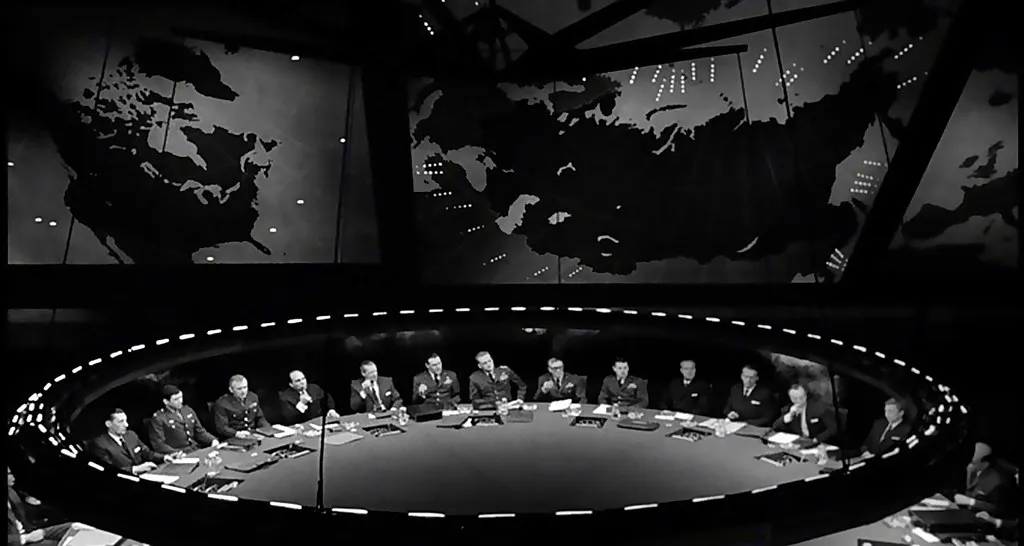
Kim talks to Patrick Deer about the Military Industrial Complex, a term used by US President Dwight D. Eisenhower in a 1961 speech to describe a permanent war economy, and the political, economic, and cultural matrix that sustains it. References are made to James Ledbetter’s book Unwarranted Influence and Seymour Melman’s book The Permanent War Economy. Patrick Deer is Associate Professor at the Department of English, New York University. He focuses on war culture and war literature, modernism, and contemporary British and American literature and culture, and Anglophone literature and human rights. His book Culture in Camouflage explores the emergence of modern war culture in the first half of the 20th century. Image: Scene from the film Doctor Strangelove Music used in promotional material: “Grim Desert Aftermath” by Kevin Bryce. Learn more about your ad choices. Visit megaphone.fm/adchoices Support our show by becoming a premium member! https://newbooksnetwork.supportingcast.fm/critical-theory
Ep 108Christopher W. Wells, "Environmental Justice in Postwar America: A Documentary Reader" (U Washington Press, 2018)
In the decades after World War II, the American economy entered a period of prolonged growth that created unprecedented affluence—but these developments came at the cost of a host of new environmental problems. Unsurprisingly, a disproportionate number of them, such as pollution-emitting factories, waste-handling facilities, and big infrastructure projects, ended up in communities dominated by people of color. Constrained by long-standing practices of segregation that limited their housing and employment options, people of color bore an unequal share of postwar America’s environmental burdens. This reader collects a wide range of primary source documents on the rise and evolution of the environmental justice movement. The documents show how environmentalists in the 1970s recognized the unequal environmental burdens that people of color and low-income Americans had to bear, yet failed to take meaningful action to resolve them. Instead, activism by the affected communities themselves spurred the environmental justice movement of the 1980s and early 1990s. By the turn of the twenty-first century, environmental justice had become increasingly mainstream, and issues like climate justice, food justice, and green-collar jobs had taken their places alongside the protection of wilderness as “environmental” issues. Christopher W. Wells's book Environmental Justice in Postwar America: A Documentary Reader (U Washington Press, 2018) is a powerful tool for introducing students to the US environmental justice movement and the sometimes tense relationship between environmentalism and social justice. Brady McCartney is an interdisciplinary environmental studies scholar at the University of Florida. Learn more about your ad choices. Visit megaphone.fm/adchoices Support our show by becoming a premium member! https://newbooksnetwork.supportingcast.fm/critical-theory
Ep 286Hannah White, "Held in Contempt: What's Wrong with the House of Commons?" (Manchester UP, 2022)
What is the future for the House of Commons? In Held in Contempt: What’s Wrong with the House of Commons? Hannah White, Deputy Director of the Institute for Government, sets out a critique of the way a key institution at the heart of British democracy is failing to deliver for citizens, staff, and Members alike. Set against the backdrop of Brexit, the Coronavirus pandemic, and various institutional scandals, the book details how the Commons fails in its role of holding government to account; is unrepresentative of the population as a whole; is overly complicated and arcane; and is housed in a building that is no longer fit for purpose. At the heart of the book is a challenge to MPs to reform both their own culture and the Commons itself. Ultimately, the book is a defence of the high standards that the Commons should aspire to and has a range of recommendations to make this happen. It is essential reading for every British citizen, and anyone interested in politics. Dave O'Brien is Professor of Cultural and Creative Industries, at the University of Sheffield. Learn more about your ad choices. Visit megaphone.fm/adchoices Support our show by becoming a premium member! https://newbooksnetwork.supportingcast.fm/critical-theory

Ep 39Alienation
In this episode Kim talks with Mustafa Yavas about Alienation. Mustafa quotes Karl Marx’s Economic and Philosophical Manuscripts of 1844. He also references Albert Camus’ books The Stranger and The Myth of Sisyphus, and Charlie Chaplin’s film Modern Times. Towards the end of the episode, he mentions Bertrand Russell’s 1930 article “In Praise of Idleness.” For listeners interested in reading more on alienation, he recommends Herbert Marcuse’s Eros and Civilization; David Graeber’s Bullshit Jobs, and Rahel Jaeggi’s Alienation. He also suggests three great movies that dwell on the subject: Maren Ade’s Toni Erdmann; Charlie Kaufman’s Anomalisa, and Tolga Karacelik’s Toll Booth. Mustafa is a postdoctoral scholar in sociology at NYU Abu Dhabi, where he works on work! He is writing a book called White Collar Blues about the transnational Turkish middle class, for which he has recently completed a brilliant book proposal (editors take note!). His previous research focused on boundary processes in social, economic, and political settings, including status homophily in social networks, residential segregation by income, and collective identity formation in social movements. This week’s image is a 1920 painting of Sisyphus at his futile labor by Franz Stuck. Available on Wikimedia Commons. Learn more about your ad choices. Visit megaphone.fm/adchoices Support our show by becoming a premium member! https://newbooksnetwork.supportingcast.fm/critical-theory
Ep 107Alicia Puglionesi, "In Whose Ruins: Power, Possession, and the Landscapes of American Empire" (Scribner, 2022)
The important new book by Alicia Puglionesi, In Whose Ruins: Power, Possession and the Landscapes of American Empire (Scribner, 2022), is a fat sampler of episodes that show how origin stories get made, what happens when white-supremacist origin stories are mistaken for empirical fact, and how the political impacts persist. The book is decidedly anti-capitalist; resoundingly anti-colonial. It is an invitation not to jettison story-work, but to imagine, collectively, origin stories of the present that might bring into being a more just future. In Whose Ruins could easily be categorized as Environmental History or Native Studies. But Puglionesi forges a book that is more than either field could accomplish alone. The “power” of the book’s subtitle has a double meeting: political power and the energy sources of a capitalist economy (oil, hydropower, and nuclear energy). The book is organized into four sections, or “sites,” that visit four evocative land features: a hulking, conical earth mound in present-day West Virginia adjacent to a decommissioned state prison; wells dug into the ground in smalltown Pennsylvania; rocks that tell stories (they’re etched with petroglyphs) along the Susquehanna River with kin fragmented elsewhere; the Sonoran Desert rich with pottery, uranium, and physicists, both white and Native. In each of these sites, people with different political projects—some announced, some implicit—have generated multiple accounts of the landscapes and ideas of value. Within a context of shifting political power, white-settler stories about each site displaced empirical knowledge of Native labor, skill, presence, and endurance with harmful fables of white origins and of Native communities’ need for white “rescue.” Into the present day, the effect has been to justify white theft of Native land and deadly violence against tribal communities for the purposes of resource extraction. In the end, even the false white origin stories became a resource to commodify. Puglionesi is a writer of poetry, fiction, academic scholarship, and, now, In Whose Ruins, a mass-market trade publication. She holds a PhD in History of Medicine and is a lecturer in Medicine, Science and Humanities at The Johns Hopkins University. On the page, Puglionesi has a friendly, funny, quiet presence—an affable Where’s Waldo that centers the relationships of historical actors (including spirits) and the work of scholars such as Kim TallBear, Zoe Todd, and Eve Tuck. This conversation explores ways of living in good relation via writing; the status of truth; the relevance of singer-songwriter Prince for labor studies; and many other themes. It discusses the important book by Chadwick Allen, Earthworks Rising (Minnesota, 2022). In an unrecorded snippet, we also swap names of our favorite local indie bookstores. So check out Red Emma’s the next time you’re in Baltimore, MD (or on Bookshop.org) and Symposium, Riff Raff, and Paper Nautilus when your compass points to Providence, RI. Laura Stark is Associate Professor at Vanderbilt University’s Center for Medicine, Health, and Society. Learn more about your ad choices. Visit megaphone.fm/adchoices Support our show by becoming a premium member! https://newbooksnetwork.supportingcast.fm/critical-theory
Ep 157Irune Gabiola, "Affect, Ecofeminism, and Intersectional Struggles in Latin America: A Tribute to Berta Cáceres" (Peter Lang, 2020)
In Affect, Ecofeminism, and Intersectional Struggles in Latin America: A Tribute to Berta Cáceres (Peter Lang, 2020), Irune del Rio Gabiola examines the power of affect in structuring decolonizing modes of resistance performed by social movements such as COPINH (Civic Council of Popular and Indigenous Organizations of Honduras). Despite a harsh legacy of colonialism, indigenous communities continue suffering from territorial displacements, dispossession, and human rights abuses due to extractivist projects that are violently destroying their land and, therefore, the environment. In particular, the Lenca communities in Honduras have been negatively affected by Western ideas of progress and development that have historically eliminated ancestral knowledges and indigenous ecological cosmologies while reinforcing Eurocentrism. Nevertheless, by reflecting on and articulating strategies for resisting neoliberalism, COPINH and its cofounder Berta Cáceres' commitment to environmental activism, ecofeminism, and intersectional struggles has contributed affectively and effectively to the production of democratic encounters in pursuit of social justice. In homage to Berta, who was brutally assassinated for her activism in 2016, this book takes the reader on an affective journey departing from the violent affects experienced by the Lencas due to colonial disruption, contemporary industrialization, and criminalization, towards COPINH's political and social intervention fueled by outrage, resistance, transnational solidarity, care, mourning, and hope. In this way, subaltern actors nurture the power to--in line with Brian Massumi's interpretation of affect--transform necropolitics into natality with the aim of creating a fairer and better world The host, Elize Mazadiego, is a Marie Skłodowska Curie Fellow at the University of Amsterdam and author of Dematerialization and the Social Materiality of Art: Experimental Forms in Argentina, 1955-1968 (Brill, 2021). She works on Modern and Contemporary art, with a specialization in Latin American art history. Learn more about your ad choices. Visit megaphone.fm/adchoices Support our show by becoming a premium member! https://newbooksnetwork.supportingcast.fm/critical-theory
Ep 99Mike Watson, "The Memeing of Mark Fisher: How the Frankfurt School Foresaw Capitalist Realism and What to Do about It" (Zero Books, 2021)
Through his blog K-Punk, Mark Fisher become one of the cult figures of cultural theory after the economic crash of 2008. One of Fisher’s insights, widely taken up by the online memesphere, was that capitalism breeds depression. Mike Watson picks up Fisher’s prognosis when the locked-down pandemic world is mired in a depression that is economic and psychological, and no doubt exacerbated by the transfer of culture and life online. In the aftermath, The Memeing of Mark Fisher (Zero Books, 2021) revisits the Frankfurt School theorists who worked in the shadow of World War Two, during the rise of the culture industry. In examining their thoughts and drawing parallels with Fisher’s Capitalist Realism, Watson aims to render the Frankfurt School as an incisive theoretical toolbox for the post-Covid digital age. Taking in the phenomena of QAnon, twitch streaming, and memes, Watson argues that the dichotomy between culture and political praxis is a false one. As more people have access to the means for theoretical and critical engagement online, he urges the online left to build a real-life cultural and political movement. Mike Watson speaks to Pierre d’Alancaisez about Mark Fisher’s legacy in critical online spaces, the democracy of memes and their aesthetic warfare, the Acid Left, and how the Frankfurt School thinkers foreshadowed our current moment. Mike Watson is a theorist, critic and curator who is principally focused on the relationship between culture, new media and politics. He hosts the podcast Theorywave Nights. Can the Left Learn to Meme? Mark Fisher’s K-Punk blog archive K-Punk anthology Know Your Meme database Capitalist Realism bed meme 4chan Wojak meme Doomer meme The Acid Left podcast Mike’s book memed by Academic Fraud Pierre d’Alancaisez is a contemporary art curator, cultural strategist, researcher. Sometime scientist, financial services professional. Learn more about your ad choices. Visit megaphone.fm/adchoices Support our show by becoming a premium member! https://newbooksnetwork.supportingcast.fm/critical-theory
Ep 288Jonathan Sterne, "Diminished Faculties: A Political Phenomenology of Impairment" (Duke UP, 2022)
Diminished Faculties: A Political Phenomenology of Impairment (Duke UP, 2022) begins by calling into question a fundamental principle of orthodox phenomenology (and, for that matter, a great deal of humanities research): that of a fully self-aware unchanging subject who can provide a coherent account of its own experience, one which is commensurable and legible to others. Having foregrounded that instead ‘living means changing’, and that ‘everything in the narration of experience is a distortion’, Sterne suggests that attending to the realities of a world that is full of impairments helps one to more fully understand, and perhaps fight against, the expected norms that structure the social world. After laying out his case for an ‘impairment phenomenology’, Sterne turns to three kinds of impairment: vocal impairment, hearing loss, and fatigue - or as he puts it in our interview, ‘not speaking well, not hearing well, and not feeling well’. Through a careful analysis of the history, treatment, and highly varied sets of cultural attitudes toward these impairments, Sterne makes a compelling case for considering impairment as central to all human experience, raising vital political questions for accommodating bodily variety. Diminished Faculties is written in a range of registers – containing a detailed guide to an imagined exhibition of ‘new vocalities’, a User Guide to impairment theory, and a personal account of vocal paralysis – and synthesises cutting-edge theory from disability studies, sound studies, queer theory and much more. The book is written with generosity and a sense of humour, and will leave any reader thinking differently about how to understand issues of experience, agency and disability. In our interview Jonathan mentions one of his favourite works ‘exhibited’ in the book’s imaginary exhibition, ‘Masque’ by Hodan Youssouf. Learn more about your ad choices. Visit megaphone.fm/adchoices Support our show by becoming a premium member! https://newbooksnetwork.supportingcast.fm/critical-theory

Ep 36Heterotopia
Kim speaks with Amanda Caleb about Michel Foucault’s concept of heterotopia. Amanda says that the classic definition of “heterotopia” is found in Foucault’s article “Of Other Spaces: Utopias and Heterotopias” (Architecture /Mouvement/Continuité, October, 1984). She also mentions The Birth of the Clinic. In comparison to Foucault’s heterotopia, we talk a bit about Mikhail Bakhtin’s concepts of the carnivalesque and the chronotope. If you’re interested in reading more about heterotopias, check out Amanda’s article: “Contested Spaces: The Heterotopias of the Victorian Sickroom” in Humanities vol. 8 no. 2 (April 2019). Amanda is a professor of English and Medical and Health Humanities at Misericordia University. She also runs a super cool podcast called the Health Humanist. She was kind enough to interview me about a crazy 1978 medical satire called House of God back in November 2020. This week’s image is Gustave Caillebotte’s Les jardiners (1875). Below is a map of the “Gardens and Pleasure Grounds Baltimore Argyleshire” from The Art & Craft of Garden Making by Thomas Hayton Mawson (London : B.T. Batsford, 1900). We’re feeling gardens this week. Music used in promotional material: ‘Floating Panther’ by Outrun Learn more about your ad choices. Visit megaphone.fm/adchoices Support our show by becoming a premium member! https://newbooksnetwork.supportingcast.fm/critical-theory
Ep 186Banu Subramaniam, "Holy Science: The Biopolitics of Hindu Nationalism" (U of Washington Press, 2019)
In Holy Science: The Biopolitics of Hindu Nationalism (University of Washington Press, 2019), Banu Subramaniam examines how science and religion have come together to propel a vision of the modern Indian nation, and in particular, a Hindu nationalist vision of India. Subramaniam demonstrates that the politics of gender, race, class, caste, sexuality, and indigeneity are deeply implicated in the projects and narratives of the nation. Raj Balkaran is a scholar, online educator, and life coach. For information see rajbalkaran.com. Learn more about your ad choices. Visit megaphone.fm/adchoices Support our show by becoming a premium member! https://newbooksnetwork.supportingcast.fm/critical-theory
Ep 283Dylan Mulvin, "Proxies: The Cultural Work of Standing In" (MIT Press, 2021)
What are the hidden histories of how the modern world functions? In Proxies: The Cultural Work of Standing In (MIT Press, 2021), Dylan Mulvin, Assistant Professor in the Department of Media and Communications at LSE explores the objects, places, practices, and people that do the work of standing in. Theorising the ‘proxy’, the book uses case studies of the metric system, the Lena Image, and the Standardized Patient Program to uncover and critique the standards underpinning contemporary communications. The book offers critique and resistance, ultimately pointing the reader to the possibilities of a different world. Available open access, the book is essential reading across the arts and humanities and social sciences, as well as for engineering, computer science, and anyone interested in how society operates. You can also learn more about the book from this short film. Learn more about your ad choices. Visit megaphone.fm/adchoices Support our show by becoming a premium member! https://newbooksnetwork.supportingcast.fm/critical-theory
Ep 285Mark Neocleous, "The Politics of Immunity: Security and the Policing of Bodies" (Verso, 2022)
Our contemporary political condition is obsessed with immunity. The immunity of bodies and the body politic; personal immunity and herd immunity; how to immunize the social system against breakdown. The obsession intensifies with every new crisis and the mobilization of yet more powers of war and police, from quarantine to border closures and from vaccination certificates to immunological surveillance. Engaging four key concepts with enormous cultural weight – Cell, Self, System and Sovereignty – The Politics of Immunity: Security and the Policing of Bodies (Verso, 2022) moves from philosophical biology to intellectual history and from critical theory to psychoanalysis to expose the politics underpinning the way immunity is imagined. At the heart of this imagination is the way security has come to dominate the whole realm of human experience. From biological cell to political subject, and from physiological system to the social body, immunity folds into security, just as security folds into immunity. The book thus opens into a critique of the violence of security and spells out immunity’s tendency towards self-destruction and death: immunity, like security, can turn its aggression inwards, into the autoimmune disorder. Wide-ranging and polemical, this book lays down a major challenge to the ways in which the immunity of the self and the social are imagined. In this interview, I spoke with Mark Neocleous about his fascinating and wide-ranging book The Politics of Immunity. We also spent time discussing his previous work on security and police power, the personal context informing this work, and connections with the ongoing UK undercover policing controversy (discussed in my previous interview with the authors of Deep Deception). Content warning: between 43-45 minutes into the podcast, there is a brief discussion of suicide in the context of Mark's forthcoming work. Mark Neocleous is Professor of the Critique of Political Economy at Brunel University in London, and is well-known for his influential work on police power and security. His recent books include The Universal Adversary: Security, Capital and 'The Enemies of All Mankind' (2016); War Power, Police Power (2014); and the newly-reissued A Critical Theory of Police Power: The Fabrication of Social Order (2021). Catriona Gold is a PhD candidate in Geography at University College London. She is currently researching the US Passport Office's role in governing Cold War travel, and broadly interested in questions of security, surveillance and mobility. She can be reached by email or on Twitter. Learn more about your ad choices. Visit megaphone.fm/adchoices Support our show by becoming a premium member! https://newbooksnetwork.supportingcast.fm/critical-theory
Ep 283Eve Ng, "Cancel Culture: A Critical Analysis" (Palgrave Macmillan, 2022)
Eve Ng’s new book Cancel Culture: A Critical Analysis (Palgrave Macmillan, 2022), examines the phenomenon of "cancel culture" from a critical media studies perspective, as both cancel practices (what people and institutional actors do) and cancel discourses (commentary about cancelling). Ng traces multiple lines of origins for cancel practices and discourses, in the domains of Black communicative practices (e.g. cancelling relationship to "dissing"), celebrity and fan cultures, consumer culture (especially around consumer nationalist cancellings), and national politics (U.S. conservative criticisms of cancelling, and nationalist cancelling events in mainland China). Her analysis moves beyond popular press accounts about the latest targets of cancelling or familiar free speech debates, and underscores the different configurations of power associated with “cancel culture” in specific cultural and political contexts. Louisa Hann recently attained a PhD in English and American studies from the University of Manchester, specialising in the political economy of HIV/AIDS theatres. She has published work on the memorialisation of HIV/AIDS on the contemporary stage and the use of documentary theatre as a neoliberal harm reduction tool. She is currently working on a monograph based on her doctoral thesis. You can get in touch with her at [email protected]. Learn more about your ad choices. Visit megaphone.fm/adchoices Support our show by becoming a premium member! https://newbooksnetwork.supportingcast.fm/critical-theory

Ep 34Dissensus
Kim talks with Gina about Jacques Rancière’s concept of dissensus. Gina refers to several major works of philosophy including: Jacques Rancière’s Dissensus Immanuel Kant’s Critique of Judgement Jacques Derrida’s The Truth In Painting Plato’s Republic She also takes a small dig at Althusser, in the spirit of Rancière Gina is a PhD candidate at NYU and an amazing teacher. She studies medieval literature and critical theory. She loves Theodor Adorno and really really hates the dialectic. This week’s image is an illuminated miniature from a 15th C manuscript held by the British Museum, depicting the “Debate for the Soul.” Learn more about your ad choices. Visit megaphone.fm/adchoices Support our show by becoming a premium member! https://newbooksnetwork.supportingcast.fm/critical-theory
Ep 97The Problem with Museums: A Conversation with Georgina Adam and Nizan Shaked
In the past few years, museums of contemporary art have come under a fair deal of scrutiny. Pressures from groups such as Decoloinise This Space or the oxycontin scandal have forced changes to the governance of some of the world’s best-known institutions. At the same time, the work of journalists and museum scholars has revealed that the relationships between trustees, curators, collections, and the public are often far more complex than the narratives of public benefit and private value would have us believe. Nizan Shaked’s Museums and Wealth: The Politics of Contemporary Art Collections (Bloomsbury, 2022) is a critical analysis of contemporary art collections and the value form. In the United States, institutions administered by the nonprofit system have an ambiguous status as they are neither entirely private nor fully public. Among nonprofits, the museum is unique as it is the only institution where trustees tend to collect the same objects they hold in ‘public trust’ on behalf of the nation. Shaked argues that the public serves as an alibi for establishing the symbolic value of art, which sustains its monetary value and its markets. In The Rise and Rise of the Private Art Museum (Lund Humphries, 2022), Adam tracks the phenomenon of the collector’s museum in the 21st century. There are some 400 private art museums around the world, and an astonishing 70% of those devoted to contemporary art were founded in the past 20 years. Although private museums have been accused of being tax-evading vanity projects or ‘tombs for trophies’, the picture is complex and nuanced. Private museums can add greatly to the cultural life of a community, giving a platform to emerging artists, supplying educational programmes and revitalising declining or neglected regions. But their relationship with public institutions can also be problematic. Are museums purely public affairs? How do private collections serve the greater good? What happens when these missions become confused? Georgina Adam and Nizan Shaked speak to Pierre d’Alancaisez about the 500-year history and the recent rise of the private art museum and consider if even public museums are, in the end, private. Georgina Adam is a journalist specialising in the art market. She writes for the Financial Times and The Art Newspaper. She is the author of Big Bucks and The Dark Side of the Boom. Nizan Shaked is a professor of Contemporary Art History, Museum and Curatorial Studies at California State University Long Beach. She is the author of The Synthetic Proposition: Conceptualism and the Political Referent in Contemporary Art. Museum Susch The Fisher collection at SF MoMA Warren Kanders leaves the board of the Whitney Learn more about your ad choices. Visit megaphone.fm/adchoices Support our show by becoming a premium member! https://newbooksnetwork.supportingcast.fm/critical-theory

Ep 33Deterritorialization
Saronik talks to Shweta Krishnan, doctoral candidate in Anthropology at George Washington University. She speaks about how she uses Giles Deleuze and Félix Guattari’s concept of deterritorialization in her work on the emergent religious discourse of Donyipolo in the Indian states of Arunachal Pradesh and Assam. Shweta thinks with the geological metaphors and mythological stories of the Mising and Adi tribes, and brings them into conversation with Deleuze and others. Donyipolo (sometimes referred to as Donyipoloism) is an emergent discursive formation shaped by the efforts of the Adi, the Mising and other Tani tribes to revive, reform and improvise their ancestral ethical practices since the 1980s. Donyipolo is the name given to an omniscient and omnipotent force that catalyzes the formation of the material world in Tani cosmologies. Shweta examines how the revivalists reimagine religiosity in and through their efforts to rebuild their relationship with Donyipolo. Image: photo taken by Shweta on the way to Majuli from Jorhat by boat. Learn more about your ad choices. Visit megaphone.fm/adchoices Support our show by becoming a premium member! https://newbooksnetwork.supportingcast.fm/critical-theory
Ep 227Sangeet Kumar, "The Digital Frontier: Infrastructures of Control on the Global Web" (Indiana UP, 2021)
In The Digital Frontier: Infrastructures of Control on the Global Web (Indiana University Press, 2021), Sangeet Kumar interrogates the world wide web and the digital ecosystem has spawned to reveal how its conventions, protocols, standards, and algorithmic regulations represent a novel form of global power. Kumar shows the operation of this power through the web's "infrastructures of control" visible at sites where the universalizing imperatives of the web run up against local values, norms, and cultures. These include how the idea of the "global common good" is used as a ruse by digital oligopolies to expand their private enclosures, how seemingly collaborative spaces can simultaneously be exclusionary as they regulate legitimate knowledge, how selfhood is being redefined online along with Eurocentric ideals, and how the web's political challenge is felt differentially by sovereign nation-states. In analysing this new modality of cultural power in the global digital ecosystem, The Digital Frontier is an important read for scholars, activists, academics and students inspired by the utopian dream of a truly representative global digital network. Rituparna Patgiri, PhD is an Assistant Professor of Sociology at Indraprastha College for Women, University of Delhi. She has a PhD in Sociology from Jawaharlal Nehru University (JNU), New Delhi. Her research interests lie in the areas of food, media, gender and the public. She is also one of the co-founders of Doing Sociology. Patgiri can be reached at @Rituparna37 on Twitter. Learn more about your ad choices. Visit megaphone.fm/adchoices Support our show by becoming a premium member! https://newbooksnetwork.supportingcast.fm/critical-theory
Ep 106Taylor Eggan, "Unsettling Nature: Ecology, Phenomenology, and the Settler Colonial Imagination" (U Virginia Press, 2022)
In today's NBN Environmental Studies interview, dancer, performer, and literary scholar Dr. Taylor Eggan joins us to speak about his new book Unsettling Nature: Ecology, Phenomenology, and Settler Colonial Imagination (University of Virginia Press, 2022). A text best described as an intellectual bestiary using environmental philosophy, literary theory, settler colonial studies, decolonial theory, and speculative realism, Unsettling Nature addresses logics embedded with ecological homecoming narratives rooted in idealistic notions of getting back to nature. By applying the impressive catalog of critical theory combined with an array of unique literary artifacts, Eggan transports the reader from the American West to Southern Africa, exploring the complex dynamics of colonial homemaking throughout the nineteenth and twentieth centuries. Structured around six chapters and two excursus, Unsettling Nature identifies the root of logics of elimination and erasure within the coloniality of nature, informing contemporary ecological homecoming narratives. Concluding the text by evoking exo-phenomenology, Eggan illustrates how unsettling settler legacies can be performed through "sustained practices of reciprocity and acts of solidarity" to recognize and resolve the uncanny anxieties of alienation and belonging embedded in Western approaches to homemaking and being. Learn more about your ad choices. Visit megaphone.fm/adchoices Support our show by becoming a premium member! https://newbooksnetwork.supportingcast.fm/critical-theory
Ep 282Dhanveer Singh Brar, "Teklife, Ghettoville, Eski: The Sonic Ecologies of Black Music in the Early 21st Century" (Goldsmiths Press, 2021)
Teklife, Ghettoville, Eski: The Sonic Ecologies of Black Music in the Early 21st Century (Goldsmiths Press, 2021) uses three Black electronic musics – footwork, grime, and the work of the producer Actress – to provide a theory of how Black musical experimentation has disrupted the circuits of racialized domination and exclusion in the 21st Century city. The book carefully attends to the unique ‘sonic ecologies’ produced by these three musical forms in South/West Chicago; East London and South London respectively, steering a course between uncritical celebration narratives of ‘resistant’ cultural production and dystopian analyses of urban decay. Brar instead theorises these musics as forms of popular experimentalism which are not just inseparable from questions of space, race and class, but are productive of social and spatial relations. The book draws upon, and intervenes in, Black Studies literature to contribute a set of examples, questions and provocations that help readers to think about how the ‘Blackness of Black electronic dance music’ has produced (and continues to produce) a fugitive urban aesthetic sociality that has flourished in spite of the degradations of state and capital. At the end of the interview, Dhanveer recommended some music as good entry points into the three musical worlds that we discuss and that he analyses in the book: Actress – Splazsh (2010) DJ Rashad – Just a Taste Vol. 1 (2011) Slimzee/Wiley/Dizzee Rascal and more – Sidewinder sessions (2002-2004) Gummo Clare is a PhD researcher in the School of Media and Communications, University of Leeds. Learn more about your ad choices. Visit megaphone.fm/adchoices Support our show by becoming a premium member! https://newbooksnetwork.supportingcast.fm/critical-theory
Ep 600Simon Critchley, "The Faith of the Faithless: Experiments in Political Theology" (Verso, 2014)
The return to religion has arguably become the dominant theme of contemporary culture. Somehow, the secular age seems to have been replaced by a new era where political action flows directly from theological, indeed cosmic, conflict. The Faith of the Faithless: Experiments in Political Theology (Verso, 2014) lays out the philosophical and political framework of this idea and seeks to find a way beyond it. Should we defend a version of secularism or quietly accept the slide into theism? Or is there another way? Mehdi Sanglaji is writing a PhD thesis on political violence, religion, and all that jazz. Find me here: @mehdisanglaji on Musk’s new website grab, formerly known as Twitter. Learn more about your ad choices. Visit megaphone.fm/adchoices Support our show by becoming a premium member! https://newbooksnetwork.supportingcast.fm/critical-theory
Ep 295Olúfẹ́mi O. Táíwò, "Elite Capture: How the Powerful Took Over Identity Politics (and Everything Else)" (Haymarket, 2022)
“Identity politics” is everywhere, polarizing discourse from the campaign trail to the classroom and amplifying antagonisms in the media, both online and off. But the compulsively referenced phrase bears little resemblance to the concept as first introduced by the radical Black feminist Combahee River Collective. While the Collective articulated a political viewpoint grounded in their own position as Black lesbians with the explicit aim of building solidarity across lines of difference, identity politics is now frequently weaponized as a means of closing ranks around ever-narrower conceptions of group interests. But the trouble, Olúfẹ́mi O. Táíwò deftly argues, is not with identity politics itself. Through a substantive engagement with the global Black radical tradition and a critical understanding of racial capitalism, Táíwò identifies the process by which a radical concept can be stripped of its political substance and liberatory potential by becoming the victim of elite capture—deployed by political, social, and economic elites in the service of their own interests. Táíwò’s book Elite Capture: How the Powerful Took Over Identity Politics (and Everything Else) (Haymarket, 2022) both elucidates this complex process and helps us move beyond a binary of “class” vs. “race.” By rejecting elitist identity politics in favor of a constructive politics of radical solidarity, he advances the possibility of organizing across our differences in the urgent struggle for a better world. Brittney Edmonds is an Assistant Professor of Afro-American Studies at UW-Madison. I specialize in 20th and 21st century African American Literature and Culture with a special interest in Black Humor Studies. Read more about my work at brittneymichelleedmonds.com. Learn more about your ad choices. Visit megaphone.fm/adchoices Support our show by becoming a premium member! https://newbooksnetwork.supportingcast.fm/critical-theory
Ep 226Robert E. Gutsche Jr., "The Future of the Presidency, Journalism, and Democracy: After Trump" (Routledge, 2022)
In The Future of the Presidency, Journalism, and Democracy: After Trump (Routledge, 2022), Dr. Robert E. Gutsche Jr. examines the effects of Donald Trump’s presidency on journalistic practices, rhetoric, and discourses. Rooted in critical theory and cultural studies, it asks what life may be like without Trump, not only for journalism but also for American society more broadly. The book places perspectives and tensions around the Trump presidency in one spot, focusing on the underlying ideological forces in tensions around media trust, Trumpism, and the role of journalism in it all. It explores how journalists dealt with racist rhetoric from the White House, relationships between the Office of the President and social media companies, citizens, and journalists themselves, while questioning whether journalism has learned the right lessons for the future. More importantly, chapters on liberal media "bias," the First 100 Days of the Biden Presidency, gender, and race, and how journalists should adopt measures to "reduce harm" hint as to where politics and journalism may go next. Reshaping the scholarly and public discourse about where we are headed in terms of the presidency and publics, social media, and journalism, this book will be an important resource for scholars and graduate students of journalism, media studies, communication studies, political science, race and ethnic studies and sociology. Michael O. Johnston, Ph.D. is an Assistant Professor of Sociology at William Penn University. His most recent research, “The Queen and Her Royal Court: A Content Analysis of Doing Gender at a Tulip Queen Pageant,” was published in Gender Issues Journal. He researches culture, social identity, placemaking, and media representations of social life at festivals and celebrations. He is currently working on a book titled Community Media Representations of Place and Identity at Tug Fest: Reconstructing the Mississippi River. You can learn more about Dr. Johnston on his website, Google Scholar, on Twitter @ProfessorJohnst, or by email at [email protected]. Learn more about your ad choices. Visit megaphone.fm/adchoices Support our show by becoming a premium member! https://newbooksnetwork.supportingcast.fm/critical-theory
Ep 144Marta Puxan-Oliva, "Narrative Reliability, Racial Conflicts and Ideology in the Modern Novel" (Routledge, 2021)
Marta Puxan-Oliva’s Narrative Reliability, Racial Conflicts and Ideology in the Modern Novel (Routledge, 2021), engages with the intertwined relationship between narrative studies – centering on narrative reliability – racial conflicts and ideologies. Puxan-Oliva argues that the problem of narrative reliability in fiction, often mirrors and makes use of narrative reliability of historical discourse, and therefore urges literary critics to examine the historical context of a work of fiction to “comprehend technical modulations of narrative reliability.” Her book offers a crucial contribution to narrative theory by insisting on a need to historicize the field itself to understand how historical discourses give rise to specific cultural and political discourses. In order to illustrate her methodology, Puxan-Oliva analyzes Joseph Conrad’s Lord Jim, James Weldon Johnson’s The Autobiography of an Ex-Colored Man, William Faulkner’s Absalom, Absalom!, Albert Camus’s L’étranger, and Alejo Carpentier’s El reino de este mundo. In each chapter, Puxan-Oliva grapples with a specific issue on the problem of reliability in connection to historical contexts of each literary work. For example, she discusses in depth the role that the voice of persuasion has in Conrad’s Lord Jim, and the implications this has within the larger discourse of British imperialism. When focusing her keen analysis on Faulkner, Puxan-Oliva considers the degrees of reliability in the narrative, and the way the problem of reliability reflects historical discourses in the New South. In her chapter on Camus, she observes how Meursault’s ‘estranging narrative’ makes use of underreporting, which is an “ideological strategy common in colonial discourse”, thereby connecting narrative voice within a broader condition of discordant reliability within French colonial Algeria. To sum up, each chapter in Puxan-Oliva’s book consists of a necessary intervention in narratology, arguing that the field of narrative studies needs to release narrative from its exclusive engagement with the text, divorced from other forces that exert pressure on its formation; instead, Puxan-Oliva is interested in the interconnectedness of texts with political and historical discourses, and their rootedness within broader patterns of cultural production, which, ultimately, is an argument for a cultural narratology that is interested in the “construction of form” and in the very “politics of form”. Ultimately, this book is an important intervention not only within narrative studies and racial conflicts and ideology, but it has crucial implications during a time when various discourses around the globe pose a major challenge to the nature of truth, and how the latter is affected by narrative, narrative form, and how these are shaped by historical and political discourse. Marta Puxan-Oliva a is Ramón y Cajal senior researcher at the Universitat de les Illes Balears, Spain. Eralda L. Lameborshi is an Assistant Professor in the Department of Literature and Languages at the Texas A&M University – Commerce where she teaches world literature and cinema. Her areas of research are World Literature, the historical novel on the Ottoman Empire, world cinema, postcolonial theory, and film theory. She is the recipient of various fellowships and awards like the Hagler Institute for Advanced Study Fellowship, and the Elizabeth Greenwade Qualls ’89 Endowed Fellowship. She is currently working on her book manuscript titled The Islamic Empire and Southeastern European Literature, and articles on the global novel and literatures of migration, immigration, and exile. Learn more about your ad choices. Visit megaphone.fm/adchoices Support our show by becoming a premium member! https://newbooksnetwork.supportingcast.fm/critical-theory
Ep 11The Future of Statues: A Conversation with Alex Von Tunzelmann
What are the rights and wrongs of toppling statues? Sometimes everyone agrees it’s a good idea. After the second world war, for example, the defeat of fascism meant that all over Europe Hitler statues were toppled and destroyed. After the collapse of communism some statues of Stalin actually survived. Just a couple of years ago Black Lives Matter protests led to the hauling down statues of slaveholders and imperialists – for example in the UK a statue of slaver – and philanthropist, Edward Colston was hurled into a harbour. Some argued Colston should be left alone because he was just a man of his time. So, when is it right to tear down a statue and do you need a democratically elected committee to make the decision? A discussion with screenwriter and historian Alex Von Tunzelmann, author of Fallen Idols: Twelve Statues That Made History. Owen Bennett-Jones is a freelance journalist and writer. A former BBC correspondent and presenter he has been a resident foreign correspondent in Bucharest, Geneva, Islamabad, Hanoi and Beirut. He is recently wrote a history of the Bhutto dynasty which was published by Yale University Press. Learn more about your ad choices. Visit megaphone.fm/adchoices Support our show by becoming a premium member! https://newbooksnetwork.supportingcast.fm/critical-theory