
New Books in Critical Theory
2,326 episodes — Page 28 of 47
Ep 1245Itay Lotem, "The Memory of Colonialism in Britain and France: The Sins of Silence" (Palgrave MacMillan, 2021)
In The Memory of Colonialism in Britain and France: The Sins of Silence (Palgrave MacMillan, 2021), Itay Lotem explores the remembering of empire in Britain and France. By comparing these two former colonial powers, the author tells two distinct stories about coming to terms with the legacies of colonialism, the role of silence and the breaking thereof. Focusing on memory as an ongoing, politicized public debate, the book examines the afterlife of colonial history as an element of political and social discourse that depends on actors’ goals and priorities. Itay Lotem earned his Ph.D at the University of London, Queen Mary and is currently a senior lecturer in French Studies at the University of Westminster. Michael G. Vann is a professor of world history at California State University, Sacramento. A specialist in imperialism and the Cold War in Southeast Asia, he is the author of The Great Hanoi Rat Hunt: Empires, Disease, and Modernity in French Colonial Vietnam (Oxford University Press, 2018). When he’s not reading or talking about new books with smart people, Mike can be found surfing in Santa Cruz, California. Learn more about your ad choices. Visit megaphone.fm/adchoices Support our show by becoming a premium member! https://newbooksnetwork.supportingcast.fm/critical-theory
Ep 112Heide Hinrichs and Jo-Ey Tang, "Shelf Documents: Art Library as Practice" (Royal Academy of Fine Arts in Antwerp, 2021)
How can a library change the world? How can an art library change the art school or the gallery? Or even an art practice? In Shelf Documents: Art Library as Practice (Royal Academy of Fine Arts in Antwerp, 2021), artists, writers, curators, teachers, and librarians reflect on how they can use the beloved library as a source of inspiration or a field of action. In thinking about diversity in collections, the publication proposes art libraries as sites of intersubjective communion. shelf documents is rooted in a collaborative book acquisition project, initiated by the artist Heide Hinrichs at the Royal Academy of Fine Arts in Antwerp, in which her group integrated over 200 new titles in art libraries as a way to fill gaps, to amplify voices, and seek out the self-initiated or the overlooked. Heide Hinrichs, Elizabeth Haines, and Jo-ey Tang speak to Pierre d’Alancaisez about working with institutions, working slowly, and working together to interfere with the permanence of libraries. Heide Hinrichs is an artist who works with found and existing materials. For the first Kathmandu Triennale, she developed the project On Some of the Birds of Nepal. In 2018, she published Silent Sisters/Stille Schwestern, an unauthorised German translation of Theresa Hak Kyng Cha’s novel Dictee. Elizabeth Haines is a historian and Vice-Chancellor’s Fellow at the University of Bristol. Her interdisciplinary interest in the materiality of knowledge productions draws on her education in fine arts. Jo-ey Tang is an artist, curator, and writer. He was previously the director of exhibitions at the Beeler Galery at Columbus College of Art & Design and is currently the director of Kadist, San Francisco. The list of books involved in the project is available at second-shelf.org. Pierre d’Alancaisez is a contemporary art curator, cultural strategist, researcher. Sometime scientist, financial services professional. Learn more about your ad choices. Visit megaphone.fm/adchoices Support our show by becoming a premium member! https://newbooksnetwork.supportingcast.fm/critical-theory
Ep 174Lindsay Pérez Huber and Susana M. Muñoz, "Why They Hate Us: How Racist Rhetoric Impacts Education" (Teachers College Press, 2021)
Why They Hate Us: How Racist Rhetoric Impacts Education (Teachers College Press, 2021) examines how racist political rhetoric has created damaging and dangerous conditions for Students of Color in schools and higher education institutions throughout the United States. The authors show how the election of the 45th president has resulted in a defining moment in U.S. history where racist discourses, reinforced by ideologies of white supremacy, have affected the educational experiences of our most vulnerable students. This volume situates the rhetoric of the Trump presidency within a broader historical narrative and provides recommendations for those who seek to advocate for anti-racism and social justice. As we enter the uncharted waters of a global pandemic and national racial reckoning, this will be invaluable reading for scholars, educators, and administrators who want to be part of the solution. Dr. Lindsay Pérez Huber is a professor of education at California State University-Long Beach as well as a visiting scholar at the UCLA Center for Critical Race Studies. Her research analyzes racial inequities in education, the impact on marginalized urban students of color, and how students and their communities respond to those inequities through strategies of resistance. Dr. Susana Muñoz is an associate professor of education at Colorado State University. Her research focuses on issues of access, equity, and college persistence for undocumented Latina/o students. Autumn Wilke works in higher education as an ADA coordinator and diversity officer and is also an author and doctoral candidate with research/topics related to disability and higher education. Learn more about your ad choices. Visit megaphone.fm/adchoices Support our show by becoming a premium member! https://newbooksnetwork.supportingcast.fm/critical-theory
Ep 182Tema Milstein and José Castro-Sotomayor, "Routledge Handbook of Ecocultural Identity" (Routledge, 2020)
The Routledge Handbook of Ecocultural Identity (Routledge, 2020) brings the ecological turn to sociocultural understandings of self. Tema Milstein and José Castro-Sotomayor introduce a broad, insightful assembly of original theory and research on planetary positionalities in flux in the Anthropocene – or what in this Handbook cultural ecologist David Abram presciently renames the Humilocene, a new “epoch of humility.” Forty international authors craft a kaleidoscopic lens, focusing on the following key interdisciplinary inquiries: Part I illuminates identity as always ecocultural, expanding dominant understandings of who we are and how our ways of identifying engender earthly outcomes. Part II examines ways ecocultural identities are fostered and how difference and spaces of interaction can be sources of environmental conviviality. Part III illustrates consequential ways the media sphere informs, challenges, and amplifies particular ecocultural identities. Part IV delves into the constitutive power of ecocultural identities and illuminates ways ecological forces shape the political sphere. Part V demonstrates multiple and unspooling ways in which ecocultural identities can evolve and transform to recall ways forward to reciprocal surviving and thriving. The Routledge Handbook of Ecocultural Identity provides an essential resource for scholars, teachers, students, protectors, and practitioners interested in ecological and sociocultural regeneration. The Routledge Handbook of Ecocultural Identity has been awarded the 2020 Book Award from the National Communication Association's (USA) Environmental Communication Division. Adam Bobeck is a PhD candidate in Cultural Anthropology at the University of Leipzig. His PhD is entitled “Object-Oriented Azadari: Shi’i Muslim Rituals and Ontology”. For more about his work, see www.adambobeck.com. Learn more about your ad choices. Visit megaphone.fm/adchoices Support our show by becoming a premium member! https://newbooksnetwork.supportingcast.fm/critical-theory
Ep 307Daniel Laurison, "Producing Politics: Inside the Exclusive Campaign World Where the Privileged Few Shape Politics for All of Us" (Beacon Press, 2022)
Who runs American politics? In Producing Politics: Inside the Exclusive Campaign World Where the Privileged Few Shape Politics for All of Us (Beacon Press, 2022), Daniel Laurison, an associate professor of sociology at Swarthmore College, explores the hidden world of campaign professionals to offer a new sociological perspective on how contemporary politics works. The book explores how ‘politicos’ get their jobs, how they judge work and worth, and the importance of their actions to political campaigns, showing the inequalities at the heart of the profession. Alongside new theorisations of campaigning and of politics itself, the book offers essential reading across social sciences and arts and humanities, as well as to anyone interested in politics today. Dave O'Brien is Professor of Cultural and Creative Industries, at the University of Sheffield. Learn more about your ad choices. Visit megaphone.fm/adchoices Support our show by becoming a premium member! https://newbooksnetwork.supportingcast.fm/critical-theory
Ep 315Hawa Allan, "Insurrection: Rebellion, Civil Rights, and the Paradoxical State of Black Citizenship" (Norton, 2022)
The little-known and under-studied 1807 Insurrection Act was passed to give the president the ability to deploy federal military forces to fend off lawlessness and rebellion, but it soon became much more than the sum of its parts. Its power is integrally linked to the perceived threat of black American equity in what lawyer and critic Hawa Allan demonstrates is a dangerous paradox. While the Act was initially used to repress rebellion against slavery, during Reconstruction it was invoked by President Grant to quell white-supremacist uprisings in the South. During the civil rights movement, it enabled the protection of black students who attended previously segregated educational institutions. Most recently, the Insurrection Act has been the vehicle for presidents to call upon federal troops to suppress so-called “race riots” like those in Los Angeles in 1992, and for them to threaten to do so in other cases of racial justice activism. Yet when the US Capitol was stormed in January 2021, the impulse to restore law and order and counter insurrectionary threats to the republic lay dormant. Allan’s distinctly literary voice underscores her paradigm-shifting reflections on the presence of fear and silence in history and their shadowy impact on the law. Throughout, she draws revealing insight from her own experiences as one of the only black girls in her leafy Long Island suburb, as a black lawyer at a predominantly white firm during a visit from presidential candidate Barack Obama, and as a thinker about the use and misuse of appeals to law and order. Elegant and profound, deeply researched and intensely felt, Insurrection: Rebellion, Civil Rights, and the Paradoxical State of Black Citizenship (Norton, 2022) is necessary reading in our reckoning with structural racism, government power, and protest in the United States. Brittney Edmonds is an Assistant Professor of Afro-American Studies at UW-Madison. I specialize in 20th and 21st century African American Literature and Culture with a special interest in Black Humor Studies. Read more about my work at brittneymichelleedmonds.com. Learn more about your ad choices. Visit megaphone.fm/adchoices Support our show by becoming a premium member! https://newbooksnetwork.supportingcast.fm/critical-theory
Ep 304James Steinhoff, "Automation and Autonomy: Labour, Capital and Machines in the Artificial Intelligence Industry" (Palgrave Macmillan, 2021)
Automation and Autonomy: Labour, Capital and Machines in the Artificial Intelligence Industry (Palgrave Macmillan, 2021) argues that Marxist theory is essential for understanding the contemporary industrialization of the form of artificial intelligence (AI) called machine learning. It includes a political economic history of AI, tracking how it went from a fringe research interest for a handful of scientists in the 1950s to a centerpiece of cybernetic capital fifty years later. It also includes a political economic study of the scale, scope and dynamics of the contemporary AI industry as well as a labour process analysis of commercial machine learning software production, based on interviews with workers and management in AI companies around the world, ranging from tiny startups to giant technology firms. On the basis of this study, Steinhoff develops a Marxist analysis to argue that the popular theory of immaterial labour, which holds that information technologies increase the autonomy of workers from capital, tending towards a post-capitalist economy, does not adequately describe the situation of high-tech digital labour today. In the AI industry, digital labour remains firmly under the control of capital. Steinhoff argues that theories discerning therein an emergent autonomy of labour are in fact witnessing labour’s increasing automation. James Steinhoff is a Postdoctoral Fellow at the University of Toronto, Canada. Reuben Niewenhuis works as a software developer for a warehouse automation company. He double majored in computer science and philosophy at Calvin University. In addition to philosophical theory, he is interested in interdisciplinary topics. Learn more about your ad choices. Visit megaphone.fm/adchoices Support our show by becoming a premium member! https://newbooksnetwork.supportingcast.fm/critical-theory
Ep 306Christof Dejung et al., "The Global Bourgeoisie: The Rise of the Middle Classes in the Age of Empire" (Princeton UP, 2019)
While the nineteenth century has been described as the golden age of the European bourgeoisie, the emergence of the middle class and bourgeois culture was by no means exclusive to Europe. The Global Bourgeoisie: The Rise of the Middle Classes in the Age of Empire (Princeton UP, 2019) explores the rise of the middle classes around the world during the age of empire. Bringing together eminent scholars, this landmark essay collection compares middle-class formation in various regions, highlighting differences and similarities, and assesses the extent to which bourgeois growth was tied to the increasing exchange of ideas and goods. The contributors indicate that the middle class was from its very beginning, even in Europe, the result of international connections and entanglements. Essays are grouped into six thematic sections: the political history of middle-class formation, the impact of imperial rule on the colonial middle class, the role of capitalism, the influence of religion, the obstacles to the middle class beyond the Western and colonial world, and, lastly, reflections on the creation of bourgeois cultures and global social history. Placing the establishment of middle-class society into historical context, this book shows how the triumph or destabilization of bourgeois values can shape the liberal world order. Morteza Hajizadeh is a Ph.D. graduate in English from the University of Auckland in New Zealand. His research interests are Cultural Studies; Critical Theory; Environmental History; Medieval (Intellectual) History; Gothic Studies; 18th and 19th Century British Literature. YouTube Channel. Twitter. Learn more about your ad choices. Visit megaphone.fm/adchoices Support our show by becoming a premium member! https://newbooksnetwork.supportingcast.fm/critical-theory
Ep 304Heejung Chung, "The Flexibility Paradox: Why Flexible Working Leads To (Self-)Exploitation" (Polity Press, 2022)
Why are we working harder? In The Flexibility Paradox: Why Flexible Working Leads To (Self-)Exploitation (Polity Press, 2022), Heejung Chung, a professor of sociology and social policy at the University of Kent, looks a contemporary employment practices to tell the story of the rise of flexible working and its impact on workers, individuals, and families. The book sets out the paradox that even though flexible working seems to offer more control over work, it leads to a worse work/life balance and makes more demands on staff. The paradox is also not evenly distributed, and the book pays close attention to the importance of gender in understanding how flexible work interacts with domestic labour to impact on women’s lives. Packed with rich, cross-national data, along with analysis of the impact of the Covid-19 pandemic, the book is essential across social science disciplines and for anyone interested in contemporary working life! Dave O'Brien is Professor of Cultural and Creative Industries, at the University of Sheffield. Learn more about your ad choices. Visit megaphone.fm/adchoices Support our show by becoming a premium member! https://newbooksnetwork.supportingcast.fm/critical-theory
Ep 143Michael Bérubé and Jennifer Ruth, "It's Not Free Speech: Race, Democracy, and the Future of Academic Freedom" (Johns Hopkins UP, 2022)
The protests of summer 2020 led to long-overdue reassessments of the legacy of racism and white supremacy in both American academe and cultural life more generally. But while universities have been willing to rename some buildings and schools or grapple with their role in the slave trade, no one has yet asked the most uncomfortable question: Does academic freedom extend to racist professors? It's Not Free Speech: Race, Democracy, and the Future of Academic Freedom (Johns Hopkins University Press, 2022) considers the ideal of academic freedom in the wake of the activism inspired by outrageous police brutality, white supremacy, and the #MeToo movement. Arguing that academic freedom must be rigorously distinguished from freedom of speech, Michael Bérubé and Jennifer Ruth take aim at explicit defenses of colonialism and theories of white supremacy—theories that have no intellectual legitimacy whatsoever. Approaching this question from two angles—one, the question of when a professor's intramural or extramural speech calls into question his or her fitness to serve, and two, the question of how to manage the simmering tension between the academic freedom of faculty and the antidiscrimination initiatives of campus offices of diversity, equity, and inclusion—they argue that the democracy-destroying potential of social media makes it very difficult to uphold the traditional liberal view that the best remedy for hate speech is more speech. In recent years, those with traditional liberal ideals have had very limited effectiveness in responding to the resurgence of white supremacism in American life. It is time, Bérubé and Ruth write, to ask whether that resurgence requires us to rethink the parameters and practices of academic freedom. Touching as well on contingent faculty, whose speech is often inadequately protected, It's Not Free Speech insists that we reimagine shared governance to augment both academic freedom and antidiscrimination initiatives on campuses. Michael Bérubé (interviewed here) is Edwin Erle Sparks Professor of Literature at Pennsylvania State University; Jennifer Ruth is a professor of film at Portland State University. Both have served in various roles within the American Association of University Professors, and also coauthored The Humanities, Higher Education, and Academic Freedom: Three Necessary Arguments (2015). Catriona Gold is a PhD candidate in Geography at University College London, researching security and mobility in the 20-21st century United States. Her current work concerns the US Passport Office's role in the Cold War. She can be reached by email or on Twitter. Learn more about your ad choices. Visit megaphone.fm/adchoices Support our show by becoming a premium member! https://newbooksnetwork.supportingcast.fm/critical-theory
Ep 170Jason Resnikoff, "Labor's End: How the Promise of Automation Degraded Work" (U Illinois Press, 2021)
Labor's End: How the Promise of Automation Degraded Work (U Illinois Press, 2021) traces the discourse around automation from its origins in the factory to its wide-ranging implications in political and social life. As Jason Resnikoff shows, the term automation expressed the conviction that industrial progress meant the inevitable abolition of manual labor from industry. But the real substance of the term reflected industry's desire to hide an intensification of human work--and labor's loss of power and protection--behind magnificent machinery and a starry-eyed faith in technological revolution. The rhetorical power of the automation ideology revealed and perpetuated a belief that the idea of freedom was incompatible with the activity of work. From there, political actors ruled out the workplace as a site of politics while some of labor's staunchest allies dismissed sped-up tasks, expanded workloads, and incipient deindustrialization in the name of technological progress. A forceful intellectual history, Labor's End challenges entrenched assumptions about automation's transformation of the American workplace. Jason Resnifoff is Assistant Professor of Contemporary History at the University of Groningen (Rijksuniversiteit Groningen) in the Netherlands. Tom Discenna is Professor of Communication at Oakland University whose work examines issues of academic labor and communicative labor more broadly. Learn more about your ad choices. Visit megaphone.fm/adchoices Support our show by becoming a premium member! https://newbooksnetwork.supportingcast.fm/critical-theory
Ep 125Erika Balsom and Hila Peleg, "Feminist Worldmaking and the Moving Image" (MIT Press, 2022)
Erika Balsom and Hila Peleg's edited volume Feminist Worldmaking and the Moving Image (MIT Press, 2022) offers intersectional, intergenerational, and international perspectives on nonfiction film- and videomaking by and about women, examining practices that range from activist documentaries to avant-garde experiments. Concentrating primarily on the period between the 1970s and 1990s, the contributions revisit major figures, contexts, and debates across a polycentric, global geography. They explore how the moving image has been a crucial terrain of feminist struggle--a way of not only picturing the world but remaking it. The contributors consider key decolonial filmmakers, including Trinh T. Minh-ha and Sarah Maldoror; explore collectively produced films with ties to women's liberation movements in different countries; and investigate the cinematic expressions of tensions and alliances between feminism and anti-imperialist struggles. They grapple with the need for a broader more inclusive definition of the term "feminism"; meditate on the figure of the grandmother; reflect on realist aesthetics; and ask what a feminist film historiography might look like. The book, generously illustrated with film stills and other images, many in color, offers ten original texts, two conversations, and eight short essays composed in response to historical texts written by filmmakers. The historical texts, half of which are published in English for the first time, appear alongside the essays. Galina Limorenko is a doctoral candidate in Neuroscience with a focus on biochemistry and molecular biology of neurodegenerative diseases at EPFL in Switzerland. Learn more about your ad choices. Visit megaphone.fm/adchoices Support our show by becoming a premium member! https://newbooksnetwork.supportingcast.fm/critical-theory
Ep 170Maxwell Kennel, "Postsecular History: Political Theology and the Politics of Time" (Palgrave Macmillan, 2021)
In this thought provoking book entitled PostSecular History:Political Theology and The Politics of Time (Palgrave Macmillan, 2021), Max Kennel explores how contemporary approaches to the meaning of time and history follow patterns that are simultaneously political and theological. Even after postsecular critiques of Christianity, religion, and secularity, many influential ways of dividing time and history continue to be formed by providential narratives that mediate between experience and expectation in movements from promise to fulfilment. In response to persistent theological influences within ostensibly secular ways of understanding time and history, Postsecular History revisits and revises the concept of periodization by tracing powerful efforts to divide time into past, present, and future, and by critiquing historical partitions between the Reformation and Enlightenment. Developing a postsecular critique of theopolitical periodization in six chapters, Postsecular History questions how relations of possession, novelty, freedom, and instrumentality implied in the prefix ‘post’ are reproduced in postsecular discourses and the field of political theology. Learn more about your ad choices. Visit megaphone.fm/adchoices Support our show by becoming a premium member! https://newbooksnetwork.supportingcast.fm/critical-theory
Ep 289Alice Crary and Lori Gruen, "Animal Crisis: A New Critical Theory" (Polity, 2022)
As we lose more individual animals and entire species to catastrophic climate change, habitat destruction, toxic dumping, and other human activities, it becomes increasingly difficult to register the full scope of the crisis. In Animal Crisis: A New Critical Theory (Polity Press, 2022), Alice Crary and Lori Gruen reinvigorate the discourse of animal ethics with a critical theoretical approach that gives us new ways of thinking about what is owed to animals. By theorizing the links between human and non-human animal liberation, they offer ways of understanding why it can be so hard to see, hear, or feel the value and dignity of the animals right in front of us. Offering practices of interspecies solidarity, Crary and Gruen show us that we can transform the crisis we are in, but we must dismantle human supremacism to even connect with the need. Sarah Tyson is an associate professor of philosophy at the University of Colorado, Denver. Learn more about your ad choices. Visit megaphone.fm/adchoices Support our show by becoming a premium member! https://newbooksnetwork.supportingcast.fm/critical-theory
Ep 303Melanie Bell, "Movie Workers: The Women Who Made British Cinema" (U Illinois Press, 2021)
Where are the women in the history of British cinema? In Movie Workers: The Women Who Made British Cinema (U Illinois Press, 2021), Melanie Bell, a Professor of Film History at the University of Leeds, answers this question with a fascinating and compelling narrative telling the forgotten history of women as workers in the film industry. Drawing on union records and oral histories, as well as a wealth of historical knowledge and analysis, the book highlights women’s key contributions from the 1930s to the end of the 1980s, demonstrating the ongoing importance of women’s struggles, and their triumphs, to the film industry today. The book is essential reading across arts, humanities, and social sciences, as well as for anyone who has ever watched a film and wondered about how it was made! Dave O'Brien is Professor of Cultural and Creative Industries, at the University of Sheffield. Learn more about your ad choices. Visit megaphone.fm/adchoices Support our show by becoming a premium member! https://newbooksnetwork.supportingcast.fm/critical-theory

Ep 83Black Trans Feminism
Marquis Bey talks about the radical and abolitionist project of Black Trans Feminism. Rather than an identity formation, it is a politics and modality of being that vitiates the limits of subjectivity. Black Trans Feminism finds joy in irreverence, just like we try to do on High Theory. You can recalibrate your understanding of the subject by reading Marquis’s forthcoming book Black Trans Feminism, published by Duke University Press. Released next week! On February 25th. In the episode Marquis references a wonderful quote from Saidiya Hartman, that “A Black revolution makes everyone freer than they actually want to be.” It’s a hard quote to find, but it appears in Frank Wilderson’s interview with C.S. Soong, “Blacks and the Master/Slave Relation” in Afropessimism: An Introduction (Racked & Dispatched, 2017). Marquis is Assistant Professor of African American Studies and English at Northwestern University. They also serve as Faculty Affiliate and Advisory Board Member in Gender & Sexuality Studies and Advisory Board Faculty Member in Critical Theory. This week’s image was provided by Marquis. Music used in promotional material: ‘Semiacoustic’ by Pk Jazz Collective Learn more about your ad choices. Visit megaphone.fm/adchoices Support our show by becoming a premium member! https://newbooksnetwork.supportingcast.fm/critical-theory
Ep 276Asim Qureshi, "I Refuse to Condemn: Resisting Racism in Times of National Security" (Manchester UP, 2020)
In times of heightened national security, scholars and activists from the communities under suspicion often attempt to alert the public to the more complex stories behind the headlines. But when they raise questions about the government, military and police policy, these individuals are routinely shut down and accused of being terrorist sympathizers or apologists. In such environments, there is immense pressure to condemn what society at large fears. I Refuse to Condemn: Resisting Racism in Times of National Security (Manchester University Press, 2021) explains how the expectation to condemn has emerged, tracking it against the normalization of racism, and explores how writers manage to subvert expectations as part of their commitment to anti-racism. In my conversation with the collection’s editor, Asim Qureshi, Research Director of CAGE, an independent advocacy organization, we discuss the culture of condemnation and the presumption of guilt, its psychological and physiological impacts, issues of trauma, white supremacy and racism as a system of power, structural racism’s relationship to national security, Prevent and countering violent extremism programs, cultural representation, the role of artists and performers, the afterlife of one’s work or art, and advocacy to dismantle anti-Muslim racism. Kristian Petersen is an Assistant Professor of Philosophy & Religious Studies at Old Dominion University. You can find out more about his work on his website, follow him on Twitter @BabaKristian, or email him at [email protected]. Learn more about your ad choices. Visit megaphone.fm/adchoices Support our show by becoming a premium member! https://newbooksnetwork.supportingcast.fm/critical-theory
Ep 612Daniel Wirls, "The Senate: From White Supremacy to Governmental Gridlock" (U Virginia Press, 2021)
Daniel Wirls, Professor of Politics at the University of California-Santa Cruz, has a new book that continues his research stream on the United States’ Senate. Wirls’ previous book on the Senate, The Invention of the United States Senate (Johns Hopkins University Press, 2004), written with his brother, Stephen Wirls, explains the historical basis for the Senate, especially in context of the broader American constitutional system as established in 1787. This new book, The Senate: From White Supremacy to Governmental Gridlock (U Virginia Press, 2021), interrogates the general understanding of the U.S. Senate within the constitutional system and the way that we have come to consider the role of the Senate. Wirls explains what he has dubbed “Senate exceptionalism” which is connected to the more expansive notion of American exceptionalism—this is the notion that the U.S. Senate was a unique and special creation within the constitutional system, and that it reflects the greatest ideals of democratic governance. Wirls’ analysis might suggest otherwise, since the book explores the structure of the Senate and how it actually undermines the democratic conception of “one person=one vote.” The idea of the Senate, and its role in preventing the tyranny of the majority—one of the goals ascribed to the new system established in 1787—is more problematic than the violation of democratic norms. One of the fascinating threads woven through The Senate: From White Supremacy to Governmental Gridlock is the concept of the Senate and how this concept has become embedded in our understanding of the role of this half of the U.S. Congress. Wirls’ argument with regard to Senate exceptionalism is connected to the narrative about the Senate itself, as the “world’s greatest deliberative body” when it sits in a murky position between the states and the people within the federal system. Senators understand, some of the time, that they represent the people of their respective states, but in so doing, they represent those voters in a dramatic violation of the notion of equal representation, since the states themselves have vastly different population totals and demographics, whereas each state has the same number of U.S. senators. Senators also see themselves, at times, as representing the states as distinct entities. Senators selectively determine if they want to represent the people or the state in different instances. The peculiarity of the filibuster only contributes to the heroic narrative about the Senate, since the filibuster was a creation of the Senate itself (it is not in the Constitution), and the changes in the filibuster and the evolution of those reforms have only made the inequality of representation in the Senate more acute. In a sense, the filibuster or the threat of a filibuster has essentially given a few members of the U.S. Senate a very powerful veto over legislation and reform. Lilly J. Goren is a professor of political science at Carroll University in Waukesha, WI. She is co-editor of the award winning book, Women and the White House: Gender, Popular Culture, and Presidential Politics (University Press of Kentucky, 2012), as well as co-editor of Mad Men and Politics: Nostalgia and the Remaking of Modern America (Bloomsbury Academic, 2015). Email her comments at [email protected] or tweet to @gorenlj. Please use the code 10WIRLS if purchasing the book from the University of Virginia Press for 30% any format of the book until 30 September 2022. Learn more about your ad choices. Visit megaphone.fm/adchoices Support our show by becoming a premium member! https://newbooksnetwork.supportingcast.fm/critical-theory
Ep 36Nicole Erin Morse, "Selfie Aesthetics: Seeing Trans Feminist Futures in Self-Representational Art" (Duke UP, 2022)
In Selfie Aesthetics: Seeing Trans Feminist Futures in Self-Representational Art (Duke University Press, 2022) Nicole Erin Morse examines how trans feminine artists use selfies and self-representational art to explore transition, selfhood, and relationality. Morse contends that rather than being understood as shallow emblems of a narcissistic age, selfies can produce politically meaningful encounters between creators and viewers. Through close readings of selfies and other digital artworks by trans feminist artists, Morse details a set of formal strategies they call selfie aesthetics: doubling, improvisation, seriality, and nonlinear temporality. Morse traces these strategies in the work of Zackary Drucker, Vivek Shraya, Tourmaline, Alok Vaid-Menon, Zinnia Jones, and Natalie Wynn, showing how these artists present improvisational identities and new modes of performative resistance by conveying the materialities of trans life. Morse shows how the interaction between selfie creators and viewers constructs collective modes of being and belonging in ways that envision trans feminist futures. By demonstrating the aesthetic depth and political potential of selfie creation, distribution, and reception, Morse deepens understandings of gender performativity and trans experience. Daniela Meneses Sala is Peruvian Academic and Journalist. She holds an MSc in Gender (Sexuality) from the London School of Economics and Political Science. In October, she is starting a PhD in Latin American Studies at Cambridge University, funded by the Harding Distinguished Postgraduate Scholars Programme. Learn more about your ad choices. Visit megaphone.fm/adchoices Support our show by becoming a premium member! https://newbooksnetwork.supportingcast.fm/critical-theory
Ep 190Jed Esty, "The Future of Decline: Anglo-American Culture at Its Limits" (Stanford Briefs, 2022)
As the US becomes a second-place nation, can it shed the superpower nostalgia that still haunts the UK? The debate over the US's fading hegemony has raged and sputtered for 50 years, glutting the market with prophecies about American decline. Media experts ask how fast we will fall and how much we will lose, but generally ignore the fundamental question: What does decline mean? What is the significance, in experiential and everyday terms, in feelings and fantasies, of living in a country past its prime? Drawing on the example of post-WWII Britain and looking ahead at 2020s America, Jed Esty suggests that becoming a second-place nation is neither disastrous, as alarmists claim, nor avoidable, as optimists insist. Contemporary declinism often masks white nostalgia and perpetuates a conservative longing for Cold War certainty. But the narcissistic lure of "lost greatness" appeals across the political spectrum. As Esty argues, it resonates so widely in mainstream media because Americans have lost access to a language of national purpose beyond global supremacy. It is time to shelve the shopworn fables of endless US dominance, to face the multipolar world of the future, and to tell new American stories. The Future of Decline: Anglo-American Culture at Its Limits (Stanford Briefs, 2022) is a guide to finding them. Brittney Edmonds is an Assistant Professor of Afro-American Studies at UW-Madison. I specialize in 20th and 21st century African American Literature and Culture with a special interest in Black Humor Studies. Read more about my work at brittneymichelleedmonds.com. Learn more about your ad choices. Visit megaphone.fm/adchoices Support our show by becoming a premium member! https://newbooksnetwork.supportingcast.fm/critical-theory
Ep 302Penny Jane Burke et al., "Gender in an Era of Post-truth Populism: Pedagogies, Challenges and Strategies" (Bloomsbury, 2022)
Why does gender matter in our troubled global times? In Gender in an Era of Post-truth Populism: Pedagogies, Challenges and Strategies (Bloomsbury, 2022), the editors Penny Jane Burke, Rosalind Gill, Akane Kanai, and Julia Coffey have assembled a collection of interventions that seek to think through the relationship between the populism that seems to dominate many nation’s contemporary politics and the continuing need for feminist perspectives. The chapters range from feminist philosophical and theoretical reflections on the meaning of truth, through empirical work on digital feminism, to considerations on the role and purpose of education and the university. Across 11 chapters, with an agenda setting introduction, the book is essential reading for all in the humanities and social sciences, as well as for anyone seeking to understand the current post-truth populist crisis and how to intervene for change. Dave O'Brien is Professor of Cultural and Creative Industries, at the University of Sheffield. Learn more about your ad choices. Visit megaphone.fm/adchoices Support our show by becoming a premium member! https://newbooksnetwork.supportingcast.fm/critical-theory
Ep 301Ben Davis, "Art in the After-Culture: Capitalist Crisis and Cultural Strategy" (Haymarket Books, 2022)
It is a scary and disorienting time for art, as it is a scary and disorienting time in general. Aesthetic experience is both overshadowed by the spectacle of current events and pressed into new connection with them. The self-image of art as a social good is collapsing under the weight of capitalism’s dysfunction. Art in the After-Culture: Capitalist Crisis and Cultural Strategy (Haymarket Books, 2022), art critic Ben Davis makes sense of our extreme present as an emerging "after-culture"—a culture whose forms and functions are being radically reshaped by cataclysmic events. In the face of catastrophe, he holds out hope that reckoning with the new realities of art, technology, activism, and the media, can help us weather the super-storms of the future. Louisa Hann recently attained a PhD in English and American studies from the University of Manchester, specialising in the political economy of HIV/AIDS theatres. She has published work on the memorialisation of HIV/AIDS on the contemporary stage and the use of documentary theatre as a neoliberal harm reduction tool. She is currently working on a monograph based on her doctoral thesis. You can get in touch with her at [email protected]. Learn more about your ad choices. Visit megaphone.fm/adchoices Support our show by becoming a premium member! https://newbooksnetwork.supportingcast.fm/critical-theory
Ep 192Helen Morgan, "The Work of Whiteness: A Psychoanalytic Perspective" (Routledge, 2021)
'Whiteness' is a politically constructed category which needs to be understood and dismantled because the system of racism so embedded within our society harms us all. It has profound implications for human psychology, an understanding of which is essential for supporting the movement for change. Helen Morgan's The Work of Whiteness: A Psychoanalytic Perspective (Routledge, 2021)explores these implications from a psychoanalytic and Jungian analytic perspective. The 'fragility' of whiteness, the colour-blind approach and the silencing process of disavowal as they develop in the childhood of white liberal families are considered as means of maintaining white privilege and racism. A critique of the colonial roots of psychoanalytic theories of Freud and Jung leads to questioning the de-linking of the individual from society in modern day analytic thinking. The concept of the cultural complex is suggested as a useful means of connecting the individual and the social. Examples from the author's clinical practice as well as from public life are used to illustrate the argument. Relatively few black people join the psychoanalytic profession and those who do describe training and membership as a difficult and painful process. How racism operates in clinical work, supervision and our institutions is explored, and whilst it can seem an intractable problem, proposals are given for ways forward. This book will be of great importance to psychoanalysts, psychotherapists, social workers and all those with an interest in the role of white privilege on mental health. Philip Lance, Ph.D. is a psychoanalyst in private practice in Los Angeles. He can be reached at [email protected] Learn more about your ad choices. Visit megaphone.fm/adchoices Support our show by becoming a premium member! https://newbooksnetwork.supportingcast.fm/critical-theory
Ep 70Adrienne Buller, "The Value of a Whale: On the Illusions of Green Capitalism" (Manchester UP, 2022)
In this searing and insightful critique, Adrienne Buller examines the fatal biases that have shaped the response of our governing institutions to climate and environmental breakdown, and asks: are the 'solutions' being proposed really solutions? Tracing the intricate connections between financial power, economic injustice and ecological crisis, she exposes the myopic economism and market-centric thinking presently undermining a future where all life can flourish. The Value of a Whale: On the Illusions of Green Capitalism (Manchester UP, 2022) examines what is wrong with mainstream climate and environmental governance, from carbon pricing and offset markets to 'green growth', the commodification of nature and the growing influence of the finance industry on environmental policy. In doing so, it exposes the self-defeating logic of a response to these challenges based on creating new opportunities for profit, and a refusal to grapple with the inequalities and injustices that have created them. Both honest and optimistic, The Value of a Whale asks us - in the face of crisis - what we really value. Learn more about your ad choices. Visit megaphone.fm/adchoices Support our show by becoming a premium member! https://newbooksnetwork.supportingcast.fm/critical-theory
Ep 120Max Ajl, "A People's Green New Deal" (Pluto Press, 2021)
The idea of a Green New Deal was launched into popular consciousness by US Congressperson Alexandria Ocasio-Cortez in 2018. It has become a watchword in the current era of global climate crisis. But what – and for whom – is the Green New Deal? In this concise and urgent book, Max Ajl provides an overview of the various mainstream Green New Deals. Critically engaging with their proponents, ideological underpinnings and limitations, he goes on to sketch out a radical alternative: a 'People's Green New Deal' committed to decommodification, working-class power, anti-imperialism and agro-ecology. Ajl diagnoses the roots of the current socio-ecological crisis as emerging from a world-system dominated by the logics of capitalism and imperialism. Resolving this crisis, he argues, requires nothing less than an infrastructural and agricultural transformation in the Global North, and the industrial convergence between North and South. As the climate crisis deepens and the literature on the subject grows, A People's Green New Deal (Pluto Press, 2021) contributes a distinctive perspective to the debate. Eyad Houssami makes theatre and has participated in the revitalization of an ancient organic farm in southern Lebanon. He is editor of the Arabic-English book Doomed by Hope: Essays on Arab Theatre (Pluto/Dar Al Adab) and was editor-at-large of Portal 9, a bilingual literary and academic journal about urbanism. His doctoral research project on ecology and agriculture in post-independence Lebanon at the University of Leeds and this work are supported by the UK Arts & Humanities Research Council (grant number AH/R012733/1) through the White Rose College of the Arts & Humanities. Learn more about your ad choices. Visit megaphone.fm/adchoices Support our show by becoming a premium member! https://newbooksnetwork.supportingcast.fm/critical-theory
Ep 110Mattin, "Social Dissonance" (MIT Press, 2022)
We are not what we think we are. Our self-image as natural individuated subjects is determined behind our backs: historically by political forces, cognitively by the language we use, and neurologically by sub-personal mechanisms, as revealed by scientific and philosophical analyses. Under contemporary capitalism, as the gap between this self-image and reality becomes an ever greater source of social and mental distress, these theoretical insights are potential dynamite. Shifting his explorations from the sonic to the social, amplifying alienation and playing with psychic noise, artist and performer Mattin finally lights the fuse. The noise is here to stay. Alienation is a constitutive part of subjectivity and an enabling condition for exploring social dissonance—the territory upon which we already find ourselves, the condition we inhabit today. Mattin speaks (and sings) to Pierre d’Alancaisez about his performance score Social Dissonance, in which the audience is the instrument and the legacy of the Marxist theory of alienation. Mattin is an artist, musician and theorist working conceptually with noise and improvisation. Through his practice and writing, he explores performative forms of estrangement as a way to deal with structural alienation. Mattin has exhibited and toured worldwide. He has performed in festivals such as Performa and Club Transmediale and lectured in institutions such as Dutch Art Institute, Cal Arts, Bard, and Goldsmiths. Mattin is part of the bands Billy Bao and Regler and has over 100 releases on different labels worldwide. He co-hosts the podcast Social Discipline. Mattin took part in 2017 in documenta14 in Athens and Kassel. Information on the Social Dissonance concert at Documenta 14 A video recording of one of the performances Social Discipline podcast Pierre d’Alancaisez is a contemporary art curator, cultural strategist, researcher. Sometime scientist, financial services professional. Learn more about your ad choices. Visit megaphone.fm/adchoices Support our show by becoming a premium member! https://newbooksnetwork.supportingcast.fm/critical-theory
Ep 307Elisabeth R. Anker, "Ugly Freedoms" (Duke UP, 2022)
In Ugly Freedoms (Duke UP, 2022), Elisabeth R. Anker reckons with the complex legacy of freedom offered by liberal American democracy, outlining how the emphasis of individual liberty has always been entangled with white supremacy, settler colonialism, climate destruction, economic exploitation, and patriarchy. These "ugly freedoms" legitimate the right to exploit and subjugate others. At the same time, Anker locates an unexpected second type of ugly freedom in practices and situations often dismissed as demeaning, offensive, gross, and ineffectual but that provide sources of emancipatory potential. She analyzes both types of ugly freedom at work in a number of texts and locations, from political theory, art, and film to food, toxic dumps, and multispecies interactions. Whether examining how Kara Walker's sugar sculpture A Subtlety, Or the Marvelous Sugar Baby reveals the importance of sugar plantations to liberal thought or how the impoverished neighborhoods in The Wire blunt neoliberalism's violence, Anker shifts our perspective of freedom by contesting its idealized expressions and expanding the visions for what freedom can look like, who can exercise it, and how to build a world free from domination. Brittney Edmonds is an Assistant Professor of Afro-American Studies at UW-Madison. I specialize in 20th and 21st century African American Literature and Culture with a special interest in Black Humor Studies. Read more about my work at brittneymichelleedmonds.com. Learn more about your ad choices. Visit megaphone.fm/adchoices Support our show by becoming a premium member! https://newbooksnetwork.supportingcast.fm/critical-theory
Ep 109Kuba Szreder, "The ABC of the Projectariat: Living and Working in a Precarious Art World" (Manchester UP, 2021)
Labour has taken an about-turn. From Adam Smith’s proposal for specialisation which saw the factory line reorganised so that each worker needed to understand only a small aspect of the production process, many industries now rely on access to specialised skills and resources that are commanded at-hoc in discrete, time- and output-bound chunks. This is the logic of projects. The workforce no longer dedicates itself to the making of a singular commodity, as it was the case with Smith, but bids for discrete pieces of work when those are in demand. In some industries, for example, in the art world, the workforce is also charged with building the demand for their work by initiating the project which would then employ them. The ABC of the Projectariat: Living and Working in a Precarious Art World (Manchester UP, 2021) by Kuba Szreder contributes new thinking on and practical responses to the widespread problem of precarious labour in contemporary art. It is both a critical analysis and a practical handbook, speaking to and about the vast cohort of artistic freelancers worldwide. Kuba Szreder speaks to Pierre d’Alancaisez about the artistic project, and the effects of projectarisation on workers’ solidarity, communal governance, and the precarity of artistic activity. Kuba Szreder is a lecturer in the department of art theory at the Academy of Fine Arts in Warsaw. He combines his research with independent curatorial practice. His previous publications include Joy Forever: Political Economy of Social Creativity (2011) and Art Factory: Division of Labor and Distribution of Resources in the Field of Contemporary Art in Poland (2014). In 2018, together with Kathrin Böhm, he initiated Centre for Plausible Economies, a cluster devoted to reimagining economies of contemporary art and using artistic imagination to redraw the economy at large. A report on the Free/Slow University of Warsaw Pierre’s interview with François Matarasso on community art Pierre’s essay on the social artist’s absorption into the professional-managerial class Kuba’s work with Kathrin Böhm (Company Drinks/myvillages) on the Centre for Plausible Economies, which contributed to Documenta 15 A New Books Network Interview with Dave O’Brien et al on Culture is Bad for You Pierre’s review of Sam Friedman’s and Daniel Laurison’s The Class Ceiling Learn more about your ad choices. Visit megaphone.fm/adchoices Support our show by becoming a premium member! https://newbooksnetwork.supportingcast.fm/critical-theory
Ep 121Rae Lynn Schwartz-DuPre, "Curious about George: Curious George, Cultural Icons, Colonialism, and US Exceptionalism" (UP of Mississippi, 2021)
In 1940, Hans Augusto Rey and Margret Rey built two bikes, packed what they could, and fled wartime Paris. Among the possessions they escaped with was a manuscript that would later become one of the most celebrated books in children’s literature—Curious George. Since his debut in 1941, the mischievous icon has only grown in popularity. After being captured in Africa by the Man in the Yellow Hat and taken to live in the big city’s zoo, Curious George became a symbol of curiosity, adventure, and exploration. In Curious about George: Curious George, Cultural Icons, Colonialism, and US Exceptionalism (University Press of Mississippi, 2021), author Rae Lynn Schwartz-DuPre argues that the beloved character also performs within a narrative of racism, colonialism, and heroism. Using theories of colonial and rhetorical studies to explain why cultural icons like Curious George are able to avoid criticism, Schwartz-DuPre investigates the ways these characters operate as capacious figures, embodying and circulating the narratives that construct them, and effectively argues that discourses about George provide a rich training ground for children to learn US citizenship and become innocent supporters of colonial American exceptionalism. By drawing on postcolonial theory, children’s criticisms, science and technology studies, and nostalgia, Schwartz-DuPre’s critical reading explains the dismissal of the monkey’s 1941 abduction from Africa and enslavement in the US, described in the first book, by illuminating two powerful roles he currently holds: essential STEM ambassador at a time when science and technology is central to global competitiveness and as a World War II refugee who offers a “deficient” version of the Holocaust while performing model US immigrant. Curious George’s twin heroic roles highlight racist science and an Americanized Holocaust narrative. By situating George as a representation of enslaved Africans and Holocaust refugees, Curious about George illuminates the danger of contemporary zero-sum identity politics, the colonization of marginalized identities, and racist knowledge production. Importantly, it demonstrates the ways in which popular culture can be harnessed both to promote colonial benevolence and to present possibilities for resistance. Rebekah Buchanan is an Associate Professor of English and Director of English Education at Western Illinois University. Her research focuses on feminism, activism, and literacy practices in youth culture, specifically through zines and music. Learn more about your ad choices. Visit megaphone.fm/adchoices Support our show by becoming a premium member! https://newbooksnetwork.supportingcast.fm/critical-theory
Ep 69Stefanie K. Dunning, "Black to Nature: Pastoral Return and African American Culture" (UP of Mississippi, 2021)
In Black to Nature: Pastoral Return and African American Culture ( University Press of Mississippi, 2021), author Stefanie K. Dunning considers both popular and literary texts that range from Beyoncé’s Lemonade to Jesmyn Ward’s Salvage the Bones. These key works restage Black women in relation to nature. Dunning argues that depictions of protagonists who return to pastoral settings contest the violent and racist history that incentivized Black disavowal of the natural world. Dunning offers an original theoretical paradigm for thinking through race and nature by showing that diverse constructions of nature in these texts are deployed as a means of rescrambling the teleology of the Western progress narrative. In a series of fascinating close readings of contemporary Black texts, she reveals how a range of artists evoke nature to suggest that interbeing with nature signals a call for what Jared Sexton calls “the dream of Black Studies”—abolition. Black to Nature thus offers nuanced readings that advance an emerging body of critical and creative work at the nexus of Blackness, gender, and nature. Written in a clear, approachable, and multilayered style that aims to be as poignant as nature itself, the volume offers a unique combination of theoretical breadth, narrative beauty, and broader perspective that suggests it will be a foundational text in a new critical turn towards framing nature within a cultural studies context. Learn more about your ad choices. Visit megaphone.fm/adchoices Support our show by becoming a premium member! https://newbooksnetwork.supportingcast.fm/critical-theory
Ep 176Roberto J. González, "War Virtually: The Quest to Automate Conflict, Militarize Data, and Predict the Future" (U California Press, 2022)
A critical look at how the US military is weaponizing technology and data for new kinds of warfare—and why we must resist. War Virtually: The Quest to Automate Conflict, Militarize Data, and Predict the Future (University of California Press, 2022) is the story of how scientists, programmers, and engineers are racing to develop data-driven technologies for fighting virtual wars, both at home and abroad. In this landmark book, Roberto J. González gives us a lucid and gripping account of what lies behind the autonomous weapons, robotic systems, predictive modeling software, advanced surveillance programs, and psyops techniques that are transforming the nature of military conflict. González, a cultural anthropologist, takes a critical approach to the techno-utopian view of these advancements and their dubious promise of a less deadly and more efficient warfare. With clear, accessible prose, this book exposes the high-tech underpinnings of contemporary military operations—and the cultural assumptions they're built on. Chapters cover automated battlefield robotics; social scientists' involvement in experimental defense research; the blurred line between political consulting and propaganda in the internet era; and the military's use of big data to craft new counterinsurgency methods based on predicting conflict. González also lays bare the processes by which the Pentagon and US intelligence agencies have quietly joined forces with Big Tech, raising an alarming prospect: that someday Google, Amazon, and other Silicon Valley firms might merge with some of the world's biggest defense contractors. War Virtually takes an unflinching look at an algorithmic future—where new military technologies threaten democratic governance and human survival. Dr. Gonzalez is Professor and Chair of the San Jose State University Anthropology Department. He has authored four books including Connected: How a Mexican Village Built Its Own Cell Phone Network and Militarizing Culture: Essays on the Warfare State. You can learn more about his work here. Learn more about your ad choices. Visit megaphone.fm/adchoices Support our show by becoming a premium member! https://newbooksnetwork.supportingcast.fm/critical-theory
Ep 66Ruth Wilson Gilmore, "Abolition Geography: Essays Towards Liberation" (Verso, 2022)
Gathering together Ruth Wilson Gilmore’s work from over three decades, Abolition Geography: Essays Toward Liberation (Verso, 2022) presents her singular contribution to the politics of abolition as theorist, researcher, and organizer, offering scholars and activists ways of seeing and doing to help navigate our turbulent present. Edited and introduced by Brenna Bhandar and Alberto Toscano, Abolition Geography moves us away from explanations of mass incarceration and racist violence focused on uninterrupted histories of prejudice or the dull compulsion of neoliberal economics. Instead, Gilmore offers a geographical grasp of how contemporary racial capitalism operates through an “anti-state state” that answers crises with the organized abandonment of people and environments deemed surplus to requirement. Gilmore escapes one-dimensional conceptions of what liberation demands, who demands liberation, or what indeed is to be abolished. Drawing on the lessons of grassroots organizing and internationalist imaginaries, Abolition Geography undoes the identification of abolition with mere decarceration, and reminds us that freedom is not a mere principle but a place. In this interview, we spent time unpacking how the book came to be, its focus, and its central concept: abolition geography. Among other things, we discussed the meaning and merits of taking a specifically geographical approach to abolition, Ruthie’s activist and intellectual influences, and the role of scholars in bringing about a more just world. Ruth Wilson Gilmore is Professor of Earth and Environmental Sciences and American Studies at the Graduate Center of the City University of New York, where she is also Director of the Center for Place, Culture, and Politics. She is also the author of Golden Gulag and Opposition in Globalizing California. Catriona Gold is a PhD candidate in Geography at University College London. She is currently researching the US Passport Office's role in governing Cold War travel, and broadly interested in questions of security, surveillance and mobility. Learn more about your ad choices. Visit megaphone.fm/adchoices Support our show by becoming a premium member! https://newbooksnetwork.supportingcast.fm/critical-theory
Ep 297Mark Andrejevic, "Automated Media" (Routledge, 2019)
In this era of pervasive automation, Mark Andrejevic provides an original framework for tracing the logical trajectory of automated media and their social, political, and cultural consequences. Automated Media (Routledge, 2019) explores the cascading logic of automation, which develops from the information collection process through to data processing and, finally, automated decision making. It argues that pervasive digital monitoring combines with algorithmic decision making and machine learning to create new forms of power and control that pose challenges to democratic forms of accountability and individual autonomy alike. Andrejevic provides an overview of the implications of these developments for the fate of human experience, describing the "bias of automation" through the logics of pre-emption, operationalism, and "framelessness." Automated Media is a fascinating and groundbreaking new volume: a must-read for students and researchers of critical media studies interested in the intersections of media, technology, and the digital economy. Mark Andrejevic is Professor of Media Studies at Monash University where he heads the Automated Society Working Group in the School of Media, Film and Journalism. He is the author of Infoglut: How Too Much Information Is Changing the Way We Think and Know, iSpy: Surveillance and Power in the Interactive Era; and Reality TV: The Work of Being Watched, as well as numerous journal articles and book chapters on surveillance, popular culture, and digital media. Learn more about your ad choices. Visit megaphone.fm/adchoices Support our show by becoming a premium member! https://newbooksnetwork.supportingcast.fm/critical-theory
Ep 8Joni Schwartz and John R. Chaney, "Gifts from the Dark: Learning from the Incarceration Experience" (Lexington Books, 2022)
While in no way supporting the systemic injustices and disparities of mass incarceration, in Gifts from the Dark: Learning from the Incarceration Experience (Lexington Books, 2021), Joni Schwartz and John Chaney argue that we have much to learn from those who have been and are in prison. Schwartz and Chaney profile the contributions of literary giants, social activists, entrepreneurs, and other talented individuals who, despite the disorienting dilemma of incarceration, are models of adult transformative learning that positively impact the world. In focusing upon how men and women have chosen the worst moments of their lives as a baseline not to define, but to refine themselves, Gifts from the Dark promises to alter the limited mindset of incarceration as a solely one-dimensional, deficit event. Joni Schwartz is professor of humanities at the City University of New York – LaGuardia Community College and adjunct professor at John Jay College of Criminal Justice Graduate Studies Program. John Chaney is assistant professor and director of Criminal Justice programs for City University of New York -- LaGuardia Community College. Schneur Zalman Newfield is an Assistant Professor of Sociology at Borough of Manhattan Community College, City University of New York, and the author of Degrees of Separation: Identity Formation While Leaving Ultra-Orthodox Judaism (Temple University Press, 2020). Visit him online at ZalmanNewfield.com. Learn more about your ad choices. Visit megaphone.fm/adchoices Support our show by becoming a premium member! https://newbooksnetwork.supportingcast.fm/critical-theory
Ep 298Alan Lane, "The Club on the Edge of Town: A Pandemic Memoir" (Salamander Street, 2022)
What happened to arts organisations during the pandemic? In The Club on the Edge of Town: A Pandemic Memoir (Salamander Street, 2022), Alan Lane, Artistic Director of SlungLow, a theatre company based in Leeds in the North of England, explores this question by telling the story of the theatre company and the community in 2020. Beginning from the decision to partner with Britain’s oldest working men’s club, through the lockdown, to the pivot to serving the local area by becoming ‘a non means tested self-referral food bank’, the book captures the heroic efforts of a community to survive whilst still being artists and making art. By telling the story of The Holbeck during the pandemic, the book raises profound questions about how we organise society and its welfare state, alongside the nature of art and culture. It will be essential reading across the arts, humanities, and social sciences, as well as for anyone interested in understanding why and how the arts matter to society. Dave O'Brien is Professor of Cultural and Creative Industries, at the University of Sheffield. Learn more about your ad choices. Visit megaphone.fm/adchoices Support our show by becoming a premium member! https://newbooksnetwork.supportingcast.fm/critical-theory
Ep 610Dayna Bowen Matthew, "Just Health: Treating Structural Racism to Heal America" (NYU Press, 2022)
In the United States, systemic racism is embedded in policies and practices, thereby structuring American society to perpetuate inequality and all of the symptoms and results of that inequality. Racial, social, and class inequities and the public health crises in the United States are deeply intertwined, their roots and manifestations continually pressuring each other. This has been both illuminated and exacerbated since 2020, with the Movement for Black Lives (BLM) and the disproportionate effects of the COVID-19 pandemic on historically disadvantaged groups within the U.S. Dr. Dayna Bowen Matthew, Dean of the George Washington University Law School, explores and unpacks the public health crisis that is racism in her new book Just Health: Treating Structural Racism to Heal America (NYU Press, 2022) . She describes how structural inequality undermines the interests of a thriving nation and the steps we can take to undo the pervasive nature of inequality to create more equitable and just systems. Dr. Bowen Matthew describes her personal relationship with the concepts of structural inequality and racism in the public health system, opening with a heart-wrenching ode to her father’s experience with poverty and prejudice, which ultimately led to his premature death. Through her family’s story, she explains how structural inequality is perpetuated on a large-enough scale and with a powerful-enough scope so as to virtually guarantee social outcomes that reflect predetermined hierarchies based on race and/or class, hierarchies that remain consistent across generations. These disproportionate outcomes are often dismissed as due to comorbidities without the attention paid to social factors are the primary cause of comorbidities, because oppression in its many forms blocks equitable access to the social determinants of health. These social determinants include, but are not limited to, clean and safe housing, adequate education, nutritious food and fresh water, access to recreational spaces, and mental health services. Individuals who lack these, through no fault of their own, are then obligated to accept disproportionate care, illness, and disturbingly shorter life spans then are the norm for many Americans and are much closer to life spans in impoverished countries. Dr. Bowen Matthew presents evidence of discrimination in housing, education, employment, and the criminal justice system, detailing how law has played a central role in erecting disproportionate access to the social determinants of health, and therefore is a requisite tool for dismantling it. She provides a clear path to undoing structural racism and providing an equitable society to all, encouraging health providers, law makers, and citizens all to fight to dismantle the hurdles that many patients face because of the zip code in which they live. Emma R. Handschke assisted in the production of this podcast. Lilly J. Goren is a professor of political science at Carroll University in Waukesha, WI. She is co-editor of the award winning book, Women and the White House: Gender, Popular Culture, and Presidential Politics (University Press of Kentucky, 2012), as well as co-editor of Mad Men and Politics: Nostalgia and the Remaking of Modern America (Bloomsbury Academic, 2015). Email her comments at [email protected] or tweet to @gorenlj. Learn more about your ad choices. Visit megaphone.fm/adchoices Support our show by becoming a premium member! https://newbooksnetwork.supportingcast.fm/critical-theory
Ep 308Bianca C. Williams et al., "Plantation Politics and Campus Rebellions: Power, Diversity, and the Emancipatory Struggle in Higher Education" (SUNY Press, 2021)
Plantation Politics and Campus Rebellions: Power, Diversity, and the Emancipatory Struggle in Higher Education (SUNY Press, 2021) provides a multidisciplinary exploration of the contemporary university's entanglement with the history of slavery and settler colonialism in the United States. Inspired by more than a hundred student-led protests during the Movement for Black Lives, contributors examine how campus rebellions—and university responses to them—expose the racialized inequities at the core of higher education. Plantation politics are embedded in the everyday workings of universities—in not only the physical structures and spaces of academic institutions, but in its recruitment and attainment strategies, hiring practices, curriculum, and notions of sociality, safety, and community. The book is comprised of three sections that highlight how white supremacy shapes campus communities and classrooms; how current diversity and inclusion initiatives perpetuate inequality; and how students, staff, and faculty practice resistance in the face of institutional and legislative repression. Each chapter interrogates a connection between the academy and the plantation, exploring how Black people and their labor are viewed as simultaneously essential and disruptive to university cultures and economies. The volume is an indispensable read for students, faculty, student affairs professionals, and administrators invested in learning more about how power operates within education and imagining emancipatory futures. Adam McNeil is a Ph.D. Candidate in History at Rutgers, the State University of New Jersey. Learn more about your ad choices. Visit megaphone.fm/adchoices Support our show by becoming a premium member! https://newbooksnetwork.supportingcast.fm/critical-theory
Ep 299Joseph A. Boone, "The Homoerotics of Orientalism" (Columbia UP, 2014)
One of the largely untold stories of Orientalism is the degree to which the Middle East has been associated with "deviant" male homosexuality by scores of Western travelers, historians, writers, and artists for well over four hundred years. And this story stands to shatter our preconceptions of Orientalism. To illuminate why and how the Islamicate world became the locus for such fantasies and desires, Boone deploys a supple mode of analysis that reveals how the cultural exchanges between Middle East and West have always been reciprocal and often mutual, amatory as well as bellicose. Whether examining European accounts of Istanbul and Egypt as hotbeds of forbidden desire, juxtaposing Ottoman homoerotic genres and their European imitators, or unlocking the homoerotic encoding in Persian miniatures and Orientalist paintings, this remarkable study models an ethics of crosscultural reading that exposes, with nuance and economy, the crucial role played by the homoerotics of Orientalism in shaping the world as we know it today. A contribution to studies in visual culture as well as literary and social history, The Homoerotics of Orientalism (Columbia UP, 2014) draws on primary sources ranging from untranslated Middle Eastern manuscripts and European belles-lettres to miniature paintings and photographic erotica that are presented here for the first time. Joseph Allen Boone is a professor of English and gender studies at the University of Southern California and the author of Libidinal Currents: Sexuality and the Shaping of Modernism and Tradition Counter Tradition: Love and the Form of Fiction. He has received fellowships from the Guggenheim Foundation, the National Humanities Center, the Huntington, the Stanford Humanity Center, and the American Council of Learned Societies and has been in residency at the Liguria Center at Bogliasco, the Rockefeller-Bellagio Center, and the Valparaiso Foundation. Morteza Hajizadeh is a Ph.D. graduate in English from the University of Auckland in New Zealand. His research interests are Cultural Studies; Critical Theory; Environmental History; Medieval (Intellectual) History; Gothic Studies; 18th and 19th Century British Literature. YouTube Channel. Twitter. Learn more about your ad choices. Visit megaphone.fm/adchoices Support our show by becoming a premium member! https://newbooksnetwork.supportingcast.fm/critical-theory
Ep 300Jonathan Crary, "Scorched Earth: Beyond the Digital Age to a Post-Capitalist World" (Verso, 2022)
In this uncompromising essay, Jonathan Crary presents the obvious but unsayable reality: our ‘digital age’ is synonymous with the disastrous terminal stage of global capitalism and its financialisation of social existence, mass impoverishment, ecocide, and military terror. Scorched Earth: Beyond the Digital Age to a Post-Capitalist World (Verso, 2022) surveys the wrecking of a living world by the internet complex and its devastation of communities and their capacities for mutual support. This polemic by the author of 24/7 dismantles the presumption that social media could be an instrument of radical change and contends that the networks and platforms of transnational corporations are intrinsically incompatible with a habitable earth or with the human interdependence needed to build egalitarian post-capitalist forms of life. Dr. Jonathan Crary is the Meyer Schapiro Professor of Modern Art and Theory at Columbia University in the Art history and Archeology Department. He is a prolific art and culture critic and is the co-founder (and co-editor) of Zone Books. Professor Crary has been the recipient of Guggenheim, Getty, Mellon, and National Endowment for the Arts Fellowships and has been a member of the Institute for Advanced Study in Princeton. In 2005, his teaching and mentoring were recognized with a Distinguished Columbia Faculty Award. Dr. Crary is also the author of Techniques of the Observer: On Vision and Modernity in the Nineteenth Century, Suspensions of Perception: Attention, Spectacle and Modern Culture (winner of the 2001 Lionel Trilling Book Award), and 24/7 (a finalist for the 2016 Terzani International Literary Prize). Cody Skahan ([email protected]) is an anthropologist by training, starting an MA program in Anthropology at the University of Iceland in August 2022 as a Leifur Eriksson Fellow. His work focuses on the intersections of queerness, environmentalisms, and tourism in Iceland. Cody has a blog here where he sometimes writes about Games User Research and will totally, 100% in the future post the podcast and other projects he is working on. Learn more about your ad choices. Visit megaphone.fm/adchoices Support our show by becoming a premium member! https://newbooksnetwork.supportingcast.fm/critical-theory

Ep 62Care Ethics
Merel Visse and Inge van Nistelrooij talk with Kim about Care Ethics. Over the course of the episode, we discuss works by many care ethicists and other philosophically inclined thinkers. Prominent among these is Joan Tronto, whose book Caring Democracy: Markets, Equality, and Justice (NYU Press, 2013) offers a political approach to the practice of care. Also discussed are Carol Gilligan’s In a Different Voice: Psychological Theory and Women’s Development (Harvard UP, 1982; useful excerpt available here) and Francois Jullien’s The Silent Transformations (trans. Krysztof Fijalkowski and Michael Richardson, Seagull Books / Chicago UP, 2011). Several of Merel and Inge’s publications are discussed in the episode as well. You can read their co-authored article, “Me? The invisible call of responsibility and its promise for care ethics: a phenomenological view” in Medicine, Health Care and Philosophy (2019) 22: 275–285. Full lists of publications are available for Inge here and Merel here. Both our guests are members of the Care Ethics Group at the University of Humanistic Studies in Utrecht, the Netherlands. Inge van Nistelrooij is an Associate Professor of Care Ethics at the University of Humanistic Studies and an endowed professor of Dialogical Self Theory (DST) at Radboud University in Nijmegen, the Netherlands. Merel Visse is the Director of the Medical and Health Humanities Program at Drew University in Madison, New Jersey and an associate professor in Care Ethics at the University of Humanistic Studies. This week’s image is an undated painting titled “Resting” by Amrita Sher-Gil (1913-1941). Music used in promotional material: ‘Peace of the Night’ by Crowander Learn more about your ad choices. Visit megaphone.fm/adchoices Support our show by becoming a premium member! https://newbooksnetwork.supportingcast.fm/critical-theory
Ep 64Matthew T. Huber, "Climate Change as Class War: Building Socialism on a Warming Planet" (Verso, 2022)
The climate crisis is not primarily a problem of ‘believing science’ or individual ‘carbon footprints’ – it is a class problem rooted in who owns, controls and profits from material production. As such, it will take a class struggle to solve. In Climate Change as Class War: Building Socialism on a Warming Planet (Verso, 2022), Matthew T. Huber argues that the carbon-intensive capitalist class must be confronted for producing climate change. Yet, the narrow and unpopular roots of climate politics in the professional class is not capable of building a movement up to this challenge. For an alternative strategy, he proposes climate politics that appeals to the vast majority of society: the working class. Huber evaluates the Green New Deal as a first attempt to channel working class material and ecological interests and advocates building union power in the very energy system we need to dramatically transform. In the end, as in classical socialist movements of the early 20th Century, winning the climate struggle will need to be internationalist based on a form of planetary working class solidarity. Learn more about your ad choices. Visit megaphone.fm/adchoices Support our show by becoming a premium member! https://newbooksnetwork.supportingcast.fm/critical-theory

Ep 61Fandom
andré carrington talks about the origins of contemporary fandoms, race and gender as its determinants, and its emancipatory potential in the face of cooption by big media conglomerates. Besides andrés book Speculative Blackness, references are made, among other things, to the work of Carolyn Dinshaw, and the popular fandoms of Doctor Who, Star Wars, and Star Trek. andré carrington is a scholar of race, gender, and genre in Black and American cultural production, and author of Speculative Blackness: The Future of Race in Science Fiction. He is Associate Professor of English at the University of California-Riverside. carrington’s writing appears in journals (American Literature, Souls, and Lateral), books (After Queer Studies: Literature, Theory, and Sexuality in the 21st Century, The Blacker the Ink), and blogs (Black Perspectives). With Abigail De Kosnik, he co-edited a special issue of Transformative Works & Cultures journal on Fans of Color/Fandoms of Color. Image: “Girl Reading Mickey Mouse and the Submarine Pirates Comic Book” by Charles “Teenie” Harris, in Pittsburgh, 1947 Music used in promotional material: ‘Funky Garden’ by Ketsa Learn more about your ad choices. Visit megaphone.fm/adchoices Support our show by becoming a premium member! https://newbooksnetwork.supportingcast.fm/critical-theory
Ep 295Thomas Dixon and Adam Shapiro, "Science and Religion: A Very Short Introduction" Second Edition. (Oxford UP, 2022)
Debates about science and religion are rarely out of the news. Whether it concerns what's being taught in schools, clashes between religious values and medical recommendations, or questions about how to address our changing global environment, emotions often run high and answers seem intractable. Yet there is much more to science and religion than the clash of extremes. As Thomas Dixon and Adam Shapiro show in Science and Religion: A Very Short Introduction (Oxford UP, 2022) , a whole range of views, subtle arguments, and fascinating perspectives can be found on this complex and centuries-old subject. They explore the key philosophical questions that underlie the debate, but also highlight the social, political, and ethical contexts that have made the tensions between science and religion such a fraught and interesting topic in the modern world. In this new edition, Dixon and Shapiro connect historical concepts such as evolution, the heliocentric solar system, and the problem of evil to present-day issues including the politicization of science; debates over mind, body, and identity; and the moral necessity of addressing environmental change. Ranging from medical missionaries to congregations adopting new technologies during a pandemic, from Galileo's astronomy to building the Thirty Meter Telescope, they explore how some of the most complex social issues of our day are rooted in discussions of science and religion. Adam R. Shapiro is a historian of science and religion. He taught at universities in the U.S., Canada and the U.K. for over a decade before accepting a AAAS Science and Technology Policy Fellowship and shifting to work in public policy and science communication. He is the author of Trying Biology: The Scopes Trial, Textbooks, and the Antievolution Movement in American Schools (2013) as well as several articles on science and religion from the late eighteenth to the twenty-first centuries. Morteza Hajizadeh is a Ph.D. graduate in English from the University of Auckland in New Zealand. His research interests are Cultural Studies; Critical Theory; Environmental History; Medieval (Intellectual) History; Gothic Studies; 18th and 19th Century British Literature. YouTube Channel. Twitter. Learn more about your ad choices. Visit megaphone.fm/adchoices Support our show by becoming a premium member! https://newbooksnetwork.supportingcast.fm/critical-theory
Ep 698Çigdem Çidam, "In the Street: Democratic Action, Theatricality, and Political Friendship" (Oxford UP, 2021)
Çigdem Çidam, Associate Professor of Political Science at Union College, has a new book titled In the Street: Democratic Action, Theatricality, and Political Friendship (Oxford UP, 2021) that examines political action by citizens, and how we interpret and discuss that action in context of political structures. The title In the Street is a reference to the seminal French poster from May of 1968 that read “beauty is in the street,” and was adapted by the demonstrators in Turkey decades later, providing one of the many examples of street politics that illustrate the discussion of activism throughout the book. Street politics has many forms, such as protests, demonstrations, and acts of civil disobedience. Often such actions are confined to the binary analysis of successes and failures, only examining how likely an action is to bring about change. The origins of this understanding stem from Jean-Jacques Rousseau’s notion of popular sovereignty, rejection of theatricality, and the idealization of immediacy. Çidam argues that this Rousseauian framework dilutes the value of these actions, forcing them into a reductive duality and failing to acknowledge that movements can fail simply because of the class positions their members are forced to assume. Regardless of their failures, there is an inherent and aesthetic value to these political actions that can last beyond the actions themselves. Çidam’s alternative framework, developed through dissecting the viewpoints of political theorists Jean-Jacques Rousseau, Antonio Negri, Jurgen Habermas, and Jacques Ranciere, redefines our understanding of the value of political action. In The Street: Democratic Action, Theatricality, and Political Friendship provides new perspectives and understandings of events like Occupy Wall Street, the Gezi uprising in Turkey, and the Black Lives Matter protests of 2020. Çidam explains that “intermediating practices” are opportunities for encounter and engagement among those who are involved in these street actions. This concept is applied to the ways that individuals might find unity with each other within these political actions. Through intermediating practices, individuals become “political friends,” an Aristotelian concept that builds a relationship of unity and equity between people despite their differences as a result of their shared experiences of political action. These concepts must lead us to the conclusion that the driving forces of political action—anger, rage, joy—cannot be reduced to the binary of either success or failure, as Rousseau would have it. In The Streets re-centers the on-the-ground efforts of individuals, focusing on these communal actions rather than their particular outcomes. Çidam concludes that while these moments of political friendship are fleeting, their transience does not denote failure because the rich and creative practices of political actors are naturally valuable. Tune in to hear about Çigdem Çidam’s interpretations of Negri’s, Habermas’, and Ranciere’s unique political conceptions, how a focus on political friendship in the Gezi protests of 2013 helped to formulate her theoretical lenses for this analysis, and how remembrance of these movements can help us struggle against the powers that be for the next historical moment. Emma R. Handschke assisted in the production of this podcast. Lilly J. Goren is a professor of political science at Carroll University in Waukesha, WI. She is co-editor of the award winning book, Women and the White House: Gender, Popular Culture, and Presidential Politics (University Press of Kentucky, 2012), as well as co-editor of Mad Men and Politics: Nostalgia and the Remaking of Modern America (Bloomsbury Academic, 2015). Email her comments at [email protected] or tweet to @gorenlj. Learn more about your ad choices. Visit megaphone.fm/adchoices Support our show by becoming a premium member! https://newbooksnetwork.supportingcast.fm/critical-theory

Ep 59Theory from the South with Borderlines
Olga Verlato and Antara Chakrabarti, contributing editors at Borderlines, talk about the concept of theory from the south, which critiques the notion that theory originating from the global north exhausts the possibilities of critical theoretical understanding. Olga Verlato is a PhD candidate at New York University in History and Middle Eastern and Islamic studies, and a Contributing Editor for the Middle East at Borderlines. She works on the modern history of Egypt and the Mediterranean, focusing on the impact of multilingual practices and language ideologies on politics, society, and culture. Antara Chakrabarti is a Doctoral Student in the Sociocultural track of the Dept. of Anthropology in Columbia University. Her research strives to ethnographically and historically understand the intersections of environment, mobilities, and infrastructures in contemporary South Asia. She is a Contributing Editor for South Asia at Borderlines. Borderlines is a student-run, open-access site mentored by the editors of Comparative Studies of South Asia, Africa and the Middle East (CSSAAME). It seeks to rethink ideas of region and area studies by exploring different categories and histories within and across borderlines that have constructed areas of Africa, the Middle East and South Asia. Antara and Olga also interview Saronik about High Theory in this episode, about its origins and the work that it does. Find the full transcript of the episode at Borderlines. Image: “Binoculars” © 2021 Saronik Bosu Music used in promotional material: ‘Early Rising’ by Dlay Learn more about your ad choices. Visit megaphone.fm/adchoices Support our show by becoming a premium member! https://newbooksnetwork.supportingcast.fm/critical-theory
Ep 296Louis M. Maraj, "Black or Right: Anti/Racist Campus Rhetorics" (Utah State UP, 2020)
Black or Right: Anti/Racist Campus Rhetorics (Utah State University Press, 2020) explores notions of Blackness in white institutional—particularly educational—spaces. In it, Louis M. Maraj theorizes how Black identity operates with/against ideas of difference in the age of #BlackLivesMatter. Centering Blackness in frameworks for antiracist agency through interdisciplinary Black feminist lenses, Black or Right asks how those racially signifying “diversity” in US higher education (and beyond) make meaning in the everyday. Offering four Black rhetorics as antiracist means for rhetorical reclamation—autoethnography, hashtagging, inter(con)textual reading, and reconceptualized disruption—the book uses Black feminist relationality via an African indigenous approach. Maraj examines fluid, quotidian ways Black folk engage anti/racism at historically white institutions in the United States in response to violent campus spaces, educational structures, protest movements, and policy practice. Black or Right’s experimental, creative style strives to undiscipline knowledge from academic confinement. Exercising different vantage points in each chapter—autoethnographer, digital media scholar/pedagogue, cultural rhetorician, and critical discourse analyst—Maraj challenges readers to ecologically understand shifting, multiple meanings of Blackness in knowledge-making. Black or Right’s expressive form, organization, narratives, and poetics intimately interweave with its argument that Black folk must continuously invent “otherwise” in reiterative escape from oppressive white spaces. In centering Black experiences, Black theory, and diasporic Blackness, Black or Right mobilizes generative approaches to destabilizing institutional whiteness, as opposed to reparative attempts to “fix racism,” which often paradoxically center whiteness. It will be of interest to both academic and general readers and significant for specialists in cultural rhetorics, Black studies, and critical theory. Anna E. Lindner is a doctoral candidate in the Communication Department at Wayne State University in Detroit, Michigan. On Twitter. Learn more about your ad choices. Visit megaphone.fm/adchoices Support our show by becoming a premium member! https://newbooksnetwork.supportingcast.fm/critical-theory
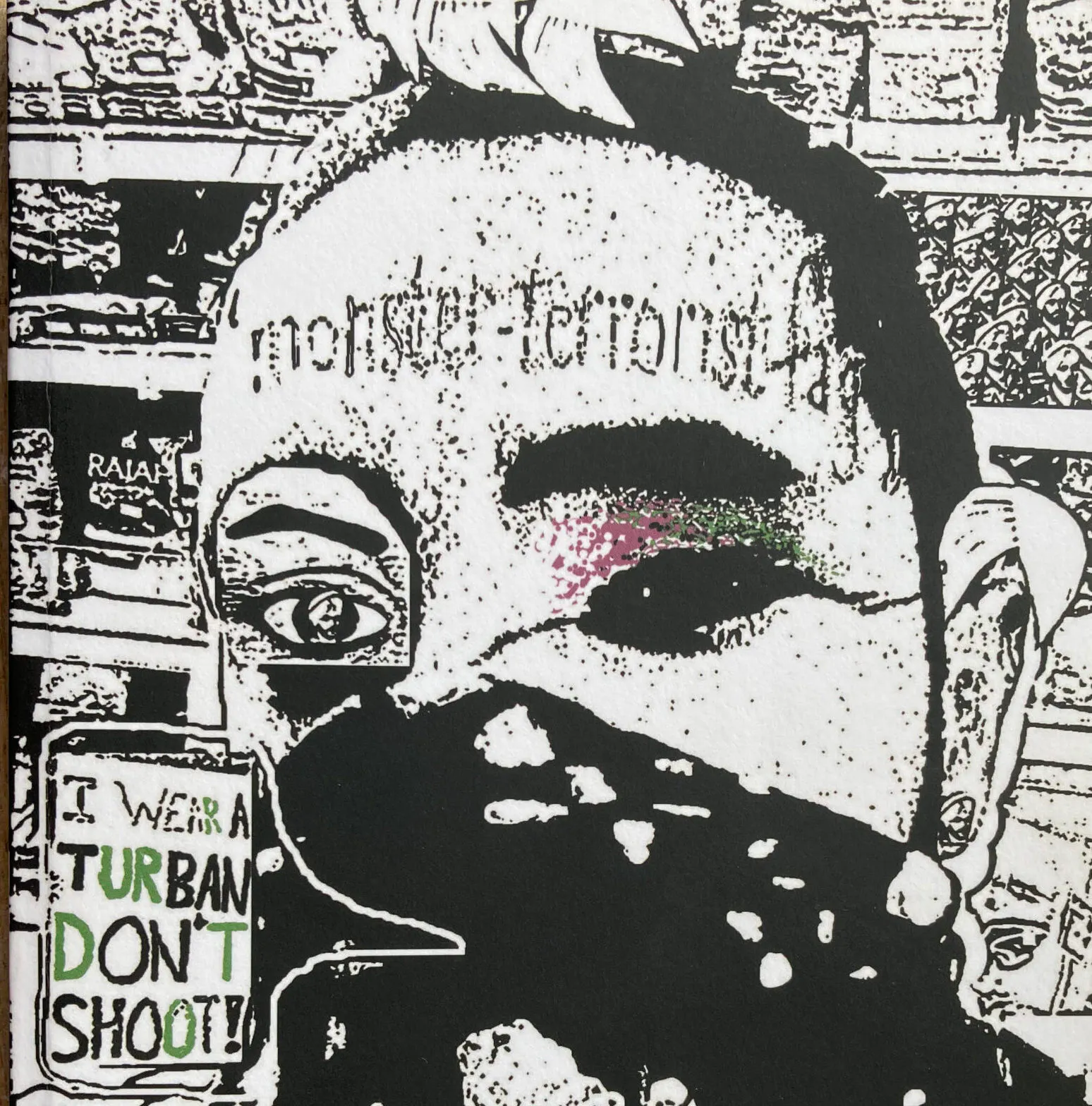
Ep 56Decolonial Queerness
Sandeep Bakshi (@sandeepbak on Twitter) talks to Saronik about understanding queerness and its emancipatory politics through transnational solidarity building, the persistent inclusion of trans and queer epistemological frames in social justice movements, especially in the work done by the Decolonizing Sexualities Network. Sandeep explains this concept and the DSN’s objective by referring to the works of Maria Lugones, Sylvia Tamale and the Fallist movement, and Karma Chávez and Against Equality. Sandeep Bakshi researches on transnational queer and decolonial enunciation of knowledges. He received his PhD from the School of English, University of Leicester, UK, and is currently employed as an Associate Professor of Postcolonial and Queer Literatures at the University of Paris. He heads the “Gender and Sexuality Studies” research group and coordinates two research seminars, “Peripheral Knowledges” and “Empires, Souths, Sexualities,”. Co-editor of Decolonizing Sexualities: Transnational Perspectives, Critical Interventions (Oxford: Counterpress, 2016) and Decolonial Trajectories, special issue of Interventions (2020), he has published on queer and race problematics in postcolonial literatures and cultures. He is the founder and serves on the board of the Decolonizing Sexualities Network. Image: Cover of the book Decolonizing Sexualities: Transnational Perspectives, Critical Interventions Music used in promotional material: “Hear Me Out” by Ketsa Learn more about your ad choices. Visit megaphone.fm/adchoices Support our show by becoming a premium member! https://newbooksnetwork.supportingcast.fm/critical-theory
Ep 303Treva B. Lindsey, "America, Goddam: Violence, Black Women, and the Struggle for Justice" (U California Press, 2022)
Echoing the energy of Nina Simone's searing protest song that inspired the title, this book is a call to action in our collective journey toward just futures. America, Goddam: Violence, Black Women, and the Struggle for Justice (U California Press, 2022) explores the combined force of anti-Blackness, misogyny, patriarchy, and capitalism in the lives of Black women and girls in the United States today. Through personal accounts and hard-hitting analysis, Black feminist historian Treva B. Lindsey starkly assesses the forms and legacies of violence against Black women and girls, as well as their demands for justice for themselves and their communities. Combining history, theory, and memoir, America, Goddam renders visible the gender dynamics of anti-Black violence. Black women and girls occupy a unique status of vulnerability to harm and death, while the circumstances and traumas of this violence go underreported and understudied. America, Goddam allows readers to understand How Black women—who have been both victims of anti-Black violence as well as frontline participants—are rarely the focus of Black freedom movements. How Black women have led movements demanding justice for Breonna Taylor, Sandra Bland, Toyin Salau, Riah Milton, Aiyana Stanley-Jones, and countless other Black women and girls whose lives have been curtailed by numerous forms of violence. How across generations and centuries, their refusal to remain silent about violence against them led to Black liberation through organizing and radical politics. America, Goddam powerfully demonstrates that the struggle for justice begins with reckoning with the pervasiveness of violence against Black women and girls in the United States” Mickell Carter is a doctoral student in the department of history at Auburn University. She can be reached at [email protected] and on twitter @MickellCarter Learn more about your ad choices. Visit megaphone.fm/adchoices Support our show by becoming a premium member! https://newbooksnetwork.supportingcast.fm/critical-theory
Ep 45Catherine Besteman, "Militarized Global Apartheid" (Duke UP, 2020)
In Militarized Global Apartheid, Catherine Besteman offers a sweeping theorization of the ways in which countries from the global north are reproducing South Africa's apartheid system on a worldwide scale to control the mobility and labor of people from the global south. Exploring the different manifestations of global apartheid, Besteman traces how militarization and securitization reconfigure older forms of white supremacy and deploy them in new contexts to maintain this racialized global order. Whether using the language of security, military intervention, surveillance technologies, or detention centers and other forms of incarceration, these projects reinforce and consolidate the global north's political and economic interests at the expense of the poor, migrants, refugees, Indigenous populations, and people of color. By drawing out how this new form of apartheid functions and pointing to areas of resistance, Besteman opens up new space to theorize potential sources of liberatory politics. Catherine Besteman is Francis F. Bartlett and Ruth K. Bartlett Professor of Anthropology at Colby College and author of Making Refuge: Somali Bantu Refugees and Lewiston, Maine, published by Duke University Press. Alize Arıcan is a Postdoctoral Associate at Rutgers University's Center for Cultural Analysis. She is an anthropologist whose research focuses on urban renewal, futurity, care, and migration in Istanbul, Turkey. Her work has been featured in Current Anthropology, City & Society, JOTSA, Radical Housing Journal, and entanglements. You can find her on Twitter @alizearican Learn more about your ad choices. Visit megaphone.fm/adchoices Support our show by becoming a premium member! https://newbooksnetwork.supportingcast.fm/critical-theory
Ep 63Milton Santos, "For a New Geography" (U Minnesota Press, 2021)
Originally published in 1978 in Portuguese, For a New Geography is a milestone in the history of critical geography and it marked the emergence of its author, Milton Santos (1926–2001), as a major interpreter of geographical thought, a prominent Afro-Brazilian public intellectual, and one of the foremost global theorists of space. Published in the midst of a crisis in geographical thought, For a New Geography functioned as a bridge between geography’s past and its future. In advancing his vision of a geography of action and liberation, Santos begins by turning to the roots of modern geography and its colonial legacies. Moving from a critique of the shortcomings of geography from the field’s foundations as a modern science to the outline of a new field of critical geography, he sets forth both an ontology of space and a methodology for geography. In so doing, he introduces novel theoretical categories to the analysis of space. It is, in short, both a critique of the Northern, Anglo-centric discipline from within and a systematic critique of its flaws and assumptions from outside. Critical geography has developed in the past four decades into a heterogeneous and creative field of inquiry. Though accruing a set of theoretical touchstones in the process, it has become detached from a longer and broader history of geographical thought. For a New Geography reconciles these divergent histories. Arriving in English at a time of renewed interest in alternative geographical traditions and the history of radical geography, it takes its place in the canonical works of critical geography. Dr Archie Davies is a Leverhulme Early Career Fellow at the University of Sheffield. Learn more about your ad choices. Visit megaphone.fm/adchoices Support our show by becoming a premium member! https://newbooksnetwork.supportingcast.fm/critical-theory