
New Books in Critical Theory
2,324 episodes — Page 26 of 47
Ep 59Chris Salter, "Sensing Machines: How Sensors Shape Our Everyday Life" (MIT Press, 2022)
Sensing machines are everywhere in our world. As we move through the day, electronic sensors and computers adjust our thermostats, guide our Roombas, count our steps, change the orientation of an image when we rotate our phones. There are more of these electronic devices in the world than there are people--in 2020, thirty to fifty billion of them (versus 7.8 billion people), with more than a trillion expected in the next decade. In Sensing Machines: How Sensors Shape Our Everyday Life (MIT Press, 2022), Chris Salter examines how we are tracked, surveilled, tantalized, and seduced by machines ranging from smart watches and mood trackers to massive immersive art installations. Salter, an artist/scholar who has worked with sensors and computers for more than twenty years, explains that the quantification of bodies, senses, and experience did not begin with the surveillance capitalism practiced by Facebook, Amazon, Netflix, and Google but can be traced back to mathematical and statistical techniques of the nineteenth century. He describes the emergence of the "sensed self," investigating how sensor technology has been deployed in music and gaming, programmable and immersive art environments, driving, and even eating, with e-tongues and e-noses that can taste and smell for us. Sensing technology turns our experience into data; but Salter's story isn't just about what these machines want from us, but what we want from them--new sensations, the thrill of the uncanny, and magic that will transport us from our daily grind. Galina Limorenko is a doctoral candidate in Neuroscience with a focus on biochemistry and molecular biology of neurodegenerative diseases at EPFL in Switzerland. Learn more about your ad choices. Visit megaphone.fm/adchoices Support our show by becoming a premium member! https://newbooksnetwork.supportingcast.fm/critical-theory
Ep 44Darts Transit Commission: Silicon Valley’s Car Culture
Paris Marx is one of the sharpest modern writers on Silicon Valley and transit. We have been talking a lot lately about the idea of techno-utopian thinking, but we’re coming to a somewhat surprising conclusion: there isn’t as much of it as there used to be. Our Silicon Valley tech bros have quite a curtailed vision. If they do have a utopia, it is a utopia of sustaining the unsustainable, of paving over the continent to keep everyone in their cars. With Paris we’ll traverse the intellectual history of hippies-turned-arch-capitalists, and focus especially on their ideas for transportation policy. Do they have a radical vision for a different transportation future, or is it a vision of maintaining the status quo? Marx is author of the book Road to Nowhere: What Silicon Valley Gets Wrong about the Future of Transportation, out now from Verso Books. SUPPORT THE SHOW You can support the show for free by following or subscribing on Spotify, Apple Podcasts, or whichever app you use. This is the best way to help us out and it costs nothing so we’d really appreciate you clicking that button. If you want to do a little more we would love it if you chip in. You can find us on patreon.com/dartsandletters. Patrons get content early, and occasionally there’s bonus material on there too. ABOUT THE SHOW For a full list of credits, contact information, and more, visit our about page. Learn more about your ad choices. Visit megaphone.fm/adchoices Support our show by becoming a premium member! https://newbooksnetwork.supportingcast.fm/critical-theory
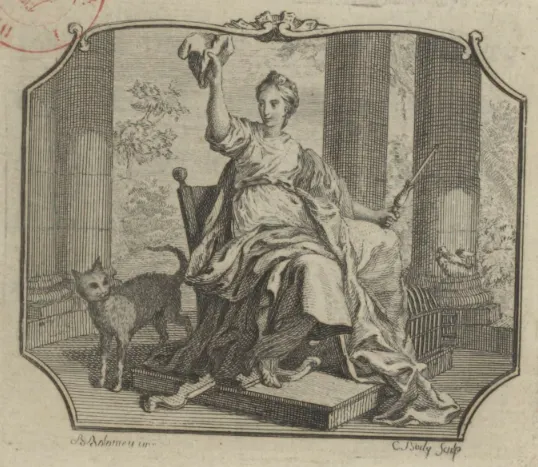
Ep 100Red Cat
In this episode of High Theory, Leigh Claire La Berge talks about red cats: communist cats, revolutionary tigers, radical felines of all stripes. The red cat is a provocation, and an invitation to think differently about economic history. Leigh Claire continues our spooky theory of cat concepts for Halloween 2022. Her book Marx for Cats: A Radical Bestiary will be published by Duke University Press this coming summer. It takes seriously the premise that you can tell the history of capitalism through the figure of the cat. As a bestiary, it has a hundred pictures of cats, from a vast archive that spans the ninth century to the present. It began as a series of filmed conversations with cats on Marxist theory. You can watch them at marxforcats.com In the episode she references The Social Contract by Jean Jacques Rousseau. Each of the two cover images from the initial publication depict cats. One of them forms the cover image for this episode. In the longer conversation, she referenced Kate Evans’s Red Rosa: A Graphic Biography of Rosa Luxemburg (Verso 2015) and Drew Pendergrass and Troy Vettese’s Half-Earth Socialism: A Plan to Save the Future from Extinction, Climate Change and Pandemics (Verso, 2022). Leigh Claire La Berge is an Associate Professor of English at BMCC CUNY, where she studies the intersection of contemporary cultural production and economic forms. Her prior books include Scandals and Abstraction: Financial Fiction of the Long 1980s (Oxford, 2014) and Wages Against Artwork: Decommodified Labor and the Claims of Socially Engaged Art (Duke, 2019). Learn more about your ad choices. Visit megaphone.fm/adchoices Support our show by becoming a premium member! https://newbooksnetwork.supportingcast.fm/critical-theory
Ep 161Bartholomew Ryan, "Kierkegaard's Indirect Politics: Interludes with Lukács, Schmitt, Benjamin and Adorno" (Brill, 2014)
In 1848, as political movements and events were sweeping Europe and Marx and Engels penned their famous Communist Manifesto, Kierkegaard wrote in a letter: “No, politics is not for me. To follow politics, even if only domestic politics, is nowadays an impossibility, for me, at any rate. I love to focus my attention on lesser things, in which one may sometimes encounter exactly the same.” This negation of politics (and it’s negation) is the starting point for Bartholomew Ryan with his book Kierkegaard’s Indirect Politics: Interludes with Lukacs, Schmitt, Benjamin and Adorno (Brill, 2014), which looks at Kierkegaard’s own thinking and it’s effect on several more explicitly political thinkers. Kierkegaard’s own politics are somewhat ambivalent, and one might struggle to fit them onto today’s political landscape, but Ryan has a different project in mind. Instead, Kierkegaard’s elusiveness, ambiguity and cultivation of the single individual in all their inner psychological and spiritual richness are shown to be inspiring for thinking politics and history in new ways. In the four figures Ryan looks at Kierkegaard’s presence in all their thinking, both explicit and implicit, emerging with a sophisticated form of inwardness capable of standing against despair, despotism and reification. Bartholomew Ryan is a philosophy research fellow at the NOVA Institute of Philosophy at the NOVA University Lisbon, where he works at the intersection of literature and philosophy. He is a coeditor of several books; Fernando Pessoa and Philosophy: Countless Lives Inhabit Us (2021), Faces of the Self: Autobiography, Confession, Therapy (2019), Nietzsche and Pessoa: Ensaios (2016), and Nietzsche and the Problem of Subjectivity (2015). Learn more about your ad choices. Visit megaphone.fm/adchoices Support our show by becoming a premium member! https://newbooksnetwork.supportingcast.fm/critical-theory
Ep 153Andreas Malm, "How to Blow Up a Pipeline" (Verso, 2021)
The science on climate change has been clear for a very long time now. Yet despite decades of appeals, mass street protests, petition campaigns, and peaceful demonstrations, we are still facing a booming fossil fuel industry, rising seas, rising emission levels, and a rising temperature. With the stakes so high, why haven’t we moved beyond peaceful protest? Offering a counter-history of how mass popular change has occurred, from the democratic revolutions overthrowing dictators to the movement against apartheid and for women’s suffrage, Malm argues that the strategic acceptance of property destruction and violence has been the only route for revolutionary change. In How to Blow Up a Pipeline (Verso, 2021), Malm offers us an incisive discussion of the politics and ethics of pacifism and violence, democracy and social change, strategy and tactics, and a movement compelled by both the heart and the mind. Here is how we fight in a world on fire. Jimena Ledgard is a journalist, writer and researcher from Lima, Peru. You can find her on Twitter at www.twitter.com/jimedylan Learn more about your ad choices. Visit megaphone.fm/adchoices Support our show by becoming a premium member! https://newbooksnetwork.supportingcast.fm/critical-theory
Ep 20Halloween Special: Jacques Derrida’s Cat
Saronik talks with Kim about Jacques Derrida’s cat. Derrida writes about his cat, who makes him rather anxious, in “The Animal That Therefore I Am (More to Follow)” trans. David Wills, Critical Inquiry 28, no. 2 (Winter 2002): 369-418. https://www.jstor.org/stable/1344276 Image: “Beatrix or Bea or BeaBea is a tiny cat living her tiny cat life.” Learn more about your ad choices. Visit megaphone.fm/adchoices Support our show by becoming a premium member! https://newbooksnetwork.supportingcast.fm/critical-theory
Ep 325Saskia Warren, "British Muslim Women in the Cultural and Creative Industries" (Edinburgh UP, 2022)
Why is religion important in understanding creative industries? In British Muslim Women in the Cultural and Creative Industries (Edinburgh University Press, 2022), Saskia Warren, a Senior Lecturer in Human Geography at the University of Manchester, presents an analysis of the fashion, digital media, and visual arts industries to show, for the first time, the centrality of faith and religion to any intersectional analysis of contemporary cultural production and consumption. The book uses in depth interviews, as well as a rich and detailed understanding of institutions and trends, to map the unique experiences of British Muslim women. Offering insights as to the barriers and exclusions, as well as the successes and forms of resistance, experienced by this community, the book is essential reading across social sciences and the humanities, as well as for anyone interested in understanding how culture is made today. Dave O'Brien is Professor of Cultural and Creative Industries, at the University of Sheffield. Learn more about your ad choices. Visit megaphone.fm/adchoices Support our show by becoming a premium member! https://newbooksnetwork.supportingcast.fm/critical-theory
Ep 58Adrian Hon, "You've Been Played: How Corporations, Governments, and Schools Use Games to Control Us All" (Basic Books, 2022)Adrian Hon, "You've Been Played: How Corporations, Governments, and Schools Use Games to Control Us All" (Basic Books, 2022)
Warehouse workers pack boxes while a virtual dragon races across their screen. If they beat their colleagues, they get an award. If not, they can be fired. Uber presents exhausted drivers with challenges to keep them driving. China scores its citizens so they behave well, and games with in-app purchases use achievements to empty your wallet. Points, badges, and leaderboards are creeping into every aspect of modern life. In You’ve Been Played, game designer Adrian Hon delivers a blistering takedown of how corporations, schools, and governments use games and gamification as tools for profit and coercion. These are games that we often have no choice but to play, where losing has heavy penalties. You’ve Been Played is a scathing indictment of a tech-driven world that wants to convince us that misery is fun, and a call to arms for anyone who hopes to preserve their dignity and autonomy. Rudolf Inderst is a professor of Game Design with a focus on Digital Game Studies at the IU International University of Applied Science and editor of “Game Studies Watchlist”, a weekly messenger newsletter about Game Culture. Learn more about your ad choices. Visit megaphone.fm/adchoices Support our show by becoming a premium member! https://newbooksnetwork.supportingcast.fm/critical-theory
Ep 139Kyle Stevens, "The Oxford Handbook of Film Theory" (Oxford UP, 2022)
Despite changes in the media landscape, film remains a vital force in contemporary culture, as do our ideas of what "a movie" or "the cinematic" are. Indeed, we might say that the category of film now only exists in theory. Whereas film-theoretical discussion at the turn of the 21st century was preoccupied, understandably, by digital technology's permeation of virtually all aspects of the film object, this volume moves the conversation away from a focus on film's materiality towards timely questions concerning the ethics, politics, and even aesthetics of thinking about the medium of cinema. To put it another way, The Oxford Handbook of Film Theory (Oxford UP, 2022), edited by Kyle Stevens, narrows in on the subject of film, not with a nostalgic sensibility, but with the recognition that what constitutes a film is historically contingent, in dialogue with the vicissitudes of entertainment, art, and empire. The volume is divided into six sections: Meta-Theory; Film Theory's Project of Emancipation; Apparatus and Perception; Audiovisuality; How Close is Close Reading?; and The Turn to Experience. Kyle Stevens is the author of Mike Nichols: Sex, Language, and the Reinvention of Psychological Realism. His work has appeared in Critical Inquiry, Cultural Critique, Journal of Cinema and Media Studies, Adaptation, Critical Quarterly, New Review of Film and Television Studies, World Picture, and several edited collections. He is Associate Professor of Film Studies at Appalachian State University. Joel Tscherne is an Adjunct History Professor at Southern New Hampshire University. His Twitter handle is @JoelTscherne. Learn more about your ad choices. Visit megaphone.fm/adchoices Support our show by becoming a premium member! https://newbooksnetwork.supportingcast.fm/critical-theory
Ep 202Ahmed White, "Under the Iron Heel: The Wobblies and the Capitalist War on Radical Workers" (U California Press, 2022)
In 1917, the Industrial Workers of the World was rapidly gaining strength and members. Within a decade, this radical union was effectively destroyed, the victim of the most remarkable campaign of legal repression and vigilantism in American history. Under the Iron Heel is the first comprehensive account of this campaign. Founded in 1905, the IWW offered to the millions of workers aggrieved by industrial capitalism the promise of a better world. But its growth, coinciding with World War I and the Russian Revolution and driven by uncompromising militancy, was seen by powerful capitalists and government officials as an existential threat that had to be eliminated. In Under the Iron Heel: The Wobblies and the Capitalist War on Radical Workers (U California Press, 2022), Ahmed White documents the torrent of legal persecution and extralegal, sometimes lethal violence that shattered the IWW. In so doing, he reveals the remarkable courage of those who faced this campaign, lays bare the origins of the profoundly unequal and conflicted nation we know today, and uncovers disturbing truths about the law, political repression, and the limits of free speech and association in class society. Ahmed White teaches labor and criminal law at the University of Colorado Boulder and is author of The Last Great Strike: Little Steel, the CIO, and the Struggle for Labor Rights in New Deal America. Jackson Reinhardt is a graduate of University of Southern California and Vanderbilt University. He is currently an independent scholar, freelance writer, and research assistant. You can reach Jackson at [email protected] and follow him on Twitter @JTRhardt Learn more about your ad choices. Visit megaphone.fm/adchoices Support our show by becoming a premium member! https://newbooksnetwork.supportingcast.fm/critical-theory
Ep 3Álvaro Sevilla-Buitrago, "Against the Commons: A Radical History of Urban Planning" (U Minnesota Press, 2022)
Characterized by shared, self-managed access to food, housing, and basic conditions for a creative life, the commons are essential for communities to flourish and protect spaces of collective autonomy from capitalist encroachment. In a narrative spanning more than three centuries, Against the Commons: A Radical History of Urban Planning (University of Minnesota Press, 2022) provides a radical counter history of urban planning that explores how capitalism and spatial politics have evolved to address this challenge. Highlighting episodes from preindustrial England, New York City and Chicago between the 1850s and the early 1900s, Weimar-era Berlin, and neoliberal Milan, Álvaro Sevilla-Buitrago shows how capitalist urbanization has eroded the egalitarian, convivial life-worlds around the commons. In this episode, channel host Tayeba Batool talks with Dr. Álvaro Sevilla-Buitrago on the book's argument about the ways through which urbanization shapes the social fabric of places and territories. The conversation touches upon the impact of planning and design initiatives on working-class communities and popular strata, and the various, multiple, and incremental modes of dispossession that are implicated in struggles over land, shared resources, public space, neighborhoods, creativity, and spatial imaginaries. We hear from Dr. Sevilla-Buitrago about the possibilities and alternates to a post-capitalist urban planning, one in which the structure of collective spaces is ultimately defined by the people who inhabit them. Dr. Álvaro Sevilla-Buitrago is an Associate Professor of Urban Planning at the School of Architecture, Universidad Politécnica de Madrid. Tayeba Batool is a PhD Candidate in Anthropology at the University of Pennsylvania. Tayeba Batool is a PhD Candidate in the Department of Anthropology at the University of Pennsylvania. Learn more about your ad choices. Visit megaphone.fm/adchoices Support our show by becoming a premium member! https://newbooksnetwork.supportingcast.fm/critical-theory
Ep 213Cameron Awkward-Rich, "The Terrible We: Thinking with Trans Maladjustment" (Duke UP, 2022)
In The Terrible We: Thinking with Trans Maladjustment (Duke UP, 2022), Cameron Awkward-Rich thinks with the bad feelings and mad habits of thought that persist in both transphobic discourse and trans cultural production. Observing that trans studies was founded on a split from and disavowal of madness, illness, and disability, Awkward-Rich argues for and models a trans criticism that works against this disavowal. By tracing the coproduction of the categories of disabled and transgender in the United States at the turn of the twentieth century and analyzing transmasculine literature and theory by Eli Clare, Elliott DeLine, Dylan Scholinski, and others, Awkward-Rich suggests that thinking with maladjustment might provide new perspectives on the impasses arising from the conflicted relationships among trans, feminist, and queer. In so doing, he demonstrates that rather than only impeding or confining trans life, thought, and creativity, forms of maladjustment have also been and will continue to be central to their development. The Terrible We is the Duke University Press Scholars of Color First Book Award recipient Cameron Awkward-Rich is Assistant Professor of Women, Gender, Sexuality Studies at the University of Massachusetts, Amherst, and author of Dispatch and Sympathetic Little Monster. Sohini Chatterjee is a PhD Candidate in Gender, Sexuality, and Women's Studies at Western University, Canada. Her work has recently appeared in Women's Studies: An inter-disciplinary journal, South Asian Popular Culture and Fat Studies. Learn more about your ad choices. Visit megaphone.fm/adchoices Support our show by becoming a premium member! https://newbooksnetwork.supportingcast.fm/critical-theory
Ep 324Josh Bowsher, "The Informational Logic of Human Rights" (Edinburgh UP, 2022)
What happens to the cultural politics of human rights when atrocities are rendered calculable, abuses are transformed into data, and victims become vectors? As human rights organizations have increasingly embraced information technologies this ‘datafication’ of rights has become both a reality and a pressing concern, one inextricably tangled up with questions regarding the broader political valences of human rights. In The Informational Logic of Human Rights (Edinburgh UP, 2022), Josh Bowsher resituates recent critiques of human rights within ongoing theoretical discussions concerning informational capitalism, digital culture and the politics of data. Critically analysing the contemporary human rights movement as an informational politics, Bowsher provides a new conceptual agenda for both exploring and overcoming the limits of human rights in an era shaped by the data flows, network infrastructures and informational logic of late capitalism. Louisa Hann recently attained a PhD in English and American studies from the University of Manchester, specialising in the political economy of HIV/AIDS theatres. She has published work on the memorialisation of HIV/AIDS on the contemporary stage and the use of documentary theatre as a neoliberal harm reduction tool. She is currently working on a monograph based on her doctoral thesis. You can get in touch with her at [email protected]. Learn more about your ad choices. Visit megaphone.fm/adchoices Support our show by becoming a premium member! https://newbooksnetwork.supportingcast.fm/critical-theory
Ep 323Arthur Bradley, "Unbearable Life: A Genealogy of Political Erasure" (Columbia UP, 2019)
In ancient Rome, any citizen who had brought disgrace upon the state could be subject to a judgment believed to be worse than death: damnatio memoriae, condemnation of memory. The Senate would decree that every trace of the citizen's existence be removed from the city as if they had never existed in the first place. Once reserved for individuals, damnatio memoriae in different forms now extends to social classes, racial and ethnic groups, and even entire peoples. In modern times, the condemned go by different names-"enemies of the people;" the "missing," the "disappeared," "ghost" detainees in "black sites"-but they are subject to the same fate of political erasure. Arthur Bradley explores the power to render life unlived from ancient Rome through the War on Terror. He argues that sovereignty is the power to decide what counts as being alive and what does not: to make life "unbearable," unrecognized as having lived or died. In readings of Augustine, Shakespeare, Hobbes, Robespierre, Schmitt, and Benjamin, Bradley asks: What is the "life" of this unbearable life? How does it change and endure across sovereign time and space, from empires to republics, from kings to presidents? To what extent can it be resisted or lived otherwise? A profoundly interdisciplinary and ambitious work, Unbearable Life rethinks sovereignty, biopolitics, and political theology to find the radical potential of a life that neither lives or dies. Morteza Hajizadeh is a Ph.D. graduate in English from the University of Auckland in New Zealand. His research interests are Cultural Studies; Critical Theory; Environmental History; Medieval (Intellectual) History; Gothic Studies; 18th and 19th Century British Literature. YouTube Channel. Twitter. Learn more about your ad choices. Visit megaphone.fm/adchoices Support our show by becoming a premium member! https://newbooksnetwork.supportingcast.fm/critical-theory
Ep 165Asim Sajjad Akhter, "The Struggle for Hegemony in Pakistan: Fear, Desire and Revolutionary Horizons" (Pluto Press, 2022)
The collapse of neoliberal hegemony in the western world following the financial crash of 2007-8 and subsequent rise of right-wing authoritarian personalities has been described as a crisis of 'the political' in western societies. But the crisis must be seen as global, rather than focusing on the west alone. Pakistan is experiencing rapid financialisation and rapacious capture of natural resources, overseen by the country's military establishment and state bureaucracy. Under their watch, trading and manufacturing interests, property developers and a plethora of mafias have monopolised the provision of basic needs like housing, water and food, whilst also feeding conspicuous consumption by a captive middle-class. In The Struggle for Hegemony in Pakistan: Fear, Desire and Revolutionary Horizons (Pluto Press, 2022), Aasim Sajjad Akhtar explores neoliberal Pakistan, looking at digital technology in enhancing mass surveillance, commodification, and atomisation, as well as resistance to the state and capital. Presenting a new interpretation of our global political-economic moment, he argues for an emancipatory political horizon embodied by the 'classless' subject. Iqra Shagufta Cheema teaches and writes in the areas of postmodernist postcolonial literatures, transnational feminisms, gender and sexuality studies, and film studies. They can be reached via email at [email protected] or Twitter. Learn more about your ad choices. Visit megaphone.fm/adchoices Support our show by becoming a premium member! https://newbooksnetwork.supportingcast.fm/critical-theory
Ep 82Arcia Tecun et al., "Towards a Grammar of Race in Aotearoa New Zealand (Bridget Williams Books, 2022)
A search for new ways to talk about race in Aotearoa New Zealand brought together this powerful group of scholars, writers, and activists. For these authors, attempts to confront racism and racial violence often stall against a failure to see how power works through race, across our modern social worlds. The result is a country where racism is all too often left unnamed and unchecked, voices are erased, the colonial past ignored and silence passes for understanding. By 'bringing what is unspoken into focus', Towards a Grammar of Race in Aotearoa New Zealand (Bridget Williams Books, 2022) seeks to articulate and confront ideas of race in Aotearoa New Zealand – an exploration that includes racial capitalism, colonialism, white supremacy, and anti-Blackness. A recurring theme across the book is the inescapable entanglement of local and global manifestations of race. Each of the contributors brings their own experiences and insights to the complexities of life in a racialised society, and together their words make an important contribution to our shared and future lives on these shores. Contributors to this book: Pounamu Jade Aikman, Faisal Al-Asaad, Mahdis Azarmandi, Simon Barber, Garrick Cooper, Morgan Godfery, Kassie Hartendorp, Guled Mire, Tze Ming Mok, Adele Norris, Nathan Rew, Vera Seyra, Beth Teklezgi, Selome Teklezgi and Patrick Thomsen. Arcia Tecun (a.k.a. Daniel Hernandez) is a storyteller (film maker, podcaster) and Pouako (Lecturer) at Waipapa Taumata Rau (University of Auckland) in ethnomusicology and social-cultural anthropology. His research and teaching interests include Indigeneity, race, class, gender, religion, food, and popular culture/music in Oceania and the Americas. Lana Lopesi is an author, art critic, editor and multidisciplinary researcher based in Tāmaki Makaurau. In September, she became an Assistant Professor Pacific Islander Studies in the department of Indigenous, Race and Ethnic Studies at the University of Oregon. Anisha Sankar is a Chennai-born, Te Awakairangi-raised South Indian Tamil living in Pōneke. She is currently working on her PhD, which studies the contradictions of colonial capitalism. Key Point About the Book: • Arrives at a time of burgeoning questions around race, identity, and power • Provides readers with new ways of thinking and talking about race in Aotearoa New Zealand • Addresses New Zealand’s local connections to global and international discussions of race Ed Amon has a Master of Indigenous Studies from the University of Auckland, New Zealand. He is a columnist at his local paper: Hibiscus Matters, and a Stand-up Comedian. His main interests are indigenous studies, politics, history, and cricket. Follow him on twitter @edamoned or email him at [email protected] Learn more about your ad choices. Visit megaphone.fm/adchoices Support our show by becoming a premium member! https://newbooksnetwork.supportingcast.fm/critical-theory
Ep 200Robin McCoy Brooks, "Psychoanalysis, Catastrophe, and Social Action" (Routledge, 2021)
Robin McCoy Brooks' book Psychoanalysis, Catastrophe, and Social Action (Routledge, 2021) uses psychoanalytic theory to explore how political subjectivity comes about within the context of global catastrophe, via the emergence of collective individuations through trans-subjectivity. Serving as a jumping-off point to address the structural linkage between collective catastrophe, subject, group, and political transformation, trans-subjectivity is the central tenet of the book, conceptualized as a psyche-social dynamic that initiates social transformation and which may be enhanced in the clinical setting. Each chapter investigates a distinct manifestation of trans-subjectivity in relation to various real-world events as they manifest clinically in the analytic couple and within group processes. The author builds her conceptual arguments through a psyche/social reading of Kristeva's theory of signifiance (sublimation), Lacan's 1945 essay on collective logic, Heidegger's secular reading of the apostle Paul's Christian revolution, and Zizek, Badiou and Jung's conception of the neighbor within a differentiated humanity. The book features clinical illustrations, an auto-ethnographic study of the emergence of an AIDS clinic, an accounting of trans-subjectivity in Black revolutionary events in the U.S., and an examination of some expressions of care that arose in response to the COVID-19 pandemic. Psychoanalysis, Catastrophe & Social Action is important reading for psychoanalysts, psycho-dynamic based therapists, psychologists, group therapists, philosophers and political activists. Roy Barsness is a Clinical Psychoanalytic Psychologist, Founder and Executive Director of the Post-Graduate Program in Relationally-Focused Psychodynamic Therapy; Professor at the Seattle School of Theology and Psychology and have been in clinical practice for 30+ years. Learn more about your ad choices. Visit megaphone.fm/adchoices Support our show by becoming a premium member! https://newbooksnetwork.supportingcast.fm/critical-theory
Ep 133Julie Sze, "Environmental Justice in a Moment of Danger" (U California Press, 2020)
“Let this book immerse you in the many worlds of environmental justice.”—Naomi Klein We are living in a precarious environmental and political moment. In the United States and in the world, environmental injustices have manifested across racial and class divides in devastatingly disproportionate ways. What does this moment of danger mean for the environment and for justice? What can we learn from environmental justice struggles? Environmental Justice in a Moment of Danger (U California Press, 2020) examines mobilizations and movements, from protests at Standing Rock to activism in Puerto Rico in the wake of Hurricane Maria. Environmental justice movements fight, survive, love, and create in the face of violence that challenges the conditions of life itself. Exploring dispossession, deregulation, privatization, and inequality, this book is the essential primer on environmental justice, packed with cautiously hopeful stories for the future. Julie Sze is Professor of American Studies and Founding Director of the Environmental Justice Project at the University of California, Davis. She has authored and edited three books and numerous articles on environmental justice and inequality, culture and environment, and urban and community health and activism. Padmapriya Vidhya-Govindarajan is a doctoral candidate at the Department of Media, Culture and Communication at NYU Steinhardt. Her research interests lie at the intersection of environmental justice, digital and film cultures, and community media-use practices. Learn more about your ad choices. Visit megaphone.fm/adchoices Support our show by becoming a premium member! https://newbooksnetwork.supportingcast.fm/critical-theory
Ep 152Bhaskar Sunkara, "The Socialist Manifesto: The Case for Radical Politics in an Era of Extreme Inequality" (Basic Books, 2020)
In The Socialist Manifesto: The Case for Radical Politics in an Era of Extreme Inequality (Basic Books, 2020), Bhaskar Sunkara explores socialism's history since the mid-1800s and presents a realistic vision for its future. With the stunning popularity of Bernie Sanders and Alexandria Ocasio-Cortez, Americans are embracing the class politics of socialism. But what, exactly, is socialism? And what would a socialist system in America look like? The editor of Jacobin magazine, Sunkara shows that socialism, though often seen primarily as an economic system, in fact offers the means to fight all forms of oppression, including racism and sexism. The ultimate goal is not Soviet-style planning, but to win rights to healthcare, education, and housing, and to create new democratic institutions in workplaces and communities. A primer on socialism for the 21st century, this is a book for anyone seeking an end to the vast inequities of our age. Kirk Meighoo is Public Relations Officer for the United National Congress, the Official Opposition in Trinidad and Tobago. His career has spanned media, academia, and politics for three decades. Learn more about your ad choices. Visit megaphone.fm/adchoices Support our show by becoming a premium member! https://newbooksnetwork.supportingcast.fm/critical-theory
Ep 90Geert Lovink, "Stuck on the Platform: Reclaiming the Internet" (Valiz, 2022)
We’re all trapped. No matter how hard you try to delete apps from your phone, the power of seduction draws you back. Doom scrolling is the new normal of a 24/7 online life. What happens when your home office starts to feel like a call center and you’re too fried to log out of Facebook? We’re addicted to large-scale platforms, unable to return to the frivolous age of decentralized networks. How do we make sense of the rising disaffection with the platform condition? Zoom fatigue, cancel culture, crypto art, NFTs and psychic regression comprise core elements of a general theory of platform culture. Geert Lovink argues that we reclaim the internet on our own terms. Stuck on the Platform: Reclaiming the Internet (Valiz 2022) is a relapse-resistant story about the rise of platform alternatives, built on a deep understanding of the digital slump. Geert Lovink is a Dutch media theorist, internet critic and author of Uncanny Networks (2002), Dark Fiber (2002), My First Recession (2003), Zero Comments (2007), Networks Without a Cause (2012), Social Media Abyss (2016), Organisation after Social Media (with Ned Rossiter, 2018) and Sad by Design (2019). In 2004 he founded the Institute of Network Cultures at the Amsterdam University of Applied Sciences (HvA). His center organizes conferences, publications and research networks such as Video Vortex (online video), The Future of Art Criticism and MoneyLab (internet-based revenue models in the arts). Recent projects deal with digital publishing experiments, critical meme research, participatory hybrid events and precarity in the creative sector. In December, 2021 he was appointed Professor of Art and Network Cultures at the Art History Department, Faculty of Humanities of the University of Amsterdam for one day a week. Reuben Niewenhuis is interested in philosophy, theory, technology, and interdisciplinary topics. Subscribe to his interviews here. Learn more about your ad choices. Visit megaphone.fm/adchoices Support our show by becoming a premium member! https://newbooksnetwork.supportingcast.fm/critical-theory
Ep 624Ramzi Fawaz, "Queer Forms" (NYU Press, 2022)
Ramzi Fawaz, Professor of English at the University of Wisconsin-Madison, has a new book that weaves together the more contemporary history of feminism and women’s liberation, the gay liberation movement, feminist and queer theory, and iconic popular culture artifacts in order to understand gendered and sexual forms in context of gender and sexual fluidity. This is a brilliant book, interdisciplinary in scope and approach, taking the reader on a journey through theoretical frameworks and interpretive understandings of where we often see queer forms, and what we think about those forms. Fawaz notes that he is working to tell a story, interpreting cultural artifacts to forefront the ideas from feminist and queer theory, knitting these approaches together to guide us through a fascinating understanding of what we see when we watch films, or television, or read comics, or enjoy Broadway performances. These interpretations provide us with ways of seeing identity and shape within narrative forms and creative storytelling. But Fawaz is also pushing against an excess of thinking that all identities and forms are fluid—instead, Queer Forms (NYU Press, 2022) examines the capacity of identity and forms to, essentially, shapeshift, which is not the same as being fluid, since shapeshifting is an adaption, and thus is not without form itself. Form has little meaning until or unless they are/it is interpreted by others. The thrust of the work that Fawaz is doing in Queer Forms ultimately is about freedom and how we can each exist as free individuals, especially when there are often social and legal rules that constrain us as individuals with distinct identities that traverse a host of markers and qualities. Popular culture artifacts can provide the room and opportunity to imagine identities in different forms and contexts. Queer Forms provides the reader with an archive of culture forms as a kind of gift, helping us to see and understand how we might interpret or reinterpret the queer and feminist past so that we approach our daily contemporary life with that understanding. Fawaz explains the variegated theories that frame these interpretations and gets at this historical foundation—especially of the liberation movements in the 1960s and 1970s—in order to engage in a valuable consideration of freedom. Lilly J. Goren is a professor of political science at Carroll University in Waukesha, WI. She is co-editor of the award winning book, Women and the White House: Gender, Popular Culture, and Presidential Politics (University Press of Kentucky, 2012), as well as co-editor of Mad Men and Politics: Nostalgia and the Remaking of Modern America (Bloomsbury Academic, 2015). Email her comments at [email protected] or tweet to @gorenlj. Learn more about your ad choices. Visit megaphone.fm/adchoices Support our show by becoming a premium member! https://newbooksnetwork.supportingcast.fm/critical-theory
Ep 132Rafico Ruiz, "Slow Disturbance: Infrastructural Mediation on the Settler Colonial Resource Frontier" (Duke UP, 2021)
From the late nineteenth through most of the twentieth century, the evangelical Protestant Grenfell Mission in Newfoundland and Labrador, Canada, created a network of hospitals, schools, orphanages, stores, and industries with the goal of bringing health and organized society to settler fisherfolk and Indigenous populations. This infrastructure also served to support resource extraction of fisheries off Labrador's coast. In Slow Disturbance: Infrastructural Mediation on the Settler Colonial Resource Frontier (Duke UP, 2021), Rafico Ruiz engages with the Grenfell Mission to theorize how settler colonialism establishes itself through what he calls infrastructural mediation—the ways in which colonial lifeworlds, subjectivities, and affects come into being through the creation and maintenance of infrastructures. Drawing on archival documents, maps, interviews with municipal officials, teachers, and residents, as well as his field photography, Ruiz shows how the mission's infrastructural mediation—from its attempts to restructure the local economy to the aerial surveying and mapping of the coastline—responded to the colony's environmental conditions in ways that expanded the bounds of the settler frontier. By tracing the mission's history and the mechanisms that enabled its functioning, Ruiz complicates understandings of mediation and infrastructure while expanding current debates surrounding settler colonialism and extractive capitalism. Rafico Ruiz is the Associate Director of Research at the Canadian Centre for Architecture. He holds an ad personam PhD in the History and Theory of Architecture and Communication Studies from McGill University. He is the author of Slow Disturbance: Infrastructural Mediation on the Settler Colonial Resource Frontier and the co-editor with Melody Jue of Saturation: An Elemental Politics. Padmapriya Vidhya-Govindarajan is a doctoral candidate at the Department of Media, Culture and Communication at NYU Steinhardt. Her research interests lie at the intersection of environmental justice, digital and film cultures, and community media-use practices. Learn more about your ad choices. Visit megaphone.fm/adchoices Support our show by becoming a premium member! https://newbooksnetwork.supportingcast.fm/critical-theory
Ep 163Nissim Mannathukkaren, "Communism, Subaltern Studies and Postcolonial Theory: The Left in South India" (Routledge Chapman & Hall, 2021)
Nissim Mannathukkaren's book Communism, Subaltern Studies and Postcolonial Theory: The Left in South India (Routledge Chapman & Hall, 2021) is a thematic history of the communist movement in Kerala, the first major region (in terms of population) in the world to democratically elect a communist government. It analyzes the nature of the transformation brought about by the communist movement in Kerala, and what its implications could be for other postcolonial societies. The volume engages with the key theoretical concepts in postcolonial theory and Subaltern Studies, and contributes to the debate between Marxism and postcolonial theory, especially its recent articulations. The volume presents a fresh empirical engagement with theoretical critiques of Subaltern Studies and postcolonial theory, in the context of their decades-long scholarship in India. It discusses important thematic moments in Kerala’s communist history which include — the processes by which it established its hegemony, its cultural interventions, the institution of land reforms and workers’ rights, and the democratic decentralization project, and, ultimately, communism’s incomplete national-popular and its massive failures with regard to the caste question. A significant contribution to scholarship on democracy and modernity in the Global South, this volume will be of great interest to scholars and researchers of politics, specifically political theory, democracy and political participation, political sociology, development studies, postcolonial theory, Subaltern Studies, Global South Studies, and South Asia Studies. Irene Promodh is a PhD student in sociocultural anthropology at the University of Michigan, Ann Arbor. Learn more about your ad choices. Visit megaphone.fm/adchoices Support our show by becoming a premium member! https://newbooksnetwork.supportingcast.fm/critical-theory
Ep 182Bruce Robbins, "Criticism and Politics: A Polemical Introduction" (Stanford UP, 2022)
What is criticism for? Over the past few decades, violent disagreements over that question in the academy have burst into the news media. These conflicts have renewed the Culture Wars over the legacy of the 1960s, becoming entangled in national politics and leading to a new set of questions. Does a concern with race, gender, and sexuality, with unacknowledged power and privilege, with identity, give present critics the right to criticize the great works of the past? If we have learned to see those works in terms of historical differences rather than universal truths, how is it that they speak to us at all? In the study of the world's cultures, there is more than one way to avoid being Eurocentric; which way should we choose? Re-examining key thinkers since 1970, including Walter Benjamin, Michel Foucault, Judith Butler, Edward Said, Hortense Spillers, Fredric Jameson, and Stuart Hall, Bruce Robbins' book Criticism and Politics: A Polemical Introduction (Stanford UP, 2022) offers both a non-specialist introduction to recent cultural theory and a strong new interpretation of how this theory applies to the everyday issue of what cultural critics do and how they should feel about what they do. Learn more about your ad choices. Visit megaphone.fm/adchoices Support our show by becoming a premium member! https://newbooksnetwork.supportingcast.fm/critical-theory
Ep 91Christopher Lukman, "Control Machines: Toward a Dispositive Theory of Computer Games" (Lit Verlag, 2022)
Today I talked to Christopher Lukman about his new book Control Machines: Toward a Dispositive Theory of Computer Games (Lit Verlag, 2022). In light of its immense popularity, a critical examination of the medium of the videogame is due. This particular anthology – Control Machines. Computergames and the theory of the dispositifs – works on a theory of the 'dispositif' of the videogame and is thus dedicated to the connections between knowledge and power. The medium of the videogame is looked at in its complicity with neoliberalism and the control society as well as in its media-technological conditionality and its qualities of self-reflection and self-criticism. Rudolf Inderst is a professor of Game Design with a focus on Digital Game Studies at the IU International University of Applied Science and editor of “Game Studies Watchlist”, a weekly messenger newsletter about Game Culture. Learn more about your ad choices. Visit megaphone.fm/adchoices Support our show by becoming a premium member! https://newbooksnetwork.supportingcast.fm/critical-theory
Ep 322Asha Rogers, "State Sponsored Literature: Britain and Cultural Diversity After 1945" (Oxford UP, 2020)
How does the state support writers? In State Sponsored Literature: Britain and Cultural Diversity after 1945 (Oxford UP, 2020), Asha Rogers, Senior Lecturer in Contemporary Postcolonial Literature at the University of Birmingham, explores the history of authors, institutions, and governments approach to literature in a changing, imperial and post-imperial, Britain. The book uses a wealth of examples, from key organisations such as the British Council and the Arts Council of Great Britain, through case studies of key authors such as Salman Rushdie, to concepts such as multiculturalism and cultural diversity. Making a significant contribution to English literature and cultural policy, the book will be essential reading across the arts and humanities and social sciences, as well as for anyone interested in the relationship between governments and literature. Dave O'Brien is Professor of Cultural and Creative Industries, at the University of Sheffield. Learn more about your ad choices. Visit megaphone.fm/adchoices Support our show by becoming a premium member! https://newbooksnetwork.supportingcast.fm/critical-theory
Ep 321Mark Neocleous, "A Critical Theory of Police Power: The Fabrication of the Social Order" (Verso, 2021)
A Critical Theory of Police Power: The Fabrication of Social Order (Verso, 2021) offers a critical look at policing and the power of the state, examining the relationship between our ideas of order and wider social and political issues. First published in 2000, this new edition of Mark Neocleous' influential book features a new introduction which helpfully situates this ever-relevant text in the context of contemporary struggles over police and policing. Neocleous argues for an expanded concept of police, able to account for the range of institutions through which policing takes place. These institutions are concerned not just with the maintenance and reproduction of order, but with its very fabrication, especially the fabrication of a social order founded on wage labour. By situating the police power in relation to both capital and the state and at the heart of the politics of security, the book opens up into an understanding of the ways in which the state administers civil society and fabricates order through law and the ideology of crime. The discretionary violence of the police on the street is thereby connected to the wider administrative powers of the state, and the thud of the truncheon to the dull compulsion of economic relations. Content warning: the last 2 minutes of the interview include a brief discussion of Mark's current work on suicide. Listeners who enjoyed this interview may enjoy my recent interviews with Mark on his most recent book The Politics of Immunity, with undercover police ("Spycop") victims Helen Steel and Alison about Deep Deception, and with counterterrorism scholar Rizwaan Sabir about The Suspect. Mark Neocleous is Professor of the Critique of Political Economy at Brunel University in London, and is well-known for his work on police power and security. His recent books include The Universal Adversary: Security, Capital and 'The Enemies of All Mankind' (2016); War Power, Police Power (2014); and the newly-reissued A Critical Theory of Police Power: The Fabrication of Social Order (2021). Catriona Gold is a PhD candidate in Geography at University College London. She is currently researching the US Passport Office's role in governing Cold War travel, and broadly interested in questions of security, surveillance and mobility. She can be reached by email or on Twitter. Learn more about your ad choices. Visit megaphone.fm/adchoices Support our show by becoming a premium member! https://newbooksnetwork.supportingcast.fm/critical-theory
Ep 9Adam Elliott-Cooper, "Black Resistance to British Policing" (Manchester UP, 2021)
As police racism unsettles Britain's tolerant self-image, Black Resistance to British Policing (Manchester UP, 2021) details the activism that made movements like Black Lives Matter possible. Adam Elliott-Cooper analyses racism beyond prejudice and the interpersonal - arguing that black resistance confronts a global system of racial classification, exploitation and violence. Imperial cultures and policies, as well as colonial war and policing highlight connections between these histories and contemporary racisms. But this is a book about resistance, considering black liberation movements in the 20th century while utilising a decade of activist research covering spontaneous rebellion, campaigns and protest in the 21st century. Drawing connections between histories of resistance and different kinds of black struggle against policing is vital, it is argued, if we are to challenge the cutting edge of police and prison power which harnesses new and dangerous forms of surveillance, violence and criminalisation. Black Resistance to British Policing is a must read for all those who are interested in the history of the British Empire, its enduring legacies, and anti-colonial and anti-racist resistance. Adam Elliot-Cooper is a Lecturer (Assistant Professor) in Public and Social Policy at Queen Mary University of London. He is also co-author of Empire’s Endgame: Racism and the British State (Pluto Press, 2021). He sits on the board of The Monitoring Group, an anti-racist organisation challenging state racisms and racial violence. Deniz Yonucu is a Lecturer (Assistant Professor) in the School of Geography, Politics, and Sociology at Newcastle University. Her work focuses on counterinsurgency, policing and security, surveillance, left-wing and anti-colonial resistance, memory, racism, and emerging digital control technologies. Her book, Police, Provocation, Politics Counterinsurgency in Istanbul (Cornell University Press, 2022), presents a counterintuitive analysis of policing, focusing particular attention on the incitement of counterviolence and perpetual conflict by state security apparatus. Learn more about your ad choices. Visit megaphone.fm/adchoices Support our show by becoming a premium member! https://newbooksnetwork.supportingcast.fm/critical-theory
Ep 189C. Thi Nguyen, "Games: Agency as Art" (Oxford UP, 2020)
Games are a unique art form. Games work in the medium of agency. Game designers tell us who to be and what to care about during the game. Game designers sculpt alternate agencies, and game players submerge themselves in those alternate agencies. Thus, the fact that we play games demonstrates the fluidity of our own agency. We can throw ourselves, for a little while, into a different and temporary motivations. This volume presents a new theory of games which insists on their unique value. In Games: Agency as Art (Oxford UP, 2020) , C. Thi Nguyen argues that games are an integral part our systems of communication and our art. Games sculpt our practical activities, allowing us to experience the beauty of our own actions and reasoning. Bridging aesthetics and practical reasoning, he gives an account of the special motivational structure involved in playing games. When we play games, we can pursue a goal, not for its own value, but for the value of the struggle. Thus, playing games involves a motivational inversion from normal life. We adopt an interest in winning temporarily, so we can experience the beauty of the struggle. Games offer us a temporary experience of life under utterly clear values, in a world engineered to fit to our abilities and goals. Games also let us to experience forms of agency we might never have developed on our own. Games, it turns out, are a special technique for communication. They are a technology that lets us record and transmit forms of agency. Our games form a "library of agency" and we can explore that library to develop our autonomy. Games use temporary restrictions to force us into new postures of agency. Adam Bobeck is a PhD candidate in Cultural Anthropology at the University of Leipzig. His PhD is entitled “Object-Oriented Azadari: Shi’i Muslim Rituals and Ontology”. For more about his work, see www.adambobeck.com. Learn more about your ad choices. Visit megaphone.fm/adchoices Support our show by becoming a premium member! https://newbooksnetwork.supportingcast.fm/critical-theory

Ep 98Standpoint Theory
Soham Sen talks about standpoint theory, a method of understanding the ways in which individual and collective experience influence public discourses. He begins from its origins in the civil rights movement and in the innovations of feminist thought, and follows it up with a discussion of its efficacy in understanding contemporary media. Soham Sen is pursuing his Masters in the Department of Communication Studies and is the Assistant Course Director of Public Speaking at the College of Media & Communication. His area of research includes border rhetoric and negotiation of immigrant identity , postcolonialism, and performance studies. Image: © 2022 Saronik Bosu Learn more about your ad choices. Visit megaphone.fm/adchoices Support our show by becoming a premium member! https://newbooksnetwork.supportingcast.fm/critical-theory
Ep 121Clémentine Deliss, "The Metabolic Museum" (Hatje Cantz, 2020)
In The Metabolic Museum (Hatje Cantz, 2020), Clémentine Deliss, a curator, researcher, and former director of the Frankfurt Weltkulturen Museum, explores possible functions for anthropological museums in a postcolonial culture. Anthropological museums in Europe, as products of imperialism, have been compelled to legitimate themselves because the very basis of their exhibitions, the history of their collections, came about all too often through colonial appropriation and outright theft. In this book, Deliss addresses this reality for enthographic or world culture museums in Europe, exploring the possible futures for these institutions. Connecting to reflections on her own work as the director of the Frankfurt Weltkulturen Museum with discussions of filmmakers, artists and authors to argue for an entity she calls the Metabolic Museum―an interventionist laboratory that opens up the potential of anthropological collections for the future. Holiday Powers (@holidaypowers) is Assistant Professor of Art History at VCUarts Qatar. Her research focuses on modern and contemporary art in Africa and the Arab world, postcolonial theory, and gender studies. Learn more about your ad choices. Visit megaphone.fm/adchoices Support our show by becoming a premium member! https://newbooksnetwork.supportingcast.fm/critical-theory
Ep 164NBN Classic: Dominik Finkelde, "Excessive Subjectivity: Kant, Hegel, Lacan and the Foundations of Ethics" (Columbia UP, 2017)
This episode proved remarkably popular, so we're reposting it as an NBN classic for those who missed it the first time. How are we to conceive of acts that suddenly expose the injustice of the current order? This is a question that has puzzled philosophers for centuries, and it’s the question that animates Dominik Finkelde’s book Excessive Subjectivity: Kant, Hegel, Lacan, and the Foundation of Ethics (Columbia University Press, 2017). The book looks at these three major thinkers, and the ways they saw subjects as being immersed in a particular set of ethical orientations, but also always with a subtle but profound potential to do something beyond what they might’ve thought possible. Dominik Finkelde is a professor of contemporary political philosophy and epistemology at the Munich School of Philosophy, and is also the author of Zizek Between Lacan and Hegel and Benjamin Reads Proust. Learn more about your ad choices. Visit megaphone.fm/adchoices Support our show by becoming a premium member! https://newbooksnetwork.supportingcast.fm/critical-theory
Ep 145NBN Classic: Jonathan Erickson, "Imagination in the Western Psyche: From Ancient Greece to Modern Neuroscience" (Routledge, 2019)
This episode proved remarkably popular, so we're reposting it as an NBN classic for those who missed it the first time. Imagination is one of the most important elements of being human, but is most often assumed we know what it is, while rarely being analyzed. Here with me today is Jonathan Erickson to discuss his recent book Imagination in the Western Psyche: From Ancient Greece to Modern Neuroscience (Routledge, 2019). The book looks at various theories of imagination through history, and then looks at what neuroscience can tell us about the functioning of imagination, as well as looking at what the functioning of imagination can tell us about neuroscience. Jonathan Erickson is a writer and educator, and holds a BA in English literature from UC Berkeley and a PhD in depth psychology from the Pacifica Graduate Institute in California. Stephen Dozeman is a freelance writer. Learn more about your ad choices. Visit megaphone.fm/adchoices Support our show by becoming a premium member! https://newbooksnetwork.supportingcast.fm/critical-theory
Ep 319Alex Williams and Jeremy Gilbert, "Hegemony Now: How Big Tech and Wall Street Won the World (And How We Win it Back)" (Verso, 2022)
Today power is in the hands of Wall Street and Silicon Valley. How do we understand this transformation in power? And what can we do about it? We cannot change anything until we have a better understanding of how power works, who holds it, and why that matters. Through upgrading the concept of hegemony—understanding the importance of passive consent; the complexity of political interests; and the structural force of technology—Jeremy Gilbert and Alex Williams offer us an updated theory of power for the twenty-first century. Alex Williams and Jeremy Gilbert book Hegemony Now: How Big Tech and Wall Street Won the World (And How We Win it Back) (Verso, 2022) explores how these forces came to control our world. The authors show how they have shaped the direction of politics and government as well as the neoliberal economy to benefit their own interests. However, this dominance is under threat. Following the 2008 financial crisis, a new order emerged in which the digital platform is the central new technology of both production and power. This offers new opportunities for counter hegemonic strategies to win back power. Hegemony Now outlines a dynamic socialist strategy for the twenty-first century. Louisa Hann recently attained a PhD in English and American studies from the University of Manchester, specialising in the political economy of HIV/AIDS theatres. She has published work on the memorialisation of HIV/AIDS on the contemporary stage and the use of documentary theatre as a neoliberal harm reduction tool. She is currently working on a monograph based on her doctoral thesis. You can get in touch with her at [email protected]. Learn more about your ad choices. Visit megaphone.fm/adchoices Support our show by becoming a premium member! https://newbooksnetwork.supportingcast.fm/critical-theory
Ep 76Jean-Thomas Tremblay, "Breathing Aesthetics" (Duke UP, 2022)
In Breathing Aesthetics (Duke University Press (2022), Jean-Thomas Tremblay argues that difficult breathing indexes the uneven distribution of risk in a contemporary era marked by the increasing contamination, weaponization, and monetization of air. Tremblay shows how biopolitical and necropolitical forces tied to the continuation of extractive capitalism, imperialism, and structural racism are embodied and experienced through respiration. They identify responses to the crisis in breathing in aesthetic practices ranging from the film work of Cuban American artist Ana Mendieta to the disability diaries of Bob Flanagan, to the Black queer speculative fiction of Renee Gladman. In readings of these and other minoritarian works of experimental film, endurance performance, ecopoetics, and cinema-vérité, Tremblay contends that articulations of survival now depend on the management and dispersal of respiratory hazards. In so doing, they reveal how an aesthetic attention to breathing generates historically, culturally, and environmentally situated tactics and strategies for living under precarity. Learn more about your ad choices. Visit megaphone.fm/adchoices Support our show by becoming a premium member! https://newbooksnetwork.supportingcast.fm/critical-theory
Ep 318Charisse Burden-Stelly and Jodi Dean, "Organize, Fight, Win: Black Communist Women's Political Writing" (Verso, 2022)
Black Communist women throughout the early to mid-twentieth century fought for and led mass campaigns in the service of building collective power in the fight for liberation. Through concrete materialist analysis of the conditions of Black workers, these women argued that racial and economic equality can only be achieved by overthrowing capitalism. The first collection of its kind, Organize, Fight, Win: Black Communist Women's Political Writing (Verso, 2022) brings together three decades of Black Communist women’s political writings. In doing so, it highlights the link between Communism and Black liberation. Likewise, it makes clear how Black women fundamentally shaped, and were shaped by, Communist praxis in the twentieth century. Organize, Fight, Win includes writings from card-carrying Communists like Dorothy Burnham, Williana Burroughs, Grace P. Campbell, Alice Childress, Marvel Cooke, Esther Cooper Jackson, Thelma Dale Perkins, Vicki Garvin, Yvonne Gregory, Claudia Jones, Maude White Katz, and Louise Thompson Patterson, and writings by those who organized alongside the Communist Party, like Ella Baker, Charlotta Bass, Thyra Edwards, Lorraine Hansberry, and Dorothy Hunton. In this interview, I spoke with the editors of this collection, Charisse Burden-Stelly and Jodi Dean. Charisse Burden-Stelly (@blackleftaf) is Associate Professor of Africana Studies and Political Science at Wayne State University. She is the author, with Gerald Horne, of W. E. B. Du Bois: A Life in American History. Jodi Dean (@Jodi7768) is a professor in the Political Science Department at Hobart and William Smith Colleges in Geneva, New York. She has written or edited thirteen books, including recent Verso title Comrade: An Essay on Political Belonging. Catriona Gold (@cat__gold) is a PhD candidate in Geography at University College London, researching security and mobility in the 20-21st century United States. Her current work concerns the US Passport Office's role in governing Cold War travel. Learn more about your ad choices. Visit megaphone.fm/adchoices Support our show by becoming a premium member! https://newbooksnetwork.supportingcast.fm/critical-theory
Ep 1David P. Thomas and Veldon Coburn, "Capitalism and Dispossession: Corporate Canada at Home and Abroad" (Fernwood, 2021)
Many Canadians think of their country as a paragon of liberal democratic values at home, and a moderating force on the world stage—not so, argues the compelling new edited collection from Fernwood Publishing, Capitalism and Dispossession: Corporate Canada at Home and Abroad. In this conversation with co-editors, Dr. David P Thomas and Dr. Veldon Coburn, we discuss the book’s numerous case studies of how the Canadian state, and the corporate actors to which it delegates authority, are central actors within a system of global capitalism that is premised on processes of accumulation by dispossession in order to reproduce itself. Phil Henderson is a SSHRC Postdoctoral Research Fellow at Carleton University’s Institute of Political Economy where his research interests focus on the interrelations between Indigenous land/water defenders and organized labour in what’s presently known as Canada. More information can be found at his personal website. Learn more about your ad choices. Visit megaphone.fm/adchoices Support our show by becoming a premium member! https://newbooksnetwork.supportingcast.fm/critical-theory

Ep 97Digital Lethargy
In this episode of High Theory, Tung-Hui Hu talks with Júlia Irion Martins about Digital Lethargy, as part of our High Theory in STEM series. As a modern ailment, digital lethargy is a societal pathology, like earlier forms of acedia, otium, and neurasthenia, but also a disease of performing selfhood within the disposable identities of contemporary, digital service work. In this episode, Tung-Hui Hu makes the argument that digital lethargy helps us turn away from the demand to constantly “be ourselves” and see the potential of quieter, more ordinary forms of survival in the digital age such as collective inaction. In the episode he discusses Heike Geissler’s Seasonal Associate (Semiotexte/Native Agents, 2018, trans. Katy Derbyshire). He also references the film Sleeping Beauty (dir. Julia Leigh, 2011), Douglas A. Blackmon’s Slavery by Another Name: The Re-Enslavement of Black Americans from the Civil War to World War II (Anchor, 2008), Heike Geissler’s Seasonal Associate (Semiotexte/Native Agents, 2018, trans. Katy Derbyshire), and Cathy Park Hong’s Minor Feelings: An Asian American Reckoning (Penguin Random House, 2020). Other mentions include the artist Aria Dean and scholar Achille Mbembe. Tung-Hui Hu is a poet and scholar. His new website has the best domain ending: tunghui.hu He is a 2022-23 Rome Prize Fellow in Literature at the American Academy in Rome and an associate professor of English at the University of Michigan. His book on this topic, Digital Lethargy: Dispatches from an Age of Disconnection (MIT Press, 2022), will be published on October 4 This week’s image was made by Saronik Bosu. Learn more about your ad choices. Visit megaphone.fm/adchoices Support our show by becoming a premium member! https://newbooksnetwork.supportingcast.fm/critical-theory
Ep 320Samo Tomšič, "The Labour of Enjoyment: Towards a Critique of Libidinal Economy" (Walther Konig Verlag, 2019)
Enjoyment appears as purely private matter, but this is by far not the case. Ever since Aristotle the philosophical social critique is tormented by the question, whether the libidinal tendencies of human subjects allow the construction of a just political-economic order. It seemed at first that in modernity this problem had been overcome. Economic liberalism and utilitarianism argued that egoistic private interests and social justice were directly linked and that capitalism united libidinal and political economy in the best possible manner. But the political-economic panorama soon turned out significantly more complex and contradictory. Tomšič’s book The Labour of Enjoyment: Towards a Critique of Libidinal Economy (Walther Konig Verlag, 2020) recalls central Marxian and Freudian insights and circumscribes the political stakes of psychoanalysis under the general banner of a Critique of Libidinal Economy. Samo Tomšič is interim professor of philosophy in Hamburg at the University of Fine Arts. Reuben Niewenhuis is interested in philosophy, theory, technology, and interdisciplinary topics. Subscribe to his interviews here . Learn more about your ad choices. Visit megaphone.fm/adchoices Support our show by becoming a premium member! https://newbooksnetwork.supportingcast.fm/critical-theory
Ep 65Writing/Reading the Bible in Postcolonial Perspective
The intricacies of imperialism and colonialism within the context of the Bible are nuanced and varied. Understanding the legacy of European Imperialism requires careful reflection of the Bible’s affinity with the empire and concentration of power. In this episode of Humanities Matter, Dr. Steed Vernyl Davidson, author of Writing/Reading the Bible in Postcolonial Perspective (Brill, 2017) elaborates on the ambiguities of the Bible as an anti-imperial tool and his work in tracing the evolution of the Bible from its production in ancient empires to its role in the development of modern imperialism. The book sets the context within which further exploration of postcolonial biblical critical work can take place and lays out the challenges of intersectional work with queer studies, terrorism studies, technology, and ecological studies as future tasks. Summary: A discussion on the interpretations of the Bible as a tool of colonialism and imperialism. Learn more about your ad choices. Visit megaphone.fm/adchoices Support our show by becoming a premium member! https://newbooksnetwork.supportingcast.fm/critical-theory
Ep 120Gregory Sholette, "The Art of Activism and the Activism of Art" (Lund Humphries, 2021)
Since the global financial crash of 2008, artists have become increasingly engaged in a wide range of cultural activism targeted against capitalism, political authoritarianism, colonial legacies, gentrification, but also in opposition to their own exploitation. They have also absorbed and reflected forms of protest within their art practice itself. The Art of Activism and the Activism of Art (Lund Humphries, 2021) maps, critiques, and celebrates activist art, exploring its current urgency alongside the processes which have given rise to activism by artists, and activist forms of art. Gregory Sholette speaks to Pierre d'Alancaisez about the vanishing distinctions between art, art activism, and traditional political activism, and the political dimensions of culture in a hyper-aestheticised world that is indicative of a broader crisis of capitalism. Sholette describes a new wave of activist art taking place not only within community-based protest groups, as it has for decades, but amongst professionally trained artists many of whom refuse to respect the conventional borders separating painting from protest, or art from utility. Gregory Sholette is an artist, writer, and activist. He has participated in, documented, and written about activist art for over forty years. He is the co-convenor of the school Social Practice Queens, a pioneering programme training artists to become social and political activists. Learn more about your ad choices. Visit megaphone.fm/adchoices Support our show by becoming a premium member! https://newbooksnetwork.supportingcast.fm/critical-theory
Ep 316Juan Pablo Pardo-Guerra, "The Quantified Scholar: How Research Evaluations Transformed the British Social Sciences" (Columbia UP, 2022)
How do metrics and quantification shape social science? In The Quantified Scholar: How Research Evaluations Transformed the British Social Sciences (Columbia UP, 2022), Juan Pablo Pardo-Guerra, an Associate Professor in sociology at the University of California, San Diego, explores this question using a case study of British academia. The book combines a rich array of quantitative and qualitative analysis, demonstrating the transformation of working conditions, institutional contexts, and research areas since the introduction of a metrics and quantification regime during the 1980s. Highlighting the complexity and ambivalences of metrics and quantification, as well as the uneven distribution of positive and negative impacts, the book offers essential reading for every academic, irrespective of the nation or institution in which they work. It also will be important for those seeing to better understand the role of metrics and markets in contemporary life. Dave O'Brien is Professor of Cultural and Creative Industries, at the University of Sheffield. Learn more about your ad choices. Visit megaphone.fm/adchoices Support our show by becoming a premium member! https://newbooksnetwork.supportingcast.fm/critical-theory
Ep 175NBN Classic: Theodor Adorno, "The Authoritarian Personality" (Verso, 2019)
This episode proved remarkably popular, so we're reposting it as an NBN classic for those who missed it the first time. 70 years ago, the philosopher Theodore Adorno and a team of scholars released a massive book titled The Authoritarian Personality (Verso, 2019), which attempted to map the psychological and emotional dynamics of those who might find themselves seduced by authoritarianism. The book synthesized both empirical psychology and sociology, relying on massive sets of data, with psychoanalytic models of personality so as to approach their subjects with a set of deep hermeneutic tools. The result is a book that is both both data-driven and speculative, and covers a vast swatch of theoretical territory. It was recently republished by Verso books, with a new introduction by Peter Gordon. Charles Clavey, a lecturer in social studies at Harvard University, whose research focuses on critical theory and the history of authoritarianism. His writing has appeared in a number of places including Modern Intellectual History, The LA Review of Books and The Chronicle of Higher Education. Stephen Dozeman is a freelance writer. Learn more about your ad choices. Visit megaphone.fm/adchoices Support our show by becoming a premium member! https://newbooksnetwork.supportingcast.fm/critical-theory
Ep 158NBN Classic: Zahi Zalloua, "Žižek on Race: Towards an Anti-Racist Future" (Bloomsbury, 2020)
This episode proved remarkably popular, so we're reposting it as an NBN classic for those who missed it the first time. The Slovenian philosopher and cultural critic Slavoj Žižek’s prolific quips on various cultural and political issues around race and related issues, found either in short YouTube clips or lengthy books have gained a lot of attention, much of it admittedly confused and occasionally offended and frustrated. Part of this is likely due to Žižek’s style, which tends to jump around in a blur of philosophical and cultural references, sometimes obscuring what his actual point is. However, his eclectic style shouldn’t deter us from trying to use Žižek’s theories of fantasy and ideology to understand the racial dimensions of our current political situation. This is the project set out by Zahi Zalloua, with his new book Žižek on Race: Towards an Anti-Racist Future (Bloomsbury, 2020), which seeks to use Žižekian philosophy to arrive at more complicated, but also more productive and emancipatory visions of racial oppression and emancipation might look like. Zahi Zalloua is the Cushing Eells professor of Philosophy and Literature, and Professor of French and Interdisciplinary Studies at Whitman College. He is also the author of Continental Philosophy and the Palestinian Question: Beyond the Jew and the Greek, as well as Theory’s Autoimmunity: Skepticism, Literature and Philosophy. Stephen Dozeman is a freelance writer.Stephen Dozeman is a freelance writer. Learn more about your ad choices. Visit megaphone.fm/adchoices Support our show by becoming a premium member! https://newbooksnetwork.supportingcast.fm/critical-theory
Ep 149NBN Classic: Adrian Johnston, "A New German Idealism: Hegel, Žižek and Dialectical Materialism" (Columbia UP, 2018)
This episode proved remarkably popular, so we're reposting it as an NBN classic for those who missed it the first time. In 2012, the world-renowned philosopher, psychoanalyst and cultural critic Slavoj Žižek released his 1000-page tome Less Than Nothing, following it up afterwards with its shorter reformulation Absolute Recoil in 2014. The works contained his usual use of movie-references, historical and political events and jokes to engage in some substantial philosophical formulations, particularly in dialogue with Hegel and Lacan. In these books, Žižek forged a new developed a number of innovative approaches to various philosophical questions, from quantum mechanics to contemporary political movements. Adrian Johnston’s most recent book on Žižek, A New German Idealism: Hegel, Žižek and Dialectical Materialism (Columbia University Press, 2018) traces a number of these various developments in detail, salvaging the key philosophical themes while also offering several criticisms and developments of his own. Adrian Johnston is Distinguished Professor in and Chair of the Department of Philosophy at the University of New Mexico and is a faculty member at the Emory Psychoanalytic Institute in Atlanta. His many books include Žižek’s Ontology: A Transcendental Materialist Theory of Subjectivity (2008) and Badiou, Žižek and Political Transformations: The Cadence of Change (2009). With Slavoj Žižek and Todd McGowan, he is a co-editor of the book series Diaeresis, all from Northwestern University Press. Stephen Dozeman is a freelance writer. Learn more about your ad choices. Visit megaphone.fm/adchoices Support our show by becoming a premium member! https://newbooksnetwork.supportingcast.fm/critical-theory
Ep 154NBN Classic: Phillipa Chong, “Inside the Critics’ Circle: Book Reviewing in Uncertain Times” (Princeton UP, 2020)
This episode proved remarkably popular, so we're reposting it as an NBN classic for those who missed it the first time. How does the world of book reviews work? In Inside the Critics’ Circle: Book Reviewing in Uncertain Times (Princeton University Press, 2020), Phillipa Chong, assistant professor in sociology at McMaster University, provides a unique sociological analysis of how critics confront the different types of uncertainty associated with their practice. The book explores how reviewers get matched to books, the ethics and etiquette of negative reviews and ‘punching up’, along with professional identities and the future of criticism. The book is packed with interview material, coupled with accessible and easy to follow theoretical interventions, creating a text that will be of interest to social sciences, humanities, and general readers alike. Learn more about your ad choices. Visit megaphone.fm/adchoices Support our show by becoming a premium member! https://newbooksnetwork.supportingcast.fm/critical-theory
Ep 315Doug Greene, "Failure of Vision: Michael Harrington and the Limits of Democratic Socialism" (Zero Books, 2022)
The Democratic Socialists of America have exploded in the last few years, going from just a couple thousand members to close to a hundred thousand. This was from a combination of factors; two insurgent presidential campaigns by Bernie Sanders, a proto-fascistic movement coalescing around Donald Trump, the specter of climate change, a worldwide pandemic, general increasing economic inequality and a general sense that this world is bad but a better one might be possible. But what exactly is the underlying political philosophy of this organization? Is it actually for socialism, or capitalism with a stronger safety net? Is it a subsection of the Democratic party, or an independent movement? And how does it see political and historical change actually happening? In order to answer these questions, my guest Doug Greene has written a biography of the organizations founder, Michael Harrington. Starting with his early life in Jesuit education, Greene tracks Harrington’s political development through the 1950’s all the way up to 1982 when he founded DSA. Along the way, Harrington developed a conception of political change that would happen within the Democratic party, a conception that still clearly animates the approach of many on the left today. Written as a comradely critique, Failure of Vision: Michael Harrington and the Limits of Democratic Socialism (Zero Books, 2022) manages to give a genealogy of many of the tensions that still run through the contemporary left, and offers a sobering assessment of what can actually be accomplished when playing by realism’s rules. Doug Greene is a freelance writer and historian in Boston. He is also the author of Communist Insurgent: Blanqui’s Politics of Revolution. His writing has also appeared in a number of outlets, including Left Voice. Learn more about your ad choices. Visit megaphone.fm/adchoices Support our show by becoming a premium member! https://newbooksnetwork.supportingcast.fm/critical-theory
Ep 40On Karl Marx's "The Communist Manifesto"
1848 was the Year of Revolutions in Europe. It was also the year that Karl Marx and Friedrich Engels published The Communist Manifesto, proposing a new, classless society. As revolutions erupted across the globe, many turned to the ideals of Communism to replace old and fast-crumbling feudal systems. But Communism didn’t take off everywhere. Harvard professor Louis Menand explains the successes and failures of Marx & Engels’ vision since the publication of the manifesto. Louis Menand is the Lee Simpkins Family Professor or Arts and Sciences and the Anne T. and Robert M. Bass Professor of English at Harvard, where he also holds the title Harvard College Professor, in recognition of his teaching. He is the author of books such as The Marketplace of Ideas: Reform and Resistance in the American University and The Metaphysical Club, which won the Pulitzer Prize for History. He is a staff writer at The New Yorker. See more information on our website, WritLarge.fm. Follow us on Twitter @WritLargePod. Join the conversation on the Lyceum app. Learn more about your ad choices. Visit megaphone.fm/adchoices Support our show by becoming a premium member! https://newbooksnetwork.supportingcast.fm/critical-theory
Ep 186Yarimar Bonilla ed. et al., "Trouillot Remixed: The Michel-Rolph Trouillot Reader" (Duke UP, 2021)
Throughout his career, the internationally renowned Haitian anthropologist Michel-Rolph Trouillot unsettled key concepts in anthropology, history, postcolonial studies, Black studies, Caribbean studies, and beyond. From his early critique of the West to the ongoing challenges he leveled at disciplinary and intellectual boundaries and formations, Trouillot centered the Caribbean as a site both foundational to the development of Western thought and critical to its undoing. Trouillot Remixed: The Michel-Rolph Trouillot Reader (Duke UP, 2021) offers a representative cross section of his work that includes his most famous writings and lesser-known and harder-to-find texts essential to his oeuvre. Encouraging readers to engage with Trouillot's scholarship in new ways, this collection demonstrates the breadth of his writing, his enduring influence on Caribbean studies, and his relevance to politically engaged scholarship more broadly. Adam Bobeck is a PhD candidate in Cultural Anthropology at the University of Leipzig. His PhD is entitled “Object-Oriented Azadari: Shi’i Muslim Rituals and Ontology”. For more about his work, see www.adambobeck.com. Learn more about your ad choices. Visit megaphone.fm/adchoices Support our show by becoming a premium member! https://newbooksnetwork.supportingcast.fm/critical-theory
Ep 317Paula Serafini, "Creating Worlds Otherwise: Art, Collective Action, And (Post)Extractivism" (Vanderbilt UP, 2022)
How are art and social justice intertwined? In Creating Worlds Otherwise: Art, Collective Action, and (Post)Extractivism Paula Serafini, a Lecturer in Creative and Cultural Industries at Queen Mary University of London, explores the importance of art, artistic practice, and artistic movements to the struggle for social, environmental, and cultural justice in Latin America. Primarily focused on case studies from Argentina, although reflecting the cross-national nature of art and justice struggles, the book introduces the idea of extractivism, and demonstrates how art can be used to critique, challenge, and offer alternatives. Theoretically rich, with a huge range of examples, the book is essential reading across the arts, cultural studies, and social sciences, as well as for anyone interested in how art can change, and perhaps even save, the world. Dave O'Brien is Professor of Cultural and Creative Industries, at the University of Sheffield. Learn more about your ad choices. Visit megaphone.fm/adchoices Support our show by becoming a premium member! https://newbooksnetwork.supportingcast.fm/critical-theory