Neuroscience Meets Social and Emotional Learning
417 episodes — Page 1 of 9
Movement to Mastery: Closing Phase 3 of the Brain’s Operating System
Fueling Sustainable Change—Listen to Your Body and Lead by Example (with Jason Whittrock)
When Sleep Isn't Rest: What 'Sleep Stress' Reveals About Recovery (Bonus Episode)
Attention Is the Gate—How Movement Becomes Lasting Learning with Dr. John Medina
The 4:00 AM Tradeoff: Movement, REM and Recovery (Bonus Episode)
The Hidden Story Behind Your Resting Heart Rate: What Your RHR Can Reveal About Stress, Recovery & Adaptation
The Science of Recovery—How Dr. Kristen Holmes Helps Us Turn Stress Into Greater Capacity
Find Your Gap: How Recovery Unlocks Predictable Performance (Bonus Episode)
Dr. John Ratey and The Movement Loop: How Movement Becomes Human Performance
Five Years, 1,905 Recoveries: How Daily Movement Rewires Your Brain (Bonus Episode)
The Movement Loop: How Movement Activates the Brain for Learning, Adaptation & Performance
How Movement Builds the Brain, the Body & Human Performance (Phase 3 Introduction)
Trust as the Foundation with Greg Hill: How Great Leaders Create the Conditions for Learning, Growth and Performance
Episode 400: Sales Leadership Under Pressure with Majid Samadi: 7 Lessons Learned from 7 Years of Neuroscience
Phase 2 Review: The Motivation Loop: How to Keep Effort Worthwhile
Fun, Fear, Focus: Closing the Motivation Loop with Friederike Fabritius
Move to Learn: How Movement Activates the Brain and Fuels Motivation (with Dr. Chuck Hillman and Paul Zientarski)
Dopamine, Motivation and Why the Brain Repeats Behavior with Dr. Anna Lembke
Theory of Mind: The Missing Link Between Attention, Reward, and Motivation with John Medina
Thought Patterns & Neurochemistry — The Hidden Drivers of Your Life (Revisiting Dr. Caroline Leaf)
The Neuroscience of Belief: How Meaning, Identity and Frequency, Drive Motivation (Featuring Bob Proctor)
The Motivation Loop: How Your Brain Decides What’s Worth Doing
When Brains Dream: How Sleep Integrates Emotion, Insight, and Creativity (Revisiting Antonio Zadra)

S15 Ep 395What Gets Measured Gets Improved: Sleep, Recovery & Peak Performance with Dr. Kristen Holmes
Host Andrea Samadi revisits a 2021 conversation with Dr. Kristen Holmes (VP of Performance Science at WHOOP) to explain how measuring sleep, recovery, and strain transforms performance and resilience. The episode emphasizes that small daily habits in downtime—sleep, HRV, hydration, and strategic movement—create a sustainable competitive advantage. Practical tips include tracking one recovery metric, building a shutdown routine, auditing downtime choices, prioritizing consistent sleep, and balancing strain with recovery so you can train smarter, reduce stress, and improve focus and wellbeing. For today's EP 390, we cover: ✔ What “What gets measured gets improved” really means for performance ✔ How sleep, recovery, and strain work together as one system ✔ Why recovery—not effort—is the true driver of results ✔ The hidden cost of high strain without adequate sleep ✔ How to use data to match your effort to your recovery capacity ✔ The difference between training harder vs. training smarter ✔ Why shorter, intentional workouts can outperform longer sessions ✔ How wearable data (like WHOOP) builds awareness and better decision-making ✔ The connection between overtraining, inflammation, and performance plateaus ✔ How to create sustainable performance through balance, not extremes Welcome back to Season 15 of the Neuroscience Meets Social and Emotional Learning Podcast. I’m Andrea Samadi, and here we bridge the science behind social and emotional learning, emotional intelligence, and practical neuroscience—so we can create measurable improvements in well-being, achievement, productivity, and results. When we launched this podcast seven years ago, it was driven by a question I had never been taught to ask—not in school,not in business,and not in life: If results matter—and they matter now more than ever—how exactly are we using our brain to make these results happen? Most of us were taught what to do.Very few of us were taught how to think under pressure,how to regulate emotion,how to sustain motivation,or even how to produce consistent results without burning out. That question led me into a deep exploration of the mind–brain–results connection—and how neuroscience applies to everyday decisions, conversations, and performance. That’s why this podcast exists. Each week, we bring you leading experts to break down complex science and translate it into practical strategies that we can all apply immediately. Season 15 we’ve organized as a review roadmap, where each episode explores one foundational brain system—and each phase builds on the one before it. Season 15 Roadmap: Phase 1 — Regulation & Safety Phase 2 — Neurochemistry & Motivation Phase 3 — Movement, Learning & Cognition Phase 4 — Perception, Emotion & Social Intelligence Phase 5 — Integration, Insight & Meaning PHASE 1: REGULATION & SAFETY Staples: Sleep + Stress RegulationCore Question: Is the nervous system safe enough to learn? Anchor Episodes Episode 384[i] — Baland JalalHow learning begins: curiosity, sleep, imagination, creativity Episode 385[ii] — Bruce Perry“What happened to you?” — trauma, rhythm, relational safety Episode 387[iii] Sui WongAutonomic balance, lifestyle medicine, brain resilience Episode 389[iv] Rohan DixitHRV, real-time self-regulation, nervous system literacy Episode 390 Dr. Kristen Holmes (Whoop)Recovery Metrics, physiological readiness Episode 391 Antonio ZadraSleep, dreaming, REM Integration EPISODE 390 — Dr. Kristen Holmes Recovery Metrics, physiological readiness. In Phase 1: Regulation & Safety, we are asking one essential question:Is the nervous system safe enough to learn? And today we cover this topic as we travel back to May 2021 for EP 134[v] when we first met Dr. Kristen Holmes, the VP of Performance Science at Whoop. Back then, I had just turned 50 and purchased the Whoop wearable tracker to help me to improve my weakest link (at the time): Sleep. For today’s EP 390 — We revisit this earlie
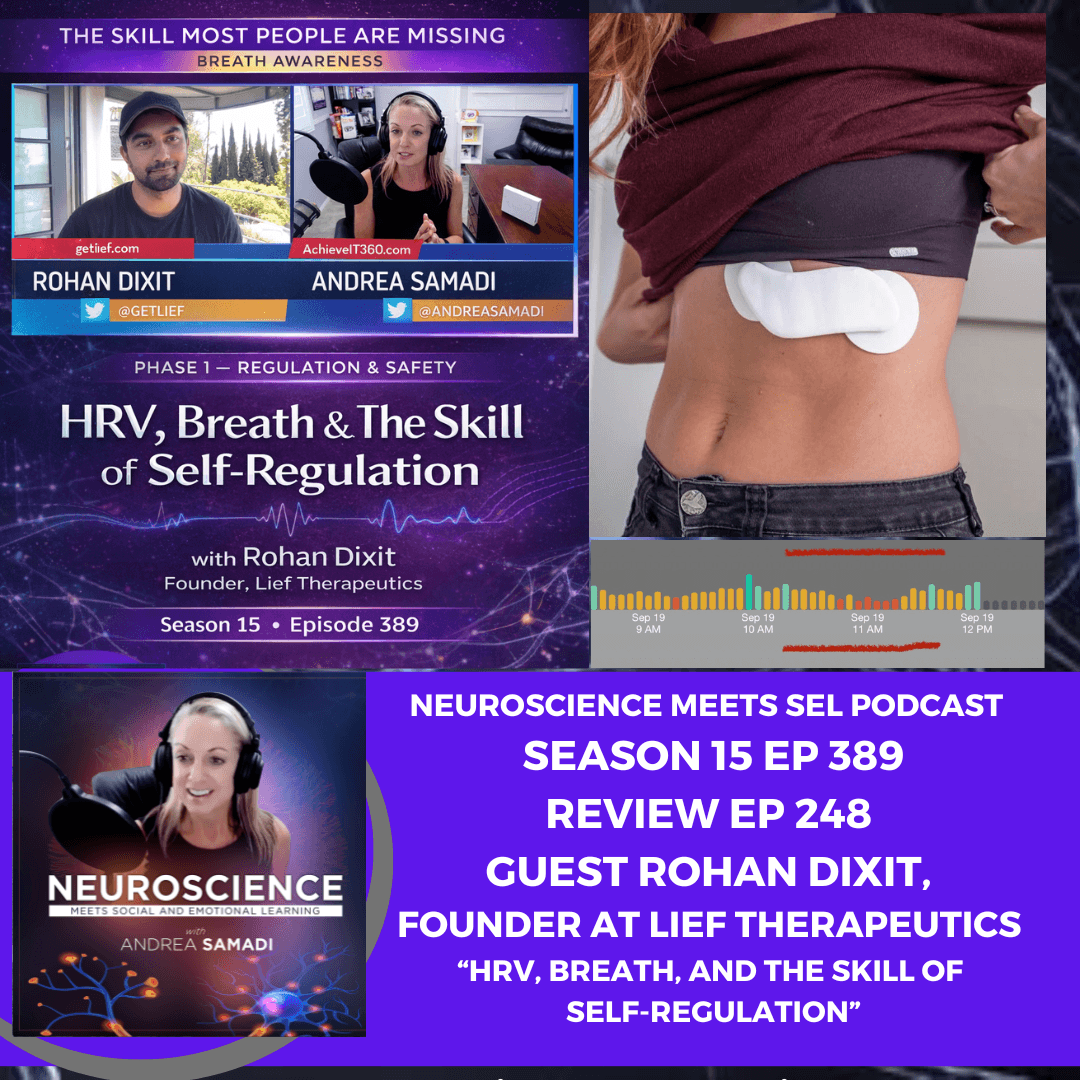
S15 Ep 394Breathe to Reset: How HRV Tech Reveals Hidden Stress (Rohan Dixit)
In this episode Andrea Samadi revisits her conversation with Rohan Dixit, founder of Leaf Therapeutics, exploring how heart rate variability (HRV) and breath awareness reveal hidden stress and support self-regulation. Learn practical breath techniques like the physiological sigh and slow breathing, plus tips to calm nighttime stress and improve sleep, so you can build lasting resilience without over-relying on technology. In Episode 389, we revisit our September 2022 interview with Rohan Dixit, founder of Lief Therapeutics, where we explore the science behind HRV, breath awareness, and how learning to regulate our nervous system can improve stress, sleep, and resilience. In this episode, we cover: ✔ What heart rate variability (HRV) is and why it’s one of the most important biomarkers for understanding stress, recovery, and resilience ✔ Why many people unknowingly hold their breath during stressful moments and how this impacts mental health and nervous system regulation ✔ How breath awareness can help shift the body from a stress response to a calmer, more regulated state ✔ How wearable technology like the Lief Therapeutics device can help people recognize stress patterns in real time ✔ Why improving breathing patterns before sleep can improve sleep quality and reduce anxiety the following day ✔ The connection between self-regulation, nervous system awareness, and long-term mental health ✔ Why learning to regulate stress through breathing is a skill that develops over time, not a one-time solution Welcome back to Season 15 of the Neuroscience Meets Social and Emotional Learning Podcast. I’m Andrea Samadi, and here we bridge the science behind social and emotional learning, emotional intelligence, and practical neuroscience—so we can create measurable improvements in well-being, achievement, productivity, and results. When we launched this podcast seven years ago, it was driven by a question I had never been taught to ask—not in school,not in business,and not in life: If results matter—and they matter now more than ever—how exactly are we using our brain to make these results happen? Most of us were taught what to do.Very few of us were taught how to think under pressure,how to regulate emotion,how to sustain motivation,or even how to produce consistent results without burning out. That question led me into a deep exploration of the mind–brain–results connection—and how neuroscience applies to everyday decisions, conversations, and performance. That’s why this podcast exists. Each week, we bring you leading experts to break down complex science and translate it into practical strategies you can apply immediately. Season 15 we’ve organized as a review roadmap, where each episode explores one foundational brain system—and each phase builds on the one before it. Season 15 Roadmap: Phase 1 — Regulation & Safety Phase 2 — Neurochemistry & Motivation Phase 3 — Movement, Learning & Cognition Phase 4 — Perception, Emotion & Social Intelligence Phase 5 — Integration, Insight & Meaning PHASE 1: REGULATION & SAFETY Staples: Sleep + Stress RegulationCore Question: Is the nervous system safe enough to learn? Anchor Episodes Episode 384[i] — Baland JalalHow learning begins: curiosity, sleep, imagination, creativity Episode 385[ii] — Bruce Perry“What happened to you?” — trauma, rhythm, relational safety Episode 387[iii] Sui WongAutonomic balance, lifestyle medicine, brain resilience Episode 389 Rohan DixitHRV, real-time self-regulation, nervous system literacy Episode 390 Dr. Kristen Holmes (Whoop)Recovery Metrics, physiological readiness Episode 391 Antonio ZadraSleep, dreaming, REM Integration EPISODE 389 — Rohan Dixit HRV, Real-Time Self-Regulation, and Nervous System Literacy In Phase 1: Regulation & Safety, we are asking one essential question:Is the nervous system safe enough to learn? So far, we’ve revisited Dr. Baland Jalal on curiosity, sleep, imagination, and creativity; Dr. Br

S15 Ep 393The Glucose Protocol: How Fueling Your Brain Restores Clarity with Dr. David Stephens
In this episode Andrea Samadi welcomes back Dr. David Stephens to explore his new book, The Glucose Protocol, and the science showing how targeted glucose can restore brain function, improve mental clarity, and reduce symptoms linked to diabetes, autoimmune disorders, and chronic stress. They break down the difference between glucose and other sweeteners, explain why the brain prioritizes survival over higher-order thinking during stress, and share practical strategies—like on-the-spot glucose dosing—to regain focus and cognitive performance. Dr. Stephens also discusses biomarkers, clinical observations, and upcoming practical products to make brain refueling easy, offering hopeful, science-based approaches to restore long-term brain health. Watch interview on YouTube here https://youtu.be/zv70S5fZh2I Today's EP 388 we’re welcoming Dr. Stephens back to the podcast to explore: The difference between glucose and other sugars Why blood sugar and brain glucose matter for cognitive performance What his newest research is revealing about brain restoration And how we can think more clearly about nutrition and brain health moving forward. Welcome back to Season 15 of the Neuroscience Meets Social and Emotional Learning Podcast. I’m Andrea Samadi, and here we bridge the science behind social and emotional learning, emotional intelligence, and practical neuroscience—so we can create measurable improvements in well-being, achievement, productivity, and results. When we launched this podcast seven years ago, it was driven by a question I had never been taught to ask—not in school,not in business,and not in life: If results matter—and they matter now more than ever—how exactly are we using our brain to make these results happen? Most of us were taught what to do.Very few of us were taught how to think under pressure,how to regulate emotion,how to sustain motivation,or even how to produce consistent results without burning out. That question led me into a deep exploration of the mind–brain–results connection—and how neuroscience applies to everyday decisions, conversations, and performance. That’s why this podcast exists. Each week, we bring you leading experts to break down complex science and translate it into practical strategies that we can all apply immediately. When the brain, body, and emotions are aligned, performance stops feeling forced—and starts to feel sustainable. Season 14 showed us what alignment looks like in real life. We looked at goals and mental direction, rewiring the brain, future-ready learning and leadership, self-leadership, which ALL led us to inner alignment. And now, Season 15 is about understanding how that alignment is built—so we can build it ourselves, using predictable, science-backed principles. Because alignment doesn’t happen all at once.It happens by using a sequence. And when we understand the order of that sequence —we can replicate it. By repeating this sequence over and over again, until magically (or predictably) we notice our results have changed. Season 15 we’ve organized as a review roadmap, where each episode explores one foundational brain system—and each phase builds on the one before it. Rather than focusing on outcomes, hacks, or motivation alone, we examine the core brain systems that must be stable before learning, performance, and leadership can emerge. Episodes are organized around a simple but powerful progression: Phase 1: Regulation & Safety — the nervous system foundation for learning Phase 2: Neurochemistry and Motivation—dopamine balance + Emotional regulation Phase 3: Cognition & Learning — attention, memory, and executive function Phase 4: Perception & Social Intelligence — how we read ourselves and others Phase 5: Integration & Meaning — how experience becomes insight and growth Each system builds upon the one beneath it, reminding us that when foundations are ignored, progress is temporary. When they are strengthened, performance becomes sustai
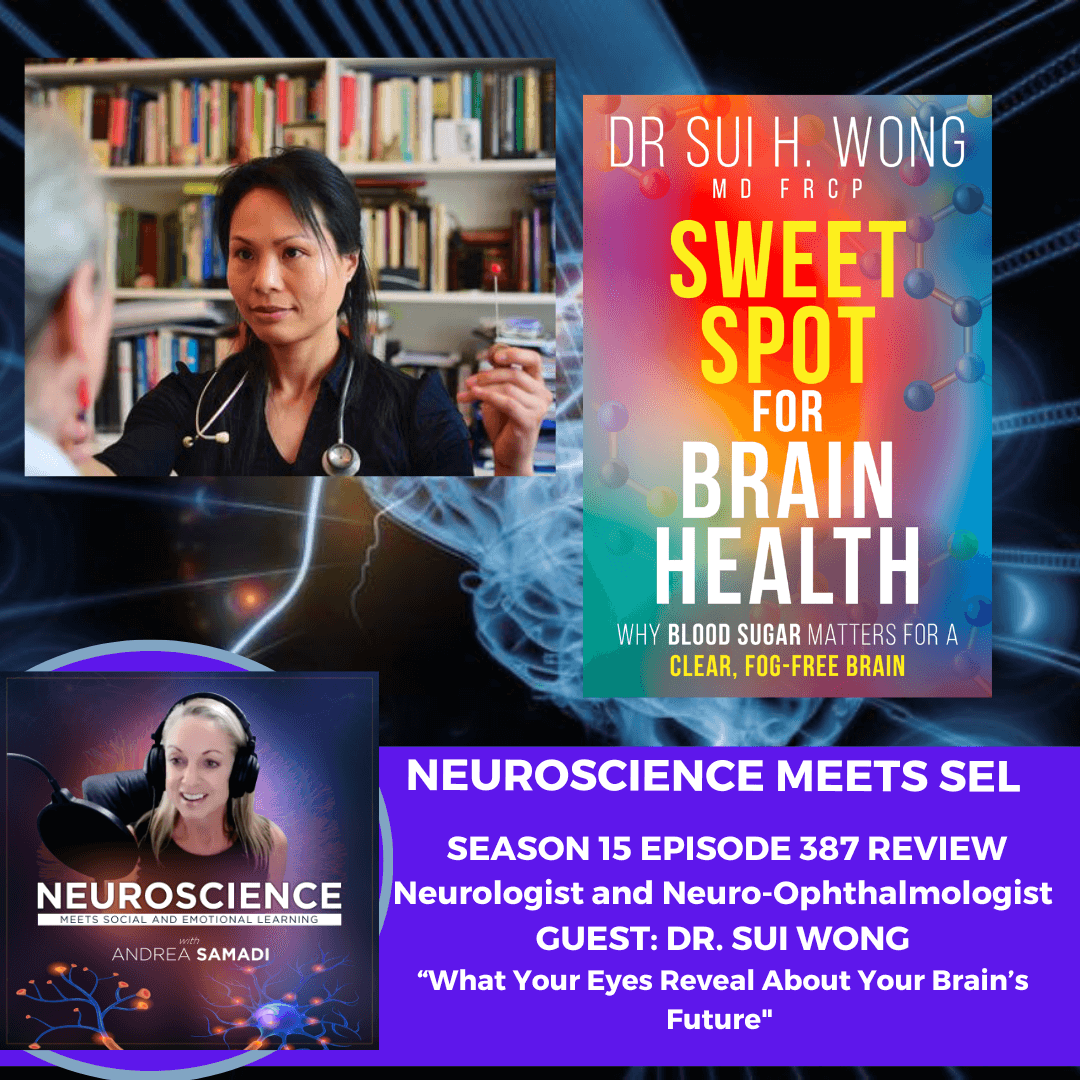
S15 Ep 392What Your Eyes Reveal About Your Brain's Future (Revisiting Dr. Sui Wong)
This episode revisits Dr. Sui Wong’s insights on how the eyes are neural tissue that can reveal early signs of brain, vascular, and metabolic issues, and reframes migraine as a common, often invisible neurological condition that causes brain fog and cognitive symptoms. Actionable takeaways include scheduling regular dilated eye exams, stabilizing blood sugar, prioritizing sleep and retinal blood flow, reducing digital strain, and tracking migraine triggers to prevent worsening symptoms. In today's review of EP 342 with Dr. Sui Wong from August 2024, we cover: • Why the eyes are considered an extension of the brain — and how the retina is neural tissue • How eye exams may provide early insight into overall neurological and vascular health • What drusen are, why small amounts can be age-related, and why monitoring retinal changes matters • The powerful idea that prevention begins before symptoms become severe • Why migraine is not “just a headache,” but a neurological condition affecting 1 in 7 people globally • The hidden symptoms of migraine — including brain fog, mood changes, word-finding difficulty, and cognitive slowing • Why migraine is a leading cause of disability in young women and often goes unrecognized • The connection between blood sugar regulation, sleep, stress, and neurological function • Practical ways to support long-term brain health through awareness, monitoring, and daily lifestyle habits • How small, consistent actions build cognitive resilience over time Welcome back to Season 15 of the Neuroscience Meets Social and Emotional Learning Podcast. I’m Andrea Samadi, and here we bridge the science behind social and emotional learning, emotional intelligence, and practical neuroscience—so we can create measurable improvements in well-being, achievement, productivity, and results. When we launched this podcast seven years ago, it was driven by a question I had never been taught to ask—not in school,not in business,and not in life: If results matter—and they matter now more than ever—how exactly are we using our brain to make these results happen? Most of us were taught what to do.Very few of us were taught how to think under pressure,how to regulate emotion,how to sustain motivation,or even how to produce consistent results without burning out. That question led me into a deep exploration of the mind–brain–results connection—and how neuroscience applies to everyday decisions, conversations, and performance. That’s why this podcast exists. Each week, we bring you leading experts to break down complex science and translate it into practical strategies you can apply immediately. When the brain, body, and emotions are aligned, performance stops feeling forced—and starts to feel sustainable. Season 14 showed us what alignment looks like in real life. We looked at goals and mental direction, rewiring the brain, future-ready learning and leadership, self-leadership, which ALL led us to inner alignment. And now, Season 15 is about understanding how that alignment is built—so we can build it ourselves, using predictable, science-backed principles. Because alignment doesn’t happen all at once.It happens by using a sequence. And when we understand the order of that sequence —we can replicate it. By repeating this sequence over and over again, until magically (or predictably) we notice our results have changed. Season 15 we’ve organized as a review roadmap, where each episode explores one foundational brain system—and each phase builds on the one before it. Season 15 Roadmap: Phase 1 — Regulation & Safety Phase 2 — Neurochemistry & Motivation Phase 3 — Movement, Learning & Cognition Phase 4 — Perception, Emotion & Social Intelligence Phase 5 — Integration, Insight & Meaning PHASE 1: REGULATION & SAFETY Staples: Sleep + Stress RegulationCore Question: Is the nervous system safe enough to learn? Anchor Episodes Episode 384[i] — Baland JalalHow learning begins: curiosity, sleep, imagin

S15 Ep 391Can AI Personalize Your Brain Health? Inside Brain.One's Protocols with Thoryn Stephens
In this episode Andrea Samadi interviews Thoryn Stevens, CEO and founder of Brain.One, about using AI, wearables, biomarkers and evidence-based micro-habits to create personalized brain-health protocols. Watch our full interview on YouTube here https://www.youtube.com/watch?v=r9UN9kev2CE or listen and follow the show notes here https://andreasamadi.podbean.com/e/can-ai-personalize-your-brain-health-inside-brainones-protocols/ What We Covered on EP 386 with Thoryn Stephens The Problem with Generic Wellness Advice Why most health advice fails to translate into sustained behavior change The gap between research findings and real-world application Why optimization must be systematic, not inspirational From Data to Daily Micro-Habits How Brain.One analyzes peer-reviewed research using AI Turning biometrics (HRV, sleep data, metabolic markers) into actionable protocols Why small, consistent micro-habits compound into long-term neuroplastic change Wearables & What Actually Matters The most misunderstood wearable metrics HRV, sleep architecture, and recovery as early indicators of cognitive health How to avoid becoming obsessive with numbers while still using data intelligently Dementia Prevention & Cognitive Longevity Evidence-based strategies inspired by the Lancet dementia prevention framework Why metabolic health and inflammation play a critical role in brain aging Prevention vs. reversal: when to start optimizing brain health Biological Bottlenecks to Human Potential Stress dysregulation as a performance limiter Sleep architecture and glymphatic clearance Metabolic flexibility and mitochondrial function Why emotional regulation remains foundational to cognitive performance AI in Health: Hype vs. Evidence What makes Brain.One’s system evidence-constrained How AI can scale personalized health protocols The future of data-driven behavioral optimization 🔑 Key Takeaway Lasting change doesn’t require radical overhauls. It requires precise, repeatable micro-adjustments — aligned with your biology. Optimization is not about perfection or obsession.It’s about awareness, alignment, and consistency. Welcome back to Season 15 of the Neuroscience Meets Social and Emotional Learning Podcast. I’m Andrea Samadi, and here we bridge the science behind social and emotional learning, emotional intelligence, and practical neuroscience—so you can create measurable improvements in well-being, achievement, productivity, and results. When we launched this podcast seven years ago, it was driven by a question I had never been taught to ask—not in school,not in business,and not in life: If results matter—and they matter now more than ever—how exactly are we using our brain to make these results happen? Most of us were taught what to do.Very few of us were taught how to think under pressure,how to regulate emotion,how to sustain motivation,or even how to produce consistent results without burning out. That question led me into a deep exploration of the mind–brain–results connection—and how neuroscience applies to everyday decisions, conversations, and performance. That’s why this podcast exists. Each week, we bring you leading experts to break down complex science and translate it into practical strategies you can apply immediatelyEach week, we bring you world-class researchers, clinicians, and performance innovators to break down complex science — and turn it into strategies you can use immediately. We’ve been reviewing past episodes for the past 2 seasons, but every now and then, when I see someone doing something innovative, I want to learn more. And today’s guest sits right at the intersection of biology, AI, and human potential. 🎙 GUEST INTRO For Episode 386, we’re joined by Thoryn Stephens, scientist, molecular biologist, data visionary, and Founder & CEO of Brain.One. Brain.One is an AI-powered health optimization platform designed to transform scientific research into
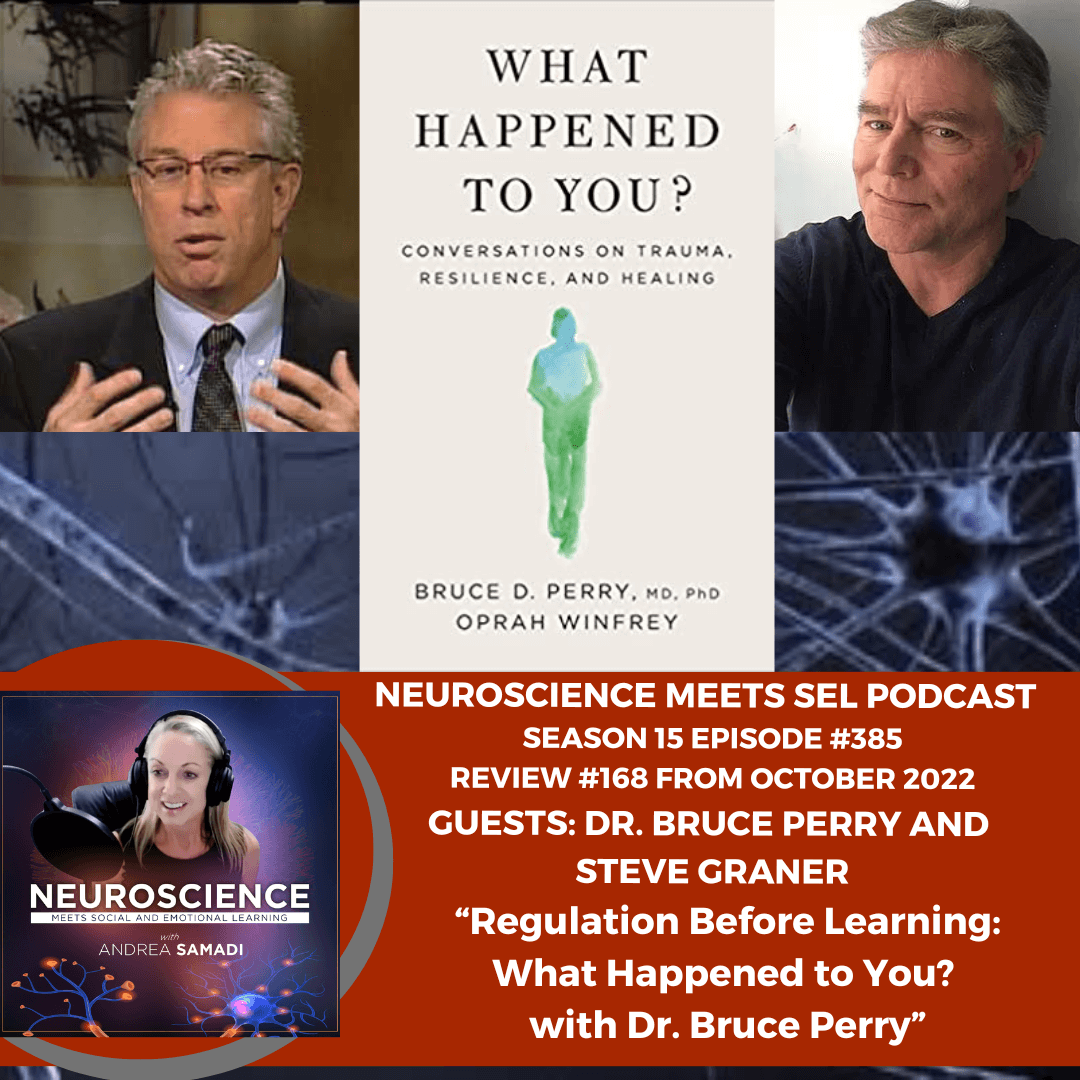
S15 Ep 390Safety First: Why a Regulated Brain Is the Key to Learning (Revisiting Dr. Bruce Perry)
In this episode Andrea Samadi revisits Season 15’s foundation with Dr. Bruce Perry to explore how safety, regulation, and patterned experience shape the brain’s capacity to learn and create. We examine why potential must be activated through repetition, rhythm, and low-threat environments, and how trauma, stress, or dysregulation block learning. Takeaways include practical steps for educators, parents, and leaders: prioritize nervous-system safety before instruction, use micro-repetition to build skills, and employ storytelling to make scientific ideas stick. This episode anchors Phase 1 of the season: regulation, rhythm, repetition, and relational safety as the prerequisites for sustainable performance and lasting change. This week, Episode 385—based on our review of Episode 168 recorded in October 2021—we explore: ✔ 1. Genetic Potential vs. Developed CapacityWe are born with extraordinary biological potential.But experience determines which neural systems become functional.The brain builds what it repeatedly uses. ✔ 2. The Brain Is Use-DependentLanguage, emotional regulation, leadership skills, motor precision—all are wired through patterned, rhythmic repetition. ✔ 3. Trauma, Regulation & LearningA dysregulated nervous system cannot efficiently learn.Safety, rhythm, and relational connection come before strategy. ✔ 4. “What Happened to You?” vs. “What’s Wrong with You?”Shifting from judgment to curiosity changes how we approach: Children Students Teams Ourselves ✔ 5. Early Experience Shapes Long-Term ExpressionDevelopmental inputs—especially patterned, early ones—determine which capacities are strengthened. ✔ 6. Repetition Builds ConfidenceConfidence is not a personality trait.It is neural circuitry built through structured repetition in safe environments. ✔ 7. Story Makes Science StickFrom Dr. Perry’s experience writing with Oprah:You can’t tell everybody everything you know.Impact comes from: One core idea Wrapped in story Delivered with restraint ✔ 8. Information Overload Weakens LearningDepth > VolumeClarity > DensityRetention > Impressive Data ✔ 9. Regulation Comes Before MotivationBefore goals.Before performance.Before achievement.The nervous system must feel safe. ✔ 10. Season 15’s Foundational QuestionIs the nervous system safe enough to learn? Welcome back to Season 15 of the Neuroscience Meets Social and Emotional Learning Podcast. I’m Andrea Samadi, and here we bridge the science behind social and emotional learning, emotional intelligence, and practical neuroscience—so we can create measurable improvements in well-being, achievement, productivity, and results. When we launched this podcast seven years ago, it was driven by a question I had never been taught to ask—not in school,not in business,and not in life: If results matter—and they matter now more than ever—how exactly are we using our brain to make these results happen? Most of us were taught what to do.Very few of us were taught how to think under pressure,how to regulate emotion,how to sustain motivation,or even how to produce consistent results without burning out. That question led me into a deep exploration of the mind–brain–results connection—and how neuroscience applies to everyday decisions, conversations, and performance. That’s why this podcast exists. Each week, we bring you leading experts to break down complex science and translate it into practical strategies you can apply immediately. If you’ve been with us through Season 14, you may have felt something shift. That season wasn’t about collecting ideas. It was about integrating these ideas into our daily life, as we launched our review of past episodes. Across conversations on neuroscience, social and emotional learning, sleep, stress, exercise, nutrition, and mindset frameworks—we heard from voices like Bob Proctor, José Silva, Dr. Church, Dr. John Medina, and others—one thing became clear: These aren’t separate tools that we are covering in each ep

S15 Ep 389How Learning Begins in the Brain: Sleep, Safety and Curiosity (Revisiting Dr. Baland Jalal)
Andrea Samadi revisits a conversation with neuroscientist Dr. Baland Jalal about how curiosity launched his career and how transitional sleep states fuel creativity. The episode explores sleep paralysis research and the hypnagogic window—the moments before sleep and after waking when the brain makes unexpected connections. This week, Episode 384—based on our review of Episode 224, recorded in June 2022—we’ll explore: ✔ Why learning, creativity, and curiosity depend on a regulated nervous system✔ How sleep—especially REM—creates the conditions for insight and problem-solving✔ What happens in the brain when focus shuts down and imagination turns on✔ Why safety, rhythm, and rest are prerequisites for learning—not rewards after it✔ How understanding sleep changes the way we approach performance, education, and growth Listeners learn practical tips for capturing insights at the edge of sleep, setting intentions before bed, and protecting morning silence to preserve creative flashes. The episode emphasizes that learning and creativity emerge best when the nervous system feels safe and regulated. This episode launches Season 15’s Phase 1 focus on regulation and safety, framing sleep, rhythm, and emotional regulation as the essential foundation for motivation, learning, and sustained performance. Welcome back to Season 15 of the Neuroscience Meets Social and Emotional Learning Podcast. I’m Andrea Samadi, and here we bridge the science behind social and emotional learning, emotional intelligence, and practical neuroscience—so you can create measurable improvements in well-being, achievement, productivity, and results. When we launched this podcast seven years ago, it was driven by a question I had never been taught to ask—not in school,not in business,and not in life: If results matter—and they matter now more than ever—how exactly are we using our brain to make these results happen? Most of us were taught what to do.Very few of us were taught how to think under pressure,how to regulate emotion,how to sustain motivation,or even how to produce consistent results without burning out. That question led me into a deep exploration of the mind–brain–results connection—and how neuroscience applies to everyday decisions, conversations, and performance. That’s why this podcast exists. Each week, we bring you leading experts to break down complex science and translate it into practical strategies you can apply immediately. If you’ve been with us through Season 14, you may have felt something shift. That season wasn’t about collecting ideas.It was about integrating these ideas into our daily life. Across conversations on neuroscience, social and emotional learning, sleep, stress, exercise, nutrition, and mindset frameworks—from voices like Bob Proctor, José Silva, Dr. Church, Dr. John Medina, and others—one thing became clear: These aren’t separate tools.They’re parts of one operating system. When the brain, body, and emotions are aligned, performance stops feeling forced—and starts to feel sustainable. Season 14 showed us what alignment looks like in real life. And now we move into Season 15 that is about understanding how that alignment is built—so we can build it ourselves, using predictable, science-backed principles. Because alignment doesn’t happen all at once.It happens by using a sequence. By repeating this sequence over and over again, until magically (or predictably) we notice our results have changed. So this season, we’re revisiting past conversations—not to repeat them—but to understand how they fit together, so we can replicate them ourselves. Because the brain doesn’t develop skills in isolation.Learning doesn’t happen in isolation.And neither does performance, resilience, or well-being. The brain operates as a set of interconnected systems. When one system is out of balance, everything else is affected. So Season 15 we’ve organized as a review roadmap, where each episode explores one foundational brain system—and each

S15 Ep 388Sales Mastery is Not a Tactic: It Requires Decision, Persistence and the Power of the Mastermind PART 3 Think and Grow Rich for Sales
Episode 383 applies Napoleon Hill’s timeless principles to sales, showing how decision, persistence, and the mastermind turn inner preparation into consistent results. Learn practical, neuroscience-backed actions to make clear decisions, sustain effort through resistance, and multiply success by aligning with the right people. Welcome back to Season 15 of The Neuroscience Meets Social and Emotional Learning Podcast — where we bridge the science behind social and emotional learning, emotional intelligence, and practical neuroscience to create measurable improvements in well-being, achievement, productivity, and results. I’m Andrea Samadi. And seven years ago, when we launched this podcast, it was driven by a question I had never been taught to ask — either in school, in business, or in life: If productivity and results matter — and they matter now more than ever — how exactly are we using our brain to make them happen? Most of us were never taught how to work with our brain instead of against it. We were taught what to do — but not how to think, decide, persist, or align with others in ways that produce consistent results. That question pulled me into a decade-long exploration of the mind–brain–results connection — and how neuroscience can be applied to everyday decisions, conversations, and performance. That’s why this podcast exists. Each week, I bring you the world’s leading experts so we can break down complex science — and turn it into practical strategies you can apply immediately for predictable, science-backed outcomes. And that brings us to today’s Episode 383 — where we are going back to reconnect to a powerful 6-part series we originally recorded in 2022 around a book that has shaped achievement for generations: Think and Grow Rich by Napoleon Hill. Connecting Back to Our 6-Part Think and Grow Rich Series[i] We used that book as a framework to launch our year, back in 2022, walking chapter by chapter through the principles my mentor, Bob Proctor, studied for over 50 years of his life. Not casually. Not occasionally. But as a daily discipline for creating results — in business, health, relationships, and purpose. That 6-part series was about the basics — the inner mechanics that govern all achievement. And those basics still matter just as much today. What we’re doing now is not revisiting this material because it’s old. We’re revisiting it because it’s timeless. PART 3 — From Decision to Momentum Decision • Persistence • The Power of the Mastermind In Part 3 today, of our Think and Grow Rich for Sales study, we move from inner preparation to outer execution. Up to this point, the earlier chapters have shaped belief, certainty, vision, and authority. But results are not created by preparation alone. They are created when inner mastery is followed by decisive action, sustained effort, and collective intelligence. This is where most people stall—and where sales mastery is forged. Decision We begin with Decision, the moment where intention becomes irreversible.Indecision leaks certainty. Decision creates momentum. Successful people decide quickly and change course slowly. In sales, this means committing to your value, your process, and your outcome before the conversation begins—so hesitation never enters the room. Persistence Next comes Persistence, the force that carries decisions through resistance, delay, and rejection. Persistence is not intensity—it is refusal to quit when progress is invisible. In sales, persistence keeps conversations alive, turns “no” into information, and allows momentum to compound long after others have disengaged. The Power of the Mastermind Finally, we arrive at The Power of the Mastermind—where individual effort becomes exponential. When two or more minds unite in harmony around a definite purpose, a third force emerges: clarity, creativity, and certainty launch beyond individual thinking. This chapter reveals why no great achievement—and no sustained sales success—is built a

S14 Ep 387Sales Mastery From the Inside Out: Autosuggestion, Authority, Imagination and Execution PART 2 (Think and Grow Rich for Sales)
Season 14, Episode 382 reviews chapters 4–7 of Think and Grow Rich for Sales, showing how autosuggestion, specialized knowledge, imagination, and organized planning transform inner belief into consistent sales results. This episode explains practical steps to program confidence, build authority, paint future outcomes for buyers, and design repeatable sales systems that create certainty and close deals more naturally. Today EP 382 PART 2 of our Think and Grow Rich for Sales Series, we will cover: ✔ Chapter 4: Autosuggestion: How Your Inner Script Becomes Your Outer Results Sales Application (Practical Use) Pre-call priming: Speak your outcome out loud before every call (“I bring clarity and certainty to this conversation.”) Language audit: Eliminate soft phrases (“I think,” “hopefully,” “maybe”) from your sales vocabulary. Repetition builds belief: Read your sales goals twice daily as if already achieved. Emotion matters: Read goals with feeling—belief is emotional, not intellectual. Interrupt negative mindsets: Replace “They won’t buy” with “I help people make confident decisions.” Consistency over intensity: Daily repetition beats occasional motivation. Key Insight: Belief is built deliberately, not accidentally. ✔ Chapter 5: Specialized Knowledge: From Information to Authority 5 Sales Application Tips Organize your expertise into simple frameworks buyers can easily follow. Know their world better than they do—pain points, language, pressures, timing. Stop overloading: Say less, but say it with authority. Borrow brilliance: Use mentors, subject experts, and masterminds to extend your knowledge. Teach while you sell: Authority grows when you help buyers understand, not when you impress them. Key Insight: You are not selling information. You are selling guidance. ✔ Chapter 6: Imagination: Where Sales Innovation Is Born 7 Sales Application Tips Paint the “after” picture: Describe life, work, or outcomes post-solution. Use sensory language: Help them see, feel, and experience the result. Rehearse success aloud: Walk the buyer through implementation as if it’s already happening. Normalize the decision: Familiarity reduces fear and resistance. Tell transformation stories: Stories activate imagination faster than facts. Slow the moment down: Imagination needs space—don’t rush the close. Anchor certainty visually: “Imagine six months from now…” becomes a mental commitment. Key Insight: People don’t buy solutions. They buy who they become after the solution. ✔ Chapter 7: Organized Planning: Putting Desire Into Action 6 Sales Application Tips Create a repeatable sales process you trust and follow consistently. Plan the work—then work the plan, even when results lag. Refine the plan, not the goal when setbacks occur. Prepare for objections before they arise—confidence comes from readiness. Track behaviors, not just outcomes (calls, follow-ups, conversations). Use structure to eliminate emotion-based decisions during the sales cycle. Key Insight: A plan creates certainty. Certainty creates momentum. Welcome back to our final series of SEASON 14 of The Neuroscience Meets Social and Emotional Learning Podcast, where we connect the science-based evidence behind social and emotional learning and emotional intelligence training for improved well-being, achievement, productivity and results—using what I saw as the missing link (since we weren’t taught this when we were growing up in school), the application of practical neuroscience. I’m Andrea Samadi, and seven years ago, launched this podcast with a question I had never truly asked myself before: (and that is) If productivity and results matter to us—and they do now more than ever—how exactly are we using our brain to make them happen? Most of us were never taught how to apply neuroscience to improve productivity, results, or well-being. About a decade ago, I became fascinated by the mind-brain-results connection—and how

S14 Ep 386Think and Grow Rich for Sales: Why Thought, Desire, and Faith Create Results PART 1
Episode 381 reframes Napoleon Hill’s Think and Grow Rich for sales professionals, reviewing Chapters 1–3 to show how thought, desire, and faith create predictable sales results. Andrea Samadi connects these timeless principles to practical steps—how to set burning goals, build unwavering belief through repetition, and transfer certainty to buyers. Listeners will get actionable frameworks (a five-step belief plan and the six steps to impress desire) and a clear roadmap for aligning mindset with sales execution, plus a preview of the next episode continuing the series. Welcome back to our final series of SEASON 14 of The Neuroscience Meets Social and Emotional Learning Podcast, where we connect the science-based evidence behind social and emotional learning and emotional intelligence training for improved well-being, achievement, productivity and results—using what I saw as the missing link (since we weren’t taught this when we were growing up in school), the application of practical neuroscience. I’m Andrea Samadi, and seven years ago, launched this podcast with a question I had never truly asked myself before: (and that is) If productivity and results matter to us—and they do now more than ever—how exactly are we using our brain to make them happen? Most of us were never taught how to apply neuroscience to improve productivity, results, or well-being. About a decade ago, I became fascinated by the mind-brain-results connection—and how science can be applied to our everyday lives. That’s why I’ve made it my mission to bring you the world’s top experts—so together, we can explore the intersection of science and social-emotional learning. We’ll break down complex ideas and turn them into practical strategies we can use every day for predictable, science-backed results. Connecting Back to Our 6-Part Think and Grow Rich Series (2022) For today’s EP 381, we are connecting back to our 6-PART Series from 2022[i], where we covered the well-known book, Think and Grow Rich by Napoleon Hill, to make 2022 our best year ever. Today we will cover: ✔ Chapter 1: The Power of Thought: A 5 STEP Plan to Improve Sales (Outer World) by Improving Your Thoughts (Inner World) ✔ Chapter 2: Desire With a 6 STEP Plan to Achieve ANY Goal ✔ Chapter 3: Faith With 3 Ways to Build Unwavering Faith That Will Change Your Life Back in 2022, we didn’t just read Think and Grow Rich—we lived inside it as we launched 2022. Over a 6-part podcast series that began the beginning of January 2022, we walked through this book chapter by chapter, not as theory, but as a personal operating system for growth, performance, and results. This series will always be special for me, as I had heard that my mentor, who inspired me to study this book, Bob Proctor, became ill while I was writing the last episode in the series PART 6. He passed away before it was released, and I’ll always remember this episode series, connected to the many people, globally, that he inspired through his work. At the time, the focus of our 6 PART Series was broad. We covered: Personal development Mindset mastery Vision, purpose, and belief We covered the BASICS of this book that Bob Proctor studied for his entire lifetime (over 50 years) that can be applied to whatever it is that you want to create with your life. Today, we are going to look at this timeless piece of knowledge, through a new lens. What we’re covering today—Think and Grow Rich for Sales—is not new material. It’s the application of this series, towards a specific discipline. You could apply this book to any discipline, but this one, I have wanted to cover for a very long time. How the 6-Part Series Maps DIRECTLY to Sales Mastery Here’s the reframe that matters: Every principle we covered in 2022 becomes a sales advantage when applied correctly. In order for me to have gained this understanding, I have to give credit, where credit is due here. I would not have been able to cover our 2022 series without following Paul Martine

S14 Ep 385Sleep, Learning and the Brain: Why Performance Collapses Without Rest PART 3 with Dr. Shane Creado
In this Season 14 review (Part 3) Andrea revisits key insights from Dr. Shane Creado on the critical link between sleep, concussions and performance. The episode explains how even mild or repeated head impacts and sleep deprivation damage the same brain regions that support learning, memory, decision-making and emotional regulation, and how one all‑nighter can reduce hippocampal learning capacity by around 40%. Practical takeaways include treating sleep as neurological recovery (7–9 hours), protecting the brain after head jolts, avoiding late alcohol and screens, and prioritizing consistent sleep routines to restore learning, resilience and long‑term brain health for athletes, students and professionals. Welcome back to SEASON 14 of The Neuroscience Meets Social and Emotional Learning Podcast, where we connect the science-based evidence behind social and emotional learning and emotional intelligence training for improved well-being, achievement, productivity and results—using what I saw as the missing link (since we weren’t taught this when we were growing up in school), the application of practical neuroscience. I’m Andrea Samadi, and seven years ago, launched this podcast with a question I had never truly asked myself before: (and that is) If productivity and results matter to us—and they do now more than ever—how exactly are we using our brain to make them happen? Most of us were never taught how to apply neuroscience to improve productivity, results, or well-being. About a decade ago, I became fascinated by the mind-brain-results connection—and how science can be applied to our everyday lives. That’s why I’ve made it my mission to bring you the world’s top experts—so together, we can explore the intersection of science and social-emotional learning. We’ll break down complex ideas and turn them into practical strategies we can use every day for predictable, science-backed results. As we are nearing the end of Season 14 here, it has been about reflection as we have looked back and reviewed past interviews. Our goal has not been about nostalgia, or remembering these interviews, the goal has been about integrating what we have learned. Taking what we know, aligning it with how the brain actually functions, and applying it consistently enough to change outcomes. And if there’s one thing this season has reinforced, it’s this: Sustainable success isn’t built on intensity or focus alone—it’s built on alignment. As we move into what’s next, (Season 15) the focus shifts from understanding this alignment to bringing this alignment into a tangible, physical form, or embodiment. Not more information—but better execution. After hundreds of conversations with neuroscientists, educators, peak performers, and thought leaders, one truth keeps resurfacing— lasting success is never about doing more. It’s about alignment. Alignment between how the brain actually works, how emotions drive behavior, and how daily habits compound over time. Season 14 has been about stepping back—not to reminisce, but to integrate what we have learned into our current life. I knew the minute that I was sent a couple of video clips from our past episodes, that I had forgotten about, that while I thought I had implemented the ideas from our past guests, I had some work to go myself. For this reason, we spent Season 14 and will resume with Season 15 next January, reviewing past episodes, with the goal of noticing what we have now aligned, that’s bringing us results in our daily life. Core Reflection When we started this podcast 7 years ago, the goal was simple: bridge neuroscience research with practical strategies people could actually use. What I didn’t fully appreciate then—what only became clear through repetition, reflection, and real-life application—is that information alone doesn’t create change. Understanding the brain doesn’t matter if we ignore what to do with the information we release each week: improving our sleep reducing our stress pract

S14 Ep 384Sleep Is Your Superpower: Optimizing Brain Health & Performance with The Silva Method PART 2 with Dr. Shane Creado
Join Andrea Samadi as she reviews Dr. Shane Creado’s insights on why sleep is a core pillar of brain health, how chronic sleep deprivation harms reaction time, inflammation, pain perception, and why children pay the highest price. Learn practical sleep strategies—consistent schedules, light management, wind-down routines—and how the Silva Method’s mind-training can deepen restorative sleep for athletes, high performers, and families. Welcome back to SEASON 14 of The Neuroscience Meets Social and Emotional Learning Podcast, where we connect the science-based evidence behind social and emotional learning and emotional intelligence training for improved well-being, achievement, productivity and results—using what I saw as the missing link (since we weren’t taught this when we were growing up in school), the application of practical neuroscience. I’m Andrea Samadi, and seven years ago, launched this podcast with a question I had never truly asked myself before: (and that is) If productivity and results matter to us—and they do now more than ever—how exactly are we using our brain to make them happen? Most of us were never taught how to apply neuroscience to improve productivity, results, or well-being. About a decade ago, I became fascinated by the mind-brain-results connection—and how science can be applied to our everyday lives. That’s why I’ve made it my mission to bring you the world’s top experts—so together, we can explore the intersection of science and social-emotional learning. We’ll break down complex ideas and turn them into practical strategies we can use every day for predictable, science-backed results. This week, we move onto PART 2 of our review of EP 72[i] with Shane Creado, MD and his book Peak Sleep Performance for Athletes recorded back in July of 2020. In PART 1[ii], we covered: How strategic napping, morning brain habits, and even the Silva Method all work together to reset your brain, boost performance, and transform your health from the inside out. Today, PART 2 we will continue with our review, diving a bit deeper into sleep deprivation and its impact of performance (whether you are an athlete, or just someone looking to improve productivity). PART 3, next week, we will go a bit deeper into the impacts of concussions and brain injuries on our sleep and performance. Just a reminder: Dr. Creado is a double board-certified sleep medicine doctor and psychiatrist who practices functional sleep medicine, integrative psychiatry, and sports psychiatry. He brings all of these specialties together to uncover the underlying factors that sabotage our sleep and then treats them comprehensively, helping people to achieve their health and performance goals with sleep at the forefront As we work through our reviews, we will spend a considerable amount of time on this important health staple that’s scientifically proven to boost our physical and mental health. For today’s EP 379, and PART 2 of our review of our 2020 interview with Dr. Shane Creado, we will cover: ✔ Sleep as a core pillar of health according to Dr. Shane Creado, author of Peak Sleep Performance for Athletes. ✔ Sleep deprivation is a national crisis and kid’s pay the highest price. ✔ 7 Well-Known Tips for Improving Sleep ✔ Applying the Silva Method to Reset and Improve Our Sleep ✔ Important sleep tips for athletes and high performers Let’s go back to 2020 and revisit what Dr. Creado had to say about sleep. CLIP 1 — Why Sleep Is Non-Negotiable for Brain Health Short Explanation:In Clip 1, Dr. Shane Creado explains that sleep is a foundational pillar of brain health, equal in importance to exercise and nutrition. He emphasizes that without optimizing sleep, it is impossible to truly optimize learning, emotional regulation, focus, or performance. Dr. Creado highlights that chronic sleep deprivation is widespread in the U.S., often unnoticed, and especially damaging for children—where lack of deep sleep suppresses growth hormone, increases obesit

S14 Ep 383Unlock Peak Performance with Strategic Napping — Dr. Shane Creado's Sleep Research Combined with The Silva Method
Episode 378 revisits Dr. Shane Creado’s science-driven advice on sleep, strategic napping, and why sleep is foundational for health, hormones, immunity, and performance. Learn practical nap protocols (10–20 minutes or 90-minute recovery naps), timing, environment tips, and how to protect your morning from cortisol-spiking habits like checking phones. The episode also shows how combining a short nap with the Silva Method — setting an intention and entering alpha — can boost creativity, insight, and problem-solving. It concludes with actionable routines to improve sleep consistency, support shift workers, and make sleep a strategy for better productivity and well-being. ✔Learn practical nap protocols (10–20 minutes or 90-minute recovery naps), timing, environment tips, and how to protect your morning from cortisol-spiking habits like checking phones.✔The episode also shows how combining a short nap with the Silva Method — setting an intention and entering alpha — can boost creativity, insight, and problem-solving. ✔ It concludes with actionable routines to improve sleep consistency, support shift workers, and make sleep a strategy for better productivity and well-being. Welcome back to SEASON 14 of The Neuroscience Meets Social and Emotional Learning Podcast, where we connect the science-based evidence behind social and emotional learning and emotional intelligence training for improved well-being, achievement, productivity and results—using what I saw as the missing link (since we weren’t taught this when we were growing up in school), the application of practical neuroscience. I’m Andrea Samadi, and seven years ago, launched this podcast with a question I had never truly asked myself before: (and that is) If productivity and results matter to us—and they do now more than ever—how exactly are we using our brain to make them happen? Most of us were never taught how to apply neuroscience to improve productivity, results, or well-being. About a decade ago, I became fascinated by the mind-brain-results connection—and how science can be applied to our everyday lives. That’s why I’ve made it my mission to bring you the world’s top experts—so together, we can explore the intersection of science and social-emotional learning. We’ll break down complex ideas and turn them into practical strategies we can use every day for predictable, science-backed results. This week, in our review of EP 72 with Shane Creado, MD and his book Peak Sleep Performance for Athletes and will learn: How strategic napping, morning brain habits, and even the Silva Method all work together to reset your brain, boost performance, and transform your health from the inside out. Clip 1: The Science of Strategic Napping In Clip 1, Dr. Shane Creado explains why every cell in the body follows its own circadian rhythm—and why humans were historically wired for polymodal sleep, with natural dips in alertness that make afternoon naps biologically appropriate.You’ll learn: Why the “post-lunch crash” is actually a melatonin rise, not just fatigue Why old advice to “avoid naps” is outdated How short, intentional naps can boost alertness, learning, mood, and performance The simple rules behind strategic napping: length, timing, and environmentThis clip lays the groundwork for using naps as a tool—not a crutch—for better brain function. Clip 2: Your Morning Cortisol Curve & Hidden Sleep Dangers Clip 2 shifts the focus to the first moments of your day.Dr. Creado warns that checking your phone the moment you wake up spikes cortisol and sends your brain into danger mode, increasing anxiety and disrupting emotional regulation for the entire day.You’ll also learn: Why shift work fragments DNA Why the WHO classifies shift work as a possible carcinogen How sleep protects your hormones, immune system, gut health, and long-term agingThis clip reinforces that sleep is foundational biology, not optional or replaceable. How This All Connects to The Silva Method We clo

S14 Ep 382Half a Million and Just Getting Started: Lessons from 7 Years of Neuroscience Meets SEL
Andrea Samadi reflects on seven years hosting the Neuroscience Meets SEL podcast and celebrates reaching 500,000 downloads. She shares seven strategies—clarifying mission and vision, defining the audience, setting measurable goals, creating systems, staying mission-driven, building partnerships, and building momentum—and eight personal lessons learned, including the power of practice, research, adaptation, and praxis. This episode offers practical, science-backed guidance for anyone looking to apply neuroscience to improve productivity, well-being, and long-term results. On today's episode #377, we cover a break from our interviews, with a celebration episode! ✔ 7 Strategies that took our podcast from 0-500,000 downloads (including clarifying our mission, vision, defining our audience, setting measurable goals, creating systems, staying mission-driven, and building partnerships). ✔ 8 Personal Lessons learned over the past 7 years (including the power of spaced repetition, research, adaptation and praxis). Welcome back to SEASON 14 of The Neuroscience Meets Social and Emotional Learning Podcast, where we connect the science-based evidence behind social and emotional learning and emotional intelligence training for improved well-being, achievement, productivity and results—using what I saw as the missing link (since we weren’t taught this when we were growing up in school), the application of practical neuroscience. I’m Andrea Samadi, and seven years ago, launched this podcast with a question I had never truly asked myself before: (and that is) If productivity and results matter to us—and they do now more than ever—how exactly are we using our brain to make them happen? Most of us were never taught how to apply neuroscience to improve productivity, results, or well-being. About a decade ago, I became fascinated by the mind-brain-results connection—and how science can be applied to our everyday lives. That’s why I’ve made it my mission to bring you the world’s top experts—so together, we can explore the intersection of science and social-emotional learning. We’ll break down complex ideas and turn them into practical strategies we can use every day for predictable, science-backed results. For today’s EP #377 we will take a break from our interview reviews, and look back over the past 7 years, and 14 Seasons, as we hit an important milestone in the podcasting world, our 500,000th download. I remember when we hit the 300,000th marker, back in March 2023[i] we reflected back on the lessons learned in our first 4 years of hosting this podcast. I remember looking at the next milestone of half a million, thinking it was such a distance from where we currently were. It just took 3 years to get here, and now we have our eye on the next 500,000 downloads, which from here, looks like a lifetime away. As we reflect back over the past 7 years, many of our strategies remain the same as when we first began. Some strategies we did have to change. We reviewed some of these concepts on EP 279[ii] back in March 2023. As we review what got us here, I think that these strategies can be applied to anything we are doing, with a long-term vision. 7 STRATEGIES WE USED TO HIT THE 500K DOWNLOAD MILESTONE 1. Know Your Mission (What You’re Doing) The mission of the Neuroscience Meets Social and Emotional Learning podcast is to bridge the gap between neuroscience research and practical applications in education, business, and personal development. The podcast shares insights, strategies, and best practices to enhance learning, performance, and well-being by integrating neuroscience (which we like to make simple) and connecting it to social and emotional skills (SEL). Our goal is to provide valuable information listeners can apply in their work and personal lives to achieve peak performance and overall self-improvement, with a deeper understanding of how our brain works — something many of us were never taught in school. When the missio

S14 Ep 381Move, Eat, Connect: 3 Science-Backed Keys to Brain Health PART 2 with Dr. John Ratey
In this Season 14 review (episode 376) Andrea Samadi revisits highlights from her interview with Dr. John Ratey about the science of exercise, nutrition, and social connection for brain health and longevity. The episode explains Peter Attia's rule for foundational fitness, warns against sugar dependence and fat phobia, and presents the three biggest levers for healthy aging: exercise, diet, and social connection, plus practical tips to track and apply these habits. Takeaway: prioritize consistent movement, whole foods, and meaningful connection to boost mood, memory, and overall well-being. On today's episode #376, we review PART 2 of our 2021 interview with Dr. John Ratey and will learn: ✔ 3 Science-backed keys to brain health: Exercise, Nutrition and Connection ✔ What is Attia's Rule that allows us to dive deep into diet and nutrition? ✔ Practical Tips for improving consistent movement, our diet and social connection to boost overall well-being and brain health. Welcome back to SEASON 14 of The Neuroscience Meets Social and Emotional Learning Podcast, where we connect the science-based evidence behind social and emotional learning and emotional intelligence training for improved well-being, achievement, productivity and results—using what I saw as the missing link (since we weren’t taught this when we were growing up in school), the application of practical neuroscience. I’m Andrea Samadi, and seven years ago, launched this podcast with a question I had never truly asked myself before: (and that is) If productivity and results matter to us—and they do now more than ever—how exactly are we using our brain to make them happen? Most of us were never taught how to apply neuroscience to improve productivity, results, or well-being. About a decade ago, I became fascinated by the mind-brain-results connection—and how science can be applied to our everyday lives. That’s why I’ve made it my mission to bring you the world’s top experts—so together, we can explore the intersection of science and social-emotional learning. We’ll break down complex ideas and turn them into practical strategies we can use every day for predictable, science-backed results. Episode 376: PART 2 Featuring Dr. John Ratey For today’s Episode 376, we continue with PART 2 of our review with Dr. John Ratey, covering the first health staple that we know is scientifically proven to boost our physical and mental health: exercise. We first met Dr. Ratey on Episode 116[i] (back in March 2021) on his book “The Revolutionary New Science of Exercise and the Brain.” Dr. Ratey is also an Associate Clinical Professor of Psychiatry at Harvard Medical School and an internationally recognized expert in Neuropsychiatry. Dr. Ratey has published over 60 peer-reviewed articles and 11 books in 17 languages. You’ll notice that around the time of the pandemic, in 2020, our interviews took a turn towards health and wellness, and to stay on track, I created a framework of our Top 5 Health Staples on Episode 87[ii], which eventually evolved into our Top 6 Health Staples. 🎧 Listen to Episode 87:The Top 5 Brain Health and Alzheimer’s Prevention Strategies[iii] 🌐 Learn more about Dr. Ratey:www.johnratey.com We also did a Deep Dive into Dr. Ratey’s books 🎧 Listen to Episode 118[iv]: A Deep Dive into Dr. Ratey’s books, Spark, Go Wild and Driven to Distraction. Before we go into Dr. Ratey’s first clip, with the thoughts of debating diet plans or supplements, (a broad and deep topic) Dr. Peter Attia[v] the author of the book The Science and Art of Longevity suggests we first get our “exercise house in order.” He argues that until we can do the following, our time is better spent building foundational fitness. For those of us who want to dive into this topic, he asks us to do the following, which has been coined as: Attia’s Rule. Dead hang for 1 minute Wall sit for 2 minutes Deadlift your body weight for 10 reps Achieve a VO₂ max at or above the 75th percentile As Dr. Attia

S14 Ep 380How Exercise Primes the Brain: Insights from Dr. John Ratey
Season 14, episode 375 reviews episode 116 with Dr. John Ratey, exploring how exercise and lifestyle shape brain health and learning. The episode highlights Naperville’s Zero Hour PE case study, explains how physical activity boosts attention and academic performance, and introduces BDNF (brain-derived neurotropic factor) as “miracle grow” for the brain. Practical takeaways include exercising before challenging work or school, prioritizing low-glucose nutrition, using hormesis (fasting, intense exercise, sauna) to increase resilience, and improving sleep and stress management to support cognitive health. On today's episode #375, we review our 2021 interview with Dr. John Ratey and will learn: ✔ How physical activity boosts attention and academic performance to improve results at school or in the workplace. ✔ What should we all understand about BDNF (brain-derived neurotropic factor) also known as “miracle grow” for the brain. ✔ How to build a faster, stronger, more resilient brain with exercise, nutrition, and with understanding hormesis. Welcome back to SEASON 14 of The Neuroscience Meets Social and Emotional Learning Podcast, where we connect the science-based evidence behind social and emotional learning and emotional intelligence training for improved well-being, achievement, productivity and results—using what I saw as the missing link (since we weren’t taught this when we were growing up in school), the application of practical neuroscience. I’m Andrea Samadi, and seven years ago, launched this podcast with a question I had never truly asked myself before: (and that is) If productivity and results matter to us—and they do now more than ever—how exactly are we using our brain to make them happen? Most of us were never taught how to apply neuroscience to improve productivity, results, or well-being. About a decade ago, I became fascinated by the mind-brain-results connection—and how science can be applied to our everyday lives. That’s why I’ve made it my mission to bring you the world’s top experts—so together, we can explore the intersection of science and social-emotional learning. We’ll break down complex ideas and turn them into practical strategies we can use every day for predictable, science-backed results. Episode 375: Featuring Dr. John Ratey For today’s Episode 375, we continue with our review of past episodes as we make connections to prior learning with whatever it is that we are currently working on this year. I’ll create a roadmap at the end of this season so this pathway will make sense to us (I hope!) as we piece together important parts of our success puzzle and begin to bring them to life. You’ll notice that around the time of the pandemic, in 2020, our interviews took a turn towards health and wellness, and to stay on track, I created a framework of our Top 5 Health Staples on Episode 87[i], which eventually evolved into our Top 6 Health Staples. Today, we covering the first health staple of exercise, jumping to Episode 116[ii] on “The Revolutionary New Science of Exercise and the Brain” with best-selling author Dr. John Ratey. Dr. Ratey is also an Associate Clinical Professor of Psychiatry at Harvard Medical School and an internationally recognized expert in Neuropsychiatry. Dr. Ratey has published over 60 peer-reviewed articles and 11 books in 17 languages, including the groundbreaking ADHD “Driven to Distraction” series with Dr. Edward (Ned) Hallowell, MD. With the publication of “Spark: The Revolutionary New Science of Exercise and the Brain,” Dr. Ratey established himself as one of the world’s foremost authorities on the brain-fitness connection. His most recent book, “Go Wild,” explores how we can achieve optimal physical and mental health by getting in touch with our caveman roots and how we can “re-wild” our lives. 🎧 Listen to Episode 87:The Top 5 Brain Health and Alzheimer’s Prevention Strategies[iii] 🌐 Learn more about Dr. Ratey:www.johnratey.com We also did a Deep Dive into Dr.

S14 Ep 379Willpower Is Limited: Build the Brain That Gets Things Done PART 2 with Friederike Fabritius
Season 14 Episode 374 reviews neuroscientist Friederika Fabritius on the limits of willpower with tips from Dr. Andrew Huberman's research on how to strengthen the anterior mid-cingulate cortex through deliberate focus and challenging tasks. The episode also reviews the brain's reward system and practical strategies—like Dr. Anna Lembke's 30-day dopamine reset—to protect motivation and long-term self-control. Practical takeaways include conserving willpower by simplifying choices, using meditation and focused exercises to build concentration, deliberately practicing difficult tasks to grow resilience, and rethinking how we reward children to avoid overstimulating their prefrontal cortex. On today's episode #374, we’ll learn: ✔ Practical Tips for Building our Willpower/Resilience/Concentration ✔ The Importance of Understanding our Brain's Reward System for Ourselves and Our Children Welcome back to SEASON 14 of The Neuroscience Meets Social and Emotional Learning Podcast, where we connect the science-based evidence behind social and emotional learning and emotional intelligence training for improved well-being, achievement, productivity and results—using what I saw as the missing link (since we weren’t taught this when we were growing up in school), the application of practical neuroscience. I’m Andrea Samadi, and seven years ago, launched this podcast with a question I had never truly asked myself before: (and that is) If productivity and results matter to us—and they do now more than ever—how exactly are we using our brain to make them happen? Most of us were never taught how to apply neuroscience to improve productivity, results, or well-being. About a decade ago, I became fascinated by the mind-brain-results connection—and how science can be applied to our everyday lives. That’s why I’ve made it my mission to bring you the world’s top experts—so together, we can explore the intersection of science and social-emotional learning. We’ll break down complex ideas and turn them into practical strategies we can use every day for predictable, science-backed results. For today’s Episode 374, we continue our journey into our mind (and brain) with PART 2 of our interview review with neuroscientist, Friederike Fabritius, who we covered on our last EP 373[i] and her book The Leading Brain: Neuroscience Hacks to Work Smarter, Better and Happier. VIDEO 1 Click Here to Watch Today we’re reviewing a topic we’ve covered a few times on this podcast — willpower — that Friederike says “is limited and (that she) tries not to waste on people and processes that are just not worth it.” She explains: “To a certain degree, I try to simplify my life—I have five kids, a career, and I write books. So, in order to manage all of that, I say no to almost everything else. If I say yes to everything, by the end of the day I’m exhausted. If I then sit down at my desk to write, the result would be a disaster because my willpower is already depleted and I feel like collapsing on the couch. So, you need to be wise about not wasting your willpower on things that aren’t worth it.” On Episode 294[ii], “Beyond Our 5 Senses: Understanding and Using the 6 Faculties of Our Mind,” we explored how to develop and use this important mental faculty. I find all six faculties of our mind fascinating—but the will is one of my favorites. It’s what I’m using right now, sitting at my desk on a Saturday, to stay focused long enough to write this episode. YOUR WILL gives you the ability to concentrate. It helps you hold a thought on the screen of your mind, or choose thoughts of success over thoughts of failure. With a highly developed will, you can lock into a task, block out distractions, and accomplish what you set out to do. We also looked at willpower in Episode 344[iii], “The Neuroscience of Resilience: Building Stronger Minds and Teams,” where we explored how grit and mental toughness relate to new research from Dr. Andrew Huberman. His work shows what happens

S14 Ep 378Fun, Fear & Focus: Neuroscience Hacks for Peak Performance with Friederike Fabritius
Andrea Samadi revisits her 2019 conversation with neuroleadership pioneer Friederike Fabritius to explore practical neuroscience strategies for better productivity, well-being, and workplace happiness. On this episode, we’ll learn: ✔ Why only 20% of people feel passionate about their jobs, and what we can do to change that. ✔ How to use neuroscience to reach peak performance or flow with your work. Neuroscientist and neuroleadership pioneer Friederike Fabritius shows us how three simple ingredients—FUN, FEAR, and FOCUS—can help us find flow and peak performance at work. We’ll also explore why men and women often respond differently to stress, how to identify your unique neurosignature, and practical ways to design a workplace (and a life) that helps your brain thrive ✔ Learn the three key ingredients for flow—fun, fear (challenge), and focus—how the stress–performance curve affects apathy and burnout. ✔ Why tailoring roles to individual neurosignatures (dopamine, serotonin, testosterone, estrogen) can unlock peak performance. Welcome back to SEASON 14 of The Neuroscience Meets Social and Emotional Learning Podcast, where we connect the science-based evidence behind social and emotional learning and emotional intelligence training for improved well-being, achievement, productivity and results—using what I saw as the missing link (since we weren’t taught this when we were growing up in school), the application of practical neuroscience. I’m Andrea Samadi, and seven years ago, launched this podcast with a question I had never truly asked myself before: (and that is) If productivity and results matter to us—and they do now more than ever—how exactly are we using our brain to make them happen? Most of us were never taught how to apply neuroscience to improve productivity, results, or well-being. About a decade ago, I became fascinated by the mind-brain-results connection—and how science can be applied to our everyday lives. That’s why I’ve made it my mission to bring you the world’s top experts—so together, we can explore the intersection of science and social-emotional learning. We’ll break down complex ideas and turn them into practical strategies we can use every day for predictable, science-backed results. For today’s Episode 373, we continue our journey into our mind with the next interview review. Just a reminder-this review series began back with Episode 366[i], where in Part 3 we discovered an important lesson: if we don’t like our results—or what we see on the outside—we need to shift our mindset and look within. True change always begins on the inside. We moved onto EP 369[ii] we learned how to Rewire our Brain with Dr. Dawson Church and his Bliss Brain Meditations, and then EP 370[iii] with John Medina’s Brain Rules, where we reviewed how important this understanding of neuroscience is, especially connected to education, teaching and learning. Next we went deeper into our mind and brain with EP 371 and 72 where we with clinical professor of psychiatry from UCLA’s School of Medicine, Dr. Daniel J Siegel and his Mindsight concept, which is the same idea as Theory of Mind, or seeing the mind in another. All of these episodes are helping us to further sharpen of minds and brains, and connect better with others, for improved productivity and success in our work and personal lives. For today’s EP 373, we go back to EP 27[iv], recorded October 2019, with pioneer in neuroleadership, neuroscientist, Friederike Fabritius[v], from Germany. On this episode, we covered her book, The Leading Brain: Neuroscience Hacks to Work Smarter, Better and Happier. Friederike returned again to the podcast, for EP 258[vi] recorded in November 2022 advancing our conversation with her next book, The Brain Friendly Workplace. Both of these interviews covered important tips that I think we should all take into consideration to be happier, and therefore, more productive at work. Going along with our theme-that if we don’t like what’s goi

S14 Ep 377Mindsight and Theory of Mind PART 2: Master Your Inner Lens with Dr. Dan Siegel
In this episode review (Season 14, Ep. 372), Andrea revisits interviews with Dr. Dan Siegel to explore Mindsight—the focused attention that helps us see and reshape our own minds and connect with others. She breaks down how Mindsight underpins social and emotional intelligence and offers practical ways to develop it, including theory-of-mind practice, the Wheel of Awareness, and daily narrative reading. This week, in our review of EP 28 with Daniel J. Siegel, MD and his book Mindsight, we learned: ✔ A deeper definition of Mindsight or seeing the mind in anotherMindsight, a term coined by Dr. Daniel J. Siegel, is the ability to perceive the mind within ourselves and others. It goes beyond simply observing behavior; it’s about sensing thoughts, feelings, intentions, and perspectives that aren’t immediately visible. This skill allows us to look beneath the surface of words and actions, to “see” the mind behind them, which leads to deeper empathy, better relationships, and stronger social intelligence. ✔ What is Theory of Mind and how can this skill help us to connect and understand others betterTheory of Mind (ToM) is closely related to Mindsight—it refers to our ability to attribute mental states (beliefs, desires, knowledge, intentions) to ourselves and to others. In simple terms, it’s recognizing that other people have thoughts and feelings that may be different from our own. This skill is essential for meaningful communication, conflict resolution, and collaboration, because it helps us predict how someone might react, understand why they feel a certain way, and respond with compassion rather than judgment. ✔ What is Theory of Mind and how can this skill help us to connect and understand others betterTheory of Mind (ToM) is closely related to Mindsight—it refers to our ability to attribute mental states (beliefs, desires, knowledge, intentions) to ourselves and to others. In simple terms, it’s recognizing that other people have thoughts and feelings that may be different from our own. This skill is essential for meaningful communication, conflict resolution, and collaboration, because it helps us predict how someone might react, understand why they feel a certain way, and respond with compassion rather than judgment. ✔ Practical tips to improve our Mindsight or Theory of Mind abilities Pause and Reflect – Before reacting, ask yourself: What might this person be thinking or feeling right now? Name Emotions – Practice labeling your own emotions and noticing them in others (“I feel frustrated” → “They might be anxious”). Perspective-Taking Exercises – Put yourself in someone else’s shoes: If I were in their position, what would I be experiencing? Read Fiction Regularly – Choose stories with complex characters and notice how your mind tracks their thoughts and motives. Practice Curiosity in Conversations – Instead of assuming, ask open-ended questions to better understand another’s perspective. Mindfulness Training – Strengthen your awareness of your inner world, which improves your ability to tune into the inner world of others. The episode also emphasizes the importance of face-to-face relationships for learning and development, contrasts relational learning with screen-based approaches, and provides actionable tips educators and listeners can use to strengthen empathy, self-awareness, and relational skills. Welcome back to SEASON 14 of The Neuroscience Meets Social and Emotional Learning Podcast, where we connect the science-based evidence behind social and emotional learning and emotional intelligence training for improved well-being, achievement, productivity and results—using what I saw as the missing link (since we weren’t taught this when we were growing up in school), the application of practical neuroscience. I’m Andrea Samadi, and seven years ago, launched this podcast with a question I had never truly asked myself before: (and that is) If productivity and results matter to us—and they do no

S14 Ep 376Review of Daniel J Siegel MD's Mindsight PART 1: Become the Captain of Your Own Mind
In this episode Andrea revisits her 2019 conversation with Dr. Daniel J. Siegel to explore Mindsight — his science-based approach to understanding the mind, integrating the brain, and cultivating empathy. Dr. Siegel explains the difference between mind and brain, the benefits of the Wheel of Awareness meditation, and how Mindsight can change brain structure and improve health. Watch full interview here https://www.youtube.com/watch?v=d7pnea2Vbzc Practical tips include daily Mindsight practice, naming emotions to build self-awareness, and simple emotional check-ins to make learning and relationships more meaningful. This week, in our review of EP 28 with Daniel J. Siegel, MD and his book Mindsight, we learned: ✔ The Difference Between the Mind and the Brain. ✔ The Benefits of The Wheel of Awareness Meditation. ✔ How to Understand and Apply Mindsight that gives us insight into ourselves, and empathy for others. ✔ How Mindsight can change brain structure and improve health. ✔ In order to make teaching and learning more meaningful, what we are teaching must have an element of emotion. Welcome back to SEASON 14 of The Neuroscience Meets Social and Emotional Learning Podcast, where we connect the science-based evidence behind social and emotional learning and emotional intelligence training for improved well-being, achievement, productivity and results—using what I saw as the missing link (since we weren’t taught this when we were growing up in school), the application of practical neuroscience. I’m Andrea Samadi, and seven years ago, launched this podcast with a question I had never truly asked myself before: (and that is) If productivity and results matter to us—and they do now more than ever—how exactly are we using our brain to make them happen? Most of us were never taught how to apply neuroscience to improve productivity, results, or well-being. About a decade ago, I became fascinated by the mind-brain-results connection—and how science can be applied to our everyday lives. That’s why I’ve made it my mission to bring you the world’s top experts—so together, we can explore the intersection of science and social-emotional learning. We’ll break down complex ideas and turn them into practical strategies we can use every day for predictable, science-backed results. Episode 371: For today’s Episode 371, we continue our journey into the mind with the next interview review. Just a reminder-this review series began back with Episode 366[i], where in Part 3 we discovered an important lesson: if we don’t like our results—or what we see on the outside—we need to shift our mindset and look within. True change always begins on the inside. EP 369[ii] we learned how to Rewire our Brain with Dr. Dawson Church and his Bliss Brain Meditations, and then last week, EP 370[iii] with John Medina’s Brain Rules, we reviewed how important this understanding of neuroscience is, especially connected to education, teaching and learning. Which brings us to today’s review, EP 371, where we revisit a very early episode with clinical professor of psychiatry from UCLA’s School of Medicine, Dr. Daniel J Siegel. He’s from EP 28[iv], that was recorded back in November of 2019. As we take this journey deeper into the mind, Dr. Dan Siegel offers the perfect place to begin, with his ability to bridge cutting-edge neuroscience and practical wisdom. Dr. Dan Siegel, is well known for his books, trainings and courses that bridge cutting edge neuroscience with mindfulness and therapy. A reminder of his background-he’s a clinical professor of psychiatry at the UCLA School of Medicine and executive director of the Mindsight Institute[v] where you can find his courses, workshops, books and tools to help anyone understand and apply what can sometimes be complicated scientific concepts and make them easy to understand and applicable to our daily lives. At the end of the interview, I let Dr. Siegel know that I had been practicing his Wheel of Awareness Medita

S14 Ep 375John Medina's Brain Rules Revisited: How Neuroscience Can Transform Classrooms and Workplaces of the Future
Episode 370 reviews Dr. John Medina's insights from Brain Rules and explores how neuroscience and social-emotional learning combine to improve teaching, learning, and well-being. Key takeaways: teachers need basic neuroscience to support learning; the emotional stability of the home strongly shapes a child’s resilience and confidence; and children build resilience when adults co-regulate and model healthy emotion management during high-emotion moments. This short review highlights practical steps for educators, parents, and leaders to apply brain-based strategies and SEL to boost student outcomes and lifelong skills. EP 370 covers a review of Dr. John Medina's Brain Rules, from EP 42 (February 2020) We learned: ✔ If education is about the brain, then teachers need to understand how the brain learns best. ✔ A child’s resilience and confidence are deeply tied to the emotional climate of the home. ✔ Children build resilience not in calm moments, but in how parents (or caregivers) respond when emotions run high. Welcome back to SEASON 14 of The Neuroscience Meets Social and Emotional Learning Podcast, where we connect the science-based evidence behind social and emotional learning and emotional intelligence training for improved well-being, achievement, productivity and results—using what I saw as the missing link (since we weren’t taught this when we were growing up in school), the application of practical neuroscience. I’m Andrea Samadi, and seven years ago, launched this podcast with a question I had never truly asked myself before: (and that is) If productivity and results matter to us—and they do now more than ever—how exactly are we using our brain to make them happen? Most of us were never taught how to apply neuroscience to improve productivity, results, or well-being. About a decade ago, I became fascinated by the mind-brain-results connection—and how science can be applied to our everyday lives. That’s why I’ve made it my mission to bring you the world’s top experts—so together, we can explore the intersection of science and social-emotional learning. We’ll break down complex ideas and turn them into practical strategies we can use every day for predictable, science-backed results. Episode 370: Brain Rules and the Future of Learning For today’s Episode 370[i], we continue our journey into the mind with our next interview review—Dr. John Medina, author of the well-known book Brain Rules. We first featured Dr. Medina in EP 42, when we explored “Implementing Brain Rules in Schools and Workplaces of the Future.” To remind you where we began with our interview review series: We opened with EP 366[ii], diving into speaker Bob Proctor’s timeless principles. Bob was the very first person—over 25 years ago—who challenged me with the question, “What do you really want to do with your life?” At the time, I didn’t have a clear answer. It’s taken well over 25 years now for this clarity to evolve. Eventually, I realized what mattered most to me: and that was bringing social and emotional learning (SEL) skills into schools. I had already seen how these skills—once called “soft skills”—transformed the lives of 12 teenagers I worked with in the motivational speaking industry in the late 1990s. Later, I watched as SEL spread into schools across states and countries, until the research became undeniable. A 2011 meta-analysis of 213 studies confirmed what I had seen firsthand a decade before this study was released: students who participated in SEL programs showed an 11-percentile-point increase in academic performance[iii] compared to control groups. That’s a significant improvement, demonstrating just how powerful SEL can be. Long before this research, I simply knew these skills could shape the future of the next generation. This podcast itself was built around the six core SEL competencies—each explored in its own dedicated episode that you can find in our resource section in the show notes. Then came the next step: addi

S14 Ep 374Revisiting Bliss Brain with Dr. Dawson Church: How to Rewire Your Brain in Minutes a Day
In this episode Andrea Samadi revisits a popular interview with Dr. Dawson Church about his book Bliss Brain and the neuroscience of meditation. They explore how simple, evidence-based practices can quiet the brain's default mode, trigger blissful neurochemicals, and reshape stress and happiness networks. Listeners learn why happiness must be trained, how meditation helps people live more in the present, and practical tips to start a daily meditation practice using guided tools like the free Bliss Brain meditations. Welcome back to SEASON 14 of The Neuroscience Meets Social and Emotional Learning Podcast, where we connect the science-based evidence behind social and emotional learning and emotional intelligence training for improved well-being, achievement, productivity and results—using what I saw as the missing link (since we weren’t taught this when we were growing up in school), the application of practical neuroscience. I’m Andrea Samadi, and seven years ago, launched this podcast with a question I had never truly asked myself before: (and that is) If productivity and results matter to us—and they do now more than ever—how exactly are we using our brain to make them happen? Most of us were never taught how to apply neuroscience to improve productivity, results, or well-being. About a decade ago, I became fascinated by the mind-brain-results connection—and how science can be applied to our everyday lives. That’s why I’ve made it my mission to bring you the world’s top experts—so together, we can explore the intersection of science and social-emotional learning. We’ll break down complex ideas and turn them into practical strategies we can use every day for predictable, science-backed results. For today’s Episode 369, we are moving forward on our journey of the mind, to our next interview review, with our goal of building off of our past reviews, and sharpening our saw for improved well-being, productivity and success in 2025 and beyond. To review our last 3 episodes, with our interview with speaker Bob Proctor, we learned that “If we want to improve our RESULTS, we must focus on the six faculties of our mind—reason, intuition, perception, will, memory, and imagination.” “Devoting a year to developing each one would be time well invested, elevating us to greater heights and setting us apart from others.” Next, we looked at how we need to become extremely clear with our vision of “what we really want” and keep in mind that…. Our External Environment Reflects Our Internal World What exactly does this mean? It means that if we don’t like what’s happening in our external world—whether it’s in our job, relationships, results, or any area of our life—we must first look inward. Our circumstances mirror the beliefs and thoughts we hold within. As James Allen reminds us in As a Man Thinketh: our outer world is always a reflection of our inner state. For today’s Episode 369, we’ll turn inward—sharpening our inner world so that we can transform the outer one. Today we go back EP 98[i] our interview with Dr. Dawson Church, that was recorded back in December of 2020, where we looked at the science behind implementing meditation into your daily routine. This interview is currently our most watched YouTube interview with over 11K views. This week, in our review of EP 98 with Dr. Dawson Church and his book Bliss Brain, we will explore how meditation can rewire the brain for happiness and presence. We will learn: ✔ Since happiness didn’t evolve naturally, we must train our brain to achieve it. ✔ Our brains default to the past or future, constantly scanning for threats, instead of resting in the present moment. ✔ Extreme states of happiness are possible for all of us when we implement meditation consistently. ✔ How to commit to a daily meditation practice using the free meditations that come with Bliss Brain, or explore other guided programs until you find one that resonates with you Just a reminder-Dr. Church is the author of t

S14 Ep 373Elevating Your Frequency: How Bob Proctor Taught The Science of Goal Attainment - PART 3
In this Season 14 review (Episode 368), Andrea Samadi revisits key clips from her original interview with Bob Proctor (Episode 66), exploring how frequencies, imagination, and intuition shape our goals and results. We will cover: Tip #1: How to Understand Frequencies and Levels of Vibration Tip #2: You’ve Got to Follow Your Heart Tip #3: Your External Environment Reflects Your Internal Thoughts and Mental State Three takeaways: use your imagination to move to the vibration of your goal; follow your heart as an inner compass; and remember your external environment reflects your internal thoughts and beliefs. Welcome back to SEASON 14 of The Neuroscience Meets Social and Emotional Learning Podcast, where we connect the science-based evidence behind social and emotional learning and emotional intelligence training for improved well-being, achievement, productivity and results—using what I saw as the missing link (since we weren’t taught this when we were growing up in school), the application of practical neuroscience. I’m Andrea Samadi, and seven years ago, launched this podcast with a question I had never truly asked myself before: (and that is) If productivity and results matter to us—and they do now more than ever—how exactly are we using our brain to make them happen? Most of us were never taught how to apply neuroscience to improve productivity, results, or well-being. About a decade ago, I became fascinated by the mind-brain-results connection—and how science can be applied to our everyday lives. That’s why I’ve made it my mission to bring you the world’s top experts—so together, we can explore the intersection of science and social-emotional learning. We’ll break down complex ideas and turn them into practical strategies we can use every day for predictable, science-backed results. For today’s Episode 368, we’re going back to Episode 66[i] for PART 3 of our review with the late Bob Proctor—the first person who challenged me to think. We covered in PART 1 EP 366[ii]: ✔ Top Lesson from Episode 66 – Where we refined the question: “What do you really want to do with your life?” hoping that midway through 2025, we can refine our goals, and see if we are on track. ✔ Sage Advice Tip #1: “We have been given the mental faculties to create our own environment. “We explored how to go beyond our five senses and tap into the six higher faculties of our mind (further developing our reason, intuition, perception, will, memory and imagination.” ✔ Sage Advice Tip #2: “There’s only one mind.”We looked at how our actions matter because we are all deeply connected. ✔ Sage Advice Tip#3: “We are a soul—we don’t have one.”We reflected on the perfection within each of us, and how this perfection continually drives us toward bigger and better possibilities. We covered in PART 2 EP 367[iii]: Sage Tip #4: “If we want to improve our RESULTS, we must focus on the six faculties of our mind—reason, intuition, perception, will, memory, and imagination.”The key is to choose one of these faculties and dedicate time to studying and applying each one until you see real results from your deeper understanding. Sage Tip #5: “Goals are not set to get; they are set to grow.” Reminding us that sometimes goals don’t unfold the way we expect, and that’s okay—as long as we keep moving forward and growing. To do this, we must keep studying, learning about ourselves, clarifying what we truly want, and seeking specialized knowledge in our field from those who have gone before us. Today, EP 368, PART 3 VIDEO 1 Click Here to Watch Watch video clip 1 with the link in the show notes. Bob begins this clip by talking about The Law of Vibration and why it’s so important to understand how frequencies work. Many of us have heard of this law by now, especially since the movie, The Secret by Rhonda Byrne brought it into the mainstream. But my first introduction to understanding frequencies was back in the late 1990s, when I was teaching in the classroom and

S14 Ep 372Understanding Your Six Higher Faculties — Lessons from Bob Proctor- PART 2
Season 14, Episode 367 revisits Episode 66 with the late Bob Proctor, distilling two powerful clips about why people get stuck and how to move forward. Andrea Samadi connects Proctor’s timeless success principles — the six higher faculties of the mind (reason, intuition, perception, will, memory, imagination) and the idea that goals are set to grow — with modern neuroscience and practical steps for personal and professional growth. Brief, actionable takeaways: choose one mental faculty to develop at a time, embrace growth-focused goals even when outcomes change, and seek specialized knowledge to organize and direct learning into deliberate plans of action. Welcome back to SEASON 14 of The Neuroscience Meets Social and Emotional Learning Podcast, where we connect the science-based evidence behind social and emotional learning and emotional intelligence training for improved well-being, achievement, productivity and results—using what I saw as the missing link (since we weren’t taught this when we were growing up in school), the application of practical neuroscience. I’m Andrea Samadi, and seven years ago, launched this podcast with a question I had never truly asked myself before: (and that is) If productivity and results matter to us—and they do now more than ever—how exactly are we using our brain to make them happen? Most of us were never taught how to apply neuroscience to improve productivity, results, or well-being. About a decade ago, I became fascinated by the mind-brain-results connection—and how science can be applied to our everyday lives. That’s why I’ve made it my mission to bring you the world’s top experts—so together, we can explore the intersection of science and social-emotional learning. We’ll break down complex ideas and turn them into practical strategies we can use every day for predictable, science-backed results. As we kick off Season 14, I’ve been revisiting past episodes and reflecting on the incredible insights our guests have shared since we first launched in 2019. I mentioned last week that this reflection started when a young filmmaker, Vishal Sharma[i], reached out to me and offered to create YouTube Shorts[ii] from past interviews. When I saw his first example, something clicked. As I reviewed older episodes, I realized I had only scratched the surface of the lessons within each interview. So as we dive into this review of past conversations, know that this review isn’t just for you—it’s for me as well. I’ve learned that slowing down helps us to uncover even more wisdom, and I’m excited for us to walk this path together. For today’s Episode 367, we’re going back to Episode 66[iii] with the late Bob Proctor—the first person who challenged me to think. Last week we covered our first YouTube Short[iv] where we picked out three important nuggets of wisdom that I had missed until re-listening to this episode. We covered in PART 1: ✔ Top Lesson from Episode 66 – Where we refined the question: “What do you really want to do with your life?” hoping that midway through 2025, we can refine our goals, and see if we are on track. ✔ Sage Advice Tip #1: “We have been given the mental faculties to create our own environment. “We explored how to go beyond our five senses and tap into the six higher faculties of our mind (further developing our reason, intuition, perception, will, memory and imagination.” ✔ Sage Advice Tip #2: “There’s only one mind.”We looked at how our actions matter because we are all deeply connected. ✔ Sage Advice Tip#3: “We are a soul—we don’t have one.”We reflected on the perfection within each of us, and how this perfection continually drives us toward bigger and better possibilities. Today, we are going to cover 2 short video clips and dive into the wisdom contained within each, making the connections with each nugget of wisdom learned. And since I’m always looking to connect the science to our learning, there are some age-old success principles we will cover today, that are

S14 Ep 367Unlocking Your Potential: Redefining Goals with Bob Proctor's Wisdom- PART 1
Welcome to Season 14 of the Neuroscience Meets Social and Emotional Learning Podcast! Join Andrea Samadi as she revisits past episodes to unearth profound insights from experts like Bob Proctor. As the podcast embarks on a journey of reflection, discover how to connect science with social and emotional learning for enhanced well-being, achievements, and productivity. In this episode, Andrea dives into episode 66, exploring life-altering lessons with the legendary Bob Proctor, who challenged her with the pivotal question: What do you really want to do with your life? Through the lens of practical neuroscience, learn how to craft huge goals, venture beyond our senses, and tap into the higher faculties of mind to transform those dreams into reality. Discover the essence of interconnectedness and the profound truth that we are souls, not just physical beings. This episode is a roadmap for anyone yearning to refine their goals and elevate their understanding to new heights. Don't miss this exploration of timeless wisdom that promises transformative growth. In this first part of our series, we’ll explore: How to ask the right questions to uncover your real desires. Why you must go beyond your five senses and tap into your higher mental faculties—like imagination, intuition, and will—to create a life you love. The mindset shift that transforms vague wishes into powerful, crystal-clear goals. Bob’s wisdom wasn’t just theory—it was a challenge to think differently, act boldly, and believe in possibilities far beyond my comfort zone. And it all begins with one question: “What do you really want?” Watch our past interview here https://www.youtube.com/watch?v=QHWMCzfODU4 Watch our YouTube Short here https://www.youtube.com/shorts/_npFmt6zVE4 BE SURE TO SIGN UP TO SEE THE NEW MOVIE Bob Proctor's Legacy https://www.bobproctorlegacy.com/ On the EP 366, and PART 1 review of EP 66 we will cover: ✔ Top Lesson from Episode 66 – Refining the question: “What do you really want to do with your life?” ✔ Sage Advice #1: “We have been given the mental faculties to create our own environment.”We explored how to go beyond our five senses and tap into the six higher faculties of our mind. ✔ Sage Advice #2: “There’s only one mind.”We looked at how our actions matter because we are all deeply connected. ✔ Sage Advice #3: “We are a soul—we don’t have one.”We reflected on the perfection within each of us, and how it continually drives us toward bigger and better possibilities. Welcome back to SEASON 14 of The Neuroscience Meets Social and Emotional Learning Podcast, where we connect the science-based evidence behind social and emotional learning and emotional intelligence training for improved well-being, achievement, productivity and results—using what I saw as the missing link (since we weren’t taught this when we were growing up in school), the application of practical neuroscience. I’m Andrea Samadi, and seven years ago I started this podcast with one big question that I had never thought of in the past: If productivity and results matter to you—how exactly are you using your brain to make these results happen? Most of us were never taught how to apply neuroscience to boost our productivity, results, or well-being. That’s why I set out to bring you the world’s top experts—so we can learn the intersection of science, and social and emotional learning skills, putting what we learn into action every day, for predictable results. As we kick off Season 14, I’ve been revisiting past episodes and reflecting on the incredible insights our guests have shared since we first launched in 2019. This reflection started when a young filmmaker, Vishal Sharma[i], reached out to me and offered to create YouTube Shorts[ii] from past interviews. When I saw his first example, something clicked. As I reviewed older episodes, I realized I had only scratched the surface of the lessons inside each interview. I started re-listening—not just to refresh my

S14 Ep 366Unlocking School Bias: Using Neuroscience to Improve Student Outcomes with Horacio Sanchez
In this enlightening episode, Andrea Samadi welcomes resiliency expert and author Horacio Sanchez to discuss his latest book, "Unlocking School Bias: Using Neuroscience to Improve Student Outcomes." Together, they delve into how educators can effectively address bias in their classrooms by exploring neuroscience-based strategies. Horacio shares the significance of understanding subconscious biases, such as confirmation bias and impact bias, and their influence on students' well-being and achievement. He emphasizes the role of educators in creating inclusive environments by being aware of their own biases and adopting practical strategies that foster positive student interactions. This episode provides invaluable insights for anyone looking to make impactful changes in educational settings. Watch this interview on YouTube here https://youtu.be/V78873aZPBk On today's EP365 "Unlocking School Bias" you will learn to explore your own and your students' biases and discover: ✔ The latest research from psychology, education, and neuroscience. ✔ Different types of biases, including confirmation bias and impact bias, and how they manifest themselves in everyday life. ✔Practical strategies for educators who are ready to change their and their students' actions. ✔How patterns in one’s environment create biases and affect the brain’s development Welcome back to SEASON 14 of The Neuroscience Meets Social and Emotional Learning Podcast, where we connect the science-based evidence behind social and emotional learning and emotional intelligence training for improved well-being, achievement, productivity and results—using what I saw as the missing link (since we weren’t taught this when we were growing up in school), the application of practical neuroscience. I’m Andrea Samadi, an author, and an educator with a passion for learning and launched this podcast 7 years ago now, with the goal of bringing ALL the leading experts together (in one place) to help us to APPLY this research in our daily lives. Welcome back! It’s always good to take some time away, for travel and family time, and it feels incredible to routine back to recording and routine. Thank you for tuning back in after our summer break where I hope you have taken some time off to refresh, before diving back into the second half of 2025. For today’s EP 365, we meet with someone who I first heard about on our very first interview, EP #3[i], with educator, Ron Hall, from Valley Day School, Pennsylvania on “Launching Your Neuroeducational Program.” Ron Hall mentioned it was today’s guest who opened his mind to connecting the brain to his classrooms, many years ago, and he has never looked back. Today, we welcome back resiliency expert, author Horacio Sanchez to the podcast for the 4th time. We met him first on EP 74[ii] on “How to Improve Brain Science to Improve School Climate”, EP 111[iii] on “Finding Solutions to the Poverty Problem: and again on EP 177[iv] where we gathered a team of experts to dive into the most significant insights they’ve noticed over the years in neuroscience. When we first met Horacio, we focused on his book The Education Revolution [ii]published by Corwin Press, that addresses the decline in empathy, increase in obesity, and the impact of implicit bias on minority students. Our conversation turned to focus on the problems we were seeing in the world at that moment (July 2020) highlighting the need for racial change through an understanding of race and culture. I knew that Horacio was deep into his next book, The Poverty Problem: How Education Can Promote Resilience and Counter Poverty's Impact on Brain Development that we went deep into on EP 74. Today we meet with Horacio Sanchez to review his latest book, Unlocking School Bias: Using Neuroscience to Improve Student Outcomes[v] that was released in February of this year, through Corwin Press. His most recent book, Unlocking School Bias ends the confusion around bias and provides educators with res
S13 Ep 365Uncovering Hidden Gifts: Dr. Robert Melillo's Revolutionary Approach to Developmental Neurology
In Episode 364 of the Neuroscience Meets Social and Emotional Learning Podcast, host Andrea Samadi welcomes Dr. Robert Melillo, a pioneer in developmental neurology. Dr. Melillo, co-founder of Brain Balance Achievement Centers and an acclaimed author, discusses his groundbreaking work on conditions like ADHD, autism, dyslexia, and more. Watch our interview on YouTube here https://www.youtube.com/watch?v=87wpX05ZOaQ This episode delves into Dr. Melillo's innovative Brain Balance Program, which uses neuroscience-based exercises to address functional connectivity in the brain without medication. Dr. Melillo shares insights from his book "Disconnected Kids," now in its third edition, and explores the significance of primitive reflexes in childhood brain development. Dr. Melillo explains how identifying and nurturing the unique gifts within children can help them overcome neurological challenges and thrive. He also highlights his journey and the mentors who shaped it, along with a glimpse into his personalized program offerings based in New York and online. Welcome back to SEASON 13 of The Neuroscience Meets Social and Emotional Learning Podcast, where we connect the science-based evidence behind social and emotional learning and emotional intelligence training for improved well-being, achievement, productivity and results—using what I saw as the missing link (since we weren’t taught this when we were growing up in school), the application of practical neuroscience. I’m Andrea Samadi, an author, and an educator with a passion for learning and launched this podcast 7 years ago now, with the goal of bringing ALL the leading experts together (in one place) to help us to APPLY this research in our daily lives. For today’s episode #364, we meet with Dr. Robert Melillo[i], a leading expert in developmental neurological conditions such as ADHD, autism, OCD, tics, dyslexia, anxiety, and depression in both children and adults. He is the co-founder of Brain Balance Achievement Centers, the developer of the Melillo Method®, and he runs the Melillo Center for Developing Minds in NY. His book, Disconnected Kids: The Groundbreaking Brain Balance Program® for Children with Autism, ADHD, Dyslexia, and Other Neurological Disorders[ii], is now in its Third Edition, endorsed by Daniel Goleman, author of Emotional Intelligence, who calls his book “a visionary new approach,” For today’s episode #364, we meet with Dr. Robert Melillo, where we looked at: ✔ His book that's now in its 3rd Edition, Disconnected Kids: The Groundbreaking Brain Balance Program® ✔ Dr. Robert Melillo's Center for Developing Minds in New York and how they have been helping thousands of families around the world. ✔ What are milestones we can look for if we think our child or student has a vulnerability. ✔ Where to begin with The Melillo Method. Disconnected Kids is a comprehensive at-home guide to his Brain Balance program, which involves no medication or medical interventions but focuses instead on movement and sensory exercises that stimulate proper brain development. This updated and revised edition also features new exercises and the latest research findings on how the retention of primitive reflexes—the involuntary movements babies are born with that typically are replaced with intentional movements by their first birthday—plays an integral role in the development of neurological issues. Through the exercises in this book, these reflexes can be diminished, making brain balance easier to attain. Disconnected Kids helps readers guide children susceptible to a brain imbalance to overcome challenges and allow their true gifted selves to shine. Let’s meet Dr. Robert Melillo, and learn together about his new visionary approach to help ALL children uncover their authentic gifts, and shine. Welcome Dr. Melillo. Thank you for joining us today on the podcast. Have we reached you in New York today? It’s it a sunny day there today? INTRO: For sure, we do need to get up ea