
Meteorology Matters
258 episodes — Page 4 of 6

S2 Ep 48Science Under Attack by the Trump Administration
State of Science Under the Trump Administration (2025)Meteorology Matters paints a concerning picture of the state of science in the United States under the Trump administration in early 2025. Key themes include:Widespread job cuts and firings in science agencies: Mass firings are reported at the NSF, NOAA, NASA, USDA, and other agencies, with many scientists protesting or pursuing legal challenges.Budget cuts and shifts in funding priorities: The NIH is facing potential budget cuts, including a controversial plan to drastically reduce indirect cost payments for research. Concerns are raised about the impact on biomedical research and university research programs.Political interference and erosion of scientific integrity: Concerns are raised about political interference in science, including potential censorship and suppression of research related to climate change. The appointment of individuals with anti-science views to key positions is also noted.Resistance and activism: The scientific community and concerned citizens are organizing in response to these changes, including protests, legal challenges, and public advocacy.Meta Ending Fact-Checking Program: Meta is shifting its approach to combatting misinformation by ending its fact-checking program, which has drawn both praise and skepticism.Key Themes and Supporting Evidence:1. Mass Firings and Job Cuts in Science Agencies:Several reports detail mass firings across government science agencies, including the NSF, NOAA, NASA, and USDA. The NSF is reported to have fired roughly 10% of its workforce.One USDA researcher described being "removed" from their "dream job" with an email stating the termination was due to poor performance, "which is nonsensical since they invited me to apply for a promotion just the other month.”The "Mass firings decimate U.S. science agencies" article in Science highlights that scientists are "joining the ranks of fired federal workers—and fighting back through protests, appeals, and legal challenges."NOAA and NASA are bracing for major job cuts.2. Budget Cuts and Changes in Funding Priorities:The Trump administration is looking to drastically cut NOAA's staff and budget.The BBC reports that "Elon Musk... has claimed some universities were spending above that 30 percent" for research overhead, suggesting a rationale for budget cuts.Science reports that the NIH is planning to slash overhead payments for research, potentially costing universities billions of dollars. This has sparked outrage and a lawsuit.Senator Katie Britt (R-AL) stated that “a smart, targeted approach is needed in order to not hinder life-saving, groundbreaking research at high-achieving institutions like those in Alabama.”James Huganir expressed concern about the NIH cuts stalling 25 years of his research on SYNGAP1, a gene linked to intellectual disabilities.3. Political Interference and Erosion of Scientific Integrity:A Physics World article describes concerns about the Trump administration's DEI rules and their potential impact on NASA's astronaut corps and research labs. Fermilab reportedly suspended its DEI office and restricted the activities of its LGBTQ+ group.
S2 Ep 47Ohio Valley Flooding & Potential FEMA Changes
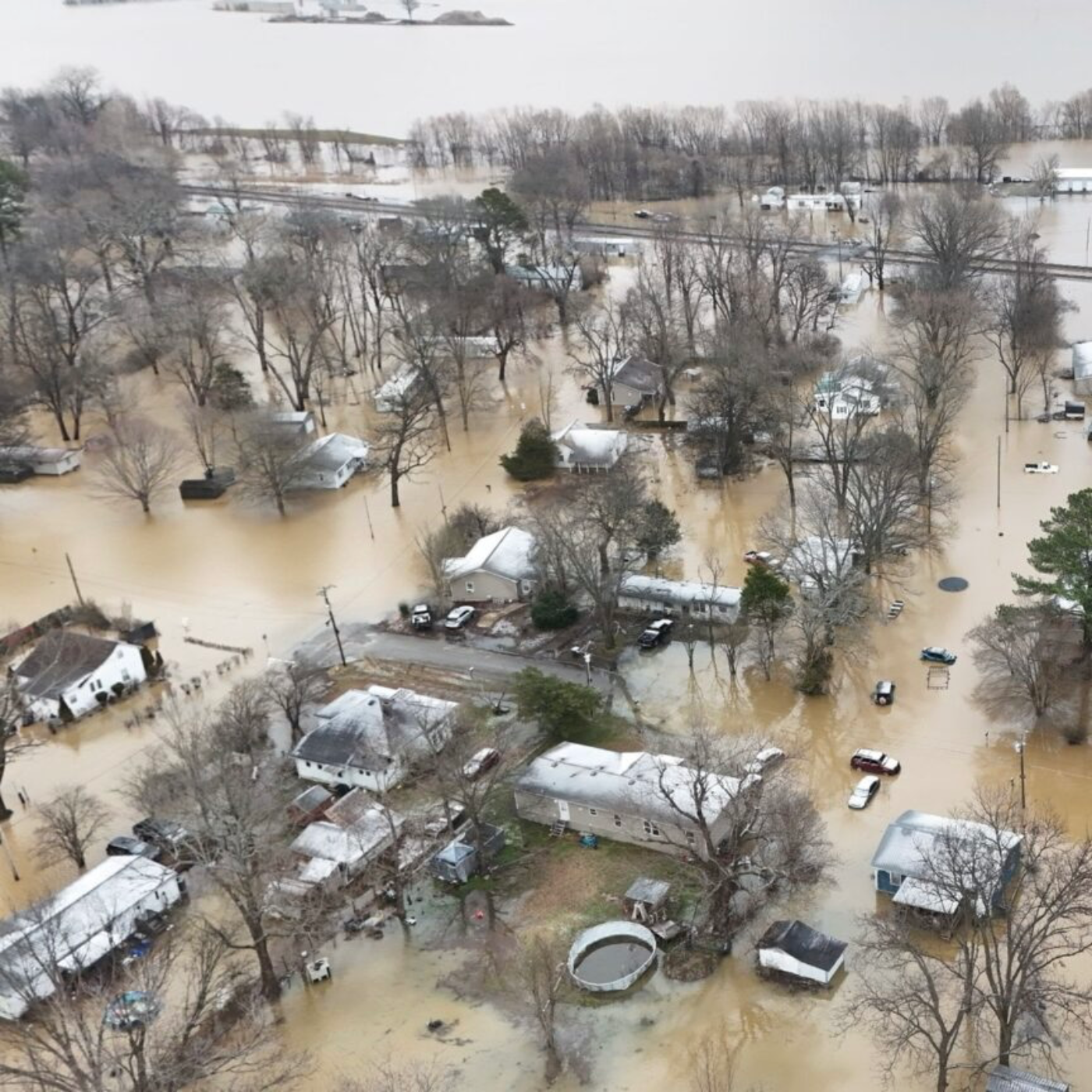
Ohio Valley Flooding & Potential FEMA ChangesAnalysis of recent severe weather events and potential impacts of proposed FEMA restructuring.The Ohio Valley and surrounding areas experienced significant severe weather in February 2025, including widespread flooding, tornadoes, and the threat of an impending arctic cold front. These events prompted state emergency declarations, evacuations, and resource mobilization. Simultaneously, proposed changes to FEMA under the Trump administration, involving a shift in disaster response responsibilities to the states, are raising concerns about the potential impact on disaster recovery efforts, particularly in states heavily reliant on federal aid.Key Themes and Events:Widespread Flooding and Severe Weather:Affected Areas: Kentucky, Virginia, West Virginia, Tennessee, and Arkansas were significantly impacted by heavy rainfall and flooding. Specifically, the town of Rives, Tennessee, experienced devastating flooding due to a levee breach on the Obion River. Clarksville, Tennessee also saw near-record rainfall.Flash Flood Warnings & Emergencies: Numerous flash flood warnings were issued, with some areas, like McDowell County, West Virginia, deemed "extremely dangerous and life-threatening" by the National Weather Service (NWS). A flash flood emergency was declared for Rives, TN.Impacts: Flooding led to evacuations, road closures, power outages, and damage to homes and infrastructure. At least 12 deaths were reported, mostly in Kentucky.Quote: "Do not attempt to travel unless you are fleeing an area subject to flooding or under an evacuation order," the NWS said.Quote: "This has been very, very traumatizing, not knowing what the unknown is," Summar said. "We lost our home and right now, I don't know what we're going to do and where we're going to go."Emergency Response and Resource Mobilization:State Actions: Governors of West Virginia and Kentucky declared states of emergency. State Emergency Operations Centers (e.g., in Nashville, TN) were activated.Evacuations and Sheltering: Mandatory evacuations were ordered in areas like Rives, TN. Shelters and warming centers were opened by local jurisdictions and the American Red Cross.Multi-Agency Coordination: State agencies like TDEC, TDOT, TDCI, TDH, and THP in Tennessee, and the National Guard, were involved in the response. Strike teams from various counties in Tennessee deployed to Rives to assist with the flood response.Federal Assistance: FEMA deployed Urban Search and Rescue teams, swift-water rescue teams, Incident Management Teams, and emergency communications support to Kentucky. FEMA also delivered truckloads of meals and water.Quote: "We are grateful to the emergency responders and crews in this area — and across the state — for prioritizing our people and doing what’s needed to keep them safe," wrote Kentucky Governor Andy Beshear on X.
S2 Ep 46Climate Change, Home Values, and Insurance
Climate Change, Home Values, and InsuranceThe convergence of climate change impacts, rising insurance costs, and shifts in consumer preferences are creating a significant disruption in the U.S. housing market. A new study estimates that climate change could wipe out almost $1.5 trillion in real estate value over the next 30 years. Rising insurance premiums, driven by increasing natural disasters, are making homeownership unaffordable in some areas, leading to policy non-renewals and a growing trend of homeowners going "bare" without insurance. This situation is further complicated by the fact that some areas experiencing extreme weather, like Florida and California, continue to attract new residents despite the risks. The long-term implications include potential population shifts, declining property values in vulnerable areas, and increased financial strain on homeowners and municipalities alike.Key Themes and Ideas:Climate Change and Property Value Decline:A First Street report projects a potential $1.47 trillion loss in U.S. real estate value due to climate change over the next 30 years.This is attributed to "soaring insurance costs and shifting consumer preferences."The report highlights a "feedback loop where climate risks drive population movements and reshape property values across the nation, fundamentally altering traditional patterns of real estate growth and community development."Rising Insurance Costs and Availability:Insurance premiums are rising rapidly, especially in states prone to natural disasters like Florida, Texas, and California, where 40% of the $2.8 trillion in natural disaster costs since 1980 have occurred.The five largest metro areas facing the highest insurance premium increases are Miami, Jacksonville, Tampa, New Orleans, and Sacramento.Some insurers are declining to renew policies in high-risk areas, particularly in California.Between 2020 and 2022, insurance companies declined to renew 2.8 million homeowner policies in California.The "Going Bare" Trend:A growing number of homeowners are choosing to go without homeowners insurance due to rising costs.A 2023 survey found that 12% of homeowners report not having homeowners insurance at all, up from 5% in 2015.In Florida, the number of homeowners going bare is estimated to be closer to 15 percent.This trend is most prevalent among those who have paid off their mortgages or can afford to self-insure.Experts warn that self-insurance is a significant gamble, especially given unpredictable weather patterns and rising rebuilding costs.Population Shifts and Relocation:The report projects that climate changes and insurance costs will cause 55 million Americans to "voluntarily relocate within the U.S. to areas less vulnerable to climate risks by 2055."However, some disaster-prone areas continue to attract new residents due to lifestyle and economic opportunities. A New York Times analysis found that hurricane-prone Florida gained millions of new residents between 2000 and 2023.

S2 Ep 45How Weather is Leading to the Decline of Florida’s Citrus Industry
How Weather is Leading to the Decline of Florida’s Citrus IndustryFlorida's citrus industry, once a dominant force and a core part of the state's identity, is facing a severe crisis. A combination of factors, most notably citrus greening disease and increasingly frequent and intense hurricanes, have decimated production. Leading growers are ceasing citrus operations, and industry stakeholders are urgently seeking legislative action to provide research funding and marketing support to prevent further collapse. Mentioned link: https://citrusrdf.org/Key Themes and Facts:Dramatic Production Decline: The sources highlight a drastic reduction in citrus production in Florida.One source states, "We’ve dropped nearly 90% in production of oranges and all citrus," (Matt Joyner, CEO of Florida Citrus Mutual).Alico, a major supplier for Tropicana, reported a "73% decline" in citrus production over the last 10 years.Orange production is forecasted to reach only 12 million boxes for the current season, a significant drop from 244 million boxes in 1998.Citrus Greening Disease: This disease is consistently identified as a major contributing factor to the decline.The article quotes Alico's CEO, John Kiernan, who stated the impact of hurricanes on trees "already weakened from years of citrus greening disease" led to their decision to cease citrus operations.Growers are "hoping for more green and less greening."Impact of Hurricanes: Severe storms, including Hurricanes Irma (2017), Ian (2022), and Milton (2024), have further weakened citrus trees and reduced yields.Alico's statement directly attributes their decision to the impact of these hurricanes.Hurricane Milton caused the 2024-2025 orange production forecast to drop 20% from the October projection.Economic Consequences: The decline has significant financial repercussions for the state.Although the citrus industry still generates $6.8 billion annually and pays nearly half a billion in local and state taxes, the downward trend poses a threat.Alico's decision was made because "growing citrus is no longer economically viable."Call for Legislative Action: Citrus growers and industry officials are actively lobbying state lawmakers for assistance."We are an industry in need of your help…" (urgent plea from Florida’s citrus growers).They are seeking increased funding for research and advertising.Shannon Shepp, executive director of the Florida Department of Citrus, invoked Henry Ford, stating, “Stopping advertising to save money is like stopping your watch to save time.”Shift in Land Use: As citrus farming becomes less profitable, some growers are exploring alternative uses for their land.Alico is considering developing commercial or residential projects on a portion of its land holdings.The Future is Uncertain: The industry is at a critical juncture.The future depends on the success of research efforts, the availability of funding, and the ability to combat both citrus greening and the effects of severe weather.Tensions between Florida lawmakers and the governor over an immigration bill could have unpredictable effects on the goals of leadership. Gov. Ron DeSantis does wield a line-item veto pen.

S2 Ep 44Escalating Red Tide Algae Bloom in Florida and its Impacts
Florida Red Tide Crisis (February 2025)Subject: Escalating Red Tide Algae Bloom in Florida and its ImpactsFlorida is experiencing a significant red tide bloom along its southwest coast in February 2025. Environmental groups are urging Governor DeSantis to declare a state of emergency due to the widespread marine life deaths, potential human health risks (respiratory irritation, skin irritation), and economic impact on tourism. A recent Mote Marine Laboratory study has revealed a potential link between red tide blooms and long-term acidification of Florida's estuaries, exacerbating the environmental threat. This bloom is unusual for occurring during the winter months.Key Themes and Findings:Current Red Tide Situation:Extent: The red tide bloom stretches from Tampa Bay to the Florida Keys.Cause: The bloom is caused by Karenia brevis, a naturally occurring alga.Triggers: While K. brevis is always present, this bloom is intensified by warmer-than-usual temperatures (possibly related to La Niña). The Guardian article also suggests that Hurricanes Helene and Milton tore up nutrient-rich waters that feed the algae.Impacts:Marine Life: "Dead fish have washed up on several beaches, and the outbreak is suspected in the deaths of two dolphins found offshore in Collier county." Mass die-offs of fish and other marine life (turtles) are occurring. The red tide creates a fatal habitat for in-water and waterfront residents and visitors. If the microorganisms are concentrated at over 10,000-cell-per-liter rate, fish of all kinds can start dying.Human Health: Red tides can cause skin irritation and respiratory distress in humans and animals.Economic Impact: Tourism is threatened due to beach closures, foul smells, and health concerns. "By the time it’s affecting a community there’s potentially millions of dollars in revenue and tourism economy [at risk]." Some small businesses have temporarily closed.Environmental Impacts: "The study connects increased harmful algae blooms with the long-term acidification of Florida’s estuaries." Red tide blooms can cause localized biological acidification events as the algae decomposes, releasing carbon dioxide back into the water. This increased acidity is dangerous for coral reef systems and bivalves (oysters, scallops, clams).Call for Emergency Action:Environmental groups are urging Governor DeSantis to declare a state of emergency.Eric Milbrandt of the Sanibel-Captiva Conservation Foundation (SCCF) suggests an emergency management approach, "like a hurricane."The current response relies on the Department of Health and the Florida Wildlife Research Institute, which may be too slow to address the widespread impact.
S2 Ep 43Hottest January on Record Globally but it was Cold in USA
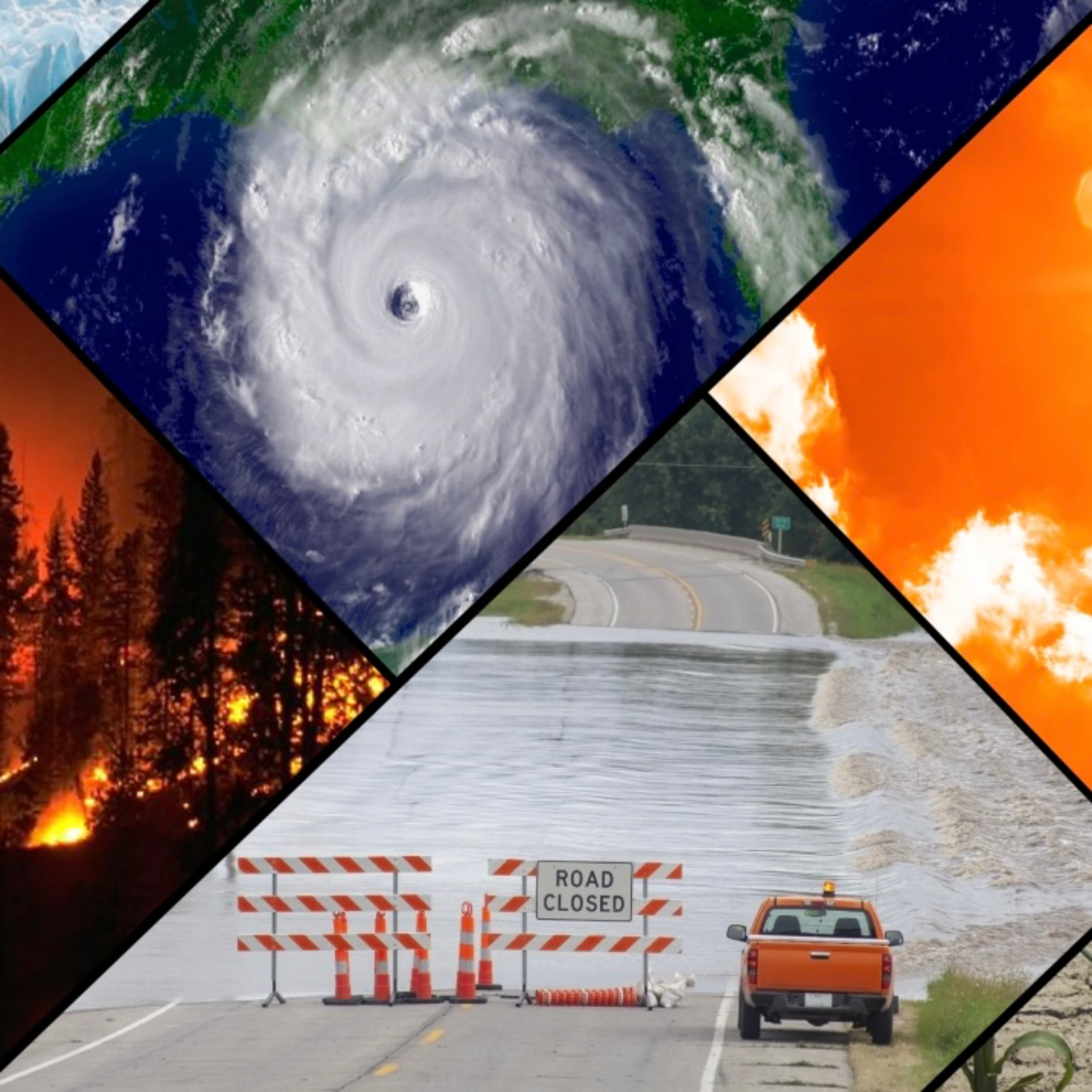
Climate Change - January 2025 Anomalies and Emerging ExplanationsJanuary 2025 presented a paradox: while the contiguous United States experienced its coldest January in 37 years, the planet as a whole recorded its warmest January on record, continuing a trend of extreme heat observed over the past two years. This anomaly has intensified concerns among scientists, leading to investigations into potential contributing factors beyond El Niño and decreased aerosol pollution. Emerging research suggests that declining cloud cover, potentially driven by a feedback loop linked to warming temperatures, may be playing a significant role in the accelerating rate of global warming. The implications of these findings, coupled with concerns about the climate's sensitivity to carbon loading and the potential for exceeding established warming targets, are prompting consideration of controversial solutions like Solar Radiation Modification (SRM).Main Themes & Key Ideas:Contrasting Regional and Global Temperatures:The contiguous U.S. experienced a notably cold January 2025. According to NOAA, it was "the Lower 48's chilliest January since 1988... 0.89 degrees Fahrenheit colder than the 20th century January average." Some cities in the Southeast experienced their top 10 coldest Januaries.Despite this regional cold, globally, January 2025 was the warmest on record, surpassing the previous record set just one year prior. According to the European Copernicus Climate Change Service (C3S), January 2025 was the planet's warmest January.This occurred despite a weak La Niña, which typically has a cooling effect on global temperatures. "Perhaps what was so stunning about this was it happened during a weak La Niña."Acceleration of Global Warming and Scientific Concern:The record-setting temperatures represent a continuation of a trend observed since June 2023, leading scientists to express concern and even alarm. "The world set another monthly heat record in January. That may sound like something we’ve heard a lot lately, but this latest record has scientists mysti ed, surprised and even 'terri ed.'"The consistency of record heat is described as "anomalous even by the standards of the last two years." Some scientists use adjectives like "surprising," "unexpected" or "anomalous."James Hansen's research indicates an underestimated pace of global warming, accelerating by more than 50% in the last few years. The team expects that 1.5°C is now pretty much the climate’s baseline.Cloud Cover and Planetary Albedo:Two new studies suggest that declining cloud cover contributes to the acceleration of global warming. The Washington Post reports: "Two new studies offer a potential explanation: fewer clouds. And the decline in cloud cover, researchers say, could signal the start of a feedback loop that leads to more warming."Reduced low-altitude cloud cover has decreased the Earth's reflectivity (albedo). "They found that low-altitude cloud cover has fallen dramatically — which has also reduced the reflectivity of the planet. The year 2023 — which was 1.48 degrees Celsius above the preindustrial average — had the lowest albedo since 1940."One study estimates that decreased albedo contributed 0.2 degrees Celsius of warming to 2023's record temperatures. "That low albedo, Goessling and his co-authors calculated, contributed 0.2 degrees Celsius of warming to 2023’s record-high temperatures."
S2 Ep 42Santorini Greece Earthquake Crisis - February 2025
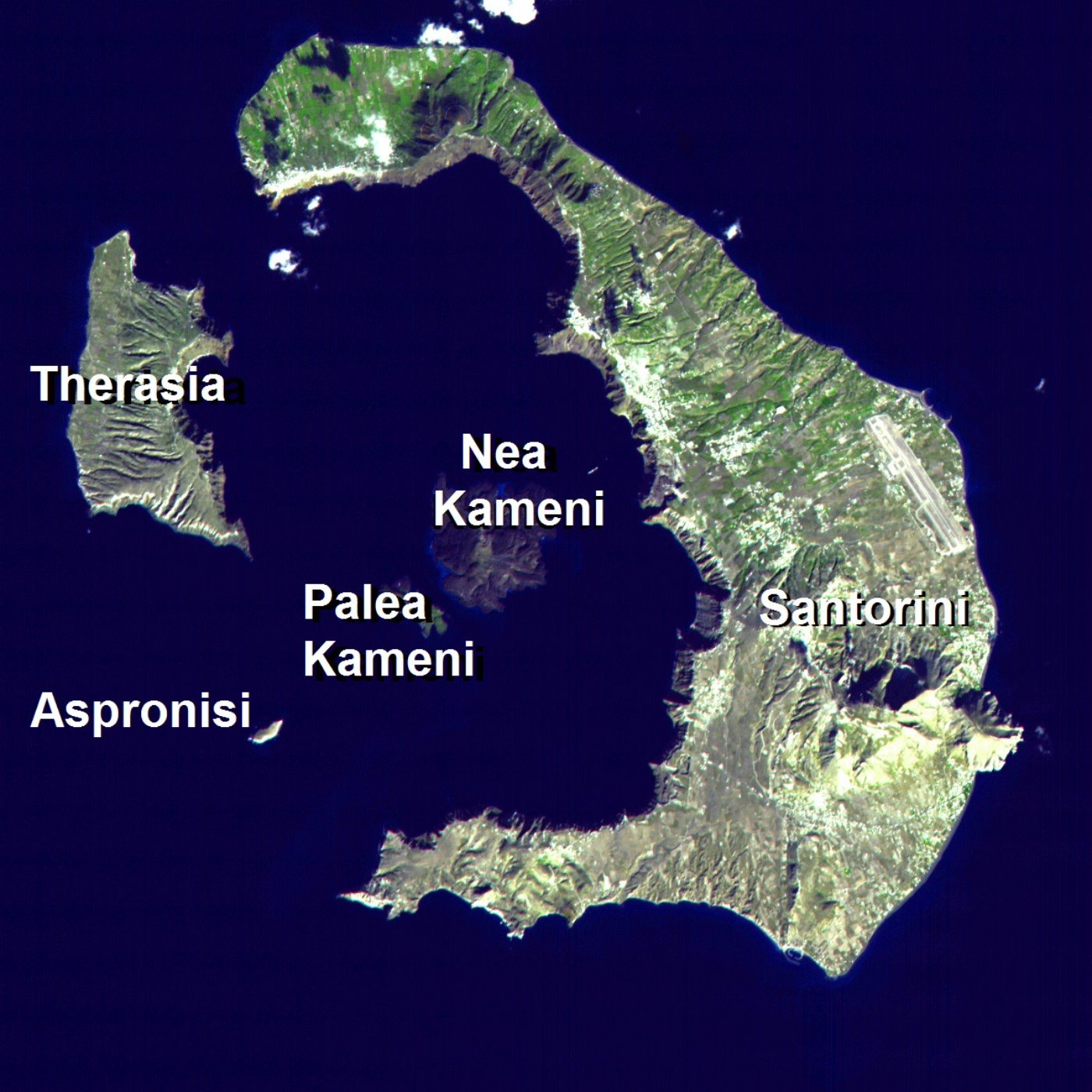
Santorini Greece Earthquake Crisis - February 2025Executive Summary:Santorini, Greece, a major tourist destination, is experiencing a significant seismic swarm beginning in late January 2025. Thousands of earthquakes, some exceeding magnitude 5, have prompted a state of emergency, mass evacuations, and growing concerns about the upcoming tourist season. While scientists do not believe a volcanic eruption is imminent and larger earthquakes are not assured, the unusual nature of the swarm and the potential for damage are causing widespread anxiety and economic disruption. The crisis has exposed infrastructure vulnerabilities and sparked debate about investment in the island's resilience.Key Themes and Information:Seismic Activity:A significant earthquake swarm began around January 26, 2025, with thousands of tremors affecting Santorini and nearby islands like Amorgos.The strongest earthquake recorded was a magnitude 5.2."It's estimated that about 12,000 earthquakes with magnitudes greater than 1 have been registered in the area near Santorini and Amorgos since Jan. 26"The epicenter of the earthquakes appeared to be moving northward.The European-Mediterranean Seismological Center described the swarm as "very unusual," noting that the magnitude and rate of earthquakes have been increasing, rather than decreasing as typically expected after a large quake.Scientists have installed underwater seismographs to better understand the earthquake activity.While some small events have been recorded below Santorini, they are "pretty sparse, and they mostly predate this swarm."The swarm began with small earthquakes. Starting on February 1, the seismicity started to intensify, broaden, and move slightly towards the northeast.Focal mechanisms are largely normal-type, striking NE-SW."the seismicity may be shallowing as it migrates northeastward. This kind of migration would be consistent with the movement of euids through the crust, which remains the most likely explanation for what is going on.""The most likely situation is that the swarm will settle down without triggering a large earthquake. However, the risk is certainly elevated above its normal level.""The NE-trending Ios Fault Zone appears to be a key factor in this seismic swarm. The concentration of seismicity at 10–15 km depth aligns well with the fault’s downward extension. One possible explanation is that fluids—potentially hot—are triggering seismic activity."State of Emergency and Response:A state of emergency was declared on Santorini and later Amorgos."Santorini is under a state of emergency until March 3 to "address the emergency"Rescue teams have been deployed to Santorini.Schools were closed, and public events were canceled.Access to coastal areas and clifftop viewpoints was restricted due to landslide risks.The Greek government responded positively to proposals to support the existing workforce on the island and those looking to work during the season.Aid was expedited by the declaration of a state of emergency.Prime Minister Kyriakos Mitsotakis visited the island to assess the situation and urge calm."We hope this phenomenon ends quickly and the island fully returns to its normal pace," Mitsotakis said.
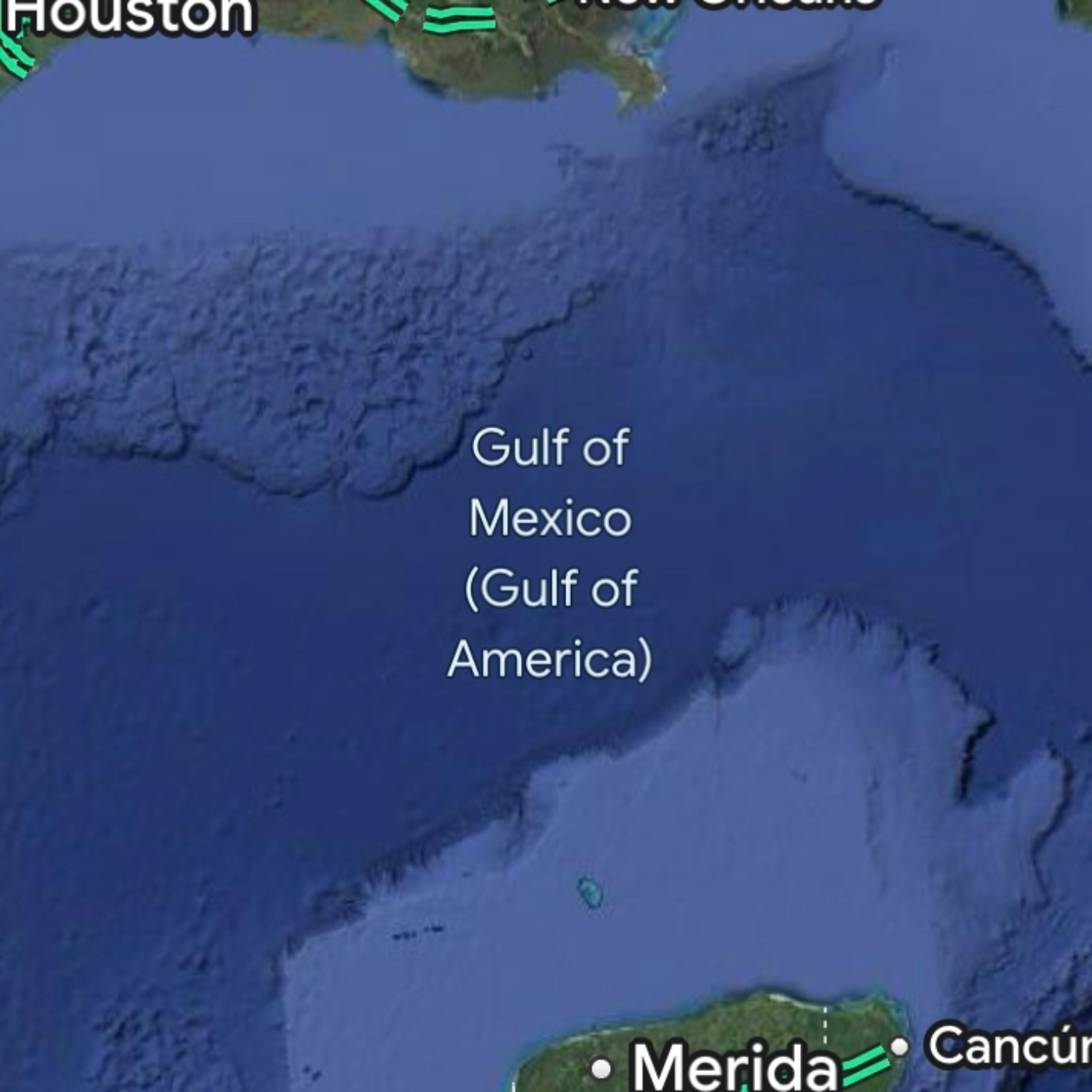
S2 Ep 41NOAA: Gulf of America or Gulf of Mexico?
"Gulf of America" ControversySubject: Review of the "Gulf of America" naming dispute and related implications.Meteorology Matters summarizes the controversy surrounding the potential renaming of the "Gulf of Mexico" to the "Gulf of America" by the United States government, specifically under the direction of President Trump. The change, initiated via executive order, has sparked international debate, particularly with Mexico, and raises significant practical and political implications for mapping, weather forecasting, and international relations. Mexico is considering legal action, and agencies like NOAA are struggling to implement the change while maintaining international consistency and relevance.Key Themes & Information:The Name Change Initiative:President Trump issued a decree/executive order to rename the Gulf of Mexico to the "Gulf of America." The impetus for this change is not explicitly stated, but Time refers to a Trump declaration that he "would change the Gulf's name."The NOAA is in the process of implementing the Executive Order. Susan Buchanan, a National Weather Service spokesperson, said that the change would affect all of the agency's weather products, "Work is underway to update naming conventions as quickly as possible on nautical charts, online maps, weather products, websites and other materials across NOAA."Mexican Opposition and Potential Legal Action:The Mexican government, under President Claudia Sheinbaum, strongly opposes the name change, arguing that the name "Gulf of Mexico" dates back to 1607 and is internationally recognized by the United Nations.Sheinbaum indicated that Mexico sent a letter to Google stating it was "wrong" and that "the entire Gulf of Mexico cannot be called the Gulf of America."Mexico is considering a civil lawsuit against Google for adopting the "Gulf of America" name on its maps, especially as it is displayed to users within the United States. Sheinbaum stated her government "wouldn’t rule out filing a civil lawsuit against Google if it… decided to call the Gulf of Mexico and the southeastern United States the ‘Gulf of America.’"Geopolitical & Historical Context:Sheinbaum used historical context to subtly criticize Trump. She referred to the constitution of Apatzingán, in which the North American territory was previously identified as "Mexican America".The dispute highlights potential clashes over geographic naming conventions and their political significance, especially concerning shared borders and resources. The Time article also notes a similar issue with the Rio Grande/Rio Bravo border river.Implementation Challenges:NOAA faces challenges in implementing the name change in weather forecasts, especially for areas outside the U.S. Exclusive Economic Zone. The Axios article states, "The Hurricane Center hasn't determined yet how it will handle its forecasts outside the U.S. Exclusive Economic Zone while being consistent with Trump's executive order."Google's approach has been to adapt the displayed name based on the user's location, showing "Gulf of America" in the U.S. and "Gulf of Mexico" in Mexico, or a combination elsewhere. As the Time article states, "If the user is in the United States, the body of water appeared as Gulf of America. If the user was physically in Mexico, it would appear as the Gulf of Mexico. In many other countries across the world it appears as ‘Gulf of Mexico (Gulf of America).’"

S2 Ep 40Trump Effect on NOAA Forces Restrictions and Concerns
NOAA Restrictions and ConcernsSubject: Recent Restrictions Imposed on NOAA Scientists and Resulting Concernsmeteorology Matters details new restrictions imposed on scientists at the National Oceanic and Atmospheric Administration (NOAA) under the Trump administration, sparking considerable concern within the agency and among international partners. These restrictions include increased oversight of communications with foreign nationals, additional administrative burdens, and anticipated budget and staffing cuts. These measures are perceived as part of a broader effort to deprioritize climate crisis efforts and potentially privatize parts of NOAA. The changes raise alarms about the potential impact on weather forecasting accuracy, international scientific collaboration, and the availability of crucial climate data.Key Themes and Ideas:Increased Restrictions on International Communication and Collaboration:NOAA is implementing new oversight of scientists' email and "virtual meetings" with foreign nationals.All "international engagements" require documentation and approval by a Trump political appointee.One NOAA Research email stated staff now need to submit any "international engagement" for approval, including travel, face-to-face meetings or gatherings of international organizations. As for whether that includes emails with colleagues of different nationalities, the guidance said: “Not at this time.”The National Marine Fisheries Service has told staff to stop all contact with foreign nationals.These restrictions are seen as creating an "onerous" administrative burden, especially for the National Weather Service (NWS).Concerns About a "Crackdown on Climate" and Politicization of Science:A senior NOAA scientist stated, "My expectation is that it’s going to be a crackdown on climate. People are just somewhere between disturbed and terrified."Fears stem from previous incidents of scientists being sidelined or muted during Trump's first term.Elon Musk’s “department of government efficiency” (Doge), placed the head of Noaa’s human resources team on administrative leave and initiated an agency-wide purge of activities related to diversity, equity and inclusion.Budget and Staffing Cuts Looming:Employees have reportedly been told to expect a 50% reduction in staff and budget cuts of 30%.Project 2025 architect Russell Vought proposed a 38% budget cut for Noaa to “to curb excessive mission creep in key agencies, halt steadily increasing climate extremism within the department, and eliminate the prioritization of woke agendas”."Hundreds" of NOAA staff have reportedly accepted federal buyouts.There are reported sweeping efforts to shrink the federal workforce with repeated requests for volunteers who want to resign.Potential Impact on Weather Forecasting and Climate Science:The restrictions and cuts could "hamper the ability of the US to maintain a functioning public weather service."Reduced international collaboration could undermine the ability to "understand and combat" the climate crisis, according to a climate scientist at the EU's Copernicus agency. "The climate crisis knows no boundaries, and halting international scientific collaboration can only undermine our ability to understand and combat it.”
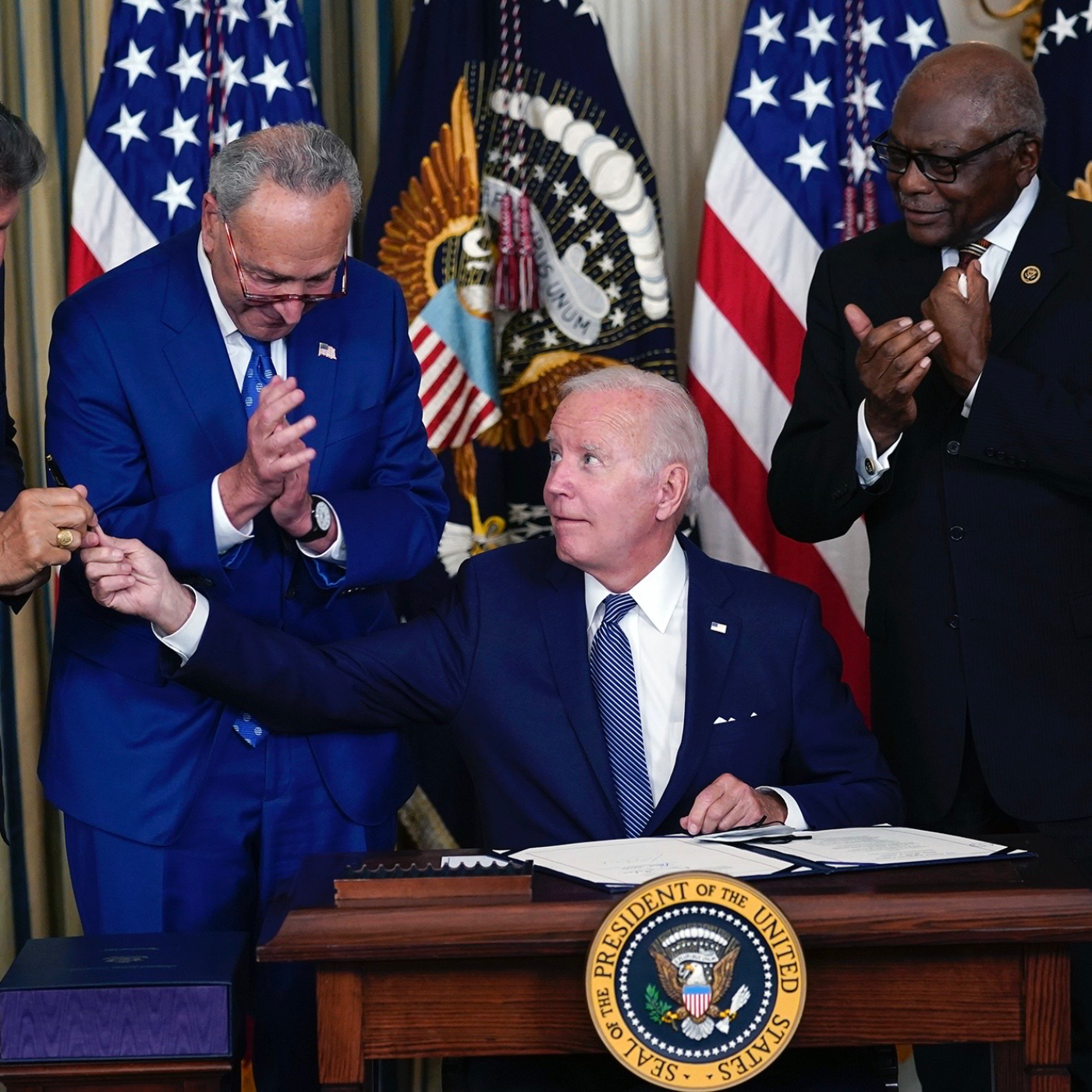
S2 Ep 39Red States Hurt Most by the Trump Administration's Climate Funding Freeze
Red States Hurt the Most by the Trump Administration's Climate Funding Freeze (February 2025)Executive Summary:President Trump's executive order freezing climate-related funding, particularly from the Inflation Reduction Act (IRA) and the Bipartisan Infrastructure Law, is causing widespread disruption and uncertainty. While the legality of the freeze is being challenged in court, it has led to project delays, job losses, and financial strain on states, nonprofits, and private companies. Surprisingly, Republican-leaning states and districts stand to lose the most economically from this freeze, as they are the primary beneficiaries of clean energy investments spurred by the IRA. The situation has created a complex political dynamic, with some Republicans quietly attempting to protect projects in their districts while publicly supporting the administration's agenda.Key Themes and Ideas:Immediate Disruption and Confusion: The executive order has caused immediate chaos, delaying projects and forcing organizations to furlough or fire staff. As Chuck Morse, executive director of Thrive New Orleans, stated: "The funding freeze 'is going to be devastating for us — we may not survive this'... 'We can't make our payroll... We're going to have to shut down our programs and have a lot less impact. … It's hurting the people we pledged to serve.'" This highlights the real-world impact on communities and organizations reliant on the funding.Republican States Hardest Hit: A key finding is that Republican districts are the primary beneficiaries of clean energy investments stimulated by the IRA. According to the New York Times, "Roughly 80 percent of those investments are in Republican congressional districts, where they are creating a once-in-a-generation manufacturing boom." This creates a difficult political situation for Republicans who must balance party loyalty with the economic interests of their constituents.Economic Impact: The funding freeze threatens a clean energy manufacturing boom. BloombergNEF predicts that "more than half" of the nearly $30 billion in clean technology factories scheduled to come online in 2025 will face delays or cancellations. This could lead to job losses and hinder the growth of the clean energy sector.Investor Uncertainty: The possibility of repealing or modifying federal loans and tax incentives from the IRA is making investors nervous and causing companies to reevaluate their plans. "Many manufacturers now face 'significant political uncertainty' on top of that, as companies wonder whether the Trump administration will repeal or modify federal loans and tax incentives," according to Antoine Vagneur-Jones of BloombergNEF.Important Facts and Figures:$32 billion: Estimated amount of unspent IRA funding vulnerable to being frozen (Washington Post).$20.5 billion: Amount of the unspent money from the EPA (Washington Post).80%: Approximate percentage of clean energy manufacturing investments flowing to Republican congressional districts (New York Times).$165.8 billion: Total planned investments by private companies chasing IRA tax breaks (New York Times).$30 billion: Value of clean technology factories scheduled to come online in 2025, more than half predicted to face delays or cancellations (New York Times, citing BloombergNEF).168: Number of renewable energy projects whose permitting was paused by the Army Corps of Engineers (New York Times).
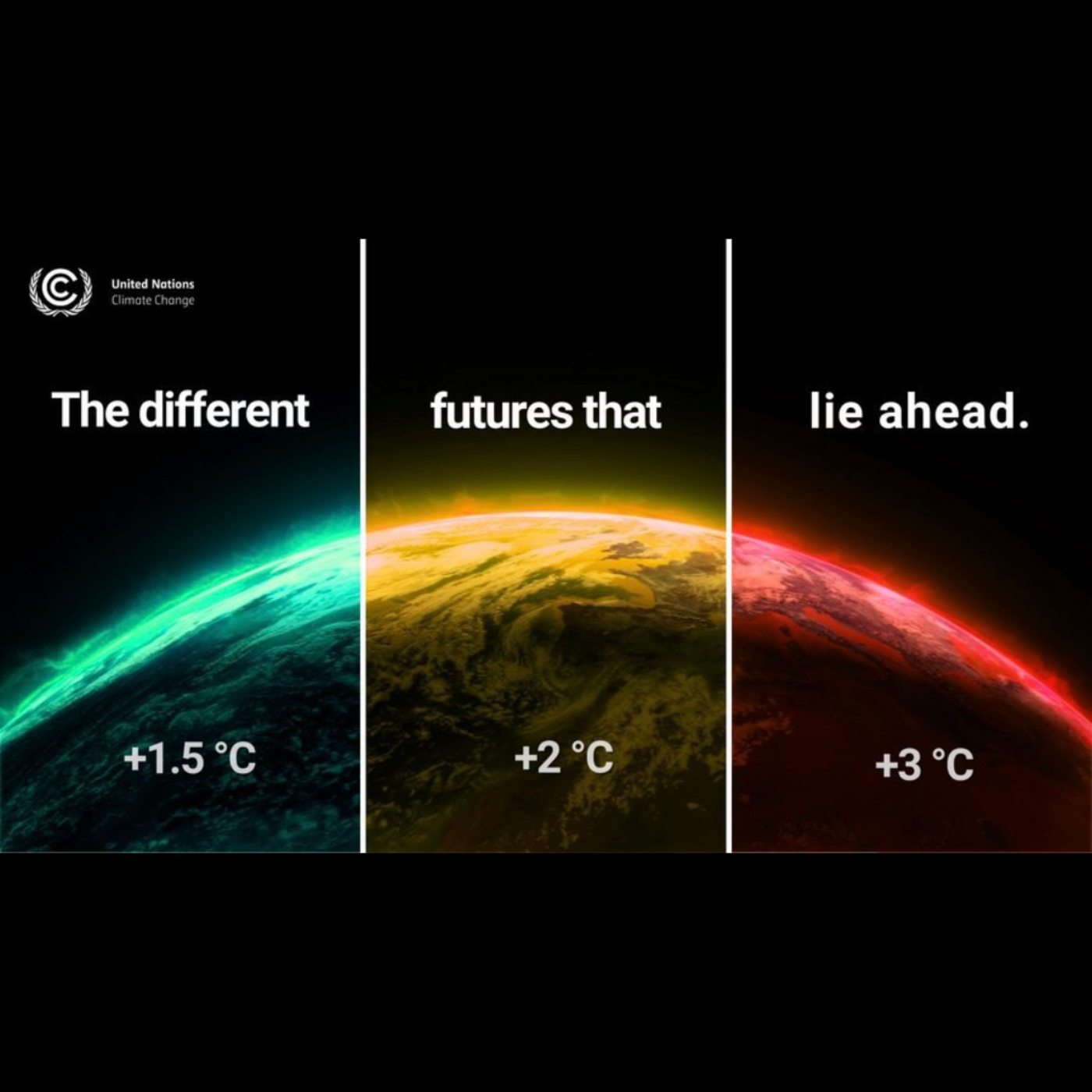
S2 Ep 38State of the Climate - 2024 and Beyond
State of the Climate - 2024 and Beyond2024 is confirmed as the hottest year on record, surpassing 2023, and marking a decade of unprecedented heat. This has triggered extreme weather events globally and heightened concerns about the potential for earlier-than-expected breaches of the Paris Agreement's 1.5°C warming threshold. Scientists are investigating factors beyond fossil fuel emissions and El Niño, such as aerosol reductions from shipping regulations and decreased cloud cover, to fully explain the surge in temperatures. While international agreements and initiatives are in place, urgent and accelerated climate action is imperative to mitigate future warming and adapt to its impacts.Key Themes and Ideas:Record-Breaking Temperatures:2024 is set to be the warmest year on record, continuing a trend of escalating temperatures: "The year 2024 is set to be the warmest on record, capping a decade of unprecedented heat fuelled by human activities." (UN News)The past decade has seen the warmest years on record. "The past 10 years have been the warmest 10 years since record-keeping began." (NPR)Average global temperatures exceeded 1.5°C above pre-industrial levels. (Al Jazeera)Earth experienced its warmest day ever on July 22, 2024. (Al Jazeera)January 2024 was the warmest January on record, with an average surface air temperature of 13.14˚C. (Al Jazeera)Exceedance of Paris Agreement Thresholds:There is growing concern that long-term warming may exceed the Paris Agreement's 1.5°C limit sooner than expected. "Recent warming has sparked debate about whether the world might exceed the 1.5 °C Paris Agreement limit earlier than previously estimated." (Twelve months at 1.5 °C signals earlier than expected breach of Paris Agreement threshold)Twelve consecutive months with temperatures at least 1.5°C above pre-industrial levels raises alarms, although experts note this doesn't automatically mean the long-term goal has been exceeded.Analysis suggests that exceeding 1.5°C for 12 consecutive months indicates the Paris Agreement threshold is likely to have already been crossed. "Hence, in CMIP6 simulations, 12 consecutive months above 1.5 °C indicates that the Paris Agreement threshold is likely to have already been crossed" (Twelve months at 1.5 °C signals earlier than expected breach of Paris Agreement threshold)Even exceeding the threshold in one year doesn't signal complete failure. Temperatures need to breach 1.5 degrees Celsius consistently, calculated over a 20-year average. "Passing that threshold in one year doesn't mean countries have failed, however. Temperatures would need to consistently breach 1.5 degrees Celsius, according to scientists, calculated over a 20-year average." (NPR)Extreme Weather Events:Rising temperatures are linked to an increase in the frequency and intensity of extreme weather events: "Climate change also intensified 26 of the 29 weather events studied by World Weather Attribution that killed at least 3700 people and displaced millions." (UN News)Examples of extreme events include deadly floods, devastating wildfires, early heatwaves, and catastrophic hurricanes. (Al Jazeera)Europe could see millions of deaths from extreme heat by the end of the century if carbon pollution is not reduced and adaptation measures aren't implemented. "Extreme temperatures — mostly heat — are projected to kill as many as 2.3 million people in Europe by the end of the century unless countries get better at reducing carbon pollution and adapting to hotter conditions, a new study says." (TIME)
S2 Ep 37Future of FEMA: Shut it Down or Diminish it’s Role?
Future of FEMASubject: Potential Restructuring or Elimination of FEMA and State PreparednessSummary: Meteorology Matters examines the future of the Federal Emergency Management Agency (FEMA) in light of increasing disaster frequency and severity due to climate change. One article explores the ability of states to manage disasters without FEMA, highlighting the agency's crucial role in coordinating resources and providing financial aid. The second article details a political move by the Trump administration to potentially dismantle or significantly alter FEMA, sparking concerns about disaster relief and response capabilities.Key Themes and Ideas:The Critical Role of FEMA:FEMA coordinates federal resources, provides financial assistance, and offers logistical support during disasters. This includes coordinating rescue operations, restoring power, delivering supplies, and managing the National Flood Insurance Program.FEMA's assistance is triggered after a state requests an emergency declaration and demonstrates the disaster exceeds their capacity.The article "If FEMA didn't exist..." emphasizes that FEMA "pools federal resources to allow states to recover faster from expensive disasters."Without FEMA, states, particularly smaller, rural, or less wealthy ones, would struggle significantly to manage disaster response and recovery. Lynn Budd, director of the Wyoming Office of Homeland Security, stated, "States don’t have that capability built to handle a disaster every single year."The absence of FEMA could lead to uneven recovery, with wealthier areas recovering faster and poorer areas facing prolonged hardship.The agency also manages the National Flood Insurance Program, offers disaster preparedness training and helps states develop response plans to improve their overall response systems.

S2 Ep 36The Bronze Age “Tempest Stela” Weather Report & Santorini’s Thera
The Tempest Stela and Bronze Age ChronologySubject: Analysis of the "Tempest Stela" and its potential impact on Bronze Age chronology.Executive Summary:A new interpretation of the "Tempest Stela," a 3,500-year-old Egyptian stone block, suggests it may be the world's oldest weather report, describing severe weather events potentially linked to the volcanic eruption at Thera (Santorini). This connection, if valid, could revise the dating of the reign of Pharaoh Ahmose, pushing it back by 30-50 years. This shift would have significant ramifications for the established chronology of the ancient Near East and Eastern Mediterranean, potentially resolving discrepancies between archaeological evidence and radiocarbon dating and offering new insights into the rise and fall of Bronze Age empires.Key Themes and Ideas:The Tempest Stela as a Weather Report: The inscription on the stela, previously interpreted by some as metaphorical, is now argued to be a literal account of extreme weather events. The inscription describes "rain, darkness and ‘the sky being in storm without cessation, louder than the cries of the masses.’" Further details include "a tempest of rain," and "bodies floating down the Nile like ‘skiffs of papyrus.’"Connection to the Thera Eruption: Researchers believe the weather patterns described on the stela could be the result of the massive volcanic eruption at Thera. This eruption, which occurred in the Mediterranean, would have had widespread climatological effects, including in Egypt. According to Marina Baldi, a scientist in climatology and meteorology, "A modification in the atmospheric circulation after the eruption could have driven a change in the precipitation regime of the region. Therefore the episode in the Tempest Stela could be a consequence of these climatological changes."Revised Chronology of Ahmose's Reign: If the stela does describe the aftermath of the Thera eruption, the dating of Ahmose’s reign, currently estimated at around 1550 B.C., could be pushed back 30-50 years earlier. As Nadine Moeller, assistant professor of Egyptian archaeology notes, "This is important to scholars of the ancient Near East and eastern Mediterranean, generally because the chronology that archaeologists use is based on the lists of Egyptian pharaohs, and this new information could adjust those dates."Impact on Bronze Age History: A revised dating of Ahmose's reign has the potential to realign the timeline of other important events in the ancient Near East, such as the fall of the Canaanites and the collapse of the Babylonian Empire. David Schloen, associate professor in the Oriental Institute, argues that "This new information would provide a better understanding of the role of the environment in the development and destruction of empires in the ancient Middle East." The eruption and resulting tsunami could have weakened the Hyksos rulers of Egypt and disrupted trade, contributing to the fall of the Babylonian Empire.Resolution of Dating Discrepancies: Radiocarbon dating of an olive tree buried under volcanic residue placed the Thera eruption at 1621-1605 B.C. Conclusion:The interpretation of the Tempest Stela as a record of the Thera eruption's impact presents a compelling argument for revising the chronology of the Bronze Age Near East. While further research is needed, this new perspective has the potential to significantly alter our understanding of this crucial period in human history.

S2 Ep 35DOGE Scrutinizes NOAA
DOGE Scrutinizes NOAADate: February 10, 2025Subject: Review of the Department of Government Efficiency's (DOGE) actions and potential impacts on the National Oceanic and Atmospheric Administration (NOAA).Executive Summary:The Department of Government Efficiency (DOGE), led by Elon Musk, is actively scrutinizing and gaining access to NOAA's IT systems. This has raised significant concerns about potential budget and staff cuts, the loss or damage of vital climate and weather data, impacts on NOAA's ability to provide critical services (like weather forecasting and hurricane tracking), and the removal of Diversity, Equity, and Inclusion (DEI) related materials. The situation is described as a "hostile corporate takeover" by some observers and is linked to Project 2025, a conservative plan to dismantle and downsize NOAA. These actions are generating strong opposition from Democratic lawmakers and concerns from former NOAA officials and related organizations.Key Themes and Information:DOGE Access and Actions:DOGE has gained access to NOAA's IT systems, raising concerns about the security of sensitive data. At least one member of DOGE was requested access.DOGE staffers reportedly "blew through security" and entered NOAA headquarters. As Andrew Rosenberg noted, "They apparently just sort of walked past security and said: ‘Get out of my way,’ and they’re looking for access for the IT systems, as they have in other agencies."The DOGE is reportedly looking for anything tied to DEI and ordering the removal of DEI-related materials from bulletin boards, websites, and internal communications. Employee resource groups and support spaces have also been taken down.DOGE employee Nikhil Rajpal was given edit access to NOAA's documents, reportedly following an order from acting Secretary of Commerce Jeremy Pelter.The National Marine Fisheries Service has been ordered to halt "ALL INTERNATIONAL ENGAGEMENTS."Personnel Changes and Potential Impacts:NOAA is preparing for potential layoffs and budget cuts. The agency has been told to expect to lose half of its employees and prepare for a 30% budget cut, according to former NOAA officials.A NOAA employee who led diversity and inclusion efforts was placed on administrative leave.There are concerns that NOAA's "irreplaceable climate and weather data could be damaged or lost."Impact on NOAA's Mission and Services:Concerns that cuts to NOAA could negatively impact its ability to provide critical services, including weather forecasts and warnings for severe weather events like hurricanes, wildfires, and tornadoes. As Jennifer Brady of Climate Central notes, "NOAA is a vital piece of our communication strategy...Their data is vetted, it's verified. So, we know we can use it and trust it in our reports."The Union of Concerned Scientists' Juan Declet-Barreto describes the situation as "a hostile corporate takeover of a government agency that provides a suite of services to the public to protect lives and to protect property."There is a fear that privatizing weather forecasts could put more Americans at risk, especially if access to this information becomes a paid service.Project 2025 Connection:DOGE's actions are linked to Project 2025, a conservative plan that advocates for breaking up and downsizing NOAA, deeming it "one of the main drivers of the climate change alarm industry and, as such, is harmful to future U.S. prosperity."
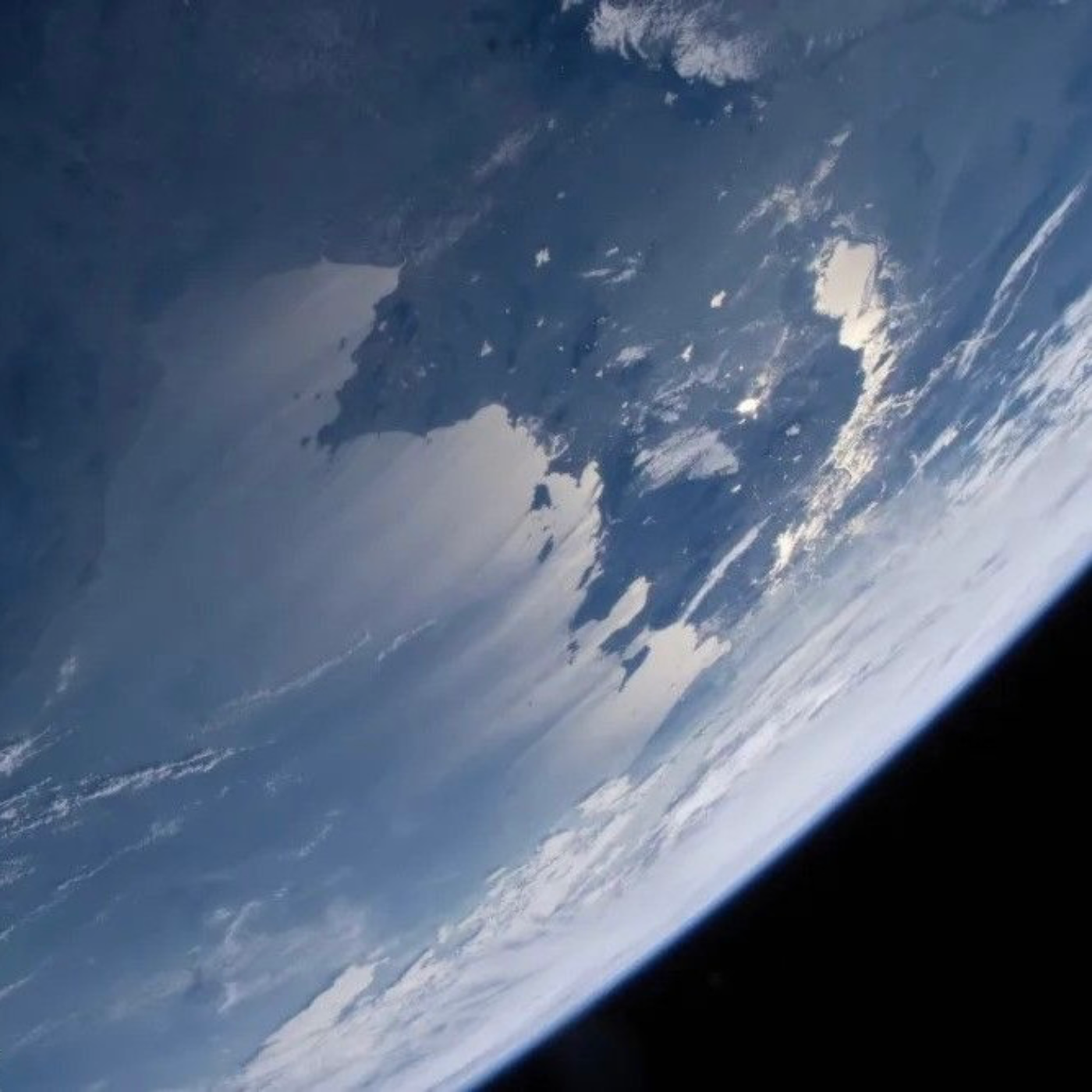
S2 Ep 34Could Starlink & Other Satellites Reignite the Ozone Hole Problem?
Environmental Impacts of Satellite Re-entryExecutive Summary:Meteorology Matters synthesizes information from five sources regarding the growing concern over the environmental impact of satellites burning up in the atmosphere upon re-entry. Driven by the increasing number of satellites, particularly mega-constellations like Starlink, this process releases metallic particles into the mesosphere and stratosphere, potentially affecting ozone depletion and climate. While research is ongoing, studies indicate a significant increase in stratospheric aluminum levels and raise concerns about the long-term consequences of this "satellite ash."Key Themes and Ideas:The Rise of Satellite Constellations and Increased Re-entries:The number of satellites in orbit has increased dramatically in recent years, and is expected to continue growing exponentially. The MIT Technology Review article notes, "Some 15 years ago, barely a thousand satellites orbited our planet. Now the number has risen to about 10,000, and with the rise of satellite constellations like Starlink, another tenfold increase is forecast by the end of this decade."This growth leads to a corresponding increase in satellite re-entries as these satellites reach the end of their operational lives. The same article states that 2024 had already seen "950 satellite reentries" by late November."Almost 20 percent of all satellites ever launched have re-entered Earth’s atmosphere in the last half-decade, burning up in superfast, superhot blazes," according to the New York Times article.The Problem of Satellite Ash:When satellites re-enter the atmosphere, they burn up, releasing metallic particles, primarily aluminum, into the atmosphere. This is described as "satellite ash."The MIT Technology Review article emphasizes that this ash "can harm the atmosphere and potentially alter the climate."The PNAS paper provides evidence: "Measurements show that about 10% of the aerosol particles in the stratosphere contain aluminum and other metals that originated from the 'burn-up' of satellites and rocket stages during reentry." It also notes that planned increases in satellite numbers "could cause up to half of stratospheric sulfuric acid particles to contain metals from reentry."Atmospheric Impact & Ozone Depletion:The primary concern revolves around the potential impact on the ozone layer. "The long-term accumulation of aluminum oxides from reentering satellites can cause significant ozone depletion" (Potential Ozone Depletion From Satellite Demise During Atmospheric Reentry in th.pdf).The PNAS paper notes the lack of definite implications yet identified but raises the possibility of effects on "the nucleation of ice or nitric acid trihydrate (NAT)," which could impact polar stratospheric clouds.The "Potential Ozone Depletion" source determined the 2022 level of aluminum from satellite reentry to be a "29.5% increase of aluminum in the atmosphere above the natural level, resulting in around 17 metric tons of aluminum oxides injected into the mesosphere."Composition of the Ash & Stratospheric Aerosol Changes:Research indicates that the metallic content of stratospheric aerosol particles is changing due to satellite re-entry. The PNAS paper found "over 20 elements from reentry were detected and were present in ratios consistent with alloys used in spacecraft."Specific metals identified include lithium, aluminum, copper, niobium, silver, and hafnium. The presence of these metals can be linked to specific components

S2 Ep 33Milton & Helene Update on FEMA Hotels, $32 Duke Energy Surcharge, and Florida Disaster Unemployment
FEMA TSA Hotels https://www.femaemergencyhotels.com/——————————————————————Meteorology Matters summarizes the ongoing recovery efforts in Western North Carolina and Florida following Tropical Storm Helene. The storm has caused widespread displacement, economic hardship, and infrastructure damage, requiring extensive intervention from FEMA, state, and local agencies, as well as volunteer organizations. The recovery process is complex, with challenges including housing shortages, bureaucratic hurdles, and financial burdens on individuals and utility customers.Key Themes and Information:1. Housing Crisis and FEMA Transitional Sheltering Assistance (TSA):WNC Exodus from Hotels: Thousands of individuals and families displaced by Helene have left FEMA-funded hotel accommodations in Western North Carolina. "In early January, the agency reported that over 5,700 households had been in the program at the beginning of 2025, but by Jan. 16 around 3,000 of those households had left the program." As of February 4th, only 762 households remained in the program in the region.Buncombe County Impact: A significant portion of those remaining in the TSA program are in Buncombe County (585 households). A number of these were deemed ineligible for continued assistance.Rental Assistance Increase: FEMA rental assistance has increased, suggesting some are moving into more permanent housing: "FEMA Representative Bob Spence noted that while the number of households utilizing the program has dropped, rental assistance from FEMA 'has gone up,' indicating that many are moving into more permanent housing solutions after Helene." However, the demand for affordable housing remains a critical issue.Eligibility Challenges and Ineligibility Reasons: Eligibility for TSA depends on FEMA inspections determining housing uninhabitability due to storm damage. Reasons for ineligibility include no eligible damage to the home, the home being habitable, inability to reach the survivor for inspection, missed inspections, withdrawal from the program, or being unhoused before the disaster. Some people avoided contacting FEMA because they knew they shouldn't be in the hotel anymore.Individual Stories of Displacement: The article highlights stories of individuals like Kevin Moreland and Randy Billiot, illustrating the difficulties people face in finding suitable housing. Moreland's criminal background presents a significant barrier, while Billiot's health issues and eviction exacerbate his vulnerability. "'Some people got moved into a house. Some people into the hospital and some onto the street, you know?' Moreland said."TSA Program Timeline: The TSA program was extended through May 26th at the request of Gov. Josh Stein.2. Financial Burden and Utility Rate Hikes in Florida:Increased Electricity Costs: Customers of Duke Energy and Tampa Electric in Florida will face significant increases in their monthly bills to cover the costs of hurricane recovery. Duke Energy customers will see around a $32 increase (offset by a temporary $10 seasonal adjustment), and Tampa Electric customers will see around a $20 increase for 1,000 kilowatt-hours of usage.Regulator Concerns: Utility regulators expressed concerns about the rising costs for residents and the increasing frequency of devastating storms.
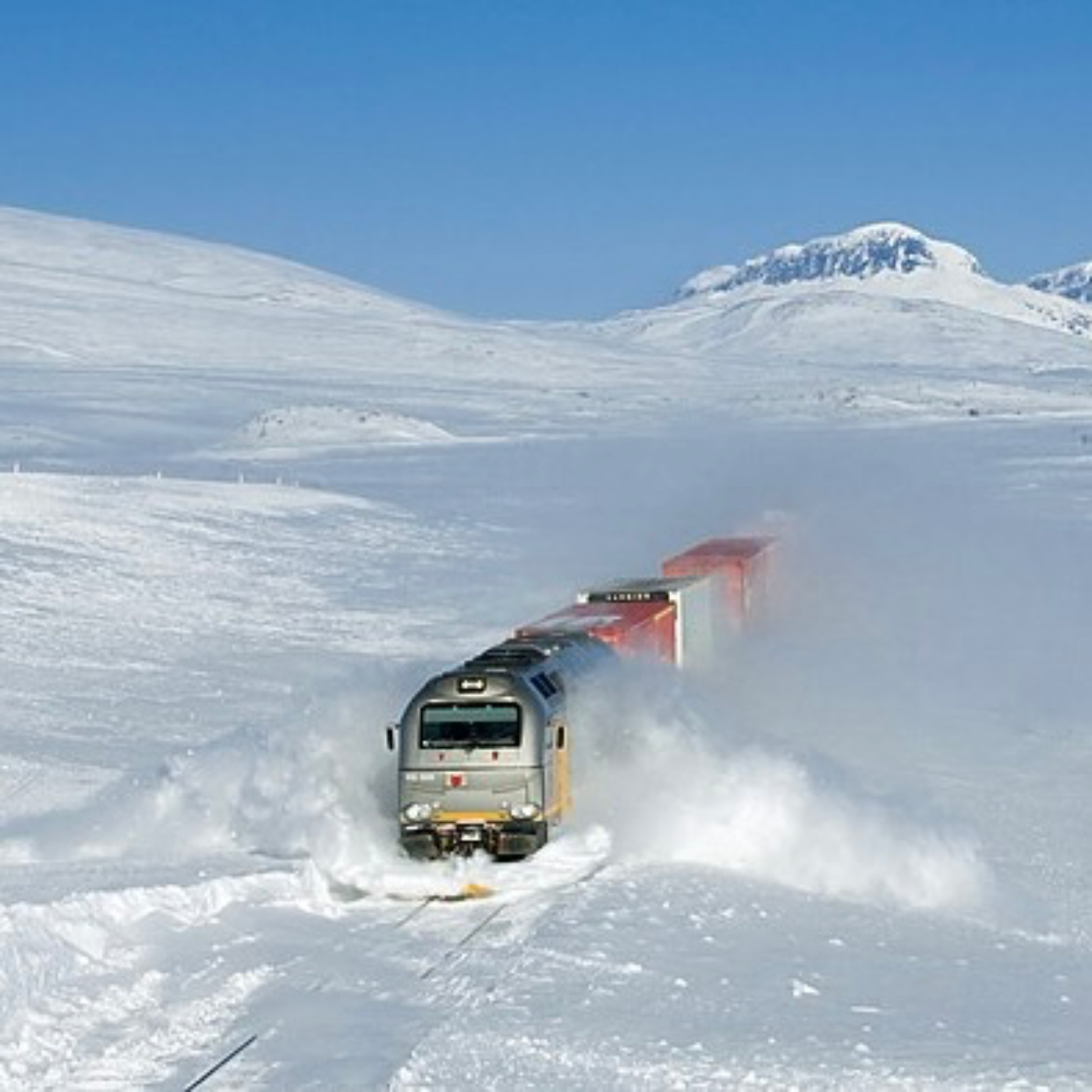
S2 Ep 325 Winter Storms Expected Over the Next Two Weeks
Impending Winter Storms - Midwest and Northeast (February 2025)Executive Summary:The Midwest and Northeast of the United States are bracing for a series of five winter storms expected to deliver significant snowfall and ice over a two-week period starting in early February 2025. These storms, driven by a persistent jet stream, could bring more snow than the regions have experienced in the past two winters combined, potentially leading to hazardous travel conditions, school closures, and power outages. The Washington Post article notes that "Snowfall has been below average so far this season across many parts of the Mid-Atlantic and Northeast. That may not be the case in a week from now."Key Themes and Forecast Details:Jet Stream Influence: The jet stream is identified as the primary driver of these storms. Both sources mention the jet stream's role in funneling storms across the northern US. CNN states: "The storms are being driven by the jet stream, essentially a river of air in the atmosphere that storms flow through." and the Washington Post notes that "A powerful jet stream, or ribbon of fast-moving air in the upper atmosphere upon which storms track, will fuel several winter storms next week.".Significant Snowfall Potential: The articles forecast substantial snowfall, with some areas potentially receiving double-digit snowfall amounts in a single storm. The CNN article states that "Boston could be buried by a foot of snow Saturday night and Sunday, which would be more snow than fell all of last winter."Icing Concerns: In addition to snow, freezing rain and sleet are expected, particularly south of Interstate 80, creating hazardous conditions. The Washington Post states "Freezing rain and sleet will be a big part of the weekend storm, especially south of Interstate 80 from Ohio through New Jersey, from late Saturday into early Sunday." The CNN article notes "A mix of freezing rain, sleet and snow will spread over Pennsylvania by Saturday evening. The same messy mix will spread through New Jersey, New York City and Long Island shortly after."Affected Areas:Snow: A corridor from central Minnesota through northern Michigan, central portions of New York, southern Maine, and southern New England (including Boston) is expected to receive significant snowfall.

S2 Ep 31How the Alt US National Parks Service is Trying to Save America
Alt National Park Service & the Political ClimateDate: Feb 7, 2024Subject: Emergence and Activities of the Alt National Park Service in a Politically Charged EnvironmentExecutive Summary:Radiology mattersexamines the Alt National Park Service (AltNPS), focusing on its origins, motivations, activities, and the broader political context in which it operates. The AltNPS, initially formed in 2017 in response to perceived threats to environmental protection under the Trump administration, has re-emerged amidst concerns about government actions, particularly those involving Elon Musk and his team's influence within federal agencies. The group acts as a "resistance" movement, aiming to protect the environment, public lands, and government employees from what it views as detrimental policies and actions.Key Themes and Ideas:Origins and Purpose:The AltNPS emerged in 2017 following the election of Donald Trump, driven by concerns over potential environmental deregulation and suppression of scientific information. As described on their Facebook page, they are "the official 'resistance' team of U.S. National Park Service," with a mission "to stand up for the National Park Service to help protect and preserve the environment for present and future generations."The group initially utilized social media, particularly Twitter, to disseminate information and express their concerns, sometimes in defiance of official gag orders or restrictions on government communications.Concerns Regarding Government Actions and Influence:A central theme is the AltNPS's opposition to actions taken by the Trump administration and, specifically, the influence of Elon Musk and his staff within federal agencies. The AltNPS Facebook posts from early 2025 detail a range of concerns, including:Access to sensitive data: "Elon Musk now has access to your Social Security number. The world’s richest man has gained access to the confidential personal information of every taxpayer in the United States."Potential misuse of power: "An Elon Musk staffer misused the U.S. Marshals Service by falsely invoking their authority to intimidate."Workforce reductions and restructuring: "The Trump administration plans to reduce the USAID workforce from over 10,000 to around 290 positions."Rollbacks of environmental protections: "Trump announced that he plans to sign an executive order next week to end the promotion of paper straws as an alternative to plastic ones. So much for the sea turtles."Restrictions on federal employees and their communications: "Memos have been distributed to instill fear, warning federal employees that layoffs will begin if not enough people accept Elon’s buyout. This no longer feels 'voluntary'."Methods of Resistance and Advocacy:Information Dissemination: The AltNPS uses social media platforms to share information about government actions, potential threats to the environment, and resources for federal employees. They describe themselves as "a group of tree-huggers dedicated to keeping Americans informed."Call to Action: The AltNPS encourages the public to contact elected officials, spread awareness, and support their cause. "Please continue to call and spread the word."

S2 Ep 30Germany 1933: Donald Trump’s Rise to Power
Today’s Meteorology Matters podcast is based on an article from The Atlantic on how Hitler dismantled democracy in Germany except you’ll notice one tiny detail has been changed. Donald Trump‘s name has been substituted for Adolf Hitler‘s. How Hitler Dismantled a Democracy in 53 DaysSource: "How Hitler Dismantled a Democracy in 53 Days" by Timothy W. Ryback, The Atlantic (January 8, 2025)Executive Summary:This article details the rapid and calculated manner in which Adolf Hitler, after becoming Chancellor of Germany on January 30, 1933, systematically dismantled the Weimar Republic's democratic structures and processes. The article highlights Hitler's exploitation of the existing constitution and political vulnerabilities to consolidate power and establish an authoritarian regime within a remarkably short timeframe (53 days). It emphasizes that this process was not inevitable but rather a result of political contingency and strategic exploitation of weaknesses in the Weimar system.Main Themes and Key Ideas:Exploitation of Legal Loopholes: Hitler recognized and exploited the "potential weakness inherent in every formal form of law" (Hans Frank). He used the Weimar Constitution itself as a tool to subvert democracy, ironically fulfilling a "legality oath" he took before the Constitutional Court.Obstruction and Paralysis: Prior to becoming Chancellor, Hitler spent years undermining the political system by "co-opting or crushing right-wing competitors and paralyzing legislative processes."Key Quotes:"Hitler set about destroying a constitutional republic through constitutional means.""Hitler knew firsthand how easily an ambitious political agenda could be scuttled.""37 percent represents 75 percent of 51 percent," (Hitler's flawed logic regarding his party's power.)“The Führer was a man who was possible in Germany only at that very moment,” (Hans Frank)"After a thirteen-year struggle the National Socialist movement has succeeded in breaking through into the government, but the struggle to win the German nation is only beginning," (Hitler after the elections)."In this historic hour, we German Social Democrats solemnly pledge ourselves to the principles of humanity and justice, of freedom and socialism," (Otto Wels's defiant speech)."No enabling act gives you the power to destroy ideas that are eternal and indestructible," (Otto Wels).“On the basis of this law the Hitler Cabinet can reconstruct the entire system of government as it eliminates practically all constitutional restraints.” (U.S. Ambassador Frederic Sackett)Implications:The article serves as a cautionary tale about the fragility of democratic institutions and the dangers of political extremism. It underscores the importance of vigilance in protecting constitutional guardrails and resisting attempts to exploit legal processes for authoritarian ends. It also highlights the role of individual actors and the potential for seemingly minor decisions to have profound historical consequences.

S2 Ep 29US National Weatherperson’s Day & Meteorology Careers Today
National Weatherperson's Day: This day, observed on February 5th, commemorates the birth of John Jeffries (1744/1745-1819), a physician and one of America’s first weather observers, who began daily measurements in Boston in 1774 and who took the first balloon observation in 1784. The day recognizes the men and women who provide weather, water, and climate services. It was created in the 1990’s. Meteorology Matters provides an overview of the meteorology field, its various facets, and related professions. We cover career paths, educational requirements, job outlook, demographics, and the historical context of weather observation. It highlights the diversity within the field and the numerous roles professionals play in public safety, scientific advancement, and commercial sectors on this National Weatherperson’s Day in the USA
S2 Ep 28Florida Heat and Lack of Worker Safety Protections
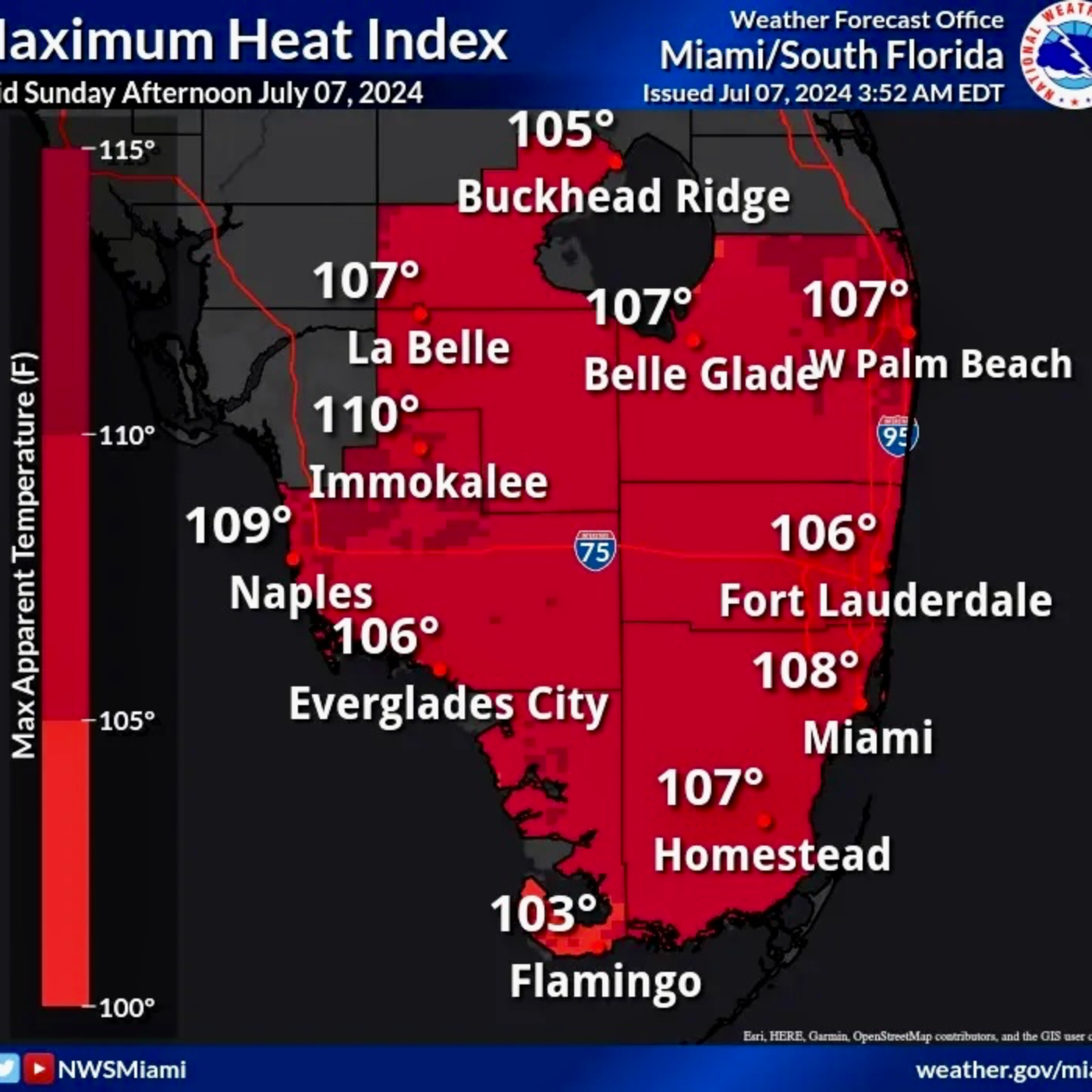
Florida Heat and Worker SafetyKey Themes:Extreme Heat as a Growing Threat:Florida is experiencing increasingly severe and frequent heat waves, exacerbated by climate change and warming oceans.The heat index, which factors in both temperature and humidity, is reaching dangerous levels. South Florida is particularly hard hit, experiencing a much greater number of days with heat indexes above 105F than in previous years."The climate crisis is making Florida hotter – and more humid." ("3 heat.pdf")Data shows record-breaking temperatures across Florida, with 2023 having some of the hottest months on record, and 2024 seeing record April and May temperatures."Last year tied as the hottest ever, with July and August 2023 both breaking monthly records. So far this year, Florida has recorded its hottest ever April and May..." ("3 heat.pdf")Vulnerable Outdoor Workers:A significant portion of Florida's workforce is exposed to extreme heat while working outdoors. Estimates range from 25% to 26.2% of the workforce. This includes landscaping, construction, agricultural, and amusement park workers."A new report suggests one in four Floridians who work outdoors are vulnerable to extreme heat, according to the Florida Policy Institute (FPI)." ("3 hot.pdf")Many of these workers are low-wage, migrant workers from Mexico, Central America, Cuba and Haiti, with less access to information and resources."Florida has an estimated 1.8 million outdoor workers, predominantly migrants, who are exposed to increasingly brutal weather conditions..." ("3 heat.pdf")"The heat makes you feel like you’re suffocating," said Raimundo Perdigon, 58, from Cuba, recalling a recent job building an outdoor bathroom. ("3 heat.pdf")Indigenous Guatemalan workers, some of whom speak little English or Spanish, are particularly vulnerable due to difficulty accessing health information and advice.
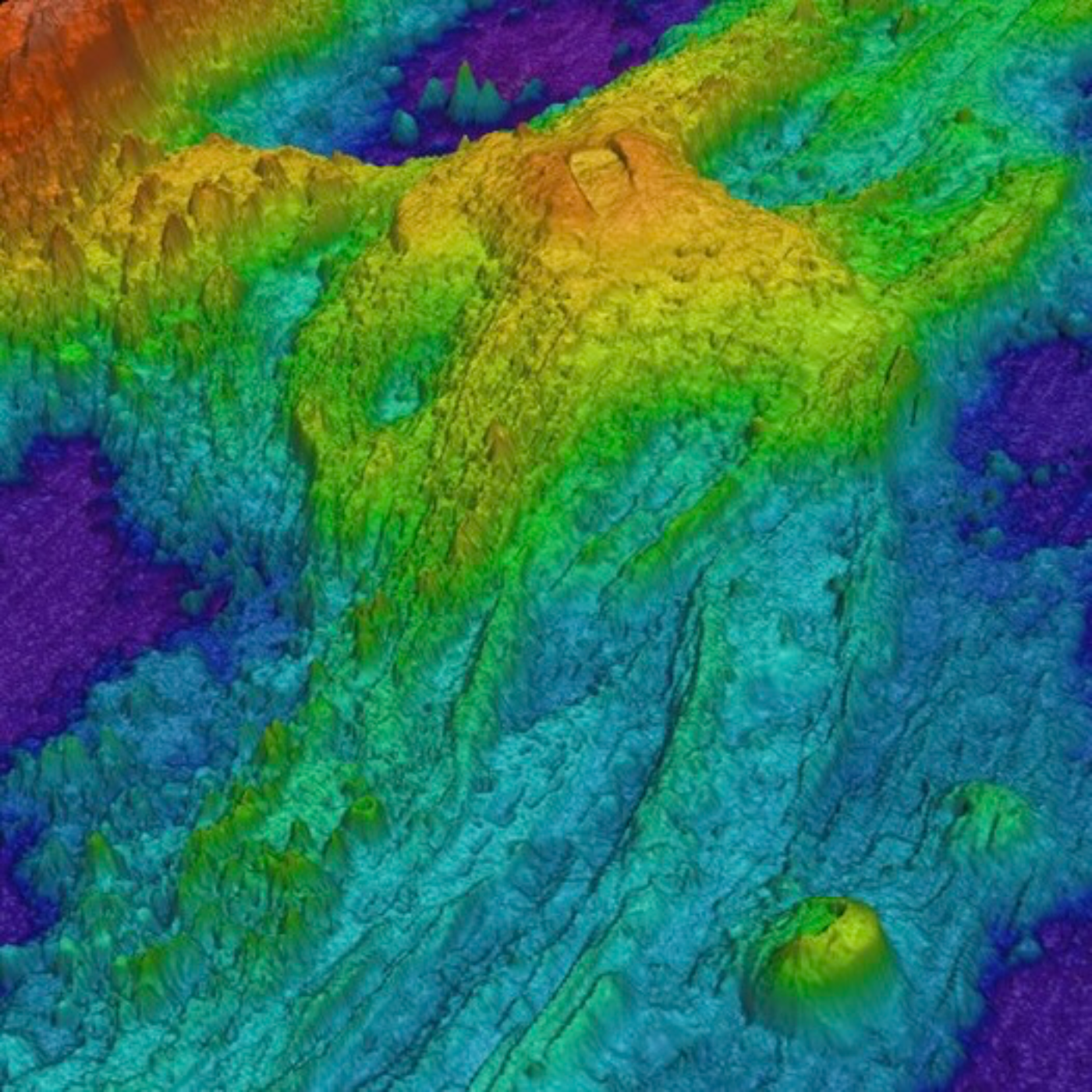
S2 Ep 27Pacific’s Axial Seamount Underwater Volcano Forecast to Erupt in 2025
Impending Eruption of Axial Seamount Underwater VolcanoSummary:Meteorology Matters looks at the Axial Seamount, an underwater volcano located approximately 300 miles off the coast of Oregon, is highly likely to erupt sometime in 2025. This prediction is based on decades of monitoring, a pattern of regular eruptions, and real-time data indicating the volcano is inflating as magma accumulates. While this eruption poses no direct threat to human lives due to its depth and distance from shore, it provides a unique research opportunity to improve volcanic forecasting and understand undersea volcanic processes.Key Themes and Findings:Imminent Eruption:Multiple sources agree that the Axial Seamount is expected to erupt in 2025.William Chadwick, a geologist at the University of Oregon and a key researcher studying the seamount, is quoted in multiple articles stating the eruption is likely this year: "A year ago, Axial seemed to be taking a nap but now it’s waking up and we think it’s likely to erupt before the end of 2025," and "An eruption does not seem imminent, but it can’t do this forever,”The volcano's behavior (inflation and increased seismicity) mirrors patterns observed before previous eruptions in 1998, 2011, and 2015.Unique Monitoring Capabilities:The Axial Seamount is described as "the most active submarine volcano in the northeast Pacific" and "the most well-instrumented submarine volcano on the planet."It is monitored by a network of instruments and cables extending from the coast, providing real-time data. This includes seismometers, bottom pressure recorders, and the "Regional Cabled Array" which has more than 140 instruments.This extensive monitoring allows researchers to closely track the volcano's activity: "And so we actually have real time data from Axial Seamount, which is pretty unusual." - William ChadwickScientists are able to track the volcano's inflation, a key indicator of an impending eruption: "The volcano has been inflating 'like a balloon' as molten rock accumulates within."Predictable Eruption Pattern:The Axial Seamount exhibits a "pretty repeatable pattern from one eruption to the next" according to Chadwick.Eruptions occur when the volcano reaches a specific level of inflation, making predictions feasible.Scientists successfully predicted the 2015 eruption based on these patterns. "The 2015 swelling allowed Chadwick...to predict that year’s eruption — “our best forecasting success,” he says."Non-Threatening to Humans:The volcano is approximately 300 miles off the Oregon coast and a mile underwater, meaning that any eruption poses no threat to people or boats on the surface: "If you were on a boat above the volcano, you wouldn't know at all that it had erupted." - Scott Nooner.Eruptions are "controlled" and are not expected to generate tsunamis. "The good news is that because the top of the volcano is still 4,500 feet below the ocean’s surface, it poses no danger to people."The type of eruption, forming pillow lava, is not explosive and results in oozing lava flow.
S2 Ep 26Florida Flooding Continues 4 Months After Hurricane Milton
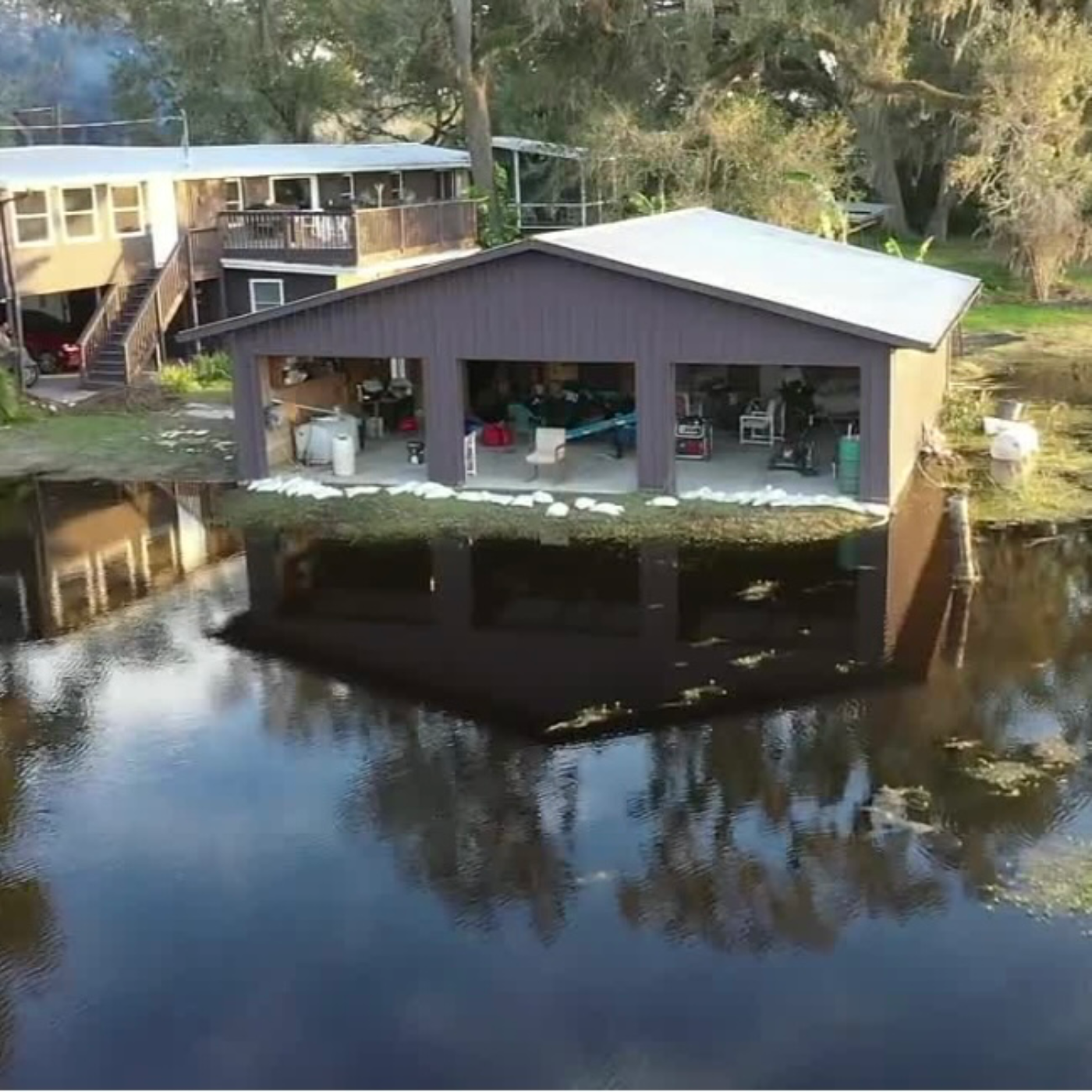
Florida flooding four months after hurricane Milton - February 2, 2025Meteorology Matters summarizes the ongoing challenges faced by communities in Florida following Hurricanes Helene and Milton in October 2024. While some recovery efforts have been completed, many areas, particularly in Pasco County and on Anna Maria Island, continue to grapple with severe flooding, economic strain, and bureaucratic hurdles. The long-term implications include potential population shifts and escalating insurance costs.Key Themes and Findings:Devastating Flooding and Prolonged Recovery:Hurricane Milton, which hit October 9-10, brought significant rainfall (over 15 inches in some areas like Tampa to Daytona Beach) leading to severe flooding, especially in the interior of Florida due to its flat geography."Hurricane Milton, which struck on October 9-10, plunged parts of Florida, from Tampa to Daytona Beach, under more than 15 inches of rain."The Withlacoochee River reached its third-highest crest on record (19.68 feet) ten days after the storm.Flood warnings in areas like Ridge Manor remained active for 34 consecutive days, highlighting the persistent nature of the flooding.Some areas of Pasco County, specifically in Dade City and near Zephyrhills, remain flooded 4 months after the storms.Properties in neighborhoods like Hickory Hills in Dade City are still partially underwater, with some residents needing to drive through neighbors’ yards or use boats to access their homes."Dozens of properties in the Hickory Hills neighborhood of Dade City remain partially underwater, including Victor Lemus', who has to drive through a neighbor's yard to access the road."Struggling Communities and Logistical Challenges:Communities are facing significant logistical issues, with residents resorting to using airboats to reach polling places during the 2024 presidential election."Overwhelmed by such water levels, residents found themselves not just facing flooded homes but also desperate logistical challenges to vote; many opted for airboat rides to cast their ballots during the 2024 presidential election."The lack of accessibility to flooded properties in Pasco County raises concerns about medical emergencies and fire hazards, with residents expressing worries about first responders being unable to reach them.Slow and Inadequate Recovery Efforts:Recovery efforts for local governments and public utilities have been slow.State-owned pumps initially used to remove water in Pasco County were redeployed in December, leaving residents to deal with the flooding on their own."According to a Pasco County spokesperson, state-owned pumps were used to help remove water from these areas following Hurricanes Helene and Milton... Those pumps, however, were 're-deployed' elsewhere in December..."Pasco County authorities cite that they cannot pump water from private property, leaving residents feeling abandoned and blaming the county and FEMA for not providing needed assistance."the flooding is on private property, and the county is not able to pump water from private property.""They told FOX 13 they haven't been able to get any assistance from FEMA, or from their local and state elected officials."Residents in Pasco County also believe infrastructure and stormwater management have not kept pace with growth which has exacerbated the flooding issue."They said infrastructure in the area hasn’t kept up with explosive growth, and stormwater from elsewhere is ending up trapped there with nowhere to go."
S2 Ep 25Oklahoma Senate Bill 158 - Storm Chaser License
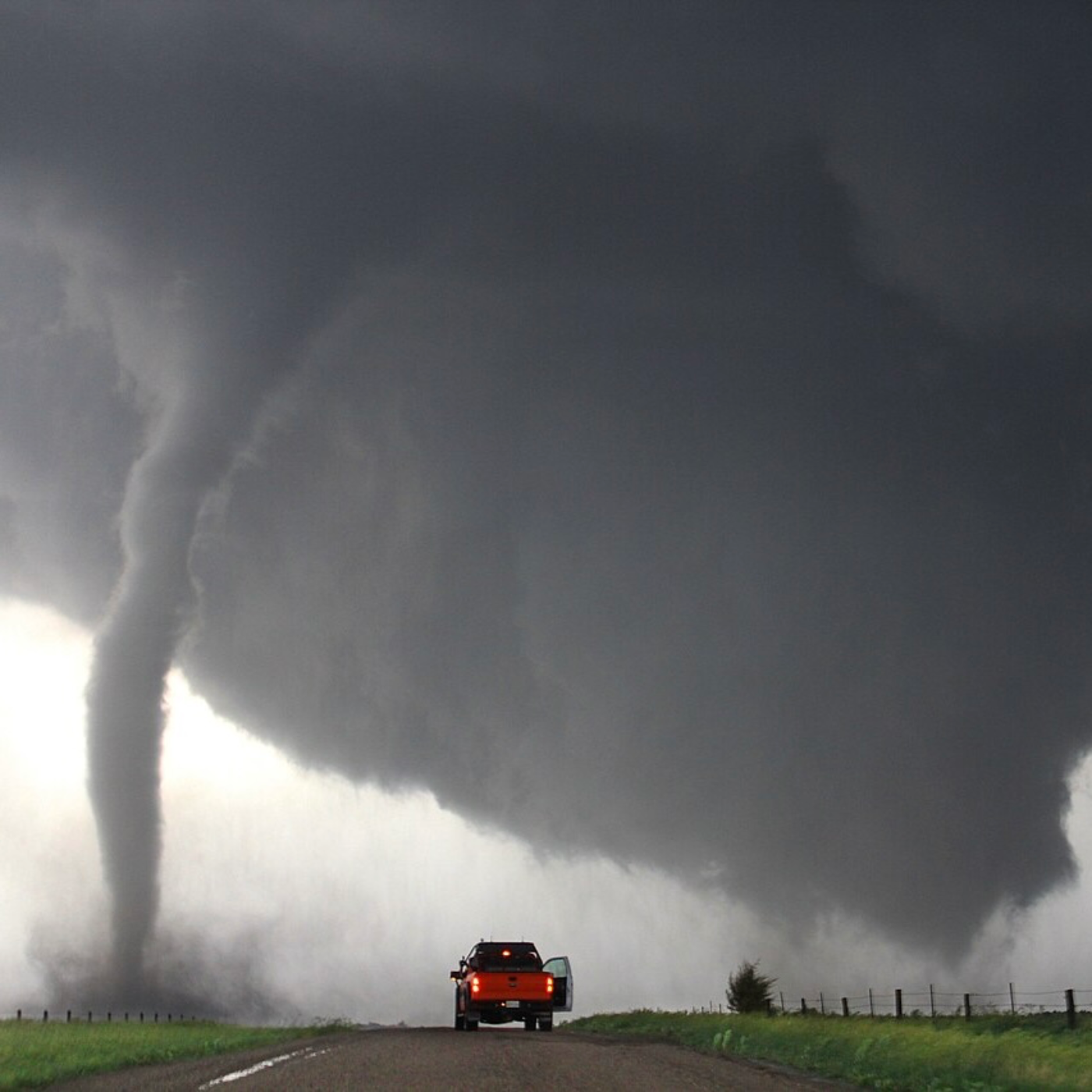
Oklahoma Senate Bill 158 - Weather Tracker LicensureSubject: Analysis of Senate Bill 158, concerning the regulation and licensure of professional severe weather trackers in Oklahoma.Sources:KFOR News Article: "Bill targets storm chasers with licensure requirements" (referred to as "KFOR Article")Senate Bill 158 Text (referred to as "SB 158")1. OverviewSenate Bill 158 (SB 158), authored by Senator Mark Mann, aims to create a regulatory framework for "professional severe weather trackers" in Oklahoma. The bill, if passed, would establish a licensing process, set requirements for those who track severe weather, and grant certain privileges to licensed trackers, including the ability to operate with emergency vehicle status during significant weather events. The stated goal is to enhance safety by distinguishing professional trackers from amateur enthusiasts, and allow licensed storm trackers to act as emergency responders.2. Key Provisions of SB 158Licensing Requirement: The bill mandates that individuals operating as "professional severe weather trackers" be licensed by Service Oklahoma.Definition of "Professional Severe Weather Tracker": SB 158 defines a "professional severe weather tracker" as an individual or company hired by a qualified media outlet or affiliated with a research program at a qualified institution of higher education. They must be employed or contracted with these organizations. ("Professional severe weather tracker’ means a licensed individual or company hired or contracted with by a qualified media outlet or affiliated with a research program at a qualified institution of higher education;")Qualified Media Outlet: A qualified media outlet is defined as a television station licensed by the Federal Communications Commission (FCC) that broadcasts via various platforms (broadcast, cable, streaming). ("Qualified media outlet’ means a television station licensed by the Federal Communications Commission for the broadcast or transmission of television programming via broadcast, cable, streaming, or other platforms as recognized by the Federal Communications Commission;")Qualified Institution of Higher Education: A qualified institution is defined as any college or university regulated by the Oklahoma State Regents for Higher Education that offers a course or program in meteorology. ("Qualified institution of higher education’ means any college or university regulated by the Oklahoma State Regents for Higher Education that offers a course or program in meteorology;")Significant Weather Event: The bill defines significant weather events that trigger the special privileges of a licensed tracker, including:Enhanced, moderate, or high-risk weather days by the National Weather Service's Storm Prediction Center.Any tornado or severe thunderstorm watch or warning issued by the National Weather Service or the chief meteorologist of a qualified media outlet.Winter weather advisories, warnings or watches, and red flag fire warnings. ("Significant weather event’ means: a. a day of enhanced, moderate, or high risk conditions… b. any tornado or severe thunderstorm watch… c. any storm… d. a blizzard warning…e. a red flag fire warning…f. a flash flood warning or flood warning")Licensing Requirements: To obtain a license, individuals must:Pass a criminal background check.Supply a letter of endorsement from a chief meteorologist of a qualified media outlet, or a designated individual from an institution of higher education, attesting to the applicant's knowledge and experience…

S2 Ep 24Trump Policies Spur NOAA Email Chaos & Expected Cuts to Weather/Science
NOAA Email Chaos, Weather Funding Cuts & Stopping Science Date: Jan 30-31st 2025A newly implemented, centralized email system for federal employees, spearheaded by the Trump administration, experienced a significant security breach on or around January 30, 2025. This breach allowed external actors to send abusive and inappropriate messages to approximately 13,000 employees at the National Oceanic and Atmospheric Administration (NOAA). This incident exposed serious vulnerabilities within the new system, raising concerns about its security, management, and the broader implications for federal communications. Furthermore, it highlighted controversial changes at the Office of Personnel Management (OPM), which was reportedly responsible for the system’s implementation.Key Themes and Findings:System Vulnerability and Inadequate Security:The new email system, designed to reach all 2.3 million federal employees from a single address, was "cobbled together" rapidly, lacking basic security measures or screening protocols. As one NOAA employee stated, “Goes to show you how fast this [new comms system] was cobbled together – no security or screening on this address.”Abusive and Inappropriate Content:The 13,000 NOAA employees received a barrage of offensive emails, including:An email with the subject "Resign," containing the message: "Aren’t you tired of working for a complete c*nt?”An “Important Weather Alert” about a “99% chance of shit showers” over the next four years.Crude and inflammatory messages critical of President Donald Trump and Elon Musk.Spam subscription confirmation for "Scientology Today."Links to a personal newsletter from journalist Ken Klippenstein.These messages were described as “extremely offensive,” and “vulgar.”Controversial Changes at OPM:The email system was implemented by a new team at the Office of Personnel Management (OPM), which reportedly replaced experienced staff with "lackeys from his previous ventures." This reportedly included young, inexperienced individuals from Elon Musk's previous ventures (e.g. xAI, Neuralink, and Peter Thiel’s firms).The OPM’s former Chief Information Officer, Melvin Brown II, was reportedly fired for refusing to implement the new email system.The new email system is reportedly part of a wider plan for the Trump administration to gather information on government employees and implement a “hostile takeover” of the OPM.The OPM's new system is the subject of a class-action lawsuit alleging violations of Bush-era cyber security standards.Immediate Response and Internal Review:NOAA Deputy Director of Communications Scott Smullen apologized to staff and stated, “I will report it.”Vice Admiral Nancy Hann, NOAA's deputy undersecretary for operations, confirmed the “cyber attack,” acknowledging the offensive emails and apparent “phishing attempts”. She stated, “I am sorry that you were subject to these inappropriate messages and want you to know that we take these matters very seriously.”An investigation was launched by NOAA's Office of the Chief Information Officer (OCIO) to prevent future incidents.Quotes from Sources:“Aren’t you tired of working for a complete c*nt?” (Subject line of an email sent to NOAA employees)“Goes to show you how fast this [new comms system] was cobbled together – no security or screening on this address.” (NOAA employee quote)

S2 Ep 23Property Tax and Home Insurance Rates Up as Global Temperatures Rise
Climate Change Impacts on Property Taxes and Home InsuranceImpact on Property Taxes:Reassessments: Natural disasters often lead to property reassessments, temporarily lowering the value of damaged properties and thus reducing property taxes. As stated in the Yahoo article, "natural disasters usually spur property reassessments, which temporarily lower the values of damaged properties while simultaneously reducing homeowners’ taxes."Tax Rate Increases: Municipalities might raise property tax rates to offset revenue losses from damaged properties and to fund recovery efforts. The article notes, "In areas that were not affected, tax rates were increased to help offset the loss in revenue,” and, "In Los Angeles, wildfires similarly create more expensive places with taxes to meet increased funding needs."Temporary Reductions & Refunds: Some areas provide temporary property tax reductions or refunds to homeowners who have experienced significant losses due to disasters. California, for instance, offers this relief if losses are at least $10,000 of the current market value of the property.Restoration of Value: Once rebuilt, a property’s pre-damaged value is typically restored.Variations in Laws: Property tax relief measures vary by location, with states like New York enacting specific climate change property tax relief bills. As the Yahoo article states, New York's "Climate Change Property Tax Relief bill... provides assessment relief to property owners within eligible municipalities."Higher Rates in Disaster-Prone Areas: "Living in a disaster-prone area can affect your property taxes in several ways. They may be assessed at a higher rate because of the cost of municipal services that include emergency response, building, and maintaining flood control infrastructure." This highlights an ongoing cost for homeowners in these regions.Impact on Home Insurance:Rising Premiums: Insurance premiums are rising, particularly in high-risk areas like flood zones and regions prone to hurricanes or wildfires. The Yahoo article quotes, "insurance premiums often rise ‘in areas with the highest risk of natural disasters such as hurricanes or wildfires."Policy Non-Renewals: Insurance companies are increasingly dropping coverage for homeowners in disaster-prone areas. The Axios article notes that the share of home insurance policies not renewed in the US ticked up to 1.06% in 2023 from 0.8% in 2018. In Los Angeles County, the increase was more significant, from 0.86% to 1.43%.Reduced Market Appeal: Properties in flood zones may see reduced market appeal unless they have mitigation measures in place and the cost of insurance rises as a result, impacting the entire real estate market.Concerns about Uninsurability: There is growing concern that some areas could become uninsurable entirely. The Axios piece includes the quote from the outgoing Senate Budget Committee chair, Sen. Sheldon Whitehouse, stating that rising home non-renewals "spells trouble for property values in climate-exposed communities across the country."Climate Risk as Tangible: As noted by Jeremy Porter, "Insurance prices are often the first way that 'climate risk becomes tangible to people'."Insurers' Perspective: It is also noted that an insurer trade group argues non-renewal data is "unsuitable" for understanding climate change impacts, since it doesn't explain the reasoning for company decisions.
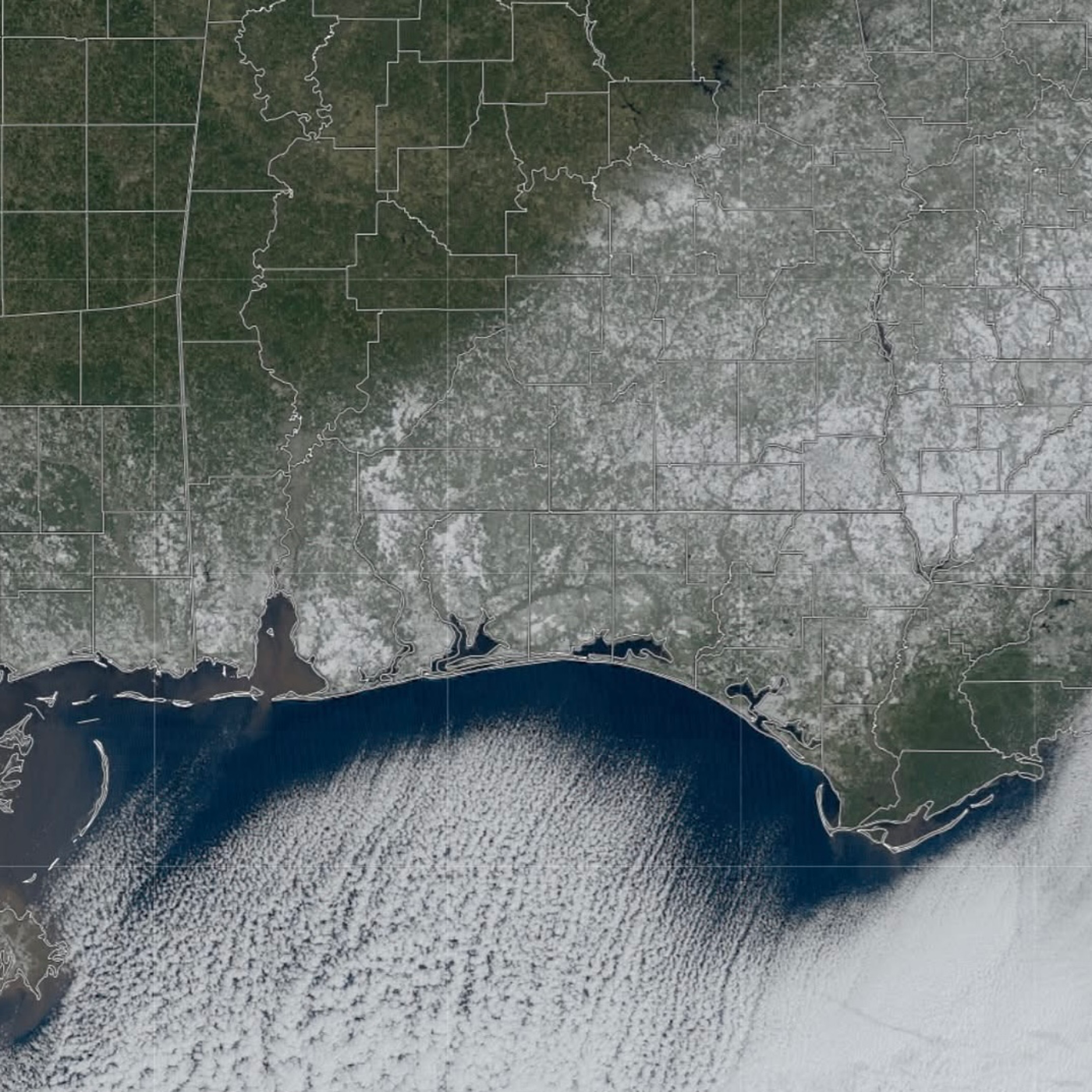
S2 Ep 22Historic Gulf Coast Snowstorm Dumps Record Snow in Florida
Historic Gulf Coast Snowstorm - January 2025I. Historic Gulf Coast Snowstorm:Unprecedented Snowfall: The Gulf Coast experienced a rare and record-breaking snowstorm, with some areas seeing the heaviest snowfall in over a century. Several locations broke all-time records.Quotes:“Historic, city-snarling snowfall – in some cases, possibly the heaviest in more than a century – was spreading on Tuesday into coastal communities from Texas toward Florida.”"The Great Southern Snowstorm of 2025 is one of the most impactful winter storms in history for the Gulf Coast, obliterating Florida’s all-time state snowfall mark and smashing local accumulation records from middle Louisiana to western Florida."Record Snow Totals: Multiple cities experienced record snowfall, with amounts far exceeding forecasts.Examples:Pensacola, FL: 8.9 inches (all-time record, more than double the previous state record). The city of Milton, just northeast, recorded 9.8 inches, which is pending confirmation as the new state record.New Orleans, LA: 8 inches at the airport, breaking the previous record of 2.7 inches, with some areas reporting up to 11.5 inches.Mobile, AL: 7.5 inches (all-time record).Baton Rouge, LA: 6-8 inches (heaviest since 1895).Quote: ““It’s an incredible, incredible event,” said Michael Mugrage, a meteorologist at the National Weather Service office in Mobile, Alabama, where many of the highest snowfall totals from the region were reported. “It puts it in perspective how rare this is.”Key Factors:Polar Vortex: A strong polar vortex stretched unusually far south, bringing extremely cold air from the Arctic to the Gulf Coast.Upper Level Disturbance: An upper-level disturbance moving south from Canada helped generate lift, leading to precipitation.Dry Air: Surprisingly, very dry air aloft helped the formation of snow, as it caused saturation to occur at below-freezing temperatures.Warm Gulf Waters: Unusually warm Gulf waters may have provided a higher-than-expected source of moisture, contributing to increased precipitation amounts, but also a chaotic mix of snow, sleet, and freezing rain in some areas.Impacts:Travel Disruption: Roads were closed, including stretches of I-10 in Florida.Quote: “The storm system that brought so much snow also sank thermometers into record-breaking territory across the Deep South.”Record Low Temperatures: The storm also brought record low temperatures to cities in the region, with some locations experiencing the coldest temperatures since the late 19th century.Recreational Activity: Locals were seen using make-shift sleds to enjoy the rare snow.Rarity:The conditions that led to this storm are exceptionally rare in the Gulf Coast region. The chance of a similar event occurring in any given winter is estimated to be around 1%. The event is comparable to the historic storm of 1895.Quote: “With 2025 rivaling only 1895 for the historical high snowdrift on the Gulf Coast, this general kind of event might only have around a 1% of occurring in any given winter."Comparison to Historical Events: While there have been instances of snow in Florida in the past (documented as far back as the 1700s), this event was far more significant and widespread.

S2 Ep 21Local TV Meteorologist Layoffs Put on Hold Due to Public Backlash
Allen Media Group's Weather Strategy and Subsequent ReversalAllen Media Group (AMG), owner of The Weather Channel and numerous local television stations across the United States, initially announced a plan to eliminate nearly all local meteorologist positions at its stations. Viewer and Staff Backlash:Public Outcry: The announcement was met with swift and intense backlash from viewers, who expressed concerns about the loss of local expertise and the impact on severe weather coverage. Viewers described the plan as "greedy," "ridiculous," and "damn cheap."Concerns about Public Safety: Emily Pike, a former meteorologist at WSIL-TV 3, stated, “Local meteorologists are being replaced, which could pose serious risks, especially during severe weather events.” This speaks to a more general fear that "hubbed" weather forecasts would be insufficient during crises.Loss of Local Expertise: Viewers and some media critics argued that local meteorologists have a deeper understanding of local weather patterns, geography, and community needs, making them more effective during severe weather. As one meteorologist noted: “We know the area. We know how to forecast for the area. We know the ins and outs of hyper-local weather.”Impact on Local News and Journalism:Loss of Localism: The decision to remove local meteorologists was seen as a blow to localism in media, removing a key aspect that draws viewers to local stations. One source noted that "cutting local meteorologists 'will reduce viewership and station app use, probably in every Allen market,' not to mention driving away advertisers."Centralization Trend: AMG's actions were part of a broader trend of media consolidation and centralization, with other station groups such as Sinclair, CBS, and Gray Media making similar cost-cutting decisions.Public Service Obligation: The action was seen by some as a dereliction of duty, since "broadcast stations carry an FCC license that requires some responsibility to operate in the public interest."AMG's Reversal and Uncertain Future:Pause on Layoffs: Due to the backlash, AMG has reportedly hit pause on its plan to lay off meteorologists and outsource coverage to The Weather Channel. As one source reports: "Allen Media Group is reportedly reversing its controversial plan to ax local meteorologists and replace them with a Weather Channel feed after facing heated backlash from loyal viewers".Stations Affected (Partial List):WJRT (Flint, MI)WSIL-TV 3 (Carterville, IL)WEVV (Evansville, IN)KWWL (Waterloo, IA)KIMT (Rochester, MN/Mason City, IA)KEZI (Eugene, OR)KDRV/KDKF (Medford, OR)KHSL/KNVN (Chico / Redding, CA)WTHI (Terre Haute, IN)WLFI (West Lafayette, IN)WFFT (Fort Wayne, IN)WAAY (Huntsville, AL)KADN (Lafayette, LA)KITV/KIKU (Honolulu, HI)WAOW (Wausau, WI)WQOW (Eau Claire, WI)WKOW (Madison, WI)WXOW (La Crosse, WI)KVOA (Tucson, AZ)WREX (Rockford, IL)WCOV (Montgomery, AL)

S2 Ep 20Potential Trump-Era Environmental & Climate Policy Reversals
A Detailed Review of Potential Trump-Era ReversalsMeteorology Matters analyzes the key environmental actions taken by the Biden administration, focusing on the potential challenges and ease with which President Trump may attempt to reverse them. Key Themes:Sweeping Scope: Biden's environmental agenda is characterized by its breadth and depth, impacting various sectors and aiming for long-term sustainability. This makes complete dismantling difficult.Legal and Scientific Foundation: Many of Biden's policies are rooted in robust scientific evidence and legal frameworks, making them resistant to arbitrary rollbacks.Economic and Political Considerations: While Trump champions deregulation for economic growth, some of Biden's policies enjoy industry support (like methane regulation) or face international pressure (like EV production).Key Areas of Focus and Potential for Reversal:1. Climate Change and Air PollutionGreenhouse Gas Standards for Vehicles: Reversing these standards could be challenging due to industry investments in EV production to comply with global regulations. Difficulty: MediumGreenhouse Gas Standards for Power Plants: Trump's promise to "terminate" the power plant rule will likely face legal challenges similar to those faced during his first term. Difficulty: MediumLimits on Mercury and Air Toxics from Coal Plants: Reversing strengthened limits will likely be met with lawsuits from civil rights and environmental groups. Difficulty: MediumPhaseout of Climate Super-Pollutants (HFCs): Reversing the HFC phase-down, authorized by a bipartisan bill, would require new legislation from Congress. Difficulty: Difficult2. Drilling and ExtractionLimits on Methane from Drilling Operations: Trump may face pressure from the oil industry, which supports methane regulation, to retain this rule. Difficulty: MediumFee on Methane from Oil and Gas Facilities: Repealing these fees, authorized by the Inflation Reduction Act, would likely require new legislation. Difficulty: DifficultProtections for D1 lands in Alaska: Trump's previous attempts to revoke protections for D1 lands faced hurdles, and reversing this policy could encounter similar challenges. Difficulty: Medium3. Chemical SafetyListing of PFAS under the Superfund law: This designation has already drawn legal challenges from industry groups and could face further legal hurdles if reversed. Difficulty: MediumRemoval of All Lead Pipes: The Safe Drinking Water Act's provisions make weakening existing health protections difficult, potentially leading to legal challenges. Difficulty: MediumComplete Ban on Asbestos: Trump's previous failures to regulate asbestos were deemed "arbitrary and capricious" by a federal court, making a reversal difficult. Difficulty: Medium4. ConservationExpansion of National Monuments: Trump's previous downsizing of national monuments sparked legal battles. Repealing expansions faces similar resistance and potential Supreme Court involvement. Difficulty: EasyProtection of Boundary Waters: Reversing the mining ban would face opposition from conservationists and potentially impact local water quality, leading to legal challenges. Difficulty: Medium (Rating by Washington Post)
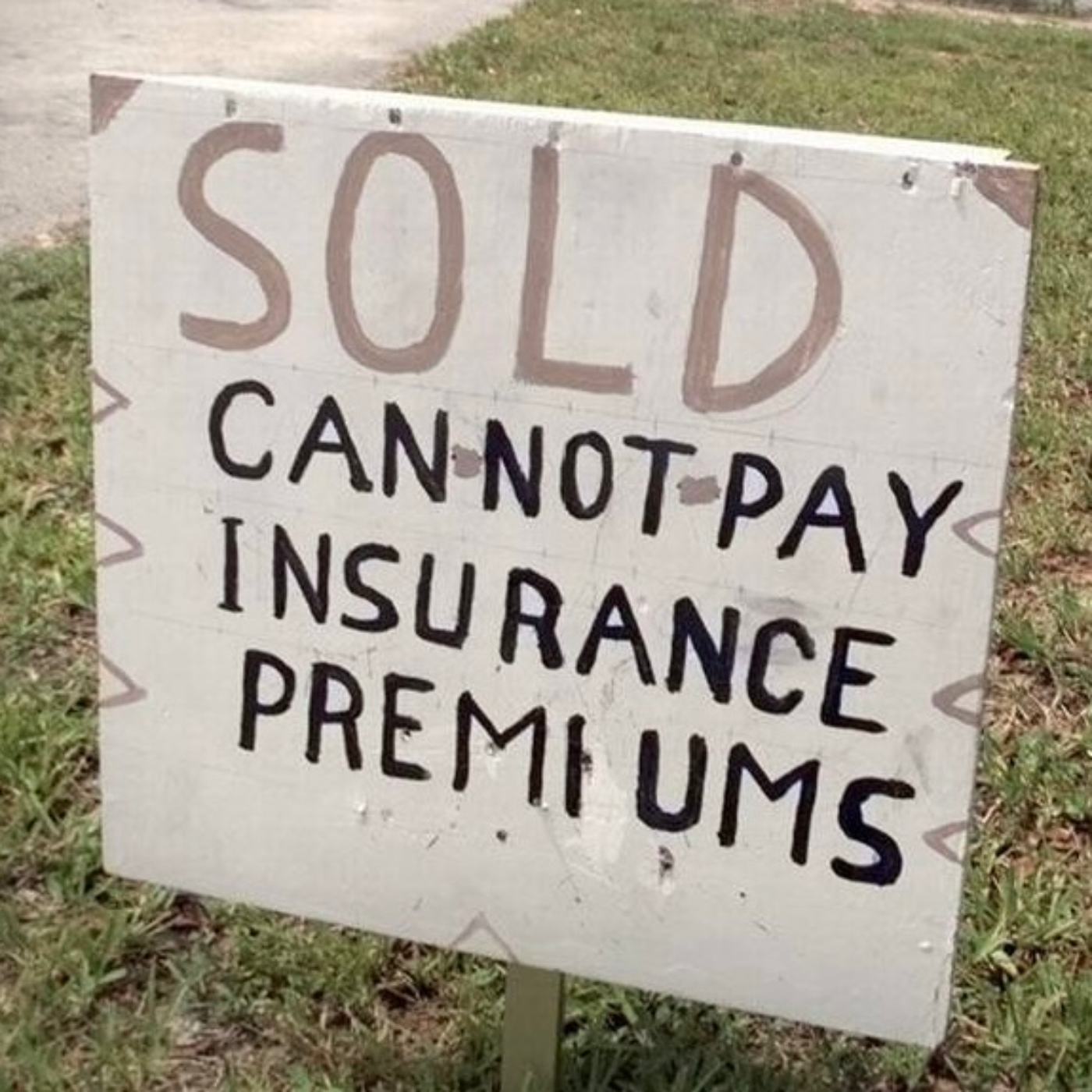
S2 Ep 19The US Home Insurance Crisis
Home Insurance Crisis in the United StatesDate: January 19, 2025Subject: Overview of the Home Insurance Crisis in the US, with a Focus on California and FloridaSummary: Meteorology Matters analyzes the escalating home insurance crisis in the US, particularly in California and Florida. The analysis highlights key themes including:Rising Insurance Costs: Home insurance premiums are increasing at rates surpassing inflation, driven by factors like reinsurance costs, litigation expenses, and the escalating frequency and severity of climate change-related disasters.Insurance Nonrenewals and Cancellations: Insurers are increasingly dropping policies in high-risk areas, forcing homeowners to seek expensive alternatives or forgo coverage altogether.Government Intervention: States like California and Florida are grappling with legislative and regulatory solutions to address the crisis, while the federal government's attempts to gather data and intervene have faced political pushback.Consumer Impact: The crisis is leaving homeowners financially vulnerable, unable to afford coverage, and struggling to rebuild after disasters.Key Themes and Facts:1. Rising Insurance Costs Outpacing Inflation:Inflation and Reinsurance Costs: Insurance industry leaders cite inflation and skyrocketing reinsurance costs as primary drivers of premium increases. Brian Murphy of Brightway Insurance states, “These catastrophic losses, coupled with the insolvency of 15 insurance companies in Florida over the past 15 years, have driven up reinsurance costs, which are then passed down to policyholders." (Source: Insurance cost increases in Florida have outpaced inflation. We asked experts why.)Litigation Expenses: Although recent reforms aimed at curbing lawsuits against insurers have shown some impact, litigation remains a significant cost driver. (Source: Insurance cost increases in Florida have outpaced inflation. We asked experts why.)2. Nonrenewals and Cancellations Leaving Homeowners Vulnerable:Increased Nonrenewals: Nonrenewal notices have surged by almost 30% nationwide from 2018 to 2022, reaching over 620,000 annually. (Source: More homeowners lose insurance in areas hard-hit by climate disasters - The Wash.pdf)Climate Change Impact: Insurers are increasingly withdrawing from high-risk areas exposed to hurricanes, wildfires, and severe storms, forcing homeowners to turn to expensive "insurers of last resort" or forgo coverage. (Source: They lost their insurance. Then their homes burned | CNN Business.pdf)California Wildfires: State Farm, California's largest insurer, nonrenewed thousands of policies in high-risk areas, including many that were subsequently destroyed in the recent LA wildfires. This sparked public outrage and calls for increased government oversight. (Source: State Farm makes major policy change amid LA fires outrage.pdf)

S2 Ep 18Weather Cats of the Mount Washington Observatory
Cats of Mount Washington ObservatoryOverview: Meteorology Matters examines the history of resident cats at the Mount Washington Observatory. We highlight the roles these cats have played, their individual personalities, and the public interest they have garnered.Key Themes:Rodent Control & Companionship: Cats were initially introduced to the observatory in the 1930s for practical purposes. They served as mousers, keeping the rodent population in check, and also provided companionship to the weather observers stationed on the often-isolated mountaintop.Mascots & Public Interest: Over time, the summit cats have transcended their practical roles and become beloved mascots for the Mount Washington Observatory. They are featured in gift shop merchandise, news articles, and social media posts, attracting considerable public attention and affection.Individual Personalities: Each cat has possessed a unique personality that has endeared them to the staff and the public. From Inga's hunting prowess and Nin's placid nature to Marty's curiosity and Jasper's dog-like behavior, these feline personalities have become part of the observatory's lore.Notable Cats & Facts:Early Cats (1930s): The tradition began with Tikky and grew to include a cohort of eight felines by 1934.Inga (1980s-1999): A calico who gained significant fame, appearing on various merchandise. Known for her skill in catching mice and surviving harsh weather conditions."The picture of Inga outside during a winter storm is seen on a poster and postcard in the Observatory’s gift shop." - Jillian Reynolds, Summit Intern (2025)Jasper (1980s-1999): An orange tabby with a peculiar, dog-like personality. Ate unusual things, preferred to be held upside down, and was described as “garbage guts” due to his indiscriminate eating habits."He stood on his hind legs to beg for treats (and dog bones), refused to use a litter box, was taught to lie down and roll over, and ate everything from dead mice to asparagus." - Emily Tunkel, Summer Intern (2018)Nin (1995-2009): A stray cat who became known for his calm demeanor and love for watching ravens and playing Scrabble with the observers.Marty (2008-2020): Won an election held by the Conway Area Humane Society to become the next summit cat. Known for his curiosity and exploration of the observatory.Nimbus (2021-Present): A gray shorthair chosen for his friendly and inquisitive nature. Introduced to the summit gradually, he is expected to eventually have free reign of the facility and mountaintop."Nimbus fit the bill, she said: he's friendly and inquisitive, and he loves to explore and interact with the staff." - Rebecca Scholand, Summit Operations Manager (2021)Conclusion:The tradition of keeping cats at the Mount Washington Observatory is a long-standing one, intertwining practical needs with emotional connections and public interest. These cats have become an integral part of the observatory's history and identity, serving as ambassadors for this unique and challenging environment. The stories and personalities of these cats continue to entertain and fascinate, reflecting the human need for companionship and the enduring appeal of animals in even the most extreme settings
S2 Ep 17Trump Nominees Environmental Stances
Trump Administration's Environmental StancesSubject: Review of key statements and controversies surrounding the Trump administration's nominees for Energy Secretary (Chris Wright) and EPA Administrator (Lee Zeldin) regarding climate change and environmental policies.Date: January 16, 2025Main Themes:Disputing the link between climate change and wildfires: Both nominees have downplayed or outright denied the scientific consensus that climate change is contributing to the increasing frequency and severity of wildfires.Emphasis on economic growth over environmental protection: Both nominees prioritize economic growth and energy independence, suggesting that environmental regulations may hinder these goals.Questioning the EPA's role in regulating carbon dioxide emissions: Zeldin asserts that the EPA is authorized, but not obligated, to regulate CO2 emissions, potentially signaling a shift away from climate-focused policies.Important Ideas/Facts:Chris Wright (Energy Secretary Nominee):Rejects link between climate change and wildfires: During his confirmation hearing, Wright stood by his past comments calling wildfire concerns "hype" and dismissing their connection to climate policies. This stance contradicts scientific studies demonstrating the impact of climate change on wildfire frequency and intensity.Quote: "The hype over wildfires is just hype to justify [harmful climate policies]." - Wright on LinkedIn, 2023 (source: The Washington Post)Acknowledges climate change but downplays its severity: While acknowledging that climate change is real, Wright has argued that it is not a crisis and has even suggested that a warmer Earth has reduced deaths from cold weather.Quote: “There isn’t dirty energy or clean energy”. Rather, he said, there are different sources of energy with different tradeoffs. - Wright during confirmation hearing (source: The Guardian)Focus on expanding fossil fuel production: Wright has consistently advocated for expanded fossil fuel production, a major contributor to greenhouse gas emissions and climate change.Lee Zeldin (EPA Administrator Nominee):Acknowledges climate change but questions regulatory obligation: Zeldin believes climate change is a real threat, but asserts that the EPA is not obligated to regulate CO2 emissions, despite having the authority to do so.Quote: "I believe that climate change is real," [but] ... the agency he is poised to oversee is just authorized, not required, to regulate carbon dioxide emissions. - Zeldin during confirmation hearing (source: Reuters)Prioritizes economic growth and energy independence: Zeldin emphasizes the importance of economic growth and energy independence, suggesting these goals should be prioritized over environmental protection.Quote: "We can, and we must, protect our precious environment without suffocating the economy." - Zeldin during confirmation hearing (source: Reuters)History of opposing environmental legislation: Zeldin's voting record in Congress reflects a pattern of opposition to environmental legislation, including measures to address climate change and pollution.
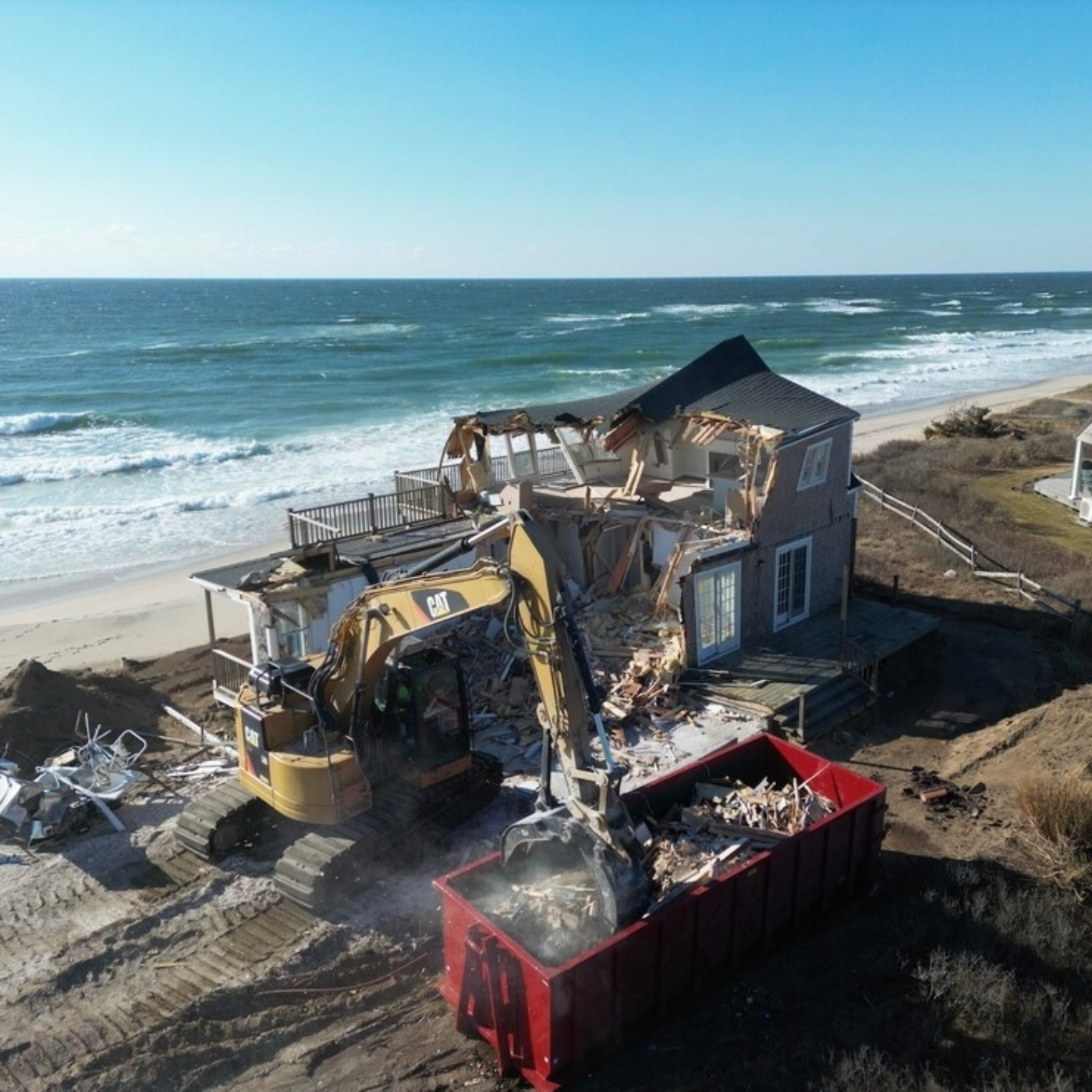
S2 Ep 16Nantucket House Taken by Rising Sea Level 6 Months After Sale for $200,000
Nantucket Beach Erosion: The Case of 28 Sheep Pond RoadHere’s the story of 28 Sheep Pond Road, a Nantucket beach house succumbing to severe erosion, highlighting the broader issue of coastal erosion on the island, sea level rise, and climate change.The Erosion Crisis:Nantucket's southern coastline faces significant annual erosion, ranging from half a foot to over 12 feet. ("$2M Nantucket beach house sells for just $200,000 | Fox Business.pdf")Sheep Pond Road, a dirt road on the island's west end, has been a particularly hard-hit area for decades. ("Erosion Firesale: Nantucket Waterfront Home Assessed At Nearly $2 Million Sold For Just $200,000")The Story of 28 Sheep Pond Road:Owned by Jane Carlin and Ben Gifford since 1988, the house witnessed a dramatic loss of beachfront over the years, losing neighboring properties and even the road itself to the encroaching sea. ("Erosion Firesale: Nantucket Waterfront Home Assessed At Nearly $2 Million Sold For Just $200,000")In 2024, the assessed value of the property was $1.9 million, but its proximity to the ocean made it essentially unsellable. ("Erosion Firesale: Nantucket Waterfront Home Assessed At Nearly $2 Million Sold For Just $200,000")Don Vaccaro, who owned the adjacent property, purchased the home for a mere $200,000 in July 2024, fully aware of its limited lifespan. ("Erosion Firesale: Nantucket Waterfront Home Assessed At Nearly $2 Million Sold For Just $200,000")Vaccaro accurately predicted the house would last less than six months and planned to utilize it for as long as possible before its inevitable demise. ("$200,000 Nantucket Beach House Demolished Due To Erosion But "It Was Worth It In The End"")Demolition and Aftermath:In January 2025, just six months after the sale, the town condemned the house due to safety concerns, forcing Vaccaro to demolish it. ("$200,000 Nantucket Beach House Demolished Due To Erosion But "It Was Worth It In The End"")Despite losing over $400,000 on the venture, Vaccaro expressed satisfaction, saying, “However I was able to use it one week with my family and kids in both houses, which was a priceless experience, so it was worth it in the end.” ("$200,000 Nantucket Beach House Demolished Due To Erosion But "It Was Worth It In The End"")Impact and Lessons:This story demonstrates the real and immediate threat of coastal erosion on Nantucket, impacting property values and forcing homeowners to make difficult choices.The sale and subsequent demolition of 28 Sheep Pond Road is just one example of the many similar cases along Sheep Pond Road, including homes being demolished, sold at heavily discounted prices, or lost entirely to the ocean. ("$200,000 Nantucket Beach House Demolished Due To Erosion But "It Was Worth It In The End"")We highlight the need for effective erosion mitigation strategies and community efforts to address the ongoing challenges posed by coastal erosion on Nantucket.Meteorology Matters paints a stark picture of the challenges faced by homeowners and communities dealing with coastal erosion. The story of 28 Sheep Pond Road serves as a cautionary tale and a reminder of the power of nature and the need for proactive measures to protect coastal communities.

S2 Ep 15FEMA Housing Screw Up
FEMA Housing Debacle in Western North CarolinaSituation: FEMA’s handling of the Transitional Sheltering Assistance (TSA) program for Hurricane Helene victims in Western North Carolina has come under intense scrutiny, despite extensions of the program and assurances from officials.Timeline of Events:Jan. 3rd, 2025: FEMA begins notifying some families that they are no longer eligible for TSA.Jan. 10th, 2025: FEMA grants a 48-hour extension of the TSA program due to a winter storm impacting the region.Jan. 13th, 2025:FEMA announces an extension of the TSA program until January 25th.FEMA states via email that the TSA program will continue through March for eligible families and households.Jan. 14th, 2025: Check-out date for many families in hotels under the TSA program.Jan. 15th, 2025:Morning: Dozens of families in Western North Carolina are evicted from hotels despite the extension.Afternoon: FEMA issues a statement on X (formerly Twitter) that "current eligible occupants can remain in their lodging through the end of March 2025."Evening: Senators Ted Budd and Thom Tillis publicly criticize FEMA for the evictions, calling it a "total breakdown" and "unacceptable."Key Issues:Miscommunication and Confusion: Conflicting information and deadlines from FEMA have caused significant confusion and distress for displaced families. Despite FEMA extending the deadline and stating that the program would continue through March for eligible families, people were still evicted from hotels.Lack of Transparency: It is unclear how FEMA is determining eligibility for continued TSA assistance. There are reports that some families are being deemed ineligible without clear explanations.Insufficient Support: Nonprofits and hotels have stepped in to provide temporary housing for those who were evicted, highlighting the lack of adequate support from FEMA.Further Information:Individuals in need of assistance should contact FEMA at 1-800-621-3362 or visit budd.senate.gov for support from Senator Budd’s office.The public can report their experiences and provide insights to WRAL News via wral.com/reportit.
S2 Ep 14Hurricane Helene Housing Crisis
Hurricane Helene Housing CrisisDate: January 14, 2025Summary: meteorology Matters analyzes various news sources to provide a comprehensive overview of the ongoing housing crisis in Western North Carolina (WNC) following the devastation caused by Hurricane Helene in September 2024. The document focuses on the challenges faced by displaced residents, government and FEMA response efforts, and the emerging role of campers as temporary housing solutions.Main Themes:Scale of Displacement and Housing Need: Hurricane Helene severely impacted WNC, damaging an estimated 121,000-132,000 homes and displacing over 12,000 residents as of January 2025. ("1,000 travel trailers approved for WNC residents displaced by Helene.pdf") The need for temporary housing remains critical, with thousands still residing in hotels, with friends and family, or in inadequate shelters.FEMA's Response and Challenges: FEMA has been criticized for the slow rollout of temporary housing units, with less than 100 families residing in FEMA-provided trailers by January 2025. ("Are FEMA rules to blame for slow WNC housing recovery? Here’s what we learned..pdf") While FEMA maintains that its policies allow for placing units in floodplains as a last resort, the lengthy construction timelines and bureaucratic hurdles contribute to delays."The reason these units are taking so long in North Carolina is more complicated than some politicians are making it seem to their constituents" - BPR News, January 13, 2025State and Local Initiatives: North Carolina Governor Josh Stein has taken proactive steps to address the housing crisis. He signed an executive order authorizing the purchase of 1,000 travel trailers for displaced residents, bypassing usual procurement procedures to expedite the process. ("1,000 travel trailers approved for WNC residents displaced by Helene.pdf") Local governments have also eased zoning restrictions to facilitate the placement of temporary housing units.The Rise of Campers as Temporary Housing: With the shortage of FEMA units and the impending winter, many displaced residents are turning to campers and RVs as temporary homes. ("WNC residents displaced by Helene turn to campers as housing.pdf") This presents new challenges, including winterization of campers to withstand freezing temperatures and ensuring a consistent supply of propane for heating."The cold weather has not been easy" - Vickie Revis, resident living in a donated camper, January 7, 2025FEMA's Transitional Sheltering Assistance (TSA) Program: FEMA’s TSA program, which provides hotel vouchers for displaced residents, has been extended multiple times. However, thousands of residents faced eviction from the program in January 2025, forcing them to seek alternative housing solutions. ("FEMA grants 48-hour extension for thousands of displaced WNC residents staying i.pdf")Key Facts and Figures:12,000+: Estimated number of WNC residents displaced by Hurricane Helene.1,000: Number of travel trailers authorized for purchase by the state of North Carolina.<100: Number of families residing in FEMA-provided trailers by January 2025.3,500: Number of households facing eviction from FEMA's TSA hotel program in January 2025.
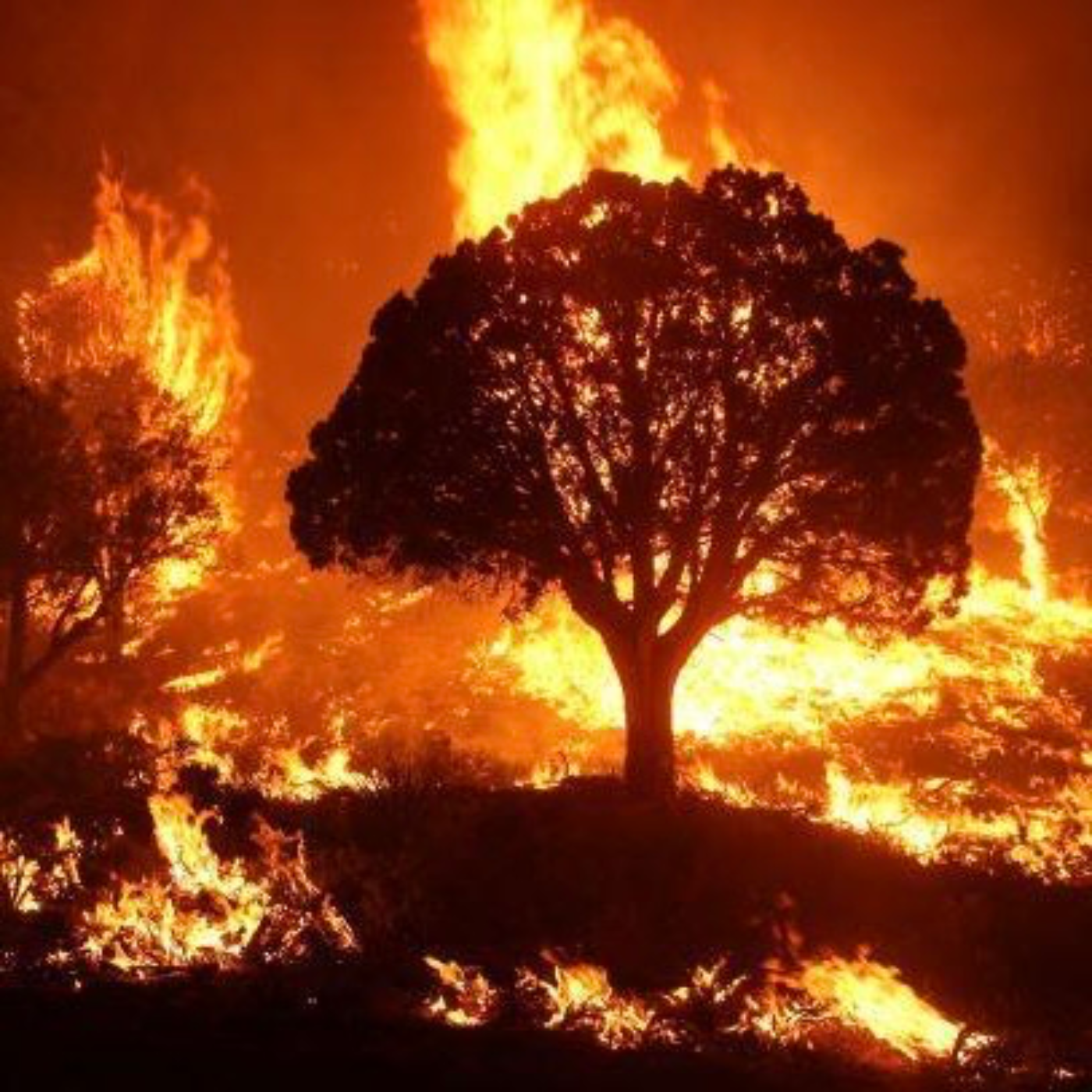
S2 Ep 13Wetter Weather Can Intensify Wildfire Risk
Wildfires and Climate ChangeMain Themes:Climate Change Fuels Wildfires: Warmer temperatures, drought, and a "thirsty" atmosphere create ideal conditions for larger, more frequent, and more severe wildfires.Wildfires Exacerbate Climate Change: Fires release massive amounts of carbon dioxide and destroy carbon sinks like forests, contributing to further warming.Expanding Wildfire Season: The traditional wildfire season is extending, with significant fires occurring even in winter months.Widespread Impacts: Wildfire smoke impacts air quality and public health far beyond the immediate fire zone.Adapting to a New Reality: Communities need to adapt to a future of more frequent and intense wildfires through prevention, mitigation, and building resilience.Key Facts & Ideas:Climate Change and Wildfire:Climate change has doubled the area burned by wildfires in the western U.S. since the 1980s. (NOAA)"Weather whiplash," the rapid shift between wet and dry periods, is intensifying globally due to climate change, exacerbating fire risk. (Washington Post)California now has 78 more annual “fire days” than 50 years ago. (CalMatters)Drought-stressed trees are more susceptible to insects and diseases, increasing fuel load. (Environmental Defense Fund)Shrinking snowpacks and earlier snowmelt further dry out forests. (Environmental Defense Fund)Lightning-sparked fires are becoming more common due to climate change. (CalMatters)Wildfire Impacts:Wildfires release massive amounts of pollutants, including black carbon, which is thousands of times more damaging than greenhouse gases. (CalMatters)Smoke from wildfires can travel hundreds of miles, affecting air quality and public health even in areas far from the fires. (Covering Climate Now)Wildfire smoke is particularly harmful to children. (Covering Climate Now)Wildfires destroy forests, which act as carbon sinks, further contributing to climate change. (Covering Climate Now)Intense fires can burn deep into the soil, creating risks for future mudslides and flooding. (Covering Climate Now)Adaptation and Prevention:Communities need to adapt to the “Pyrocene,” the age of fire, through fire-resistant building materials, defensible space around homes, and updated building codes. (CalMatters)Utilities need to improve infrastructure and vegetation management to prevent power lines from sparking fires. (CalMatters)Prescribed burns can help reduce fuel loads and promote healthy forest ecosystems. (Environmental Defense Fund)Better forest management and community planning are crucial for reducing wildfire risks. (Environmental Defense Fund)Public awareness and education about wildfire risk and prevention are essential. (Covering Climate Now)
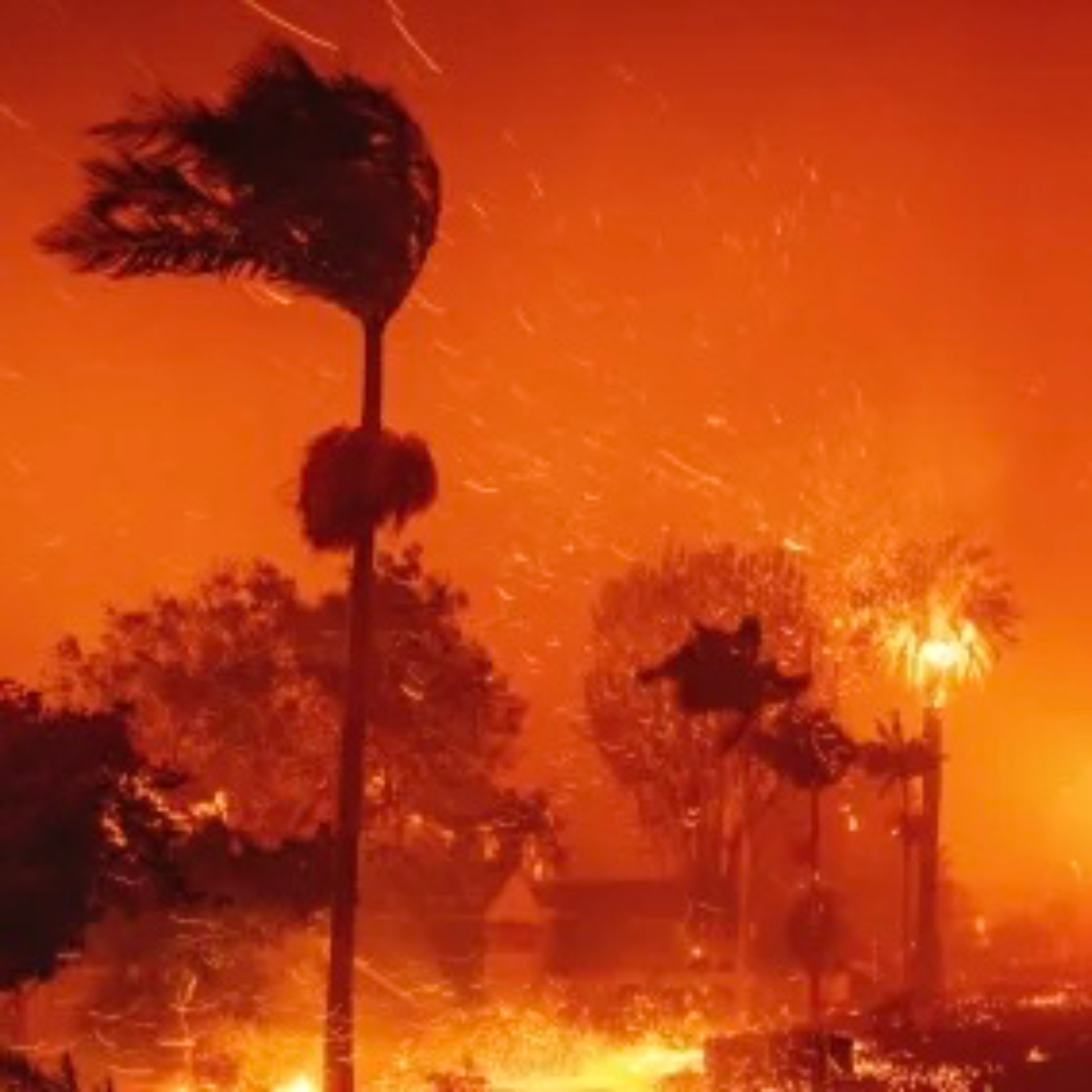
S2 Ep 12LA Wildfires and the Misinformation Storm
1. The Fires Themselves:Driven by hurricane-force Santa Ana winds reaching 100 mph and dry conditions due to an aggressive dry season, the fires are the most destructive in the city's history (Rolling Stone).At least five people have died, over 130,000 residents have been evacuated, and over 2,000 structures have been burned (Rolling Stone, Los Angeles Times).Over 7,500 fire personnel have been deployed, but containment remains a challenge (California Gov. Gavin Newsom).The fires are likely exacerbated by climate change, creating conditions ripe for rapid spread and ignition (Inside Climate News).Water infrastructure faced unprecedented strain with some fire hydrants running dry due to extreme demand, not budget cuts (Inside Climate News).2. Politicization and Misinformation:Blaming DEI Initiatives: Prominent figures like Elon Musk and Megyn Kelly spread the false claim that the LAFD's diversity initiatives hindered firefighting efforts, exemplified by Musk's tweet, "DEI means people DIE." (Rolling Stone, The Washington Post).Attacking Gov. Newsom: President-elect Trump falsely accused Newsom of refusing to sign a non-existent water restoration declaration to protect the Delta smelt, diverting water needed for firefighting. This claim was debunked by experts and Newsom's office (Inside Climate News, Rolling Stone).Conspiracy Theories: Alex Jones propagated the theory that the fires were a planned attack to destabilize the US, gaining traction on X (formerly Twitter) (Rolling Stone). Wild claims about Sean "Diddy" Combs' arrest and underground tunnels being destroyed by the fires circulated on TikTok (Rolling Stone).Misleading Budget Narratives: Social media and outlets like Fox News falsely accused Mayor Karen Bass of slashing the LAFD budget, ignoring the context of new contracts and increased firefighter salaries. Bass refuted these claims, stating that budget cuts did not impact firefighting capabilities (Inside Climate News, Mother Jones).Racialized Looting Concerns: Although officials warned about looting, online rhetoric often took a racist tone, with a viral (and debunked) tweet falsely accusing men of looting based on a news clip showing homeowners evacuating (Rolling Stone).3. Role of Social Media:Elon Musk's Influence: Musk's use of X to amplify far-right narratives and attack individuals based on their identity highlights how his platform has become a megaphone for his own political views (The Washington Post).Amplification of Misinformation: X, once a hub for breaking news, has become less reliable due to reduced fact-checking and the prioritization of paid conservative accounts (The Washington Post).Lack of Context: The spread of out-of-context information about the LAFD budget and the Delta smelt demonstrates how misinformation can flourish in the absence of accurate, nuanced reporting (Inside Climate News).This underscores the dangerous intersection of natural disasters and the spread of misinformation. As climate change intensifies extreme weather events, the need for accurate, reliable information will only grow more urgent.
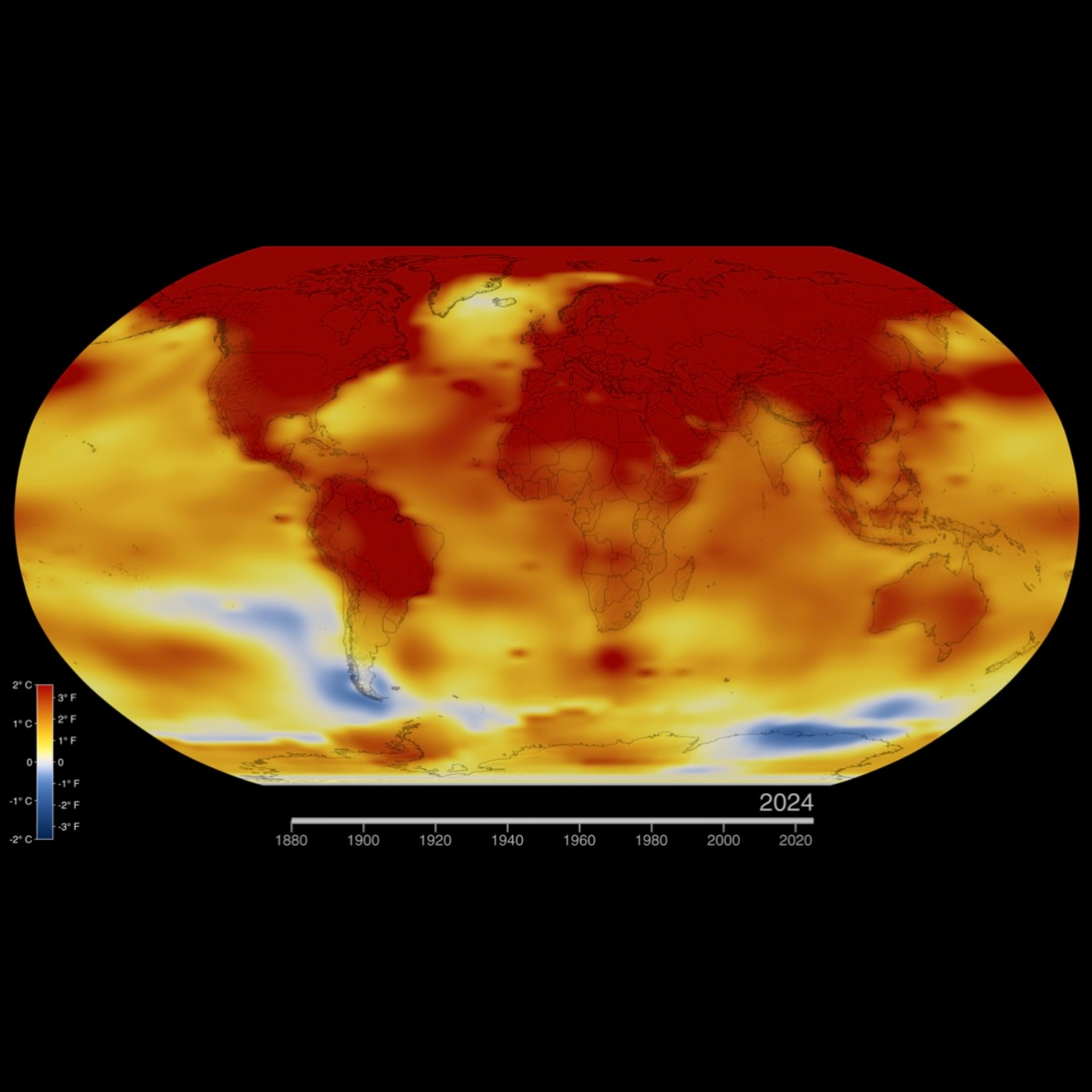
S2 Ep 112024: HOTTEST Year on Record Exceeds 1.5°C Threshold
2024: A Year of Record-Breaking Heat and Climate ImpactsThe overarching theme is clear: 2024 was the hottest year on record globally, exceeding the 1.5°C warming threshold outlined in the Paris Agreement for the first time and bringing a cascade of extreme weather eventsRecord-breaking Temperatures: 2024 was the hottest year on record globally, surpassing 2023's record. Global temperatures were 1.6°C warmer than the pre-industrial level (1850-1900) according to Copernicus Climate Change Service (C3S), and 2.3°F warmer than NASA's 20th-century baseline (1951-1980) according to NASA's analysis. (Copernicus, NASA, UN, NPR, Al Jazeera)1.5°C Threshold Exceeded: The global average temperature exceeded the 1.5°C warming threshold set by the Paris Agreement for the first time, although exceeding it in a single year does not mean the agreement has been breached. (Copernicus)Record Warmth Throughout the Year: Every month from January to June 2024 was warmer than the corresponding month in any previous year. July and August saw the hottest day and summer on record, respectively. (Copernicus, Al Jazeera)Warmest Decade on Record: The past 10 years Human Activities Driving Warming: Scientists attribute the warming trend to the release of heat-trapping greenhouse gases like carbon dioxide and methane from human activities, primarily the burning of fossil fuels. (NASA)Climate Change Impacts contributed to extreme weather events across the globe, including:Heat Waves: Extreme heat events were widespread, with many regions experiencing "strong" or even "extreme" heat stress.Floods: Heavy rainfall events caused widespread flooding, such as in Nigeria, Europe, and Australia.Wildfires: Prolonged dry conditions fueled devastating wildfires in Canada, South America, and other regions.Hurricanes: Warmer ocean temperatures intensified hurricane activity, with Hurricane Beryl in the Atlantic becoming the earliest Category 5 hurricane on record.El Niño: A strong El Niño event in 2023 Reduced Aerosol Emissions: Changes in shipping regulations led to a reduction in sulfate aerosols in the atmosphereHunga Tonga-Hunga Ha'apai Volcanic Eruption: The 2022 volcanic eruption injected water vapor into the atmosphere
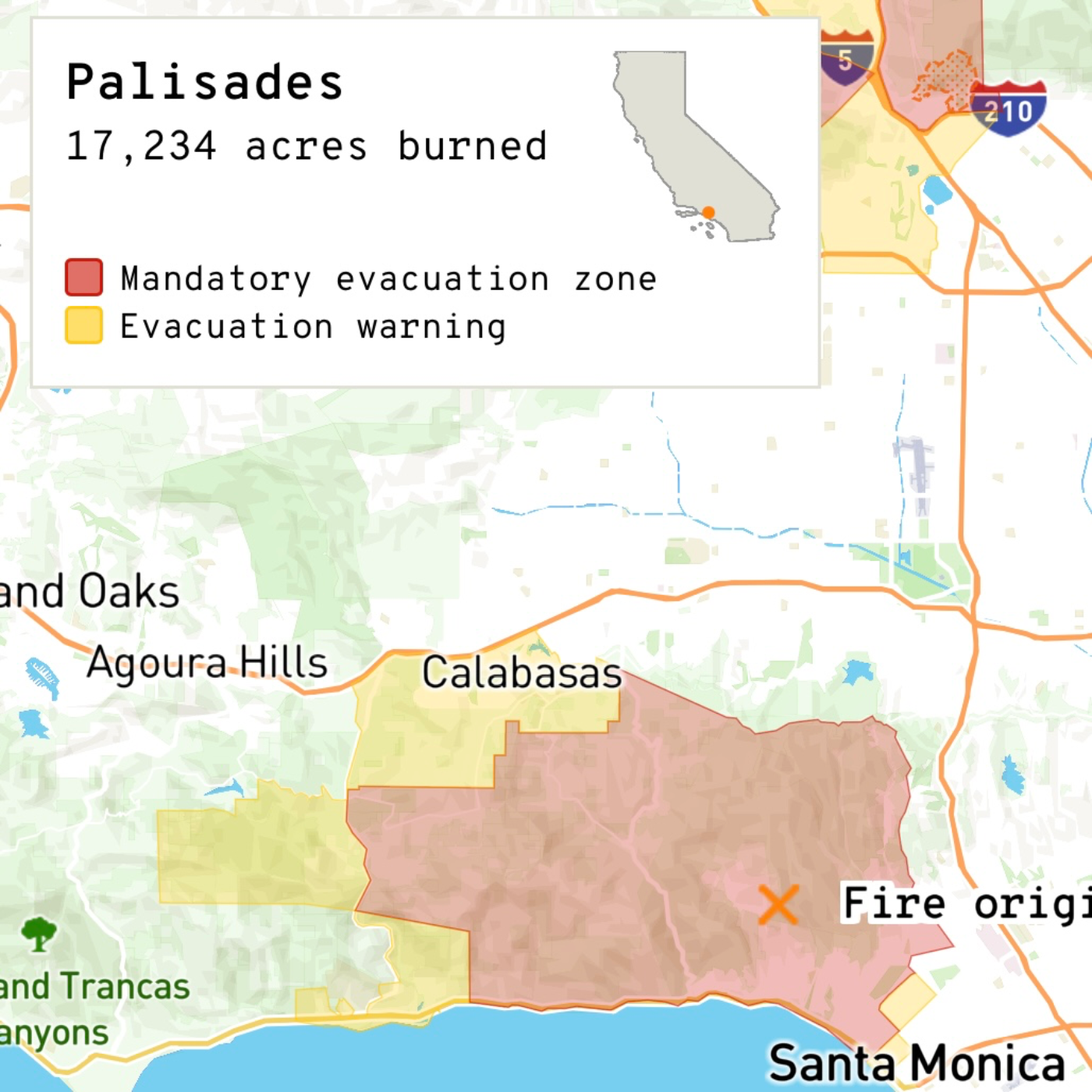
S2 Ep 10Evacuation to Air Quality: Southern California Wildfire Tips
SoCal Wildfire Tips from Evacuation to Air Quality - January 9, 2025Situation: Multiple wildfires, including the Palisades Fire, are raging across Southern California fueled by strong winds and low humidity. Tens of thousands of residents have been ordered to evacuate, with over 1,000 homes and structures destroyed.Urgent Actions:Evacuate immediately if ordered: Residents in affected areas must evacuate without delay when instructed by officials. Do not wait for the fire to approach. ("California fire evacuations- How to prepare, what to pack and what to do if you'.pdf")Sign up for emergency alerts: Stay informed about fire spread, evacuation orders, and other critical information by signing up for alerts from Cal Fire, LA County, and Ventura County. Utilize resources like the Watch Duty app for real-time updates. ("How to Stay Safe as Fires Sweep Southern California - The New York Times.pdf")Protect yourself from smoke: Minimize exposure to wildfire smoke by staying indoors, closing windows, and running air purifiers. If going outside is necessary, wear an N95 mask. ("How to protect yourself from the smoke caused by L.A. wildfires - Los Angeles Ti.pdf", "Wildfire smoke poses health hazard in LA - NPR.pdf")Health Impacts:Respiratory Issues: Wildfire smoke can trigger asthma attacks, exacerbate COPD, and cause other respiratory problems. Cardiovascular Risks: Smoke exposure can worsen heart conditions and increase the risk of heart attacks and strokes.Long-Term Effects: Studies suggest a link between wildfire smoke exposure and an increased risk of dementia. Evacuation & Shelter Resources:Evacuation Centers: Multiple evacuation centers are open, including Westwood Recreation Center, El Camino Real Charter High School, and Pasadena Civic Center. ("Palisades fire- Evacuations, road closures, shelters, forecast - Los Angeles Tim.pdf", "SoCal wildfire evacuation centers - ABC7 Los Angeles.pdf")Animal Shelters: Dedicated shelters are available for small and large animals at various locations throughout the affected areas. ("Palisades fire- Evacuations, road closures, shelters, forecast - Los Angeles Tim.pdf", "SoCal wildfire evacuation centers - ABC7 Los Angeles.pdf")School Closures: Many schools in Los Angeles and surrounding areas are closed due to evacuations, air quality, and safety concerns. LAUSD is providing meal distribution at select locations for students. ("Palisades fire- Evacuations, road closures, shelters, forecast - Los Angeles Tim.pdf")Further Information:Cal Fire website: https://www.fire.ca.gov/LA County Emergency website: https://lacounty.gov/emergency/Air Quality Information: https://www.airnow.gov/ and https://www.arb.ca.gov/Watch Duty App: Download from app storesFEMA Shelter Locator: Text “SHELTER” and your ZIP code to 43362

S2 Ep 9Major Winter Storm Forecast to Bring Southern Snow… Again
Major Winter Storm Threatens Southern USSituation: A major winter storm, named Cora, is forecast to impact a large swath of the southern United States between Wednesday, January 8, 2025 and Saturday, January 11, 2025. The storm will bring a mix of snow, sleet, and freezing rain, creating hazardous travel conditions and potential disruptions to daily life.Geographic Scope:Primarily Impacted: A 1,400-mile stretch from North Texas to the North Carolina coast, including Oklahoma, Arkansas, Mississippi, Alabama, Georgia, Tennessee, Kentucky, and West Virginia.Potentially Affected: Southern Kansas and Missouri, Ohio Valley, Mid-Atlantic, and Northeast (lighter snow accumulations expected).Timeline:Wednesday Night: Spotty wintry weather begins in western Texas.Thursday: The storm strengthens, bringing significant snow and ice to Texas, Oklahoma, Arkansas, and surrounding areas.Friday: The storm tracks eastward, bringing snow and icy mix to Tennessee, Kentucky, Mississippi, Alabama, Georgia, and the Carolinas.Saturday: Lingering snow possible along the Eastern Seaboard and in the Appalachians. The storm moves offshore and potentially strengthens into a bomb cyclone in the Atlantic, posing no threat to the East Coast.Impacts:Snowfall:Highest accumulations expected from northeast Texas and southeast Oklahoma through Tennessee and the southern Appalachians (potentially exceeding 6 inches).3+ inches possible in northern portions of Mississippi, Alabama, and Georgia.Lighter accumulations (dusting to a few inches) possible in surrounding regions.Ice:Sleet and freezing rain expected in central and northern Texas, southern Arkansas, and potentially other areas as warmer air mixes in."Any amount of ice is dangerous; just a thin layer — even a tenth of an inch — can turn paved surfaces into skating rinks." (CNN)Travel Disruptions:"Treacherous travel conditions and the potential for road closures, flight delays and cancellations, and school and business disruptions." (The Washington Post)Major interstates, including I-20, I-30, I-35, and I-40, likely to be impacted.Power Outages:"Frigid temperatures will increase power demands in Texas but grid conditions are expected to be normal", according to ERCOT. (CNN) However, the risk of outages remains, especially in areas with significant ice accumulation.Flooding: Possible in coastal Texas due to heavy thunderstorms.Noteworthy Points:This storm is expected to be the biggest snow event in several years for many southern states.Atlanta, which hasn’t had significant snowfall in nearly seven years, has a moderate chance of receiving measurable snow.The storm's track is still subject to change, which could alter snow and ice accumulations.A separate storm system may interact with Cora, potentially bringing additional light snow to the Midwest and Northeast.Following the storm, a prolonged period of frigid temperatures is expected across much of the US.
S2 Ep 8Lives Lost and Over 1000 Structures Burned as Los Angeles Wildfires Become Worst in Area History
Southern California Wildfires IntensifyOverview:This briefing document synthesizes information from four news articles covering the devastating wildfires raging across Los Angeles County in early January 2025. These fires, fueled by an unprecedented combination of extreme Santa Ana winds and prolonged drought conditions, have caused widespread destruction, claiming lives and displacing thousands of residents.Key Findings:Destructive Impact: As of January 8th, 2025, over 1,000 structures have been destroyed across multiple wildfires. The Palisades fire alone has consumed over 5,000 acres, reaching the Pacific Coast Highway and incinerating homes. The Eaton fire near Altadena and Pasadena has burned over 2,200 acres and claimed two lives."More than a thousand homes, businesses and other buildings have burned and at least two people are dead in wildfires scorching communities across L.A. County, making this one of the most destructive firestorms to hit the region in memory." (Los Angeles Times)Unprecedented Weather Conditions: The driving force behind these fires is a rare convergence of climate factors. The region is experiencing its worst high-wind event since 2011, coupled with record-breaking dry conditions for early January. Strong Santa Ana winds, with gusts exceeding 90 mph in some areas, are whipping the flames and challenging firefighting efforts."The wildfires are the result of an unheard-of combination of factors at this time of year — the worst high wind event in Southern California since 2011, plus some of the driest conditions on record for early January." (Axios)"The National Weather Service warned that this could be the strongest Santa Ana wind event in Southern California in over 13 years, since Dec. 1 2011" (Yale Climate Connections)Climate Change Link: Experts are connecting the severity of these fires to the escalating impacts of climate change. Prolonged drought, fueled by a hotter, drier climate, creates ample fuel for fires. The extended dry period is intersecting with the Santa Ana wind season, leading to a dangerous overlap of extreme conditions."Climate change is increasing the overlap between extremely dry vegetation conditions later in the season and the occurrence of these wind events." (UCLA climate scientist Daniel Swain, quoted in Axios)Difficult Firefighting Conditions: The strong winds are grounding firefighting aircraft, hampering containment efforts. The fires are exhibiting "extreme fire behavior," including long-range spotting, making them challenging to control."The fire is being fueled by strong Santa Ana winds and surrounding topography, which makes it extremely challenging for us firefighters to really get a handle on it.” (Los Angeles Fire Department spokesperson Erik Scott, quoted in the Los Angeles Times)Evacuations and Looting: Tens of thousands of residents are under evacuation orders due to the rapidly spreading fires. Law enforcement officials have reported arrests for looting in evacuated zones."Los Angeles County Sheriff Robert Luna said 32,500 residents were under evacuation orders in the Eaton fire area and another 37,000 residents were ordered to be evacuated in the Palisades fire. Two people have been arrested on suspicion of looting in the evacuated zones, he said." (Los Angeles Times)
S2 Ep 7Biden Designates Two New National Monuments in California
Biden Designates Two New National Monuments in CaliforniaOn January 7, 2025, President Biden designated two new national monuments in California: Chuckwalla National Monument in the southern California desert and Sáttítla Highlands National Monument in the state's northern mountainous interior. This action protects a combined 848,000 acres of land with significant ecological, cultural, historical, and scientific value. The move is lauded by environmental groups and California officials as a major victory for conservation efforts, while drawing criticism from some as a politically motivated attempt to thwart the agenda of incoming President Trump.Key Themes:Conservation and Climate Change Mitigation: The monument designations are framed as key components of the Biden Administration's ambitious conservation agenda and commitment to tackling climate change. These actions protect biodiversity, enhance ecosystem resilience, and contribute to the “America the Beautiful” initiative, aiming to conserve 30% of U.S. lands and waters by 2030.Tribal Sovereignty and Cultural Heritage Preservation: Both monuments encompass ancestral lands and sacred sites of Indigenous peoples. The designations prioritize tribal co-management and recognize the importance of Indigenous knowledge in land stewardship. Notably, the Sáttítla Highlands Monument protects the Medicine Lake Volcano, a site of immense cultural and spiritual significance for the Pit River Tribe.Political Legacy and Inter-Party Conflict: The timing of the monument designations, just days before the inauguration of President Trump, suggests a strategic maneuver to solidify Biden's environmental legacy and potentially limit his successor's ability to pursue resource extraction in these areas. Trump has criticized the move, vowing to revoke the protections on his first day in office, setting the stage for potential legal battles.Scale of Protection: “With today’s designations and yesterday’s actions to protect the East and West coasts and the Northern Bering Sea from offshore oil and natural gas drilling, President Biden has now protected 674 million acres of U.S. lands and waters.” (White House Fact Sheet)Conservation Corridor: “Establishing the Chuckwalla National Monument in southern California is President Biden’s capstone action to create the largest corridor of protected lands in the continental United States, covering nearly 18 million acres stretching approximately 600 miles. This new Moab to Mojave Conservation Corridor protects wildlife habitat and a wide range of natural and cultural resources along the Colorado River, across the Colorado Plateau, and into the deserts of California.” (White House Fact Sheet)Economic Benefits: "National monuments do more than preserve beautiful and culturally significant places; they also drive substantial economic benefits for surrounding communities. Studies have consistently shown that conservation of public lands correlates with growth in local economies, particularly through tourism and recreation." (California Governor's Office press release)Trump's Opposition: “They took away 625 million acres of offshore drilling... nobody else does that. I’m going to have it revoked on day one. If we need to we’ll go to the courts, if they try to be sneaky... remember this is a man who said he wants the transition to be smooth. You don’t do those kind of things... We’re going to be drilling soon.” (President Trump, quoted in Yahoo News article)

S2 Ep 6When Risks Become Reality: 2024 Extreme Weather
Risks Become Reality: 2024 Altered Extreme WeatherThis briefing summarizes the key findings of the World Weather Attribution (WWA) report "When Risks Become Reality: Extreme Weather in 2024," analyzing the year's extreme weather events and their connection to climate change.Key Themes:Escalating Extreme Weather Events: The report emphasizes the unprecedented levels of extreme weather experienced in 2024, including heatwaves, droughts, wildfires, storms, and floods. These events resulted in thousands of deaths and the displacement of millions. The report states that "Extreme weather reached dangerous new heights in 2024," demonstrating the increasing threat of a 1.3°C warmer world.Climate Change as a Key Driver: WWA studies directly link climate change to the increased intensity and likelihood of many of these extreme weather events. They analyzed 26 events and found climate change was a significant contributing factor in each, leading to the deaths of at least 3,700 people.Dangerous Heat Days on the Rise: New analysis by Climate Central, included in the report, shows a global average increase of 41 dangerous heat days in 2024 due to climate change. This poses a severe threat to human health, particularly impacting vulnerable small island and developing states.Impacts Beyond El Niño: While the El Niño weather pattern influenced early 2024 events, WWA studies consistently found climate change played a more significant role than El Niño in driving events like the historic Amazon drought. This highlights the growing dominance of climate change's influence over natural climate variations.Record Rainfall and Flooding: 2024 saw record-breaking global temperatures that led to record-breaking rainfall and devastating floods worldwide. Of the 16 flood events studied, 15 were linked to climate change-amplified rainfall. This aligns with the understanding that a warmer atmosphere holds more moisture, resulting in heavier downpours.Amazon Under Threat: The Amazon rainforest and Pantanal Wetland suffered severe droughts and wildfires in 2024, causing significant biodiversity loss. The report underscores the critical role of the Amazon as a global carbon sink and emphasizes the need to halt deforestation to protect these vital ecosystems.Intensified Storms: Hotter seas and warmer air contributed to more destructive storms like Hurricane Helene and Typhoon Gaemi. Research points to climate change increasing wind speeds and rainfall in these storms. WWA analysis shows an increasing risk of multiple high-intensity typhoons hitting the Philippines due to climate change.Conclusion:The WWA report underscores the undeniable link between human-induced climate change and the intensifying extreme weather events witnessed in 2024. It serves as a stark reminder of the urgency to accelerate global action on climate change mitigation and adaptation to protect lives, ecosystems, and the future of our planet.

S2 Ep 5Florida’s New AI-Driven Hurricane & Emergency Alert System
BEACON: Florida's New AI-Driven Hurricane & Emergency Alert SystemOverview:The Florida Division of Emergency Management (FDEM), in collaboration with the University of Florida and AI company Futuri, has launched BEACON, an innovative artificial intelligence-driven emergency messaging system. This system aims to provide real-time, targeted alerts before, during, and after disasters, primarily focusing on hurricane preparedness in Florida.Key Features:AI-Powered: BEACON utilizes artificial intelligence to process information from local, state, and federal agencies, including the National Weather Service and IPAWS.Text-to-Voice Conversion: The system converts text-based information into human-sounding voice messages for broadcast.Multilingual: Currently available in English and Spanish, BEACON plans to incorporate Haitian Creole and other languages.Radio-Based: Utilizes the robust and resilient infrastructure of AM radio, FM HD channels, and a dedicated mobile app for dissemination.Functionality:BEACON gathers relevant emergency information, personalizes it based on location, and broadcasts it via radio and the BEACON app. This provides actionable information to residents and visitors, complementing existing alert systems like the Emergency Alert System.Benefits:Improved Communication: Enables faster and more targeted information delivery, potentially saving lives."I guarantee you, sometime over the next decade, that we will save lives," said FDEM Director Kevin Guthrie.Enhanced Resilience: Leverages radio's reliability, ensuring communication even during power outages."So why radio? Because radio survives even the harshest storms," said Former FEMA Administrator Craig Fugate.Targeted Messaging: Delivers personalized alerts based on specific geographic locations and needs.Accessibility: Reaches diverse communities, including those with limited internet access.Pilot and Expansion:The initial BEACON site launched at WUFT public radio station in Gainesville, serving the Gainesville-Ocala market. FDEM aims to expand the system statewide before the 2025 hurricane season, with plans for a Southwest Florida launch in the coming months.Quotes:"BEACON combines new technology with the reliability and power of broadcast radio to deliver messages directly to the communities that need them the most," - Kevin Guthrie, FDEM Director."This has been a longtime coming." - Craig Fugate, Former FEMA Director."It complements those warnings by now giving people actionable information about what they need to do," - Craig Fugate."We want to use this as a preparedness tool as we get ready to go into severe weather season,” - Kevin Guthrie."All of the information that we’re receiving is actually vetted at the local level or the state level or the federal level. It’s coming from the storm weather prediction center. It’s coming from local national weather service,” - Kevin Guthrie.Conclusion:BEACON represents a significant advancement in Florida's emergency preparedness strategy. Its utilization of AI and radio broadcasting ensures reliable and timely communication, empowering communities to make informed decisions during critical events. The statewide expansion holds the potential to significantly enhance public safety and disaster response effectiveness.
S2 Ep 4Yellowstone’s Super Volcano Eruption Forecast
Yellowstone's Volcanic Future: Insights from Recent ResearchMeteorology Matters reviews research concerning volcanic activity at Yellowstone National Park. The sources provide insights into the likelihood of future eruptions, the structure of the magma system beneath the park, and the potential shift in volcanic activity.Key Findings:Yellowstone is not "overdue" for an eruption. Despite past supereruptions, volcanoes don't operate on predictable schedules. (Source: USGS)The magma chamber under Yellowstone is largely solid. Only 5-15% is molten, raising questions about the feasibility of a large-scale eruption. (Source: USGS)New research using magnetotellurics reveals a different picture of the magma system. Instead of one large reservoir, there are multiple, segregated pockets of magma with low melt percentages. (Source: Fox Weather & The Washington Post)This finding suggests that eruptions are unlikely in the foreseeable future, particularly in the northeastern region. (Source: Fox Weather)The research pinpoints the heat source driving Yellowstone's volcanic activity in the northeast region. This area also houses the largest magma storage, suggesting future eruptions may be concentrated there. (Source: Fox Weather)The study confirms a shift in volcanic activity towards the northeast. This aligns with the movement of the North American plate over the Yellowstone hotspot. (Source: The Washington Post)Scientists emphasize that future eruptions are likely thousands of years away. The park's volcanic activity is dynamic but does not pose an immediate threat. (Source: The Washington Post)Important Considerations:Supereruptions are rare events. Most volcanic systems that experience them do not have multiple occurrences. (Source: USGS)Even if Yellowstone erupts again, it may be a smaller, non-explosive event. The most recent eruption 70,000 years ago was a lava flow. (Source: USGS)Continued monitoring of Yellowstone is crucial. Seismographs and GPS help scientists understand stress changes in the Earth's crust, which could trigger earthquakes and influence volcanic activity. (Source: USGS)Quotes:"When we used magnetotellurics, we were able to see, actually, there’s not a lot there… There are these segregated regions where magma is stored across Yellowstone, instead of having one sort of large reservoir." - Ninfa Bennington, lead author of the study (Source: Fox Weather)"Nowhere in Yellowstone do we have regions that are capable of eruption. It has a lot of magma, but the magma is not connected enough." - Ninfa Bennington (Source: The Washington Post)"By no means is Yellowstone 'due for an eruption.' There will be eruptions, but it will probably be thousands of years before we can expect an eruption." - Erik Klemetti Gonzalez, associate professor of earth and planetary sciences (Source: The Washington Post)Conclusion:Recent research provides a more nuanced understanding of Yellowstone's volcanic system. While the potential for future eruptions remains, the current scientific consensus suggests that such events are unlikely in the near term. Continued monitoring and research are essential to further refine our understanding of Yellowstone's volcanic activity and its potential impacts.

S2 Ep 3Florida: Ban Asphalt Shingle Roofs?
Florida's Roofing Conundrum:Overview: Meteorology Matters explores Florida's ongoing insurance crisis, focusing on the debate surrounding asphalt shingle roofs and their role in escalating premiums and homeowner vulnerability.Main Themes:Asphalt Shingle Roofs Under Scrutiny: Florida Insurance Commissioner Michael Yaworsky has sparked controversy by suggesting asphalt shingle roofs may need to be phased out due to their vulnerability to Florida's harsh weather conditions. He argues they don't last the promised 30 years and contribute to insurance claims and rising premiums.Industry Pushback: Roofing industry representatives, including the Asphalt Roofing Manufacturers Association and the Florida Roofing and Sheet Metal Contractors Association, disagree with Yaworsky's assessment. They argue that properly installed, high-quality asphalt shingles can withstand hurricanes and offer a more affordable option for homeowners.Search for Solutions: In light of the insurance crisis, various stakeholders are seeking solutions:New Insurance Programs: Security First Insurance and Embark MGA have partnered to create a new program specifically for new construction homes, offering comprehensive HO5 policies with streamlined claims processing.Legislative Action: House Bill 13 proposes a radical change to Citizens Insurance, making it a windstorm-only insurer available to all Floridians. This model mirrors California's approach and aims to lower rates, though some experts raise concerns about its financial feasibility.Focus on Mitigation: State officials emphasize strengthening building codes and incentivizing homeowners to invest in storm-resistant features through programs like My Safe Florida Home.Exploring Alternatives: While cost remains a barrier, metal and concrete tile roofs are gaining attention as more durable and storm-resistant alternatives to asphalt shingles.Key Facts and Quotes:Asphalt Shingle Dominance: Asphalt shingles cover an estimated 80% of roofs nationwide and 60-65% in Florida. (Source: South Florida Sun Sentinel)Durability Concerns: "These products that are guaranteed to last for 30 years. They don't last for 30 years in Florida. They just don't." - Michael Yaworsky (Source: South Florida Sun Sentinel)Cost Factor: "Metal or tile roofs can last 50 years or more but cost two to three times the price of asphalt tile." (Source: South Florida Sun Sentinel)Industry Perspective: "Clearly, when it comes to wind performance, we're improving every single cycle, and every time we get a storm, we’re seeing more and more evidence of that." - Mike Silvers, Florida Roofing and Sheet Metal Contractors Association (Source: South Florida Sun Sentinel)New Insurance Program: "The new HO5 policy comes with a broader scope of protection for new homebuyers than the standard, with streamlined claims processing." (Source: Newsweek)Legislative Proposal: "It provided insurance for all claims and only claims related to natural disasters and left the private market to pick up the rest. The result is rates dropped like a stone." - Former Rep. Spencer Roach on the proposed windstorm-only Citizens model (Source: WPTV)Funding for Mitigation: The Department of Financial Services plans to seek an additional $500 million for the My Safe Florida Home program. (Source: The Palm Beach Post)
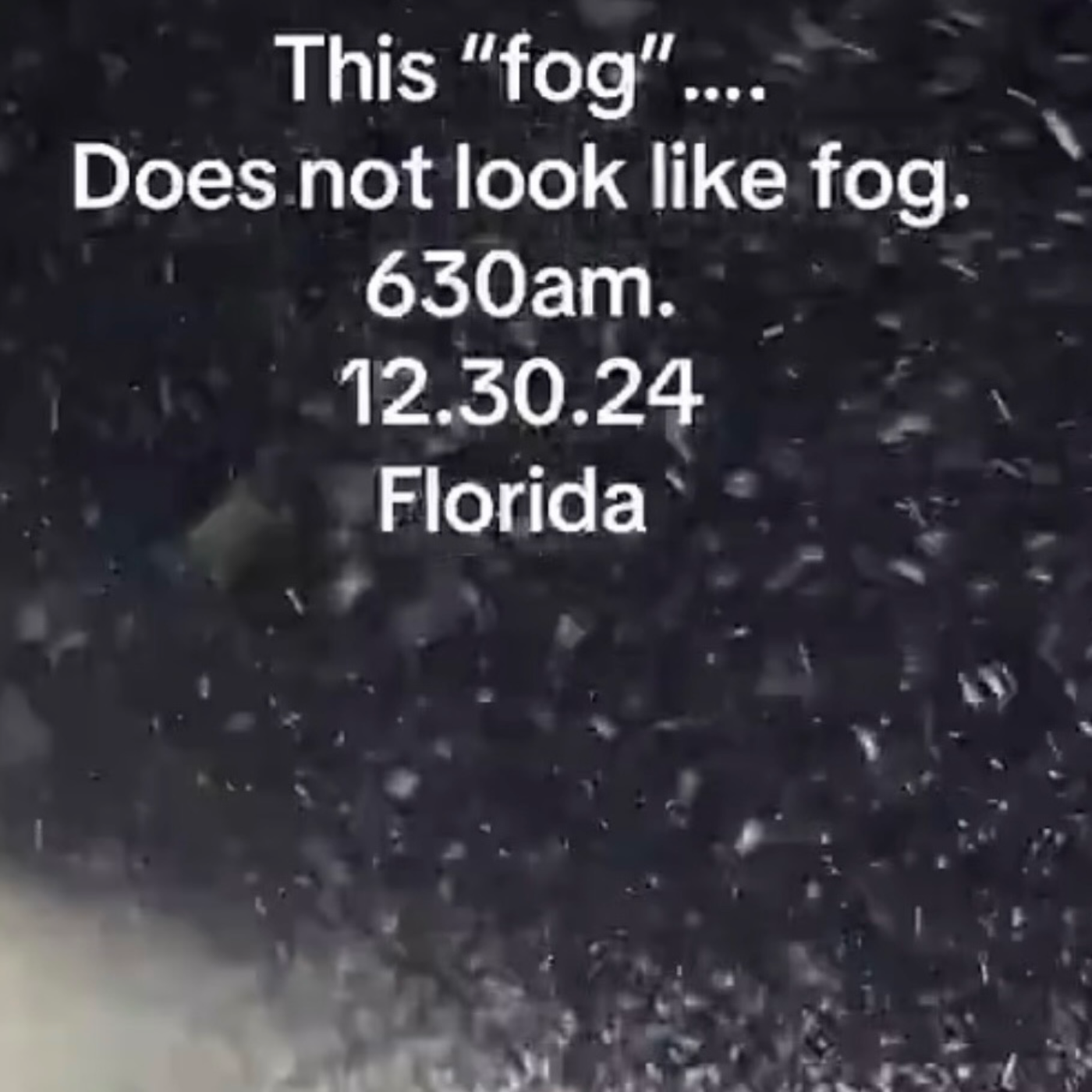
S2 Ep 2Fogvid-24, Smart Dust, or Simply Fog?
Meteorology Matters: Social media is abuzz with conspiracy theories surrounding reports of an unusual fog across the US, UK, and Canada, dubbed "Fogvid-24." This document summarizes the main themes, important facts, and contributing factors to this phenomenon.Summary of Events:Starting December 29, 2024, social media users, particularly on TikTok and X, began reporting a thick fog with unusual visual and olfactory characteristics.Some individuals claim this fog is accompanied by a chemical, electrical, or burning smell.Subsequent reports link exposure to the fog with flu-like symptoms such as fever, coughing, sore throat, headaches, and fatigue.Conspiracy Theories:The unusual appearance of the fog and reported symptoms have fueled conspiracy theories, with some alleging it is a government-engineered bioweapon or a form of chemical attack.The term "Fogvid-24" emerged, drawing parallels to the COVID-19 pandemic and its associated conspiracy theories.Some users point to historical examples like the US military's bacteria fog experiments in San Francisco (1949-1969) as evidence of the government's capacity for such actions.Quote: "None of this means that the government is pouring pathogens on its populace now, but we can’t say it’s impossible to do so." (Daily Dot)The discovery of a 1916 patent for an "intense artificial cloud" machine, though expired, has further fueled speculation.Theories linking the fog to the December drone incidents and Smart Dust technology developed by DARPA are also circulating.Quote: "Could this strange fog happening in multiple states and cities be Smart Dust? DARPA has a patent on Smart Dust back in the ‘90s I’m sure it’s been perfected in 2024 and the use of AI now," (X user)Skeptical Viewpoints:Skeptics, often leaning left politically, attribute the perceived abnormalities to the normal properties of fog and seasonal illnesses.Quote: “The delusional throbbers that believe this stupidity need to give their heads a massive wobble,” (X user @BSmithBenS)They highlight the fact that shining a light through fog naturally reveals individual water droplets, creating the illusion of "particles."They argue that the reported symptoms are likely due to the prevalence of common respiratory illnesses like COVID-19, especially during the holiday season.Scientific Explanations:The National Weather Service (NWS) has issued dense fog advisories for affected areas, suggesting a meteorological explanation.Scientists explain that the fog can trap and concentrate pollutants, leading to a stronger perception of chemical smells.Quote: “When fog forms, sulfur oxides, nitrogen oxides, and other polluting gases are taken up or ‘scavenged’ by fog water droplets,” (Rudolf Husar, Washington University atmospheric scientist)Fog can also exacerbate respiratory problems due to its high moisture content, potentially leading to coughing, shortness of breath, and other symptoms.Conclusions:While the scientific community attributes the fog and associated symptoms to natural phenomena, conspiracy theories continue to spread on social media.This situation underscores the need for critical thinking and reliance on credible sources of information.The "Fogvid-24" phenomenon serves as a reminder of the powerful influence of social media and its potential to amplify unfounded fears and anxieties.
S2 Ep 1Helene Aftermath: NC Recovery 3 Months Later
Helene Aftermath: NC Recovery 3 Months LaterMeteorology Matters analyzes the lingering impacts of Hurricane Helene, three months after its devastating sweep through western North Carolina in September 2024. We examine the storm's enduring consequences on infrastructure, tourism, community life, and recovery efforts.Devastation and DestructionHurricane Helene, a Category 4 storm upon landfall in Florida, brought catastrophic flooding and landslides to the mountainous region of western North Carolina. Vivid imagery from the sources depicts the extent of the damage

S1 Ep 61Miami’s Sinking Skyline
Meteorology Matters reviews the key findings from several recent sources regarding the subsidence of buildings along the Miami coastline. The research, primarily based on satellite-based Interferometric Synthetic Aperture Radar (InSAR) observations, identifies alarming trends in ground settlement potentially linked to construction practices and geological factors.

S1 Ep 60Jimmy Carter's Environmental Legacy
Jimmy Carter's Environmental Legacy: meteorology Matters provides a comprehensive overview of President Jimmy Carter's environmental legacy, highlighting his commitment to conservation, energy efficiency, and renewable energy, while also acknowledging the complexities and criticisms surrounding his approach.