
Mental Health Training
337 episodes — Page 6 of 7

S3 Ep 83How to Come Alive Again by Re-Engaging With Your Passions
Sometimes, life can feel a little bit like you're just trying to survive. If you come home from work every day feeling tired and listless only to lie on the couch and if you are constantly stressed and aggravated while you're at work… then what is it that you're living for? The problem is rest. Many of us work so that we can rest. But then when we do get a chance to rest, we don't feel very rewarded because ultimately rest normally just means staring at the TV. That's hardly rewarding! So what do you do instead? How do you make yourself 'come alive again'? Simple: you re-engage with your passions. We All Had Dreams All of us have dreams and passions. At some point, these dreams and ambitions are what put you on the path you're on now. Perhaps your aim was to work that job just long enough to earn the money you need to fund your dream. Or perhaps you're working because you found a partner you loved and you were willing to postpone your ambitions for them. Neither of these attitudes are wrong but if you have lost sight of why you started putting in the time and work in the first place, then something has gone wrong. If you've lost a reason to work, then you will just be listless and cruising through life. So what do you do? You reignite those passions and you chase after them again! Ask yourself: why is it that you do what you do? Where do you see yourself in the future? What are your beliefs and your values? What were the things that gave you direction when you were a young teenager? And how can you get yourself back on track? The problem is that many of us feel that our passions are 'silly' or maybe they're 'childish' or they're irresponsible. Thus we end up just burying them for more respectable aims like 'being area manager'. But who said that being area manager of a staple company was more respectable than being an activist or an artist? The point is that you don't have to give up your job or your responsibilities. You just have to keep the burning passion alive so that you're pursuing it when you can. When you do this and you remember the 'why', then life will have meaning and direction again.

S3 Ep 82Four Myths About Depression in the Elderly
Myth #1: Depression is a normal part of ageing · Although depression is not a normal situation for the elderly, it is quite common. It affects roughly 20% of the elderly population, a rate twice as high as the general population (10%). · There are many elderly not affected by depression. Those who tend to be unaffected have some of the following characteristics: • Social supports in place • They are involved in activities and hobbies, primarily when retirement occurs • No previous history, and no family history of depression • They continue to feel they serve a purpose in life • They have less severe medical conditions Myth #2: The elderly cannot benefit from treatment of depression · When identified, treatment can be very useful in the elderly. The key is identification. · Just like in younger people, treatment often involves antidepressants. These medications can take a bit longer to take effect in the elderly, but they do work. As well, cognitive-behavioural approaches and counselling can help. Increasing social supports and getting daily exercise are also important aspects of getting better. Myth #3: There is no risk of suicide in the depressed elderly · Unfortunately, suicide is one of the most deadly complications of depression in all age groups. However, it is particularly of concern in the elderly. · Statistics illustrate that in 2004, in the United States, 11 out of 100,000 depressed people in the general population committed suicide. However, that number rose to 14.3 out of 100,000 for people over the age of 65. This number grew to 49.8 out of 100,000 for white men over the age of 85 years old! · Elderly men are most at risk of suicide. Men always tend to use more lethal methods, resulting in a completed suicide. Myth #4: Depression means dementia is just around the corner · Studies have shown that there is a link between depression and dementia, with more people with depression going on to develop dementia. However, it does not mean that everyone has this fate! In other words, just because someone has depression, does not mean that he will necessarily go on to develop dementia too. However, to complicate matters, depression and dementia can co-exist in the elderly. · At this point in time, there is no clear evidence that suggests that depression causes dementia. It has, however, been noted that increased bouts of depression increase the likelihood of developing dementia. · Although the symptoms of depression and dementia may look alike on the surface (memory problems, decreased motivation, etc.), they still require discernment in order that the best treatment can take place. Always see a physician who can rule out what is happening. In summary, four myths about depression in the elderly have been outlined above. Depression is very prominent in the elderly. No matter what the age, it is always essential for depression to be identified so that proper treatment can take place and then real living can resume.
S3 Ep 81The Difference Between Positive and Negative Self-Talk
So many thoughts run through our minds every day. We don't notice many of them, but we often engage in mental dialogues with our inner voice. We talk to ourselves mentally. Our self-talk can be positive or negative, and which one you let dominate your mind can affect you in many ways. Positive self-talk is, of course, the best form to develop. It's not dismissing the negative facts, but it helps us to focus on the good that could happen instead. Negative self-talk, meanwhile, is when you focus on the bad side of what's happening or when you fear for the worst to come. You tend to interpret and anticipate things negatively. Negative self-talk can have detrimental effects on you, while positive self-talk can bring beneficial changes in your life. Here's an illustration of the differences between positive and negative self-talk: Confidence Do you tell yourself that you're hopeless? Not good enough? A failure? Clumsy? That's negative self-talk. Every time you make a mistake, you dwell on it too much, and you lose your will to try again. It undermines your confidence.

S3 Ep 80Five Reasons Being Humble is Good for Your Mental health
Why does humility get such a bad rap? Too often, we put down the idea of someone humble, simply because we think of them as weak. After all, if you had any real accomplishments, or were worth knowing, you'd tell us...right? What's so amazing about humble people is just how much more confident and even competent they are. It takes a strong person to back off and let their actions speak louder than their words. Only someone with a great deal of confidence can keep quiet about their achievements. It's the weak who have to puff themselves up to appear strong. With these thoughts in mind, being humble sounds pretty impressive. Now add this thought: it's actually good for your mental health to be humble. Here's how: There's Less Anxiety About the End Not everyone likes to be aware of their own mortality. Humble people find death to be not quite so scary. Frequently they are quite good at keeping this in perspective, making them much calmer when the time comes to 'shuffle off this mortal coil.' They Have Better Willpower Why is it when you're obsessed with yourself you can't quite get enough of anything? Somehow the ability to put others first also means you're better able to put their needs first over yours. This has the odd effect of making humble people better at exercising self-control, a trait proven by multiple studies. You Perform Better Cognitively Here's another area where various studies have proven a lot of benefits to being humble. Both in academic and work performance, humble people do better across the board than people who aren't humble. While no one seems quite sure why this is, the data doesn't lie. Humble people just think better. Humble People are More Tolerant When you're not so concerned with yourself, you start to let go of the idea that anyone owes you anything. In fact, it becomes quite clear you're not above anyone else. This means humble people tend to be more at peace in their own minds and experience less prejudice across the board. They Experience More Love Kind of going hand in hand with the last item, those who are tolerant and more at peace with others, display more love toward their partners, leading to better, more loving relationships. It might even be argued humble people are simply better at love as they seem to experience more solid relationships, which last longer.

S3 Ep 79How Depression Effects Memory
Depression isn’t a rare disorder. The World Health Organization has found that approximately 350 million people worldwide suffer from depression. Depression affects all areas of the brain, from making decisions and planning future actions to organizing thoughts and memory. Scientists have been looking at the connection between depression and memory in hopes of improving treatments and understanding the deep connections between our mind, mood, and memory. There could be many contributing factors to why memory is affected by depression including the overtaking negative thoughts, lack of concentration, serotonin levels, and mood. Overtaking Negative Thoughts: Negative thoughts are very common for those suffering from depression. These thoughts are hard to get rid of, as they are intrusive and overwhelming. The Center for Brain Health at the University of Texas at Dallas recently conducted a study that showed that depressive thoughts are maintained for longer periods of time in people suffering from a depressed mood. These thoughts can persist to the point that they restrict a person’s ability to maintain a train of thought.
S3 Ep 78Emotional health information
Are you emotionally healthy? Emotional health problems can ruin your life quality, affect your physical and mental health and cause stress which is responsible for 75 to 90 percent of all doctor visits. Learn how to improve your emotional health to boost wellness in all areas of your life and self.
S3 Ep 77What is Mindfulness Anyway?
You see the word mindfulness used so often nowadays, but do you know what it means? It might be helpful to think about what it doesn’t mean for a moment. Mindfulness is not: · Sitting on a meditation cushion for hours · Being perfect · Having all the answers But it is easy. You are living a mindful life shouldn’t feel burdensome or like yet another task to add to your list. Put most simply, and we can say that mindfulness is paying attention to what’s happening in the present, to what you’re doing, to your environment. It’s the opposite of multitasking. You don’t have to schedule mindfulness or study it in a group. You can practice mindfulness right now. Mindfulness is a process that keeps you focused on. It sounds easy, but it’s human for our monkey minds to get distracted. Instead of focusing on the present, the monkey mind leaps about, brooding over events from the past or worrying about the future. A mindful approach treats the primate mind kindly, and gently brings the attention back into the present. Mindfulness is not a fashionable social media slogan. Studies have shown that incorporating mindfulness into your life has tangible benefits: · Decreased stress and improved capacity to cope with adversity · Lowered anxiety and depression · Increased clarity, attention, and brain function · Increased immune system functioning · Lowered blood pressure and heart rate · Improved general well-being Mindfulness can also improve relationships as you become less reactive to situations and more resilient. You can start to incorporate mindfulness into your life right now. It needs no equipment, studying, or unique ability. You don’t need to change or get fit. You already have everything you need to be present. You only need gentle encouragement to keep bringing your attention back to what is happening right now. To begin with setting aside a little time to explore what mindfulness means for you. 1. Find a quiet space where you won’t be disturbed. Leave your smartphone and computer in another room. 2. Sit comfortably and start to observe the current moment. 3. Let thoughts, anxieties, and judgments pass by, like a cloud floating by you. 4. Where is your mind now? 5. Return your attention to the present. 6. Be kind to yourself and don’t worry if your mind wanders. Gently bring it back. Use this gentle practice to build space into your life, to slow down your reactions, to break down conditioned responses. Mindfulness allows you to be more thoughtful in dealing with what is right in front of you, right now.

S3 Ep 76Who cares

S3 Ep 75What is Self-Reliance?
The idea of self-reliance is a broad one and one that covers many different concepts. Everyone has a slightly different idea of what constitutes self-reliance and there are many different types of self-reliance that apply more in different situations. You can be self-reliant in that you don't need the accolades of other people, you can be self-reliant in that you are able to do things on your own without becoming lonely or bored and you can be self-reliant in as much as you're able to solve problems without help. Self-reliance is none of these things and all of these things and as such, none of us are probably truly self-reliant though most of us strive to be more so in various areas of life. Read on and we'll look at some of the different ways in which you can be self-reliant and some of the forms it takes. Independence Independence means being able to do things on your own, without needing the encouragement or the company of others. This means that you do things because you want to do them, without necessarily needing an escort or even someone to share that time with. This is a valuable trait because it means your options aren't limited by what other people are willing to do with you. Many people struggle with independence and feel the need to be constantly with friends or to spend all their time with a partner. If you do this too much you can eventually end up losing your own identity.

S3 Ep 74Reducing anger in your life
Sometimes the cause of your anger can be staring you right in the face. As much as you hate to admit it you are not happy with your current state of affairs and it is time to make changes. Living with huge amounts of anger is not healthy and can lead to a variety of mental and physical issues. This can include stress, heart attacks, anxiety and depression. Which of course, can affect all members of your family too. Are you and your spouse having issues? This is often a root cause of anger in couples. If you find that you tend to fight or argue at night when discussing almost any issue, then try moving your discussion times to the morning. If problems are just not getting resolved then it may be time to face the fact that your relationship just isn’t working anymore. Maybe you need a change of environment or it could be time to put an end to the relationship. Living in a bad relationship is not healthy for any of the parties involved. Your anger may stem from having a huge mortgage. It may be better to think about moving and downsizing to a smaller home. Or moving to a different location where housing prices are cheaper. You may hate the fact that some of the things your children are doing are making you boil! For example their messy rooms may drive you mad every time you walk by them. Instead of letting it get to you try closing the door so you don’t see the mess. You don’t really want to explode on your kids do you? Other lifestyle issues that can increase your anger level is that of job related stress. You work all day and then know you have to come home to a busy house at night. The minute you walk through the front door your kids bombard you with requests and then there is a dinner waiting to be cooked. Try this solution, tell your kids that the first 10 minutes when you come home is yours. You are not to be bothered unless it is for a total emergency. This 10 minutes allows you to get your thoughts in order, make a tea and just regroup after the stresses of work. Take a look at your lifestyle and see if you can identify what is triggering your anger. Then look for ways to simplify it, can you get help with making dinner or is it time to sell your home and move to a new location?

S3 Ep 73Limiting negative self-talk
Negative experiences start during childhood and continue throughout our adult lives. This is a normal part of life that we all deal with. Too often though, our thoughts become negative as well. Even more troubling is when we start negatively talking to ourselves. This negative self-talk is one of the most limiting behaviors one can deal with. Use these tips to help overcome it. 1. Distinguish between negative thoughts and critical thinking. We need to have a certain amount of self-critique; otherwise, we will never believe that we are doing something wrong. However, it would be best if you recognized when that critiquing becomes negative self-talk. When you can distinguish between these, it will lead to a better situation. 2. Accept failure. If you like to beat yourself up whenever you fail, you are in for a steep road ahead. You will forget, and you will do it many times in your life. Embrace this as a gift rather than a burden. Try to view failure as more of a lesson learned. Don’t tell yourself you are a failure; tell yourself that you just knew what doesn’t work. 3. Repeat daily affirmations. It would be best if you looked for affirmations that fit your current life situation. Use these as often as you can. Try repeating these affirmations every day. You should even write them out on a piece of paper and keep them close. The idea here is to program your mind for positive thinking. The more you keep at it, the more natural it will become. Ideally, those negative things you tell yourself, will eventually be taken over by your positive affirmations. 4. Limit your exposure to negative people. These people thrive on negativity and enjoy dragging others down with them. If you cannot avoid them altogether, spend as little time with them as possible. You already struggle with negative self-talk, so you don’t need them adding more negativity. If you spend more time with positive people that build you up, your negative self-talk will naturally reduce. 5. Learn to see the good in people. If you are always thinking negatively of others, it makes sense that you will more naturally think negatively about yourself. Being more open-minded towards others will help you be more accepting of your own flaws as well. 6. Negative thinking is a choice. Even though you have been bombarded with it since you were a child, thinking negatively is something you choose to do. Conversely, positive thinking is just as much a choice as negative thinking. Choose positive thinking. This isn’t an easy, quick fix; it takes a lot of work and practice. 7. So start now! 8. Strengthen your self-belief. Negative thinking often occurs due to a lack of belief in yourself. When you strengthen your confidence, it will help you get through those times that bring you down.
S3 Ep 72Your body language and your anger
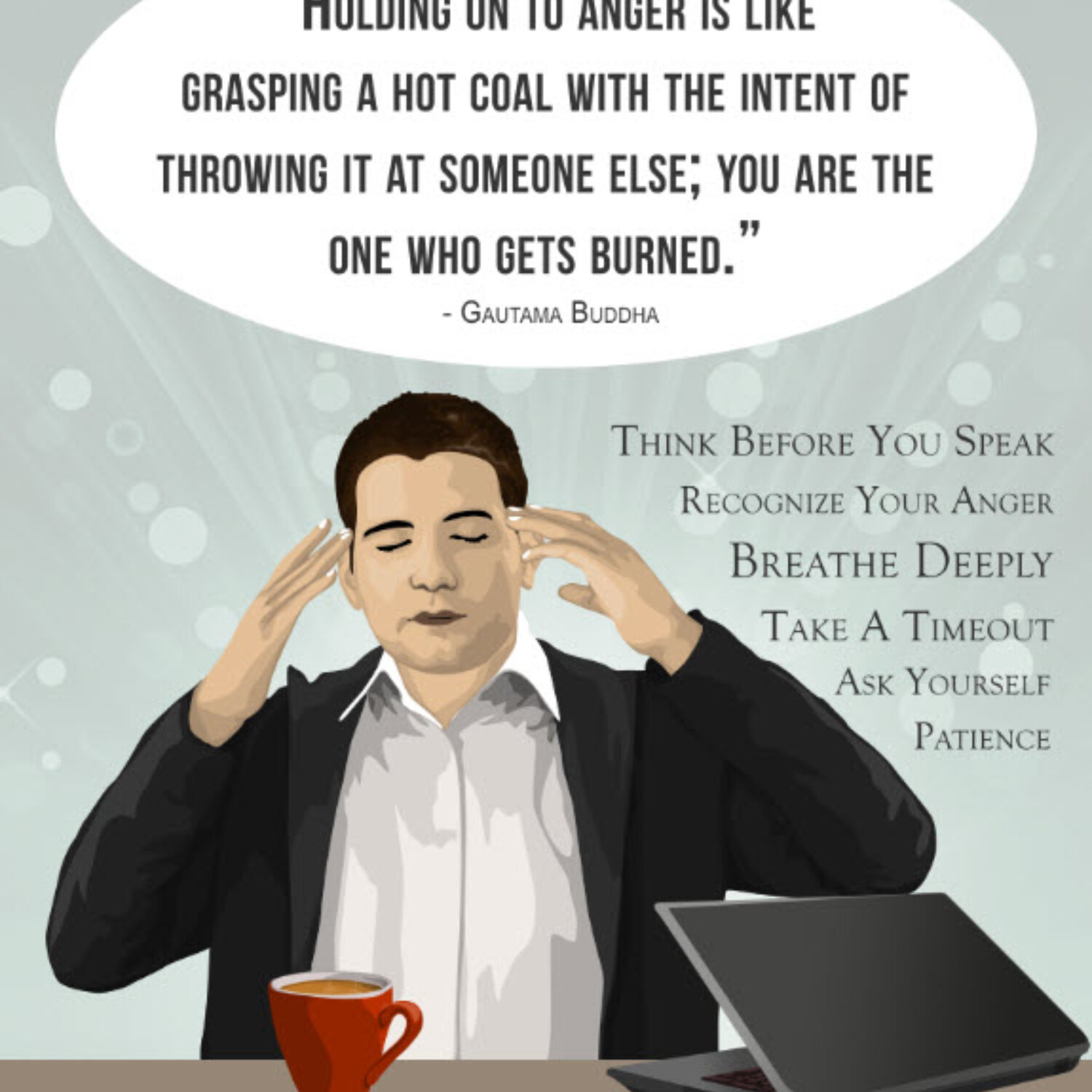
Did you know that your body language can often display your anger before you do so verbally? While you may know this, it is a fact that is often overlooked by many. Which is why it is important to understand what non verbal communication is and how it can affect your relationships. How many times have you stopped speaking to someone because they ticked you off? Lots probably, this is a classic sign of nonverbal communication. Other signs of non-verbal communica>on include: • The amount of eye contact you make with someone • Your gestures • How you sit or stand • How close you position yourself to someone • How loud you speak Have you ever been accused of sending mixed signals to someone? This is when what you say and your actions just do not match. So the person on the other end is totally confused and are unsure of how you really feel. Plus this can also lead to people not trusting you, as you never mean what you say. If you tend to be more of an angry person then you may open make sharp gestures, talk loudly and prefer to sit alone. If you are in a rela>onship this is only going to send negative vibes to the other person. You need to learn how to reduce your non verbal communication by improving your actions first. This can be done by learning to speak in a softer tone of voice. By standing closer to your partner and by making eye contact. Learn to control your gestures by not flinging your arms around or talking with your hands. Many people are guilty of this without even realizing it. You may want to practice in front of a mirror. Then you can see if you tend to shift from leg to leg. Or if you move your arms around like crazy. Maybe you always look down at the ground when speaking. These are all items that can be improved on with a little practice. Once you have this under control you will not come across as an angry person all the time. You may find that you even feel less angry yourself. It is amazing that you can feel angry just because you know people perceive you in this way! Keep in mind that showing your anger is not always done with words, but by your body language as well. Improving your body language will ultimately help you feel less likely to speak out in anger unnecessarily
S3 Ep 71Four Steps for Facing Your Fears for Success
You might not realise it, but deep down, everyone is afraid. The big difference between you and all those people you can see who are successful is that they confronted their fears. They worked through their issues to get ahead or went ahead despite them. If you don’t face your fears, you’re likely to miss out on a lot in life. There’s no such thing as ‘the right time’ to do something. More often than not, the right time is now. Look your fears in the eye and dare them to stop you! Someone once said that one of the saddest ways to sum up the experience is with could have, might have, and should have. Don’t let that happen to you. You have a choice between controlling or being controlled by your fears. Here are 4 top tips for overcoming your fears and achieving your goals. 1. Baby steps 2. You don’t have to do it alone 3. Accentuate the positive 4. Take control of the story https://mentalhealthtraining.info/

S3 Ep 70Why Being Assertive, is Important and How to Develop It
Learning to be assertive is one of the essential life skills you can develop. Studies have shown that being assertive can lead to a whole host of benefits, from increased self-confidence to better relationships and improved mental and physical health. Before you start, it’s important to understand what being assertive means. Psychologists define assertiveness as being able to express yourself effectively and stand up for your point of view while respecting the rights and beliefs of others. The basis of assertiveness is mutual respect and honesty. Assertive communicators are straightforward and know how to set and maintain healthy boundaries. Their relationships value and promote trust. If you’re serious about living an authentic life and succeeding in reaching your goals, learning to be assertive is crucial. Think about how you feel about your life right now. Are you satisfied with your personal and professional situation? Are you conflict avoidant? Do you worry about what other people think of you? If you’re not happy with where you are now, the good news is that assertiveness is a habit that can be learned just like any other. With practice and commitment, you can change your mindset and live a life more aligned with your true values and aspirations. Try these tips for introducing a more assertive approach into your life: · Decide what your priorities are and stick to them. · Work out your individual boundaries. · Develop a positive open posture and look people in the eye when you speak to them. · Use positive ‘I’ statements about how you’re feeling instead of blaming or finding fault with the other person. Be especially wary of feeling tempted to say, ‘you always’ or ‘you never.’ Get comfortable with saying ‘no’ to things you don’t want to or can’t do. Keep it simple and non-emotive and don’t feel you need to add an excuse or explanation. · Only use ‘sorry’ when it’s appropriate for the situation. You don’t need to apologize for saying no. · Offer alternative suggestions to proposals you don’t like. · Look for compromises. · Be honest and direct about your feelings, thoughts, and intentions. · Consider writing a script for a situation that feels awkward. Rehearse being confident. Try to keep your focus on the impact of the situation and finding a way to work together to find a mutually satisfying solution. Above all, being assertive means staying in your power, accepting that you have control over how you approach the situation and your feelings about it. Assertiveness won’t get you everything you want all the time, but you will feel in control and deal much better with situations that would have previously been stressful. https://mentalhealthtraining.info/

S3 Ep 69Be More Giving
One Thing You Can Do To Be More Giving We’ve become a very consumer-oriented society. That wasn’t always the case though. Going back just 2 or 3 generations, it was a lot more common for people to give a portion of their income to a cause. Most often this was in the form of a donation to the local church, but it didn’t end there. Neighbors would come help out when there was a barn to be raised. Women would get together and help out if one of their own got sick. And no matter how lean the years were, if someone needed a roof over their head or some warm food in their belly, you helped out. It was called being “neighborly”. We don’t do much of that anymore, do we? That doesn’t mean we can’t work on being more giving. There are thousands of charities supporting all sorts of worthy causes. And one of the easiest ways to work on being more giving is to find a charity you believe in and start supporting them. Let’s talk about how you can support that charity. Money is of course the obvious answer. While I have yet to come across a charity that couldn’t use more funds, it’s by no means the only way to help out though. If you can give a few dollars great, but if you can’t that’s ok. Give your time instead. Call them up and see if there’s something you can help with. If they are local, go over and volunteer. If they aren’t maybe there are some skills you have (like web design or photography for example) that they could utilize. Or there may be some grunt work you can do for them online. And let’s not forget about helping spread the word about the charity and everything they do. We are all so connected these days via social media, blogs and email. Share your story and why you are choosing to support a particular group or cause. Help spread the word and get others involved. It’s a wonderful way to be more giving. Once you get started, it’ll be easy to be more giving in all aspects of your life. Once you make that first small donation, you find that it is both easier and more rewarding to give to a good cause than you imagined. And you’ll find that spending your time and energy on a good cause is much more rewarding than spending your weekend watching Netflix. Before you know it you’ll find yourself helping out an elderly neighbor or volunteering to help in the local soup kitchen. Here’s your assignment for the next few days: Find a charity or organization you can support. Then do just that. Give monetary support when you can, but also give your time. Volunteer or if that’s not possible, help spread the word about the organization by sharing some their work on your favorite social media sites or emailing some interested friends about them.
S3 Ep 68One Thing You Can Do To Stop Procrastinating
Are you a procrastinator? Were you the kid that would study for a big test the night before and get homework done on the way to school? It’s nothing to be proud of, but we all have our moments of procrastination. Here’s a simple little life hack to stop procrastinating and getting stuff done. You’ll be pleasantly surprised how much more productive this will make you. Make a To-Do List To-Do lists stop procrastination better than anything else I know. Get out a piece of paper and a pen, or download a free app on your phone and make out your list. Start by jotting down everything you need to get done today. As you work your way through each item on your list, cross it off. It’s a great feeling, isn’t it? This simple way of doing it will make a huge difference, but we can do even better. Here are some easy tips to help you make the most of your to-do list: • Write your list the night before. You’ll be ready to get going first thing in the morning. • Do something quick and easy first. Get it done and cross it off the list. This will set the tone for your entire day. • Avoid tasks that take hours to complete. Instead break them up into smaller chunks or baby steps that you can get done and cross off. • Work on more difficult tasks earlier in the day while you have the energy to get through them. Save the easy stuff for late afternoon when possible. There’s one more “rule” and it’s the most important one. Do not stop until you’ve crossed every single item of your to-do list. Get everything done you possibly can. Yes, it’s not always possible to do what you set out to do today because you’re waiting on a part to ship or a report from a colleague. It’s fine to move a task to another day when there’s a valid reason. Aside from that though, keep working until each item on your daily to-do list is crossed off. Here’s your assignment for the next few days: Before you go to bed at night, make a to-do list for the next day. Check items off the list as you get them accomplished. Add to your list as needed, but make sure you get everything on the list done before you go to bed at night. It only takes a few days to get in the habit of just getting stuff done. Stick to your to-do list to keep procrastination at bay.

S3 Ep 67Simplify Your Life
One Thing You Can Do To Simplify Your Life When did our lives get so complicated? We need calendars, reminders and apps just to get us through the day. Our houses are bigger, our cars are fancier and our jobs more complicated. How would you like to make one little tweak to simplify all sorts of things in your busy daily life? When you think about it, the hardest part and what makes it seem too busy is the fact that we constantly have to think about what to do next and make decisions. That gets tiring. From what I’ve read it sounds like there is a finite amount of decision making we have to work with every single day. In other words, once we’ve used up all our decision making for the day, we’re no longer able to make smart choices. That explains the urge to just lay on the couch and watch whatever is on TV after a long, hard day. The solution is to establish routines. Once you get into a routine your day suddenly doesn't seem as chaotic anymore. You know exactly what you should be doing next and can do half of it on auto-pilot. Try it and see if having routines for big chunks of your day from the time you get up to the time you go to bed (bedtime routine anyone?) makes your life easier. Here are a few ideas for routines and good habits worth getting into. • Pick one breakfast dish and stick with it for a while. Switch to something different when you get tired of it. • Simply your wardrobe. Then pick out clothes the night before. • Come up with a morning routine to get the day off to a smooth start. • Plan your meals once a week. • Have a grocery shopping day. • Set up a cleaning schedule. • Set aside a day for running errands. • Set up auto pay for as many bills as possible. • Use a calendar to keep track of everyone's schedule and appointments. Consider using an online version like Google calendar that will sync across multiple devices. • Create alarms and reminders for anything important. • Pick a time and day to work out. Next take a look at what you do at work. How can you take what you’re doing there and break it down into routines? Write them out and start getting into your work routines. Here’s your assignment for the next few days: Pick one or two routines and work on those. Don’t try to change too many things at once. Pick your routines and stick to them until they become a habit. Then add something else to simplify your life. Before you know it, you’ll move through much of your day without having to think about, leaving valuable brain space to focus on the important stuff.

S3 Ep 66One Thing You Can Do To Be More Spiritual
Our lives have gotten so hectic, haven’t they? There never seem to be enough hours in the day to get everything done. And then there are the constant interruptions. The phone rings, there’s a new email or text message, a colleague walks in the office. Our day sometimes feels like nothing more than one interruption after another. Add to that the superficiality of being surrounded by media and ads and it’s no wonder we crave a simpler and more spiritual life. While we can’t change our surroundings, there is a hack we can utilize that will help us be calmer, more centered and more spiritual - starting our day with a spiritual activity. Start your day of with a prayer, some meditation, reading your bible or writing in your journal. Pick something that feels right for you. It doesn’t have to be faith-based. Spirituality is so much more than believing in a particular faith. Pick something and spend the first 15 to 30 minutes of your day working on your spirit. Brew a cup of coffee or tea, find a comfortable spot and enjoy this daily routine. Stick to it each and every day and do your best to have some quiet time. This may require getting up a little earlier so you can have that time before the kids wake up. Believe me, it is time well spent. Focusing on your spirituality first thing in the morning does two important things for you. 1. By setting aside time early in the morning, you won’t get interrupted (fingers crossed) and no matter how hectic the rest of your day goes, you have these few moments for yourself. 2. It sets the mood for the rest of your day. You’ll find yourself becoming a more spiritual person throughout the rest of your busy day by focusing on it as soon as you wake up. Not only will these few minutes lift you up, they will carry you through the rest of your busy day. Give it a try and you may just find yourself being calmer, more centered and happier than before. Here’s your assignment for the next few days: Pick an activity you can do for a few minutes in the morning that is spiritual. Read the bible, a motivational book, do some meditation or try journaling. Start your day off with 15 minutes of doing something to nourish your soul. Make it a daily habit and watch how it will transform the rest of your day.

S3 Ep 65One Thing You Can Do To Stay Open-Minded
Think about the various people in your life. Who strikes you as the most open-minded? I find that more often than not it’s children. Kids are the most open-minded beings. That’s because they are constantly learning and constantly have new ideas thrown at them. Here’s a simple hack you can do to stay just as open-minded as a kid. Emulate them and never stop learning. That’s easily said, but how do you actually put in into action? There are plenty of opportunities to learn new things all around you. You can start by reading some books or watching documentaries on topics that interest you. If you have a community college or even university in your area, check into their continued learning programs. You might find some great classes to check out. If you enjoy listening to audiobooks, look into sites like Audible.com. Not only do they have plenty of fiction and nonfiction audio books, they also have “Great Courses” which are series of University lectures that have been recorded. Another option may be to pick up a new hobby. It’s fun and educational to learn a new skill. Get into gardening, work on your woodworking skills, or pick up knitting. Or how about a painting class? Let’s not forget your professional life. I’m sure there are all sorts of programs, courses and certifications you can look into that not only help you to constantly learn and keep an open mind, but also get you ahead in what you do for pay. Learning a new language is another great option. Not only will it help you communicate in a new way, most language courses also teach you quite a bit about the culture of the country or region the language is spoken in. As you start to learn, try to reach out to some native speakers and learn even more about their culture and their day-to-day lives. The internet is making it possible for us to have conversations and make friends with people across the globe. Speaking of the internet, it is an amazing resource at our fingertips for learning just about anything. YouTube in particular is very helpful when you’re learning a new craft or skill. Check it out and make it a habit to keep on learning. Here’s your assignment for the next few days: Pick one new thing you will start to learn this week. It doesn’t matter if it’s a class, a book, a course, a new language or a new hobby. Just pick something and start learning about it.

S3 Ep 63One Thing You Can Do To Be More Outgoing
Going out and talking to people we don’t know can be quite the daunting task. It gets even worse when there is a crowd of people or we’re expected to impress the people we’re meeting. Yet it seems so easy and effortless for “outgoing” people. They strike up a conversation with the person next to them with ease and seem to make friends no matter where they go. We on the other hand agonize about what to say, how to not sound stupid and before you know it we’ve talked ourselves out of walking up to someone and saying hi. What if I told you that there is a simple hack you can do that will help you become more outgoing. It’s simple, but it does take a little effort on your part. Are you ready? It’s practice. Yep, you heard me, practice makes perfect. The idea with this hack is that you strike up a conversation every single day. Ideally this will be in person and in real life, but even chatting online can have some benefits. Make sure though that you don’t spend all your “practice” time talking to people online. For many of us introverts typing or texting a conversation, be it on a social media site or via text messages, is easier than speaking in person or on the phone. If that’s you, make an effort to talk to someone either on the phone or in person. Strike up a conversation with strangers as you wait in line at the grocery store. If that sounds too scary, start by chatting with the cashier. He or she pretty much has to talk to you and be nice so it’s an easy conversation to start. Talk to people as you come across them throughout your day. If you find you haven’t talked to anyone new today by late afternoon, go run an errand or go for a walk with the main purpose of finding someone to have a little chat with. Before you know it all this practice will pay off and you’ll find you’re becoming that outgoing person you’ve always wanted to be. Conversations become easy and it’s effortless to meet new people. That’s a big change from one little life hack. Here’s your assignment for the next few days: Come up with a list of 10 places or situations where you can practice talking to people. Then start making it happen. Pick one per day to begin with or strike up conversations as you come across people.

S3 Ep 62One Thing You Can Do To Be More Motivated
Wouldn’t it be nice if you could turn a switch and you’d be fully motivated to do whatever you’re setting out to get accomplished? While there isn’t an easy button, there is a simple little hack or strategy that works just as well. The secret is to figure out your “why”. Pick something you would like to do, but you’re lacking motivation. Let’s say it’s heading out for a run every morning before work. You have the best intentions, but then the alarm goes off, it’s still dark outside and all that motivation is out the door instead of you. This is when it’s time to dig deep. Why do you want to go jogging? Is it to clear your head and get ready for a busy day? Is it to stay in shape so you can have a full and active life for years and years to come? Is it to get healthy so you can be around for your loved ones? Or do you want to get in shape so you can play catch with your kids at the park. Spend some time to find out what your why is. Once you have that figured out, it really is easy. You just need to constantly remind yourself of your reason why to stay motivated. Stick a picture or a sticky note on your bathroom mirror to remind you first thing in the morning and last thing at night. If you’re lying in bed contemplating hitting the snooze button a few time instead of going for that run, have a little chat with yourself about your “why”. Set those running shoes next to the front door before you go to bed and lay out your clothes the night before. Not only are they visual reminders, they also make it a little easier to jump up, get dressed, lace up the shoes and head out the door for that jog. Here’s your assignment for the next few days: Come up with one thing you want to motivate yourself to do or accomplish. Don’t make it a huge goal like losing 100lb or changing your career. Pick something you can get done in a few weeks. Going for a walk each day, losing 5 pounds or getting caught up on your email may be better goals for the purpose of this exercise. Figure out why you want to reach this goal. Write it down. Tape it to your mirror, put a reminder on your desk. Make sure you’re constantly reminded about why you’re doing this. It’s a great way to get and stay motivated.

S3 Ep 61One Thing You Can Do To Stop Giving Up
It doesn't matter if you’re working your way through a large project at work or are finally tackling that kitchen remodel. Just about anything big you need to get done can be broken into smaller steps. One step in the kitchen remodel might be to pick out a new sink, another would be to tear out the old kitchen floor. You get the idea. This also works really well when your goal is a little more elusive. Maybe you want to lose 50 pounds, or get yourself into shape to go on a big hike this summer. For those scenarios you may want to break things up into 5 pound weight loss steps, or set up a training schedule that will have you walk 15 miles each week. As you complete each baby step you’ll feel like you’re moving forward. Seeing progress is a powerful tool to help you continue and stick with it. . A big project or goal can seem pretty daunting when you look at it and think about it as a whole. Breaking it into smaller steps allows you to focus on just one small attainable goal at a time. Have you heard of the saying “How do you eat an elephant - One bite at a time”? That’s exactly what we’re doing when we’re breaking things down into baby steps. We’re bringing it down to bite-size. Something we can sink our teeth in and not worry about choking on it. Quick Tip- It’s helpful to write the baby steps or mini-milestones down and keep them in plain view. This helps you focus on the next step and being able to cross it off the list gives you a feeling of accomplishment.
S3 Ep 60One Thing You Can Do To Be More Disciplined
Discipline is something we are taught from an early age, but as we start to grow up, we we tend to fight it and eventually become pretty lax about it. Then something interesting happens. We start to realize that there are a lot of benefits to being more disciplined. The main one is that you just plain get more stuff done. You also get it done in a lot less time, leaving you more hours in your day to play. How do you become more disciplined? Try this simple lifestyle hack and see if it works for you. Make A Deal With Yourself Start by making a deal with yourself. Pick a project. This could be that home improvement project you’ve been thinking about for weeks, or something you really should be wrapping up at work. Pick something you’ve been putting off for a little while. It’ll be good practice to be more disciplined. Then make a deal with yourself. Promise yourself you will get it done by a certain date. Setting a time limit is important. Otherwise you keep pushing it further and further back each day you don’t want to do anything. Put it in writing. I find it helps make it seem more “official” and there won’t be any confusion about what exactly I promised myself I would get done and when it would be done by. Keep a notebook, write it on a piece of scrap paper and leave it in your desk or night table, or make a note on your phone. Just write it down and move on. Remove Temptation There are things and people that will tempt you away from finishing that project. Lock away those video games, and close the door to your craft room. Tell yourself that laying on the couch and watching a movie is off limits until you make some serious progress. If losing weight or eating better is your goal, get rid of the junk food. Get all those tempting cupcakes and cookies out of the house. The rest of your family can live without them for a while. Bribe Yourself With Rewards Last but not least, let’s not forget about a little positive reinforcement. As you start to make progress, reach milestones and definitely when you get a project finished, make sure you reward yourself. Think of them as little personal bribes. Make your “treat” something you enjoy. For example, if you go clean the gutters, you can spend an hour playing that new video game you picked up. Or if you’ve been good all week sticking to your diet, go out and buy your favorite tea, or get your nails done. The more you practice self-discipline, the easier it gets. Think of it as a muscle. The more you work out, the better you perform and the longer you can run. It works the same with discipline. The more your hold yourself to the deals you make with yourself, the easier it will be to stick to it and get it done. Here’s your assignment for the next few days: Pick a project you need to get done. Write down your deal, remove as many temptations as you can and don’t forget to work in a reward at the end as well. See if you can get done in time (or even sooner).

S3 Ep 59One Thing You Can Do To Be More Confident.
I used to be a very shy and insecure person. I didn’t have a lot of self-worth and it showed. Not only that, it hurt me both in my professional and personal life. People are attracted to those that are confident. Who would you hire if you had two candidates for a job? The one that convinces you they can do what you need done, or the one that shyly hides behind their resume and “thinks” they may be qualified. You’d pick the confident one, as would I. That’s why it’s so important to work on confidence. I have a simple little hack for you that can turn you from a hesitant and apprehensive person into someone who’s collected, composed and at ease in any situation. Are you ready? Here it is: Fake it Till You Make It It's not a joke. It's a life hack that works over and over again. Think about confident people in your life. How do they act? How do they walk and talk? Pay attention to the confident people around you and study them. Start acting more confident, especially when you're not feeling it. Walk up to a person, shake their hand and look them straight in the eye as you introduce yourself. In other words, start faking it when you’re not feeling particularly confident. Watch your confident friends, acquaintances, colleagues, or even your boss and then emulate what they do that makes them seem confident. Get in the habit of acting confident, even if you don’t feel it. If you catch yourself slouching, casting your eyes down or thinking that you aren’t good enough, stop in your tracks and start acting confident in front of others and yourself. Before you know it something interesting happens. You’re doing things you never thought you could, you’re striking up conversations, you’re asking to be put on big projects and things are going well. Each little success will build up your confidence and before you know it you don’t have to fake it anymore. You are becoming a more and more confident person. Here’s your assignment for the next few days: Act like a confident person at least once per day. It helps to think about your day ahead of time and the types of situations you may find yourself in. Go over them in your head and visualize how “confident you” would react. This will help you play your part when the time comes. Over time you’ll be able to do this more spontaneously. Keep working on it and start acting confident more often.
S3 Ep 64Do you depend upon the negative aspect of your life?
No matter how many things we do well, the brain always seems to focus on the one that doesn't, go to plan. With a little encouragement, however, it's possible to persuade yourself to see a more rounded picture. Why does the vulgar name somebody once called you, some time ago, to, seem to stick in your brain, far longer than the nice things people say about you? Why do your teachers always seem to emphasise, on what you can't do, rather than congratulating you for what you've done well? If you experience this tendency to remember negatives events more readily than positives, you're not the only one. It's a common human trait. Perhaps some of the following sound familiar? Your teacher marks a piece of work, and you dwell on the one mistake corrected, rather than the many positive comments. You argue with a friend. You find yourself ruminating over their attitude, you then start to look deeper at other imperfections they may have. But, you then forget the many positive characteristics that usually make them such a decent person. When asked how your day was, you immediately recall the one negative offhand event, despite everything having gone brilliantly well otherwise. You vividly remember embarrassing yourself at the swimming pool years ago, and now try to avoid the activity, even though everybody else has undoubtedly forgotten that, unpleasant incident entirely. What sticks in mind? Research suggests humans do, unfortunately, remember those unpleasant or negative events more than the positive ones, and recall slurs more clearly than praise. Overall, people might have had a great experience - such as a fun and relaxing Summer holiday -However, when talking about it, they often recall, only, the one small negative memory, of the trip, initially, because the train was delayed by a few hours. Annoyingly, it does seem to be that bad things stick in the memory, while the good stuff becomes harder to remember. Why does this happen? Psychologists call this a negative cognitive bias, - humans, tend to notice the things that aren't so good. It's thought to be a result of evolution. For thousands of years, our ancestors needed to pay close attention to threats and hazards. Missing clues about nearby wild animals or imminent adverse weather, for example, would have been a matter of life and death, for them Hence, the brain developed the ability to recall previous signs of danger quickly. So, it's merely trying to help us to stay safe by keeping in mind, events from the past that proved to be in some way negative. Is that a good thing or not?
S3 Ep 58Your Own Worst Enemy - Part Three
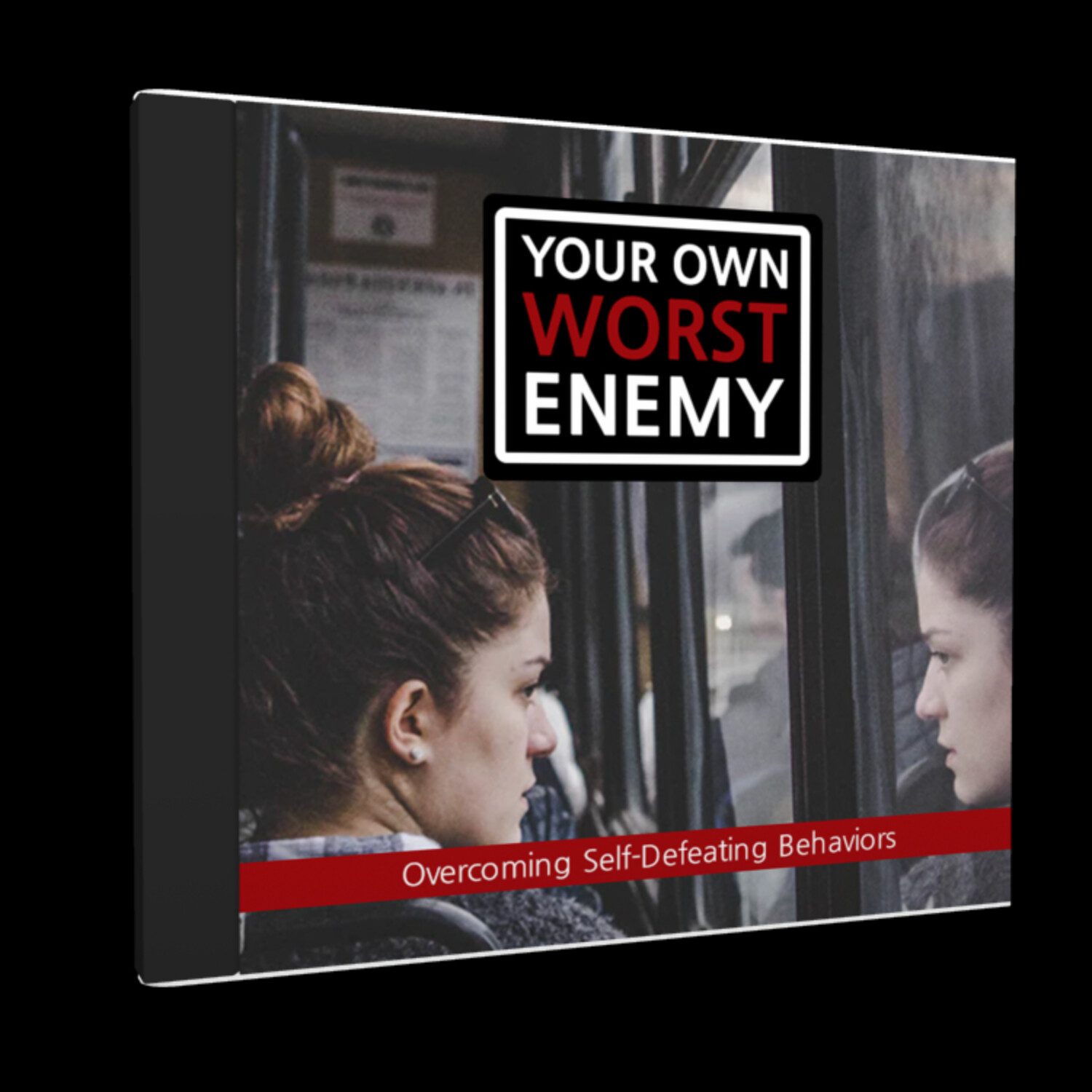
This section is going to take a look at the ten different self-defeating behaviors listed in the introduction. As you saw in the last chapter, there could be other items which are also self-defeating behaviors as well, so don't think by any means what follows is a definitive list. These are only a few of the most common, looked at in more detail to help train you in what to look for. How can you tell if something you're doing is self-defeating? Pay Attention Self-awareness is truly the first step to understanding self-defeating behaviors. If you feel like you're not achieving in the way you ought to, or think somehow you might be holding back; it's time to stop and think about what's going on. What are the thoughts which preceded this action? What do you think should have happened instead? Recognize the Traits Involved What can get confusing is how sometimes self-defeating behaviors cluster in groups. For example, you might be avoiding risk by procrastinating. Ask yourself, in what ways are you holding back? Look for the Root Cause Where behavior is concerned, there is always a reason for every action. Think about this. What's going on here? What are you afraid of? What do you think will happen? These questions will come up again and again as you explore each of the self-defeating behaviors. Don't let these things overwhelm you. This is all part of better understanding yourself as you walk this journey's path. Procrastination What does it mean to Procrastinate? Put simply; procrastination deals with putting something off until later what you should be doing right now. But is procrastination a time management issue, or is there something else going on entirely? The problem with procrastination is it might be a signal for a deeper issue. For example, if you're worried about a project because you are unsure how to proceed, you might put it off, hoping you'll figure it out later. Also, if you're afraid something is going to turn out badly, you will likewise put it off. How Does Procrastination Hold Us Back? The cost of procrastination can be very high. Missed deadlines hurt reputations both personally and professionally. When we procrastinate, we are seen as not being very reliable, especially if we make a habit of procrastinating. Also, even if we do get the work done on time, is it going to be our best quality when we're rushing to do it at the last minute? Because of all these factors, those around us tend to stop counting on us. We are given fewer opportunities. In the workspace, this might mean having less responsibility and a reduced chance of promotion. How do I Spot When I'm Procrastinating? Procrastination is pretty easy to spot. Just ask yourself, "What am I putting off?" Also, if you're rushing around at the last minute to get things done, you probably were procrastinating at some point. Habitual procrastination can be spotted through a series of missed deadlines, a habit of being late, and statements from others regarding your untrustworthiness.
S3 Ep 57Your Own Worst Enemy - Part Two
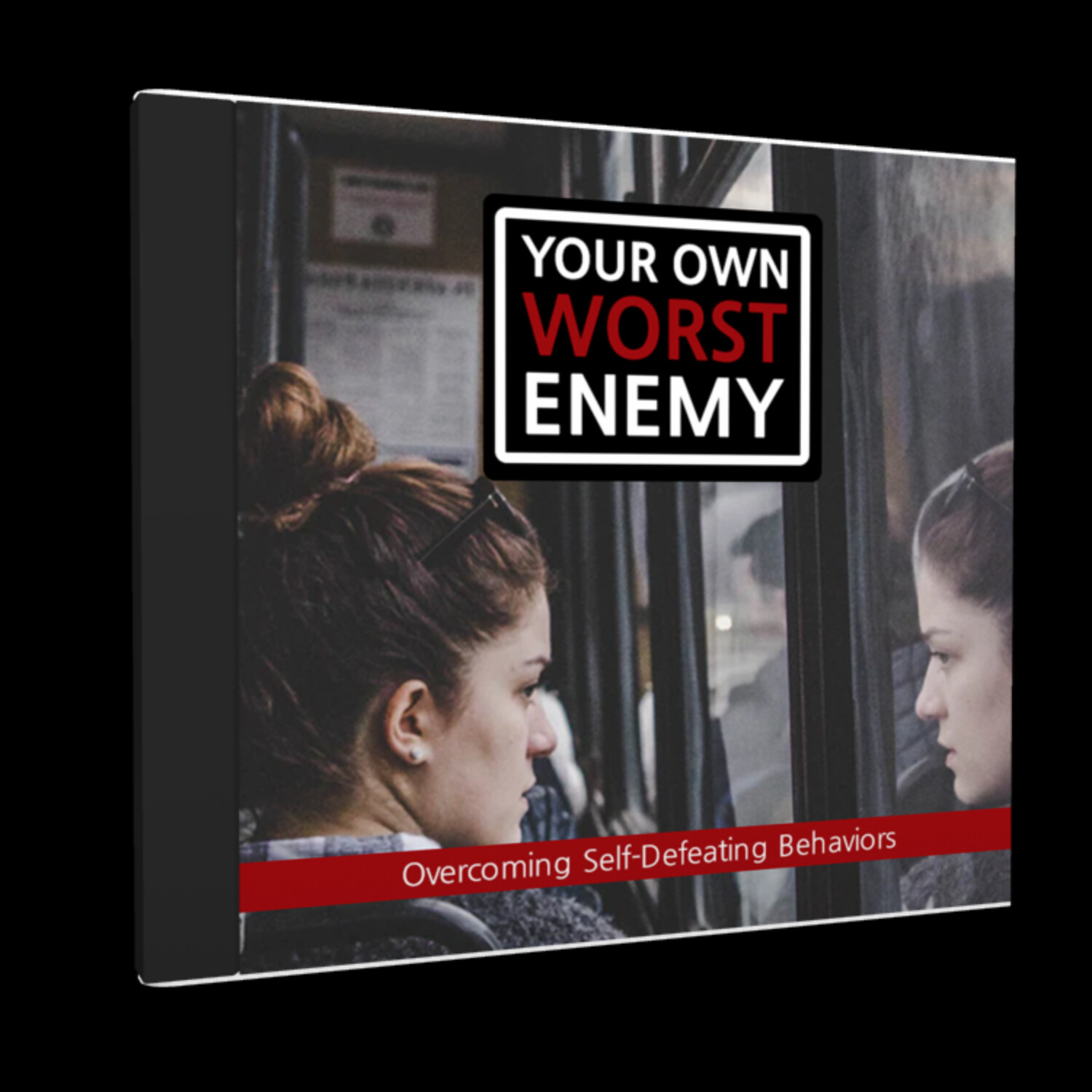
Understanding self-defeating behavior means first understanding yourself. A standard definition of the term "self-defeating" describes it this way: "Unable to achieve the end it is designed to bring about." Put in terms which are easier to understand, self-defeating simply means we are keeping ourselves from the goals we are setting. The problem with self-defeating behaviors is they keep us from living our life in the ways we are meant to. At an extreme level, they hold us back ultimately. Just about anything can be a self-defeating behavior if it keeps you from your goals. We commonly consider things such as procrastination, perfectionism, and other similar traits as being self-defeating without realizing even a preoccupation with a hobby or something so simple as not being able to disconnect from work when you're at home can be just as damaging. It might help to think of a self-defeating behavior as a kind of distraction. If these behaviors are so bad, why do we do them? The route to most self-defeating behaviors lies in the past. They come out of our upbringing and from the people who mattered most to us who might not have always modeled the best behavior. The most common reason of all, however, can be found in our fears. Anytime we think we're not good enough, smart enough, or ready to face the change which will come about from realizing our goals, we will subconsciously hold ourselves back. Let's look at a few of these behaviors in more detail to get a better idea of how they work.
S3 Ep 56Your Own Worst Enemy - Part one
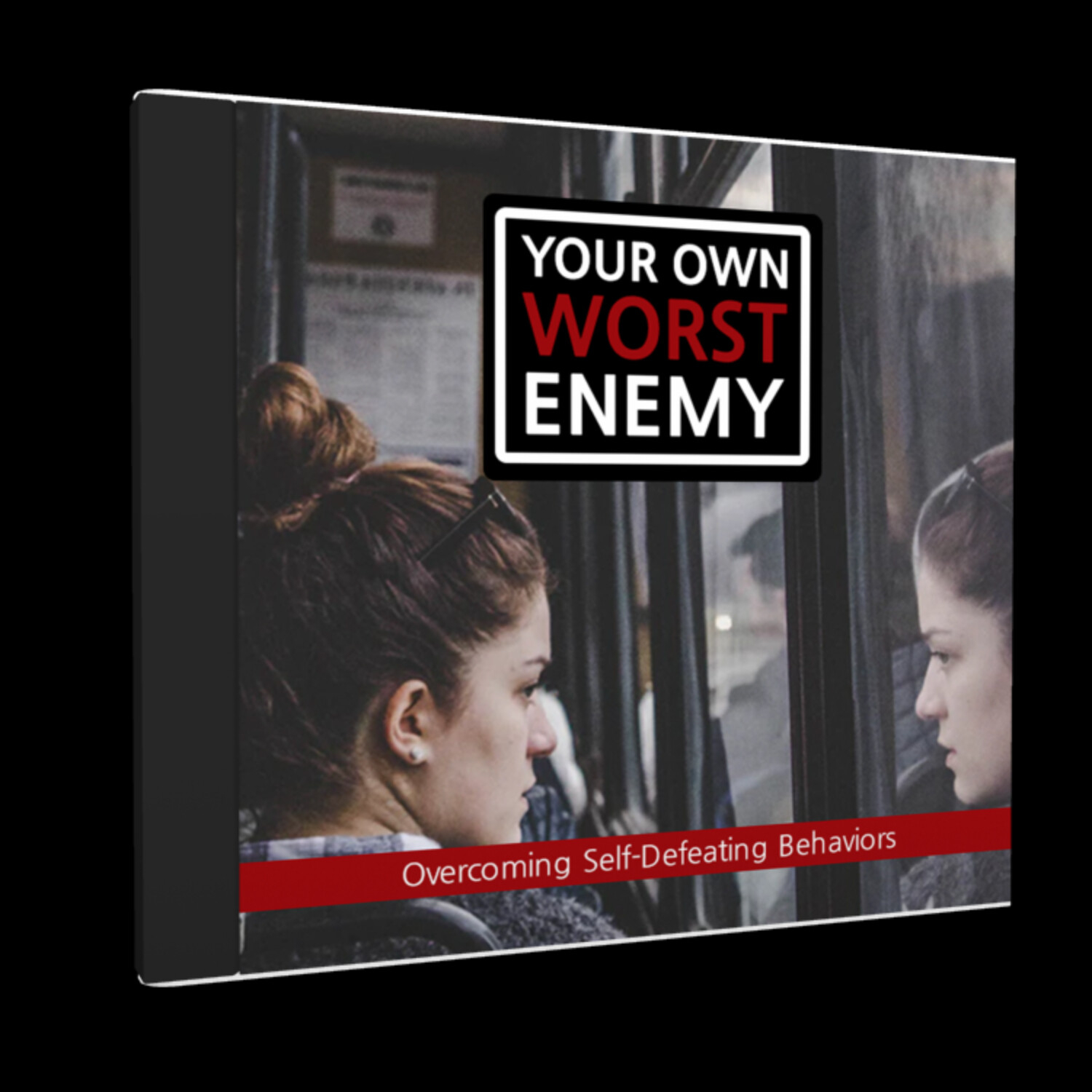
Often in life, we end up being our own worst enemies. Whether we procrastinate too much, engage in negative self-talk, or don't take care of ourselves – we make achieving our goals monumentally difficult. The world is complicated enough without us making things harder on ourselves. Let's identify our self-defeating behaviors and then overcome them. You are going to discover a lot about self-defeating behaviors. Of course, we first want to discover what a self-defeating behavior looks like. From there, we will talk about some particular self-defeating behaviors which may seem quite familiar to you. Things such as: · Procrastination · Perfectionism · People Pleasing · Stubbornness · Refusing to Ask for Help · Negative Self-Talk · Avoiding Risk · Avoiding Confrontation · Unable to Disconnect from Work · Refusing to Learn from Mistakes Quite a list, isn't it? For each of these, we're going to dig a little deeper to help you understand more about how each of these items holds you back. More importantly, we'll talk about how to defeat these behaviors once and for all. Ready to stop holding yourself back? Let's get started

S3 Ep 55Nine little things that could change your life.
Changing your life doesn't have to be a huge gesture. Many people avoid changing their life for the better because they are overwhelmed by what it will take. The reality is, changing your life doesn't need to include some seismic shift. Focusing and committing to a few small changes can be just as effective over the long term. Here are nine little things that can make a big difference in your life. 1. Try to Stay Positive I know, I know - Easier said than done. The keyword is "try," though. While you can't just turn yourself into a positive thinker overnight, merely being aware and trying to think positively as much as possible will help. At the very least, it is a start that could blossom into something bigger. 2. Get up A Little Earlier A good night's sleep is essential, but most of us could get up a bit earlier and be fine. Getting up a little earlier gives you more time to get things done. It's also the perfect time to reflect, journal, or bask in quiet contemplation. 3. Write a Paragraph No matter what your career is, the ability to communicate via the written word can be helpful. Writing can also be a powerful self-help tool. When you commit to writing a paragraph each day, you sharpen your skills and tap into the therapeutic effects of journaling. Just watch how fast that paragraph turns into pages. 4. Read a Paragraph Reading isn't only an excellent past time; it is a great way to learn. When you commit to reading more often, you open yourself up to all sorts of learning opportunities. An easy way to build a reading habit is to start a little bit at a time. A single paragraph today could blossom into a lifelong reading habit. 5. Do One Thing You Have Been Avoiding We all have a set of tasks we know we should be doing, but are putting it off for some reason. If you focus on finishing just one of these tasks, you will feel so much better. You will get something done that needs to be taken care of, plus you will be boosting your esteem and self-worth. 6. Explore Your Neighborhood How often do you get out and walk around your neighbourhood? If you are like most people, not as often as you should. It might not seem like a big deal, but getting out and about in your neighbourhood can boost your mood and health. On top of that, you might meet some new and exciting people. 7. Lend a Hand It doesn't take much effort or time to help another person. Besides boosting the moods of everyone involved, it is an excellent way to feel more personally fulfilled. You never know what you'll learn or where an offer of help will lead either. 8. Say "No" More Often It should be easy to say "no"; after all, it's only two letters. Even so, we struggle to say it when we know we should. By simply saying no more often, you will set expectations, free up your time, and keep yourself open for any new opportunities that might pop up out of the blue. 9. Stop Comparing Yourself to Others If we all took more time to focus on our own goals and stopped worrying about where others were, we would be better off. It might not be easy at first, but the effort is worth it if you want a happier life.

S3 Ep 54Are your emotions spiralling out of control!
A lot of the time, it’s all too easy not to be aware of them or to know and understand what you’re feeling. However, your thoughts and emotions will come and go throughout the day. Are you aware of your feelings, and then suddenly overreacted, over a silly little incident at work or home? Do you need to have more control over your emotions and how to understand them better? Here are some suggestions that may help you stay in control. See your emotions as information. It’s easy to think of emotions as being positive or negative, but it can be helpful to see them merely as information - whether they be good, bad or indifferent. A feeling is just your body’s way of telling you that something around you needs your attention. For example, when you hear a sudden loud noise, you feel scared. You become more alert so you can investigate what’s happening and take action if necessary. It can be fascinating to think about emotions this way. Instead of getting wrapped up in what you are feeling, see if you can ask: ‘What information is my body sending me? What needs my attention right now?’ Listen to your body You usually view emotions as being in your head, but almost all of them can be felt somewhere in your body. Just think about the expression, ‘having a heavy heart’, for when someone is sad, or ‘butterflies in the stomach,” for when a person is nervous. Practise tuning into your body to see if you can work out where you feel different emotions. For example, you can see if you notice sensations like tightness, heaviness, lightness, tingling or movement. See if you do things like clenching your jaw, sighing or fidgeting a lot when you have certain feelings. This can be tricky at first, because you may not be used to thinking about emotions in this way. But you might start to realise, for example, that when your shoulders become tight or hunched, it’s a sign that you’re worried. That means, you are becoming more aware of your emotions. Give your emotion a name, Neuroscientists, whose area of study includes the brain and emotions, say that when you can label a feeling - be it happy, sad or angry. - it loses some of its charges, and you don’t feel so overwhelmed by it. The next time you notice you’re reacting to something, try to name your emotion. Don’t worry about getting the perfect word for what you’re feeling - see if you can label what’s happening. Watch your emotions Did you know those emotions only last about 90 seconds? Just like thoughts, they will eventually fade and go away. If you can, try watching the emotion - noticing what it feels like, what thoughts pop up in your mind, if there are any impulses to do something, how fast or slow the emotion is, and how it fades away. Identify any triggers or buttons that send you into a frenzy without any further provocation. When you start to become more aware of your feelings, you create space for yourself to process them. You can then respond to situations in better ways (instead of overreacting or doing something you might regret later). It’s an essential skill that helps in all walks of life. Body language, Body language is a basic form of non-verbal communication, consider the following emotions, how does it affect your posture. For example, if they make you frown – consider how you might react to the following emotions. 1. Happy 2. Worried 3. Restless 4. Disappointed 5. Excited 6. Sad 7. Jealous 8. Peaceful 9. Scared Did you notice how your posture change with each emotion? Go on, give it another try. Compare Excitement with sadness.

S3 Ep 52Trilogy of famous failures in History: Post-It Notes
Did you know you probably have one of the world’s most significant failures as a product sitting on your desk right now? The Post-It Note was an accident that never should have happened. The original creator of this innovation, Spencer Silver, was trying to find an adhesive to use in the construction of aeroplanes. Looking at the strength of the glue on a Post-It Note, it’s easy to see he missed the mark by quite a bit. There’s absolutely nothing strong or even permanent about a Post-It Note. On the other hand, what he did create was an adhesive able to be used to hold one thing to another, which could be easily peeled off and used again…all without leaving any sticky residue. Now, most creators would look at a failure as just that, one more failure. If they were smart, they might examine the mistake to understand better what just happened. Here’s where Silver paused. His mistake was interesting. And while it didn’t solve the original problem, he couldn’t help but think it might solve someone else’s. He started talking to people at his company 3M, to see if anyone could come up with some kind of use for what he’d inadvertently discovered. It took time and a lot of brainstorming. While his adhesive was impressive, no one had a practical application for it and told him to scrap the idea. Only one person, Geoff Nicholson, saw this as interesting as Silver did and worked with him to come up with an idea for how to use it. Initially, they found the wrong solution: put it on a bulletin board and you could stick papers to it without thumbtacks, then peel them away without leaving a residue on them. But the application seemed limited. It was a man named Arthur Fry who suggested putting the glue on the paper itself, rounding out the team which would eventually make this product a success. Here was the turning point for the Post-It Note. They figured out how to apply the glue to paper, but even then, 3M had a hard time getting on board. The initial marketing on the product resulted in no sales. It wasn’t until someone else gave the product another go at being marketed, by handing out free samples, that the world discovered just how unique and useful this product was. The story of the Post-It note is all about failures and what we do when things don’t go exactly as planned. It’s about being able to look outside the box and to find a use for something when the original intent doesn’t work out. More than that, it’s about perseverance and not giving up when you know you’ve got something right, and the world doesn’t know it yet.
S3 Ep 51Trilogy of famous failures in History: Soichiro Honda
Situations change. You’re set on one path, thinking all is right with the world and suddenly, the carpet is pulled out from under you. Technology shifts, something becomes obsolete, and now what you’ve been doing for years, no longer works. What do you do? For Soichiro Honda, the answer was to shift and adapt. You find the next best solution, regardless of how crazy or off the wall it seems at the time. Honda started out back in 1939 with the idea of creating a piston ring for Toyota, the prototype of which flopped almost immediately. Undaunted, he threw himself into making this idea better, succeeding to the point where he gained the contract he desired, only to run into problems entirely beyond his control: WWII. With a shortage of material with which to build a factory, Honda might have stopped there. Instead, he created a new kind of concrete he could use in place of more traditional materials. But problems abounded. His new factory was bombed twice, and when he was finally ready to go into production, there wasn’t any steel. There was, on the other hand, plenty of empty gasoline cans to be found, discarded by the American fighters. By using these cans, thus taking advantage of what was on hand, life should have been golden—except an earthquake took out the factory completely. Here’s where a lot of people would have taken this as a sign to get out of business altogether. Honda persevered. In the meantime, with resources slim, especially fuel for vehicles, Honda set out to solve his own problem. What he found was a solution for everyone else as well. He motorized a bicycle with a tiny engine so he could get to work. This engine was something his neighbors very much admired and wanted for their own. Seeing an opportunity to make a success in a direction he had never considered previously, Honda set out to mass-produce a small engine that could serve the needs of the community. This engine went on to become the foundation of his company. His real success came during the 1970s American fuel crisis. With a demand for cars that used less fuel to travel more miles, Honda leveraged his knowledge to build fuel-efficient vehicles, making him a leader worldwide in engine technology. Soichiro Honda accomplished a great deal in his lifetime, entirely by being willing to adapt to circumstances and look for the opportunity rather than become caught up in the setbacks. Like Honda, we should take from his lesson the idea of not giving up, no matter what life throws at us.

S3 Ep 50Trilogy of famous failures in History: The Wright Brothers’
When is the last time you flew in an aeroplane? How long did this trip take you? More importantly, how long would it have taken you to reach the same destination if you’d never flown at all? Without Wilbur and Orville Wright, the world would be a very different place. But did you know the Wright Brothers, who revolutionized powered flight never finished high school, much less had any college degree? To the outside observer, the Wright Brothers didn’t look like much. They started in an entirely different field from where they wound up. Initially, their interest lay in newspapers and the printing process. In 1889 they built their printing press involving components created from such diverse objects as junk iron, a gravestone, and even an old buggy top. For the next seven years, they struggled, first to produce their own newspapers, and then as printers. The problem? They never could get community support on the newspapers they had. Even the mechanical failed them, for a while their designs in printing presses (becoming better over the years) never gave them the clientele to do a business out of this particular service. In the end, they abandoned printing completely. They were not defeated though and turned their attention elsewhere – at the current bicycle craze. Even this enterprise took time. It took them more than two diligent years of hard work to create a bicycle design, both lightweight and functional enough to become famous. You probably know the rest. From there, they turned their eyes to the skies. The same issues they’d had in bicycles they saw as being the problem with the current airships being developed: the problem lay in keeping the craft lightweight enough to attain altitude, while maintaining ease of control, with enough power to keep the plane in motion as it went. In short, they felt what was needed was a craft you could handle as easily as a bicycle in the air. Again, the Wright Brothers had to dig in and prove themselves diligent. Early failures had them wanting to give up on more than one occasion. In 1903 they proved the idea was possible with their success at Kitty Hawk, North Carolina. What can we learn from this story? First, your official education isn’t everything. The important thing is to keep learning, sometimes through trial and error. Second, never give up. Failure is bound to happen. It’s what you do next that counts. The Wright Brothers persisted, and because they did, they were able to attain new heights. So will you. Hang in there and keep going. You’ll get your ideas off the ground in no time!

S3 Ep 49Trilogy of famous failures in History: Walt Disney
Even the unhappiest of beginnings can’t hold you back when you have drive and determination. Meet Walt Disney. You’ve heard the name before, whether from the beloved mouse who’s graced our TV and movie screens for almost a century, to Frozen and a whole slew of animated and live-action movies our kids beg us to watch repeatedly. Disney never set out to become a household name, even though that’s what happened. His beginnings have a whole lot more to do with escaping from a bad situation and trying to find his place in the world. Walt Disney grew up with a father so cruel and abusive that Walt’s elder brothers couldn’t leave home soon enough. Walt himself made his escape before he was even fully grown. He lied about his age so he could run away and join the army and became an ambulance driver in WWI. With such rough beginnings, it should come as no surprise young Walt kept drawing as a way to hold onto his sanity in difficult times. After the war, he tried to make a living off his drawings, first as an apprentice to an animation studio, then later in a studio of his own, which he formed with the help of his brother. He failed dismally. Not one to be easily put off by failure, Disney dug in his heels and tried again. He headed for California, which he felt was the future of the movie industry and set up shop. Here he had success with Oswald, a cartoon rabbit that the public loved. So did the unscrupulous people he was working with. His animators were stolen right out from under him, as was the very character he’d created. Most people probably would have quit somewhere around here. Not Walt. He instead created a mouse named Mickey and kept going. From there, Disney never rested. He tried his hand at a full-length animated film with Snow White and the Seven Dwarves, which became very successful. On the other hand, he also tried things that were considered ‘flops,’ such as Fantasia and Pinocchio. His was a career full of ups and downs. When he opened Disneyland, just about everything that could go wrong, did. He dug in and worked harder to make it the success he knew it could be. The life of Walt Disney teaches us many things. First, it doesn’t matter where you begin. The point is to get started. Second, you can’t let disaster get you down. You need to pull yourself up and move on without looking back. No matter where you are in life, keep going. The only thing that can hold you back is you.

S3 Ep 48Trilogy of famous failures in History::Milton Hershey
Chocolate. So good. So tasty. Who knew a candy bar could lead to a success story? Hershey chocolate has become a staple in just about everyone’s diet. Whether you are a person who loves the straight-up Hershey bar or are more of a Kit Kat or Reese’s Peanut Butter Cup sort of person, there’s something for every chocolate lover. We can’t imagine life without chocolate, although only 150 years ago, only the rich could enjoy the delicious confection. Chocolate had been around for centuries, but candy was something made by hand, taking a lot of time and effort to create. Thankfully some people saw it didn’t have to be that way. Meet Milton Hershey. Hershey was the sort of guy who loved dessert. He also had a knack for sniffing out business opportunities. Unfortunately, most of his ideas didn’t work out very well. In fact, if it hadn’t been for relatives loaning him the money and a good bit of luck, his caramel business would have died out in the 1880s. Hershey, though, was one to keep an eye out for opportunity. He found it in 1893. Hershey noticed few were paying attention to a contraption at World’s Columbian Exposition in Chicago. A German chocolatier had a machine which could produce chocolate much more simply, with a lot less work. Although his field wasn’t chocolate, but caramel, he knew a good idea when he saw one. He purchased the machine to adapt to his own work, thinking chocolate-covered caramels might be a good idea. This didn’t exactly work out as planned. What did, though, was making chocolate bars. These candy bars took the world by storm. So much so, Hershey was approached in 1937 to come up with a bar that wouldn’t melt easily but could have added nutrition to send with soldiers overseas as a supplement to their diet. During WWII, he was making 24 million bars a week for the military! After the war, Hershey’s success was secured. He branched out into other kinds of chocolate bars, continually trying new things and expanding production until it became the successful company we know today. Hershey might have been a failure initially, but he had a lot of drive and determination. What didn’t work, he left behind, pursuing quickly. When he was approached to try something new, he immediately rose to the challenge, asking, ‘how can I do this’ instead of focusing on ‘I’ve never done this before.’ To succeed in today’s world, show yourself to be persistent like Hershey. Never turn your back on a lucky break. Most of all, don’t forget to embrace the sweet things in life. You’ll be amazed where they can take you!

S3 Ep 46Trilogy of famous failures in History: Stephen King
Why does everyone know the name, Stephen King? He’s the sort of success story every author dreams of becoming. Not only are his books popular, but quite a few of them have been adapted quite successfully as television and movies. He’s known all the world around as being one of the great storytellers of the weird and creepy and has a considerable backlist waiting to be explored. So, where did he come from? And how does his story apply to yours? Stephen King was a writer at heart all the way back to his school days when he used to scribble out short stories for his friends. Writing wasn’t his original career ambition, though. He’d set out to become a teacher, and only resorted to writing when he couldn’t find a job in his field. Even this didn’t come easily though. When writing his first novel, Carrie, he was plagued with massive self-doubt, so much so he threw away his initial attempts. But with the encouragement of those around him, he went on to finish the book and got it published to great success. Too much success. The stress of having to produce another book when his first had proven so popular caused Stephen King to question himself further. He didn’t feel he was equal to the task and started drinking heavily. This was the beginning of a struggle with alcoholism that would nearly ruin him.

S3 Ep 53Living with a mental; health problem.
If you believe someone you know is displaying a change in behaviour or mood which you feel may be potential red flags of poor mental health/mental illness. Many people have mental health concerns from time to time. But a mental health concern then becomes a mental illness when ongoing signs and symptoms affect your ability to function independently. Anxiety Anxiety disorders are the most common mental illness in the U.S., affecting 40 million adults in the United States age 18 and older, or 18.1% of the population every year. Biologically speaking, anxiety is a triggering of the fight or flight response to prepare us mentally and physically to deal with a perceived threat. It is believed to have evolved to keep us safe and in Palaeolithic times, anxiety was crucial to our survival to protect ourselves from the many dangers in the wild. At any sign of danger, our body's sympathetic nervous system was activated due to a sudden release of stress hormones, including adrenaline and noradrenaline, boosting oxygen to our limbs that allowed us to flee from danger. This 'fight or flight' response resulted in an increase in heart rate, blood pressure, and breathing rate, which left us trembling. However, whilst our world has changed around us, and we no longer need to be on our guard from say, wild animals and human enemies, we still remain hard-wired to protect ourselves. However, Anxiety disorders, keep us on a permanent high alert and prompt us to feel panic and fear at ordinary, everyday events. Psychologically, they set off a sense of dread and alarm; physically, they speed our hearts and pulses, makes us sweat, shake, or feel dizzy with worry. Anxiety disorders include generalised anxiety disorder (GAD), social anxiety and panic attacks, all of which can impact an individual's life. Panic disorder is an anxiety disorder where you regularly have sudden attacks of panic or fear. A panic attack is a sudden rush of intense mental and physical symptoms, lasting between five and 20 minutes. Sufferers are left feeling frightened and distressed, often reporting they thought they were dying. Successful treatments for anxiety include therapy, medications such as beta-blockers, and making life changes. Phobias Phobias are a type of anxiety disorder characterised by the fear of a specific object or situation. They fall into three types: 1. specific phobia, fear of heights 2. agoraphobia, fear of leaving one's safe place) 3. social phobia, fear of interacting with other people, of evaluation or humiliation). Even though most people with phobias know that logically their fears are irrational, this does not assuage the panic, sweating, terror, breathlessness, dizziness or even fainting that experiencing the feared object or situation triggers. Whilst some phobias, such as the fear of spiders, may have an evolutionary background that once kept us safe in the wild, others are believed to be the result of a stressful episode, that the brain remembers and reacts to again and some could simply be learned from a phobic parent.

S3 Ep 45Trilogy of famous failures in History: Henry Ford
Who do you listen to? It’s so easy to become discouraged when you hear the people around you, especially those who don’t quite catch the vision of your dreams. How you deal with this kind of naysaying can mean the difference between failure and success. Henry Ford experienced just this problem. When you think of Ford, you probably immediately think of cars, or even the entire assembly line process. His success was not immediate, though, and in fact, he failed twice before finally getting to where he wanted to go. Ford was just twenty-three years old when he first discovered the wonders of the internal combustion engine. Fascinated, he immersed himself in the mechanics of it with the idea of attaching it to a horseless carriage. He even came up with a prototype that seemed extremely promising. Unable to develop the project further on his own, Ford sought financing so he could take the automobile to the next level. He secured this reasonably quickly, and so his success should have been certain, right? The problem lay in the prototype. The car he’d designed initially had too many parts that were hard to get. He had to keep tweaking the design to make it into something able to go into production. In short, he took too long to get the desired results, and the financiers lost faith and backed out. Henry Ford dug in, though, and tried again, this time paying more attention to the production aspects. He somehow convinced his backers to give him a second chance. They did, with the stipulation they could bring their own manager in on the project. Again, this led to failure. Ford felt micromanaged by someone who didn’t understand the vision. When this fell apart, it should have been the end of things. He still believed in both the product and his ideas regarding production and hung in there. This time he searched for backers who likewise came to see his vision and were willing to allow him the freedom to act as he saw fit to make it a reality. This was the real beginning of the Model A Ford, which was the foundation of Ford’s success in automobiles. Ford was a visionary in that he never allowed anyone else to stop him from doing what he knew he could. When someone stood in his way, he found a new way around the problem to keep going. In the end, he succeeded through persistence. So can you. The next time someone tells you ‘no,’ look for the one ready to say ‘yes.’ Align yourself with supporters, not naysayers. Then go out and get the job done.

S3 Ep 44Trilogy of famous failures in History: Bubble Wrap
Have you ever had what you thought was a really great idea turn out to be not so great after all? Now imagine someone else picking up your discarded idea and proving it actually was quite brilliant after all. This is what happened to Al Fielding and Marc Chavannes back in 1957. These two gentlemen were working on an aesthetic problem. They wanted to create a textured wallpaper to create an interesting effect in a room. Their solution? Take two shower curtains and put them together, so that pockets of air would be trapped between them. This sheet of plastic could be put up on the walls to make for unique and charming décor. The world didn’t exactly come flocking to their door. Undaunted they tried again. Same product: different marketing approaches. Maybe this unique bubbled plastic could be used to insulate greenhouses. Not really. It sort of worked but was not something every greenhouse owner couldn’t live without. It took two years for someone to figure out what to do with the product. Frederick W. Bowers, who worked for the company which made the sheets of plastic with air pockets, realized they would be perfect for the transport of computer equipment for a company which had a sudden need for this kind of product – IBM. The material, now called ‘Bubble Wrap,’ was absolutely perfect for the job. The rest, shall we say, is history. Bubble Wrap is one of those products that seemed to come along by accident. As a wallpaper, it wasn’t a great idea. (Just imagine your kids going around the house and poking the bubbles to pop them?). On the other hand, someone who was willing to think outside the box, or more accurately, think creatively about what to put IN a box, was able to come up with a use for the product no one else would have ever considered. Thankfully, the creators of Bubble Wrap hadn’t given up on the product. They knew they had something interesting, they just didn’t know what to use it for. Sometimes you must experiment with your ideas to discover what you really have. Sometimes you have to think more creatively about what you have at hand. The point is not to give up. Failure should never be anything more than a marker to tell you it’s time to attack the problem from a different angle. Learn from the mistake, then move on. Imagine what you’ll come up with when you do!

S3 Ep 43Trilogy of famous failures in History: Albert Einstein
Stupid. Failure. No good. Idiot. Albert Einstein heard all these phrases about himself and more. Growing up was tough for young Albert. He didn’t express himself well and struggled in school. Even his teachers gave up on him, deciding that he was impossible to teach. Those around him considered him mentally retarded, and no one thought he would ever make anything of himself. This doesn’t sound like an auspicious beginning for someone who is considered to be one of the greatest geniuses of all time, does it? Einstein seemed to meet failure at every turn. He wished to attend the Swiss Federal Institute of Technology but had to take the entrance exam twice before he was admitted. Even then, his troubles weren’t over. His teachers laughed at his ideas, calling his doctoral dissertation “irrelevant and fanciful.” After college, no one thought much about him. He worked in a patent office. A situation which turned out to be perfect because the work was so mindless, he had plenty of time to think. And think he did. A lot! Albert Einstein used his extra time to work out several theories. In fact, he became so caught up in his ideas, he grew absent-minded and oblivious to the world around him. In the grand scheme of things, maybe it didn’t matter quite so much whether he forgot to wear socks with his shoes. The important thing was what he developed, what he created in those deep thoughts. From the Theory of Relativity to every theory that came after, it soon became evident that Albert Einstein’s thoughts were considerable. So much so that he became a professor himself, and even won the Nobel Prize in Physics in 1921. Imagine what his critics had to say about him then! From Albert Einstein, we should learn not to let the world define us. No one truly knows what you’re capable of but you. Even if you don’t always express your ideas well, it doesn’t mean those ideas don’t have merit. Albert Einstein is also an excellent example of what it means to do your own thing. His ideas didn’t mesh with the way people typically thought about the world. Even in his lifetime, not everyone saw things his way. This didn’t stop him from expressing himself and standing by what he said. So be smart like Einstein. Don’t be afraid to share your ideas with the world. More importantly, never let anyone else tell you what you can do. That’s for you to show them.

S3 Ep 42Embracing The Anxiety Of Problem Solving
Many of the best insights I have gained over the years have often been counter-intuitive. For example, as I have been developing muscular strength with a rigorous weight training program, I have found that I can push more weight and complete more sets when I relax and calm myself mentally before and during each group. The calmness helps me push through the pain. In this example, the more obvious approach (for me at least) would be to pump myself up with a bunch of deep breaths and yell out loud in aggression before my set. The calm approach is a far more effective and counter-intuitive solution. In the title of this article, I am suggesting another counter-intuitive method when I say “embrace the anxiety” of problem-solving. You might be thinking, “why would I ever want to embrace anxiety? I mean anxiety causes stress and stress cause health problems.” Here’s the deal: Have you ever sat down to write an article on a new topic that you were not comfortable with (or maybe an essay in school), read a complicated instructional manual for a new piece of furniture or attempted to learn a new piece of software on your computer that was out of your technical capacity? If so, do you recall the sensations of frustration and anxiety that swept over you, especially in the earliest phases of the task? How did you react to the uncomfortable feelings associated with that frustration/anxiety? If you’re anything like most people, you quickly sought relief by checking Facebook, watching Youtube, checking email, sending a text, turning the TV on, eating a snack or doing any other “comfort” activity that helped you escape the horrible feeling you had been experiencing. What you probably did not realize at the time, was that this phase of anxiety is the most natural experience in the world. As your brain is working to solve the problem and perform the work in front of you, this anxious feeling is simply a by-product of the experience. Instead of running away from the anxiety and the unpleasant feelings that come along with it, I am going to suggest you embrace it instead. Celebrate the fact that you have given yourself a challenging problem, and your incredible brain is busy working away. Much like the bodybuilder learns to enjoy the physical pain of a brutal weight lifting set, you change your perception of this process from a negative experience to something positive and exciting. And here’s the best part. Do you recall any times in your past where you faced a deadline, and you were forced to work through the anxiety because you had no choice? What likely happened was after a certain period had elapsed, you moved from a frustrating state to a flow state, and the work started pouring out of you. You went from anxiousness to excitement. All because you were patient and persistent enough to allow your brain to work the problem and give you the answers you needed for your situation. So, the next time you sit down to build that next “whatever’, keep this lesson in mind and refuse to allow yourself to indulge in temporary relief. You are only prolonging the pain anyways. Put that iPhone away and stick with your problem until you get in the zone. Then you can let go and let your best ideas pour out of you.

S3 Ep 41What does confidence mean to you
I talk to a lot of professionals and salespeople and even entrepreneurs, people starting their own businesses, and they want to learn how can I develop more confidence or even just get myself a bit of faith so that I can be more successful in what I do. You have to realise what confidence comes from and what confidence means. Confidence is your ability to take action and feel good about yourself. Feel like whatever it is you're about to endeavour into, that you can do a good job and that you can come out of the other end of it looking good. Now, this doesn't happen by accident. When you look at the way confidence appears in our lives, it appears as a result of doing things over and over again and developing a proficiency from it. Confidence, in and of itself, is not something that you're born with or not born with. It's something that's developed over time through practice and repetition. When you first learn how to walk, when you were, let's say 12 months old or 13 months old or whatever it may be for you, you were not very confident at walking. You couldn't walk. But you were determined to try. You stood on the side of the sofa, and you pushed yourself off, and you would fall. You would try it again, and you would lose, and you would do it over and over again. Your level of confidence, in the beginning, was tiny. There probably was no confidence. But you were so determined to do it, that you kept going. Eventually, you took a step, you followed that with another step, and soon enough you were walking, and now you're an adult, and you can walk from one side to the other of a room or a hallway or whatever, and not even think about the act of walking. It's just something that comes to you naturally. If someone were to ask you your level of confidence on a scale of 0 to 10, how confident you are that you could walk across the room, you'd probably say 11. It doesn't even occur to you. You just do it. The same thing goes for confidence in all areas of life, including your professional life. Let's say your success right now requires your ability to sell. To sell a product, to sell an idea, to sell a service, sell a training program. I don't know what it is for you. Well, you might not be confident right now in your ability to communicate the value and close a deal, AKA sell. However, how are you going to get that confidence? You weren't born with it. Right now you think about yourself going into a situation where you might have to sell somebody, and you're nervous. How do you get to a point where you're confident in doing it? Well, you go through the nerves, you go through those comfort zones, you put yourself in situations where you're probably not all that comfortable, you're a little bit nervous, and you do it. You learn from it, and you make mistakes, and you fall on your face, just like you fell on the ground when you were learning how to walk. But you do this once, and you get a little bit of feedback, you get a little bit of insight. Maybe your manager was with you on that sales call and saw a couple of things that you could have improved on and gives you that feedback. Understand this process. Nobody is born with natural confidence at any level of their life. If you see somebody who's confident right now, it's because they've developed that confidence by repetitive learning and trying and failing and getting the feedback and doing it again—having the courage to continue. Do you have the courage to continue? I think you do. Continue with what you're doing right now, develop that confidence, and you'll only continue to grow.

Ep 40What does Confidence mean to you?
I talk to a lot of professionals and salespeople and even entrepreneurs, people starting their own businesses, and they want to learn how can I develop more confidence or even just get myself a bit of faith so that I can be more successful in what I do. You have to realise what confidence comes from and what confidence means. Confidence is your ability to take action and feel good about yourself. Feel like whatever it is you're about to endeavour into, that you can do a good job and that you can come out of the other end of it looking good. Now, this doesn't happen by accident. When you look at the way confidence appears in our lives, it appears as a result of doing things over and over again and developing a proficiency from it. Confidence, in and of itself, is not something that you're born with or not born with. It's something that's developed over time through practice and repetition. When you first learn how to walk, when you were, let's say 12 months old or 13 months old or whatever it may be for you, you were not very confident at walking. You couldn't walk. But you were determined to try. You stood on the side of the sofa, and you pushed yourself off, and you would fall. You would try it again, and you would lose, and you would do it over and over again. Your level of confidence, in the beginning, was tiny. There probably was no confidence. But you were so determined to do it, that you kept going. Eventually, you took a step, you followed that with another step, and soon enough you were walking, and now you're an adult, and you can walk from one side to the other of a room or a hallway or whatever, and not even think about the act of walking. It's just something that comes to you naturally. If someone were to ask you your level of confidence on a scale of 0 to 10, how confident you are that you could walk across the room, you'd probably say 11. It doesn't even occur to you. You just do it. The same thing goes for confidence in all areas of life, including your professional life. Let's say your success right now requires your ability to sell. To sell a product, to sell an idea, to sell a service, sell a training program. I don't know what it is for you. Well, you might not be confident right now in your ability to communicate the value and close a deal, AKA sell. However, how are you going to get that confidence? You weren't born with it. Right now you think about yourself going into a situation where you might have to sell somebody, and you're nervous. How do you get to a point where you're confident in doing it? Well, you go through the nerves, you go through those comfort zones, you put yourself in situations where you're probably not all that comfortable, you're a little bit nervous, and you do it. You learn from it, and you make mistakes, and you fall on your face, just like you fell on the ground when you were learning how to walk. But you do this once, and you get a little bit of feedback, you get a little bit of insight. Maybe your manager was with you on that sales call and saw a couple of things that you could have improved on and gives you that feedback. Do you have the courage to continue? I think you do. Continue with what you're doing right now, develop that confidence, and you'll only continue to grow.

S3 Ep 40Developing Social Intelligence
One aspect of achieving success in life that many people never think about or discuss is the idea of social intelligence. In his book, Mastery, Robert Greene defines social intelligence as “the ability to see people in the most realistic light possible”. In other words, social intelligence is all about reading other people and figuring out the reasons why they behave the way they do. Think of it as your ability to think from another person’s perspective. When you have a “run-in” with someone whether it is a heated argument or just a subtle confrontation, do you find yourself getting wrapped up in your own emotions and assuming a position of defensiveness? Or do you separate yourself from the emotion of the situation and put yourself in the other person’s shoes trying to see the world as they see it? Most people opt for option #1 not because they want to, but because they are unaware that there is a better, more rewarding option. As you develop your social intelligence, you will find that you naturally become more persuasive and appealing to people of all kinds of personality types. Instead of trying to force your ideas and opinions on someone who’s the view of the world doesn’t match yours, you alter your approach to appeal to their nature. It doesn’t mean you have to sacrifice your own beliefs and adopt theirs; it just means that you choose to suppress your opinion because you know it is a useless battle to enter. For example, if someone is ranting and raving about a political or cultural issue, and you don’t agree at all, you let them sound off and hold your opinion to yourself. You can let them blow off some steam and reply with something like, “I can see why that would be frustrating.” Again, you don’t have to agree with them and compromise your own beliefs, but you also are not required to share your opinion. Something compelling happens when you choose this approach. You get to study and examine how this person thinks, what makes them tick, what makes them get emotional. You can use all of these triggers as ammo when you are dealing with them in the future. Knowing this information, you can customize your approach when you deal with them in the future. If you need a favour or if you have to do a project with this person, you will be in a much stronger position to persuade them and speak/behave in ways that will win them over. So the next time you come across someone who rubs you the wrong way or has a problematic personality, use it as an opportunity to enhance your social intelligence, and you will gain more personal power than you had before. This power will only continue to grow the more you use it!

S3 Ep 39Transform Your Life by Doing Something You Love
Many people go to college to do what they believe they have wanted to do all their lives. The first several years are rewarding, and then they start to realize this is something they are going to do until they retire. They are quickly disillusioned, and they get into a rut. Many people continue doing what they do out of fear; there is nothing else, or they are getting a steady paycheck. The lucky few, however, break away and find their true passion in life. While starting up a new career may be exciting, it is not necessary to do so to do something you love. You can start up a hobby in your spare time, or you can volunteer in your area of interest. Many companies are encouraging their employees to take on more volunteer opportunities. Even if the company’s motives are not altruistic, volunteering can open doors for employees. They can learn new skills or discover ones they were not aware they possessed. You may decide to escape the rat race and start up your venture. This will help transform your life in ways that you never imagined. Choosing a business, you are passionate about gives you a purpose you may not have gained by staying in your current situation. This is not to say that starting and running a business is easy. It takes a lot of work and quite a bit of discipline. You become your boss and have no one to answer to but yourself. While many view this as a good situation to have, it is a double-edged sword. It would help if you had a good plan in place to help guide you towards success. A significant benefit of having your own business is you are free to make as much money as you want. Assuming you find the right formula for making money, the sky is the limit. You don’t have to beg stingy corporations to try and get a morsel out of them. More people are discovering that having their own business is the only way to go. They love the challenge and find the work fulfilling, all things being equal. The Internet serves as a great provider of advice and resources to help these businesses succeed. Not everyone is suited to being an entrepreneur. But for those who are, they are in it for the long haul with no intention of ever looking back.

S3 Ep 38Stop Comparing Yourself to Others
You are different from everyone else. Celebrate that. You offer a unique perspective in this game called life. We should all be thanking you. If you are constantly comparing yourself, it means you aren’t happy with who you are. Why is that? People are brought up to conform to society. If you don’t fit within society’s norms, you are looked upon disapprovingly. However, most people aren’t ordinary in the most real sense of the word. Everyone has quirks and idiosyncrasies. It’s these differences that allow us to find solutions to problems. It also keeps us from getting bored. Imagine if everyone were indeed the same. There would be nothing new to discover about one another. There are some reasons to conform to. For instance, you need to follow the rules and laws of your country and community. Otherwise, you will suffer consequences for not doing so. Also, you want to treat others with respect so that they will hopefully return that respect. However, if you try to act in ways in which others believe you should, you aren’t going to live your life to the fullest. That’s why you should get out of the habit of comparing yourself to others. When you do this, you are likely setting unrealistic expectations and will lead you to be disappointed. Comparing yourself to others will result in you resenting those people. They have their reasons for being the way they are, and it has nothing to do with you. There are qualities you admire in others. There is nothing wrong with trying to adopt some of those admirable qualities for yourself. However, it shouldn’t get to the point where you are trying to redefine who you are to be like those people you admire. You aren’t them, and you never will be. You have but a short time on this planet. If you spend most of that time trying to be like someone else, you are in for a rough ride. If you stick to who you are and find others willing to accept you for that, you are going to be more satisfied for most of that time you live. Others will be happier with the real you as well. You won’t be a pretender. People see right through that kind of behaviour. Just think about others who are not true to themselves. How long does it take you to see through that mask?
S3 Ep 3How To Create a Better Mood
Creating a Better Mood Is it possible to create a better mood for yourself? Can you do it for others? If it is possible, why isn’t everyone always happy? It seems being happy is preferable to being in a bad mood. Studies have shown it is possible to improve your mood. It can be as simple as thinking you’re in a good mood. If you believe it, your attitude will change. Even when you aren’t in a good mood, the simple act of smiling can perk you up. One reason why people don’t improve their mood more often is that they don’t know they can. From early childhood, we understand that we have different feelings. Sometimes we will be in a good mood and other times we won’t. Parents and teachers told us it’s just the way it is. If you want to better your mood, start hanging out with upbeat people. There’s nothing like a sourpuss to bring down a group. These cranky people seem to go out of their way to make sure everyone is miserable. By avoiding these people, you have less chance of being in a bad mood at the start. Next, create an environment for yourself that lifts your spirits. If a specific type of music gets you pumped, play that music more often. Some people like to burn incense as they feel it can positively alter their moods. You should reflect on your life and be grateful for what you have. You have a lot to be thankful for if you’re in good health. If your family is in good health, you should also be grateful. Your mood will naturally increase towards the positive when you appreciate such things. Try not to worry about the mundane issues in your life. They are going to happen whether you worry or not. Just take care of them so that they aren’t hanging over your head. Don’t let things build to the point that they become a significant matter. It may seem obvious, but do more things that make you happy and less that don’t. It’s not always possible to avoid adverse situations, but you do have control over most of the activities in your life. Sometimes, all that is needed is to change up your routine. If you are doing the same activities day in and day out, this can make anyone feel in a bad mood. Try stepping up your game and do something out of the ordinary. In fact, make it a point to do this once every month.

S3 Ep 36Listening Through Questions
Better Listening Through Questions Did you ever notice that people don’t like to ask questions? It’s understandable when those questions are personal. You don’t want to offend anyone. But, most people willingly give answers to questions asked of them. So why are we so afraid to ask? When you ask questions, you have the tools you need to be a better listener. It’s indirect and subtle, but it works. When you ask questions, you listen for the answer. You aren’t spending your energy trying to think of what to say after the other person is finished speaking. Before you fire up your question engine, be sure to keep a few tips in mind. The first is to be relevant. If you are all over the place on your topics, the other person is going to suggest you switch to decaf, because you are too wound up. Keep your questions relevant to the topic of discussion. You can transition into other issues, but try to keep them related. Another tip is, don’t try to ask questions to trick someone into an answer or try to show how smart you are compared to him or her. The idea is to connect with people by listening to their stories. A better approach is to ask questions that you know they will be able to answer. Sometimes, you may already know the answer. But it’s the process you are after as well as the answers. It’s okay to ask questions that relate to you somehow, but try to keep the focus on the other person. People love to talk about themselves, and when they find people who are good listeners, they will open up to you. Right questions can also steer the conversation. This can be an asset when you converse with someone who is overly chatty. If they are going on and on about a topic, use questions to reel them in. It’s a focused approach that gives you control while moving the conversation forward. If you aren’t one who typically uses questions, it can take a bit of practice to learn what to ask. But, you have plenty of opportunity for that practice in your day to day interactions with people. If you commute via public transportation, for instance, try to strike up a conversation with someone next to you. This isn’t as easy as it used to be with people self-absorbed with their smart devices. But, if you try, you will find many people are responsive.
S1 Ep 1Helping Others Overcome Grief.
Helping Others Overcome Grief If you have ever gone through the grieving process, you would think that when you do it again, you will handle it better the next time around. Unfortunately, it doesn’t work that way. You will feel just as bad each subsequent time. It’s a necessary process in life, however. Where experiencing it in the past can come in handy, is helping others who are going through the grieving process. If you are faced with trying to help someone who is grieving, make sure that you are not trying to force your experience on them. People suffer in different ways. What worked for you will not work for everyone. Try to hone in on how the person you are trying to help is dealing with the situation and go from there. The most crucial aspect of helping is to be there for the person. This is especially true after the dust settles and there is no one left but the grieving person. Shortly after death, there are ceremonies and gatherings. These are good for the people grieving and helps to get their mind off of the situation. But, eventually, the crowds die down, and a feeling of loneliness can overtake those who are grieving. By sticking around for a bit longer, you can take away those lonely feelings, at least temporarily. Sometimes staying silent and just listening can be the best advice when helping others to grieve. They are trying to come to grips with what is going on, and the last thing they want to hear is, “it’ll get better,” or something along those lines. Just let them do most of the talking. Be ready to help when they ask for it. Offer to run errands for them if that is what is needed. People who are grieving don’t think much about eating, so make sure that they get food and watch them eat. At first, they don’t believe they are hungry, but once they start eating, they find that they are much hungrier than they realised. Try to keep alcohol use down to a minimum, if at all. It’s easy for people who are grieving to use their situation as an excuse to go overboard with alcohol. This can turn into a long term problem if it is not kept in check. When the crowds are there for the ceremonies and gatherings, there will likely be alcohol served. It’s okay for the people grieving to have some as long as it is moderate.

S1 Ep 3510 Habits That Promote Emotional Wellness: Part 2
10 Habits That Promote Emotional Wellness Guard your self-esteem. Learning to feel confident and comfortable with yourself is an important habit for protecting your emotional wellness and safeguarding Honour well-being. Improve your attitude. Your outlook is one part of your emotional health that you can control each day. When negative things happen or you start to feel negative emotions creeping in, turn those into positive thoughts. This will help you become more resilient, too. Be realistic. When you keep your expectations for yourself as well as other people more realistic, you are more likely to be happier, enjoy better outcomes, and learn more from your experiences. Unrealistic expectations set you up for failure and lower your self-esteem. Lower your stress level. Stress makes it difficult to manage your emotions well, and the hormones that are released when you are under stress can harm your health. Find enjoyable activities that help you cope with your stress and, where possible, eliminate sources of stress from your life. Get enough quality sleep. Sleep is crucial for your physical as well as your mental health, and when you do not get enough, your emotional well-being will suffer. Cultivate strong connections to others. Having strong and healthy relationships can improve your emotional and physical health. Having a wide circle of friends and people you can rely on will keep you healthier and happier throughout your life. Do not stew. When bad things happen in your life, it is essential to process those emotions and then move on from them. Brooding over things that have already happened affects your mood and motivation. Practice self-care. Taking care of yourself is essential for your emotional health. This includes eating a healthy diet, engaging in activities you enjoy, taking a break when you need it, checking in with yourself regularly to make sure your needs are met, and finding work and leisure activities that bring you joy and fulfilment. Honour your boundaries. When you have strong emotional health, you know when to set boundaries that honour your wellness as well as how to keep others from disregarding those boundaries. Value personal development. Emotionally influential people understand the value of personal growth and development. They seek advice from others, search for new opportunities to learn, and focus on ways to better themselves and their lives.