
Mental Health Training
337 episodes — Page 7 of 7

S1 Ep 344 Life Hacks for Improved Emotional Health Part 1
4 Life Hacks for Improved Emotional Health Did you know that experience at least one emotion nearly every moment that you are awake each day? That’s a lot to manage, but we have four life hacks that will help. When you adopt these daily habits, you will learn to become the master of your emotions in no time. Number one, name What You are Feeling. The most important habit that can help you improve your emotional health is being able to understand your emotions. This starts by naming what you are feeling. Identifying your feelings and understanding the nuances between, say, apprehension and fear, helps you to recognize patterns, identify triggers, and determine which emotions are causing you to make which decisions. Number two, Practice Mindfulness. Becoming more mindful allows you to pay closer attention to what is happening in the present, which enables you to be more aware of your feelings, thoughts, and physical responses to these. Mindfulness teaches you to accept and acknowledge these things rather than become overwhelmed by them. This means you are managing your emotions better, which can make you more self-aware while enhancing your ability to concentrate. Number three, turn Negative Self-Talk Around. Self-talk is the voice inside your head that is narrating your life. When your self-talk focuses on what you did wrong, what is wrong with you, and how you need to improve, it affects your emotional health and well-being. Changing that negative self-talk into more positive affirmations is essential for improving how you feel. Number four, become More Curious. Curiosity is a hallmark of the emotionally healthy. When you are curious, you are open to ways to keep learning and growing in your life. This leads to continuous improvement and development. When you are curious about yourself, you become more self-aware and pay more attention to your needs, as well. Asking questions of yourself and others keeps you open to new perspectives and ideas, which helps you develop better empathy, too.

S1 Ep 33Inspiration compilation storybook part 10 Conclusion
Conclusion While the significant, grand stories are exciting to read about, and it's always interesting to find out how people got to where they are today, there are some important things to remember from tales like these: Not everyone starts in the same place. Sure, it may be easier to take risks and do great things when you come from an upper-middle-class background, but no one knows what goes on in a person's life. You cannot see all the scars. We all have our hurdles to cross, some more than others. But that doesn't have to stop us from making our big dreams happen. Everyone has had setbacks outside of their control – whether it was being born poor, into a dysfunctional or even abusive family, or into an era or place where talent was not appreciated enough. If you want something badly enough, if you have the passion of these now-famous people, you too can make big things happen. How many times should we be willing to fall on our face before we give up? Just think back to the stories outlined in this eBook. If anyone of these people had given up one setback before, we wouldn’t know who they were. None of these people gave up. Did you notice that in many of the inspirational stories, once the subjects knew what they wanted to do, their lives got harder, not easier? But rather than give up because they were at a disadvantage or because they’d failed one too many times, they kept going. We all have a small, still voice inside of us. The great people whose stories I’ve told here heard that voice and took action on it. They could have focused on the hard road they’d had, but they didn’t. They looked inside themselves and trusted that they had what it took to make their dreams come true. They had no reason to believe, in most cases. Many of them had no one who believed in them. But because they listened to their intuition and trusted it, they are the people we look up to today. Whatever setback you’re facing, remember these simple truths. Wherever your starting point is it doesn't matter. Whatever your past – it's merely that. Your past. It's your future that counts. You can change your environment and overcome some setbacks that are within your control. No, you can’t fix the economy of the world around you, or maybe not even in your zip code right now, but you can change how you view your world. Look for the opportunities. Think outside the box. Figure out what you CAN change – and then go about changing it. Focus on what you are grateful for, not what you don’t have yet. You won’t be able to keep on going if you concentrate on the things you lack, and others have. · Never, ever, ever give up. We all have a purpose for being here. Once you know what yours is, give everything you’ve got to it. There are many more stories than what I've told above waiting out there. Every day millions of people do inspirational things. Maybe not as big and grand as some of the things you’ve read about here, but things that impact the lives of those around them. You can be one of those successes, and you might already be someone’s hero. It’s just a matter of going out there and showing the world who you are.

S1 Ep 32Inspiration compilation storybook part 9 Vincent Van Gogh
Vincent Van Gogh

S1 Ep 31Inspiration compilation storybook part 8 Gary Vaynerchuk
Gary Vaynerchuk Gary Vaynerchuk was born in Babruysk, a city in what was then the Soviet Union, which is currently Belarus. His family moved to New York when Gary was three. He and eight others crammed into a single studio-apartment in Queens. When he was little older, they relocated to Edison New Jersey where his father opened a liquor store, Shopper’s Discount Liquor. Gary had an immediate flair for entrepreneurship. At the age of 7, when most children played at having a lemonade stand. Gary had a franchise of lemonade stands and hired other kids to run them. At the age of 13, with a thousand-dollar loan from his father, Gary began buying and selling trading cards, earning thousands of dollars back, proving his flair for business, and his quick mind for how to make something profitable. Oddly enough it was his father who derailed his success. When he was 14, he was brought in to work at the liquor store for $2 per hour bagging ice. Overnight he went from earning a couple of thousand dollars a week to nearly nothing. Not one to accept a setback, and realizing that his only way out was up, he sat down with a book about wine and learned everything about the product he was selling. Soon, he was on the sales floor, selling the bottles and by the time he was 22, he’d taken over the family business that was now making a couple of million dollars each year. In the mid-1990s, Gary took a long look at the emerging internet technology and began thinking how to apply that to the business best. He created one of the first e-commerce sites and renamed the liquor store The Wine Library. He did this despite repeatedly being told that the venture would fail and no one would buy wine over the internet. Furthermore, in 2006, Gary started a VLOG or Video Blog that covered wine topics. Every day with a different podcast, he leverages another marketing method that again left the naysayers looking down their noses at him. They did not look down on him for long. By then he’d taken the $3 million per year company and created a $60 Million per year e-commerce giant. In 2009, Gary felt that he’d proven his point and left the wine industry to capitalize on the knowledge he’d gained from his experiences and created VaynerMedia, a digital ad agency with this brother, AJ. Among his clients are PepsiCo, General Electric, and Anheuser-Busch. As of 2016, VaynerMedia became a $100 million agency. Since then, he’s bought PureWow, a media company, invested in Facebook, Twitter, Vimeo, and other social media outlets. Gary himself is worth more than $160 million, quite the change from the poor kid in an overcrowded apartment. Gary is still very active as a lecturer and entrepreneur. He’s started companies representing professional sports figures and been part of a reality TV show assessing application programmers looking for investors. He also connects with his fans, answering questions on the #AskGaryVee show, where he gives inspiration to the world through a variety of social media outlets. Gary Vaynerchuk is a prime example of someone who had early success. But someone who didn't understand what Gary was doing forced him onto a different path. Rather than being derailed, Gary went on to find success where he was. He knew where he wanted to be and proved that we don't have to be ruled by or even defined by our setbacks, nor should we listen when told something that's new must by definition fail. All that makes Gary Vaynerchuk one of the grittier inspirational figures today.

S1 Ep 30Inspiration compilation storybook part 7 Lucille Ball
Lucille Ball Born in August of 1911, Lucille was the daughter of an electrician Henry Ball who died from typhoid fever when Lucille was three years old. At that time her mother was pregnant with Lucille’s brother Fred. She would later state that it was this that formed her first real and significant memory. Her mother then went on to marry Ed Peterson, who was not particularly fond of children. While Fred was packed off to live with Lucille’s mother’s parents, Lucille went to live with Ed’s mother, a grim and stern woman who had little money to spare for a granddaughter not genetically hers. At the age of 11, she and her brother returned to Jamestown NY to live with her mother and Ed Peterson. By now, Lucille had dreams of the spotlight and convinced her mother to enroll her in a drama school. Within a year, she was kicked out. The girl was said to be too nervous and tongue-tied to perform. The school wrote to her mother saying that Lucille was wasting not just her time but the school’s time, as she was too shy to try. Undaunted, and certainly not ready to give up that easily, Lucille began working as a model under the name of Dianne Belmont, first for clothing designer Hattie Carnegie and then for Chesterfield cigarettes. In the 1930s, Lucille moved to LA and proved she was no shy flower when she became one of 12 “Goldwyn Girls” promoting Eddie Cantor’s Roman Scandals. She found bit parts and small roles, and in the 40s earned a reputation as “The Queen of B Movies.” Two of these, Dance Girl, Dance, and Too Many Girls introduced her to a young man named Desi Arnaz. The two fell in love and soon married. As the 40s came to an end, Lucille faced a dead-end career. Desi encouraged her to try broadcasting, and she landed the role with Desi in a radio comedy My Favorite Husband. CBS wanted a similar show but did not want Desi. Lucille refused and walked away from the contract rather than work without him. Ready to find success on her terms, she instead turned the show into a vaudeville show, and they took it on the road. It was a huge success, and CBS returned with a contract for the pair of them. Lucille again exerted her independence when she stated she wanted the show shot on film, much more expensive than the standard kinescope. To procure that, she and Desi agreed to take a pay cut on the provision that they retained the rights to the show. That saw the creation of Desilu productions that when went on to manage the show. I love Lucy ran for six seasons, four of them in the number one slot. Playing the wild, zany Lucy proved to the world in general that whatever shyness she’d felt as a child was long past. Her offbeat humor and willingness to put herself out there in crazy situations proved that she was a comedienne worthy of note. During the episode where little Ricky was born, they captured a 71.1 rating, far exceeding even President Eisenhower’s inauguration. Lucille and Desi divorced, and Lucille bought his share of Desilu, making her the first woman to head a major television studio. Under the Desilu banner, they created such shows as Star Trek, Hogan’s Heroes, Mission Impossible, Mannix, The Untouchables, and others. While Lucille Ball might not have looked like much as a child and had been told time and again that she was not wanted (first by her mother, and again by the school where she wanted to train), she proved herself worthy, far beyond the expectations of those around her. Where she had been told by the world to give up, she instead thrived and built a career and a name for herself, with a body of work that is still recognized years after her death. Never did she let rejection get her down, nor did she allow the world around her to define her. Lucille Ball was merely …herself. And that was quite enough. https://mentalhealthtraining.info/

S1 Ep 29Inspiration compilation storybook part 6 Tyler Perry
Tyler Perry Emmitt Perry was a mean father to have. Tyler Perry was born in 1969 and learned fast that his father, a carpenter, had a stock answer to everything – if he didn't like what you were doing, he'd "beat it out of you." Living with a man like that was difficult at best – to the point where Tyler twice attempted suicide to remove himself from his father’s influence. So desperate was he to escape his father's influence, that at the age of 16 he legally changed his name from Emmitt Perry Jr. to Tyler Perry, to distance himself from the man. But his father wasn’t the only one to hurt young Tyler. Four people had molested him before the age of 10, and he later discovered that at this time, his father had molested his friend. It was with some relief that he found out years later Emmitt Sr. was not his biological father. Though he did not complete high school, Tyler did earn a GED credit. But it was hard to find direction in his life after such a rough beginning. In his 20s, he was still adrift and looking for something to hold on to after suffering his childhood trauma. An episode of Oprah Winfrey influenced him greatly when a guest of the show described the therapeutic catharsis that writing can have on the soul. Thinking that writing sounded like good therapy, Tyler took up writing as a career and began a series of letters to himself that eventually became I know I’ve Been Changed. In 1992, while living in Atlanta, Tyler put his life savings, $12,000.00 into producing the play. It bombed. The first run of the musical ran one weekend to a total of 32 audience members. Tyler didn’t give up though. For the next six years, he rewrote and re-tooled the play, to a continued series of failures. He kept working odd jobs, sleeping in his car, homeless, and still working on the production. The seventh run hit a chord with audiences and slowly began gaining a cult audience. Since then Forbes magazine estimates that he’d sold more than $100 million in tickets, $30 million in recordings of the show and another $20 million in related merchandising. From there, Tyler raised $5.5 million to finance a movie: Diary of a Mad Black Woman. That movie made a profit of nearly $50 Million. Afterward, he went on to create many more and his character, Madea, has become an iconic comic staple of movies. It took stamina and a belief in his dreams and a certain amount of stubbornness to go from an abused kid to the man Forbes called the highest-earning man in the entertainment industry in 2011. Tyler Perry is an example of someone who was able to take the rough circumstances of his origins and turn his entire life around to fulfil his dreams beyond his wildest expectations. The coolest thing? Tyler has never forgotten what it is to struggle, and he’s still known today for being incredibly generous to those in need.

S1 Ep 28Inspiration compilation storybook part 5 Bethany Hamilton
Bethany Hamilton Born in 1990 in Lihue, Kauai, Hawaii, Bethany, like many girls in Hawaii, began surfing at an early age. But right from the start, Bethany was a natural talent. She began competing at the age of 8, and before she was 10, she’d received corporate sponsorship. After that, the girl was unstoppable. Before she was even a teenager, she was winning competitions against much more experienced competitors. One would think that is her success story right there. After all, although she spent hours practicing, she was succeeding from a young age. What could go wrong at this point? Her problems came from the last place she expected – from just below the surface of the very ocean she loved so much. At the age of 13, while Bethan was lying on her surfboard, her left arm dangling in the water, a tiger shark came up and took her left arm just below the shoulder. Her life had changed in an instant. The people she was with towed her to shore where her father improvised a tourniquet and rushed her to the closest medical facility. By the time she arrived, she’d lost over 60% of her blood. When news of this attack broke out, a fisherman showed pictures to investigators of a shark he'd caught and killed a mile from the attack site. He said the shark had surfboard shards in its mouth. The fact that he had captured and killed the shark responsible for the attack was later confirmed. Bethany spent some weeks in the hospital. By the time she came home, she was impatient. As soon as she was allowed to go, Bethany was back on the water, teaching herself to surf one-armed. There was no way something so small as a shark was going to take from her the very thing she loved best. At first, she needed a thicker, longer board, but Bethany was soon competing again with standard short, lightweight boards. She came in first place at the NSSA National in Australia and came in first again the next year in the US. Bethany’s story is far from over. Since then she has grown up and married. Now she has a boy of her own, but she is still competing all over the world. Losing an arm to the teeth of a shark would convince most people to stay out of the water entirely, but Bethany’s passion and drive overshadowed her experience. She didn’t give up on her passion. Hers is a story of someone who had early success, lost it, and then had to start over again against impossible odds. What is impressive, is that she found a way not only to take back her passion but her championship status all over again. Bethany Hamilton never gave up – even when it would have been easier to do just that. How inspiring is that? https://mentalhealthtraining.info/

S1 Ep 27Inspiration compilation storybook part 4 Theodor Geisel
Theodor Geisel Theodor "Ted" Geisel might have been born to a particular privilege. But starting comfortably in life doesn't mean you won't have difficulty in realizing your dreams. Having grown up in Springfield Massachusetts, Ted attended college at Dartmouth and worked on a college paper called Jack-o-Lantern where he eventually became the editor-in-chief. However, he was caught drinking gin with friends in his room. As prohibition was in full force at that time, school officials demanded he must cease all extracurricular activities, including the paper. But since writing was his passion, Ted found a way to continue to serve on the paper; he merely signed his work with his mother's maiden name and his middle name: Seuss. After Dartmouth, he went to Oxford to pursue a degree as an English teacher. There he met Helen Palmer who encouraged him to go in a completely different direction: drawing. Sadly, the world wasn’t quite ready for his vibrant and innovative drawing style and after several rejections, he’d made only a single sale to the Saturday Evening Post for $25. Not daunted by the setbacks, he persisted in sending his portfolio everywhere he could. The reward eventually came with the offer of a job as a writer and illustrator at a humor magazine called Judge. Feeling like he’d ‘made it,’ he quickly married Helen and settled down in New York, eventually signing his work for Judge as being by “Dr. Seuss.” But life wasn’t easy. The world changed, and suddenly the Great Depression was upon them. At a time when poverty was becoming the rule of the day, Ted struggled to stay afloat through his artwork. But amazingly, he was able to support himself and his wife through the Great Depression with his artwork and stories alone. He managed to do so well that he was able to live comfortably, at a time when few did. Later, while on a ship he was inspired by the rhythm of the ship’s engine to write a children’s book called 'And to Think I Saw It On Mulberry Street.' It was the story of a young boy who dreams up an elaborate fantasy of comings and goings he’d seen (at least in his mind). It was the start of the landmark work that would define his career forever after. The book was rejected though, not just once, but dozens of times. He’d already struggled hard to make a living by his craft. But, the very thing he’d evolved into as a writer was not something the public wanted. Ted was on the way home one day to burn the book in frustration. He intended to give up on children’s literature entirely. If not for a chance meeting with an old college acquaintance from the Jack-o-Lantern days, that book would no longer exist. This meeting would go down in history as the start of not only a new career but a change in how people viewed children's literature. Vanguard Press published the book, and it was to become the first of many. Four more books were written and released before America entered WWII, with approximately sixty more books following in the years to come. Children’s books would never be the same. Theodor Geisel is an example of a life lived without compromise. When told he couldn't live by his art, he found a way to make it happen, despite constant rejection. The fact that Theodor succeeded in a time when few did, only goes to show his tenacity, even when the world around him was one where success ought not to have happened. He was the very embodiment of what it is to stay true to yourself, despite criticism. Indeed, he is a person worthy of being thought of as inspiring.

S1 Ep 26Inspiration compilation storybook part 3 Sylvester Stallone
Sylvester Stallone Sylvester “Sly” Stallone was born in Hell’s kitchen. During birth, his mother suffered from complications, and his birth was “assisted” with the use of forceps. The forceps accidentally severed a nerve, causing partial paralysis in his face. On the left side of his face, part of his lip, tongue, and chin were paralyzed, giving him the trademark snarling look and giving him the unique style of speech, starting him out with what many would consider a handicap to overcome – and he wasn’t even a day old yet! Unfortunately, things didn’t get a whole lot better from there. He and his brother endured their parent’s hostile marriage and subsequent divorce. His father moved the family to D.C. when Sly was 5. He remained there with his father after the divorce. The adjustment was difficult. During this time, he was expelled from several schools and suffered severe depression and emotional distress. He eventually moved, going to live with his mother and her new husband. He wound up attending a high school for “troubled youth” in Philadelphia. Afterward, he spent two years in Switzerland and returned to go to college in Florida. Restless, and feeling like he didn't fit in anywhere he went, he eventually returned to New York to pursue acting. Stallone didn’t get very far. Acting jobs were few and far between, especially for someone often described as "talking funny." While trying to get his foot in the door, he worked in many other, less glamorous jobs, such as cleaning lion cages at the zoo, ushering at a movie theatre, among others. Life looked pretty bleak. Down to no money at all and sleeping in a bus station in New Jersey, he spotted a flier looking for actors, leading him to work in a porn movie called A Party at Kitty and Studs. Maybe it wasn’t exactly the sort of film you’d brag about being in, but it was a foot in the door. Later, a part in a small independent movie called Lords of Flatbush gave him a better role, but the work still didn’t pay the bills. At one point, money was so tight that he had to sell his dog for $25. He was going nowhere fast. During this period, he had an idea for a screenplay about at two-bit thug that dreams of being a professional prizefighter. In three days, he had the script for Rocky wrote out longhand. He began to shop it around. It received a lot of attention with many interested in taking it on but with a single condition: he was not to be a part of it. The studios wanted the script; they didn't want him. To Stallone, this wasn't good enough. He believed in the story – but he also thought he could play the lead. At one time, he was offered $350,000.00 for the script, with the same caveat: They wanted Redford or someone with a recognizable name to play the part of the fighter. Still, Stallone refused. Acting was his passion. He held off, refusing to budge until he got the green light from two producers who gave him $25,000 for the script and a percentage of whatever the film made. Rocky cost $1,000,000.00 to make, a paltry sum for a movie. But Stallone’s hunch paid off. The domestic box office was $117,000,000.00. It then went on to beat out films such as Taxi Driver, All the President’s Men, and Network to win the Academy Award for Best Picture. He’d finally made it. The best part of the story? With his earnings, Stallone spent thousands of dollars to track down and buy back his dog. They have never parted again. Despite being born in such a way as to give him a disability, despite continued failure and being told that there was no way he could ever be an actor, Sylvester Stallone never gave up. He proved that “speaking funny” could become an asset. And that by sticking to what he knew was right, would payout in the end. So it was, Sylvester Stallone pursued his dream, stuck to his vision and came out a champ. https://mentalhealthtraining.info/

S1 Ep 25Inspiration compilation storybook part 2 J.K. Rowling
J.K. Rowling Twenty years ago you never heard of her, though her creation, on the other hand, you might have if you had kids who liked to read. Now, even if you’ve never read a book, seen a movie or spent a moment in the toy aisle you’ve probably still heard of her creation – Harry Potter. When Joanne Rowling was working as a researcher and bilingual secretary for Amnesty International when she was inspired to write a story about a character named Harry Potter, a story, she started slowly and in secret. When her mother died, it was without knowing that her daughter was even working on a book – something she regretted so much that death became a major theme of the entire series. Regardless of the somewhat dark storyline (or maybe because of?) Harry Potter series has sold more than 500 million copies, becoming the best-selling series in history. These books have also been the basis for a movie franchise and countless toys. But life wasn’t easy for the award-winning author. At age 17, she was living with her mother who had Multiple Sclerosis and her somewhat estranged father who rarely spoke to his daughter. She applied for entrance to Oxford but failed to be accepted. Instead, she attended the University of Exeter. In 1990, at the age of 25, while on a train, Harry Potter and his world entered her mind. She started writing in secret, whenever she had a free moment, but shortly after, her mother died from MS, and she moved to Portugal to teach English. There she met a man, married, got pregnant with her first child, a girl. The marriage for J.K Rowling was not a happy one. Eventually, the stress of living in that abusive marriage became enough to drive her away. For a time, she remembers living in absolute poverty – not quite homeless, but not much better than that. Eventually, she moved to Edinburgh to live with her sister. She later recalled that she considered herself a failure. Divorced, a single mother, and Harry Potter merely three chapters along, she was diagnosed with clinical depression and suicidal tendencies. It took another two years for her to finish Harry Potter. She tried to sell the book for the next year but failed to find a buyer, with all 12 major publishers rejected her. But thankfully she persisted. In fighting to finish the book, she also found herself. Another year along and a small publisher called Bloomsbury took the book and gave an advance of 1500 pounds. That was the result of one of her first fans, the owner’s daughter, who fell in love with the story. Her hard work had paid off, and she’d been able to touch someone with her story From there success followed. By 2004, J.K. Rowling was the first person to become a billionaire through writing books. J. K. Rowling is considered today one of the most successful people in the entire world. But none of that would have happened if she'd allowed herself to be derailed back when she'd married badly and lost who she was. Like many abused women before her, she'd come to believe the negative messages about herself, to the point where she wanted to give up entirely. Depressed and suicidal, how many other women's stories tragically end there? But J. K. Rowling fought to get free of both her past and the mental illness that tried so hard to claim her. Through her writing, and a lot of hard work, she not only found whom she was always meant to be – but the success she was capable of achieving. Today there isn't a person alive who would call her a failure – something that could never have happened if she hadn't first recognized the successful person she could become – and then acted on it. And because of that, the darkness could not claim her. https://mentalhealthtraining.info/

S1 Ep 24Inspiration compilation storybook part 1 Shawn Corey Carter
Shawn Corey Carter You may not know the name, but unless you’ve actively been avoiding all contact with the media and pop culture, you’ve doubtless heard his stage name: “Jay-Z” either from his record-breaking albums or his marriage to another influential musician, Beyoncé. Jay-Z has emerged as a hip-hop force to be reckoned with. His current net worth is slightly north of $900 million, but his origins are very much humbler and more unpretentious. If you’ve heard the Billy Joel song “You May Be Right (I May Be Crazy),” one of the lines is “I walked through Bedford-Stuy alone,” as one of the “crazy” things he’d done. It was this neighborhood, Bedford-Stuyvesant in Brooklyn, NY, that saw the birthplace of Shawn Carter. Life was hard from the start for the young singer. His mother raised him and his three siblings after his father walked out on them when Shawn was small. His home life was so rough that by the age of 12, Shawn claims he’d shot his brother in the shoulder for trying to steal his jewelry. He attended school with such future luminaries as Notorious B.I.G., Busta Rhymes, and AZ. Shawn Carter is an example of someone who started on the wrong side of the tracks and was making all the wrong choices. To help make ends meet, he sold crack on the side, likely responsible for him being shot three times. If he hadn’t had a passion for music, his story would have probably ended there, with him eventually winding up dead, like so many other kids who took the wrong path before him. But in the late 80s, early 90s, he was able to back up Jaz-O and Big Daddy Kane. Seeing a need to get out of the life he was in and desperate to connect with the world through his music, he recorded his CD. But he was unable to find a recording label to express any interest in him. Being in a violent neighborhood, unable to pursue his passion, Shawn took matters into his own hands, finding a solution on his own when none came to him. He began selling CDs out of the trunk of his car. When no label wanted him, he created his own, Rock-A-Fella records. He then sought a distributor, signing with Priority. In 1996, he released his first CD Reasonable Doubt, and it flew to #23 on the Billboard top 200, eventually reaching platinum. That success led to signing a deal with Def Jam. That next year, his upcoming album My Lifetime Vol. 1 was released. Though it sold better than his previous effort, he wrote it at what he later called “the worst time of [his] life,” during the mourning period for the loss of his childhood friend Notorious B.I.G. Contained in the lyrics, Jay-Z spelled out his early years and the difficulties he faced and overcame on his way to stardom. Jay-Z found a passion for music and used that passion for raising himself out of a life of violence and crime. When stopped along the way, he found a way to keep going. When he hit a dead end, he created his solution. Jay-Z is proof positive that you don't have to start with a silver spoon in your mouth to make it big. Even if you've made bad choices in the past, that doesn't mean you can't start making some right decisions now and in the future. You can succeed despite what may seem some terrible and very long odds. Most of all, his story is a lesson in thinking outside the box. When one path turned out to lead nowhere, he forged his own, until he got where he wanted to go. https://mentalhealthtraining.info/

S1 Ep 23Inspiration compilation storybook introduction
Introduction We all have bad days, false starts, times when we’re ready to throw in the towel and scream “It’s not worth it!” Usually, when we reach this point, we’ve gotten to it through stress, anger, or injustice at something that has happened beyond our ability to control. Whatever the reason, we end up feeling stressed, wondering just what’s the point in going on. It’s times like these that we tend to look up at the celebrities, the people who walk the red carpet, who have the glamorous lives as though they are a different species as justification for why we’ve failed. After all, they’re just someone who was destined from birth to be popular, famous, wealthy and quite untouchable. If you’re born to greatness, or maybe just incredibly lucky, then how could we possibly ever think to compete? It’s thoughts like these that will stop us in our tracks every time. Would it surprise you to know that some of these demi-gods went through extreme conditions before achieving success? Sometimes even when they seem to be at the pinnacle of success, life throws things at them that they have to overcome before rising above it. People who succeed are people who try, who work hard, who don’t give up. People like you. So rather than looking at the rich and famous as a different species, consider that there are lessons you can learn from studying their lives. What follows are stories which are hopefully inspiring and thought-provoking. Here you will find examples of people who have been wildly successful. Why? Because they never gave up. https://mentalhealthtraining.info/
S1 Ep 21Nature in 15 Minutes or Less 4
Whether you are an urban, suburban or rural denizen, there are many ways that you can invite nature into your homes. Learn how you how you can grow and sustain nature with native plants.
S1 Ep 19Getting Grounded to Perform at Your Best 2
Who wouldn't want to be happier, healthier and more creative? I am pretty sure everyone is raising their hands on this one. Well, one of the best ways to do that is to connect with nature. This book will tell you why and more importantly - how!
S1 Ep 18Connecting with Nature 1
One of the biggest problems with losing our connection with nature, is we stop learning everything it has to teach us. In this unique book, you will learn how to read nature's signs - just like our ancestors did for years before.
S1 Ep 20Have Fun Connect with Nature 3
One of the reasons we are losing our connection with nature, is because our childhoods are now dominated by technology and helicopter parenting. If you want to raise a truly healthy and balanced child, then help them connect with nature
S1 Ep 22Nature When You Live in the City 5
How was your last trip into nature? Did you learn anything about yourself? One of the biggest threats to our connection with nature is urbanization. So many of us live in large cities, that nature has taken a backseat. This article takes a look at how us city-folk can maintain that connection to nature. https://lifehacker.com/how-to-fit-nature-into-everyday-life-when-you-live-in-a-1794467479
S1 Ep 15Courage V’s Fear part 3
We like to think we are risk-averse. But, then, we enter into situations that risk-averse people would never find themselves in. It’s a strange phenomenon. When you get too comfortable, you should realize that is the moment you should be worried. It is the point when change often happens, and it blindsides people. When something is easy, it is approached with a lack of fear. However, if everything you wanted to do was easy, everyone would be doing it.
S1 Ep 17Courage V’s Fear part 5
You should consider taking an inventory of your fears. This is a great way to admit what they are. Once you do that, you will have a better chance of facing and overcoming them. Many four-letter words are shunned from use as they are considered low-class to use them. Add the word fear into that list of shunned words so you can avoid it, too. Not all fear is bad. In fact, it is something that can save your life in the right circumstances. What you don’t want to do is use it as an excuse not to take chances. There is a reason people reference getting back on the horse after falling as a means of not becoming afraid to ride. It doesn’t give you time to think about the fall.

S1 Ep 14Courage V’s Fear part 2
When growing up, did you have a fear of disappointing your parents? It’s common in children, and it can cause us to extend that fear of disappointing others in our lives. Most people fear the worst in every circumstance. Most of the time, they find they had nothing to worry about. That means you should take more educated risks.
S1 Ep 13Courage V’s Fear part 1
Fear is not wanting to leave your comfort zone. It’s easier to stick with what is known rather than venture into something never experienced before. Breakthrough that fear. Did you know that a meaningful hug can help alleviate your fears? When someone gives you a hug, you are connecting with that person, and suddenly you don’t feel alone. https://mentalhealthtraining.info/course/autonomic-nervous-system-and-stress
S1 Ep 16Courage V’s Fear part 4
Rise above your fear and tackle the harder problems. Your beliefs may drive your fears. If you believe you can’t do something, then you won’t be able to do it. Therefore, it may be time to change some of those limiting beliefs. Have you ever been told to go jump out of a plane? It could be exactly what you need to get over your fears. However, this is one of the most exhilarating experiences for people.

S1 Ep 10How Nature Improves our Quality of Life part 5
How Nature Improves our Quality of Life If you ask almost anyone what they want out of life, the first thing they would probably say is to live it well. Usually, this involves a desire for good health and a certain level of contentment – an ability to weather the storms. And perhaps a desire for community, a connection with those around us. Can you believe that we can find all of those things in nature? 1. Nature Heals. Time spent outdoors in nature is time spent investing in your health. Not only because it promotes getting some fresh air and exercise like we were raised to believe, but because it’s genuinely good for us. Green spaces reduce stress. Our immune system gets a boost, and the exposure to various chemicals found in plants is beneficial. Those both enable us to better fight issues like inflammation or allergies – and even cancer! People who spend a lot of time in heavily forested areas tend to live longer. 2. Nature soothes. Being out in the great outdoors doesn’t just help your body, but it does wonders for your mental and emotional health. Nature has a way of reducing stress. But more than that, studies have shown that it also reduces depression and anxiety, cuts through brain fog, and can even help you to be more creative. The nice part? The effects of spending a day in the great outdoors will last up to a full week afterward, so you’ll be feeling the benefits for a while to come. 3. Nature helps us to ‘find ourselves.’ Hand in hand with the last point is the knowledge that not only is nature good for your peace of mind but that the calm it provides also extends to a certain peacefulness within ourselves. It puts us back into balance and centers us in the way that few other things do. With stress melted away and depression and anxiety at bay, you’re free to finally focus and discover who you are and better define where you want to go. 4. Nature connects us with the rest of the world. Various studies have proven that spending time in nature builds feelings of empathy and love. When we step out into the world, we’re also stepping out into a larger community who likewise care about these green spaces. It’s this community that unites us with those around us. With so many benefits, it’s easy to see how nature improves our quality of life. With something so simple as spending time outside, surrounded by the beauty of the growing, vibrant world, we cannot help but grow ourselves and take some of that vibrancy into ourselves. Nature, then, is what helps us to live our lives to the fullest, on every level. mentalhealthtraining.info

S1 Ep 9Bring Nature in to Your home part 3
5 Simple Ways to Bring Nature into Your Rented Apartment When you live in an apartment, it can be very hard to do much with the décor. Typically, there are restrictions about what you can or cannot do regarding painting, putting up hooks or even just hanging pictures. Add to that restrictions on space, and you might find yourself stuck for ideas. The good news is that even in small spaces you can bring nature into your home in ways that create a soothing and restful haven and won’t get you in trouble with your landlord. Try these tips: 1. Use plants. Plants add a splash of green to what might be an otherwise dull color palette. Even in small spaces, it’s easy to set up tiny gardens that involve anything from herbs to cacti. The herbs are particularly nice because they add a gentle aroma to the room that’s very soothing. What’s even better, you can improve your air quality by doing so. The simple rule of (a green) thumb? Use one plant for every 100 square feet to erase your carbon footprint. 2. Speaking of scents, have you considered essential oils? Using a small diffuser adds a natural smell to the air that also gives added health benefits. You can find scents for a variety of welcoming smells that will range from invigorating you in the morning to relaxing you when you come home at night. 3. Tune into nature. Try a recording of nature sounds playing in the background. Use a sound machine, put up a long-playing YouTube video, or even find an app on your phone to give a gentle ambiance of everything from thunderstorms to ocean surf. 4. Redecorate. By using natural fibers and fabrics in your home, such as wooden furniture and coverings made with plant fibers, you give your home a more organic feel and a restful vibe. Adding bits of nature around the room – an interesting piece of driftwood and a handful of seashells for example – can give a peaceful reminder of a favorite place you like to visit to get back to nature. 5. Finally, if your lease allows for it, get a pet. An aquarium can add to the restful and natural feel to your apartment. Or if you don’t mind paying the pet deposit, how about a cat or dog? Animals do more than bring nature into your home, they have been proven to lengthen your life. Bringing nature into a rented space doesn’t have to be difficult. Remember, if you’re ever unclear about what your lease allows, it never hurts to ask for clarification. After all, your landlord wants a happy and healthy tenant who takes care of their property. A little mutual respect goes a long way. mentalhealthtraining.info

S1 Ep 11Get Your Kids Outside part 4
4 Reasons to Get Your Kids Outside and Into Nature They’re at it again. You can see your kid's heads bent over electronics, a series of beeps, whistles and sound effects marking the progress on their games. Or they’re texting again, fingers flying rapidly, their focus so tight on a tiny screen that they seem to have completely forgotten there’s a vast world right in front of them. Kids love technology. And while it serves a purpose with so many great learning apps, and opportunities to explore the farthest reaches of the world right at their fingertips, we sometimes forget the value of what’s not pixelated for our pleasure. It’s high time we got the kids outside, and back into nature. For those of you with any lingering doubts, here’s why: 1. Nature exercises the Imagination. Kids who have a chance to explore nature become inquisitive about the world around them. What better place to take that curious mind than to where they can play in ways that are unbridled and unfettered by toys and electronics that too often guide the play along pre-programmed lines? Remember when every stick became a sword, and that monstrous bush became a dragon to slay? Or when trying to hop across a stream became a feat of daring, and amazing skill and bravery? That is imaginative play at its finest, and it can only happen outdoors! 2. Nature inspires movement. The only way to thoroughly explore nature is to dive into it. So, the child that hikes and climbs rocks and trees is exercising in the most natural of ways, which helps prevent childhood obesity and the related health problems of a sedentary lifestyle. 3. The exploration of nature inspires learning. Everything is a teachable moment, from asking why butterflies fly the way they do, to why the dirt is a different color in one place than another, children look at nature and want to know the how and why of it. This exploration becomes learning in the best classroom ever invented. 4. Nature helps reduce stress – and yes even kids get stressed out. Kids are struggling with this more than ever before with 49% of students reporting that they feel stressed on a regular basis. Getting out in nature has a physical effect of lowering blood pressure. Your body relaxes, and you become calm - depression and anxiety lift. All these benefits unite together to create a child that’s calm and content. With so many reasons to go outside, it’s no wonder that your kids keep clamouring to go to the park. As an added benefit, there’s a lot of the same benefits for you as well. By taking your kids out into nature, you’re going to find that YOUR imagination and problem-solving skills just got better. And let’s face it, doesn’t it sound good to drop some stress and maybe even a pound or two? So pack up the kids and head for the hills. It’s time to get back to nature!

S1 Ep 8Benefits of Getting Back to Nature part 1
5 Top Mental and Emotional Health Benefits of Getting Back to Nature Chances are you heard it when you were a child, someone telling you to get up and go outside for a while. Whether from a well-meaning parent or a teacher, you probably connected that idea with exercise and the health benefits of spending time out of the house. But did you know that there are many mental and emotional health benefits in getting back to nature? 1. You feel less stress. Spending time in green spaces, whatever the case, has been shown to lower your blood pressure. Your heart beats slower, and even your respirations become more even and natural. In short, your body relaxes, and the effects of stress fades away. The good news? The effects are long-lasting. Studies have shown that spending time in a forest on the weekend helps lower stress levels for up to 7 days following the event. 2. You feel more alert. If you frequently find yourself trapped in brain fog, the quickest way to clear your head might be to step outside. Finding a green space – a quick walk in a park or trek out to the country – leaves you feeling alert. 3. You’re better able to cope. When you’re dealing with depression or anxiety getting outside can seem a little daunting. But if you can give yourself that extra push to get out the door, your body will thank you for it. It’s a proven fact that the effects of both depression and fatigue both dramatically improve when you’re able to spend time in nature. 4. Your focus improves. Feeling overwhelmed at work and unable to think? Try a nature break on the weekend. Remember, spending some significant time enjoying nature over the weekend has a long-lasting impact, as mentioned above. So that long hike on Saturday might be what you need to focus better in the week ahead. 5. You become more creative. Nature inspires you to think out of the box. A rather interesting study that had people spend time outside for four days found that they performed 50% better on creative problem-solving challenges afterward. With the mental and emotional health benefits of spending time outside so obvious, it’s no wonder our parents wanted us to get outside when we were kids (and you thought they were trying to get rid of you!). With so much good in store for you, isn’t it time you got out of the house? mentalhealthtraining.info
Simple Ways to Get Back to Nature part 2
Simple Ways to Get Back to Nature (In as little as 3 Minutes a Day) Feeling kind of hopeless about getting back to nature because you feel like there aren’t enough hours in the day for it to do any good? Take heart! While there’s a definite benefit to spending the weekend camping in the Poconos, you really can get the positive benefits from spending as little as three minutes outside. Read on for some tips for how to get back to nature, without having to pack everything up and move to a cabin in the mountains to do it. If you only have 3 – 5 minutes, try these things: · Stand barefoot in the grass. That has the added benefit of introducing some healthy bacteria to your system that gives you an added boost in immunity. · Stop to smell the flowers. If you’re walking and see some leafy landscape in bloom, pause for a sniff., It’s amazing how calming certain scents are. · Turn your face up to the sun. Turn your head until you can feel the warmth on your cheeks. The bonus here? A little shot of Vitamin D (which most of us need). · Daydream at the window. Look out at the trees and greenery. Believe it or not, you see health benefits from this after only looking for 20 seconds! That also helps refocus your eyes if you’ve been staring at screens all day. · Walk a little further. If you’re running errands, park a little further away than you need to, just for the added walk outside. If you have a half hour, then try these: · Take a walk. There are parks everywhere, especially in today’s city landscape. Keep a map of greenspaces and if you find you have a little extra time, then take a turn or two around a park. Some pro tips? Saunter. Don’t power walk. Take your time. Keep the phone turned off. Be mindful of where you are and what you’re doing. Pay attention to the nature around you. · Eat outside. Anyone up for a picnic? Even taking your lunch outside your office building to a nearby bench gives you the opportunity to claim some fresh air and sunshine for yourself. As a special bonus, being exposed to nature aids your digestion, so your lunch will even sit better for having been eaten outside. · Lay on the grass and stare up at the sky. Remember when you were a kid and watching clouds was the height of entertainment? You’d be amazed at how calming and relaxing that activity still is today. You don’t need a lot of time to see the positive benefits of nature in your life. Even three minutes can be useful for your good health. The trick is to stay mindful. Look for the opportunities when they present themselves to you, and then take them. Getting back to nature is easier than you think. mentalhealthtraining.info
S1 Ep 12Key Nutrients For Brain Health
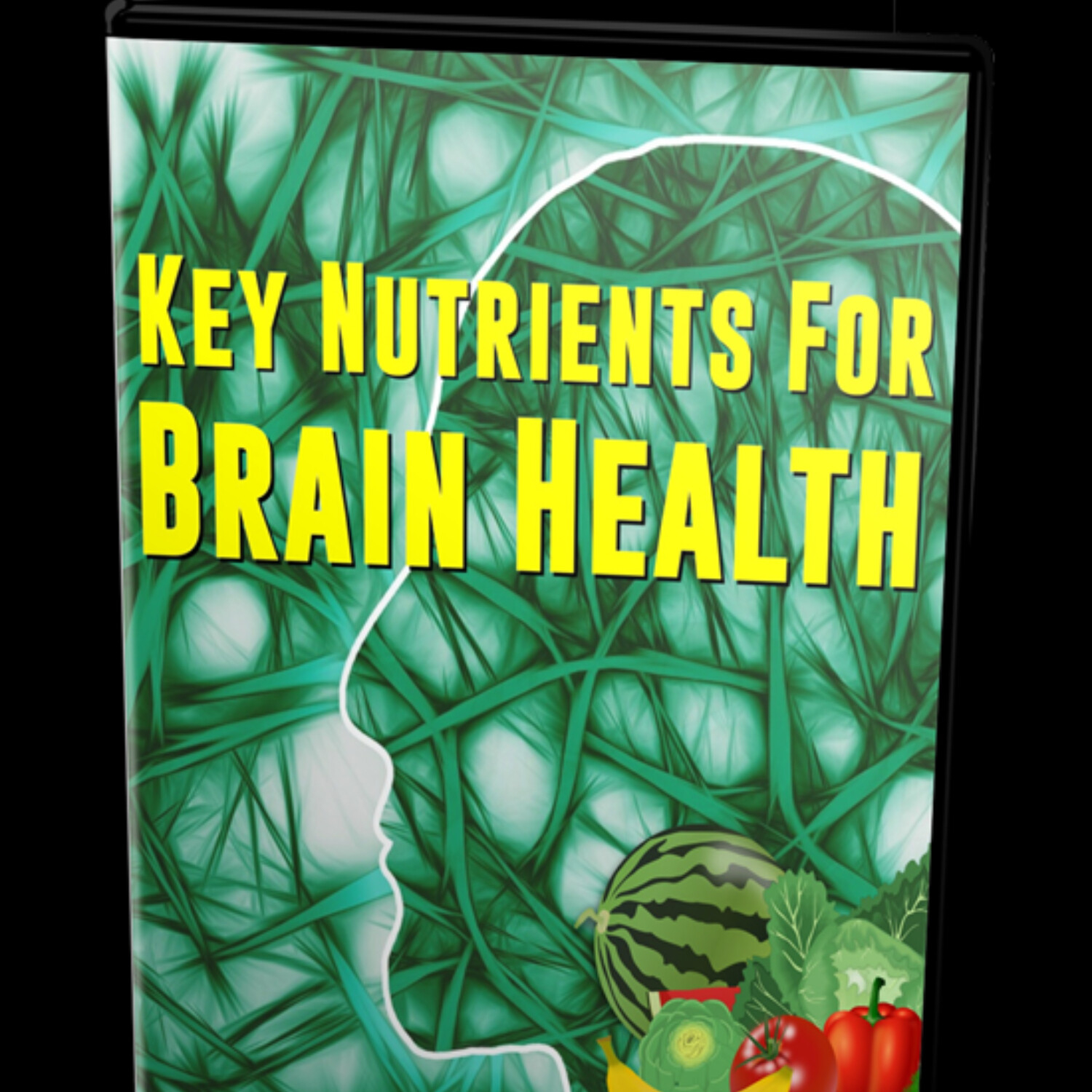
English researchers completed a meta-analysis of 20 years worth of trials and reviews to identify those nutrients that do the most for regulating brain health. They discovered that vitamin C, B complex vitamins, magnesium, zinc, and calcium have the most considerable relevance for brain health. Vitamin C found in red peppers, kale and citrus fruit is a powerful antioxidant that plays a crucial role in healthy brain function, reduces the risk of stroke, and serves as a regulator for more than a dozen neurochemicals. A vitamin B6 deficiency can result in memory loss and depression, get it from fish, beef liver, starchy vegetables, fruits, poultry, and fortified cereals. Vitamin B12 is responsible for producing the sheath that protects the nerves. Animal foods are the only natural source of vitamin B12, including red meat, poultry, and dairy products. Vitamin B1 is a mood booster, can prevent depression and plays an essential role in creating enzymes and amino acids. Get it from beef, oats, oranges, seeds, legumes, and B1 fortified foods. Vitamin B2 handles the transmission of impulses. A deficiency can result in migraines, epilepsy, MS, and an increased risk of dementia. Good food sources of B2 are lamb, yogurt, milk, spinach, and mushrooms. Vitamin B9 or folate protects the brain from stress, and helps reduce the risk of dementia, and slow down its progression in those who suffer from it. Foods rich in folate include spinach, greens, asparagus, oranges, broccoli, papaya, grapefruit, grapes, strawberries, and bananas. WebMD reports that the Mediterranean diet, which is rich in whole grains, olive oil, fish, nuts, and green leafy vegetables not only supports brain health throughout life, but also reduces risks for Alzheimer’s disease. Numerous bright coloured fruits and vegetables, especially berries, along with herbs and spices such as ginger, cinnamon, and turmeric contain vital antioxidants that help lower levels of harmful inflammation, support brain health, and help reduce oxidative stress that leads to premature ageing. Coffee and tea offer numerous science-backed benefits for brain health, including lower risks for depression, dementia, and brain cancer, along with an improved mood, focus, concentration, and attention span. When you eat well, you take care of your brain!

S1 Ep 7Did you know that your environment impacts your mood?
Create an inspirational area where you spend your most time. 1. Try introducing plants. Studies suggest plants help you focus on our work and lead to higher productivity. 2. Stock that area with healthy snacks like fruits, vegetables and nuts. You want snacks with complex carbohydrates or proteins to improve your mood and productivity. 3. Use candles, incense or other scents and combine them with music as it can help you concentrate. I hope you found these tips help to create a great environment to work in and stay productive.

S1 Ep 56 Key Steps to Develop Your Personal Power
6 key steps to develop your personal power. Personal power encompasses your confidence, strength and self-assertion. Central to personal power is striving for ultimate meaning and satisfaction within yourself and your life. Unlike negative types of power, the goal of personal power is to master oneself and one’s own world. It is rooted in a specific state of mind that when adopted results in an attitude of empowerment that allows you to become a proactive actor in your life, versus a victim of life. Increasing your sense of personal power helps you in many ways, one of the most important of which is Maslow’s idea of self-actualization, which is “the realization or fulfillment of one's talents and potentialities, especially considered as a drive or need present in everyone.” Personal power supports you becoming your best self, and as it elevates your sense of self-empowerment many benefits follow, including a more fulfilling life and a much more satisfying relationship with yourself. Let’s look at six key steps to develop your personal power. Number one, declare your ambitions. Acknowledging what it is you want to do in this world, and declaring it aloud to others, is a powerful step toward reclaiming your personal power. If you want to be successful, you must not be afraid that you want to be successful. Number two, admit your fears. The negative thoughts that have kept you feeling powerless or unable to reach your dreams are all driven by fears of some kind, which sabotage your ability to succeed. Learning to admit your fears helps you see them simply as emotions that have no power over your life. Number three, silence negative self-talk. Negative self-talk is keeping you from realizing your dreams and accepting your personal power. Instead of telling yourself why you can’t do something or what is wrong with you, replace these negative words with a positive affirmation. Number four, stop playing the victim. You choose how to react to all of life’s events. You can choose to learn from what has happened to you and use it in the future, or you can choose to be victimized. Being a victim means you are giving your power away to the world, life and others. Number five, adopt a growth mindset. A growth mindset is one that is open to learning and self-improvement, and since knowledge is power, this will help you reclaim your personal power. Becoming more curious, listening more to others, and keeping an open mind are all examples of a growth mindset in action. Number six, take action! You can only create positive outcomes when you act. And when you do, you will feel more powerful. Seize opportunities to make things happen. Action is crucial to developing personal power.
S1 Ep 2The true face of depression
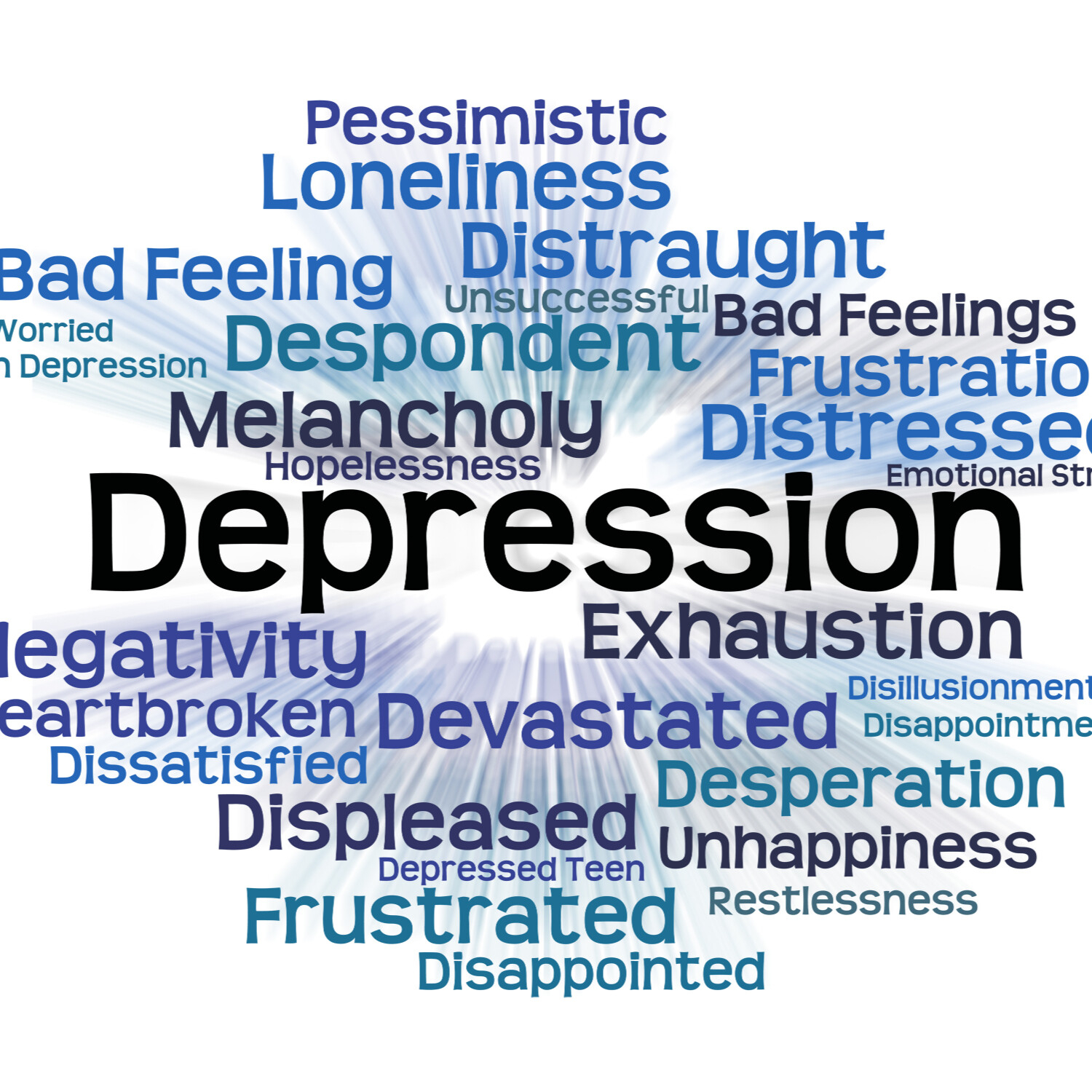
Ask someone to name a common mental health complaint today, chances are they would say depression, and that wouldn’t be surprising because depression is the predominant mental health problem worldwide, followed by anxiety, schizophrenia and bipolar disorder. It is not uncommon for people to suffer from two disorders or illnesses at any one time. Approximately 50% of people diagnosed with depression can also show signs of an underlying anxiety disorder. Depression is essentially a single illness, even though it has lots of different symptoms, the term does refer to a single solitary condition.
S1 Ep 55 Key Benefits Of Having High Levels Of Personal Power
Your personal power is your ability to change the direction of your life, just as much as it is your ability to make the conscious choice to stay the course. Your developed and natural strength, confidence, self-assertion and competence are all rooted in your personal power, fueled by it and feel it in return. Your personal power can either represent or be the end result of all the work you’ve put forward for self-realization, and it has a symbiotic relationship with your intrapersonal relationship. The benefits of having a high level of personal power are plentiful, here are just a few. A clearer sense of direction. When you embrace your personal power, you are able to finally see where it is you want to go with your life. Personal power allows you to feel confident in your abilities to achieve your goals, which means you can think clearly about what you want to do and who you want to be. Better relationships. Enjoy stronger relationships with others because personal power gives you the confidence to accept you have much to learn from other people, which makes you more open and accepting of others. Improved self-awareness. If you want to improve your life and embrace your personal power, you have to become more aware of yourself. You must accept responsibility for your actions and feelings, you must confront the regrets and mistakes of your past, and learn the triggers that cause you to give away your power to others. Become more resilient. We all experience tough times in life, but when you embrace and honour your personal power, overcoming those obstacles is much easier. When you have personal power, you have the confidence, resilience, and interpersonal skills to deal with whatever comes your way.

S1 Ep 4Mindfulness Inspiration
Mindfulness Inspiration “Mindfulness is the aware, balanced acceptance of the present experience. It isn’t more complicated than that. It is opening to or receiving the present moment, pleasant or unpleasant, just as it is, without either clinging to it or rejecting it.” -Sylvia Boorstein “In today’s rush, we all overthink - seek too much - want too much - and forget about the joy of just being.” -Eckhart Tolle “The best way to capture moments is to pay attention to. This is how we cultivate mindfulness. Mindfulness means being awake. It means knowing what you are doing.” -Jon Kabat-Zinn “Feelings come and go like clouds in a windy sky. Conscious breathing is my anchor.” -Thich Nhat Hanh “If you want to conquer the anxiety of life, live in the moment, live in the breath.” -Amit Ray “In this moment, there is plenty of time. In this moment, you are precisely as you should be. In this moment, there is infinite possibility.” -Victoria Moran “Mindfulness is simply being aware of what is happening right now without wishing it were different; enjoying the pleasant without holding on when it changes (which it will); being with the unpleasant without fearing it will always be this way, which it won’t.” -James Baraz “Each morning we are born again. What we do today is what matters most.” -Buddha “The way to live in the present is to remember that ‘This too shall pass.’ When you experience joy, remembering that ‘This too shall pass’ helps you savor the here and now. When you experience pain and sorrow, remembering that ‘This too shall pass’ reminds you that grief, like joy, is only temporary.” -Joey Green “There’s only one reason why you’re not experiencing bliss at this present moment, and it’s because you’re thinking or focusing on what you don’t have...But, right now you have everything you need to be in bliss.” -Anthony de Mello “If you concentrate on finding whatever is good in every situation, you will discover that your life will suddenly be filled with gratitude, a feeling that nurtures the soul.” -Rabbi Harold Kushner “The practice of mindfulness begins in the small, remote cave of your unconscious mind and blossoms with the sunlight of your conscious life, reaching far beyond the people and places you can see.” -Earon Davis “Life is not lost by dying; life is lost minute by minute, day by dragging day, in the small uncaring ways.” -Stephen Vincent Benet “We have only now, only this single eternal moment opening and unfolding before us, day and night.” -Jack Kornfield “Mindful and creative, a child who has neither a past, nor examples to follow, nor value judgments, simply lives, speaks and plays in freedom.” -Arnaud Desjardins “The best way to capture moments is to pay attention to. This is how we cultivate mindfulness.” -Jon Kabat-Zinn “The present moment is the only time over which we have dominion.” -Thich Nhat Hanh “Live the actual moment. Only this actual moment is life.” -Thich Nhat Hanh

S1 Ep 3Brain Fog
Don’t Let Brain Fog Keep You Down While brain fog is not a medical condition, it is debilitating because it affects your ability to think clearly and therefore affects your focus and productivity. Some of its symptoms include Fatigue Mental confusion Inability to concentrate or hold a train of thought Low motivation Forgetfulness Poor cognitive skills Some known causes of brain fog include Lack of sleep Overwork/Overwhelm Stress Depression Chronic Fatigue Syndrome Certain Medications Menopause Cancer treatment and certain chronic illnesses There are effective ways to clear your mind and stop brain fog from interfering with your life. First is getting consistent quality sleep. Most adults need 7 - 9 hours each night. Power naps that last no longer than 20 minutes are a great way to restart your mind during the day. Processed foods that are loaded with sugar, fat and preservatives wreak havoc on our systems. Choose to eat a clean healthy diet filled with whole foods. Eat brain food, including fatty fish, avocados, blueberries and broccoli and seeds. One of the main reasons behind brain fog is a lack of oxygen reaching the brain. Exercise enhances blood circulation, pumping blood through your veins and giving your brain the oxygen, it needs to work at its optimal level. You don’t have to do a full hour of cardio, you can take a brisk walk at lunch, garden, swim or anything you enjoy that gets you moving. While it may seem trivial, it has to be mentioned because so many people forget to drink enough water throughout the day. Even a little bit of dehydration - as little as 2% - can cause major brain problems, mainly because 73% of your brain is made up of water. Most important is getting your stress under control. Stop working too much! Over work and overwhelm really impact your cognitive processes. Tuning out stress with the help of a mindless activity can help decrease the effects of brain fog. Doing something enjoyable reduces stress which, in turn, reduces brain fog symptoms while boosting productivity. Stress reduction techniques include, Meditation and yoga Enjoying a hot bath Reading Listen to soothing music/sounds of nature Working less Regular relaxation moments throughout your day You can stop brain fog from interfering with your life and improve your life quality with the power of healthy, positive habits. Stay well and take care!

S1 Ep 3Introduction to Mindfulness
5 Mindful Practices To Start Your Day The benefits of mindfulness are plentiful, including improved focus, concentration, reduced stress and inner peace. One approach to boosting your mindful techniques is to incorporate them into the start of your day. A simple mindfulness meditation helps you start your day right. Sit in a comfortable quiet place and just breathe. Pay attention to your breath. As you mind wanders gently bring it back to your breath. Do this for about 5 to 8 minutes each morning. Another morning mindfulness activity is do some light planning. What will your mindset be throughout the day? Don’t get bogged down by details, but instead set your intention for the day. Your intention can be something vague but should be something positive, like today I will pay attention to each moment or today, I will focus entirely on the present moment. Do a bit of inspirational reading to jump-start your day. Use the language of the material to momentarily challenge your thoughts, assumptions, and ideas about your values and lifestyle. Allow the reading to boost your spirits and to draw you into and inspire your day. While eating breakfast, focus on how each bite tastes as it enters your mouth and continues down your throat. Be mindful throughout an entire meal, focusing directly on the taste, smell and texture of each bite, and enjoying all the components of your meal. One of the most mindful things you could do each day is journaling. Writing down your thoughts and ideas in a journal is an excellent way to identify, explore and examine your innermost thoughts. This process can draw you into the here and now driving you to acknowledge your feelings and develop an awareness for what it is you need to be happy.
S1 Ep 2The true face of depression
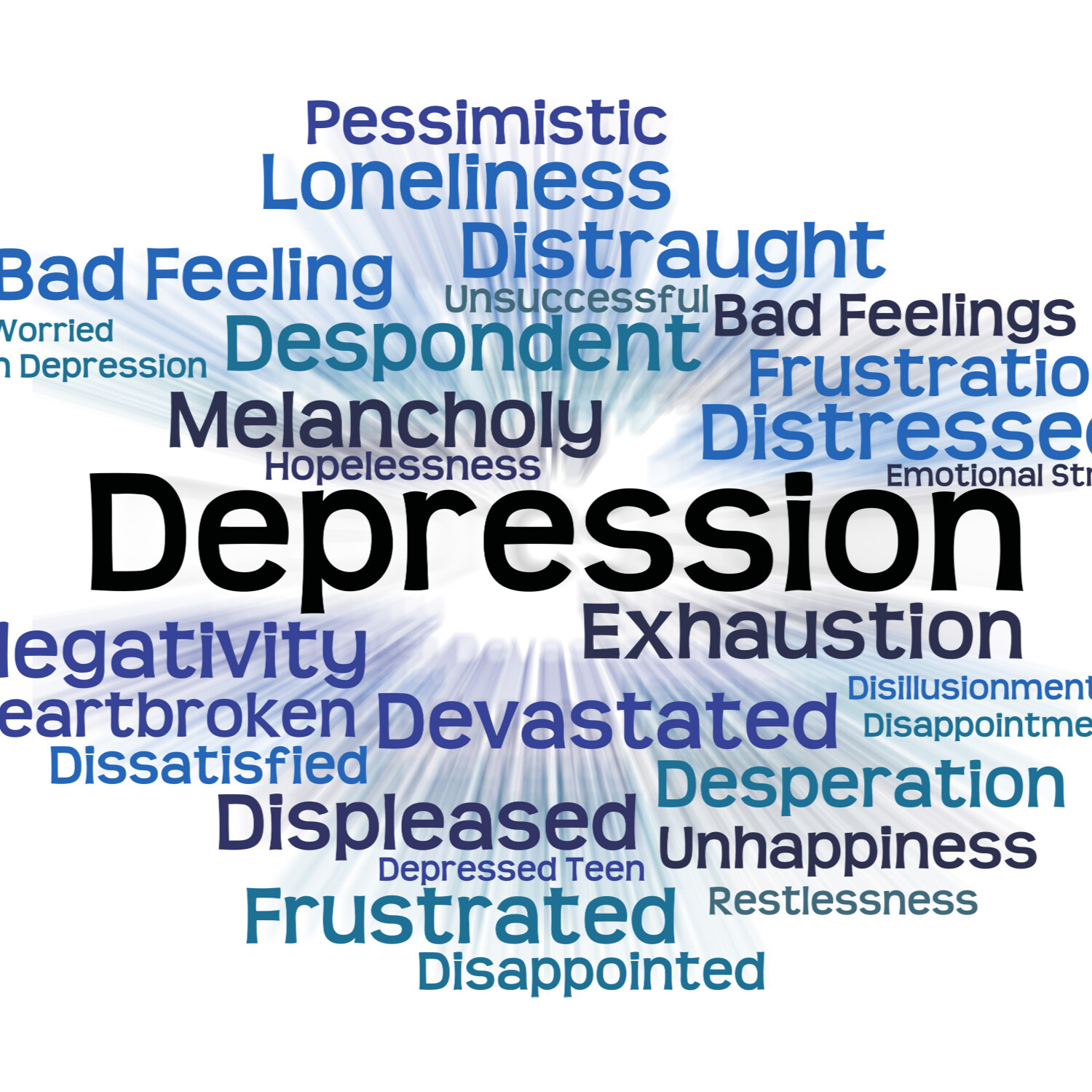
Ask someone to name a common mental health complaint today, chances are they would say depression, and that wouldn’t be surprising because depression is the predominant mental health problem worldwide, followed by anxiety, schizophrenia and bipolar disorder. It is not uncommon for people to suffer from two disorders or illnesses at any one time. Approximately 50% of people diagnosed with depression can also show signs of an underlying anxiety disorder. Depression is essentially a single illness, even though it has lots of different symptoms, the term does refer to a single solitary condition.

S1 Ep 1Phobia: What are you afraid of?
Most people get the heebie-jeebies about something. Nevertheless, there are times when this worry becomes an intense, irrational fear when they face a particular situation, activity, or an object and it is called a phobia. However, there are three types of phobia recognised by the American Psychiatric Association. These include: Specific phobia: This is an intense, irrational fear of a specific trigger. Specific phobias are known as simple phobias as they can be linked to an identifiable cause that may not frequently occur in the everyday life of an individual, such as snakes. These are, therefore not likely to affect day-to-day living in a significant way. The other two most common types are: Agoraphobia - the fear of being in situations where escape might be difficult or help wouldn't be available if things went wrong. Social phobia - which can be an overwhelming fear of social situations. A phobia can impact all areas of your life. Phobias cause people to change how they live in order to avoid the object of their fear. Nevertheless, their life is also affected by their attempts to conceal the phobia from others. Although phobias can be influenced by culture and triggered by life events, they tend to run in families. Treatments available Desensitisation is a process of gradually exposing someone with a phobia to circumstances that resemble what they fear. Over time, the fear lessens as the person builds confidence. This is often accompanied by cognitive therapy (talking therapy) to help the person change how she or he thinks. You may also had Mindfulness based cognitive therapy to this treatment. It is developing new patterns of response to situations that might trigger the emotions associated with your phobia. The good news is treatment helps 90% of people who follow through. Medication Medication is not usually recommended for treating phobias because talking therapies are usually more effective and do not have any nasty side effects. If you have any concerns, please contact your GP More information in https://mentalhealthtraining.info/course/lets-talk-about-phobias