
Latent Space: The AI Engineer Podcast
230 episodes — Page 1 of 5
Why Dwarkesh is Wrong about Computer Use + How OpenAI shipped its Jev competitor in 1 Week
Claude Code’s Next Era — Thariq Shihipar, Anthropic
OpenRouter: from Seed to Stripe — with OpenRouter’s Alex Atallah & AMP’s Anjney Midha
Runway’s WorldPrompt and the Engineering of Real-Time Worlds
🔬Bio-security is an AI Arms Race - Eric Nguyen (CEO, Radical Numerics)
🔬 An Oscar, Two Asteroids, and the Algorithm in Your sklearn: John Platt on AI for Science
Jev: System One models for Prod, not God — with Diogo Almeida, CEO, TypeSafe AI
Underwriting Superintelligence: Backing Agents you can Sue — Rune Kvist, AIUC
Humanity’s Last Invention — Richard Socher of Recursive
🔬“We have foundation models for language, not for physics” — Anima Anandkumar, Bren Professor of Computing
Simulation: the new Scaling Law — Joon Sung Park, Simile AI
🔬The BioAI Phase Shift - Matthew McPartlon & Neil Patil, Chai Discovery
The Inference Engineering Masterclass — Philip Kiely & Ali Taha, Baseten
Codex from 0 to 10M Users: Building ChatGPT Work — Akshay Nathan, OpenAI
Inside the Model Factory — Eiso Kant, Poolside AI
🔬Causal Models Need Causal Data - Xaira’s X-Cell model for Drug Discovery (Bo Wang & Ci Chu, Chief Discovery Officer & Chief AI Scientist)
🔬 The Lab of the Future Should Feel Like a Data Center — Andy Beam & Rafa Gómez-Bombarelli, Lila Sciences
Why AI Infrastructure must evolve for Agent Experience — Akshat Bubna, Modal CTO
🔬 The Coolest Diffusion Research Isn't in LLMs — Evan Feinberg & Sergey Edunov, Genesis Molecular AI
Why the Frontier Ecosystem must be Open — Matei Zaharia and Reynold Xin, Databricks
Red-Teaming after Mythos — Zico Kolter & Matt Fredrikson, Gray Swan
The Professor of Outputmaxxing — Anjney Midha, AMP
🔬 The Self-Driving Lab — Joseph Krause, Radical AI
Reality: The Final Eval — Lukas Petersson and Axel Backlund of Andon Labs
🔬Scaling Past Informal AI - Carina Hong, Axiom Math
⚡️Satya Nadella: No Priors x Latent Space Crossover Special at Microsoft Build
GitHub's plan for Agents — Kyle Daigle, GitHub
Why Video Agent models are next — Ethan He, xAI Grok Imagine
The Age of Async Agents — Cognition's Walden Yan & OpenInspect's Cole Murray
🔬ESM: The Bitter Lesson is Coming for Proteins - Alex Rives, BioHub
Giving Agents Computers — Ivan Burazin, Daytona
Railway: The Agent-Native Cloud — Jake Cooper
The Next War Is Already Here. The West Isn't Ready. — Yaroslav Azhnyuk, The Fourth Law & Guest Host Noah Smith, Noahpinion
AI-Native Healthcare: 100M Doctor Visits, 10–20 Hours Saved, Prior Auth in Minutes — Janie Lee & Chai Asawa, Abridge
🔬Doing Vibe Physics — Alex Lupsasca, OpenAI
Physical AI that Moves the World — Qasar Younis & Peter Ludwig, Applied Intuition
AIE Europe Debrief + Agent Labs Thesis: Unsupervised Learning x Latent Space Crossover Special (2026)
Shopify’s AI Phase Transition: 2026 Usage Explosion, Unlimited Opus-4.6 Token Budget, Tangle, Tangent, SimGym — with Mikhail Parakhin, Shopify CTO
🔬 Training Transformers to solve 95% failure rate of Cancer Trials — Ron Alfa & Daniel Bear, Noetik
Notion’s Token Town: 5 Rebuilds, 100+ Tools, MCP vs CLIs and the Software Factory Future — Simon Last & Sarah Sachs of Notion
Extreme Harness Engineering for Token Billionaires: 1M LOC, 1B toks/day, 0% human code, 0% human review — Ryan Lopopolo, OpenAI Frontier & Symphony
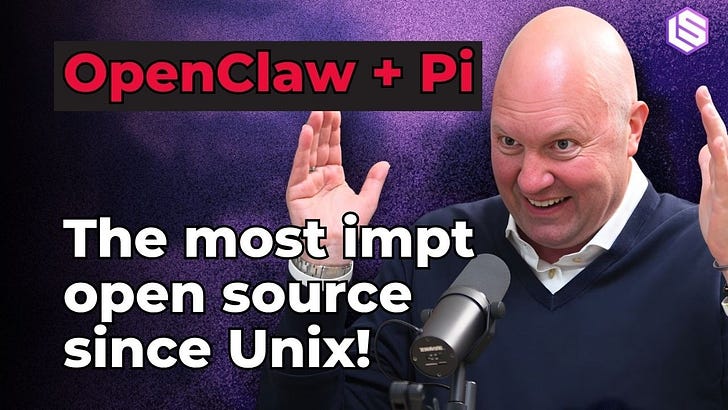
Marc Andreessen introspects on The Death of the Browser, Pi + OpenClaw, and Why "This Time Is Different"
Fresh off raising a monster $15B, Marc Andreessen has lived through multiple computing platform shifts firsthand, from Mosaic and Netscape to cofounding A16z. In this episode, Marc joins swyx and Alessio in a16z’s legendary Sand Hill Road office to argue that AI is not just another hype cycle, but the payoff of an “80-year overnight success”: from neural nets and expert systems to transformers, reasoning models, coding, agents, and recursive self-improvement. He lays out why he thinks this moment is different, why AI is finally escaping the old boom-bust pattern, and why the real bottleneck may be less about models than about the messy institutions, incentives, and social systems that struggle to absorb technological change.This episode was a dream come true for us, and many thanks to Erik Torenberg for the assist in setting this up. Full episode on YouTube!We discuss:* Marc’s long view on AI: from the 1980s AI boom and expert systems to AlexNet, transformers, and why he sees today’s moment as the culmination of decades of compounding technical progress* Why “this time is different”: the jump from LLMs to reasoning, coding, agents, and recursive self-improvement, and why Marc thinks these breakthroughs make AI real in a way prior cycles were not* AI winters vs. “80-year overnight success”: why the field repeatedly swings between utopianism and doom, and why Marc thinks the underlying researchers were mostly right even when the timelines were wrong* Scaling laws, Moore’s Law, and what to build: why he believes AI scaling laws will continue, why the outside world is messier than lab purists assume, and how startups can still create durable value on top of rapidly improving models* The dot-com crash and AI infrastructure risk: Marc’s comparison between today’s AI capex boom and the fiber/data-center overbuild of 2000, plus why he thinks this cycle is different because the buyers are huge cash-rich incumbents and demand is already here* Why old NVIDIA chips may be getting more valuable: the pace of software progress, chronic capacity shortages, and the idea that even current models are “sandbagged” by supply constraints* Open source, edge inference, and the chip bottleneck: why Marc thinks local models, Apple Silicon, privacy, trust, and economics all point toward a major role for edge AI* American vs. Chinese open source AI: DeepSeek as a “gift to the world,” why open models matter not just because they’re free but because they teach the world how things work, and how open source strategies may shift as the market consolidates* Why Pi and OpenClaw matter so much: Marc’s claim that the combination of LLM + shell + filesystem + markdown + cron loop is one of the biggest software architecture breakthroughs in decades* Agents as the new “Unix”: how agent state living in files allows portability across models and runtimes, and why self-modifying agents that can extend themselves may redefine what software even is* The future of coding and programming languages: why Marc thinks software becomes abundant, why bots may translate freely across languages, and why “programming language” itself may stop being a salient concept* Browsers, protocols, and human readability: lessons from Mosaic and the web, why text protocols and “view source” mattered, and how similar principles may shape AI-native systems* Real-world OpenClaw use: health dashboards, sleep monitoring, smart homes, rewriting firmware on robot dogs, and why the most aggressive users are discovering both the power and danger of agents first* Proof of human vs. proof of bot: why Marc thinks the internet’s bot problem is now unsolvable via detection alone, and why biometric + cryptographic proof of human becomes necessaryTimestamps* 00:00 Marc on AI’s “80-Year Overnight Success”* 00:01 A Quick Message From swyx* 01:44 Inside a16z With Marc Andreessen* 02:13 The Truth About a16z’s AI Pivot* 03:29 Why This AI Boom Is Not Like 2016* 06:33 Marc on AI Winters, Hype Cycles, and What’s Different Now* 10:09 Reasoning, Coding, Agents, and the New AI Breakthroughs* 12:13 What Founders Should Build as Models Keep Improving* 16:33 AI Capex, GPU Shortages, and the Dot-Com Crash Analogy* 24:54 Open Source AI, Edge Inference, and Why It Matters* 33:03 Why OpenClaw and PI Could Change Software Forever* 41:37 Agents, the End of Interfaces, and Software for Bots* 46:47 Do Programming Languages Even Have a Future?* 54:19 AI Agents Need Money: Payments, Crypto, and Stablecoins* 56:59 Proof of Human, Internet Bots, and the Drone Problem* 01:06:12 AI, Management, and the Return of Founder-Led Companies* 01:12:23 Why the Real Economy May Resist AI Longer Than Expected* 01:15:53 Closing ThoughtsTranscriptMarc: Something about AI that causes the people in the field, I would say, to become both excessively utopian and excessively apocalyptic. Having said that, I think what’s actually happened is an enormous amount of technical progress that built up over time. And like for, for example, w
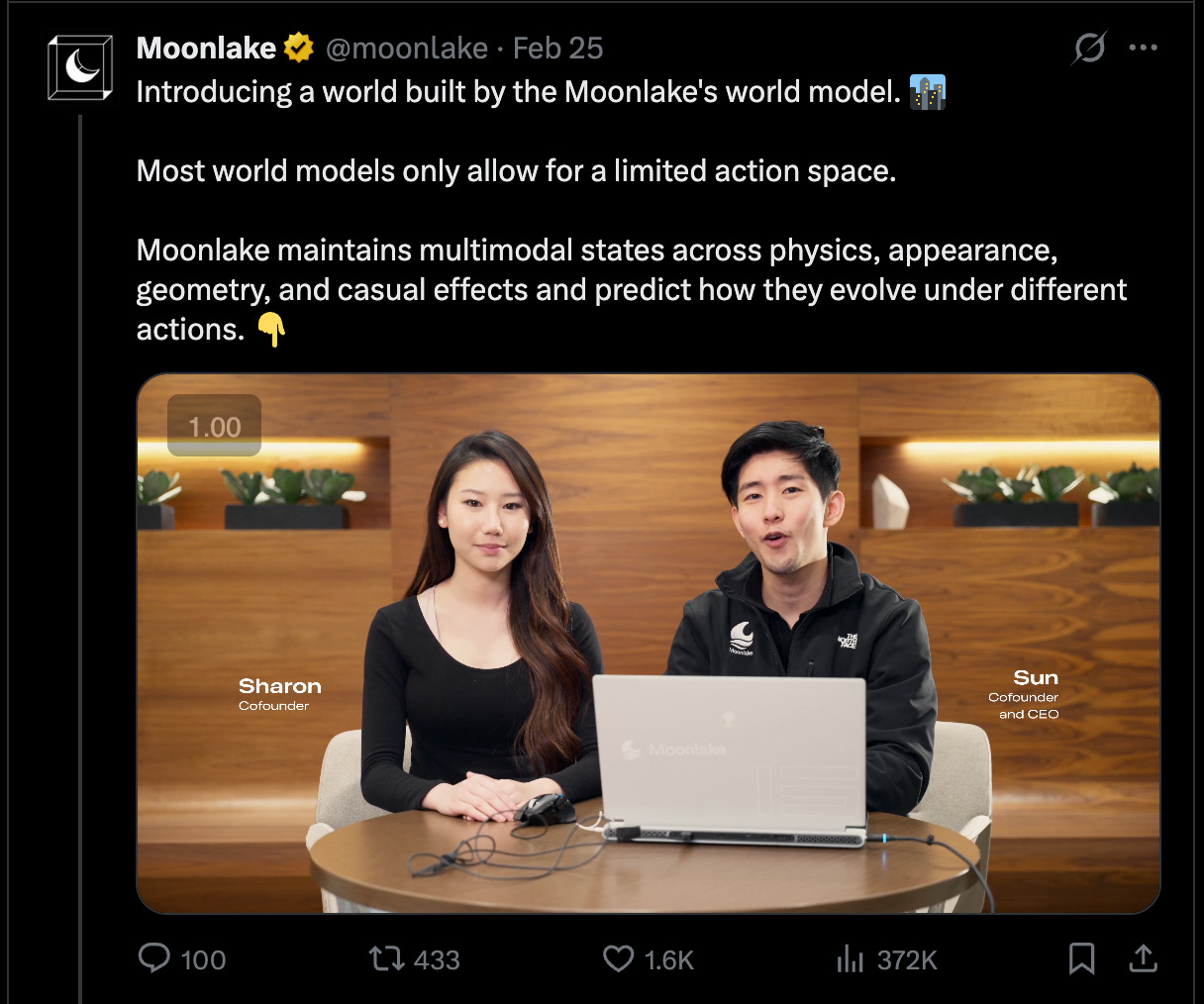
Moonlake: Causal World Models should be Multimodal, Interactive, and Efficient — with Chris Manning and Fan-yun Sun
We’ve been on a bit of a mini World Models series over the last quarter: from introducing the topic with Yi Tay, to exploring Marble with World Labs’ Fei-Fei Li and Justin Johnson, to previewing World Models learned from massive gaming datasets with General Intuition’s Pim de Witte (who has now written down their approach to World Models with Not Boring), to discussing the Cosmos World Model with with Andrew White of Edison Scientific on our new Science pod, to writing up our own theses on Adversarial World Models. Meanwhile Nvidia, Waymo and Tesla have published their own approaches, Google has released Genie 3, and Yann LeCun has raised $1B for AMI and published LeWorldModel.Today’s guests have a radically different approach to World Modeling to every player we just mentioned — while Genie 3 is impressive, its many flaws demonstrate the issues with their approach - terrain clipping, noninteractivity (single player, no physics/no objects other than the player move), and maximum of 60 second immersion. Moonlake AI (inspired by the Dreamworks logo) is the diametric opposite - immediately multiplayer, incredibly interactive, indefinite lifetime, capable of MANY different kinds of world models by simulating environments, predicting outcomes, and planning over long horizons. This is enabled by bootstrapping from game engines and training custom agents: In Towards Efficient World Models, Chris Manning and Ian Goodfellow join Fan-Yun in explaining why their approach to efficiency with structure and casuality instead of just blind scaling is sorely needed:SOTA models still show physical or spatial understanding glitches, such as solid objects floating in mid-air or moving “inside” other solid objects.If the goal is to plan for the next action, how often is a high-resolution pixel view necessary for modeling the world? Our bet is that there is a disproportionately large share of economically valuable tasks where such detail is not required. After all, humans with a wide variety of sensory limitations have little difficulty doing almost everything in the world. Furthermore, for a large number of purposes, describing a scene or a situation in a few words of language (“the car’s tires squealed as it cornered sharply”) is sufficient for understanding and planning.Experiments also show that humans only partially process visual input in a top-down, task-directed way, often making use of abstracted object-level modeling. In almost all cases, partial representations combined with semantic understanding are sufficient.…If the goal is to facilitate the understanding of causality in multimodal environments, then the world model—whether it is used in the virtual world or the physical world—must prioritize properties such as spatial and physical state consistency maintained over long time periods, and an ability to evolve the world that accurately reflects the consequences of actions. That’s what Moonlake is building.Game engines are the right starting point abstraction to efficiently extract causal relationships, and building the interfaces and community (including their new $30,000 Creator Cup) to kickstart the flywheel of actions-to-observations.We were fortunate enough to attend their sessions at GDC 2026 (the Mecca of Game Devs), and were impressed by the huge variety and flexibility of the worlds people were building with Moonlake’s tools already! Live videos on the pod.Full Video Pod on YouTube!Timestamps00:00 Benchmarking Gets Hard00:47 Meet Moonlake Founders01:26 Why Build World Models03:12 Structure Not Just Scale05:37 Defining Action Conditioned Worlds07:32 Abstraction Versus Bitter Lesson14:39 Language Versus JEPA Debate20:27 Reasoning Traces And Rendering Layer37:00 Gameplay Over Graphics38:02 Fiction Rules And World Tweaks39:15 Code Engines Beat Learned Priors41:10 Diffusion Scaling Limits43:23 Symbolic Versus Diffusion Boundary46:14 Platform Vision Beyond Games50:24 Spatial Audio And Multimodal Latents54:23 NLP Roots Hiring And Moon Lake NameTranscript[00:00:00] Cold Open[00:00:00] Chris Manning: Think this whole space is extremely difficult as things are emerging now. And I mean, it’s not only for world models, I think it’s for everything including text-based models, right? ‘cause in the early days it seemed very easy to have good benchmarks ‘cause we could do things like question answering benchmarks.[00:00:20] But these days so much of what people are wanting to do is nothing like that, right? You’re wanting to get some recommendations about which backpack would be best for you for your trip in Europe next month. It’s not so easy to come up with a benchmark, and it’s the same problem with these world models.[00:00:41] Meet the Founders[00:00:41] swyx: Okay. We’re back in the studio with Moon Lake’s, two leads. I, I guess there’s other founders as well, but, sun and Chris Manning. Welcome to the studio.[00:00:54] Fan-yun Sun: Thanks. Thanks, Chris. Thanks for having us.[00:00:56] swyx: You’ve got, you guys have
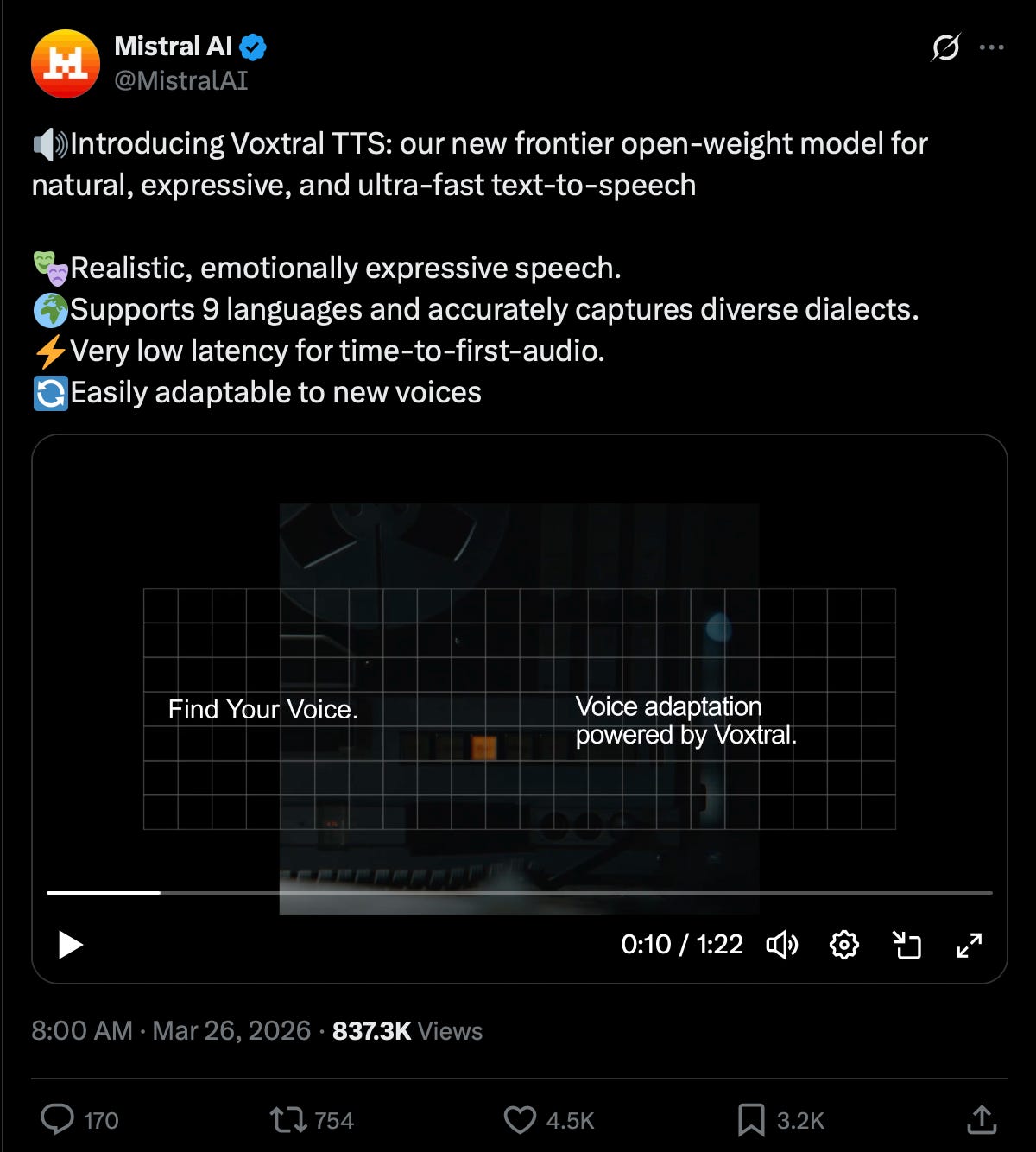
Mistral: Voxtral TTS, Forge, Leanstral, & what's next for Mistral 4 — w/ Pavan Kumar Reddy & Guillaume Lample
Mistral has been on an absolute tear - with frequent successful model launches it is easy to forget that they raised the largest European AI round in history last year. We were long overdue for a Mistral episode, and we were very fortunate to work with Sophia and Howard to catch up with Pavan (Voxtral lead) and Guillaume (Chief Scientist, Co-founder) on the occasion of this week’s Voxtral TTS launch:Mistral can’t directly say it, but the benchmarks do imply, that this is basically an open-weights ElevenLabs-level TTS model (Technically, it is a 4B Ministral based multilingual low-latency TTS open weights model that has a 68.4% win rate vs ElevenLabs Flash v2.5). The contributions are not just in the open weights but also in open research: We also spend a decent amount of the pod talking about their architecture that combines auto-regressive generation of semantic speech tokens with flow-matching for acoustic tokens (typically only applied in the Image Generation space, as seen in the Flow Matching NeurIPS workshop from the principal authors that we reference in the pod).You can catch up on the paper here and the full episode is live on youtube!Timestamps00:00 Welcome and Guests00:22 Announcing Voxtral TTS01:41 Architecture and Codec02:53 Understanding vs Generation05:39 Flow Matching for Audio07:27 Real Time Voice Agents13:40 Efficiency and Model Strategy14:53 Voice Agents Vision17:56 Enterprise Deployment and Privacy23:39 Fine Tuning and Personalization25:22 Enterprise Voice Personalization26:09 Long-Form Speech Models26:58 Real-Time Encoder Advances27:45 Scaling Context for TTS28:53 What Makes Small Models30:37 Merging Modalities Tradeoffs33:05 Open Source Mission35:51 Lean and Formal Proofs38:40 Reasoning Transfer and Agents40:25 Next Frontiers in Training42:20 Hiring and AI for Science44:19 Forward Deployed Engineering46:22 Customer Feedback Loop48:29 Wrap Up and ThanksTranscriptswyx: Okay, welcome to Latent Space. We’re here in the studio with our gues co-host Vibh u. Welcome. Thanks. Excited for this one as well as Guillaume and Pavan from Mistral. Welcome. Excited to be here.Guillaume: Thank you.swyx: Pavan, you are leading audio research at Mistral and Guillaume, you're Chief Scientist,Announcing Voxtral TTSswyxHost(00:05) Okay. (00:05) Welcome to Lean Space. (00:06) We’re here in the studio with trustee co-hosts, Vibhu. (00:09) Welcome.VibhuHost(00:11) Very excited for this one.swyxHost(00:12) As well as Guillaume and Pavan from Mistral. (00:15) Welcome. (00:16) Excited to be here. (00:17) Thank you for having us.(00:18) Pavan, you are leading audio research at Mistral and Guillaume, you’re a chief scientist. (00:23) What are we announcing today where we’re coordinating this release with you guys?GuillaumeGuest(00:26) Yeah, so we are releasing Voxtral TTS. So it’s our first audio model that generates speech. It’s not our first audio model. We had a couple of releases before.(00:35) We had one in the summer that was Voxtral, our first audio model, but it was like a transcription model, ASR. Like a few months later, we released some update on top of this, supporting more languages. Also a lot of table stack features for our customers, context biasing, precision, timestamping and transcription. We also have some real-time model that can transcribe not just at the end of the level.(00:56) You don’t need to fill your entire audio file, but that can also come in real-time. And here, this is a natural extension in the audio, so basically speech generation. So yeah, so we support nine languages, and this is a pretty small model, 3D model, so very fast, and also state of the art. Performed at the same level as the base model, but it’s much more efficient in terms of cost, and also much, in terms of cost, it’s also much cheaper, only a fraction of the cost of our competitors.(01:22) And we are also releasing the work that this model is running.swyx What’s the decision factor?Guillaume It’s a good question.swyxThere will be more. Yeah, Pavan, any sort of research notes to add on?Architecture and CodecPavan: But it’s a novel architecture that we develop inhouse.We traded on several internal architectures and ended up with a auto aggressive flow matching architecture. And also have a new in-house neural audio codec. Which, converts this audio into all point by herds latent [00:02:00] tokens, semantic and acoustic tokens. And yeah, that’s that’s their new part about this model and we’re pretty excited that it’s, it came out with such good quality and Jim was mentioning. Yeah, it’s a three B model. It’s based off of the TAL model that we actually released just a few months back and insert trunk and mainly meant for like the TTS stuff, but they need text capabilities are also there. Yeah.swyx: So there’s a lot to cover.I always I love any, anything to do with novel encodings and all those things because I think that’s obviously I creates a lot of efficiency, but also maybe bugs that sometimes happen. You were prev
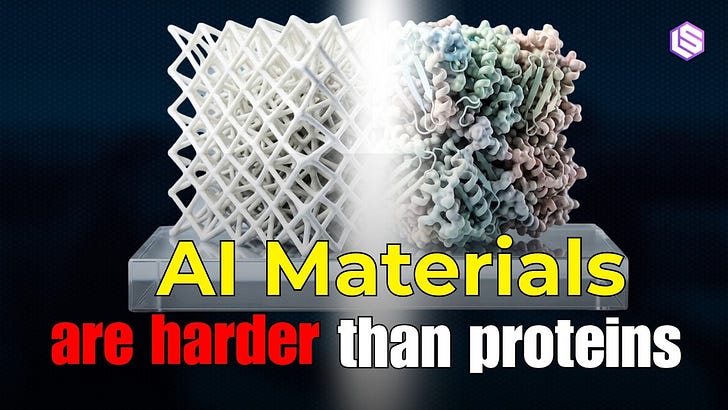
🔬Why There Is No "AlphaFold for Materials" — AI for Materials Discovery with Heather Kulik
Materials science is the unsung hero of the science world. Behind every physical product you interact was decades of research into getting the properties of materials just right. Your gym clothes contain synthetic fibers developed over decades. The glass screen, diodes, and chip substrate technology needed to read this blog post were only viable due to many teams of material scientists.Our guest Prof. Heather Kulik was one of the first material scientists to realize that there was alpha in combining computational tools with data driven modeling — she did AI for science before it was cool. She has a hard-fought perspective for how to succeed in this field. Yes, she believes the wins are real. To get there you must work hard to deeply integrate domain expertise with AI techniques, and also maintain a discriminating mind. Ultimately what matters is you succeed in the lab, and nature doesn’t care about how hyped a model is. These lessons personally resonated with the Latent.Space Science team and our own experience.This episode is a must watch for all aspiring AI for science practitioners. A few highlights:Designing new polymers with AI: Heather’s group recently used AI to design new polymers that are significantly stronger. These materials were created and tested in the lab, and the scientists who built them were surprised by the designs. The AI had figured out certain building blocks could break in a novel way. The AI discovered a purely quantum mechanical effect, and after convincing their lab collaborators to actually synthesize it, the material turned out to be four times tougher!The twenty-two-atom ligand challenge: When asked about the role and need of human scientists, Heather points out that AI has a strong understanding of academic chemistry, but is still lacking intuition. Every time an LLM is updated, Heather asks it to design a ligand that contains exactly twenty-two heavy atoms. She has yet to find one that can succeed at this seemingly simple task that any expert could do in a second! Is this the chemistry counterpart to counting ‘r’s in strawberry?Side note: Heather joked that this comment would date itself immediately, so we decided to see if this was still true three months after recording. We found some interesting results! We asked both Claude and ChatGPT to design a 22 atom ligand for both a metal-organic framework (MOF) and a Kinase protein. * For the Kinase, both models got it right: Claude pulled out RDKit in a python script and iterated on several designs, whereas ChatGPT just one-shotted it. * For MOFs, both models got it wrong, generating ligands with 21, 23, or 24 atoms, yet stubbornly not getting 22 atoms. Is there something different about how LLMs reason in the materials and bio domains?Materials vs biology: The two biggest domains of AI in science have been biology and materials. We asked Heather if there could be an AlphaFold moment for materials. Her answer reframes how we should think about the field:* First, the datasets in material science are woefully lacking in comparison to the bio world. The closest to ground truth in most cases are noisy DFT datasets. These are just approximations to the real world! The datasets that are accurate are all boring, as Heather quipped “We have really good datasets for really boring chemistry.” Furthermore, good experimental structures are hard to come by and require interpretation. So generating generating high-quality, novel datasets at scale would really drive the field forward.* More philosophically, AlphaFold is making predictions in a fairly limited space: there are just twenty amino acids. Sure, even here AlphaFold doesn’t get everything right, but it seems plausible that one could learn the entire design space. For materials, each element is a new set of interactions and chemistry, with little to no transferability. This is a massive open problem in material science that we hope some of the smartest AI scientists will want to work on!The difficulties of trusting the literature: Heather’s team has spent the last few years using NLP and later LLMs to extract data from literature. Even a few thousand data points from these papers can be valuable for guiding her group’s work. One surprising result: sometimes the reported values for a property (say temperature) do not match up with the graphs in the papers! So there’s lots of potential in using LLMs to mine data from the literature, just do it with care.The role of academia in an ever-changing world: One theme that has been running through many of our conversations has been the changing role of the academic — and the scientist — in science. When startups are raising $100s of millions and hyperscalers and Big Pharma are all ramping up AI-for-science efforts, the academic researcher needs both resources and judgement about problems to chase more than ever.Resources include data that is organized for machine learning, access to high throughput experimentation labs, and compute resources. The
Dreamer: the Personal Agent OS — David Singleton
Mar 23 update for Latent Spacenauts: this episode was recorded before the Dreamer team announced they were joining Meta Superintelligence Labs, and it turned out to be the last interview they did before the news became public. Consider this a snapshot from just before the transition!In 2024, David Singleton left Stripe and joined forces with Hugo Barra for a buzzy stealth startup named /dev/agents. This month they emerged out as Dreamer, a consumer-first platform to discover, build, and use AI agents and agentic apps, centered on a personal “Sidekick” that helps users customize experiences via natural language. Sidekick is nothing less than an “agent that builds agents”, with all the complexity that that entails:You’ve seen many many website builder, app builder, and even agent builder startups by now, but our favorite detail is the sheer amount of work that has gone into the “full stack” nature of the platform, including shipping their own SDK, logging, database, prompt management, serverless functions, and so on. Most platforms restrict the tech stack you can use just to get off the ground — Dreamer does it “right” by letting you push whatever arbitrary code you want to their VMs.Paying the BuildersOf course former leaders of Stripe and Android would not stop at just building the tools, but also building the ecosystem. Dreamer is deeply aware of the 4 sided network effect it has going on and is ready to fund all of it.It’s time to Dream!Full Video Episodeon youtube.Transcript[00:00:00] Meet Dreamer Purple[00:00:00] swyx: Okay, we’re here in the studio with David Singleton. Welcome.[00:00:08] David Singleton: Hey, Wix. It’s great to be here.[00:00:09] swyx: It’s great to have you. Uh, we have very sympa that your company color is the same as Lean Spaces color.[00:00:15] David Singleton: That’s right. Dreamer Purple.[00:00:17] swyx: It used to be Devrel agents, which I thought was very cool. It’s like you call back to Devrel Payments.[00:00:22] David Singleton: Yeah.[00:00:22] swyx: And you were obviously CTO Stripe. And talk to me about just the origin or thinking process behind Dreamer. Yeah. And maybe, maybe start with like, what, what is Dreamer?[00:00:31] David Singleton: Yeah.[00:00:31] What Is Dreamer[00:00:31] David Singleton: So Dreamer is a new product, uh, which everyone can come and play with today. Um, it’s a place where everyone, literally, everyone can discover, build, and enjoy and use AI agents and agenda apps.[00:00:45] And we really did design it for consumers, for folks who are not necessarily. Uh, have any kind of technical background. It’s really aimed at everyone. I think often of my sister, she’s very smart. She’s not in the slightest bit technical. She has lots of problems in her life that [00:01:00] she would like to be able to have great software and intelligent software to solve.[00:01:04] But you know, even with the rise of tools like Cloud Code and so forth, she’s got no way to get started. And Dreamer is a place where she can come in, grab some intelligent apps that other people in the community have built, start using them right away, and solve real problems in her life.[00:01:19] Sidekick And Waitlist[00:01:19] David Singleton: And at the core, we have a personal agent called the Sidekick.[00:01:24] Um, you can give your sidekick a name, you can give it its own personality, and it really helps you across your entire day, your life. It helps you use all of the agents on the platform, and it also helps you build anything you want. And we’ve been working in this for a little while. We recently launched in beta.[00:01:41] So anyone can go to dreamer.com, join the wait list. Um, and we have many, many, many people in the community now who are building really fun, really powerful, really useful. Agents and the agentic apps for themselves.[00:01:54] swyx: I think we’re gonna go right into a demo. Yeah. I just wanna make an observation that, uh, you, you, [00:02:00] you put discover first before build.[00:02:02] Mm-hmm. But actually, at least for the engineers in the audience. ‘cause we are primarily engineers and you’re primarily targeting consumers, right?[00:02:08] David Singleton: Yeah.[00:02:08] swyx: For engineers. Like, there’s a huge full stack of stuff, which we’re gonna dive into. Let’s write. It’s so impressive. I’m like, holy s**t, this, this is what I’ve always wanted.[00:02:16] Cool. Uh, so, so I think that’s really good and I’ve, in some ways, I think given your background given, uh, Hugo’s, is it Hugo? Hugo.[00:02:24] David Singleton: Hugo. Hugo Bar. Yeah.[00:02:25] swyx: Hugo, it’s not surprising that you can basically kind of build an app store Yeah. For agents.[00:02:30] David Singleton: Yeah. So Hugo was my co-founder. Yeah. Um, Hugo and I met with our other co-founder Nicholas Checkoff in the very early days of Android at Google, where we were building Google’s first mobile apps.[00:02:41] Uh, we then contributed to very core pieces of Android itself. And you’re
Why Anthropic Thinks AI Should Have Its Own Computer — Felix Rieseberg of Claude Cowork & Claude Code Desktop
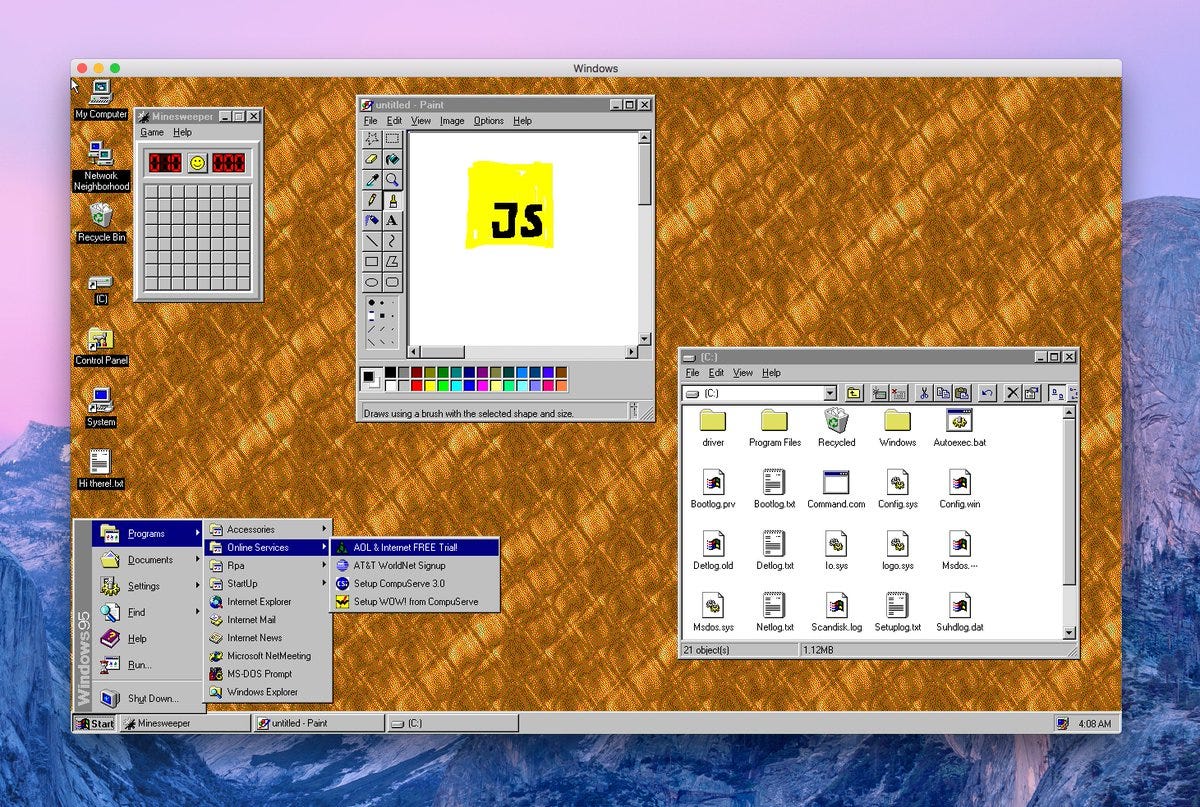
Claude Cowork came out of an accident.Felix and the Anthropic team noticed something interesting with Claude Code: many users were using it primarily for all kinds of messy knowledge work instead of coding. Even technical builders would use it for lots of non-technical work.Even more shocking, Claude cowork wrote itself. With a team of humans simply orchestrating multiple claude code instances, the tool was ready after a brief week and a half.This isn’t Felix’s first rodeo with impactful and playful desktop apps. He’s helped ship the Slack desktop app and is a core maintainer of Electron the open-source software framework used for building cross-platform desktop applications, even putting Windows 95 into an Electron app that runs on macOS, Windows, and Linux.In this episode, Felix joins us to unpack why execution has suddenly become cheap enough that teams can “just build all the candidates” and why the real frontier in AI products is no longer better chat, but trusted task execution.He also shares why Anthropic is betting on local-first agent workflows, why skills may matter more than most people realize, and how the hardest questions ahead are about autonomy, safety, portability, and the changing shape of knowledge work itself.We discuss* Felix’s path: Slack desktop app, Electron, Windows 95 in JavaScript, and now building Claude Cowork at Anthropic* What Claude Cowork actually is: a more user-friendly, VM-based version of Claude Code designed to bring agentic workflows to non-terminal-native users* Why “user-friendly” does not mean “less powerful”: Cowork as a superset product, much like how VS Code initially looked simpler than Visual Studio but became more hackable and extensible* Anthropic’s prototype-first culture: why Cowork was built in 10 days using many pre-existing internal pieces, and how internal prototypes shaped the final product* Why execution is getting cheap: the shift from long memos, specs, and debate toward rapidly building multiple candidates and choosing based on reality instead of theory* The local debate: why Felix thinks Silicon Valley is undervaluing the local computer, and why putting Claude “where you work” is often more powerful* Why Claude gets its own computer: the VM as both a safety boundary and a capability unlock, letting Claude install tools, run scripts, and work more independently without constant approval* Safety through sandboxing: why “approve every command” is not a real long-term UX, and how virtual machines create a middle ground between uselessly safe and dangerously autonomous* How Cowork differs from Claude Code: coding evals vs. knowledge-work evals, different system-prompt tradeoffs, longer planning horizons, and heavier use of planning and clarification tools* Why skills matter: simple markdown-based instructions as a lightweight abstraction layer for reusable workflows, personalized automation, and portable agent behavior* Skills vs. MCPs: why Felix is increasingly interested in file-based, text-native interfaces that tell the model what to do, rather than forcing everything through rigid tool schemas* The portability problem: why personal skills should move across agent products, and the unresolved tension between public reusable workflows and private user-specific context* Real use cases already happening today: uploading videos, organizing files, handling taxes, managing calendars, debugging internal crashes, analyzing finances, and automating repetitive browser workflows* Why AI products should work with your existing stack: Anthropic’s bias toward integrating with Chrome, Office, and existing workflows instead of rebuilding every app from scratch* Computer use one year later: how much better it has gotten, why vision plus browser context is such a superpower, and why letting Claude see the thing it is working on changes everything* Why many “AI verticals” may get compressed: specialized wrappers may matter in the short term, but better general models and stronger primitives could absorb a lot of narrow use cases* The future of junior work: Felix’s concerns about entry-level roles, labor-market disruption, and whether AI can compress early-career learning into denser simulated experience* Why Waterloo grads stand out: internships, shipping experience, and learning how real teams build products versus purely theoretical academic preparation* The agentic future of the desktop: what it means for Claude to have its own computer, whether AI should act on your machine or a remote one, and how intimacy with personal data changes the product design space* Why Electron still mattered: shipping Chromium as a controlled rendering stack, the limits of OS-native webviews, and why browser engines remain one of the great software abstractions* Anthropic’s Labs mentality: wild internal experiments, half-broken future-looking prototypes, and the broader effort to move users from asking questions to delegating increasingly long and valuable tasks* Why the endgame is no
Retrieval After RAG: Hybrid Search, Agents, and Database Design — Simon Hørup Eskildsen of Turbopuffer
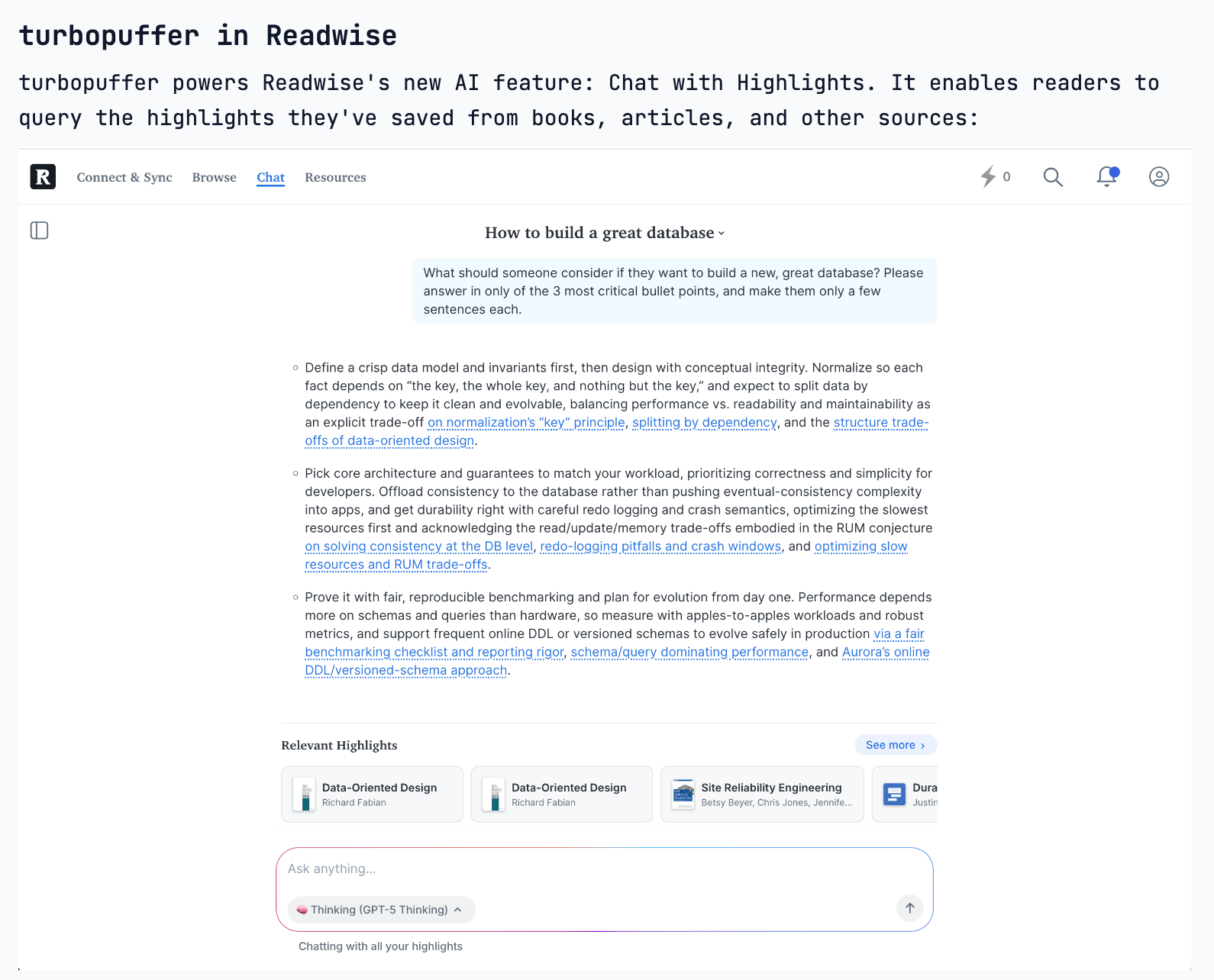
Turbopuffer came out of a reading app.In 2022, Simon was helping his friends at Readwise scale their infra for a highly requested feature: article recommendations and semantic search. Readwise was paying ~$5k/month for their relational database and vector search would cost ~$20k/month making the feature too expensive to ship. In 2023 after mulling over the problem from Readwise, Simon decided he wanted to “build a search engine” which became Turbopuffer.We discuss:• Simon’s path: Denmark → Shopify infra for nearly a decade → “angel engineering” across startups like Readwise, Replicate, and Causal → turbopuffer almost accidentally becoming a company • The Readwise origin story: building an early recommendation engine right after the ChatGPT moment, seeing it work, then realizing it would cost ~$30k/month for a company spending ~$5k/month total on infra and getting obsessed with fixing that cost structure • Why turbopuffer is “a search engine for unstructured data”: Simon’s belief that models can learn to reason, but can’t compress the world’s knowledge into a few terabytes of weights, so they need to connect to systems that hold truth in full fidelity • The three ingredients for building a great database company: a new workload, a new storage architecture, and the ability to eventually support every query plan customers will want on their data • The architecture bet behind turbopuffer: going all in on object storage and NVMe, avoiding a traditional consensus layer, and building around the cloud primitives that only became possible in the last few years • Why Simon hated operating Elasticsearch at Shopify: years of painful on-call experience shaped his obsession with simplicity, performance, and eliminating state spread across multiple systems • The Cursor story: launching turbopuffer as a scrappy side project, getting an email from Cursor the next day, flying out after a 4am call, and helping cut Cursor’s costs by 95% while fixing their per-user economics • The Notion story: buying dark fiber, tuning TCP windows, and eating cross-cloud costs because Simon refused to compromise on architecture just to close a deal faster • Why AI changes the build-vs-buy equation: it’s less about whether a company can build search infra internally, and more about whether they have time especially if an external team can feel like an extension of their own • Why RAG isn’t dead: coding companies still rely heavily on search, and Simon sees hybrid retrieval semantic, text, regex, SQL-style patterns becoming more important, not less • How agentic workloads are changing search: the old pattern was one retrieval call up front; the new pattern is one agent firing many parallel queries at once, turning search into a highly concurrent tool call • Why turbopuffer is reducing query pricing: agentic systems are dramatically increasing query volume, and Simon expects retrieval infra to adapt to huge bursts of concurrent search rather than a small number of carefully chosen calls • The philosophy of “playing with open cards”: Simon’s habit of being radically honest with investors, including telling Lachy Groom he’d return the money if turbopuffer didn’t hit PMF by year-end • The “P99 engineer”: Simon’s framework for building a talent-dense company, rejecting by default unless someone on the team feels strongly enough to fight for the candidate —Simon Hørup Eskildsen• LinkedIn: https://www.linkedin.com/in/sirupsen• X: https://x.com/Sirupsen• https://sirupsen.com/aboutturbopuffer• https://turbopuffer.com/Full Video PodTimestamps00:00:00 The PMF promise to Lachy Groom00:00:25 Intro and Simon's background00:02:19 What turbopuffer actually is00:06:26 Shopify, Elasticsearch, and the pain behind the company00:10:07 The Readwise experiment that sparked turbopuffer00:12:00 The insight Simon couldn’t stop thinking about00:17:00 S3 consistency, NVMe, and the architecture bet00:20:12 The Notion story: latency, dark fiber, and conviction00:25:03 Build vs. buy in the age of AI00:26:00 The Cursor story: early launch to breakout customer00:29:00 Why code search still matters00:32:00 Search in the age of agents00:34:22 Pricing turbopuffer in the AI era00:38:17 Why Simon chose Lachy Groom00:41:28 Becoming a founder on purpose00:44:00 The “P99 engineer” philosophy00:49:30 Bending software to your will00:51:13 The future of turbopuffer00:57:05 Simon’s tea obsession00:59:03 Tea kits, X Live, and P99 LiveTranscriptSimon Hørup Eskildsen: I don’t think I’ve said this publicly before, but I just called Lockey and was like, local Lockie. Like if this doesn’t have PMF by the end of the year, like we’ll just like return all the money to you. But it’s just like, I don’t really, we, Justine and I don’t wanna work on this unless it’s really working.So we want to give it the best shot this year and like we’re really gonna go for it. We’re gonna hire a bunch of people. We’re just gonna be honest with everyone. Like when I don’t know how to play a game, I just play with op
NVIDIA's AI Engineers: Agent Inference at Planetary Scale and "Speed of Light" — Nader Khalil (Brev), Kyle Kranen (Dynamo)
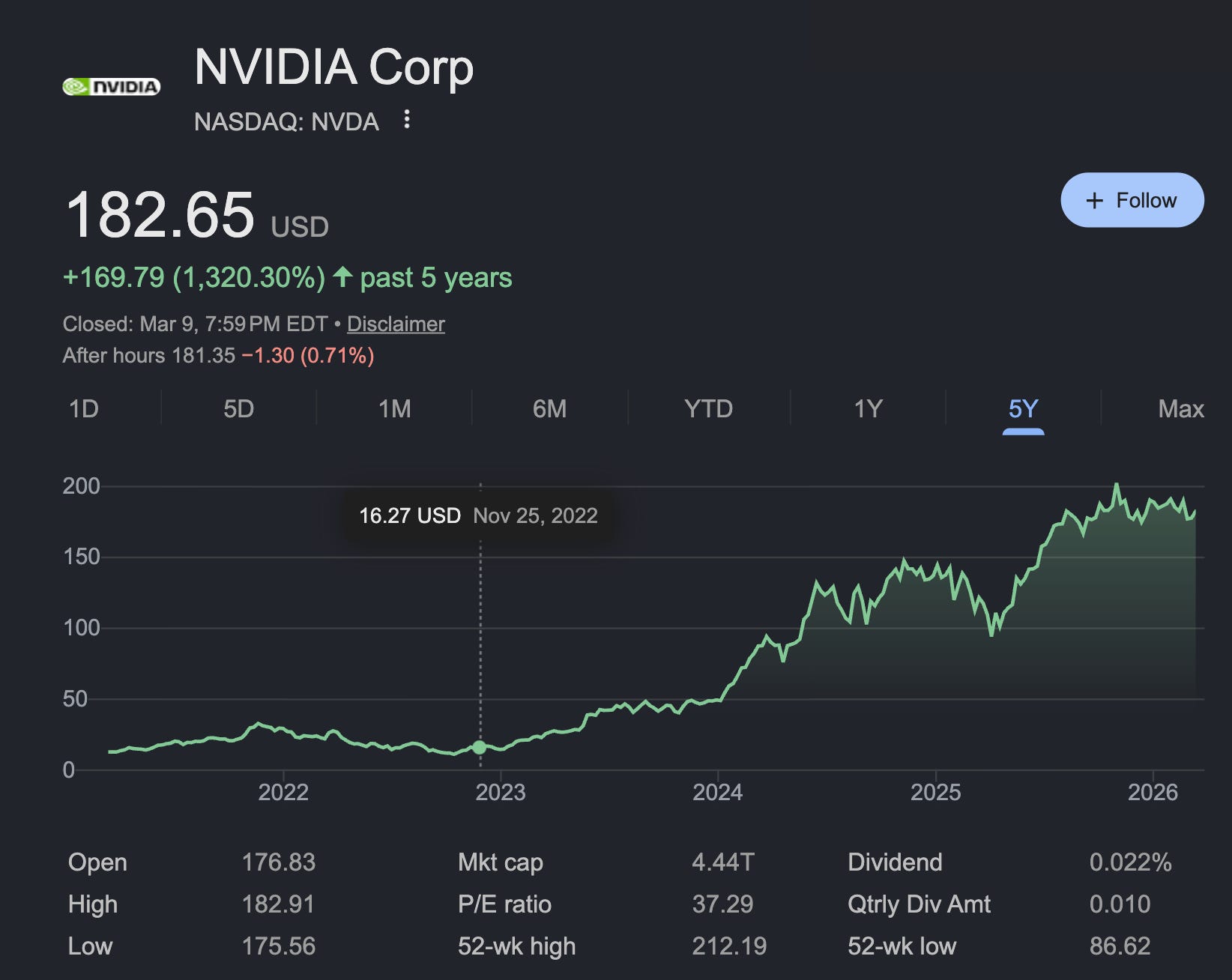
Join Kyle, Nader, Vibhu, and swyx live at NVIDIA GTC next week!Now that AIE Europe tix are ~sold out, our attention turns to Miami and World’s Fair!The definitive AI Accelerator chip company has more than 10xed this AI Summer:And is now a $4.4 trillion megacorp… that is somehow still moving like a startup. We are blessed to have a unique relationship with our first ever NVIDIA guests: Kyle Kranen who gave a great inference keynote at the first World’s Fair and is one of the leading architects of NVIDIA Dynamo (a Datacenter scale inference framework supporting SGLang, TRT-LLM, vLLM), and Nader Khalil, a friend of swyx from our days in Celo in The Arena, who has been drawing developers at GTC since before they were even a glimmer in the eye of NVIDIA:Nader discusses how NVIDIA Brev has drastically reduced the barriers to entry for developers to get a top of the line GPU up and running, and Kyle explains NVIDIA Dynamo as a data center scale inference engine that optimizes serving by scaling out, leveraging techniques like prefill/decode disaggregation, scheduling, and Kubernetes-based orchestration, framed around cost, latency, and quality tradeoffs. We also dive into Jensen’s “SOL” (Speed of Light) first-principles urgency concept, long-context limits and model/hardware co-design, internal model APIs (https://build.nvidia.com), and upcoming Dynamo and agent sessions at GTC.Full Video pod on YouTubeTimestamps00:00 Agent Security Basics00:39 Podcast Welcome and Guests07:19 Acquisition and DevEx Shift13:48 SOL Culture and Dynamo Setup27:38 Why Scale Out Wins29:02 Scale Up Limits Explained30:24 From Laptop to Multi Node33:07 Cost Quality Latency Tradeoffs38:42 Disaggregation Prefill vs Decode41:05 Kubernetes Scaling with Grove43:20 Context Length and Co Design57:34 Security Meets Agents58:01 Agent Permissions Model59:10 Build Nvidia Inference Gateway01:01:52 Hackathons And Autonomy Dreams01:10:26 Local GPUs And Scaling Inference01:15:31 Long Running Agents And SF ReflectionsTranscriptAgent Security BasicsNader: Agents can do three things. They can access your files, they can access the internet, and then now they can write custom code and execute it. You literally only let an agent do two of those three things. If you can access your files and you can write custom code, you don’t want internet access because that’s one to see full vulnerability, right?If you have access to internet and your file system, you should know the full scope of what that agent’s capable of doing. Otherwise, now we can get injected or something that can happen. And so that’s a lot of what we’ve been thinking about is like, you know, how do we both enable this because it’s clearly the future.But then also, you know, what, what are these enforcement points that we can start to like protect?swyx: All right.Podcast Welcome and Guestsswyx: Welcome to the Lean Space podcast in the Chromo studio. Welcome to all the guests here. Uh, we are back with our guest host Viu. Welcome. Good to have you back. And our friends, uh, Netter and Kyle from Nvidia. Welcome.Kyle: Yeah, thanks for having us.swyx: Yeah, thank you. Actually, I don’t even know your titles.Uh, I know you’re like architect something of Dynamo.Kyle: Yeah. I, I’m one of the engineering leaders [00:01:00] and a architects of Dynamo.swyx: And you’re director of something and developers, developer tech.Nader: Yeah.swyx: You’re the developers, developers, developers guy at nvidia,Nader: open source agent marketing, brev,swyx: and likeNader: Devrel tools and stuff.swyx: Yeah. BeenNader: the focus.swyx: And we’re, we’re kind of recording this ahead of Nvidia, GTC, which is coming to town, uh, again, uh, or taking over town, uh, which, uh, which we’ll all be at. Um, and we’ll talk a little bit about your sessions and stuff. Yeah.Nader: We’re super excited for it.GTC Booth Stunt Storiesswyx: One of my favorite memories for Nader, like you always do like marketing stunts and like while you were at Rev, you like had this surfboard that you like, went down to GTC with and like, NA Nvidia apparently, like did so much that they bought you.Like what, what was that like? What was that?Nader: Yeah. Yeah, we, we, um. Our logo was a chaka. We, we, uh, we were always just kind of like trying to keep true to who we were. I think, you know, some stuff, startups, you’re like trying to pretend that you’re a bigger, more mature company than you are. And it was actually Evan Conrad from SF Compute who was just like, you guys are like previousswyx: guest.Yeah.Nader: Amazing. Oh, really? Amazing. Yeah. He was just like, guys, you’re two dudes in the room. Why are you [00:02:00] pretending that you’re not? Uh, and so then we were like, okay, let’s make the logo a shaka. We brought surfboards to our booth to GTC and the energy was great. Yeah. Some palm trees too. They,Kyle: they actually poked out over like the, the walls so you could, you could see the bread booth.Oh, that’s so funny. AndNader: no one else,Kyle: j
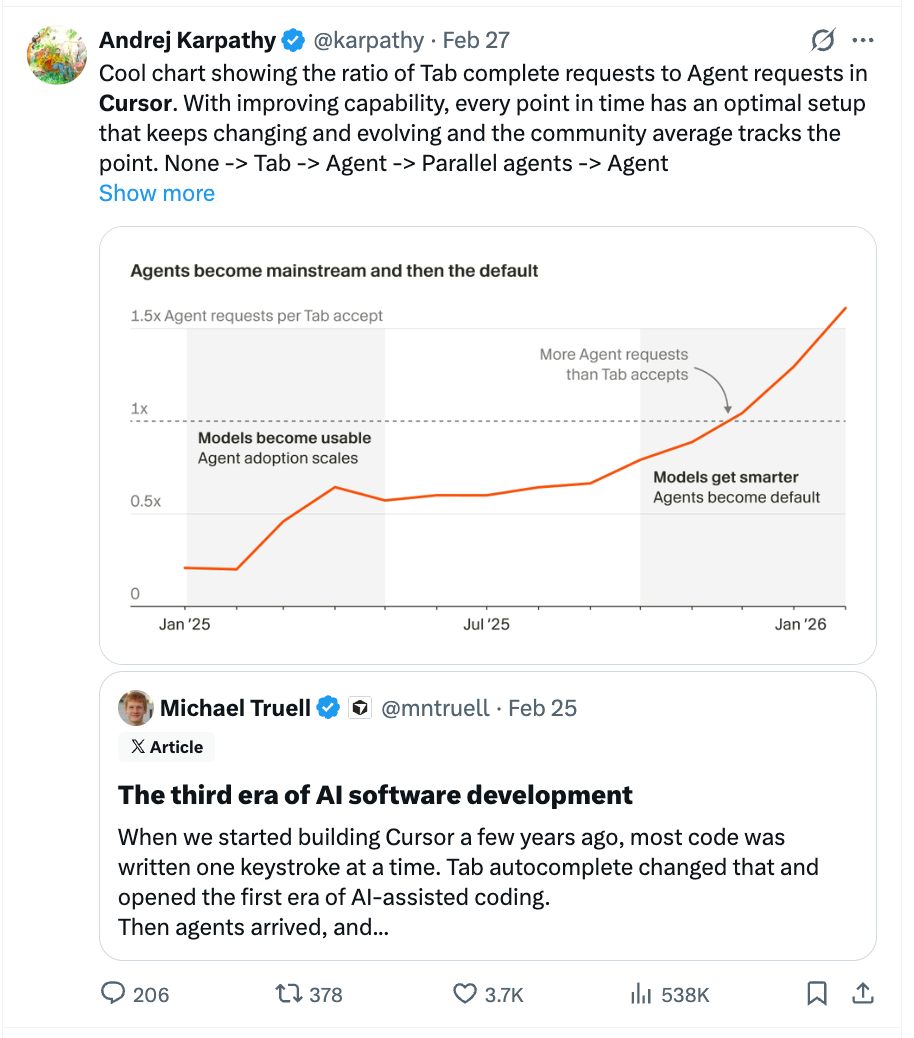
Cursor's Third Era: Cloud Agents
All speakers are announced at AIE EU, schedule coming soon. Join us there or in Miami with the renowned organizers of React Miami! Singapore CFP also open!We’ve called this out a few times over in AINews, but the overwhelming consensus in the Valley is that “the IDE is Dead”. In November it was just a gut feeling, but now we actually have data: even at the canonical “VSCode Fork” company, people are officially using more agents than tab autocomplete (the first wave of AI coding):Cursor has launched cloud agents for a few months now, and this specific launch is around Computer Use, which has come a long way since we first talked with Anthropic about it in 2024, and which Jonas productized as Autotab:We also take the opportunity to do a live demo, talk about slash commands and subagents, and the future of continual learning and personalized coding models, something that Sam previously worked on at New Computer. (The fact that both of these folks are top tier CEOs of their own startups that have now joined the insane talent density gathering at Cursor should also not be overlooked).Full Episode on YouTube!please like and subscribe!Timestamps00:00 Agentic Code Experiments00:53 Why Cloud Agents Matter02:08 Testing First Pillar03:36 Video Reviews Second Pillar04:29 Remote Control Third Pillar06:17 Meta Demos and Bug Repro13:36 Slash Commands and MCPs18:19 From Tab to Team Workflow31:41 Minimal Web UI Philosophy32:40 Why No File Editor34:38 Full Stack Cursor Debate36:34 Model Choice and Auto Routing38:34 Parallel Agents and Best Of N41:41 Subagents and Context Management44:48 Grind Mode and Throughput Future01:00:24 Cloud Agent Onboarding and MemoryTranscriptEP 77 - CURSOR - Audio version[00:00:00]Agentic Code ExperimentsSamantha: This is another experiment that we ran last year and didn’t decide to ship at that time, but may come back to LM Judge, but one that was also agentic and could write code. So it wasn’t just picking but also taking the learnings from two models or and models that it was looking at and writing a new diff.And what we found was that there were strengths to using models from different model providers as the base level of this process. Basically you could get almost like a synergistic output that was better than having a very unified like bottom model tier.Jonas: We think that over the coming months, the big unlock is not going to be one person with a model getting more done, like the water flowing faster and we’ll be making the pipe much wider and so paralyzing more, whether that’s swarms of agents or parallel agents, both of those are things that contribute to getting much more done in the same amount of time.Why Cloud Agents Matterswyx: This week, one of the biggest launches that Cursor’s ever done is cloud agents. I think you, you had [00:01:00] cloud agents before, but this was like, you give cursor a computer, right? Yeah. So it’s just basically they bought auto tab and then they repackaged it. Is that what’s going on, or,Jonas: that’s a big part of it.Yeah. Cloud agents already ran in their own computers, but they were sort of site reading code. Yeah. And those computers were not, they were like blank VMs typically that were not set up for the Devrel X for whatever repo the agents working on. One of the things that we talk about is if you put yourself in the model shoes and you were seeing tokens stream by and all you could do was cite read code and spit out tokens and hope that you had done the right thing,swyx: no chanceJonas: I’d be so bad.Like you obviously you need to run the code. And so that I think also is probably not that contrarian of a take, but no one has done that yet. And so giving the model the tools to onboard itself and then use full computer use end-to-end pixels in coordinates out and have the cloud computer with different apps in it is the big unlock that we’ve seen internally in terms of use usage of this going from, oh, we use it for little copy changes [00:02:00] to no.We’re really like driving new features with this kind of new type of entech workflow. Alright, let’s see it. Cool.Live Demo TourJonas: So this is what it looks like in cursor.com/agents. So this is one I kicked off a while ago. So on the left hand side is the chat. Very classic sort of agentic thing. The big new thing here is that the agent will test its changes.So you can see here it worked for half an hour. That is because it not only took time to write the tokens of code, it also took time to test them end to end. So it started Devrel servers iterate when needed. And so that’s one part of it is like model works for longer and doesn’t come back with a, I tried some things pr, but a I tested at pr that’s ready for your review.One of the other intuition pumps we use there is if a human gave you a PR asked you to review it and you hadn’t, they hadn’t tested it, you’d also be annoyed because you’d be like, only ask me for a review once it’s actually ready. So that’s what we’ve done withTesting Defaul