Late Night Live — Full program podcast
1,994 episodes — Page 5 of 40
The power of Patrick White plus why we should forgive
A new book looks at author Patrick White's startling use of language, his mythic depiction of the Australian landscape and the people who inhabit it, and the power his prose still holds today. Plus philosopher Lucy Allais reflects on the nature of forgiveness.
Ian Dunt's UK, how Chicago is resisting ICE, and Australian anthropology turns 100
What does Ian Dunt think of the King's attempt to eject Prince Andrew from his royal lodgings? Then, in America, Chicagoans have been organising against ICE agents who are attempting to implement Trump's aggressive deportation agenda. Here at home, anthropology has turned 100 years old. Can the academic discipline escape from its colonial roots?
Anna Henderson's Canberra, global surveillance network exposed, and can AI speak whale?
Anna Henderson looks at what changes the government is trying to make to environment protection laws and why the Coalition wants to split the bill. How an Indonesia-based surveillance company tracked journalists, activists and dissidents all over the world, and the scientists using artificial intelligence to understand whale language.
The political drama before the Dismissal, and communing with Stalin's ghost
Today, we look backwards. Gough Whitlam's dismissal didn't come out of nowhere; 1974 and 1975 were years of intense political turmoil and scandal. Paul Kelly was there, in his late-20s, as The Australian newspaper's chief political correspondent, and has become one of the chief chroniclers of the dynamics that led to The Dismissal. Political ghosts haunt Russia, as well. But there's a very specific belief, held by some Russian occultists, that the ghost of Stalin is haunting their country and can be contacted through the internet.
Looted bronzes returning to Africa, plus love in antiquity
The famous Benin bronzes, looted by the British in 1897, are gradually being returned home to Nigeria. But they won't be on display at Benin City's new Museum of West African Art when it opens next month. Plus, classicist Professor Marguerite Johnson on understandings and expressions of love in antiquity.
Bruce Shapiro's USA, Suriname's first female president, and a world without sand?
Bruce Shapiro looks at Anthony Albanese's first meeting with US President Donald Trump and whether the critical minerals deal will see Australia become America's quarry. The little Dutch-speaking country of Suriname in South America has been ruled by a despot for years. But now it has elected its first female president who is promising to turn its fortunes around, and save its rainforests at the same time. Plus, why is the world running out of sand, and what can be done about it?
Bernard Keane's Canberra, Chris Hedges slams Western media's coverage of Gaza, and Fiona Stanley's cancelled hospital event
Crikey's Bernard Keane on Barnaby Joyce's decision to quit the Nationals. There's speculation the New England MP may join the One Nation party. Pulitzer prize winning journalist Chris Hedges slams the Western media's reporting of Gaza and the power of the Israel lobby. And why epidemiologist Professor Fiona Stanley, considered asking the Perth hospital named after her, to remove her name.
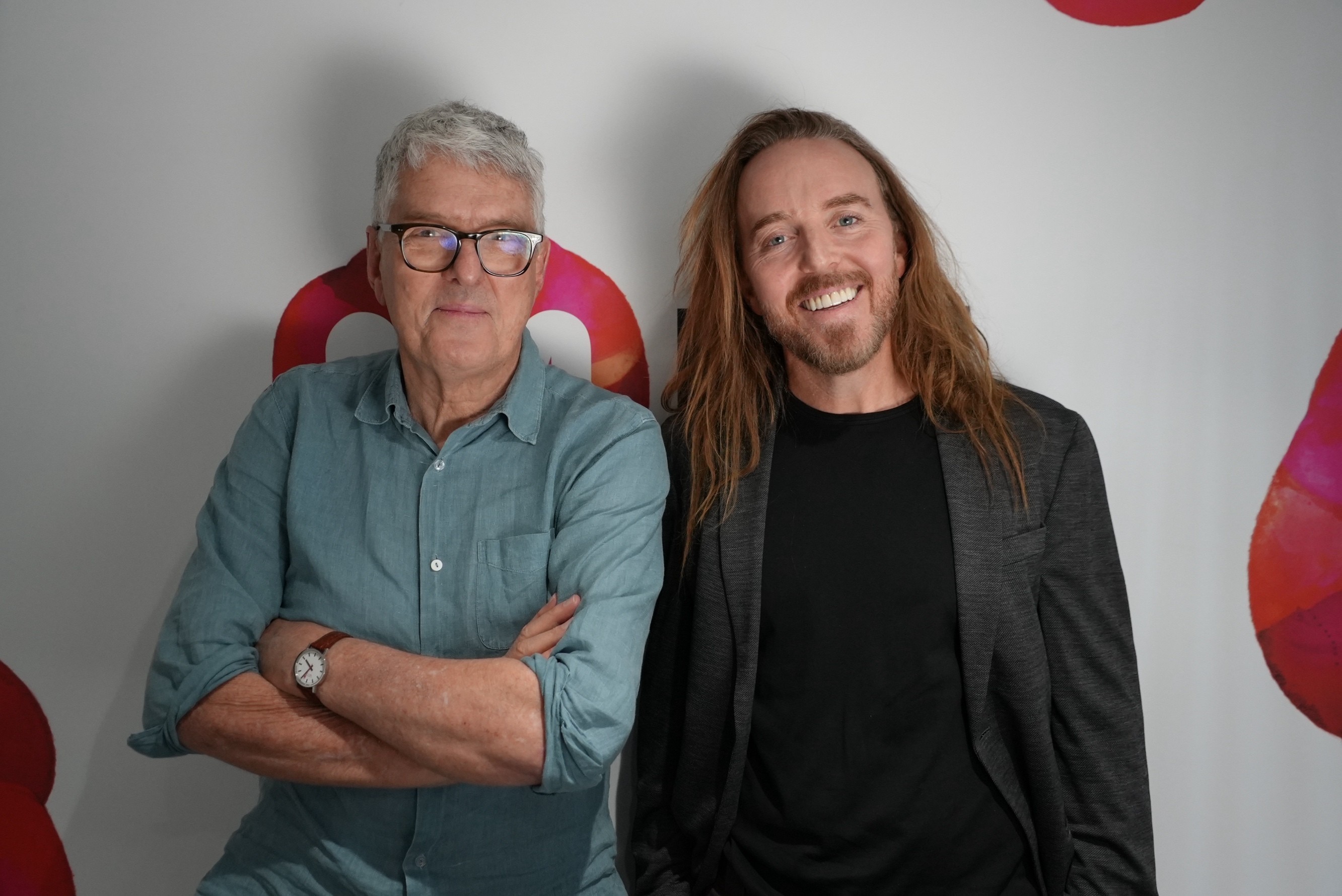
Tim Minchin's nipples are just fine, thanks
Tim Minchin turned fifty this year and just ran a marathon for the first time. He's returned home to Australia, with his new album Time Machine, and his tour 'Songs the World Will Never Hear'. In this special one hour conversation, David speaks to Tim about the joys of running, quitting social media and worrying less.GUEST: Tim MinchinPRODUCER: Ali Benton
Australia's foreign policy in the age of Trump, plus Ilan Pappe on Israel's future
Historian and former intelligence officer Clinton Fernandes says there's method to the apparent madness of the second Trump administration's approach to foreign policy. Plus as hostages are returned and a ceasefire holds, historian Ilan Pappe considers the uncertain future of Israel.
Ian Dunt's UK, trouble in Madagascar, and women in the skies
Ian Dunt examines the role that the UK played in the Gaza ceasefire, and Keir Starmer crosses a personal Rubicon: he's criticising Brexit in public. In Madagascar, youth protesters have taken cues from the Gen Z uprising in Nepal and chased their president from the country. Then: the gender revolution in the sky, with the rise of the air hostess.
Tom McIlroy's Canberra, the wonder of clouds, and who speaks Esperanto?
Political editor at Guardian Australia, Tom Mcllroy, on why the government has watered down its superannuation tax plan, the wonders of cloud-watching, and why aren't more people speaking Esperanto?
Inside the Gisele Pelicot trial, plus how our cities lost their shade
One of the 51 men convicted men of raping French woman Gisele Pelicot is appealing his conviction, arguing he didn’t know that she hadn’t given her consent. While French feminists argue consent should be explicitly included in French law, philosopher and author Manon Garcia says cultural understandings of consent, addressing patterns of violence and shoring up support in our criminal and civil courts are more important. Plus, why are our cities and towns devoid of any shade?
Could sanctions on Iran backfire? Plus the Australian father of the bomb
After attacks from Israel and the United States bombing of a nuclear facility, Iran is cracking down on dissent, while dealing with reimposed sanctions from western powers. Could these sanctions bring Iran closer to China? Plus, a new history of the Australian physicist Mark Oliphant, who made possible Oppenheimer's atomic bomb.
Bruce Shapiro's USA, Irris Makler on October 7, and New Zealand's crusade on feral predators
Bruce Shapiro discusses how long the U.S. government shutdown might last, and why ICE (U.S. Immigration and Customs Enforcement) agents are causing turmoil on American streets. Veteran journalist Irris Makler, reports on the two years since the October 7 Hamas attacks and examines Donald Trump’s proposed plan to end the war in Gaza. Plus, a look at New Zealand’s bold mission to eliminate all invasive predators by 2050.
Does our world lack moral ambition? And the Victorian obsession with orchids
The Dutch historian Rutger Bregman is calling on the world's best and brightest to quit their corporate jobs and show some more 'moral ambition', to build a better world. And botanical hysteria in Victorian England. How wealthy orchid fanatics sent hunters around the world in search of the ultimate bloom.*This show originally aired on 08 May 2025.
Doc Evatt and the making of Israel, plus the twisted history of rope
Doc Evatt, an influential Australian politician and jurist, played a notable role in shaping Israel’s early international standing. As President of the UN General Assembly in 1948, he was a strong advocate for the UN partition plan that led to the creation of the State of Israel. Plus sailor and author Tim Queeney examines the fundamental role that rope has played in shaping human civilisation, from enabling the construction of the Egyptian pyramids to facilitating Magellan’s historic circumnavigation and the building of iconic structures like the Brooklyn Bridge.
How Malka Leifer was brought to justice, plus when America went mad for Mars
A new documentary recounts the 15-year struggle of three sisters from Melbourne's ultra-Orthodox Jewish community to bring their abuser and former-headmistress Malka Leifer to justice. Plus, science writer David Baron transports us to 1890s America, when many were convinced there was intelligent life on the planet Mars.
Ian Dunt's UK, the right to sing in Afghanistan, and how salmon got to Tasmania
UK columnist Ian Dunt surveys the strange world of political party conferences in the UK, plus the emerging role of former PM Tony Blair in plans for Gaza. The young Hazara activist Nila Ibrahimi shares her story of fleeing the Taliban, and her fight for the rights of girls and women in Afghanistan. Plus, the mad colonial experiment to bring Atlantic salmon from the northern hemisphere, to Tasmania.
Mark Kenny's Canberra, ASIC and Stablecoin, and the threads of empire
Prime Minister Anthony Albanese has wrapped up his three-day visit to the UK, including an appearance at the UK Labour Party conference. He's told the British party faithful that he has an "absolute resolve to stand together and defend democracy itself". The ANU's Mark Kenny wraps up the visit. And what is Stablecoin, the cryptocurrency that financial regulator ASIC has licensed? Plus author Dorothy Armstrong uncovers the remarkable relationship between carpets and power.
When 29 nations defied the world's superpowers, plus the pioneering SA cop Kate Cocks
It's been 70 years since 29 nations of Africa and Asia gathered in Bandung Indonesia in 1955 to forge a path beyond Empire, and lay the foundations for the non-aligned movement during the Cold War. Plus, the life of the pioneering South Australian policewoman Kate Cocks - a formidable figure, with a complex legacy.
Busting myths about young Australian voters, plus the decline of NGOs
Many assumptions are made about the politics and voting habits of young Australians, but what does the data actually say about generational political shifts? Plus, why have NGOs (non-government organisations) lost so much power and influence since their heyday in the 1990s?
Bruce Shapiro's USA, Nepal in the aftermath of revolution, and Ackland on defamation
The fallout of the Charlie Kirk assassination continues, with dozens of academics fired for their comments and Jimmy Kimmel returning to the air. Kirk was memorialised in a huge public event, in which Trump declared "hate" for his political opponents. In Nepal, the country is rebuilding its politics after a flash "Gen Z revolution" toppled the government and caused its aged leader to flee. Will Nepal be ready for elections by March? Here at home, the cost of suing for defamation can be prohibitive — and a new Australian tort of privacy came into effect in June.
Mark Kenny's Canberra, Trump's corporate clemency, and Muslim-Australian poetry
The ANU's Mark Kenny on Prime Minister Anthony Albanese's performance at the UN General Assembly, how US President Donald Trump is going easy on white collar criminals, and the world's first collection of Muslim-Australian poetry.
Questions over the Australian War Memorial literary prize, and trouble for the CIA
The Australian War Memorial has overruled a decision to award a military history literary prize to Chris Masters’ book, Flawed Hero: Truth, Lies and War Crimes about the alleged war criminal Ben Roberts-Smith. According to the memorial chair, the rules prevent established authors from being considered. And the troubled history of the CIA since 9/11.
The politics of humiliation, plus the billionaire outdoorsman who gave it all away
Australian anthropologist Hassan Gage makes the case that humiliation and its counterpart, dignity, are overlooked motivators of politics, both locally and globally. Plus why billionaire founder of Patagonia, Yvon Chouinard, gave his fortune away to save the planet.
The UN's report on genocide in Gaza, Donald Trump heads to the UK, and Anguilla's internet jackpot
Israel is committing genocide in Gaza, according to a report by a United Nations Commision of Inquiry. One of the key authors of that report, Australian human rights lawyer Chris Sidoti, joins Late Night Live just hours after its release. Meanwhile, the United Kindgom is preparing for a visit from Donald Trump. But America has already affected UK politics, with the sacking of Peter Mandelson as ambassador to the US over his connections with convicted paedophile Jeffrey Epstein. Last, to Anguilla, where their domain name .ai has turned into a digital jackpot thanks to the frenzy around artificial intelligence.
Anna Henderson's Canberra, Bruce Shapiro on the killing of Charlie Kirk, plus why are we keeping QWERTY?
Anna Henderson on why both Labor and the Coalition are still grappling with climate targets when our first risk assessment shows urgent action is needed. Bruce Shapiro looks at the fall-out from the Charlie Kirk killing and why we keep the QWERTY keyboard, when other layouts are so much more efficient.
Germany's Gaza protest crackdown plus solving crimes using feathers
A new film investigates how Germany's desire to never to repeat the horrendous anti-Semitism that led to the Holocaust has resulted in the suppression of any criticism of Israel and its actions in Gaza. Plus how an ornithologist helped solve murders and hate crimes, with her expert knowledge of feathers.
The rise of the Chinese right wing in the US and how memory shapes geopolitics
The growing appeal of Donald Trump to the right wing Chinese community in the US, and the hidden war for collective memory - how narratives about nationhood shape politics.
Bruce Shapiro's USA, 50 years of independent Papua New Guinea, and the closure of Meanjin
Trump's soon-to-be-renamed "Department of War" killed 11 people on a boat, saying they were Venezuelan drug smugglers. As Bruce Shapiro says, the killings were a brazenly extrajudicial act. Closer to home, Papua New Guinea will celebrate 50 years as an independent nation next week, a status it achieved when it separated from the ruling colonial power — Australia. We revisit the history of Papua New Guinea, and why so many Australians forgot (or never learned) that it was once our territory. Then to Australian literature, and the demise of the 85-year-old literary magazine, Meanjin.
Anna Henderson's Canberra, Modi's pivot to China and the death of Aussie gaelic
Anna Henderson discusses the fall-out from Senator Jacinta Nampijinpa Price's comments on Indian migration, India's PM Narendra Modi wants a closer relationship, with China, but what does China want from India? And how the Gaelic language lived and died in Australia.
Abolishing terra nullius: the legacy of Chief Justice Gerard Brennan
Sir Gerard Brennan served as the 10th Chief Justice of the High Court of Australia, the highest judicial position in the country. He was involved in several landmark cases, including the famous Mabo v Queensland (No 2) (1992) decision. This case overturned the concept of "terra nullius" (land belonging to no one) and recognised the native title rights of Indigenous Australians for the first time under Australian law. His son Frank Brennan has collected his father's speeches in Gerard Brennan’s Articles and Speeches, Vol 2: Law in Accord with Justice
Behrouz Boochani on Iran's Revolutionary Guard, plus why Trump is targeting libraries
Behrouz Boochani was locked in Naura for more than half a decade after fleeing the Iranian Revolutionary Guard (IRGC). Now, that group will be designated a terrorist organisation by the Australian government. Meanwhile, in the United States, the Trump administration is sacking librarians and deleting public archives. Oxford librarian Richard Ovenden, is the author of "Burning the Books: A History of Knowledge under Attack".
Ian Dunt's UK, the journalists killed in Gaza, and why we're mesmerised by gold
Ian Dunt looks at Nigel Farage's scare campaign on migration in the UK, Al Jazeera plus' Managing Director, Dima Khatib, speaks out about the huge number of journalists Israel has killed in Gaza, and, as the price of gold hits new heights, LNL traces its history and its continuing allure.
Anna Henderson's Canberra, Project Esther's antisemitism crackdown, and the dandy as working-class rebel
Liberal leader Sussan Ley condemned the weekend's anti immigration protests, but CLP Senator Jacinta Nampijinpa Price supported them. Meanwhile the government has signed a $400million deportation deal with Nauru. Plus what is Project Esther and why do they think Hamas has infiltrated Australia? And a new history argues that the dandy was often a working-class irritant, subverting class structures through their sartorial splendour.
Liberal Party lost: can the party of Menzies recover?
The 2025 federal election marked the most significant electoral defeat in the history of the Liberal–National Coalition, with the party reduced to just 43 seats. The result was widely attributed to strategic missteps, internal divisions, and a failure to connect with a changing electorate. Almost four months on, where does the future lie for the Liberal Party? GUESTS:Judith Brett, Emeritus Professor of politics at La Trobe UniversityFrank Bongiorno, Professor of history at the Australian National UniversityPaul Kelly, Editor-at-Large at The AustralianPRODUCER Ali Benton
Robyn Williams' 50 years of science shows, and the French philosopher guiding Silicon Valley
Robyn Williams looks back at fifty years of broadcasting The Science Show on ABC Radio National. Plus, why the tech tycoons of Silicon Valley love the philosophy of French literary scholar Rene Girard.
Bruce Shapiro's USA, future Palestinian leadership, and Sydney's old street photography
From the USA, Bruce Shapiro on the latest deportation attempts against Kilmar Ábrego García, the FBI raid on John Bolton, and the twentieth anniversary of Hurricane Katrina. Then to Palestine, where the leader of the Palestinian Authority, Mahmoud Abbas, is 89 and deeply unpopular. As Australia and other Western states move towards a recognition of a Palestinian state, what could that future Palestinian state look like? And: before the days of Instagram, personal cameras, and privacy laws, street photographers set themselves up around Sydney. The industry peaked between the 1930s-1950s, and has left the legacy of an incredible archive.
Anna Henderson's Canberra, Sudan's famine crisis, and Australia's missing poet laureate
Anna Henderson from SBS World News looks at the Nationals' attempt to repeal their net zero emissions target and what that means for the Coalition's energy and environment policy credibility. Sudan is facing the worst humanitarian crisis in the world, with 25 million people hungry and the largest number of displaced people as their civil war has no end in sight. And, three years since the federal government announced its plans to name an Australian poet laureate in 2025, it has yet to do so, and the Khaled Sabsabi saga might be a reason for the delay.
Palestinian psychiatrist on the trauma in Gaza, and a yarn about wool and war
Drawing on her expertise in mental health and trauma studies, Palestinian psychiatrist, Doctor Samah Jabr, explores how the trauma of displacement and conflict continues to shape Palestinian lives. And why wool became one of the most important commodities for militaries across the globe.
John Menadue critiques Australia's media and our relationship with the United States
John Menadue has been at the heart of Australian public life for over fifty years, working for the Whitlam, Fraser and Hawke governments. He oversaw the effective end to Australia's White Australia Policy, was CEO of Qantas and set up the Centre for Policy Development. In the media he ran The Australian for Rupert Murdoch, launched the online weekly New Matilda and founded the influential public policy platform, Pearls and Irritations. Now aged ninety, John reflects on Australia's media, in particular its coverage of the war in Gaza, our attitudes to race relations, AUKUS, our relationship with the United States and how Australia is navigating its place in the world during a global power shift. Guest: John Menadue, Founder and Editor in Chief of Pearls and Irritations Producer: Catherine Zengerer
Ian Dunt's UK, Imran Kahn's defiance in prison, and rebuilding the past
Columnist Ian Dunt on the UK & European scramble to support Zelenskyy and Ukraine at the White House, after Trump's meeting with Putin in Alaska. After two years behind bars, the former PM of Pakistan Imran Khan remains defiant, but at what cost? Plus, should lost buildings be rebuilt, replicated, or left in ruins?
Laura Tingle on Trump & Putin in Alaska, Tuvalu's climate refugees, and why do we have surnames?
Laura Tingle assesses the meeting between Presidents Trump and Putin and where President Zelenskyy fits in the negotiations. A world-first bilateral climate mobility program, will see Tuvalu citizens have the right to apply for Australian visas. Plus the curious and often hilarious origins of British surnames.
How evangelicals transformed Brazil, plus the last letters of French resistance fighters
A new documentary looks at how the evangelical movement began in the US, spread to South America, paved the way for the presidency of Jair Bolsonaro and now poses the threat of a national theocracy. And the last letters of French Resistance fighters before they were executed by the Nazis in World War Two
Journalists Hanna Rosin and Lauren Ober on seeking truth in Trump's America
Acclaimed US journalists and podcast collaborators with The Atlantic Hanna Rosin and Lauren Ober join David Marr in-studio to discuss the MAGA women who love Trump, the state of the media in post-insurrection America, and the importance of complex human storytelling in journalism. Guests: Hanna Rosin and Lauren Ober, co-hosts of the podcast We Live Here Now. Hanna is also Senior Editor at the Atlantic and host of Radio Atlantic Producer: Catherine Zengerer
Bruce Shapiro's USA, why the Egyptians aren't doing more on Gaza, and deer gone feral
Bruce Shapiro looks at the man behind Donald Trump's immigration policy, Stephen Miller. The increasing pressure on Egypt to take action on Gaza. Plus how deer went feral.
Australia to recognise Palestinian statehood, and the first Tasmanians
Australia has announced its recognition of Palestinian statehood, joining a growing number of countries supporting a two-state solution. And historian Shayne Breen, traces the 40,000 years of Aboriginal exploration, land settlement and hunting practices in Tasmania
Satyajit Das on the US debt crisis, plus 100 years of Mein Kampf
US debt is now at a level that some economists call "the death zone". Donald Trump is hoping his tariffs will help, but Satyajit Das thinks disaster is looming. Plus a century since Adolf Hitler wrote Mein Kampf in prison, John Kampfner looks at its impact in Germany and beyond.
Hiroshima and the new nuclear threat, plus inside London's exclusive clubs
Eighty years since Hiroshima a nuclear expert says deterrence policies are no longer enough to deal with the increasing prospect of nuclear escalation. Plus inside London's exclusive clubs - how much have they changed since they were the illegal gambling dens of the eighteenth century?
Ian Dunt's UK, can peace last between Thailand and Cambodia? Plus, remembering the mad cow crisis
Ian Dunt looks at the backlash to UK Prime Minister Keir Starmer's intention to recognise Palestine. The bombs have stopped on the Thai-Cambodia border but how long can peace last? Plus why the global trade of beef and livestock remains a source of risk and anxiety forty years since the mad cow disease outbreak.