
Instant Genius
681 episodes — Page 4 of 14
S1 Ep 339What contraception is doing to our bodies – and what we’ll use in future
Millions of people around the globe pop a daily pill or live with pieces of metal or plastic inside their bodies, all to avoid getting pregnant. But while we know our contraception works, many of us don’t know much else about it. In this episode, we speak to Kate Muir, a woman’s health expert, documentary maker, journalist and author, whose book about hormonal contraception – Everything You Need to Know About the Pill (but were too afraid to ask) – inspired this conversation. She tells us about what the different forms of contraception contain, how they work, how they might be affecting our minds and bodies – and what the future of baby-prevention might look like, for everyone involved. Learn more about your ad choices. Visit podcastchoices.com/adchoices
S1 Ep 338How to hack your brain to make better decisions
Every day we’re presented with hundreds if not thousands of decisions: What do we want for breakfast? Should we call our mothers or spend time with our friends? Should we go out for a workout or watch TV and eat snacks? Of course, some of the choices we make are more significant than others and can have huge impacts on our lives. But what do these decisions say about us and how can we try to make better choices? In this episode, we catch up with neuroscientist and professor of communication at the University of Pennsylvania Emily Falk to talk about her latest book What We Value: The Neuroscience of Choice and Change. She tells us how certain regions of our brains are involved in the many decisions we make, how we weigh up short and long-term rewards, and how we can all make more thoughtful choices that align with our goals if we just make a few tweaks to our behaviour. Learn more about your ad choices. Visit podcastchoices.com/adchoices
S1 Ep 337How to actually see the Northern lights
These days many of us have a bucket list, a set of experiences we’d like to have at least once in our lives. Seeing the Northern Lights with our own eyes is likely top of many of these. But what is the best way to ensure that when we do take a trip to see this mysterious, ghostly phenomenon we have a genuinely once-in-a-lifetime experience? In this episode we speak to Tom Kerss an aurora chaser, astronomer and author of the book Northern Lights: The definitive guide to auroras about the best way to see the breathtaking phenomenon of the Aurora Borealis. He tells us when and where to go to have the best chances of seeing the Northern Lights, what we should take and wear to have the best experience, and why often it’s a better idea to put down your camera and simply enjoy the spectacle. Learn more about your ad choices. Visit podcastchoices.com/adchoices
S1 Ep 336Why a healthy ocean is vital for the survival of the human race and planet Earth
The ocean covers more than 70 per cent of our planet’s surface. Thanks to its ability to absorb the excess carbon and heat generated by climate change, its potential to generate clean energy and the bountiful source of food it provides to both humans and animals, there’s little doubt the ocean is vital for the continued survival of the human race and of the planet itself. But all is not well. Ocean temperatures are climbing, coastal water levels are rising, and extreme weather events are becoming more and more common. In this episode we speak to special advisor on ocean issues to the United Nations Sturla Henriksen about his latest book The Ocean: How It Has Formed Our World – And Will Shape Our Destiny. He tells us about the many challenges we are facing to keep the ocean healthy and why we need to take a more holistic approach to combat them. Learn more about your ad choices. Visit podcastchoices.com/adchoices

S1 Ep 335Food science: Why fermentation is the future of food
Humans have been fermenting foods for millennia, due to the process’s ability to enhance the flavours of what we eat and preserve it for when times are lean. Now, new science is uncovering how eating fermented food is beneficial for both our physical and mental health and how it may possibly play a key role in the food of the future by creating a source of alternative protein. In this episode we speak to Rodrigo Ledesma-Amaro, Director of the Bezos Centre for Sustainable Protein and the Microbial Food Hub at Imperial College London. He tells us how we all eat more fermented food than we may think, why it’s so good for our guts and how cutting-edge science can help us to create tasty fermented food that is also kind to the environment. This episode is brought to you in association with EIT Food https://www.eitfood.eu/ Learn more about your ad choices. Visit podcastchoices.com/adchoices
S1 Ep 334The science behind the stunning phenomenon of the Northern Lights
The Northern Lights are surely one of the most awe-inspiring phenomena anyone can be lucky enough to witness occurring on planet Earth. But how exactly do solar winds breezing out of the Sun and hitting our planet’s atmosphere create the enchanting phosphorescent display that dances across the night sky? In this episode we speak to Tom Kerss an aurora chaser, astronomer and author of the book Northern Lights: The definitive guide to auroras about the science behind the breathtaking phenomenon of the Aurora Borealis. He tells us how the colours of the Northern Lights are created by particles ejected from the Sun hitting the Earth’s magnetic field, how auroras also exist on other planets within the Solar System and talks us through the many things we can learn from studying this fascinating cosmic phenomenon. Learn more about your ad choices. Visit podcastchoices.com/adchoices

S1 Ep 333Food Science: How to become an expert baker through science
Baking can be hard. Measurements need to be exact and techniques perfected. But with the right tricks and by understanding the science of baking, you can become the envy of your friends with the perfect loafs and cakes. Part of our Food Science series, we spoke to Cristiana Solinas. She is the head of the National Bakery School at London South Bank University. She talks us through the science of how to make good sourdough, why your loaves are coming out too dry and busts the biggest science myths in daily baking. This episode is brought to you in association with EIT Food https://www.eitfood.eu/ Learn more about your ad choices. Visit podcastchoices.com/adchoices
S1 Ep 332The biggest unsolved mysteries of the quantum realm
This year quantum physics celebrates its 100th anniversary. And while we’ve made great progress in understanding its many intricacies and quirks, it’s likely that quantum behaviour will continue to fascinate and beguile scientists around the world for years to come. In this episode we speak to Prof Jim Al-Khalili, a theoretical physicist based at the University of Surrey, author of several best-selling books and the long-time presenter of BBC Radio 4’s The Life Scientific. He tells us about the many disagreements that have surrounded quantum theory over the past century, how the theory raises deep scientific and philosophical questions about the nature of reality itself, and why we still have so much to learn. Watch the episode here. Learn more about your ad choices. Visit podcastchoices.com/adchoices

S1 Ep 331Food Science: The fascinating science of cheesemaking
Whether it’s the crowning glory on the top of a pizza Margherita, layered between two pieces of bread in a sandwich laced with pickle, or simply enjoyed by itself at the end of a meal, many of us adore cheese. But how exactly is it made, what gives it its distinct flavour and how can we make so many different varieties? In this episode, we speak to Bronwen Percival, a cheese buyer for Neal's Yard Dairy in London, co-founder of the website MicrobialFoods.org and author of the book Reinventing the Wheel. She tells us about the process that leads to milk becoming cheese, why we shouldn’t be afraid of mould and why some cheeses melt so beautifully to give what pizza fans call ‘the pull’. This episode is brought to you in association with EIT Food https://www.eitfood.eu/ Learn more about your ad choices. Visit podcastchoices.com/adchoices
S1 Ep 330How birds’ bizarre mating rituals have played a key role in their evolution
Be it the extravagant displays of peacocks fanning their tails, the beautiful, complex song of nightingales or the meticulous art installation-like structures built by bouwerbirds, the animal kingdom filled with a huge variety of fascinating mating rituals. But more than being mere quirks of evolution, these behaviours play a significant role in driving the process itself. In this episode, we catch up with science writer and best-selling author Matt Ridley to talk about his latest book, Birds, Sex and Beauty: The Extraordinary Implications of Darwin’s Strangest Idea. He tells us about the runaway processes that have led to the development of these flamboyant displays and behaviours, why choosing a mate may well be a popularity contest, and why it’s so important to give birth to sexy sons. Learn more about your ad choices. Visit podcastchoices.com/adchoices
S1 Ep 329Food Science: How eating chocolate boosts your brain, heart and gut health
Chocolate has a reputation. It is sugary and bad for you. But in its purest form, it can be beneficial to your health. As part of our Food Science series, we spoke to Megan Povey, a physicist at the University of Leeds who specialises in food processing. They explain how chocolate is made, the benefits it can have on your health and what separates good and bad chocolate. This episode is brought to you in association with EIT Food https://www.eitfood.eu/ Learn more about your ad choices. Visit podcastchoices.com/adchoices
S1 Ep 328Why OCD is a serious, debilitating mental condition, not just a need for cleanliness or order
We all experience distressing or intrusive thoughts at some point in our lives but for around two to three per cent of us these can be incredibly difficult to ignore and can begin to have a significant debilitating effect on our lives. Clinically this is known as obsessive compulsive disorder or OCD – a condition that many of us will have heard of but few understand. In this episode, we speak to Dr Marjan Biria, a psychologist and neuroscientist based at University College London. She tells us about some common obsessions and compulsions experienced by those with OCD, why thoughts are not actions and why people who say they are ‘a little bit OCD’ because they like cleanliness or order are significantly misunderstanding the condition. Learn more about your ad choices. Visit podcastchoices.com/adchoices
S1 Ep 327How truth and honesty are key to tackling the climate crisis
Despite decades of international climate summits, the ongoing work of various campaign groups and open letters signed by some of the world’s most prominent scientists highlighting the crucial need for action, carbon emissions, biodiversity loss and sea level rises are still going up across the globe. So, what are we getting wrong? In this episode, we speak to leading researcher and author Mike Berners-Lee about his latest book A Climate of Truth, Why We Need it and How to Get It. He argues that truth and honesty are key if we are to avert what he refers to as the climate polycrisis. Facts and data need to be reported frankly and clearly, policymakers and business leaders need to be held to higher standards of honesty and when it comes down to it, we can all make a difference by educating ourselves, questioning the information we’re presented with and, ultimately, voting with our wallets. Learn more about your ad choices. Visit podcastchoices.com/adchoices
S1 Ep 326How to combat uncertainty in a post-truth world
These days we’re bombarded with information and claims that purport to explain almost every conceivable aspect of our lives, be it down to the bold assertions made by policymakers, the confidence of anonymity afforded by social media or just our natural human inclination to be fooled by a well-spoken know-it-all. But exactly who are the people making these claims, how do they reach their conclusions, and really, can anyone ever actually be certain about anything? In this episode, we catch up with the statistician, epidemiologist and author Adam Kucharski to take about his latest book Proof, The Uncertain Science of Uncertainty. He tells us how Abraham Lincoln’s background as lawyer led him to study the nature of proof beyond reasonable doubt and how it helped him to win his presidency, how picking holes in previous logical thinking enabled Albert Einstein to discover some of his greatest theories, and what the COVID pandemic taught us all about the value of scientific rigour and evidence-based conclusions. Learn more about your ad choices. Visit podcastchoices.com/adchoices
S1 Ep 325How AI is helping us to understand how our brains learn
The human brain is surely one of the most complex and fascinating creations in all of nature. It’s through them that we experience the world around us, develop knowledge and skills, and carry within us memories of events and experiences that occurred decades in the past, which we can later draw on to face new challenges. But when it comes to understanding exactly what is going on between our ears, we’re only just starting to scratch the surface. Could artificial intelligence technology help us in this quest? In this episode, we’re joined by Prof Andrew Saxe, a computational neuroscientist based at University College London. He tells us about the work his lab is carrying out on modelling the function of our brains using artificial intelligence, what this research has already uncovered about how our brains learn and what we can look forward to discovering in the coming decade or so. Andrew is a finalist for the Blavatnik Awards for Young Scientists. https://blavatnikawards.org/news/items/finalists-announced-2025-uk-blavatnik-awards-young-scientists/ Learn more about your ad choices. Visit podcastchoices.com/adchoices
S1 Ep 324What our coastlines can tell us about the planet’s past and future
From the dramatic caves that bring to mind the pirates and smugglers of yore to the rolling sand dunes many of us likely played in as children, our coastlines are home to all manner of fascinating features, forged over centuries by crashing waves and harsh, unforgiving weather. But far from simply being picturesque, these landmarks can teach us about our planet’s past and ultimately, its future. In this episode, we speak to writer and author Matthew Yeomans about his latest book Seascape: Notes from a Changing Coastline. He speaks to us about the observations he made of the many and varied effects of climate change while walking along the Welsh coastline, how the threat of coastal flooding is very real and how nature-based solutions may well be the most effective way of protecting our precious coastlines. Learn more about your ad choices. Visit podcastchoices.com/adchoices
S1 Ep 323How to see through misleading numbers and statistics
Whether it’s from our friends, workmates or via various media platforms, both social and traditional, these days we’re all faced with a never-ending bombardment of information expressed through numbers, percentages and statistics. But how exactly should we go about interpreting them? In this episode we catch up with Prof Sir David Spiegelhalter, a statistician and science communicator based at the University of Cambridge. He shares some simple advice to help us understand how the risks and benefits of various lifestyle factors such as exercise and diet are presented to us, explains how framing can be used to make any number look big or small, and tells us what everyone, including scientists, could be doing better when we speak about numbers. Watch the episode here. Learn more about your ad choices. Visit podcastchoices.com/adchoices
S1 Ep 322Prostate cancer: What is it and why is it so often missed?
The prostate is often misunderstood. And yet, this small part of the body is crucial. However, it is also one of the most common forms of cancer, affecting many men around the world. We spoke to Matthew Hobbs, director of research at Prostate Cancer UK who breaks down the big questions. What is a prostate, what treatments are available for prostate cancer and what does the future of diagnosis look like? Learn more about your ad choices. Visit podcastchoices.com/adchoices

Don't miss the upcoming Food Science miniseries!
trailerHave you ever been frustrated when your carefully baked loaves come out of the oven looking more like pancakes? Or wondered why cheese tastes so good even though it’s riddled with mould? Maybe you want to learn more about how fermented foods such as kimchi and kefir are made, and why they’re so good for your gut health. If so, don’t miss the Instant Genius Food Science miniseries, brought to you by the team behind BBC Science Focus. It’s still the same show with the same great guests, we’ll just be going deeper into the science of how the food we eat is produced and what exactly makes it taste so good. Learn more about your ad choices. Visit podcastchoices.com/adchoices
S1 Ep 321What meteorites tell us about life on Earth and the Universe
Meteorites are one of the best indicators that we can get of what is out there in Space. Helen Gordon, author of the new book The Meteorites: Encounters with Outer Space and Deep Time, talks us through these mysterious rocks landing on Earth. She touches on their cultural importance, what they tell us about our early Universe and their potential for risk. Learn more about your ad choices. Visit podcastchoices.com/adchoices
S1 Ep 320How psychology can help us see through propaganda
It can be hard to know what is true and false in a world of disinformation. But there are some tricks that people use to frame what they say and learning how to spot these can help you avoid them. We spoke to Mikael Klintman, author of the new book Framing: The Social Art of Influence to better understand how people frame situations and topics and how to not fall for it. Learn more about your ad choices. Visit podcastchoices.com/adchoices
S1 Ep 319How psychology can help us unlock the power of saying ‘no’
Whether it’s accepting a work assignment we know we don’t have time for, attending a social occasion even though we’d much rather hunker down at home with a cup of tea, or something more serious such as not speaking up when we witness an act of discrimination, many of us find it difficult to say ‘no’. But why is this? In this episode, we speak to psychologist Dr Sunita Sah about her latest book Defy, The Power of No in a World that Demands Yes. She tells us how we are wired to comply, even if doing so comprises our true values, the far-reaching effect this has on our lives and the structure of society, and how by following her advice we can all unlock the power of a ‘True No’. Learn more about your ad choices. Visit podcastchoices.com/adchoices
S1 Ep 318How science is tackling one of the most common causes of sight loss
Dame Judi Dench has recently been in the news speaking about the long-term issue she’s been having with sight loss. The veteran actor has a condition known as age-related macular degeneration that currently affects around 700,000 people in the UK. In this episode, we catch up with Prof Richard Gale, an ophthalmologist based at Hull York Medical School. He tells us the early warning signs to look out for if you are starting to develop the condition, why it’s essential to regularly get your eyesight tested by an optician and why he’s optimistic that the development of cutting-edge treatments can help stop the condition in its tracks. Learn more about your ad choices. Visit podcastchoices.com/adchoices
S1 Ep 317How our brains create our sense of self
Over the last century or so neuroscientists around the world have been uncovering more and more about how our very identities are formed by the different cognitive functions carried out by our brains. And we now know that our identities can even be transformed by brain disorders such as stroke, dementia of head injuries. In this episode, we catch up with neurologist Masud Husain to talk about his latest book – Our Brains, Our Selves, What a Neurologist’s Patients Taught Him about the Brain. He takes us through some of the discoveries he has made while treating patients during his long career. We learn how a stroke led to a previously successful, motivated man to suddenly lose interest in all areas of this life, how a previously demure, shy woman began dressing flamboyantly and insulting people in the street thanks to the effects of dementia and a woman suffering from Alzheimer’s began to think that there were multiple copies of her husband. Learn more about your ad choices. Visit podcastchoices.com/adchoices
S1 Ep 316How body image pressures lead to steroid use
Be it a Marvel superhero, a fashion model or a professional athlete, we likely all have an image in our minds of what we wish our bodies looked like. But for some, the pressure of meeting these expectations can lead to the use of anabolic steroids in an attempt to get that Hollywood or magazine cover look. In this episode, we speak to Dr Orlanda Harvey, a senior lecturer in social work based at Bournemouth University. She tells us what steroids do to our bodies, the various motivations recreational users have for using them and the health issues, both for body and mind, that can arise from doing so. Learn more about your ad choices. Visit podcastchoices.com/adchoices
S1 Ep 315Healthy Start: How small behavioural changes help manage stress
Whether it’s due to deadlines at work, an upcoming exam or a rocky personal relationship, we’ve no doubt all felt stress at some point in our lives. And while a certain amount of stress can help to motivate us and make us more productive, if things get too much, stress can have a significant effect on both our mental and physical health. In this episode, we speak to Despina Djama, a psychologist and stress researcher based at the University of Plymouth. She tells us what happens in our brains and bodies when we experience stress, explains how the reaction stems from our evolutionary fight or flight response and shares some tips and techniques we can all use to help us get through stressful times. Learn more about your ad choices. Visit podcastchoices.com/adchoices
S1 Ep 314How music therapy can heal our bodies and brains
Many of us listen to music every day, perhaps to help us relax in the evening after a hard day’s work, get us through a tough workout or maybe even to allow us to feel closer to absent loved ones. There can be no doubt that music plays a huge part in what it means to be human. In this episode, we catch up with neuroscientist and musician Daniel Levitin to talk about his latest book Music as Medicine: How We Can Harness Its Therapeutic Power. He tells us what happens in our bodies and brains when we listen to music or play an instrument, explains the unique relationship between music and memory, and details how music can be used as a powerful therapeutic tool to help patients struggling from everything from Alzheimer’s disease to post traumatic stress disorder. Learn more about your ad choices. Visit podcastchoices.com/adchoices
S1 Ep 313Healthy Start: How taking up new hobbies can boost your mental health
Whether it’s a sport, painting or spending hours buried in puzzles, there is a clear link between our experience of hobbies and our mental health. Part of our Healthy Start series, we spoke to Karen Mak, a senior research fellow at UCL about how hobbies can bolster our mental health. Learn more about your ad choices. Visit podcastchoices.com/adchoices
S1 Ep 312How science can help us tackle racism
Most of us like to think we live in an equal society that offers the same opportunities to all. But unfortunately, hundreds of scientific studies say otherwise. Racial bias is essentially everywhere, often hiding in plain sight. For example, did you know that black people are as much as 50 per cent less likely to be called in for a job interview than a similarly qualified white person? Or that children of colour are more likely to be viewed as troublemakers at school? In this episode, we speak to Prof Keon West about his latest book The Science of Racism – Everything You Need to Know but Probably Don’t – Yet. He tells us how racism is so deeply baked into many of our societal systems, explains the issues surrounding the concept of ‘colour blindness’ and how we can all benefit from simply interacting with more people from different ethnicities and backgrounds. Learn more about your ad choices. Visit podcastchoices.com/adchoices

S1 Ep 311Healthy Start: How to cut down your social media use
With a smartphone in our pockets at all times, social media is only ever a few clicks away. With this, problematic social media use is easy to fall into. As part of our Healthy Start series, we spoke to Niklas Ihssen, an associate professor at Durham University about what this means and how to avoid it. Learn more about your ad choices. Visit podcastchoices.com/adchoices
S1 Ep 310Why smell is our most underrated sense
It’s commonly thought that when compared to other members of the animal kingdom we humans have a particularly poor sense of smell. But this couldn’t be further from the truth. Modern research has proven that human beings are surprisingly sophisticated sniffers, at least on par with the vast majority of other animals. In this episode, we catch up with Prof Jonas Olofsson, a psychologist based at Stockholm University, to talk about his latest book The Forgotten Sense – The New Science of Smell. He explains what happens when odour molecules enter our nasal passages and are processed by our brains, tells us how our sense of smell is intimately linked to our memories and emotions and answers the question that has been debated across countless dinner tables all over the world: can some people really identify wines just by smelling them? Learn more about your ad choices. Visit podcastchoices.com/adchoices

S1 Ep 309Healthy Start: How to make goals and stick to them
This time of the year lots of us will be setting new goals for the future. Be it getting fitter, reading more or even writing that novel we always suspected we had in us. But why do so many of us fail to see these plans through? In this episode, we catch up Dr Ian Taylor a reader in motivational science based at Loughborough University. He tells us why we are prone to setting goals that are too ambitious and why starting small is usually the best approach, why we shouldn’t worry if our routine drops off now and again, and why simply having willpower isn’t the be all and end all of reaching your targets, whatever they are. Learn more about your ad choices. Visit podcastchoices.com/adchoices
S1 Ep 308The power of optimism
Be it the recent outbreak of wars around the world, the COVID-19 pandemic or the unfortunate personal events that will undoubtedly befall us at some points in our lives, it can sometimes be difficult to look on the bright side. But is doing so even helpful? Science writer Sumit Paul-Choudhury certainly thinks so. In this episode, we catch up with him to talk about his latest book The Bright Side: Why Optimists Have the Power to Change the World. He tells us how the term was coined based on the theory that we live in the best of all possible worlds, or the optimal world if you like, why far from being unique to humans, many animals such as chickens and bumblebees also show signs of optimism, and how optimistic thinking will play a crucial role in helping us overcome the problems of the 21st Century. Learn more about your ad choices. Visit podcastchoices.com/adchoices
Don't miss the upcoming Healthy Start miniseries!
trailerWould you like to learn how to set goals and stick to them? How about cutting down the time you spend on social media? Or how about learning to cope better with stress? Why not tune in to the Instant Genius Healthy Start miniseries, brought to you from the team behind BBC Science Focus. It's still the same show, with the same great guests. We’ll just be spending a little extra time to go deeper into the science of getting the new year off to the best possible start. Starting on Monday 6th January, this four-part special series will feature interviews with leading researchers, to give you everything you need to boost your health and wellbeing. Learn more about your ad choices. Visit podcastchoices.com/adchoices
S1 Ep 307What happens in your body when you eat
What’s your favourite food? A hamburger, a slice of cake, a pizza? Eating is something we all do every day but most of us rarely think about what actually happens in our bodies after we put food into our mouths. In this episode, we catch up with Dr Chris Van Tulleken to speak about his forthcoming Royal Institution Christmas Lecture series telling us everything we need to know about what’s happening in our bodies when we eat. He tells us what actually happens when we put food into our mouths, what’s going on in our bodies once food is in there, and why farting is just part of the process. BBC Four and iPlayer, 9pm, on 29, 30 and 31 December. Learn more about your ad choices. Visit podcastchoices.com/adchoices
S1 Ep 306How to combat flooding
Anyone who has switched on the news even briefly this year will no doubt have seen scenes of extreme flooding occurring in all corners of the globe. But are these events getting more frequent and more severe or are we just becoming more aware of them? In this episode, we catch up with Prof Trevor Hoey, a hydrologist based at Brunel University, London. He tells us about the various climate mechanisms driving these extreme weather events, how counterintuitively severe droughts are being caused by the same processes and he also details some of the measures we can take to minimise the damage these events cause. Learn more about your ad choices. Visit podcastchoices.com/adchoices
S1 Ep 305How belonging to tribes shapes our culture
Be it down to our professions, taste in music or favourite sports teams we all belong to several different tribes. But what drives this instinct and what purpose does it serve? In this episode, we speak to cultural psychologist Prof Michael Morris about his latest book: Tribal – How the Cultural Instincts That Divide Us Can Help Bring Us Together. He breaks down the influence our peers have on us, explains why we look up to hero figures and why tradition has such a huge impact on our beliefs, lifestyles and identities. Learn more about your ad choices. Visit podcastchoices.com/adchoices
S1 Ep 304The science of manipulation
Why do we humans seem to be so easily influenced or even fooled? On one hand this can be done for entertainment, in a Las Vegas stage magic show for example, but on another it can be used for more nefarious purposes such as con artists tricking people into sharing their bank account details. In this episode, we speak to science writer and BBC Science Focus contributor Brian Clegg to talk about his latest book: Brainjacking – The Science of Influence and Manipulation. He tells us how our emotions can make us susceptible to being tricked, the role advances in technology such as AI are increasingly playing in our ability to manipulate others and how the whole phenomenon stems from our love of a good story. Learn more about your ad choices. Visit podcastchoices.com/adchoices
S1 Ep 303How the internet shaped how we speak
Through emojis, memes, acronyms and inside jokes, the internet has forever changed how we communicate. But what is the result of that and what does it mean for how we’ll speak in the future? We spoke to linguist and author of the book Because Internet, Gretchen McCulloch, to find out. Learn more about your ad choices. Visit podcastchoices.com/adchoices
S1 Ep 302Feeding the world’s growing population
The Earth’s population currently stands at more than 8 billion and shows no signs of slowing down any time soon. There’s little doubt that these staggering numbers are placing a huge strain on global food supplies, so what can be done for the human race to thrive and survive long into the future? In this episode, we catch up with multidisciplinary researcher and author Prof Vaclav Smil to talk about his latest book – How to Feed the World. He tells us how evolution has determined the staple foods we now rely on for nourishment, how this influences our chances of continued survival and why technology is yet to find a viable solution to the urgent issue of feeding the world. Learn more about your ad choices. Visit podcastchoices.com/adchoices
S1 Ep 301How extinction can protect future animals
Living through a mass extinction means the end of a species’ existence inevitably collides with significant events in our personal lives. But what does that mean for the people working to protect them? And why are these extinctions actually bringing them hope? We spoke to science writer Tom Lathan, author of the new book ‘Lost Wonders’, who explains. Learn more about your ad choices. Visit podcastchoices.com/adchoices
S1 Ep 300How opening our eyes, ears and noses can help us deepen our relationship with wildlife
From the distinctive caw of a crow to the musky scent of a beaver, the world around us is filled with the telltale signs of animals going about their daily business. But how can we teach ourselves to pick up on them more effectively and what can we learn from doing so? In this episode, we catch up with ecologist and author George Bumann to talk about his latest book, Eavesdropping on Animals: What We Can Learn from Wildlife Conversations. He tells us how by simply opening our eyes, ears and noses when we’re out we can begin to tune into to our environment more closely and in turn learn more about the lives and behaviours of the animals we share it with. Learn more about your ad choices. Visit podcastchoices.com/adchoices
S1 Ep 299The psychology of anger
It’s likely that even the most virtuous amongst us has experienced feelings of anger at some point in our lives. But is this simply a failing in our personal moral fabric or does it have more universal biological origins? In this episode, we catch up with Guy Leschziner, a professor of neurology and sleep medicine at King’s College Hospital in London to talk about his latest book Seven Deadly Sins: The Biology of Being Human. He tells us how activity in the emotional regions of our brains affects our behaviour, talks about the influence of testosterone on our aggressive tendencies and tells us how mutations in specific genes can predispose us to commit violent acts. Learn more about your ad choices. Visit podcastchoices.com/adchoices
S1 Ep 298How to beat the winter blues
As the nights draw in and the temperature drops, many of us find ourselves feeling a little less jolly and a bit more sluggish than usual. But for some of us these feelings can become so severe that they are classed as a form of depression known as seasonal affective disorder. This can have a significant impact on our daily habits, relationships and ability to perform at our best. In this episode, we catch up with the founder of The Sleep Scientist Dr Sophie Bostock. She tells us how exposure to daylight affects our mood, why it’s natural to want to hunker down during the colder, darker months and how going on a daily morning walk can help us all to lift our spirits. Learn more about your ad choices. Visit podcastchoices.com/adchoices
S1 Ep 297Why being cynical is harming your health
While being cynical can feel safe, and prepared for the worst outcome, it could actually be harming your health. We spoke to Jamil Zaki, author of the new book Hope for Cynics to better understand the dangers of cynicism and how to break out of it. Learn more about your ad choices. Visit podcastchoices.com/adchoices
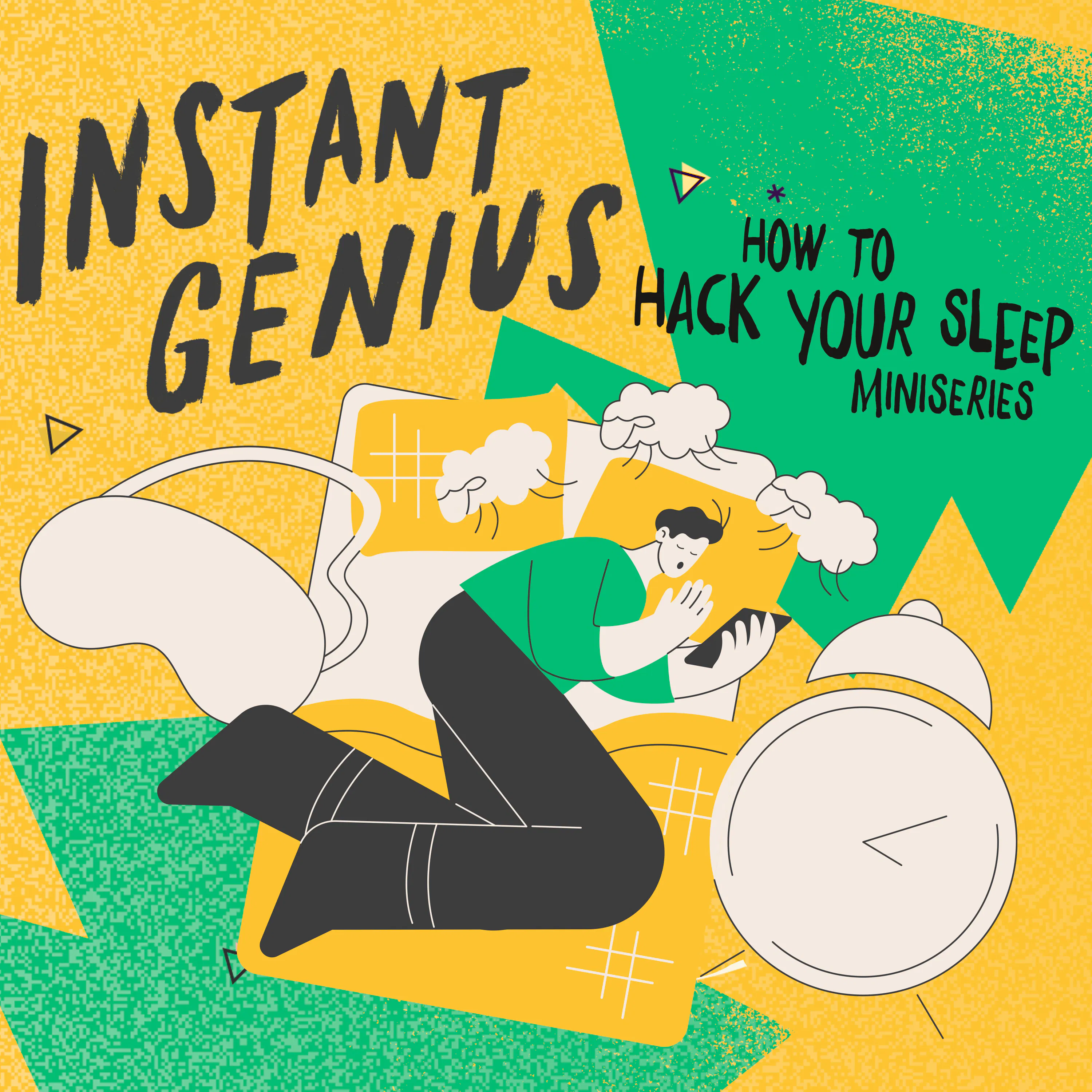
S1 Ep 296How to Hack Your Sleep: How not getting enough sleep affects your health
Lots of us will have at some points in our lives woken up feeling groggy after getting a poor night’s sleep. But what causes us to have trouble sleeping, what effect does it have on our health and what can we do about it? In this episode, we catch up Prof Matt Jones, a neuroscientist based at the University of Bristol. He tells us how our sleep needs vary across our lifetimes, how not getting enough sleep can affect our ability to think straight and form memories, and why a lack of sleep can leave so many of us feeling cranky and impulsive. This episode is presented in partnership with Lumie. https://www.lumie.com/ Learn more about your ad choices. Visit podcastchoices.com/adchoices
S1 Ep 295The genetic evolution and future of humankind
Understanding who we are and where we came from is one of the most fascinating questions in science. But it’s also one of the most difficult to answer. Putting all of the pieces together requires research across several different disciplines such as genetics, anthropology and medicine. In this episode, we catch up with Professor of Human Genetics and Evolution at College de France in Paris Lluis Quintana-Murci to talk about his latest book Human Peoples: On the Genetic Traces of Human Evolution Migration and Adaptation. He tells us how the characteristics of different human populations have been shaped by the environments they live in, how our genes can protect us against disease and what we learn can from all of this about our future health and wellbeing. Learn more about your ad choices. Visit podcastchoices.com/adchoices

S1 Ep 294How to Hack Your Sleep: The science of bizarre sleep phenomena
Research over the past few decades has proven that getting a good night’s sleep is essential for our health and wellbeing. But sometimes strange things can happen in our brains while we’re asleep. In this episode, we catch up with Dr Dan Denis, a sleep researcher and lecturer at the University of York’s department of psychology. He tells us what happens in our brains and bodies when we dream, why some of us are prone to sleepwalking and even sleep eating, and talks about the strange phenomenon of lucid dreaming. This episode is presented in partnership with Lumie. https://www.lumie.com/ Learn more about your ad choices. Visit podcastchoices.com/adchoices
S1 Ep 293The fascinating history of science
We may pride ourselves on our intelligence, but humans perhaps actually have to thank our ability to process and communicate information for our species’ success. In this episode, we speak to ‘The History of Information’ author Chris Haughton about the evolutionary adaptations, technologies and moments in our history that propelled us forward – and what he thinks is coming next. Learn more about your ad choices. Visit podcastchoices.com/adchoices

S1 Ep 292How to Hack Your Sleep: What to eat to get better sleep
We all know we should be eating a good diet to keep ourselves healthy, but did you know your diet can have a significant impact on how well you sleep? In this episode, we speak to Dr Piril Hepsomali, a psychologist and sleep researcher based at the University of Reading. She tells us how consuming caffeine affects our sleep, why we feel tired after eating a big Sunday lunch and what actually happens if you eat cheese before going to bed. This episode is presented in partnership with Lumie. https://www.lumie.com/ Learn more about your ad choices. Visit podcastchoices.com/adchoices