Hay Matters
58 episodes — Page 2 of 2
S1 Ep 8Market Supply Shifts: a discussion with National Sales Manager Dave Clothier
Episode Highlights:We are a country of extremes, with warmer temperatures and rainfall as high as 30% above average experienced recently across Queensland and New South Wales. Meanwhile, drier weather has intensified southward through Victoria, Tasmania, and South Australia, with Western Australia experiencing considerable drought.High temperatures are anticipated until the end of July. This will sustain pasture growth and provide security for graziers.Demand has still lifted considerably for all grades of fodder in expectation of colder weather. Beef cattle herds are at their highest since 2014, with excellent conditions and abundant feed driving up livestock numbers and boosting global exports, especially with US herd numbers low.Now more than ever, clients are more informed, asking for feed test results and making well-researched decisions, which is a positive development for the industry.The availability of quality hay is moving further south, increasing freight costs. It's wise to make informed decisions now to avoid higher freight charges in the future.Some growers are holding onto their product if they don’t need immediate cash flow, while others are negotiating to clear their sheds.Delivered prices remain similar to competitive price levels we saw last summer, but the benefit from lowered prices is offset by increased distance and freight costs in some regions.There is currently plenty of product available, but the approach of EOFY is a good time to secure feed while supplies are closer, reducing freight distance and costs.
S1 Ep 7Export Hay Innovation: a discussion with Malcolm May
Episode Highlights:Founded in 1990 in Balaklava, Balco was created to fill a community need for economic development and an operational need for streamlining within the export hay industry.The company has experienced continuous growth, starting from selling grain for leaf grain, before moving into hay pressing, and now makes and purchases hay for export from its site in Bowman and three other states.The investment into research and development means that hay is now grown better, compressed more efficiently, and loaded faster.There is now greater precision in the industry, as farmers increasingly focus on the business aspects, such as gross margins and profitability.A key benefit of the hay industry is the added income for dryland farmers; cash flow from hay sales typically arrives in October and November, providing an earlier financial boost ahead of grain harvests in December.Innovation in the industry hinges on maintaining farmer engagement in the developmental process and continuously refreshing practices, ensuring farmers remain confident in the industry's future.The industry has opportunities to revise bale dimensions and enable on-farm packing, thereby reducing the costs associated with mixing and high-density compression for export.The Exporters Association has helped exporters work together more closely towards common goals and innovation in the industry over the last decade, and has a strong commitment to continue these efforts into the future. To export hay economically, it must be compressed in the country of origin, and as the market adopts high-density balers and crimping techniques for faster drying, the hay industry is being taken to the next level.
S1 Ep 6Seeding Success: a discussion with Grower Relations Manager Stephen Page
Episode Highlights:A variety of rain events have impacted key hay growing areas recently, with some areas seeing up to 50mm while others have been left dry. Most grazing crops have already been planted from central NSW down into parts of Victoria, and some farmers will be grazing to a certain growth stage before making hay. Most hay growers won't be planting until after ANZAC Day. To diversify risk and take advantage of opportunities for grain or hay, growers need to look at the history of the paddock, whether it's prone to frost, and options for weed control and fertilising. It's important to track the pesticides used on crops as both domestic and international hay sales require a CVD (Commodity Vendor Declaration).The Wimmera Mallee country is seeing lupins and lentils compete with vetch in some regions; meanwhile, the canola price is down and growers are moving from canola back into cereal hay due to price and marketing opportunities.In areas that didn't receive rain, some growers are choosing to plant dry, which can be a balancing act as the ground has to be dry enough to plant and wet enough to germinate.It's been an extremely good season for hay production in the majority of areas, but there is still some two year old hay on the market which may be lower quality due to damage; it's important to feed test and visually inspect the hay to establish the quality. Although we're a long way off from making straw, there remains concern from last season's purchasing decisions made by Darling Downs Feedlots, which heavily concentrated on their local area. This may lead to more caution by southern straw growers this season who missed out on sales. While the price of balers has increased, many more machines are appearing on the second hand market.For growers looking to utilise a contractor at the end of the season, it's important to start looking now or talk to existing contractors to ensure availability. The hope is for a good curing period to produce quality hay, and that means having those sheds ready. Make sure that they are set up, clean, and ready to store hay.The key to a good season is preparation, capitalising on opportunities, and reduce risk by having options for grains or hay based on the conditions.
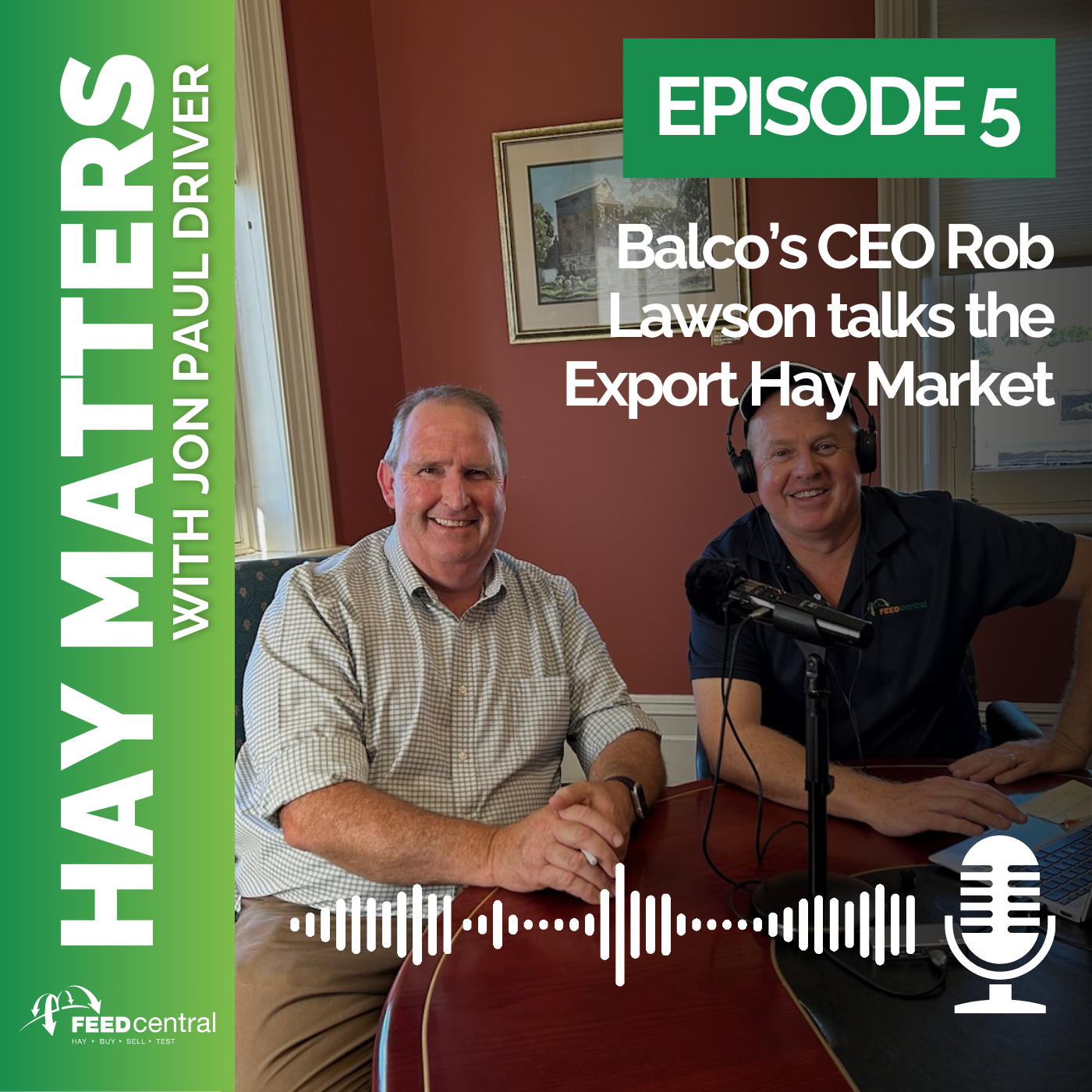
S1 Ep 5Balco's CEO Rob Lawson talks the Export Hay Market
1.2 million tonnes of Australian hay and straw goes for export each year, with 99% of that being dryland farming, planted in between the end of April and early June, made up primarily of oaten or cereal hay.Two key factors are crucial in oaten hay: Water Soluble Carbohydrates (WSC) and Neutral Detergent Fibre (NDF), while there are lower amounts of protein, averaging 5-8.5%.Balco rigorously maintains quality control throughout the export process. This involves inspecting fields immediately after seeding, monitoring for weed contamination during growth, core testing 20% of the product, and taking mixed samples that represent the entire field.A crucial aspect of the export process is ensuring the hay tests negative for Annual Ryegrass Toxicity (ARGT) before it is shipped.Export hay contracts operate somewhat differently from grain contracts. They are based on the area of land (hectares) rather than volume, with a cap on the tonnes exported in a good season. Importantly, there is no penalty for the seller if adverse conditions, like drought, lead to a reduced yield. Rob recently visited El Centro and Ellensburg in the USA, as well as Korea, Japan, and China. He observed that, following price crashes last year, exporters were holding onto their product, hoping for a price increase to avoid realising their losses.A positive development last year was the restoration of the Chinese market for Australian exports for the first time since the COVID-19 pandemic. Additionally, shipping rates have started to decrease for the first time in a while. Due to its geographical location, Australia is often the last to experience the benefits of changes in the export market.Currently, Australia boasts a variety of mid to high-grade hays. Coinciding with the return to normalcy of the Chinese market, this situation has positioned the Australian export market favourably.Currently, the global dairy industry is under pressure, and it may take some time to stabilise.Ensuring oaten hay is competitively priced to offer fair returns to growers is crucial. In every supply chain, each participant playing a significant role must be able to profit. If, for an extended period, someone earns a disproportionate profit, it's almost certain that the supply chain will collapse within a year or two.Rob shares a message of cautious optimism in the oaten hay space, highlighting stability.
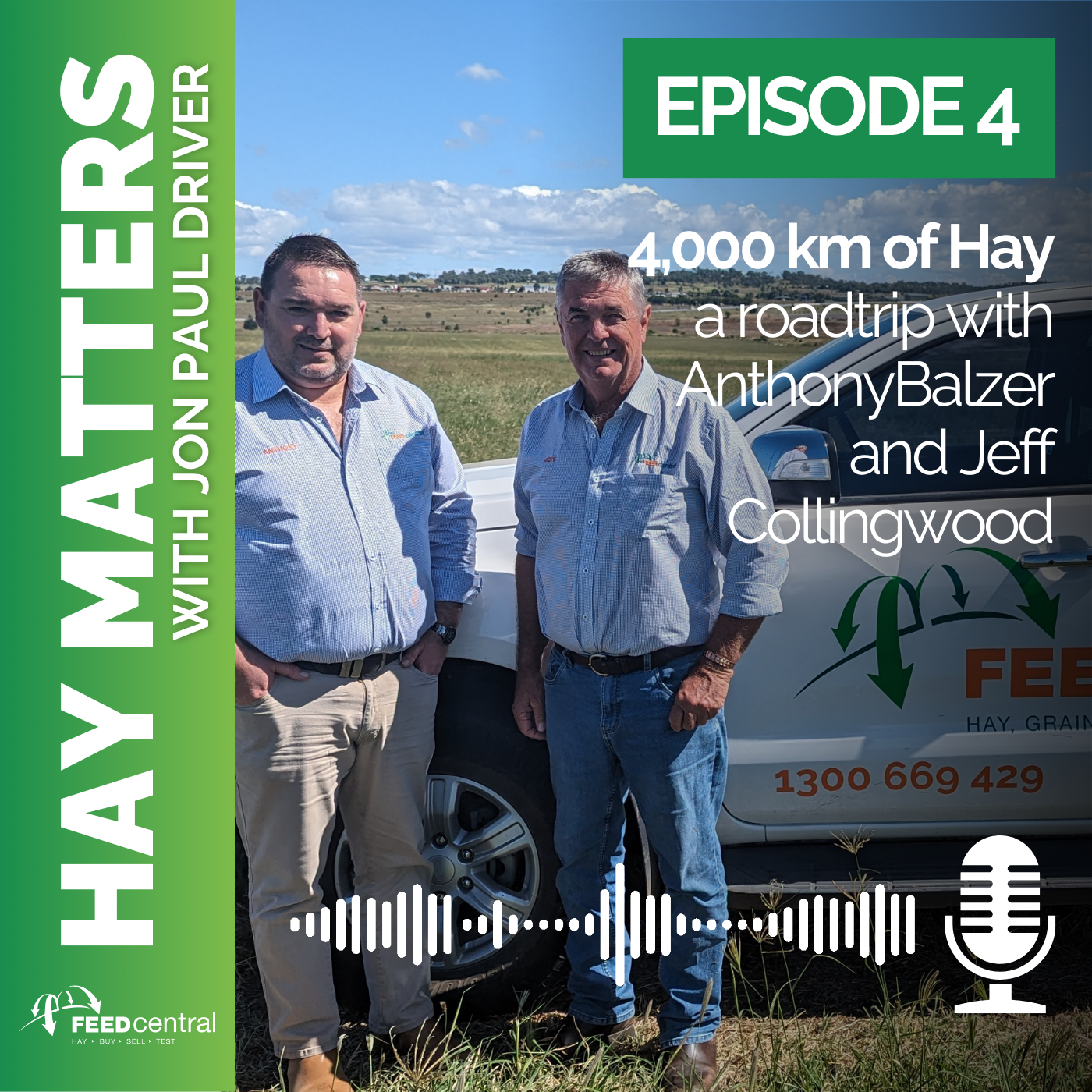
S1 Ep 44,000 km of Hay: a roadtrip with Anthony Balzer and Jeff Collingwood
Episode Highlights:Anthony and Jeff travelled from Toowoomba to Glen Innes, then on to Tamworth and Forbes, up through the Hunter Valley and then looping back via Moree.They found numerous areas to be drier than expected, with rainfall proving inconsistent across various regions. This has resulted in some farms boasting full paddocks, while others remain dry.The demand for hay is on the rise again due to drier conditions, as buyers approach the end of the reserves stored away pre-Christmas, in anticipation of a heatwave that never materialised. Reports indicate that numbers in the feedlots have reached an all-time high, demonstrating significant confidence in the cattle market.With drier weather possible going into winter, it's important to keep an eye on feed reserves to avoid the need to purchase larger quantities in winter.There are some excellent lines of hay available, including lucerne, providing ample opportunity to explore a wide variety of feed options.After the summer slowdown, hay has started to move again, and this pace is expected to increase as graziers prepare for winter.
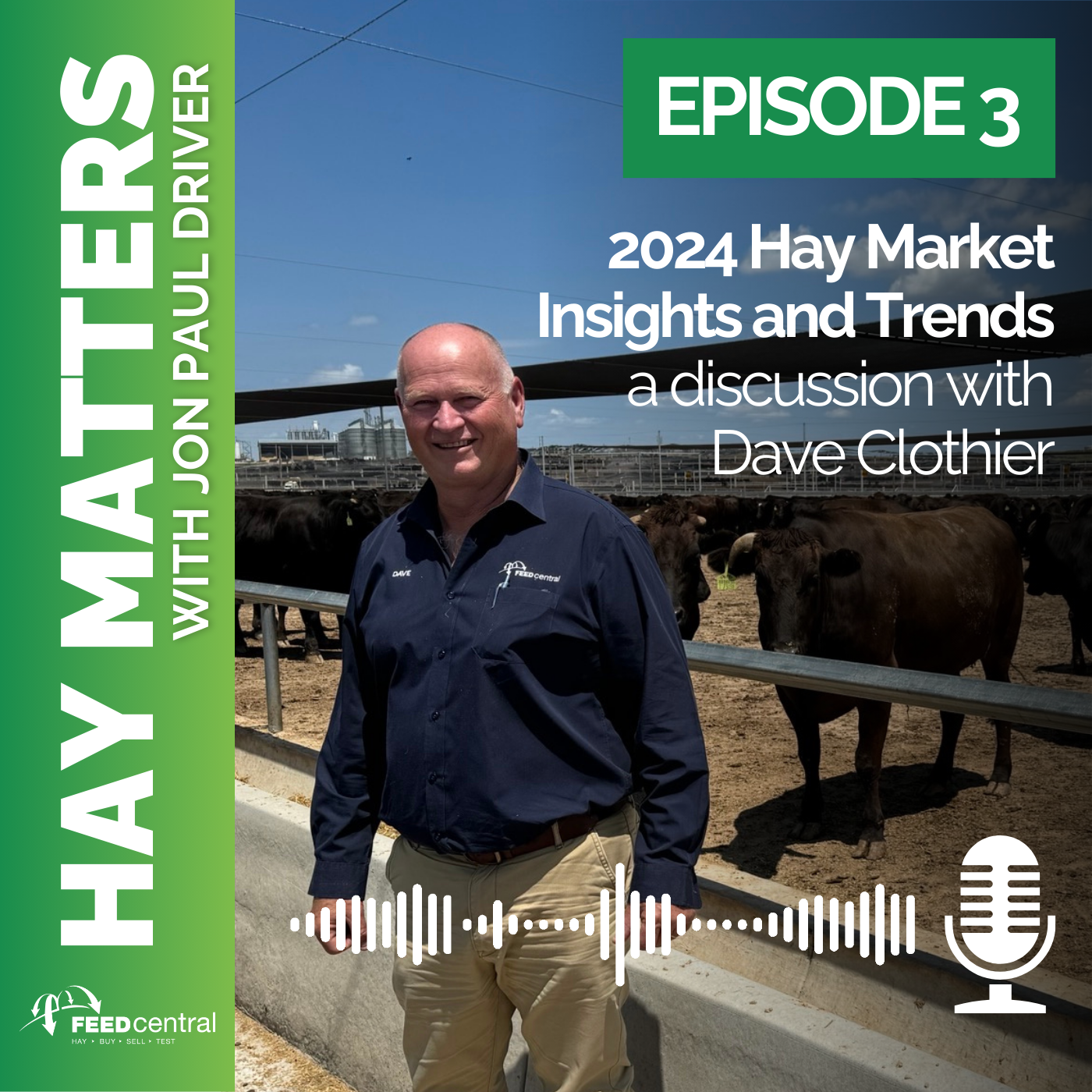
S1 Ep 32024 Hay Market Insights and Trends: a discussion with National Sales Manager Dave Clothier
Episode Highlights:Australia has experienced above-average rainfall across Eastern Australia, affecting hay demand.The unexpected shift from El Niño predictions to increased rainfall has led to a reversal in livestock unloading, now increasing demand and prices for livestock.Demand for hay has tapered off over the past 6-8 weeks, but seasonal demand is expected to rise again from March through June.Approximately 25-30% of hay has been compromised by being paddock stacked and rain-damaged making it less desirable compared to shedded hay.Graziers are preparing to stock up for winter, given the long wait for new season hay in October.Graziers are prioritising quality hay, and are willing to pay more to avoid the risks associated with rain-damaged fodder.The importance of high quality hay becomes paramount in the cooler months, with aroma and colour also crucial for weaning livestock.Market dynamics suggest that the price for cereal hays may decrease slightly, but transportation costs from distant locations could offset any savings.The export market of oaten hay is putting a solid floor in that market, especially in Southern States.Bale weight significantly impacts the cost-effectiveness of hay transportation, with heavier bales preferred to offset transport costs.The feedlot sector faces challenges with high commodity prices, affecting cash flow and operational margins.
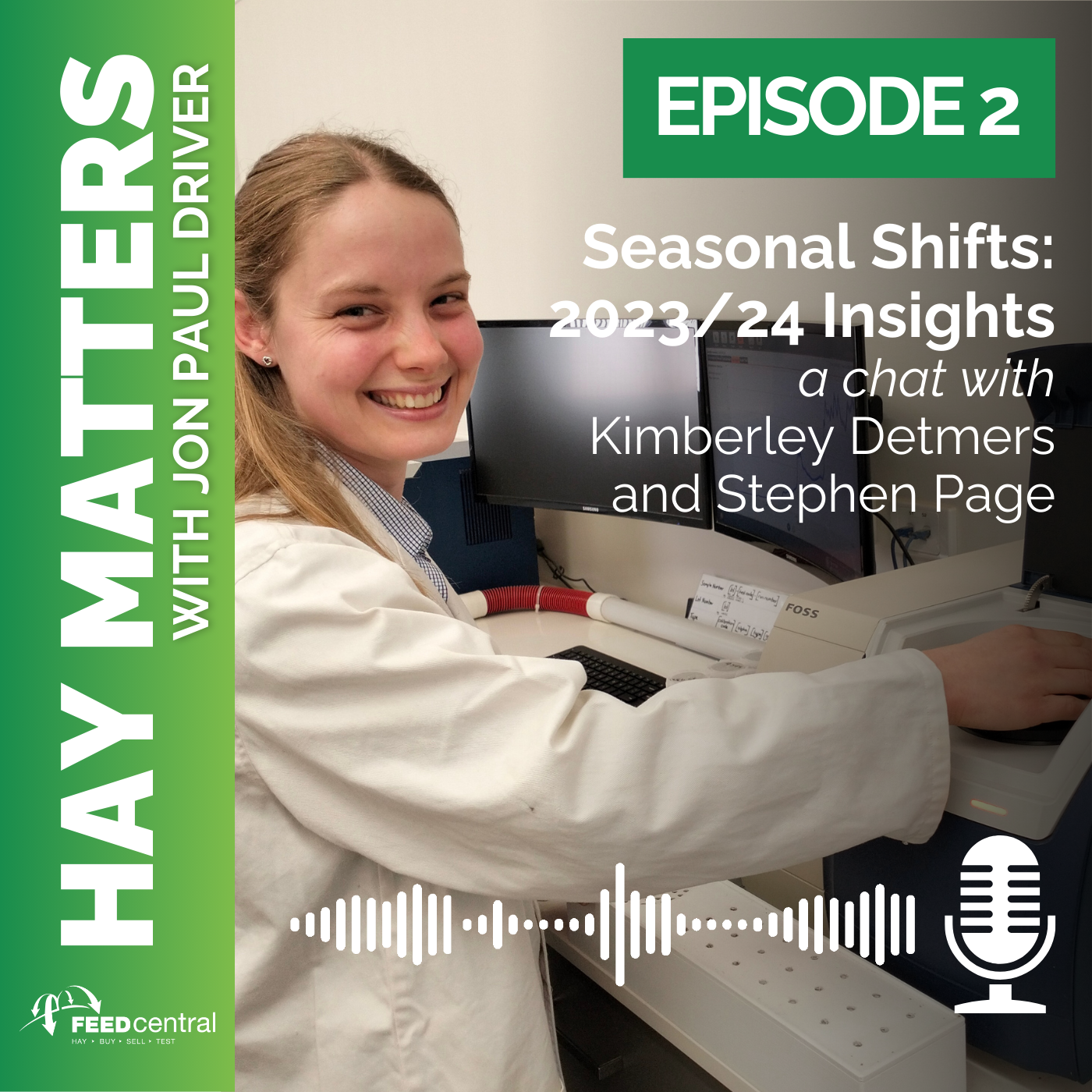
S1 Ep 2Seasonal Shifts: 2023/24 Insights: a chat with Kimberley Detmers and Stephen Page
Episode Highlights:Kimberley reports increased testing rates in the lab as growers work to differentiate their product amongst strong competition.Results point to a trend of increased sugars and proteins across the board, boosting overall nutrient quality.Water soluble carbohydrates (WSC) are up 10% in cereal hays.In New South Wales, the season has produced exceptional cereal hay, with 58% of inspected product rated FCA or FCAA, a fantastic increase from last year's 16%, which Steve attributes to favourable weather and optimal baling conditions.Bale weights for cereal hay have seen a 16% increase from last year, resulting in more efficient freight and higher nutrient density per bale, which has led to ongoing benefit for growers with shedded hay. Despite an excellent season, damage to paddock stacked hay has been an ongoing issue, highlighting the need for quality storage during severe weather events.
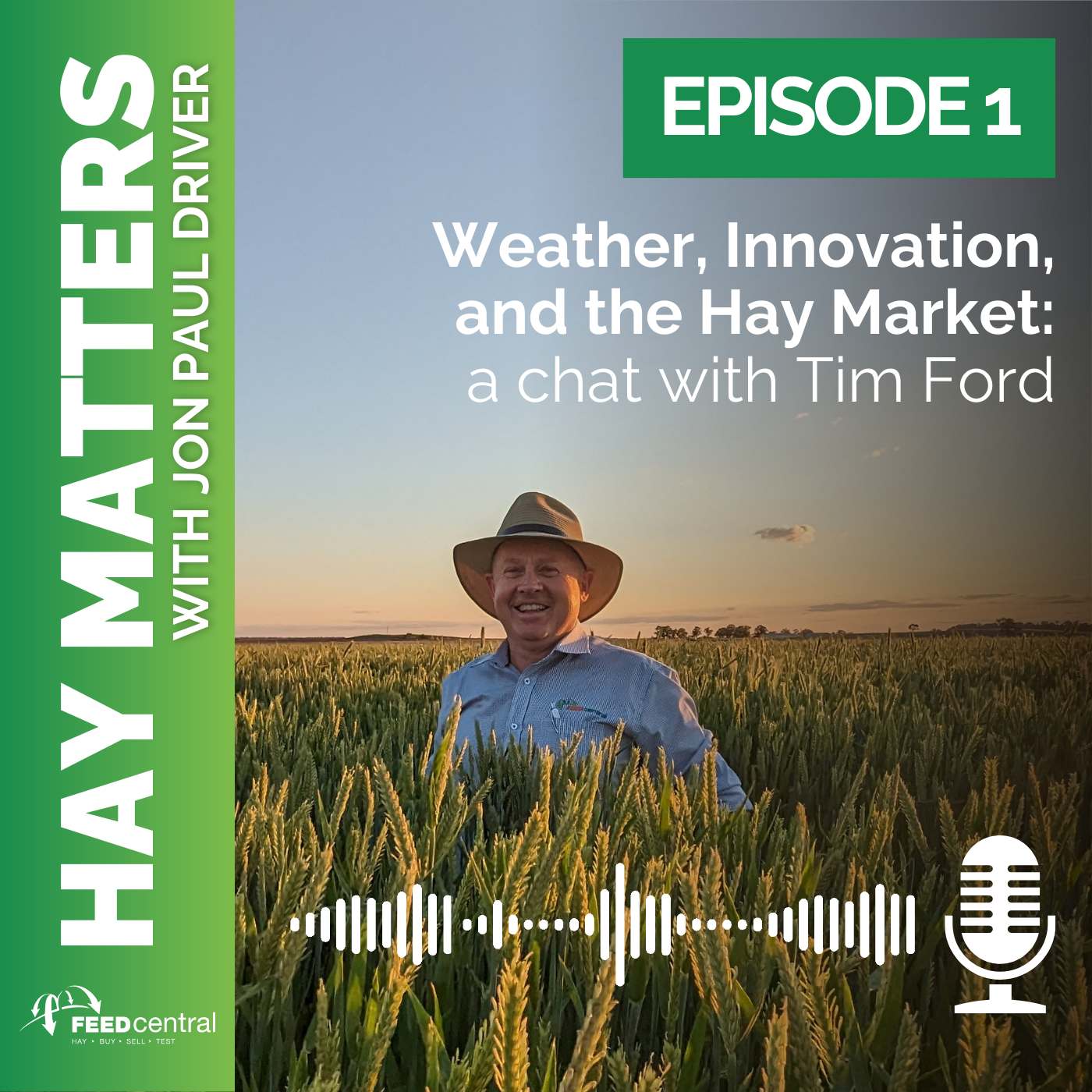
S1 Ep 1Weather, Innovation, and the Hay Market: a chat with Tim Ford
A brief big picture look at Australian Ag in 2024 and the differences between the U.S and Australian hay marketThe investment, dedication and hard work of young people returning to large scale family hay farms.Adapting to varying weather patterns, specifically the shift from El Niño to La NiñaHow growers and buyers can get the most out of the hay market during a wet year.The challenges and risks posed by outdoor stacked hay, especially under the threat of potential floodingInsights from past floods, including an increased demand for hayThe importance of improved infrastructure and access for hay growers to facilitate easier distribution and movement during wet years.