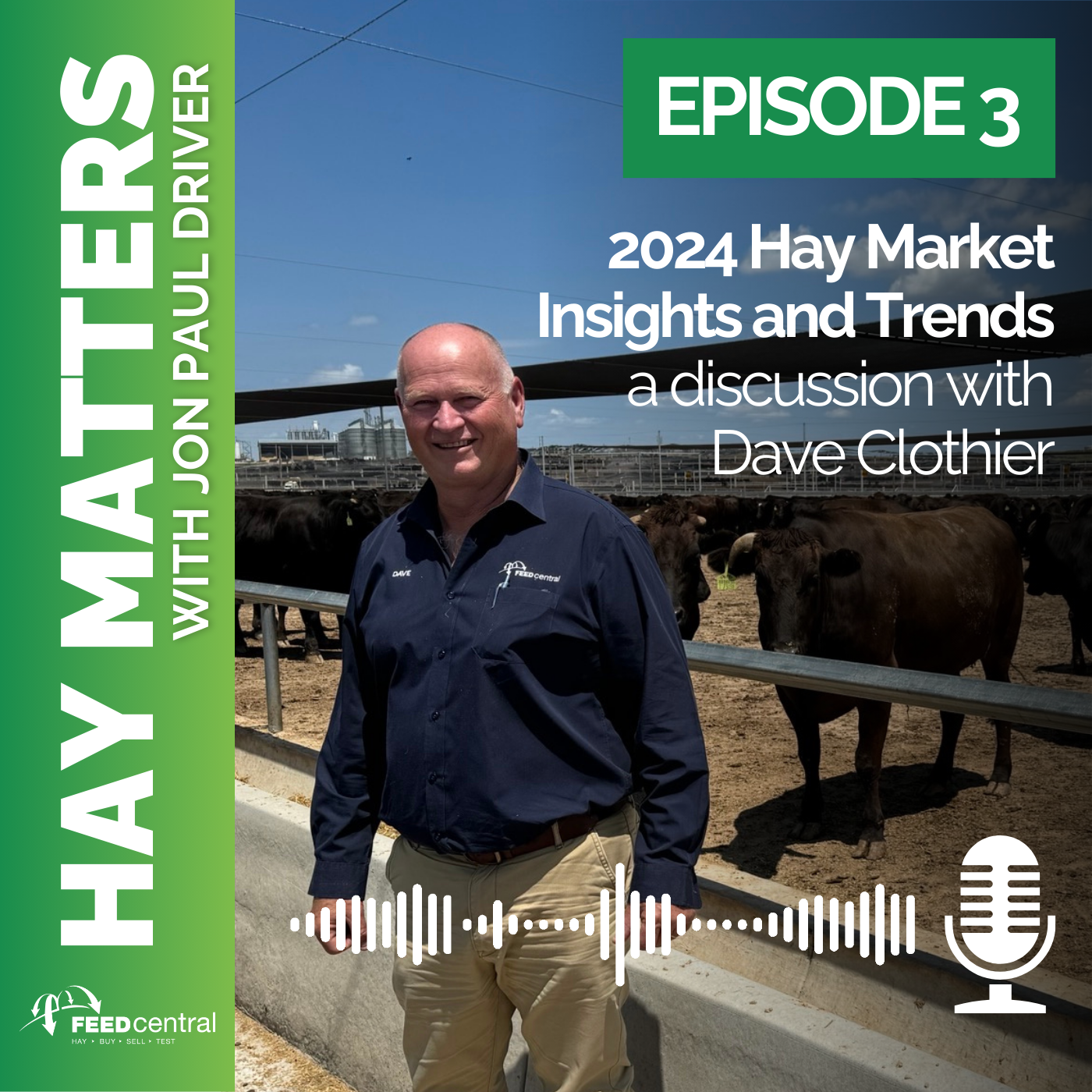
Season 1 · Episode 3
2024 Hay Market Insights and Trends: a discussion with National Sales Manager Dave Clothier
Hay Matters · Feed Central
February 28, 202414m 30s
Audio is streamed directly from the publisher (content.rss.com) as published in their RSS feed. Play Podcasts does not host this file. Rights-holders can request removal through the copyright & takedown page.
Show Notes
Episode Highlights:
- Australia has experienced above-average rainfall across Eastern Australia, affecting hay demand.
- The unexpected shift from El Niño predictions to increased rainfall has led to a reversal in livestock unloading, now increasing demand and prices for livestock.
- Demand for hay has tapered off over the past 6-8 weeks, but seasonal demand is expected to rise again from March through June.
- Approximately 25-30% of hay has been compromised by being paddock stacked and rain-damaged making it less desirable compared to shedded hay.
- Graziers are preparing to stock up for winter, given the long wait for new season hay in October.
- Graziers are prioritising quality hay, and are willing to pay more to avoid the risks associated with rain-damaged fodder.
- The importance of high quality hay becomes paramount in the cooler months, with aroma and colour also crucial for weaning livestock.
- Market dynamics suggest that the price for cereal hays may decrease slightly, but transportation costs from distant locations could offset any savings.
- The export market of oaten hay is putting a solid floor in that market, especially in Southern States.
- Bale weight significantly impacts the cost-effectiveness of hay transportation, with heavier bales preferred to offset transport costs.
- The feedlot sector faces challenges with high commodity prices, affecting cash flow and operational margins.