
GRDC Podcast
571 episodes — Page 6 of 12
GRDC in Conversation: Lou Flohr
Today's 'GRDC in Conversation' podcast interview is with Lou Flohr. Lou is a mixed cropping and livestock farmer running her enterprise alongside her parents and partner in Lameroo in the Southern Mallee of South Australia. With three young children, family is a huge part of Lou’s life, as is her commitment to ensuring women are represented in the ag sector and support for them encouraged. She is a member of the GRDC Southern Panel and deeply cares about agriculture and the people in it. She is truly inspiring. GRDC in Conversation is a limited series of the GRDC Podcast. It features in depth, long-form interviews with growers and other experts in the grains industry. It aims to help growers explore research outcomes and ideas through a different perspective. Interviewer Oli Le Lievre – presenter of Humans of Agriculture – weaves a story not just about the technical innovations but the expertise, history and personal background, influences and motivation of each guest. GRDC Project Code: HOA2202-001SAX Learn more about your ad choices. Visit megaphone.fm/adchoices

Predicting Nitrogen Loss – better data better decisions
Darryl Anderson interviews Professor Mike Bell and Dr David Lester to find out about GRDC’s $11.9 million investment into predicting nitrogen cycles and losses in Australian cropping systems. This video looks into the use of the APSIM farming system simulation model which measures the nitrogen cycle; and how this GRDC trial is looking to create a national data set of nitrogen loss across all regions of Australia. Download the transcript for this episode Contact: Professor Mike Bell University of Queensland [email protected] Dr David Lester Queensland Department Agriculture and Fisheries [email protected] More information: GRDC Podcast Episode – Predicting Nitrogen cycling and losses in Australian cropping systems Project Code: UOQ2204-010RTX Learn more about your ad choices. Visit megaphone.fm/adchoices

GRDC in conversation: Harm van Rees
Today's 'GRDC in Conversation' podcast interview is with Harm van Rees. Harm’s story starts in the Netherlands where he was raised until he was 14. Then his father got an engineering job in Australia, bringing the family with him. When his dad got another job back in the UK, Harm was not ready to leave. He studied science and biochemistry which took him all around the world, and when he got back to Australia, he headed to Victoria’s high country to study cattle grazing, but that’s only the beginning. Harm was a touchstone for no till farming in the 1990s and won a GRDC Recognising and Rewarding Excellence Award in 2020 which saw him seek new insights into attitudes towards, and usage of, glyphosate around the world. GRDC in Conversation is a limited series of the GRDC Podcast. It features in depth, long-form interviews with growers and other experts in the grains industry. It aims to help growers explore research outcomes and ideas through a different perspective. Interviewer Oli Le Lievre – presenter of Humans of Agriculture – weaves a story not just about the technical innovations but the expertise, history and personal background, influences and motivation of each guest. GRDC Project Code: HOA2202-001SAX Learn more about your ad choices. Visit megaphone.fm/adchoices

Novel solutions for pest management
It’s estimated the Australian grains industry loses more than $350 million a year – due to insects. GRDC has invested in the Australian Grains Pest Innovation Program (AGPIP) a joint initiative with the University of Melbourne and Cesar Australia – set up to tackle pest management problems in the grains industry. More novel approaches and solutions pest control are needed – Associate Professor Paul Umina from Cesar Australia and the University of Melbourne – provided an update on the ground-breaking research currently underway. Download the transcript for this episode Contact: Associate Professor Paul Umina Cesar Australia University of Melbourne [email protected] More Information: GroundCover Article – Authority warns of growing insecticide resistance risk Cesar Australia – The Australian Grains Pest Innovation Program (AGPIP) Project Code: UOM1906-002RTX Learn more about your ad choices. Visit megaphone.fm/adchoices

Nutrition in the West – Gaseous nitrogen losses in WA Crop systems (4/4)
Sally Maguire looks at ammonia volatilisation in depth with Associate Professor Louise Barton from the University of WA. They discuss the extended findings from a 14 month trial study and the implications for crop productivity and nitrogen use efficiency. Contact: Louise Barton University of WA Email: [email protected] More Information: GroundCover article - Assessing gaseous nitrogen loss from WA crop systems Project Code: UWA2202-001RTX Learn more about your ad choices. Visit megaphone.fm/adchoices

The most expensive herbicide is the one that doesn’t work
Deborah Bishop catches up with spray application specialist, Bill Campbell at the GRDC Western update, to discuss the awareness and understanding of making good weed spraying decisions. Contact: Bill Campbell Consulting [email protected] More Information: GRDC Media Release – How to get the most from your spraying program Project Code: BCC1910-001SAX Learn more about your ad choices. Visit megaphone.fm/adchoices
Nutrition in the West – Factors driving nitrogen decisions for WA growers (3/4)
Deborah Bishop interviews Dr. Elizabeth Petersen from the University of Western Australia about the results from a survey of four hundred West Australian grain producers. They discuss the role of agronomics, the process involved with making fertiliser decisions and strategies implemented to maximise yield potential. Contact: Dr Elizabeth Petersen Principal Applied Economist, Advanced Choice Economics P/L Senior Research Fellow, University of Queensland Adjunct Senior Lecturer, University of Western Australia email: [email protected] Craig Scanlon Senior Research Scientist, DPIRD email: [email protected] More Information: GroundCover Article – Agronomy still top priority for nitrogen fertiliser decisions Agronomic factors are the dominant influence on nitrogen fertilizer strategies in dryland cropping systems Project Code: UWA1801-002RTX Learn more about your ad choices. Visit megaphone.fm/adchoices

Key messages for the Northern region
Sally Maguire interviews experts at the 2023 GRDC Grains research update held in Wagga Wagga. They discuss the latest advice for the season ahead. These experts include: Dr John Kirkegaard, CSIRO Dr Felicity Harris, Charles Sturt University Prof Chris Preston, Adelaide University Prof Robert Park, University of Sydney Prof James Hunt, University of Melbourne. Learn more about your ad choices. Visit megaphone.fm/adchoices

Nutrition in the West – Potassium response on loamy soil in Western Australia (2/4)
Deborah Bishop interviews Richard Bell from Murdoch University (SoilWest Alliance), to discuss widespread Potassium deficiencies in soils and report on the highly successful collaboration between GRDC, DPIRD, SoilsWest, Murdoch University, Summit Fertilisers and CSBP Fertilisers and key research findings for growers and advisors from a long-term field trial in Western Australia, investigating how to maximise profit and efficiency from potassium fertiliser. Contact: Richard Bell, Murdoch University (SoilsWest Alliance) [email protected] Project Code: UMU1801-006RTX Learn more about your ad choices. Visit megaphone.fm/adchoices

Using pre-emergent herbicides at seeding this season
Pre-emergent herbicide applications at seeding. What to apply? How? And what chemicals really don’t get along well together in the spray tank? There is a lot to know as growers approach the 2023 season. Across the southern region, the mild and wet season last year means there’s a mighty bank of weed seeds just waiting to rear their ugly heads. There’s a range of options for pre-emergent herbicide applications, and we spoke to Southern Extension Officer with WeedSmart Chris Davey likes to get some tips on using pre-emergent herbicides. Contact: Chris Davey Agriservices Agronomist [email protected] More Information: Pre-emergent herbicides fact sheet Learn more about your ad choices. Visit megaphone.fm/adchoices

Nutrition in the West – Yield response to P fertiliser (1/4)
Welcome to the first podcast in our new limited series focusing on Nutrition in the West. Each Friday for the next four weeks, we’ll release an additional GRDC podcast covering nutrition topics specifically for Western Australia, as growers gear up for seeding 2023. The knowledge used to guide phosphorus management in WA agriculture has its origins in field research from 20 to 60 years ago. This long term private-public partnership study, part of a large crop nutrition project, helps provide up-to-date guidelines by revealing the key influences of wheat response to P fertiliser in current cropping systems. We caught up with Senior Research Scientist Craig Scanlon from WA’s Department of Primary Industry and Regional Development about what’s driving and influencing yield response to phosphorous fertiliser in current cropping systems – which importantly – now includes climate - in the equation. Contact: Craig Scanlan, Senior Research Scientist – DPIRD [email protected] More Information: Optimising fertiliser application – what level of precision can we achieve? Project Code: UMU1801-006RTX Learn more about your ad choices. Visit megaphone.fm/adchoices

Optimising Flowering to Improve Farm Profits | More than Modelling
Forecasting how optimal flowering windows and crop yields will be impacted by the warming climate, and what growers can do about it, has been unexplored – until now. A new economics project under the Optimising Irrigated Grains Initiative, led by Associate Professor Matt Harrison from University of Tasmania, has brought together researchers, farming groups, and industry organisations to compare and predict optimal flowering windows to increase yields. It’s the first time contemporary genotypes have been compared across rainfed vs irrigated crops to predict current and future crop flowering windows across several growing regions using real weather and field trial data. The project’s focus on real world testing and grower engagement has resulted in a free online tool, Water Can Profit, that calculates farm inputs and helps growers make more profitable decisions. Contact: Matthew Harrison Tasmanian Institute of Agriculture, University of Tasmania Email: [email protected] More Information: WaterCanProfit main website Details on the WaterCanProfit App Here is the hint for installation: The WaterCanProfit app version 1.2.3(8) is now available for both Android and iOS. Users can download and install the app on their mobile devices to begin using it immediately. We highly recommend downloading the app using the link provided, so that users can receive email notifications about future updates. iOS users can download the app by this link. Step 1 is to download TestFlight from the apple store, and Step 2 is to click the link. This video also helps with the installation: No.0.1 iOS Install by link. Android users can use this link to get access and provide your Gmail (the same gmail you use for the google store) to join an 'internal tester list' to download the beta version of the app. Once your Gmail address has been approved, you will receive an automated email that tell you to download 'App tester' and then find the WaterCan app. This video also helps with the installation: WaterCan Profit Android app test. We provide a 'User manual' WaterCan_User_Manual1.1.0.pdf to help with your installation and testing of the app (As we still update the software based on user feedback, the instruction may not be fully consistent and updated to date). You can also check GRDC YouTube channel where we present the 5 functions of the app. Project Code: UOT1906-002RTX Learn more about your ad choices. Visit megaphone.fm/adchoices
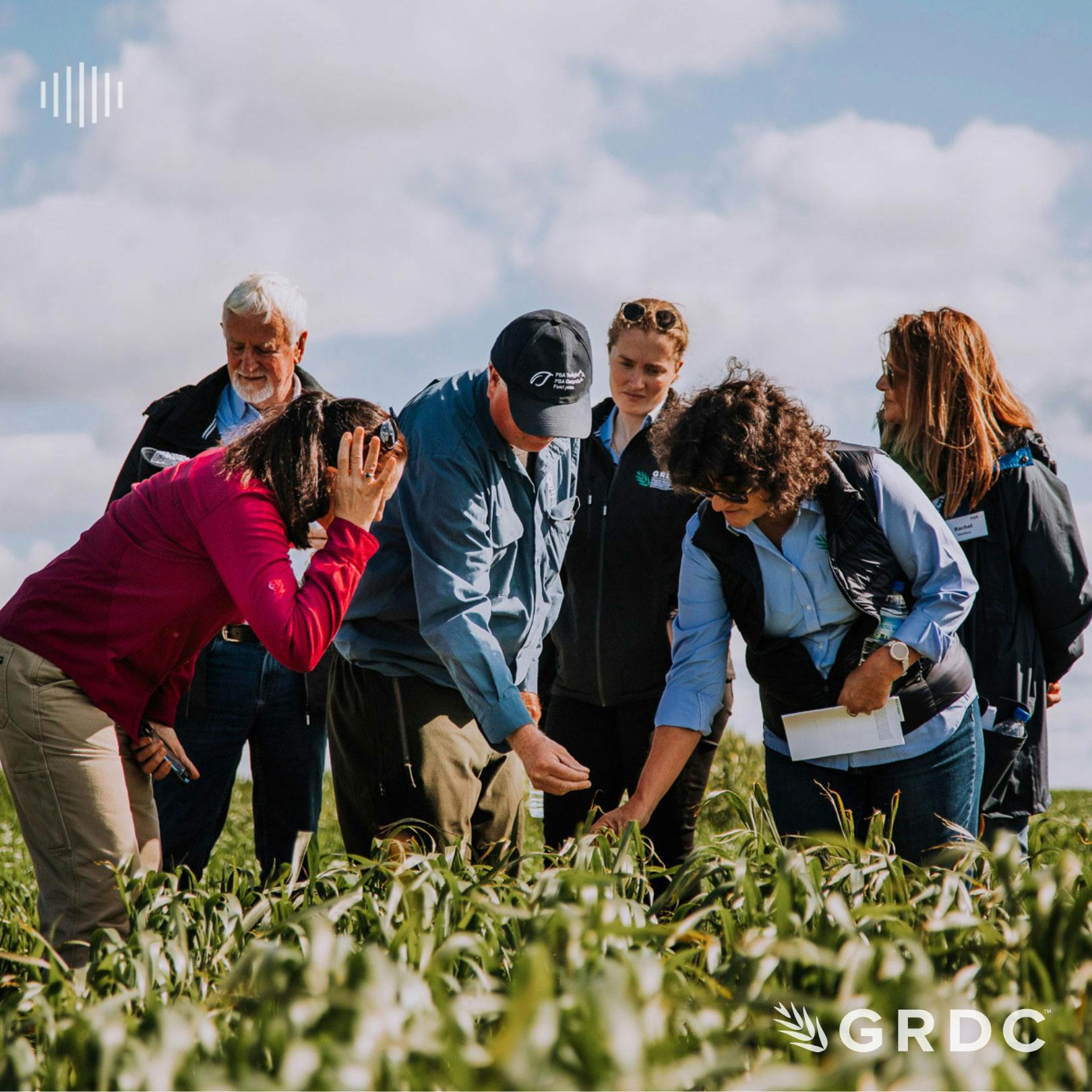
Regional Panel Member Recruitment
If you’re a grain grower, an agribusiness practitioner, scientist, or industry expert – GRDC wants you. That’s right, GRDC is looking for Regional Panel Members who are willing to share their knowledge, expertise and networks to help facilitate cutting edge research; and in turn bolster on farm profitability. GRDC is a world leading grains research organisation, responsible for planning, investing in and overseeing research, development, and extension. Regional panels provide a vital link between the broader grains sector and GRDC; and help to identify, prioritise, and support RD&E investments that address regional constraints and opportunities. We spoke to Regional Panel Members from across Australia to talk about what the role entails. More Information: Applications are now open for all the GRDC Regional Panels and for more information head to the GRDC Website. Applications close Thursday 13 April. Becoming a GRDC Regional Panel Member – YouTube Learn more about your ad choices. Visit megaphone.fm/adchoices
Native budworm in… wheat?
Determining the economic impact of native budworm in wheat crops was not something Dustin Severtson from the Department of Primary Industries and Regional Development (DPIRD) ever expected to be doing. But when WA agronomists and growers started reporting the insects feeding off wheat in spring, DPIRD, backed by GRDC investment, launched glasshouse and in-field research to examine why native budworm was moving into this non-traditional cereal crop host. Contact Dustin Severtson DPIRD More information YouTube Video - Native budworm in wheat GRDC project code: DAW2106-001RTX Learn more about your ad choices. Visit megaphone.fm/adchoices

Managing Cereal Disease in 2023 (Part 2)
For many South Australian grain growers, 2022 was a cracker season, but the weather and other factors did lead to some cereal disease. So, what does 2023 have in store, and what to do to keep disease at bay? This is the second part of a two-part podcast where we do a deep dive to bring you the latest advice. In Part two we speak to Sam Trengove, who is an independent consultant on Yorke Peninsula and his business also does research and extension; and we also hear from Associate Professor, Fran Lopez-Ruiz, from Curtin University in Western Australia who is a specialist on fungicides. Contact Sam Trengove, Trengove Consulting Fran Lopez, Curtin University - WA More Information Farm Trials data explorer Project Code: TRE2204-001RTX Learn more about your ad choices. Visit megaphone.fm/adchoices

Managing Cereal Disease in 2023 (Part 1)
For many South Australian growers, 2022 was a cracker season, but the weather and other factors did lead to some cereal disease. So what does 2023 have in store, and what to do to keep disease at bay? Dr Tara Garrard is a cereal pathologist at the South Australian Research and Development Institute (SARDI), the research division of the Department of Primary Industries and Regions in South Australia. She has a project looking at Septoria Tritici Blotch, working out how it behaves in low and medium rainfall zones… but Tara says there are other diseases to be aware of as you go into the sowing. Contact Tara Garrard, PIRSA-SARDI [email protected] Robert Park, University of Sydney [email protected] GRDC code: UOA2104-012RTX, UOS2207-002RTX Learn more about your ad choices. Visit megaphone.fm/adchoices

Heat Tolerant Chickpea; update on heat tolerant chickpea lines
Hot finishes in Australia’s northern region are resulting in lower chickpea quality and yield. In a bid to improve heat tolerance in chickpea, GRDC has funded research that builds on advances already made under the Australian Research Council: Legumes for Sustainable Agriculture Hub. Professor Richard Trethowan is Director of the University of Sydney’s Plant Breeding Institute in Narrabri, New South Wales… where he and his team, are pursuing both genetic and agronomic solutions to improve the heat tolerance of chickpeas. To find out more we spoke with Professor Trethowan and his colleague Dr Angela Pattison. Contact: [email protected] More Information: International resources tapped for heat-tolerant chickpea germplasm for Australian breeding programs Project Code: UOS2112-002RTX Learn more about your ad choices. Visit megaphone.fm/adchoices

Financial Benchmarking, the importance of financial benchmarking and how to go about it
The economics of farming are a crucial component for all growers, and it’s not always a skill set that comes naturally. That’s why a group of Victorian growers has come together to pool their knowledge and resources around the topic of financial benchmarking. One of the tools used by the Victorian grower group is business management software (P2P Agri) made by leading farm management consultant, Michael Krause, who also previously developed the ‘Farming the Business’ manual for GRDC. Victorian growers Peter Aikman and Alistair Murdoch discuss the importance and the practicalities of financial benchmarking. Contact P2P Agri More Information Farming the Business Manual Learn more about your ad choices. Visit megaphone.fm/adchoices
Stripe Rust Disease Ratings
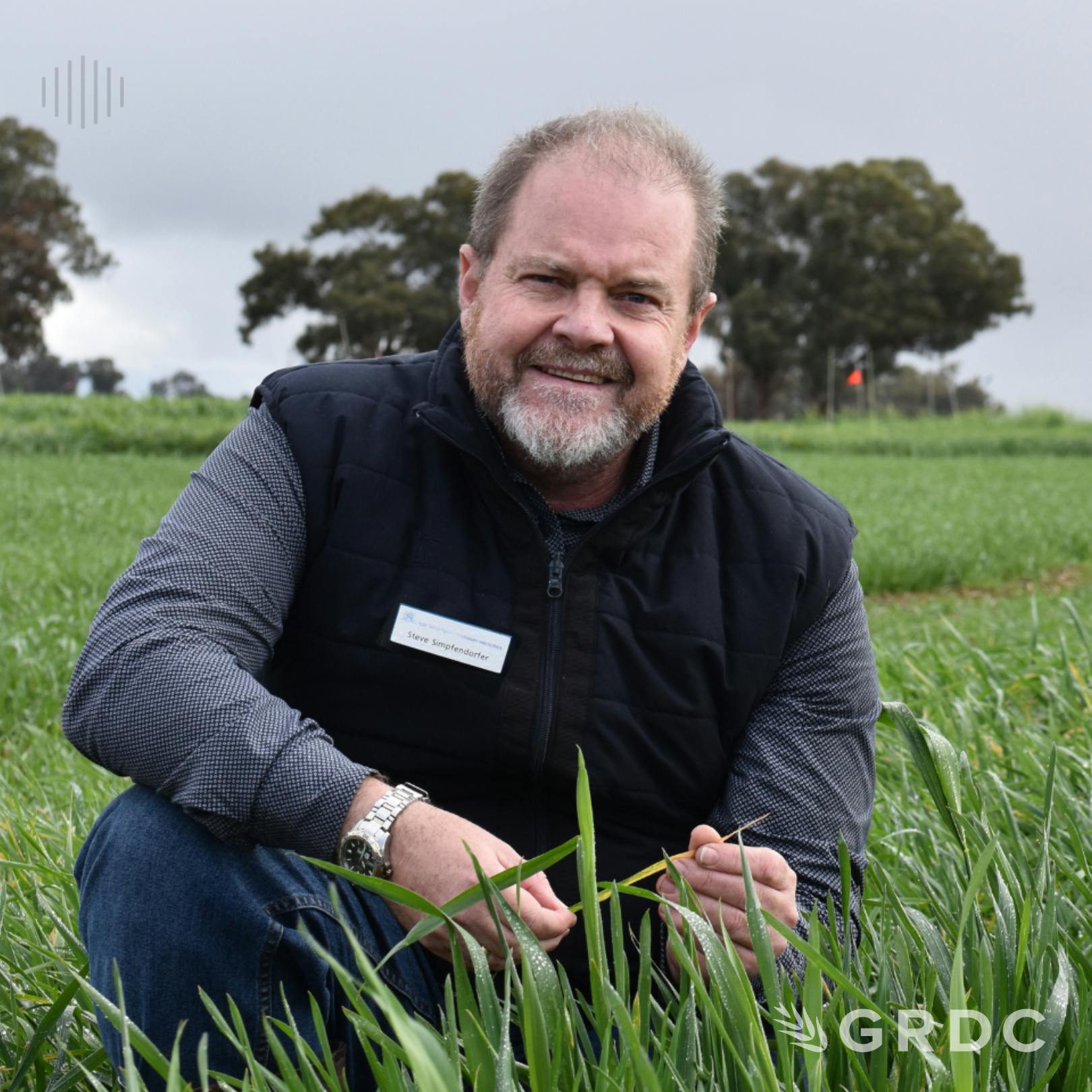
Last year along the east coast of Australia, stripe rust was a huge issue and experts are warning that in 2023, growers will continue to experience stripe rust pressure with wet summer conditions and significant green bridge carryover from last year, creating the perfect storm for the disease. The good news is there's a free online tool that growers can use to avoid highly susceptible varieties in their regions and develop management plans to minimise impacts. Called the NVT disease ratings tool. It looks at more than just stripe rust. With national trial data broken down by crop, location and pathotype resistances. We caught up with Dr. Steven Simpfendorfer, Senior plant pathologist at New South Wales, DPI based in Tamworth, to discuss the stripe rust situation and what growers can do about it this season. Contact Dr Steven Simfendorfer More information NVT Disease Ratings Tool Project Code: DAQ1905-004SAX, DPI1907-003SAX, WAA1905-001SAX, DJP1905-002SAX Learn more about your ad choices. Visit megaphone.fm/adchoices
Solving the mystery of potassium deficiency in the Southern Region
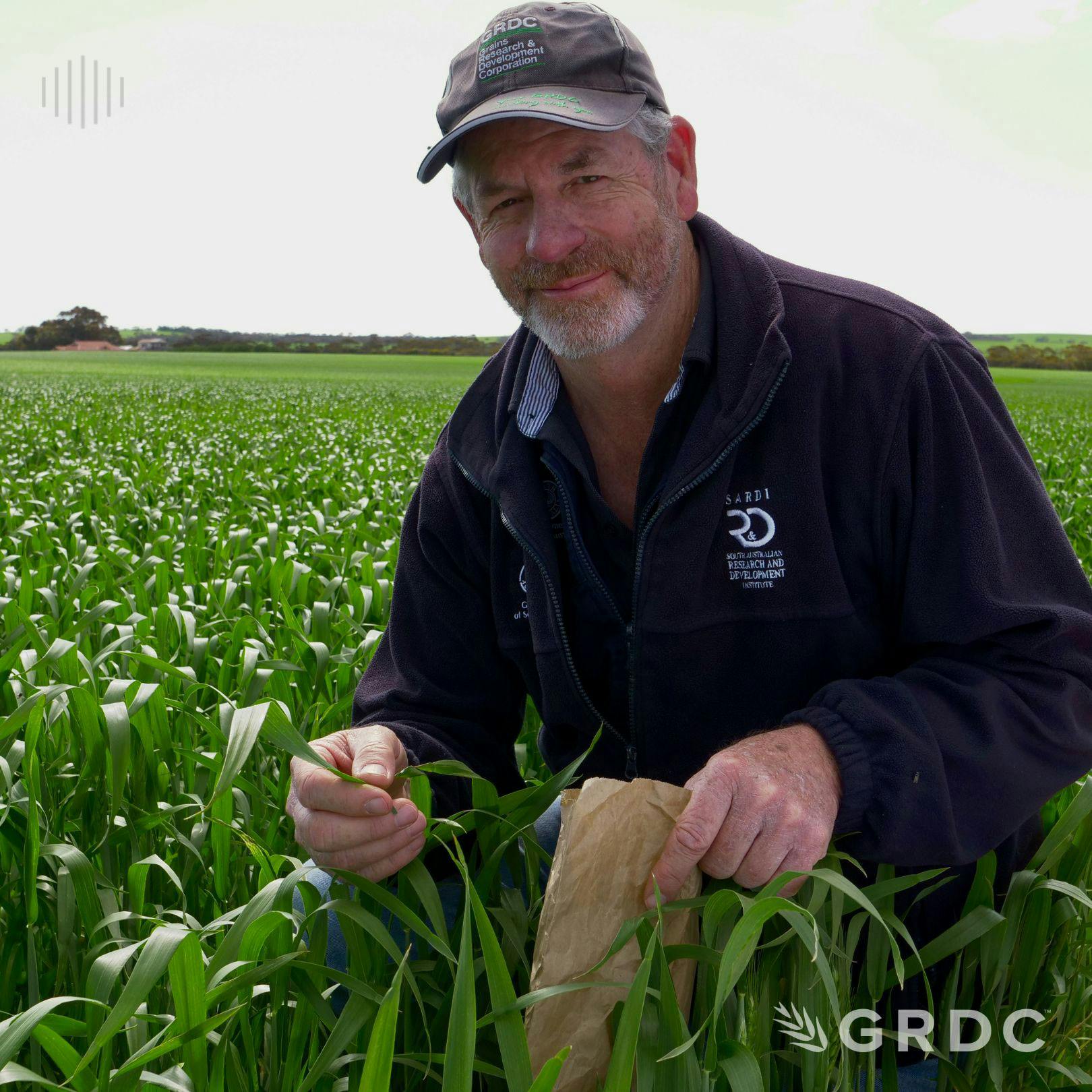
Growers and advisers in South Australia and Victoria are increasingly reporting underperforming crops, which they believe could be attributed to a lack of potassium (K). Soil tests often show the levels are fine, but are those tests accurate for south-eastern Australia and has the grains industry relied on good K reserves in that part of the world for too long? Dr Nigel Wilhelm is from SARDI, the South Australian Research and Development Institute, the research division of the Department of Primary Industries and Regions in South Australia. He’s leading a GRDC investment that is investigating the extent and severity of K deficiency across south-eastern Australia and assessing the best way to manage the issue. Contact Dr Nigel Wilhelm [email protected] More information Solving the mystery of potassium deficiency in the south GRDC Project code: UOA2201-002RTX Learn more about your ad choices. Visit megaphone.fm/adchoices
Expanding chickpeas in the west
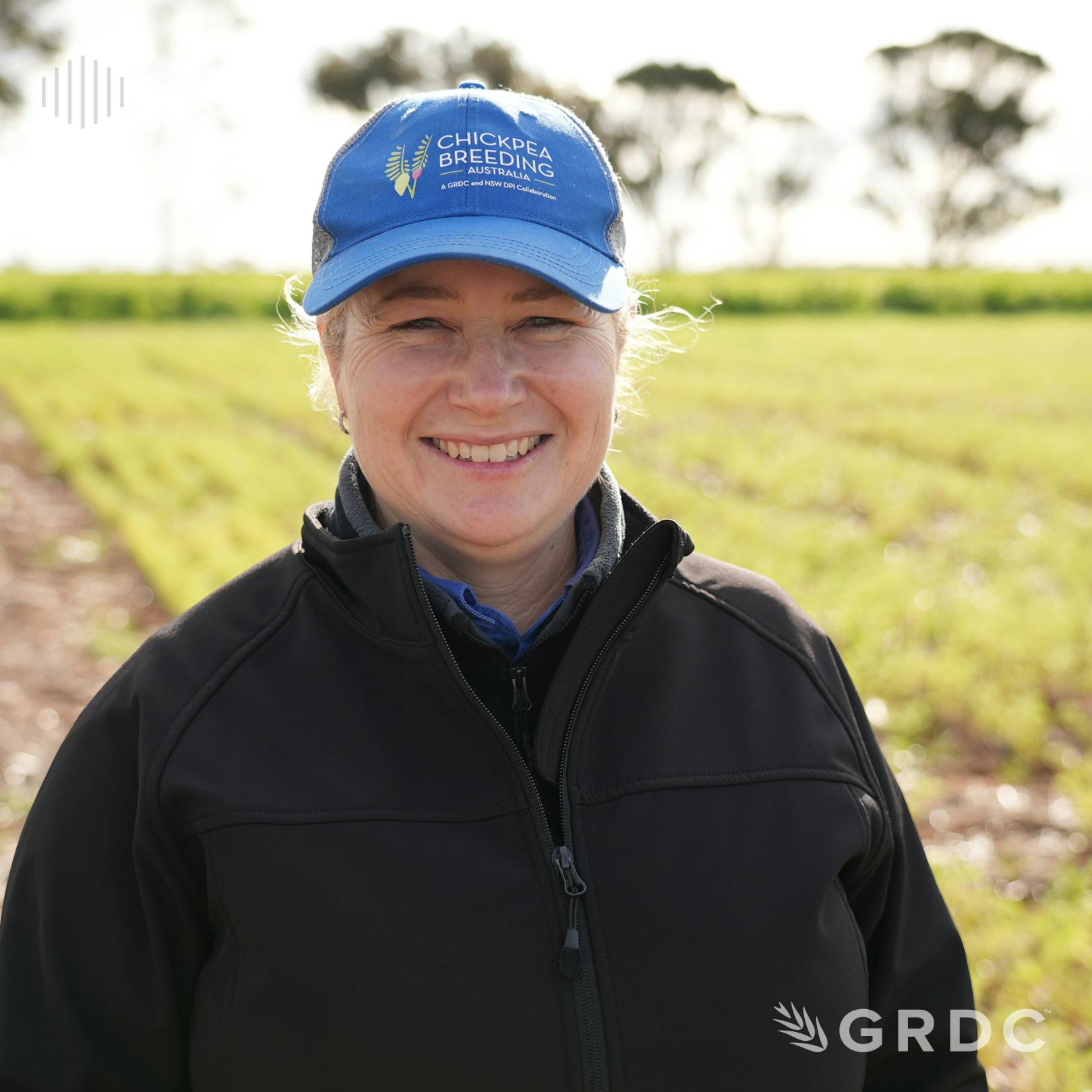
Chickpea production in Western Australia took a king hit in the early 2000s when a fungal outbreak hammered grower confidence and reduced crop coverage from 60,000 to 5,000 hectares. These days, it’s around 10,000 hectares. But with GRDC investment, Chickpea Breeding Australia (CBA) is working to firmly re-establish chickpea production into a premium and profitable product in WA through the release of new varieties. As CBA program lead Dr Kirsty Hobson explains, the team is working to improve yields, cold tolerance, disease resistance and adaptation to low pH soils. CBA is a five-year, $30-million breeding initiative that is working to expand the geographic reach of chickpeas from their traditional northern NSW and QLD region stronghold into central and southern NSW and WA. Contact Dr Kristy Hobson CBA program leader and NSW DPI chickpea breeder [email protected] More information Expanding chickpeas in the west video Partnerships galvanised by Chickpea Breeding Australia to deliver for WA GRDC Project Code: DPI2003-009OPX Learn more about your ad choices. Visit megaphone.fm/adchoices

Talking mental health in a tough year
Unprecedented spring rainfall and flooding in 2022 has made for a particularly tough year for many growers. In this special GRDC podcast, NSW Riverina grower, Roy Hamilton, shares his experience of salvaging a soaked harvest in a season that initially held so much promise. Then ex- NRL Balmain Tigers player turned mental health speaker and educator at the Black Dog Institute, Wayne Wigham, shares his lived experience with depression and mental health recommendations in an effort to help others. Contact Lifeline - 13 11 14 Beyond Blue - 1300 224 636 More information The Black Dog Institute: Depression self test Anxiety self test Psychology services including telehealth information links Wayne Wigham’s story Learn more about your ad choices. Visit megaphone.fm/adchoices
Cucumber Mosaic Virus (CMV): Minimising the impacts of CMV, particularly in lentil
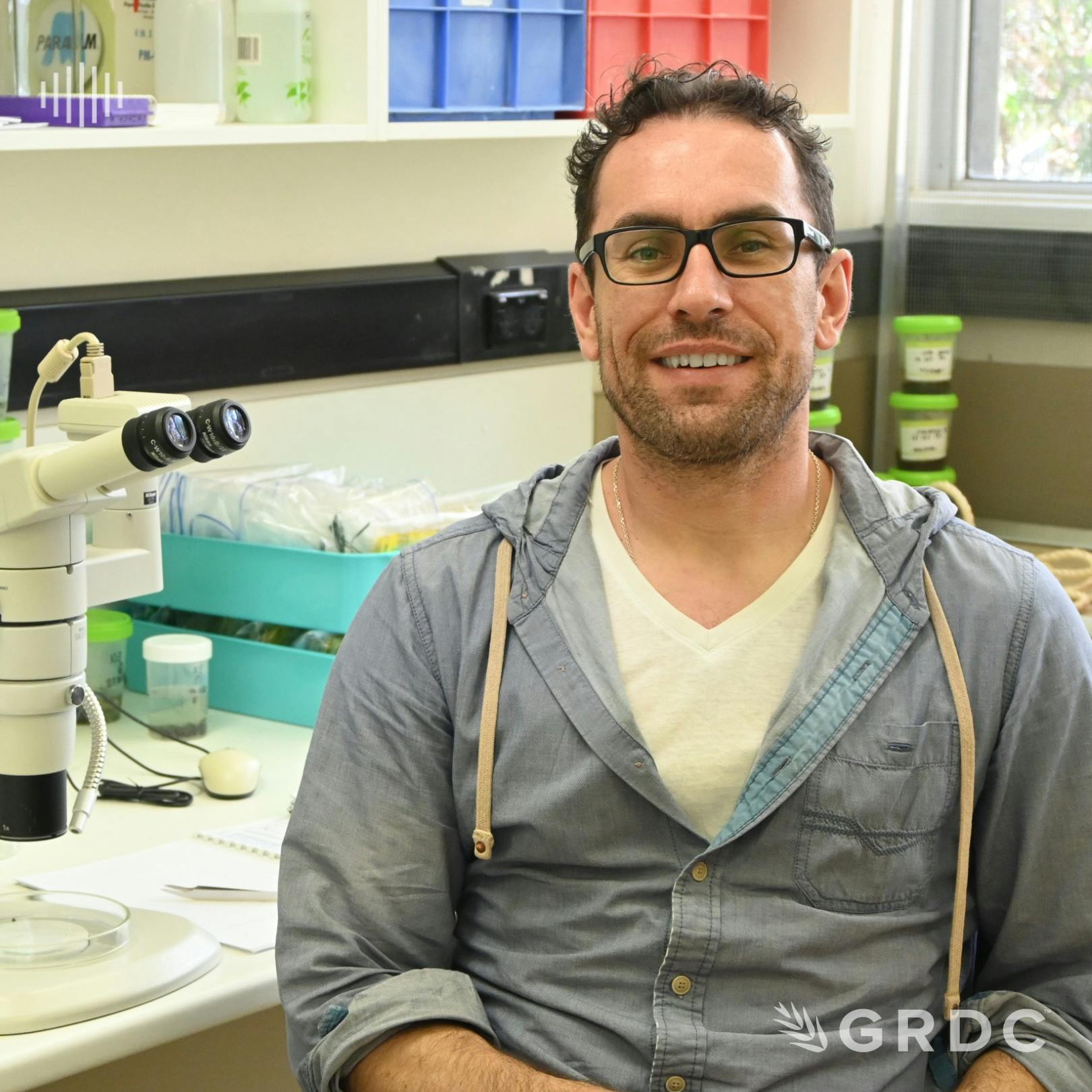
Cucumber Mosaic Virus - also known as CMV - is a seed transmitted virus that can cause yield losses of almost 100 per cent. That’s why GRDC is investing in a project that will support industry by providing information on minimising the impact of CMV infected seed; specifically on lentil yield in the Southern region. The project also aims to promote awareness of seed health, seed transmitted viruses and yield penalties associated with different levels of virus infection. Contact: [email protected] GRDC Project Code: DJP2111-001RTX - Quantifying the yield risk of planting CMV infected lentil seed in the Southern region Learn more about your ad choices. Visit megaphone.fm/adchoices
GRDC in conversation: Yannik Heller
Today's 'GRDC in Conversation' podcast interview is with Yannik Heller. Yannik grew up in the Wimmera region of western Victoria. At 16 he left school and headed to Denmark to work on a family friend's farm. A year later he was back with some unique experiences and life skills under his belt. With a view to drive big tractors, he got work on a farm in Nhill and has stuck with agriculture ever since. Now he finds himself in Tasmania working on the other side of the fence in the farm services sector. GRDC in Conversation is a limited series of the GRDC Podcast. It features in depth, long-form interviews with growers and other experts in the grains industry. It aims to help growers explore research outcomes and ideas through a different perspective. Interviewer Oli Le Lievre – presenter of Humans of Agriculture – weaves a story not just about the technical innovations but the expertise, history and personal background, influences and motivation of each guest. Learn more about your ad choices. Visit megaphone.fm/adchoices

Determining the value in your crop - what to harvest first this season
For most Australian grain growers, 2022 has been a challenging year. Weather conditions across the country continue to be volatile meaning that this harvest many growers are faced with extreme circumstances. Dr Kate Burke is a former agronomist and an agri-strategist and in this podcast she shares some practical recommendations on determining where the value lies in your crop and what to harvest first. Kate also helped deliver the 'Opportunity for Profit' workshops run with the support of GRDC in 2019 and won the GRDC Southern Region Seed of Light Award in 2021. Contact: Dr Kate Burke [email protected] More Information: GroundCover Article - 'Opportunity for Profit' GroundCover Article - 'Kate applauded and awarded for grains research extension efforts' Crops People Money & You GRDC Project Code: RDP1802-001WSX Learn more about your ad choices. Visit megaphone.fm/adchoices
GRDC in conversation: Jenny Davidson
Today's 'GRDC in Conversation' podcast interview is with Dr Jenny Davidson. After briefly considering medicine as a career path, Jenny decided treating sick plants was the better choice for her. As a pulse pathologist she has spent the past 3 decades with SARDI helping the grains industry, witnessing the industry change from a focus on field peas to the pulse diversity seen across Australian farms today. In 2021, she 'retired' but that didn't stop her. She spent this year travelling across South Australia interpreting the research results from SARDI projects as a consultant, and there's no doubt more to come from her. GRDC in Conversation is a limited series of the GRDC Podcast. It features in depth, long-form interviews with growers and other experts in the grains industry. It aims to help growers explore research outcomes and ideas through a different perspective. Interviewer Oli Le Lievre – presenter of Humans of Agriculture – weaves a story not just about the technical innovations but the expertise, history and personal background, influences and motivation of each guest. Learn more about your ad choices. Visit megaphone.fm/adchoices
Pre-harvest safety: Managing people and safety during harvest season
It’s harvest time across most of Australia and for many growers this year they will have the added challenge of harvesting in water-logged conditions. Adverse weather creates greater risk around this busy time - but having procedures and processes in place can benefit growers, their employees and ultimately their businesses. Contact: https://denisemclellan.com.au/ More Information: https://denisemclellan.com.au/ https://www.peopleinag.com.au/ See Groundcover article here Project Code: RDC2107-001OPX Learn more about your ad choices. Visit megaphone.fm/adchoices
GRDC in conversation: Jeanette Long
Today's 'GRDC in Conversation' podcast interview is with Jeanette Long. Astoundingly, until 1992, women weren't allowed to officially name their occupation as 'farmer' in Australia. It was in this era, with change emerging and an increasing recognition of women's roles in farming, that Jeanette Long began working in agriculture. Jeanette's role as facilitator, trainer, coach, business partner and farmer has seen her put people first across her varied career roles and communication with them at the heart of that. She is a champion for helping others succeed and a tireless advocate for learning. GRDC in Conversation is a limited series of the GRDC Podcast. It features in depth, long-form interviews with growers and other experts in the grains industry. It aims to help growers explore research outcomes and ideas through a different perspective. Interviewer Oli Le Lievre – presenter of Humans of Agriculture – weaves a story not just about the technical innovations but the expertise, history and personal background, influences and motivation of each guest. Learn more about your ad choices. Visit megaphone.fm/adchoices
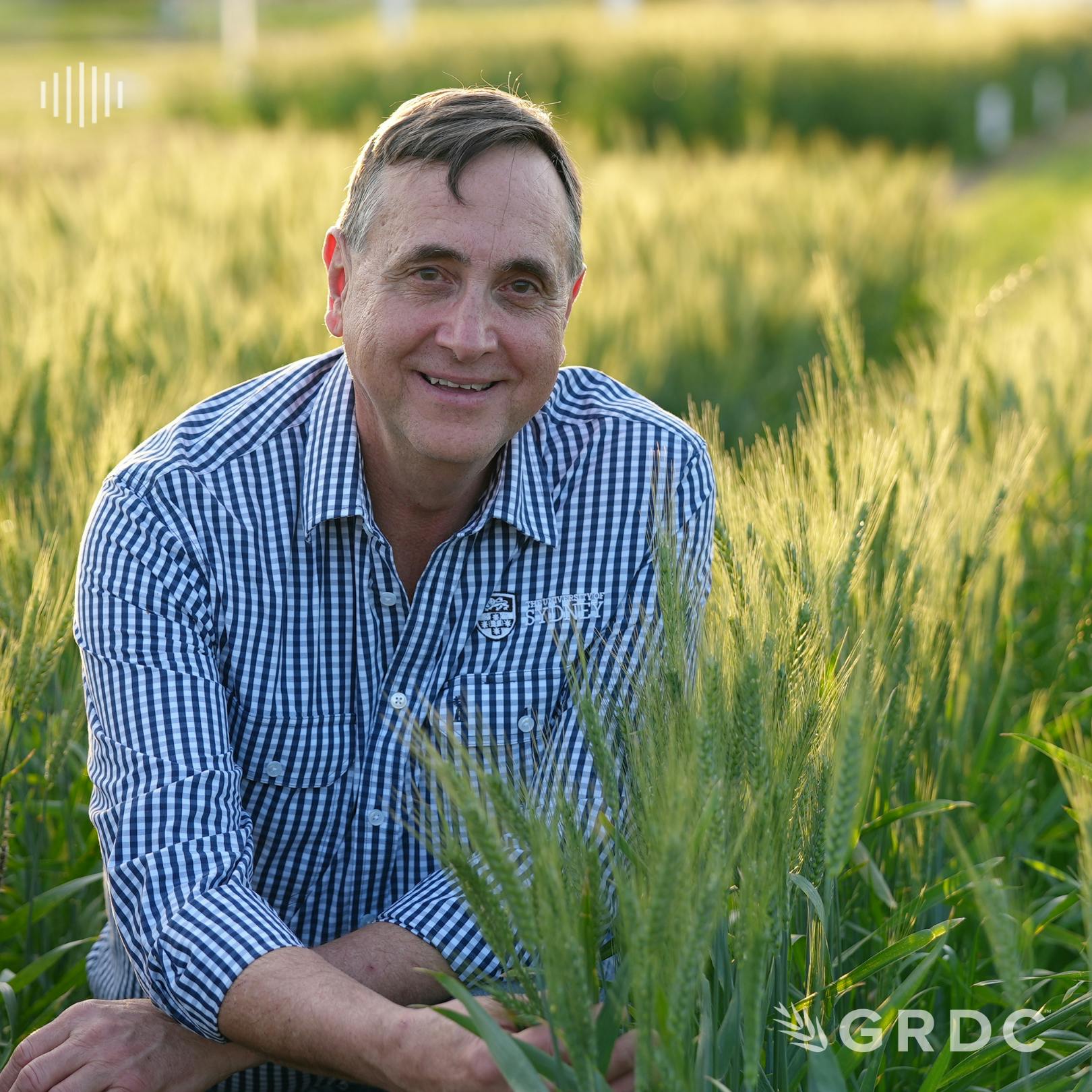
Improving wheat yields through improved heat tolerance
Improving wheat yield and yield stability through better heat tolerance is the focus of research being undertaken at the University of Sydney’s Plant Breeding Institute in Narrabri, New South Wales. GRDC has invested in the collaborative program between University of Sydney, Department of Primary Industries and Regional Development, InterGrain and Agriculture Victoria. Professor Richard Trethowan and Dr Rebecca Thistlethwaite are part of the team of researchers and breeders. Contact: [email protected] More Information: Heat Tolerant Wheat: improving yield through heat tolerance Project Code: UOS2201-001RTX, UOS1606-004RMX Learn more about your ad choices. Visit megaphone.fm/adchoices
GRDC in conversation: Bill Long
Today's 'GRDC in Conversation' podcast interview is with Bill Long. Bill is a farm consultant, but a farmer 'first and foremost' calling it one of the most satisfying careers anybody could ever have, despite its ups and downs. He's seen and worked with some of the best farmers in Australia and flown himself around the country in his Cessna airplane. His interest in how people make decisions led him and his wife Jeanette to develop a training program, and he's even composed a song about wild radish! GRDC in Conversation is a limited series of the GRDC Podcast. It features in depth, long-form interviews with growers and other experts in the grains industry. It aims to help growers explore research outcomes and ideas through a different perspective. Interviewer Oli Le Lievre – presenter of Humans of Agriculture – weaves a story not just about the technical innovations but the expertise, history and personal background, influences and motivation of each guest. Learn more about your ad choices. Visit megaphone.fm/adchoices
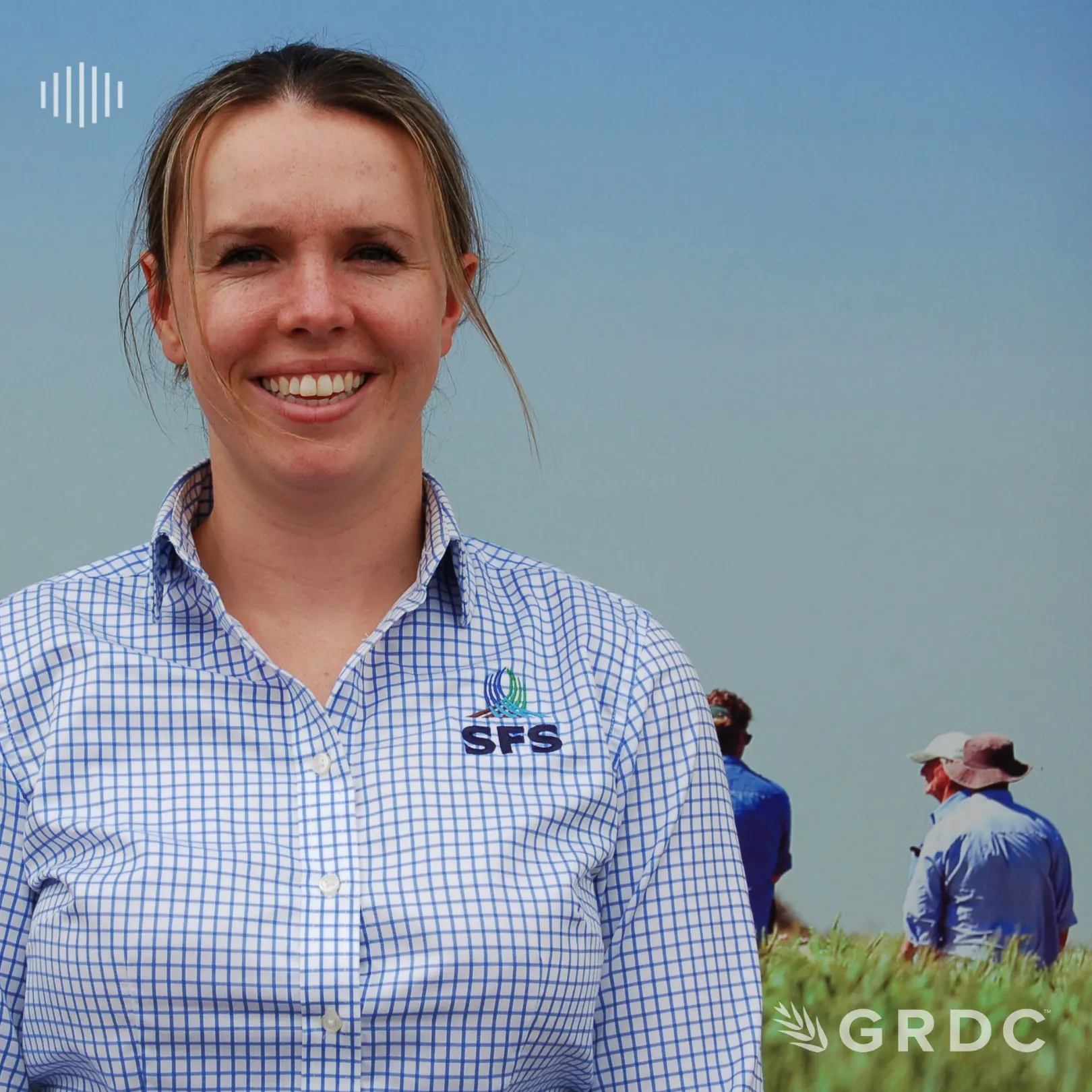
Recovering waterlogged crops
Unprecedented rainfall in 2022 has resulted in extensive waterlogging across many cropping regions of eastern Australia. In this podcast, Greta Duff from Southern Farming Systems (SFS) shares the latest research findings on nutrient strategies and spring sown options following a waterlogging event. Greta led a project with GRDC investment on the topic in 2021 after a wet growing season in the high rainfall zones of Victoria and Tasmania. Contact Greta Duff Senior Research and Extension Officer, SFS [email protected] More information Keeping crops a head above water Project report - Nutrition Strategies to Mitigate Yield Losses Following Waterlogging Project report - Spring Sowing Options After a Wet Winter Strategies for waterlogged crops in the High Rainfall Zone of the Southern Region GRDC project code: SFS2109-001SAX Learn more about your ad choices. Visit megaphone.fm/adchoices
GRDC in conversation: Chris Preston
Today's 'GRDC in Conversation' podcast interview is with Chris Preston. In the 1980s Chris spent three years studying biofuels in the USA before returning to Australia to work in weed research at The University of Adelaide. Thirty years later, Chris is still on the job tackling the ever-evolving problem of understanding and managing herbicide resistant weeds. A challenge that has seen him explore the problem from different angles, but always with an ear close to the ground listening to what farmers and advisors have to say to guide him and his research team. GRDC in Conversation is a limited series of the GRDC Podcast. It features in depth, long-form interviews with growers and other experts in the grains industry. It aims to help growers explore research outcomes and ideas through a different perspective. Interviewer Oli Le Lievre – presenter of Humans of Agriculture – weaves a story not just about the technical innovations but the expertise, history and personal background, influences and motivation of each guest. Learn more about your ad choices. Visit megaphone.fm/adchoices
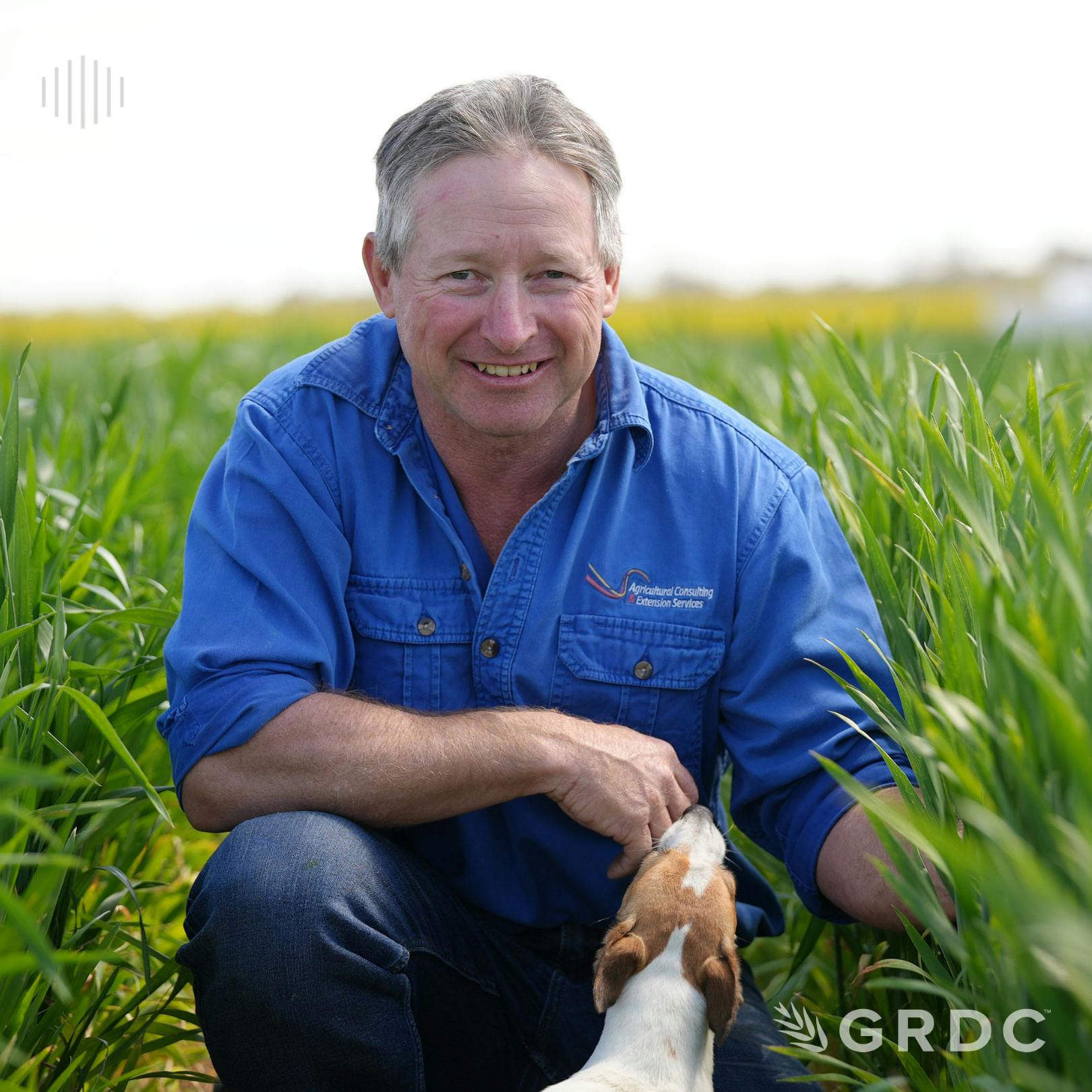
National Variety Trials: how growers and agronomists use NVT data
GRDC’s National Variety Trials - or NVT - program is the largest coordinated trial network in the world. Across Australia there are more than 650 trials underway at over 300 locations for ten crop species. To find out more about how the data collected at these trial sites is used - we speak to agronomist and GRDC northern panel member, Peter McKenzie as well as NVT participant and grower, Stephen Gibson. Contact NVT in your state More Information NVT home Subscribe to NVT communications Video - "How growers and agronomists can use NVT data" Learn more about your ad choices. Visit megaphone.fm/adchoices

GRDC in conversation: Peter Hayman
Today's 'GRDC in Conversation' podcast interview is with Peter Hayman. As Principal Scientist, Climate Applications, at the South Australian Research and Development Institute of the Department of Primary Industries and Regions, Peter works to identify climate risks to agriculture and develop R&D partnerships to help. From growing up in Japan, to studying ag science in Sydney, Peter's career path is an interesting one that has seen him seek to make science useful at the centre. GRDC in Conversation is a limited series of the GRDC Podcast. It features in depth, long-form interviews with growers and other experts in the grains industry. It aims to help growers explore research outcomes and ideas through a different perspective. Interviewer Oli Le Lievre – presenter of Humans of Agriculture – weaves a story not just about the technical innovations but the expertise, history and personal background, influences and motivation of each guest. Learn more about your ad choices. Visit megaphone.fm/adchoices

Agtech and logistics hub accelerator
GRDC continues to support grains focussed innovators to develop and bring their technology to growers. One way of doing that is by partnering with accelerators like the ‘Agtech and Logistics Hub’, which has recently launched a program designed to fast track innovation in the agri-food sector. The program is called GroundUp and we spoke to Agtech and Logistics Hub director, Thomas Hall to find out how it all works and how growers will ultimately benefit. Contact: [email protected] More Information: Agtech and Logistics Hub LinkedIn Facebook Instagram Twitter Project Code: ACL2205-001SAX Learn more about your ad choices. Visit megaphone.fm/adchoices
GRDC in conversation: Mark Merrett
Today's 'GRDC in Conversation' podcast interview is with Mark Merrett. Mark is a sixth-generation farmer from Kaniva in western Victoria where his family runs a mixed operation of winter cropping and sheep. Mark always wanted to become a farmer but he's also a natural communicator. His Merrett Contracting YouTube videos have been viewed thousands of times and they're helping to connect people from around the world with farm life. GRDC in Conversation is a limited series of the GRDC Podcast. It features in depth, long-form interviews with growers and other experts in the grains industry. It aims to help growers explore research outcomes and ideas through a different perspective. Interviewer Oli Le Lievre – presenter of Humans of Agriculture – weaves a story not just about the technical innovations but the expertise, history and personal background, influences and motivation of each guest. Learn more about your ad choices. Visit megaphone.fm/adchoices

Breeding high yielding, disease resistant faba beans
More information: Australia is the world's largest exporter of faba beans, to help growers stay on top, breeders are developing new varieties suited to local conditions. Harnessing the expertise of different partners, GRDC has invested in research to address faba bean diseases including Ascochyta blight while maintaining a focus on higher yields. In this podcast, Adelaide University faba bean breeder Sam Catt and SARDI pulse pathologist Sara Blake talk about progress towards new and improved varieties. Contact: [email protected] ; [email protected] GRDC project code: UOA1606-009RTX Learn more about your ad choices. Visit megaphone.fm/adchoices

Ep 2GRDC in conversation: Kate Burke
Today's 'GRDC in Conversation' podcast interview is with Kate Burke. Kate’s working career has seen her in roles as an agronomist, a commercial manager, author and a cereal chemist. Living in Echuca, Victoria, she now runs her own consulting business Think Agri, providing corporate investors access to astute, experience-based advice when considering agri-investment decisions. GRDC in Conversation is a limited series of the GRDC Podcast. It features in depth, long-form interviews with growers and other experts in the grains industry. It aims to help growers explore research outcomes and ideas through a different perspective. Interviewer Oli Le Lievre – presenter of Humans of Agriculture – weaves a story not just about the technical innovations but the expertise, history and personal background, influences and motivation of each guest. Learn more about your ad choices. Visit megaphone.fm/adchoices

Grain storage during a wet harvest
After a wet 2021, growers across Australia’s northern and southern grain growing regions are again bracing for widespread, heavy rainfalls at harvest this year. While the weather forecast poses significant challenges for getting crops off the paddock, getting your silos ready to store damp grain now is one way to help reduce headaches down the track. In this podcast, GRDC National, Grain Storage Extension Project Coordinator, Chris Warrick, shares his tips on preparing silos for harvest, storing wet grain, drying options and silo hygiene. More information: Contact: [email protected] Phone: 1800 933 845 Aeration cooling can help save moist grain Learn more about your ad choices. Visit megaphone.fm/adchoices
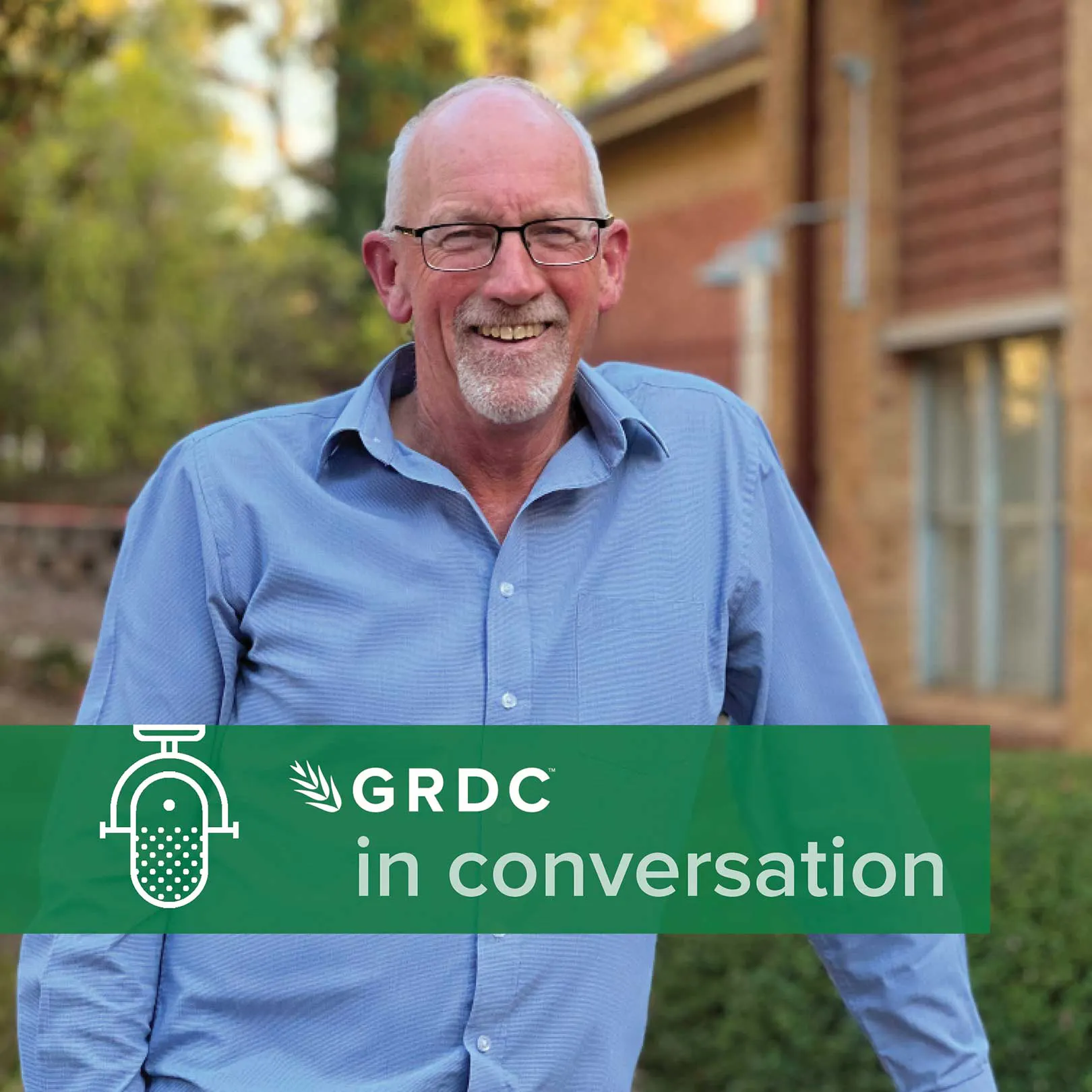
GRDC in conversation: Barry Mudge
GRDC in Conversation is a limited series of the GRDC Podcast. It features in depth, long-form interviews with growers and other experts in the grains industry. It aims to help growers explore research outcomes and ideas through a different perspective. Barry's 45-year career has seen him combine his on-farm experience with his business acumen to help farm businesses build resilience in risky environments. His work has taken him from his family farm in Port Germein, SA, to working to support the adoption of conservation agriculture practices in north Africa and India. Interviewer Oli Le Lievre – presenter of Humans of Agriculture – weaves a story not just about the technical innovations but the expertise, history and personal background, influences and motivation of each guest. Learn more about your ad choices. Visit megaphone.fm/adchoices

Dual paraquat and glyphosate resistance in annual ryegrass
For the first time in WA, there’s been a confirmed case of glyphosate and paraquat resistance in annual ryegrass. The discovery has prompted University of Western Australia weed researcher, Dr Roberto Busi, to research alternative double knock solutions. As Roberto explains, the findings have been a quantum leap forward in understanding how these resistant ryegrass populations can be effectively controlled with paraquat and pre-emergent herbicide combinations. Contact Dr Roberto Busi [email protected] More information Frist cases of glyphosate and paraquat resistant ryegrass in WA GRDC project: UWA2007-002RTX Learn more about your ad choices. Visit megaphone.fm/adchoices

Stripe rust insights from a high-pressure year
Wheat growers in the northern grain growing region are currently experiencing one of the worst stripe rust epidemics in recent memory. To help growers tackle the challenging season, Grain Orana Alliance (GOA) have been conducting trials to provide a stripe rust early warning system for the central north region of the New South Wales cropping belt. The trials, supported by GRDC, are focused on identifying and communicating local dominant stripe rust pathogens to help growers and advisers make management decisions without the time delay of individual paddock sampling and pathotyping analysis. In this podcast, GOA CEO Maurie Street analyses how the season has played out for stripe rust so far, and shares the insights that have come out of early warning system trials in such a high-pressure year. Contact Maurue Street – Grain Orana Alliance (GOA) [email protected] More information GRDC Ground Cover - New stripe rust trials to create early warning network for northern growers Grain Orana Alliance – trial results Learn more about your ad choices. Visit megaphone.fm/adchoices

Lupin seed integrity and establishment
Lupin seed integrity and establishment With split seed resulting in yield penalties higher than 70% in some areas, a new GRDC investment is looking at how growers can manage their handling of lupin seed to ensure better germination of seed in the following seasons. A benchmark study of 27 WA growers looked at germination impacts for lupins, focusing on reducing the incidence of split seed through harvest activities such as machinery impacts, and manganese deficiency. The study which started in 2019 has now wrapped up, with advice around manganese management, going easy on the augers, harvesting with at least 12% moisture and asking the experts to assess seed. But those who know lupins, know there’s still a lot to learn. Contact Katrina Venticinque, Liebe Group 08 9661 1907 [email protected] More information GRDC Investment – Demonstrating the effects of reduced lupin seed integrity on crop establishment GRDC Ground Cover – Retained lupin seed germination puzzle Liebe Group Projects – The Effect On Lupin Establishment As A Result Of Reduced Seed Integrity Learn more about your ad choices. Visit megaphone.fm/adchoices
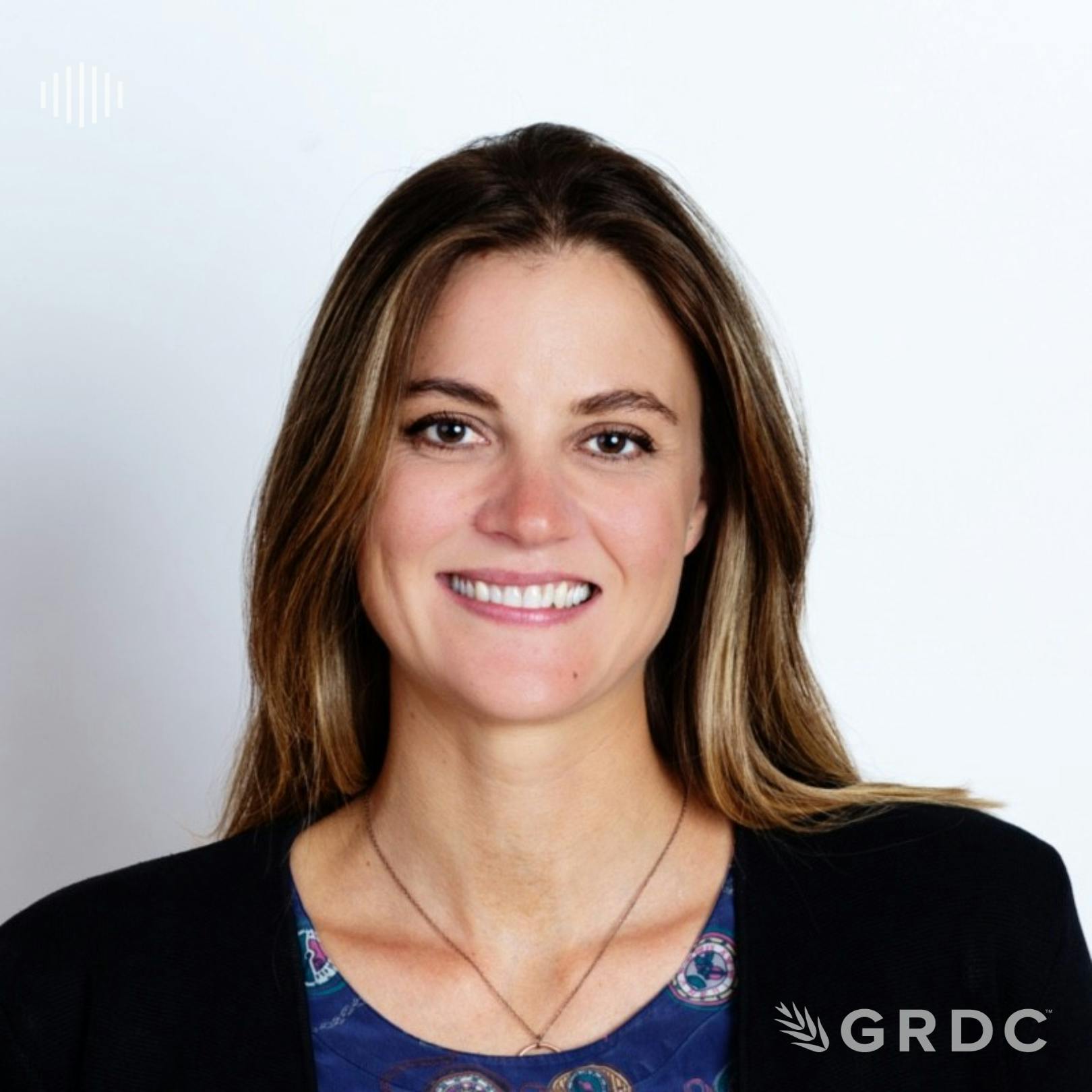
Farmers2Founders (F2F): How F2F is supporting innovators to solve challenges in the grains industry with technology.
GRDC has a history of working with different business accelerators to deliver grains focussed, start-up accelerator programs across Australia. Farmers2Founders is one such programme - set up to help put producers at the centre of innovation by supporting them to have more involvement in the innovation process… leading to solutions that will solve real problems for grains growers on farm. To find out more, we spoke to Skye Raward, co-founder and general manager of Farmers to Founders and Tegan Modra, participant in the National Accelerator Program. Contact: Skye Raward Co-Founder & General Manager, Farmers2Founders [email protected] More Information: www.farmers2founders.com Applications currently open for: National Pre-Accelerator Programe closes 9 October National Accelerator Programme closes 16 October TNQ Innovation Pre-Accelerator closes 9 October GRDC Project Code: FTS2006-001SAX Learn more about your ad choices. Visit megaphone.fm/adchoices

Grower insights on managing ironstone gravel soil
Gravel soils account for 24 per cent of land used for crop production in southern Western Australia, and are also characteristic of major production regions in South Australia and Victoria. In this podcast, two growers share their experience managing this challenging soil type. They have distinctly different approaches but share a desire to get the most of their crops in a high rainfall environment. Murdoch University’s Dr Francesca Brailsford also shares an update on the significant GRDC investment underway to help growers better manage ironstone gravel soils from a cropping, nutrition and water perspective. The ironstone gravels soil project is part of a SoilsWest alliance initiative, which also includes The University of Western Australia, Department of Primary Industries and Regions South Australia, Queen’s University Belfast and Bangor University. Contact Dr Francesca Brailsford Murdoch University [email protected] More information - Challenges of ironstone gravels – WA video - Challenges of ironstone gravels – SA video - GroundCover - Unlocking the hidden potential of ironstone gravel soils GRDC project code: UMU2111-001RTX Learn more about your ad choices. Visit megaphone.fm/adchoices
National Grower Network
The National Grower Network is a GRDC initiative set up to directly communicate with growers and help progress locally relevant research, development and extension investments. Growers are encouraged to become involved and there are many ways to do that. To find out more about the National Grower Network, we speak to Grower Relations Manager, Vicki Green and Graham Spackman who is on the GRDC’s northern panel. Contacts: Vicki Green Grower Relations Manager [email protected] Graham Spackman GRDC Panel Member, Northern Region [email protected] More Information: About NGN GRDC Events Page Subscribe to GRDC Twitter @theGRDC Instagram @theGRDC Learn more about your ad choices. Visit megaphone.fm/adchoices
Guide - Machinery investment and replacement for Australian grain growers
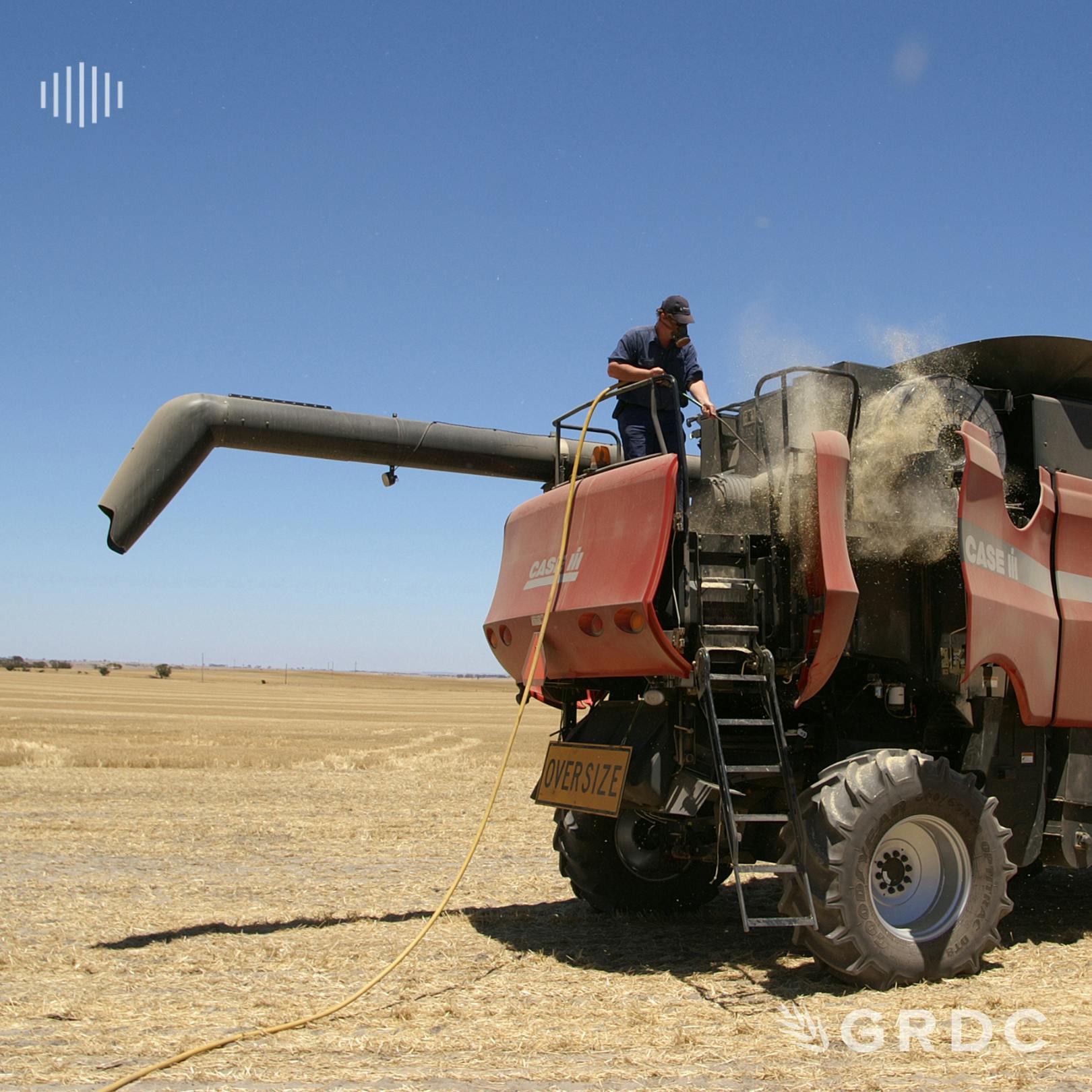
Grain growers around Australia have a new tool, in the form of a comprehensive guide, to support informed decision making around machinery purchases. The guide, titled “Machinery investment and replacement for Australian grain growers”, is the result of a two-year GRDC initiated project to assist growers to evaluate decisions around machinery investment. The information has been gathered from contributions from more than 450 grain growers around Australia, who shared their machinery purchase and ownership experiences, resulting in 30 case studies that are featured in the guide. The guide offers a valuable snapshot of machinery ownership levels to help growers compare their position against industry averages for similar farming operations. Contact: Ben White Kondinin Group [email protected] More Information: Download a PDF of the guide here. Project Code: KIS1911-001SAX Learn more about your ad choices. Visit megaphone.fm/adchoices

Flaxleaf fleabane rust fungus
For the first time in Australia, there is a biocontrol option to help tackle flaxleaf fleabane. A rust fungus from fleabane’s country of origin, Colombia, has been rigorously tested by a research team at the CSIRO and approved for release by the Australian regulator. This new tool will be available to help growers bolster their integrated weed management strategy. This research is part of a project called Underpinning agricultural productivity and biosecurity by weed biological control, led by AgriFutures Australia and funded by the Australian Government Department of Agriculture, Fisheries and Forestry as part of its Rural R&D for Profit program, with co-investment from CSIRO, GRDC and NSW Biocontrol Taskforce. Contact Ben Gooden CSIRO [email protected] More information Flaxleaf fleabane rust fungus video GRDC/AgriFutures media release Learn more about your ad choices. Visit megaphone.fm/adchoices

S1 Ep 273Growing community trust
How much does the general public trust the grains industry? Recent community survey work, made possible through GRDC investment, has painted a clear picture – and the results are surprising. Dr Kieren Moffat and his team have been surveying a diverse cross-section of the community to examine areas of uncertainty such as chemical usage and GMO cropping. It’s all part of a the larger Community Trust in Rural Industries project being driven by a number of Rural Research and Development Corporations and industry organisations. Contact Dr Kieren Moffat Voconiq [email protected] More information - Growing community trust video - Groundcover article - Program finds high levels of trust in growers GRDC project code RDC1906-004OPX Learn more about your ad choices. Visit megaphone.fm/adchoices

S1 Ep 272WeedSmart, science backed weed control solutions for growers
Weeds are one of the largest costs to Australian growers - affecting management, yields and input costs. That’s why GRDC is a platinum partner in WeedSmart - an industry led initiative designed to deliver weed control solutions. WeedSmart is the united industry voice delivering science backed weed control solutions to growers and advisors for long term productivity in Australian agriculture. To see the full list of financial, in-kind and international in-kind; and research partners visit this page. We explore the WeedSmart initiative with WeedSmart Project Manager, Jessica Strauss and Chris Davey, Agriservices agronomist from YP Ag. WeedSmart Week 2022 is happening in Mildura, Victoria from 30 August - 1 September. Contact: Jessica Strauss WeedSmart Project Manager & Communications Lead AHRI School of Agriculture and Environment (SAGE) [email protected] Chris Davey YP Ag [email protected] More Information: Subscribe to WeedSmart. Project Code: UWA2007-001SAX Learn more about your ad choices. Visit megaphone.fm/adchoices