
Grating the Nutmeg
247 episodes — Page 2 of 5
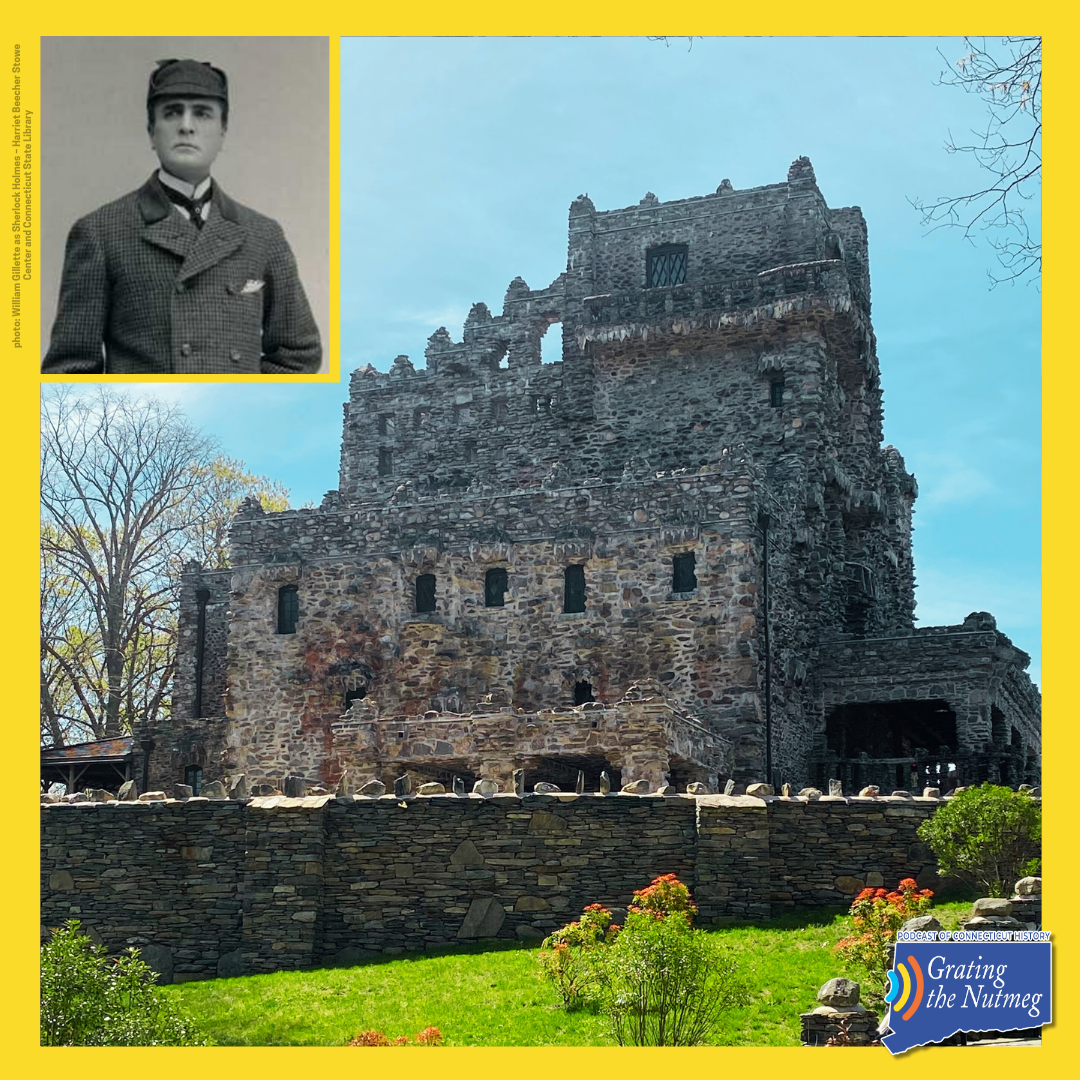
S3 Ep 189189. Sherlock Holmes and William Gillette's Castle
We love a Sherlock Holmes "who done it" whether it's Basil Rathbone from the 1940s, Benedict Cumberbacth from the 2000s, or Millie Bobby Brown as Sherlock's sister Enola Holmes from the 2020s. But it was a Hartford-born actor who gave Sherlock Holmes his signature look - his curved pipe, deerstalker cap and magnifying glass. William Gillette was born into a wealthy Hartford family in 1853 but became a millionaire in his own right as an actor and a playwright. He was the first actor to be universally acclaimed for portraying Sherlock Holmes, having staged the first authorized play in 1899. His retirement home, Gillette's Castle, cost millions to construct and is a combination escape room, medieval stone ruin and Steampunk fantasy. Our guest is Paul Schiller. Paul spent almost a decade working at Gillette Castle. In addition to providing engaging and informative tours to castle visitors, he served as an archivist, researcher and educator for the park. During the Covid-19 Pandemic, Paul created a series of video tours of the castle, available on the Friends of Gillette Castle Youtube channel. ---------------------------------------------------- Can you spare $10 a month to help support the new voices, research, and books featured on Grating the Nutmeg? It's easy to set up a monthly donation on the Connecticut Explored website at ctexplored.org Click the donate button at the top and then look for the Grating the Nutmeg link. Thank you! Subscribe to get your copy of Connecticut Explored magazine delivered to your mailbox or your inbox-subscribe at ctexplored.org. You won't want to miss our Summer issue with new places to go and lots of day trip ideas! This episode of Grating the Nutmeg was produced by Mary Donohue and engineered by Patrick O'Sullivan at www.highwattagemedia.com/ Follow GTN on our Facebook, Instagram and Threads pages. Follow Connecticut historian Mary Donohue on her Facebook and Instagram pages @WeHaSidewalkHistorian
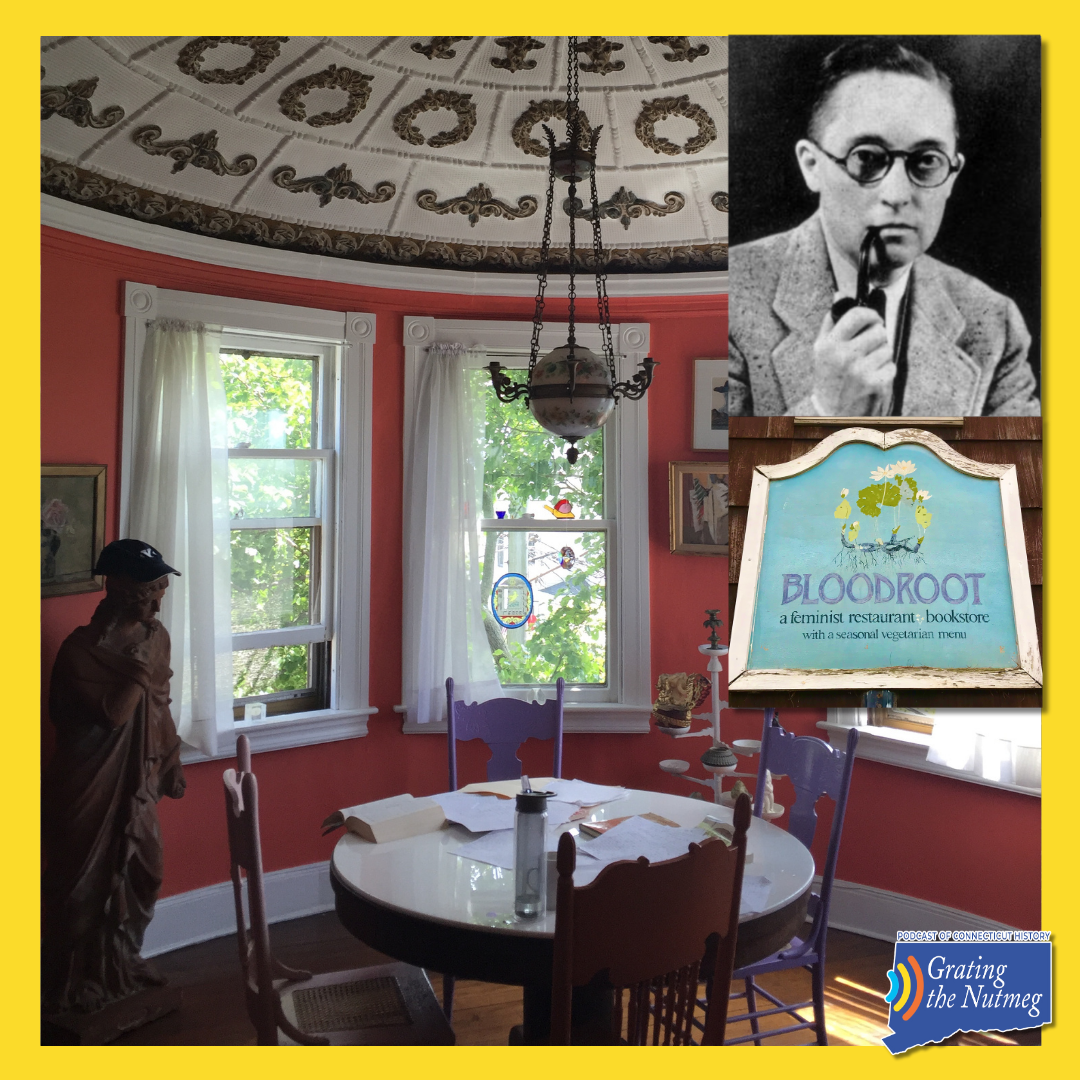
S3 Ep 188188. Revealing Queer Lives: Connecticut's LGBTQ History
June is PRIDE month and we're celebrating by bringing you an episode about efforts to bring LGBTQ+ history to light. As one guest, historian William Mann writes, "Throughout its history, Connecticut's LGBTQ population has moved from leading hidden, solitary lives to claiming visible, powerful, valuable, and contributing places in society." In this episode, we talk about what historians have found in Connecticut's Colonial records, some surprising connections to famous individuals and landmarks and at the end of the episode, there's a recommendation for three places to visit to celebrate LGBTQ+ history. In order to prepare for this episode, two digital resources created by our guests were used. Both of these are available on the web and the links are below. The first is the Historic Timeline of Connecticut's LGBTQ Community online exhibition directed by William Mann for the Connecticut Museum of Culture and History. Mann is an author and historian whose books include Kate: The Woman Who Was Hepburn, named a Notable Book of the Year by the New York Times; The Wars of the Roosevelts: The Ruthless Rise of America's Greatest Political Family; Behind the Screen: How Gays and Lesbians Shaped Hollywood; and Tinseltown: Murder, Morphine and Madness at the Dawn of Hollywood. He is an Assistant Professor of History at Central Connecticut State University, where he teaches LGBTQ History. See the timeline here: https://www.connecticutmuseum.org/lgbtqtimeline/ Mann is available for lectures and book talks. He can be reached at [email protected] The second digital resource is a recorded lecture, Intemperate Habits: LGBTQ History from a Connecticut Perspective, a talk by Dr. Susan Ferentinos . She is an advisor to an inspiring new project, the Ridgefield LGBTQ Oral History Project. The Ridgefield Oral History project is a partnership between the Ridgefield Historical Society and Ridgefield Pride that will train high school students to conduct oral interviews with members of Ridgefield's gay community. Ferentinos is a public history researcher, writer, and consultant helping cultural organizations share untold stories about women and LGBTQ people. She is advising the Ridgefield LGBTQ Oral History Project and has recently worked with the Palmer-Warner House in East Haddam, Connecticut, and the Eleanor Roosevelt National Historic Site in Hyde Park, New York. She is the author of the award-winning book Interpreting LGBT History at Museums and Historic Sites and has contributed her expertise to the National Park Service initiative "Telling All Americans' Stories." Ferentinos is available for lectures and book talks. Contact her at https://susanferentinos.com/ Watch her lecture here: https://www.facebook.com/watch/live/?ref=watch_permalink&v=1111325966517828 Here are three fantastic places to visit that celebrate LGBTQ+ lives-links for each of these is below: 1) James Merrill House CT Open House Day @ the James Merrill House Jun 08, 2024, 11:00 AM – 3:00 PM EDT Stonington, 107 Water St, Stonington, CT 06378, USA The James Merrill House is a writer's home and a home for writers. As part of CT Open House Day, we will open the doors of the JMH to the public for an opportunity to tour the charming, color-drenched home of one of America's greatest poets at 107 Water Street in the picturesque Stonington Borough. https://www.jamesmerrillhouse.org/ 2) Philip Johnson's Glass House-New Canaan, open now for the summer tour season, order your tickets on line at: https://theglasshouse.org/visit/hours/ 3) Bloodroot Restaurant https://www.bloodroot.com/ Bloodroot, a vegan, feminist, activist restaurant, owned by lesbians Selma Miriam and Noel Furie in Bridgeport, Connecticut, has thrived for 42 years. See their website for information on reservations for dinner or lunch. ---------------------------------------------------- Can you spare $10 a month to help support the new voices, research, and books featured on Grating the Nutmeg? It's easy to set up a monthly donation on the Connecticut Explored website at ctexplored.org Click the donate button at the top and then look for the Grating the Nutmeg link. Thank you! Subscribe to get your copy of Connecticut Explored magazine delivered to your mailbox or your inbox-subscribe at ctexplored.org. You won't want to miss our Summer issue with new places to go and lots of day trip ideas! This episode of Grating the Nutmeg was produced by Mary Donohue and engineered by Patrick O'Sullivan at https://www.highwattagemedia.com/ Follow GTN on our Facebook, Instagram and Threads pages. Follow Connecticut historian Mary Donohue on her Facebook and Instagram pages @WeHaSidewalkHistorian

S3 Ep 187187. Derby's Charlton Comics: "No Other Place Like It"
Did you know that comic books were invented in Connecticut? Well, sort of. There are lots of precedents for printing texts with images. But the origin of mass market comic book printing is 1930s Waterbury, where Eastern Color printing began by re-publishing comic strips from newspapers in magazine form. Eventually they partnered with Dell publishing to print the first original content American comic books. But today's episode takes us a ways down Route 8 from Waterbury to Derby. From the 1940s to 1991, Derby was the home of Charlton Comics, unique for being a one-stop shop that included writers, artists, publishing, and distribution under one roof. The story of Charlton is colorful in more than one way. In this episode, Natalie Belanger of the Connecticut Museum talks to Jon B. Cooke, author of The Charlton Companion. Learn about the seedy origins of the company, its often lackadaisical approach to quality control, and why there was nothing else like it in American comics. Learn more about the Nutmeg state's connection to the comic industry by visiting the Connecticut Museum's exhibition, Connecticut's Bookshelf now on display at the museum in Hartford. Jon B. Cooke's book, The Charlton Companion, is available in digital form online at twomorrows.com ------------------------------------------------ Subscribe to get your copy of Connecticut Explored magazine delivered to your mailbox or your inbox-subscribe at ctexplored.org. You won't want to miss our Summer issue with new places to go and lots of day trip ideas! This episode of Grating the Nutmeg was produced by Natalie Belanger and engineered by Patrick O'Sullivan at https://www.highwattagemedia.com/ Join us in two weeks for our next episode of Grating the Nutmeg, the podcast of Connecticut history. Help us produce the podcast by donating to non-profit Connecticut Explored at https://ctexplored.networkforgood.com/projects/179036-support-ct-history-podcast-grating-the-nutmeg Photo Credit: My Secret Life, Charlton Publications, Vol. 1, No. 25, Sept. 1958. Connecticut Museum Collection.

S3 Ep 186186. New Haven's Pioneering Grove Street Cemetery
It's Spring in Connecticut and this episode is part of our celebration of May as Historic Preservation Month. Grove Street Cemetery in New Haven is the first planned cemetery in the country. The design of Grove Street Cemetery in the 1790s pioneered several of the features that became standard like family plots and an established walkway grid. It is also one of the most beautiful places in Connecticut and is designated as a National Historic Landmark by the National Park Service. It is on the Connecticut Freedom Trail. Executive Producer Mary Donohue's guests are Michael Morand and Channing Harris. Michael Morand is Director of Community Engagement for Yale's Beinecke Rare Book and Manuscript Library. He was just appointed the official City Historian of New Haven and currently chairs the Friends of the Grove Street Cemetery. Channing Harris is a landscape architect. He currently serves on the Board of Directors of the New Haven Preservation Trust and on the Board of the Friends of Grove Street Cemetery. At the cemetery he's been involved with replanting the next generation of trees, enhancing the front border garden, and assisted with the certification of the cemetery as an Arboretum. Make a day of it in New Haven with a visit to Grove Street Cemetery and perhaps the New Haven Museum or the newly-reopened Peabody Museum. The Cemetery gates are open every day from 9-4. For the times and dates of the 2024 guided tours, go to the Facebook page of the Friends of Grove Street Cemetery. For more information on joining the Friends or volunteering, go to their website at https://www.grovestreetcemetery.org/become-member ------------------------------------------------- Subscribe to get your copy of Connecticut Explored magazine delivered to your mailbox or your inbox-subscribe at ctexplored.org. You won't want to miss our Summer issue with new places to go and lots of day trip ideas! This episode of Grating the Nutmeg was produced by Mary Donohue and engineered by Patrick O'Sullivan at https://www.highwattagemedia.com/ Mary Donohue is an award-winning author, historian and preservationist. Contact her at [email protected] and follow her Facebook and Instagram pages at WeHa Sidewalk Historian. Join us in two weeks for our next episode of Grating the Nutmeg, the podcast of Connecticut history. Help us produce the podcast by donating to non-profit Connecticut Explored at https://ctexplored.networkforgood.com/projects/179036-support-ct-history-podcast-grating-the-nutmeg image: Henry Austin Papers (MS 1034). Manuscripts and Archives, Yale University Library.

S3 Ep 185185. Connecticut Industries Unite for WWII Victory: Pratt, Read & Co Gliders
In this episode, we uncover a Connecticut World War II story that features airplanes without engines. Sound crazy? You'll learn how these engineless gliders helped beat the Nazis. Executive Producer Mary Donohue will also talk to the author of a new book that details the role that over 45 Connecticut companies played in producing the ammunition, weapons and machines that the United States needed as part of the massive war effort during World War II. Her guests today are Connecticut author Sharon Cohen and Melissa Josefiak, Executive Director of the Essex Historical Society. Cohen has authored several books. Her new book Connecticut Industries Unite for WWII Victory was published in 2023 and placed second in the 2024 New England Book Festival. Its available from High Point Publishing: www.highpointpub.com . Sharon Cohen is available for book talks and signings. Contact her at [email protected] The Essex Historical Society has new publications on the three Essex villages-Ivoryton, Centerbrook and Essex, where much of today's story takes place. For information on the publications and programs of the Essex Historical Society, go to their website at https://www.essexhistory.org/ and follow them on Facebook and Instagram. Subscribe to get your copy of Connecticut Explored magazine delivered to your mailbox or your inbox-subscribe at https://simplecirc.com/subscribe/connecticut-explored You won't want to miss our Summer issue with new places to go and lots of day trip ideas! image: Courtesy of Essex Historical Society ------------------------------------ You can help us continue to produce the podcast by donating directly to Grating the Nutmeg on the Connecticut Explored website here: https://ctexplored.networkforgood.com/projects/179036-support-ct-history-podcast-grating-the-nutmeg Executive producer Mary Donohue is an award-winning author, historic preservationist and architectural historian. She can be reached at [email protected] This episode of Grating the Nutmeg was produced by Mary Donohue and engineered by Patrick O'Sullivan at https://www.highwattagemedia.com/ Join us in two weeks for our next episode of Grating the Nutmeg, the podcast of Connecticut history.

S3 Ep 184184. The Borinqueneers: Puerto Rico's Men of the 65th Regiment
In this episode, we celebrate and commemorate National Borinqueneers Day coming up on April 13th. It recognizes the bravery, service, and sacrifice of the 65th Infantry Regiment, a United States Army unit that consisted mostly of soldiers from Puerto Rico and the only segregated Latino unit in the United States Army. But the honor and fidelity of the men of the 65th came into question in 1952 during the Korean War when 91 regiment members were arrested and tried for desertion and disobeying orders. How could this happen to such a distinguished and decorated unit of the Army? Executive Producer Mary Donohue's guest for this episode is accomplished Connecticut author of young adult literature, Talia Aikens-Nunez. In her book, Men of the 65th, The Borinqueneers of the Korean War, she guides us through the history of the 65th from its beginning in 1899. This book is a great read for a young adult reader or anyone that has a member of their family that served in the regiment. There is a beautiful monument to the Borinqueneers in New Britain at the intersection of Beaver and Farmington Streets-well worth a visit. And we have an article that was published in Connecticut Exploredmagazine on the monument that is free to read on our website-link below. Read more about the Borinqueneers Memorial here: https://www.ctexplored.org/site-lines-monument-to-connecticuts-borinqueneers/ Talia Aikens-Nunez is available for book talks and signings. She can be reached on her website at https://www.kidslitbytalia.com/ Can you use your power of giving to make a $250 dollar donation? We would love to send you our brand-new Grating the Nutmeg t-shirt as a thank you! Donor and t-shirt recipient Jack Soos writes "I love how this podcast uncovers amazing stories and historical insights right in our backyard! Thank you so much and keep up the good work!" You can help us continue to produce the podcast by donating directly to Grating the Nutmeg on the Connecticut Explored website here: https://ctexplored.networkforgood.com/projects/179036-support-ct-history-podcast-grating-the-nutmeg Executive producer Mary Donohue is an award-winning author, historic preservationist and architectural historian. She may be reached at [email protected] --------------------------------------------------- This episode of Grating the Nutmeg was produced by Mary Donohue and engineered by Patrick O'Sullivan at https://www.highwattagemedia.com/ Subscribe to get your copy of Connecticut Explored magazine delivered to your mailbox or your inbox-subscribe at ctexplored.org. You won't want to miss our Summer issue with new places to go! Join us in two weeks for our next episode of Grating the Nutmeg, the podcast of Connecticut history.

S3 Ep 183183. Margaret Rudkin of Pepperidge Farm
One of the most recognizable food brands in the world got started in a kitchen in Fairfield, Connecticut. In this episode, Natalie Belanger chats with historian Cathryn J. Prince about Margaret Rudkin, the woman who founded Pepperidge Farm. Read Prince's full-length article about Rudkin on the Connecticut Explored website here: https://www.ctexplored.org/pepperidge-farm-healthful-bread-builds-a-business/ Natalie Belanger is the Adult Programs Manager at the Connecticut Museum of Culture and History. You can see the Margaret Rudkin Pepperidge Farm Cookbook in their current exhibition, Connecticut's Bookshelf, open now through September 8, 2024. ---------------------------------------------------------- Can you use your power of giving to make a $250 dollar donation? We would love to send you our brand-new Grating the Nutmeg t-shirt as a thank you! Donor and t-shirt recipient Jack Soos writes "I love how this podcast uncovers amazing stories and historical insights right in our backyard! Thank you so much and keep up the good work!" You can help us continue to produce the podcast by donating directly to Grating the Nutmeg on the Connecticut Explored website at ctexplored.org Click the donate button at the top and then look for the Grating the Nutmeg donation link at the bottom. This episode of Grating the Nutmeg was produced by Natalie Belanger and engineered by Patrick O'Sullivan at https://www.highwattagemedia.com/ Photo credit: Margaret Rudkin Pepperidge Farm Cookbook cover, CMCH collection 641.5 R916m

S3 Ep 182182. Rebels at Sea: Privateering in the American Revolution
Are they pirates, profiteers or legitimately authorized extensions of George Washington's almost non-existent American Navy? We'll find out with guest historian Eric Jay Dolin, author of Rebels at Sea: Privateering in the American RevolutIon. Dolin will underscore an element missing from most maritime histories of the American Revolution: a ragtag fleet of private vessels — from 20-foot whaleboats to 40-cannon men-of-war helped win the war, including some 200 from Connecticut. Armed with cannons, guns, muskets, and pikes, thousands of privateers tormented the British on the Atlantic and in bays and harbors on both sides of the ocean. Eric Jay Dolin is the author of sixteen books, including Leviathan: The History of Whaling in America, a topic we look forward to exploring in an upcoming episode of Grating the Nutmeg. Rebels at Sea was awarded the Morison Book Award for Naval Literature, conferred by the Naval Order of the United States, and was a finalist for the New England Society Book Award. His forthcoming book, to be published in May, 2024, is Left for Dead: Shipwreck, Treachery, and Survival at the Edge of the World. Dolin lives in Marblehead, Massachusetts, with his family. Thanks to my guest Eric Jay Dolin. To find out more about his work, go to www.ericjaydolin.com. Today's episode is the second in our 2024 series on Connecticut's maritime history-I hope you've had the chance to listen to episode #180 on Colonial Connecticut and the West Indies. If you love these seafaring tales, you'll find dozens of stories to read on our website at ctexplored.org under the Topics button here: https://www.ctexplored.org/travel-transportation/ Eric Jay Dolan's presentation at the New Haven Museum is now available on their YouTube channel was part of New Haven250, an ongoing series of programming developed to complement America250. Culminating with the 250th anniversary of the Declaration of Independence, the series will highlight inclusive, local, and lesser-known stories, connecting past and present. Follow their Facebook page to find out more about upcoming programs. Watch the taped presentation by author Eric Jay Dolan on the New Haven Museum's YouTube channel here: https://www.youtube.com/channel/UCpELt9K7u2TcAx6JHlsD62w/videos ---------------------------------------------------- Subscribe to get your copy of Connecticut Explored magazine delivered to your mailbox or your inbox-subscribe at ctexplored.org This episode of Grating the Nutmeg was produced by Mary Donohue and engineered by Patrick O'Sullivan at https://www.highwattagemedia.com/ Join us in two weeks for our next episode of Grating the Nutmeg, the podcast of Connecticut history.

S3 Ep 181181. Hartford and the Great Migration, 1914-1950
181. Hartford and the Great Migration, 1914-1950 In the February 4, 2024 issue of the New York Times, journalist Adam Mahoney describes the Great Migration as a time when millions of Black people left the South to escape segregation, servitude and lynching and went North in search of jobs and stable housing. In this episode, host Mary Donohue will discuss Hartford and the Great Migration with Dr. Stacey Close. Connecticut Explored's book African American Connecticut Exploredpublished by Wesleyan University Press has just celebrated its 10th anniversary. Dr. Close served as one of the principal authors for this groundbreaking volume of essays that illuminate the long arc of Black history in Connecticut. A native of Georgia, Dr. Close has worked in higher education for more than 25 years. A professor of African American history at Eastern Connecticut State University, Close received his Ph.D and M.A. from Ohio State University and his B.A. from Albany State College, a Historically Black College in Georgia. He is currently working on a book project entitled "Black Hartford Freedom Struggle, 1915-1970." Thanks to my guest Dr. Stacey Close. Read his article published in Connecticut Explored here: https://www.ctexplored.org/southern-blacks-transform-connecticut/ Subscribe to get your copy of Connecticut Explored magazine delivered to your mailbox-subscribe at https://simplecirc.com/subscribe/connecticut-explored Was your family part of the Great Migration? Be sure to listen to GTN episode 127 to find out how to put your family's history together for future generations with Black family historians Jill Marie Snyder and Hartford's Orice Jenkins. https://gratingthenutmeg.libsyn.com/127-telling-your-family-story-with-jill-marie-snyder-and-orice-jenkins Can you use your power of giving to make a $250 dollar donation? We would love to send you our brand-new Grating the Nutmeg t-shirt as a thank you! Donor and t-shirt recipient Jack Soos writes "I love how this podcast uncovers amazing stories and historical insights right in our backyard! Thank you so much and keep up the good work!" You can help us continue to produce the podcast by donating directly to Grating the Nutmeg on the Connecticut Explored website at ctexplored.org. Click the donate button at the top and then look for the Grating the Nutmeg donation link at the bottom. This episode of Grating the Nutmeg was produced by Mary Donohue and engineered by Patrick O'Sullivan at https://www.highwattagemedia.com/ Join us in two weeks for our next episode of Grating the Nutmeg, the podcast of Connecticut history. Image: Shiloh Baptist Church women's group, 336 Albany Avenue, Hartford, Connecticut Museum of Culture and History.

S3 Ep 180180. Colonial Connecticut: Sugar, Slavery and Connections to the West Indies
Although Connecticut sometimes seems like such a small, isolated place on the map, it was connected to the far-flung, complex, cosmopolitan British empire even in the 17th century. This year on Grating the Nutmeg, we're going to explore Connecticut's maritime history with episodes on Colonial Connecticut's trade with the British colonies of the Caribbean, privateering during the American Revolution and the whaling ships sent around the globe in the nineteenth century. Connecticut's maritime entrepreneurs made fortunes by sending ships to sea and employed sailors, shipbuilders, traders, drovers, provisioners, and more. In this episode, we talk about sugar. Sugar production in the tropical climate of the British islands of the West Indies made men tremendous fortunes. But to cultivate and process sugar cane into sugar required vast amounts of labor. As my guest Dr. Matt Warshaurer wrote in the Summer 2023 issue of Connecticut Explored "The fields and mills of the Caribbean were worked by African peoples stolen from their homes, placed in shackles and delivered to British colonies in North American and the Caribbean." Connecticut's ships delivered food and building materials to the islands and returned with sugar, rum and molasses. These were then traded for finished goods from England-furniture, china, glass, textiles. We'll hear today about how the trade route known as the "Triangle Trade" moved people, products, and goods across the Atlantic Ocean, helping to make British plantation owners as well as some Colonial Connecticut families rich. My guests today are Dr. Matt Warshauer, professor of history at Central Connecticut State University. The author of five books and countless articles and reviews, Warshauer has written extensively on Andrew Jackson, slavery and the Civil War. Dr. Warshauer serves on the editorial board for Connecticut Exploredmagazine and in the Summer 2023 issue authored the feature story "Connecticut's Sweet Tooth: The Sugar Trade and Slavery in the West Indies". To read this story, please go to https://www.ctexplored.org/connecticuts-sweet-tooth-the-sugar-trade-and-slavery-in-the-west-indies/ Dr. Katherine Hermes, the publisher of Connecticut Explored, has published extensive research on the Atlantic world and Colonial Connecticut. She is the director and historian for the award-winning public history project "Uncovering their History: African, African-American, and Native-American Burials in Hartford's Ancient Burying Ground, 1640-1815". She recently completed two new projects for the Ancient Burying Ground Association including one telling the stories of people with connections to the West Indies and one on women-Black, White and Indigenous-who rest in the Burying Ground. To read more about these projects, please go to: https://www.africannativeburialsct.org/ https://ancientburyingground.com/projects/telling-new-stories/ https://www.ctexplored.org/unburying-hartfords-native-and-african-family-histories/ And to listen to earlier podcasts, please go to: https://gratingthenutmeg.libsyn.com/149-the-middle-passage-west-africa-to-connecticut https://gratingthenutmeg.libsyn.com/78-uncovering-african-and-native-american-lives-in-17th-18th-century-hartford We have brand new Facebook and Instagram pages under Grating the Nutmeg - please follow us and you'll get behind the scenes photos, sneak peeks of new content, and info on how to purchase our new merchandise! ---------------------------------------------------- Fresh episodes of Grating the Nutmeg are brought to you every two weeks with support from our listeners. You can help us continue to produce the podcast by donating directly to Grating the Nutmeg on the Connecticut Explored website at ctexplored.org Click the donate button at the top and then look for the Grating the Nutmeg donation link at the bottom. Make a $250 dollar donation and we'll send you our brand new Grating the Nutmeg teeshirt. This episode of Grating the Nutmeg was produced by Mary Donohue and engineered by Patrick O'Sullivan at https://www.highwattagemedia.com/ This is Mary Donohue. Join us in two weeks for our next episode of Grating the Nutmeg, the podcast of Connecticut history.

S3 Ep 179179. Connecticut's Benedict Arnold: America's Most Hated Man
179. Connecticut's Benedict Arnold: America's Most Hated Man This is our first new episode for 2024 and we've got some big news! Thanks to you-our listeners-we had 30,106 downloads in 2023! That's our best year ever! We have brand new Facebook and Instagram pages under Grating the Nutmeg-please follow us and you'll get behind the scenes photos, sneak peeks of new content, and info on how to purchase our new merchandise! In today's episode, we discuss one of the most well-known sons of Connecticut and one that is one of the most perplexing! My guest is Jack Kelly, historian and author of the new book God Save Benedict Arnold: The True Story of America's Most Hated Man. Kelly believes a reevaluation of Arnold's career with his string of heroic achievements as well as his betrayal of the American patriot cause is needed. In Connecticut, Benedict pivots from being a greatly admired hero of the Battle of Ridgefield on the American side to being the commander of the British troops that burned New London and massacred American militia men at Fort Griswold. How could this happen? Jack Kelly is an award-winning historian and novelist. His books about Revolution and early America include Band of Giants and Valcour. Kirkus Reviews described his latest book, God Save Benedict Arnold: The True Story of America's most Hated Man as "a dazzling addition to the history of the American Revolution." Jack has received the DAR History Medal. He is a New York Foundation for the Arts fellow in Nonfiction Literature and has appeared on NPR, C-Span and the History Channel. He lives and works in New York's Hudson Valley. To find out more, go to his website: https://JackKellyBooks.com and newsletter: https://jackkellyattalkingtoamerica.substack.com To find out more about Benedict Arnold, check out these Connecticut Explored stories- https://www.ctexplored.org/benedict-arnold-and-the-battle-of-ridgefield/ https://www.ctexplored.org/benedict-arnold-turns-and-burns-new-london/ --------------------------------------------------------- From New Haven's world-renowned pizza, to Connecticut's connection to the Bauhaus, and uncovering the suffrage work of African American women in Connecticut, listen to all ten of Grating the Nutmeg's most streamed episodes now! We've been podcasting for nine years - that's nearly 200 episodes of sharing Connecticut's big stories. To celebrate, tune in to our top-streamed episodes of all time and then explore the rest! All you need to do is visit ctexplored.org/listen, click "Listen Here," and look for our post of the top 10 most streamed episodes for your next good story (or 10!). Enjoy! Please use your Power of Giving to help us continue to offer the podcast at no charge to our listeners-students, teachers, and CT history fans around the country. Could you make a $5 or $10 dollar monthly donation? To make your monthly or one-time donation go to ctexplored.org and look for the Grating the Nutmeg link under the donation tab! This episode of Grating the Nutmeg was produced by Mary Donohue and engineered by Patrick O'Sullivan at https://www.highwattagemedia.com/ Join us in two weeks for our next episode of Grating the Nutmeg, the podcast of Connecticut history.

S3 Ep 178178. Mark Twain, Spiritualism and Ghost Stories
Did you ever think the universe was trying to tell you something? I just finished reading Anderson Cooper's book on the Vanderbilt family. In it, he describes family patriarch Commodore Vanderbilt's interest in Spiritualism and clairvoyance. Cooper writes "Evidence suggests that the Commodore had begun attending seances as early as 1864, but given the mainstreaming of Spiritualist practices in the 1860s and '70s, this was not as unusual as it may sound. The period immediately after the Civil War had seen a dramatic rise in the Spiritualism movement and other alternative modes of healing and perception, driven largely by the staggering loss of life experienced during the Civil War." We explored heiress Theodate Pope Riddle's obsession with Spiritualism in Grating the Nutmeg episode #109 but what did Hartford's most famous resident of the Gilded Age, Mark Twain, think about it? And what about the ghosts seen in the Twain House? Whether you believe in the afterlife, don't believe in it at all, or just want to come to your own conclusions, this is an episode for you! Guests today are Mallory Howard, Assistant Curator at The Mark Twain House & Museum and Dr. Jason Scappaticci, historian and Associate Dean of Student Affairs at Connecticut State Community College Capital in Hartford. And if you need more ghostly insight after listening to this episode, the Mark Twain House is sponsoring a book talk on Dec. 14, 2023 at 7:30pm with television's Ghost Hunters Adam Berry and Steve Gonsalves in conversation discussing their debut books. Tickets are available on the museum's website at marktwainhouse.org If you want more Spiritualism and ghost stories, check out Grating the Nutmeg Episode 109. Communicating with the Spirits: Theodate Pope Riddle. Listen here: https://gratingthenutmeg.libsyn.com/109-communicating-with-the-spirits-theodate-pope-riddle You can purchase author Steve Courtney's book "We Shall Have Them With Us Always" The Ghosts of the Mark Twain House at the Mark Twain House Museum gift shop. Dr. Jason Scappaticci can be reached at [email protected] image: Samuel Clemens experimenting in Nicola Tesla's lab in 1894. Courtesy of The Mark Twain House & Museum, Hartford, Connecticut. ------------------------------------------------------------------------- Grating the Nutmeg is the podcast of Connecticut history and 2023 winner of an Award of Merit for excellence from the Connecticut League of History Organizations. Brought to you by Connecticut Explored, Connecticut's premiere history magazine. Subscribe now at ctexplored.org It's almost the end of 2023. Please use your Power of Giving to help us continue to offer the podcast at no charge to our listeners-students, teachers, and CT history fans around the country. Podcast episodes were downloaded over 29,000 times this year! Could you make a $5 or $10 dollar monthly donation? To make your monthly or one-time donation go https://ctexplored.networkforgood.com/projects/179036-support-ct-history-podcast-grating-the-nutmeg Thank you so much for your support! This episode of Grating the Nutmeg was produced by Mary Donohue and engineered by Patrick O'Sullivan at https://www.highwattagemedia.com/ Join us in two weeks for our next episode of Grating the Nutmeg, the podcast of Connecticut history.

S3 Ep 177177. Murder on Prospect Street
In this episode of Grating the Nutmeg, Natalie Belanger sits down with acclaimed crime writer M. William Phelps to get to the bottom of a notorious early 20th century Connecticut murder story. In the 1910s, Amy Archer Gilligan operated an innovative business in Windsor: a convalescent home for the ill and elderly. Her benevolent facade, however, hid a deadly purpose: a business plan that depended on constant inmate turnover, aided by arsenic poisoning. You'll hear all about how the case was broken by a neighbor who happened to write for the Hartford Courant, in a story involving midnight graveyard autopsies, poisoned lemonade, a shady doctor, and the birth of the Connecticut State Police. And oh yeah, the story got turned into a blockbuster Broadway comedy and a 1944 movie starring Cary Grant. If you want more historical true crime content, check out the latest exhibition at the Connecticut Museum of Culture and History. Called "Connecticut's Bookshelf," the exhibit covers 300 years of reading, writing, and publishing in our state. A "true crime" section in the exhibit features stories that document Connecticut's centuries-old fascination with criminal mayhem. Go to connecticutmuseum.org for details. Thanks to our guest! M. William Phelps is the author of 45 books; exec-producer, writer and host of the #1 true-crime podcast franchise Paper Ghosts; a frequent television consultant and contributor, and more. Contact Natalie Belanger at the Connecticut Museum of Culture and History, Hartford, Connecticut. ----------------------------------------------------------- Grating the Nutmeg brings you top-flight historians, compelling first-person stories, and new voices in Connecticut history. Your donation will ensure that Executive Producers Mary Donohue and Natalie Belanger can bring you a fresh episode at no cost every two weeks! GTN works with museums around the state to spotlight places that you'll want to visit, books published by Connecticut authors, new exhibit openings, and more. Use your Power of Giving to help us continue to offer the podcast at no charge to our listeners-students, teachers, and citizens around the country. In 2023 podcast episodes were downloaded over 28,000 times! Make your monthly or one-time donation at https://ctexplored.networkforgood.com/projects/179036-support-ct-history-podcast-grating-the-nutmeg Subscribe to Connecticut Explored, the magazine of Connecticut history, at https://simplecirc.com/subscribe/connecticut-explored This episode of Grating the Nutmeg was produced by Natalie Belanger and engineered by Patrick O'Sullivan at https://www.highwattagemedia.com/ Join us in two weeks for our next episode of Grating the Nutmeg, the podcast of Connecticut history.

S3 Ep 176176. Witchcraft Uncovered: New Discoveries and Exonerations
Witchcraft accusations began in Connecticut in May, 1647, with the trial and execution of Alice Young of Windsor, 45 years before the better-known witch trials in Salem, Massachusetts. Connecticut had witchcraft accusation outbreaks in the early 1660s in Hartford and again in Fairfield in 1692, with criminal trials ending in 1697. In colonial Connecticut, dozens of women, and some men associated with them, were accused of witchcraft. The colony hanged eleven people. In May, 2023, Connecticut's General Assembly moved to clear the names of all those accused of witchcraft in the state and issue an apology. State lawmakers, descendants of the accused, and local historians organized to present testimony and pass a resolution declaring the accused innocent. House Joint Resolution 34, "Resolution Concerning Certain Witchcraft Convictions In Colonial Connecticut," passed 376 years after the state put Alice Young to death. Today, Dr. Kathy Hermes talks with Beth Caruso about the history of witchcraft and the exoneration project, and with Sarah Morin about newly discovered evidence that accusations of witchcraft continued well into the 1700s in Connecticut. Beth Caruso is a Windsor author who writes historical novels, including her novel One of Windsor about Alice Young, and has published original research about the Connecticut witch trials. She and Katherine Hermes are the authors of "Between God and Satan: Thomas Thornton, Witch-Hunting, and Religious Mission in the English Atlantic World, 1647–1693." Connecticut History Review 61, no. 2 (2022): 42-82. Sarah J. Morin is a project archivist at the Connecticut State Library. She has processed institutional and manuscript collections at the Connecticut State Library, the University of Connecticut, and two historical societies in Massachusetts Kathy Hermes is the publisher of Connecticut Explored and professor emerita in history at Central Connecticut State University. -------------------------------------- Subscribe to Connecticut Explored, the magazine of Connecticut history, at https://simplecirc.com/subscribe/connecticut-explored Fresh episodes of Grating the Nutmeg are brought to you every two weeks with support from our listeners. Did you know that you can make a monthly donation to Grating the Nutmeg by setting it up once on our website? You can help us continue to produce the podcast by donating directly to Grating the Nutmeg on the Connecticut Explored website at ctexplored.org Click the donate button at the top and then look for the Grating the Nutmeg donation link at the bottom. Donations in any amount are greatly appreciated. Thank you! This episode of Grating the Nutmeg was produced by Kathy Hermes and engineered by Patrick O'Sullivan at https://www.highwattagemedia.com/ Join us in two weeks for our next episode of Grating the Nutmeg, the podcast of Connecticut history.
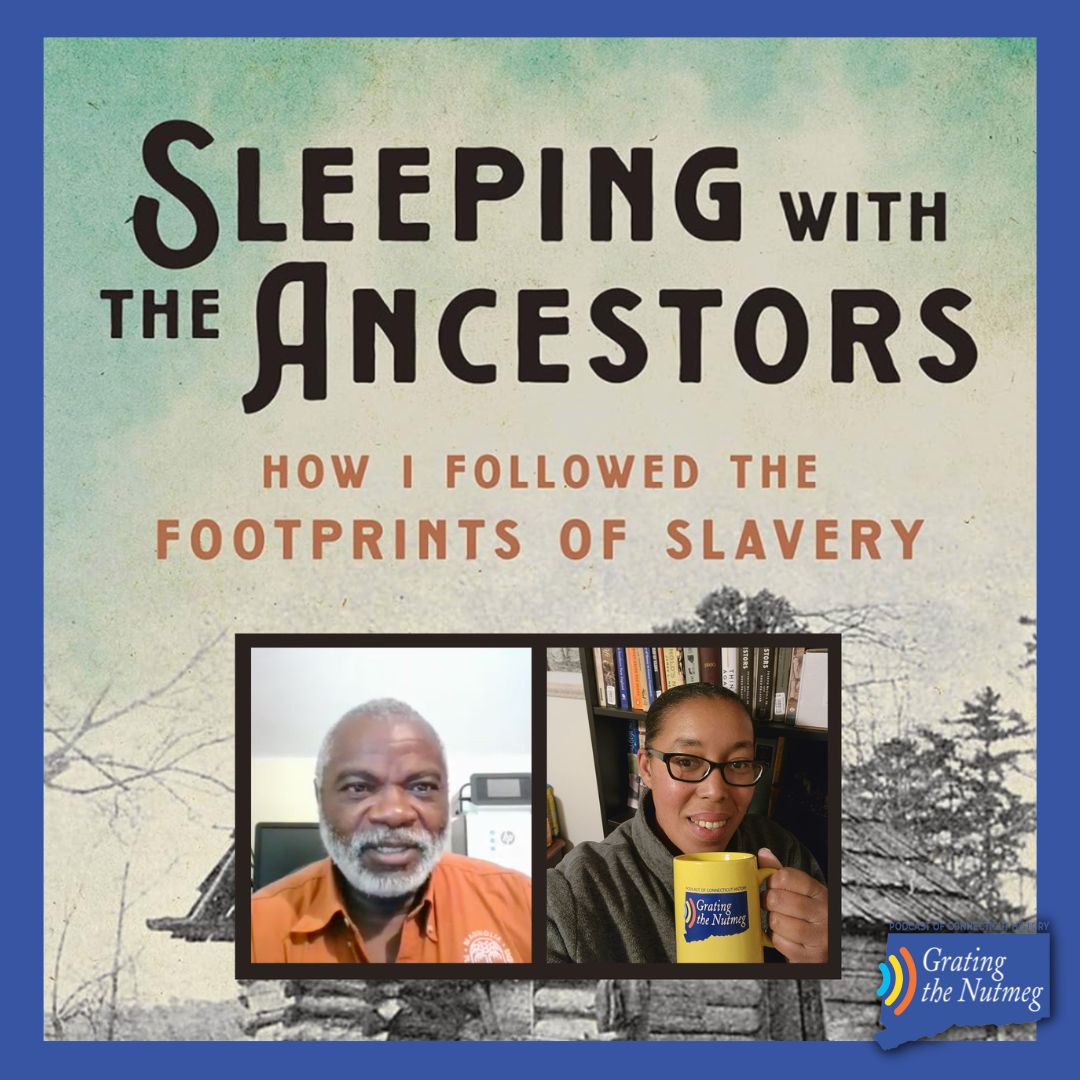
S3 Ep 175175. Sleeping with the Ancestors in Connecticut
Podcast host and historic preservationist Mary Donohue started following a project on Facebook four or five years ago. It was based on a very simple idea-sleeping overnight in historic buildings-but it was also genius. The project was the Slave Dwelling Project. Joseph McGill,Jr., a Black historic preservationist and Civil War reenactor based in South Carolina, had begun this groundbreaking project to sleep overnight in the countless and very underappreciated former slave dwellings that still stand across the country. What has this to do with Connecticut? McGill not only sleeps at residences across the South but the North and West too. In Connecticut, he has slept at buildings owned by the Greenwich Historical Society and in New London at the Hempstead Houses owned by Connecticut Landmarks. At each stop, events and campfires are held to explore with the public the way the history of the enslaved has been told. When Donohue discovered that Joe had a new book coming out in the summer of 2023, she immediately pre-ordered it and read it the week she received it. Sleeping with the Ancestors How I Followed the Footprints of Slavery authored by Joseph McGill, Jr. and journalist Herb Frazier was published by Hachette Books. In this episode, Donohue interviews author Joe McGill, Jr. and Nicole Thomas. Thomas was born and raised in New London. She gained in interest in local history 20 years ago after her mother purchased a historic home. Nicole works for Connecticut Landmarks as the Assistant Site Administrator at the Hempsted Houses Museum and is also a researcher for New London's Black Heritage Trail. The New London Black Heritage Trail was honored as a History Gamechanger Project by Connecticut Explored in 2022. Thanks to our guests author and historic preservationist Joe McGill, Jr. and historian and site manager Nicole Thomas. To find out more about the Slave Dwelling Project, go to their website at slavedwellingproject.org and follow Joe on Facebook on the Slave Dwelling Project page. His book is available on Amazon. To find out more about upcoming events at the Hempsted Houses go to ctlandmarks.org and follow them on Facebook at The Hempsted Houses. I highly recommend booking a tour with Nicole to experience the place where this history happened. To read more about enslaved man Adam Jackson at the Hempsted Houses, click here: https://www.ctexplored.org/adam-jacksons-story-revealed/ For more information on the Greenwich Historical Society's recreation of an enslaved person's sleeping area, visited by McGill in 2012, read more here: https://www.ctexplored.org/slave-quarters-in-bush-holley-house/ And for more articles that explore the long arc of Black history in Connecticut, find out more here: https://www.ctexplored.org/african-american-history-in-connecticut-2/ https://www.ctexplored.org/slavery-in-connecticut/ ----------------------------------------------------------- Subscribe to Connecticut Explored, the magazine of Connecticut history, at https://simplecirc.com/subscribe/connecticut-explored Fresh episodes of Grating the Nutmeg are brought to you every two weeks with support from our listeners. You can help us continue to produce the podcast by donating directly to Grating the Nutmeg on the Connecticut Explored website at ctexplored.org Click the donate button at the top and then look for the Grating the Nutmeg donation link at the bottom. Donations in any amount are greatly appreciated-we thank you! This episode of Grating the Nutmeg was produced by Mary Donohue and engineered by Patrick O'Sullivan at https://www.highwattagemedia.com/ Join us in two weeks for our next episode of Grating the Nutmeg, the podcast of Connecticut history.

S3 Ep 174174. Asher Benjamin, Connecticut's Early Builder and Architect 1773-1845
From the rural backwater of Hartland, Connecticut in 1773, Asher Benjamin would rise to become one of the most important figures of early American architecture. In addition to training as a skilled finish carpenter, he published the first architectural guidebooks-how-to books by an American-born author. These went through many editions and left a lasting record of how Federal-period craftsman could build the many stunning churches and homes from the earliest years of our country. He may have even held the first architectural school in America-more about that in this episode. In this episode, architectural historian Mary Donohue interviews guests William Ranauro, author of Asher Benjamin, American Architect, Author, Artist, published by Outskirts Press in 2021 and Lynn Mervosh, Site Administrator for the Phelps-Hatheway House and Garden in Suffield, Connecticut. Mr. Ranauro is one of the speakers for the upcoming Asher Benjamin Symposium. Today's episode is inspired by an upcoming symposium sponsored by Connecticut Landmarks to celebrate the work and legacy of Asher Benjamin, one of the most influential members of the first generation of American architects. Take in a full day of learning and gorgeous Fall foliage at the site of his first formal architectural commission, the Phelps-Hatheway House & Garden in Suffield, Connecticut. The symposium is on October 7th, 2023-to find out more and to register go to ctlandmarks.org Thank to guests William Ranauro and Lynn Merosh. To find out more about upcoming events at the Phelps-Hatheway House and Garden, go to ctlandmarks.org. And don't forget to register today for the upcoming Asher Benjamin Symposium at ctlandmarks.org. William Ranauro's book Asher Benjamin American Architect, Author, Artist is available on Amazon.com -------------------------------------- Subscribe to Connecticut Explored, the magazine of Connecticut history, at https://simplecirc.com/subscribe/connecticut-explored Fresh episodes of Grating the Nutmeg are brought to you every two weeks with support from our listeners. Did you know that you can make a monthly donation to Grating the Nutmeg by setting it up once on our website? You can help us continue to produce the podcast by donating directly to Grating the Nutmeg on the Connecticut Explored website at ctexplored.org Click the donate button at the top and then look for the Grating the Nutmeg donation link at the bottom. Donations in any amount are greatly appreciated-we thank you! This episode of Grating the Nutmeg was produced by Mary Donohue and engineered by Patrick O'Sullivan at https://www.highwattagemedia.com/ Join us in two weeks for our next episode of Grating the Nutmeg, the podcast of Connecticut history.

S3 Ep 173173. Baseball Runs in the Springer Family
This fall the Connecticut Museum is hosting the Smithsonian traveling exhibition ¡Pleibol! In the Barrios and the Big Leagues / En los barrios y las grandes ligas. It explores the historic role that baseball has played as a social and cultural force within Latino communities across the world, and how Latinos in particular have influenced and changed the game. You can't find a better local story about baseball, family, and community than that of the Springer family of New Britain. In this episode, Natalie Belanger chats with George Springer, Jr. George is a very proud dad. His daughters Nicole and Lena played collegiate softball, and both went on to play for the Puerto Rican National team. His son, George Springer III, plays right field for the Toronto Blue Jays. In 2017, when he played for the Houston Astros, he was an MLB All-Star and named World Series MVP. But if George Jr. Is a proud dad, he's equally a proud son. You'll hear him tell the story of how his dad, George Springer Senior, migrated to Connecticut from Panama in the 1950s and blazed a trail as an educator, overcoming racial prejudice that denied him access to some jobs, all while instilling a love of sports in his son. George tells us about the ways that sports, particularly baseball, helped to foster community in the ethnically diverse towns like Bristol and New Britain where he and his dad raised their families. You can learn more about the Springer family and the Pleibol exhibition at connecticutmuseum.org. The exhibition is open through November 5, 2023. image: 1976 Forestville Little League World Series team, George Springer Jr. pictured, courtesy of the Bristol Sports Hall of Fame. ------------------------------------------------------- Fresh episodes of Grating the Nutmeg are brought to you every two weeks with support from our listeners. You can help us continue to produce the podcast by donating directly to Grating the Nutmeg on the Connecticut Explored website at ctexplored.org Click the donate button at the top and then look for the Grating the Nutmeg donation link at the bottom. Donations in any amount are greatly appreciated-we thank you! Subscribe to Connecticut Explored, the magazine of Connecticut history, at https://simplecirc.com/subscribe/connecticut-explored This episode of Grating the Nutmeg was produced by Natalie Belanger and engineered by Patrick O'Sullivan at https://www.highwattagemedia.com/ Join us in two weeks for our next episode of Grating the Nutmeg, the podcast of Connecticut history.
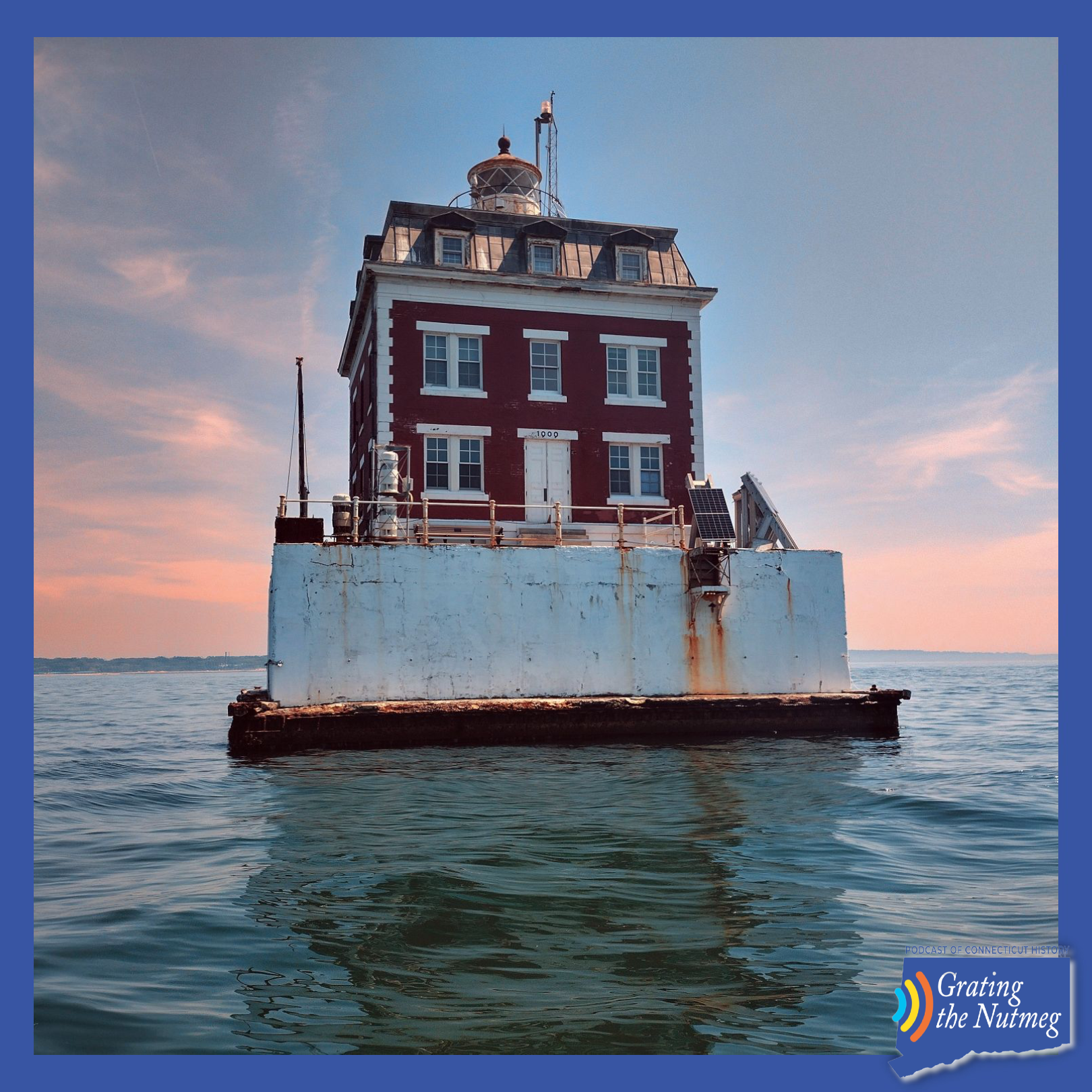
S3 Ep 172172. Connecticut Lighthouses: Lifesaving Beacons Along the Shore
In any gift shop in New England, you'll probably find lighthouses pictured on tea towels and tee shirts and in snow globes. Lighthouses are fondly thought of as community landmarks and icons. Connecticut has fourteen active lighthouses, two of which are maintained as private aids to navigation; six are standing but inactive. Some are located on dry land but a significant number are located in the waters of the Long Island Sound. Some are now private homes, but many can be enjoyed by the public including several that are periodically opened to the public by some of the state's history museums. As early as the 1880's, the federal government encouraged lighthouse keepers to open the lighthouses to visitors and tourists. The National Historic Lighthouse Preservation Act of 2000 provides an opportunity for the preservation of federally-owned historic light stations. The NHLPA program is a partnership among the United States Coast Guard; National Park Service, Dept. of the Interior; the General Services Administration and new stewards such as the New London Maritime Society and the Norwalk Seaport Association. In this episode, Executive Producer Mary Donohue interviews guests Susan Tamulevich, Executive Director of the New London Maritime Society since 2008, during which time the NLMS became the steward of three area lighthouses, and Jordan Jackson, a Grating the Nutmeg listener and lighthouse fan who shares her first-hand account of visiting the Sheffield Island Lighthouse in Norwalk Harbor administered by the Norwalk Seaport Association. There are many ways to visit Connecticut's lighthouses. In the summer, the New London Maritime Society takes visitors by boat to see both the interior and exterior of its two lighthouses located in the Long Island Sound. The Norwalk Seaport Association also schedules summer boat trips out to Sheffield Island. The Cross Sound Ferry from New London has a cruise that includes sailing by eight lighthouses available until October 9th. Lighthouse Point Park in New Haven is open until November 1st-a perfect place for a close look at an early lighthouse, a walk on the beach or a sandwich. For more information, visit these websites: https://en.wikipedia.org/wiki/List_of_lighthouses_in_Connecticut https://en.wikipedia.org/wiki/Category:Lighthouses_on_the_National_Register_of_Historic_Places_in_Connecticut https://www.nlmaritimesociety.org/ https://www.seaport.org/ https://www.ctexplored.org/stoningtons-first-family-of-lighthouse-keepers/ https://www.ctexplored.org/two-if-by-sea-new-londons-harbor-light-stoningtons-old-lighthouse-museum/ New London photos courtesy of New London Maritime Society and Sheffield Island Lighthouse photos courtesy of Jordan Jackson. -------------------------------------------------------------- Fresh episodes of Grating the Nutmeg are brought to you every two weeks with support from our listeners. You can help us continue to produce the podcast by donating directly to Grating the Nutmeg on the Connecticut Explored website at www.ctexplored.org/ Click the donate button at the top and then look for the Grating the Nutmeg donation link at the bottom. Donations in any amount are greatly appreciated-we thank you! Subscribe to Connecticut Explored, the magazine of Connecticut history, at https://simplecirc.com/subscribe/connecticut-explored This episode of Grating the Nutmeg was produced by Mary Donohue and engineered by Patrick O'Sullivan at https://www.highwattagemedia.com/ Join us in two weeks for our next episode of Grating the Nutmeg, the podcast of Connecticut history.

S3 Ep 171171. Connecticut's Very Pink House-Roseland Cottage
It's the summer of Barbie. Barbiecore, an homage to the stylish doll, is everywhere in fashion and home furnishings. It's time to think pink! So this episode is on Connecticut's own Victorian Barbie Dream House - Roseland Cottage in Woodstock. How many shades of pink has Roseland Cottage been? We'll find out! Executive Producer Mary Donohue talks to Laurie Masciandaro, site manager of Roseland Cottage museum owned by Historic New England. Laurie holds a Masters Degree in American History from the University of Connecticut and is a frequent speaker on Connecticut's historic gardens. Read more in this Connecticut Explored article written by Laurie at https://www.ctexplored.org/sample-article-a-presidential-july-4th/ To find out more about upcoming events at Roseland Cottage go to roselandcottage.org ------------------------------------------------- Fresh episodes of Grating the Nutmeg are brought to you every two weeks with support from our listeners. You can help us continue to produce the podcast by donating directly to Grating the Nutmeg on the Connecticut Explored website at ctexplored.org Click the donate button at the top and then look for the Grating the Nutmeg donation link at the bottom. Donations in any amount are greatly appreciated-we thank you! Subscribe to Connecticut Explored, the magazine of Connecticut history, at https://simplecirc.com/subscribe/connecticut-explored This episode of Grating the Nutmeg was produced by Mary Donohue and engineered by Patrick O'Sullivan at https://www.highwattagemedia.com/ Join us in two weeks for our next episode of Grating the Nutmeg, the podcast of Connecticut history.

S3 Ep 170170. Connecticut Senator George McLean Protects America's Wild Birds
Connecticut Senator George P. McLean's crowning achievement was overseeing passage of one of the country's first and most important wildlife conservation laws, the Migratory Bird Treaty Act of 1918. The MBTA, which is still in effect today, has saved billions of birds from senseless killing and likely prevented the extinction of entire bird species. In this episode, Executive Producer Mary Donohue interviews Will McLean Greeley. He grew up with a deep interest in American history, politics, and birds. After retiring from a 35-year career in government and corporate market research, he began a four-year research and writing journey to learn more about George P. McLean and his legacy. A Connecticut Yankee Goes to Washington, Senator George P. McLean, Birdman of the Senate, published by the Rochester Institute of Technology Press in 2023, is his first book. The new book puts McLean's victory for birds in the context of his distinguished forty-five-year career marked by many acts of reform during a time of widespread corruption and political instability. McLean rose from obscurity as a Connecticut farm boy to serve as Governor of Connecticut and as a senator from Connecticut in Congress where he advised five US presidents and helped lead change and shape events as a US senator from 1911 to 1929. Senator George P. McLean established the McLean Game Refuge in 1932 as a life sanctuary to preserve over 3,000 acres of meadows and forests he feared would be lost to development and resource exploitation. Today the wildlands have grown to over 4,400 acres, and protect hundreds of animal species. For more information, go to https://mcleancare.org/game-refuge/ To contact the author or to schedule a book talk, please go to: https://willgreeley.com To purchase your copy of A Connecticut Yankee Goes to Washington, Senator George P. McLean, Birdman of the Senate, please go to the independent bookstores shown below: RJ Julia (all locations) Breakwater Books, Guilford, CT Books on the Common, Ridgefield, CT Byrd's Books, Bethel, CT To order online go to the RIT Press website: https://press.rit.edu/search-results-grid/?keyword=Mclean or Amazon.com --------------------------------------------------------- Grating the Nutmeg, the podcast of Connecticut history is the winner of a 2023 Award of Merit for excellence from the Connecticut League of History Organizations. We count on your support to be able to bring you fresh episodes of Grating the Nutmeg every two weeks. You can help us continue to produce the podcast by donating directly to Grating the Nutmeg on the Connecticut Explored website at ctexplored.org Click the donate button at the top and then look for the Grating the Nutmeg donation link. We appreciate your donations in any amount -thank you! This episode of Grating the Nutmeg was produced by Mary Donohue and engineered by Patrick O'Sullivan at www.highwattagemedia.com/ Join us in two weeks for our next episode of Grating the Nutmeg, the podcast of Connecticut history.

S3 Ep 169169. Connecticut's 17th Regiment Volunteer Infantry at the Battle of Gettysburg
This episode was recorded on July 5th, 2023 just two days after the 160th anniversary of the Battle of Gettysburg-the turning point of the American Civil War. With more than 50,000 estimated casualties, the three-day engagement was the bloodiest single battle of the conflict. It's been said that there are over 5,000 books written about the three-day battle-what more can be uncovered? GTN Executive producer Mary Donohue interviews Bridgeport historian Carolyn Ivanoff, author of We Fought at Gettysburg, Firsthand Accounts by the Survivors of the 17th Connecticut Volunteer Infantry, published in 2023 by Gettysburg Publishing. We Fought at Gettysburg follows the 17th Regiment through the Gettysburg Campaign and beyond in June and July of 1863. The book contains first-hand accounts of men who lived through the trauma of combat and survived to write about it. They describe what they saw, thought and felt on the battlefield. For more information or go contact author Carolyn Ivanoff, please go to: Educator, Author, Independent Historian P.O. Box 3294 Gettysburg, PA 17325 (203) 735-8739 https://sites.google.com/site/carolynivanoff/ Ivanoff offers book talks and programs in person and virtually. Programs include: 1) We Fought at Gettysburg--Stories of the Care Givers, Wounded and Honored Dead 2) We Fought at Gettysburg-- Comrades in Combat To order your copy of We Fought at Gettysburg, please go to gettysburgpublishing.com or Amazon.com Subscribe to Connecticut Explored, the magazine of Connecticut history at: ctexplored.org/shop Fresh episodes of Grating the Nutmeg are brought to you every two weeks with support from our listeners. You can help us continue to produce the podcast by donating directly to Grating the Nutmeg on the Connecticut Explored website at ctexplored.org Click the donate button at the top and then look for the Grating the Nutmeg donation link at the bottom. Donations in any amount are greatly appreciated-we thank you! This episode of Grating the Nutmeg was produced by Mary Donohue and engineered by Patrick O'Sullivan at https://www.highwattagemedia.com/ Join us in two weeks for our next episode of Grating the Nutmeg, the podcast of Connecticut history.

S3 Ep 168168. Connecticut's Cape Verdean Community
In this episode of Grating the Nutmeg, Natalie Belanger of the Connecticut Museum of History and Culture chats with some members of Connecticut's Cape Verdean community to learn about the culture's deep roots in the state. Roberta Vincent has been a passionate advocate for the Cape Verdean community in her home town of Norwich, Connecticut for decades. Educator Koren Paul grew up in Stratford and is President of the Cape Verdean Women's Club of Bridgeport. Both women describe the origins of the community in New England and to talk about their personal experiences maintaining their cultural heritage. The conversation also includes Lynne Williamson, the mutual friend who introduced Belenger to Roberta and Koren. Williamson is the former director of the Connecticut Cultural Heritage and Arts Program, the state's official folk and traditional arts initiative. CCHAP merged with the Connecticut Museum in 2015. Learn more here: Cape Verdeans in Norwich Africans in Search of the American Dream: Cape Verdean Whalers and Sealers Cape Verdean Women's Social Club of Bridgeport Connecticut Cape Verdean Community History Project Cape Verdean Materials at the Connecticut Museum of History and Culture The Connecticut Digital Archive And to hear more examples of Cape Verdean music in CT, you can listen to some repicar de tambor recorded at the Festa de Sao Joao at the Cape Verdean Club of Waterbury in 2010, and an audio notebook produced by NPR with CCHAP in 2009. Fresh episodes of Grating the Nutmeg are brought to you every two weeks with support from our listeners. You can help us continue to produce the podcast by donating directly to Grating the Nutmeg on the Connecticut Explored website at ctexplored.org Click the donate button at the top and then look for the Grating the Nutmeg donation link at the bottom. Donations in any amount are greatly appreciated-we thank you! This episode of Grating the Nutmeg was produced by Natalie Belanger and engineered by Patrick O'Sullivan at https://www.highwattagemedia.com/ Subscribe to Connecticut Explored magazine at ctexplored.org Join us in two weeks for our next episode of Grating the Nutmeg, the podcast of Connecticut history.

S3 Ep 167167. New Lives for Old Factories: Cheshire's Ball & Socket Arts
What's being done to save the state's industrial history? In today's episode, Producer Mary Donohue talks to Renee Tribert, Preservation Services Coordinator for adaptive reuse and redevelopment for industrial buildings at Preservation Connecticut. Podcast audio engineer Patrick O'Sullivan and Donohue share some of their favorite places to go around the state where you can see old mills and factories that are being used for fun new uses and we hear from Ilona Somogyi, co-founder of Ball & Socket Arts in Cheshire, Connecticut about an old mill with a Cinderella story that will open this summer. Connecticut was at the forefront of the Industrial Revolution in the United States. Small brooks and rivers were dammed to create waterpower that turned machinery and the state's textile, precision manufacturing and metal casting industries were born. Thousands of products were produced and the state attracted investors, inventors and immigrants to work in the factories. But as industry moved out in the last half of the 20th century, these cathedrals of industry become vacant and abandoned across the state. For more information about organizations and museums mentioned in this episode, go to: Preservation Connecticut https://preservationct.org/ Mills https://preservationct.org/mills Ball & Socket Arts https://ballandsocket.org/ 493 W. Main Street, Cheshire, CT 06410 The Carousel Museum https://www.thecarouselmuseum.org/ 95 Riverside Avenue, Bristol, CT 06010 The Archive https://linktr.ee/archivebridgeport 118 Congress Street, Bridgeport, CT 06604 Mongers Market https://www.mongers-market.com/ 1155 Railroad Avenue, Bridgeport, CT 06605 Two Roads Brewery https://tworoadsbrewing.com/ 1700 Stratford Avenue, Stratford, CT 06615 Real Art Ways https://www.realartways.org/ 56 Arbor Street, Hartford, CT 06106 Parkville Market https://parkvillemarket.com/ 1400 Park Street, Hartford, CT 06106 Photo Credit: Ball & Socket Arts Cheshire, CT Fresh episodes of Grating the Nutmeg are brought to you every two weeks with support from our listeners. You can help us continue to produce the podcast by donating directly to Grating the Nutmeg on the Connecticut Explored website at ctexplored.org Click the donate button at the top and then look for the Grating the Nutmeg donation link at the bottom. Donations in any amount are greatly appreciated-we thank you! This episode of Grating the Nutmeg was produced by Mary Donohue and engineered by Patrick O'Sullivan at https://www.highwattagemedia.com/ Donohue may be reached at [email protected] Join us in two weeks for our next episode of Grating the Nutmeg, the podcast of Connecticut history.

S3 Ep 166166. Connecticut at the 1964 New York World's Fair
It's almost summertime and kids everywhere are already dreaming about their summer vacation. In 1964, Jimmy O'Sullivan of Cheshire, Connecticut had his heart set on a family outing from Connecticut to the see the World's Fair in New York City's Flushing Meadows Park with its futuristic, space-themed exhibits and "Peace Through Understanding" overarching theme. A short drive down Connecticut's Merritt Parkway and over to Flushing Meadow Park put the O'Sullivan family squarely into the heart of the fair. O'Sullivan still has a photograph of himself at 9 years old in front of the fairs' Unisphere, a 12-story-high stainless steel globe. The 1964-65 New York World's Fair attracted approximately 50 million visitors including many from Connecticut during its two April-to-October seasons. The guest for this episode is Dr. Jason Scappaticci, historian and Associate Dean of Student Affairs at Capital Community College in Hartford. Not only does Dr. Scappaticci have a keen interest in all things World's Fair but he is an avid collector of souvenirs and mementos from the fair. Many Connecticut companies had exhibits at the fair. Standouts include the Travelers Insurance Company's building on the "Pool of Industry". The building was designed to resemble the company's trademark red umbrella. General Electric's pavilion stood across from the Travelers. It included a Disney designed attraction called "Progressland". For more information on Connecticut's connections to the fair, read Dr. Scappaticci's article here: https://www.ctexplored.org/connecticut-at-the-new-york-worlds-fair/ Check out the Travelers exhibit "The Triumph of Man" recording here: https://www.youtube.com/watch?v=SeSS3SILD9Q Saint Mary, Mother of the Redeemer Church, includes both interior and exterior design features from the 1964 Vatican Pavilion purchased and included in his design by church architect William F. Herman, Jr. of Mystic. To visit, go to 69 Groton Long Point, Groton, Connecticut. https://www.stmarysgroton.org/ Fresh episodes of Grating the Nutmeg are brought to you every two weeks with support from our listeners. You can help us continue to produce the podcast by donating directly to Grating the Nutmeg on the Connecticut Explored website at ctexplored.org Click the donate button at the top of the home page and then look for the Grating the Nutmeg donation link. Your donation is vital to our ability to bring you well-researched episodes that bring out new facets of Connecticut history. Donations in any amount are greatly appreciated-we thank you! This episode of Grating the Nutmeg was produced by Mary Donohue and engineered by Patrick O'Sullivan at https://www.highwattagemedia.com/ Traveler's Insurance Pavilion postcard image courtesy of the Connecticut Historical Society.

S3 Ep 165165. Connecticut's Would-Be Woodstock: The Powder Ridge Festival
In this episode of Grating the Nutmeg, Natalie Belanger of the Connecticut Historical Society takes you back to the greatest rock concert that never happened. In 1970, a planned 3-day rock concert at Powder Ridge in Middlefield was cancelled after an injunction by the town. But tens of thousands of young people showed up anyway and proceeded to have one hell of a party. Belanger speaks with filmmaker Gorman Bechard, who's working on a documentary about Powder Ridge. Gorman peels back the many layers of this story, including a shady promoter, the town's grudge against a property owner, and the one famous musician who braved the police to show up and perform -- with an amp hooked up to a Mister Softee truck. Click here to watch a trailer for the film and support its completion! Thanks to Gorman Bechard and What Were We Thinking Films. If you haven't seen their 2019 film about New Haven pizza -- sorry, that's 'apizza' -- check out "Pizza A Love Story." Want to know more about Connecticut's rock and roll venues? Listen to our podcast episode on the legendary Toad's Place Nightclub in New Haven here: https://gratingthenutmeg.libsyn.com/156-the-legendary-toads-place-nightclub-in-new-haven Connecticut Explored, the nonprofit organization that publishes Connecticut Explored magazine, announced its "20 for 20: Innovation in Connecticut History," series highlighting 20 "Game Changers" whose work is advancing the study, interpretation, and dissemination of Connecticut history. The initiative, funded by Connecticut Humanities and sponsored by Trinity College, is the centerpiece of Connecticut Explored's year-long celebration of its 20th anniversary. Subscribe to our magazine at https://simplecirc.com/subscribe/connecticut-explored available in print and digital versions! Fresh episodes of Grating the Nutmeg are brought to you every two weeks with support from our listeners. You can help us continue to produce the podcast by donating directly to Grating the Nutmeg on the Connecticut Explored website at ctexplored.org Click the donate button at the top and then look for the Grating the Nutmeg donation link at the bottom. Donations in any amount are greatly appreciated-we thank you! This episode was produced by Natalie Belanger of the Connecticut Historical Society and engineered by Patrick O'Sullivan of https://www.highwattagemedia.com/

S3 Ep 164164. Philip Johnson's Glass House
"Lifestyle site Thrillist set out to find the most beautiful building in each state and Philip Johnson's New Canaan Glass House got the nod for Connecticut," reported CT Insider. The Glass House, internationally famous for its design is also a landmark in the history of historic preservation and the history of the LGBTQ community. To celebrate May as historic preservation month and June as LGBTQ Pride month, here's the story of its owner and designer Philip Johnson and his Glass House in New Canaan, Connecticut. https://www.ctinsider.com/living/article/Glass-House-named-most-beautiful-building-in-6777524.php Our guest for today's episode is Gwen North Reiss, who has conducted many interviews for the Glass House oral history project and worked for several years as an Educator, conducting tours of the 49-acre National Trust for Historic Preservation site. Her article for CT Explored—Philip Johnson's 50-year Experiment in Architecture and Landscape—was published in the winter of 2020. She has written many articles on modern architecture in New Canaan especially during the early 2000s when New Canaan's experimental modern houses were being demolished. Read her story here: https://www.ctexplored.org/philip-johnsons-50-year-experiment-in-architecture-and-landscape/ Read more about Philip Johnson here: https://www.ctexplored.org/philip-johnson-in-his-own-words/ To learn more about the Glass House and to book a tour, go to theglasshouse.org Photo Credit: Michael Biondo Fresh episodes of Grating the Nutmeg are brought to you every two weeks with support from our listeners. You can help us continue to produce the podcast by donating directly to Grating the Nutmeg on the Connecticut Explored website at ctexplored.org Click the donate button at the top and then look for the Grating the Nutmeg donation link. Donations in any amount are greatly appreciated-we thank you! This episode of Grating the Nutmeg was produced by Mary Donohue and engineered by Patrick O'Sullivan at www.highwattagemedia.com/ Donohue may be reached at [email protected]
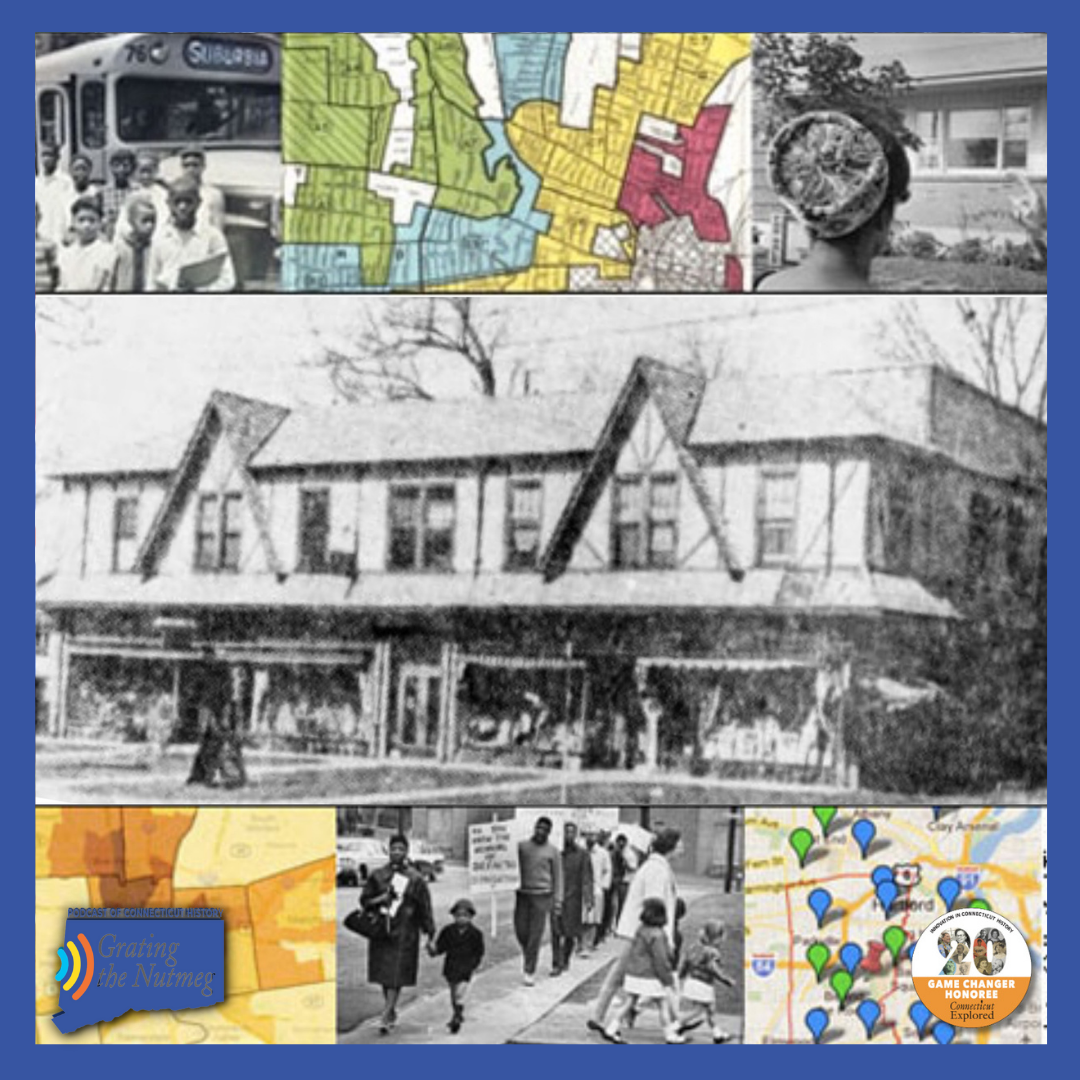
S3 Ep 1163. How Connecticut Got Zoning (CTE Game Changer Series)
You may have heard the phrase "it's not zoned for that" as in "Can I build a factory next to my house?" or "Can I put a trailer park in my north forty?" But we may not understand the difference between the town's master plan, land use requirements and zoning regulations. So let's break that down. The State of Connecticut mandates that every ten years each community adopt its master plan as a blueprint for aspirations for growth, preservation, and sustainability. The master plan details in broad terms how land can be used-land use-for housing, retail, transportation, education and recreation. It also identifies environmentally sensitive areas like wetlands that should not be built on as well as historically significant areas like historic districts whose architectural character should be safeguarded. But it's the town's zoning regulations that pinpoint exacting what can be constructed and where. But zoning also has a dark side. What is "exclusionary zoning"? In this episode, Dr. Jack Dougherty, Professor and Director of the Educational Studies Program at Trinity College, is going to uncover the story of how Connecticut passed legislation that allowed zoning in the 1920's and how West Hartford became the first town to adopt zoning regulations. He and his students use tools from digital history, data visualization, and web writing to explore the relationship between cities, suburbs, and schools in metropolitan Hartford, Connecticut. Read more about this in his feature article in the Spring 2023 issue of Connecticut Explored magazine https://www.ctexplored.org/game-changer-the-rise-of-exclusionary-zoning-in-connecticut/ And read his feature article about redlining in this Connecticut Explored article here https://www.ctexplored.org/the-federal-government-and-redlining-in-connecticut/ Listen to his Grating the Nutmeg episode on redlining here https://gratingthenutmeg.libsyn.com/43-the-challenge-of-fair-housing-in-cts-suburbs Dougherty is a Connecticut Explored 20 x 20 Innovation in Connecticut History Honoree for his work in On The Line: How Schooling, Housing, and Civil Rights Shaped Hartford and its Suburbs a digital-first, open-access book-in-progress. It is available online at https://ontheline.trincoll.edu/ The book combines historical narrative, interactive maps, and video interviews to tell the story of schooling and housing boundaries that shaped American metropolitan life during the past century, along with the civil rights struggles of families and activists to cross over, redraw, or erase these powerful lines. Connecticut Explored, the nonprofit organization that publishes Connecticut Explored magazine, announced its "20 for 20: Innovation in Connecticut History," series highlighting 20 "Game Changers" whose work is advancing the study, interpretation, and dissemination of Connecticut history. The initiative, funded by Connecticut Humanities and sponsored by Trinity College, is the centerpiece of Connecticut Explored's year-long celebration of its 20th anniversary. Subscribe at ctexplored.org Fresh episodes of Grating the Nutmeg are brought to you every two weeks with support from our listeners. You can help us continue to produce the podcast by donating directly to Grating the Nutmeg on the Connecticut Explored website at ctexplored.org Click the donate button at the top and then look for the Grating the Nutmeg donation link at the bottom. Donations in any amount are greatly appreciated-we thank you! This episode of Grating the Nutmeg was produced by Mary Donohue and engineered by Patrick O'Sullivan at highwattagemedia.com Donohue may be reached at [email protected]

S2 Ep 162162. Picturing Puerto Rico in Conceptual Art: The Museum of the Old Colony by Pablo Delano (CTE Game Changer Series)
Connecticut and Puerto Rico have strong ties. The guest for this episode is Pablo Delano, a visual artist, photographer, and educator recognized for his use of Connecticut and Puerto Rican history in his work, including his 2020 book of photography Hartford Seen published by Wesleyan University Press, a Connecticut Book Award 2021 "Spirit of Connecticut" finalist. Born and raised in Puerto Rico, he is the Charles A. Dana Professor of Fine Arts at Trinity College in Hartford. His work has been shown in solo exhibitions in museums and galleries in the U.S., Europe, Latin America, and the Caribbean. Over the course of 20 years Delano amassed a substantial archive of artifacts related to a century of Puerto Rican history. Using this material, including three-dimensional objects, newspaper clippings, and photographs, he created The Museum of the Old Colony, a dynamic, site-specific art installation that examines the complex and fraught history of U.S. colonialism, paternalism, and exploitation in Puerto Rico. The title is a play on words, referencing both the island's political status and Old Colony, a popular local soft drink. The work is also deeply personal, a means for Delano to better understand and come to terms with the troubling history of Puerto Rico. Pablo was chosen by Connecticut Explored as a Connecticut History Game Changer Honoree in celebration of the magazine's 20th anniversary in 2022-23. Professor Delano has been featured on Grating the Nutmeg in episode 123 discussing his book of photographs Hartford Seen and in episode 152 Hartford and Puerto Rico: A Conversation between Delano and Puerto Rican historian Elena Rosario. He has an article in the Spring 2023 issue of Connecticut Explored - read here: www.ctexplored.org/game-changer-topsy-in-the-tropics/ While we might not be able to travel to see the exhibition in person, the University of Virginia Press has published a beautiful full-color catalog that includes a collection of very insightful essays edited by Laura Katzman as well as photos of the exhibition. It's available for purchase on Amazon-The Museum of the Old Colony, An Art Installation by Pablo Delano, 2023. For more about Delano's work, go to his website at http://museumoftheoldcolony.org/about/curatorial/ To see his photo essay on Hartford's Puerto Rican streetscapes- https://www.ctexplored.org/visually-breathtaking-hartford-explored/ Listen to his Grating the Nutmeg episodes here: https://gratingthenutmeg.libsyn.com/152-hartford-and-puerto-rico-a-conversation-with-elena-rosario-and-pablo-delano-cte-game-changer-series https://gratingthenutmeg.libsyn.com/123-connecticut-seen-the-photography-of-pablo-delano-and-jack-delano Connecticut Explored, the nonprofit organization that publishes Connecticut Explored magazine, announced its "20 for 20: Innovation in Connecticut History," series highlighting 20 "Game Changers" whose work is advancing the study, interpretation, and dissemination of Connecticut history. The initiative, funded by Connecticut Humanities and sponsored by Trinity College, is the centerpiece of Connecticut Explored's year-long celebration of its 20th anniversary. Subscribe at ctexplored.org Fresh episodes of Grating the Nutmeg are brought to you every two weeks with support from our listeners. You can help us continue to produce the podcast by donating directly to Grating the Nutmeg on the Connecticut Explored website at ctexplored.org Click the donate button at the top and then look for the Grating the Nutmeg donation link at the bottom. Donations in any amount are greatly appreciated-we thank you! This episode of Grating the Nutmeg was produced by Mary Donohue and engineered by Patrick O'Sullivan at www.highwattagemedia.com/ Donohue may be reached at [email protected]

S2 Ep 161161. Carbonated Connecticut
In this episode of GTN, Natalie Belanger and Elena Peters of the Connecticut Historical Society take a look at the beginnings of our national obsession with soft drinks. Here in Connecticut, people have been drinking carbonated drinks for a long time, maybe longer than you'd expect. Today, the soda industry is dominated by just a couple of corporations, but a hundred years ago, Connecticut was home to an astonishing number of soda bottlers. Listen to their conversation to learn about the origins of the soda craze, its relation to Prohibition, and the stories of the oldest surviving Connecticut bottlers. You'll also hear about some really weird flavor combinations you could once order at Connecticut's soda fountains, such as the Hot Beef Egg, which is exactly what it sounds like. This episode is best enjoyed with the soda of your choice! Image caption: Soda jerk at Monroe Pharmacy, New Britain. CHS collection, 2003.110.1.39 Read more about Connecticut's soda companies here: https://hosmersoda.com/ https://www.foxonpark.com/ http://averysoda.com/ Want to have a soda at one of Connecticut's vintage food shacks? Read more here: https://www.ctexplored.org/shack-attack/ Fresh episodes of Grating the Nutmeg are brought to you every two weeks with support from our listeners. You can help us continue to produce the podcast by donating directly to Grating the Nutmeg on the Connecticut Explored website at ctexplored.org Click the donate button at the top and then look for the Grating the Nutmeg donation link at the bottom. Donations in any amount are greatly appreciated-we thank you! This episode of Grating the Nutmeg was produced by Natalie Belanger and engineered by Patrick O'Sullivan at highwattagemedia.com Belanger may be reached at may be reached at [email protected]
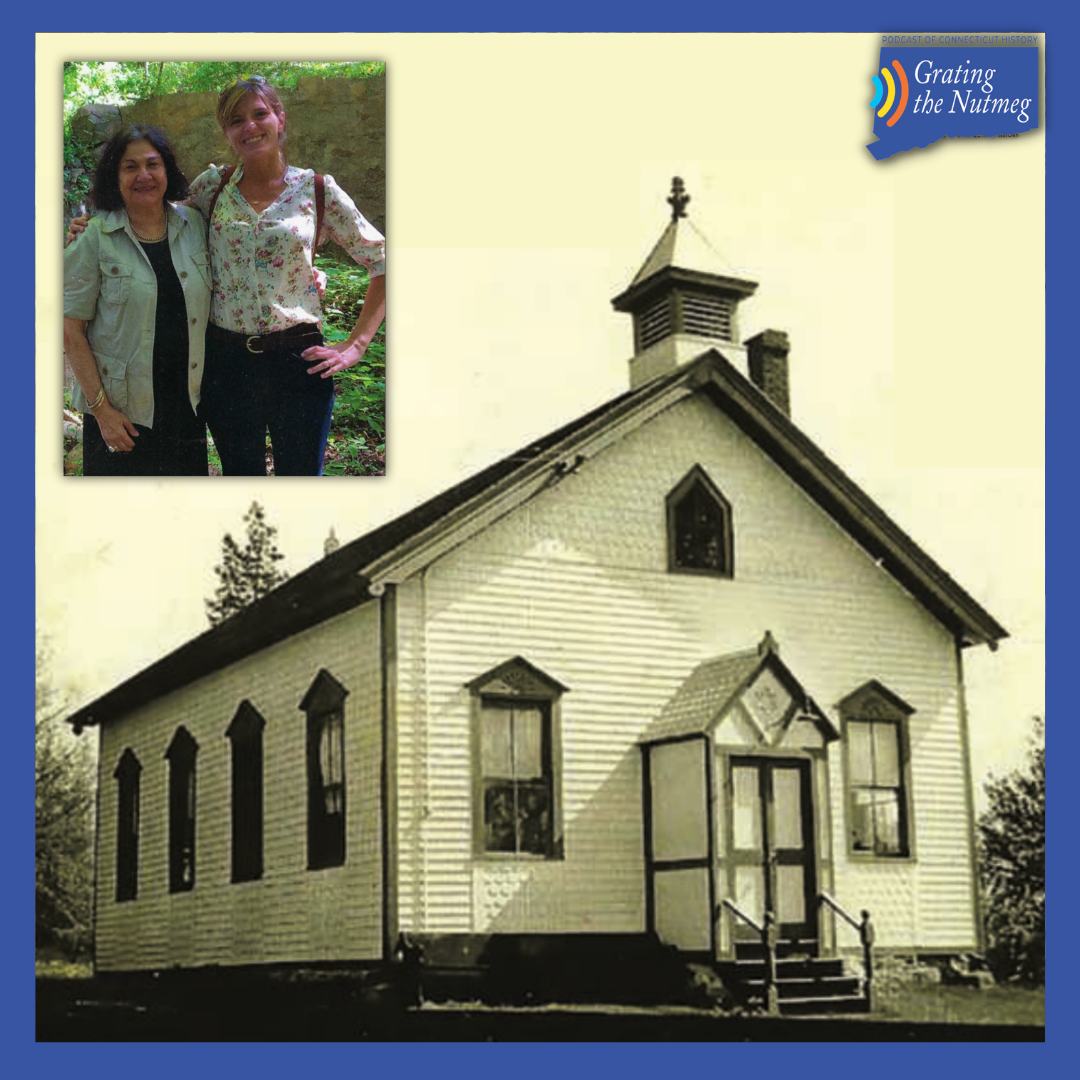
S2 Ep 160160. Saving Jewish Farming History in Chesterfield
As a preservationist, I have always believed that if you knew about the history of a place, it would make you care more about it. And if you uncovered the history, you'd feel inspired by the stories of the people who came before you. This episode reveals the importance of "citizen historians" - people who are dedicated to saving a historic place's story as well as preserving the site for future generations. Masses of Eastern European Jews began immigrating to the United States in the 1880s. Between 1881 and 1924, more than two and a half million Jews arrived in America. Many settled in large cities such as New York. But some were aided in becoming farmers and land- owners by the philanthropy of the Baron de Hirsch, a wealthy German Jew who amassed a fortune in building railroads. Funded by de Hirsch, the American Jewish Agricultural Society helped Jews to buy farmland, provided money for synagogues, published a Yiddish farm magazine and had Jewish farm agents. In Connecticut, an early Jewish farm community was established in Chesterfield in the town of Montville northwest of New London. In this episode, we hear more about how this early Jewish community's history was saved by a group of descendants and how the site of the group's first synagogue and creamery was preserved as an archeological site. Author and historian Mary Donohue interviews Nancy Savin, the 2022 winner of Preservation Connecticut's Harlan H. Griswold Award presented by Preservation Connecticut and the Connecticut State Historic Preservation Office. Harlan Griswold once said, "To me, preservation is more about my grandchildren than about my grandparents." Her award citation reads "Through her selfless preservation efforts, both small and large, Nancy Savin is helping to build a better future for our children and grandchildren." A college graduate in voice and music history, Nancy spent 17 years at Connecticut Public as award-wining producer/host of arts and culture programming. But she is also the great-great granddaughter of Hirsch Kaplan, an Eastern European immigrant who arrived in New York City in 1887. So how did he end up in tiny Chesterfield as a Jewish farmer? And what was the New England Hebrew Farmers of the Emanuel Society? We'll find in this episode. Visit the website of the New England Hebrew Farmers of the Emanual Society here: https://www.newenglandhebrewfarmers.org/ Read more about the New England Hebrew Farmers in Nancy's article in Connecticut Explored's Winter 2022 issue here: https://www.ctexplored.org/the-new-england-hebrew-farmers-of-the-emanuel-society/ And Jewish farmers here- https://www.ctexplored.org/hebrew-tillers-of-the-soil/ https://www.ctexplored.org/the-connecticut-catskills/ https://www.ctexplored.org/the-new-england-hebrew-farmers-of-the-emanuel-society/ Listen to our Grating the Nutmeg podcast on Jewish farmers here: https://gratingthenutmeg.libsyn.com/94-connecticuts-jewish-farmers You can buy the book A Life of the Land: Connecticut's Jewish Farmers by Mary M. Donohue and Briann G. Greenfield from the Jewish Historical Society of Greater Hartford here: https://jhsgh.org/product/a-life-of-the-land-connecticuts-jewish-farmers/ Order Micki Savin's book, I Remember Chesterfield on Amazon in hardcover, softcover or Kindle versions. Read the minutes book of the NEHFES at the Yiddish Book Center here: https://www.yiddishbookcenter.org/collections/yiddish-books/spb-nybc217886/leberstein-miriam-the-minutes-and-ledger-book-1892-1933-of-the-new-england-hebrew Fresh episodes of Grating the Nutmeg are brought to you every two weeks with support from our listeners. You can help us continue to produce the podcast by donating directly to Grating the Nutmeg on the Connecticut Explored website at ctexplored.org Click the donate button at the top and then look for the Grating the Nutmeg donation link at the bottom. Donations in any amount are greatly appreciated-we thank you! This episode of Grating the Nutmeg was produced by Mary Donohue and engineered by Patrick O'Sullivan at highwattagemedia.com. Donohue may be reached at [email protected]

S2 Ep 159159. Stories from Connecticut's Western Reserve in Ohio
Why did the State of Connecticut feel entitled to part of Ohio? Where was Connecticut's Western Reserve and how was it settled? The Litchfield Historical Society is opening a new exhibition on Connecticut's Western Reserve on April 22, 2023 entitled "Come to a Land of Milk and Honey". Here's what they say about the exhibit: "The story of the Western Reserve can be told through any number of historical lenses, but it is primarily a story of people: the people who felt compelled to leave Connecticut and New England for a new life in the west, and the people who chose to stay behind; the Native peoples who were forced from their lands by the arrival of migrants; the enslaved men, women, and children who were brought to the Reserve against their will, and the Black migrants who chose to make their homes in Ohio despite continued discrimination." In this episode, author and historian Mary Donohue interviews Alex Dubois and Linda Hocking from the Litchfield Historical Society about what they've found out about the peoples of the Western Reserve. Alex Dubois is the Curator of Collections. At the Society, Alex oversees the development and care of the institution's collection of material culture and art, and serves as project lead for the Society's exhibitions. Linda Hocking has served as the Curator of Library & Archives since 2002 where she oversees all aspects of acquisitions, description, and access to the Society's library and archives. Read more from Connecticut Explored here: https://www.ctexplored.org/west-of-eden-ohio-land-speculation-benefits-connecticut-public-schools/ https://www.ctexplored.org/whats-connecticuts-role-in-westward-expansion-2/ Visit the Litchfield Historical Society website for more information on the exhibition and programs: https://www.litchfieldhistoricalsociety.org/ Fresh episodes of Grating the Nutmeg are brought to you every two weeks with support from our listeners. We've just launched our Facebook and Instagram pages-look for the Grating the Nutmeg Podcast. Please follow us on social media to get the scoop on new episodes, behind the scenes photos and information on upcoming programs. Our new Connecticut Explored Spring 2023 issue is almost out! Don't forget to subscribe to get yours at ctexplored.org This episode of Grating the Nutmeg was produced by Mary Donohue and engineered by Patrick O'Sullivan of High Wattage Media at www.highwattagemedia.com/ Donohue may be reached at [email protected]

S2 Ep 158158. Theodate Pope Survives the Sinking of the Lusitania
The book Dead Wake, The Last Crossing of the Lusitania by New York Times best-selling author Erik Larson is a gripping account of the sinking of the British transatlantic luxury liner the Lusitania during World War 1. Theodate Pope, the architect and owner of what is now the Hill-Stead Museum in Farmington, Connecticut, who was a passenger on the Lusitania. Why did she sail on a British ship when Britain was at war? The ship was hit by a German submarine torpedo and sank within an hour. Why wasn't Pope in a lifeboat? Why did she jump from the ship into the water? And how did Pope survive and what were the after effects? In this episode, author and historian Mary Donohue interviews Melanie Bourbeau, Senior Curator at the Hill-Stead Museum. Bourbeau shares Pope's first-hand accounts of the sinking and its aftermath from Pope's letters, telegrams, diaries, and newspaper accounts, many of which are in the museum's archives. After the war, it was revealed that the passenger ship was carrying 4 million rounds of machine-gun ammunition and other war time battlefront materials. Was the ship a legitimate target during wartime? This is an argument that continues today. It certainly encouraged the United States to enter World War 1 though not immediately. Read more about Theodate Pope Riddle in Bourbeau's article published in Connecticut Explored at https://www.ctexplored.org/communicating-with-the-spirits/ And listen to the accompanying Grating the Nutmeg podcast at https://gratingthenutmeg.libsyn.com/109-communicating-with-the-spirits-theodate-pope-riddle Visit Hill-Stead Museum: www.hillstead.org And read more about her family and home, now the Hill-Stead Museum from Connecticut Explored at: https://www.ctexplored.org/alfred-atmore-popes-art-collection-at-hill-stead-museum/ https://www.ctexplored.org/the-modernism-of-hill-steads-theodate-pope/ https://www.ctexplored.org/hill-stead-a-colonial-revival-performance/ https://www.ctexplored.org/site-lines-golf-at-hill-stead/ Fresh episodes of Grating the Nutmeg are brought to you every two weeks with support from our listeners. We've just launched our Facebook and Instagram pages-please follow us on social media to get the scoop on new episodes, behind the scenes photos and information on upcoming programs. This episode of Grating the Nutmeg was produced by Mary Donohue. She may be reached at [email protected] Engineered by Patrick O'Sullivan of High Wattage Media at https://www.highwattagemedia.com/ Please join us in two weeks for a new episode on Grating the Nutmeg.

S2 Ep 157157. Journeys: Boys of the Chinese Educational Mission
Journeys 旅途: Boys of the Chinese Educational Mission is on view at the Connecticut Historical Society (CHS) through July 2023. This exhibition honors the 150th anniversary of the Chinese Educational Mission (CEM), a cultural and educational exchange program from 1872 – 1881. Headquartered in Hartford, the CEM enabled 120 Chinese boys, most of whom were barely teenagers, to study in New England with the goal of modernizing China by educating its future leaders abroad. It is a story of hopes, dreams, sacrifice, and the life-changing experience of international exchange. In this episode of Grating the Nutmeg, Museum Educator Natalie Belanger talks to Karen Li Miller and Henry Qu about their work on Journeys. The CEM collection at the CHS was a well-known resource, but contained Chinese-language materials that had never been translated....until Henry Qu, himself an international student, made an unexpected stop at CHS on his way from New Jersey to Massachusetts. Three years later, Henry's detour resulted in a fresh telling of the Mission's story, using the boys' newly-translated first-person accounts of their experience in Connecticut. What was it like to be uprooted as a teenager to live in a place that your language didn't even have a word for? What did these teens in the 1870s have in common with teenagers today? And what motivated Henry Qu to make that serendipitous stop at CHS? Listen to find out! The Exhibition Journeys: Boys of the Chinese Educational Mission will be on view at the Connecticut Historical Society through July, or you can take a 3D tour online at chs.org. Keep an eye on upcoming programming related to this topic at the CHS in spring of 2023! Read more about the CEM in Connecticut Explored magazine here: https://www.ctexplored.org/chinese-exchange-students-in-1880s-connecticut/ https://www.ctexplored.org/wong-kai-kah-comes-of-age-in-connecticut/ Fresh episodes of Grating the Nutmeg are brought to you every two weeks with support from our listeners. We've just launched our Facebook and Instagram pages-please follow us on social media to get the scoop on new episodes, behind the scenes photos and information on upcoming programs. https://www.facebook.com/GratingTheNutmegPod This episode of Grating the Nutmeg was produced by Natalie Belanger, Museum Educator at the Connecticut Historical Society and engineered by Patrick O'Sullivan of High Wattage Media at https://www.highwattagemedia.com/ Please join us in two weeks for a new episode on Grating the Nutmeg.

S2 Ep 156156. The Legendary Toad's Place Nightclub in New Haven
Wall-to-wall posters, sticky floors, a small stage and the stale-beer smell give Toad's Place its enduring character as a live-music shrine. Authenticity can't be faked. Opened as a restaurant in 1975, Toad's has welcomed hundreds of musical acts from the pioneers of the Blues like B.B. King, to today's megastars Drake and Cardi B. But what does it take to run a nightclub? And have it be successful for almost half a century? Author and historian Mary Donohue interviews Randall Beach, co-author with Toad's Place owner Brian Phelps, of the new book The Legendary Toad's Place, Stories from New Haven's Famed Music Venue, published in 2021 by Globe Pequot Press. Beach was the rock music critic for the New Haven Register from 1978 to 1984, covering many shows at Toad's Place. He later wrote about rock music for the New Haven Advocate, the Hartford Courant, and Billboard magazine. He currently writes a column for Connecticut magazine. Read more about Toad's Place in the photo essay published in Connecticut Explored at https://www.ctexplored.org/what-these-walls-have-heard-a-photo-essay-on-new-havens-legendary-toads-place/ Fresh episodes of Grating the Nutmeg are brought to you every two weeks with support from our listeners. We've just launched our Facebook and Instagram pages-please follow us on social media to get the scoop on new episodes, behind the scenes photos and information on upcoming programs: https://www.facebook.com/GratingTheNutmegPod This episode of Grating the Nutmeg was produced by award-winning author and historian Mary Donohue. She may be reached at [email protected] Engineered by Patrick O'Sullivan of High Wattage Media at https://www.highwattagemedia.com/

S2 Ep 155155. Celebrating Hartford's Black Firefighters (CTE Game Changers Series)
Connecticut Explored magazine is celebrating its 20th anniversary and our Grating the Nutmeg podcast it's 7th anniversary. Neither of these milestones could have been reached without your support! Please make a gift to our new Fund for Excellence in Publishing at https://www.ctexplored.org/subscribe/friends-of-connecticut-explored/ We need to ask our listeners for your help! This podcast is part of our "20 for 20: Innovation in Connecticut History" series, and we'd like your feedback. Take our 5-minute survey and get a free copy of Connecticut Explored magazine. You'll find the survey link in the Shownotes for this episode below. Thank you! https://www.surveymonkey.com/r/HARTEA12 When was the color line broken in the Hartford Fire Department? And how did a high school dropout and a Vietnam vet both become distinguished firefighters in the Hartford Fire Department? Hear their inspiring first-hand stories of growing up in Hartford's African American community in the North End in and dive into the detective work done to uncover the story of William Henry Jacklyn, Hartford's first Black firefighter. Our 2022 Winter issue of Connecticut Explored magazine celebrates citizen historians who come to their subjects because of a deep need to understand or uncover some person or event or answer a question they could not brush aside. Many become public advocates for their historical findings and projects. Both of the guests in this episode, Chief Charles Teale, Sr. and Captain Steven Harris were honored as Connecticut History Game Changers by Connecticut Explored magazine and both are passionate avocational historians. Chief Teale served as a member of the Hartford Fire Dept. from 1982-2010, retiring as chief. Always interested in Hartford's history even as a teenager, Chief Teale researched and documented the many outstanding accomplishments of the Hartford Fire Dept to the fire service profession throughout its 221-year history. This included uncovering the William Henry Jacklyn story. Captain Steven Harris began his career as a fire fighter in 1970, retiring in 1997 as a captain in the department and was voted Firefighter of the Year in Connecticut. In 2021, the Hartford Public Library partnered with Captain Harris to create a mural honoring Jacklyn on the Phoenix Society building at 729 Windsor St. in Hartford. The mural was painted by artists Lindaluz Carrillo and Kayla Farrell with an intergenerational group of community members. The Phoenix Society is a black fraternal organization of firefighters the was formed in 1965 in Hartford. John B. Stewart, Jr, Hartford's first African American fire chief, was the first president. The Society works to help its members toward promotional goals and to foster a closer relationship with the community. Learn more about the Phoenix Society at https://en.wikipedia.org/wiki/Phoenix_Society_(firefighters) Read more about our 20 for 20 Connecticut History Game Changers here: https://www.ctexplored.org/special-section-20-for-20-innovation-in-connecticut-history/ And read more about Hartford history from Chief Teale here; https://www.ctexplored.org/shoebox-archives-my-summers-at-camp-courant/ https://www.ctexplored.org/i-called-him-mr-hurley/ Join Connecticut Explored's 20th anniversary celebration by subscribing at ctexplored.org New subscribers can get 6 issues for the price of 4 with our Holiday sale before 12/31/2022. This episode of Grating the Nutmeg was produced by Mary Donohue and engineered by Patrick O'Sullivan of High Wattage Media at https://www.highwattagemedia.com/ Donohue has documented the built environment and pop culture for over 30 years. Contact her at [email protected]

S2 Ep 154154. Numbers to Names: Restoring Humanity to CT Valley Hospital Cemetery
Connecticut Explored magazine is celebrating its 20th anniversary and our Grating the Nutmeg podcast it's 7thanniversary. Neither of these milestones could have been reached without your support! Please make a gift to our new Fund for Excellence in Publishing at https://www.ctexplored.org/subscribe/friends-of-connecticut-explored/ For over a century, almost 1700 people buried in the cemetery at the Connecticut Valley Hospital were identified with gravestones bearing only a number instead of a name. In the 1990s, names of the deceased were restored to the site. In this episode of Grating the Nutmeg, Natalie Belanger of the Connecticut Historical Society (https://chs.org/) is taking a look at a digital history project that will help expand our understanding of the lives of the people buried in that cemetery and of mental health care in Connecticut's past. Kaitlyn Oberndorfer, CREC history teacher and graduate student, has undertaken a project that will link genealogical and demographic information to the names in the cemetery, restoring some of the residents' lost humanity. Look for Kaitlyn's finished project to go live online sometime in 2023. For a detailed history of the Connecticut Valley Hospital Cemetery, you can read the application that placed the site on the National Register of Historic Places. You can click here to learn about the "Uncovering Their History" project that inspired "Numbers to Names" Read more here: https://www.ctexplored.org/unburying-hartfords-native-and-african-family-histories/ And listen to our podcast episode here: https://gratingthenutmeg.libsyn.com/78-uncovering-african-and-native-american-lives-in-17th-18th-century-hartford For more about the treatment of Civil War soldiers at the Connecticut Valley Hospital, read more here:https://www.ctexplored.org/civil-war-soldiers-heart/ And for more about the treatment of mental illness in Connecticut, read more here: https://www.ctexplored.org/treating-the-mind-in-times-past/ Join Connecticut Explored's 20th anniversary celebration by subscribing at ctexplored.org New subscribers can get 6 issues for the price of 4 with our Holiday sale before 12/31/2022. This episode of Grating the Nutmeg was produced by Natalie Belanger, Adult Programs Manager at the Connecticut Historical Society and engineered by Patrick O'Sullivan of High Wattage Media at https://www.highwattagemedia.com/

S2 Ep 153153. Saving Connecticut's World War 1 History-Here and in France (CTE Game Changers Series)
How did 15 Connecticut high school students find themselves in French World War 1 trenches and what were they doing there? Find out in today's episode! This podcast is part of our "20 for 20: Innovation in Connecticut History" series, and we'd like your feedback. Take our 5-minute survey and get a free copy of Connecticut Explored magazine. You'll find the survey link below. Thank you! https://www.surveymonkey.com/r/CTWW1 My guests for this episode are Christine Pittsley, Special Projects Director for the Connecticut State Library and Katy Hitson, a Connecticut student who participated in the trench restoration in France when she was in high school. Pittsley has directed several award-winning World War 1 programs, including the Digging Into History trench restoration project and the Remembering World War One Digitization program, and has been recognized as a leader in the nation's WW1 commemorative efforts. When the United States entered Europe's Great War, World War 1, in 1917, Connecticut manufacturers provided the military with munitions, clothing, and other goods. In addition to the men and women who worked on the home front, roughly 63,000 state residents served in the US or Allied forces. For those at the front lines in France, life was rough. As the war stalled at the battlefront, men dug huge earthen defensive trenches that became their battlefield homes. They experienced gas attacks, heard nonstop artillery barrages and watched the daily aerial battles. Connecticut men also sheltered in limestone caves thirty feet below the ground level and encompassing over 100 acres with rooms and tunnels. For more information about the CT State Library's project, go to https://ctinworldwar1.org/ To read more about Connecticut in WW1, go to these Connecticut Explored issues and stories: https://www.ctexplored.org/spring-2017/ https://www.ctexplored.org/parallel-lives-segregated-connecticut-in-world-war-i/ https://www.ctexplored.org/world-war-i-the-cave-dwellers-life/ ---------------------------------------------------------------- Join Connecticut Explored's 20th anniversary celebration by subscribing at https://www.ctexplored.org/subscribe/ This episode of Grating the Nutmeg was produced by Mary Donohue and engineered by Patrick O'Sullivan of High Wattage Media. www.highwattagemedia.com/ Donohue has documented the built environment and pop culture for over 30 years. Contact her at [email protected]

S2 Ep 152152. Hartford and Puerto Rico: A Conversation with Elena Rosario and Pablo Delano (CTE Game Changer Series)
In this episode, recorded at the Park Street Library@the Lyric on Sept. 21, 2022 to a full house, two of our Connecticut History Game Changer Honorees discuss their work. The conversation was hosted by Jasmin Agosto, Community Outreach Coordinator for the Hartford History Center at the Hartford Public Library. Before we go to our new episode, I need to ask our listeners for your help! We need your thoughts and ideas about the podcasts that highlight our 20 Connecticut History Game Changers in the field of Connecticut history. This 5-minute survey will help us plan episodes that you want to hear! As a thank you, we will send you a free, introductory copy of our print magazine or if you are already a subscriber, we will add a free issue to your existing subscription. I hope you will share your thoughts on the podcast by going to the Shownotes for this episode and clicking the link here https://www.surveymonkey.com/r/DELROS to take the survey. Thank you! What can we learn about Hartford's Puerto Rican community today through art and history? Photographer and Trinity College Fine Arts professor Pablo Delano and emerging scholar and public historian PhD candidate Elena Rosario explore their work in the context of Hartford's Puerto Rican history and the broader United States-Puerto Rico relationship. Thank you to our guests Pablo Delano, Elena Rosario and Jasmin Agosto. For more about Pablo Delano's work, go to his website at http://museumoftheoldcolony.org/about/curatorial/ And for more about the Hartford History Center at the Hartford Public Library, visit https://hplct.ent.sirsi.net/client/en_US/history/ Connecticut Explored, the nonprofit organization that publishes Connecticut Explored magazine, announced its "20 for 20: Innovation in Connecticut History," series highlighting 20 "Game Changers" whose work is advancing the study, interpretation, and dissemination of Connecticut history. The initiative, funded by Connecticut Humanities and sponsored by Trinity College, is the centerpiece of Connecticut Explored's year-long celebration of its 20th anniversary. Subscribe at https://www.ctexplored.org/subscribe/ The episode of Grating the Nutmeg was produced by Mary Donohue and engineered by Patrick O'Sullivan of High Wattage Media www.highwattagemedia.com/ Donohue has documented the built environment and pop culture for over 30 years. Contact her at [email protected]

S2 Ep 151151. Little Liberia: The Mary and Eliza Freeman Center (CTE Game Changer Series)
Connecticut Explored is celebrating its 20th anniversary with "20 for 20: Innovation in Connecticut History," a series of articles, podcasts, and public programs that highlight 20 "Game Changers" in the field of Connecticut history. The insights and ideas we gather through this five-minute survey will help individuals and organizations who are committed to keeping Connecticut history vibrant and relevant. Thank you for your time! https://www.surveymonkey.com/r/OCT1FREEMAN ------------------------------------------------------------------ To mark Connecticut Explored's 20th anniversary, we launched an initiative to find 20 people and projects that are taking us into the future of the study of Connecticut history. We received over 120 nominations from the public and then chose 20 that are Connecticut history game changers. This our third podcast where we interview one of our CT History Game Changer Honorees-talking to the people making change happen. Today's episode is about Game Changer Honoree the Mary & Eliza Freeman Center for History and Community. The Center is restoring and preserving the historic Mary and Eliza Freeman Houses in Bridgeport's Little Liberia community, built about 1822 and some of the oldest houses built by African Americans in Connecticut. Mary Donohue, Asst. Publisher Emeritus, interviews guests Maisa Tisdale, President and CEO of the Center and Dr. Sarah Sportman, CT State Archeologist at the University of Connecticut. To learn more about the Freeman Center, visit their website at https://freemancenterbpt.org/ And to learn more about the Office of the Connecticut State Archeologist, visit the website at https://osa.uconn.edu/ Order your copy of the Gamechanger issue of Connecticut Explored at https://www.ctexplored.org/fall-2022-the-future-of-connecticut-history/ This episode was produced by Mary Donohue for Connecticut Explored and engineered by Patrick O'Sullivan of https://www.highwattagemedia.com/ Donohue has documented the built environment and pop culture for over 30 years. Contact her at [email protected] Please join us again for the next episode of Grating the Nutmeg. Photo credit: Mary & Eliza Freeman Center for History and Community, Bridgeport, CT.

S2 Ep 150150. Common Struggle, Individual Experience: How Can Museums Talk About Mental Health? (CTE Game Changer Series)
Connecticut Explored is celebrating its 20th anniversary with "20 for 20: Innovation in Connecticut History," a series of articles, podcasts, and public programs that highlight 20 "Game Changers" in the field of Connecticut history. The insights and ideas we gather through this five-minute survey will help individuals and organizations who are committed to keeping Connecticut history vibrant and relevant. Thank you for your time! https://www.surveymonkey.com/r/CHS915 ---------------------------------------------------------- The Connecticut Historical Society's current special exhibition explores how society has sought and continues to seek care for the mind and mental health. Common Struggle, Individual Experience: An Exhibition About Mental Health(Presented by Hartford HealthCare Institute of Living) uses letters, photographs, and other artifacts to highlight the experiences of Connecticans from the past. Oral history interviews, recorded in 2020 and 2021, share the perspectives of people today. In this episode, Natalie Belanger speaks with her CHS colleagues who worked in crafting this timely exhibition. Ben Gammell is the CHS's Director of Exhibitions, and Karen Li Miller is Research Historian. Together, they talk about the challenges of speaking for historical people who can't speak for themselves, and how honored they felt to be entrusted with the stories of current Connecticans living with mental health challenges. Common Struggle, Individual Experience has been honored as one of CT Explored's 20 "Game Changers" whose work is advancing the study, interpretation, and dissemination of Connecticut history. It has also received the AASLH Leadership in History 2022 Award. The exhibition is on view at the Connecticut Historical Society until October 16, 2022. You can take a virtual tour here! This episode of Grating the Nutmeg was produced by Natalie Belanger and engineered by Patrick O'Sullivan of High Wattage Media www.highwattagemedia.com/
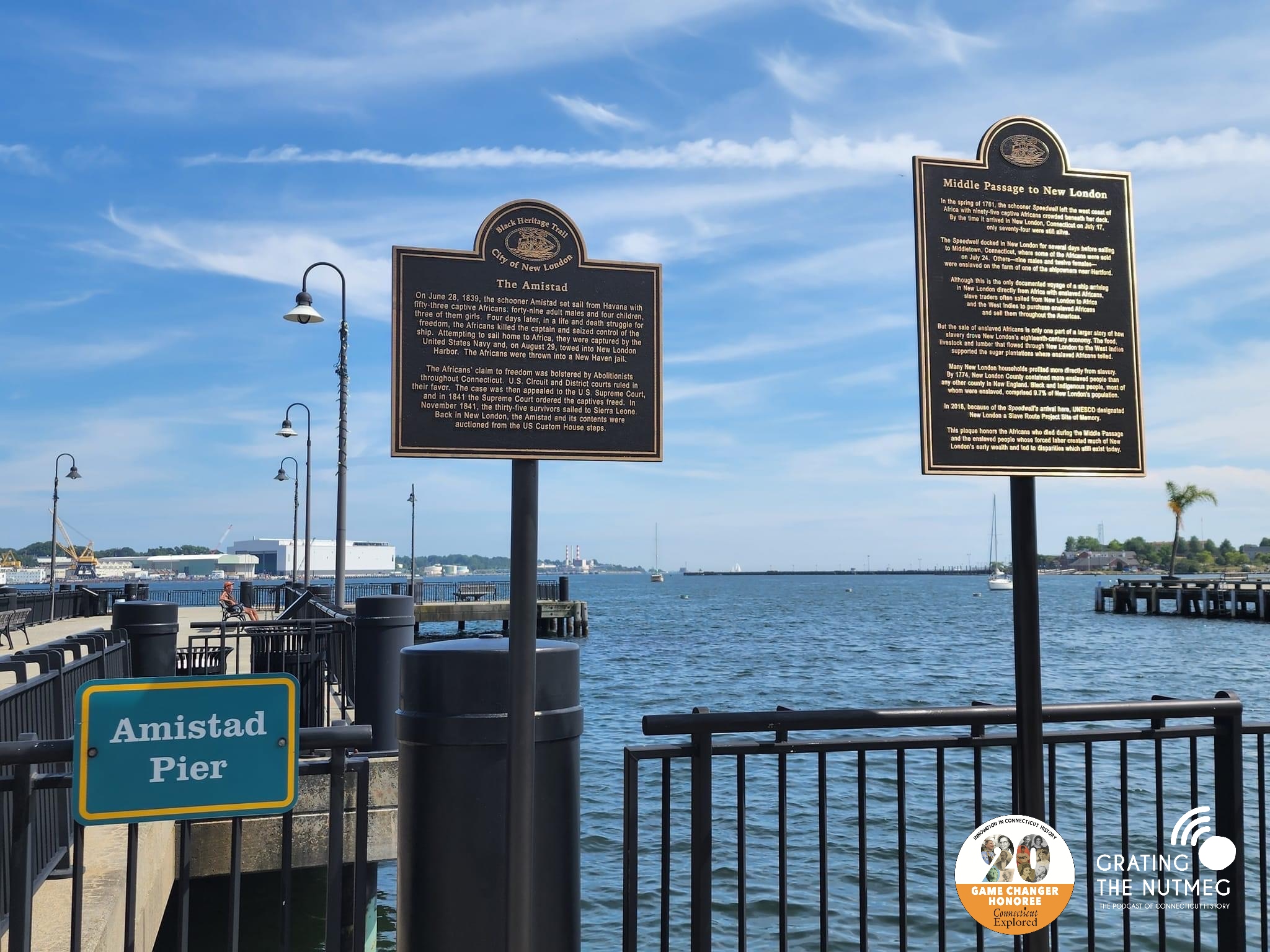
S2 Ep 149149. New London and the Middle Passage (CTE Game Changer Series)
Connecticut Explored is celebrating its 20th anniversary with "20 for 20: Innovation in Connecticut History," a series of articles, podcasts, and public programs that highlight 20 "Game Changers" in the field of Connecticut history. The insights and ideas we gather through this five-minute survey will help individuals and organizations who are committed to keeping Connecticut history vibrant and relevant. Thank you for your time! Visit: www.surveymonkey.com/r/PODCAST1 ------------------------------------------------------------ The Speedwell arrived in New London on July 17, 1761, after a journey of several months from Western Africa to the Americas. The boat departed with 95 enslaved persons. Only 74 survived the journey. The captain of the Speedwell, Timothy Miller, sailed up the Connecticut River to Middletown after a few days in New London. Although the ship's records don't show where the Africans aboard the Speedwell ended up, the probate record of Normand Morison, a Hartford physician who owned 7/16th of the Speedwell, shows 21 enslaved West Africans were placed on his farm in Bolton, CT. Morison died in 1761 and the fate of the people on the Bolton farm is not yet known. In this episode, Kathy Hermes, Lonnie Braxton, and Tom Schuch discuss Morison and the Speedwell, the Black Heritage Trail and its significance, and the impact of the slave trade on Connecticut and its trading networks. This episode of Grating the Nutmeg was produced by Dr. Kathy Hermes and engineered by Patrick O'Sullivan of High Wattage Media www.highwattagemedia.com/ Photo credit: Tom Schuch

148. Rediscovering the Battle of Ridgefield
The discovery of four 18th century male skeletons thought to be possible soldiers in the April 27, 1777 Battle of Ridgefield, prompted the most in-depth research into that crucial Revolutionary War conflict ever undertaken. In this presentation to the town sponsored by the Ridgefield Historical Society earlier this year, state historian Walt Woodward, historian Keith Jones, state archaeologist emeritus Nick Bellantoni, state archaeologist Sarah Sportman, archeologist Kevin McBride, and Historian David Naumec report on their discoveries to date.

S2 Ep 147147. The Hindenburg Flies Over Connecticut
The airship Hindenburg passed over Connecticut 21 times during its 17-month service between 1936-37. In the 1930s, air travel across the Atlantic Ocean between Europe and North America was in its infancy. The vast airships of the German Zeppelin Company, zeppelins or dirigibles, took an early lead, competing not with airplanes but luxury ocean liners. In this episode, Asst. Publisher Mary Donohue, talks to historian Alexander Rose, author of Empires of the Sky, Zeppelins, Airplanes, and Two Men's Epic Duel to Rule the World (Random House, 2020). And you'll hear from Bridgeport historian Carolyn Ivanoff, author of the article "The Hindenburg Flies over Bridgeport" in the Summer 2022 issue of Connecticut Explored. Find out more about why the Nazi swastika is visible in many of the photos taken over Connecticut. Thank you to our guests Alexander Rose and Carolyn Ivanoff. Rose has a new book coming out in December, 2022-The Lion and the Fox-and listeners can subscribe to his weekly Substack newsletter "Secret Worlds" which explores historical espionage (and occasionally aviation) at https://alexanderrose.substack.com/ Find out more about his other books at http://www.alexrose.com/about The episode of Grating the Nutmeg was produced by Mary Donohue and engineered by Patrick O'Sullivan of High Wattage Media www.highwattagemedia.com/ Donohue has documented the built environment and pop culture for over 30 years. Contact her at [email protected] Photo credit: Hindenburg over The Travelers Tower, Hartford, 1936 - Jeffrey Hollis https://www.youtube.com/watch?v=MinmbjRta3w The video, taken in October of 1936, shows the Hindenburg sailing over Hartford, Connecticut, seven months before its destruction.

S2 Ep 146146. Votes (and Markers) for Women!
For this episode of Grating the Nutmeg, Natalie Belanger of the Connecticut Historical Society talked to Joanie DiMartino, Connecticut state Coordinator for the National Votes for Women Trail. They discussed the origin of the marker program, and the criteria that went into choosing the Connecticut people and places honored with a marker. In addition, Joanie shares her thoughts on why the markers matter, and what the story of the suffrage movement can teach us about social justice movements today. To learn more, visit the National Votes for Women Trail. The site contains an interactive map of trail sites throughout the United States. The National Votes for Women Trail marker program is made possible through the William G. Pomeroy Foundation. The Connecticut Historical Society has partnered with the Pomeroy foundation to feature Connecticut cultural heritage on roadside markers at sites across the state. Learn more Thanks to Joanie DiMartino for participating! This episode was produced by Natatlie Belanger of the Connecticut Historical Society, and engineered by Patrick O'Sullivan of High Wattage Media, highwattagemedia.com Please join us again for the next episode of Grating the Nutmeg, released every two weeks. Subscribe to Connecticut Explored, the magazine of Connecticut history, at ctexplored.org

S2 Ep 145145. Activists Paul and Eslanda Robeson in Connecticut
In the Summer 2022 issue of Connecticut Explored, author and historian Steve Thornton of the Shoeleather History Project brings us the story of the internationally-renown activist, actor, and singer Paul Robeson and his wife Eslanda, an anthropologist, author and activist in her own right. The Robeson's home from 1941 to 1953 in Enfield, Connecticut is on the Connecticut Freedom Trail as well as the National Register of Historic Places. The Hartford Courant reported on April 1, of 1941 that, "The stucco house is situated on two and a half acres of land. The property includes a recreational building which houses a bowling alley and an outdoor swimming pool… A purchase price of about $10,000 was indicated by the attached revenue stamp." The next day the Courant reported, "Paul Robeson will move into his new home here, "The Beeches" on May 1… The luxurious house is in a state of disrepair but Mrs. Robeson has arranged with local workers to renovate the house and grounds…Built in 1903, the living room is richly paneled with a marble mantle… The grounds are shaded by many old trees, including several beeches on the broad lawns in front of the house." What attracted the Robeson's to Enfield? Why did the FBI keep them under surveillance in Connecticut? And how did a Robeson concert at Hartford's Weaver High School in 1952 become a huge local controversy? Let's hear from Steve Thornton about the Robesons activism and life while living in Connecticut. Read more in the Summer 2022 issue of Connecticut Explored "The Robesons Move to Enfield" by Steve Thornton. Get your copy at ctexplored.org And to learn more about Hartford history from the grassroots, visit The Shoeleather History Project at shoeleatherhistoryproject.com To learn more about a Connecticut citizen was arrested and tried for being a Communist, listen to his first-hand account from Alfred Marder in Episode 7 of Grating the Nutmeg at https://gratingthenutmeg.libsyn.com/gtn7e-extended-version-a-communists-arrest-in-1950s-new-haven And read more at https://www.ctexplored.org/al-marder-a-life-of-conviction/ This episode was produced by Mary Donohue, Assistant Publisher of Connecticut Explored, and engineered by Patrick O'Sullivan of High Wattage Media, highwattagemedia.com Song: Shenandoah, Paul Robeson (Copland, A.: Fanfare for the Common Man / Tilzer, A. Von: Take) Donohue may be reached at [email protected] Please join us again for the next episode of Grating the Nutmeg!

S2 Ep 144144. A Visit to the Katharine Hepburn Museum at "The Kate" in Old Saybrook
Painting by Everett Raymond Kinstler, Smithsonian National Portrait Gallery Join Walt Woodward on a visit to the Katharine Hepburn Museum at "the Kate" in Old Saybrook. His interview with Executive Director Brett Eliott and Director of Community Relations Robin Andreoli about this gem of a museum for America's most Oscar-winning actor (and long-time Saybrook resident) should convince you to put both the Katharine Hepburn Museum and "the Kate" on your must-see-this-summer list. It's a must hear podcast about a must see museum.

S2 Ep 143143. The Need for Speed on the Connecticut River
In this episode, CTExplored publisher Elizabeth Normen talks with Connecticut River Museum curator Amy Trout about the museum's summer exhibition Speed: Hydroplane Racing on the Connecticut River, 1900 – 1940. Trout tells us what a hydroplane is and why racing them became popular in the midst of the Great Depression. As opposed to yachting, she explains, hydroplane racing was an everyman's sport that people flocked to the riverfront to watch. She talks boat design, which outboard engines were popular, and who the stand-out racers of the 20s and 30s—a number of whom were young women—were. Speed is on view through October 9, 2022. Read more! Pleasure Boating on the Connecticut River, Summer 2018 https://www.ctexplored.org/cover-story-pleasure-boating-on-the-connecticut-river/ Full Steam Ahead: Steamboat Travel in Connecticut, Spring 2009 https://www.ctexplored.org/full-steam-ahead-steamboat-travel-in-connecticut/

S2 Ep 142142. The Institute of Living at 200
In 1822, the Hartford Retreat for the Insane was chartered as one of the first mental health centers in the United States, and the first hospital of any kind in CT. In 2022, the CHS is exploring of the story of mental health in our state. Recently, the CHS invited Dr. Harold I (Hank) Schwartz to talk about the history of the Hartford Retreat, renamed the Institute of Living in the 20th century. His presentation took us through the state of mental health care in the early 1800s, the reasons for the founding of the Retreat, and its place in the development of modern psychiatry. Dr. Schwartz, is the Psychiatrist-in-Chief Emeritus at the Institute of Living/Hartford Hospital and formerly served as Vice President, Behavioral Health at Hartford Healthcare. He is Professor of Psychiatry at the University of Connecticut School of Medicine and Adjunct Professor of Psychiatry at the Yale University School of Medicine. His talk is presented here for you with minimal edits. To learn more about the Connecticut Historical Society's exhibition Common Struggle, Individual Experience: An Exhibition About Mental Health, go to chs.org. You can view a 3D, virtual tour of the exhibition here. Image: "Hartford Retreat for the Insane," postcard, CHS collection 1984.13.109 Produced by Natalie Belanger. Mixed by Patrick O'Sullivan. See more: "The Institute of Living," Feb/Mar/Apr 2004, CT Explored.

S2 Ep 141141. Saving the Merritt Parkway
Most people in the tri-state area have driven the Merritt Parkway with its extraordinary bridges and landscaped vistas. But can a roadway built in the 1930s during the Great Depression survive today in the 21st century without losing its charm? In celebration of Historic Preservation Month, we will learn how the Merritt Parkway, the state's most heavily visited National Register historic district, was saved from modernization and restored to its original design. In this episode, Asst. Publisher Mary Donohue learns more about the history and preservation of the parkway from her guests Christopher Wigren deputy director of Preservation Connecticut and author of Connecticut Architecture: Stories of 100 Places. He co-wrote the National Register of Historic Places nomination for the Merritt Parkway and serves on the Department of Transportation's Merritt Parkway Advisory Committee. And her second guest, Wes Haynes, the Executive Director of the Merritt Parkway Conservancy, a non-profit organization committed to the preservation, revitalization and stewardship of the Parkway. Thanks to Chris for being our guest. You can order his book here: https://www.amazon.com/Connecticut-Architecture-Stories-Places-Garnet/dp/0819578134/ref=sr_1_1?crid=1072LVNSI3O9I&keywords=wigren&qid=1651172449&s=books&sprefix=%2Cstripbooks%2C58&sr=1-1 And thanks to Wes for being our guest. Find out more about the Merritt Parkway Conservancy here: https://www.merrittparkway.org/ For more Connecticut Explored stories about the Merritt Parkway, https://www.ctexplored.org/soapbox-preserving-the-meritt-parkway/ https://www.ctexplored.org/national-historic-preservation-act-40-and-fabulous/ https://www.ctexplored.org/meet-preservation-connecticut/ Photos used with permission from the Merritt Parkway Conservancy. This episode of Grating the Nutmeg was produced by Mary Donohue and engineered by Patrick O'Sullivan, High Wattage Media, LLC at highwattagemedia.com Donohue has documented the built environment and pop culture for over 30 years She may be reached at [email protected].

Ep 139140. New Hope For a Connecticut Champion
For over 2000 years, the American chestnut was the tallest, largest, and most omnipresent tree in all Connecticut. It's a tree for which a hundred hills, countless streets, and at least one Connecticut town were named, a tree whose nuts we sing about on the holidays, and a tree which helped frame our houses, shape our furniture, fence and feed our livestock, make tracks for our trains, and hold our utility lines. In this episode, Jack Swatt, President of the Connecticut chapter of the American chestnut Foundation, talks with state historian Walt Woodward about the long history and importance of the American chestnut tree, the devastation brought by the historic chestnut blight, and the amazing efforts by scientists today to restore this functionally extinct species to its former place in Connecticut's woodlands. Appreciation to Daniel Birch for "Trees in the Wind," episode intro music licensed by Creatrive Commons