
Futureproof with Jonathan McCrea
497 episodes — Page 9 of 10

Can Humpback whales be altruistic?
It can be easy to think poorly of humans. When we're not destroying the planet or starting wars, we're likely off somewhere making fools of ourselves on social media. We're not all bad though, as some people dedicate their spare time, and even their lives, to helping others. But can we say the same about other animals? (We're looking at you, cats.) Bob Pitman is a Marine Ecologist at the Marine Mammal Institute at Oregon State University. He joins Jonathan to discuss.

Futureproof Extra: The science behind bees' waggle dance
We have covered the lives and behaviors of bees a few times here on the programme. So much so we thought we’ve seen and heard it all. Well, we may have been wrong about that…in particular, with something to do with the dance they perform in the hive and how it relates to their ability to communicate and navigate. Prof. Jürgen Tautz is a bee expert, animal behaviorist and Emeritus Professor at the Biozentrum, University of Würzburg and author of ‘Communication Between Honeybees: More Than Just a Dance in the Dark’ and he joined Jonathan on the show.

Is “Gamification” making fools of all of us?
Yiddish author and playwright Sholem Aleichem; the man whose stories formed the basis for 1964 musical Fiddler on the Roof once proposed that “life is a dream for the wise but a game for the fool”. So, is modern technology and more specifically “Gamification” making fools of all of us? Adrian Hon - CEO of Six to Start and author of You've Been Played: How Corporations, Governments, and Schools Use Games to Control Us All joined Jonathan on the show to discuss.

Human Organs-on-Chips
Drug development is notoriously slow and expensive to bring a new compound from the lab bench to market. A major cause of this inefficiency is the traditional reliance on testing drugs in animals before they are tested in humans. Animal models often do not accurately reflect human physiology, meaning that drugs that appear to be safe and effective in animals frequently turn out to be harmful or ineffective in humans. The solution could come from computer microchip manufacturing methods to create “Organs-on-Chips", microfluidic culture devices that recapitulate the complex structures and functions of living human organs. Dane Gobel, the Co-Founder and Operations Director of Methuselah Foundation joins Jonathan to discuss.

Futureproof Extra: The new science of the heart
Average adults' heart beats 72 times a minute. In a lifetime it creates enough energy to drive the truck to the moon and back and generates astonishingly 2,5 gigajoules of energy. Yet, cardiac arrests and heart diseases are major causes of death worldwide, despite decades of research. How much further we'll have to go before we solve this problem? To discuss Jonathan was joined by Sian Harding, Emeritus Professor of Cardiac Pharmacology at the National Heart and Lung Institute, Imperial College London, and author of The Exquisite Machine. The New Science of the Heart.

Futureproof Extra: The End of Medicine As We Know It
If you have acute migraines, your doctor might refer you to a neurologist. If your Asthma is really bad, maybe you’ll be sent to a respiratory specialist. They will then use their expertise to alleviate your symptoms but crucially they won’t be able to tell you what is causing your illness because frankly, they don’t know. So, what if the ultimate cause of these ailments isn’t happening in the brains or the lungs but elsewhere? Doesn’t that present a problem for how our medical system operates? The resounding answer is yes according to Professor Harald Schmidt who is Chair of the Department of Pharmacology and Personalized Medicine at the University of Maastricht and author of 'The End of Medicine as We Know It and Why Your Health Has a Future'. He joins Jonathan to discuss.

Thorium Nuclear Reactors
Recently, the Chinese government has been testing a thorium nuclear reactor that uses molten salt as a coolant. Although this radioactive element has been trialed in reactors before, experts say that China is the first to have a shot at commercializing the technology. The Wuwei reactor is designed to produce just 2 megawatts of thermal energy, which is only enough to power up to 1,000 homes. But if the experiments are a success, China hopes to build a reactor that could power hundreds of thousands of homes by 2030. So could Thorium Nuclear Reactors be the answer to all of our current climate woes? Simon Middleburgh, Professor of Materials at the Nuclear Futures Institute in Bangor University joins Jonathan to discuss.
Futureproof Extra: The Large Hadron Collider & The Search for a Fifth Force
Depending on your social media proclivities you may or may not have noticed that your feed is awash with images from the JWST. Certainly science Twitter is very excited about it. And so they should be, it’s amazing to see what we can observe of the very big and very far away thanks to the increased resolution of our newest space telescope. In a similar vein the third run of the Large Hadron Collider is allowing us to peer ever further into the world of the very small. So what might we find? Amanda Donohue is a UCD Doctoral Student at the Large Hadron Collider in CERN Jon Butterworth is Professor of Physics at University College London (UCL) working on the ATLAS experiment at CERN's Large Hadron Collider.

Longevity, Immortality and the quest to defeat death with Aubrey De Grey
How do you eat an elephant? One spoon at a time, right? Well It's the same with living forever. No one is going to find a magic potion that will make you 20 again but over the years we are slowly, consistently and incrementally improving patient health and preventing diseases associated with ageing. We've nearly doubled life expectancy in just over a century. Doubled! Jonathan caught up with Author and Biomedical Gerontologist Aubrey De Grey at the Inaugural Longevity Summit in Dublin to hear why he thinks the first person to live to 150 has already been born.

The Future of Transport
A recent Newstalk survey on commuting has found that people are spending longer on their journeys to work since the pandemic. And so all week we’ve been speaking to transport experts, policymakers as well as commuters themselves to hear about the issues being faced on a daily basis as we look to get from A to B. But what does the future hold for commuting and for transport in general? Are the likes of Hyper Loop, Air Taxis, and automated pods a thing of science fiction? Professor Marcus Enoch, a professor of transport strategy at Loughborough University in the UK joins Jonathan to discuss.

Futureproof Extra: Survival of the Richest
You’ve probably seen the likes of '2012' or more recently 'Don’t Look Up' - disaster movies where there’s a race against time to save humanity. Those films also have a common thread: you have a superset of super-rich people looking to buy their way to salvation. Pretty silly stuff, right? But what if we told you those preparations are happening right now, and that there really is no room at the inn for the like of you and me? Douglas Rushkoff is Professor of Media Theory and Digital Economics at the City University of New York, and is the author of over 20 books, the latest of which is called ‘Survival of the Richest: Escape Fantasies of the Tech Billionaires' - he joins Jonathan to discuss.

Exploring the Idea of Plant Intelligence
Sometimes in science, a question can be so hotly debated that attempting to answer it can become a lifetime project. And more often than not these questions are ones that we didn’t even realise were up for debate. In plant biology, the topic getting researchers all hot under the collar at the moment is the question of whether plants can be intelligent or not and this week's guest is just one of the many voices in the debate. Paco Calvo is Principal Investigator in the MINT (Minimal Intelligence) lab at the University of Murcia and co-author of 'Planta Sapiens: Unmasking Plant Intelligence'. He joins Jonathan to discuss.

Futureproof Extra: What Animals Can Teach Us About Living Longer
Steven N. Austad is the Chair and a Distinguished Professor within the UAB Department of Biology and the author of 'Methuselah's Zoo: What Nature Can Teach Us About Living Longer, Healthier Lives'. He joins Jonathan to discuss what we know about longevity in animals, and what they might be able to teach us humans about extending our own lifespans.

Futureproof Extra: The Genetic Age
When Leo Szilard conceived of the idea of a nuclear chain reaction in 1933 he immediately tried to suppress his own discovery culminating in 1945 with the Szilard petition which advocated a demonstration of the atomic bomb rather than its use in warfare. Szilard knew only too well the awesome destructive power of what he had discovered and knowing what we do about what happened next, what then should we make of the field of genetic engineering, a field of research that has instigated a self-imposed moratorium on four separate occasions in the last 50 years? Professor Matthew Cobb from the University of Manchester is author of 'The Genetic Age: Our Perilous Quest To Edit Life' - he joins Jonathan to discuss.

Chemputers & The Future of Chemistry
Prof. Lee Cronin, Regius Chair of Chemistry in the School of Chemistry at the University of Glasgow joins Jonathan to discuss working on taking the guesswork out of creating the pharmaceuticals that we depend on through the use and development of 'Chemputers', a new method that is capable of reliably synthesising organic chemicals.
The Futureproof Language Special
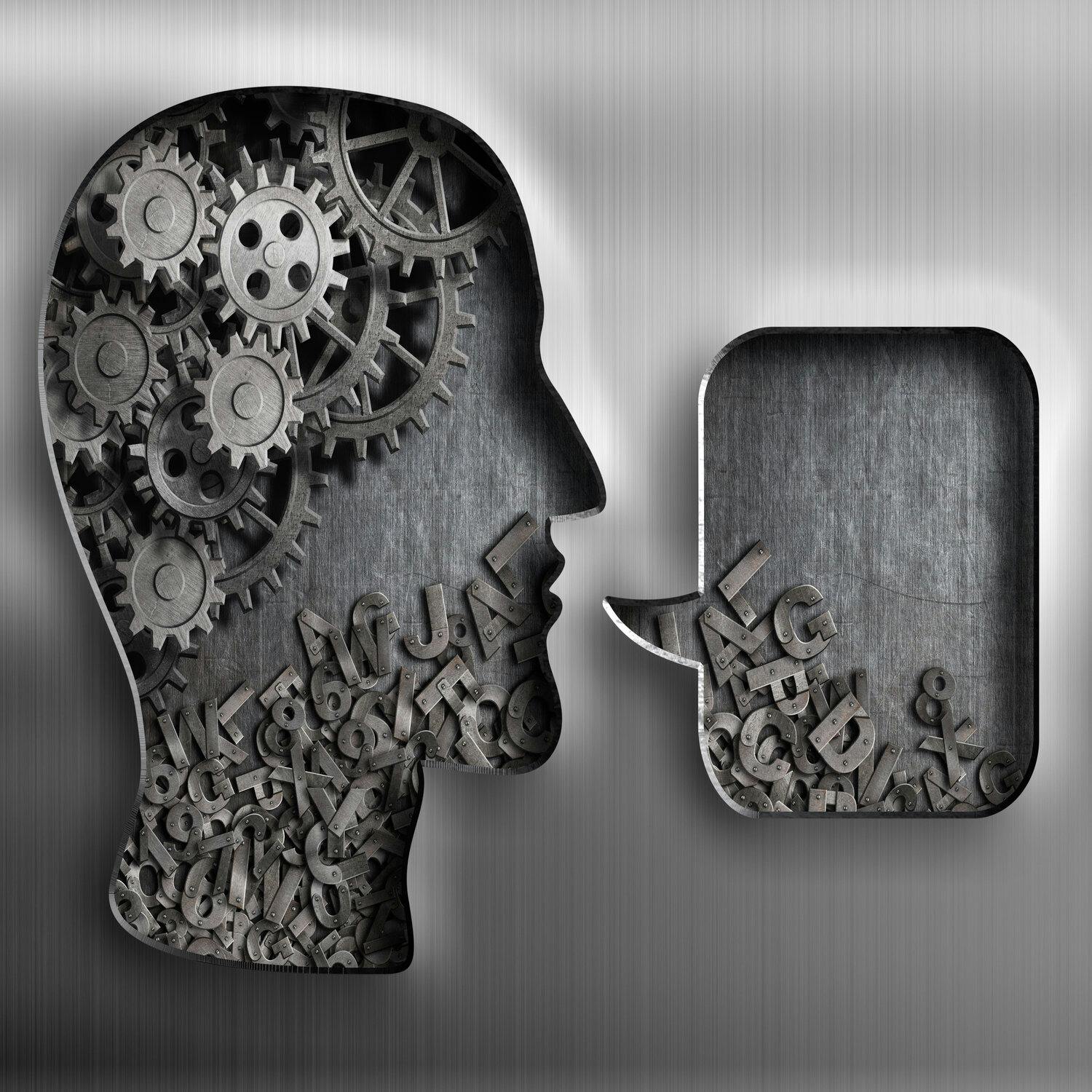
Language is fundamental to who we are and what has makes us so successful as a species, and while all species have their own means of communicating, we are the only ones that seem to have mastered it. But where did this ability to share complex ideas using sound come from? And what effect has it had on our development? In this Futureproof special, Jonathan looks to unravel questions about the evolution of language, the impact it has on our brain, and how we might communicate with extraterrestrials if we were to encounter them. - Mark Pagel, Professor in the School of Biological Sciences at the University of Reading - Lera Boroditsky, Associate Professor of Cognitive Science at UCSD and author of '7,000 Universes: How the Languages We Speak Shape the Way We Think' - Daniel Oberhaus, writer with 'Wired' and author of 'Extraterrestrial Languages'

Futureproof Extra: Prader-Willi Syndrome
Prader-Willi syndrome (PWS) is a genetic disorder that occurs in approximately one out of every 15,000 births. It affects males and females with equal frequency and affects all races and ethnicities and is recognized as one of the most common genetic causes of life-threatening childhood obesity. To discuss this disorder and what can be done to help people living with it, Jonathan is joined now by Dr. Tony Holland, Professor Emeritus at the University of Cambridge, UK & President of the International Prader-Willi Syndrome Organisation.

The Science of Attraction
Most of us could probably put together a list of things we find attractive in a potential partner and a lot of those things will likely come down to our personality or the cultural environment. But what about that initial, almost unconscious, spark of attraction? What causes that and does it have any real impact on whether a relationship with that person will stand the test of time? Paul Eastwick is a Professor in the Department of Psychology at the University of California, Davis, and Head of the Attraction and Relationships Research Laboratory - he joins Jonathan to discuss.

Futureproof Extra: The Last Days of the Dinosaurs
There has been a lot said about the extinction of the dinosaurs. But aside from the actual extinction event itself, when it comes to the days, weeks, months, and years immediately following it well, not so much. So, how exactly did any species survive it, and why those specific species? Riley Black is a freelance science writer specializing in evolution, paleontology, and natural history, and the author of ‘The Last Days of the Dinosaurs: An Asteroid, Extinction and the Beginning of Our World’ - She joins Jonathan to discuss.

Inside The Mind of a Bee
In years gone by, if a bee was annoying you, it was usually "bye-bye Mr. Bee" but nowadays, we’re more likely to put out plates of sugary water to help them on their way as in recent years our appreciation for these incredible insects has grown, our understanding of their importance more rounded. But just how intelligent are they? Lars Chittka, Professor in Sensory and Behavioural Ecology at Queen Mary University of London and author of 'The Mind of a Bee' joins Jonathan to discuss.

Futureproof Extra: The Trouble with Cloning Birds
Jurassic Park came out in 1993, then "Dolly" the sheep was cloned in 1996, and yet here we are more than two decades later and we still haven’t got a dinosaur theme park. So, what’s the hold-up? Well aside from the many significant ethical issues, the scientific challenges are huge and one in particular that adversely affects much more reasonable de-extinction projects is the simple fact that right now we can’t clone birds or dinosaurs for that matter. Why? Ben Novak is Lead Scientist with Revive & Restore, he joins Jonathan to discuss.

Why Usain Bolt Can’t Outrun Your Cat
While you may be King or Queen of your local park run, no matter how much training you do, even if you were to use performance-enhancing drugs, you'll still never outrun the likes of the common house cat. So, what are the determining factors when it comes to the top speed that can be achieved by animals? Michael Gunther is a Researcher in Biomechanics at the University of Stuttgart, he joins Jonathan to discuss. Dr. Shane Bergin & Dr. Lara Dungan also join Jonathan for this week's installment of Newsround.

Futureproof Extra: Why Do We See Ghosts?
Have you ever seen a ghost, or a UFO, or had some seemingly supernatural experience that you can’t explain? If you haven’t, we'd be willing to bet you probably know someone who has. These experiences are fairly common across cultures and they can’t all be the work of hoaxers and charlatans. So what’s going on? Chris French is Emeritus Professor of Psychology in the Anomalistic Psychology Research Unit at the Goldsmiths University of London. He joins Jonathan to discuss.

Is Animal Translation Possible?
If you are a pet owner you probably have plenty of experience trying to get a basic message across to your dog or perhaps if you own a cat you gave up on that hope years ago. Yet many of us have had that momentary glimpse of understanding; that sense that we could communicate if we just worked at it. But is animal translation actually possible? Diana Reiss is a Co-Founder of the Interspecies Internet and Professor in the Department of Psychology at Hunter College. She joins Jonathan to discuss. Dr. Lara Dungan & Dr. Shane Bergin also join Jonathan for Newsround.

Futureproof Extra: The Science of Bisexuality
Dr. Julia Shaw, a psychological scientist at University College London and the author of ‘Bi: The Hidden Culture, History, and Science of Bisexuality’ joins Jonathan to discuss her work in uncovering the many surprising truths behind sexual orientation and bisexuality as a whole.

The Hidden Depths of Animal Perception
For us humans, our overall sensory capabilities - the scope of our sense of smell, our sight, our hearing, and touch - feels all-encompassing, like there’s nothing more that we could possibly conceive of that would change how we experience the world around us. But that’s dead wrong. And this is an illusion that we share with every animal and insect in the world. But what we might humans lack in one area of perception, another animal or insect might excel. So, what are we missing? Ed Yond, science journalist and author of ‘An Immense World: How Animal Senses Reveal the Hidden Realms Around Us’ joins Jonathan to discuss. Dr. Ruth Freeman, Director of Strategy and Communications at Science Foundation Ireland & Dr. Shane Bergin, Physicist and Assistant Professor in Science Education at UCD also joined Jonathan for this week's episode of Newsround.

The Dream Machine
We have a complex relationship with psychedelics. To some, they can be gateways to a higher level of consciousness, to others, a poison that should be stamped out. Regardless of where you stand though, the fact that our brains are capable of creating these fluid, dynamic, altered states of perception seemingly on their own is pretty cool. But can these experiences be created with light flashes instead of chemicals? And if so, what might we learn from them? Fiona Macpherson, Professor of Philosophy, and Director of the Centre for the Study of Perceptual Experience at the University of Glasgow and a part of the creative team behind The Dream Machine joins Jonathan to discuss.

Gazing Into the Deepest Depths of the Cosmos
The biggest story this week was the release of some absolutely spectacular views of the cosmos from the James Webb Space Telescope, which include the deepest infrared view of our universe that has ever been taken. Joining Jonathan to discuss this incredible achievement is one Irish person who has been involved in the project for two decades, Professor Tom Ray, Director of the School of Cosmic Physics at the Dublin Institute for Advanced Studies.

Futureproof Extra: The Secret Perfume of Birds
There's much to admire about birds. They can soar through the skies, build durable nests, sing the most beautiful songs, and possess a visual acuity that is truly something to behold. But when it comes to their other senses how do they fare? For a long time, it was widely believed that birds had none, but that didn't sit right with Danielle J. Whittaker, Evolutionary Biologist, Managing Director of the COLDAX Center for Oldest Ice Exploration, and author of ‘The Secret Perfume of Birds: Uncovering the Science of Avian Scent’. She joins Jonathan to discuss.

How To Change Someone's Mind
How do we get someone to change their mind? Is it by arguing them into submission or is it by letting them explain the story about how they arrived at that point of view? What is the underlying brain chemistry of how opinions change? A new book titled ‘How Minds Change’ delves into these questions. The author, David McRaney, joins Jonathan to discuss.

Futureproof Gold: DARPA - The Pentagon's Brain
Annie Jacobsen, author of 'The Pentagon's Brain: An Uncensored History of DARPA, America's Top-Secret Military Research Agency' joins Jonathan to discuss the history of the US Defense Department's most secret, most powerful, and most controversial military science R&D agency. First broadcast July 9th 2016
Futureproof Extra: The Cutting-Edge Tech of Modern Operating Theatres
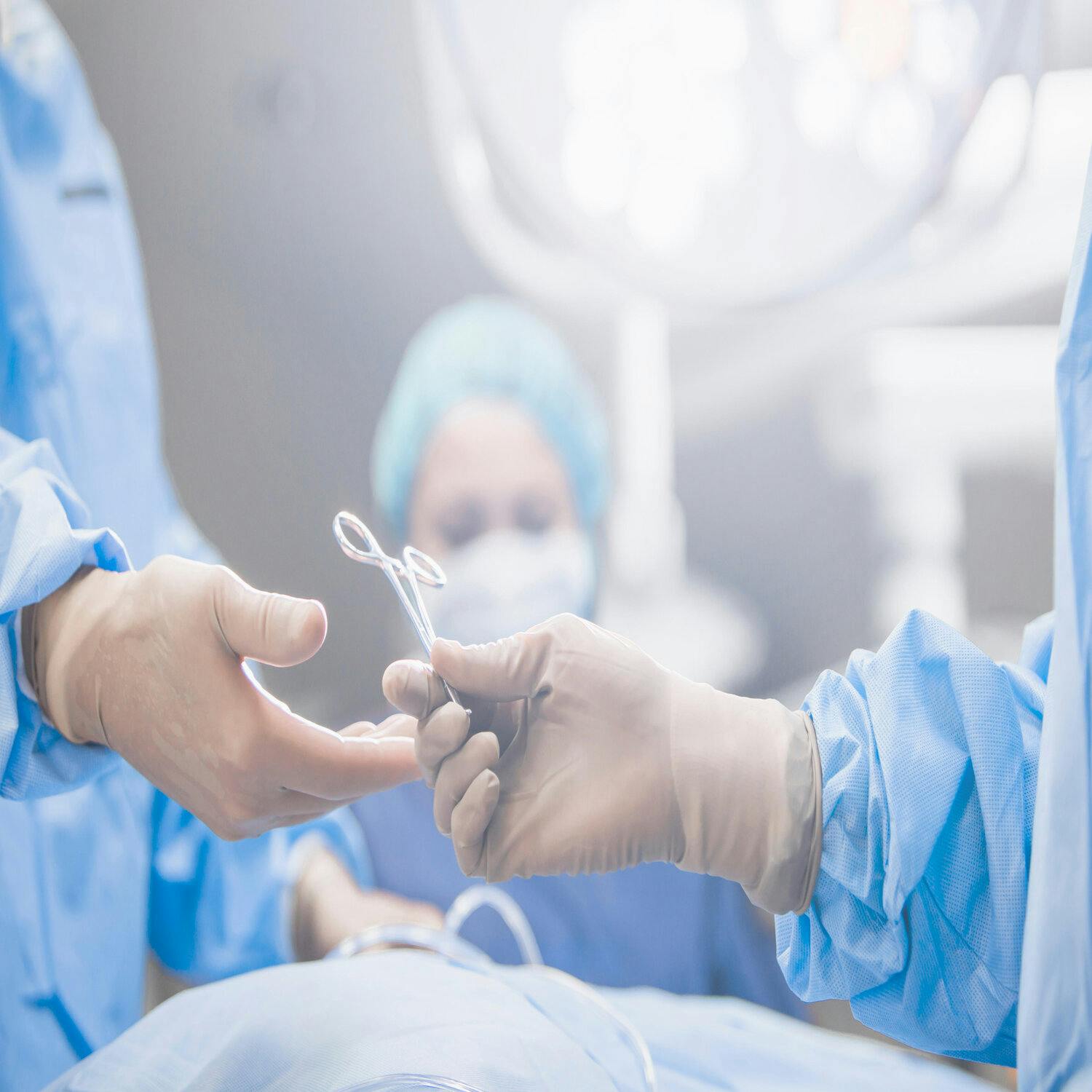
For most of us, our image of what goes on in an operating theatre comes from television and movies; we think scalpels, scrubs, facemasks, and beeping heart monitors, etc. What we don’t envisage, is robots and augmented reality glasses but increasingly modern surgery is incorporating these and other cutting-edge technologies into their systems and procedures. So just what does the operating theatre of 2022 look like? Connor Green is Consultant Orthopaedic Surgeon at the National Orthopaedic Hospital Cappagh. He joins Jonathan to discuss.

A Brief History of Weaponised Insects
If you’ve seen classic B Movies like 1954’s 'Them' or the criminally underappreciated classic, 'Starship Troopers', the words “Insect Warfare” probably conjure up some specific, likely silly imagery. But insects have featured in human conflicts in very real and often terrifying ways since the beginning of the historical record and likely, long before it. Jeffrey Lockwood is Professor of Natural Sciences and Humanities at the University of Wyoming and the author of 'Six-Legged Soldiers: Using Insects as Weapons of War'. He joins Jonathan to discuss, Catherine McGuinness, Zoologist and Educational Assistant at the National Museum of Ireland & Dr. Lara Dungan also joined Jonathan for Newsround.

Futureproof Gold: What is Time?
We conventionally think of time as something simple and fundamental that flows uniformly, independently from everything else, from the past to the future, measured by clocks and watches. In the course of time, the events of the universe succeed each other in an orderly way: pasts, presents, futures. The past is fixed, the future open. . . . And yet all of this has turned out to be false. Carlo Rovelli is Director of the Quantum Gravity Group of the Centre de Physique Théorique (CPT) of the Aix-Marseille University and author of 'The Order of Time', he joined Jonathan to discuss. First aired 21/7/2018

Futureproof Extra: Fair Seas & Potecting Our Marine Habitats
We here at Futureproof don't need to tell you that biodiversity is in crisis. This is true in our seas as much as in our oceans, and despite that, only 2% of our waters are designated "Marine Protected" areas but a national campaign called 'Fair Seas' is trying to change that. Joining Jonathan to discuss is Regina Classen, Marine Policy and Research Officer with the Irish Wildlife Trust and co-author of the 'Fair Seas' report, 'Revitalising Our Seas'.

SIRT 6: The Longevity Gene
When it comes to maintaining that youthful luster, we have, over the years, concocted all manner of things - from cosmetics, dietary plans, and exercise regimes - to get the job done. But unless you’ve got the actual fountain of youth in your back garden or the holy grail sitting on your mantle you’re probably plum out of luck when it comes to reversing the aging process completely. That being said, researchers at the University of Rochester have uncovered more evidence that the key to longevity resides instead with a simple enzyme. Vera Gorbunova, Professor of Biology and Medicine & co-director of the Rochester Aging Research Center at the University of Rochester joins Jonathan to discuss. Dr.Ruth Freeman from the SFI & Shane Bergin, Physicist & Assistant Prof in Science Education at UCD also joined Jonathan for Newsround.

Could Google's LaMDA Really Be Sentient?
Whether AI is capable of reaching the point of sentience has long been debated; and with the news this week around Blake Lemoine - an engineer at Google who has claimed that the firm's LaMDA AI system has achieved just that - the conversation has been given a new lease of life. It begs the question - at what point do we call something sentient? And does it even matter, if a computer programme is actually sentient if it appears to be thoughtful, self-aware and reflective? To tease out these threads and discuss the story of LaMDA in general, Jonathan is joined by Dr. Anya Belz, Professor of Computer Science at DCU & The ADAPT Centre as well as Dr. Benjamin Cowan, Assistant Professor at UCD's School of Information & Communication Studies and Investigator at The ADAPT Centre.
How The Science of Dogs Changed The Science of Life
Jonathan is joined by Jules Howard - Zoological Consultant & Correspondent and Author of Wonderdog: How the Science of Dogs Changed the Science of Life Shane Bergin and Catherine Mc Guinness join us for newsround

Futureproof Extra: Treating Spinal Cord Injuries
An injury to the spinal cord can be hugely traumatic and life-changing in nature. And while inroads have been made in terms of the development of treatments, there’s still a way to go. But what are the treatments currently in development and are outcomes getting any better than they were 20 years ago? Dr. Rory Murphy is a neurosurgeon in the Department of Neurosurgery at Barrow Neurological Institute, in Phoenix, Arizona - he joined Jonathan to discuss.

Futureproof Extra: How Sensors Shape Our Everyday Life
From thermostats, to step counters, pressure gauges, and chips that guide the Roomba around your living room, there are now more electronic sensors in the world than there are people. So what do all of these sensors mean for us and our relationship with the world and where exactly will it take us? Chris Salter, artist & Professor of Immersive Arts at Zurich University of the Arts (ZHDK) and the author of ‘Sensing Machines: How Sensors Shape Our Everyday Life’ joins Jonathan to discuss.

What Does It Mean To Be Alive?
For centuries, stories about the origin of life have gripped us, while attempts to understand and define it have confounded us as for every metric we use to measure and qualify life, inevitably there’s some microbe or animal that doesn’t quite fit the bill. So, how do we answer this question and what does it mean to be a living thing anyway? Carl Zimmer, an award-winning New York Times columnist sought to discuss just that in his latest book - ‘Life’s Edge: The Search For What It Means To Be Alive’ - he joins Jonathan to discuss.

Futureproof Gold: The Science of Smell
Of the five (traditionally accepted) senses, smell is definitely the one that gets overlooked. But it can also be one of the most evocative. If you’ve ever had a smell bring you back to a specific time or feeling you’ll know exactly what we mean by that. But how does smell work exactly? Luca Turin is a Biophysicist, Group Leader in Quantum Neurobiology at the Fleming Institute in Athens, and author of 'The Secret of Scent: Adventures in Perfume and The Science of Smell' - He joined Jonathan to discuss.
Futureproof Special: United By DNA
Knowing where we come from can be one of the most important pillars by which we establish and develop our sense of who we are. Not only that, understanding our genealogy can help answer questions around personality traits, physical characteristics, and our genetic history - but what percentage of those traits get passed down through generations, and how much of ourselves is borne of our upbringing? In this special episode of Futureproof, we hear the heartwarming story of one woman and her journey to find her father - in the process, answering questions once thought to be out of reach - and the advancements in science that helped her do it.

Futureproof Extra: The Sound of The Universe & Everything In It
Whether you’re aware of it or not, right now, you are vibrating. In fact, the natural frequency of a human body while standing is roughly between 5Hz-10Hz. And the same goes for all things in the universe - the earth for instance resonates at 7.83Hz. But, if all things resonate then sure they must have a sound…and if so, then what do they sound like? Richard Mainwaring is a composer, broadcaster, and author of ‘Everybody Hertz: The Amazing World of Frequency, from Bad Vibes to Good Vibrations’ - he joined jonathan to discuss.

The Cutting-Edge Science of Transplants
The incredible science behind organ transplant surgery is perhaps something that has become a bit normalised as for the majority of us, these life-saving and life-extending procedures have always been around. But is there a limit to what we can transplant and what might we expect in the years to come in this area? Reza Motallebzadeh, Head of the Centre for Transplantation at University College London joined Jonathan to discuss.

Futureproof Extra: A Genetic History of the Americas
The peopling of the Americas has long been a hot topic. After all, there are no written records and scant archaeological evidence to tell us what happened or how it took place. There have been many different models put forth to explain how the Americas were peopled but recent strides in the field of genetics are upending some long-held assumptions. Jennifer Raff is an associate professor of anthropology at the University of Kansas and author of ‘Origin: A Genetic History of the Americas’ - she joined Jonathan to discuss. Listen and subscribe to Futureproof with Jonathan McCrea on Apple Podcasts and Spotify. Download, listen and subscribe on the Newstalk App. You can also listen to Newstalk live on newstalk.com or on Alexa, by adding the Newstalk skill and asking: 'Alexa, play Newstalk'.

What Happened Before The Big Bang?
If you ask most people how the universe began, they might say “the Big Bang” - but it’s hard to be satisfied with that answer and to resist the temptation to ask “but what happened before that?” Well, that is precisely the question that Will Kinney, Professor in the Department of Physics at the University at Buffalo, strives to answer in his new book - 'An Infinity of Worlds: Cosmic Inflation and the Beginning of the Universe'. He joined Jonathan to discuss. Dr.Ruth Freeman from SFI & Dr. Lara Dungan also joined Jonathan to run through some of the week's biggest science stories for Newsround. Listen and subscribe to Futureproof with Jonathan McCrea on Apple Podcasts and Spotify. Download, listen and subscribe on the Newstalk App. You can also listen to Newstalk live on newstalk.com or on Alexa, by adding the Newstalk skill and asking: 'Alexa, play Newstalk'.

The Stawell Underground Physics Laboratory
In our efforts to better understand the very fabric of the universe we sometimes have to think outside the box. So it might seem strange then to think that in our search for the elusive dark matter we need not necessarily look to the depths of the solar system, the Milky Way, or the universe itself but to the ground beneath our feet. Alan Kelly, Professor in Astrophysics and Director of Space Technology and Industry Institute at Swinburne University of Technology in Australia joined Jonathan to talk about The Stawell Underground Physics Laboratory - held inside an active gold mine 1 km beneath the surface of the earth. Listen and subscribe to Futureproof with Jonathan McCrea on Apple Podcasts and Spotify. Download, listen and subscribe on the Newstalk App. You can also listen to Newstalk live on newstalk.com or on Alexa, by adding the Newstalk skill and asking: 'Alexa, play Newstalk'.

Futureproof Extra: Upcycling CO2
The climate change problem can often seem intractable and in a political sense, painfully slow. But it's important to remember that some progress is being made and we are innovating new techniques and technologies to address the issue. One such innovation is CO2 upcycling - Andrea Ramirez Ramirez, Professor in the Faculty of Low-Carbon Systems and Technologies at Delft University of Technology joined Jonathan to discuss. Listen and subscribe to Futureproof with Jonathan McCrea on Apple Podcasts and Spotify. Download, listen and subscribe on the Newstalk App. You can also listen to Newstalk live on newstalk.com or on Alexa, by adding the Newstalk skill and asking: 'Alexa, play Newstalk'.

A New Understanding Of Epilepsy
Joining Jonathan on Futureproof this week was Dr Matthew Campbell - Associate Professor in Trinity’s School of Genetics and Microbiology . Dr Campbell has pioneered research on what actually triggers Epileptic seizures in the body. Epilepsy is a central nervous system (neurological) disorder in which brain activity becomes abnormal, causing seizures or periods of unusual behavior, sensations and sometimes loss of awareness. Anyone can develop epilepsy. Epilepsy affects both males and females of all races, ethnic backgrounds and ages. He joined Jonathan to discuss. Listen and subscribe to Futureproof with Jonathan McCrea on Apple Podcasts and Spotify. Download, listen and subscribe on the Newstalk App. You can also listen to Newstalk live on newstalk.com or on Alexa, by adding the Newstalk skill and asking: 'Alexa, play Newstalk'.