
Futureproof with Jonathan McCrea
497 episodes — Page 8 of 10
Vaccine Patches
On this episode of Futureproof: Dr Ruth Freeman, Science Foundation Ireland & Eoin Murphy, biochemist and science communicator, join Jonathan McCrea for Newsround. And Dr. Anne Moore, Senior Lecturer and Principal Investigator in Vaccines at University College Cork, explains her work in developing vaccine patches.

Futureproof Extra: The Future of Surrogacy & AI
Surrogacy can be a complicated enough process but if you bring in the potential of AI into it, how would it look? To discuss this and the future of surrogacy in general, Jonathan is joined by Dr. David Walsh, 'First IVF' chairman.

Short Term Memory Illusions
Over time, our memory begins to fade but new research suggests human memory can go wrong just three seconds after an event takes place. The author of a new study on short-term memory illusion, Dr. Marte Otten, a Cognitive Psychologist from the University of Amsterdam joins Jonathan to discuss.

Futureproof Extra: 'JUICE' Mission & Exploring Jupiter
Professor Caitriona Jackman is an Irish space scientist and head of the planetary magnetospheres group at the Dublin Institute for Advanced Studies and was among those at the European Space Operations Centre in Darmstadt, Germany, for the launch of ESA’s Jupiter Icy Moons Explorer mission, or “JUICE”. She joins Jonathan to discuss the mission and what she and her colleagues hope to learn.

Injectable Brain Implants
Implanting an electrode into your fragile brain to control abnormal activity can cause extensive damage. But researchers in Sweden have developed a type of gel that they hope will ease the process of neural implantation for humans and perhaps ultimately help the treatment of diseases like Parkinson’s. Joining Jonathan to discuss is Hanne Biesmans, Ph.D. student at the Laboratory of Organic Electronics, at Linköping University in Sweden.

Futureproof Extra: Interpreting Alien Signals
What would a message from ET sound like? Researchers at the Search for Extraterrestrial Intelligence Post-Detection Hub at the University of St Andrews in Scotland have their eyes and ears peeled to interpret alien language. Among them is Dr John Elliott, Honorary Research Fellow in the School of Computer Science and the Coordinator for the SETI Post Detection Hub at the University of St Andrews in Scotland and Chair of UK SETI Research Network.

Have we smelled everything in the world?
Joining Jonathan on this episode of Futureproof is Dr Aashish Manglik, Associate Professor of Pharmaceutical Chemistry at the University of California who is examining how odour activates our human receptors. Also featuring Dr Lara Dungan and Dr Oran Kennedy in Newsround.

Futureproof Extra: How are diamonds formed?
Diamond formation occurs when carbon deposits deep within the earth are subject to high temperatures and pressure. But what are the specific environmental conditions needed to make this actually happen? You’d think that by now we would have a pretty good grasp of how they form considering the value we place on them, but that’s not the case. Until now that is. Dr. Emma Tomlinson is an Associate Professor of Geology at Trinity College Dublin and part of a team from TCD and Queensland University of Technology who have been looking into this. She joins Jonathan to discuss.

Thomas Hertog on space, time, and working with Stephen Hawking
Theoretical physicist and cosmologist Stephen Hawking is famous the world over, but one of his closest collaborators for twenty years was working alongside him developing a new theory of the cosmos. Thomas Hertog, a cosmologist from KU Leuven University in Belgium, explores this in his newly published book, ‘On The Origin of Time: Stephen Hawking’s Final Theory’. He joins Jonathan to discuss.

Futureproof Extra: The Trust Race
In this special episode of Futureproof Extra, we host 'The Trust Race', a six-part podcast series about scandals and controversies that have affected our trust in science. The show is hosted by regular contributor and friend of the show, Dr. Shane Bergin, and is available on all podcast platforms.

Tickertape Synesthesia & The Future of Quantum Computing
Although on the outside we may all seem very similar, we experience the world in wildly different ways. A fascinating illustration of this is 'Tickertape Synesthesia' in which people experience live subtitles of every sound around them appearing in front of their very eyes. Joining Jonathan to discuss the condition is Professor Laurent Cohen, Professor of Neurology at the Salpêtrière Hospital in Paris. Also joining Jonathan is Professor Séamus Davis, Professor of Quantum Physics at University College Cork. Together they discuss quantum computing and its future. Dr. Susan Kelleher, Assistant Professor of Polymer Chemistry at DCU & Dr. Fergus McAuliffe, Communications and Public Engagement Manager at iCRAG, the Science Foundation Ireland Research Centre for Applied Geosciences also join us to go through the top science stories from throughout the week for Newsround.

Futureproof Extra: Tenacious Beasts
Despite being in an environmental and biodiversity crisis, there are a number of animals that have come to the brink of extinction. So what can we learn from them, and are we being optimistic by thinking we can bring more species back? Joining Jonathan is Dr. Christopher Preston, Environmental Philosophy Professor at the University of Montana and author of 'Tenacious Beasts: Wildlife Recoveries That Change How We Think about Animals'.

Space prisons & other realities of living beyond Earth
Settling in space might seem like a fun otherworldly concept, but it could also bring a number of practical realities to consider like what would space prisons be like? How would we monitor labour laws? And how could we control population growth? All of these are themes and considerations in astrophysicist Dr. Erika Nesvold’s book "Off-Earth: Ethical Questions and Quandaries for Living in Outer Space", and she joins Jonathan to discuss.

Is ChatGPT the beginning of a general AI revolution?
When ChatGPT came on the scene late last year, it was seen by many as a novel and fun piece of new technology, to others like Nick Cave, "a grotesque mockery of what it is to be human". But as new generations of AI come online in the weeks and months ahead, what exactly does that mean for us? Will we look back to this year and say this is when it all changed? Joining Jonathan to discuss where we are with AI technologies and where we are headed is Dr. Benjamin Cowan, Associate Professor at UCD's School of Information and Communication Studies and Co-Principal Investigator at The ADAPT Centre & Naomi Harte, Professor in Speech Technology in the School of Engineering in Trinity College.

Futureproof Extra: Ireland's first solar-powered racing car
Joining Jonathan to discuss the efforts going into creating Ireland's first solar-powered racing car is Philipp Eichhorn, Head of Business for the DCU Solar Racing campaign.

Futureproof Gold: Face Blindness & Super Recognition
This is a special episode on 'Face Blindness' & 'Super Recognition' featuring Fiona Newell, Professor of Experimental Psychology at the Trinity Institute of Neurosciences, and Meike Ramon, Cognitive Neuroscientist and Assistant Professor at the University of Fribourg. Together they explore 'Prosopagnosia' aka "Face Blindness", a neurological disorder characterised by the inability to recognize faces. First aired on May 25th, 2021

Do facial expressions influence our emotional state?
When we’re happy, our bodies become flooded with dopamine and serotonin, two types of neurotransmitters in the brain; our hearts might even beat faster and maybe, we even muster a smile. But does it work the other way? Can contorting our faces into a smile give us that chemical hit that actually makes us feel good? Nicholas A. Coles from the Center for the Study of Language and Information at Stanford University joins Jonathan to discuss.

The Psychology of Revenge
Roughly 10% of murders in New York are motivated by revenge. But what exactly is revenge and why are some people consumed by it? Jonathan McCrea speaks with psychology PhD student Katie McGaughey from Queen's University Belfast, who is conducting research on revenge and its impact on crime victims. Joining Jonathan for Newsround is physicist Dr Shane Bergin and science communicator Catherine McGuinness.
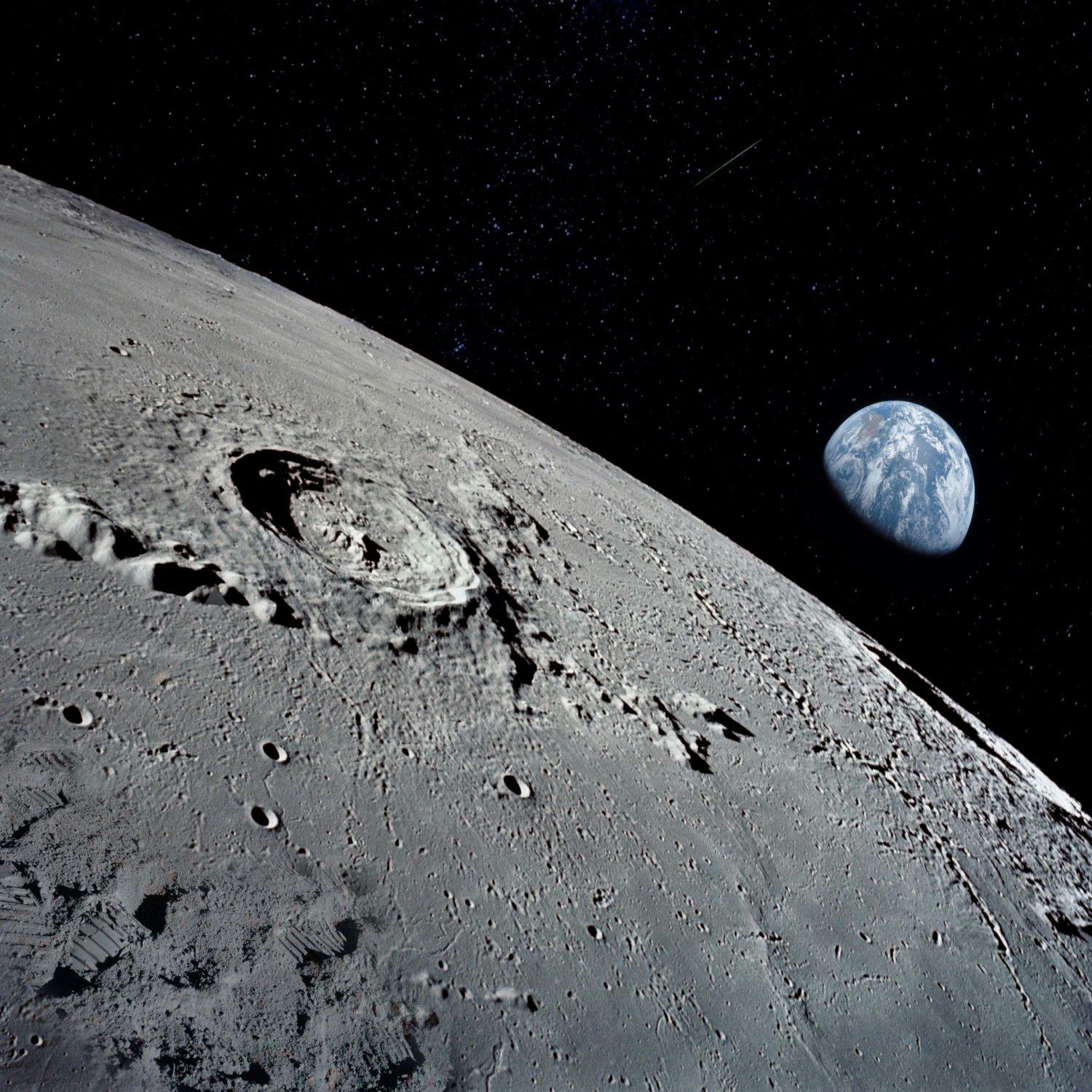
Futureproof Extra: Will we soon be living on the moon?
How far away are we from actually inhabiting the Moon? Professor Mahesh Anand, Open University Professor in Planetary Science and Exploration, has been among those testing lunar rocks to see if we can both extract and produce water up there. He joins Jonathan to discuss this as well as the primary challenges currently preventing us from making the lunar surface our home.

The Science of Antidepressants
It’s estimated that 1 in 8 to 1 in 5 people have depression, but it’s mostly those at the moderate to the severe end who turn to antidepressants. This week, we wanted to delve into how exactly antidepressants work and the scientific impact they have on the alchemy of the brain. Joining Jonathan to discuss this is Dr. Christelle Langley, Cognitive Neuroscientist at the Department of Psychiatry at the University of Cambridge. Dr. Oran Kennedy from the Dept of Anatomy & Regenerative Medicine and the Tissue Engineering Research Group at RCSI & Dr. Susan Kelleher from DCU also joins Jonathan for Newsround.

Creating a contraceptive pill for men
When it comes to contraception it seems women have the lion's share of options. This is perhaps down to the fact that society has decided that they, not men, must bear most of the burden of preventing pregnancy. But men’s birth control options — and, therefore, responsibilities — could soon be expanding. So how far away are we from seeing the likes of a non-hormonal male contraceptive pill in our pharmacies and why is it taking so long to develop? Dr. Gunda Georg, is Regents Professor & Director of the Institute for Therapeutics Discovery and Development at the College of Pharmacy at the University of Minnesota - she joins Jonathan to discuss.

How to conduct an autopsy
It takes a special kind of person to be keen to conduct an autopsy and this week's guest is taking that interest to a whole new level this month as she performs a live demonstration for an audience at the Northern Ireland Science Festival - albeit on an actor playing a dead body. Joining Jonathan to discuss the scientific process of what exactly is involved in a postmortem is Dr. Louisa Miller, specialist registrar in histopathology. Note: Louisa’s event at the Crescent Arts Centre in Belfast on 16th February is sold out but some tickets remain for the event at The Playhouse, Derry / Londonderry on Friday 17th February.

Futureproof Extra: Underwater Avalanches
At this stage, we are all pretty familiar with the circular way in which nature works. If we think of the hydrologic cycle for instance we know there are four main parts Evaporation, Convection, Precipitation and Collection, etc. But there are still, even to this day, aspects of the earth's cycles that we are only beginning to understand and, in some cases, finding out they exist at all. My next guest is one researcher who is looking at the phenomena known as Turbidity currents and the complex relationship they have with our deep oceans. Peter Talling is a Professor in Submarine Geohazards in the Department of Earth Sciences and Department of Geography at the University of Durham - he joins to discuss.

The Science of Sleep & Dreams
For years we have wondered what the purpose of sleep really is, and while huge strides have been made regarding our understanding of the function of sleep, much more remains to be uncovered. Joining Jonathan to chat through some of the theories we have on why we sleep and have dreams is Robert Stickgold, Professor of Psychiatry at the Center for Sleep and Cognition, Harvard Medical School.
Do facial expressions influence our emotional state?
When we’re happy, our bodies become flooded with dopamine and serotonin, two types of neurotransmitters in the brain; our hearts might even beat faster and maybe, we even muster a smile. But does it work the other way? Can contorting our faces into a smile give us that chemical hit that actually makes us feel good? Nicholas A. Coles from the Center for the Study of Language and Information at Stanford University joins

The Science of Semiconductors
Semiconductor devices are everywhere, with almost 80% of the Irish population having a smartphone - not to mention any number of other computer devices. And not only is their presence in modern life ubiquitous, but the way in which these devices are produced is also astonishing - being created through a painstaking process requiring single atoms to be removed one by one. Joining Jonathan to discuss the challenges and solutions involved in making semiconductors is Michael Nolan, Principal Scientist at Tyndall National Institute, where he leads the Materials Modelling for Devices activity in the MNS Centre.

Understanding Endometriosis With Single-Cell Genomics
Severe period pain, infertility and even depression - living with endometriosis can have serious effects on quality of life. Will new technologies finally yield therapy for those with the condition? Joining Jonathan to discuss this is Dr Kate Lawrenson, associate professor in the Department of Obstetrics and Gynecology at Cedars-Sinai Hospital in LA.

Futureproof Extra: Hybrid Biomaterials for Spinal Cord Injuries
An injury to the spinal cord can be hugely traumatic and life-changing. While currently, there are no proven treatments that protect against the consequences of SCI work goes on to change that. Aleksandra Serafin, a Ph.D. researcher at the School of Engineering at the University of Limerick, is involved in one line of research that looks to be a part of that change - she joins Jonathan to discuss.

Origins of the Africanized Honey Bee
The Africanized honey bee has earned itself the nickname of ‘the killer bee’, but how much truth is there to the suggestion that the species was created by an experiment gone wrong? Joining Jonathan to discuss this is Mark L. Winston, Professor Emeritus and Senior Fellow at the Morris J. Wosk Centre for Dialogue at Simon Fraser University, in British Columbia, Canada. Catherine McGuinness, Zoologist and Educator & Dr Jessamyn Fairfield, University of Galway physicist join us to go through the top science stories from the week in Newsround.

Futureproof Extra: What makes Roman concrete so duarble?
Think of those greatly-preserved Roman structures like the Pantheon and you might marvel that they are still standing after all these centuries. So what’s so special about this ancient construction that leaves us with these marvelous buildings? Linda Seymour, a former MIT doctoral student with a background in civil engineering – alongside researchers from MIT, Harvard, and labs in Switzerland and Italy – has been examining what made Roman concrete so durable - she joins Jonathan to discuss.

How to build the first city on Mars
The notion of human beings getting to and settling on Mars has been a staple of science fiction for decades. But what are the social, scientific, and engineering constraints for establishing a colony, and what are the current blueprint and design concepts for the settlement of an entire Martian city? Justin Hollander, Urban Planning Professor at Tufts University and the author of ‘The First City on Mars: An Urban Planner’s Guide to Settling the Red Planet’ joins Jonathan to discuss. https://jholla03.pages.tufts.edu/

Futureproof Extra: The Benefits of Sperm Swimming in Groups
We would traditionally associate sperm as solitary swimmers but new research suggests that the male reproductive cell can sometimes move into groups. Joining Jonathan to discuss why this might be the case and what significance this behaviour could have on our future fertility is Chih-Kuan Tung of the Department of Physics at North Carolina A&T State University.

Is it getting harder to maintain focus?
It may come as no great surprise to any of our listeners that it is our goal here at Futureproof to educate and reveal the world of science to you. In order to do that, we must keep you entertained, and engaged - we absolutely have to hold your attention. That being said, try as we might, chances are that at least for some of you, your mind will wander. But in this modern age are we inclined to allow our minds to drift off more than before? Is our attention being stolen? Johann Hari, author of ‘Stolen Focus: Why You Can't Pay Attention' joins Jonathan to discuss. Dr. Shane Bergin & Dr. Susan Kelleher also join Jonathan for this week's installment of 'Newsround'.
Futureproof Special: The Best of 2022
In this special episode of Futureproof, Jonathan looks back at some of our favourite pieces from throughout 2022. - Martin Wikelski, Professor at the University of Konstanz & Director at Max Planck Institute of Animal Behaviour explores the idea that animals can detect natural disasters. - Carl Zimmer, an award-winning New York Times columnist and author of ‘Life’s Edge: The Search For What It Means To Be Alive’ speaks to Jonathan about the myriad ways we define life itself. - And to sift through some of the most ethically questionable experiments to ever take place is Gina Perry, writer, science historian, and author of ‘Behind the Shock Machine’ & ‘The Lost Boys’.

Futureproof Extra: Beyond Our Five Senses
Our senses are at the heart of how we navigate the world - coalescing in any moment, in any combination, to varying degrees, to relay what is going on around us and within us. But when you stop to think about the level of complexity involved in making sense of all of this in your brain - it really is quite astonishing. That being said, are we guilty of doing our senses a disservice by reducing their scope to just five? Is there more to it than just smell, sight, taste, touch, and hearing? If so, what are the other ways we sense the world and what function do they serve? Ashley Ward is a professor in Animal Behaviour at the University of Sydney & author of ‘Sensational: A New Story of Our Senses’ - he joins Jonathan to discuss.
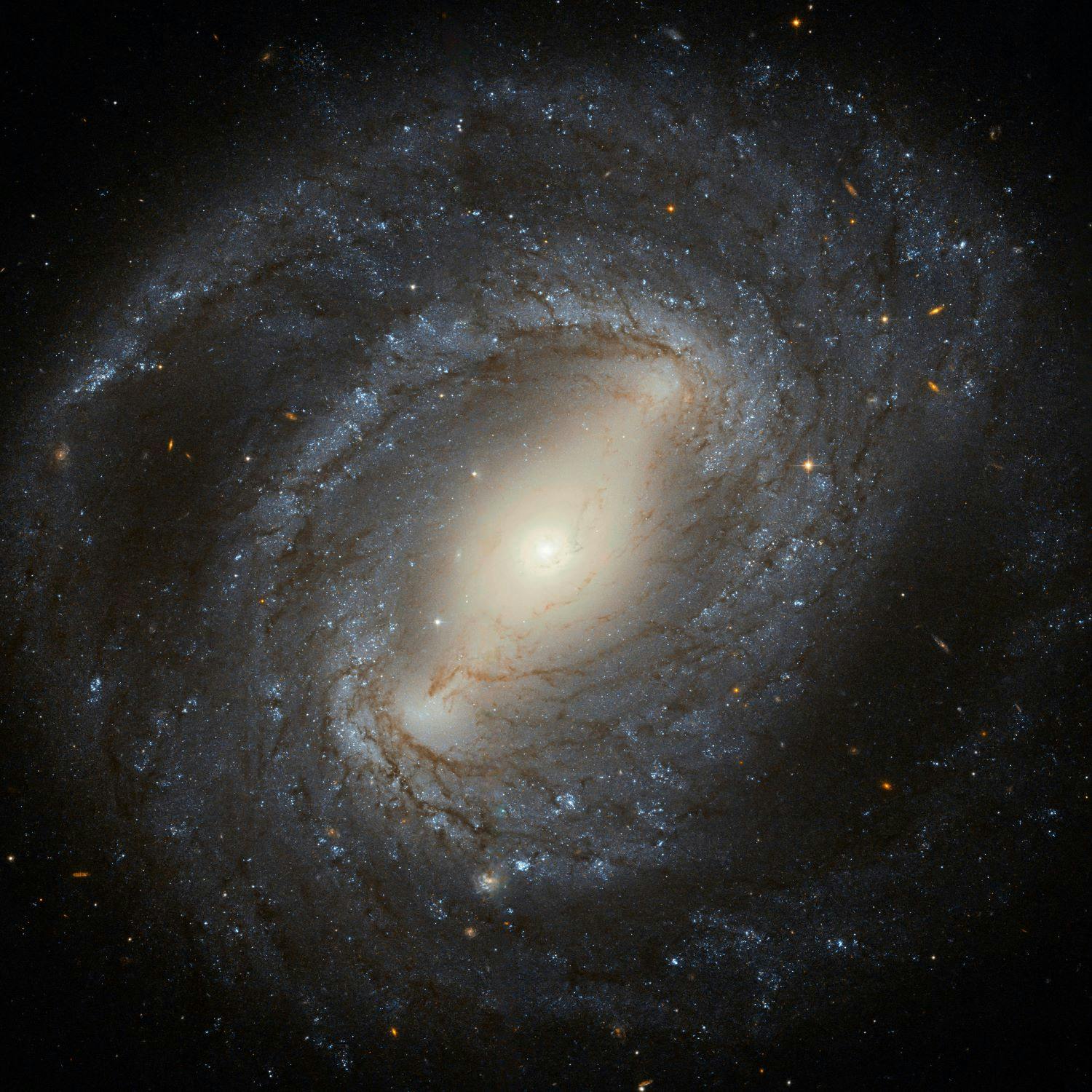
Do Dark Matter & Dark Energy Actually Exist?
Over the 13 years of doing this show one of the things that we, and indeed all of the field of Astrophysics, has been trying to get our collective head around is the idea of Dark Matter and Dark Energy. To the layperson, these ideas can seem like rather convenient inventions thought up merely to paper over the cracks in our current models. But let’s be honest, most of us don’t really know enough about physics to make such bold accusations. This week's guest however does, and not only does he think that there is no such thing as Dark Matter, he also says our fundamental model of gravitation is wrong. Pavel Kroupa is a Professor of astrophysics at the University of Bonn and Head of the Stellar Populations and Dynamics research group. He joins Jonathan to discuss.

Futureproof Gold: Evolution's Bite
Evolution is constantly adapting us to our environment, making species more suited and better equipped to survive in their natural habitat. So why did our distant ancestors have better teeth than we do? And what can the study of our gnashers tell us about our diet, our oral health, and our very origins as a species? Professor Peter Ungar is a Paleoanthropologist, and author of 'Evolution’s Bite: A Story of Teeth, Diet, and Human Origins'. He joins Jonathan to discuss what teeth can tell us. First Aired 28/7/2018

Futureproof Extra: The Origins of Sentience
From day one we feel our way into, and through, the world. By utlising a complex array of sensory receptors that grow and evolve as we mature, we come to understand not just everything we encounter in our external lives but also in our internal lives as well. We are sentient beings. But what is sentience and when did it arise in animals? And why are we sentient at all? Nicholas Humphrey is Emeritus Professor of Psychology at the London School of Economics. He is the author of many books on the evolution of human intelligence and consciousness, the latest being ‘Sentience: The Invention of Consciousness' - available in all good bookshops or online - he joins Jonathan to discuss.

Is Human Hibernation A Possibility?
One of the most blindingly obvious problems facing human space travel is that space is very big. It’s like REALLY big. Space being big means things in it are far away and the amount of time it takes to get from one rock to the next presents a myriad of challenges for any aspiring "Star Trekker". First of all, you’re going to need a lot of supplies, you’re going to have to spend a lot of time exposed to radiation, and you’re going to get bored and old. Mainly for the sake of storyline, Sci-Fi has often circumvented these problems by putting the crew into hibernation but as it turns out, that might just be a viable solution in the real world as well. Sandy Martin is Professor Emerita in the Department of Cell & Development Biology at the University of Colorado Anschutz Medical Campus - she joins Jonathan to discuss.

Futureproof Extra: The Art of Making the Invisible Visible
Photography may, at a cursory glance, appear to dwell in the domain of the humanities and artistic expression but it is a vital tool to science as well. When it comes to understanding the vastness of the cosmos or the structure of a cell, we rely on imagery to help us better understand the natural world around us. But how do the technologies that give us these images actually work? How do we make the invisible visible and what developments might we expect in the years to come? Jack Challoner, an independent science writer and the author of more than 40 science books the latest of which is ‘Seeing Science: The Art of Making the Invisible Visible’. He joins Jonathan to discuss.

Evidence of the Multiverse
For most of us, the word “multiverse” probably conjures up some sort of fun sci-fi episode like the universe in which we all have hot dogs for fingers in Oscar contender ‘Everything Everywhere All at Once’ or the parallel universe in Star Trek where there’s an evil you with a moustache. Multiverses are just vehicles for our flights of fancy, right? Well, that’s what we thought until Professor Will Kinney casually mentioned that the majority of physicists now accept that we live in a multiverse in an interview with us earlier this year. Laura Mersini-Houghton is a Professor of Theoretical Physics and Cosmology in the Department of Physics and Astronomy at the University of North Carolina at Chapel Hill and author of 'Before the Big Bang: The Origin of the Universe and What Lies Beyond', she is also one such physicist, and furthermore, she says she has the evidence to back it up. She joins Jonathan to discuss.

Futureproof Gold: Enemies of the State
In this special insatllment of Futureproof Gold, we take a listen back to our award-winning episode 'Enemies of the State'. Among other guests, Mara Hvistendahl, Contributing Correspondent for Science, National Fellow at New America and author of the Wired article 'Inside China's Vast New Experiment in Social Ranking', joins Jonathan to explore the true potential that technology has in controlling and manipulating the behaviour of entire populations through social credit scores.

Futureproof Live: Is there a limit to our intelligence?
For this very special episode of Futureproof, recorded live at the TU Dublin Grangegorman Campus, Jonathan was joined by a panel of guests to explore the limits of human and artificial intelligence. Joining Jonathan is: -Dr. Benjamin Cowan, Associate Professor at UCD's School of Information & Communication Studies and Co-Principal Investigator at The ADAPT Centre. -Dr. Tomás Ryan - Associate Professor in the School of Biochemistry and Immunology and the Trinity College Institute of Neuroscience at Trinity College Dublin.
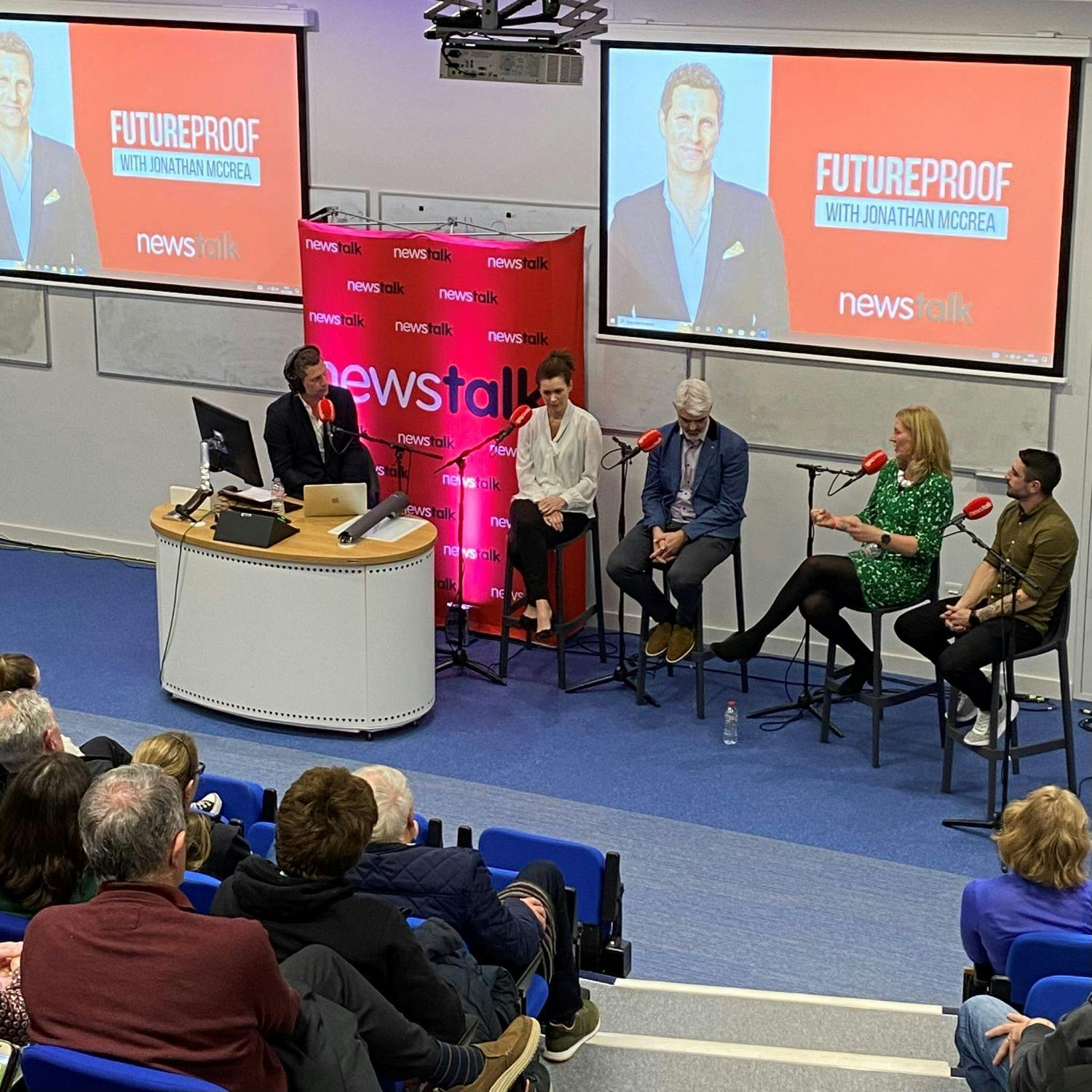
Futureproof Live: Is it possible to run forever?
For this very special episode of Futureproof, recorded live at the TU Dublin Grangegorman Campus, Jonathan was joined by a panel of guests to explore whether it is possible for a human being to run forever. Joining Jonathan is: - Ultra Runner, Keith Russell - Helen French, Associate Professor in the RCSI School of Physiotherapy - Dr. Oran Kennedy, Senior Lecturer in Anatomy and Regenerative Medicine at RCSI - Sinead Bradbury, Performance Nutritionist (SENr) Dr.Ruth Freeman from the SFI & Dr. Susan Kelleher, Assistant Professor of Polymer Chemistry in the School of Chemistry at UCD were also on hand to go through the top news stories from the world of science for Newsround.

Futureproof Extra: Neurostimulation in E-Sports
Joining Jonathan to discuss how the skills needed to perform laparoscopic keyhole surgery as well as e-sports can be significantly enhanced by applying electric neurostimulation during training is Adam Toth, ESRL Research Program Manager at Lero in the University of Limerick.

Gravity Batteries
When you walk out your door today, it may be sunny, it may be windy, the waves may be crashing against the shores with an awesome fierceness. Or, you know, none of those things might be happening. And therein lies one of the fundamental issues with renewable energy, its unpredictability. But one thing that won’t happen when you go out there this morning is that you won’t float off into the air. Gravity is reliably keeping your feet on the ground and it will continue to do so ad infinitum. So couldn’t we use this persistent force in some way to solve our energy woes? Jill MacPherson is Senior Test & Simulation Engineer with Gravitricity - she joins Jonathan to discuss.

The Sounds We Cannot Hear & What Can We Take To Make Us Live Longer?
Jonathan is joined by Karen Bakker, Fellow at the Harvard Radcliffe Institute for Advanced Studies and author of 'The Sounds of Life: How Digital Technology Is Bringing Us Closer to the Worlds of Animals and Plants' to explore the sounds in nature that we cannot hear. Andrea Maier, Oon Chiew Seng Professor in Medicine, Healthy Ageing and Dementia Research, Co-Director at the Centre for Healthy Longevity, National University of Singapore, Vrije Universiteit Amsterdam joins Jonathan to discuss what we can take to help us live longer. Dr. Shane Bergin & Dr. Lara Dungan also joined Jonathan to run through the week's science news for Newsround.

Using AI to fight blindness
As well as trying to sell you products you’ve just been talking about but don’t want, and beating humans at chess or Go or Mario cart, AI can actually do some real good in the world. One field in which AI could really have a profound effect is medical diagnostics for instance. Dr. Nikolas Pontikos is the Principal Investigator and Group Leader of the Pontikos Lab at UCL Institute of Ophthalmology and Moorfields Eye Hospital - he joins Jonathan to discuss.

What is energy anyway?
Physics, while absolutely fascinating, can be impenetrable. And it isn't just cutting-edge ideas that can melt our brains, often we accept basic principles and ideas without really knowing how they work or even what they are. This week, Jonathan is joined by Sean Carroll, physicist, and author of 'The Biggest Ideas in the Universe: Space, Time, and Motion', to explain some of the fundamental aspects of science we thought we knew.

Futureproof Extra: How do we tackle chronic pain?
Pain is a deeply subjective thing. When it’s with us it’s all we can think about. So, what is life like then for someone for whom pain never leaves? Haider Warraich, Assistant Professor of Medicine at Harvard Medical School and author of 'The Song of Our Scars: The Untold Story of Pain' joins Jonathan to discuss.