Future of Life Institute Podcast
278 episodes — Page 3 of 6
Ep 1New: Imagine A World Podcast [TRAILER]
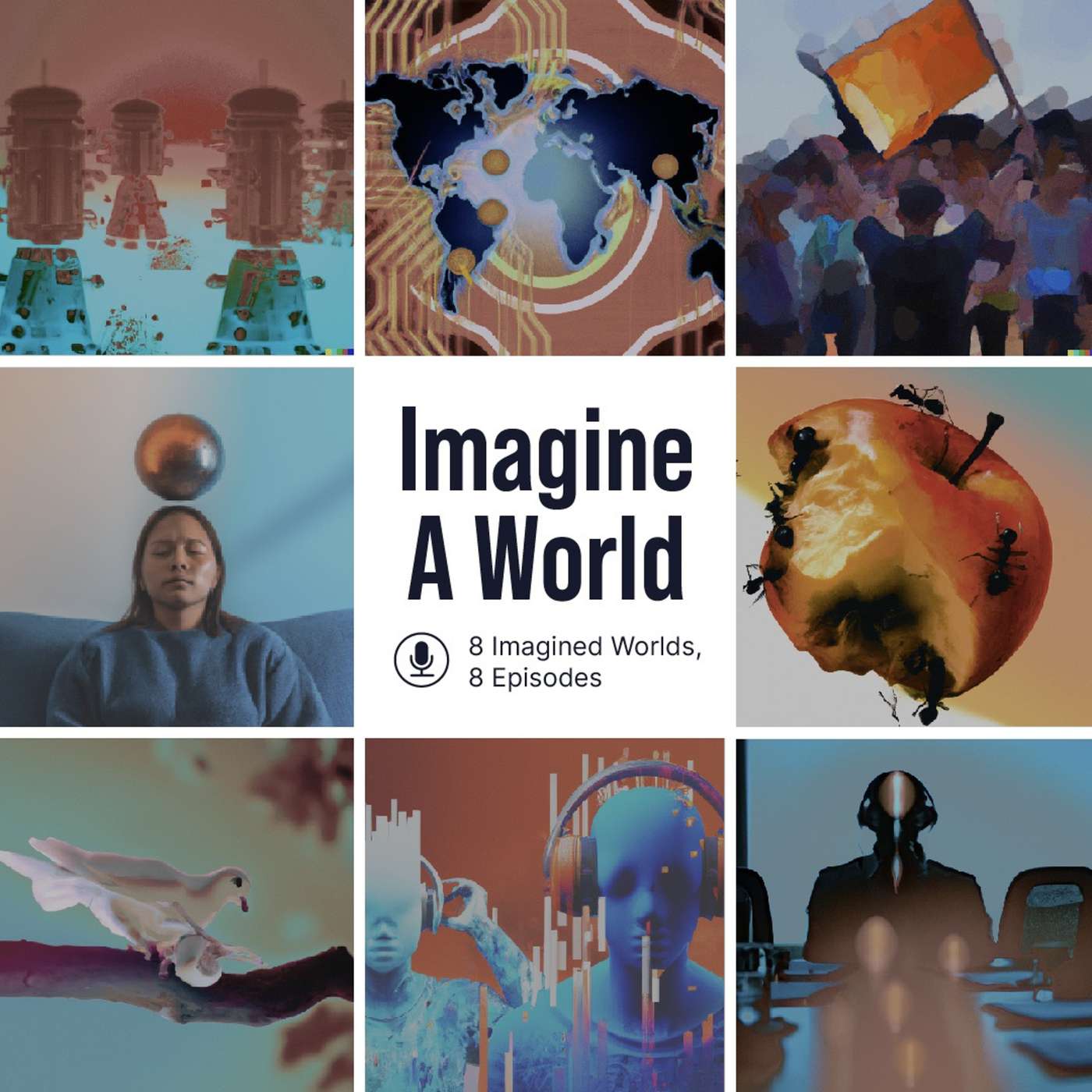
Coming Soon… The year is 2045. Humanity is not extinct, nor living in a dystopia. It has averted climate disaster and major wars. Instead, AI and other new technologies are helping to make the world more peaceful, happy and equal. How? This was what we asked the entrants of our Worldbuilding Contest to imagine last year. Our new podcast series digs deeper into the eight winning entries, their ideas and solutions, the diverse teams behind them and the challenges they faced. You might love some; others you might not choose to inhabit. FLI is not endorsing any one idea. Rather, we hope to grow the conversation about what futures people get excited about. Ask yourself, with each episode, is this a world you’d want to live in? And if not, what would you prefer? Don’t miss the first two episodes coming to your feed at the start of September! In the meantime, do explore the winning worlds, if you haven’t already: https://worldbuild.ai/

Ep 1Robert Trager on International AI Governance and Cybersecurity at AI Companies
Robert Trager joins the podcast to discuss AI governance, the incentives of governments and companies, the track record of international regulation, the security dilemma in AI, cybersecurity at AI companies, and skepticism about AI governance. We also discuss Robert's forthcoming paper International Governance of Civilian AI: A Jurisdictional Certification Approach. You can read more about Robert's work at https://www.governance.ai Timestamps: 00:00 The goals of AI governance 08:38 Incentives of governments and companies 18:58 Benefits of regulatory diversity 28:50 The track record of anticipatory regulation 37:55 The security dilemma in AI 46:20 Offense-defense balance in AI 53:27 Failure rates and international agreements 1:00:33 Verification of compliance 1:07:50 Controlling AI supply chains 1:13:47 Cybersecurity at AI companies 1:21:30 The jurisdictional certification approach 1:28:40 Objections to AI governance
Ep 1Jason Crawford on Progress and Risks from AI
Jason Crawford joins the podcast to discuss the history of progress, the future of economic growth, and the relationship between progress and risks from AI. You can read more about Jason's work at https://rootsofprogress.org Timestamps: 00:00 Eras of human progress 06:47 Flywheels of progress 17:56 Main causes of progress 21:01 Progress and risk 32:49 Safety as part of progress 45:20 Slowing down specific technologies? 52:29 Four lenses on AI risk 58:48 Analogies causing disagreement 1:00:54 Solutionism about AI 1:10:43 Insurance, subsidies, and bug bounties for AI risk 1:13:24 How is AI different from other technologies? 1:15:54 Future scenarios of economic growth

Ep 1Special: Jaan Tallinn on Pausing Giant AI Experiments
On this special episode of the podcast, Jaan Tallinn talks with Nathan Labenz about Jaan's model of AI risk, the future of AI development, and pausing giant AI experiments. Timestamps: 0:00 Nathan introduces Jaan 4:22 AI safety and Future of Life Institute 5:55 Jaan's first meeting with Eliezer Yudkowsky 12:04 Future of AI evolution 14:58 Jaan's investments in AI companies 23:06 The emerging danger paradigm 26:53 Economic transformation with AI 32:31 AI supervising itself 34:06 Language models and validation 38:49 Lack of insight into evolutionary selection process 41:56 Current estimate for life-ending catastrophe 44:52 Inverse scaling law 53:03 Our luck given the softness of language models 55:07 Future of language models 59:43 The Moore's law of mad science 1:01:45 GPT-5 type project 1:07:43 The AI race dynamics 1:09:43 AI alignment with the latest models 1:13:14 AI research investment and safety 1:19:43 What a six-month pause buys us 1:25:44 AI passing the Turing Test 1:28:16 AI safety and risk 1:32:01 Responsible AI development. 1:40:03 Neuralink implant technology

Ep 1Joe Carlsmith on How We Change Our Minds About AI Risk
Joe Carlsmith joins the podcast to discuss how we change our minds about AI risk, gut feelings versus abstract models, and what to do if transformative AI is coming soon. You can read more about Joe's work at https://joecarlsmith.com. Timestamps: 00:00 Predictable updating on AI risk 07:27 Abstract models versus gut feelings 22:06 How Joe began believing in AI risk 29:06 Is AI risk falsifiable? 35:39 Types of skepticisms about AI risk 44:51 Are we fundamentally confused? 53:35 Becoming alienated from ourselves? 1:00:12 What will change people's minds? 1:12:34 Outline of different futures 1:20:43 Humanity losing touch with reality 1:27:14 Can we understand AI sentience? 1:36:31 Distinguishing real from fake sentience 1:39:54 AI doomer epistemology 1:45:23 AI benchmarks versus real-world AI 1:53:00 AI improving AI research and development 2:01:08 What if transformative AI comes soon? 2:07:21 AI safety if transformative AI comes soon 2:16:52 AI systems interpreting other AI systems 2:19:38 Philosophy and transformative AI Social Media Links: ➡️ WEBSITE: https://futureoflife.org ➡️ TWITTER: https://twitter.com/FLIxrisk ➡️ INSTAGRAM: https://www.instagram.com/futureoflifeinstitute/ ➡️ META: https://www.facebook.com/futureoflifeinstitute ➡️ LINKEDIN: https://www.linkedin.com/company/future-of-life-institute/

Ep 1Dan Hendrycks on Why Evolution Favors AIs over Humans
Dan Hendrycks joins the podcast to discuss evolutionary dynamics in AI development and how we could develop AI safely. You can read more about Dan's work at https://www.safe.ai Timestamps: 00:00 Corporate AI race 06:28 Evolutionary dynamics in AI 25:26 Why evolution applies to AI 50:58 Deceptive AI 1:06:04 Competition erodes safety 10:17:40 Evolutionary fitness: humans versus AI 1:26:32 Different paradigms of AI risk 1:42:57 Interpreting AI systems 1:58:03 Honest AI and uncertain AI 2:06:52 Empirical and conceptual work 2:12:16 Losing touch with reality Social Media Links: ➡️ WEBSITE: https://futureoflife.org ➡️ TWITTER: https://twitter.com/FLIxrisk ➡️ INSTAGRAM: https://www.instagram.com/futureoflifeinstitute/ ➡️ META: https://www.facebook.com/futureoflifeinstitute ➡️ LINKEDIN: https://www.linkedin.com/company/future-of-life-institute/
Ep 1Roman Yampolskiy on Objections to AI Safety
Roman Yampolskiy joins the podcast to discuss various objections to AI safety, impossibility results for AI, and how much risk civilization should accept from emerging technologies. You can read more about Roman's work at http://cecs.louisville.edu/ry/ Timestamps: 00:00 Objections to AI safety 15:06 Will robots make AI risks salient? 27:51 Was early AI safety research useful? 37:28 Impossibility results for AI 47:25 How much risk should we accept? 1:01:21 Exponential or S-curve? 1:12:27 Will AI accidents increase? 1:23:56 Will we know who was right about AI? 1:33:33 Difference between AI output and AI model Social Media Links: ➡️ WEBSITE: https://futureoflife.org ➡️ TWITTER: https://twitter.com/FLIxrisk ➡️ INSTAGRAM: https://www.instagram.com/futureoflifeinstitute/ ➡️ META: https://www.facebook.com/futureoflifeinstitute ➡️ LINKEDIN: https://www.linkedin.com/company/future-of-life-institute/

Ep 1Nathan Labenz on How AI Will Transform the Economy
Nathan Labenz joins the podcast to discuss the economic effects of AI on growth, productivity, and employment. We also talk about whether AI might have catastrophic effects on the world. You can read more about Nathan's work at https://www.cognitiverevolution.ai Timestamps: 00:00 Economic transformation from AI 11:15 Productivity increases from technology 17:44 AI effects on employment 28:43 Life without jobs 38:42 Losing contact with reality 42:31 Catastrophic risks from AI 53:52 Scaling AI training runs 1:02:39 Stable opinions on AI? Social Media Links: ➡️ WEBSITE: https://futureoflife.org ➡️ TWITTER: https://twitter.com/FLIxrisk ➡️ INSTAGRAM: https://www.instagram.com/futureoflifeinstitute/ ➡️ META: https://www.facebook.com/futureoflifeinstitute ➡️ LINKEDIN: https://www.linkedin.com/company/future-of-life-institute/
Ep 1Nathan Labenz on the Cognitive Revolution, Red Teaming GPT-4, and Potential Dangers of AI
Nathan Labenz joins the podcast to discuss the cognitive revolution, his experience red teaming GPT-4, and the potential near-term dangers of AI. You can read more about Nathan's work at https://www.cognitiverevolution.ai Timestamps: 00:00 The cognitive revolution 07:47 Red teaming GPT-4 24:00 Coming to believe in transformative AI 30:14 Is AI depth or breadth most impressive? 42:52 Potential near-term dangers from AI Social Media Links: ➡️ WEBSITE: https://futureoflife.org ➡️ TWITTER: https://twitter.com/FLIxrisk ➡️ INSTAGRAM: https://www.instagram.com/futureoflifeinstitute/ ➡️ META: https://www.facebook.com/futureoflifeinstitute ➡️ LINKEDIN: https://www.linkedin.com/company/future-of-life-institute/

Ep 1Maryanna Saenko on Venture Capital, Philanthropy, and Ethical Technology
Maryanna Saenko joins the podcast to discuss how venture capital works, how to fund innovation, and what the fields of investing and philanthropy could learn from each other. You can read more about Maryanna's work at https://future.ventures Timestamps: 00:00 How does venture capital work? 09:01 Failure and success for startups 13:22 Is overconfidence necessary? 19:20 Repeat entrepreneurs 24:38 Long-term investing 30:36 Feedback loops from investments 35:05 Timing investments 38:35 The hardware-software dichotomy 42:19 Innovation prizes 45:43 VC lessons for philanthropy 51:03 Creating new markets 54:01 Investing versus philanthropy 56:14 Technology preying on human frailty 1:00:55 Are good ideas getting harder to find? 1:06:17 Artificial intelligence 1:12:41 Funding ethics research 1:14:25 Is philosophy useful? Social Media Links: ➡️ WEBSITE: https://futureoflife.org ➡️ TWITTER: https://twitter.com/FLIxrisk ➡️ INSTAGRAM: https://www.instagram.com/futureoflifeinstitute/ ➡️ META: https://www.facebook.com/futureoflifeinstitute ➡️ LINKEDIN: https://www.linkedin.com/company/future-of-life-institute/
Ep 1Connor Leahy on the State of AI and Alignment Research
Connor Leahy joins the podcast to discuss the state of the AI. Which labs are in front? Which alignment solutions might work? How will the public react to more capable AI? You can read more about Connor's work at https://conjecture.dev Timestamps: 00:00 Landscape of AI research labs 10:13 Is AGI a useful term? 13:31 AI predictions 17:56 Reinforcement learning from human feedback 29:53 Mechanistic interpretability 33:37 Yudkowsky and Christiano 41:39 Cognitive Emulations 43:11 Public reactions to AI Social Media Links: ➡️ WEBSITE: https://futureoflife.org ➡️ TWITTER: https://twitter.com/FLIxrisk ➡️ INSTAGRAM: https://www.instagram.com/futureoflifeinstitute/ ➡️ META: https://www.facebook.com/futureoflifeinstitute ➡️ LINKEDIN: https://www.linkedin.com/company/future-of-life-institute/

Ep 1Connor Leahy on AGI and Cognitive Emulation
Connor Leahy joins the podcast to discuss GPT-4, magic, cognitive emulation, demand for human-like AI, and aligning superintelligence. You can read more about Connor's work at https://conjecture.dev Timestamps: 00:00 GPT-4 16:35 "Magic" in machine learning 27:43 Cognitive emulations 38:00 Machine learning VS explainability 48:00 Human data = human AI? 1:00:07 Analogies for cognitive emulations 1:26:03 Demand for human-like AI 1:31:50 Aligning superintelligence Social Media Links: ➡️ WEBSITE: https://futureoflife.org ➡️ TWITTER: https://twitter.com/FLIxrisk ➡️ INSTAGRAM: https://www.instagram.com/futureoflifeinstitute/ ➡️ META: https://www.facebook.com/futureoflifeinstitute ➡️ LINKEDIN: https://www.linkedin.com/company/future-of-life-institute/

Ep 1Lennart Heim on Compute Governance
Lennart Heim joins the podcast to discuss options for governing the compute used by AI labs and potential problems with this approach to AI safety. You can read more about Lennart's work here: https://heim.xyz/about/ Timestamps: 00:00 Introduction 00:37 AI risk 03:33 Why focus on compute? 11:27 Monitoring compute 20:30 Restricting compute 26:54 Subsidising compute 34:00 Compute as a bottleneck 38:41 US and China 42:14 Unintended consequences 46:50 Will AI be like nuclear energy? Social Media Links: ➡️ WEBSITE: https://futureoflife.org ➡️ TWITTER: https://twitter.com/FLIxrisk ➡️ INSTAGRAM: https://www.instagram.com/futureoflifeinstitute/ ➡️ META: https://www.facebook.com/futureoflifeinstitute ➡️ LINKEDIN: https://www.linkedin.com/company/future-of-life-institute/
Ep 1Lennart Heim on the AI Triad: Compute, Data, and Algorithms
Lennart Heim joins the podcast to discuss how we can forecast AI progress by researching AI hardware. You can read more about Lennart's work here: https://heim.xyz/about/ Timestamps: 00:00 Introduction 01:00 The AI triad 06:26 Modern chip production 15:54 Forecasting AI with compute 27:18 Running out of data? 32:37 Three eras of AI training 37:58 Next chip paradigm 44:21 AI takeoff speeds Social Media Links: ➡️ WEBSITE: https://futureoflife.org ➡️ TWITTER: https://twitter.com/FLIxrisk ➡️ INSTAGRAM: https://www.instagram.com/futureoflifeinstitute/ ➡️ META: https://www.facebook.com/futureoflifeinstitute ➡️ LINKEDIN: https://www.linkedin.com/company/future-of-life-institute/

Ep 1Liv Boeree on Poker, GPT-4, and the Future of AI
Liv Boeree joins the podcast to discuss poker, GPT-4, human-AI interaction, whether this is the most important century, and building a dataset of human wisdom. You can read more about Liv's work here: https://livboeree.com Timestamps: 00:00 Introduction 00:36 AI in Poker 09:35 Game-playing AI 13:45 GPT-4 and generative AI 26:41 Human-AI interaction 32:05 AI arms race risks 39:32 Most important century? 42:36 Diminishing returns to intelligence? 49:14 Dataset of human wisdom/meaning Social Media Links: ➡️ WEBSITE: https://futureoflife.org ➡️ TWITTER: https://twitter.com/FLIxrisk ➡️ INSTAGRAM: https://www.instagram.com/futureoflifeinstitute/ ➡️ META: https://www.facebook.com/futureoflifeinstitute ➡️ LINKEDIN: https://www.linkedin.com/company/future-of-life-institute/
Ep 1Liv Boeree on Moloch, Beauty Filters, Game Theory, Institutions, and AI
Liv Boeree joins the podcast to discuss Moloch, beauty filters, game theory, institutional change, and artificial intelligence. You can read more about Liv's work here: https://livboeree.com Timestamps: 00:00 Introduction 01:57 What is Moloch? 04:13 Beauty filters 10:06 Science citations 15:18 Resisting Moloch 20:51 New institutions 26:02 Moloch and WinWin 28:41 Changing systems 33:37 Artificial intelligence 39:14 AI acceleration Social Media Links: ➡️ WEBSITE: https://futureoflife.org ➡️ TWITTER: https://twitter.com/FLIxrisk ➡️ INSTAGRAM: https://www.instagram.com/futureoflifeinstitute/ ➡️ META: https://www.facebook.com/futureoflifeinstitute ➡️ LINKEDIN: https://www.linkedin.com/company/future-of-life-institute/

Ep 1Tobias Baumann on Space Colonization and Cooperative Artificial Intelligence
Tobias Baumann joins the podcast to discuss suffering risks, space colonization, and cooperative artificial intelligence. You can read more about Tobias' work here: https://centerforreducingsuffering.org. Timestamps: 00:00 Suffering risks 02:50 Space colonization 10:12 Moral circle expansion 19:14 Cooperative artificial intelligence 36:19 Influencing governments 39:34 Can we reduce suffering? Social Media Links: ➡️ WEBSITE: https://futureoflife.org ➡️ TWITTER: https://twitter.com/FLIxrisk ➡️ INSTAGRAM: https://www.instagram.com/futureoflifeinstitute/ ➡️ META: https://www.facebook.com/futureoflifeinstitute ➡️ LINKEDIN: https://www.linkedin.com/company/future-of-life-institute/

Ep 1Tobias Baumann on Artificial Sentience and Reducing the Risk of Astronomical Suffering
Tobias Baumann joins the podcast to discuss suffering risks, artificial sentience, and the problem of knowing which actions reduce suffering in the long-term future. You can read more about Tobias' work here: https://centerforreducingsuffering.org. Timestamps: 00:00 Introduction 00:52 What are suffering risks? 05:40 Artificial sentience 17:18 Is reducing suffering hopelessly difficult? 26:06 Can we know how to reduce suffering? 31:17 Why are suffering risks neglected? 37:31 How do we avoid accidentally increasing suffering? Social Media Links: ➡️ WEBSITE: https://futureoflife.org ➡️ TWITTER: https://twitter.com/FLIxrisk ➡️ INSTAGRAM: https://www.instagram.com/futureoflifeinstitute/ ➡️ META: https://www.facebook.com/futureoflifeinstitute ➡️ LINKEDIN: https://www.linkedin.com/company/future-of-life-institute/
Ep 1Neel Nanda on Math, Tech Progress, Aging, Living up to Our Values, and Generative AI
Neel Nanda joins the podcast for a lightning round on mathematics, technological progress, aging, living up to our values, and generative AI. You can find his blog here: https://www.neelnanda.io Timestamps: 00:00 Introduction 00:55 How useful is advanced mathematics? 02:24 Will AI replace mathematicians? 03:28 What are the key drivers of tech progress? 04:13 What scientific discovery would disrupt Neel's worldview? 05:59 How should humanity view aging? 08:03 How can we live up to our values? 10:56 What can we learn from a person who lived 1.000 years ago? 12:05 What should we do after we have aligned AGI? 16:19 What important concept is often misunderstood? 17:22 What is the most impressive scientific discovery? 18:08 Are language models better learning tools that textbooks? 21:22 Should settling Mars be a priority for humanity? 22:44 How can we focus on our work? 24:04 Are human-AI relationships morally okay? 25:18 Are there aliens in the universe? 26:02 What are Neel's favourite books? 27:15 What is an overlooked positive aspect of humanity? 28:33 Should people spend more time prepping for disaster? 30:41 Neel's advice for teens. 31:55 How will generative AI evolve over the next five years? 32:56 How much can AIs achieve through a web browser? Social Media Links: ➡️ WEBSITE: https://futureoflife.org ➡️ TWITTER: https://twitter.com/FLIxrisk ➡️ INSTAGRAM: https://www.instagram.com/futureoflifeinstitute/ ➡️ META: https://www.facebook.com/futureoflifeinstitute ➡️ LINKEDIN: https://www.linkedin.com/company/future-of-life-institute/
Ep 1Neel Nanda on Avoiding an AI Catastrophe with Mechanistic Interpretability
Neel Nanda joins the podcast to talk about mechanistic interpretability and how it can make AI safer. Neel is an independent AI safety researcher. You can find his blog here: https://www.neelnanda.io Timestamps: 00:00 Introduction 00:46 How early is the field mechanistic interpretability? 03:12 Why should we care about mechanistic interpretability? 06:38 What are some successes in mechanistic interpretability? 16:29 How promising is mechanistic interpretability? 31:13 Is machine learning analogous to evolution? 32:58 How does mechanistic interpretability make AI safer? 36:54 36:54 Does mechanistic interpretability help us control AI? 39:57 Will AI models resist interpretation? 43:43 Is mechanistic interpretability fast enough? 54:10 Does mechanistic interpretability give us a general understanding? 57:44 How can you help with mechanistic interpretability? Social Media Links: ➡️ WEBSITE: https://futureoflife.org ➡️ TWITTER: https://twitter.com/FLIxrisk ➡️ INSTAGRAM: https://www.instagram.com/futureoflifeinstitute/ ➡️ META: https://www.facebook.com/futureoflifeinstitute ➡️ LINKEDIN: https://www.linkedin.com/company/future-of-life-institute/

Ep 1Neel Nanda on What is Going on Inside Neural Networks
Neel Nanda joins the podcast to explain how we can understand neural networks using mechanistic interpretability. Neel is an independent AI safety researcher. You can find his blog here: https://www.neelnanda.io Timestamps: 00:00 Who is Neel? 04:41 How did Neel choose to work on AI safety? 12:57 What does an AI safety researcher do? 15:53 How analogous are digital neural networks to brains? 21:34 Are neural networks like alien beings? 29:13 Can humans think like AIs? 35:00 Can AIs help us discover new physics? 39:56 How advanced is the field of AI safety? 45:56 How did Neel form independent opinions on AI? 48:20 How does AI safety research decrease the risk of extinction? Social Media Links: ➡️ WEBSITE: https://futureoflife.org ➡️ TWITTER: https://twitter.com/FLIxrisk ➡️ INSTAGRAM: https://www.instagram.com/futureoflifeinstitute/ ➡️ META: https://www.facebook.com/futureoflifeinstitute ➡️ LINKEDIN: https://www.linkedin.com/company/future-of-life-institute/
Ep 1Connor Leahy on Aliens, Ethics, Economics, Memetics, and Education
Connor Leahy from Conjecture joins the podcast for a lightning round on a variety of topics ranging from aliens to education. Learn more about Connor's work at https://conjecture.dev Social Media Links: ➡️ WEBSITE: https://futureoflife.org ➡️ TWITTER: https://twitter.com/FLIxrisk ➡️ INSTAGRAM: https://www.instagram.com/futureoflifeinstitute/ ➡️ META: https://www.facebook.com/futureoflifeinstitute ➡️ LINKEDIN: https://www.linkedin.com/company/future-of-life-institute/
Ep 1Connor Leahy on AI Safety and Why the World is Fragile
Connor Leahy from Conjecture joins the podcast to discuss AI safety, the fragility of the world, slowing down AI development, regulating AI, and the optimal funding model for AI safety research. Learn more about Connor's work at https://conjecture.dev Timestamps: 00:00 Introduction 00:47 What is the best way to understand AI safety? 09:50 Why is the world relatively stable? 15:18 Is the main worry human misuse of AI? 22:47 Can humanity solve AI safety? 30:06 Can we slow down AI development? 37:13 How should governments regulate AI? 41:09 How do we avoid misallocating AI safety government grants? 51:02 Should AI safety research be done by for-profit companies? Social Media Links: ➡️ WEBSITE: https://futureoflife.org ➡️ TWITTER: https://twitter.com/FLIxrisk ➡️ INSTAGRAM: https://www.instagram.com/futureoflifeinstitute/ ➡️ META: https://www.facebook.com/futureoflifeinstitute ➡️ LINKEDIN: https://www.linkedin.com/company/future-of-life-institute/

Ep 1Connor Leahy on AI Progress, Chimps, Memes, and Markets
Connor Leahy from Conjecture joins the podcast to discuss AI progress, chimps, memes, and markets. Learn more about Connor's work at https://conjecture.dev Timestamps: 00:00 Introduction 01:00 Defining artificial general intelligence 04:52 What makes humans more powerful than chimps? 17:23 Would AIs have to be social to be intelligent? 20:29 Importing humanity's memes into AIs 23:07 How do we measure progress in AI? 42:39 Gut feelings about AI progress 47:29 Connor's predictions about AGI 52:44 Is predicting AGI soon betting against the market? 57:43 How accurate are prediction markets about AGI?
Ep 1Sean Ekins on Regulating AI Drug Discovery
On this special episode of the podcast, Emilia Javorsky interviews Sean Ekins about regulating AI drug discovery. Timestramps: 00:00 Introduction 00:31 Ethical guidelines and regulation of AI drug discovery 06:11 How do we balance innovation and safety in AI drug discovery? 13:12 Keeping dangerous chemical data safe 21:16 Sean’s personal story of voicing concerns about AI drug discovery 32:06 How Sean will continue working on AI drug discovery
Ep 1Sean Ekins on the Dangers of AI Drug Discovery
On this special episode of the podcast, Emilia Javorsky interviews Sean Ekins about the dangers of AI drug discovery. They talk about how Sean discovered an extremely toxic chemical (VX) by reversing an AI drug discovery algorithm. Timestamps: 00:00 Introduction 00:46 Sean’s professional journey 03:45 Can computational models replace animal models? 07:24 The risks of AI drug discovery 12:48 Should scientists disclose dangerous discoveries? 19:40 How should scientists handle dual-use technologies? 22:08 Should we open-source potentially dangerous discoveries? 26:20 How do we control autonomous drug creation? 31:36 Surprising chemical discoveries made by black-box AI systems 36:56 How could the dangers of AI drug discovery be mitigated?
Ep 1Anders Sandberg on the Value of the Future
Anders Sandberg joins the podcast to discuss various philosophical questions about the value of the future. Learn more about Anders' work: https://www.fhi.ox.ac.uk Timestamps: 00:00 Introduction 00:54 Humanity as an immature teenager 04:24 How should we respond to our values changing over time? 18:53 How quickly should we change our values? 24:58 Are there limits to what future morality could become? 29:45 Could the universe contain infinite value? 36:00 How do we balance weird philosophy with common sense? 41:36 Lightning round: mind uploading, aliens, interstellar travel, cryonics

Ep 1Anders Sandberg on Grand Futures and the Limits of Physics
Anders Sandberg joins the podcast to discuss how big the future could be and what humanity could achieve at the limits of physics. Learn more about Anders' work: https://www.fhi.ox.ac.uk Timestamps: 00:00 Introduction 00:58 Does it make sense to write long books now? 06:53 Is it possible to understand all of science now? 10:44 What is exploratory engineering? 15:48 Will humanity develop a completed science? 21:18 How much of possible technology has humanity already invented? 25:22 Which sciences have made the most progress? 29:11 How materially wealthy could humanity become? 39:34 Does a grand futures depend on space travel? 49:16 Trade between proponents of different moral theories 53:13 How does physics limit our ethical options? 55:24 How much could our understanding of physics change? 1:02:30 The next episode

Ep 1Anders Sandberg on ChatGPT and the Future of AI
Anders Sandberg from The Future of Humanity Institute joins the podcast to discuss ChatGPT, large language models, and what he's learned about the risks and benefits of AI. Timestamps: 00:00 Introduction 00:40 ChatGPT 06:33 Will AI continue to surprise us? 16:22 How do language models fail? 24:23 Language models trained on their own output 27:29 Can language models write college-level essays? 35:03 Do language models understand anything? 39:59 How will AI models improve in the future? 43:26 AI safety in light of recent AI progress 51:28 AIs should be uncertain about values

Ep 1Vincent Boulanin on Military Use of Artificial Intelligence
Vincent Boulanin joins the podcast to explain how modern militaries use AI, including in nuclear weapons systems. Learn more about Vincent's work: https://sipri.org Timestamps: 00:00 Introduction 00:45 Categorizing risks from AI and nuclear 07:40 AI being used by non-state actors 12:57 Combining AI with nuclear technology 15:13 A human should remain in the loop 25:05 Automation bias 29:58 Information requirements for nuclear launch decisions 35:22 Vincent's general conclusion about military machine learning 37:22 Specific policy measures for decreasing nuclear risk Social Media Links: ➡️ WEBSITE: https://futureoflife.org ➡️ TWITTER: https://twitter.com/FLIxrisk ➡️ INSTAGRAM: https://www.instagram.com/futureoflifeinstitute/ ➡️ META: https://www.facebook.com/futureoflifeinstitute ➡️ LINKEDIN: https://www.linkedin.com/company/future-of-life-institute/

Ep 1Vincent Boulanin on the Dangers of AI in Nuclear Weapons Systems
Vincent Boulanin joins the podcast to explain the dangers of incorporating artificial intelligence in nuclear weapons systems. Learn more about Vincent's work: https://sipri.org Timestamps: 00:00 Introduction 00:55 What is strategic stability? 02:45 How can AI be a positive factor in nuclear risk? 10:17 Remote sensing of nuclear submarines 19:50 Using AI in nuclear command and control 24:21 How does AI change the game theory of nuclear war? 30:49 How could AI cause an accidental nuclear escalation? 36:57 How could AI cause an inadvertent nuclear escalation? 43:08 What is the most important problem in AI nuclear risk? 44:39 The next episode
Ep 1Robin Hanson on Predicting the Future of Artificial Intelligence
Robin Hanson joins the podcast to discuss AI forecasting methods and metrics. Timestamps: 00:00 Introduction 00:49 Robin's experience working with AI 06:04 Robin's views on AI development 10:41 Should we care about metrics for AI progress? 16:56 Is it useful to track AI progress? 22:02 When should we begin worrying about AI safety? 29:16 The history of AI development 39:52 AI progress that deviates from current trends 43:34 Is this AI boom different than past booms? 48:26 Different metrics for predicting AI

Ep 1Robin Hanson on Grabby Aliens and When Humanity Will Meet Them
Robin Hanson joins the podcast to explain his theory of grabby aliens and its implications for the future of humanity. Learn more about the theory here: https://grabbyaliens.com Timestamps: 00:00 Introduction 00:49 Why should we care about aliens? 05:58 Loud alien civilizations and quiet alien civilizations 08:16 Why would some alien civilizations be quiet? 14:50 The moving parts of the grabby aliens model 23:57 Why is humanity early in the universe? 28:46 Could't we just be alone in the universe? 33:15 When will humanity expand into space? 46:05 Will humanity be more advanced than the aliens we meet? 49:32 What if we discovered aliens tomorrow? 53:44 Should the way we think about aliens change our actions? 57:48 Can we reasonably theorize about aliens? 53:39 The next episode

Ep 1Ajeya Cotra on Thinking Clearly in a Rapidly Changing World
Ajeya Cotra joins us to talk about thinking clearly in a rapidly changing world. Learn more about the work of Ajeya and her colleagues: https://www.openphilanthropy.org Timestamps: 00:00 Introduction 00:44 The default versus the accelerating picture of the future 04:25 The role of AI in accelerating change 06:48 Extrapolating economic growth 08:53 How do we know whether the pace of change is accelerating? 15:07 How can we cope with a rapidly changing world? 18:50 How could the future be utopian? 22:03 Is accelerating technological progress immoral? 25:43 Should we imagine concrete future scenarios? 31:15 How should we act in an accelerating world? 34:41 How Ajeya could be wrong about the future 41:41 What if change accelerates very rapidly?

Ep 1Ajeya Cotra on how Artificial Intelligence Could Cause Catastrophe
Ajeya Cotra joins us to discuss how artificial intelligence could cause catastrophe. Follow the work of Ajeya and her colleagues: https://www.openphilanthropy.org Timestamps: 00:00 Introduction 00:53 AI safety research in general 02:04 Realistic scenarios for AI catastrophes 06:51 A dangerous AI model developed in the near future 09:10 Assumptions behind dangerous AI development 14:45 Can AIs learn long-term planning? 18:09 Can AIs understand human psychology? 22:32 Training an AI model with naive safety features 24:06 Can AIs be deceptive? 31:07 What happens after deploying an unsafe AI system? 44:03 What can we do to prevent an AI catastrophe? 53:58 The next episode

Ep 1Ajeya Cotra on Forecasting Transformative Artificial Intelligence
Ajeya Cotra joins us to discuss forecasting transformative artificial intelligence. Follow the work of Ajeya and her colleagues: https://www.openphilanthropy.org Timestamps: 00:00 Introduction 00:53 Ajeya's report on AI 01:16 What is transformative AI? 02:09 Forecasting transformative AI 02:53 Historical growth rates 05:10 Simpler forecasting methods 09:01 Biological anchors 16:31 Different paths to transformative AI 17:55 Which year will we get transformative AI? 25:54 Expert opinion on transformative AI 30:08 Are today's machine learning techniques enough? 33:06 Will AI be limited by the physical world and regulation? 38:15 Will AI be limited by training data? 41:48 Are there human abilities that AIs cannot learn? 47:22 The next episode
Ep 1Alan Robock on Nuclear Winter, Famine, and Geoengineering
Alan Robock joins us to discuss nuclear winter, famine and geoengineering. Learn more about Alan's work: http://people.envsci.rutgers.edu/robock/ Follow Alan on Twitter: https://twitter.com/AlanRobock Timestamps: 00:00 Introduction 00:45 What is nuclear winter? 06:27 A nuclear war between India and Pakistan 09:16 Targets in a nuclear war 11:08 Why does the world have so many nuclear weapons? 19:28 Societal collapse in a nuclear winter 22:45 Should we prepare for a nuclear winter? 28:13 Skepticism about nuclear winter 35:16 Unanswered questions about nuclear winter
Ep 1Brian Toon on Nuclear Winter, Asteroids, Volcanoes, and the Future of Humanity
Brian Toon joins us to discuss the risk of nuclear winter. Learn more about Brian's work: https://lasp.colorado.edu/home/people/brian-toon/ Read Brian's publications: https://airbornescience.nasa.gov/person/Brian_Toon Timestamps: 00:00 Introduction 01:02 Asteroid impacts 04:20 The discovery of nuclear winter 13:56 Comparing volcanoes and asteroids to nuclear weapons 19:42 How did life survive the asteroid impact 65 million years ago? 25:05 How humanity could go extinct 29:46 Nuclear weapons as a great filter 34:32 Nuclear winter and food production 40:58 The psychology of nuclear threat 43:56 Geoengineering to prevent nuclear winter 46:49 Will humanity avoid nuclear winter?
Ep 1Philip Reiner on Nuclear Command, Control, and Communications
Philip Reiner joins us to talk about nuclear, command, control and communications systems. Learn more about Philip’s work: https://securityandtechnology.org/ Timestamps: [00:00:00] Introduction [00:00:50] Nuclear command, control, and communications [00:03:52] Old technology in nuclear systems [00:12:18] Incentives for nuclear states [00:15:04] Selectively enhancing security [00:17:34] Unilateral de-escalation [00:18:04] Nuclear communications [00:24:08] The CATALINK System [00:31:25] AI in nuclear command, control, and communications [00:40:27] Russia's war in Ukraine

Ep 1Daniela and Dario Amodei on Anthropic
Daniela and Dario Amodei join us to discuss Anthropic: a new AI safety and research company that's working to build reliable, interpretable, and steerable AI systems. Topics discussed in this episode include: -Anthropic's mission and research strategy -Recent research and papers by Anthropic -Anthropic's structure as a "public benefit corporation" -Career opportunities You can find the page for the podcast here: https://futureoflife.org/2022/03/04/daniela-and-dario-amodei-on-anthropic/ Watch the video version of this episode here: https://www.youtube.com/watch?v=uAA6PZkek4A Careers at Anthropic: https://www.anthropic.com/#careers Anthropic's Transformer Circuits research: https://transformer-circuits.pub/ Follow Anthropic on Twitter: https://twitter.com/AnthropicAI microCOVID Project: https://www.microcovid.org/ Follow Lucas on Twitter: https://twitter.com/lucasfmperry Have any feedback about the podcast? You can share your thoughts here: www.surveymonkey.com/r/DRBFZCT Timestamps: 0:00 Intro 2:44 What was the intention behind forming Anthropic? 6:28 Do the founders of Anthropic share a similar view on AI? 7:55 What is Anthropic's focused research bet? 11:10 Does AI existential safety fit into Anthropic's work and thinking? 14:14 Examples of AI models today that have properties relevant to future AI existential safety 16:12 Why work on large scale models? 20:02 What does it mean for a model to lie? 22:44 Safety concerns around the open-endedness of large models 29:01 How does safety work fit into race dynamics to more and more powerful AI? 36:16 Anthropic's mission and how it fits into AI alignment 38:40 Why explore large models for AI safety and scaling to more intelligent systems? 43:24 Is Anthropic's research strategy a form of prosaic alignment? 46:22 Anthropic's recent research and papers 49:52 How difficult is it to interpret current AI models? 52:40 Anthropic's research on alignment and societal impact 55:35 Why did you decide to release tools and videos alongside your interpretability research 1:01:04 What is it like working with your sibling? 1:05:33 Inspiration around creating Anthropic 1:12:40 Is there an upward bound on capability gains from scaling current models? 1:18:00 Why is it unlikely that continuously increasing the number of parameters on models will lead to AGI? 1:21:10 Bootstrapping models 1:22:26 How does Anthropic see itself as positioned in the AI safety space? 1:25:35 What does being a public benefit corporation mean for Anthropic? 1:30:55 Anthropic's perspective on windfall profits from powerful AI systems 1:34:07 Issues with current AI systems and their relationship with long-term safety concerns 1:39:30 Anthropic's plan to communicate it's work to technical researchers and policy makers 1:41:28 AI evaluations and monitoring 1:42:50 AI governance 1:45:12 Careers at Anthropic 1:48:30 What it's like working at Anthropic 1:52:48 Why hire people of a wide variety of technical backgrounds? 1:54:33 What's a future you're excited about or hopeful for? 1:59:42 Where to find and follow Anthropic This podcast is possible because of the support of listeners like you. If you found this conversation to be meaningful or valuable, consider supporting it directly by donating at futureoflife.org/donate. Contributions like yours make these conversations possible.
Ep 1Anthony Aguirre and Anna Yelizarova on FLI's Worldbuilding Contest
Anthony Aguirre and Anna Yelizarova join us to discuss FLI's new Worldbuilding Contest. Topics discussed in this episode include: -Motivations behind the contest -The importance of worldbuilding -The rules of the contest -What a submission consists of -Due date and prizes Learn more about the contest here: https://worldbuild.ai/ Join the discord: https://discord.com/invite/njZyTJpwMz You can find the page for the podcast here: https://futureoflife.org/2022/02/08/anthony-aguirre-and-anna-yelizarova-on-flis-worldbuilding-contest/ Watch the video version of this episode here: https://www.youtube.com/watch?v=WZBXSiyienI Follow Lucas on Twitter here: twitter.com/lucasfmperry Have any feedback about the podcast? You can share your thoughts here: www.surveymonkey.com/r/DRBFZCT Timestamps: 0:00 Intro 2:30 What is "worldbuilding" and FLI's Worldbuilding Contest? 6:32 Why do worldbuilding for 2045? 7:22 Why is it important to practice worldbuilding? 13:50 What are the rules of the contest? 19:53 What does a submission consist of? 22:16 Due dates and prizes? 25:58 Final thoughts and how the contest contributes to creating beneficial futures This podcast is possible because of the support of listeners like you. If you found this conversation to be meaningful or valuable, consider supporting it directly by donating at futureoflife.org/donate. Contributions like yours make these conversations possible.

Ep 1David Chalmers on Reality+: Virtual Worlds and the Problems of Philosophy
David Chalmers, Professor of Philosophy and Neural Science at NYU, joins us to discuss his newest book Reality+: Virtual Worlds and the Problems of Philosophy. Topics discussed in this episode include: -Virtual reality as genuine reality -Why VR is compatible with the good life -Why we can never know whether we're in a simulation -Consciousness in virtual realities -The ethics of simulated beings You can find the page for the podcast here: https://futureoflife.org/2022/01/26/david-chalmers-on-reality-virtual-worlds-and-the-problems-of-philosophy/ Watch the video version of this episode here: https://www.youtube.com/watch?v=hePEg_h90KI Check out David's book and website here: http://consc.net/ Follow Lucas on Twitter here: https://twitter.com/lucasfmperry Have any feedback about the podcast? You can share your thoughts here: www.surveymonkey.com/r/DRBFZCT Timestamps: 0:00 Intro 2:43 How this books fits into David's philosophical journey 9:40 David's favorite part(s) of the book 12:04 What is the thesis of the book? 14:00 The core areas of philosophy and how they fit into Reality+ 16:48 Techno-philosophy 19:38 What is "virtual reality?" 21:06 Why is virtual reality "genuine reality?" 25:27 What is the dust theory and what's it have to do with the simulation hypothesis? 29:59 How does the dust theory fit in with arguing for virtual reality as genuine reality? 34:45 Exploring criteria for what it means for something to be real 42:38 What is the common sense view of what is real? 46:19 Is your book intended to address common sense intuitions about virtual reality? 48:51 Nozick's experience machine and how questions of value fit in 54:20 Technological implementations of virtual reality 58:40 How does consciousness fit into all of this? 1:00:18 Substrate independence and if classical computers can be conscious 1:02:35 How do problems of identity fit into virtual reality? 1:04:54 How would David upload himself? 1:08:00 How does the mind body problem fit into Reality+? 1:11:40 Is consciousness the foundation of value? 1:14:23 Does your moral theory affect whether you can live a good life in a virtual reality? 1:17:20 What does a good life in virtual reality look like? 1:19:08 David's favorite VR experiences 1:20:42 What is the moral status of simulated people? 1:22:38 Will there be unconscious simulated people with moral patiency? 1:24:41 Why we can never know we're not in a simulation 1:27:56 David's credences for whether we live in a simulation 1:30:29 Digital physics and what is says about the simulation hypothesis 1:35:21 Imperfect realism and how David sees the world after writing Reality+ 1:37:51 David's thoughts on God 1:39:42 Moral realism or anti-realism? 1:40:55 Where to follow David and find Reality+ This podcast is possible because of the support of listeners like you. If you found this conversation to be meaningful or valuable, consider supporting it directly by donating at futureoflife.org/donate. Contributions like yours make these conversations possible.
Ep 1Rohin Shah on the State of AGI Safety Research in 2021
Rohin Shah, Research Scientist on DeepMind's technical AGI safety team, joins us to discuss: AI value alignment; how an AI Researcher might decide whether to work on AI Safety; and why we don't know that AI systems won't lead to existential risk. Topics discussed in this episode include: - Inner Alignment versus Outer Alignment - Foundation Models - Structural AI Risks - Unipolar versus Multipolar Scenarios - The Most Important Thing That Impacts the Future of Life You can find the page for the podcast here: https://futureoflife.org/2021/11/01/rohin-shah-on-the-state-of-agi-safety-research-in-2021 Watch the video version of this episode here: https://youtu.be/_5xkh-Rh6Ec Follow the Alignment Newsletter here: https://rohinshah.com/alignment-newsletter/ Have any feedback about the podcast? You can share your thoughts here: https://www.surveymonkey.com/r/DRBFZCT Timestamps: 0:00 Intro 00:02:22 What is AI alignment? 00:06:00 How has your perspective of this problem changed over the past year? 00:06:28 Inner Alignment 00:13:00 Ways that AI could actually lead to human extinction 00:18:53 Inner Alignment and MACE optimizers 00:20:15 Outer Alignment 00:23:12 The core problem of AI alignment 00:24:54 Learning Systems versus Planning Systems 00:28:10 AI and Existential Risk 00:32:05 The probability of AI existential risk 00:51:31 Core problems in AI alignment 00:54:46 How has AI alignment, as a field of research changed in the last year? 00:54:02 Large scale language models 00:54:50 Foundation Models 00:59:58 Why don't we know that AI systems won't totally kill us all? 01:09:05 How much of the alignment and safety problems in AI will be solved by industry? 01:14:44 Do you think about what beneficial futures look like? 01:19:31 Moral Anti-Realism and AI 01:27:25 Unipolar versus Multipolar Scenarios 01:35:33 What is the safety team at DeepMind up to? 01:35:41 What is the most important thing that impacts the future of life? This podcast is possible because of the support of listeners like you. If you found this conversation to be meaningful or valuable, consider supporting it directly by donating at futureoflife.org/donate. Contributions like yours make these conversations possible.
Ep 1Future of Life Institute's $25M Grants Program for Existential Risk Reduction
Future of Life Institute President Max Tegmark and our grants team, Andrea Berman and Daniel Filan, join us to announce a $25M multi-year AI Existential Safety Grants Program. Topics discussed in this episode include: - The reason Future of Life Institute is offering AI Existential Safety Grants - Max speaks about how receiving a grant changed his career early on - Daniel and Andrea provide details on the fellowships and future grant priorities Check out our grants programs here: https://grants.futureoflife.org/ Join our AI Existential Safety Community: https://futureoflife.org/team/ai-exis... Have any feedback about the podcast? You can share your thoughts here: https://www.surveymonkey.com/r/DRBFZCT This podcast is possible because of the support of listeners like you. If you found this conversation to be meaningful or valuable, consider supporting it directly by donating at futureoflife.org/donate. Contributions like yours make these conversations possible.
Ep 1Filippa Lentzos on Global Catastrophic Biological Risks
Dr. Filippa Lentzos, Senior Lecturer in Science and International Security at King's College London, joins us to discuss the most pressing issues in biosecurity, big data in biology and life sciences, and governance in biological risk. Topics discussed in this episode include: - The most pressing issue in biosecurity - Stories from when biosafety labs failed to contain dangerous pathogens - The lethality of pathogens being worked on at biolaboratories - Lessons from COVID-19 You can find the page for the podcast here: https://futureoflife.org/2021/10/01/filippa-lentzos-on-emerging-threats-in-biosecurity/ Watch the video version of this episode here: https://www.youtube.com/watch?v=I6M34oQ4v4w Have any feedback about the podcast? You can share your thoughts here: https://www.surveymonkey.com/r/DRBFZCT Timestamps: 0:00 Intro 2:35 What are the least understood aspects of biological risk? 8:32 Which groups are interested biotechnologies that could be used for harm? 16:30 Why countries may pursue the development of dangerous pathogens 18:45 Dr. Lentzos' strands of research 25:41 Stories from when biosafety labs failed to contain dangerous pathogens 28:34 The most pressing issue in biosecurity 31:06 What is gain of function research? What are the risks? 34:57 Examples of gain of function research 36:14 What are the benefits of gain of function research? 37:54 The lethality of pathogens being worked on at biolaboratorie 40:25 Benefits and risks of big data in biology and the life sciences 45:03 Creating a bioweather map or using big data for biodefense 48:35 Lessons from COVID-19 53:46 How does governance fit in to biological risk? 55:59 Key takeaways from Dr. Lentzos This podcast is possible because of the support of listeners like you. If you found this conversation to be meaningful or valuable, consider supporting it directly by donating at futureoflife.org/donate. Contributions like yours make these conversations possible.
Ep 1Susan Solomon and Stephen Andersen on Saving the Ozone Layer
Susan Solomon, internationally recognized atmospheric chemist, and Stephen Andersen, leader of the Montreal Protocol, join us to tell the story of the ozone hole and their roles in helping to bring us back from the brink of disaster. Topics discussed in this episode include: -The industrial and commercial uses of chlorofluorocarbons (CFCs) -How we discovered the atmospheric effects of CFCs -The Montreal Protocol and its significance -Dr. Solomon's, Dr. Farman's, and Dr. Andersen's crucial roles in helping to solve the ozone hole crisis -Lessons we can take away for climate change and other global catastrophic risks You can find the page for this podcast here: https://futureoflife.org/2021/09/16/susan-solomon-and-stephen-andersen-on-saving-the-ozone-layer/ Check out the video version of the episode here: https://www.youtube.com/watch?v=7hwh-uDo-6A&ab_channel=FutureofLifeInstitute Check out the story of the ozone hole crisis here: https://undsci.berkeley.edu/article/0_0_0/ozone_depletion_01 Have any feedback about the podcast? You can share your thoughts here: www.surveymonkey.com/r/DRBFZCT Timestamps: 0:00 Intro 3:13 What are CFCs and what was their role in society? 7:09 James Lovelock discovering an abundance of CFCs in the lower atmosphere 12:43 F. Sherwood Rowland's and Mario Molina's research on the atmospheric science of CFCs 19:52 How a single chlorine atom from a CFC molecule can destroy a large amount of ozone 23:12 Moving from models of ozone depletion to empirical evidence of the ozone depleting mechanism 24:41 Joseph Farman and discovering the ozone hole 30:36 Susan Solomon's discovery of the surfaces of high altitude Arctic clouds being crucial for ozone depletion 47:22 The Montreal Protocol 1:00:00 Who were the key stake holders in the Montreal Protocol? 1:03:46 Stephen Andersen's efforts to phase out CFCs as the co-chair of the Montreal Protocol Technology and Economic Assessment Panel 1:13:28 The Montreal Protocol helping to prevent 11 billion metric tons of CO2 emissions per year 1:18:30 Susan and Stephen's key takeaways from their experience with the ozone hole crisis 1:24:24 What world did we avoid through our efforts to save the ozone layer? 1:28:37 The lessons Stephen and Susan take away from their experience working to phase out CFCs from industry 1:34:30 Is action on climate change practical? 1:40:34 Does the Paris Agreement have something like the Montreal Protocol Technology and Economic Assessment Panel? 1:43:23 Final words from Susan and Stephen This podcast is possible because of the support of listeners like you. If you found this conversation to be meaningful or valuable, consider supporting it directly by donating at futureoflife.org/donate. Contributions like yours make these conversations possible.
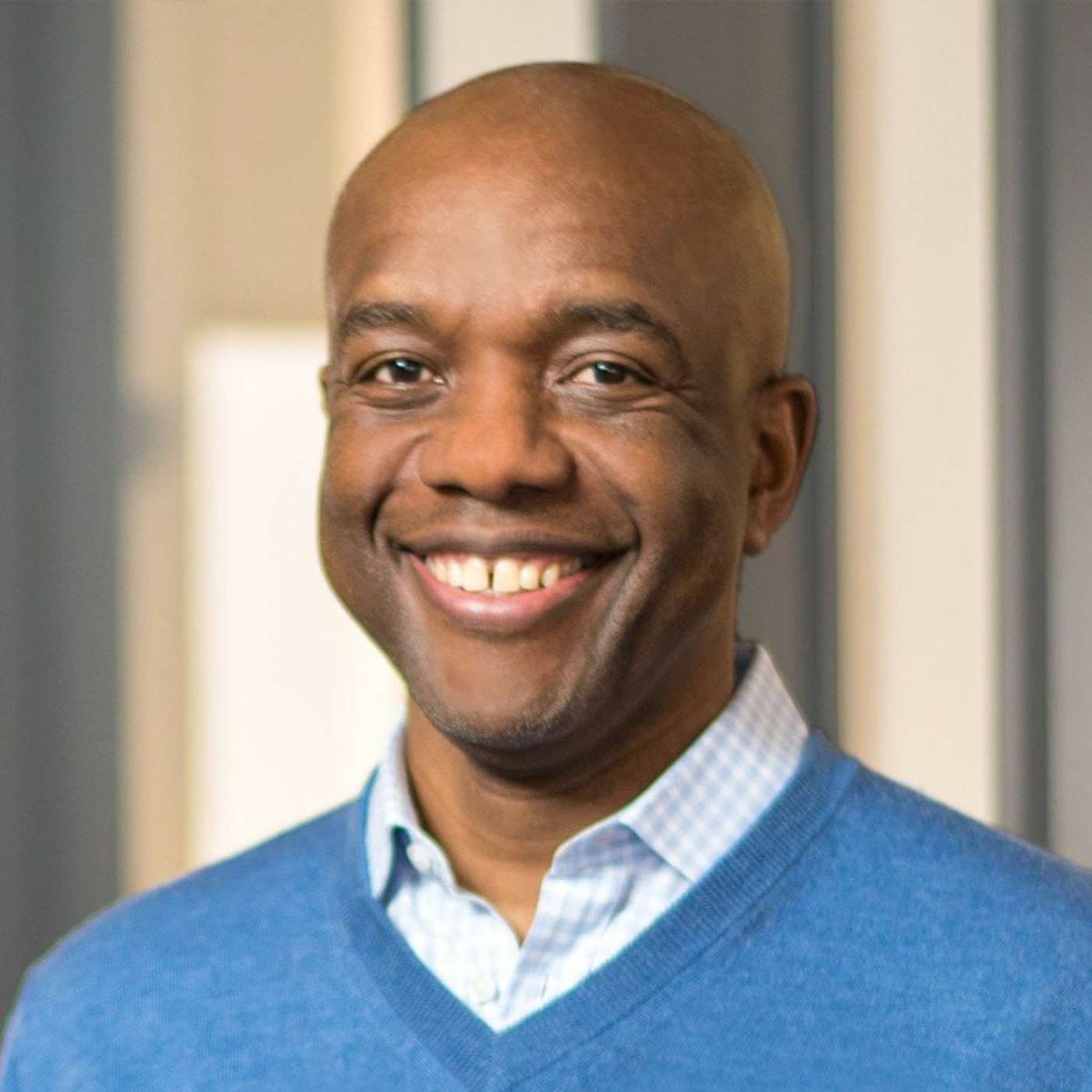
Ep 1James Manyika on Global Economic and Technological Trends
James Manyika, Chairman and Director of the McKinsey Global Institute, joins us to discuss the rapidly evolving landscape of the modern global economy and the role of technology in it. Topics discussed in this episode include: -The modern social contract -Reskilling, wage stagnation, and inequality -Technology induced unemployment -The structure of the global economy -The geographic concentration of economic growth You can find the page for this podcast here: https://futureoflife.org/2021/09/06/james-manyika-on-global-economic-and-technological-trends/ Check out the video version of the episode here: https://youtu.be/zLXmFiwT0-M Check out the McKinsey Global Institute here: https://www.mckinsey.com/mgi/overview Have any feedback about the podcast? You can share your thoughts here: www.surveymonkey.com/r/DRBFZCT Timestamps: 0:00 Intro 2:14 What are the most important problems in the world today? 4:30 The issue of inequality 8:17 How the structure of the global economy is changing 10:21 How does the role of incentives fit into global issues? 13:00 How the social contract has evolved in the 21st century 18:20 A billion people lifted out of poverty 19:04 What drives economic growth? 29:28 How does AI automation affect the virtuous and vicious versions of productivity growth? 38:06 Automation and reflecting on jobs lost, jobs gained, and jobs changed 43:15 AGI and automation 48:00 How do we address the issue of technology induced unemployment 58:05 Developing countries and economies 1:01:29 The central forces in the global economy 1:07:36 The global economic center of gravity 1:09:42 Understanding the core impacts of AI 1:12:32 How do global catastrophic and existential risks fit into the modern global economy? 1:17:52 The economics of climate change and AI risk 1:20:50 Will we use AI technology like we've used fossil fuel technology? 1:24:34 The risks of AI contributing to inequality and bias 1:31:45 How do we integrate developing countries voices in the development and deployment of AI systems 1:33:42 James' core takeaway 1:37:19 Where to follow and learn more about James' work This podcast is possible because of the support of listeners like you. If you found this conversation to be meaningful or valuable, consider supporting it directly by donating at futureoflife.org/donate. Contributions like yours make these conversations possible.

Ep 1Michael Klare on the Pentagon's view of Climate Change and the Risks of State Collapse
Michael Klare, Five College Professor of Peace & World Security Studies, joins us to discuss the Pentagon's view of climate change, why it's distinctive, and how this all ultimately relates to the risks of great powers conflict and state collapse. Topics discussed in this episode include: -How the US military views and takes action on climate change -Examples of existing climate related difficulties and what they tell us about the future -Threat multiplication from climate change -The risks of climate change catalyzed nuclear war and major conflict -The melting of the Arctic and the geopolitical situation which arises from that -Messaging on climate change You can find the page for this podcast here: https://futureoflife.org/2021/07/30/michael-klare-on-the-pentagons-view-of-climate-change-and-the-risks-of-state-collapse/ Check out the video version of the episode here: https://www.youtube.com/watch?v=bn57jxEoW24 Check out Michael's website here: http://michaelklare.com/ Apply for the Podcast Producer position here: futureoflife.org/job-postings/ Have any feedback about the podcast? You can share your thoughts here: www.surveymonkey.com/r/DRBFZCT Timestamps: 0:00 Intro 2:28 How does the Pentagon view climate change and why are they interested in it? 5:30 What are the Pentagon's main priorities besides climate change? 8:31 What are the objectives of career officers at the Pentagon and how do they see climate change? 10:32 The relationship between Pentagon career officers and the Trump administration on climate change 15:47 How is the Pentagon's view of climate change unique and important? 19:54 How climate change exacerbates existing difficulties and the issue of threat multiplication 24:25 How will climate change increase the tensions between the nuclear weapons states of India, Pakistan, and China? 26:32 What happened to Tacloban City and how is it relevant? 32:27 Why does the US military provide global humanitarian assistance? 34:39 How has climate change impacted the conditions in Nigeria and how does this inform the Pentagon's perspective? 39:40 What is the ladder of escalation for climate change related issues? 46:54 What is "all hell breaking loose?" 48:26 What is the geopolitical situation arising from the melting of the Arctic? 52:48 Why does the Bering Strait matter for the Arctic? 54:23 The Arctic as a main source of conflict for the great powers in the coming years 58:01 Are there ongoing proposals for resolving territorial disputes in the Arctic? 1:01:40 Nuclear weapons risk and climate change 1:03:32 How does the Pentagon intend to address climate change? 1:06:20 Hardening US military bases and going green 1:11:50 How climate change will affect critical infrastructure 1:15:47 How do lethal autonomous weapons fit into the risks of escalation in a world stressed by climate change? 1:19:42 How does this all affect existential risk? 1:24:39 Are there timelines for when climate change induced stresses will occur? 1:27:03 Does tying existential risks to national security issues benefit awareness around existential risk? 1:30:18 Does relating climate change to migration issues help with climate messaging? 1:31:08 A summary of the Pentagon's interest, view, and action on climate change 1:33:00 Final words from Michael 1:34:33 Where to find more of Michael's work This podcast is possible because of the support of listeners like you. If you found this conversation to be meaningful or valuable, consider supporting it directly by donating at futureoflife.org/donate. Contributions like yours make these conversations possible.

Ep 1Avi Loeb on UFOs and if they're Alien in Origin
Avi Loeb, Professor of Science at Harvard University, joins us to discuss unidentified aerial phenomena and a recent US Government report assessing their existence and threat. Topics discussed in this episode include: -Evidence counting for the natural, human, and extraterrestrial origins of UAPs -The culture of science and how it deals with UAP reports -How humanity should respond if we discover UAPs are alien in origin -A project for collecting high quality data on UAPs You can find the page for this podcast here: https://futureoflife.org/2021/07/09/avi-loeb-on-ufos-and-if-theyre-alien-in-origin/ Apply for the Podcast Producer position here: futureoflife.org/job-postings/ Check out the video version of the episode here: https://www.youtube.com/watch?v=AyNlLaFTeFI&ab_channel=FutureofLifeInstitute Have any feedback about the podcast? You can share your thoughts here: www.surveymonkey.com/r/DRBFZCT Timestamps: 0:00 Intro 1:41 Why is the US Government report on UAPs significant? 7:08 Multiple different sensors detecting the same phenomena 11:50 Are UAPs a US technology? 13:20 Incentives to deploy powerful technology 15:48 What are the flight and capability characteristics of UAPs? 17:53 The similarities between 'Oumuamua and UAP reports 20:11 Are UAPs some form of spoofing technology? 22:48 What is the most convincing natural or conventional explanation of UAPs? 25:09 UAPs as potentially containing artificial intelligence 28:15 Can you give a credence to UAPs being alien in origin? 29:32 Why aren't UAPs far more technologically advanced? 32:15 How should humanity respond if UAPs are found to be alien in origin? 35:15 A plan to get better data on UAPs 38:56 Final thoughts from Avi 39:40 Getting in contact with Avi to support his project This podcast is possible because of the support of listeners like you. If you found this conversation to be meaningful or valuable, consider supporting it directly by donating at futureoflife.org/donate. Contributions like yours make these conversations possible.

Ep 1Avi Loeb on 'Oumuamua, Aliens, Space Archeology, Great Filters, and Superstructures
Avi Loeb, Professor of Science at Harvard University, joins us to discuss a recent interstellar visitor, if we've already encountered alien technology, and whether we're ultimately alone in the cosmos. Topics discussed in this episode include: -Whether 'Oumuamua is alien or natural in origin -The culture of science and how it affects fruitful inquiry -Looking for signs of alien life throughout the solar system and beyond -Alien artefacts and galactic treaties -How humanity should handle a potential first contact with extraterrestrials -The relationship between what is true and what is good You can find the page for this podcast here: https://futureoflife.org/2021/07/09/avi-loeb-on-oumuamua-aliens-space-archeology-great-filters-and-superstructures/ Apply for the Podcast Producer position here: https://futureoflife.org/job-postings/ Check out the video version of the episode here: https://www.youtube.com/watch?v=qcxJ8QZQkwE&ab_channel=FutureofLifeInstitute See our second interview with Avi here: https://soundcloud.com/futureoflife/avi-loeb-on-ufos-and-if-theyre-alien-in-origin Have any feedback about the podcast? You can share your thoughts here: www.surveymonkey.com/r/DRBFZCT Timestamps: 0:00 Intro 3:28 What is 'Oumuamua's wager? 11:29 The properties of 'Oumuamua and how they lend credence to the theory of it being artificial in origin 17:23 Theories of 'Oumuamua being natural in origin 21:42 Why was the smooth acceleration of 'Oumuamua significant? 23:35 What are comets and asteroids? 28:30 What we know about Oort clouds and how 'Oumuamua relates to what we expect of Oort clouds 33:40 Could there be exotic objects in Oort clouds that would account for 'Oumuamua 38:08 What is your credence that 'Oumuamua is alien in origin? 44:50 Bayesian reasoning and 'Oumuamua 46:34 How do UFO reports and sightings affect your perspective of 'Oumuamua? 54:35 Might alien artefacts be more common than we expect? 58:48 The Drake equation 1:01:50 Where are the most likely great filters? 1:11:22 Difficulties in scientific culture and how they affect fruitful inquiry 1:27:03 The cosmic endowment, traveling to galactic clusters, and galactic treaties 1:31:34 Why don't we find evidence of alien superstructures? 1:36:36 Looking for the bio and techno signatures of alien life 1:40:27 Do alien civilizations converge on beneficence? 1:43:05 Is there a necessary relationship between what is true and good? 1:47:02 Is morality evidence based knowledge? 1:48:18 Axiomatic based knowledge and testing moral systems 1:54:08 International governance and making contact with alien life 1:55:59 The need for an elite scientific body to advise on global catastrophic and existential risk 1:59:57 What are the most fundamental questions? This podcast is possible because of the support of listeners like you. If you found this conversation to be meaningful or valuable, consider supporting it directly by donating at futureoflife.org/donate. Contributions like yours make these conversations possible.