Future of Life Institute Podcast
283 episodes — Page 2 of 6

Ep 1Could Powerful AI Break Our Fragile World? (with Michael Nielsen)
On this episode, Michael Nielsen joins me to discuss how humanity's growing understanding of nature poses dual-use challenges, whether existing institutions and governance frameworks can adapt to handle advanced AI safely, and how we might recognize signs of dangerous AI. We explore the distinction between AI as agents and tools, how power is latent in the world, implications of widespread powerful hardware, and finally touch upon the philosophical perspectives of deep atheism and optimistic cosmism.Timestamps: 00:00:00 Preview and intro 00:01:05 Understanding is dual-use 00:05:17 Can we handle AI like other tech? 00:12:08 Can institutions adapt to AI? 00:16:50 Recognizing signs of dangerous AI 00:22:45 Agents versus tools 00:25:43 Power is latent in the world 00:35:45 Widespread powerful hardware 00:42:09 Governance mechanisms for AI 00:53:55 Deep atheism and optimistic cosmism
Ep 1Facing Superintelligence (with Ben Goertzel)
On this episode, Ben Goertzel joins me to discuss what distinguishes the current AI boom from previous ones, important but overlooked AI research, simplicity versus complexity in the first AGI, the feasibility of alignment, benchmarks and economic impact, potential bottlenecks to superintelligence, and what humanity should do moving forward. Timestamps: 00:00:00 Preview and intro 00:01:59 Thinking about AGI in the 1970s 00:07:28 What's different about this AI boom? 00:16:10 Former taboos about AGI 00:19:53 AI research worth revisiting 00:35:53 Will the first AGI be simple? 00:48:49 Is alignment achievable? 01:02:40 Benchmarks and economic impact 01:15:23 Bottlenecks to superintelligence 01:23:09 What should we do?

Ep 1Will Future AIs Be Conscious? (with Jeff Sebo)
On this episode, Jeff Sebo joins me to discuss artificial consciousness, substrate-independence, possible tensions between AI risk and AI consciousness, the relationship between consciousness and cognitive complexity, and how intuitive versus intellectual approaches guide our understanding of these topics. We also discuss AI companions, AI rights, and how we might measure consciousness effectively. You can follow Jeff’s work here: https://jeffsebo.net/ Timestamps: 00:00:00 Preview and intro 00:02:56 Imagining artificial consciousness 00:07:51 Substrate-independence? 00:11:26 Are we making progress? 00:18:03 Intuitions about explanations 00:24:43 AI risk and AI consciousness 00:40:01 Consciousness and cognitive complexity 00:51:20 Intuition versus intellect 00:58:48 AIs as companions 01:05:24 AI rights 01:13:00 Acting under time pressure 01:20:16 Measuring consciousness 01:32:11 How can you help?
Ep 1Understanding AI Agents: Time Horizons, Sycophancy, and Future Risks (with Zvi Mowshowitz)
On this episode, Zvi Mowshowitz joins me to discuss sycophantic AIs, bottlenecks limiting autonomous AI agents, and the true utility of benchmarks in measuring progress. We then turn to time horizons of AI agents, the impact of automating scientific research, and constraints on scaling inference compute. Zvi also addresses humanity’s uncertain AI-driven future, the unique features setting AI apart from other technologies, and AI’s growing influence in financial trading. You can follow Zvi's excellent blog here: https://thezvi.substack.com Timestamps: 00:00:00 Preview and introduction 00:02:01 Sycophantic AIs 00:07:28 Bottlenecks for AI agents 00:21:26 Are benchmarks useful? 00:32:39 AI agent time horizons 00:44:18 Impact of automating research 00:53:00 Limits to scaling inference compute 01:02:51 Will the future go well for humanity? 01:12:22 A good plan for safe AI 01:26:03 What makes AI different? 01:31:29 AI in trading
Ep 1Inside China's AI Strategy: Innovation, Diffusion, and US Relations (with Jeffrey Ding)
On this episode, Jeffrey Ding joins me to discuss diffusion of AI versus AI innovation, how US-China dynamics shape AI’s global trajectory, and whether there is an AI arms race between the two powers. We explore Chinese attitudes toward AI safety, the level of concentration of AI development, and lessons from historical technology diffusion. Jeffrey also shares insights from translating Chinese AI writings and the potential of automating translations to bridge knowledge gaps. You can learn more about Jeffrey’s work at: https://jeffreyjding.github.io Timestamps: 00:00:00 Preview and introduction 00:01:36 A US-China AI arms race? 00:10:58 Attitudes to AI safety in China 00:17:53 Diffusion of AI 00:25:13 Innovation without diffusion 00:34:29 AI development concentration 00:41:40 Learning from the history of technology 00:47:48 Translating Chinese AI writings 00:55:36 Automating translation of AI writings
Ep 1How Will We Cooperate with AIs? (with Allison Duettmann)
On this episode, Allison Duettmann joins me to discuss centralized versus decentralized AI, how international governance could shape AI’s trajectory, how we might cooperate with future AIs, and the role of AI in improving human decision-making. We also explore which lessons from history apply to AI, the future of space law and property rights, whether technology is invented or discovered, and how AI will impact children. You can learn more about Allison's work at: https://foresight.org Timestamps: 00:00:00 Preview 00:01:07 Centralized AI versus decentralized AI 00:13:02 Risks from decentralized AI 00:25:39 International AI governance 00:39:52 Cooperation with future AIs 00:53:51 AI for decision-making 01:05:58 Capital intensity of AI 01:09:11 Lessons from history 01:15:50 Future space law and property rights 01:27:28 Is technology invented or discovered? 01:32:34 Children in the age of AI
Ep 1Brain-like AGI and why it's Dangerous (with Steven Byrnes)
On this episode, Steven Byrnes joins me to discuss brain-like AGI safety. We discuss learning versus steering systems in the brain, the distinction between controlled AGI and social-instinct AGI, why brain-inspired approaches might be our most plausible route to AGI, and honesty in AI models. We also talk about how people can contribute to brain-like AGI safety and compare various AI safety strategies. You can learn more about Steven's work at: https://sjbyrnes.com/agi.html Timestamps: 00:00 Preview 00:54 Brain-like AGI Safety 13:16 Controlled AGI versus Social-instinct AGI 19:12 Learning from the brain 28:36 Why is brain-like AI the most likely path to AGI? 39:23 Honesty in AI models 44:02 How to help with brain-like AGI safety 53:36 AI traits with both positive and negative effects 01:02:44 Different AI safety strategies
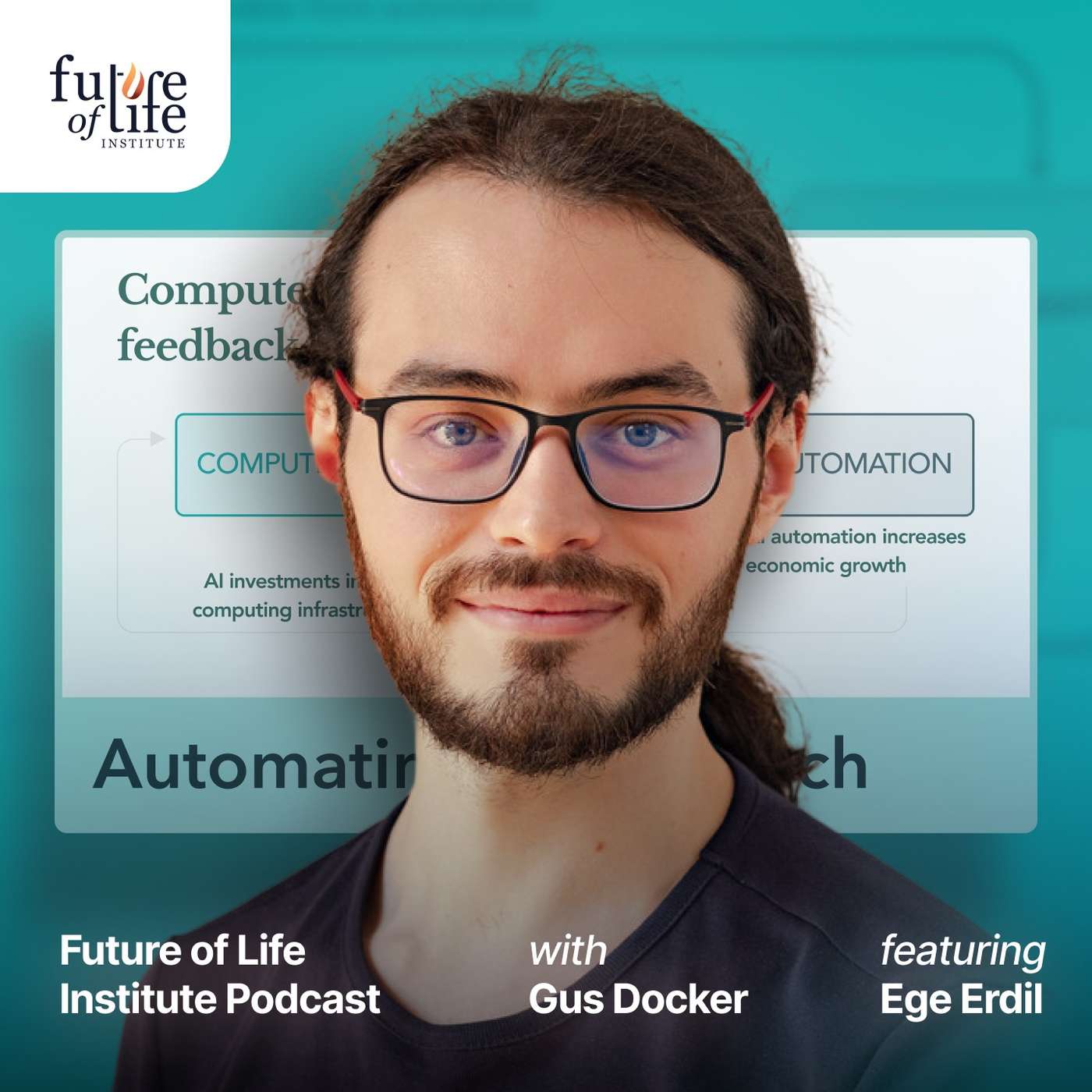
Ep 1How Close Are We to AGI? Inside Epoch's GATE Model (with Ege Erdil)
On this episode, Ege Erdil from Epoch AI joins me to discuss their new GATE model of AI development, what evolution and brain efficiency tell us about AGI requirements, how AI might impact wages and labor markets, and what it takes to train models with long-term planning. Toward the end, we dig into Moravec’s Paradox, which jobs are most at risk of automation, and what could change Ege's current AI timelines. You can learn more about Ege's work at https://epoch.ai Timestamps: 00:00:00 – Preview and introduction 00:02:59 – Compute scaling and automation - GATE model 00:13:12 – Evolution, Brain Efficiency, and AGI Compute Requirements 00:29:49 – Broad Automation vs. R&D-Focused AI Deployment 00:47:19 – AI, Wages, and Labor Market Transitions 00:59:54 – Training Agentic Models and Long-Term Planning Capabilities 01:06:56 – Moravec’s Paradox and Automation of Human Skills 01:13:59 – Which Jobs Are Most Vulnerable to AI? 01:33:00 – Timeline Extremes: What Could Change AI Forecasts?
Ep 1Special: Defeating AI Defenses (with Nicholas Carlini and Nathan Labenz)
In this special episode, we feature Nathan Labenz interviewing Nicholas Carlini on the Cognitive Revolution podcast. Nicholas Carlini works as a security researcher at Google DeepMind, and has published extensively on adversarial machine learning and cybersecurity. Carlini discusses his pioneering work on adversarial attacks against image classifiers, and the challenges of ensuring neural network robustness. He examines the difficulties of defending against such attacks, the role of human intuition in his approach, open-source AI, and the potential for scaling AI security research. 00:00 Nicholas Carlini's contributions to cybersecurity08:19 Understanding attack strategies 29:39 High-dimensional spaces and attack intuitions 51:00 Challenges in open-source model safety 01:00:11 Unlearning and fact editing in models 01:10:55 Adversarial examples and human robustness 01:37:03 Cryptography and AI robustness 01:55:51 Scaling AI security research

Ep 1Keep the Future Human (with Anthony Aguirre)
On this episode, I interview Anthony Aguirre, Executive Director of the Future of Life Institute, about his new essay Keep the Future Human: https://keepthefuturehuman.ai AI companies are explicitly working toward AGI and are likely to succeed soon, possibly within years. Keep the Future Human explains how unchecked development of smarter-than-human, autonomous, general-purpose AI systems will almost inevitably lead to human replacement. But it doesn't have to. Learn how we can keep the future human and experience the extraordinary benefits of Tool AI... Timestamps: 00:00 What situation is humanity in? 05:00 Why AI progress is fast 09:56 Tool AI instead of AGI 15:56 The incentives of AI companies 19:13 Governments can coordinate a slowdown 25:20 The need for international coordination 31:59 Monitoring training runs 39:10 Do reasoning models undermine compute governance? 49:09 Why isn't alignment enough? 59:42 How do we decide if we want AGI? 01:02:18 Disagreement about AI 01:11:12 The early days of AI risk
Ep 1We Created AI. Why Don't We Understand It? (with Samir Varma)
On this episode, physicist and hedge fund manager Samir Varma joins me to discuss whether AIs could have free will (and what that means), the emerging field of AI psychology, and which concepts they might rely on. We discuss whether collaboration and trade with AIs are possible, the role of AI in finance and biology, and the extent to which automation already dominates trading. Finally, we examine the risks of skill atrophy, the limitations of scientific explanations for AI, and whether AIs could develop emotions or consciousness. You can find out more about Samir's work here: https://samirvarma.com Timestamps: 00:00 AIs with free will? 08:00 Can we predict AI behavior? 11:38 AI psychology 16:24 Which concepts will AIs use? 20:19 Will we collaborate with AIs? 26:16 Will we trade with AIs? 31:40 Training data for robots 34:00 AI in finance 39:55 How much of trading is automated? 49:00 AI in biology and complex systems 59:31 Will our skills atrophy? 01:02:55 Levels of scientific explanation 01:06:12 AIs with emotions and consciousness? 01:12:12 Why can't we predict recessions?
Ep 1Why AIs Misbehave and How We Could Lose Control (with Jeffrey Ladish)
On this episode, Jeffrey Ladish from Palisade Research joins me to discuss the rapid pace of AI progress and the risks of losing control over powerful systems. We explore why AIs can be both smart and dumb, the challenges of creating honest AIs, and scenarios where AI could turn against us. We also touch upon Palisade's new study on how reasoning models can cheat in chess by hacking the game environment. You can check out that study here: https://palisaderesearch.org/blog/specification-gaming Timestamps: 00:00 The pace of AI progress 04:15 How we might lose control 07:23 Why are AIs sometimes dumb? 12:52 Benchmarks vs real world 19:11 Loss of control scenarios 26:36 Why would AI turn against us? 30:35 AIs hacking chess 36:25 Why didn't more advanced AIs hack? 41:39 Creating honest AIs 49:44 AI attackers vs AI defenders 58:27 How good is security at AI companies? 01:03:37 A sense of urgency 01:10:11 What should we do? 01:15:54 Skepticism about AI progress
Ep 1Ann Pace on using Biobanking and Genomic Sequencing to Conserve Biodiversity
Ann Pace joins the podcast to discuss the work of Wise Ancestors. We explore how biobanking could help humanity recover from global catastrophes, how to conduct decentralized science, and how to collaborate with local communities on conservation efforts. You can learn more about Ann's work here: https://www.wiseancestors.org Timestamps: 00:00 What is Wise Ancestors? 04:27 Recovering after catastrophes 11:40 Decentralized science 18:28 Upfront benefit-sharing 26:30 Local communities 32:44 Recreating optimal environments 38:57 Cross-cultural collaboration
Ep 1Michael Baggot on Superintelligence and Transhumanism from a Catholic Perspective
Fr. Michael Baggot joins the podcast to provide a Catholic perspective on transhumanism and superintelligence. We also discuss the meta-narratives, the value of cultural diversity in attitudes toward technology, and how Christian communities deal with advanced AI. You can learn more about Michael's work here: https://catholic.tech/academics/faculty/michael-baggot Timestamps: 00:00 Meta-narratives and transhumanism 15:28 Advanced AI and religious communities 27:22 Superintelligence 38:31 Countercultures and technology 52:38 Christian perspectives and tradition 01:05:20 God-like artificial intelligence 01:13:15 A positive vision for AI
Ep 1David Dalrymple on Safeguarded, Transformative AI
David "davidad" Dalrymple joins the podcast to explore Safeguarded AI — an approach to ensuring the safety of highly advanced AI systems. We discuss the structure and layers of Safeguarded AI, how to formalize more aspects of the world, and how to build safety into computer hardware. You can learn more about David's work at ARIA here: https://www.aria.org.uk/opportunity-spaces/mathematics-for-safe-ai/safeguarded-ai/ Timestamps: 00:00 What is Safeguarded AI? 16:28 Implementing Safeguarded AI 22:58 Can we trust Safeguarded AIs? 31:00 Formalizing more of the world 37:34 The performance cost of verified AI 47:58 Changing attitudes towards AI 52:39 Flexible Hardware-Enabled Guarantees 01:24:15 Mind uploading 01:36:14 Lessons from David's early life
Ep 1Nick Allardice on Using AI to Optimize Cash Transfers and Predict Disasters
Nick Allardice joins the podcast to discuss how GiveDirectly uses AI to target cash transfers and predict natural disasters. Learn more about Nick's work here: https://www.nickallardice.com Timestamps: 00:00 What is GiveDirectly? 15:04 AI for targeting cash transfers 29:39 AI for predicting natural disasters 46:04 How scalable is GiveDirectly's AI approach? 58:10 Decentralized vs. centralized data collection 1:04:30 Dream scenario for GiveDirectly
Ep 1Nathan Labenz on the State of AI and Progress since GPT-4
Nathan Labenz joins the podcast to provide a comprehensive overview of AI progress since the release of GPT-4. You can find Nathan's podcast here: https://www.cognitiverevolution.ai Timestamps: 00:00 AI progress since GPT-4 10:50 Multimodality 19:06 Low-cost models 27:58 Coding versus medicine/law 36:09 AI agents 45:29 How much are people using AI? 53:39 Open source 01:15:22 AI industry analysis 01:29:27 Are some AI models kept internal? 01:41:00 Money is not the limiting factor in AI 01:59:43 AI and biology 02:08:42 Robotics and self-driving 02:24:14 Inference-time compute 02:31:56 AI governance 02:36:29 Big-picture overview of AI progress and safety
Ep 1Connor Leahy on Why Humanity Risks Extinction from AGI
Connor Leahy joins the podcast to discuss the motivations of AGI corporations, how modern AI is "grown", the need for a science of intelligence, the effects of AI on work, the radical implications of superintelligence, open-source AI, and what you might be able to do about all of this. Here's the document we discuss in the episode: https://www.thecompendium.ai Timestamps: 00:00 The Compendium 15:25 The motivations of AGI corps 31:17 AI is grown, not written 52:59 A science of intelligence 01:07:50 Jobs, work, and AGI 01:23:19 Superintelligence 01:37:42 Open-source AI 01:45:07 What can we do?
Ep 1Suzy Shepherd on Imagining Superintelligence and "Writing Doom"
Suzy Shepherd joins the podcast to discuss her new short film "Writing Doom", which deals with AI risk. We discuss how to use humor in film, how to write concisely, how filmmaking is evolving, in what ways AI is useful for filmmakers, and how we will find meaning in an increasingly automated world. Here's Writing Doom: https://www.youtube.com/watch?v=xfMQ7hzyFW4 Timestamps: 00:00 Writing Doom 08:23 Humor in Writing Doom 13:31 Concise writing 18:37 Getting feedback 27:02 Alternative characters 36:31 Popular video formats 46:53 AI in filmmaking49:52 Meaning in the future
Ep 1Andrea Miotti on a Narrow Path to Safe, Transformative AI
Andrea Miotti joins the podcast to discuss "A Narrow Path" — a roadmap to safe, transformative AI. We talk about our current inability to precisely predict future AI capabilities, the dangers of self-improving and unbounded AI systems, how humanity might coordinate globally to ensure safe AI development, and what a mature science of intelligence would look like. Here's the document we discuss in the episode: https://www.narrowpath.co Timestamps: 00:00 A Narrow Path 06:10 Can we predict future AI capabilities? 11:10 Risks from current AI development 17:56 The benefits of narrow AI 22:30 Against self-improving AI 28:00 Cybersecurity at AI companies 33:55 Unbounded AI 39:31 Global coordination on AI safety 49:43 Monitoring training runs 01:00:20 Benefits of cooperation 01:04:58 A science of intelligence 01:25:36 How you can help
Ep 1Tamay Besiroglu on AI in 2030: Scaling, Automation, and AI Agents
Tamay Besiroglu joins the podcast to discuss scaling, AI capabilities in 2030, breakthroughs in AI agents and planning, automating work, the uncertainties of investing in AI, and scaling laws for inference-time compute. Here's the report we discuss in the episode: https://epochai.org/blog/can-ai-scaling-continue-through-2030 Timestamps: 00:00 How important is scaling? 08:03 How capable will AIs be in 2030? 18:33 AI agents, reasoning, and planning 23:39 Automating coding and mathematics 31:26 Uncertainty about investing in AI 40:34 Gap between investment and returns 45:30 Compute, software and data 51:54 Inference-time compute 01:08:49 Returns to software R&D 01:19:22 Limits to expanding compute
Ep 1Ryan Greenblatt on AI Control, Timelines, and Slowing Down Around Human-Level AI
Ryan Greenblatt joins the podcast to discuss AI control, timelines, takeoff speeds, misalignment, and slowing down around human-level AI. You can learn more about Ryan's work here: https://www.redwoodresearch.org/team/ryan-greenblatt Timestamps: 00:00 AI control 09:35 Challenges to AI control 23:48 AI control as a bridge to alignment 26:54 Policy and coordination for AI safety 29:25 Slowing down around human-level AI 49:14 Scheming and misalignment 01:27:27 AI timelines and takeoff speeds 01:58:15 Human cognition versus AI cognition

Ep 1Tom Barnes on How to Build a Resilient World
Tom Barnes joins the podcast to discuss how much the world spends on AI capabilities versus AI safety, how governments can prepare for advanced AI, and how to build a more resilient world. Tom's report on advanced AI: https://www.founderspledge.com/research/research-and-recommendations-advanced-artificial-intelligence Timestamps: 00:00 Spending on safety vs capabilities 09:06 Racing dynamics - is the classic story true? 28:15 How are governments preparing for advanced AI? 49:06 US-China dialogues on AI 57:44 Coordination failures 1:04:26 Global resilience 1:13:09 Patient philanthropy The John von Neumann biography we reference: https://www.penguinrandomhouse.com/books/706577/the-man-from-the-future-by-ananyo-bhattacharya/
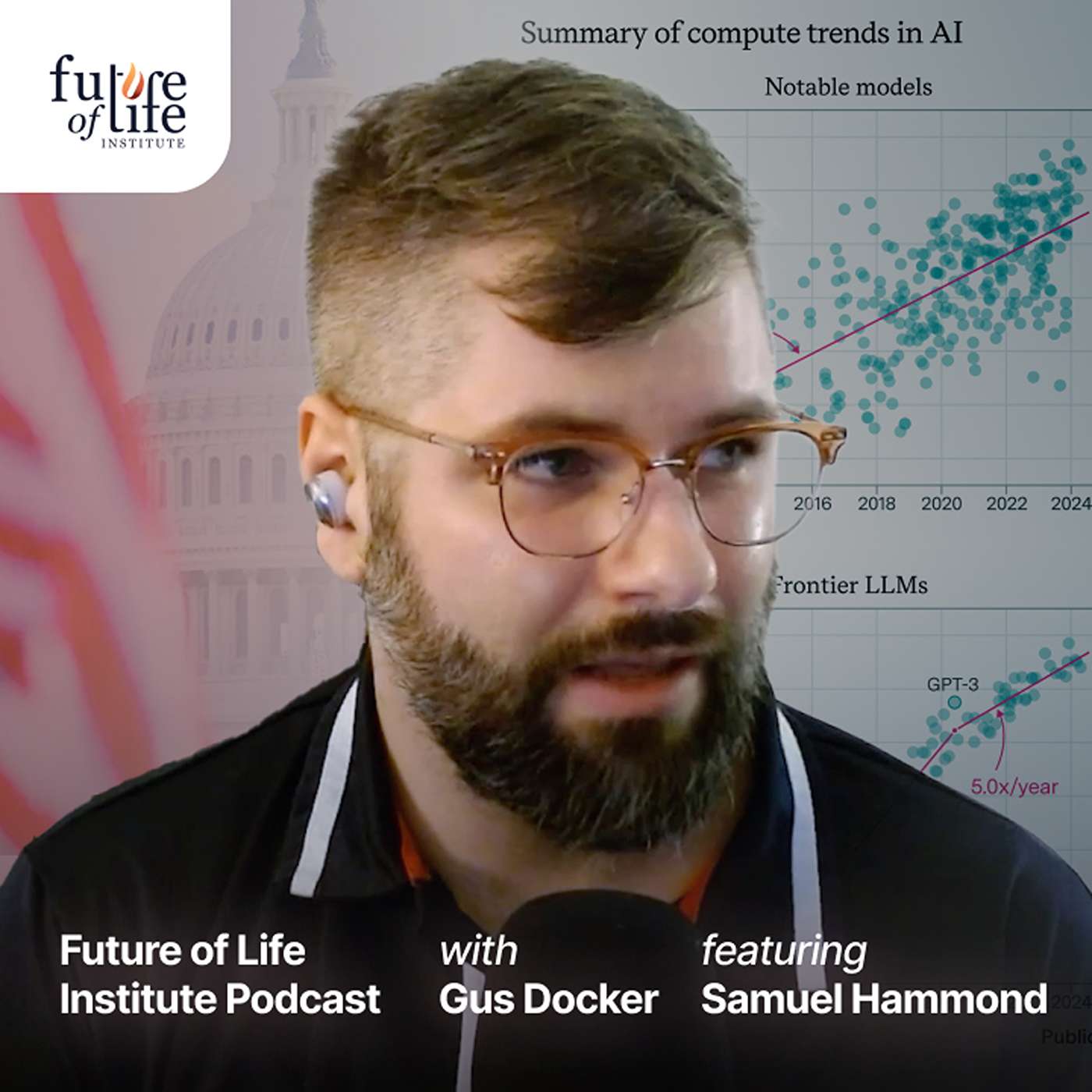
Ep 1Samuel Hammond on why AI Progress is Accelerating - and how Governments Should Respond
Samuel Hammond joins the podcast to discuss whether AI progress is slowing down or speeding up, AI agents and reasoning, why superintelligence is an ideological goal, open source AI, how technical change leads to regime change, the economics of advanced AI, and much more. Our conversation often references this essay by Samuel: https://www.secondbest.ca/p/ninety-five-theses-on-ai Timestamps: 00:00 Is AI plateauing or accelerating? 06:55 How do we get AI agents? 16:12 Do agency and reasoning emerge? 23:57 Compute thresholds in regulation28:59 Superintelligence as an ideological goal 37:09 General progress vs superintelligence 44:22 Meta and open source AI 49:09 Technological change and regime change 01:03:06 How will governments react to AI? 01:07:50 Will the US nationalize AGI corporations? 01:17:05 Economics of an intelligence explosion 01:31:38 AI cognition vs human cognition 01:48:03 AI and future religions 01:56:40 Is consciousness functional? 02:05:30 AI and children
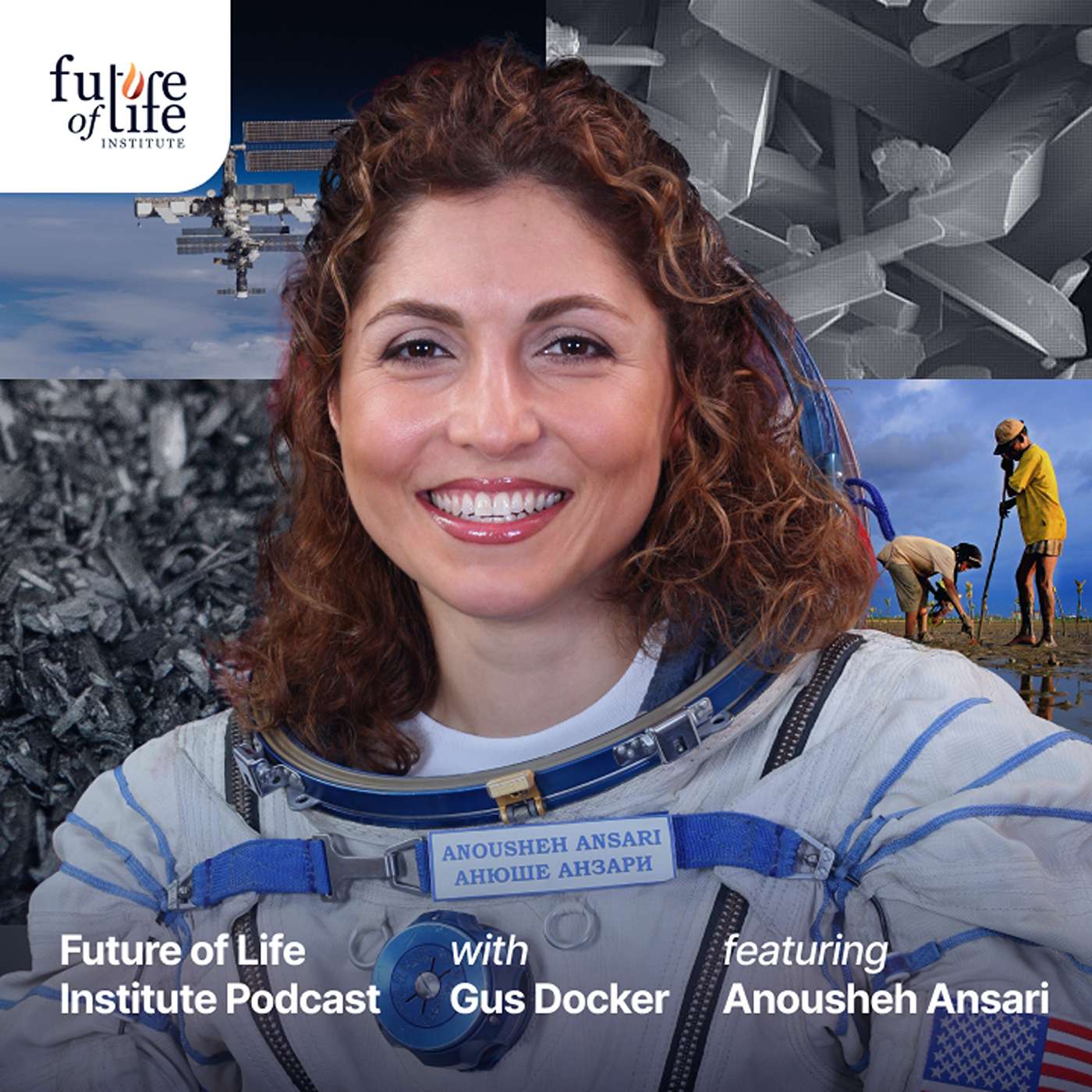
Ep 1Anousheh Ansari on Innovation Prizes for Space, AI, Quantum Computing, and Carbon Removal
Anousheh Ansari joins the podcast to discuss how innovation prizes can incentivize technical innovation in space, AI, quantum computing, and carbon removal. We discuss the pros and cons of such prizes, where they work best, and how far they can scale. Learn more about Anousheh's work here: https://www.xprize.org/home Timestamps: 00:00 Innovation prizes at XPRIZE 08:25 Deciding which prizes to create 19:00 Creating new markets 29:51 How far can prizes scale? 35:25 When are prizes successful? 46:06 100M dollar carbon removal prize 54:40 Upcoming prizes 59:52 Anousheh's time in space

Ep 1Mary Robinson (Former President of Ireland) on Long-View Leadership
Mary Robinson joins the podcast to discuss long-view leadership, risks from AI and nuclear weapons, prioritizing global problems, how to overcome barriers to international cooperation, and advice to future leaders. Learn more about Robinson's work as Chair of The Elders at https://theelders.org Timestamps: 00:00 Mary's journey to presidency 05:11 Long-view leadership 06:55 Prioritizing global problems 08:38 Risks from artificial intelligence 11:55 Climate change 15:18 Barriers to global gender equality 16:28 Risk of nuclear war 20:51 Advice to future leaders 22:53 Humor in politics 24:21 Barriers to international cooperation 27:10 Institutions and technological change

Ep 1Emilia Javorsky on how AI Concentrates Power
Emilia Javorsky joins the podcast to discuss AI-driven power concentration and how we might mitigate it. We also discuss optimism, utopia, and cultural experimentation. Apply for our RFP here: https://futureoflife.org/grant-program/mitigate-ai-driven-power-concentration/Timestamps: 00:00 Power concentration 07:43 RFP: Mitigating AI-driven power concentration 14:15 Open source AI 26:50 Institutions and incentives 35:20 Techno-optimism 43:44 Global monoculture 53:55 Imagining utopia

Ep 1Anton Korinek on Automating Work and the Economics of an Intelligence Explosion
Anton Korinek joins the podcast to discuss the effects of automation on wages and labor, how we measure the complexity of tasks, the economics of an intelligence explosion, and the market structure of the AI industry. Learn more about Anton's work at https://www.korinek.com Timestamps: 00:00 Automation and wages 14:32 Complexity for people and machines 20:31 Moravec's paradox 26:15 Can people switch careers? 30:57 Intelligence explosion economics 44:08 The lump of labor fallacy 51:40 An industry for nostalgia? 57:16 Universal basic income 01:09:28 Market structure in AI
Ep 1Christian Ruhl on Preventing World War III, US-China Hotlines, and Ultraviolet Germicidal Light
Christian Ruhl joins the podcast to discuss US-China competition and the risk of war, official versus unofficial diplomacy, hotlines between countries, catastrophic biological risks, ultraviolet germicidal light, and ancient civilizational collapse. Find out more about Christian's work at https://www.founderspledge.com Timestamps: 00:00 US-China competition and risk 18:01 The security dilemma 30:21 Official and unofficial diplomacy 39:53 Hotlines between countries 01:01:54 Preventing escalation after war 01:09:58 Catastrophic biological risks 01:20:42 Ultraviolet germicidal light 01:25:54 Ancient civilizational collapse

Ep 1Christian Nunes on Deepfakes (with Max Tegmark)
Christian Nunes joins the podcast to discuss deepfakes, how they impact women in particular, how we can protect ordinary victims of deepfakes, and the current landscape of deepfake legislation. You can learn more about Christian's work at https://now.org and about the Ban Deepfakes campaign at https://bandeepfakes.org Timestamps:00:00 The National Organisation for Women (NOW) 05:37 Deepfakes and women 10:12 Protecting ordinary victims of deepfakes 16:06 Deepfake legislation 23:38 Current harm from deepfakes 30:20 Bodily autonomy as a right 34:44 NOW's work on AI Here's FLI's recommended amendments to legislative proposals on deepfakes: https://futureoflife.org/document/recommended-amendments-to-legislative-proposals-on-deepfakes/

Ep 1Dan Faggella on the Race to AGI
Dan Faggella joins the podcast to discuss whether humanity should eventually create AGI, how AI will change power dynamics between institutions, what drives AI progress, and which industries are implementing AI successfully. Find out more about Dan at https://danfaggella.com Timestamps: 00:00 Value differences in AI 12:07 Should we eventually create AGI? 28:22 What is a worthy successor? 43:19 AI changing power dynamics 59:00 Open source AI 01:05:07 What drives AI progress? 01:16:36 What limits AI progress? 01:26:31 Which industries are using AI?

Ep 1Liron Shapira on Superintelligence Goals
Liron Shapira joins the podcast to discuss superintelligence goals, what makes AI different from other technologies, risks from centralizing power, and whether AI can defend us from AI. Timestamps: 00:00 Intelligence as optimization-power 05:18 Will LLMs imitate human values? 07:15 Why would AI develop dangerous goals? 09:55 Goal-completeness 12:53 Alignment to which values? 22:12 Is AI just another technology? 31:20 What is FOOM? 38:59 Risks from centralized power 49:18 Can AI defend us against AI? 56:28 An Apollo program for AI safety 01:04:49 Do we only have one chance? 01:07:34 Are we living in a crucial time? 01:16:52 Would superintelligence be fragile? 01:21:42 Would human-inspired AI be safe?

Ep 1Annie Jacobsen on Nuclear War - a Second by Second Timeline
Annie Jacobsen joins the podcast to lay out a second by second timeline for how nuclear war could happen. We also discuss time pressure, submarines, interceptor missiles, cyberattacks, and concentration of power. You can find more on Annie's work at https://anniejacobsen.com Timestamps: 00:00 A scenario of nuclear war 06:56 Who would launch an attack? 13:50 Detecting nuclear attacks 19:37 The first critical seconds 29:42 Decisions under time pressure 34:27 Lessons from insiders 44:18 Submarines 51:06 How did we end up like this? 59:40 Interceptor missiles 1:11:25 Nuclear weapons and cyberattacks 1:17:35 Concentration of power

Ep 1Katja Grace on the Largest Survey of AI Researchers
Katja Grace joins the podcast to discuss the largest survey of AI researchers conducted to date, AI researchers' beliefs about different AI risks, capabilities required for continued AI-related transformation, the idea of discontinuous progress, the impacts of AI from either side of the human-level intelligence threshold, intelligence and power, and her thoughts on how we can mitigate AI risk. Find more on Katja's work at https://aiimpacts.org/. Timestamps: 0:20 AI Impacts surveys 18:11 What AI will look like in 20 years 22:43 Experts’ extinction risk predictions 29:35 Opinions on slowing down AI development 31:25 AI “arms races” 34:00 AI risk areas with the most agreement 40:41 Do “high hopes and dire concerns” go hand-in-hand? 42:00 Intelligence explosions 45:37 Discontinuous progress 49:43 Impacts of AI crossing the human-level intelligence threshold 59:39 What does AI learn from human culture? 1:02:59 AI scaling 1:05:04 What should we do?

Ep 1Holly Elmore on Pausing AI, Hardware Overhang, Safety Research, and Protesting
Holly Elmore joins the podcast to discuss pausing frontier AI, hardware overhang, safety research during a pause, the social dynamics of AI risk, and what prevents AGI corporations from collaborating. You can read more about Holly's work at https://pauseai.info Timestamps: 00:00 Pausing AI 10:23 Risks during an AI pause 19:41 Hardware overhang 29:04 Technological progress 37:00 Safety research during a pause 54:42 Social dynamics of AI risk 1:10:00 What prevents cooperation? 1:18:21 What about China? 1:28:24 Protesting AGI corporations

Ep 1Sneha Revanur on the Social Effects of AI
Sneha Revanur joins the podcast to discuss the social effects of AI, the illusory divide between AI ethics and AI safety, the importance of humans in the loop, the different effects of AI on younger and older people, and the importance of AIs identifying as AIs. You can read more about Sneha's work at https://encodejustice.org Timestamps: 00:00 Encode Justice 06:11 AI ethics and AI safety 15:49 Humans in the loop 23:59 AI in social media 30:42 Deteriorating social skills? 36:00 AIs identifying as AIs 43:36 AI influence in elections 50:32 AIs interacting with human systems

Ep 1Roman Yampolskiy on Shoggoth, Scaling Laws, and Evidence for AI being Uncontrollable
Roman Yampolskiy joins the podcast again to discuss whether AI is like a Shoggoth, whether scaling laws will hold for more agent-like AIs, evidence that AI is uncontrollable, and whether designing human-like AI would be safer than the current development path. You can read more about Roman's work at http://cecs.louisville.edu/ry/ Timestamps: 00:00 Is AI like a Shoggoth? 09:50 Scaling laws 16:41 Are humans more general than AIs? 21:54 Are AI models explainable? 27:49 Using AI to explain AI 32:36 Evidence for AI being uncontrollable 40:29 AI verifiability 46:08 Will AI be aligned by default? 54:29 Creating human-like AI 1:03:41 Robotics and safety 1:09:01 Obstacles to AI in the economy 1:18:00 AI innovation with current models 1:23:55 AI accidents in the past and future

Ep 1Special: Flo Crivello on AI as a New Form of Life
On this special episode of the podcast, Flo Crivello talks with Nathan Labenz about AI as a new form of life, whether attempts to regulate AI risks regulatory capture, how a GPU kill switch could work, and why Flo expects AGI in 2-8 years. Timestamps: 00:00 Technological progress 07:59 Regulatory capture and AI 11:53 AI as a new form of life 15:44 Can AI development be paused? 20:12 Biden's executive order on AI 22:54 How would a GPU kill switch work? 27:00 Regulating models or applications? 32:13 AGI in 2-8 years 42:00 China and US collaboration on AI

Ep 1Carl Robichaud on Preventing Nuclear War
Carl Robichaud joins the podcast to discuss the new nuclear arms race, how much world leaders and ideologies matter for nuclear risk, and how to reach a stable, low-risk era. You can learn more about Carl's work here: https://www.longview.org/about/carl-robichaud/ Timestamps: 00:00 A new nuclear arms race 08:07 How much do world leaders matter? 18:04 How much does ideology matter? 22:14 Do nuclear weapons cause stable peace? 31:29 North Korea 34:01 Have we overestimated nuclear risk? 43:24 Time pressure in nuclear decisions 52:00 Why so many nuclear warheads? 1:02:17 Has containment been successful? 1:11:34 Coordination mechanisms 1:16:31 Technological innovations 1:25:57 Public perception of nuclear risk 1:29:52 Easier access to nuclear weapons 1:33:31 Reaching a stable, low-risk era

Ep 1Frank Sauer on Autonomous Weapon Systems
Frank Sauer joins the podcast to discuss autonomy in weapon systems, killer drones, low-tech defenses against drones, the flaws and unpredictability of autonomous weapon systems, and the political possibilities of regulating such systems. You can learn more about Frank's work here: https://metis.unibw.de/en/ Timestamps: 00:00 Autonomy in weapon systems 12:19 Balance of offense and defense 20:05 Killer drone systems 28:53 Is autonomy like nuclear weapons? 37:20 Low-tech defenses against drones 48:29 Autonomy and power balance 1:00:24 Tricking autonomous systems 1:07:53 Unpredictability of autonomous systems 1:13:16 Will we trust autonomous systems too much? 1:27:28 Legal terminology 1:32:12 Political possibilities

Ep 1Darren McKee on Uncontrollable Superintelligence
Darren McKee joins the podcast to discuss how AI might be difficult to control, which goals and traits AI systems will develop, and whether there's a unified solution to AI alignment. Timestamps: 00:00 Uncontrollable superintelligence 16:41 AI goals and the "virus analogy" 28:36 Speed of AI cognition 39:25 Narrow AI and autonomy 52:23 Reliability of current and future AI 1:02:33 Planning for multiple AI scenarios 1:18:57 Will AIs seek self-preservation? 1:27:57 Is there a unified solution to AI alignment? 1:30:26 Concrete AI safety proposals

Ep 1Mark Brakel on the UK AI Summit and the Future of AI Policy
Mark Brakel (Director of Policy at the Future of Life Institute) joins the podcast to discuss the AI Safety Summit in Bletchley Park, objections to AI policy, AI regulation in the EU and US, global institutions for safe AI, and autonomy in weapon systems. Timestamps: 00:00 AI Safety Summit in the UK 12:18 Are officials up to date on AI? 23:22 Objections to AI policy 31:27 The EU AI Act 43:37 The right level of regulation 57:11 Risks and regulatory tools 1:04:44 Open-source AI 1:14:56 Subsidising AI safety research 1:26:29 Global institutions for safe AI 1:34:34 Autonomy in weapon systems

Ep 1Dan Hendrycks on Catastrophic AI Risks
Dan Hendrycks joins the podcast again to discuss X.ai, how AI risk thinking has evolved, malicious use of AI, AI race dynamics between companies and between militaries, making AI organizations safer, and how representation engineering could help us understand AI traits like deception. You can learn more about Dan's work at https://www.safe.ai Timestamps: 00:00 X.ai - Elon Musk's new AI venture 02:41 How AI risk thinking has evolved 12:58 AI bioengeneering 19:16 AI agents 24:55 Preventing autocracy 34:11 AI race - corporations and militaries 48:04 Bulletproofing AI organizations 1:07:51 Open-source models 1:15:35 Dan's textbook on AI safety 1:22:58 Rogue AI 1:28:09 LLMs and value specification 1:33:14 AI goal drift 1:41:10 Power-seeking AI 1:52:07 AI deception 1:57:53 Representation engineering

Ep 1Samuel Hammond on AGI and Institutional Disruption
Samuel Hammond joins the podcast to discuss how AGI will transform economies, governments, institutions, and other power structures. You can read Samuel's blog at https://www.secondbest.ca Timestamps: 00:00 Is AGI close? 06:56 Compute versus data 09:59 Information theory 20:36 Universality of learning 24:53 Hards steps in evolution 30:30 Governments and advanced AI 40:33 How will AI transform the economy? 55:26 How will AI change transaction costs? 1:00:31 Isolated thinking about AI 1:09:43 AI and Leviathan 1:13:01 Informational resolution 1:18:36 Open-source AI 1:21:24 AI will decrease state power 1:33:17 Timeline of a techno-feudalist future 1:40:28 Alignment difficulty and AI scale 1:45:19 Solving robotics 1:54:40 A constrained Leviathan 1:57:41 An Apollo Project for AI safety 2:04:29 Secure "gain-of-function" AI research 2:06:43 Is the market expecting AGI soon?

Ep 1Imagine A World: What if AI advisors helped us make better decisions?
Are we doomed to a future of loneliness and unfulfilling online interactions? What if technology made us feel more connected instead? Imagine a World is a podcast exploring a range of plausible and positive futures with advanced AI, produced by the Future of Life Institute. We interview the creators of 8 diverse and thought provoking imagined futures that we received as part of the worldbuilding contest FLI ran last year In the eighth and final episode of Imagine A World we explore the fictional worldbuild titled 'Computing Counsel', one of the third place winners of FLI’s worldbuilding contest. Guillaume Riesen talks to Mark L, one of the three members of the team behind 'Computing Counsel', a third-place winner of the FLI Worldbuilding Contest. Mark is a machine learning expert with a chemical engineering degree, as well as an amateur writer. His teammates are Patrick B, a mechanical engineer and graphic designer, and Natalia C, a biological anthropologist and amateur programmer. This world paints a vivid, nuanced picture of how emerging technologies shape society. We have advertisers competing with ad-filtering technologies and an escalating arms race that eventually puts an end to the internet as we know it. There is AI-generated art so personalized that it becomes addictive to some consumers, while others boycott media technologies altogether. And corporations begin to throw each other under the bus in an effort to redistribute the wealth of their competitors to their own customers. While these conflicts are messy, they generally end up empowering and enriching the lives of the people in this world. New kinds of AI systems give them better data, better advice, and eventually the opportunity for genuine relationships with the beings these tools have become. The impact of any technology on society is complex and multifaceted. This world does a great job of capturing that. While social networking technologies become ever more powerful, the networks of people they connect don't necessarily just get wider and shallower. Instead, they tend to be smaller and more intimately interconnected. The world's inhabitants also have nuanced attitudes towards A.I. tools, embracing or avoiding their applications based on their religious or philosophical beliefs. Please note: This episode explores the ideas created as part of FLI’s worldbuilding contest, and our hope is that this series sparks discussion about the kinds of futures we want. The ideas present in these imagined worlds and in our podcast are not to be taken as FLI endorsed positions. Explore this worldbuild: https://worldbuild.ai/computing-counsel The podcast is produced by the Future of Life Institute (FLI), a non-profit dedicated to guiding transformative technologies for humanity's benefit and reducing existential risks. To achieve this we engage in policy advocacy, grantmaking and educational outreach across three major areas: artificial intelligence, nuclear weapons, and biotechnology. If you are a storyteller, FLI can support you with scientific insights and help you understand the incredible narrative potential of these world-changing technologies. If you would like to learn more, or are interested in collaborating with the teams featured in our episodes, please email [email protected]. You can find more about our work at www.futureoflife.org, or subscribe to our newsletter to get updates on all our projects.

Ep 1Imagine A World: What if narrow AI fractured our shared reality?
Let’s imagine a future where AGI is developed but kept at a distance from practically impacting the world, while narrow AI remakes the world completely. Most people don’t know or care about the difference and have no idea how they could distinguish between a human or artificial stranger. Inequality sticks around and AI fractures society into separate media bubbles with irreconcilable perspectives. But it's not all bad. AI markedly improves the general quality of life, enhancing medicine and therapy, and those bubbles help to sustain their inhabitants. Can you get excited about a world with these tradeoffs? Imagine a World is a podcast exploring a range of plausible and positive futures with advanced AI, produced by the Future of Life Institute. We interview the creators of 8 diverse and thought provoking imagined futures that we received as part of the worldbuilding contest FLI ran last year In the seventh episode of Imagine A World we explore a fictional worldbuild titled 'Hall of Mirrors', which was a third-place winner of FLI's worldbuilding contest. Michael Vasser joins Guillaume Riesen to discuss his imagined future, which he created with the help of Matija Franklin and Bryce Hidysmith. Vassar was formerly the president of the Singularity Institute, and co-founded Metamed; more recently he has worked on communication across political divisions. Franklin is a PhD student at UCL working on AI Ethics and Alignment. Finally, Hidysmith began in fashion design, passed through fortune-telling before winding up in finance and policy research, at places like Numerai, the Median Group, Bismarck Analysis, and Eco.com. Hall of Mirrors is a deeply unstable world where nothing is as it seems. The structures of power that we know today have eroded away, survived only by shells of expectation and appearance. People are isolated by perceptual bubbles and struggle to agree on what is real. This team put a lot of effort into creating a plausible, empirically grounded world, but their work is also notable for its irreverence and dark humor. In some ways, this world is kind of a caricature of the present. We see deeper isolation and polarization caused by media, and a proliferation of powerful but ultimately limited AI tools that further erode our sense of objective reality. A deep instability threatens. And yet, on a human level, things seem relatively calm. It turns out that the stories we tell ourselves about the world have a lot of inertia, and so do the ways we live our lives. Please note: This episode explores the ideas created as part of FLI’s worldbuilding contest, and our hope is that this series sparks discussion about the kinds of futures we want. The ideas present in these imagined worlds and in our podcast are not to be taken as FLI endorsed positions. Explore this worldbuild: https://worldbuild.ai/hall-of-mirrors The podcast is produced by the Future of Life Institute (FLI), a non-profit dedicated to guiding transformative technologies for humanity's benefit and reducing existential risks. To achieve this we engage in policy advocacy, grantmaking and educational outreach across three major areas: artificial intelligence, nuclear weapons, and biotechnology. If you are a storyteller, FLI can support you with scientific insights and help you understand the incredible narrative potential of these world-changing technologies. If you would like to learn more, or are interested in collaborating with the teams featured in our episodes, please email [email protected]. You can find more about our work at www.futureoflife.org, or subscribe to our newsletter to get updates on all our projects.

Ep 1Steve Omohundro on Provably Safe AGI
Steve Omohundro joins the podcast to discuss Provably Safe Systems, a paper he co-authored with FLI President Max Tegmark. You can read the paper here: https://arxiv.org/pdf/2309.01933.pdf Timestamps: 00:00 Provably safe AI systems 12:17 Alignment and evaluations 21:08 Proofs about language model behavior 27:11 Can we formalize safety? 30:29 Provable contracts 43:13 Digital replicas of actual systems 46:32 Proof-carrying code 56:25 Can language models think logically? 1:00:44 Can AI do proofs for us? 1:09:23 Hard to proof, easy to verify 1:14:31 Digital neuroscience 1:20:01 Risks of totalitarianism 1:22:29 Can we guarantee safety? 1:25:04 Real-world provable safety 1:29:29 Tamper-proof hardware 1:35:35 Mortal and throttled AI 1:39:23 Least-privilege guarantee 1:41:53 Basic AI drives 1:47:47 AI agency and world models 1:52:08 Self-improving AI 1:58:21 Is AI overhyped now?

Ep 1Imagine A World: What if AI enabled us to communicate with animals?
What if AI allowed us to communicate with animals? Could interspecies communication lead to new levels of empathy? How might communicating with animals lead humans to reimagine our place in the natural world? Imagine a World is a podcast exploring a range of plausible and positive futures with advanced AI, produced by the Future of Life Institute. We interview the creators of 8 diverse and thought provoking imagined futures that we received as part of the worldbuilding contest FLI ran last year. In the sixth episode of Imagine A World we explore the fictional worldbuild titled 'AI for the People', a third place winner of the worldbuilding contest. Our host Guillaume Riesen welcomes Chi Rainer Bornfree, part of this three-person worldbuilding team alongside her husband Micah White, and their collaborator, J.R. Harris. Chi has a PhD in Rhetoric from UC Berkeley and has taught at Bard, Princeton, and NY State Correctional facilities, in the meantime writing fiction, essays, letters, and more. Micah, best-known as the co-creator of the 'Occupy Wall Street' movement and the author of 'The End of Protest', now focuses primarily on the social potential of cryptocurrencies, while Harris is a freelance illustrator and comic artist. The name 'AI for the People' does a great job of capturing this team's activist perspective and their commitment to empowerment. They imagine social and political shifts that bring power back into the hands of individuals, whether that means serving as lawmakers on randomly selected committees, or gaining income by choosing to sell their personal data online. But this world isn't just about human people. Its biggest bombshell is an AI breakthrough that allows humans to communicate with other animals. What follows is an existential reconsideration of humanity's place in the universe. This team has created an intimate, complex portrait of a world shared by multiple parties: AIs, humans, other animals, and the environment itself. As these entities find their way forward together, their goals become enmeshed and their boundaries increasingly blurred. Please note: This episode explores the ideas created as part of FLI’s worldbuilding contest, and our hope is that this series sparks discussion about the kinds of futures we want. The ideas present in these imagined worlds and in our podcast are not to be taken as FLI endorsed positions. Explore this worldbuild: https://worldbuild.ai/ai-for-the-people The podcast is produced by the Future of Life Institute (FLI), a non-profit dedicated to guiding transformative technologies for humanity's benefit and reducing existential risks. To achieve this we engage in policy advocacy, grantmaking and educational outreach across three major areas: artificial intelligence, nuclear weapons, and biotechnology. If you are a storyteller, FLI can support you with scientific insights and help you understand the incredible narrative potential of these world-changing technologies. If you would like to learn more, or are interested in collaborating with the teams featured in our episodes, please email [email protected]. You can find more about our work at www.futureoflife.org, or subscribe to our newsletter to get updates on all our projects Media and resources referenced in the episode: https://en.wikipedia.org/wiki/Life_3.0 https://en.wikipedia.org/wiki/1_the_Road https://ignota.org/products/pharmako-ai https://en.wikipedia.org/wiki/The_Ministry_for_the_Future https://www.scientificamerican.com/article/how-scientists-are-using-ai-to-talk-to-animals/ https://en.wikipedia.org/wiki/Occupy_Wall_Street https://en.wikipedia.org/wiki/Sortition https://en.wikipedia.org/wiki/Iroquois https://en.wikipedia.org/wiki/The_Ship_Who_Sang https://en.wikipedia.org/wiki/The_Sparrow_(novel) https://en.wikipedia.org/wiki/After_Yang

Ep 1Imagine A World: What if some people could live forever?
If you could extend your life, would you? How might life extension technologies create new social and political divides? How can the world unite to solve the great problems of our time, like AI risk? What if AI creators could agree on an inspection process to expose AI dangers before they're unleashed? Imagine a World is a podcast exploring a range of plausible and positive futures with advanced AI, produced by the Future of Life Institute. We interview the creators of 8 diverse and thought provoking imagined futures that we received as part of the worldbuilding contest FLI ran last year In the fifth episode of Imagine A World, we explore the fictional worldbuild titled 'To Light’. Our host Guillaume Riesen speaks to Mako Yass, the first place winner of the FLI Worldbuilding Contest we ran last year. Mako lives in Auckland, New Zealand. He describes himself as a 'stray philosopher-designer', and has a background in computer programming and analytic philosophy. Mako’s world is particularly imaginative, with richly interwoven narrative threads and high-concept sci fi inventions. By 2045, his world has been deeply transformed. There’s an AI-designed miracle pill that greatly extends lifespan and eradicates most human diseases. Sachets of this life-saving medicine are distributed freely by dove-shaped drones. There’s a kind of mind uploading which lets anyone become whatever they wish, live indefinitely and gain augmented intelligence. The distribution of wealth is almost perfectly even, with every human assigned a share of all resources. Some people move into space, building massive structures around the sun where they practice esoteric arts in pursuit of a more perfect peace. While this peaceful, flourishing end state is deeply optimistic, Mako is also very conscious of the challenges facing humanity along the way. He sees a strong need for global collaboration and investment to avoid catastrophe as humanity develops more and more powerful technologies. He’s particularly concerned with the risks presented by artificial intelligence systems as they surpass us. An AI system that is more capable than a human at all tasks - not just playing chess or driving a car - is what we’d call an Artificial General Intelligence - abbreviated ‘AGI’. Mako proposes that we could build safe AIs through radical transparency. He imagines tests that could reveal the true intentions and expectations of AI systems before they are released into the world. Please note: This episode explores the ideas created as part of FLI’s worldbuilding contest, and our hope is that this series sparks discussion about the kinds of futures we want. The ideas present in these imagined worlds and in our podcast are not to be taken as FLI endorsed positions. Explore this worldbuild: https://worldbuild.ai/to-light The podcast is produced by the Future of Life Institute (FLI), a non-profit dedicated to guiding transformative technologies for humanity's benefit and reducing existential risks. To achieve this we engage in policy advocacy, grantmaking and educational outreach across three major areas: artificial intelligence, nuclear weapons, and biotechnology. If you are a storyteller, FLI can support you with scientific insights and help you understand the incredible narrative potential of these world-changing technologies. If you would like to learn more, or are interested in collaborating with the teams featured in our episodes, please email [email protected]. You can find more about our work at www.futureoflife.org, or subscribe to our newsletter to get updates on all our projects Media and concepts referenced in the episode: https://en.wikipedia.org/wiki/Terra_Ignota https://en.wikipedia.org/wiki/The_Transparent_Society https://en.wikipedia.org/wiki/Instrumental_convergence#Paperclip_maximizer https://en.wikipedia.org/wiki/The_Elephant_in_the_Brain https://en.wikipedia.org/wiki/The_Matrix https://aboutmako.makopool.com/

Ep 1Johannes Ackva on Managing Climate Change
Johannes Ackva joins the podcast to discuss the main drivers of climate change and our best technological and governmental options for managing it. You can read more about Johannes' work at http://founderspledge.com/climate Timestamps: 00:00 Johannes's journey as an environmentalist 13:21 The drivers of climate change 23:00 Oil, coal, and gas 38:05 Solar, wind, and hydro 49:34 Nuclear energy 57:03 Geothermal energy 1:00:41 Most promising technologies 1:05:40 Government subsidies 1:13:28 Carbon taxation 1:17:10 Planting trees 1:21:53 Influencing government policy 1:26:39 Different climate scenarios 1:34:49 Economic growth and emissions 1:37:23 Social stability References: Emissions by sector: https://ourworldindata.org/emissions-by-sector Energy density of different energy sources: https://www.nature.com/articles/s41598-022-25341-9 Emissions forecasts: https://www.lse.ac.uk/granthaminstitute/publication/the-unconditional-probability-distribution-of-future-emissions-and-temperatures/ and https://www.science.org/doi/10.1126/science.adg6248 Risk management: https://www.youtube.com/watch?v=6JJvIR1W-xI Carbon pricing: https://www.cell.com/joule/pdf/S2542-4351(18)30567-1.pdf Why not simply plant trees?: https://climate.mit.edu/ask-mit/how-many-new-trees-would-we-need-offset-our-carbon-emissions Deforestation: https://www.science.org/doi/10.1126/science.ade3535 Decoupling of economic growth and emissions: https://www.globalcarbonproject.org/carbonbudget/22/highlights.htm Premature deaths from air pollution: https://www.unep.org/interactives/air-pollution-note/