
For the Life of the World / Yale Center for Faith & Culture
256 episodes — Page 5 of 6

Ep 56Willie Jennings's After Whiteness: Belonging, Intimacy, and Resisting White Masculinity / Matt Croasmun
Matt Croasmun honors theologian Willie Jennings and his work in After Whiteness: An Education in Belonging. Willie Jennings is Associate Professor of Systematic Theology and Africana Studies at Yale Divinity School.Show NotesWillie Jennings, After Whiteness: An Education in BelongingArvo Pärt’s Te Deum“Be ware the hidden curriculum."White, self-sufficient masculinity: "a way of being that conflates knowing with owning, holding up possession, mastery, and control (vices all) as virtues” and “an ideal we cannot achieve"Racial paterfamilias: conflating person and propertyBeyond educationMutual belonging and deep connectionQuote from After Whiteness: The cultivation of belonging should be the goal of all education. Not just any kind of belonging, but a profoundly creaturely belonging that performs the returning of the creature to the creator and a returning to an intimate and erotic energy that drives life together with God. These words, intimacy and eroticism, have been so commodified and sexualized that we, Christians have turned away from them and fear that they irredeemably signify sexual antinomianism, moral chaos, and sin, or at least the need to police, such words and the power of they invoke. But intimacy and eroticism speak of our birthright formed in the body of Jesus and the protocols of braking sharing, touching, tasting, and seeing the goodness of God. There at his body, the spirit joins us in an urgent work, forming a willing spirit in us that is eager to hold and to help, to support and to speak, to touch and to listen, gaining through this work, the deepest truths of creaturely belonging: that we are erotic souls. No body that is not a soul, no soul that is not a body, no being without touching, no touching without being. This is not an exclusive Christian truth, but a truth of the creature that Christian life is intended to witness."About Willie JenningsWillie Jennings is Associate Professor of Systematic Theology, Africana Studies, and Religious Studies at Yale University; he is an ordained Baptist minister and is author of The Christian Imagination: Theology and the Origins of Race,Acts: A Commentary, The Revolution of the Intimate, and most recently, After Whiteness: An Education in Belonging. You can hear him in podcast episodes 7 and 13 of For the Life of the World.

Ep 55The Dignity of Work: Poverty, Property, and Fraternity in Pope Francis's Fratelli Tutti (Brothers & Sisters All) / Martin Schlag
"There is no poverty worse than that which takes away work and the dignity of work. In a genuinely developed society, work is an essential dimension of social life, for it is not only a means of earning one’s daily bread, but also of personal growth, the building of healthy relationships, self-expression and the exchange of gifts. Work gives us a sense of shared responsibility for the development of the world, and ultimately, for our life as a people." (Pope Francis, Fratelli Tutti 162)In the resurgence of worldwide populism, Pope Francis has said that employment is the biggest issue. And because of the global pandemic, work has become a fraught and challenging part of life. In this episode, Father Martin Schlag explores the concept of work in Fratelli Tutti, explaining the Catholic social ethic of the dignity of work and inclusion of all people into the human economy; the Pope’s perspective on private property and the suggestion that “the world exists for us all”; and the relevance of Catholic social thought and Fratelli Tutti for businesspeople, with a vision of work grounded in friendship, responsibility, dignity, justice, and love. Interview by Ryan McAnnally-Linz.Support For the Life of the World by making a gift to the Yale Center for Faith & Culture: faith.yale.edu/give Show NotesRead Fratelli Tutti in its entirety online hereFratelli Tutti is basically a summary of all of Pope Francis’s teaching.Pope Francis on politics and love: “The biggest issue is employment.""Bread and work”Psychological and sociological catastrophe of long term widespread unemploymentPope Francis defines poverty as the exclusion of the dignity of earning one’s own breadLeft and Right are categories that don’t work for the Catholic social tradition.Dignity and Catholic Social Ethics and Anthropology—labor and the common goodHuman dignity is grounded in the Image of God, as a representative of the absolute and unconditional; never as a means, always as an endHuman dignity formulated as friendship or fraternityThe right to work and rights in work: access, just wage, safety, rest, social security (health care, insurance, retirement benefits)Christian perspectives on private property: St. John Chrysostom, St. Basil, St. Gregory—“your affluence belongs to the poor"Not communism but generosity and sharingPrivate Property: One of the most striking passages for the outside readerTwo Christian perspectives on private property: (1) Augustinian strand—private property as consequence of original sin and is regulated only by human law; “in paradise there was no private property” / (2) Aristotelian/Thomist tradition—private property is derived from natural law and the common good (this is the dominant Catholic tradition)Absolute vs Derived Rights. Property is a secondary, or derived, right.Property has a social mortgage, creates responsibility Horizontal vs Vertical dimensions of private propertyVertical dimension of private property: “The world exists for us all”; the universal destination of all goods;Horizontal dimension of private property: 7th commandment presupposes private property (“Thou shall not steal”); under human society, private property exists and needs to be protected by laws“We belong to the whole.” Aquinas: Human beings exist as part of a whole, a human being stops being a human being when they leave the polis/community or whole. Aquinas corrects that: Only to God do we belong.Catholic social teaching has four big principles: Human dignity, Common good, Solidarity, SubsidiarityAll people of good will. What two or three big takeaways are available for someone who does own property/business person?No to the idolatry of money. You need money in the world, but it’s only a means to an end, like gas in a carFriendship: How can you create meaningful work for others and yourself, creating variety of tasks, giving significance, give recognition, empowered, autonomously?Oppose elitism and false universalism: does my business have an inclusive mechanism, do we listen, have regular debates, does everyone contribute to decision making?Where societal change comes from: not come from the elites but from the peripheries “The People”What does a fraternal society look like in Pope Francis’ imagination?Consider the French revolution: "Liberty, Equality, Fraternity”—liberalism built a politics on liberty; socialism built a politics on equality; but who has built a politics on fraternity?“Good politics combines love with hope and with confidence in the reserves of goodness present in human hearts.” (Pope Francis, Fratelli Tutti 197)'At times, in thinking of the future, we do well to ask ourselves, “Why I am doing this?”, “What is my real aim?” For as time goes on, reflecting on the past, the questions will not be: “How many people endorsed me?”, “How many voted for me?”, “How many had a positive image of me?” The real, and potentially painful, questions will be, “How much love did I put into my work?” “What did I do for the progress of our peop
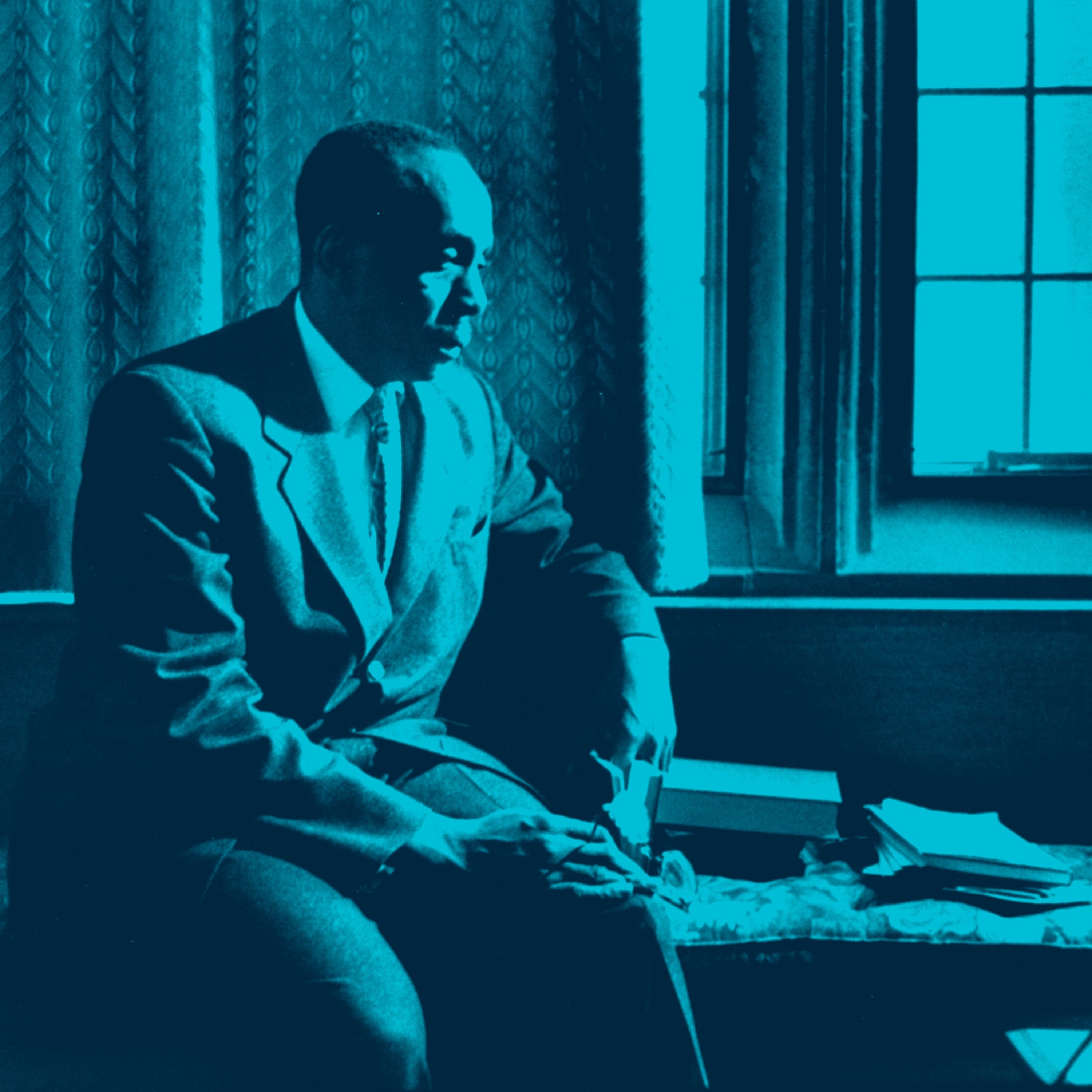
Ep 54Howard Thurman's Mystical Activism: Connection, Alienation, and Black Vitality / Sameer Yadav
"A strange necessity has been laid upon me to devote my life to the central concern that transcends the walls that divide and would achieve in literal fact what is experienced as literal truth: Human life is one and all humans are members of one another" (Howard Thurman, The Luminous Darkness). Sameer Yadav honors Howard Thurman, minister, theologian, philosopher, civil rights activist. Thurman was the author of the influential book, Jesus & the Disinherited, which Martin Luther King, Jr. was known to carry around with him. LinksWho was Howard Thurman?About Jesus & the DisinheritedShow NotesBelonging and connectednessThe trauma of alienation in the Jim Crow segregationVitality of Christian faith and Black Christian resistance to slaveholder Christianity"The humanity we share with Jesus is one that cannot be reduced or dominated, but holds a value in union with God that goes beyond any attempt we can make to manipulate it for our own purposes."Thurman’s ministry and theology represents the bringing together of these three themes: (1) divine common ground with all living things, (2) the devastating effects of social injustice on human personhood, and (3) sharing in the humanity of Jesus uniquely revealed in the history of Black suffering and the resilience of Black joy.Christian mystical traditionInfluenced by Ghandi’s approach to non-violence (soul force)Jesus and the Disinherited—finding the inward strength to stand up to oppressionMysticism and activism belong in vital connection with each otherThurman’s impact on Martin Luther King, Jr. at Boston UniversityMLK was known to carry a copy of Jesus & the Disinherited with him wherever we went.From Preface of Luminous Darkness (1960): "The fact that 25 years of my life were spent in Florida and in Georgia has left deep scars in my spirit and has rendered me terribly sensitive to the churning abyss separating white from black. Living outside of the region, I am aware of the national span of racial prejudice and the virus of segregation that undermines the vitality of American life. Nevertheless, a strange necessity has been laid upon me to devote my life to the central concern that transcends the walls that divide and would achieve in literal fact what is experienced as literal truth: Human life is one and all humans are members of one another. And this insight is spiritual and it its the hard core of religious experience. My roots are deep in the throbbing reality of Negro idiom and from it I draw a full measure of inspiration and vitality. The slaves made a worthless life—the life of chattel property, a mere thing, a body—worth living. They yielded with abiding enthusiasm to a view of life which included all the events of their experience without exhausting themselves in those experiences. To them this quality of life was insistent fact because of that which deeply was within them. They discovered God, who was not or could not be exhausted by any single experience or series of experiences. To know God was to live a life worthy of the loftiest meaning of life. People of all ages and times, slave or free, trained or untutored, who have sensed the same values, are their fellow pilgrims, who journey together with them in increasing self-realization, in quest for the city that has foundations whose builder and maker is God.” About Sameer YadavSameer Yadav (Th.D. Duke Divinity School) is Associate Professor of Religious Studies at Westmont College in Santa Barbara, CA. His research areas are in the philosophy and theology of religious experience, race and religion, and the theological interpretation of Scripture. He is the author of The Problem of Perception and the Experience of God: Toward a Theological Empiricism (Fortress Press, 2015), a number of articles published in various journals such as The Journal of Analytic Theology, Faith and Philosophy, and The Journal of Religion among others, as well as a number of chapters in edited volumes.
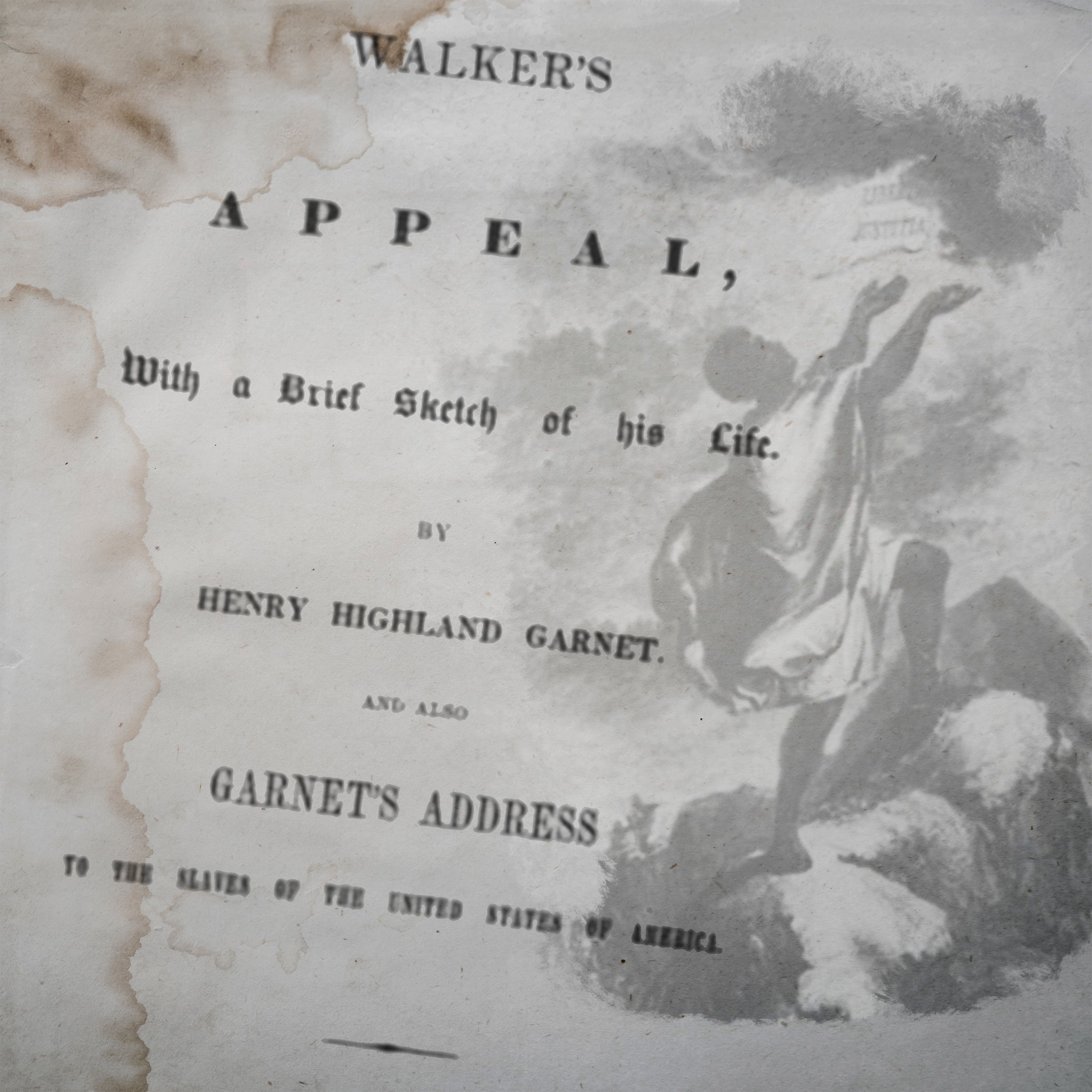
Ep 53David Walker's Dangerous Appeal: Black Abolitionism and Belonging to God / Ryan McAnnally-Linz
David Walker was an early 19th-century black abolitionist and activist, who wrote An Appeal to the Colored Citizens of the World. Ryan McAnnally-Linz celebrates his ideas in this influential pamphlet that gave dignity, hope, and courage to slaves and freed black people alike, urging them to continue fighting for their freedom while the United States struggled toward the end of slavery.This episode is part of our celebration of Black History Month; we offer these short reflections in appreciation and gratitude for the black voices who’ve shaped how we experience the world, how we think about it, and how we live in it.Show NotesRead about David Walker here.Read the entire Appeal to the Colored Citizens of the World.
Ep 52This Economy Kills: Healing the Human Environment in Pope Francis's Fratelli Tutti (Brothers & Sisters All) / Sister Helen Alford
Support For the Life of the World, give to the Yale Center for Faith & Culture: faith.yale.edu/giveShortly after Jorge Mario Bergoglio became Pope Francis in March 2013, he released an exhortation, very similar to an encyclical, but addressed to a Christian audience. "Evangelii Guadium” or the "Joy of the Gospel,” begins by articulating the most pressing challenges for the contemporary Church. First on his list is the economy of exclusion. What does he mean by that? He writes:Just as the commandment “Thou shalt not kill” sets a clear limit in order to safeguard the value of human life, today we also have to say “thou shalt not” to an economy of exclusion and inequality. Such an economy kills. How can it be that it is not a news item when an elderly homeless person dies of exposure, but it is news when the stock market loses two points? This is a case of exclusion. Can we continue to stand by when food is thrown away while people are starving? This is a case of inequality. Today everything comes under the laws of competition and the survival of the fittest, where the powerful feed upon the powerless. As a consequence, masses of people find themselves excluded and marginalized: without work, without possibilities, without any means of escape. (Evangelii Gaudium)Sister Helen Alford reflects on the economic implications of Pope Francis's Fratelli Tutti, including concerns about unrestrained free markets, the importance of allowing human life and dignity to frame our economic policy, what behavioral economics tells us about human relationality, and how we can understand the big picture of politics, economics, faith, and flourishing operating in Catholic social thought. Interview by Ryan McAnnally-Linz.Show NotesWhat is the goal of Fratelli Tutti? (And understanding it in light of 2015’s Laudato Si: Care of Our Common Home.)Integral ecology: how we relate to each other in our nature environment (ecology) and human environment (economy)Ecology and economy share a common root: oikos (home)An economy that puts life and human dignity at the center, which also means respect for the environmentThe economic donut principle: the inner ring is social minimum to take care of all people, the outer ring is the environmental ceiling for impact. We need to live within the donut!"Fratelli tutti wants to see the economy as situated within a bigger vision of human development"Economy is like the foundation of a house, it’s not built for its own sake, but to support the whole house and the people in it. The economy must serve the common good—for all of us, in an integrated way.The primacy of politics: "We need a political order that’s going to give proper direction to the economy.""We see how difficult it is to make a political system function today."The economy is a good tool but a bad master. It must serve, not rule.The problem with unrestrained free marketsUnderstanding the vision of human flourishing implied in the free market economy"The Ultimatum Game": An experiment in behavioral economicsRelational beings in the economy; relationships really count in economic interactionsBeings in relation; understanding the humanity at the core of economicsHow theology, biology, and economics all suggest cooperation and relationally is built into human beings.Long term ideas that impact our concept of work and the human personRarum novarum and solidarity between workers and owners, and solidarity between workers togetherSolidarity as a strategy for affirming dignity among all humanity"The shape of human flourishing and how to reach it"—Charles Taylor on Fratelli Tutti"Let us dream as a single human family.” Pope FrancisWhat is Pope Francis’s vision for a full and flourishing life? Human rights, human development and resources, moral and spiritual goodsIncreasing diversity, having dialogue with each other and living together in real encounter, loving each other within diversity
Ep 51Dreaming of a Different World: Friendship, Dignity, and Solidarity in Pope Francis's Fratelli Tutti (Brothers & Sisters All) / Nichole Flores
“Here we have a splendid secret that shows us how to dream and to turn our life into a wonderful adventure. No one can face life in isolation… We need a community that supports and helps us, in which we can help one another to keep looking ahead. How important it is to dream together… By ourselves, we risk seeing mirages, things that are not there. Dreams, on the other hand, are built together. Let us dream, then, as a single human family, as fellow travelers sharing the same flesh, as children of the same earth which is our common home, each of us bringing the richness of his or her beliefs and convictions, each of us with his or her own voice, brothers and sisters all." (Pope Francis, Fratelli Tutti)Last year, in the midst of a global nightmare, Pope Francis invited the world to dream together of something different. He released Fratelli Tutti in October 2020—a message of friendship, dignity, and solidarity not just to Catholics, but "to all people of good will"—for the whole human community. In this episode, social ethicist Nichole Flores (University of Virginia) explains papal encyclicals and works through the moral vision of Fratelli Tutti, highlighting especially Pope Francis’s views on faith as seeing with the eyes of Christ, the implications of human dignity for discourse, justice and solidarity, and finally the language of dreaming together of a different world.Support For the Life of the World: Give to the Yale Center for Faith & CultureShow NotesRead the entire text of Fratelli Tutti online hereWhat is a papal encyclical? For “All people of good will”—not just CatholicsExamining the signs of the times, e.g., Fratelli Tutti will always be connected to its global context during a pandemic.What is Fratelli Tutti? What does its title mean?Brothers and Sisters All: Using Italian, a particular language, as a pathway to the universal, rather than traditional Latin titlePope Francis’ roots in Latin America: How his particularity as Latin American gives him a universal message; local and communal belonging; neighborhoods contributing to the common goodSeeing/Gazing: Faith as seeing with the eyes of Christ (Lumen Fidei)Undermining human dignity in social media discourse; the failure of grandstanding rather than encounter Solidarity as a dirty word: conflicts within Catholicism about how to understand and apply justice and solidarity in real lifeSolidarity requires encounter with the otherSocial friendship and fraternityHuman dignity in the tradition of Catholic social ethicsDreaming together: fighting against the temptation to dream alone, inviting us to imagine; cultivating a conversation that forms collective imagination and aesthetic reality. About Nichole FloresNichole Flores is a social ethicist who is Assistant Professor of Religious Studies at the University of Virginia. She studies the constructive contributions of Catholic and Latinx theologies to notions of justice and aesthetics to the life of democracy. Her research in practical ethics addresses issues of democracy, migration, family, gender, economics (labor and consumption), race and ethnicity, and ecology. Visit NicholeMFlores.com for more information.

Ep 50Radical Humility: Forgetting Oneself as a Path to Flourishing
Philosopher Kent Dunnington exposes the radical roots of Christian humility, exploring the centrality of humility to Christian ethics, the goal of humility in eliminating one’s own self-concern, why humility remains so appealing and so appalling, and how to respond to the abuse and weaponizing of humility to oppress. Interview with Evan Rosa.Join us in taking hold of life that is truly life.Will you partner with us in helping people envision and pursue lives worthy of our shared humanity?Give to the Yale Center for Faith & Culture: faith.yale.edu/give About Kent DunningtonKent Dunnington is Associate Professor of Philosophy at Biola University in La Mirada, CA. He teaches and writes in the areas of virtue ethics and theological ethics. Other research interests include addiction and criminal justice, inspired by his experiences teaching in prison. He is author Addiction and Virtue: Beyond the Models of Disease and Choice and Humility, Pride, and Christian Virtue Theory. He also contributed an essay entitled "How to Be Humble" to The Joy of Humility: The Beginning and End of the Virtues.Show NotesWhat’s so gripping about humility?Radical, entire sanctification and radical expressions of ChristianityThinking about the virtuesVirtues as a way of thinking about Christian influence on cultureWhat makes humility a lightening rod?Self-regard, human weakness and needHumility: Mark of failure, or a trait that marks right relationship with God?How human anthropology and human flourishing influences your views of humilityPagan perspectives on humilityYou’d expect that humility would lose its appeal, but many contemporary thinkers continue to laud itHumility as pro-social, promoting horizontal relationshipsAugustinian humility: Humility as central for vertical relationship with God and the gateway to Christian orientation toward the worldLove and humility: The love of God is an offense to pagan sensibilities.Jesus’s humility as Jesus’s weakness"We often forget just how deep Jesus’s weakness went… it’s almost like Jesus doesn’t have a self apart from the will of the Father.""The striking thing about Jesus is that he seems to be free of this whole project of having a self that could be identified over and against someone else."Definition of radical humility: no-concern about status and entitlements (cf., Roberts and Wood)Humility as a balancing act between excessive pride and excessive servilityThe radical humility of desert mothers and fathers—“they weren’t concerned with defining it, they were concerned with living it."Abba Macarius and the Unwed Mother—“I discovered I had a wife."Humiliation and serious critiques of humility as a cover for patriarchy and lauding servility and denigrationClarifying the horizontal scope of radical humility: Desert mothers and fathers took on radical humility for themselves, not as a guide for leading others.“If you’re someone who thinks Jesus’s life is the shape of the good life, then it becomes a pressing question: How far am I willing to go? Am I really willing to give up myself in love of other people?"“Do I really believe that selfless love is the shape of a good human life?"Resisting the temptation to repackage a safer humility“Pretty much anytime you find yourself espousing the virtue of humility to someone else, you’re on the wrong track."“I don’t think we have to be humble, but we can be. It’s a frightening invitation, but if it’s true it’s incredible that we could be freed from our concern to make ourselves significant enough to merit love."Christianity and power"I’m wary of turning humility into a virtue that can be leveraged for social gain. I still think of it primarily in terms of something that helps find our way into being creatures."

Ep 49God’s Love Made Delicious: Food, Hospitality, and the Gift of Eating Together / Norman Wirzba & Matt Croasmun
"Cooking is a declaration of love ... food is God’s love made delicious." Theologian Norman Wirzba reflects on the threats of our faulty logic of food and our disordered and disconnected relationship to eating and nourishment, and imagines a theology of food grounded in membership, gift, and hospitality. Interview with Matt Croasmun.Support For the Life of the World: Give to the Yale Center for Faith & CultureAbout Norman WirzbaNorman Wirzba is the Gilbert T. Rowe Distinguished Professor of Theology at Duke University. His teaching, research, and writing happens at the intersections of theology and philosophy, and agrarian and environmental studies. He is the author of several books, including Food and Faith: A Theology of Eating (2nd Edition), From Nature to Creation, and The Paradise of God: Renewing Religion in an Ecological Age, and his most recent book, This Sacred Life: The Place of Humanity in a Wounded World, will be published in 2021. In his spare time he likes to bake, play guitar, and make things with wood. For more information visit his website at normanwirzba.com.Show NotesIntroductionFood and Faith: A Theology of Eating—a picture of what eating can be, connecting us to the world, to each other, to God.When it comes to eating in America these days, how are we doing?Anonymity and ignorance. We are disconnected from food, we’re not encouraged to know where food comes from or how it came to be."Eat food, not too much, mostly vegetables."Good eating is not solely a matter of personal virtue or vice. It’s part of a complicated system, agricultural strategy, and political process we’re involved in.Food is central to human flourishing, but if it’s only a market commodity, we end up with a faulty logic that drives a sinister food industry.You can only sell so much: therefore, preservativesIf food is primarily to be digested, we have foods that are, in principle, indigestible. It tastes good, and never makes you full. It’s the perfect food commodity. The food system is developed to take advantage of you as a unit of consumption. What is eating for?Membership as a eucharistic mode for changing the way we conceive of food and the good. Eating is a daily reminder of our need.Fruits of the spirit that ought to animate our relation to membership.Mutual belonging (Willie Jennings, The Christian Imagination)How disconnection from the land leads to alienation and loneliness.Attention to geography and sources of life; how do we cultivate awareness and proper attention?Robin Kimmerer, Braiding Sweetgrass—the White American presence has always been “this is not home.” Therefore, “The land we live on and are blessed by does not love us.” Think about what kind of compensation must follow to this kind of alienation. Racial components of agriculture and food. "You cannot tell the story of agriculture apart from the story of slavery.” Agricultural labor and the objection to embodiment.Embodiment and food.Essential work, abstraction from bodies, and disembodied labor."We don’t want to know, because to have to know these things implicates us in how we shop for food."God creates a world in which creatures eat.What’s communicated through a meal prepared for you? You matter.God invites us into hospitality, and food and eating can teach us that nurturing welcoming presence.Food as gift. Submitting oneself to "the grace of the world.” "Food is God’s love made delicious.""Life has always proceeded by hospitality."“Eating and cooking … cause us to stop and say, ‘It’s not all vicious. Maybe our living together can also be a celebration.’""All eating involves death.” How do you square the gift of food with the death it entails?The first virtue of humility—because I don’t know, and because I understand vulnerability, I must live in a more humble, patient way.What does policy look like when it comes through the lens of humility, dependence, gift, and vulnerability?The story of a meal—its cultivating, growing, cooking, gathering, eating, enjoying, and nourishing.You can’t homogenize people’s experience of food.Sabbath, time, place: Slowing down to notice the goodness of the world God has given us. Thoughtfulness, intention, attention, presence, honoring each otherWho is invited to the table? Communal living, kinship, and community in a welcoming world. Abraham Heschel’s “an opening for eternity in time."How can we honor the life that feeds us? Start simple. Soup and bread to celebrate the goodness of the world.

Ep 48Patience with Yourself: Resisting the Temptation to Curate Yourself and Finding the Courage to Embrace Imperfection
Thanks for listening to For the Life of the World. To support the show, you can make a tax-deductible gift to the Yale Center for Faith & Culture by clicking here.---This is that time of year when the little demon of self-criticism and self-denigration wakes up and starts nagging you for letting your new year’s resolutions slip a little. Or maybe you’re not there yet. You’re powering through, waking up early, working out hard, eating right, reading more, living your best life. Hey. Good on you. Go get it.But regardless, whether you find yourself nailing it or failing it, do you have the patience and the necessary courage to accept yourself at every moment you try to improve?This week, Ryan McAnnally-Linz and Miroslav Volf discuss an obscure but incredibly timely passage from an old lecture given by the great Karl Rahner, the German Jesuit priest and one of the most notable Catholic theologians of the 20th century—he was instrumental, for instance, in the theological developments of the Second Vatican Council.Miroslav once heard Rahner give a talk about patience, and has passed along the wisdom of that lecture, and now we’re passing it on to you. Miroslav even translated a passage from the German text, and reads it here (you can also find it in our show notes). In this episode, Miroslav Volf and Ryan McAnnally-Linz reflect on Karl Rahner's admonition to be patient with oneself. The discussion begins by recognizing the gap between who you are now and who you aspire to be, and proceeds with the need to keep the tension alive, working and bearing with your limitations, and exploring the freedom of a serene patience with oneself. Serenity is not acquiescence to vice or bad habits. But it represents a courageous long-term peace with your imperfections—an effort to recognize oneself as rooted in divine love and grace and acceptance, even as you pursue a vision of a better self.Show NotesNew Year’s Resolutions and the need to be patientKarl Rahner’s “Intellectual Patience with Oneself” (translated from German to English by Miroslav Volf)Minding the gap between who you are and who you aspire to beNarcissism, complacency, and resignationMiroslav’s friend’s motto for graduate school: “Courage to Imperfection!"Patience is not merely a private interior thing—there is a public effect of bearing with oneself that leads to bearing with others.The courage to public imperfectionCultivating a secure sense of self grounded in God’s loveWe can live with imperfection knowing that we are accepted as we areRelease yourself from the grip of the performed, curated selfHow patience with oneself applies to the struggle to improve through New Year’s ResolutionsReflect on which self you want to nurture and don’t give up on the tension between who you are and who you aspire to be.Constant pressure to improve quickly, as opposed to acceptance of limitations and imperfectionsKeep the tension alive, work with your limitations, and explore the freedom of a serene patience with oneself.You cannot do whatever you want, and the lie that you can leaves you exposed to the deep pain of failure and limitation.“You are not at stake.” Limits are there. They are to be worked with rather than hated or abhorred."I’m not divine. I’m human."Karl Rahner, “On Intellectual Patience with Oneself”in Schriften zur Theologie, 15, 303ff.(Abridged version of the first few paragraphs that deal with patience with oneself in general, of which intellectual patience with oneself is one dimension)Translated by Miroslav VolfThat we need … patience with ourselves, seems to me a self-evident thing, in fact one of those self-evident things which in reality turn out to be difficult to achieve. Perhaps there are people who don’t think they need patience with themselves because they are in full agreement with who they are and with what they do. But I hope that we will not envy the “good fortune” of such simple-minded people. If we are honest with ourselves, we are [all] the kind of people who, rightly, are not fully finished with ourselves, and also the kind of people who cannot establish the state of their full agreement with ourselves on command or through some psychological trick. Because a full agreement with ourselves is neither given nor within our power to achieve, we need to have patience with ourselves. The person in us, who we actually are, greets with pain, the person in us who we want to become… We are now on the way, we live between a past and a future, and both, each in its own way, are out of our full control. We never have all things together which we need to live; we are always historically conditioned, socially manipulated, biologically threatened—and we are aware of this. We can try to suppress the knowledge of this state of existence; we can try to let things that we cannot change just be there as surd elements of our lives; or we can misuse joyous experiences of life as analgesics against the uncanny tensions between who we are and who we should be; or we

Ep 47Violence, Shame, Fear, Anger, and Lost Civic Friendship / Willie Jennings, David French, Marilynne Robinson, Robert George, and more
What is the state of Christianity and Democracy in America? We mined the past 6 months of episodes for the most timely, relevant, and even strangely prescient reflections on faith and politics in America. Past guests Willie Jennings, David French, Marilynne Robinson, Robert George, and Samuel Perry and Andrew Whitehead, and Arlie Hochschild each offer perspectives we need to understand the political moment through the eyes of faith and culture. Here’s the breakdown of our episode today—it’s really a “best of" for faith and politics in America today.Episode Contents / Show Notes3:33 - Theologian Willie Jennings on crowds, mobs, fear, and anger14:17 - Sociologists Samuel Perry and Andrew Whitehead on Christian Nationalism, identity, and violence 20:01 - Novelist Marilynne Robinson on Christianity and democracy23:17 - Political commentator David French on political exhaustion, culture war, and the role of faith in political division34:22 - Legal scholar Robert George on the breakdown of civic friendship44:32 - Sociologist Arlie Hochschild on building shelters from shame and crossing a bridge to empathySupport For the Life of the World by Giving to the Yale Center for Faith & Culture: https://faith.yale.edu/giveEpisode IntroductionHello friends and listeners. Thanks for tuning in to the show. This week, in light of the tension and need for perspective, we’re turning to some of the more significant points of relevance from some of our past episodes. We’ve got plenty more fresh conversations and reflections coming your way in 2021, but this week has seemed to just catch us all. And if you haven’t yet heard Miroslav Volf deliver our joint statement from the staff of the Yale Center for Faith & Culture on Sedition at the Capitol, then check out that 10-minute episode as well.As we’ve searched for words to understand, words to grieve the violence and death, words to evaluate, critique, and condemn, and words to forgive, to heal, to unite what seems unifiable—the words often come up empty, lacking, half-hearted. It’s reminiscent of the piercing words of the prophet Jeremiah, a hot take if ever there was one, as he condemns those who have “treated the wound of my people carelessly, saying “Peace, peace’, when there is no peace. They acted shamefully, they committed abomination; yet they were not ashamed, they did not know how to blush.” He goes on, “Thus says the Lord: Stand at the crossroads, and look, and ask for the ancient paths, where the good way lies; and walk in it, and find rest for your souls” (Jeremiah 6:14-16).As we walk together, seeking where the good way lies, these ancient paths, trod by so many before us, let’s not give up on a hope against hope, a hope for things that we most certainly now do not see. There is no peace, but we need to envision it. We must be the instruments of that peace.
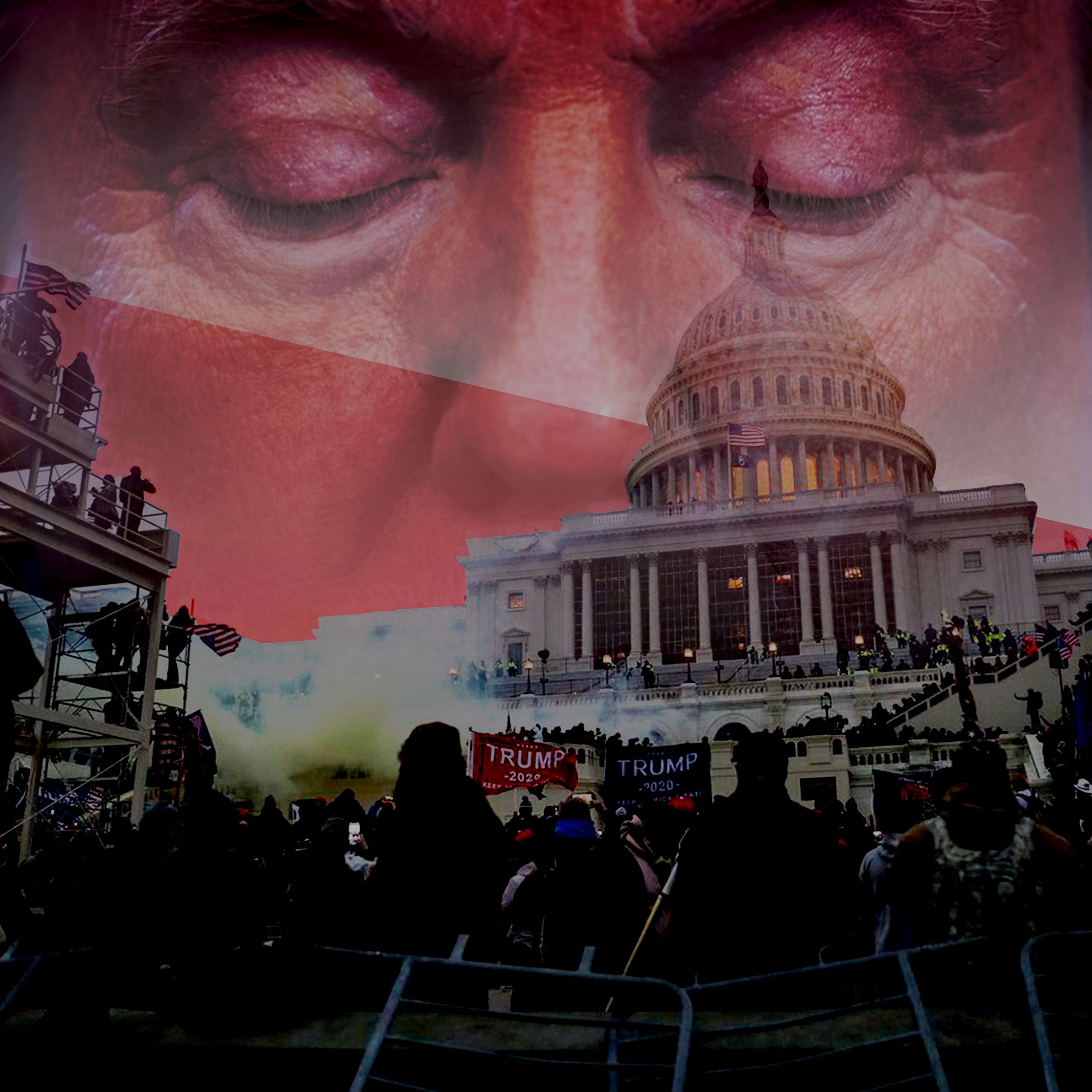
Ep 46Sedition in the Capitol: Wounded Pride, Lies that Incite Violence, Losing Connection to Reality, and Longing for Peace / Miroslav Volf & Colleagues
Miroslav Volf and the staff of the Yale Center for Faith & Culture respond to the lies, provocation, and violence at the Capitol building on January 6, 2021.Show Notes"The most responsible thing to say about the President’s and the attackers’ actions is that they were without qualification wrong. To praise, to condone, to excuse, or to ignore them is to 'call evil good… put darkness for light… put bitter for sweet' (Isaiah 5:20)."At the heart of the current effort to deny and overturn the results of the presidential election is the wounded pride of a man who cannot handle the truth of his own imperfection and the fact that he lost a fair democratic contest.There is a sorrowful, pathetic smallness to this petty woundedness even as it produces momentous—and tragic—consequences. Faced with painful realities that conflict with his self-image but that he cannot control, President Trump has given himself over to wishful thinking, conspiracy theories, and falsehood. He has constructed a pseudo-truth to fit the needs of his immense but fragile and wounded pride.We must commit firmly to the truth, even and especially when it hurts our pride, when we lose, and when it calls for sacrifice.We must orient ourselves toward peace and bearing with one another, being ready to forgive, as we have been forgiven. Indeed, our commitment to the truth is never at odds with love of neighbor. Peace is in fact unintelligible and unimaginable apart from the truth of Christ.We must stand up for the downtrodden, marginalized, and afflicted, speaking and acting on their behalf, for their good, for their healing, and for their inclusion in flourishing.We must never compromise or distort Christian faith in service to the idol of political power.We must restore confidence in our democracy and trust in each other. Suspicion and conspiracy theories have distorted and disconnected us from reality.We must live constantly from the deep truth that our worth doesn’t come from victory, triumph, or any other kind of power or influence. Our worth is secured by the love of God for us.May we all become instruments of peace in this time of conflict.Make a gift to the Yale Center for Faith & Culture: faith.yale.edu/give

Ep 45Christian Witness in Turbulent Places / Miroslav Volf with Mike Cosper
Mike Cosper, host of Cultivated, a podcast about faith and work, interviews Miroslav Volf about his vocation as theologian. They discuss Miroslav's youth in Croatia and his family's influence on his spirituality and theology, as well as the urgent need for faithful witness in our turbulent times. Original air date: November 2, 2020. Show Notes“I had parents who were extraordinary spiritual human beings, not in a sense that they were total exemplars of holiness, but there was kind of an honesty about the spiritual life”His father “experienced God’s love in the midst of Hell” on a socialist death march“A vivid representation of what faith can do, what God can do”Volf’s early experience of the Church via his father’s ministry“Oh, what an incredible thing. To devote one’s life to helping people who are so much on the margins”Volf traveled as a translator: “I realized there that one could be cool and the believer as well”“To my shame and chagrin, it's the being possible to be cool and a believer that opened up space for me to enter. And then slowly I was getting deeper into faith”“How am I supposed to behave and how should I speak to these people? That made it a little theologian in me”“I haven't regretted a single time, single date, single hour, the choice that I've made”He studied with Moltmann in graduate school “We became friends and he proved very important in my life”“He said to me, Miroslav, take something that moves people and shine the light of the Gospel on it”While teaching at Fuller, he started to think about Exclusion and EmbraceMiroslav Volf, Exclusion and Embrace, a Theological Exploration of Identity, Otherness, and ReconciliationThe fall of the Berlin Wall, how to address a war about religious identity? Luke 15:11-32, The Prodigal Son, family, community, and belongingForgiveness, victimization, and communityThe importance of boundaries: “they define who we are”The political division underneath the racial division, are we able to build bridges? Can we enter into the position of the other? Hannah Arendt - “forgiveness is the only way to reverse the flow of history” How we deal with forgiveness – we must name the wrong as wrong “Trump is an embodiment of paganism” - Volf Alain de Benoist, On Being a PaganPagans don’t like to sacrifice for others, Trump thinks: ‘I do what benefits me ‘“Trump’s God is my Devil” –Volf Evangelical paganismIs this new or is this an unmasking?“The problem is not that people commit sin. It's the pretense of holiness when there's exactly otherwise happening”“Jesus has become a moral stranger to us, everything that mattered to him seems not to matter to us, and everything that matters to us as a culture seems not to have been important to him”Reclaiming morality ---Introduction from Cultivated, featured on Christianity Today(Click here to listen on ChristianityToday.com.)Miroslav Volf’s writing is considered some of the most significant theological work of the last century. He was born into a family of Pentecostal Christians in Croatia, under oppressive Communist rule, and a “minority of a minority” (as he would later describe it). For almost four decades, his writing has been a testament to the power of the gospel for reunification and healing in the aftermath of war and political turmoil, as well as a vision for human flourishing in an experience of Trinitarian love.On this episode, we talk about his emergence as a theologian, the development of his work, and his perspective on the turbulent times we’re experiencing today.Cultivated is a production of Christianity Today.This episode was produced by Mike CosperIt was edited by Mark Owens.Theme song is by Roman CandleMusic is by Dan Phelps and Roman Candle

Ep 43Santa, God, and the Obligation to Rejoice / Matt Croasmun
Santa doesn't just want you to be happy. Santa needs you to be happy. Matt Croasmun explains how the contemporary Christmas myth—the Gospel of Christmas according to St. Nick—sets emotional norms that are vastly different from the Gospel of Christmas according to St. Paul.

Ep 44The Reason We Follow the Star: Learning from the Magi How to Give, How to Receive, and How to Be Human / Drew Collins
How can the Magi of Matthew 2—the Three Wise Men "bearing gifts" and "traversing afar"—help us understand faith and reason, giving and receiving, the nature of God, and how to be human? Drew Collins offers some new perspective on a familiar Christmas story.Introduction and NotesMerry Christmas friends—for this week, we’re dropping a double dose of Christmas reflections from the Yale Center for Faith & Culture. We’ll be hearing from Matt Croasmun and Drew Collins, both of whom are Associate Research Scholars and lead our Life Worth Living and Christ & Flourishing initiatives, respectively.In this episode, I interview Drew Collins about the Magi of Matthew Chapter 2—these wise men from the east come to pay Jesus homage, but in so doing, they offer for us an outside perspective on the wonder and the weirdness of Christmas. hey’ve been lauded through centuries of Christian theology for both their reason and their faith, but W.H. Auden’s treatment of their intentions in his beautiful Christmas Oratorio, For the Time Being, brings into clearest brightest view why they followed the star, and offers us something to aspire to. Auden gives them the lines:To discover how to be truthful now...To discover how to be living now….To discover how to be loving now...To discover how to be human now …. Is the reason we follow this star.And well, in that sense, we’re all magi. Trying to learn how to be human now."Matthew 2:1-12 asks us, in other words, to confront the possibility that those outside of our particular Christian communities might offer us new ways of understanding of who Jesus is, while at the same time revealing new insights into the identities of our non-Christian neighbors.”"The Christian faith affirms that God is a gift giver. We can say more. For God’s giving is so radical, so total, that even in God’s receiving the gifts we bring, however paltry and imperfect, God is also giving. In receiving the gifts of the Magi, or in affirming our receiving of them on God’s behalf, God is giving us hope that our own lives, scruffy and flawed though they might be, might be received by others as giving, like the Magi, greater insight into who Jesus is and might be received and redeemed by God in the coming of God’s Kingdom.”
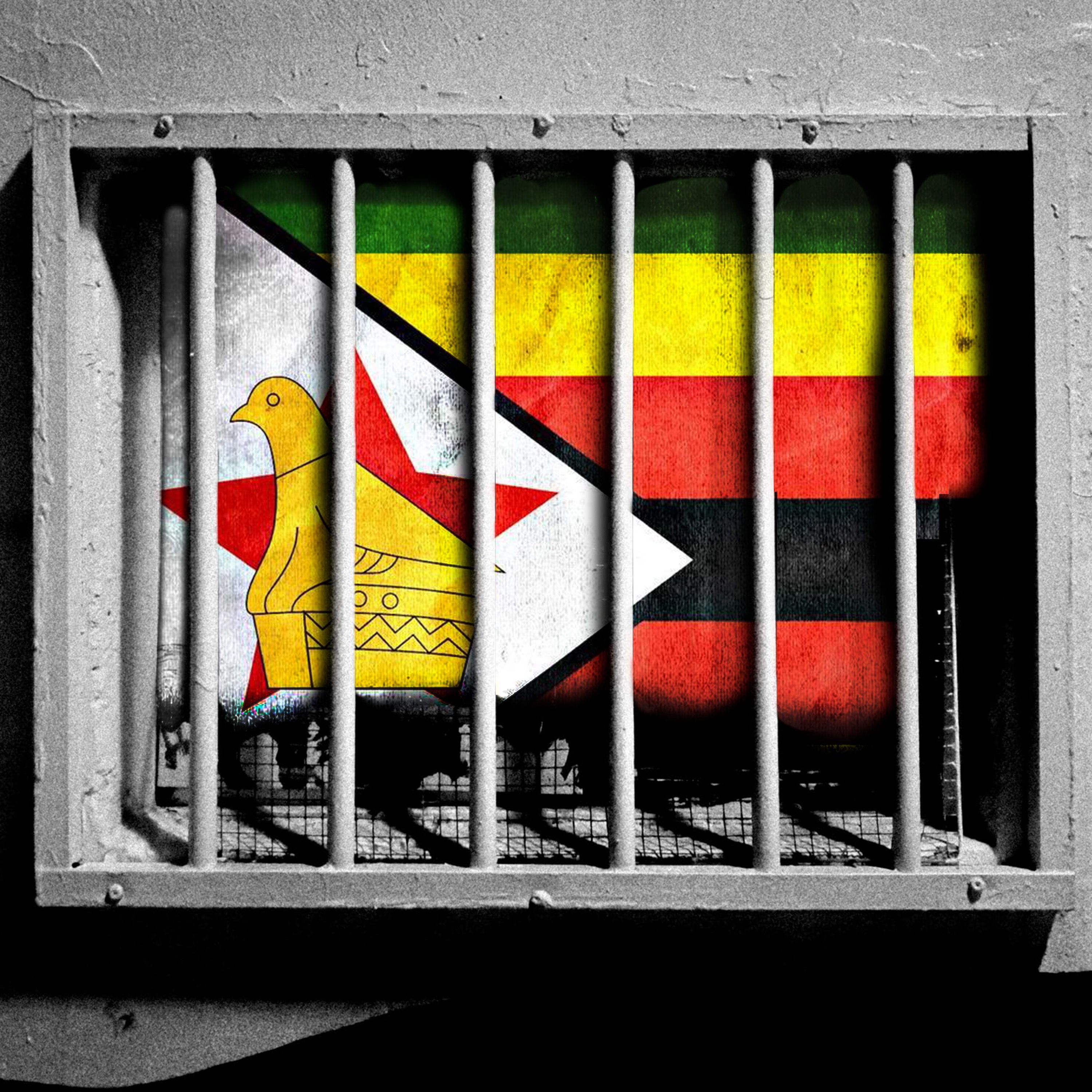
Ep 42Ignore These Walls: Faith that Leads to Freedom in Zimbabwe / Evan Mawarire & Miroslav Volf
Evan Mawarire is a Pentecostal minister and democratic activist in Zimbabwe. He is founder of #ThisFlag Citizen's Movement and has been instrumental in standing up to corruption, injustice, and poverty in Zimbabwe. Miroslav Volf interviews Pastor Evan about his story of faith that leads to activism; the transformation he experience while being unjustly arrested, detained, and tortured in maximum security prison; and what it means to live a life worthy of our humanity.Show NotesIntroduction and clip from #ThisFlag viral videoHow Evan Mawarire became a Pentecostal minister#ThisFlag movement - united around the symbolism of the Zimbabwe flag Compassion, mercy, and other biblical values that can be practiced across all levels“If we don’t stand up, our children will hold us to account one day, and say ‘Why did you do nothing?’""I was asking people to shut down the government in 48 hrs."The other side of fear is possibilityThe atrocities of Robert Mugabe: abduction, silencing, torture, murder, citizen fear-based self-policing#ThisFlag Campaign Slogan: “If we cannot cause the politician to change, then we must inspire the citizen to be bold."Pentecostalism and Political Activism: Apostolic Faith Movement, Reinhard BonnkePastor Evan’s detention and torture in maximum security prisonHow encounters with prison inmates transformed Pastor Evan“Look at the walls that are holding you back, and understand that there is a bigger prison that holds you back: the prison of your mind… Ignore these walls, behave as if they do not exist."What is a life worth living?About Evan MawarireEvan Mawarire is a Zimbabwean clergyman who founded #ThisFlag Citizen’s Movement to challenge corruption, injustice, and poverty in Zimbabwe. The movement empowers citizens to hold government to account. Through viral videos, the movement has organized multiple successful non-violent protests in response to unjust government policy. Evan was imprisoned in 2016, 2017, and 2019 for charges of treason, facing 80 years in prison. His message of inspiring positive social change and national pride has resonated with diverse groups of citizens and attracted international attention.Evan has addressed audiences around the world, and Foreign Policy magazine named him one of the 100 global thinkers of 2016. The Daily Maverick Newspaper of South Africa named him 2016 African person of the year. Evan is a 2018 Stanford University Fellow of the Centre for Democracy Development and the Rule of Law. He is a nominee of the 2017 Index on Censorship Freedom of Expression awards and the 2018 Swedish government’s Per Anger Prize for democracy actors.Give to the Yale Center for Faith & CultureVisit faith.yale.edu/give to make a financial gift to support For the Life of the World and the Yale Center for Faith & Culture. Thank you for partnering with us in our work.
Ep 41Black Joy and Oppressive Humility / Stacey Floyd-Thomas
Social ethicist Stacey Floyd-Thomas offers a womanist perspective on how humility can go terribly wrong, when it's hung over the heads of the humiliated, marginalized, and oppressed. This criticism of the traditional Christian virtue helps clarify the role of joy as the ultimate virtue of Black life, the centrality of black folk wisdom, and the beauty of black sisterhood. Interview by Ryan McAnnally-Linz.LinksThe Womanist Salon Podcast, featuring Stacey Floyd-ThomasThe Joy of Humility: The Beginning & End of the Virtues (edited by Drew Collins, Ryan McAnnally-Linz, and Evan Rosa)About Stacey Floyd-ThomasStacey Floyd-Thomas is the E. Rhodes and Leona B. Carpenter Chair and Associate Professor of Ethics and Society at Vanderbilt University, and is a nationally recognized scholar and leading voice in social ethics who provides leadership to several national and international organizations that educate, advocate, support and shape the strategic work of individuals, initiatives, and institutions in their organizing efforts of championing and cultivating equity, diversity, and inclusion via organizations such as Black Religious Scholars Group (BRSG), Society for the Study of Race, Ethnicity and Religion (SRER), Strategic Effective Ethical Solutions (SEES), Society of Christian Ethics (SCE) and the American Academy of Religion (AAR). She holds a PhD in Ethics, a MBA in organizational behavior and two Masters in Comparative religion and Theological Studies with certification in women’s studies, cultural studies, and counseling. Not only has she published seven books and numerous articles, she is also as an expert in leadership development, an executive coach and ordained clergy equipped with business management. As a result, Floyd-Thomas has been a lead architect in helping corporations, colleges, universities, religious congregations, and community organizations with their audit, assessment, and action plans in accordance with evolving both the mission and strategic plans. Without question, she is one of the nation’s leading voices in ethical leadership in the United States and is globally recognized for her scholarly specializations in liberation theology and ethics, critical race theory, critical pedagogy, and postcolonial studies. Additionally, leaving podium and pulpit, she hosts her own podcast to popularize and make her profession and vocation intergenerationally and intracommunally accessible through The Womanist Salon Podcast.

Ep 40Strangers in Our Own Land: Empathy Walls, Deep Stories, and Shelters from Shame / Arlie Hochschild
Arlie Hochschild discusses her book, Strangers in Their Own Land: Anger and Mourning on the American Right, reflecting on how 2020 has made our mutual political alienation worse, and how we can implement deep listening, emotion management, hospitality, and create shelters from shame. Interview by Evan Rosa.How to Give to the Yale Center for Faith & Culture: faith.yale.edu/give We’re passionate about making this work consistently accessible to a people who are genuinely concerned with he viability of faith in a world wracked with division, contested views about what it means to be human and what it means to live life well. If you’re in a position to support our show financially, and are looking for some year end opportunities, please consider partnering with us. We rely on the generosity of individuals like you to make our work possible. And if you’re not, please continue listening and engaging the content and let us know what you’re interested in. But if you can give, if you’re truly passionate about supporting podcasting that’s all about pursuing—really living—lives that are worthy of our humanity, then consider a gift to the Yale Center for Faith & Culture. Visit faith.yale.edu/give (or find the link in the show notes) to make a year end contribution. It’s our joy to bring these shows to you; and we’d invite you into that same joy of supporting this work. As always, thanks for listening, and we’ll be back with more, next week.Episode IntroductionHow do we understand each other’s political lives? It’s all too easy to depend on the consistent narratives of bafflement at the political stranger. How could you possibly have voted for [fill in the blank]. I have no idea how you could support [you know who]. Maybe to stay baffled is a defense mechanism. It keeps the stranger strange. If you rely consistently on your inability to fathom another’s behavior or reasons or motivations—or the fears that underlie them all—maybe that helps you cope a little better.Our guest on the show today turned off all her alarms, set aside the narrative of confusion, and set out to learn about the political other, when around 10 years ago, she began regular visits to Lake Charles, Louisiana, a working class Tea Party stronghold that followed suit with Trump support in 2016—suspicious of the government, struggling for their economic flourishing, feeling the whole time that they were being cut in line, that they were unseen, unrecognized, dishonored, alienated in a hidden social class war.Sociologist Arlie Hochschild is Professor Emerita in Sociology at the University of California Berkeley and author of Strangers in Their Own Land: Anger and Mourning on the American Right. In this episode, I ask Arlie about her experience of intentionally identifying her own ideological bubble, forging out to scale a wall of division, bafflement and hostility to find empathy, turning off her political and moral alarms and attuning her mind to hear the desires that inform the deep story of her friends in Louisiana. We discuss political division, resentment, and alienation; how the Trump presidency and subsequent 2020 loss to Biden has continued to make strangers in their own land; she explains the emotional roots of political beliefs and tribalism—especially those held by her conservative friends, the blind spots of progressive views of conservatives, and finally curiosity, humility, emotion management, and putting oneself in perspective. Thanks for listening. —Evan Rosa, from the introductionShow NotesHow Arlie Hochschild decided to reach out to Tea Party Republicans from within her media bubble, befriend them, and then write a book about understanding how emotion informs political anger, resentment, and Trump supportThe paradox of biting the hand that feeds youMoving beyond political appearances and surface tensionsHow to create a shelter from shame in order to connect and disagree in fruitful waysWhat it was like to cross the empathy bridge, to meet people who live in a different bubble, who live with a different sense of what is trueMeeting Republican women in Lake Charles, LouisianaThe appeal of Rush Limbaugh: fighting against “feminazis,” “environmental wackos,” and “socialists.” And the deepest reason: protecting southern Republicans from the shame of coastal elites Turning off one’s alarm system for the sake of genuine encounter across division, deep listeningWhen to turn the alarm system back on“Things have grown worse”: One’s own government as a foreign occupying forceThe deep story: we can’t do politics without understanding the deep mythology that informs it.The right wing deep story: Waiting and being cut in line, Obama’s role, Trump’s role, and liberation from shameShaming the shamers: Trump’s appeal to those who have been "cut in line"Belong before you believe: How tribalism drives the political drama of AmericaThe religious overtones of Trumpism: Trump has connected with Hochschild's friends in Louisiana not only as their liberator, b
Ep 39Joyful Recognition, All Is Gift: Four Perspectives on Gratitude in 2020 / Stacey Floyd-Thomas, Sarah Schnitker, Jessica Hooten Wilson, Miroslav Volf
Defining gratitude as joyful recognition, the courage to be grateful, comparing gratitude for self-help vs gratitude in prayer, resilience, seeing all as gift and everything as grace. Featuring: Stacey Floyd-Thomas, Sarah Schnitker, Jessica Hooten Wilson, and Miroslav Volf.Show Notes1:07 - Miroslav VolfOur gratitude for you listeners!Sometimes complaint comes easier than gratitude, requiring the courage to be grateful.Misconceptions about gratitude: repayment of debt, obligation to the giver, a strategy for happiness or subjective well-being.Miroslav’s view of gratitude: Joyful recognitionGratitude is "joy over the giver, joy over the gift, joy over having received the gift and having been set into relation to the giver marked by freedom.”6:45 - Stacey Floyd-ThomasSlow down and focus on what matters mostDespite what may seem grim in this moment, redeem now as a holy time. Gratitude as not merely a disposition but an essential duty of defiance and determination that keeps us bound to our first duty: to care for our neighbors as our very best selves.Maya Angelou: “Let gratitude be the pillow upon which you say your nightly prayer, and let faith be the bridge you build to overcome evil and welcome good.” 10:18 - Sarah SchnitkerPraying gratitude together as more than self-helpThe difference between gratitude as prayer and gratitude as a tool for feeling happier14:30 - Jessica Hooten Wilson“Thank you for the fleas.” Corrie Ten Boom’s The Hiding Place1 Thessalonians: “Give thanks in all circumstances.""All is gift. Even sufferings of many kinds are gifts if we offer them up and allow God to redeem them."Cultivate a gracious imagination that sees all as graceA recent review from one of our listeners:"So much is happening and our society has rules where we often check our deepest meaning systems at the door. This works until a year like this year when we need to draw on much deeper resources, and we want a way to connect as a community. This group seems committed to softening those isolating norms, and showing us all what that could look like to do so with love and respect." (Donnied48, 10/5/2020, via Apple Podcasts)
Ep 38Civic Friendship, Courageous Humility, and Seeking Truth Together / Robert P. George
Legal scholar Robert P. George comments on the meaning of friendship across disagreement, the need for public virtues of courage and humility, and how to address political polarization and hateful divisions through seeking the truth, thinking critically and openly, and respecting the dignity and freedom of the other. Interview by Evan Rosa.Episode Introduction (Evan Rosa)How do we heal from 2020? Yes, how do we heal from this pandemic, but how do we heal from the political rifts deeper than we can remember? How do we heal from physical distance that has isolated and alienated us from embodied presence and genuine connection with others? How do millions of public school children heal from remote learning and the psychological impact of disconnection? How do we heal in a moment like this?We’ve been trying to tackle this question in a variety of ways on the podcast, and we'll continue in upcoming episodes. This week, we’re sharing a conversation I had with Robert P. George, the McCormick Professor of Jurisprudence and Director of the James Madison Program in American Ideals and Institutions at Princeton University. We spoke just a few weeks before the election, really, as the frenzy and vitriol and worry started to peak. We spoke about American division and the punishing and apparently unrelenting hatred that can be on display in the disgust one side mutually feels for the other, even in the birthplace of modern democracy, where the idea of personal dignity grounds our freedom to live together. I asked him about what it means to achieve friendship across deep disagreement—something he’s become widely known for in his close friendship and collaboration with Cornel West. We spoke about the virtues of citizenship, including humility and courage; specifically the courage to stand for what you think is right even at the horror of being thought heretic in your tribe. This kind of homelessness from the tribe, especially for Christians who find themselves in tension with their tradition. He reflects on seeking the truth in a world where anyone can portray themselves as an expert and facts are no longer commonly regarded as such. I asked him to offer some practical steps toward mutual understanding and civil discourse, which prizes collaborating around a pursuit of the truth far over mere victory for power’s sake.The kind of divisions we feel now—whether social distance or political distance—won’t be mended and healed with one strategy. So we’ll be bringing a variety of perspectives to bear on the question of healing. But the way Robert George frames civic friendship that shares a value for the truth and a commitment to respect for the other… maybe there’s some potential there. Thanks for listening today.Show NotesHow do we heal from the Pandemic? From the disconnect? American division and the unrelenting hostility of one side for the other Is friendship across division possible? The virtues of citizenshipHumility and courage Homelessness from your own tribe Civic friendship with respect for the other Mitt Romney, “politics have moved away from spirited debate to a vile, vituperative, hate-filled morass that is unbecoming of any free nation, let alone the birthplace of modern democracy.”The breakdown of civic friendship“If we fail to treat each other as civic friends, and instead as enemies, then everything is up for grabs every time there’s an election”Seeing the other as more than just the sum total of their politics“If we wrap our emotions too tightly around our convictions, then we become dogmatists. Then we become unwilling to consider the possibility that we might be wrong and that a critic might be right”Infallibility and disagreement, how the other becomes a ‘bad person’The virtue of genuine humility“It takes humility to recognize that I might be wrong, even about the most important things”The difference between politeness and civility Honoring the other person as a rational creature like oneself“You can’t have an open mind unless you have intellectual humility”Miroslav Volf – “We must have porous boundaries of the self – having enough of an identity to have something to offer other people, but being flexible enough to let others in to shape you. That’s the gift of rationality”How does one properly approach debate? Is there a light in which the most opposing view to your own makes sense?Plato -“The point of arguing is for truth, not for victory”“Ideally you become your own best critic. But it takes courage” “We base our communities around our convictions. If you are an honest, independent thinker, it’s very likely your thinking will take you out of step with your communities. You can become a heretic very fast”We don’t want to be excommunicated! If you’re a truth seeker, you will sometimes be out of step with the communities that are important to you“Humility, open-mindedness, and courage. That’s what’s going to be needed”How Christian Americans feel in tension with tradition when they try to seek a life that i

Ep 37Rabbi Sacks on Etching Everyday Existence with the Charisma of Holiness / Jonathan Sacks & Miroslav Volf
Rabbi Lord Jonathan Sacks was a British Jewish Rabbi, philosopher, politician, and author of more than 30 books. In this conversation, Miroslav Volf interviews Rabbi Sacks about Jewish perspectives on human flourishing, joy, sabbath and work, and the deeply communal and particular nature of Jewish faith as a witness to the common good. Rabbi Sacks died on November 7, 2020. May his memory be a blessing.This episode starts with a 12-minute reflection and memorial from Miroslav Volf, followed by a 40-minute conversation with Rabbi Sacks.For a video of the full conversation, click here: https://www.youtube.com/watch?v=bWpQ-23OBtU&t Show NotesThe Jewish vision of a life worth living: life going well, life led well, life feeling as it should.Following the Mosaic Law, as a means to etching everyday life with the charisma of holiness.“How would you take an ordinary life, and imbue it with a sense for the transcendence?"The Hebrew Bible’s focus on “life down here”—building a sense for God’s presence here and now, as opposed to only in the afterlife. The Law exists because “you did not serve God with joy and goodness of heart, out of the abundance of all good things.""The product of the life well lived is joy.""Joy in Judaism is always done in the company of others… a kind of shared celebration. … Everyone’s got to feel included to be a Jewish joy."“God is somebody very close. This is not a philosopher’s God. … This is God as next-door neighbor."Sabbath and Joy: The End Not of Work, but the End of StrivingSabbath is “as if you were guests at God’s table.""Sabbath is the most remarkable of all utopias because it’s now."Sabbath is a celebration of the good of merely being and being in God’s being: Liminal space, a time out of time.How our personal lives of flourishing fit into the larger vision of flourishing at society as a wholeCommunal life. Faith in Judaism as “the redemption of our solitude."Closeness to God as the summum bonum (the highest good”) of Judaism. Creation, Revelation, and Redemption in Judaism"Judaism is a religion of protest against the world’s first great empires."Ecclesiastes as the best critique of modern consumerismOn failure and human imperfection. "Judaism is a religion of forgiveness. God empowers us to fail.""The routinization of charisma” and constant access to divine forgivenessThe role of punishment in Judaism, divine vengeance, and “why do the righteous suffer?"Victor Frankl and "the will to meaning”—history is not just what Joseph Heller (Catch-22) “A trash bag of random coincidences, blown in the wind."The life worth living is a life suffused with meaning. About Rabbi Lord Jonathan SacksRabbi Sacks is the author of over 30 books. His most recent work, Morality: Restoring the Common Good in Divided Times (2020), was a top ten Sunday Times bestseller. Past works include: Not in God’s Name: Confronting Religious Violence; The Great Partnership: God, Science and the Search for Meaning; The Dignity of Difference: How to Avoid the Clash of Civilizations, winner of the Grawemeyer Prize for Religion in 2004 for its success in defining a framework for interfaith dialogue between people of all faith and of none; To Heal a Fractured World: The Ethics of Responsibility; and A Letter in the Scroll: On Being Jewish, winner of a National Jewish Book Awards in 2000. Rabbi Sacks was knighted by Her Majesty The Queen in 2005 and made a Life Peer, taking his seat in the House of Lords in October 2009. He died on November 7, 2020.

Ep 36Mixed Feelings: Poetry and Faith for Our Time / Christian Wiman & Miroslav Volf
Poet Christian Wiman and theologian Miroslav Volf, both colleagues and friends, discuss poetry's ability to give voice to the mixed feelings of life today, talking about the mash-up of home and exile, joy and sorrow, saint and sinner; and Wiman reads some of his favorite poetry from his upcoming anthology, Home: 100 Poems.Poet Christian Wiman is Professor of the Practice of Religion and Literature at Yale Divinity School. He’s the author of several books of poetry, including Every Riven Thing, Hammer is the Prayer, and his most recent, Survival Is a Style. His memoirs include the bracing and beautiful My Bright Abyss: Meditation of a Modern Believer, and He Held Radical Light: The Art of Faith, the Faith of Art. He edited an anthology of 100 poems on Joy a few years ago, and is currently putting finishing touches on another 100 poems on Home.Our guest last week, the novelist Marilynne Robinson, says of Wiman, "His poetry and scholarship have a purifying urgency that is rare in this world. This puts him at the very source of theology, and enables him to say new things in timeless language, so that the reader’s surprise and assent are one and the same.”Show NotesOn being nowhere, absence, place, and homeSimone Weil: “We must take the feeling of being at home into exile, we must be rooted in the absence of a place." Christian Wiman’s homeThe resonance of objects and personsCompleting a poetry anthology about home during a pandemicThe ubiquity of home in poetry"The Niagara River” by Kay RyanIndividual life joining with collective life, the circularity and rhythm of lyric poetry; searching for a remembrance of homeWilliam Wordsworth: “Not in entire forgetfulness, And not in utter nakedness, But trailing clouds of glory do we come”“Innocence” by Patrick Kavanagh"To be a poet is to be in exile." What is it to be a believer?"Poets are not poets most of the time, the rest of the time they’re poor slobs like everybody else."Living in and attending to our exile: Abraham “living in tents, awaiting the city, whose architect and builder is God”; Jesus sleeping in the boat in the storm.Gillian Rose, Love’s Work and Nietzsche’s "tragic joy”; writing when she was dying of cancer and viewing faith as unmaking oneself."The Bennett Springs Road” by Julia Randall: “The bird that sang I am."What is the right relationship of security to precarity?“In a Time of Peace” by Ilya KaminskyHow do we live lives of joy while there’s suffering all around us?“Shema” by Primo LeviAlexander Schmemann’s “bright sorrow"Marilynne Robinson’s model of creating characters with credible lives of faith‚ credible for the very fact that they are attentive to the suffering around them.W.H. Auden: “A good poem is the clear expression of mixed feelings.""Taking life by the throat"Both/And Life“Filling Station” by Elizabeth Bishop—“Somebody loves us all."
Ep 35Marilynne Robinson on This Political Moment / Interview with Miroslav Volf
This is a political moment characterized by stridency, suspicion, resentment, anger, and despair—where shared commitments to truth, debate, free speech, and simple good faith in one another (these core elements of democratic society)—these are under threat of outright rejection by those in power. But the Pulitzer Prize-winning novelist and essayist Marilynne Robinson sees an opportunity for putting aside the resentment, suspicion of the other, and despair, and instead renewing a love of democracy, grounded in the sacredness of the person, and she sees more hope in a patriotism closer to familial love than America-first Christian nationalism.To watch the video of this conversation, visit: https://www.youtube.com/watch?v=TUMN011pamwShow NotesPursuing theology instead of literature America as a family The incredible singularity of the human being “When we don’t treat someone with respect, we impoverish them." How does the sacredness of humanity apply to our political moment? Christian Nationalism and the founding of America. The crises of Christianity and democracy What democracy makes possible for human beings. Democracy, Education and Honoring the Sacred in Humanity An anthology of the brilliance of humankind Structural wrongs and personal morality “I miss civilization, and I want it back." Truth, trust, and being available to each other "Honor everyone." Truth, conspiracy, and demonism (QAnon, blood libel, and twisted fantasies that prevent rational engagement) Primordial goodness, fallenness, and the bearing of original sin on democracy Suspicion, twisting the truth, and returning to seeing each other with eyes of grace Costly grace and Marilynne Robinson’s love of her characters Our political challenges are challenges about our humanity Pagan values in Trumpian politics Transitioning from fighting for others’ rights to fighting for our own rights The relation between Marilynne Robinson’s Christian identity and her political identity / Reformation Christianity and political progressivism Retrieving the beauty of the faith “The deepest kind of deep thought is sustained by Christian tradition. It’s a condescension.” Jesus as moral stranger—"almost everything important to us, wasn’t important to him; almost everything important to him, isn’t important to us." Marilynne Robinson is an award-winning American novelist and essayist. Robinson was born and raised in Sandpoint, Idaho. Christian spirituality and American political life is a recurring theme in Robinson's fiction and non-fiction. In a 2008 interview with the Paris Review, Robinson said, "Religion is a framing mechanism. It is a language of orientation that presents itself as a series of questions. It talks about the arc of life and the quality of experience in ways that I've found fruitful to think about." Her novels include: Housekeeping (1980, Hemingway Foundation/Pen Award, Pulitzer Prize finalist), Gilead (2004, Pulitzer Prize), Home (2008, National Book Award Finalist), Lila (2014, National Book Award Finalist), and most recently, Jack (2020). Robinson's non-fiction works include Mother Country: Britain, the Welfare State, and Nuclear Pollution (1989), The Death of Adam: Essays on Modern Thought (1998), Absence of Mind: The Dispelling of Inwardness from the Modern Myth of the Self (2010), When I was a Child I Read Books: Essays (2012), The Givenness of Things: Essays (2015), and What Are We Doing Here?: Essays (2018). Marilynne Robinson received a B.A., magna cum laude, from Brown University in 1966 and a Ph.D. in English from the University of Washington in 1977. She has been writer-in-residence or visiting professor at many universities, included Yale Divinity School in Spring 2020. She currently teaches at the Iowa Writers' Workshop at the University of Iowa. She has served as a deacon, and sometimes preaches, for the Congregational United Church of Christ. Robinson lives in Iowa City. Miroslav Volf is the Henry B. Wright Professor of Theology at Yale Divinity School and is the Founder and Director of the Yale Center for Faith and Culture. He was educated in his native Croatia, the United States, and Germany, earning doctoral and post-doctoral degrees (with highest honors) from the University of Tübingen, Germany. He has written or edited more than 20 books, over 100 scholarly articles, and his work has been featured in the Washington Post, NPR, Christianity Today, Christian Century, Sojourners, and several other outlets. Some of his more significant books include: Exclusion and Embrace: A Theological Exploration of Identity, Otherness, and Reconciliation (1996/2019), Free of Charge: Giving and Forgiving in a Culture Stripped of Grace (2006), Allah: A Christian Response (2011), After Our Likeness: The Church as the Image of the Trinity (1998), A Public Faith: How Followers of Christ Should Serve the Common Good (2011), The End of Memory: Remembering Rightly in a Violent World (2006/2020), Flourishing: Why We Need Religion in a Globalized Worl
Ep 34Understanding Black Politics: Faith, Representation, and Black Political Voices
Political scientist Andra Gillespie (Emory University) discusses the significance of black politics in 2020, including the need to fix disproportional representation, ideological sorting in party politics, the experience and salience of racial identity as a grounding factor for black political engagement, pursuing justice through the political process, and bringing political science to bear on lives of faith. Show NotesDisproportional representation of African-Americans in CongressIdeological Sorting, Partisanship, and Race“Welcome to America’s Freedom Church”: How Rev. Raphael Warnock, the pastor of MLK’s Ebenezer Baptist Church is leading the Georgia U.S. Senate racePursuing Justice in the Political Process: Voting Rights, Disenfranchisement, and RepresentationPolitical rules and doing the right thingVocation and Christian public engagementThe role of faith in ideological sorting, and faith in black politicsFollow Andra Gillespie on TwitterLearn more about the James Weldon Johnson Institute for the Study of Race and Difference

Ep 33Faith 2020: Seeing Christianity in Political Context / Michael Wear & Miroslav Volf
Obama's 2012 director of faith-outreach, Michael Wear, joins theologian Miroslav Volf for a conversation on faith and politics in 2020 and beyond. They discuss the connection between the personal and the political in their own lives; why Christians should care about politics; the public responsibility that comes with democratic citizenship; compromise and personal integrity; the challenge of religious and political identity that converges around the common good; ambivalence and political homelessness; and the important challenge and prospect of finding joy in what is, while hoping for what seems impossible.Click here to listen to Michael Wear and the Faith 2020 podcastClick here to subscribe to Michael Wear's Reclaiming Hope email newsletterAbout Michael WearMichael Wear is a leading strategist, speaker and practitioner at the intersection of faith, politics and public life. He has advised a president, as well as some of the nation’s leading foundations, non-profits and public leaders, on some of the thorniest issues and exciting opportunities that define American life today. He has argued that the spiritual health and civic character of individuals is deeply tied to the state of our politics and public affairs. As one of President Obama’s “ambassadors to America’s believers” (Buzzfeed), Michael directed faith outreach for President Obama’s historic 2012 re-election campaign. Michael was also one of the youngest White House staffers in modern American history: he served in the White House faith-based initiative during President Obama’s first term, where he led evangelical outreach and helped manage The White House’s engagement on religious and values issues, including adoption and anti-human trafficking efforts.Today, Michael is also the founder of Public Square Strategies LLC, a sought-after firm that helps religious organizations, political organizations, businesses and others effectively navigate the rapidly changing American religious and political landscape. Michael previously served as Chief Strategist and member of the executive team for the AND Campaign, and is the co-author of Compassion and Conviction: The AND Campaign’s Guide to Faithful Civic Engagement, alongside Justin Giboney and Christopher Butler.Michael’s first book, Reclaiming Hope: Lessons Learned in the Obama White House About the Future of Faith in America, offers reflections, analysis and ideas about role of faith in the Obama years and how it led to the Trump era. In 2020, Michael was the co-author, alongside Professor Amy Black, of a major report on “Christianity, Pluralism and Public Life in the United States” that was supported by Democracy Fund. He also writes for The Atlantic, The New York Times, The Washington Post, Catapult Magazine, Christianity Today and other publications on faith, politics and culture. Michael is a Senior Fellow at The Trinity Forum, and he holds an honorary position at the University of Birmingham’s Cadbury Center for the Public Understanding of Religion. Michael and his wife, Melissa, are both proud natives of Buffalo, New York. They now reside in Northern Virginia, where they are raising their beloved daughter, Saoirse.

Ep 32Always, Always On: Technology, Digital Life, and New Media / Angela Gorrell
How do visions of flourishing life converge in the new media landscape? Theologian Angela Gorrell (Baylor University) reflects on the challenges and opportunities of technology and digital life, especially those that reveal to us who we are, who we are becoming, and to whom we belong.Show NotesThe purpose of Always on: Practicing Faith in a New Media LandscapeNew media: not just social media, but entertainment, productivity, tools, and moreHow to develop interested conversations about the impact of new media on moral, relational, political, and spiritual life.How do visions of flourishing life converge in the new media landscape?Understanding (and exploiting) human psychology in new media businessSeeking joy through affirmation and recognitionBecoming curious and open to conversations about new media.The idolatry of technologyThe chief task of adolescence growing into healthy adulthood: Identity and belonging—Who am I? Whose am I? Recognition has become malformed in the new media landscape.The threat of diminished humanity through new mediaBeing one’s real self online and in-personThe importance of participation in order to act redemptively onlineNumbness, anxiety, and depression that comes through passivityWhen will you disengage from new media? When will you engage and participate?Developing a rhythm of life that appreciates human hybridity of physical and mental mediated lifeAsk: How can I nurture connection in digital spaces in meaningful ways? About Angela GorrellDr. Angela Williams Gorrell is Assistant Professor of Practical Theology at Baylor University's George W. Truett Theological Seminary. Prior to joining the faculty at Baylor University, she was an Associate Research Scholar at the Yale Center for Faith & Culture, working on the Theology of Joy and the Good Life Project, and a lecturer in Divinity and Humanities at Yale University in New Haven, Connecticut. She is an ordained pastor with 14 years of ministry experience. Dr. Gorrell is passionate about finding issues that matter to people and shining the light of the Gospel on them. She is currently working on a book that shares findings of the joy project while addressing America’s opioid and suicide crises. Dr. Gorrell’s expertise is in the areas of theology and contemporary culture, education and formation, new media, and youth and emerging adults.

Ep 31How to Destroy a Debate: Winning, Democracy, and the Very Possibility of Public Discourse / Matt Croasmun, Ryan McAnnally-Linz, Miroslav Volf
In this episode, Matt Croasmun, Ryan McAnnally-Linz, and Miroslav Volf discuss the Trump-Biden presidential debate from September 29, 2020, and its implications for public discourse and the very possibility of democratic deliberation. And yes, we know that that is not the headline anymore. The truth is stranger than fiction—again. The fact is lots of people are still sick. This pandemic is real. But we’re not trying to keep up with the latest headlines. The purpose of every single episode of this podcast is to help you envision and pursue a life that is worthy of your humanity. And we think there’s something to important to say about what we saw (or maybe more appropriate—what we can’t unsee) in the presidential debate. Something deeply significant for what it means to share common life together and jointly pursue the fullest vision of flourishing we can imagine.Earlier this week, we saw the symptoms of a truly unhealthy public discourse. But we are not referring to the aggressiveness or the intensity. The conditions for debate assume that we contend, fiercely even, for what we take to be right. But what makes this country’s public discourse so sick, so fragile, is something that has infected it from within—something that threatens the very possibility of debate. Now, in on this conversation, these two points are foundational, and both come from Miroslav’s book, Flourishing: Why We Need Religion in a Globalized WorldWe have two basic responsibilities if we’re contending for particular normative visions of flourishing in a democracy. That is, if you have a vision of the good life and you think it’s right.First, we need to commend our vision of flourishing life—we ought to defend it robustly.And second, we must help maintain the possibility of pluralistic discourse—disagreement, debate, deliberation—about flourishing life.So, we uphold our views, articulate them, defend them, and extend them. But we encourage dialogue. We listen carefully. We’re intellectually hospitable. We’re humble and open-minded and ready to learn.And if we are not prepared to maintain the possibility of public discourse, or if indeed we imitate the behavior on display earlier this week, well, that’s how you destroy a debate.Show notesThe two responsibilities for flourishing in the public square:1. Commend your vision of flourishing life.2. Help maintain the possibility of pluralistic discourse about flourishing life.The game of democratic liberalism: self-referreeing, calling your own fouls, and when a pick-up game threatens to devolve to a brawl.What goods are there in maintaining pluralistic discourse itself?Truth matters for a certain kind of vision of humanity.Virtue doesn’t need adornment because it is its own greatest ornament. (Seneca)"Democratic practices are expressions of our deep humanity.” (Miroslav Volf)What are the deep Christian commitments that cohere well with democratic values? Why should a Christian care about the rules of the democratic game?"Because Christians value the salvation of the soul!” (Miroslav Volf) Should Christians see winning in democratic politics as advancing the interests of God?Seeking whatever means achieve political ends is radically un-Christian.The basic commitment is to love one’s neighbor.Listening as a Christian practice of love and hospitality. (Luke Bretherton: Christ and Common Life)What is the goal of debate? Does the debater listen only to rebut? Or does the debater listen to become wiser?Bad faith actorsGetting drawn into the maelstrom. "They go low, we go high""Be careful not to saw off the limb you’re sitting on."
Ep 30How Political Division Impacts Christian Unity / Miroslav Volf #AskMiroslav
Miroslav Volf and Evan Rosa take listener questions about how to live faithfully in this political moment, focusing especially on questions of how political division impacts Christian and civil unity.Featuring:Miroslav’s social media bio gloss of the Prayer of St. Francis: "Before I tweet, I pray: Lord, make me an instrument of your peace.” Dr. Bethany Keeley-Jonker: "I'm struggling to balance unity in the body with my firm conviction that the Trump presidency is hostile to my most deeply held Christian values.”Ramiro Medrano: "How can we foster unity in the body of Christ in the midst of division? How does one challenge the “brethren” to consider a different perspective? How can we correct bad theology and doctrine, when both sides use (or should I say abuse) Scripture to justify their position? I’m aware that much of this is based upon poor discipleship and interpretation. However, the polarization is further encouraged from the pulpit."DisagreementMutual vilificationUnwillingness to listenNeither in spirit of public discourse nor of ChristThe role of pastors in moral and political persuasionCordell Patrick Schulten: Can the Stoic and Christian takes on adiaphora (“Indifferents” or “Non-essentials”) help reduce the amount of political friction?Anonymous: "Other than by avoidance, how do we sustain friendships in the midst of political/partisan differences?"Rebelling against the temptation to reduce human beings to their political opinions

Ep 29What is really worth wanting? / Matt Croasmun
Is what you want really worth wanting? We often settle for procedural and productivity thinking—life hacks, listicles, and tips and tricks that offer the life of your dreams. We max out our search in the shallow water of seeking answers to the questions “what do I want and how can I get it?” But Matt Croasmun (Director of the Life Worth Living Program at Yale College) suggests that if we—a society in crisis—want to live lives worthy of our humanity, we need to ask the deepest question possible and let it inform our thinking: What is truly worth wanting?Show NotesHow can I live the life that I want?Matt’s former dream of being a musician “I was more interested in being famous than in being good”Self-formation versus self-obsession“Giving up my dream to be a composer is either the most courageous or the most cowardly thing I’ve ever done”“The fundamental question is, do I have the right dreams?”The worthiness of our dreamsWhat path is worthy of my humanity? My life’s devotion?"We live answers to the deeper questions, even if we couldn't give you those answers if we were asked point blank.”Autopilot versus intuition“Whenever we aren't all that reflective about our actions, this is the infamous unexamined life”Feeling stuck Reflection can actually streamline our daily routinesIs effectiveness what we’re after? “If your ends are bad, then more effective means are hardly the solution”“The great lie of 21st century is that the effectiveness question is the most profound question we can ask. The truth is: It’s merely the most profound question we’re able to answer."“Some of those means landed men on the moon. I mean, we’re pretty good at it”We crave knowledge of the good lifeDo we want a life of ecstatic joy or peaceful serenity?Independence or interdependence? “Self awareness is a lonely place”“The answer sadly is not within; navel gazing is insufficient”Accountability to something outside ourselves Moana, Disney, and community versus individuality “This can be deeply relieving when we've been on this sort of self-help merry-go-round”The great wisdom traditions as as sources of knowledge and relevance “Act courageously in the world, take risks with our actions, with our lives ““It's easy to have so-called courage without any humility”What we've learned with our minds needs to be inscribed in our bodiesPerhaps our practices are actually smarter than some of our best ideasOrienting our everyday desires around what we know to be true“There are many processes along the way of reforming the heart, reforming our strategies, reforming our habits”Watch the video:
Ep 28The Home and Homelessness of God / Miroslav Volf and Drew Collins
In this episode, Miroslav Volf and Drew Collins discuss home as a source of joy and humanity; the way we organize and order our homes for hospitality; and the homelessness of God and what that means for humanity.For many, the first thought of home is the threat of its negation: homelessness. Still others think of the stress and anxiety—sometimes even at life-threatening levels—of being at home. For some home is grounding, a place of safety and growth, it is embrace. For others, home is hostile, unsafe and risky, it is exclusionary. This episode features discussions of:The theological and moral significance of homeThe meaning of Jesus's homelessnessMarie Kondo's philosophy of joy and home organizationDorothy Day's voluntary poverty and "personal maximalism"Home as a place for embrace, joy, and care

Ep 27Supporting Sacrificial Love: Learning How to Fight a Pandemic from the Army's Chief of Chaplains / Major General Thomas Solhjem
Matt Croasmun interviews the U.S. Army Chief of Chaplains: Major General Thomas Solhjem about whatever transferable wisdom we might apply from armed conflict to our war with Covid-19. They discuss how to cultivate courage, human fragility and loss of control, stories of bravery and love when life is on the line, and how to support the spiritual lives of the men and women of the armed forces.Chaplain (Major General) Thomas L. Solhjem is the Army’s 25th Chief of Chaplains. He leads the Chaplain Corps in providing religious support to the Army’s Soldiers, their Families, and Civilians.The views that Major General Thomas Solhjem discusses in this interview are his own and do not represent the United States Department of Defense or the United States Army, which have permitted his appearance on this podcast episode.

Ep 26How Jazz Teaches Faith & Justice / Julian Reid & The JuJu Exchange
Jazz pianist Julian Reid on music, theology, and improvisation. The keys element of The JuJu Exchange uses the history of blues, gospel, and jazz to discuss how we communicate emotionally and spiritually through music, teaching an important lesson in how to live and long for home while we remain exiles. Features score from The JuJu Exchange's latest release, The Eternal Boombox. Interview by Ryan McAnnally-Linz and Evan Rosa.Julian Reid is a Chicago-based jazz pianist and producer, writer, and performer (not to mention B.A. Yale University, and M.Div. Emory University). The JuJu Exchange is a musical partnership also featuring Nico Segal (trumpet, Chance the Rapper; The Social Experiment) and Everett Reid—exploring creativity, justice, and the human experience through their hip-hop infused jazz. Their new 5-song project is called The Eternal Boombox.More from The JuJu Exchange: Listen to The Eternal Boombox EP: https://ditto.fm/theeternalboomboxIf you like what you hear and want to further the exchange, join us over at Patreon. This subscription service helps The JuJu Exchange stay independent: patreon.com/thejujuexchangeLearn more about The JuJu Exchange on their website: https://www.thejuju.life/ From the episode:Cornel West, from Race Matters: “To be a jazz freedom fighter is to attempt to galvanize and energize world-weary people into forms of organization with accountable leadership that promote critical exchange and broad reflection. The interplay of individuality and unity is not one of uniformity and unanimity imposed from above but rather of conflict among diverse groupings that reach a dynamic consensus subject to questioning and criticism. As with a soloist in a jazz quartet, quintet or band, individuality is promoted in order to sustain and increase the creative tension with the group--a tension that yields higher levels of performance to achieve the aim of the collective project. This kind of critical and democratic sensibility flies in the face of any policing of borders and boundaries of 'blackness', 'maleness', 'femaleness', or 'whiteness'.”
Ep 25Capitalism, Christianity, and Morality / David French and Miroslav Volf
Miroslav Volf and David French discuss economy, morality, and human flourishing—looking in particular at the questions of whether capitalism and conservative moral values can coexist, and how the demands of Jesus’s ethics implicate free market economy.David French is a conservative political commentator for The Dispatch, known for his opposition to Donald Trump, his commitment to religious liberty, his advocacy for civility in public discourse, and his willingness to take a clear stand on political and cultural issues informed by his Christian faith commitments. The nature of the tug-o-war about reopening the American economy in the wake of COVID-19’s onset, and of course now in the wake of its second surge, was primarily a debate about the incommensurable values of economic wealth and personal health—or maybe better, economy and person. But more than that, it pit the concept of what it means for human beings to flourish against the political and economic aspirations of both political parties.It sure is easy to lose sight of the human in all of this. But Christian values and commitments require that our economic theorizing and policy making mean that the economy serves the person, honoring the dignity of human life, creating opportunity for justice and health, peace and flourishing, for the good of God’s kingdom. To set up the conversation, we asked David about a 2019 back and forth he had with Sohrab Amari on the future of conservative thought, asking specifically about the way conservative moral values (things like family, integrity, honesty, generosity, forgiveness, purity) have been fused with free market capitalism. As he says, "in the absence of cultural virtue … a virtue in citizenry, a dog-eat-dog capitalism can be a miserable place.”"There are no effective replacements for capitalism. The question is, what is the Christian responsibility for the proper functioning of it, and to what extent can we steer the whole of capitalist production to serve genuinely human ends as they are articulated by the Christian faith?" (Miroslav Volf, from the episode)"In the absence of cultural virtue … a virtue in citizenry, a dog-eat-dog capitalism can be a miserable place.” (David French, from the episode)

Ep 24We Are Home for Each Other / Natalia Marandiuc
Theologian Natalia Marandiuc explores the meaning of home and the authenticity of self in a world of both beautiful and toxic difference. She is Assistant Professor of Christian Theology at Southern Methodist University's Perkins School of Theology, and author of The Goodness of Home: Human and Divine Love and the Making of the Self.Show NotesNatalia Marandiuc, The Goodness of Home: Human and Divine Love and the Making of the Self.The globalized world suffers from an impoverishment of heart.Home is a fraught place.Homes give human relationships sturdiness that Earth alone does not provide.Home as a noun and a verb.Using the neuropsychology of attachmentHome as a dynamic that “allows for continuities and discontinuities.”Growing into freedom and agency.“Godself inhabits human relations of love, human attachment, therefore there is a dual creative act”Creative agency of home can be uses for good and bad.Retrieving the goodness of difference from origin stories.Healing by reweaving human relations.“A love-rich theological anthropology.”“The reformation of our imagination at one level and a reformation of our ability to act in the world.”Home, self and love each as triads that cannot be divorced.

Ep 23Violence, Fascism, and Christian Nationalism / Miroslav Volf, Andrew Whitehead, and Samuel Perry
The current presidential administration has linked federal violence against largely peaceful protests in the name of law, order, and defending God. E.g., deploying tear gas for a Bible-holding photo opp. Does the melding of Christianity with the Nation produce violence and war? What's the relation between Christian Nationalism and fascism? Miroslav Volf asks sociologists Andrew Whitehead and Samuel Perry.Click here to listen to the full episode on Christian Nationalism in the United States.Books mentioned in this interview:Andrew Whitehead and Samuel Perry, Taking America Back for God: Christian Nationalism in the United StatesDavid Martin, Does Christianity Cause War?Jason Stanley, How Fascism Works: The Politics of Us and ThemShow NotesUS polarization in the face of racial justice protests“If we need law and order, we need a law of love and an order of peace.”David Martin’s idea that religion becomes violent under certain circumstances.Christian nationalism has an exclusivist political vision.Christ is the lion in the sphere of politics.Fascist political fears of losing dominant culture to minorities“Fascism takes this distinction between the rural real countrymen and the urban parasites.”Christian nationalism appears associated with fascist fears.Christian nationalism’s concern with power assumes others are concerned with power.Countering bad violence with righteous violence.Christian history of just deployments of violence.Peaceful protest in Lafayette Square dispersed with tear gas.The use of violence only benefits those already in power.

Ep 22Elizabeth Bruenig: Chronicler of the Human Condition / Interview with Ryan McAnnally-Linz
Elizabeth Bruenig (New York Times) joins the podcast to discuss the ethical and theological commitments that underlie her political and cultural commentary; work, labor, and employment; and how to be opinionated and very online at a time when most Americans are afraid of what other people think of their beliefs.Show Notes“If you’re someone who sits between two well-defined ideological modes, it's going to be hard to find your place in the order of things”“What lets me sleep at night; what do I really believe is good and true?”What is a Catholic socialist?What does a Catholic socialist think about work? How we can be suspicious about the importance of work?Speaking ones mind comes with fear in today’s world The difference between a ‘take’ and reporting"I'm a chronicler of the human condition. This is also my explanation for why I retweet really bizarre stuff that I find”How understanding the character of God relates to an understanding of justice“Why be out there online? Does your faith have anything to say about being in that space?” Bringing your following to your publication“A friend of mine once said that there are two types of stupid in the world, there's happy stupid, and angry stupid. And I'm totally fine with happy stupid. It's the angry stupid stuff that's frustrating”Cancel culture“They shouldn't lose a job or whatever or be unable to find new work because of the wrong politics they have. That's a core tenant of liberalism”“I don't fight with people on Twitter... I don't swing at every pitch” How we equate work and employment “Are there ways you're re-evaluating work from a theological perspective in this moment?" John Hughes, The End of Work: Theological Critiques of Capitalism “The types of work we do in modernity, especially, are alienating. And this is about 20,000 times as true for working class people”The childcare problem “People have felt like I'm either a poor Catholic or a poor socialist, and I'm absolutely certain both of those things are true, but I’m doing my best”What got her here?A study of Christian theology centered on Saint Augustine, and a study of the Christian approach to private property“I put two and two together”Eugene McCarraher, The Enchantments of Mammon: How Capitalism Became the Religion of Modernity “I'm not terribly thrilled about the prospects for the American Left at the moment”Joe Biden and candidacy for the Left How are you trying to live faithfully in this moment?“What I've been trying to do is find a little bit more courage, be a little bit more sympathetic, be a little bit more compassionate”“Living faithfully is morally performing the task in front of you every day at this point”Giving others the leeway you would wantDorothy Day and finding the devotional life right where you are: "the devotional life has to be here"“I have an embarrassment of riches in terms of my husband, my kids, the opportunities I have with my job. These are all beautiful things that God has given me, and I didn't earn them. I don't deserve them, but I'm grateful for them”The idea that people who aren't working don't deserve money or security: “Everybody deserves the capacity to live a dignified life”“When it comes to the necessary things for living a dignified life, I don't think 'deserve' has anything to do with it"

Ep 21Public Faith Across the Divide / David French and Miroslav Volf
In this conversation, Miroslav Volf and David French discuss the politically and culturally polarized America; the resurgence of cultural struggle, if not outright culture war; seeing fundamentalist political religion on both the right and the left; forgiveness versus cancellation and how our view of human persons affects that public conversation; personal morality and social justice; and finally how political theology can make a difference now, the rest of this year (and it’s been a year), and the future of American life.Show NotesDavid French, Divided We Fall: America’s Secession Threat and How to Restore Our NationPublic faith in America’s current moment“The exhausted majority”Faith provides hope and painInstrumentalisation of faithAmericans are beginning to live “separate” livesEmbracing pluralismWarning signs of culture warFundamentalism tied to the culture struggleA gap in Christian instruction in how to interact with politicsInternal virtues have significant political implicationsChristian faith and nationalism depend on each otherPost-religious activismConfession of error as a sign of person growthThe fear and anger cycle which alienates the churchWhat kind of life does God have in minds for us?When allegiance is first to Jesus, our care for justice, mercy, and humility fall into alignment.
Ep 20N.T. Wright on Weeping, Waiting, and Working with God in the Pandemic / Miroslav Volf and N.T. Wright
Miroslav Volf interviews N.T. Wright about his latest book, God and the Pandemic: A Christian Reflection on the Coronavirus and Its Aftermath. They discuss: Jesus, the God who weeps; the problem with focusing on rational responses to the problem of evil rather than empathic presence and action; the proper translation of Romans 8:28 (hint, it’s not “All things work together for good to those who love God"); waiting for God through the crises of human life; the patience of unknowing; lament as a way of hoping in the dark; Friedrich Nietzsche on our tendency to misinterpret the pain and secret sorrows of others; and finally, the resurrection of Jesus as the center for conquering suffering even in the midst of suffering. This episode also includes a brief remembrance of Congressman John Lewis (1940-2020).N.T. Wright, God and the Pandemic: A Christian Reflection on the Coronavirus and Its AftermathJohn Lewis speaking at the March on Washington, D.C. (1965): VideoYale Center for Faith & Culture: faith.yale.eduMiroslav Volf TwitterShow NotesHow do we flourish when we are in the dark wood, no clearing in sight?John Lewis’s legacyN.T. Wright, Research Professor of New Testament and Early Christianity at the University of St. Andrews and Senior Research Fellow at Wycliffe Hall, Oxford, God in the Pandemic: A Christian Reflection on the Coronavirus and its AftermathIs God also in a lockdown?Elie Wiesel’s NightJohn 11, Jesus weeps at Lazarus’s tomb.Jesus’s weeping is a sign that he is indeed God with us, Emmanuel.A world with an explicable place for evil is a world with a dark corner, which is not what was created in Genesis 1.TheodicyThe innocent sufferersynergei, God working with us.The church’s attempt to gain more power then needing to give it away.Facing the waitGod’s patience is woven into the life and prayer and sacraments of the church.The sorrow of God in the Old Testament.Making room for the garden of GethsemaneThe resurrection of Jesus is the launching of new creation.T.S. Eliot’s Four Quartets
Ep 19Christian Racist Complicity: American History, Monuments, and the Arc of Justice / Jemar Tisby & Ryan McAnnally-Linz
Jemar Tisby, author of the NYT bestseller The Color of Compromise: The Truth about the American Church’s Complicity in Racism, joins Ryan McAnnally-Linz for a conversation on how American Christian history has failed us. In this episode, Jemar explains the complicity and compromise of American Christians; the narrative war that confederate monuments wage (and how they were erected much later than you might think); the ugly theological justifications of racism and the shameful history of Christian white supremacy; the fraught project of selectively naming heroes and villains and then memorializing them; and the practical problem of how to go forward rightly from this moment of increased attention to racial injustice.Show NotesJemar Tisby, The Color of Compromise: The Truth about the American Church’s Complicity in RacismPre-Order Jemar Tisby's next book: How to Fight Racism: Courageous Christianity and the Journey Toward Racial JusticeMin Jin Lee's comment about "History has failed us, but no matter."Miroslav Volf & Ryan McAnnally-Linz, Public Faith in Action: How to Engage with Commitment, Conviction, and CourageListen to Pass the Mic and Footnotes w/ Jemar Tisby
Ep 18Taking America Back for God / Miroslav Volf w/ Andrew Whitehead & Samuel Perry
For our Fourth of July episode, Miroslav Volf interviews Andrew Whitehead and Samuel Perry, sociologists and authors of Taking America Back For God: Christian Nationalism in the United States. What is Christian Nationalism? Why does it matter? How powerful is it in American life? Who counts as a Christian Nationalist? They discuss the tendency of Christian Nationalism to use Christianity as a tribal identity marker or tool for power, rather than an authentic sign of faith or commitment to a the way of Jesus or the practice of his teaching. They discuss Christian Nationalism in racial perspective, comparing African-American and white conservative approaches to Christianity and the Nation. And the conversation draws out important implications for the meaning of the separation of church and state, and the viability of a robust public faith in American life.Guests: Andrew Whitehead (Indiana University–Purdue University Indianapolis) and Samuel Perry (University of Oklahoma)Taking America Back For God: Christian Nationalism in the United StatesFrederick Douglass' 1852 speech ”What to the Slave is the 4th of July?”: Full Text / Douglass descendants read—"To the slave, your celebration is a sham; your boasted liberty, an unholy license; your national greatness, swelling vanity; your sounds of rejoicing are empty and heartless; your denunciations of tyrants, brass fronted impudence; your shouts of liberty and equality, hollow mockery; your prayers and hymns, your sermons and thanksgivings, with all your religious parade, and solemnity, are, to him, mere bombast, fraud, deception, impiety, and hypocrisy — a thin veil to cover up crimes which would disgrace a nation of savages. There is not a nation on the earth guilty of practices, more shocking and bloody, than are the people of these United States, at this very hour."Miroslav Volf, Flourishing: Why We Need Religion in a Globalized World—"When world religions are publicly engaged, they threaten to exclude all competitors; when they are pushed into privacy, they themselves are objects of exclusion.” So, he says, "We need an alternative that fits both the character of world religions and avoids the exclusion and marginalization either of some or of all adherents of world religions. It must be a position that secures conditions for political stability and social cooperation of persons and groups whose disagreements about conceptions of the good are irreducible."
Ep 17People or Economy? / Miroslav Volf & John Hare
Miroslav Volf presents a previously unreleased clip of his conversation with Yale philosopher John Hare, focusing on the treatment of essential workers, the meaning of dignity and respect, and the incommensurable value of human life. Miroslav offers extended commentary on capitalism, Christianity, and economic values in the midst of pandemic.Reference: David Brooks, "America Is Facing 5 Epic Crises All at Once" New York Times, June 25, 2020.Reference: What Is a Human Life Worth? / John Hare & Miroslav VolfShow NotesA conversation with John Hare in light of the multiple national crises of 2020.What’s our responsibility as a society towards people who we require to take risks, such as medical staff during the pandemic?Valuing a person before versus after a crisis, and the respect dignity requires.Organizing our economic lives.Start with a person and their values, and then construct an economy.Making our neighbors ends our own ends.Max Weber, The Protestant Ethic and the Spirit of CapitalismA morally responsible economic system.Jesus Christ is the Lord of the Sabbath, and our every life and everyday work.
Ep 16Law of Love, Order of Peace / Miroslav Volf & Lauren Green
"Religion is most dangerous when it is superficial—when it serves to mark my identity as belonging to a different group than you. And when it's a tool in a politician's hands to legitimize their power. Then they just use religion to mark and to validate what they want to do in any case. And that ends up being really a kind of desacralization of faith. That which is holy has been completely turned to a means of a secular, profane end that bears no relation to the content of that which is holy." Lauren Green, Chief Religion Correspondent at Fox News, interviews Miroslav Volf for her podcast, Lighthouse Faith. They discuss his his book Exclusion & Embrace, his views on sin, racism, identity, religion and power, forgiveness, and the will to embrace. This episode contains an interview, reproduced in its entirety, between Lauren Green and Miroslav Volf, which originally appeared at here. Used with permission from Fox News Radio.Show NotesLauren Green, Lighthouse FaithMiroslav Volf, Exclusion and EmbraceCreating subhuman terms leads to justified oppression.Christianity is a law of love.The spirit of exclusionResponding as a Christian to violence around us.Exclusion and Embrace is born out of this attempt to respond Christianly to the world around us.Ethnic cleansing in Yugoslavia.Two prodigal sons.Contemporary America through the lens of exclusion.Sin as transpersonal and personal.Exclusion as domination.Dr. Martin Luther King Jr's Letter from a Birmingham JailReligion is most dangerous when it is superficial.The will to embrace.Opening oneself up to experience something that might seem scary and unacceptable, but is a journey full of hope.The importance of forgiveness.Discover what is beautiful within someone who is different than you.

Ep 15Justice Somewhere: Local Lament and Joyful Protest in New Haven, CT / Josh Williams & Matthew Croasmun
Matthew Croasmun interviews Pastor Josh Williams (Elm City Vineyard, New Haven, CT) about being a black pastor of a multi-ethnic church in New Haven. In this conversation, Williams provides a window into the incarnational theology that truly makes a difference in the world; he reflects on how increased attention to police involved violence against black life has impacted his life and vocation; he focuses on lament as the first step toward action and justice, but talks about joy and spiritual discipline in the act of protest, and finally, reflects on the fundamentally challenging question everyone is wrestling with right now: What does it mean to love our whole city?Show NotesJosh Williams, Elm City Vineyard ChurchA pastor’s perspective on increased national attention to police-involved shootings since 2014.Leading community through following Jesus in the face of racial violenceThe difficulties of multi-ethnic community in these times.The assumption that police are good and trying to do right.An expectation that the nation is just.A practice of lamentThe “Night of Joy”Joy is critical because his existence as a black person in American is a protest.Bittersweet joy versus vibrant joyJoy helps us remember the truth of the fight.Living for the sake of the Black and Brown community in New Haven.Christian responsibility to the ethics of justice.Hopes for the work of understanding from the police.Hopes and demands.
Ep 14Redeeming Dangerous Memories: Black Women and Racial Injustice / Keri Day and Miroslav Volf
Theologian Keri Day shares her experience as a black woman and a theologian, not only of the past week, but the long history of racism in America, stemming from the racially inflected roots of America’s founding and emerging even from history that has been erased. She and Miroslav Volf discuss her whole vision of individual and social justice through the lens of Christian faith and practice. Keri also provides a gripping example of redeeming dangerous memories in the form of the 1921 Tulsa Black Wall Street Massacre.Show NotesKeri Day, Unfinished Business: Black Women, the Black Church, and the Struggle to Thrive in America, and Religious Resistance to Neoliberalism: Womanist and Black feminist Perspectives.Watching the events of June 2020 in the U.S. as a black woman.This moment stands within a long history.A theology of protest, Jesus is confronting powers.Christian motivation for embracing difference.We are called to be the hands and feet of Christ.How the gospels have been read by different communities.Breonna Taylor as an example of the diversity of those who are vulnerable to police brutality.The shift in women’s incarceration.The importance of interior transformation.A marriage of Marx and KierkegaardResistance begins in the interior space.Confronting the fear of doing things wrong socially or theologically.Retrieving and redeeming dangerous memories.The Tulsa Riot of 1921 and erased history.The Gospel mandate and racial justice.

Ep 13My Anger, God's Righteous Indignation / Willie Jennings (Response to the Death of George Floyd)
Guest contributor Willie Jennings (Yale) offers a response to the death of George Floyd and the black experience of racism and police brutality. In order to practice the discipline of hope, he suggests that we must take hold of a shared anger, hate what God hates, reshape communities with attention to the violence of segregation, and rethink the formation of police officers and our understanding of criminality.faith.yale.eduShow NotesDr. Willie Jennings, The Christian Imagination: Theology and the Origins of RaceJenning’s first time being pulled over by a white police officer, at age 14.A first experience of helplessnessHelplessness forms a person for a lifelong fight against hopelessness.Hope is a discipline, not a sentiment.Living the discipline of hope in the USA requires anger.Anger connected to the righteous indignation of God.This connection is dependent on two characteristics: the destruction of life, and that it is shareable.The righteous indignation of God is meant to be shared.God invites us into shared fury.Jesus keeps anger from touching hatred.Everything built in the US is built on the sinking sand of race and class and greed and is under the control of financial capitalism.Hope, turn to communities, and rethink the formation of police officers.How might hope be shared through the sharing of anger, which is bound to God.

Ep 12The Need to Listen / Miroslav Volf
"Before speaking about victims and to victims I need to listen. We all who are not victims need to listen." In a follow-up to his May 30 response to the deaths of Ahmaud Arbery and George Floyd, Miroslav Volf speaks frankly about the necessity of listening to black perspectives about racism, police brutality, and the history and continuous experience of black suffering.faith.yale.eduShow NotesPolice brutality and the deaths of Ahmaud Arbery and George FloydMiroslav Volf, Exclusion and Embrace: A Theological Exploration of IdentityExclusion’s specific expression in racism in this countryThe book is from the perspective of the victimsEmbarking on the difficult journey of embraceEven when every fiber of their bodies and all the steerings of their souls want to counter violence with violence and exclusion with exclusion”Miroslav’s home town in Croatia was under siege:“I wrote the entire book primarily for myself. It's many pages are one lengthy attempt to discern what the integrity of the Christian response looks like when a third of your country gets occupied and thousands of its inhabitants get ethnically cleansed”Anger and doing what needs to be done“What I still believe needed to be done was to make a costly journey into what Martin Luther King called the beloved community”The European colonial project and the inheritance of whiteness“My whiteness is my privilege”“Before speaking about victims, I need to listen…We all who are not victims need to listen”“If I think that I already understand the other and their behavior, I have intellectually closed myself to them”Betrayal and solidarityViolent protests spreading across the country in response to the death of George Floyd“We also failed to speak the name of Briana Taylor. A black woman who was killed by police in her Louisville, Kentucky home in March. These realities require faithful and courageous Christian response much needed exercise in public theology”Willie Jennings, a professor at Yale and a leading theological voice in this country, will return to the podcast to offer his own commentary on our situationHe will be joined by Carrie Day, a professor of constructive theology and African-American religion at Princeton Theological Seminary“I invite you to take time, to listen and open yourself up for what they have to say”

Ep 11Racism, Exclusion, & Embrace / Miroslav Volf
Miroslav Volf responds to the recent killing of unarmed black men, Ahmaud Arbery and George Floyd. Exclusion takes many forms, but is marked by both a pursuit of false purity and a failure to see the other as fully human. Visit faith.yale.edu for more information.Show NotesA brief response to the recent killings of unarmed black men, Ahmad Arbery and George Floyd.Exclusion’s many forms are all a pursuit of false purity and failure to see another’s humanity.Ahmad Aubrey and George Floyd’s deaths embody what happens when we close ourselves off to others.Community & porous identities.A metaphor of embraceIf we only insist on our own identities, rights, and goods, violence will follow.Creating a new cultural milieu.Exclusion operating as dehumanizationA Christian responseSeeing others with the eyes of Christ

Ep 10Hope Pt. 2, Hope Against Hope / Miroslav Volf
Miroslav Volf investigates the darker side of hope, explaining what it means to “hope against hope” (Romans 4:18) and “hope in what we do not see” (Romans 8:25). He concludes with hope’s connection to patient endurance. This is the second of a two-part series on hope.For comments, questions, suggested topics, or just to say hello, email [email protected] faith.yale.edu for more information.Show Notes“Genuine hope remains alive when there is no good reason to expect something positive in the future."“We hope in what we do not see.” (Romans 8:25)Martin Luther on “hope not seen""For in hope we were saved. Now hope that is seen is not hope. For who hopes for what is seen? But if we hope for what we do not see, we wait for it with patience. Likewise the Spirit helps us in our weakness; for we do not know how to pray as we ought, but that very Spirit intercedes with sighs too deep for words. And God, who searches the heart, knows what is the mind of the Spirit, because the Spirit intercedes for the saints according to the will of God.” (Romans 8:24-27)Hope transfers a person “into the unknown, the hidden, and the dark shadow, so that he does not even know what he hopes for.” Martin Luther, Luther’s Works, 25:364"Hope is open to the difference between how we imagined fulfillment and how it arrived, openness even to recognize in the actual fulfillment what we in fact have wanted all along.""We are most in need of hope in threatening situations which we cannot control; but it is in those same situations that it is most difficult for us not to lose hope. That is where patience and endurance come in.""Hope needs endurance and endurance needs hope. Or: Genuine endurance is marked by hope; and genuine hope is marked by endurance."Jürgen Moltmann, from “On Patience”: “In my youth, I learned to know ‘the God of hope’ and loved the beginnings of a new life with new ideas. But in my old age I am learning to know ‘the God of patience’ and stay in my place in life. … Without endurance, hope turns superficial and evaporates when it meets first resistances. In hope we start something new, but only endurance helps us persevere. Only tenacious endurance makes hope sustainable. We learn endurance only with the help of hope. On the other hand, when hope gets lost, endurance turns into passivity. Hope turns endurance into active passivity. In hope we affirm the pain that comes with endurance, and learn to tolerate it.” (Jürgen Moltmann, Über Geduld, Barmherzikeit und Solidarität (Gütersloh: Gütersloher Verlagshaus, 2018)Hope is for no-exit situations.
Ep 9What Is a Human Life Worth? / John Hare & Miroslav Volf
Theologian Miroslav Volf and philosopher John Hare (Noah Porter Professor of Philosophical Theology at Yale Divinity School) discuss Gov. Andrew Cuomo’s fundamental question behind reopening the economy from COVID-19 lockdown, “How much is a human life worth?” Why we should go to such great lengths, sacrificing so much, to save a single human life? What about humans gives us dignity? How should we approach the dilemmas posed by incommensurable values, where there’s no agreed upon standard for comparison? How can we better frame the question of the value of human life by observing the life of Jesus?“My conviction is that human life doesn't have a price. And I take this from the philosophy of Immanual Kant, who distinguishes between the dignity human life has, and price. And dignity is, he says, incommensurable worth.""Jesus came to be with us: Emmanuel. And that's what we have lost. We can't be with each other. … I think what we've learned through this is: A good human life is one that has physical contiguity with other humans.""I was for some years working on the staff of Congress, and public policy decisions often came down to this question of comparing goods. I think a Christian has has something to say about this, and it is, Miroslav, part of your work, that you've been thinking about what a good human life is like. One of the ways to look at that is to look at what the life of Jesus was like. And that gives us a sense of what's important, what matters. It doesn't answer all the questions, but it does give us a map as it were, of how we should think about what is more important and what is less."Gov. Andrew Cuomo (NY) May 5 Press Briefing “What is the Worth of a Human Life?”https://abc7ny.com/politics/cuomo-on-reopening-how-much-is-a-human-life-worth/6153317/"Dona Nobis Pacem” (“Grant Us Peace”) a movement from Johan Sebastian Bach’s Mass in B Minor, performed by the Bach Collegium Japan, conducted by Masaaki Suzuki. https://www.youtube.com/watch?v=ffrsc3wdBt4Show Notes“Jesus came to be with us and that's what we’ve lost. We can't be with each other”Andrew Cuomo’s decision making about reopening“A human life is priceless” – John HareJohn Hare: God and Morality: A Philosophical HistoryJohn Hare: Why Bother Being Good? The Place of God in the Moral LifeJohn Hare: The Moral Gap, Kantian Ethics, Human Limits, and God's AssistanceJohn Hare: God's CommandThe financial cost of the ICU, can we put a price on human life? What about humans gives us dignity? Kant and dignity “We fail to see the fundamental distinction between price and dignity”“All things that have intrinsic value, they are all part of human life. They’re what gives human life dignity.”“And when we talk about the dignity of human life, we're not talking only about physical life or physical health. We're talking about the whole constellation of values that make humans human.”We can’t leave some humans out Human goodness and God’s creation “What we’re called toward is a union with God, and that’s a unique love” The call to love and its relationship to dignityLove and the Trinity Are there certain capacities specific to human beings? “My value has not diminished because of my age” What risks should we take when we talk about our physical life?What is the relationship between physicality and dignity?Sometimes it’s worth risking physical life and health for other goods Singing Bach: Hare knowing the base part of the B minor Mass by heartShould we stop signing in choirs? Can we justify the risk for the sake of music?“Singing Bach is what makes us human. It’s what the old theologians would have called perfection”Risk taking and individuality; Christ’s self sacrifice as the exampleBalance: “Often we speak as though we are balancing the human life against the 30 thousand dollars (of the ICU). But that implies that the two units are commensurable with each other. Dignity is incommensurable. A human life is not worth any amount of money”But do we rank goods as a society anyway?This physical life is a necessary condition for all the other human goods “The good human life is one that has physical contiguity with other humans, the body that He gave to us”“Each human life is worth His death, He died for each one of us. We know what value He placed on our lives”
Ep 8Hope Pt. 1, The Thing With Feathers / Miroslav Volf
Show Notes“Perhaps, we just need to say it. This is not exactly a hopeful time”“But hope is for the no exit scenario. Hope is for the life teetering on the edge”Fear is more characteristic of our time than hope isOptimism in the late 60s gave way to increasing pessimism in 21st century Theologies of hopelessness are on the rise How Covid has shaped our fear Even before the pandemic, we feared more than we hoped Dystopian movies and literature: we fear the loss of our culture “Fear and hope seem like exclusive experiences, and that’s not entirely wrong, but it isn’t right either”Seneca writes: “Cease to hope and you will cease to fear…. Each alike belongs to a mind that is in suspense, a mind that is fretted by looking forward to the future”To give up on hope is to give up on any form of meaningful life How our humanity is tied to our hope “In fearing, we are still hoping”“The challenge is not to retain hope, but to conquer fear. Not all fear, but the kind of fear that paralyses us”How do we distinguish between hope and mere expectation? “Hope is the thing with feathers/ That perches in the soul/ And sings the tune without the words/ And never stops at all/ And sweetest in the Gale is heard/ And soar must be the storm/ That could abash the little bird/ That kept so many warm/ I've heard it in the chillest land/ And on the strangest sea/ And yet never an extremity,/ It asked a crumb of me” – Emily Dickenson“In hope, a future good, which isn't yet, somehow already is”Luther – "just as love transforms the lover into the beloved, so hope changes the one who hopes into what is hoped for."The present is pregnant with the futureBut hope does not come from what is happening in the present, it is something entirely newHope lives apart from reasonHope and God belong together “The God who creates out of nothing, the God who makes the dead alive, that God justifies hope that is otherwise unreasonable”

Ep 7The Crowd Needs Faith: Control, Care, Economy, and Race / Willie Jennings and Miroslav Volf
Willie Jennings is Associate Professor of Systematic Theology, Africana Studies, and Religious Studies at Yale University; he is an ordained Baptist minister and is author of The Christian Imagination: Theology and the Origins of Race and Acts: A Commentary, The Revolution of the Intimate.Show NotesWillie Jennings wrote in Acts: A Theological Commentary on the Bible: "The crowd is always susceptible to the fear that ... clothes the creature. The crowd is the creature exposed in its vulnerability. So nationalistic slogan, religious incantation, or enthusiastic cheering are used to conceal this vulnerability. The volume of a crowd is never an indication of the strength of their faith, but always their vulnerability and oftentimes their fear. The crowd needs faith. A crowd that gains faith shrinks in size and becomes a congregation.” (Page 189)Miroslav asks Willie to explain and elaborate on this passage on crowds and fear."Crowds show us, not so much strength, they show us the vulnerability of the multitude."A congregation is a crowd that has been disciplined, shrunk in size, by the reality of faith. … Of course you can have a congregation that still longs to be a crowd…"“The challenge for Christians is to remember that we are not to fear loss."The deep psychic shock that loss brings: “If anything, loss, for a moment, opens us to the nothingness out of which we’ve come."We should avoid theological or biblical slogans. But how do we speak in ways that align our sight with real hope?Faith as an ability to see and respond without being overcome.The need to be sensitive that at this moment people of faith have already been lifting a burdenWillie’s formation in the African American community of faith—lifting the weight while acknowledging the strain.David Ford on Christianity is inside many constellations of multiple “overwhelming”—being overwhelmed is a part of Christian faith.Christianity that seeks control is unhelpful in a moment like this.One of our greatest challenges with respect to crowds and fear is that "the nationalist imaginary” (h/t Charles Taylor)—playing off the economic well-being of the nation with the well-being of the human creature.Crowds and the formation of political and ideological tribes. Applying crowd thinking and fear mongering to the political landscape."Fear is used to sell almost everything. Risk management is fundamentally a modulation inside the deployment of fear. You cannot have the advertisement industry as it now exists without fear. So many ways of selling the good life for us begins by trafficking in fear. And this can’t be separated from the ways in which our political imaginations work. And this helps to drive the ways in which we imagine our friends and our enemies."People of faith are often the progenitors of fear.Miroslav’s background as a religious minority in the former Yugoslavia. “Christian faith was born in the fires of persecution, and now suddenly we’re all up in arms and twisting ourselves into pretzels because there might be some limitations on what we can do."Willie: “Being raised in the African American community, the worry about religious persecution was never a worry. We had other things to worry about than someone persecuting us for our faith. … We were afraid of them killing us, lynching us, shooting us, destroying us."Comparing white fear vs Black fear. Fear of liberal hegemony versus fear for one’s life.Economic inequality and COVID-19: The care of people must become the context within which you think the economy, as opposed to the care of the economy as the context in which you think about people. The impact of COVID-19 on the black community."When America gets a cold, the Black and Latino community gets the flu.” (Willie quoting Cornel West)"They have to dance daily with this virus."Toni Morrison: This is part of the absurdity that blackness must face.With social distancing in place, what does it look like today to act faithfully and do something concretely to address these disparities? Allow the communal dimensions of our faith to move through us bodily. We need to reach out and connect with each other. "The Christian must gestate communion—must always be moving toward communion.""We have to ask once again: How do we understand the good society? The very fibers of our existence are at stake."The structural, as opposed to behavioral, nature of inequalities.Even in the end, there is a beginning.