For the Life of the World / Yale Center for Faith & Culture
256 episodes — Page 2 of 6

Ep 205How to Read Simone Weil, Part 1: The Mystic / Eric O. Springsted
This episode is the first of a short series exploring How to Read Simone Weil. The author of Gravity and Grace, The Need for Roots, and Waiting for God—among many other essays, letters, and notes, Weil has been an inspiration to philosophers, poets, priests, and politicians for the last century—almost all of it after her untimely death. She understood, perhaps more than many other armchair philosophers from the same period, the risk of philosophy—the demands it made on a human life.In this series, we’ll feature three guests who look at this magnificent and mysterious thinker in interesting and refreshing, and theologically and morally challenging ways.We’ll look at Simone Weil the Mystic, Simone Weil the Activist, Simone Weil the Existentialist.First we’ll be hearing from Eric Springsted, a co-founder of the American Weil Society and its long-time president—who wrote Simone Weil: Late Philosophical Writings and Simone Weil for the Twenty-First Century.In this conversation, Eric O. Springsted and Evan Rosa discuss Simone Weil’s personal biography, intellectual life, and the nature of her spiritual and religious and moral ideas; pursuing philosophy as a way of life; her encounter with Christ, affliction, and mystery; her views on attention and prayer; her concept of the void, and the call to self-emptying; and much more.About Simone WeilSimone Weil (1909–1943) was a French philosopher, mystic, and political activist. She’s the author of Gravity and Grace, The Need for Roots, and Waiting for God—among many other essays, letters, and notes.About Eric O. SpringstedEric O. Springsted is the co-founder of the American Weil Society and served as its president for thirty-three years. After a career as a teacher, scholar, and pastor, he is retired and lives in Santa Fe, NM. He is the author and editor of a dozen previous books, including Simone Weil: Late Philosophical Writings and Simone Weil for the Twenty-First Century.Show NotesEric O. Springsted’s Simone Weil for the Twenty-First CenturyHow to get hooked on Simone Weil“All poets are exiles.”Andre WeilEmile ChartierTaking ideas seriously enough to impact your lifeWeil’s critique of Marxism: “Reflections on the Cause of Liberty and Social Oppression”: ”an attempt to try and figure out how there can be freedom and dignity in human labor and action”“Unfortunately she found affliction.”Ludwig Wittgenstein: “Philosophy is a matter of working on yourself.”Philosophy “isn’t simply objective. It’s a matter of personal morality as well.””Not only is the unexamined life not worth living, but virtue and intellect go hand in hand. Yeah. You don't have one without the other.”An experiment in how work and labor is doneThe demeaning and inherently degrading nature of factory workChristianity as “the religion of slaves.”Christianity can’t take away suffering; but it can take away the meaninglessness.George Herbert: “Love bade me welcome / But my soul drew back guilty of dust and sin”Weil’s vision/visit of Christ during Holy Week in Solemn, France: “It was like the smile on a beloved face.”The role of mysteryWeil’s definition of mystery: ”What she felt mystery was, and she gets a definition of it, it's when two necessary lines of thought cross and are irreconcilable, yet if you suppress one of them, somehow light is lost.”Her point is that whatever good comes out of this personal contact with Christ, does not erase the evil of the suffering.What is “involvement in contradiction”“She thought contradiction was an inescapable mark of truth.”Contradictions that shed light on life.Why mysticism is important for Weil: “The universe cannot be put into a box with techniques or tricks or our own scientific methods or philosophical methods. … Mystery instills humility and it takes the question of the knowing ego out of the picture. … And it challenges modern society to resist the idea that faith could be reduced to a dogmatic system.”“Faith is not a matter of the intellect.”“Intellect is not the highest faculty. Love is.”“The Right Use of School Studies”“Muscular effort of attention”She wanted to convert her Dominican priest friend into the universality of grace—that Plato was a pre-Chrisitan.” (e.g., her essay, “ Intimations of Christianity Among the Ancient Greeks”)“Grace is universal.”How school studies contribute to the love of GodPrayer as attentionWeil on Attention: “Attention consists of suspending our thought, leaving it detached, empty, and ready to be penetrated by the object. It means holding in our minds within the reach of this thought, but on the lower level and not in contact with it. The diverse knowledge we have acquired. Which we are forced to make use of. Above all our thought should be empty waiting, not seeking anything but ready to receive in its naked truth. The object that is to penetrate it.”Not “detached,” but “available and ready for use”Making space for the afflicted other by “attending” to themLove that isn’t compensatory“The void as a space where love can go”W

Ep 204Open the Gates: Immigration & the Book of Revelation / Yii-Jan Lin
Why do we have countries? Why do we mark this land and these people as distinct from that land and those people? What are countries for? Yii-Jan Lin (Associate Professor of New Testament, Yale Divinity School) joins Matt Croasmun to discuss her new book, Immigration and Apocalypse, which traces the development of distinctly American ideas about the meaning of a country, its borders, and crossing those borders through immigration—exploring how the biblical book of Revelation has influenced our modern geopolitical map.Together they discuss the eschatological vision of Christopher Columbus; the Puritanical founding of New Haven, Connecticut to be the New Jerusalem; Ronald Reagan’s America as “City on a Hill”; the politics of COVID; the experience of Asian American immigrants in the 19th century; and how scripture shapes the American imagination in surprising and sometimes troubling ways.About Yii-Jan LinYii-Jan Lin is Associate Professor of New Testament at Yale Divinity School. She specializes in immigration, textual criticism, the Revelation of John, critical race theory, and gender and sexuality. Her book *Immigration and Apocalypse: How the Book of Revelation Shaped American Immigration* (Yale University Press 2024), focuses on the use of Revelation in political discourse surrounding American immigration—in conceptions of America as the New Jerusalem and of unwanted immigrants as the filthy, idolatrous horde outside the city walls.Her book The Erotic Life of Manuscripts (Oxford 2016), examines how metaphors of race, family, evolution, and genetic inheritance have shaped the goals and assumptions of New Testament textual criticism from the eighteenth century to the present.Professor Lin has been published in journals such as the Journal of Biblical Literature, Early Christianity, and TC: A Journal of Biblical Textual Criticism. She is co-chair of the Minoritized Criticism and Biblical Interpretation section of the Society of Biblical Literature, on the steering committee for the Ethnic Chinese Biblical Colloquium, and on the steering committees for the New Testament Textual Criticism and the Bible in America sections of SBL. She also serves on the editorial board of the Journal of Biblical Literature. Professor Lin is a member of the Society of Asian Biblical Studies, the European Association of Biblical Studies, and an elected member of Studiorum Novi Testamenti Societas.Show NotesGet your copy of *Immigration and Apocalypse: How the Book of Revelation Shaped American Immigration, by* Yii-Jan LinIllustration: “John of Patmos watches the descent of New Jerusalem from God in a 14th-century tapestry”—modified and collaged by Evan RosaChristopher Columbus’s eschatological visionThe Book of Revelation and the heavenly cityThe meaning of “apocalypse”New Haven as New JerusalemJohn Davenport (April 9, 1597 – May 30, 1670) was an English Puritan clergyman and co-founder of the American colony of New Haven.Ronald Reagan and America as a “shining city on a hill”America as God’s cityRevelation 21, The New Jerusalem“A door that’s always open”1983 as the “Year of the Bible”Exclusion, open gates, and America’s immigration policyHospitalityOutside the gates“For some reason, the seer doesn't see just an open landscape. He sees these definite walls and definite gates, even though they're open.”The book of deeds and the book of lifeBureaucracy, and entry and exclusion into heavenThe Good PlaceWhat was immigration like in the Greco-Roman world?Citizenship lists, registrations, and ways of keeping people out“If Heaven Has a Gate, a Wall, and Extreme Vetting, Why Can't America?“Steve King's tweet in 2019, “Heaven Has a Wall, a Gate, and Strict Immigration Policy, Hell Has Open Borders.”Disease and exclusion (COVID-19)Disease came from colonizers“Disease as a divine act to clear the land”Chinese exclusion from AmericaMexican exclusion from AmericaICE was created to enforce laws explicitly excluding Chinese immigrantsFilm: An American Tail“The British Invasion”China, Enemy of the West, and the Dragon of Revelation 12Buddha and the dragon vs the whore of Babylon riding a beast“Do American political ideas about immigration start to frame American theological imaginations about the world to come?”God’s kingdom and “Empire”Fears that feed from theological to political registers“What should a Christian posture towards contemporary questions of immigration be?”Xenophobia and fear of the strangerFinality and satisfactionThe theological error of identifying America with the New JerusalemProduction NotesThis podcast featured Yii-Jan LinEdited and Produced by Evan RosaHosted by Evan RosaProduction Assistance by Alexa Rollow, Emily Brookfield, Zoë Halaban, and Kacie BarrettA Production of the Yale Center for Faith & Culture at Yale Divinity School https://faith.yale.edu/aboutSupport For the Life of the World podcast by giving to the Yale Center for Faith & Culture: https://faith.yale.edu/give

Ep 203Letters to a Future Saint / Brad East & Drew Collins
“For those of us who are drawn into church history and church tradition and to reading theology, there is very little as transformative as realizing that history is populated by women and men like us who tried to follow Christ in their own time and place and culture and circumstances, some of whom succeeded. … Looking at the saints, they make me want to be a better Christian. They make me want to be a saint.” (Brad East, from the episode)In his recent book, Letters to a Future Saint: Foundations of Faith for the Spiritually Hungry, theologian Brad East addresses future generations of the Church, offering a transmission of Christian faith from society today to society tomorrow. Written as a fellow pilgrim and looking into the lives of saints in the past, he’s writing to that post-literate, post-Christian society, where the highest recommendation of faith is in the transformed life.Today, Drew Collins welcomes Brad East to the show, and together they discuss: the importance of being passed and passing on Christian faith—its transmission; the post-literacy of digital natives (Gen Z and Gen Alpha) and the role of literacy in the acquisition and development of faith; the significance of community in a vibrant Christian faith; the question of apologetics and its effectiveness as a mode of Christian discourse; the need for beauty and love, not just truth, in Christian witness; how to talk about holiness in a world that believes less and less in the reality of sin; the difference between Judas and Peter; and what it means to study the saints and to be a saint.About Brad EastBrad East (PhD, Yale University) is an associate professor of theology in the College of Biblical Studies at Abilene Christian University in Abilene, Texas. In addition to editing Robert Jenson’s The Triune Story: Collected Essays on Scripture (Oxford University Press, 2019), he is the author of four books: The Doctrine of Scripture (Cascade, 2021), The Church’s Book: Theology of Scripture in Ecclesial Context (Eerdmans, 2022), The Church: A Guide to the People of God (Lexham, 2024), and Letters to a Future Saint: Foundations of Faith for the Spiritually Hungry (Eerdmans, 2024).His articles have been published in Modern Theology, International Journal of Systematic Theology, Scottish Journal of Theology, Journal of Theological Interpretation, Anglican Theological Review, Pro Ecclesia, Political Theology, Religions, Restoration Quarterly, and The Other Journal; his essays and reviews have appeared in The Christian Century, Christianity Today, Comment, Commonweal, First Things, Front Porch Republic, The Hedgehog Review, Living Church, Los Angeles Review of Books, Marginalia Review of Books, Mere Orthodoxy, The New Atlantis, Plough, and The Point. You can found out more, including links to his writing, podcast appearances, and blog, on his personal website: https://www.bradeast.org/.Show NotesLetters to a Future Saint: Foundations of Faith for the Spiritually Hungry by Brad EastThe importance of being passed and passing on Christian faith—its transmissionSpencer Bogle, the reason Brad East is a theologianThe post-literacy of Gen Z and Gen Alpha and the role of literacy in the acquisition and development of faithThe question of apologetics and its effectiveness as a mode of Christian discourseThe need for beauty and love, not just truth, in Christian witnessChristianity pre-exists you, and pre-existed literate society. So it can survive post-literacyTik-Tok and getting off it“We have to have a much broader vision of the Christian life.”The Doctrine of Scripture, by Brad East, Foreword by Katherine SondereggerCartesian Christianity: me alone in a room, maybe with a flashlight and a bibleSpiritual but not religious (H/T Tara Isabella Burton)We’re not saved individuallyAlice in Wonderland and “believing 17 absurd things every day”Is Christian apologetics sub-intellectual and effective?Gavin Ortlund, taking seriously spiritual and moral questions with pastoral warmth and intellectual integrity—”a ministry of Q&A”Bishop Robert Barron and William Lane Craig“People are not going to be won to the faith through argument. They're going to be won by beauty.”Beauty of lives well-lived, integrity, virtue, and martyrdom“What lies beyond this world is available in part in this world and so good it's worth dying for.”Is Christian apologetics actually for Christians, rather than evangelism?“A person’s life can be an apologetic argument.”James K.A. Smith: “We don’t want to be brains on sticks.”“You’re just going to look bizarre.”“Come and see. … If you see something unique or uniquely powerful here, then stick around.”Saintliness and a cloud of witnessesWhy do the saints matter?The protagonist of Augustine’s Confessions is actually St. Monica.“I want to be like Monica…”“For those of us who are drawn into church history and church tradition and to reading theology, there is very little as transformative as realizing that history is populated by women and men like us w

Ep 202How to Read Henry David Thoreau / Lawrence Buell
"I went to the woods because I wished to live deliberately, to front only the essential facts of life, and see if I could not learn what it had to teach, and not, when I came to die, discover that I had not lived. I did not wish to live what was not life, living is so dear; nor did I wish to practice resignation, unless it was quite necessary. I wanted to live deep and suck out all the marrow of life.” (Henry David Thoreau, Walden)In 1845, when he was 27 years old, Henry David Thoreau walked a ways from his home in Concord, MA and built a small house on a small lake—Walden Pond. He lived there for two years, two months, and two days, and he wrote about it. Walden has since become a classic. A treasure to naturalists and philosophers, historians and hipsters, conservationists and non-violent resistors. Something about abstaining from society and its affordances, reconnecting with the land, searching for something beyond the ordinary, living independently, self-reliantly, intentionally, deliberately.Since then, Thoreau has risen to a kind of secular sainthood. Perhaps the first of now many spiritual but not religious, how should we understand Thoreau’s thought, writing, actions, and way of life?In this episode, Evan Rosa welcomes Lawrence Buell (Powell M. Cabot Professor of American Literature Emeritus, Harvard University) for a conversation about how to read Thoreau. He is the author of many books on transcendentalism, ecology, and American literature. And his latest book is Henry David Thoreau: Thinking Disobediently, a brief philosophical biography and introduction to the thought of Thoreau through his two most classic works: “Walden” and “Civil Disobedience.”In today’s episode Larry Buell and I discuss Thoreau’s geographical, historical, social, and intellectual contexts; his friendship with Ralph Waldo Emerson; why he went out to live on a pond for 2 years, 2 months, and 2 days and how it changed him; the difference between wildness and wilderness; why we’re drawn to the simplicity of wild natural landscapes and the ideals of moral perfection; the body, the senses, attunement and attention; the connection between solitude and contemplation; the importance of individual moral conscience and the concept of civil disobedience; Thoreau’s one night in jail and the legacy of his political witness; and ultimately, what it means to think disobediently.About Lawrence BuellLawrence Buell is Powell M. Cabot Professor of American Literature Emeritus at Harvard University. Considered one of the founders of the ecocriticism movement, he has written and lectured worldwide on Transcendentalism, American studies, and the environmental humanities. He is the author of many books, including Literary Transcendentalism, The Environmental Imagination: Thoreau, Nature Writing, and the Invention of American Culture, Writing for an Endangered World, and Emerson. His latest book is Henry David Thoreau: Thinking Disobediently, a brief introduction to the thought of Thoreau to his two most classic works: Walden and “Civil Disobedience.”Show NotesHenry David Thoreau: Thinking Disobediently (Oxford 2023) by Lawrence BuellRead Walden and “Civil Disobedience” online (via Project Gutenberg)Production NotesThis podcast featured Lawrence BuellEdited and Produced by Evan RosaHosted by Evan RosaProduction Assistance by Zoë Halaban, Alexa Rollow, Emily Brookfield, and Kacie BarrettA Production of the Yale Center for Faith & Culture at Yale Divinity School https://faith.yale.edu/aboutSupport For the Life of the World podcast by giving to the Yale Center for Faith & Culture: https://faith.yale.edu/give

Ep 201Cosmic Connections: Resonating with the World / Charles Taylor & Miroslav Volf
Has modern humanity lost its connection to the world outside our heads? And can our experience of art and poetry help train us for a more elevated resonance with the cosmos?In today’s episode, theologian Miroslav Volf interviews philosopher Charles Taylor about his latest book, Cosmic Connections: Poetry in the Age of Disenchantment. In it he turns to poetry to help articulate the human experience of the cosmos we’re a part of.Together they discuss the modern Enlightenment view of our relation to the world and its shortcomings; modern disenchantment and the prospects of reenchantment through art and poetry; Annie Dillard and the readiness to experience the world and what it’s always offering; how to hold the horrors of natural life with the transcendent joys; Charles recites some of William Wordsworth’s “Tintern Abbey” and Gerard Manley Hopkins’s “The Windhover”; how to become fully arrested by beauty; and the value we find in human experience of the world.Production NotesThis podcast featured Charles Taylor and Miroslav VolfEdited and Produced by Evan RosaHosted by Evan RosaProduction Assistance by Emily Brookfield, Alexa Rollow, Kacie Barrett, and Zoë HalabanA Production of the Yale Center for Faith & Culture at Yale Divinity School https://faith.yale.edu/aboutSupport For the Life of the World podcast by giving to the Yale Center for Faith & Culture: https://faith.yale.edu/give

Ep 200How to Read Teresa of Ávila / Carlos Eire
St. Teresa of Ávila (1515-1582) was a sixteenth-century Spanish nun and one of the most influential mystics in all of Church history, writing two spiritual classics still read today: The Way of Perfection and The Interior Castle. Her autobiography (more accurately, a confession to Spanish Inquisitors) is The Life of St. Teresa of Avila, detailing her spiritual experiences of the love of God.In this episode, Evan Rosa welcomes Carlos Eire (T. Lawrason Riggs Professor of History and Religious Studies at Yale University) for a discussion of how to read St. Teresa of Ávila, exploring the historical, cultural, philosophical, and theological aspects of her life and writing, and offering insights and close readings of several selections from her classic confession-slash-autobiography, known as La Vida, or The Life.About Carlos EireCarlos Eire is T. Lawrason Riggs Professor of History and Religious Studies at Yale University. All of his books are banned in Cuba, where he has been proclaimed an enemy of the state. He was awarded the 2024 Harwood F. Byrnes/Richard B. Sewall Teaching Prize by Yale College, received his PhD from Yale in 1979. He specializes in the social, intellectual, religious, and cultural history of late medieval and early modern Europe, with a focus on both the Protestant and Catholic Reformations; the history of popular piety; the history of the supernatural, and the history of death. Before joining the Yale faculty in 1996, he taught at St. John’s University in Minnesota and the University of Virginia, and was a member of the Institute for Advanced Study in Princeton. He is the author of War Against the Idols (1986); From Madrid to Purgatory (1995); A Very Brief History of Eternity (2010); Reformations: The Early Modern World (2016); The Life of Saint Teresa of Ávila: A Biography (2019); and They Flew: A History of the Impossible (2023). He is also co-author of Jews, Christians, Muslims: An Introduction to Monotheistic Religions (1997); and ventured into the twentieth century and the Cuban Revolution in the memoir Waiting for Snow in Havana (2003), which won the National Book Award in Nonfiction in the United States and has been translated into more than a dozen languages. His second memoir, Learning to Die in Miami (2010), explores the exile experience. A past president of the Society for Reformation Research, he is currently researching various topics in the history of the supernatural. His book Reformations won the R.R. Hawkins Prize for Best Book of the Year from the American Publishers Association, as well as the award for Best Book in the Humanities in 2017. It was also awarded the Jaroslav Pelikan Prize by Yale University Press. The Life of Saint Teresa of Ávila by Carlos Eire (https://press.princeton.edu/books/hardcover/9780691164939/the-life-of-saint-teresa-of-avila )The Book of My Life by Teresa of Ávila (https://www.icspublications.org/products/the-collected-works-of-st-teresa-of-avila-vol-1 or https://www.shambhala.com/teresa-of-avila-1518.html )A long confession to the Inquisition which had placed her under investigation and read by those who were curious and believed her mysticism might be a fraudThe Spanish Inquisition in the 16th CenturyAutobiography v. Auto-hagiographyThe chief virtue of sainthood was humilityMedieval mysticism in the asceticism of monastic communitiesThe Reformation’s rejection of monastic communities and their practices“You can fast as much as you want, and you can punish yourself as much as you want. That's not going to, uh, make God love you any more than he already does. And it's not going to wipe out your sins. Christ has wiped out your sins. So, all of this, uh, Oh, self obsession and posturing, uh, the very concept of holiness is redefined.”Direct experience of the divine in mysticism: purgation (cleansing), feedback from God (illumination), and union with the divine.On Loving God by Bernard of Clairvaux (https://litpress.org/Products/CF013B/On-Loving-God)Surrendering of the self in order to find oneself, and in turn GodInterior Castle by Teresa of Ávila (https://www.icspublications.org/products/st-teresa-of-avila-the-interior-castle-study-edition)Recogimiento - a prayer in which one lets go of their senses; a form a prayer in which you are just in a chat with a friendThe Cloud of Unknowing by Anonymous (https://paracletepress.com/products/the-cloud-of-unknowing )Meaning that is found without words - recollection and recogimientoFrancisco Jiménez de Cisneros, Archbishop of Toledo - translation of Rhineland mysticism into SpanishStaged approach and a development of spirituality“You're doing some transforming of your own, of course, by, you know, being engaged in this, but it's, it's really a gift from God progress and progress. Uh, progress and progress, or, uh, pretty much like an athlete whose skills become better and better and better. Or any artist whose skills improve and improve and improve and improve.Except in this case, there's someone else invol

Ep 199History Speaks the Spirit of Justice / Jemar Tisby
History reveals a lot of things about human nature: our innate drive towards progress, discovery, relationship, community. Often motivated by a drive to feel safe and flourish. But despite this instinct, history also shows that we’re prone to inflicting and being complicit to grave and violent injustices. We fail, regularly, at living well with our neighbors.In his new book, The Spirit of Justice, Jemar Tisby opens the centuries long history of resistance to racism in the United States through the mode of story, and with the lens of the Spirit moving for justice. He asks, what manner of people are those who courageously confront racism? Presenting the lives and witness of over 50 individuals, Tisby examines the way faith threads the life work of these advocates together: not only inspiring their resistance in the first place, but continuing to move through the weariness that so often arises in this work.In this episode, Jemar Tisby joins Macie Bridge on the podcast to discuss the manifestations of the Spirit of Justice in figures such as H. Ford Douglas, Sister Thea Bowman, David Walker, Myrlie Evers-Williams, and many more; the problem of historical appropriation with figures such as Martin Luther King Jr.; the women whose stories too often fall into the shadow of their husbands’ legacies, like Anna Murray Douglas or Coretta Scott King; and the ever-present question of why we might look to history as we determine our own ways forward.Jemar Tisby is the New York Times bestselling author of The Color of Compromise and How to Fight Racism. He is a public historian, speaker, and advocate, and is Professor of History at Simmons College, an HBCU in Kentucky.Photo Credits: Fannie Lou Hamer, Phyllis Wheatley, Charles Morgan Jr., Anna Murray Douglass, David Walker, Sister Thea Bowman, Myrlie & Darrell Evers.Where to Find Jemar Tisby's BooksThe Spirit of Justice *Available nowI Am the Spirit of Justice *Picture book releasing January 7, 2025Stories of the Spirit of Justice *Middle-grade children’s book releasing January 7, 2025Production NotesThis podcast featured Jemar TisbyHosted by Macie BridgeEdited and Produced by Evan RosaProduction Assistance by Alexa Rollow, Emily Brookfield, Kacie Barrett, & Zoë HalabanA Production of the Yale Center for Faith & Culture at Yale Divinity School https://faith.yale.edu/aboutSupport For the Life of the World podcast by giving to the Yale Center for Faith & Culture: https://faith.yale.edu/give

Ep 198Unity in Diversity, Empathic Wisdom / Christy Vines
In our American quest for a more perfect union, we often mistake unity for sameness. We mistake unity for conformity. But the functional unity of a system—seems to actually require diversity, distinction, and difference.In this episode, Christy Vines (Founder/ CEO, Ideos Institute) reflects on the problem of division today; how we increasingly invest our identity in politics instead of faith or spirituality; humility and privilege; the definition of unity and the assumption of diversity in it; the centrality of empathy; and how to cultivate an empathic wisdom grounded in the life and witness of Christ.The Ideos Institute is currently sponsoring 31 days of Unity leading up to the 2024 election. Visit thereunionproject.us or ideosinstitute.org/31-days-of-unity to learn how to participate.About Christy VinesChristy Vines is the founder, President and CEO of Ideos Institute where she leads the organization’s research on the burgeoning field of Empathic Intelligence and its application to the fields of conflict transformation, social cohesion, and social renewal.Prior to founding Ideos Institute, she was the Senior Vice President for Global Initiatives and Strategy at the Institute for Global Engagement (IGE) where she served as the managing and coordinating lead for the development of strategic institutional partnerships and global initiatives in support of the IGE mission to encourage flourishing societies and stable states, and promote sustainable religious freedom, human rights and the rule of law globally. During her tenure at IGE she helped expand the organization’s Center for Women, Faith & Leadership which supports, equips and convenes religious women peacemakers around the globe.Christy has held senior roles with the RAND Corporation, where she worked with the RAND Centers for Middle East Public Policy, Asia Pacific Public Policy, Global Risk and Security, and the Center for Justice, Infrastructure, and Environment, finally transitioning to interim project manager for the RAND African First Ladies Initiative (now located at the Bush Presidential Center). Christy also held the role of senior fellow at The American Security Project and served as an advisor to the Carter’s Center’s inaugural Forum on Women, Religion, Violence and Power.Christy is a published writer, speaker, and the executive producer of the 2022 documentary film, "Dialogue Lab: America," a moving take on the current state of division and polarization in the U.S. She has appeared on podcasts like Comment Magazine’s “**Whole Person Revolution Podcast”, “**How Do We Fix It” and Bob Goff's “Dream Big Podcast”. She has published numerous articles and op-eds with news outlets and publications, including the **Washington Post, Christianity Today,** and Capital Commentary.Christy received her Master's Degree in Public Administration from the Harvard Kennedy School. She attended both Stanford University and the University of CA, Riverside where she received her B.A. in Sociology and Qualitative Analysis. She currently resides in Pasadena, CA.Show NotesHoward Thurman on Unity, Meditations of the Heart (Beacon Press: 1981), 120–121“Plotinus [205–270 CE] wrote, “If we are in unity with the Spirit, we are in unity with each other, and so we are all one.” (Plotinus, Enneads, VI.5.7.)Sign up for 31 Days of Unity https://www.ideosinstitute.org/31-days-of-unity(Re)Union Project and Ideos InstituteChristy Vines’s experience with diversity and unity in her family: differences in faith, race, gender, sexuality, and religionHow Christy Vines came to faithThe problem of divisionHow neuroscience illuminates scripture and offers insight into empathic wisdom“There are so many ways to love God.” (David Dark)How we invest our identity in politics instead of religionMoral absolutism vs moral relativismAbdicating our faith identity for a political identityTechnology and relationships“Loving God differently”“In the cosmic Christ, you have all of the space you need for the kind of diversity in unity that you're talking about.”“It's the expectation that in order to work together, we really do have to look exactly the same, that we have to think the same things. That's the only way to collaborate. So until we can get past those of disagreements, there's just no way to work across the aisle. And that is disastrous to the concept of a democracy and the concept of the church.““There’s so many ways to be an American. There’s so many ways to be human.”Humility and privilege“There is something about desperation and need that brings, that illuminates God's beauty, majesty, and importance in such a powerful way that I think so many of us that are born into plenty will never experience until the other side of heaven.”The definition of unity: grounded in empathy“Unity is about finding ways to be the body of Christ with all of our diversity and difference and saying that with humility, Here is my perspective. Here's how I understand God. Here's how I live out my faith. Here's what

Ep 197Baseball as a Road to God / John Sexton
To true fans, baseball is so much more than a sport. Some call it the perfect game. Some see it as a field of dreams. A portal to another dimension. Some see it as a road to God. Others—”heathen” we might call them—find the game unutterably boring. Too confusing, too long, too nit-picky about rules.In this episode, Yankee fan John Sexton (President Emeritus of New York University and Benjamin F. Butler Professor of Law) joins Red Sox fan Evan Rosa to discuss the philosophical and spiritual aspects of baseball. John is the author of the 2013 bestselling book Baseball as a Road to God, which is based on a course he has taught at NYU for over twenty years.Image Credit: “The American National Game of Base Ball: Grand Match for the Championship at the Elysian Fields, Hoboken, N. J.” Published by Currier & Ives, 1866About John SextonJohn Sexton hasn’t always been a Yankee fan. He once was a proud acolyte of Jackie Robinson and the Brooklyn Dodgers. A legal scholar by training, he served as president of New York University from 2001 through 2015. He is now NYU’s Benjamin F. Butler Professor of Law and dean emeritus of the Law School, having served as dean from 1988 through 2002.He is author of Standing for Reason: The University in a Dogmatic Age (Yale University Press, 2019) and Baseball as a Road to God: Seeing Beyond the Game (Gotham Books, 2013) (with Thomas Oliphant and Peter J. Schwartz), among other books in legal studies.A fellow of the American Academy of Arts and Sciences and a recipient of 24 honorary degrees, President Emeritus Sexton is past chair of the American Council on Education, the Independent Colleges of NY, the New York Academy of Science, and the Federal Reserve Board of NY.In 2016, Commonweal Magazine honored Sexton as the Catholic in the Public Square. The previous year, the Arab-American League awarded him its Khalil Gibran Spirit of Humanity Award; and the Open University of Israel gave him it’s Alon Prize for “inspired leadership in the field of education.” In 2013, Citizens Union designated him as “an outstanding leader who enhances the value of New York City.”He received a BA in history and a PhD in the history of American religion from Fordham University, and a JD magna cum laude from Harvard Law School. Before coming to NYU in 1981, he clerked for Judges Harold Leventhal and David Bazelon of the DC Circuit and Chief Justice Warren Burger.He married Lisa Goldberg in 1976. Their two children are Jed and Katie Sexton. And their grandchildren are Julia, Ava, and Natalie.Production NotesThis podcast featured John SextonEdited and Produced by Evan RosaHosted by Evan RosaProduction Assistance by Alexa Rollow, Emily Brookfield, Kacie Barrett, and Zoë HalabanA Production of the Yale Center for Faith & Culture at Yale Divinity School https://faith.yale.edu/aboutSupport For the Life of the World podcast by giving to the Yale Center for Faith & Culture: https://faith.yale.edu/give

Ep 196Love and Judaism / Rabbi Shai Held with Miroslav Volf
There’s a common misconception that Judaism is a religion of law and Christianity is a religion of love. But the very love commandments at the heart of Jesus’s teaching are direct quotes from Deuteronomy 6. Jesus, after all, was Jewish.Joining Miroslav Volf in this episode is one of the most important Jewish thinkers alive today: Rabbi Shai Held—theologian, educator, author—is President, Dean, and Chair in Jewish Thought at the Hadar Institute in New York City. He is the author of Abraham Joshua Heschel: The Call of Transcendence and The Heart of Torah, a collection of essays on the Torah in two volumes. His latest book is Judaism is about Love: Recovering the Heart of Jewish Life.Image Credit: “Vienna Genesis”, 6th century, Manuscript (Codex Vindobonensis theol. graec. 31), 333 x 270 mm, Österreichische Nationalbibliothek, ViennaFollow us on Instagram: @forthelifepod @yalefaithandculture @lifeworthliving.yaleFollow us on YouTube: Yale Center for Faith & Culture Life Worth LivingAbout Shai HeldRabbi Shai Held—theologian, educator, author—is President, Dean, and Chair in Jewish Thought at the Hadar Institute in New York City. He is the author of Abraham Joshua Heschel: The Call of Transcendence and The Heart of Torah, a collection of essays on the Torah in two volumes. His most recent book is Judaism Is About Love: Recovering the Heart of Jewish Life.Show NotesGet your copy of Judaism Is About Love: Recovering the Heart of Jewish LifeTwo stories that set the course for Judaism Is About LoveDeuteronomy 6 and the Love CommandsIs Judaism really a “loveless religion”?Christian students who don’t realize what wells Jesus drank from“The very inclination to dichotomize between love and law leads almost, I think, ineluctably to a misunderstanding of traditional Jewish spirituality, for which law is never an alternative to love, but a manifestation of love.”“The deed is an expression of a posture of love. The deed cannot replace the posture. It has to express it.”“A majority culture telling a minority culture that it is inferior and loveless.”Interpreting both Judaism and Christianity through a moral or ethical lens, rather than the mystical, affective, and spiritual dimensions of bothUnconditionality of God’s loveObedience to law vs unconditionality of love“My argument is that divine love, biblically speaking, comes without conditions, but with expectations. God does not say, do this or I will stop loving you. God says, I love you and I want you to do this.”Analogy to parental love for children“God believes in the centrality and urgency of human agency.”Eliezer Berkovits: embrace of human agency in JudaismZero sum games and God’s will and human agencyPerformance-oriented society, and “measuring up”Competition and being better than othersNot earning, but striving to live up toGraceWhat objectives exist for us toJohn LevinsonChosenessMoshe Weinfeld: “you were not chosen because you were wonderful.”Election isn’t earned, but don’t let grace become capricious.Abraham’s blessing and God’s love for IsraelRabbi Akiva: “Every human being on the face of the earth is loved simply by being created in the divine image.”Centering theology around creationNoah’s flood and a universal covenant with humanity as a wholeGod and Moses’s chutzpah to ask for forgiveness because Israel is so stubbornGrace is a Jewish idea, not invented by Christianity or the New Testament“Culture stripped of grace”Arbitrariness of electionExodus 34Psalm 145:9 God is good to all. God's mercies are upon all of God's creations.Mercy on everything that God has made, including animals and all sentient beings“Very good” and God’s assessment of creationLove for stranger and love for the enemyJudaism and expanding circles of concern“The temptation to dehumanize is one that must always and everywhere be resisted. … every human being on the face of the earth is infinitely valuable without exception.”John Levinson’s “universal horizon of biblical particularism”Just War Theory“At the end of the If the Middle East and the land of Israel are ever to become less blood soaked, what will be required is two peoples engaging in profoundly empathic listening to one another's stories. There is no other way.”Moshe Una and the Religious Zionist Peace Movement“Jews dreamed of this place for thousands of years, and that this is a unique place where God's commandments can be fulfilled, and this is a place of religious yearning, religious aspiration, historical connection. And the second is, we have to teach our children that there is another people who feels the same way.”“So much of the protest of this war has, it seemed to me, really lacked empathy and actually perpetuated really destructive ways of thinking about this conflict.”What is Rabbi Shai Held’s vision of a life worth living?Medieval Mishnah on Genesis 1:27: “The human being is created in God's image, but whether we become God's likeness is a function of the choices we make.”Production NotesThis podcast featured Shai He

Ep 195Love's Braided Dance / Norman Wirzba
Problem-solving the crises of the modern world is often characterized by an economy and architecture of exploitation and instrumentalization, viewing relationships as transactional, efficient, and calculative. But this sort of thinking leaves a remainder of emptiness.Finding hope in a time of crises requires a more human work of covenant and commitment. Based in agrarian principles of stability, place, connection, dependence, interwoven relatedness, and a rooted economy, we can find hope in “Love’s Braided Dance” of telling the truth, keeping our promises, showing mercy, and bearing with one another.In this episode, Evan Rosa welcomes Norman Wirzba, the Gilbert T. Rowe Distinguished Professor of Christian Theology at Duke Divinity School, to discuss his recent book Love’s Braided Dance: Hope in a Time of Crisis.Together they discuss love and hope through the agrarian principles that acknowledge our physiology and materiality; how the crises of the moment boil down to one factor: whether young people want to have kids of their own; God’s love as erotic and how that impacts our sense of self-worth; the “sympathetic attunement” that comes from being loved by a community, a place, and a land; transactional versus covenantal relationships; the meaning of giving and receiving forgiveness in an economy of mercy; and finally the difficult truth that transformation or moral perfection can never replace reconciliation.About Norman WirzbaNorman Wirzba is the Gilbert T. Rowe Distinguished Professor of Christian Theology at Duke Divinity School, as well as director of research at Duke University’s Office of Climate and Sustainability. His books include Love’s Braided Dance: Hope in a Time of Crisis, Agrarian Spirit: Cultivating Faith, Community, and the Land;This Sacred Life: Humanity’s Place in a Wounded World; and Food & Faith.Listen to Norman Wirzba on Food & Faith in Episode 49: "God's Love Made Delicious"Show NotesNorman Wirzba, Love’s Braided Dance: Hope in a Time of CrisisHow the crises of the moment boil down to one expression: whether young people want to have kids of their own.How Norman Wirzba became friends with Wendell BerryWendell Berry, The Unsettling of America“Love’s Braided Dance” from “In Rain”, a poem by Wendell Berry“You shouldn’t forget the land, and you shouldn’t forget your grandfather.”Return to agricultural practicesSacred gifts“An agricultural life can afford doesn't guarantee, I think, but it affords the opportunity for you to really handle the fundamentals of life, air, water, soil, plant, tactile connection that has to, at the same time, be a practical connection, which means you have to to bring into your handling of things the attempt to understand what you're handling.”AnonymityNorman Wirzba reads Wendell Berry’s “In Rain”Hyperconnectivity and the meaning of being “braided together”Love as Erotic Hope—”the first of God’s love is an erotic love, which is an outbound love that wants something other than God to be and to flourish. And that outbound movement is generated by God's desire for For others to be beautiful, to be good, and I think that's the basis of our lives, right?”Audre Lorde and patriarchyAffirming the goodness of ourselves and the world as created and loved by GodHow the pornographic gaze distorts the meaning of erotic loveDancing as a metaphor for God’s erotic loveDeep sympathy and anticipation, and the improvisational movement of danceWoodworking: taking time and negotiation“Sympathetic attunement” and improvisationManaging the unpredictable nature of our worldRevelation of who you are and who the other is—it’s hard to reveal ourselves to each otherHonesty and depth that is missing from relationshipsLearning the skill of self-revealingBelonging and Robin Wall Kimmerer’s sense that a people could be “loved by the land”Physiological, material reality of our dependence on each other, from womb to tomb“The illusion that we could ever be alone or stand alone or survive alone is so dishonest about our living.”Denying our needs, acknowledging our needs, and inhabiting trust to work through struggle together“It’s not about solutions.”“Some of the needs are profound and deep and they take time and they are never fully resolved. But it's this experience of knowing that you're not alone, that you're in a context where you are going to be cared for, you'll be nurtured, and you'll be forgiven when you make mistakes means that you can carry on together. And that's often enough.”Transactional vs covenantal approach to relationshipsGranting forgiveness and receiving forgivenessTransformation is not a replacement for reconciliationRather than denying wrongdoing or seeking to eliminate it, focusing on a renewed effort to be merciful with each other.Economy and architecture“So how is the land supposed to love you back if it has in fact been turned into a toxic dumping zone?”“Think about how much fear is in our architecture.”Building was vernacular—people were involved in the development of p

Ep 194Music & Joy / Daniel Chua
Can music teach us how to live? In this interview Evan Rosa invites Daniel Chua—a musicologist, composer at heart, and Professor of Music at the University of Hong Kong—to discuss his latest book, Music & Joy: Lessons on the Good Life.Together they discuss the vastly different ancient and modern approaches to music; the problem with seeing music for consumption and entertainment; the ways different cultures conceive of music and wisdom: from Jewish to Greek to Christian; seeing the disciplined spontaneity of jazz improvisation fitting with both a Confucian perspective on virtue, and Christian newness of incarnation; and finally St. Augustine, the worshipful jubilance of singing in the midst of one’s work to find rhythm and joy that is beyond suffering; and a final benediction and blessing for every music lover.Throughout the interview, we’ll offer a few segments of the music Daniel discusses, including Beethoven’s Opus 132 and the Ode to Joy from Beethoven’s 9th symphony, and John Cage’s controversial 4’33”—which Daniel recommends we listen to every single day, and which we’re going to play during this episode toward the end.Show NotesMusic and Joy: Lessons on the Good Life by Daniel Chua (https://yalebooks.yale.edu/book/9780300264210/music-and-joy/)Can music teach us how to live?The emotional relationship we have with musicEveryone identifies with musicHow did you come to love music and write on it?MusicologistThe Sound of Music soundtrack (https://www.youtube.com/playlist?list=PLeSQLYs2U8X0nTi15MHjMAWim3PxIyEqI)Listening to music at a young ageLove of Beethoven as a childWhat about Beethoven in particular spoke to you? Do you have memories of what feeling or challenges or thoughts or kind of ambitions were there?Beethoven as harder to listen to and sit through as it is quite disruptive and intellectual in styleBeethoven and Freedom by Daniel Chua (https://www.barnesandnoble.com/w/beethoven-freedom-daniel-k-l-chua/1126575597)What pieces in particular, or what about Beethoven’s composition was particularly moving to you?Beethoven’s final string quartets (https://www.youtube.com/watch?v=7qaq881bwRI)“It’s very strange. It’s like the most complex and the most simple music. And somehow they speak very deeply to my soul and my heart. And you just want to listen to them all the time.”A Minor String Quartet, Opus 132 (https://www.youtube.com/watch?v=FUob2dcQTWA)A piece of thanksgiving to GodMessages sent by music as a young person about how things come togetherMusic interacts with usPlaying to understand how it is that a piece worksHow do we replicate what music communicates in our daily lives?Beethoven’s Ode to Joy (https://www.youtube.com/watch?v=q0EjVVjJraA)Stephen Pinker - music is auditory cheesecake“If music is joy, then what is it? What kind of joy is it?”Consuming music is not the same as joy; music is not simply entertainmentThe fanfare of terror in Ode to Joy“Humans are strange. We are very sinful creatures so we tend to weaponize whatever we have to weaponize and we weaponize music too.”“Whatever we do with music as humans, there is something more in music that speaks beyond out puny human point of view of music.”Our view of music and joy today are too human; music is cosmicWe tune ourselves, our virtues, our wisdom to the rhythm of the universe.Joy as something we obey, we listen to.“Music isn’t human. Music is actually creation.”Music, the Logos, and WisdomMusic as something that teaches us how to live.Wisdom taking delight, joy, in the universe.Music is deeply beautiful; there is profound goodness to itA lesson in flourishing found in music, in the tuning of ourselvesMusic is truthful; Christ as an instrument and salvation as being in tuneSheet music v performance as an analogy for incarnationMusic as an event that is happeningHarmony and coming together - finding one’s place within the turn; Taoist and Confucian traditions“Jazz offers this fantastic expression of a different kind of wisdom born through suffering and grief.”Improvisation in jazz; an exuberance - the weird and the spontaneous alongside the orderedMusic as an opportunity for emotion and a way to communicate and understand; spirituals and slave hymns“The order of the cosmos is basically tragic. It’s a bad, bad world. And music is a kind of consolation in that.”“Music can’t help but be meaningful.”4'33" by John Cage (https://www.youtube.com/watch?v=AWVUp12XPpU)Whatever we are, music is there.Using music to make sense of things; really attend to the world and its music.Augustine’s Book of Music “De Musica” (https://archive.org/details/augustine-on-music-de-musica/page/159/mode/2up)The spontaneous music of the worldDefiant joy in the music of slave hymns; a joy that will not be crushedA robust understanding of joyMusic tells us something about the world, the cosmos, of creation - Music reflects the heart of God.About Daniel ChuaDaniel K. L. Chua is the Chair Professor of Music at the University of Hong Kong. Before joining Hong Kong Univer

Ep 193How to Read Genesis / Marilynne Robinson & Miroslav Volf
“The whole of human existence is like some sweet parable told in the most improbable place and circumstances. … God values our humanity. … One of the things that's fascinating about the Hebrew Bible is that it declared and was loyal to the fact that God is good and creation is good.”Novelist and essayist Marilynne Robinson joins Miroslav Volf to discuss her latest book, Reading Genesis. Together they discuss why she took up this project of biblical commentary and what scripture and theological reflection means to her; how she thinks of Genesis as a theodicy (or a defense against the problem of evil and suffering); the grace of God; the question of humanity’s goodness; how to understand the flood; the relationship between divine providence and working for moral progress; and much more.About Marilynne RobinsonMarilynne Robinson is an award-winning American novelist and essayist. Her fictional and non-fictional work includes recurring themes of Christian spirituality and American political life. In a 2008 interview with the Paris Review, Robinson said, "Religion is a framing mechanism. It is a language of orientation that presents itself as a series of questions. It talks about the arc of life and the quality of experience in ways that I've found fruitful to think about."Her novels include: Housekeeping (1980, Hemingway Foundation/Pen Award, Pulitzer Prize finalist), Gilead (2004, Pulitzer Prize), Home (2008, National Book Award Finalist), Lila (2014, National Book Award Finalist), and most recently, Jack (2020). Robinson's non-fiction works include Mother Country: Britain, the Welfare State, and Nuclear Pollution (1989), The Death of Adam: Essays on Modern Thought (1998), Absence of Mind: The Dispelling of Inwardness from the Modern Myth of the Self (2010), When I was a Child I Read Books: Essays (2012), The Givenness of Things: Essays (2015), and What Are We Doing Here?: Essays (2018). Her latest book is Reading Genesis (2024).Marilynne Robinson received a B.A., magna cum laude, from Brown University in 1966 and a Ph.D. in English from the University of Washington in 1977. She has served as a writer-in-residence or visiting professor at a variety universities, included Yale Divinity School in Spring 2020. She currently teaches at the Iowa Writers' Workshop at the University of Iowa. She has served as a deacon for the Congregational United Church of Christ. Robinson was born and raised in Sandpoint, Idaho and now lives in Iowa City.Show NotesGet your copy of Reading Genesis by Marilynne RobinsonMarilynne Robinson’s New York Times article, “What Literature Owes the Bible” (2011)Reading Genesis as the singular ancient literature that it isThe Bible (and Genesis) as theodicyHow Calvin and Luther influenced Robinson’s approach to GenesisThe benefit of reading Genesis as a wholeThe story of JosephThe fractal nature of the bibleUnsparing, honest descriptions of the characters“I think that the fact that they are recognizably flawed creatures is, what that reflects is the grace of God. He is enthralled by these people that must have been a fairly continuous disappointment, you know? We have to understand humankind better, I think, in order to understand what overplus there is in a human being that God loves them despite their being so human.”“An amazing little theater of domestic dysfunction.”Abraham and Isaac: “Poor Isaac … or he could just be a plain old disappointing child.”“The Bible is a theodicy.”God’s goodness, and a defense of GodGod’s value of humanity and the conservation of the human self“God stands by creation.”Humanism in Genesis“Humanity sinks so deep into evil. that they become near incarnations of evil.”Genesis 6: “Every inclination of the thoughts of their hearts was Only evil and continually.”Total depravity and the bleak view of humanityNoah and the Flood“… there's a kind of a strange lawlessness of Genesis.”“When God remakes the world after Noah, after the flood, he does not change human beings. He gives them exactly the same blessings and instructions that he did originally, which is simply another statement of his very deeply tested loyalty to us as we are.”“Finding a humane way to deal with the inhumanity of human beings.”Genesis 8: “Because human beings are evil, I will never destroy them.”Grace as a condition of possibility for all lifeThe similarities between Hebrew Bible as a philosophic text, drawing influences from cultures around them“what is a greater question of theodicy than the fact that populations are wiped off the face of the earth every so often—it must have been so common in the ancient world with plagues and wars and all the rest of it.”“Every human, every thought, all the time: evil.”“Genesis is a preparation for Exodus because the solution to human wickedness, which nevertheless does not violate human nature, is law.”What is the moral purpose of humanity?The roaring cosmos and modern atheisms: Schopenhauer and Nietzsche on moral purpose is gone, humanity is just a little boat

Ep 192Poverty / Rev. William Barber & Jonathan Wilson-Hartgrove
Rev. William Barber and Jonathan Wilson-Hartgrove discuss the political, moral, and spiritual dimensions of poverty. Together, they co-authored White Poverty: How Exposing Myths About Race and Class Can Reconstruct American Democracy, and they’re collaborators at the Center for Public Theology and Public Policy at Yale Divinity School.About Rev. William BarberBishop William J. Barber II, DMin, is a Professor in the Practice of Public Theology and Public Policy and Founding Director of the Center for Public Theology and Public Policy at Yale Divinity School. He serves as President and Senior Lecturer of Repairers of the Breach, Co-Chair of the Poor People’s Campaign: A National Call For Moral Revival, Bishop with The Fellowship of Affirming Ministries, and has been Pastor of Greenleaf Christian Church (Disciples of Christ), Goldsboro, NC, for the past 29 years.He is the author of four books: We Are Called To Be A Movement; Revive Us Again: Vision and Action in Moral Organizing; The Third Reconstruction: Moral Mondays, Fusion Politics, and The Rise of a New Justice Movement; and Forward Together: A Moral Message For The Nation.Bishop Barber served as president of the North Carolina NAACP from 2006-2017 and on the National NAACP Board of Directors from 2008-2020. He is the architect of the Forward Together Moral Movement that gained national acclaim in 2013 with its Moral Monday protests at the North Carolina General Assembly. In 2015, he established Repairers of the Breach to train communities in moral movement building through the Moral Political Organizing Leadership Institute and Summit Trainings (MPOLIS). In 2018, he co-anchored the relaunch of the Poor People’s Campaign: A National Call for Moral Revival— reviving the SCLC’s Poor People’s Campaign, which was originally organized by the Rev. Dr. Martin Luther King, Jr., welfare rights leaders, workers’ rights advocates, religious leaders, and people of all races to fight poverty in the U.S.A highly sought-after speaker, Bishop Barber has given keynote addresses at hundreds of national and state conferences, including the 2016 Democratic National Convention, the 59th Inaugural Prayer Service for President Joe Biden and Vice President Kamala Harris, and the Vatican’s conference on Pope Francis’s encyclical “Laudato Si’: On Care for Our Common Home.He is a 2018 MacArthur Foundation Genius Award recipient and a 2015 recipient of the Franklin D. Roosevelt Four Freedoms Award and the Puffin Award.Bishop Barber earned a Bachelor’s Degree from North Carolina Central University, a Master of Divinity from Duke University, and a Doctor of Ministry from Drew University with a concentration in Public Policy and Pastoral Care. He has had ten honorary doctorates conferred upon him.About Jonathan Wilson-HartgroveJonathan Wilson-Hartgrove is an author, preacher, and community-builder who has worked with faith-rooted movements for social change for more than two decades. He is the founder of School for Conversion, a popular education center in Durham, North Carolina, and co-founder of the Rutba House, a house of hospitality in Durham’s Walltown neighborhood.Mr. Wilson-Hartgrove is the author of more than a dozen books, including the daily prayer guide, Common Prayer: A Liturgy for Ordinary Radicals, New Monasticism, The Wisdom of Stability, Reconstructing the Gospel, and Revolution of Values. He is a regular preacher and teacher in churches across the US and Canada and a member of the Red Letter Christian Communicators network.Show NotesCenter for Public Theology and Public Policy’s ten-session online course: https://www.theologyandpolicy.yale.edu/inaugural-conferenceGet your copy of White Poverty: How Exposing Myths About Race and Class Can Reconstruct American Democracy: https://wwnorton.com/books/9781324094876Production NotesThis podcast featured Rev. William Barber and Jonathan Wilson-Hartgrove, with Ryan McAnnally-LinzEdited and Produced by Evan RosaHosted by Evan RosaProduction Assistance by Kacie BarrettA Production of the Yale Center for Faith & Culture at Yale Divinity School https://faith.yale.edu/aboutSupport For the Life of the World podcast by giving to the Yale Center for Faith & Culture: https://faith.yale.edu/give
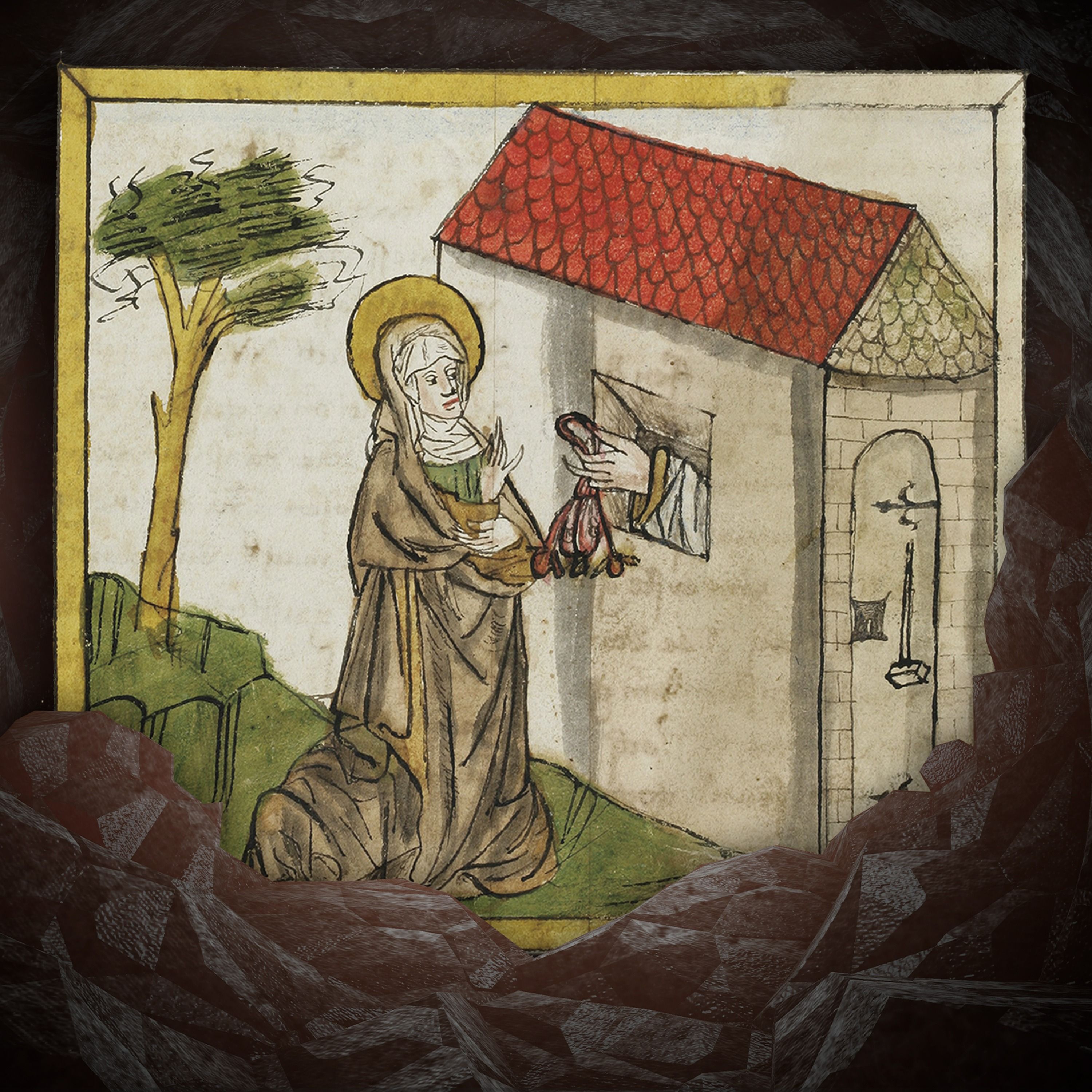
Ep 191How to Read Julian of Norwich / Ryan McAnnally-Linz
Julian of Norwich is known and loved for the lines revealed to her by God, “All shall be well and all shall be well, and all manner of thing shall be well.” But beyond the comfort of this understandably uplifting phrase, what are theological and philosophical insights we might learn from this anonymous medieval Christian mystic and anchoress?Ryan McAnnally-Linz joins Evan Rosa to discuss the historical context of Julian of Norwich, her life and vocation as an anchoress, and the story of near-death experience and subsequent mystical visions that led her to write such theologically rich and uplifting words—which comprise the earliest known writing by a woman in English. Together they have an extended discussion of a rather marvelous segment from the Long Text of the Revelation of Divine Love, sections 46-58, and in particular we look at the revelation Julian herself was most puzzled and mystified by during her own life, discovering understanding only decades after having received the vision: Section 51, the Parable of the Lord and the Servant.Image Credit: adapted from The Lives of the Saints Gallus, Magnus, Otmar and Wiboradain German, 1451–60. St. Gallen, Stiftsbibliothek, Cod. Sang. 602, p. 303.Show Notes“All shall be well” as an introduction to Julian for manyRowan Williams on Julian as one of the greatest English language theologiansWho was Julian? How she thinks and what we can draw from her for the purposes of theological insight and spiritual maturity?Found Julian in a medieval survey course and she has remained with himWhat caught you in Julian? Why did it stick with you?She synthesizes a visionary experience with deep theological reflection: subtle and sophisticated theologian; simplicity, earnestness, and virtuositySo give us a little bit of her biography. I know that we know precious little, but what do we know? And maybe give us some of the historical context of her?Couple of manuscripts of her writing; the short and the long textMargery Kempe visits Julian to make a request in The Book of Margery Kempe (https://d.lib.rochester.edu/teams/publication/staley-the-book-of-margery-kempe)Anchoress and is attached to a church in Norwich; 1340s first and second waves of the Black Death; mass loss and traumaThe text is less focused on herself outside of the visions that happen on what she believes is her death bed.What is the spiritual occupation of an anchoress or anchorite?Anchorite as isolated spiritual calling different from monks and hermits; life is in this one cellDo you know what motivations are there for that spiritual vocation in the church? Why would anyone do this?Anchorite ceremonies are like funeral rites; a death to the world, living only for prayerThe showings - 16 visions; prays for mind of the passion, bodily sickness, and three wounds (contrition, compassion, and willful longing for God)The suffering of Christ and his wounds and their popularity in medieval devotional practice16 showings that are intertwined and vary in form (visual, auditory, bodily, mental)The last showing, which she ponders for the rest of her life.What are some of the core philosophical, theological, or other concepts that are most salient for understanding Julian?Julian understands herself as beholden to the church, its teachings, and its tradition - wrestling with these and her visions.A Vision Shown to a Devout Woman by Julian (https://www.psupress.org/books/titles/0-271-02547-6.html)A Revelation of Love by Julian (https://www.penguinrandomhouse.com/books/261039/revelations-of-divine-love-by-julian-of-norwich-translated-by-elizabeth-spearing-introduction-and-notes-by-a-c-spearing/)Augustinian tradition is appealed to—his teachings on evil and sin, Christian PlatonismJulian as a Trinitarian thinkerWhat would you say about her understanding of love?Later visions in life and praying for many years for understanding —Love is THE thing for Julian, it’s the whole thing.Love as joyful communion but also a passionate willingness to sacrifice for one’s belovedA Short Play: The Lord and the Servant (from the long text)Chapter 51 of the Long TextRed herrings in Julian; the medieval trope of enumeratingThe perplexing vision of the servant in the hole ?Reconciling the goodness of the world with sin; dealing with what she is seeing from God and what the church teaches about sin—wresting with the detailsThe Fall, the “Felix Culpa” or the “Happy Fault,” and the servant in the holeGod looks without blame and that complicates church teaching on sin; layers in the narrative, God, humanity, ChristBeing drawn into the puzzling and the pondering experienced by Julian inspired by her writing; finding comfort in a loving God that we cannot see clearlyHow God sees“Our life and our being are in God.”Chapter 49 of Julian’s Showings“She’s saying, sorry sin, good creatures are good creatures and their goodness qua creatures of God is kept safe and whole in God, regardless of what their concrete existential messed-upness might be.”Julian says

Ep 190How to Read Dallas Willard / Steve Porter
Dallas Willard (1935-2013) was an influential philosopher and beloved author and speaker on Christian spiritual formation. He had the unique gift of being able to speak eloquently to academic and popular audiences, and it’s fascinating to observe the ways his philosophical thought pervades and influences his spiritual writings—and vice versa.In this episode, Steve Porter (Senior Research Fellow and Executive Director of the Martin Institute, Westmont College / Affiliate Professor of Spiritual Formation at Biola University) joins Evan Rosa to explore the key concepts and ideas that appear throughout Dallas Willard’s philosophical and spiritual writings, including: epistemological realism; a relational view of knowledge; how knowledge makes love possible; phenomenology and how the mind experiences, represents, and comes into contact with reality; how the human mind can approach the reality of God with a love for the truth; moral psychology; and Dallas’s concerns about the recent resistance, loss, and disappearance of moral knowledge.About Dallas WillardDallas Willard (1935-2013) was a philosopher, minister and beloved author and speaker on Christian philosophy and spiritual formation. For a full biography, visit Dallas Willard Ministries online.About Steve PorterDr. Steve Porter is Senior Research Fellow and Executive Director of the Martin Institute for Christianity & Culture at Westmont College, and an affiliate Professor of Theology and Spiritual Formation at the Institute for Spiritual Formation and Rosemead School of Psychology (Biola University). Steve received his Ph.D. in philosophy at the University of Southern California and M.Phil. in philosophical theology at the University of Oxford.Steve teaches and writes in Christian spiritual formation, the doctrine of sanctification, the integration of psychology and theology, and philosophical theology. He co-edited Until Christ is Formed in You: Dallas Willard and Spiritual Formation, Psychology and Spiritual Formation in Dialogue, and Dallas’s final academic book: The Disappearance of Moral Knowledge. He is the author of Restoring the Foundations of Epistemic Justification: A Direct Realist and Conceptualist Theory of Foundationalism, and co-editor of Christian Scholarship in the 21st Century: Prospects and Perils. In addition to various book chapters, he has contributed articles to the Journal of the Evangelical Theological Society, Journal of Spiritual Formation and Soul Care, Philosophia Christi, Faith and Philosophy, Journal of Psychology and Theology, Themelios, Christian Scholar’s Review, etc. Steve and his wife Alicia live with their son Luke and daughter Siena in Long Beach, CA.Show NotesThe Martin Institute for Christianity & Culture at Westmont CollegeDallas Willard Ministries (Free Online Resources)Dallas Willard, The Spirit of DisciplinesWillard as both spiritual formation teacher/pastor and intellectual/philosopherGary Moon, Becoming Dallas WillardDallas Willard MinistriesConversatio DivinaPhenomenology—“One of the principles of phenomenology is you want to kind of help others come to see what you've seen.”Willard “presenting himself to God” while teaching“The kingdom of God was in the room.”The importance of finding your own way into your spiritual practicesAn ontology of knowing and epistemological realism: “We can come to know things the way they are.”What does it mean to say that being precedes knowledge or that metaphysics precedes epistemology? What does that imply for spiritutal formation?What is real?Operating on accurate information about realityDallas Willard on Husserl: “What is most intriguing in Husserl's thought to me, the always hopeful realist, is the way he works out a theory of the substance and nature of consciousness and knowledge, which allows that knowledge to grasp a world that it does not make.”The Cambridge Companion to HusserlThe philosophical tradition of “saving the appearances”Mind-world relationshipThe affinity between concepts and their objectsDallas Willard on concepts and objects: “On my view, thoughts and their concepts do not modify the objects which make up reality. They merely match up or fail to match up with them in a certain way. Thus, there would be a way things are, and the realism there would be vindicated along with the possibility at least of a God's eye view.”Lying as a disconnection from the truth and therefore from the worldAgency in our choice to know God and pursue knowing GodThe role of sincerity and honesty in shared realityRichard Rorty, “Solidarity or Objectivity”: “breaking free of the shackles of objectivity”Dallas Willard in “Where Is Moral Knowledge?”: “One way of characterizing the condition of North American society at present is to say that moral knowledge, knowledge of good and evil, of what is morally admirable and despicable, right and wrong, is no longer available in our world to people generally. It has disappeared as a reliable resource for living.”Knowledge used to justify vi

Ep 189Fully Alive: Modern Monasticism & the Topography of the Soul / Elizabeth Oldfield
What does it mean to be fully alive and at peace with ourselves and our neighbors in the anxiety and fear of contemporary life?Joining Evan Rosa in this episode is Elizabeth Oldfield—a journalist, communicator, and podcast host of The Sacred. She’s author of Fully Alive: Tending to the Soul in Turbulent Times.Together they discuss life in her micro-monastery in south London; the meaning of liturgical and sacramental life embedded in a fast-paced, technological, capitalistic, obsessively popular society; the concept of personal encounter and Martin Buber’s idea that “all living is meeting”; the fundamentally disconnecting power of sin that works against the fully aliveness of truly meeting the other; including discussions of wrath or contempt that drives us toward violence; greed or avarice and the incessant insatiable accumulation of wealth; the attention-training benefits of gratitude and the identify forming power of our attention; throughout it all, working through the spiritual psychology of sin and topography of the soul—and the fact that we are, all of us, in Elizabeth’s words, “unutterably beloved.”About Elizabeth OldfieldElizabeth Oldfield is a journalist, communicator, and author. She hosts a beautiful podcast called The Sacred. And she’s author of Fully Alive: Tending to the Soul in Turbulent Times. Follow her @esoldfield, and visit her website elizabetholdfield.comShow NotesIntentional living community; pulling on monastic lifestyle and framework; read more about Elizabeth Oldfield’s micro-monastery here.People passing through the micro-monastery and the sharing of a meal and sitting in silence with othersCeltic prayer book - The Aidan Compline (https://www.northumbriacommunity.org/offices/monday-the-aidan-compline/)Fully Alive: Tending to the Soul in Turbulent Times by Elizabeth Oldfield (http://bakerpublishinggroup.com/books/fully-alive/421701)How you see your liturgical life, the rhythms of your life however else you might describe you spirituality as providing the soil of this book?A personal writing experience - communicating something of her tradition with the outside worldWhat it means to be fully alive to you?Everything is about relationships and connection; to be fully alive is to be fully connected with the soulBetween Man and Man (https://www.routledge.com/Between-Man-and-Man/Buber/p/book/9780415278270) and I and Thou by Martin Buber - “all living is meeting” (https://www.maximusveritas.com/wp-content/uploads/2016/04/iandthou.pdf)If all living is meeting, how are we failing in that regard?Unapologetic: Why, Despite Everything, Christianity Can Still Make Surprising Emotional Sense by Francis Spufford (https://www.harpercollins.com/products/unapologetic-francis-spufford?variant=32207439626274)Sin is disconnection; a turning inward“Elegy on the Lady Markham” by John Donne (https://www.poetrynook.com/poem/elegy-lady-markham-0)“As I Walked Out One Evening” by W.H. Auden (https://poets.org/poem/i-walked-out-one-evening)The Sacred podcast (https://www.theosthinktank.co.uk/comment/2017/12/06/introducing-the-sacred-podcast)Polarization, division, and the splitting of people - homophily and fight or flight responseJesus going to the margins, ignoring tribal boundaries and turning the other cheekSin and ReconciliationThe Givenness of Things: Essays by Marilynne Robinson, “I find the soul a valuable concept, a statement of the dignity of human life” (https://www.brethrenpress.com/product_p/9781250097316.htm)The soul is interesting and difficult to name but is so valuableRoom for uncertainty and poetry—we beat up our souls, keep ourselves distractedContemporary life is angry and greedyContempt is a poison for our souls and relationships and humanityStress and anxiety as a constantChristian non-violence traditionWe must feel our emotions - process them through the shared rituals of our communitiesDesire by Micheal O’Siadhail (https://www.baylorpress.com/9781481320061/desire/)Would you like to introduce your take on greed?Phyllis Tickle, dogged commitment of the scripture - the love of money is the root of all evilThe Parable of the Sower - Mark 4:19 (https://www.biblegateway.com/passage/?search=Mark 4%3A19&version=NIV)Made gods of wealth, greed, comfort, and connivenceGratitude is a medicine for greedOf Gratitude by Thomas Traherne? (https://www.cambridge.org/core/books/abs/works-of-thomas-traherne-vii/of-gratitude/161CCCE8293EE4034F65AB436AB4D3F9)“These are the Days We Prayed For” by Guvna B (https://genius.com/Guvna-b-these-are-the-days-lyrics)Notice and give thanks; misplaced desireAcadia, spiritual apathy, and heavy distractionAttention and discipline are formationThe Anxious Generation: How the Great Rewiring of Childhood is Causing an Epidemic of Mental Illness by Jonathan Haidt (https://www.anxiousgeneration.com/book)Community as accountability and rituals and set rhythms of lifeDivine Love, ultimate loveBaptism as a reminder of our death - love remainsQuiet space shared with others; honesty

Ep 188Political Rage & America's Threat from Within / Elizabeth Neumann
Elizabeth Neumann served as the Assistant Secretary for Counterterrorism and Threat Prevention at the U.S. Department of Homeland Security during the Bush Administration, and came back to the White House again in 2017 to serve in the Trump Administration.Her job was to counter emerging right-wing extremism, fueled by long-standing anger, resentment, white supremacism, and Christian nationalism. By April 2020, she had resigned from the Trump Administration. Citing a failure of leadership and his imperiling of American security, she signed an August 2020 statement with 130 other Republican national security officials, boldly stating in no uncertain terms that Trump was unfit for office.In this episode, Elizabeth opens up about this experience, told in her recent book Kingdom of Rage: The Rise of Christian Extremism and the Path Back to Peace. As a person of Christian faith with over two decades of experience in public service and national security, she offers a fascinating inside take on the inattention to domestic terrorism; she elucidates the emergence of a new and Christian extremism, grounded in rage and willing to take violent action; she explains the Jan 6 attack through the perspective of homeland security; and she reflects on Christian resources for responding to the chaotic, politicized anger characterized in right-wing extremism and how we might act as instruments of peace.About Elizabeth NeumannElizabeth Neumann served as the Assistant Secretary for Counterterrorism and Threat Prevention at the U.S. Department of Homeland Security during the Bush administration, and came back to the White House again in 2017 to serve in the Trump Administration, publicly resigning in 2020. She is author of Kingdom of Rage: The Rise of Christian Extremism and the Path Back to Peace, and is a frequent guest on national news outlets, and the Chief Strategy Officer at Moonshot. She is based in the Denver, CO area.Show NotesKingdom of Rage: The Rise of Christian Extremism and the Path Back to Peace by Elizabeth NeumannElizabeth Neumann’s faith journey and background in public service.Christian, North Texas/Bible Belt, more theologically conservative—an “evangelical mutt”Body of Christ is made up of different communities—personally gravitating towards more nerdy churches, an emphasis on Bible studiesPublic service as a way to live out the faithWorking for George W. Bush campaigns for governor and president—federalism, conservative, to the states: faith-based community initiatives and Bush’s compassionate conservative agenda9/11 as a moment of changeWorking in Homeland Security, specifically in the Domestic Terrorism UniteInstances of domestic violent extremism: Pittsburg Tree of Life (2018), Christ Church in New Zealand (2019), and El Paso Walmart (2019)Do you think of them as domestic terrorism? Do you think of it as a kind of violence that’s brewing from within? How does the Department of Security try to understand threats to America from within?Intelligence is used to inform responses to challenges, yet the means to collect don’t work domestically and domestic material support of terrorism is not understood as criminalNo way to designate domestic terrorism groupsThe threat has been there all along; domestic extremists require a shift in the focus - many Americans (3%, roughly 8 million people) believe in the necessity of violence for political aimsWe don’t talk about it so people don’t know about it, but the church is equipped to discuss and address the underlying drivers that mobilize people to violenceHow did you experience perspective shifts?COVID in 2020, protests against COVID procedures, and the protests surrounding the murder of George FloydWeaponizing of crisis by Trump administration for re-election campaignThe ANTIFA movement; authoritarian responses from Trump that were illegal and unconstitutional; no longer anyone in the room to tell him noJanuary 6 highlighted a security failure that was both day of as well as a result of 20 years of ignoring a threat from withinWould you be willing to share a bit about what motivated your decision to leave the Trump administration?Presidential personnel interviews as a loyalty test; people being pushed out; how far were people willing to go for Donald Trump?Hatch Act: prohibits federal employees, including political appointees, from engaging in political activityChristian nationalist mindset—How does Christianity get radicalized?Extremism: when an in-group perceives a threat to its success or survival by an out-group and hostile action is necessary—this is the nature of contemporary politics which are saturated in fear and anger.The plausibility of violent actionViolence is not the option taught by Jesus and the ScripturesViolence has a historic presence in the Christian traditionChange in the presence of Christianity in society that is unsettling for some, but cannot be an excuse for extremists and violent actionWhat are the prospects of keeping it a peaceful community

Ep 187Learning to Disagree / John Inazu
Genuine disagreement is vanishingly rare. But to disagree with careful listening, empathy, respect, and independent thinking—it’s an essential part of life in a pluralistic democratic society.In this episode, legal scholar and author John Inazu joins Evan Rosa to talk about his new book, Learning to Disagree: The Surprising Path to Navigating Differences with Empathy and Respect. He’s the Sally D. Danforth Distinguished Professor of Law and Religion at Washington University in St. Louis.Together they discuss the challenge of disagreeing well in contemporary life, replete with the depersonalization of social media; the difference between certainty and confidence; what it means to think for oneself, freely and independently; the virtue of humility in civil discourse; the prospect for political dissent and civil disobedience; how to pursue the truth in a culture of principled pluralism; and practical steps toward empathic and respectful disagreement.About John InazuJohn Inazu is the Sally D. Danforth Distinguished Professor of Law and Religion at Washington University in St. Louis. He teaches criminal law, law and religion, and various First Amendment courses. He writes and speaks frequently about pluralism, assembly, free speech, religious freedom, and other issues. John has written three books—including Learning to Disagree: The Surprising Path to Navigating Differences with Empathy and Respect (Zondervan, 2024) and *Liberty’s Refuge: The Forgotten Freedom of Assembly* (Yale, 2012)—and has published opinion pieces in the Washington Post, Atlantic, Chicago Tribune, LA Times, USA Today, Newsweek, and CNN. He is also the founder of the Carver Project and the Legal Vocation Fellowship and is a senior fellow with Interfaith America.Show Notes"Yeah? Well, you know, that's just like uh, your opinion, man."Get a copy of Learning to Disagree: The Surprising Path to Navigating Differences with Empathy and Respect (https://www.jinazu.com/learning-to-disagree)Disagreement around civility and civil discourse particularlyIdentifying and naming disagreementPractical limits of human relationship as a reality of disagreementWhy you picked up learning to disagree, disagreement in particular? And why is it important to you? What drew you now to make a comment about disagreement?Liberty’s Refuge: The Forgotten Freedom of Assembly (https://www.jinazu.com/libertys-refuge)Right of Assembly in the first amendment and what it means in groups - Madison and factions (Federalist 10?)Confident Pluralism: Surviving and Thriving Through Deep Difference (https://www.jinazu.com/confident-pluralism)Constitutional lawThe First Amendment as what secures the ability to disagree - Freedom of Religion and Freedom of Speech“One is, even if that was part of the, original focus, like any ongoing tradition, it can be lost or ignored. And so there's this sense in which each new generation needs to understand and appreciate it for intrinsic reasons and not just because they read it in a book.”Individual thinking but the reality of not doing anything individually as we are involved in embodied human relationshipsWhat starting points are there? You begin with empathy, what other starting points do you like to introduce to help people understand where you’re trying to take people with this?Complexity and compromise and recognizing that compromise isn’t always possibleHumility in competing visions of truth and what is best for the world; no good or bad, just different persuasionsA desire for certainty which fear and laziness underlineI wonder if you could speak a little bit more to the legal background and why you think that is so helpful and so instructive for going through this framework of learning to disagree?“Maybe only prudentially in order to try to defeat it, but the work of understanding the other side's argument in the best light possible is itself a work of empathy that allows you to step into the headspace of the opponent a little bit and allows you to see why someone who is not dumb or is not You know, completely outside of society might actually think differently.”Supreme Court and difficult, political decisionsApplying the approaches that are taught in law schools in every day lifeThree branches of government and checks and balancesLoss of human relationships with colleagues in Congress and the increase of them in the Supreme CourtPolitical dissent and political dissidentsWhen to disagree?Protests, assemblies, and activismThe privilege of dissent in the United StatesSocial pressures, social stigma, and the confidence and responsibility to dissentHow to cultivate respect for the one who you disagree with?Love your enemies and the Christian calling for interpersonal relationship with the person you disagree with; there is no guarantee of reciprocityQuestion of belief, right belief and orthodoxyDifferences matter, especially in theological conversation, but that doesn’t mean we should rest in certaintyLearning and granting grace to ourselves an

Ep 186Disillusioned with Faith: Finding Hope in Our Scars / Aimee Byrd
We live in a time of disillusionment. Trust is waning in the public sphere, religious affiliation is on decline, and some feel a deep tension or ambivalence about their community—whether that’s a region, family, political party, or spiritual tradition.How should we think about the experience of disillusionment, particularly the threat of becoming disillusioned with faith?Aimee Byrd, author of several books on contemporary issues facing Christianity. And after her own experience becoming disillusioned with the church, she wrote her most recent offering: The Hope in Our Scars: Finding the Bride of Christ in the Underground of Disillusionment.In this conversation, Aimee Byrd joins Evan Rosa to discuss: how to diagnose and understand disillusionment—particularly disillusionment with church and the trappings of Christian faith & culture; as well as the problem of spiritual abuse and the broken forms of faith that allow it to persist. She explores the Old Testament’s Song of Songs—exploring how it honors the depth of human longing and desire. She considers how beauty validates our yearnings and invites us toward a lasting faith and gives us new sight and recognition, and ultimately takes a hard look at what it means to explore our wounds and scars in search of hope and faith.About Aimee ByrdAimee Byrd is the author of many books, including her latest, The Hope in Our Scars: Finding the Bride of Christ in the Underground of Disillusionment (2024).Show NotesThe Hope in Our Scars: Finding the Bride of Christ in the Underground of Disillusionment by Aimee Byrd (https://zondervanacademic.com/products/the-hope-in-our-scars)Steven Heighton’s The Virtues of Disillusionment (free PDF download)Unpacking disillusionment. You spend some time thinking about disillusionment. Where do you begin to think about that?Experiencing disillusionment as we mature and try to figure out the meaningfulness of lifeThe hustle; pursuing what we think goodness is supposed to look likeA disrupting takes placeSpiritual maturity; writing into a neglect in women’s discipleshipThe rejection and harassment experienced by women acting as theologians - spiritual abuseHelp set some parameters for how you conceptualize spiritual abuse and how you came to understand and integrate with your story?“And yet these feelings of unsafety in the very place where you’re supposed to be shepherded.”Carefully using the word abuseAbuse: when people are okay with harming you for their own gain and power, where you are the costLimiting feelings of possibility; a shrinking of the person and questioning of their belongingDiane Langberg on the elements of personhood (https://www.dianelangberg.com/shop-books/)Agency, voice, and sense of selfDiagnosing disillusionment; a lot of dull signs leading up to it, somethings just not rightDesperation, loss, depression, fight, panic, pretending or rejecting/deconstructing to move onNaming our wounds is an action of hope“Jesus’ wounds are a testimony.”Our scars are a remembering, a telling of our story.John 12:24 - grain of wheat falling to the ground (https://www.biblegateway.com/passage/?search=John 12%3A24&version=NIV)Being a good witness to God, justing handing it over to him.“Unless a grain of wheat falls to into the ground” by Malcom Guite (https://malcolmguite.wordpress.com/2015/05/09/unless-a-grain-of-wheat-falls-into-the-ground/)Holding onto these resentments leaves us further alone; we must let go.We don’t need reform, we need resurrection.Maintaining a false sense of belonging through facadesSanctified imagination and communityWe need to recapture our imagination as a way to combat disillusionmentWalter Brueggemann - the riddle and insight of Biblical faith is that anguish leads to life, only grieving leads to joy (https://www.walterbrueggemann.com/resources/books/textonly/)Lifting the Veil: Imagination and the Kingdom of God by Malcom Guite (https://www.squarehalobooks.com/lifting-the-veil)“Scripture is a story. It’s all kind of story of people who screw up.”“God is bigger than all the ways we screw up our lives.”Open wounds, healing, scarringSong of Songs and unlocking the imagination and intimate love of GodScripture in which a women’s voice and experiences are given center stageSong of Songs, chapters three (https://www.biblegateway.com/passage/?search=Song of Songs 3&version=NIV) and five (https://www.biblegateway.com/passage/?search=Song+of+Songs+5&version=NIV)Love calls to usVulnerability in the position and in the naming of our experiencesBeholding the face of Christ, and Christ looking back at us - the beauty Christ sees in us, as Christ beautifies us.“Beauty is an invitation into goodness.”The natural world develops our taste for beauty.A desire to feed our allusion of security, yet our hearts remain uncaptured.Beauty engages will and involves all of our senses; a hyper-fixation on the brain that is not holisticAwe and wonder; the role of the poets and the artists as the reveal what we try to hustle over the top

Ep 185Black Motherhood: Love & Resistance / Kelly Brown Douglas
“Black motherhood has consistently been a contested space. Black women have just fought for their rights to be. And so when we say Black motherhood, to me, the reality of Black motherhood itself is the resistance. And we still stand and we claim what it means to be Black mothers. We've got to consistently stand firm trying to raise healthy children in spite of it all.”Rev. Dr. Kelly Brown Douglas (Episcopal Divinity School) discusses the gift and grace of Black motherhood to the world and what we can learn from Black mothers about love and resistance. Appreciating the example they set for the meaning of justice that emerges from love, and the capacity for love that emerges from justice, Dr. Douglas offers beautiful examples and expressions of the joy and abundance that Black motherhood means.She reflects on the impact of her maternal grandmother on her life; the Langston Hughes poem “Mother and Son”—which is a testimony of perseverance and robust agency; the glorious hush harbor sermon and ode to self-love and dignity, delivered by Baby Suggs Holy, known as “The Sermon in the Clearing" in Toni Morrison’s Beloved. It gave me chills to hear Dr. Douglas read the sermon. She looks back to the example set by Mamie Till, the mother of Emmitt Till, who as a 14 year old boy was lynched in 1955. And Dr. Douglas speaks in witness to the fear, pain, and grief of the Black mother during the Black Lives Matter era, drawing not only on her expertise in Womanist Theology, but her close relationship with her own son.Show NotesBlack motherhood and womanist theology; listening to the experiences of black motherhoodAudre Lorde “to love and to resist at the same time” - Sister Outsider: Essays and Speeches? (https://www.penguinrandomhouse.com/books/198292/sister-outsider-by-audre-lorde/)What does it mean to love and resist at the same time?Legacy passed on through motherhood; loving oneself while resisting that which says you are not a sacred child of God - helping black children to understand that they are somebody.Where have you been inspired by womanist scholars and by other sources in the Christian tradition and beyond for really strengthening the kind of love you are describing there?Inspired by the woman in her life - maternal grandmother especiallyThe Great Migrations from the SouthGrandmother worked as an elevator operator, a job traditionally associated with with black womenAlways made a way for her grandchildren to have fun and set aside money for them after high school - making sure they felt importantAccountable to one’s legacy, to the generations that came before.“You struggle for the children that you can’t see.”You’ve written about intergenerational dialogue, about communication and so tell me a little bit more about how you see love expressed through honest, truthful, wise communication?Communication as a part of love and a part of resistance; telling the story with tough truth and means of survivalBeloved by Toni Morrison (https://www.penguinrandomhouse.com/books/117647/beloved-by-toni-morrison/)Would you mind quoting it and kind of giving some context for listeners that are not familiar with that sermon?Sermon of self love; love of the whole self as an act against those that do not love youTo parent Black, the love and the harsh truthResurrection Hope: A Future Where Black Lives Matter by Kelly Brown Douglas (https://orbisbooks.com/products/resurrection-hope)Having these conversations with her own sonPhilandro Castile killing“These are the dialogues you cannot shy away from when you’re trying to raise a Black child, that you have to have, that you have to tell them the truth, you provide them the tools for surviving, those sort of practical tools. And at the same time, you have to provide them with the inside stuff that allows them to resist all of that stuff on the outside that tells them that they aren’t worth it.”The tools to resist and then thrive; the world suddenly becoming knowledgable on the conversations being had with Black childrenNot thinking it as THE conversation but one piece of intergenerational dialogueMother to Son by Langston Hughes (https://www.poetryfoundation.org/poems/47559/mother-to-son)How you see the possibility of Black motherhood passing on this love, which is resistance, this dual side of what that is? It’s kind of paradoxical holding them both together, how that might speak not just to the son but to the world?Black motherhood itself consistently attacked and contestedMoynihan in 1960s“Black women have just fought for their rights to be. And so when we say Black motherhood itself is the resistance.”Moral imaginary of justice“Because if we don’t have that dialogue that speaks to the hard truths and pushes forward an agenda of justice, then we cannot expect the next generation to be any better than out generation or previous generations in enacting a world where all mothers, children, can be free from anything that does not affirm and respect their sacred humanity.”Mamie Till and t

Ep 184Theologian of Hope: Remembering Jürgen Moltmann (1926 – 2024) / Miroslav Volf
On June 3,2024, Jürgen Moltmann died. He was one of the greatest theologians of our time. He was 98 years old. In this episode, Miroslav Volf eulogizes and remembers his mentor and friend. We then share a previously released conversation between Miroslav Volf and Jürgen Moltmann. This episode first aired in April 2021—and it includes Moltmann’s conviction that “without living theologically, there can be no theology”; it explores the meaning of joy and its connection to anxiety, fear, wrath, hope, and love; and Professor Moltmann shares about the circumstances in which he came to faith—as a 16-year-old drafted into World War II by the German Army, enduring the bombardment of his hometown of Hamburg, and being held for 3 years in a Scottish prison camp, where he read with new eyes the cry of dereliction from Jesus in the Gospel of Mark, “My God, my God, why have you forsaken me?”This cry would lay a foundation that led to his most influential book, The Crucified God. Moltmann explains the centrality of Christ, the human face of God, for not just his theological vision, but his personal faith—which is a lived theology.Ryan McAnnally-Linz introduces the episode by celebrating Jürgen Moltmann's 95th birthday and reflecting on his lasting theological influence.Show NotesHappy 95th Birthday, Jürgen Moltmann!Find the places of deepest human concern, and shine the light of the Gospel there.“Without living theologically, there can be no theology."Jürgen Moltmann’s Theology of Joy (1972)—“How can I sing the Lord’s song in an alien land?"Joy today: Singing the Lord’s song in the broad place of his presence"Hope is anticipated joy, as anxiety is anticipated terror.""How does one find the way to joy from within anxiety and terror?"Seeing the face of God as an awakened hopeJesus Christ as the human face of God: “Without Jesus Christ, I would not believe in God."God is present in the midst of sufferingDiscovering and being discovered by GodMoltmann’s story of being drafted to the Germany army at 16 years old (1943)In a prison camp in Scotland, Moltmann read the Gospel of Mark and found hope when there was no expectation.The Crucified God, the cry of dereliction, and the cry of jubilationContrasting joy with American optimism and the pursuit of happinessChristianity as a unique religion of joy, in virtue of the resurrection of ChristJoy versus fun—“You can experience joy only with your whole heart, your whole soul, and all your energies.""You cannot make yourself joyful… something unexpected must happen."Love and joy"The intention of love is the happiness of the beloved.""We are not loved because we are beautiful… we are beautiful because we are loved."Joy and gratitudeLove comes as a gift and surprise, and therefore leads to joy.Blessed, therefore grateful—receiving the gift as gift“Anticipated joy is the best joy.”The Passion of God as the foundation of joyPassionate God of the Hebrew Bible or Absolute God of Greek Metaphysics?An apathetic God makes apathetic people; the compassion of God makes compassionate peopleA Feeling God or an Apathetic God? God’s participation in suffering and joy“God participates in the joy of his creation."Luke 15: “There is more joy in heaven over one sinner who repents than over 99 just…"Lost coin, lost sheep, prodigal son...The wrath of God is God’s wounded love“My wrath is only for a moment, and my grace is everlasting.""Joy, in the end, wins."Watch a video of this interview here.Production NotesThis podcast featured theologians Jürgen Moltmann and Miroslav VolfEdited and Produced by Evan RosaHosted by Evan Rosa & Ryan McAnnally-LinzProduction Assistance by Alexa Rollow & Kacie BarrettA Production of the Yale Center for Faith & Culture at Yale Divinity School https://faith.yale.edu/aboutSupport For the Life of the World podcast by giving to the Yale Center for Faith & Culture: https://faith.yale.edu/give

Ep 183Mobilizing Hope in Women’s Prison: Discovering Agency, Community, and Creative Resilience / Sarah Farmer
How do you find hope when you can only see yourself and your future in light of your past mistakes? When you’re certain that everyone on the outside looking in is doing the same, punishing you, immobilizing you, invisibilizing you…?Seems the only way out of that spiral is the “God Who Sees.”Practical theologian Sarah Farmer joins Evan Rosa to discuss her recent book, Restorative Hope: Creating Pathways of Connection in Women’s Prisons. She describes the experience of prison—the ways it constrains movement, how it abridges and threatens agency, and how the constant surveillance leaves a person breathless. She illuminates the approach to theological education she and her colleagues put on offer for these women, these incarcerated theologians whose very lives were the texts to learn from. Sarah offers a contribution from Womanist Theology: Dolores Williams’ re-narration of Hagar—from the book of Genesis—the forgotten, quote, “invisibilized” Egyptian slave of Abraham and Sarah—Hagar, the woman who named God, “El Roi”… the God who sees. And she imagines a restorative hope built around self-respect and identity, connection, and resilience—a hope that shines even into the darkness of a women’s prison cell.Show NotesGet your copy of Restorative Hope: Creating Pathways of Connection in Women’s PrisonsProduction NotesThis podcast featured Sarah FarmerEdited and Produced by Evan RosaHosted by Evan RosaProduction Assistance by Alexa RollowA Production of the Yale Center for Faith & Culture at Yale Divinity School https://faith.yale.edu/aboutSupport For the Life of the World podcast by giving to the Yale Center for Faith & Culture: https://faith.yale.edu/give

Ep 182Peaceable Assembly: Protests, Collective Belonging, and Refuge in a Forgotten Right / John Inazu
Protests dominate the news. And while we’re familiar with freedom of speech, free exercise of religion, and freedom of the press—what about the freedom of assembly? The First Amendment of the U.S. Constitution—also contains “the right of the people peaceably to assemble.”But what exactly does that secure? How does this foundational, but often forgotten, right impact the shape of democracy, undergirding and making possible a flourishing public life? And are we prepared to defend the full application of these rights to our political rivals? Those we disagree with?Legal scholar John Inazu (Washington University, St. Louis) joins Evan Rosa for a discussion of the freedom of assembly—its history, meaning, interpretation, and application—as well as how it impacts the ability for citizens to gather to demonstrate and protest.Show NotesRead the Constitution of the United States of America (1787)Learning toGet your copy of Liberty’s Refuge: The Forgotten Freedom of AssemblyClick here to download a free version of Liberty’s Refuge.The First AmendmentIntroducing peaceable assembly.“I was working for a federal judge and working on a First Amendment case, looked down at the text of the First Amendment and saw the right of the people peaceably to assemble, and I thought to myself, I've had three years of law school and four years of legal practice, and I've never thought about the Assembly Clause.”Ecclesia as a counter political entity“I can’t assemble alone.”“Know Your Rights” by The ClashThree historical points about interpreting the assembly clauseThe grammar of the assembly clauseAssembly and Petition are two distinct rightsThe right of associationThe right of privacyAssembly is the right of associationWhere are the limits of a protest? Under assembly? Or under the free speech clause.“we ought to care about the values that drive different parts of the Constitution.”The groupness—the idea of collective expressionUnderstanding the “peaceable” side of assembly“The best law enforcement understand that there has to be some breathing space.”Reform mode vs revolution modePolicing assembly as more of an art than a sciencePeaceable assembly and collective belonging“Civil liberties are for losers.”Practical steps to upholding peaceable assembly as a right and civil libertyExercise your rightsDefend the rights of everyoneAbout John InazuJohn Inazu is the Sally D. Danforth Distinguished Professor of Law and Religion at Washington University in St. Louis. He teaches criminal law, law and religion, and various First Amendment courses. He writes and speaks frequently about pluralism, assembly, free speech, religious freedom, and other issues. John has written three books—including Learning to Disagree: The Surprising Path to Navigating Differences with Empathy and Respect (Zondervan, 2024) and Liberty’s Refuge: The Forgotten Freedom of Assembly (Yale, 2012)—and has published opinion pieces in the Washington Post, Atlantic, Chicago Tribune, LA Times, USA Today, Newsweek, and CNN. He is also the founder of the Carver Project and the Legal Vocation Fellowship and is a senior fellow with Interfaith America.Image CitationOriginal caption: “Demonstrators sit, with their feet in the Reflecting Pool, during the March on Washington, 1963] / WKL."Original black and white negative by Warren K. Leffler. Taken August 28th, 1963, Washington D.C, United States (@libraryofcongress).Colorized by Jordan J. Lloyd.Library of Congress Prints and Photographs Division Washington, D.C. 20540 USA https://www.loc.gov/item/2011648314/Production NotesThis podcast featured John InazuEdited and Produced by Evan RosaHosted by Evan RosaProduction Assistance by Macie Bridge, Alexa Rollow, and Tim BergelandA Production of the Yale Center for Faith & Culture at Yale Divinity School https://faith.yale.edu/aboutSupport For the Life of the World podcast by giving to the Yale Center for Faith & Culture: https://faith.yale.edu/give

Ep 181Desire: How Avarice and Acquisition Distort Our Longing for the Sacred / Micheal O'Siadhail
"Having lost a sense of the sacred, the only thing we want is acquisitiveness—more of everything. How can we break this vicious cycle of avarice? It seems to me that the only way we can possibly reign this in on ourselves is some retrieval of the sense of the sacred, something beyond ourselves. And I think that relearning humility—realizing that a parasitic pathogen can spread across the globe and wreak havoc as it did—brings us to the question again of the sacred.Dare we speak of a God who is worthy of all our desire? That we as creatures might want with all of our heart, all of our mind, to contemplate. Should anything less deserve our desiring really? Clearly there's a hierarchy of desire, but what is our overarching desire? Can we gamble on reimagining the wonder of a capacious God of endless surprises?" (Micheal O'Siadhail, from the episode)About Micheal O'SiadhailMicheal O'Siadhail is an award-winning poet and author of many collections of poetry. His Collected Poems was published in 2013, One Crimson Thread in 2015 and The Five Quintets in 2018, which received Conference on Christianity and Literature Book of the Year 2018 and an Eric Hoffer Award in 2020. His latest works are Testament (2022) and Desire (2023). He holds honorary doctorates from the universities of Manitoba and Aberdeen. He lives in New York.Show NotesMicheal O’Siadhail, DesireRecitation: EpigraphUsing poetry as a means to record the COVID-19 PandemicUsing words to process emotionHuman desire for more; greedThe internet as a driving force for consumptionConsumerism feeding climate changeBreaking the cycle by retrieving the sacred“Bless” is not a word used easily in our cultureRecitation: Pest 12Gratitude within anxietyRecitation: Pest 20Stewarding the earthRecitation: Habitat 13What is worthy of our desire?The “stabilitas” of being where you areWanting acquisitiveness more than the sacredTruly being known versus being famousRecitation: Behind the Screen 17Jonathan Haidt, The Anxious GenerationRecitation: Behind the Screen 20The temptation towards certaintyRecitation: Behind the Screen 1Trusting the God of surprises“Dare we speak of a God who is worthy of all our desire?”Recitation: Desire 24 & 25“On Earth as it is in Heaven” as a dreamReordering and re-educating our desireUnity and Denise Levertov’s concept of “One-ing”Production NotesThis podcast featured Micheal O’SiadhailEdited and Produced by Evan RosaHosted by Evan RosaProduction Assistance by Macie Bridge, Alexa Rollow, and Tim BergelandA Production of the Yale Center for Faith & Culture at Yale Divinity School https://faith.yale.edu/aboutSupport For the Life of the World podcast by giving to the Yale Center for Faith & Culture: https://faith.yale.edu/give

Ep 180How to Read Flannery O'Connor / Jessica Hooten Wilson
Flannery O’Connor is known for her short stories in which “A Good Man Is Hard to Find.” But it’s often those ugly, mean, disgusting, scandalizing, violent, weird, or downright hateful characters in Flannery O’Connor stories that become the vessels of grace delivered.So, how should we read Flannery O’Connor?Jessica Hooten Wilson (Pepperdine University) joins Evan Rosa to open up about Flannery O’Connor’s life, her unique perspective as a writer, the theological and moral principles operative in her work, all as an immense invitation to read O’Connor and find the beauty of God’s grace that emerges amidst the most horrendous evils. Includes a discussion of Flannery O’Connor’s short story, “Greenleaf.”Show NotesCheck out Jessica Hooten Wilson’s presentation of Flannery O’Connor’s final, unfinished novel: Flannery O’Connor’s Why Do the Heathen Rage?Click here for an online copy of “Greenleaf” to follow along with our analysisSpiritual formation through the works of Flannery O’ConnorHow to read for a flourishing life“Greenleaf” by Flannery O’ConnorFlannery O’Connor’s reading grounded in tradition of early church mothers and fathers.Paying attention to every individual word.First word: Mrs. Mays looses her agency.Europa & the Bull, Ovid’s MetamorphosisMrs. May’s blinds as hiding pieces of reality, shutting out GodThe spiritual truth of the story is concealed when not read attentively and intentionallyFlannery’s writings defying instant gratification“The wrong kind of horror”The development of American consumerismShowing versus enjoying violenceSacramental readingThe Holy FoolThe Violent Bear It Away as a hymn to the eucharistO’Connor requires spiritual reading.A summary of “Greenleaf”Pierced by the bull, a violent union of Savior and sinnerO’Connor’s Christian characters; “A Good Man is Hard to Find”Characters changing and choosing faith before death.The final paragraph of “Greenleaf”Mrs. Greenleaf as the opposite of Ivan Karamazov, in The Brothers KaramazovOpening to the world with the knowledge of GodPentecostalism and zeal in “Greenleaf”Stabbed in the heart, medieval mysticism“Lord, help us dig down under things and find where you are”About Jessica Hooten WilsonJessica Hooten Wilson is the Fletcher Jones Endowed Chair of Great Books at Pepperdine University (’23) and previously served as the Seaver College Scholar of Liberal Arts at Pepperdine University (’22-’23). She co-hosts a podcast called The Scandal of Reading: Pursuing Holy Wisdom with Christ & Pop Culture, where she discusses with fellow authors, professors, and theologians with Claude Atcho and Austin Carty. She is the author of Flannery O’Connor’s Why Do the Heathen Rage?: A Behind-the-Scenes Look at a Work in Progres*s (Brazos Press, January 23, 2024); Reading for the Love of God: How to Read as a Spiritual Practice (Brazos Press, 2023);* Scandal of Holiness: Renewing Your Imagination in the Company of Literary Saints (Brazos Press, 2022) which received a Christianity Today 2023 Award of Merit (Culture & the Arts) and a Midwest Book Review* 2023 Silver Book Award (Nonfiction – Religion/Philosophy); co-author with Dr. Jacob Stratman of Learning the Good Life: Wisdom from the Great Hearts and Minds that Came Before (Zondervan Academic, 2022); Giving the Devil his Due: Demonic Authority in the Fiction of Flannery O’Connor and Fyodor Dostoevsky* (February 28, 2017), which received a 2018 Christianity Today Book of the Year Award in the Culture & the Arts; as well as two books on Walker Percy: *The Search for Influence: Walker Percy and Fyodor Dostoevsky* (Ohio State University Press, 2017) and Reading Walker Percy’s Novels (Louisiana State University Press, 2018); most recently she co-edited Solzhenitsyn and American Culture: *The Russian Soul in the West* (University of Notre Dame Press, 2020).She has received numerous fellowships, grants, and awards, including a Fulbright Fellowship to the Czech Republic, an NEH grant to study Dante in Florence in 2014, and the Biola Center for Christian Thought sabbatical fellowship. In 2018 she received the Emerging Public Intellectual Award given by a coalition of North American think tanks in collaboration with the Centre for Christian Scholarship at Redeemer University College, and in 2019 she received the Hiett Prize in Humanities from The Dallas Institute of Humanities and Culture.Production NotesThis podcast featured Jessica Hooten WilsonEdited and Produced by Evan RosaHosted by Evan RosaProduction Assistance by Macie Bridge, Alexa Rollow, and Tim BergelandA Production of the Yale Center for Faith & Culture at Yale Divinity School https://faith.yale.edu/aboutSupport For the Life of the World podcast by giving to the Yale Center for Faith & Culture: https://faith.yale.edu/give

Ep 179A World Out of Joint: Pilgrimage and the Possibilities of Homemaking / Ryan McAnnally-Linz
This conversation is based on a free downloadable resource available at faith.yale.edu. Click here to get your copy today.“We may heed the call of Jesus to follow me and find him leading us right into the home we already have.” (Ryan McAnnally-Linz)What are the possibilities of homemaking in a world out of joint? What does it mean for Christians to be on a pilgrimage? To be sojourners in the world?Ryan McAnnally-Linz joins Evan Rosa to discuss what it means for Christian life to be a journey not from here to there, but from here to … here. Together they discuss what it means for the world to be the home of God; the task of resisting the “dysoikos” (or the parodic sinful distortion of home); the meaning of Christian life as a pilgrimage; and three faithful ways to approach the work of homemaking that anticipates how the world is becoming the home of God—Ryan introduces examples from Dorothy Day and the Catholic Worker movement, Julian of Norwich, and a modern-day farming family.

Ep 178You Are A Tree: Metaphor & the Poetry of Our Humanity / Joy Marie Clarkson
Help us improve the podcast! Click here to take our listener survey—5 respondents will be randomly selected to receive a signed and personalized copy of Life Worth Living: A Guide to What Matters Most.We need the world to understand it. Human embodied experience and material life in the world has a profound effect on our thinking—not just poetry and pop music, but our intellectual reflections, philosophical theories and scientific observations, to the most mundane conversations.Take a closer look at human language and ideas, and we’ll find we are deeply embedded, grounded, and built on a foundation of metaphor. That last sentence, for instance, depends on the metaphor KNOWLEDGE is a BUILDING. But navigating this terrain can be treacherous and we can easily get lost (another metaphor: LIFE is a JOURNEY). But to be a tree planted by streams of water, bearing fruit, flourishing with vibrant leaves, we can allow our roots to sink down into this reality and bloom and reach upward (YOU are a TREE).Theologian Joy Marie Clarkson joins me and Macie Bridge today for a conversation about metaphor. It’s brimming and full of metaphor itself (that one’s KNOWLEDGE is a CONTAINER), but it’s not too meta.Together we discuss: How we see ourselves as human: Are we trees? Are we machines? The beauty of language and the glory of poetry to reveal intangible or invisible wisdom and experience. Joy explains the hidden negation in metaphors and the dance between subjective convention and objective realities. We revel and play with language and its particularity. We discuss Julian of Norwich on Jesus as the source of motherhood. J.R.R. Tolkien on technology and redemption through trees and dark journeys. And we explore the many metaphors that seem to undergird Christian theological reflection on flourishing life.About Joy ClarksonJoy Marie Clarkson is research associate in theology and literature at King’s College London. She’s the author of Aggressively Happy: A Realist’s Guide to Believing in the Goodness of Life, as well as her most recent You Are a Tree: And Other Metaphors to Nourish Life, Thought, and Prayer. Her writing has also appeared in The Tablet, Christianity Today, and Plough Quarterly. She is the Books and Culture Editor for Plough Quarterly and hosts a podcast called Speaking with Joy. Check out her Substack here.Show NotesExplore the book: Joy Clarkson, You Are a Tree: And Other Metaphors to Nourish Life, Thought, and PrayerJoy Clarkson’s SubstackMetaphor embedded throughout thought and languageAre you a machine? Are you a tree?Hidden negation within metaphorsBill Collins poem, “Litany”: “You are the goblet and the wine.”Aristotle on metaphor: Carry over the properties of one thing to another.Whispering “not really though”Metaphors about God and internal or hidden negationComplexity of the worldPosture of humilityLiteral language is a kind of trick to think that “we actually have said the thing finally and completely.”Thomas Aquinas, medieval theologians and speaking about God by way of analogy“The words we can say about God kind of come from, the perfections we perceive and things in the world.”Medieval bestiaries“The true panther is Christ.”“The sweet breathed, multicolored Christ panther.”When language falls shortPseudo-Dionysus the AreopagiteUnspeakability of things and the radical particularity of languageJulian of Norwich, Jesus as the source of motherhood: “Jesus our true mother.”Bobby McFerrin’s “The 23rd Psalm”Metaphors about humanityHumanity as machines vs humanity as treesMechanical metaphors for humanity fall short and become dangerous when it implies that we are only as good as our productivityTrees are an older and more mysterious metaphor for human beings.Security and success—top dog vs underdogMetaphor: SUCCESS is UP and climbing the corporate ladder“We need each other.”The Giving Tree and Treebeard from J.R.R. Tolkein’s, The Lord of the Rings*The Two Towers—*Saruman vs the Ents and ecological and technological ethics that provide insight for our humanity and lived environmentThe Christian life as a metaphor“You are God’s poem. You are kind of this living, breathing poem that's drawing its imagery from the goodness of God.”Poesis and the imago DeiPhenomenological description of things in everyday life“Paying attention to those kind of very everyday experiences just filled me personally with a sense of how densely meaningful and poetic our everyday lives are.”Production NotesThis podcast featured Joy Marie ClarksonEdited and Produced by Evan RosaHosted by Evan RosaProduction Assistance by Macie Bridge, Alexa Rollow, & Tim BergelandA Production of the Yale Center for Faith & Culture at Yale Divinity School https://faith.yale.edu/aboutSupport For the Life of the World podcast by giving to the Yale Center for Faith & Culture: https://faith.yale.edu/give
Ep 177Chinese Political Theology: Protests in Blood Letters, Freedom, and Religion in China Today / Peng Yin
Help us improve the podcast! Click here to take our listener survey—5 respondents will be randomly selected to receive a signed and personalized copy of Life Worth Living: A Guide to What Matters Most."There were a lot of people with moral courage to resist, to protest the communist revolutions, but few of them had the spiritual resource to question the system as a whole. Many intellectuals really protested the policies of Mao himself, but not the deprivation of freedom, the systematic persecution, the systematic suppression of religion and freedom as a whole—the entire communist system. So I think that's due to Lin Zhao's religious education. It's very helpful to have both moral courage and spiritual theological resource to make certain social diagnosis, which, I think, was available for Lin Zhao. So I would think of her as this exceptional instance of what Christianity can do—both the moral courage and the spiritual resource to resist totalitarianism." (Peng Yin on politically dissident Lin Zhao)What are the theological assumptions that charge foreign policy? How does theology impact public life abroad? In this episode, theologian Peng Yin (Boston University School of Theology) joins Ryan McAnnally-Linz to discuss the role of theology and religion in Chinese public life—looking at contemporary foreign policy pitting Atheistic Communist China against Democratic Christian America; the moving story of Christian communist political dissident Lin Zhao; and the broader religious, philosophical, and theological influences on Chinese politics.Show NotesReligion’s role in Chinese political thought.Thinking beyond Communist Authoritarianism and Christian Nationalism.American foreign policy framed as “good, democratic” US versus “authoritarian, atheistic” China.Chinese Communist party borrowing from Christian UtopianismSole-salvific figure: Not Christ, but the PartyChinese Communism is a belief, not something that is open to verification. It’s not falsifiable.Did the communist party borrow from Christian missionaries?Communist party claiming collective cultivation over Confucianism’s self cultivation.History of religious influence in Chinese political thoughtReligion’s contemporary influence in Chinese public lifeLin Zhao, Christian protestor.Lin Zhao as “exceptional instance of what Christianity can do: both the moral courage and the spiritual resource to resist totalitarianism.”“New Cold War Discourse”Chinese immigration influx after 1989 Tiananmen Movement.Inhabiting a space between two empires.“God's desire for human happiness is not simply embodied in one particular nation in an ambiguous term.”The nexus of democracy, equality, and theological principlesHistorical impacts of religion in Chinese public life—particularly in Confucianism and Buddhism and eventually ChristianityPeng reflects on his own moral sources of hope and inspiration—which arise not from the State, but from a communion of saints.About Peng YinPeng Yin is a scholar of comparative ethics, Chinese theology, and religion and sexuality. He Assistant Professor of Ethics at Boston University’s School of Theology. He is completing a manuscript tentatively entitled Persisting in the Good: Thomas Aquinas and Early Chinese Ethics. The volume explores the intelligibility of moral language across religious traditions and rethinks Christian teaching on human nature, sacrament, and eschatology. Yin’s research has been supported by the Louisville Institute, Political Theology Network, Ricci Institute for Chinese-Western Cultural History, and Yale’s Fund for Gay and Lesbian Studies.A recipient of Harvard’s Derek Bok Certificate of Distinction in Teaching, Yin teaches “Comparative Religious Ethics,” “Social Justice,” “Mysticism and Ethical Formation,” “Christian Ethics,” “Queer Theology,” and “Sexual Ethics” at STH. At the University, Yin serves as a Core Faculty in Women’s, Gender, and Sexuality Studies Program, and as an Affiliated Faculty in Department of Classical Studies and Center for the Study of Asia. In 2023, Yin will deliver the Bartlett Lecture at Yale Divinity School and the McDonald Agape Lecture at the University of Hong Kong.Production NotesThis podcast featured Peng Yin & Ryan McAnnally-LinzEdited and Produced by Evan RosaHosted by Evan RosaProduction Assistance by Macie Bridge, Alexa Rollow, & Tim BergelandA Production of the Yale Center for Faith & Culture at Yale Divinity School https://faith.yale.edu/aboutSupport For the Life of the World podcast by giving to the Yale Center for Faith & Culture: https://faith.yale.edu/give

Ep 176The Transforming Fire of Theological Education: Learning to See the World / Mark Jordan
Help us improve the podcast! Click here to take our listener survey—5 respondents will be randomly selected to receive a signed and personalized copy of Life Worth Living: A Guide to What Matters Most.What are the goals of education? Are we shaping young minds or corrupting the youth? Theologian Mark Jordan joins Matt Croasmun for a conversation about the meaning of theological education today. Mark is the R. R. Niebuhr Research Professor at Harvard Divinity School, and is the author of ten books, including Telling Truths in Church: Scandal, Flesh, and Christian Speech. He came on the show to discuss his 2021 book, Transforming Fire: Imagining Christian Teaching—along the way, he reflects on Christian pedagogical principles; the question of the teacher’s power and the potential to enact an abusive pedagogy; he looks at the enigmatic, provoking, and sometimes deliberately elusive teaching strategy of Jesus through his parables; the role of desire in learning—and a shared love for the divine between teacher and student; he acknowledges the expansiveness of theological education that occurs outside a classroom setting; and he questions the very purpose of Christian theological education.Mark D. Jordan is the R. R. Niebuhr Professor of Divinity at Harvard Divinity School. He is the author of ten books, including Telling Truths in Church: Scandal, Flesh, and Christian Speech. A Fellow of the American Academy of Arts and Sciences, he has also received a Guggenheim Fellowship, a Fulbright- Hays Fellowship, and a Luce Fellowship in Theology.Show NotesCheck out Mark Jordan's book Transforming Fire: Imagining Christian Teaching.Louis Agassiz's story of the fish exemplifies a strong pedagogy.Teaching should center on the text itself, not the teacher: “In the space between the text and the student, I need to just step aside as far as possible and put the fish on the table.”The parables of Jesus are themselves a pedagogy. They are “enigmatic, provoking, sometimes deliberately elusive” in order to “stop the hearer in his tracks or her tracks.”The shift of theological education primarily from monastic schools to universities suggests the site of divine revelation is also primarily confined to the university classroom.The shift of theological education to universities also requires theological education to follow the schedule of a university which limits the time some texts require to be read properly.The texts being taught intend to transform students' lives with the lessons they hold.Teachers of Christian theology can invite transformation, but ultimately divine action is beyond teachers' control: “Faith is a divine gift.”Teachers often communicate to their students in bodily and affective ways in addition to the actual words they use: “Bodies learn best from bodies.”Mark Jordan's thoughts on teaching are especially true of theological education, but they can be true of other subjects as well.“Education depends on desire.” That is, it depends on the student and teacher's shared love for the divine, for other people, and for the world.Using the model of Jesus, who gently corrected his students' misguided expectations of him, teachers can also gently correct a student who “is beginning to mistake [the teacher] for the actual point of the course.”Theological education can and is taking place everywhere, not just in the classroom setting.“The question is not, will there will be a future of theology? It's where will there be a future of theology?”In many universities and seminaries, the time and expense of formal theological education prevent potential students from undergoing academic training. How can we reimagine theological education to allow for greater accessibility, even to those not interested in professional formation as a church leader?Production NotesThis podcast featured Mark Jordan and Matt CroasmunEdited and Produced by Evan RosaHosted by Evan RosaProduction Assistance by Alexa Rollow, Macie Bridge, and Tim BergelandA Production of the Yale Center for Faith & Culture at Yale Divinity School https://faith.yale.edu/aboutSupport For the Life of the World podcast by giving to the Yale Center for Faith & Culture: https://faith.yale.edu/give

Ep 175The Heart of Theology: Emotions, Christian Experience, & the Holy Spirit / Simeon Zahl
Can you spare 3 minutes to take our listener survey? After the survey closes, we'll randomly select 5 respondents to receive a free, signed, and personalized copy of Life Worth Living: A Guide to What Matters Most. Click here to take the survey! Thank you for your honest feedback and support!“For theology to be worth anything, it must traffic in real life, and that real life begins in the heart.”Theologian Simeon Zahl (University of Cambridge) joins Evan Rosa to discuss his book, The Holy Spirit and Christian Experience, reflecting on emotion and affect; the livability of Christian faith; the origins of religious ideas; the data of human desire for theological reflection; the grace of God as the ultimate context for playfulness and freedom; and the role of the Holy Spirit in holding this all together.About Simeon ZahlSimeon Zahl is Professor of Christian Theology in the Faculty of Divinity. He is an historical and constructive theologian whose research interests span the period from 1500 to the present. His most recent monograph is The Holy Spirit and Christian Experience, which proposes a new account of the work of the Spirit in salvation through the lens of affect and embodiment. Professor Zahl received his first degree in German History and Literature from Harvard, and his doctorate in Theology from Cambridge. Following his doctorate, he held a post-doc in Cambridge followed by a research fellowship at St John’s College, Oxford. Prior to his return to Cambridge he was Assistant Professor of Systematic Theology at the University of Nottingham.Show NotesExplore Simeon Zahl’s The Holy Spirit & Christian Experience“For theology to be worth anything, it must traffic in real life, and that real life begins in the heart.”Theology becoming abstracted from day to day life“There is a tendency that we have as human beings, as theologians to do theology that gets abstracted in some way from the concerns of day to day life that we get caught up in our sort of conceptual kind of towers and structures or committed to certain kinds of ideas in ways that get free of the life that Christians actually seem to lead.”“Real life begins in the heart.”God is concerned with the heart.Emotion, desire, and feelingsWhere does love come in?Martin Luther and Philip MelanchthonPhilip Melanchthon’s 1521 Loci Communes: Defining human nature through the “affective power”Affect versus rationality at the center of Christian lifeCredibility, plausibility, and livability of ChristianityAuthenticity and the disparity between values and beliefs and real lives.Doctrine of GraceEnabling a hopeful honesty“What Christianity says and what it feels need to be closer together.”Evangelical conversion in George Elliot’s novella, Janet’s Repentance“Ideas are often poor ghosts; our sun−filled eyes cannot discern them; they pass athwart us in thin vapour, and cannot make themselves felt. But sometimes they are made flesh; they breathe upon us with warm breath, they touch us with soft responsive hands, they look at us with sad sincere eyes, and speak to us in appealing tones; they are clothed in a living human soul, with all its conflicts, its faith, and its love. Then their presence is a power, then they shake us like a passion, and we are drawn after them with gentle compulsion, as flame is drawn to flame.” (George Eliot)Art’s ability to speak to desire.T.S. Eliot: “Poetry operates at the frontiers of consciousness.”Exhausted by religious languageHow the aesthetic impacts the acceptance of ideasDurable conceptsWhere theological doctrine comes fromSimeon Zahl: “In what ways are theological doctrines themselves developed from and sourced by the living concerns and experiences of Christians and of human beings more broadly? Doctrines do not develop in a vacuum or fall from the sky, fully formed. Human reasonings, including theological reasonings, are never fully extricable in a given moment from our feelings, our moods, our predispositions, and the personal histories we carry with us. furthermore, as we shall see in the book, doctrines have often come to expression in the history of Christianity, not least through an ongoing engagement with what have been understood to be concrete experiences of God's spirit and history.”“People were worshipping Christ before they understood who he was.”“Speaking about human experience just is speaking about the doctrine of the Holy Spirit.”Desire and emotion as pneumatological experienceSourcing emotional and experiential data for theological reflectionErnst Troelsch: “Every metaphysic must find its test in practical life.”“The half-light of understanding”Nietzsche: “The hereditary sin of the philosopher is a lack of historical sense.”Augustine’s transformation of desireEmotional experience as inadequate tool on its ownNoticing our own emotional experiences“If you want to pay attention to the Holy Spirit in theology, that means you have to pay attention to embodied experiential realities.”Worshipping of God as Trinity befo

Ep 174A Voice Crying Out: Brown Church & Critical Race Theory / Robert Chao Romero
There’s a 500-year history of social justice activism that emerged from Christianity in the Americas, and it comes to us through the Brown Church. Rev. Dr. Robert Chao Romero (Associate Professor of Latina/o Studies at UCLA) joins Evan Rosa to discuss the history of Christian racial justice efforts in the Americas, as well as a constructive and faithful exploration of Christianity & Critical Race Theory. He is a historian, legal scholar, author, a pastor, and an organizer who wants to bring the history of Christian social justice around race to bear on the systems and structures of racism we see in the world today. He is an Asian-Latino who straddles the worlds of Chinese and Mexican heritage; Latin American history and Law; scholarship and a pastoral ministry; and a contemplative and an activist. He’s author of Brown Church: Five Centuries of Latina/o Social Justice, Theology, and Identity—and is co-author (with Jeff M. Liou) of Christianity and Critical Race Theory: A Faithful & Constructive Conversation.About Robert Chao RomeroRev. Dr. Robert Chao Romero is "Asian-Latino," and has been a professor of Chicana/o Studies and Asian American Studies at UCLA since 2005. He received his Ph.D. from UCLA in Latin American History and his Juris Doctor from U.C. Berkeley. Romero has published more than 30 academic books and articles on issues of race, immigration, history, education, and religion, and received the Latina/o Studies book award from the international Latin American Studies Association. He is author of Brown Church: Five Centuries of Latina/o Social Justice, Theology, and Identity, which received the InterVarsity Press Readers’ Choice Award for best academic title; as well as his most recent book, Christianity and Critical Race Theory: A Faithful & Constructive Conversation, co-authored with Jeff M. Liou. Romero is a former Ford Foundation and U.C. President's Postdoctoral Fellow, as well as a recipient of the Louisville Institute's Sabbatical Grant for Researchers. Robert is also an ordained minister and community organizer.Show NotesBrown Church: Five Centuries of Latina/o Social Justice, Theology, and IdentityChristianity and Critical Race Theory: A Faithful and Constructive ConversationAbout Robert Chao RomeroAsian-Latino HeritageSpiritual Borderlands and liminalityThe 500-year history of the Brown ChurchFr. Antonio de Montesinos and the first racial justice sermon in the AmericasBartolome De Las Casas and concientización (repentance, metanoia)Mision IntegralChristianity & Critical Race TheoryThe four basic tenets of Critical Race Theory and how Christians can understand them in light of the GospelHope and eschatological vision for justice and unityThe imago DeiProduction NotesThis podcast featured Robert Chao RomeroEdited and Produced by Evan RosaHosted by Evan RosaProduction Assistance by Macie Bridge, Alexa Rollow, and Tim BergelandA Production of the Yale Center for Faith & Culture at Yale Divinity School https://faith.yale.edu/aboutSupport For the Life of the World podcast by giving to the Yale Center for Faith & Culture: https://faith.yale.edu/give

Ep 173Christianity as a Way of Life: Practice & Belief / Kevin Hector
What would it mean for us to take Christianity seriously as a way of life, a set of practices and ways of being in the world—and not merely a list of beliefs?Theologian Kevin Hector (University of Chicago Divinity School) joins Ryan McAnnally-Linz for a discussion of his latest book, Christianity as a Way of Life. Together they reflect on the practice of Christianity; the role of devotion to God in framing the importance of Christianity to a practitioner; the unique practices embedded in the life of Christians; the plausibility of Christianity today; what it means to see Jesus in people and look for the image of God in others; the practices of imitation and forgiveness; the conflicted character of Christian experience; loving God as loving what God loves; the significance of shame; and what it means to renarrate your life in light of the Gospel.About Kevin HectorKevin Hector is the Naomi Shenstone Donnelley Professor of Theology and of the Philosophy of Religions; also in the College. His teaching and research are devoted largely to interpretive questions, particularly (a) how best to understand faith commitments, and (b) how the outworking of such commitments can shed light on broader cultural issues. Hector's first book, *Theology without Metaphysics* (Cambridge University Press, 2011), thus defends a novel approach to the problem of metaphysics by developing a philosophically-informed and critically-articulated theology of language. In his second book, The Theological Project of Modernism: Faith and the Conditions of Mineness (Oxford University Press, 2015), Hector explores the idea of 'mineness,' in the sense of being able to identify with one's life or experience it as self-expressive, by tracing the development of this idea in modern theology. His third book, Christianity as a Way of Life: A Systematic Theology (Yale University Press, 2023) argues that we can understand Christianity as a set of practices designed to transform one’s way of perceiving and being in the world or, in sum, as a way of life. And in his forthcoming book-project, tentatively entitled “Life as a Theological Project: Creating a Usable Past,” Hector focuses on memoirs as a site of theological reflection, not least because memoirs shed light on issues that people wrestle with more generally.Follow him on Twitter/X here.Show NotesCheck out Christianity as a Way of Life: A Systematic Theology (Yale University Press, 2023)Disconnect between academic theology and ordinary ChristiansLosing God to Christian practicesDevotion as God’s importance being important to you.Imitation as practice for learning devotion.LeBron James as an example of devotion“The Martha Stewart effect”Being yourself as a form of devotionMother Teresa and “seeing Jesus in people”Looking for the image of God in othersThe hermeneutical circle: making sense of the parts through the whole, and revising our sense of the whole through the parts.Nick Wolterstorff, forgiving as naming the wrong as a wrong, while excusing is ignoring the wrong.Indignation versus resentmentHow transparent are we to ourselves?Practice as building habitual reflexesPractices make it more and more sensible to orient towards GodShame in Hector’s Christian frameworkMarilynne Robinson’s LilaProduction NotesThis podcast featured Kevin HectorEdited and Produced by Evan RosaHosted by Evan RosaProduction Assistance by Macie Bridge, Alexa Rollow, & Tim BergelandA Production of the Yale Center for Faith & Culture at Yale Divinity School https://faith.yale.edu/aboutSupport For the Life of the World podcast by giving to the Yale Center for Faith & Culture: https://faith.yale.edu/give

Ep 172Renovating the Heart of Our Politics / Michael Wear
With unflagging and unwavering hope in our civic life Michael Wear (Center for Christianity & Public Life) wants to renovate the character of Christian political engagement. He’s a former White House and presidential campaign staffer and his new book is called The Spirit of Our Politics: Spiritual Formation and the Renovation of Public Life.In this conversation with Evan Rosa, he reflects on what it means to seek the good of the public; the problem of privatization; what it means to be politically homeless and how to avoid angst about that; the meanings of political parties and how we end up fractured and confused when we look for an identity in them; he reflects on Dallas Willard’s epistemological and moral realism and its prospects for political life; and the virtue of gentleness and giving away the last word.About Michael WearMichael Wear is the Founder, President and CEO of the Center for Christianity and Public Life, a nonpartisan, nonprofit institution based in the nation's capital with the mission to contend for the credibility of Christian resources in public life, for the public good. For well over a decade, he has served as a trusted resource and advisor for a range of civic leaders on matters of faith and public life, including as a White House and presidential campaign staffer. Michael is a leading voice on building a healthy civic pluralism in twenty-first century America. He has argued that the spiritual health and civic character of individuals is deeply tied to the state of our politics and public affairs.Michael previously led Public Square Strategies, a consulting firm he founded that helps religious organizations, political organizations, businesses and others effectively navigate the rapidly changing American religious and political landscape.Michael's next book, The Spirit of Our Politics: Spiritual Formation and the Renovation of Public Life, will be released on January 23, 2024. Michael’s first book, Reclaiming Hope: Lessons Learned in the Obama White House About the Future of Faith in America, offers reflections, analysis and ideas about the role of faith in the Obama years and what it means for today. He has co-authored, or contributed to, several other books, including Compassion and Conviction: The AND Campaign's Guide to Faithful Civic Engagement, with Justin Giboney and Chris Butler. He also writes for The Atlantic, The New York Times, The Washington Post, Catapult Magazine, Christianity Today and other publications on faith, politics and culture.Michael holds an honorary position at the University of Birmingham’s Cadbury Center for the Public Understanding of Religion.Michael and his wife, Melissa, are both proud natives of Buffalo, New York. They now reside in Maryland, where they are raising their beloved daughters, Saoirse and Ilaria.Production NotesThis podcast featured Michael WearEdited and Produced by Evan RosaHosted by Evan RosaProduction Assistance by Macie Bridge, Alexa Rollow, & Tim BergelandA Production of the Yale Center for Faith & Culture at Yale Divinity School https://faith.yale.edu/aboutSupport For the Life of the World podcast by giving to the Yale Center for Faith & Culture: https://faith.yale.edu/give

Ep 171Asian Americans, Racism, and Capitalism / Jonathan Tran
What are the economic forces that underly racist thinking? What are the theological dimensions of racism? How does the “political economic distortion of the divine economy” impacts the contemporary experience of and response to racism?In this episode, Jonathan Tran (Baylor University) joins Matt Croasmun to discuss his book, Asian Americans & the Spirit of Racial Capitalism, focusing on the unique experience of Asian Americans, and Jonathan’s own experience growing up as a war refugee in southern California; where race and racialized thinking really comes from and how we can understand its history and its impact today; Christian moral psychology; meritocracy and capitalism; and they discuss a unique Christian community—Redeemer Community Church in San Francisco that offers a unique experiment in bearing witness to the economic and racial realities of life today, but through the theological framing of the Gospel.About Jonathan TranJonathan Tran is a theologian and ethicist, and is Associate Dean for Faculty in the Honors College and Professor of Theology in Great Texts at Baylor University. His research focuses on the human life in language, and what that life reveals about God and God’s world. Lately, that research has focused on race and racism, and his book Asian Americans and the Spirit of Racial Capitalism attempts to present racism as a theological problem, a political economic distortion of the divine economy, and a problem given to the usual redress, the church laying claim to God’s original revolution.Show NotesThe roots of Asian Americans and the Spirit of Racial CapitalismAre we thinking about racism backwards?Race as a self-interpreting categoryIs race just obvious? Is it just about the racialized relationships we have with each other?“Rather than thinking of race as basic, we want to ask the question, when and where and how did race come to capture our imaginations, such that we just now assume it as basic?”What is political economy?Connecting an understanding of economy to God’s essence and existence“The structure of creation is in a sense hardwired as gift.”“One of the first ways we talked about the gospel in the early church was as the divine economy, an economy of gratuity and grace over and against the world's privation and predation.”Gift economyPope Francis’s “Our Common Home”“What is the material political economy out of which the concept and category of race began?”“Race was utilized in Europe and America to create a kind of ideological justification for relationships of property and labor.”Race and unjust labor practicesIs capitalism coextensive with racism?Marxism vs theological answers to the problem of capitalism and racismUnderstanding Marxism with an example: Waco, TexasBlack Marxism as a corrective to White MarxismChristianity and Moral PsychologyAnti-racism, post-racialism, identitarianismReverse engineering racism to produce Black dignity, Black power, or Black politicsGiving race explanatory power“I’m not essentially Asian, but I've been racialized as an Asian person.”Does racism against Asian Americans count?Double marginalization: first by racism, then by anti-racismFoucault’s “history of the present”“[Race] is necessarily binary thinking.”Meritocracy and capitalismCase Study: Redeemer Community Church in San Francisco (https://www.redeemersf.org/)The Joy–Dispossession Elipse: “Joy without dispossession is escapist. Dispossession without joy is sadist.”The Gospel as proclamation instead of resistance“Marxists in our sense are waiting for the revolution to start. Christians are leaning into a revolution that's a few thousand years old.”Production NotesThis podcast featured Jonathan Tran & Matt CroasmunEdited and Produced by Evan RosaHosted by Evan RosaProduction Assistance by Macie Bridge, Alexa Rollow, & Tim BergelandA Production of the Yale Center for Faith & Culture at Yale Divinity School https://faith.yale.edu/aboutSupport For the Life of the World podcast by giving to the Yale Center for Faith & Culture: https://faith.yale.edu/give

Ep 170Becoming Whole in a Fragmented Age / Anne Snyder
Imagine a future that brings personal and communal wholeness, a commitment to truth even when it hurts, and the beauty of pursuing integration in the wake of fragmentation. Anne Snyder joins Evan Rosa to talk about her vision and hopes for a whole-person revolution that honors our moral complexity, holds us accountable to virtue, and seeks a robust form of love in public life. In this conversation they discuss: the meaning of wholeness and what it could mean to become a whole person; the importance of character, virtue, and moral formation; our need to come to terms with violence—listening to the language of threat and safety and preservation and protection; tribalism, fear, and moral realities; the ideas at the root of democracy; the connection between cynicism, distrust, and a feeling of threat and need to survive; and Anne describes a hard-won wholeness rooted in a sober and persevering hope that doesn’t die.About Anne SnyderAnne Snyder is the editor-in-chief of Comment magazine and oversees our partner project, Breaking Ground. She is the host of The Whole Person Revolution podcast and co-editor of Breaking Ground: Charting Our Future in a Pandemic Year, published in January 2022.Prior to leading Comment, she directed The Philanthropy Roundtable‘s Character Initiative, a program seeking to help foundations and business leaders strengthen “the middle ring” of morally formative institutions. Her path-breaking guidebook, The Fabric of Character: A Wise Giver’s Guide to Renewing our Social and Moral Landscape, was published in 2019. From 2014 to 2017 Anne worked for Laity Lodge and the H.E. Butt Foundation in Texas, and before that, the Ethics and Public Policy Center, World Affairs Journal and The New York Times. She is a Senior Fellow of The Trinity Forum and a Fellow at the Urban Reform Institute, a Houston-based think tank that explores how cities can drive opportunity for the bulk of their citizens. She has published widely, including The Atlantic Monthly, the Washington Post, Bittersweet Monthly and of course Comment, and now serves as a trustee for Nyack College. Anne spent the formative years of her childhood overseas before earning a bachelor’s degree from Wheaton College (IL) and a master’s degree from Georgetown University. She currently lives in Washington, D.C.Show Notes“Whole person revolution”Individual whole person as head, heart, and helping hands.We are porous to our contextsThe individual as a part of a greater whole.Exploring fear in our societies to understand the otherWholeness must be considered on the granular level and broad scaleA “hard won” wholenessHealing relational divides and brokennessCurling inward around oneselfWatching cynicism arise in the vacuum of encounterProduction NOtesThis podcast featured Anne SnyderEdited and Produced by Evan RosaHosted by Evan RosaProduction Assistance by Macie Bridge, Alexa Rollow, and Tim BergelandA Production of the Yale Center for Faith & Culture at Yale Divinity School https://faith.yale.edu/aboutSupport For the Life of the World podcast by giving to the Yale Center for Faith & Culture: https://faith.yale.edu/give

Ep 169Listeners Dare: Courage and the Act of Sermon-Listening / Will Willimon
EWe often think of speaking up as an act of courage. And of course, there are times when it most certainly is. But what about the courage to listen? The best kind of generous listening is interesting because it seems to acknowledge and create a mutual agency. The courageous, generous listener grants the speaker an authority to have the floor and make a point or drop a bomb or tell it like it is. But that act of listening is itself an active mode of receptive agency. So the best kind of listening is a truly powerful thing because each party involved in this miracle of communication gets to be present in fullness.That is not something that can be done by the speaker alone. The ability to create the conditions for that mutual agency is up to the listener. But when you apply that to a religious scenario—the preaching and hearing of the gospel, things get interesting.Whether its from the window of St. Peter’s Basilica, or from the screams of a megaphone wielding street preacher, or the pulpit of your small, faithful community church… something profound seems to be happening when we listen to someone speak and illumine the Word of God.Will Willimon, who has trained many preachers and written several books on preaching and homiletics, has written a book for listeners, both acknowledging and uplifting the act of listening to sermons. Will is Professor of the Practice of Christian Ministry at Duke Divinity School and he came on the show with me to talk about his book, Listeners Dare: Hearing God in the Sermon.Together we discuss the act of listening and the rare achievement it seems to be; the definition and purpose of a sermon, and what that might mean for its listeners; how to cultivate the charity and courage to listen; and the inherent risk involved in genuinely and generously listening to the gospel.Show NotesListeners Dare: Hearing God in the SermonPreaching is a demanding skill for both preachers and their audiences.Scripture itself pays attention to audiences as well as speakers.Listeners come to sermons with expectations. For sermons to most benefit the audience, preachers can guide their listeners to ask the right questions of a sermon.What is proclamation?Like the Bible itself, sermons can take a wide array of literary forms to communicate the truth of God. Because it proclaims truth about God, the Bible itself can be seen as a sort of sermon.“Christian sermons, ought to arise out of an encounter with scripture.”The gospels began a new genre of literature to communicate the truth of Christ.The genre or form of sermons continues to evolve and diversify today with outside influences such as TED Talks.Fred Craddock and the narrative unfolding sermonVerse-by-verse discovery in a sermonOne definition of preaching is “a biblical preacher goes to the biblical text hoping to make a discovery. Then you announce that discovery to the congregation.”At times when a preacher has no audience, such as street preachers, there is still something compelling about the preacher's commitment to their message, that regardless of its reception it must be spoken.Preaching requires charity and risk from listeners, so they can open themselves to the possibility of hearing and being transformed by another's message.Listening requires daring because the gospel message presented by Christian preachers has the power to upend listeners' preexisting beliefs.“Preaching is a confrontation with the God who came to us, who is a Jew from Nazareth, who lived briefly, died violently, and rose unexpectedly—preaching is about that.”Listening, and listening to God, are skills that can be cultivated.“We have a revealing, talkative, loquacious God.”It is helpful for listeners of sermons to assume both the preacher and God hope to communicate with their listeners.Listeners must be willing to learn from, critique, and engage with sermons.“Listeners are the playground of the Holy Spirit.”Preachers partner with the Holy Spirit to bring sermons to their congregation, even using difficult passages of scripture to further engage listeners.John 6 and the “hard sayings” of JesusListeners Dare! :) Will mentions a teenagers compliment to him once: “That was the most f—ed up thing I have ever heard… it was wonderful.”The courage to keep listeningAbout Will WillimonThe Reverend Dr. William H. Willimon is Professor of the Practice of Christian Ministry at the Divinity School, Duke University. He served eight years as Bishop of the North Alabama Conference of The United Methodist Church, where he led the 157,000 Methodists and 792 pastors in North Alabama. For twenty years prior to the episcopacy, he was Dean of the Chapel and Professor of Christian Ministry at Duke University, Durham, North Carolina. He is author of over 100 books, including Worship as Pastoral Care, Accidental Preacher, Resident Aliens: Life in the Christian Colony, and his most recent, God Turned Toward Us: The ABCs of the Christian Faith. His articles have appeared in many publications includi
Ep 168Power & American Evangelicalism: Sword or Cross? / Tim Alberta
American Christianity enjoys a great deal of power and influence at home and abroad. Is the church better for it? Is the world better for it? Or is Christian Nationalism just another idolatry—a temptation to take up the sword instead of taking up the cross? Journalist Tim Alberta (The Atlantic, POLITICO) joins Evan Rosa for a discussion of his new book, The Kingdom, the Power, and the Glory: American Evangelicals in an Age of Extremism. Tim explains his reporting on American Evangelicalism from 2019 through 2023 as well as his own Christian faith and spiritual background. He also reflects on a variety of challenging issues that influence life far upstream from political theatre, including:how faith matures or erodesthe impact of Constantinian Christianity and the Christian embrace of power, influence, and glory in American public lifethe difference between Christ and Christendom, and our allegiance to one or the otherand the meaning and unique threat of idolatry—which takes on a unique form in contemporary American life.Show ArtGrégoire Guérard, “The Arrest of Christ”, circa 1520-1522, Musée des Beaux-Arts, Dijon, FranceAbout Tim AlbertaVisit Tim’s personal website for more of his writing, or follow him on X/Twitter.Tim Alberta is an award-winning journalist, best-selling author, and staff writer for The Atlantic magazine. He formerly served as chief political correspondent for POLITICO. In 2019, he published the critically acclaimed book, "American Carnage: On the Front Lines of the Republican Civil War and the Rise of President Trump" and co-moderated the year's final Democratic presidential debate aired by PBS Newshour.Hailing from Brighton, Michigan, Tim attended Schoolcraft College and later Michigan State University, where his plans to become a baseball writer were changed by a stint covering the legislature in Lansing. He went on to spend more than a decade in Washington, reporting for publications including the Wall Street Journal, The Hotline, National Journal and National Review. Having covered the biggest stories in national politics—the battles over health care and immigration on Capitol Hill; the election and presidency of Donald Trump; the ideological warfare between and within the two parties—Tim was eager for a new challenge.In 2019, he moved home to Michigan. Rather than cover the 2020 campaign through the eyes of the candidates, Tim roved the country and reported from gun shows and farmers markets, black cookouts and white suburbs, crowded wholesale stores and shuttered small businesses. He wrote a regular "Letter to Washington" that kept upstream from politics, focusing less on manifest partisan divisions and more on elusive root causes: the hollowing out of communities, the diminished faith in vital institutions, the self-perpetuating cycle of cultural antagonism, the diverging economic realities for wealthy and working-class citizens, the rapid demographic makeover of America—and the corollary spikes in racism and xenophobia.Tim joined The Atlantic in March 2021 with a mandate to keep roaming and writing and telling stories that strike at the heart of America's discontent. His work has been featured in dozens of other publications nationwide, including Sports Illustrated and Vanity Fair, and he frequently appears as a commentator on television programs in the United States and around the world. Tim's first book, "American Carnage," debuted at No. 1 and No. 2 on the Washington Post and New York Times best-seller lists, respectively. He lives in southeast Michigan with his wife, three sons, and German Shepherd.Show NotesTim Alberta, The Kingdom, the Power, and the GloryIntellectually re-examining the faith of childhoodA generational disillusionment in today’s exit from ChristianityGenerational break in attitude & behaviorDistance from the moral majority generation to evaluate criticallyInverse relationship where the more one learns about Christ, the less they like ChristianityThe creation of the secular, evil “other”“They created this other, this outsider, this enemy that had to be defeated.”Current American Christianity is often looking to find our identities on the good side of zero-sum equation.Shrinking our theology into something pathetic and miniscule.St. Augustine, St. Paul, and C.S. Lewis“One way to find meaning is to locate an enemy.”From Cal Thomas’s Blinded by Might” —”Unless you have the power to right every wrong and cure every ill and what better way to do that than with An all powerful God on your side.”The church most often seems to thrive when it is at the margins.“We can understand the relationship between this lust for dominance in our, in a society, the inverse relationship between that lust for dominance and the health of the church.”Satan’s temptation of Christ in the Gospel of Luke—the temptation to bow down.St. Peter, “Blessed are you Simon bar Jonah…” and then… “Get behind me Satan.”Reaching for the sword versus reaching for the crossThe impact of Constantinian Ch
Ep 167Advent Love: Prayer, Trauma, & the Loving Gaze of Christ / Bo Karen Lee
Help the Yale Center for Faith & Culture meet a $10,000 matching challenge for podcast production; click here to donate today.Part 4 of 4 in our 2023 Advent Series. Bo Karen Lee discusses how Ignatian spirituality, contemplative prayer, and meditating on the loving gaze and deep compassion of Christ—a love that suffers with—can be a transformative experience to heal trauma, pain, and deal with powerful emotions.About Bo Karen LeeBo Karen Lee, ThM '99, PhD '07, is associate professor of spiritual theology and Christian formation at Princeton Theological Seminary. She earned her BA in religious studies from Yale University, her MDiv from Trinity International University in Deerfield, Illinois, and her ThM and PhD from Princeton Seminary. She furthered her studies in the returning scholars program at the University of Chicago, received training as a spiritual director from Oasis Ministries, and was a Mullin Fellow with the Institute of Advanced Catholic Studies. Her book, Sacrifice and Delight in the Mystical Theologies of Anna Maria van Schurman and Madame Jeanne Guyon, argues that surrender of self to God can lead to the deepest joy in God. She has recently completed a volume, The Soul of Higher Education, which explores contemplative pedagogies and research strategies. A recipient of the John Templeton Award for Theological Promise, she gave a series of international lectures that included the topic, “The Face of the Other: An Ethic of Delight.”She is a member of the Presbyterian Church (USA), the Society for the Study of Early Modern Women, and the American Academy of Religion; she recently served on the Governing Board of the Society for the Study of Christian Spirituality, and is on the editorial board of the journal, Spirtus, as well as on the steering committee of the Christian Theology and Bible Group of the Society of Biblical Literature. Before joining Princeton faculty, she taught in the Theology Department at Loyola College in Baltimore, Maryland, where she developed courses with a vibrant service-learning component for students to work at shelters for women recovering from drug addiction and sex trafficking. She now enjoys teaching classes on prayer for the Spirituality and Mission Program at Princeton Seminary, in addition to taking students on retreats and hosting meditative walks along nature trails.Show NotesHelp the Yale Center for Faith & Culture meet a $10,000 matching challenge for podcast production; click here to donate today.Macie Bridge and Evan Rosa introduce the episodeThe Spiritual Exercises of St. Ignatius of LoyolaChrist in solidarity with meWho was Ignatius of Loyola?The Life of Christ by Ludolf of SaxonyFour weeks: beloved, walking with Christ in his ministry, walking with Christ in his suffering, knowing the risen Christ“Gazing upon God who gazes upon me in love.”How does God look upon me? How do others look upon me? How do I look upon myself?Attachment Theory in PsychologyStill Face Experiment and TraumaTrauma is the opposite of human flourishingLearned secure attachmentGrowing in confident awareness of God’s love for me through prayer, meditation, and community.First image of God comes through human relationshipsAngerBo’s experience of dealing with trauma during 2022’s wave of violence against Asian AmericansPrayer, doubt, and whether God is with usHearing the wailing of womenMary holding the collapsed Christ“Bo, they killed me too.”“I was companioned in my grief.”Production NotesThis podcast featured Bo Karen LeeEdited and Produced by Evan RosaHosted by Evan RosaProduction Assistance by Macie BridgeA Production of the Yale Center for Faith & Culture at Yale Divinity School https://faith.yale.edu/aboutSupport For the Life of the World podcast by giving to the Yale Center for Faith & Culture: https://faith.yale.edu/give

Ep 166How the Light Gets In: Restlessness, Christ, & Belonging / Graham Ward
Help the Yale Center for Faith & Culture meet a $10,000 matching challenge for podcast production; click here to donate today.How does the light get in? Leonard Cohen suggests, "There's a crack in everything / That's how..." Whether from our restlessness, our fear, or our trauma, to see the world rightly might start with the need to acknowledge the crack in everything.Only then can we see a new world of understanding and belonging and well-being.Graham Ward (University of Oxford) joins Ryan McAnnally-Linz to reflect on the purpose of theology, Christology as the place where the divine and the human come together, trauma, restlessness, fear, the human capacity for creativity and destruction (and which will we choose?), and how the Gospels offer a new sense of belonging.About Graham WardGraham Ward is Regius Professor of Divinity at the University of Oxford and is author of several books, including How the Light Gets In and Another Kind of Normal.Show NotesGraham Ward’s Ethical Life books under discussion in this episode: How the Light Gets In and Another Kind of NormalCreating inner coherence through a systematic theologyScripture as the common text all Christians return toReading with a sense of original language“We do believe God speaks to us through the scriptures.”Writing titles that invite non-Christians to the books“There’s a lot of the church who are not in church on Sunday.”“I always think that, one, theology lost in a sense when it became professionalized. And two…theology has got to be pastoral.”“Good writing can find the phrasing which unlocks experiences that other people have had.”Theology as speaking more to being human than being divineDogma (Matt Damon and Ben Affleck) and the problem with “Buddy Jesus”Theology that defamiliarizes ChristThe strangeness of Christ as drawing outBalancing defamiliarization with the glory of CreationNone of us actually know what the resurrection truly meansTrauma in the early church“What is it we're looking for in our restlessness?”Restlessness as fundamentally connected to our fearThe conflict between losing control in Christ, and being a predatory creatureGrace breaking through in the rubbish heap, like sunlight on a violet“This is the hard love which demanded God's sacrifice, but also demands my sacrifice of what I think love should be.”Julian of Norwich“I was just playing with the phrase ‘because the devil is in the detail’, and it's not, it's God that's in the detail.”Will you be creative or will you be destructive?The role of the church in people who are discerningMystagogy, living what you worshipThe role of liturgy in communityFragmentation and non-belonging within our contemporary relationshipsThe gospels as incorporating a new type of belongingProduction NotesThis podcast featured Graham WardEdited and Produced by Evan RosaHosted by Evan RosaProduction Assistance by Macie BridgeA Production of the Yale Center for Faith & Culture at Yale Divinity School https://faith.yale.edu/aboutSupport For the Life of the World podcast by giving to the Yale Center for Faith & Culture: https://faith.yale.edu/give

Ep 165Advent Joy: Resistance Against Despair, Celebrating the Beauty of Black Joy / Stacey Floyd-Thomas & Willie James Jennings
Help the Yale Center for Faith & Culture meet a $10,000 matching challenge for podcast production; click here to donate today.Part 3 of 4 in our 2023 Advent Series. Stacey Floyd-Thomas presents a vision of Black joy—which the world can't give and the world can't take away. Looking into several depictions of female agency in the Gospels, she outlines a picture of joy that celebrates beauty, redemptive self-love, virtuous pride, and critical engagement with the world. Then Willie James Jennings offers a definition of joy as an act of resistance against despair and its forces that lead to death. He presents a creative, communal joy characterized by fullness, connected to but transcending grief and sorrow.Show NotesHelp the Yale Center for Faith & Culture meet a $10,000 matching challenge for podcast production; click here to donate today.Macie Bridge and Evan Rosa introduce the episodeStacey Floyd-Thomas explains Black joy"This Joy That I Have""The world didn't give it / the world can't take it away."Beauty and BlacknessToni Morrison's The Bluest EyeWomanist TheologyRadical subjectivityCommunitarian Redemptive self-loveCritical engagementFemale agency in the GospelsMary and Jesus at the Wedding in CanaMary and MarthaSyro-Phoenician WomanWillie James Jennings defines joy—"an act of resistance against despair""Resisting all the ways in which life can be strangled and presented to us as not worth living"Singing a song in a strange landMaking productive use of pain, suffering, and the absurd—taking them seriousHow does one cultivate joy? You have to have people who can show you how to sing a song in a strand land, laugh where all you want to do is cry, and how to ride the winds of chaos."In contexts where your energies have to be focused on survival, it doesn’t leave a lot of energy for overt forms of complaint—you’re spending a lot of energy just trying to hold it together."The commercialization of joy in the empire of advertising—contrasting that with the peoples serious work of joyThe work and skill of making something beautiful out of what has been thrown awaySegregated joy—joy in African diaspora communitiesJoy is always embedded in community logicsThe Christological center of joyPentecost joy—joy togetherGeographies of joy: Christians tend not to think spatially, but we shouldPublic rituals bound to real spaceHoping for joyous infection, where the space has claimed you as its ownWhere can joy be found? The church, the hospital room, the barber shop and beauty shops—“things are going to be better"Production NotesThis podcast featured Stacey Floyd-Thomas and Willie James JenningsEdited and Produced by Evan RosaHosted by Evan RosaProduction Assistance by Macie BridgeA Production of the Yale Center for Faith & Culture at Yale Divinity School https://faith.yale.edu/aboutSupport For the Life of the World podcast by giving to the Yale Center for Faith & Culture: https://faith.yale.edu/give

Ep 164Speaking to the Unspeakable: Catastrophe, Silence, and Respect in Aboriginal Australian Life / Stan Grant
Help the Yale Center for Faith & Culture meet a $10,000 matching challenge for podcast production; click here to donate today.How do you speak to the unspeakable? How does a people connected to place retain their sense of meaning and time when they are displaced and ignored? Indigenous Australian journalist and public intellectual Stan Grant (Monash University) joins Evan Rosa for a discussion of his experience as an Aboriginal Australian, the son of Wiradjuri and Gamilaraay people in the Outback of New South Wales, Australia. He tells the story of his family’s Christian faith and Aboriginal identity—how the two work together. He shares the sense of aboriginal homelessness and displacement and his efforts to seek justice for Aboriginal people in modern Australia, a place with no memory. He teaches us the meaning of Yindyamarra Winhanganha—which is Wiradjuri concept meaning a life of respect, gentleness, speaking quietly and walking softly, in a world worth living in. He comments on declining democracy, how to live with dignity after catastrophe, what it means to be both nothing and everything—and we learn from Stan about the power of silence to speak to the unspeakable.About Stan GrantStan Grant is an indigenous aboriginal Australian journalist, former war correspondent, and an award-winning author of multiple books, including 2023's The Queen Is Dead: Time for a Public Reckoning (Harper Collins). He served in high profile roles in Australia as a current affairs and news presenter with Channel 7, CNN, SBS and the ABC. He was recently appointed inaugural Director of the Constructive Institute Asia Pacific in the Faculty of Arts at Monash University.Show NotesTo learn more about Stan Grant and the Constructive Institute, click here.What is home in a place of exile?Coolah, New South Wales, AustraliaEntering “Australia”What it means to be an indigenous person—an Indigenous Australian or Aboriginal in particularAustralia is a place with no memory.Stan Grant’s Christian faith: “Waiting for God”Simone Weil and giving voice to affliction through silence and waitingWhat it is to be nothingSuffering and meaninglessness“We find our nothingness, which is everything.”“I don't have to look for the meaning of affliction and I don't have to look for someone to answer for that affliction, because Christ is already there to hold the weight of that affliction.”Biame—Aboriginal Creator God Spirit—Rainbow SerpentDepth of spiritual connection to place“Jesus is a tribal man, living in a place of occupation.”Jesus’s totem: WaterDeep time, deep silenceA breaking point with modernity“We are, at our essence, spiritual people, poetic people of place. We are not political people of enlightenment, and that, that is a hard weight to bear, to live as poetic people of God in a world of politics that seeks to kill God.”ResponsibilityYindyamarra winangana—”respect in a world worth living in”“I am not responsible for what I do. I'm also responsible for what you do. And that is the essence of what it is to be a First Nations person in Australia. That is the essence of It is a respect and a responsibility beyond who we are, but connects us to where we are.”1 Peter 2:17: “Honor everyone.”Individual identity vs communal belongingUluru Statement, “Makarrata”Australia is the only Commonwealth country that has not recognized First Nations peoples politically, and given them a voice to Australian Parliament.Secondary citizenshipStruggle of Aboriginal AustraliansWhat is it to live with catastrophe?“The absence of love makes us know love is real.”The Crow People: Chief Plenty Coups: “After that, nothing happened.”How to live with dignity after catastrophe.Miroslav Volf on remembering rightly“This is my quest to try to understand those things. And it's the quest of an exile. It's, it's exile that I was forced into, that my people were forced into, that I share with others, that I seek to embrace as an exile of silence, an exile of love, and an exile of belonging and not identity. James Joyce, James Baldwin, Tony Morrison, these people have shared this journey, the great poets, the great writers, the great artists who have sought to give expression to that sense of what it is to be exiled from the modernity of who we are, what we all want to be something. And maybe when we are reduced to nothing, we may find what it is to be everything.”After Queen Elizabeth diedA people of suffering, but not tragedyWhat it means to be human: Born from the dustSelf-giving and YindyamarraWeightlessness of liberalismAmerica: Can it hold the weight?Declining democracy around the world“There’s no ancestors in Rawls. There’s no history in Rawls.”“For me, a life worth living is to know where I am.”Production NotesThis podcast featured journalist Stan GrantEdited and Produced by Evan RosaHosted by Evan RosaProduction Assistance by Macie BridgeA Production of the Yale Center for Faith & Culture at Yale Divinity School https://faith.yale.edu/aboutSupport For the Life of the World

Ep 163Advent Peace / Non-Violent Resistance & the Uninvited Christ / David Dark
Part 2 of 4 in our 2023 Advent Series. David Dark introduces a new way of thinking about non-violent resistance, which he dubs "Robot Soft Exorcism," whereby, in an appeal to our common humanity, we call each other out of the potentially violent power structures and systems we all (knowingly or unknowingly) inhabit. Show NotesHelp the Yale Center for Faith & Culture meet a $10,000 matching challenge for podcast production; click here to donate today.Evan Rosa & Macie Bridge introduce the episodeThomas Merton, “The Time of the End Is the Time of No Room” in Raids on the Unspeakable, pages 51-52 (check it out): “Into this world, this demented inn, in which there is absolutely no room for him at all, Christ comes uninvited. But because he cannot be at home in it, because he is out of place in it, and yet he must be in it, his place is with those others for whom there is no room. His place is with those who do not belong, who are rejected by power because they are regarded as weak, those who are discredited, who are denied the status of persons, tortured, exterminated. With those for whom there is no room, Christ is present in this world. He is mysteriously present in those for whom there seems to be nothing but the world at its worst.” David Dark's Robot Soft Exorcism Twitter Thread: https://twitter.com/DavidDark/status/1012804184868048896Robot Soft ExorcismEphesians 6:12: "For our struggle is not against enemies of blood and flesh, but against the rulers, against the authorities, against the cosmic powers of this present darkness, against the spiritual forces of evil in the heavenly places."Walter Wink's Powers seriesTurning the other cheek; demanding to be punched as an equal"Robot soft exorcism is inviting someone to be a human being rather than just being their position."Breaking it down: The Robot PartBreaking it down: The Exorcism PartThoreau: "We all crave reality."Buddhists surrendering a spirit of conflict or difference before partingKarl Barth: If you don't have any solid difference with the person with whom you exchange the peace of Christ, the peace of Christ isn't there because the peace has to overcome some kind of difference."Opinion, Posture, Position: None ever have to be confused with one's identity.Divesting ourselves of the power we carry through the worldBreaking it down: The Soft PartCivil Rights Movement is actually the Non-Violent Movement of America"One human exchange at a time."Mantra: "I wrestle not against flesh and blood." (Ephesians 6:12)Advent/Christmas as the prototypical Robot Soft ExorcismBruce Coburn: "Redemption rips through the surface of time in the cry of a tiny babe.""We're really going against the news cycle if we insist on the meaning of human history being in this manger scene. To be alive to it, to be citizens of a better future than what is being settled for by our robot overlords."Production NotesThis podcast featured David DarkEdited and Produced by Evan RosaHosted by Evan RosaProduction Assistance by Macie BridgeA Production of the Yale Center for Faith & Culture at Yale Divinity School https://faith.yale.edu/aboutSupport For the Life of the World podcast by giving to the Yale Center for Faith & Culture: https://faith.yale.edu/give

Ep 162How to Read as a Spiritual Practice: Books, Shared Meaning, and the Love of God in the Text / Jessica Hooten Wilson & Matthew Smith
To read is human. Even as literacy rates or the quality of that literacy make us nervous for the future, the act of reading looks like it’s somewhere near the essence of what it means to be human. Because reading doesn’t end, or even start, with books. Reading is this search for meaning. A turning and tuning of our senses outward. Looking for symbols, looking for signs of life. It’s the longing for a message in a bottle, in hopes of discovering, making, and living in a shared meaning together. Jessica Hooten Wilson (Pepperdine University) and Matthew J Smith (Hildegard College) join Evan Rosa to discuss the joys and perils of reading, how to make young readers, how to teach and cultivate mature readers in the university context, and the significance of reading as a Christian spiritual practice.Help the Yale Center for Faith & Culture meet a $10,000 matching challenge for podcast production; visit faith.yale.edu/give to donate today.About Jessica Hooten WilsonJessica Hooten Wilson is the Fletcher Jones Endowed Chair of Great Books at Pepperdine University and formerly Louise Cowan Scholar in Residence at the University of Dallas. She is the author of several books, most recently Reading for the Love of God. Her book Giving the Devil his Due: Flannery O’Connor and The Brothers Karamazov received a 2018 Christianity Today book of the year in arts and culture award and The Scandal of Holiness received a 2022 Award of Merit. In 2019 she received the Hiett Prize for Humanities from the Dallas Institute of Humanities and Culture. Other awards include a Fulbright Fellowship to Prague, an NEH to study Dante in Florence, a Biola University sabbatical fellowship funded by the John Templeton Foundation, and the 2017 Emerging Public Intellectual Award. She is a Senior Fellow at The Trinity Forum.About Matthew J. SmithMatthew J. Smith is Founder and President of Hildgard College in Southern California. He holds a Ph.D. in Literature from the University of Southern California, an M.A. from the University of Connecticut, and a B.A. from Biola University. He taught for ten years at Azusa Pacific University before founding Hildegard College. His scholarship is on medieval and renaissance literature and especially the works of Shakespeare, Milton, Herbert, Donne, and late medieval drama. Dr. Smith is the author and editor of four books: Performance and Religion in Early Modern England: Stage, Cathedral, Wagon, Street (Notre Dame), Face to Face in Shakespearean Drama: Ethics, Performance, Philosophy (Edinburgh), Literature and Religious Experience: Beyond Belief and Unbelief (Bloomsbury), and a recently finished manuscript: Shakespearean Recognitions: Philosophies of the Post-Tragic. He is also an editor of the journal Christianity & Literature and has guest-edited three special issues: The Sacramental Text Reconsidered, Sincerity, a Literary History, and The Future of Christianity and Literature in Literary Studies.Dr. Smith founded Hildegard College in 2022 with the conviction that higher education needs a reset. Where typical universities are growing ever larger into multi-versities, abandoning the traditional liberal arts and giving students a predominantly anonymous learning experience, Dr. Smith argues that the future of quality education, especially Christian education, is focused, tight-knit, rigorous, and recommitted to the classics of the liberal arts tradition. His vision for Hildegard College is to create an environment where young people can explore the riches of the classical tradition while also exploring and gaining experience in different areas of work—part monastery and part startup incubator. Mentorship, deep learning, and personal formation are the bedrock of a classical education.Matt Smith lives in Fullerton, CA with his wife and three children. He serves on the boards of Veritas Classical Academy and of the Classic Learning Test. When he isn’t teaching, he cooks, plays soccer, trains in jiu jitsu, mountain bikes, plays with his dog, and writes.Show NotesHelp the Yale Center for Faith & Culture meet a $10,000 matching challenge for podcast production; visit faith.yale.edu/give to donate today.Production NotesThis podcast featured Jessica Hooten Wilson and Matthew J SmithEdited and Produced by Evan RosaHosted by Evan RosaProduction Assistance by Macie BridgeA Production of the Yale Center for Faith & Culture at Yale Divinity School https://faith.yale.edu/aboutSupport For the Life of the World podcast by giving to the Yale Center for Faith & Culture: https://faith.yale.edu/give
Ep 161Advent Hope: Darkness, Endurance, and No-Exit Situations / Miroslav Volf
Help the Yale Center for Faith & Culture meet a $10,000 matching challenge for podcast production; visit faith.yale.edu/give to donate today.A special Advent bonus episode on hope. Theologian Miroslav Volf reflects on "Hope is the thing with feathers" by Emily Dickenson, comments on the dark hope of Martin Luther & the Apostle Paul, and how hope and endurance are intrinsically connected in Christian spirituality. Show NotesEvan Rosa & Macie Bridge reflect on the theme of the first week of Advent: “Hope”“Hope is the thing with feathers / That perches in the soul / And sings the tune without the words / And never stops at all / And sweetest in the Gale is heard / And soar must be the storm / That could abash the little bird / That kept so many warm / I've heard it in the chillest land / And on the strangest sea / And yet never an extremity, / It asked a crumb of me” – Emily Dickenson“In hope, a future good, which isn't yet, somehow already is”Luther – "just as love transforms the lover into the beloved, so hope changes the one who hopes into what is hoped for."The present is pregnant with the futureBut hope does not come from what is happening in the present, it is something entirely newHope lives apart from reasonHope and God belong together“The God who creates out of nothing, the God who makes the dead alive, that God justifies hope that is otherwise unreasonable”“Genuine hope remains alive when there is no good reason to expect something positive in the future."Hope transfers a person “into the unknown, the hidden, and the dark shadow, so that he does not even know what he hopes for.” Martin Luther, Luther’s Works, 25:364"Hope is open to the difference between how we imagined fulfillment and how it arrived, openness even to recognize in the actual fulfillment what we in fact have wanted all along.""We are most in need of hope in threatening situations which we cannot control; but it is in those same situations that it is most difficult for us not to lose hope. That is where patience and endurance come in.""Hope needs endurance and endurance needs hope. Or: Genuine endurance is marked by hope; and genuine hope is marked by endurance."Hope is for no-exit situations.Production NotesThis podcast featured Miroslav VolfEdited and Produced by Evan RosaHosted by Evan RosaProduction Assistance by Macie BridgeA Production of the Yale Center for Faith & Culture at Yale Divinity School https://faith.yale.edu/aboutSupport For the Life of the World podcast by giving to the Yale Center for Faith & Culture: https://faith.yale.edu/give

Ep 160N.T. Wright & Miroslav Volf / Violence in God's Name: Monotheism, Nationalism, Violence, and Our Ultimate Allegiance
As you listen today, would you consider helping the Yale Center for Faith & Culture meet a $10,000 matching challenge for 2024 podcast production? visit faith.yale.edu/give to donate today."Christians are called to collaborate without compromise and to critique without dualism." (N.T. Wright, from today's episode)What better way to secure the greatness of your political state (or maybe political party) than to invoke the name of God as being uniquely supportive of your team? It brings a sickening and divisive new meaning to Romans 8:31—”If God is for us, who can be against us?” In this episode, revered New Testament scholar N.T. Wright joins Miroslav Volf to discuss Monotheism, Nationalism, & Violence. Together they reflect on the history and current realities of what happens when these three elements converge. The conversation was inspired by N.T. Wright's response to a short digital booklet by Miroslav Volf entitled Monotheism, Nationalism, & Violence: 25 Theses, which is available for download at faith.yale.edu.Click here to download Monotheism, Nationalism, & Violence: 25 Theses, a short digital booklet by Miroslav Volf, via faith.yale.edu.“In this essay, written in form of 25 interlocking theses, I approach the problem of religiously motivated or legitimized violence by exploring the relation between monotheism and nationalism. The first is allegedly the most violent of all forms of religion and the second one of the most violent forms of political arrangements, especially when it is cut loose from universal moral commitment and tied to some form of tribal identity (“exclusive nationalism”). I argue that monotheism is a universalist creed and that it is compatible only with inclusive nationalism, a nationalism that is a form of special relations framed by a universal moral code. When monotheism is aligned with exclusive nationalism—when it becomes a “political religion” aligned with exclusivist nationalism—monotheism betrays its universality, a feature which lies at its very core, and morphs into violence, generating and legitimizing henotheism: our god of our nation in contrast and competition to other nations with their gods. Alternatively, if monotheism keeps its universality while associated as political religion with exclusive nationalism it will tend to underwrite dreams of nationalist imperialism: our god and our nation as masters of the world.”Show NotesHelp the Yale Center for Faith & Culture meet a $10,000 matching challenge for podcast production; visit faith.yale.edu/give to donate today.Download Miroslav Volf’s short digital booklet, Monotheism, Nationalism, & Violence: 25 ThesesVolf introduces Monotheism, Nationalism, & Violence“The price monotheism always has to pay for its alliance with exclusive nationalism is the loss of its soul. When monotheism embraces exclusive nationalism, monotheism’s God morphs from the creator and lover of all people and all creatures into a selfish and violent idol of a particular nation.”Instrumentalizing GodWhat is religion anyway?Brent Nongbri, Before Religion: A History of a Modern ConceptMartin Riesenbrot, A Promise of Salvation, A Theory of ReligionChristians were regarded with suspicion, as atheistsWright: “…this leads some to say religion is itself a dangerous and violent thing because it leads to people saying I have this God and he's more important than your God or whatever. And all sorts of violence stem from that. Indeed, one could argue that the Enlightenment's redefinition radical redefinition of the word religion over against its, say, early centuries use, has been part of the problem. But that, that would be perhaps a more polemical thesis.”Religion plays an important role in political society.How did religion work in the ancient world?Is religion a force for evil in society? Working from a secularist paradigm or not?Monotheism revised by ChristologyTwo Christian groups anathematizing each other“Nothing hangs on the word religion.”Ultimate allegiance, and to what?What are the political responsibilities of the state to religion?Naming proper allegianceWright on Jesus and Political Authority in John 19: “In other words, in the famous Romans 13, um, it's not a totalitarian passage, though some have read it like that. But Paul says there is no authority except from God. In other words, there is the one God, but God wants his world to be wisely governed by human authorities. But he will then call them to account. And my favorite passage on that is in John 19, when Jesus is being interviewed by Pontius Pilate. And Pilate says, don't you realize I have the right to have you killed? And Jesus says, and it's extraordinary, think of Johannine theology, that Jesus says this to Pilate. You could have no authority over me unless it was given to you from above and then the corollary is therefore the one who handed me over to you has the greater sin and that's that's a very interesting differentiation which no doubt Pilate couldn't understand at all and of c
Ep 159Interchange of Love: Gratitude, Gift, and Joyful Recognition / Miroslav Volf
“Gratitude enlivens the world.” Gratitude is the emotional expression of the interchange of love between giver and receiver. So of course we’re looking for more of that in public—it’s the very evidence of giving to one another, grace with each other, beneficence for one another. In this conversation, Miroslav Volf and Evan Rosa discuss this remarkable interchange of love between giver and receiver that leads to gratitude. They discuss the meaning of gratitude in emotional, moral, and theological terms; and he introduces a variety of views on gratitude, from the story of the Pharisee and the Tax Collector, to Thomas Aquinas, to Anthony Kronman’s “born-again pagan” critique of Christian gratitude, and finally Martin Luther’s take on gratitude which draws on the Magnificat of Mary, which Miroslav expounds. Special thanks to the Gratitude to God Project for helping to make this episode possible.Show NotesShow Art: Henry Ossawa Tanner, "The Thankful Poor", 1894Happy Thanksgiving from the Yale Center for Faith & Culture!Gratitude to God Project Website: Psychological, Philosophical and Theological InvestigationsGratitude as a moral emotion“identification of the good for which we should be grateful.”The Pharisee & the Tax CollectorLooking inside the figures of scripture.The performance of gratitudeWhy does gratitude seem so important or basic in spiritual life?“We should be grateful to our parents for having brought us into the world, raised us, spent all these incredibly long, wakeful hours at the beginning of our lives; and many, many more, many hours and days of worries, gratitude is appropriate. How much then more not to God, to whom we owe everything?”Repayment of a debtAnthony Kronman, Confessions of a Born-Again PaganIs gratitude too heavy a burden? To somehow pay back God for the gifts of the world?Gratitude not as repayment, but as giving an equivalent giftJohn Milton’s Satan in Paradise LostAbysmal Gap Between God and CreatureAquinas on GratitudeReceiving a benefitFeeling thankfulnessRepaying a favor suitably, and according to our meansThe Widow’s MitesJoyful recognitionRecognize that what we have received is in fact a giftRecognizing the moral worth of the giver on account of the moral worth of the deedI receive the gift not with grumpiness, but with joy—over the giver, over the gift, and spilling over into other aspects of the relationshipUnderstanding Martin Luther’s Theology of GratitudeKronman’s misreading of LutherLuther’s Heidelberg Disputation: “The love of God does not find, but creates what is pleasing to it.”“But if you have somebody who truly gives, selflessly, gifts—then it's a kind of insult to them if you want to treat them as if they were trying to get something out of you for that.”Misconstruing the relationship between giver and receiver.Thomas Hobbs“A circle of mutual benefit” where the person who has power dominatesThe dearth of gratitude in public life todayLuther on Mary’s Magnificat and “God’s gift-giving to the nobodies of the world”“No one can love God unless God makes himself known to that person in the most lovable and intimate fashion. And God can make himself known only through those works of his which he reveals in us, and which we feel and experience within ourselves. But where there is this experience, namely, that he is a God who looks into the depths and helps only the poor, despised, afflicted, miserable, forsaken, and those who are nothing, there the hearty love for him is born. The heart overflows with gladness and goes leaping and dancing for the great pleasure it has found in God.” (from Martin Luther’s Commentary on the Magnificat)“God is the one who, in humility, always reaches to that which is lower than God in order to lift it up. And that's how he comes to the nobodies, to the despised, which are primarily the objects of God's love.”Production NotesThis podcast featured Miroslav VolfSpecial thanks to Robert Emmons, Pete Hill, and the Gratitude to God Project for helping make this episode possibleEdited and Produced by Evan RosaHosted by Evan RosaProduction Assistance by Macie BridgeA Production of the Yale Center for Faith & Culture at Yale Divinity School https://faith.yale.edu/aboutSupport For the Life of the World podcast by giving to the Yale Center for Faith & Culture: https://faith.yale.edu/give
Ep 158Thanks A Lot: The Complicated Emotional World of Gratitude / Jo-Ann Tsang
Recent psychological studies find that gratitude can help us create, cultivate, and maintain the kinds of relationships that make life worth living. Other studies are finding that gratitude is far more complicated, and plays a nuanced role in our complex emotional lives. Research psychologist Jo-Ann Tsang (Baylor University) joins Ryan McAnnally-Linz to talk about the complicated emotional world that gratitude inhabits, the scientific study of giving thanks and the contexts where its prosocial or adaptive for us, the dark side of gratitude, and the role it plays in a life of flourishing. This episode was made possible in part by the support of the Gratitude to God Project.About Jo-Ann TsangJo-Ann Tsang is a social psychologist, and is Associate Professor of Psychology in the Department of Psychology & Neuroscience at Baylor University.Show NotesGratitude to God Project Website: Psychological, Philosophical and Theological InvestigationsTryptophanic food coma dreams of John Madden ranting about football and turduckenDaniel Tiger: “Sometimes you feel two feelings at the same time, and that’s okay.”Empirical psychological research on gratitudeIntrinsic vs instrumental reasons for being gratefulSelf-determination theoryThe downsides of gratitudeGratitude in marriage: matching affective responses of support and gratitude in relationshipsGratitude toward GodJulie Exline on Spiritual Struggle (link)“It’s not always adaptive to be happy?”Prosocial behaviorFind, Remind, Bind TheoryWhat is pro-sociality?What is adaptivity?Happiness is not always adaptive.What’s adaptive depends on your goal in a certain situation.Happiness and adaptivity as malleable concepts that depend on your definition of the good.Does gratitude reduce protest?Increased forgiveness and willingness to accept oppression rather than oppressionQuietism and perpetuating unjust structuresGratitude might put on the brakes for the motivation to protest or press for change“Give thanks in all things.” vs “Give thanks for all things.”“Life is complicated.”Gratitude doesn’t rule out anger“How can I feel happy when there’s all these bad things going on?”Is gratitude related to prejudice, stigma, or discrimination?Why is it we keep chasing after happiness?“If you're in a bad relationship, and gratitude's making you stick more strongly with that relationship partner, then that's not good.”The role of gratitude in a life worth livingProduction NotesThis podcast featured research psychologist Jo-Ann Tsang and theologian Ryan McAnnally-LinzEdited and Produced by Evan RosaHosted by Evan RosaProduction Assistance by Macie Bridge and Kaylen YunA Production of the Yale Center for Faith & Culture at Yale Divinity School https://faith.yale.edu/aboutSupport For the Life of the World podcast by giving to the Yale Center for Faith & Culture: https://faith.yale.edu/give

Ep 157Fearing Rightly: Horror Films, Theology, and Living with the Terror of Life / Kutter Callaway
Why do we like horror films? Why do we gravitate to the theatre for a collective catharsis—living out our nightmares vicariously through the unwitting victim on the screen? What draws us to the shadows? All the more poignant for the Christian who shouldn’t watch the bad movies. But let’s take the point seriously: How might we watch horror films Christianly? Which is to say: How do we watch them well?Theologian and film critic Kutter Callaway (Fuller Theological Seminary) joins Evan Rosa for a discussion of some truly frightening horror films. His new podcast “Be Afraid” is produced by Christianity Today, and explores horror films and the theology and psychology of fearing rightly.In addition to discussing some of our favorite scary movies Kutter Callaway and Evan Rosa discuss: The psychology of fear and why people might willingly rehearse their fears; the radical vulnerability of human life that makes us susceptible to horrors; the Bible as horror genre; the human inclination toward the numinous, unknown, mysterious, and uncanny; managing our terror about death; and ultimately, how to fear rightly.This episode was made possible in part by the generous support of the Tyndale House Foundation. For more information, visit tyndale.foundation.Show NotesListen to Be Afraid, with Kutter CallawayWhat’s so scary about clowns and dolls? And why is Kutter Callaway afraid of them?Toy Story as Horror FlickThe Shining, psychological horror, and when children are involved.William James, Father of American PsychologyRudolf OttoMysterium Tremendum et Fascinans—the numinous, equal parts compelling and terrifyingAwe and terror—”big, overwhelming, and unknown”Marilyn McCord Adams’ Christ & Horrors“It brings us to the end of ourselves”“There’s nothing to be afraid of” is a lie!Should we be afraid?“Perfect love casts out fear”The fear of the Lord is the beginning of wisdom.Learning how to fear rightlyChristian leverages fear all the time“Fear the one who can destroy both body and soul.”M1028—graphically violent and theologically backwardsWhat have you learned about fear from a psychological perspective?Justin Barrett and the cognitive science of religionHumans have the near-universal tendency to infer agency to things that go bump in the night.“We don't run from a bear because we're afraid. We're afraid because we're running.”Practicing and rehearsing “how to be afraid”Storytelling and catharsisSophocles, Oedipus Rex, and feeling the chills of tragedyArt and storytelling that traffics in empathyGet Out—empathy and viscerally feeling something—”that movie disturbed me on a level that I needed to be disturbed.”Paul Riceour on narrative and reappropriation—applied to horror and feeling empathy for the otherThe Exorcist—slow and quiet by modern standards, but outbursts of terrorTheodicy in The ExorcistAre horror films beautiful?About Kutter CallawayKutter Callaway is the William K. Brehm Chair of Worship, Theology, and the Arts, as well as associate dean of the Center for Advanced Theological Studies, and associate professor of theology and culture. He is actively engaged in writing and speaking on the interaction between theology and culture—particularly film, television, and online media—in both academic and popular forums.Dr. Callaway holds two PhDs, one in theology and the second in psychological science, both from Fuller. His most recent book is Theology for Psychology and Counseling: An Invitation to Holistic Christian Practice (2022). Past books include Techno-Sapiens in a Networked Era: Becoming Digital Neighbors (2020), which he coauthored with Fuller’s Associate Professor of Church in Contemporary Culture Ryan Bolger; The Aesthetics of Atheism: Theology and Imagination in Contemporary Culture (2019); and Deep Focus: Film and Theology in Dialogue (2019). Past books include Breaking the Marriage Idol: Reconstructing our Cultural and Spiritual Norms (2018), Watching TV Religiously: Television and Theology in Dialogue (2016) and Scoring Transcendence: Contemporary Film Music as Religious Experience (2013). In addition, he contributed to God in the Movies (2017); Halos and Avatars (2010), the first book on theology and video games; and Don’t Stop Believin’ (2012), a dictionary of religion and popular culture.Callaway cochairs the Religion, Film, and Visual Culture group at the American Academy of Religion. He also partnered with Paulist Productions to produce the YouTube series Should Christians Watch? His professional memberships include the American Academy of Religion, American Psychological Association, and the Society of Biblical Literature. He is ordained as a Baptist minister.Production NotesThis podcast featured Kutter CallawayEdited and Produced by Evan RosaHosted by Evan RosaProduction Assistance by Macie BridgeA Production of the Yale Center for Faith & Culture at Yale Divinity School https://faith.yale.edu/aboutSupport For the Life of the World podcast by giving to the Yale Center for Faith & Culture: https://faith.

Ep 156How to Lead with Peace, Humility, Compassion, and Faith / Christian Faith & Democratic Leadership / Evan Mawarire
Activist, Pastor, and Global Leader Evan Mawarire reflects on the role of Christian faith in democratic leadership, specifically looking at three significant Gospel passages that reveal not just Jesus’s approach to leadership, but how he teaches his disciples to lead with peace, humility, compassion, and faith.In Mark 4, we find Jesus leading from peace, rest, control, and trust, peacefully sleeping in the midst of a storm, while the disciples prematurely conclude: “Don’t you care that we are going to die?” In Mark 10, when two of the disciples play political games for their own glory, Jesus responds with a teaching of humility and a subversive glory—that the greatest will in fact be the servant of all. And in John 13, Jesus displays this humility and compassion by washing the gross and grungy feet of his friends, and teaching Peter that a leader is first a student, and the student isn’t greater than their teacher.This episode was made possible in part by the generous support of the Tyndale House Foundation. For more information, visit tyndale.foundation.Show NotesFeatured Artwork: “Study, Christ Washing the Feet of the Disciples 1898”, Henry Ossawa Tanner and “Christ Washing the Disciples’ Feet”, Jan Lievens, 1630/35Urgency, peace, and the exit door of fearThe shallow sleep of anxietyJesus calm’s the storm:Mark 4:35-41 — 35 On that day, when evening had come, he said to them, ‘Let us go across to the other side.’ 36 And leaving the crowd behind, they took him with them in the boat, just as he was. Other boats were with him. 37 A great gale arose, and the waves beat into the boat, so that the boat was already being swamped. 38 But he was in the stern, asleep on the cushion; and they woke him up and said to him, ‘Teacher, do you not care that we are perishing?’ 39 He woke up and rebuked the wind, and said to the sea, ‘Peace! Be still!’ Then the wind ceased, and there was a dead calm. 40 He said to them, ‘Why are you afraid? Have you still no faith?’ 41 And they were filled with great awe and said to one another, ‘Who then is this, that even the wind and the sea obey him?’See also: Luke 8:22-25, Matthew 8:23-27“Don’t you care that we are going to die?”Jesus’s goal of leadership developmentMark 10:35-45 ****35 James and John, the sons of Zebedee, came forward to him and said to him, ‘Teacher, we want you to do for us whatever we ask of you.’ 36 And he said to them, ‘What is it you want me to do for you?’ 37 And they said to him, ‘Grant us to sit, one at your right hand and one at your left, in your glory.’ 38 But Jesus said to them, ‘You do not know what you are asking. Are you able to drink the cup that I drink, or be baptized with the baptism that I am baptized with?’ 39 They replied, ‘We are able.’ Then Jesus said to them, ‘The cup that I drink you will drink; and with the baptism with which I am baptized, you will be baptized; 40 but to sit at my right hand or at my left is not mine to grant, but it is for those for whom it has been prepared.’ 41 When the ten heard this, they began to be angry with James and John. 42 So Jesus called them and said to them, ‘You know that among the Gentiles those whom they recognize as their rulers lord it over them, and their great ones are tyrants over them. 43 But it is not so among you; but whoever wishes to become great among you must be your servant, 44 and whoever wishes to be first among you must be slave of all. 45 For the Son of Man came not to be served but to serve, and to give his life a ransom for many.’Pastor Evan’s work in Zimbabwe’s Citizen’s movement“Lord, give us a seat at the table that decides the future of this nation.”Prayer: We ask for harvest, God plants a seed.How do we prepare our leaders?Luke 6: “The student is not above the teacher.”Reversing the roles: being served versus servingLeadership is not designed to be comfortablePeople are at their worst when we are in crisis, but this is when we’re supposed to see leaders at their best when we’re in crisis.Sheep without a shepherdLoss of trust and the Global Trust BarometerLeadership is not just about the right skill set, it’s importantly about the right heart set.Washing the feet of the disciplesJohn 13:1-171 Now before the festival of the Passover, Jesus knew that his hour had come to depart from this world and go to the Father. Having loved his own who were in the world, he loved them to the end. 2 The devil had already put it into the heart of Judas son of Simon Iscariot to betray him. And during supper 3 Jesus, knowing that the Father had given all things into his hands, and that he had come from God and was going to God, 4 got up from the table, took off his outer robe, and tied a towel around himself. 5 Then he poured water into a basin and began to wash the disciples’ feet and to wipe them with the towel that was tied around him. 6 He came to Simon Peter, who said to him, “Lord, are you going to wash my feet?” 7 Jesus answered, “You do not know now what I am doing, but later you will understan