For the Life of the World / Yale Center for Faith & Culture
256 episodes — Page 3 of 6
Ep 155How Disability Reframes Humanity: Three Bible Stories to See Disability as the Site of Divine Revelation / Calli Micale
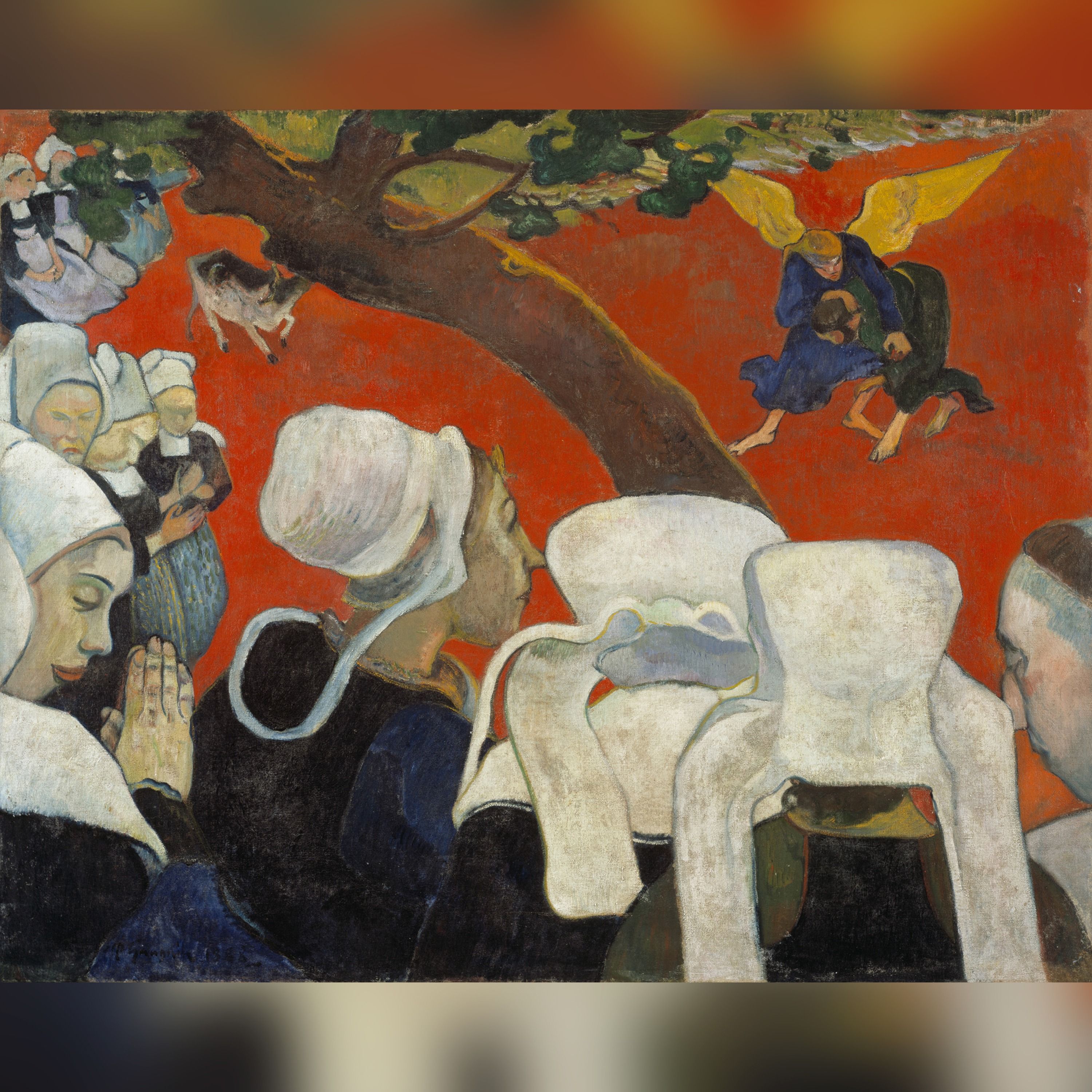
E“Wrestling with oneself, with one’s past, with one’s relationships, with God … These stories push us to use disability to think about the human condition more broadly.”Longstanding narratives about disability shaped our emotional responses, our caregiving responses, and our social commentary, and our treatment of the disabled. But what if we saw disability as the site of divine revelation about God’s kingdom and our place in it? As an expression of power and wisdom and agency, rather than a merely a source of suffering and lack and ignorance.Calli Micale (Palmer Theological Seminary) joins Evan Rosa to discuss how disability reframes our humanity in the Bible. They reflect on three passages: starting in the Old Testament—in Genesis 32—with the story of Jacob wrestling with the Angel, and walking away with much more than a limp and a new name. Continuing with the Gospel, John 9, the story of the Man Born Blind, famous for at least two reasons: the utter stupidity of the disciples to assume “Rabbi, who sinned that this man was born blind?” and the utter visceral of having Jesus make mud with his spit and rub it in the man’s eyes. And finally The Gospel of Mark, chapter 5, the story of the bleeding woman—a story of reaching out in desperate faith, an act of incredible agency and audacity, to touch the edge of Jesus’s garment and be healed.Whether its intellectual disability or physical disability, and regardless of how its acquired, disability plays a role in what we might call God’s subversive kingdom. God’s upside-down-ness (or, maybe we should say human upside-down-ness). The least of these in the eyes of human society are chosen by God to communicate the good news of shalom and justice and salvation—that even those who are already “whole” can be saved.This episode was made possible in part by the generous support of the Tyndale House Foundation. For more information, visit tyndale.foundation.Show NotesArtwork: “Untitled (The Bleeding Woman)”, Unknown, Fresco, 4th Century AD, Catacombs of Marcellinus and Peter, Rome, ItalyArtwork: “The Healing of the Man Born Blind”, Duccio, 1311, Tempera on wood, National Gallery, LondonArtwork: “Vision of the Sermon (Jacob Wrestling with the Angel)”, Paul Gauguin, 1888, Oil on canvas, Scottish National GalleryGenesis 32:22-32 (see below for full text)“Wrestling with oneself, with one’s past, with one’s relationships, with God”Disability as a plot device: exploitElaborate disguise of Jacob’s impersonization of EsauEach of us wrestles with our identity“No one can see God and live”Jacob’s limp: a narrative and metaphorical significanceIs disability a sign of or consequence of one’s sinfulness?Is disability a divine punishment?Subverting our understanding of disability“Disability extends beyond Jacob’s physical form and continues to influence the the community—how they relate with their tradition and their practices.”“The memory of the struggle with God and the intimate presence of God in the wrestling in the body, and then is preserved in memory of the body.”Is being struck on the hip socket a blessing to Jacob?The wounds of martyrs as battle woundsDisability becomes inextricable from histories of violenceIs it Jesus that strikes and maims Jacob’s hip?John 9: The Man Blind from BirthJesus rejects the assumption that disability is a punishment for sin.“Dumb and blind”Disability as the site of divine revelationJesus spitting in the mud is kind of gross. It takes a lot of spit to make that much mud.Vulnerable and visceral moment of pasting dirty mudThe question of Jesus’s sin (for breaking Sabbath law) is now in playAn extended metaphor about where knowledge and wisdom apply.Mark 5: The Hemorrhaging WomanAgency and PowerMutual caregiving within disabled communities“These stories push us to use disability to think about the human condition more broadly.”Genesis 32The same night he got up and took his two wives, his two maids, and his eleven children, and crossed the ford of the Jabbok. He took them and sent them across the stream, and likewise everything that he had. Jacob was left alone; and a man wrestled with him until daybreak. When the man saw that he did not prevail against Jacob, he struck him on the hip socket; and Jacob’s hip was put out of joint as he wrestled with him. Then he said, ‘Let me go, for the day is breaking.’ But Jacob said, ‘I will not let you go, unless you bless me.’ So he said to him, ‘What is your name?’ And he said, ‘Jacob.’ Then the man said, ‘You shall no longer be called Jacob, but Israel, for you have striven with God and with humans, and have prevailed.’ Then Jacob asked him, ‘Please tell me your name.’ But he said, ‘Why is it that you ask my name?’ And there he blessed him. So Jacob called the place Peniel, saying, ‘For I have seen God face to face, and yet my life is preserved.’ The sun rose upon him as he passed Penuel, limping because of his hip. Therefore to this day the Israelites do not eat the thigh muscle that is on the hip socket, becau

Ep 154How to Eat, Drink, and Be Human (Lessons from Revolutionary Women) / Alissa Wilkinson
Show NotesSalty: Lessons on Eating, Drinking, and Living from Revolutionary WomenCreative non-fiction and “essays” as a genre“I guess what I was trying to do was come up with ways into the lives of these women who I find interesting. That would also be compelling to someone who had never heard of them.”Dinner partyHannah Arendt and her cocktail partiesA subversive feast among friendsArguing in order to find out what you thinkThinking as a conversation with the selfLove in the specificity of relationshipAmor mundi—love of the world“Loving the world means working on two specific tasks. The first is to doggedly, insist on seeing the world just as it is with its disappointments and horrors and committing to it all the same. The second is to encounter people in the world and embrace their alterity, or difference.”Arendt’s “banality of evil”The importance of letter-writing for sharing the self and inhabiting a years-long friendshipEdna Lewis, Freetown, Virginia, and “The Taste of Southern Cooking”Farm-to-table cooking used to be out of economic necessity, not a hip or high fine dining experienceEdna Lewis’s Southern identity: "Lewis defines Southern as the experience of an emancipated people and their descendants, a cultural and culinary heritage to be proud of a distinctly American culture. And as she offers definitions, readers are reminded, she's refusing to be defined by anyone but herself.”“What Is Southern?” Gourmet Magazine—reclaiming Southern cooking for Black SouthernersThe Los Padres National Forest Supper ClubBabette’s Feast (1987)The menu from Babette’s FeastThe place of joy and pleasure in a flourishing spiritual lifeRobert Farrar Capon, The Supper of the LambFood and recognition“Learning how to taste”“Every dinner party is an act of hope.”About Alissa WilkinsonAlissa Wilkinson is a Brooklyn-based critic, journalist, and author. She is a senior correspondent and critic at Vox.com, writing about film, TV, and culture. She is currently writing We Tell Ourselves Stories, a cultural history of American myth-making in Hollywood through the life and work of Joan Didion, which will be published by Liveright.She's contributed essays, features, and criticism to a wide variety of publications, including Rolling Stone, Vulture, Bon Appetit, Eater, RogerEbert.com, Pacific Standard, The Dallas Morning News, The Washington Post, The Atlantic, The Los Angeles Review of Books, Books & Culture, Christianity Today, and others. I’m a member of the New York Film Critics Circle, the National Society of Film Critics, and the Writers Guild of America, East, and was an inaugural writing fellow with the Sundance Institute’s Art of Nonfiction initiative. She's served on juries at the Sundance Film Festival, DOC NYC, Sheffield Doc/Fest, the Hamptons International Film Festival, and others, and selection committees for groups including the Gotham Awards and the Sundance Documentary Film Program.In June 2022, her book Salty: Lessons on Eating, Drinking, and Living from Revolutionary Women was published by Broadleaf Books. In 2016, her book How to Survive the Apocalypse: Zombies, Cylons, and Politics at the End of the World was released, co-written with Robert Joustra.I frequently pop up as a commentator and guest host on radio, TV, and podcasts. Some recent appearances include CBS News; PBS Newshour; CNN International Newsroom; BBC America’s Talking Movies; NPR's Morning Edition, All Things Considered, On Point, and 1A; HBO’s Allen v. Farrow; AMC's James Cameron's Story of Science Fiction; WNYC's The Takeaway; ABC's Religion & Ethics and The Drum; CBC Eyeopener, Vox’s Today, Explained and The Gray Area; and many more. For 14 years, until the college ceased offering classes in 2023, she was also an associate professor of English and humanities at The King’s College in New York City, and taught courses in criticism, cinema studies, literature, and cultural theory. She earned an M.F.A in creative nonfiction from Seattle Pacific University, an M.A. in humanities and social thought from New York University, and a B.S. in information technology from Rensselaer Polytechnic Institute.You can read my most up-to-date work on my Vox author page, or subscribe to my mostly-weekly newsletter. Production NotesThis podcast featured Alissa WilkinsonEdited and Produced by Evan RosaHosted by Evan RosaProduction Assistance by Liz Vukovic, Macie Bridge, and Kaylen YunA Production of the Yale Center for Faith & Culture at Yale Divinity School https://faith.yale.edu/aboutSupport For the Life of the World podcast by giving to the Yale Center for Faith & Culture: https://faith.yale.edu/give

Ep 153Reframing Disability: Agency, Possibility, and Radical Dependency / Calli Micale
Show NotesInstructive irony: Evan’s disabling experience of setting up a microphone for a podcast interviewThree ways to think about disability: Minority Model (Impairment of Individuals), Social Model (Societal factors create impairment), and Political Model (emerges from collective action and identity; generated from Americans with Disabilities Act)Chronic pain, real sufferingAll three models are important“Look at the arrangement of society—the conditions of possibility that empower our lives or that create obstacles to our flourishing.”How to Speak About Disability 101Care, solidarity, advocacy, and inclusionUnderstanding the ethics of disability through stories: narratives of the body, biblical narratives of healing, and theological storiesAugustine’s City of God and moral impurity and the wounds of martyrs as glorified and amplified in resurrected bodiesThe hurt of “fixing” those with disabilitiesDoubting Thomas and exploring the resurrection wounds of ChristStory: Physical disability and amputation“It always starts with thinking about the loss”Hope and possibility through the lossReligion and spirituality as a tool to both help and also a self-critique of the “wholeness” or “normal” narrative.Critiquing the brokenness-wholeness narrative of disability“Drawing attention to the site of divine activity.”Is disability connected to sin?John 9:1-41: Jesus Heals the Man Born BlindSlowness, constancy, unwavering faithStory: Intellectual disability and autismOxana’s CymbalsternCymbalstern (or Zimbelstern) is a star-shaped organ stop that makes a clanging, ringing sound during organ playing.Xenophobia, fear of difference, and stigmaCalli reacts to the truism: “There are only two kinds of people: those who are disabled and those who will be disabled.”Visible and invisible disabilities: depression, anxiety, and mental healthAre disabled lives worth living?Story: A surgeon develops multiple sclerosisRadical dependence on othersPower, agency, and interdependency on othersStart with the bare conditions of possibility, and then how those conditions of possibility change when disability emerges?AboutCalli Micale is Director of the MDiv Program; Assistant Professor of Theology and Ethics at Palmer Theological Seminary. She is a theologian with a particular interest in the ethical implications of theological talk for the whole of human life. Her research brings together the history of Christian thought with sustained attention to rhetoric as it grounds perceptions of the body and health in Western societies. She joined the Palmer Theological Seminary faculty in 2023 after earning a PhD from Yale University.Writing and teaching correspond in Dr. Micale’s work to form students as faith leaders oriented towards gender, disability, and racial justice. She has published articles with the Journal of Disability and Religion and the Disability Studies Quarterly (forthcoming). Micale is currently working on a book manuscript, tentatively titled Crip Conversion: Narratives of Disability and Grace. The book analyzes the stories theologians tell about intellectual disability and argues that deploying intellectual disability as narrative metaphor allows one to come at the Protestant tradition from a helpful vantage point—such that the significance of sensation for the reception of grace comes to the fore.As a candidate for ordination in the ELCA with 10+ years of preaching experience, Dr. Micale delights in the variety of ways her students take up theological resources for ministry and social justice action. In each course, she aims to take students beyond learning concepts by letting divergent beliefs shape and change their perspective on what really matters—their own intellectual and spiritual lives called to make a difference in the world.Production NotesThis podcast featured Calli MicaleEdited and Produced by Evan RosaHosted by Evan RosaProduction Assistance by Logan Ledman, Macie Bridge, and Kaylen YunA Production of the Yale Center for Faith & Culture at Yale Divinity School https://faith.yale.edu/aboutSupport For the Life of the World podcast by giving to the Yale Center for Faith & Culture: https://faith.yale.edu/giveThis episode was made possible in part by the generous support of the Tyndale House Foundation. For more information, visit tyndale.foundation.

Ep 152What Boredom Means: Cultivating Attention & Leisure for a Life Connected to Time & Place / Kevin Gary & Drew Collins
Where does boredom come from? Have humans always experienced boredom, or has it only come on in the entertainment age, having more time than we know what to do with? Kevin Gary (Valparaiso University) is author of Why Boredom Matters: Education, Leisure, and the Quest for a Meaningful Life. He joins Drew Collins & Evan Rosa to reflect on the discontent and disconnection that boredom constantly threatens. They discuss the phenomena of boredom, the childhood experience of it, whether its good or bad, the definition of boredom, its connection to entertainment and education, and finally the role of attention and leisure in cultivating a healthy understanding and response to being totally bored out of our minds.This episode was made possible in part by the generous support of the Tyndale House Foundation. For more information, visit tyndale.foundation.About Kevin GaryKevin Gary is a Professor of Education at Valparaiso University. He has a Ph.D. in cultural and educational policy studies from Loyola University Chicago with a focus in the philosophy of education and an M.A. in systematic theology from the University of Notre Dame. His teaching experience includes 10 years of teaching theology at Loyola Academy High School in Wilmette, Illinois.; seven years as a professor of education and philosophy at Goshen College in Goshen, Indiana; 8 years as a professor of education at Valparaiso University in Valparaiso, Indiana; and one year as faculty director of Goshen College’s international studies program in Lima, Perú.Dr. Gary’s research is primarily in philosophy of education. He recently published, Why Boredom Matters: Education and the Quest for a Meaningful Life with Cambridge University Press in 2022. K-12 educators (and parents) face bored students every day. Drawing on multiple disciplines Dr. Gary makes a case for teachers guiding students to engage with boredom constructively, steering clear of restless boredom avoidance on the one hand, or passive submission to boredom on the other.Dr. Gary has published in multiple journals, including Educational Theory, the Journal of Philosophy of Education, and Studies in Philosophy and Education.Dr. Gary is one of the founding executives of the North American Association for Philosophy and Education (NAAPE), launched in 2018. NAAPE provides an international forum for scholars working at the intersection of philosophy and educational thought, where disciplines such as ethics, political philosophy, epistemology, philosophical anthropology, history, and others meet the practical challenges of teaching and learning.Dr. Gary is passionate about liberal education, especially within the context of a Christian liberal arts university, which aims to cultivate practical wisdom, compassion, and a Renaissance spirit.Show NotesKevin Gary’s Why Boredom Matters: Education and the Quest for a Meaningful LifeA quick and incomplete history of boredomThe Preacher of Ecclesiastes laments over human toil, “everything is vanity and chasing after wind” around 250 BC. “The eye is not satisfied with seeing, nor the ear with hearing.”Stoic Roman philosopher Seneca noticed a nauseating tedium in his famous letter “On Tranquility,” describing a familiar quote “vacillation of a mind that nowhere finds rest, and the sad and languid endurance of one’s leisure. Thence comes mourning and melancholy and the thousand waverings of an unsettled mind, which its aspirations hold in suspense, and then disappointment renders melancholy. Thence comes that feeling which makes men loathe their own leisure and complain that they themselves have nothing to be busy with.”The ancient Christian monks of the desert struggled with the noonday demon of acedia, a spiritual boredom with their vocation of prayer and faithfulness.Aquinas and other scholastics disciplined the “roving mind.”Variants of the English “boredom”—including being bored to death!—show up in Lord Byron, Charles Dickens, and Herman Melville in the mid 19th century.Kierkegaard calls it the root of all evil.Heidegger sees it in a positive light, saying that philosophy begins in the nothingness of boredom.C.S. Lewis’s Uncle Screwtape advises that “anything or nothing is sufficient to attract the wandering attention” of Jr. Demon Wormwood’s human patient.The French bourgeoisie nailed it with ennui that many a suburban latchkey kid can relate to.In the King-Kubrick masterpiece, The Shining, boredom goes very dark when “all work and no play makes Jack a dull boy.”Boredom for children: How to respond to the boredom children feelIs boredom bad or good?What’s the definition of boredom?Tolstoy on boredomKierkegaard on living life to avoid boredomKierkegaard as a form of existential despair; boredom as an indicator that we’re not comfortable with ourselves.Chasing novelty, looking for the new; or giving up and resigning our agencyHeidegger was influenced by Kierkegaard; and thought you must push through it to find your true, authentic self.Kierkegaard’s view of

Ep 151Kelly Corrigan, Claire Danes, & Kate Bowler / The Practice of Flourishing / Life Worth Living Book Club, Part 5 of 5
The final installment of our 5-part book club series on Life Worth Living: A Guide to What Matters Most, produced and hosted by Kelly Corrigan, and featuring Claire Danes & Kate Bowler. Special thanks to the Warren Smoot Carter III and Meagan Carter Charitable Fund for making this series possible.Show Noteshttps://katebowler.com/about/https://divinity.duke.edu/faculty/kate-bowlerhttps://www.kellycorrigan.com/podcastAbout Kelly CorriganKelly Corrigan has written four New York Times bestselling memoirs in the last decade, earning her the title of “The Poet Laureate of the ordinary” from the Huffington Post and the “voice of a generation” from O Magazine. She is curious and funny and eager to go well past the superficial in every conversation. More on KellyCorrigan.com.Show NotesThis episode featured Kelly Corrigan, Kate Bowler, and Claire DanesEdited and Produced by Evan RosaHosted by Evan RosaProduction Assistance by Macie Bridge, Kaylen Yun, and Logan LedmanSpecial thanks to Tammy Stedman, Kelly Corrigan, and the Warren Smoot Carter III and Meagan Carter Charitable FundA Production of the Yale Center for Faith & Culture at Yale Divinity School https://faith.yale.edu/aboutSupport For the Life of the World podcast by giving to the Yale Center for Faith & Culture: https://faith.yale.edu/give

Ep 150Claire Danes, Kate Bowler, & Kelly Corrigan / Consumption, Responsibility, Failure, Repair, & Forgiveness / Life Worth Living Book Club, Part 4 of 5
EShow Noteshttps://katebowler.com/about/https://divinity.duke.edu/faculty/kate-bowlerhttps://www.kellycorrigan.com/podcastAbout Kelly CorriganKelly Corrigan has written four New York Times bestselling memoirs in the last decade, earning her the title of “The Poet Laureate of the ordinary” from the Huffington Post and the “voice of a generation” from O Magazine. She is curious and funny and eager to go well past the superficial in every conversation. More on KellyCorrigan.com.Production NotesThis episode featured Kelly Corrigan, Kate Bowler, and Claire DanesEdited and Produced by Evan RosaHosted by Evan RosaProduction Assistance by Macie Bridge, Kaylen Yun, and Logan LedmanSpecial thanks to Tammy Stedman, Kelly Corrigan, and the Warren Smoot Carter III and Meagan Carter Charitable FundA Production of the Yale Center for Faith & Culture at Yale Divinity School https://faith.yale.edu/aboutSupport For the Life of the World podcast by giving to the Yale Center for Faith & Culture: https://faith.yale.edu/give

Ep 149Claire Danes, Kate Bowler, & Kelly Corrigan / Envy, Desire, and Struggling with Belief / Life Worth Living Book Club, Part 3 of 5
Today’s episode is part 3 of a 5-part book club series produced and hosted by Kelly Corrigan. The PBS host and author of four New York Times bestselling memoirs is taking a deep dive into the latest book from the Yale Center for Faith & Culture. Written by Miroslav Volf, Matt Croasmun, and Ryan McAnnally-Linz, Life Worth Living: A Guide to What Matters Most, the book is based on a Yale College course that takes up some of the most pressing questions of life, but doesn’t keep the implications, challenges, confusion, and demands of those questions at arms length. Both the course and the book invite life-long learners to ask, “For any idea, if that idea were true, how would your life have to change?”In this episode, Kelly convenes a podcast book-club with two really cool friends: Kate Bowler—host of the Everything Happens podcast and Associate Professor of American Religious History at Duke Divinity School—and celebrated actress Claire Danes, who starred in the Showtime series Homeland and the 90s MTV hit series My So-Called Life.If you’re interested in reading along with Kelly, Kate, and Claire, please visit lifeworthlivingbook.com—that’s where you can find links to buy the book and a free discussion guide when you sign up for the Life Worth Living email list.About Kelly CorriganKelly Corrigan has written four New York Times bestselling memoirs in the last decade, earning her the title of “The Poet Laureate of the ordinary” from the Huffington Post and the “voice of a generation” from O Magazine. She is curious and funny and eager to go well past the superficial in every conversation. More on KellyCorrigan.com.Production NotesThis episode featured Kelly Corrigan, Kate Bowler, and Claire DanesEdited and Produced by Evan RosaHosted by Evan RosaProduction Assistance by Macie Bridge, Kaylen Yun, and Logan LedmanSpecial thanks to Tammy Stedman, Kelly Corrigan, and the Warren Smoot Carter III and Meagan Carter Charitable FundA Production of the Yale Center for Faith & Culture at Yale Divinity School https://faith.yale.edu/aboutSupport For the Life of the World podcast by giving to the Yale Center for Faith & Culture: https://faith.yale.edu/give

Ep 148Claire Danes, Kate Bowler, & Kelly Corrigan / Values, Vocation, Curiosity & Dealing with Circumstance / Life Worth Living Book Club, Part 2 of 5
Today’s episode is part 2 of a 5-part book club series produced and hosted by Kelly Corrigan. The PBS host and author of four New York Times bestselling memoirs is taking a deep dive into the latest book from the Yale Center for Faith & Culture. Written by Miroslav Volf, Matt Croasmun, and Ryan McAnnally-Linz, Life Worth Living: A Guide to What Matters Most, the book is based on a Yale College course that takes up some of the most pressing questions of life, but doesn’t keep the implications, challenges, confusion, and demands of those questions at arms length. Both the course and the book invite life-long learners to ask, “For any idea, if that idea were true, how would your life have to change?”In this episode, Kelly convenes a podcast book-club with two really cool friends: Kate Bowler—host of the Everything Happens podcast and Associate Professor of American Religious History at Duke Divinity School—and celebrated actress Claire Danes, who starred in the Showtime series Homeland and the 90s MTV hit series My So-Called Life.If you’re interested in reading along with Kelly, Kate, and Claire, please visit lifeworthlivingbook.com—that’s where you can find links to buy the book and a free discussion guide when you sign up for the Life Worth Living email list.About Kelly CorriganKelly Corrigan has written four New York Times bestselling memoirs in the last decade, earning her the title of “The Poet Laureate of the ordinary” from the Huffington Post and the “voice of a generation” from O Magazine. She is curious and funny and eager to go well past the superficial in every conversation. More on KellyCorrigan.com.Production NotesThis episode featured Kelly Corrigan, Kate Bowler, and Claire DanesEdited and Produced by Evan RosaHosted by Evan RosaProduction Assistance by Macie Bridge, Kaylen Yun, and Logan LedmanSpecial thanks to Tammy Stedman, Kelly Corrigan, and the Warren Smoot Carter III and Meagan Carter Charitable FundA Production of the Yale Center for Faith & Culture at Yale Divinity School https://faith.yale.edu/aboutSupport For the Life of the World podcast by giving to the Yale Center for Faith & Culture: https://faith.yale.edu/give

Ep 147Life Worth Living Book Club Part 1 of 5 / Kelly Corrigan with Miroslav Volf, Matt Croasmun, & Ryan McAnnally-Linz
E"Your life is too important to be guided by anything less than what matters most."Part 1 of a 5-part book club series on Life Worth Living: A Guide to What Matters Most. Written by Miroslav Volf, Matt Croasmun, and Ryan McAnnally-Linz, the book is based on a Yale College course that takes up some of the most pressing questions of life, but doesn’t keep the implications, challenges, confusion, perplexity, and demands of those questions at arms length. Both the course and the book invite life-long learners to ask, “For any idea, if that idea were true, how would your life have to change?”Later in the series, Kelly is joined by Kate Bowler—host of the Everything Happens podcast and Associate Professor of American Religious History at Duke Divinity School—and actress Claire Danes of the Showtime series Homeland and the '90s MTV series My So-Called Life.This series is produced and hosted by Kelly Corrigan and was originally featured on the Kelly Corrigan Wonders podcast and Kate Bowler's Everything Happens podcast.If you’re interested in reading along with Kelly, Kate, and Claire, please visit lifeworthlivingbook.com—that’s where you can find links to buy the book and a free discussion guide when you sign up for the Life Worth Living email list.About Kelly CorriganKelly Corrigan has written four New York Times bestselling memoirs in the last decade, earning her the title of “The Poet Laureate of the ordinary” from the Huffington Post and the “voice of a generation” from O Magazine. She is curious and funny and eager to go well past the superficial in every conversation. More on KellyCorrigan.com.Show NotesFor more information about Life Worth Living: A Guide to What Matters Most, visit lifeworthlivingbook.com.Production NotesThis podcast featured Kelly Corrigan, Miroslav Volf, Matt Croasmun, and Ryan McAnnally-LinzSpecial thanks to Tammy Stedman, Kelly Corrigan, and the Warren Smoot Carter III and Meagan Carter Charitable FundA Production of the Yale Center for Faith & Culture at Yale Divinity School https://faith.yale.edu/aboutSupport For the Life of the World podcast by giving to the Yale Center for Faith & Culture: https://faith.yale.edu/give

Ep 146Human Uniqueness & the Imago Dei: Clues for Flourishing in Our Biological Niche / Justin Barrett on Bringing Psychology to Theology
We homo sapiens sapiens are “fearfully and wonderfully made,” but why? What’s so special about being human? What makes us unique? And can we equate our uniqueness in the world with the Imago Dei? Experimental psychologist and cognitive scientist Justin Barrett joins Evan Rosa to discuss the image of God as a blueprint for each of us as individuals; human uniqueness as a theological and psychological category; the place of homo sapiens among other species; uniquely human capacities, such as executive function, hypersociality, and acquisition of specialized knowledge; the human biological niche construction—or changing the environment—and how our psychological traits factor; the psychological and biological underpinnings of human culture and the problem of creating cities; and how human technology interacts with our biological niche. This episode was made possible in part by the generous support of Blueprint 1543. For more information, visit Blueprint1543.org.Show NotesLearn more about bringing psychology to theology at Blueprint1543.org.Download your copy of Justin Barrett’s A Psychological Science Primer for Theologians (2022)TheoPsych AcademyPsalm 139: 13-1413 For it was you who formed my inward parts; you knit me together in my mother’s womb. 14 I praise you, for I am fearfully and wonderfully made. Wonderful are your works; that I know very well.Genesis 1:1-3126 Then God said, ‘Let us make humankind in our image, according to our likeness; and let them have dominion over the fish of the sea, and over the birds of the air, and over the cattle, and over all the wild animals of the earth, and over every creeping thing that creeps upon the earth.’ 27 So God created humankind in his image, in the image of God he created them; male and female he created them.28 God blessed them, and God said to them, ‘Be fruitful and multiply, and fill the earth and subdue it; and have dominion over the fish of the sea and over the birds of the air and over every living thing that moves upon the earth.’ 29 God said, ‘See, I have given you every plant yielding seed that is upon the face of all the earth, and every tree with seed in its fruit; you shall have them for food. 30 And to every beast of the earth, and to every bird of the air, and to everything that creeps on the earth, everything that has the breath of life, I have given every green plant for food.’ And it was so. 31 God saw everything that he had made, and indeed, it was very good. And there was evening and there was morning, the sixth day.The image of God as a blueprint for each of us as individualsNicholas Wolterstorff’s conception of the Imago Dei in Justice: Rights & Wrongs.Some varieties of understanding what about us makes us imagebearers, according to scriptureHuman uniqueness as a theological and psychological categoryConsidering the place of homo sapiens among other speciesUniquely human capacities, such as executive functions of the brain, sense of self, self-regulation and awarenessHuman hypersociality and relationality, and our interpersonal theory of mindAttachment as an evolved biological functionThe intellectual capacities for acquiring specialized knowledge like how to use fire, cook, and teach each otherThe human biological niche construction—or changing the environment—and how our psychological traits factorThe psychological and biological underpinnings of human culture and the problem of creating citiesHow human technology interacts with our biological nicheDr. Ian Malcolm "...they didn't stop to think if they should"—from Jurassic Park.About Justin BarrettJustin L. Barrett is an honorary Professor of Theology and the Sciences at St Andrews University School of Divinity. An experimental psychologist by training, he is concerned with the scientific study of religion and its philosophical as well as theological implications. He is the author of a number of books including Why Would Anyone Believe in God?, Born Believers: The Science of Childhood Religion, and Religious Cognition in China: Homo Religiosus and the Dragon.Production NotesThis podcast featured Justin BarrettEdited and Produced by Evan RosaHosted by Evan RosaProduction Assistance by Macie Bridge, Kaylen Yun, & Logan LedmanA Production of the Yale Center for Faith & Culture at Yale Divinity School https://faith.yale.edu/aboutSupport For the Life of the World podcast by giving to the Yale Center for Faith & Culture: https://faith.yale.edu/giveThis episode was made possible in part by the generous support of Blueprint 1543. For more information, visit Blueprint1543.org.
Ep 145Made for Relationships: The Sacred Responsibilities of Marriage and Parenting / Mari Clements on Bringing Psychology to Theology
We tend to take these claims for granted: “Human beings are essentially relational.” “No man is an island.” “We’re created for connection.” “We’re made for relationships.” And testing the limits of this can be pretty much diabolical. Evan Rosa traces two stories of parental deprivation: Harry Harlow's "Monkey Love Experiments" and the horror of 1990's discovery of Romanian asylums for orphans, documented in the 1990 report "The Shame of a Nation,” on 20/20.Then psychologist Mari Clements (Glenville State College, formerly Fuller School of Psychology) discusses the importance of healthy marriage dynamics for young children’s development and how it provides a secure emotional base; the relational imago Dei; the close emotional bonds that must take place early in life in order to provide the relational stability relational creatures need; we talk about important phases of human development, into adulthood; and the theological backdrop to these questions of the human drive and need for emotional connection.This episode was made possible in part by the generous support of Blueprint 1543. For more information, visit Blueprint1543.org.About Mari ClementsMari Clements is Associate Vice President for Academic Affairs and Professor of Psychology at Glenville State College. Prior to this, she taught at Fuller School of Psychology and Penn State University.Show NotesWe tend to take these claims for granted: “Human beings are essentially relational.” “No man is an island.” “We’re created for connection.” “We’re made for relationships.” And testing the limits of this can be pretty much diabolical.Harry Harlow’s Monkey Love Experiments—Rhesus Monkeys (Video)“The Shame of a Nation,” 20/20 (1990) (Video)How family dynamics and marital conflict impacts children“If you stay in your marriage for the sake of the children, then you deserve, and your child deserves, for you to work on your marriage for the sake of the children. Just being together is actually not better for kids. The kids who look really bad are the kids whose parents are engaged in repetitive and nasty and awful conflict. And they're not getting good models for how to solve problems in their own relationships. They're not getting good models for what to expect from marriage. They're not getting good models for what that marriage relationship is supposed to be.”Even four-year-olds notice when parents are in conflict.Marriage as a secure emotional base for children.Parenting together as stewardship and sacred responsibility“In your relationship, you should glorify God better together than you would separately.”“There's a very important connection between how it is that children see their parents and how it is they typically see God.”Conditional love can produce an earning mindset in a child, not just with respect to the parent, but to God.Don’t be a Karen-parent who thinks their child can do no wrong.“That's the interesting thing about people, even when they're doing terrible things, they often are doing them for good reasons, right? In therapy you can hear couples say incredibly hurtful and awful things to each other.”The relational image of GodStudy of Infants in Orphanages during World War I and World War II: Infants with physical needs taken care of still wasted away and even died without human contact.God as Trinity, Jesus as IncarnationalRelating rightly to our neighborsImpact of spousal treatment on how children treat parents and others.Wire Monkey vs Soft and Cuddly MonkeyA close emotional bond must take place early in life in order to provide the relational stability relational creatures need.Definition of adulthoodBabies can do amazing things.Still Face ExperimentIntellectual vs Relational definitions of the Imago DeiIntellectual disabilityBringing psychology into the service of theologyProduction NotesThis podcast featured Mari ClementsEdited and Produced by Evan RosaHosted by Evan RosaProduction Assistance by Macie Bridge and Kaylen YunA Production of the Yale Center for Faith & Culture at Yale Divinity School https://faith.yale.edu/aboutSupport For the Life of the World podcast by giving to the Yale Center for Faith & Culture: https://faith.yale.edu/giveThis episode was made possible in part by the generous support of Blueprint 1543. For more information, visit Blueprint1543.org.
Ep 144Tapestry of Knowledge: Theology and Psychology as Truth-Seeking Partners / Oliver Crisp on Bringing Psychology to Theology
"Theology is truth-apt and truth-aimed." Too often the faith-science debate ends up a zero-sum game where either science or theology overstep their bounds. But analytic theologian Oliver Crisp (University of St. Andrews, Scotland) describes a tapestry of knowledge that requires the best of both worlds. In this episode he discusses the purpose and future prospects of theology in light of empirical and experimental science. How might science, philosophy, and theology can work together to help us understand human uniqueness? Can science help us better understand the imago Dei?About Oliver CrispOliver D. Crisp (PhD, University of London; DLitt, University of Aberdeen) is the Principal of St. Mary's College, Head of the School of Divinity, Professor of Analytic Theology, and Director of the Logos Institute at the University of St. Andrews, Scotland. He has written or edited numerous books, including The Word Enfleshed, Analyzing Doctrine, Deviant Calvinism, and Jonathan Edwards among the Theologians.Production NotesThis podcast featured theologian Oliver CrispEdited and Produced by Evan RosaHosted by Evan RosaProduction Assistance by Macie Bridge & Kaylen YunA Production of the Yale Center for Faith & Culture at Yale Divinity School https://faith.yale.edu/aboutSupport For the Life of the World podcast by giving to the Yale Center for Faith & Culture: https://faith.yale.edu/giveThis episode was made possible in part by the generous support of Blueprint 1543. For more information, visit Blueprint1543.org.
Ep 143Tolerating Doubt & Ambiguity: Psychological Tools to Deal with Uncertainty and Deconversion / Elizabeth Hall on Bringing Psychology to Theology
Is your faith a house of cards? If you were wrong about one belief would the whole structure just collapse? If even one injury came to you, one instance of broken trust, would the whole castle fall? If one element was seemingly inconsistent or incompatible—would you burn down the house?This depiction of the psychology of faith is quite fragile. It falls over to even the lightest breath. But what would a flexible faith be? Resilient to even the heaviest gusts of life’s hurricanes. It would adapt and grow as a living, responsive faith.This metaphor isn’t too far off from the Enlightenment-founding vision of Rene Descartes—whose Meditations sought to build an edifice of Christian faith on a foundation free from doubt, ambiguity, uncertainty, or falsehoods. Even the slightest of doubts had to be categorically obliterated in order to prove the existence of God and the reality of the soul. He was clear about this in the preface. This was a work of apologetics. And he thought a good offense is your best defense. So he went on a whack-a-mole style doubt-killing spree that he hoped would secure a faith built on certainty.Now, here’s a question for you: Does a quest for certainty strengthen and fortify the Christian faith? Or does it leave you stranded on the top floor of a house of cards?Today, we’re continuing our series on Bringing Psychology to Theology, with a closer look at what to do about doubt, uncertainty, and ambiguity, in all sorts of stakes, but especially when it comes to faith.In this series we’ve been exploring the tools of psychological science that might contribute to a deeper, greater, more nuanced theological understanding of the world.We began the series by establishing certain normative questions about the integration of psychology and theology—experimental psychologist Justin Barrett offered to Miroslav Volf the suggestion that to build your cathedral of theology, you need the tools of psychological sciences.Then, developmental psychologist Pamela King offered a vision of thriving that expresses the dynamic, human telos or purpose throughout our lifespan. Research psychologist Julie Exline followed with a psychological exploration of spiritual struggle and one of the most embattled and suppressed of human emotions: anger at God.In this episode, I’m joined by Elizabeth Hall of Biola University’s Rosemead School of Psychology. She’s both a clinically trained therapist, helping people deal with life’s difficulties, as well as a psychological researcher exploring human spirituality, personality and character traits, women’s mental health, and human relationships. Most recently she co-authored Relational Spirituality: A Psychological-Theological Paradigm for Transformation, and I asked her to come on the show to talk about her recent work on tolerance for ambiguity in a life of faith.Here we discuss the domains of psychology and theology and what it means for each to “stay in their lane”; she introduces a distinction between implicit and explicit knowledge, and identifies the social- and self-imposed pressure to know everything with certainty; we reflect on the recent trends toward deconversion from faith in light of these pressures; and she offers psychologically grounded guidance for approaching doubt and ambiguity in a secure relational context, seeking to make the unspoken or implicit doubts explicit. Rather than remaining perched upon our individualized, certainty-driven house-of-card faith; she lays out a way to inhabit a flexible, resilient, and relationally grounded faith, tolerant of ambiguity and adaptive and secure amidst all our winds of doubt.About Elizabeth HallM. Elizabeth Lewis Hall (PhD, Rosemead School of Psychology) is professor of psychology at Rosemead School of Psychology at Biola University, where she teaches courses on the integration of psychology and theology. She has published over 100 articles and book chapters and serves as associate editor for Psychology of Religion and Spirituality. She lives in Whittier, California, with her husband, Todd, and her two sons.Show NotesRelational Spirituality: A Psychological-Theological Paradigm for TransformationOn the integration of psychology and Christianity in lifeVocationally; psychology is the “little area of God’s creation” where she gets to work, she attempts to bring it back to Jesus’s lordshipJesus as owner of allIntellectually; if all truth is God’s truth, she is trying to get the most complete sense of what humans are all aboutGod gave us the capacity to study using psychologyFaith, theology, and religion lend themselves into a psychological domain more than other fields, providing rich content that comes together easily with what the Bible says about humans.What helps the intellectual puzzle pieces come together for you?“I need to allow theology and psychology to stay in their lanes. I can’t expect more from each discipline than what it is constructed to offer.”Ex: Psychology gets in trouble when making prescriptive statem
Ep 142Angry at God: The Psychology of Spiritual Struggle, Coping with Challenges to Faith, Handling Conflicts with God / Julie Exline
Sometimes things go wrong. Your British premiere league football club loses a game; maybe your dog eats the birthday party cupcakes; maybe someone cuts you off in traffic. And you get angry—looking for someone to hold responsible.Sometimes things go wrong in even more serious ways. Your kid’s getting bullied or mistreated; the justice system fails you or someone you love; you’re betrayed or deeply hurt by a friend. And you get angry—still looking to hold them responsible, take a form of vengeance, and even if you can muster the strength to forgive and absolve, the anger might persist.But what about when things go so seriously wrong in life that questions of meaning, purpose, and sense of existence come under doubt? When there’s no human left to hold accountable, do you then turn your eyes to God—the creator of all of this, you know: “the whole world in his hands” kinda thing?Have you ever been angry at God?Today, we’re continuing our series all about “Bringing Psychology to Theology” with a look at the psychology of spiritual struggles and specifically, a scientific study of what happens when we get angry at God. In this series we’ve been exploring the tools of psychological science that might contribute to a deeper, greater, more nuanced theological understanding of the world. We started with a conversation between Miroslav Volf and experimental psychologist Justin Barrett. Justin evokes the image of erecting a giant cathedral of theology—and how the task must be done with a variety of tools and subcontracted skills. Then we heard from Pamela Ebstyne King with a developmental approach to thinking about human spirituality, the dynamic nature of human purpose, and how relationships factor in moving from surviving to thriving. The hope for this series is to highlight the prospects of a science-engaged theology and how it might contribute to the most pressing matters for how to live lives worthy of our humanity. In this episode Ryan McAnnally-Linz is joined by research psychologist Julie Exline. She’s Professor of Psychology of Religion & Spirituality at Case Western Reserve University and author most recently of Working with Spiritual Struggles in Psychotherapy: From Research to Practice. Her research has examined forgiveness, humility, and human spirituality, and she’s widely recognized for her work on the psychology of anger at God and religious struggles. In this episode, Julie reflects on the meaning of spiritual struggle, as well as the possible outcomes and factors that contribute to a personal sense of healing and growth. She speaks to the anxiety and fear that seem to hover around an expression of anger toward God, dealing with objections and concerns that it’s immoral or presumes God to be guilty of wrongdoing. And she offers practical considerations in light of the psychological research around what happens when people choose to express their anger at God or not—how different responses of disapproval or acceptance can lead to positive growth or a sense of successfully dealing with the anger.About Julie ExlineJulie Exline is Professor of Psychology of Religion & Spirituality at Case Western Reserve University and author most recently of Working with Spiritual Struggles in Psychotherapy: From Research to Practice. Her research has examined forgiveness, humility, and human spirituality, and she’s widely recognized for her work on the psychology of anger at God and religious struggles.Show NotesWorking with Spiritual Struggles in Psychotherapy: From Research to PracticeSpiritual strugglesThe shadow side of religionResearching the more challenging side of religion and spirituality.Looking at the dark side of things: a defensive pessimist at heartBig picture: coping with challenging events around faithConserving beliefs, fitting things inChoosing to engage struggle: approach God, seek support, or decline and disengagePrayer, talking to God or other trusted peopleStruggling with God versus struggling with another human beingGrowth often comes from staying engaged but addressing the problemBeing angry at GodIs it okay to be angry at God?“Are you sure you should be studying this?”People feel like it’s morally wrong to question God.Beth Moore: Questioning God's Authority vs Asking God QuestionsQuestioning God's authority is sometimes thought to lead people on a path to spiritual decline.Asking God questions can lead people toward growth.Feeling angry at God doesn't imply a lack of respect for God.Anger and Love are independent of one another."Difficulty Forgiving God"—implying that God did something wrong; now using language "resolving anger at God"Anger as a response to injustice.Finding a way to live with the problem of evil: Are people wrestling with anger toward God articulating it in a similar way as those worrying about the problem of evil?Theodicy“Why did God allow…”The role of theological presuppositions in anger with GodChanging beliefs and theological tinkeringResponding to others who wrestle with a

Ep 141From Surviving to Thriving: Human Purpose, Relational Intimacy, and Spiritual Connection via Developmental Psychology / Pamela Ebstyne King
"Usually people think of a telos as an endpoint, but what if we think of telos as a dynamic process that sustains a thriving trajectory for the individual and the world around them? The imago Dei, which is deeply and inherently relational and social—we image God by being our unique selves in unity. So there is the particularity of personhood and the relatedness with other persons, God, and all of creation. And so that was what the reciprocating self was. It's 'How do I grow as a fully differentiated person in relationship and increasing intimacy, increasing contribution with the world around me?' To thrive then is to pursue that fullness of self in the context of intimacy and accountability and relationships—not just with those closest to me ... that's essential—but also in contribution to the world beyond the self.How does our faith, how does our devotion, fuel us to want to continue to reciprocate when life is hard? When there's a pandemic? We need something beyond ourselves, a power beyond ourselves, an orientation beyond ourselves to fuel that interrelatedness between our particularity and the greater good." (Pamela Ebstyne King)IntroductionAt the bedrock of our being as persons is relationality: our ability to be known, to be loved, and to know and love in return. But whoa whoa whoa. Wait a minute. What kind of claim is that? Is that theology or psychology? We’re used to hearing that from the likes of the Jewish existential philosopher and theologian Martin Buber—he’s well known for his suggestion that an intimate I-Thou relationship is what makes for our conscious personhood. It’d be impossible to become an “I” without coming into direct contact with a “You” and seeing it as a “You.” But how interesting that research studies in developmental psychology find just that. You can for instance turn to John Bowlby and the beginnings of attachment theory to find that this theological claim holds up once you start testing it with the tools psychological. But more than holds up, the claim that relationality is fundamental to personhood starts to expand and develop nuance by examining the most universal by application in the unique, particular circumstances. Famous psychological experiments like the “Still Face” show how central the reciprocal response of our earliest attachment figure is for our mental health, even as babies. (Check below for an excruciating video example of the Still Face Experiment.)But this is just one way that developmental psychology might offer some interesting tools to theological reflection. And today we’re continuing a new series of episodes on For the Life of the World all about “Bringing Psychology to Theology”—we’re exploring the tools of psychological sciences that might contribute to a deeper, greater, more nuanced theological understanding of the world. Last week we introduced the series with a conversation between Miroslav Volf and experimental psychologist Justin Barrett. Justin evokes the image of erecting a giant cathedral of theology—and how the task must be done with a variety of tools and subcontracted skills.Well, whether theology is the grand architect of a cathedral of human knowledge or the benevolent and humble Queen of the Sciences—either way we hope this series highlights the prospects of a science-engaged theology and how it might contribute to the most pressing matters for how to live lives worthy of our humanity.My guest in this episode is Pamela Ebstyne King. She’s the Peter L. Benson Professor of Applied Developmental Science at Fuller School of Psychology and is Executive Director of the Thrive Center for Human Development. An ordained minister in the Presbyterian Church USA, her research has focused on the intersections of developmental and positive psychology, human thriving, and spirituality.In this episode, we discuss developmental psych as the observational study of human change and plasticity in the midst of a whole complex life; relational attachment for the sake of intimacy and exploration and ultimate purpose or meaning; the proper place of self-love; God’s enabling and loving presence as the ultimate secure attachment figure; the importance of learning, gaining skills, and the pursuit of expertise; The prospects of regaining emotional regulation through relationships; the game changing impact of deliberate psychological and spiritual practices to move us well beyond surviving to a life of thriving.About Pamela Ebstyne KingPamela Ebstyne King, Ph.D. joined Fuller Theological Seminary as assistant professor of Marital and Family Studies in 2008, after serving in the School of Psychology for eight years as an adjunct and research professor. She was installed in 2014 with a professorship named for her mentor, Peter L. Benson. In 2021 she was promoted to the position of Peter L. Benson Professor of Applied Developmental Science. Dr. King is also executive director of the Thrive Center for Human Development.Dr. King’s academic and applied efforts aim to p

Ep 140Bringing Psychology to Theology / Justin Barrett & Miroslav Volf
Imagine building a cathedral with just a hammer and nails. How might theologians today continue to build the grand cathedral where human knowledge meets divine revelation by implementing the tools of psychological science? Experimental psychologist Justin Barrett joins theologian Miroslav Volf for a conversation on how psychology can contribute to theology. This episode is made possible by Blueprint1543.IntroductionTo a man with a hammer, everything looks like a nail. Yep, we’ve heard that before. But imagine trying to make that work. Imagine, for instance, the visionary builder of a medieval cathedral… building it only with a hammer and nails.And you know there’s an analogy coming here. Suppose the cathedral you’re trying to build is nothing less than the human inquiry into the nature of the cosmos and the nature of the God who created them—from the dark matter at the edges of the expanding universe, to the recycled space dust that’s found its way into the pristine fingernails of a newborn baby.Artfully articulating the nature of reality with nuance and care—saying something true and meaningful about God, people, and thriving in the world we share—the task of theology could be just like that extravagant building project.But imagine if the theologian only had one tool.Experimental psychologist Justin Barrett tells a story like this to make a suggestion to theologians to consider how they might incorporate the tools of science—and psychological science in particular—into the building of their theological cathedral.Justin is long-time researcher in cognitive science of religion. He’s author of a number of books, including Why Would Anyone Believe in God? and Born Believers: The Science of Childhood Religion. He just edited the Oxford Handbook of the Cognitive Science of Religion.And in 2019 he co-founded Blueprint1543, an organization that’s bringing theologians and scientists together to accelerate better contributions to life’s biggest questions.And today we’re launching a series of episodes on For the Life of the World that will explore the tools of psychological sciences that might contribute to a deeper and greater theological understanding of the world. By bringing a science-engaged theology to bear on the most pressing matters for how to live lives worthy of our humanity.Throughout the series, we’re featuring conversations with psychologists who can offer insightful tools for crafting the cathedral where human knowledge meets divine revelation.About Justin BarrettJustin L. Barrett is an honorary Professor of Theology and the Sciences at St Andrews University School of Divinity. An experimental psychologist by training, he is concerned with the scientific study of religion and its philosophical as well as theological implications. He is the author of a number of books including Why Would Anyone Believe in God?, Born Believers: The Science of Childhood Religion, and Religious Cognition in China: Homo Religiosus and the Dragon.Show NotesBlueprint1543.orgDownload your copy of Justin Barrett’s A Psychological Science Primer for Theologians (2022)TheoPsych AcademyNormative vision the good lifePsychology as among the most secular of academic disciplinesPsychology’s historical (but non-necessary) anti-religious tendenciesThere are plenty of Christian psychologists who are deliberate in thinking about the integration of Christianity and psychologyComparing instrumental, explanatory psychology and purposes, meaning, and teleology in theologyHow the purposes of our lives—normative visions—how do they then shape psychological inquiryAre questions of the good life matters for science to determine, or are religious and theological perspectives essential to thinking about the purpose and meaning of human life?When can theologians and philosophers be helped by psychological science?Theologians often make use of psychological claims fairly uncritically—how human minds work, how emotions work, how social relationships workMiroslav’s book The End of MemoryIs the theologian making descriptive psychological claims?Are you the theologian making normative claims supported by descriptive psychological claims?Are you making claims about what affects texts and rituals and practices have on people?Are you constructing an argument that uses intuition as premises?Experimental philosophy: Are philosophers’ intuitions universal?Can there be an “experimental theology”?Being careful about descriptive psychological claims—especially for practical theological questions or lived theologyPsychology needs to do its own inspecting“The science of psychology has a great self-awareness of how we can't trust ourselves. … The entire method is built around, to put it in theological terms, a conviction about total depravity.”Methodological rigor in sciences—checking findings with the communityCultural situatednessE.g., “How well do we know ourselves?”Ludwig Wittgenstein: “The world of a happy man is not the same as the world of a sad man.”“Affecti

Ep 139Micheal O'Siadhail / Testament: Through You I Gaze at All I Love
Micheal O'Siadhail reflects on his latest collection of poetry, Testament. A confession of faith through Psalms refracted through his experience, and the Gospel story retold through rhyme, O'Siadhail's vibrant faith manifests as complaint, longing, grief, mourning, and doubt. With mountains and oceans of poetry written over the past 45 years, he writes on love, loss, modernity, music—all an experiment of drawing the universal down into the particular and right back up again. From Psalm 1, his opening verses, he writes, "Uncloseted, / Things once unsaid my life declares: / My words are prayers my being plays; / Through you I gaze at all I love."This episode was made possible in part by the generous support of the Tyndale House Foundation. For more information, visit tyndale.foundation.Show NotesClick here to get your copy of Micheal O'Siadhail's Testament (link)Listen to Micheal O'Siadhail and David Ford in Episode 75: "Life Riffs: Improvisation in Poetry, Theology, and Flourishing" (link)Religion versus spiritualityMicheal’s spiritual backgroundPsalm 1—”through you I gaze at all I love”Time and temporality, finitude and mortalityJohn Donne—from sensual love poetry to devotional poetry“This God remains on scene.”Psalm 46—”all my life depends on friends … You are coring me, hollowing me out to love you more.”Dependency in social and spiritual dimensionsCarapace = a shell, something to hide inIndividualism and independence: “We are ourselves only in relation to others.”The “black hole of the self”Hollowing out - “cored out by suffering”Psalm 80: “You, not I, stretched out the sky”Mourning and grieving loved-ones lostComplaining, groaning, doubting—but alongside belief that God is there.“Most only groan to those they love.”Psalm 80: “Why does your night thief keep ambushing me?The tandem psychology of compliant and dependence—and the acceptance of both.“Madam Jazz” in Micheal O’Siadhail’s poetry—wild, unpredictable, improvisational nature of GodThe history of jazz and the God of surprises, riffing on creation.David Ford and The Gospel of JohnThe environmental message of TestamentPsalm 124: “I cry for us in my intensity.”T.S. Eliot: “Old men ought to be explorers”“Distracted by distraction from distraction” (T.S. Eliot, from “Burnt Norton”)Poetry and universal down to particularHebrew morning prayerThe connection between Psalter and Gospel in TestamentGoing from mystical poetry to particular incarnation“Letting the story tell itself.”“I” disappears in Gospel.Two thievesLegacy“Years to leave love’s legacy behind”Tetelestai—finishing one’s callingAbout Micheal O'SiadhailMicheal O'Siadhail is a poet. His Collected Poems was published in 2013, One Crimson Thread in 2015 and The Five Quintets in 2018, which received Conference on Christianity and Literature Book of the Year 2018 and an Eric Hoffer Award in 2020. He holds honorary doctorates from the universities of Manitoba and Aberdeen. He lives in New York.Production NotesThis podcast featured poet Micheal O’SiadhailEdited and Produced by Evan RosaHosted by Evan RosaProduction Assistance by Macie Bridge, Logan Ledman, and Kaylen YunA Production of the Yale Center for Faith & Culture at Yale Divinity School https://faith.yale.edu/aboutSupport For the Life of the World podcast by giving to the Yale Center for Faith & Culture: https://faith.yale.edu/giveThis episode was made possible in part by the generous support of the Tyndale House Foundation. For more information, visit tyndale.foundation.

Ep 138Ukrainian Pastor Speaks Out: Resist Evil, Be Present, and Remember How Little You Control / Fyodor Raychynets & Miroslav Volf
Imagine war becoming your new normal. Imagine getting used to things like airstrike sirens. Imagine sleeping through the distant bombs. Imagine passing through the rubble on your way to work, or school, or church.Over the past year, war has become the new normal for Ukrainian pastor and theologian Fyodor Raychynets. Most of the expectations for how tthis war might go have fallen through. Worst case scenarios have come to pass. And the precarity and fragility of life outside of wartime—well, that continues too.A year ago, 20 days into the war, Fyodor joined Miroslav Volf to catch up with his former professor for a conversation on the immediate impact of Russia’s invasion on Ukrainian life and culture. At the time, uncertainty filled the globe. Now, after 387 days of war, the shock has numbed into weariness. But a consistent message of presence pervades Fyodor’s mindset. Providing humanitarian aide, friendship, and surrogate family in the wake of so much destruction and loss, his church in the outskirts of Kiev has grown.In this episode, Ukrainian pastor and theologian Fyodor Raychynets provides an update on life during wartime, in a war zone—which includes not only the pain of war, but the grief of losing his wife prior to the war, and his adult son just months ago. His faith persists in the face of all the cold reminders of how little control any of us exert on world events such as this. He now turns to the minor prophets—Nahum and Habakkuk in particular—to hope for justice, to complain and express his anger toward God, even with God. And he continues to minister to soldiers and civilians, holding their questions with presence and patience, while preaching a message of hope in the good and resistance to evil.Thanks for listening friends, even on this 387th day of war in Ukraine.About Fyodor RaychynetsFyodor Raychynets is a theologian and pastor in Kyiv, Ukraine. He is Head of the Department of Theology at Ukrainian Evangelical Theological Seminary, where he teaches courses in Leadership and Biblical Studies, particularly the Gospel of Matthew. He studied with Miroslav Volf at Evangelical Theological Seminary in Osijek, Croatia.Follow him on Facebook here.Production NotesThis podcast featured theologians Fyodor Raychynets and Miroslav VolfEdited and Produced by Evan RosaHosted by Evan RosaProduction Assistance by Macie Bridge & Kaylen YunA Production of the Yale Center for Faith & Culture at Yale Divinity School https://faith.yale.edu/aboutSupport For the Life of the World podcast by giving to the Yale Center for Faith & Culture: https://faith.yale.edu/give

Ep 137Esau McCaulley / Lent: Season of Repentance, Renewal... and Rebellion
It’s not a popular idea, but secular America is pretty damn religious. Pretty damn liturgical. Pumpkin spice lattes and apple cider donuts are the eucharistic elements of autumn. The militaristic pageantry of the 4th of July. Our children love asking about the next big event. Color coordinated myths drive the year along, shaping us into …. well, I’m not quite sure what this secular American liturgy is shaping us into. But I bet you and I could have had a great conversation about during a Super Bowl party earlier this month—where the eucharistic elements have changed—it’s Buffalo wings and light beer—but it even comes with a sacred gathering of fanatical religious nuts, worshipping the high priest as he barks his coded sermon, and singing along with the high priestesses at halftime, praying all along to the gods of the gridiron to grant victory. When you put it that way, observing Lent—which starts today, Ash Wednesday—seems pretty tame and sensible.Joining me today on the show is Esau McCaulley—for a discussion of Lent. Esau is associate professor of New Testament at Wheaton college and a contributing opinion writer for The New York Times.He’s author of Reading While Black: African American Biblical Interpretation as an Exercise in Hope, which won Christianity Today’s book of the year award in 2020, as well as a new book, Lent: The Season of Repentance and Renewal, which is part of a series entitled “The Fullness of Time”—which features other authors discussing different seasons of the Christian liturgical year and how it contributes to a Christian understanding of flourishing.During our conversation, Esau McCaulley and I discuss the Christian practice of Lent—he speaks about it as both a collective wisdom, passed down through generations of Jesus followers, as well as a spiritual rebellion against mainstream American culture. He construes Lent as a season of repentance and grace; he points out the justice practices of Lent; he walks through a Christian understanding of death, and the beautiful practice of stripping the altars on Maundy Thursday; and he’s emphatic about how it’s a guided season of finding the grace to find (or perhaps return) to yourself as God has called you to be.This episode was made possible in part by the generous support of the Tyndale House Foundation. For more information, visit tyndale.foundation.Show NotesLent: The Season of Repentance and RenewalCommodifying our rebellion—the agency on offer is a thin, weakened agency.Repentance, grace, and finding (or returning to) yourselfExamination of conscienceThe Great Litany: “For our blindness to human need and suffering, and our indifference to injustice and cruelty. Except our repentance, Lord.”The beauty of Christianity“Liturgical spirituality is not safe. God can jump out and get you at any moment in the service.”“The great thing about the, the, the season of Blend in the liturgical calendar more broadly is it gives you a thousand different entry points into transformation.”Lent is bookended by death. Black death, Coronavirus death, War death.Jesus defeated death as our great enemy.“Everybody that I know and I care about are gonna die. Everybody.”“I, as a Christian, believe that because we're going to die. our lives are of infinite value and the decisions that we make and the kinds of people we become are the only testimony that we have and that I have chosen to, to, in light of my impending death, put my faith in the one who overcame death.”Two realities: We’re going to die and Jesus defeated death.Stripping of the Altars on Maundy Thursday.Silent processional in black; Good Friday celebrates no eucharist.“I'm, like, the one Pauline scholar who doesn't like to argue about justification all of the time.”Good Friday’s closing prayer: “Lord Jesus Christ, son of the living God, we pray you to set your passion cross and death between your judgment and our souls.”“You end Lent with: Something has to come between God’s judgement and our souls. And that thing is Jesus.”“Lent is God loving you enough to tell you the truth about yourself, but not condemning you for it, but actually saying that you can be better than that.”About Esau McCaulleyEsau McCaulley, PhD is an associate professor of New Testament at Wheaton College in Wheaton, IL and theologian in residence at Progressive Baptist Church, a historically black congregation in Chicago. His first book entitled Sharing in the Son’s Inheritance was published by T & T Clark in 2019. His second book Reading While Black: African American Biblical Interpretation as an Exercise in Hope was published by IVP academic in 2020. It won numerous awards including Christianity Today’s book of the year. His most recent work was a children’s book entitled Josey Johnson’s Hair and the Holy Spirit for IVP kids. His latest book is *Lent: The Season of Repentance and Renewal.* He is a contributing opinion writer for the New York Times. His writings have also appeared in places such as The Atlantic, Washington P

Ep 136Black Dignity: The Struggle Against Domination and the Expression of True Freedom / Vincent Lloyd
The primal scene of domination and slavery inevitably produces struggle. It must. Because domination is the idolatrous effort of one to exert control over the will of the other, and we are compelled as free beings to realize and always live that freedom. So the struggle produces dignity, and that dignity, declared and acted and performed and practiced and sung and chanted and screamed and whispered—when enacted by all human beings against various and sundry forms of domination, it leads to joy and love.Vincent Lloyd (Villanova University) joins Evan Rosa to discuss his book Black Dignity: The Struggle Against Domination. We start with what struggle against domination is, especially how it’s expressed in Black life. We entertain the feeling of struggle psychologically and culturally; the ugly and vicious temptation to idolatry that seeking domination and mastery over others entails; how the humanity of both the master and the slave are lost or found; how struggle produces dignity; and an understanding of the debate between seeing dignity as purely intrinsic as opposed to performative. We close by thinking about how the Black struggle for dignity can inform all of us about what it means to actualize our humanity, embrace the power our freedom entails, culminating in joy and love.This episode was made possible in part by the generous support of the Tyndale House Foundation. For more information, visit tyndale.foundation.About Vincent LloydVincent Lloyd is Associate Professor of Theology and Religious Studies and Director of the Center for Political Theology at Villanova University. He is the author of Black Dignity: The Struggle Against Domination (Yale University Press, 2022), Break Every Yoke: Religion, Justice, and the Abolition of Prisons, with Joshua Dubler (Oxford University Press, 2019), In Defense of Charisma (Columbia University Press, 2018), Religion of the Field Negro: On Black Secularism and Black Theology (Fordham University Press, 2017), Black Natural Law (Oxford University Press, 2016), The Problem with Grace: Reconfiguring Political Theology (Stanford University Press, 2011), and Law and Transcendence: On the Unfinished Project of Gillian Rose (Palgrave, 2009). Visit his personal website here.Show NotesWhat is struggle?Augustine’s approach to struggle in Confessions: with oneself, with others, with the world, with the powers that bePhenomenology of human struggle: What are the features of struggle that land on the human consciousness?Struggling against not flesh and blood but powers and principalities.Righteous indignation against idolatryRejecting humanity by presenting oneself in a position of masteryMaking distinctions between individual persons, the vice of the will to dominate, and the system those vices createThe struggle of a communityOntological struggle: Aimed at defeating domination“Is struggle dependent on the existence of some prior will to dominate?”Understanding oneself as “master” and setting oneself up as a god.Mastery is a particularly vicious form of idolatry.The primal scene of master and slave is always behind the amorphous systems we struggle against.What is the psychology of the will to dominate?Is domination a special vice? Or is it a more ubiquitous vice?Black theology, Black philosophy, and the experience of the Middle PassageEnslavement continues to fuel anti-BlacknessThe humanity of master and slave are both lostBlack rage and Audrey Lorde’s 1981 “The Uses of Anger”Emotion as a symphony, not a cacophonyAiring rage next to each other and clarifying our vision of the worldRethinking Human DignityRetelling the story of democratizing and Christianizing the aristocratic beginnings of “dignity”“When we perform dignity, we’re struggling.”Distinguishing dignity from respectability (and turning away from respectability)“That's where dignity is truly democratized, right? What we all have in common as human is our capacity to turn away from domination, and turn toward the divine. That's where dignity has a universal quality.”Understanding the debate between seeing dignity as intrinsic vs dignity as performative or extrinsic.“We’re all dominated.”How exactly does struggle produce dignity?Emmanuel Levinas and responding to the Jewish Holocaust, giving morality new content by tethering it to encounter—seeing the infinite shine through in the face of the other, allowing new concepts to flow through like love and justice.How do we finally move from domination, to struggle, to dignity, to joy and love?Production NotesThis podcast featured Vincent LloydEdited and Produced by Evan RosaHosted by Evan RosaA Production of the Yale Center for Faith & Culture at Yale Divinity School https://faith.yale.edu/aboutSupport For the Life of the World podcast by giving to the Yale Center for Faith & Culture: https://faith.yale.edu/give

Ep 135The Complicated World of Christmas / Drew Collins, Frederica Mathewes-Green, Jeff Reimer, & Matt Croasmun
A conglomeration of Advent people: Drew Collins on how the Magi were pushed willingly to the edge of their knowledge, open to the giving spirit of God. Frederica Mathewes-Green with an illustration of Mary, living in prayer, which proves just enough to know to say "yes" when met with her call. Jeff Reimer on W.H. Auden's common Joseph, asked only and profoundly to believe. And Matt Croasmun on St. Paul, offering an invitation to Christian joy that, well, differs from Santa's offer just a little.Show NotesEPISODE 44: The Reason We Follow the Star: Learning from the Magi How to Give, How to Receive, and How to Be Human / Drew CollinsEPISODE 98: Frederica Mathewes-Green / Mary Theotokos: Her Bright Sorrow, Her Suffering Faith, and Her CompassionEPISODE 97: Jeff Reimer / W.H. Auden's For the Time Being: Post-Christmas Blues, the Darkness of Modernity, and the Human Response to IncarnationEPISODE 43: Matt Croasmun / Santa, God, and the Obligation to RejoiceProduction NotesThis podcast featured art historian Matthew MillinerEdited and Produced by Evan RosaHosted by Evan RosaA Production of the Yale Center for Faith & Culture at Yale Divinity School https://faith.yale.edu/aboutSupport For the Life of the World podcast by giving to the Yale Center for Faith & Culture: https://faith.yale.edu/give

Ep 134The Story of a Global Icon: The Virgin of the Passion / Matthew Milliner on the Theological Aesthetics of Suffering Love, Powerless Compassion, and Mournful Silence
Art historian Matthew Milliner (Wheaton College) reflects on one of the most powerful and moving Christian icons: “The Virgin of the Passion,” AKA, “Our Lady of Perpetual Help,” which he develops in his book, Mother of the Lamb: The Story of a Global Icon. First painted as a response to failed Christian Empire and the violence of the Crusades, then mass produced and proliferated as a norm of Christian aesthetic worship, the icon offers a unique filter for contemporary understanding of faith and power; the Christian temptation to nationalism, empire, and violence; the meaning and visual expression of suffering love; and the beauty of engaged, solidarity and prophetic witness. This episode was made possible by a grant from the Tyndale House Foundation.Support the Yale Center for Faith & Culture's $25,000 End of Year Matching Campaign by giving online today: https://faith.yale.edu/giveShow NotesClick to view: “Virgin of the Passion, late 15th century” Andrea Rico di Candia, Cretan, active 1451–1492, tempera on wood panel (Princeton University Art Museum)Click to get a copy of Matthew Milliner’s Mother of the Lamb: The Story of a Global IconAbout Matthew MillinerMatthew Milliner is Associate Professor of Art History at Wheaton College. He holds an M.A. & Ph.D. in art history from Princeton University, and an M.Div from Princeton Theological Seminary. He is author is author most recently of The Everlasting People: G.K. Chesterton and the First Nations and Mother of the Lamb: The Story of a Global Icon. His scholarly specialization is Byzantine and medieval art, with a focus on how such images inform contemporary visual culture. He teaches across the range of art history with an eye for the prospects and pitfalls of visual theology. He is a five-time appointee to the Curatorial Advisory Board of the United States Senate, and a winner of Redeemer University’s Emerging Public Intellectual Award. He has written for publications ranging from The New York Times to First Thing_s. He recently delivered the Wade Center’s Hansen lecture series on Native American Art, and was awarded a Commonwealth fellowship at the Institute for Advanced Studies in Culture at the University of Virginia. to complete his forthcoming book, _Mother of the Lamb (Fortress Press). Follow @Millinerd on TwitterProduction NotesThis podcast featured art historian Matthew MillinerEdited and Produced by Evan RosaHosted by Evan RosaProduction assistance by Macie BridgeA Production of the Yale Center for Faith & Culture at Yale Divinity School https://faith.yale.edu/aboutSupport For the Life of the World podcast by giving to the Yale Center for Faith & Culture: https://faith.yale.edu/give

Ep 133William Cross on Winslow Homer / Looking Long, Finding Grace in Crisis, and Painting Truth to Power
[Help us reach our $25,000 end of year goal! Give online to the Yale Center for Faith & Culture today.]We often think that telling the truth only applies to words. But American painter Winslow Homer (February 24, 1836 – September 29, 1910) told the truth in pencil, water color, and famously, oil paintings. Coming of age in antebellum America, starting his artistic career as the Civil War began, and dramatically painting truth to power during the complicated and failed Reconstruction era—Winslow Homer looked long and hard at America in its moral complications and struggle toward justice. But he also looked long and hard at the natural world—a harsh, sometimes brutal, but nonetheless ordered world. Sometimes red in tooth and claw, sometimes shining rays of grace and glory upon human bodies, Homer's depiction of the human encounter with the world as full of energy and full of spirited struggle, and therefore dignity.William Cross is author and biographer of Winslow Homer: American Passage—a biography of an artist who painted America in conflict and crisis, with a moral urgency and an unflinching depiction of the human spirit's struggle for survival and search for grace. As a consultant to art and history museums, a curator, and an art critic and scholar, when Bill sees the world, he's looking long for beauty and grace, and often finding it in art. In this conversation, Bill Cross and I discuss the morally urgent art and perspective of Winslow Homer. We talk about the historical context of American life before, during, and after the Civil War. Including the role of Christianity and religious justification of the Confederacy and the institution of slavery. Bill comments on the beautiful and bracing expression of Black life in Winslow Homer's work—truly radical for the time. But Homer's work goes beyond human social and political struggles. We also discuss the role of nature in his work—particularly the human struggle against the power and indifference of the ocean and the wild, untamed animal kingdom.Throughout, you might consider referencing each of the paintings we discuss, all of which are available in the show notes and can be found online for further viewing and reflection.Show NotesGive toward the Yale Center for Faith & Culture $25,000 matching campaign. Donate online here, or send a William R. Cross, Winslow Homer: American Passage (Farrar, Straus and Giroux, 2022)Winslow Homer: CrosscurrentsPaintingsClick below for painting referencesPrisoners from the Front (1866)The Brush Harrow (1866)Dressing for the Carnival (1877)Visit from the Old Mistress (1876)The Gulf Stream (1885)Fox Hunt (1893)About William CrossWilliam R. Cross is an independent scholar and a consultant to art and history museums. He served as the curator of Homer at the Beach: A Marine Painter’s Journey, 1869–1880, a nationally renowned 2019 exhibition at the Cape Ann Museum on the formation of Winslow Homer as a marine painter. He is the chairman of the advisory board of the Yale Center for Faith and Culture. Cross and his wife, Ellen, the parents of two grown sons, live on Cape Ann, north of Boston, Massachusetts.About Winslow Homer: American PassageThe definitive life of the painter who forged American identity visually, in art and illustration, with an impact comparable to that of Walt Whitman and Mark Twain in poetry and prose—yet whose own story has remained largely untold.In 1860, at the age of twenty-four, Winslow Homer (1836–1910) sold Harper’s Weekly two dozen wood engravings, carved into boxwood blocks and transferred to metal plates to stamp on paper. One was a scene that Homer saw on a visit to Boston, his hometown. His illustration shows a crowd of abolitionists on the brink of eviction from a church; at their front is Frederick Douglass, declaring “the freedom of all mankind.”Homer, born into the Panic of 1837 and raised in the years before the Civil War, came of age in a nation in crisis. He created multivalent visual tales, both quintessentially American and quietly replete with narrative for and about people of all races and ages. Whether using pencil, watercolor, or, most famously, oil, Homer addressed the hopes and fears of his fellow Americans and invited his viewers into stories embedded with universal, timeless questions of purpose and meaning.Like his contemporaries Twain and Whitman, Homer captured the landscape of a rapidly changing country with an artist’s probing insight. His tale is one of America in all its complexity and contradiction, as he evolved and adapted to the restless spirit of invention transforming his world. In Winslow Homer: American Passage, William R. Cross reveals the man behind the art. It is the surprising story of a life led on the front lines of history. In that life, this Everyman made archetypal images of American culture, endowed with a force of moral urgency through which they speak to all people today.Production NotesThis podcast featured William R. CrossEdited and Produced by Evan Ros

A Message from Miroslav: Help Us Reach Our 2022 Goal
bonusHelp Miroslav Volf and the Yale Center for Faith & Culture reach our end-of-year goal $25,000 Matching Challenge for 2022! How to donate to YCFC and support the For the Life of the World podcast:Click here to give onlineMail a check made out to "Yale Center for Faith and Culture" (409 Prospect St., New Haven, CT 06511).Dear Friend,Inspired by faith in Christ in whom God became one of us, at the Yale Center for Faith & Culture we help people discern and pursue lives worthy of our shared humanity. Our fragile, finite, fallible—but nevertheless beautiful and immeasurably precious—humanity.This work matters so much to me personally because I believe it matters to God and it matters for the world.And today, I am excited to tell you about a tremendous new opportunity for us to fund this important work.Members of our Advisory Board have established a $25,000 challenge gift. If we raise $25,000 by December 31st we will unlock an additional $25,000, doubling the impact of your gift.To put that in perspective: Meeting our goal would be enough to fund our For the Life of the World podcast and support two student fellows for all of 2023.Would you consider a donation to our work today? Simply click here to give online, or mail a check made out to "Yale Center for Faith and Culture" (409 Prospect St., New Haven, CT 06511).Lifting up my heart with gratitude, Miroslav VolfDirector, Yale Center for Faith & CultureHenry B. Wright Professor of Systematic Theology, Yale Divinity School

Ep 132Miroslav Volf / Beautiful, Humane, & Hospitable: Dwelling in the Home of God (In Memoriam, Phil Love)
"If the goal of God in creating the world is to make it the home of God and humans together, then it is the intention of God to make this place as beautiful and as humane—as hospitable—to human life as it can possibly be." Miroslav Volf reflects on why he wrote his latest book, The Home of God: A Brief Story of Everything. He also celebrates and eulogizes his friend Phil Love, to whom the book is dedicated.Click here to buy The Home of God for 30% off!Production NotesThis podcast featured Miroslav VolfSpecial thanks to Patty & Phil LoveEdited and Produced by Evan RosaHosted by Evan RosaA Production of the Yale Center for Faith & Culture at Yale Divinity School https://faith.yale.edu/aboutSupport For the Life of the World podcast by giving to the Yale Center for Faith & Culture: https://faith.yale.edu/give

Ep 131Fostering the Knowledge and Love of God / Yale Divinity School Bicentennial
The mission of Yale Divinity School is "to foster the knowledge and love of God through scholarly engagement with Christian traditions in a global, multifaith context." A variety of Yale Divinity School faculty and alumni have been featured as guests on For the Life of the World, and this episode highlights some of those contributions, including Krista Tippett, Willie Jennings, Keri Day, Kathryn Tanner, and David Kelsey (not to mention Miroslav Volf and Ryan McAnnally-Linz). Current Yale Divinity Student Luke Stringer introduces each highlight segment. Special thanks to Harry Attridge and Tom Krattenmaker.Show NotesOur first segment features Yale Divinity School alum Krista Tippett, the founder and CEO of the On Being Project. She's a nationally syndicated journalist who has become known for curating conversations on the art of being human, civil conversations, and social healing. Miroslav Volf invited Krista onto the show to talk about the importance of engaging otherness on the grounds of our common humanity, her personal faith journey from small town Baptists in Oklahoma, to a secular humanism in a divided Cold-War Berlin, and then back to her spiritual homeland and mother tongue of Christianity.For the Life of the World launched in 2020 during an immensely chaotic and troubling year. The painful and confusing early days of the pandemic gave way to the horrifying footage of George Floyd's murder. In the days following this event, we aired a reflection by Yale Divinity School professor Willie Jennings and a conversation with Princeton Theological Seminary theologian and Yale Div school alum Keri Day. First, an excerpt from Willie Jennings' reflection on the murder of George Floyd. And then, theologian Keri Day shares the core motivations of Christians to embrace the other across lines of difference.This next segment features theologian, Kathryn Tanner, who spoke to Ryan McAnnally-Linz about the virtue of patience through the lens of economy and capitalism. She's the Frederick Marquand Professor of Systematic Theology at Yale Divinity School and her latest book is Christianity in the New Spirit of Capitalism.This final highlight segment features theologian David Kelsey, who is the Luther A. Weigel Professor Emeritus of Theology at Yale Divinity School, where he taught for 40 years. Ryan McAnnally-Linz, himself an alum of Yale Divinity School, brings Kelsey onto the show to talk about the wild and inexplicable grip of evil on earthly creatures, and the analogously wild and inexplicable nature of God's grace—and God's immediate, if silent, witness and presence to human anguish.Production NotesThis podcast featured Krista Tippett, Willie Jennings, Keri Day, Kathryn Tanner, and David Kelsey (not to mention Miroslav Volf and Ryan McAnnally-Linz)Edited and Produced by Evan RosaHosted by Evan Rosa and Luke StringerA Production of the Yale Center for Faith & Culture at Yale Divinity School https://faith.yale.edu/aboutSupport For the Life of the World podcast by giving to the Yale Center for Faith & Culture: https://faith.yale.edu/give
Ep 130Kelly Corrigan & Miroslav Volf / Experts at Means, Amateurs at Ends: Talking About Success & Flourishing at College
“We’ve become experts at means but amateurs at ends.” Miroslav Volf and Kelly Corrigan discuss the role of education in seeking a flourishing life; the risks and rewards endemic to asking questions of meaning and existential import in the higher educational context; the meaning of success to college students, and how the specter of success drives our cultural narrative; what it takes to live a life based on one's deepest -held values; Miroslav shares his own personal experience of approaching what makes life worth living within a particular Christian vision; what made him decide to be the only openly Christian kid in his high school; and how suffering grief, forgiveness, and living faith informed his early childhood and shaped his family's life.Show NotesListen to Kelly Corrigan Wonders on Apple PodcastsAbout Kelly CorriganKelly Corrigan has written four New York Times bestselling memoirs in the last decade, earning her the title of “The Poet Laureate of the ordinary” from the Huffington Post and the “voice of a generation” from O Magazine. She is curious and funny and eager to go well past the superficial in every conversation. More on KellyCorrigan.com.Production NotesThis podcast featured Kelly Corrigan and Miroslav VolfEdited and Produced by Evan RosaHosted by Evan RosaSpecial thanks to Kelly Corrigan and Tammy StedmanA Production of the Yale Center for Faith & Culture at Yale Divinity School https://faith.yale.edu/aboutSupport For the Life of the World podcast by giving to the Yale Center for Faith & Culture: https://faith.yale.edu/give

Ep 129Adam Eitel / Character As Authority: Theology as a Lived, Embodied Experience
"Somewhere is better than anywhere." (Flannery O'Connor, as quoted by Wendell Berry in Sex, Economy, Freedom & Community) Today, Christian ethicist Adam Eitel (Yale Divinity School) sits with Matt Croasmun for a conversation on ethics and theology. Eitel is Assistant Professor of Christian Ethics at Yale Divinity School. Together, he and Matt discuss the demands of teaching and learning theology on personal character—holiness even; the relationship between ethics and theology; the locatedness and situatedness and particularity of Christian ethics; and the rooted, framing question, that animates Adam Eitel's writing and teaching: "What sort of life does the Gospel enjoin?"About Adam EitelAdam Eitel is Assistant Professor of Christian Ethics at Yale Divinity School.Show NotesTeaching theology as a vocation"Authority is linked to character"Instruction in holinessThe millennial demand for personal character to matter in academic authorityFormation"I see my work as a professor of Christian ethics as a theological vocation."Millennial entitlement, juxtaposed with vulnerabilityTheology as a lived, embodied enterpriseThe lines between the personal and the pedagogicalProblems for Christian ethicsIt's hard for Christian ethics to stay theologicalCan Christian ethics appropriately express social criticism?"The temptation for Christian ethics to bracket the theological commitments, that fund a specifically Christian moral imaginary."Dichotomy between tradition and critique"So we end up sawing off the branch that we're sitting on..."Declaration of Independence's "All men are created equal." as both the impetus for reform and the object of reform."When we're doing theology, when we're doing ethics, we are always looking backwards in some respect, concatenating texts, bringing their different manners of speaking together and to, in order to see what can now be said on the basis of what's been said, that doesn't require an uncritical attitude toward the text or the social arrangements they endorse."Locatedness and situatedness and particularity of Christian ethics"What sort of life does the Gospel enjoin?"Production NotesThis podcast featured Adam Eitel and Matt CroasmunEdited and Produced by Evan RosaHosted by Evan RosaA Production of the Yale Center for Faith & Culture at Yale Divinity School https://faith.yale.edu/aboutSupport For the Life of the World podcast by giving to the Yale Center for Faith & Culture: https://faith.yale.edu/give

Ep 128Graham Tomlin / Words About God: Theology as Worship, Reform, and Witness
"If you don't really understand religion, if you don't understand faith, if you don't understand theology, you can't really understand the modern world.""Words make worlds," says one of my podcasting heroes, Krista Tippett. Ask any poet, priest, or politician, and they'll agree. Language does have that power, for better or for worse.But whatever power our words have to make a world that we can then ourselves inhabit—that power is drawn from the archetypal Word—the Word made flesh, by whom all things are made and in whom all things are held together, and for whom all tongues confess.So this simple definition offered by Bishop Graham Tomlin, that theology is just "words about God" is actually quite expansive. When our words about God are directed first toward God, but then toward the church and the world, theology lives up to its purpose of worship, reform, and witness. Graham Tomlin is President of St. Mellitus College and author of many books of theology and Christian spirituality. He recently completed his tenure as Bishop of Kensington and now leads the Church of England's Center for Cultural Witness. He joins Matt Croasmun today for a conversation about the meaning and potential of theology. Thanks for listening.About Graham TomlinThe Rt Revd Dr Graham Tomlin is President of St Mellitus College and Bishop of Kensington. He served a curacy in the diocese of Exeter, and among past roles he has served as Chaplain of Jesus College, Oxford and Vice Principal of Wycliffe Hall, Oxford, where he taught within the Theology Faculty of Oxford University on Historical Theology, specializing in the Reformation period. He was closely involved in the foundation, and was appointed the first Dean, of St Mellitus College, a position he held for the first eight years of the College’s life, before being made Bishop of Kensington in 2015. He has spoken and lectured across the world, and in 2016 was awarded the Silver Rose of St Nicholas, a global award recognizing a significant contribution to theological education and learning. He was very involved in the response to the Grenfell Tower fire in 2017. He is married to Janet and has two married children and three grandchildren. He is a keen follower of various kinds of music and sport, suffering a lifelong addiction to Bristol City Football Club.Show NotesThe Rt Revd Dr Graham Tomlin is President of St Mellitus College and Bishop of Kensington.What's going well with theologyTheology connecting in the church; the church as context for theologySpiritual theology deepening and nurturing human lifeEllen Charry and thinking about eudaimonia in theological contextChallenges to theologyFragmentationThree audiences for theology: God, Church, and WorldAudience 1: God. Theology as prayer and worshipAudience 2: Church. Theology as reform and referendum, enabling the church to be the churchAudience 3: World. Theology as witness, declaring what life looks like, seen through the lens of the gospel.Theology for the World: Pluralism and Secularity"If you don't really understand religion, if you don't understand faith, if you don't understand theology, you can't really understand the modern world."Religious studies and objectivity vs subjectivity in studying religionLived experience and inhabiting faith to understand it.Theology's connection to every other academic endeavorTheos, Logos: Words about GodGod as the source of our being and the one to which we return.Three aspects of Theology: Worship, Reform, and WitnessThe God who reveals himself to usThinking holistically about the worldEngaging heart and mindAbout St. MellitusTheology in the church doesn't mean dumbing it down or removing academic seriousness.Theologians with a passion for the church and see the connection between theology and Christian life.Churches don't always see the need for theology; they stay pragmatic.Production NotesThis podcast featured Graham TomlinEdited and Produced by Evan RosaHosted by Evan RosaA Production of the Yale Center for Faith & Culture at Yale Divinity School https://faith.yale.edu/aboutSupport For the Life of the World podcast by giving to the Yale Center for Faith & Culture: https://faith.yale.edu/give

Ep 127Matt Croasmun / Nourishing Mutual Encounter: Food, Meals, and the Hunger for Home in the Gospel of Luke
EFood and meals are hidden in plain sight throughout the Bible, providing a background context for Christian spirituality and flourishing. Matt Croasmun joins me on the podcast today to talk about his new book co-authored with Miroslav Volf, The Hunger for Home: Food and Meals in the Gospel of Luke. For them, a meal is a site of nourishing mutual encounter. It's this definition of a meal that makes that riddle work I think. It's also incredibly illuminating (and even delightfully surprising, really) to consider how that nourishing mutual encounter—a meal—provide a context that spans thousands of years and the whole of human history from creation to fall to redemption. It can all be understood as a site of nourishing mutual encounter with God, family, neighbor, world—everything. From the fruitful multiplying of living creatures to the forbidden fruit—from the passover seder, manna from heaven, water from the rocks, and feasts in the fields—to the Lord's table prepared before our enemies, turning water into wine, multiplying loaves and fish—from the Last Supper before the Crucifixion, and the final wedding supper of the Lamb. It's all a meal that we hunger for always; it's a meal that wherever we are, we're still home.This episode was made possible in part by the generous support of the Tyndale House Foundation. For more information, visit tyndale.foundation.AboutMatt Croasmun (PhD, Yale University) is Associate Research Scholar at the Yale Center for Faith and Culture. He is the co-author, with Miroslav Volf, of For the Life of the World and The Hunger for Home and directs the Yale Life Worth Living Initiative. Follow him on Twitter @MattCroasmun.Show NotesBuy the book: The Hunger for Home: Food and Meals in the Gospel of Luke (Enter 17FALL22 for 20% off + Free Shipping)What is home?What is hunger?Jesus fasting in the wilderness: "One does not live by bread alone..."The human needs bread that is not only bread.Word and world is one thing. Allow your bread to become an encounter with the creator of all good things.Life, staying sustained, and feastingMaterial life, sustained by the life of the LordFalse choice: word or bread. It's actually one thing, issuing from the mouth of the Lord.Sinners at the Table: "The only kind of meals are meals among sinners.""Sinners all."Jesus dines with sinners because he's a doctor who comes to heal sinners. We dine with sinners because we're all patients of that doctor.Rich and Poor at the TableThe eschatological feastThe Rich Man and LazarusThe Unjust Steward (or, The Dishonest Manager)"We're looking for homes to be invited into. And it may be the poor who have these homes."MutualityLeveraging houses and the wealth they represent for entry into homes.The Last Supper / Eucharist"Made known in the breaking of bread"The Road to Emmaus: "We had hoped that he was the one to redeem Israel."Jesus as the ultimate Bible Study Leader: "The best bible study ever."The eucharist is making sense later.Recognition: It wasn't the bible study with Jesus on the road. It was the meal.Norman Wirzba, Food & Faith"Made known in the breaking of bread"Production NotesThis podcast featured Matt CroasmunEdited and Produced by Evan RosaHosted by Evan RosaSpecial thanks to David Aycock and Baylor University PressA Production of the Yale Center for Faith & Culture at Yale Divinity School https://faith.yale.edu/aboutSupport For the Life of the World podcast by giving to the Yale Center for Faith & Culture: https://faith.yale.edu/give

Ep 126George Marsden / The Outrageous Idea of Theological Education: How Deep Teaching in Theology Might Work in and for the Church and the World
A pervasive anti-intellectual tradition seems to haunt American Christianity. Paired with nationalism, xenophobia—a fear of the other, and an hypersensitive oscillation between defensiveness and jingoism in the culture war—it's worth asking what in the world happened to this religion which was founded by a peaceful, humble homeless preacher who healed the poor, the lame, and the blind.But the over-correction to an intellectualizing of theology, to the exclusion of lived experience, swings the pendulum back in another erroneous direction. A merely cognitive theology that stays relevant only at abstract academic levels would be stale and dead—unlivable.Perhaps what this moment needs is a widened perspective on the global, universal potential of theology, especially as it meets particular contexts and communities and the individual human life, where the transcendent meets the immanent and real human concerns inform the theological task. In other words, theology for the life of the world.In today's conversation, Matt Croasmun discusses the purpose of theology with George Marsden, professor emeritus of history at the University of Notre Dame, and author of many books, including his celebrated biography of Jonathan Edwards, The Soul of the American University, and The Outrageous Idea of Christian Scholarship. Together they discuss the relationship between theology and the church, the meaning of theological education in the university, the definition of human flourishing, pluralism and representation in higher education, the danger of privilege and prejudice in Christian theological teaching, and ultimately how theological perspectives gain plausibility in public life.Production NotesThis podcast featured George Marsden and Matt CroasmunEdited and Produced by Evan RosaHosted by Evan RosaA Production of the Yale Center for Faith & Culture at Yale Divinity School https://faith.yale.edu/aboutSupport For the Life of the World podcast by giving to the Yale Center for Faith & Culture: https://faith.yale.edu/give

Ep 125Katie Grimes / Theology's Human Context: Jesus, Exemplarity, and Theologizing Through the Lens of Flourishing
"You can be, at least according to Christian thought, the only sinless person in human history, and you can still be tortured and crucified in your early thirties."From the perspective of Christian theology, it's probably not going too far to say that both the moral exemplarity and the suffering life of Jesus should be central to the Christian understanding of flourishing. Here's another way to put it. Jesus was morally perfect and sinless, but encountered immense suffering, poverty, marginalization, and eventual torture and death. Tempted, yet without sin. But also counted among the sinners, according to Isaiah 53's "Suffering Servant" theme. He is acquainted with grief, familiar with sorrow, anguished in his soul.And so the big question here is: What kind of flourishing do we envision when we follow Christ toward that flourishing?Today, we're sharing a conversation between Matt Croasmun and Katie Grimes, Assistant Professor of Theological Ethics at Villanova University. Together they discuss the social context of theology, trying to make sense of the role of Christ in approaching theology from the perspective of flourishing. For Katie, thinking about flourishing means thinking about virtues and vices, and that means thinking about the habits that pull us along toward the fully realized human good. But it also means pursuing a theological vision that accounts for the most troubling social realities.Production NotesThis podcast featured Katie Grimes & Matt CroasmunEdited and Produced by Evan RosaHosted by Evan RosaA Production of the Yale Center for Faith & Culture at Yale Divinity School https://faith.yale.edu/aboutSupport For the Life of the World podcast by giving to the Yale Center for Faith & Culture: https://faith.yale.edu/give
Ep 124Casey Strine / Informed Empathy: Approaching Religion through Theology, Understanding, and a Commitment to Diversity
You can't understand our globalized world without understanding religion. But that's easier said than done. For any given person, it's sometimes hard enough to understand your own religious perspectives. They often change throughout life, modified by experience and ideas. Modified by people and events. Modified by an encounter with the world and an encounter with God. Then go ahead and multiply that challenge by about 7.7 billion people and the ways that some of them collide and interact. Then we see a few things: we see that diversity is both a promise and a peril, we see that approaches to religious studies, sociology of religion, and the practice of theology all must be grounded in an "informed empathy," and we see that the only way to make progress is to accept responsibility and limits as an individual, and hope and commit to the necessity of collaboration.Show NotesDiversity and creativity are one of the strengths of theology today.Sometimes diversity of thought and methodological practice can lead to fracturing.Strine on one of the challenges of working in theology: “You know, my current project is on the book of Genesis, about which there's just a massive amount of literature from all manner of different perspectives. And that's really, really great. But at least once a week, I think about my book project as a fool's errand.”Theology is more diverse and more creative than it ever has been, so it has to change and adapt. One person cannot keep up with everything going on.There is a debate within theology about what to even call itself.“Rather than building a new, different, hopefully improved theology, we may be building a lot of little different ones that go by a similar name, but don't look like anything that is the same when you get into more detail.”—StrineCroasmun asks, given those challlenges, why should a student study theology?“In a globalized world where religion isn't going away, the study of theology--of understanding, when we think about that term as how people think about God, what people say about God, how that impacts what they actually do, is as important or more important than it ever has been.”—StrineTheology needs practitioners of religion and critical outsides talking with students.Strine seeks “robust engagements” in theology that give students and others the opportunity to “[hear] strengths and weaknesses…from inside and outside, both to learn about it sort of in that third person view, but also then to make some decisions about what it is that they believe themselves.”One of the challenges to robust engagements—”theology is a lonely vocation,” Croasmun points out.Strine on the need for collaboration: “We're all finite, we're all human. There's only so much we can read. There only so many, so many hours we can work, no matter how hard we'd like to push ourselves, no matter how much coffee we drink.”One vision of collaboration: “that might take the form of like-minded people from different areas, picking a question that's bigger than what any one sort of individual feels like they can do and, and kind of networking their brains together.”—StrineAnother vision of collaboration: “But it might equally be people from very different perspectives, putting their positions in dialogue, either with the hope that they find common ground they didn't know they had before, or simply they understand better where they agree and they disagree.”—StrineThere are powerful social and institutional pressures against collaboration in academia.Strine warns against “cosmetic collaboration” which does not actually foster robust engagement and dialogue.To build a theology of collaboration and community, “what's required is for those of us who are in the academy who would like to do that sort of work to be making an argument for why philosophically, epistemologically, and pragmatically there's value in that.”—StrineAbout Casey StrineCasey Strine is Senior Lecturer in Ancient Near Eastern History and Literature at The University of Sheffield in the United Kingdom. He specializes in Old Testament biblical studies, but thinks deeply about the historical connective tissue that links people and societies over time and through space. Casey is also a project partner with the Yale Center for Faith & Culture's Life Worth Living initiative. Follow him on Twitter @CaseyStrine.Production NotesThis podcast featured Casey Strine and Matt CroasmunEdited and Produced by Evan RosaHosted by Evan RosaA Production of the Yale Center for Faith & Culture at Yale Divinity School https://faith.yale.edu/aboutSupport For the Life of the World podcast by giving to the Yale Center for Faith & Culture: https://faith.yale.edu/give

Ep 123Willie Jennings / Against Despair and Death: Cultivating and Gathering Joy in an Embodied Act of Resistance
Willie Jennings defines joy in a surprising and profoundly physical way—as an act of resistance against despair and death. He explains joy as, "Resisting all the ways in which life can be strangled and presented to us as not worth living." Here, in a 2018 talk for the Theology of Joy and the Good Life Project, Willie Jennings comments on the powerful, embodied act of resistance that joy calls for, examining its scope and cultural context, exploring the musical form of the blues as a space for commonly held joy, and envisioning a pathway of life through the valley of the shadow of death.About Willie JenningsWillie Jennings is Associate Professor of Systematic Theology, Africana Studies, and Religious Studies at Yale University; he is an ordained Baptist minister and is author of The Christian Imagination: Theology and the Origins of Race,Acts: A Commentary, The Revolution of the Intimate, and most recently, After Whiteness: An Education in Belonging. You can hear him in podcast episodes 7, 13, and 57 of For the Life of the World.Show NotesWatch Willie Jennings's 2018 lecture "Gathering Joy"—from the Theology of Joy and the Good Life Project, sponsored by the John Templeton FoundationFrom The Fellowship of the Ring, by J.R.R. Tolkien: "‘Despair or folly?’ said Gandalf. ‘It is not despair, for despair is only for those who see the end beyond all doubt. We do not. It is wisdom to recognize necessity, when all other courses have been weighed, though as folly it may appear to those who cling to false hope. Well, let folly be our cloak, a veil before the eyes of the enemy! For he is very wise and weighs all things to a nicety in the scales of his malice. But the only measure that he knows is desire, desire for power; and so he judges all hearts. Into his heart the thought will not enter that any will refuse it, that having the Ring we may seek to destroy it. If we seek this, we shall put him out of reckoning.’ ‘At least for a while,’ said Elrond. ‘The road must be trod, but it will be very hard. And neither strength nor wisdom will carry us far upon it. This quest may be attempted by the weak with as much hope as the strong. Yet such is oft the course of deeds that move the wheels of the world: small hands do them because they must, while the eyes of the great are elsewhere.’”“The first thing that must be said about joy is that it is a work.”“The Black church folks I knew understood that joy work begins with renouncing despair, renouncing despair by angling one's body against it.”James C. Scott: Domination and the Arts of Resistance“Despair has always been a currency born of death.”“This is the art of making pain productive without ever trying to justify or glorify suffering.”Hebrews 12:2“Jesus's joy was a joy found in contradiction, not in the resolution of contradiction.”“Joy work, my friends, always lives close to addiction. Addiction is the anti-side, the shadow side of joy work.”“Even faith, any religious faith can be captured in addiction once it aligns itself with death.”“Joy work rooted in Jesus is always work of the creature, vulnerable, fragile, and unstable, and in need of community and communion.”“Music and joy have a long and celebrated history together among Black diaspora peoples. This sonic space often becomes a womb for joy, where it could live and breathe, take flight through sound, weaving together bodies and places in joy and habitation, the joy of the body and the joy of the place becoming one.”“The blues at essence is a method of working contradiction and dissonance into a statement of pain.”“We are yet to fully appreciate the role of the blues in creating sonic space, a space that many people can inhabit at the same time.”“Too many Christians however, continue to promote segregated joy work through the limited ways we imagine life together bound as it is by racial reasoning and geographic segregation.”John 15: 8-13Albert J. Raboteau: “Slave Religion”“A joy that moves through boundaries and overcomes social fragmentation requires the desire to locate joy work in new spaces that become more than a search for new commodities to consume.”Production NotesThis podcast featured theologian Willie JenningsEdited and Produced by Evan RosaHosted by Evan RosaProduction Assistance by Martin Chan, Nathan Jowers, Logan Ledman, and Annie TrowbridgeA Production of the Yale Center for Faith & Culture at Yale Divinity School https://faith.yale.edu/aboutSupport For the Life of the World podcast by giving to the Yale Center for Faith & Culture: https://faith.yale.edu/give

Ep 122Jamie Tworkowski / To Be Known & Loved: Surprise, Hope, Resilience, and Identity
As we're knit in the womb, a primal cry emerges from the very fact of our being, the very fact of our dependence, the fact of our contingency, the fact of our ultimate need: Do you love me? Jamie Tworkowski, the founder of To Write Love on Her Arms and bestselling author of If You Feel Too Much: Thoughts on Things Found and Lost and Hoped For, joins Evan Rosa for a discussion about the hope and resilience and human identity that emerges from being known and loved; what it means to live a life worth living; his own struggle with mental illness and therapy; the connection between mystery, not knowing, and the sort of surprise that makes life worth another day.In this episode, we talk in some detail about the beautiful and heartbreaking founding story that led Jamie to start To Write Love on Her Arms, which includes references to self-harm and contains an expletive, which in Jamie's words is "more about identity than profanity". And if you are or anyone you know is struggling with thoughts of suicide, self-harm, or if you need help even right now, call or text 988. 988 is the new nationwide number for the Suicide & Crisis Lifeline.This episode was made possible in part by the generous support of the Tyndale House Foundation. For more information, visit tyndale.foundation.Show Notesjamietworkowski.comFollow Jamie Tworkowski on TwitterIf You Feel Too Much: Thoughts on Things Found and Lost and Hoped ForSuicide & Crisis LifelineTo Write Love on Her Arms“Being loved looks like being known.”Rebecca Solnit’s 2020 article describing hope as a commitment to the future.“I've really come to believe that getting help, asking for help, recovery counseling for some people, sobriety, that it's not easy, but it's worth it.”Giving up the need for control.Clem Snide, “I Love the Unknown”Looking past the things we feel are missing.To Write Love On Her Arm: “that phrase at first, it was a, a goal for one person and pretty quickly because of this growing audience, it became a goal on a bigger scale.”“And I hope that other people, in this case the listener who might be struggling, I hope that you would stay for the surprises: to be surprised by life, by love, by joy, by God; that there would be moments that you will experience and, and as a result, be so glad that you chose to keep going, that you chose to stay.”Production NotesThis podcast featured author Jamie TworkowskiEdited and Produced by Evan RosaHosted by Evan RosaProduction Assistance and Episode Art by Luke StringerA Production of the Yale Center for Faith & Culture at Yale Divinity School https://faith.yale.edu/aboutSupport For the Life of the World podcast by giving to the Yale Center for Faith & Culture: https://faith.yale.edu/give

Ep 121Bo Karen Lee / Trauma and Spirituality: From Bystander to Beloved, From Alarmed Aloneness to Gazing Upon the God Who Gazes Upon Me With Love
How do you heal from trauma—whether individual, familial, or collective? Can Christian spirituality help? The tumultuous time we find ourselves in serves up regular doses of the suffering and pain of others—war wages destruction, migrants are left to die of heat exposure, hate crimes based in bigotry and fear of ethnicity or orientation or identity leave us all feeling numbed to our humanity; and with the aid of our phones, we even risk a dependency relationship with that trauma. It's constantly leveraged for political gain, power, money, or ugly fame. If we see the game of human culture as a zero-sum struggle for power, someone's political gain is always another's loss. Someone's joy another's sorrow.How are we supposed to find our human siblings? Add to this the unspoken trauma that haunts so many of us—myself, you listeners, that person in your life who seems strong and impervious to harm—we all carry our lifetime's worth of trauma even if we act like it's not there. But as Bessel Vander Kolk's best selling title captures so well, even when your conscious mind does that surreptitious work to ignore, deny, suppress, or forget trauma—"the body knows the score." But perhaps so too the spirit knows the score.Today, Bo Karen Lee joins Ryan McAnnally-Linz for a conversation on trauma and Ignatian spirituality. Bo is Associate Professor of Spiritual Theology and Christian Formation at Princeton Theological Seminary, and has written and taught contemplative theology, prayer, and the connection between spirituality and social justice.This conversation is a beautiful and sensitive—and sometimes quite raw—exploration of trauma and the human experience. But the clarity and courage reflected in Bo's presentation of how trauma threatens the human mind and body is matched by a powerful empathy and peace, as she reflects on moving through a spiritual journey from victim or bystander of trauma to a beloved, seen, known, and loved by God and other deeply caring helpers. The discussion that follows offers a concise introduction to the Ignatian spiritual tradition, as well as a holistic comment on how trauma at the individual, genetic, family, and national level can be acknowledged, addressed, and acted on.This episode was made possible in part by the generous support of the Tyndale House Foundation. For more information, visit tyndale.foundation.AboutBo Karen Lee, ThM '99, PhD '07, is associate professor of spiritual theology and Christian formation at Princeton Theological Seminary. She earned her BA in religious studies from Yale University, her MDiv from Trinity International University in Deerfield, Illinois, and her ThM and PhD from Princeton Seminary. She furthered her studies in the returning scholars program at the University of Chicago, received training as a spiritual director from Oasis Ministries, and was a Mullin Fellow with the Institute of Advanced Catholic Studies. Her book, Sacrifice and Delight in the Mystical Theologies of Anna Maria van Schurman and Madame Jeanne Guyon, argues that surrender of self to God can lead to the deepest joy in God. She has recently completed a volume, The Soul of Higher Education, which explores contemplative pedagogies and research strategies. A recipient of the John Templeton Award for Theological Promise, she gave a series of international lectures that included the topic, “The Face of the Other: An Ethic of Delight.”She is a member of the Presbyterian Church (USA), the Society for the Study of Early Modern Women, and the American Academy of Religion; she recently served on the Governing Board of the Society for the Study of Christian Spirituality, and is on the editorial board of the journal, Spirtus, as well as on the steering committee of the Christian Theology and Bible Group of the Society of Biblical Literature. Before joining Princeton faculty, she taught in the Theology Department at Loyola College in Baltimore, Maryland, where she developed courses with a vibrant service-learning component for students to work at shelters for women recovering from drug addiction and sex trafficking. She now enjoys teaching classes on prayer for the Spirituality and Mission Program at Princeton Seminary, in addition to taking students on retreats and hosting meditative walks along nature trails.Production NotesThis podcast featured Bo Karen Lee and Ryan McAnnally-LinzEdited and Produced by Evan RosaHosted by Evan RosaProduction Assistance by Annie Trowbridge and Luke StringerSpecial thanks to the Tyndale House Foundation for their generous support.A Production of the Yale Center for Faith & Culture at Yale Divinity School https://faith.yale.edu/aboutSupport For the Life of the World podcast by giving to the Yale Center for Faith & Culture: https://faith.yale.edu/give

Ep 120Lisa Sharon Harper / Fortune: How Race Broke My Family & the World—and How to Repair It All
Seldom do we think of the study of history as a journey of self-discovery. And if that claim has any truth, it's because we modern people tend to see ourselves as autonomous, independent, untethered, and unaffected by our biological and cultural genealogies. But there's a story in our DNA that didn't start with us. And Lisa Sharon Harper has been on a decades-long journey of self-discovery, piecing together her family's lineage from their arrival on America's shores—via slave boats, through the twists and turns of slavery and indentured servitude, through America's post-civil war attempt at Reconstruction, down into the shadowy valley of Jim Crow and twentieth-century Civil Rights struggle, all to her life in the present. Her book is Fortune: How Race Broke My Family and the World—and How to Repair It All. Evan Rosa recently spoke with Lisa at length about how race broke her world and how she traced her family line back beyond the founding of America. And in continued celebration of Juneteenth and the Black joy which has transcended centuries of oppression, the Black history that deserves to be named and known, and the Black freedom which is real and yet still not fully realized and repaired—thanks for listening today friends.How to Buy Fortune: How Race Broke My Family and the World—and How to Repair It All:lisasharonharper.comOnline RetailersAbout Lisa Sharon HarperFrom Ferguson to New York, and from Germany to South Africa to Australia, Lisa Sharon Harper leads trainings that increase clergy and community leaders’ capacity to organize people of faith toward a just world. A prolific speaker, writer and activist, Ms. Harper is the founder and president of FreedomRoad.us, a consulting group dedicated to shrinking the narrative gap in our nation by designing forums and experiences that bring common understanding, common commitment and common action.Ms. Harper is the author of several books, including Evangelical Does Not Equal Republican…or Democrat (The New Press, 2008); Left Right and Christ: Evangelical Faith in Politics (Elevate, 2011); Forgive Us: Confessions of a Compromised Faith (Zondervan, 2014); and the critically acclaimed, The Very Good Gospel: How Everything Wrong can be Made Right (Waterbrook, a division of Penguin Random House, 2016). The Very Good Gospel, recognized as the “2016 Book of the Year” by Englewood Review of Books, explores God’s intent for the wholeness of all relationships in light of today’s headlines.A columnist at Sojourners Magazine and an Auburn Theological Seminary Senior Fellow, Ms. Harper has appeared on TVOne, FoxNews Online, NPR, and Al Jazeera America. Her writing has been featured in CNN Belief Blog, The National Civic Review, Sojourners, The Huffington Post, Relevant Magazine, and Essence Magazine. She writes extensively on shalom and governance, immigration reform, health care reform, poverty, racial and gender justice, climate change, and transformational civic engagement.Ms. Harper earned her Masters degree in Human Rights from Columbia University in New York City, and served as Sojourners Chief Church Engagement Officer. In this capacity, she fasted for 22 days as a core faster in 2013 with the immigration reform Fast for Families. She trained and catalyzed evangelicals in St. Louis and Baltimore to engage the 2014 push for justice in Ferguson and the 2015 healing process in Baltimore, and she educated faith leaders in South Africa to pull the levers of their new democracy toward racial equity and economic inclusion.In 2015, The Huffington Post named Ms. Harper one of 50 powerful women religious leaders to celebrate on International Women’s Day. In 2019, The Religion Communicators Council named a two-part series within Ms. Harper’s monthly Freedom Road Podcast “Best Radio or Podcast Series of The Year”. The series focused on The Roots and Fruits of Immigrant Labor Exploitation in the US. And in 2020 Ms. Harper received The Bridge Award from The Selma Center for Nonviolence, Truth and Reconciliation in recognition of her dedication to bridging divides and building the beloved community.Show Notes“I never really understood the power of family history in scripture until I had done my own family history and understood the power of the context within which people live. So I used to look at the list of names that Jesus came from--Jesus is, you know, son of Mary, son of doo, son of Joseph, depending on who you're reading, and, and this is, and this is his lineage.”“When we look at the context of American life, you cannot divorce it from the laws that were crafted to shape the flow of American life.”Colonial laws legislating mixed-race marriage.“Because on the first page of the Bible, we actually see very clearly: all humanity is created in the image of God.”“But normally we think of repentance in the personal like, oh, I did somebody wrong so now I need to repent of that. But what would it look like for a society to repent? What would it look like for the church to repe

Ep 119Amy Brown Hughes / Hospitable Theology: Space for Questions, Diversity, and Reflection
Does your approach to theology bring healing and reconciliation? Does it introduce Christianity as a way of life and peace, flourishing, justice, and shalom? Does your theology have space for diverse and difficult questions to occupy the same space? That kind of hospitable theology would indeed make a difference in our world. Today on the show, we're playing a conversation between Matt Croasmun and Amy Brown Hughes, Associate Professor of Theology at Gordon College and author of Christian Women in the Patristic World. Amy and Matt reflect on the promise and hope of a hospitable theology, grounded in a way of life, sensitive to the difference theology makes for the most pressing issues of our lives today.About Amy Brown HughesAmy Brown Hughes is Associate Professor of Theology at Gordon College. She received her Ph.D. in historical theology with an emphasis in early Christianity from Wheaton College and is the author (with Lynn H. Cohick, Wheaton College) of Christian Women in the Patristic World: Their Influence, Authority and Legacy in the Second Through Fifth Centuries (Baker Academic). Amy also received a M.A. in history of Christianity from Wheaton College and her B.A. in theology and historical studies from Oral Roberts University. While at Wheaton, she worked with the Wheaton Center for Early Christian Studies, which encourages dialogue about the interplay between our modern world and early Christian texts. The overarching theme of Amy’s work as a historical theologian is that early Christian writers continue to be fruitful interlocutors in modern discussions of theology. Her research interests include Eastern Christianity, Trinitarian and Christological thought, Christian asceticism, theological anthropology, the intersection of philosophy and theology, and highlighting the contributions of minority voices to theology, especially those of women. Her dissertation, “‘Chastely I Live for Thee’: Virginity as Bondage and Freedom in Origen of Alexandria, Methodius of Olympus, and Gregory of Nyssa,” explores how early Christian virgins contributed substantively to the development of Christology. She regularly presents papers at the annual meeting of the North American Patristics Society.Recently, Amy contributed to an edited volume of essays from a symposium on Methodius of Olympus at Friedrich Schiller University Jena, Germany,Methodius of Olympus: State of the Art and New Perspectives(De Gruyter) and co-authored a series of essays about early Christian writers with George Kalantzis (Wheaton College) for the early Christianity section of a volume for Protestant readers of the Christian tradition (T&T Clark).Show NotesBrown Hughes’s experience with theology students: “they're making the connection now much more than I've experienced in the past with, oh, this actually has to matter.”A growing hunger for theology in churches: “The stuff that I do is not only mattering pedagogically in the academy for students, but also with the church as well, that it's starting to be something that they're starting to, like, want books and they want things recommended to them.”A discussion of one challenge in modern theology: an inclination for saying "I have more theology on my side or more on this side. And so therefore I'm more right.”A vision of theology: “I feel like theology can be a really hospitable place for people to actually access Christianity, where there are some big ideas and some values there that we can talk about.”Brown Hughes’s vision of a participatory theology focused on the flourishing of life: “with the United Nation's global goals, for instance like gender equality, no poverty, these different goals, they're worldwide conversations about how humans can flourish, largely speaking. So how can theology with how we think about humanity--how can we participate in those conversations? And I think that sort of requiring ourselves to think, "can we actually participate in that conversation" and say, "yes, I think we can." So how can we do that? Like what can we bring to bear on the conversation of eradicating poverty in the world?”Learn more about Gregory of NyssaA summary of the field: “theology's a little bit wilder, a little bit messier, but I think that's actually an opportunity for the future.”Production NotesThis podcast featured Amy Brown Hughes and Matt CroasmunEdited and Produced by Evan RosaHosted by Evan RosaA Production of the Yale Center for Faith & Culture at Yale Divinity School https://faith.yale.edu/aboutSupport For the Life of the World podcast by giving to the Yale Center for Faith & Culture: https://faith.yale.edu/give

Ep 118Eric Gregory / Theology as a Way of Life
If we all weren't so cynical, we might expect professional ethicists—or say a professor of ethics or morality at a university—to also be a really morally virtuous and good person. And by extension, you might also expect a theologian to be a person of deeper faith. And that's because intellectual reflection about matters of justice, right and wrong, God and human flourishing all cut to the core of what it means to be human, and the things you discuss in an ethics or theology course, if you took those ideas seriously, just might change the way you live.Today, in our series on the Future of Theology, Matt Croasmun hosts Eric Gregory, Professor of Religion at Princeton University and author of Politics and the Order of Love: An Augustinian Ethic of Democratic Citizenship. Eric reflects on what it's like to teach theology in a secular institution—the good, the bad, and the ugly of that exercise; the complications of making professors of humanities, ethics, and religion into moral or spiritual exemplars; the centrality of the good life in the purpose of higher education; and the importance of discerning and articulating the multifarious visions of the good life that are presumed by the institutional cultures in which we live, and move, and have our being.About Eric GregoryEric Gregory is Professor of Religion at Princeton University. He is the author of Politics and the Order of Love: An Augustinian Ethic of Democratic Citizenship (University of Chicago Press, 2008), and articles in a variety of edited volumes and journals, including the Journal of Religious Ethics, Modern Theology, Studies in Christian Ethics, and Augustinian Studies. His interests include religious and philosophical ethics, theology, political theory, law and religion, and the role of religion in public life. In 2007 he was awarded Princeton’s President’s Award for Distinguished Teaching. A graduate of Harvard College, he earned an M.Phil. and Diploma in Theology from the University of Oxford as a Rhodes Scholar, and his doctorate in Religious Studies from Yale University. He has received fellowships from the Erasmus Institute, University of Notre Dame, the Safra Foundation Center for Ethics, Harvard University, the National Endowment for the Humanities, and The Tikvah Center for Law & Jewish Civilization at New York University School of Law. Among his current projects is a book tentatively titled, The In-Gathering of Strangers: Global Justice and Political Theology, which examines secular and religious perspectives on global justice. Former Chair of the Humanities Council at Princeton, he also serves on the the editorial board of the Journal of Religious Ethics and sits with the executive committee of the University Center for Human Values.Show Notes“Part of the virtue of the humanities, I think, is to kind of dislocate us and to kind of allow us to inhabit different worlds than the ones that we have prior to encountering these texts.”“There is a kind of healthy way in which unifying or directing the task of theology with respect to a particular vision of that good life that will be fleshed out in different ways by different theologies is one way to find a place for the discourse of theology.”“Universities are not just places of the production of information, but are also sites where people seek to ask questions about how they should live. And if universities can't do that, it's very difficult in our current culture to find spaces of reflection that allow that possibility.”“[Universities should have] a desire to shape whole persons and to not just view education as a commodity that we are delivering to customers, but to kind of reconsider what a liberal arts education might look like.”Production NotesThis podcast featured religious ethicist Eric Gregory and biblical scholar Matt CroasmunEdited and Produced by Evan RosaHosted by Evan RosaA Production of the Yale Center for Faith & Culture at Yale Divinity School https://faith.yale.edu/aboutSupport For the Life of the World podcast by giving to the Yale Center for Faith & Culture: https://faith.yale.edu/give

Ep 117Unimaginable: A Reflection after Uvalde
Ryan McAnnally-Linz reflects on the May 24, 2022 school shooting in Uvalde, Texas.

Ep 116Keri Day / Targeting Normative Theology: Lived Experience, Practice, and Confessional Theology
Miroslav Volf has said that every Christian is a theologian. This is important not so much because it demands of an individual Jesus-follower to exert the best of her cognitive abilities, but because it demands of theologians that theology take seriously the experience, perception, and lived realities of human life. As part of our Future of Theology series, Keri Day (Princeton Theological Seminary) joins Matt Croasmun to discuss the purpose and promise of theology today, honing in on this phenomena and the temptation to see theology as an abstract exercise cut off from the particularities of faith. Keri Day is Associate Professor of Constructive Theology and African American Religion at Princeton Theological Seminary. She’s author of Unfinished Business: Black Women, The Black Church, and the Struggle to Thrive in America as well as Religious Resistance to Neoliberalism: Womanist and Black Feminist Perspectives. About Keri DayKeri Day is Associate Professor of Constructive Theology and African American Religion at Princeton Theological Seminary. She’s author of Unfinished Business: Black Women, The Black Church, and the Struggle to Thrive in America as well as Religious Resistance to Neoliberalism: Womanist and Black Feminist Perspectives. Production NotesThis podcast featured Keri Day and Matt CroasmunEdited and Produced by Evan RosaHosted by Evan RosaProduction Assistance by Nathan Jowers and Annie TrowbridgeEpisode Art by Luke StringerA Production of the Yale Center for Faith & Culture at Yale Divinity School https://faith.yale.edu/aboutSupport For the Life of the World podcast by giving to the Yale Center for Faith & Culture: https://faith.yale.edu/give

Ep 115Luke Bretherton / (Un)Common Life: Secularity, Religiosity, and the Tension Between Faith and Culture
Jesus's teaching to be in but not of the world (John 17:14-15) has gone from a mode of prophetic witness that could lead to martyrdom, to bumper sticker ethics that either feeds the trolls or fuels the tribe. We're in a moment where the ways that Christianity's influence on culture—and vice versa—are writ large and undeniable. And yet, how are we to understand it? How are we to live in light of it? How does that relationship change from political moment to political moment? In this conversation, ethicist Luke Bretherton (Duke Divinity School) joins Matt Croasmun to reflect on the purpose of theology as a way of life committed to loving God and neighbor; the essential virtue of listening and its role in public theology; the interrelation between Church and World; the temptation to see the other as an enemy to be defeated rather than a neighbor to be loved; and how best to understand secularism and religiosity today.Show Notes Do you call yourself a theologian? “You can't understand the water you're swimming in without understanding something of the theological frameworks that have helped shape it”Where does the idea that our contemporary context is secular come from? “The world is as furiously religious as ever”People think that our modern age is like a shower, that we can just “step into the shower and be washed clean from the foul accretions of superstition and step out enlightened, rational men and women,” but we're actually in a ‘jacuzzi’ of ideasThe internet and plurality of opinionWhat happens when we step away from the institutional framework of the Church?“Who tells the children what Christianity is, who tells the children, what Islam is?”Do you actually want to show up on a Sunday? Then tension between believing and belongingSacrality and its many guises “The many forms of life which we don't necessarily name as religious, but they're functioning in that way”How do we name them? If you talk to an atheist, they feel marginalized in this country, but if you talk to an Evangelical Christian they feel the same way “Everyone feels under threat, whether you're a humanist or an atheist or a Christian or Muslim”“But if you take the victim view, it generates a failure of imagination, a failure of patience, and a failure of paying attention”Churches talk a lot about how to speak but not about how to listen “What does Christian listening look like in a pluralistic context?”Learning something about God by talking to an atheistListening is pointing to what is already there: “We point to what Christ and the Spirit are already doing. And it is a privilege is to participate in that.”What is truth?“It is how well you love God and neighbor. And the apprehension of the truth is measured by the quality of the relationships”“So, I think faith begins with hearing and listening first”What’s right with theology? How can we have a synthesis of tradition and critique? Having a sensitivity to political order and whether it is constructive or destructive is theological work Epistemic humility and interdisciplinary study The beauty in becoming aware of what you don’t know What is the state of the field right now? The overemphasis on the hermeneutics of suspicion, and the world as it is versus the world as it should beCynicism and redundancy“If all we’re saying is that wolves eat sheep, well, we kind of knew that already”What is a realistic hopefulness? What does ‘the world as it should be’ feel, taste, smell like? What is the purpose of theology? It “articulates what it means to heal a particular form of life in the light of who we understand God to be”“There shouldn't be an over-inflation of what theology, as a technical act, does. But neither is it nothing”“It is a cultivation of a faithful, hopeful and loving way of being alive”About Luke BrethertonLuke Bretherton is Robert E. Cushman Distinguished Professor of Moral and Political Theology and senior fellow of the Kenan Institute for Ethics at Duke University. Before joining the Duke faculty in 2012, he was reader in Theology & Politics and convener of the Faith & Public Policy Forum at King's College London. His latest book is Christ and the Common Life: Political Theology and the Case for Democracy (Eerdmans, 2019). His other books include Resurrecting Democracy: Faith, Citizenship and the Politics of a Common Life (Cambridge University Press, 2015), which was based on a four-year ethnographic study of broad-based community organizing initiatives in London and elsewhere; Christianity & Contemporary Politics: The Conditions and Possibilities of Faithful Witness (Wiley-Blackwell, 2010), winner of the 2013 Michael Ramsey Prize for Theological Writing; and Hospitality as Holiness: Christian Witness Amid Moral Diversity (Routledge, 2006), which develops constructive, theological responses to pluralism in dialogue with broader debates in moral philosophy. Specific issues addressed in his work include euthanasia and hospice care, debt and usury, fair trade, environmental justice,

Ep 114Tyler Roberts / Taking Theology Seriously: A Perspective from Outside Christian Theology
Over the past two centuries, colleges have slowly replaced theology departments with religious studies departments. But what happens when theology becomes religious studies? It can produce a more neutral, observational approach that might not fully appreciate the normative claims of religious adherents and their values, commitments, and beliefs.A careful historical and objective study of religious history and the dimensions of religious practice are deeply valuable. But engaging religious texts and voices without a serious appreciation for the normative elements—that is, the things about a theological or religious idea that means your life would have to change—that would be a problem. It would evacuate the true substance and meaning of theological claims as they're experienced by religious adherents. But it would also fail to form students of religion and the humanities in a way that poses significant challenges to their own lived experience. For living a life worthy of their humanity.Today, we share a conversation between Tyler Roberts and Matt Croasmun from November 2016. Tragically, Roberts died at the age of 61 on June 3, 2021. He was Professor of Religious Studies at Grinnell College. In this conversation, Roberts reflects on the contribution of theology to the humanities, the role of religious studies in a critical examination of theology, and the importance of appreciating the kinds of theological and moral claims that can change your life. May his memory be a blessing. Show NotesWhat happens when theology becomes religious studies? Is serious appreciation missing? How does theology contribute to the humanities? What is going right in Christian theology? Scholars like say what they do ‘is not theology,’ but they have the wrong definition of theology, according to Tyler“We who care about studying religion have ‘dropped the ball’” “It’s helpful to the Church to have external critique”Theology as a straw man What could theology be saying to those outside of the field?“The line between theology as data and theology as something else is pretty blurry” Theology reveals how self-critical religious people are “More interestingly to me is how those of us in religious studies, perhaps the academy more broadly, can learn how to think from theologians” ‘Critical ascent’The humanities can raise great questions, but can they articulate normative positions? Theology and credulity “It’s seemingly either/or, either you’re going to be critical, or you’ll believe anything” How religious people appear credulous in the eyes of the secular But in actuality, theology charts out how we come to our beliefs“There’s nothing particularly blind about this”Hermeneutics of suspicion Students are very good at pointing to the limitations of a textBut how can we engage in texts in ways that make students think about their own lives? “That’s a much harder task, and it’s one that many students, I find, aren’t that comfortable with” It’s hard! “Humanities is about reading not just what was true for the author, but what is true for me” “How can we take these texts as real options for us?”Christian theology has an important role to play in the pluralistic conversationHow does someone think constructively and critically at the same time? How theologians can teach us that Obituary: Tyler Roberts (1960-2021) (Political Theology)Production NotesThis podcast featured Tyler Roberts and Matt CroasmunEdited and Produced by Evan RosaHosted by Evan RosaProduction Assistance by Nathan Jowers and Luke StringerA Production of the Yale Center for Faith & Culture at Yale Divinity School https://faith.yale.edu/aboutSupport For the Life of the World podcast by giving to the Yale Center for Faith & Culture: https://faith.yale.edu/give
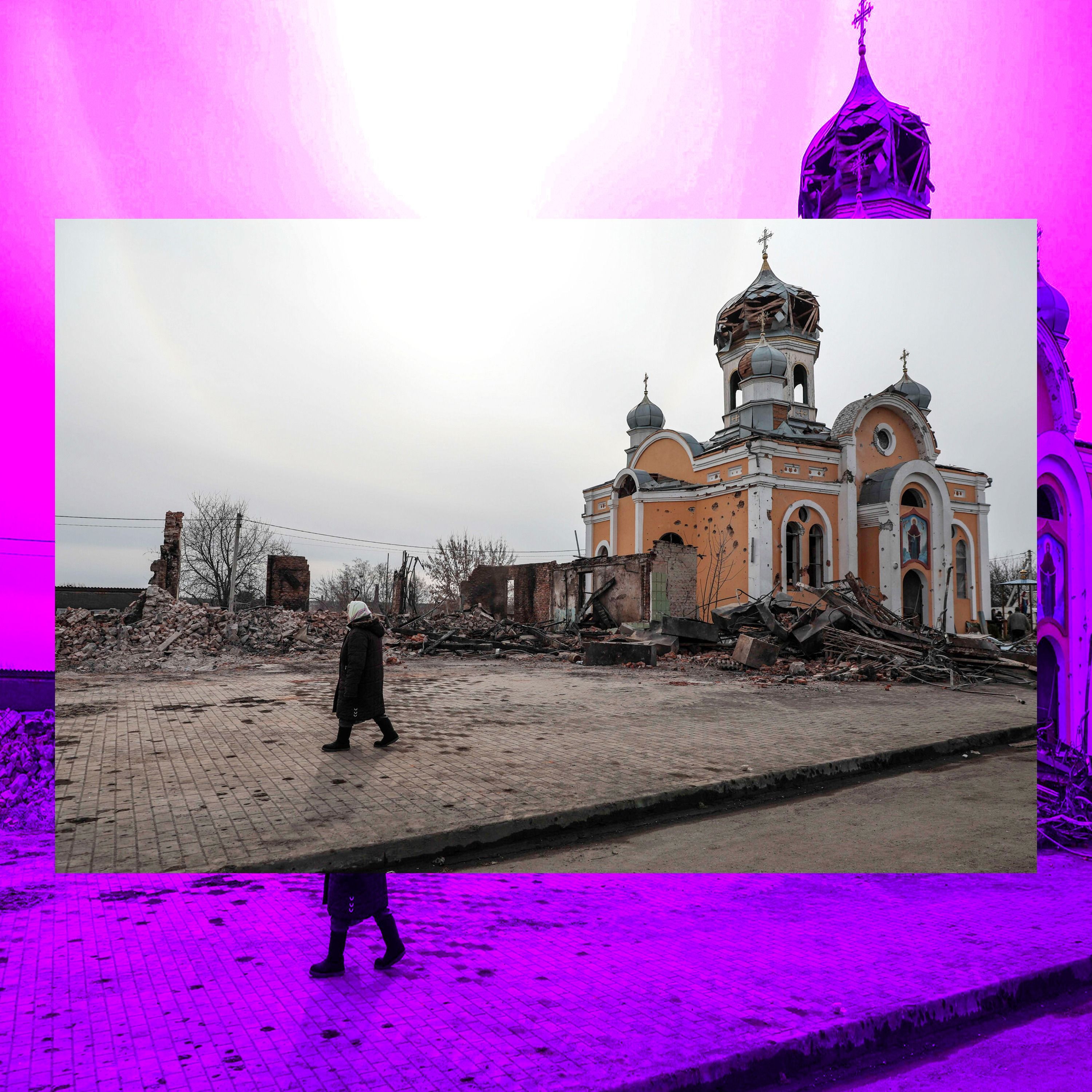
Ep 113Aristotle Papanikolaou / Russian Christian Nationalism and Eastern Orthodoxy (and How Culture Wars Contributed to the War in Ukraine)
"Real wars always begin with culture wars." Theologian Aristotle Papanikolaou discusses Eastern Orthodox perspectives on war and violence; the impact of Communism on Eastern Orthodox theology; the complicated ecclesial structures of Eastern Orthodoxy, where bishops, patriarchs, and nation-states interact in unpredictable ways; he reflects on Eastern Orthodoxy in Russia and Ukraine, the ways Christianity is enmeshed and caught up in the authoritarian, nationalist regime under Putin, and the idea of "Russkii Mir" (the Russian world), which has come to motivate and justify a great deal of violence and aggression in the name of peace and unity.AboutAristotle Papanikolaou is Professor of Theology and the Archbishop Demetrios Chair in Orthodox Theology and Culture at Fordham University. He co-directs the Orthodox Christian Studies Center, and is author of The Mystical as Political: Democracy and Non-Radical Orthodoxy and has edited several volumes of Eastern Orthodox theological and political perspectives.Show NotesThe long, complicated relationship between Eastern Orthodoxy and Communism in the former Soviet UnionDavid Bentley Hart on Orthodoxy and Communism (NYT article)Eastern Orthodoxy on the ethics of war (book: Orthodox Christian Perspectives on War)What's a patriarch? What's a patriarchate?What does that mean for autonomy and power?How does Ukraine factor in Orthodox patriarchates?Autocephalous Ukrainian Church2022 Sunday of Forgiveness sermon. Kirill states: Russia promotes traditional values, Ukraine led astray by western liberals and Nazis.How does theology function in this conversation?"Russkii Mir" as a political idea: we're one people with a common heritage"To be Russian meant to be Orthodox."Russian "Democracy"Heresy of "Russkii Mir""A God given mission to save Ukrainians from themselves."Theology of HistoryFormal and Material levelsChristian faith is a trans-national faithGreece: "So in your country, are you Orthodox?"Saving UkrainiansLong-term implicationsDynamics within Orthodox ChurchThe hope for reconciliation: "that will take decades in my opinion"Culture warsVisit Public Orthodoxy onlineVisit Fordham's Orthodox Christian Studies CenterProduction NotesThis podcast featured theologians Aristotle Papanikolaou and Ryan McAnnally-LinzEdited and Produced by Evan RosaHosted by Evan RosaImage Credit: An Orthodox church in Malyn, Ukraine, northwest of Kyiv, destroyed by Russian warplanes. Miguel A Lopes/EPA, via ShutterstockA Production of the Yale Center for Faith & Culture at Yale Divinity School https://faith.yale.edu/aboutSupport For the Life of the World podcast by giving to the Yale Center for Faith & Culture: https://faith.yale.edu/give

Ep 112Katherine Sonderegger / God, the Great Hope of Theology
What is the future of theology? We asked that question of several leading theologians 7 years ago, including today's featured guest, Katherine Sonderegger, The William Meade Chair of Systematic Theology at Virginia Theological Seminary, a priest in the Episcopal Church, and has written widely, covering Creation, Christology, Election, the Jewishness of Jesus...Her approach to theology is beautifully summed up in the following, “There really is no more beautiful thought in all reality than the thought of God. I believe that theology is ultimately just that: thinking the thought of God and worshipping the Reality who is God.”In this conversation, Katherine Sonderegger joins Matt Croasmun to discuss the importance of a free and unapologetic, unembarrassed approach to Christian theology; the interplay of Christian theology with other religious texts and pluralistic perspectives; the practice of peace, listening, and being knit together even in difference; the strong unity and center of theology, which is the capital-R Reality that is God, who is, in Sonderegger's words, "the great hope of theology."Show NotesWhat’s right with theology these days? Women and theology The relationship between Old Testament studies, New Testament studies, and theology“In the major universities, it is an odd thing to be a religious person”Intellectualism, depth and transcendence The relationship between Christianity and JudaismChristianity between Judaism and IslamWhat is central to Christianity? Ties between Christian faith and the secular realm“Religious people can bring our own reflections on wisdom, as well as folly” Thomas Aquinas and God ‘God and all things in relation to God’ Theology and thinking the sublime Theology is for exploration of God Intellectual worship of God Does theology have a center?Scripture and the mystery of God “I want to see theology losing itself in the ocean of reality”God’s abundance Galatians 5:14 “Love your neighbor as yourself,” Loving God through love of neighborAugustine: “Love God and do what you will” The future of the field of theology “God is the great hope of theology”indifference to religion The seminary graduates fill her with hope “If it is of God, it cannot fail” About Katherine Sonderegger Katherine Sonderegger is The William Meade Chair of Systematic Theology at Virginia Theological Seminary. She joined the VTS faculty in 2002, after fifteen years as a professor of religion at Middlebury College. Her academic career began at Smith College, where she undertook interdisciplinary research in medieval studies. Her priestly vocation began at Yale Divinity School, where she completed her M.Div. and STM degrees, writing a thesis on feminist theology. The first years after graduation brought her to congregational ministry and chaplaincy training at Yale New Haven Hospital. Raised a Presbyterian, the Reformed roots run deep in her vocation. She brought these into the Episcopal Church when she was ordained deacon and priest in 2000.Twin topics have characterized her academic career: the dogmatic theology of Karl Barth and constructive work in systematic theology. She has published in several areas of Barth studies, from Barth’s interpretation of Israel, Jews, and Judaism, to his Doctrine of God, his Christology, and his remarkable exegesis of Scripture. More recently, Sonderegger has turned to constructive theology, writing shorter works on the Doctrines of Election, Creation, and Christology, and launching a new systematics. Volume 1: The Doctrine of God appeared under the aegis of Fortress Press in 2015, and Volume 2: The Trinity: Processions and Persons was published in 2020. She is currently working on Volume 3: Divine Missions, Christology, and Pneumatology.Sonderegger is also the author of That Jesus Christ Was Born a Jew: Karl Barth’s “Doctrine of Israel” (University Park: Penn State Press, 1992) and coauthor, with artist Margaret Adams Parker, of Praying the Stations of the Cross: Finding Hope in a Weary Land (Wm. Eerdmans Press, 2019).Production NotesThis podcast featured theologian Katherine Sonderegger and biblical scholar Matthew CroasmunEdited and Produced by Evan RosaHosted by Evan RosaProduction and Editorial Assistance Nathan JowersA Production of the Yale Center for Faith & Culture at Yale Divinity School https://faith.yale.edu/aboutSupport For the Life of the World podcast by giving to the Yale Center for Faith & Culture: https://faith.yale.edu/give

Ep 111Miroslav Volf / War in Ukraine: Theological and Moral Reflections
Miroslav Volf offers his personal reflections about the war on Ukraine. His theological and ethical commentary speaks to various facets of the situation, including: the global cultural clash between authoritarian nationalism and pluralistic democracy; the primacy and priority of God's universal and unconditional love for all humanity, including evildoers; the call to actively resist evil and guard our humanity; the importance of truth in an age of disinformation and suppression of real facts; the need for Christians to remain "unreliable allies" with governments or parties while remaining faithful to the humanity in the friend, neighbor, stranger, and enemy; but ultimately his message is one to soberly—and dare I suggest joyfully, with unabashed hope—lift up our hearts (and the hearts of those suffering through war, dislocation, death, and destruction) to the Lord.Episode Art Provided by Fyodor Raychynets. "ні війні!" = "NO WAR!"Show Notes Gustavo Gutiérrez, On Job: God-Talk and the Suffering of the InnocentGustavo Gutierrez, The God of LifeMiroslav’s experience in Yugoslavia in the 90s and how it is reflected in UkraineThe theological dimension of the war in Ukraine “The war in Ukraine is part of a resurgence of nationalism as a global phenomenon”Two types of nationalism: exclusive nationalism, inclusive nationalism or patriotismRussian nationalism and the superiority of an ethnic group, the Russian Orthodoxy“What is the role of religion in the public sphere?"To what extent do Christians have stake in advocating for any position? The birth of Russian Orthodoxy in Kyiv The origins of faith and nation in Russia “Such close ties between religion and religious sacred spaces have made religion complicit in the violence of the state”Samuel Huntington, The Clash of Civilizations and the Remaking of World OrderHow Russian Orthodoxy is divided – the war is fought internally, rather than between Roman Catholicism + Protestantism and Orthodoxy on the other the division between The Orthodox Church of Ukraine and Muscovite Patriarchate is reflected in the divisions in global OrthodoxyThe struggle within Orthodoxy for primacy in MoscowGod is love“God does not simply love and therefore can love or not love, but God actually is love always and without exception. And therefore that the love of enemy is a central tenant of the Christian faith”Every single oppressed and suffering person and every single wrongdoer, no matter how heinous the crimes they've committed, every single individual is an object of God's unconditional love.”John 1:29 "The Lamb of God, who takes away the sin of the world"“in secular terms, we ought to respect the humanity of each person, even the worst among us, and that we ought to care for them”God's love for the weak and assaulted Love for the enemyHow does this fit with the idea of Jesus’ teaching on non-resistance? “Resistance against the aggressor can be, and I think ought to be, an expression of love, both for the victims of aggression and for the aggressor”The Just War Theory: there are different ways to transform an aggressor “I myself do not subscribe to Just War Theory”I think that any engagement with the enemy has to be led by the command of loveOliver O’Donovan and love of the enemy “The interest of the Christian faith is also interest in the good of the aggressor. And we cannot exempt the aggressor from the universality of the love of God”“It's crucial to keep careful watch over the state of our humanity. Evil is infectious, especially for those who struggle against it”Collective guilt“It has been said that truth is often the first victim of war”What is the place of emotions in war? Job and suffering“What's really interesting is that Job dares to speak to God. He brings his anger, his lament, his disappointment, all of this displaced before God”How truth can transform anger Psalm 137 “Blessed is the one who dashes your little ones against the rock”Karl Barth: “Christians and unreliable allies.” Their ultimate allegiance is to God, not to a political party Ron Williams: “God has no particular interest of God’s own”The strength of pluralistic democracies “One of the reasons for the rise of authoritarianism is a certain dysfunctionality of pluralistic democracies”Reconciliation One way to reconcile is to enforced peace and suppress war But reconciliation is a moral practice “Naming the wrong that has been committed and finding ways to go beyond that, to live together in peace"How to sustain hope in the midst of such overwhelming powers of evil"sursum corda,”"lift up your hearts," or more literally "hearts up!"Production NotesThis podcast featured theologian Miroslav VolfEdited and Produced by Evan RosaHosted by Evan RosaProduction Assistance by Martin Chan, Nathan Jowers, Logan Ledman, and Annie TrowbridgeA Production of the Yale Center for Faith & Culture at Yale Divinity School https://faith.yale.edu/aboutSupport For the Life of the World podcast by giving to the Yale Center for Faith & Cul
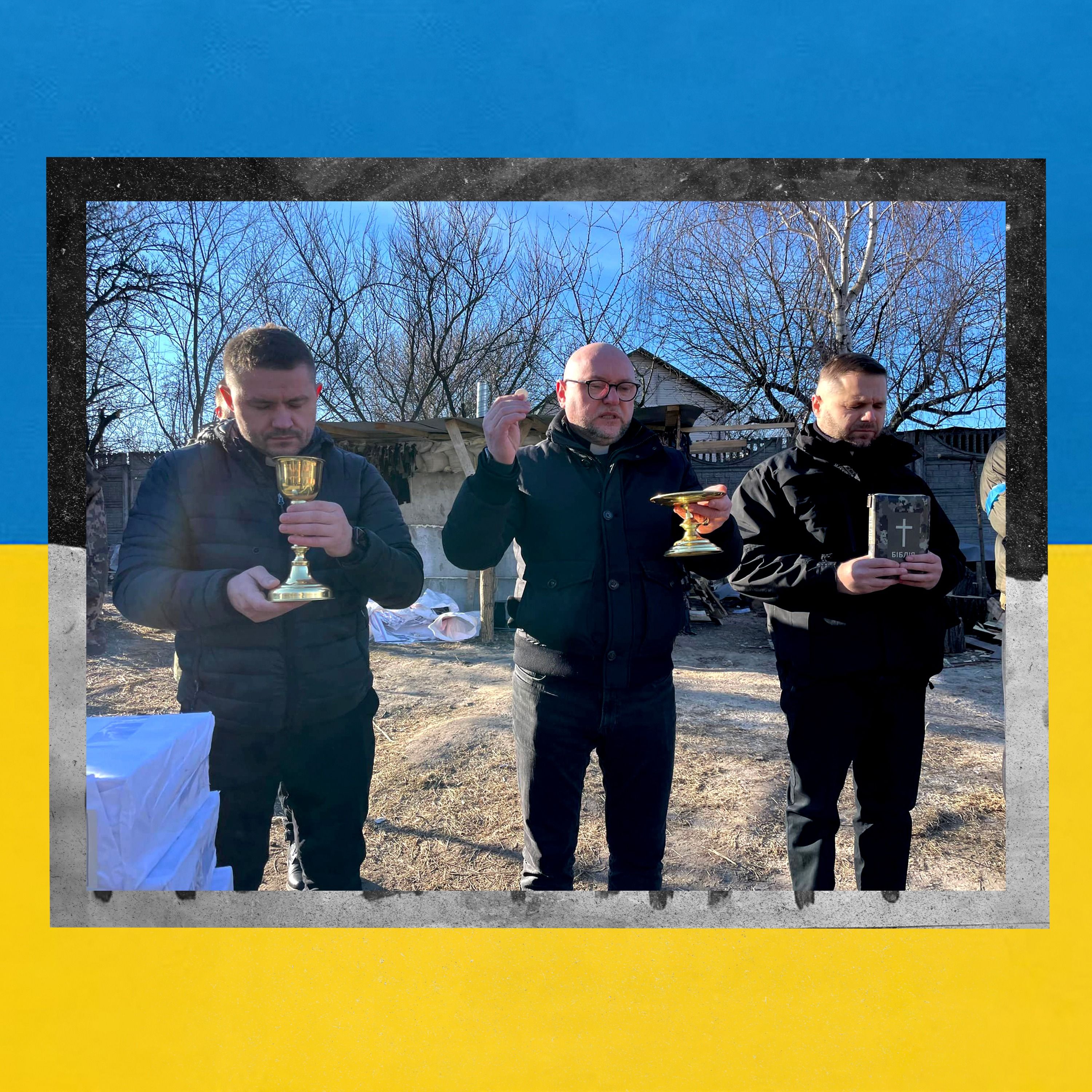
Ep 110A Voice from Kyiv: Fyodor Raychynets / Faithful Presence in the War on Ukraine
Today we're sharing a conversation between Miroslav Volf and Fyodor Raychynets, a former student of Miroslav's when he taught at Evangelical Theological Seminary in Osijek, Croatia in the early '90s. Fyodor is a theologian and pastor in Kyiv, and is head of the department of theology at Ukrainian Evangelical Theological Seminary on the northwest outskirts of the city, 20 kilometers outside downtown Kyiv.We spoke to Fyodor on Sunday, March 13, 2022, just as he came in for the 8pm curfew after a day of feeding the elderly, the sick, weary soldiers, and women and children stuck in the basements without electricity, without clean water, without medication, and increasingly, without a clear idea of how any of this will end for them. That day Fyodor visited his seminary campus to find it had been shelled by three missiles, destroying much of the campus, including his office, leaving his library of books destroyed.In this conversation, Fyodor shares his experience, now after 20 days of war, 20 days of being under siege, and 20 days of prayer and feeding the hungry.Fyodor posts daily updates and reflections on his Facebook page, you can find a link in the show notes. Each daily post begins with developments in the war and how it's impacting him, his team of fellow ministers, and the city around him. He then reflects on the nature of war itself, and its impact on human life. He closes each post with a prayer for Ukraine, for freedom, for humanity. I'll quote just a few of his moving passages.Day 7, "War is when the safest place to sleep in your apartment is the bathroom, although that's obviously for other purposes.."Day 11, "War is when the most vulnerable suffer. That's when ordinary things, for example, going to the store and buying fresh, warm and fragrant Ukrainian bread (I've visited about 70 countries, but I've never eaten such delicious bread) become impossible. It's when you meet people every day who haven't eaten bread for 4 or 5 days, not to mention anything else...."Day 15, "War is when evil reaches unseen dimensions and lowest forms, and when good manifests itself in its highest manifestations against the backdrop of total uncontrollable madness."Day 19, "War is when you wake up in the morning, if you managed to fall asleep at all, not from the alarm clock or birds singing, but to the sounds of sirens, or bomb explosions that make you tremble. War is when your emotional state shifts from optimistic to pessimistic more often than in peaceful time, and the emotional range itself is much wider."Day 20, written just a few hours ago. "War is when your understanding changes when not in theory but in practice you especially appreciate the moment "here and now" and live it more consciously..."Show Notes"War is when the safest place to sleep in your apartment is the bathroom”Fyodor’s connection with Miroslav Volf, and his experience with war in Croatia and Bosnia“I was joking when I was coming back to Ukraine... that ‘I am returning to the most peaceful country in the world.’ And here we are.”“When the US government and UK government warned us about the impending full-scale invasion of Russian troops, we thought that they were exaggerating.”Three missiles hit his campus the day before this interviewFyodor’s volunteer group feeds the elderly trapped in basements Why Fyodor decided to stay and help, rather than leave“Thanks to God, I was able to evacuate my children.”The risks involved in visiting those trapped in basements"Is it worth that degree of risk?"Fyodor’s seminary was hit by a missile: “Let me put it in one word: it's an apocalyptic scene, you know?”Giving communion in a destroyed landscape, “What does Christ's body, given for the life of the world, mean in that moment?”“I started to believe in what we called an open Lord's Supper: when everyone is welcomed”Giving communion to people from different religious backgrounds‘What the people ask for’ Grappling with the Russian support for Putin’s war: “It’s a wider problem”“When the intellectuals support that kind of aggression, we have a serious problem.”“Ukrainians were always a pain in the back to the Russians because of our free will. We love freedom.”Is the Russian Orthodox Church involved in a Russian imperial project?Public versus private support of the war, and neutrality, by the Russian Church“Martin Luther King used to say there is a special place in hell for these kinds of people who pull or choose neutrality in the times of moral crisis.”“As we say in Ukraine, the war did not start 18 days ago, it started eight years ago.”How can our humanity be preserved in the midst of evil? “I have to remind myself on a daily basis that we are humans and we are-- not just remain --but it is so crucial, in the midst of hell, not to lose our humanity. But to preserve it, and to show it, and to demonstrate it.”How to keep anger from taking control Is faith a consolation? “It is challenging to sustain a faith in the situation where there is a sense that you cannot c

Ep 109Willie Jennings / The Christian Imagination: Theological Complexity, Communication, Cultivation, and Community
Willie James Jennings (Yale Divinity School) joins Matt Croasmun for a conversation about the future of theology, addressing the Christian inability to hold complexity, public communication, and deep formation together in a way that shows how theology is for our very lives.Seven years ago the Yale Center for Faith and Culture interviewed a diverse array of theologians about the present woes and future potential of theology. Some five years and a pandemic later, the landscape of theological education seems like it's at a crossroads. The driving purpose of Christian higher education is in question as colleges, universities, and seminaries across denominations and around the world consider how they'll move forward in the wake of stark realities this pandemic laid bare. So it's worth revisiting the conversation to see what has changed, what holds true, and what hopes we're still holding on to. For today’s episode, we're featuring a conversation between Matt Croasmun and Dr. Willie James Jennings, Associate Professor of Systematic Theology and Africana Studies at Yale Divinity School, an ordained Baptist minister, and author of The Christian Imagination: Theology and the Origins of Race, and more recently After Whiteness: An Education in Belonging. Willie reminds us to be looking for the opportunities in the middle of crises of theological education; he worries about the inability to hold complexity, public communication, and deep formation together in a way that shows how theology is for our very lives; he speaks to the recent aversion to pastoral ministry, which is theology for the sake of the people; he touches on the role of Christian theology in a pluralistic world, asking how theologians might learn from comedians; and he encourages all Christians to take up the theological call to courage, the call to see, listen, and and alleviate suffering, and the call to a theology of life.Show notesHow to make theology attractive Who do we want to teach? Secular religious studies versus confessional environments“Never let a good crisis go to waste” educational ecology: learning environments Doctoral students, do you want to be a teacher? The pastor versus the professor: the call to teach Theology and plurality Theology and violence: naming the pressure points of suffering The Christian frame versus the real matter at hand “We want to be asking human questions, they’re not just Christian questions” The alleviation of pain and suffering comes before questions of the good life The real goal is the healthy neighborhoodReverence and theology About Willie JenningsWillie Jennings is Associate Professor of Systematic Theology, Africana Studies, and Religious Studies at Yale University; he is an ordained Baptist minister and is author of The Christian Imagination: Theology and the Origins of Race,Acts: A Commentary, The Revolution of the Intimate, and most recently, After Whiteness: An Education in Belonging.Other Episodes Featuring Willie JenningsJoy and the Act of Resistance Against Despair (with Miroslav Volf)My Anger, God's Righteous Indignation (A Response to the Murder of George Floyd)The Crowd Needs Faith: Control, Care, Economy, and Race (with Miroslav Volf)Production NotesThis podcast featured theologian Willie James Jennings and biblical scholar Matthew CroasmunEdited and Produced by Evan RosaHosted by Evan RosaProduction Assistance by Martin ChanA Production of the Yale Center for Faith & Culture at Yale Divinity School https://faith.yale.edu/aboutSupport For the Life of the World podcast by giving to the Yale Center for Faith & Culture: https://faith.yale.edu/give

Ep 108Fernando Segovia / Global Crisis and the Hope for Global Flourishing
As Christians around the world heard these words spoken on Ash Wednesday this past week, as an ashen oil was smudged to their brows, the world watched on in horror and grief over the brutality and aggression against Ukraine. In a swift movement of solidarity, we're all still are left with difficult and enduring questions. Why this war? What is at stake? How did we get here and what can we do? How can we stop this in a way that might hang on to a hope for peace?But as finite, limited beings brought forth from dust, we quickly run to the end of our ability to explain. And like so many problems in our world, we're just left with further questions: What does it mean to be a Christian in a world where so many of our systems are dehumanizing? What duties are incumbent upon us as Christians, as humans? How can we learn and share a global flourishing that respects and honors all?In this week's episode, Matt Croasmun interviews Fernando Segovia, the Oberlin Graduate Professor of New Testament and Early Christianity at Vanderbilt Divinity School. He is the author of Decolonizing Biblical Studies: A View from the Margins. And as a Cuban American theologian and biblical scholar, he is devoted in elevating voices outside of the dominant Western culture, and advocating for a a truly global Christianity one that is relevant to lived realities across the world. In this conversation, he reflects on the importance of learning about Christianity as a set of global and multidimensional traditions. He discusses the duties of Christians to critique human culture and society, including their own; he suggests that utopian visions can and do inform the moral and spiritual imagination in our imperfect world, but must avoid naïveté and invite constant critique and correction. Show notes Theology at the global level Theology and seriousness in institutions of learningChristian studies and standing in tradition“There’s tremendous ignorance of what one is a part of” ‘outsiders’ and Christian traditionThe need for fresh critical analysis of Christianity ‘We cannot do the same analysis that was done in 1970 in the 2010s’What is the good life in terms of our particular crises? How do we uphold human dignity, human freedom, and social justice?Paul, the Roman Empire, and solutions to our modern issuesWhat really is a utopian vision for our world today? Visions of the good versus resisting what is wrong, is there tension there? Fernando Segovia’s past in Cuba “Even the utopian visions must be critiqued’ Paradise, liberation, and naivetyChallenging the good Biblical interpretations: even the Evil Being came from the Kingdom of God Contradictions and utopia About Fernando SegoviaFernando F. Segovia is Oberlin Graduate Professor of New Testament and Early Christianity. His teaching and research encompass Early Christian Origins, Theological Studies, and Cultural Studies. He is author of Decolonizing Biblical Studies: A View from the Margins. As a biblical critic, his interests include: Johannine Studies; method and theory; ideological criticism; the history of the discipline and its construction of early Christian antiquity. As a theologian, his interests include: non-Western Christian theologies, especially from Latin American and the Caribbean; and minority Christian theologies in the West, especially from U.S. Hispanic Americans. As a cultural critic, his interests include: postcolonial studies; minority studies; Diaspora studies. Professor Segovia has served on the editorial boards of a variety of academic journals, has worked as consultant for foundations and publishing houses, and has lectured widely both nationally and internationally. He is also a past president of the Academy of Catholic Hispanic Theologians in the United States.Production NotesThis podcast featured biblical scholars Fernando Segovia and Matthew CroasmunEdited and Produced by Evan RosaHosted by Evan RosaProduction Assistance by Martin ChanA Production of the Yale Center for Faith & Culture at Yale Divinity School https://faith.yale.edu/aboutSupport For the Life of the World podcast by giving to the Yale Center for Faith & Culture: https://faith.yale.edu/give
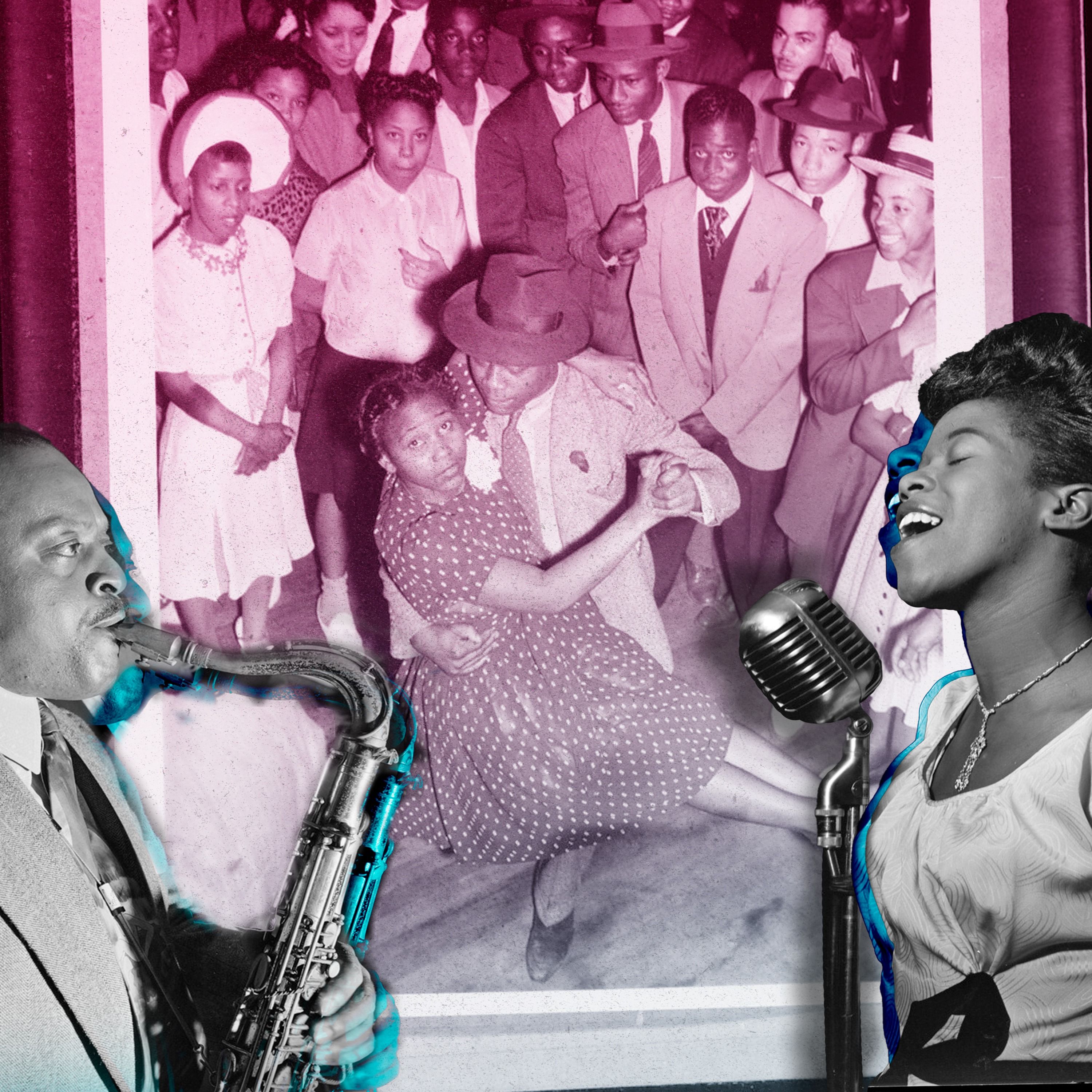
Ep 107Julian Reid / How Black History Made Jazz: Suffering, Joy, and Longing for Our True Home
Jazz pianist Julian Reid on music, theology, and improvisation. The keys element of The JuJu Exchange uses the history of blues, gospel, and jazz to discuss how we communicate emotionally and spiritually through music, teaching an important lesson in how to live and long for home while we remain exiles. Features score from The JuJu Exchange's latest release, The Eternal Boombox. Interview by Ryan McAnnally-Linz and Evan Rosa.Julian Reid is a Chicago-based jazz pianist and producer, writer, and performer (not to mention B.A. Yale University, and M.Div. Emory University). The JuJu Exchange is a musical partnership also featuring Nico Segal (trumpet, Chance the Rapper; The Social Experiment) and Everett Reid—exploring creativity, justice, and the human experience through their hip-hop infused jazz. Their new 5-song project is called The Eternal Boombox.Show NotesMusic is invisible and tactileMusic as a matter of faithHow do we decide what is music and what is just sound?Pain and hope in Blues music“The Blues emerged as a way to communicate within the black community the pain and frustration and disappointment of failed black life post emancipation.”How the Blues emerged as a way to talk about the sorrows of life.The beauty of the mundaneThe birth of Gospel Blues and Georgia TomGospel sings about God, but carries on the pain of the bluesJazz and the middle classAmiri Bakara, Blues People“Jazz was communicating freedom of expression of aspiration, of ambition, of joy, maybe even some frivolity in American life.”The music theory behind emotionThe theological implications of Blues chord progressionsExilic chords: how Blues denies the ear the chord resolution it wants to hear“Frustrating the notion of going home”Music theory and the meaning of home in Christianity“Music is a means by which I can signal the dysfunction of society, the lack of home in society”Jacob Blake and frustrated chordsBlues is the music that is ‘beautifying but not justifying,’ that ‘points forward to something that’s not yet’The chord progressions of European imperialismHow American music and Christian music centers us back ‘home’ in the chords, “as opposed to contending with the fact that we are still pilgrims and in a foreign land"Sugary chords avoid "the reality of us being in some real deep trouble”Julian’s band The JuJu exchange, and their latest EP The Eternal BoomboxHis album is on the stages of grief involved in processing the PandemicThe first stage: shock, “I can’t see my eyes”The second stage: anger, “Avalanche”The third stage: bargaining, “Eternal boombox”The fourth stage: depression, “And so on”The fifth stage, acceptance/hope, “Glimmer”Music, Alzheimers, and how distorting the melody conveys issues with memoryJazz and agencyImprovised music and expression in the momentTension and comfort in Jazz phrasingHow God can meet us in the midst of space, how God can meet us in the midst of creating wordless music”Do we need to articulate who God is?Improvisation and humility“Does the music breed honest dialogue with the Creator?”How music plays with social boundaries“Musicians that are just out for themselves sound like it”More from The JuJu Exchange: Listen to The Eternal Boombox EP: https://ditto.fm/theeternalboomboxIf you like what you hear and want to further the exchange, join us over at Patreon. This subscription service helps The JuJu Exchange stay independent: patreon.com/thejujuexchangeLearn more about The JuJu Exchange on their website: https://www.thejuju.life/ From the episode:Cornel West, from Race Matters: “To be a jazz freedom fighter is to attempt to galvanize and energize world-weary people into forms of organization with accountable leadership that promote critical exchange and broad reflection. The interplay of individuality and unity is not one of uniformity and unanimity imposed from above but rather of conflict among diverse groupings that reach a dynamic consensus subject to questioning and criticism. As with a soloist in a jazz quartet, quintet or band, individuality is promoted in order to sustain and increase the creative tension with the group--a tension that yields higher levels of performance to achieve the aim of the collective project. This kind of critical and democratic sensibility flies in the face of any policing of borders and boundaries of 'blackness', 'maleness', 'femaleness', or 'whiteness'.”