
For the Life of the World / Yale Center for Faith & Culture
256 episodes — Page 4 of 6

Ep 106Lisa Sharon Harper & Miroslav Volf / The Case for Reparations, Historical Restorative Justice, Ancestry, and Christian Power
"I am because they were." Lisa Sharon Harper joins Miroslav Volf to discuss the significance of narrative history for understanding ourselves and our current cultural moment; the sequence of repeated injustices that have haunted America's past and directly impacted Black Americans for hundreds of years; the Christian nationalist temptation to hoard power; the necessary conditions for true repair, the role of reparations in the pursuit of racial justice, and the goodness of belonging.This month, Lisa Sharon Harper released a new book that traces her family's history. Even with the aid of new mail-order genetic testing and ancestry services, I think it's fair to say that most Americans live their lives disconnected from their ancestors. Call it ancestor worship, call it autonomy, call it selective memory—whatever is going on there, we tend to be disconnected from our past, mostly unaware of those from whom we came beyond our parents and grandparents.Who were those people who we depend on for our very existence? Lisa Sharon Harper's new book is called Fortune: How Race Broke My Family and the World--and How to Repair It All. And when new episodes of For the Life of the world come back on May 7 this spring, we'll be talking with Lisa at length about how race broke her world and how she traced her family line back beyond the founding of America. For more information about the book, check the show notes and visit lisasharonharper.com/BlackFortuneMonth for more resources on reconnecting to our history and seeking restorative racial justice.But for now, we're replaying Miroslav Volf's 2021 conversation with Lisa Sharon Harper; the two friends discuss the significance of narrative history for understanding ourselves and our current cultural moment; the sequence of repeated injustices that have haunted America's past and directly impacted Black Americans for hundreds of years; the Christian nationalist temptation to hoard power; the necessary conditions for true repair, the role of reparations in the pursuit of racial justice, and the goodness of belonging. Thanks for listening. And here's the episode in its entirety. Enjoy.Show NotesThe importance of family story - ‘I am because they were’ “the hereditary sin of the philosopher is a lack of historical sense” - Frederick NietzscheLisa Sharon Harper traces her family lineage through the Carribean where they suffered ‘grueling oppression’“They found ways to, to cope and they found their pool of spirit to help them in the project of resilience.” Lisa Sharon Harper“I'm just very aware of who I have been and also aware that their DNA literally lives in me.”1619 lawThe origin story of police today and the ‘black tax’The idea that people always had a choice - the first settlers chose to enslaveGeorge Floyd’s impact We have a choice as a society right nowHow faith is involved with choiceChristian nationalism todayJesus in a suburban Starbucks versus the historical Jesus“The white Christian nationalist project is to do one thing, is to preserve and protect the power, the assumed rule of white Christian men on this land.”Miroslav's idea that Jesus has become a moral stranger to us: “Things that were really important to him don't matter to us and things that are really important to us didn't seem to be important to him.” Miroslav Volf The logic of empire embedded in ChristianityThe ‘big lie’ – that everyone in the Bible was white“You cannot understand this book if you are reading it from the halls of empire” – Lisa Sharon HarperRestoration and redemption are possible The Very Good Gospel, How Everything Wrong Can Be Made Right“If you are human you have the ability to be transformed”Revelation and the Tree of Life Segregation in South Africa“Oppression is costly, so of course the remedy will be costly”ReparationsHumanity as the center of repentance What is power for? Inequity and the possibility of death Genesis 14 Sin as separationWhat would repentance look like? Calling on brown Jesus to create a circle of belonging Fortune: How Race Broke My Family and the World--and How to Repair It All#BlackFortuneMonthAbout Lisa Sharon HarperAbout Lisa Sharon HarperFrom Ferguson to New York, and from Germany to South Africa to Australia, Lisa Sharon Harper leads trainings that increase clergy and community leaders’ capacity to organize people of faith toward a just world. A prolific speaker, writer and activist, Ms. Harper is the founder and president of FreedomRoad.us, a consulting group dedicated to shrinking the narrative gap in our nation by designing forums and experiences that bring common understanding, common commitment and common action.Ms. Harper is the author of several books, including Evangelical Does Not Equal Republican…or Democrat (The New Press, 2008); Left Right and Christ: Evangelical Faith in Politics (Elevate, 2011); Forgive Us: Confessions of a Compromised Faith (Zondervan, 2014); and the critically acclaimed, The Very Good Gospel: How Everything Wrong can be Made Rig

Ep 105Jemar Tisby / Holistic and Historical Racial Justice: Awareness, Relationships, Commitment
Jemar Tisby, author of the NYT bestseller The Color of Compromise, explains the complicity and compromise of American Christians; the narrative war that confederate monuments wage (and how they were erected much later than you might think); the ugly theological justifications of racism and the shameful history of Christian white supremacy; the fraught project of selectively naming heroes and villains and then memorializing them; and the practical problem of how to go forward rightly from this moment of increased attention to racial injustice.Get Jemar Tisby's book! The Color of Compromise: The Truth about the American Church’s Complicity in RacismShow Notes"the North won the Civil War, but the south won the narrative war." - Bryan StevensonThe birth of Jim Crow in the Redemption Era – white people taking back the SouthMonuments as reassertion of white supremacyThe theological significance of the 'Redemption Era'Separation of Church and State as a disguise for racismThe Bible as justification textMatthew 6:24 and“You can't serve God and money”Problematic historical heroes and the desire for heroes todayShould we be putting slave holders on pedestals?Can we instead honor those who held America to its noble ideals?What kind of future can we hope for?What confession can look like in communitiesTheologically unpacking repairCreative repair2020 and what happened with voting rightsChristians and reluctance to voteWhat do we do now? Awareness, Relationships, CommitmentJesus Christ and relationalityRelationships as necessary but not sufficientCommitment to stand up to racial inequalitiesProduction NotesThis podcast featured author and historian Jemar TisbyEdited and Produced by Evan RosaHosted by Evan RosaEditorial and Production Assistance by Annie TrowbridgeA Production of the Yale Center for Faith & Culture at Yale Divinity School https://faith.yale.edu/aboutSupport For the Life of the World podcast by giving to the Yale Center for Faith & Culture: https://faith.yale.edu/give
Ep 104Black Joy / Howard Thurman's Civil Rights Theology, Stacey Floyd-Thomas on Vicious Humility and Black Joy, and David Walker's Christian Abolitionism
Sameer Yadav comments on Howard Thurman's Civil Rights Theology, Ryan McAnnally-Linz reflects on the spiritual and moral significance of David Walker's "Appeal to the Colored Citizens of the World," and Stacey Floyd-Thomas talks about racial oppression via vicious humility and the life-giving dignity of Black joy. #BlackHistoryMonthShow NotesThree themes that impacted Thurman’s early religious life:Divine common groundSocial injusticeHumanity of Jesus and black joy“ Human life is one, and all humans are members of one another, and this insight is spiritual and it is the hard core of religious experience. My roots are deep in the throbbing reality of Negro idiom. And from it, I draw a full measure of inspiration and vitality. "An Appeal to the Colored Citizens of the World" – pamphlet by David WalkerFreedom as a natural right“What in our day do we claim as ours when in fact it belongs to God?” Ryan McAnnally-Linz“Where do I find myself clinging to racial privilege as though it were rightfully mine?”And where do I find myself looking for gratitude from black Americans for doing only what obedience to God requires?”Stacy Floyd Thomas on not finding what she needs at CVS - inequality of representationHumility as a sinHumility as something that Christian theology projects onto the Church as a ‘vice grip’Black joy represented by the song, "this joy that I have, this joy that I have, the world didn't give it. And the world can't take it away." – Stacy Floyd Thomas“I'm black, but beautiful, oh ye daughters of Jerusalem, do not resent me or gaze upon me because the sun has chosen to favor, favorably shine upon me." Song of Solomon 1:5-6 KJV“To know joy is to be certain in one's thinking, doing, and being.”Salvation without destruction“we can save souls without losing our minds or losing or lynching the lives of others in the process. Our work has to be not only salvific, but sane and life saving.”- – Stacy Floyd ThomasWhat joy really feels like“To know joy is to be certain in one's thinking, doing, and being.”“your joy does not exact oppression from another”Production NotesThis podcast featured Sameer Yadav with an appreciation of Howard Thurman, Ryan McAnnally-Linz with an appreciation of David Walker, and social ethicist Stacey Floyd-ThomasEdited and Produced by Evan RosaHosted by Evan RosaEditorial and Production Assistance by Logan LedmanA Production of the Yale Center for Faith & Culture at Yale Divinity School https://faith.yale.edu/aboutSupport For the Life of the World podcast by giving to the Yale Center for Faith & Culture: https://faith.yale.edu/giveAbout Sameer YadavSameer Yadav (Th.D. Duke Divinity School) is Associate Professor of Religious Studies at Westmont College in Santa Barbara, CA. His research areas are in the philosophy and theology of religious experience, race and religion, and the theological interpretation of Scripture. He is the author of The Problem of Perception and the Experience of God: Toward a Theological Empiricism (Fortress Press, 2015), a number of articles published in various journals such as The Journal of Analytic Theology, Faith and Philosophy, and The Journal of Religion among others, as well as a number of chapters in edited volumes.About Stacey Floyd ThomasStacey Floyd-Thomas is the E. Rhodes and Leona B. Carpenter Chair and Associate Professor of Ethics and Society at Vanderbilt University, and is a nationally recognized scholar and leading voice in social ethics who provides leadership to several national and international organizations that educate, advocate, support and shape the strategic work of individuals, initiatives, and institutions in their organizing efforts of championing and cultivating equity, diversity, and inclusion via organizations such as Black Religious Scholars Group (BRSG), Society for the Study of Race, Ethnicity and Religion (SRER), Strategic Effective Ethical Solutions (SEES), Society of Christian Ethics (SCE) and the American Academy of Religion (AAR). She holds a PhD in Ethics, a MBA in organizational behavior and two Masters in Comparative religion and Theological Studies with certification in women’s studies, cultural studies, and counseling. Not only has she published seven books and numerous articles, she is also as an expert in leadership development, an executive coach and ordained clergy equipped with business management. As a result, Floyd-Thomas has been a lead architect in helping corporations, colleges, universities, religious congregations, and community organizations with their audit, assessment, and action plans in accordance with evolving both the mission and strategic plans. Without question, she is one of the nation’s leading voices in ethical leadership in the United States and is globally recognized for her scholarly specializations in liberation theology and ethics, critical race theory, critical pedagogy, and postcolonial studies. Additionally, leaving podium and pulpit, she hosts her own podcast to popularize and make he

Ep 103N.T. Wright & Miroslav Volf / The Politics of Joy & Suffering in the Now and Not Yet
Can we find joy in our world? It's hard enough to find genuine, death-defying joy in the wake of the failure of the modern utopian project, the expectation that human reason and technology and political revolution might save us all. Overlay the malaise of modernity with this dumb pandemic, and the prospects for joy seem bleak. But for N.T. Wright, joy doesn't depend on the whims of circumstance or the proper function of the world. He speaks of the hardy resilience of joy, even in the midst of tragic, terrible, and untimely death. He speaks of the groanings of the Spirit, laboring and working in us even and especially when we can't find the words to explain the circumstances away. Today we're sharing Miroslav Volf's 2014 interview with the New Testament scholar, theologian, and Anglican bishop N.T. Wright. He's the former Bishop of Durham, he's Emeritus Professor University of St Andrews, and is Senior Research Fellow at Wycliffe Hall, Oxford.NOTE: For the Life of the World is running highlights, readings, lectures, and other best-of features until May 1, 2022, when we'll be back with new conversations.AboutN.T. Wright is a New Testament scholar, theologian, and Anglican bishop. He's the former Bishop of Durham, he's Emeritus Professor University of St Andrews, and is Senior Research Fellow at Wycliffe Hall, Oxford. He's the author of many books, including Surprised by Hope, Paul: A Biography, God and the Pandemic, Simply Christian, The World the New Testament, and many more.Show NotesThe connection between joy and God's deliverance and rescueJoy at what God has doneResurrection joyNavigating "the now and the not yet"What happens to joy in "the now and the not yet"Waiting, suffering, and joyActs 12: James is killed by Herod's men, and Peter gets out of jail freeDifferentiating types of sufferingRomans 8: The whole creation groaning as a woman in childbirth2 Corinthians 2:1-7 (NRSV) / So I made up my mind not to make you another painful visit. 2For if I cause you pain, who is there to make me glad but the one whom I have pained? 3And I wrote as I did, so that when I came, I might not suffer pain from those who should have made me rejoice; for I am confident about all of you, that my joy would be the joy of all of you. 4For I wrote to you out of much distress and anguish of heart and with many tears, not to cause you pain, but to let you know the abundant love that I have for you. 5 But if anyone has caused pain, he has caused it not to me, but to some extent—not to exaggerate it—to all of you. 6This punishment by the majority is enough for such a person; 7so now instead you should forgive and console him, so that he may not be overwhelmed by excessive sorrow."Yet behold: Here I am"I have no idea what's going on, but I believe.N.T. Wright on the presiding over his father's funeralThe death of a child: there is noEarly church love is "agape"—holistic loveThe emotive dimensions of joyWhat kind of seeing is involved in rejoicing?"All authority on heaven and earth has been given to me.""It's a matter of thinking into the world in which divine authority is constituted by self-giving love."Jesus on a donkey vs. Pontius Pilate on a war horse—the redefinition of power and authority"Religion is what you do to keep the fabric of society together."Treating Christianity as a private matterIs there any joy in the world today?The confused world that comes from believing the utopian lie of modernityProduction NotesThis podcast featured New Testament Scholar N.T. Wright and theologian Miroslav VolfEdited and Produced by Evan RosaHosted by Evan RosaProduction Assistance by Martin ChanA Production of the Yale Center for Faith & Culture at Yale Divinity School https://faith.yale.edu/aboutSupport For the Life of the World podcast by giving to the Yale Center for Faith & Culture: https://faith.yale.edu/give
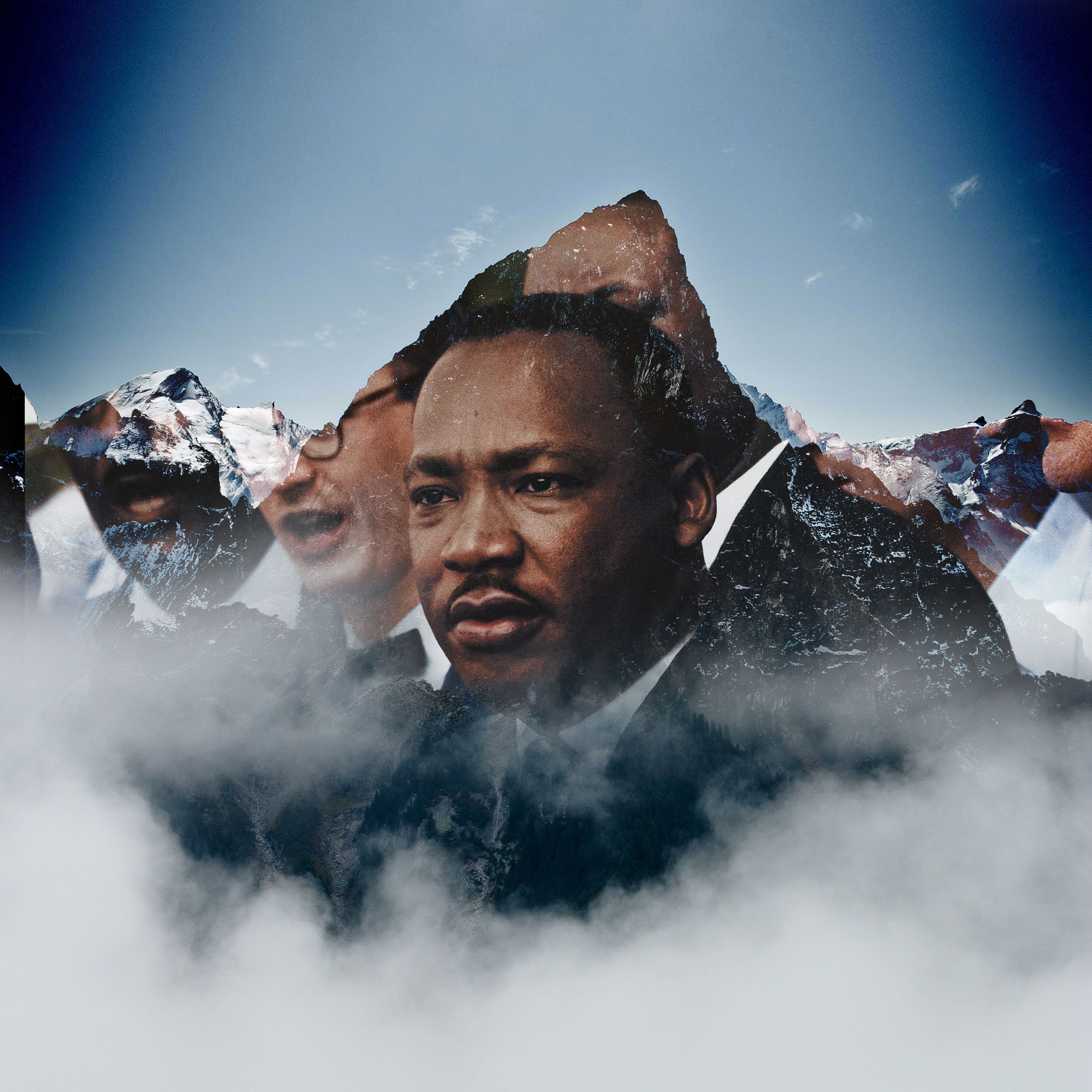
Ep 102MLK, Willie Jennings, Keri Day / Dangerous Theology
"Let us develop a kind of dangerous unselfishness... " (Martin Luther King, Jr., April 3, 1968)The day before he was assassinated, Martin Luther King, Jr. preached these words in Memphis, Tennessee. In a powerful and urgent message for sanitation workers in Memphis, Tennessee that's come to be known "I've Been to the Mountaintop," he considers the parable of the Good Samaritan, going on to speak prophetically and presciently of the dangers he himself faced, not knowing how very true his words were."We've got some difficult days ahead, but it really doesn't matter with me now because I've been to the mountain top. like anybody, I would like to live a long life. Longevity has its place, but I'm not concerned about that. I just want to do God's will, and he's allowed me to go up to the mountain and I've looked over and I've seen the promised land. I may not get that. But I want you to know the night that we will get to the promised land tonight. I'm not worried about anything. I'm not feeling as have seen the glory of."And on Monday as the collective consciousness of the world and the media turns its eyes to the legacy of of Dr. Martin Luther King, Jr, it's important to remember that he was not only a civil right activist and a pastor. He was also a theologian whose spiritual logic has profoundly impacted the church, the United States, and the world. That's why today as we commemerate the legacy of Dr. King, we ask the question: How should we do theology? What is the future of theology? And how should theology impact real human life? An impact that might even cultivate the dangerous unselfishness Jesus lived, the Good Samaritan lived, and Dr King lived.In today's episode, theologians, Keri Day and Willie Jennings reflect on these questions. Keri is Associate Professor of Constructive Theology and African-American Religion at Princeton Theological Seminary, and Willie is Associate Professor of Systematic Theology and Africana Studies at Yale Divinity School. As they talk about the prospects and perils of how theology is being done today, they both share the vision that theology should touch the lives and hearts of people, a public endeavor motivated by a love for the world. They stress that theology should be inherently practical, transformative, and life-giving.And as a celebration of Martin Luther King, Jr. and his distinctive, influential theological perspective, we're honored to have been given permission by the King Estate to feature a very moving passage from "I Have Been to the Mountaintop," in which he displays a deep and courageous and prophetic understanding of what should be at stake for the theology he preached. it's a theology of life and justice, a theology of profound and emanating love, a theology that envisions the promised land of flourishing that all God's children should be able to enjoy.Show Notes“How should theology impact real human life?” – Evan Rosa “What is going right in theology?” - Matt CroasmanRevival of political and public theology The ‘subaltern voice’The difference between theology and practical theologies “Intrinsic to a theology is the normative moment” Keri Day“Christian theology wants to make the claim that the telos is toward something much larger, about the love of God and creation.” – Keri DayHow Christianity can address the pluralistic moment of the present. The plurality of Christian traditionsInternal resources within Christian traditions for dealing with complexity and differenceTheology in diverse fields: literary studies, philosophy, political theory, postcolonial theory, feminist, womanist.“I always think that you find people asking questions about God in really interesting places.” – Willie Jennings3 crises in theology communication, thinking together about a challenging topicthe loss of the imaginative capacity to form theological interestsWhat is a sufficient theological pedagogy?What do our texts accomplish?Does theology invite?How to invite people into a vision of the good life Plurality and ChristianityViolence and theology Martin Luther King Jr. on the road from Jerusalem to Jerico “The question is not, ‘If I stop to help this man in need, what will happen to me?’ The question is, ‘If I do not stop to help the sanitation workers, what will happen to them?’ That's the question.” – MLK Jr. “Like anybody, I would like to live a long life. Longevity has its place. But I'm not concerned about that now. I just want to do God's will. And he's allowed me to go up to the mountain. And I've looked over. And I've seen the Promised Land. I may not get there with you. But I want you to know tonight that we, as a people, will get to the Promised Land.” – MLK Jr. Note: For the Life of the World is running highlights, readings, lectures, and other best-of features until May 1, 2022, when we'll be back with new conversations.Contributors"I Have Been to the Mountaintop," Martin Luther King, Jr., April 3, 1968, Memphis, Tennessee was used with permission from the Estate of Dr
Ep 101Marilynne Robinson, Charles Taylor, et al / Making or Breaking Democracy
Democracy in America and abroad is under threat. Authoritarian regimes, nationalisms of many stripes, a loss sense of the value of democratic participation among younger generations, and a growing cynicism and suspicion of our neighbors all threaten freedom and flourishing. In this episode, Miroslav Volf, Marilynne Robinson, Charles Taylor, Kevin Lau, and Andrew Kwok comment on what makes or breaks democracy around the world. NOTE: For the Life of the World is running highlights, readings, lectures, and other best-of features until May 1, 2022, when we'll be back with new conversations.Show NotesThe concern is with healing our divided country and ChurchHow former president Trump’s false allegations of electoral fraud led to violence at the CapitolNaming wrongdoing for what it is “At the heart of the current effort to deny and overturn the results of the presidential election is the wounded pride of a man”“Many Americans have taken his lie to be their truth. Sadly, but unsurprisingly, among them are many who call themselves Christians.”‘Jesus 2020’The theological dimension of these events“The salvation (Jesus) offers is not the success of your political candidate or the realization of your national dream”Each of us must ask, what will we do with our fear and anger? “We must commit firmly to truth even, and especially when it hurts our pride when we lose”“Commitment to the truth is never at odds with love of neighbor.”How suspicion has disconnected us from reality, and each other There is something ‘spiritually dead’ about our political climateDo young people care about democracy? “Some people might say, well, if we need to choose between prosperity and democracy, we are going to choose prosperity”A democracy based on ‘the wealthiest culture that ever lived on earth’Democracy’s capacity for great integrity“There is no other way of trying to tap this potential that exists in human beings other than democracy.” – Marilynne RobinsonWhat are the cultural conditions of democracy? Human beings demand our respect The relationship between human sacrality and democracy Kevin Lau and Andrew Kwok on their hopes for tomorrow from the perspective of Hong Kong Christians“For non-western Christians, we always think that democracy is an outcome of Christian spirituality.” The need for internal peace within ChristianityHealing memory“You have to hold on tight to your identity as a beloved child of God”Not letting affliction sway you from your true identityOnly then can you face your memory, and reality Production NotesThis podcast featured Miroslav Volf, Marilyn Robinson, Charles Taylor, Kevin Lau, and Andrew KwokEdited and Produced by Evan RosaHosted by Evan RosaEditorial and Production Assistance by Logan LedmanA Production of the Yale Center for Faith & Culture at Yale Divinity School https://faith.yale.edu/aboutSupport For the Life of the World podcast by giving to the Yale Center for Faith & Culture: https://faith.yale.edu/give

Ep 100Miroslav Volf / Where the Light Gets In: Primordial Goodness, Excluding the Middle, and Searching for Hope in 2022
Miroslav Volf and Evan Rosa consider audience questions and feedback about hopes and fears going into 2022. A reflective conversation about politics and theology, the aims of theological writing, suffering and the problem of evil, the loss of the middle ground in our polarized era (and Miroslav questions whether "middle" is even a Christian category), the primordial goodness of the world and seeing suffering with one eye squinted; and whether theology is for the religious only, or indeed, for the life of the world. NOTE: For the Life of the World will run highlights, readings, lectures, and other best-of features until May 1, 2022, when we'll be back with new conversations.Finding light in darkness: “how do we find and recognize the moments of of light?” - Miroslav VolfPrimordial goodness, positivity more powerful than negativity“Where the light gets in” Leonard CohenWWII and joy in times of darkness"The beauty before God of the singer who doesn’t know how to sing" - ChrysostomJosef Pieper, Only the Lover Sings: Art and Contemplation “A writer is his life.” – Hannah Arendt The writing process as a spiritual exercise: “What are our true aspirations?” “I write entirely to find out what I’m thinking, what I’m looking at, what I see and what it means, what I want and what I fear.” - Joan DidionWriting in relation to reading“There are those who write books and there are those who read them.” – Paul TillichByung-Chul Han, The Burnout SocietyOur cultural problem of “struggling to achieve in competitive environments”Drew Collins, The Unique and Universal Christ, Refiguring the Theology of ReligionsOliver Dyer, Homo NovusPaul Bloom, The Sweet Spot, The Pleasures of Suffering and the Search for MeaningThe idea of the pleasure of pain and sufferingMartin Luther, Carl Barth, and Jurgen Moltmann as sources of inspirationKeith DeRose, Horrendous EvilsThe course “The Problem of Evil” cotaught by Miroslav Volf and Keith DeRoseThe forms of resilience that are embedded in the Christian faith in the face of suffering The relationship between Christianity and suffering “faith can both emerge and be extremely alive in situations that when you step back, you might think would disprove faith.” Miroslav Volf Miroslav’s father finds faith as a Prisoner of War"I can, with one eye squinted, take it all as a blessing." Flannery O’ConnorNot being ‘too impressed’ by the negative The relationship between the Church and polarized America “tend to the beauty of the world within do not let the circumstances encroach upon the integrity of the self.” Miroslav Volf The loss of the political middle ground “Christians are unreliable allies” Ron Williams The political middle ground versus the political common groundNationalism and the Church in 2022 Resisting the notion of a political Christianity Resisting the return to Christendom "is theology for the religious only, or is such a way of thinking obsolete?"The lack of a designated sacred space An orientation towards God as a secular reality, a worldly reality This is the 100th episode, Miroslav looks back. Some favorites: “Charles TaylorMarilynne Robinson Chris WimanWillie JenningsCarrie Day" Ignore these walls.” Yvonne Mamarede of ZimbabweProduction NotesThis podcast featured theologian Miroslav VolfEdited and Produced by Evan RosaHosted by Evan RosaProduction Assistance by Martin Chan, Nathan Jowers, and Logan LedmanA Production of the Yale Center for Faith & Culture at Yale Divinity School https://faith.yale.edu/aboutSupport For the Life of the World podcast by giving to the Yale Center for Faith & Culture: https://faith.yale.edu/give

Ep 99Matthew Milliner / A Womb More Spacious Than Stars: How Mary's Beauty and Presence Upends the Patriarchy and Stabilizes Christian Spirituality
"Don't dare think that somehow your conversation with Mary and your interest in her is in competition with your relationship with Christ. ... You are flirting with heresy if you do not have a doctrine of Mary as mother of God." —Matthew MillinerWhat is the role of the Virgin Mary in Christian spiritual formation? Art historian Matthew Milliner (Wheaton College) joins Evan Rosa for a conversation about beauty of Mary in Christian spirituality—particularly for Protestants, for whom the abuses of the past have alienated them from a core component of creedal Christianity, Mary as "Theotokos," the Mother of God. They discuss the history of iconoclasm against Mary, the struggle of contemporary Christianity with art and aesthetics, unpacking the "Woman Clothed with the Sun" from Revelation 12, the feminist objection to Mary, and how the Virgin Mary upends an ancient pagan goddess culture invented to maintain patriarchy. They close with an appreciation of Mother Maria Skobtsova, who's life and witness in the Ravensbruck death camp during the Holocaust exemplifies how the example and presence of Mary Theotokos today might inform the pursuit of a life worth living.Show Notes"La Corona" by John Donne"Don't dare think that somehow your conversation with Mary and your interest in her is in competition with your relationship with Christ." —Matthew Milliner, from the interviewMatthew Milliner's forthcoming book, Mother of the LambHow sacred "art" must support presence"A large family album"Iconoclasm against the Virgin Mary"The institutionalized art world has done such a wonderful job of alienating so many people.""Where has this been all my life?"Madonna Della Misericordia: "The train of her robe is very wide."Contemporary Christianity's struggle with aesthetics"The idea that the Christianity is somehow aesthetically impoverished itself seems to me a fictitious assertion. One that can be fueled with select examples, but I just think there's so much out there that that has been undiscovered. And Mary is often at the heart of it all, like in some senses, whether or not Mary—her presence—[is] in a church in one way or another might be an indicator of whether or not it's going to be beautiful."Revelation 12: "A Woman Clothed with the Sun""She's the new arc of the covenant, in which the presence of God resides."Four-fold reading of scripture: "the literal and the allegorical and the anagogical and the tropical logical are all functioning at the same time."Reading Revelation 12 adventurously: The Woman and the Dragon"Don't dare think that somehow your conversation with Mary and your interest in her is in competition with your relationship with Christ.""It only will enhance your relationship with Christ to develop these other resonances.""Do you realize we're actually in a deep deficit of Catholic Mariology right now?"Vatican II decimated Catholic Mariology"You are flirting with heresy if you do not have a doctrine of Mary as mother of God."What is the role of Mary in Christian spiritual formation?Intersession and prayerJohn Henry Newman on the correlation of Marian piety with cultures that hang on to Christianity.The essential nature of art in Marian Christian piety.Icon: "Virgin of the Sign"—"A womb more spacious than the stars"Sonogram/Ultrasound Mary—conveying all powerful Deity humbled into human formJohn Donne's "La Corona": "Thy Maker's maker, thy Father's mother."Feminist objection to Mariology: "Any time Mary is uplifted, other women are left out.""Alone of all her sex"Rosemary Radford Ruther, Goddesses and the Divine FeminineGoddess cultureThe virgin Mary upends a goddess culture invented to maintain patriarchySarah Jane Boss, Mary: New Century TheologyCharlene Spretnak, Missing Mary: The ReEmergence of the Queen of Heaven in the Modern ChurchMariology and GenderThreatened masculinityPagan phallocentric religionCourtney Hall Lee, Black Madonna: A Womanist Look at Mary of Nazareth"Christ has a female body too, and a black body too, and a white body, two and not just the Jewish body that he has. An Indian body too, and in Chinese body too, because of his dimension as the ecclesia, which also has a Marian resonance. So welcome to Christianity. You stay long enough, your mind's going to be blown again. ... Nicene orthodoxy is where you get all this stuff."On the Apostle Paul and Marian Piety: "I am grieving until Christ is formed in you. The birth pangs that Paul goes through. And we're all intended to nurse Christ, to give birth to Christ in a metaphorical manner in our lives. And that goes for men as well. So men also can be Marian. In fact, we must be marrying if we're going to be Orthodox Christians."Barth, Von Balthasar, Bulgakov"Theology is better communicated through images because the missteps are harder to make."The equivalent of the hymn is the icon: a tested image that's been around for hundreds and hundreds and hundreds of years, and that has been refined. And that people over time said, 'You know, there's some

Ep 98Frederica Mathewes-Green / Mary Theotokos: Her Bright Sorrow, Her Suffering Faith, and Her Compassion
"Her hands steadied the first steps of him who steadied the earth to walk upon; her lips helped the Word of God to form his first human words." (St. John of Damascus)Who is Mary? Why is she called "Theotokos"? Frederica Mathewes-Green, an Eastern Orthodox writer and educator, joins Evan Rosa for a discussion about Mary, the Mother of God. During the first half of the episode, they discuss the Eastern Orthodox reverence for Mary and the scriptural account of her life—from the Annunciation and Nativity, to her parenting of Jesus, through to the Wedding at Cana and witnessing the unimaginable as her son was crucified, died, buried, and risen. In the second half of our conversation, Frederica sheds light on two ancient texts: The Forgotten Gospel of Mary, also known as the Protoevangelium of James, as well as one of the oldest known manuscripts that refer to Mary as Theotokos: a very short prayer scribbled on papyrus, and known as "Sub tuum praesidium" or "Under your compassion." But that's not all, Frederica draws out the beauty of Mary's exemplarity for all Christians, her suffering faith and bright sorrow, the conjoining of humility and magnanimity in her response to God, and so much more.Show NotesFrederica Mathewes-Green, Mary As the Early Christians Knew Her: The Mother of Jesus in Three Ancient TextsProtoevangelium of JamesSub tuum Praesidium ("Under your compassion...")Mary as Theotokos: "God's birth-giver""The Virgin of the Sign" iconOrthodox view of Mary as worship leaderMary in scriptural context: Luke 1 and 2Mary, troubled and perplexedMagnificat: Every line comes from the psalms, a very classic Jewish understanding of the Messiah as political revolutionary.Mary's perplexity and expectations about Jesus's role as MessiahCatacomb of Priscilla in RomeSimeon's words to Mary: "This child is destined for the falling and the rising of many in Israel and to be assigned, that will be opposed so that the inner thoughts of many will be revealed. In a sword will pierce your own soul too, and these words from Simeon to Mary, upon presenting Jesus at the temple." (Luke 2:34)Sin in Eastern Orthodoxy: "It starts with a thought."Epigraph: "Her hands steadied the first steps of him who steadied the earth to walk upon; her lips helped the Word of God to form his first human words." St. John of DamascusJesus's relationship with MaryThe leadership of MaryThe Wedding at CanaMary at the CrossMary's childhood in the Protoevangelium of JamesMary as a contemplativeMary's achievement of theosis: "absorbing God" / "union with God"AnnunciationMary's anxiety when Jesus was lost at the templeBright sorrow in Mary—both dread and joyLoneliness and autonomyThe practical spiritual benefits of the Protoevangelium of JamesPrayer as a medium of communication; sending Mary prayer requestsThe earliest prayer to Mary: "Sub tuum praesidium""Under your compassion we take refuge Theotokos. Do not overlook our prayers in the midst of tribulation, but deliver us from danger, O only pure, only blessed one."Coming under the shelter of her protectionMatthew 23:37—"Jerusalem, the city that kills the prophets and stones, those who are sent to it, how often have I desired to gather your children together, as a hen gathers her brood under her wings and you were not willing."Seeking shelter, refuge, and compassion during strident and striving times.About Frederica Mathewes-GreenFrederica Mathewes-Green is a wide-ranging author who has published 10 books and 800 essays, in such diverse publications as the Washington Post, Christianity Today, Smithsonian, and the Wall Street Journal. She has been a regular commentator for National Public Radio (NPR), a columnist for the Religion News Service, Beliefnet.com, and a podcaster for Ancient Faith Radio. (She was also a consultant for Veggie Tales.) She has appeared as a speaker over 600 times, at places like Yale, Harvard, Princeton, Wellesley, Cornell, Calvin, Baylor, and Westmont, and received a Doctor of Letters (honorary) from King University. She lives with her husband, the Rev. Gregory Mathewes-Green, in Johnson City, TN. Their three children are grown and married, and they have fifteen grandchildren.Production NotesThis podcast featured Mathewes-GreenEdited and Produced by Evan RosaHosted by Evan RosaProduction Assistance by Martin Chan, Nathan Jowers, Natalie Lam, and Logan LedmanA Production of the Yale Center for Faith & Culture at Yale Divinity School https://faith.yale.edu/aboutSupport For the Life of the World podcast by giving to the Yale Center for Faith & Culture: https://faith.yale.edu/give

Ep 97Jeff Reimer / W.H. Auden's For the Time Being: Post-Christmas Blues, the Darkness of Modernity, and the Human Response to Incarnation
In the midst of war, the loss of his mother, and the heartbreak of unrequited love, poet W.H. Auden was rediscovering his faith. And the fitting response to the darkness and despair and apathy around him, he thought, was the Christmas event. So he set to work on a Christmas Oratorio called For the Time Being. Originally meant to be performed and sung, what emerged is a much more sobering and stark retelling of the Christmas narrative than you're used to. Auden's modernist poetry becomes a way for a modern humanity—whose resources are spent, whose plans have gone awry, whose hopes have been misplaced, whose sense of time has been unwound—to find redemption amidst the quotidian, the mundane, and the everyday. But also always in an eternally full "moment of decision"—a response to the bare fact of the Incarnation of God in infant Jesus. Evan Rosa is joined by writer Jeff Reimer (Associate Editor, Comment Magazine), who suggests that this modernist retelling of Christmas helps us to diagnose and treat the quintessentially modern vice of acedia, the noonday demon. They discuss the anachronistic cast of characters Auden uses to comment on the human condition. They read and marvel at several passages of the text. And they consider what Auden takes to be the matter of ultimate importance in our experience of Christmas: responding to the audacious claim that God has become human.About Jeff ReimerJeff Reimer is a writer with bylines at Commonweal, Comment, Plough, and Fare Forward. He is Associate Editor for Comment Magazine. Follow Jeff on Twitter @jreimr or check out his website for links to his writing.Show NotesW.H. Auden's For the Time Being (edited with introduction by Alan Jacobs)Read Jeff Reimer's What Comes After: W. H. Auden’s cure for the post-Christmas bluesDealing with the Post-Christmas BluesFlipping the feast for the fast in contemporary Christmas cultureW.H. Auden's For the Time BeingDarkness, despair as the context for the Advent apocalyptic setting"Very little Christmas cheer"Auden's context for writing For the Time Being: World War II, the death of his mother, and his re-discovered faithPossibilities for hope and redemptionReason and optimism have run outCentral question of For the Time Being: "What do we do with this singular Christmas event?"Cast of charactersExistentialist influence on AudenThe silence of Christ in the poemStrange characters: Intuition, Sensation, Feeling, and Thought as an expression of the human selfMary and Joseph: Divergent responses to the Angel GabrielMary's humility and magnanimity togetherWhat it's like to be JosephThe temptation of St. JosephRedeeming the mundane and the quotidianAcedia: the quintessentially modern viceCharles Taylor: "Our present condition is one in which many people are happy living for goals which are purely imminent; they live in a way that takes no account of the transcendent.""The Time Being"—ennui, acedia, and depression following ChristmasThe noonday demonSimeon: Auden's intellectual, theological response to the incarnationHerod: Auden's stoic intellectual, politically indifferent, tragic-comic figureStoic virtue: apathea, or "cultivated indifference"The incarnation does not allow for cultivated indifferenceHerod's cultivated indifference ends up becoming outright violent resistance and the massacre of the innocentsThe difficulty of inhabiting a moment the way we're meant toThe way, the truth, the life"Seek him in the Kingdom of Anxiety."Production NotesThis podcast featured writer Jeff ReimerEdited and Produced by Evan RosaHosted by Evan RosaProduction Assistance by Martin Chan, Nathan Jowers, Natalie Lam, and Logan LedmanA Production of the Yale Center for Faith & Culture at Yale Divinity School https://faith.yale.edu/aboutSupport For the Life of the World podcast by giving to the Yale Center for Faith & Culture: https://faith.yale.edu/give

Ep 96David Dark / Non-Violent Resistance, Robot Soft Exorcism, and the Blurry Binaries Between Christianity and Culture
"I wrestle not against flesh and blood." (David Dark's Ephesians 6:12 mantra) / According to David Dark (Belmont University), each of us occupy a variety of robots—roles, titles, occupations, institutions, conglomerates, ways of being, social norms, etc.—and these robots exert a cultural force, sometimes benign, but then again, sometimes violently destructive and degrading of human life. And in order to appreciate and honor our shared humanity, those of us in violent, impersonal robot systems need to be softly, humanely, respectfully, lovingly exorcised from those violent systems. David Dark joins Evan Rosa to talk about his idea of "Robot Soft Exorcism"—a metaphor-slash-parable-slash-theory-slash-way-of-life—that he uses to explain and expound non-violent resistance and prophetic witness. Along the way, they discuss the righteous skepticism he was raised on, the blurry secular-sacred divide, how he met Henri Nouwen, the technological ethics of Jacques Ellul, the real meaning of turning the other cheek, and the constant need to divest ourselves of the power of our positions, our titles, our platforms ... our robots.About David DarkDavid Dark is an American writer and cultural critic; and is Assistant Professor of Religion and the Arts at Belmont University in Nashville, TN. He's author of several books including, Life's Too Short To Pretend You're Not Religious, The Sacredness of Questioning Everything, Everyday Apocalypse: The Sacred Revealed in Radiohead, The Simpsons, and Other Pop Culture Icons, and The Gospel According To America: A Meditation on a God-blessed, Christ-haunted Idea. Follow him on Twitter @DavidDark or his Substack, Dark MatterShow NotesDavid Dark's Robot Soft Exorcism Twitter Thread: https://twitter.com/DavidDark/status/1012804184868048896Righteous skepticism in David Dark's family historyGodzilla and GodSecular–sacred divide"I don't have to settle for the given dichotomies or dualisms."Daoism, intellectual humility and the meaning of righteous skepticism in southern (fundamentalist) Christian contextThe blurry binaries of Christianity and Pop CultureNashville: "The post-modern Vatican of the prayer trade"Christian music industry in the'80s"One might want to separate Christian marketing from the January 6th attack, but you really can't because association is currency.""On human barnyard"; "there are no unrelated phenomena"On meeting Henri Nouwen and learning the word social justice"There is no non-social justice. Justice is relational."Robot Soft ExorcismEphesians 6:12: "For our struggle is not against enemies of blood and flesh, but against the rulers, against the authorities, against the cosmic powers of this present darkness, against the spiritual forces of evil in the heavenly places."Walter Wink's Powers seriesPower dynamics of 2018's border crisis, separating families at the border, and Sarah Huckabee Sanders at the Red Hen RestaurantTurning the other cheek; demanding to be punched as an equalDramatizing the conflict as part of the task of prophetic action"Robot soft exorcism is inviting someone to be a human being rather than just being their position."Breaking it down: The Robot PartJacques Ellul and the Technological SocietyUse vs Reception"I think that Twitter can be a wonderful tool. It is the tool upon which I inscribed my Robots Soft Exorcism. But Twitter is also can be a broken fire hydrant of sadness and rage.""I think Ellul said: We speak of a computer as a companion, but a computer is actually a vampire.""What we do with our screens is what we do with our lives. We are never escaping relationship.""[Insert Soul Here]"Philip K. Dick's "disinformation"Beck: "Don't believe everything you breathe."Breaking it down: The Exorcism PartMob Spirit on January 6"Sitting with anger until it becomes sadness." (Sarah Mason)Exorcism as social therapyThoreau: "We all crave reality."Buddhists surrendering a spirit of conflict or difference before partingKarl Barth: If you don't have any solid difference with the person with whom you exchange the peace of Christ, the peace of Christ isn't there because the peace has to overcome some kind of difference."Opinion, Posture, Position: None ever have to be confused with one's identity.U2's "Staring at the Sun": "Armor-plated suits and ties""Sometimes when we skip straight to Christ, we skip over Jesus of Nazareth. I'm not saying we all do that whenever we say Christ, but w if I say Christ enough that I'm not thinking about the sermon on the Mount, that I'm not thinking of the red letter words, Christ can become a kind of personal ghost friend who excuses me from my bad behavior."Divesting ourselves of the power we carry through the worldClaudia Rankin: whiteness as an investment in not-knowingThe centrality of listeningEllul: "Propaganda is monologue and monologue ends when dialogue begins."Breaking it down: The Soft PartCivil Rights Movement is actually the Non-Violent Movement of America"One human exchange at a time."Mantra: "I wrestle not a
Ep 95Christian Wiman / Finding Home Through Exiles' Eyes
"To be a poet is to be an exile," says poet Christian Wiman. He echoes the most influential writer on his early life and work, Simone Weil, who wrote in her Gravity & Grace: "We must take the feeling of being at home into exile. We must be rooted in the absence of a place." Wiman spent most of the 2020 leg of the pandemic curating a story about home using 100 poems, seamed with prose from some of the wisest denizens of our species to narrate the tale. He joins Evan Rosa to read some of the poetry from the collection, talk about the connection between poetry and faith, and continue to examine the meaning of home through exiles' eyes. This episode was made possible in part by the generous support of the Tyndale House Foundation. For more information, visit tyndale.foundation.Show NotesHome: 100 PoemsJoseph Brodsky, exile from RussaDefining "Home"Mahmoud Darwish, "I Belong There""I have learned and dismantled all the words in order to draw from them, a single word: home."Josef Pieper on tautologyPoetry as a way of inhabiting rather than definingThe epigraph from He Held Radical Light: "The world does not need to come from a god. For better or worse, the world is here. But it does need to go to one (where is he?). And that is why the poet exists." (Juan Ramon Jimenez)Why does the poet exist?"Existence is not existence until it's more than existence."Jack Gilbert, "Singing in My Difficult Mountains""My fine house that love is.""To be a poet is to be an exile."Simone Weil: "We must be rooted in the absence of a place." (Gravity & Grace)A traveling placeModern humanity in exile, a secular notionWeil, The Need for Roots"I think all poets though, experience the feeling of displacement that comes with perception."W.B. Yeats on Maude Young, "I might have thrown poor words away and attempted to live.""Life is the thing. Words are always a kind of displacement."Wendell Berry's Sabbath: "There is a day when the road neither comes nor goes, and the way is not a way, but a place."Frantically nomadicRestlessness and the pull toward securityRooted in relationships"In my 20s, Simone Weil was the most important writer in my life. ... But now in my fifties, I feel a little differently. I still love Simone Weil, but I appreciate very much the work that someone like Wendell Berry has done to secure an existence against all the odds, secure a kind of existence in one place, and make it out of language as well."Vincent Van Gogh and Gaston BachelardStabilizing and DestabilizingVan Gogh: Life is roundBachelard: Dwelling in images and wordsSome real element of the past, brought into the present with metaphysical power: "I think there's some real element of the past of memory, that is made alive and volatile and even salvific, and it's not an image of youth. It is the actual thing being brought into the present."He Held Radical Light: seeking, through poetry, "those moments of mysterious intrusion, that feeling of collusion with eternity, of life and language riled to the one wild charge.”Poetry: the main way faith sustains Wiman"All poets are Jews." (Maria Sativa)"All poets are believers." (Christian Wiman)Something in poetry itself to further existence"If you do not believe in poetry, you cannot write it." (Wallace Stevens)Glory to God for dappled thingsThe role of mystery in poetry and faithFollowing the music of poetry in a physical, physiological, improvisational wayWendell Berry on the Kingdom of God: "We contain that which contains us."Home in painful division in Wendell BerryCarson McCullers: ImprovisationBraithwaite, "Bass"How is poetry in conversation with perplexity?James Baldwin, "Sonny's Blues" (Christian Wiman's "favorite short story in the world")"Dealing with the roar rising from the void and imposing an order on it."Deep consolation in poetryResponding to the music of poetryRead poetry out loudCan you write good poetry without suffering much?George MacKay Brown, "Old Fisherman with Guitar"What is a life worth living? Creating and lovingThe pursuit of God is wrapped up with creating art and being freed to love.The impact of Christian Wiman's "Prayer"About Christian WimanPoet Christian Wiman is Professor of the Practice of Religion and Literature at Yale Divinity School. He’s the author of several books of poetry, including Every Riven Thing, Hammer is the Prayer, and his most recent, Survival Is a Style. His memoirs include the bracing and beautiful My Bright Abyss: Meditation of a Modern Believer and He Held Radical Light: The Art of Faith, the Faith of Art. He edited an anthology of 100 poems on Joy a few years ago, and just released Home: 100 Poems this month.Introduction (Evan Rosa)"To be a poet is to be an exile," says Christian Wiman, a poet and Professor of the Practice of Religion and Literature at Yale Divinity School. Wiman knows this personally. When he was younger than now, he moved 40 times over a 15 year period. He would come early to work as Editor of Poetry Magazine to write his own, spilling line after

Ep 94Sameer Yadav / Gratitude Is Not a Debt: Giving, Receiving, and Sharing Thanks
Happy Thanksgiving! We often misunderstand gratitude as either a means to our subjective well-being or as an obligation of debt to a giver. So what is the emotion of gratitude? Sameer Yadav (Westmont College) joins Ryan McAnnally-Linz to reflect on a better way to understand gratitude than owing it, being in debt to another person, seeing gratitude only through the dry indifference of a receiver's economic indebtedness to a giver. Gratitude as indebtedness creates problems especially when thinking about gratitude to God, and the two consider instead on a conception of gratitude based in sacrament and creatureliness, mystical shared witness, the meetness and rightness of thanks and praise, and a joyful recognition of the gifts in our lives. This understanding of gratitude would have truly seismic consequences for how we see the world. Thank you cards would no longer feel obligatory, and gratitude lists wouldn't have to be hacked for my subjective well-being, it would simply follow from the glad, mutual sharing in the gift of life from God, and the presence of being what we are to each other.This episode was made possible in part by the generous support of the Tyndale House Foundation. For more information, visit tyndale.foundation.Show Notes"A debt of gratitude": Is it helpful for Christians to think about gratitude?What do we owe to one another?Obligations tied up with debtsGratitude is historically tied up with political economyRobert C. Roberts, Spiritual Emotions: A Psychology of Christian VirtuesDebts of gratitude as deeply problematic because of (1) the dynamics it presents for human relationships and (2) Christian understanding of the emotionDavid Graeber, Debt: The First 5,000 YearsDebt, calculation, equivalenceOwing money vs owing favorsForcibly severing us from our contexts: Abstraction from relationships and dependencies"The Labor that Pays My Salary" (Isaac Villegas, The Christian Century)Seneca on gratitude—internal attention on giftThomas Aquinas on gratitudeImmanuel Kant on gratitude: You can never do enough as recipient, since you're only ever a respondent; the giver always acts firstAristotle on gratitude: Not a virtue for the magnanimous person, since you'd have to owe someone, and self-sufficiency is better than dependence—better to be a giver than receiverThe role of social hierarchy and the economic image of gratitudeGratia vs GratitudoModeling "gratitudo" on social superiority/inferiorityGratitude as an "unfortunate necessity"Apostle Paul: "For who sees anything different in you? What do you have that you did not receive? And if you received it, why do you boast as if it were not a gift?" (1 Corinthians 4:7)Affirmation of dependence as essential to the human condition; staunch independence as sinful pride"Why not just be happy with indebtedness?"Inverting the values of debt obligationIndebted to GodArgument by analogy: Aquinas's distinction between gratitudo and gratia: Everyone has equal indebtedness to God. A bad analogy when you do it on economic terms.Jeremy David Engels, The Art of GratitudeChristianity and the cancellation of debtChristian mystical tradition—Howard Thurman and the divine sharing with creationGod's life extended in creaturesRather than benefactor or beneficiary relationships, God is a transcendent, holy other ..."We're a witness and channel for God's holy presence."Gratitude as joyful recognition offered to GodPraise and GratitudeHoward Thurman: Gratitude as a sacramentAbraham Joshua Heschel: Gratitude as a windowReflecting light back to its sourceDavid Graeber: "What could possibly be more presumptuous, more ridiculous than to think it would be possible to negotiate with the grounds of one's existence? Of course it isn't. Insofar as it is indeed possible to come to any sort of relation with the absolute, we are confronting a principle that exists outside of time or human scale entirely, therefore as medieval theologians correctly recognize when dealing with the absolute, there can be no such thing as debt."Debt as a category mistakeJacob's Ladder: "You give me everything, and I'll give a tenth back to you.""God isn't dealing with losses and gains here."TransfigurationIntrinsic relationalityEucharistic prayer: "Let us give thanks to the Lord our God. / It is meet and right so to do."Glad, mutual sharing in the gift of one another to one anotherIntrinsically egalitarian dimension to sharingEugene McCarraher, The Enchantments of Mammon: How Capitalism Became the Religion of Modernity: "without faith in the sacramental nature of the world, we anchor ourselves in the illusionary and inevitably malevolent apparatus of domination."Eucharist = "thanks"Introduction (Evan Rosa)This is the obligatory gratitude podcast for the week before Thanksgiving. Thank you. You're welcome. But in all seriousness: Here's to hoping that you're listening to this in the peace and rest and warmth of family and loving community.But I have to be honest about something; I'm not very good at tha

Ep 93Francisco Lozada / Theology of Immigration: Crossing Porous Borders, Welcoming Strangers, and the Faith of the Migrant
What can the faith of the migrant teach us about a living theology? The resilience and communal outlook of immigrants offers a way of seeing human relationships—political, social, religious—as porous and permeable, meant to encounter God in the other, welcoming each other in love and hospitality. Francisco Lozada (Brite Divinity School) joins Evan Rosa to reflect on his experiences at U.S.-Mexico borderlands, leading travel seminars and teaching about immigration and justice from a theological framework—they discuss the influence of liberation theology's guiding principle of the preferential option for the poor, the centrality of history in understanding immigration, the problem of American xenophobia, and the racialization of U.S. immigration policy.This episode was made possible in part by the generous support of the Tyndale House Foundation. For more information, visit tyndale.foundation."Building bridges, not walls.""God doesn't see borders. In my theological thinking, I don't imagine a God or theologize a God asking, "show me your papers." God's asking different questions: Did you feed me, did you give me something to drink, did you clothe me?During this trip to Nogales, we came across a group of students and they were celebrating mass. We were walking right by them. We were on the U.S. side, they were on the Mexican side, and they asked, do we want to celebrate mass there? And what I see that moment is, that mass, that prayer was a form or expression of resistance, of pushing back there. There are no borders between us.Prayer doesn't see borders. Faith doesn't see borders. That's the power religion. I think the power of theology, the power of prayer, is that it works—not always, but in its true sense—it works to build bridges, not walls." (Francisco Lozada, from the interview)Introduction (Evan Rosa)Not like the brazen giant of Greek fame,With conquering limbs astride from land to land;Here at our sea-washed, sunset gates shall standA mighty woman with a torch, whose flameIs the imprisoned lightning, and her nameMother of Exiles. From her beacon-handGlows world-wide welcome; her mild eyes commandThe air-bridged harbor that twin cities frame.“Keep, ancient lands, your storied pomp!” cries sheWith silent lips. “Give me your tired, your poor,Your huddled masses yearning to breathe free,The wretched refuse of your teeming shore.Send these, the homeless, tempest-tost to me,I lift my lamp beside the golden door!”"The New Colossus" Emma Lazarus, 1883The generous spirit, the welcome for the wandering, taking in the homeless stranger, the refugee—these words that inscribe the Statue of Liberty offer a hopeful image of an America with open arms, a beacon of hospitality and safety in a dangerous world. How do we square this symbol of welcoming freedom with the reality of immigration policy today? Detention centers crowded with young children separated from their families, exploitation of undocumented migrants for agricultural labor, billions of dollars spent on "the wall," the false nativism of fair-skinned European-American immigrants.Alongside the ideals of The New Colossus embracing the "tired, poor, huddled masses," a history of racial purity, exclusion, xenophobia, and fear can be seen in immigration policy, from the Chinese Exclusion Act just four years before the dedication of Lady Liberty, to the discriminatory immigration quotas of the Johnson-Reed Act in 1924, all the way up to the Muslim Travel Ban of 2017.In the spring of 2018, approximately 5,500 children were separated from their families by Trump's zero tolerance policy. 1,700 children still live in detention centers, 3 years later.But how does this balance with the rights of a nation to enforce and manage its political borders? How should those borders be enforced justly? How should we prioritize national security and cultural integrity with the call to welcome the tempest-tost stranger through our "golden doors"?Well, beyond the dizzying political and moral questions that we have with us always, Francisco Lozada is thinking theologically about immigration and the migrant experience. He is the Charles Fischer Catholic Professor of New Testament and Latinx Studies at Brite Divinity School in Fort Worth, Texas.Lozada draws on his experiences at U.S.-Mexico borderlands, leading travel seminars and teaching about immigration and justice from a theological framework. In this episode we discuss the influence of liberation theology's guiding principle of the preferential option for the poor, the centrality of history in understanding immigration, the problem of American xenophobia, the racialization of U.S. immigration policy, and the ways Jesus, himself a migrant and refugee, crosses borders and boundaries throughout the Gospel narrative.Thanks for listening.AboutFrancisco Lozada, Jr. is the Charles Fischer Catholic Professor of New Testament and Latinx Studies at Brite Divinity School in Fort Worth, Texas. He holds a doctorate in New Testament and Ear

Ep 92Janine Di Giovanni / The Vanishing: War Correspondence, Humanitarian Journalism, and the Twilight of Christianity in the Middle East
Can Christianity survive in the Middle East? Ancient communities of Christian faithful are currently being decimated not just by religious violence, persecution, and war—but the economic factors that motivate emigration and refuge. Janine Di Giovanni is an award-winning journalist and war correspondent, and is Senior Fellow at Yale University's Jackson Institute for Global Affairs. She joins Evan Rosa to discuss her journalistic style and approach to human rights reporting, the alarming decimation of the Christian population in the Middle East, the difference between survival and flourishing, and what it means to adapt to being an outsider. Her latest book is The Vanishing: Faith, Loss, & the Twilight of Christianity in the Land of the Prophets.This episode was made possible in part by the generous support of the Tyndale House Foundation. For more information, visit tyndale.foundation.From the Introduction (Evan Rosa):There are many ways to be a journalist in our noisy digital commons. And likely, there's a place for them all, but everyone—whether writer or reader—needs to ask: What is a journalist for? Presenting the truth, spreading knowledge, yes. But reporting for mere awareness pushes the question all the more for us news junkies, hooked on headlines replete with bad news.My guest today sees journalism as an endeavor of human empathy—recording the truth not from embassies or palaces or political centers, but from the leaky tents of refugee camps; telling stories not of the powerful politicians and generals executing a war, but the widows and orphans caught up in the chaos; publishing news and correspondence not to feed the insatiable news gluttony of American media, but to give voice to the voiceless.Show NotesThe Vanishing: Faith, Loss, & the Twilight of Christianity in the Land of the ProphetsHow Janine Di Giovanni became a "human rights reporter"Palestinian occupation and intifadaBosnian WarWar is not about religion or tribe, but powerEmbedded within a communityGiving voiceExpressing agencyThe Vanishing: Documenting Christian communities before they disappearDi Giovanni's personal faith and commitment to neighbor loveCoats on the BoweryJournalistic style: bringing the reader close"If you have the ability to go to these places and bring the story to other people, then you have the obligation."Confusion, frustration, fearWar makes life change in an instantPerspective-taking, empathy, and compassion"Celebrating the fact that we still exist."Christian persecution around the worldThe purpose of The Vanishing: to honor the people who have decided to stay, even amidst persecutionPope Francis's trip to Iraq during covid, for solidarity"Emigration is our enemy."Good refugees vs bad refugeesChaldean Christian Iraqis chanting in AramaicFaith rooted in the landAdapting to being an outsider vs adapting to being an insiderEgyptian Coptic ChristiansCourage to be a stranger in a strange landWhat is a life worth living?Production NotesThis podcast featured journalist and war correspondent Janine Di GiovanniEdited and Produced by Evan RosaHosted by Evan RosaProduction Assistance by Martin Chan, Nathan Jowers, Natalie Lam, and Logan LedmanA Production of the Yale Center for Faith & Culture at Yale Divinity School https://faith.yale.edu/aboutSupport For the Life of the World podcast by giving to the Yale Center for Faith & Culture: https://faith.yale.edu/give
Ep 91Will Willimon / Gospel Oddity: The Purpose of Pastors and the Problem with Self-Care
As the political world casts a leery eye on Christians—especially as the meaning of "Evangelical" changes—the focus on the meaning and purpose of the pastor is especially relevant. Amidst our consumeristic, narcissistic culture, what does it mean to pursue self-care? How does caring for oneself square with caring about what Jesus cares about? (Even and especially when Jesus cares about you?) Upholding the call of the pastor to take on the cares of Christ, Will Willimon (Professor of the Practice of Christian Ministry at Duke Divinity School) suggests we've developed a disordered approach to self-care, proving the triumph of the therapeutic and mimicking our consumeristic world rather than embodying the oddity of the Christian Gospel. Interview by Evan Rosa.This episode was made possible in part by the generous support of the Tyndale House Foundation. For more information, visit tyndale.foundation.Introduction (Evan Rosa)What is the purpose of a pastor? To teach you how to think (or vote)? To reassure you that you're safe? To heal your wounds? The goal of pastoral ministry is surely in question right now. Everything from the toxic masculinity of the bully pulpit, to the pastor as political pollster, to the staggering need to be cool of hipster celebrity pastor—there's lots of ways to go wrong in pastoral ministry, and a razors edge of getting it right. It's a demanding job. Perhaps its so demanding because the primary call of the pastor is to take up the cares of Christ, speaking the truth when the truth hurts, listening from both sides of the conversation between God and the Church, comforting the grieving when there's plenty in your own life to grieve, standing with the marginalized and oppressed when its the unpopular, difficult thing.That is to say: it's a dangerous world, the world of pastoral ministry. But as my guest on the show today suggests, this danger ought to be faced with courage and eyes wide to the cares of Christ.Will Willimon is Professor of the Practice of Christian Ministry at Duke Divinity School and author of over 100 books, including Worship as Pastoral Care, Accidental Preacher, Resident Aliens: Life in the Christian Colony (with Stanley Hauerwas), and his most recent, God Turned Toward Us: The ABCs of the Christian Faith. He's been a pastor in the United Methodist Church for a long time, including an 8 year stint as a Bishop.Will Willimon is concerned about the direction the church is headed and is asking uncomfortable but necessary questions. Amidst our culture of consumerism, narcissism, where the vision of flourishing reaches no higher than getting whatever it is you want most, how does caring for oneself square with caring about what Jesus cares about? (Even and especially when Jesus cares about you?) Upholding the call of the pastor to take on the cares of Christ, Will Willimon suggests we've developed a disordered approach to self-care, proving the triumph of the therapeutic and mimicking our consumeristic world rather than embodying the oddity of the Christian Gospel.About Will WillimonThe Reverend Dr. William H. Willimon is Professor of the Practice of Christian Ministry at the Divinity School, Duke University. He served eight years as Bishop of the North Alabama Conference of The United Methodist Church, where he led the 157,000 Methodists and 792 pastors in North Alabama. For twenty years prior to the episcopacy, he was Dean of the Chapel and Professor of Christian Ministry at Duke University, Durham, North Carolina. He is author of over 100 books, including Worship as Pastoral Care, Accidental Preacher, Resident Aliens: Life in the Christian Colony, and his most recent, God Turned Toward Us: The ABCs of the Christian Faith. His articles have appeared in many publications including The Christian Ministry, Quarterly Review, Plough, Liturgy, Worship and Christianity Today. For many years he was Editor-at-Large for The Christian Century. For more information and resources, visit his website.Show NotesHow Will Willimon became a pastor and educator in pastoral ministryWhat is the purpose of pastoral ministry?EquippingMutuality of care in Christian communityThe sermon as conversation between the preacher, the congregation, and GodPreaching as "double listening"Helping and caring, overemphasizing the role of help and care in pastoral ministryWill Willimon and Stanley Hauerwas recent article: "The dangers of providing pastoral care"The triumph of the therapeutic in pastoral ministry"... how tough it is in a kind of therapeutic culture to do pastoral care, because our care keeps getting captured by certain secular, therapeutic mindsets.""Jesus healed, but had an odd, ambiguous relationship to his healing.""Our care is offered in tension."Wading into people's pain is dangerous territory.Christ as "wounded healer"Flourishing as opposed to curing or healing"Jesus loves to take sick, hurting people in pain and give them a job to do—that is be a Christian disciple."Is ministry a therapy

Ep 90Julian Reid / Musical Spiritual Hotel: Rest, Hospitality, and Sacred Music
Julian Reid explores the way music and scripture can come together to create a sacred space. Extending metaphors of music as architecture and dwelling and spiritual experience as a river, the jazz pianist, producer, writer, and performer explains a recent project of his, "Notes of Rest," combining African-American spirituals with classical hymns for an experience of spiritual hospitality, gratitude, and proclamation of the Gospel into the full spectrum of human experience, in all its pain, frustration, frenzy, stillness, and joy. Throughout the conversation you'll hear Julian play along to accompany his points; he also graciously provided beautiful meditative interludes, much like the kind you'd experience in one of his "Notes of Rest" sessions. Interview by Matt Croasmun.This episode was made possible in part by the generous support of the Tyndale House Foundation. For more information, visit tyndale.foundation.Show NotesClick here to learn more about Julian Reid's "Notes of Rest"Introduction: Evan Rosa"God has given us music so that above all it can lead us upwards. Music unites all qualities: it can exalt us, divert us, cheer us up, or break the hardest of hearts with the softest of its melancholy tones. But its principal task is to lead our thoughts to higher things, to elevate, even to make us tremble… The musical art often speaks in sounds more penetrating than the words of poetry, and takes hold of the most hidden crevices of the heart… Song elevates our being and leads us to the good and the true. If, however, music serves only as a diversion or as a kind of vain ostentation it is sinful and harmful." (Friedrich Nietzsche at 14 years old; see Friedrich Nietzsche: A Philosophical Biography by Julian Young; h/t Brain Pickings)Bringing together music and scriptureEngendering wonder and trust as a seedbed for a life of faithCreating space, the architecture that music createsWeekly liturgical practicesThe ends and uses of music in sacred spacesLiving in a tent, motel—a musical spiritual hotelScripture is like a cathedral or museum.Performance: "Thank You, Lord"Gratitude—the way we enter into hospitality, "what it means to be hosted by God"Hotel art—the artwork invites and calms rather than jarring and provokingCuriosity vs calmnessInvoking a different kind of responseSanitizing the PsalmsPerformance: "Give Me Jesus"Speaking to different registersAimed at an encounter with the living GodGraceProclamation: music and preachingTaking risks over the pulpitKarl Barth: "God tempts the church through God's absence."Kerygma: "proclamation"Performance: "Lord, Hear My Prayer" (Taize)Word and WaterThe metaphor of water utilized in "Notes of Rest"Black musical idiomsFinding the use of Contemporary Christian Music (CCM)Balm in GileadThe Hymns of Isaac Watts, colonizing, historical contextCombining musical genealogiesBraxton Shelly's Healing for the SoulImaginative fuel from the mysticsCistercian monastics: worshipping in silence and solitude; "a long-standing faith"Performance: "Lord, Hear My Prayer / Give Me Jesus" (Medley)Introduction (Evan Rosa)One of the most gripping and influential philosophers of the last 200 years once wrote:"God has given us music so that above all it can lead us upwards. Music unites all qualities: it can exalt us, divert us, cheer us up, or break the hardest of hearts with the softest of its melancholy tones. But its principal task is to lead our thoughts to higher things, to elevate, even to make us tremble… The musical art often speaks in sounds more penetrating than the words of poetry, and takes hold of the most hidden crevices of the heart… Song elevates our being and leads us to the good and the true. If, however, music serves only as a diversion or as a kind of vain ostentation it is sinful and harmful."That Friedrich Nietzsche, written when he was 14 years old.There is plenty of "vain ostentation" in popular music today, and certainly not excluding the music played in church.But the unitive depth and invitation into transcendence that music offers us of course pairs beautifully with scripture. And whatever else might have changed in Nietzsche's thinking, even at the end of his life in Twilight of the Idols, he suggested that "Without music life would be a mistake. The German imagines even God as a songster." And I say: Well, not just the German, but the human.In today's episode, Matt Croasmun welcomes Julian Reid, jazz pianist and producer, writer, and performer (not to mention Yale and Emory educated). You can hear his hip-hop infused jazz project The JuJu Exchange on episode 26 of For the Life of the World, when Julian joined us to talk about How Jazz Teaches us Faith and Justice. Today, Matt and Julian explore the way music and scripture can come together to create a sacred space. Extending metaphors of music as architecture and dwelling and spiritual experience as a river, Julian explains a recent project of his, "Notes of Rest," combining African-American spirituals with classi

Ep 89Alysia Harris / Attention, Wonder, Permeability, & the Space Between Activity & Passivity
Over-worked or over-entertained? Our humanity gives us the joint gifts of both activity and passivity. We act and we are acted upon. But how do we balance and mediate these states? How do we cultivate long practices and habits that help us to inhabit the space between activity and passivity, bringing them together in a beautiful agency?Poet and linguist Alysia Harris joins Matt Croasmun for a discussion of that space between active and passive in human life—bringing the concepts of wonder, awareness/attention, patient receptivity to the natural world and to God, bearing witness to the autonomy and action of the other, and how she cultivates and meditates on these things in her own life.Show NotesNorman Wirzba, This Sacred Life: Humanity's Place in a Wounded WorldActive life vs passive lifeIntermediate category between activity and passivity: attentive awarenessActive receptivity and bearing witnessHuman beings enacting and reactingWitness as perception and responseCarl Sagan, Robin Kimmerer, Timothy WilburnWonder as a mediating emotion between active and passive"I'm not the entire system."Granting autonomy to a natural systemMaking the right impact through granting the sovereignty of the otherAdam and Eve as gardeners—beauty vs productivityGenesis: "Avad and Shamar"—Till and Keep, Serve and ProtectRestrain, observe, attend, and magnify"Me and God"Capitalism, scarcity mentality, and "enough"Ping-ponging between over-worked and over-entertainment—deficient visions of activity and deficient visions of passivityMark 4: Parable of the Sower. Scattering SeedsDynamic reciprocity and intentional permeabilityThe patience an orchid demands"Ideas have no use unless they have something to do with our lives."Practices and rituals to inhabit the space between active and passiveWriting habits—"faithful stewardship with less brings faithful stewardship with more"Dance as an embodied balance with intellectual workIntercessory prayer and producing opportunitiesWorking out of hope instead of strivingRunning, walking, granting the natural world autonomyAbout Alysia HarrisFollow Alysia Harris @PoppyinthewheatAlysia Nicole Harris was born in Fremont, California but grew up in Alexandria, VA and considers herself on all accounts a member of the ranks of great Southern women. At age 10 she wrote her first poem, after hearing about sonnets in English class. That class began her life-long love of poetry and the literary arts.Alysia went to The University of Pennsylvania where she experienced her first success as a writer and a performer. In 2008 she featured on the HBO documentary: Brave New Voices where she wowed audiences with her piece "That Girl". In 2010 Alysia graduated UPENN Summa Cum Laude with honors and was also inducted into the Phi Beta Kappa honor society. Alysia received her MFA in poetry from NYU in 2014 and her PhD in linguistics from Yale University in 2019. Her dissertation “The Non-Aspectual Meaning of African-American English ‘Aspect’ Markers” breaks with traditional analyses and explores the discourse-oriented uses of the preverbal particles ‘be’ and ‘done’ in varieties of African-American English.Although she has experienced scholastic success, poetry has always come first in her heart. Cave Canem fellow, winner of the 2014 and 2015 Stephen Dunn Poetry Prizes, Pushcart Nominee, her poetry has appeared in Best American Poets, Indiana Review, The Offing, Callaloo, Solstice Literary Magazine, Squaw Valley Review, Letters Journal, and Vinyl Magazine among others. Her first chapbook How Much We Must Have Looked Like Stars to Stars won the 2015 New Women's Voices Chapbook Contest and is available for purchase on site.Alysia was also a founding member of the internationally known performance poetry collective, The Strivers Row and has garnered over 5 million views on YouTUBE. She has toured nationally for the last 10 years and also performed at the United Nations and the US Embassies in Jordan and Ukraine, as well as in Australia, Canada, Germany, Slovakia, South Africa, the UAE, and the UK.Alysia now lives in Atlanta, GA where she works as a consultant for the Morehouse Center for Excellence in Education and as arts and soul editor at Scalawag Magazine, a nonprofit POC-led, women run media organization focused on Southern movement, community, and dissent. She is working on a book of poems and a collection of essays about the intersections of faith, violence, and the natural world. Production NotesThis podcast featured poet Alysia Harris and biblical scholar Matt CroasmunEdited and Produced by Evan RosaHosted by Evan RosaProduction Assistance by Martin Chan & Nathan JowersA Production of the Yale Center for Faith & Culture at Yale Divinity School https://faith.yale.edu/aboutSupport For the Life of the World podcast by giving to the Yale Center for Faith & Culture: https://faith.yale.edu/give
Ep 88Charles Taylor & Miroslav Volf / Finding a Shared Moral Understanding: Progress, Evil, Freedom, and Solidarity (Part 2)
This is Part 2 of 2—don't miss the previous conversation with Charles Taylor on "What's Going Wrong with Our Democracies?"This episode was made possible in part by the generous support of the Tyndale House Foundation. For more information, visit tyndale.foundation.Part 2 of 2: Philosopher Charles Taylor joins Miroslav Volf and Ryan McAnnally-Linz for a two-part conversation about what's gone wrong with our democracies and finding common moral understanding. In this episode, Charles Taylor explains his most recent thinking about the growth of common ethical understanding in a world that often fails to live up to those shared moral principles of respect, dignity, and care. The conversation also covers the promise of hope in its political and theological context; the response we need for the epistemological crisis of post-truth politics; how to restore trust in each other; the relation between individual freedom and public common good; the need to recover solidarity and sacred encounter between humans during our time; and finally the promise of democracy for living up to our moral ideals. Introduction: Ryan McAnnally-LinzWe’re living at the end of a strange moral century. 100 years ago, the world was marked by a global pandemic, the end of a long war, fights over gender inequality and racial injustice, and the precipice of a broken economy. And people in 1921 simply had no idea what kind of violence, bloodshed, and upheaval was coming.And yet, even over the course of a century filled with all-too-human evil, we can trace a faint golden thread of moral invention. Commitments to human dignity, universal human rights, suffrage and democracy, solidarity with the marginalized and suffering, equality—the spread of these ideas also mark the last 100 years. The disparity is stark. At another moment of conflict and uncertainty, the fate of that golden thread is unclear.This is part 2 of our conversation with philosopher Charles Taylor. Author of Sources of the Self, The Ethics of Authenticity, A Secular Age, and much more, Taylor exemplifies determined, imaginative, generous intellectual commitment to a fundamental question: What is humanity for? This is one of the foundational questions of the Yale Center for Faith & Culture and this podcast—seeking and living a life worthy of our humanity. Following Taylor, we want to help people to better understand themselves, their world, and the significance of their lives.Show NotesIntroduction: Ryan McAnnally-LinzA strange moral centuryHopeHow have we got as far as we've got?The progress of ethical understanding through historyDisparity with human propensity for evilNon-violent resistanceHow non-violence shapes Miroslav Volf's approach to democracyMiroslav's first democratic act of protest in Czechoslovakia "Fear not" as a command; hope as an obligationThe hope that permeates Charles Taylor's workHow do you cultivate a sense of hopefulness?The quest for moral certainty and purityListener question from Bonnie Kristian: "How to achieve ethical growth/gain moral knowledge in a time of epistemic crisis?"Listener question from Jennifer Herdt: "You have written in such illuminating ways about the quest for certainty and moral purity, and about how these often end up rationalizing violence in service of the eradication of error and evil. I'm wondering how you would you relate your analysis to our contemporary post-truth historical moment, in which various groups that perceive themselves as under attack seek epistemic closure, sealing themselves off from an enemy regarded as absolutely unworthy of engagement--even at the cost of massive loss of life, as we see in politically-motivated anti-masking and anti-vaccination campaigns. What sources of hope would you name for restoring basic forms of social trust and commitment to pursuit of a common life?"Tribalism that overtakes the sacred encounter between human beingsHow the COVID pandemic has made things harder for tribalismDemocracy, freedom, choice, and the public goodListener question from David Moe: It might be good to ask him these: "what kind of democracy the religiously pluralistic world needs today? How does religion shape the moral principle of that democracy?What makes democracy a worthwhile pursuit for the human community?The polis allows agents together to determine their common life by reason. Pope Francis's Encyclicals: Solidarity, collaboration, and universal human dignity in Laudato Si, and Fratelli Tutti"A cross-confessional ecumenical discussion about what the telos of human life is about."Production NotesThis podcast featured philosopher Charles Taylor, theologian Miroslav Volf, and theologian Ryan McAnnally-LinzEdited and Produced by Evan RosaHosted by Evan RosaProduction Assistance by Martin Chan & Nathan JowersA Production of the Yale Center for Faith & Culture at Yale Divinity School https://faith.yale.edu/aboutSupport For the Life of the World podcast by giving to the Yale Center for Faith & Culture: https://faith.
Ep 87Charles Taylor & Miroslav Volf / What's Wrong with Our Democracies?: Fear of Replacement, Post-Truth, and Entrenched Tribal Factions (Part 1)
Philosopher Charles Taylor joins Miroslav Volf and Ryan McAnnally-Linz for a two-part conversation about what's gone wrong with our democracies and finding common moral understanding. They discuss Christian nationalism, authoritarian government, the future viability of Christian faith and practice, the chaos of the post-truth epistemic crisis that’s rampant in political dialogue today, the role of social media in that crisis, and Taylor's most recent thinking about the growth of common ethical understanding in a world that often fails to live up to those shared moral principles of respect, dignity, and care.(Part 1 of a 2-part series)This episode was made possible in part by the generous support of the Tyndale House Foundation. For more information, visit tyndale.foundation.Introduction: Ryan McAnnally-LinzThe human world today is not the same as it was three hundred years ago. Far from it. Technology, economics, politics, art, culture—all have seen transformations, even revolutions, around the globe. Thirty years ago, a triumphalist narrative of these changes was in vogue: “modernity,” it was said, had solved humanity’s perennial problems, broken through our narrow-minded ethical traditions, and set us towards a future of comfort and perpetual peace after, in Francis Fukuyama’s phrase, “the end of history.” Even three years ago, we thought the world was different. I mean, I did. No wonder so many of us are trying to understand the revolutions and mechanics of human society. If you’re paying attention, you’re driven to understand. And so columnists and talking heads—academics and public intellectuals—not to mention your radicalized high school friend on Facebook—we all have these theories about ideal human society and culture, and, like how the hell we wound up here. Unfortunately, our desire to know and understand often exceeds our abilities to perceive and explain.Charles Taylor is our guest for the next two episodes of For the Life of the World. He sees human life and action not as something to be explained, but to be elucidated, lived with, and made sense of. Over 7 decades, he's produced an astonishing and magisterial body of work, spanning social theory, religion, epistemology, history, politics, the self, aesthetics, science, technology, and more.But you might be surprised to know that 30 years ago he described himself as a "monomaniac"—he meant that his ultimate concern is really singular: human life. The one issue that motivates his entire body of work is "philosophical anthropology." But answering the questions of what human persons are and what it means to live a life worthy of that humanity, he says, requires thinking along the borders and intersections of the massive diversity of human society and culture.He has a long history of political engagement as well. As an undergraduate at Oxford in 1955, he launched one of the first campaigns to ban nuclear weapons. During the '60s he ran several times for Canadian parliament as a major-party candidate, but fell short by a small margin each time. The result for us, of course, is gratitude for the incredible body of work that came in the wake of his attempts to gain office, including Sources of the Self, The Ethics of Authenticity, A Secular Age, The Language Animal—all the way up to his 2020 book, Reconstructing Democracy: How Citizens Are Building from the Ground Up.Taylor graciously joined Miroslav and me this summer for a long conversation about what's gone wrong with our democracies and finding common moral understanding. We cover a lot of ground, discussing Christian nationalism, authoritarian government, the future viability of Christian faith and practice, the chaos of the post-truth epistemic crisis that’s rampant in political dialogue today, the role of social media in that crisis, and Taylor’s most recent thinking about the growth of common ethical understanding in a world that often fails to live up to those shared moral principles of respect, dignity, and care. We'll run this conversation in two parts, this week and next. Special thanks goes to many of you listeners and friends who responded with thoughtful and important questions. Those questions helped to frame this conversation. Thanks for listening.Show NotesIntroduction: Ryan McAnnally-LinzCharles Taylor's history of political engagement and his interest in philosophyWhat role did Vatican II, especially on freedom of religion, play on Taylor's politics?Catholic intellectuals: French philosopher and theologian Emmanuel Mounier and French priest Henri de LubacIntegralism and DominionismFrom Constantine on, we've lived with ChristendomChristendom is a "straight jacket for spiritual growth of the Christian faith."What is the telos of history?The Pope Francis approach: "Stop worrying about defending what's there and you reach out and just be a Christian."Democracy isn't functioning the way it should be.Voting for Trump: "It'd be laughable if it weren't cryable.""If Trump pulled off his cou

Ep 86David Brooks & Miroslav Volf / The Road to Character
The world today seem to prefer politics to morality, a personal brand to inner character, resume virtues that achieve success over eulogy virtues that reveal who you truly are... and it like this from the news to Instagram, at PTA meetings and little league fields, from the grocery store line to the protest front lines. David Brooks thinks we need to find our way back on the road to character.Today, New York Times columnist David Brooks joins Miroslav Volf for a conversation about his 2015 book The Road to Character. Together, they reflect on the central virtues in a life of flourishing that leads to joy, the importance of reintroducing the concept of sin back into public conversation, and the challenge of finding the resolve to pursue the commitments to vocation, faith, community, and family in a culture that tempts us toward individualism and idolatry of the self.This is part 2 of a 2-part conversation on Flourishing, Character, and the Good Life. Check out Part 1 , featuring David Brooks interviewing Miroslav Volf about his 2016 book, Flourishing: Why We Need Religion in a Globalized World.Show NotesRabbi Joseph Ber Soloveitchik: Adam 1 vs Adam 2Resume Virtues vs Eulogy VirtuesThe power of a good mom for developing characterChristian Smith and the dearth of moral dilemmas in young people, reducing everything to emotivism and individualismSin vs "insensitive""How do you introduce sin into the secular conversation?"Brooks sense of vocation: Shifting the conversation out of politics and into morality.Tim Keller: don't talk about depravity, talk about disordered loves.Character development requires awareness of sinfulness, correcting where we've gone wrong.Managing the "Big Me"How to motivate humilityHumility: Not thinking lowly of oneself, but seeing yourself accurately.Humanity as crooked tinder: Confront your broken nature.Flourishing is a commitment to four things: vocation, faith/philosophy, community, spouse/family"The tree is my only friend. ... The tree talks to me and says, 'I am life, I am life, I am eternal life.'"Biblical imagination of the world to come: Lion with lamb; everyone sitting under their own fig tree; entering into joy.A "deeply embedded" life"Every day in government sucks, but the whole experience is tremendously rewarding."Flourishing and suffering, enlarging capacity for empathyLove to enlarge our heartsMoments where it comes together in joyThe gratuity and deficit that comes with joyThe way David Brooks writes his column: piles of papers and notes, crawling around on the floorJoy as advent and anticipationMarket economy, competition, self-projection as a brand, selling oneselfThe rise of fame in recent years: By 2 to 1, college students prefer a life of fame to a life of sex"You need a counter-culture within yourself."Tough interview question about character: "Name a time you told the truth and it hurt you.""There is a vacuum for people to think and talk about their own internal lives."People are hungry and thirsty for a discussion of character and flourishing amidst their default lives of success and individualism.Practices and habits to form characterExperiencing great love that fuses one with anotherOvercoming challenges and sufferingDeep involvement in an act of service"Do the reading."Latch on to a tradition, rather than build your own system.The role of education in being drawn toward beauty and moments of transcendenceProduction NotesThis podcast featured David Brooks and Miroslav VolfEdited and Produced by Evan RosaHosted by Evan RosaProduction Assistance by Martin Chan & Nathan JowersA Production of the Yale Center for Faith & Culture at Yale Divinity School https://faith.yale.edu/aboutSupport For the Life of the World podcast by giving to the Yale Center for Faith & Culture: https://faith.yale.edu/give

Ep 85David Brooks & Miroslav Volf / What Is Human Flourishing?
What is the shape of a flourishing human life? Once upon a time this question came pre-answered—by culture or tribe, by religion or philosophy, by tradition or way of life—but these days, given our increasingly individualized world and its emphasis on autonomy and self-expression, given the breakdown of social trust and the increasing degree of polarization and suspicion of the other: we each have to ask and answer these questions for ourselves: What is the good life?What does it mean to live a flourishing life, and how can we actually do it? These are difficult questions on their own. They require intellectual muscles we've long let atrophy; they require reading deeply and at length; they require a willingness to listen across the chasm of disagreement. But one begins to wonder: if each of us must answer these questions for ourselves, how do we even begin to have this conversation together? The fact is, we need one another. Not just to answer them well. But to ask them well.For the coming two weeks, we'll be airing a conversation between New York Times columnist David Brooks and theologian Miroslav Volf. In this first part of the dialogue, David interviews Miroslav about his 2016 book, Flourishing: Why We Need Religion in a Globalized World. In next week's follow up, Miroslav and David discuss his 2015 book The Road to Character.Show NotesLife going well, life led well, life feeling right"Flourishing extends over long periods of time.""Does flourishing involve some eternal standard?"How can we engage in meaningful debate about religion and flourishing in a globalized world?Reading Nietzsche devotionally as a Christian theologianThe world is becoming, for ill or for good, a more religious placeWhat does religion offer the individual person today?"I don't see any reason why washing the feet of the destitute... why that wouldn't be an even more noble calling than working for Goldman Sachs."Market economy and flourishing "Religious traditions take us out of ourselves, into something transcendent."Can you be good without God?"You can be good without believing in God, but you can't be without God."If you have no connection to the transcendent realm, do you have a chance at being good?SecularizationThe state of the world: Globalization and religion are in crisis, tearing human communities and nations and cultures apart.Global capitalism letting down our hopeful expectations, because it's not delivering on the creation or distribution of wealthSin and grace in public debate—"Why did the secular sermons go away?"Life Worth Living course at Yale CollegeThe unbearable lightness of beingTwo nihilismsIs it possible to combine the pleasure of freedom and belief in God?Joy in and joy of the world: taking pleasure in the created orderThe sacraments of relationships and admiring the good of the worldPluralism and contending particular universalismsProduction NotesThis podcast featured journalist and columnist David Brooks and theologian Miroslav VolfEdited and Produced by Evan RosaHosted by Evan RosaProduction Assistance by Martin Chan & Nathan JowersA Production of the Yale Center for Faith & Culture at Yale Divinity School https://faith.yale.edu/aboutSupport For the Life of the World podcast by giving to the Yale Center for Faith & Culture: https://faith.yale.edu/give

Ep 84Miroslav Volf on 9/11 / A Grave in the Air: The Lasting Impact of 9/11 on Faith & Culture
As the first plane was crashing into the World Trade Center, Miroslav Volf was giving an address at the UN headquarters along the East River in Manhattan, just blocks away from Ground Zero. As the first plane shook the first tower and smoke rose into the sky, Miroslav was quoting Romanian poet Paul Celan. Specifically, his poem "Death Fugue"—which paints a dark picture of human suffering during the Holocaust and the living death that was the concentration camps. "We shovel a grave in the air." Miroslav went on to outline the features of reconciliation as embrace. "Embrace," he said that morning, "is the horizon of the struggle for justice. You will have justice only if you strive for something greater than justice, only if you strive after love."In this episode, Miroslav talks about his experience on 9/11 with Evan Rosa, including short clips from his UN remarks 20 years ago. They consider the lasting impact of 9/11 on both American and global life, and how the event and its continuing aftermath have shaped the world. Production NotesThis podcast featured theologian Miroslav VolfEdited and Produced by Evan RosaHosted by Evan RosaProduction Assistance by Martin Chan & Nathan JowersA Production of the Yale Center for Faith & Culture at Yale Divinity School https://faith.yale.edu/aboutSupport For the Life of the World podcast by giving to the Yale Center for Faith & Culture: https://faith.yale.edu/give

Ep 83Ryan McAnnally-Linz and Evan Rosa / Courage, Control, Kairos Time, and Roasting S'mores as an Exercise in Patience / Patience Coda
EYou can't just chatter about patience. If patience moderates our sorrows, then it's ultimately a deeper spiritual virtue that can't be instrumentalized to feel better—it's more deeply connected to a joy and hope that recognizes to what and to whom we are in demand, to whom we're responsible, brings closer attention to the present moment, and acknowledges our limitations and lack of control. In this episode, Ryan McAnnally-Linz and Evan Rosa review and reflect on the six episodes that made up our series on patience: why it’s so hard, what’s good about it, and how we might cultivate it.These six episodes explored patience in its theological, ethical, and psychological context, offering cultural and social diagnosis of our modern predicament with patience, defining the virtue in its divine and human contexts, and then considering the practical cultivation of patience as a way of life.This series featured interviews with Andrew Root (Luther Seminary), Kathryn Tanner (Yale Divinity School), Paul Dafydd Jones (University of Virginia), Adam Eitel (Yale Divinity School), Sarah Schnitker (Baylor University), and Tish Harrison Warren (priest, author, and New York Times columnist).Show NotesModerating sorrowsJames 5:7: "Be patient therefore beloved until the coming of the Lord. The farmer waits for the precious crop from the earth, being patient with it, until it receives the early and the late rains. You also must be patient. Strengthen your hearts. For the coming of the Lord is near."The patient way to make a s'moreAn unexpected s'mores tutorialKairos vs Chronos: often overdone, it applies when you're talking about patience.Time with kids at bed time is incommensurate with work productivity time; comparing the two is a category mistake."One of the things that these conversations about patients had had started to clue me into was the importance of being attuned to the proper activity or thing for which this time is—a less uniform account of time that says for instance, you know, the bedtime routine with my children that time is for that. And so thinking of it as somehow commensurate with work productivity time would be a category mistake of a sort. It would be an unfaithfulness. And so that impatience derives from a lack of attentiveness to the temporal texture of our lives in really relation to God." (Ryan)There can be "patient hurry"Patience is like audio compression: it sets a threshold that is sensitive to the sorrow in our life and moderates or mitigates it.Episode summariesPatience Part 1, Andy Root: "To say that I'm busy is to indicate that I'm in demand."Feeling busy = feeling importantRecognitionAttending to the present, accepting a different form of "being in demand."Patience Part 2, Kathy Tanner: "There's no profit in waiting."Connecting economy to patience."Something has to hold firm in order for you to take risks."Stability and the steadfast love of God.Patience Part 3, Paul Dafydd Jones: "The Psalms of lament and complaint can get, as we know, incredibly dark, incredibly bleak. One operation of divine patience could be that God gives ancient Israel the time and space to accuse God. God is patient with expressions of trauma, expressions of guilt, expressions of deep anguish. And God is so patient with them that they get included in the Canon. Like, some of the most powerful, skeptical, doubtful, angry moments are found in the Psalms. So God's letting be at this moment and letting happen includes within it God's honoring of grief and trauma, such that those moments become part of the scriptures."Psalms of complaintPsychologist Julie Exline on anger with GodAnger with God is consistent with patiencePatience Part 4, Adam Eitel: "Moderating sorrow is not to suppress it or develop an affected callousness or disenchanted, jaded relation to the things one really loves."It's hard to chatter about patience.Patience and joyPatience Part 5, Sarah Schnitker: Identify, Imagine, and SyncNormativity and a truer cognitive reappraisal of one's emotional statePatience Part 6, Tish Harrison Warren: "God intended man to have all good, but in his, God's, time and therefore all disobedience, all sin consists essentially in breaking out of time. Hence the restoration of order by the Son of God had to be the annulment of that premature snatching at knowledge, the beating down of the hand, outstretched toward eternity, the repentant return from a false, swift transfer of eternity to a true, slow confinement in time. Hence the importance of patience in the New Testament, which becomes the basic constituent of Christianity. More central, even the humility, the power to wait, to persevere, to hold out, to endure to the end, not to transcend one's own limitations, not to force issues by playing the hero or the titan, but to practice the virtue that lies beyond heroism: the meekness of the Lamb which is led."Control and Meekness: Meekness is controlled strengthProduction NotesThis podcast featured Ryan McAnnally-Linz and Evan RosaEdi

Ep 82Adam Eitel / Taste and See / Patience Bonus
"It's just that I know it's real. The Lord is ever present in trouble. And you can know, and be known, and love, and be loved by God. And that's different than thinking about God." Ethicist Adam Eitel on the tasting and seeing of Psalm 34, Thomas Aquinas's interpretation of that psalm, and the foundation of experience for theological reflection.Bonus episode from our 6-part podcast series on patience.Show Notes"When the Psalmist says "taste and see how sweet," he's urging us toward an experience. He's exhorting us to experience dwelling together with God.Psalm 34Thomas Aquinas on Psalm 34Finding delight in and encouragement from Psalm 34 and the feeling intellect of Thomas AquinasThomas Aquinas as lumbering saint living between his ears, or tasting and seeing the sweetness of God"Living between your ears""It's just that I know it's real. The Lord is ever present in trouble. And you can know, and be known, and love, and be loved by God. And that's different than thinking about God."Becoming a theologian can wreck your soul, when faith is merely cerebral.Coming soon on For the Life of the World: philosopher Charles Taylor on October 2, 2021.About Adam EitelAdam Eitel is Assistant Professor of Ethics at Yale Divinity School. He focuses his research and teaching on the history of Christian moral thought, contemporary social ethics and criticism, and modern religious thought. Dr. Eitel has roughly a dozen books, chapters, edited volumes, and articles published or in progress. These include an ethical analysis of drone strikes and a theological account of domination. His current book project explores the role of love in the moral theology of Thomas Aquinas. A 2004 Baylor University graduate and a Fulbright Scholar at the University of Fribourg, Dr. Eitel received his M.Div. and Ph.D. from Princeton Theological Seminary, completing the latter in 2015.Production NotesThis podcast featured Adam Eitel and Ryan McAnnally-LinzEdited and Produced by Evan RosaHosted by Evan RosaProduction Assistance by Martin Chan & Nathan JowersA Production of the Yale Center for Faith & Culture at Yale Divinity School https://faith.yale.edu/aboutSupport For the Life of the World podcast by giving to the Yale Center for Faith & Culture: https://faith.yale.edu/give

Ep 81Tish Harrison Warren / Control, Creatureliness, and the Practice of Patience / Patience Part 6
"We are creatures in time."Today, the Reverend Tish Harrison Warren explores patience as spiritual formation. She’s an Anglican priest and author of Liturgy of the Ordinary: Sacred Practices in Everyday Life, which was Christianity Today's 2018 Book of the Year, and Prayer in the Night: For Those Who Work, or Watch, or Weep. She recently started a weekly newsletter on faith in private and public life for The New York Times.She reflects on the human demand for control in both ordinary and extraordinary life events, from the line at the supermarket to the cancer ward; the recognition of human vulnerability and just hating the fact that we can’t control what happens next; the temptation to break out of time; and the difficult balance between the urgent need for justice and the acceptance of our human and societal limits. The entire conversation is illuminated by the beauty of what Hans Urs Von Balthasar calls “the meekness of the Lamb which is led.”Part 6 of a 6-episode series on Patience, hosted by Ryan McAnnally-Linz.About Tish Harrison WarrenTish Harrison Warren is a priest in the Anglican Church in North America. She is the author of Liturgy of the Ordinary: Sacred Practices in Everyday Life, which was Christianity Today's 2018 Book of the Year, and Prayer in the Night: For Those Who Work, or Watch, or Weep. She has worked in ministry settings for over a decade as a campus minister with InterVarsity Graduate and Faculty Ministries, as an associate rector, and with addicts and those in poverty through various churches and non-profit organizations. Currently, she is Writer in Residence at Resurrection South Austin. She is a monthly columnist with Christianity Today, and her articles and essays have appeared in the New York Times, Religion News Service, Christianity Today, Comment Magazine, The Point Magazine, and elsewhere. She is a founding member of The Pelican Project and a Senior Fellow with the Trinity Forum. She lives with her husband and three children in the Austin, Texas area.Show Notes"Part of becoming more patient is noticing how impatient you are. ... It's so not-linear."Kids will slow you down and expose your impatiencePatience often looks like other things—"it looks like contentment, it looks like trust, it looks like endurance."Patience and humility: "We are not the President of the United States. Things can go on without us.""Our entire life is lived in a posture of waiting."Waiting for the eschaton, the return of Christ, and things set rightThe illusion of control—James 4:13-14Has Urs Von Balthasar: "God intended man to have all good, but in his, God's, time and therefore all disobedience, all sin consists essentially in breaking out of time. Hence the restoration of order by the Son of God had to be the annulment of that premature snatching at knowledge, the beating down of the hand, outstretched toward eternity, the repentant return from a false, swift transfer of eternity to a true, slow confinement in time. Hence the importance of patience in the New Testament, which becomes the basic constituent of Christianity. More central, even the humility, the power to wait, to persevere, to hold out, to endure to the end, not to transcend one's own limitations, not to force issues by playing the hero or the titan, but to practice the virtue that lies beyond heroism: the meekness of the Lamb which is led.""We are creatures in time."Robert Wilken: "singular mark of patience is hope"Activism and patience together"Patience can get a bad rap, that Christians are just wanting to become bovine."Patience but not quietism, a long wait but not gradualismThe ultimate need to discern the momentClarence Jordan and Martin Luther King Jr.The practices of discernment for individuals and communitiesSocial media trains us to be impatientThe meaning of urgent change is changingInternet advocacy and a connected world makes us less patient people"It takes real work to slow down and listen to another person's perspective, especially if you disagree with them."We often don't have the patience to even understand someone else.Real conversations with real peopleSilence, solitude"Having a body requires an enormous amount of patience.""My kids are so slow. They're the one's teaching me to be patient!"Little hardships of boredom and discomfort"Life with a body and life with real people inevitably involves patience.""Patience is something we learn our way out of through privilege and through being, you know, important adults."Production NotesThis podcast featured priest and author the Reverend Tish Harrison Warren and theologian Ryan McAnnally-LinzEdited and Produced by Evan RosaHosted by Evan RosaProduction Assistance by Martin Chan & Nathan JowersA Production of the Yale Center for Faith & Culture at Yale Divinity School https://faith.yale.edu/aboutSupport For the Life of the World podcast by giving to the Yale Center for Faith & Culture: https://faith.yale.edu/give

Ep 80Sarah Schnitker / The Psychology of Patience / Patience Part 5
EWhat is the place of patience in a life worth living? Evidence from psychology suggests that it plays an important role in managing life's stresses, contributing to a greater sense of well-being, and is even negatively correlated with depression and suicide risk. Psychologist Sarah Schnitker (Baylor University) explains her research on patience, how psychological methodology integrates with theology and philosophy to define and measure the virtue, and offers an evidence-based intervention for becoming more patient. She also discusses the connection between patience and gratitude, the role of patience in a meaningful life, and how acedia, a forgotten vice to modern people, lurks in the shadows when we are deficient in patience.Part 5 of a 6-episode series on Patience, hosted by Ryan McAnnally-Linz.Show NotesThis episode was made possible in part by a grant from Blueprint 1543.Why study patience from a psychological perspective?Patience as notably absentCan we suffer well? Can we wait well?David Baily Harned: Has patience gone out of style since the industrial revolution (Patience: How We Wait Upon the World)Waiting as a form of sufferingDaily hassles patience, interpersonal patience, and life hardships patienceMeasuring patience is easier than measuring love, joy, or gratitude, because it isn’t as socially valued in contemporary lifeHow virtue channels toward different goalsPatience can help you achieve your goals by helping you regulate emotion, allowing you to stay calm, making decisions, persist through difficultiesPatience and the pursuit of justicePatience and assertiveness“If you’re a doormat, it’s not because you are patient, it’s because you lack assertiveness."Aristotelian "Golden Mean” thinking: neither recklessly pushing through or giving up and disengaging. Patience allows you to pursue the goal in an emotionally stable wayUnity of the virtues: “We need a constellation of virtues for a person to really flourish in this world."Golden Mean, excess, deficiency, too much and too littleAcedia and Me, Kathleen Norris on a forgotten viceAcedia in relationship: “Even in the pandemic… monotony…"The overlapping symptoms of acedia and depressionPatience is negatively correlated with depression symptoms; people with more life-hardships patience is a strength that helps people cope with some types of depressionPatience and gratitude buffer against ultimate struggles with existential meaning and suicide riskHow do you become more patient? “It requires patience to become more patient."Three Step Process for becoming more patient: Identify, Imagine, and SyncStep 1: Identify your emotional state. Patience is not suppression; it begins with attention and noticing—identifying what’s going on.Step 2: Cognitive reappraisal: one of the most effective ways to regulate our emotions. Think about your own emotions from another person’s perspective, or in light of the bigger picture. Take each particular situation and reappraise it. Find benefits. Turn a curse into a blessing. Find opportunities.Step 3: Sync with your purpose. Create a narrative that supports the meaning of suffering. For many this is religious faithReappraising cognitive reappraisal: How convinced do you have to be? You’d have to find something with “epistemic teeth”—is this something you can rationally endorse and know, and can you feel it? Combining patience and gratitude practices, allowing for multiple emotions at once, and reimagining and reappraising one's life within your understanding of purpose and meaning.Provide psychological distance to attenuate emotional response.The existential relevance of faith for patience; theological background of patiencePatience and a life worth livingLove, the unity of the virtues, and "the longsuffering of our Lord is salvation" (2 Peter 3)About Sarah SchnitkerSarah Schnitker is Associate Professor of Psychology and Neuroscience at Baylor University. She holds a PhD and an MA in Personality and Social Psychology from the University of California, Davis, and a BA in Psychology from Grove City College. Schnitker studies virtue and character development in adolescents and emerging adults, with a focus on the role of spirituality and religion in virtue formation. She specializes in the study of patience, self-control, gratitude, generosity, and thrift. Schnitker has procured more than $3.5 million in funding as a principle investigator on multiple research grants, and she has published in a variety of scientific journals and edited volumes. Schnitker is a Member-at-Large for APA Division 36 – Society for the Psychology of Religion and Spirituality, is a Consulting Editor for the organization’s flagship journal, Psychology of Religion and Spirituality, and is the recipient of the Virginia Sexton American Psychological Association’s Division 36 Mentoring Award. Follow her on Twitter @DrSchnitker.Production NotesThis podcast featured psychologist Sarah Schnitker and theologian Ryan McAnnally-LinzEdited and Produced by Eva

Ep 79Adam Eitel / Constraining Sorrow, Contemplating Joy / Patience Part 4
"So here's a fact of human life. We have sorrow and, in many ways, That's neither here nor there, neither good nor bad, but we know intuitively that there are ways in which our sorrow can become excessive or misplaced.What the virtue of patience does is it moderates sorrow or constrains it, so it doesn't go beyond its proper limit. When we become too absorbed in trouble and woe, a lot of other things start to go wrong and that's why someone like Gregory the Great called patience the guardian of the virtues, because sorrow, if it's not checked, can easily devolve into anger, hatred, and fear. ... What it means to moderate sorrow isn't to suppress it, or to develop some kind of affected callousness or disenchanted, jaded relation to the things that one actually really loves.""You'll discover really quickly that you can't think about patience—you can't experience patience—without thinking about and experiencing joy. Joy is the antithesis of sorrow—its remedy."Though it's tempting to think patience is a correction for hurry, busyness, scarcity of time, and haste, it's ultimately about managing your sorrow. Adam Eitel is an ethicist at Yale Divinity School who specializes in the thought of Thomas Aquinas. In this episode, he reflects on the human side of the virtue of patience and its place in the moral life—examining how it moderates our passions and responses to sorrow, finding surprising connections between patience, joy, and contemplation, and opening up toward an experiential theology that must comment on patience only from inside the struggle to receive it.Part 4 of a 6-episode series on Patience, hosted by Ryan McAnnally-Linz.Show NotesThe context for Thomas Aquinas and his friars"The friars are on the verge of being canceled."What is a virtue? "To have them is to have a kind of excellence and to be able to do excellent things."Where does patience fit in the virtues?Matter and ObjectThe matter of a virtue is the thing it's about, and the matter of patience is sorrow.Sorrow can have right or wrong objects and can be excessive or deficient.Sorrow is elicited by evil, that is, the diminishment of good.Patience is a moderating virtue for the passions, similar to courage.Patience is connected to fortitude or courage in moderating our response to "the saddest things.""Patience moderates or constrains sorrow, so that it doesn't go beyond its proper limit. When we become too absorbed in trouble or woe, alot of other things start to go wrong. That's what Gregory the Great called patience the guardian of the virtues. .... deteriorate." (or to ... guardian of the virtues in that sense.")What does it feel like to be patient on this account?You can't experience patience without experiencing joy."Joy is the antithesis of sorrow. Its remedy."Remedies: Take a bath, go to sleep, drink some wine, talk to a friend ... and at the top of the list is contemplation of God.Contemplation for Aquinas: prayer, chanting psalms, drawing one's mind to the presence of God.Experientia Dei—taste and see"This is scandalous to most virtue theorists ... but you can't have patience, or at least not much of it, without contemplation.""Moderating sorrow is not to suppress it or develop an affected callousness or disenchanted, jaded relation to the things one really loves.""Patience never means ignoring or turning away from the thing that's genuinely sorrowful."Diminishment of sorrow by nesting it among the many other goods.Modulate one's understanding of the thing that's sorrowful.The sorrow of losing a childYou can only write about it from inside of it.What is it? "Beneath the agitation, some kind of low grade anger, is there some sorrow? What has been lost? What have I been wanting that is not here? What's beneath the anger? What is it?"What scripture anchors you? "Find that scripture that anchors you in patience, and let it become yours. Let God speak to you through it.About Adam EitelAdam Eitel is Assistant Professor of Ethics at Yale Divinity School. He focuses his research and teaching on the history of Christian moral thought, contemporary social ethics and criticism, and modern religious thought. Dr. Eitel has roughly a dozen books, chapters, edited volumes, and articles published or in progress. These include an ethical analysis of drone strikes and a theological account of domination. His current book project explores the role of love in the moral theology of Thomas Aquinas. A 2004 Baylor University graduate and a Fulbright Scholar at the University of Fribourg, Dr. Eitel received his M.Div. and Ph.D. from Princeton Theological Seminary, completing the latter in 2015.Production NotesThis podcast featured theologians Adam Eitel and Ryan McAnnally-LinzEdited and Produced by Evan RosaHosted by Evan RosaProduction Assistance by Martin Chan & Nathan JowersA Production of the Yale Center for Faith & Culture at Yale Divinity School https://faith.yale.edu/aboutSupport For the Life of the World podcast by giving to the Yale Center for Faith &

Ep 78Paul Dafydd Jones / God's Patience, Human Action, and Complex Faith / Patience Part 3
"God's patience empowers us to act. ... Human beings are called to respond to God's patience. Human beings are called to make good on God's patience. The covenant of grace, which is fulfilled in Christ and which is animated by the spirit, makes that a possibility. It's not an easy possibility of real life. I mean, not just because of sin and finitude, but because of the complexities of the world that we live in. But learning how to respond to God's patience, both through forms of waiting, through forms of activity, and sometimes through moments of intemperate resistance is I think at the heart of Christian life."Theologian Paul Dafydd Jones comments on the bearing of God's patience on human experience and action. The patience of Christ-incarnate means that Christ is patience-incarnate. This makes it possible to "live otherwise"—contesting the reign of sin and resisting evil by responding to God's patience. Jones emphasizes the togetherness and solidarity of God with creation. And suggests the importance of appreciating the complexity of Christian faith.Part 3 of a 6-episode series on Patience, hosted by Ryan McAnnally-Linz.About Paul Dafydd JonesPaul Dafydd Jones is Associate Professor of Religious Studies and the Co-Director of The Project on Religion and its Publics at the University of Virginia. He is a theologian specializing in Karl Barth, Christology, political theology, and religion in public life; and is author of the forthcoming research project: Patience: A Theological Exploration. Show NotesGod's patienceApostle Peter: “The Lord is not slow about his promise, as some think of slowness, but is patient with you.” (2 Peter 3)Patience series recapEpisode summaryTertullian and Cyprian"You need to think about who God is, and what God is doing before you think about who human beings are, and what we're called to become."Augustine: "God is patient, without any passion."Patience: Creation, providence, incarnation, TrinityCreatures are given time and space to "reward God's patience"This is not God getting out of the way; it's non-competitive between God and world.Colin Gunton: for the problem of evil, God's patience is a good place to start."God's patience occurs at a pace that is rarely congenial to us ... the world's history is not unfolding at the pace or the shape we would like.""God gives ancient Israel the time and space to accuse. God is patient with expressions of trauma, expressions of guilt, expressions of deep anguish. And God is so patient with them that they get included in the Canon.""Some of the most powerful, skeptical, doubtful, angry moments, are found in the psalms.""God patiently beholds the suffering of God's creatures, particularly with respect to ancient Israel, that somehow the traumas of creaturely life are present to God, and God in some sense has to bear or endure them."Beholding Suffering vs Enduring SufferingGod's responsibility for the entirety of the cosmos: "There's no getting God off the hook for things that happen in God's universe."And yet God doesn't approve of everything that occurs.Confident expectancy: "Moving to meet the kingdom that is coming towards us.""God's patience empowers us to act."The patience of God incarnate; Christ is patience incarnate"Israel is waiting for a Messiah."We cannot understand Christ as savior of the world without understanding him as Messiah of ancient Israel.God's solidarity with us"The pursuit of salvation runs through togetherness with creation in the deepest possible sense."Letting Be vs Letting Happen"Jesus has to negotiate the quotidian."Crucifixion as the one moment of divine impatience with sinTheology of the cross as an imperative"Christians often are not comfortable with complexity. We want to think in terms of assurance. And we want that assurance to be comforting in a fairly quick-fire away. I think theologians have the task of exposing that as an ersatz hope and insisting that faith includes complexity. It involves lingering over ambiguity. Trying to fit together. multi-dimensional beliefs that are this lattice work—none of which can be reduced to a pithy, marketing quip.""Theologians need to be patient in order to honor the complexity of Christian faith. ... That's called intellectual responsibility.""Christianity is not going to cease to be weaponized by snake-oil salespeople." Staying with complexity and ambiguity"The capacity to tell the truth is in short supply.""Human beings are called to respond to God's patience. Human beings are called to make good on God's patience. The covenant of grace, which is fulfilled in Christ and which is animated by the spirit, makes that a possibility. It's not an easy possibility of real life. I mean, not just because of sin and finitude, but because of the complexities of the world that we live in. But learning how to respond to God's patience, both through forms of waiting, through forms of activity, and sometimes through moments of intemperate resistance is I think at the heart of Christ

Ep 77Kathryn Tanner / Money, Markets, and the Economy of Grace / Patience Part 2
EWhat does patience have to do with money? It's much more than timing the market just right. The economic factors of our market economy hold great sway over our relationship to the past, present, and future. Theologian Kathryn Tanner reflects on the ways finance-dominated capitalism controls our experience of time, and offers insights for a Christian approach to living in the present, informed by an economy of abundant grace. Part 2 of a 6-episode series on Patience hosted by Ryan McAnnally-Linz.Show NotesListen to Patience Part 1 on Time, Acceleration, and Waiting, with Andrew Root (July 24, 2021)What does patience have to do with money?Is time money?What is finance dominated capitalism?Viewing economy and our relationship to time through past, present, and future"Chained to the past”—debt is no longer designed to be paid off, and you can’t escape it“Urgent focus on the present”—emergencies, preoccupation, short-term outlook, and anxietyWorkplace studiesPoverty, Emergency, and a Lack of Resources (Time or Money)Lack of time and resources makes you fixated on the presentA Christian sense of the urgency of the presentSufficient supply of God's graceThe right way to focus on the present"Consideration of the present for all intents and purposes collapses into concern about the future."The future is already embedded and encased in the present value of things.Stock market and collapsing the present into future expectationsPulling the future into the presentGamestop and making the future present, and the present futurePatience and "elongating the present"Fulsomeness, amplitude, expansiveness of God’s grace Race, savings, and dire circumstancesPatience as a means to elongating the presentStability, volatility, and waiting“There’s no profit in waiting."God's steadfast love and commitmentKierkegaard's Works of LoveAugustine’s unstable volatile world and the implication of investing only in God's love and stability"Something has to hold firm in order for you to take risks."About Kathryn TannerTheologian Kathryn Tanner is the Frederick Marquand Professor of Systematic Theology at Yale Divinity School. Her research relates the history of Christian thought to contemporary issues of theological concern using social, cultural, and feminist theory. She is the author of God and Creation in Christian Theology: Tyranny or Empowerment? ; The Politics of God: Christian Theologies and Social Justice ; Theories of Culture: A New Agenda for Theology ; Jesus, Humanity and the Trinity: A Brief Systematic Theology ; Economy of Grace ; Christ the Key; and most recently Christianity and the New Spirit of Capitalism.Production NotesThis podcast featured theologians Kathryn Tanner and Ryan McAnnally-LinzEdited and Produced by Evan RosaHosted by Evan RosaProduction Assistance by Martin Chan & Nathan JowersA Production of the Yale Center for Faith & Culture at Yale Divinity School https://faith.yale.edu/aboutSupport For the Life of the World podcast by giving to the Yale Center for Faith & Culture: https://faith.yale.edu/give

Ep 76Andrew Root / Time, Acceleration, and Waiting / Patience Part 1
Modern life presents a crisis of time, bringing the value of patience into question. Andrew Root joins Ryan McAnnally-Linz to provide some context for our modern patience predicament. As a professor of youth ministry at Luther Seminary, he has years of both experience and careful thinking about what it means for kids, families, churches, and communities to flourish in an impatient world, cultivating the mindset, the virtues, and the community we need to wait well. Part 1 of a 6-episode series on Patience hosted by Ryan McAnnally-Linz.Show NotesDoubling down and the temptation to make up for lost timeHartmut Rosa and Modernity as AccelerationAcceleration across three categories: technology, social change, and pace of life"Decay rate” is accelerating—we can sense that things get old and obsolete much faster (e.g., phones, computers)Riding the wave of accelerated social change"We’ve become enamored with gadgets and time-saving technologies."“Getting more actions within units of time"Multi-taskingExpectations and waiting as an attack on the self"Waiting feels like a moral failure."Give yourself a break; people are under a huge amount of guilt that they’re not using their time or curating the self they could have."You’re screwing up my flow here, man."When I’m feeling the acceleration of time: “Get the bleep out of my way. My humanity is worn down through the acceleration."Busyness as an indicator of a good life“To say that I’m busy is to indicate that I’m in demand.""Stripping time of its sacred weight."Mid-life crises and the hollowness of timePatience is not just "go slower”Eric Fromm's "having mode" vs "being mode" of actionWaiting doesn’t become the absence of somethingPixar’s Soul, rushing to find purpose, failing to see the gift of connectedness to othersNot all resonance is good (e.g., the raging resonance of Capitol rioters)How would the church offer truly good opportunities for resonanceBonhoeffer and the community of resonant realityLuther's theology of the cross—being with and being for—sharing in the momentReceiving the act of being with and being forInstrumentalization vs resonanceBearing with one another in weakness, pain, and sufferingEncountering each other by putting down accelerated goals to be with and for the otherFlow or resonance in one’s relationship to timeArtists, mystics, and a correlation with psychological flowAbout Andrew RootAndrew Root is the Olson Baalson Associate Professor of Youth and Family Ministry at Luther Seminary. He teaches classes on youth ministry, young adults, family, church, and culture; he has lately been writing about issues surrounding the intersection of faith and science, including a project called Science for Youth Ministry. He is author of several books, including The End of Youth Ministry?, The Congregation in a Secular Age, The Pastor in a Secular Age, and Faith Formation in a Secular Age.Production NotesThis podcast featured theologians Andrew Root and Ryan McAnnally-LinzEdited and Produced by Evan RosaHosted by Evan RosaProduction Assistance by Martin Chan & Nathan JowersA Production of the Yale Center for Faith & Culture at Yale Divinity School https://faith.yale.edu/aboutSupport For the Life of the World podcast by giving to the Yale Center for Faith & Culture: https://faith.yale.edu/give
Ep 75Life Riffs: Improvisation in Poetry, Theology, and Flourishing / Micheal O'Siadhail & David Ford
"Be with me, Madam Jazz, I urge you now, / Riff in me so I can conjure how / You breathe in us more than we dare allow." (Micheal O'Siadhail, The Five Quintets)Irish poet Micheal O'Siadhail and theologian David Ford discuss the improvisational jazz that emerges in the interplay of poetry and theology, riffing on life and love, the meaning of covenant, retrieving wisdom from history, and imagining a future by letting go in communion with Madam Jazz. Interview by Drew Collins.About Micheal O'SiadhailMicheal O'Siadhail is a poet. His Collected Poems was published in 2013, One Crimson Thread in 2015 and The Five Quintets in 2018, which received Conference on Christianity and Literature Book of the Year 2018 and an Eric Hoffer Award in 2020. He holds honorary doctorates from the universities of Manitoba and Aberdeen. He lives in New York.About David FordDavid F. Ford OBE is Regius Professor of Divinity Emeritus in the University of Cambridge and a Fellow of Selwyn College. He is a renowned theologian and leader in inter-faith relations and is author of Christian Wisdom: Desiring God and Learning in Love and the forthcomingThe Gospel of John: A Theological Commentary.Show NotesBook: The Five Quintets, Micheal O'SiadhailJazz, poetry, improvisationReading: Epigraph to The Five QuintetsMadam Jazz, Improvisation, syncopated peace, "Let there be"Modernity, science, and historySecular supersessionismDeep conversation from your own tradition, with othersThe formation of historical figuresSecond sight and recovering history and wisdom from the past"Some of things we thought we have surpassed, we need to retrieve."History in service of the present and the futurePaul Ricoeur50 years of friendshipReading: "Covenant"One of the most important words of life: covenantUnity across generations: family, friend, and institutional covenants"Loving God for nothing"Unity, trust, and interdependence, even across difference and pluralismCulture of suspicionWithout trust you have nothingEnora O'Neil on trust in the public sphereSusan Highland: belief and trust in John's GospelO'Siadhail on "a life worth living"—decency and "bringing talents back"Ford on "a life worth living"—delighting in God and each otherTaking roads not normally takenProduction NotesThis podcast featured poet Micheal O'Siadhail, theologian David Ford, and theologian Drew CollinsEdited and Produced by Evan RosaHosted by Evan RosaProduction Assistance by Martin Chan & Nathan JowersA Production of the Yale Center for Faith & Culture at Yale Divinity School https://faith.yale.edu/aboutSupport For the Life of the World podcast by giving to the Yale Center for Faith & Culture: https://faith.yale.edu/give

Ep 74Are You Not Entertained?: Art, Attention, and Watching Culture / Alissa Wilkinson & Drew Collins
"The artist has the ability to direct the attention of the audience. If you agree to engage with their work, then they will show you something. And you agree to pay attention to that thing. And I think the act of attending to things is basically the act of love. And when I look at the life of Christ, he's forever drawing people's attention to things as lessons or just things they wouldn't have seen otherwise: a person they would have passed by, or a lesson from nature, or something that they would have missed. That discipline and virtue of attention flies directly in the face of everything that we experienced today."What is the role of entertainment in human flourishing? Vox film critic Alissa Wilkinson reflects on how her early life formed her critical and cultural sensibilities, the role of entertainment in a flourishing life, how biblical interpretation lends itself to the attentive task of the critic, the challenge of boredom and seeing entertainment as mere consumption, and how creating art and watching film well cultivates the virtues of attention and hospitality. Not to mention: The saddest song ever to score a film, why film is not a storytelling medium, how Jesus and Terrence Malick direct our attention, and much more. Interview by Drew Collins.Show NotesAttention economy (introduction by Evan Rosa)About Alissa WilkinsonArt and the shared experience of attention by artist and audienceArt and propagandaHow Alissa's upbringing cultivated her cultural sensibilitiesReading a text, understanding it and being able to reinterpretHow to watch vs. what to watchRemaking our visual vocabularyThe communal, public nature of entertainmentThe public nature of artCatharsis and emotion as a public act"Learning to perform my emotions...""The experience we have together"Compare religious liturgy to public entertainmentEntertainment and the life of JesusTelling stories and singing songs"Singing is such a useless thing."The saddest song in the world: Max Richter's "On the Nature of Daylight"The discipline and virtue of attentionDirecting the attention of the audienceTerrence Malick helping viewers "see"Film is not a storytelling medium; it's primarily visual. You can have no sound, no characters, but you can't have no video."Good artists are hospitable"Young Adult Movie Ministry and the ministry of attentionChristian engagement with filmA.O. Scott and Hail, Caeser!"A bad movie can instruct you as much as a good one. ... Every movie critic knows it's more fun to write about a bad movie"Apocalyptic pop cultureThe Daniel Option: The prophet Daniel as an exemplar of public engagementResponsibility and authorshipHand it over to the audience to making meaning togetherThe share-ability of artWe're all getting hit differently by the movies we seeJean Luc Marion's Idols and IconsBoredom and entertainment in a life worth livingMichael Chabon's reclaiming entertainment in "The Pleasure Principle" (LA Times)C.S. Lewis's An Experiment in CriticismBoredom"A lot of what passes for criticism is just cultural amnesia."The role of entertainment in a life worth livingAbout Alissa WilkinsonAlissa Wilkinson is Vox's film critic; she also writes about culture more generally. She's been writing about film and culture since 2006, and her work has appeared at Rolling Stone, The Washington Post, Vulture, RogerEbert.com, The Atlantic, Books & Culture, The Los Angeles Review of Books, Paste, Pacific Standard, and others. Alissa is a member of the New York Film Critics Circle and the National Society of Film Critics, and was a 2017-18 Art of Nonfiction writing fellow with the Sundance Institute. Before joining Vox, she was the chief film critic at Christianity Today.Alissa is also an associate professor of English and humanities at The King's College in New York City, where she's taught criticism, cinema studies, and cultural theory since 2009. Her book Salty: Lessons on Eating, Drinking, and Living from Revolutionary Women is forthcoming from Broadleaf Books. She is also the co-author, with Robert Joustra, of How to Survive the Apocalypse: Zombies, Cylons, Faith, and Politics at the End of the World. Alissa regularly gives lectures around the world on film, pop culture, postmodernity, religion, and criticism. She holds an MA in humanities and social thought from New York University and an MFA in creative nonfiction writing from Seattle Pacific University.Read Alissa's articles on Vox.comListen to Alissa's podcast Young Adult Movie MinistryProduction NotesThis podcast featured critic and journalist Alissa Wilkinson and theologian Drew CollinsEdited and Produced by Evan RosaHosted by Evan RosaProduction Assistance by Martin Chan & Nathan JowersA Production of the Yale Center for Faith & Culture at Yale Divinity School https://faith.yale.edu/aboutSupport For the Life of the World podcast by giving to the Yale Center for Faith & Culture: https://faith.yale.edu/give

Ep 73Think Again: Changing Your Mind, Political-Religious Conversion, and the Emotional Life / Nichole Flores & Matt Croasmun
Is it possible for anyone to change their mind anymore? Matt Croasmun welcomes theologian and ethicist Nichole Flores (University of Virginia) onto the show for a discussion of changing our minds in political and religious contexts. They discuss the meaning of intellectual, political, and religious conversion; how aesthetic and emotional experience of beauty is often the key ingredient in changing one's mind and behavior; the value of open-mindedness and intellectual humility as well as the value of a firm sturdiness and courageous conviction; and the role of changing one's mind in a life worth living.About Nichole FloresNichole Flores is a social ethicist who is Assistant Professor of Religious Studies at the University of Virginia. She studies the constructive contributions of Catholic and Latinx theologies to notions of justice and aesthetics to the life of democracy. Her research in practical ethics addresses issues of democracy, migration, family, gender, economics (labor and consumption), race and ethnicity, and ecology. Visit NicholeMFlores.com for more information.Show NotesRecovery mode from 2020 general election538 Podcast and Nate Silver as original demographic deterministIs it possible for us to change our minds?"I'm a Christian and I believe that conversion is possible.""I live in the world as if it were possible to change one's mind."Political conversion and mind-changingChanging one's mind can be the result of a conversionPolitical conversion focuses as much on a profound experienceAnecdote: A Catholic student who voted for Donald Trump because of abortionRegistering for a political party is a little like getting married..."Catholics like to think of ourselves as politically homeless... maybe political misfits is the better category."A political party should not be a place of comfort.Charles Taylor, hypergoods, and the impossibility of reasoning oneself into a "firmer grip"Changing your mind about American Football: "Young men shortening their lives for my entertainment.""I remember when I quit football ... I knew the shift happened when I turned on a game and I felt sick ... This shift was on the affective level."Treating students like "brains on a stick" or "free floating rationalities"How does the importance of affective emotional role in conversion shape an approach to teaching?"Learning is a version of changing your mind."Community of the beautiful: gathering around a shared aesthetic experienceSocial-political commitments that can change theological commitmentsMutual encounter with the world and the other"The church is the light of the world. The church is bringing joy and hope to our society. But also the church is being chastened by what we encounter in society. And we are seeing where we can more fully image the body of Christ."The open-mindedness of an annoyingly sturdy Christian. "I want to get that knowing eye-roll."The value of intellectual humilityWhat is the role of changing one's mind in seeking a life worthy of our humanity.Compromise: Negative or Positive"The unassailable value of human life created in the image of God: That's a value worth fighting for, worth holding onto."Production NotesThis podcast featured Matt Croasmun and Nichole FloresEdited and Produced by Evan RosaHosted by Evan RosaProduction Assistance by Martin ChanA Production of the Yale Center for Faith & Culture at Yale Divinity School https://faith.yale.edu/aboutSupport For the Life of the World podcast by giving to the Yale Center for Faith & Culture: https://faith.yale.edu/give
Ep 72Juneteenth: Looking Back to Step Forward / Charles B. Copher and Anne Streaty Wimberly
In celebration of Juneteenth, Jamal-Dominique Hopkins and Angela Gorrell offer appreciation Old Testament scholar Charles B. Copher and Christian Educator Anne Streaty Wimberly. About Charles B. CopherCharles Buchanan Copher (1913-2003), a United Methodist minister and Hebrew Bible/Old Testament Scholar, held an illustrative academic career at his alma mater, Gammon Theological Seminary, which later became part of the Interdenominational Theological Center (ITC) consortium. A respected educator and beloved by his students, he was Professor for Biblical Studies and Languages from 1958-1978. Following his death in 2003, ITC honored his life work by creating the Charles B. Copher Annual Faculty Lectures. He was author of Black Biblical Studies: Biblical and Theological Issues on the Black Presence in the Bible.About Anne Streaty WimberlyAnne E. Streaty Wimberly, Professor Emerita of Christian Education at the Interdenominational Theological Center (ITC), is a renowned African American researcher, scholar, professor, advocate, and champion of black youth. A leading Christian educator rooted in the United Methodist Church, she has inspired students, colleagues, pastors, church leaders, and countless admirers to pursue education with a “zest to know.” For Wimberly, education centers on the big questions of life’s meaning and purpose, and she has enthusiastically pursued these questions throughout her spiritual and educational journey in light of her embrace of the generating theme of hope. While her teaching and scholarship encompass a wide range of ministerial and educational themes, she is most passionate about youth and family ministry in the black church. She currently serves as the Executive Director of the Youth Hope-Builders Academy at ITC and founder and coordinator of the Annual Youth and Family Convocation. Her passion for learning has undergirded her educational ministry and life-long vocation.Production NotesThis podcast featured biblical scholar Jamal-Dominique Hopkins and theologian Angela GorrellEdited and Produced by Evan RosaHosted by Evan RosaProduction Assistance by Martin Chan & Nathan JowersA Production of the Yale Center for Faith & Culture at Yale Divinity School https://faith.yale.edu/aboutSupport For the Life of the World podcast by giving to the Yale Center for Faith & Culture: https://faith.yale.edu/give

Ep 71Collapse and Rebuild: How Spirituality Informs Social Action in Hong Kong / Kevin Lau & Andrew Kwok
"It's not just internal peace. It's internal healing. Healing of your memory." (Kevin Lau)After suffering a brutal knife attack that nearly killed him, journalist Kevin Lau, then editor-in-chief of Ming Pao, chose to forgive his two attackers. Since then, he has continued to support social participation through deep Christian spirituality. In this episode, he is joined by theologian Andrew Kwok of Hong Kong Baptist University. Together they reflect on the spirituality of social participation in a society that is experiencing censorship, political disagreement and disenfranchisement that leads to violence, increasing polarization, and tribalized media consumption curated only to confirm the views you already hold.Interview by Evan Rosa.Show NotesLearn more about the 2014 attack on Kevin Lau: South China Morning Post / BBC / NYTRead more from Kevin Lau in his address at the 2015 Human Rights Press AwardsAbout Kevin LauKevin Lau Chun-to is the former editor-in-chief of Ming Pao, a moderate Chinese-language news outlet based in Hong Kong and known for its commitment to journalistic freedom and reporting integrity. In 2014 he was viciously attacked in a premeditated slashing for his work. The attack was an international news event that sparked protests and demonstration for freedom of the press. Since then, he has spoken widely about his forgiveness for his attackers and remains an advocate for freedom of the press and Christian spirituality of social participation in Hong Kong and beyond.About Andrew KwokWai Luen (Andrew) Kwok is Associate Professor in the Department of Religion & Philosophy in Hong Kong Baptist University. His research includes Chinese Christianity, public theology, and Christian doctrine and hermeneutics. He has written and taught about religious discourse, social participation, and identity construction of Hong Kong Protestant Christians from 1970 to 1997; as well as the concept of social justice in the periodicals of foreign religions in China 1911 to 1949. He is currently working on a reconciliation project between Christians occupying different ends of the political spectrum in Hong Kong.Production NotesThis podcast featured journalist Kevin Lau and theologian Andrew KwokEdited and Produced by Evan RosaHosted by Evan RosaA Production of the Yale Center for Faith & Culture at Yale Divinity School https://faith.yale.edu/aboutSupport For the Life of the World podcast by giving to the Yale Center for Faith & Culture: https://faith.yale.edu/give

Ep 70Gilded Wounds, Co-Mingled Tears: The Gratuity of God in Art and Faith / Makoto Fujimura & Miroslav Volf
"Jesus is the great kintsugi master." "Something that's broken is already more valuable than when it's whole." "The imagination creates, through the fractures, a river of gold, a mountain of gold." Makoto Fujimura joins Miroslav Volf to discuss Art & Faith: A Theology of Making. Fujimura is a painter who practices the Japanese art of nihonga, or slow art. His abstract expressionist pieces are composed of fine minerals he grinds himself and paints onto several dozens of layers, which take time and close attention both to make and to appreciate.Mako and Miroslav discuss the theology and spirituality that inspires Mako's work, the creative act of God mirrored in the practice of art, the unique ways of seeing and being that artists offer the world, which is, in Mako's words "dangerously close to life and death." They reflect on the meaning of Christ's humanity and his wounds, the gratuity of God in both creation from nothing and the artistic response in the celebration of everything.Show NotesMakoto Fujimura's Art & Faith: A Theology of MakingIlluminated Bible by Makoto FujimuraMary, Martha, & LazarusGenesis Creation NarrativeArt follows in the footsteps of the creatorThe reasons for God's creationWhy would an all-sufficient God create anything?God as "a grand artist with no ego and no need to create."Communicating about art and theology outside the boundaries of the institutional churchReconciliation between art and faithGod's gratuitous creation doesn't need a utilitarian purposeCreating vs makingIn artistic creation, something new does seem to emerge"God is the only artist"The scandal of God's incarnation: In becoming incarnate, God's utter independence is flipped to utter dependence.Psalmist's cry to GodHow art breaks the ordinaryThe artist's way of seeing and beingSeeing as survivalSeeing with the eyes of your heart"Artists stay dangerously close to death and life"Getting beyond the rational way of seeingLetting the senses become part of our prayerWilliam James on conversion: everything becomes new for the convertedSeeing with a new frame of beautyFaith and the authenticity of seeing with the eyes of an artistEmily Dickenson on the "tender pioneer" of JesusHartmut Rosa on resonance—in modernity, the world becomes dead for us, and fails to speak with us, but we need a sense of resonanceKandinsky and Rothko—artists' intuitive sense of resonance that has escaped the church in the wake of mid-century destructionMary's wedding nard oil and the gratuitous cost of artThe non-utilitarian nature of artUsing precious materials in artTear jarsMiroslav's mother regularly weeping and crying: "I wonder why God gave us tears? Only humans are the animals who cry."Helmut Plessner's Laughing and Crying: Weeping as relinquishing self-possession and merging the self with the flesh (as opposed to reason/ratio or technique/techne)N.T. Wright—the greatest miracle is that Jesus chose to stay human.Jesus's remaining woundsCo-mingling our tears with Christ's tearsKintsugi and Japanese Slow ArtAccentuating the fracture"The imagination creates, through the fractures, a river of gold, a mountain of gold."This is the best example of new creation."What would happen to our scars? That's a question with no answer."Through his wounds, our wounds would look differentJesus is the great kintsugi master, leading a path of gold along the fractures of lifeThe permanence of scarsIs it possible to be in the good and be truly joyous?"God is not the source of beauty. God is beauty."Fundamental "new newness": So new that it evades understandingGoodness, truth, and beautyGod loved the world so much, it wasn't enough to merely admire it—he had to join it.What is a life worthy of our humanity?Fujimura's practice of art as an attempt to answer that question."Our lives as the artwork of God, especially as a collaborative community in the Body of Christ."About Makoto FujimuraMakoto Fujimura is a leading contemporary artist whose process driven, refractive “slow art” has been described by David Brooks of New York Times as “a small rebellion against the quickening of time”. Robert Kushner, in the mid 90’s, written on Fujimura’s art in Art in America this way: “The idea of forging a new kind of art, about hope, healing, redemption, refuge, while maintaining visual sophistication and intellectual integrity is a growing movement, one which finds Makoto Fujimura’s work at the vanguard.”Fujimura’s art has been featured widely in galleries and museums around the world, and is collected by notable collections including The Museum of Contemporary Art in Tokyo, The Huntington Library as well as Tikotin Museum in Israel. His art is represented by Artrue International in Asia and has been exhibited at various venues including Dillon Gallery, Waterfall Mansion, Morpeth Contemporary, Sato Museum in Tokyo, Tokyo University of Fine Arts Museum, Bentley Gallery in Phoenix, Gallery Exit and Oxford House at Taikoo Place in Hong Kong, Vienna’s Belvedere Museum, Shusaku Endo Mu

Ep 69How to Respond to Other Peoples' Pain: Silent Presence in the Wild Inexplicability of Evil and Grace / David Kelsey
How should we respond to the pain of others? We are too often quick to justify God's permitting horrendous evils, answering why, and talking too much. In this episode, theologian David Kelsey reflects on Human Anguish and God's Power, noticing the anomaly of evil and its wild and inexplicable grip on creatures, the constant temptation of such creatures to talk and explain evil in the face of others' pain, and finally the analogously wild and inexplicable nature of God's grace in his immediate, if silent, presence among human anguish. Interview by Ryan McAnnally-Linz.Show Notes“When you're consoling somebody who’s in deep anguish, let them raise the why questions”“As people of faith, we don't know the answer. What we do affirm is that God is present in the situation of the people who are anguishing and the people who are suffering”“God is affirming the value of that life, even as it suffers”“And God is as offended at the suffering as you are”“You don't have to talk. Better to acknowledge what's there, witness to the presence of God's grace in the midst of it and be silent”David was one of Ryan’s professors at Yale Divinity School What to do about the pain of others? Observing human suffering when it is not our ownPeople who have lost loved ones in the Pandemic, what do you say to them? What do you do? How to live in that sacred yet difficult place? Isaiah 6, “I’m a man of unclean lips”David Kelsey: “The main problem is that we seek explanations where there are in fact two mysteries”the positive mystery that is God cannot be graspedthe negative mystery, which is evilAnd the two make no sense together"Look, when you look for an explanation there, you're going to get God wrong and you're going to hurt people. There's a better way and it starts and ends with silence”David Kelsey, Imagining RedemptionDavid Kelsey, Eccentric Existence: A Theological AnthropologyDavid Kelsey, Human Anguish and God's PowerHuman Anguish and God's Power – what made you interested in this? Clergy are appalled about the rhetoric that people would say to those in anguish in the hospital. “This was sent for a purpose,’ ‘there is a plan here.’ It makes grief more complicated. So why do people say those things? The Abrahamic traditions asserted that God created the Earth out of nothing, which implies that God can do anything He wants. That leads to people think God wants people to sufferInitially the title was Human Anguish and Divine Power, but he realized that was wrong God so exceeds our capacity to get our minds around what it is to be God that everything we say about God should be "God is kind of like someone who loves," "God is kind of like someone who is focused on justice" We don’t really know what justice, in God’s case, really means“When people talk very fluently about God, I get very uneasy. It's too slick”Reading scripture in light of the text The drive to want an explanationLutheran theologian, Deanna Thompson, has written about this in experience as a cancer victim“Christians have trouble with this: God did not create evil, and yet evil is there. It’s absurd, and it’s real.”“How it came to be that way, we don’t know. Presumably God knows, but I’ m not God”“Not short-circuiting the mysteriousness of evil and yet affirming somehow the priority of what you call ‘the positive mystery that is God’”Christians often think evil and grace are reconcilable if you think hard enough The wildness of God's grace: "why in the world would God love us this way?”Don’t try to talk, be a witness to the mystery “The wildness of evil is parasitic because it’s a deep distortion of God’s created good”Evil as distortion“Disease is a distortion of the dynamics of a healthy organism, but not some other sort of dynamic. It's just that gone awry”“And so it's that asymmetry where the mystery of evil is parasitic on the mystery of what grace produces”Where does silence land in a person’s life? “Worship: it's praying; it's singing; it's asking for help; it's confessing our sins; it's helping our neighbors”Praise of God’s glory as foundation of worshipFirst silence, then praiseAbout David KelseyDavid Kelsey is Luther A. Weigle Professor Emeritus of Theology at Yale Divinity School. He is author of several works of theology, including Imagining Redemption, Eccentric Existence: A Theological Anthropology, and most recently Human Anguish and God's Power.Production NotesThis podcast featured David Kelsey & Ryan McAnnally-LinzEdited by Evan RosaCo-produced by Evan Rosa & Ryan McAnnally-LinzHosted by Evan RosaProduction Assistance by Martin Chan & Nathan JowersA Production of the Yale Center for Faith & Culture at Yale Divinity School https://faith.yale.edu/aboutSupport For the Life of the World podcast by giving to the Yale Center for Faith & Culture: https://faith.yale.edu/give

Ep 68Everything Wrong Can Be Made Right: Racial History, Reparations, and Belonging / Lisa Sharon Harper & Miroslav Volf
"I am because they were." Lisa Sharon Harper joins Miroslav Volf to discuss the significance of narrative history for understanding ourselves and our current cultural moment; the sequence of repeated injustices that have haunted America's past and directly impacted Black Americans for hundreds of years; the Christian nationalist temptation to hoard power; the necessary conditions for true repair, the role of reparations in the pursuit of racial justice, and the goodness of belonging.About Lisa Sharon HarperFrom Ferguson to New York, and from Germany to South Africa to Australia, Lisa Sharon Harper leads trainings that increase clergy and community leaders’ capacity to organize people of faith toward a just world. A prolific speaker, writer and activist, Ms. Harper is the founder and president of FreedomRoad.us, a consulting group dedicated to shrinking the narrative gap in our nation by designing forums and experiences that bring common understanding, common commitment and common action.Ms. Harper is the author of several books, including Evangelical Does Not Equal Republican…or Democrat (The New Press, 2008); Left Right and Christ: Evangelical Faith in Politics (Elevate, 2011); Forgive Us: Confessions of a Compromised Faith (Zondervan, 2014); and the critically acclaimed, The Very Good Gospel: How Everything Wrong can be Made Right (Waterbrook, a division of Penguin Random House, 2016). The Very Good Gospel, recognized as the “2016 Book of the Year” by Englewood Review of Books, explores God’s intent for the wholeness of all relationships in light of today’s headlines.A columnist at Sojourners Magazine and an Auburn Theological Seminary Senior Fellow, Ms. Harper has appeared on TVOne, FoxNews Online, NPR, and Al Jazeera America. Her writing has been featured in CNN Belief Blog, The National Civic Review, Sojourners, The Huffington Post, Relevant Magazine, and Essence Magazine. She writes extensively on shalom and governance, immigration reform, health care reform, poverty, racial and gender justice, climate change, and transformational civic engagement.Ms. Harper earned her Masters degree in Human Rights from Columbia University in New York City, and served as Sojourners Chief Church Engagement Officer. In this capacity, she fasted for 22 days as a core faster in 2013 with the immigration reform Fast for Families. She trained and catalyzed evangelicals in St. Louis and Baltimore to engage the 2014 push for justice in Ferguson and the 2015 healing process in Baltimore, and she educated faith leaders in South Africa to pull the levers of their new democracy toward racial equity and economic inclusion.In 2015, The Huffington Post named Ms. Harper one of 50 powerful women religious leaders to celebrate on International Women’s Day. In 2019, The Religion Communicators Council named a two-part series within Ms. Harper’s monthly Freedom Road Podcast “Best Radio or Podcast Series of The Year”. The series focused on The Roots and Fruits of Immigrant Labor Exploitation in the US. And in 2020 Ms. Harper received The Bridge Award from The Selma Center for Nonviolence, Truth and Reconciliation in recognition of her dedication to bridging divides and building the beloved community.Production NotesThis podcast featured Lisa Sharon Harper and Miroslav VolfEdited and Produced by Evan RosaHosted by Evan RosaSpecial thanks to Lisa Sharon Harper and Katie Zimmerman at FreedomRoad.usProduction Assistance by Martin Chan & Nathan JowersA Production of the Yale Center for Faith & Culture at Yale Divinity School https://faith.yale.edu/aboutSupport For the Life of the World podcast by giving to the Yale Center for Faith & Culture: https://faith.yale.edu/give

Ep 67The Freedom of Forgiveness: Ancient Christian Wisdom on The Happiness Lab / Laurie Santos & Miroslav Volf
A conversation on the ancient wisdom of Christian forgiveness, between Yale psychologist Laurie Santos (host, The Happiness Lab) and Miroslav Volf. Recently appearing on The Happiness Lab, Miroslav and Laurie discuss his older brother's tragic death as a child and his family's response to forgive. Miroslav reflects on the formative impact of these events. He contrasts forgiveness as an obligation with forgiveness as a gift that frees one from captivity to the past and opens up possibilities for the future. Forgiveness, for him, is more than an event but a practice cultivated throughout life, offering a way of recognizing the sacred and holy in the other.Reposted with permission from The Happiness Lab. Listen and subscribe at www.happinesslab.fm.Show NotesIntroduction: Evan Rosa"Forgive us our trespasses as we forgive those who trespass against us."Subscribe to The Happiness Lab: https://www.happinesslab.fm/The story of Miroslav Volf's family forgiving the soldier responsible for the death of his brother as a childForgiveness as transcending the rage and deep sorrow"Forgive one another as you have been forgiven in Christ." (Ephesians 4:32)The love of enemy as a fundamental Christian stanceHow many times should I forgive: 70 x 7A definition of forgiveness—dealing with resentment, or freeing one's life from the burden of injury.Gift"Unstick the deed from the doer. This is what forgiveness does."Nietzsche against forgiveness, treating all injury as minor and ineffectual."Time does not run backwards."In the gift of forgiveness, I relate to you as if you had not done that particular wrong.Forgiveness as an arduous process; a release into new possibilities for the future."We are often held captive by the past."Forgiveness reconfigures the relationship with have the other. We give the possibility (not the actuality) for a different future. Imagine and live into a joint future.Forgiveness must be a voluntary act.We shouldn't think of forgiveness as a burden, but as a gift.Life becomes better when we can transcend the self.Turning from injury and loss to a new life. "Forgiveness made it possible for her to invest herself into the good around her."Release into the futureThe Volf family's forgiveness of the soldier who was responsible for their son's death.Practical steps to move toward forgivenessInvoking the command to forgive"Forgiveness isn't a one-time event. ... It's a messy process. It's in this messiness—in this gradual character of forgiveness—that we actually grow into forgiveness. And forgiveness ends up being not so much an act as it ends up being a a practice."Prodigal Son governs the logic of Christianity"People have a hard time forgiving themselves.""To forgive myself, I somehow have to distinguish between who the core of myself is, and what I have done. I cannot have an account of the self that is simply the sum of what I have suffered and what I have committed. If I have that kind of account of the self, there's no way to delete that from the self, because that wrongdoing is integral to the self. ... In the Christian tradition—other traditions as well, to a significant degree—there's always been a sense that there is a core of the self that is loved by God, and that we ought to love in each other that is untouched by anything that person might or might not have done, or what that person has suffered.""Would you love me if I turned into a donkey?"Seeing the sacred in the otherAbout Laurie SantosDr. Laurie Santos is Professor of Psychology and Head of Silliman College at Yale University. Dr. Santos is an expert on human cognition and the cognitive biases that impede better choices. Her course, “Psychology and the Good Life,” teaches students what the science of psychology says about how to make wiser choices and live a life that’s happier and more fulfilling. The class is Yale’s most popular course in over 300 years and has been adapted into a free Coursera program that has been taken by over 3.3 million people to date. Dr. Santos has been featured in numerous news outlets including the New York Times, NBC Nightly News, The Today Show, CBS This Morning, NPR, GQ Magazine, Slate, CNN and O, The Oprah Magazine. Dr. Santos is a winner of numerous awards both for her science and teaching from institutions such as Yale and the American Psychological Association. She has been featured as one of Popular Science’s “Brilliant 10” young minds and was named TIME's “Leading Campus Celebrity.” Her podcast, The Happiness Lab, launched in 2019 has over 35 million downloads.Production NotesThis podcast featured Miroslav Volf and Laurie SantosEdited and Produced by Evan RosaHosted by Evan RosaSpecial thanks to Laurie Santos, Ryan Dilley, and Pushkin MediaProduction Assistance by Martin Chan & Nathan JowersListen and subscribe to The Happiness Lab at www.happinesslab.fmA Production of the Yale Center for Faith & Culture at Yale Divinity School https://faith.yale.edu/aboutSupport For the Life of the World podcast by giving
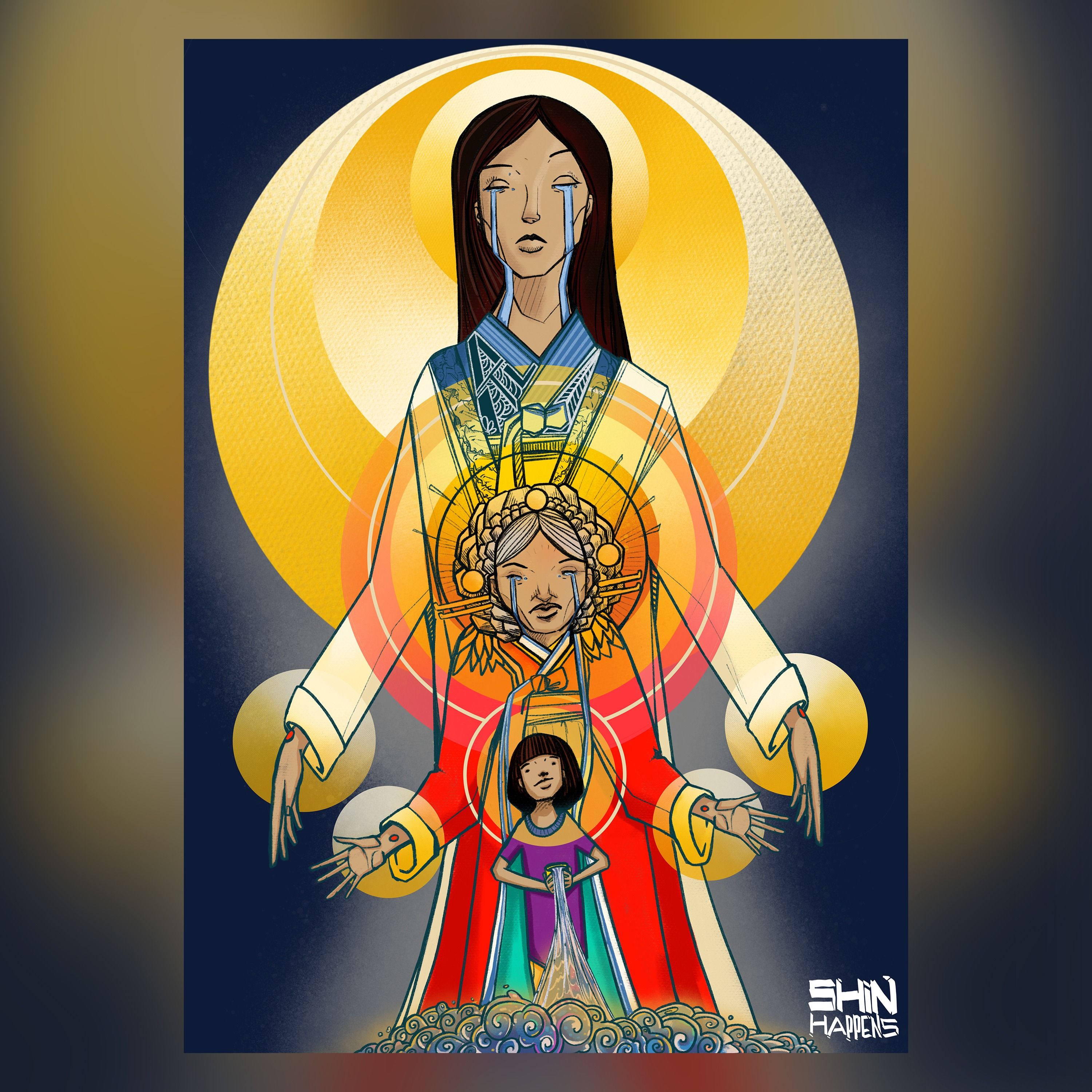
Ep 66Beyond Invisible | American 한 (Han): An Artistic Response to Anti-Asian Violence / Sarah Shin & Shin Maeng
"The tears were always there. / You just didn’t recognize my face." Author, artist, and theologian Sarah Shin reads her poem "Beyond Invisible"—a response to the March 2021 Atlanta shootings that left six Asian women dead—a crescendo of increasing anti-Asian violence.Sarah's poem and her husband Shin Maeng's accompanying illustration ask the pointed question, "Can you see me now?"—dealing with the recognition not just of grief over recent events, but the generational tears that have flowed unseen, unacknowledged, and unaddressed.American 한 (Han)Click here to view "American 한 (Han)," illustrated by Shin Maeng.Beyond Invisibleby Sarah ShinThe tears were always there.You just didn’t recognize my face.Nor did you see behind the hunched back of the one doing your nailsThe steel frame of a mother feeding her family with 14 hour work days.Instead of seeing in our bodies and our faceThe altar of the broken faithful awaiting resurrectionYou make them instead into a graveyard for your sins.But some habits just die hard, huh?Inconvenient convenience it would beTo behold in a flattened storyThe freedom-fighters who battled war, demagogues, oceans, and despairAnd tore themselves from everything they knew to be homeThe heartache of sacrificing family past to give family future a chance.Anchors they have served to be as we strive to make this homeBut cut into them and you’ve cut looseEverything that told us to bear itEverything that said hope was worth itTo swallow tears and keep our heads down.No more now.Our dams are broke and now they floodAll around you, all around me.Do you see beyond just my face now?Do you see beyond what you didn’t see in my eyes now?Do you see meCan you see meCan you see me now?To read more of Sarah's thoughts on the Atlanta shootings, read her piece, "Honoring the Lives of Women Who Refuse to Be Scrubbed Away" (MissioAlliance.org).About Sarah ShinSarah Shin is author of Beyond Colorblind: Redeeming Our Ethnic Journey. She is currently studying at the Logos Institute for Analytic and Exegetical Theology at the University of St. Andrews in Scotland. Prior to that she served as Associate National Director of Evangelism for InterVarsity Christian Fellowship. She regularly trains leaders and speaks at the intersection of evangelism, ethnic reconciliation, justice, beauty, and technology.About Shin MaengShin Maeng is an artist and illustrator. Make sure to check the show notes to examine his illustration, "American 한 (Han)" which was a direct response to Sarah's poem, "Beyond Invisible." Follow him @ShinHappens on Instagram.

Ep 65Active Mystic: How Wonder Unifies Justice and Spirituality / Sameer Yadav
Which is greater: action or contemplation? Which is more excellent and therefore more central and determinative in human flourishing? A life of action—focused outward in service of humanity and exterior, public, practiced love? Or a life of contemplation—focused inward in reflection and meditation and communion with God, a private, interior castle of wisdom?You might be quick to point out that it's a false dilemma and of course we need both. But this is quite an old conundrum in both the history of philosophy and the history of Christianity and it continues to find expression in contemporary life as we struggle with the idea of personal morality and social justice.The world today is as broken a place as ever; individual people are as broken as ever—and what will heal us? Meditation and mindfulness and prayer? Or doing justice, loving mercy, and walking humbly?If the answer is in fact both, what unites the contemplative life with active life in your life?Today on the show, Sameer Yadav joins us for a conversation on mysticism, activism, and wonder. He explains the history of thinking about these jointly necessary elements of human flourishing, understanding the terms in relation to spirituality and contemporary activism, and drawing together two thinkers from different cultures and times: the Cappadocian Father Gregory of Nyssa and the spiritual father of the American Civil Rights movement, Howard Thurman. They share fascinating perspectives on what it means to be human, the need for cooperative caretaking as a reflection of God's relation to the world, and an attentiveness to wonder as a hinge between the contemplative and active life, with lasting implications for everything from interpersonal relationships, to democracy, to ecological care. Show Notes“The basic consideration has to do with the removal of all that prevents God from coming to Himself in the life of the individual”The ‘altar of the heart’ and Thurman’s theology “Social action is never an end in and of itself. It is for the sake of God's life manifest in oneself”Which is better, action or contemplation?Public love? or inwardness, communion with God?It’s a false question: we need bothThe state of the world today: what will heal us?“Is it meditation and prayer, or doing justice, loving mercy, and walking humbly? And if the answer is in fact both, what unites contemplative life with active life?”Mysticism, activism, and wonderReflecting on Gregory of Nyssa and Howard ThurmanCooperative caretaking and attention to wonderHow attention affects everything from relationships, to democracy, to ecological careThe mystic versus the prophet, according to history “Dispell the idea that they’re at odds”Luke 10:38, Mary and Martha sitting at the feet of Jesus in contemplation and active service These have always been seen as two necessary components of a whole Christian life The relationship between imagining life and responding to itGregory of Nyssa, a Christian thinker influenced by Greek philosophy, emphaisized virtue. The way we engage with the world is the way we engage with God.Howard Thurman, remove all “that prevents God from coming to himself within, in the life of the individual, whatever there is that blocks this, that's what calls for action."Social work enriches the individual The alter to God in the community is linked to the alter to God in the individualDirect experience versus experience mediated by God “Be a mirror of God’s own relationship to creatures. It’s a form of caretaking”Seeing humanity as one, as the mystics do, motivates the way we care for the world“In self-help, attention is getting a lot of attention. The economy of our attention, how what we pay attention is driving our experience of the world”How do you understand spiritual attention versus social attention? Attention is not just emotion, it’s virtue. The way we perceive is shaped by the kind of person we areWonder versus attention“Wonder is a kind of interest directed on the final value of a thing, not its usefulness. Final value appears to us as mysterious. It’s also attractive.”“Wonder is like a hinge between contemplation and action” Epistemic humility, what can we know about each other? Wonder as a moral emotion Martha Nussbaum, Upheavals of Thought: the Intelligence of EmotionsJeremy Bendik-Keymer, "our ecological responsibility is unlikely to be met purely out of a sense of duty"To wonder at the natural order actually makes us responsible to itWonder creates sacredness, and that gives rise to a need for preservation and care“Wonder and be drawn to it, before rushing into judgment” Wonder and dangerAlex Nava, Wonder and Exile in the New WorldLorraine Daston and Katherine Park, Wonders and the Order of Nature, 1150-1750What does it look like to see the world of injustice through the attentiveness of the mystic?“Seeing God manifest through the oppressor, not just the oppressed. How the oppressor’s own humanity is distorted and disfiguredThe oppressor as morally injuredF

Ep 64Have You Eaten Yet?: Hospitality, Solidarity, and the Great Banquet of Justice / David de Leon & Matt Croasmun
"Kumain ka na ba?”—Have you eaten yet? (Tagalog) This beautiful phrase of welcome and care and intimacy evokes and offers more than just the pleasure and nourishment of a meal. It calls out to the hunger, the thirst, and the need for love that we can greet in one another. David de Leon joins Matt Croasmun for a discussion of hospitality and solidarity and justice, applying the parable of the Great Banquet to cultures of inhospitality, and especially to the context of the increased targeting, discrimination, marginalization, and violence against the Asian American community over the past year. Show Notes“I think it can be really easy to believe that joy and justice, or even our grief--that expressing that comes at the expense of other people, that there isn't enough space for all of our joy to be together”“Life together in the family of God, at the banquet of God is…a radical conviction that God has enough for us all”Luke 14, the parable of the great banquet"Kumain ka na ba?”—a greeting and an invitation - have you eaten yet? “‘Kumain ka na ba?’ Is the lavish invitation of Christ to a banquet that sustains our weary, divided, broken and lonely selves”“I miss hosting people”Jesus says, "Don't invite people to your parties who can pay you back. Invite the people who never get invitations. Then you'll have it good"“The racial justice uprisings of this past year remind us that this country still remains inhospitable to black and brown lives”The increase in violence towards Asian American and Asian American elders since the beginning of the PandemicThe legacy of inhospitality towards Asian people in America“It rears its head in our internalized hatred and the loss of memory and story, the separation of our families, and then the incomprehension of our heart languages”“The pressure to present yourself in ways that display your competence, your control, the need to check their whole self at the waiting room of your zoom calls, leaving pieces of yourself off the pages of the papers you write”Justice is not scarce There’s room for all of our joy at this banquet “Perhaps Jesus is inviting us to partake in the feast of rest, the feast of vulnerability and community, to entrust our imperfections and limitations to one another”“The food that tastes like home” – how expansive home can be“I think there's something about the deep vulnerability of inviting somebody into something that feels very ordinary for you, but it's very comfortable, and then having people enjoy that thing with you”Sharing the most unglamorous parts of ourselves Unphotogenic food How gendered racial violence can be “It just seemed like yet another moment where we're not woken up until there's loss of life”“Our shared life together should be our orienting hope and dream, as opposed to just the quite proper anger that we might experience in response to death?”“It can be really easy to believe that joy and justice, or even our grief – that expressing that comes at the expense of other people”A radical conviction that God has enough life for us allAre you going to come to the banquet? Are you going to turn away?About David de LeonDavid de Leon is a graduating Master of divinity candidate at Yale Divinity School, and is an incoming PhD student studying Systematic Theology at Fordham University. He’s a child of Pilipino immigrants and was born and raised in the San Francisco Bay Area, and for the last 12 years has worked in college campus ministry, leading Pilipino American focused ministries, and working to mobilize Asian Americans to pursue racial justice.Production NotesThis podcast featured David de Leon and Matt CroasmunEdited and Produced by Evan RosaHosted by Evan Rosa & Matt CroasmunProduction Assistance by Martin Chan & Nathan JowersA Production of the Yale Center for Faith & Culture at Yale Divinity School https://faith.yale.edu/aboutSupport For the Life of the World podcast by giving to the Yale Center for Faith & Culture: https://faith.yale.edu/give

Ep 63Passionate God, Crucified God, Joyful God / Jürgen Moltmann & Miroslav Volf
"Without living theologically, there can be no theology." (Jürgen Moltmann) Miroslav Volf interviews his mentor, German theologian Jürgen Moltmann, who reflects on the meaning of joy and its connection to anxiety, fear, wrath, hope, and love.Moltmann tells his story of discovering (or, being discovered by) God as a 16-year-old drafted into World War II by the German Army, enduring the bombardment of his hometown of Hamburg, and being held for 3 years in a Scottish prison camp, where he read with new eyes the cry of dereliction from Jesus in the Gospel of Mark, “My God, my God, why have you forsaken me?”This cry would lay a foundation that led to his most influential book, The Crucified God. Moltmann explains the centrality of Christ, the human face of God, for not just his theological vision, but his personal faith—which is a lived theology.Ryan McAnnally-Linz introduces the episode by celebrating Jürgen Moltmann's 95th birthday and reflecting on his lasting theological influence.Show NotesHappy 95th Birthday, Jürgen Moltmann!Find the places of deepest human concern, and shine the light of the Gospel there.“Without living theologically, there can be no theology."Jürgen Moltmann’s Theology of Joy (1972)—“How can I sing the Lord’s song in an alien land?"Joy today: Singing the Lord’s song in the broad place of his presence"Hope is anticipated joy, as anxiety is anticipated terror.""How does one find the way to joy from within anxiety and terror?"Seeing the face of God as an awakened hopeJesus Christ as the human face of God: “Without Jesus Christ, I would not believe in God."God is present in the midst of sufferingDiscovering and being discovered by GodMoltmann’s story of being drafted to the Germany army at 16 years old (1943)In a prison camp in Scotland, Moltmann read the Gospel of Mark and found hope when there was no expectation.The Crucified God, the cry of dereliction, and the cry of jubilationContrasting joy with American optimism and the pursuit of happinessChristianity as a unique religion of joy, in virtue of the resurrection of ChristJoy versus fun—“You can experience joy only with your whole heart, your whole soul, and all your energies.""You cannot make yourself joyful… something unexpected must happen."Love and joy"The intention of love is the happiness of the beloved.""We are not loved because we are beautiful… we are beautiful because we are loved."Joy and gratitudeLove comes as a gift and surprise, and therefore leads to joy.Blessed, therefore grateful—receiving the gift as gift“Anticipated joy is the best joy.”The Passion of God as the foundation of joyPassionate God of the Hebrew Bible or Absolute God of Greek Metaphysics?An apathetic God makes apathetic people; the compassion of God makes compassionate peopleA Feeling God or an Apathetic God? God’s participation in suffering and joy“God participates in the joy of his creation."Luke 15: “There is more joy in heaven over one sinner who repents than over 99 just…"Lost coin, lost sheep, prodigal son...The wrath of God is God’s wounded love“My wrath is only for a moment, and my grace is everlasting.""Joy, in the end, wins."Watch a video of this interview here.Production NotesThis podcast featured theologians Jürgen Moltmann, Miroslav Volf, and Ryan McAnnally-LinzEdited and Produced by Evan RosaHosted by Evan Rosa & Ryan McAnnally-LinzProduction Assistance by Martin ChanA Production of the Yale Center for Faith & Culture at Yale Divinity School https://faith.yale.edu/aboutSupport For the Life of the World podcast by giving to the Yale Center for Faith & Culture: https://faith.yale.edu/give
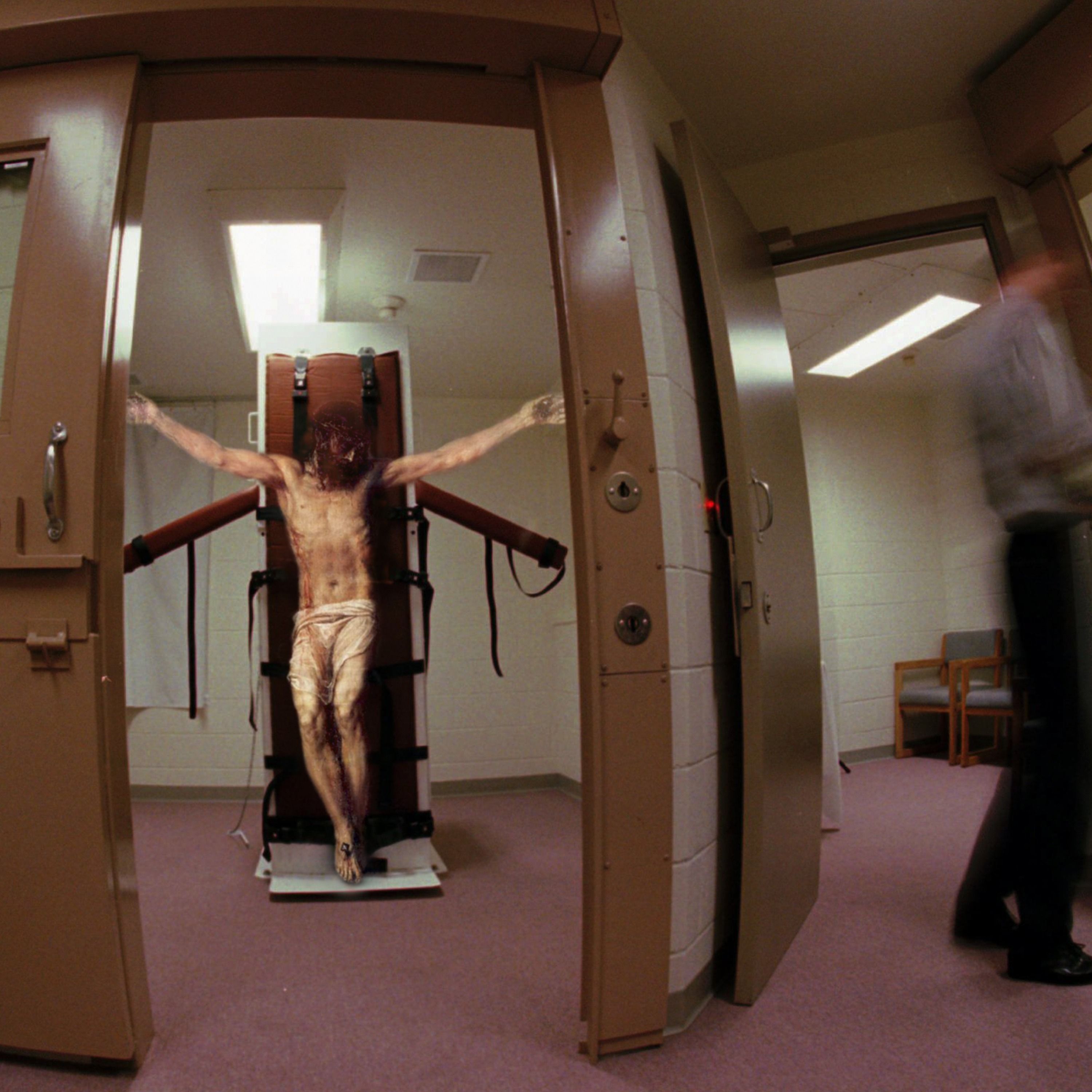
Ep 62Dead Quiet: The Death Penalty in Theological, Moral, and Political Context / Elizabeth Bruenig & Ryan McAnnally-Linz
"Once a person has done evil, they have destroyed a significant part of themselves. They have made that turn towards non-being, non-existence, chaos, disorder, and loss. And so when you execute a person who has already done that kind of moral damage to themselves, not to mention all the damage they've done to other people, but at that point, the only thing remaining in them is the good, which is that this is a human being, alive and made in the image of the living God. And so at that point, that's all they have. And you're destroying it."Ryan McAnnally-Linz is joined by Elizabeth Bruenig (New York Times) to discuss the theological, moral, and political implications of the death penalty, best summed in her bracing piece released days after the execution of Alfred Bourgeois, which she witnessed in person. Show NotesEvan Rosa, Holy Saturday ReflectionElizabeth Bruenig, "The Man I Saw Them Kill”—Liz Bruenig witnesses the execution of Alfred BourgeoisMark Oppenheimer, "A Death Row Inmate Finds Common Ground With Theologians”—Jurgen Moltmann’s relationship with death row inmate Kelly GissendanerElizabeth Bruenig, "The Government Has Not Explained How These 13 People Were Selected to Die”—Liz Bruenig: "The federal death penalty cannot be fixed. It’s time to end it."Elizabeth Bruenig, "Witness to an Execution: A Chilling Account”—Readers react to Elizabeth Bruenig’s essay about the recent federal execution of Alfred Bourgeois."Execution as theater” What does the death penalty do to us?Hoping for the destruction of another person“I think anytime you’re sitting around hoping someone is destroyed, that’s a morally compromising position to be in. It’s certainly the case that people can commit crimes that make me feel like they should be themselves wiped off the face of the earth and eliminated from the cosmos, but I know that those impulses are not the best in me.”The impulse to destroyRationality, irrationality, and the extremity of the death penaltyMoral loss and moral injuryThe question of accidentally executing innocent people versus the impulse to destroyDeserted islandIntense revulsion at evilThe VVitch (The Witch, 2015)St. Augustine on the death penalty. Hate the sin, love the nature."Nothing was restored, nothing was gained. There isn’t any justice in it, nor satisfaction, nor reason: There was nothing, nothing there.” Agnes CallardThe permanence of harm“Harm can’t be undone… What can we do about the fact that harm is so permanent. … It may seem symmetrical in a literary sense but it doesn’t actually do anything to undo the harm."“What can we preserve? What can we prevent from being destroyed any further?"Wounds of the martyrsMiroslav Volf’s view that the sins, harms, and wounds of life will not come to mind in heaven; social reconciliation that goes along with the settling of accounts in judgmentThe Prodigal Son and the moral damage done to oneself“You were always with me. Why are you complaining? Everything I have is yours. Why are you upset about that?"Hen Meme: “Sorry my mom said no”“Hiding in God’s wing and feeling like, whatever else anyone does, however angry anyone else makes me, I am here with the Lord. He has me. I’ll be okay. I have it in me to forgive because I have everything my Father has, which is everything there is."Public policy and the death penalty abolition movement; states will slowly trail off in the use of the death penaltyFederal death penalty, Trump and Barr’s abuse of federal executionsThe role of the SupremeWhat to expect and the range of possibilities for the future of federal capital punishmentJürgen Moltmann and death row inmate Kelly GissendanerThe political calculation of commuting sentences or abolishing the death penalty.“They don’t want to spend political capital on criminals, people who’ve done terrible things."Capital punishment and public policyAbout Elizabeth BruenigElizabeth Bruenig is an American journalist and opinion writer for the New York Times.Production NotesThis podcast featured journalist Elizabeth Bruenig and theologian Ryan McAnnally-LinzEdited and Produced by Evan RosaHosted by Evan RosaProduction Assistance by Martin ChanA Production of the Yale Center for Faith & Culture at Yale Divinity School https://faith.yale.edu/aboutSupport For the Life of the World podcast by giving to the Yale Center for Faith & Culture: https://faith.yale.edu/give

Ep 61You Do You: Ethics of Authenticity in Disney's Frozen and Moana / Matt Croasmun and Ryan McAnnally-Linz
Enroll now for our 7-week Life Worth Living Course through Grace Farms: http://gracefarms.org/life-worth-living. The course runs from May 4 to June 15, and we expect it to fill up quickly, so don’t wait to sign up!One of the most prominent visions of the good life present in Disney films could be called "expressive individualism," perhaps best captured by the phrase "you do you." In this episode Ryan McAnnally-Linz and Matt Croasmun interpret and unpack the ethics of the authentic self, belonging, and the implicit visions of flourishing life in two contemporary classics from Disney: Frozen and Moana.Support the For the Life of the World podcast by giving to the Yale Center for Faith & Culture: https://faith.yale.edu/give Show NotesWho is my most authentic self? How can I become who I truly am? Matt Croasmun’s course at Grace Farms: http://gracefarms.org/life-worth-livingHow would your life change if the idea you were reading about were true? “Aim to become indigenous to a place” Robin KimmererWhat way of being human is particular to you?Disney and the quest for the self Charles Taylor: “Our most essential responsibility is our responsibility to ourselves to become our most authentic self “If we strive for uniqueness, what happens to universal values?Moral relativity in Charles Taylor What if we hurt each other on the way to becoming ourselves?‘Let It Go,’ the anthem that’s everywhereReading the song to mean ‘you do you’ is a shallow readingOur values run deep in our culture, entertainment, and mythology Elsa’s hidden, dangerous powers: ‘conceal don’t feel’ The disciplined, buffered self “But freedom as ruleless-ness is too shallow a reading”In becoming her authentic self, Elsa knows she is at risk of hurting AnaElsa is saved by Ana’s love, which allows her to have her powers without hurting anyone Resolution is not isolationEvery child belting ‘Let It Go’ is missing part of the resolution Our society tells the movie: “just be yourself, other people be damned,” missing the emphasis on love and acceptance of each other Frozen stands in a line of post-modern reinterpretations of fables that celebrate the villain Elsa was supposed to be the villain, but ‘Let it Go’ was so humanizing they changed the story The Nietzschean impulse to discard moral framework Elsa is expressing her ‘will to power’ when she sings, " No wrong, no right, no rules for me" By making the villain the hero, the writers get beyond good and evil The recovery of the pre-modern moralist villain Turning to Moanna: Moanna discovers that her true self is in tension with the way of her people. She wants to travel, but her people say, “The island gives us what we need”When she learns that her people are actually voyagers, it draws her into relationship with her grandmother We know what she means when she belts, ‘I am Moanna” Taylor calls it ‘The Horizon of Significance:’ he wants to celebrate particularity, without an overemphasis on difference What matters can’t just be random. You must give an account The cosmology of Moanna: taking the power of nature and giving it to humansMoanna provides an account for how magic relates to its cosmology, where Frozen’s magic comes out of nowhereOur choices should be free and also meaningful Frozen highlights the dignity of the return to ordinary life, whereas in Moanna, all of life is transformed into adventure. This is the heroic life. “To be truly human is to aim for something that is beyond the ordinary life” - Matt Croasman“But what about the Hobbits!” – Ryan McAnnally-LinzHow these stories charm and influence our theology must include a critical look at the culture we are inside of “None of us are in a vacuum.” Film as a stream of meaning that we’re already swimming in “At the end of the day, ‘you do you’, is the thin way of finding our way into a ‘thicker meaning:’ how to live as the individual whom God created”
Ep 60When Hospitals Become Battlefields: The Impact of Spiritual Abuse on Faith & Flourishing / Dan Koch
Thinking of the Christian church as a field hospital is a wonderful thought, but what happens when the very place you go to for healing becomes the locus of trauma? What happens to faith and flourishing when the hospital becomes a battlefield? For all the media attention given to cases of spiritual abuse, there is very little by way of psychological research. Dan Koch, host of the podcast You Have Permission and a doctoral student in counseling psychology at Northwest University, explores the tragic and damaging phenomenon of spiritual abuse; its impact on the emotional, intellectual, and spiritual life; and identifies some of the most important factors in understanding its underlying causes and developing approaches to healing for victims. Interview with Evan Rosa.Show Notes"Religion is like nuclear fission. When done well, nuclear fission can give us free electricity indefinitely with a little bit of care and a little bit of grooming. It's this tremendously powerful source of energy and flourishing. But it also, when done poorly, can melt a reactor, kill tens of thousands of people, and irradiate land for a million years.""What we do when we spiritually abused someone, not only do we harm them, we cut them off from what may have been their primary healing source. In the same move, we make it harder for them to use their faith, use their spirituality to heal from the harm we just did to them."“The church is a hospital for sinners, not a museum for saints.”For our purposes, "spiritual abuse" means any form of physical, mental, sexual, or spiritual harm or trauma that occurs in a religious context.About You Have PermissionTheology and psychology—TheoPsych and Blueprint1543How Dan Koch got interested in spiritual and religious abuseEnd-times terror as a form of spiritual abuseSpiritual and religious abuse has scant literature, but covers a variety of species of abuse and harm.A Venn diagram with other kinds of abuse and harm, in religious contextsControlling and narcissistic pastorsConditionalityViolence, horror, and terrorDeveloping a God imageRestricting negative emotions and unhappinessThe prevalence of spiritual abuse—Liz Oakley's study of the U.K.Jean Vanier and Ravi Zacharias—celebrity, fame, and power dynamics that lead to spiritual and sexual abuseThe power of religious leaders in American lifeConflating the religious leader with GodThe impact of spiritual abuse on the plausibility of faith: rationality, emotion, and the holistic response of a person to abuseResponding to spiritual abuseStanding in solidarity with victimsAbout Dan KochDan Koch is host of the podcast You Have Permission and a doctoral student in counseling psychology at Northwest University. Follow him on Twitter @DanKoch.

Ep 59The Gravity of Joy / Angela Gorrell
Theologian Angela Gorrell discusses her book The Gravity of Joy, a theological memoir that lays bare the experience of finding the bright sorrow of joy alongside devastating grief, suffering, and pain. The book recounts her experience of joining the Yale Center for Faith & Culture in 2016 as an Associate Research Scholar for our Theology of Joy and the Good Life Project and to teach our Yale undergraduate course, Life Worth Living. That winter, the reality, the extent, and the dangerous potential of joy would become devastatingly clear. The highly abstract question of what it means to live a life worth living would become painfully acute. Interview with Ryan McAnnally-Linz.Support For the Life of the World by supporting the Yale Center for Faith & Culture: faith.yale.edu/give This episode contains some sensitive material about suicide. Use some discretion as you consider listening, and if you are feeling suicidal, thinking about hurting yourself, or are concerned that someone you know may be in danger of hurting themselves, call the National Suicide Prevention Lifeline at 1-800-273-TALK.Show NotesRead the book: The Gravity of Joy: A Story of Being Lost and Found A devastating winter of lossSuicide and opioid deaths as “deaths of despair"“Despair is the feeling I think that people can feel when they feel like no one can reach them. No one can get to them. And for me, joy is a counteragent to despair because joy is the feeling that we get after recognizing truth, meaning beauty, goodness, our relationship to other people."Joy as a work of resistance against despair (e.g., Willie James Jennings)"Joy as an illumination that there is something more.”Grief vs Despair—what prevented your grief from becoming despair? Who reached you?“Even though I was a year and five months in grief… angry… constantly afraid of getting another call."Suicide watch in a women’s correctional facility—“These women are going to minister to me.""Is our study of joy too shallow?"Different kinds of joyJoy and sorrow—from the book: "Joy doesn’t obliterate grief. . . . Instead, joy has a mysterious capacity to be felt alongside sorrow and even—sometimes most especially—in the midst of suffering."The ocean as a spiritual sanctuary, the rain as an indicator that change is coming"I suddenly found myself rejoicing over what ought to be, what was to come. I suddenly believed that joy might make its way to me again. And just the mirror. Like what if of joy like found me on that beach, running in the pouring rain?"Women’s prison bible study—feeling welcome to a community without shame Humanizing one another in a dehumanizing institution: “The Gravity of Joy is my effort to humanize people who are incarcerated."God’s activity in suffering, pain, and joy: “God was always seeking after you."Romans 8:28 "All things work together for good"I hope people feel seen.About Angela GorrellDr. Angela Williams Gorrell is Assistant Professor of Practical Theology at Baylor University's George W. Truett Theological Seminary and author of The Gravity of Joy: A Story of Being Lost and Found and Always on: Practicing Faith in a New Media Landscape. Prior to joining the faculty at Baylor University, she was an Associate Research Scholar at the Yale Center for Faith & Culture, working on the Theology of Joy and the Good Life Project, and a lecturer in Divinity and Humanities at Yale University. She is an ordained pastor with 15 years of ministry experience. Dr. Gorrell’s expertise is in the areas of theology and contemporary culture, education and formation, new media, and youth and emerging adults.

Ep 58Befriending Reality: Engaging Otherness with Hospitality, Artfulness, and Particularity at Depth / Krista Tippett & Miroslav Volf
“For me, the spiritual task is to befriend reality in all its mess and complexity—to do that with grace." Krista Tippett joins Miroslav Volf for a conversation on the importance of engaging otherness on the grounds of our common humanity; her personal faith journey from small town Baptists in Oklahoma, to a secular humanism in a divided Cold-War Berlin, and then back to her spiritual homeland and mother tongue of Christianity in an expansive and engaging new way; the art of conversation, deep listening, cultivating hospitality; the spiritual task of befriending reality; and the challenge of being alone and being together as we seek to live a life worthy of our humanity.Support For the Life of the World by giving to the Yale Center for Faith & Culture: faith.yale.edu/giveShow NotesJulian of Norwich today: "All shall be well." Read the Revelations of Divine LoveKrista Tippett and On BeingThe art of being human and speaking of faith in the twenty-first centuryThe animating questions behind the human enterpriseCreating a space for a conversations we couldn’t (but needed to) hearCertainties and beliefsWhat it means to be human, how we want to live, and what we want to be to each otherHospitality—intellectual virtue, social art, sophisticated technology for inviting the best of other people into the roomHow to invite someone into a good conversation, inviting them in their fullnessThe discipline and public service of holding back your own opinions for the sake of listeningBalancing listening and speaking in a good conversationWhat binds and unites various voices within the diversity of On Being?"My primary intention is not to find similarities, but to be fascinated by particularity and go deep into that."Abraham Joshua Heschel’s “Depth Theology”Drawing opposites and counterintuitives even within the same personSimilar themes emerging from very different mouths—struggle for justice, struggle for wholeness, aspiring to both praise and lamentThe complexity and fine textures of the melodies of humanityConfounding ourselves"There are no storybook heroes in the Hebrew Bible … it shows all the mess."Befriending reality, which has a lot about it we wouldn’t choose, like, or expect—and then make a life of meaning with that and from that.“For me, the spiritual task is to befriend reality in all its mess and complexity—to do that with grace."Christian faith as a “mother tongue”—spiritual complexity and Krista’s conservative Baptist upbringing: “I got a lot of lived theology.""There is an order—there is a love that infuses all of this."“I’m not defined by what I reject, and I’m very slow to judge anyone else’s deep beliefs."How Krista came back to Christianity while living in divided Cold War BerlinMoral exhaustion “I didn’t immediately head back to Christianity. First I got quiet, then I got intentionally quiet, and then I started wandered into praying ... and an imagination, and then that brought me back to my spiritual homeland."Julian of Norwich and “All shall be well”—the cosmic sense of those words“All shall be well, and all shall be well, and all manner of things shall be well…”"It’s a mystical statement. It doesn’t add up with what we can see and hear and touch. … At some cosmic level, which I can’t be articulate about, it makes sense for me."What kind of life is worthy of our humanity? We’re living in a time when we are open to hearing the truth about ourselvesWe alone, and we’re togetherRevisiting and grappling with binariesPrivileging the cultivation of knowing ourselves and spiritual technologies “It’s hard to be inextricable from other human beings.”We’re just as shaped by how we treat our enemies as how we treat our friendsNurturing the interior life as we’re tempted to focus on external appearancesInvest in ourselves in order to be present to the worldAbout Krista TippettKrista Tippett is a Peabody Award-winning broadcaster, a National Humanities Medalist, and a New York Times bestselling author. She grew up in a small town in Oklahoma, attended Brown University, and became a journalist and diplomat in Cold War Berlin. She then lived in Spain and England before seeking a Master of Divinity at Yale University in the mid-1990s.Emerging from that, she saw a black hole where intelligent public conversation about the religious, spiritual, and moral aspects of human life might be. She pitched and piloted her idea for several years before launching Speaking of Faith — later On Being — as a weekly national public radio show in 2003. In 2014, the year after she took On Being into independent production, President Obama awarded Krista the National Humanities Medal at the White House for “thoughtfully delving into the mysteries of human existence. On the air and in print, Ms. Tippett avoids easy answers, embracing complexity and inviting people of every background to join her conversation about faith, ethics, and moral wisdom.”Krista has published three books at the intersection of spiritual inquiry, social healing, scie

Ep 57Joy and the Act of Resistance Against Despair / Willie Jennings and Miroslav Volf
"I look at joy as an act of resistance against despair and its forces. ... Joy in that regard is a work, that can become a state, that can become a way of life." Willie Jennings joins Miroslav Volf to discuss the definition of joy as an act of resistance against despair, the counterintuitive nature of cultivating joy in the midst of suffering, the commercialization of joy in Western culture, joy segregated by racism and slavery, how Jesus expands and corrects our understanding of joy.Support For the Life of the World by making a gift to the Yale Center for Faith & Culture: faith.yale.edu/giveShow NotesClick here to watch the full interview in videoClick here to learn more about the Theology of Joy and the Good Life projectDefining joy—an act of resistance against despair"Resisting all the ways in which life can be strangled and presented to us as not worth living"Singing a song in a strange landMaking productive use of pain, suffering, and the absurd—taking them seriousHow does one cultivate joy? You have to have people who can show you how to sing a song in a strand land, laugh where all you want to do is cry, and how to ride the winds of chaos."In contexts where your energies have to be focused on survival, it doesn’t leave a lot of energy for overt forms of complaint—you’re spending a lot of energy just trying to hold it together."The commercialization of joy in the empire of advertising—contrasting that with the peoples serious work of joyThe work and skill of making something beautiful out of what has been thrown awaySegregated joy—joy in African diaspora communitiesJoy is always embedded in community logicsThe Christological center of joyPentecost joy—joy togetherGeographies of joy: Christians tend not to think spatially, but we shouldPublic rituals bound to real spaceHoping for joyous infection, where the space has claimed you as its ownWhere can joy be found? The church, the hospital room, the barber shop and beauty shops—“things are going to be better"About Willie JenningsWillie Jennings is Associate Professor of Systematic Theology, Africana Studies, and Religious Studies at Yale University; he is an ordained Baptist minister and is author of The Christian Imagination: Theology and the Origins of Race,Acts: A Commentary, The Revolution of the Intimate, and most recently, After Whiteness: An Education in Belonging. You can hear him in podcast episodes 7 and 13 of For the Life of the World.