Everyone Is Right
267 episodes — Page 5 of 6

Growing Up: A Guided Tour — A Brief History of Human Development (with Ken Wilber and Corey deVos)
In this excerpt from the March episode of The Ken Show, titled Growing Up: A Guided Tour, we explore one of the most central elements of integral metatheory — growing up through multiple stages of developmental maturity. Watch as Ken and Corey offer a guided tour through each of the major stages on the Path of Growing Up — an exploration of your own greatest, deepest potentials — and offer some simple practices to help you actualize those potentials.
The Heart of Motherhood (with Brooke McNamara and Jeff Salzman)
"The unique terrain of mothering is always, already shaping us into ripe and powerful writers: we are tired so we are funny and real; we are in love so we are tender; we are damn strong so we have conviction. I want to bring our ordinary, extraordinary realities out of hiding and into view, for ourselves, each other, and the greater public if we so choose. This is my activism. This can be your activism. This is a chance to know and be known by each other, amazing mamas.” —Brooke McNamara Jeff invited Brooke McNamara to the Daily Evolver to talk about a project she is launching that we think represents a new way of building creative we-spaces. It’s a 6-week virtual course that provides inspiration, community and an opportunity for creative self-expression to a select group of people who are living in a unique crucible: mothers. Brooke developed the course, Write to the Heart of Motherhood because, as a poet, she knows writing to be a flexible and potent way for mothers to “connect to our true voice in the middle of our messy lives.” She explains: “The practice of writing is not something I do, but somewhere I go. When I give myself fully to whole-bodied listening for poems, I am never disappointed. Even if nothing comes, the tuning itself creates a presence and vitality in my being that support me profoundly in living and mothering. Poetry, for me, is language that carries both meaning, imagery and story, AND, more importantly, life force itself.” —Brooke McNamara Brooke’s new course, Write to the Heart of Motherhood, begins on March 4th and will run for six weeks. It’s not too late to sign up! Click here to learn more and register: https://www.theheartofmotherhood.com/ref/integrallife/
Star Trek Discovery and the Moral Arc of the Universe (with Corey deVos)
Boldy go where no holon has gone before as Corey deVos shares his review of Star Trek: Discovery — the latest installment in this venerable franchise. Listen as Corey explores how Star Trek offers a way to see beyond our current social, cultural, and political challenges, while also unpacking some of the important integral themes contained within the show.
What's Missing in the Intellectual Dark Web — 06 — The Way Forward (with Ken Wilber)
The Intellectual Dark Web — the term was coined by IDW member Eric Weinstein — refers to a loosely bound worldwide internet community of over a hundred major thinkers (and hundreds of millions of views) who do not find any present day intellectual trends to be that inviting. They don’t like the far Right, but they don’t like the far Left either — they’re looking for a much more unified and inclusive ways of thinking. In an article posted on the Rebel Wisdom website — a website that was created in part due to a very positive response to the work of Jordan Peterson — David Fuller makes the following observation: “It was while watching these two interviews in quick succession—Dave Rubin’s talk with Ben Shapiro and Jordan Peterson, and his discussion with Eric and Bret Weinstein—that I came to my conclusion of what the conversation actually represented! It mapped clearly onto a model I was familiar with—the philosopher Ken Wilber’s idea of ‘Integral’ consciousness as an essential evolutionary leap. I’m going to argue that the conversation is an early but spontaneous manifestation of a more advanced way of thinking that Wilber calls ‘Integral.’ I’m going to apply Ken Wilber’s Integral Theory to the Intellectual Dark Web….” Integral Theory — or technically, Integral Metatheory — seems to be applicable here because it is basically an attempt to draw together as many different approaches to truth as we possibly can and integrate them in a unified framework. Integral sometimes refers to all these different truths as ones that include Waking Up, Growing Up, Cleaning Up, Opening Up, and Showing Up.
What's Missing in the Intellectual Dark Web — 05 — Politics and the IDW (with Ken Wilber)
The Intellectual Dark Web — the term was coined by IDW member Eric Weinstein — refers to a loosely bound worldwide internet community of over a hundred major thinkers (and hundreds of millions of views) who do not find any present day intellectual trends to be that inviting. They don’t like the far Right, but they don’t like the far Left either — they’re looking for a much more unified and inclusive ways of thinking. In an article posted on the Rebel Wisdom website — a website that was created in part due to a very positive response to the work of Jordan Peterson — David Fuller makes the following observation: “It was while watching these two interviews in quick succession—Dave Rubin’s talk with Ben Shapiro and Jordan Peterson, and his discussion with Eric and Bret Weinstein—that I came to my conclusion of what the conversation actually represented! It mapped clearly onto a model I was familiar with—the philosopher Ken Wilber’s idea of ‘Integral’ consciousness as an essential evolutionary leap. I’m going to argue that the conversation is an early but spontaneous manifestation of a more advanced way of thinking that Wilber calls ‘Integral.’ I’m going to apply Ken Wilber’s Integral Theory to the Intellectual Dark Web….” Integral Theory — or technically, Integral Metatheory — seems to be applicable here because it is basically an attempt to draw together as many different approaches to truth as we possibly can and integrate them in a unified framework. Integral sometimes refers to all these different truths as ones that include Waking Up, Growing Up, Cleaning Up, Opening Up, and Showing Up.
What's Missing in the Intellectual Dark Web — 04 — Postmodernism and the Culture Wars (Ken Wilber)
The Intellectual Dark Web — the term was coined by IDW member Eric Weinstein — refers to a loosely bound worldwide internet community of over a hundred major thinkers (and hundreds of millions of views) who do not find any present day intellectual trends to be that inviting. They don’t like the far Right, but they don’t like the far Left either — they’re looking for a much more unified and inclusive ways of thinking. In an article posted on the Rebel Wisdom website — a website that was created in part due to a very positive response to the work of Jordan Peterson — David Fuller makes the following observation: “It was while watching these two interviews in quick succession—Dave Rubin’s talk with Ben Shapiro and Jordan Peterson, and his discussion with Eric and Bret Weinstein—that I came to my conclusion of what the conversation actually represented! It mapped clearly onto a model I was familiar with—the philosopher Ken Wilber’s idea of ‘Integral’ consciousness as an essential evolutionary leap. I’m going to argue that the conversation is an early but spontaneous manifestation of a more advanced way of thinking that Wilber calls ‘Integral.’ I’m going to apply Ken Wilber’s Integral Theory to the Intellectual Dark Web….” Integral Theory — or technically, Integral Metatheory — seems to be applicable here because it is basically an attempt to draw together as many different approaches to truth as we possibly can and integrate them in a unified framework. Integral sometimes refers to all these different truths as ones that include Waking Up, Growing Up, Cleaning Up, Opening Up, and Showing Up.
What's Missing in the Intellectual Dark Web — 03 — Left and Right (with Ken Wilber)
The Intellectual Dark Web — the term was coined by IDW member Eric Weinstein — refers to a loosely bound worldwide internet community of over a hundred major thinkers (and hundreds of millions of views) who do not find any present day intellectual trends to be that inviting. They don’t like the far Right, but they don’t like the far Left either — they’re looking for a much more unified and inclusive ways of thinking. In an article posted on the Rebel Wisdom website — a website that was created in part due to a very positive response to the work of Jordan Peterson — David Fuller makes the following observation: “It was while watching these two interviews in quick succession—Dave Rubin’s talk with Ben Shapiro and Jordan Peterson, and his discussion with Eric and Bret Weinstein—that I came to my conclusion of what the conversation actually represented! It mapped clearly onto a model I was familiar with—the philosopher Ken Wilber’s idea of ‘Integral’ consciousness as an essential evolutionary leap. I’m going to argue that the conversation is an early but spontaneous manifestation of a more advanced way of thinking that Wilber calls ‘Integral.’ I’m going to apply Ken Wilber’s Integral Theory to the Intellectual Dark Web….” Integral Theory — or technically, Integral Metatheory — seems to be applicable here because it is basically an attempt to draw together as many different approaches to truth as we possibly can and integrate them in a unified framework. Integral sometimes refers to all these different truths as ones that include Waking Up, Growing Up, Cleaning Up, Opening Up, and Showing Up.

What's Missing in the Intellectual Dark Web — 02 — What Is Integral Consciousness? (with Ken Wilber)
The Intellectual Dark Web — the term was coined by IDW member Eric Weinstein — refers to a loosely bound worldwide internet community of over a hundred major thinkers (and hundreds of millions of views) who do not find any present day intellectual trends to be that inviting. They don’t like the far Right, but they don’t like the far Left either — they’re looking for a much more unified and inclusive ways of thinking. In an article posted on the Rebel Wisdom website — a website that was created in part due to a very positive response to the work of Jordan Peterson — David Fuller makes the following observation: “It was while watching these two interviews in quick succession—Dave Rubin’s talk with Ben Shapiro and Jordan Peterson, and his discussion with Eric and Bret Weinstein—that I came to my conclusion of what the conversation actually represented! It mapped clearly onto a model I was familiar with—the philosopher Ken Wilber’s idea of ‘Integral’ consciousness as an essential evolutionary leap. I’m going to argue that the conversation is an early but spontaneous manifestation of a more advanced way of thinking that Wilber calls ‘Integral.’ I’m going to apply Ken Wilber’s Integral Theory to the Intellectual Dark Web….” Integral Theory — or technically, Integral Metatheory — seems to be applicable here because it is basically an attempt to draw together as many different approaches to truth as we possibly can and integrate them in a unified framework. Integral sometimes refers to all these different truths as ones that include Waking Up, Growing Up, Cleaning Up, Opening Up, and Showing Up.

What's Missing in the Intellectual Dark Web — 01 — What Is the IDW? (with Ken Wilber)
The Intellectual Dark Web—the term was coined by IDW member Eric Weinstein—refers to a loosely bound worldwide internet community of over a hundred major thinkers (and hundreds of millions of views) who do not find any present day intellectual trends to be that inviting. They don’t like the far Right, but they don’t like the far Left either—they’re looking for a much more unified and inclusive ways of thinking. In an article posted on the Rebel Wisdom website — a website that was created in part due to a very positive response to the work of Jordan Peterson — David Fuller makes the following observation: “It was while watching these two interviews in quick succession—Dave Rubin’s talk with Ben Shapiro and Jordan Peterson, and his discussion with Eric and Bret Weinstein—that I came to my conclusion of what the conversation actually represented! It mapped clearly onto a model I was familiar with—the philosopher Ken Wilber’s idea of ‘Integral’ consciousness as an essential evolutionary leap. I’m going to argue that the conversation is an early but spontaneous manifestation of a more advanced way of thinking that Wilber calls ‘Integral.’ I’m going to apply Ken Wilber’s Integral Theory to the Intellectual Dark Web….” Integral Theory — or technically, Integral Metatheory — seems to be applicable here because it is basically an attempt to draw together as many different approaches to truth as we possibly can and integrate them in a unified framework. Integral sometimes refers to all these different truths as ones that include Waking Up, Growing Up, Cleaning Up, Opening Up, and Showing Up.
Taking Aliens Seriously (with Sean Esbjörn-Hargens)
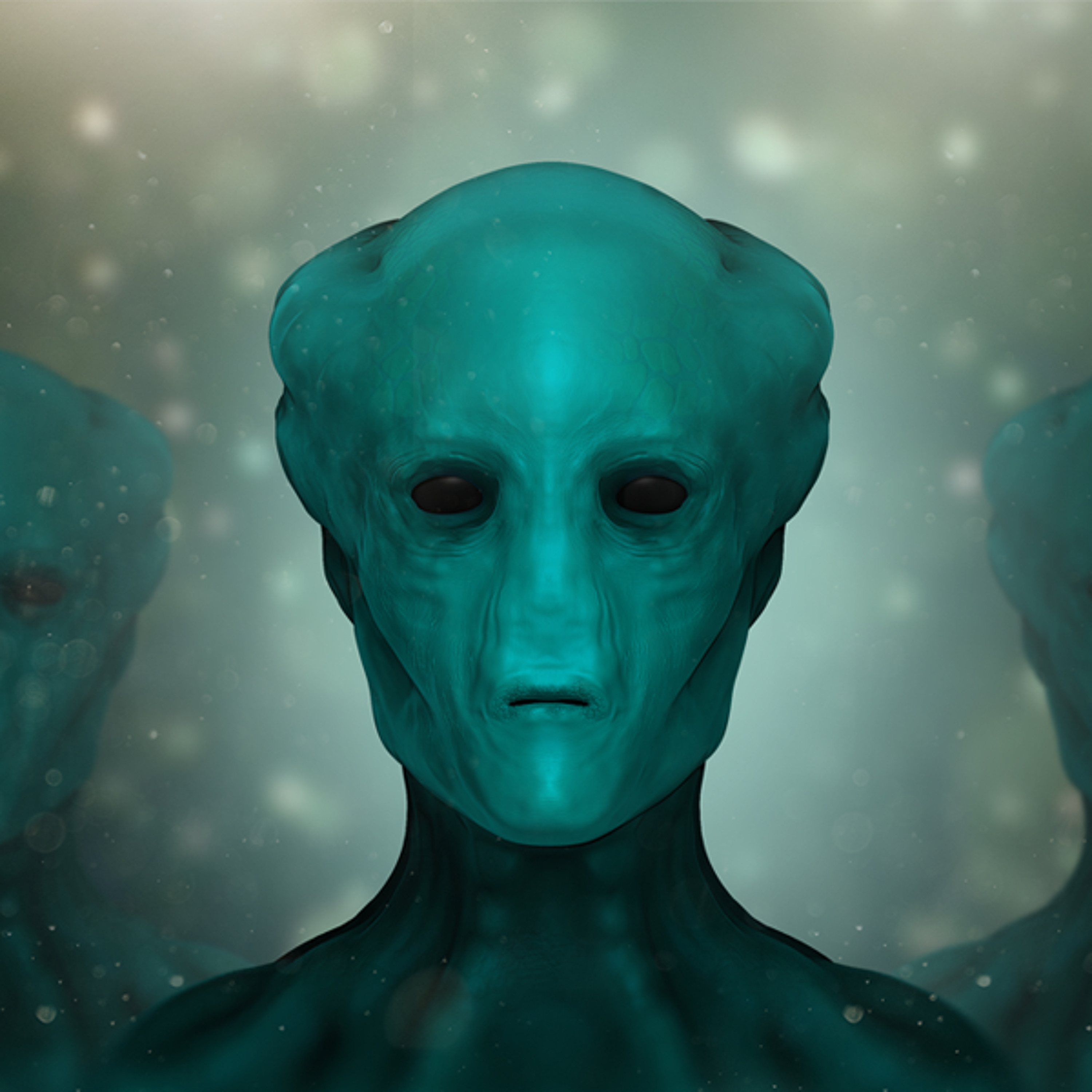
Is there intelligent life beyond Earth? Is it possible that alien beings have already contacted us? What do we make of the thousands of testimonials of human-alien contact, including from scientists, diplomats and astronauts? Yet… where’s the proof? And if there is proof, why is alien contact not the biggest story of the millennia?

Centering Prayer: Its History and Importance
Fr. Thomas Keating and Ken Wilber discuss the remarkable history and importance of Centering Prayer. Distilled from the profound teachings of the Christian contemplative heritage, Centering Prayer has aimed to bring a living spirituality into an age where God is typically reduced to the New-Age vicissitudes of emotionality, if not simply pronounced dead. Father Thomas Keating has been a key figure in the Centering Prayer movement since its early beginnings in the 1970s. Distilled from the profound teachings of the Christian contemplative heritage, reaching from the early Desert Fathers and Mothers to The Cloud of Unknowing, St John of the Cross, and St Teresa of Avila, Centering Prayer has aimed to bring a living spirituality into an age where God is either reduced to the New-Age vicissitudes of emotionality or simply pronounced dead. Although it would embarrass him to hear it, many people consider Father Thomas Keating to be a living Christian saint in the truest sense of the term. We at Integral Life certainly do so, and it is therefore with honor and humility that we present a conversation with this deeply realized human being. Father Thomas Keating has been a key figure in the Centering Prayer movement since its early beginnings in the 1970s. Distilled from the profound teachings of the Christian contemplative heritage—reaching from the early Desert Fathers and Mothers to The Cloud of Unknowing, St John of the Cross, and St Teresa of Avila—Centering Prayer has aimed to bring a living spirituality into an age where God is either reduced to the New-Age vicissitudes of emotionality or is simply pronounced dead. It was as a freshman in college that Father Thomas was forced to confront “the death of God” in the form of a modern philosophy course. Having been raised a Catholic, but “without a profound understanding of its historical or theological background,” the assaults on religion by the likes of Nietzsche and Schopenhauer were quite unsettling. Having resolved to confront this dilemma through study, Father Thomas returned to the work of the early Church Fathers and their understanding of the Gospel. As a result of this research, It became clearer and clearer to me that the Christian religion was really about transformation…. I got thoroughly convinced that the contemplative dimension of the Gospel is what Christianity is really all about. It’s the heart of the Gospel. But when I started looking around for how I could get some help developing a contemplative life, there wasn’t anybody…. Thus, the seed that would eventually bloom into Centering Prayer was sown deep in Father Thomas’s heart. Even though he has spent the whole of his adult life in monasteries, Father Thomas’s gift to the world has been to help bring God back within reach of the average human soul. As he points out, the contemplative faculty is not a reward for austerity, but is fundamental to human nature. Father Thomas touches on many subjects in this dialogue, ranging from the effects of Vatican II, to the influence of Eastern traditions, to the need for an integration of the contemplative heart and the discursive head. His is a beautiful story, drawing on a lifetime’s worth of experience and yet always grounded in the timeless Mystery of God. As Father Thomas reminds us, “It can’t be expressed as it actually is, but you have to say something!” And may we respectfully suggest that you listen to the soul behind those words, to the depth and presence of one in whom God shines?
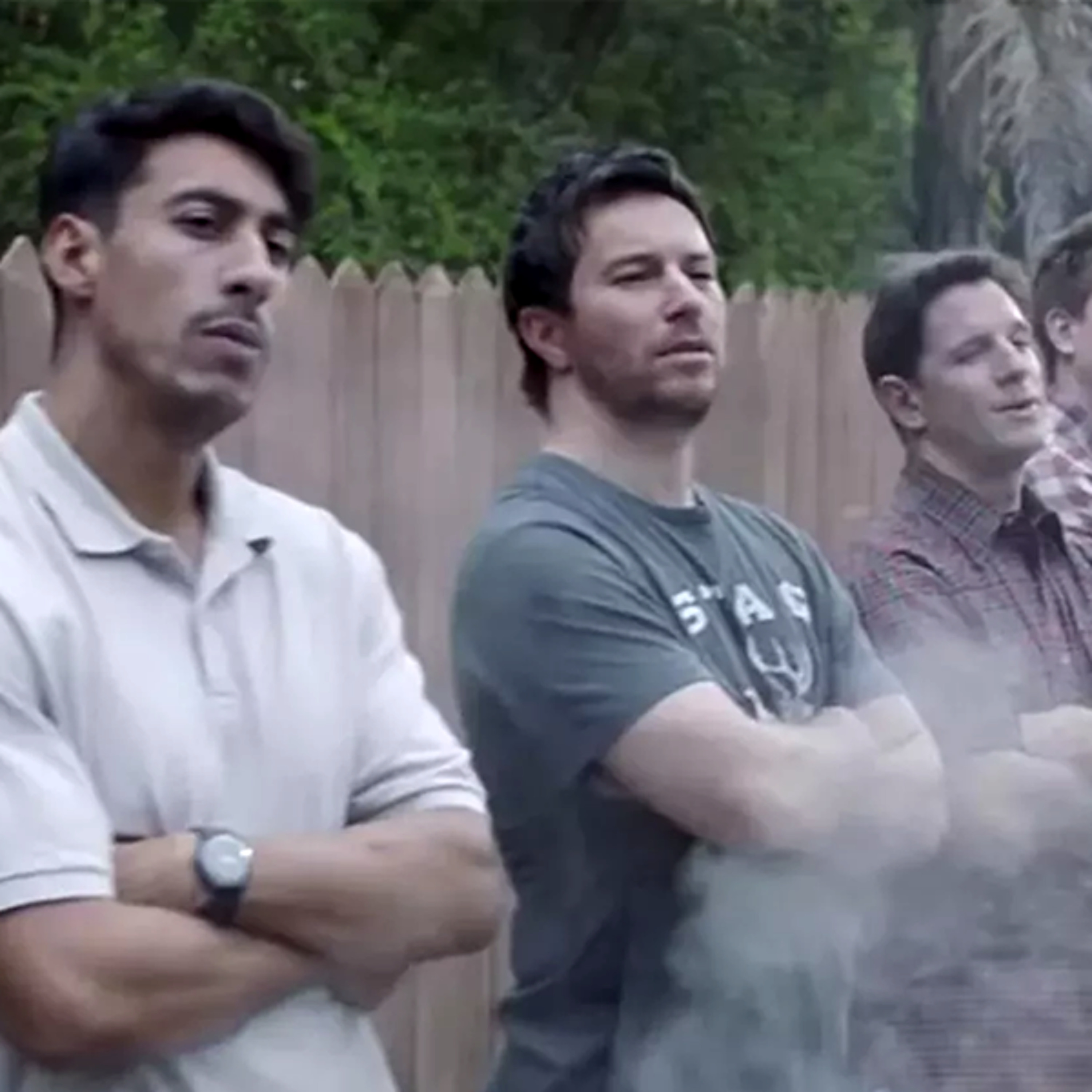
Is Masculinity Toxic?
Jeff Salzman talks with Dr. Keith Witt about an evolutionary approach that liberates masculinity and femininity into a new integration that features the best of both and makes them available to all. The culture wars heated up last week with two new skirmishes. One was the release of the American Psychological Association’s new Guidelines for Psychological Practice with Boys and Men. The other is a new ad released by the Gillette razor company: The Best a Man Can Get. Both explicitly criticize traditional views of masculinity; as the APA Guidelines states, “traditional masculinity — marked by stoicism, competitiveness, dominance and aggression — is, on the whole, harmful.” And both encourage men to be more sensitive, cooperative and revealing. Predictably, the new ad and report created blowback from people who see them as part of a postmodern project to neuter men by damning masculinity itself as toxic. They maintain that traditional masculine qualities are innate to men and essential to a healthy culture. Could both sides have a point?

Beyond the Nation State — Part 1: Our Ever-Evolving Life Conditions
Ken and Corey explore how today’s transnational challenges and realities may be hastening humanity’s eventual growth toward increasingly inclusive and global forms of governance, what government might look like at the level of the global holon, and how we might actually be able to get there from here. Excerpted from the full dialogue here: https://integrallife.com/beyond-the-nation-state-globalism-plutocracy-and-the-integral-world-federation/

The Baby and the Bathwater: Saving Liberalism — Part 1: The Paradox of Tolerance
In this episode of The Ken Show we explore five themes near and dear to the liberal heart — tolerance, nonviolence, power, privilege, and gender — celebrating the healthy aspects of each that we want to include in a more integral embrace, while weeding out the unhealthy regressive narratives that most of these have devolved into. Excerpted from the full dialogue here: https://integrallife.com/the-baby-and-the-bathwater-saving-liberalism/

Does Quantum Physics Prove God? (Ken Wilber and Corey deVos)
This conversation sheds clarity on a very confused notion in the area of spirituality today—namely, the “tao of physics” and all its variations, as exemplified by the recent film What the Bleep. So what relationship, if any, does God actually have with quantum physics? Does quantum physics prove God? This question has to do directly with the relation of modern quantum physics and spirituality. In effect, does modern physics prove God? Does the Tao find proof in quantum realities? Ken Wilber’s answer: “Categorically not. I don’t know more confusion in the last thirty years than has come from quantum physics….” Ken goes on to outline the three major confusions that have dominated the popular (mis)understanding of the relationship of physics and mysticism. #1: Your consciousness does not create electrons. Unlike Newtonian physics, which can predict the location of large objects moving at slow speeds, quantum physics only offers a probability wave in which a given particle, like an electron, should show up. But here’s the funny thing: it is only at the moment that one makes the measurement that the electron actually does “show up.” Certain writers and theorists have thus suggested that human intentionality actually creates reality on a quantum level. The most popular version of this idea can be found in the movie What the Bleep Do We Know?!, in which we “qwaff” reality into existence. #2: Quantum vacuum potentials are not unmanifest Spirit. The immediate problem with the notion that certain “unmanifest” or “vacuum” quantum realities give rise to the manifest world, and that the quantum vacuum is Spirit, is that it immediately presupposes a radically divided Spirit or Ultimate. There is Spirit “over here,” manifestation “over there,” and it’s only through these quantum vacuum potentials that Spirit actualizes manifestation—with Spirit set apart from manifestation. “In terms of actual real physics or actual real mysticism, they were incorrect on both counts. And the marriage of bad physics and sloppy mysticism has been a nightmare….”As the great contemplative traditions agree, true nondual Spirit is the suchness, emptiness, or isness of all manifestation, and as such leaves everything exactly where it finds it. Nondual Spirit is no more set apart from manifestation than the wetness of the ocean is set apart from waves. Wetness is the suchness or isness of all waves. By identifying Spirit with quantum potential, you are actually qualifying the Unqualifiable, giving it characteristics—”and right there,” Ken says, “things start to go horribly wrong, and they never recover. These folks are trying to give characteristics to Emptiness. They therefore make it dualistic. And then things get worse from there….” #3: Just because you understand quantum mechanics doesn’t mean you’re enlightened. Physics is an explicitly 3rd-person approach to reality, whereas meditative, contemplative, or mystical disciplines are explicitly 1st-person approaches to reality. Neither perspective is more real than the other, but each perspective does disclose different truths, and you cannot use the truth disclosed in one domain to “colonize” another. The study of physics, as a 3rd-person discipline, will not get you enlightenment; and meditation, as a 1st-person discipline, will not disclose the location of an asteroid (or an electron). The “content” of enlightenment is the realization of that which is timeless, formless, and eternally unchanging. The content of physics is the understanding of the movement of form within time, i.e. that which is constantly changing. And if you hook Buddha’s enlightenment to a theory of physics that gets disproved tomorrow, does that mean Buddha loses his enlightenment?

Empty Spaces: Liberation Upon Hearing — Space IV
Empty Spaces is an 80-minute musical meditation created by dj rekluse (Corey deVos), featuring Alex Grey, Ken Wilber, Sally Kempton, and Alan Watts. A soundtrack for Dark Nights. Liberation upon hearing.

Empty Spaces: Liberation Upon Hearing — Space III
Empty Spaces is an 80-minute musical meditation created by dj rekluse (Corey deVos), featuring Alex Grey, Ken Wilber, Sally Kempton, and Alan Watts. A soundtrack for Dark Nights. Liberation upon hearing.

Empty Spaces: Liberation Upon Hearing — Space II
Empty Spaces is an 80-minute musical meditation created by dj rekluse (Corey deVos), featuring Alex Grey, Ken Wilber, Sally Kempton, and Alan Watts. A soundtrack for Dark Nights. Liberation upon hearing.

Empty Spaces: Liberation Upon Hearing — Space I
Empty Spaces is an 80-minute musical meditation created by dj rekluse (Corey deVos), featuring Alex Grey, Ken Wilber, Sally Kempton, and Alan Watts. A soundtrack for Dark Nights. Liberation upon hearing.
Surya Das and Ken Wilber — Part 2: We Have to Be Those Leaders
Surya Das recounts his own personal story on the spiritual path, from seeking to realizing, with all the trials and tribulations inherent in a journey without a goal. In this wide-ranging discussion of the obstacles and opportunities of bringing a new religion into a culture — in this case, Buddhism into America — Surya Das covers a multitude of critical issues, issues that confront not merely Buddhism but spirituality in general as it encounters the modern and postmodern world. One of the major difficulties is the reluctance of the older culture (such as Tibetan and Japanese) to release their teachings to "barbarians" (that would be us). Yet once the leap is made, the religion lands in a new culture where the obstacles can be even greater. Foremost among these include the dilution of the dharma; popularizing it to the extent that it no longer possesses any depth or liberating power; and "boomeritis Buddhism," which Ken covers in galvanizing detail.
Surya Das and Ken Wilber — Part 1: A Personal Journey to the Ever-Present
Surya Das recounts his own personal story on the spiritual path, from seeking to realizing, with all the trials and tribulations inherent in a journey without a goal. In this wide-ranging discussion of the obstacles and opportunities of bringing a new religion into a culture — in this case, Buddhism into America — Surya Das covers a multitude of critical issues, issues that confront not merely Buddhism but spirituality in general as it encounters the modern and postmodern world. One of the major difficulties is the reluctance of the older culture (such as Tibetan and Japanese) to release their teachings to "barbarians" (that would be us). Yet once the leap is made, the religion lands in a new culture where the obstacles can be even greater. Foremost among these include the dilution of the dharma; popularizing it to the extent that it no longer possesses any depth or liberating power; and "boomeritis Buddhism," which Ken covers in galvanizing detail.
Saul Williams and Ken Wilber — Art as a Contemplation of Being
Nathaniel Branden and Ken Wilber — Part 2: Falling Out with Rand and Rediscovering Emotion
Nathaniel Branden, Ayn Rand’s former lover and the inspiration for her famous John Galt character, was at ground zero during the rise of the Objectivist movement. In this exclusive six-hour dialogue, Atlas Evolved: The Life and Loves of Nathaniel Branden, Nathaniel offers an intimate insider’s view of the origins, major contributions, and inevitable limitations of Rand’s philosophy and the intellectual movement it sparked. Masterfully hosted by Ken Wilber, this talk offers invaluable insight into Ayn Rand’s legacy, the human potential movement, romantic love, self-esteem, self-transcendence, and the art of conscious living. Excerpted from the full 6-hour dialogue here: https://integrallife.com/atlas-evolved/
Nathaniel Branden and Ken Wilber — Part 1: Falling in Love with Ayn and the Vision of Objectivism
Nathaniel Branden, Ayn Rand’s former lover and the inspiration for her famous John Galt character, was at ground zero during the rise of the Objectivist movement. In this exclusive six-hour dialogue, Atlas Evolved: The Life and Loves of Nathaniel Branden, Nathaniel offers an intimate insider’s view of the origins, major contributions, and inevitable limitations of Rand’s philosophy and the intellectual movement it sparked. Masterfully hosted by Ken Wilber, this talk offers invaluable insight into Ayn Rand’s legacy, the human potential movement, romantic love, self-esteem, self-transcendence, and the art of conscious living. Excerpted from the full 6-hour dialogue here: https://integrallife.com/atlas-evolved/

Kevin Kelly and Ken Wilber — Part 4: The Nine Laws of God
Wired magazine’s own “Senior Maverick” talks with Ken Wilber about some of the ideas behind Kevin’s blog The Technium, which explores the various ways humanity defines and redefines itself through the interface of science, technology, culture, and consciousness. Kevin also shares some of his own thoughts about the role of spirituality in the 21st century, going into considerable depth around his own spiritual awakening several decades ago. The universe, we are told, is winding down. Nothing escapes the remorseless grasp of the 2nd Law of Thermodynamics—and with each passing moment, our world, our solar system, indeed our entire galaxy slowly approaches its inevitable heat-death. But this is not the full story, for while the universe is winding down, it is also winding up, bringing forth new forms from old, adding new layers of complexity where there was once only an empty vacuum. It is what Alfred Whitehead called the “creative advance into novelty,” referring to a distinct “tilt” of the universe toward more complexity, more significance, and more wholeness. From atoms, to molecules, to single-cell and multi-cellular organisms, to the reptilian brain, mammalian brain, and the human neocortex—the universe is abound with inexhaustible creativity, pushing deeper and wider towards its own limitless potential. Entropy and evolution: these two “arrows of time” exert their pull upon everything that ever is, was, and will be—one pulling us up toward the eternal light, the other pulling us down toward the infinite black. But it is not just physical matter that is evolving! Alongside the increasing complexification of the material world, evolution brings forth novelty in at least three other dimensions, particularly evident within human evolution: - We see the evolution of systems, such as the movement from foraging to horticulture, to agriculture, to industrial, to informational modes of techno-economic production. - We see the evolution of cultural worldviews, such as the developmental model offered by Jean Gebser, in which cultures develop through archaic/instinctual, magic/animistic, mythic/traditional, rational/scientific, pluralistic/postmodern, and integral worldviews, each offering radically different ways of interpreting our world and our roles within it. - And, perhaps most profoundly, we see the evolution of consciousness, with cognitive faculties developing from Piaget’s pre-operational, to concrete operational, to formal-operational, to Wilber’s suggested “vision-logic” stage—and with values developing from pre-modern, to modern, to post-modern (or pre-rational, rational, and trans-rational) stages, and beyond. Taken together, we notice a rich mosaic of evolutionary emergence, in at least four important dimensions: subjective and objective development in both individuals and collectives. This gives rise to Wilber’s famous “Four Quadrant” map, one of a handful of basic components that comprise the Integral model. The Integral approach helps to reveal some of the deepest patterns that run through all human knowledge, showing the relationships that exist between physical evolution, systemic evolution, cultural evolution, and conscious evolution.

Kevin Kelly and Ken Wilber — Part 3: The Great Google in the Sky
Wired magazine’s own “Senior Maverick” talks with Ken Wilber about some of the ideas behind Kevin’s blog The Technium, which explores the various ways humanity defines and redefines itself through the interface of science, technology, culture, and consciousness. Kevin also shares some of his own thoughts about the role of spirituality in the 21st century, going into considerable depth around his own spiritual awakening several decades ago. The universe, we are told, is winding down. Nothing escapes the remorseless grasp of the 2nd Law of Thermodynamics—and with each passing moment, our world, our solar system, indeed our entire galaxy slowly approaches its inevitable heat-death. But this is not the full story, for while the universe is winding down, it is also winding up, bringing forth new forms from old, adding new layers of complexity where there was once only an empty vacuum. It is what Alfred Whitehead called the “creative advance into novelty,” referring to a distinct “tilt” of the universe toward more complexity, more significance, and more wholeness. From atoms, to molecules, to single-cell and multi-cellular organisms, to the reptilian brain, mammalian brain, and the human neocortex—the universe is abound with inexhaustible creativity, pushing deeper and wider towards its own limitless potential. Entropy and evolution: these two “arrows of time” exert their pull upon everything that ever is, was, and will be—one pulling us up toward the eternal light, the other pulling us down toward the infinite black. But it is not just physical matter that is evolving! Alongside the increasing complexification of the material world, evolution brings forth novelty in at least three other dimensions, particularly evident within human evolution: - We see the evolution of systems, such as the movement from foraging to horticulture, to agriculture, to industrial, to informational modes of techno-economic production. - We see the evolution of cultural worldviews, such as the developmental model offered by Jean Gebser, in which cultures develop through archaic/instinctual, magic/animistic, mythic/traditional, rational/scientific, pluralistic/postmodern, and integral worldviews, each offering radically different ways of interpreting our world and our roles within it. - And, perhaps most profoundly, we see the evolution of consciousness, with cognitive faculties developing from Piaget’s pre-operational, to concrete operational, to formal-operational, to Wilber’s suggested “vision-logic” stage—and with values developing from pre-modern, to modern, to post-modern (or pre-rational, rational, and trans-rational) stages, and beyond. Taken together, we notice a rich mosaic of evolutionary emergence, in at least four important dimensions: subjective and objective development in both individuals and collectives. This gives rise to Wilber’s famous “Four Quadrant” map, one of a handful of basic components that comprise the Integral model. The Integral approach helps to reveal some of the deepest patterns that run through all human knowledge, showing the relationships that exist between physical evolution, systemic evolution, cultural evolution, and conscious evolution.

Kevin Kelly and Ken Wilber — Part 2: Spiritual Machines
Wired magazine’s own “Senior Maverick” talks with Ken Wilber about some of the ideas behind Kevin’s blog The Technium, which explores the various ways humanity defines and redefines itself through the interface of science, technology, culture, and consciousness. Kevin also shares some of his own thoughts about the role of spirituality in the 21st century, going into considerable depth around his own spiritual awakening several decades ago. The universe, we are told, is winding down. Nothing escapes the remorseless grasp of the 2nd Law of Thermodynamics—and with each passing moment, our world, our solar system, indeed our entire galaxy slowly approaches its inevitable heat-death. But this is not the full story, for while the universe is winding down, it is also winding up, bringing forth new forms from old, adding new layers of complexity where there was once only an empty vacuum. It is what Alfred Whitehead called the “creative advance into novelty,” referring to a distinct “tilt” of the universe toward more complexity, more significance, and more wholeness. From atoms, to molecules, to single-cell and multi-cellular organisms, to the reptilian brain, mammalian brain, and the human neocortex—the universe is abound with inexhaustible creativity, pushing deeper and wider towards its own limitless potential. Entropy and evolution: these two “arrows of time” exert their pull upon everything that ever is, was, and will be—one pulling us up toward the eternal light, the other pulling us down toward the infinite black. But it is not just physical matter that is evolving! Alongside the increasing complexification of the material world, evolution brings forth novelty in at least three other dimensions, particularly evident within human evolution: - We see the evolution of systems, such as the movement from foraging to horticulture, to agriculture, to industrial, to informational modes of techno-economic production. - We see the evolution of cultural worldviews, such as the developmental model offered by Jean Gebser, in which cultures develop through archaic/instinctual, magic/animistic, mythic/traditional, rational/scientific, pluralistic/postmodern, and integral worldviews, each offering radically different ways of interpreting our world and our roles within it. - And, perhaps most profoundly, we see the evolution of consciousness, with cognitive faculties developing from Piaget’s pre-operational, to concrete operational, to formal-operational, to Wilber’s suggested “vision-logic” stage—and with values developing from pre-modern, to modern, to post-modern (or pre-rational, rational, and trans-rational) stages, and beyond. Taken together, we notice a rich mosaic of evolutionary emergence, in at least four important dimensions: subjective and objective development in both individuals and collectives. This gives rise to Wilber’s famous “Four Quadrant” map, one of a handful of basic components that comprise the Integral model. The Integral approach helps to reveal some of the deepest patterns that run through all human knowledge, showing the relationships that exist between physical evolution, systemic evolution, cultural evolution, and conscious evolution.

Kevin Kelly and Ken Wilber — Part 1: Technology, Evolution, and God
Wired magazine’s own “Senior Maverick” talks with Ken Wilber about some of the ideas behind Kevin’s blog The Technium, which explores the various ways humanity defines and redefines itself through the interface of science, technology, culture, and consciousness. Kevin also shares some of his own thoughts about the role of spirituality in the 21st century, going into considerable depth around his own spiritual awakening several decades ago. The universe, we are told, is winding down. Nothing escapes the remorseless grasp of the 2nd Law of Thermodynamics—and with each passing moment, our world, our solar system, indeed our entire galaxy slowly approaches its inevitable heat-death. But this is not the full story, for while the universe is winding down, it is also winding up, bringing forth new forms from old, adding new layers of complexity where there was once only an empty vacuum. It is what Alfred Whitehead called the “creative advance into novelty,” referring to a distinct “tilt” of the universe toward more complexity, more significance, and more wholeness. From atoms, to molecules, to single-cell and multi-cellular organisms, to the reptilian brain, mammalian brain, and the human neocortex—the universe is abound with inexhaustible creativity, pushing deeper and wider towards its own limitless potential. Entropy and evolution: these two “arrows of time” exert their pull upon everything that ever is, was, and will be—one pulling us up toward the eternal light, the other pulling us down toward the infinite black. But it is not just physical matter that is evolving! Alongside the increasing complexification of the material world, evolution brings forth novelty in at least three other dimensions, particularly evident within human evolution: - We see the evolution of systems, such as the movement from foraging to horticulture, to agriculture, to industrial, to informational modes of techno-economic production. - We see the evolution of cultural worldviews, such as the developmental model offered by Jean Gebser, in which cultures develop through archaic/instinctual, magic/animistic, mythic/traditional, rational/scientific, pluralistic/postmodern, and integral worldviews, each offering radically different ways of interpreting our world and our roles within it. - And, perhaps most profoundly, we see the evolution of consciousness, with cognitive faculties developing from Piaget’s pre-operational, to concrete operational, to formal-operational, to Wilber’s suggested “vision-logic” stage—and with values developing from pre-modern, to modern, to post-modern (or pre-rational, rational, and trans-rational) stages, and beyond. Taken together, we notice a rich mosaic of evolutionary emergence, in at least four important dimensions: subjective and objective development in both individuals and collectives. This gives rise to Wilber’s famous “Four Quadrant” map, one of a handful of basic components that comprise the Integral model. The Integral approach helps to reveal some of the deepest patterns that run through all human knowledge, showing the relationships that exist between physical evolution, systemic evolution, cultural evolution, and conscious evolution.
Robert Kegan and Ken Wilber — The Evolving Self: Part 2
Robert Kegan, the author of The Evolving Self and In Over Our Heads, explores the vital role of interior development in creating a more inclusive and integrated world, as well as the importance of the appropriate use of discriminating awareness. Robert Kegan is a founding member of Integral Institute and the author of the critically acclaimed books The Evolving Self, In Over Our Heads, and How the Way We Talk Can Change the Way We Work. Bob is also the first-ever Meehan Professor of Adult Learning and Professional Development at the Harvard Graduate School of Education. As the holder of this endowed chair, Bob has the official support of HGSE to pursue developmental studies for the rest of his career. This is significant. For the past several decades developmental studies have fallen upon some hard times in academia. For many, to have a developmental view is to be hierarchical—and to be hierarchical is to be oppressive, regressive, patriarchal, and a direct contributor to the suffering of untold millions. The fact the HGSE has decided to so clearly support Bob’s work is a welcome sign that the winds may be shifting. It’s important to note that there are (at least) two significantly different ways that “hierarchy” can be understood: as it exists in the exterior structure of a society and as it exists in the interior structure of an individual. Historically, enormous abuses of power have occurred by those at the top of a societal hierarchy—but those who would do so are by definition not at the higher stages of the interior, developmental hierarchy. Psychologically, people grow through stages of increasing competence, care, and concern. Each stage transcends and includes the function of what came before, but excludes an exclusive identity with that function. In Bob’s work he outlines Five Orders of Consciousness: First Order: Impulsive—Perceives and responds by emotion. Second Order: Imperial—Motivated solely by one’s desires. Third Order: Interpersonal—Defined by the group. Fourth Order: Institutional—Self directed, self authoring. Fifth Order: Interindividual—Interpenetration of self systems. Loosely, one can think of the first and second orders as egocentric (me), the third order as ethnocentric (us), and the fourth and fifth orders as worldcentric (all of us). If one grows from egocentric to ethnocentric, one doesn’t stop caring about oneself, but that care and concern is now extended to one’s family, community, nation, and so on. Likewise with the growth from ethnocentric to worldcentric, that care is now extended to all people regardless of race, class, creed, gender, etc. As Bob and Ken discuss, an important element of worldcentric consciousness is the contributions of postmodernism, including feminism, civil rights, and, among other things, the understanding that a substantial amount of human knowledge is context dependant and culturally bound. But postmodernism then stepped beyond what it had evidence for and claimed that all knowledge was relative, and therefore nothing could be said to be better than anything else. In fact, a fellow researcher, Clare Graves, called this level of development relativistic (Spiral Dynamics green), which research has shown accounts for about 20% of the American population. But as Ken points out, that means that about 20% of the population has gotten confused about how to make conscious, explicit judgments. Most of the people in this group would agree that a worldcentric embrace of all cultures is better than ethnocentric racism, but postmodern relativism won’t be able tell them why it’s okay to think this way. When all judgments have been outlawed, even sensible examples of discriminating awareness rightly applied have nothing to stand on. Originally published on 12/20/2004
Robert Kegan and Ken Wilber — The Evolving Self: Part 1
Robert Kegan, the author of The Evolving Self and In Over Our Heads, explores the vital role of interior development in creating a more inclusive and integrated world, as well as the importance of the appropriate use of discriminating awareness. Robert Kegan is a founding member of Integral Institute and the author of the critically acclaimed books The Evolving Self, In Over Our Heads, and How the Way We Talk Can Change the Way We Work. Bob is also the first-ever Meehan Professor of Adult Learning and Professional Development at the Harvard Graduate School of Education. As the holder of this endowed chair, Bob has the official support of HGSE to pursue developmental studies for the rest of his career. This is significant. For the past several decades developmental studies have fallen upon some hard times in academia. For many, to have a developmental view is to be hierarchical—and to be hierarchical is to be oppressive, regressive, patriarchal, and a direct contributor to the suffering of untold millions. The fact the HGSE has decided to so clearly support Bob’s work is a welcome sign that the winds may be shifting. It’s important to note that there are (at least) two significantly different ways that “hierarchy” can be understood: as it exists in the exterior structure of a society and as it exists in the interior structure of an individual. Historically, enormous abuses of power have occurred by those at the top of a societal hierarchy—but those who would do so are by definition not at the higher stages of the interior, developmental hierarchy. Psychologically, people grow through stages of increasing competence, care, and concern. Each stage transcends and includes the function of what came before, but excludes an exclusive identity with that function. In Bob’s work he outlines Five Orders of Consciousness: First Order: Impulsive—Perceives and responds by emotion. Second Order: Imperial—Motivated solely by one’s desires. Third Order: Interpersonal—Defined by the group. Fourth Order: Institutional—Self directed, self authoring. Fifth Order: Interindividual—Interpenetration of self systems. Loosely, one can think of the first and second orders as egocentric (me), the third order as ethnocentric (us), and the fourth and fifth orders as worldcentric (all of us). If one grows from egocentric to ethnocentric, one doesn’t stop caring about oneself, but that care and concern is now extended to one’s family, community, nation, and so on. Likewise with the growth from ethnocentric to worldcentric, that care is now extended to all people regardless of race, class, creed, gender, etc. As Bob and Ken discuss, an important element of worldcentric consciousness is the contributions of postmodernism, including feminism, civil rights, and, among other things, the understanding that a substantial amount of human knowledge is context dependant and culturally bound. But postmodernism then stepped beyond what it had evidence for and claimed that all knowledge was relative, and therefore nothing could be said to be better than anything else. In fact, a fellow researcher, Clare Graves, called this level of development relativistic (Spiral Dynamics green), which research has shown accounts for about 20% of the American population. But as Ken points out, that means that about 20% of the population has gotten confused about how to make conscious, explicit judgments. Most of the people in this group would agree that a worldcentric embrace of all cultures is better than ethnocentric racism, but postmodern relativism won’t be able tell them why it’s okay to think this way. When all judgments have been outlawed, even sensible examples of discriminating awareness rightly applied have nothing to stand on. Originally published on 12/20/2004
Lana Wachowski and Ken Wilber — The Many Meanings of the Matrix
Lana and Lilly Wachowski, the writers and directors of The Matrix trilogy, have been reluctant to share their interpretation of the films from day one, fearing that whatever they said would turn into dogma. However, this did present a problem for Warner Brothers when producing The Ultimate Matrix Collection DVD boxed set. How do you have a director’s commentary—a must for any boxed set—when the directors refuse to comment? What the Wachowskis did was to ask Ken Wilber and Cornel West to do the director’s commentary on all 3 films. The following dialogue was recorded right before Ken flew to LA to meet with Lana and Cornel and do the recorded commentary. Ken and Cornel recorded 15 hours of commentary, which has been edited down to 6 hours to fit the 3 films, and the boxed set with all 3 films—and 6 hours of Ken and Cornel’s commentary—will be released in October. In the following dialogue, for the first time ever, we are lucky enough to hear Lana publicly comment on this situation. As she explains, the movies were in many ways designed not to give answers, but to introduce questions. What does it mean to be human? What is reality? Who is in control? Does God exist? and so on. If she was to explain what he thought the movies meant, she would be providing people with another concept of reality to either accept or reject—either way, the open space created by the question would vanish. “The whole key to The Matrix trilogy is given in the last twenty minutes of the third film….”
More Than an Infomercial: What's New at Integral Life
Corey DeVos, editor-in-chief of Integral Life, joins Jeff Salzman to talk about recent goings-on at Integral Life. From Jeff: "I invited him on because my job is highlighting the emergence of integral consciousness, and I have been really impressed with the stuff Corey and company are putting out these days. (Plus they host my live show twice a week, and I want them to know I love them!)"
The Higher Stages of Couple Love
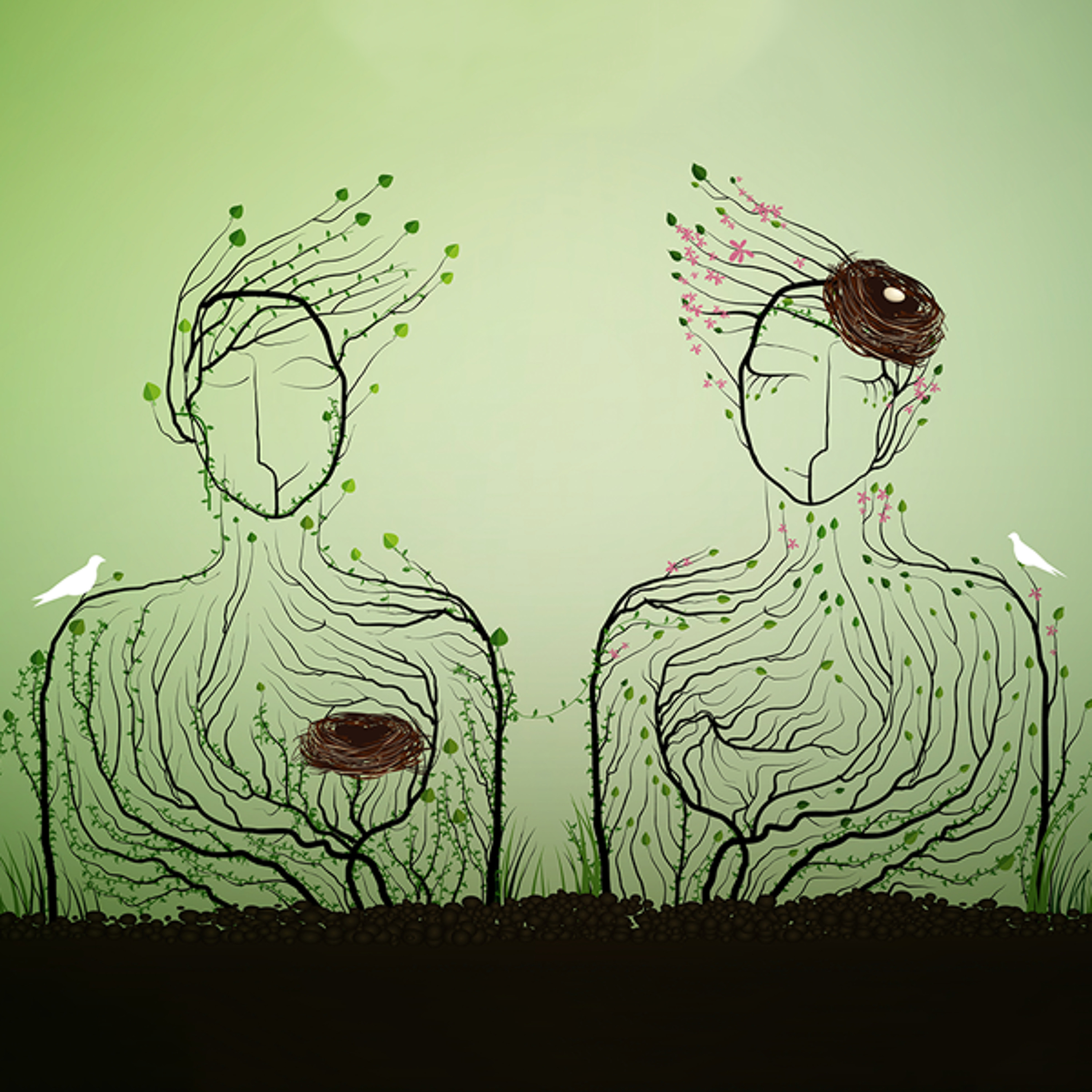
An integrally-inspired clinical psychologist specializing in couples therapy, Dr. Tom Habib has mapped what he calls the “couple’s line of development,” which describes the predictable stages a couple typically grows through — and where they may get stalled.

Lead With Purpose Webinar with Ginny Whitelaw
Ginny Whitelaw shares some of the central themes of her new astonishing new training program, Lead With Purpose. Learn more here: https://integrallife.com/lead-with-purpose-training/
Virtual Reality: A Technology of Transformation (Excerpt)
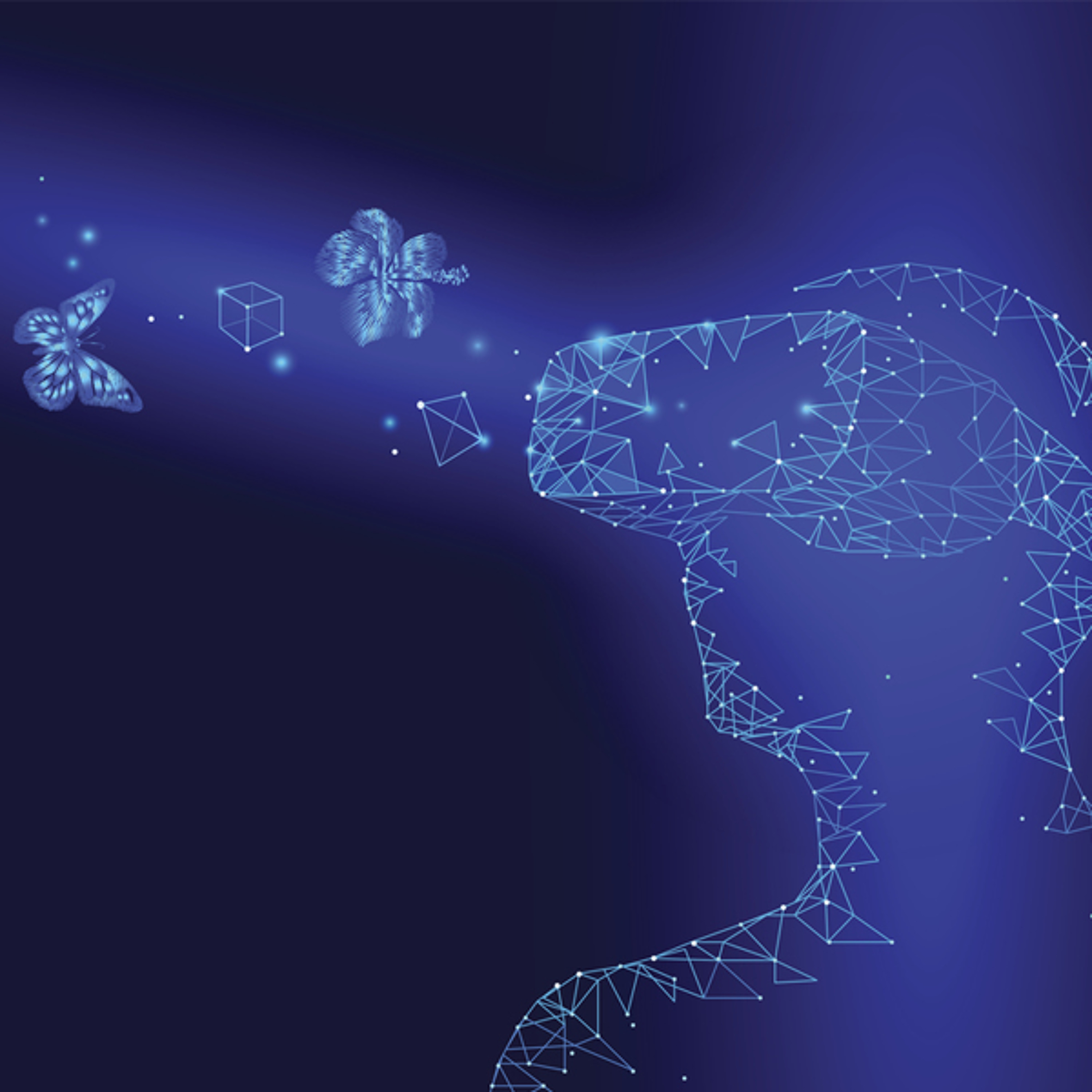
Kent Bye, host of the Voices of VR podcast, talks to Ken Wilber about the many ways virtual reality can bring Ken’s integral map of consciousness to life, exploring how VR’s unique capacity to elicit feelings of awe, empathy, and flow can help it become a uniquely powerful platform of transformation.
The Koan of Chronic Illness: A Father's Story
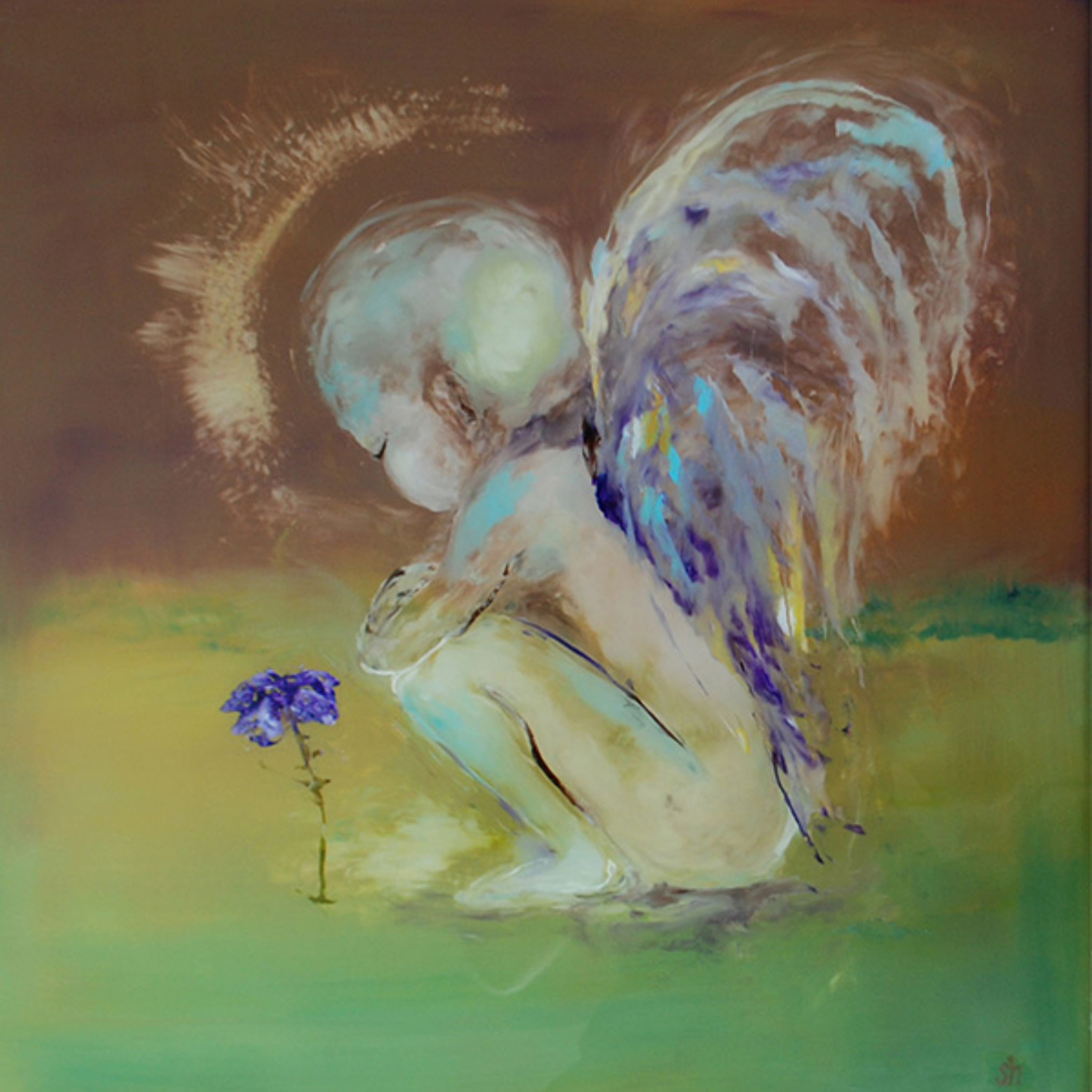
Corey deVos talks to Lynn Fuentes about his daughter's Biliary Atresia diagnosis when she was just a few months old, her subsequent liver transplant a year later, and her ongoing recovery today. Corey also shares some of the little wisdoms that have ripened for him during his family's journey. It was a fantastic and very touching interview, and we invite you all to check it out.

How to Show Up More Fully in Your Relationships (Loving Completely Webinar)
Do You Want A More Fulfilling Marriage & Lifelong Love Affair? Wouldn’t you like to know — quickly, easily and succinctly — what the very best of science tells us about how to have amazing, life-changing relationships, intimacy and sex? Loving Completely is your guide. In Dr. Keith Witt’s new book, Loving Completely: A Five Star Practice for Creating Great Relationships, we explore the five most critical strategies to make your relationships as healthy and fulfilling as possible, and discover new depths of connection, intimacy, and attraction. https://www.lovingcompletely.com/special “Why is it that 40 percent of U.S. adults report chronic loneliness and over 60 percent of self-reported lonely people are married and live with a spouse? Why is it that 37 percent of U.S. adults answered, ‘Yes,’ to ‘Has marriage not worked out for most people you know?’ The answer is that satisfying modern relationships are complicated and demanding in ways that are regularly difficult to understand and deal with. That’s why this is a different kind of relationship book. Not only do I explain why we know so much about intimacy and still have to struggle so hard to be consistently fulfilled, but I’ll tell you what to do about it when the inevitable problems arise.” —Dr. Keith Witt https://www.lovingcompletely.com/special

Social Media and the Shape of the Machine
Ken Wilber and Corey deVos explore some of the causal factors behind so many of the regressive tendencies in our culture and politics these days — particularly the new pressures coming from social media technologies like Facebook. This talk was excerpted from the full 2+ hour dialogue, From Polarization to Integration, available only on Integral Life. https://integrallife.com/from-polarization-to-integration/
Sutras: A Musical Meditation. Part 1: The Vast Expanse
Sutras is an hour-long musical meditation by Corey deVos that includes spoken word pieces by Alex Grey, Ken Wilber, Lama Surya Das, Sally Kempton, and Alan Watts. A synaesthetic journey through gross, subtle, causal, and nondual realms. Sonic tonic for your aching body, mind, and soul. Liberation upon hearing.
Sutras: A Musical Mediation. Part 2: One Hand Clapping
Sutras is an hour-long musical meditation that includes spoken word pieces by Alex Grey, Ken Wilber, Lama Surya Das, Sally Kempton, and Alan Watts. A synaesthetic journey through gross, subtle, causal, and nondual realms. Sonic tonic for your aching body, mind, and soul. Liberation upon hearing.

The Ken Show: Immigration and the Dangers of Political Tribalism
Should integral thinkers be paying at least as much attention to the excesses of the right as we do to those coming from the political left? Is it possible that some people’s “green allergy” are causing them to overlook or minimize the dangers coming from the political right?

Integral Liftoff: Listeners Share the View from Second Tier
The Integral stage of human development reveals a thrilling new view of reality. It starts at the Teal altitude, where we are able to see and map the movement of evolution in history and in our own lives. We develop the ability to hold paradox and appreciate the beauty of all previous stages who have been so long at war. It matures into the Turquoise altitude, where we experience a more unified kosmos, one that is animated with a loving intelligence which each of us, in our own way, is both expressing and creating. Our thanks to those of you who have written and sent voicemails to share your adventures in integral emergence. In today’s episode Jeff uses your reflections to chart out some of the landmarks of the new integral territory, as well as characteristics of the pioneers who seek to inhabit it.

The Intellectual Dark Web: An Integral View
Mark Forman and Robb Smith discuss the Intellectual Dark Web, the loose counter-cultural band of intellectuals recently profiled in the New York Times. Mark and Robb both agree that IDW is playing an important role in challenging prevailing culture to engage in necessary conversations and issues created at the leading-edge of a Green “operating system” that is increasingly straining under its philosophical and evolutionary contradictions, but with limitations that seem to arise from their failure to take a broader, more integral worldview. For Robb’s personal take on IDW, see his accompanying Integral Post here: https://integrallife.com/can-the-intellectual-dark-web-save-western-culture/
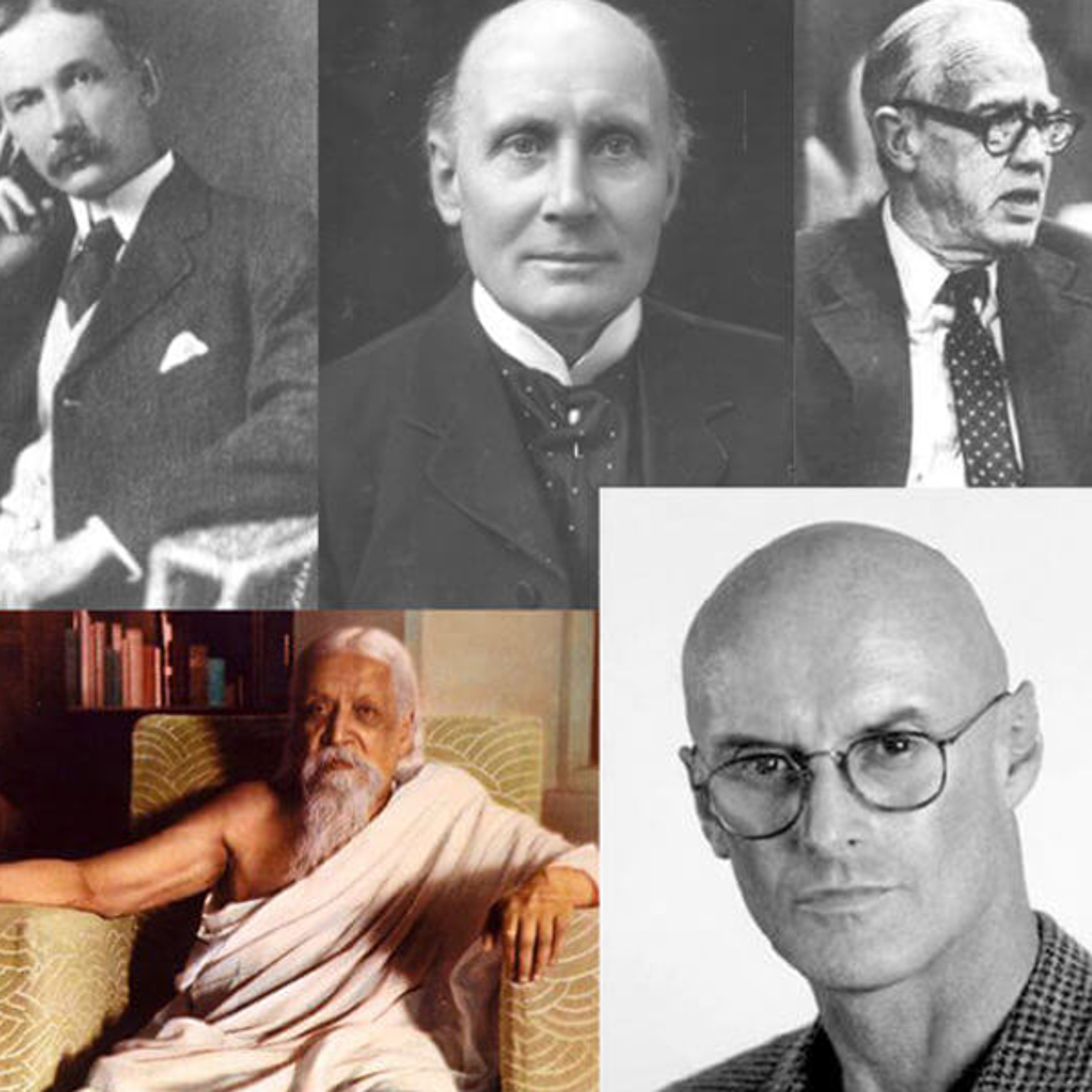
The Roots of Integral Theory
Integral philosopher Steve McIntosh takes us on a tour through his view of the origins of integral theory, starting with Georg Friedrich Hegel, who first explained the mechanisms of evolution in human history, and on through a stream of philosophers who unified the evolution of matter, consciousness and spirit. He also considers a line of developmental psychologists, such as Jean Piaget and Clare Graves, who defined the distinct stages of human growth including the emerging integral stage.

A New Republic of the Heart: The Art & Practice of Sacred Activism (Excerpt)
Terry Patten talks to Ken Wilber about his new book, <em>A New Republic of the Heart: An Ethos for Revolutionaries</em>, inviting us to align our “inner work” with our “outer work” and establish sacred activism as both a fundamental component of our ongoing Integral Life Practice, as well as the ultimate expression of that practice.

From F#@king Up to Waking Up: A Tale of Addiction, Volition, and Liberation
Chris Grosso talks to Jeff and Corey about his latest book, Dead Set on Living: Making the Difficult but Beautiful Journey from F#@king Up to Waking Up, which features a number of deeply moving conversations between Chris and various spiritual and cultural luminaries, including Ken Wilber, Ram Dass, Sharon Salzberg, Noah Levine, JP Sears, and many others.

Enlightenment, A.I., and Quantum Physics.
Part 2 — Ken Wilber continues his talk with Steve Paulson, exploring the topics of enlightenment, artificial intelligence, and quantum physics in this exclusive NPR interview.
Toward an Integral Understanding of Science and Religion
Part 1 — Ken Wilber talks to Steve Paulson about an integral approach to science and religion in this exclusive NPR interview.

Can Virtual Reality Create a More Virtuous Reality?
Corey deVos and Jeff Salzman explore the exhilarating emergence of virtual reality technology and the far-reaching implications it has across the full spectrum of human experience, from entertainment to education, to medicine, art, journalism, spiritual practice, sexuality, communication, and any number of other exciting and potentially groundbreaking applications.
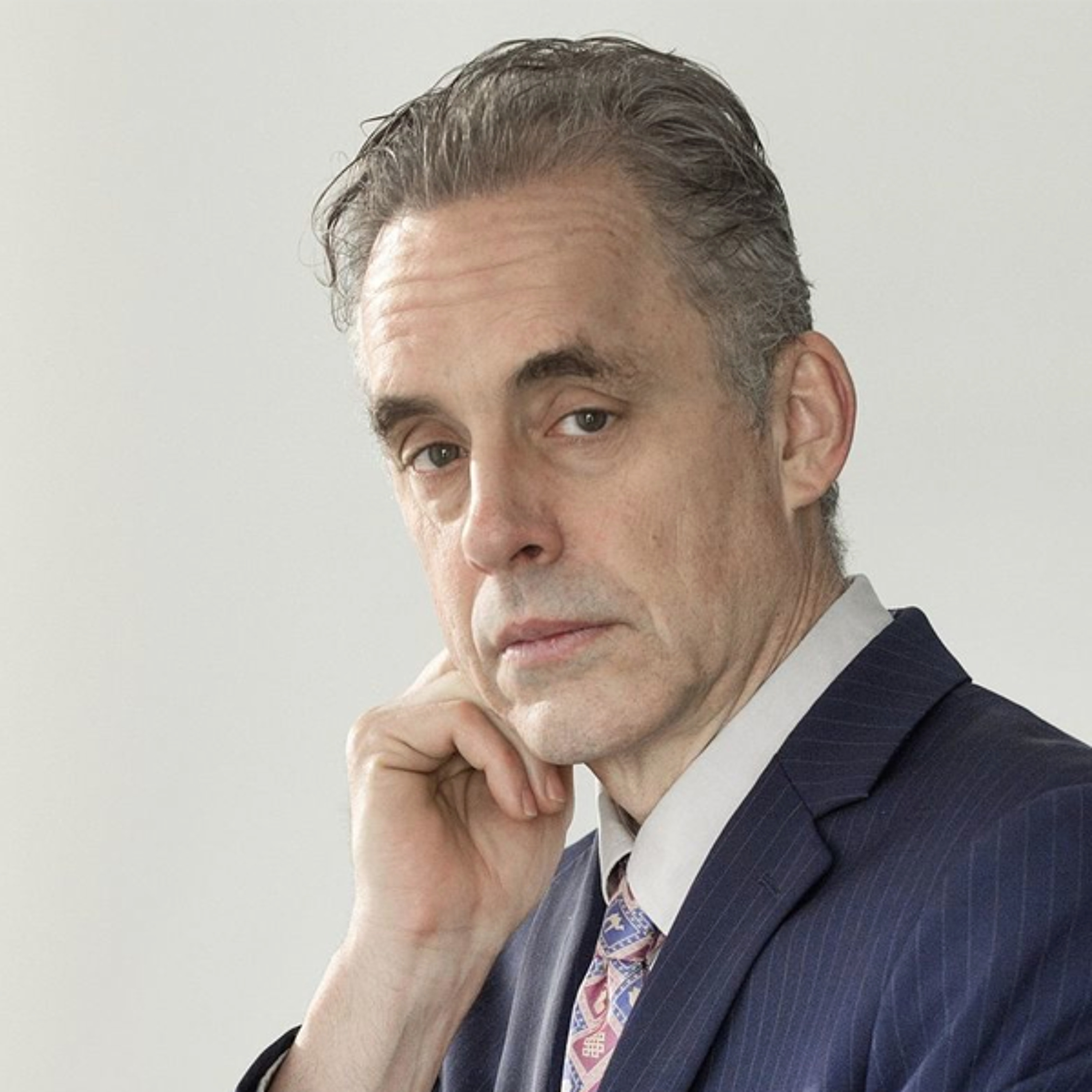
What Jordan Peterson (and His Fans and Foes) Can Learn from Integral Theory — Part 1
Part One — Jeff Salzman makes the case that Peterson is tantalizingly close to integral thinking, and making a great contribution to a large population of primarily (but by no means exclusively) young men who are inspired by his transmission of traditional values, starting with his exhortation to “stand up straight with your shoulders back.”