Everyone Is Right
267 episodes — Page 2 of 6
The Psychology of Splitting [HIGHLIGHTS]
Listen to the full discussion here: https://integrallife.com/the-psychology-of-splitting/ You are driving along in your car, your mind wandering from one place to the next, when suddenly someone cuts into your lane and causes you to slow down and miss the green light. At that moment, you feel a powerful rage erupt within you. You honk your horn, slam your steering wheel, maybe yell a cuss word or two in order to express your anger. “What an absolute jerk,” you think to yourself. A moment later, the rage passes, and you find yourself surprised by your own reaction. It was just a mild inconvenience, after all, and for all you know the other car was rushing due to some emergency you couldn’t possibly know about. “Why did I get so angry?” you ask yourself. “Why did I suddenly lose control? Where did all that patience and equanimity and empathy go?” Don’t worry, it didn’t go anywhere. You simply experienced a temporary state of psychological splitting, a momentary dissociation that all of us have encountered at one time or another. “Splitting” is a common defense mechanism that allows people to tolerate any number of challenging or even overwhelming emotions, typically by protecting strong negative qualities onto others. Often experienced during adolescence, splitting can also occur in adults during times of high or sudden stress. Typically these states are quickly recognized and regulated by the rest of the self-system after they occur, which are those times when we say to ourselves “whoa, I really lost it there.” For others, particularly people with borderline personality disorder, it can be more difficult to regulate ourselves out of these states, as Dr. Keith explains in this episode. Although it is often regarded as a pathology, dissociation, says Keith, can also be seen as a human superpower. We dissociate all the time. In fact, you are likely dissociating at this very moment, or else you would be unable to read these words on your screen without a thousand other distractions pulling your attention away. Well-regulated dissociation is what allows us to focus, to concentrate, to locate the signal in the ongoing rush of noise of our day to day lives. The problem, of course, is when we are unable to regulate our dissociative tendencies, which can then lead to conflict, abuse, and harm. Watch as Dr. Keith and Corey explore the psychological process of splitting, revealing how awareness and regulation of these processes can lead to a more health and healing, as well as to a more integrated and resilient self. By acknowledging the nuanced nature of our emotional responses and learning to navigate them with compassion and mindfulness, we open the door to deeper self-understanding and more harmonious relationships with others.
Inhabit: Your Awakening
In this rich and wide-ranging dialogue, Corey deVos and Ryan Oelke explore the nature of integral awakening, drawing on their own experiences and the insights of integral theory. They discuss how awakening is a universal human potential, but one that is profoundly shaped by the unique "Kosmic address" of each individual - their particular stage of development, state of consciousness, typologies, cultural contexts, social conditions, and so forth. Corey and Ryan share how their own journeys of awakening have been both deeply personal and intimately connected with the larger integral community. They highlight the importance of having a supportive framework and community of practice to help navigate the often challenging and destabilizing terrain of spiritual growth. Integral theory, they suggest, provides a vital map for understanding the many dimensions of awakening, from the individual to the collective, from the psychological to the spiritual. The discussion also explores the potential pitfalls and shadow sides of the spiritual path, such as spiritual bypassing, narcissism, and the temptation to use spirituality as a way to avoid the messiness of everyday life. Corey shares a powerful story of how a family health crisis forced him to confront and let go of certain spiritual attachments and identities, leading to a deeper, simpler, and more grounded way of being. This conversation is a beautiful example of what Ryan calls "Integral Dharma" - an elegant synthesis of Buddhist wisdom and integral theory that he explores in depth in his groundbreaking new web course. Integral Dharma offers a unique path to spiritual awakening, personal transformation, and purposeful engagement with the world, one that is both rooted in ancient wisdom and responsive to the unique challenges and opportunities of our time. As Ryan explains, this approach goes beyond conceptual understanding to foster a profound shift in how we perceive and embody the spiritual path in every aspect of our lives. Throughout the conversation, Corey and Ryan emphasize the importance of engaging spiritual awakening as an ongoing, embodied, and participatory process. Rather than a one-time event or final destination, integral awakening is seen as a continual unfolding, a deepening into the mystery of being that embraces both the timeless ground of pure awareness and the dynamic, evolving world of form. They invite listeners to bring curiosity, humility, and a willingness to engage the full-spectrum of human experience as they navigate their own unique paths of integral awakening.
CANCELLED: The Battle for Free Speech in the Integral Age [Episode Highlights]
Full discussion: https://integrallife.com/cancelled-the-battle-for-free-speech-in-the-integral-age/ In this thought-provoking episode, Keith Witt and Corey delve into the complex and contentious issue of cancel culture, examining its implications for free speech, academic freedom, and social cohesion. They explore why understanding the nuances of cancel culture is crucial in today’s polarized environment and how an Integral perspective can provide a holistic view that embraces complexity, encourages growth, and seeks balance. This approach helps make sense of the divisive issues at hand by considering multiple dimensions of human experience and societal structures, aiming to find pathways toward more inclusive and constructive discourse. Dr. Keith brings to the conversation a deep analysis of the psychological and cultural dynamics at play within cancel culture, emphasizing the importance of embracing dialectic engagement — a method of conversation that seeks to integrate opposing views — to foster our personal and collective evolution. He also highlights the ways in which educational and professional institutions have become battlegrounds for ideological conflict, the detrimental effects of cancel culture on academic freedom, and the necessity for individuals to embody their principles courageously. Corey, meanwhile, focuses on some of the core polarities at play in our cultural regression toward illiberalism, noting how the decentralization of information in the social media era inevitably fragments our sense of shared reality, and amplifies perspectives that are as divisive as they are diverse. He describes how the democratization of information results in an overall diminishment of our collective discourse, allowing pre-rational views and narratives to flood into our informational terrains. This in turn provokes something like a collective defense mechanism in the rest of society as our shared standards of inclusion and exclusion recalibrate to these new realities, often resulting in an unfortunate overcorrection toward illiberal solutions. This episode offers a rich and nuanced exploration of cancel culture through the lens of Integral Theory. Keith and Corey’s insights illuminate the complex interplay between individual beliefs, cultural dynamics, and systemic structures, underscoring the importance of fostering open dialogue, critical thinking, and empathy to navigate the challenges of the postmodern media era we find ourselves in.
The Seven Sins of DEI (Diversity, Equity, and Inclusion) — Highlights
The Seven Sins of DEI (Diversity, Equity, and Inclusion) — Highlights by Integral Life
The Seven Sins of DEI (Diversity, Equity, and Inclusion)
How to Awaken and Empower the Integral Man [Episode Highlights]
Watch the full discussion here: https://integrallife.com/how-to-awaken-and-empower-the-integral-man/ Keith Martin-Smith and Jason Lange explore the challenges and ongoing evolution of masculinity. Watch as they delve into topics such as the impact of societal norms on men’s behavior, the importance of emotional intelligence, and the journey from traditional to more integrated forms of masculinity, bringing a wealth of insights to help men navigate their roles and identities in a rapidly changing social landscape.
The Ken Show: Transforming Self, Society, and the Spaces Between Us [HIGHLIGHTS]
Watch the full episode here: https://integrallife.com/transforming-self-society-and-the-spaces-between-us/ In this enlightening episode of The Ken Show, hosts Ken Wilber and Corey deVos embark on a profound journey through the multifaceted realms of systems theory, communication, and social evolution. They dissect the nuanced perspectives of “inside” and “outside” views in systems, delve into the transformative power of communication paradigms throughout history, and critically examine the influence of social media on the overall emergence of integral consciousness. The conversation ends with a powerful discussion on the symbiotic relationship between personal transformation and social transformation, advocating for a holistic approach to finding radical wholeness in an increasingly fragmented world. This dialogue serves as a beacon for those navigating the complex interdependencies of self, society, and the emerging global community.
PREVIEW: Awaken Your Integral Heart (with Brad Reynolds)
Watch the full presentation here: https://integrallife.com/awaken-your-integral-heart In this profound presentation by Brad Reynolds, we explore the essence of integral consciousness and its implications for personal and societal transformation. Delving deep into the heart's role in spiritual awakening, the conversation emphasizes the interconnectedness of the head, heart, body, and spirit, with the breath as a conduit for circulating spiritual energy. The discussion touches upon the rich tapestry of human development, drawing from the wisdom of ancient traditions and modern integral thought. Brad's emphasis on love as a transformative force is particularly moving, with the assertion that to truly be integral, one must embody love. Brad repeatedly underscores the importance of genuine spiritual practice, urging individuals to find their path to access higher states of consciousness. As the world stands on the cusp of a new integral age, the responsibility to infuse love into the fabric of our civilization becomes paramount, potentially serving as the salvation of our society. This presentation serves as a beacon for those on the integral path, offering insights and guidance for deepening one's understanding and practice. Watch the full presentation here: https://integrallife.com/awaken-your-integral-heart
PREVIEW: Why Greater Depth Means Greater Responsibility
Explore the profound intersection of consciousness, responsibility, and human relationships. https://integrallife.com/why-greater-depth-means-greater-responsibility Watch as Dr. Keith Witt and Corey deVos delve into the profound interdependence between human development and responsibility, exploring how our deepening self-awareness shapes our relationships and societal roles in an ever-evolving world. At the heart of the discussion is the compelling notion that as we evolve in our understanding and self-awareness, we bear a greater onus to guide, uplift, and positively influence those around us. This responsibility is especially important in the realm of relationships, where the path to trust and understanding is often fraught with challenges, yet rich with opportunities for growth. This episode delves deep into Keith’s concept of the “Wise Self,” an intrinsic wellspring of wisdom and insight that transcends mere life experiences. The talk also addresses the often-unseen barriers we erect, from “fortresses of hostile beliefs” to societal pressures, and offers insights into dismantling these barriers for genuine connection and understanding. This discussion is not just a reflection on consciousness and relationships; it’s a call to action. It challenges listeners to introspect, to recognize and nurture their innate wisdom, and to actively engage in practices that foster growth, empathy, and authentic connection. In a world where individualism often overshadows collective well-being, this talk serves as a timely reminder of our shared responsibility to contribute positively to the tapestry of human relationships and society at large. Watch the full episode here: https://integrallife.com/why-greater-depth-means-greater-responsibility
PREVIEW: Meta-Ideological Politics (with Ryan Nakade)
Watch the full presentation here: https://integrallife.com/meta-ideological-politics/ In a time where information is abundant, society faces the unintended repercussions of ideological rigidity, tribalism, and deep-rooted discord. The initial promise of social media to nurture connections and global understanding has, in many cases, led to the opposite effect. Rather than bridging gaps, these platforms often widen them, creating ideological echo chambers where individuals are only exposed to congruent views, thereby reinforcing and intensifying their existing beliefs. This tribal mindset not only hinders genuine dialogue but also exacerbates societal divisions, leading to a polarized world where anything like a “middle ground” seems harder to find than ever. Ryan’s presentation delves into the complex nature of ideology and its profound impact on our perceptions, interactions, and behaviors. He underscores the human brain’s inherent tendency to seek patterns, elucidating how ideologies aid us in deciphering the world but can also misguide us. Ryan describes three definitions of “meta” to elucidate the concept of meta-ideological politics: “meta” as transcending, “meta” as between, and “meta” as self-aware or self-referential. He then defines ideology as “a constellation of foundational premises about politics and society, often which are contested by others, that form the basis for normative prescriptions.” Through interactive exercises and discussions, Ryan emphasized the necessity to transcend (and include) our entrenched beliefs, and to approach political and social issues with greater maturity, empathy, and nuance. Ryan calls us to rise above the conflicts and limitations of conventional ideological frameworks. By recognizing the pitfalls of tribal thinking and the distortions of social media, there’s an opportunity to foster a more inclusive, more understanding, and more holistic worldview. Embracing this meta-ideological approach can help us extend our empathy and more fully inhabit each other’s point of view, while paving the way for more constructive dialogues and a more unified approach to addressing the pressing challenges of our time. Through the lens of meta-ideological politics, individuals and communities can navigate the complex ideological landscape with confident humility, avoiding the pitfalls of homogeneity and fragmentation, and fostering a culture of open dialogue and mutual respect.
Highlights: Integral Perspectives on Alcoholism (with Dr. Keith Witt and Corey deVos)
Listen to the full discussion here: https://integrallife.com/integral-perspectives-on-alcoholism/ Alcohol addiction is a deeply entrenched issue that affects a significant portion of the population, with around 10% of children being raised in a family with at least one alcoholic parent as of 2019. In this episode of Witt and Wisdom, Dr. Keith Witt and Corey deVos undertake a comprehensive exploration of alcohol addiction, its effects, and the recovery process through the lens of Ken Wilber’s integral theory, which encompasses all four quadrants – individual (internal and external) and collective (internal and external). This approach facilitates a deep understanding of the issue, shedding light on the personal experiences of the addict and the broader societal implications, and offers a more holistic view of the complexities involved in alcohol addiction. The conversation is not just a deep dive into the negatives associated with addiction, but also offers a hopeful perspective on recovery, emphasizing the transformative power of integral awareness in finding more fulfilling and healthier solutions. By examining the effects, addiction, and recovery through all four quadrants, Keith and Corey offer a rich and nuanced understanding of the issue, encouraging a more inclusive and empathetic approach to dealing with alcohol addiction. This discussion stands as a vital resource, not just for those grappling with addiction, but also for their families and society at large, fostering a deeper understanding and highlighting pathways to healing and recovery. It calls for a collective effort, urging everyone to be more aware and to actively participate in the transformative journey from addiction to recovery, thereby nurturing a society that is more understanding, compassionate, and equipped to handle the complexities of alcohol addiction.
HIGHLIGHTS: From Socrates to Social Media: Renewing Our Commitment to Free Speech
Watch the full discussion here: https://integrallife.com/from-socrates-to-social-media/ In this episode of Integral Justice Warrior, hosts Mark Fischler and Corey deVos are joined by Nadine Strossen, a renowned advocate for free speech and former president of the ACLU, to traverse the rich history and the evolving frontier of free speech — a legacy that reaches from the philosophical debates of ancient Greece to today’s postmodern social media platforms. Together, Nadine, Mark, and Corey illuminate the critical importance of free speech, celebrating it as a beacon of individual rights, a testament to the unyielding human pursuit of truth and self expression, and a crowning achievement of the rational Orange stage of individual and collective development. Freedom of speech is not something to be taken for granted. It is, in fact, the cornerstone of democracy itself, and a principle that needs to be fought for and renewed with every new generation. As speech itself continues to evolve, so do the sorts of challenges that come along with it — and in today’s information age, those challenges have become as complicated and entrenched as ever: - the propagation of hate speech, misinformation, and propaganda, - “flooding the zone” with speech that normalizes extremist views and values, - undermining trust in our academic, media, and political institutions, - the paradox of tolerance and the delicate task of delineating the boundaries of acceptable discourse. These issues require solutions that are at least as complex and nuanced as the problems themselves. To many, it seems that censorship represents a quick and easy way to cut through those challenges — but of course censorship typically gives rise to far more severe problems, stifling open dialogue and eroding the foundational principles that uphold democratic societies. Drawing from the profound insights in her book Hate: Why We Should Resist It With Free Speech, Not Censorship, Nadine Strossen articulates that the remedy to things like “hate speech” is not suppression, but instead fostering a richer, more inclusive discourse. She advocates for a greater embrace of free speech, seeing it as a pathway to understanding and social harmony. We find ourselves at a pivotal juncture in history. In a world transformed by the digital revolution, offering unprecedented avenues for self-expression, there are more flavors and varieties of speech than ever before — and also more efforts to silence that speech. We can see this schism running throughout the American political landscape, where both major parties perceive themselves as the last guardians of free speech who are defending this sacred right from the opposing party, a testament to the deeply polarized nature of contemporary discourse. The conversation deepens as Nadine, Mark, and Corey examine a number of landmark Supreme Court rulings, including Brandenburg versus Ohio, New York Times versus Sullivan, and Buckley v. Valeo, each a pillar supporting the intricate architecture of free speech in America. These cases beckon us to engage more profoundly with the nuances of free speech, urging a deeper understanding and commitment to this fundamental right. This episode invites you on a journey of reflection, urging a renewed commitment to the principles of free speech — a commitment grounded in understanding, respect, and the unyielding belief in the transformative power of words. Tune in to be part of a conversation that spans centuries, yet is as relevant today as it was in the time of Socrates. We hope you enjoy.
Toward an Integral Meta-Psychotherapy [HIGHLIGHTS]
Toward an Integral Meta-Psychotherapy [HIGHLIGHTS] by Integral Life
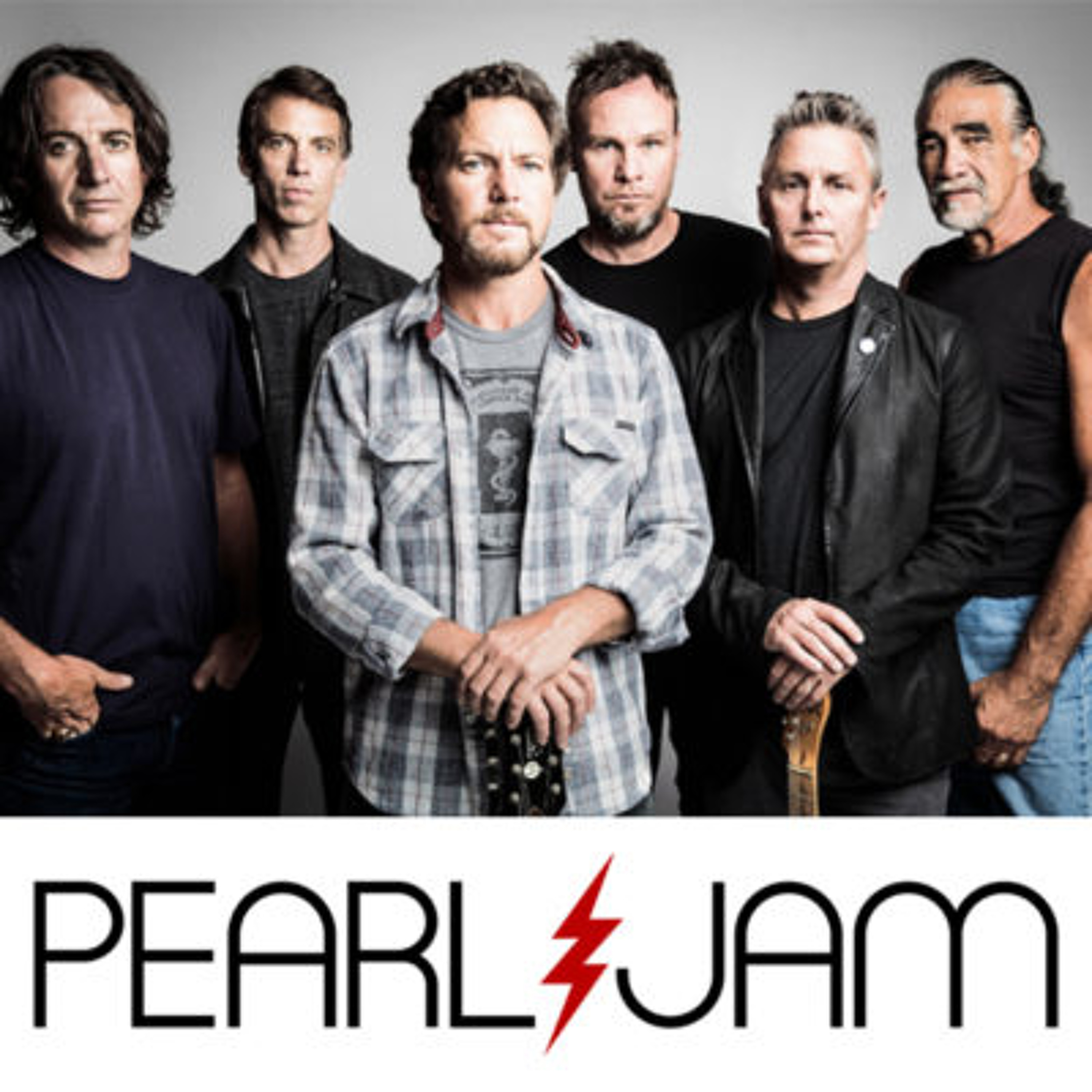
PREVIEW: The Birth of Grunge and the Death of an Industry
Listen to the full discussion here: https://integrallife.com/pearl-jam-restoring-idealism-to-rock-and-roll/ Every now and again, pop culture reinvents itself. Our collective tastes are born, destroyed, and reborn again, swinging like a massive pendulum from one aesthetic extreme to the next. As a new cultural niche becomes more and more popularized, fierce artistic independence eventually devolves into reckless overindulgence, and creative novelty slowly bleeds away until all that is left is a formulaic husk used to manufacture tomorrow’s next fads. It is usually at this point, when a particular scene becomes so over-saturated that it can no longer support the weight of its own excess, that the entire scene dies an often-humiliating death, bloated and alone on an unflushed toilet. In the 1980s the music scene in America was dominated by the glut and theatrics of “glam metal.” For nearly 10 years, most of popular music was defined by sex, drugs, and machismo-in-drag, and an entire generation of youth nearly lost themselves within a cloud of hairspray. There was a void in the cultural heart of the musical mainstream that was dying to be filled—an utter lack of artistic interiority, emotional depth, and authenticity. Untold millions were craving artistic substance, and were only offered artificial decadence. Then along came grunge, taking the entire world by storm in the early 90′s. From the rain-soaked streets of Seattle emerged a new voice for American youth. In much the same way that punk music arrived just in time to offer salvation for our Disco-era sins, grunge music promised to completely cleanse our cultural palette, placing an aesthetic imperative upon more simplicity, more spontaneity, and more sincerity. And so bands like Nirvana, Soundgarden, Alice in Chains, The Smashing Pumpkins, and Pearl Jam crashed into the mainstream, forever changing the landscape of American music. From behind a tsunami of massively distorted guitars, hallowed vocals, and countless acres of flannel, appeared an unmistakable return to introspection and idealism — even while cloaked by themes of angst and despair, the natural result of our collective interiors being ignored for almost a decade. Few bands of the era embody this move toward introspection and idealism as strongly as Pearl Jam. As the grunge scene continued to explode, it was becoming apparent that the inherent iconoclasm of the scene was ill-suited to handle the immense pressures of fame, and many artists found themselves circling the drain of inevitable self-destruction — for many, Kurt Cobain’s suicide was a morbid reminder of what can happen when artistic ideals are reduced to mere currency for the status-sphere. One by one the originators of grunge began to fall away, and an impossibly huge body of talent was forever lost to suicide and drug addiction. Not many bands survived as the industry began churning out the newest grunge-inspired fads, marketed (ironically) as “alternative rock.” Pearl Jam was one of the few who did make it through this period of intense commodification. Unlike most others from the Seattle era, they were able to prevent themselves from being crushed by the enormous pressure that their celebrity brought to their personal and professional lives. While they did in a sense try to distance themselves from their own fame, they were also simultaneously using their celebrity as a platform for their idealism, soon finding themselves fighting “on all fronts” for initiating real change in the world. From their famed battle with the corruption of the Ticketmaster venue monopoly, to publicly berating the policies of George W. Bush, to expressing pro-choice sentiments in concert, to promoting awareness around Crohn’s disease — Pearl Jam was helping to return rock and roll to its roots, in terms of both the profoundly personal and the deeply political. And they continue to do it to this day, more than 30 years since the band first formed.
Is Metamodernism Integral? Is Integral Metamodern?
Brendan Graham Dempsey is a writer whose work focuses on the meaning crisis and the nature of spirituality in metamodernity. Brendan is also very active in the Metamodern community, which many people recognize as an “integrally-adjacent” constellation of hearts and minds that are trying to usher in a more meaningful and fulfilling way to participate with humanity’s unfolding — not just to navigate the extreme complexity of our times, but also striving to find the simplicity on the other side of all that complexity. Sound familiar? Metamodernism and the integral paradigm share a lot in common, yet also differ in important ways. To what degree should these terms be conflated or kept apart? What unites them, and what constitute the meaningful distinctions? What role do things like sensibility, generation, emphasis, and epistemology play? This gathering provided an opportunity to dig into this topic. To this end, metamodern thinker Brendan Graham Dempsey offers some history and a bit of compare/contrast perspectives on the topic. So is metamodernism integral? Is integral metamodern? Watch this discussion with Brendan Dempsey, and let us know what you think!
Integrating Sex, Gender, and Identity
Watch the full discussion here: https://integrallife.com/sex-identity-gender-beyond-wokism-and-trumpism/ Following Keith’s table-setting discussion of sex and gender last month, in this episode we push even further into the front lines of the culture war skirmishes that have become so plentiful over the last several years. Corey deVos joins Keith to discuss how our notions of sex, gender, and identity apply to some of the most contentious and pressing issues of our time — gender education in schools, men’s rights issues, the banning of drag shows, trans people participating in sports, the availability of gender-affirming care for young people, the impact of social media on gender identity, and more. In order to answer the question “what is a man” (or “what is a woman”), Keith and Corey carefully track sex, gender, and identity as fundamental aspects of the self that can exist in a state of fusion, differentiation, dissociation, or integration, depending on the developmental stage(s) the question is being asked from. This is one of the most common causes of conflict around this issue, as people have very different meanings of words like “gender”, which can refer to biology, identity, or the various social constructs we have inherited, depending on where we are in this sequence. Which is why, when it comes to the question of gender, people are constantly talking past each other, and why the conversation often stalls at the level of ideological doctrine and debate, which we see so often in the culture wars. How can we elevate the discussion into a more fruitful dialogue, discourse, and dialectic? By properly differentiating and integrating these factors into a more coherent vision of sex, gender, and identity. In a world where these topics often generate more heat than light, our aim is to bring clarity, insight, and a spirit of inclusive dialogue to the conversation. Our focus, as always, is bringing our most integral hearts and minds to these conflicts, so that we can provide the greatest opportunities for happiness, fulfillment, and freedom of expression for the greatest number of people, while also minimizing harm and promoting understanding, empathy, and respect among all parties involved. Watch the full discussion here: https://integrallife.com/sex-identity-gender-beyond-wokism-and-trumpism/
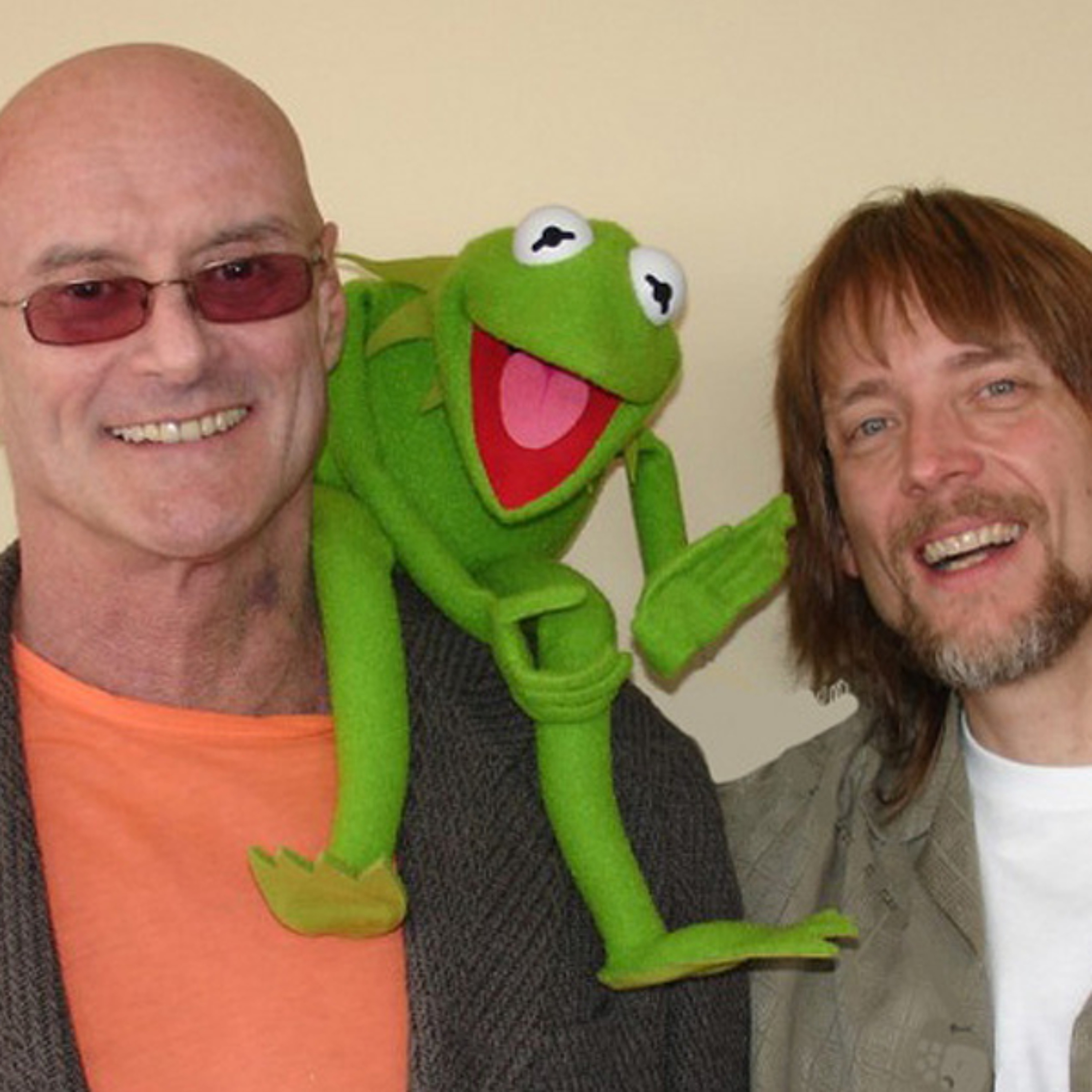
PREVIEW: The Performer Behind the World's Most Famous Frog
Listen to the full discussion here: https://integrallife.com/its-not-easy-being-turquoise-jim-henson-muppets-and-art-integral-puppetry Steve Whitmire spent 14 intense and creative years with the extraordinary Jim Henson before his passing. As of 2008, Steve has been the animating force behind, most notably, Kermit the Frog, for nearly two decades. This was not something Steve planned for in any way. Jim passed away at the age of 53 from an infection that no one could have seen coming—although it later became revealed that Jim had been considering Steve for the puppeteer of Kermit, so that Jim could explore other creative endeavors. However, their connection had started decades earlier. When Steve was a scant 10-years-old, he wrote Jim a letter to express his appreciation for his work, and to ask if he had written anything on the construction of puppets. In fact, Jim had not written anything on the construction of puppets at that time, but responded personally to Steve’s letter, and directed him toward some simple Muppet patterns that had been published a few years ago in a magazine. Thus started the career of a life-long Jim Henson puppeteer, aided by Steve’s mother’s sewing machine. As Ken comments, puppeteering can be, and has been, looked at by the world’s great Mystical Traditions as a metaphor for ultimate Spirit being the transcendental Puppeteer of all worldly phenomena. And there is much truth in that observation. Spirit, if nothing else, inhabits a massive number of multiple perspectives, and in order to perform puppeteering successfully, one literally inhabits, and becomes one with, the puppet’s personality. It is a minor re-enaction of what Spirit does moment-to-moment spontaneously, throughout the entire Kosmos. As with Jim Henson, Steve Whitmire is a very humble soul. If nothing else, Steve is honored to carry on a tradition started by a modern-day master, by whatever name. Jim’s productions have been among the most successful television series in history: Sesame Street, The Muppet Show, and Fraggle Rock were all international sensations. Sesame Street alone has aired more than 4,100 episodes over a 38-season run, winning 109 Emmy Awards in the process—and it’s still going. To say that Steve is a modern-day backbone of the Muppet tradition is in no way an exaggeration. You may not see his face, but you can see Steve animating Kermit the Frog in a musical duo with Kylie Minogue on YouTube, along with many other notable appearances. Kermit the Frog was, and is, a public, (inter)national expression of the pluralistic, green worldview—but always with a subtle reminder of how multicultural expressions can be reconciled and brought together with an Integral View. It may not be easy being green, but it’s ever harder being teal (where an Integral understanding begins and expands). With the spirit of growth that Jim Henson embodied and intuited, and that Steve Whitmire carries on in an evolutionary context with a clearly Integral perspective, we invite you to celebrate this artistic and creative dimension of puppetry, and the “taking the perspective of other” that it implies, in this one-of-a kind-dialogue…. Listen to the full discussion here: https://integrallife.com/its-not-easy-being-turquoise-jim-henson-muppets-and-art-integral-puppetry
The Art and Science of the Intentional Love Affair [Highlights]
Listen to the full discussion here: https://integrallife.com/the-art-and-science-of-the-intentional-love-affair/ Our intimate relationships are typically the most important, challenging, transformative, frustrating, and fulfilling parts of our lives. Every relationship is a testament to the “miracle of we” — somehow, out of billions of people on the planet, we find each other, we share all of our hidden parts with each other, and we create entire new realities between us. And these relationships are never static. They are constantly shifting, morphing, and evolving as we both grow together, or as we grow apart from each other. And the more intentionality we can bring to our relationships, the greater the chances that our intimacy can not only survive the inevitable challenges and frictions of our lives, but actually thrive because of them. In this thought-provoking episode, Dr. Keith Witt and Corey deVos delve into the intricacies of intimate relationships, exploring the concept of “intentional love affairs” and how they can be cultivated to deepen connection and intimacy. They discuss the importance of fostering better friendships, nurturing love affairs, and developing the ability to solve problems so effortlessly that they may not even appear as conflicts to others. Listen to the full discussion here: https://integrallife.com/the-art-and-science-of-the-intentional-love-affair/
What Is a Man (And Why Does It Matter?) [HIGHLIGHTS]
Watch the full episode here: https://integrallife.com/what-is-a-man/ What is a man? Vulnerable? Gentle? Powerful? Big biceps? Tall? Strong? Innovative? Loyal? Logical? On the Left, more and more say a man is whatever you want it to be — penis or vagina, boobs or pecs, loaded with testosterone or almost none of it, masculine or feminine — it makes no difference. A man, or a woman, is a form of self-identity, freed from any biological constraints. If you say you’re a man, it’s my job to accept it and society’s job to validate it. On the Right, more and more say that a man, or a woman, are constrained by their biology if not outright defined by it, and all of this talk of “identity” runs the range from irritating to an existential threat on traditional gender roles. Conservatives say that a man and woman are defined by their biology first and foremost, and that there is no burying or obfuscating that truth. Who should we believe?
Strategies for Happiness: Growing Toward Anti-Fragility
Watch the full episode here: https://integrallife.com/what-makes-us-happy-growing-toward-anti-fragility/ In this captivating episode of Witt and Wisdom, Dr. Keith Witt and Corey deVos engage in a thought-provoking dialogue that addresses the critical themes from Jonathan Haidt’s and David Brooks’ recent articles on the mental health of young liberals and the self-destructive effects of progressive sadness. Both Haidt and Brooks examine the increasing rates of anxiety, depression, and despair among young people, particularly in liberal communities, and the potentially maladaptive nature of their mindset. The conversation delves into the complexities of mental health and resilience among young people, emphasizing the powerful concept of anti-fragility and its role in balancing the poles of fragility and resilience, with the ultimate goal of addressing these primary pain points. Drawing inspiration from Haidt’s and Brooks’ articles, Witt and deVos explore the different happiness strategies associated with each stage of cognitive development, including creating community, practicing empathy and compassion, and pursuing personal transformation. By understanding and applying these approaches, individuals can effectively strive for progress, self-improvement, material success, empathy, and social justice throughout their lives. The dialogue also highlights the importance of adult guidance and mentorship in nurturing young people’s development. As teenagers face unique challenges and seek autonomy, it’s vital for adults to recognize the inherent tension between providing guidance and allowing young people the freedom to navigate their own paths. By offering support and challenge tailored to each individual’s needs, parents, teachers, and mentors can help cultivate healthy growth and resilience in the next generation. Please join Keith and Corey in this enriching dialogue, as they bring forth an integral perspective on the pressing issue of mental health and resilience among youth, and explore the transformative potential of anti-fragility and the happiness strategies that can empower us to create a brighter future for ourselves and the generations to come.
The Highest Stages of Conscious Development [PREVIEW]
You can find the full 1-hour discussion here: https://integrallife.com/the-highest-stages-of-conscious-development/ Terri O'Fallon and Keith Martin-Smith dive into a deeper and more detailed exploration of Terri's STAGES model, focusing on a smaller section of the model: stages 3.0 – 6.0 (roughly Amber/Orange to Turquoise/Indigo). Terri outlines what makes each level of her model unique from the last, what causes people to shift from one level to another, as well as what the mature expressions look like for 3.0, 4.0, and 5.0 stages. She goes on to explain how people can use the model’s parameters to determine the developmental expression of others in coaching, psychotherapy, parenting, teaching, negotiating, etc., and how the STAGES model's perspectival parameters can be a tool for generating more empathy and compassion. In the STAGES model, structure-stages (Amber, Orange, Green, Teal, etc.) and state-stages (Gross, Subtle Causal, Witness, Nondual) begin to merge and stabilize. Terri explains exactly how this happens, and how both states and stages underlie the developmental process. Finally, Terri explores her idea of developmental bypassing, and why we need spiritual work, shadow work, and developmental guidance to all in order to produce an integrated human experience.
What's Wrong With Stage Models? [John Vervaeke and Nomali Perera]
Watch the full 1-hour discussion here: https://integrallife.com/navigating-the-meaning-crisis/ John Vervaeke, PhD is an award-winning lecturer at the University of Toronto in the departments of psychology, cognitive science and Buddhist psychology. His work involves constructing a bridge between science and spirituality in order to understand the experience of meaningfulness and the cultivation of wisdom so as to afford awakening from what is often experienced by members of society as “the meaning crisis.” In 2022, Nomali Perera facilitated a study group at Integral Life using the teachings of John Vervaeke from his Awakening from the Meaning Crisis YouTube video series. This video is from Mr. Vervaeke’s visit with study group participants for a lively Q&A. In the first half of this very rich discussion, John talks with Nomali, Jeff, and the rest of the group about his three major concerns about stage models, and why he doesn’t emphasize them in his own work: - Psychometric skepticism – uncertainty around how we are measuring and validating these measurements, - The problem of the “monolithic mind” — the idea that the mind is a “whole”, which wholly moves from one stage to the next, - Underlying founders’ bias — stage models often bias the model-maker, who tend to represent themselves as the highest stage(s) in the model. Whether we agree with John’s criticisms of stage models, or we see these criticisms already being addressed by other elements of Integral metatheory, these nonetheless offer some exceptionally important guardrails around how we wield and communicate these ideas. Integral theory in many ways represents a “simplicity on the other side of complexity” — but if we are being overly simplistic with these ideas, then we begin to lose some much-needed resolution, and are left only with a blurry map that can be misread and misapplied in all sorts of ineffective or even abusive ways.
Tapping Into Divine Guidance
“Tapping into Divine guidance” is a term most of us in the Integral family are familiar with. But what is the difference between that and prophesy or prophesizing? And what would practicing a prophetic modality entail? Join Lisa and Kevin with guest practitioner Rodrick Chambers, an ordained minister and spiritual coach, as we dive into the role of prophesy in the 21st Century.
Perspectives on Development: Introducing the STAGES Model [PREVIEW]
Watch the full discussion here: https://integrallife.com/perspectives-on-develoment-introducing-the-stages-model/ Terri O’Fallon takes us on a guided journey through her STAGES model, an integrally based development model that charts human development from infancy to the highest levels of development that humans are capable of. Terri’s research is based in the number of perspectives a person can take (1st through 7th) – and she explains how different levels of fluency with these perspectives can often cause us to talk “past” or “over” one another, and how familiarizing ourselves with these perspectives can help us stop doing that. Terri and Keith start with a brief overview of what exactly adult ego growth is, and why it matters. They also explore why adult developmental psychology — despite being part of the academic culture for more than 100 years — isn’t more understood and used by mainstream therapist and psychologists. Terri also explores how many of our culture wars are generated from conflicts between these stages — certain perspectives are able to see (and therefore respond to) social challenges that other perspectives simply cannot yet Finally, Terri spends some time unpacking her data on a 5th person perspective (mature Integral, or Turquoise) what that perspective sees, how it relates to the Wilber-Combs Lattice and to Post-Modernity (and to Integral), and how one might know for themselves what this means.

Transform the Police: A More Integral Approach to Law Enforcement [PREVIEW]
Watch the full 2-hour discussion here: https://integrallife.com/transform-the-police-a-more-integral-approach-to-law-enforcement/ Mark and Corey are joined by Chris Orrey, a retired police lieutenant with over 30 years of service with the Hayward, California Police Department, to discuss the abuse and resulting death of Tyre Nichols, who was severely beaten by five Memphis police officers after a routine traffic stop. What allowed this tragedy (and others like it) to take place, and what sorts of institutional transformation are necessary to prevent them from occurring again? We were very excited to have Chris join us for this discussion — not only because of her experience as a former police lieutenant, but also because she is leading the Integrative Policing Transformation Initiative over at the Institute of Applied Metatheory, designed to map the fuller complexity of policing in the United States and examine how a transformation toward a fuller guardian model of policing might be achieved. If you are at all interested in supporting this tremendously important and timely endeavor, we encourage you to get in touch here: https://instituteofappliedmetatheory.org/donations/integrative-policing-transformation-initiative/ One of the primary factors we discuss is how our modern Orange standards of law and justice depend on Amber enforcement agencies being healthy, trustable, and reliable — otherwise the entire system breaks down as the public looses confidence in the police’s ability to serve the community. And without this Orange-stage accountability and oversight, Amber groups often go bad fairly quickly — we don’t only see this in policing, but also in organizations such as the military, the Boy Scouts, the Catholic Church, and others. Closed-off Amber groups often tend to normalize, justify, and cover for all sorts of abuse within the group — even when that abuse is coming from a small number within the group. There is a natural Amber drive to protect the group at all costs (such as the “blue line of silence” within policing culture) which prevents real accountability from taking place, and which in turn drives more resentment and mistrust between the population and the police in general. We go on to talk about a number of other critical factors and leverage points in each of the four quadrants, including: UL (Intentional problems/solutions) * Creating more support and healing for officers (e.g. helping officers with accumulated job-related traumas), * Training greater emotional intelligence to help with empathy and de-escalation of violence * State training to help officers better regulate and manage intense emotional and psychological states of consciousness (e.g. the natural fight or flight response) in both officers and criminal suspects) UR (Behavioral problems/solutions) * Managing physiological states associated with interior mental/emotional states (e.g. adrenaline, overall physical health of the officer) * Identifying multiple skillsets to deal with different kinds of confrontations and social challenges, * Recruitment strategies to attract more healthy and ethical officer candidates LL (Cultural problems/solutions) * Expanding officers' sense of "we" to include the communities they are protecting, * Restoring trust by creating more connective tissue between police and the communities they serve, * Dismantling internal "blue wall of silence" culture within police culture, LR (Systemic problems/solutions) * External social/environmental conditions (overall social violence, proliferation of guns, race and racism, etc.), * Outmoded social inertias from previous policing eras that remain with us today, * Rethinking “qualified immunity” that often prevents abusive officers from being held accountable, * Various forms of corruption and bias in justice systems, * Bringing more Orange-stage accountability to Amber-stage police organizations
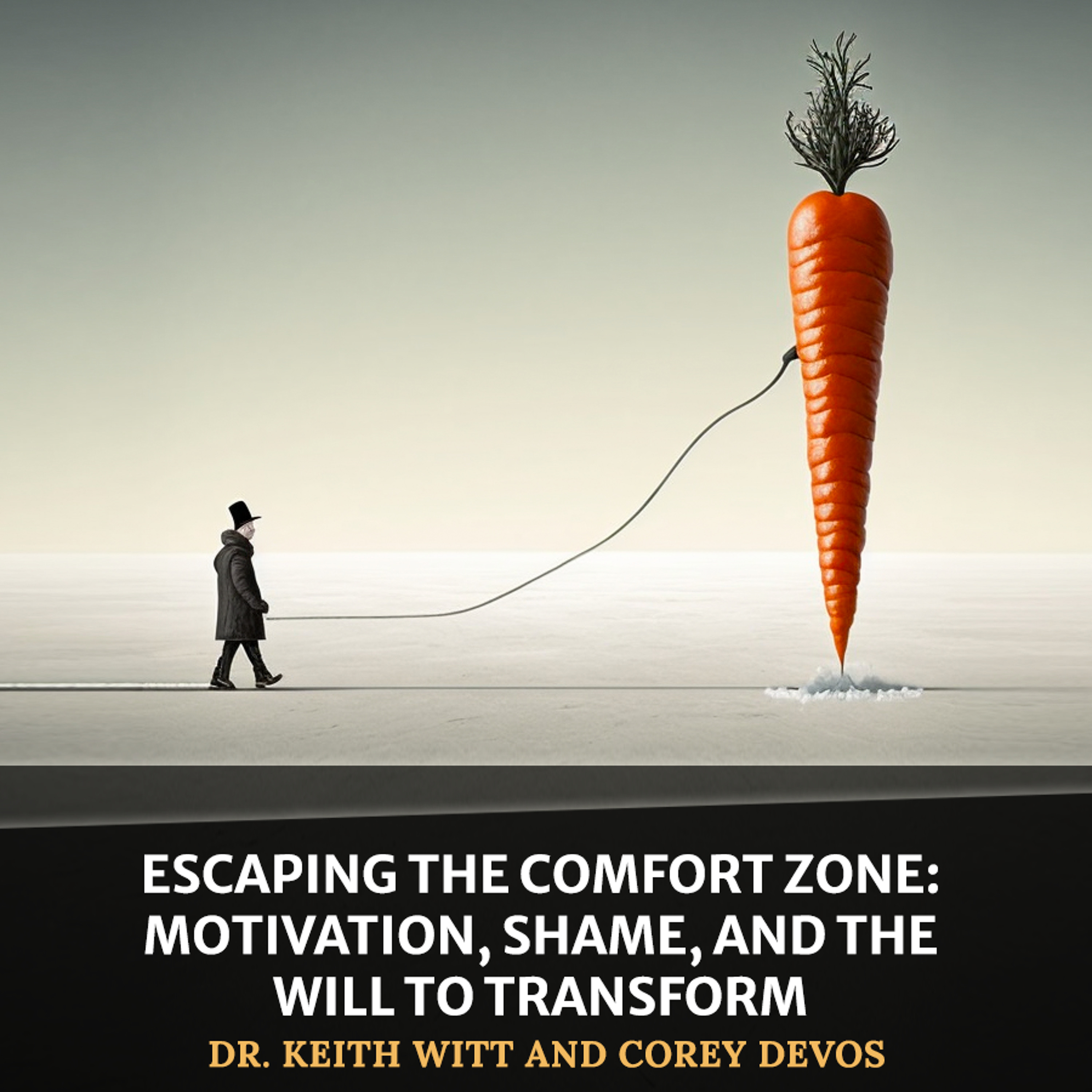
Escaping the Comfort Zone: Motivation, Shame, and the Will to Transform [PREVIEW]
Listen to the full 1.5-hour discussion here: https://integrallife.com/escaping-the-comfort-zone-motivation-shame-and-the-will-to-transform/ How do we cultivate the will to transform? How can we consciously step out of the safety of our comfort zones, and into our greater purpose and potential? Dr. Keith and Corey explore the complex psychology of motivation — the various sticks and carrots we use to get out of bed in the morning and keep ourselves moving forward in our lives, sustaining the inertia we need to push us through any number of hardships, setbacks, and growth opportunities. And of course these sources of motivation are as multifaceted as the human mind itself. We can notice interior motivations and exterior motivations, individual and collective motivations, motivations to feel more whole, motivations to feel like we are part of a greater whole, etc. — all focused, enacted, and enforced in very different ways at each stage of development. So how do we as integralists navigate and reconcile this vast array of motivations, both within us and outside of us? How can we better align ourselves with our deepest, most purposeful motivations so that we can more fully contribute our gifts to the world? Watch as Dr. Keith and Corey explore these questions, and more.
How to Build a Conscious Community [PREVIEW]
Listen to the full 1.5-hour discussion here: https://integrallife.com/how-to-build-a-conscious-community/ What Would a Genuinely Integral Spiritual Community Look Like? You may be surprised to learn one is actually being built — and launched — right now! Keith Martin-Smith talks with Dr. John Churchill about the themes in Keith’s latest book, When the Buddha Needs Therapy: shadow and awakening, the problem and promise of spiritual communities, the state-stage model as it relates to trauma and growth, narcissism and other personality disorders inside of spirituality, the power and trap of lineage, and what a fully Western version of an awakened spiritual path might look like.
The Politics of Consciousness
Find the full 1.5 hour discussion here: https://integrallife.com/psychedelic-therapy-and-the-politics-of-consciousness/ In the recent 2022 midterm elections, Colorado joined the state of Oregon in its decriminalization of psychedelic substances for therapeutic use. Here Dr. Keith and Corey explore some of the major implications of this profound legal shift, both in terms of our overall emotional, psychological, and spiritual health, as well as our rapidly evolving “politics of consciousness” — those states of consciousness that are sanctioned by the state, versus those that are not. Watch as we take an in-depth look at the many growth opportunities being surfaced by these changing laws, and how integral concepts such as quadrants, states, and developmental stages help us better understand the effects these substances have on us, as well as the role they have played throughout history.
How to Thrive During the Holidays
Holidays can be tough. For many the holiday season can be the some of the most hectic and challenging weeks of the year, as the accumulated stresses from travel, seasonal affect disorders, and various childhood wounds come to the surface. And these things often have a way of knocking us off of our game, destabilizing our practice and distracting us from our wisest self. Join Lisa and Kevin for a look at not just how to survive the holidays, but how to genuinely thrive and deepen your commitment to practice.
The Maturing Test: How Developed Is the World's Most Advanced AI? (Main Presentaiton)
You can find the full 1.5-hour conversation here: https://integrallife.com/the-maturing-test-how-developed-is-the-worlds-most-advanced-ai/ We just subjected the world’s most advanced AI to the world’s most sophisticated test for human maturity. We call it the Maturing Test. Could the results transform our world? Developmental psychologists have demonstrated that a human being grows through a successive progression of increasingly complex stages of meaning-making. These stages of ego/self-identity development can be thought of as coherent structures or patterns of how the “self” of each stage organizes and navigates itself in relation to the world (e.g., think of how the 3 year old self organizes itself and its world versus the 12 year old self versus the 30 year old self, and you’ll begin to appreciate the progression of qualitatively more advanced maturity that occurs). Maturity of a given adult’s ego/self-identity is assessed through language, specifically how they reply to a set of specific sentence prompts, prompts like “A true friend…“, “My mother and I…“, “Rules are…” and a few dozen others. Using this same method, we just assessed GPT-3, the world’s most advanced sentence-generating Artificial Intelligence, having it complete sentence prompts for the Maturity Assessment Profile developed by Dr. Susanne Cook-Greuter. This test and its resulting data has been collected on hundreds of thousands of sentence replies over the course of four decades, and shows that more mature “selves” evidence a growing sophistication, self-awareness, sensitivity and perspectival fluidity as they progress to later, more complex stages of self-development. So what is the maturity level demonstrated by the world’s most advanced AI? It is impressive, promising, and thought-provoking — and in this very special discussion we reveal the results and discuss what they mean, where it may go from here, and how this might impact our world.
There Are No Victims in Zen (Keith Martin-Smith and Chad Bennett)
You can find the full 2 hour discussion here: https://integrallife.com/therapy-awakening-a-new-integration/ Keith Martin-Smith speaks with Chad Bennett, a psychotherapist and ordained Zen priest, about why our existing ideas of therapy are often limited and keep us bound inside of the therapeutic relationship, unable to learn the skills necessary to continue our own growth towards psychological wholeness. They also discuss the necessity of “Waking Up” practices as a vital part of any therapeutic practice, and how the very idea of liberation needs to be understood as awakening through the ego, not from it. It seems more and more clear that to truly awaken from suffering, a new kind of therapy and a new kind of meditation must be practiced — and that they must be done together. This talk explores how to make this possible for yourself. We hope you enjoy this wide-ranging and deep dive into Waking Up, Cleaning Up, and Growing Up. https://integrallife.com/therapy-awakening-a-new-integration/
Work as Practice, Practice as Work
What would it look like to re-imagine and redefine the very ways we relate to and participate in our work? In the aftermath of the great resignation, and with headlines talking of “quietly quitting,” what has become clear is that we are in the middle of a global crisis precipitated on a decade or more of rising levels of dissatisfaction with what we call “work.” And while the pandemic was the proverbial straw in this case, the fundamental issue is that we want more from our relationship with work - especially given that it is the place where we spend the majority of our waking hours each week. In this episode Lisa and Kevin speak with Kent Frazier, founder of Fully Human at Work, to understand what practice looks like in this context of our lives.
The WHAT, WHY, and HOW of Integral Practice
The WHAT, WHY, and HOW of Integral Practice by Integral Life
Inhabit: Your Bardo
“Every moment is a bardo. Every moment is a death, and an opportunity for new life.” —Corey deVos In the Buddhist tradition, the “bardo” refers to the transitional state between lifetimes, a liminal state (or series of states) between death and birth. There are no shortage of practices designed to help us prepare for this ultimate transition — to “practice dying”, as Plato instructed his disciples to do. As Ken Wilber says, “All spiritual practice is a rehearsal—and at its best, an enactment—of death. As the mystics put it, ‘If you die before you die, then when you die, you won’t die.’ In other words, if right now you die to the separate-self sense, and discover instead your real Self which is the entire Kosmos at large, then the death of this particular bodymind is but a leaf falling from the eternal tree that you are.” However, this is not a conversation about death. It is a conversation about life. It’s about recognizing the fact that every moment is a bardo, a transition from one state of being to another state of being — and within these ubiquitous transitions there are opportunities to transcend the karmas of our conditioning, and to channel new kinds of creativity into the world. This discussion is an open-hearted celebration of transition, an appreciation of the fact that there is never any real solid ground beneath our feet, because nothing is truly solid or lasting in this manifest world. We know that, in this reality, “energy cannot be created or destroyed, only changed” — which means that only the changing is real. Creation and destruction, birth and death, are illusions arising from the temporary semi-stable patterns of organization that forever exist in their own perpetual state of transition. The only truly permanent ground we can ever hope to find is the Ground of Being itself, which never actually enters the stream of time to begin with, but nonetheless infuses and envelopes the whole of manifest reality. We hope that this conversation will help you participate more consciously with the ever-changing flow of your own life, and to find new ways to harness the creative engine at the very core of this transitional moment right now.
Personality as the Base Note of Change Work
Watch as Dr. Keith offers a "Psychotherapy Masterclass" that helps us work with various personality types as a foundation for healing, change, and self-actualization. While intended for other psychotherapy professionals, this discussion offers valuable insight for all of us, and can be immediately applied to our personal transformational work, whatever that may be.
In Pursuit of Wholeness: Making Room for Everything
Find the rest of the 2-hour discussion here: https://integrallife.com/in-pursuit-of-wholeness-making-room-for-everything/ Today we are going to talk about one of the most important and central ideas in all of integral theory: holons, which are wholes that are simultaneously part of other wholes. This notion of holons — the idea that the universe is fundamentally made of whole/parts within whole/parts within whole/parts, turtles all the way up and turtles all the way down — this isn’t just important in a theoretical or philosophical sense. Understanding holons also helps us make better sense of the world that we live in, and our inner worlds as well. It’s immediately relevant to any number of culture war issues that we see these days, from abortion to immigration to vaccination to the various rights and responsibilities we have as national and global citizens. And it’s an idea that helps us recognize the many different kinds of “wholeness” we can see in the universe, and that we can pursue in our own lives — in our interiors and in our exteriors, both personally and collectively — and helps guide our own growing up, waking up, and cleaning up process. Ken introduces the topic by describing the major themes of his latest book, Making Room for Everything, recently submitted to Shambhala to be published in 2023. This new book works directly with these different kinds of wholeness, and the different ways we can pursue wholeness in our 1st-person experience, in our 2nd-person relationships, and in our 3rd-person work and environments. Watch as Ken describes how the paths of Waking Up, Growing Up, Cleaning Up, Opening Up, and Showing Up all lead us to different kinds of wholeness. Find the rest of the 2-hour discussion here: https://integrallife.com/in-pursuit-of-wholeness-making-room-for-everything/

Armed Insanity: Getting Real About Guns and Criminality
This week I share our collective outrage and heartbreak over the shooting of the Texas schoolchildren and teachers, and manage to offer some hope that this time it will be different, that this shooting will heighten a social pain-point – unstable young men equipped with weapons of war – sufficiently to transcend political polarities. In this episode I ponder: - America’s enneatype, frontier culture, “traditionalism with guns” - Integrating the MSNBC and FOX News worldviews - Recognizing budding criminality - Matthew Yglesias’s positivity blowback - How about the first part of the second amendment? - The ever-widening circle of moral consideration - What our grandchildren will know - Blessings to all
Illuminating Our Stage Structures
Sometimes in our psychological development the way forward requires us to go back, to re-explore earlier stages of life to see what is distorted or left unintegrated. This is the theme of the work of my guest today, developmental psychotherapist Kim Barta. He discusses his approach to personal growth, which is based on the STAGES Model of Development created by well-known developmental theorist Terri O’Fallon (who is also Kim’s sister.). Using psychotherapeutic practices, shadow work and meditation, Kim has devised a comprehensive system of self-exploration with stopovers at every stage of development, designed to bring the gifts and powers of that stage online. Shoring up our developmental scaffolding in this way makes us able – and worthy – to grow into the higher stages of integral consciousness, which Kim and the STAGES model also beautifully illuminate. I hope you enjoy my conversation with Kim Barta! – Jeff Salzman
Re/Thinking Religion — Part 2: The Two Worlds, The Syntax of Being, and the Practice of Grief
For the second episode, we discuss the distinction between absolute and relative in traditional and modern metaphysics, the Two Worlds mythology, and the Ascender and Descender paths, and we consider some historical and contemporary approaches to reconceiving their relations. In the second half of the dialogue, we turn towards the emotional or 'felt' dimensions of a fundamental shift in perspectives, including David Michael Levin's notions of 'crying for a vision' and gelassenheit as the resolution of dualism; and we begin to touch on the importance for a Religion that is Not a Religion of 'moving into the lack' and fully grieving the death of God. You can find other parts of this series here: https://integrallife.com/re-thinking-religion-integral-postmetaphysical-spirituality/
Inhabit: Your Speech
What are the unique challenges that prevent you from inhabiting your most authentic and embodied voice, and how can integral thought and practice help us to overcome those challenges — in our society, in our communities, and in our own consciousness? Ryan and Corey begin by taking a look at some of the central cultural, technological, and behavioral challenges that take us further away from our most authentic expression, wonderfully illuminated by Jonathan Haidt’s recent article, “Why the Past 10 Years of American Life Have Been Uniquely Stupid”. We were both very excited about Jonathan’s piece, which deeply resonates with so many of the critical themes we’ve explored in the Inhabit series over the months and years. In his article, Haidt identifies three primary factors that bind society together — social capital (extensive social networks with high levels of trust), strong institutions, and shared stories. He then explores how each of these became so compromised in our civilization, and suggests some possible interventions (what I often call “enfoldment mechanisms”) in order to get things moving in the right direction again: “We must harden democratic institutions so that they can withstand chronic anger and mistrust, reform social media so that it becomes less socially corrosive, and better prepare the next generation for democratic citizenship in this new age.” —Jonathan Haidt In our conversation, Ryan and I try to pick up where Jonathan left off, suggesting that we actually need to install these sorts of enfoldment mechanisms in our own interior operating systems, as much as in our exterior/collective operating systems. In other words, we cannot transform these systems “out there” unless we work to transform our own consciousness and communities “in here”. How do we do so? Ryan and I try to answer this question by looking at two fundamental lines of development — the intrapersonal line (how we relate to ourselves), and the interpersonal line (how we relate to each other). We begin with the intrapersonal, distilling some timeless wisdom from two different spiritual lineages — the notion of “Right Speech” in Buddhism, and the Quaker practice of “letting your next words come from your highest Self” — two complementary micro-practices that can help us to better align ourselves with our own inner source of wisdom and compassion, to communicate with greater authenticity, and to bring as much conscious embodiment to our online engagements as we unconsciously do when we are face-to-face. Next we take a look at our interpersonal capacities, and how we can use Integral ideas to facilitate more healthy and rewarding community experiences. When I was interviewing Stefan Schultz for our Journalism in the Disinformation Age discussion, he included some different strategies that each developmental stage uses for what he calls their “conference culture”, which Ryan and I unpack in this episode. All of us have likely seen each of these strategies playing out in our various online community spaces, and therefore may be helpful to make some of these nested subjects into objects in order to create more shared agreement around the sorts of standards we want to hold ourselves to when interacting with each other.
Trauma to Transcendence: Using Life's Wounds to Grow
In this episode of the Shrink and the Pundit, Dr. Keith Witt and I discuss a powerful realization emerging at the leading edge of culture regarding the role of trauma in our lives. Dr. Keith is writing a book on the subject and has mined various psychotherapeutic modalities to create an integral approach to using trauma as a portal to health and higher consciousness. In our wide-ranging conversation we address: Trauma and resilience as forms of memory * The differences – and similarities – between ongoing trauma and “major event” traumas such as accidents, violence and illness * Trauma through human history * Sensitive vs sensitized: the healthy and unhealthy poles of postmodern consciousness * What child-centered parenting misses * The biological drive to have a spiritually-awakened brain * Updating your autobiographical narratives * Trauma and the self-transforming mind. I really loved this conversation and I hope you do, too! – Jeff Salzman
Gender Fluidity: Fruitful and Fanatic
The sexual evolution continues! This week I look at the controversy raging over the dramatic emergence of transsexual identity and gender fluidity, particularly among young people. I place it in the context of the stage transformations of sex and gender through history, and even get a little personal. I hope you enjoy the episode! –Jeff Salzman
Re/Thinking Religion — Part 1: Integral Postmetaphysical Spirituality
John Vervaeke joins Bruce Alderman and Layman Pascal to explore possible points of contact and confluence between their respective approaches to religion and spirituality. For this inaugural episode, we feel into some of the commonalities and differences between Integral Postmetaphysical Spirituality and Integral Life Practice, and John's "religion that is not a religion" and his work around developing an ecology of practices suitable for addressing the meaning crisis. We touch on a number of related themes: - the creative deployment of mythic or literary figures, from Cthulhu and zombies, to the Centaur, the Minotaur, and the khora - the importance of wrestling with existential and epistemological limit conditions - the role of ambiguity in higher forms of rationality - the relation of non-theism to classical theism and atheism - the history of integrative practices - the 'traps' in conventional practice that can thwart balanced development ...and much more. John Vervaeke is a professor of psychology at Toronto University and creator of the popular YouTube series "Awakening from the Meaning Crisis."
Inhabit: Your Heart
As Albert Einstein famously said, “science without religion is lame, religion without science is blind”. The same can be said for the imbalance we sometimes see between the Integral Mind and and the Integral Heart. The Integral mind differentiates, carefully separating reality into its most fundamental structures, factors, and patterns that help us better understand the staggering complexity we are surrounded by. But without the Integral Heart, this understanding can easily become cold, distant, and brittle — and if we allow ourselves to identify with the products of mind, it more often than not ends up creating more division between us, because no two people will ever enact this complexity in the exact same way. The Integral Heart integrates, bridging the gaps between perspectives by pulling all of the differentiated pieces back together into a coherent whole, while also preventing us from succumbing to the grasping tendencies of mind that often cause us to maybe take ourselves just a little too seriously and dismiss each other’s points of view. Without an equally Integral Mind, this heartfelt wholeness we feel can easily become directionless and undiscerning, resulting in unwise displays of sentimentality, inaction, and idiot compassion. And of course, while we want to consciously work to keep our heart and mind integrated, they are also are in many ways inseparable. The Integral Heart is the natural emanation of an awakened mind, and is given its shape by the many natural intelligences we possess — our cognitive intelligence, emotional intelligence, our interpersonal and intrapersonal intelligence, our moral and ethical intelligence, etc. All these multiple intelligences intersect in the innermost core of the Integral Heart, and each offers a unique vehicle that allows us to express our heart in the world, and expand that heart to include the vast multitudes of the Kosmos, however we conceive of it. The Integral space is inherently a multi-perspectival space — meaning a place where we can exchange perspectives freely, and then do our best to fold these perspectives together so that we can walk away with a deeper and hopefully more comprehensive understanding of a given topic. When our minds and hearts are integrated together, we naturally try not to be hostile to each other’s views or insulting to each other personally, as we can recognize that there is a very good change that each of these perspectives has something valuable to be included, something that the rest of us are missing — and also some parts that may need rethinking. Which is why we try to engage with each other in good faith, with both open minds and open hearts. The goal of an integralist is not to “be right”, but rather to “get it right” through an ongoing process of examination in all four quadrants, constantly pulling in new data and new perspectives as they presents themselves. This requires both a rigorous Integral Mind that very much wants to get it right, as well as a brave and curious Integral Heart that isn’t afraid to admit when we might be getting it wrong. So this discussion is an invitation to continue opening your own most Integral heart, and allow it to infuse and inform all of our actions and interactions together — to lead our lives with both wisdom and compassion, with both discernment and tenderness, with both insight and humility — so that we may use our integral minds and hearts to recognize, appreciate, and incorporate the partial truths that each of us are trying to bring to each other.

Putin‘s War on Modernity
In this series of discussions, Daily Evolver host Jeff Salzman talks to Corey deVos and Nomali Perera about some crucial perspectives and practices to help us bring more clarity to our thinking, and more depth to our hearts, as we witness the brutal realities of war in Ukraine.
Does Integral Help?
In this series of discussions, Daily Evolver host Jeff Salzman talks to Corey deVos and Nomali Perera about some crucial perspectives and practices to help us bring more clarity to our thinking, and more depth to our hearts, as we witness the brutal realities of war in Ukraine.

To Contact and Hearten Ukraine: Guided Tonglen Meditation
In this series of discussions, Daily Evolver host Jeff Salzman talks to Corey deVos and Nomali Perera about some crucial perspectives and practices to help us bring more clarity to our thinking, and more depth to our hearts, as we witness the brutal realities of war in Ukraine.

Ukraine Through the Lens of Development
In this series of discussions, Daily Evolver host Jeff Salzman talks to Corey deVos and Nomali Perera about some crucial perspectives and practices to help us bring more clarity to our thinking, and more depth to our hearts, as we witness the brutal realities of war in Ukraine.
The Path of Integral Flourishing: 1000 Points of Transformation
Learn more about the Flourishing LIVE training here: https://integrallife.com/flourishing-live/ Lee Mason talks to Corey deVos about Lee's new Flourishing LIVE training — an online group coaching program to help you develop a personalized strategy to thrive optimally across all areas of your life. If you’re interested in living a life that is as healthy, happy and meaningful as possible, then join Lee Mason for this dynamic online live experience. Over the course of 12 sessions (2 hours each), you’ll connect with people from all across the world and engage in inspiring dialogues and exercises together. You’ll also benefit from the wisdom and life-experience of your fellow participants, while you explore what Integral Flourishing means to you personally. Learn more about the training here: https://integrallife.com/flourishing-live/
Fatherhood and Leadership in a Time Between Eras
"The long-awaited emergence of 'Teal' as a shape of consciousness, set of life conditions, and accompanying techno-economic structure is upon us, and will increasingly emerge with the rise of The Transformation Age. The Integral Philosophy movement inhabits just one small niche of this broader phenomena that inside Integral Life we simply call 'Emergent Teal'. Populated by a diverse set of people and organizations, starting this year Integral Life has begun opening its platform to a broader set of voices, hosts and activities—look out for many exciting announcements coming your way soon—and also begun to engage with some of these talented people, like the one here, an “open class” format which arose from an interaction among Perspectiva’s Jonathan Rowson, The PopUp School’s Bonnitta Roy, GameB’s Jordan Greenhall and myself on Twitter. I was excited to join this conversation because our host, the brilliant Bonnitta Roy, intentionally focused on the personal and concrete among the three guests—all of us fathers—on what it means to be a father, raise children, and take on the responsibility of intergenerational transmission in this time between eras, and whether it holds lessons for being a leader today." —Robb Smith