Everyone Is Right
267 episodes — Page 4 of 6
A Personal Journey to the Everpresent (Lama Surya Das and Ken Wilber)
In this lively conversation, Surya Das recounts his own personal story on the spiritual path, from seeking to realizing, with all the trials and tribulations inherent in a journey without a goal. In this wide-ranging discussion of the obstacles and opportunities of bringing a new religion into a culture — in this case, Buddhism into America — Surya Das covers a multitude of critical issues, issues that confront not merely Buddhism but spirituality in general as it encounters the modern and postmodern world. One of the major difficulties is the reluctance of the older culture (such as Tibetan and Japanese) to release their teachings to “barbarians” (that would be us). Yet once the leap is made, the religion lands in a new culture where the obstacles can be even greater. Foremost among these include the dilution of the dharma; popularizing it to the extent that it no longer possesses any depth or liberating power; and “boomeritis Buddhism,” which Ken covers in galvanizing detail.
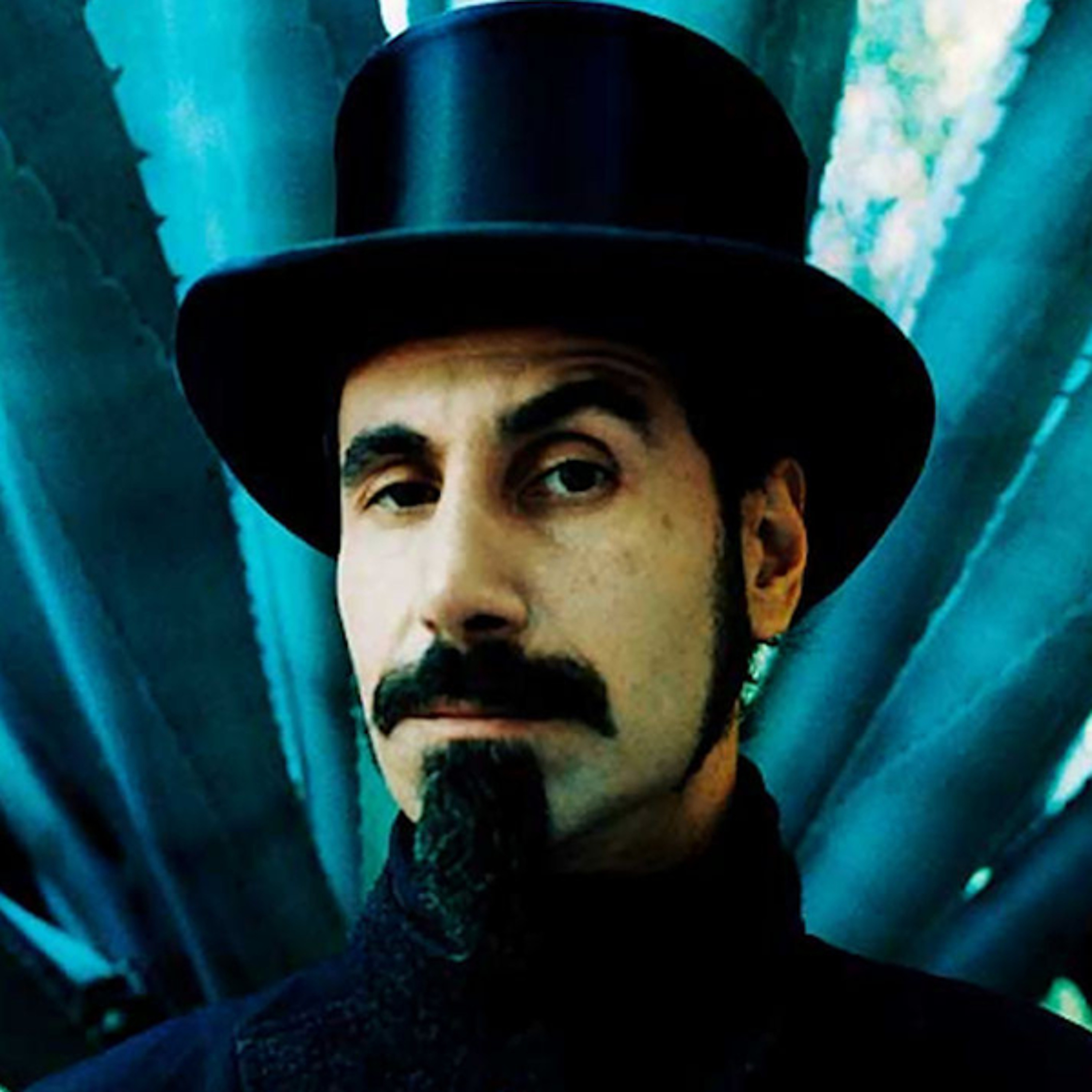
System of a Down: Politics, Justice, Rock and Roll (Serj Tankian and Ken Wilber)
Serj Tankian, lead singer of System of a Down, voted the #1 band of 2002 by leading critics, is one of the most original and passionate of today’s artists, and one of Integral Institute’s favorite contributors to our ongoing conversation on the avant garde. With a surging and cacophonic presentation, System of a Down simply can’t be pigeonholed—a type of genre-busting transcendental howl. Rolling Stone magazine called System’s sophomore effort, Toxicity, “a bouquet of smart rock and ardent social comment.” In this surprisingly touching dialogue, Serj speaks about some of the most important aspects of his life that contribute to the “post-everything” bouquet of sound that is System of a Down. All four members of System are of Armenian heritage, and Serj begins the conversation by commenting on their activities with the Armenian National Committee of America and its efforts to hold the US to its commitments to the Genocide Convention. Encyclopedia Britannica estimates that the Ottoman/Turkish government was responsible for the deaths of 600,000–1,500,000 Armenians from 1915-1923, and yet, as Serj points out, this tragedy is “not recognized by the United States officially as a genocide.” Serj and Ken go on to speak of how a creative response to injustice is central to their work, whether musical or academic. What they both have in common is an integral-aperspectival space—a holding space in consciousness—that rebels against the marginalization of any views, and one of the views most marginalized in today’s world is the integral. Both the culture and the counterculture actively oppress it. But the conversation is far from morbid. “I think the most open times for me have been when I’m completely goofy and creative… and the most serious and powerful things can come through that goofiness.” The conversation dances from the beginnings of System, to Serj’s eclectic musical interests, to the vital role of a spacious—and integral—consciousness in living and creating in today’s world. Many people listen to System of a Down and think, “How could you be so angry?” In this dialogue Serj explains, “I’m not angry.” The expression of a deeply caring consciousness can be a passionate shout or a compassionate whisper; they go together. What is so moving about this conversation is the depth of heart-felt compassion and justice expressed by Serj Tankian. “I’ve never spoken so personally about these issues,” he told us. After hearing this dialogue, we think you’ll be glad that he did….
Power, Privillege, and Fragililty: Leveling Up Our Conversations About Race and Racism
Diane and Corey are joined by guests Greg Thomas and Mark Palmer in this groundbreaking discussion about racism, anti-racism, and racial integration, highlighting a number of critical views that have been largely missing from the larger conversation that’s been taking place culturally in recent months and years. Watch as we bring some integral understanding to ideas central to anti-racism and the pluralistic discourse itself — ideas like critical race theory, dismantling white supremacy, eradicating systemic racism, overcoming white fragility, and addressing social privilege. Which pieces we might want to include, and which do we likely want to transcend altogether? We also address how the conversation about race can be easily reduced to a grievance discourse that fails to recognize the dignity, resilience, artistry, and spiritual power of the black community. So enjoy the following discussion with Greg, Mark, Diane, and Corey as we try to create a space where we can unite multiple divergent perspectives on race and racism, reignite our sense of shared humanity, and expand our circles of care. If you enjoy this episode, be sure to check out more episodes of Integral Justice Warrior. Watch them all for only $1! https://integrallife.com/category/perspectives/integral-justice-warrior/
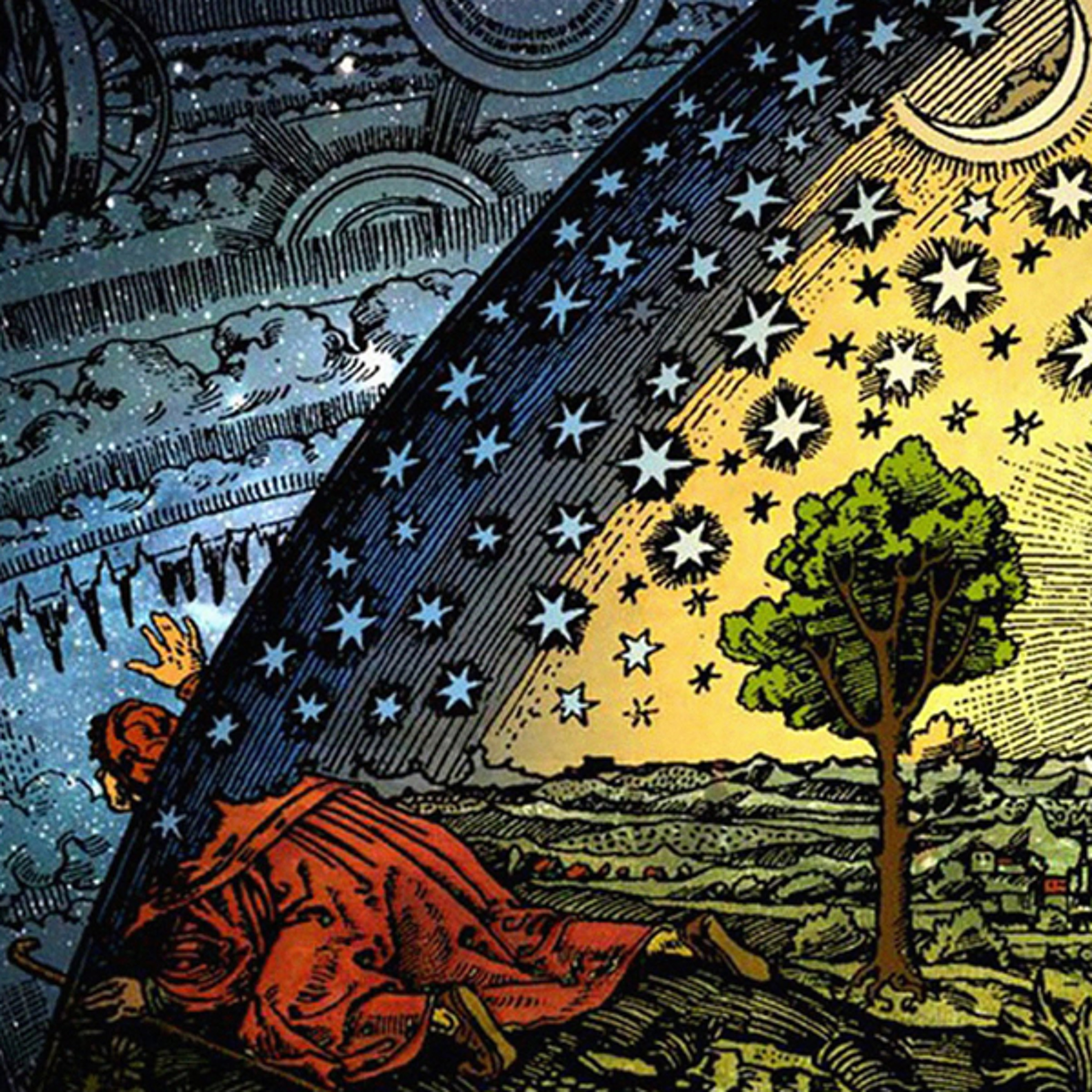
Evolutionary Panentheism: A Godview for Today's World (Br. David Steindl-Rast and Ken Wilber)
Brother David Steindl-Rast, the author of Gratefulness: The Heart of Prayer and a practicing Benedictine monk for over half a century, discusses why a new understanding of God is needed to carry spirituality into the future. “There are at least three ways of talking about Spirit: You can say what Spirit is like, you can say what Spirit is not, or you can have a direct experience of Spirit. And the best way to say what Spirit is like in today’s world, is evolutionary panentheism….” Brother David begins by telling Ken about his website, Gratefulness.org. He touches on its role as a forum for what The New York Times refers to as the “2nd Superpower,” or those people across the globe committed to peace, and how something as simple as the act of lighting a candle can be a powerful expression of gratefulness in an agitated and agitating world. Ken discusses religion on the world scene, pointing out that there are actually levels, or stages of spirituality. What this means in practical terms is that each higher stage of spirituality is capable of and committed to more inclusive understandings of love, care, and compassion. The great irony is that while the lower levels of spirituality lead human beings into war, the higher levels lead them into peace. It is here that Brother David introduces what he calls the Godview. The Godview refers to the way a person conceives of God, just as their worldview refers to the way they conceive of the world. In lower levels of spiritual development, the Godview is comprised of “unexamined assumptions,” whereas in higher levels the Godview is born of a direct experience of the numinous. Like the worldview, the Godview is not merely an intellectual construct but an organizing principle for the way life is lived. Explaining further, Brother David goes on to contrast theism (positing a transcendent God, whom one may know on personal terms) with panentheism (literally, “all in God,” or the divine as both transcendent and immanent). It is the latter Godview, Brother David suggests, that will carry spirituality into the future and that has far-reaching implications for inter-religious dialogue. Ken agrees, and goes on to explain that even though God is unfathomable, there are better and worse ways of conceiving that which is ultimately inconceivable, and that if individuals must have a “positive” image for God, that evolutionary-informed panentheism is the most accurate expression. Only through panentheism, affirms Ken, is science and spirituality reconcilable as an evolutionarily unfolding of Spirit-in-action, and only through such a Godview can religion shake off its pre-modern, pre-rational, superstitious roots that have been erroneously elevated to post-rational glory. In closing, Brother David and Ken discuss the significant implications of evolutionary panentheism for inter-religious dialogue, particularly as related to the Christian tradition, the world’s largest organized religion. Until we find ways of presenting our common religious roots in postmodern packaging, concur Ken and Brother David, we are in trouble. We invite you to explore with us the ancient roots of the spiritual quest, and the new branches that are growing to support this endeavor in today’s world….
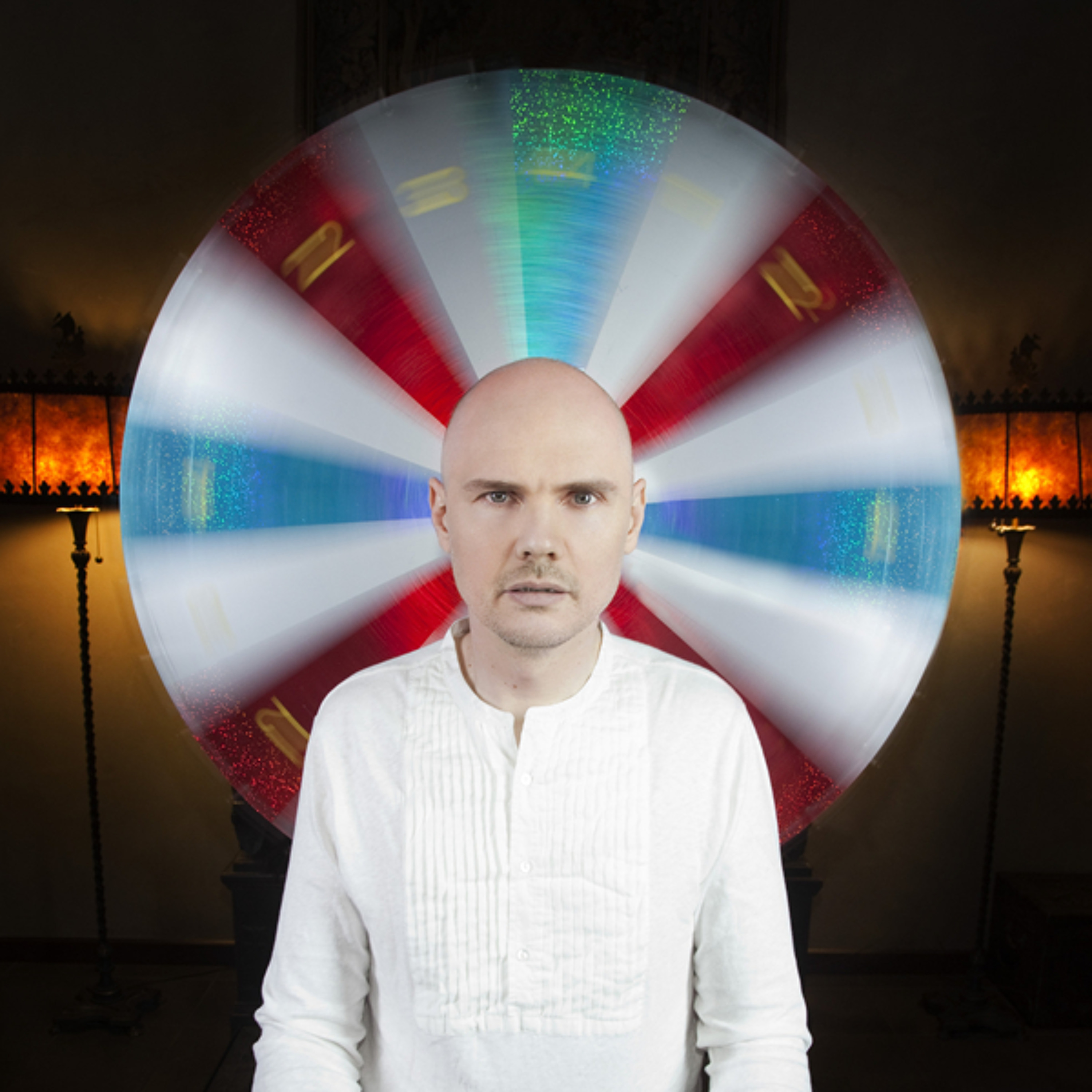
Leading-Edge Consciousness and Avant-Garde Art (Billy Corgan and Ken Wilber)
As many people know, Billy Corgan and Smashing Pumpkins burst on the scene with their first album, Gish, in 1991, which shot to the top of the charts, which is where the Pumpkins remained for a decade, all the harder in that critics considered them “sophisticated,” “complex,” “with great depth,” words usually reserved for artistic success and commercial failure. Billy and the Pumpkins achieved both, as did his next group, Zwan…. In this inside look at this own artistic unfolding, Billy discusses why he formed, and then dissolved, the Pumpkins, and likewise Zwan, as his own artistic crest (or leading edge or avant garde) moved forward. He and Ken talk about the leading edge of consciousness evolution and why artists are so often riding that edge — hence, the avant garde. To be on the crest of one’s own unfolding consciousness is not to guarantee creativity, or greatness, or even talent; it is, however, necessary if not sufficient for such. Since dissolving Zwan, Billy has been experimenting with a succession of avenues for creating new forms of music. He has quietly recorded new solo material, and is planning on re-entering the studio this month to record what he and Ken refer to in the dialogue as the “futuristic rock record.” Billy also plans on experimenting with small groups of audiences who can participate in a type of co-creation of music—”I’m still working on ways to integrate the opinion or the feeling of the audience into its own living art.” Whether or not any of these experimental forms succeed is not the point; the point is exactly as Billy says in this dialogue: “Even how I approach composition, I’m going at it from a different angle from how I would normally do it. Different process, different results.” And the different process is surfing the leading edge, whether you wipe out or not.
Inhabit: Your Resistance
Spiritual conversations often emphasize the importance of overcoming our resistance and accepting the world for what it is, exactly as it is. However, there are times when we don’t need to overcome our resistance, we need to fully inhabit our resistance. We can’t simply accept what is, we need to put ourselves on the line for what can and should be. How can we bring more mindfulness, skillfulness, and embodiment to our resistance, even while seeing everything as always-already perfect? And what is the role of violence in protest culture? Is some degree of violence necessary in order to create real social change? When is violence appropriate, when can it help your cause, and when can it only work against your cause? These are not easy questions to answer. Which is why Ryan and I wanted to talk with our good friend Justin Miles about all this. Justin stands in an extraordinary confluence of spiritual, political, and cultural lineages — he is an avid Integralist, a practicing Shambhala Buddhist, an active member of the Black Panther Party, a local community leader, the founder of a Black Power Meditation group in Baltimore, and a prolific hip hop artist. All of these divergent and sometimes conflicting influences have given Justin a unique full-spectrum perspective on the #BLM protests we see erupting all across the country. Watch as Justin shares his own views on this new wave of social resistance and gives voice to the incredible pain, trauma, and frustration that black Americans have been living with for generations. One important note — although we talk openly in this episode about the possible role(s) of violence in protest culture, in no way are we actually condoning violence. Attempting to understand violence — even asking whether some degree of violence might be necessary in order to overcome our social inertia and get the gears of social transformation moving — is very different from actually justifying violence. And of course there is a fairly wide spectrum of violence, from physical assault to property damage to resisting arrest to self-harm, not to mention the accumulated interior violence of discrimination, disenfranchisement, and dehumanization. All resistance is inherently violent, on some level — but how much violence is necessary in today’s resistance movements? This may very well be one of the best measures of just how functional and healthy a society is — how much violence is required in order to enact social change? — in which case, our hope is “as little as possible”.
Sexual Kinks in Consciousness (David Deida and Ken Wilber)
Although there are many facets to this wonderful discussion, the central idea is that there are masculine and feminine expressions of Spirit, whose respective qualities are often referred to as consciousness and light, agency and communion, solar and lunar, Emptiness and Manifestation, Freedom and Fullness. Both the masculine and feminine types develop through three basic stages or levels. David refers to these three basic stages by many different names, including gross, subtle, and causal; preconventional, conventional, and postconventional; personal, interpersonal, and transpersonal; or simply body, mind, and spirit. Thus, there are masculine and feminine expressions of body, of mind, and of spirit. Further, there are healthy and unhealthy forms of the masculine and feminine at each of those three levels. As David articulately explains, there are ways to spot those pathological forms and experientially redress them, thus finding and fulfilling one’s deepest gift and potential. In part two of the discussion, David continues his fascinating account of the masculine and feminine faces of Spirit, with particular emphasis on the unhealthy or pathological forms of each—along with direct experiential ways to redress or correct those imbalances. The relation (and deep connection) of sexuality and spirituality is a topic strangely ignored by most spiritual teachers, which creates a lack or gap that desperately needs attention. David explores the ways in which traditional spiritual concerns can be integrated with the bodily existence of men and women in the here and now. The overall view is one of an integral approach that unites masculine and feminine in body, mind, and spirit. David and Ken also discuss David’s essay, “Ken Wilber is a Fraud,” which caused a huge ruckus when it was released. Believe us, you don’t want to miss this one.
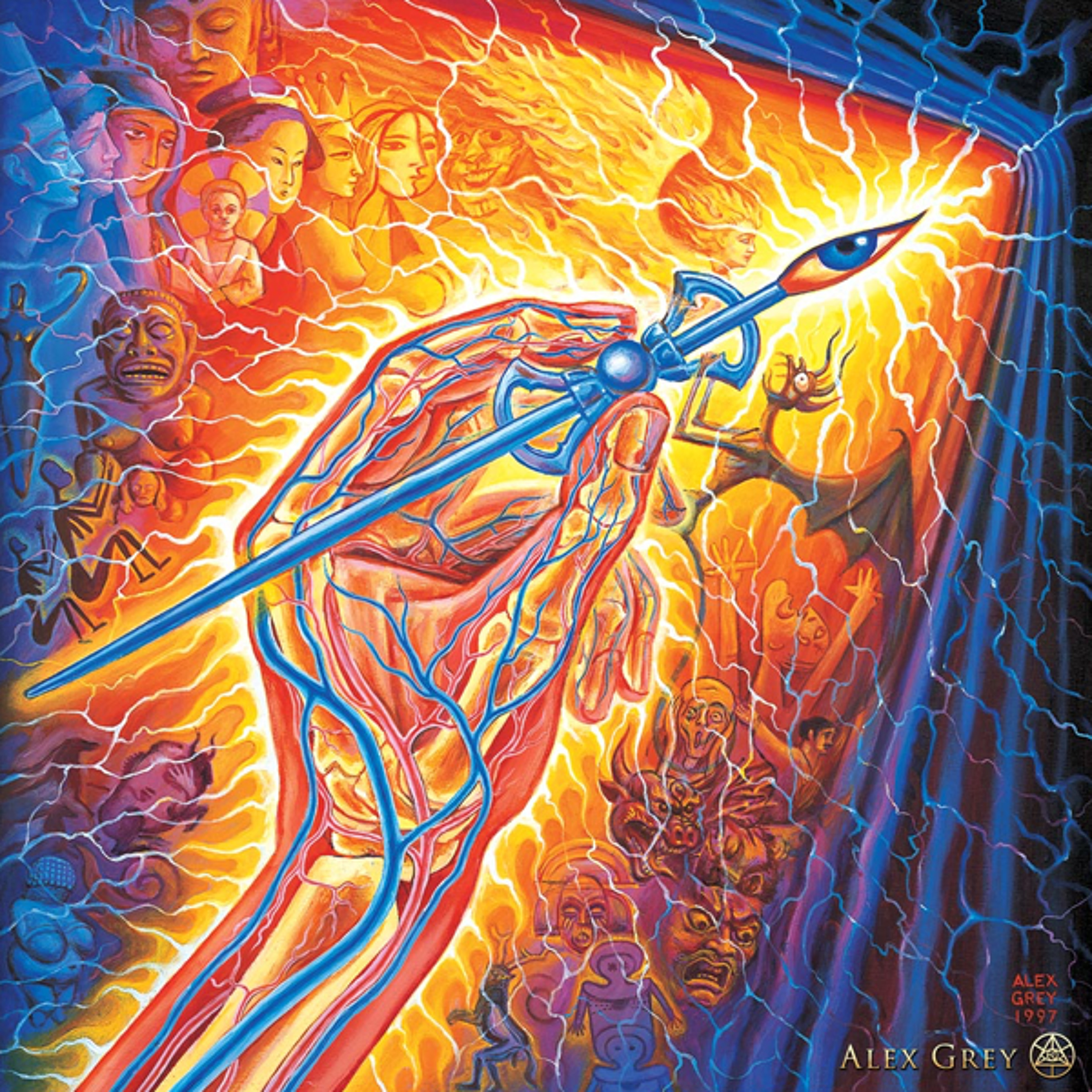
The Integral Artist (Alex Grey and Ken Wilber)
The creator of some of the most transcendent art of our time explores why it is necessary to go beyond the faded postmodern milieu of today’s art world, how psychedelics can play a role in discovering and manifesting one’s deeper realms of being, and how the “two kinds of higher” can impact artists and their work. In the foreword to Alex’s book The Mission of Art, Ken stated: “Alex Grey might be the most significant artist alive.” At first glance, this can appear to be pure hyperbole, expressing the understandable enthusiasm of a long-time friend and colleague. However, with an Integral Approach, Ken explains, “significant” has a specific meaning, and it was this meaning alluded to in the foreword. “Significant” refers to the degree of depth of an occasion (how many levels of complexity does it contain?), and “fundamental” refers to the span or breadth of an occasion (how many of them are there?). Atoms, for example, are extremely fundamental to the universe—and have enormous span (there are zillions of them)—but they are not very significant (containing little complexity). Humans, on the other hand, are not very fundamental to the universe (e.g., there are far fewer of us than there are atoms), but we are uniquely significant (no other thing or organism in the known universe contains more levels of depth and complexity than a human). So, how is Alex Grey possibly the most significant artist alive? Looking at the territory we have covered so far, the answer is actually quite simple and elegant: Alex has explored and to various degrees mastered all five states of consciousness, and has grown to integral and transpersonal levels of development, the current leading edge of consciousness evolution. (In Ken’s book Integral Spirituality, these two axes are likewise called “the two axes of Enlightenment,” and no spiritual realization is complete without both.) Particularly when it comes to the forms of reality disclosed by non-ordinary, meditative, and peak states of consciousness, Alex is unparalleled in his ability to translate what he sees in his “eye of spirit” to a work of art, which then often has the extraordinary ability of evoking similar kinds of states in viewers.

Selling Water By the River (Caroline Myss and Ken Wilber)
Caroline Myss, one of the best known (and highly researched) medical intuitives, presents a fast, wild, rich, and rollicking narrative of her personal struggles with spiritual intuition and the dramatic growth and unfolding that often resulted. Caroline begins with a compelling account of how she came to a fundamental change in her own spiritual understanding and teaching: not that people need to learn how to be more intuitive, but that people are already abundantly intuitive but spend their time trying to deny it. “I am now beginning to believe the you are so intuitive, that‘s the source of your misery. You‘re so intuitive you‘re imploding, so you try to numb yourself to it instead of going with it. Every choice most people make is to block that level of timeless guidance.” Caroline then focuses on the unfolding of awareness from prepersonal to personal awareness to transpersonal, and, as a dramatic example of the latter, recounts here, for the first time in public in any detail, the ordeal of her own near-death experience. The nature of her realizations and the profound switch in her own teaching are recounted in a riveting tale… accompanied by unrelenting humor and a lightness of being that is simply infectious. Caroline and Ken go on to explore how the grace of Spirit motivates the teaching impulse, and how a genuine spiritual teacher often isn‘t interested in telling anyone what to do, but rather in sharing the insight that has blessed their lives, laced with a redeeming honesty. Caroline speaks of how, for her, the impulse to share truth is the manifestation of a kind of spiritual contract with God — one which may or may not fit in with your personal life plans: “I think that the nature of contracts is that they are meant to disappoint the ego but fill the soul. And therein lies the intensity of life, which is: this isn‘t what I asked for, but it is what I need.” With humor and unapologetic enthusiasm, Caroline touches on everything from the hell of unresolved resentment to the joy of renovating her newly acquired 1885 Victorian house. But through it all, Caroline and Ken keep pointing toward a recognition of the always-already free nature of our deepest Self, and away from the superficial light-and-love posturing common in the new-age community. We hope you enjoy this energetic and unabashed perspective on the trials of life, the glory of Spirit, and why a house can be as satisfying as a baked potato.

Beyond Genre (Rick Rubin and Ken Wilber)
Rick Rubin has produced some of the most influential and creative albums of the past two decades, from artists such as The Beastie Boys, LL Cool J, Slayer, Tom Petty, Johnny Cash, The Red Hot Chili Peppers, Rage Against the Machine, System of a Down, Nine Inch Nails, Audio Slave, Jay-Z, Saul Williams—and the list just keeps on going. But what kind of producer works as easily with Johnny Cash as with Nine Inch Nails? And what kind of producer has Johnny covering a NIN song? Quite simply, a producer who follows the trail of excellence, no matter how many boundaries are broken in the process. “Every step of the way I’ve been told I can’t do what I do, because people tend to have their niche, and that’s it.” Rick’s niche just seems to be great music, and what he does is create a space for artists of any genre to be as great as they can possibly be. Intuitively, Rick has been acting on a kind of integral impulse for years. Even as a kid in his early twenties, Rick would work simultaneously with the rap group Public Enemy and the metal band Slayer, and think that was perfectly normal. And rap-rock? Yup, his idea. He got Run-DMC together with Aerosmith to record “Walk This Way,” and the hard-hitting sound of the rap-rock fusion would go on to dominate the late 90s. As someone who has explored so many types of music, Rick has a few things to say about what makes for great music in any genre. And it’s this kind of insight that exposes the integral thread running throughout his work, because without a way to hold all of these things together in a way that makes sense, you don’t have art, you have a fifty-car pileup. A mind that can understand the unique value of each different style of music is a mind that can know how to bring those different styles together in an act of true creativity. But as he notes, there are indeed a couple of important factors in creating great art that appear to apply to the music business in general. For example, if you want to make music you’re proud of, get in the habit of living as a songwriter, and always be in that mode. When it comes time to record an album, you’ll have several dozen songs at your disposal, and you can pick the best twelve. Unfortunately, he also notes that record labels today tend to encourage artists to create one or two radio singles, rush through the rest of the album, go on tour, and then not write again until two months before it’s time to record the next album. The result? Artists learn to devalue their work and consumers learn it’s not worth buying albums since 90% of the songs aren’t very impressive. Sure, you can make just about anything catchy if you throw in 20 different audio elements to gloss over mediocre song-writing, but Rick follows a different philosophy: “If it’s not good in its simplest, barest, most immediate form, then we discard it.” Well, this Rick in his simplest, barest, most immediate form—we hope you enjoy the dialogue….

Centering Prayer: Its History and Importance (Fr. Thomas Keating and Ken Wilber)
Distilled from the profound teachings of the Christian contemplative heritage, Centering Prayer has aimed to bring a living spirituality into an age where God is typically reduced to the New-Age vicissitudes of emotionality, if not simply pronounced dead. Listen as Fr. Thomas Keating and Ken Wilber discuss the remarkable history and importance of Centering Prayer. Father Thomas Keating has been a key figure in the Centering Prayer movement since its early beginnings in the 1970s. Distilled from the profound teachings of the Christian contemplative heritage, reaching from the early Desert Fathers and Mothers to The Cloud of Unknowing, St John of the Cross, and St Teresa of Avila, Centering Prayer has aimed to bring a living spirituality into an age where God is either reduced to the New-Age vicissitudes of emotionality or simply pronounced dead. Although it would embarrass him to hear it, many people consider Father Thomas Keating to be a living Christian saint in the truest sense of the term. We at Integral Life certainly do so, and it is therefore with honor and humility that we present a conversation with this deeply realized human being. Father Thomas Keating has been a key figure in the Centering Prayer movement since its early beginnings in the 1970s. Distilled from the profound teachings of the Christian contemplative heritage—reaching from the early Desert Fathers and Mothers to The Cloud of Unknowing, St John of the Cross, and St Teresa of Avila—Centering Prayer has aimed to bring a living spirituality into an age where God is either reduced to the New-Age vicissitudes of emotionality or is simply pronounced dead. It was as a freshman in college that Father Thomas was forced to confront “the death of God” in the form of a modern philosophy course. Having been raised a Catholic, but “without a profound understanding of its historical or theological background,” the assaults on religion by the likes of Nietzsche and Schopenhauer were quite unsettling. Having resolved to confront this dilemma through study, Father Thomas returned to the work of the early Church Fathers and their understanding of the Gospel. As a result of this research, It became clearer and clearer to me that the Christian religion was really about transformation…. I got thoroughly convinced that the contemplative dimension of the Gospel is what Christianity is really all about. It’s the heart of the Gospel. But when I started looking around for how I could get some help developing a contemplative life, there wasn’t anybody…. Thus, the seed that would eventually bloom into Centering Prayer was sown deep in Father Thomas’s heart. Even though he has spent the whole of his adult life in monasteries, Father Thomas’s gift to the world has been to help bring God back within reach of the average human soul. As he points out, the contemplative faculty is not a reward for austerity, but is fundamental to human nature. Father Thomas touches on many subjects in this dialogue, ranging from the effects of Vatican II, to the influence of Eastern traditions, to the need for an integration of the contemplative heart and the discursive head. His is a beautiful story, drawing on a lifetime’s worth of experience and yet always grounded in the timeless Mystery of God. As Father Thomas reminds us, “It can’t be expressed as it actually is, but you have to say something!” And may we respectfully suggest that you listen to the soul behind those words, to the depth and presence of one in whom God shines?
Inhabit: Your Truth (Ryan Oelke and Corey deVos)
“Integral doesn’t tell us what to believe, it tells us how to believe.” —Corey deVos It’s harder than ever these days to tell fact from fiction. Our lives have become so inundated with information — some good, some bad, most biased, all partial — at the end of the day it can be hard for some people to tell up from down. And as we spend more and more of our time on the deconstructive postmodern platforms of social media, truth becomes increasingly fragmented and balkanized and reduced to all sorts of low-resolution narratives. All because we lack any real social mechanism for enfoldment, the process whereby multiple partial and even contradictory truths can be assembled into a more complex and coherent understanding of reality. Take “conspiracy theories” for example. Everyone knows that genuine conspiracies occur behind the scenes all the time. We can talk about dozens of proven conspiracies that have come to the light over the decades. And at the same time, we can talk about hundreds of other conspiracy theories that are just plain silly. The problem, of course, is that few of us possess the epistemic tools required to discern genuine plots from paranoia and propaganda. Which can be a major problem when the Dunning-Kruger effect (the inability to discern when one is “over their heads”) confidently assures us that we do. And so without these basic epistemic guardrails, a segment of our population has swerved off the road into conspiracy thinking, all while real-world conspiracies are taking place in plain sight, right before our very eyes. Life in the “Information Age” seems to resemble fundamentalist religion more than some technocratic utopia: - Separates people into “believers” and “non-believers”, - Reduces meta-systemic complexity, real-world pressures, and power dynamics to oversimplified black-and-white narratives, - Only supports data that reinforces their narrative beliefs, and rejects data that goes against that narrative, - Resists ambiguity and prefers narratives that create a false sense of certainty. Which may be because we really aren’t in the Information Age at all, and haven’t been for some time — we are now living in the “Attention Age” where depth is replaced by volume, where facts are replaced by feelings, and where an increasingly noisy minority sets the frame and tone for everyone else. Which is why Ryan and I wanted to do this particular show, around the theme of fully inhabiting, embodying, and enacting truth — how to find it, how to wield it, and how to avoid the false certainties fed to us by both mainstream and fringe media. We don’t try to tell you what to believe, but rather try to help you avoid overly identifying with the contents of our views and to liberate yourself from your beliefs, whatever they happen to be.

Integral Europe Goes Global (Bence Ganti and Corey deVos)
The Integral European Conference is quickly approaching! And what’s more, you can attend from the comfort of your own home. Integral Europe has gone global, as COVID-19 has forced the IEC event planners to shift gears and move to a 100% streaming conference. While it is unfortunate that the conference will not feature the face-to-face community experiences that integral events are so well known for, it is also exciting to think of all the people who may not have been able to attend a live event in Europe, but who may now have the opportunity to participate with the conference remotely. And what a conference it’s going to be! Watch as Bence Ganti and I take a sneak peak into the IEC lineup (which will feature over 70 presenters and a full range of activities including workshops, games, and even live concerts) and discuss the many challenges of transitioning from a live event to a streaming-only event. For more information about the event, click here. https://integraleuropeanconference.com/

BONUS: Saul Williams — Select Performances
Here we feature a selection of performances by Saul Williams, including live recitals of several of his most well-loved pieces — Black Stacey, Sha-Clack-Clack, Twice the First Time, and Telegram — as well as a collaboration between Saul and Stuart Davis on a track titled “Easter”.
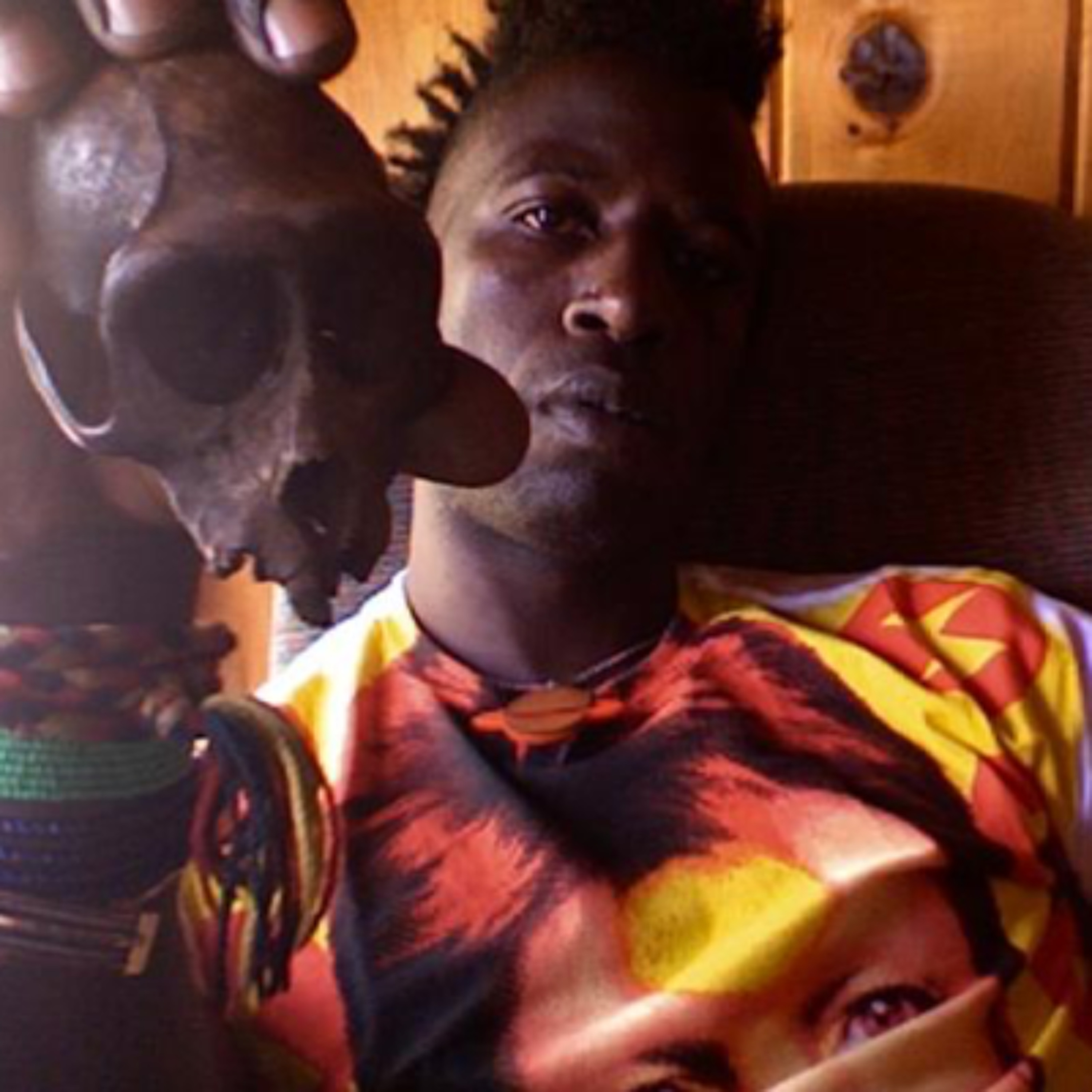
Art as a Contemplation of Being (Saul Williams and Ken Wilber)
Art as contemplation. Poetry as incantation. Relationship as enlightenment. Such are the words and experiences of Saul Williams. Though digitized, synthesized, and edited into bit-sized segments, the man and the trans-man-transmission are as clear as ever. Here you will find a stream of consciousness shared between two conscious brothers exchanging soul-symbols over copper wires, molding verbal form to the demands of that which cannot be expressed, and yet must be. As Saul says in “Untimely Meditations” (Amethyst Rock Star, 2001): "Mere language is profanity, I’d rather hum, or have my soul tattooed to my tongue, and let the scriptures be sung in gibberish, as words be simple fish in my soul aquarium." -Saul Williams, Amethyst Rock Star And yet, the dialogue continues. Thomas Edison: “Genius is one percent inspiration and ninety-nine percent perspiration.” In the world that we live in, it is the individual’s job to translate that sliver of inspiration into a creative act that lives up to the original brilliance of that divine spark. Saul: “Where I am now is at the point of realizing that I have to harness this sense of discipline, that it is my duty, my dharma, so to speak, to write all these things that come to mind.” Complementary to that conversation is one concerning the value of being in intimate relationship. Often, intimate partners are much quicker to spot the ways we are lying to ourselves than we are. They can help us serve that one percent of inspiration, because they can keep us honest. Saul goes on to share the rather extraordinary circumstances surrounding how he and his then-girlfriend Varshini came to be together. The lesson learned: Be careful what you write poetry about, you might just get it…! When Ken and Saul first met, they talked nonstop for four hours, only interrupted because Saul had a gig. All Ken said about that meeting was, “That might be the most beautiful human being I’ve ever met.” Please join us in sitting with this extraordinary soul….
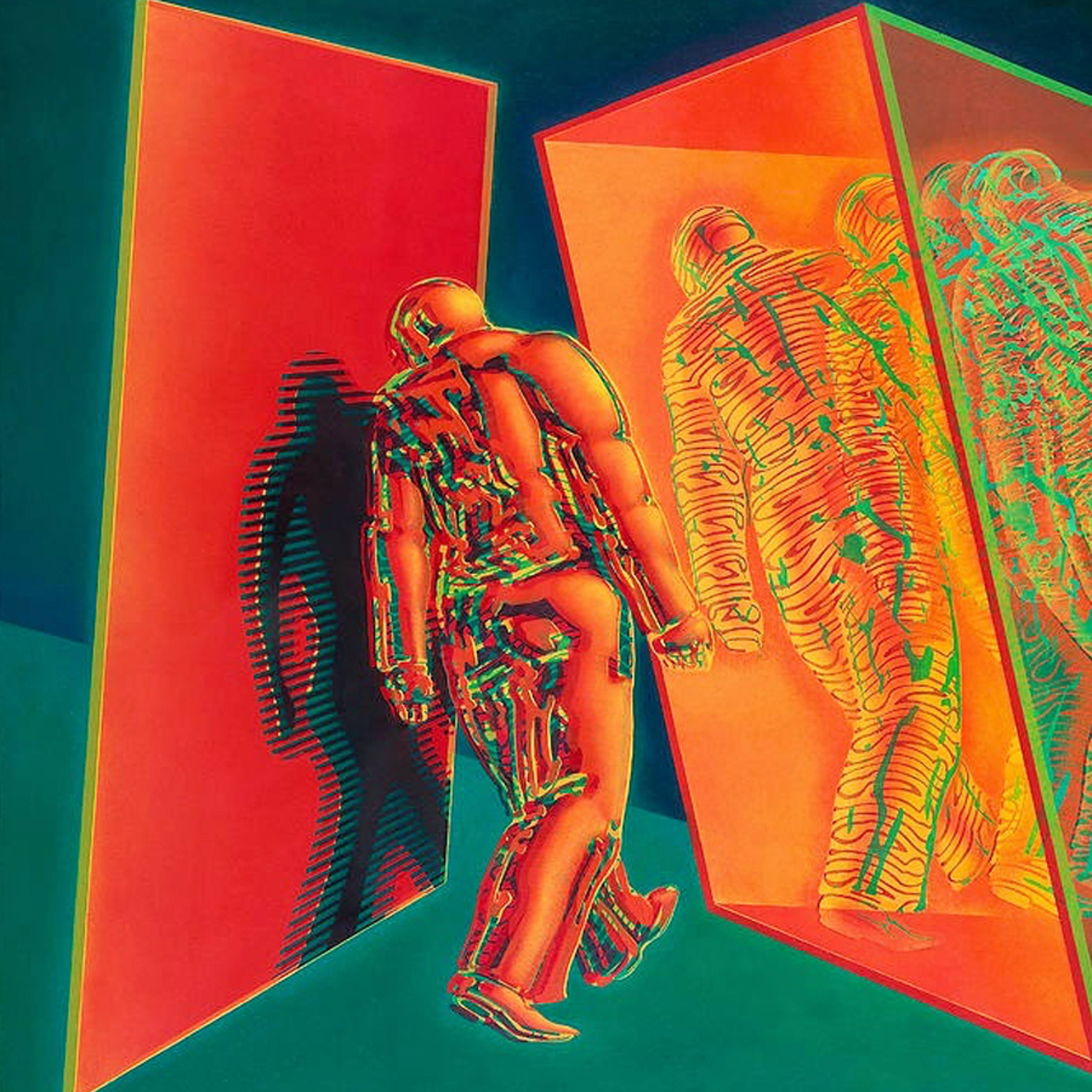
The Evolving Self (Robert Kegan and Ken Wilber)
Robert Kegan, the author of The Evolving Self and In Over Our Heads, explores the vital role of interior development in creating a more inclusive and integrated world, as well as the importance of the appropriate use of discriminating awareness. Robert Kegan is a founding member of Integral Institute and the author of the critically acclaimed books The Evolving Self, In Over Our Heads, and How the Way We Talk Can Change the Way We Work. Bob is also the first-ever Meehan Professor of Adult Learning and Professional Development at the Harvard Graduate School of Education. As the holder of this endowed chair, Bob has the official support of HGSE to pursue developmental studies for the rest of his career. This is significant. For the past several decades developmental studies have fallen upon some hard times in academia. For many, to have a developmental view is to be hierarchical—and to be hierarchical is to be oppressive, regressive, patriarchal, and a direct contributor to the suffering of untold millions. The fact the HGSE has decided to so clearly support Bob’s work is a welcome sign that the winds may be shifting. It’s important to note that there are (at least) two significantly different ways that “hierarchy” can be understood: as it exists in the exterior structure of a society and as it exists in the interior structure of an individual. Historically, enormous abuses of power have occurred by those at the top of a societal hierarchy—but those who would do so are by definition not at the higher stages of the interior, developmental hierarchy. Psychologically, people grow through stages of increasing competence, care, and concern. Each stage transcends and includes the function of what came before, but excludes an exclusive identity with that function. As Bob and Ken discuss, an important element of worldcentric consciousness is the contributions of postmodernism, including feminism, civil rights, and, among other things, the understanding that a substantial amount of human knowledge is context dependant and culturally bound. But postmodernism then stepped beyond what it had evidence for and claimed that all knowledge was relative, and therefore nothing could be said to be better than anything else. In fact, a fellow researcher, Clare Graves, called this level of development relativistic (Spiral Dynamics green), which research has shown accounts for about 20% of the American population. But as Ken points out, that means that about 20% of the population has gotten confused about how to make conscious, explicit judgments. Most of the people in this group would agree that a worldcentric embrace of all cultures is better than ethnocentric racism, but postmodern relativism won’t be able tell them why it’s okay to think this way. When all judgments have been outlawed, even sensible examples of discriminating awareness rightly applied have nothing to stand on. A more mature, integral form of worldcentric consciousness acknowledges that there are different levels of consciousness existing in the world today, and that encouraging growth towards greater care, concern, and wholeness is entirely appropriate. No one is required to change the way they are living, but everyone is invited to discover for themselves these higher territories of human potential. For anyone interested in exploring the possibility of further growth and transformation, it never hurts to have a good map of the terrain ahead. We hope you enjoy this dialogue between two of the best mapmakers out there for the ways we can all inhabit the deeper levels of consciousness this world so desperately needs….
Godhead Gives Good Phenomena (Stuart Davis and Ken Wilber)
In this classic dialogue — so classic, in fact, it was the very first dialogue we ever published! — Stuart Davis discusses his music and creative process in intimate detail and offers an intimate performance of 8 of his songs, including a incredibly touching version of “Swim”, based on the death of Treya Killam Wilber.
Inhabit: Your Creativity (with Corey deVos and Ryan Oelke)
We live in an infinitely creative universe — and with every passing moment we have the option to actively and consciously participate with that creativity. We can either follow the familiar rhythms of our own habituations and comforts, or we can make a different choice altogether — we can do something new, something unpredictable, something that allows this creative novelty to work through our own nervous system and spill new forms of beauty into the rest of the world. Because we are all artists at the end of the day. We are constantly creating new realities and conjuring new possibilities, both for ourselves and for the rest of the world. Every decision we make is a creative act, whether we are aware of it or not. Sometimes we live our art in unconscious ways, following a path of least resistance as far as we think it will take us. But we are also invited to bring more embodied awareness to our creative expression — harnessing the untamed sounds, colors, and energies of nature and willing them to bend in the service of beauty, meaning, purpose, and connection. This is what Ryan and I explore in this special episode of Inhabit — how to more fully align ourselves with our own deepest source of beauty, inspiration, and creative emergence. Watch as we discuss: - The creative confluence that exists between beauty, evolution, and spirit, - The importance of a 2nd-person perspective to your creative process, - How the neoliberal commodification of art influences and/or limits our own creative expression, - How the integral mindset allows us to increase our enjoyment and enactment of art, - How our immersion in entertainment culture can make us overly critical of art, - The importance of beauty and aesthetics for the healing process,</li> - How work with our own creative blocks and ruts

Inhabit: Your Quarantine (with Ryan Oelke, Corey deVos, and Keith Martin Smith)
Habituation is the enemy of growth. It is rare for any circumstance to force us completely out of our accumulated habits, patterns, and comfort zones — which is exactly what is happening right now, as people all over the globe are having to drastically alter their lifestyles and livelihood in response to the corona pandemic. The good news is, when this happens and our normal day-to-day inertias are interrupted, it’s also an opportunity to make new choices: to recognize the patterns that haven’t been working for you, and to begin cultivating new patterns that work better, that take you farther, that bring you greater resilience, deeper compassion, and more skillful responsiveness. In times of extreme fragility such as these, it becomes all the more important to find new ways to practice our own anti-fragility. In this episode of Inhabit we are joined by special guest Keith Martin Smith, an acclaimed author, teacher, and dear friend to the show, in order to explore key practices and postures to help us maintain our physical, mental, and spiritual health while enduring the painful realities that all of us are so immersed in right now.

Deeper Into the Great Release (with Robb Smith and Corey deVos)
Robb Smith and Corey deVos discuss what's really going on deep in the heart of the world system as we get ready for The Transformation Age.
A Plague Arrives (And How Integral Practice Helps Us to Meet It)
Jeff Salzman takes a look at the Coronavirus pandemic, humanity’s response to it, and how the integral lens helps us see more clearly the myriad forces and opportunities rising out of this crisis — which increases our wisdom, compassion, and resilience while dealing with it.
Inhabit: Your Uncertainty
“I can live with doubt and uncertainty and not knowing. I think it is much more interesting to live not knowing than to have answers that might be wrong. If we will only allow that, as we progress, we remain unsure, we will leave opportunities for alternatives. We will not become enthusiastic for the fact, the knowledge, the absolute truth of the day, but remain always uncertain … In order to make progress, one must leave the door to the unknown ajar.” —Richard P. Feyman “Let go of certainty. The opposite isn't uncertainty. It's openness, curiosity and a willingness to embrace paradox, rather than choose up sides. The ultimate challenge is to accept ourselves exactly as we are, but never stop trying to learn and grow.” —Tony Schwartz “We demand rigidly defined areas of doubt and uncertainty!” —Douglas Adams Human beings abhor uncertainty. Ego and civilization are both built upon the illusion of certainty, cushioned by pleasure and comfort and designed to reduce uncertainty wherever possible. We try to rationalize uncertainty, placing ambiguity into discrete mental categories like “worst case scenarios”. Our society has become so addicted to predictability that, when predictably unpredictable events shake the foundations of our reality, we suddenly feel like we no longer have any place to stand. And when that happens, our ego’s first reaction is usually something like panic, fear, and self-preservation. Sound familiar? Have you had any trouble finding toilet paper recently? But there is another way to manage uncertainty — to surrender to it, to fully inhabit it, to embrace ambiguity and discover the incredible source of wisdom, curiosity, and anti-fragility that can only be found in the heart of the unknown. Because when the ground opens beneath our feet, there’s an opportunity to make contact with a far deeper and more enduring ground — the Ground of All Being, the unmovable mountain at the very center of you. Watch as Ryan and Corey invite us to deepen our practice in the face of uncertainty, finding strategies in all four quadrants to help us better acclimate ourselves to the massive pressures, social responsibilities, and societal realignments that are coming to the surface as we plunge into the opening act of the Transformation Age.
Inhabit: Your Politics (Corey deVos and Ryan Oelke)
All politics are personal. But does that mean we need to take it so personally? In this episode of Inhabit, Ryan and I explore ways to bring more embodied awareness and skillful discernment to our political lives, overcoming the corrosive and often paralyzing effects that both our cynicism and our idealism can have upon our political decisions and our willingness to engage our most fundamental civic responsibilities. Watch as Ryan and I discuss: - How to remain an idealist when the world constantly refuses to live up to our ideals. - What happens when our mechanisms of enfoldment completely break down, both in our governing systems and in our media platforms. - How lack of enfoldment leads to mistrust, misinformation, false equivalence, epistemic collapse, and aperspectival madness. - How to relate to postmodern media platforms where contradictory truths are no longer enfolded with each other, but instead slide frictionlessly across one other. - How to develop a more anti-fragile sensibility that can begin reducing fragility in the world. - How the left has created a culture of fragility, and the right a culture of resilience — and why both are anti-growth. - Why Trump, and not Hillary, was seen as the transformation candidate in 2016. - Why we need another genuine transformation candidate for 2020 — and who we think that is. Join us in this exceptionally rich and hopeful exploration of our inner political landscapes!

2020 Integral European Conference Preview (Bence Ganti and Jeff Salzman)
Jeff Salzman talks to Bence Ganti, the driving force behind the upcoming Integral European Conference, a major six-day event for the Integral community which will commence on May 26th at the Azur Resort at Lake Balaton in Hungary. This fourth biennial conference will be the biggest and most comprehensive yet, with over 700 participants from 50 countries. Titled Global Integral Awakens, the conference will offer 250 programs on a wide range of integral issues, from contemporary politics to organizational development to art, culture and spirituality, in a potent goulash of presentations, workshops and experiential processes. And there’s goulash night too, the Hungarian specialty cooked in cauldrons over an open fire … then trance dance … then a firewalk! To extend your integral immersion, consider the pre-conference training on human development with Dr. Robert Kegan, as well as a post-conference 3-day sightseeing tour by bus. Click here to find out more about the Integral European Conference: https://integraleuropeanconference.com/

Inhabit: Your Wisdom
Without wisdom, knowledge becomes dangerous. This is as true for integral knowledge as it is any other. When our knowledge so far outpaces our wisdom, we can fall in all sorts of traps — including know-it-all arrogance, spiritual bypassing, self-aggrandizing mysticism, bad interpersonal hygiene, and possibly even diabetes and tooth decay. This can be a challenge for all communities, including the integral community. Especially when we are living at a time when information is so overabundant. We are drowning in information, and most of it is bad and broken information, and it takes a fair amount of wisdom just to be able to tell the good from the bad. Which is why Ryan and I wanted to do this special episode of Inhabit — to take a fuller look at what exactly “integral wisdom” means, and what sorts of wisdoms tend to naturally fall out of the integral map itself — quadrant wisdom, stage wisdom, shadow wisdom, type wisdom, polarity wisdom, etc. — all of which help us to enact that integral map in increasingly skilllful, friendly, and effective ways. Watch as we explore a number of practices and perspectives to help you bring your own wisdoms to the surface, allowing you to move through the world with more skill, compassion, and humility.

Inhabit: Your New Year
In this free discussion, Ryan and Corey offer some simple practices and perspectives to help keep us grounded and engaged during this transition not only into a new year, but into a whole new decade, with a whole new set of possibilities, challenges, and life conditions emerging all around us. Whenever our environment changes around us, even something as simple as the calendar moving into a new year, it’s an opportunity to also do some work to change our interiors. We tend to move naturally into a more reflective space, reviewing the previous year and imagining the one to come, cycle through this process of making an entire year’s worth of accumulated subjects into objects — all of our decisions, all of our successes, all of our regrets, etc. It’s a chance to take inventory of our own lives — where we’ve been, where we’re at, and where we would like to go next. Just because the world around us seems to be in more turmoil than ever before, doesn’t mean our inner lives need to feel that way too. And as the world continues to become more and more chaotic, conversations like these invite you to discover the unmovable subject within yourself, so that you can cultivate the resilience, equanimity, and stamina required to bring your gifts more fully into the world. Because now more than ever, the world needs you. Something new is trying to emerge. And it can only emerge through you.

Inhabit: Your Wound (with Ryan Oelke and Corey deVos)
We all possess a unique constellation of traumas, enacted by your own unique kosmic address, and which can lead to your own unique wisdom. This is what we hope to help you uncover today.

Judge Judy: Evolution’s Warrior (with Jeff Salzman)
As the star of Judge Judy, Judith Sheindlin presides over the #1 show in US daytime television, where she rules on small-claims disputes drawn from real-life litigants across the country. Now in its 23rd year, Judge Judy attracts 10 million viewers a day who are eager to watch the 76-year-old grandmother transform into a Valkyrie for Justice, laying waste to the mendacities of cheating lovers, thieving landlords, lying teenagers and meddling mothers-in-law. In this episode I examine her genius and her enormous contribution to the evolution of consciousness and culture. —Jeff Salzman
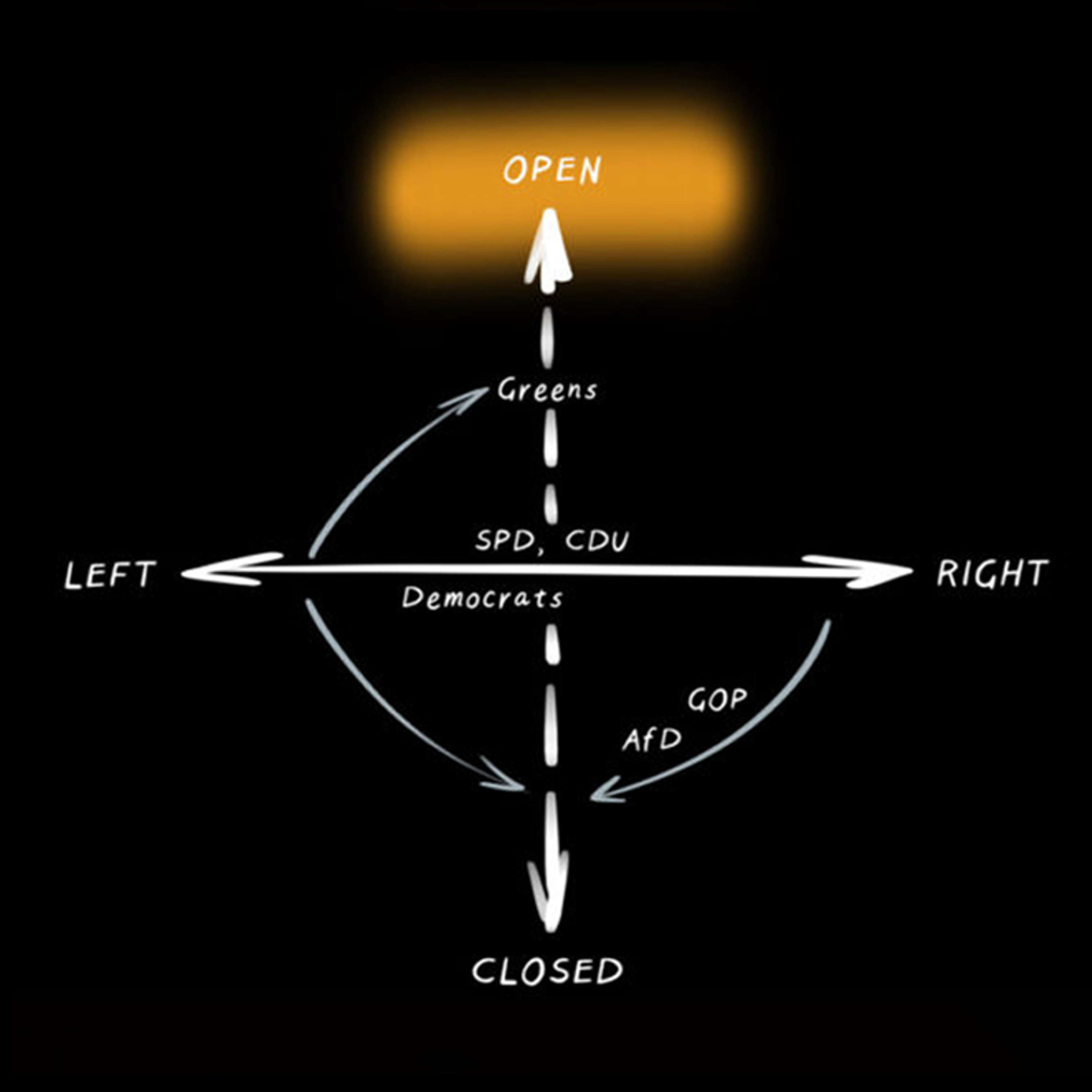
Considering Otto Scharmer’s “Axial Shift” Political Theory (with Dr. Keith Witt and Jeff Salzman)
Many integralists are fans of Otto Scharmer, MIT professor and developer of “Theory U”, a brilliant tool for activating higher stages of consciousness that has gained wide acceptance in organizations. As a leading public intellectual Dr. Scharmer also writes about politics and culture. In this episode, integral psychotherapist Dr. Keith Witt and I discuss Scharmer’s political theory as presented in a popular and much-shared article, Axial Shift: The Decline of Trump, the Rise of the Greens, and the New Coordinates of Societal Change.
Sacrilegious and Sexy AF: The Rise of Integral Satanism? (with Bruce Alderman and Layman Pascal)
In this special Devil’s Night interview, our good friends Bruce Alderman and Layman Pascal talk to Hofman and Daemon, former members of The Satanic Temple in New York, and founding members of the Satanic organization LORE: The Satanic Collective of NYC, about the history of Satanism and the new Integral and Metamodern-ish forms that are currently emerging. These ain’t the baby-sacrificing satanists your mother was afraid of in the 1980s. They’re the sort of satanists who build statues of Baphomet outside of government courthouses in order to protect free speech and the separation of church and state from religious fundamentalists who are determined to legislate their own mythic morality. They are not anti-Christian, anti-spiritual, or even anti-religious — in fact they want to help integrate the apparent polarities between spirituality and sensuality, between masculine and feminine, and between light and shadow, pulling all of these together into a sort of “transcendent hedonism” that fully honors the dignity of the separate self even while plunging it into a far more expansive space of selfless awareness. Their approach is something we might call a “social tonglen” — becoming the darkness, playing the scapegoat, and consciously taking the hits, all in service of achieving greater social good. “Everybody kind of knows the Socratic ‘daemon’ — that there’s some kind of higher indwelling spirit that may have been unnecessarily excluded throughout history, and to which we might turn for real guidance in ourselves or as the essence of ourselves. But we also know what it means for a drug addict to go to a self-help program and says ‘he’s got a demon inside him’. So there’s a way for the darkness to draw you down, or to draw you up, and there’s an archetype or a figure that can represent either of those. And for most people they’re very conflated. People who are hyper-reactive against something like ‘satanism’ — even very sophisticated people can be weird about it — and one of the reasons is their own non-integrated shadow, but another reason is they’re aware that there’s a tangle between the evil they don’t want, and the evil they do want.” —Layman Pascal So join us as we take a short walk on the dark side, where demons and daemons alike dance to the throbbing rhythm of a living, breathing, ever-evolving universe.

The Integral Vision: Origins and Applications — 04 — The Architecture of Growth
The Integral Vision: Origins and Applications — 04 — The Architecture of Growth by Integral Life

The Integral Vision: Origins and Applications — 03 — Taking Perspectives on the Culture Wars
The Integral Vision: Origins and Applications — 03 — Taking Perspectives on the Culture Wars by Integral Life

The Integral Vision: Origins and Applications — 02 — Communism, Postmodernism, Women's Leadership
The Integral Vision: Origins and Applications — 02 — Communism, Postmodernism, Women's Leadership by Integral Life

The Integral Vision: Origins and Applications — 01 — The Origins of the Integral Vision
The Integral Vision: Origins and Applications — 01 — The Origins of the Integral Vision by Integral Life

Inhabit: Your Digital Life (with Ryan Oelke and Corey deVos)
How do we better manage the inherent fractures and fragmentations of the digital world while bringing more embodied wisdom and compassion to our online interactions? One of the central dilemmas facing the integral generation is the fact that the integral project is largely taking place via the internet, using platforms like Facebook that are ill suited to healthy integral discourse —&nbsp;a sprawling flatland where misinformation spreads like wildfire, where the loudest voices dominate the discussion, and where narrow views receive more attention than nuanced arguments. Platforms like these are designed from the top down to provoke strong emotional reactions among its users, governed more by extractive social engineering algorithms than by the natural nexus-agency of the communities that convene there. It’s no wonder that we are seeing study after study about the deleterious effects social media is having upon our culture, our lives, and our own sense of happiness and belonging. Which is why Ryan and Corey wanted to take a closer look at this issue, and try to provide some fairly simple perspectives and practices that might help you inhabit and engage your digital life with more skillful authenticity, resilience, and kindness. Watch as they speak to the challenges many people experience around both managing and participating in today’s online communities, and how to overcome the seductive pull toward unhealthy polarization and disembodied reactions.
Inhabit: Your Spiritual Life (Ryan Oelke and Corey deVos)
Need help shifting gears from mental map-making to actually inhabiting the spiritual territory? Watch as Ryan Oelke and Corey deVos explore what it means to truly inhabit and integrate our contemplative practice and our moment-to-moment experience of life. Perhaps you’ve experienced this for yourself — you are sitting on a meditation cushion, eyes closed, and you ask yourself, “am I meditating right now? Or am I only thinking about meditation?” This conversation helps bring bit more discernment around questions like these, as Ryan leads us in a practice to help us to shift from a predominantly mental or imaginal enactment of spirituality to an authentically lived spirituality that can respond to the various pains and pressures of existence with greater presence, empathy, and skillful action. Corey also shares how his daughter’s medical journey helped to fundamentally transform his own spiritual life, stripping away so many of the ornaments and embellishments of the “spiritual mind” and leaving him with a deeper and more intimate sense of what really matters. If you are also struggling to bring more embodiment, more grace, and more discernment to your own spiritual life, you don’t want to miss this wonderful conversation between Ryan Oelke and Corey deVos.

Wicked Problems: Gun Violence in America (Ken Wilber and Corey deVos)
From the foundation of the American union through the War of Independence, to its near dissolution during the Civil War, to the open frontiers of the Wild West and the digital frontiers of video games and first-person shooters — America has always had a deeply complicated relationship with the gun. Firearms are woven into the very fabric of American life, society, and history, enshrined in our founding documents. Which makes the question of how to reduce gun violence in America an exceptionally difficult one to answer. America’s pathological relationship with gun violence is what is often called a “wicked problem” — a deeply complex, multifaceted problem that cannot be fully seen or understood from any single point of view, and therefore requires an integral multidisciplinary approach in order to solve. Unfortunately, when it comes to gun violence, there are very few discussions out there that are even trying to put all the pieces together, choosing instead to politicize the brutal deaths of innocent children and families, and allowing the narrative to become dominated by these narrow biases, ideologies, and objectives. In the meantime, nearly 100 Americans die from gun violence every single day. Because few people can fully see all facets of this incredibly complicated problem, our relationship with the gun — as a deadly weapon, as a defensive tool, and as a deeply-embedded cultural archetype — has become shrouded by shadow. On the one hand it is the ultimate equalizer of power, allowing the most vulnerable among us to defend their lives and land from those who would take them away. On the other hand they are machines designed for only one purpose, to kill other living creatures — and we are seeing far too many senseless killings in America today. For some they are a symbol of independence, individual freedom, and personal sovereignty. For others they are objects of obsession and even fetishization, a substitute gratification for our felt lack of inner power and control over our lives. In this discussion Ken and Corey try to identify the root causes of gun violence in America, and suggest some innovative solutions that might help us turn the page on this terribly wicked problem.
Polarity Wisdom: The Mechanics of Integral Thinking (Beena Sharma and Corey deVos)
INTEGRATING POLARITIES is Beena Sharma's revolutionary new training program, designed to teach you the higher-order thinking common to individuals at the integral stage of development. By learning and practicing the cognitive processes that come naturally to integral thinkers, this training can accelerate your own development toward integral stages of being and doing. In this premiere episode of our new monthly Polarity Wisdom show, Beena introduces the Integrating Polarities training.

Grace and Grit: The Movie (with Sebastian Siegel and Jeff Salzman)
Today’s guest, Sebastian Siegel, is the screenwriter and director of the upcoming movie, Grace and Grit. The film tells the true love story of iconic, Integral philosopher Ken Wilber and his wife Treya. Based on the acclaimed book that chronicles Treya’s journals, they fall madly in love in 1980’s California and are immediately faced with illness and challenges that tear them apart. They overcome by finding a connection beyond this world, and love beyond life. The film stars Mena Suvari and Stuart Townsend as Treya and Ken, and features supporting performances by Frances Fisher, Rebekah Graf, Nick Stahl, and Mariel Hemmingway. In our conversation, Sebastian, who is an integral practitioner, friend, and long-time fan of Ken’s work, talks in depth about many elements of making the film from writing, development, and casting, to directing, storytelling, and production, and his overriding mission to serve not just this epic love story, but also the emergence of Integral consciousness itself. Sebastian Siegel is author of the book, “The Consciousness Revolution”, and is the creator of two documentaries: “Awakening World” and “Spirit of Evolution.” You can find out more about Grace and Grit at the movie’s website, Sebastian’s instagram account. , and his website.

Kosmos: An Integral Voyage (with Ken Wilber and Corey deVos)
The universe — it’s big. No, that’s an understatement. It’s very big. It can be a bit much, really. There’s just a whole lot of it, and it’s got a whole lot of stuff in it. Way more nothing than stuff, truth be told, but still. It’s more stuff than you can shake a stick at. It’s a pretty weird place too. Like how we can only see 5% of it. What’s up with the other 95%? Nobody knows. That’s weird. And even the stuff we can see is weird. It grows, it shines, it twists and dances and undulates and sometimes makes other weird stuff like love and helicopters and neckties. And that’s just the stuff that we know about. Who knows how weird the other stuff is? Fortunately, not too long ago, a bunch of weird talking monkeys started poking around in an otherwise unremarkable corner of the universe, and over the years those monkeys have come up with all sorts of weird explanations in order to to make sense of the whole ordeal. We are here today with one of those talking monkeys, a particularly hairless hominid named Ken Wilber who has gathered all of those different explanations of the universe and combined them all into one really big explanation of the universe — something he calls “a theory of everything”. But if you remember from a few sentences back, the universe is a terribly big place. So let’s see just how much “everything” we can actually fit in there.
Inhabit: The Territory of You (with Ryan Oelke and Corey deVos)
Welcome to INHABIT — a monthly practice-based series with Ryan Oelke and Corey deVos, designed to help you embody your own unique expression of integral being and more fully inhabit the territory of your life, your relationships, and your world. Integral itself can often feel like such a cognitive and intellectual pursuit. Although the map itself invites us to practice integral consciousness in our hearts and bodies as much as our minds, we often tend to lead with our heads, and it can take a great deal of practice and rewiring of our lifestyles before we really feel like we are beginning to embody our own fullest integral power. It’s not hard to find ourselves stuck in the endless abstractions of our own mental models, which can limit our fullest possible expression of integral consciousness. Adding to the challenge, Integral is coming of age during the era of social media, where the dominant mode of discourse is often so disembodied and sometimes even dehumanizing. This is why Ryan and Corey are doing this show — to help create more embodied practice, more embodied relating, and more embodied methods of showing up as fully as you can in order to make a positive dent in this world. Every month Ryan will lead us in guided practice to help strengthen the link between your mind and your body, between your knowledge and your wisdom, between your being and your doing. All so you can show up as the super-charged integral powerhouse you know you are.

Evolving a Multi-Cellular Society (with David Sloan Wilson and Ken Wilber)
David Sloan Wilson is SUNY Distinguished Professor of Biology and Anthropology at Binghamton University. He is widely known for his fundamental contributions to evolutionary science and for explaining evolution to the general public. Listen as David talks to Ken Wilber about his recent book, This View of Life: Completing the Darwinian Revolution, in this fascinating discussion of conscious, cultural, and biological evolution — and how we can use the fundamental patterns running through all three in order to create a more adaptable and sustainable future. It is often said that humanity represents the process of evolution becoming self-aware. We are a universe awakening to itself — and part of that awakening is a capacity to reflect upon the various core design principles and strategies that have been guiding our evolutionary emergence ever since the Big Bang, and to then consciously employ these same strategies in order to create a genuinely multi-cellular society for the human superorganism.

The Varieties of Integral Spiritual Experience (with Ken Wilber and Corey deVos)
Ken Wilber and Corey deVos explore the path of Waking Up, taking a guided tour through the many temporary states of consciousness that include everything from emotional states to chemically-induced states to the direct, immediate experience of timeless reality. Watch as Ken and Corey explore these states of consciousness in detail, revealing an infinitely renewable source of energy, resilience, and creative inspiration that rests at the very center of you.

The Art of Integral Embodiment (with Ryan Oelke and Corey deVos)
Today we are talking to Ryan Oelke, a gifted integral coach, co-founder of Buddhist Geeks, and the creator of our incredible new training program, Embodied Success. Listen as Ryan and Corey enjoy a far-ranging discussion about integral embodiment, self-actualization, and the call to make a meaningful impact in the world.

Trauma and the Unbound Body: The Connection Between Embodiment, Nondual Realization, and Healing
Ryan Oelke speaks with Judith Blackstone, a teacher in the contemporary fields of nondual realization and spiritual, relational, and somatic psychotherapy, about her new book, “Trauma and the Unbound Body: The Healing Power of Fundamental Consciousness”. They chat about the connection between embodiment, nondual realization, and healing, and how all three help deepen one other. Ryan & Judith also discuss what fundamental consciousness is, how to attune to it in, the difference between being aware of our bodies and living in and as our bodies, and what it’s like shift from a top-down experience of ourselves, to living directly within the space of our bodies. They also explore how to heal and release patterns of constriction held in the body, so that we can allow ourselves to more deeply inhabit our physical experience, release the grip on ourselves, so that we have a more fluid experience of life. Originally posted on the Buddhist Geeks podcast: https://buddhistgeeks.org

Campaign Closeup: Marianne, Bernie, and More Mayor Pete! (with Corey deVos and Jeff Salzman)
The Democratic field for US president is taking shape fast. Today I have a freewheeling conversation with Corey deVos of Integral Life about our impressions of the emerging landscape, with a special focus on Marianne Williamson, Bernie Sanders and Pete Buttigieg.

Rebel Wisdom: Integral Meets the Intellectual Dark Web (with David Fuller and Jeff Salzman)
Today’s guest, David Fuller, is at the center of the intellectual Dark Web (IDW) having founded Rebel Wisdom, a YouTube station that has attracted over 60,000 subscribers in less than two years. David Fuller is committed to the further evolution of the intellectual dark web and enthusiastic, as I am, about what integral theory can bring to that project. I hope you enjoy our conversation!

Doing Justice: Integral Law and the Mueller Report (with Mark Fischler and Corey deVos)
In this new monthly series with Mark Fischler, we take a look at some of the most pressing and most complex issues of our time through the lens of Integral Law. In this special premiere episode Mark describes his own background, how he arrived at this fascinating intersection between the integral world and the legal world, and what exactly he means by the phrase “integral law”. Mark and Corey then turn their attention to the big story of our day — the Mueller report — offering their own views about the investigation, Attorney General William Barr’s summary of Mueller Report, and how this story might play out in the weeks and months to come. Topics include: — What is “Integral Law”? — What were the origins of the Mueller investigation? — What were the main conclusions of the Mueller report, as summarized by William Barr? — What are the different kinds of “burden of proof”, and how do they apply to this investigation? — Does the Mueller report (or what we know about it) actually exonerate President Trump? — If Mueller’s investigation did not surface evidence “beyond a reasonable doubt” of Trump conspiring with Russia to influence the 2016 election, does that mean the entire investigation by the FBI and the media was a sham? Or was the investigation justified, regardless of the evidence it reveals? — If the Mueller report does end up providing evidence of Trump’s complicity, should Democrats move to impeach him?
For the Love of Darwin — The Upward Thrust of Sex, Love, and Evolution (David Loye and Ken Wilber)
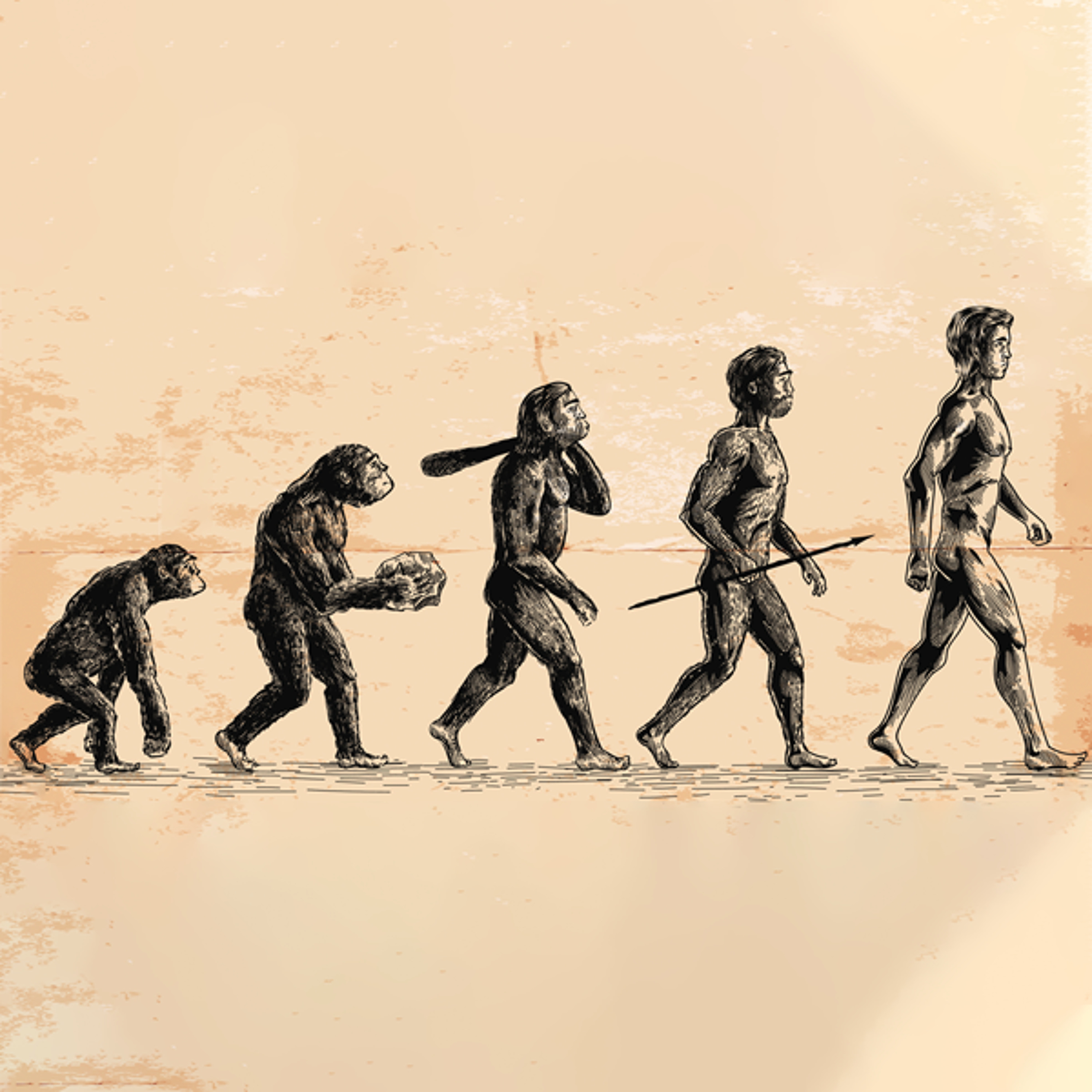
David Loye, author of Darwin in Love, talks to Ken Wilber about the life and often-distorted legacy of Charles Darwin, as well as Darwin’s belief in LOVE as a critical driver of the evolution of species. Survival of the fittest is taken by many as the end-all, be-all of Darwinian evolution — that all evolution comes down to the solitary drive to propagate one’s genes at any cost, giving rise to all sorts of “selfish gene” interpretations of life, evolution, and society. Which is kind of funny, considering that in The Descent of Man, where Darwin focused on human evolution in particular, he only used the phrase “survival of the fittest” twice — and one of those times was to suggest that the phrase not be used at all! Compare this to the 95 times Darwin used the word “love” and 92 mentions of “moral sensitivity” as important drivers of evolution, and it becomes clear that something important is missing from our current discussions of evolution, natural selection, and Darwin’s tremendous legacy. As Darwin himself explains, pure survival is but the lowest of evolutionary drivers, and are eclipsed by a number of other drivers as we move up the evolutionary chain. In Darwin’s mind, evolution was guided by an entire spectrum of critical drivers that ranged from sexual instincts on the lowest end to the Golden Rule on the highest, with parental instincts, social instincts, emotion and reason, cultural habits, etc. filling out the rest of the picture. From sex to the Golden Rule — just using this simple frame, we can see three critical dimensions of evolutionary unfolding that are almost always missed by contemporary readings of Darwin: - Darwin’s belief in higher-stage, non-physical drivers of evolution, which argue against reductionism. - Darwin’s attention to the interior dimensions of evolutionary selection, which argue against scientific materialism. - Darwin’s emphasis upon mutuality, reciprocity, and other intersubjective/interobjective factors, which argue against selfishness, opportunism, and narcissism Taken together, this leads to a much more comprehensive understanding of our own evolution, and helps cut through the distortion of books like The Selfish Gene or Darwin’s Dangerous Idea. Join us as we take a closer look at the life and legacy of one of history’s greatest pioneers, and examine an evolutionary process that is anything but blind when it selects for beauty, is anything but dumb when it selects for truth, and is anything but amoral when it selects for goodness. Find the full 2-hour dialogue here: https://integrallife.com/for-the-love-of-darwin-beyond-the-selfish-gene/

The Boy Crisis — 01 — Privilege, Oppression, and the Wage Gap (with Warren Farrell and Ken Wilber)
Warren Farrell and Ken Wilber take an in-depth look at the many social, cultural, and psychological challenges that young boys are facing today, while noting how many of these challenges are the products of well-intentioned — but often misguided — feminist praxis. Not that feminism is inherently hostile to men. Far from it. As Warren notes in his book, many prominent feminist leaders over the decades have understood the critical role that fathers play in their children’s development and psychological well-being. He quotes Gloria Steinem, who famously said, “what the world needs now is more women at work and more dads at home”. He also recalls Betty Friedan’s popular book, The Second Stage, which was a call for men to consciously begin the same process of self-liberation and redefinition of their identities and roles that women have struggled with over the last century — going so far to say that the major goals of feminism can never be fully attained if men are not also engaged in an equivalent praxis on their side. As the saying goes, if you only row the boat with one oar, you’re just going in circles. As the era of #MeToo continues to put a spotlight upon the many inertias, indignities, and injustices that women face in the public sphere, Farrell and Gray are bringing some much-needed attention to the inertias, indignities, and injustices that men are experiencing in the public and private spheres, and in their private lives. “We have seven federal offices of women’s health, and zero federal offices of men’s health. Can you imagine the sexism that we would accurately be accused of if women died five years earlier than men, and died earlier of 14 out of 15 of the leading causes of death, and we had seven offices of men’s health, and zero offices of women’s health? It’s not conceivable that that would be the case. Yet that is the case. And more potently, no one is protesting it, and very few people even know about it.” —Warren Farrell Find the full discussion here: https://integrallife.com/the-boy-crisis/