Everyone Is Right
267 episodes — Page 3 of 6

Wang Huning: The World’s Most Influential Intellectual? (by Robb Smith)
Wang Huning is arguably the world’s most influential and powerful intellectual. And you’ve probably never heard of him, as he has sat quietly at the top of China’s power structure, advising three presidents over 30 years. The architect of many of China’s most significant contemporary ideological and strategic efforts, he’s deeply studied in the philosophy and ways of the west. Long before Robb’s own analysis that the west is amidst a monumental breakdown he called a “Great Release”, Huning came to the conclusion that the decadence of the United States, its culture and capitalism will lead it to ruin, and China must be steered in a different, and in some ways more integral, direction. The stakes couldn’t be higher: to understand this century, we have to understand the geopolitical and philosophical power struggle between China and the United States and the differing global “Operating Systems” they’re fighting for. And to better understand that struggle, we have to better understand whether the cognition of China’s leaders are integral or not: are they capable of bringing the Teal “Power to Integrate” to bear on the world system? For that answer, we must look to Wang Huning. Join Robb as he holds an impromptu commentary-monologue on a recent profile of Wang Huning published in Palladium Magazine: https://palladiummag.com/2021/10/11/the-triumph-and-terror-of-wang-huning/

Polarity Matters: Are You Thinking In Pairs?
How do polarities help us see ourselves and our world more clearly, and more completely? Watch as Beena Sharma answers your questions about her Integrating Polarities training, while offering a simple introduction to the practice. Integrating Polarities is designed to teach you the higher-order thinking common to individuals at the integral stage of development. By learning and practicing the cognitive processes that come naturally to integral thinkers, this training can accelerate your own development toward integral stages of being and doing. Learn more about the training here — and remember, supporting members of Integral Life can enroll for only $50! https://integrallife.com/integrating-polarities-training/ Topics include: - How to embody these polarities in your life - The Integrating Polarities practice - Calibrating our polarity map - Integrating Polarities across multiple altitudes - Can our polarity maps include multiple topics? - Masculine and feminine polarities - Using polarity thinking in diversity training - Core polarities to consider - How can polarities help us navigate the culture wars?
Inhabit: Your Humility
Corey and Ryan discuss the importance of cultivating and inhabiting a “confident humility” with relation to our own physical bodies, mental processes, and spiritual health. We also have a fun segment at the end designed to put your own humility to the test by looking at 10 common integral caricatures — stereotypes that many of us fall into at one point or another during our Integral lives. There is a phenomenon that has become fairly well known in recent years known as the Dunning-Kruger effect. If you are not familiar with that term, it describes the fact that, on average, people tend to greatly overestimate their own capacities and competences. In other words, the majority of us are completely out of our depths when it comes to some important aspect of our lives — our work, our skills, our overall sense-making and maps of reality, etc. — and we surround ourselves with any number of cognitive biases that prevent us from seeing just how limited our views and our self-concepts truly are. In other words, “the first rule of the Dunning-Kruger club is you don’t know you’re in the Dunning-Kruger club.” It’s one of the well-known traps of Integral — because it is so comprehensive and includes so much of our inner and outer worlds, it can tempt us into thinking we know… well, everything. What’s worse, if we don’t keep a careful eye on our ego, it doesn’t take too long before we’ve wrapped an entire identity around our epistemic over-certainty, which only leads to further social fragmentation, tribalism, and culture wars — even within the integral space itself. Because make no mistake, this phenomenon is not describing “dumb people” or people who are “less developed” than yourself. It also describes doctors, PhDs, philosophers, artists, and many of the greatest minds of our time, regardless of where they are in their own growth and development. The sorts of cognitive biases that produce the Dunning-Kruger effect are legion, and made all the more ubiquitous by social media and all the various selection pressures that come with it. So if you are able to take a moment to pause and reflect on where you might be on the Dunning-Kruger path — congratulations! You are practicing healthy epistemic humility right now at this very moment. So how do we prevent ourselves from falling into the trap of over-certainty? By committing to the ongoing work of growing up, cleaning up, and waking up within our own interiors, and then bringing more flexibility, curiosity, and multi-perspectival awareness to our epistemic maps of reality. In other words: cultivating our interior confidence, and then aligning that with humility when it comes to how we navigate the world around us.
Integral Life Practice – Part I: Overview
We are blessed to live at a time when virtually all of the world's practices from all of the world's cultures and spiritual traditions are freely available to us. In fact, we have so many different kinds of practices it can be downright intimidating: Which should I do? How many should I do? How do I know they're working? Where do I begin? How am I even going to find time for all this? This is what makes this week's discussion so important, as Terry Patten and Ken Wilber take an in-depth look at their book Integral Life Practice: A 21st-Century Blueprint for Physical Health, Emotional Balance, Mental Clarity, and Spiritual Awakening. ILP is a highly distilled, easily customizable, and radically inclusive approach to practice, based on the most comprehensive map of human potentials we currently have. It is neither "map" nor "territory", but the vehicle by which we find, refine, and deliver our unique gifts to the world.
Integral Life Practice – Part II: The Shadow Module
We are blessed to live at a time when virtually all of the world's practices from all of the world's cultures and spiritual traditions are freely available to us. In fact, we have so many different kinds of practices it can be downright intimidating: Which should I do? How many should I do? How do I know they're working? Where do I begin? How am I even going to find time for all this? This is what makes this week's discussion so important, as Terry Patten and Ken Wilber take an in-depth look at their book Integral Life Practice: A 21st-Century Blueprint for Physical Health, Emotional Balance, Mental Clarity, and Spiritual Awakening. ILP is a highly distilled, easily customizable, and radically inclusive approach to practice, based on the most comprehensive map of human potentials we currently have. It is neither "map" nor "territory", but the vehicle by which we find, refine, and deliver our unique gifts to the world.
Integral Life Practice – Part III: The Mind Module
We are blessed to live at a time when virtually all of the world's practices from all of the world's cultures and spiritual traditions are freely available to us. In fact, we have so many different kinds of practices it can be downright intimidating: Which should I do? How many should I do? How do I know they're working? Where do I begin? How am I even going to find time for all this? This is what makes this week's discussion so important, as Terry Patten and Ken Wilber take an in-depth look at their book Integral Life Practice: A 21st-Century Blueprint for Physical Health, Emotional Balance, Mental Clarity, and Spiritual Awakening. ILP is a highly distilled, easily customizable, and radically inclusive approach to practice, based on the most comprehensive map of human potentials we currently have. It is neither "map" nor "territory", but the vehicle by which we find, refine, and deliver our unique gifts to the world.
Integral Life Practice – Part IV: The Body Module
We are blessed to live at a time when virtually all of the world's practices from all of the world's cultures and spiritual traditions are freely available to us. In fact, we have so many different kinds of practices it can be downright intimidating: Which should I do? How many should I do? How do I know they're working? Where do I begin? How am I even going to find time for all this? This is what makes this week's discussion so important, as Terry Patten and Ken Wilber take an in-depth look at their book Integral Life Practice: A 21st-Century Blueprint for Physical Health, Emotional Balance, Mental Clarity, and Spiritual Awakening. ILP is a highly distilled, easily customizable, and radically inclusive approach to practice, based on the most comprehensive map of human potentials we currently have. It is neither "map" nor "territory", but the vehicle by which we find, refine, and deliver our unique gifts to the world.
Integral Life Practice – Part V: The Spirit Module
We are blessed to live at a time when virtually all of the world's practices from all of the world's cultures and spiritual traditions are freely available to us. In fact, we have so many different kinds of practices it can be downright intimidating: Which should I do? How many should I do? How do I know they're working? Where do I begin? How am I even going to find time for all this? This is what makes this week's discussion so important, as Terry Patten and Ken Wilber take an in-depth look at their book Integral Life Practice: A 21st-Century Blueprint for Physical Health, Emotional Balance, Mental Clarity, and Spiritual Awakening. ILP is a highly distilled, easily customizable, and radically inclusive approach to practice, based on the most comprehensive map of human potentials we currently have. It is neither "map" nor "territory", but the vehicle by which we find, refine, and deliver our unique gifts to the world.

Contemplation on Death and Impermanence
Our dear friend Terry Patten has completed his human journey, and has now passed on from this world. By all accounts Terry made his transition with tremendous grace and courage, guided as he was by his many years of integral and spiritual practice. We miss this man enormously, and feel deeply grateful for his friendship, as well as for the limitless passion, care, and spirit that he brought to the integral movement over the last two decades. So that Terry’s life and death can continue to be a source of meaning, inspiration, and awakening for us all, we want to release the following meditation to the world. Listen as Terry offers a short guided meditation to help you reduce the existential fear, dread, and anxiety surrounding death, by shifting your attention and identification to the indestructible presence at the very center of your being. We love you, Terry Patten. Your light will continue to shine in our hearts, in our spirit, and in our practice. Blessings to you, our cherished friend, teacher, and partner.
The Ken Show — Subtle Energy Science: The Problem of Evidence
Full episode here: integrallife.com/the-science-of-subtle-energy/ In this episode of The Ken Show we take a look at an essay by Ken Wilber titled “Toward a Comprehensive Theory of Subtle Energy” (available to download for free!) which offers an elegant summary of how these energies might be accounted for by integral metatheory and integrated with our scientific understanding of the universe. Throughout Ken’s career, he has been very careful to include only those dimensions of experience and reality that have a rigorous body of evidence behind them (and of course that evidence can come through any coherent methodology in any of the four quadrants/eight zones, and can be enacted by either the “eye of flesh”, the “eye of mind”, or the “eye of spirit”.) But when it comes to things like subtle energy, it’s much more difficult to find this sort of repeatable and rigorous evidence. We have tons of interior-based anecdotes from people throughout history about their experiences with subtle energies — however, because the field is also littered with all sorts of magical thinking, charlatans, and snake oil, we need to be that much more careful about how we go about collecting evidence. What’s more, because we are discussing exterior-quadrant realities here (we’re really talking about various forms of matter-energy) this means that we ultimately require exterior-quadrant methodologies in order to verify and/or falsify the existence of subtle energies. Which means that, until we are able to produce instruments capable of registering and measuring these phenomena in a clinical setting, the question of whether or not subtle energies exist seems to remain largely unverified and unfalsifiable. But that doesn’t mean we can’t use the evidence we do have in order to come up with some strong hypotheses about how these energies might work, as Ken does in this essay. Who knows, perhaps these hypotheses will help guide the future of subtle energy science — simply by telling us where to look, and what to look for. Full episode here: integrallife.com/the-science-of-subtle-energy/
Inhabit: Your Vow
What does it mean to be a bodhisattva in the 21st century? In the Buddhist tradition, a Bodhisattva is someone whose pursuit of enlightenment has become inseparable from the enlightenment of other beings, and have dedicated their lives (multiple lifetimes, in fact) to practicing compassion and helping others to wake up — even postponing their own “final” enlightenment until all other beings have become similarly awakened. In this episode Ryan and Corey are joined by our very good friend Vincent Horn, co-founder of Buddhist Geeks, in order to discuss Ryan and Vince’s decision to fully embrace the Bodhisattva Vow in their lives and in their spiritual practice. What unfolds is a fun and fascinating conversation about compassion, commitment, purpose, meaning, and skillful means — as well as some much-needed guidance to help us bring ourselves into deeper alignment with our own inner Bodhisattva, regardless of whatever spiritual tradition (or lack thereof!) that we find ourselves in.
The Art of YES
Watch as Lisa and Corey preview the new season of Integral Life Practice Experiences now available on Integral Life, taking you deeper than ever before into your own growth, awakening, and life purpose. Lisa also discusses her exclusive new program, which she is calling Live Your Deepest Yes, a 12-week live group coaching series that will help you better align yourself with your innermost truth, your passion, and your own unique contribution to the world. What is your Deepest Yes? Deep within, at your very core, there is a voice. This voice is the guiding wisdom that we all have access to. When you clarify and attune to that place inside, you gain access to that voice – learning first how to listen and then speak and act from it. This is the source of right speech, right action and right livelihood. It is the ground from which your purpose, values and ethics arise organically across the various domains of your life. When your heart, body, mind and soul are aligned, you experience a profound sense of rightness all the way down. This is your truth. The truth about who you are, what you want and why you’re here. This truth is the very thing that has been guiding your quest for authenticity, purpose and meaning. When you touch this truth, you experience it like a tuning fork sounding from the core of your being that reverberates out to dynamically interact with life. I call this truth your Deepest Yes.
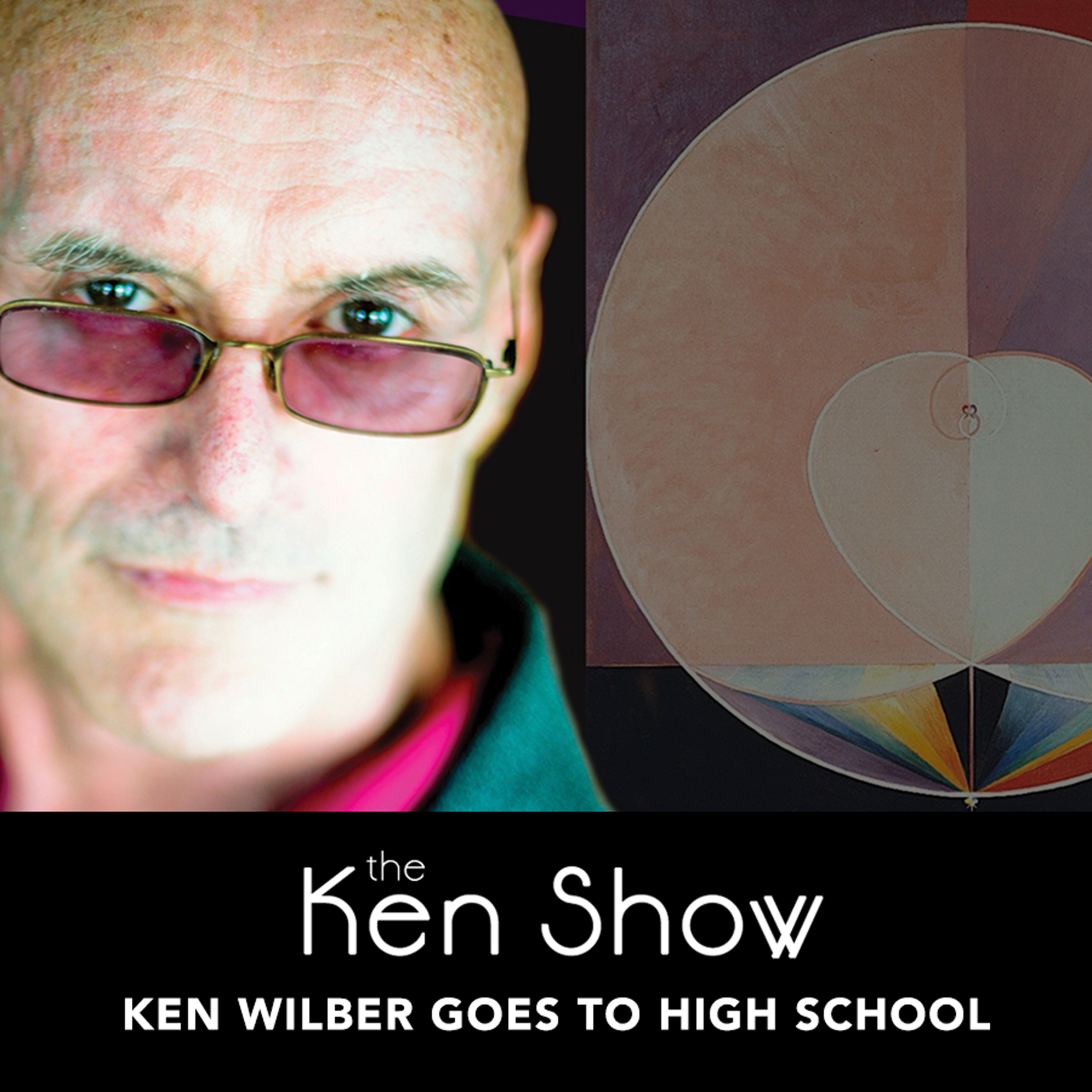
Ken Wilber Goes to High School: Sex, Ecology, Spirituality
In this very special episode of The Ken Show we are joined by Aissatou Diallo, Zoe Tray, and Noah Delorme, students at Choate Rosemary Hall who have been studying Ken Wilber’s seminal book, Sex, Ecology, Spirituality for their senior year project. Watch as Ken, Aissatou, Zoe, and Noah unpack many of the core insights of SES and discuss the unique value Integral work holds for a new generation of thinkers, leaders, artists, and scholars. We were absolutely blown away by the depth, care, and curiosity that shone through these students’ questions, as well as the obvious enthusiasm they have for the integral project. We are always trying to find new ways to bring integral ideas to new generations, and presenting these ideas in a way that speaks more directly to the unique life conditions each generation is facing. Seeing these young faces light up behind their masks as they engaged with Ken was a pure delight, and offers a new source of hope for the ongoing unfolding of integral ideas, as well as for our shared future on this planet. Topics include: 0:00 – Ken’s writing process while working on SES 10:43 – Why is spirituality important to the integral model? 26:52 – How do we know how many people are at each stage? 42:09 – How important is community for spiritual awakening? 53:45 – How can Integral help people become better activists? 1:10:22 – How do we integrate relativity? 1:16:01 – Can Integral help people with poverty and substance abuse? 1:29:37 – How does emotion influence our development? 1:40:36 – How do we communicate integral spirituality to non-religious people? 1:43:24 – How does awakened love influence our relationships? 1:52:00 – How does Ken manage fear?
Practice the Wound of Love. Part 1: The Timeless Love of Ken and Treya
Listen to the full discussion here: https://integrallife.com/practice-the-wound-of-love/ “Real love hurts; real love makes you totally vulnerable and open; real love will take you far beyond yourself; and therefore real love will devastate you. I kept thinking, if love does not shatter you, you do not know love. We had both been practicing the wound of love, and I was shattered.” —Ken Wilber Watch as Ken and Corey explore the ongoing unfoldment of love along the paths of Waking Up, Growing Up, Opening Up, Cleaning Up, and Showing Up. What follows is one of the most powerful, transformative, and touching conversations that Ken Wilber has ever recorded. We begin this long discussion about the Integral path of conscious love with a heartfelt discussion of the Grace and Grit film that just released, as well as the underlying and undying love that Ken and Treya shared — bringing us right into the heart of this conversation and setting the tone for everything that follows. Part 1: The Timeless Love of Ken and Treya Part 2: Waking Up to Love: Spirit in 2nd-person Part 3: Growing Up to Love: The Unfolding Heart Part 4: Opening Up to Love: Multiple Intelligences Part 5: Cleaning Up Our Love: Obsession, Narcissism, Fear, Pain, and Resentment Part 6: Showing Up as Love: Inhabiting the Heart Listen to the full discussion here: https://integrallife.com/practice-the-wound-of-love/
Inhabit: Your Perspective
Watch the video version here: https://integrallife.com/inhabit-your-perspective/ Most of us are already familiar with Ken Wilber’s Four Quadrant map, but this presentation goes one step deeper — we aren’t just looking at the quadrants themselves, but the “inner” and “outer” dimensions of each quadrant (i.e. looking at each quadrant from the 1st-person, and from the 3rd-person). Taken together, these eight zones refer to the most fundamental perspectives that we can take on any phenomenon, and are most often used to organize and situate all of the major methodologies and schools of thought that we use to generate and confirm our knowledge. But these aren’t just boxes on a piece of paper; they represent the fundamental perspectives that are available to you right now. We unconsciously slide through these perspectives all the time, and all we need to do is recognize what sorts of perspectives we are taking, so that we can use and inhabit them more consciously. Which is why we wanted to do this episode — to step beyond a mere cognitive understanding of these zones, and instead help find a way to feel into these perspectives and to experience them from the inside out. We want you to become more fluent in this sort of perspective-taking, without requiring a working knowledge of Foucault, Varela, Luhmann, etc. In other words, this isn’t another hyper-cognitive discussion of integral theory. This is more of a “perspectival yoga”, and we hope that by the time you have finished watching this episode you will be more familiar with these fundamental dimensions of your experience, right now in this very moment. One of the very best and most common applications of the eight zones is to art, as has been very thoroughly explored by minds like Ken Wilber, Michael Schwartz, and others. In this episode we are doing two things simultaneously — using these perspectives in order to more fully appreciate the art we love, while also using art in order to more fully understand and inhabit these perspectives. We do so by boiling these perspectival zones down to some very fundamental questions we can ask about any artwork or object we happen to be looking at. Listen as Bruce, Ryan, and Corey help make these perspectives a bit more intuitive by noticing how often we are already taking them in our daily lives, how to apply them to any of our experiences.

Grace and Grit: From Book to Film to Practice (Sebastian Siegel and Nomali Perera)
We invite you to meet the maker of the movie, Grace and Grit, Sebastian Siegel, in Q&A with Nomali Perera, followed by a session of Integral Life Practice. Inspired by one of Ken Wilber’s most beloved and acclaimed books, Sebastian Siegel set out on a decade-long journey of dedication and commitment, ultimately, to Love. In this conversation, Sebastian shares his brave decision-making process around committing to this project, what writing, producing, and directing this movie has meant to him, and how he steps into his work--no matter what that might be--as an Integral Life Practice. Sebastian also discusses several other themes of the movie such as the challenging aspects of how he attempted to include the many voices of Treya and Ken Wilber as subjects and authors, the meta-voice of the transpersonal, plus, Sebastian's own voice as the creator of the movie. We also heard from Sebastian--after having been in this project for a decade--what "grace" means to him, and who Treya has become to him, a beloved woman in the integral community that not many of us had the privilege of meeting. Once the interview ended, Nomali then led a short contemplative practice in exploring the topic of grace and grit as something we all need in order to live purposefully, face challenges and birth our dreams in the same way Sebastian did, and in how Ken and Treya exemplified in this profound story of transcendent love. Released on the 4th of June, 2021, starring Mena Suvari and Stuart Townsend, with Frances Fisher, Rebekah Graf, Nick Stahl, and Mariel Hemingway, the movie Grace and Grit is now available on Amazon Prime, Apple and other streaming services, as well as in select theaters.
The Art of Practice: Forgiveness Made Easy
Forgiveness — it is easy to say, but how many of us actually know how to do it? Forgiveness is a deceptively complex act, involving a complex calculus of developmental intelligences — including our cognitive intelligence and emotional intelligence, our spiritual intelligence and self-defenses, our intrapersonal and interpersonal intelligences, our moral and ethical intelligences. All of these are being “lit up” in different ways by the act of forgiving, and each is exerting its own influence upon the depth, span, and quality of our forgiveness. What’s more, if we are not engaging in a consistent Cleaning Up practice, then genuine forgiveness is that much more difficult to find, as resentment has a funny way of wrapping itself around the hidden residues of our unexamined shadows. To authentically forgive — what Barbara describes as “the absolute refusal to hold ill will against someone for what they did or didn’t do” — can actually be tremendously challenging. Fortunately Barbara Hunt is with us to help make it simple. Watch as Barbara talks to Lisa and Corey about forgiveness as an integral “master practice” — a practice that scaffolds and supports the rest of our various waking up, growing up, cleaning up, and showing up practices. We currently live in a culture that has taken a healthy Green-altitude ideal — “I am responsible for not offending other people” — and twisted it into a self-serving stance that says “you are responsible for not offending me”. This has resulted in a collective regression away from a healthy pluralism that can tolerate multiple discordant points of view, and toward something like the “grievance culture” (or “apology culture”) that we find today. But without an underlying “forgiveness culture” to support it, “grievance culture” can only end in more fragility, more tribalism, and perpetual resentment. Can we forgive ourselves and our own shadows in the Upper-Left quadrant, while still holding ourselves accountable to our own transformation? Can we forgive our shortsighted behaviors in the Upper-Right quadrant, while holding ourselves accountable to our own transformation? Can we forgive each other for our failings in the Lower-Left quadrant, while holding each other accountable to our mutual transformation? Can we forgive the historic currents and inertias of our society, as well as the flawed systems they have produced in the Lower-Right quadrant, while holding civilization itself accountable to transformation? Can we forgive a God who inflicts such terrible suffering and heartbreak upon our lives? In an era that is becoming increasingly fragile with every social media post, forgiveness has become the ultimate practice of anti-fragility. And it is exactly the panacea we need in order to liberate ourselves, to heal our cultural traumas, and to enact a more just society for all of us.

Inhabit: Your Entertainment
In this episode, Corey deVos and Ryan Oelke explore how to more fully inhabit our art and entertainment. We tend to think of “recreation” as a passive activity, but we actually share an active symbiotic relationship with our art and entertainment, both personally and culturally. We create art, which in turn re-creates us. We are constantly taking in the symbolism and themes and ideas from our surrounding cultural artifacts and reconstructing them as reference points for our own thinking, which then shapes the way we interpret and make sense of the world, whether consciously or unconsciously. We are re-creating ourselves time and time again every time we engage with our favorite films, music, books, television shows, etc. The goal here is to escape the cynically critical inertias of a culture that tends to define its tastes in negative space, and find a way to bring this ongoing cycle of re-creation into consciousness as much as we can — the art of conscious recreation. After all, who among us doesn’t have both an inner Tiger King and an inner Ted Lasso living somewhere inside us? Art is not inert, and our enjoyment of art is anything but passive. We have a deeply psychoactive relationship with our art and entertainment, often revealing territories within us that we never knew were there, and these psychoactive qualities largely depend on the kosmic address of both the artist and the observer. In this episode we hope to make some of these psychoactive properties a bit more noticeable, and demonstrate how integral perspectives can radically increase our enjoyment and appreciation of art and culture. It’s not just about enjoying integral art, but enjoying art integrally. Topics include: 0:00 — The Art of Conscious Re-creation 21:39 — Why Are We Talking About Entertainment? 29:31 — Grace and Grit: A Personal Appreciation 44:52 — Enacting Integral Art vs. Enacting Art Integrally 49:23 — Nine Inch Nails and the Path of Awakening 1:01:22 — Cutting Through Cynicism: Ted Lasso, Life Coach 1:05:50 — Looking Forward
Part 1: How Do We Properly Integrate Marxist Epistemology? (Ken Wilber and Corey deVos)
Marxism, also known as “dialectical materialism”, continues to exert a tremendous influence in our society, both in terms of pro-Marxist ideas on the left and anti-Marxist positions on the right. One of the simplest ways to define Marxist epistemology is the following statement: “Examine any alleged state of affairs as related to and distinguished from a total environment, and you will know whether or not the sentence alleging that state of affairs is true.” What are the positive contributions of Marxism that we want to include in a more integral epistemology? What are the unhealthy or negative limitations that we want to avoid? This is a continuation of the previous episode of The Ken Show, where we walked through a dozen major schools of epistemology and took note of their strengths, limitations, and how they fit into a more comprehensive and Integral method of sense-making. If you haven’t watched that episode already, we highly recommend you do so! Why is this important? In an age where legacy media is on the decline and has being largely replaced by social media, we are currently experiencing a total epistemic collapse of historic proportions — resulting in a collective state of aperspectival madness that Ken has been warning us about for decades. The world is broken, and no one can quite agree how, which makes our most pressing social and planetary problems (particularly the truly wicked ones) almost impossible to solve. But don’t worry, this could actually be good news. Our present epistemic breakdown is one of the central life conditions of our time, and Integral metatheory is uniquely positioned to help us piece our fragmented and fallen world back together. While things will almost certainly get worse before they get better, these are precisely the sort of conditions that call integral solutions forward, and the sorts of conversations where those solutions will eventually emerge.
Part 1: What Is Integral Epistemology? (Ken Wilber and Corey deVos)
Listen to the full discussion here: https://integrallife.com/integral-epistemology/ How do we know stuff? Like all of the great philosophical quandaries, it’s a fundamentally straightforward question that can lead us into an endlessly branching series of chicken-and-egg meditations on the nature of existence (ontology) versus the nature of knowledge (epistemology). And it’s a topic that is immediately relevant to today’s world, to our understanding of current events, and to our various strategies and processes of sense-making. This is particularly true here in the social media age. It’s always been the case that we’ve had multiple conflicting epistemologies, but until recently we’ve generally lived in a far more curated media space. We’ve relied upon informational referees who would enforce certain epistemologies over others (for better and/or for worse). But civilization itself is now operating on fully postmodern media platforms with no built-in curation or enfoldment mechanisms at all, where everyone with a smart phone can either contribute to, or corrupt, our sense of shared reality. We are now curators of our own informational terrains. Our online media habits quickly become epistemic silos, reinforced with every click by the hidden algorithms of Google, Facebook, Youtube, etc. This has resulted in the total epistemic breakdown we are now in the midst of, giving rise to everything from Flat Earthers to delusional QAnon conspiracies — all products of broken epistemologies. Ironically, it may be the phrase “do your research” that brings about the death of knowledge. This is why this discussion about epistemology is so important. These aren’t just stodgy schools of philosophy to be discussed in lecture halls — all of us are walking around with our own personal epistemologies we use to make sense of the world, whether consciously examined or not. And these personal epistemologies are at least partially informed by these major schools of thinking — often inherited in their general forms, but inconsistently and idiosyncratically assembled — as well as any number of pre-rational forms of sense-making. The hope here is that by better understanding and applying all of these different epistemological lenses we can achieve a far more comprehensive and integral view, while bringing more awareness to our own epistemological assumptions, biases, and blind spots. At its core, our clash of civilizations is a clash of truth-claims — a clash of epistemologies — made all the worse by our current epistemological crisis and collapse. Aperspectival madness, as we like to say. In this fascinating episode of The Ken Show, we take a look at a dozen of the most popular schools of epistemological thought — idealism, pragmatism, empiricism, constructivism, etc. — noting their respective contributions and limitations, and how they can all be pulled together into a more Integral epistemology that can help us take the next step out of the aperspectival madness we are all currently immersed in. Listen to the full discussion here: https://integrallife.com/integral-epistemology/

A Heart Blown Open — Part 1: Childhood's End
In this provocative and exhilarating dialogue, Jun Po Roshi and Ken Wilber take an in-depth look at Keith Martin-Smith’s new book: A Heart Blown Open: The Life and Practice of Zen Master Jun Po Denis Kelly Roshi. For most of us, we would need to reincarnate at least 50 times in order to attain such an incredible volume of experience. But for whatever reason, it seems that Jun Po went a slightly different route, and chose to live all 50 of those lives at once. Here is his remarkable story—a riveting tale of enlightenment, debauchery, and infinite jest. One of my favorite encounters with Jun Po Roshi was a night I spent driving him from the San Jose airport to Pacific Grove, during our last Integral Spiritual Experience event. A few minutes into our three-hour drive, I asked him what his favorite Beatles album was. “Sgt. Peppers,” he replied, so I played the album on my iPhone. I explained to him that I was raised on a steady diet of this music, and had always felt a slight envy that his generation got to experience the explosion of rock and roll culture firsthand. “This music—it makes me feel nostalgic for a time before I was born,” I told him. “Well get ready,” he shot back, “because that time is coming sooner than you think.” At that moment it struck me as the funniest thing I had ever heard. A perfect Zen joke. A surge of laughter bubbled up from my belly, and as it erupted out of my face, something *popped* inside my consciousness. For just a second, reality flipped itself inside-out, and all that remained were the trembling aftershocks of laughter and a big, beautiful Buddha smile radiating from the back seat of the van, as we continued down the black highway that stretched before us. This perfectly-timed sense of humor, of course, is one of Jun Po’s finest and most endearing qualities. There’s no denying it: the man’s got jokes. But these are not just your standard gags and quips—there is transmission in Jun Po’s humor. In fact, his wit is almost as important to his teaching as his wisdom, and he uses it to set the ego at ease while preparing it for it’s own oblivion, leading us to the infinite absurdity at the very core of our existence. Samsara is a joke, and this very moment is the punchline. Another remarkable quality of Jun Po Roshi that really comes through in this dialogue: he is not the type of guy to sweep his shadows beneath the rug of enlightenment. Rather, he chooses to meet them head-on, using the curative, self-liberating quality of consciousness to extract transcendent light from some of the deepest, darkest parts of his psyche. These might very well be the most admirable aspects of Jun Po’s character: his unabashed and unflinching honesty, his willingness to confess and take full responsibility for his own flaws and mistakes, his unshakable presence and courage as he embraces the pain and stands in the purifying flames of redemption. Jun Po Roshi accepts light and shadow alike as intrinsic elements of his spirituality, exemplifying the Tantric ideal of “bringing everything to the path” by neither avoiding nor excluding the more onerous and destructive facets of our lives. Instead, he urges us to face them directly, to work with them intimately, and to ultimately transmute them into wisdom, virtue, and compassion. Jun Po Kelly Roshi’s story is truly remarkable, and when coupled with his radiant personality and wily sense of humor, would no doubt make for a wildly entertaining and enriching Hollywood blockbuster. Even more intriguing, his story echoes a narrative even greater than his own (as all truly great stories do)—it is hard to think of anyone who better personifies the remarkable progression of American spirituality from the 1960’s until today, standing as he does with one foot firmly planted in the sixties counterculture, and the other in today’s Integral renaissance. Written by Corey deVos
A Heart Blown Open — Part 2: The Fine Line Between Madness and Enlightenment
In this provocative and exhilarating dialogue, Jun Po Roshi and Ken Wilber take an in-depth look at Keith Martin-Smith’s new book: A Heart Blown Open: The Life and Practice of Zen Master Jun Po Denis Kelly Roshi. For most of us, we would need to reincarnate at least 50 times in order to attain such an incredible volume of experience. But for whatever reason, it seems that Jun Po went a slightly different route, and chose to live all 50 of those lives at once. Here is his remarkable story—a riveting tale of enlightenment, debauchery, and infinite jest. One of my favorite encounters with Jun Po Roshi was a night I spent driving him from the San Jose airport to Pacific Grove, during our last Integral Spiritual Experience event. A few minutes into our three-hour drive, I asked him what his favorite Beatles album was. “Sgt. Peppers,” he replied, so I played the album on my iPhone. I explained to him that I was raised on a steady diet of this music, and had always felt a slight envy that his generation got to experience the explosion of rock and roll culture firsthand. “This music—it makes me feel nostalgic for a time before I was born,” I told him. “Well get ready,” he shot back, “because that time is coming sooner than you think.” At that moment it struck me as the funniest thing I had ever heard. A perfect Zen joke. A surge of laughter bubbled up from my belly, and as it erupted out of my face, something *popped* inside my consciousness. For just a second, reality flipped itself inside-out, and all that remained were the trembling aftershocks of laughter and a big, beautiful Buddha smile radiating from the back seat of the van, as we continued down the black highway that stretched before us. This perfectly-timed sense of humor, of course, is one of Jun Po’s finest and most endearing qualities. There’s no denying it: the man’s got jokes. But these are not just your standard gags and quips—there is transmission in Jun Po’s humor. In fact, his wit is almost as important to his teaching as his wisdom, and he uses it to set the ego at ease while preparing it for it’s own oblivion, leading us to the infinite absurdity at the very core of our existence. Samsara is a joke, and this very moment is the punchline. Another remarkable quality of Jun Po Roshi that really comes through in this dialogue: he is not the type of guy to sweep his shadows beneath the rug of enlightenment. Rather, he chooses to meet them head-on, using the curative, self-liberating quality of consciousness to extract transcendent light from some of the deepest, darkest parts of his psyche. These might very well be the most admirable aspects of Jun Po’s character: his unabashed and unflinching honesty, his willingness to confess and take full responsibility for his own flaws and mistakes, his unshakable presence and courage as he embraces the pain and stands in the purifying flames of redemption. Jun Po Roshi accepts light and shadow alike as intrinsic elements of his spirituality, exemplifying the Tantric ideal of “bringing everything to the path” by neither avoiding nor excluding the more onerous and destructive facets of our lives. Instead, he urges us to face them directly, to work with them intimately, and to ultimately transmute them into wisdom, virtue, and compassion. Jun Po Kelly Roshi’s story is truly remarkable, and when coupled with his radiant personality and wily sense of humor, would no doubt make for a wildly entertaining and enriching Hollywood blockbuster. Even more intriguing, his story echoes a narrative even greater than his own (as all truly great stories do)—it is hard to think of anyone who better personifies the remarkable progression of American spirituality from the 1960’s until today, standing as he does with one foot firmly planted in the sixties counterculture, and the other in today’s Integral renaissance. Written by Corey deVos
A Heart Blown Open — Part 3: Clear Light and Windowpane
In this provocative and exhilarating dialogue, Jun Po Roshi and Ken Wilber take an in-depth look at Keith Martin-Smith’s new book: A Heart Blown Open: The Life and Practice of Zen Master Jun Po Denis Kelly Roshi. For most of us, we would need to reincarnate at least 50 times in order to attain such an incredible volume of experience. But for whatever reason, it seems that Jun Po went a slightly different route, and chose to live all 50 of those lives at once. Here is his remarkable story—a riveting tale of enlightenment, debauchery, and infinite jest. One of my favorite encounters with Jun Po Roshi was a night I spent driving him from the San Jose airport to Pacific Grove, during our last Integral Spiritual Experience event. A few minutes into our three-hour drive, I asked him what his favorite Beatles album was. “Sgt. Peppers,” he replied, so I played the album on my iPhone. I explained to him that I was raised on a steady diet of this music, and had always felt a slight envy that his generation got to experience the explosion of rock and roll culture firsthand. “This music—it makes me feel nostalgic for a time before I was born,” I told him. “Well get ready,” he shot back, “because that time is coming sooner than you think.” At that moment it struck me as the funniest thing I had ever heard. A perfect Zen joke. A surge of laughter bubbled up from my belly, and as it erupted out of my face, something *popped* inside my consciousness. For just a second, reality flipped itself inside-out, and all that remained were the trembling aftershocks of laughter and a big, beautiful Buddha smile radiating from the back seat of the van, as we continued down the black highway that stretched before us. This perfectly-timed sense of humor, of course, is one of Jun Po’s finest and most endearing qualities. There’s no denying it: the man’s got jokes. But these are not just your standard gags and quips—there is transmission in Jun Po’s humor. In fact, his wit is almost as important to his teaching as his wisdom, and he uses it to set the ego at ease while preparing it for it’s own oblivion, leading us to the infinite absurdity at the very core of our existence. Samsara is a joke, and this very moment is the punchline. Another remarkable quality of Jun Po Roshi that really comes through in this dialogue: he is not the type of guy to sweep his shadows beneath the rug of enlightenment. Rather, he chooses to meet them head-on, using the curative, self-liberating quality of consciousness to extract transcendent light from some of the deepest, darkest parts of his psyche. These might very well be the most admirable aspects of Jun Po’s character: his unabashed and unflinching honesty, his willingness to confess and take full responsibility for his own flaws and mistakes, his unshakable presence and courage as he embraces the pain and stands in the purifying flames of redemption. Jun Po Roshi accepts light and shadow alike as intrinsic elements of his spirituality, exemplifying the Tantric ideal of “bringing everything to the path” by neither avoiding nor excluding the more onerous and destructive facets of our lives. Instead, he urges us to face them directly, to work with them intimately, and to ultimately transmute them into wisdom, virtue, and compassion. Jun Po Kelly Roshi’s story is truly remarkable, and when coupled with his radiant personality and wily sense of humor, would no doubt make for a wildly entertaining and enriching Hollywood blockbuster. Even more intriguing, his story echoes a narrative even greater than his own (as all truly great stories do)—it is hard to think of anyone who better personifies the remarkable progression of American spirituality from the 1960’s until today, standing as he does with one foot firmly planted in the sixties counterculture, and the other in today’s Integral renaissance. Written by Corey deVos
A Heart Blown Open — Part 4: Adventures in India
In this provocative and exhilarating dialogue, Jun Po Roshi and Ken Wilber take an in-depth look at Keith Martin-Smith’s new book: A Heart Blown Open: The Life and Practice of Zen Master Jun Po Denis Kelly Roshi. For most of us, we would need to reincarnate at least 50 times in order to attain such an incredible volume of experience. But for whatever reason, it seems that Jun Po went a slightly different route, and chose to live all 50 of those lives at once. Here is his remarkable story—a riveting tale of enlightenment, debauchery, and infinite jest. One of my favorite encounters with Jun Po Roshi was a night I spent driving him from the San Jose airport to Pacific Grove, during our last Integral Spiritual Experience event. A few minutes into our three-hour drive, I asked him what his favorite Beatles album was. “Sgt. Peppers,” he replied, so I played the album on my iPhone. I explained to him that I was raised on a steady diet of this music, and had always felt a slight envy that his generation got to experience the explosion of rock and roll culture firsthand. “This music—it makes me feel nostalgic for a time before I was born,” I told him. “Well get ready,” he shot back, “because that time is coming sooner than you think.” At that moment it struck me as the funniest thing I had ever heard. A perfect Zen joke. A surge of laughter bubbled up from my belly, and as it erupted out of my face, something *popped* inside my consciousness. For just a second, reality flipped itself inside-out, and all that remained were the trembling aftershocks of laughter and a big, beautiful Buddha smile radiating from the back seat of the van, as we continued down the black highway that stretched before us. This perfectly-timed sense of humor, of course, is one of Jun Po’s finest and most endearing qualities. There’s no denying it: the man’s got jokes. But these are not just your standard gags and quips—there is transmission in Jun Po’s humor. In fact, his wit is almost as important to his teaching as his wisdom, and he uses it to set the ego at ease while preparing it for it’s own oblivion, leading us to the infinite absurdity at the very core of our existence. Samsara is a joke, and this very moment is the punchline. Another remarkable quality of Jun Po Roshi that really comes through in this dialogue: he is not the type of guy to sweep his shadows beneath the rug of enlightenment. Rather, he chooses to meet them head-on, using the curative, self-liberating quality of consciousness to extract transcendent light from some of the deepest, darkest parts of his psyche. These might very well be the most admirable aspects of Jun Po’s character: his unabashed and unflinching honesty, his willingness to confess and take full responsibility for his own flaws and mistakes, his unshakable presence and courage as he embraces the pain and stands in the purifying flames of redemption. Jun Po Roshi accepts light and shadow alike as intrinsic elements of his spirituality, exemplifying the Tantric ideal of “bringing everything to the path” by neither avoiding nor excluding the more onerous and destructive facets of our lives. Instead, he urges us to face them directly, to work with them intimately, and to ultimately transmute them into wisdom, virtue, and compassion. Jun Po Kelly Roshi’s story is truly remarkable, and when coupled with his radiant personality and wily sense of humor, would no doubt make for a wildly entertaining and enriching Hollywood blockbuster. Even more intriguing, his story echoes a narrative even greater than his own (as all truly great stories do)—it is hard to think of anyone who better personifies the remarkable progression of American spirituality from the 1960’s until today, standing as he does with one foot firmly planted in the sixties counterculture, and the other in today’s Integral renaissance. Written by Corey deVos
A Heart Blown Open — Part 5: Zen Outlaw
In this provocative and exhilarating dialogue, Jun Po Roshi and Ken Wilber take an in-depth look at Keith Martin-Smith’s new book: A Heart Blown Open: The Life and Practice of Zen Master Jun Po Denis Kelly Roshi. For most of us, we would need to reincarnate at least 50 times in order to attain such an incredible volume of experience. But for whatever reason, it seems that Jun Po went a slightly different route, and chose to live all 50 of those lives at once. Here is his remarkable story—a riveting tale of enlightenment, debauchery, and infinite jest. One of my favorite encounters with Jun Po Roshi was a night I spent driving him from the San Jose airport to Pacific Grove, during our last Integral Spiritual Experience event. A few minutes into our three-hour drive, I asked him what his favorite Beatles album was. “Sgt. Peppers,” he replied, so I played the album on my iPhone. I explained to him that I was raised on a steady diet of this music, and had always felt a slight envy that his generation got to experience the explosion of rock and roll culture firsthand. “This music—it makes me feel nostalgic for a time before I was born,” I told him. “Well get ready,” he shot back, “because that time is coming sooner than you think.” At that moment it struck me as the funniest thing I had ever heard. A perfect Zen joke. A surge of laughter bubbled up from my belly, and as it erupted out of my face, something *popped* inside my consciousness. For just a second, reality flipped itself inside-out, and all that remained were the trembling aftershocks of laughter and a big, beautiful Buddha smile radiating from the back seat of the van, as we continued down the black highway that stretched before us. This perfectly-timed sense of humor, of course, is one of Jun Po’s finest and most endearing qualities. There’s no denying it: the man’s got jokes. But these are not just your standard gags and quips—there is transmission in Jun Po’s humor. In fact, his wit is almost as important to his teaching as his wisdom, and he uses it to set the ego at ease while preparing it for it’s own oblivion, leading us to the infinite absurdity at the very core of our existence. Samsara is a joke, and this very moment is the punchline. Another remarkable quality of Jun Po Roshi that really comes through in this dialogue: he is not the type of guy to sweep his shadows beneath the rug of enlightenment. Rather, he chooses to meet them head-on, using the curative, self-liberating quality of consciousness to extract transcendent light from some of the deepest, darkest parts of his psyche. These might very well be the most admirable aspects of Jun Po’s character: his unabashed and unflinching honesty, his willingness to confess and take full responsibility for his own flaws and mistakes, his unshakable presence and courage as he embraces the pain and stands in the purifying flames of redemption. Jun Po Roshi accepts light and shadow alike as intrinsic elements of his spirituality, exemplifying the Tantric ideal of “bringing everything to the path” by neither avoiding nor excluding the more onerous and destructive facets of our lives. Instead, he urges us to face them directly, to work with them intimately, and to ultimately transmute them into wisdom, virtue, and compassion. Jun Po Kelly Roshi’s story is truly remarkable, and when coupled with his radiant personality and wily sense of humor, would no doubt make for a wildly entertaining and enriching Hollywood blockbuster. Even more intriguing, his story echoes a narrative even greater than his own (as all truly great stories do)—it is hard to think of anyone who better personifies the remarkable progression of American spirituality from the 1960’s until today, standing as he does with one foot firmly planted in the sixties counterculture, and the other in today’s Integral renaissance. Written by Corey deVos
A Heart Blown Open — Part 6: Standing in the Fire
In this provocative and exhilarating dialogue, Jun Po Roshi and Ken Wilber take an in-depth look at Keith Martin-Smith’s new book: A Heart Blown Open: The Life and Practice of Zen Master Jun Po Denis Kelly Roshi. For most of us, we would need to reincarnate at least 50 times in order to attain such an incredible volume of experience. But for whatever reason, it seems that Jun Po went a slightly different route, and chose to live all 50 of those lives at once. Here is his remarkable story—a riveting tale of enlightenment, debauchery, and infinite jest. One of my favorite encounters with Jun Po Roshi was a night I spent driving him from the San Jose airport to Pacific Grove, during our last Integral Spiritual Experience event. A few minutes into our three-hour drive, I asked him what his favorite Beatles album was. “Sgt. Peppers,” he replied, so I played the album on my iPhone. I explained to him that I was raised on a steady diet of this music, and had always felt a slight envy that his generation got to experience the explosion of rock and roll culture firsthand. “This music—it makes me feel nostalgic for a time before I was born,” I told him. “Well get ready,” he shot back, “because that time is coming sooner than you think.” At that moment it struck me as the funniest thing I had ever heard. A perfect Zen joke. A surge of laughter bubbled up from my belly, and as it erupted out of my face, something *popped* inside my consciousness. For just a second, reality flipped itself inside-out, and all that remained were the trembling aftershocks of laughter and a big, beautiful Buddha smile radiating from the back seat of the van, as we continued down the black highway that stretched before us. This perfectly-timed sense of humor, of course, is one of Jun Po’s finest and most endearing qualities. There’s no denying it: the man’s got jokes. But these are not just your standard gags and quips—there is transmission in Jun Po’s humor. In fact, his wit is almost as important to his teaching as his wisdom, and he uses it to set the ego at ease while preparing it for it’s own oblivion, leading us to the infinite absurdity at the very core of our existence. Samsara is a joke, and this very moment is the punchline. Another remarkable quality of Jun Po Roshi that really comes through in this dialogue: he is not the type of guy to sweep his shadows beneath the rug of enlightenment. Rather, he chooses to meet them head-on, using the curative, self-liberating quality of consciousness to extract transcendent light from some of the deepest, darkest parts of his psyche. These might very well be the most admirable aspects of Jun Po’s character: his unabashed and unflinching honesty, his willingness to confess and take full responsibility for his own flaws and mistakes, his unshakable presence and courage as he embraces the pain and stands in the purifying flames of redemption. Jun Po Roshi accepts light and shadow alike as intrinsic elements of his spirituality, exemplifying the Tantric ideal of “bringing everything to the path” by neither avoiding nor excluding the more onerous and destructive facets of our lives. Instead, he urges us to face them directly, to work with them intimately, and to ultimately transmute them into wisdom, virtue, and compassion. Jun Po Kelly Roshi’s story is truly remarkable, and when coupled with his radiant personality and wily sense of humor, would no doubt make for a wildly entertaining and enriching Hollywood blockbuster. Even more intriguing, his story echoes a narrative even greater than his own (as all truly great stories do)—it is hard to think of anyone who better personifies the remarkable progression of American spirituality from the 1960’s until today, standing as he does with one foot firmly planted in the sixties counterculture, and the other in today’s Integral renaissance. Written by Corey deVos
From Languishing to Flourishing
Free video version here: https://integrallife.com/from-languishing-to-flourishing/ We were amazed at the serendipity when we opened the New York Times this morning and read Adam Grant’s article <a href="https://www.nytimes.com/2021/04/19/well/mind/covid-mental-health-languishing.html" target="_blank">“There’s a Name for the Blah You’re Feeling: It’s Called Languishing.”</a> In it, he describes the feeling of languishing, something between not-quite hopeless depression, but far-from-thriving flourishing that he and millions of others have felt the past year during the pandemic. The reader comments to the article lit up with agreement and relief that readers weren’t alone in feeling joyless, listless, and aimless this past year. In a word, millions of us are languishing. The timing couldn’t have been better. Watch as Robb Smith talks with Lee Mason about what an integral approach to flourishing looks like, and what we know about the science of getting out of languishing. Learn more about The Essence of Integral Flourishing: https://integrallife.com/the-essence-of-integral-flourishing/
The Art of Practice: Getting Over Ourselves
Nomali Perera has been a dear friend to the Integral project for nearly 20 years now, and we are delighted to have her as one of our most prolific Practice Leaders on our new Integral Life Practice platform. Having been part of the integral movement for so long, Nomali has special insight into the underlying needs and challenges faced by the community, and hosts a full suite of practices that help us meet those needs and challenges and take the integral vision more fully into our hearts. In this episode of The Art of Practice, Nomali talks to Lisa and Corey about the many opportunities and obstacles we face in our practice, and how to deepen our commitment to our own process of waking up, growing up, cleaning up, and showing up. We follow the subtle threads of love, death, and vitality that weave through each of our practices and connect us together as a community, while reminding each other that we can only truly be ourselves if we are willing to actually get over ourselves. And this is one of the central polarities we face in our ILP — we want to be more of ourselves and less of ourselves at the same time. We want to more fully embody and inhabit our own unique kosmic address so that we may bring our gifts to the world, while also getting ourselves out of our own way and following a path of self-transcendence and selfless service. We want to make our egos bigger and brighter and more capable than ever, before but also more transparent to the inner light that is trying to shine through these illusions of separation. This is the riddle at the heart of our practice — and it’s one that ILP is uniquely qualified to answer. Watch as Nomali, Lisa, and Corey explore these questions — and why it’s always important to wear your clown nose while practicing.
Inhabit: Your Wokeness
Are you concerned about things like social justice, wealth inequality, and the continuing cultural inertias of racism and bigotry? Have you ever wanted to, say, reform a police department or two? Are you interested in protecting voting rights for particular groups of people? Are you naturally inclined to want to relieve suffering for people by “bringing the most depth to the most span”, as we say here in Integral Land? Congratulations, you might be woke! Are you equally concerned about the sorts of extremism that we are seeing on the Left — performative virtue signaling, growing intolerance for conflictiing perspectives and free speech, a backslide away from healthy green pluralism and toward totalizing amber narratives? Well, maybe you’e not so woke after all. Maybe you are actually “post-woke”, and have been waiting for discussions like this one to come down the line. Which is why Ryan and I wanted to help clear this space and invite all of us to inhabit our own most embodied leadership within an authentically “post-woke” space that allows us to recognize and rescue the most important babies of “social justice” from the bathwater of political extremism. How do we do so? By getting “wokeness” (and the green altitude as a whole) out of our shadows, while bringing more caution and discernment to the inherent shadows of the woke movement itself. And one of the best ways we can get the Green altitude out of our shadows is to simply shift our frame just little bit: Rather than thinking off the green altitude as "post-modern", let’s simultaneously think of it as being “pre-integral". There is something about that reframe that reminds us of our obligation to properly transclude the green altitude in our integral embrace and get it out of our own shadow. Because at the integral altitude, all of these previous stages become part of our own interior anatomy — which means that if we are engaged in unconscious warfare against the Green altitude, we are denying one of the highest stages of our own being. It’s like walking around with your head cut off. The Green altitude, after all, is also associated with “early vision-logic”, which is why a great number of important green terms, concepts, and deep structures are maintained and updated at the integral altitude — concepts like "pluralism" (which, for example, then ripens as "integral methodological pluralism"), as well as "constructivism" and "perspectivism". Even the woke emphasis on "identity" is taken up again at the integral stage, which simply offers a broader spectrum of identity to draw upon beyond our typological intersectionality — a spectrum that takes us all the way to the Supreme Identity itself. This reframe may also help better facilitate "post-woke" discussions, while helping us to better regulate the green altitude by reminding it of who and what it is actually supposed to be (pluralistic, empathetic, and tolerant).
Inhabit: Your Practice
Inhabit: Your Practice by Integral Life
Sitting in the Mystery: Aliens, Artists, and the Experiencer Group
“There are a lot more sightings than have been made public,” says former Director of National Intelligence John Ratcliffe. In the midst of America’s total epistemic collapse into the pits of disinformation, propaganda, and conspiracy theory, somehow belief in UFOs and alien contact continues to find more and more legitimacy. Some say we are even ramping up to a “soft disclosure” as the U.S. military prepares to release a full report of their own observations and interactions with anomalous craft. "Some of those have been declassified,” Ratcliffe continues. “And when we talk about sightings, we are talking about objects that have seen by Navy or Air Force pilots, or have been picked up by satellite imagery that frankly engage in actions that are difficult to explain. Movements that are hard to replicate that we don't have the technology for. Or traveling at speeds that exceed the sound barrier without a sonic boom.” Stuart Davis has been tracking these phenomena for a very long time, and in fact has launched an entire podcast, Aliens and Artists (it’s the #5 podcast in Vietnam!) in order to chronicle, explore, and make sense of his own experiences, and to interview various subject matter experts on similarly strange encounters. He has also recently kickstarted an entire online community for people who have had any number of anomalous experiences, which he calls The Experiencer Group. In this fun and fascinating discussion, Stu and I take a deep dive into these cosmic mysteries, exploring the many ways the Integral framework helps us illuminate and interpret the full enchilada of human (and non-human) experience, from the ordinary to the extraordinary to the extra-extraordinary. If you are already a believer in these kinds of phenomena, you will find this discussion to be a fascinating exploration of the contours and consequences of these experiences. How can we make better sense of these encounters, and what are the possible implications for the rest of society — and to civilization as a whole? And if your personality type is more Scully than Mulder and have a hard time entertaining extraordinary claims without equally extraordinary evidence, then we invite you to hold this entire discussion as a thought experiment. How can the integral model expand our imagination? What kind of predictive power might Integral possess when it comes to things like alien evolution or inter-species communication? How integral can “integral” be, if it cannot be applied to an intergalactic context? Our universe is very big and very dark. It contains multitudes. There are more things in heaven and earth than are dreamt of in your Integral philosophy. So let’s see just how far into the mystery Integral can take us. Regardless of where you may land on the issue, we hope you enjoy the adventure. Let us know what you think in the comments below!
Unpacking the Integral Enneagram (Lisa Frost and Corey deVos)
What exactly is the Enneagram, and what makes it such a helpful tool when it comes to our ongoing growth and awakening? Watch as Lisa and Corey offer a broad introduction to the Integral Enneagram, as well as to the many Enneagram offerings we currently have available on Integral Life, including: - A self-assessment test that allows you to better discern your own Enneagram type, - A monthly “Harnessing the Power of Your Enneatype” practice session, available to all supporting members of Integral Life, - A series of monthly Enneagram sessions that focus on each of the nine types — a monthly session for Type 1, another monthly session for Type 2, another for Type 3, etc. Click here to learn more: https://integrallife.com/your-enneagram-type-an-introduction/
Overcoming Bias in Practice
Inhabit: Your Game
*We highly recommend that you watch the video version! You can find it here: https://integrallife.com/inhabit-your-game/ In this continuation of our "integral media" series, Ryan and Corey take another look at the major stages of human development, this time using a series of 33 video games in order to illustrate the qualities and characteristics of each stage. All of this allows you to not only observe these stages within you, but to actively inhabit, engage, and play with them as well.

The Art of Practice: Introducing ILP (with Lisa Frost and Corey deVos)
Join Lisa Frost and me in a new monthly series that will explore how to bring more depth and artistry to our Integral Life Practice — the very best and most effective practices to help you Wake Up, Grow Up, Clean Up, and Show Up in your life, your relationships, and your work in the world. Integral is itself a practice-based theory. “Integral Methodological Pluralism” is just a fancy way of saying, “here are all of the available practices that are available to us — practices that reveal everything we know about life, the universe, and everything. And here’s how to put all of those practices together, so we can better understand our reality, lead better/more fulfilling lives, and leave the universe and everything in better shape than we found it.“ In other words, practice is at the very core of integral. How do we grow up? We practice. How do we wake up? We practice. How do we clean up? That’s right, practice baby! How do we show up? Practice, practice practice, practice — and allowing the fruits of our practice to spill over into all four quadrants. These aren’t just conversations about the integral map — they are about living in the integral territory. Watch as Lisa and I take an in-depth look at our new Integral Life Practice platform, which offers a vast collection of self-guided practices as well as calendar of live daily practice sessionss led by skilled practice leaders from around the world, attended every day by a powerful community of like-hearted people who are profoundly committed to their own growth, awakening, and impact. Visit https://integrallife.com/calendar for the full Integral Life Practice session schedule.
Inhabit: Your Inner Theatre — A Cinematic Journey Through Human Development
We highly recommend you watch this instead of listening! You can find the full video here: https://integrallife.com/inhabit-your-inner-theatre/ Corey and Ryan take you on a cinematic journey through the stages of human development, using a series of 21 carefully-curated film clips to illustrate some of the most important qualities of each stage. Why film clips? Simple — it’s fun! Plus, these clips are from some of the most popular films from the last 80 years, commonly-shared reference points that most of us are already familiar with. This gives us the opportunity to put together one of the most accessible, friendly, and entertaining ways to introduce these important ideas to newcomers. And for those who are already familiar with integral thought and practice, this discussion will still be fascinating, fun, and occasionally moving, while also helping you more deeply contemplate the important difference between <em>enjoying integral artenjoying art integrally</em>. And as you watch, try to remember: all of this is actually happening inside of you. You may be viewing these film clips on a screen in front of you, but the stages we explore here are all alive <em>within</em> you right now, either as capacities you’ve already developed or as potentials that are waiting to be unleashed. The Witness itself is the ultimate movie screen — the effortless, simple feeling of being behind all of our perceptions. All of this is just a fleeting dance of light, sound, and shadow projected within your consciousness against that empty, all-pervasive awareness. So grab some popcorn, sit back, and enjoy this very special tour of your own inner theatre.
Robb Smith on Bitcoin
Robb Smith on Bitcoin by Integral Life

The Darth Vader Move (with Ken Wilber)
The brighter the light, the darker the shadow. The “Darth Vader move” is what happens when someone with an exceptionally high level of development uses the skills and capacities of that level for purposes generally deemed to be “wrong” — often the result of a highly developed cognitive intelligence combined with a poorly developed moral intelligence (Nazi scientists being the classic example). What happens when our higher angels get hijacked by our lowest demons? What is the cause of the Darth Vader move, and how can we prevent ourselves from being seduced by the Dark Side of the Force?

Capitalism: How Growth Became the Enemy of Prosperity (Excerpt)
Excerpted from the full discussion here: https://integrallife.com/capitalism-growth-became-enemy-prosperity/ "To use the metaphor of our era, we are running an extractive, growth-driven economic operating system that has reached the limits of its ability to serve anyone, rich or poor, human or corporate. Moreover, we’re running it on super computers and digital networks that accelerate and amplify all its effects. Growth is the single, uncontested, core command of the digital economy… An operating system designed by 13th century Moorish accountants looking for a way to preserve the aristocracy of Europe has worked as promised. It turned the marketplace into one giant debtors’ prison. It is not only unfit for the needs of a 21st century digital society; central currency is the core mechanism of the growth trap." Douglas Rushkoff, Throwing Rocks at the Google Bus To be alive in today's world is to be living through a raging, roiling argument about money: how it’s generated and how it will be distributed in the 21st century. Money dominates the changing politics and economics of the western hemisphere. Whether jobs, free trade, taxes, student debt, housing prices, AI-based automation, wealth disparities, educational funding or any of dozens of other headline-topics, how society will create and share value and resources sits at the forefront of our current moment.

COVID-19: Making Sense of Our Sense-Making
Watch as Beena Sharma, Susanne Cook-Greuter, and Corey deVos offer a must-see presentation to help us understand the many healthy and unhealthy responses we are seeing to the coronavirus pandemic, all the way up and down the spiral of development. Chances are you are already seeing all of these responses surfacing all around you: in your social media feeds, among your friends and family, and even within yourself. And it can be confusing at times, seeing all these different and often contradictory responses flooding into your consciousness all at once, and trying to navigate our way through them in order to figure out which are more true, which are more partial, and which you resonate with the most. This presentation will help reduce that confusion for you — giving you a way to fold all of these different views and values into a greater sense of wholeness and meaning, while also giving you permission to return to some of these earlier stages in order to tend to the many concerns and anxieties that may be present for you there. It’s important, after all, to remember that none of these stages are inherently “better” or “worse” than any other. Although there are certainly healthy and unhealthy expressions at each stage, and our capacity for both complexity and compassion both increase as we move into the later stages of development, we can nonetheless also find within each of these stages a series of responses that are perfectly appropriate for the various life conditions we may find ourselves in. Sometimes the intelligences and capacities associated with earlier stages are best suited for a particular set of problems, and less suitable for other problems. Sometimes only later stages are capable of handling a certain magnitude of complexity, and other times these later stages can over-complexify certain problems and make things worse. Which means that all of these stages have their appropriate place, both out in the world and within ourselves. So join us as Beena and Susanne help us sort through all of this, taking us on an intimate 1st-person journey from the earliest stages of growth all the way to the deepest transpersonal stages of unity consciousness.

Inhabit: Your Trust
“The best way to find out if you can trust somebody is to trust them.” ― Ernest Hemingway Our crisis of trust has been rapidly compounding in recent years, as the internet has delivered us into an age of aperspectival madness — an epistemic breakdown where shared reality becomes splintered into hermetically-sealed social media silos, where all enfoldment between opposing perspectives breaks down completely, and where evidence-based truths become sacrificed on the altar of narrative beliefs. “Trust” is something like an immune system for our society. It prevents our collective body from being infected by propaganda, zealotry, and social regression. Here at the tail end of 2020, it is clear that we are experiencing a crisis of truth, as well as a crisis of meaning. And underlying them both is an even deeper crisis — a crisis of trust. Trust, of course, is a paradox. We live in a highly complex and highly specialized civilization. Our daily lives depend upon us being able to trust a massive interconnected system of strangers and institutions, just to be able to put food on the table every night that won’t end up making our families sick. And yet when our fundamental trust in those same strangers and institutions begins to collapse, so do the foundations of civilization itself. When our fundamental trust in each other becomes completely dismantled, then so does our capacity to perceive and understand truth. After all, our perceptions of “truth” depend on a mutual recognition of “truthfulness” — another word for trust. And when we allow ourselves to believe that everyone is always already lying to us from every direction (other than our own preferred media silos, of course), then our reality suddenly becomes unknowable. As President Obama recently said: “If we do not have the capacity to distinguish what’s true from what’s false, then by definition the marketplace of ideas doesn’t work. And by definition our democracy doesn’t work. We are entering into an epistemological crisis.” This is a truly wicked problem. It is a tremendously complex and multivalent challenge, with causes and effects that can be tracked through all four quadrants. And like any other “wicked problem”, it is not something that can be solved in a piecemeal fashion: focus too much on any single variable and all the other variables change immediately&nbsp;— which means that partial solutions actually risk making things worse. Watch as Ryan and I take a deep dive into the wicked problem of social trust, looking at this meta-crisis through each of the four quadrants, as well as some key practices and perspectives that can help us restore our trust in each other, in our institutions, in ourselves, and in the grand evolutionary unfolding itself.

Inhabit: Your Election
Watch as Ryan and Corey reflect on the results of the 2020 Presidential Election, exploring its implications for the world and within our own hearts, while also creating a space where we can begin to release some of the fears and anxieties many of us have been struggling with during these chaotic and uncertain times. What is our work going forward? How can we begin to heal the deep ruptures that have formed in our society? What sorts of personal and political shadows have emerged for us over the last few years, and how can we better manage and re-integrate those shadows? How can we learn to set our political views and identities aside, so that we can find a deeper and more fulfilling connection with each other? How do we skillfully engage with friends and family members who subscribe to unfalsifiable narrative realities such as QAnon? After years of social fragmentation and media balkanization, how can we possibly begin to put Humpty Dumpty back together again? We hope you enjoy this special post-election episode of Inhabit! Let us know what you think in the comments below.
What Is Your Influence? (Excerpted from The Fierce Urgency of Now with Mark Fischler & Corey deVos)
Corey deVos and Mark Fischler discuss how best to expand and embody our most integral influences and intentions. Excerpted from the full 2-hour conversation here: https://integrallife.com/the-fierce-urgency-of-now/

Inhabit: Your Democracy
In this very special episode of Inhabit, Ryan and I focus on one of the most essential elements of any Integral Life Practice — directly engaging your democratic systems and showing up to cast your vote. Watch as Ryan and I discuss the following: -Why it’s never a good idea to base our electoral decisions on the current state of the culture wars - Why it’s important to differentiate “politics” from “governance” - Why it’s important to differentiate ordinary people on the left and the right from the social holons of Democratic and GOP political parties. - Can a person’s political views be used to assess their overall development? - Can a solidly integral person be a Trump supporter? (Spoiler: of course they can.) I also offer an in-depth exploration of cynicism — how to recognize it in our own lives, and how to escape its corrosive influence. We do this by drilling down to a more fundamental polarity — the “trust but verify” polarity, which shows how trust and assumptions of good-faith should be integrated with healthy skepticism and critical thinking. But when this polarity becomes disintegrated and balkanized, it inevitably takes us into the negative poles of naïveté and cynicism. The good news is, by understanding this core polarity we can wrap some healthy guardrails around our own enactment of political reality, and catch ourselves when we feel ourselves sliding toward one of these unhealthy poles. Why is this important? “Corruption” and “cynicism” are related in many important ways. Many of us feel like our cynicism is a natural response to corruption — why should we trust a system that is so obviously rigged against us? However, the opposite is equally if not more true: it’s not so much that corruption results in cynicism, but rather cynicism creates a vacuum that gets immediately fillled with corruption. Which makes “escaping cynicism” absolutely paramount right now, as it is one of the most significant obstacles preventing so many of us from fully inhabiting this democracy, making our voices heard, and choosing the deliberately-partial actions and decisions required to move the political pendulum where we'd like to see it to go, rather than waiting for the world to catch up with us before we are willing to participate. Finally, I take a few moments to present my “3-Point Plan to Save Democracy” — the three most crucial systemic changes we need to make in the Lower-Right quadrant in order to restore healthy political enfoldment, de-escalate the culture wars, and rehabilitate our democracy. You don’t want to miss that.
Inhabit: Your Fear
Fear: it gets a bad rap in many spiritual communities. In fact, it’s often seen as anti-spiritual — “the opposite of love isn’t hate, it’s fear.” “Wherever there is another, fear arises.” And so on. All of which is absolutely true — on an absolute level. On another level, the level of ordinary, everyday relative truth, fear is a powerful motivator — and when it’s properly managed it can even be a superpower, allowing you to respond to danger with greater speed, strength, and agility. Imagine your car breaks down on the highway. You get out to inspect the damage, and as you look up you see another car barreling down the highway right at you. In that moment, you have two choices. You can drop your fear, knowing that ultimately there is no separation between you and the speeding car. And the good news is, in just a few seconds you will be proven right. Or you can listen to that ancient feeling of dread rising in your body, and get yourself out of harm’s way just before you actually do become one with the car, smeared across the windshield. So fear is an incredibly important evolutionary defense. But when we are not fully conscious of our fear states — when we find ourselves in fear, rather than finding fear within ourselves — it robs us of our ability to respond. And when that fear begins to move through the collective it becomes an ever-present background radiation in our lives. It clouds our judgment. It makes us suspicious of other people and perspectives. It becomes an ongoing source of cynicism and despondency. It erodes our capacity to listen and empathize. Sound familiar? Welcome to life in 2020! We are surrounded by truly terrifying realities, and regardless of your own ongoing sources of fear — whether it’s COVID, climate change, your health, your employment, or culture war issues like MAGA extremism, Antifa violence, white supremacy, or cultural Marxism — these fears tend to haunt us from somewhere in the background of our consciousness, exerting a corruptive influence that can distort our lens and pollute our informational terrain. We search for a sense of certainty, some solid ground where we can find traction against our unconscious fears, often resulting in an elaborate labyrinth of half-truths, false equivalencies, and confirmation biases that cause us to overemphasize certain realities while dismissing others. Which is why Ryan and I wanted to do this episode. Because when you do not allow yourself to confront and fully own your fear, you immediately push it into your shadow, where it begins to infect and reorganize your unconscious attitudes and biases in order to protect you from some looming, unseen threat. This is how we bring natural evolutionary fear and spiritual fearlessness into alignment. You don’t need to push away your fear, neither do you need to surrender to it. All you need to do is to inhabit your fear – allow it to freely move through you, allow yourself to respond however you need to respond in the moment, and notice any interior frictions as it passes through your system so you know nothing is getting “stuck” or pushed into shadow. So we hope you enjoy this very special episode of Inhabit, and that it helps you to use your own fear as a superpower to get you more engaged, direct your skillful action, and create a better and more just world for everyone else.

Grace and Grit: An Interview with Sebastian Siegel and Jullia Ormond
Julia Ormond interviews Sebastian Siegel at the 2020 Integral European Conference about the film adaptation of "Grace and Grit". Bence Ganti facilitates with an introduction to Ken Wilber. They discuss book-to-film, acting, directing, producing, characters and set, filmming, and pivotal elements of production.

Inhabit: Your Shadow (Ryan Oelke and Corey deVos)
“Shadow” refers to any of the hidden allergies, addictions, biases, or blind spots that may be kicking around in our consciousness, distorting our perceptions and limiting our capacity to find genuine happiness, fulfillment, and self-transcending wisdom. Often our shadows are the result of some hidden, unintegrated piece of ourselves that we are projecting outward onto the world around us, and sometimes they are the result of internalizing shadows that are not our own, but infect our self-concept nonetheless. In both cases, we have a simple but elegant practice to help us re-integrate our shadows, what is commonly known as the “3-2-1 shadow process” — a practice that helps you to recognize your shadow in 3rd person, to relate with your shadow in 2nd person, and to finally reclaim and inhabit your shadow in your own 1st-person experience. Watch as Ryan and I explore the following questions: - How often should we practice our shadow work? - How can we keep our perceptual lenses clean and clear from shadow residue? - How can we better manage our informational terrain so it does not become distorted by ideological shadow? - How can we cultivate more “epistemic humility”, and more of the wisdom that comes from recognizing just how partial our own views and biases can be? - What are some of the common shadows we see in the larger integral community itself? - How can we bring more embodiment to our shadow practice, so it’s not just a “neck-up” exercise? - Why is it rude to make objects out of other people’s subjects? - Can we up-level “Woke culture” by holding their core values as an invitation to do our own shadow work, rather than as an excuse to self-righteously bludgeon everyone else for their shadows? - Why do spiritual communities often seem to be a breeding ground for shadow? We didn’t want this to be just another abstract discussion about the various tender parts and blind spots in our psychology, so Ryan and Corey put a bit of their own skin in the game by offering some examples of their own shadow challenges, both large and small, and how they have worked with these shadows over the years*. It is an invitation for all of us to cultivate the strength, vulnerability, and humility to bring our shadow work further into the light, and to practice our own growing capacity to manage shadow material as it emerges in real time. As I often like to say, if you are someone who is trying to shine a light on the various “collective shadows” we are all suspended in, one of the best ways to do so is to simply perform your own shadow work publicly, if only to demonstrate your capacity to discern where your personal shadow ends, and the “collective shadow” begins. We hope you enjoy the discussion! Let us know what you think in the comments below. *And if you watch really closely, you might notice another one of my own shadows that went completely unseen during this show: at multiple points in this episode, I refer to the year as 2019 (it’s 2020) and I say I am 42 years old (I am 43). What’s that all about?

That Moment of Oneness (Ed Kowalczyk and Ken Wilber)
Ed Kowalczyk is the lead singer/songwriter of the rock group Live, who at the time of this recording had just released their sixth studio album, Birds of Pray, and whose first single “Heaven” had already topped the Liquid Audio Download charts for digital singles. Live has had a phenomenal success, selling over 20 million albums worldwide, including two #1 albums on the Billboard charts (Throwing Copper, Secret Samadhi) and five #1 singles. Ed Kowalczyk is a pioneer in integral art, attempting to bring a spiritual edge to that most raucous of art form—rock and roll. We caught Ed on his cell phone the day before he and the band left for a six-week European tour with Bon Jovi. In this intimate discussion of the heart of a rock and roll (that actually has heart), Eddie talks about how the very essence of an authentic performance is awakening and sharing with the audience a glimpse into that one-ness that is everybody’s natural condition. If you don’t think rock and roll can do this, you haven’t heard Live….

Inhabit: Your Ground (with Corey deVos, Ryan Oelke, and Marshall Aeon)
How do we stay centered and grounded, when the ground is constantly being moved from under our feet? With so much bias, polarization, and radicalization taking place all around us, how can we prevent our own views and values from being hijacked and pushed to their extremes? When we are drowning in so much information, misinformation, conflicting narratives, and conspiracy theories, how can we prevent our own informational terrain from becoming distorted by propaganda, partial thinking, and malevolent influences? Watch as Ryan and Corey explore how Integral Practice allows us to more fully inhabit our ground by helping us bring more awareness to the most fundamental dimensions of our own lived territory: - Waking Up to the Absolute Ground of Being, the unmovable mountain at the very center of you, the groundless Ground that can never be taken away from you; - Understanding how the multiple stages of Growing Up allow us to see and enact the world in very different ways, preventing us from getting swept up by unfalsifiable narratives and low-resolution views; - How the practice of Cleaning Up allows us to recognize and reintegrate our own shadows that we might be projecting onto the world around us (lack of control, lack of certainty, suspicion of authority, etc.) as well as the cultural shadows we may have introjected, internalized, and made our own; - How properly identifying and integrating polarities helps prevent us from getting blown by the winds of radicalization that are pushing people toward one extreme pole or another; - How the Integral Sensibility allows us to more fluidly navigate this complex informational terrain with more compassion, discernment, and strategic action; - How the Integral View helps us replenish our optimism while also placing guardrails around disembodied and untenable idealism (“Here’s where I want to go, and I refuse to get in the car until we get there”). We are also joined by our friend Marshall Aeon, who tells us how his own Diamond Approach practice has helped him find the ground he needs to explore the complexity of our world and its many rabbit holes with curiosity, careful discernment, and integrity. We also discuss one of the central polarities and sources of conflict within the integral community — the tension between “orthodox” and “heterodox” sources of information. What is an appropriate balance to strike between “consensus reality” and “conspiracy theory”, both in terms of how we seek out new information and how we enfold that information into our overall view of the world? How can we keep an open mind, but not so open that our brain falls out completely? We hope you enjoy this fascinating discussion with Ryan Oelke, Corey deVos, and Marshall Aeon!
A Natural History of Supernormal Powers (Michael Murphy and Ken Wilber)
“‘Paranormal’ is a term that came up in the history of these things to mark off phenomena such as telepathy, clairvoyance, and psychokinesis. But what I’m proposing is that those sorts of capacities are within the normal range of human functioning, and I do believe they’re operative in animals before humans. Now I’m absolutely convinced of the evidence on that.” —Michael Murphy Mike Murphy is the leading integral theorist of his generation; Ken Wilber is the leading integral theorist of his. Their conversations are unlike anything you will hear anywhere else. These dialogues are warm, witty, loving, and vibrant. They are not, however, for the intellectually faint of heart.