
Echoes from an Old Hollow Tree
Reflections on nature, family, and tradition, offering you evergreen insights and quiet comfort in our wounded modern world.
Ryan B. Anderson
Show overview
Echoes from an Old Hollow Tree has been publishing since 2024, and across the 2 years since has built a catalogue of 59 episodes. That works out to roughly 15 hours of audio in total. Releases follow a fortnightly cadence.
Episodes typically run ten to twenty minutes — most land between 9 min and 23 min — with run-times ranging widely across the catalogue. None of the episodes are flagged explicit by the publisher. It is catalogued as a EN-language Society & Culture show.
There hasn’t been a new episode in the last ninety days; the most recent episode landed 3 months ago. The busiest year was 2025, with 35 episodes published. Published by Ryan B. Anderson.
From the publisher
Reflections on family, nature, and tradition from the end of a dirt road in Vermont. oldhollowtree.substack.com
Latest Episodes
View all 59 episodesThe Liberty of Rootedness
The Green Conspiracy
Rebuilding Home
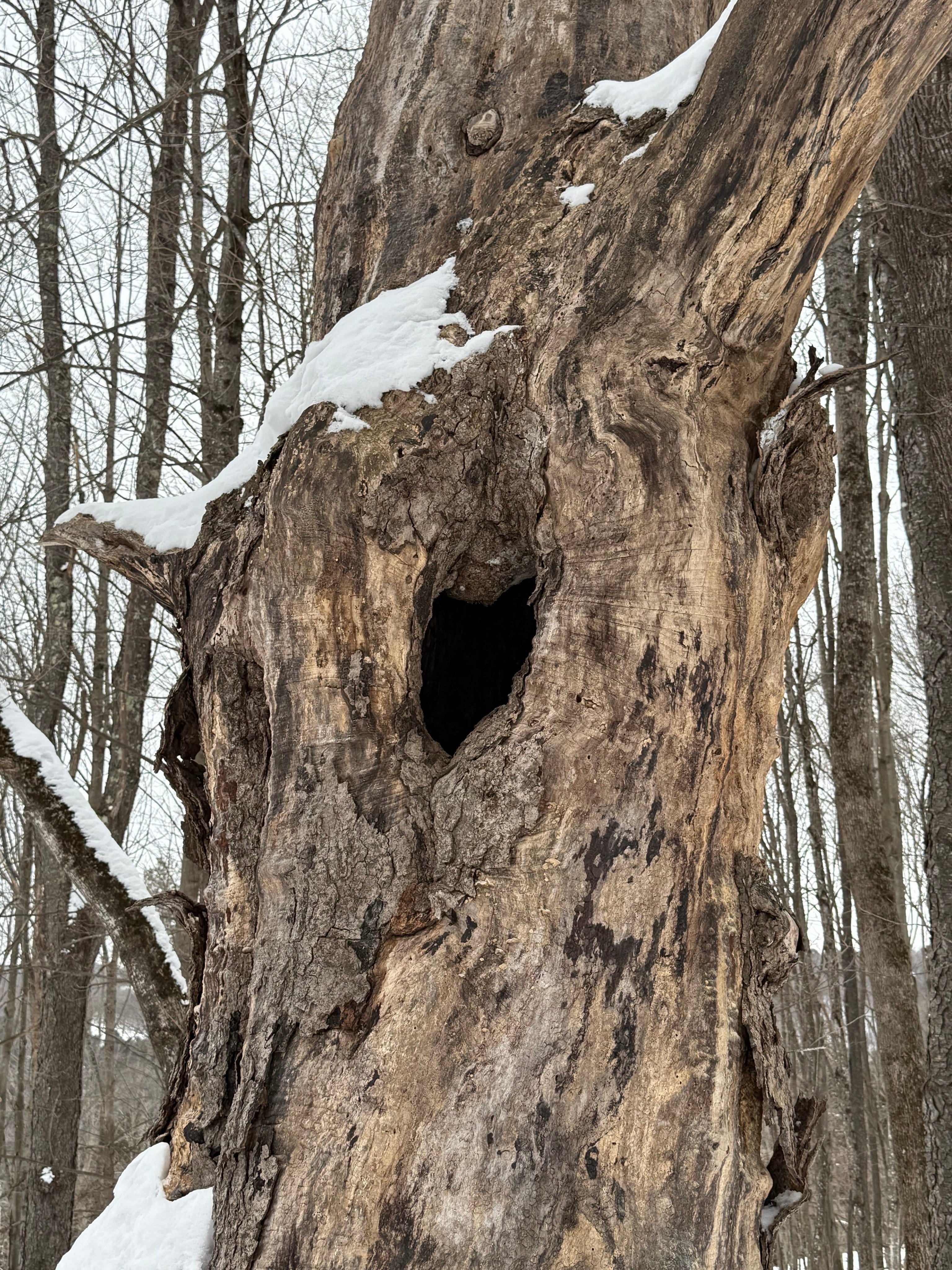
You Need to Find Your Old Hollow Tree
There is a tree at the entrance to the forest. It is very old and contains a large hollow in its center. As a boy, I would stop at the old hollow tree, pick up a stone from the path, and toss it into the dark opening before continuing on into the green. At first it was a game, the sort of thing children invent through their good little ways. I liked the sound of the stone rattling down into the cavity. I liked the thought that the tree was keeping count. I liked having a threshold to cross before disappearing into the woods. I do it still now. The game has remained, though as I grow older the character of it has changed a bit. The old game of dexterity feels more like a toll I pay before entering the forest. Some days it feels like prayer. Some days it feels like a bead slid on an abacus, a stone for every entrance into the wood, a stone for every afternoon spent wandering beneath the canopy, a stone for every small return to the same beloved place. I do this old ritual from my youth now with my wife and little girls and it has become a tradition that belongs to our family.I have said more than once to my wife that the old hollow tree looks near the end of its life. One day it may finally come down, and when it does I will have the opportunity to see how many stones it has gathered, how many times I have passed that way, how much of my life it has quietly kept. Lately, more than anything it is causing me to reflect on the state of affairs however and the experience of families everywhere. At the risk of sounding imperious or prescriptive, we live in a time when every family needs something like this, some old ritual tied to a real place near home, some repeated act that binds memory to the land until the land itself begins to feel like kin.Families should be rooted, have some fidelity to place. Families do not remain by affection alone however. Love needs form. It needs return, repetition, ritual. A family needs a path it always walks at dusk, a stone wall where children stand to watch the first fireflies, a porch where the first spring peeper is heard and named aloud. To be clear; these things need not be grand. Their power lies in how often they are repeated and in how naturally they become part of the family’s inner life. A child may not yet understand what a ritual means, but the body understands return long before the mind can explain it. You go to the same place. You do the same small thing. You carry the same expectation into the season. Over time the act gathers weight. What began as a game becomes a habit, what began as a habit becomes a family custom, what began as a custom becomes something almost liturgical. It acquires the gravity of old things, and children raised inside its good green sphere come to feel that the world itself has a shape, an order, a set of beloved thresholds through which life is meant to pass.We live in a time that pulls families outward toward abstraction. The wounded world asks us to care about distant crises, universal systems, ideological dramas, global emergencies, all before we have properly introduced our children to the patch of earth nearest their own door. We teach the children to talk about the planet while they cannot name the trees behind the house. We hand them causes before we hand them belonging. We make them conversant in the broad language of concern while they remain strangely unacquainted with the ordinary green miracles close at hand. This is too much weight to place on a little soul that has not yet fallen in love with anything particular. Love of the world begins with one place. Stewardship begins with one corner of it and a family tradition rooted in a specific place performs this quiet initiation. It says to the child, here is your forest, your field, your shoreline, your old tree, your spring path, your winter hill. It says, this place knows your footsteps, it knows you. It says, return here and you will remember who you are. There is another gift in these traditions, one that only reveals itself after years have passed. They turn time into something you can touch. Most of life slips by uncounted. Days blur. Seasons pass into one another. Children grow tall. Parents stoop. Fields green and brown and green again. Yet when a family keeps a place-bound ritual, time begins to take on shape, coalesce into weighted form. The old hollow tree has become a witness to my own life. It has seen the boy with dirty hands and no sense of mortality. It has seen the young man returning from college. It has seen the husband, the father, the man who now enters the forest with different questions than he once did. When I think of the stones collected in that hollow, I am thinking of years. I am thinking of all the selves I have been while returning to the same threshold. This is what traditions do when they are rooted in place: they become a family’s sort of silent archive. They keep account in ways no photo album can. They transform a tree, a gate, a path, a boulder,
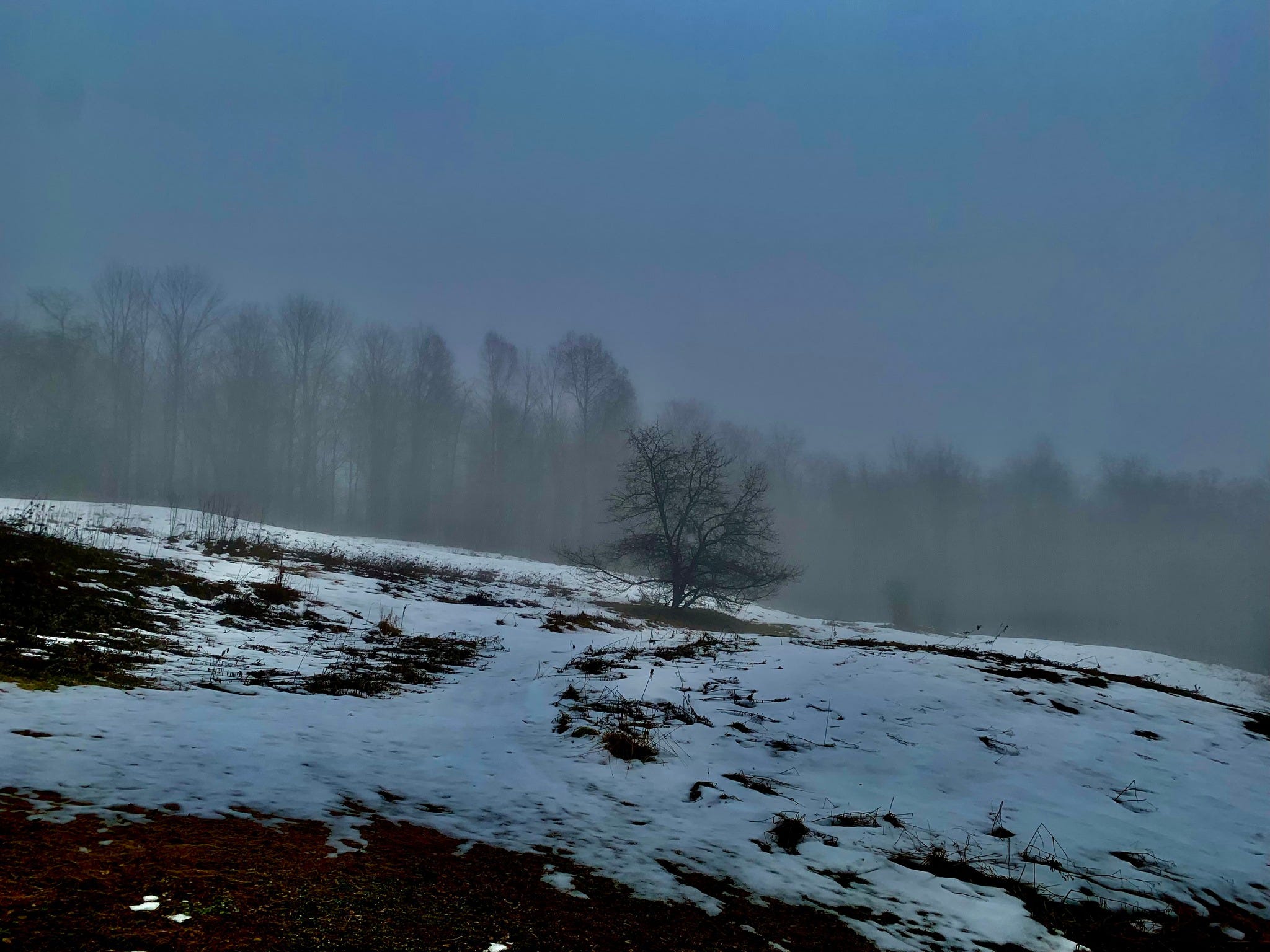
There is No False Spring
February is so often treated unfairly. We call a run of warm days a “false spring,” as if the month were trying to trick us, as if it had made a promise it could not keep. We speak of it with suspicion, as though any softness in the air must be a deception and any thaw a betrayal waiting to happen. Dear February is treated with too much wariness. This has never sat right with me. February does not lie. It does not overpromise. It does not pretend that winter is finished. It does not hang banners or sound trumpets. It simply marks a turn. A bright day in January feels like mercy granted to the frozen hinges and tired beams, rafters, and pipes. A bright day in February carries a different weight though, doesn’t it? The light has changed. The arc of the sun has shifted higher over the ridge. The shadows shorten even when the air still bites your face and stiffens your hands. You stand in the yard and sense that the day has lengthened in a way that cannot be reversed. What you are witnessing is not a counterfeit season but the first honest movement toward green. February is not a fraud. It is a covenant written in light that heralds the emergence of the good green pattern below.Yes, the month is unsettled. It can give you sleet in the morning and thaw by afternoon. It can harden the ground overnight after loosening it by day. It can glaze the road with ice and then send water running in the ditches before supper. The sky moves quickly in February, and the wind seems to test its strength against the hills. Beneath that volatility, however, something steady is underway. Walk the fields and you will see it written plainly in tracks. Mice run longer lines across the crusted snow now. Deer cross open ground they avoided in December, moving with a deliberateness that speaks of shifting instinct. Coyotes call again at dusk, their voices carrying over the valley in a tone that feels less like hunger and more like heraldry. A purposeful sort of sound that is less frantic than it was in November. The hills and valley are awake in a new register now. Buds hold tight on the maples and dogwoods, but they have swollen. Sap stirs on the south-facing slope where the sun lingers longest. Steam will soon rise from sugar shacks where men and women stand watch over boiling sweetness drawn from still-frozen hills, their faces lit by fire and long work. The earth is not soft yet, but it is no longer asleep either. February has begun the work of return.This is why the charge of “false spring” misses the point. A lie requires intent, and February has none. It does not promise full bloom. It does not pretend that crocuses are ready to split the soil. Snow still lines the stone walls. The pond still carries ice thick enough to hold a man and his doubts. The mornings still demand gloves and a bit of resolve. Wood still must be moved and stacked. Water still must be carried to animals. What has changed is the direness of your place in time. You are now closer to the equinox than the solstice. That fact stands independent of mood. The light lingers into late afternoon and stains the snow with a faint rose that was absent in December. The air smells faintly of water when the sun hits the south side of the yard. Even the cold feels different. It sharpens and then gives way to something less brittle and more raw and wet. It comes in pulses rather than pangs. The green pattern has been set in motion, and no late storm can undo that fact. A blizzard may blanket the hills next week and erase every track you saw this morning. It will melt. Frost may grip the orchard again and blacken early ambition. It will release. It is easy in this month to posture as a cynic. On any clear day someone will say, with a kind of satisfied resignation, that winter will return with a vengeance. They will point to the forecast and nod gravely, as though expecting hardship proves seriousness and forecasting ruin proves maturity. You may come to believe it proves something else: that February asks for steadiness, not suspicion. It asks you to notice what is happening without inflating what might. The animals do not debate the coming week. They move when the light tells them to move. The sap does not wait for unanimous agreement about temperature trends. It rises when the conditions are right. The farmers do not mock the thaw. They mend fences, sharpen tools, check seed inventories, and clean out the sugarhouse because they understand that a season is turning whether they narrate it or not. They prepare because preparation is what this hinge of the year requires. Cynicism does nothing to hasten or delay the change. It only dulls your ability to participate in it. February rewards those who keep working through uncertainty, who stack wood cleanly, who step outside at dusk and listen, who take the lengthening light seriously.February does not need to announce itself. The evidence stands in the open if you are willing to see it. Light stretches farther across the field an
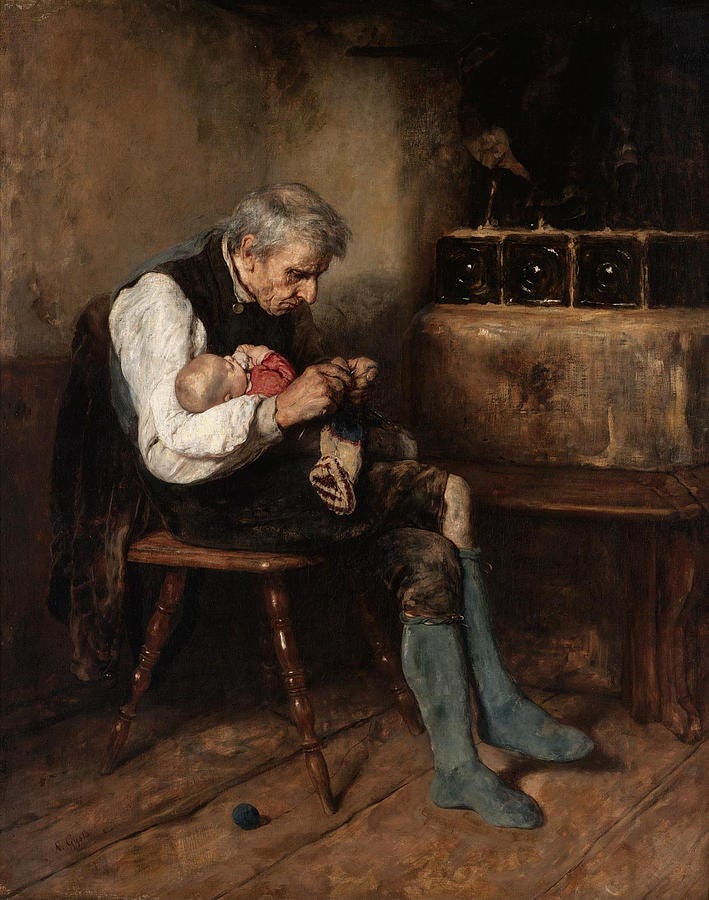
A Crisis of Keeping
We are in a crisis of keeping, and we need to learn how to hold on to everything again. I have been walking around this truth for years, naming different faces of it, because the thing itself is too big to see straight on. I called it disposability when I was stooping to pick up wrappers and bottles, watching how a world of throwaway materials trains a throwaway mind. I called it drift when I looked at towns thinning out, their young drawn away by the golden roar of cities and empty promises, leaving the old to sit under dark windows in darker hills. I called it the dying of small fires when I noticed how the ordinary signals of presence are going out one by one in a long, quiet surrender to convenience. All of that was prelude. This is the next turn of the same thought: keeping is the human art of staying faithful to what has been put into your hands, and that art is failing at the level of ordinary daily life. We are not only losing traditions and places. We are losing the inner posture that makes any tradition or place survivable, possible, thinkable. From the smallest objects to our ability to belong to a place, we are forgetting how to keep.We so often try to point to one cataclysmic event as the point where everything went wrong. You hear it all the time. “Where did we go wrong?” as if there was a singular moment when the pillars fell. I think most people can agree that we’re not living well, but pointing to some pivotal moment is not the key. Instead, we need to reevaluate the thousand small permissions and consolations and compromises we’ve made where we allowed the good old days to slip through. The broken thing can be replaced faster than it can be repaired, so we replace. The strained bond can be avoided easier than it can be mended, so we avoid. The hard season can be fled more quickly than it can be endured, so we flee. Objects matter here, though they are only the first lesson. The materials you choose, the way you pack food, the way you mend a gate or keep animals or refuse to let plastic touch what you harvest, these are a form of apprenticeship. They train your hands in permanence, and the hands train the heart. When you insist that something be durable, you are practicing patience. When you take care of a tool instead of treating it as expendable, you are practicing attention. When you keep a tradition long enough to learn why it was built, you are practicing humility. The same muscles that keep a jar in the pantry or a fire in the stove are the muscles that keep a marriage through lean years, keep a town through economic winter, keep a church alive when it would be easier to drift away, keep hope alive when the days are short and the headlines shout ruin. The modern world tries to convince you that everything is weightless, that you can pick up and go without consequence, that obligations are optional accessories. Anything worth having however carries weight. A home carries weight. A child carries weight. A place carries weight. A vow carries weight. A kept life is a weighted life, and that weight does not crush. It steadies.The whole economy hums along whispering that whatever is difficult is optional, that whatever is old is suspect, that whatever asks your presence is trying to steal your freedom. You feel that whisper at the kitchen counter and in the parking lot and on your phone late at night. It presents itself as relief, as efficiency, as self care, as the reasonable thing to do. In truth it is a kind of training, teaching your hands and heart to default toward exit. Once your hands learn the rhythm of use and toss, your mind learns the same rhythm with vows and neighbors and even your own sense of duty. That is why a people can be surrounded by abundance and still feel hollow. A life can be made fluent in convenience and still fail at the basic work of being human, being part of a community, of living well. Keeping feels slow because it resists that rhythm. It is the long obedience of ordinary days, and ordinary days are where the battle is won or lost in a thousand thousand small decisions to compromise or to hold. Keeping is learned by proximity, and especially by the nearness of generations to each other. A child does not become rooted because you tell him that roots matter, he becomes rooted because he grows up among adults who are rooted, who know the land and the people and the calendar of the year like they know the rooms of their own house. A young man learns how to carry weight because he has watched older men carry it without theatrics, watched them meet the hard parts of the year with presence rather than distraction, seen them keep the hearth work and the neighbor work and the village work in a way that makes endurance feel ordinary. An old person remains whole because she is still threaded into the daily life of a family, not visited as a relic but relied on as kin. When those bonds thin, the skill of keeping collapses.Children become a category to manage instead of
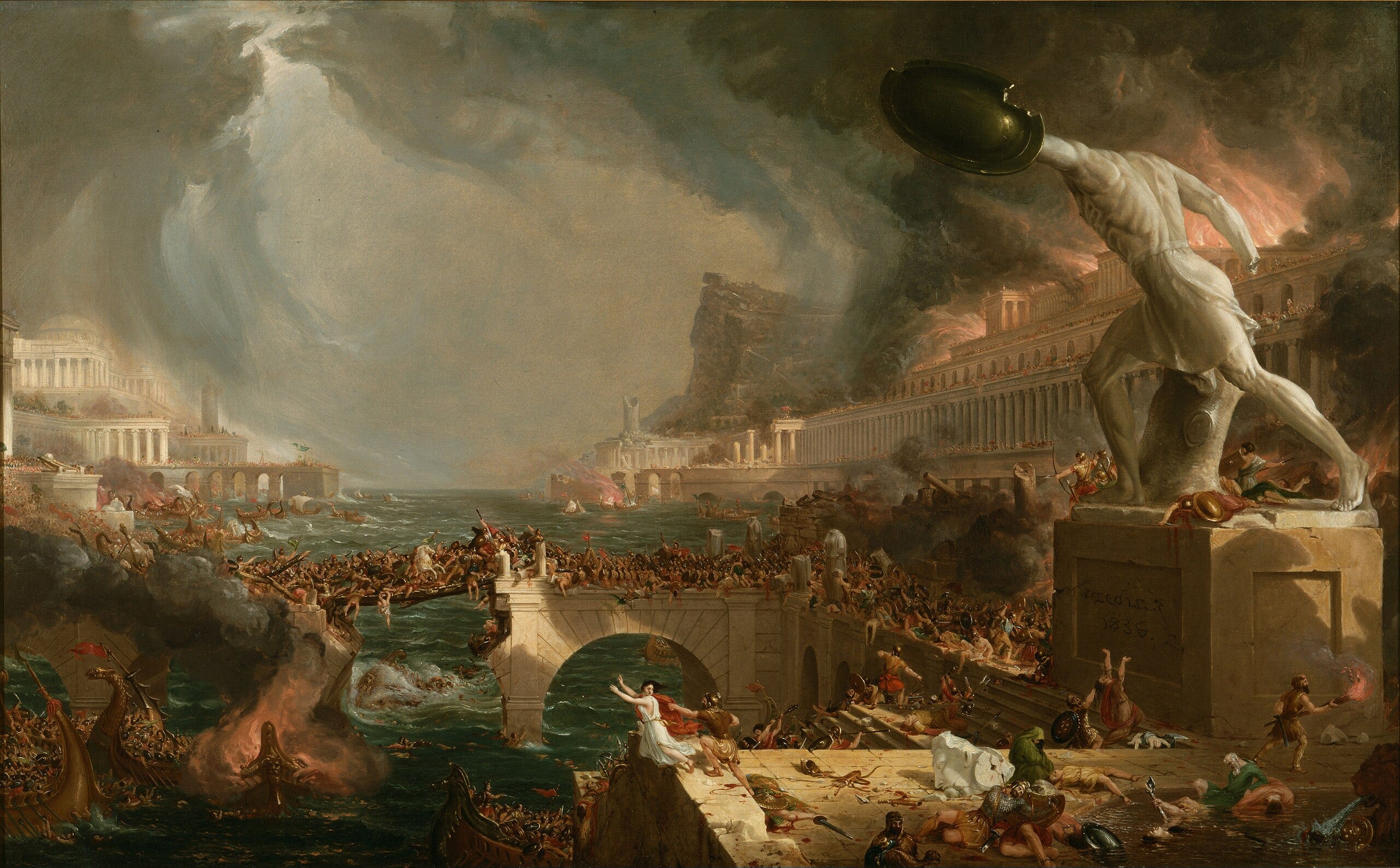
The Final Stronghold of Civilization
A quiet fatalism has settled over much of our modern culture. You hear the defeatism everywhere. There is a tone of resignation, a soft nostalgia without the accompanying responsibility to reclaim. The solutions are distant and abstract, with meaningful decisions now made far away by unreachable forces. Prominent authors and commentators claim our role is but to bear witness to the fall. The result is a kind of sad paralysis. People watch institutions weaken, mourn what they believe is lost, and convince themselves that decline cannot be reversed. This mindset obscures a simple truth: the work that matters most has never depended on national forces. It has always begun at the scale of the home. Institutions may falter, but the household endures. Indeed, as all the major institutions around us crumble, the household is the last stable social unit we possess.It is the final stronghold of civilization. The cracks in our large institutions (schools, churches, political parties, government writ large) have been apparent for years. The time following the pandemic however exposed how paper-thin they had truly become. Schools struggled to maintain their basic missions during the pandemic despite access to technology and the remote flipped learning model having been popularized for over a decade. Most churches and dioceses, already facing bankruptcies and scandal, surrendered to state mandates leaving parishioners wondering how sacred their sacraments truly were. Civic groups and community organizations lost the participation that once sustained them. The worst and most extreme elements of the political parties told you to either turn your neighbor in to the authorities or disregard their wellbeing altogether.What’s worse is that in the last five years, these institutions did not seem to learn much from one of the most historic events in their members’ lives; they continue to sleepwalk through the ruins of trust and efficacy as if we are not in a post-pandemic world. The old structures people relied on feel hollow. They still exist, but their ability to form character, teach responsibility, or create belonging weakened significantly. This decline is real, and ignoring it serves no purpose. We live in a time when a disillusioned people are looking for truth, consistency, stability but as they look to the grand old pillars of yesteryear, there are cracks in the marble and moldering mortar.The gaze then turns inward, away from the horizon and back to the hearth. How could it not? The household is the last stable institution. It remains capable of producing order, meaning, and resilience even when larger systems falter. The household is the last place where effort maps clearly onto outcome.It is the only level of life where you can actually build something without asking permission. It is the only institution still in your direct care. What’s more, your efforts there result in moral lessons that serve as touchstones when the town square is washed away. A consistent presence teaches reliability. A predictable meal teaches rhythm. A warm winter fire teaches care. A tended room teaches humility. A calm voice teaches prudence. These small actions shape a moral environment that strengthens everyone inside it and fills the void left by the academic, religious, and civic institutions that failed basic tests at the start of this decade. Within the walls of a household, effort still matters. Agency still exists. There is a common refrain we see from commentators that sounds like “Look at what we have lost! Look at what they have taken from you!” This is the pathetic and unearned cry of the lazy. A person has no right to mourn dying towns, fading traditions, or diminishing light if they are unwilling to clear the path, hammer the nail, or tend the fire themselves. Renewal begins with those who are willing to labor. A household that chooses responsibility becomes a source of stability for its neighborhood and a source of inheritance for its children.Indeed, the pessimists and chronically online doomsayers will claim this is a retreat or escape, a ceding of ground. On the contrary, a home that is truly kept in the most reverent sense of the word is not an escape from the world. It is the antidote to it and its failures. It is the smallest functioning republic: a place with customs, rituals, expectations, safety, boundaries, warmth, memory. It is the micro-scale society that actually teaches a child what the larger society should look like. The primal blueprint. Every porch light left on, every garden dug, every fence mended, every bedtime story told, every neighbor fed, every table filled with laughter and order: these are the acts that hold the world together when nothing else can.It is not a retreat. It is the final front by which men and women seeking agency in a wounded culture can actually mold their world.From there the effort radiates however.A man may not be able to single handedly reverse national decline but a family can
To Stand in the Dark
November contains a sort of harsh clarity. We see this first in the natural world; anything extraneous is shed. The trees drop useless leaves and limbs, the hives expel the drones, the animals become discerning in their movement, hibernate. The darkest stretch of the year, the heaving black throughfare leading to the solstice, does not allow for many frills. It is a time to conserve all things necessary and reject the ancillary. This is—like so many elements of the natural world—an invitation to reflect. First, the act of shedding to the fundament in the natural world. Second, the same act in ourselves.Third, the rebellion of this austerity.In the northern places, this stripping-down arrives early and without apology. The first hard frost rigors the fields, and what once sprawled in green excess now contracts into its essential, sharp lines. The marshes dull to pewter, their summer shimmer and buzz replaced by a quiet, skeletal geometry. Oaks and maples stand newly honest, their canopies surrendered, revealing the stark architecture beneath—angles, joints, and axes that summer’s abundance concealed. Even the coastline simplifies: tides pull back debris, winds flatten the dunes, and the ocean grows colder, darker, more deliberate in its motion. There is a sense that the land itself is tightening its belt, drawing resources inward, refusing all ornamentation. What persists does so because it must; what falls away does so without ceremony. This seasonal austerity is a lesson in instinct, in the ruthless intelligence of survival. The northern wild places do not cling to what cannot be carried through winter. They pare themselves to the minimal, the durable, the true. In this bareness, this disciplined retreat to the fundament, the landscape offers its quiet catechism: to endure, one must return to what is necessary, and let the rest go.So too with us. The frost falls, the snow arrives, and we—however consciously or not—take stock of what we will continue to carry. The abundance of summer, the swimming holes and holidays and easy dreaming of all the good plans to come give way to fundamental needs. Indeed, even in our modern lives full of so many conveniences and ease, this holds true. The cold sets in and our gaze shifts from the horizon to the hearth. The dark arrives and we find ourselves gently rocking a sick child and twice-checking the latch on gate. We stop planning and building to focus on the fundamental; our family, our home, our health. Precautions are taken so the children never have to think about warmth or food. An unwelcome noise outside causes you to stand a little longer peering out into the dark than you would have in the languid days of June. Such is the invitation of November; you are called to shed your summer dreams and turn your entire focus to the immediate, the necessary, the true. This is good, the forced setting of priorities, the reframing of perspective. Whatever auxiliary hopes and small decadences remained are shed to reveal what matters. Warmth. Nourishment. Family. Yet even within this season of bareness, there arises a kind of rebellion. It is quiet, human, and defiantly warm. We gather in kitchens that glow against the dark, coaxing abundance from our stores as if to remind winter that it cannot have everything. Its grasp may claw from the woodline all the way to the door but there, we proclaim, it must cease. The feast, in November, is an affirmation that austerity cannot fully lay claim to the human spirit. We roast with ceremony transforming the red harvest into something communal and light-bringing. Around a long table, we answer the starkness outside with laughter, with candlelight, with the laden plate passed from hand to hand. It is a refusal to let the season’s spareness diminish us. Instead, we meet the cold by gathering close, by feeding one another richly, by insisting that gratitude and generosity still have a place even as the world narrows. Though we stand in the dark and take stock of the fundament, this feast is our counterpoint to winter’s demand for simplicity: a reminder that while the natural world hunkers down, we are creatures who rebel by way of fellowship, by creating warmth where none is given, by celebrating audaciously the very abundance we have just finished paring down.It is a paradox in a way, yes. Such is the way of things however, those lessons learned standing here in the early winter-dark. Please subscribe to support our family’s beekeeping tradition.Living the Year - Three Acts to Embody This Time* Take a deliberate walk in a wild or quiet place and practice “noticing what has been let go.” Choose a trail, shoreline, or field and walk slowly, paying attention to what the season has stripped bare: the fallen leaves, the exposed branches, the drained marshes, the stillness of animals. As you observe, name (aloud or in your mind) one thing in your own life that can also be shed; maybe it’s an obligation, a lingering expectation, a distraction mas
We Fathers Must Not Let the Fire Die
We entered the dark part of the year this past weekend. You crossed over the threshold and now stand closer to the winter solstice than you do the autumn equinox. You’re on the other side of the year from the merry month of May at the absolute grimmest stretch; the days are dark, growing darker yet, and there will be no brightness, no brilliance, no break in the dark for another month and a half.Well, except for you. It all hinges on you now, northern man. You set the tone, stay the momentum, reclaim evergreen-old ways. Hearth-keeper. Merry-maker. Father. You are called now to presence. You are called now to keep. We so often see the next fifty-or-so days with Thanksgiving and the run-up to Christmas as an exhausting marathon feast. For you though, it is a vigil.The world asks that you show your quality as husband, father, son, and neighbor now. The days are few, the nights long, and within that ever-narrowing time, every act carries outrageous weight. You are also tempted by distraction now, however. It is so easy to say you are tired, to turn on the game after Sunday dinner, to linger in the garage, to sigh as your wife asks you to get the decorations down from the attic. To fade.Do not withdraw now. Do not diminish yourself as the shadows grow long at the woodline. Do not let the world turn without your strong hand upon it. When the outside world grows harsh, when the fields lie still, when your home fills with the excited sound of preparation, you must be there. Climb the ladder and hang the wreath. Fetch the wood. Surprise your wife. Gather the children. These small deeds are wards against the dark, they are prayers reaffirming that life continues, that the warmth you bring and grow and tend cannot be extinguished.Remember that you establish the temper of every hour. While your wife is reflecting on where best to lean the cornstalks on the front porch, you need to be determining the very air of the day. You need to be slipping your children a little candy from the Halloween hoard and proclaiming your right of taxation. You need to be planning outings, carving meat, and remarking with authority on things you know nothing of. You need to be dropping in on the women in your life with an armful of mums and a gallant stride. You need to be leaving surprises for friends and sneaking the dog a morsel of Sunday dinner under the table with a wink and a nod to the nearest child. The kind of wink only a father can give, the kind that forever keeps you in their confidence and says “I will always be on your side.” The home needs your warmth. The table needs your weight. The children watch you and learn what good endurance looks like in the ordinary tiring hours when the sun sets too early. Bring them light, laughter, guidance. Let your presence be the keystone that centers, that steadies the room. When your wife leans into the labor of the season, the quiet shaping of the home, you must meet her there. The work belongs to both. Your touch upon the hearth-work is the old inheritance, the way men once met the seasons and cycles of life with quiet reverence. Attend to it. Mend the last of the fences, light the candles, stand in the raw descent of dusk and know what is asked of you now. Just as the jack-o-lanterns give way to the garland, so too does your autumnal joviality and Thanksgiving revelry give way to something deeper. Something hallowed and evergreen. Something old. So many of our old ceremonies and traditions surrounding the solstice and Christmas have entirely disappeared; they lie scattered and desecrated in the shadows of convenience and commerce. We have lost something ancient, something equal parts solstice bonfire and midnight mass, something green and white, wild and hallowed. Where are the home-spun fireside delights of yesteryear, the halls decked with the rustic charms of mistletoe and holly, the candles, the fires, the caroling? These august customs of sheer, unbridled optimism flourished when men had a little more vitality, when they were a little more dangerous, when they threatened to drive the dark away. We all crave the same thing our forebears sought however: the assurance that our homes will outlast the night, that the days will grow longer, that the year will begin anew. Now, here in the long dark of the year, you need to reflect on those good old traditions that came before you, you need to reclaim the discarded crown of holly. It is you who now bears the torch upon the hill, you who now lights the candles, you who now tends the hearth.The year will die and when it does, when the trees stand black against the snow, when the days begin their slow return, you will see what your keeping has wrought. Your wife will move through the rooms in quiet contentment. Your children will laugh in the warmth you have made. The dog will rest near the fire knowing all is well. The house will hold a stillness that feels like victory. Outside, the fields will sleep beneath frost, and you will know that you
Little Lights and Dark Days
The dark creeps in now. It does that this time of year, right before Halloween. You’re in the garden until well past eight o’clock one day and the next you’re huddled by the woodstove fighting back the marrow-deep raw of a late October fog. You sit down for dinner with your family and note there is something off about the dining room; all those daily imperceptible shifts in the way the sun sets over the nearest ridge have caught up to you and are taking a small toll. All around you now, a bit more gloom sets in. Halloween is of course more than just ghouls and goblins, it is the halfway point between the autumn equinox and the winter solstice: the downhill of the downhill toward the darkest point of the year. The gloom before the true dark of the turn of the year. The leaves have finished their brief reverie. The fields, once humming with life and green, stand quiet under mist and crows. The garden gate swings in the wind, and even the morning coffee seems darker, heavier, its steam adding to the wisps at the woodline. You feel the tilt of the earth not in your bones but in your habits, the way you reach for the light switch earlier each day, the way conversation around the dinner table grows more inward, the long shadows reaching for the cellar door. You know what to do, however.You begin, instinctively, to bring light into your home. You might not even think of it, but you do. A candle on the dining table. A string of lights on the porch railing. A pumpkin carved and lit from within, its face soon flickering against the damp night. These small illuminations push back against the growing dark with a steadfast gentle defiance. We smile and tell ourselves they are for the children, and perhaps they are. The children are the reason you lay the newspaper on the table and pull the top off the pumpkin, the reason you scoop the seeds with your hands and pretend not to mind the mess, the reason you scrape a spot of rogue wax off the porch in November. You do it for the laughter, for the faces warmed by the orange glow, for the delight of watching fire bloom in spite of the gloom. You also do it for yourself, however. You do it to remember that though the darkness claws ever closer to the door, searching and scratching for a thread to pull loose, that sometimes the smallest light is enough to make a home feel whole again.It is an old wisdom, perennial and ancient, this turning toward little lights in dark times. You might not call it ritual, but that’s what it is. You light the candles and the jack-o-lanterns not only for beauty but as a quiet defiance, an illuminated line in the sand. You have seen enough of modern ills to know they do not come with the season, that the dark of our contemporary wounded culture ever urges and churns without cycles, without good green patterns. The news is loud with tragedy and rage, the world feels increasingly brittle, and everything seems designed to keep you anxious and distracted. The easy conveniences promise to make life simple, but instead they make it smaller. You scroll instead of speaking. You purchase instead of creating. You forget the smell of woodsmoke on your clothes and the taste of real fruit in your mouth.Yet, there are still the children, asking to carve pumpkins, to light candles, to stay up late to see the moon. They do not ask you to explain the wounds of the world to them, they do not even ask to make it more bearable. They do endure it though.The dark they face is not the same as yours however. It is not the dark clawing at the door, howling for your attention. It screeches silently in the wires, it hides behind screens, it slips into the corners of classrooms and playgrounds. You watch it reach for them, and it makes you ache. They are too young to understand how much the world asks of them already, how much it desires them. They come home tired, not from running or climbing, but from keeping up with all the influences and inputs and noise. You see it in them, don’t you? That quiet weariness that no child should know.That neon static scream of too much, too much, too much behind their eyes.We laugh to ourselves and joke that we weren’t meant to have as much information as we do, that the 24-hour news cycle is really too much, that knowing about sorrows across the world probably isn’t good for us. We erred. We were not meant to pull back the curtain and stare so long into the digital cauldron, to be overwhelmed with so much information and so little knowledge. Our little towns and schools and homes have been flooded with every sorrow of the world and we were not prepared.We adults grimly laugh at our mistake and shrug but the children, they do not understand. How could they?So you light the candles again. You make soup and laughter and warmth. You teach them the old rituals equally arcane and ordinary: how to carve faces into pumpkins, how to gather leaves, how to make a home glow from within. You do not tell them it is protection though it is. You do not te
You Need to Keep Going
It is October now, though you wouldn’t know it from the mercury rising the past week. The maples are rapidly growing bare and the leaves are crisp beneath our boots, yet the air hums with a misplaced summer heat. For days now, the warmth has lingered heavy, uninvited, strange. The bees are restless, spilling from their hives past twilight, agitated and uncertain of the season or their aims. The full moon hasn’t helped their confusion, nor mine. It has cast its silver light through the boughs and across the fields, waking the nocturnal; foxes, skunk, and deer wandering through the flower field and closer to the house than I would like. The children, too, have been taken by the moon. They beg to stay up late, to join in whatever quiet work remains before bed. This is fine. The heat lends itself to frustration in us older people, but tonight my little girl carried tools down the hill to me, barefoot and beaming her headlamp despite the moonlight, ferrying a hammer, a ruler, some nails while I mended a loose board in the honey house. There is a strange paradox to this season: one foot in autumn, the other stubbornly trying to reanimate summer. The leaves have fallen and turned to tinder underfoot, perfect for jumping and tossing into the air, yet standing in the old flower field I can hear the faint laughter of swimmers down the hill at the lake in the village, as if July had clawed its way from some autumnal burial mound.It is disorienting when a season will not stay dead. It confuses the senses and makes time feel off, wrong somehow. Still, around every home, the same good green pattern continues: the swing of the maul and the stacking of wood, the scent of honey warm in the hive, the anxious hammering of boards to outbuildings before winter’s inevitable claim. It is a strange thing to sweat under a sun that should have softened weeks ago, to labor in the yard or forest with heat on your neck while knowing frost is crouched in the hedgerows, waiting to waylay the tomatoes on the vine. The small jobs about the property and home regenerate endlessly, almost as if they are urged on unnaturally by the heat. Then we see the children in the yard though, gathering leaves and stones into little piles or pretending to help us carry kindling and suddenly the heat no longer confuses and disorients, the muscles no longer ache. The children root us when we are unmoored by strange skies. They sanctify the toil and redeem it into vocation.Today the heat finally broke. Rain came in the early morning, soft and steady, and our little corner of the world exhaled. The sky turned a muted gray and the light, filtered through the patchy clouds, glowed with a gloaming calm. The bees quieted at last, huddled in their hives, and the forest smelled again of damp leaves and good sodden loam. It is the kind of weather that invites stillness, that whispers rest, rest, rest. Rest is a luxury not yet earned however. There is still wood to stack, honey to bottle and sell, another repair on the chicken coop before the cold finds its way in. Meanwhile, the children’s laughter is a ringing bell through it all, putting the reanimated summer finally to rest. They play in the new puddles we tell them to avoid, of course, and when we turn to scold we stop short. Their joy redeems the drudgery. Their play answers every unspoken question about why we keep going when the body aches and the mind frays.Even now, as the days shorten and the warmth feels misplaced, we are reminded what all this labor is for. The work, the worry, the stings and small fixes. They are for the children who chase chickens and puddles and dreams under an autumn sun that doesn’t know what month it is. They are the quiet covenant that binds us to our place and to the rhythm of work and of rest, of breaking and of mending, of toil and of joy. The skies may turn strange, the seasons may blur, the cracks in our walls may show but still, we keep going. We must. When the muscles tremble, when the hands blister, when the spirit grows weary and wonders if it can go on, we look to them and remember.For them, we labor.Through them, the work becomes hallowed. This is a public episode. If you'd like to discuss this with other subscribers or get access to bonus episodes, visit oldhollowtree.substack.com/subscribe
You Must Recognize Your Victory Now
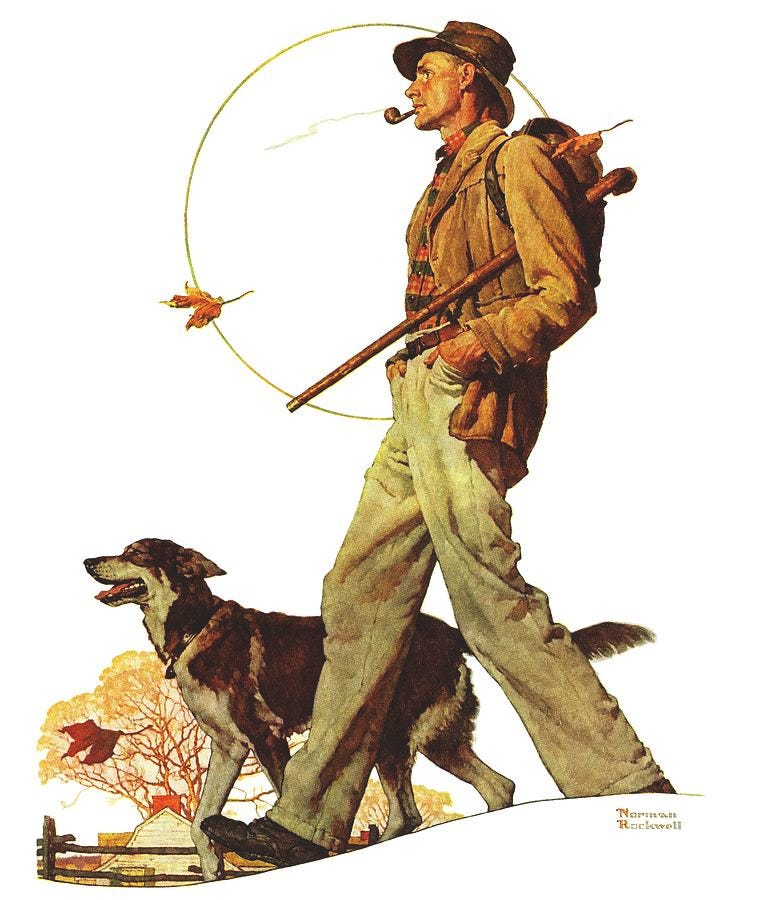
You’re well on the march to winter now. The solstice came and went back in June and your days became imperceptibly shorter. Lammas came and went quietly with the early harvest. Now the equinox is behind you and there is no denying that summer in all its good green glory has performed its function. Everything good grew, bloomed, and went to seed.Purpose and achievement realized, made manifest.A culmination of green and gold, of seed and loam.We could learn from all the trees and flowers this time of year, of all the seed sowers and bulb growers. Our days are marked by endless pings and alerts, of calendar reminders and notifications. You are approaching the fourth quarter of the business year—that most hatefully efficient quadrisecting delineation of your time—and, if you are a white collar worker who spends more time behind a keyboard than a shovel, you are likely facing some sort of “Q4 performance review.”If so, God help you.Your good green heart was meant for more than this.You will be asked—either by your job or by our wounded culture at large—how you plan to grow in the coming quarter, in the time before the turn of another year.This is neither fair nor is it natural.When we lost touch with our agrarian roots, when we left the fields and forests for the factories and offices, we sacrificed a certain attunement with the seasons and cycles. We forgot how this time of year was instructing us in favor of steady work, a long endless metallic drone instead of a cyclical organic rhythm.We forgot to recognize our victories. We forgot to realize when we had won and when to rest.The good news is that creation, the loam, the good green pattern churning beneath all know better. The forest knows better. Ask any gardener or beekeeper or orchardist and they will tell you now is the season to take stock. You pull the last of the garden from the dirt, you collect the honey you’ve been waiting on since May, you take your apples to the cider press. There are few thoughts now about producing more, about endless striving. Now all thoughts turn to a heavy sigh of relief and culmination—the fruit is in the basket, the crop is in the barn, the bees are heavy with stores and the wood pile is teetering dangerously high.It is no small thing to come to the end of a cycle and realize you have made, grown, created enough. That you worked, yes, and labored, but now you can gather. We were not meant to produce endlessly, to grow constantly, to urge and urge and urge. This is the rhythm our ancestors trusted. This is the rhythm that kept them sane. The ability to stop and say: it is finished.You should allow yourself the same.Perhaps you are not a farmer. Perhaps you have no harvest in a literal sense. Still, you have planted and tended something this year. Maybe you raised children through another summer of scraped knees and wild berries. Maybe you launched a project that is finally reaching its natural close. Maybe you simply endured and held on when things were difficult in your heart. That too is a kind of harvest and worth acknowledging.Instead of asking “what next?” ask “what now?”What is here? What is complete? What is good?The trees do not grow new leaves in September. They are not so foolish as to try. They know it is time to let go, to blaze out in one final show of color, to cast seed into the ground and trust the future to take care of itself. They celebrate by ceasing. They culminate by closing the cycle.Do not let the tyranny of quarterly goals, year-end reviews, and other modern inventions of productivity rob you of the deep peace that is due to you in this season. Do not let our culture of relentless progress steal away the chance to enjoy what you have already accomplished. Some will tell you that rest or idleness now is a sort of failure. The truth is that rest is the crown of the work.The meadow in September is not anxious. The field after harvest is not ashamed. They have given what they can give. That is enough.Now is the time to gather your own community, however small, to mark this time following the equinox. Invite friends for a meal. Bake bread, press cider, roast whatever your hands have brought in from the summer. If you have no literal harvest of your own, take stock of what you have done, all the good you have wrought and celebrate it. Buy a pumpkin, light a candle, let the children run until they fall into sleep. You are allowed to live as if the world is not only spreadsheets and headlines you know.Celebration is a kind of rebellion. Through it, you proclaim: I will not let the anxious cultural ills dictate my pace, I will not let the endless noise drown out the truth of the season. The truth is that you have accomplished something. The truth is that you have made it this far. The truth is that you can rest in that knowledge.First you need to take your victory lap, though.The frost is here. The days will shorten further. The long rest of winter will arrive in its time. Not today though. Not yet. Today is
How to Find Your Balance in an Unbalanced World
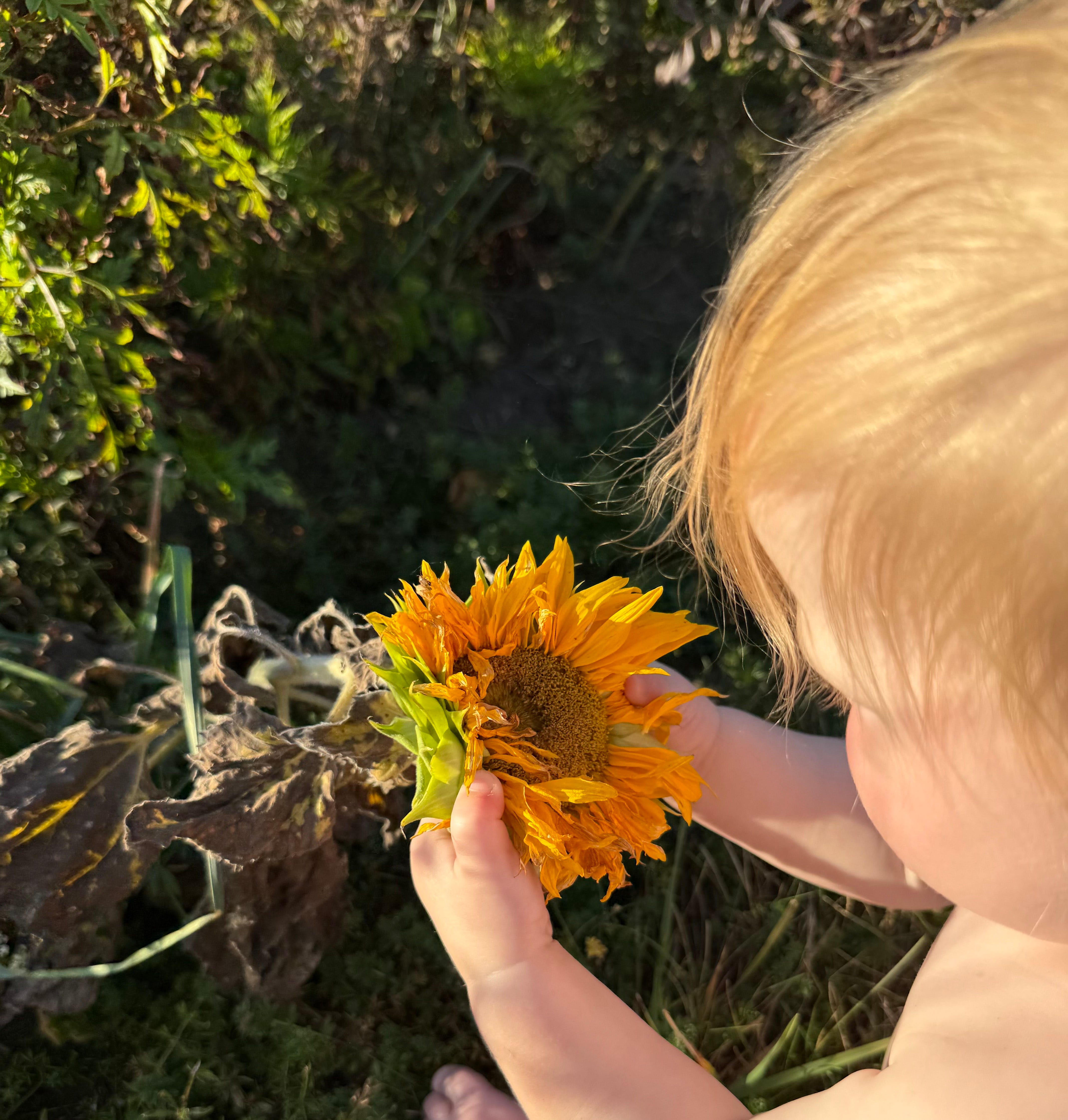
We are deeply unbalanced, off-kilter, ready to fall. Take a look at any headlines and no matter your politics or lack thereof, you will likely conclude our entire world is teetering on the edge of a blade, at risk of falling into cataclysmic disorder. This coming Sunday however contains a heavenly convergence that is worthy of your reflection and may offer some solace; it is both a new moon and the autumn equinox. This is significant not because of some spurious astrology but rather the real, tangible ways your world will change and some innate symbolism that natural world offers. On the equinox your days and your nights will be more or less equal. Twelve hours of light. Twelve hours of darkness. This is good. In such unstable times, it is well that we are not also enduring the long dark-cold or losing ourselves in the bacchanalian joy of the two extremes, the solstices. This equinox is marked too by the invitation to start over offered by the new moon. Something about new moons always feels like an opportunity to begin again. When you take these two celestial events in tandem—the balance of the equinox and the opportunity of the new moon—it feels as though you are being invited by the natural world to step forward and reclaim some semblance of stability, to make a fresh start and regain your footing, to try again. I walked with my now toddling daughter (13 months old) around our meadow this evening wondering what to tell you about this equinox, about how to become balanced again in such an unbalanced world. Would I speak of the adaptability of trees changing? The succession of flowers again? Migratory patterns? As I hemmed and hawed, contemplated and reflected there in the meadow, my little girl pointed to a small sunflower. I carried her to it, placed her down, and continued my ruminating. She tugged at the flower, realized she could not pull it from its root, and crawled to my lap. She did not fuss as I picked her up and carried her in my arms to the forest in search of more insight. It was there however, that I realized she had already given us everything we needed to know to keep our balance in this unbalanced world.The FlowerAs we walked around the field, my daughter spied a small sunflower from some distance and pointed to it, directing me to bring her there. When I placed her on the ground, she was not distracted by a butterfly nearby nor the approaching cat; she walked to the flower confidently and began to pull. She knew what she wanted and she went for it. As we are considering how to reclaim our balance in these uncertain days of grim headlines and constant alarm, it is wise to be like the very young child who sees what she wants and strides to it with an unwavering focus. Identify your goal and do not lose sight of it, ask those who support you to help you arrive to your desired location, approach, and seize what you desire.The Familiar When my daughter decided pulling the flower was in vain, she did not fuss. She realized uprooting it was beyond her and she crawled toward me and settled into my lap. One might expect an easy lesson here in the importance of asking for help, but that did not occur. My daughter—though very young—knows how to ask for things including assistance. She did not do that with her flower. Instead, realizing it was beyond her, that its roots were stuck fast, that it willed itself to remain planted, she returned to me and therein lies her second lesson for you:When we fail, it is good to retreat to familiar ground. Remember though (and this is very important) that she did not crawl to me crying or wailing, distraught at her defeat. She accepted what was and returned to what she knew. As the world becomes increasingly complex and unstable, things just won’t work sometimes. As my friend and fellow father Joe Norman at Applied Complexity Science likes to remind me, “complex systems are fragile systems.” This will only become increasingly true as our world becomes increasingly complex and many institutions, efforts, and logistical networks will break down. Failure abounds.This sounds scary but it is fine as long as you have the familiar to which you may return. Perhaps it is not a physical place like your father’s lap. Perhaps it is your faith or ethos or code of morality. Perhaps it is a person. Perhaps it is a book or tradition or biome. Whatever the case may be, if you have a touchstone, something to moor yourself to when the sea of life becomes too choppy, you will be able to regain your footing and try again.Trust After my daughter crawled into my lap and I stood and started walking away from her desired flower, she did not whine. We walked from the flower meadow to the edge of the forest. There, we spotted a flock of wild turkeys emerge in the far corner of the field to the south. The woodline curves there like the gentle arc of the sun over the western ridge this time of year, providing multiple opportunities for escape for a cunning wild bird. A fine and safe boreal co
How to Slow Down Time
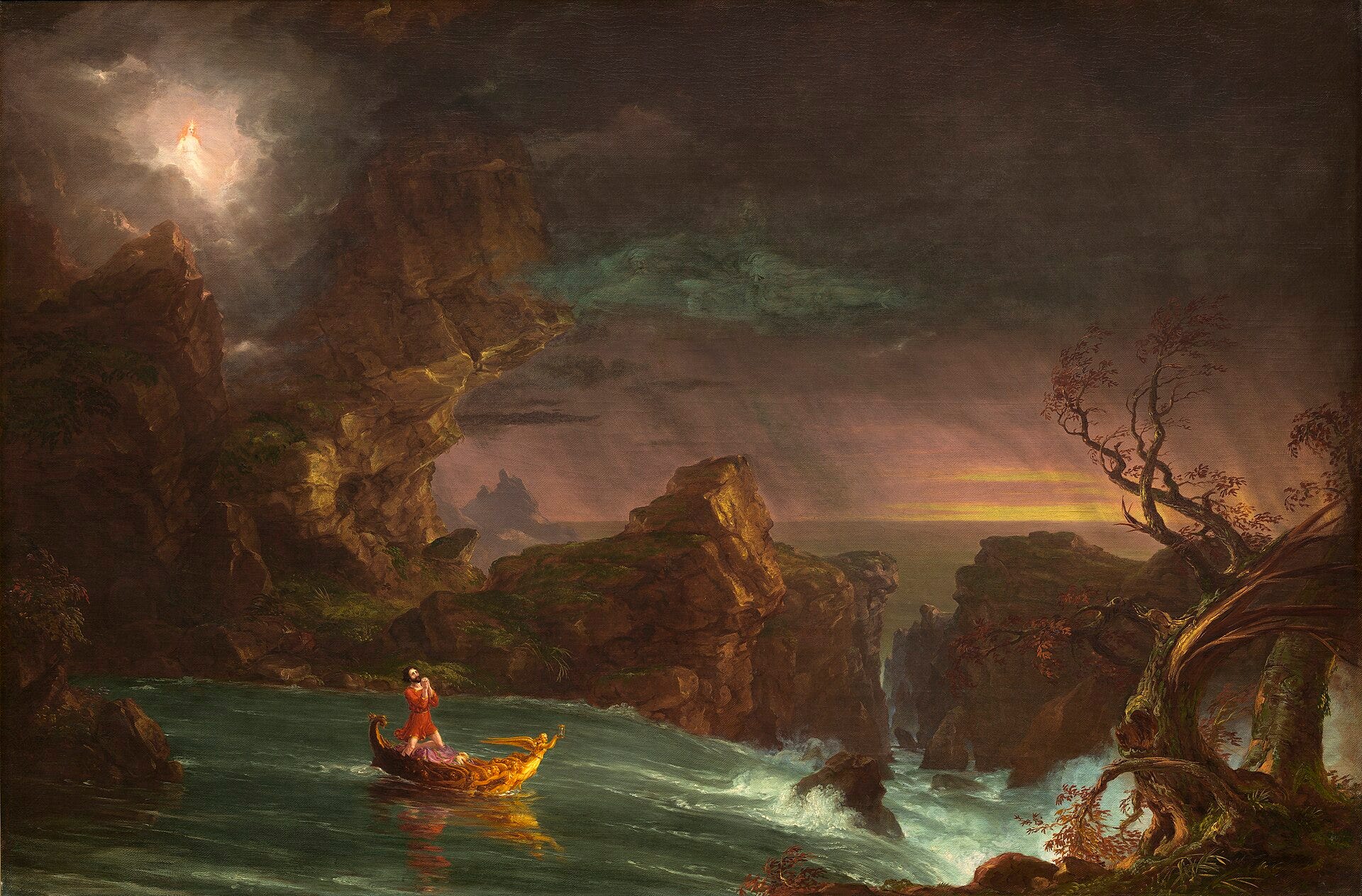
It is late August and the northern places have begun to transform with quiet, unassuming grace. The nights grow cool in the hills and a walk down the road, through the forest, or past a tangled hedgerow will reveal autumn’s early, subtle gains. Apples have begun to tumble from branches, splitting open in ditches and their bruised, tart-sweet perfume mingles with the crisp air. Sumac has begun to blush along the edges of the field as if the bees told it a risky joke. Goldenrod reigns over every field. The light has sharpened, no longer softened by June’s hazy gauze but instead casting crisp edges on leaves, stones, and weathered fences. The sky feels closer to November’s stark clarity than midsummer’s languid glow now. A faint browning creeps into the green, signaling the year’s inevitable turn toward more balanced days after summer’s wild sunlit bender. This is late August’s arrival, subtle and without ceremony, leaving most of us to ask “Where has the time gone?” It is a good question and we seem to remark on it often. People will tell you that time keeps speeding up for them as they age, that the days are long but the years are short. They ask “How did my children grow so big?” The days are so full, the weeks just float away and there is the ever-present lament of “I need more time.” They are common complaints and questions. Rarely do you hear that we can slow the turning of that old grindstone, however. It seems to be a secret well kept, hiding in plain sight.We can slow our perception of time. It is not arcane or difficult, but it does require practice that, like all good practices, eventually forms into a benevolent habit. The secret to slowing time is twofold: first in deliberate attention, in actively attempting to simply notice what is changing before you. Most people rush past the season’s signs, distracted by screens or lamenting summer’s end, only to find themselves at Labor Day or Halloween, asking, “Where did the time go?” Time can be stretched however, made to linger and burn slow like a well-tended fire, by noticing the small shifts that mark the turn. This, in part, is why it becomes important to attune yourself to a place, to stay there for a long time and become intimately familiar with its seasons and its signs. Do you know the birds at your feeder, the weeds in your ditch, where the moon rises over the ridge this time of year? Here in Vermont, late August has many little omens and signs: goldenrod fills the fields while asters bubble up from the ditches and roadsides, their purple and yellow blooms complimenting the fading green. Corn in the fiend stands tall, tassels dry and rustling, while dairy barns glow with the soft light of evening routines. We have lost over an hour of daylight since the summer solstice and those lights are now necessary. In the woods, the understory shifts; wood nettle fades, jewelweed scatters seeds, and birch leaves curl on the forest floor. Along roadsides milkweed pods are just beginning to split open, their silken threads catching the wind. Each day offers a detail, a small slow secret to anchor the moment if you but pause to gather it.The second element you need to slow time may sound ironic. It is filling your days with good work. Imagine each day as a wooden chest placed on the riverbank. The river is time, always flowing, always pushing, apathetic to what it carries off. The chest is your days. A chest left empty is light; it is carried off easily, swept downstream before you have even marked its presence. That is how whole months can vanish unnoticed, how years slip past with the haunting sense that you never truly lived them. A chest that is filled with the weight of good work, of perennial tasks, of hours well-spent building, making, growing for your family cannot be rushed away. It settles into place, anchored by what you have placed inside with care. The day remains regardless of the rising river and its rushing insistence. You can prove this for yourself. Work a property hard for a single year on evenings, weekends, whenever the light allows, and by the following autumn it will feel as though you have been there for decades, even generations. The soil will know your hand, the fences your hammer, the animals your presence. This good work does not mean frantic busyness, nor endless striving, but rather keeping with the good green pattern of the world: tending bees, stacking wood, pruning apple trees, raising children. In the city you may achieve this as well, though it may not feel as intuitive. Instead of splitting wood, you may have more agency around the relationships you build or the initiatives you take to improve commonly held spaces like parks, or the old rituals of your faith you steward. Whatever the case may be, you place good weight in the chest through these acts. They belong to the perennial cycle, the tasks that root you in a place and in a rhythm beyond yourself. Fill enough chests this way, and the river of time still flows, but you
Flowers Freely Given
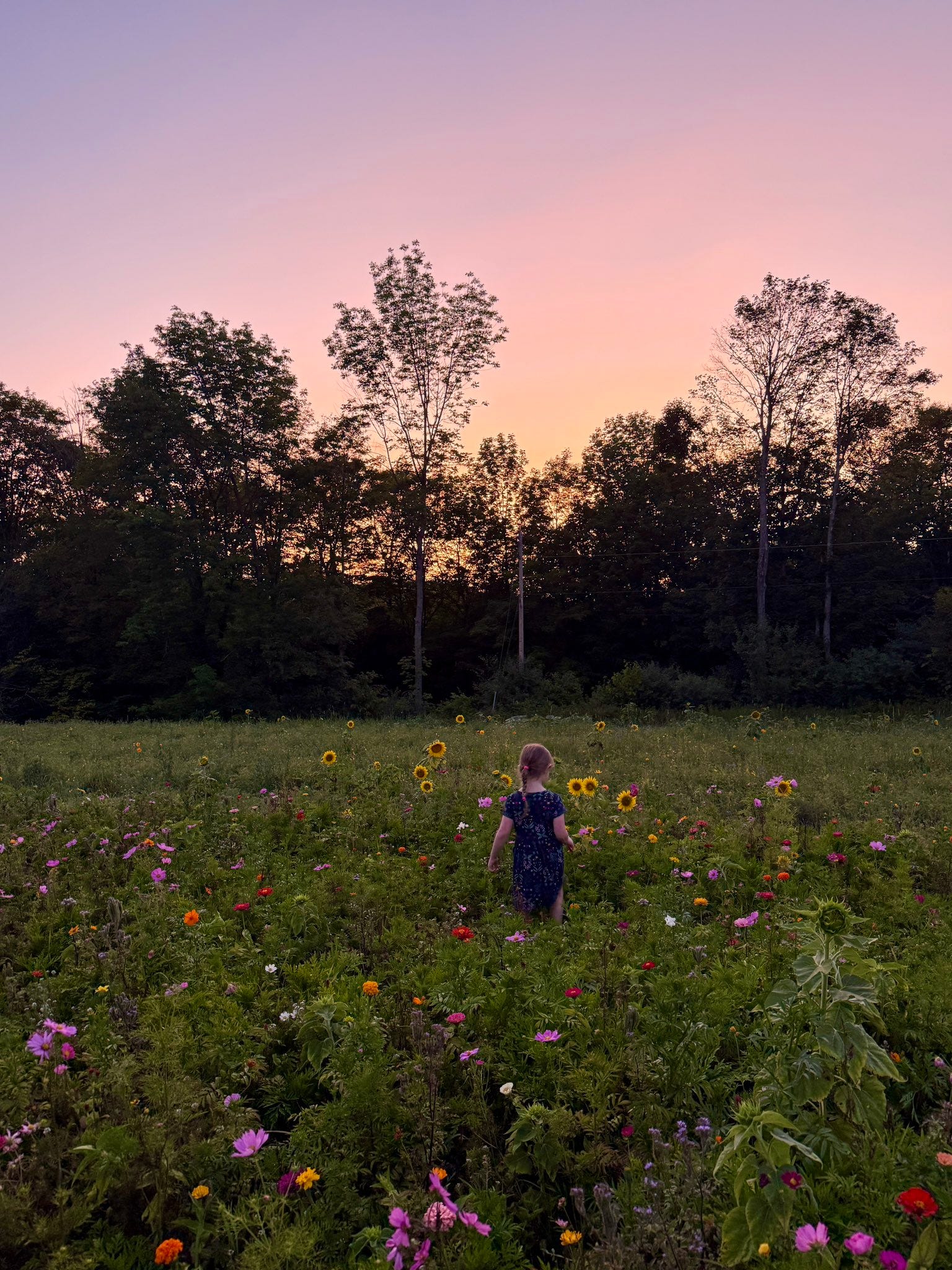
Author’s Note: this essay is part of the Reports from the High Wood series, a weekly premium report from our homestead that offers enduring lessons for living well in a wounded world. If you're drawn to green paths, perennial values, and timeless beauty that resists the modern glare, you're in the right place.Normally these Sunday posts are for paid subscribers only, but the nature of this essay makes it feel right that this post should be available to everyone.Here are some of our past beekeeping posts that will give context if you are new here:"You could charge for this, you know." The kind woman I did not know remarked as she cut a handful of zinnias and marigolds from our meadow. She was visiting from another state, staying with my friend and neighbor who I saw swimming earlier. I invited them to walk up to our home and cut flowers. Her comment caused me to reflect not only on the possibility of tourists cutting flowers and taking photos in our meadow for money, but the morality, authenticity, and general ethos of the idea. Two weeks ago, another friend walked up from the village with her daughter and her daughter's boyfriend. These beautiful teenagers spent one of their final evenings together before leaving for college by putting the flowers from our meadow into each other's hair. I smiled as they stood there in the field, looking like Oberon and Titania holding court, unaware of summer's fade. Could I ever bring myself to charge a stranger for such a thing? Would it be right? Would it be better to leave the meadow a secret for friends and friends of friends to come and leave with a bouquet for their table? What is even the purpose of the Humming Meadow?We live in a time when everything is bent toward transaction. The smallest pleasures are weighed for their commercial potential, packaged, branded, and sold back to us as a curated experience. Even the flowers are not spared; wild bouquets and meadow walks appear on glossy flyers promising wellness, mindfulness, reconnection. To resist this “agri-tainment” not easy. We are told we must monetize the hours we spend, the skills we carry, even the beauty that happens to fall on our land. I am not immune to this. I write here, I keep bees, I tend a homestead that asks for both labor and investment. Yes, we care deeply about beekeeping, the land, and creating something good and perennial but there is also a practical wisdom in selling honey, in asking readers to support words worth writing. Yet there is also a line that must be drawn if one hopes to live in alignment and equilibrium with the good green pattern. Not every moment, not every experience, not every gift of place should be folded into the ledger. Our wounded modern world may need fewer things for sale and more things given freely, without calculation or branding, without the heaviness of an exchange. There must be some part of our lives—a table set for family, a forest path known only to neighbors, a good old ritual—that remains unpriced. Perhaps this is because, while in the meadow this evening, I sensed we are actively living in “the good old days”. I know it in my bones when I watch my daughter chase after our black cat through the meadow with an armful of zinnias. I know it when I see my wife at dusk, standing barefoot in the grass, holding our youngest while moths relieve the butterflies’ watch over the meadow. I know it in the steady rhythm of the hives, in the sting and the sweetness that mark this work as ours. These days are fleeting, precious, lit with a kind of unselfconscious joy. The business is still small enough that it does not consume us, the children still young enough that they do not pull away. Even the meadow itself feels fragile, an ember of soil and seed that could easily be snuffed out by carelessness or greed. Were I to charge for entry, to make the flowers a product instead of a gift, I would lose something essential. I would no longer wave to a stranger who has wandered up the road from the village and mean it when I say, “Take some home with you.” I would no longer welcome a friend of a friend with scissors in hand and feel no need to count the stems. These are the years when such hospitality is still possible, when the gate is open, when we do not guard ourselves against loss because what we have feels abundant.In time, this ease will change. The children will grow, the business may harden into necessary edges, the meadow will pass through its seasons and become something else. I do not fool myself that the wheel will pause here. The dandelion gives way to the clover, the clover to the goldenrod, the goldenrod to the asters. So too with us. What we hold today will be asked of us tomorrow, and if we are wise, we will give it gladly. To cling too tightly is to miss the gift of the season we are in. Better to live as the flowers do, spending themselves fully while the light is theirs, trusting the good green pattern to carry on. If we can live this way, even for a time, w
What We Learn from Dying Flowers
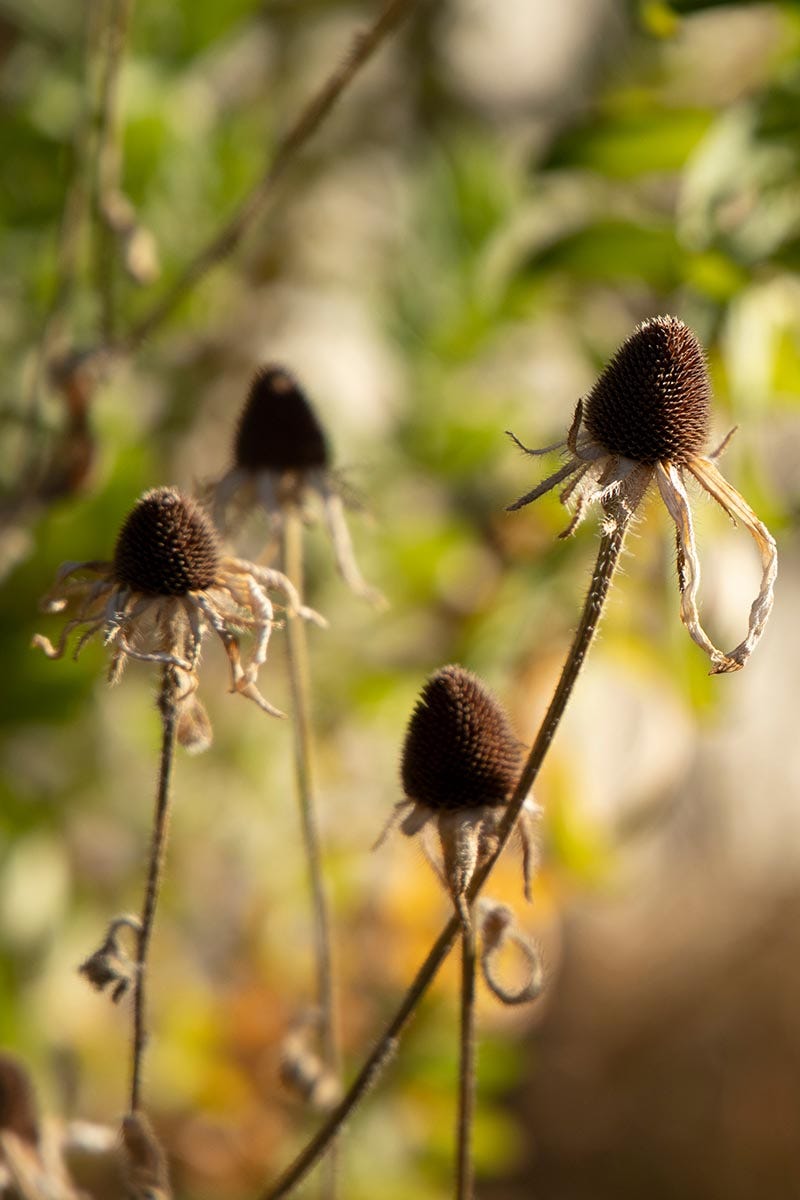
It is the middle of August and now we wander through our high summer haze toward the equinox, toward fall. It may feel cruel to speak of autumn as the children yet splash and shout in the swimming holes, as the berries burst on the vine, as the school bell still gathers dust, but walk now slowly along the ditches where the lilies and daisies once bloomed and you will know this is the truth. Those fair flowers of July have bowed gracefully into the loam making way for the bright, proud goldenrod and the asters frothing in the shade-low. We so often associate nature with regeneration; cut leaf or limb and expect it to grow back. We will acknowledge its cyclical nature too. Rarely however—and at our intellectual and spiritual impoverishment—we fail to recognize its lessons on sequence and inheritance, of succession. We know of this inherently, even if we do not think actively on it. We see the clover fade in the front yard while the Joe-Pye weed fluffs about at the roadside. We muse that we haven’t seen a dandelion in some time while the curious scalemail of milkwort catches our eye. We wander to the woodline seeking the blushing maidenpink only to find the arcadian blue vervain. These green things do not endure as marble and steel. They may not even regenerate as we romanticize they do. No. We understand inherently that everything in nature holds to the good green pattern, that everything eventually gives way for what next the season calls. The old wheel turns and something blooms anew.We celebrate steadfastness to a fault, don’t we? We laugh and remark that someone is as stubborn as a mule with a twinge of pride. To be unmovable, unmalleable, unyielding has become very much an admirable trait. When we think about succession, when we reflect at the roadside on the browning flowers of yesterday and the bright flowers yet to bloom, we may reap an uncomfortable conclusion, however. All that dogged determination to never be moved in our positions, even by convincing arguments is always directed outwardly; we resist with pride any influence that seeks to change our attitudes. We make this conscious choice to don our armor and decide we will not be moved by others. But what about ourselves? What do we lose by not allowing ourselves to be moved from within? We are but iterations in a long good pattern, not only in terms of our lineages, but also in terms of ourselves. We grow and change if we but allow ourselves to do so. Our politics, our faith or lack thereof, the weave of our moral filaments—the inheritance we give ourselves is the ability to shift these, to adapt to whatever spiritual, physical, or intellectual environment in which we find ourselves. You may find that the flowers that served your loam in one season no longer suit you. This is fine. Allow yourself to carve space for what comes next.This call to inner adaptability extends to how we inhabit our own time, as flowers do theirs. If we accept that we are part of the same good green pattern as the flora of the meadows and hedgerows then we must also accept that we are made for the time, the good, long season, we inhabit. The Joe-Pye weed does not long for the dandelion days of spring, nor does the snowdrop waste itself in dreams of the goldenrod’s high summer glory. Each grows into what light and rain its season offers. We may romanticize the simpler past, its agrarian nature and straightforward morality. We may imagine the perfection of some future utopia where all will finally align into an abundant climax. This longing cannot root us here where we are needed however. The soil we stand in today is not the soil of yesterday, nor will it be tomorrow’s. What wisdom, beauty, or courage we have to offer can only bloom in the conditions we are given, under the particular angle of today’s sun. This does not mean we should “live for the moment” (a tired cliche of which we should all dispel ourselves) but rather recognize that we are well attuned to our own time, that what value and insight we can bring belongs here in these wounded days. We can make the dubious but inspiring claim that we were made for the challenges of our time but it may be more accurate to say we are simply well equipped for the challenges because they were forged in the environment in which we were raised. You may lament that you were born in this time as many do. Remember however that the wounds of the modern world are best addressed by you because you are what grew in their strange and unwelcome light. You are attuned to these days and therefore you are the one who is able to affect them.Living fully in our season shapes not only us but the legacy we leave. We so often speak of legacy as if it were a monument—stone, immutable, meant to withstand the grinding of that old wheel. Nature’s bequest to you is not cold granite or august marble however. It is living soil, warm loam, dark earth. The flowers may reseed and we can point to this as their legacy; we see the continuity and celebrate
Three Truths Milkweed Can Teach Us About Parenthood
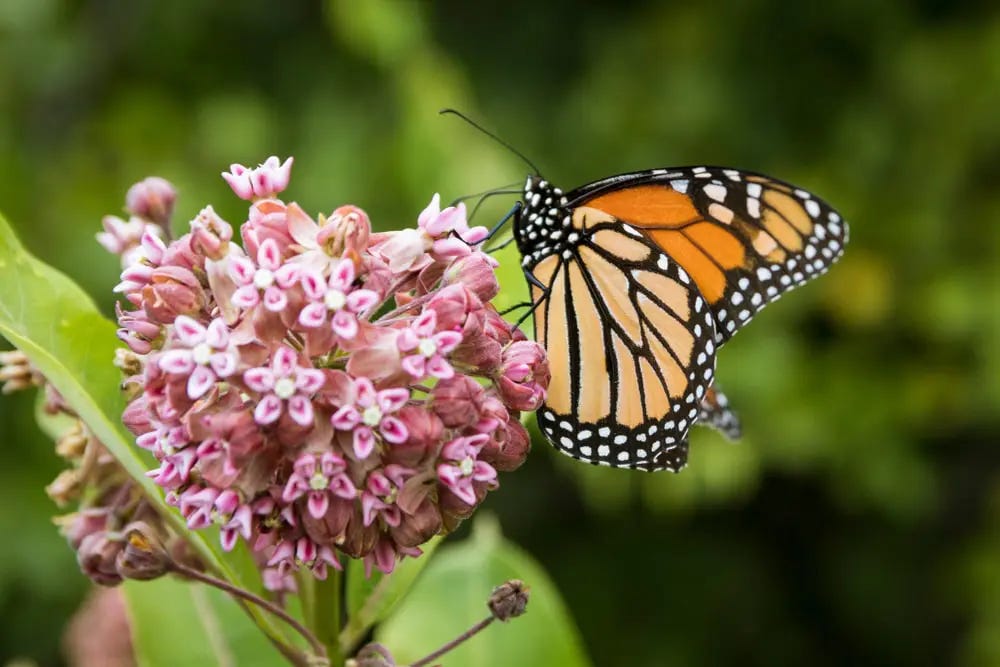
The common milkweed stands tall along the roadsides and fencerows all summer, steadfast and unassuming in the ditches, the hedgerows, the border-places. To some, it is just a weed, coarse in its stalk and broad of leaf. To those with eyes to see however, it is the silent keeper of a secret, the host of a story older than any one of us, the tender of a cycle that endures without question or complaint. It is the keeper of old truths we can yet learn—old truths of what it means to be a parent.If you were to look closely at the undersides of its leaves, you would find the light green, perfect eggs of the monarch butterfly. In time, these eggs will split open and the smallest of caterpillars will emerge, fragile, insistent, hungry. From the moment it is born, the caterpillar begins to eat the milkweed’s leaf. Bite after bite, day after day, until it has taken so much the limb bends under the absence of form. Make no mistake, however; this is not a parasitical relationship. The milkweed gives itself over without protest, giving of itself to nourish the green-life that comes next.This is the first truth about being a parent: you must be willing to be consumed. You must accept the quiet sacrifice, the nights without sleep, the years when your energy is parceled out in small, fleeting rations to someone who cannot yet stand alone. You will watch the body you knew lose its form to exhaustion, the routines you relied on collapse. You will face your own limitations in the small hours of morning-dark, measure your temper against physical and emotional fatigue. Like the milkweed, you will let yourself be consumed because you understand that all this giving is not loss but rather a gift that will carry your child into her full, beautiful strength.In time, the caterpillar grows robust, full of vitality, its form and function fully realized. When it has eaten its fill, it crawls to the underside of the leaf and hangs there motionless. It is hidden from the wind, sheltered from the rain, shielded from the beating summer sun. The milkweed becomes not only a place of nourishment, but shelter. Its broad leaves a rampart against the elements, a quiet place for the next transformation to begin. There in the stillness of the leaf’s under-canopy, the caterpillar begins to change, weaving the bright green chrysalis that will hold it in perfect safety. It has consumed part of the milkweed, yes, but the plant is still steadfast and sure, it is still upright and a predictable, perfect haven for the would-be butterfly.This is the second truth about being a parent: you are called to become a refuge. In the long seasons of childhood, you must be the place of safety, the place of certainty, the place where your child can press themselves against your steady love and find the courage to grow. You shelter them not only from cold and storm but from the flood of cheap influence, the blare of voices that would strip their innocence and identity for profit. Your arms become the walls that keep out what does not belong. Your words, the quiet assurance that some things will not change. In a time when so much is unrooted, you are the root. In a culture that demands more, faster, brighter, you are the calm shelter, the enduring green pattern that is always predictable, steadfast, sure.When the time comes, the chrysalis splits. The butterfly emerges almost immediately strong and ready. Its wings dry in the July air. Soon, it lifts from the leaf, rises into the sky, and flutter-drifts across the fields. No matter how you wish to keep it close to admire its beauty, no matter how you long for more time, there is no staying its flight. It will go where it must go. To the far coasts, to the warm valleys of California or the mountains of Mexico, to the places you cannot follow. It must. The meadows of your quiet home cannot hold the monarch; indeed, they may well stifle it. The world waits for its arrival, and the milkweed can only watch it go.This is the third truth about being a parent: you will let go. You will stand in the quiet field of your own making and watch what you have raised take wing. It will feel impossible. It will feel as if your own heart is carried away, fragile in the wind—an impossible pain. Yet there is a promise in this leaving.The monarch always returns. When summer comes again, the progeny of that first butterfly will drift back to the same patch of milkweed, drawn by something older than the memory of their own short lives. They, like us, are drawn to familiar ground by blood-memory. To place. They will settle in the fields where their lineage began. They will sip the nectar, carry the pollen, complete the cycle. What was once nourished by the milkweed returns to nourish it in kind.This is the hope you are given: the work you have done is not lost. The sacrifice, the shelter, the letting go. All of it will return in time. The children you release into the world will come back in ways you cannot predict, cannot fathom. They will re
You Need to Stop and Smell the Roses or Lose Your Grip on Reality
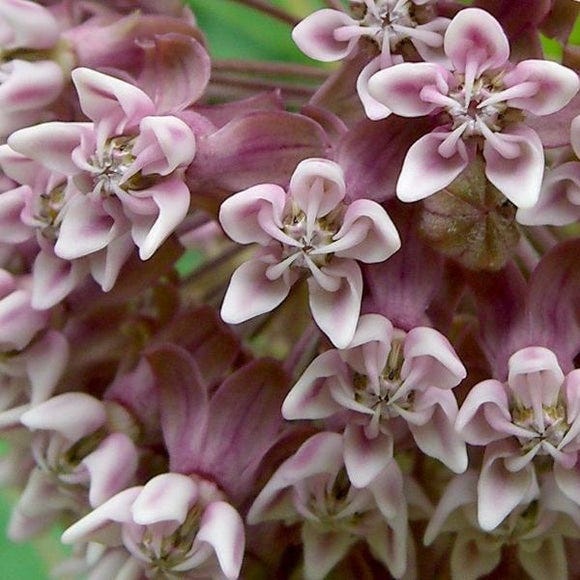
Artificiality is now the norm. Screens can simulate nearly everything, images can be doctored, videos completely fabricated, words twisted, sounds engineered. There, as always, is hope however. In this wounded modern world, where so many things have become false or illusory, you always possess one pure conduit of truth: your sense of smell. In a sea of artificial reality where you cannot trust your own eyes, scent resists the modern manipulation. It is stubbornly real, a direct communion between the natural world and your own body, your mind. Indeed, as you are assaulted by the lies of your contemporary culture that tells you up is down, it may be the best means by which you stay grounded to reality.When you walk a country road this time of year, you will notice the milkweed blooming along every roadside and pasture edge. Its flowers are a muted pink, shaped like little stars, and their scent drifts across the fields in waves of rose and honeysuckle. There is nothing quite like it, nothing synthetic that can replicate the way it hangs in the warm July air. Any attempt to manufacture a milkweed perfume would be folly. You could analyze, deconstruct, and place back together the exact chemical makeup of what makes a milkweed flower smell and you know in your heart of hearts a simple truth. It just wouldn’t be right. Just the way strawberry flavored ice cream never quite tastes like real strawberries, just the way you can tell when a dress is made with a polyester blend, just the way you can sense when someone’s tone is insincere; there is something in you that can perfectly sense when something is attempting to be what it is not, when its authenticity is compromised. In a time when so much is digitized and mediated and reduced, a single breath of milkweed is a reminder that reality still waits for you just beyond the screen, the threshold of your door. You cannot download this fragrance or bottle it. Even if you could, it can only be experienced perfectly in its natural environment; imagine for a moment the perfectly constructed milkweed perfume in the lobby of an urban apartment building. Are you tantalized or repelled? As with all good things, you must be present to receive the aroma of milkweed. The sweetness there on the country roadside in early July is proof that not all beauty has been commercialized or rebooted or churned into a homogenous slurry. Some old truths are immune to such fleeting things. You must go outside, find a wild place, and remind yourself with a deep, deep breath what life is like away from all the rebooted, commercialized, hyper marketed grey-safe content being pumped at you. That's what so much of contemporary global culture has become, hasn't it? Grey-safe. A corporate, HR-approved gruel to keep you from the green.Scent is an honest witness. It does not just guide your eyes to the beauty of a wildflower in full bloom, but also to decay. If something has gone wrong, you will smell it before you see it. Your eyes can overlook details, your mind can rationalize them away, but your nose is harder to fool. Perhaps you notice the rancid odor drifting near the chicken coop on a warm afternoon. It is the kind of smell that triggers a subtle unease before you even fully register it. You follow the trail of sulfur and carrion fumes through the door to the bedding straw until you discover the culprit: a missed egg you must have overlooked days earlier has split open, spilling its contents into the straw and attracting a nest of maggots. That smell is not subtle. It does not invite debate or interpretation. It insists on attention, on intervention, on a clear acknowledgment that something has begun to rot.Modern culture tends to mask its own corruption. Slogans, curated feeds, sniveling qualifiers. You learn to trust your senses because when someone is lying or when a system is rotting from within, you often feel it first in your gut, the same way your stomach tightens at the scent of something spoiled. You may even be told by the academically minded that disliking a putrid smell is merely a product of your western upbringing, identity, or status, that cultural influences—not your own good instinct—shape your perception of smell and it can simply be rationalized away if you were but a bit more enlightened. Ultimately though, you know when something is wrong and you act.There is another side to this honesty, one that affirms rather than celebrates the bloom or warns of the rot. If you were to visit the bee yard with me now, the air itself smells like warm bread. The hives are in their most productive season, drawing comb and storing nectar that will become honey by summer’s end if not sooner. You can stand near the hives and breathe in the scent of progress, of abundance taking shape cell by hexagonal cell, of promise manifest. It is a wordless assurance that some good work remains untouched by the counterfeit world beyond the hedgerow. It is a smell that settles your spirit, a full-throated d
Let June Overwhelm You
My baby does not want to sleep this week. She wants to stand. She wants to place her hands on my stomach, get her feet under her, and lean gently back. She wants to stand there in bed and show me she can wave her little hands. I resist the urge to be frustrated by this, the voice like television static in my brain that tells me she needs to sleep so I can go do things. Tidy the house, get the honey business in order, make more money. She of course, is simply embodying exactly what this season is for. She is nine months old and life pours from her: a deep spring that has no end. She is June manifest, all fullness and unfurling. The grass outside is tall and bending under its own weight, the hive boxes are heavy, the days are long and glowing and, like her, impossible to contain. Everything is blooming all at once, including her. June does not want to be managed and be put to sleep. It wants to spill over. My baby does not want to sleep because the season and life itself is rich, loud, and bright. We need to stop trying to get ahead of it and instead let ourselves be overwhelmed by the vitality of it all.Now that the spring hunting season is over, the turkeys have returned. They march out of the forest and strut across the garden rows, royalty tossing mulch aside with their talons imperiously and pecking at anything that moves. It is annoying. It is also beautiful. There is something deeply comic in how proudly they move, something oddly triumphant in their reclaiming of the fields and trails. “I did not die. I am here.” Their presence is inconvenient, yes, but it is also a reminder that the woods are never empty; they are full of life, burgeoning, waiting to spill out when the pressure lifts. The turkeys that scratch through the newly tilled field are doing exactly as they should in June, in the time of abundance. When I see them scatter as I round the corner with a wheelbarrow or watch them sunning themselves in the long grass, I try not to shoo them. Their disregard for the boundaries is charming. They have survived the blasts and arrows of another spring and this is their reward.The other fields are being hayed now. The roar of the machines starts early, and by late afternoon the air is thick with the scent of cut grass. It is a smell that pulls on memory. Step into a barn, long unused, and note how it still holds the sweet green ghost of hay from a decade before. Life sticks around. It presses into wood, settles into rafters, soaks the air. The first cutting of hay is an old harvest, one that comes before the tomatoes or the squash, and one that always seems to sneak up on us. The fields do not ask whether we are ready. They give what they give when they give it! In the barns, in the bales, in the very beams of the old buildings, the evidence of this abundant generosity remains. It is tempting to try and schedule your joy, to plan for a slower season, to wait until things calm down. June will not wait though. June bursts forth. It leaves its mark. You will smell it years from now and remember, maybe with tears, how alive it all once was. The bees too are swelling. Hives are booming, spilling over with new brood and bright pollen. I spoke with another beekeeper this week who had just added a second deep super to one of her hives. Without the space to grow, the bees will leave. The queen will abscond, taking her workers and their ambitions elsewhere in search of a roomier home. You must make space for growth or you will lose it. This is one of the central challenges of June: how to make space for all this life. It is tempting to try to maintain control, to keep things manageable, to keep the grass mowed and the fowl out of the garden. Life does not want to be manageable though. Life wants to fill every crevice. It wants to stand up in your bed and wave its hands when its time for sleep. The beekeeper adds a box. She expands the space. She allows for more. This is wisdom you too can learn from the bees about all this boundless June life: do not contain it. Make room. Say yes to the overflowing. When the good green pattern this time of year offers you more than you expected, do not flinch. Just make more room for it.This is the truth of June: it is too much, and it is perfect. Everything is blooming, and there is no possible way to hold it all. So don’t. Let it spill. Let the baby stay awake and the bees keep growing and the turkeys walk all over your tidy plans. You will not regret having witnessed it. You will regret having missed it because you were trying to get ahead, however. What June offers is not efficiency. It is abundance. It is the fullness of the fields and the scent of old hay and the riotous growth of everything good. If you are lucky, it will knock the wind out of you. It will remind you that your job is not to master life, but to receive it. Go ahead. Let it overwhelm you.You will be ok.Echoes from an Old Hollow Tree is a reader-supported publication. Please consider becoming a paid subscrib
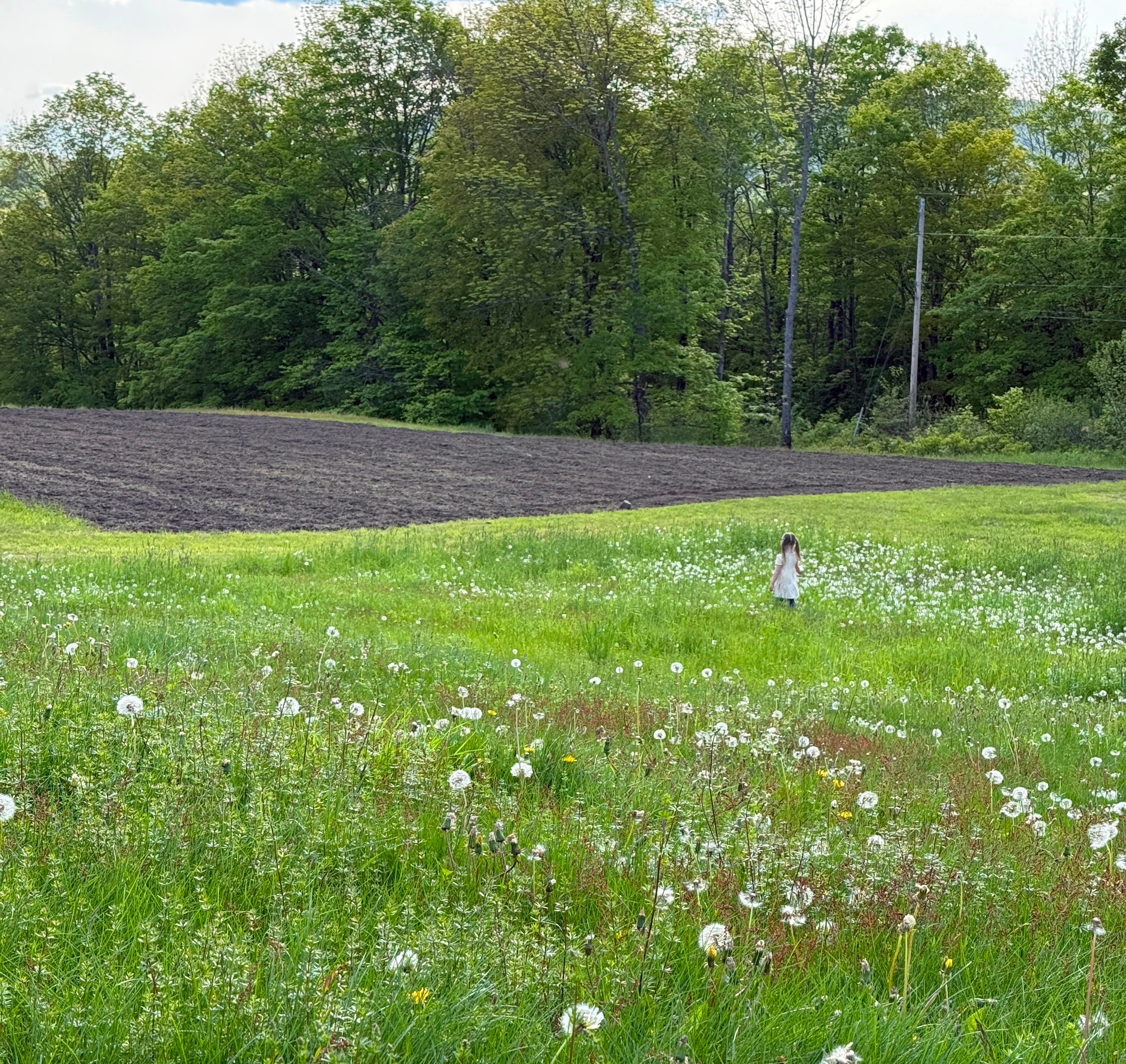
You Have to Let it Linger
The urgency is real now. You feel it in the long stretch of daylight, the way everything grows all at once, in the good green pattern absolutely bursting forth now. Gentle May makes her exit ushering in heady June. The sun is up before you are and lingers long past supper yet somehow the days feel too short. Daylight runs close to fifteen hours now, and still it is just not enough to complete everything you want. The natural world is hurrying: bees rise earlier, the dandelions bloom and seed, trees race to fill their canopies, and we too are swept into the momentum. There’s planting to finish, wood to cut, children to chase through wet grass. You start early and end late and lie awake thinking of what you did not do. The season runs hard. The earth is moving fast and it is hard not to be moved by it. Amidst all the fervor and rampant work however, June extends an invitation to us with verdant hand to linger a moment. It is an invitation we should acceptEven as nature rushes forward, it does so deliberately. The forest does not panic. The wildflowers do not fret about order or scheduling. They come in succession as they are called. The edible ramps are passing on, making way for lily-of-the-valley and her delicate ivory bells. The trillium bows out, and jack-in-the-pulpit springs up from the cool understory. The maples leaf out in a green so pale they glow. On the meadows’ edge, the violets now give way to buttercups, then chervil and red clover. In the low wet places, the skunk cabbage opens in a yellow riot. This is not frantic blooming however. It is the steady, ordered abundance of a world that knows how to wait its turn. The trees do not envy the grass. The bees fly when the sun allows. The bluebirds, still fresh from their long migration, do not rush to build; they settle in and they sing. There is a pace here, but it’s not the one we were taught. It is slower, wiser, and deeply beautiful.The urgency we feel in our sinew and bone is not only from the natural world, it is from the systems we’ve built around it: calendars, commitments, summer programs, performance metrics. This is the time of year when everything shifts. There are forms to fill out, gear to find, bags to pack. If you let it, modern life will push you into a rhythm not of your own making. You’ll be swept along by deadlines and sign-ups and the subtle pressure to “make the most” of every summer moment. Ironically, this pressure leaves little room for savoring anything at all. Even rest becomes a checkbox. Even joy is scheduled. We are told to be efficient with our leisure, to optimize our days off, to always do more. This is disordered in the most literal sense of the word. It is out of the good, true order of our being.We rush through the season we longed for in the dark of February. The result? We miss the very thing we were trying to reach.The wisdom of June does not lie in the productive rush, in the feverish sowing of seeds after work but before dinner. It is in the lingering. The garden doesn’t demand all of you in one day. The birds do not wake and worry about what they’ll sing. The lilacs bloom extravagantly and drop their petals with no apology. The natural world is not wasteful, but neither is it hurried. What if we were to match that pace? What if we asked not how much can we accomplish today, but how fully can we notice? Can we stop long enough to hear our daughter say, “He’s carrying his house,” when she finds a snail under the rhubarb leaves? Can we let the northern flickers sing us out of a task and into a pause, wondering if we will catch a glimpse of their majesty at the woodline? There is a different kind of success to be found here: not in achievement, but in attention. The world teaches us that productivity is the goal but creation tells a deeper story; belonging, slowness, and delight are the actual rewards.June arrives. The season will turn whether you’ve kept pace or not. If you’ve rushed too hard however, you might miss what it offers. You might miss the tiny footprints in the mud beside the pond or the way the evening light catches in your child’s hair or the hush that falls between the first call of the hermit thrush and the last breeze across the clover. Have you stopped yet to wish on a dandelion that has puffed to seed? The rush is real but it is not the whole truth. Beneath it, beneath the dual din of the rampant growth and the neon hum of the modern world is the quiet, old, and true. A pace at which you can live, but only you choose it. Let the beans go in late. Let the to-do list wait just a little longer. Walk the meadow. Sit by a hive and listen. You don’t have to keep up with the earth. You only have to witness it. You don’t have to keep up with the world. You only have to endure it. Allow yourself to linger a while this June. If this free essay spoke to something deep and true in you, if you long for more reflections like this grounded in beauty, tradition, and rebellion against modern drift, consider be