Audio is streamed directly from the publisher (api.substack.com) as published in their RSS feed. Play Podcasts does not host this file. Rights-holders can request removal through the copyright & takedown page.
Show Notes
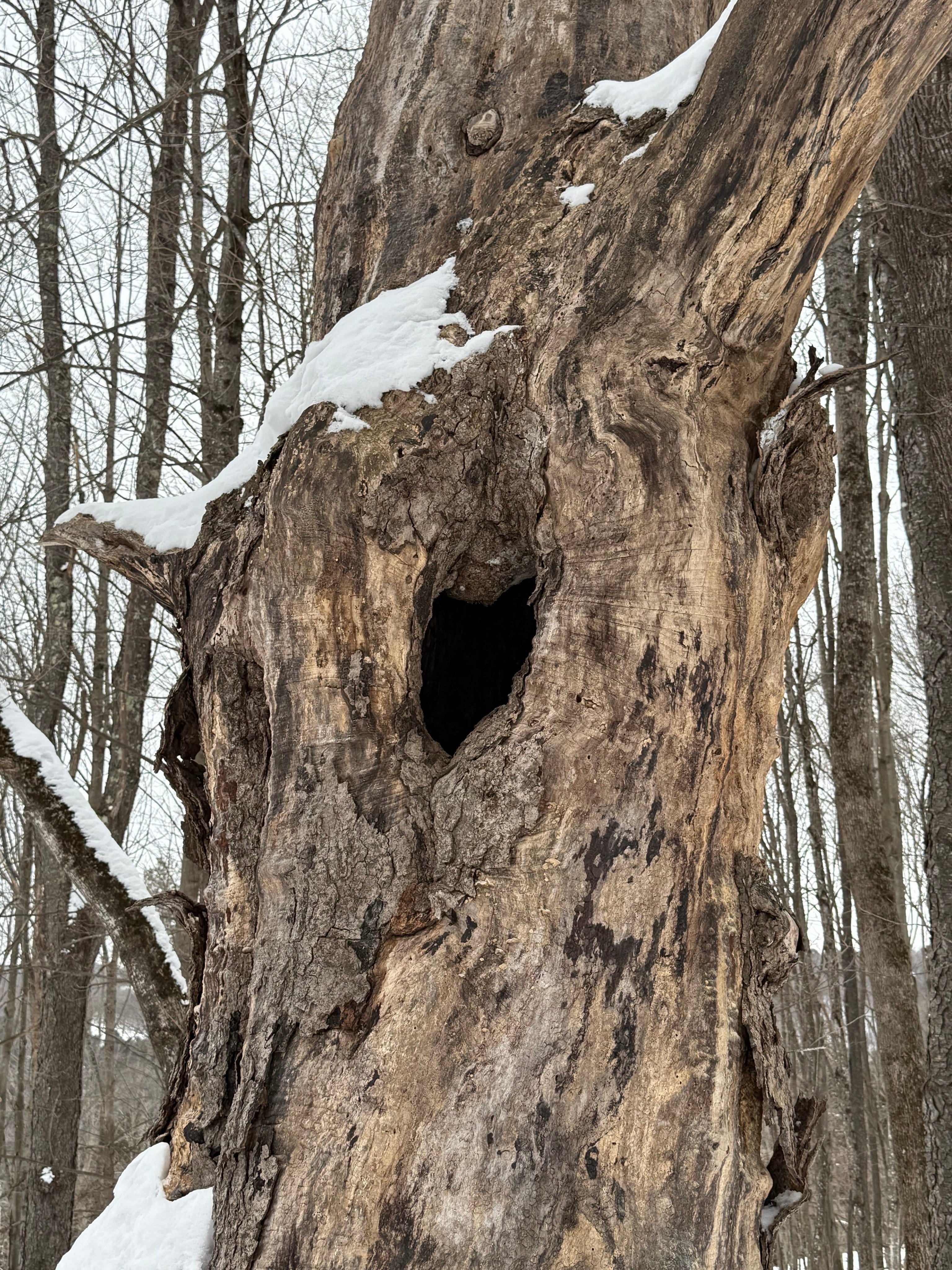
There is a tree at the entrance to the forest. It is very old and contains a large hollow in its center. As a boy, I would stop at the old hollow tree, pick up a stone from the path, and toss it into the dark opening before continuing on into the green. At first it was a game, the sort of thing children invent through their good little ways. I liked the sound of the stone rattling down into the cavity. I liked the thought that the tree was keeping count. I liked having a threshold to cross before disappearing into the woods. I do it still now. The game has remained, though as I grow older the character of it has changed a bit. The old game of dexterity feels more like a toll I pay before entering the forest. Some days it feels like prayer. Some days it feels like a bead slid on an abacus, a stone for every entrance into the wood, a stone for every afternoon spent wandering beneath the canopy, a stone for every small return to the same beloved place. I do this old ritual from my youth now with my wife and little girls and it has become a tradition that belongs to our family.
I have said more than once to my wife that the old hollow tree looks near the end of its life. One day it may finally come down, and when it does I will have the opportunity to see how many stones it has gathered, how many times I have passed that way, how much of my life it has quietly kept.
Lately, more than anything it is causing me to reflect on the state of affairs however and the experience of families everywhere. At the risk of sounding imperious or prescriptive, we live in a time when every family needs something like this, some old ritual tied to a real place near home, some repeated act that binds memory to the land until the land itself begins to feel like kin.
Families should be rooted, have some fidelity to place. Families do not remain by affection alone however. Love needs form. It needs return, repetition, ritual. A family needs a path it always walks at dusk, a stone wall where children stand to watch the first fireflies, a porch where the first spring peeper is heard and named aloud. To be clear; these things need not be grand. Their power lies in how often they are repeated and in how naturally they become part of the family’s inner life. A child may not yet understand what a ritual means, but the body understands return long before the mind can explain it. You go to the same place. You do the same small thing. You carry the same expectation into the season. Over time the act gathers weight. What began as a game becomes a habit, what began as a habit becomes a family custom, what began as a custom becomes something almost liturgical. It acquires the gravity of old things, and children raised inside its good green sphere come to feel that the world itself has a shape, an order, a set of beloved thresholds through which life is meant to pass.
We live in a time that pulls families outward toward abstraction. The wounded world asks us to care about distant crises, universal systems, ideological dramas, global emergencies, all before we have properly introduced our children to the patch of earth nearest their own door. We teach the children to talk about the planet while they cannot name the trees behind the house. We hand them causes before we hand them belonging. We make them conversant in the broad language of concern while they remain strangely unacquainted with the ordinary green miracles close at hand. This is too much weight to place on a little soul that has not yet fallen in love with anything particular. Love of the world begins with one place. Stewardship begins with one corner of it and a family tradition rooted in a specific place performs this quiet initiation.
It says to the child, here is your forest, your field, your shoreline, your old tree, your spring path, your winter hill.
It says, this place knows your footsteps, it knows you.
It says, return here and you will remember who you are.
There is another gift in these traditions, one that only reveals itself after years have passed. They turn time into something you can touch. Most of life slips by uncounted. Days blur. Seasons pass into one another. Children grow tall. Parents stoop. Fields green and brown and green again. Yet when a family keeps a place-bound ritual, time begins to take on shape, coalesce into weighted form. The old hollow tree has become a witness to my own life. It has seen the boy with dirty hands and no sense of mortality. It has seen the young man returning from college. It has seen the husband, the father, the man who now enters the forest with different questions than he once did. When I think of the stones collected in that hollow, I am thinking of years. I am thinking of all the selves I have been while returning to the same threshold. This is what traditions do when they are rooted in place: they become a family’s sort of silent archive. They keep account in ways no photo album can. They transform a tree, a gate, a path, a boulder, a creek crossing into a keeper of memory. When children inherit such a place, they inherit continuity. They inherit the knowledge that they enter a story already underway.
Your family needs something old, something tied to the natural world around your home. It may not be an actual old hollow tree. It may be a stump where each child leaves an acorn before the first walk of autumn. It may be a candle lit on the window sill of your apartment at nightfall. It may be a spring visit to the creek with bare feet and rolled cuffs, a stone laid on a wall each time you return from the woods, a hand pressed to the same sugar maple before the first tap of the season. The particular form matters less than the faithfulness with which it is kept.
Choose a place.
Choose a gesture.
Return often enough that the place and the family begin to shape one another. In time the ritual will deepen of its own accord. The children will come to expect it. The adults will come to need it. The place will gather the family’s years into itself. That is how roots are formed. That is how a household becomes native to its own ground.
Find your old hollow tree.
Put a stone in it.
Return.
This is a public episode. If you'd like to discuss this with other subscribers or get access to bonus episodes, visit oldhollowtree.substack.com/subscribe