
Echoes from an Old Hollow Tree
59 episodes — Page 1 of 2
The Liberty of Rootedness
The Green Conspiracy
Rebuilding Home
You Need to Find Your Old Hollow Tree
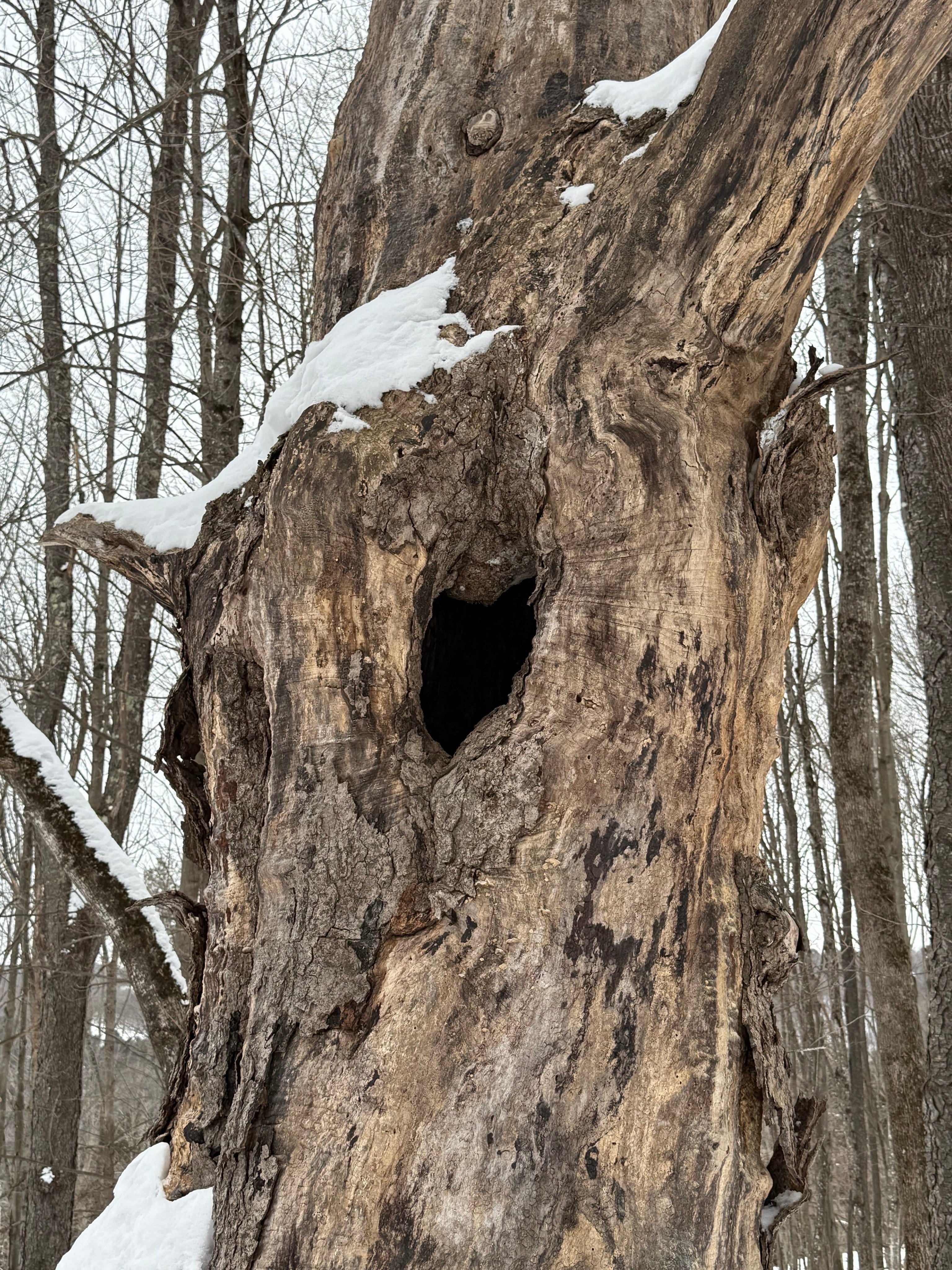
There is a tree at the entrance to the forest. It is very old and contains a large hollow in its center. As a boy, I would stop at the old hollow tree, pick up a stone from the path, and toss it into the dark opening before continuing on into the green. At first it was a game, the sort of thing children invent through their good little ways. I liked the sound of the stone rattling down into the cavity. I liked the thought that the tree was keeping count. I liked having a threshold to cross before disappearing into the woods. I do it still now. The game has remained, though as I grow older the character of it has changed a bit. The old game of dexterity feels more like a toll I pay before entering the forest. Some days it feels like prayer. Some days it feels like a bead slid on an abacus, a stone for every entrance into the wood, a stone for every afternoon spent wandering beneath the canopy, a stone for every small return to the same beloved place. I do this old ritual from my youth now with my wife and little girls and it has become a tradition that belongs to our family.I have said more than once to my wife that the old hollow tree looks near the end of its life. One day it may finally come down, and when it does I will have the opportunity to see how many stones it has gathered, how many times I have passed that way, how much of my life it has quietly kept. Lately, more than anything it is causing me to reflect on the state of affairs however and the experience of families everywhere. At the risk of sounding imperious or prescriptive, we live in a time when every family needs something like this, some old ritual tied to a real place near home, some repeated act that binds memory to the land until the land itself begins to feel like kin.Families should be rooted, have some fidelity to place. Families do not remain by affection alone however. Love needs form. It needs return, repetition, ritual. A family needs a path it always walks at dusk, a stone wall where children stand to watch the first fireflies, a porch where the first spring peeper is heard and named aloud. To be clear; these things need not be grand. Their power lies in how often they are repeated and in how naturally they become part of the family’s inner life. A child may not yet understand what a ritual means, but the body understands return long before the mind can explain it. You go to the same place. You do the same small thing. You carry the same expectation into the season. Over time the act gathers weight. What began as a game becomes a habit, what began as a habit becomes a family custom, what began as a custom becomes something almost liturgical. It acquires the gravity of old things, and children raised inside its good green sphere come to feel that the world itself has a shape, an order, a set of beloved thresholds through which life is meant to pass.We live in a time that pulls families outward toward abstraction. The wounded world asks us to care about distant crises, universal systems, ideological dramas, global emergencies, all before we have properly introduced our children to the patch of earth nearest their own door. We teach the children to talk about the planet while they cannot name the trees behind the house. We hand them causes before we hand them belonging. We make them conversant in the broad language of concern while they remain strangely unacquainted with the ordinary green miracles close at hand. This is too much weight to place on a little soul that has not yet fallen in love with anything particular. Love of the world begins with one place. Stewardship begins with one corner of it and a family tradition rooted in a specific place performs this quiet initiation. It says to the child, here is your forest, your field, your shoreline, your old tree, your spring path, your winter hill. It says, this place knows your footsteps, it knows you. It says, return here and you will remember who you are. There is another gift in these traditions, one that only reveals itself after years have passed. They turn time into something you can touch. Most of life slips by uncounted. Days blur. Seasons pass into one another. Children grow tall. Parents stoop. Fields green and brown and green again. Yet when a family keeps a place-bound ritual, time begins to take on shape, coalesce into weighted form. The old hollow tree has become a witness to my own life. It has seen the boy with dirty hands and no sense of mortality. It has seen the young man returning from college. It has seen the husband, the father, the man who now enters the forest with different questions than he once did. When I think of the stones collected in that hollow, I am thinking of years. I am thinking of all the selves I have been while returning to the same threshold. This is what traditions do when they are rooted in place: they become a family’s sort of silent archive. They keep account in ways no photo album can. They transform a tree, a gate, a path, a boulder,
There is No False Spring
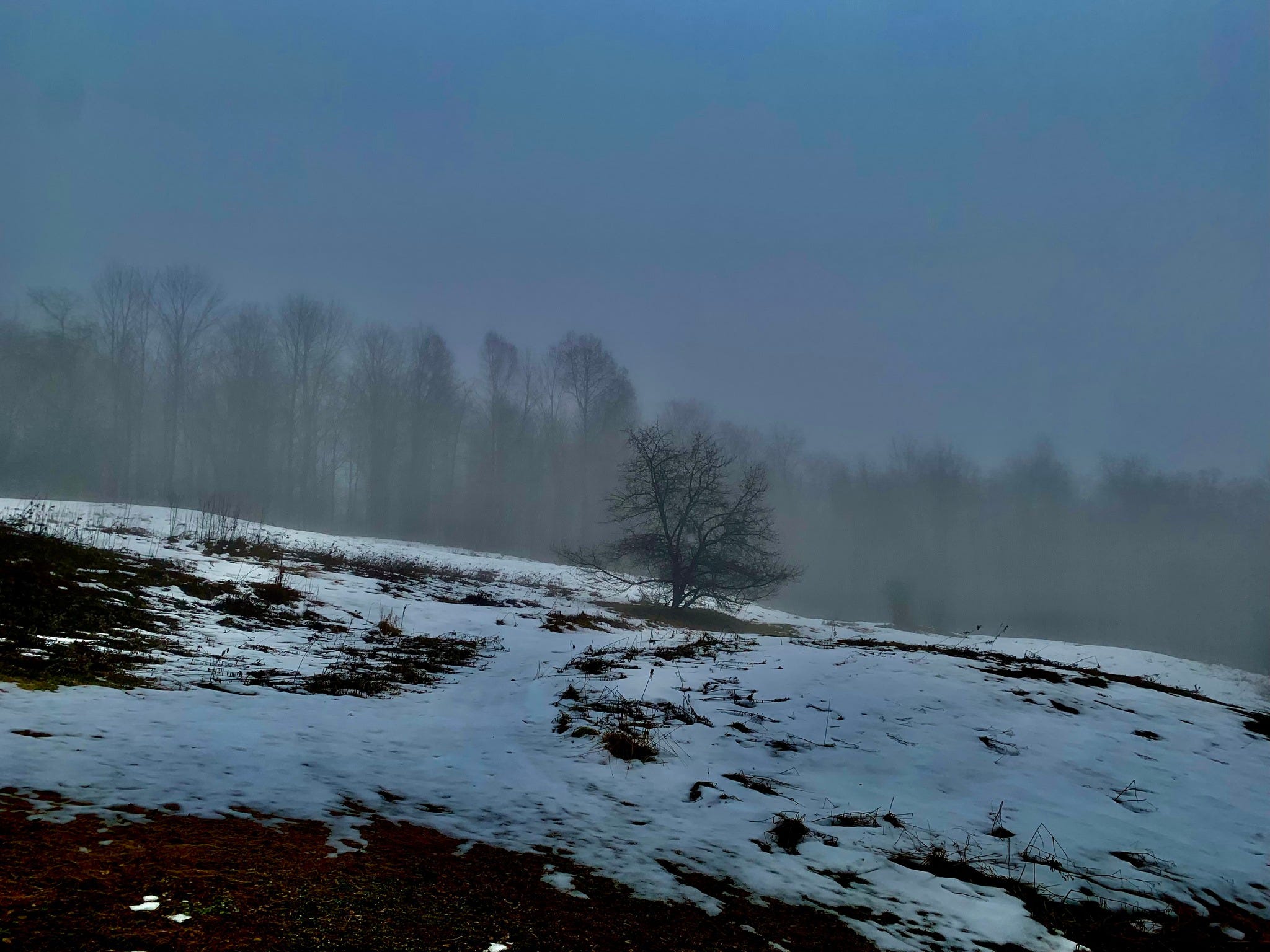
February is so often treated unfairly. We call a run of warm days a “false spring,” as if the month were trying to trick us, as if it had made a promise it could not keep. We speak of it with suspicion, as though any softness in the air must be a deception and any thaw a betrayal waiting to happen. Dear February is treated with too much wariness. This has never sat right with me. February does not lie. It does not overpromise. It does not pretend that winter is finished. It does not hang banners or sound trumpets. It simply marks a turn. A bright day in January feels like mercy granted to the frozen hinges and tired beams, rafters, and pipes. A bright day in February carries a different weight though, doesn’t it? The light has changed. The arc of the sun has shifted higher over the ridge. The shadows shorten even when the air still bites your face and stiffens your hands. You stand in the yard and sense that the day has lengthened in a way that cannot be reversed. What you are witnessing is not a counterfeit season but the first honest movement toward green. February is not a fraud. It is a covenant written in light that heralds the emergence of the good green pattern below.Yes, the month is unsettled. It can give you sleet in the morning and thaw by afternoon. It can harden the ground overnight after loosening it by day. It can glaze the road with ice and then send water running in the ditches before supper. The sky moves quickly in February, and the wind seems to test its strength against the hills. Beneath that volatility, however, something steady is underway. Walk the fields and you will see it written plainly in tracks. Mice run longer lines across the crusted snow now. Deer cross open ground they avoided in December, moving with a deliberateness that speaks of shifting instinct. Coyotes call again at dusk, their voices carrying over the valley in a tone that feels less like hunger and more like heraldry. A purposeful sort of sound that is less frantic than it was in November. The hills and valley are awake in a new register now. Buds hold tight on the maples and dogwoods, but they have swollen. Sap stirs on the south-facing slope where the sun lingers longest. Steam will soon rise from sugar shacks where men and women stand watch over boiling sweetness drawn from still-frozen hills, their faces lit by fire and long work. The earth is not soft yet, but it is no longer asleep either. February has begun the work of return.This is why the charge of “false spring” misses the point. A lie requires intent, and February has none. It does not promise full bloom. It does not pretend that crocuses are ready to split the soil. Snow still lines the stone walls. The pond still carries ice thick enough to hold a man and his doubts. The mornings still demand gloves and a bit of resolve. Wood still must be moved and stacked. Water still must be carried to animals. What has changed is the direness of your place in time. You are now closer to the equinox than the solstice. That fact stands independent of mood. The light lingers into late afternoon and stains the snow with a faint rose that was absent in December. The air smells faintly of water when the sun hits the south side of the yard. Even the cold feels different. It sharpens and then gives way to something less brittle and more raw and wet. It comes in pulses rather than pangs. The green pattern has been set in motion, and no late storm can undo that fact. A blizzard may blanket the hills next week and erase every track you saw this morning. It will melt. Frost may grip the orchard again and blacken early ambition. It will release. It is easy in this month to posture as a cynic. On any clear day someone will say, with a kind of satisfied resignation, that winter will return with a vengeance. They will point to the forecast and nod gravely, as though expecting hardship proves seriousness and forecasting ruin proves maturity. You may come to believe it proves something else: that February asks for steadiness, not suspicion. It asks you to notice what is happening without inflating what might. The animals do not debate the coming week. They move when the light tells them to move. The sap does not wait for unanimous agreement about temperature trends. It rises when the conditions are right. The farmers do not mock the thaw. They mend fences, sharpen tools, check seed inventories, and clean out the sugarhouse because they understand that a season is turning whether they narrate it or not. They prepare because preparation is what this hinge of the year requires. Cynicism does nothing to hasten or delay the change. It only dulls your ability to participate in it. February rewards those who keep working through uncertainty, who stack wood cleanly, who step outside at dusk and listen, who take the lengthening light seriously.February does not need to announce itself. The evidence stands in the open if you are willing to see it. Light stretches farther across the field an
A Crisis of Keeping
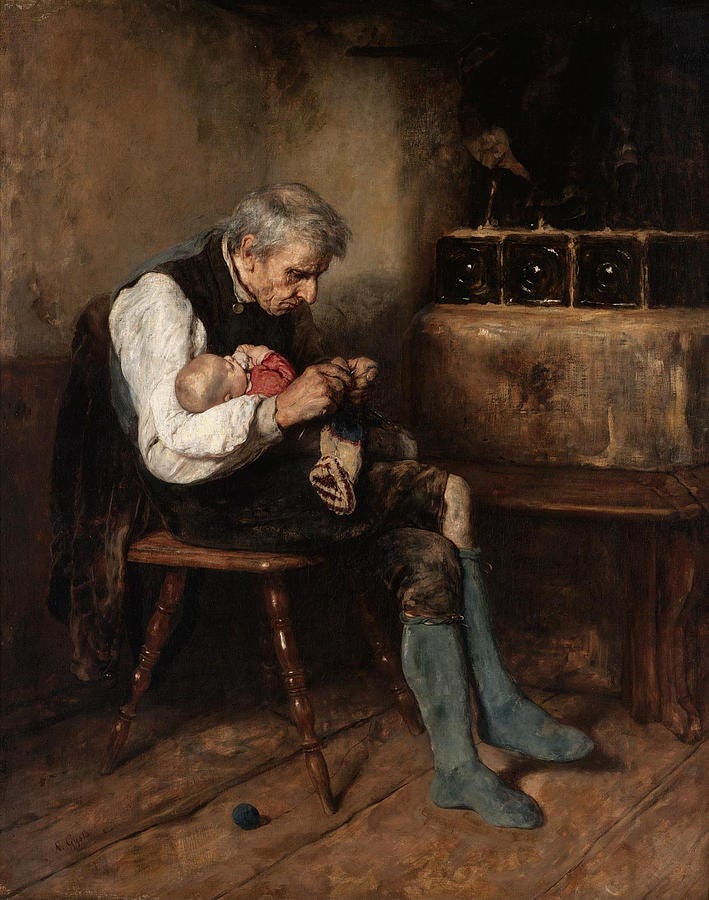
We are in a crisis of keeping, and we need to learn how to hold on to everything again. I have been walking around this truth for years, naming different faces of it, because the thing itself is too big to see straight on. I called it disposability when I was stooping to pick up wrappers and bottles, watching how a world of throwaway materials trains a throwaway mind. I called it drift when I looked at towns thinning out, their young drawn away by the golden roar of cities and empty promises, leaving the old to sit under dark windows in darker hills. I called it the dying of small fires when I noticed how the ordinary signals of presence are going out one by one in a long, quiet surrender to convenience. All of that was prelude. This is the next turn of the same thought: keeping is the human art of staying faithful to what has been put into your hands, and that art is failing at the level of ordinary daily life. We are not only losing traditions and places. We are losing the inner posture that makes any tradition or place survivable, possible, thinkable. From the smallest objects to our ability to belong to a place, we are forgetting how to keep.We so often try to point to one cataclysmic event as the point where everything went wrong. You hear it all the time. “Where did we go wrong?” as if there was a singular moment when the pillars fell. I think most people can agree that we’re not living well, but pointing to some pivotal moment is not the key. Instead, we need to reevaluate the thousand small permissions and consolations and compromises we’ve made where we allowed the good old days to slip through. The broken thing can be replaced faster than it can be repaired, so we replace. The strained bond can be avoided easier than it can be mended, so we avoid. The hard season can be fled more quickly than it can be endured, so we flee. Objects matter here, though they are only the first lesson. The materials you choose, the way you pack food, the way you mend a gate or keep animals or refuse to let plastic touch what you harvest, these are a form of apprenticeship. They train your hands in permanence, and the hands train the heart. When you insist that something be durable, you are practicing patience. When you take care of a tool instead of treating it as expendable, you are practicing attention. When you keep a tradition long enough to learn why it was built, you are practicing humility. The same muscles that keep a jar in the pantry or a fire in the stove are the muscles that keep a marriage through lean years, keep a town through economic winter, keep a church alive when it would be easier to drift away, keep hope alive when the days are short and the headlines shout ruin. The modern world tries to convince you that everything is weightless, that you can pick up and go without consequence, that obligations are optional accessories. Anything worth having however carries weight. A home carries weight. A child carries weight. A place carries weight. A vow carries weight. A kept life is a weighted life, and that weight does not crush. It steadies.The whole economy hums along whispering that whatever is difficult is optional, that whatever is old is suspect, that whatever asks your presence is trying to steal your freedom. You feel that whisper at the kitchen counter and in the parking lot and on your phone late at night. It presents itself as relief, as efficiency, as self care, as the reasonable thing to do. In truth it is a kind of training, teaching your hands and heart to default toward exit. Once your hands learn the rhythm of use and toss, your mind learns the same rhythm with vows and neighbors and even your own sense of duty. That is why a people can be surrounded by abundance and still feel hollow. A life can be made fluent in convenience and still fail at the basic work of being human, being part of a community, of living well. Keeping feels slow because it resists that rhythm. It is the long obedience of ordinary days, and ordinary days are where the battle is won or lost in a thousand thousand small decisions to compromise or to hold. Keeping is learned by proximity, and especially by the nearness of generations to each other. A child does not become rooted because you tell him that roots matter, he becomes rooted because he grows up among adults who are rooted, who know the land and the people and the calendar of the year like they know the rooms of their own house. A young man learns how to carry weight because he has watched older men carry it without theatrics, watched them meet the hard parts of the year with presence rather than distraction, seen them keep the hearth work and the neighbor work and the village work in a way that makes endurance feel ordinary. An old person remains whole because she is still threaded into the daily life of a family, not visited as a relic but relied on as kin. When those bonds thin, the skill of keeping collapses.Children become a category to manage instead of
The Final Stronghold of Civilization
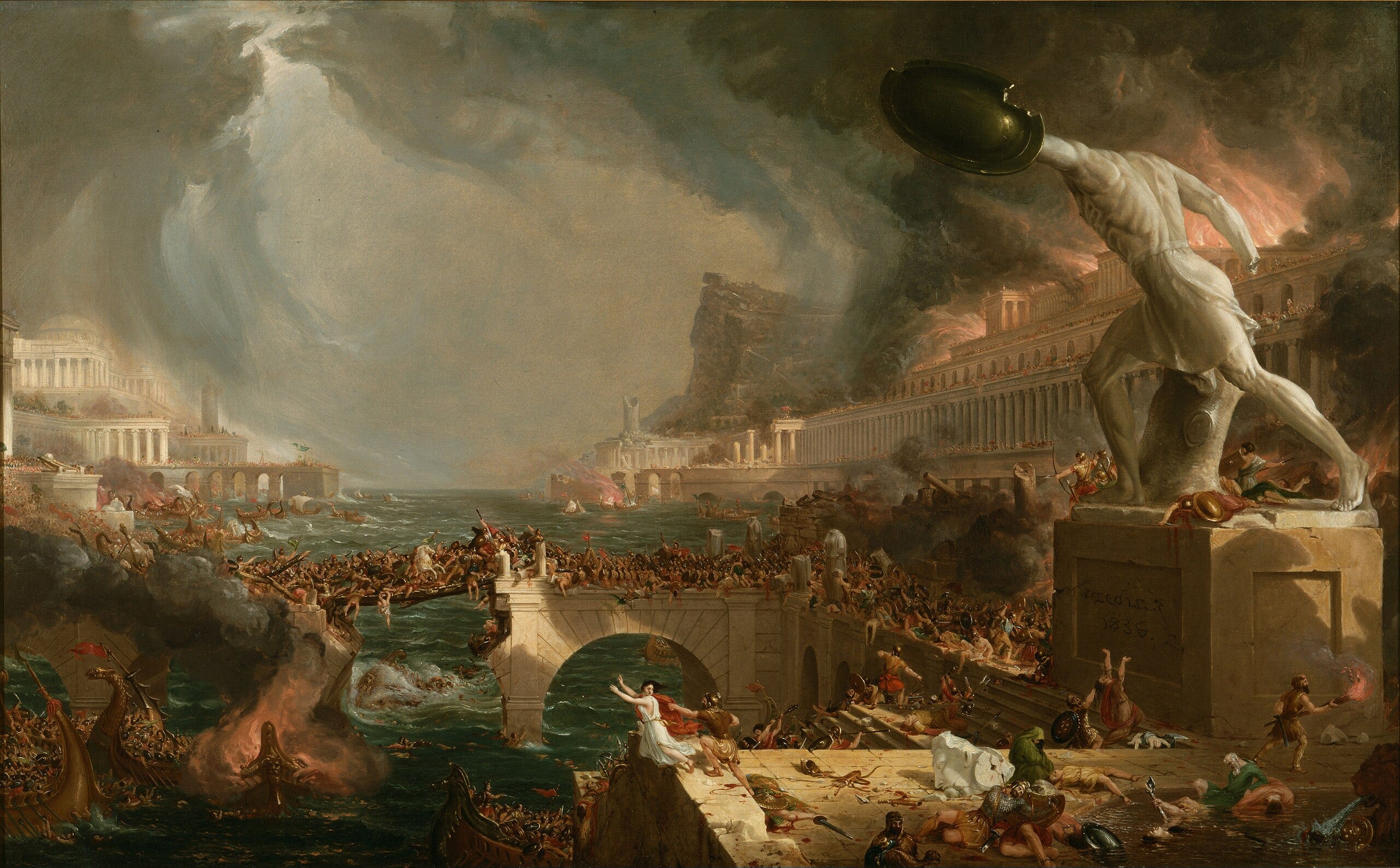
A quiet fatalism has settled over much of our modern culture. You hear the defeatism everywhere. There is a tone of resignation, a soft nostalgia without the accompanying responsibility to reclaim. The solutions are distant and abstract, with meaningful decisions now made far away by unreachable forces. Prominent authors and commentators claim our role is but to bear witness to the fall. The result is a kind of sad paralysis. People watch institutions weaken, mourn what they believe is lost, and convince themselves that decline cannot be reversed. This mindset obscures a simple truth: the work that matters most has never depended on national forces. It has always begun at the scale of the home. Institutions may falter, but the household endures. Indeed, as all the major institutions around us crumble, the household is the last stable social unit we possess.It is the final stronghold of civilization. The cracks in our large institutions (schools, churches, political parties, government writ large) have been apparent for years. The time following the pandemic however exposed how paper-thin they had truly become. Schools struggled to maintain their basic missions during the pandemic despite access to technology and the remote flipped learning model having been popularized for over a decade. Most churches and dioceses, already facing bankruptcies and scandal, surrendered to state mandates leaving parishioners wondering how sacred their sacraments truly were. Civic groups and community organizations lost the participation that once sustained them. The worst and most extreme elements of the political parties told you to either turn your neighbor in to the authorities or disregard their wellbeing altogether.What’s worse is that in the last five years, these institutions did not seem to learn much from one of the most historic events in their members’ lives; they continue to sleepwalk through the ruins of trust and efficacy as if we are not in a post-pandemic world. The old structures people relied on feel hollow. They still exist, but their ability to form character, teach responsibility, or create belonging weakened significantly. This decline is real, and ignoring it serves no purpose. We live in a time when a disillusioned people are looking for truth, consistency, stability but as they look to the grand old pillars of yesteryear, there are cracks in the marble and moldering mortar.The gaze then turns inward, away from the horizon and back to the hearth. How could it not? The household is the last stable institution. It remains capable of producing order, meaning, and resilience even when larger systems falter. The household is the last place where effort maps clearly onto outcome.It is the only level of life where you can actually build something without asking permission. It is the only institution still in your direct care. What’s more, your efforts there result in moral lessons that serve as touchstones when the town square is washed away. A consistent presence teaches reliability. A predictable meal teaches rhythm. A warm winter fire teaches care. A tended room teaches humility. A calm voice teaches prudence. These small actions shape a moral environment that strengthens everyone inside it and fills the void left by the academic, religious, and civic institutions that failed basic tests at the start of this decade. Within the walls of a household, effort still matters. Agency still exists. There is a common refrain we see from commentators that sounds like “Look at what we have lost! Look at what they have taken from you!” This is the pathetic and unearned cry of the lazy. A person has no right to mourn dying towns, fading traditions, or diminishing light if they are unwilling to clear the path, hammer the nail, or tend the fire themselves. Renewal begins with those who are willing to labor. A household that chooses responsibility becomes a source of stability for its neighborhood and a source of inheritance for its children.Indeed, the pessimists and chronically online doomsayers will claim this is a retreat or escape, a ceding of ground. On the contrary, a home that is truly kept in the most reverent sense of the word is not an escape from the world. It is the antidote to it and its failures. It is the smallest functioning republic: a place with customs, rituals, expectations, safety, boundaries, warmth, memory. It is the micro-scale society that actually teaches a child what the larger society should look like. The primal blueprint. Every porch light left on, every garden dug, every fence mended, every bedtime story told, every neighbor fed, every table filled with laughter and order: these are the acts that hold the world together when nothing else can.It is not a retreat. It is the final front by which men and women seeking agency in a wounded culture can actually mold their world.From there the effort radiates however.A man may not be able to single handedly reverse national decline but a family can
To Stand in the Dark
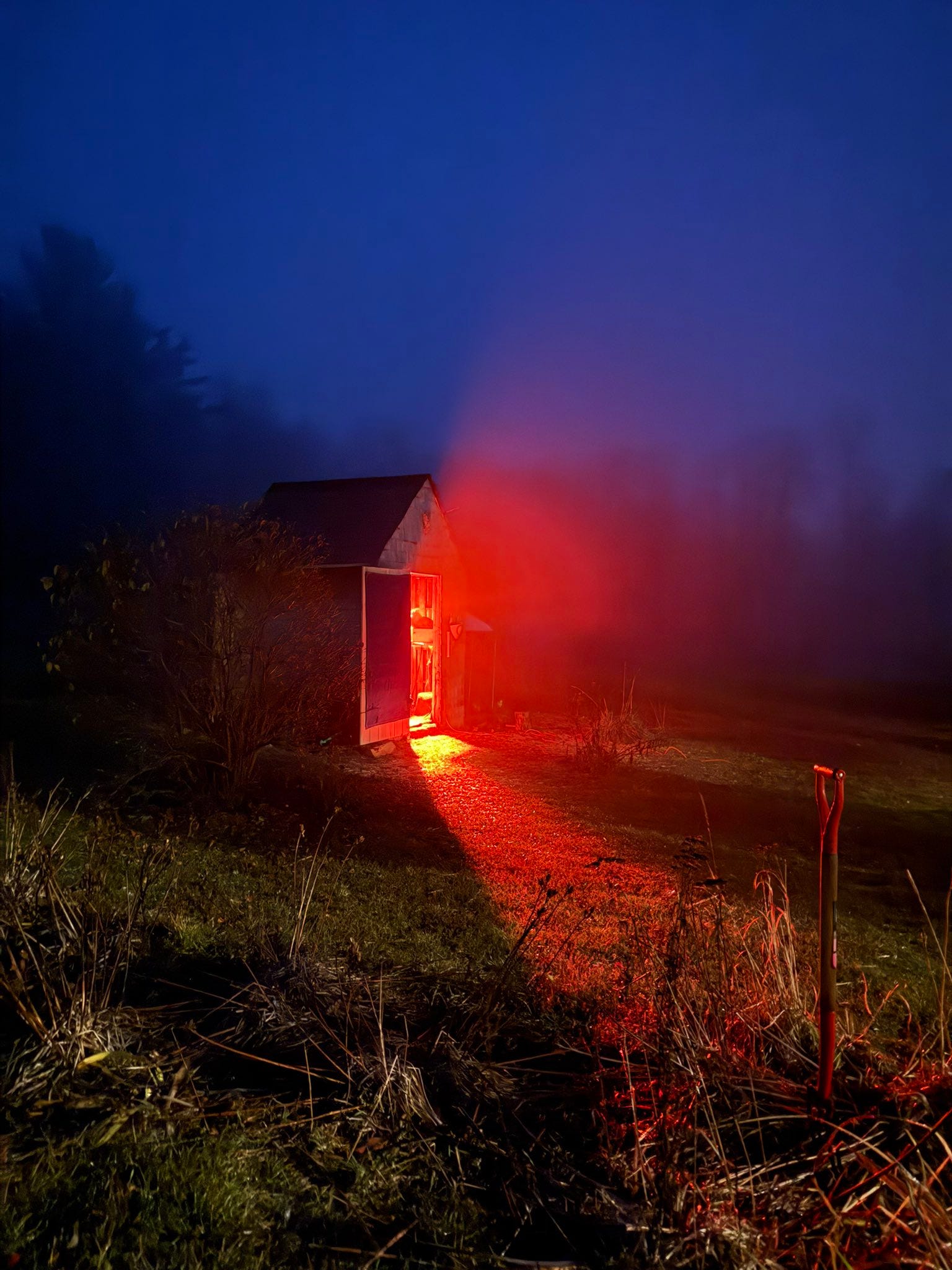
November contains a sort of harsh clarity. We see this first in the natural world; anything extraneous is shed. The trees drop useless leaves and limbs, the hives expel the drones, the animals become discerning in their movement, hibernate. The darkest stretch of the year, the heaving black throughfare leading to the solstice, does not allow for many frills. It is a time to conserve all things necessary and reject the ancillary. This is—like so many elements of the natural world—an invitation to reflect. First, the act of shedding to the fundament in the natural world. Second, the same act in ourselves.Third, the rebellion of this austerity.In the northern places, this stripping-down arrives early and without apology. The first hard frost rigors the fields, and what once sprawled in green excess now contracts into its essential, sharp lines. The marshes dull to pewter, their summer shimmer and buzz replaced by a quiet, skeletal geometry. Oaks and maples stand newly honest, their canopies surrendered, revealing the stark architecture beneath—angles, joints, and axes that summer’s abundance concealed. Even the coastline simplifies: tides pull back debris, winds flatten the dunes, and the ocean grows colder, darker, more deliberate in its motion. There is a sense that the land itself is tightening its belt, drawing resources inward, refusing all ornamentation. What persists does so because it must; what falls away does so without ceremony. This seasonal austerity is a lesson in instinct, in the ruthless intelligence of survival. The northern wild places do not cling to what cannot be carried through winter. They pare themselves to the minimal, the durable, the true. In this bareness, this disciplined retreat to the fundament, the landscape offers its quiet catechism: to endure, one must return to what is necessary, and let the rest go.So too with us. The frost falls, the snow arrives, and we—however consciously or not—take stock of what we will continue to carry. The abundance of summer, the swimming holes and holidays and easy dreaming of all the good plans to come give way to fundamental needs. Indeed, even in our modern lives full of so many conveniences and ease, this holds true. The cold sets in and our gaze shifts from the horizon to the hearth. The dark arrives and we find ourselves gently rocking a sick child and twice-checking the latch on gate. We stop planning and building to focus on the fundamental; our family, our home, our health. Precautions are taken so the children never have to think about warmth or food. An unwelcome noise outside causes you to stand a little longer peering out into the dark than you would have in the languid days of June. Such is the invitation of November; you are called to shed your summer dreams and turn your entire focus to the immediate, the necessary, the true. This is good, the forced setting of priorities, the reframing of perspective. Whatever auxiliary hopes and small decadences remained are shed to reveal what matters. Warmth. Nourishment. Family. Yet even within this season of bareness, there arises a kind of rebellion. It is quiet, human, and defiantly warm. We gather in kitchens that glow against the dark, coaxing abundance from our stores as if to remind winter that it cannot have everything. Its grasp may claw from the woodline all the way to the door but there, we proclaim, it must cease. The feast, in November, is an affirmation that austerity cannot fully lay claim to the human spirit. We roast with ceremony transforming the red harvest into something communal and light-bringing. Around a long table, we answer the starkness outside with laughter, with candlelight, with the laden plate passed from hand to hand. It is a refusal to let the season’s spareness diminish us. Instead, we meet the cold by gathering close, by feeding one another richly, by insisting that gratitude and generosity still have a place even as the world narrows. Though we stand in the dark and take stock of the fundament, this feast is our counterpoint to winter’s demand for simplicity: a reminder that while the natural world hunkers down, we are creatures who rebel by way of fellowship, by creating warmth where none is given, by celebrating audaciously the very abundance we have just finished paring down.It is a paradox in a way, yes. Such is the way of things however, those lessons learned standing here in the early winter-dark. Please subscribe to support our family’s beekeeping tradition.Living the Year - Three Acts to Embody This Time* Take a deliberate walk in a wild or quiet place and practice “noticing what has been let go.” Choose a trail, shoreline, or field and walk slowly, paying attention to what the season has stripped bare: the fallen leaves, the exposed branches, the drained marshes, the stillness of animals. As you observe, name (aloud or in your mind) one thing in your own life that can also be shed; maybe it’s an obligation, a lingering expectation, a distraction mas
We Fathers Must Not Let the Fire Die
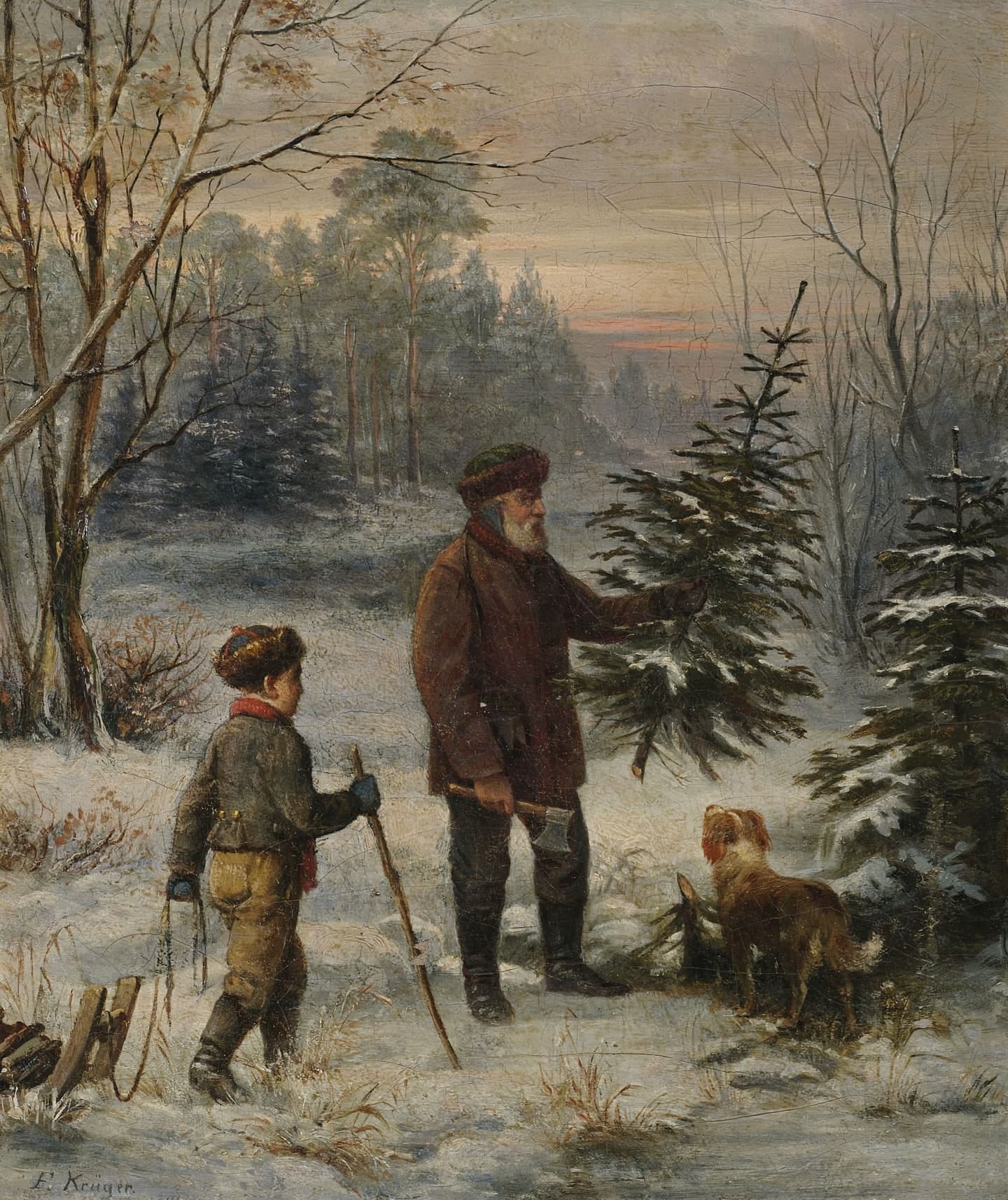
We entered the dark part of the year this past weekend. You crossed over the threshold and now stand closer to the winter solstice than you do the autumn equinox. You’re on the other side of the year from the merry month of May at the absolute grimmest stretch; the days are dark, growing darker yet, and there will be no brightness, no brilliance, no break in the dark for another month and a half.Well, except for you. It all hinges on you now, northern man. You set the tone, stay the momentum, reclaim evergreen-old ways. Hearth-keeper. Merry-maker. Father. You are called now to presence. You are called now to keep. We so often see the next fifty-or-so days with Thanksgiving and the run-up to Christmas as an exhausting marathon feast. For you though, it is a vigil.The world asks that you show your quality as husband, father, son, and neighbor now. The days are few, the nights long, and within that ever-narrowing time, every act carries outrageous weight. You are also tempted by distraction now, however. It is so easy to say you are tired, to turn on the game after Sunday dinner, to linger in the garage, to sigh as your wife asks you to get the decorations down from the attic. To fade.Do not withdraw now. Do not diminish yourself as the shadows grow long at the woodline. Do not let the world turn without your strong hand upon it. When the outside world grows harsh, when the fields lie still, when your home fills with the excited sound of preparation, you must be there. Climb the ladder and hang the wreath. Fetch the wood. Surprise your wife. Gather the children. These small deeds are wards against the dark, they are prayers reaffirming that life continues, that the warmth you bring and grow and tend cannot be extinguished.Remember that you establish the temper of every hour. While your wife is reflecting on where best to lean the cornstalks on the front porch, you need to be determining the very air of the day. You need to be slipping your children a little candy from the Halloween hoard and proclaiming your right of taxation. You need to be planning outings, carving meat, and remarking with authority on things you know nothing of. You need to be dropping in on the women in your life with an armful of mums and a gallant stride. You need to be leaving surprises for friends and sneaking the dog a morsel of Sunday dinner under the table with a wink and a nod to the nearest child. The kind of wink only a father can give, the kind that forever keeps you in their confidence and says “I will always be on your side.” The home needs your warmth. The table needs your weight. The children watch you and learn what good endurance looks like in the ordinary tiring hours when the sun sets too early. Bring them light, laughter, guidance. Let your presence be the keystone that centers, that steadies the room. When your wife leans into the labor of the season, the quiet shaping of the home, you must meet her there. The work belongs to both. Your touch upon the hearth-work is the old inheritance, the way men once met the seasons and cycles of life with quiet reverence. Attend to it. Mend the last of the fences, light the candles, stand in the raw descent of dusk and know what is asked of you now. Just as the jack-o-lanterns give way to the garland, so too does your autumnal joviality and Thanksgiving revelry give way to something deeper. Something hallowed and evergreen. Something old. So many of our old ceremonies and traditions surrounding the solstice and Christmas have entirely disappeared; they lie scattered and desecrated in the shadows of convenience and commerce. We have lost something ancient, something equal parts solstice bonfire and midnight mass, something green and white, wild and hallowed. Where are the home-spun fireside delights of yesteryear, the halls decked with the rustic charms of mistletoe and holly, the candles, the fires, the caroling? These august customs of sheer, unbridled optimism flourished when men had a little more vitality, when they were a little more dangerous, when they threatened to drive the dark away. We all crave the same thing our forebears sought however: the assurance that our homes will outlast the night, that the days will grow longer, that the year will begin anew. Now, here in the long dark of the year, you need to reflect on those good old traditions that came before you, you need to reclaim the discarded crown of holly. It is you who now bears the torch upon the hill, you who now lights the candles, you who now tends the hearth.The year will die and when it does, when the trees stand black against the snow, when the days begin their slow return, you will see what your keeping has wrought. Your wife will move through the rooms in quiet contentment. Your children will laugh in the warmth you have made. The dog will rest near the fire knowing all is well. The house will hold a stillness that feels like victory. Outside, the fields will sleep beneath frost, and you will know that you
Little Lights and Dark Days
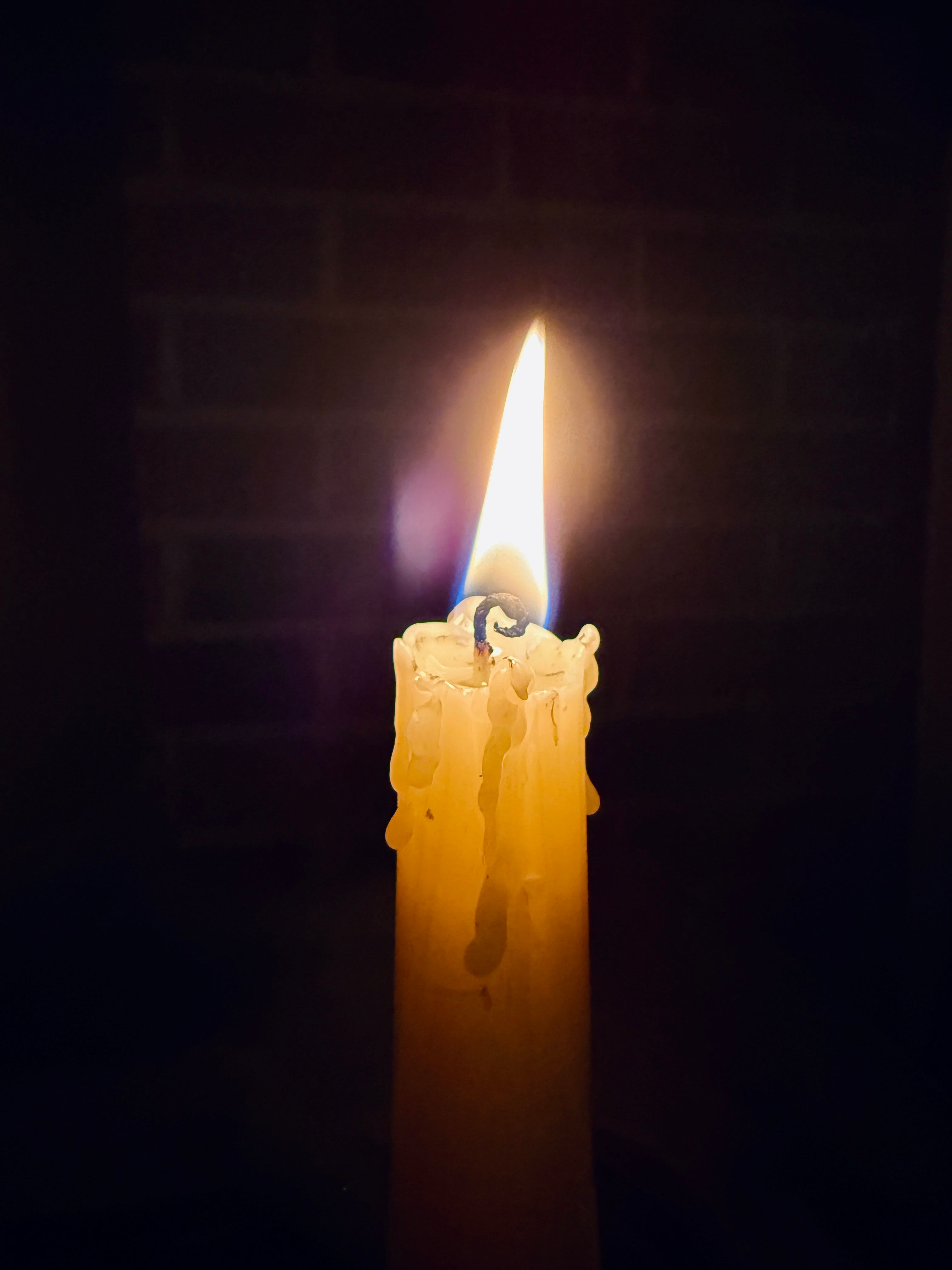
The dark creeps in now. It does that this time of year, right before Halloween. You’re in the garden until well past eight o’clock one day and the next you’re huddled by the woodstove fighting back the marrow-deep raw of a late October fog. You sit down for dinner with your family and note there is something off about the dining room; all those daily imperceptible shifts in the way the sun sets over the nearest ridge have caught up to you and are taking a small toll. All around you now, a bit more gloom sets in. Halloween is of course more than just ghouls and goblins, it is the halfway point between the autumn equinox and the winter solstice: the downhill of the downhill toward the darkest point of the year. The gloom before the true dark of the turn of the year. The leaves have finished their brief reverie. The fields, once humming with life and green, stand quiet under mist and crows. The garden gate swings in the wind, and even the morning coffee seems darker, heavier, its steam adding to the wisps at the woodline. You feel the tilt of the earth not in your bones but in your habits, the way you reach for the light switch earlier each day, the way conversation around the dinner table grows more inward, the long shadows reaching for the cellar door. You know what to do, however.You begin, instinctively, to bring light into your home. You might not even think of it, but you do. A candle on the dining table. A string of lights on the porch railing. A pumpkin carved and lit from within, its face soon flickering against the damp night. These small illuminations push back against the growing dark with a steadfast gentle defiance. We smile and tell ourselves they are for the children, and perhaps they are. The children are the reason you lay the newspaper on the table and pull the top off the pumpkin, the reason you scoop the seeds with your hands and pretend not to mind the mess, the reason you scrape a spot of rogue wax off the porch in November. You do it for the laughter, for the faces warmed by the orange glow, for the delight of watching fire bloom in spite of the gloom. You also do it for yourself, however. You do it to remember that though the darkness claws ever closer to the door, searching and scratching for a thread to pull loose, that sometimes the smallest light is enough to make a home feel whole again.It is an old wisdom, perennial and ancient, this turning toward little lights in dark times. You might not call it ritual, but that’s what it is. You light the candles and the jack-o-lanterns not only for beauty but as a quiet defiance, an illuminated line in the sand. You have seen enough of modern ills to know they do not come with the season, that the dark of our contemporary wounded culture ever urges and churns without cycles, without good green patterns. The news is loud with tragedy and rage, the world feels increasingly brittle, and everything seems designed to keep you anxious and distracted. The easy conveniences promise to make life simple, but instead they make it smaller. You scroll instead of speaking. You purchase instead of creating. You forget the smell of woodsmoke on your clothes and the taste of real fruit in your mouth.Yet, there are still the children, asking to carve pumpkins, to light candles, to stay up late to see the moon. They do not ask you to explain the wounds of the world to them, they do not even ask to make it more bearable. They do endure it though.The dark they face is not the same as yours however. It is not the dark clawing at the door, howling for your attention. It screeches silently in the wires, it hides behind screens, it slips into the corners of classrooms and playgrounds. You watch it reach for them, and it makes you ache. They are too young to understand how much the world asks of them already, how much it desires them. They come home tired, not from running or climbing, but from keeping up with all the influences and inputs and noise. You see it in them, don’t you? That quiet weariness that no child should know.That neon static scream of too much, too much, too much behind their eyes.We laugh to ourselves and joke that we weren’t meant to have as much information as we do, that the 24-hour news cycle is really too much, that knowing about sorrows across the world probably isn’t good for us. We erred. We were not meant to pull back the curtain and stare so long into the digital cauldron, to be overwhelmed with so much information and so little knowledge. Our little towns and schools and homes have been flooded with every sorrow of the world and we were not prepared.We adults grimly laugh at our mistake and shrug but the children, they do not understand. How could they?So you light the candles again. You make soup and laughter and warmth. You teach them the old rituals equally arcane and ordinary: how to carve faces into pumpkins, how to gather leaves, how to make a home glow from within. You do not tell them it is protection though it is. You do not te
You Need to Keep Going
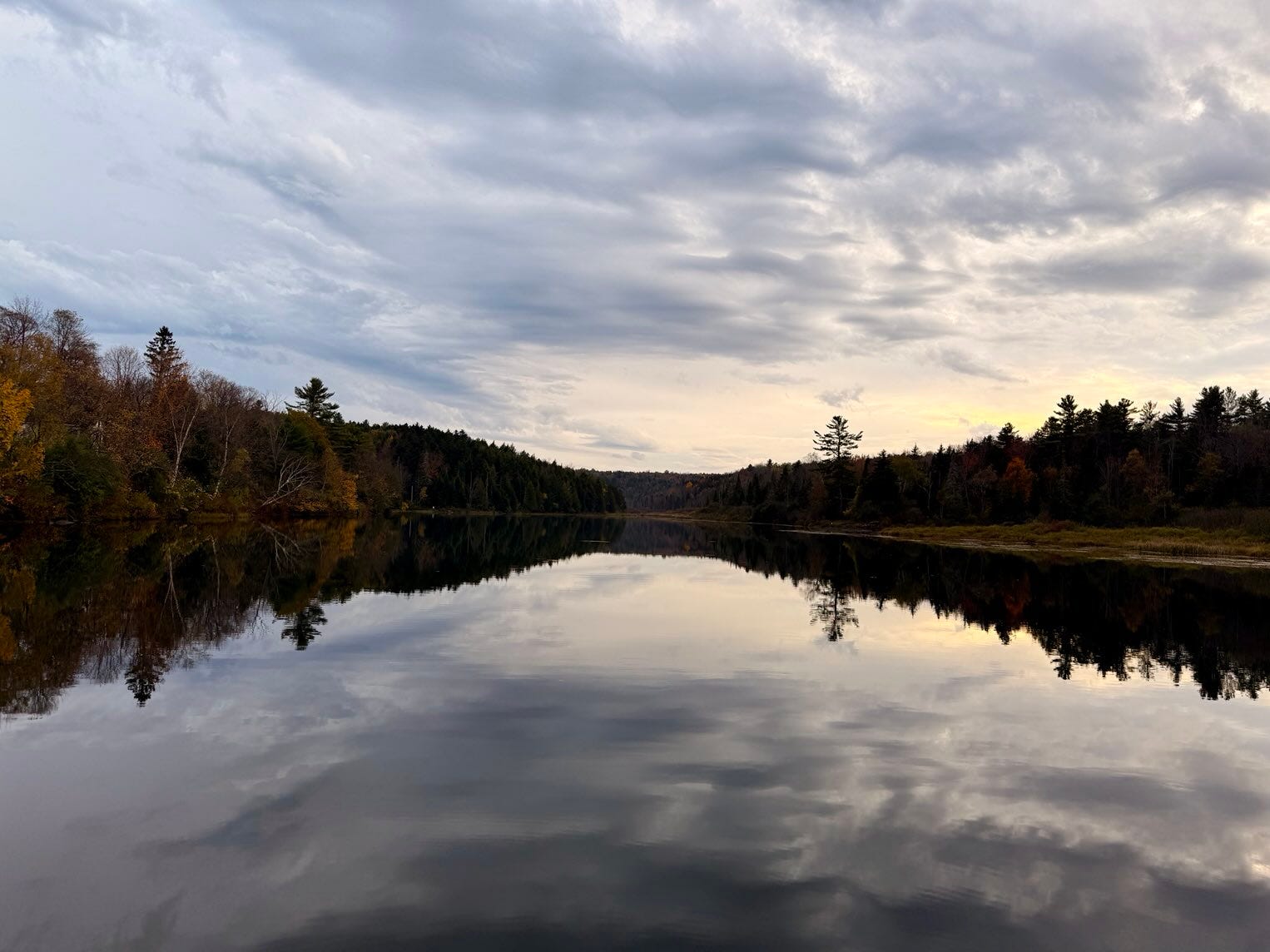
It is October now, though you wouldn’t know it from the mercury rising the past week. The maples are rapidly growing bare and the leaves are crisp beneath our boots, yet the air hums with a misplaced summer heat. For days now, the warmth has lingered heavy, uninvited, strange. The bees are restless, spilling from their hives past twilight, agitated and uncertain of the season or their aims. The full moon hasn’t helped their confusion, nor mine. It has cast its silver light through the boughs and across the fields, waking the nocturnal; foxes, skunk, and deer wandering through the flower field and closer to the house than I would like. The children, too, have been taken by the moon. They beg to stay up late, to join in whatever quiet work remains before bed. This is fine. The heat lends itself to frustration in us older people, but tonight my little girl carried tools down the hill to me, barefoot and beaming her headlamp despite the moonlight, ferrying a hammer, a ruler, some nails while I mended a loose board in the honey house. There is a strange paradox to this season: one foot in autumn, the other stubbornly trying to reanimate summer. The leaves have fallen and turned to tinder underfoot, perfect for jumping and tossing into the air, yet standing in the old flower field I can hear the faint laughter of swimmers down the hill at the lake in the village, as if July had clawed its way from some autumnal burial mound.It is disorienting when a season will not stay dead. It confuses the senses and makes time feel off, wrong somehow. Still, around every home, the same good green pattern continues: the swing of the maul and the stacking of wood, the scent of honey warm in the hive, the anxious hammering of boards to outbuildings before winter’s inevitable claim. It is a strange thing to sweat under a sun that should have softened weeks ago, to labor in the yard or forest with heat on your neck while knowing frost is crouched in the hedgerows, waiting to waylay the tomatoes on the vine. The small jobs about the property and home regenerate endlessly, almost as if they are urged on unnaturally by the heat. Then we see the children in the yard though, gathering leaves and stones into little piles or pretending to help us carry kindling and suddenly the heat no longer confuses and disorients, the muscles no longer ache. The children root us when we are unmoored by strange skies. They sanctify the toil and redeem it into vocation.Today the heat finally broke. Rain came in the early morning, soft and steady, and our little corner of the world exhaled. The sky turned a muted gray and the light, filtered through the patchy clouds, glowed with a gloaming calm. The bees quieted at last, huddled in their hives, and the forest smelled again of damp leaves and good sodden loam. It is the kind of weather that invites stillness, that whispers rest, rest, rest. Rest is a luxury not yet earned however. There is still wood to stack, honey to bottle and sell, another repair on the chicken coop before the cold finds its way in. Meanwhile, the children’s laughter is a ringing bell through it all, putting the reanimated summer finally to rest. They play in the new puddles we tell them to avoid, of course, and when we turn to scold we stop short. Their joy redeems the drudgery. Their play answers every unspoken question about why we keep going when the body aches and the mind frays.Even now, as the days shorten and the warmth feels misplaced, we are reminded what all this labor is for. The work, the worry, the stings and small fixes. They are for the children who chase chickens and puddles and dreams under an autumn sun that doesn’t know what month it is. They are the quiet covenant that binds us to our place and to the rhythm of work and of rest, of breaking and of mending, of toil and of joy. The skies may turn strange, the seasons may blur, the cracks in our walls may show but still, we keep going. We must. When the muscles tremble, when the hands blister, when the spirit grows weary and wonders if it can go on, we look to them and remember.For them, we labor.Through them, the work becomes hallowed. This is a public episode. If you'd like to discuss this with other subscribers or get access to bonus episodes, visit oldhollowtree.substack.com/subscribe
You Must Recognize Your Victory Now
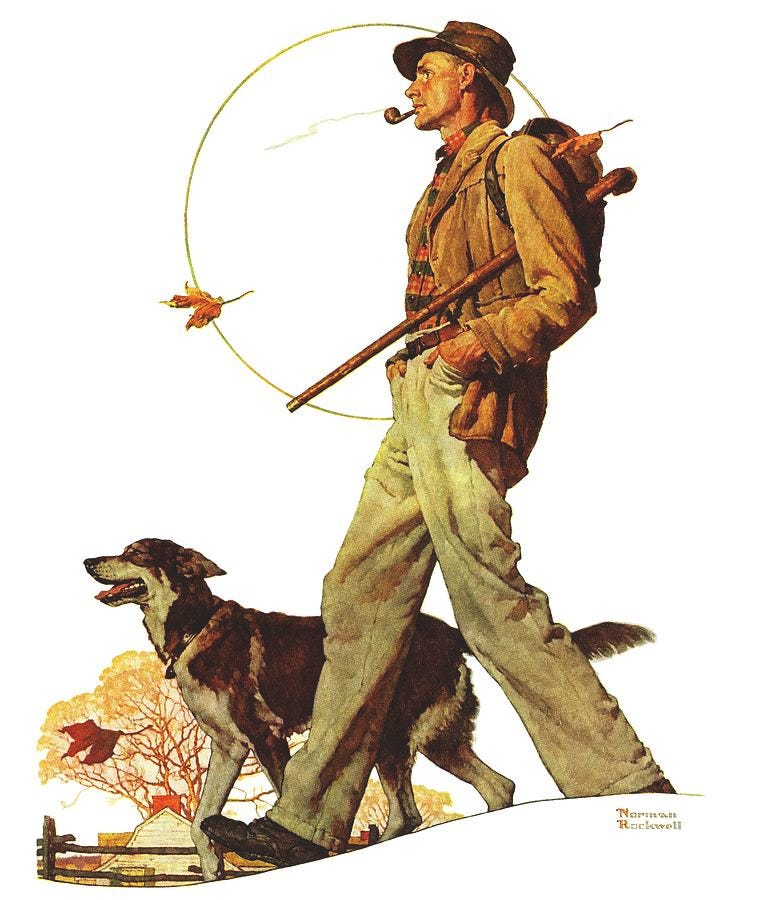
You’re well on the march to winter now. The solstice came and went back in June and your days became imperceptibly shorter. Lammas came and went quietly with the early harvest. Now the equinox is behind you and there is no denying that summer in all its good green glory has performed its function. Everything good grew, bloomed, and went to seed.Purpose and achievement realized, made manifest.A culmination of green and gold, of seed and loam.We could learn from all the trees and flowers this time of year, of all the seed sowers and bulb growers. Our days are marked by endless pings and alerts, of calendar reminders and notifications. You are approaching the fourth quarter of the business year—that most hatefully efficient quadrisecting delineation of your time—and, if you are a white collar worker who spends more time behind a keyboard than a shovel, you are likely facing some sort of “Q4 performance review.”If so, God help you.Your good green heart was meant for more than this.You will be asked—either by your job or by our wounded culture at large—how you plan to grow in the coming quarter, in the time before the turn of another year.This is neither fair nor is it natural.When we lost touch with our agrarian roots, when we left the fields and forests for the factories and offices, we sacrificed a certain attunement with the seasons and cycles. We forgot how this time of year was instructing us in favor of steady work, a long endless metallic drone instead of a cyclical organic rhythm.We forgot to recognize our victories. We forgot to realize when we had won and when to rest.The good news is that creation, the loam, the good green pattern churning beneath all know better. The forest knows better. Ask any gardener or beekeeper or orchardist and they will tell you now is the season to take stock. You pull the last of the garden from the dirt, you collect the honey you’ve been waiting on since May, you take your apples to the cider press. There are few thoughts now about producing more, about endless striving. Now all thoughts turn to a heavy sigh of relief and culmination—the fruit is in the basket, the crop is in the barn, the bees are heavy with stores and the wood pile is teetering dangerously high.It is no small thing to come to the end of a cycle and realize you have made, grown, created enough. That you worked, yes, and labored, but now you can gather. We were not meant to produce endlessly, to grow constantly, to urge and urge and urge. This is the rhythm our ancestors trusted. This is the rhythm that kept them sane. The ability to stop and say: it is finished.You should allow yourself the same.Perhaps you are not a farmer. Perhaps you have no harvest in a literal sense. Still, you have planted and tended something this year. Maybe you raised children through another summer of scraped knees and wild berries. Maybe you launched a project that is finally reaching its natural close. Maybe you simply endured and held on when things were difficult in your heart. That too is a kind of harvest and worth acknowledging.Instead of asking “what next?” ask “what now?”What is here? What is complete? What is good?The trees do not grow new leaves in September. They are not so foolish as to try. They know it is time to let go, to blaze out in one final show of color, to cast seed into the ground and trust the future to take care of itself. They celebrate by ceasing. They culminate by closing the cycle.Do not let the tyranny of quarterly goals, year-end reviews, and other modern inventions of productivity rob you of the deep peace that is due to you in this season. Do not let our culture of relentless progress steal away the chance to enjoy what you have already accomplished. Some will tell you that rest or idleness now is a sort of failure. The truth is that rest is the crown of the work.The meadow in September is not anxious. The field after harvest is not ashamed. They have given what they can give. That is enough.Now is the time to gather your own community, however small, to mark this time following the equinox. Invite friends for a meal. Bake bread, press cider, roast whatever your hands have brought in from the summer. If you have no literal harvest of your own, take stock of what you have done, all the good you have wrought and celebrate it. Buy a pumpkin, light a candle, let the children run until they fall into sleep. You are allowed to live as if the world is not only spreadsheets and headlines you know.Celebration is a kind of rebellion. Through it, you proclaim: I will not let the anxious cultural ills dictate my pace, I will not let the endless noise drown out the truth of the season. The truth is that you have accomplished something. The truth is that you have made it this far. The truth is that you can rest in that knowledge.First you need to take your victory lap, though.The frost is here. The days will shorten further. The long rest of winter will arrive in its time. Not today though. Not yet. Today is
How to Find Your Balance in an Unbalanced World
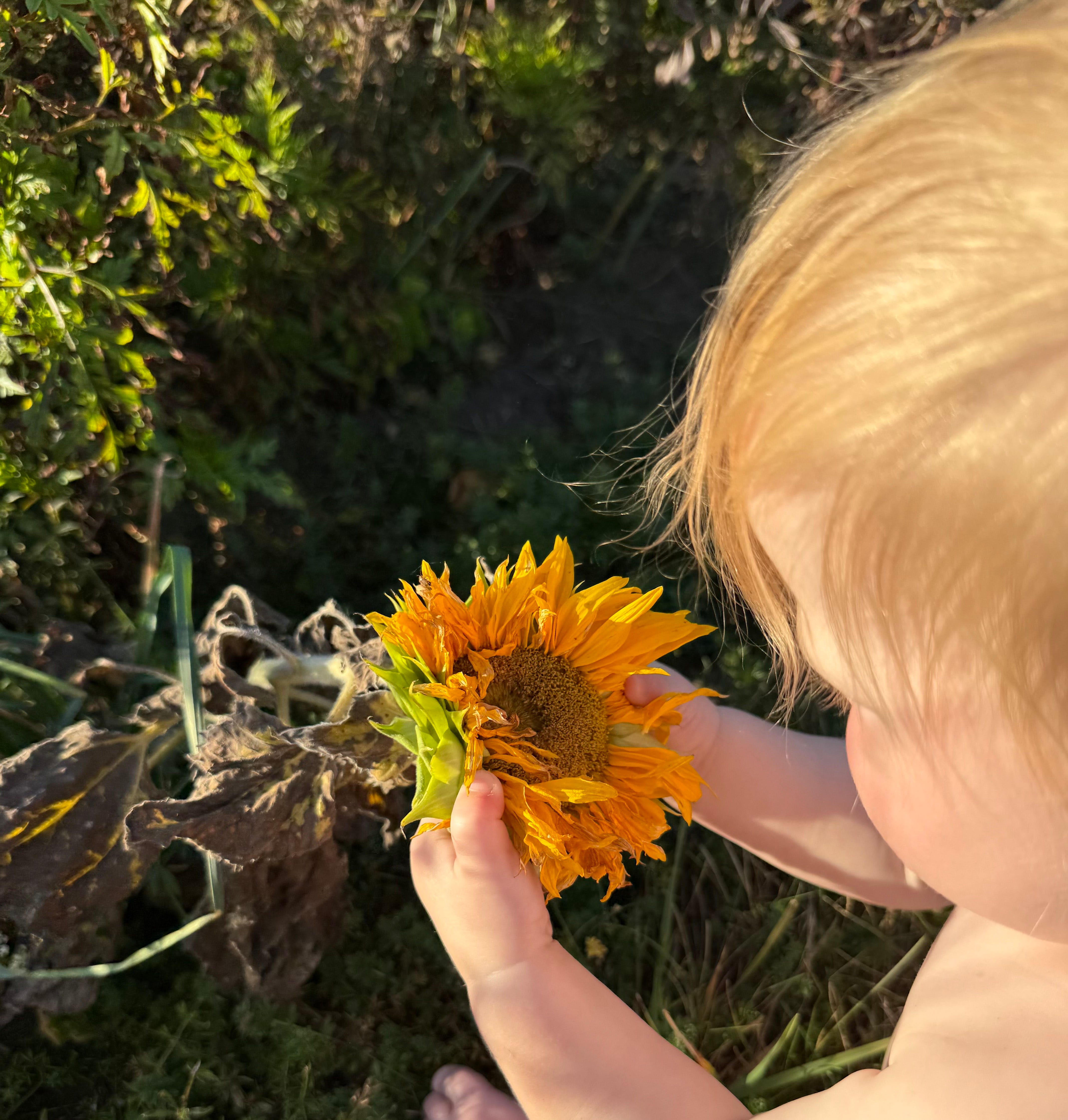
We are deeply unbalanced, off-kilter, ready to fall. Take a look at any headlines and no matter your politics or lack thereof, you will likely conclude our entire world is teetering on the edge of a blade, at risk of falling into cataclysmic disorder. This coming Sunday however contains a heavenly convergence that is worthy of your reflection and may offer some solace; it is both a new moon and the autumn equinox. This is significant not because of some spurious astrology but rather the real, tangible ways your world will change and some innate symbolism that natural world offers. On the equinox your days and your nights will be more or less equal. Twelve hours of light. Twelve hours of darkness. This is good. In such unstable times, it is well that we are not also enduring the long dark-cold or losing ourselves in the bacchanalian joy of the two extremes, the solstices. This equinox is marked too by the invitation to start over offered by the new moon. Something about new moons always feels like an opportunity to begin again. When you take these two celestial events in tandem—the balance of the equinox and the opportunity of the new moon—it feels as though you are being invited by the natural world to step forward and reclaim some semblance of stability, to make a fresh start and regain your footing, to try again. I walked with my now toddling daughter (13 months old) around our meadow this evening wondering what to tell you about this equinox, about how to become balanced again in such an unbalanced world. Would I speak of the adaptability of trees changing? The succession of flowers again? Migratory patterns? As I hemmed and hawed, contemplated and reflected there in the meadow, my little girl pointed to a small sunflower. I carried her to it, placed her down, and continued my ruminating. She tugged at the flower, realized she could not pull it from its root, and crawled to my lap. She did not fuss as I picked her up and carried her in my arms to the forest in search of more insight. It was there however, that I realized she had already given us everything we needed to know to keep our balance in this unbalanced world.The FlowerAs we walked around the field, my daughter spied a small sunflower from some distance and pointed to it, directing me to bring her there. When I placed her on the ground, she was not distracted by a butterfly nearby nor the approaching cat; she walked to the flower confidently and began to pull. She knew what she wanted and she went for it. As we are considering how to reclaim our balance in these uncertain days of grim headlines and constant alarm, it is wise to be like the very young child who sees what she wants and strides to it with an unwavering focus. Identify your goal and do not lose sight of it, ask those who support you to help you arrive to your desired location, approach, and seize what you desire.The Familiar When my daughter decided pulling the flower was in vain, she did not fuss. She realized uprooting it was beyond her and she crawled toward me and settled into my lap. One might expect an easy lesson here in the importance of asking for help, but that did not occur. My daughter—though very young—knows how to ask for things including assistance. She did not do that with her flower. Instead, realizing it was beyond her, that its roots were stuck fast, that it willed itself to remain planted, she returned to me and therein lies her second lesson for you:When we fail, it is good to retreat to familiar ground. Remember though (and this is very important) that she did not crawl to me crying or wailing, distraught at her defeat. She accepted what was and returned to what she knew. As the world becomes increasingly complex and unstable, things just won’t work sometimes. As my friend and fellow father Joe Norman at Applied Complexity Science likes to remind me, “complex systems are fragile systems.” This will only become increasingly true as our world becomes increasingly complex and many institutions, efforts, and logistical networks will break down. Failure abounds.This sounds scary but it is fine as long as you have the familiar to which you may return. Perhaps it is not a physical place like your father’s lap. Perhaps it is your faith or ethos or code of morality. Perhaps it is a person. Perhaps it is a book or tradition or biome. Whatever the case may be, if you have a touchstone, something to moor yourself to when the sea of life becomes too choppy, you will be able to regain your footing and try again.Trust After my daughter crawled into my lap and I stood and started walking away from her desired flower, she did not whine. We walked from the flower meadow to the edge of the forest. There, we spotted a flock of wild turkeys emerge in the far corner of the field to the south. The woodline curves there like the gentle arc of the sun over the western ridge this time of year, providing multiple opportunities for escape for a cunning wild bird. A fine and safe boreal co
How to Slow Down Time
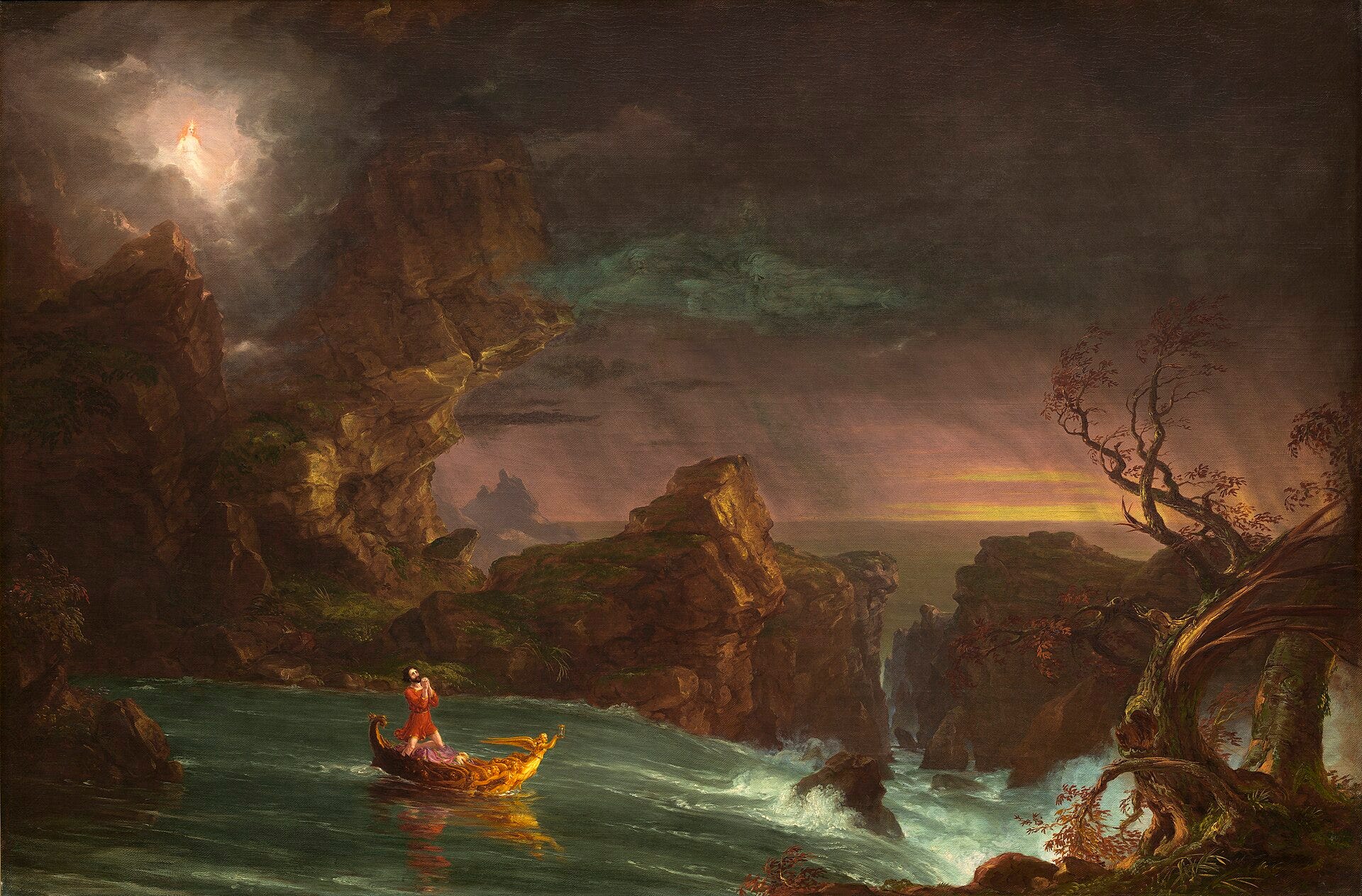
It is late August and the northern places have begun to transform with quiet, unassuming grace. The nights grow cool in the hills and a walk down the road, through the forest, or past a tangled hedgerow will reveal autumn’s early, subtle gains. Apples have begun to tumble from branches, splitting open in ditches and their bruised, tart-sweet perfume mingles with the crisp air. Sumac has begun to blush along the edges of the field as if the bees told it a risky joke. Goldenrod reigns over every field. The light has sharpened, no longer softened by June’s hazy gauze but instead casting crisp edges on leaves, stones, and weathered fences. The sky feels closer to November’s stark clarity than midsummer’s languid glow now. A faint browning creeps into the green, signaling the year’s inevitable turn toward more balanced days after summer’s wild sunlit bender. This is late August’s arrival, subtle and without ceremony, leaving most of us to ask “Where has the time gone?” It is a good question and we seem to remark on it often. People will tell you that time keeps speeding up for them as they age, that the days are long but the years are short. They ask “How did my children grow so big?” The days are so full, the weeks just float away and there is the ever-present lament of “I need more time.” They are common complaints and questions. Rarely do you hear that we can slow the turning of that old grindstone, however. It seems to be a secret well kept, hiding in plain sight.We can slow our perception of time. It is not arcane or difficult, but it does require practice that, like all good practices, eventually forms into a benevolent habit. The secret to slowing time is twofold: first in deliberate attention, in actively attempting to simply notice what is changing before you. Most people rush past the season’s signs, distracted by screens or lamenting summer’s end, only to find themselves at Labor Day or Halloween, asking, “Where did the time go?” Time can be stretched however, made to linger and burn slow like a well-tended fire, by noticing the small shifts that mark the turn. This, in part, is why it becomes important to attune yourself to a place, to stay there for a long time and become intimately familiar with its seasons and its signs. Do you know the birds at your feeder, the weeds in your ditch, where the moon rises over the ridge this time of year? Here in Vermont, late August has many little omens and signs: goldenrod fills the fields while asters bubble up from the ditches and roadsides, their purple and yellow blooms complimenting the fading green. Corn in the fiend stands tall, tassels dry and rustling, while dairy barns glow with the soft light of evening routines. We have lost over an hour of daylight since the summer solstice and those lights are now necessary. In the woods, the understory shifts; wood nettle fades, jewelweed scatters seeds, and birch leaves curl on the forest floor. Along roadsides milkweed pods are just beginning to split open, their silken threads catching the wind. Each day offers a detail, a small slow secret to anchor the moment if you but pause to gather it.The second element you need to slow time may sound ironic. It is filling your days with good work. Imagine each day as a wooden chest placed on the riverbank. The river is time, always flowing, always pushing, apathetic to what it carries off. The chest is your days. A chest left empty is light; it is carried off easily, swept downstream before you have even marked its presence. That is how whole months can vanish unnoticed, how years slip past with the haunting sense that you never truly lived them. A chest that is filled with the weight of good work, of perennial tasks, of hours well-spent building, making, growing for your family cannot be rushed away. It settles into place, anchored by what you have placed inside with care. The day remains regardless of the rising river and its rushing insistence. You can prove this for yourself. Work a property hard for a single year on evenings, weekends, whenever the light allows, and by the following autumn it will feel as though you have been there for decades, even generations. The soil will know your hand, the fences your hammer, the animals your presence. This good work does not mean frantic busyness, nor endless striving, but rather keeping with the good green pattern of the world: tending bees, stacking wood, pruning apple trees, raising children. In the city you may achieve this as well, though it may not feel as intuitive. Instead of splitting wood, you may have more agency around the relationships you build or the initiatives you take to improve commonly held spaces like parks, or the old rituals of your faith you steward. Whatever the case may be, you place good weight in the chest through these acts. They belong to the perennial cycle, the tasks that root you in a place and in a rhythm beyond yourself. Fill enough chests this way, and the river of time still flows, but you
Flowers Freely Given
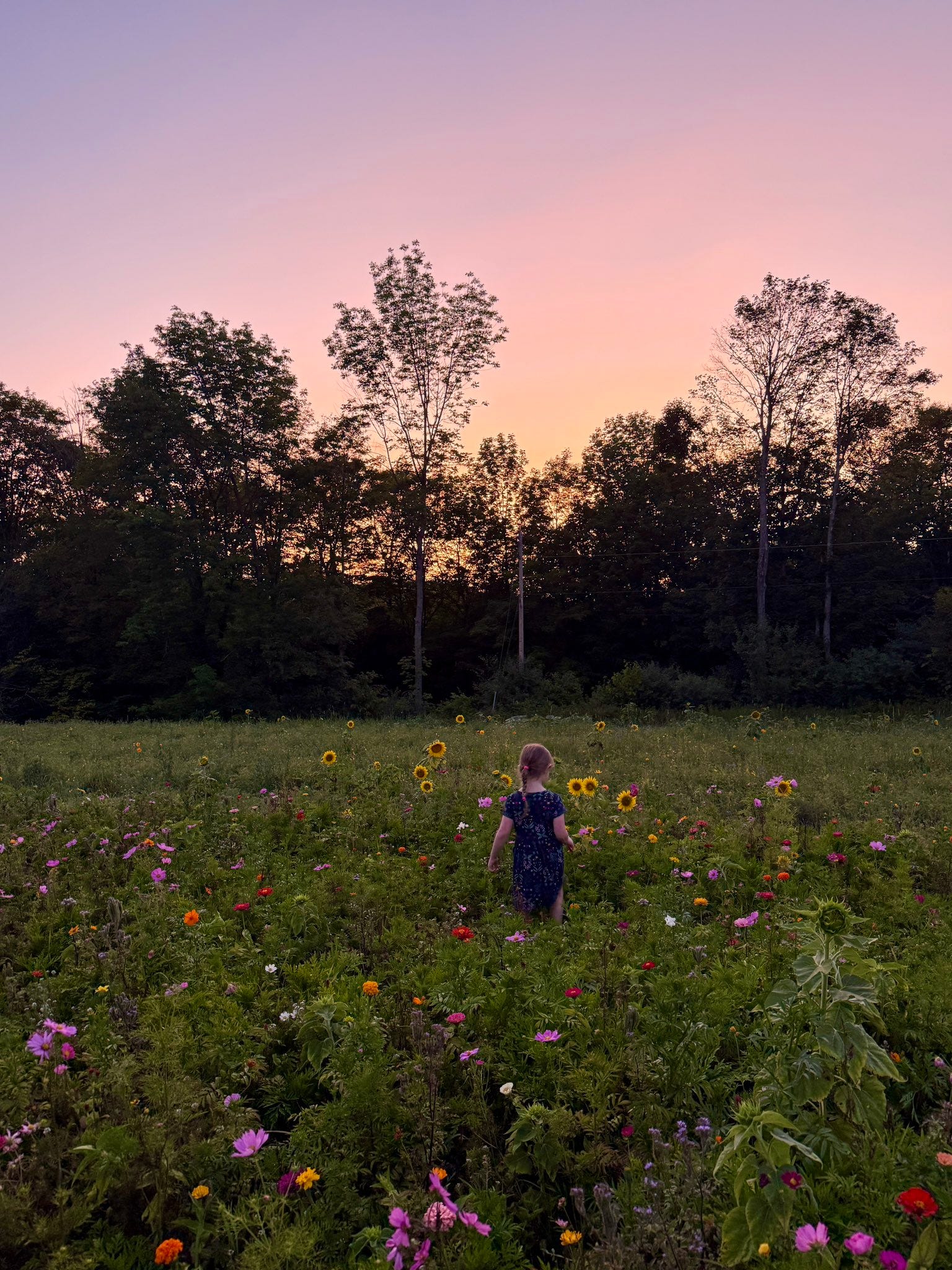
Author’s Note: this essay is part of the Reports from the High Wood series, a weekly premium report from our homestead that offers enduring lessons for living well in a wounded world. If you're drawn to green paths, perennial values, and timeless beauty that resists the modern glare, you're in the right place.Normally these Sunday posts are for paid subscribers only, but the nature of this essay makes it feel right that this post should be available to everyone.Here are some of our past beekeeping posts that will give context if you are new here:"You could charge for this, you know." The kind woman I did not know remarked as she cut a handful of zinnias and marigolds from our meadow. She was visiting from another state, staying with my friend and neighbor who I saw swimming earlier. I invited them to walk up to our home and cut flowers. Her comment caused me to reflect not only on the possibility of tourists cutting flowers and taking photos in our meadow for money, but the morality, authenticity, and general ethos of the idea. Two weeks ago, another friend walked up from the village with her daughter and her daughter's boyfriend. These beautiful teenagers spent one of their final evenings together before leaving for college by putting the flowers from our meadow into each other's hair. I smiled as they stood there in the field, looking like Oberon and Titania holding court, unaware of summer's fade. Could I ever bring myself to charge a stranger for such a thing? Would it be right? Would it be better to leave the meadow a secret for friends and friends of friends to come and leave with a bouquet for their table? What is even the purpose of the Humming Meadow?We live in a time when everything is bent toward transaction. The smallest pleasures are weighed for their commercial potential, packaged, branded, and sold back to us as a curated experience. Even the flowers are not spared; wild bouquets and meadow walks appear on glossy flyers promising wellness, mindfulness, reconnection. To resist this “agri-tainment” not easy. We are told we must monetize the hours we spend, the skills we carry, even the beauty that happens to fall on our land. I am not immune to this. I write here, I keep bees, I tend a homestead that asks for both labor and investment. Yes, we care deeply about beekeeping, the land, and creating something good and perennial but there is also a practical wisdom in selling honey, in asking readers to support words worth writing. Yet there is also a line that must be drawn if one hopes to live in alignment and equilibrium with the good green pattern. Not every moment, not every experience, not every gift of place should be folded into the ledger. Our wounded modern world may need fewer things for sale and more things given freely, without calculation or branding, without the heaviness of an exchange. There must be some part of our lives—a table set for family, a forest path known only to neighbors, a good old ritual—that remains unpriced. Perhaps this is because, while in the meadow this evening, I sensed we are actively living in “the good old days”. I know it in my bones when I watch my daughter chase after our black cat through the meadow with an armful of zinnias. I know it when I see my wife at dusk, standing barefoot in the grass, holding our youngest while moths relieve the butterflies’ watch over the meadow. I know it in the steady rhythm of the hives, in the sting and the sweetness that mark this work as ours. These days are fleeting, precious, lit with a kind of unselfconscious joy. The business is still small enough that it does not consume us, the children still young enough that they do not pull away. Even the meadow itself feels fragile, an ember of soil and seed that could easily be snuffed out by carelessness or greed. Were I to charge for entry, to make the flowers a product instead of a gift, I would lose something essential. I would no longer wave to a stranger who has wandered up the road from the village and mean it when I say, “Take some home with you.” I would no longer welcome a friend of a friend with scissors in hand and feel no need to count the stems. These are the years when such hospitality is still possible, when the gate is open, when we do not guard ourselves against loss because what we have feels abundant.In time, this ease will change. The children will grow, the business may harden into necessary edges, the meadow will pass through its seasons and become something else. I do not fool myself that the wheel will pause here. The dandelion gives way to the clover, the clover to the goldenrod, the goldenrod to the asters. So too with us. What we hold today will be asked of us tomorrow, and if we are wise, we will give it gladly. To cling too tightly is to miss the gift of the season we are in. Better to live as the flowers do, spending themselves fully while the light is theirs, trusting the good green pattern to carry on. If we can live this way, even for a time, w
What We Learn from Dying Flowers
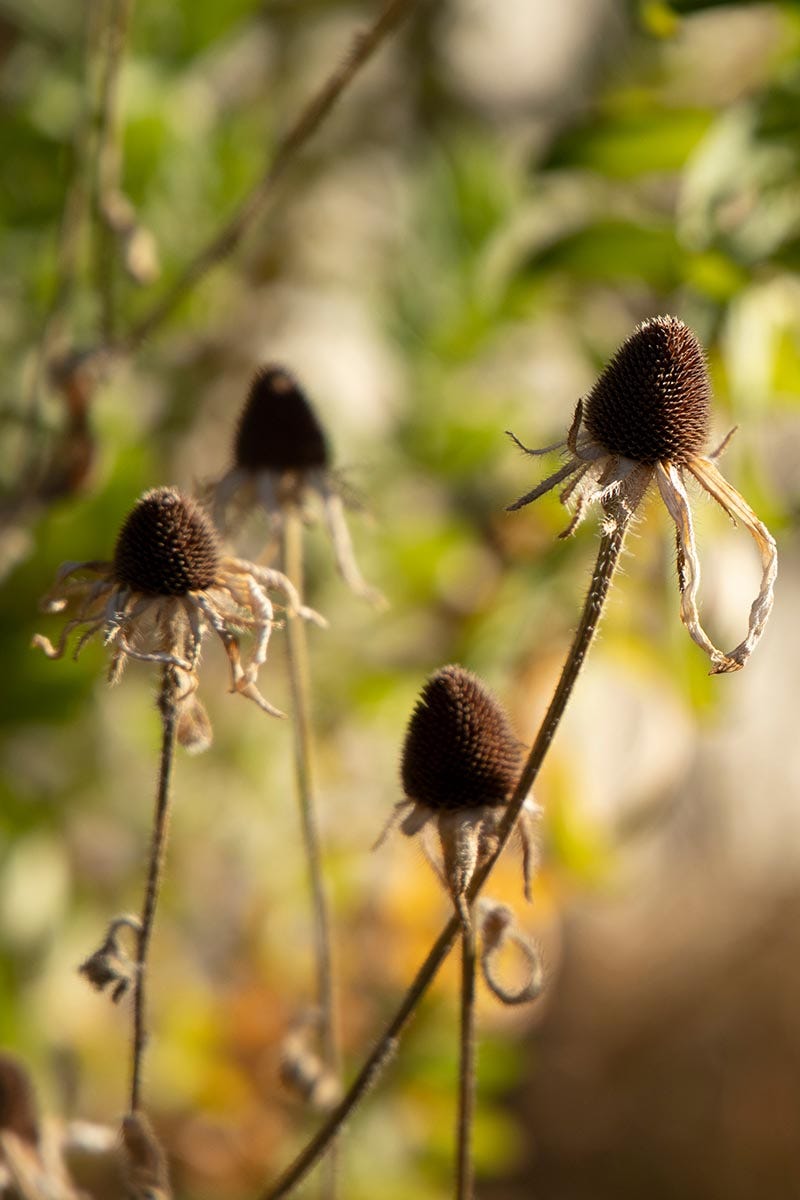
It is the middle of August and now we wander through our high summer haze toward the equinox, toward fall. It may feel cruel to speak of autumn as the children yet splash and shout in the swimming holes, as the berries burst on the vine, as the school bell still gathers dust, but walk now slowly along the ditches where the lilies and daisies once bloomed and you will know this is the truth. Those fair flowers of July have bowed gracefully into the loam making way for the bright, proud goldenrod and the asters frothing in the shade-low. We so often associate nature with regeneration; cut leaf or limb and expect it to grow back. We will acknowledge its cyclical nature too. Rarely however—and at our intellectual and spiritual impoverishment—we fail to recognize its lessons on sequence and inheritance, of succession. We know of this inherently, even if we do not think actively on it. We see the clover fade in the front yard while the Joe-Pye weed fluffs about at the roadside. We muse that we haven’t seen a dandelion in some time while the curious scalemail of milkwort catches our eye. We wander to the woodline seeking the blushing maidenpink only to find the arcadian blue vervain. These green things do not endure as marble and steel. They may not even regenerate as we romanticize they do. No. We understand inherently that everything in nature holds to the good green pattern, that everything eventually gives way for what next the season calls. The old wheel turns and something blooms anew.We celebrate steadfastness to a fault, don’t we? We laugh and remark that someone is as stubborn as a mule with a twinge of pride. To be unmovable, unmalleable, unyielding has become very much an admirable trait. When we think about succession, when we reflect at the roadside on the browning flowers of yesterday and the bright flowers yet to bloom, we may reap an uncomfortable conclusion, however. All that dogged determination to never be moved in our positions, even by convincing arguments is always directed outwardly; we resist with pride any influence that seeks to change our attitudes. We make this conscious choice to don our armor and decide we will not be moved by others. But what about ourselves? What do we lose by not allowing ourselves to be moved from within? We are but iterations in a long good pattern, not only in terms of our lineages, but also in terms of ourselves. We grow and change if we but allow ourselves to do so. Our politics, our faith or lack thereof, the weave of our moral filaments—the inheritance we give ourselves is the ability to shift these, to adapt to whatever spiritual, physical, or intellectual environment in which we find ourselves. You may find that the flowers that served your loam in one season no longer suit you. This is fine. Allow yourself to carve space for what comes next.This call to inner adaptability extends to how we inhabit our own time, as flowers do theirs. If we accept that we are part of the same good green pattern as the flora of the meadows and hedgerows then we must also accept that we are made for the time, the good, long season, we inhabit. The Joe-Pye weed does not long for the dandelion days of spring, nor does the snowdrop waste itself in dreams of the goldenrod’s high summer glory. Each grows into what light and rain its season offers. We may romanticize the simpler past, its agrarian nature and straightforward morality. We may imagine the perfection of some future utopia where all will finally align into an abundant climax. This longing cannot root us here where we are needed however. The soil we stand in today is not the soil of yesterday, nor will it be tomorrow’s. What wisdom, beauty, or courage we have to offer can only bloom in the conditions we are given, under the particular angle of today’s sun. This does not mean we should “live for the moment” (a tired cliche of which we should all dispel ourselves) but rather recognize that we are well attuned to our own time, that what value and insight we can bring belongs here in these wounded days. We can make the dubious but inspiring claim that we were made for the challenges of our time but it may be more accurate to say we are simply well equipped for the challenges because they were forged in the environment in which we were raised. You may lament that you were born in this time as many do. Remember however that the wounds of the modern world are best addressed by you because you are what grew in their strange and unwelcome light. You are attuned to these days and therefore you are the one who is able to affect them.Living fully in our season shapes not only us but the legacy we leave. We so often speak of legacy as if it were a monument—stone, immutable, meant to withstand the grinding of that old wheel. Nature’s bequest to you is not cold granite or august marble however. It is living soil, warm loam, dark earth. The flowers may reseed and we can point to this as their legacy; we see the continuity and celebrate
Three Truths Milkweed Can Teach Us About Parenthood
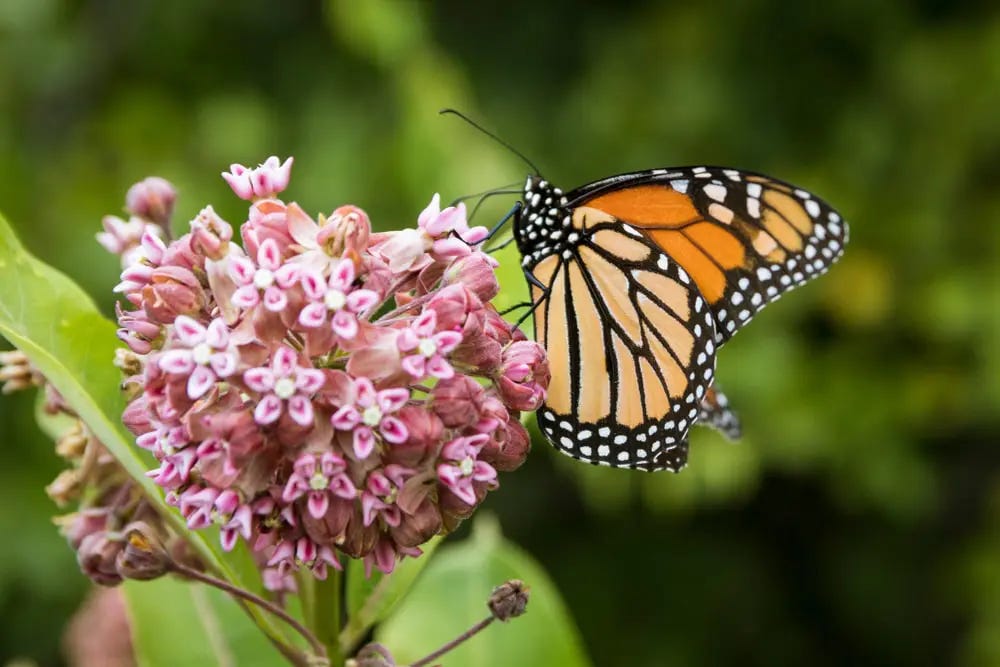
The common milkweed stands tall along the roadsides and fencerows all summer, steadfast and unassuming in the ditches, the hedgerows, the border-places. To some, it is just a weed, coarse in its stalk and broad of leaf. To those with eyes to see however, it is the silent keeper of a secret, the host of a story older than any one of us, the tender of a cycle that endures without question or complaint. It is the keeper of old truths we can yet learn—old truths of what it means to be a parent.If you were to look closely at the undersides of its leaves, you would find the light green, perfect eggs of the monarch butterfly. In time, these eggs will split open and the smallest of caterpillars will emerge, fragile, insistent, hungry. From the moment it is born, the caterpillar begins to eat the milkweed’s leaf. Bite after bite, day after day, until it has taken so much the limb bends under the absence of form. Make no mistake, however; this is not a parasitical relationship. The milkweed gives itself over without protest, giving of itself to nourish the green-life that comes next.This is the first truth about being a parent: you must be willing to be consumed. You must accept the quiet sacrifice, the nights without sleep, the years when your energy is parceled out in small, fleeting rations to someone who cannot yet stand alone. You will watch the body you knew lose its form to exhaustion, the routines you relied on collapse. You will face your own limitations in the small hours of morning-dark, measure your temper against physical and emotional fatigue. Like the milkweed, you will let yourself be consumed because you understand that all this giving is not loss but rather a gift that will carry your child into her full, beautiful strength.In time, the caterpillar grows robust, full of vitality, its form and function fully realized. When it has eaten its fill, it crawls to the underside of the leaf and hangs there motionless. It is hidden from the wind, sheltered from the rain, shielded from the beating summer sun. The milkweed becomes not only a place of nourishment, but shelter. Its broad leaves a rampart against the elements, a quiet place for the next transformation to begin. There in the stillness of the leaf’s under-canopy, the caterpillar begins to change, weaving the bright green chrysalis that will hold it in perfect safety. It has consumed part of the milkweed, yes, but the plant is still steadfast and sure, it is still upright and a predictable, perfect haven for the would-be butterfly.This is the second truth about being a parent: you are called to become a refuge. In the long seasons of childhood, you must be the place of safety, the place of certainty, the place where your child can press themselves against your steady love and find the courage to grow. You shelter them not only from cold and storm but from the flood of cheap influence, the blare of voices that would strip their innocence and identity for profit. Your arms become the walls that keep out what does not belong. Your words, the quiet assurance that some things will not change. In a time when so much is unrooted, you are the root. In a culture that demands more, faster, brighter, you are the calm shelter, the enduring green pattern that is always predictable, steadfast, sure.When the time comes, the chrysalis splits. The butterfly emerges almost immediately strong and ready. Its wings dry in the July air. Soon, it lifts from the leaf, rises into the sky, and flutter-drifts across the fields. No matter how you wish to keep it close to admire its beauty, no matter how you long for more time, there is no staying its flight. It will go where it must go. To the far coasts, to the warm valleys of California or the mountains of Mexico, to the places you cannot follow. It must. The meadows of your quiet home cannot hold the monarch; indeed, they may well stifle it. The world waits for its arrival, and the milkweed can only watch it go.This is the third truth about being a parent: you will let go. You will stand in the quiet field of your own making and watch what you have raised take wing. It will feel impossible. It will feel as if your own heart is carried away, fragile in the wind—an impossible pain. Yet there is a promise in this leaving.The monarch always returns. When summer comes again, the progeny of that first butterfly will drift back to the same patch of milkweed, drawn by something older than the memory of their own short lives. They, like us, are drawn to familiar ground by blood-memory. To place. They will settle in the fields where their lineage began. They will sip the nectar, carry the pollen, complete the cycle. What was once nourished by the milkweed returns to nourish it in kind.This is the hope you are given: the work you have done is not lost. The sacrifice, the shelter, the letting go. All of it will return in time. The children you release into the world will come back in ways you cannot predict, cannot fathom. They will re
You Need to Stop and Smell the Roses or Lose Your Grip on Reality
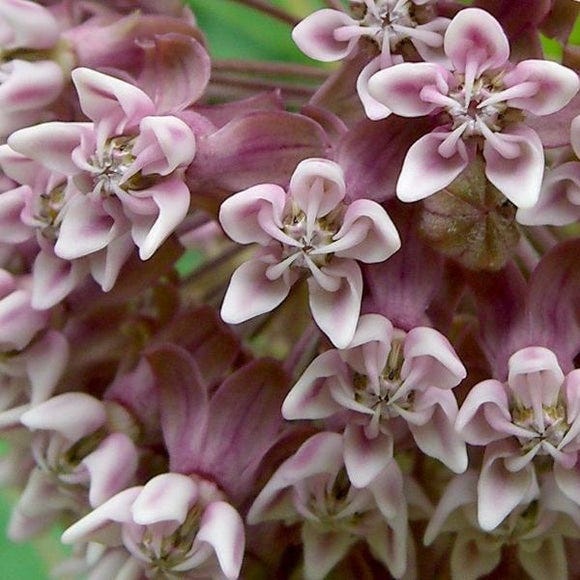
Artificiality is now the norm. Screens can simulate nearly everything, images can be doctored, videos completely fabricated, words twisted, sounds engineered. There, as always, is hope however. In this wounded modern world, where so many things have become false or illusory, you always possess one pure conduit of truth: your sense of smell. In a sea of artificial reality where you cannot trust your own eyes, scent resists the modern manipulation. It is stubbornly real, a direct communion between the natural world and your own body, your mind. Indeed, as you are assaulted by the lies of your contemporary culture that tells you up is down, it may be the best means by which you stay grounded to reality.When you walk a country road this time of year, you will notice the milkweed blooming along every roadside and pasture edge. Its flowers are a muted pink, shaped like little stars, and their scent drifts across the fields in waves of rose and honeysuckle. There is nothing quite like it, nothing synthetic that can replicate the way it hangs in the warm July air. Any attempt to manufacture a milkweed perfume would be folly. You could analyze, deconstruct, and place back together the exact chemical makeup of what makes a milkweed flower smell and you know in your heart of hearts a simple truth. It just wouldn’t be right. Just the way strawberry flavored ice cream never quite tastes like real strawberries, just the way you can tell when a dress is made with a polyester blend, just the way you can sense when someone’s tone is insincere; there is something in you that can perfectly sense when something is attempting to be what it is not, when its authenticity is compromised. In a time when so much is digitized and mediated and reduced, a single breath of milkweed is a reminder that reality still waits for you just beyond the screen, the threshold of your door. You cannot download this fragrance or bottle it. Even if you could, it can only be experienced perfectly in its natural environment; imagine for a moment the perfectly constructed milkweed perfume in the lobby of an urban apartment building. Are you tantalized or repelled? As with all good things, you must be present to receive the aroma of milkweed. The sweetness there on the country roadside in early July is proof that not all beauty has been commercialized or rebooted or churned into a homogenous slurry. Some old truths are immune to such fleeting things. You must go outside, find a wild place, and remind yourself with a deep, deep breath what life is like away from all the rebooted, commercialized, hyper marketed grey-safe content being pumped at you. That's what so much of contemporary global culture has become, hasn't it? Grey-safe. A corporate, HR-approved gruel to keep you from the green.Scent is an honest witness. It does not just guide your eyes to the beauty of a wildflower in full bloom, but also to decay. If something has gone wrong, you will smell it before you see it. Your eyes can overlook details, your mind can rationalize them away, but your nose is harder to fool. Perhaps you notice the rancid odor drifting near the chicken coop on a warm afternoon. It is the kind of smell that triggers a subtle unease before you even fully register it. You follow the trail of sulfur and carrion fumes through the door to the bedding straw until you discover the culprit: a missed egg you must have overlooked days earlier has split open, spilling its contents into the straw and attracting a nest of maggots. That smell is not subtle. It does not invite debate or interpretation. It insists on attention, on intervention, on a clear acknowledgment that something has begun to rot.Modern culture tends to mask its own corruption. Slogans, curated feeds, sniveling qualifiers. You learn to trust your senses because when someone is lying or when a system is rotting from within, you often feel it first in your gut, the same way your stomach tightens at the scent of something spoiled. You may even be told by the academically minded that disliking a putrid smell is merely a product of your western upbringing, identity, or status, that cultural influences—not your own good instinct—shape your perception of smell and it can simply be rationalized away if you were but a bit more enlightened. Ultimately though, you know when something is wrong and you act.There is another side to this honesty, one that affirms rather than celebrates the bloom or warns of the rot. If you were to visit the bee yard with me now, the air itself smells like warm bread. The hives are in their most productive season, drawing comb and storing nectar that will become honey by summer’s end if not sooner. You can stand near the hives and breathe in the scent of progress, of abundance taking shape cell by hexagonal cell, of promise manifest. It is a wordless assurance that some good work remains untouched by the counterfeit world beyond the hedgerow. It is a smell that settles your spirit, a full-throated d
Let June Overwhelm You
My baby does not want to sleep this week. She wants to stand. She wants to place her hands on my stomach, get her feet under her, and lean gently back. She wants to stand there in bed and show me she can wave her little hands. I resist the urge to be frustrated by this, the voice like television static in my brain that tells me she needs to sleep so I can go do things. Tidy the house, get the honey business in order, make more money. She of course, is simply embodying exactly what this season is for. She is nine months old and life pours from her: a deep spring that has no end. She is June manifest, all fullness and unfurling. The grass outside is tall and bending under its own weight, the hive boxes are heavy, the days are long and glowing and, like her, impossible to contain. Everything is blooming all at once, including her. June does not want to be managed and be put to sleep. It wants to spill over. My baby does not want to sleep because the season and life itself is rich, loud, and bright. We need to stop trying to get ahead of it and instead let ourselves be overwhelmed by the vitality of it all.Now that the spring hunting season is over, the turkeys have returned. They march out of the forest and strut across the garden rows, royalty tossing mulch aside with their talons imperiously and pecking at anything that moves. It is annoying. It is also beautiful. There is something deeply comic in how proudly they move, something oddly triumphant in their reclaiming of the fields and trails. “I did not die. I am here.” Their presence is inconvenient, yes, but it is also a reminder that the woods are never empty; they are full of life, burgeoning, waiting to spill out when the pressure lifts. The turkeys that scratch through the newly tilled field are doing exactly as they should in June, in the time of abundance. When I see them scatter as I round the corner with a wheelbarrow or watch them sunning themselves in the long grass, I try not to shoo them. Their disregard for the boundaries is charming. They have survived the blasts and arrows of another spring and this is their reward.The other fields are being hayed now. The roar of the machines starts early, and by late afternoon the air is thick with the scent of cut grass. It is a smell that pulls on memory. Step into a barn, long unused, and note how it still holds the sweet green ghost of hay from a decade before. Life sticks around. It presses into wood, settles into rafters, soaks the air. The first cutting of hay is an old harvest, one that comes before the tomatoes or the squash, and one that always seems to sneak up on us. The fields do not ask whether we are ready. They give what they give when they give it! In the barns, in the bales, in the very beams of the old buildings, the evidence of this abundant generosity remains. It is tempting to try and schedule your joy, to plan for a slower season, to wait until things calm down. June will not wait though. June bursts forth. It leaves its mark. You will smell it years from now and remember, maybe with tears, how alive it all once was. The bees too are swelling. Hives are booming, spilling over with new brood and bright pollen. I spoke with another beekeeper this week who had just added a second deep super to one of her hives. Without the space to grow, the bees will leave. The queen will abscond, taking her workers and their ambitions elsewhere in search of a roomier home. You must make space for growth or you will lose it. This is one of the central challenges of June: how to make space for all this life. It is tempting to try to maintain control, to keep things manageable, to keep the grass mowed and the fowl out of the garden. Life does not want to be manageable though. Life wants to fill every crevice. It wants to stand up in your bed and wave its hands when its time for sleep. The beekeeper adds a box. She expands the space. She allows for more. This is wisdom you too can learn from the bees about all this boundless June life: do not contain it. Make room. Say yes to the overflowing. When the good green pattern this time of year offers you more than you expected, do not flinch. Just make more room for it.This is the truth of June: it is too much, and it is perfect. Everything is blooming, and there is no possible way to hold it all. So don’t. Let it spill. Let the baby stay awake and the bees keep growing and the turkeys walk all over your tidy plans. You will not regret having witnessed it. You will regret having missed it because you were trying to get ahead, however. What June offers is not efficiency. It is abundance. It is the fullness of the fields and the scent of old hay and the riotous growth of everything good. If you are lucky, it will knock the wind out of you. It will remind you that your job is not to master life, but to receive it. Go ahead. Let it overwhelm you.You will be ok.Echoes from an Old Hollow Tree is a reader-supported publication. Please consider becoming a paid subscrib
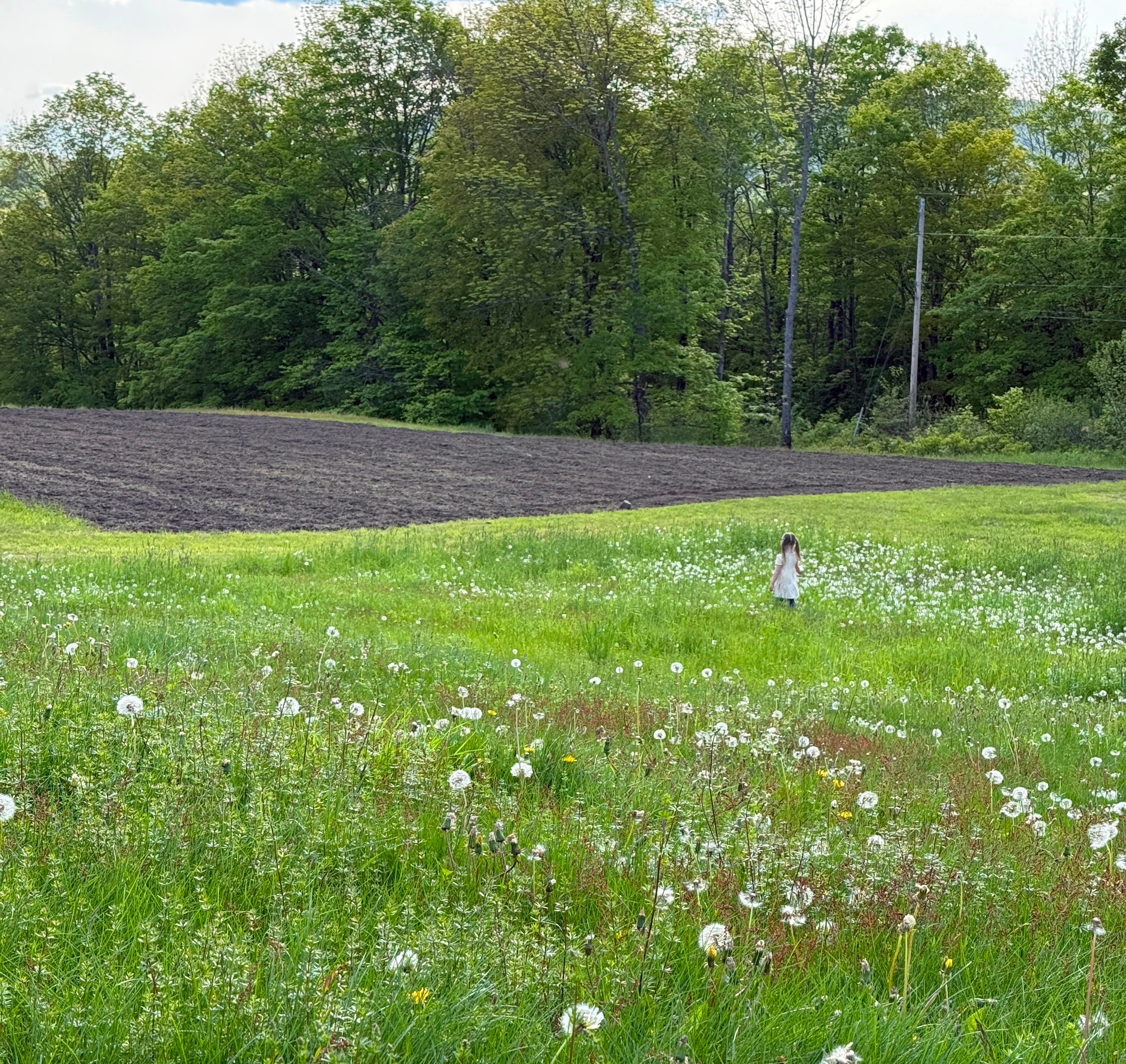
You Have to Let it Linger
The urgency is real now. You feel it in the long stretch of daylight, the way everything grows all at once, in the good green pattern absolutely bursting forth now. Gentle May makes her exit ushering in heady June. The sun is up before you are and lingers long past supper yet somehow the days feel too short. Daylight runs close to fifteen hours now, and still it is just not enough to complete everything you want. The natural world is hurrying: bees rise earlier, the dandelions bloom and seed, trees race to fill their canopies, and we too are swept into the momentum. There’s planting to finish, wood to cut, children to chase through wet grass. You start early and end late and lie awake thinking of what you did not do. The season runs hard. The earth is moving fast and it is hard not to be moved by it. Amidst all the fervor and rampant work however, June extends an invitation to us with verdant hand to linger a moment. It is an invitation we should acceptEven as nature rushes forward, it does so deliberately. The forest does not panic. The wildflowers do not fret about order or scheduling. They come in succession as they are called. The edible ramps are passing on, making way for lily-of-the-valley and her delicate ivory bells. The trillium bows out, and jack-in-the-pulpit springs up from the cool understory. The maples leaf out in a green so pale they glow. On the meadows’ edge, the violets now give way to buttercups, then chervil and red clover. In the low wet places, the skunk cabbage opens in a yellow riot. This is not frantic blooming however. It is the steady, ordered abundance of a world that knows how to wait its turn. The trees do not envy the grass. The bees fly when the sun allows. The bluebirds, still fresh from their long migration, do not rush to build; they settle in and they sing. There is a pace here, but it’s not the one we were taught. It is slower, wiser, and deeply beautiful.The urgency we feel in our sinew and bone is not only from the natural world, it is from the systems we’ve built around it: calendars, commitments, summer programs, performance metrics. This is the time of year when everything shifts. There are forms to fill out, gear to find, bags to pack. If you let it, modern life will push you into a rhythm not of your own making. You’ll be swept along by deadlines and sign-ups and the subtle pressure to “make the most” of every summer moment. Ironically, this pressure leaves little room for savoring anything at all. Even rest becomes a checkbox. Even joy is scheduled. We are told to be efficient with our leisure, to optimize our days off, to always do more. This is disordered in the most literal sense of the word. It is out of the good, true order of our being.We rush through the season we longed for in the dark of February. The result? We miss the very thing we were trying to reach.The wisdom of June does not lie in the productive rush, in the feverish sowing of seeds after work but before dinner. It is in the lingering. The garden doesn’t demand all of you in one day. The birds do not wake and worry about what they’ll sing. The lilacs bloom extravagantly and drop their petals with no apology. The natural world is not wasteful, but neither is it hurried. What if we were to match that pace? What if we asked not how much can we accomplish today, but how fully can we notice? Can we stop long enough to hear our daughter say, “He’s carrying his house,” when she finds a snail under the rhubarb leaves? Can we let the northern flickers sing us out of a task and into a pause, wondering if we will catch a glimpse of their majesty at the woodline? There is a different kind of success to be found here: not in achievement, but in attention. The world teaches us that productivity is the goal but creation tells a deeper story; belonging, slowness, and delight are the actual rewards.June arrives. The season will turn whether you’ve kept pace or not. If you’ve rushed too hard however, you might miss what it offers. You might miss the tiny footprints in the mud beside the pond or the way the evening light catches in your child’s hair or the hush that falls between the first call of the hermit thrush and the last breeze across the clover. Have you stopped yet to wish on a dandelion that has puffed to seed? The rush is real but it is not the whole truth. Beneath it, beneath the dual din of the rampant growth and the neon hum of the modern world is the quiet, old, and true. A pace at which you can live, but only you choose it. Let the beans go in late. Let the to-do list wait just a little longer. Walk the meadow. Sit by a hive and listen. You don’t have to keep up with the earth. You only have to witness it. You don’t have to keep up with the world. You only have to endure it. Allow yourself to linger a while this June. If this free essay spoke to something deep and true in you, if you long for more reflections like this grounded in beauty, tradition, and rebellion against modern drift, consider be
We Have Forgotten Our Children
In the early mornings here in the meadow, the grass glitters with dew, heavy, bowed. Beyond the path leading to the wood line, a keen eye might see the smallest of movements. A doe lifts her head from a nest of ferns where she left her spotted fawn, a fox trots home after a dawn hunt, a sow bear shows her cub how to nuzzle out the tender shoots. The wild animals here slinking through the bough-dappled light do not hesitate to protect and tend to their young. Every creature, from bear to bird, gently shelters and guides with a good instinct that points to perennial truths. The creatures of the wood raise their young with remarkable care, attention, and dignity. Yet, beyond the wood line, in our wounded modern world, we have forgotten how to do the same for our own young children. Over the past decade, we have experienced a profound hyper-focus on social justice. We have reframed dehumanizing language, deliberately designed spaces for marginalized groups, and viewed people holistically with a fierce protection. This all-encompassing social justice movement has rapidly changed our culture, transformed the physical world we inhabit, and shaped the way we communicate. It has also quietly, blindly, tragically excluded our children. Listen to conversations about children and you will hear dehumanizing terms. Carefully consider the next public place you visit and you will see we build spaces that ignore their small bodies. Read any media and note how we view them as not children, but as incomplete adults. This cultural neglect, this silent tragedy, this betrayal, haunts our shared humanity. It deepens our collective wound. We need to think hard about how our language, public spaces, and narratives fail our children, diminish their dignity, and erode the warmth of our collective life.Our culture casually accepts dehumanizing language for young children, a practice tolerated in ways no other group endures. Terms like “brat,” “little tyrant,” or “animals” pepper parenting blogs, social media, and advertisements, framing children as chaotic nuisances rather than the vulnerable humans they are. We do this easily, almost reflexively. The post pictured above was written by someone who is normally even-keel, considerate, who has raised children. The speaker is not an evil, malicious person, they are merely a victim of the dehumanizing culture that has so permeated our language and very minds. Contrast this instance of “unsocialized animals” written with ease, that went relatively unchallenged, with our cultural labor to retire and forbid terms like “thug” for black men or “hysteric” for women, driven by earnest and good social justice advocacy to honor a person’s inherent worth. For children, however, dehumanization is ambient, slipping by unexamined. You may not have noticed it until now just as a fish does not notice the water in which it swims it is so common. This betrays a culture that has drifted from the respect we have learned to give others, leaving our youngest outside the protective ideals we champion. It is a loss that echoes in our words. We should grieve this behavior, as it diminishes the vibrant humanity of our children. When we use dehumanizing language for any group, something deeply sinister happens: our willingness to neglect and even harm the targeted group becomes ever so slightly greater. Consider when we refer to children as “burdens.” We subconsciously frame them as liabilities, something from which to liberate ourselves. How about “mouths to feed”? You’ve heard it hundreds of times, and each time some part of your brain reduced children to mere consumers of resources. These are but standard examples said daily. There are infinitely more vulgar terms for children used which I will not write. Ultimately though, even the most innocuous slip of “brat” or “spawn” strips children of their humanity. It is the last acceptable language of dehumanization and that dehumanization subtly invites harm. Every atrocity in history started with this shift in language. We would do well to remember that.Beyond the language we use to neglect a child’s humanity, we also neglect their physical being. Public spaces, particularly bathrooms, expose this neglect, designed for adult needs while treating young children as mere afterthoughts, their small bodies invisible in our plans. Most restrooms lack toddler-sized toilet seats, step stools for sinks, or changing tables, forcing parents into awkward, often undignified improvisation. Considering the ease and affordability of 2-in-1 potty training toilet seats and stools, there are some extremely easy wins to be had for those who own any sort of public venue with a modicum of will.We prioritize inclusive designs for other groups: wheelchair ramps, braille signage, gender-neutral stalls. To not have a stall accessible to a person in a wheelchair would be unthinkable for a restaurant or library, yet we shrug when a child cannot sit on the toilet without falling in. It is clear
Your Wedding Deserves Children
Here in the meadow, May brings song. The bluebirds have staked their claim to the birdhouse by the old hay rake. They dart about, from the iron to the little house to the forest and back again. Their low-pitched warble signals a courtship and the promise of return next year following another long winter; four notes that implore “Now, come hither!” Promise manifest. The tree frogs however have begun to quiet their courting songs; dusk brings a quieter chorus at the woodline than it did even a week ago. The frogs are settling in. They have found their mates. Amongst it all, amid all the songs lilting and fading, there are those in the meadow and among the hedgerows bearing earnest witness to the oaths declared and the songs of celebration:The children. Echoes from an Old Hollow Tree is a reader-supported publication. Please consider becoming a free or paid subscriber.They are there signing their own little songs learned in playgrounds and in their mothers’ arms at bedtime after long May days of scraped knees, bug bites, and dandelion picking. While we adults hang our heads in our hands, weighed down by all manner of modernity’s artificial anxieties, they are watching the birds flit about calling to one another, they are listening to the mystery of the dusk-song from the trees. They are present, fully and freely, in the perennial pattern of the seasons, of the goodness of the world.It is a wonder then, in this season of matrimony, that we have begun to exile them from our weddings.There is a concerning trend of weddings, once a rite that wove together families and futures, having become something curated and adult-only, sterilized of giggles during the vows, of small hands dropping petals, of the accidental holiness of a child falling asleep in a pew. The child, who once danced between tables and yanked at Grandpa’s tie, is now unwelcome, a perceived interruption to the ambiance.We say it's for simplicity. For elegance. We convince ourselves we’re doing it so the parents can have a night off. In truth though, it is grim reflection of a deeper discomfort with which we have not reckoned. It is a cultural abandonment of inheritance, of challenge, of continuity. In leaving out the children from our hallowed rite, we leave out the very ones to whom the promise is meant to extend. We blind those whose witness is most unselfconscious, most earnestly given.One can read the lifestyle articles, the blogs, the various defenses of this practice. They are well-intentioned. The defenders of childfree weddings will point to a sense of preserving the special moments, make the case that children are not well suited for formal events, and expecting them to remain quiet and composed throughout a wedding is unrealistic.Perhaps the problem is the expectation itself. Perhaps the disruption is the point.It is often said that if a parish never hears the occasional cry of a baby or the chatter of a toddler during Sunday Mass, it is a parish on the brink of death. It is a grim but clarifying reminder that we are always but one generation away from losing the values, traditions, and promises we do not pass down. Whether or not you are religious, this principle applies. A wedding is about continuity. There is deep comfort in knowing that when your love matures, when your parents are gone, when the blush of youth gives way to gray and to gravity, there will be young adults in your life who will remember something essential about you.They will remember that you made a vow. They, as children, may not remember the details of your vows. They will not remember what you said. They will remember that you took them however. They will remember that magical words that bound you to another were exchanged. They will remember that something sacred happened.This memory becomes a compass, a north star, for both them and you. These future young adults are not your peers who may succumb to the same societal pressures, trends, and pitfalls you do; they have a different perspective, a cultural antibody you do not possess. They will not fall in the same way you do. This is invaluable in holding you accountable, in keeping you true. They benefit as well. As they bear witness to your oath, they begin to craft a story they will carry into their own tangled seasons of adulthood. A story that can guide them when our wounded world inevitably tells them that commitment is naïve, irrational, or even disposable.The children need to hear your vows.An argument for childfree weddings we often hear is that they are both costly and deeply personal, that it is a day entirely focused on the happy couple and therefore their wishes are paramount. It should be about them. Yes, weddings require immense effort, planning, and sacrifice. They are charged with emotion, with meaning, with the uniqueness of a couple’s story. However they are not exclusively yours. This is jarring to our individualistic and owner-oriented western sensibilities, but a wedding, no matter how tailored or
Your Children Need to See You Kiss
Something is wrong.Imagine your culture has a common folk ritual of which everyone knows, it has lasted since before written history, and is innately good. Your stories tell you it is good; nearly every folk and fairytale your grandparents told you revolves around this good ritual. Your science tells you it is good; if you partake in this ritual, you have measurably less psychological distress, you become wealthier, and you even live longer. Your very heart tells you it is good. By all accounts, you and everyone you know, rational and Romantic, should understand this thing is good. If you would like, it can even cost no money and very little time to perform. Despite this, an overwhelming amount of young people from every class and creed walk away from the ritual, the good old tradition, every year. They cite financial hardship, a desire for personal growth, prioritizing their profession. When your mother was a girl, nine out of ten people took part in this ritual. Now, about three out of ten do. This ritual is real. It is marriage, and young people are walking away from it.How did we come to this? How did we get here? What can, or even should, be done? Everything stated in the opening paragraph is true; marriage causes us to live longer, have reportedly fewer and less extreme mental health problems, and has been a cultural keystone for longer than any historian can remember. We are, in many ways, defined by marriage. Yet now we stand at the precipice of abandoning the good old tradition altogether. We need to explore why, where we stand, and where to go from here. We owe ourselves this.The Old Ball and ChainWe have had access to mass media, television, for less than a century. In that time, our regional culture, accents, music, and traditions have rapidly homogenized. There is no arguing that television has affected our society immensely and the content of it has influenced us. For the last seventy years of American programming, men who openly despise their nagging wives have been front and center. One could even go so far as to argue that “I Hate my Wife” is not so much a trope as it was a full on genre. It was most prominent in sitcoms from the 1950s to early 2000s and, although modern shows tend to avoid it due to evolving norms, one must wonder what damage to our society, institutions, and culture has been caused by having an entire genre of sitcoms starring resentful husbands and domineering wives blaring in every American home for the last seventy years. You may roll your eyes at this assertion, but ask yourself how our culture would be different if we had been constantly inundated by respectful spouses who were enamored with each other, courtly romance, or faithful partnerships built on mutual admiration and a shared goal. What if, instead of laughter generated from bitterness, these programs proclaimed that love could deepen over decades, that family life was not a trap but something which to aspire? Media forms us more than we care to admit. We are not immune to propaganda or even the subconscious erosion of our morality by everyday tropes. When every punchline is aimed at the same sacred thing, how long before we learn to laugh at it too? Something is wrong.Bachelor NightYears ago, before my beautiful daughters were born, my wife and I, recently wed, owned a small home in a city. She left for a weekend to a work trip (a conference for historians I think) and, to dull the edge of loneliness, I met up with some friends at a bar. A new acquaintance with whom I was unfamiliar joined us and I explained to him my wife was out of town. His face twisted, he leered, and offered with an earnest growl “Heh, bachelor night, am I right?” and gave me a knowing nudge and wink. There was an implicit understanding that I was supposed to do something unfaithful while she was gone, let loose, engage in some sort of debauchery and this man was inviting me into his confidence expecting to hear my dark plan that did not exist. I brushed him off and asked him if he was married. He explained he was too busy living his best life, chasing goals, and “keeping things chill” to tie the knot with anyone. Maybe one day, but right now, he was good flying solo and not being tied down. His explanation stuck with me all these years for one reason: nearly everything he said conveyed a sense that he equated marriage with a loss of freedom. In his eyes, to be married was to be tethered, domesticated, diminished. It was clear he saw marriage not as a declaration of love but rather a limitation. After fewer drinks than I would normally have, I said goodnight to my friends and went home early to our empty house. When I went inside and closed the front door, I thought about this man who was mistaking detachment for independence. I looked around at the evidence, the artifacts of the life my wife and I were building together. The photo of our wedding reception where she is grinning amidst a tangle of hair and a flower crown. The back yard w
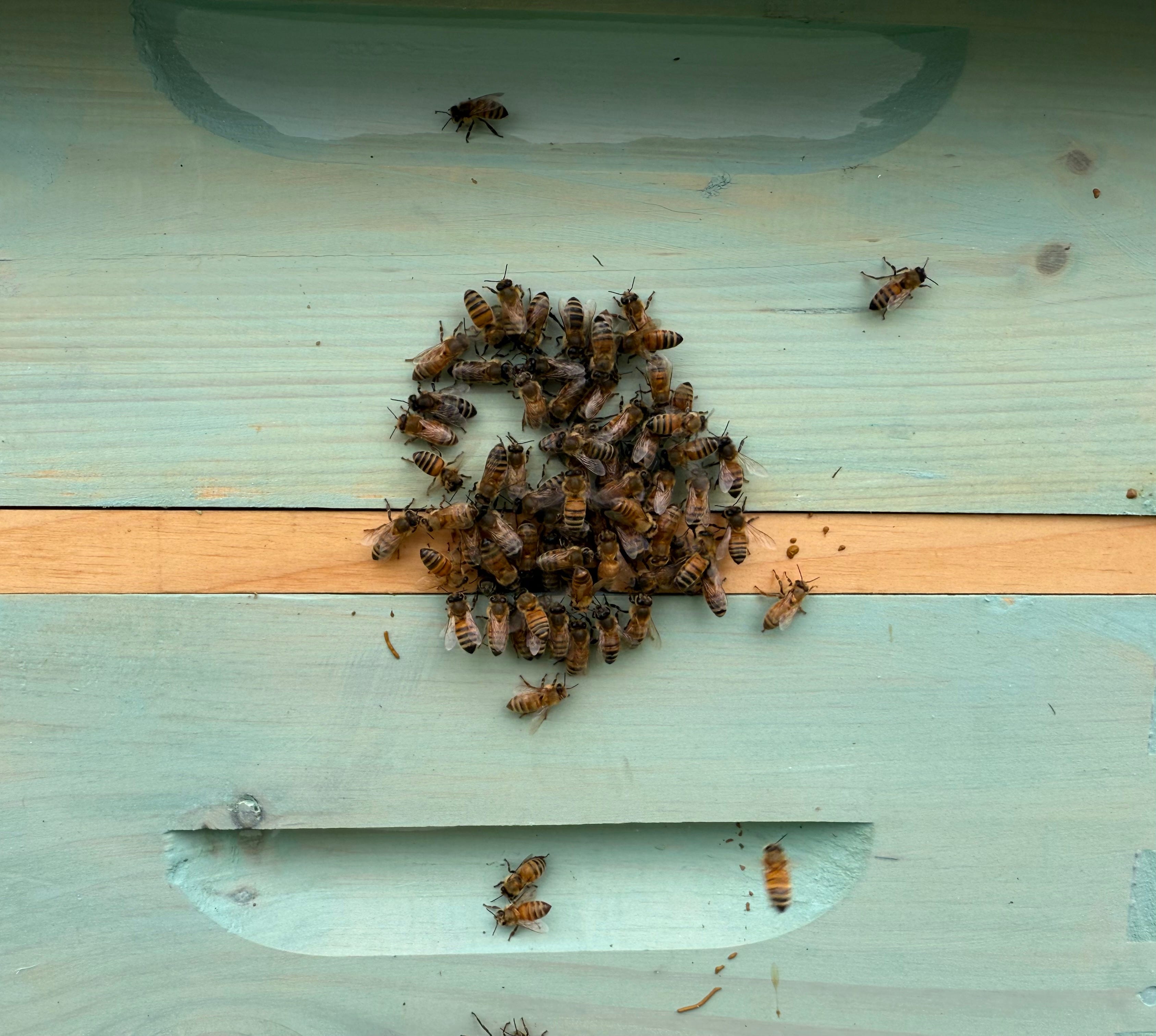
How to Begin Anything Good
Author’s Note: this essay is part of the Reports from the High Wood series, a weekly premium report from our homestead that offers you enduring lessons for living well in a wounded world. If you're drawn to green paths, perennial values, and timeless beauty that resists the modern glare, you're in the right place.Here are some of our past beekeeping posts that will give context if you are new here:Thank you for being here, for walking this good green path with us.Today, it began. Year one, day one.Last year, my wife and I resolved to continue my family tradition of beekeeping. It was our test year—“Year Zero”— to see if we had the patience, resilience, and skill for it.We decided to go all in. After a year of classes, studying, missteps, and successes, the true genesis of our beekeeping operation began today with the arrival of twelve packages of bees—each one weighing three pounds and containing more than 15,000 honey bees. It rained the moment I returned home, a steady spring downpour that trapped us indoors and filled the air with suspense. The bees waited in the back of the SUV, twelve boxes humming with warmth, promise, life.There is something strange, arcane in keeping bees. Before you even open a package, you're confronted by the sheer vitality of them—the vibration in the air, a smell like warm beer, their shocking heat. Most people don’t realize how warm a colony is. Each package radiated with the biological furnace of fifteen thousand small bodies pressing together, wings and legs flicking gently, trying to understand where they’d gone and when they would be let loose. With twelve boxes packed in, my vehicle felt like a roiling crucible. As I drove, the windows nearly frothed with humidity, the thrum of 100,000 little lives drowned out the engine, the whole vehicle threatened to boil over into a mass of golden light.When I arrived home, it was pouring. This forced patience. I could feel the bees were eager to escape their cramped quarters, eager to stretch their wings, relieve themselves, drink deep of fresh water. There was nothing for me to do but to leave them in the car with the windows cracked and wait for the sky to clear. I passed the time by putting my baby down for a nap. As I laid beside her, her entire little body tucked into the crook of my arm, I told her what was about to happen. I told her about the rain and how her great-grandfather and her grandmother kept bees. As she fell asleep there, I thought about why we were doing all this in the first place.Family. Nature. Tradition. We waited for the weather to align to our small designs, listening to the rain pitter-patter against the metal roof to our little cottage. There are many lessons to be learned from bees, but patience is one of the first. You can rush a job, but you cannot rush the natural world, the good green pattern. When the clouds finally broke and the drizzle faded into mist, we moved quickly. Every pair of hands went to work. We opened up the hives, removed the sugar-syrup jars that serve as a sort of cork from the packages, pried loose the queen cages, and prepared to dump thousands of bees into their new homes. Despite all our enthusiasm, my eagerness to get them housed before the rain returned, all the commotion, the bees were gentle—perhaps tired from their journey from California, perhaps content with knowing they were about to be home in a little meadow in Vermont. Bees are not so different from us; grey soggy days cause them to be grumpy, temperamental, short on patience. Today however, they met us with calmness and offered us grace.This is not just a story about our family starting twelve hives though. Not really. It is about the start of any good, green, bold thing. It is about launching something good and true and beautiful in your own life. We live in a wounded world where we are slowly killing ourselves with ease, where we are swimming in the artificial, where we are disconnected from real consequence.Surrounded by the thrum of 100,000 bees today in our humming meadow, this is what I learned and what I hope you can take and use in your own good green way:1. Creating something real requires patience.It will rain. You will wait. Then, without warning, the rain will stop, and you must act quickly. This is true whether you are planting a garden, writing a book, starting a business, or, yes, dumping 40 pounds of bees into wooden boxes. The waiting is not wasted though. The stillness becomes your preparation, your moment of quiet reflection to slow and remember why you are doing this good thing. Do not be afraid of it.2. You cannot do this alone.My whole family helped today. Even our baby, wrapped in a blanket, laughing at us as we scurried around, kept the mood light. A project worth doing invites others in. If you want to build something that lasts—something real and grounded—it must become a generational act. My mother kept bees. Her father did, too. Now it is my turn, and I am doing it with my wife. Our childre
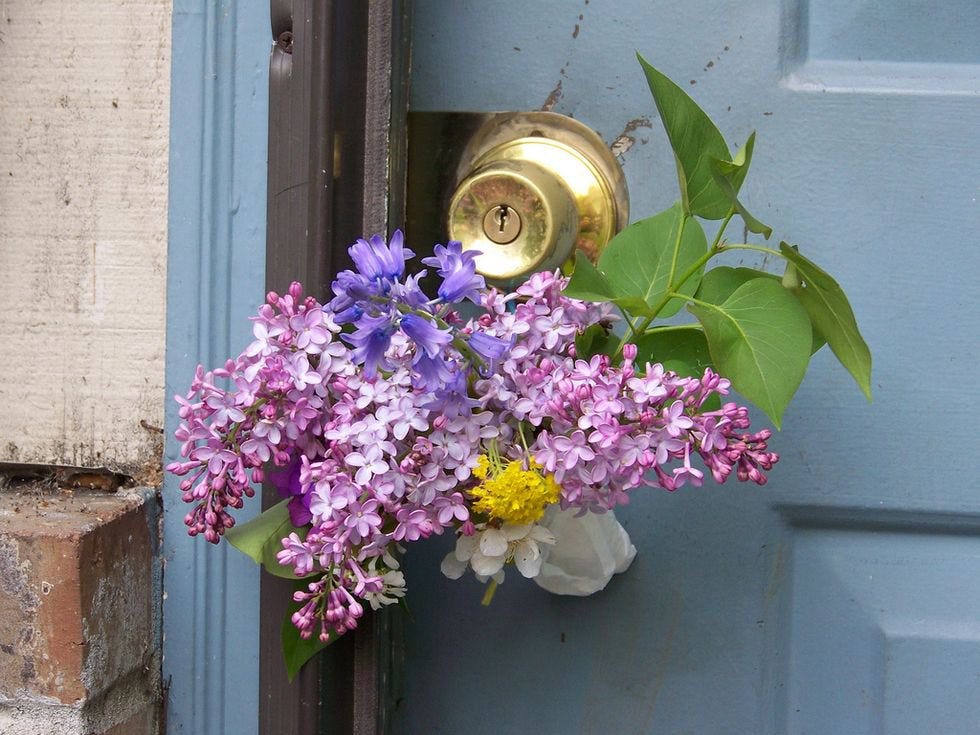
You Can Save a Beautiful Tradition
Picture it: two little girls run up to a door with a glint of benevolent mischief in their eyes. They’re carrying something, something colorful you can’t quite make out. They hang their little parcel on the door with a piece of ribbon or twine, knock, and run away. You spy their delivery: a paper cone filled with forsythia, daffodils, and pussy willow. The happy victim of the good prank looks around befuddled, notices the parcel, reaches in and pulls out a piece of chocolate that made its way under the flowers. They look up and down the neighborhood street but the girls have hidden behind a nearby bush, stifling their laughter behind cupped hands. This is a May basket, and it is a tradition we are rapidly forgetting. It is a tradition we are losing.The merry month of May approaches and with it May Day or Beltane depending on your pleasure. Nearly every culture in the northern hemisphere has some kind of celebration of fertility around May 1. How could they not? Life abounds. My aunt told me a story today of how she and her sisters would go “a-maying” to collect whatever wild flowers were blooming to decorate their door and the doors of their neighbors, leaving them in little baskets made of paper or just tied to the door. Some variations of the custom require anonymity, a sort of ding-dong-ditch. Some involve candy, baked goods, or even small trinkets. It is a sort of reverse trick-or-treating which is incredibly appropriate knowing that you are on the opposite side of the year from Halloween! Whatever the case may be, a May basket always has flowers and it is always given to herald the good green spring.Traditionally, farmers in Northern Europe would turn their cattle out of the barn into the fields this time of year. The old Celtic tradition would also involve passing the livestock through or over fire as a sort of ward against an ill-fate. Young men and women too would jump over the fires to improve their virility or fertility! Some farmers around me still have parties this time of year to celebrate releasing their cows or other stock out to pasture. Growing up, we always had a bonfire and still do. There is so much to celebrate this time of year and yet we barely talk about it, let alone actively observe it. When you talk about May baskets, a-maying, “bringing in the May” or some other variation of the May Day tradition, someone will inevitably remark “Hey, my mother did this!” or “We did this as kids but not anymore.” Well, why not? You can and you may need it now more than ever.We should be reveling in the abundance of new spring life, heralding it in, shouting its arrival. We have become too staid, too fearful of seeming odd or off, of having our joy being mistaken for weakness and used against us. Our culture claims to celebrate random acts of kindness, but when was the last time you saw one? Something beyond a perfunctory volunteer opportunity or donation to the thrift store, something that showed a neighbor or someone in town that they were considered, thought of, loved for a brief moment? So, how do you even make a May basket? Ultimately, the goal is to celebrate and remind your intended target that spring has arrived and we are the better for it. It needs to include the wildflowers blooming around you; daffodils, forsythia, hyacinth, anything that is bursting with life. You can buy them—sure—but harvesting the flowers yourself, especially on the evening of May Eve (April 30) would be in keeping with the good old way. You can make it into a bouquet, wrap it in a little twine, and hang it from a neighbor’s door knob. It can be that simple. If you want to take it a step further and give your children something to do, you can fold construction paper into a cone, fill it with flowers, and slip in some candy or even something you’ve baked. Maybe something to really evoke spring like a lavender cake or cookies made with honey. Perhaps you really want to keep things as organic and low budget as possible while delivering your May joy. Find a forked branch, tie twine around the two legs and set your local wildflowers therein. This also works well as a standing decoration if your branch is long enough.Whatever medium you choose for your May baskets, the point is not perfection: it is participation. It is choosing, deliberately, to acknowledge and celebrate the good green pattern unfurling before you, to lend your own small voice to the chorus of good things that grow. It is so easy, in a world so drawn to the novel and sleek, to forget the old ways, the quiet ways that once wove neighbor to neighbor and neighbor to land. These traditions, these good old ways, are not so far from us as we think. They lay quite literally at the roadside, in the fields, the forests, waiting for you to reclaim them.If you remember even a scrap of this tradition from your own childhood, if your mother or your grandfather or a forgotten neighbor once left a basket on your door, then you already carry the ember. You already know
All the Good that Can Happen
We are running now, running toward the halfway point between the spring equinox and the summer solstice. Easter has come and the green blade rises along every hill and dale. Our days are long. They are long and they are good. Walk through a field or forest this time of year, along the stone walls and hedgerows, scan the the hillsides, and your wandering eye will be met with nothing but green, long desired and now present green. You become imbued with the sense that there is an incredible prejudice in your favor, that you are going to win. Here, now from the warmest meadow to the darkest ravine it is undeniable: anything good that can happen will happen.The bluebirds are back in the meadow. They flicker from bird house to the antique hay rake sinking into the field, their color so vivid to illicit a gasp. One pair has claimed the birdhouse on the knoll and they slip in and out of its little hole like a secret kept between them, the ever-growing grass, and the wind. A mated pair keeps watch, one atop the house, the other atop the hay rake, its rusted tines tangled with the dark stems of last year’s goldenrod. That rake hasn’t turned a field in generations, but now it holds a different purpose, an altar of sorts for these feathered harbingers of bright days. To watch a bluebird land there, on iron made useless by time but still offering itself to beauty, is to believe the world is ever-conspiring inevitably toward grace.Then, come evening, the peepers begin. They begin all at once anywhere there is still water until the woods vibrate with their insistence. They call from the vernal pools that formed in low places, their voices threading through the spaces between dusk and night, between cold and warmth, between winter and summer. You never see the peepers. It is a chorus that seems to rise from the ground itself, and if you stop to listen, really listen, it becomes clear that something more is being sung. A thinning occurs here, in the lull between light and dark, when you can almost feel another world brushing up against this one. You walk the edge of the pond or the woodline and feel it, the marrow-deep memory of something just at the periphery. Something good and slow and green. These frogs know something we don’t. Something we so easily forget: that, despite all the wounds in this world, it is still safe to sing, the light will return, that the good things are on the move with a passion.Walk into the forest now, past the blue birds in the meadow and through the frog song at the tree line. It is dark here, and the echo of winter whispers still. These hills are old and they have leveled with age but there are still deep places, dark places. Deep in the High Wood, there are steep hillsides where rivers have cut their long, slow will. Down in these ravines, where the sun barely reaches and the snow lingers longest, another quiet resurrection is taking place. It feels secret. It feels old. First the ramps. They are up now, bright green spears pushing through last year’s leaf litter. They’re bold and young, like swords thrust triumphantly toward the heavens. Optimism incarnate. Alongside them the fiddleheads uncurl slowly, their tight spirals relaxing with the warmth, their velvet skins still damp from the thaw. They are older, eldritch and staff-like in their spiral, their mystery. These are the foods of old stories, of first harvests, of foragers who walked softly and listened well. You have to stoop to find them, to get close, to enter their world for a moment. When you do however, it’s hard not to feel that the ground itself is giving you a gift. It is unearned, yet given freely all the same. In the dark places, the deep places, life has returned, simultaneously ancient and new.And so we run on, toward the halfway point between the equinox and the solstice, toward long days filled with light and promise. Easter has passed, but its echo remains. The green blade rises, and with it, so do we. The good things gather now not in isolation, but in chorus. Everything good all at once, overwhelming. The meadow, the marsh, the ravine…they all speak the same voice. This is not coincidence. This is not accident. This is the good green pattern of life declaring it is wholly good.Anything good that can happen will happen. And it is happening now.Echoes from an Old Hollow Tree is published free on Wednesdays. Please consider becoming a paid subscriber so I can continue to bring you these reflections from our little hill in Vermont. Thank you. This is a public episode. If you'd like to discuss this with other subscribers or get access to bonus episodes, visit oldhollowtree.substack.com/subscribe
The Deliberate Manifestation of Beauty
Months ago, I read as someone scoffed at the photographs depicting the life of a man I admire, Simon Sarris. Simon is, like me, a father in New England who loves the natural world and appreciates beautiful things. He is a photographer and writer whose home and family seem to exist in a state of timeless, composed grace. The cynical detractor wrote something to the effect of “His life is only beautiful because he deliberately staged it that way,” as if that were a valid criticism. As though deliberateness, intention, design were somehow deceitful, or beauty less meaningful if it did not happen accidentally. I thought about that comment far more than I expected over the last few months, how it relates to the nature of beauty, and ultimately what makes something beautiful or at least memorable. Now, as my wife and I design packaging for the honey our bees will make this season, I find myself mulling it over in my mind yet again.I want to make a world that is full of the work of magic for them, full of beautiful places to play and find each-other. This extends beyond roses of course, to the orchard, the meadows and streams, the barns I build, and all the hidden places those things create together. - Simon SarrisWhen one looks at Simon’s photography, it is clear he puts a great deal of care into choosing two things: the material of every object in his home and the light that fills it. Look at the link there and note how the hardware of his cabinets match the brackets that hold up his shelves. This may seem simple but it does not happen by accident. I look at the door knobs in my own home I bought and note three different color metals in one room. Not exactly something to create discord, but it does not lend itself to beauty either. Note too how he does not drown his room in light. Someone remarked to me recently that their childhood feels so distant and alien, even the very light of rooms and buildings feels different. We discussed this for a bit and concluded that yes, the quality of bulbs has changed but also people just have a tendency to turn their lights on earlier, not allowing the soft glow of evening to catch the hair of their children or to gently spill shadows across the floor. There are many elements that make Simon Sarris’s photography beautiful, but ultimately for me, it comes down to intention. We can look at a man’s life and analyze what makes a photograph of his beautiful, but it is likely a conversation that requires more than a paragraph in a Substack essay. Perhaps a doctoral thesis would be appropriate. Let’s look at something smaller then that also derives its beauty from intention. Consider this hang tag that came attached to a sweater I received recently from Kiel James Patrick. You could slap any hang tag on to a sweater, attach it with a bit of plastic, choose whatever font is default. Maybe add in some clip art of an anchor and check to see if its centered. It would pass but it wouldn’t be beautiful. The string evokes ship rope. Kiel could have used jute twine or kite string but this particular string and the knots used reminds you of a rope tied to a dock, brings you back to a summer you spent as a kid at the Cape. The shape echoes the silhouette of a ship’s hull. The brass grommet makes the whole thing feel more durable, lasting. All these sensations transfer to the sweater itself and you’re left wondering if you should even through away the tag. Probably better to keep it as a bookmark for The Sea Wolf or Moby Dick.Our own work is slow but satisfying. There are a hundred tiny decisions to make: the shape of the hang tags, the string that fastens them to the glass honey bottle, how the mailer boxes are cushioned with wood wool instead of bubble wrap. Every detail is a chance to say something about our little meadow, our family, our tradition. Every detail conveys what we value. I think about Simon and Kiel while I browse packaging and fiddle with print shop menus. I think about their choices. The fixtures in the home, the little details of the tag, the golden light.It would be easy to dismiss Simon’s photographs as staged or Kiel’s work as overly affected. And of course, they are staged, it is affected. But that’s the point. These are men who saw the world as it was, were not satisfied with what they beheld, and decided to make their own little corners of it more beautiful then when they arrived. They optimized for and prioritized photographability, aesthetics, beauty.We are constantly curating our lives, whether we realize it or not. The music playing in the kitchen, the dishes on the table, the sweater in the drawer, the way we greet a loved one at the door…these are all just little moments. Over time though, they accumulate. They settle in, take root.The moments compound.A day is just a summation of moments. A life a summation of days. If we fill our moments with small, sincere acts of care, if we hang the tag with the right string, if we photograph the drawer with the matching fix
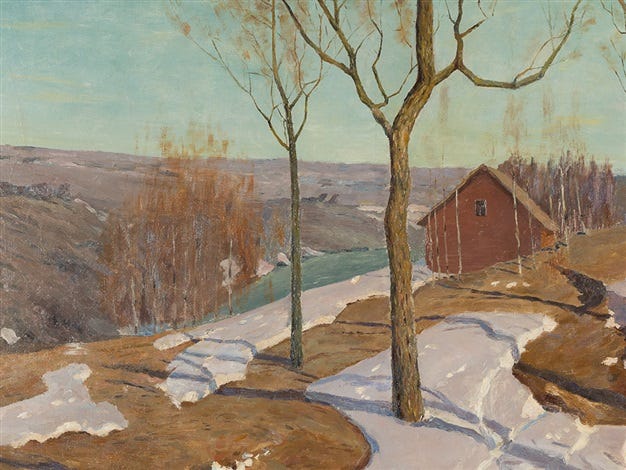
We Are Not Going Back
My littlest girl stirred late last night. Just a minor fuss, a pouty lip and a tiny toss. Enough to wake us up however, enough to get me to blink the sleep out of my eyes, to look outside and notice the snow falling thick in the moonlight. Yes, it’s still snowing on and off here in the hills of Vermont. The winter has been long, cold, proper. The daffodils are beginning to sprout, the crocuses are already on the lawn, and the foxes and hawks are out in force. Despite this, despite all these sure signs of spring, we received a few inches of snow last night. No matter. The good green pattern—life—is on the move now and it cannot be deterred. Nor can we.Take a walk from my home down the dirt road to the old village below and there you will see a lake. Patches of ice have begun to break around the edges and dot the middle—little windows into the cold lack-light of the lake. When this begins, there is no turning back. The mercury can plummet below freezing, the snow can fall with a fury, it can sleet and spit sideways but the truth is that lake will not freeze further. The ice will not reform. There will be no ice skating and any more angling this year will happen from the shore. Indeed, if you took that walk down to the lake with me today you would have spied a young man with more pluck then sense casting his rod. I mock him but let us be honest: he had the right idea and, in truth, I am grateful for him.One cannot see a young man defiantly fishing here in our Fool’s Spring and not feel a sense of unbridled optimism. Like the robins in the field or the snowdrops in the yard, he is a good herald of the green things to come. The snow was a setback but the young man braving the cold for a chance at a trout kill will not return to winter. He stands before a New England spring of peepers at the woodline, bonfires built of winter-fall, dockside Adirondacks draped in blankets of fine wool. The good green things—the enduring pattern of everything just and right—is on the move. The setbacks, the sigh-white snows and hail, cannot hold the momentum back now. We may well lose the rest of April to the grey; the farsighted forecast calls for weekends of snow and of rain. Tomorrow will be warmer though. Soon the gardens will be turned with heavy hoe and eager hand, the children will wander past the threshold into the fields and forests further, the light will grow longer. Then one fine day, we’ll look up from our little chores and realize we haven’t thought about winter in weeks. Maybe it comes as a smell at first, a patch of rich loam hit by the sun. Maybe spotting the first bud on the lilac. Perhaps we will be surprised by the sound of frogsong swelling from the ditch, or blindsided by the sudden blur of barn swallows cartwheeling past the shed. There will be laundry on the line again. The screen door will slam with the joy-rush of children. We’ll find ourselves walking barefoot across the porch and thinking only of what to plant next, what to grill for dinner, how to stretch the daylight just a little further past May Day toward the solstice.Let the snow fall one more time. Let the firewood stack shrink a bit further. Let us be shaken from sleep by our children and stirred by the reflection of moonlight off a snow covered field. The world is waking, the green is coming, and like the young angler with cold fingers and steady heart, we cannot be denied our spring.Echoes from an Old Hollow Tree is published for free on Wednesdays with premium posts about what we are growing, building, and doing here in our forest and meadow on Sundays. I hope you subscribe and join me through all the changes of the seasons. This is a public episode. If you'd like to discuss this with other subscribers or get access to bonus episodes, visit oldhollowtree.substack.com/subscribe

Surviving the Neon Wasteland
They loom, the buildings. Impossibly tall and getting taller, plastered with flashing advertisements that never cease, urging, urging, urging you always to consume more. Our technology is wearable and in some cases even embedded into our very flesh. The mega corporations have outsized control, reaching for the stars while people hunt for pennies in the gutter. Simultaneously growing ever further from the good green earth and encroaching upon it, every natural boundary and border is broken down as birdsong is drowned out by booming speakers and the roar of the highways. We are lost in a cyberpunk dystopia, a fake neon world of high tech and low life. It is not a sci-fi fantasy anymore. It is an open wound and it is bleeding. We look to our screens for answers, scrying our little black mirrors. There we find the calls of influencers to “RETVRN” to a traditionalist way of life, to break free to the country, to reconnect with the natural world. What if you can’t?What if you are young and urban-bound, your hungry heart encased in a steel cage with blinding neon filigree? What if you are stuck in the neon wasteland at risk of forgetting the natural world and being swept away by the fetid tide of our modern culture? What then?You begin by reclaiming what is real.How do we know we have entered into this cyberpunk dystopia, this nightmare warned of by authors like William Gibson, Orwell, and Bradbury? Consider first our tech saturation. Ubiquitous screens are obvious, handheld supercomputers are maligned to a cliche, and AI is very much accessible; not only do you have a little palantir in you pocket that allows you to communicate with world, it now also contains a tiny familiar with which you can have an earnest conversation and research all of human knowledge. Grok and ChatGPT are already superior to Google. How long before the inconvenience of having to pick up your phone to access these tools becomes too much to bear and people start embedding the tech in their flesh? We are already there in some cases as fringe transhumanists test the boundaries of what is possible. Social decay is another signature of cyberpunk; beneath all the chrome, wealth, and abundance there is want, desperation, and crime. You can find a new story of a corrupt politician’s scandal every hour of the day. Justice though? Seems to be the only thing in short supply. How about artificiality? Fake food, fake bodies, fake connections. A disconnect from nature, urban sprawl, social isolation, surveillance, the list of dystopian signatures scrolls ever on. If only we could escape it. Therein lies the trap though. We make it sound so easy. Find any number of articles on this very site titled something like “How I Bought my House in the Country” and it might offer some staid tips like frugality, lowered expectations, and compromises made. The truth is though that land is expensive, rural life is out of reach for most after the mass migration to rural enclaves during the last pandemic (how’s that for a cyberpunk storyline?) and even visiting national or state parks require the time and money people simply do not have.So what do you do? Imagine you are a young man reading Echoes from an Old Hollow Tree. You’re in your 20s, stuck in a tiny apartment surrounded by glass and steel feeling the weight of an urban world that is somehow simultaneously too loud and too empty. You dream of acreage, of the agency a little property affords you. A place to try your hand with animals, grow a garden, start a family. Maybe you’ve even got a tech job and could swing working from home. You boot up your real estate app and remember Ol’ Anderson waxing poetic about New England but…there’s just nothing there. You broaden your criteria but the grim socioeconomic reality hits: you just can’t swing it. You’re a young man in a city that’s killing you and you’re stuck.The sad truth is that many people missed their shot. 2020 was a groundswell for property prices in the US that caused prices to explode and the traditionalist mantra of “reject modernity, return to the land” sounds noble but ignores very real barriers. It is ultimately a Romantic dream that can feel like a taunt to the powerless. Similarly, like a diet, we tell people to just detox from the artificial digital world as if it were a panacea. Yes, "unplug" or even "make something real" is good advice but it’s temporary at best. Most people can’t quit jobs tied to screens and even if a bonehead influencer tells them to make something real to fight back against the ever-creeping artificial world, the truth is that many people just do not have access to workspaces or tools. All of the advice given to people trying to escape the neon wasteland are just masturbatory fantasies, escapist entertainment. It assumes freedom of movement or resources that people just do not have. The dystopia isn’t optional. It is a cage and it is cruel advice to give. If there is little chance of escape, if there is no cottage in the meadow
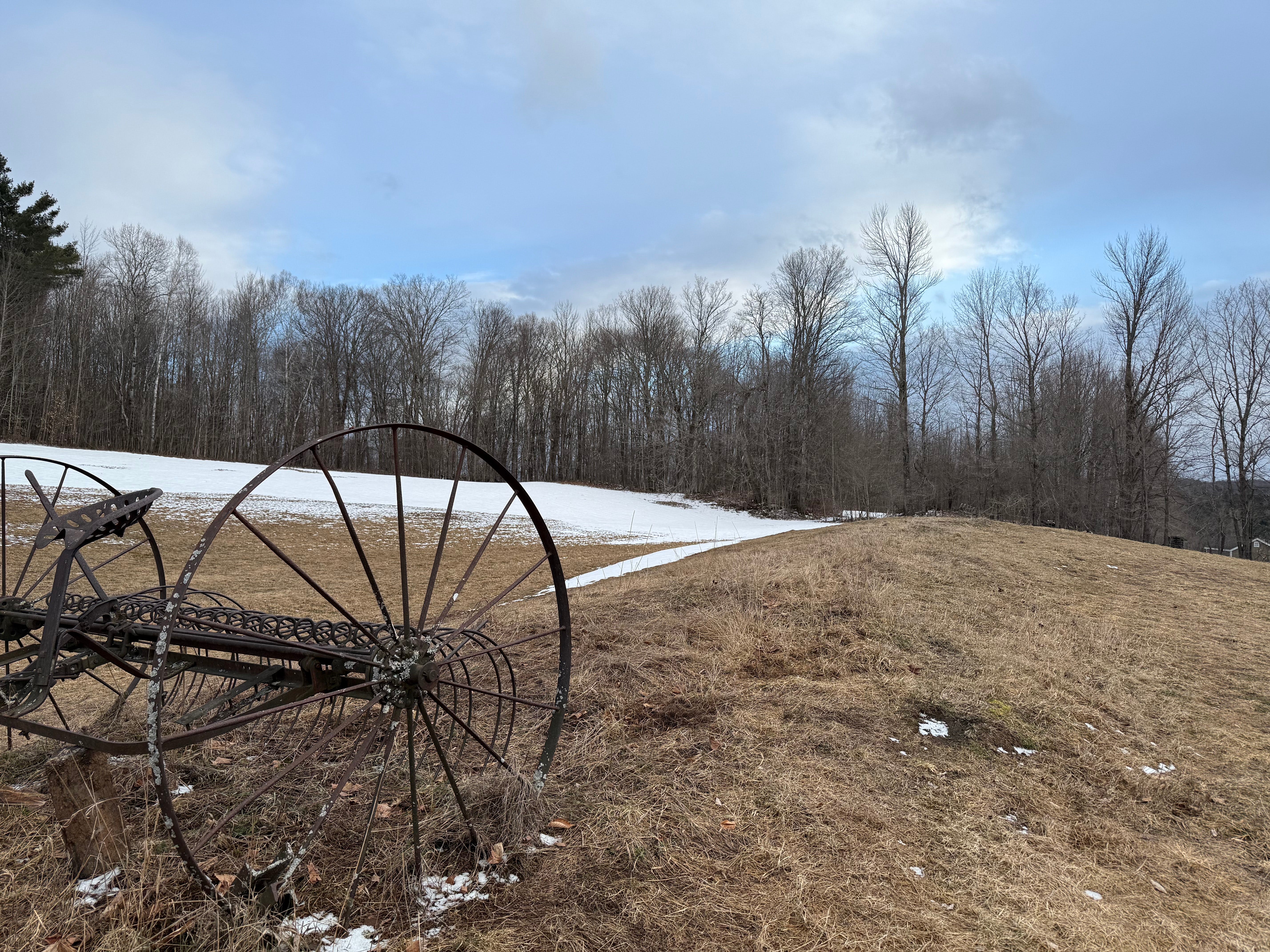
A Fierce Peace
We demand so much of poor March. The equinox arrives, we whip out our smartphones, and tap the weather app: our winter-pale faces illuminated by the glow of our little oracles. “It will be fifty tomorrow!” we feverishly, frothingly declare. We eye our gardening tools and put the heavy winter coats away in their trunks. Lured by the promises of warm weather we step outside expecting fields of golden daffodils and instead find ice underfoot. We check the modern oracles again. A snowstorm is promised to arrive by week’s end. This is when the stages of grief set in. “This can’t be right. It will blow past us. South of here.” we deny. Later that day we angrily throw the final wood from our pile down through our cellar doors to the stove. Perhaps we pray or just clench our fists and declare that we’d happily take another week of dire mud or slither-slick rain if it meant buds and blooms the following day. We give in. We’re burnt out. Winter has been long this year and maybe it’s best to just take a few days off and do nothing. Then, the spring in our own hearts finally arrives and we accept our lot as creatures of this earth. We know the good green pattern is beneath the late March snow pushing, pushing, ever pushing gently but surely through.March is volatile and capricious. Despite this, year after year, it always plays the same tricks. It is volatile but it is predictably volatile; it teases us with warmth, retreats into cold, stretches the thinning veil between seasons at the thresholds. We too are consistent; we fall for these tricks every single year and every single year we go a little mad with green-ache longing for life to spring forth. This annual gnashing of teeth and pulling of hair at the bait-and-switch of March is our own fault however, a symptom of living in our wounded modern world. The predicable challenges of muddy roads, of lingering snows, of sleet-gray skies become a monotonous purgatory in a culture that demands instant results while offering chemical and virtual escapes. The glow of screens promises weather updates, the hum of traffic pushes us forward, the expectation that spring should arrive on our terms endures. We should not escape however. This capriciousness is to be embraced with a knowing nod and weathered smirk. We know we will have to wait. By this time of the year however, waiting for all the good green things has left us weary. Wait-weary. Winter-weary. The snow is barely holding on to the last shadows in the forest, the days have stretched on beckoned by the equinox fires, but the full bloom of renewal—the first real boom of green—is elusive. This waiting drives us mad. Again, however, it shouldn’t; the madness is a symptom of the culture we inhabit. If your culture demands productivity always, then it sees waiting as a failure. The earth makes us wait though and the season teaches us to trust the process if we are but willing to listen. We pace the gardens eager to break the frost. We look to the bird houses eager for signs of life. We stand at our thresholds straining our ears for the hint of spring peepers. It is useless. Better to walk the wood line of the field again, to wait, to breathe and say “Calm, dear heart. Soon. Soon. Soon.” This patience is a virtue modernity has forgotten but the good green pattern insists we reclaim.Our culture—the wounded neon modern world—urges us to never wait, to rush, to solve idleness. We can buy industrial greenhouse-grown flowers, we can curse the snow, we can live unmoored from the earth. We can return, however. Take a breath, stand in the mud by the red dogwood, wait under barren trees. Close your eyes. When they open, they may just spy a robin or bluebird in the field. They may see snow coming over the hills. Whatever the case may be, the earth will unfurl on its own terms. You may recoil at aligning with its rhythm, it may feel like surrender as you wait. It is not surrender though. It is alignment. It is harmony. Through this, we release our demands and begin a rooted rebellion against the cultural clamor, find a fierce peace that steadies us until we too can only be moved on our own good terms.Pause the clamor and wander the woodline with me week by week, in step with the good unhurried rhythm. This is a public episode. If you'd like to discuss this with other subscribers or get access to bonus episodes, visit oldhollowtree.substack.com/subscribe
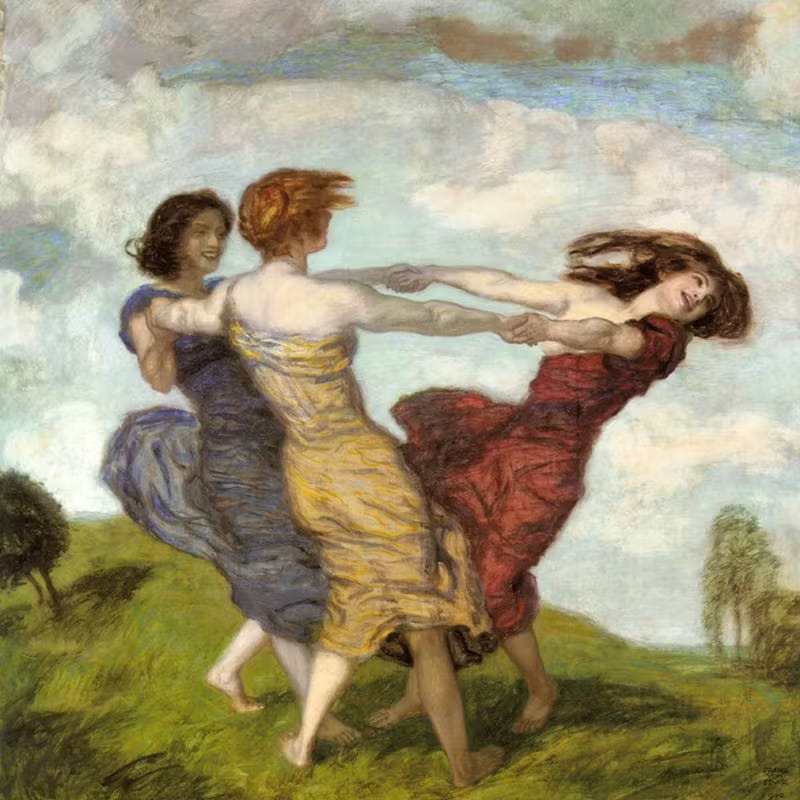
Water, Air, and Light: Finding Balance in an Unbalanced World
Tomorrow is the vernal equinox when your day and your night will be the same length. It is an event embodying harmony in what can often feel like an increasingly discordant world, a world that feels increasingly complex, wounded, unbalanced. Regardless of your ancestry, religion, or culture, you likely have rituals surrounding this period, surrounding spring. The recognition of birth and rebirth this time of year is universally acknowledged, celebrated with a riotous joy we so desperately need after a long winter. What is not universally acknowledged however, is the sense of balance the equinox brings. We overlook the harmony. Perhaps we are too distracted by our buzzing, beeping, flashing neon world and all its complexities. Perhaps we are too detached from the natural world to notice the gentle flow of new streams, the change in the wind, the days finally catching up to the nights. Let us stop for a moment then and reflect on all the good harmony this hallowed day brings in an attempt to find balance in our unbalanced world.The fields are nearly thawed here. The only snow left now after a series of sun drenched days and one warm rain lies at the forest’s edge, in the gullies and deep ravines the light rarely reaches. We walk the field, the back roads, the village paths and we feel our winter-thick blood crack a little under the good light. We hear the burble of the little melt streams and smell the loamy warm-rot musk begin to bubble beneath the porch, behind the stone wall, beside the cellar door. There is a cleansing taking place; a thawing stretch and cracking of joints unused for too long. Water is flowing where it has not in months and our own blood is moving in ways for which it yearns. All this melt-water runs to the roads and turns them dire but what do we care? There is no place better to be than from where those grievous paths lead; the sugar houses are full of work-happy voices, clanging can be heard as tools are unearthed in garden sheds, and the hammering of new projects echoes through the hills. We are shaking off the frost from our shoulders, flexing our necks so our faces may feel the sun and rain, and all around us there is water, water, water bubbling, boiling, running to herald a good green riot. The rain and the melt-flow cleanses the fields of the snow and roadsides of months-old dirt mounds kicked up by the plow. It moves us, and through this movement so too do we cleanse our winter-idle bodies. As we move, we become increasingly perceptive of our burdens. We take a queue from the natural world here; watch any barnyard and smile as the chickens find the new dirt in which to bathe, ridding themselves of parasites. Wander the forest and note which trees dropped useless limbs that were not gathering light. Everywhere around us, animals and plants are ridding themselves of the harmful and the useless. Like them, we engage in a bit of spring cleaning, but as you do so this year, consider what intangible elements are no longer serving you. Yes, you may donate the old skis gathering dust in the garage, but what else is taking up space, weighing you down? Are you ever scrolling, anxiously reading about war, global politics, and crises outside your control? It accomplishes little beyond increasing your blood pressure. Are you worrying about what may come to pass? Are you drowning in the complexity of your calendar? These things are much like the parasites on the hens or the heavy rotting limbs beneath the canopy: they serve only to weaken and to weigh. As you engage in your own spring cleaning, divest yourself of these intangible weights. Find more air, reclaim balance.You are now halfway between Saint Brigid’s day and Beltane, February 1 and May 1, the start of spring and start of summer. Yesterday the night was longer than the day but now, little by little, the days grow longer. We have spent months planning what we will do with these days so now we must spend months acting upon those plans! No excuses now—the weather is warm and the days are growing longer. We hold ourselves back by saying “someday” or “next year” but the time to strike is now. All your dreams you dreamt in the long winter-dark of January and February must now become manifest, tangible, real. This too is a balance; if we spend all our days dreaming, no fruit comes to bear. If we spend all our days acting, we stumble without a plan. Here at the equinox you stand at the threshold between plans and actions. It is a thin place between dream and reality and it is time to step into the tangible again and strike. We live in complicated times. We inhabit a wounded world. We change the clocks, get lost in our schedules, and are so easily mired in extremes. Now is not the time for the tyranny of extremes however. The heady highs and dark lows are better left for the two solstices when days linger languidly in tall grass and nights last longer than the candles can burn. Here though, you have the opportunity for a reclamation, for a t
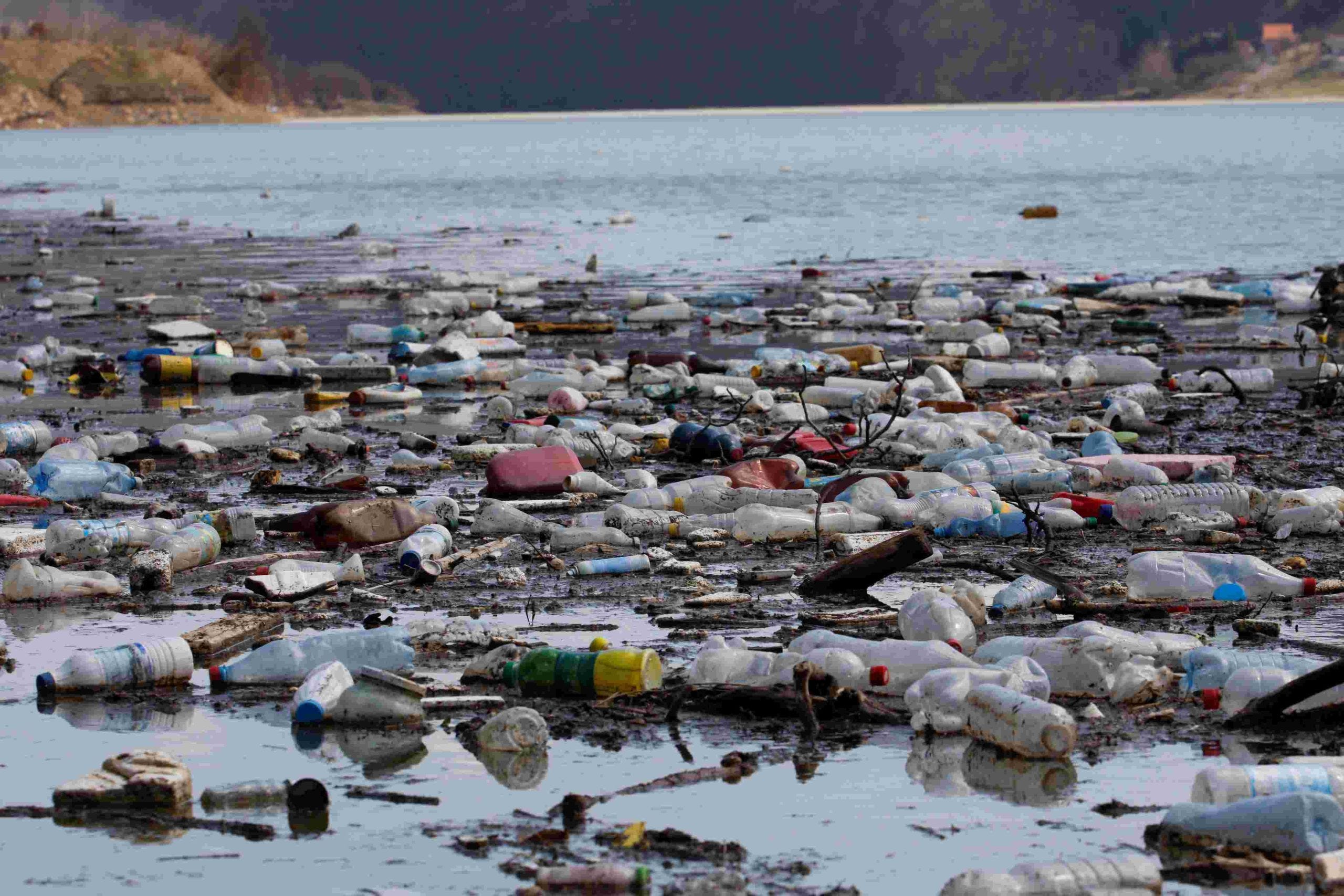
The True Problem of a Disposable World
“It wasn’t always like this.” I looked up from the litter I was collecting in the park. Discarded trash was a constant battle in the city in which we lived before returning home. It became so bad that my wife and I organized events to pick up litter in the park followed by yard games with other families. The voice belonged to a very old man and I asked him what he meant, fully expecting to hear a lecture about how people were just more diligent back in his day and had more civic pride. He surprised me though.“Nothing had its own packaging.” he explained. “Now everything has its own wrapper that you throw away.” He was right. I looked at the litter I had just collected, a plastic wrapper from a stick of string cheese, and thought that before World War 2 you would have purchased cheese wrapped in cloth or just left to be protected by its own rind. What’s more, resource scarcity in the 1940s meant objects made of wood, glass, and metals instead were replaced with paper and plastic alternatives. The empty plastic jug of milk I had found in the gazebo would have been made of glass eighty years ago—too expensive to absentmindedly throw on the ground. Likewise, the plastic fork I pulled out from under a park bench would never have existed; the material used to make forks would never have allowed someone to be so careless. I had been grumbling to myself that afternoon that people had grown lazy and careless, that they didn’t care about their community or their environment and, although that is true to an extent, we must recognize that the disposability of things is what enables this behavior; if bottles of milk were all glass and forks were all domestically-produced metal, I posit we would see fewer of those items littering our gutters and parks. You may object and say “drinks like soda and beer are still put in glass bottles and I still see litter!” but consider the litter you see on the roadside the next time you drive and it will almost all be plastic, aluminum cans, or paper and not “harder” material like glass or steel. If something is disposable, it will be disposed of. Appliances and electronics too have become less durable and our mindsets have all-too-quickly shifted to “Just get a new one” when something breaks down.This is a problem of course, but not for the reason you may think. Yes, there is the obvious problem that plastic waste is forming literal islands in our oceans, choking wildlife and finding its way into our bloodstreams. There is a more sinister problem at play however; the disposable materials do not just seep into our blood, they seep into our minds, our culture, our souls. When the things we touch every day are so easily thrown out, the disposability slowly, subtly, insidiously convinces us that everything is disposable. Traditions. Places. People. We live in a disposable world, and we do not even realize that we have accepted that those things have become disposable too.Consider first your traditions, the small daily practices you no longer honor or the larger annual celebrations you no longer hold. Perhaps your grandparents said grace before every meal but you do not. Why? What happened? Did you become too wise for religion, more enlightened than all your ancestors before you, inherently more thankful in your every passive moment? A daily prayer of thanks was perhaps rebranded as a modern meditation on gratitude or a mindfulness reflection. Safe. Inoffensive. Sterile. Taking an uncomfortable moment to reflect on why you do not carry a tradition—however minor—and answering honestly is worthwhile. When we read about tradition, we inevitably stumble down the country lane and bump blindly into Chesterton who wroteThere exists in such a case a certain institution or law; let us say, for the sake of simplicity, a fence or gate erected across a road. The more modern type of reformer goes gaily up to it and says, “I don’t see the use of this; let us clear it away.” To which the more intelligent type of reformer will do well to answer: “If you don’t see the use of it, I certainly won’t let you clear it away. Go away and think. Then, when you can come back and tell me that you do see the use of it, I may allow you to destroy it.Simply put, “Do not take down a fence unless you know why it was built in the first place.” Are we so certain we know why the traditions we so cavalierly dispose were held for so long before us? Are we too proud to wonder if we may be wrong in throwing them to the gutter? Are we even willing to ponder the question?Like traditions, places too have become disposable. We do not have the perfect opportunities, homes, or climate and we leave. We pack everything we own into a truck, turn onto the interstate, and find a city that suits us perfectly, that we can really make it in. We can return when we feel nostalgic every so often—maybe for the holidays or a funeral—and then earnestly wonder why the beloved old store, church, or school is closing down all the while checking in to
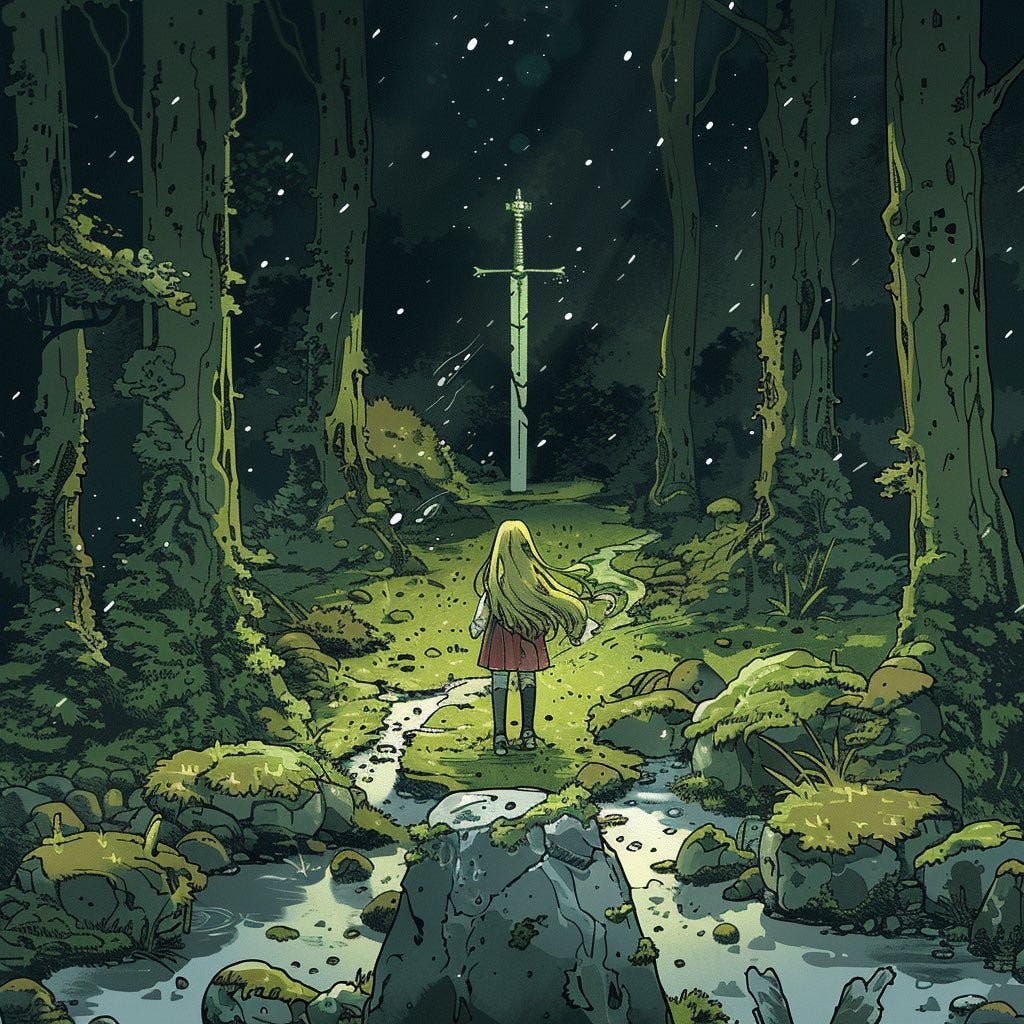
The March of Reclamation
“The world you were born in no longer exists.” A now common phrase spoken with weary certainty, heavy with both nostalgia and resignation. It is said when people watch their hometown haunts replaced by parking lots, when the pace of life has quickened beyond what they feel they can keep up with, or when they simply want to invoke rage in you to sell you something. It is more often than not an earnest lament, a quiet surrender to the march of time, to modernity. The old familiar world is gone. Lately, as the snow stubbornly endures in the fields and forests, as the drifts blocking rarely-used doors show no signs of melting, it is easy to believe that winter will never release its grip. The season stretches long, so too obscuring the familiar world beneath its weight. Just as the seasons turn however, just as the cold will eventually yield to that good green pattern beneath the soil, the world we are told is lost is never truly gone. It too waits beneath the surface, patient and enduring, ready to be reclaimed.Winter has a way of making everything terrible feel permanent, absolute, unending. When the snow first falls, it is a welcome invitation—a soft and welcome hush, a gentle reshaping of the landscape into something quiet, new, and good. It even mercifully obscures our mistakes and errors. When it lingers though, when the accumulation outstays its welcome, the delight turns to a sort of Sisyphean frustration; we shovel paths that vanish overnight, clear roofs only to watch more layers of white settle, constantly defend the animals and homestead from winter’s fang. When there is so much snow still present in March, it becomes an unyielding reality that must simply be endured. Yet, even here in the long tail of winter, there are signs of movement—both plant and animal—signs of the good that lies beneath. The osier dogwood pulsing red amid the dirty snowbanks insists that change is coming. The chickens, emboldened by a shoveled path and frozen crust, step cautiously toward the compost pile, and the bees begin to stir. The world has not stopped, even if it feels that way. It, like all good things, is on the move.If you accept in despair that the world of your childhood no longer exists, you will live as if that is true. You will accept the loss of the traditions you loved, the pace of life you cherished, the simple joys you assumed were swept away by the neon tide of modernity. The truth is though that much of what we think is gone has simply been abandoned, abdicated, left to be dusted over like a field with snow. The way forward is not to mourn what has been buried with gnashed teeth, but to uncover it, to step up and reclaim it, to return. If you miss the kindness of a small-town community, be the neighbor who waves, who stops to chat, who shovels another’s driveway unasked. If you resent the freedoms you have lost, break the law, renounce society, or run for office. If you long for the traditions of your youth, bring them back—light the bonfire, tell the stories, teach the prayers, bake the bread, invite people in. You live in a wounded world—yes—but it is not dead, gone, or vanished. It merely awaits for you to choose it again, it awaits its resurrection at your hand.Spring will come, but it never arrives all at once. It will appear in small victories—a patch of the garden melted into mud, the good rot scent of thawing soil, the first morning you step outside and realize the air no longer bites. In the same way, the world we miss returns in pieces, in moments we choose to reclaim. The stories we tell our children shape their understanding of what is worth preserving. The work we put into our homes, our communities, our traditions—these are the paths through the snow that lead the way toward spring. Change in the world is inevitable, but it does not have to be a force that simply happens to us. We are part of it, we shape it, and—if we choose to—we can carve the paths back to the world we love.Let the snow fall. Let winter stretch on a bit longer than expected. Let the world tell us, again and again, that what was is no longer, that the good things are lost. Let us refuse to believe it. The world we love is not lost. It is simply waiting for us to step forward, to carve out the spaces for which we long, to warm them back to life with our presence, our effort, our will. The frost will break, the thaw will come, and beneath it all, the world we thought was gone will be there, just as it always was, ready to be reclaimed and live again.Let’s reclaim all the good green things together. This is a public episode. If you'd like to discuss this with other subscribers or get access to bonus episodes, visit oldhollowtree.substack.com/subscribe
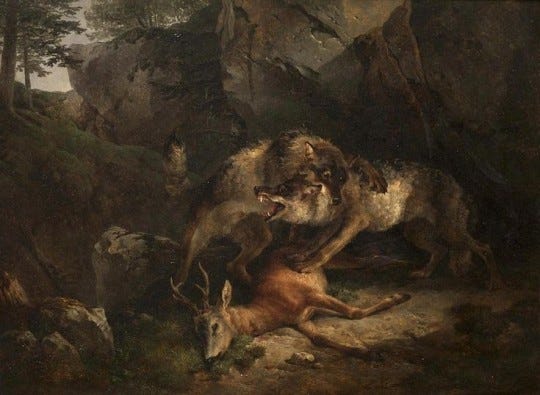
We are Out for Blood
We are all oracles now here at the end of winter. We look out our windows, go for walks, step gingerly through the still deep snow looking for the signs, trying to divine spring’s arrival. We have many methods for this divination. We look to the bird feeder and wait eagerly for the first sighting of the robin. Some of us are lucky enough to live where snowdrops bloom. We listen for the trickle of sap from the maples. So many little “sure signs” followed inevitably by another blizzard, a freeze, and more shoveling. False starts and dashed hope. There is one sign however that always proves you have turned the corner, that the good green pattern is on the move and will not be denied. Blood. A drop by the cellar door where the house cat cornered a mouse, an imprint of a raptor’s wings in the snow, a leg or rib bone in the far field left after the coyotes’ grim revelry. As the days warm and the snow softens, both prey and predator are about and they are both desperate with hunger after a long winter. This desperation moves them in, from the forest to the edge, from the edge to the garden, from the garden to the back door. We too are hungry, desperate, and out for blood—just in a different way.We passed St. Brigid’s day and became closer to the spring equinox than the winter solstice nearly a month ago now. The progression of the calendar is evident; the nights ease their bite and the forest turns feral. Owls drop silent from the white pines, talons snagging mice careless enough to scurry through the melting edges of the field. Coyotes, lean from winter, circle lame deer in the briar. By the chicken coop, my cat will soon stalk voles flushed from collapsing snow tunnels and leave a droplet of blood staining the stoop. This is spring’s truth: blood, not buds, heralds the true waning of winter. The animals, starved through the dark months, grow reckless now. Look at your bird feeder or compost pile at night to see a skunk sniff the fallen seed, hear the foxes at the woodline, look to the sky for hen-hungry hawks. We like to imagine a quiet, gentle greening but it is more of a violent rebirth followed by maw-red hunger. The dogwood is a hearty crimson now, foreshadowing the quickening hunts to come, an undeniable sign that life is fighting back against winter, spilling red to claim the season. Out here in our fields and forests, spring bleeds before it blooms.We feel it as well, that stirring under the skin as water rushes along the roads and our own pulses quicken. Like the predators waking to spring’s call, we are out for blood.Our own. We remain focused and hunt down our own inadequacies. Perhaps this looks like following through with the resolutions we scribbled down in January, prey we track over March’s rivulets and thawing fields. Perhaps you are a Christian entering Lent, relentlessly hunting down your own sin and feeling the season’s hunger as you begin your fast. Whatever the case may be, this is not the time for idle Romantic renewal, no time to gently twirl our hair and wait for the daffodils to bloom; it is a hunt, a season to shed what no longer serves us so that we may become stronger both physically and spiritually. We are not so different from the denizens of the forests with their fangs and claws; hunger drives us to devour our own weakness and grow new muscle, sinew, flesh. The owl’s talons and our resolve strike with the same precision: swift, secret, red. Coyotes rip through deer with pack ferocity just as we tear at old habits with a unshakeable will. The season binds us to these predators in a shared hunt, their blood literal, ours (mostly) symbolic, both spilling to awake that good green pattern beneath the snow. The animals are desperate; winter thinned them, left them hollow. So too we, starved by months of stagnation, are eager to stop preparing and finally lunge. A fox’s kill at the woodline mirrors a resolution reclaimed, a hawk’s dive shadows a sin overcome, the pack encircling lame prey evokes an inadequacy replaced with strength. This time last year, I wrote that belonging to a place means knowing where the water on your land runs, where it pools, where it ultimately falls. The same can be said of our own blood; how we move through the season, where we risk stagnating, where we ultimately fall.Blood heralds spring on the land and in our hearts. It is a crimson thread tying us to the owls, the coy dogs, and even the cat by the barn. It is the first drop, the red proclamation of winter’s end. We are not so different from those predators at the woodline. Hunters all, the warm, moist air full of field-melt fills our lungs and quickens our good hearts. What happens next depends on the predator. Out there in the fields and hedgerows, it is a mouse’s end or a deer’s last stagger. In us however, it it is doubt slain, weakness consumed, strength of soul and body generated. Spring is no gentle gift; it is a call to kill what holds us back and demand something deeper of ourselves. In the briars
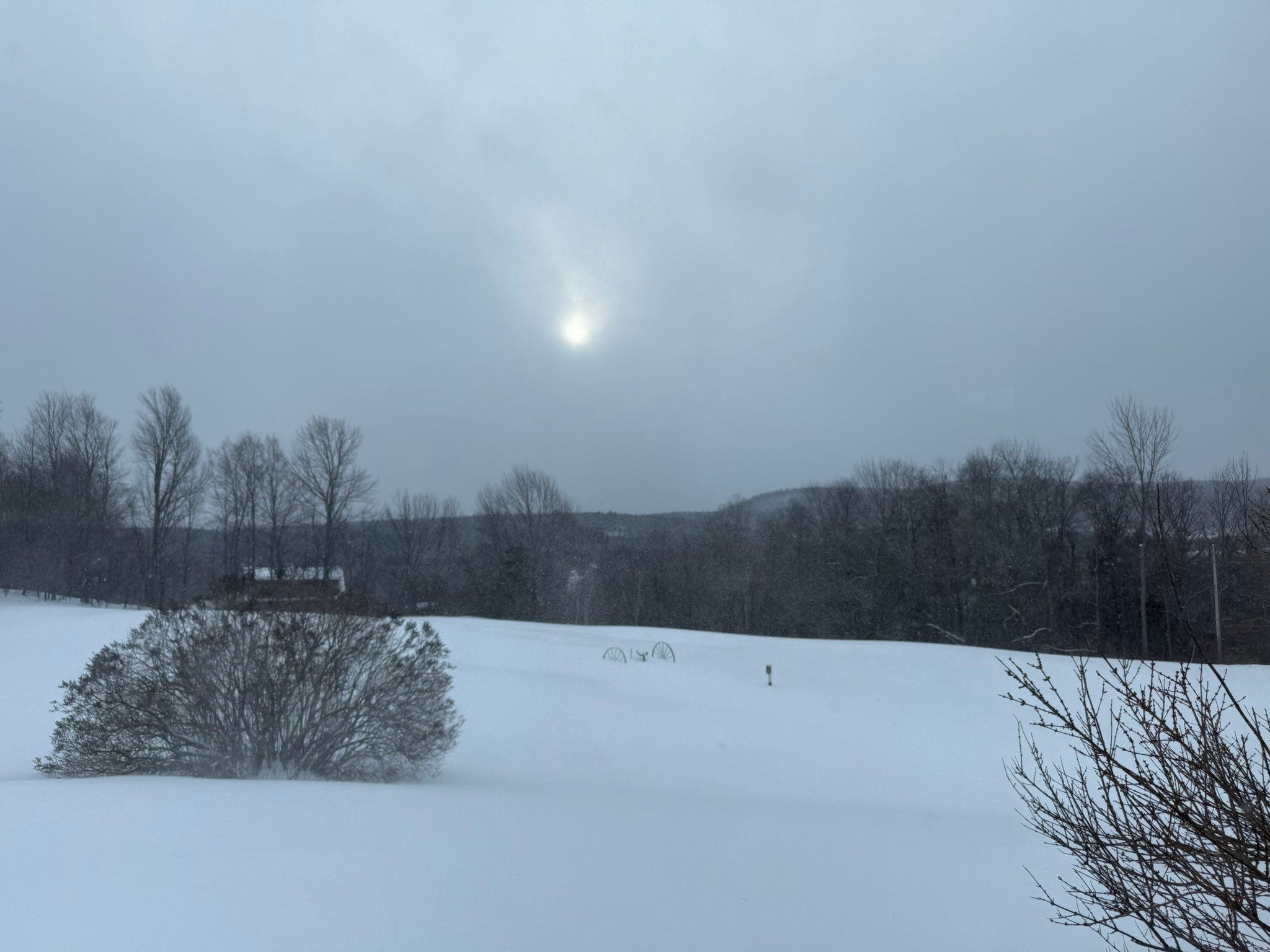
How to Lift the Weight of Winter
The weight is real this year. A blizzard roared through this weekend and left its mark, laying down an inch of snow an hour until it felt as though our little rolling hills here in Vermont were flattened out in white. The drifts reach my waist in places, and the driveway, deck, and paths are a daily battle against accumulation. I am running out of places to put the snow; there is no conquering winter, only pushing back against it long enough to keep a path clear. But even in the thick of it, life does not stop. My daughter, bundled in her little snow suit, has turned the banks into tunnels and forts, the field into trenches—an entire world carved from snow. The chickens, usually wary of the cold, step cautiously into the cleared path between their coop, the compost pile, and my daughter’s kingdom, their curiosity outweighing their discomfort. My old friend, the red osier dogwood, half-buried, is taking on a deeper blush, its branches burning red against the pale expanse. There is weight, yes, but also life pressing forward beneath it.Snow is both a burden and a blessing. It silences the world, slowing movement and muffling sound, pressing itself into every hollow and crevice. It demands patience; there is no rushing when the roads are not plowed, when the wind blinds you with swirling drifts, when there is ice beneath your soles. It also transforms—what was once a tangle of brambles and bare trees is softened, reshaped into something quiet and clean. The branches from the tree I fell at the field’s edge for firewood are covered, my laziness mercifully hidden for months still. I watch my daughter burrow into the driveway banks, her face red with cold and joy, and I remember being small enough to see snow as an invitation rather than an obstacle. It is a child's nature to adapt, to see possibility where we myopic adults see only work. There is something to learn from that. The snow is heavy, yes, but it is also for fort-building and secret tunnels, for the play of light shining through into the dark.We are not the only ones affected by the weight. If you were to stand at the woodline with me looking into the forest, being buffeted by the wind, you would hear the old, resolute, trees creek and bend. They do not fight the weight—they yield, accepting what must be carried until the thaw comes to relieve them. They may drop a useless limb that no longer serves them. A dual lesson here from those maples at the edge of the field, then. Endurance is not always about resistance; sometimes it is about learning to bear the weight until it passes or letting go of what no longer serves you. The dogwood too knows this. Its branches, defiantly bright against the snow, reminds us that spring is always working its way forward, even now. The pressure of the season does not erase the promise.Still, there are days when the burden feels like too much. The path I shoveled yesterday is buried again today, my cellar door is obscured, my arms and chest ache. The woodpile, once stacked high with autumn's foresight, is shrinking faster than I’d like. The chickens hesitate at the edge of their coop, weighing their curiosity against the cold, and I feel the same hesitation in myself. It is easy to let winter wear you down, to let the endless white trick you into thinking it will last forever. But then I watch my daughter press forward, carving tunnels through the snow with small, determined hands. I see the chickens step out, reassured by the path I cleared. I see the dogwood stand steady in its winter blush. I remind myself that winter, like all things, is something to move through with the flexibility and discernment of the trees at the woodline. Stepping, weaving, discarding what no longer serves us.The melt will come, slow at first, barely perceptible, then sudden and undeniable. The banks of snow will shrink, the drifts will soften, and the dogwood’s red will deepen into something vascular, weaving, alive. We will trade shovels for spades, winter boots for bare feet, and we will step into the next season as if we had always known it was coming. For now though, we carry the weight and move forward as best we can—clearing paths, carving tunnels, and knowing that beneath it all, the good green pattern is doing the same.Walk with me to the woodline… This is a public episode. If you'd like to discuss this with other subscribers or get access to bonus episodes, visit oldhollowtree.substack.com/subscribe
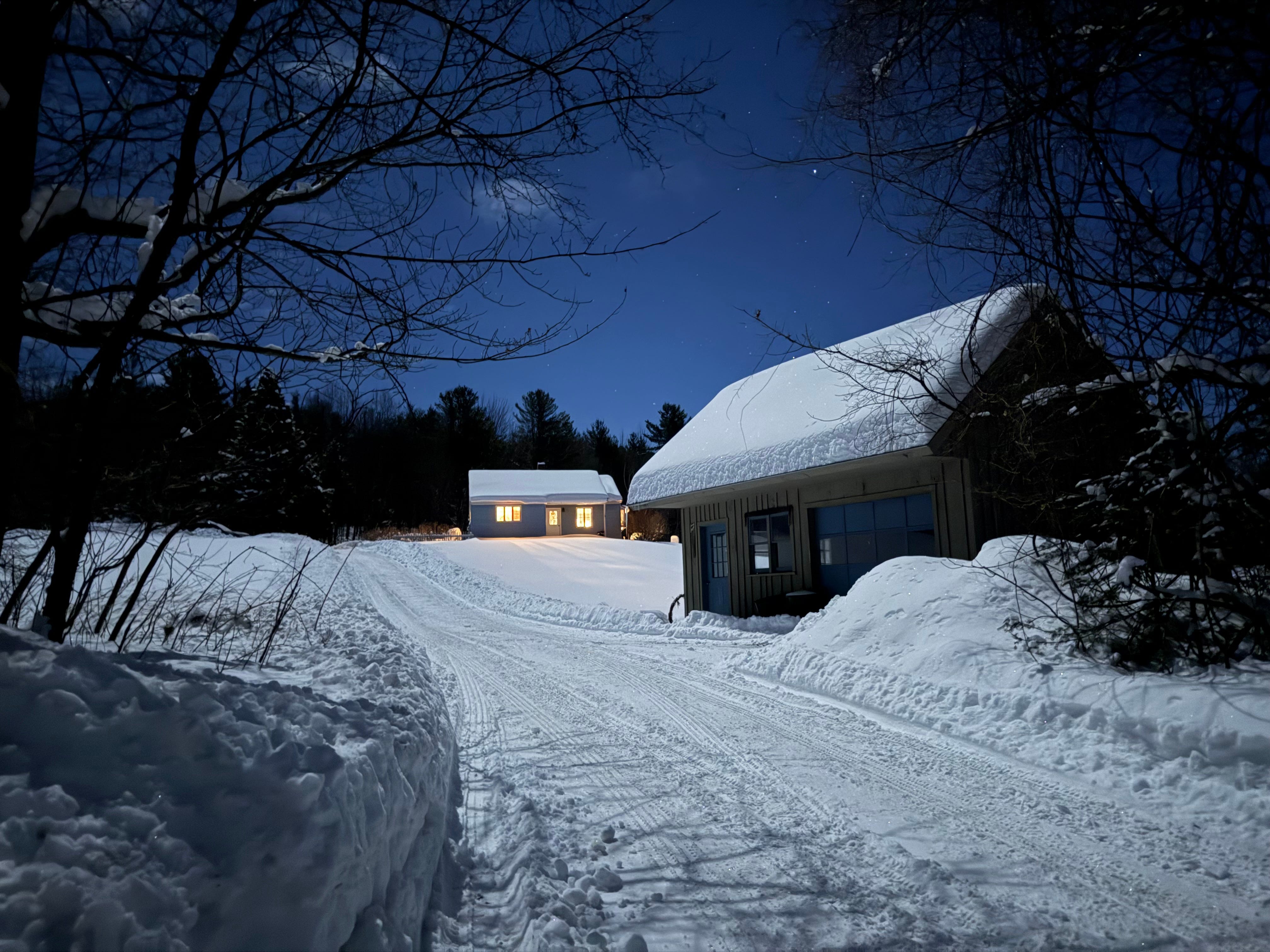
A Secret Stirring
No one seems to know what to do here in the dead of February. You can look to the calendar and find no answers there, only more questions. Superbowl? Groundhog Day? Valentine’s Day? What is February even about? We look to the woodline and the fields, but February holds her secrets in silence. There are hints, however. Clues to the mystery, a bridge of cold light where winter loosens its grip but spring remains a suggestion waiting at the edges, a whisper told in bitemarks on stems and in the sap barely moving through the old maples. The world is quietly, silently, secretly on the move. You awake and look to the woodline to see conspiratorial tracks at the edge of the field, the sap rises in the trees, the very air carries an undercurrent of motion. February is the time of hidden work, the quiet preparation that shapes what comes after. In the brittle light of these lengthening days, the world begins to ready itself for what is next, though no one says so aloud. To do so would be to break the spell, to give the game away, to reveal too much.February is a month of paradox, of stillness disguising motion, of patience entwined with urgency. The snow drapes the earth, fields seem frozen in slumber, and yet nothing truly rests. Coyotes call in the night, their cries sharp as needles threading through the cold, a sign of hunger and their hunt. The light sharpens, brighter but still pale, carving shadows that seem to stretch longer each day. The stars too pierce a little deeper now, even when they would normally be dulled by the light of the full moon tonight. Beneath the surface, roots twist and push, ice cracks under the soil, and buds begin their slow, deliberate stretch. February does not announce itself with grand gestures; it works in whispers, in shadows, in silence. There is no proclamation, only the steady cadence of things deciding to begin again.This is the month of the unseen labor that holds families, traditions, and nature in quiet accord. It is in the calloused hands of the gardener organizing seed packets, in the clicks and gentle whir of the incubator’s test run, in the subtle shift of animals reshaping their dens. February carries the weight of the untold—the secret laying of plans and the careful tending of that which will come. It is the season of unspoken inheritance, the moment when wisdom is passed not through words but through action. Here, the roots of families deepen, their work unnoticed but vital, their preparations whispered in kitchens and barns. February is the patient builder, the architect of futures revealed by a lone light shining in homes and workshops on snow-covered hills.Yet for all its secrecy, February is not static. The world stirs in conspiracy: deer graze bark off young trees, the little animals leave tracks faint as breath along the edge of the house, and a sapling bends toward light even before the thaw. The secrets of February are not truly secrets at all—they are hints left for those who know how to look, signs of what is coming if you are quiet enough to notice. In the same way, we follow these rhythms, whether we realize it or not. The careful stitching of repairs, the cleaning of old tools, the gentle winter sowing in little greenhouses—each act builds toward spring. Whatever mystery, whatever green pattern that stirs beneath the snow stirs too in us. Now is the time for you to engage in your own productive conspiracy, to quietly plan, plot, build by the warm glow of the Hunger Moon and the sharp-light of the stars.And when February ends, it does so without fanfare. The month slips past, its labor unnoticed by most, its secrets intact. But the work it set—the work you set—in motion endures. Beneath the softened snow, roots have claimed their ground. In the branches above, buds have thickened in readiness. The secret preparations of February lay the foundation for what blooms later, just as our own unseen labor sustains us. February moves us to this quiet hearth-work, to belief in the rhythms of change, to the beauty in the unseen. It is a reminder that what matters most is often invisible—rooted, growing, becoming—shaping the world in ways we only begin to understand as it passes.Echoes from an Old Hollow Tree is a reader-supported publication. To receive new posts and support my work, consider becoming a free or paid subscriber. This is a public episode. If you'd like to discuss this with other subscribers or get access to bonus episodes, visit oldhollowtree.substack.com/subscribe
You Know a Dying Man
The days are changing. There are more tracks in the field, the light lingers a little longer, and we never quite know what to expect from Winter here at his bitter end. Winter in February is a man who has learned that he is dying. Faced with his mortal coil, he is unpredictable, dangerous, liable to do anything. He may lash out in his rage and bury you in sleet, he may succumb to his sorrow and plunge the mercury to -20°, or he may be at peace with his fate and smile a string of warm days upon us. We do not know how Winter will react to learning of his grim fate, knowing that his days are numbered, accepting that he will die. We can look around, however, and reflect on what we want to do with our own days, what we want to bring in to the world with the time we are granted, and be inspired to act by what we see in the fields, the forests, and all the places where the good green pattern stirs beneath the snow.Just as a man nearing his end accepts that he must put his worldly affairs in order, so too do we make the most of our good days. The coming cold weeks demand decisions and require forethought before we are made mad to act by the warm sun of March. We open our seed containers, our workshops, our barns, and look to what remains from the year prior, what can be salvaged, and what must be released. The garden must be mapped, the hives checked, the tools sharpened—not unlike a man patrolling his estate and grounds, making peace with his legacy, ensuring what he has built will endure beyond him. What must we build, what must we repair, of what must we let go? Winter's end here in February is not just about watching the thaw and hunting for snow drops; it is for preparing for the work that follows, setting things in place before the next turning of that old wheel. Seeds must be ordered, beds must be cleared, last year's missteps must be considered; all the lessons must be folded into the next cycle. We do not wait for Spring’s arrival idly now. We envision what we will do, we name it like an invocation, and we lay the foundation before the ground is warm enough to receive our efforts. Soon Winter will be gone, and we must be ready to carry on in his wake.Sensing the imminent death of Winter, the scavengers and other predators are on the move. There is more activity in the fields now, more signs of predation. I have said before that the first true day of spring is when you first find blood on your land. Look to the woodline and you may see the large bounding tracks of a deer who broke free from the trees for the open where she could sprint away from her canine pursuers. Find the coy dogs’ grim leavings in any ravine, lowland, or ditch now. The woods hunger. The crows are bolder, the foxes more brazen. Every fang and claw inches a little closer to the farms and villages now, taking what they can before Winter breathes his last. We too begin our hunts now, but also need to face the fact that we are at risk of not being the cunning predator, but rather the bounding prey. We run from ourselves by not living up to our own potential, by making excuses, by saying “Someday.” Plans are only as strong as our execution, and this is the season for moving from thought to deed. The hive that died last year must be inspected, the fence line that sagged in places must be reset, the firewood pile that dwindled too soon must be stacked higher. We do not wait for the warmth to make us ready—we work now, molding the world in which we wish to live.Yet even the best-laid plans must bow to reality. A late snow may crush the eager shoots of garlic, a storm may undo hours of careful labor, a hive may not survive no matter how well it was tended. We adjust. We mourn losses, reassess strategies, begin again. There is no use railing against fate, no use cursing or worrying about what we cannot control. Winter teaches us this in his final days. He fights, he rages, he weeps, but in the end, he must go. He must die. The land will wake, the world will warm, the good green pattern will emerge again. We, too, must learn when to yield, when to pivot, when to release what is beyond saving and focus on what yet remains. A diseased fruit tree becomes firewood, a failed crop enriches the soil, a dead hive donates its drawn comb to another colony. There was a farmer whose ewe birthed two lambs. One died and the ewe would not leave its side to the point of neglecting her living lamb. The farmer removed the dead lamb and the ewe would not give up; she searched for it, continuing to neglect her living lamb. The farmer then skinned the dead lamb and wrapped the living one in its hide. Only then would the mother nurse her living lamb. Though a grim tale, the farmer salvaged life where he could and, instead of two dead lambs, he ended up with one. A happy ending where there would have only been tragedy if not for his action. As you execute your own plans, you meet your failures like that farmer. You salvage, you cannibalize, you reincarnate. Then you move

You Need to Make Something
In less than one week you will be halfway between the winter solstice and the vernal equinox. You will have the same amount of daylight you did at Halloween. January ends, the days grow longer, and now you have one less month to achieve your resolutions, to plan your moves, to bring something into being. To conceive. That is ultimately what this time of year embodies: conception. You are emerging from winter’s grim grasp but are not quite ready to declare the arrival of spring, of new life. Ask any shepherd however and they will tell you their ewes are pregnant now and the lambing begins soon. The ancient Celts called this time of year Imbolc, a name thought to derive from the Old Irish word meaning “in the belly.” While Imbolc may be unfamiliar to many, February 1 is likely known to them as St. Brigid’s Day. This day celebrates the saint who—some argue—intertwined in history with the pre-Christian Celtic goddess of the same name through a process called syncretism where, simply put, the Church absorbs a folk belief and sanctifies it, making it its own. This blending of traditions means that many of the attributes and legends of the goddess Brigid were incorporated into the veneration of the saint. The goddess was associated with fertility, healing, poetry, smithcraft, and these aspects have carried over into the saint's celebrations, making Imbolc or St. Brigid's Day a time to honor either the Christian saint or the ancient goddess depending on your inclination. Whether you call February 1 St. Brigid’s Day or Imbolc, whether you worship goddesses or venerate saints—whatever you believe—one thing remains certain: this is the time of year for creating and the time for excuses is slipping away.The complaint that the modern world is full of distractions has been covered ad nauseum. How much virtual ink has been spilled decrying the evils of our various alerts and notifications? Enough, I’d wager. A more diabolical evil we do not call out nearly as loudly are our own excuses. We look outside to a hanging shingle, a warped shutter, a sagging post, and declare we will repair them when it is warmer or when we have more daylight after work. We look to the unstarted or half finished projects in the workshop or garage and make the same bold but hollow declarations. We could do it now though. We should. We should, but we don’t. Instead, we let our excuses grow wild like brambles and briars, choking out any chance of real progress or creation. The modern world makes this so easy not through the ease of addictive entertainment, but the ease of addictive victimization. Know it or not, you are constantly bombarded with sad, seductive whispers. Why fix the shutter when everything is already so stacked against you? Why create anything of substance when the sins of all those who came before you are so insurmountable? Why repair, build, or grow when the world is already ruined? Didn’t you hear? It’s over. You don’t really read about this sort of self-destructive autonomous browbeating. Instead, pick up any publication from the last two decades and you’ll find an article decrying the evils of constant distractions. The problem is not just the noise around us though; it is the noise within us—the constant rationalizing of why now isn’t the right time, of why we just can’t do it, of why we will fail.This whining, this rationalizing, these excuses are not a moral failing however. They are the product of luxury, of a lack of urgent needs. If you do not sow or harvest, you can go to the store. If you do not repair, you can buy new. If you are reading this, it is highly likely your society has allowed you a certain level of insurance against failure. For the old Celts however, Imbolc was a time of dire preparation. It marked the end of waiting and the beginning of deliberate action. Procrastination would have meant hunger or worse. It is easy to place a mantel of moral superiority on our forebears and ancestors, but the truth is they simply could not look to the harshness of the season for excuses; they needed to meet its challenges or perish. If the shepherds on the hills of pre-modern Ireland waited for warmer weather to lamb their ewes, their flocks would fail. If the smiths delayed their craft, the critical work their hardware enabled would go unmet. If the midwife stayed in her dwelling due to foul weather, there would be death instead of birth. There was no waiting for convenience in the pre-modern world; necessity demanded action. You might not be a shepherd, smith, or midwife, but the lesson stands: the longer we wait, the harder it becomes to act. Excuses lead to failures and those failures simply compound until one day you find yourself kicking rocks while mumbling something about how it will be different next year.So how do you avoid this spiral? You begin by reflecting on what you want to sow this year. You are running out of time to make this decision, so you may need to prioritize what you want to bring into this world
Winter Does Not Care about your Feelings
I am running out of firewood. It is not an emergency. It is not really even a problem; we can always heat with the oil furnace. We enjoy heating with wood though, and it allows us to cook, melt snow into pure water, and heat our home in the event of a long term power outage. We always keep a good supply on hand. Nevertheless, this year was busy and I did not begin cutting wood in earnest until late June. As I throw what remains through my cellar door to the basement, I tell myself I was busy preparing for the arrival of our new baby. As I stack the thrown pieces, I whine internally about how long it took to build the chicken coop in the spring when I could have been felling trees. As I putter around the yard looking nervously at the dwindling pile, I tell myself “at least we started our apiary in May.” The truth remains though, that I simply did not cut enough firewood. I can spin whatever comforting stories and half-truths I want to assure myself I had good reasons to not cut as much wood as I did. I am a good storyteller, even to myself, but ultimately the hard truth is that the nights are cold and the wood pile is low. As I shut the cellar door, I reflect on how we see people flocking to the natural world these days in spite—or perhaps because—of its harsh truths. The modern world allows us to avoid so much consequence, to be so unaccountable to what truly matters. To dodge justice. Meanwhile, we are inordinately punished, sanctioned, and silenced for small, intangible trespasses that have no real earthly effect. The natural world offers a refuge from this strange inverse: a proportional, inexorable, and unyielding consequence for all things. Despite how grim and dire this sounds, make no mistake: we hunger for it. We need it now more than ever. The modern world is full of invented consequences, intangible penalties that feel arbitrary and unmoored from the fabric of real life. Consider the anxiety we experience over missed texts, poorly worded emails, or social faux pas—things that carry no genuine, lasting impact but can haunt us for days and make us cringe with embarrassment as we recall them years down the line. An errant post might cost someone their job, a poorly timed reply might damage a relationship, and a perceived slight could spark a feud. I recently overhead someone offhandedly suggest that perhaps admitting students to preschool only if they were potty trained could lift the burden of the overworked teachers there. This man was immediately decried by his peers for being insensitive to students with disabilities and accusations of heartless ableism were hurled. You could watch this person become a pariah in real time. Consequences like these are not born out of survival or necessity; they are penalties enforced by invisible rules and shifting social norms. They feel hollow, weightless, and unjust because they lack any connection to the natural order. In contrast, the natural world is mercifully indifferent. The cold does not care why you didn’t split and stack enough firewood. The frost does not hold off because you were too busy with other tasks. Its consequences are not personal; they simply are. Yet in their cold inevitability, there is a kind of fairness. You know where you stand with the natural world. Its demands may be merciless and its consequences grim, but they are honest, and we are starved for that honesty in our increasingly artificial world.It’s no wonder, then, that so many people are returning to the natural world, seeking solace in its brutal simplicity. Gardening, homesteading, foraging, hunting and simply hiking have surged in popularity, even among those who once had little connection to such pursuits. Look at data for visitations to national parks for instance. At the end of 2019, they surged as a reaction to the pandemic and then did not stop. You would think with the end of lockdowns and advent of the vaccine that people would have returned to their pre-pandemic indoor lives but no. They stayed in the parks, the forests, the fields. These tie us to a world that is both real and immediate, a world where effort yields tangible results. The pumpkin swollen in your garden is proof of your labor, the warmth of a fire is evidence of your preparation, the little dam your child builds in the brook changes the world. Compare this to modern labor, where entire weeks can disappear into emails and spreadsheets, producing nothing you can hold in your hands. The natural world offers not just a reprieve from this abstraction but a reminder of what it means to live with purpose, within a body. You plant a seed, tend to it, and reap its harvest. You get a box of tiny chicks at Easter, raise them all summer, and by September each of them lay for you a daily egg. The chain of cause and effect is clear, and the reward is both physical and deeply satisfying. This is why so many find peace in the garden, park, or forest. These spaces do not demand perfection, nor do they punish mistakes bey
Reclaiming the Family Meal
We do not stop. Not these days. Not lately. Not really. The perpetual demands of modern life tell us to go, produce, consume. But then it snows. It snows hard, turning the roads dire and bringing the well oiled gears of modernity to a frozen halt. Schools close, evening plans are cancel, and families, once scattered to the winds of competing demands, find themselves unexpectedly gathered at home. In this sudden unexpected stillness, time stretches out, unhurried and unfamiliar. With nowhere to be and no plans to keep, many turn to an ancient and perennial comfort: the table. The clatter of plates, the scent of baking bread, and the excited bustle of shared tasks fill the house. When dinner is ready, they sit together—an unusual sight in the wounded modern world, where meals are often eaten on the go or in cold isolation. Plates of steaming food passed around the table bring not only nourishment but also laughter, conversation, and the warmth of connection. Such moments, rare as they may be, remind us of something essential: the shared meal is more than just a relic of the past; it is a vital tradition, one that modern life has quietly eroded. January, with its snow and its slowness, offers a chance to rediscover what we have lost.The family meal was once a daily ritual, woven into the fabric of life with an almost sacred regularity. But as the pace of life quickened, this ritual began to fade. Today, the dining table too often sits empty, replaced by quick bites eaten standing up, fast food consumed in the car, or meals eaten alone in front of a screen. The culprits that have robbed you of this ritual are as numerous as they are relentless: demanding work and school schedules, long commutes, and a culture that prizes productivity over presence. Parents struggle to balance careers with family life, often sacrificing meals together in favor of convenience. Children, meanwhile, are swept up in a relentless tide of extracurricular activities, leaving them no time to sit down for dinner between homework and one practice or another. These pressures have turned eating into an individual, isolated, atomized act rather than a shared experience. The result is a profound disconnection, not just from one another, but from the rhythms and rituals that once anchored family life.When families no longer gather at the table, they lose more than they might realize. The dining table is a place of communion, a space where stories are told, advice is given, and relationships are nurtured. It’s where children learn the values and traditions that shape their identity, where corrections to behavior and manners are made, where parents can offer guidance and support, and where everyone finds a moment to actually connect. A prayer, a toast, a question. These small, seemingly mundane interactions are the ingredients that make up the recipe for a strong family bond. Without them, relationships begin to sour—not dramatically, but subtly, over time. Studies consistently show that children who eat regularly with their families experience a host of benefits: they do better in school, are less likely to engage in risky behaviors, and have more resilient mental health. Having dinner together as a family results in better outcomes for your children than sports, theater, or any other extracurricular activity that would prevent doing so. Adults, too, benefit from these shared meals, finding in them a respite from the pressures of the outside world and a sense of belonging, of purpose. Yet, in our rush to save time, we have sacrificed these intangible and profound rewards for the fleeting convenience of takeout and ready-made meals.The decline of the family meal has coincided with the rise of processed and prepackaged foods. Designed for speed and convenience, these meals may be easy to prepare, but they often fall short in terms of both nutrition and satisfaction. They fill our stomachs but leave us undernourished—physically, emotionally, culturally. By contrast, a home-cooked meal made from whole, fresh ingredients offers something far greater. The act of cooking itself slows us down, perhaps even causes us to solve problems together. A missing ingredient, a funny taste, asking your child “Is this missing something?” The hiss of onions in a pan, the earthy smell of fresh herbs, the prismatic colors of vegetables spread out on the cutting board—these are the small joys of creating something nourishing with your own hands. Carlo Petrini in 1986 coined this as the “slow food movement” which advocates that food be good, clean, and fair. The philosophy is not just about the source of ingredients; it’s about the care and intention behind the meal, the preservation of tradition and culture through it. It is easy to scoff at this high-minded idea, easy to come up with an excuse why you cannot make something regularly, easy to cry “privilege!” and decry the cost of real food compared to fast or processed options but consider the prescription carefully.
How to Ruin Your Small Town in One Easy Step
“They’re dying out there, alone.” She sighed and gestured out the plane’s window to the darkened hills of Vermont. My seatmate on a flight home from Christmas travel, she was a visiting nurse to the elderly and explained that nearly all of her patients had no one. Their children had heard the siren song of the interstate and never came back. Most of her scheduled visits these days resulted in an emergency call after finding her patients unresponsive or with a days-old injury. There was simply no one around to care. I nodded along, thinking of my own town and the aging parents of my former class mates there. You drive by their homes and notice a few more shingles fallen off the sides this year, fewer windows illuminated, the distinct silence of a yard with no grandchildren. Where had my peers gone? We are in our thirties now, we have our own homes and children, but it seems I am in the minority in choosing to return to our little hometown to raise my own. Where did the young people go? For those who wonder such things, the answer is both painfully obvious and deliberately ignored: we sent them away. Not just physically but spiritually, culturally, and economically. We told them to leave, to find something "better," and we equipped them to do just that. Playing with my little girl in our yard, sledding down the hill in the moonlight, I can hear the dull roar of the interstate on the ridge across the valley. Every now and then she’ll hear a large truck downshift and ask what the sound was. It always causes me me to pause for a moment and wonder if that big old road on the far ridge will take her away one day too. The interstate highway system didn’t create the rural diaspora of young people, but it certainly compounded it. We often praise this vast network of concrete veins as a marvel of modern ingenuity, of freedom, and it is, but it’s also a subtle destroyer of roots. The speed and ease with which we can now flee our hometowns is a historically strange phenomenon; for most of human history, the distance between where you were born and where you died could be measured in miles, sometimes even steps. Now, you can leave behind the fields, the factories, and the people you know, hop in any old car, drive halfway across the country, and never look back. We as a society haven’t reckoned with the consequences of that freedom, haven’t yet fully realized what it truly means. What happens to a town when its best and brightest are no longer bound by place, when their connection to home becomes a nostalgic flicker rather than a lived experience? The answer lies in hollowed-out downtowns, consolidated schools, and faded 'Welcome' signs that greet fewer and fewer each year.But even if I-89 and all the highways like it didn’t exist, even if leaving was more difficult, many small towns would still be on life support because the very lifeblood of their economies—manufacturing—has been drained away. I asked 35,000 people on X what destroyed their small towns and nearly every answer had some variant of “NAFTA” or the offshoring of American manufacturing. When local factories closed and production moved overseas, the jobs that sustained generations disappeared overnight. What remained were scraps: service work, retail, maybe a nursing home or two. Here in Vermont it’s healthcare. The idea of a dignified, meaningful career out of high school in the town factory became a fantasy. With no economic incentive to stay, young people were primed to leave. Their parents, who had watched their own livelihoods dry up, were all too ready to encourage the escape. “Go to college,” they said. “Make something of yourself.” They didn’t realize that in doing so, they were planting the seeds of their town’s demise.We can point to the interstate as the means by which people leave, we can decry the loss of American manufacturing as a large reason why the eyes of our youth drift toward the horizon, but what is the ultimate nail in the coffin? What causes them to finally pack their bags and head to the cities? The cultural hemorrhage of our young people, what I call the rural diaspora, began in earnest with the proliferation of liberal arts colleges and the financial aid systems that made them accessible to nearly everyone. From a very young age, Millennials were aggressively told the key to financial success was going to college. The push for college was relentless, especially from baby boomer parents and educators who saw higher education as the sole ticket to success. It didn’t matter if a child showed no interest in academics or if their talents lay elsewhere. Trade schools and local opportunities were dismissed outright as failures of ambition, for something the hicks and rednecks did because they couldn’t cut it in academics. What mattered was getting that degree—any degree—and leaving town to do it. For Millennials, the message was clear: staying meant stagnation, failure, and wasted potential. Never mind that many of those degrees led to cri
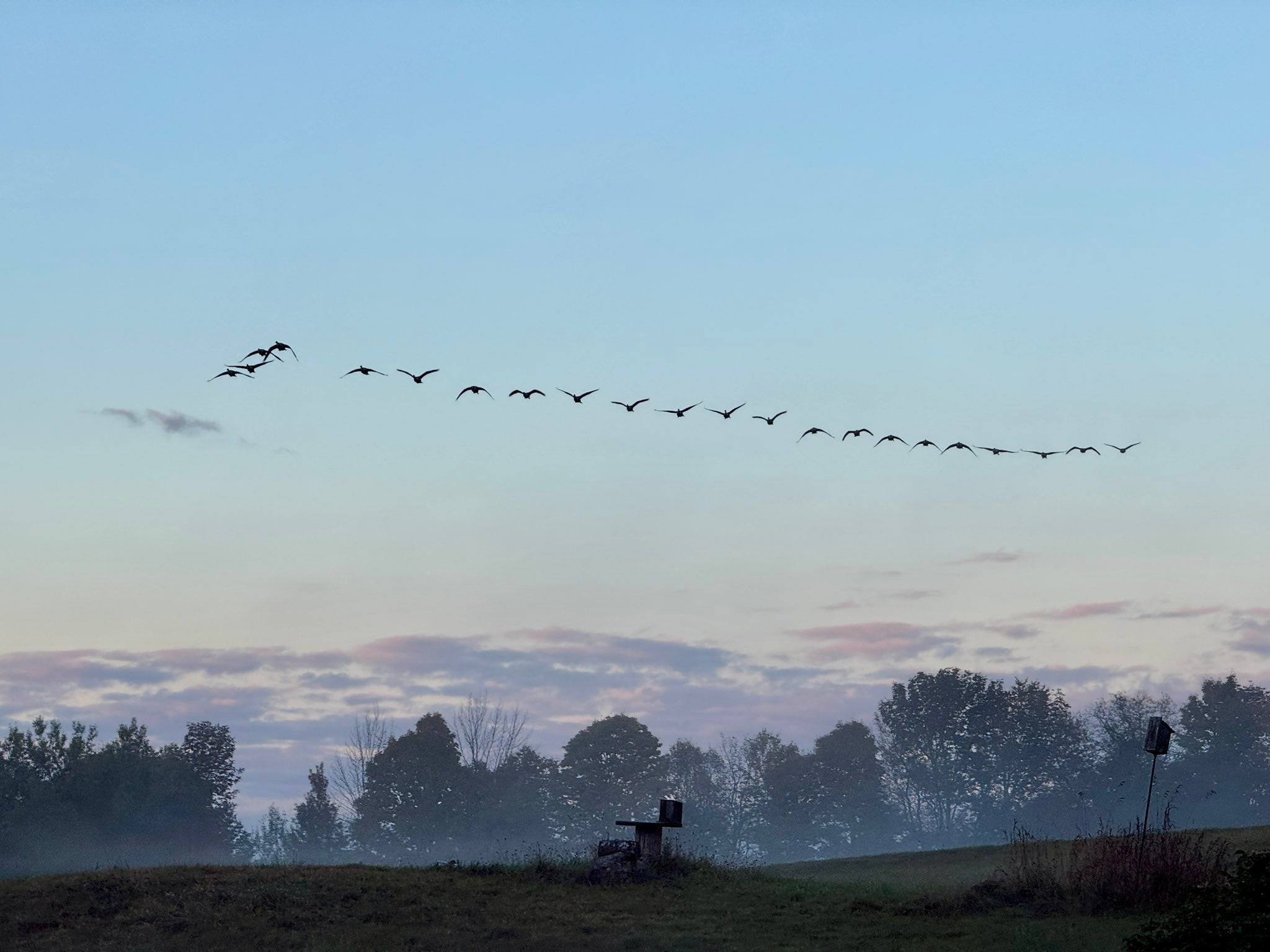
Autumn's Oft-Interrupted Hush
Walk through a field this time of year in search of foliage or the last warm days of the year and you will find time to reflect now that the droning din of insects has faded and the biting hosts have mercifully receded. The leaves gently fall, the hayed fields easily yield to your footfalls, and our New England vistas open before you in a riot of gold and crimson. There are fewer things more pleasant than a quiet autumn walk amid the hills of Vermont. Your quietude in the fields and forests may be disrupted however by the late lone cricket, singing a solitary song that will go unanswered by his potential mate who has already departed or died. A walk around the lake too will bring a similar sense of serenity that those good hills provide. The colors at the shore seem to be more vibrant, juxtaposed by the wine-dark water, rippling with the October winds. Look down to where the lake generates from a hundred little creeks and springs coming down the hillsides and you may spot a moose or whitetail deer slaking their thirst in the heat of the day. There is more time to focus on the trees and the water and the wildlife these days; the children have left the water and so too their shrieks of joy as they jump from the bridge. The calls of nervous parents running late have faded or moved into the soccer fields and school yards. You’re joined now by maybe a lone angler or a tourist who doesn’t know the foliage hit its prime zenith last week before the winds and rains came. You may be jarred from your leaf-peeping and deer-spying however by a noisy flock of geese cresting the tree line and blasting overhead. It is hard to feel secure in our decision to live where we live when we see the geese fly south, fleeing the cold; there is always the gnawing question in the back of the mind asking “Do they have better sense than I?” while we know the snows are only weeks away. When you return home and night falls, however, interruptions of a different shade call from the woodline. You may be patrolling your property in the twilight, ensuring the chicken coop and barn are buttoned up and secure when a sharp cry comes from the forest’s edge and shoots straight into your bones — the barking scream of a fox. It may be establishing its territory, it may be scaring off a fight, it may be calling to its kits. It is easy this time of year to hear the hoot of an owl or the cry of a fox and think of all the talons and claws waiting to scoop up a pet or a chicken at the forest’s edge, but stop there in the dusky autumnal twilight, think deeper for a moment, and you may find a comforting thought. Those animals, like you, have decided to remain and endure. They are not the tragic cricket late to the only party that matters. They are not the capricious geese chasing the fair weather. They are grit incarnate ready, like you, to thrive through another long winter. The sun sets and you can enter your warm home wrapped in that fine thought.There is a hallowed time to be found in the early light of the grey dawn. The mornings are dark now — we have lost much light since the summer solstice when waking before the dawn was two hours more difficult than it is now. With the dark, however, comes the quiet. The children are less eager to jump out of bed, the birds no longer sing at 5:00am, and the family cat seems to be a little more comfortable in the chair by the woodstove these days. The mornings are chill enough now where lighting that stove is welcomed and much good can be wrought by the mother or father who wakes before the family to tend the hearth fire. A fire lit, water boiled, and breakfast made before the first birdsong brings more order and goodness to the world than we may realize or be willing to admit. The good glow from the windows in a woodstove chase away all the October gloom and flood the grey dawn light with an orange that stirs the heart and raises the spirit. The cat certainly seems aware of this, and is content to share the chair by the fire before the little humans with their grasping hands and loud voices wake. While petting your companion by fire there, you feel something though. Something on its neck that should not be there — an engorged late season tick. They took a welcome hiatus in the summer but return now for a final blood feast before their long sleep under the snows. You don’t let this stand — you peel the offending parasite like a burdock seed from a wool sweater and cast it into the flames. A terrible interruption to an otherwise perfect moment. Like the cricket and the geese though, there is a lesson to be found in the briars of the newfound annoyance. It is simple: you were there. You righted a wrong. You were present enough in the hush of the dark morning to find a moment where you could provide a little light. The cat may not even be aware of the good deed done, but you can’t help but note it seems to sleep a little more soundly now there in your lap by the woodstove.The dizzying drone and procreant urge of summ
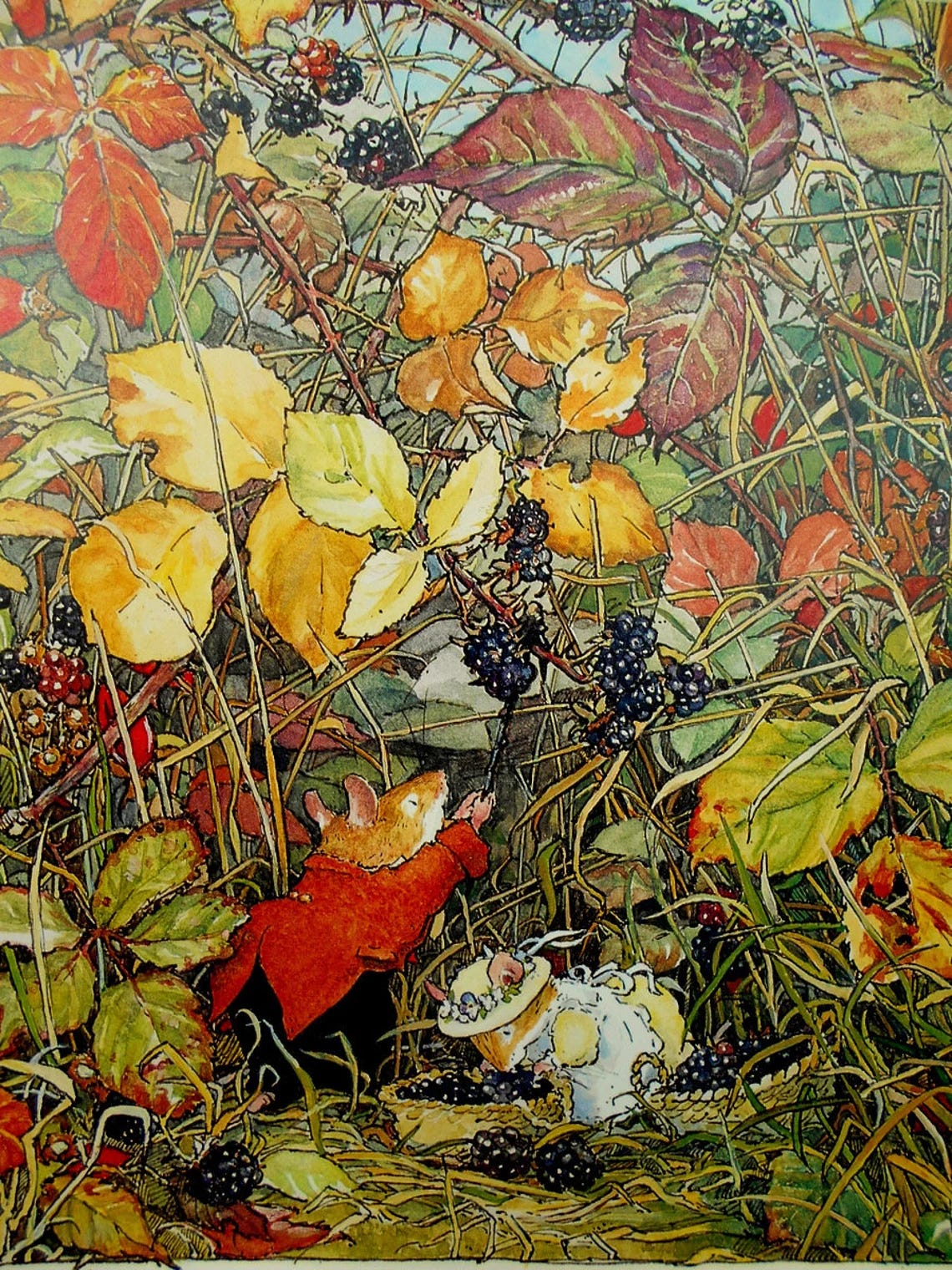
The Warm Harvests
You can feel it now, even if you do not want to admit it. The hint, the suggestion, just the slightest note of autumn. August is close and with it you will be closer to the autumnal equinox than you are the summer solstice. Harvests of the literal and the figurative now begin. The hay in the fields, the berries in the briar, the trees destined for the wood pile by the cellar door. First we see the second cutting of hay and all the avian activity that follows. The crows descend on the freshly mowed fields to forage insects and seeds, the turkeys wander out from the tree line for the first time since spring no longer wary of the long grass, and the raptors seek the befuddled field mice who suddenly no longer have cover in which to hide. The farmer harvests the hay, and the birds harvest what the hay hid. All throughout the field there is more visible activity now that the long hay is gone. The chickens especially enjoy the larger area to forage and will wander further now, emboldened by the lack of tall grass where fangs and claws lie in wait. It is liberating for them and yet it also leads them to push the boundaries just a little more; instead of foraging at the edge of the lawn and hay field, they now forage at the edge of the hay field and into the forest. Intrepid and bold, always drawn to the next fertile hunting ground in spite of all dangers. We owe chickens an apology: we associate them with cowardice but it may be more appropriate to tie them to images of reckless hunts, of great risk and great reward.Echoes from an Old Hollow Tree depends on your support to continue. Please, consider becoming a free or paid subscriber.The fields do not hold the only harvest. The edge places are fruitful too. The ditches at the roadside and untenable land for agriculture hold the briars and their good dark fruit: the blackberry. Mention blackberries to anyone and they will likely begin looking into the distance, into their past, and recounting where the best bushes of their childhood were, of what their mother made with them, of the scratches left by thorns, of memories of days that were slower and held less labor, more joy. Does any other fruit hold such idyllic associations? Apples and apple picking, perhaps, but it strikes me that blackberries hold a certain territory in our hearts that no other fruit touches. We may look back fondly on a u-pick blueberry outing or strawberries grown in our greenhouses, but mention blackberries and suddenly legends of brambles the size of houses and famous cobbler recipes come into play. We think too of our own children and their first blackberry foray. We remember the scraped knees, the sticky hands, the baskets overfilled with joyful abandon. No fruit holds a candle to the blackberry’s contribution to our high summer memories.The crows caw in the newly-reaped meadow, the chickens wander far afield, and the sound of axe and saw echo from hills. Drive around the old dirt roads here and you will see piles of firewood dumped by woodsheds and cellar doors, men and women at the tree lines of their properties felling trees, youngster swinging their mauls for the first time, children playing with the little splits. Some wood is delivered by the maple sugar makers. Firewood and sugaring go hand-in-hand as trees need to be culled or deadfall cleared by the dutiful woodsmen of the sugaring crews. Some are the products of the household’s labors with families working together to ensure the wood pile grows. Trees are felled, cut into rounds, moved, split, and stacked neatly by bulkheads and cellar doors. There is still time for the wood to dry, to season, before winter but not much. The clock ticks. The light wanes. Take a Sunday drive along the dirt roads where the old country homes stand tired but proud and you will see these wood piles in various stages of development: fallen tree, cut rounds, split pile, or nothing at all. You can begin to gauge who is ahead, who is behind, who is ready for winter. August arrives and we have to look around and ask “have I done enough? Am I prepared?” Yes, there are all the modern conveniences of our oil furnaces and heat pumps but there are those of us with the gnawing voice in the back of our minds that reminds us of the fragility of all things: of the winters past with extended power outages, of frozen pipes, of icy rivers flooding. We think too of our neighbors who may not be as prepared. The oil man only comes on certain days. The wood man stops deliveries in October. When your pile is low and your tank empty on an off day, what then? An uncomfortable scene unfolds unless a neighbor is ready to help. Perhaps they are new to the area or just overcome with all the things that demand our time in a rural place. Whatever the case may be, everyone falls short sometimes and we throw an extra cord on the wood pile with them in mind. If the charity is not needed, the wood can light the hearth the following year. It, like charity, is never wasted.August arrive

Adam Mokelke of Anchorage STrEaM Academy
Hearth Fathers is a podcast where rural fathers are asked to reflect on their relationship with their home, land, and legacy.In a fast world, Hearth Fathers is a slow and deliberate podcast; our conversations are not rushed but instead seek to glean wisdom about life from fathers who live in the country. Before you listen, consider pouring a drink, getting comfortable, and slowing down yourself.Episodes of Hearth Fathers are free and release on Saturday mornings.This podcast does not have advertisements but you can help me keep the fire burning by becoming a paid subscriber today. Paid subscribers get access to episodes a week early.Adam Mokelke is a lifelong Alaskan, educator and outdoorsman. He raised his children in rural Alaska, where he grew up, and now operates a charter school in Anchorage Alaska dedicated to getting kids outdoors in nature.A note: Hearth Fathers will be taking a hiatus during the month of August as my wife and I prepare for our new daughter to be born. Thank you and see you in September. This is a public episode. If you'd like to discuss this with other subscribers or get access to bonus episodes, visit oldhollowtree.substack.com/subscribe

Ceri J. Phillps, Cyfarwydd for Bro Dinefwr
Hearth Fathers is a podcast where rural fathers are asked to reflect on their relationship with their home, land, and legacy.In a fast world, Hearth Fathers is a slow and deliberate podcast; our conversations are not rushed but instead seek to glean wisdom about life from fathers who live in the country. Before you listen, consider pouring a drink, getting comfortable, and slowing down yourself.Episodes of Hearth Fathers are free and release on Saturday mornings.This podcast does not have advertisements but you can help me keep the fire burning by becoming a paid subscriber today. Paid subscribers get access to episodes a week early.Ceri John Phillips is a storyteller and Cyfarwydd for Bro Dinefwr, Wales, focusing on the Mabinogi tradition and lesser-known Welsh folk tales. He has previously worked extensively in the media in Wales and across Britain, from gigging in dingy comedy clubs to starring in and writing on shows for the BBC, ITV and S4C.Keep the fire burning. This is a public episode. If you'd like to discuss this with other subscribers or get access to bonus episodes, visit oldhollowtree.substack.com/subscribe

Michael Thomas of Sharon
Hearth Fathers is a podcast where rural fathers are asked to reflect on their relationship with their home, land, and legacy.In a fast world, Hearth Fathers is a slow and deliberate podcast; our conversations are not rushed but instead seek to glean wisdom about life from fathers who live in the country. Before you listen, consider pouring a drink, getting comfortable, and slowing down yourself.Episodes of Hearth Fathers are free and release on Saturday mornings.This podcast does not have advertisements but you can help me keep the fire burning by becoming a paid subscriber today. Paid subscribers get access to episodes a week early.Michael Thomas is a cider maker, shepherd, home builder, & motivating force behind the new Catholic Land Movement. He lives in upstate New York with his wife and children.You can read more about the Catholic Land Movement and their upcoming conference at https://catholiclandmovement.info/aboutKeep the fire burning. This is a public episode. If you'd like to discuss this with other subscribers or get access to bonus episodes, visit oldhollowtree.substack.com/subscribe
Nate Norman Slays the Slump Dumpkin
Hearth Fathers is a podcast where rural fathers are asked to reflect on their relationship with their home, land, and legacy.In a fast world, Hearth Fathers is a slow and deliberate podcast; our conversations are not rushed but instead seek to glean wisdom about life from fathers who live in the country. Before you listen, consider pouring a drink, getting comfortable, and slowing down yourself.Episodes of Hearth Fathers are free and release on Saturday mornings.This podcast does not have advertisements but you can help me keep the fire burning by becoming a paid subscriber today. Paid subscribers get access to episodes a week earlier than everyone else.Nate Norman is a bowhunter, speaker, author, coach, and -- most importantly -- a father. We sat down to talk about the three important things to him as a father — the three “M’s” and the villianous Slump Pumpkin Dumpkin he helps other men vanquish.Keep the fire burning. This is a public episode. If you'd like to discuss this with other subscribers or get access to bonus episodes, visit oldhollowtree.substack.com/subscribe
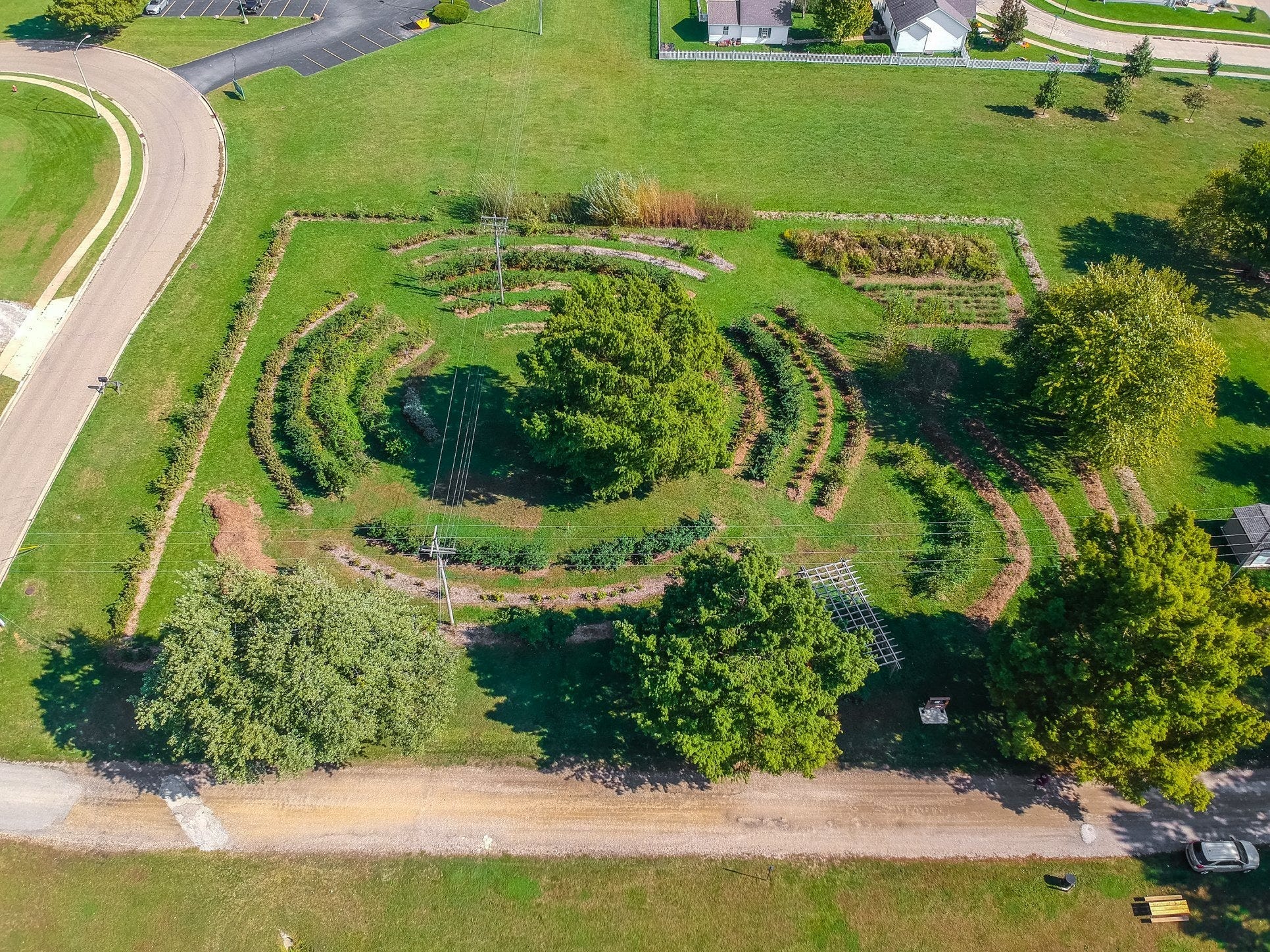
Bill Davison on Growing a Beautiful Life
Hearth Fathers is a podcast where rural fathers are asked to reflect on their relationship with their home, land, and legacy.In a fast world, Hearth Fathers is a slow and deliberate podcast; our conversations are not rushed but instead seek to glean wisdom about life from fathers who live in the country. Before you listen, consider pouring a drink, getting comfortable, and slowing down yourself.Episodes of Hearth Fathers are free and release on Saturday mornings.This podcast does not have advertisements but you can help me keep the fire burning by becoming a paid subscriber today.Bill Davison is an award-winning wildlife photographer, biologist, farmer, and agroforester on a joyful journey to share my love of nature with others.Keep the fire burning. This is a public episode. If you'd like to discuss this with other subscribers or get access to bonus episodes, visit oldhollowtree.substack.com/subscribe
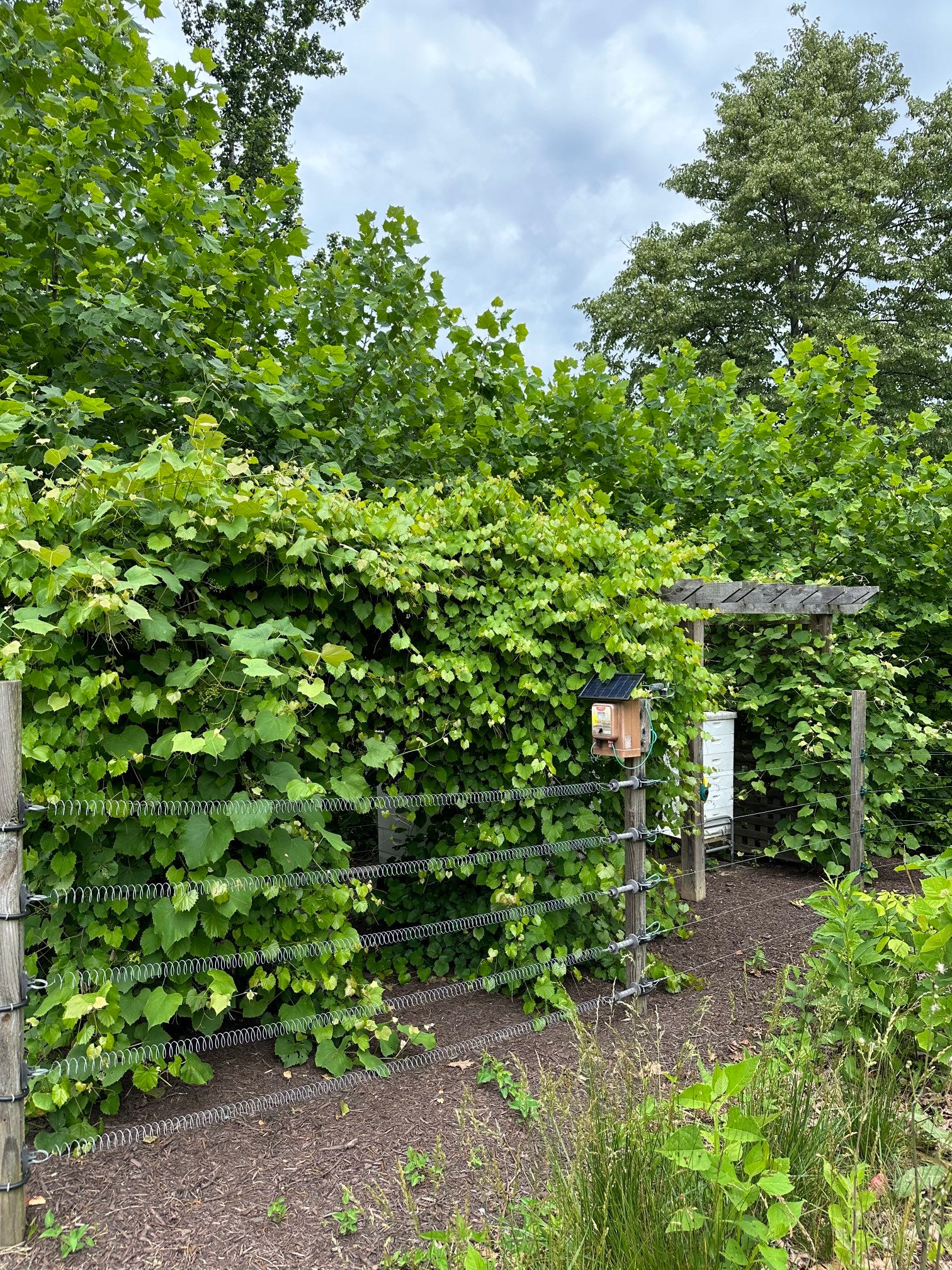
Adam Rossi of Kingdom Come Farm
Hearth Fathers is a podcast where rural fathers are asked to reflect on their relationship with their home, land, and legacy.In a fast world, Hearth Fathers is a slow and deliberate podcast; our conversations are not rushed but instead seek to glean wisdom about life from fathers who live in the country. Before you listen, consider pouring a drink, getting comfortable, and slowing down yourself.Episodes of Hearth Fathers are free and release on Saturday mornings.Paid subscribers to this SubStack are granted access a week early!Help me keep the fire burning by becoming a paid subscriber today.Adam Rossi is a wildly successful tech founder, CEO, and most importantly, father of three amazing children. Adam cherishs moments spent farming, fishing, and beekeeping on his off-grid Virginia farm and finds solace in hiking, camping, and embracing the great outdoors.Keep the fire burning. This is a public episode. If you'd like to discuss this with other subscribers or get access to bonus episodes, visit oldhollowtree.substack.com/subscribe

Andrew Bragg's American Dream
Hearth Fathers is a podcast where rural fathers are asked to reflect on their relationship with their home, land, and legacy.In a fast world, Hearth Fathers is a slow and deliberate podcast; our conversations are not rushed but instead seek to glean wisdom about life from fathers who live in the country. Before you listen, consider pouring a drink, getting comfortable, and slowing down yourself.Episodes of Hearth Fathers are free and release on Saturday mornings.Paid subscribers to this SubStack are granted access a week early!Help me keep the fire burning by becoming a paid subscriber today.Andrew Bragg is first and foremost a family man. His most impressive titles and achievements are husband to a great wife, and Father to 6 wonderful children. Andrew’s professional pursuits have varied, but his mission and purpose is to encourage others to live out a more traditional lifestyle as he feels that is the best way to come closer to God and to fulfill the measure of one’s potential. Andrew and his family live in the Northern California countryside on 5 acres in an area that spawned the Gold Rush era of 1849. The land is rich in rolling hills, mature oaks, rivers, streams, and the remnants of a Native people. If Andrew could convey one thing it would be to move away from the bland existence of the city and suburbs, and get back into connection with the human existence through living in better harmony with the land and nature surrounding us. This is better for children and adults alike.Keep the fire burning. This is a public episode. If you'd like to discuss this with other subscribers or get access to bonus episodes, visit oldhollowtree.substack.com/subscribe