
Earl & Kate Deep Dive
101 episodes — Page 1 of 3

Rhetoric and Political Violence: Analyzing the debate over political language following the Dallas ICE facility shooting
The Dallas ICE facility shooting and its broader context within American political violence. It establishes that the attack, which killed one detainee, appeared politically motivated due to "anti-ICE" messaging found near the shooter. The text highlights a reported dramatic increase in assaults against immigration facilities and critiques the predictable, polarized political and media responses that rapidly form narratives before investigations conclude. Furthermore, the analysis explores academic research suggesting that while heated rhetoric does not directly cause violence, it acts as an enabling condition that empowers individuals already inclined toward extremism, a pattern consistent with historical periods of social tension in the United States. This is a public episode. If you'd like to discuss this with other subscribers or get access to bonus episodes, visit earlcotten.substack.com/subscribe
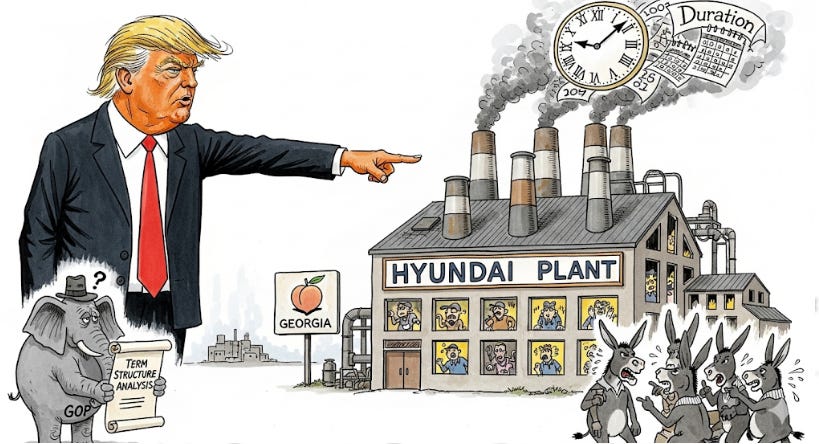
Trump's Immigration Warning After Hyundai Raid: What Actually Happened in Georgia
It discusses a significant workplace immigration enforcement operation at a Hyundai battery plant in Georgia, described as the largest single-site enforcement operation in DHS history. It details how 475 workers, primarily South Korean nationals, were detained during a raid involving hundreds of federal, state, and local officers, leading to the halt of construction on the massive project. The text highlights former President Trump's immediate public warning to foreign companies to adhere to U.S. immigration laws, while still encouraging legal immigration for skilled workers. Furthermore, it explains the diplomatic tensions that arose with South Korea, a major U.S. ally and investor, and the subsequent negotiations for the return of their citizens. The source also examines the local economic impact on the small Georgia community and positions the raid as part of a broader, coordinated pattern of enforcement actions targeting "sanctuary cities" and workplaces, revealing complexities in visa classifications and the reliance on specialized foreign expertise for large-scale projects. This is a public episode. If you'd like to discuss this with other subscribers or get access to bonus episodes, visit earlcotten.substack.com/subscribe
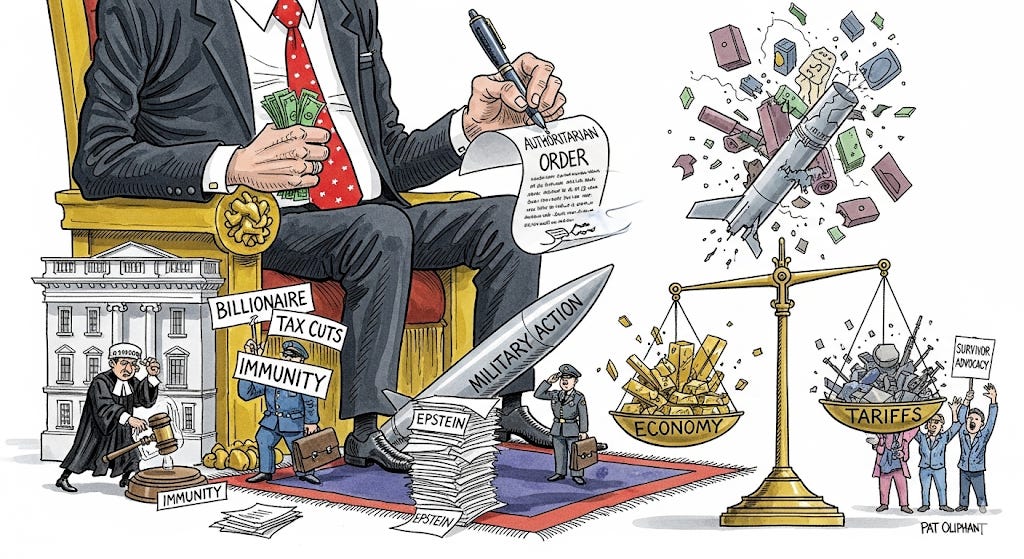
Trump Policies Economic Impact Billionaire Growth Tariff Controversies Supreme Court Challenges Epstein Files Survivor Advocacy Military Actions Authoritarian Power
It examines Donald Trump's major policies and their multifaceted impacts, focusing on controversial tariffs, aggressive immigration enforcement, and expanded domestic military deployments. It highlights extensive legal battles, with lower courts often ruling against the administration, though the Supreme Court frequently intervenes via its "shadow docket" to allow policies to proceed. The economic analysis reveals a mixed impact, including increased consumer costs and potential GDP reduction, alongside volatile market reactions. Furthermore, the sources discuss concerns regarding authoritarian power, emphasizing the administration's willingness to challenge judicial oversight and traditional checks and balances, and touch upon the re-emergence of the Epstein case due to survivor advocacy and Trump's comment This is a public episode. If you'd like to discuss this with other subscribers or get access to bonus episodes, visit earlcotten.substack.com/subscribe
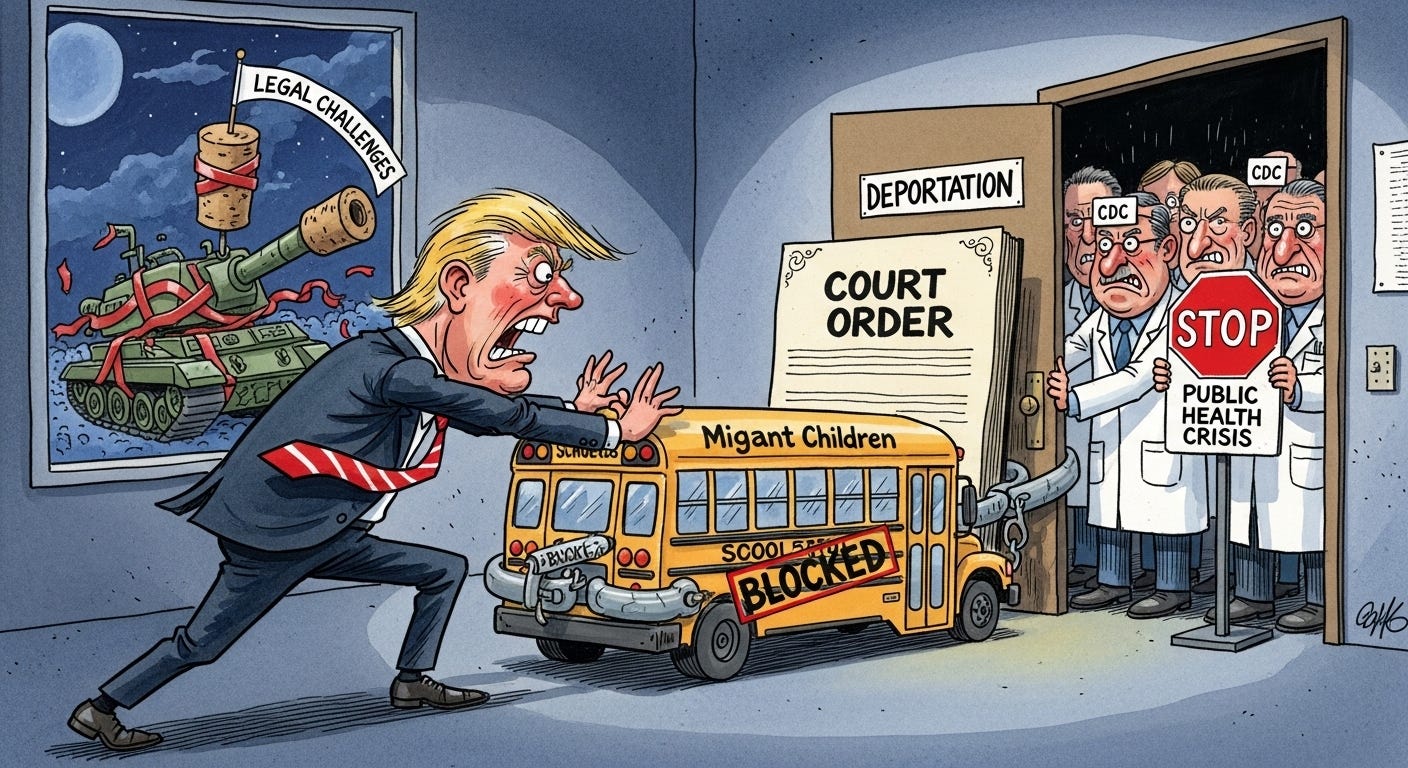
Trump Administration's Midnight Deportation of Migrant Children Blocked by Court | CDC Directors Warn of Public Health Crisis | Legal Challenges to Military Deployment
It details significant legal and professional pushback against the Trump administration's policies across several key areas. Federal judges intervened to block the overnight deportation of hundreds of migrant children, citing violations of protection laws. Concurrently, nine former CDC directors issued an unprecedented warning regarding the Health Secretary's leadership, alleging actions that undermine the nation's public health system. Furthermore, courts challenged the administration's use of military forces for immigration enforcement, ruling that such deployments in Los Angeles exceeded legal boundaries. These instances collectively highlight challenges to immigration, public health, and the domestic application of military power, revealing a pattern of the administration bypassing established procedures and professional expertise. This is a public episode. If you'd like to discuss this with other subscribers or get access to bonus episodes, visit earlcotten.substack.com/subscribe
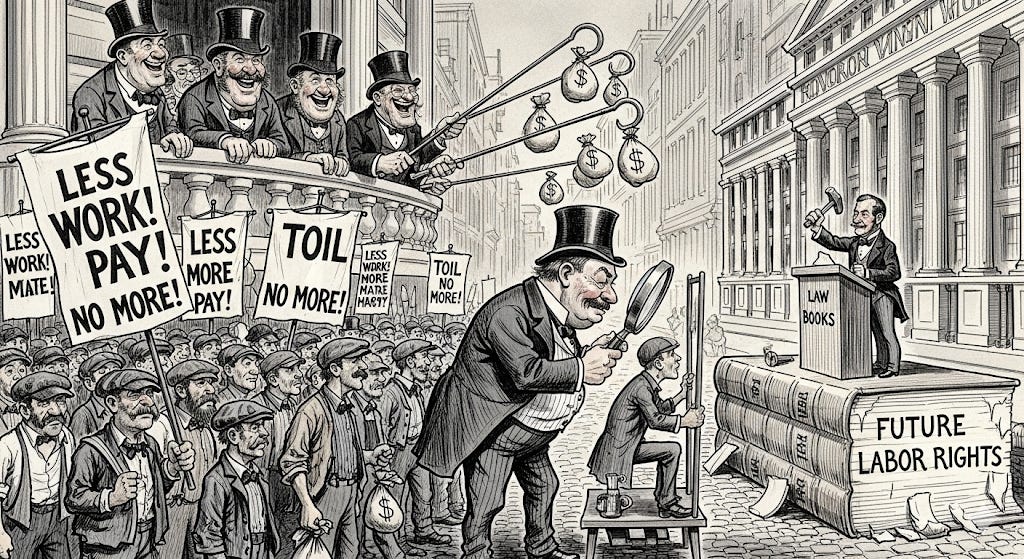
Labor Day History: Origins of Worker Protests, 1882 Parade & Political Impact on Labor Rights
It examines the complex origins and evolution of Labor Day, highlighting its transformation from a radical worker protest to a federal holiday. It explains how the holiday was born from significant labor struggles and violence, such as the 1894 Pullman Strike, which prompted President Cleveland to act. The article also reveals the deliberate political decision to celebrate Labor Day in September to distance it from the more radical, internationally recognized May Day. Furthermore, it discusses the ongoing debate surrounding the holiday's true founder and notes a recent trend of Labor Day celebrations returning to their activist roots amidst contemporary worker issues. This is a public episode. If you'd like to discuss this with other subscribers or get access to bonus episodes, visit earlcotten.substack.com/subscribe
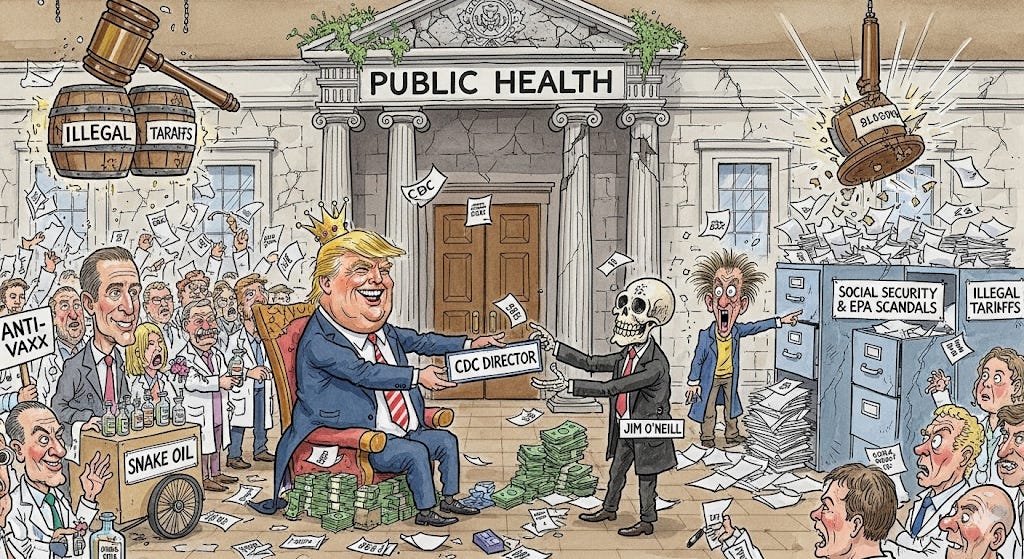
CDC Leadership Crisis: Science vs Politics
It describes a significant leadership crisis at the Centers for Disease Control (CDC), initiated by the firing of Director Susan Monarez for her refusal to implement what she deemed unscientific vaccine policies. This event triggered a wave of resignations from senior CDC officials, who cited political interference and the "weaponizing of public health." The new acting director, Jim O'Neill, lacks medical or scientific training, further raising concerns among public health experts. These events are part of a broader "Make America Healthy Again" (MAHA) agenda led by Health Secretary Robert F. Kennedy Jr., which includes controversial changes to vaccine policies, emphasizing skepticism over established scientific consensus. Furthermore, the text highlights parallel whistleblower crises at other federal agencies, such as the Social Security Administration, suggesting a pattern of conflict between career officials and political appointees across the government, with potential legal and public health implications for the nation. This is a public episode. If you'd like to discuss this with other subscribers or get access to bonus episodes, visit earlcotten.substack.com/subscribe
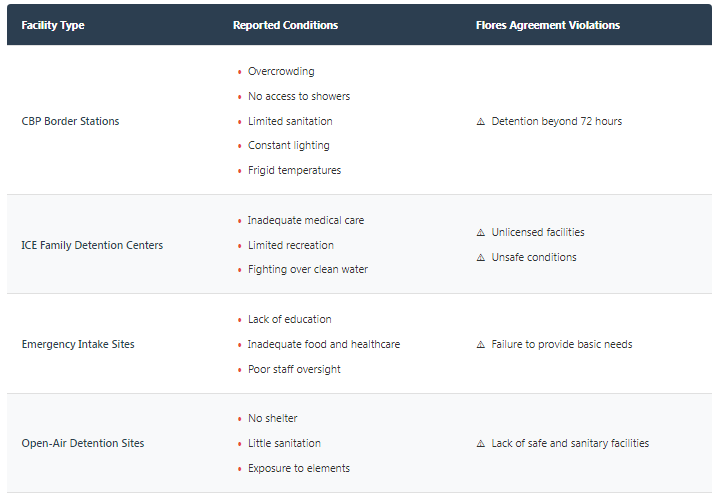
The Flores Agreement Battle: Protecting Immigrant Children in U.S. Custody
Key Takeaways* A federal judge recently rejected the Trump administration's second attempt to terminate the Flores Settlement Agreement, maintaining crucial protections for immigrant children .* The 1997 Flores Agreement establishes minimum standards for treatment of immigrant children in custody, including limits on detention duration and requirements for adequate conditions .* Government officials argue the agreement "incentivizes unlawful border crossings" by families with children, while advocates maintain it's essential for preventing indefinite detention in unsafe conditions .* Despite court mandates, documentation reveals ongoing violations including prolonged detention in inadequate facilities with insufficient food, medical care, and sanitation .* The ruling preserves judicial oversight mechanisms that allow independent monitors to access detention facilities and report on conditions .The Flores Agreement: Historical Context and Core ProtectionsThe Flores Settlement Agreement traces its origins back to 1985 litigation concerning the treatment of a 15-year-old Salvadoran girl named Jenny Flores who was detained by immigration authorities. She was held in a hotel surrounded by chain-link fencing and subjected to strip searches alongside other children in custody . This case exposed systemic issues in how the federal government handled immigrant children, culminating in the 1997 agreement that established nationwide standards for their treatment. The agreement wasn't created out of abstract policy debates but emerged from documented patterns of mistreatment that affected real children caught in the immigration system.At its core, the Flores Agreement mandates that immigrant children must be held in the "least restrictive setting" appropriate for their age and needs . This legal framework requires the government to prioritize releasing children to family members or guardians whenever possible instead of keeping them in detention facilities. For those children who must remain in custody, the agreement establishes minimum standards for their care, including adequate food and drinking water, medical assistance, sanitation facilities, and supervision by trained staff . Perhaps most significantly, it limits how long children can be held in Customs and Border Protection (CBP) facilities to no more than 72 hours before transfer to more appropriate settings .The agreement also provides for ongoing judicial oversight through court-appointed monitors and lawyers who have access to detention facilities to verify compliance . This oversight mechanism has proven crucial multiple times when the government failed to meet its obligations. The Flores Agreement applies to all immigrant children in federal custody, whether they arrived alone or with family members . This comprehensive approach recognizes that all children deserve protection regardless of their immigration status or circumstances of arrival. These protections emerged from recognizing that detention, even for relatively short periods, can cause lasting developmental harm to children, with child psychologists warning that even two weeks in detention can have severe consequences that last a lifetime .Recent Legal Challenges and Judicial ResponsesThe Trump administration initiated its most recent attempt to terminate the Flores Settlement Agreement in May 2025, filing a formal motion arguing that the agreement had become "overly rigid and outdated" . Government attorneys contended that Congress had enacted legislation and federal agencies had developed standards that rendered the court supervision unnecessary . This argument represented a strategic approach to removing judicial oversight that had repeatedly identified violations and compelled improvements in detention conditions. The administration further claimed that the agreement actually incentivized unlawful immigration by encouraging families to bring children on dangerous journeys with the expectation of being released quickly into the United States .In response to this motion, Flores counsel, a coalition of advocacy organizations including the Center for Human Rights and Constitutional Law, National Center for Youth Law, and Children's Rights, filed a forceful opposition in June 2025 . They presented stark evidence that terminating the agreement would remove crucial safeguards for children's health and safety, potentially opening the door to indefinite detention in prison-like facilities. The counsel submitted recent declarations from detained children and parents describing brutal conditions, including overcrowding, unsanitary environments, and inadequate medical care . These firsthand accounts provided concrete examples of why continued judicial oversight remained necessary despite government claims of improved standards.On August 15, 2025, U.S. District Judge Dolly Gee issued a definitive ruling rejecting the administration's request to terminate the agreement . In her 20-page order, Judge Gee note
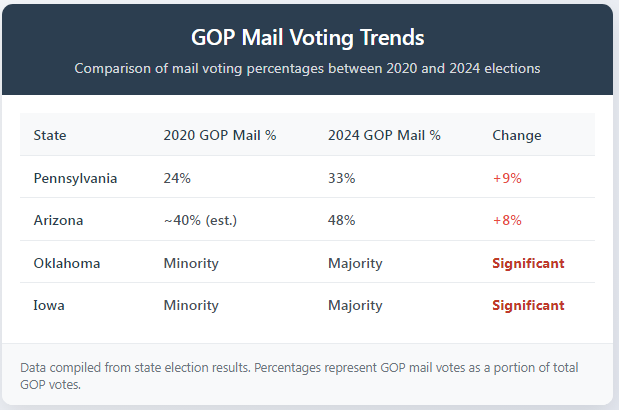
Mail Voting Paradox: GOP's Millions supporting Mail Ballots While Trump Attacks Them
Key Takeaways* 😕 The Republican National Committee spent millions on "Bank Your Vote" programs while Trump called mail voting "corrupt".* 🗳️ At least 34 countries use mail voting, contradicting Trump's claim that America is "the only country" using it.* 📊 In 2024, Republicans increased their mail voting share in Pennsylvania from 24% to 33%, helping them win key races.* ⚖️ The Constitution gives states power over elections, not the president, making Trump's executive order threat largely symbolic.* 🌊 Democratic voters continue to use mail voting more consistently, creating a partisan gap that hurts Republicans in low-turnout elections.* 📈 Despite Trump's claims, election experts agree mail voting is secure with multiple verification steps in place.* 🏛️ Several Republican-controlled states have actually expanded mail voting access while their party leaders attack it.* 🔮 The GOP's contradictory position may hurt their long-term election prospects as their voters become confused about proper voting methods.The GOP's Massive Investment In Mail Voting InfrastructureI've been following Republican election strategies for years, and their approach to mail voting really confuses me sometimes. Like, they've actually spent millions trying to get their voters to use mail ballots while Trump keeps calling the whole thing corrupt. The RNC's "Bank Your Vote" program wasn't just some small initiative, it was a major nationwide effort with fancy websites and everything telling Republicans they "should feel comfortable" voting by mail . They even got Trump to record a message supporting it at one point, though that didn't last too long honestly.What's interesting is that Republican operatives actually saw mail voting as a huge opportunity before Trump started his attacks. They'd mastered large-scale mail voter drives and recognized that mail voting could help them reach low-propensity voters, especially in rural areas where polling places might be far apart . The data shows that before 2020, mail voting didn't really have a partisan lean, it was just another voting method that both parties used about equally.The numbers from 2024 show their investment kinda worked in some places. In Pennsylvania, Republicans managed to increase their share of the mail vote from 24% in 2020 to 33% in 2024 through what the New York Times called a "multifaceted campaign of messaging, fund-raising and field operations" . In deep-red states like Oklahoma, Kansas, and Iowa, Republicans actually made up the majority of mail voters after Democrats had dominated in 2020. And in Arizona, a swing state where most people vote by mail, Republicans had an eight-point advantage over Democrats in mail voting .Table: Republican Mail Voting Improvements in 2024 But here's the thing, while the party was spending all this money on mail voting, Trump was out there telling everyone it was corrupt. This created what one analyst called "a trap of their own making" . They've got this institutional knowledge that mail voting helps them win, but they also have a leader who constantly undermines the very system they're investing in.Trump's Consistent Pattern of Attacking Mail VotingSo Trump's thing with mail voting, he's been against it for years now, right? Like even before the 2020 election he was saying it was corrupt, and he's kept at it even after winning in 2024. I remember watching one rally where he told people in Michigan "Mail-in voting is totally corrupt. Get that through your head" and then at a Fox News town hall he said "If you have mail-in voting, you automatically have fraud" . It's like he's got this set talking points he just keeps repeating regardless of what his own party is doing.What's really confusing is that Trump himself has voted by mail in the past. Like multiple times. And in 2024, he actually kinda softened his stance a bit under pressure from party leaders and told his supporters to vote early . But that didn't last long, now he's back to full-throttle attacks, promising executive orders and everything to try to eliminate mail voting entirely .The most recent thing was when he met with Putin and then came out saying Putin agreed with him that the 2020 election was rigged because of mail voting. He told Hannity: "Vladimir Putin said something, one of the most interesting things. He said, 'Your election was rigged because you have mail-in voting.' He said, 'Mail-in voting, every election.' He said, 'No country has mail-in voting. It's impossible to have mail-in voting and have honest elections'" . Which is complete nonsense if you actually check the facts, but we'll get to that later.Trump's also been making this weird constitutional argument that states are "merely an 'agent' for the Federal Government" in counting votes and must do what the president tells them . But every constitutional scholar I've read says that's just completely wrong. The Constitution gives states the power to run elections, not the president. Even Republican s
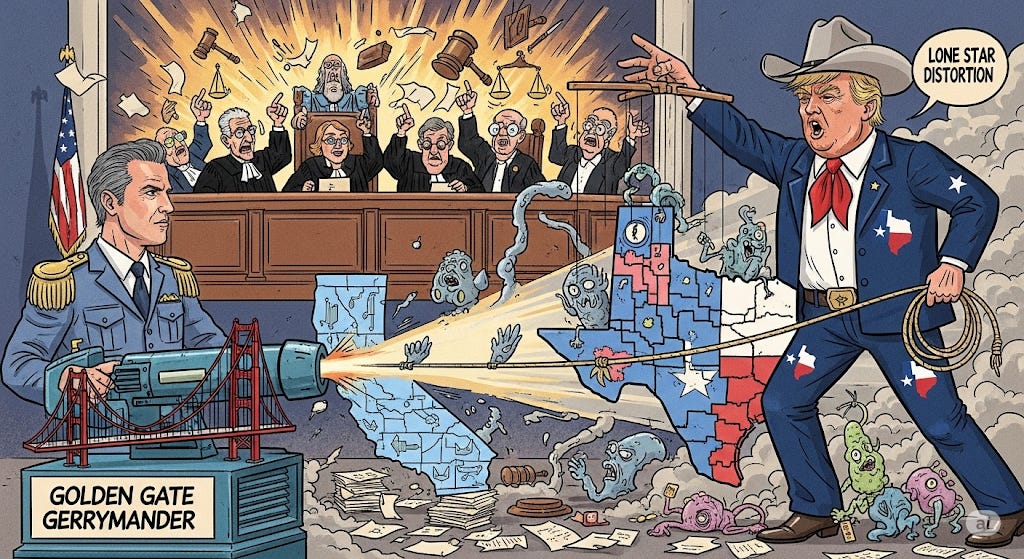
California vs. Texas Redistricting War: Newsom's Counterattack on Trump's Gerrymandering | Democracy Crisis
It describes California's proposed emergency redistricting plan, a direct response to anticipated mid-decade gerrymandering efforts by Texas and other Republican-controlled states. This initiative, spearheaded by Governor Gavin Newsom, aims to counter potential Republican gains in the U.S. House of Representatives by allowing California to redraw its own congressional maps if Texas implements changes to benefit Donald Trump's agenda. The article highlights how this strategy shifts Democrats to an offensive posture in the ongoing political battle over congressional control, framing it as a critical "break the glass moment for democracy". The plan, which voters will decide on November 4th, is part of a larger coordinated Democratic effort across multiple states to combat what they view as anti-democratic redistricting manipulation. This is a public episode. If you'd like to discuss this with other subscribers or get access to bonus episodes, visit earlcotten.substack.com/subscribe
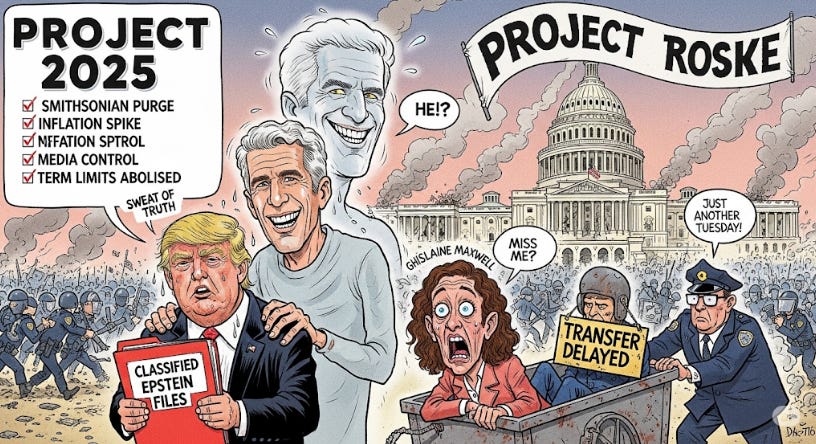
Trump Epstein Files Scandal & Maxwell Transfer | Inflation & Project 2025 | D.C. Police Takeover & Smithsonian Purge
The provided sources outline significant political and social upheaval within the United States, detailing several controversial actions taken by the current administration. Key events include the questionable transfer of Ghislaine Maxwell and the alleged obstruction of Epstein file releases by Attorney General Pam Bondi, alongside rising inflation and the replacement of the Bureau of Labor Statistics Commissioner with an appointee seeking to suspend jobs reports. Furthermore, the text describes the federalization of D.C. police and the proposed creation of a national quick reaction force, a White House-ordered purge of "divisive narratives" from Smithsonian museums, and California's efforts to counter Republican gerrymandering. These narratives collectively paint a picture of a nation experiencing political resistance and shifts in governmental power and control. This is a public episode. If you'd like to discuss this with other subscribers or get access to bonus episodes, visit earlcotten.substack.com/subscribe

Homelessness as a National Security Threat? Trump’s "Slum Clearance" Plan
The provided text discusses the federalization of Washington D.C.'s Metropolitan Police Department and the deployment of National Guard troops with arrest powers, initiated under the Home Rule Act. This action, spearheaded by the Trump administration, also includes a controversial "slum clearance" policy targeting homeless encampments and mandating civil commitment for some individuals. While the administration cites a need to combat crime and frames homelessness as a national security threat, D.C. officials dispute the necessity, pointing to declining crime rates and raising concerns about the legality and human impact of these measures. The text highlights the unique presidential powers over D.C. that facilitate these actions and suggests a potential expansion of similar policies to other major U.S. cities. This is a public episode. If you'd like to discuss this with other subscribers or get access to bonus episodes, visit earlcotten.substack.com/subscribe
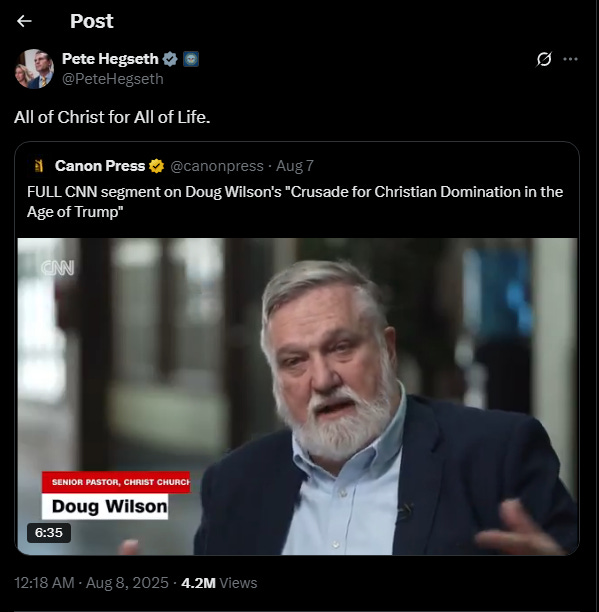
✝️ Hegseth Endorses Christian Nationalism; James Madison on Church-State Danger
It examines Defense Secretary Pete Hegseth’s ties to Christian nationalism, specifically his endorsement of Pastor Doug Wilson’s views, which include opposition to women’s suffrage, support for biblical law over civil law, and a belief in male-dominated governance. The source highlights concerns that Hegseth’s ideology, rooted in Reformed Reconstructionism, could influence Pentagon policies regarding women in combat and religious diversity. It contrasts these modern beliefs with James Madison’s foundational arguments for a strict separation of church and state, emphasizing Madison’s warnings against the tyrannical potential of merging religious and governmental authority to safeguard individual liberty. Ultimately, the text suggests Hegseth's actions pose a risk to the constitutional principles of religious freedom and could undermine military cohesion by favoring a specific faith. This is a public episode. If you'd like to discuss this with other subscribers or get access to bonus episodes, visit earlcotten.substack.com/subscribe

Video: Trump-Putin Alaska Summit: Ukraine Land Concessions, 2025 US-Russia Deal Revives 2016 Mariupol Plan | War Crimes Indictment
The provided text, excerpts from "Alaska Summit: Land, Lies, and Russian Leverage," outlines an upcoming summit between President Trump and Vladimir Putin in Alaska focused on a controversial Ukraine peace deal. This deal proposes Ukraine cede several territories to Russia, a move critics argue violates the 1994 Budapest Memorandum and echoes a 2016 Russian "Mariupol Plan." The article also details Director of National Intelligence Tulsi Gabbard's declassification of a disputed 2020 House report that attempts to discredit the 2017 intelligence assessment of Russian interference in the U.S. election, a narrative contradicted by multiple investigations and even Putin's own statements. Furthermore, the text highlights Putin's use of psychological warfare and potential kompromat to leverage influence, emphasizing how these actions align with a consistent Kremlin playbook of destabilization. This is a public episode. If you'd like to discuss this with other subscribers or get access to bonus episodes, visit earlcotten.substack.com/subscribe
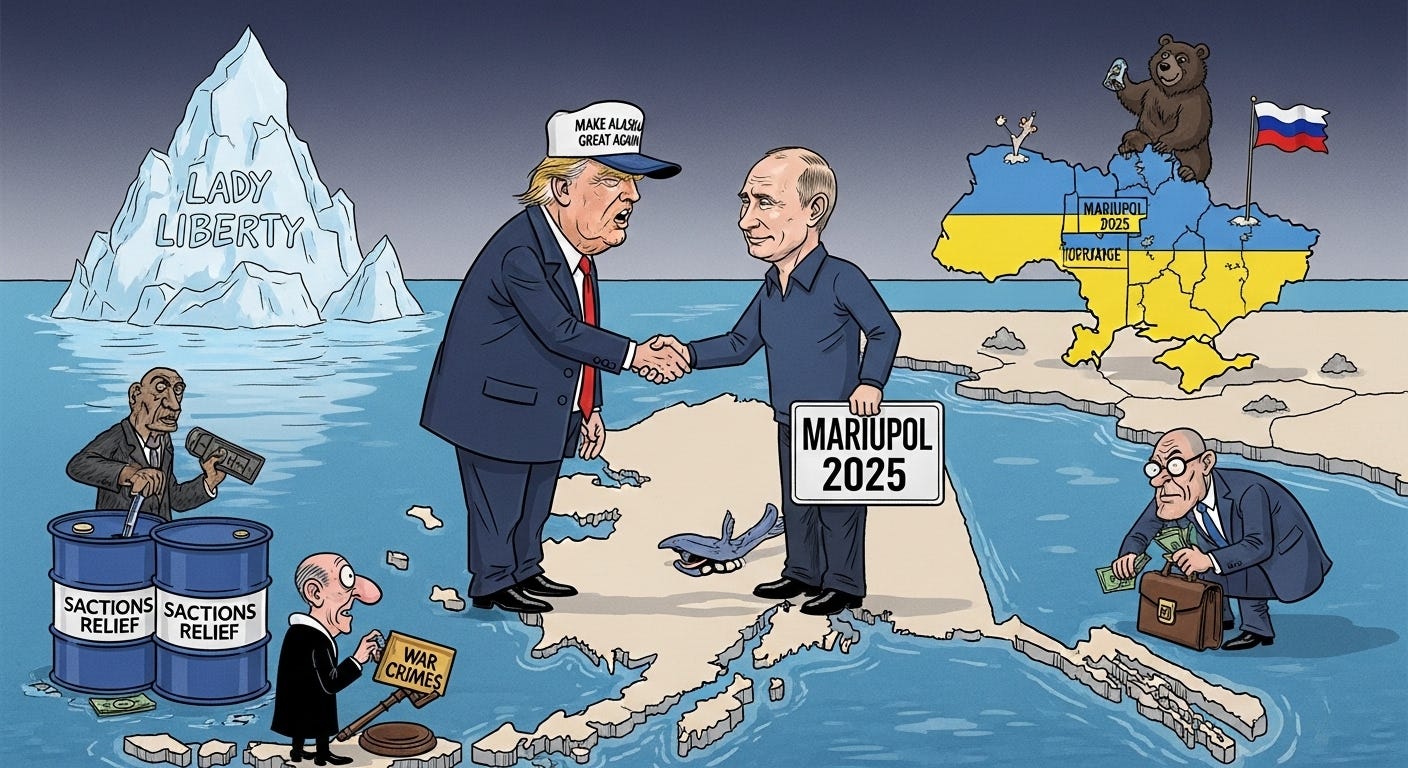
Trump-Putin Alaska Summit: Ukraine Land Concessions, 2025 US-Russia Deal Revives 2016 Mariupol Plan | War Crimes Indictment
The provided text, excerpts from "Alaska Summit: Land, Lies, and Russian Leverage," outlines an upcoming summit between President Trump and Vladimir Putin in Alaska focused on a controversial Ukraine peace deal. This deal proposes Ukraine cede several territories to Russia, a move critics argue violates the 1994 Budapest Memorandum and echoes a 2016 Russian "Mariupol Plan." The article also details Director of National Intelligence Tulsi Gabbard's declassification of a disputed 2020 House report that attempts to discredit the 2017 intelligence assessment of Russian interference in the U.S. election, a narrative contradicted by multiple investigations and even Putin's own statements. Furthermore, the text highlights Putin's use of psychological warfare and potential kompromat to leverage influence, emphasizing how these actions align with a consistent Kremlin playbook of destabilization. This is a public episode. If you'd like to discuss this with other subscribers or get access to bonus episodes, visit earlcotten.substack.com/subscribe
Trump's 2025 Census Order: Unconstitutional Apportionment, Undocumented Exclusion & 2026 Power Grab
This is a free preview of a paid episode. To hear more, visit earlcotten.substack.comThe provided source, "Executive Actions: A Threat to Democracy and Rights," critically examines several controversial actions taken by the Trump administration and their far-reaching implications. It highlights the unconstitutionality of excluding undocumented immigrants from the census, arguing this move is a political power grab designed to skew House seat allocations and benefit the GOP in future elections. Furthermore, the text exposes the alarming expansion of the ICE detention system under the Biden administration, detailing a surge in detentions and pervasive human rights abuses within these facilities. It also points to a global retreat on human rights, with the State Department reportedly softening critiques of various nations, alongside an analysis of new tariffs and their potential economic and cultural fallout. Finally, the document touches on legal challenges, media censorship, and the role of satire in a politically charged environment.

👑 Vance as "MAGA Heir": Trump's Succession Signaling
Key Takeaways* Trump names JD Vance as “most likely” 2028 MAGA heir while suggesting Marco Rubio as potential running mate* Vance leads early 2028 GOP polls with 46% support, dwarfing Rubio (12%) and DeSantis (9%)* Rubio publicly endorsed Vance as “great nominee” while downplaying own ambitions* Vance’s influence grows through RNC fundraising role and diplomatic visibility* Donald Trump Jr. emerges as wildcard challenger despite Vance’s current frontrunner statusThe Defining Moment: Trump’s “Most Likely” EndorsementThat Tuesday press conference shifted everything. When Trump stood at the South Court Auditorium signing his Olympics order, Peter Doocy cut through the formalities: “You could clear the entire Republican field right now. Do you agree that the heir apparent to MAGA is JD Vance?” Trump’s reply? “Well, I think most likely. In all fairness, he’s the vice president.” Simple words. Massive implications .This wasn’t some vague compliment. Before August 5th? Trump called Vance “very capable” but insisted “it’s too early” to name him leading candidate. That changed. Now? “He would be probably favored at this point” – Trump’s clearest signal yet . And he didn’t stop there. Watch how he name-dropped Marco Rubio: “I think Marco is also somebody that maybe would get together with JD in some form.” Planting seeds. Forcing Republicans to picture a Vance-Rubio ticket three years before primaries .Why this timing? Midterms loom. Trump’s legacy needs protectors. By floating Vance as heir AND Rubio as partner? He boxes out rivals early. Controls the narrative. Makes 2028 feel like extension of his era, not some messy succession war .Vance’s Ascent: From Marine to MAGA’s Presumptive LeaderJD Vance’s trajectory defies political gravity. Remember 2016? Never-Trumper author. 2024? VP pick. Now? Trump’s endorsed successor. At 40, he’s younger than Rubio, more battle-tested than DeSantis. Marine Corps discipline meets Hillbilly Elegy storytelling. That combo? Pure rocket fuel in this GOP .His current power plays reveal ruthless strategy:* RNC Finance Chair: Since March, he’s commanded donor networks. Schmoozing billionaires. Locking down state chairs. Every fundraiser whispers “future president” as he collects IOUs* Foreign Policy Surrogate: Selling Trump’s agenda in Ukraine talks. Briefing NATO skeptics. Proving he’s not just some domestic politics guy* Oval Office Presence: Official photos tell the story. Vance stands shoulder-to-shoulder with Trump in nearly every meeting. Deliberate placement. Visual priming for successionEarly 2028 Republican Primary PollingData sourced from Emerson polling and The Hill analysisBut vulnerabilities linger. That 47% unfavorable rating? Ominous. And his fate ties directly to 2026 midterms. If Republicans bleed seats under his RNC leadership? The “heir apparent” label crumbles overnight .Marco Rubio’s Calculated Retreat (For Now)Rubio’s playing 4D chess here. Publicly? He’s Vance’s hype man: “I think JD Vance would be a great nominee if he decides he wants to do that.” Privately? He keeps every door open. Note his Fox News phrasing to Lara Trump: “You never know what the future holds.” Classic non-denial denial .His current influence dwarfs Vance’s internationally. Kissinger-level dual roles: Secretary of State AND National Security Advisor. Handling China tensions. Managing Gaza fallout. When global crises erupt? Rubio’s the administration’s face. That builds stature no VP speech can match .Watch their dynamic though. These aren’t allies. They’re former VP rivals turned uneasy partners. Vance admits it: “Marco is incredibly competent and reliable, and he’s also one of my closest friends in the administration.” Political “friendship” lasts exactly as long as mutual benefit. If Rubio smells Vance’s weakness post-midterms? That camaraderie vanishes .The Trump Family Wildcard: Junior’s Shadow CampaignNobody disrupts Trump’s Vance plan faster than Donald Trump Jr. He’s the unspoken third rail in this succession drama. MAGA loves him. His rallies draw thousands. Those “Trump 45, 47, 48” hats? Not subtle. Junior wants the throne .Vance owes Junior bigly. Remember 2024? Don Jr. pushed Dad hard toward Vance over Rubio. That debt now becomes leverage. Junior could demand VP slot – or blow the whole thing up. Imagine the nightmare scenario for Vance: 2026 midterms underperform. Trump blames “disloyalty.” Suddenly Junior announces to “defend Dad’s legacy.” Polls shift overnight .Potential 2028 Ticket Combinations* Dream Team (Vance-Trump Jr.): Unites MAGA factions. Risks scaring independents* Stability Ticket (Vance-Rubio): Foreign policy muscle. Lacks Trump bloodline* Dynasty Play (Trump Jr.-Vance): Only if Junior leapfrogs Vance via midterm chaosHistory whispers warnings. The last VP who immediately succeeded his boss? George H.W. Bush in 1988. He won thanks to Reagan’s popularity, a weak Democrat opponent, and strong economy. Vance lacks those tailwinds today .MAGA’s Identity Crisis: Movement
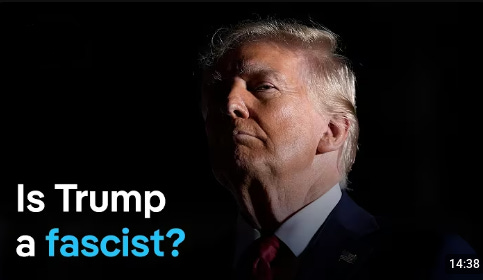
Authoritarianism Alert: Global Parallels to Trump's Power Consolidation
The provided text, "America's Authoritarian Drift: Lessons from Hungary and Turkey," analyzes how the United States, particularly under a potential second Trump term, exhibits characteristics of competitive authoritarianism, a system where elections exist but incumbents manipulate institutions to maintain power. It details several tactics paralleling those used by leaders like Orbán in Hungary and Erdoğan in Turkey, including centralizing power through loyalist appointments and agency dismantling, attacking judicial independence via intimidation and defiance of rulings, and controlling media narratives through state-aligned ecosystems and harassment of critics. The text also highlights the dismantling of the civil service via executive orders, the weaponization of state resources against perceived enemies, and the targeting of vulnerable groups through divisive rhetoric and policies. Ultimately, the source warns that the velocity of democratic backsliding in the U.S. is unprecedented, with global implications for democratic norms and alliances. This is a public episode. If you'd like to discuss this with other subscribers or get access to bonus episodes, visit earlcotten.substack.com/subscribe
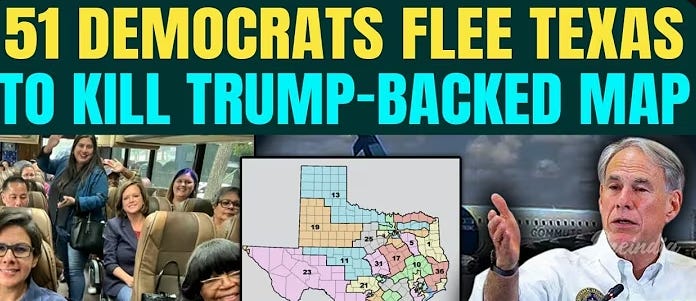
Texas Redistricting War: National Implications of the Democratic Walkout
Texas House Democrats fled to Illinois to break quorum and prevent the passage of a Republican-backed redistricting bill that aims to secure five new congressional seats for the GOP. This action, mirroring a similar exodus in 2021, is a strategic maneuver to halt legislative proceedings given the two-thirds presence requirement for a quorum. Texas Governor Abbott has threatened fines and removal from office, even suggesting fundraising for fines could be a felony, though legal experts question the enforceability of these threats and the likelihood of extradition from Illinois, a sanctuary state championed by Governor Pritzker. The core issue stems from former President Trump's public pressure for mid-decade redistricting to bolster the Republican House majority, leading to a potential national "gerrymandering arms race" if Texas succeeds, raising concerns about electoral stability and the weaponization of quorum rules. This is a public episode. If you'd like to discuss this with other subscribers or get access to bonus episodes, visit earlcotten.substack.com/subscribe

Trump's Tumult: Economy, Scandals, and Cognitive Concerns
Listen now | It outlines multiple crises impacting the Trump administration, including a significant economic downturn marked by poor jobs reports, controversial tariff implementations, and a subsequent stock market decline. It details the firing of a Labor Statistics Commissioner, suggesting an attempt to control economic data, and explores the mysterious transfer of Ghislaine Maxwell to a minimum-security prison, raising questions of preferential treatment and a potential connection to her discussions with the Deputy Attorney General. Additionally, the source examines the deployment of nuclear submarines as a suspected distraction from domestic issues, and highlights concerns about Trump's cognitive health, citing instances of memory fabrication and mathematical errors. The overarching theme points to an administration facing intense scrutiny across economic, legal, and personal fronts, often responding with actions perceived as politically motivated or reckless. This is a public episode. If you'd like to discuss this with other subscribers or get access to bonus episodes, visit earlcotten.substack.com/subscribe

TSA agents reassigned as "flight security guards" for mass deportations, prompting union cease-and-desist
Listen now | Air Marshals: From Counterterrorism to Deportation Duty | The unprecedented reassignment of Federal Air Marshals from their primary counterterrorism duties on commercial flights to provide security for ICE deportation flights since June 2025. This controversial move, affecting 10% of the force, has sparked legal challenges from the Air Marshal National Council, which argues it undermines aviation security and illegally subsidizes private contractors like GEO Group. Highlights a surge in deportation flights, ICE's budget shortfalls (leading to potential fund reallocations from other agencies like TSA), and growing public disapproval of these immigration policies. It also points to strained resources within the TSA, safety concerns for marshals on deportation flights, and the broader implications for national security and taxpayer spending. This is a public episode. If you'd like to discuss this with other subscribers or get access to bonus episodes, visit earlcotten.substack.com/subscribe

Trump's $200M White House Ballroom, Authoritarian Overreach & Democratic Norms Crisis
Listen now | Trump's Controversial White House Expansion and Policy Shifts | It primarily discuss controversies surrounding former President Trump's actions and policies, focusing on several key areas. A major point of contention is the privately funded, 90,000-square-foot ballroom expansion of the White House, which critics view as a move to transform the "People's House" into a personal luxury venue. The sources also address unverified claims made by Trump about stopping wars and securing massive payments from international allies, which official reports contradict. Furthermore, the text examines the legality of tariffs imposed via executive order that bypassed Congress, and the resurfacing of controversial comments by Trump regarding Jeffrey Epstein and Virginia Giuffre. Finally, it highlights administrative disarray with the resignation of an unappointed head of the Pandemic Preparedness Office, underscoring broader concerns about presidential power, government transparency, and accountability. This is a public episode. If you'd like to discuss this with other subscribers or get access to bonus episodes, visit earlcotten.substack.com/subscribe
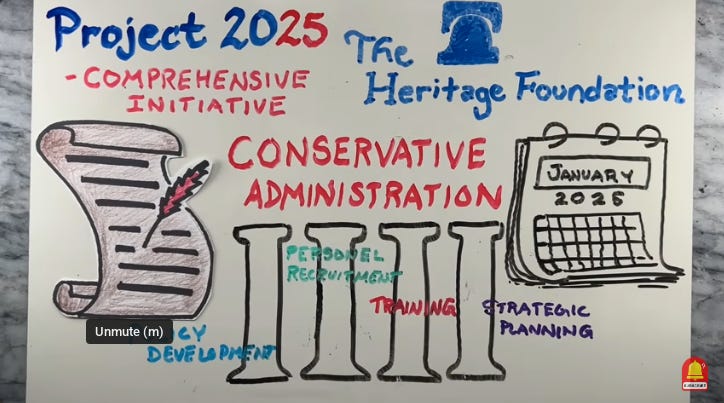
Project 2025 Implementation Analysis: Trump's Authoritarian Takeover, Policy Impacts & Institutional Dismantling in 2025
Key Takeaways* Project 2025 actively dismantles federal safeguards through loyalty purges, illegal fund cuts, and civil rights rollbacks targeting DEI, Medicaid, and SNAP .* Media independence is under direct government control, exemplified by FCC-mandated "bias monitors" at CBS and the defunding of NPR/PBS to enforce pro-Trump narratives .* Legal immunity shields presidential crimes following the Trump v. United States ruling, enabling tactics like ignoring court orders on deportations .* Trump's Epstein ties deepen with admissions about stolen Mar-a-Lago staff (including victim Virginia Giuffre), contradicting his past statements and coinciding with DOJ video manipulation .* Scientific consensus is systematically denied, starting with the removal of the EPA’s 2009 climate endangerment finding to enable fossil fuel expansion .1. How Project 2025 Actually Works on the Ground NowProject 2025 ain't just some theoretical wishlist anymore. It's happening, fast. The Heritage Foundation’s plan is getting real in scary ways – like purging anyone in government who ain’t showing total loyalty to Trump. Take Pete Hegseth over at Defense. He’s making generals meet Trump personally, like a loyalty test. Feels like a purge, honestly. And the money stuff? They’re just taking funds Congress set aside for things like cancer research or help for veterans, and redirecting it. No approval, nothing. Illegal? Probably. But they’re doing it anyway .It gets worse on civil rights. Things like Medicaid and SNAP – you know, help for folks who need food or doctor visits – they’re getting slashed. While at the same time, there’s more money going toward rounding up immigrants. It’s a clear choice: hurt the vulnerable, protect the agenda. DEI initiatives? Forget about it. They’re getting erased everywhere, from schools to big companies, with threats to pull federal cash if they don’t comply . It’s a full-on assault on decades of progress.2. The FCC’s New “Bias Monitor” and Why It MattersSo the FCC just approved this huge $8 billion merger: Skydance buying Paramount, who owns CBS. But there’s a catch – a big one. The FCC chairman, Brendan Carr (a Trump appointee, obviously), made them agree to put an “ombudsman” in place. He calls it a bias monitor. This person’s job? To take complaints about CBS News being “biased” and report straight to Paramount’s president. Carr says it’s about making CBS “fair” and restoring “fact-based journalism.” But let’s be real, it’s about making sure CBS doesn’t make Trump mad .Carr tries pointing back to an old NBC/GE thing for precedent. But that was totally different! Back then, the ombudsman was there to stop GE’s business interests from messing with NBC’s news. It was about independence. This CBS monitor? It’s about enforcing a political viewpoint – Trump’s viewpoint. The only Democrat on the FCC, Anna Gomez, nailed it: this is “never-before-seen controls over newsroom decisions” and a “direct violation of the First Amendment” . And it didn’t happen in a vacuum. Paramount just paid Trump $16 million to settle his lawsuit over a ’60 Minutes’ interview with Kamala Harris. Now this? Feels like a shakedown .Comparison of Ombudsman Roles in FCC Merger Conditions3. DEI Gets Kicked Out of Classrooms (And Everywhere Else)Trump’s war on DEI (Diversity, Equity, Inclusion) is hitting schools and colleges hard. The Department of Education sent out this letter giving them just two weeks – yeah, two weeks – to eliminate any DEI programs or risk losing all federal funding. We’re talking about student loans, free lunch programs, special needs support, everything. Gone. The letter claims DEI uses “racial preferences” illegally, twisting the Supreme Court’s 2023 ruling on affirmative action way beyond college admissions .Cynthia Jackson-Hammond, who heads the Council for Higher Education Accreditation, called the demand “overreaching” and “threatening.” She points out the impossible vagueness: “There’s a fine line between removing programs that are considered to be discriminatory by race and removing programs that speak to a cultural or ethnicity support for students.” How are schools supposed to untangle that in 14 days? It’s chaos . And the impact? Huge. Black professors make up only 8% of assistant profs nationally – way below the 13.7% Black population share. This’ll make closing that gap impossible. Efforts to recruit diverse faculty are freezing up because everyone’s terrified of an investigation .4. EPA’s Climate Science Gets Tossed AsideRemember that big EPA finding from 2009? The one that officially said greenhouse gases like CO2 and methane are a danger to public health and welfare? Well, under Trump, it’s gone. Poof. The Endangerment Finding was the bedrock. It’s why the EPA could even try to regulate emissions from cars and power plants under the Clean Air Act. Scrapping it isn’t just policy change – it’s a denial of basic climate science .This finding came after a huge fight, including the Supreme Court case

GOP Leadership Fact-Checks, Air Force One Scandal, Epstein Files Cover-Up, Healthcare Cuts Impact & Roy Cooper Senate Run | Political Misinformation Deep Dive
Key Takeaways* Air Force One Controversy: Qatar donated a $400M Boeing 747 to the Pentagon as an “unconditional gift” for retrofitting into Air Force One, bypassing congressional approval and raising ethical/espionage concerns .* Epstein Files Fallout: DOJ found no “client list” or blackmail evidence in Epstein files, triggering MAGA/QAnon backlash against AG Pam Bondi and accusations of a cover-up .* Medicaid Cuts Impact: The OBBB Act’s 15% Medicaid cuts could strip 11.8M Americans of insurance, disproportionately harming rural hospitals and low-income adults .* Scotland Crypto Offshore: Trump’s Scottish crypto deals come with more rumor than reality.* Roy Cooper’s Senate Run: The ex-NC governor is campaigning against GOP tax policies, while Trump endorses RNC Chair Michael Whatley for the seat .* Graham’s Primary Challenge: Project 2025 architect Paul Dans is running against Sen. Lindsey Graham, calling him a “70-year-old childless warmonger” .The Qatari “Gift” Plane: Legal Firestorm and Hidden CostsSo Qatar’s giving us a “free” Boeing 747 to serve as Air Force One? That’s what Trump keeps saying. But it’s not that simple. Defense Secretary Pete Hegseth and Qatar’s defense minister signed a memo calling it an “unconditional donation” to the Pentagon. No money exchanged hands, which sounds great on paper . But the plane’s retrofitting will cost taxpayers up to $1 billion. Stuff like missile-defense systems and nuclear EMP shielding don’t come cheap . And get this: the Air Force is pulling funds from the Sentinel nuclear missile program to cover it. Yeah, the one that’s already way over budget .Legal eagles are screaming about the Emoluments Clause. That’s the part of the Constitution that says federal officials can’t accept gifts from foreign governments without Congress signing off. Trump insists it’s fine because the Pentagon owns the jet, not him personally. But he also plans to use it exclusively during his term, and it’ll end up in his presidential library later . Even GOP senators like Rand Paul and Ted Cruz are uneasy. Cruz muttered about “espionage problems,” while Paul worried Qatar’s human rights record won’t get scrutiny now . The whole thing’s parked in San Antonio awaiting upgrades, but the ethics storm’s just getting started.Air Force One Retrofit Costs ComparedOBBB Act: Medicaid Cuts and the Rural Healthcare Time BombTrump signed the One Big Beautiful Bill (OBBB) on July 4, 2025. Buried in it? A 15% cut to Medicaid, nearly $1 trillion over 10 years. The Congressional Budget Office says 11.8 million people could lose coverage . Dr. William Dow, a health economics expert at Berkeley, calls it “the largest, most regressive cut to federal health benefits ever enacted.” Low-income adults aged 18–64 without kids get hit hardest, especially with new work requirements. States like Kansas or California (they call Medicaid “KanCare” and “Medi-Cal”) will struggle to fill the gaps .Rural areas face a crisis. Medicaid enrollment’s higher there, so hospital closures are likely. The OBBB tosses a “rural fund” to soften the blow, but Dow says it’s “far too small.” Nursing homes get gutted too, the law blocks Biden-era staffing rules, so quality’s dropping while costs rise. And if you thought immigrants dodged this? Think again. Most on humanitarian visas lose coverage entirely .Projected OBBB Impact on Healthcare* Medicaid Enrollment Drop: 11.8 million Americans uninsured by 2034* Rural Closures: 50+ hospitals at risk in states like Missouri and Kansas* ACA Premium Spike: Subsidies expire in 2025, doubling premiums for 4 million people* Immigrant Coverage: Undocumented adults barred from state-funded programs (e.g., California)Roy Cooper’s Populist Pitch for North Carolina’s Senate SeatRoy Cooper, North Carolina’s ex-governor, jumped into the 2026 Senate race with a fiery video. He didn’t mention Trump by name but slammed “politicians in D.C.” for “running up our debt” and “cutting health for the poor” to fund billionaire tax breaks . His bullseye? The middle class. “The middle class feels like a distant dream,” he said, framing the election as a fight for its survival . Smart move, he’s distancing from national Dems while hammering the OBBB’s health cuts.The GOP isn’t taking it lying down. The NRSC’s Joanna Rodriguez tagged Cooper as a “Democrat lapdog” who “sabotaged President Trump.” They’re pushing Hurricane Helene’s 100+ NC deaths and $53B damage as proof of his “gross mismanagement” . Trump’s countermove? Backing RNC Chair Michael Whatley, a NC native with deep state GOP ties. Whatley’s set to run, banking on Trump’s personal ask to galvanize MAGA voters .Crypto & Trump’s Scottish Business TiesReports claimed Trump’s Scotland golf courses sold crypto NFTs for millions, with proceeds tied to shady shell companies 🔗CNN Business. But digging deeper:* NFT Sales: They moved about £250 K total, not millions.* Company Structure: Standard LLCs registered in UK, no hidden owners.* Legal Limits: EU regs cap wh

DHS Manifest Destiny Post 2025: Trump Administration Blood and Soil Ideology vs. Historic Manifest Destiny | Vance Citizenship Speech & Nazi Symbolism Analysis
Key Takeaways* The Trump administration's DHS weaponized 19th century "Manifest Destiny" art (Weistling, Gast, Kinkade) on social media with nationalistic captions like "Remember your Homeland’s Heritage" and "Protect the Homeland," explicitly linking settler colonialism to current immigration crackdowns .* Scholars and critics universally condemned these posts as modern propaganda aligning with "blood and soil" ideology, noting the deliberate omission of Indigenous genocide, enslaved Black cowboys, and Chinese railroad workers from the romanticized imagery .* Vice President JD Vance's rhetoric reinforces this ideology, defining American identity as "a particular people" (Claremont speech) while attacking Germany's hate-speech laws at the Munich Security Conference and meeting with the neo-Nazi AfD party .* DHS's tactics follow the "four pillars of propaganda": activating emotions, simplifying ideas, appealing to hopes/fears, and attacking opponents, using nostalgia to justify policies like mass deportations and "Alligator Alcatraz" detention centers .* The administration openly embraces far-right support, with the "American Progress" post celebrated by users advocating to "re-conquer the land," while experts directly compare DHS messaging to Nazi-era motherhood propaganda .The Ugly Roots: Manifest Destiny as White Supremacist BlueprintLet’s get this straight, Manifest Destiny wasn’t just about wagons and pioneers. John O’Sullivan, who coined the term in 1845, tied it directly to white supremacy. He dreamed of pushing Black people into Latin America, calling it a region of “mixed and confused blood,” hoping for “the ultimate disappearance of the negro race from our borders.” When talking about California leaving Mexico? He labeled Mexicans “imbecile and distracted,” cheering the “Anglo-Saxon foot” already on its borders . This wasn’t subtle.Table: Core Tenets of Manifest Destiny vs. Modern DHS MessagingThe artwork DHS pushes, like John Gast’s American Progress (1872), shows Columbia, this angelic white woman, floating westward. She’s bringing light, telegraph wires, and settlers. Meanwhile, Native Americans and bison flee into darkness. One DHS post called it “A Heritage to be proud of” . They’re not even hiding the symbolism.DHS as Propaganda Machine: Weaponizing Art for DeportationUnder Kristi Noem, DHS’s social media turned into a meme factory for the far-right. They posted:* Mugshots of migrants labeled “foreign invaders”* AI-generated images of “Alligator Alcatraz,” a detention camp mocked up like a tourist attraction* Thomas Kinkade’s Morning Pledge, a 1950s white picket-fence fantasy, with the caption “Protect the Homeland”But the big one was Morgan Weistling’s A Prayer for a New Life. It shows this young white couple in a wagon, praying over their newborn. DHS slapped “Remember your Homeland’s Heritage” on it. Weistling himself was pissed, said they used it without permission .Renee Hobbs (Univ. of Rhode Island) breaks down why this works as propaganda:* Activates strong emotions: Taps into nostalgia for childhood stories* Simplifies ideas: Reduces history to “brave men and women forging the Republic”* Appeals to hopes/fears: “Protect” implies invasion needing defense* Attacks opponents: “Stay mad” retorts to criticsAdam Klein (Pace Univ.) nailed it: The painting’s surface is “beautiful,” but paired with words like “homeland” and “heritage,” it fuels anti-immigrant panic. Like VDare’s old slogan celebrating Virginia Dare, the first white child born here, used to push the “white genocide” myth .Vance’s Double Game: “Free Speech” for Nazis, Silence for CriticsJD Vance’s got a slick routine. At the Claremont Institute, he redefined American identity: “America is not just an idea. We’re a particular place, with a particular people.” He argued stopping immigration lets “social cohesion form naturally”, ignoring his wife’s Indian immigrant parents . Then he flies to Germany.At the Munich Security Conference, Vance scolded Europeans for “running in fear of your own voters.” He attacked Germany’s hate-speech laws, especially raids on people posting “anti-feminist comments” or “mean tweets.” He even met AfD leaders, Germany’s neo-Nazi party, near their old headquarters .German Chancellor Olaf Scholz shot back: “I have nothing against billionaires, but becoming one because you want the right to insult people? Not acceptable.” He stressed banning Nazi symbols isn’t negotiable .Table: Vance’s Contradictions on Citizenship and SpeechMeanwhile, back home, Trump’s FCC appointee investigated NPR and PBS. Free speech for Nazis, silence for critics .Blood and Soil: When “Heritage” Echoes Nazi SymbolismThe connections ain’t theoretical. When DHS posted Weistling’s pioneer family, Andrew Torba, CEO of Gab (that alt-right haven), responded: “Our people. Our place.” That’s straight “blood and soil” language .Critics on X didn’t miss it: “In case you had any doubts about the white supremacist thing... same language Goebbe
Republican Senators Challenge Project 2025 Budget Cuts: Vought Education Funding Freeze & DOGE Rescission Package Controversy
Key Takeaways* 10 GOP senators defied Trump over a $5-7B education freeze impacting summer programs & migrant students, calling it “contrary to the President’s goal” of local control* Senate narrowly passed $9B DOGE cuts slashing foreign aid & PBS funding after VP Vance broke a tie; Collins/Murkowski opposed citing lack of transparency* States sued the administration after funds were halted via a “three-sentence email” with no timeline, causing summer school closures* OMB used “pocket rescission” threats to withhold $30B+ in congressionally approved spending, triggering legal battles over executive power* Education funds were partially released on July 24 after GOP pressure, but long-term fights loom over Trump’s budget tacticsThe $5 Billion School Shock: How Vought’s Freeze Hit ClassroomsSo the thing is, the Education Department just dropped this bomb on June 30th, right? Like one day before cash was supposed to hit school bank accounts. They sent out these vague emails – three sentences! – saying all this federal money was “under review.” No warning, no timeline. Zip. We’re talking $5 billion minimum, maybe even $7 billion according to some estimates. That’s not just spare change, that’s money for stuff like afterschool programs, teaching training, help for migrant kids learning English. Poof. Frozen .States were furious. I mean, they budgeted for this. Signed contracts, hired staff, planned summer programs. Now what? The Learning Policy Institute crunched numbers showing this freeze yanked away over 10% of federal K-12 cash from 33 states and territories. Think about West Virginia or Alaska – places where every dollar counts double. Superintendents were scrambling. Tara Thomas from AASA nailed it: this isn’t just about budgets, it pushes unfunded mandates onto schools already stretched thin .Then you got the political side. OMB Director Russell Vought claimed it wasn’t a “freeze,” just a “programmatic review” to align with Trump’s priorities. But c’mon – holding back cash approved by Congress, signed by Trump himself back in March? It felt like a power play. Especially since Trump’s budget had proposed killing these exact programs. Critics saw it as an end-run around Congress. And it wasn’t just Dems howling. Republican senators like Lisa Murkowski called it “chaotic” and worried it handed leverage to China .GOP Rebellion: 10 Senators Break Ranks Over FreezeHonestly didn’t see this coming so strong. Ten Republican senators – including heavyweights like Mitch McConnell, Susan Collins, Lisa Murkowski – firing off a letter to Vought on July 17th demanding he release the school funds. That’s a big deal. Their argument? This freeze “denies states and communities the opportunity to pursue localized initiatives” and “is contrary to President Trump’s goal of returning K-12 education to the states” . Ouch.They pushed back hard on the idea this cash funded “radical left-wing programs.” Nah, they said. This is bipartisan stuff: summer lunches, English tutors for migrant kids, after-school care so parents can work. Senator Shelley Moore Capito stressed rural districts in her state rely on this for basics. Jim Justice (West Virginia’s governor-turned-senator) knows his schools needed those 21st Century Community Learning Center grants yesterday .The letter wasn’t polite suggestion either. It demanded a “prompt reply” and reversal. This crew included both Trump skeptics (Collins, Murkowski) and allies (John Hoeven, Mike Rounds). That unity signaled real panic back home. School admins were blowing up their phones about closing summer programs. And politically? It’s risky defying Trump, but letting schools crumble is riskier .DOGE’s $9B Ax: Foreign Aid, NPR, and the Senate ShowdownWhile classrooms sweated, another budget bomb was ticking: the DOGE rescissions package. Trump wanted $9.4 billion back – $8B from foreign aid, $1.1B from public broadcasting (NPR/PBS). The House okayed it fast in June. But the Senate? That was a knife fight .Russell Vought pitched it as fiscal responsibility: “getting our fiscal house in order.” But Senators grilled him for hours. Susan Collins actually held up vitamins and kid’s food packs used in global health programs asking “Will this get cut?” Vought dodged specifics, just mumbled about stopping “liberal non-profits.” Patty Murray (D-WA) warned letting this slide meant Congress surrenders its power of the purse permanently .The vote dragged 12+ hours overnight July 16-17. Amendments flew. Democrats tried to save PBS, restore AIDS funding (PEPFAR). Republicans Mike Rounds fought for tribal radio stations in South Dakota – got a last-minute carve-out. In the end? VP JD Vance broke a 50-50 tie twice to pass it. Collins and Murkowski voted no, calling the cuts vague and reckless. McConnell flipped to yes after PEPFAR was spared, but still slammed the “chaotic” process .Pocket Rescissions: OMB’s Controversial End-Run Around CongressHere’s where it gets legally sketchy. Vought didn’t just push

Kenny Laynez-Ambrosio & Emmett Till: State Violence Then and Now : Immigration Brutality Analysis | Till Anniversary Historical Parallel
Key Takeaways* Kenny Laynez-Ambrosio, an 18-year-old U.S. citizen, was violently detained by Border Patrol agents who declared, “You’ve got no rights here” during a May 2025 traffic stop .* Emmett Till’s 1955 lynching and his mother Mamie Till-Mobley’s demand to “let the world see” his body galvanized the Civil Rights Movement; his 84th birthday was commemorated July 25, 2025 .* Both cases reveal systemic patterns: state agents acting with impunity, suppressed accountability, and documentation (video/open casket) as tools for justice .* Federal immigration quotas (e.g., 3,000 daily arrests) incentivize brutality; agents referenced “$30,000 bonuses” during Kenny’s arrest .* Misleading narratives linking immigrants to crime persist despite data showing lower offending rates among immigrants vs. U.S.-born citizens .The Brutal Arrest of Kenny Laynez-Ambrosio: A Secret Recording Exposes Systemic ViolenceKenny Laynez-Ambrosio never expected a drive to his landscaping job would end with him jailed. On May 2, 2025, Florida Highway Patrol pulled over the van he shared with his mother and two friends. His mother had a suspended license—routine enough. But when officers asked about immigration status, everything changed. One friend admitted being undocumented. Border Patrol arrived fast. Tactical gear. Aggression. Kenny grabbed his phone. He’d been showing his mom a TikTok. Now he hit record.Agents yanked his friend from the van, using a chokehold. Another officer deployed a stun gun on his second friend, who cried out in pain. Kenny protested: “You can’t grab me like that.” An agent responded: “You’ve got no rights here. You’re a migo, brother.” Kenny insisted he was a U.S. citizen. Born and raised locally. They pushed him down. Aimed a stun gun at him. He spent six hours in a Customs and Border Protection cell .Later, the video captured agents laughing. One joked about the stun gun: “You’re funny, bro.” Another bragged: “You can smell that … $30,000 bonus.” Kenny faced charges for “obstruction without violence”—retaliation, his lawyer said, for filming. He got 10 hours community service and anger management . His friends? Detained at Krome detention center. Likely released on bail. But Kenny lost touch. The incident wasn’t isolated. Florida’s 2025 agreement lets state troopers enforce federal immigration law. Trust between police and immigrants? Eroded badly .Emmett Till’s Legacy: How a Mother’s Defiance Ignited a MovementEmmett Till’s story starts in summer 1955. The 14-year-old boarded a train from Chicago to Mississippi. Excited to visit family. His mother, Mamie Till-Mobley, warned him: Mississippi’s different. Be careful. Days later, Emmett walked into Bryant’s Grocery. What happened inside remains disputed. Carolyn Bryant, a white woman, later claimed he whistled at her. On August 28, her husband Roy Bryant and brother-in-law J.W. Milam kidnapped Emmett from his uncle’s home. Gunpoint. They beat him. Shot him. Dumped his body in the Tallahatchie River, tied to a cotton-gin fan .Three days later, a fisherman found Emmett. His face mutilated. One eye detached. An ear missing. Mamie demanded his body returned to Chicago. She chose an open-casket funeral: “Let the world see what they did to my boy.” Tens of thousands attended. Jet magazine published photos. The images horrified the nation. White violence against Black Americans wasn’t new. But this visibility? Unprecedented. At the trial, Bryant and Milam were acquitted by an all-white jury. Protected by double jeopardy, they later confessed in a paid interview. Emmett’s murder—and Mamie’s defiance—sparked the Montgomery Bus Boycott. Galvanized a generation into activism .July 25, 2025, marked Emmett’s 84th birthday. The Two Mississippi Museums held free tours honoring his legacy. His story remains a cornerstone of racial justice education. A reminder: Documentation challenges impunity .Documentation as Resistance: From Open Caskets to Secret RecordingsMamie Till-Mobley understood power in visibility. By forcing the public to witness Emmett’s brutalized body, she transformed private grief into collective outrage. The photos in Jet magazine? They didn’t just report news. They screamed injustice. Made complacency impossible. “Let the world see,” she declared. And the world did .Seventy years later, Kenny Laynez-Ambrosio wielded a different tool: his smartphone. When Border Patrol agents escalated force, he recorded it. Secretly. His footage shows an officer using a chokehold. A stun gun deployed on a compliant man. Agents mocking: “They’re starting to resist more now … We’re going to end up shooting some of them.” Their celebration: “Goddamn! Woo! Nice!” and “$30,000 bonus.” Kenny refused orders to delete the video. Even when charged with obstruction. His attorney, Jack Scarola, called it retaliation. An attempt to silence evidence .Both acts—Mamie’s open casket, Kenny’s recording—share a core truth. When state violence operates in shadows, exposing it becomes revol

Epstein Files & South Park Satire Expose Trump: Media Crackdown, 37% Approval, ICE Scandals | July 24, 2025 Podcast & Article Analysis
The Lists We Keep: On Satan’s Bedsheets, Unmarked Vans, and the Paper Trail of PowerBy Earl Cotten For The Earl Angle NewsletterLos Angeles, July 2025. On screens large and small, a familiar, cartoonish grotesquerie unfolds: a former President, rendered in crude lines and primary colors, shares a bed with Satan. The Prince of Darkness, propped on a pillow, voice dripping with a bored malevolence, poses the question hanging over this summer like smog: “Are you on the list or not? It’s weird that whenever it comes up, you just tell everyone to relax.” The line lands not with the thud of punchline, but with the cold precision of a scalpel slicing through taut skin. It is South Park, of course, returned after an absence that felt less like hiatus and more like a collective holding of breath. They have always held up the cracked mirror, but this season, the glass seems sharper, the reflection more grotesquely immediate. “Relax.” It echoes now, a brittle mantra offered against the rising tide of Gallup polls showing 37% approval, against the 81% of Americans demanding the release of that particular list – the one concerning a dead financier and his island, the one that seems to exert a peculiar gravitational pull on the current administration, bending light and truth around its event horizon. To watch this cartoon in the summer of 2025 is to understand that “relax” is not reassurance; it is the locking of a door.The episode aired late. There were delays. Paramount Global, that vast and nervous entity, was preoccupied with the intricate, billion-dollar ballet of securing streaming rights – a cool $1.5 billion for Trey Parker and Matt Stone, creators who trade in expletives and exorcisms. Fifty new episodes and the weight of the past catalog, secured in a deal announced amidst a different kind of tension. Paramount had recently settled another matter: a $16 million payment to the same former President depicted in Satan’s boudoir, stemming from an edited 60 Minutes interview. An edit. Sixteen million dollars. And then, shortly after the check cleared, Stephen Colbert’s show vanished from the CBS schedule (Paramount owns CBS). Coincidence? South Park’s Jesus, pressured into public schools under threat of lawsuit, offered its own bleakly satirical answer. The network’s official explanation – “purely a financial decision” – hangs in the air, as insubstantial and yet as defining as the smog. The creators’ fury over the delay, expressed reportedly in terms as colorful as their animation, feels less like petulance and more like the last honest reaction in a landscape polished smooth by litigation and fear. The White House, predictably, dismissed the show as “irrelevant” and “fourth-rate.” The reflex is telling: attack the messenger when the message is inconvenient, when it arrives not in a sealed subpoena but in the vulgar vernacular of Comedy Central. The timing, however, is the knife twist: it lands precisely as the polls crater. Thirty-seven percent. The lowest of this second term. Irrelevance, it seems, has a curious resonance.We keep lists. Client lists. Guest lists. Deportation lists. Nielsen lists (10.5 billion streaming minutes for South Park in the first half of 2025, they tell us, the 20th most streamed). Approval ratings are lists, meticulously compiled by Gallup, Pew, YouGov. Fifty-nine percent disapprove of the tariffs. Fifty-five percent disapprove of the gutting of federal departments. Fifty-six percent specifically disapprove of the handling of the Epstein investigation. Sixty-nine percent believe in a cover-up. Sixty-one percent oppose the “One Big Beautiful Bill,” a legislative behemoth that cannibalizes Medicaid to fund tax breaks and border theatrics. These are not mere statistics; they are the brittle parchment on which the current moment is inscribed, a palimpsest of discontent layered over the frantic scribbles of policy. The economy, that former bulwark, shows hairline fractures, confidence dipping to 45%, a low not seen since the anxious days of 2019. People feel the tariffs at the grocery checkout. They sense the coming chaos of dismantled agencies, suspecting – half of them, according to the pollsters – that the promised savings are a mirage, that the long-term cost will be extracted from their own futures. The “One Big Beautiful Bill” is less a piece of legislation and more a forced relocation of resources, a shifting of burdens onto the already burdened. It is governance by subtraction, a hollowing out.And the Epstein list. It hangs there, unignorable, a spectral presence. The Satan-bed scene in South Park resonates precisely because it taps into a profound, poll-verified unease: 81% want it released. The administration’s obfuscation – the reflexive “relax,” the legal maneuvers shrouding the documents in secrecy – reads not as prudence but as guilt by opacity. It fuels the 69% who smell cover-up. It directly feeds the 56% disapproval rating on the handling of the probe. In a time when trust is
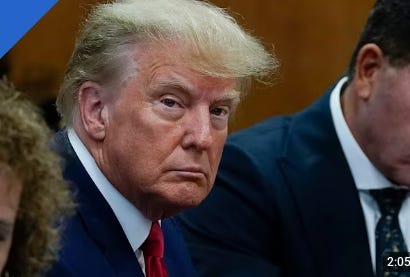
Trump Legal Accountability: Wealth Privilege, Sex Offender Status & Justice System Equity | July 24, 2025 Podcast & Article Analysis
The Weather Underground: Tallahassee, 5 Hours with Ghislaine MaxwellBy Earl Cotten for The Earl Angle NewsletterI.The air in Tallahassee hangs thick in July. Spanish moss drips like tarnished lace from the live oaks. Inside a federal building not far from the prison, a meeting occurred. It lasted five hours. Five hours in which Deputy Attorney General Todd Blanche sat across from Ghislaine Maxwell. She answered questions. Every question, we are told. She did not invoke the Fifth Amendment. She did not demur. She cooperated. This is the phrase they use: "cooperated fully."It is the first time the Department of Justice has formally sought her voice since her conviction. Since the gavel fell and the world briefly registered the fact of accountability. Blanche stated his intent plainly: to ask about "anyone else who has committed crimes against victims." The scope is vast, a yawning chasm. Her lawyer, David Oscar Markus, called it "productive." Productive. A word freighted with the weight of expectation and the promise, perhaps, of something less than the twenty years she now faces. She is appealing, of course. Petitioning the Supreme Court even as the prosecutors urge the Justices to look away. Her cooperation now is a gesture suspended between pragmatism and desperation. A move on a chessboard only she and her captors truly see.The timing is not accidental. The Trump administration moves under a gathering cloud regarding Epstein, a low-pressure system building since May. That was when Attorney General Pam Bondi reportedly informed the former President his name had surfaced in Epstein-related documents. The White House issued denials, the familiar incantation against "fake news." Yet the pressure built. House Republicans subpoenaed the DOJ for Epstein files. They demanded Maxwell herself for a deposition in August. Blanche’s journey to Tallahassee feels less like initiative and more like a controlled release of steam. Damage containment in the Florida humidity.II.We register the facts. Donald J. Trump’s name appears six times in the unsealed Epstein documents. Six points of contact in a constellation of depravity. Flight logs: seven trips on Epstein’s plane in the 1990s. The testimony of Juan Alessi, a houseman: driving Maxwell to Mar-a-Lago, observing Trump at Epstein’s Florida home – though Alessi specifies the former President ate in the kitchen, separate from the guests, and never received massages. A deposition from Johanna Sjoberg: an unplanned stop at Trump’s Atlantic City casino due to weather. Epstein’s remark, "Great, we’ll call up Trump." Sjoberg’s clarification: she did not massage him. An email from Sarah Ransome in 2016, accusing Trump of misconduct, swiftly retracted as false.We register the absences. No evidence, the documents state, implicates him in criminal activity. No evidence, they equally state, "exonerates" him. He existed within the orbit. He flew on the plane. His properties were waypoints. Daniel Medwed, a law professor at Northeastern University, offers the sterile truth: proximity is not proof. Dave Aronberg, a Florida state attorney, underscores the necessity of corroboration. Guilt by association remains a phrase uttered in whispers, not courtrooms. The documents place him there, in the periphery of the monstrous, a figure glimpsed through the smoked glass of a limousine window. What does it mean? It means he was there. That is the fact we have. The interpretation is a Rorschach test for a polarized nation.III.Consider now the architecture of justice. It possesses different doors, different antechambers, depending on who approaches.On one side: Donald J. Trump. He files a $20 billion defamation lawsuit against The Wall Street Journal. The cause? Reporting that he signed Epstein’s "bawdy" birthday letter. He retains Alan Garten, a legal pitbull, and an army of high-priced attorneys. He commands media cycles, shaping narratives of "witch hunts" and political vendettas. Resources are weapons, deployed in blizzards of motions, designed to overwhelm, to exhaust, to bury. We recall the quiet vanishing of Virginia Roberts’ 2009 Epstein subpoena after Trump’s lawyers engaged in "voluntary" discussions. A disappearance executed with the clinical efficiency wealth affords.On the other side: The Venezuelans. Detained under President Trump’s proclamation invoking the Alien Enemies Act of 1798. A relic from a time of muskets and quill pens, dusted off for an undeclared "invasion" that exists only in the proclamation itself. They challenge their deportations through class actions – G.F.F. v. Trump, J.A.V. v. Trump. They argue the proclamation exceeds the statute’s scope (requiring an actual war or invasion) and violates due process. Judge Rodriguez in Texas agreed, blocking removals. "Exceeds the statute’s scope," he wrote. A dry legal phrase masking the terror of expulsion. Their fight relies on habeas corpus petitions, pooled resources, the fragile scaffolding of class actions. They face exp
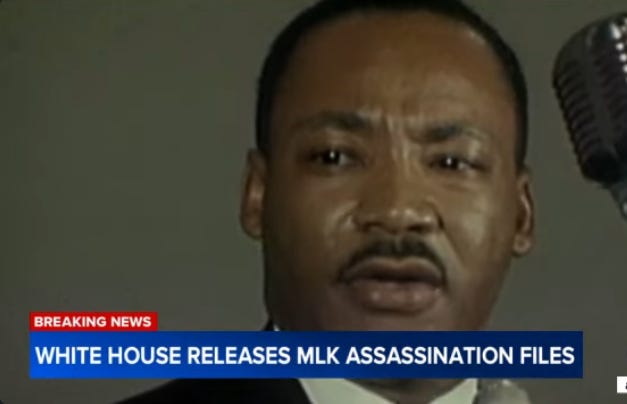
Trump's White House Scandals and Distraction Tactics, MLK FBI Dump & White House Chaos | July 23, 2025 Podcast & Article Analysis
The Weather of ScandalA Season of Distraction and Deflection in WashingtonBy Earl Cotten, for The Earl Angle NewsletterWe were told to watch the cards on the table—the grand reveal, the cathartic unmasking—but the dealer’s hands moved too quickly. In the humid July of 2025, the White House executed a ballet of misdirection so precise it felt rehearsed. The base demanded blood; the administration offered relics.I. The Ghost ListThe Epstein saga had curdled into a slow-burning revolt. In February, Attorney General Pam Bondi leaned into the camera, her desk a prop: “The client list sits right here,” she vowed . By July, the Department of Justice issued a memo reducing the list to “speculation”—a bureaucratic sleight-of-hand that turned proof into vapor . The betrayal was tactile. Billboards materialized like apparitions above Times Square: TRUMP, WHY WON’T YOU RELEASE THE EPSTEIN FILES? . In Tennessee, a man named James, who had voted for Trump twice, voiced the quiet rage: “Fast forward to now, [it’s a] closed book. What happened?” .Then, the Wall Street Journal published the sketch—a bawdy 2003 note to Epstein, adorned with a naked woman’s figure and Trump’s looping signature. The lawsuit against Murdoch landed within hours (“fake news!”), but the image lingered . Bondi pivoted, petitioning to unseal grand jury testimony—a maneuver Alan Dershowitz noted would shield clients, naming only Epstein and Ghislaine Maxwell . For the QAnon-steeped base, it was not transparency but theater.II. The Dust of MartyrsAs Epstein’s specter loomed, the National Archives released 243,496 pages of FBI files on Martin Luther King Jr. . The timing was surgical: three days after the DOJ’s Epstein memo backlash, and alongside Hillary Clinton’s email probe documents . The files laid bare J. Edgar Hoover’s COINTELPRO machinery—wiretaps, psychological warfare, smears branding King a “communist” . Bernice King, five years old when the bullet struck her father, issued a statement laced with weary defiance: “We object to any attacks on our father’s legacy or attempts to weaponize it” .Al Sharpton distilled it: “Trump releasing the MLK files isn’t about justice. It’s a desperate distraction” . The past, repackaged as revelation.III. The Coup as FarceOn July 18, Director of National Intelligence Tulsi Gabbard released an 11-page memo titled “The Russia Hoax.” Its thesis: Obama, Clinton, Brennan, and Clapper orchestrated a “treasonous conspiracy” to undermine Trump’s 2016 victory . Her evidence rested on a fissure—pre-election intelligence reports denying Russian election infrastructure hacking, versus post-election claims fueled by the Steele dossier . She ignored the Mueller Report’s confirmation of influence operations (social media bots, DNC hacks) and the bipartisan Senate Intel Committee findings .Trump amplified the fiction. He posted an AI-generated video of Obama in handcuffs, captioned: “HOW DID SAMANTHA POWER MAKE ALL THAT MONEY???” . Gabbard’s language echoed Trump’s victim-to-predator mantra: “I was the hunted. NOW I’M THE HUNTER” . It was revenge as content—a dopamine hit for a base starved by Epstein’s unresolved narrative.IV. The Greatest Hits AlbumDistraction became a full-time occupation. The administration deployed what one aide termed “MAGA greatest hits”:* Clinton Emails: DOJ re-released 2016 probe documents, reviving chants of “Lock her up!” in rallies .* Alcatraz Pantomime: Bondi and Interior Secretary Doug Burgum toured the prison, touting plans to reopen it—dubbed a “non-serious proposal” by Senator Padilla .* Racist Rebrands: Trump demanded Cleveland’s Guardians revert to “Indians” and Washington’s Commanders to “Redskins,” tweeting “times are different now” .* AI Lynchings: Fake videos of Obama’s arrest circulated on Truth Social, QAnon forums alight with glee .Sarah Longwell of the Republican Accountability Project saw the pattern: “Either they lied about Epstein files to gin up the base, or they’re lying now” .V. The Syntax of UnravelingThrough it all, Trump’s rallies grew darker. In Georgia, he rambled for 82 minutes, deploying what he called “the weave”—a stream-of-consciousness stitching of grievances, non sequiturs, and superlatives . Linguist John McWhorter dissected it as “verbal narcissism”: “Child care is child care—couldn’t, you know, it’s something... Those numbers are so much bigger” . Supporters called it “authentic”; critics saw cognitive decay .His Truth Social feed mirrored the fragmentation:July 18: “Radical Left Democrats will NEVER stop their HOAXES!”July 20: “Nothing will be good enough for the TROUBLEMAKERS” .Harvard psychologist Joshua Greene recognized the tactic: like a “gang tattoo,” Trump’s violent rhetoric (“vermin,” “poison,” “enemies”) bonded his base through shared outrage .VI. The Authoritarian DriftBy late July, the Epstein promise had evaporated. Bondi’s grand jury request felt performative—it would name no clients, reveal no flight logs. Meanwhile, Trump’s rhetoric curdled into
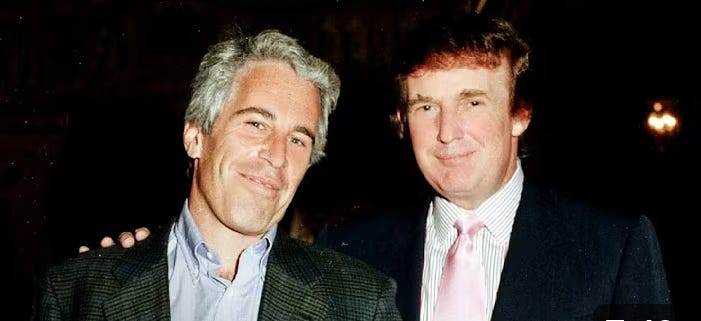
Trump Epstein Letter: Bawdy 2003 Birthday Note & Nude Sketch Revealed | Cover-Up Lawsuit | July 19, 2025 Podcast & Article Analysis
The Gilt Edges of Complicity: Notes on a Birthday LetterWritten by Earl Cotten for The Earl Angle NewsletterThe image arrives without warning, a photocopied specter from a world where power dines on bone china: a leather-bound album, gilt-edged pages, tributes from the anointed. Ghislaine Maxwell’s curation for her keeper’s 50th birthday, January 2003. Among the banal well-wishes of princes and financiers, one page stops the breath. A heavy marker’s crude outline—the curve of a woman’s naked breast—abuts a signature: Donald. Below it, typewritten lines masquerading as dialogue:Voice Over: There must be more to life than having everything.Donald: Yes, there is, but I won’t tell you what it is.Jeffrey: Nor will I, since I also know what it is.Donald: We have certain things in common, Jeffrey.Jeffrey: Yes, we do, come to think of it.Donald: Enigmas never age, have you noticed that?Jeffrey: As a matter of fact, it was clear to me the last time I saw you.Donald: A pal is a wonderful thing. Happy Birthday – and may every day be another wonderful secret.The Wall Street Journal exhumed this artifact in July 2025 . Its juvenile vulgarity—the sketched breast hovering near Trump’s name, the theatrical “enigmas,” the cloying invocation of “secrets”—feels less like a birthday note than a mutual recognition. A covenant whispered between men who understood that access, in certain realms, is currency, and that the youngest flesh holds the highest exchange rate. Trump denied authorship—“I don’t draw pictures”—and threatened to sue the Journal and Rupert Murdoch into oblivion . But the letter’s existence, verified or not, hangs heavy in the air, a fetid bloom in the hothouse of Epstein’s world. It speaks a truth Trump spent decades obscuring: their kinship was no passing Palm Beach acquaintance. It was a shared language.The Performance of OutrageTrump’s reaction unfolded with the rehearsed frenzy of a man scattering breadcrumbs to divert pigeons. Within hours of the Journal’s report, he commanded Attorney General Pam Bondi to petition a federal court for the release of all Epstein grand jury transcripts . "This SCAM, perpetuated by the Democrats, should end, right now!" he declared on Truth Social . Bondi, who months earlier had breathlessly promised a mythical Epstein "client list" sat "on my desk" , now obediently filed the motion .The timing was exquisite. Not three weeks prior, Bondi’s Justice Department had released a crushing memo: after a frenzied, months-long review of Epstein evidence—FBI agents pulled from counterterrorism duties, working around the clock—they found no "client list." No evidence of blackmail. No grounds to investigate "uncharged third parties." Epstein’s 2019 death? Reaffirmed as suicide. Ten hours of jailhouse footage showed no intruders . The memo was a death knell to the conspiratorial fantasies Bondi and Trump allies like Kash Patel and Dan Bongino had once stoked. Patel, now FBI Director, had earlier demanded the bureau "put on your big boy pants" and name Epstein’s associates; Bongino, as Deputy Director, had somberly reversed his prior skepticism, telling Fox Business Epstein did kill himself—a statement met with howls of betrayal from the MAGA faithful and Tucker Carlson’s derisive laughter . The base felt jilted. The birthday letter landed like a lit match on this tinder.Trump’s grand jury gambit was diversionary theater. Releasing decades-old transcripts requires a judge’s approval and months of victim-redaction—meaning nothing explosive would surface soon, if ever . More critically, it sidestepped the real issue: the thousands of other Epstein documents in the government’s possession—flight logs, victim interviews, financial records—that Bondi now refused to release, declaring "no further disclosure would be appropriate" . The grand jury request wasn’t about transparency. It was about conjuring noise to drown out a singular, damning question: What did you share with him, Donald? What were your "wonderful secrets"?The Architecture of Impunity: Acosta’s ShadowTo understand the ecosystem that birthed that birthday letter, one must revisit the original sin: Alex Acosta’s 2008 plea deal. At the time, Epstein faced a 53-page federal indictment for trafficking minors in Florida. The evidence was grotesque and granular: girls as young as 14 lured to his Palm Beach mansion for "massages," pressured into sex, then recruited to bring peers. The case could have put him away for life. Instead, Acosta—then U.S. Attorney for Southern Florida, later Trump’s Labor Secretary—engineered an escape hatch. Epstein pleaded guilty to two minor state prostitution charges. No federal charges. No trafficking. Thirteen months in a private wing of the Palm Beach County jail, with 12-hour daily work release at his office. The victims? Never informed, much less consulted. A federal judge later ruled the deal illegal, a violation of victims' rights .Acosta’s justification, offered during his doomed 2019 Senate confirma

John Lewis Legacy: "Good Trouble" Protests & Voting Rights Activism 2025 | July 18, 2025 Podcast & Article Analysis
The Gravity of the Hour: Notes on the National RequiemWritten By Earl Cotten, for The Earl Angle NewsletterI.On the morning of July 17, a woman leaned on her cane beneath it, her eyes tracing the lines of the portrait. Mellie Adams, 67, had seen Lewis walk these streets when the struggle was flesh, not memory. "A walking piece of history," she said to no one in particular. Around her, strangers pressed close—students with binders, mothers with strollers, retirees clutching water bottles. Five years to the day after Lewis’s death, they had come not to mourn but to arm themselves with his words: "Good Trouble Lives On" . This was the incantation, the spell against forgetting. Across 1,600 sites in all fifty states, from the barricades of Manhattan to the highway overpasses of Silver Spring, Maryland, the chant would rise like liturgy. The past was not even past; it was a blueprint .II.The phrase "good trouble" belongs to Lewis, of course. In 1965, it meant walking toward Alabama state troopers on the Edmund Pettus Bridge, knowing the batons would fall. It was a calculus of sacrifice: a fractured skull traded for the Voting Rights Act. By 2025, the term has shed its skin. Now it appears as umbrellas scrawled with "Protect Democracy" outside D.C. Metro stations—"shields against the elements," explained one holder, her voice flat with practiced defiance . It festoons ICE barricades in Lower Manhattan, where photos of Andry José Hernández Romero (a Venezuelan asylum seeker vanished into an El Salvador prison) hang beside wilting flowers . Yale historian David Blight sees in this a modern fragmentation of resistance. "It’s bewildering," he admits. "Every day they target something new"—Medicaid stripped from 17 million, DEI programs dismantled, due process abandoned in midnight deportations . Where the 1960s marched under a single banner, 2025’s dissent is a hydra. "Good trouble" is whatever force you can muster: a voter registration drive in Chicago, a food bank in Kenai, Alaska, a teach-in on the SAVE Act’s surgical targeting of Black and Indigenous voters .III.Policy is the language of consequence. The protesters knew this in their bones. Consider the trifecta igniting the streets:* The "One Big, Beautiful Bill" — Trump’s $930 billion excision of Medicaid and SNAP, unraveling the social contract stitch by stitch .* Immigration theaters — Asylum seekers rerouted to nations like Eswatini and South Sudan, where danger wears a state seal .* Voting rights attrition — The John Lewis Voting Rights Advancement Act (VRAA), reintroduced with fanfare in March 2025, now languishes in Senate purgatory while states erect barriers Lewis once bled to dismantle .Mary Frances Berry, former U.S. Civil Rights Commission chair, distilled it acidly: "We’re backsliding. We’re not in good trouble. We’re in bad trouble" . The Voting Rights Act, eviscerated by Shelby County v. Holder in 2013, birthed a decade of voter ID laws and gerrymandered districts. The VRAA would restore federal "preclearance"—forcing states with histories of discrimination (Alabama, Georgia, Texas) to seek approval for voting changes . Yet without passage, Lewis’s bridge remains half-crossed.IV.Faith communities have always understood ritual. In Atlanta’s Big Bethel AME Church, Reverend Jonathan Jay Augustine framed resistance as sacrament: "Things [Lewis] gave his life for are being eroded" . United Methodists issued a national call to host voting-rights vigils, invoking John Wesley’s edict—"Do no harm. Do good"—as theological justification for challenging voter ID laws . Church basements became sign factories; pulpits doubled as rally stages. Selma’s 60th anniversary was not mere history but a living parable: What good is a bridge if the road beyond is blocked? .V.Lewis knew the ballot was the skeleton key. Without it, marginalized communities float in the ether—visible but powerless. The Shelby County decision in 2013 hollowed the Voting Rights Act, neutering its requirement for federal oversight. States like North Carolina pounced, crafting voter ID laws with what the Fourth Circuit Court called "surgical precision" against Black voters . The VRAA’s modernized formula would cover states with 15+ voting violations in 25 years (Alabama, Louisiana, Mississippi) and expand protections against polling place closures or multilingual ballot reductions . But as the bill stalls, groups like the Andrew Goodman Foundation train students to fight campus polling closures. "Their work honors Lewis’s sacrifice," says activist Kaylee Valencia . The bitter irony: those who once needed federal protection to vote now must protest to regain it.Organizers embraced a menu of dissent: fearful of arrest? Run a food drive. Can’t march? Join a virtual teach-in. Accessibility was key—"good trouble" must be democratized to survive .Their stakes were not abstract—healthcare, deportation, a grandchild’s breath in a smog-choked August. This was survival, polished to a tactic.Lewis’s final N
Epstein Files Fallout: QAnon Betrayal Triggers Trump Panic in 2025 Crisis & Analysis | July 17, 2025 Podcast & Article Analysis
By Katherine Mayfield For The Earl Angle NewsletterKey Takeaways: The Epstein Files & QAnon's 2025 Crisis* Trump Distanced Himself: Facing new Epstein file scrutiny, Trump publicly dismissed supporters demanding the files, calling them "stupid people."* QAnon's Core Belief Shattered: Trump's rejection directly contradicted the central QAnon prophecy that he would expose and dismantle elite pedophile rings, triggering widespread disillusionment.* Internal QAnon Chaos Erupted: The movement fractured, with intense infighting between those abandoning the conspiracy, those doubling down, and those shifting blame away from Trump.* Trump Campaign Panicked: His team scrambled to contain the damage, fearing a loss of a core, highly motivated voter bloc crucial to his 2024 campaign efforts.* Media Frenzy Intensified: Major outlets like CBS News, The Guardian, and CNN highlighted the stark contradiction, amplifying the crisis.* Focus Shifted to Trump's Links: The fallout refocused attention on Trump's own past social connections to Epstein, raising uncomfortable questions he tried to deflect.* Long-Term Damage Uncertain: The immediate panic was clear, but the lasting impact on Trump's political base and the QAnon movement remained a major unknown.How Trump and QAnon Got Tangled Up Before 2025It weren't just some fringe thing, QAnon. For years, this whole belief system grew real big online, whisperin' about secret cabals and kids bein' hurt. The absolute centerpiece? Donald Trump. Followers truly believed he was the chosen warrior, secretly battlin' the deep state and gonna lock up all these evil elites involved in pedophile rings. They called it "The Storm." Every tweet he sent, every hint he dropped, they analyzed it like scripture, proof he was playin' 4D chess against the enemies. Research groups like PRRI documented how millions bought into this, seein' Trump as their savior. His refusal to clearly denounce them, plus some winky comments, just fueled the fire. They were his digital army, convinced he'd deliver justice, specially concernin' figures like Jeffrey Epstein. That expectation, that unshakeable faith, set the stage for what happened later. It was a pressure cooker waitin' to blow if that belief got tested, ya know? And tested it sure got.The Epstein Files Drops Like a BombWhen them new Epstein documents finally came out mid-2025, it weren't the big bang revelation QAnon expected. Instead of clear names and convictions, it was more messy details, flight logs, testimonies painting a picture of Epstein's gross world and the powerful people who floated around it. Names got mentioned, connections hinted at, but no single "gotcha" moment. For the media, like The Guardian, it was a feast, diggin' into every association. But for QAnon? They saw it as just the start. They were sure Trump was holdin' back the real damning stuff, the stuff that would prove the whole cabal. Their online spaces exploded with demands: "Release the rest!", "Where's the list, Trump?", "It's time for The Storm!" They bombarded his campaign, his social media (or whatever platform he was usin' that week), convinced he just needed that final push to unleash the truth they'd waited years for. The pressure was immense and really public. Everyone was watchin' to see how he'd respond to his own people demanding action on the very thing they believed he was sent to fix. They felt it was finally happenin'.Trump Calls His Supporters "Stupid People" Over the FilesSo how'd Trump handle the pressure from his most devoted believers demandin' he drop the Epstein files? He basically smacked 'em down. Hard. At some event, probly distracted by somethin' else like usual, he got asked about the calls to release everything. His response? Dismissive. Contemptuous, even. He reportedly said somethin' like, "These people asking for the Epstein files, they're just stupid people. They don't get it." Sites like Meidas News caught the quote and it spread like wildfire. It weren't just ignorin' 'em; it was insultin' their intelligence, callin' them dumb for believin' the very thing his own vague hints had encouraged. He tried brushin' it off, sayin' he didn't really know Epstein well, despite plenty of old photos and quotes showin' they ran in similar circles years back, stuff CBS News had covered before. He just wanted the whole Epstein mess to go away, 'specially when it risked shinin' a light back on his past. Protectin' himself came first, even if it meant throwin' his biggest fans under the bus. The betrayal was raw and completely public. He showed 'em exactly what he thought of their devotion.QAnon's World Shatters: The Great Betrayal of 2025The reaction inside QAnon circles? Pure chaos. Total meltdown. Imagine buildin' your whole worldview, your hope for savin' the children, on one guy... and then he calls you stupid for askin' him to do the thing he was supposed to do. For many believers, it was like the sky fell in. Online forums and chat groups exploded. You

Supreme Court Backs Trump DOE Dismantling & Power Grab | Rescissions, Epstein Files & Humanitarian Scandals | July 15, 2025 Podcast & Article Analysis
The Engine of Unmaking: Notes from a Capital of Intentional RuinBy Earl Cotten for The Earl Angle NewsletterThings are being taken apart. Deliberately. Systematically. One listens for the sound of tearing fabric, the groan of stressed metal, but the machinery of disassembly operates with a chilling, bureaucratic quiet. Only the human consequences, one suspects, will arrive with noise.I. The Supreme Court ruling on the Department of Education landed on the 15th with the weight of a tombstone sealing a vault. Not a surprise, perhaps, given the composition of the bench, but its finality possesses a gravitational pull. The lower court injunctions, those fragile levees holding back a planned flood, were swept aside. Cleared the path, the headlines said. A passive construction for an active demolition. The Department of Education, that sprawling, often sclerotic monument to federal aspiration in the lives of the young, is now slated for radical diminishment. Sixty percent. More than half its flesh. Thousands of careers, thousands of points of contact, thousands of monitors of compliance, slated for erasure.One remembers Linda McMahon’s confirmation hearings. The steely resolve beneath the practiced pronouncements. She spoke of bloat, of states’ rights, of local control. Noble words, abstracted. The reality, now greenlit, is the severing of federal tendons. The fear, articulated not in hysterics but in the grim analyses of places like Chalkbeat, concerns the vulnerable: the children tethered to the promises of IDEA, the Individuals with Disabilities Education Act. Federal oversight, for all its inefficiencies, represented a baseline, a minimum guarantee against the vast disparities of local will and local wallet. What happens when the floor becomes sand? The Court, in its dry legalese, concerned itself only with the could, not the should, nor the what follows. The authority was affirmed. The consequences are someone else’s arithmetic. McMahon now holds the scalpel, authorized. The green light is blinding.II. The layoffs, of course, are merely the visible hemorrhage. The deeper incision involves the flow of money, or rather, its abrupt cessation. Here we encounter the term rescission. It sounds clinical, precise. An excision. In the hands of Russ Vought, the President’s budget architect, it functions less like a scalpel and more like a tourniquet applied to the aorta of appropriated funds. The Impoundment Control Act of 1974, conceived as a check on presidential overreach after Nixon, has become the engine for it. Vought wields it not sparingly, as past occupants of his office might have, but with the vigor of a man dismantling a hated structure beam by beam.The mechanism is elegant in its ruthlessness: Send a package to Congress demanding cancellation of already-allocated funds – billions, often targeting the non-defense domestic sphere, education a prime target. Congress then has 45 days. If it does nothing, the money vanishes. To save it, Congress must actively vote against the President’s cancellation. It forces a choice, a public stance. In a House held by Republicans, it becomes a test of loyalty masquerading as fiscal prudence. Senators like Thune find themselves walking a tightrope over a chasm of political retribution. Constitutional scholars murmur about an end-run around the power of the purse, a fundamental pillar. One notes the quiet exodus of Justice Department lawyers unwilling to defend the maneuver; their empty chairs speak volumes the legal briefs strive to mute. It is power concentrated, power asserted, power daring the other branches to resist. The dry term "rescission" belies the raw contest of wills it embodies.III. And then, amidst the calculated dismantling of institutions and budgets, the persistent, gothic hum of the Epstein files. It resurfaces, as it always seems to, a dark undertow pulling at the edges of the official narrative. The President posts. A vague, suggestive missive on his platform, hinting at deeper involvement elsewhere. It lands awkwardly against the strenuous efforts of certain Fox News voices to meticulously curate the Epstein narrative, minimizing any Trump adjacency and focusing the beam exclusively on political adversaries. The dissonance is jarring, a crack in the carefully constructed facade.Simultaneously, Wired reports on the missing minutes. Three minutes excised from the FBI video of Epstein’s first night in custody. Before the suicide, or whatever transaction occurred in that cell. What transpired in those 180 seconds? The absence is a vacuum, sucking in speculation and conspiracy with equal force. The "list," that spectral roster of the powerful and the damned, continues its periodic eruptions, each mention of Trump’s name within its orbit triggering convulsions within the MAGA faithful. It is a distraction, yes, but also a symptom: a reminder of the unresolved, the hidden, the deeply compromised nature of the world in which this power operates. It underscores

Immigration Poll Shock: 79% Back Benefits as ICE Raids Escalate & Detention Crisis Worsens | July 15, 2025 Podcast & Article Analysis
The Contradiction at Krome: Notes on America’s Fractured SoulBy Earl Cotten for The Earl Angle NewsletterI. The Numbers, Like DustThe numbers arrive first, as they always do, promising order, promising meaning. Seventy-nine percent of Americans now believe immigration benefits the country. The highest figure in a quarter-century. A statistic that hangs in the air like the scent of ozone before a storm, heavy with implication. Sixty-four percent of Republicans concur. This represents an increase of twenty-five percentage points within a single year. A seismic shift, they call it. A recalibration. A headsnap turnaround. The language itself feels inadequate, a thin veneer over a deeper, more unsettling tremor in the national psyche.Simultaneously, another set of numbers drifts in, colder, harder. Forty-eight thousand human beings are currently detained by Immigration and Customs Enforcement. Facilities operate at one hundred twenty-five percent capacity. Nine detainees have died in custody in the first six months of this year. Three of them in Florida. Cups of rice constitute meals. Untreated infections swell eyes shut. Stone floors serve as beds. In a Miami detention center patio, bodies arrange themselves into the universal distress signal: SOS. A sister texts NPR: “Please help me. I’m desperate.” Her brother languishes without medication. Lawyers speak of clients “starving,” fed rotten food. Congresswoman Debbie Wasserman-Schultz visits Krome and witnesses men defecating openly on stone, stripped of privacy, stripped of dignity. The dissonance is profound, almost physical. A nation expressing unprecedented warmth towards the abstract concept of immigration while its machinery grinds human beings into a state of raw, abject suffering.II. The Engine of DetentionTo understand this dissonance, one must look at the engine. The $45 billion allocated for detention in the current budget dwarfs the $14 billion set aside for removals. This is not an accident of arithmetic; it is a policy choice. The system is designed to hold, not to resolve. Florida’s “model” partnership with federal authorities strains local facilities past the breaking point, transforming them into pressure cookers of human misery. Medical neglect is not an oversight; it is woven into the fabric. Eyewitness accounts pile up: feverish men denied care, pleas ignored, suffering amplified by institutional indifference.The mechanics of removal struggle to keep pace. Even with deportation flights doubling to six or seven per day, the daily arrest rate—over three thousand—overwhelms the system’s capacity to expel. The math is cruel and simple: intake far exceeds outflow. The result is the crushing overcrowding, the bodies on the floor, the SOS formed in desperation. It is a system breaking under the weight of its own deliberate design, a testament to the prioritization of containment over solution, of spectacle over humanity.III. The Stunning Poll: A Crack in the FaçadeThe Gallup poll, landing in June like a depth charge, revealed the crack. Seventy-nine percent. Not a murmur, but a declaration. The highest level of support for immigration as a "good thing" since they began asking the question twenty-five years ago. The Republican shift, that twenty-five-point leap, is the stunner. After years of “invasion” rhetoric saturating the airwaves, saturating campaign rallies, saturating the very language used to describe the movement of people across the southern border, this reversal feels less like a change of heart and more like a collective sigh of exhaustion, or perhaps, a dawning recognition. Only thirty percent now want immigration decreased – half the figure from the previous year. Beneath the headline number lies the nuance: Eighty-five percent of Republicans support citizenship for the Dreamers, those brought here as children. Fifty-nine percent of GOP voters favor citizenship pathways for undocumented adults who meet requirements. The rhetoric, it seems, has finally parted company with the reality lived in communities, in workplaces, in the quiet acknowledgment of neighbors.David Bier of the Cato Institute frames it with characteristic precision: “The poll shows clearly the public’s reacting negative to President Trump’s immigration agenda. People wanted chaos at the border ended. They didn’t want the chaos shifted into the interior.” The chaos is now vividly, undeniably inside. It resides in the fetid overcrowding of Krome, in the untreated infections, in the text messages pleading for help. The public appetite for walls (support down eight points to 45%) and mass deportation (down nine points to 38%) diminishes as pathways to citizenship gain traction (up eight points to 78% overall). The American people, the numbers suggest, are drawing a line. They wanted order; they are being shown cruelty.IV. The Crackdown: Policy Against the GrainYet, against the grain of this expressed public will, the machinery accelerates. ICE arrests now target workplaces,
Jewish Actor Mandy Patinkin, Inigo Montoya from 'The Princess Bride,' Shares Important Message for Jews About Gaza
The Revenge Business: On Mandy Patinkin’s Moral CalculusBy Earl Cotten for The Earl Angle NewsletterThe room is dark, the screen flickers. A man with a sword stands over his father’s killer and speaks the line that has entered the lexicon: “I have been in the revenge business so long. Now that it’s over, I do not know what to do with the rest of my life.” Mandy Patinkin watches this scene from The Princess Bride in his living room, and finds himself weeping—not for Inigo Montoya, but for Gaza. The actor, who once channeled his grief for his cancer-stricken father into that fictional revenge quest, now sees in Israel’s bombardment of Palestinians a grotesque echo of the same self-consuming fury .“How could it be done to you and your ancestors,” he asks, “and you turn around and you do it to someone else?” The question hangs in the air like cordite.I. The Performance of VengeancePatinkin’s analogy is not literary whimsy. It is a surgical unpacking of identity corroded by retribution. Inigo Montoya’s hollow victory—the moment his life’s purpose evaporates with his enemy’s last breath—mirrors, for Patinkin, Israel’s existential trap. After Hamas killed 1,200 Israelis on October 7, 2023, Israel launched a campaign that has since killed over 58,000 Palestinians, half of them women and children, according to Gaza’s Health Ministry . The actor frames this not as self-defense but as a performance: a ritualized reenactment of trauma that sacrifices the future on the altar of the past.“They are endangering not only the State of Israel, which I care deeply about and want to exist, but endangering the Jewish population all over the world,” he tells The New York Times . The irony is Gothic: a nation forged from the ashes of genocide now accused of manufacturing a humanitarian catastrophe in its own image.II. The Machinery of SufferingThe numbers are abstract until they are not:* 58,026 dead as of July 13, 2025 .* 138,500 wounded in a territory with no functioning hospitals .* 67 children dead of malnutrition alone, their bodies “wasting away” in what UNICEF calls a “child survival emergency” .* 805 killed while queueing for aid at U.S.-backed distribution points—sites Gaza’s Media Office labels “death traps” .This is not collateral damage. It is policy. Israel’s blockade has deliberately choked off food, water, and fuel, a tactic Médecins Sans Frontières declares a war crime . When an airstrike kills six children at a water collection point in Nuseirat, the military blames a “technical error” . The munition, they say, fell “dozens of meters from the target.” The children’s names—Seraje Ebrahim, Abdullah Ahmed—go unmentioned in the report .III. The Theater of Jewish MemoryPatinkin roots his outrage in a specific Jewish ethos. Raised in Chicago’s Jewish community, he absorbed his parents’ refrain: “That’s good for the Jews” or “That’s bad for the Jews” . Netanyahu, he argues, embodies the latter. The actor recalls holding his infant son at a 1980s Soviet Jewry Rally, recoiling from the then-ambassador’s “distasteful vibe” . Decades later, he sees that intuition validated: Netanyahu’s government, he believes, has weaponized Jewish victimhood to justify Palestinian suffering—and in doing so, ignited global antisemitism.His wife, Kathryn Grody, sharpens the point: “I hate the way some people use antisemitism as a claim for anybody that is critical about a certain policy... Compassion for every person in Gaza is very Jewish” . The couple rejects the “self-hating Jew” caricature, insisting that moral witness is the deepest expression of tribal loyalty .IV. The Failure of ForgettingThe occupation’s timeline reads like a Greek tragedy:* 1967: Israel occupies Gaza.* 2007: Blockade begins, turning the strip into an open-air prison.* 2023: Hamas’ attack triggers a war of annihilation.* March 18, 2025: Israel breaks a ceasefire with Operation Might and Sword, killing 855 Palestinians in a single night .Patinkin has long seen the climax coming. In 2020, he narrated a video opposing West Bank annexation, warning it would “formalize an unjust and unequal system” . His critique is not pacifism but preservation: when vengeance becomes a nation’s raison d’être, it forgets how to live.V. The Aftermath BusinessWhat replaces the revenge business? Patinkin offers no plan—only a plea. He asks Jews worldwide to “spend some time alone and think: Is this acceptable and sustainable?” . The alternatives flicker at the edges of the discourse:* A ceasefire exchanging hostages for Palestinian prisoners .* The two-state solution still nominally endorsed by the UN.* The International Criminal Court’s warrants for Netanyahu and Defense Minister Yoav Gallant .None seem plausible. Not while children queue for water under drones, and a man in New York watches his 35-year-old film and sees the future buried in the past.VI. The InheritanceIn the end, Patinkin’s power lies not in his solutions but his symbols. When Inigo Montoya runs his enemy through, he sobs:

AG Bondi Epstein Scandal, Purge & MAGA Backlash: Trump DOJ weaponization | July 13, 2025 Podcast & Article Analysis
The Theater of the Absurd: Notes on the Epstein MemoBy Earl Cotten for The Earl Angle NewsletterThey release the memo on a Monday in July, a two-page distillation of institutional closure. The language is antiseptic: "exhaustive review," "no incriminating client list," "no credible evidence" of blackmail. The Department of Justice, that great cathedral of American rectitude, has spoken. Jeffrey Epstein died by his own hand in a Manhattan cell. There were no specters in the corridor, no ledger of the damned, no grand conspiracy . They even release ten hours of surveillance footage—a sop to transparency—showing an empty hallway outside Epstein’s cell from 10:40 PM until dawn. Except for the missing minute. Always the missing minute.At midnight, the timecode stutters. Sixty seconds vanish into the digital ether. The Bureau of Prisons blames an aging system resetting itself, a nightly glitch in a machine from 1999. Attorney General Pam Bondi stands before the White House press pool and repeats this explanation like a catechism . She does not blink. She does not waver. One wonders if she hears the absurdity—the year is 2025, and the government’s exculpatory evidence hinges on the reliability of technology older than the interns recording her words.This missing minute becomes Rorschach inkblot for a nation steeped in conspiracy. The base sees a cover-up. The skeptics see incompetence. The true believers see proof of a universe governed by malicious design. Dan Bongino, the FBI’s deputy director and former carnival barker of Epstein theories, had vouched for this footage. "I’ve seen the whole file," he told Fox News in May. "He killed himself" . Now, the gap mocks him. By Friday, he fails to appear at work. Sources whisper of a volcanic clash with Bondi in the West Wing, of accusations of leaks, of a man realizing he’d built his credibility on a foundation the memo had dissolved .The Performance of CertaintyBondi’s role in this theater is Shakespearean in its tragicomic dissonance. Recall February: Fox News cameras capturing her crisp declaration that the Epstein client list was "sitting on my desk right now to review" . A physical object. Tangible. Dangerous. The promise hung in the air—names would be named, elites would fall. MAGA’s id throbbed with anticipation. By May, she’d escalated: "tens of thousands of videos of Epstein with children or child porn" awaited scrutiny . The imagery was visceral, grotesque, irresistible.Then, the memo. Not a list, but "over ten thousand downloaded videos and images of illegal child sex abuse material" . Not tens of thousands of Epstein tapes, but a vast trove of exploitation, much of it sealed to protect victims. Not 250 victims, as Bondi once suggested, but over a thousand . The dissonance is staggering. White House spokesperson Karoline Leavitt scrambles to reframe: Bondi had meant "all the paperwork," not a literal list . The retreat is as graceful as a dying swan crashing into a shopping mall fountain.The Purge as DistractionAmid the uproar—Laura Loomer’s screams for resignation, Glenn Beck’s lamentations, Rogan O’Handley’s cries of "shameful coverup" —Bondi makes her move. Friday evening, the hour when inconvenient news sinks into the public unconscious. Twenty, thirty-seven, perhaps more—the numbers shift like desert sands—DOJ employees vanish. They are the ghosts of Jack Smith’s investigations: prosecutors who worked the classified documents case, staff who logged evidence on January 6th, marshals who served warrants .Bondi’s "Weaponization Working Group" has marked them. The term is Orwellian, implying a cleansing of ideological impurities. The administration claims they cannot be trusted to execute Trump’s agenda. Critics call it retribution dressed as reform . Tom Renz, an attorney with a flair for melodrama, brands it "an embarrassing act of CYA" . He is not wrong. When the narrative frays, when the base revolts, one must offer blood. And what better sacrifice than the remnants of the investigations that once threatened the king?The Persistence of DelusionNo memo can exorcise a myth. Epstein’s specter thrives in the fertile soil of American disillusionment. Why would Bondi promise a list if none existed? Why would Elon Musk—ever the agent of chaos—tweet that Trump was "in the files" before deleting it? . The missing minute becomes a synecdoche for all that remains unsaid, all that cannot be proven. Steve Bannon, the puppet master of grievance, frames it thus: "Epstein is the key that picks the lock" . The lock, of course, is the "Deep State," a hydra whose heads include everyone from Pfizer executives to "the Dems behind J6" .Trump himself, ever the nihilist, dismisses the obsession. "Are you still talking about Jeffrey Epstein?" he snaps at reporters. "This guy’s been talked about for years... That is unbelievable" . He understands what Bondi does not: the story has outlived its utility. The base wanted scalps; the memo offered bureaucratic dust. The disillusionme
Can Trump Revoke Citizenship for Critics like Rosie O'Donnell?: Birthright Citizenship Lawsuits | July 13, 2025 Podcast & Article Analysis
The Paper Fortress: Notes on Citizenship in the Age of RageBy Earl Cotten for The Earl Angle NewsletterThe documents arrived in a manila envelope, thicker than anticipated. Inside lay the accumulated proof of belonging: a birth certificate from Commack, Long Island, dated 1962; school records; voter registration; the faded passport bearing stamps from a dozen vacations now rendered sentimental journeys. Rosie O’Donnell had assembled these papers, I imagine, not as an act of defiance, but as a quiet, necessary ritual. A reaffirmation of the tangible against the ephemeral fury emanating from the White House. The President of the United States had declared, via the digital ether of Truth Social, that he was “giving serious consideration to taking away her Citizenship.” He called her “a Threat to Humanity.” He suggested she remain in Ireland. It was July 12, 2025, a Tuesday, and the air conditioning in the Dublin apartment where she now lived hummed against the damp Irish summer outside. She posted a photograph of the documents on Instagram. Her caption: “go ahead and try, king joffrey with a tangerine spray tan. i’m not yours to silence.” The defiance was performative, perhaps necessary armor, but the act of gathering the papers, of holding the physical evidence of a life lived entirely within the borders of a single nation, felt like something else entirely. It felt like checking the locks at midnight.I.Citizenship, we tell ourselves, is bedrock. It is the ground beneath our feet, the air we breathe, the passport we present at borders. It is defined by the Fourteenth Amendment with the stark clarity of a birth certificate itself: “All persons born or naturalized in the United States, and subject to the jurisdiction thereof, are citizens of the United States and of the State wherein they reside.” We learn this in school. We recite it. We assume its permanence, its resistance to the whims of men. Yet permanence is an illusion easily shattered by the right voice speaking the right words into the right void. Donald Trump’s threat against Rosie O’Donnell was not a policy proposal. It was not a legal argument. It was a statement of intent, a testing of boundaries, a flare shot into the gathering political dusk. It landed with the dull thud of the inevitable, the culmination of a decades-long personal feud metastasizing into a constitutional crisis. He had questioned the citizenship of Zohran Mamdani, a naturalized mayoral candidate, earlier. He had signed an executive order in January, attempting to gut birthright citizenship for children born to non-citizens. The threat against O’Donnell was simply the next logical step in a project of narrowing the definition of who belongs, of who is truly American. It was the weaponization of belonging itself.The White House, predictably, offered no clarification. No pathway. No legal rationale. The silence was the point. The threat existed not in the realm of statute or precedent, but in the chilling air of possibility it created. Could he? Would he? The question hung, poisonous. Legal scholars – Steve Vladeck at Georgetown, Amanda Frost at UVA – rushed to offer the balm of precedent: Afroyim v. Rusk (1967). Citizenship, once acquired, cannot be stripped away by the government without the citizen’s consent. Vance v. Terrazas (1980). Intent to relinquish must be proven. Rosie O’Donnell, born in Commack, New York, had never renounced. There was no fraud. The scholars spoke of constitutional bedrock. Yet, standing on that bedrock, one could feel the tremor. The threat, however legally void, was a powerful solvent, dissolving the assumption of safety that citizenship is meant to provide. It whispered a corrosive question: What if the ground can shift beneath you?II.Rosie O’Donnell had already left. She arrived in Ireland in January 2025, shortly after the inauguration. “I knew after reading Project 2025 that if Trump got in, it was time to leave,” she told CNN, her voice carrying the flat affect of a decision made not in panic, but in cold appraisal. The reasons were specific, intimate: the safety of her 12-year-old nonbinary child in a climate she perceived as increasingly hostile. “It’s been heartbreaking to see what’s happening politically,” she said. The move was facilitated by the very lineage Trump seemed to disdain: her father was born in Ireland. Blood and soil, but not his kind. She claimed Irish citizenship through descent, a tangible connection to another place, another possibility. Dublin offered rain-slicked streets, a certain anonymity, and a distance measured in more than miles. From there, she continued to critique the administration. Days before Trump’s threat, she had blamed him, fiercely and publicly, for deaths during Texas floods, citing “gutted” warning systems. Her voice still carried across the Atlantic. It was a sound he could not abide. The feud, a poisonous vine entwining their public personas since 2006 when she called him a “snake-oil salesman” on The

2026 House Strategy: Redistricting Roulette | July 12, 2025 Podcast & Article Analysis
The Calculating and the Calculated: Texas Redistricts Its GhostsBy Earl Cotten for The Earl Angle NewsletterIn the capitol, under the indifferent gaze of statues commemorating older, perhaps less intricate, betrayals, the machinery grinds. Governor Greg Abbott has summoned the legislature back. Ostensibly, they convene to address the floods, the drowned homes, the ruptured earth. But the true agenda, appended like a codicil to a will nobody wanted to read, is redistricting. Again. Mid-decade. A recalibration of power lines using instruments known to be faulty, guided by a map already fading from relevance. One watches, not with surprise – surprise is for the innocent, and innocence is a luxury long since pawned in Texas politics – but with a certain cold recognition. This is how it happens. Not with a bang, but with a spreadsheet. Not in a wave of passion, but in a calculated, almost elegant, act of self-immolation disguised as strategy.I.The proposition, laid bare, possesses a stark, Texan audacity. Possessing already 25 of the state’s 38 congressional seats – a dominance secured by maps drawn barely three years prior, maps currently under legal siege for precisely the manipulations they now seek to amplify – the Republican apparatus aims for more. Three more. Perhaps five. The national calculus is simple, brutal: the Republican majority in the U.S. House of Representatives is tissue-paper thin. Donald Trump, sensing vulnerability, wants a bulwark. Ohio is being similarly wrangled, promising another two or three seats. Texas, vast and booming and ostensibly crimson, is to be the linchpin. The insurance policy against the predictable ebb tide of a midterm election. So, the maps must be redrawn. Now. While the floodwaters offer a distraction, however ghoulish. While the legal challenges to the last gerrymander are still wending their way through the courts. Hakeem Jeffries names it correctly: a mid-decade power grab disguised as legislative necessity. But the naming changes nothing. The machinery is in motion.The method is familiar, a dark art refined over decades: surgical incisions into the body politic. To wrest five seats from territory currently yielding Democratic victories requires a delicate, perilous operation. Conservative voters, clustered safely in districts running 70%, 80% Republican, must be siphoned off. Dripped, like scarce water, into districts currently blue. The aim is to turn those districts pink, then red. But the consequence, the unspoken counterpoint vibrating beneath the confident projections, is the inevitable thinning of the Republican lifeblood elsewhere. Districts once considered impregnable fortresses become mere stockades. Margins shrink from twenty points to ten, to five. Safe seats become competitive. Competitive seats become, overnight, vulnerable. You dilute your own strength to poison the well of the opposition. Julie Johnson, a Democrat possessing the weary clarity of those who have witnessed these cycles before, calls it roulette. It is perhaps more akin to playing Jenga with the foundations of your own house during a tremor. The goal is to add height; the risk is catastrophic collapse.II.Every act requires its justification, its fig leaf of legality. Abbott’s arrives courtesy of the Department of Justice, a letter dated July 7th. Its argument, delivered with bureaucratic crispness, lands like a punchline in a joke nobody finds funny. Four congressional districts – districts around Houston and Dallas where coalitions of Black, Latino, and Asian voters have formed effective majorities and elected candidates of their choice – are declared, suddenly, “unconstitutional racial gerrymanders.” The DOJ, acting on a controversial and legally shaky ruling from the Fifth Circuit (Petteway v. Galveston County), asserts these coalition districts aren’t protected by the Voting Rights Act. Therefore, Texas must dismantle them.The dissonance is breathtaking. It hangs in the air, thick as the humidity. For years, throughout the ongoing litigation challenging the current maps (LULAC v. Abbott, among others), Texas Republicans and their hired mapmakers have testified under oath, repeatedly, emphatically, that race played no role in drawing these very districts. They were drawn, they insisted, purely on partisan grounds – a distinction they believed immunized them from Voting Rights Act challenges. The maps were colorblind, they swore. Race was irrelevant. Now, with convenient timing, the DOJ hand-delivers a rationale demanding their dismantling because of race. Because, suddenly, race was determinative, and unacceptably so. It is a legal pirouette so blatant it borders on farce. Justin Levitt, who navigated these shoals in the Obama DOJ, dismisses it as a "fig leaf." It is less a leaf than a hastily grabbed napkin, transparent and inadequate. The targets are not accidental: all four districts elected minority Democrats. The effect of "remedying" this alleged constitutional violation will b
Deepfake Statecraft: AI Impersonates Mark Rubio | July 11, 2025 Podcast & Article Analysis
Listen now | The Rubio Deepfake: AI's Threat to National Security | The podcast talks about the escalating threat of AI-generated deepfakes, particularly voice cloning, in national security and political contexts. They detail incidents like the Marco Rubio deepfake, where AI was used to impersonate officials and attempt to access sensitive information, it highlight the alarming ease with which convincing voice clones can be created using minimal audio samples and readily available services, it also address the vulnerabilities exposed by these attacks, such as the failure of traditional authentication methods and the reliance on insecure communication channels. Finally, they propose a range of solutions, including advanced detection technologies, stronger authentication protocols, and policy responses, to combat this evolving geopolitical weapon. This is a public episode. If you'd like to discuss this with other subscribers or get access to bonus episodes, visit earlcotten.substack.com/subscribe
Trump Tariffs Chaos, Texas Flood Failures & DOJ Scandal | July 10, 2025 Podcast & Article Analysis
The Disassembling: Notes from a Fractured JulyBy Earl Cotten for The Earl AngleThis month offered a masterclass: a tax bill signed with fanfare that gutted the thin tissue of care for the poor; tariffs announced and rescinded and re-announced like erratic gunfire across the global marketplace; floodwaters rising in Texas while the agency meant to stem the tide drowned in its own leadership vacuum; a judicial nominee accused of the very contempt for the bench he would be sworn to uphold; and the relentless, performative challenge to a constitutional guarantee as settled as the sunrise. One watches. One takes notes. The narrative insists it is disparate. The narrative is mistaken.I. The Arithmetic of MercyThey called it the Tax Relief and American Prosperity Act. The names they choose are always instructive. Relief for whom? Prosperity measured how? The signing ceremony possessed the usual trappings: the heavy pen, the assembled loyalists, the pronouncements of economic revival blooming from cuts bestowed upon corporations and certain favored individuals. The television cameras lingered on the flourish. They did not linger on the quiet evisceration buried in the text, the meticulous dismantling of Medicaid. It was not a cut, not precisely. It was a re-engineering. A shift from the open-ended federal commitment – a flawed but functioning acknowledgment of shared responsibility for the sick, the frail, the destitute – towards capped allotments, block grants handed down to the states like rations. Efficiency, the proponents murmured. State flexibility. One understood the translation: the burden shifted, the obligations shrunk. States, already straining, would now perform the grim calculus of triage. Whose dialysis continues? Whose insulin is covered? Which disabled child exceeds the cost-benefit ratio? The details, as always, resided in the dry language of appropriations and waivers, easily obscured by the spectacle of the tax cuts themselves. The arithmetic was cold, precise: the dollars subtracted from the care of the unseen would help offset the reductions granted to the highly visible. One could admire the brutal elegance of it. The link was explicit, undeniable. Prosperity for some, extracted directly from the precarious safety net of others. NPR dissected the mechanics – the transition periods, the per capita caps – but the human consequence was simpler: a narrowing of the aperture through which the vulnerable were permitted to see the doctor, to receive the treatment, to survive. The silence surrounding this consequence, the way it was relegated to the footnotes of the "prosperity" narrative, spoke volumes about the priorities now enshrined. Mercy had been quantified, and found wanting.II. The Theatre of TradeChaos, it turns out, can be a policy instrument. Consider the tariffs. A 50% levy on copper, declared to commence August 1st. A sudden, jarring note. Then, days later, 35% on Canadian goods – lumber, dairy, the mundane flow of commerce across the world’s longest undefended border. Whispers followed: 15%, perhaps 20%, for the Europeans, the British, old allies now recast as adversaries in a mercantile drama. The pronouncements landed like sporadic shelling. The deadlines shifted. August 1st for copper? Perhaps not. The reciprocal tariff extensions announced earlier in the month felt like temporary ceasefires in a war the administration seemed determined to reignite. Peter Navarro, the spectral architect of the first term’s trade wars, materialized in the background, his influence documented by the Times – a whisperer urging escalation, a true believer in the catharsis of economic conflict. ABC News tracked the dizzying dance of deadlines, particularly with Japan and South Korea, partners accustomed to predictability now adrift in a sea of arbitrary pronouncements. The effect was not merely disruptive; it was paralyzing. Importers could not secure contracts. Manufacturers could not source materials. Exporters watched markets evaporate. NPR traced the specific pain: auto parts stranded, construction costs soaring, consumer prices ticking inevitably upward. The markets, those sensitive barometers of certainty, recoiled. Volatility became the only constant. One wondered: was the goal revenue? Protection? Or was the disruption itself the point? The constant churn of announcements, the looming threat of arbitrary percentages, kept opponents off-balance, the media scrambling, and the business community perpetually supplicant. It was governance as performance art, the consequences – higher prices, broken supply chains, lost jobs – merely collateral damage in a spectacle of assertive unpredictability. The table of tariffs (copper 50%, Canada 35%, EU/UK 15-20% proposed, Japan/Korea deadlines shifting) resembled not a strategic plan, but a series of impulsive gestures thrown against a wall. The resulting cracks spread through the global economy. Uncertainty, manufactured daily, proved a potent, if corrosive, too
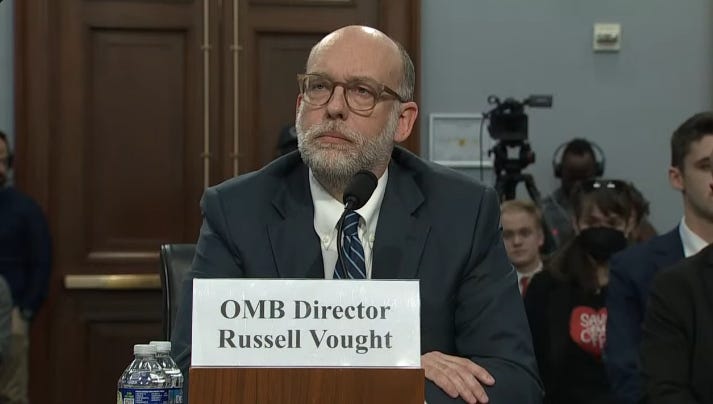
Meet Russell Vought: The “Christian Nationalist” Quietly Controlling Trump’s Budget and Consumer Protection | July 9, 2025 Podcast & Article Analysis
The Mechanics of Unmaking: Russell Vought and the Quiet ApocalypseBy Earl Cotten for The Earl AngleThe air conditioning hums too loudly in the OMB Director’s suite, a persistent, low-grade mechanical complaint against the Washington heat. Outside, the city shimmers, a mirage built on bedrock compromises now being methodically dynamited. Inside, Russell Vought works. He works with the focused, unsentimental efficiency of a man dismantling an engine he believes is fundamentally flawed, its very design an affront to a purer principle. He controls the money. He controls, now, the agency meant to shield the citizen from the predations enabled by that money. This is not an accident. It is the design.One recalls the Connecticut boy, the electrician’s son, the Marine’s grandson. Wheaton College, Billy Graham’s alma mater, where the air is thick with certitude, not compromise. George Washington University Law, a grounding in the mechanisms of power. The path is familiar: Gramm, Pence, Heritage Action. The conservative apparatus, well-oiled, predictable. Yet Vought was never merely predictable. He was the technician who understood the machine’s vulnerabilities, the true believer who saw not a system to navigate, but an idol to smash. His loyalty during the first term, particularly over the Ukraine matter, was not sycophancy; it was a cold calculation, a demonstration of unwavering allegiance to the principle of unitary executive power, embodied, however chaotically, in Trump. He was the man who would hold the line, not out of love for the man, but out of conviction in the man’s necessary, disruptive role.The Blueprint and the Denial They called it Project 2025. A sprawling, 920-page testament to meticulous ambition, authored in the antiseptic think-tanks of the Heritage Foundation and Vought’s own Center for Renewing America. Its chapters laid bare the guts of the administrative state and prescribed the tools for its evisceration. The President disclaimed knowledge, a familiar, almost ritualistic incantation. It was always a fiction, thin as the paper the report was printed on. Vought himself authored the chapter on reshaping the Executive Office of the President. He was Project 2025, in flesh and bone and chillingly specific intent.The disconnect between the public denial and the private execution is not hypocrisy; it is strategy. The denial provides plausible distance, a fog through which the heavy machinery of deconstruction can advance. Paul Dans, the project’s original steward, spoke of the current reality exceeding his "wildest dreams." This is not hyperbole. It is a testament to the velocity Vought has imposed. The tools are bureaucratic, mundane on their face: budget reviews, personnel classifications, regulatory freezes. In Vought’s hands, they are scalpels wielded with the force of wrecking balls.Consider the table, stripped of its clinical formatting, rendered instead as the cold inventory it represents:* Reclassify 50,000 civil servants: Achieved. Schedule F, reinstated by Executive Order 14171, hangs like Damocles' sword over the professional bureaucracy. Expertise is now contingent on loyalty. The career civil servant, once the ballast of the state, is redefined as a political actor, expendable. All Federal Agencies now operate under this shadow.* Abolish DOE, dismantle DHS: In motion. USAID, its humanitarian mission deemed suspect, lies gutted. The CFPB, the target now under Vought’s direct control, is systematically defunded, its work halted. The Department of Homeland Security awaits its own radical reconfiguration. The Education Department is next in the queue.* End "woke" DEI/CRT trainings: Enforced. An OMB memo, a revival of past efforts, bans such training as "anti-American." A purge of perspective, disguised as fiscal prudence and patriotic unity. It permeates every agency.* Curb independent agencies: Asserted. Vought sits, simultaneously, atop OMB and the supposedly independent CFPB. The FTC and SEC feel the tightening grip. Independence is redefined as subservience to the White House vision.* Environment: The EPA faces defunding, its climate rules rolled back. Progress is measured in dismantled regulations, silenced scientists.The Double Helix: OMB and CFPB The consolidation is breathtaking in its audacity. OMB Director. Acting Director of the Consumer Financial Protection Bureau. One office controls the flow of nearly all federal dollars. The other was conceived, in the wake of 2008, as a shield for the ordinary citizen against the vast, often predatory, machinery of finance. Vought now holds both levers. This is not convenience; it is the deliberate fusion of fiscal control and the neutralization of a specific, populist check on power.At OMB, the actions are systemic, chillingly efficient:* A hiring freeze, deep and pervasive, slowly asphyxiating agency capacity.* The revival of "impoundment" – the refusal to spend money appropriated by Congress. A direct challenge to legislative authority,
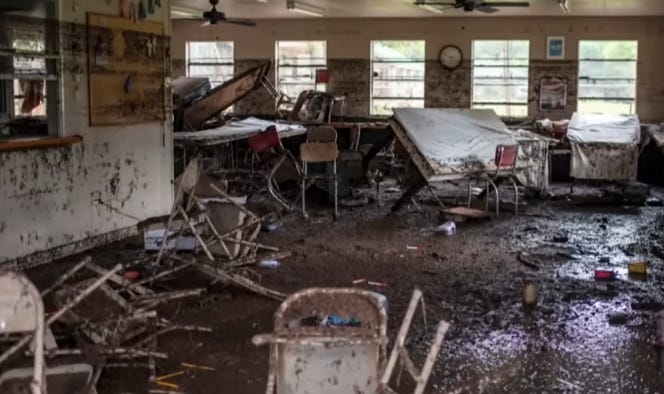
Texas Flood Horror Sparks SHOCK Plan to Defund Trump: Blue States Plot Tax Rebellion in Secret! | July 8, 2025 Podcast & Article Analysis
The Fracture Lines: Notes from an Unsteady RepublicBy Earl Cotten for The Earl AngleThe water had receded, mostly. What remained across vast stretches of Texas was not landscape, but a provisional state: a thick, viscous scab of mud and ruin. Houses, stripped of dignity and purpose, slumped like abandoned stage sets after the final, disastrous performance. The air hung heavy with the sweet-sick odor of decay and wet gypsum board. One observed the people moving through this desolation – not with the frantic energy of rescue, but the stunned, methodical pace of archaeologists cataloging a civilization’s abrupt end. Where does one begin when the very ground beneath your feet has turned traitor? The question hung unspoken, yet louder than the drone of the few generators still running.The anger, however, was finding its voice. It was a low, insistent thrum beneath the surface calm of disaster protocol, a vibration one felt in the throat before hearing it. It arrived not merely from the water’s capricious violence, but from the dawning, documented realization: this had been foreseen. Years before the skies opened with biblical fury, voices within the intricate, often ignored machinery of government had warned. They spoke of flood plains expanding like inkblots on aging maps, of warning systems as obsolete as telegraphs, of reservoirs pushed beyond their engineered intent. The Wall Street Journal had chronicled these pleas, these dry, technical Cassandra cries filed away in the bureaucratic archives. They spoke of cost, always cost. The calculus of prevention versus the eventual, inevitable bill for ruin. The bill had now arrived, payable in mud-smeared lives and shattered communities.And then came FEMA. The very acronym, once a promise of federal competence marshaled in the darkest hour, now tasted like ash. Reports surfaced – not from partisan operatives, but from boots sunk in the same mud as the victims – detailing a response delayed, deficient, a logistical ballet performed with leaden feet. The Handbasket documented the stranded, the desperate, waiting days for water, for medicine, for the simple acknowledgment that the Republic remembered they existed. It was a failure not of nature, but of imagination and will. One saw, again, the familiar pattern: the poorest precincts, those etched along the forgotten margins of flood plains and economic opportunity, bore the deepest scars. Their recovery would be measured not in months, but in generations, a slow-motion erosion of hope as relentless as the floodwaters themselves.Governor Greg Abbott, touring the ruins in his crisp khakis, projected a studied resolve. Yet the performance fractured. Confronted not by agitators, but by citizens hollowed out by loss, seeking only answers about the ignored warnings, he offered not solace, but dismissal. "Losers," he called them, according to The Daily Beast. The word, delivered with the casual cruelty of a playground taunt, hung in the humid air. It was more than a gaffe; it was an illumination. In that moment, the chasm between the governed and the governor became a canyon. The legitimate terror of those who had seen nature’s indifference firsthand was met with the cold indifference of power. Trust, already a scarce commodity, dissolved like sugar in the fetid water. The flood laid bare not just the land, but the brittle, transactional nature of allegiance in a state where political identity often supersedes civic responsibility.Washington, D.C., meanwhile, exists in a perpetual state of constitutional ambiguity. It is a city of monuments to dead republicans and living bureaucrats, a place where power is both concentrated and curiously diffuse for those who call its neighborhoods home. More populous than Wyoming or Vermont, its citizens perform the rituals of American citizenship: they pay federal taxes at rates that would make a New Yorker blanch, they die in foreign deserts wearing the nation’s uniform, they serve on juries that uphold its laws. And yet, when those laws are forged in the crucible of Congress, they have no voice. No Senator to plead their case, no voting Representative to leverage their needs against a committee chairman’s whim. They possess a single, spectral delegate in the House, a figure permitted presence but denied power. This is not an oversight; it is a design feature, a relic of a wary 18th-century fear of a federal capital wielding too much influence over itself.For decades, statehood was an abstraction, a polite dinner-party topic for the city’s educated elite. No longer. Under the relentless pressure of the current administration, the abstraction has hardened into an urgent, visceral demand. Taxation without representation – the phrase we polish for schoolchildren and etch onto historical markers – is the daily lived reality for over 700,000 souls. When healthcare regulations shift, when environmental protections evaporate, when the very rules governing their streets are dictated by a Congress
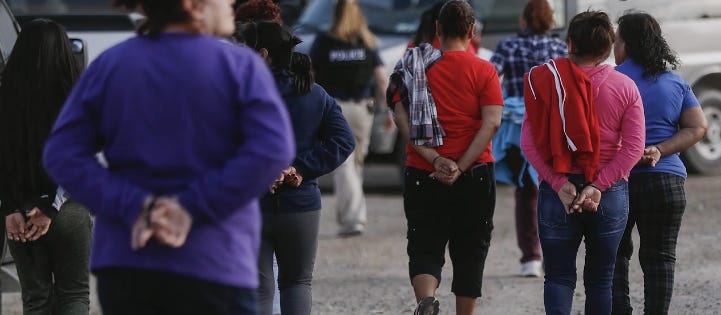
Federal Immigration Raid in LA & Authoritarian Tactics: Trump’s Police State Expansion | July 7, 2025 Podcast & Article Analysis
The Fault Lines: On MacArthur Park and the Machinery of FearBy Earl Cotten for The Earl AngleLos Angeles holds its breath in July. The light bleaches the boulevards, the jacaranda blossoms crisp and fall like forgotten confetti, and the city settles into a kind of suspended animation, waiting for the first Santa Ana winds. But this past Sunday, July 7th, the suspension snapped. In MacArthur Park, that improbable rectangle of green and concrete lake where Central America bleeds into the American dream, the machinery of the state descended, not with the Santa Anas, but in unmarked vehicles.One imagines the scene unfolding with the jarring discontinuity of a surveillance tape. The vendors with their elotes and churros, the families sprawled on picnic blankets escaping cramped apartments, the old men playing chess beneath the palms – the ordinary, resilient life of the city. Then, the cut: vehicles, unmarked, arriving not with the wail of sirens but with the ominous silence of intent. Agents deploying, some faces obscured by balaclavas – a detail that resonates with a particular, chilling frequency. Ski masks in the Los Angeles sun. The scramble begins. Not a pursuit of specific quarry, but a sweep. A net cast wide. Carts abandoned. Children crying, the sound swallowed by the sudden vacuum of panic. People scaling fences not built for escape. The grab, the demand for papers on sun-baked grass. The van doors sliding shut. Witnesses spoke of a military operation, and the mind recoils slightly at the descriptor applied to a city park, yet the image persists: occupation.Mayor Karen Bass called it "reckless" and "unconscionable." The words hang in the air, precise and insufficient. Reckless implies a lack of foresight; this felt calculated. Unconscionable speaks to morality; this was about power. The lack of coordination with the LAPD wasn’t an oversight; it was a statement. The panic wasn’t collateral damage; it was the ambient noise of the exercise. The optics, as they say, were terrible. But optics imply a concern for perception, and the masks suggested a different priority: anonymity, a detachment from accountability, a performance where the actors are deliberately obscured. It was a show of force staged not for deterrence, perhaps, but for the internal ledger, a transaction recorded in the currency of fear. Who felt stronger watching those vans depart? Who felt less?II.The deployment of force, once contemplated, seeks its own logic, its own scale. The use of the military in the domestic sphere has always been the tripwire in the American psyche, the line crossed in grainy newsreels of Little Rock or Kent State. We comfort ourselves with the Posse Comitatus Act, a name evoking frontier posses but designed for a modern republic: a barrier against soldiers policing citizens. Barriers, however, invite circumvention.The National Guard, that Janus-faced institution – state militia one moment, federal instrument the next – has long been a presence at the physical border. But the mission creeps. Now, Guardsmen are reported running detention facilities. "Alligator Alcatraz." The name itself is a piece of bleak, almost literary, Americana. A swamp-bound holding pen. Guardsmen handling intake, security – the granular, intimate mechanics of confinement. This is not "support." This is the core function of detention, the point where liberty is processed into custody.Then, the Marines. Two hundred of them. Sent not to a war zone, but to Florida. Explicitly, ABC News reports, to assist Immigration and Customs Enforcement with "operational support." Marines. Their very name conjures expeditionary forces, amphibious landings on foreign shores. Now, their boots are on Florida soil, backing ICE operations. The blurring isn't incidental; it is the point. The loopholes cited – the distinction between Army and Navy (the Marines fall under the Department of the Navy), the semantic parsing of "support" – are less legal arguments than symptoms of a willful erosion. The normalization of soldiers against civilians changes the texture of enforcement. It introduces a different weight, a different finality. The presence of the Marine is a different kind of symbol than the presence of the ICE agent. It speaks of the state’s ultimate reserves being mobilized for a task traditionally, constitutionally, civilian. The message is not subtle. It resonates far beyond the Florida swamps, echoing back to MacArthur Park. The line isn't just blurred; it feels deliberately smudged.III.The ground shifts elsewhere, abruptly, leaving lives stranded. Temporary Protected Status (TPS) was always a brittle construct, its "temporary" a constant hum beneath the lives built upon it. For Hondurans and Nicaraguans, that temporary spanned decades – long enough for roots to delve deep into American soil, for children to be born citizens, for homes to be bought, businesses started. Lives constructed within the parameters of the law, contingent on conditions back home r

Texas Flood Deaths Expose MAGA Governance Cuts: NOAA, FEMA & Climate Dismantling | July 6, 2025 Podcast & Article Analysis
The Illusion of Control: Notes on a Hill Country DrowningBy Earl Cotten for The Earl AngleThe Guadalupe River flows through the Texas Hill Country like a remembered promise. Clear, usually, and shallow over limestone, a place for children to wade and skip stones. It is a landscape of deep shade and sudden, blinding sun, of live oaks twisting towards the sky, and quiet hollows where the heat gathers thick as wool. Camp Mystic, nestled along its banks for a century, traded on this promise of pastoral ease, of innocence preserved under a benevolent sky. On the Fourth of July, 2025, the sky delivered something else entirely. It delivered a wall of water twenty-six feet high. It delivered seventy-eight deaths, twenty-eight of them children. It delivered a specific kind of American silence – the silence that follows the rupture of fundamental assumptions. The assumption, primarily, that someone is watching the weather.We tell ourselves stories in order to live. We tell ourselves that systems function, that expertise is valued, that warnings will be issued in time. We tell ourselves that the institutions built in the sober aftermath of past calamities – the levees, the firebreaks, the weather bureaus – still stand guard. The events unfolding along the Guadalupe River in those pre-dawn hours of July 5th, 2025, and the political currents swirling around them in Washington, suggest a different narrative is being written. One where the watchmen have been dismissed, the instruments dismantled, and the river, indifferent to our illusions, rises in the dark.Consider the rain. It was not supposed to be that rain. The forecasts, those flickering digital pronouncements that structure our modern anxieties, spoke of three, perhaps six inches over the Concho Valley. Manageable. Unpleasant, certainly, but within the known parameters of a Texas summer storm. Camp Mystic counselors, like Katharine Somerville, planned songs under ancient oaks, not escape routes from cabins perched, as they believed safely, at the "tippity top of hills." The rain that fell was not six inches. It was ten, fifteen, months of typical precipitation arriving in a single, sodden night. The river didn't rise; it exploded. Twenty-six feet in forty-five minutes near Kerrville is not hydrology; it is violence. A force that sweeps away homes, cars, children’s cabins, and the comforting fiction that we understand the land we inhabit. "We never even imagined this could happen," Somerville said. This, perhaps, is the most telling epitaph: the failure of imagination, collective and catastrophic.The question hangs in the humid air, thick as the smell of wet limestone and ruin: Why? Why the staggering underestimation? Texas Emergency Management Chief Nim Kidd offered a bleakly simple answer: "The amount of rain was never in any forecasts." The models failed. Spectacularly. By 400 percent. Kerrville City Manager Dalton Rice stated the grim consequence: "The catastrophic flash flooding happened because skies dumped more rain than forecasted." Sheriff Larry Leitha surveyed the devastation – the mud-choked valleys, the debris fields where homes once stood, the frantic search for eleven girls and a counselor still missing from Camp Mystic – and asked the obvious, agonizing question: Why weren’t the warnings more urgent? A flood watch twelve hours prior feels like a cruel formality when the sky is preparing an ambush.The answers, like the floodwaters, trace back upstream, to Washington. To a place where the concept of "government efficiency" has been distilled into a relentless paring knife. Under its blade, the National Oceanic and Atmospheric Administration (NOAA) lost over 10% of its workforce. The National Weather Service (NWS), the agency tasked with reading the sky’s intentions, shed more than 600 meteorologists. Think of that number. Six hundred pairs of eyes trained away from the satellites, the radar sweeps, the delicate tracery of atmospheric data. Six hundred minds no longer interpreting the whispers of the jet stream, the gathering instability over the Gulf. Plans to rehire 126 felt like tossing a cup of water onto a structural fire. Offices were, and remain, critically understaffed. The former NOAA director, Rick Spinrad, had warned this would inevitably "degrade forecasting," especially when the sky turned malevolent. Internal documents confirmed the grim reality: offices prepared for "degraded services" due to "severe shortages."The mechanics of this degradation are chillingly mundane. Fewer staff meant fewer weather balloon launches. These balloons, ascending through the layers of the atmosphere, are the backbone of the models. Without their data, the models fly blind, guessing at the moisture content, the wind shear, the potential energy brewing overhead. Leadership gaps meant vacant chairs where decisions about escalating warnings should have been made. Real-time radar showed trends screaming towards catastrophe, yet the forecasts never escalated to "hi
Luttig Scorches Roberts & Trump: Constitutional Crisis as Presidency Mirrors Monarchy | July 4, 2025 Podcast & Article Analysis
The Unforgivable Reticence: Silence in the Hour of the WolfBy Earl Cotten for The Earl AngleThe former President, face florid, spittle forming at the corner of his mouth, demanding the impeachment of a federal judge. The name changes – Boasberg this week, someone else the next – but the incantation remains constant, a dark liturgy against the robes. The sound is off. One doesn’t need to hear the words; the intention vibrates through the screen, a low hum of menace. It is a performance designed for maximum erosion. And presiding over the highest court in this fractured land, a man known for the precision of his diction, chooses silence. It is this silence, this particular and devastating quiet emanating from One First Street, that draws the eye. It is a silence observed, dissected, and ultimately condemned by another man, a man whose pedigree within the conservative legal firmament is beyond reproach, whose disillusionment arrives not as a surprise, but as an indictment: Judge J. Michael Luttig.Luttig. The name itself carries a certain weight, a specific gravity within the rarefied atmosphere of Republican jurisprudence. Not a celebrity, not a pundit, but an architect. One thinks of the quiet offices where such men operate, the smell of leather-bound reporters and stale coffee, the hushed conversations shaping destinies unseen by the public. He placed Clarence Thomas on the Supreme Court. He mentored the ambitious, the Ted Cruzes of the world, sharp young minds hungry for influence. His own name floated for decades on the shortlists of Republican presidents – Reagan, Bush, Bush again – a whispered possibility, a potential cornerstone. He sat for fifteen years on the Fourth Circuit, his opinions rendered with a meticulousness that made them required reading, not merely citations but blueprints. He is, in the most profound sense, of the institution. He helped pour its foundations. And now, he stands outside the temple he helped build, his voice tight, not with rage, but with a profound, weary disappointment directed squarely at his old friend, the Chief Justice of the United States, John Roberts. To hear Luttig speak now is to witness not just a critique, but a tectonic shift within the very bedrock of the conservative legal movement. It feels less like commentary and more like the measured pronouncement of a seismologist confirming the fault line has ruptured.The relationship between Luttig and Roberts is not incidental. It is woven into the fabric of their careers, a shared history stretching back to the corridors of the Reagan White House Counsel’s office. Young men then, brilliant, ambitious, steeped in a vision of conservative legal order. They moved in the same tight orbit, that small constellation of future judges and justices, speaking a language of precedent and restraint, believing in the slow, deliberate turning of the legal wheel. When Luttig ascended to the bench, it was Roberts who stepped into his vacated role. There is a history there, of shared meals, shared arguments, shared aspirations for the institution they revered. Luttig has called Roberts “one of the smartest people I’ve ever met,” a man possessing a piercing self-awareness about the Court’s place in the long arc of history. This shared past, this intimate understanding of the man and the office he holds, is what makes Luttig’s public dissection so devastating. It is not the attack of an outsider, but the anguished correction of a fellow architect who sees the structure buckling. “There is nothing that John Roberts is not aware of,” Luttig has stated, a simple sentence freighted with unbearable weight. “That’s why I’ve been so disappointed in him.” The word "disappointed" hangs in the air, deliberate, precise. It is the vocabulary of personal betrayal, the sigh of a man who expected more, knew the capacity for more, and witnessed instead a retreat. It is the sound of history colliding with the present moment, and history finding the present wanting.The assault itself unfolds with a grim predictability now, a ritual enacted whenever the legal process dares to impede the will of the former President. A ruling is handed down – blocking a deportation order, perhaps, or demanding the release of documents – something inconvenient, something that asserts the independence of a coordinate branch. The response is instantaneous, broadcast not through legal briefs but through the megaphone of social media: “IMPEACH THE JUDGE!” “CROOKED!” “OBAMA JUDGE!” The names of the jurists become targets, painted in the digital equivalent of scarlet. It matters little that impeachment, under the Constitution, is reserved for “Treason, Bribery, or other high Crimes and Misdemeanors” – acts of profound individual misconduct, not policy disagreements. The historical record is stark: in over two centuries, only 15 federal judges have faced Senate impeachment trials; only 8 were convicted, all for verifiable crimes – bribery, perjury, tax evasion. This weaponizatio
Radical Founding, Modern Threat: America’s Unfinished Fight for Equality | July 3, 2025 Podcast & Article Analysis
The Ongoing Struggle for Equality's PromiseThe proposition hangs in the air still. That one, drafted in Philadelphia heat: all men are created equal. We recite it now like catechism, forgetting how the words exploded onto a world ordered by blood and crown. A radical utterance, yes. An act of faith scribbled onto parchment while men were bought and sold down by the docks, while nations lived on the land beyond the settlements, while half the human race remained legal non-persons. The dissonance was baked in from the start. The promise universal, the application viciously particular.One learns to live with the crack in the foundation. Or rather, the nation learned, uneasily. The dissonance festered. It split the house. It spilled blood in fields from Manassas to Selma. The Civil War settled nothing finally, only made the contours of the lie starker. The Civil Rights Movement clawed at the edifice, chipping away mortar. Always the proposition was contested territory, fought over clause by clause, inch by bloodied inch. "Equality" expanded not through grace, but through relentless, grinding pressure applied against the original, deliberate exclusions.And yet. The threat persists. It never recedes for long. The core idea – that fragile, audacious proposition born in 1776 – remains perpetually vulnerable. Not to frontal assault, perhaps, but to erosion, to neglect, to the slow poison of thinking the work is done. It requires vigilance, this American faith. It demands the fight. Always the fight. For its realization was never guaranteed, only promised. And promises, as we know too well, are easily broken.The Cost of Liberty: A Nation's Unfinished PropositionThe heat. Always the heat when one speaks of Philadelphia in July. A wet wool blanket thrown over the chest, the air thick with the promise of thunder that rarely breaks clean. One imagines it then, in that room: the tall windows perhaps open, admitting not relief but the dense, insect-thrumming air of a city simmering. The smell of horse dung and unwashed wool and the peculiar metallic tang of anxiety. Men in waistcoats, sweat beading at their hairlines, their collars wilting. A fly buzzing against a pane. The scratch of quills. The weight of words being set down, words like stones intended to anchor a new world.We hold these truths to be self-evident.Consider the audacity. Consider the sheer, breathtaking nerve of it. In the year 1776, in a world rigidly stratified by blood and land and divine right, where kings were kings by God’s own ordinance and peasants knew their place as surely as the ox knows the yoke, a collection of provincial lawyers, planters, merchants – revolutionaries, yes, but men accustomed to a certain order within their sphere – inscribed onto parchment a sentence that detonated the bedrock of centuries.That all men are created equal.It is the sentence that echoes, still. The sentence that defines the American experiment, or perhaps haunts it. One reads it now, the ink long dry on the engrossed copy under its bulletproof glass in Washington, and the words vibrate with a dangerous purity. They were radicals, these men. They knew it. The King knew it. The comfortable hierarchies of Europe recoiled. To declare inherent human equality, unalienable rights bestowed not by monarch or parliament, but by a Creator – it was an intellectual grenade tossed into the powder keg of history. It implied, demanded even, a perpetual state of becoming, a constant unsettling of any imposed station. No man born better. No man born to kneel.And yet.The fly buzzing against the pane. The slave outside, fanning the air for his master. The indigenous nations beyond the Alleghenies, whose concept of land and sovereignty bore no resemblance to the deeds being drawn up in coastal capitals. The silence in that room, the profound, unexamined silence, hangs heavy over the parchment now. It is the silence of exclusion, the silence of a radicalism bounded by the horizon of the possible, or perhaps merely the horizon of the comfortable. "Men," in that luminous sentence, shimmered with a specific meaning. White men. Men of property, certainly. The enslaved African? Property. The indigenous inhabitant? An obstacle, perhaps a savage. The woman? An adjunct, invisible in the political calculus. The truths were self-evident, it seemed, only within a very specific frame of reference. The radical document was, simultaneously, a document of profound limitation. The revolution was declared, but its deepest implications were quarantined.The dissonance was there from the start, a hairline crack in the foundation stone. America was born not merely on an idea, but on this specific, potent, and ultimately unstable contradiction: the declaration of universal equality predicated on a tacit understanding of profound, inherent inequality. The nation would spend its blood and treasure and moral capital wrestling with this dissonance. The silence in that Philadelphia room would roar.Eighty-seven

Iran Strike Fallout, Budget Crisis & Democracy Fears | June 26, 2025 Podcast Analysis
Summary A critical look at the Trump administration's actions and policies as of June 2025. It highlights a Defense Secretary's aggressive defense of disputed claims regarding strikes against Iran, contrasting this with reports from the New York Times and CNN suggesting a less impactful outcome and even secret negotiations with Iran. The text also details a controversial budget reconciliation bill, aimed at extending tax cuts for the wealthy and corporations while cutting social programs, facing significant public opposition and challenges from the Senate parliamentarian. Finally, it touches on the administration's stance on immigration, the unpopularity of extreme wealth displays, and the rise of a democratic socialist candidate in New York City challenging the political status quo, drawing strong reactions from Trump and a Republican congressman.Key Takeaways* U.S. Strikes: Targeted Fordow, Natanz, Isfahan nuclear sites; claimed “obliteration” but uranium stockpiles missing .* DOGE Cuts: 100,000+ federal jobs slashed; cybersecurity, diplomacy, emergency response gutted .* Iran’s Retaliation: Symbolic strike on Qatar base; cyber/kinetic threats loom .* Civilian Toll: Tehran residents flee; inflation spikes 200%; radiation fears at Natanz.* Regime Resilience: IRGC’s economic grip and decentralized command defy “soft regime change” hopes .Bunker Busters and Broken PromisesThe B-2s flew in low. Fordow’s mountain fortress shook. Natanz’s centrifuges blew sky-high. Isfahan burned. Trump called it “obliteration.” Satellite images showed craters. Rubble. Dust. No radiation leaks—yet. But the uranium? Gone. Moved before the bombs fell. Small casks, ten cars’ worth, vanished into Iran’s backstreets . Pentagon brass mumbled about “severe damage.” IAEA inspectors shrugged. Nobody knew where the yellowcake slept. Netanyahu thanked Trump. Tehran residents packed cars, begged for gas, fled east toward Kerman. Roads jammed. Trains dead. Twenty-five liters per soul—not enough to outrun missiles .* Targets Hit: Fordow (underground), Natanz (enrichment), Isfahan (research) .* Casualties: Dozens of scientists, IRGC commanders ash .* Iran’s Counter: Ballistic missiles aimed at Tel Aviv. Most intercepted. Some got through .The Hollowed-Out MachineDOGE—Department of Government Efficiency. Musk’s brainchild. A chainsaw to federal payrolls. CISA lost its cyber sharpshooters. Jeff Greene walked out. “Empty chairs mean less defense,” he said. Hackers licked their chops . FEMA’s Mount Weather bunker—half-staffed. No one left to plan for Iranian sleeper cells. State Department? No Middle East experts. No ambassador in Qatar. Voice of America’s Farsi service got gutted. Layoffs Friday. U.S. bombs Saturday. Trump’s speech crackled over VOA’s hobbled airwaves. Audio died mid-translation . JD Vance linked it all to border chaos. “Crazy people crossing—that’s the real threat,” he said. FBI agents shifted from counterterror to migrant roundups. Now scrambling back. Too late .Agency Impact OverviewTehran’s Calculus: Fire Without FlameKhamenei didn’t scream. He aimed. One missile strike on Al Udeid airbase in Qatar. Precise. Warned first. No U.S. bodies. A burn mark on the tarmac. “See? We can hit you,” it whispered. Then silence. No Hormuz blockade. No Hezbollah waves. Just a coiled fist . Behind the curtain—Moscow. Putin hosted Iran’s foreign minister. No tanks promised. No S-400s. Only tea and grim nods. China hawked discounted oil. No cavalry . Inside Iran, the IRGC rebuilt command. Mousavi replaced the dead Bagheri. Pakpour took Salami’s chair. The machine ground on. Resilient. Boring. Brutal .* Retaliation Menu: Cyberattacks (likely), Hormuz closure (doubtful), proxy terror (possible) .* Domestic Crackdown: Protests stifled. Media choked. “War discipline” enforced .Whiskey and Warnings: Global Powers WinceG7 leaders scribbled their names. A statement: “Iran—source of instability.” Trump signed it. Then bolted. “Got things to blow up,” he told reporters. Air Force One roared home. Putin called. Offered help? Maybe. Trump bragged. “He talks to me. Not you.” . NATO squirmed. Markets yawned. Oil prices tanked 7%. Traders bet on de-escalation. Fed rates dipped. S&P 500 soared. War? Just noise to Wall Street . Australia backed the strikes. India bought Russian oil. North Korea cursed. Same old song .Global Reactions at a Glance* Russia: Symbolic talks, no military aid .* China: Silent; bought discounted Iranian oil .* Gulf States: Quiet relief; no public support .* North Korea: Condemned strikes; called for U.S./Israel censure .Budget Bombs: DOGE’s Paper WarElon Musk’s DOGE hacked 100,000 jobs. “Efficiency,” they called it. FEMA’s disaster planners—gone. Cyber command’s brain trust—poached by Silicon Valley. State Department’s Iran desk—empty. Trump’s border obsession drained the swamp into a desert. ICE needed bodies. So they took FBI counterterror teams. Told them to raid slaughterhouses in Nebraska. Now, with Iran itching to strike, those

Trump NATO Clash: Iran Intel Fight, Media Attacks & Netanyahu Plea | June 25, 2025 Podcast Analysis
Trump administration's reaction to intelligence leaks regarding recent military strikes on Iran's nuclear facilities. It describes President Trump's public statements at a NATO summit, where he downplayed the intelligence assessment that the strikes only temporarily set back Iran's nuclear ambitions, instead claiming "total obliteration" and attacking news organizations that reported otherwise. The source highlights the FBI's criminal investigation into the leak, the administration's decision to limit classified information sharing with Congress, and congressional Democrats' concerns about this move. Furthermore, the text touches on the Intelligence Community's differing assessment of the strikes' effectiveness and Trump's public support for Israeli Prime Minister Benjamin Netanyahu amidst his legal troubles.The Earl Angle is a reader-supported publication. To receive new posts and support my work, consider becoming a free or paid subscriber. This is a public episode. If you'd like to discuss this with other subscribers or get access to bonus episodes, visit earlcotten.substack.com/subscribe

Jeff Bezos announces ‘significant shift’ coming to the Washington Post. A key editor is leaving because of it
Jeff Bezos is implementing a "significant shift" in the Washington Post's opinion section, focusing on personal liberties and free markets, which led to the departure of editorial page editor David Shipley. This decision has sparked turmoil and rebellion among Post staffers, with some expressing concerns about the suppression of dissenting viewpoints and the influence of Bezos's personal and business interests. Conservatives are applauding the move, while others view it as an abandonment of accountability and justice. Publisher Will Lewis defends the changes as a recalibration to clarify the paper's stance, but dissatisfaction among staffers persists due to controversies surrounding Lewis's appointment and journalistic integrity, as well as Bezos's past actions, such as blocking an endorsement of Kamala Harris and perceived conflicts of interest. These changes raise questions about the future direction and independence of the Washington Post under Bezos' ownership.The Earl Angle is a reader-supported publication. To receive new posts and support my work, consider becoming a free or paid subscriber. This is a public episode. If you'd like to discuss this with other subscribers or get access to bonus episodes, visit earlcotten.substack.com/subscribe

Trump Administration Plans to Require Undocumented Immigrants to Register
The Trump administration announced plans to require undocumented immigrants aged 14 and older to register with the U.S. government, providing their fingerprints and facing potential criminal prosecution for non-compliance. This initiative aimed to encourage self-deportation by creating a more hostile environment. Critics argued the plan was unlikely to succeed, given fears of deportation and the government's inability to locate many undocumented individuals. The administration invoked an existing, but largely unenforced, pre-World War II law requiring registration. The policy did not apply to green card holders, those in deportation proceedings, or visa holders, but mandated parents register their undocumented children under 14. This registration effort reflected a broader strategy to utilize every available tool to compel undocumented immigrants to leave the United States.The Earl Angle is a reader-supported publication. To receive new posts and support my work, consider becoming a free or paid subscriber. This is a public episode. If you'd like to discuss this with other subscribers or get access to bonus episodes, visit earlcotten.substack.com/subscribe