
Earl & Kate Deep Dive
A newsletter that bridges historical scholarship and urgent political commentary, offering a unique resource for understanding U.S. democracy’s fragility and resilience.
Earl Cotten
Show overview
Earl & Kate Deep Dive launched in 2024 and has put out 101 episodes in the time since. That works out to roughly 30 hours of audio in total. Releases follow a several-times-a-week cadence.
Episodes typically run ten to twenty minutes — most land between 8 min and 31 min — with run-times ranging widely across the catalogue. None of the episodes are flagged explicit by the publisher. It is catalogued as a EN-language News show.
The catalogue appears to be on hiatus or wound down — the most recent episode landed 1 year ago, with no new episodes in over a year. Published by Earl Cotten.
From the publisher
Earl & Kate Deep Dive is your go-to podcast for sharp, no-nonsense takes on the latest in news, U.S. politics, and government affairs. Hosted by the ever-opinionated Earl Cotten and the quick-witted Katherine Mayfield, this dynamic duo dives headfirst into the headlines, dissecting the stories shaping our world today. Whether it’s U.S. political drama, Democracy or Breaking news, Earl and Katherine bring their unique perspectives, plenty of banter, and a little humor to keep things lively. If you want to cut through the noise and get a fresh take on the issues that matter, tune in to Earl & Kate Deep Dive. earlcotten.substack.com
Latest Episodes
View all 101 episodes
Rhetoric and Political Violence: Analyzing the debate over political language following the Dallas ICE facility shooting
The Dallas ICE facility shooting and its broader context within American political violence. It establishes that the attack, which killed one detainee, appeared politically motivated due to "anti-ICE" messaging found near the shooter. The text highlights a reported dramatic increase in assaults against immigration facilities and critiques the predictable, polarized political and media responses that rapidly form narratives before investigations conclude. Furthermore, the analysis explores academic research suggesting that while heated rhetoric does not directly cause violence, it acts as an enabling condition that empowers individuals already inclined toward extremism, a pattern consistent with historical periods of social tension in the United States. This is a public episode. If you'd like to discuss this with other subscribers or get access to bonus episodes, visit earlcotten.substack.com/subscribe
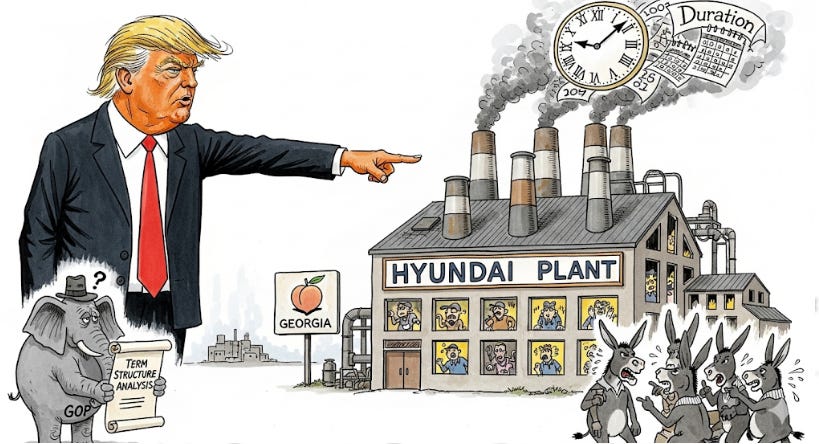
Trump's Immigration Warning After Hyundai Raid: What Actually Happened in Georgia
It discusses a significant workplace immigration enforcement operation at a Hyundai battery plant in Georgia, described as the largest single-site enforcement operation in DHS history. It details how 475 workers, primarily South Korean nationals, were detained during a raid involving hundreds of federal, state, and local officers, leading to the halt of construction on the massive project. The text highlights former President Trump's immediate public warning to foreign companies to adhere to U.S. immigration laws, while still encouraging legal immigration for skilled workers. Furthermore, it explains the diplomatic tensions that arose with South Korea, a major U.S. ally and investor, and the subsequent negotiations for the return of their citizens. The source also examines the local economic impact on the small Georgia community and positions the raid as part of a broader, coordinated pattern of enforcement actions targeting "sanctuary cities" and workplaces, revealing complexities in visa classifications and the reliance on specialized foreign expertise for large-scale projects. This is a public episode. If you'd like to discuss this with other subscribers or get access to bonus episodes, visit earlcotten.substack.com/subscribe
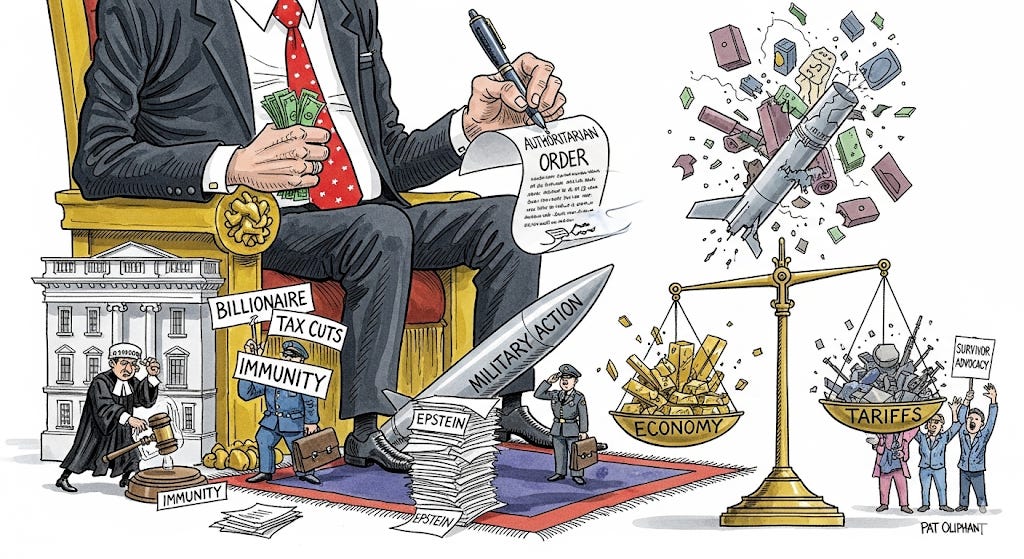
Trump Policies Economic Impact Billionaire Growth Tariff Controversies Supreme Court Challenges Epstein Files Survivor Advocacy Military Actions Authoritarian Power
It examines Donald Trump's major policies and their multifaceted impacts, focusing on controversial tariffs, aggressive immigration enforcement, and expanded domestic military deployments. It highlights extensive legal battles, with lower courts often ruling against the administration, though the Supreme Court frequently intervenes via its "shadow docket" to allow policies to proceed. The economic analysis reveals a mixed impact, including increased consumer costs and potential GDP reduction, alongside volatile market reactions. Furthermore, the sources discuss concerns regarding authoritarian power, emphasizing the administration's willingness to challenge judicial oversight and traditional checks and balances, and touch upon the re-emergence of the Epstein case due to survivor advocacy and Trump's comment This is a public episode. If you'd like to discuss this with other subscribers or get access to bonus episodes, visit earlcotten.substack.com/subscribe
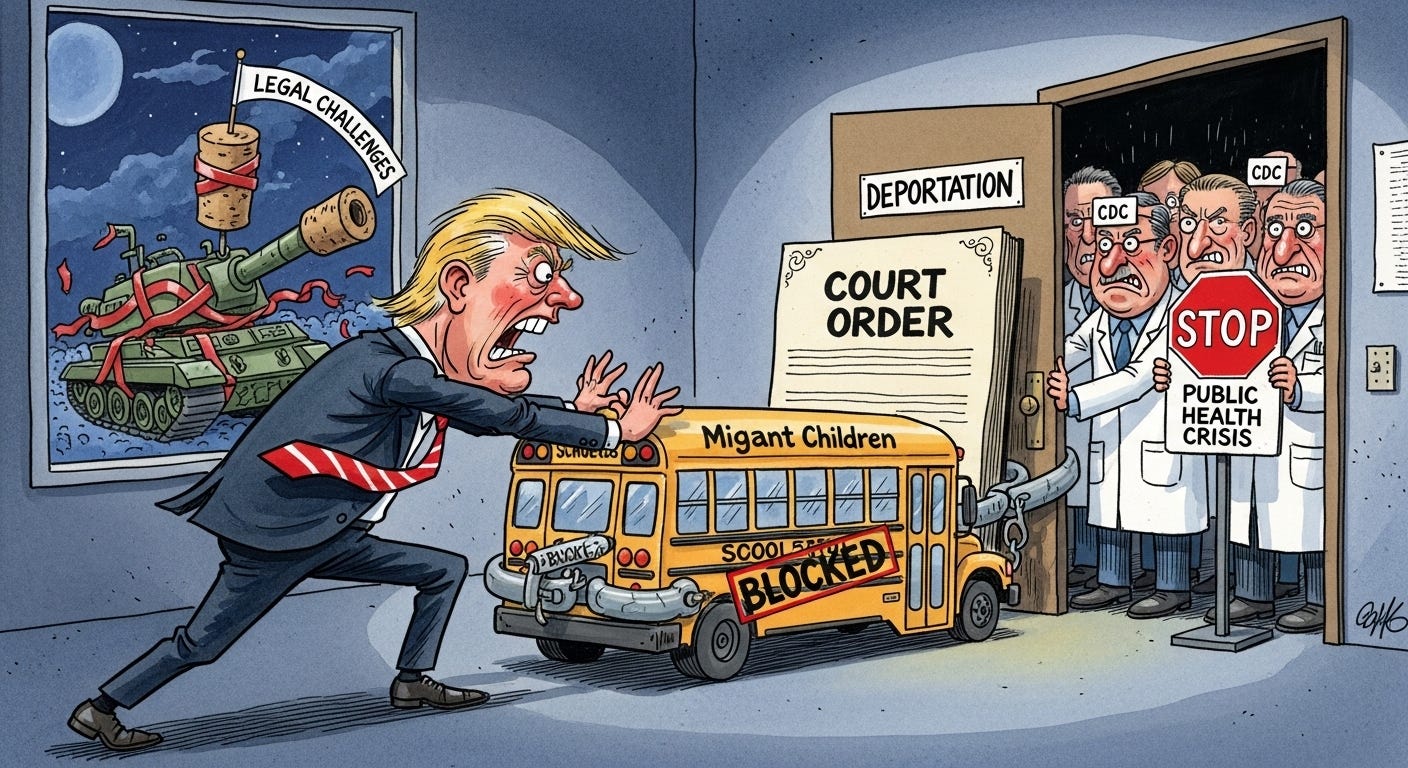
Trump Administration's Midnight Deportation of Migrant Children Blocked by Court | CDC Directors Warn of Public Health Crisis | Legal Challenges to Military Deployment
It details significant legal and professional pushback against the Trump administration's policies across several key areas. Federal judges intervened to block the overnight deportation of hundreds of migrant children, citing violations of protection laws. Concurrently, nine former CDC directors issued an unprecedented warning regarding the Health Secretary's leadership, alleging actions that undermine the nation's public health system. Furthermore, courts challenged the administration's use of military forces for immigration enforcement, ruling that such deployments in Los Angeles exceeded legal boundaries. These instances collectively highlight challenges to immigration, public health, and the domestic application of military power, revealing a pattern of the administration bypassing established procedures and professional expertise. This is a public episode. If you'd like to discuss this with other subscribers or get access to bonus episodes, visit earlcotten.substack.com/subscribe
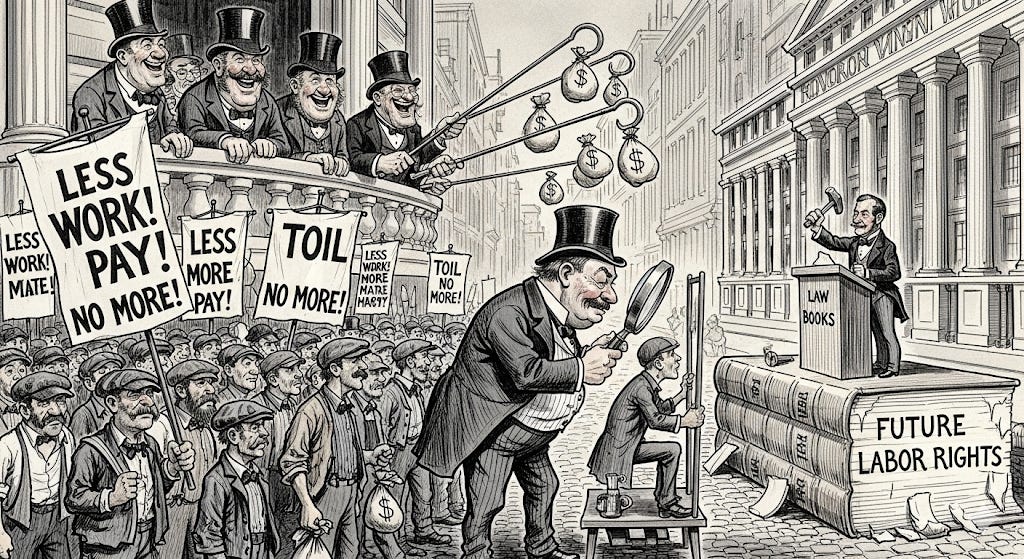
Labor Day History: Origins of Worker Protests, 1882 Parade & Political Impact on Labor Rights
It examines the complex origins and evolution of Labor Day, highlighting its transformation from a radical worker protest to a federal holiday. It explains how the holiday was born from significant labor struggles and violence, such as the 1894 Pullman Strike, which prompted President Cleveland to act. The article also reveals the deliberate political decision to celebrate Labor Day in September to distance it from the more radical, internationally recognized May Day. Furthermore, it discusses the ongoing debate surrounding the holiday's true founder and notes a recent trend of Labor Day celebrations returning to their activist roots amidst contemporary worker issues. This is a public episode. If you'd like to discuss this with other subscribers or get access to bonus episodes, visit earlcotten.substack.com/subscribe
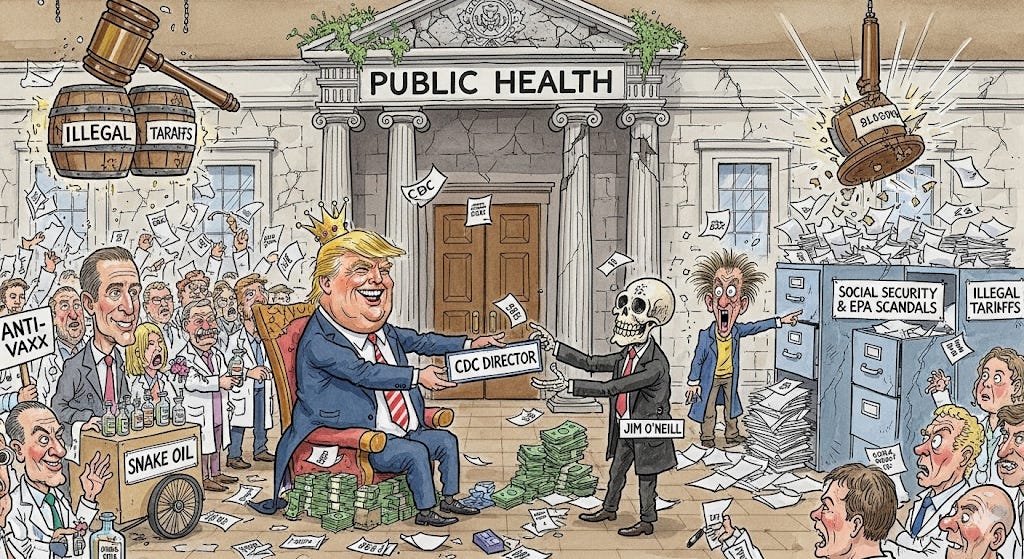
CDC Leadership Crisis: Science vs Politics
It describes a significant leadership crisis at the Centers for Disease Control (CDC), initiated by the firing of Director Susan Monarez for her refusal to implement what she deemed unscientific vaccine policies. This event triggered a wave of resignations from senior CDC officials, who cited political interference and the "weaponizing of public health." The new acting director, Jim O'Neill, lacks medical or scientific training, further raising concerns among public health experts. These events are part of a broader "Make America Healthy Again" (MAHA) agenda led by Health Secretary Robert F. Kennedy Jr., which includes controversial changes to vaccine policies, emphasizing skepticism over established scientific consensus. Furthermore, the text highlights parallel whistleblower crises at other federal agencies, such as the Social Security Administration, suggesting a pattern of conflict between career officials and political appointees across the government, with potential legal and public health implications for the nation. This is a public episode. If you'd like to discuss this with other subscribers or get access to bonus episodes, visit earlcotten.substack.com/subscribe
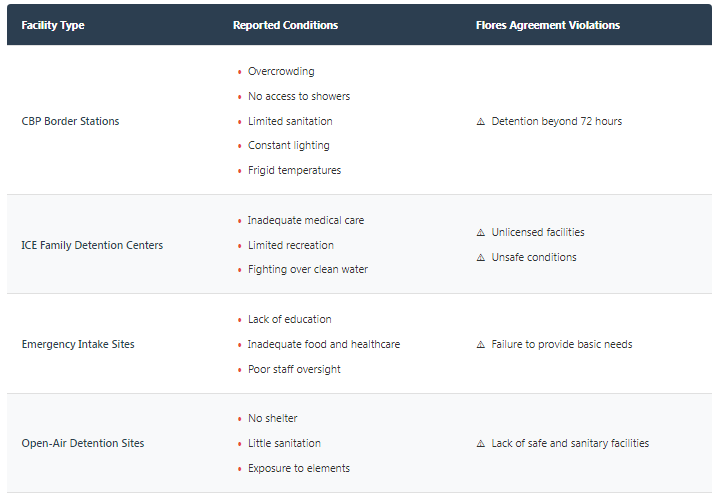
The Flores Agreement Battle: Protecting Immigrant Children in U.S. Custody
Key Takeaways* A federal judge recently rejected the Trump administration's second attempt to terminate the Flores Settlement Agreement, maintaining crucial protections for immigrant children .* The 1997 Flores Agreement establishes minimum standards for treatment of immigrant children in custody, including limits on detention duration and requirements for adequate conditions .* Government officials argue the agreement "incentivizes unlawful border crossings" by families with children, while advocates maintain it's essential for preventing indefinite detention in unsafe conditions .* Despite court mandates, documentation reveals ongoing violations including prolonged detention in inadequate facilities with insufficient food, medical care, and sanitation .* The ruling preserves judicial oversight mechanisms that allow independent monitors to access detention facilities and report on conditions .The Flores Agreement: Historical Context and Core ProtectionsThe Flores Settlement Agreement traces its origins back to 1985 litigation concerning the treatment of a 15-year-old Salvadoran girl named Jenny Flores who was detained by immigration authorities. She was held in a hotel surrounded by chain-link fencing and subjected to strip searches alongside other children in custody . This case exposed systemic issues in how the federal government handled immigrant children, culminating in the 1997 agreement that established nationwide standards for their treatment. The agreement wasn't created out of abstract policy debates but emerged from documented patterns of mistreatment that affected real children caught in the immigration system.At its core, the Flores Agreement mandates that immigrant children must be held in the "least restrictive setting" appropriate for their age and needs . This legal framework requires the government to prioritize releasing children to family members or guardians whenever possible instead of keeping them in detention facilities. For those children who must remain in custody, the agreement establishes minimum standards for their care, including adequate food and drinking water, medical assistance, sanitation facilities, and supervision by trained staff . Perhaps most significantly, it limits how long children can be held in Customs and Border Protection (CBP) facilities to no more than 72 hours before transfer to more appropriate settings .The agreement also provides for ongoing judicial oversight through court-appointed monitors and lawyers who have access to detention facilities to verify compliance . This oversight mechanism has proven crucial multiple times when the government failed to meet its obligations. The Flores Agreement applies to all immigrant children in federal custody, whether they arrived alone or with family members . This comprehensive approach recognizes that all children deserve protection regardless of their immigration status or circumstances of arrival. These protections emerged from recognizing that detention, even for relatively short periods, can cause lasting developmental harm to children, with child psychologists warning that even two weeks in detention can have severe consequences that last a lifetime .Recent Legal Challenges and Judicial ResponsesThe Trump administration initiated its most recent attempt to terminate the Flores Settlement Agreement in May 2025, filing a formal motion arguing that the agreement had become "overly rigid and outdated" . Government attorneys contended that Congress had enacted legislation and federal agencies had developed standards that rendered the court supervision unnecessary . This argument represented a strategic approach to removing judicial oversight that had repeatedly identified violations and compelled improvements in detention conditions. The administration further claimed that the agreement actually incentivized unlawful immigration by encouraging families to bring children on dangerous journeys with the expectation of being released quickly into the United States .In response to this motion, Flores counsel, a coalition of advocacy organizations including the Center for Human Rights and Constitutional Law, National Center for Youth Law, and Children's Rights, filed a forceful opposition in June 2025 . They presented stark evidence that terminating the agreement would remove crucial safeguards for children's health and safety, potentially opening the door to indefinite detention in prison-like facilities. The counsel submitted recent declarations from detained children and parents describing brutal conditions, including overcrowding, unsanitary environments, and inadequate medical care . These firsthand accounts provided concrete examples of why continued judicial oversight remained necessary despite government claims of improved standards.On August 15, 2025, U.S. District Judge Dolly Gee issued a definitive ruling rejecting the administration's request to terminate the agreement . In her 20-page order, Judge Gee note
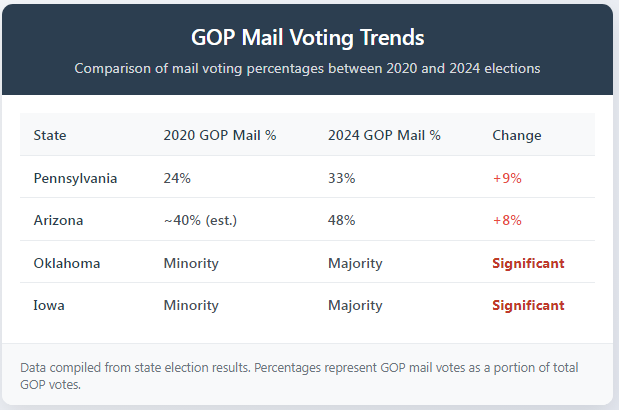
Mail Voting Paradox: GOP's Millions supporting Mail Ballots While Trump Attacks Them
Key Takeaways* 😕 The Republican National Committee spent millions on "Bank Your Vote" programs while Trump called mail voting "corrupt".* 🗳️ At least 34 countries use mail voting, contradicting Trump's claim that America is "the only country" using it.* 📊 In 2024, Republicans increased their mail voting share in Pennsylvania from 24% to 33%, helping them win key races.* ⚖️ The Constitution gives states power over elections, not the president, making Trump's executive order threat largely symbolic.* 🌊 Democratic voters continue to use mail voting more consistently, creating a partisan gap that hurts Republicans in low-turnout elections.* 📈 Despite Trump's claims, election experts agree mail voting is secure with multiple verification steps in place.* 🏛️ Several Republican-controlled states have actually expanded mail voting access while their party leaders attack it.* 🔮 The GOP's contradictory position may hurt their long-term election prospects as their voters become confused about proper voting methods.The GOP's Massive Investment In Mail Voting InfrastructureI've been following Republican election strategies for years, and their approach to mail voting really confuses me sometimes. Like, they've actually spent millions trying to get their voters to use mail ballots while Trump keeps calling the whole thing corrupt. The RNC's "Bank Your Vote" program wasn't just some small initiative, it was a major nationwide effort with fancy websites and everything telling Republicans they "should feel comfortable" voting by mail . They even got Trump to record a message supporting it at one point, though that didn't last too long honestly.What's interesting is that Republican operatives actually saw mail voting as a huge opportunity before Trump started his attacks. They'd mastered large-scale mail voter drives and recognized that mail voting could help them reach low-propensity voters, especially in rural areas where polling places might be far apart . The data shows that before 2020, mail voting didn't really have a partisan lean, it was just another voting method that both parties used about equally.The numbers from 2024 show their investment kinda worked in some places. In Pennsylvania, Republicans managed to increase their share of the mail vote from 24% in 2020 to 33% in 2024 through what the New York Times called a "multifaceted campaign of messaging, fund-raising and field operations" . In deep-red states like Oklahoma, Kansas, and Iowa, Republicans actually made up the majority of mail voters after Democrats had dominated in 2020. And in Arizona, a swing state where most people vote by mail, Republicans had an eight-point advantage over Democrats in mail voting .Table: Republican Mail Voting Improvements in 2024 But here's the thing, while the party was spending all this money on mail voting, Trump was out there telling everyone it was corrupt. This created what one analyst called "a trap of their own making" . They've got this institutional knowledge that mail voting helps them win, but they also have a leader who constantly undermines the very system they're investing in.Trump's Consistent Pattern of Attacking Mail VotingSo Trump's thing with mail voting, he's been against it for years now, right? Like even before the 2020 election he was saying it was corrupt, and he's kept at it even after winning in 2024. I remember watching one rally where he told people in Michigan "Mail-in voting is totally corrupt. Get that through your head" and then at a Fox News town hall he said "If you have mail-in voting, you automatically have fraud" . It's like he's got this set talking points he just keeps repeating regardless of what his own party is doing.What's really confusing is that Trump himself has voted by mail in the past. Like multiple times. And in 2024, he actually kinda softened his stance a bit under pressure from party leaders and told his supporters to vote early . But that didn't last long, now he's back to full-throttle attacks, promising executive orders and everything to try to eliminate mail voting entirely .The most recent thing was when he met with Putin and then came out saying Putin agreed with him that the 2020 election was rigged because of mail voting. He told Hannity: "Vladimir Putin said something, one of the most interesting things. He said, 'Your election was rigged because you have mail-in voting.' He said, 'Mail-in voting, every election.' He said, 'No country has mail-in voting. It's impossible to have mail-in voting and have honest elections'" . Which is complete nonsense if you actually check the facts, but we'll get to that later.Trump's also been making this weird constitutional argument that states are "merely an 'agent' for the Federal Government" in counting votes and must do what the president tells them . But every constitutional scholar I've read says that's just completely wrong. The Constitution gives states the power to run elections, not the president. Even Republican s
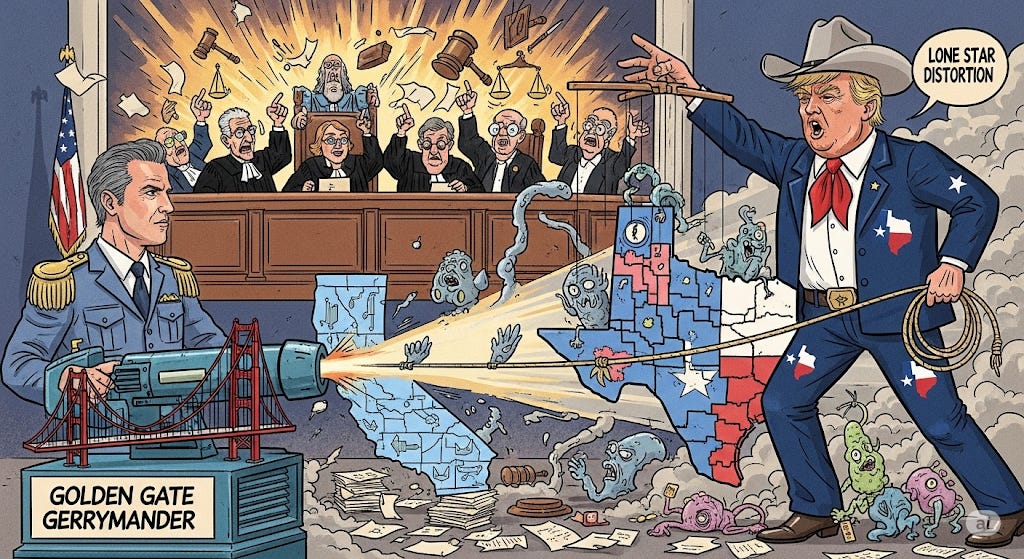
California vs. Texas Redistricting War: Newsom's Counterattack on Trump's Gerrymandering | Democracy Crisis
It describes California's proposed emergency redistricting plan, a direct response to anticipated mid-decade gerrymandering efforts by Texas and other Republican-controlled states. This initiative, spearheaded by Governor Gavin Newsom, aims to counter potential Republican gains in the U.S. House of Representatives by allowing California to redraw its own congressional maps if Texas implements changes to benefit Donald Trump's agenda. The article highlights how this strategy shifts Democrats to an offensive posture in the ongoing political battle over congressional control, framing it as a critical "break the glass moment for democracy". The plan, which voters will decide on November 4th, is part of a larger coordinated Democratic effort across multiple states to combat what they view as anti-democratic redistricting manipulation. This is a public episode. If you'd like to discuss this with other subscribers or get access to bonus episodes, visit earlcotten.substack.com/subscribe
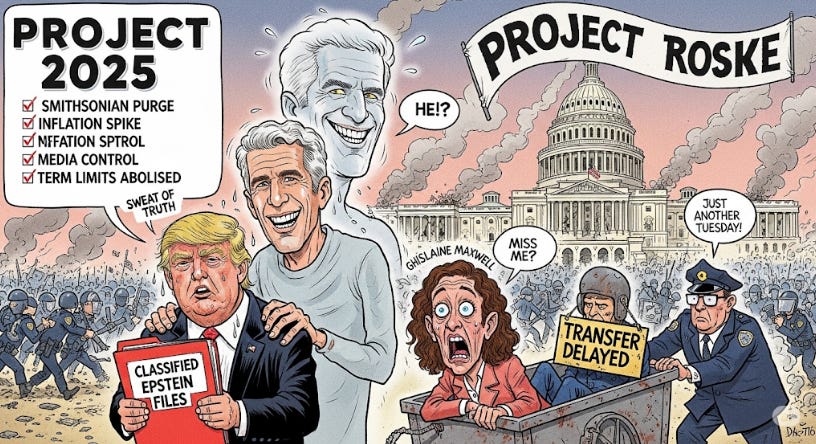
Trump Epstein Files Scandal & Maxwell Transfer | Inflation & Project 2025 | D.C. Police Takeover & Smithsonian Purge
The provided sources outline significant political and social upheaval within the United States, detailing several controversial actions taken by the current administration. Key events include the questionable transfer of Ghislaine Maxwell and the alleged obstruction of Epstein file releases by Attorney General Pam Bondi, alongside rising inflation and the replacement of the Bureau of Labor Statistics Commissioner with an appointee seeking to suspend jobs reports. Furthermore, the text describes the federalization of D.C. police and the proposed creation of a national quick reaction force, a White House-ordered purge of "divisive narratives" from Smithsonian museums, and California's efforts to counter Republican gerrymandering. These narratives collectively paint a picture of a nation experiencing political resistance and shifts in governmental power and control. This is a public episode. If you'd like to discuss this with other subscribers or get access to bonus episodes, visit earlcotten.substack.com/subscribe

Homelessness as a National Security Threat? Trump’s "Slum Clearance" Plan
The provided text discusses the federalization of Washington D.C.'s Metropolitan Police Department and the deployment of National Guard troops with arrest powers, initiated under the Home Rule Act. This action, spearheaded by the Trump administration, also includes a controversial "slum clearance" policy targeting homeless encampments and mandating civil commitment for some individuals. While the administration cites a need to combat crime and frames homelessness as a national security threat, D.C. officials dispute the necessity, pointing to declining crime rates and raising concerns about the legality and human impact of these measures. The text highlights the unique presidential powers over D.C. that facilitate these actions and suggests a potential expansion of similar policies to other major U.S. cities. This is a public episode. If you'd like to discuss this with other subscribers or get access to bonus episodes, visit earlcotten.substack.com/subscribe
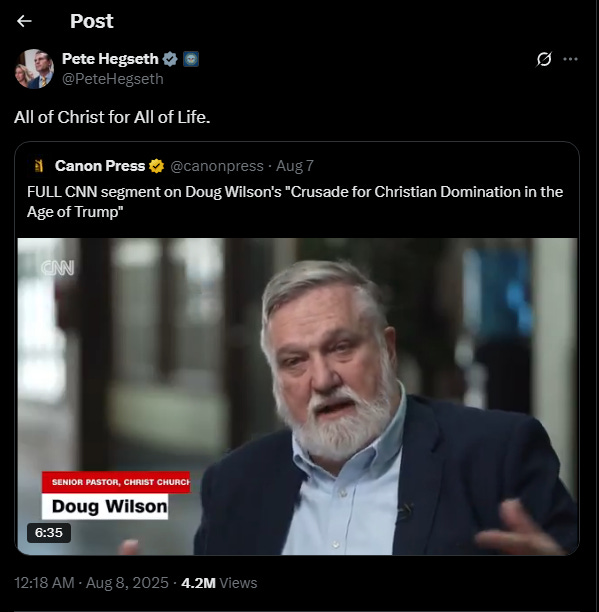
✝️ Hegseth Endorses Christian Nationalism; James Madison on Church-State Danger
It examines Defense Secretary Pete Hegseth’s ties to Christian nationalism, specifically his endorsement of Pastor Doug Wilson’s views, which include opposition to women’s suffrage, support for biblical law over civil law, and a belief in male-dominated governance. The source highlights concerns that Hegseth’s ideology, rooted in Reformed Reconstructionism, could influence Pentagon policies regarding women in combat and religious diversity. It contrasts these modern beliefs with James Madison’s foundational arguments for a strict separation of church and state, emphasizing Madison’s warnings against the tyrannical potential of merging religious and governmental authority to safeguard individual liberty. Ultimately, the text suggests Hegseth's actions pose a risk to the constitutional principles of religious freedom and could undermine military cohesion by favoring a specific faith. This is a public episode. If you'd like to discuss this with other subscribers or get access to bonus episodes, visit earlcotten.substack.com/subscribe

Video: Trump-Putin Alaska Summit: Ukraine Land Concessions, 2025 US-Russia Deal Revives 2016 Mariupol Plan | War Crimes Indictment
The provided text, excerpts from "Alaska Summit: Land, Lies, and Russian Leverage," outlines an upcoming summit between President Trump and Vladimir Putin in Alaska focused on a controversial Ukraine peace deal. This deal proposes Ukraine cede several territories to Russia, a move critics argue violates the 1994 Budapest Memorandum and echoes a 2016 Russian "Mariupol Plan." The article also details Director of National Intelligence Tulsi Gabbard's declassification of a disputed 2020 House report that attempts to discredit the 2017 intelligence assessment of Russian interference in the U.S. election, a narrative contradicted by multiple investigations and even Putin's own statements. Furthermore, the text highlights Putin's use of psychological warfare and potential kompromat to leverage influence, emphasizing how these actions align with a consistent Kremlin playbook of destabilization. This is a public episode. If you'd like to discuss this with other subscribers or get access to bonus episodes, visit earlcotten.substack.com/subscribe
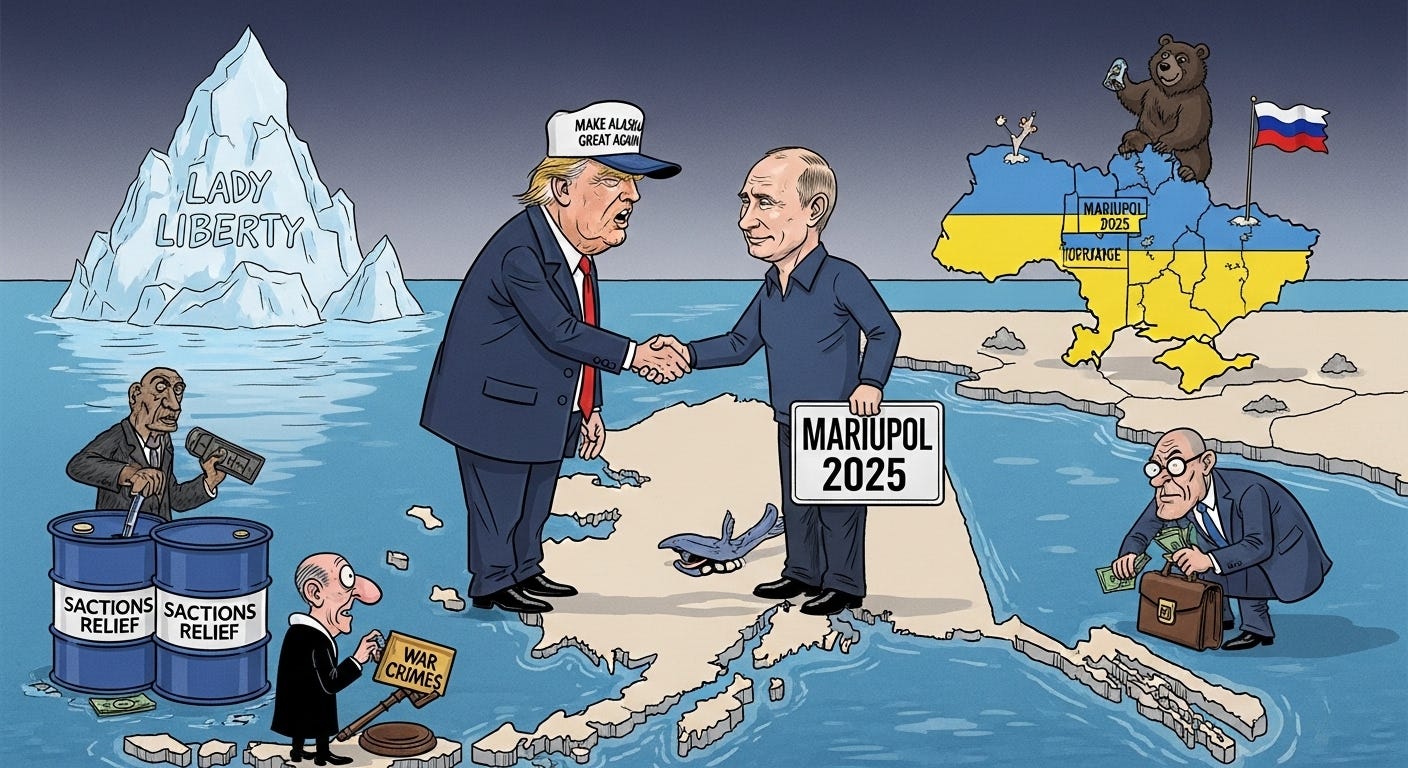
Trump-Putin Alaska Summit: Ukraine Land Concessions, 2025 US-Russia Deal Revives 2016 Mariupol Plan | War Crimes Indictment
The provided text, excerpts from "Alaska Summit: Land, Lies, and Russian Leverage," outlines an upcoming summit between President Trump and Vladimir Putin in Alaska focused on a controversial Ukraine peace deal. This deal proposes Ukraine cede several territories to Russia, a move critics argue violates the 1994 Budapest Memorandum and echoes a 2016 Russian "Mariupol Plan." The article also details Director of National Intelligence Tulsi Gabbard's declassification of a disputed 2020 House report that attempts to discredit the 2017 intelligence assessment of Russian interference in the U.S. election, a narrative contradicted by multiple investigations and even Putin's own statements. Furthermore, the text highlights Putin's use of psychological warfare and potential kompromat to leverage influence, emphasizing how these actions align with a consistent Kremlin playbook of destabilization. This is a public episode. If you'd like to discuss this with other subscribers or get access to bonus episodes, visit earlcotten.substack.com/subscribe
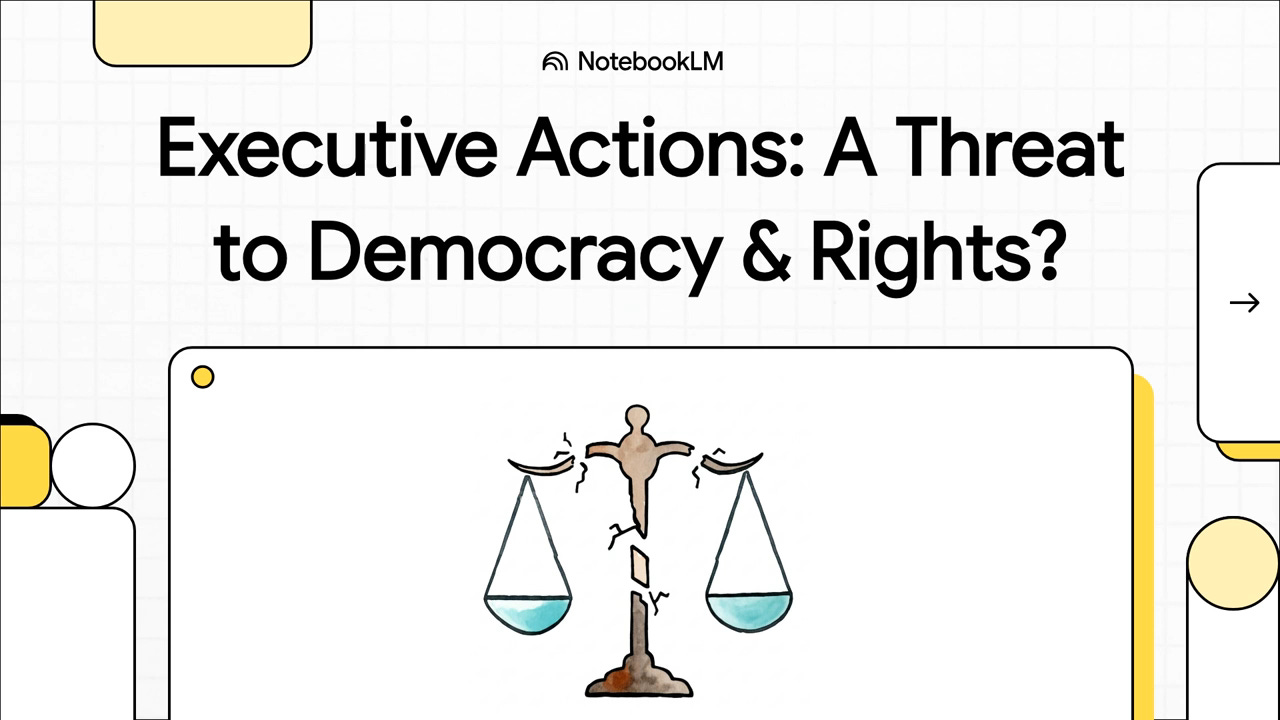
Trump's 2025 Census Order: Unconstitutional Apportionment, Undocumented Exclusion & 2026 Power Grab
This is a free preview of a paid episode. To hear more, visit earlcotten.substack.comThe provided source, "Executive Actions: A Threat to Democracy and Rights," critically examines several controversial actions taken by the Trump administration and their far-reaching implications. It highlights the unconstitutionality of excluding undocumented immigrants from the census, arguing this move is a political power grab designed to skew House seat allocations and benefit the GOP in future elections. Furthermore, the text exposes the alarming expansion of the ICE detention system under the Biden administration, detailing a surge in detentions and pervasive human rights abuses within these facilities. It also points to a global retreat on human rights, with the State Department reportedly softening critiques of various nations, alongside an analysis of new tariffs and their potential economic and cultural fallout. Finally, the document touches on legal challenges, media censorship, and the role of satire in a politically charged environment.

👑 Vance as "MAGA Heir": Trump's Succession Signaling
Key Takeaways* Trump names JD Vance as “most likely” 2028 MAGA heir while suggesting Marco Rubio as potential running mate* Vance leads early 2028 GOP polls with 46% support, dwarfing Rubio (12%) and DeSantis (9%)* Rubio publicly endorsed Vance as “great nominee” while downplaying own ambitions* Vance’s influence grows through RNC fundraising role and diplomatic visibility* Donald Trump Jr. emerges as wildcard challenger despite Vance’s current frontrunner statusThe Defining Moment: Trump’s “Most Likely” EndorsementThat Tuesday press conference shifted everything. When Trump stood at the South Court Auditorium signing his Olympics order, Peter Doocy cut through the formalities: “You could clear the entire Republican field right now. Do you agree that the heir apparent to MAGA is JD Vance?” Trump’s reply? “Well, I think most likely. In all fairness, he’s the vice president.” Simple words. Massive implications .This wasn’t some vague compliment. Before August 5th? Trump called Vance “very capable” but insisted “it’s too early” to name him leading candidate. That changed. Now? “He would be probably favored at this point” – Trump’s clearest signal yet . And he didn’t stop there. Watch how he name-dropped Marco Rubio: “I think Marco is also somebody that maybe would get together with JD in some form.” Planting seeds. Forcing Republicans to picture a Vance-Rubio ticket three years before primaries .Why this timing? Midterms loom. Trump’s legacy needs protectors. By floating Vance as heir AND Rubio as partner? He boxes out rivals early. Controls the narrative. Makes 2028 feel like extension of his era, not some messy succession war .Vance’s Ascent: From Marine to MAGA’s Presumptive LeaderJD Vance’s trajectory defies political gravity. Remember 2016? Never-Trumper author. 2024? VP pick. Now? Trump’s endorsed successor. At 40, he’s younger than Rubio, more battle-tested than DeSantis. Marine Corps discipline meets Hillbilly Elegy storytelling. That combo? Pure rocket fuel in this GOP .His current power plays reveal ruthless strategy:* RNC Finance Chair: Since March, he’s commanded donor networks. Schmoozing billionaires. Locking down state chairs. Every fundraiser whispers “future president” as he collects IOUs* Foreign Policy Surrogate: Selling Trump’s agenda in Ukraine talks. Briefing NATO skeptics. Proving he’s not just some domestic politics guy* Oval Office Presence: Official photos tell the story. Vance stands shoulder-to-shoulder with Trump in nearly every meeting. Deliberate placement. Visual priming for successionEarly 2028 Republican Primary PollingData sourced from Emerson polling and The Hill analysisBut vulnerabilities linger. That 47% unfavorable rating? Ominous. And his fate ties directly to 2026 midterms. If Republicans bleed seats under his RNC leadership? The “heir apparent” label crumbles overnight .Marco Rubio’s Calculated Retreat (For Now)Rubio’s playing 4D chess here. Publicly? He’s Vance’s hype man: “I think JD Vance would be a great nominee if he decides he wants to do that.” Privately? He keeps every door open. Note his Fox News phrasing to Lara Trump: “You never know what the future holds.” Classic non-denial denial .His current influence dwarfs Vance’s internationally. Kissinger-level dual roles: Secretary of State AND National Security Advisor. Handling China tensions. Managing Gaza fallout. When global crises erupt? Rubio’s the administration’s face. That builds stature no VP speech can match .Watch their dynamic though. These aren’t allies. They’re former VP rivals turned uneasy partners. Vance admits it: “Marco is incredibly competent and reliable, and he’s also one of my closest friends in the administration.” Political “friendship” lasts exactly as long as mutual benefit. If Rubio smells Vance’s weakness post-midterms? That camaraderie vanishes .The Trump Family Wildcard: Junior’s Shadow CampaignNobody disrupts Trump’s Vance plan faster than Donald Trump Jr. He’s the unspoken third rail in this succession drama. MAGA loves him. His rallies draw thousands. Those “Trump 45, 47, 48” hats? Not subtle. Junior wants the throne .Vance owes Junior bigly. Remember 2024? Don Jr. pushed Dad hard toward Vance over Rubio. That debt now becomes leverage. Junior could demand VP slot – or blow the whole thing up. Imagine the nightmare scenario for Vance: 2026 midterms underperform. Trump blames “disloyalty.” Suddenly Junior announces to “defend Dad’s legacy.” Polls shift overnight .Potential 2028 Ticket Combinations* Dream Team (Vance-Trump Jr.): Unites MAGA factions. Risks scaring independents* Stability Ticket (Vance-Rubio): Foreign policy muscle. Lacks Trump bloodline* Dynasty Play (Trump Jr.-Vance): Only if Junior leapfrogs Vance via midterm chaosHistory whispers warnings. The last VP who immediately succeeded his boss? George H.W. Bush in 1988. He won thanks to Reagan’s popularity, a weak Democrat opponent, and strong economy. Vance lacks those tailwinds today .MAGA’s Identity Crisis: Movement
Authoritarianism Alert: Global Parallels to Trump's Power Consolidation
The provided text, "America's Authoritarian Drift: Lessons from Hungary and Turkey," analyzes how the United States, particularly under a potential second Trump term, exhibits characteristics of competitive authoritarianism, a system where elections exist but incumbents manipulate institutions to maintain power. It details several tactics paralleling those used by leaders like Orbán in Hungary and Erdoğan in Turkey, including centralizing power through loyalist appointments and agency dismantling, attacking judicial independence via intimidation and defiance of rulings, and controlling media narratives through state-aligned ecosystems and harassment of critics. The text also highlights the dismantling of the civil service via executive orders, the weaponization of state resources against perceived enemies, and the targeting of vulnerable groups through divisive rhetoric and policies. Ultimately, the source warns that the velocity of democratic backsliding in the U.S. is unprecedented, with global implications for democratic norms and alliances. This is a public episode. If you'd like to discuss this with other subscribers or get access to bonus episodes, visit earlcotten.substack.com/subscribe
Texas Redistricting War: National Implications of the Democratic Walkout
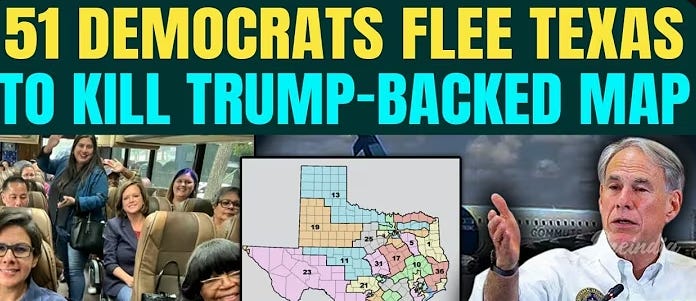
Texas House Democrats fled to Illinois to break quorum and prevent the passage of a Republican-backed redistricting bill that aims to secure five new congressional seats for the GOP. This action, mirroring a similar exodus in 2021, is a strategic maneuver to halt legislative proceedings given the two-thirds presence requirement for a quorum. Texas Governor Abbott has threatened fines and removal from office, even suggesting fundraising for fines could be a felony, though legal experts question the enforceability of these threats and the likelihood of extradition from Illinois, a sanctuary state championed by Governor Pritzker. The core issue stems from former President Trump's public pressure for mid-decade redistricting to bolster the Republican House majority, leading to a potential national "gerrymandering arms race" if Texas succeeds, raising concerns about electoral stability and the weaponization of quorum rules. This is a public episode. If you'd like to discuss this with other subscribers or get access to bonus episodes, visit earlcotten.substack.com/subscribe

Trump's Tumult: Economy, Scandals, and Cognitive Concerns
Listen now | It outlines multiple crises impacting the Trump administration, including a significant economic downturn marked by poor jobs reports, controversial tariff implementations, and a subsequent stock market decline. It details the firing of a Labor Statistics Commissioner, suggesting an attempt to control economic data, and explores the mysterious transfer of Ghislaine Maxwell to a minimum-security prison, raising questions of preferential treatment and a potential connection to her discussions with the Deputy Attorney General. Additionally, the source examines the deployment of nuclear submarines as a suspected distraction from domestic issues, and highlights concerns about Trump's cognitive health, citing instances of memory fabrication and mathematical errors. The overarching theme points to an administration facing intense scrutiny across economic, legal, and personal fronts, often responding with actions perceived as politically motivated or reckless. This is a public episode. If you'd like to discuss this with other subscribers or get access to bonus episodes, visit earlcotten.substack.com/subscribe

TSA agents reassigned as "flight security guards" for mass deportations, prompting union cease-and-desist
Listen now | Air Marshals: From Counterterrorism to Deportation Duty | The unprecedented reassignment of Federal Air Marshals from their primary counterterrorism duties on commercial flights to provide security for ICE deportation flights since June 2025. This controversial move, affecting 10% of the force, has sparked legal challenges from the Air Marshal National Council, which argues it undermines aviation security and illegally subsidizes private contractors like GEO Group. Highlights a surge in deportation flights, ICE's budget shortfalls (leading to potential fund reallocations from other agencies like TSA), and growing public disapproval of these immigration policies. It also points to strained resources within the TSA, safety concerns for marshals on deportation flights, and the broader implications for national security and taxpayer spending. This is a public episode. If you'd like to discuss this with other subscribers or get access to bonus episodes, visit earlcotten.substack.com/subscribe