
DevReady Podcast
328 episodes — Page 5 of 7

From Idea to Impact: Stuart Dalrymple’s Insights on Startup Evolution | Ep 128 | DevReady Podcast
In this episode of the DevReady Podcast, our host Andrew Romeo, sits with Stuart Dalrymple, Commercial Operations Manager at franklin.ai to explore his journey through the tech and startup landscape. From managing project scopes to navigating tender processes, Stuart shares invaluable insights from diverse career experiences. Tune in to uncover his strategies for effectively solving customer problems and competing in the ever-evolving market. Stuart begins by tracing his journey from a childhood fascination with technology to his current role in the tech and startup landscape. He emphasizes the importance of managing project scope, understanding customer preferences, and recognizing the timing of innovations. Despite encountering challenges such as financial constraints and market misalignment, Stuart's ventures have provided invaluable lessons that have shaped his entrepreneurial approach and management style. Reflecting on his diverse career experiences, including roles in software companies and the hospitality industry, Stuart discusses strategies for navigating tender processes. He highlights the significance of building relationships and delivering value early on. Stuart also advocates for further education, such as pursuing an MBA, for both knowledge acquisition and networking opportunities. Drawing parallels between business fundamentals and software development, he underscores the importance of creating products that either generate revenue, save costs, or optimize time. Stuart delves into the complexities of product development and sales, stressing the need to intimately understand customers' businesses to effectively solve their problems. He emphasizes the value of avoiding isolated problem-solving approaches and instead suggests identifying and addressing issues within one's own sphere of knowledge or experience. Stuart also explores the strategy of competing on features with a market research angle, urging companies to consider customer biases and evaluate various criteria that influence purchasing decisions. Furthermore, Stuart discusses the importance of understanding customer segments and preferences when developing products or solutions. Using the hypothetical example of IKEA competing with Tesla in the electric car market, he underscores the necessity of thorough research to understand why customers choose certain brands. Stuart suggests that companies do not need to excel in every aspect compared to competitors but should focus on key dimensions where they can offer value or differentiate effectively. Lastly, Stuart shares insights into his current role at Franklin.ai, particularly focusing on the health tech and MedTech space, specifically pathology and AI. He highlights the challenges posed by the shortage of pathologists and the increasing demand for cancer screening post-COVID. Stuart explains how Franklin.ai emerged from witnessing challenges in the local health system in Vietnam and successful ventures like Harrison AI in Australia, leading to partnerships with companies like Sonic Healthcare to efficiently detect cancer.

AI for All: Greg Twemlow’s Vision for the Future | Ep 127 | DevReady Podcast
In this episode of the DevReady Podcast, host Anthony Sapountzis is joined by Greg Twemlow, Executive Director of SEVENmile Ltd and Founder of Future Skills Studio, who also serves as an Innovative Educator and Ethical Thought Leader. Greg discusses the transformative impact of AI integration and the importance of ethical leadership in the tech industry. Greg wears multiple hats, leading initiatives to support local entrepreneurs in Sydney through SEVENmile and spearheading experiential learning programs, particularly aimed at high school students, through Future Skills Studio. His journey with AI began in late 2022 with the introduction of ChatGPT, leading to the integration of AI into various educational endeavors, where he has observed the potential for AI to exacerbate societal inequalities, a topic he actively addresses through articles and discussions. Greg emphasizes the positive impact of AI on education, particularly in high schools, noting its ability to enhance learning pace and depth when utilized effectively for problem-solving. He underscores the importance of parents considering access to paid AI services for their children to mitigate potential disparities in classroom learning. Additionally, Greg introduces the concept of "breakout autonomy," highlighting AI's potential to empower individuals with newfound autonomy and agency. The discussion further delves into the evolving landscape of AI tools for content creation. Greg explores various platforms and their strengths and limitations, advocating for using post-processing tools like Grammarly to refine AI-generated content. He then transitions to the transformative potential of AI in business operations, stressing the need for companies to adapt job roles and integrate AI capabilities across research, business planning, and marketing content creation to unlock significant growth opportunities. Greg also addresses the responsibility of all generations, including grandparents, in promoting technological literacy within families, noting their potential as leaders to foster interest and learning in technology among younger generations. Finally, the conversation touches upon the challenges faced by non-tech entrepreneurs when seeking tech partners, highlighting the importance of reliable and ethical technology partners in navigating the complex landscape of AI integration.

Beat the Runway & Scale Faster with Jess Dahlberg | Ep 126 | DevReady Podcast
In this episode of the DevReady Podcast, host Anthony Sapountzis sits down with Jess Dahlberg, a certified performance coach and startup mentor, to explore the intricacies of building a scalable culture within startup environments. Listen to Jess's invaluable insights and personal journey of reinvention to gain practical guidance on optimizing performance, fostering collaboration, and navigating the challenges of entrepreneurship. Jess, drawing from her journey of reinvention after a divorce and her corporate background, identified a need for tailored support for tech founders in managing teams and optimizing performance. This realization led her to develop the Guest Collaborative Program, offering practical guidance to drive startup growth and efficiency. Throughout the discussion, Jess highlights the unique challenges tech founders face, emphasizing their propensity for continuous learning and adaptability, which are crucial for success in the dynamic tech landscape. She underscores the importance of collaboration between tech and non-tech founders to leverage resources effectively and achieve milestones, navigating the delicate balance between innovation and progress. Reflecting on her own transformative experiences, Jess emphasizes the role of intuition in guiding life decisions, drawing parallels to the intuitive nature of successful startup leaders. She advocates for creating a supportive startup culture that celebrates achievements and fosters resilience, which is essential for weathering the inevitable challenges of entrepreneurship. Jess outlines four fundamental principles for startup success: performance, prioritizing founder well-being and productivity; people, cultivating an operational culture based on employee input; potential, aligning individual roles with the overall roadmap for focused direction; and pinnacle, guiding founders in leading their teams through the scale-up journey while maintaining positivity. Lastly, Jess delves into the distinction between mentoring and coaching, highlighting the value of personalized coaching in empowering individuals to find their unique problem-solving and leadership approaches. She stresses the importance of recognizing individual talents and fostering a culture of continuous improvement, which is essential for sustainable growth in startup environments.

In the Mind of a Mentor: Youssef Jalloul’s Advice for Founders | Ep 125 | DevReady Podcast
In this episode of the DevReady Podcast, our host, Anthony Sapountzis, is joined by Youssef Jalloul, a seasoned Tech Entrepreneur, Venture Builder, and a Mentor. Tune in to this episode as Youssef takes us on a captivating journey through his diverse entrepreneurial experiences – from founding hydroponics farms to navigating the complexities of the tech industry. Youssef also shares valuable insights and reflections on the Lebanese financial crisis and unveils his latest venture, "Actively," a groundbreaking approach to air travel and activity planning in the web3 era. Get ready for a narrative filled with innovation, resilience, and a wealth of wisdom for startup founders. Youssef’s journey unfolds as a dynamic narrative of entrepreneurial ventures and technological innovation. From founding hydroponics farms during university to navigating the challenges of the tech industry, he shares a diverse array of experiences. Youssef's journey encompasses social projects, a tech company in Abu Dhabi, and diverse investments, including medical systems, e-learning, and e-commerce platforms. The interview delves into the complexities of the Lebanese financial crisis, the establishment of an innovative accelerator, and its unfortunate closure due to economic challenges. The discussion seamlessly transitions to Youssef's relocation to Sydney amid the COVID-19 pandemic, narrating the two-year process to ensure stability for his family. Youssef's focus on self-discovery in the past year and a half culminates in his exploration of new opportunities, particularly in the realm of web3 technology. This exploration leads to the introduction of "Actively," a groundbreaking air travel and activity planner that utilizes AI and QR codes to bridge the gap between traditional and modern practices, emphasizing sustainability and personalized user experiences. The narrative takes an introspective turn as Youssef reflects on his entry into the tech industry through his parents' development company. The journey involves an award-winning Arabic reading and writing software, its evolution into a web platform, and the impactful effort to address literacy gaps in the Middle East. Youssef's insights for startup founders become a focal point, emphasizing the "build fast, fail faster" mindset, the significance of experiments before substantial investment, and the critical role of a diverse and collaborative team. The interview concludes with Youssef's current endeavors, including the pursuit of pilots for his innovative projects and the imminent launch of YJ Ventures. This platform aims to combine a venture builder with a scale-up program, showcasing Youssef's passion for guiding founders, navigating the challenges of convincing clients to embrace change, and leveraging the supportive startup ecosystem in Australia.

Building Tomorrow: Sam Saltis and the Core dna Blueprint | Ep 124 | DevReady Podcast
In this engaging episode of the DevReady Podcast, our hosts, Andrew Romeo and Anthony Sapountzis sit down with Sam Saltis, Founder & CEO of Core dna. Join the conversation as Sam takes us on a captivating journey through his tech evolution, sharing insights into the inception and growth of Core dna, reflections on international experiences, and a visionary outlook on the future of technology and entrepreneurship. Sam's wealth of experiences provides a fascinating backdrop for discussions on building, scaling, and navigating the dynamic landscape of the tech industry. Sam takes us on a journey through his tech evolution, starting from his teenage experimentation with bulletin boards to becoming the driving force behind a global tech company. The conversation delves into Sam's experiences at ANZ, the pivotal decision to pursue an MBA, and the inception of Core dna, an enterprise cloud platform now recognized globally. Core dna operates with a distributed team across multiple countries, emphasizing its unique selling points such as affordability, adaptability for various business sizes, and challenges convincing larger enterprises to transition from established platforms. Sam provides insights into diverse client needs, ranging from complex integrations for extensive websites to mid-market enterprises seeking efficient content management. The episode unfolds Core dna's innovative solution for the challenge of integrating and transferring content across different platforms. Sam shares the entrepreneurial journey of transitioning from the banking sector to founding a tech business, identifying opportunities in connecting shopping centers and retailers to the internet. The evolution from agency to a product-centric business, rewriting systems, and launching the "Expect Factor" platform are discussed in detail. Sam reflects on his international experiences in India and the United States, emphasizing cultural differences, challenges during the tech boom in India, and diverse business mindsets in the U.S. He critiques the cutthroat mentality in some parts of the U.S. and highlights the collaborative, win-win approach he prefers in business. The episode concludes with Sam's future plans, including giving back to startups, exploring innovative business models, bringing software development in-house, and global expansion. Sam underscores the importance of recognizing unique strengths in the tech industry, advocating for trust-building through relationships and outcomes over financial competition. The conversation also touches on the changing dynamics of social interactions, engagement with interesting people, and the transformative role of AI in various industries. Sam's insights offer a comprehensive view of Core dna's growth, the tech industry's challenges, and his forward-looking vision for the future.

Balancing Acts: Steve Grace’s Guide to Work, Life, and Global Impact! | Ep 123 | DevReady Podcast
In this episode of the DevReady Podcast, our hosts, Andrew Romeo and Anthony Sapountzis are joined by Steve Grace, Founder, TNG Media & The Nudge Group and CEO, Balance The Grind. Steve also hosts a podcast, Give It A Nudge Show, and is the Director at YBF Ventures. Join hosts as they dive into Steve's 28-year adventure in recruitment, unraveling the secrets behind his transformative media strategies and the art of balancing startup success. Steve delves into his 28-year journey in recruitment, tracing his origins in London, a detour through a government-focused recruitment company, and the subsequent creation of Knowledge, an education-focused recruitment agency tailored for startups. The timing was fortuitous as the company expanded globally, just before the onset of COVID-19, benefitting startups and paving the way for the birth of media platforms. Steve shares profound insights into the critical decision of choosing the right co-founder for a tech startup, emphasizing the need for non-tech founders to consider acquiring a tech co-founder early in the startup journey. He highlights the rarity of finding a skilled engineer with both technical expertise and business acumen, cautioning against hiring from larger organizations. The discussion extends to the dynamic nature of startup teams, the evolving roles of founders, and the necessity for founders to anticipate shifts in team composition as the startup progresses. The podcast explores the impact of COVID-19 on the recruitment landscape, with Steve shedding light on the newfound ease of global recruitment and the evolving ability to assess candidates effectively through video interviews. A game-changing strategy is unveiled—using media to recruit for startups. Steve explains how "Give It A Nudge" YouTube channel reversed the traditional recruitment approach, significantly increasing success rates, impact, and candidate retention in startup roles. Steve passionately expresses his love for the startup world, highlighting the positivity, excitement, and relentless work ethic of individuals within it. He contrasts the startup environment with corporate life, emphasizing the openness, lack of competition paranoia, and the sense of being part of something impactful as key reasons behind his affinity for the startup world. The episode concludes with Steve discussing the accidental evolution of "Balance The Grind" and "Startup Life Unscripted," both becoming impactful media assets. In summary, the episode provides a comprehensive journey through Steve Grace's entrepreneurial ventures, offering valuable insights into startup dynamics, recruitment strategies, and the transformative power of media in the business landscape.

Carmen’s Global Teams: Amplify Your Business with Virtual Assistants! | Ep 122 | DevReady Podcast
In this episode of the DevReady Podcast, our host, Andrew Romeo, joins Carmen Williams, Co-Founder & Director of Global Teams. In this episode, Carmen shares the secrets behind leveraging her Global Teams’ Virtual Assistants (VAs) to not just elevate but truly amplify your business potential. Join us on a journey through Carmen's insights, a game-changer for entrepreneurs navigating the landscape of the digital era. Discover how her expertise transforms businesses and unlocks the full spectrum of possibilities in this compelling exploration of global teams and virtual mastery. Carmen shares the unexpected journey of her business, originally rooted in healthcare consulting, that organically grew into a thriving virtual assistant company supporting over 100 professionals in the Philippines. Highlighting the diverse qualifications of her team, including individuals with backgrounds in science, mathematics, law, and engineering, Carmen emphasizes their role in different stages of business growth. Carmen delves into the crucial aspects of effective communication and collaboration between business owners and virtual assistants, offering insights into marketing strategies. She underscores the importance of business owners owning the strategy and content creation for social media marketing while virtual assistants contribute through distribution and enhancement tasks. The discussion extends to recruitment challenges, delegation practices, and the nuanced methods for motivating virtual assistants. The conversation shifts to understanding the cost considerations of managing virtual assistants, with Carmen acknowledging that while doing tasks independently may be cheaper, many seek additional support for tasks like scoping, candidate selection, and ongoing communication. Carmen distinguishes between clients with mature businesses willing to invest in quality and those new to the process, seeking extra support to ensure success in integrating virtual assistants. Carmen's approach extends beyond business relationships to fostering mutual understanding between business owners and virtual assistants. She shares a popular training module focused on helping virtual assistants comprehend the unique aspects of Australian business culture. Carmen invites listeners to explore resources on globalteams.com.au for a deeper understanding of virtual assistant capabilities and improved communication strategies.

Global Stories that Stir Movement: Crafting Compelling Narratives | Ep 121 | DevReady Podcast
In this episode of the DevReady Podcast, our host, Anthony Sapountzis, is joined by Monica Rosenfeld, Founder of the Global Stories that Stir Movement. Listen to the episode to discover the art of crafting authentic narratives, mastering personal branding strategies, and leveraging impactful storytelling for business success, in addition to the invaluable insights and expert tips on creating engaging content and fostering meaningful connections in the digital age. The Global Stories that Stir Movement revolves around monthly storytelling events where individuals share raw and personal stories related to significant themes. With a goal to break down barriers, initiate conversations, and inspire positive change, the movement has organized 15 events since its inception in February 2022. Moreover, the concept is expanding globally through licensing arrangements. Alongside these events, Monica assists various businesses, both small startups and large corporations, in defining their unique narratives, catering to the distinct needs of each. Monica shares insights into her journey, emphasizing the significance of authentic storytelling in building connections and driving positive change. With a wealth of experience in public relations and media, spanning over two decades, she highlights the power of crafting compelling narratives that resonate with audiences and attract clients aligned with shared values and vision. Monica introduces the "Tree Step" process, guiding businesses in defining their core values, expertise, physical appearance, and content creation strategies, ultimately enhancing their personal branding efforts. She also presents the REAL Storytelling Framework, empowering individuals to unearth their unique stories and add a human touch to their brand. Moreover, Monica delves into effective content creation strategies, introducing the "Seven REASONS to Create Content" acronym, which outlines various avenues for engaging content development, including real-life stories, entrepreneurial backstories, awareness days, statistics, opinions, news of the day, and snappy tips or myths. She underlines the role of personal narratives in elevating content quality and subtly demonstrating expertise, enabling businesses to naturally attract clients through valuable and engaging content. Monica emphasizes the transformative impact of storytelling, drawing parallels between its success and effective marketing, underscoring its ability to drive motivation and deepen audience engagement. Lastly, she provides valuable tips for impactful storytelling, advocating for a narrative-driven approach that captivates audiences from the outset while adapting to the context to ensure maximum relevance and resonance.

From Pain Points to Conversions: The Secrets of Compelling Copywriting | Ep 120 | DevReady Podcast
In this episode of the DevReady Podcast, our hosts, Andrew Romeo and Anthony Sapountzis are joined by Steven Lewis, the Director of Copywriting and AI Copywriting Speaker and Trainer at Taleist Agency. Listen to the episode for a captivating discussion on the power of effective communication and engaging content to uncover the secrets of persuasive copywriting and storytelling and gain valuable insights into crafting compelling narratives. Steven emphasizes the importance of understanding the distinction between copywriting and content writing, highlighting the need to engage audiences and drive specific actions. He illustrates the common tendency for businesses to focus on self-promotion rather than addressing customer concerns, emphasizing the need to prioritize the audience's needs and desires. Steven underscores the significance of tailoring social proof to address customer objections effectively, stressing the importance of testimonials that resonate with customers' core worries and desires. He delves into the barriers to sales, such as pricing and communication clarity, highlighting the necessity of ensuring a company's website effectively communicates its offerings. Additionally, Steven debunks the misconception of broad demographics in marketing, emphasizing the need to understand the nuanced needs and fears of individual customers within the target market, even in B2B contexts. Further, Steven emphasizes the importance of understanding clients' emotional needs and desires, showcasing the effectiveness of using language and narratives that evoke positive emotions and resonate with clients' aspirations. He also discusses the significance of leveraging pain points and fear in marketing, highlighting the psychological tendency of individuals to avoid losses more vehemently than pursuing gains. Steven emphasizes the critical role of persuasive and effective copywriting in driving conversions on websites, debunking common myths about copy length and stressing the importance of captivating content. Moreover, Steven underscores the importance of the research process in uncovering valuable insights about businesses and their unique value propositions. He emphasizes the necessity of effectively conveying these value propositions in various marketing channels, encouraging businesses to move beyond conventional sales-driven email newsletters to establish genuine connections with their audience. Finally, Steven highlights the significance of communicating a business's unique philosophy and approach to establish meaningful connections with the right customers, illustrating this through a discussion on CRM and the importance of clearly articulating a company's target audience and unique approach.

LinkedIn’s Power Play: Building Brands and Networks That Last | Ep 119 | DevReady Podcast
In this episode of the DevReady Podcast, our host, Anthony Sapountzis, is joined by Kylie Chown, a certified LinkedIn Strategist and a Social Media Trainer. Listen to this episode to understand how to leverage LinkedIn for business growth, establish a strong online presence, and navigate the evolving landscape of this professional networking platform. Discover invaluable tips and strategies for effective content creation, networking, and brand alignment in the digital world. Through the episode, Kylie emphasizes the significance of leveraging LinkedIn as a powerful tool for businesses, highlighting its professional focus and the benefits it offers for networking and brand establishment. She discusses the changing landscape of LinkedIn, emphasizing the importance of providing valuable and educational content that resonates with the audience to overcome the recent decline in engagement. Chown also addresses the challenge faced by professionals transitioning to new industries, stressing the importance of building a relevant network aligned with their goals through targeted outreach and in-person interactions. Furthermore, Chown underscores the importance of understanding the audience's preferences on LinkedIn, emphasizing the need for tailored communication strategies and a well-optimized profile. She highlights the significance of maintaining a positive brand reputation and making a strong first impression by focusing on quality interactions and targeted networking. Chown also discusses the common issue of individuals underselling themselves on LinkedIn and emphasizes the importance of accurately positioning oneself online to align with their capabilities and business goals. Additionally, Chown discusses the significance of maintaining brand and business alignment on LinkedIn, advocating for a balanced approach that reflects the organization's values while allowing individuality to shine through. She underscores the need for a well-defined social media policy within organizations, emphasizing the importance of clear guidelines for content sharing and the framing of discussions around policy adherence. Chown also highlights the distinctions between personal profiles and company pages on LinkedIn, stressing the value of both for fostering engagement and connections based on individual interactions and brand awareness. Finally, Chown delves into the importance of understanding audience content consumption preferences on LinkedIn, emphasizing the need for content formats that engage effectively and encourage platform retention. She discusses thematic content development and data analysis as essential elements for optimizing content performance and audience engagement.
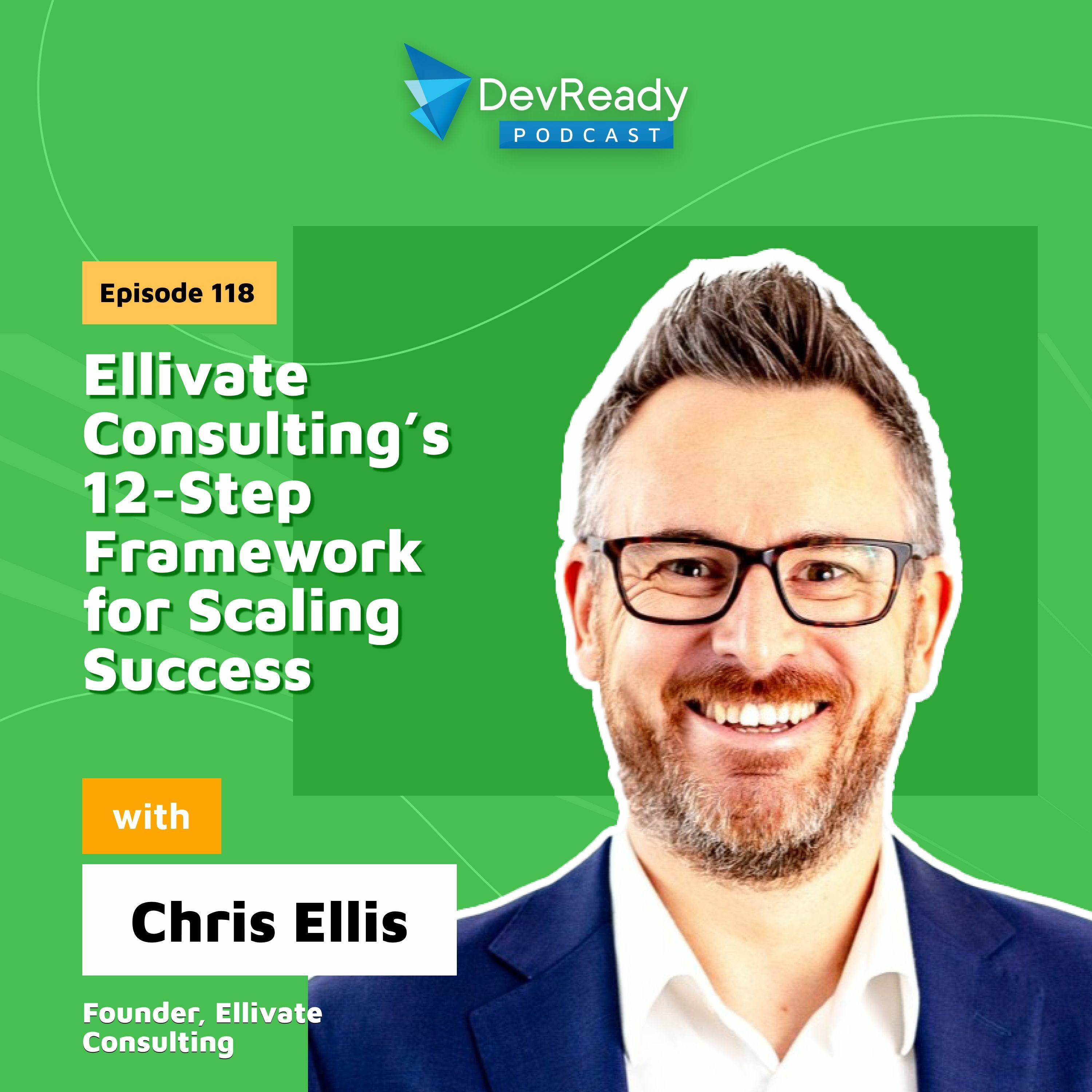
Ellivate Consulting’s 12-Step Framework for Scaling Success | Ep 118 | DevReady Podcast
In this episode of the DevReady Podcast, our hosts, Andrew Romeo and Anthony Sapountzis are joined by Chris Ellis, Founder of Ellivate Consulting. From simplifying commission schemes to mastering CRM for scalability, Chris shares invaluable insights into revenue operations, helping businesses navigate growth challenges and unlock their full potential. Tune in for expert guidance on enhancing performance, aligning teams, and building a high-impact sales organization. Chris shares his extensive experience in the corporate world and highlights his consultancy's role in helping scale-up organizations enhance their systems and processes for improved performance and revenue retention. He discusses the various services his firm offers, including consulting, training, coaching, and the unique "virtual rev-up" process, aimed at resolving revenue cycle pain points. Chris emphasizes the significance of early adoption of revenue operations within organizations and provides insights into his consultancy's framework for optimizing revenue operations and revenue enablement. He underlines the importance of strategy in this framework, which consists of 12 steps focusing on critical aspects such as performance, sales processes, data measurement, and aligning sales and marketing teams. Additionally, the episode explores the challenges faced during the scaling process, with Chris highlighting the need for organizations to shift their focus from the "what" to the "why" and effectively equipping teams with the necessary tools and strategies to achieve desired outcomes. The role of reporting and analytics, particularly within CRM systems, is emphasized as a crucial factor in achieving scalability and informed decision-making. Chris concludes the conversation by emphasizing the essential role of revenue operations within organizations, particularly during the scaling phase. He encourages businesses to invest in strong individuals for revenue operations to drive success, underlining the importance of a well-defined operating model and a carefully selected technology stack to support growth and efficiency. Follow & Subscribe to the DevReady Podcast Facebook: https://www.facebook.com/aerionTech LinkedIn: https://www.linkedin.com/company/aerion-technologies Instagram: https://www.instagram.com/aeriontech/ Apple Podcast: https://apple.co/36XdTFQ Spotify: https://spoti.fi/2uaqDvt YouTube: https://www.youtube.com/@AerionAuTech

Revolutionizing Billboard Ads: Affordable Ads for All on CAASie.co | Ep 117 | DevReady Podcast
In this episode of the DevReady Podcast, our hosts, Andrew Romeo and Anthony Sapountzis, are joined by Jeff Jaraved. He is the Co-Founder & Director (Engineering), CAASie.co, an online ad platform that brings Facebook-style advertising to digital billboards. Get ready to dive into the world of digital advertising and technological innovation with this podcast episode as the three explore the challenges, triumphs, and intricacies of building a self-service ad platform and navigating the complexities of the advertising industry. Jeff talks about the journey of the company's evolution from a design agency to a comprehensive online ad platform for digital billboards. He also sheds light on the initial struggles of reconciling high billboard costs with affordable advertising, which led to the innovative approach of selling 10-second ad slots at reduced rates, thereby providing flexibility and cost control for advertisers. The platform's emphasis on serving small businesses in a niche market, often overlooked by larger players, is highlighted, along with the challenges of managing creative content and integrating dynamic creative solutions into the platform. Jeff delves into the complexities of managing user-generated content, emphasizing the need for efficient triage processes and the implementation of measures to regulate and optimize the creative uploading process. The discussion also focuses on CAASie.co's plans to enhance internal management processes and systems to better regulate content on the platform, along with the significance of implementing an abstraction layer for automatic content rejection. Furthermore, the company's emphasis on achieving self-sufficiency and transitioning to a more structured business model, while contemplating potential acquisitions by larger entities, is discussed. The challenges faced by CAASie.co in attracting investors, managing financial risks, and ensuring sustainable growth are some of the key points of discussion, emphasizing the company's cautious approach to loans and the preference for utilizing existing funds. Jeff emphasizes the significance of fostering partnerships in the online advertising industry through transparent communication and the building of trust between businesses. Lastly, the importance of effective teamwork and the human-centric aspects of the business are underscored, along with the challenges associated with managing internal operations and addressing internal technological requirements. Follow & Subscribe to the DevReady Podcast Facebook: https://www.facebook.com/aerionTech LinkedIn: https://www.linkedin.com/company/aerion-technologies Instagram: https://www.instagram.com/aeriontech/ Apple Podcast: https://apple.co/36XdTFQ Spotify: https://spoti.fi/2uaqDvt YouTube: https://www.youtube.com/@AerionAuTech
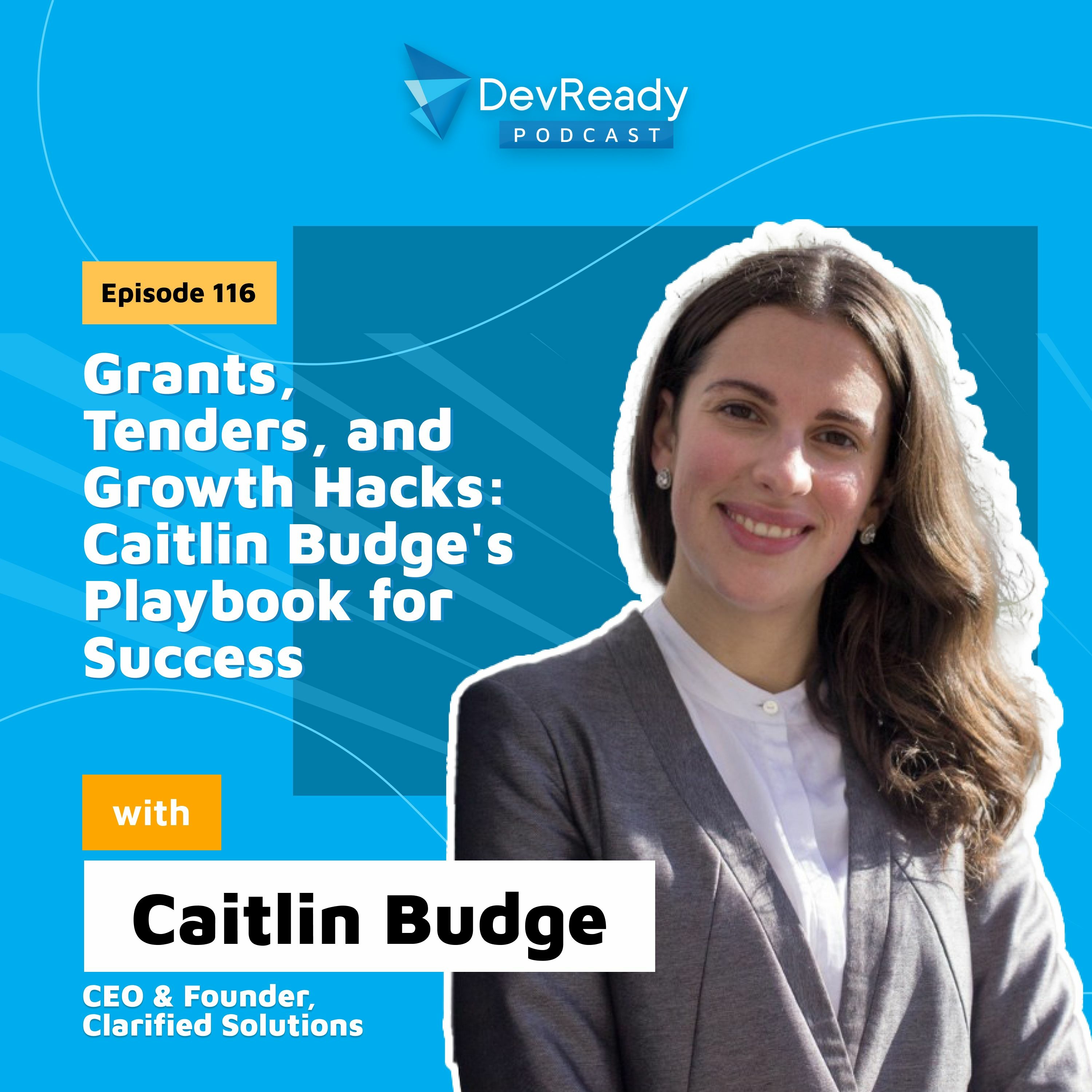
Grants, Tenders, and Growth Hacks: Caitlin Budge’s Playbook for Success | Ep 116 | DevReady Podcast
In this episode of the DevReady Podcast, Anthony Sapountzis, sits with Caitlin Budge, CEO and Founder of Clarified Solutions. Tune in to the episode as Caitlin provides comprehensive insights into navigating the world of government grants, tenders, and investment documents, offering valuable guidance for businesses seeking success in these areas. Caitlin delves into her expertise in helping businesses secure government grants, tenders, and investment documents. She emphasizes the importance of thorough research and clarity in grant applications, highlighting the detailed nature of grant guidelines. Caitlin provides insights into the time and effort required for grant applications, underscoring the need for long-term commitment. Caitlin also discusses the strategic approach to business development, starting with clear pitch decks, then grants and tenders, while repurposing application documentation for broader purposes. She sheds light on the challenges of securing government contracts as a startup, emphasizing competitive pricing and service quality. Throughout the conversation, Caitlin offers valuable tips on creating effective pitch decks, standing out in presentations, and maintaining professionalism in business endeavors. She maintains a long-term commitment to her clients, even after securing grant opportunities, and shares her criteria for working with businesses. Follow & Subscribe to the DevReady Podcast Facebook: https://www.facebook.com/aerionTech LinkedIn: https://www.linkedin.com/company/aerion-technologies Instagram: https://www.instagram.com/aeriontech/ Apple Podcast: https://apple.co/36XdTFQ Spotify: https://spoti.fi/2uaqDvt YouTube: https://www.youtube.com/@AerionAuTech
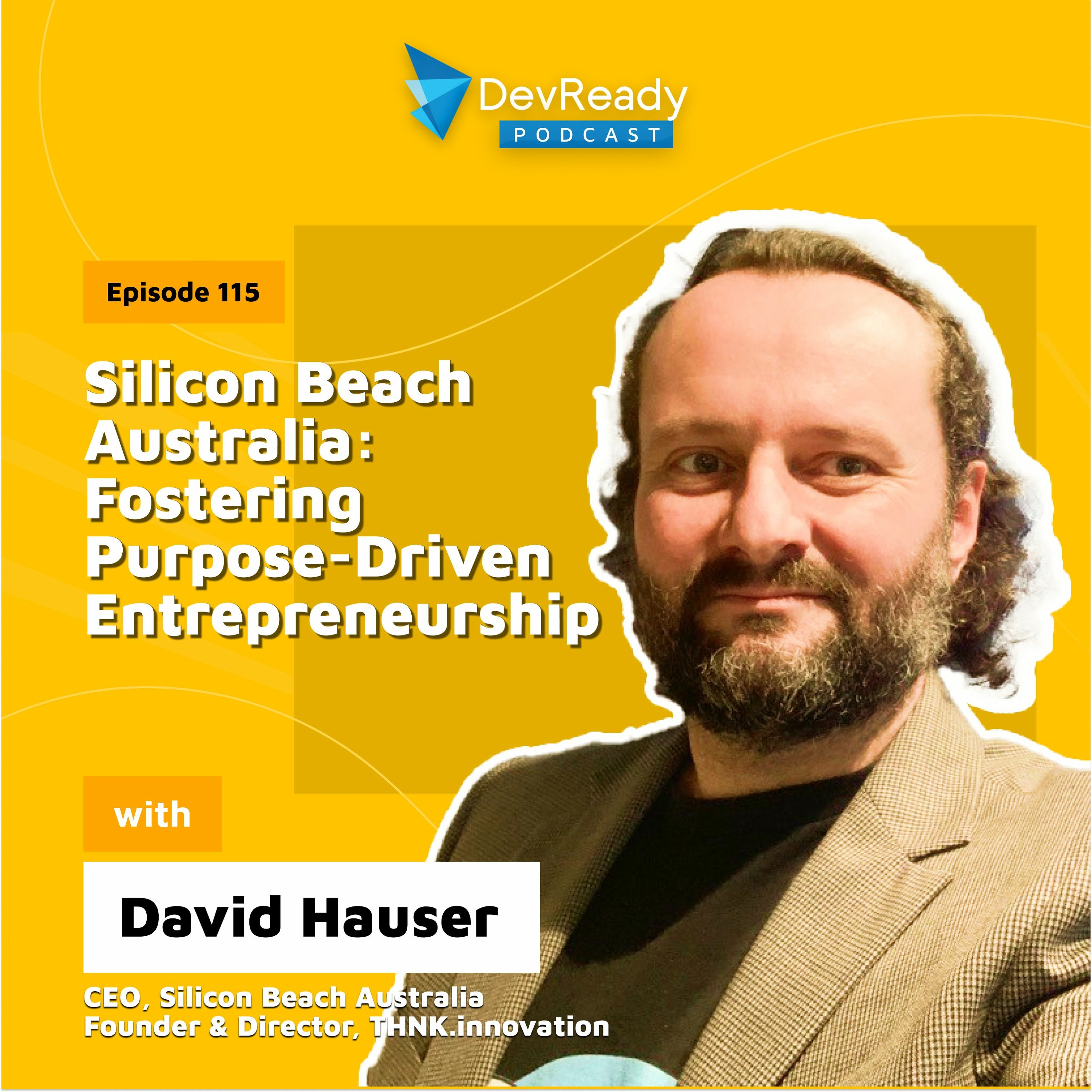
Silicon Beach Australia: Fostering Purpose-Driven Entrepreneurship | Ep 115 | DevReady Podcast
In this episode of the DevReady Podcast, our hosts, Andrew Romeo and Anthony Sapountzis, are joined by David Hauser, CEO of Silicon Beach Australia and Founder & Director of THNK.innovation. David shares his fascinating journey, from early ventures in exoskeletons and movie equipment to his role in shaping the future of purpose-driven entrepreneurship and technology customization. Get ready for a conversation packed with insights and entrepreneurial wisdom. David's path into startups was initially influenced by encouragement in high school, but societal pressure led him to become an engineer in Germany. His journey included involvement in exoskeletons for body motion and even contributing equipment to the first Matrix movie, though an IP dispute led to challenges in that venture. David reflects on the importance of due diligence and trust in developers during his startup experiences. He also discusses his transition from a corporate environment back to the startup ecosystem, highlighting the challenges faced by large organizations in terms of innovation. His involvement with Silicon Beach Australia is a significant part of the conversation, and he emphasizes the community's shift towards purpose-driven entrepreneurship and alignment with the UN Sustainable Development Goals. He also touches on crowdfunding challenges and the importance of moving quickly and staying user-centric in the world of innovation. Additionally, David discusses the need for collaboration between universities, industry, and startups in Australia and advocates for AI-powered customization of user interfaces. He underscores the value of learning from feedback and embracing an iterative approach to product development. Overall, David Hauser's journey and insights provide valuable lessons for entrepreneurs and those interested in the dynamic world of startups and innovation. Follow & Subscribe to the DevReady Podcast Facebook: https://www.facebook.com/aerionTech LinkedIn: https://www.linkedin.com/company/aerion-technologies Instagram: https://www.instagram.com/aeriontech/ Apple Podcast: https://apple.co/36XdTFQ Spotify: https://spoti.fi/2uaqDvt YouTube: https://www.youtube.com/@AerionAuTech
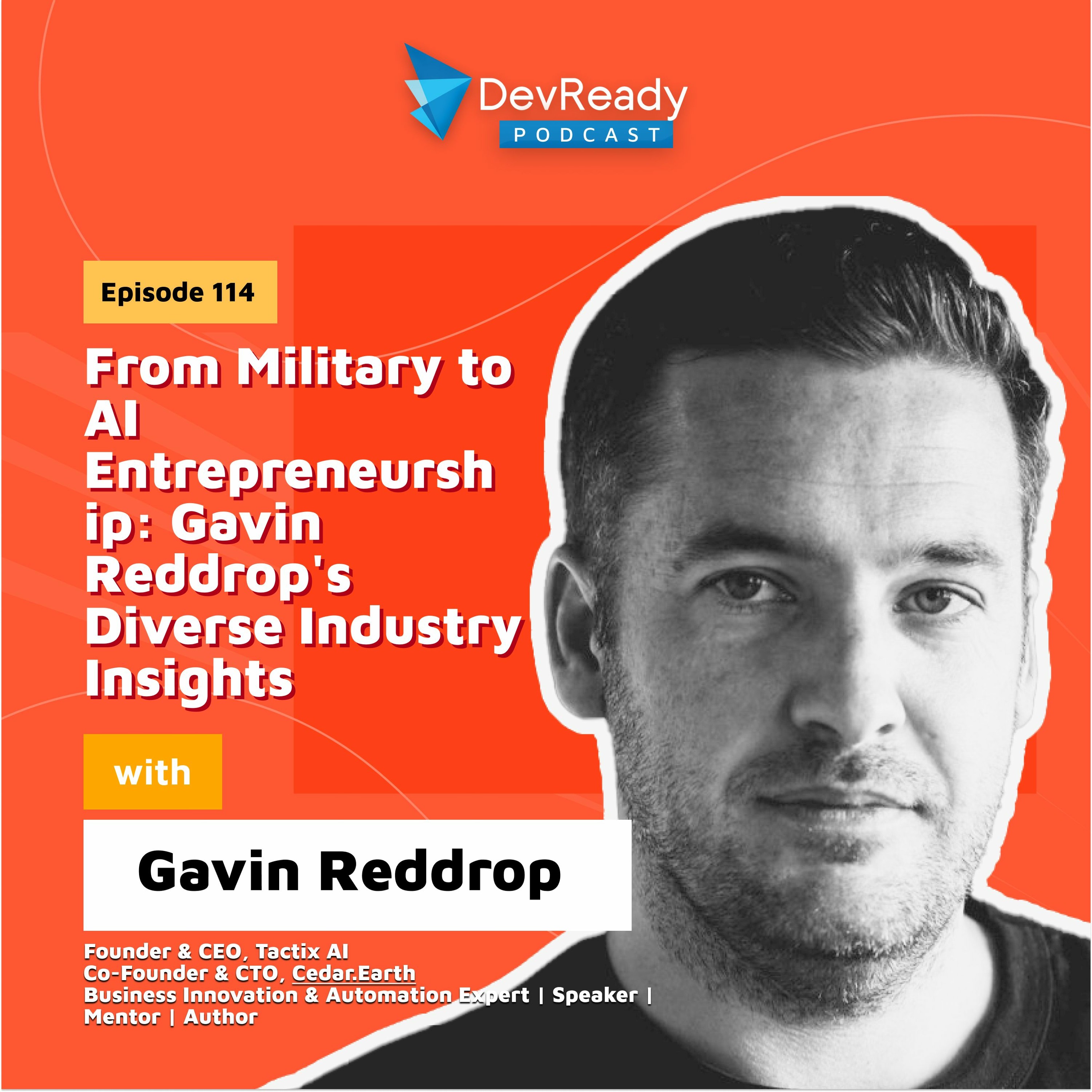
From Military to AI Entrepreneurship: Gavin’s Diverse Industry Insights | Ep 114 | DevReady Podcast
In this episode of the DevReady Podcast, our hosts, Andrew Romeo and Anthony Sapountzis, are joined by Gavin Reddrop, Founder & CEO, Tactix AI and Co-Founder & CTO, Cedar.Earth. Gavin takes center stage to share his extensive insights into the rapidly evolving world of AI and automation. Gavin's credentials as a Business Innovation and Automation Expert, Speaker, Mentor, and Author underscore his expertise in this dynamic field. Gavin begins by discussing the challenges of writing a book on AI due to the breakneck pace of technological advancements. His book is designed to assist business owners in embarking on their automation journey, simplifying processes using AI APIs, tapping into AI's potential as a brainstorming tool, sales enhancer, and aiding startup founders preparing for pitches. The conversation delves into Gavin's fascinating journey through the tech landscape, from military communications to the corporate sphere, and ultimately, his leap into entrepreneurship. Gavin reflects on the evolution of AI, emphasizing its initial applications in content creation and social marketing, leading to his deep immersion in AI, including a recruitment tool for unbiased resume analysis. Presently, he is focused on a climate tech startup that employs AI to address environmental challenges. Gavin's mission to help enterprise-level companies manage their climate data throughout the supply chain takes center stage. He highlights the transformative impact of AI in the enterprise space, even prompting industry giants like Google to embrace startup-like agility and innovation. Gavin underscores the importance of incremental steps in automation and innovation, advocating for breaking complex tasks into manageable components to enhance efficiency and productivity across industries. Gavin's remarkable military experience further enriches the discussion, showcasing his adaptability and ability to integrate diverse technologies and systems. Follow & Subscribe to the DevReady Podcast Facebook: https://www.facebook.com/aerionTech LinkedIn: https://www.linkedin.com/company/aerion-technologies Instagram: https://www.instagram.com/aeriontech/ Apple Podcast: https://apple.co/36XdTFQ Spotify: https://spoti.fi/2uaqDvt YouTube: https://www.youtube.com/@AerionAuTech
Tech, Entrepreneurship, and Impact: The Ahmed Reza Experience | Ep 113 | DevReady Podcast
In this episode of the DevReady Podcast, our hosts, Andrew Romeo and Anthony Sapountzis are joined by Ahmed Reza, Founder & CEO of Yobi. The episode covers the world of AI, entrepreneurship, and the future of communication. Ahmed takes us on a journey through his tech career. He begins with his early involvement in projects like the Denver Grand Challenge and AI development for unmanned aerial vehicles in the Department of Defense, which laid the foundation for his valuable experience. Ahmed's entrepreneurial spirit comes to the forefront as he discusses his successful startup that utilized AI for optimizing dental marketing. Transitioning from geek to entrepreneur, Ahmed stresses the significance of merging technical and business skills. He highlights the importance of self-awareness and recounts how he stumbled upon the idea for his startup while helping a friend. The impact of his app on the dental industry, doubling some dentists' incomes, showcases its success in marketing optimization. Ahmed's journey also delves into his transition to private equity and the insights he gained into business efficiency. He recognizes common challenges across industries and the untapped potential in analyzing marketing calls. Amid the evolving tech landscape, Ahmed discusses the importance of caution regarding industry hype, emphasizing the need for practical applications. He shares his vision of a unified communications app that caters to busy entrepreneurs, underlining its simplicity and value. Moving forward, Ahmed explores the development of synthetic clones and their applications, emphasizing the need for ethical AI development. He envisions a future where AI empowers entrepreneurs to engage in more meaningful interactions and drive progress. Lastly, Ahmed underscores the importance of finding purpose beyond wealth and living a meaningful life. His mentor's wisdom resonates as he expresses gratitude for his journey, motivated by the opportunity to make a positive impact through technology. This episode is a captivating exploration of Ahmed's tech career, touching on entrepreneurship, innovation, and ethical AI development while emphasizing the importance of living a meaningful life. Follow & Subscribe to the DevReady Podcast Facebook: https://www.facebook.com/aerionTech LinkedIn: https://www.linkedin.com/company/aerion-technologies Instagram: https://www.instagram.com/aeriontech/ Apple Podcast: https://apple.co/36XdTFQ Spotify: https://spoti.fi/2uaqDvt YouTube: https://www.youtube.com/@AerionAuTech
Think Different, Innovate Anew: Insights from Finbar OHanlon | Ep 112 | DevReady Podcast
In this episode of the DevReady Podcast, our hosts, Andrew Romeo and Anthony Sapountzis are joined by Finbar OHanlon, the Co-founder of APAC Innovation Institute. Fin is also a Corporate Advisor, Strategist, and Company Director specializing in Digital transformation (Ai) and Human Capability. In this episode, Fin gives insights on challenging norms, embracing curiosity, and fostering innovation across music and technology. Fin shares a remarkable journey marked by defiance of conventions and an unquenchable thirst for innovation. Starting as a rebellious student in a Christian school, he transitioned into the realm of technology from a successful career in music. Despite societal pressures and challenges, his innate curiosity and passion for learning guided him towards remarkable achievements. Notably, his early interest in digital audio technology led him to a pivotal role in a prominent music store and eventually to Apple as a digital audio specialist, where he tackled industry-defining challenges. Fin's narrative centers on embracing the unknown and pushing boundaries. He discovered that his greatest successes emerged when he challenged established norms and fostered innovation. His transition to the tech world involved unconventional approaches, such as creating an enterprise-grade video-switching system for banks, despite not fitting the traditional software developer mold. His experiences span multiple countries, emphasizing the importance of continuous learning and the value of questioning norms and embracing change. Throughout the episode, Fin highlights the significance of structured thinking and validation regarding innovation. He stresses that ideas alone are not enough; they must be transformed into well-defined opportunities with consideration for pricing, development costs, timelines, and success probabilities. Moreover, he advocates for a blueprint approach in innovation involving identifying unmet needs, customer segmentation, pricing strategies, and preliminary business plans. Fin's journey is an inspiring testament to the power of curiosity, resilience, and a willingness to challenge conventional wisdom. His story underscores the idea that innovation is a continuous process that requires effort, creativity, and the courage to think differently. Follow & Subscribe to the DevReady Podcast Facebook: https://www.facebook.com/aerionTech LinkedIn: https://www.linkedin.com/company/aerion-technologies Instagram: https://www.instagram.com/aeriontech/ Apple Podcast: https://apple.co/36XdTFQ Spotify: https://spoti.fi/2uaqDvt YouTube: https://www.youtube.com/@AerionAuTech
From Fear to Innovation: Embracing Ai in Business | Ep 111 | DevReady Podcast
In this episode of the DevReady Podcast, our hosts, Andrew Romeo and Anthony Sapountzis are joined by the guest, Marina Ritchie, a versatile professional with a background spanning diverse industries such as telecom, gas and oil, and events management, who shares her wealth of experience. Currently serving as a Business Growth Manager at Smart Business Accelerator, a ChatGPT Educator, and a Launch Lead at Moonshots Innervation, Marina is a dedicated advocate for optimizing business processes, especially in marketing and sales. Marina delves into the intriguing concept of technology democratization, passionately guiding business owners on leveraging emerging technologies for scalable growth. She identifies two distinct groups in the technology landscape: those who approach with caution due to fear or time constraints and those who eagerly embrace the potential benefits. Marina primarily collaborates with the latter group, offering invaluable guidance and strategies for harnessing these innovations. The episode also explores the dynamic world of Ai adoption in businesses, a continuously evolving landscape. Marina emphasizes the importance of readiness and understanding, dispelling the myth of Ai as a magic solution. She addresses the challenges of staying current in this rapidly evolving technological realm. Marina highlights the prevalence of misinformation and the importance of guiding clients through the Ai workflow, ensuring effective communication and structured data handling. Marina Ritchie's expertise extends to the emerging landscape of conversational Ai prompts, where she explores the untapped potential of Ai users and the collaborative magic that can unfold when they harness vast amounts of data for comparisons and enrichments. Her insights make this episode a valuable resource for anyone navigating the intricate world of technology and business. Follow & Subscribe to the DevReady Podcast Facebook: https://www.facebook.com/aerionTech LinkedIn: https://www.linkedin.com/company/aerion-technologies Instagram: https://www.instagram.com/aeriontech/ Apple Podcast: https://apple.co/36XdTFQ Spotify: https://spoti.fi/2uaqDvt YouTube: https://www.youtube.com/@AerionAuTech

Riding High in Business: Transforming Challenges into Triumphs | Ep 110 | DevReady Podcast
In this episode of the DevReady Podcast, our hosts, Andrew Romeo and Anthony Sapountzis are joined by the guest Milton Collins, Certified Business Coach, ActionCOACH and Managing Director, Glenbroch Pty Ltd. Join us in this insightful episode as the three explore Milton’s journey from equestrian excellence to strategic business growth. Collins shares his remarkable journey from growing up on a rural farm to becoming an accomplished performance horse expert and international competitor. He highlights the pivotal role of coaching in refining his innate talents. Collins also delves into his career trajectory, detailing his experience with Price Waterhouse and his passion for equestrianism. The challenge of balancing his equestrian pursuits with a burgeoning professional career led him to an innovative accounting firm in Gippsland. His contributions played a crucial part in transforming the firm into a thriving powerhouse with multiple offices and a substantial team. Throughout the discussion, Collins emphasizes the power of strategic collaborations, the importance of client alignment, and the art of effective salesmanship. He shares insightful anecdotes of businesses navigating the pandemic successfully, transforming challenges into opportunities. Collins underscores the significance of systems, strong teams, and nurturing long-term relationships for business growth. His holistic perspective, drawing lessons from equestrianism and diverse ventures, adds a unique dimension to his coaching philosophy, emphasizing versatility and collaboration.
Democratising Fashion through Personalisation & On Demand Production | Ep 109 | DevReady Podcast
In this episode of the DevReady Podcast, our host, Anthony Sapountzis, is joined by Mira Mikosic, Founder & CEO of Simple Chic. Simple Chic is revolutionizing the fashion industry by offering an on-demand and circular marketplace that empowers women to customize their clothing experiences. With a commitment to sustainability and ethical practices, Simple Chic connects customers with independent designers and makers for tailored clothing solutions, including made-to-order pieces, alterations, upcycling, repairs, and recycling. Mira highlights the urgent need for change within the fashion industry, addressing issues like overproduction, overconsumption, and the environmental impact of synthetic textiles. Simple Chic's approach focuses on reducing waste, advocating for natural fabrics, and addressing labor exploitation. By shifting toward a customer-centric model, the platform aligns clothing choices with individual needs and life stages, offering a more meaningful and sustainable fashion experience. The conversation delves into the pitfalls of the profit-driven fashion industry and the rise of fast fashion brands that prioritize sales and cost-cutting over ethical practices. Mira emphasizes the necessity for industry-wide change to counter these trends. She also discusses the adverse effects of excessive consumption driven by design trends and social media influences, leading to a culture of overconsumption. Mira introduces Simple Chic's circular fashion concept, which emphasizes personalized clothing while also extending the life of garments through repairs and upcycling. The episode underscores the brand's mission to make fashion simpler, more ethical, and more resonant with individual preferences. Topics Covered · Eco-friendly fashion transformation · Breaking down fast-fashion’s pricey profit paradigm · Fashion industry and choice overload · Sizing standards and styles · Fashion with a purpose · Tech-driven fashion evolution · Customer-designed couture · Need to empower women in fashion · Fashion industry’s economics and ethics Important Time Stamps · Empowering Women and the Planet: Simple Chic's Triple-Fold Solution (0:17 – 3:15) · Fashion's Dark Side: Profit-First Industry Exposed! (3:16 – 5:43) · Fashion’s Vicious Cycle of Overconsumption (5:55 – 8:33) · Fit or Miss: The Sizing Struggles We Face (9:14 – 10:56) · Style on Demand: Mira Mikosic on Simple Chic's Sustainable Approach (10:57 – 13:14) · Fashion x Technology: Shaping Personalized Style with Simple Chic (13:35 – 17:51) · Fashion's New Fit: Mira Mikosic on Revolutionizing Personalization (18:15 – 20:43) · Putting Customers in the Designer's Seat (21:54 – 25:19) · Breaking the Mold: Quest for Inclusive Fashion (25:26 – 28:34) · Cost of Clothing and Fashion’s Offshore Struggle (28:59 – 30:33) · Fashion for All (30:59 – 34:30) · From MVP to Masterpiece: Mira's Evolutionary Tech Tool (34:42 – 38:48) · From Need to Solution: Insights into Fashion Innovation (39:35 – 42:58) Follow & Subscribe to the DevReady Podcast Facebook: https://www.facebook.com/aerionTech LinkedIn: https://www.linkedin.com/company/aerion-technologies Instagram: https://www.instagram.com/aerion_tech/ Apple Podcast: https://apple.co/36XdTFQ Spotify: https://spoti.fi/2uaqDvt YouTube: https://www.youtube.com/@AerionAuTech

Innovating Customer Experiences & Empowering Brands Through Ai | Ep 108 | DevReady Podcast
In this episode of the DevReady Podcast, our host, Anthony Sapountzis is joined by Santiago Santa María Morales, Product Director at NTT DATA Europe & Latam. From enhancing customer service through AI to deciphering the future of communication, this conversation is a deep dive into the world of technology innovation. Don't miss out on Santiago's insights that could reshape how we interact with brands! Topics Covered •Leveraging AI to Elevate Brand-Customer Connections •Tech Evolution: From NLP to GPT-3 to Beyond! •Improving Customer Connections through Streamlined Communication •Secrets to Near-Perfect Service through Ai •Crafting Hyper-Personalized Solutions •How GPT’s Magic Works •Inside the Ai Loop •Emergence of Skills for Ai •AI's Multisensory Breakthroughs •Navigating the Digital Deception Follow & Subscribe to the DevReady Podcast Facebook: https://www.facebook.com/aerionTech LinkedIn: https://www.linkedin.com/company/aeri... Instagram: https://www.instagram.com/aeriontech/ Apple Podcast: https://apple.co/36XdTFQ Spotify: https://spoti.fi/2uaqDvt YouTube: https://www.youtube.com/@AerionAuTech
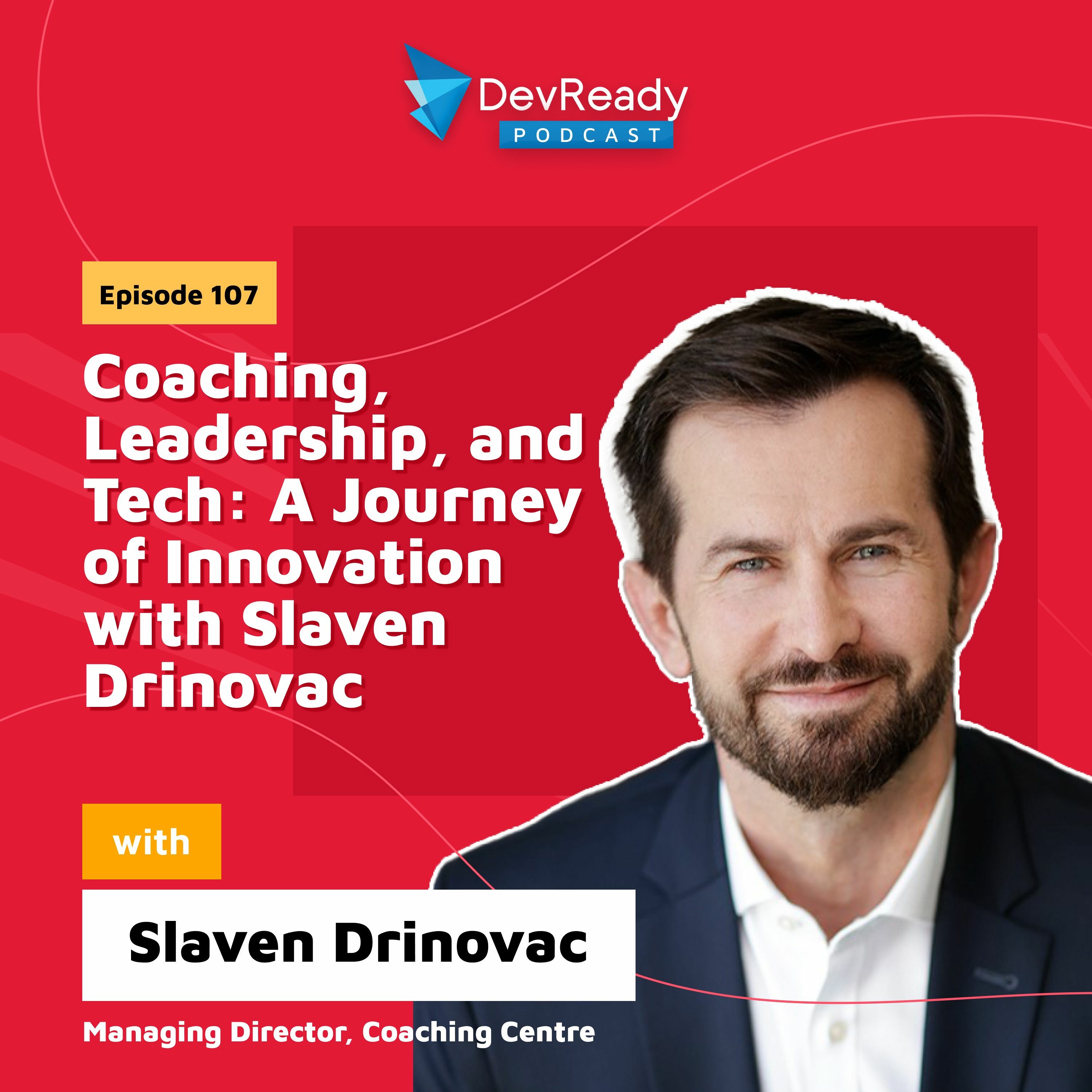
Coaching, Leadership, and Tech: A Journey of Innovation with Slaven | Ep 107 | DevReady Podcast
In this episode of the DevReady Podcast, our hosts, Andrew Romeo and Anthony Sapountzis are joined by the guest Slaven Drinovac, Managing Director, Coaching Centre, a virtual coaching platform that helps individuals and organizations achieve their goals through coaching, training, and development programs. Slaven delves into problem-solving and its relevance to his journey, unveiling the nuances of the coaching landscape and its hurdles. He addresses the paradox between recognizing coaching's benefits and the scarcity of opportunities for organizational leaders, attributing it to funding challenges. Fuelled by a passion for impactful leadership, Slaven shares his drive to democratize coaching accessibility. The conversation navigates through the inevitable integration of technology, the iterative process of refining ideas, and the transformative power of AI in coaching. Slaven's reflections echo the evolution of his project, the pivotal role of collaboration with developers, and the valuable lesson of thorough communication. He discusses his vision for the future, outlining Coaching Centre's expansion from Australia to international landscapes while harnessing AI's potential to reshape coaching dynamics. Tune in for an insightful journey through problem-solving, coaching, and the intersection of technology and leadership. Topics Covered Empowering leaders through leadership coaching Technology-powered solutions for maximum impact Journey from concept to reality Automating the repetitive process for efficiency gains From simple to robust through iteration Need for clarity and detail when communicating with developers Future Ready: AI-Powered Coaching and Global Expansion Important Time Stamps Making leadership coaching accessible (0:32 – 1:47) Future-proofing Leadership through technology (2:10 – 4:22) From spreadsheet to innovation: Slaven’s tech journey (4:35 – 6:32) Translating vision into tech as a non-tech founder (8:40 – 9:46) Shaping perfection through iteration (10:05 – 11:49) How developer discussions shape project success (11:51 – 13:10) The power of clarity and detail (15:03 – 17:16) The Development Playbook: lessons in effective tech engagement (17:33 – 20:05) Elevating tech collaboration (22:29 – 26:10) Bridging gaps with tech: AI-powered coaching and global expansion (32:30 – 34:47) Follow & Subscribe to the DevReady Podcast Facebook: https://www.facebook.com/aerionTech LinkedIn: https://www.linkedin.com/company/aerion-technologies Instagram: https://www.instagram.com/aeriontech/ Apple Podcast: https://apple.co/36XdTFQ YouTube: https://www.youtube.com/@AerionAuTech Spotify: https://spoti.fi/2uaqDvt
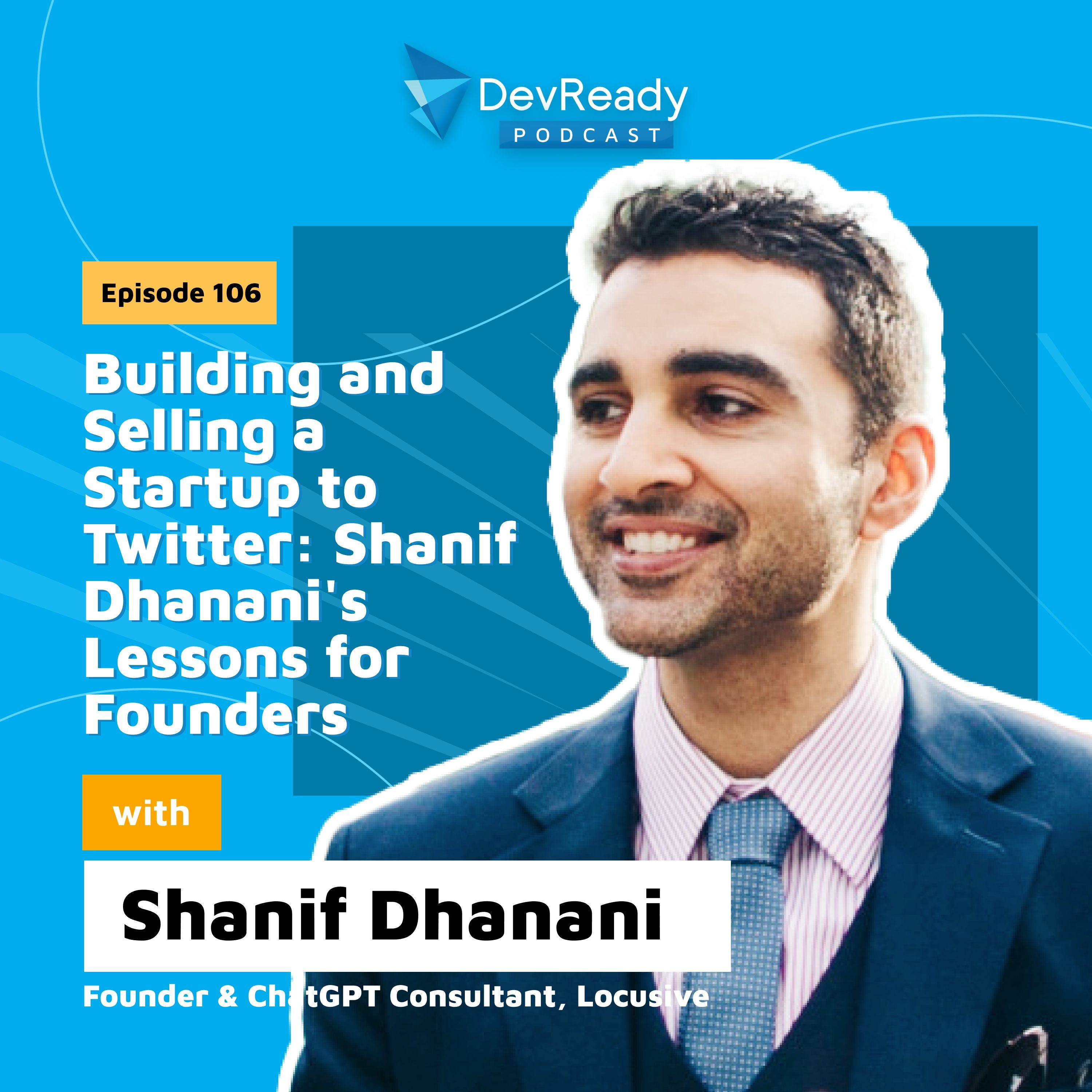
Building and Selling a Startup to Twitter: Shanif Dhanani’s Lessons | Ep 106 | DevReady Podcast
In this episode of the DevReady Podcast, our hosts, Andrew Romeo and Anthony Sapountzis are joined by Shanif Dhanani, Founder & ChatGPT Consultant, Locusive, a platform that provides the complete infrastructure and applications to connect your proprietary data to ChatGPT. It allows you to build Slackbots, chat servers, and other services so your employees and customers can get the most out of your data. Having founded a successful start-up, pioneering as one of the world's first mobile advertising companies, Shanif has been at the forefront of tech innovation and digital marketing. Get ready to dive into the world of data science and mobile advertising as we explore his insightful journey and valuable expertise. Topics Covered: The evolution of Shanif’s tech brilliance From startup to mobile advertising powerhouse Lessons in startup success Tech trends and the next big thing How AI is transforming industries with predictive technology What founders think about ChatGPT Leveraging ChatGPT to enhance efficiency The impact of contextual information retrieval Overcoming challenges like rate limits and acclimating Important Time Stamps A Data Geek's Rise to Mobile Advertising Stardom (1:01 – 1:58) Building a Million Ad Request Powerhouse for Twitter (1:59 – 3:30) Tech Success Secrets: Build, Sell, and Pivot (3:49 – 4:59) Tech Disruption and ChatGPT: The 100 Million User Phenomenon (5:44 – 7:27) Debunking myths & embracing possibilities with ChatGPT (8:03 – 10:41) Optimism and excitement for ChatGPT (10:50 – 12:39) Finding the sweet spot between people and ChatGPT (15:13 - 16:54) How Chatbots transform business from data conversations to revenue generation (22:10 – 25:08) Navigating the stages of ChatGPT implementation for business success (25:43 – 28:01) Balancing visionary goals with tangible outcomes (30:30 – 33:27) Success stories and trends in small-scale projects (33:40 – 35: 46) Follow & Subscribe to the DevReady Podcast Facebook: https://www.facebook.com/aerionTech LinkedIn: https://www.linkedin.com/company/aerion-technologies Instagram: https://www.instagram.com/aeriontech/ Apple Podcast: https://apple.co/36XdTFQ Spotify: https://spoti.fi/2uaqDvt YouTube: https://www.youtube.com/@AerionAuTech
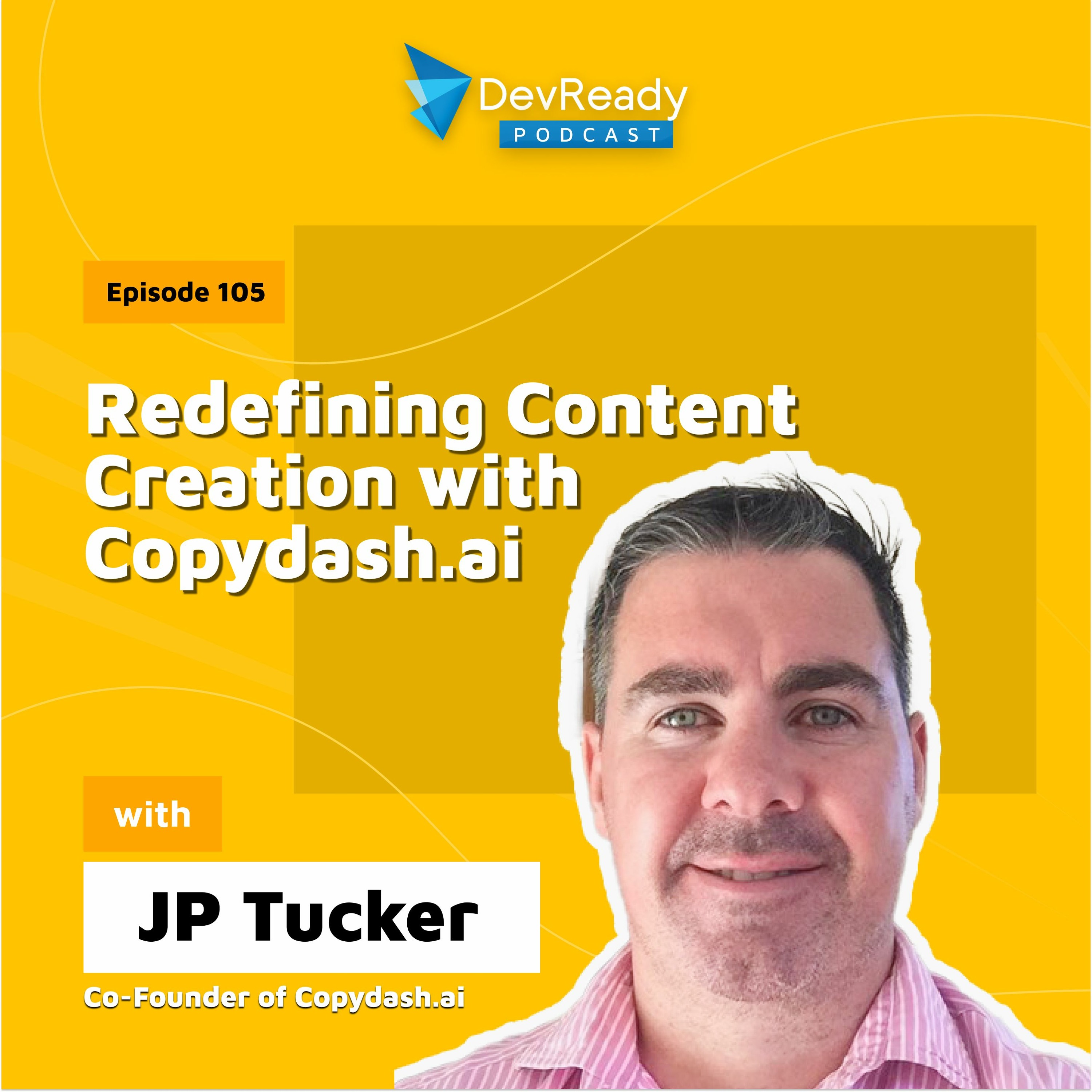
Redefining Content Creation with Copydash.ai | Ep 105 | DevReady Podcast
In this episode of the DevReady Podcast, our hosts, Andrew Romeo and Anthony Sapountzis are joined by the guest JP Tucker, Co-Founder of Copydash.ai, who discusses his journey in the e-commerce space. He talks about how a need within his business led to the creation of Copydash.ai, a platform that helps businesses and brands create content 100x faster than other platforms and reduce project costs by up to 80%. Topics Covered: • The inspiration behind creating copydash.ai • Challenges faced in the e-commerce space and the need for compelling content generation • The role of AI in content creation and its impact on businesses • Differentiating copydash.ai from other content generation platforms • Strategies for optimizing product feeds and improving rankings • The importance of trust and building credibility in the market • Integration of copydash.ai with popular platforms like Shopify and WordPress • Expansion plans and reaching out to larger e-commerce brands • The value of local talent and minimizing turnover in tech teams • Managing team dynamics Social Media Clips (Time Stamps): • Journey from a liquor business to an AI startup (0:37 – 6:30) • Challenges in content creation and the ultimate power of user feedback (5:49 – 8:35) • Empowering teams for success (9:20 – 11:59) • AI as an empowering assistant (12:00 – 12:37) • Navigating development challenges and the value of communication (12:38 – 16:58) • Building engagement in virtual teams (17:04 - 19:33) • How is copydash.ai different from Chat GPT? (19:35 – 21:24) • Expanding platform integration (21:30 – 22:33) • Overcoming the awareness barriers (23:24 – 24:13) • What the future looks like for copydash.ai (24:23 – 27:03) • Team dynamics and the power of values (27:16 – 28:51) Follow & Subscribe to the DevReady Podcast: Facebook: https://www.facebook.com/aerionTech LinkedIn: https://www.linkedin.com/company/aerion-technologies Instagram: https://www.instagram.com/aerion_tech/ Apple Podcast: https://apple.co/36XdTFQ Soundcloud: https://bit.ly/2Uz6CLL Spotify: https://spoti.fi/2uaqDvt YouTube: https://www.youtube.com/@AerionAuTech

The Innovation Race | Ep 104 | DevReady Podcast
In this episode of the DevReady Podcast, our hosts, Andrew Romeo and Anthony Sapountzis are joined by Andrew Grant, Director of Tirian Innovative Solutions and the Author of two highly acclaimed books, The Innovation Race and Who Killed Creativity. Andrew recorded a three-part Creativity Series with the DevReady Podcast, centered around his book, Who Killed Creativity and, in this episode, he talks about The Innovation Race. In this book, he and Gaia Grant take the latest academic research and present it in an accessible way to make a compelling case for forging a sustainable future driven by innovation. Listen to the episode to understand how to ask critical questions like - Why do we innovate? Are we at risk of innovating for the sake of innovation? What could we be doing better? – and to know why ambidexterity is vital in leadership. Topics Covered: What is sustainable innovation? The two leadership styles: exploration and preservation Need for ambidexterity Understanding tension and managing it well Learning from ancient cultures Is AI the future? Important Time Stamps: From uncovering creativity to decoding innovation (0:48 – 3:26) Ambidexterity as a balance between exploration and preservation (3:37 – 6:24) Nested dimensions of exploration and preservation (6:25 – 8:28) Overcoming the natural bias in leaders (8:33 – 11:52) Leaders need to balance the tension in the team (11:53 – 15:37) Learning ambidexterity from ancient cultures (18:26 – 19:13) Collaborative Canvas (19:31 – 22:03) Leader needs to be purpose-driven (23:55 – 26:56) Is the future AI? (28:24 – 33:50) iCLi assessment (43:30 – 44:38) Follow & Subscribe to the DevReady Podcast: Facebook: https://www.facebook.com/aerionTech LinkedIn: https://www.linkedin.com/company/aerion-technologies Instagram: https://www.instagram.com/aeriontech/ Apple Podcast: https://apple.co/36XdTFQ Spotify: https://spoti.fi/2uaqDvt YouTube: https://www.youtube.com/@AerionAuTech
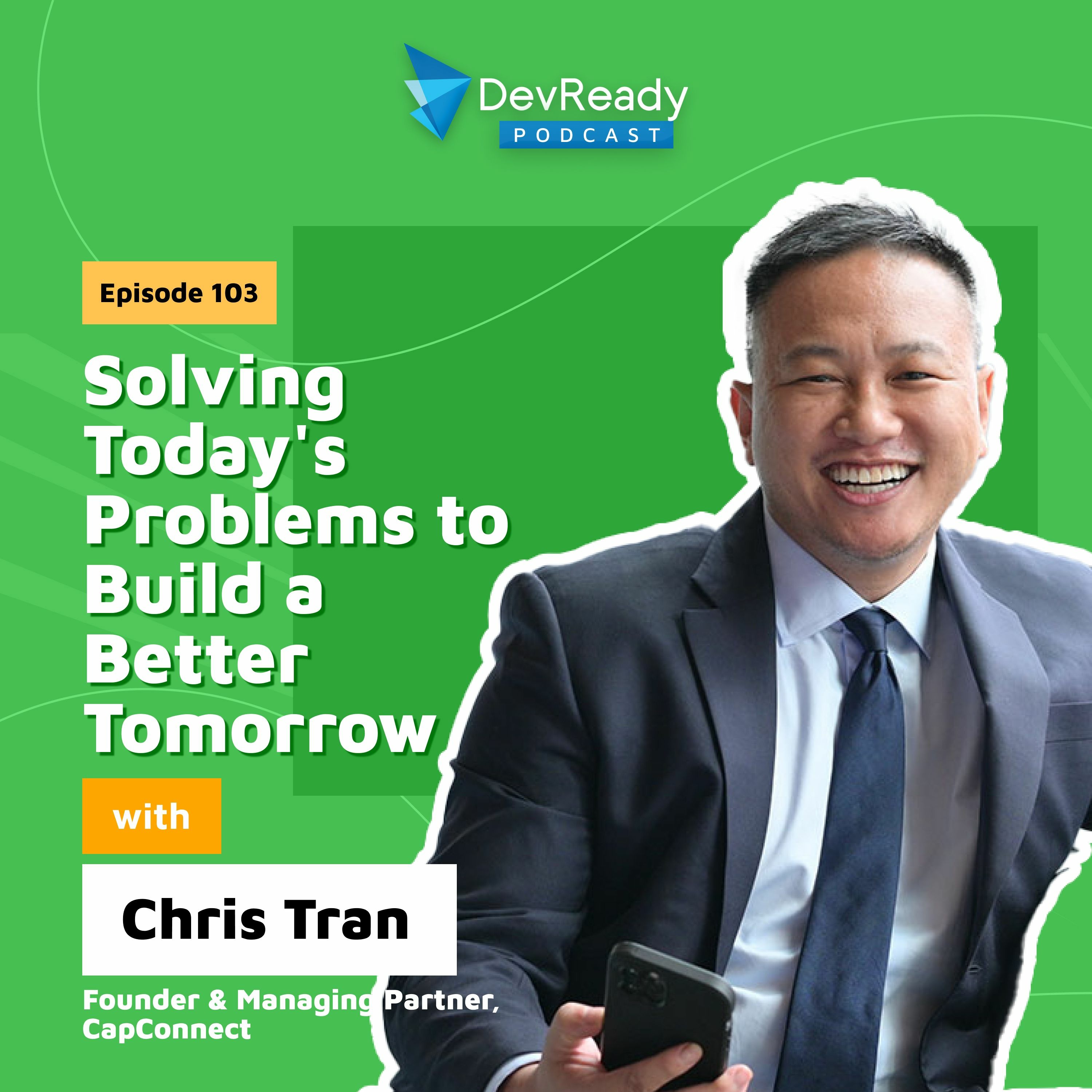
Solving Today’s Problems to Build a Better Tomorrow | Ep 103 | DevReady Podcast
In this episode of the DevReady Podcast, our hosts Andrew Romeo and Anthony Sapountzis are joined by Chris Tran, Founder & Managing Partner at CapConnect; and Board of Directors at TiE. Chris talks about the Southeast Asian market and the founders' elemental role in shaping a better tomorrow by solving today's problems. Chris compares the markets in the West with the emerging market of Southeast Asia and explains how solving problems and gaining traction are essential, regardless of the market. Topics Covered Chris’s work in the South East Asian Market What founders need to consider when moving into a new market Government’s vital role in making Singapore a tech hub Australia’s underutilized opportunities in the tech space Inconsistency in policies can be problematic for founders How do the founders tap into the South East Asian market? Understanding VCs Why do founders succeed? Important Time Stamps Factors to consider when entering the South East Asian market (1:20 – 5:29) Why is money coming to Singapore? (5:49 – 7:36) The Australian Advantage (7:38 – 8:09) Founders navigating the inconsistencies in policies (8:35 – 11:34) Move towards AI? (13:36 – 15:12) How do the founders tap into the South East Asian market? (17:06 – 19:59) What types of start-ups/businesses are funded in Singapore? (21:13 – 23:19) Evolution of the Fintech market in Singapore and new opportunities (23:49 – 27:20) Market for the VCs (27:58 – 30:03) What fuels Chris’s passion? (30:39 – 32:36) Who are the ones that succeed? (33:55 – 35:54) Building support for the Founder (36:39 – 39:06) Follow & Subscribe to the DevReady Podcast: Facebook: https://www.facebook.com/aerionTech LinkedIn: https://www.linkedin.com/company/aerion-technologies Instagram: https://www.instagram.com/aerion_tech/ Apple Podcast: https://apple.co/36XdTFQ YouTube: https://www.youtube.com/@AerionAuTech Spotify: https://spoti.fi/2uaqDvt

Innovate for Growth | Ep 102 | DevReady Podcast
In this episode of the DevReady Podcast, our hosts Andrew Romeo and Anthony Sapountzis are joined by Guy Brunsdon, Founder and Managing Director of Sazoma Systems. Guy is a technologist and a product leader with global experience—from Silicon Valley (USA) to Cambridge (UK) to Australia. In this episode of the podcast, Guy talks to our hosts about his extensive networking and product management career and how he strives to help people discover and create cutting-edge products, services, and solutions from conception to launch that solve their most critical customer problems. Topics Covered: Background in Networking Product Management Sales-led growth as opposed to product-led growth Challenges faced The secret to Cisco’s success Don’t find a solution that fits a problem Focus on the discovery process Why do products and digital transformations fail? Jobs Theory Systems Thinking Important Time Stamps: Guy’s Background and Learnings in Networking (0:56 – 4:38) Entering the start-up space with Context Relevant (12:41 – 13:40) Going back to Cisco (13:41 – 15:13) Australia and product management (15:15 – 16:45) Challenges when launching products (17:18 – 22:09) What led to Cisco’s success? (24:30 – 26:03) Move from a problem space to a solution space (26:56 – 28:14) Why do products and digital transformations fail? (30:20 – 36:07) Systems Thinking (43:16 – 47:38) Follow & Subscribe to the DevReady Podcast: Facebook: https://www.facebook.com/aerionTech LinkedIn: https://www.linkedin.com/company/aeri... Instagram: https://www.instagram.com/aeriontech/ Apple Podcast: https://apple.co/36XdTFQ Spotify: https://spoti.fi/2uaqDvt YouTube: https://www.youtube.com/@AerionAuTech

Unleash the Power of Sports and Join the ‘Heros Club’ | Ep 101 | DevReady Podcast
In this episode of the DevReady Podcast, our hosts, Andrew Romeo and Anthony Sapountzis, are joined by Stuart Thornton, Founder of heros.xyz, a membership club of athletes and fans committed to inspiring and investing in each other. Listen in to understand Stuart’s journey—of how he co-founded hoolah (now Shopback), Asia’s omnichannel ‘Buy Now, Pay Later’ ecosystem headquartered in Singapore, and how he then went on to found heros.xyz. Topics Covered • Stuart’s background and how hoolah was founded • What are the elements for a start-up? • How to form the right team at the right time? • Understanding merchant engagement models • Need for MVP • Value of communicaton in a team • How heros.xyz was founded Important Time Stamps • Setting up the ‘Buy Now, Pay Later’ ecosystem (1:51 – 5:12) • The Start-Up Allure (5:13 – 7:38) • Working With the Right People at the Right Time (9:08 – 12:33) • The Sales Process (15:21 – 19:09) • How to Build Traction (20:51 – 22:47) • We Made a Sale in 10 minutes (22:48 – 25:00) • Value Communication in the Team (31:21 - 33:05) • How heros.xyz came to be? (33:17 – 39:32) Follow & Subscribe to the DevReady Podcast Facebook: https://www.facebook.com/aerionTech LinkedIn: https://www.linkedin.com/company/aeri... Instagram: https://www.instagram.com/aeriontech/ Apple Podcast: https://apple.co/36XdTFQ Soundcloud: https://bit.ly/2Uz6CLL Spotify: https://spoti.fi/2uaqDvt
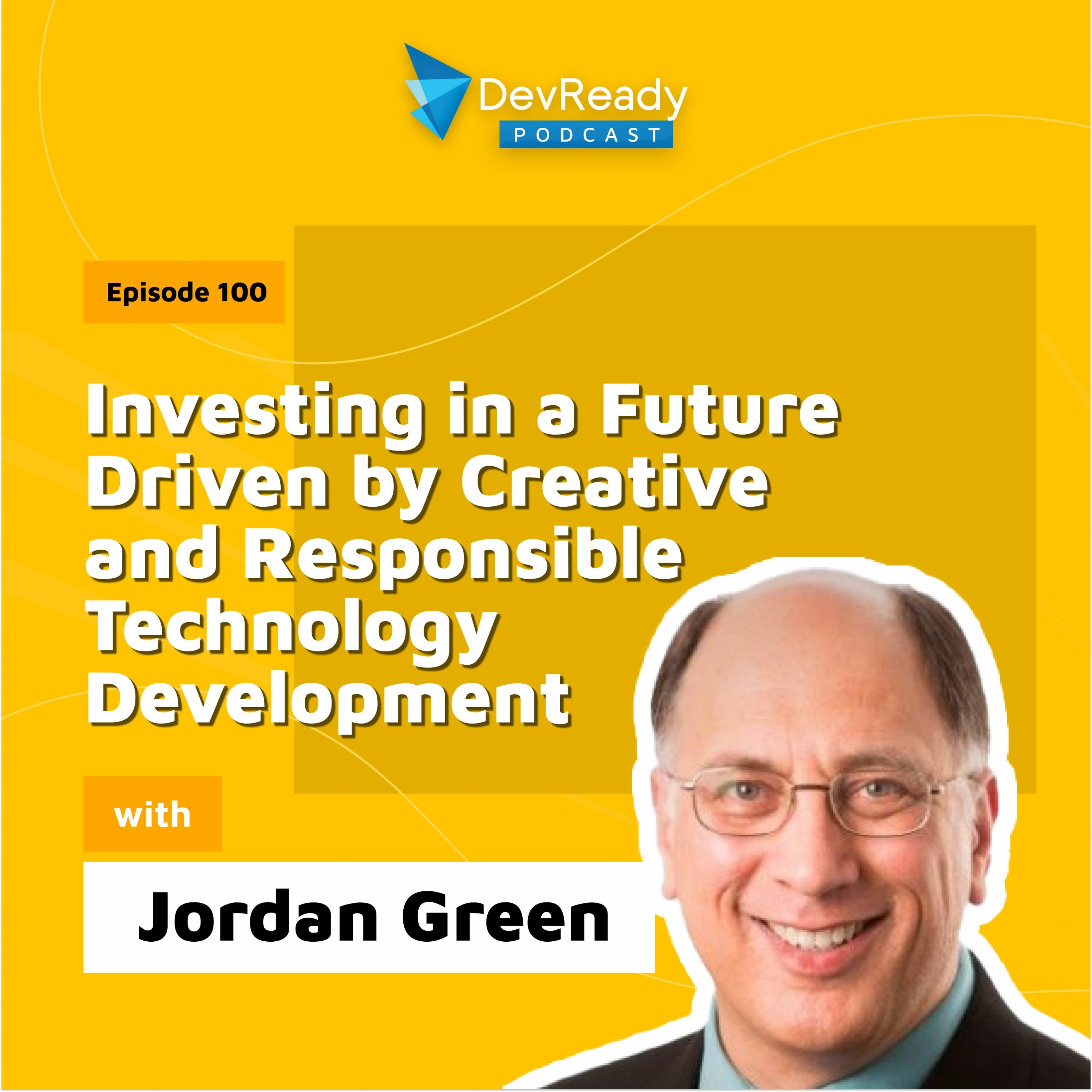
Investing in a Future Driven by Creative & Responsible Technology | Episode 100 | DevReady Podcast
In this episode of the DevReady Podcast, our hosts Andrew Romeo and Anthony Sapountzis are joined by Jordan Green, President Emeritus/Founder of Melbourne Angels. Jordan has spent decades focusing on doing things that have never been done before and is passionate about investing in a future driven by creative and responsible technology development. In this episode, he talks about what fuels his work and how he realizes his vision through action, leadership, investment, education, and collaboration. Topics Covered • What fascinates Jordan about the start-ups. • Introducing cutting-edge technology in the market. • How investment works. • How Jordan started Angel Investment in Australia. • What matters when investing in a start-up. • What motivates Jordan. • Jordan’s advice to start-up founders. Important Time Stamps • It is exciting to be living in a world of constant change (1:06 - 3:13) • Use cases of introducing technology in the market (2:22 - 9:39) • Introduction of new technology (9:49 - 11:17) • No one wants to be the first to take a risk (16:24 – 19:00) • How Angel Investment started in Australia (19:01 - 23:07) • Jordan's investment thesis (26:35 - 33:34) • What keeps Jordan going? (40:02 - 40:50) • Jordan’s advice for start-up founders (43:04 – 49:44) Follow & Subscribe to the DevReady Podcast Facebook: https://www.facebook.com/aerionTech LinkedIn: https://www.linkedin.com/company/aerion-technologies Instagram: https://www.instagram.com/aerion_tech/ Apple Podcast: https://apple.co/36XdTFQ Soundcloud: https://bit.ly/2Uz6CLL Spotify: https://spoti.fi/2uaqDvt

STEEP Renaissance | Episode 99 | DevReady Podcast
In this episode of the DevReady Podcast, our hosts, Andrew Romeo and Anthony Sapountzis, are joined by Neville Christie, Future Maker at STEEP Renaissance. In this episode, he talks about STEEP Renaissance and the need to change mindsets and practice gratitude. Neville has been an entrepreneur since the age of 12. During his 69 years in innovation, entrepreneurship, and research, he always found that the biggest problems in the world are the source of the most significant opportunities. When in 2018, he sat down and spent time researching the social, technological, economic, ecological, and political trends, and he came up with two firm conclusions: 1. The decade will see substantial structural changes in the social, technological, economic, ecological, and political fabric 2. As a result of the changes, most nations will experience 40 tsunami-like events (pandemic, recession, financial crisis, war, changes in supply chains across the world, among others) Topics Covered • With chaos come opportunities • What is the STEEP Renaissance? • Importance of changing the mindset • Need to practice gratitude • Need to form communities • Importance of understanding values Impoortant Time Stamps • A decade of great destruction and great opportunities (2:02 – 4:58) • Need to reinvent (5:03 – 5:53) • How STEEP Renaissance came into being (5:55 – 7:28) • What is the STEEP Renaissance? (10:35 – 15:00) • Need to change the mindset (15:03 – 19:56) • Psychology of gratitude (19:57 – 22:02) • The power of communities (23:53 – 26:35) • Advice for those entering business (32:09 – 35:42) Follow & Subscribe to the DevReady Podcast Facebook: https://www.facebook.com/aerionTech LinkedIn: https://www.linkedin.com/company/aeri... Instagram: https://www.instagram.com/aeriontech/ Apple Podcast: https://apple.co/36XdTFQ YouTube: https://www.youtube.com/@AerionAuTech Spotify: https://spoti.fi/2uaqDvt Previous DevReady Epiosde with Neville: https://www.youtube.com/watch?v=50rcY0qb4DY&t=291s
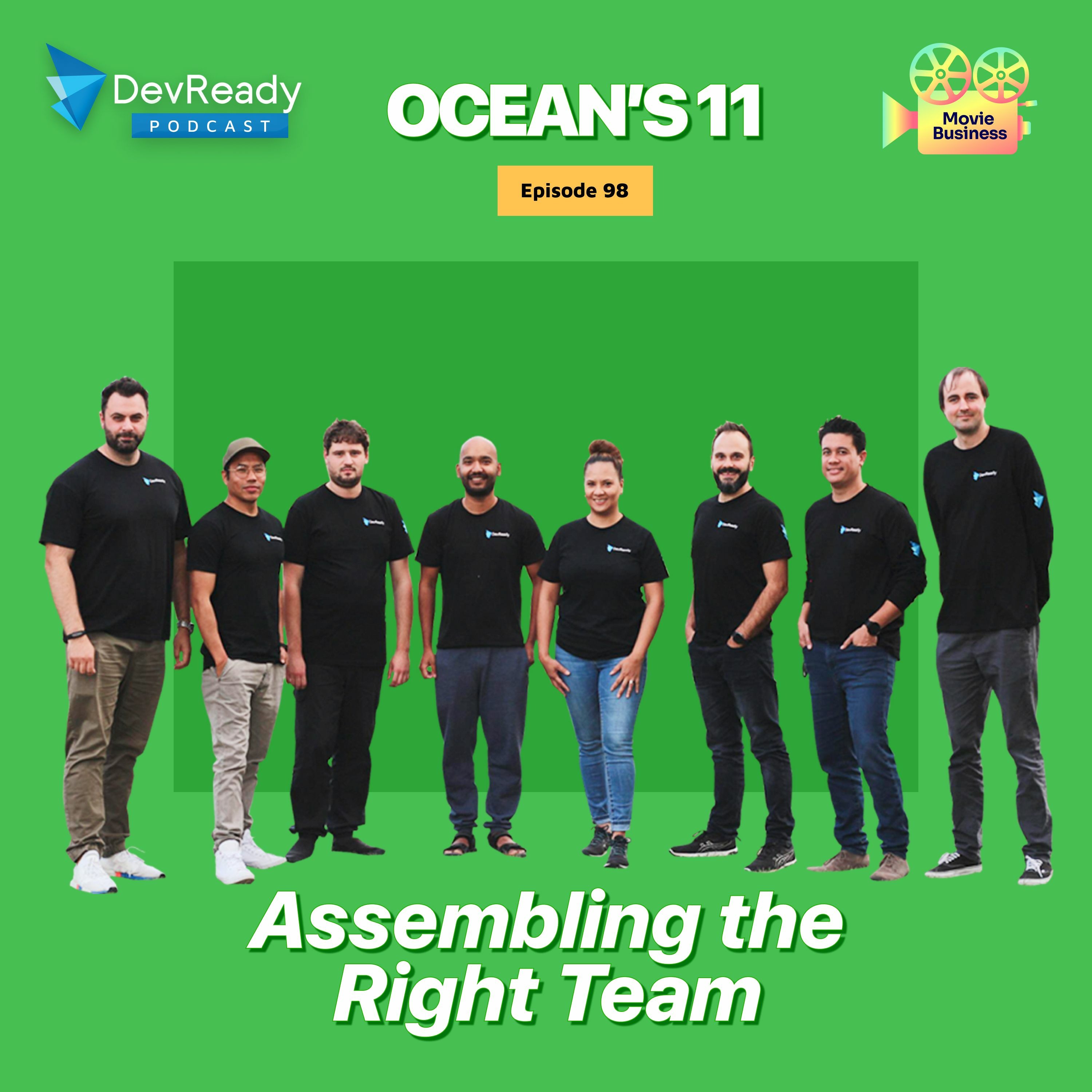
Assembling the Right Team | Episode 98 | DevReady Podcast
In this fun episode of the DevReady Podcast, our hosts, Andrew Romeo and Anthony Sapountzis are joined by Rex Kelly, General Manager & Manager of Marketing and Sales at Aerion Technologies. The conversation centers around the parallels that can be drawn between business and the movie in the spotlight for this edition of the Podcast—Ocean’s 11. Danny Ocean assembled an A-Team in the movie. And there’s so much to learn from the movie if you are a start-up founder or the owner of a business. Read Anthony's article here 👉https://aerion.com.au/blog/movie-business/how-to-assemble-the-right-team-like-danny-ocean/ Follow & Subscribe to the DevReady Podcast Facebook: https://www.facebook.com/aerionTech LinkedIn: https://www.linkedin.com/company/aeri... Instagram: https://www.instagram.com/aeriontech/ Apple Podcast: https://apple.co/36XdTFQ YouTube: https://www.youtube.com/@AerionAuTech Spotify: https://spoti.fi/2uaqDvt
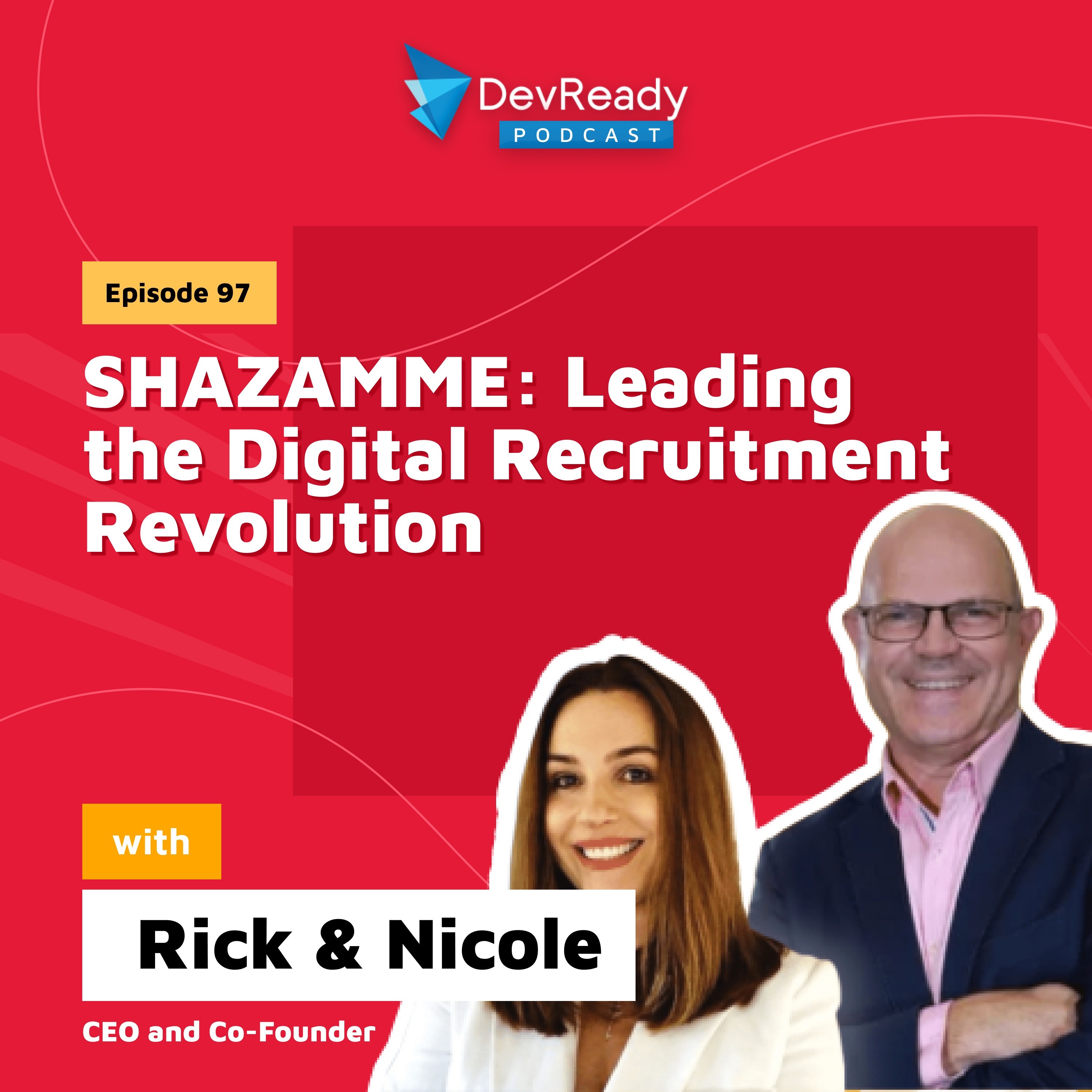
SHAZAMME: Leading the Digital Recruitment Revolution with Rick Maré & Nicole Clark - Episode 97
In this episode of the DevReady Podcast, our hosts Andrew Romeo and Anthony Sapountzis talk to Rick Maré, CEO and Co-Founder of SHAZAMME, and Nicole Clarke, Co-Founder of SHAZAMME about how they created the Canva of recruitment websites. The episode is about all things business and how a business can be grown and scaled. Topics Covered: · How Shazamme came into being · Catering to the needs of the recruitment industry · Different silos of clients · Offering services that no one else offers · Challenges faced and lessons learned · Evolution from the first MVP to now · Benefits of operating in a niche market Important Time Stamps: · The Rolls Royce Solution for Recruitment (4:32 – 5:03) · SHAZAMME and the Use of Cutting-Edge Tech (5:10 – 5:58) · What Sets SHAZAMME apart from Competitors (6:00 – 11:11) · Lessons Learned (15:09 – 20:08) · Benefits of Low Code, No Code (27:50 – 28:59) · MVP is crucial (29:01 – 32:45) · Benefits of Operating in a Niche Market (32:51 – 36:26) Follow & Subscribe to the DevReady Podcast Facebook: https://www.facebook.com/aerionTech LinkedIn: https://www.linkedin.com/company/aerion-technologies Instagram: https://www.instagram.com/aerion_tech/ Apple Podcast: https://apple.co/36XdTFQ Soundcloud: https://bit.ly/2Uz6CLL Spotify: https://spoti.fi/2uaqDvt
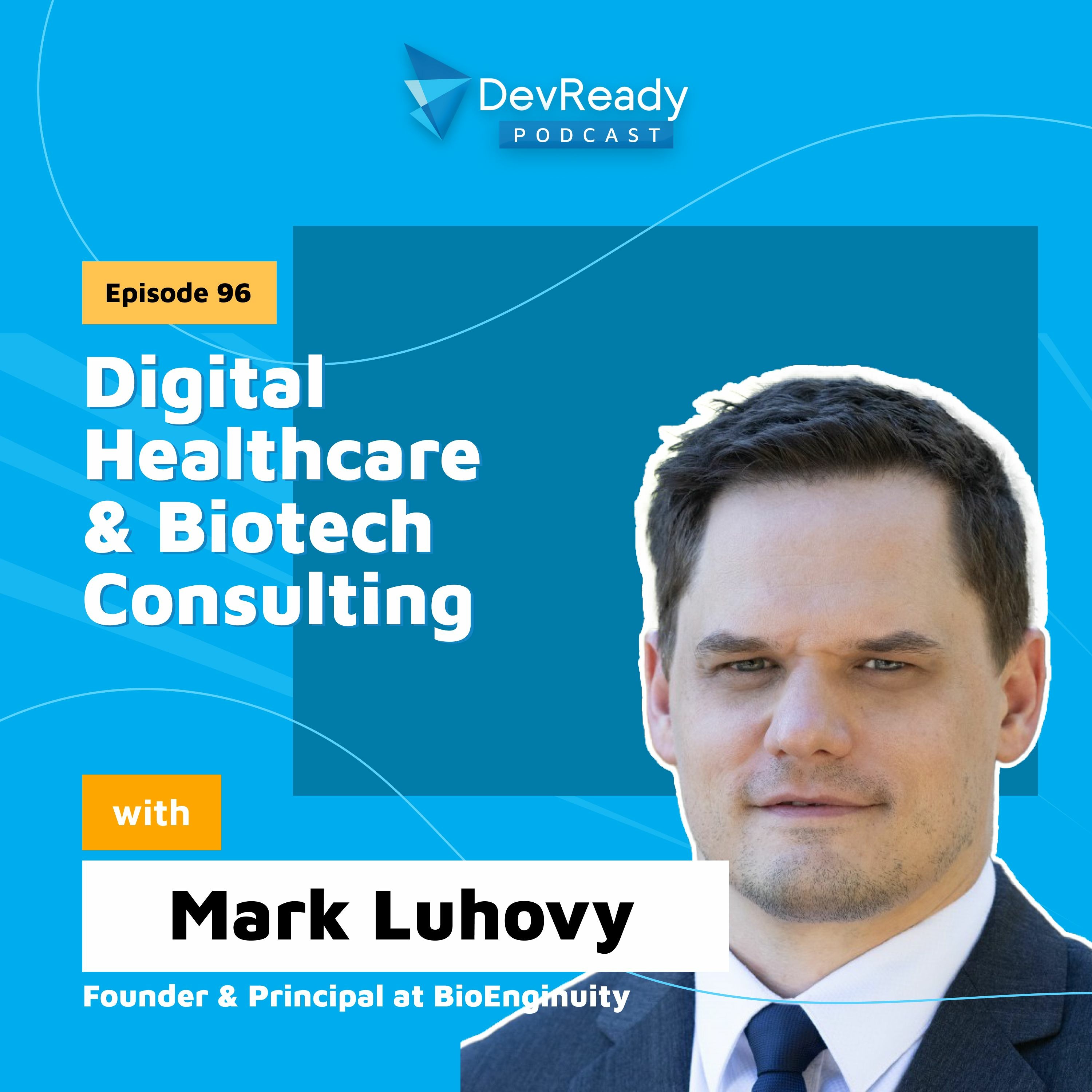
Digital Healthcare & Biotech Consulting with Mark Luhovy - Episode 96
In this episode of the DevReady Podcast, our hosts Andrew Romeo and Anthony Sapountzis talk to Mark Luhovy, Founder & Principal at BioEnginuity, which provides strategic digital healthcare & biotech consulting. Listen in as the conversation takes us through Mark’s medical career, the possibilities in the digital health space, his start-up experience, and the exciting world of robotics. Mark has spent most of his career in the medical device sector. Towards the end of his medical school journey, he decided not to pursue additional clinical training. Instead, he rolled up a lot of his experience into his own consulting business, which is what BioEnginuity. And since 2018, he has been doing really several different consulting projects with clients as large as Johnsons & Johnsons but also small as emerging medical health companies in the digital health space. When working in the US, Mark fell in love with the practical side of engineering: from product design to product implementation to sales. To him, it brought together the best of both worlds: sound fundamentals of a scientific discipline and the actuality of making tangible things. Topics Covered • Mark’s career in the medical sector • Foray into the digital health space • Possibilities for start-ups in digital health • Surviving a major failure • The highs and lows of running a start-up • Challenges faced • Key Learnings • The exciting world of Robotics Time Stamps • Foray into the digital health space (2:51 – 4:57) • Possibilities for start-ups in digital health (4:59 – 6:39) • Why do start-ups fail? (8:27 – 11:42) • The start-up experience is a roller coaster (15:34 – 17:43) • Roadblocks along the way (17:44 – 20:25) • Key learnings (24:03 – 25:42) • Exciting world of Robotics (29:29 – 31:55) • Connect with Mark (39:25 – 40:51) Follow & Subscribe to the DevReady Podcast Facebook: https://www.facebook.com/aerionTech LinkedIn: https://www.linkedin.com/company/aerion-technologies Instagram: https://www.instagram.com/aerion_tech/ Apple Podcast: https://apple.co/36XdTFQ Soundcloud: https://bit.ly/2Uz6CLL Spotify: https://spoti.fi/2uaqDvt
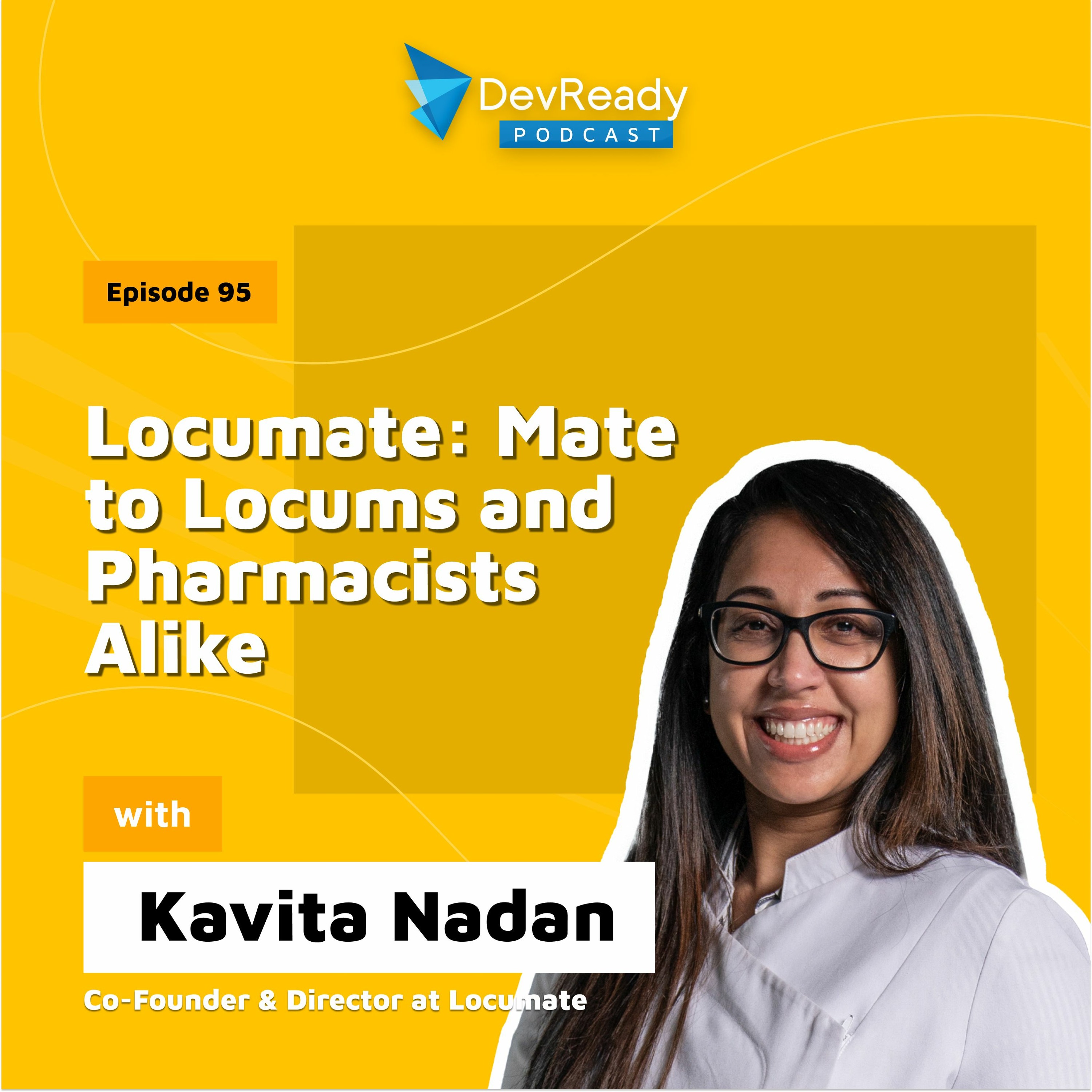
Locumate: Mate to Locums and Pharmacists Alike with Kavita Nadan - Episode 95
In this episode of the DevReady Podcast, our hosts Andrew Romeo and Anthony Sapountzis sit with Kavita Nadan, Co-Founder & Director at Locumate. In this episode, the discussion centres around the platform, how it has evolved since its launch and what are the plans moving ahead. With Locumate, Locums can find the perfect shifts, get paid on time, and get access to additional educational resources to help them grow their career as Pharmacists. Something that Kavita has always been passionate about has been helping the students. She shares how, as a student herself, she did not have the answers and thinks that through platforms like hers, she can help students look beyond the obvious. She wants to invest in students because they are the future. If we don’t start at that student level and get them passionate about the opportunities, they will not be passionate about it down the track. Topics Covered • Working in the community • Career opportunities for students • Locumate: from idea to execution • Listen to your customers • Opportunities in the Pharmaceutical Industry • Learnings Time Stamps • Working in the community (2:50 – 3:21) • Students and career in Pharmacy (6:47 – 9:15) • How Locumate was conceptualized (9:20 – 15:00) • The execution of Locumate (16:21 – 19:28) • Listening to your customers (23:53 – 24:33) • Different opportunities (27:33 – 28:17) • Key learnings (29:20 – 32:33) Follow & Subscribe to the DevReady Podcast Facebook: https://www.facebook.com/aerionTech LinkedIn: https://www.linkedin.com/company/aerion-technologies Instagram: https://www.instagram.com/aerion_tech/ Apple Podcast: https://apple.co/36XdTFQ Soundcloud: https://bit.ly/2Uz6CLL Spotify: https://spoti.fi/2uaqDvt
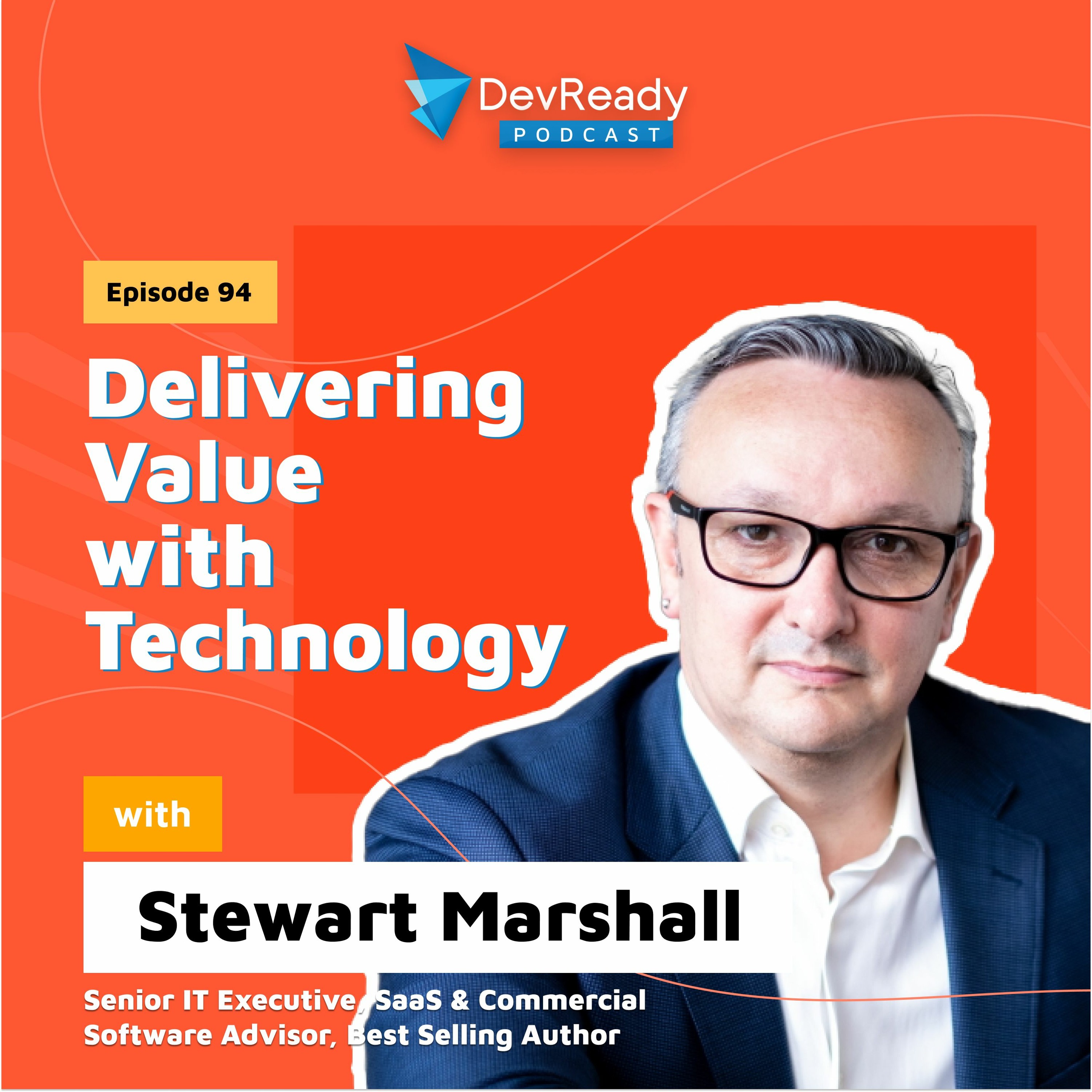
Delivering Value with Technology with Stewart Marshall - Episode 94
For this episode of the DevReady Podcast, our hosts Andrew Romeo and Anthony Sapountzis welcome Stewart Marshall, Senior IT Executive, SaaS and Commercial Software Advisor, Best Selling Author. Stewart talks about what drives him and how he wants to help purposeful businesses yield better outcomes. He also talks about his upcoming book, Kick Some SaaS: The leader’s guide to purposeful software and global impact. A third-time guest to the podcast, Mr. SaaS thinks that the industry is seeing interesting changes and a difference in the world can be made with software. He calls software the great leveler and says that everyone has an equal opportunity to make the world a better place. Topics Covered • Delivering better value • The chicken and team member analogy • Articulating value as a vendor • Calculating and communicating value to customers • Undercutting in SaaS • Understanding the outcome Time Stamps • Delivering better value (5:38 – 6:27) • The chicken story (6:58 – 8:37) • What happens when good people leave? (8:39 – 9:47) • Articulating value as a vendor (12:30 – 13:46) • Calculating and communicating value to customers (13:47 – 17:15) • Understanding the value of your business (28:15 – 30:31) Follow & Subscribe to the DevReady Podcast Facebook: https://www.facebook.com/aerionTech LinkedIn: https://www.linkedin.com/company/aerion-technologies Instagram: https://www.instagram.com/aerion_tech/ Apple Podcast: https://apple.co/36XdTFQ Soundcloud: https://bit.ly/2Uz6CLL Spotify: https://spoti.fi/2uaqDvt

Transforming Ideas into Million Dollar Products with Philippe Guichard - Episode 93
In this episode of the DevReady Podcast, our hosts Andrew Romeo and Anthony Sapountzis are joined by Philippe Guichard, an Industrial Designer and a serial entrepreneur. Philippe is the Founder, Creative Director & Manager at D2 Designs and Development, an industrial design studio based in Melbourne, where the team helps businesses simplify and de-risk hardware ventures. In this episode, we learn about Philippe’s journey, his three steps methodology and designing for the triple line (people, planet, profit). Topics Covered The triggers for becoming a designer A good design needs to be invisible Challenges faced Three Steps Design Methodology Designing for the Triple Bottom Line Considering the impact on the planet Time Stamps Journey from France to Australia (10:15 – 14:04) A good design is an invisible design (14:37 – 16:44) How to design physical products? (17:59 – 22:45) Talk to the market (25:27 – 28:14) Three Steps Methodology (31:29 – 36:20) Designing for the Triple Bottom Line (36:33 – 39:02) Considering the impact on the planet (40:41 – 46:02) Follow & Subscribe to the DevReady Podcast Facebook: https://www.facebook.com/aerionTech LinkedIn: https://www.linkedin.com/company/aeri... Instagram: https://www.instagram.com/aerion_tech/ Apple Podcast: https://apple.co/36XdTFQ Soundcloud: https://bit.ly/2Uz6CLL Spotify: https://spoti.fi/2uaqDvt
Bringing Start-ups, Food & Technology Together with The Dung An - Episode 92
In this episode of the DevReady Podcast, our hosts Andrew Romeo and Anthony Sapountzis chat with The Dung An, Co-CEO/CTO at adash, a platform that connects accomplished food creators with their right audience. Listen in as the three of them talk about the journey of creating the platform from ideation to delivery, the challenges faced along the way, and what it takes to make one’s mark in the world of start-ups. Topics Covered: Getting Investors Networking with like-minded people Envisioning a start-up Challenges faced Follow & Subscribe to the DevReady Podcast Facebook: https://www.facebook.com/aerionTech LinkedIn: https://www.linkedin.com/company/aerion-technologies Instagram: https://www.instagram.com/aerion_tech/ Apple Podcast: https://apple.co/36XdTFQ Soundcloud: https://bit.ly/2Uz6CLL Spotify: https://spoti.fi/2uaqDvt
Understanding Business Legal Lifecycle with Jeremy Streten - Episode 91
In this episode of the DevReady Podcast, our hosts Andrew Romeo and Anthony Sapountzis chat with Jeremy Streten, CEO at Business Legal Lifecycle. Jeremy is a returning guest to the podcast as he was also featured on the 54th episode of the DevReady Podcast and talked about legal agility in developing tech. In this episode, he brings to the listeners, information on an educational platform where he helps businesses assess where they stand and how they can grow by educating them on thirteen business phases (conception, startup, initial clients, bringing on employees, protecting intellectual property, maximizing business and bringing in investors, expansion, estate planning, investing in property, litigation and dispute resolution, sale of whole or part of the business or listing on the stock exchange, retirement, and insolvency and winding up) Topics Covered • Legal education for business owners • Business Legal Lifecycle (BLL) Course • Lack of agreements as a major concern • Free Business legal lifecycle assessment Follow & Subscribe to the DevReady Podcast Facebook: https://www.facebook.com/aerionTech LinkedIn: https://www.linkedin.com/company/aeri... Instagram: https://www.instagram.com/aerion_tech/ Apple Podcast: https://apple.co/36XdTFQ Soundcloud: https://bit.ly/2Uz6CLL Spotify: https://spoti.fi/2uaqDvt

SaaS Marketing Done Right with Ann Pocock - Episode 90
Our guest in this episode of the DevReady Podcast is Ann Pocock, Marketing Strategy Consultant, Marketing Coach and Executive Coach for high growth businesses at Kinetic Effect. She joins our hosts Andrew Romeo and Anthony Sapountzis as the episode explores how purpose-built and tailor-made coaching and marketing consulting could help unleash the potential in not just an individual but also his/her organization. The key is to focus on one’s strengths and align the mission with the core values. Brand positioning and value proposition are critical to any business. Having a clear message helps you across all touchpoints, right from the very first version of your website to your proposal deck to the phone calls that you have to make, the pitch deck that you might want to do on a sales call, how you work the room in a networking event, the list goes on and on. The emphasis here is to say the right things to the right people in a right place and at the right time.

Stop Wasting Your Advertising Money with Judy Celmins - Episode 89
In this episode of the DevReady Podcast, hosts Andrew Romeo and Anthony Sapountzis talk to Judy Celmins, who is not just a marketing genius and a startup mentor but also hosts her own podcast, ThriveableBiz Podcast. Judy was, in fact, DevReady Podcast’s first-ever guest and she comes back to the podcast to talk about her book ‘Marketing = Customer + Heart’. The book is not just a book on marketing, it’s a way of doing business and you want to get your copy asap. (Note: 100% of the profit from the book would go to helping a Ukrainian family). Here are some of Judy’s insights: · Understand that marketing applies to pretty much every segment of any business · Create the customer · Ask the right questions · Understand what is missing from competitors’ product/service · Understand the specific customer needs first and then focus on creating · Continue to evolve with the change in the market
How to Play a Bigger Game in Business with Tim Bishop - Episode 88
Join the hosts Andrew Romeo and Anthony Sapountzis in this episode of the DevReady Podcast as they have an insightful conversation with Tim Bishop, CEO and Founder of NXT LVL Group, a people-performance business that builds high-performance leaders and teams. Tim has donned many hats but the one thing that he has always been passionate about is helping people and businesses take themselves to the next level. Talking about his life’s Marvel-esque arch, Tim recounts how he who grew up in Papua New Guinea ended up having a military career where he held positions of leadership and was told he had a knack for lighting a fire in people and getting them focused. He calls the military the place where he was forged—a place where he learned who he was and who he wasn’t. It was there that he became passionate about human excellence and high performance. He understood that what he enjoyed the most was helping and serving people. That is what drove him to build two successful companies and to impact 1000s.

Creating a Digital Ecosystem with Yupin Robson - Episode 87
On the occasion of International Women’s Day, 2022, the host of the DevReady Podcast, Andrew Romeo talked to Yupin Robson, Director of OBSID Pty Ltd and Edify Medical Pty Ltd. Edify Medical is a company based in Australia that creates a digital ecosystem designed to break barriers of language, cost and access to information for health care providers across the globe. Listen in as the two discuss Yupin’s journey and how it impacts not just the health care professionals but countless individuals across the globe. Topics Covered: · Need to Communicate · Be Solution Oriented · Equity Split and Exit Strategy · Women Entrepreneurs and Access to Capital · Radical Generosity · Owning the IP

Fast-track Your Growth with Tech Torque with Matthew Whyatt - Episode 86
This episode of the DevReady Podcast features Matthew Whyatt, Co-Founder and Technology Sales Specialist at Tech Torque Systems—the first integrated, purpose-built, precision growth system for the tech sector. Listen to the conversation as host, Andrew Romeo and Matthew talk about how tech businesses can be better positioned to sell more products and benefit more people. Topics Covered: · Marketing Fuels the Sales Engine · Building a Team of Talented People with Specific Roles · Challenges When Selling and Marketing · B2B and B2C Marketing Strategies · 3 Key Areas for Growth (Branding, Marketing, Conversion) · How to Engage Customers

How to Stand Out in the Sea of Sameness - Episode 85
This episode of the DevReady Podcast, features Greg Smith, Founder & CEO, of Send Handwritten along with the hosts Andrew Romeo and Anthony Sapountzis. Greg is a Customer Experience Expert and in this episode, he shares with us all how a remarkable and memorable marketing campaign is designed and delivered to tell the customer that you care. Customers want a tool that is the most cost-effective, easy to understand, and simple to implement so that it can be implemented the day before and ROI got on a coming day. People remember experiences and that’s what the company provides. Topics Covered: · How to Stand Out in the Crowd · Using Humor to Create Impact · The Memorable Marketing Blueprint · Know When to Iterate and Pivot · Build Human Relationships

Go To The Extra Mile with Simon Madden - Episode 84
Simon Madden joins hosts Andrew Romeo and Anthony Sapountzis in this episode of the DevReady Podcast. Simon is the Founder of Simon Madden Consulting and now helps organizations understand what it takes to achieve a sustained high-performance culture. The ability to ‘get good and stay good’ is vital for success, as per Simon. Many people become successful and then they get comfortable there. Simon says that it is important to realise that the work still remains—there needs to be continuous improvement. Topics Covered: · What is That Extra Thing That You Are Doing? · Learning from Mistakes · People are the Best Resource · CARE (Consideration, Affirmation, Respect and Empathy) · Differences between Leadership and Management · Qualities of a Great Leader

Plan, Design & Build with Archistar with Robert Coorey & Chris Clark - Episode 83
In this episode of the DevReady Podcast, hosts Andrew Romeo and Anthony Sapountzis talk to Robert Coorey, Co-Founder ArchiStar and Chris Clark, Head of Consulting at Archistar. Archistar creates cutting-edge technology that revolutionises the way property professionals plan, design, and build and in this episode the hosts and the guests interact about how technology has transformed the ways of finding property and development sites and how there are limitless possibilities of leveraging data to meet the goals of the end-users. Developing a property is a task that can take a toll on anyone—from finding sites to assessing the needs to actually designing and building—a lot of resources are needed. Robert talks about how Archistar helps people do that in a matter of minutes—the customers are helped with finding sites and when doing due diligence; they are even given access to some real-time building designs to show exactly what will fit on that block of land in conjunction with the local government rules. Topics Covered: · Bringing Value to the Marketplace · From a Humble MVP to Catering to Growing Needs · Evolution of a Team · Doing Too Much Too Quickly · Niche Userbase
How to Build Functional & Secure Website with AIP with Stephen Downey - Episode 82
Ever since AIP Technology was set up, Stephen and his co-founders, have had a goal of catering to the needs of the customers. Multiple plugins and their unique features often make the job of maintenance of WordPress a challenging issue—it is much like finding a needle in a haystack. But having realized that WordPress powers around a third of the internet, Stephen believes that aiming to solve the problem for the customers have been worthwhile. In this episode of the DevReady Podcast, our hosts Andrew Romeo and Anthony Sapountzis talk to Stephen Wilson Downey, CEO & Founder of AIP Technology. AIP’s technology automates website maintenance, keeps sites up-to-date and secure, and identifies and fixes bugs so that customers can utilize their time elsewhere. Listen in as the three of them talk about the endless possibilities that the world of WordPress has to offer and how customers’ needs and requirements are of utmost importance. Topics Covered: · Possibilities in Website Maintenance · Finding Solution to a Unique Problem · Building a Team and Having Enough Funds · Focusing on the Needs of the Customer

Locumate: Creating A Feedback Loop with End Users with Surge Singh - Episode 81
In this episode of the DevReady Podcast, hosts Andrew Romeo and Anthony Sapountzis talk to Surge Singh, Co-Founder of Locumate, a platform, the aim of which is to create a community dedicated to Locums in Australia. Listen in to this insightful conversation to learn more about the platform that is looking to bring about the much-needed technological disruption in the pharmaceutical industry to ensure that Locums can find the perfect shifts, get paid on time and get access to additional educational resources to help them grow their career as pharmacists. Topics Covered: · How Locumate Built a Transactional Platform for Locums and Pharmacists? · How to Balance Domain and Technical Expertise? · Building a Product and Developing a Business around it. · Creating a Feedback Loop with End Users. · The Key to Stick to Your Core Values. · The Best Way to Find a Great Tech Partner.

Is Metaverse Really The Future with Alan Smithson - Episode 80
In this episode of the DevReady Podcast, hosts Andrew Romeo and Anthony Sapountzis have an insightful conversation with Alan Smithson, Co-Founder at MetaVRse which is a proprietary, code-optional web platform that makes it easy to create and share interactive 3D experiences instantly. Know of the iconic performance by the French DJ and pioneer of electronic music, Jean Michel Jarre on the 31st of December, 2020 where he performed live in a 3D visual reconstruction of the emblem of the Cathedral of Notre-Dame de Paris? Well, that immersive event that was available on the social VR platform VRChat, accessible via a personal computer or in virtual reality for those who have a VR headset was made possible courtesy of Alan and his team. Topics Covered: · Touch Screen Technology · Virtual Reality · Overcoming Challenges Faced · Building World-Firsts · Working in Training and Marketing · Creating Value · Being Creative
The Blend of Tech & Wine with eBottli with Nathalie Taquet - Episode 79
This episode of the DevReady Podcast, features hosts Andrew Romeo and Anthony Sapountzis with Nathalie Taquet, CEO & Founder at eBottli & Bottli. While the former company provides all information about the bottles (description of the winemaker, the origin of the bottle...) for B2C and all tracking and traceability of the bottles (statistics, strategic marketing, counterfeiting, geolocation…) for B2B, the latter connects customers to small vineyards with unique batches. Listen in while the three of them talk about technology and the digitization of processes in wineries. Use of technology being the core of the business, Nathalie feels that there is a disconnect between start-ups and IT. She emphasizes that their role is to bridge the divide and make sure that real data is used for the proof of concept to ensure that better solutions are not only developed but also optimized. From her experience, she highlights three key things to keep in mind when introducing a technological solution in any industry: 1. Listen to your customers: work with the potential customers and identify what they need 2. Make what they want to buy: don’t provide a solution that people don’t want to pay for 3. Make the journey simple: don’t add another step in the journey and make it complicated