Dementia Researcher Blogs
689 episodes — Page 9 of 14
Ep 289Beth Eyre - Writing a fellowship application
Beth Eyre narrates her blog written for Dementia Researcher. Not only is this the year I will Beth be finishing her PhD training, but this was also the year she had a go at writing her first ever fellowship application. Writing your first applicatoin can be a hard slog (which is probably why so many people take a gap year between PhD and Fellowship and explore a ready-made postdoc position). Beth says she is very lucky, because she has extremely helpful supervisors to provide lots of advice along the way. So in this blog, Beth shares some of the ins and outs of the process. Because let’s be honest, there are many things within academia that we have no idea about until we actually have to do them – and fellowship applications certainly fall into that category! Find the original text, and narration here on our website. https://www.dementiaresearcher.nihr.ac.uk/guest-blog-writing-a-fellowship-application/ We're always on the look out for new contributors, if you would like to write and narrate your own blog - drop us a line to [email protected] Don't forget to also listen to our fortnightly podcast, just look for Dementia Researcher in your podcast app. -- Beth Eyre is a PhD Student at The University of Sheffield, researching Neurovascular and cognitive function in preclinical models of Alzheimer’s disease. Beth has a background in psychology, where she gained her degree from the University of Leeds. Inside and outside the lab, Beth loves sharing her science and in her blogs she discusses her work, career and shares lessons she learns as she navigates life as an early career researcher. -- This podcast is brought to you in association with Alzheimer's Association, Alzheimer's Research UK, Alzheimer's Society and Race Against Dementia, who we thank for their ongoing support. Enjoy listening? We're always looking for new bloggers, drop us a line [email protected]
Ep 288Dr Yvonne Couch - Procrastination the Thief of Time
Dr Yvonne Couch, narrates her blog written for the Dementia Researcher website. Yvonne has recently been doing a lot of procrastinating, and not a lot of grant writing. In fact as she writes this, she should be either in the lab or writing a grant and yet she is not! Instead she is writing and narrating this blog. When talking to a friend about the challenge, they replied that they thought procrastination was often a response to trauma. Not big car crash, death of a loved one trauma. But trauma, nevertheless. And it got Yvonne to thinking about why we procrastinate, more importantly why she procrastinates, and whether there’s anything we can do about it. Find the original text, and narration here on our website. https://www.dementiaresearcher.nihr.ac.uk/guest-blog-procrastination-the-thief-of-time/ -- Dr Yvonne Couch is an Alzheimer's Research UK Fellow at the University of Oxford. Yvonne studies the role of extracellular vesicles and their role in changing the function of the vasculature after stroke, aiming to discover why the prevalence of dementia after stroke is three times higher than the average. It is her passion for problem solving and love of science that drives her, in advancing our knowledge of disease. Yvonne writes about her work, academic life, and careers as she takes a new road into independent research. _____________________________________________________ Enjoy listening? We're always looking for new bloggers, drop us a line. http://www.dementiaresearcher.nihr.ac.uk This podcast is brought to you in association with Alzheimer's Association, Alzheimer's Research UK, Alzheimer's Society and Race Against Dementia, who we thank for their ongoing support.
Ep 287Dr Clarissa Giebel - The value of academic travel and face-to-face networking
Dr Clarissa Giebel narrates her blog written for Dementia Researcher. It’s only taken 2.5 years for Clarissa to finally go out to Australia as part of her Wellcome Trust funding. There was a time when she thought it would never happen, but it finally became possible to connect in real life with some researchers she has worked with remotely on routine data in dementia care, and to meet a great number of brilliant minds over there. In this blog Clarissa talks about the trip and reflects on the benefits of networking and overseas collaborations. Find the original text, and narration here on our website. https://www.dementiaresearcher.nihr.ac.uk/guest-blog-the-value-of-academic-travel-and-face-to-face-networking/ -- Dr Clarissa Giebel is a Senior Research Fellow at the University of Liverpool and NIHR ARC North West Coast. Clarissa has been working in dementia care research for over 10 years focusing her research on helping people with dementia to live at home independently and well for longer, addressing inequalities that people with dementia and carers can face. Outside of her day work, Clarissa has also organised a local dementia network - the Liverpool Dementia & Ageing Research Forum, and has recently started her own podcast called the Ageing Scientist. -- If you would like to write your own blog drop us a line, we're always on the look out for new contributors to write about their research, careers + more [email protected] -- This podcast is brought to you in association with Alzheimer's Association, Alzheimer's Research UK, Alzheimer's Society and Race Against Dementia, who we thank for their ongoing support. -- Note - Dementia Researcher understands the benefits of international travel to support conference attendance and collaborations. However, we want to make you aware that a return flight from London to Singapore creates 3 tonnes of CO2 per passenger. That’s the equivalent of heating a family home for a year. Please consider offsetting your flights when international travel is essential, and take the train when you can. Find more information at https://www.which.co.uk/reviews/airlines/article/carbon-offsetting-how-to-reduce-the-impact-of-flying-abuH44x4FeWn

Ep 286Dr Kamar Ameen-Ali blog - Why ECRs need good mentors
Dr Kamar Ameen-Ali narrates her blog written for Dementia Researcher. Recent years have seen various mentoring schemes pop up in academia both within Higher Education Institutions (HEIs), and through organisations and charities. This has, in part, been in response to a changing landscape over the last decade or so, which has seen an increase in precarious contract-based employment for early career researchers (ECRs), resulting in many talented scientists leaving academia for better-paid secure employment where they feel valued. In this blog Kam shares her experience of being part of two different mentoring schemes and discusses why ECRs need good mentors. Find the original text, and narration here on our website. https://www.dementiaresearcher.nihr.ac.uk/guest-blog-why-ecrs-need-good-mentors/ -- Dr Kamar Ameen-Ali is a Lecturer in Biomedical Science at Teesside University & Affiliate Researcher at Glasgow University. In addition to teaching, Kamar is exploring how neuroinflammation following traumatic brain injury contributes to the progression of neurodegenerative diseases that lead to dementia. Having first pursued a career as an NHS Psychologist, Kamar went back to University in Durham to look at rodent behavioural tasks to completed her PhD, and then worked as a regional Programme Manager for NC3Rs. -- Enjoy listening? We're always looking for new bloggers, drop us a line. http://www.dementiaresearcher.nihr.ac.uk This podcast is brought to you in association with Alzheimer's Association, Alzheimer's Research UK, Alzheimer's Society and Race Against Dementia, who we thank for their ongoing support.

Ep 285Dr Diana Karamacoska - Fostering inclusivity in dementia research and teams
Dr Diana Karamacoska narrates her blog written for the ISTAART Partnering with Research Participants PIA, shared by Dementia Researcher (this blog has also been published in Spanish). People from culturally diverse backgrounds, particularly those that do not speak English, tend to be excluded from dementia research. This is a pressing issue considering the disparities associated with these populations accessing information about dementia, diagnostic support, interventions, and care services in highly multicultural places like Australia, UK, and USA. Seeing the impacts of these gaps in our own communities inspired Diana and the ISTAART Partnering with Participants PIA to make dementia research accessible, inclusive, and equitable. They are now sharing the lessons they've learnt so that other teams can intentionally embrace diversity (and avoid the hiccups they encountered). Find the original text, and narration here on our website. https://www.dementiaresearcher.nihr.ac.uk/istaart-blog-fostering-inclusivity-in-dementia-research-and-teams/ -- Dr Diana Karamacoska is a Postdoctoral Research Fellow at Western Sydney University with a background in cognitive neuroscientist. Diana is moving in to the the public health field after seeing the stigma, health disparities, and lack of appropriate education about dementia in multicultural communities. Diana is also Vice Chair of the ISTAART Partnering with Research Participants PIA. Research for dementia therapeutics and care occurs in a world that is constantly changing. We can improve accessibility and meaningfulness of research by integrating perspectives of participants in the design and conduct of research, as well as in the way results are disseminated. A global forum is needed for researchers to share best practices on how to partner with participants, as well as opportunities to learn directly from the lived experiences of a diverse group of research participants. The ISTAART Partnering with Research Participants PIA, works with existing PIAs and leverage existing groups to ensure broad access and applicability. -- Enjoy listening? We're always looking for new bloggers, drop us a line. http://www.dementiaresearcher.nihr.ac.uk This podcast is brought to you in association with Alzheimer's Association, Alzheimer's Research UK, Alzheimer's Society and Race Against Dementia, who we thank for their ongoing support. Enjoy listening? We're always looking for new bloggers, drop us a line [email protected]

Ep 284Dr Diana Karamacoska - Fomentar la inclusión en la investigación y los equipos de demencia
Gabriela Caballero narra un blog escrito por la Dra. Diana Karamacoska publicado en Dementia Researcher en nombre de ISTAART Partnering with Research Participants PIA (This blog has also been published in English). Las personas de orígenes culturalmente diversos, particularmente aquellas que no hablan inglés, tienden a ser excluidas de las investigaciones sobre la demencia. Este es un tema urgente considerando las disparidades asociadas con el acceso de estas poblaciones a información sobre la demencia, apoyo diagnóstico, intervención, y servicios de atención en lugares altamente multiculturales como Australia, el Reino Unido y los Estados Unidos. Al ver estas diferencias de equidad en nuestras comunidades, inspiró a nuestro equipo a hacer la investigación en demencia accesible, inclusiva y equitativa. Ahora estamos compartiendo las lecciones que hemos aprendido para que otros equipos puedan adoptar la diversidad y evitar los problemas con los que nosotros nos enfrentamos. Encuentre el texto original y la narración aquí en nuestro sitio web.. https://www.dementiaresearcher.nihr.ac.uk/istaart-blog-fostering-inclusivity-in-dementia-research-and-teams/ -- Dr Diana Karamacoska is a Postdoctoral Research Fellow at Western Sydney University with a background in cognitive neuroscientist. Diana is moving in to the the public health field after seeing the stigma, health disparities, and lack of appropriate education about dementia in multicultural communities. Diana is also Vice Chair of the ISTAART Partnering with Research Participants PIA. Gabriela Caballero (who provided the Spanish translation and narration for this blog) is a Researcher and PhD candidate in the NICM Health Research Institute, Western Sydney University. She recently completed a Bachelor of Psychology, during this time she worked as a crisis supporter and as a research assistant on multiple dementia-related projects. Gabriela's PhD focuses on improving the quality of life for multicultural communities impacted by dementia. Research for dementia therapeutics and care occurs in a world that is constantly changing. We can improve accessibility and meaningfulness of research by integrating perspectives of participants in the design and conduct of research, as well as in the way results are disseminated. A global forum is needed for researchers to share best practices on how to partner with participants, as well as opportunities to learn directly from the lived experiences of a diverse group of research participants. The ISTAART Partnering with Research Participants PIA, works with existing PIAs and leverage existing groups to ensure broad access and applicability. -- Enjoy listening? We're always looking for new bloggers, drop us a line. http://www.dementiaresearcher.nihr.ac.uk This podcast is brought to you in association with Alzheimer's Association, Alzheimer's Research UK, Alzheimer's Society and Race Against Dementia, who we thank for their ongoing support. Enjoy listening? We're always looking for new bloggers, drop us a line [email protected]

Ep 283Hannah Hussain - Outcomes Matter
Hannah Hussain narrates her blog written for Dementia Researcher. In this blog Hannah discusses Health Outcomes. It is well known that some groups in the population have significantly poorer health outcomes and worse experiences of using health and care services than others. Overall, experts agree that the best health outcome following interaction with healthcare services or delivery of an intervention (or research intervention) should be one that the person recieving feels is the best - but how is that measures? (because we do like our checks and balances) In this blog Hannah explains all things outcomes related, hopefully this will be a helpful blog to those that may be finding this topic a little intimidating. Find the original text, and narration here on our website. https://www.dementiaresearcher.nihr.ac.uk/guest-blog-outcomes-matter/ -- Hannah Hussain is a PhD Student in Health Economics at The University of Sheffield. As a proud third generation migrant and British-Asian, her career path has been linear and ever evolving, originally qualifying as a Pharmacist in Nottingham, then Health Economics in Birmingham. Her studies have opened a world into Psychology, Mental Health and other areas of health, and with that and personal influences she found her passion for dementia. -- Enjoy listening? We're always looking for new bloggers, drop us a line. http://www.dementiaresearcher.nihr.ac.uk This podcast is brought to you in association with Alzheimer's Association, Alzheimer's Research UK, Alzheimer's Society and Race Against Dementia, who we thank for their ongoing support. Enjoy listening? We're always looking for new bloggers, drop us a line [email protected]
Ep 282Dr Megan Polden - Evaluation of Singing & Dancing Interventions for Dementia
Dr Megan Polden narrates her blog written for Dementia Researcher. In her first blog for Dementia Researcher, Megan writes about her passion for older peoples research and improving the lives of people living with dementia. We hear about the amazing work on her PhD, which explored the use of eyetracking technology as a biomarker, and now about the plans for her first postdoc position, evaluating and exploring the benefits of singing and dancing as a support for both careers and people living with dementia in the community. Find the original text, and narration here on our website. https://www.dementiaresearcher.nihr.ac.uk/guest-blog-evaluation-of-singing-dancing-interventions-for-dementia/ -- Dr Megan Polden is a Postdoctoral Research Associate at University of Liverpool, currently researching the effectiveness and accessibility of singing and dancing intervention services for people living with dementia. Megan completed her undergraduate degree, masters and PhD at Lancaster University. Her PhD examined memory and inhibitory control processes in Alzheimer's Disease and mild cognitive impairment and examining whether eye tracking could be an effective method to measure these processes. Follow Megan on Twitter: @MeganPolden -- Enjoy listening? We're always looking for new bloggers, drop us a line. http://www.dementiaresearcher.nihr.ac.uk This podcast is brought to you in association with Alzheimer's Association, Alzheimer's Research UK, Alzheimer's Society and Race Against Dementia, who we thank for their ongoing support.
Ep 281Dr Victoria Shepherd - Advance planning for research participation
Dr Victoria Shepherd narrates her blog written for Dementia Researcher. Do you have experience of struggling to recruit people to your research study? Both Alzheimer’s Research UK and Alzheimers’ Society have highlighted the shockingly low participation in dementia research compared to other major health conditions. Recent announcements of a ‘national mission’ to tackle dementia and funding to strengthen capacity and capability in dementia research are, of course, very welcome. However, the barriers to recruiting sufficient numbers of people living with dementia will also need to be addressed. Could there be other ways to look at this challenge? Vicky discusses in this blog. Find the original text, and narration here on our website. https://www.dementiaresearcher.nihr.ac.uk/guest-blog-advance-planning-for-research-participation/ -- Dr Victoria Shepherd is a Senior Research Fellow at Cardiff University where she leads a programme of research to improve inclusivity of under-served groups in trials, with a particular focus on the ethical and methodological challenges around involving adults who lack capacity to consent. She leads a number of trials methodology research projects, including the development of the NIHR INCLUDE Impaired Capacity to Consent Framework which helps researchers to design more inclusive trials. Victoria is a registered nurse and is also involved in the design and conduct of a range of clinical trials and national and international studies in care homes. Follow Vicky on Twitter: @VickyLShepherd -- Enjoy listening? We're always looking for new bloggers, drop us a line. http://www.dementiaresearcher.nihr.ac.uk This podcast is brought to you in association with Alzheimer's Association, Alzheimer's Research UK, Alzheimer's Society and Race Against Dementia, who we thank for their ongoing support.

Ep 280Dr Sam Moxon - My top tips for Veganuary
Dr Sam Moxon, narrates his blog written for Dementia Researcher. If you follow Sam's work with Dementia Researcher you may have stumbled upon his podcast series “Food for Thought”. It’s a show Sam sits down with medical doctors who specialise in treating their patients by complementing modern medicine with well-evidenced, beneficial diet and lifestyle choices. They talk about the best foods you can eat in order to keep your brain in the best possible shape and reduce your risk of developing dementia. If you have listened to any of those podcast episodes you will have learned that there is a wealth of evidence out there that, in many cases, genes merely load the gun for developing dementia. Diet and lifestyle pulls the trigger. So much so that diet and lifestyle choices are the biggest controllable risk factors for developing dementia. More specifically, eating healthy and exercising is one of the best things to do for your brain and there is a recurring theme from every podcast guest: avoid processed foods and bad fats. There are various ways of doing this but the easiest way to do it is to get more plants on your plate. Fruits, vegetables, grains, legumes etc. and this brings us to the topic for this podcast - January is a month of change and it may be the 5th January, but you're not too late to try Veganuary, in this blog Sam talks you through how to get through it. Find the original text, and narration here on our website. https://www.dementiaresearcher.nihr.ac.uk/guest-blog-top-tips-for-veganuary/ -- Dr Sam Moxon is a biomaterials scientist at the University of Manchester. His expertise falls on the interface between biology and engineering. His PhD focussed on regenerative medicine and he now works on trying to develop 3D bioprinting techniques with human stem cells, so that we better understand and treat degenerative diseases. Outside of the lab he hikes through the Lake District and is an expert on all things Disney. Enjoy listening and reading our blogs? We're always on the look out for new contributors, drop us a line and share your own research and careers advice [email protected] This podcast is brought to you in association with Alzheimer's Association, Alzheimer's Research UK, Alzheimer's Society and Race Against Dementia, who we thank for their ongoing support.

Ep 279Dr Gaia Brezzo - Reflections for 2022; another year of science
Dr Gaia Brezzo narrates her blog written for Dementia Researcher. It’s from the comfort of her living room sofa that Gaia writes her final blog for 2022, cup of tea in hand and a purring cat on her lap as she taps away on the keyboard. This month, to round up 2022, Gaia decided to blog about what she has achieved – and not achieved – this year, as she reflects back on another year of her science and what – hopefully exiting stuff – 2023 could bring. Find the original text, and narration here on our website. https://www.dementiaresearcher.nihr.ac.uk/guest-blog-reflections-for-2022-another-year-of-science/ -- Dr Gaia Brezzo is a Research Fellow based within the UK Dementia Research Institute at The University of Edinburgh. Gaia's research focuses on understanding how immune alterations triggered by stroke shape chronic maladaptive neuroimmune responses that lead to post-stroke cognitive decline and vascular dementia. Raised in Italy, Gaia came to the UK to complete her undergraduate degree, and thankfully, stuck around. Gaia writes about her work and career challenges, when not biking her way up and down hills in Edinburgh. Follow Gaia on Twitter: @Gaia_Brezzo -- Enjoy listening? We're always looking for new bloggers, drop us a line. http://www.dementiaresearcher.nihr.ac.uk This podcast is brought to you in association with Alzheimer's Association, Alzheimer's Research UK, Alzheimer's Society and Race Against Dementia, who we thank for their ongoing support.
Ep 278Adam Smith - New Year’s Resolutions
Adam Smith narrates his blog written for Dementia Researcher. Are you making a resolution in the new year? Warning: More than half of all resolutions fail, but this year, they don’t have to be yours. Adam shares his simple resolutions and shares some top tips to become part of the small group of people that successfully achieve their goals. Find the original text, and narration here on our website. https://www.dementiaresearcher.nihr.ac.uk/guest-blog-new-years-resolutions/ -- Adam Smith was born in the north, a long time ago. He wanted to write books, but ended up working in the NHS, and at the Department of Health. He is now Programme Director in the Office of the NIHR National Director for Dementia Research (which probably sounds more important than it is) at University College London. He has led a number of initiatives to improve dementia research (including this website, Join Dementia Research & ENRICH), as well as pursuing his own research interests. In his spare time, he grows vegetables, builds Lego & spends most of his time drinking too much coffee and squeezing technology into his house. _____________________________________________________ Enjoy listening? We're always looking for new bloggers, drop us a line. http://www.dementiaresearcher.nihr.ac.uk This podcast is brought to you in association with Alzheimer's Association, Alzheimer's Research UK, Alzheimer's Society and Race Against Dementia, who we thank for their ongoing support.

Ep 277Dr Clarissa Giebel - Avoiding Burnout, taking stock(ings) over Christmas
Dr Clarissa Giebel narrates her blog written for Dementia Researcher. Academia can feel rushed at the best of times, and like going at 200 kilometres an hour at the most intense of times. Depending on your career stage, that can involve grant writing, papers, analysis, leading meetings and international projects, work trips (the most exciting bits of the job!!), presenting your work at conferences and seminars, a lot of public involvement, line management, providing feedback to your students and team members, writing, more grant writing, facing rejections, and throw in some academic politics. And not to forget keeping up to date with the latest research, and jointly thinking of new research ideas. So how do you stop and reflect and take time to take-stock? Clarissa shares her tips. Find the original text, and narration here on our website. https://www.dementiaresearcher.nihr.ac.uk/guest-blog-avoiding-burnout-taking-stockings-over-christmas/ -- Dr Clarissa Giebel is a Senior Research Fellow at the University of Liverpool and NIHR ARC North West Coast. Clarissa has been working in dementia care research for over 10 years focusing her research on helping people with dementia to live at home independently and well for longer, addressing inequalities that people with dementia and carers can face. Outside of her day work, Clarissa has also organised a local dementia network - the Liverpool Dementia & Ageing Research Forum, and has recently started her own podcast called the Ageing Scientist. -- If you would like to write your own blog drop us a line, we're always on the look out for new contributors to write about their research, careers + more [email protected] This podcast is brought to you in association with Alzheimer's Association, Alzheimer's Research UK, Alzheimer's Society and Race Against Dementia, who we thank for their ongoing support.
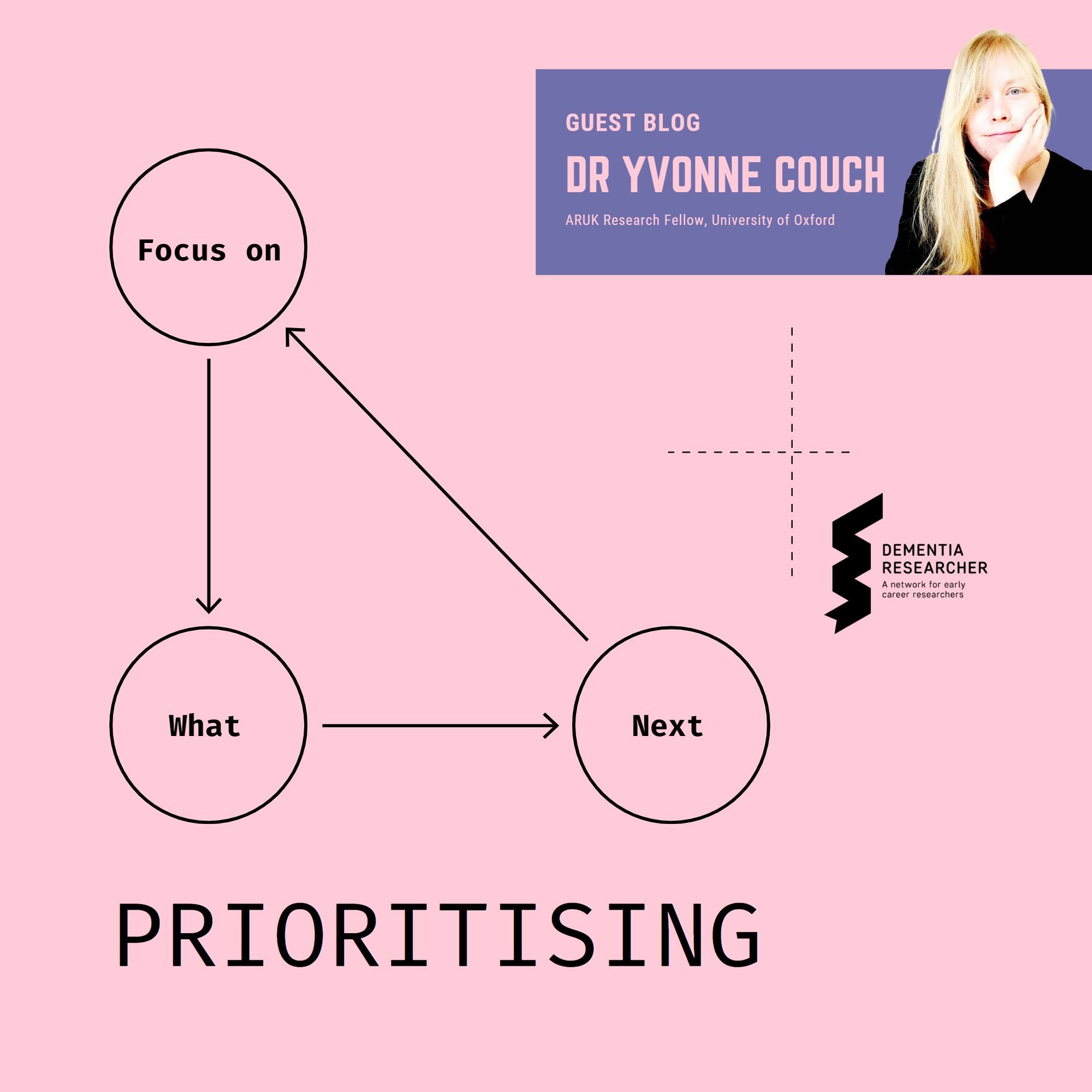
Ep 276Dr Yvonne Couch - Prioritising
Dr Yvonne Couch, narrates her blog written for the Dementia Researcher website. OK so that title was really boring. Apologies. But on the upside, it’s super obvious what we’re going to talk about today. For this one, Yvonne was inspired by two things. A chat with a junior colleague (who will know who she is if she’s listening) and the amazing Lonely Pipette podcast episode with Jen Heemstra. Yvonne approaches this topic in stages because it’s important to note is that what you prioritize and how you prioritize will change throughout your career. Find the original text, and narration here on our website. https://www.dementiaresearcher.nihr.ac.uk/guest-blog-prioritising/ -- Dr Yvonne Couch is an Alzheimer's Research UK Fellow at the University of Oxford. Yvonne studies the role of extracellular vesicles and their role in changing the function of the vasculature after stroke, aiming to discover why the prevalence of dementia after stroke is three times higher than the average. It is her passion for problem solving and love of science that drives her, in advancing our knowledge of disease. Yvonne writes about her work, academic life, and careers as she takes a new road into independent research. _____________________________________________________ Enjoy listening? We're always looking for new bloggers, drop us a line. http://www.dementiaresearcher.nihr.ac.uk This podcast is brought to you in association with Alzheimer's Association, Alzheimer's Research UK, Alzheimer's Society and Race Against Dementia, who we thank for their ongoing support.

Ep 275Dr Connor Richardson - My Research Career from Biochemistry to Biostatistics
Dr Connor Richardson narrates his blog written for Dementia Researcher. Connor is back to the second part of his introduction to the dementia researcher blog. In this piece Connor introduces himself as a researcher, with a tour of his career so far - with a great demonstration how one move, leads to the next. Find the original text, and narration here on our website. https://www.dementiaresearcher.nihr.ac.uk/guest-blog-my-research-career-from-biochemistry-to-biostatistics/ -- Dr Connor Richardson is a Neuro-epidemiology Research Associate in the Newcastle University Population Health Sciences Institute. Connor is the research statistician for the Cognitive Function and Ageing studies (CFAS) multi-centre population cohort. His research interest lies in using advanced statistical modelling and machine learning to measure dementia risk. Connor blogs about his research, Equality, Diversity and Inclusion and sometimes his Pomapoo’s. -- Enjoy listening? We're always looking for new bloggers, drop us a line. http://www.dementiaresearcher.nihr.ac.uk This podcast is brought to you in association with Alzheimer's Association, Alzheimer's Research UK, Alzheimer's Society and Race Against Dementia, who we thank for their ongoing support.
Ep 274Nathan Stephens - Addressing Market Failure: why we can’t let the market win
Nathan Stephens narrates his blog written for Dementia Researcher. Dementia is rarely considered a market issue, well at least not explicitly. Yet the unequitable distribution of care and support, cost of care and unpaid care, and inequality of information are symptoms of a ‘failed market’. This is according to the Treasury’s Green Book which identifies four domains of market failure: under-provision of public goods/services, imperfect information about goods/services, externalities, and market or monopoly power. In this blog Nathan discusses the issues. Find the original text, and narration here on our website. https://www.dementiaresearcher.nihr.ac.uk/guest-blog-addressing-market-failure-why-we-cant-let-the-market-win/ -- Nathan Stephens is a PhD Student and unpaid carer, working on his PhD at University of Worcester, studying the Worcestershire Meeting Centres Community Support Programme. Inspired by caring for both grandparents and personal experience of dementia, Nathan has gone from a BSc in Sports & Physical Education, an MSc in Public Health, and now working on his PhD. -- Enjoy listening? We're always looking for new bloggers, drop us a line. http://www.dementiaresearcher.nihr.ac.uk This podcast is brought to you in association with Alzheimer's Association, Alzheimer's Research UK, Alzheimer's Society and Race Against Dementia, who we thank for their ongoing support.

Ep 273Dr Sam Moxon - Looking back on 2022: A year of change
Dr Sam Moxon, narrates his blog written for Dementia Researcher. It’s that time of year again. Time to go “really?! End of the year already?!” The time where you maybe take a second to look back on the year and reflect on what has happened, what maybe didn’t happen and what you want to do next year to keep moving forwards. That’s Sam's topic for this month and he hopes you will join him for the ride and maybe spend a little time afterwards thinking about this year and what you want to carry forwards into the next one. It’s a personal blog it’s a good thing to do when this time of year rolls around - self-reflection as a tool for improvement. Find the original text, and narration here on our website. https://www.dementiaresearcher.nihr.ac.uk/guest-blog-looking-back-on-2022-a-year-of-change/ -- Dr Sam Moxon is a biomaterials scientist at the University of Manchester. His expertise falls on the interface between biology and engineering. His PhD focussed on regenerative medicine and he now works on trying to develop 3D bioprinting techniques with human stem cells, so that we better understand and treat degenerative diseases. Outside of the lab he hikes through the Lake District and is an expert on all things Disney. Enjoy listening and reading our blogs? We're always on the look out for new contributors, drop us a line and share your own research and careers advice [email protected] This podcast is brought to you in association with Alzheimer's Association, Alzheimer's Research UK, Alzheimer's Society and Race Against Dementia, who we thank for their ongoing support.
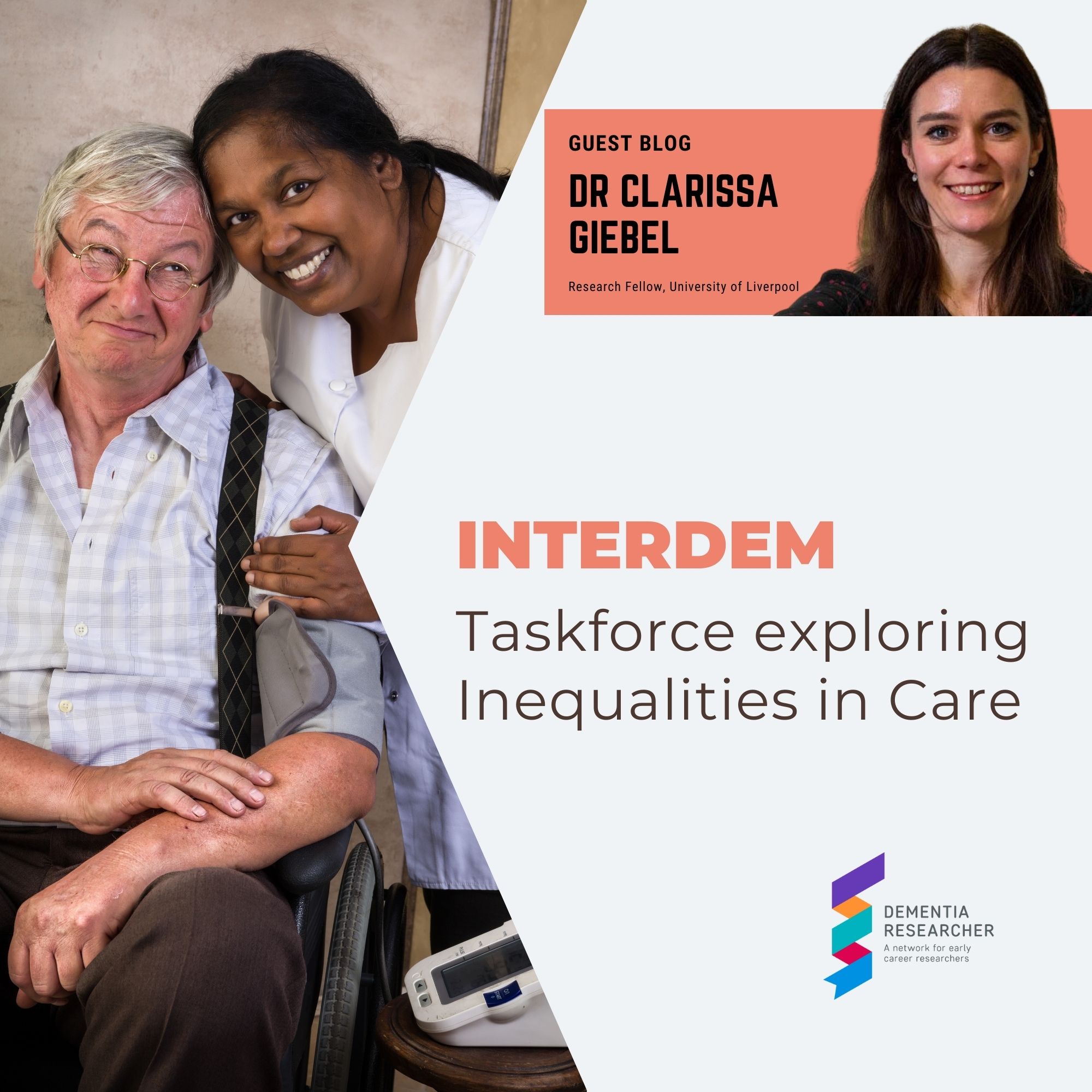
Ep 272Dr Clarissa Giebel - INTERDEM Taskforce exploring Inequalities in Care
Dr Clarissa Giebel narrates her blog written for Dementia Researcher. In October, we were finally able to attend the Alzheimer’s Europe Conference in person again. Each year the INTERDEM – a European network of dementia researchers focusing on Early detection and timely INTERvention in DEMentia, take the oppertunity to meet. In this blog Clarissa discusses a new initative to research Inequalities in Dementia Care. Find the original text, and narration here on our website. https://www.dementiaresearcher.nihr.ac.uk/guest-blog-interdem-taskforce-exploring-inequalities-in-care/ -- Dr Clarissa Giebel is a Senior Research Fellow at the University of Liverpool and NIHR ARC North West Coast. Clarissa has been working in dementia care research for over 10 years focusing her research on helping people with dementia to live at home independently and well for longer, addressing inequalities that people with dementia and carers can face. Outside of her day work, Clarissa has also organised a local dementia network - the Liverpool Dementia & Ageing Research Forum, and has recently started her own podcast called the Ageing Scientist. -- This podcast is brought to you in association with Alzheimer's Association, Alzheimer's Research UK, Alzheimer's Society and Race Against Dementia, who we thank for their ongoing support. If you would like to write your own blog drop us a line, we're always on the look out for new contributors to write about their research, careers + more [email protected]
Ep 271Dr Kamar Ameen-Ali - Should failure be normalised in academia?
Dr Kamar Ameen-Ali narrates her blog written for Dementia Researcher. Kam is currently in the depths of that feeling most, if not all, academics experience throughout their careers, the feeling of failing. Three hits in as many months is enough to give anyone pause for thought! A grant application that doesn't get through to the next round, failure to get a paper published, and then an internal grant rejection. There are so many ways to fail in academia, and so many of us experience failure, often repeatedly. So in this month’s blog Kam asks the question: should failure be normalised in academia? Find the original text, and narration here on our website. https://www.dementiaresearcher.nihr.ac.uk/guest-blog-should-failure-be-normalised-in-academia/ -- Dr Kamar Ameen-Ali is a Lecturer in Biomedical Science at Teesside University & Affiliate Researcher at Glasgow University. In addition to teaching, Kamar is exploring how neuroinflammation following traumatic brain injury contributes to the progression of neurodegenerative diseases that lead to dementia. Having first pursued a career as an NHS Psychologist, Kamar went back to University in Durham to look at rodent behavioural tasks to completed her PhD, and then worked as a regional Programme Manager for NC3Rs. -- Enjoy listening? We're always looking for new bloggers, drop us a line. http://www.dementiaresearcher.nihr.ac.uk This podcast is brought to you in association with Alzheimer's Association, Alzheimer's Research UK, Alzheimer's Society and Race Against Dementia, who we thank for their ongoing support.
Ep 270Dr Gaia Brezzo - Early career research events: to attend or not to attend?
Dr Gaia Brezzo narrates her blog written for Dementia Researcher. Gaia is planning to attend an early career (ECR) event in person early next month. Even as a postdoc with quite a few years of experience under her belt, she still has that niggling feeling of guilt when she takes time away from the lab and the foreboding anxious wait to see if it was actually worth it. In this blog Gaia shares her thoughts on attending these types of events, what can be gained from them, why some of us might feel guilty attending and some tips to help you decide if that ECR event really is worth your time. Find the original text, and narration here on our website. https://www.dementiaresearcher.nihr.ac.uk/guest-blog-early-career-research-events-to-attend-or-not-to-attend/ -- Dr Gaia Brezzo is a Research Fellow based within the UK Dementia Research Institute at The University of Edinburgh. Gaia's research focuses on understanding how immune alterations triggered by stroke shape chronic maladaptive neuroimmune responses that lead to post-stroke cognitive decline and vascular dementia. Raised in Italy, Gaia came to the UK to complete her undergraduate degree, and thankfully, stuck around. Gaia writes about her work and career challenges, when not biking her way up and down hills in Edinburgh. Follow Gaia on Twitter: @Gaia_Brezzo -- Enjoy listening? We're always looking for new bloggers, drop us a line. http://www.dementiaresearcher.nihr.ac.uk This podcast is brought to you in association with Alzheimer's Research UK and Alzheimer's Society, who we thank for their ongoing support.
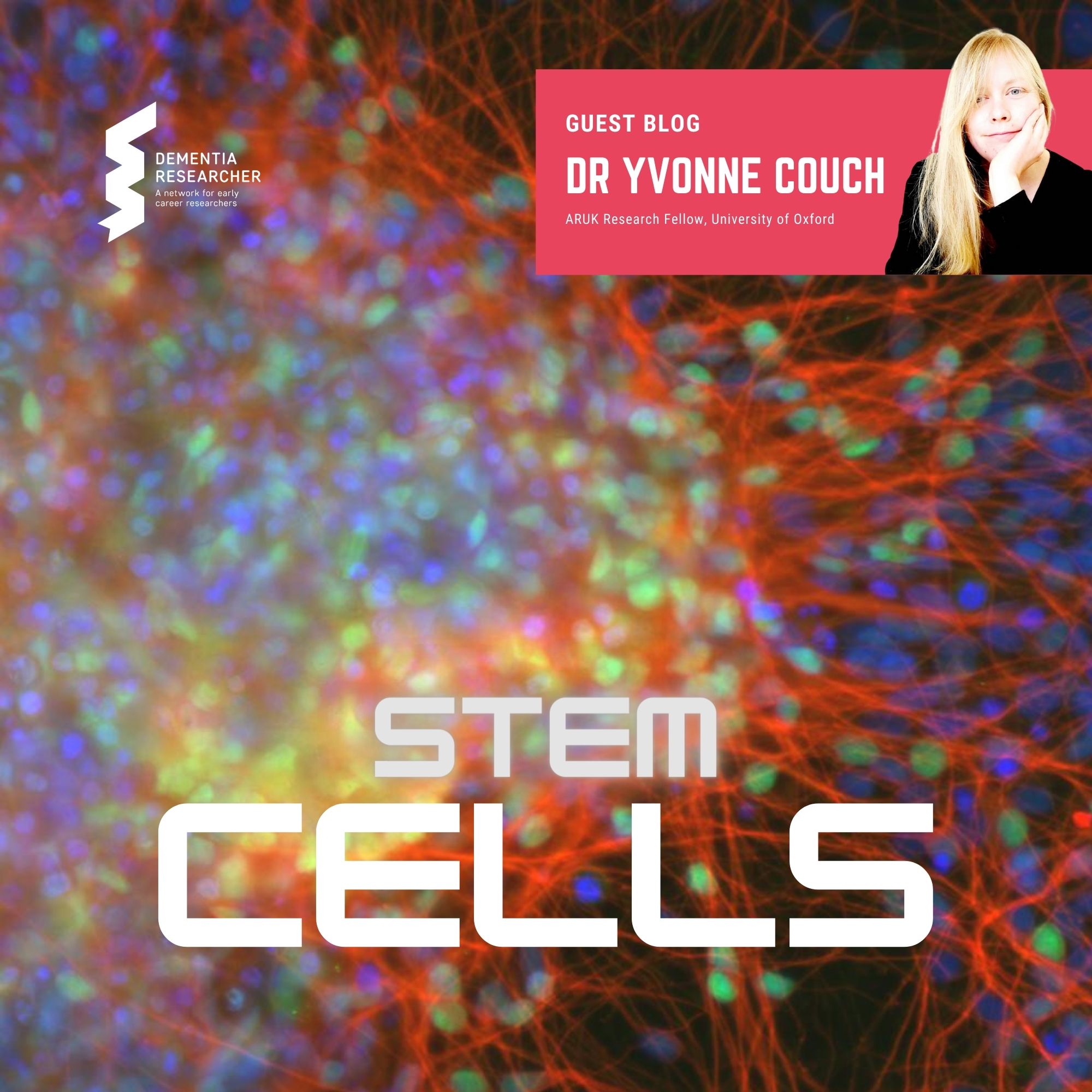
Ep 269Dr Yvonne Couch - Stem Cells
Dr Yvonne Couch, narrates her blog written for the Dementia Researcher website. Today Yvonne is talking science for, not opinions (although a few may creep in). This particular post was inspired by her recent attendance at an ARUK event. Almost everyone attending was working on clinical cohorts and everyone else, with the exception of Yvonne, was working on iPSCs. So today's blog is about induced pluripotent stem cells (iPSC); what they are, why people use them and what they could be used for in dementia research. Find the original text, and narration here on our website. https://www.dementiaresearcher.nihr.ac.uk/guest-blog-stem-cells/ -- Dr Yvonne Couch is an Alzheimer's Research UK Fellow at the University of Oxford. Yvonne studies the role of extracellular vesicles and their role in changing the function of the vasculature after stroke, aiming to discover why the prevalence of dementia after stroke is three times higher than the average. It is her passion for problem solving and love of science that drives her, in advancing our knowledge of disease. _____________________________________________________ This podcast is brought to you in association with Alzheimer's Association, Alzheimer's Research UK, Alzheimer's Society and Race Against Dementia, who we thank for their ongoing support. Enjoy listening? We're always looking for new bloggers, drop us a line. http://www.dementiaresearcher.nihr.ac.uk
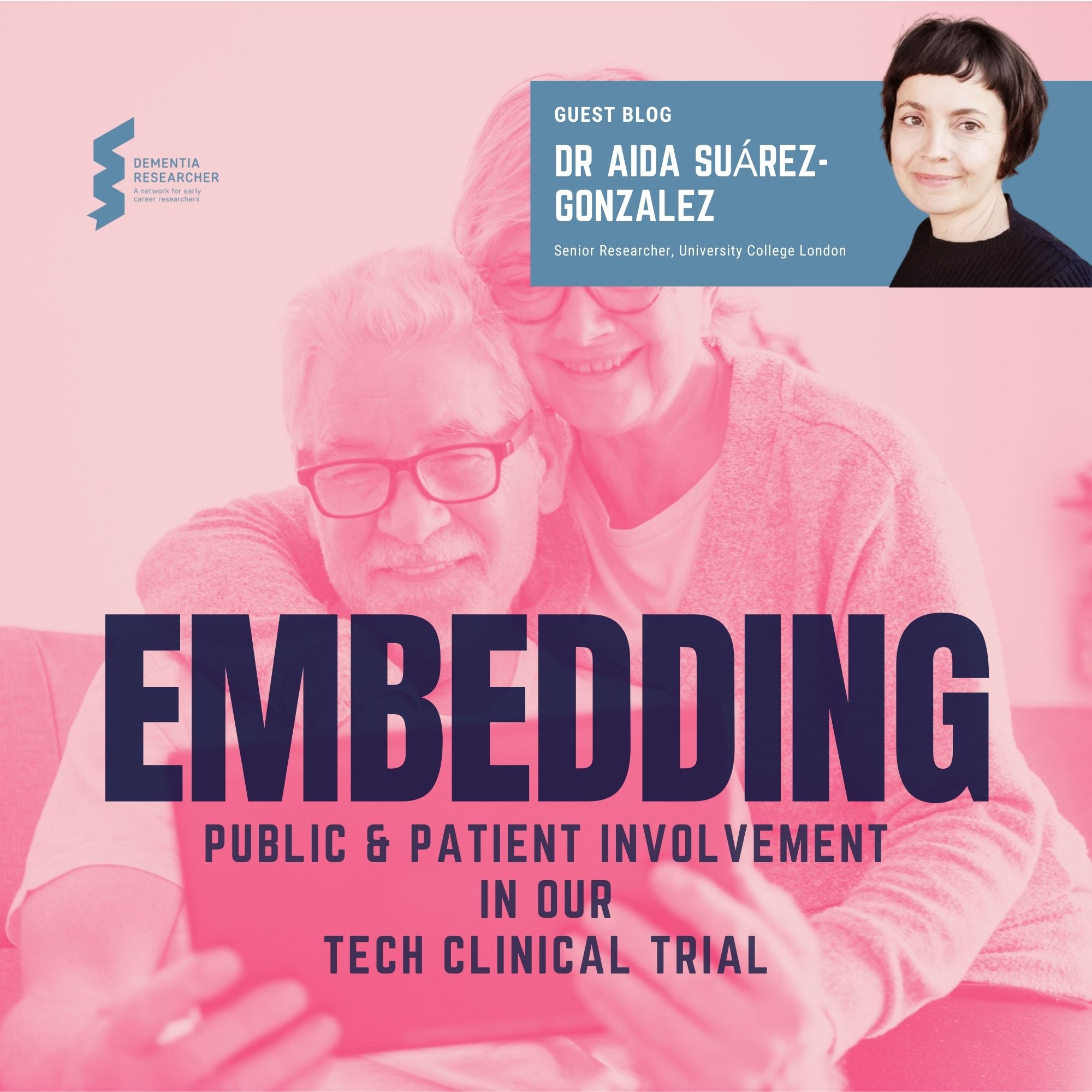
Ep 268Dr Aida Suarez-Gonzalez - Embedding PPI in our ReadClear Tech Trial
Dr Aida Suárez-Gonzalez narrates her blog written for Dementia Researcher. ReadClear is an app to support reading in posterior cortical atrophy (PCA). Aida and her team co-produced the service with a group of people living with PCA, and then went on to test it in a randomised clinical trial. Aida has blogged about the value of this PPI process in the past but has never written about how she supported participants to engage with the app during the trial and how co-production continued during the trial itself. Dr Ivanna Pavisic and Dr Dilek Ocal were the colleagues who conducted the ReadClear home-based trial with her. They travelled around England training participants on how to use the app and facilitating a context that led to new rounds of priceless feedback. In this blog Aida chats to both of them as they share their learnings and personal experience. Find the original text, and narration here on our website. https://www.dementiaresearcher.nihr.ac.uk/guest-blog-embedding-ppi-in-our-readclear-tech-trial/ We're always on the look out for new contributors, if you would like to write and narrate your own blog - drop us a line to [email protected] Don't forget to also listen to our fortnightly - published fortnightly, just look for Dementia Researcher in your podcast app. -- Dr Aida Suarez-Gonzalez is a Clinical Neuropsychologist and Senior Research Fellow at the Dementia Research Centre, UCL Institute of Neurology at Queen Square. With many years clinical experience working in Spain, Aida now investigating non-pharmacological interventions, services and assistive technologies to support people living well with dementia. -- This podcast is brought to you in association with Alzheimer's Association, Alzheimer's Research UK, Alzheimer's Society and Race Against Dementia, who we thank for their ongoing support. Enjoy listening? We're always looking for new bloggers, drop us a line [email protected]
Ep 267Dr Connor Richardson - Introductions
Dr Connor Richardson narrates his blog written for Dementia Researcher. We're delighted to welcome a new blogger to our staff contributor line-up. Welcome to Dr Connor Richardson, Neuro-epidemiology Research Associate in the Newcastle University Population Health Sciences Institute. In this first blog we get a gentle introduction to his background, and a taster of the things to come in his future blogs. Find the original text, and narration here on our website. https://www.dementiaresearcher.nihr.ac.uk/guest-blog-connor-richardson-introduction/ -- Dr Connor Richardson is a Neuro-epidemiology Research Associate in the Newcastle University Population Health Sciences Institute. Connor is the research statistician for the Cognitive Function and Ageing studies (CFAS) multi-centre population cohort. His research interest lies in using advanced statistical modelling and machine learning to measure dementia risk. Connor blogs about his research, Equality, Diversity and Inclusion and sometimes his Pomapoo’s. -- Enjoy listening? We're always looking for new bloggers, drop us a line. http://www.dementiaresearcher.nihr.ac.uk This podcast is brought to you in association with Alzheimer's Association, Alzheimer's Research UK, Alzheimer's Society and Race Against Dementia, who we thank for their ongoing support.
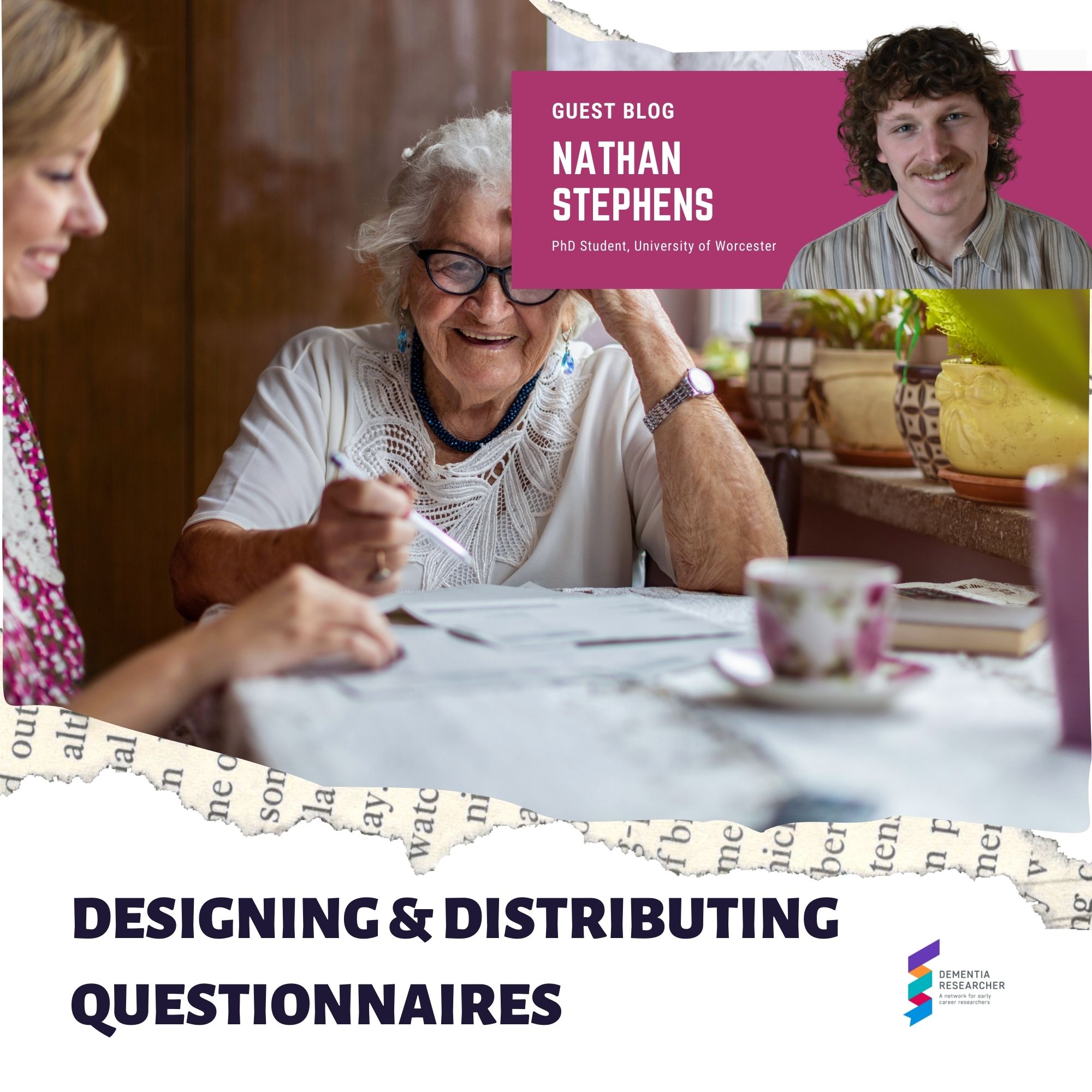
Ep 266Nathan Stephens - Designing and Distributing Questionnaires
Nathan Stephens narrates his blog written for Dementia Researcher. Questionaries are one of the most common data collection tools in the business along with interviews and focus groups. You’ve probably completed one, or at least been asked to. Yet if you’ve never designed a questionnaire there’s a lot more to it than meets the eye. After Nathans recent experience of developing questionnaires, he is using this blog to help others avoid his self-inflicted misfortune. Find the original text, and narration here on our website. https://www.dementiaresearcher.nihr.ac.uk/guest-blog-designing-and-distributing-questionnaires/ -- Nathan Stephens is a PhD Student and unpaid carer, working on his PhD at University of Worcester, studying the Worcestershire Meeting Centres Community Support Programme. Inspired by caring for both grandparents and personal experience of dementia, Nathan has gone from a BSc in Sports & Physical Education, an MSc in Public Health, and now working on his PhD. -- Enjoy listening? We're always looking for new bloggers, drop us a line. http://www.dementiaresearcher.nihr.ac.uk This podcast is brought to you in association with Alzheimer's Research UK and Alzheimer's Society, who we thank for their ongoing support.
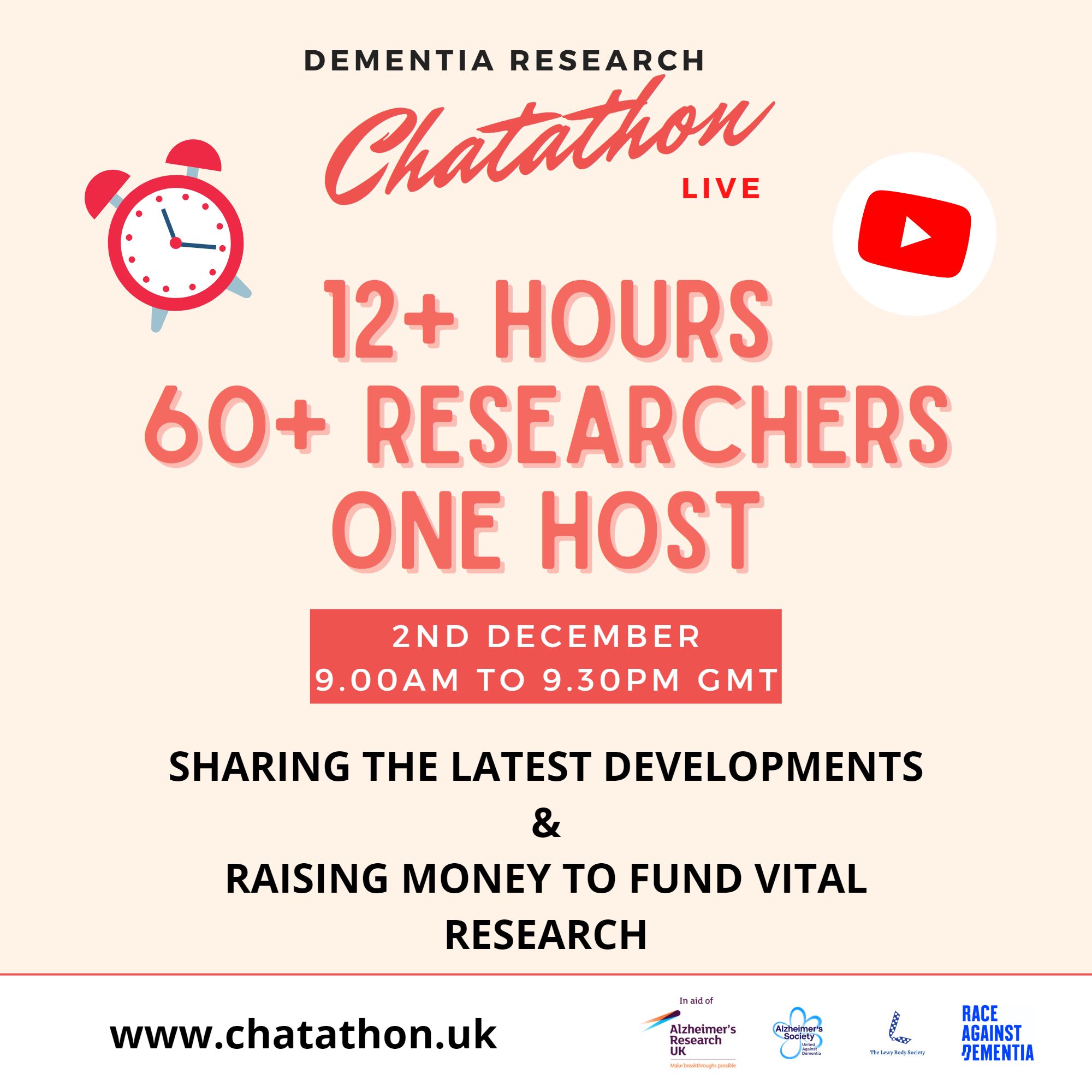
Ep 265Dementia Research Charity #Chatathon - 2nd December
Adam Smith asked us to interupt our usual schedule to bring you some special news... The 2022 Dementia Research Charity Chatathon LIVE will take place on Friday 2nd December. Adam will host 12+ hours non-stop chat with over 60 researchers and special guests working accross all areas of discovery to beat Alzheimer's disease and all forms of dementia. Raising money for Alzheimer's Research UK, Alzheimer's Society, Race Against Dementia and The Lewy Body Society and providing insights into the latest research taking place across the UK and Worldwide. Find details on the event and liverstream speakers, schedule and how to make a donation at: http://www.chatathon.uk Be sure to also tell all your friends and colleagues. -- Note Dementia Researcher is not officially involved in this event, we're just delighted to support this great work, direct and questions or queries directly to [email protected]
Ep 263Dr Yvonne Couch - BIG Data
Dr Yvonne Couch, narrates her blog written for the Dementia Researcher website. In this blog for Tech and Dementia Week, Yvonne talks about the amount of data people are generating, whether we can harness it for good using things like artificial intelligence, and how to approach these big data generating techniques properly without turning them into one epic fishing expedition. As ever, Yvonne brings some sensible opinions to the story (would you expect anything less?) and to quote the blog 'all you snazzy sequencing people are probably going to hate me'. Find the original text, and narration here on our website. https://www.dementiaresearcher.nihr.ac.uk/guest-blog-big-data/ -- Dr Yvonne Couch is an Alzheimer's Research UK Fellow at the University of Oxford. Yvonne studies the role of extracellular vesicles and their role in changing the function of the vasculature after stroke, aiming to discover why the prevalence of dementia after stroke is three times higher than the average. It is her passion for problem solving and love of science that drives her, in advancing our knowledge of disease. Yvonne has joined the team of staff bloggers at Dementia Researcher, and will be writing about her work and life as she takes a new road into independent research. _____________________________________________________ Enjoy listening? We're always looking for new bloggers, drop us a line. http://www.dementiaresearcher.nihr.ac.uk
Ep 264Danielle Wilson - Technology to Help Care
Danielle Wilson narrates her blog written for Dementia Researcher. Works in the UK Dementia Research Institute, Care Research & Technology Group at Imperial College London. In this blog Danielle discusses her passion of tech research and its ability to augment care, and about some of the work being done within the UKDRI to drive this forward, at the cutting edge of support (if you enjoy this you should also check out our blog from Pippa Kirby who works within the DRI). Find the original text, and narration here on our website. https://www.dementiaresearcher.nihr.ac.uk/guest-blog-technology-to-help-care/ -- Danielle Wilson is a former acting director of a pre-eminent NHS centre conducting clinical trials & observational studies in across dementia & mental health conditions, and is the current Centre and Research Commercialisation lead at UK Dementia Research Institute, Care Research & Technology at Imperial College London. Danielle has extensive clinical research experience working with the National Institute of Health Research networks, the University of Oxford, the National Health Service (including Oxford University Hospitals NHS FT), Clinical Research Organisations & global pharmaceutical companies. She has experience working across medical specialities in a variety of human clinical trials, tissue, imaging & data studies. Passionate about patient care, participant safety & research excellence. Invested in staff development; most recently developed & implemented a competency framework for clinical researchers. Danielle is also a Chair & long-standing expert member of a Health Research Authority research ethics committee leading a multidisciplinary group to review & give opinion on a broad range of studies, with particular specialism in applying knowledge of the mental capacity act to review research studies recruiting individuals who lack capacity. -- Enjoy listening? We're always looking for new bloggers, drop us a line. http://www.dementiaresearcher.nihr.ac.uk This podcast is brought to you in association with Alzheimer's Research UK and Alzheimer's Society, who we thank for their ongoing support.
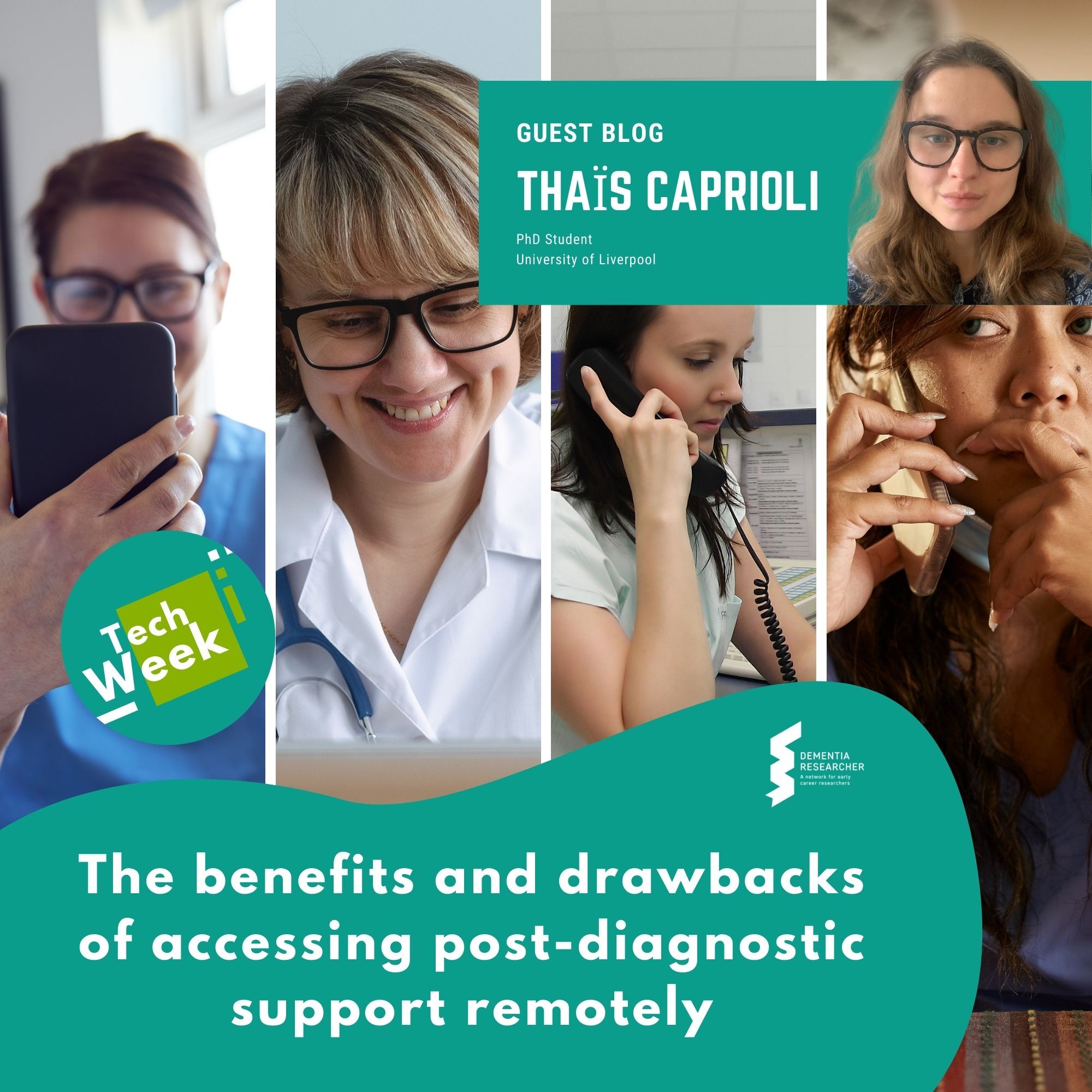
Ep 262Thaïs Caprioli - The benefits and drawbacks of accessing post-diagnostic support remotely
Thaïs Caprioli narrates her blog written for Dementia Researcher. Within the last two decades, the use of information communication technology (ICT) to deliver health and social care services has received considerable attention. The possible role of ICT to increase the number of people accessing care, whilst aligning with a cost-saving agenda, forms an enticing solution to an underfunded health and social care sector which is faced with an ever-increasing demand. The adoption of ICT in practice has been implemented at quite a leisurely pace, that is, until the COVID-19 pandemic caused a widespread shift from accessing post-diagnostic support in-person, to remotely. Is this a good thing? Thaïs discusses the changing role of support in this special blog for our Tech & Dementia week. Find the original text, and narration here on our website. https://www.dementiaresearcher.nihr.ac.uk/guest-blog-the-benefits-and-drawbacks-of-accessing-post-diagnostic-support-remotely/ -- Thaïs Caprioli is a PhD Student at University of Liverpool, undertaking health service research and exploring health inequalities. A passion that stems from her years working with people living with dementia, and as a physiotherapist and as a programme coordinator within a health programme implementing in lower- and middle-income countries. In her spare time she can mostly be found reading a book with a cup of coffee. -- Enjoy listening? We're always looking for new bloggers, drop us a line. http://www.dementiaresearcher.nihr.ac.uk This podcast is brought to you in association with Alzheimer's Research UK and Alzheimer's Society, who we thank for their ongoing support.

Ep 261Dr Kamar Ameen-Ali - Advances in digital cognitive assessments for dementia diagnosis
Dr Kamar Ameen-Ali narrates her blog written for Dementia Researcher. Historically, cognitive assessments for dementia diagnosis have relied on pencil and paper measures administered by a clinician. These tests are designed to evaluate various cognitive domains, such as memory, visuospatial abilities, and language, and should indicate whether there are potential signs of dementia. However, performance on these tests can be strongly influenced by other factors, such as cultural background or educational level. There are questions relating to whether such tests have the sensitivity to detect early stages of diseases, like Alzheimer’s, which is crucial if this is when treatments are most effective. In this blog Kam discusses how technology is being used to advance cognitive assessments used in dementia diagnosis. Find the original text, and narration here on our website. https://www.dementiaresearcher.nihr.ac.uk/guest-blog-advances-in-digital-cognitive-assessments-for-dementia-diagnosis/ -- Dr Kamar Ameen-Ali is a Lecturer in Biomedical Science at Teesside University & Affiliate Researcher at Glasgow University. In addition to teaching, Kamar is exploring how neuroinflammation following traumatic brain injury contributes to the progression of neurodegenerative diseases that lead to dementia. Having first pursued a career as an NHS Psychologist, Kamar went back to University in Durham to look at rodent behavioural tasks to completed her PhD, and then worked as a regional Programme Manager for NC3Rs. -- Enjoy listening? We're always looking for new bloggers, drop us a line. http://www.dementiaresearcher.nihr.ac.uk This podcast is brought to you in association with Alzheimer's Research UK and Alzheimer's Society, who we thank for their ongoing support.
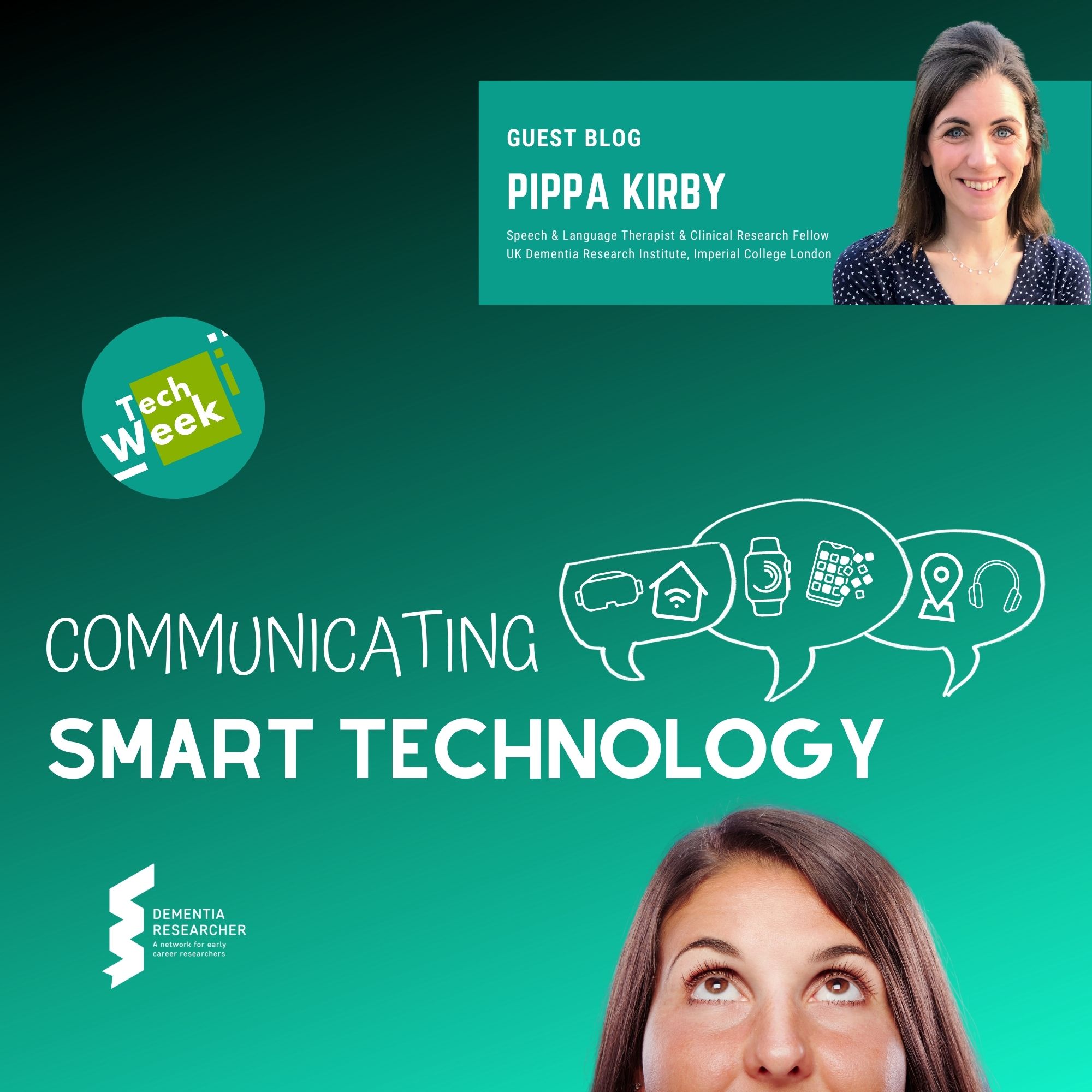
Ep 260Pippa Kirby - Communicating Smart Technology
Pippa Kirby, narrates her blog written for Dementia Researcher. There is no doubt that technology is dramatically changing the landscape of health and social care, and dementia care is no exception. Pippa's research is focused on exploring people with dementia’s perceptions and experiences of smart home technology. ‘Smart homes’ are one of the ways being proposed in which technology may be used to prevent hospitalisations and enable people to remain living in their own homes for longer. An appealing proposition perhaps, but a concept which can be divisive: will these systems promote independence and greater freedom, or is this Big Brother? It is important that we learn more about what people with dementia think of this type of home technology, and that their voices are central to the design and development of these systems so that the resulting services are ethical, engaging and effective. In this blog speech and language therapist Pippa discusses her research exploring how we can support the communication of people with speech, language and cognitive difficulties to engage with new innovative technology, and ensure they have as much of a place at the table as those without communication difficulties when it comes to design and delivery. Find the original text, and narration here on our website. https://www.dementiaresearcher.nihr.ac.uk/guest-blog-communicating-smart-technology/ -- Pippa Kirby is a Speech and Language Therapist and Pre-doctoral Clinical Research Fellow based within the UK Dementia Research Institute at Imperial College London. As a clinician Pippa became interested in how we empower and involve patients with communication difficulties in conversations and in decision making, this led to her current research within the UKDRI Care & Technology Centre, developing smart homes for people with dementia, and how to best explore and understand the perspectives of people with dementia, and involve them in the research. Enjoy listening and reading our blogs? We're always on the look out for new contributors, drop us a line and share your own research and careers advice [email protected]

Ep 259Dr Sam Moxon - Nanomedicine in Dementia Research
Dr Sam Moxon, narrates his blog written for Dementia Researcher. Nanoparticles are small sized (1-100 nm) particles derived from transition metals, silver, copper, aluminum, silicon, carbon and metal oxides that can easily cross the blood-brain barrier (BBB) and/or produce damage to the barrier integrity by altering endothelial cell membrane permeability. Could this new innovation be the key to targetting new drug therapies to treat Alzheimer's Diseease? Sam explores in this blog for our Tech and Dementia special focus week. Find the original text, and narration here on our website. https://www.dementiaresearcher.nihr.ac.uk/guest-blog-techniques-blog-nanomedicine-in-dementia-research/ -- Dr Sam Moxon is a biomaterials scientist at the University of Manchester. His expertise falls on the interface between biology and engineering. His PhD focussed on regenerative medicine and he now works on trying to develop 3D bioprinting techniques with human stem cells, so that we better understand and treat degenerative diseases. Outside of the lab he hikes through the Lake District and is an expert on all things Disney. Enjoy listening and reading our blogs? We're always on the look out for new contributors, drop us a line and share your own research and careers advice [email protected]
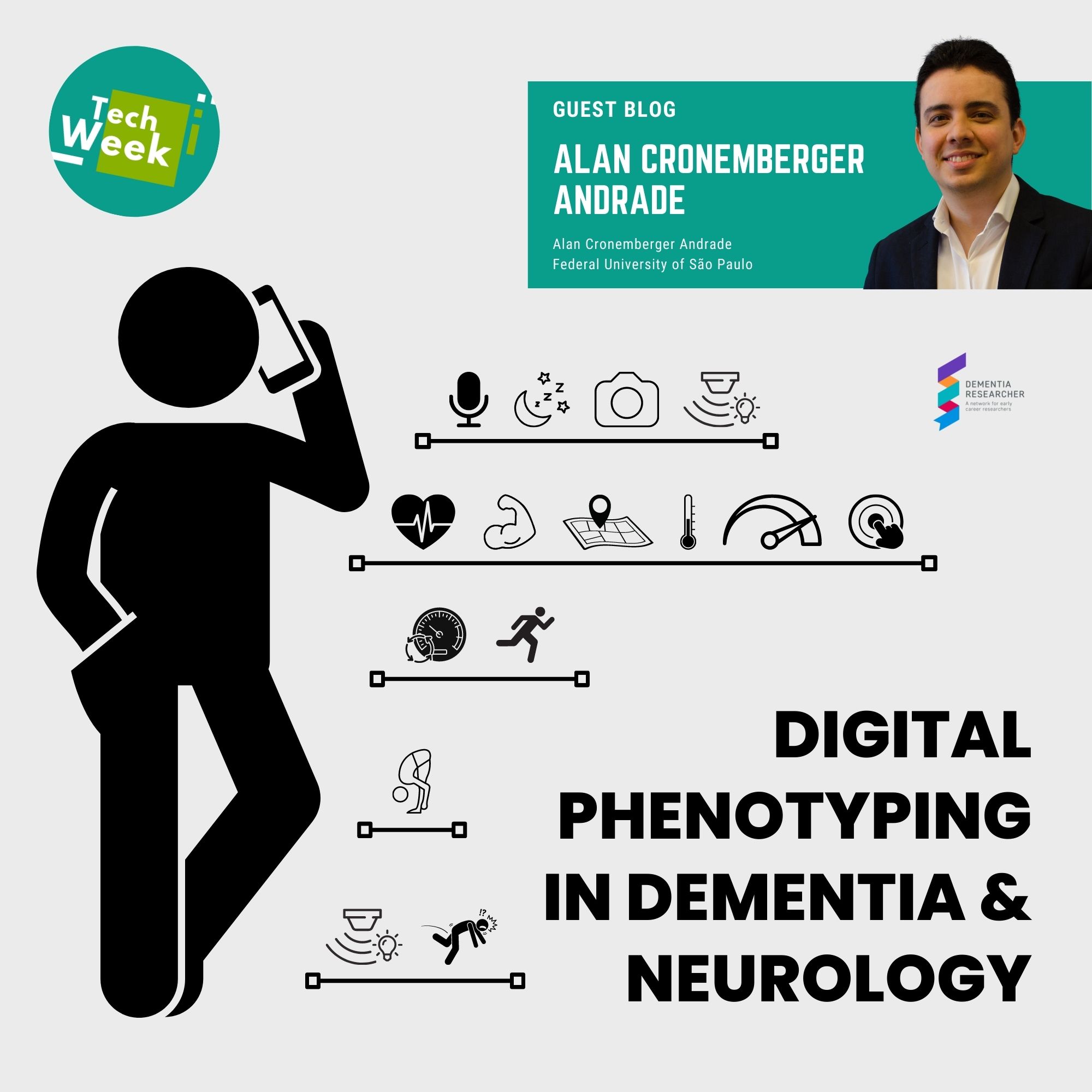
Ep 258Dr Alan Cronemberger Andrade - Digital phenotyping in dementia and neurology: we have questions
Dr Alan Cronemberger Andrade narrates his blog written for Dementia Researcher. Digital interactions could be useful for tracking health states, especially for brain disorders. The problem is that this kind of data may be harder to protect, and less controlled by ourselves. People with dementia, and other cognitive and behavioural problems, are vulnerable to data insecurity. In this blog Alan describes what digital phenotyping is.. the good and bad aspects of using it, and some future perspectives behind ethical and methodological difficulties. Healthcare professionals and non-clinical researchers need to talk more about that. Find the original text, and narration here on our website. https://www.dementiaresearcher.nihr.ac.uk/guest-blog-digital-phenotyping-in-dementia-and-neurology-we-have-questions/ -- Dr Alan Cronemberger Andrade is a Neurologist and MSc Student in Neurology and Neuroscience at the Federal University of São Paulo in Brazil. He takes care of patients with neurological problems in diverse settings, and studies how digital technology interacts with the human brain in health and disease, focused on dementia and related disorders. His aim is to find how useful digital technologies could be in the near future, helping dementia patients and their caregivers. He loves writing, travelling, and reading about curious facts of ancient history. If you would like to write for us, or join out team of regular contributors, drop us a line - [email protected]

Ep 257Hannah Hussain - Virtual Reality
Hannah Hussain narrates her blog written for Dementia Researcher. Its tech and dementia week, and in this blog Hannah explores how virtual reality is jumping out of the hands of gamers, and into the research space as a non-pharmalogical intervention. Find the original text, and narration here on our website. https://www.dementiaresearcher.nihr.ac.uk/guest-blog-virtual-reality/ -- Hannah Hussain is a PhD Student in Health Economics at The University of Sheffield. As a proud third generation migrant and British-Asian, her career path has been linear and ever evolving, originally qualifying as a Pharmacist in Nottingham, then Health Economics in Birmingham. Her studies have opened a world into Psychology, Mental Health and other areas of health, and with that and personal influences she found her passion for dementia. -- Enjoy listening? We're always looking for new bloggers, drop us a line. http://www.dementiaresearcher.nihr.ac.uk This podcast is brought to you in association with Alzheimer's Research UK and Alzheimer's Society, who we thank for their ongoing support. Enjoy listening? We're always looking for new bloggers, drop us a line [email protected]

Ep 256Dr Anna Volkmer - Finding your cheer team: Maintaining resilience in academia
Dr Anna Volkmer, narrates her blog written for Dementia Researcher. When you publish a paper, you probably celebrate and share your news, telling your colleagues and everyone on social media - and everyone will probably share their congratulations. When you win a big grant, or a fellowship... do you want to share the news? Of course you do! However, when you know others are having a hard time or struggling, you may think twice... some may think "Good for you" and be inspired, others however may be less impressed.... how do you tell your colleagues who may only have a short time left on their contract that you just secured another 3, 4 or 5 years of funding? Anna has been thinking about resiliance, and how you celebrate success, following the exciting news of her new Fellowship award. Find the original text, and narration here on our website. https://www.dementiaresearcher.nihr.ac.uk/guest-blog-finding-your-cheer-team-maintaining-resilience-in-academia/ -- Dr Anna Volkmer is a Speech and Language Therapist and researcher in Language and Cognition, Department of Psychology and Language Sciences, University College London. Anna is researching Speech and language therapy interventions in language led dementia and was once voted scariest speech and language therapist (even her children agree). If you would like to write for us, or join out team of regular contributors, drop us a line - [email protected]
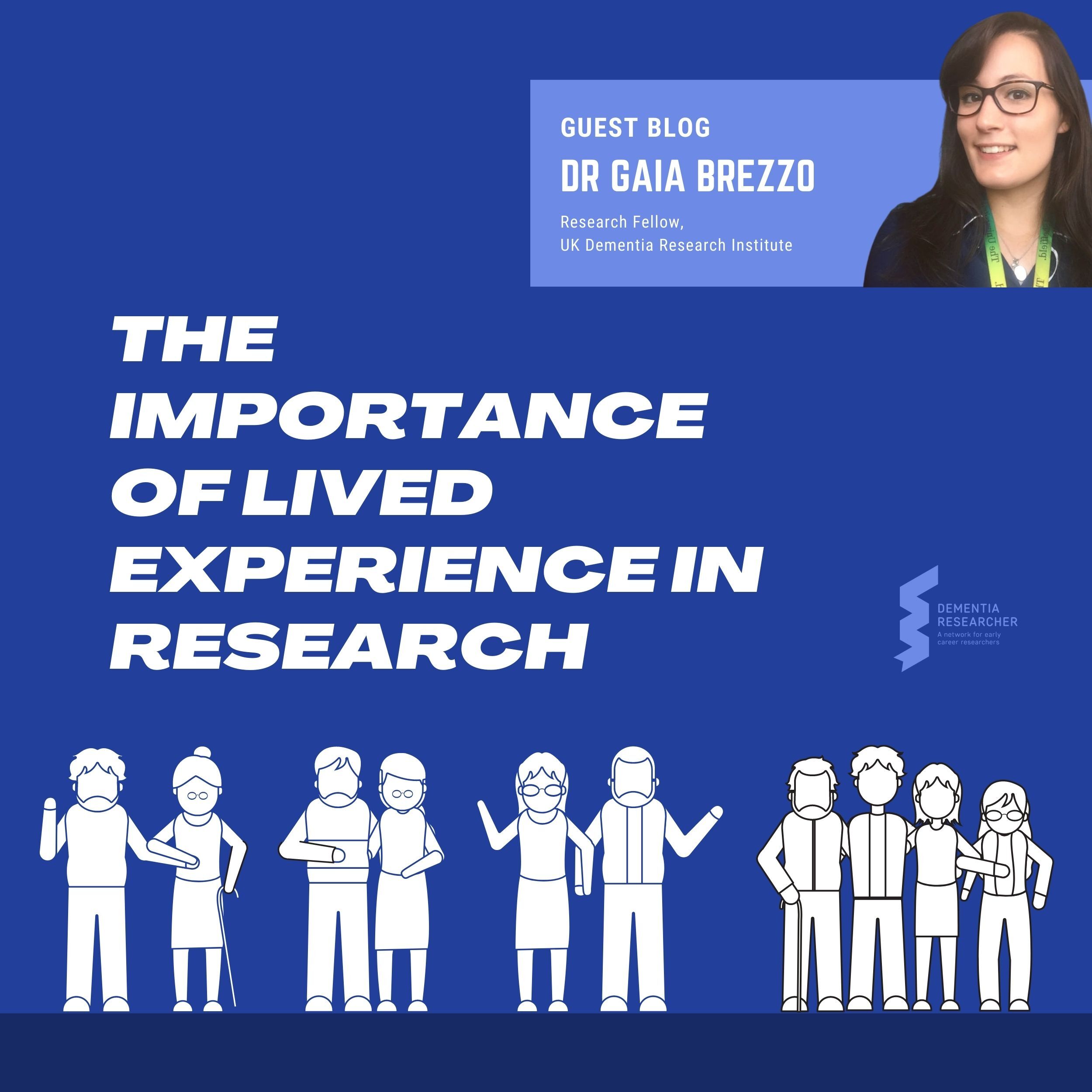
Ep 255Dr Gaia Brezzo - The importance of lived experience in research
Dr Gaia Brezzo narrates her blog written for Dementia Researcher. In this month’s blog, Gaia is reflecting back on a meeting she had with a member of the public earlier in the week. A stroke survivor, who has made it their goal to share with researchers, charities and funding bodies, their views and opinions. Sharing their lived experience of what it’s like to live with the aftermath of a stroke. Gaia also explores how important these voices are in research and how, perhaps, we should all be considering how we could be doing more. Find the original text, and narration here on our website. https://www.dementiaresearcher.nihr.ac.uk/guest-blog-the-importance-of-lived-experience-in-research/ -- Dr Gaia Brezzo is a Research Fellow based within the UK Dementia Research Institute at The University of Edinburgh. Gaia's research focuses on understanding how immune alterations triggered by stroke shape chronic maladaptive neuroimmune responses that lead to post-stroke cognitive decline and vascular dementia. Raised in Italy, Gaia came to the UK to complete her undergraduate degree, and thankfully, stuck around. Gaia writes about her work and career challenges, when not biking her way up and down hills in Edinburgh. Follow Gaia on Twitter: @Gaia_Brezzo -- Enjoy listening? We're always looking for new bloggers, drop us a line. http://www.dementiaresearcher.nihr.ac.uk This podcast is brought to you in association with Alzheimer's Research UK and Alzheimer's Society, who we thank for their ongoing support.
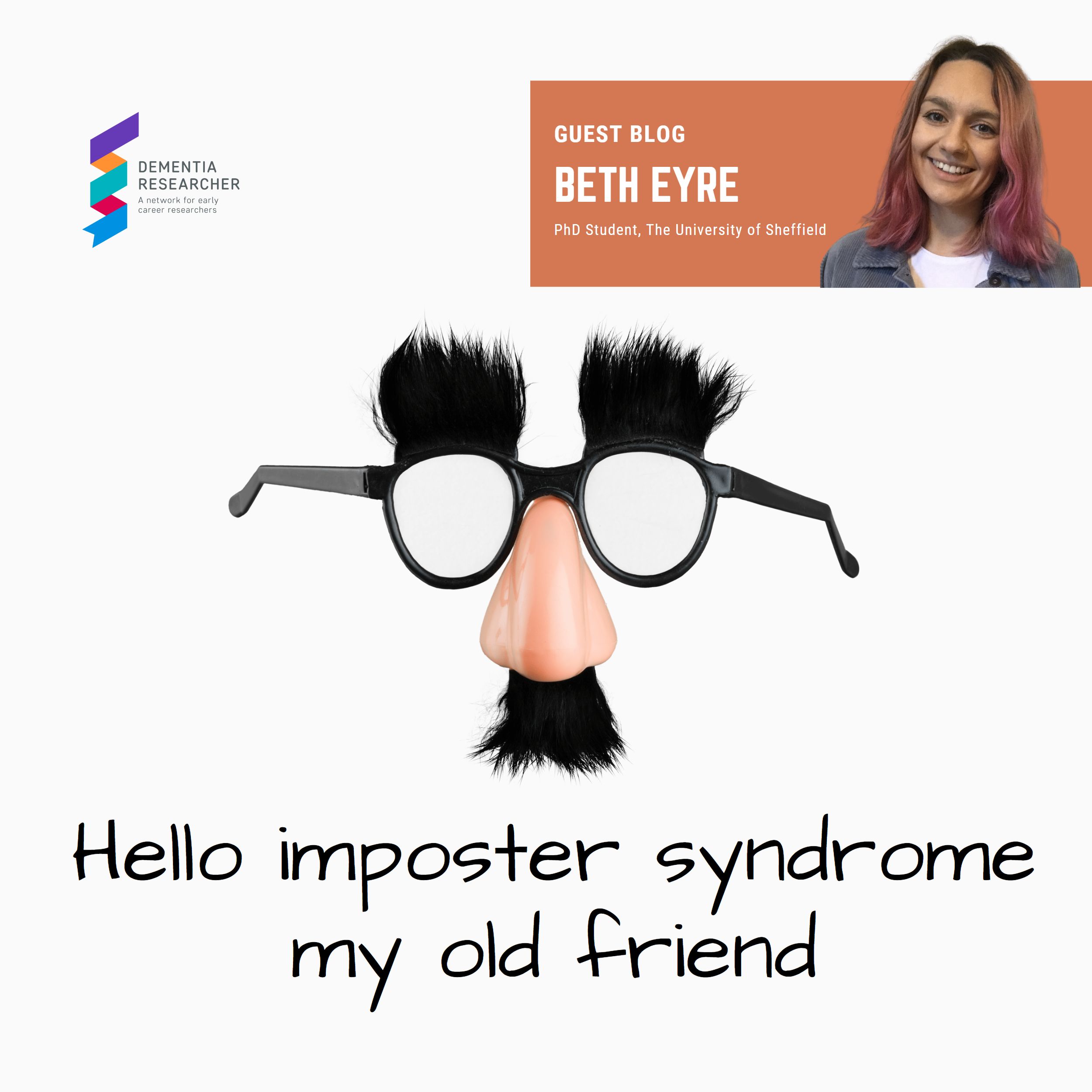
Ep 254Beth Eyre - Hello imposter syndrome my old friend
Beth Eyre narrates her blog written for Dementia Researcher. If you're a jobbing scientist or researcher of any kind, you're probably familiar with imposter syndrome, also known as impostor phenomenon or impostorism. It's a psychological occurrence in which an individual doubts their skills, talents, or accomplishments and has a persistent internalized fear of being exposed as a fraud. Despite external evidence of their competence, those experiencing this phenomenon do not believe they deserve their success or luck. Well in this blog, Beth talks to some strategies that she has found help her in dealing with the effects. Find the original text, and narration here on our website. https://www.dementiaresearcher.nihr.ac.uk/guest-blog-hello-imposter-syndrome-my-old-friend/ We're always on the look out for new contributors, if you would like to write and narrate your own blog - drop us a line to [email protected] Don't forget to also listen to our fortnightly - published fortnightly, just look for Dementia Researcher in your podcast app. -- Beth Eyre is a PhD Student at The University of Sheffield, researching Neurovascular and cognitive function in preclinical models of Alzheimer’s disease. Beth has a background in psychology, where she gained her degree from the University of Leeds. Inside and outside the lab, Beth loves sharing her science and in her blogs she discusses her work, career and shares lessons she learns as she navigates life as an early career researcher. -- This podcast is brought to you in association with Alzheimer's Association, Alzheimer's Research UK, Alzheimer's Society and Race Against Dementia, who we thank for their ongoing support. Enjoy listening? We're always looking for new bloggers, drop us a line [email protected]
Ep 253Dr Anna Volkmer - Going on my own: Being my own boss for my new fellowship
Dr Anna Volkmer, narrates her blog written for Dementia Researcher. With her recent promotion comes new found freedoms and responsibilities... not everyone who enters academia is lucky enough to find research 'freedom', but if you do, will you be ready to be your own boss? Don't worry, you got this, and so has Anna, who was recenltly appointed as an NIHR Senior Investigator. In this blog Anna discusses leadership, support and how you can be ready to step out on your own when the time comes. Find the original text, and narration here on our website. https://www.dementiaresearcher.nihr.ac.uk/guest-blog-going-on-my-own-being-my-own-boss-for-my-new-fellowship/ -- Dr Anna Volkmer is a Speech and Language Therapist and researcher in Language and Cognition, Department of Psychology and Language Sciences, University College London. Anna is researching Speech and language therapy interventions in language led dementia and was once voted scariest speech and language therapist (even her children agree). If you would like to write for us, or join out team of regular contributors, drop us a line - [email protected] BlRISvsYP1JPEgVJbhH6

Ep 252Dr Clarissa Giebel - Innovative long-term care for dementia
Dr Clarissa Giebel narrates her blog written for Dementia Researcher. A few weeks ago Clarissa went on her final research visit to Maastricht University and their Living Lab, thanks to an Alzheimer’s Society and Alzheimer’s Nederland Knowledge Exchange Fellowship. This final trip has been long delayed due to the pandemic, in this blog Clarissa updates on her research project and discusses Green Park Farms, an innovative way of providing residential care for people living with dementia in the Netherlands. Find the original text, and narration here on our website. https://www.dementiaresearcher.nihr.ac.uk/guest-blog-innovative-long-term-care-for-dementia/ -- Dr Clarissa Giebel is a Senior Research Fellow at the University of Liverpool and NIHR ARC North West Coast. Clarissa has been working in dementia care research for over 10 years focusing her research on helping people with dementia to live at home independently and well for longer, addressing inequalities that people with dementia and carers can face. Outside of her day work, Clarissa has also organised a local dementia network - the Liverpool Dementia & Ageing Research Forum, and has recently started her own podcast called the Ageing Scientist. -- If you would like to write your own blog drop us a line, we're always on the look out for new contributors to write about their research, careers + more [email protected] - DG0HN519C3LLhgdQF71x

Ep 251Dr Yvonne Couch - Is Leadership Important In Science?
Dr Yvonne Couch, narrates her blog written for the Dementia Researcher website. Yvonne has been talking to a leadership expert, so in her latest blog it is all about leadership in the context of research. She discusses the different styles of leadership and how you might apply them to your everyday interactions with the people you might encounter in a research job. Find the original text, and narration here on our website. https://www.dementiaresearcher.nihr.ac.uk/guest-blog-is-leadership-important-in-science/ -- Dr Yvonne Couch is an Alzheimer's Research UK Fellow at the University of Oxford. Yvonne studies the role of extracellular vesicles and their role in changing the function of the vasculature after stroke, aiming to discover why the prevalence of dementia after stroke is three times higher than the average. It is her passion for problem solving and love of science that drives her, in advancing our knowledge of disease. Yvonne has joined the team of staff bloggers at Dementia Researcher, and will be writing about her work and life as she takes a new road into independent research. _____________________________________________________ Enjoy listening? We're always looking for new bloggers, drop us a line. http://www.dementiaresearcher.nihr.ac.uk
Ep 250Dr Kamar Ameen-Ali - Writing my first grant application
Dr Kamar Ameen-Ali narrates her blog written for Dementia Researcher. Kam has written and submitted her first grant application. Well… kind of. The first stage only required 1-2 page outlines, brief costings, and abstracts. But nevertheless, this is a big milestone in academia, one that is statistically likely to result in failure. In this blog, Kam describes how she went about writing her first grant application and some tips to help overcome some common challenges (and manage expectations). Find the original text, and narration here on our website. https://www.dementiaresearcher.nihr.ac.uk/guest-blog-writing-my-first-grant-application/ -- Dr Kamar Ameen-Ali is a Lecturer in Biomedical Science at Teesside University & Affiliate Researcher at Glasgow University. In addition to teaching, Kamar is exploring how neuroinflammation following traumatic brain injury contributes to the progression of neurodegenerative diseases that lead to dementia. Having first pursued a career as an NHS Psychologist, Kamar went back to University in Durham to look at rodent behavioural tasks to completed her PhD, and then worked as a regional Programme Manager for NC3Rs. -- Enjoy listening? We're always looking for new bloggers, drop us a line. http://www.dementiaresearcher.nihr.ac.uk This podcast is brought to you in association with Alzheimer's Research UK and Alzheimer's Society, who we thank for their ongoing support.
Ep 249Dr Sam Moxon - Are We Entering a “Golden Age” of Dementia Research?
Dr Sam Moxon, narrates his blog written for Dementia Researcher. Dementia has been a part of society for at least 1400 years, in this blog Sam provides a quick romp through the history of the disease and explores the drugs that have been used to treat the symptons of Alzheimer's and some of the latest research into new treatments. Find the original text, and narration here on our website. https://www.dementiaresearcher.nihr.ac.uk/guest-blog-are-we-entering-a-golden-age-of-dementia-research/ -- Dr Sam Moxon is a biomaterials scientist at the University of Manchester. His expertise falls on the interface between biology and engineering. His PhD focussed on regenerative medicine and he now works on trying to develop 3D bioprinting techniques with human stem cells, so that we better understand and treat degenerative diseases. Outside of the lab he hikes through the Lake District and is an expert on all things Disney. Enjoy listening and reading our blogs? We're always on the look out for new contributors, drop us a line and share your own research and careers advice [email protected]
Ep 248Dr Gaia Brezzo - Teaching as an ECR, why take the time to do it?
Dr Gaia Brezzo narrates her blog written for Dementia Researcher. As Gaia mentioned in her first blog, she had a slightly different PhD experience to most. Her funding and course enrolment fees were paid for by a Teaching Fellowship. This provided four years in which to run experiments, write up a thesis and teach for up to 180 hours in her department every year. In this blog, Gaia explores how this joint research-teaching experience helped her as an ECR, shaped her research and career to date and opened up other avenues and opportunities along the way - it also includes a few tips on how to get teaching. Find the original text, and narration here on our website. https://www.dementiaresearcher.nihr.ac.uk/guest-blog-teaching-as-an-ecr-why-take-the-time-to-do-it/ -- Dr Gaia Brezzo is a Research Fellow based within the UK Dementia Research Institute at The University of Edinburgh. Gaia's research focuses on understanding how immune alterations triggered by stroke shape chronic maladaptive neuroimmune responses that lead to post-stroke cognitive decline and vascular dementia. Raised in Italy, Gaia came to the UK to complete her undergraduate degree, and thankfully, stuck around. Gaia writes about her work and career challenges, when not biking her way up and down hills in Edinburgh. Follow Gaia on Twitter: @Gaia_Brezzo -- Enjoy listening? We're always looking for new bloggers, drop us a line. http://www.dementiaresearcher.nihr.ac.uk This podcast is brought to you in association with Alzheimer's Research UK and Alzheimer's Society, who we thank for their ongoing support.
Ep 247Beth Eyre - Two–photon microscopy: How can it be used in Alzheimer’s research?
Beth Eyre narrates her blog written for Dementia Researcher. When you think about it, it’s pretty amazing how far technology has come on in recent decades. One field in which technology has come on leaps and bounds is within neuroscience. Imaging the brain has always been a little tricky, because it’s encased in a skull. Obviously having a skull is important as it protects our precious brain from damage, but it has made looking inside our brain a little tricky. For example, even 50 years or so ago there was no way we could see what was going on inside a living brain. In the past, we used to get our information about the brain from autopsy studies, where correlations could be made between damage to a specific part of the brain and a person’s behaviour (an area of research called neuropsychology). But, we now have some astounding techniques that can give us an insight into what’s happening inside the brain, even at the single blood vessel and cellular level! These relatively new technologies are now being utilised to study some of the most pressing public health issues of our time. In this month’s blog to Beth discusses a new technique she is learning, and how two-photon microscopy can be used to help us learn more about Alzheimer’s disease. Find the original text, and narration here on our website. https://www.dementiaresearcher.nihr.ac.uk/guest-blog-two-photon-microscopy-how-can-it-be-used-in-alzheimers-research/ We're always on the look out for new contributors, if you would like to write and narrate your own blog - drop us a line to [email protected] Don't forget to also listen to our fortnightly - published fortnightly, just look for Dementia Researcher in your podcast app. -- Beth Eyre is a PhD Student at The University of Sheffield, researching Neurovascular and cognitive function in preclinical models of Alzheimer’s disease. Beth has a background in psychology, where she gained her degree from the University of Leeds. Inside and outside the lab, Beth loves sharing her science and we are delighted to have her contributing as a regular blogger with Dementia Researcher, sharing her work and discussing her career. -- This podcast is brought to you from University College London in association with the National Institute for Health Research, Alzheimer's Research UK and Alzheimer's Society, who we thank for their ongoing support. Enjoy listening? We're always looking for new bloggers, drop us a line [email protected]
Ep 246Nathan Stephens - A guide to mixed methods research design
Nathan Stephens narrates his blog written for Dementia Researcher. In this blog, Nathan provides summarises the things you’ll need to think about when planning a mixed methods research study, including characteristics and key design elements like sequencing, point of interface, and methodological priority. Find the original text, and narration here on our website. https://www.dementiaresearcher.nihr.ac.uk/guest-blog-a-guide-to-mixed-methods-research-design/ -- Nathan Stephens is a PhD Student and unpaid carer, working on his PhD at University of Worcester, studying the Worcestershire Meeting Centres Community Support Programme. Inspired by caring for both grandparents and personal experience of dementia, Nathan has gone from a BSc in Sports & Physical Education, an MSc in Public Health, and now working on his PhD. -- Enjoy listening? We're always looking for new bloggers, drop us a line. http://www.dementiaresearcher.nihr.ac.uk This podcast is brought to you in association with Alzheimer's Research UK and Alzheimer's Society, who we thank for their ongoing support.
Ep 245Dr Anna Volkmer - The outcome: My NIHR Advanced Fellowship Application
Dr Anna Volkmer, narrates her blog written for Dementia Researcher. So the big news is... Anna was successful in her NIHR Advanced Fellowship application. It's been a long old road. It started with an application submission in January 2021 (and there was lots before that) and it’s finally official- signed and sealed. In this blog Anna provides an overview of actual timelines, of key milestones and some tips and hints in case you are considering embarking on the same journey. Find the original text, and narration here on our website. https://www.dementiaresearcher.nihr.ac.uk/guest-blog-the-outcome-my-nihr-advanced-fellowship-app/ -- Dr Anna Volkmer is a Speech and Language Therapist and researcher in Language and Cognition, Department of Psychology and Language Sciences, University College London. Anna is researching Speech and language therapy interventions in language led dementia and was once voted scariest speech and language therapist (even her children agree). If you would like to write for us, or join out team of regular contributors, drop us a line - [email protected]

Ep 244Dr Clarissa Giebel - World Alzheimer Report 2022, Post-diagnostic care or lack thereof
Dr Clarissa Giebel narrates her blog written for Dementia Researcher. It's World Alzheimer's Day, and Alzheimer's Disease International have published their annual worldwide resport. Clarissa has been reviewing the report and she shares her thoughts in her latest blog. The common theme of this year’s dementia reports seems to be post-diagnostic care and support, or rather the lack thereof. Listen or read the blog in full to get the full round up and download from the ADI website. Find the original text, and narration here on our website. https://www.dementiaresearcher.nihr.ac.uk/guest-blog-world-alzheimer-report-2022-post-diagnostic-care-or-lack-thereof/ Download the report: https://www.alzint.org/resource/world-alzheimer-report-2022/ -- Dr Clarissa Giebel is a Senior Research Fellow at the University of Liverpool and NIHR ARC North West Coast. Clarissa has been working in dementia care research for over 10 years focusing her research on helping people with dementia to live at home independently and well for longer, addressing inequalities that people with dementia and carers can face. Outside of her day work, Clarissa has also organised a local dementia network - the Liverpool Dementia & Ageing Research Forum, and has recently started her own podcast called the Ageing Scientist. -- If you would like to write your own blog drop us a line, we're always on the look out for new contributors to write about their research, careers + more [email protected]
Ep 243Dr Yvonne Couch - Angiogenesis
Dr Yvonne Couch, narrates her blog written for the Dementia Researcher website. Angiogenesis is the formation of new blood vessels - this process involves the migration, growth, and differentiation of endothelial cells, which line the inside wall of blood vessels. Todays blog by Yvonne is all about Angiogenesis, a bit of history and a bit of how angiogenesis after brain injury and in old age may contribute to brain health. Find the original text, and narration here on our website. https://www.dementiaresearcher.nihr.ac.uk/guest-blog-angiogenesis/ -- Dr Yvonne Couch is an Alzheimer's Research UK Fellow at the University of Oxford. Yvonne studies the role of extracellular vesicles and their role in changing the function of the vasculature after stroke, aiming to discover why the prevalence of dementia after stroke is three times higher than the average. It is her passion for problem solving and love of science that drives her, in advancing our knowledge of disease. Yvonne has joined the team of staff bloggers at Dementia Researcher, and will be writing about her work and life as she takes a new road into independent research. _____________________________________________________ Enjoy listening? We're always looking for new bloggers, drop us a line. http://www.dementiaresearcher.nihr.ac.uk
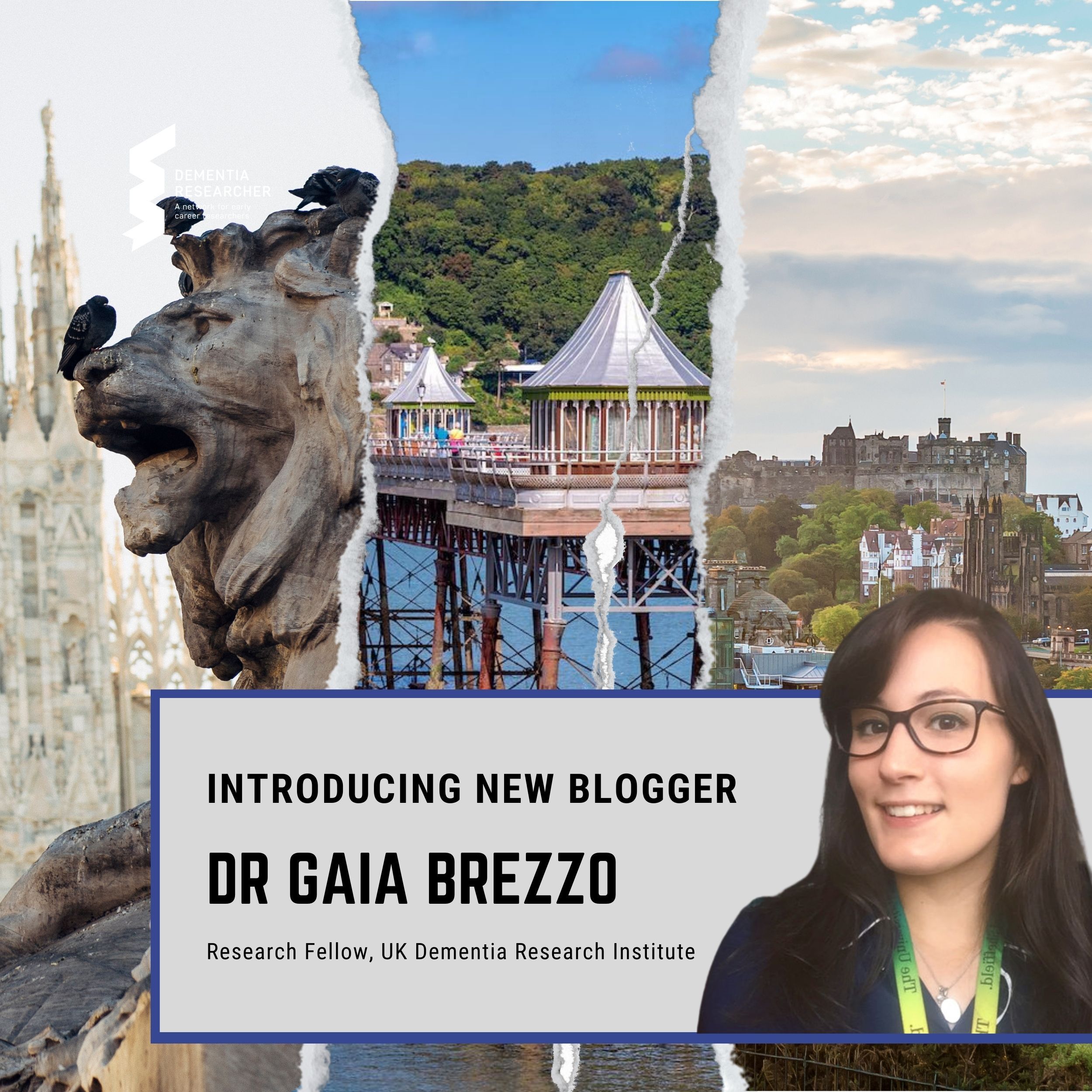
Ep 242Introducing Dr Gaia Brezzo
Dr Gaia Brezzo narrates her blog written for Dementia Researcher. We are delighted to welcome Dr Gaia Brezzo as a regular monthly blog contributor to the Dementia Researcher website. Gaia will be sharing stories of her research, field of discovery and providing top tips and careers advice coming from her experiences. Find the original text, and narration here on our website. https://www.dementiaresearcher.nihr.ac.uk/guest-blog-dr-gaia-brezzo-introduction/ -- Dr Gaia Brezzo is a Research Fellow based within the UK Dementia Research Institute at The University of Edinburgh. Gaia's research focuses on understanding how immune alterations triggered by stroke shape chronic maladaptive neuroimmune responses that lead to post-stroke cognitive decline and vascular dementia. Raised in Italy, Gaia came to the UK to complete her undergraduate degree, and thankfully, stuck around. Gaia writes about her work and career challenges, when not biking her way up and down hills in Edinburgh. Follow Gaia on Twitter: @Gaia_Brezzo -- Enjoy listening? We're always looking for new bloggers, drop us a line. http://www.dementiaresearcher.nihr.ac.uk This podcast is brought to you in association with Alzheimer's Research UK and Alzheimer's Society, who we thank for their ongoing support.
Ep 241Dr Kamar Ameen-Ali - From Postdoc to Lecturer
Dr Kamar Ameen-Ali narrates her blog written for Dementia Researcher. In February 2022 Kamar started a new academic position as a lecturer in biomedical science at Teesside University. This marks a significant step-up both in terms of opportunities it would present, and the new challenges she would face. In this blog, Kamar shares her experience of the first six months of my lectureship. This might be helpful for anyone wanting to know what they can expect, and how you can balance the work, and keeping your research interests alive. Find the original text, and narration here on our website. https://www.dementiaresearcher.nihr.ac.uk/guest-blog-from-postdoc-to-lecturer-my-first-six-months/ -- Dr Kamar Ameen-Ali is a Lecturer in Biomedical Science at Teesside University & Affiliate Researcher at Glasgow University. In addition to teaching, Kamar is exploring how neuroinflammation following traumatic brain injury contributes to the progression of neurodegenerative diseases that lead to dementia. Having first pursued a career as an NHS Psychologist, Kamar went back to University in Durham to look at rodent behavioural tasks to completed her PhD, and then worked as a regional Programme Manager for NC3Rs. -- Enjoy listening? We're always looking for new bloggers, drop us a line. http://www.dementiaresearcher.nihr.ac.uk This podcast is brought to you in association with Alzheimer's Research UK and Alzheimer's Society, who we thank for their ongoing support.

Ep 240Nathan Stephens - Physical Activity & Dementia: increasing opportunities and reducing inequalities
Nathan Stephens narrates his blog written for Dementia Researcher. In this blog, Nathan provides a brief introduction to the evidence base on physical activity and dementia, suggesting that action on increasing participation in physical activity is a political mandate. He also includes his experiences of developing and evaluating an intervention to increase opportunities for people affected by dementia to participate in physical activity. Find the original text, and narration here on our website. https://www.dementiaresearcher.nihr.ac.uk/guest-blog-physical-activity-dementia/ -- Nathan Stephens is a PhD Student and unpaid carer, working on his PhD at University of Worcester, studying the Worcestershire Meeting Centres Community Support Programme. Inspired by caring for both grandparents and personal experience of dementia, Nathan has gone from a BSc in Sports & Physical Education, an MSc in Public Health, and now working on his PhD. -- Enjoy listening? We're always looking for new bloggers, drop us a line. http://www.dementiaresearcher.nihr.ac.uk This podcast is brought to you in association with Alzheimer's Research UK and Alzheimer's Society, who we thank for their ongoing support.