Dementia Researcher Blogs
689 episodes — Page 10 of 14

Ep 239Beth Eyre - Why should you apply to be an ISTAART Ambassador?
Beth Eyre narrates her blog written for Dementia Researcher. Beth has written a few blogs about opportunities outside of your research, and how they can benefit you. Having recently taken up the role of ISTAART Ambassador, and how this has been one of the best things she has undertaken outside her PhD. To make sure you're aware of the benefits, Beth has dedicated this blog to share the good news to try and ensure as many of you hear about it as possible, so that you can apply and hopefully have an amazing experience. Find the original text, and narration here on our website. https://www.dementiaresearcher.nihr.ac.uk/guest-blog-why-should-you-apply-to-be-an-istaart-ambassador/ We're always on the look out for new contributors, if you would like to write and narrate your own blog - drop us a line to [email protected] Don't forget to also listen to our fortnightly - published fortnightly, just look for Dementia Researcher in your podcast app. -- Beth Eyre is a PhD Student at The University of Sheffield, researching Neurovascular and cognitive function in preclinical models of Alzheimer’s disease. Beth has a background in psychology, where she gained her degree from the University of Leeds. Inside and outside the lab, Beth loves sharing her science and we are delighted to have her contributing as a regular blogger with Dementia Researcher, sharing her work and discussing her career. -- This podcast is brought to you from University College London in association with the National Institute for Health Research, Alzheimer's Research UK and Alzheimer's Society, who we thank for their ongoing support. Enjoy listening? We're always looking for new bloggers, drop us a line [email protected]

Ep 238Hannah Hussain - Medicines Management in Dementia
Hannah Hussain narrates her blog written for Dementia Researcher. Hannah recently collaborated with Dementia UK to produce digital content for their website and practice development team. This provides ongoing learning and development for Admiral nurses nationally, a group of people who provide essential support on medicines managment. What is medicines management? A term defined by the UK’s Medicines and Healthcare Products Regulatory Agency (MHRA) as: “The clinical, cost-effective and safe use of medicines to ensure patients get the maximum benefit from the medicines they need, while at the same time minimising potential harm.” Also referred to as medicines optimisation, medicines management has been defined as a "system of processes and behaviours that determine how medicines are used by the NHS and patients" (National Prescribing Centre 2002). The ultimate goal of safe and effective medicines management is to optimise the benefits that treatment offers and attain the best outcome for each patient - people with Alzheimer's disease may take medicines to treat the disease itself, mood or behavior changes, and other medical conditions, managing multiple medicications is important stuff! Hannah explores in this blog. Find the original text, and narration here on our website. https://www.dementiaresearcher.nihr.ac.uk/guest-blog-medicines-management-in-dementia/ -- Hannah Hussain is a PhD Student in Health Economics at The University of Sheffield. As a proud third generation migrant and British-Asian, her career path has been linear and ever evolving, originally qualifying as a Pharmacist in Nottingham, then Health Economics in Birmingham. Her studies have opened a world into Psychology, Mental Health and other areas of health, and with that and personal influences she found her passion for dementia. -- Enjoy listening? We're always looking for new bloggers, drop us a line. http://www.dementiaresearcher.nihr.ac.uk This podcast is brought to you in association with Alzheimer's Research UK and Alzheimer's Society, who we thank for their ongoing support. Enjoy listening? We're always looking for new bloggers, drop us a line [email protected]

Ep 237Dr Sam Moxon - The Importance of Public Trust in Science
Dr Sam Moxon, narrates his blog written for Dementia Researcher. Alzheimer’s research made the headlines recently for all the wrong reasons. News broke pertaining to significant evidence that a high profile researcher may have falsified years of data surrounding the role of amyloid oligomers in AD. Alzheimer’s Research UK have provided a great digest on what this all means and the potential implications which you can read via this link. In this blog Sam explores the aftermath of the story, and how dangerous this kind of scientific misconduct can be. Find the original text, and narration here on our website. https://www.dementiaresearcher.nihr.ac.uk/guest-blog-the-importance-of-public-trust-in-science -- Dr Sam Moxon is a biomaterials scientist at the University of Manchester. His expertise falls on the interface between biology and engineering. His PhD focussed on regenerative medicine and he now works on trying to develop 3D bioprinting techniques with human stem cells, so that we better understand and treat degenerative diseases. Outside of the lab he hikes through the Lake District and is an expert on all things Disney. Enjoy listening and reading our blogs? We're always on the look out for new contributors, drop us a line and share your own research and careers advice [email protected]
Ep 236Dr Clarissa Giebel - From remote to face-to-face international research understanding the mental health needs of older adults in Colombia
Dr Clarissa Giebel narrates her blog written for Dementia Researcher. After nearly two years of remote working with Colombian collaborators in Medellin, Clarissa was finally able to set foot into the country and understand the local complexities that affect older adults. In this blog Clarissa talks about her visit and touches on what she discovered, and why remote working sometimes just can't provide the insights you get from being there in person, face-to-face. Find the original text, and narration here on our website. https://www.dementiaresearcher.nihr.ac.uk/guest-blog-from-remote-to-face-to-face-international-research-in-colombia/ -- Dr Clarissa Giebel is a Research Fellow at the University of Liverpool and NIHR ARC North West Coast. Clarissa has been working in dementia care research for over 10 years focusing her research on helping people with dementia to live at home independently and well for longer, addressing inequalities that people with dementia and carers can face. Outside of her day work, Clarissa has also organised a local dementia network - the Liverpool Dementia & Ageing Research Forum, and has recently started her own podcast called the Ageing Scientist. -- If you would like to write your own blog drop us a line, we're always on the look out for new contributors to write about their research, careers + more [email protected]
Ep 235Dr Yvonne Couch - The Great Academic Resignation
Dr Yvonne Couch, narrates her blog written for the Dementia Researcher website. Search ‘Academic quit lit’ and you’ll find tales of disillusionment, pages of personal accounts posted on blogs, social media, or websites. Stories of precarious careers, bureaucracy, barriers, and pain of departing. In this blog Yvonne, talks about the great academic resignation which seems to be occurring. Trying to figure out why and where it’s happening and think about things that might be important to change going forward. Find the original text, and narration here on our website. https://www.dementiaresearcher.nihr.ac.uk/guest-blog-the-great-academic-resignation/ -- Dr Yvonne Couch is an Alzheimer's Research UK Fellow at the University of Oxford. Yvonne studies the role of extracellular vesicles and their role in changing the function of the vasculature after stroke, aiming to discover why the prevalence of dementia after stroke is three times higher than the average. It is her passion for problem solving and love of science that drives her, in advancing our knowledge of disease. Yvonne has joined the team of staff bloggers at Dementia Researcher, and will be writing about her work and life as she takes a new road into independent research. _____________________________________________________ Enjoy listening? We're always looking for new bloggers, drop us a line. http://www.dementiaresearcher.nihr.ac.uk
Ep 234Dr Aida Suarez-Gonzalez - How to prepare a search strategy for your systematic review
Dr Aida Suárez-Gonzalez narrates her blog written for Dementia Researcher. Systematic reviews are powerful ways to assess the state of knowledge on a particular research topic. They appraise and collate all relevant empirical evidence and their impact can be enormous: from informing clinical decision-making to global policy. That is why it is critical that we conduct them with rigour. In this blog Aida provides a brief starter guide with 5 steps and practical tips to ease the way for those of you embarking on your first systematic review - essential reading for PhD and Masters Students. Find the original text, and narration here on our website. https://www.dementiaresearcher.nihr.ac.uk/guest-blog-how-to-prepare-a-search-strategy-for-your-systematic-review/ We're always on the look out for new contributors, if you would like to write and narrate your own blog - drop us a line to [email protected] Don't forget to also listen to our fortnightly - published fortnightly, just look for Dementia Researcher in your podcast app. -- Dr Aida Suarez-Gonzalez is a Clinical Neuropsychologist and Senior Research Fellow at the Dementia Research Centre, UCL Institute of Neurology at Queen Square. With many years clinical experience working in Spain, Aida now investigating non-pharmacological interventions, services and assistive technologies to support people living well with dementia. -- This podcast is brought to you from University College London in association with the National Institute for Health Research, Alzheimer's Research UK and Alzheimer's Society, who we thank for their ongoing support. Enjoy listening? We're always looking for new bloggers, drop us a line [email protected]

Ep 233Dr Kamar Ameen-Ali - How academic misconduct affects ECRs
Dr Kamar Ameen-Ali narrates her blog written for Dementia Researcher. Dementia research has been in the news again. Sadly, there is no promising new drug on the horizon, and no new breakthrough in our understanding of the brain diseases, like Alzheimer’s, which lead to dementia. Instead, we find ourselves shocked by an investigation into what has become a high-profile case of potential academic misconduct in our field. This case has been widely reported in the press, but what hasn't been discussed is how early career researchers (ECRs) are affected by academic misconduct. In this blog, Kamar discusses how the structure of academia makes ECRs particularly vulnerable to the effects of academic misconduct. Find the original text, and narration here on our website. https://www.dementiaresearcher.nihr.ac.uk/guest-blog-how-academic-misconduct-affects-ecrs/ -- Dr Kamar Ameen-Ali is a Lecturer in Biomedical Science at Teesside University & Affiliate Researcher at Glasgow University. In addition to teaching, Kamar is exploring how neuroinflammation following traumatic brain injury contributes to the progression of neurodegenerative diseases that lead to dementia. Having first pursued a career as an NHS Psychologist, Kamar went back to University in Durham to look at rodent behavioural tasks to completed her PhD, and then worked as a regional Programme Manager for NC3Rs. -- Enjoy listening? We're always looking for new bloggers, drop us a line. http://www.dementiaresearcher.nihr.ac.uk This podcast is brought to you in association with Alzheimer's Research UK and Alzheimer's Society, who we thank for their ongoing support.
Ep 232Dr Anna Volkmer - Study Pre-registration: Say it, do it, share it
Dr Anna Volkmer, narrates her blog written for Dementia Researcher. Have you ever pre-registered your study? When you preregister your research, you're simply specifying your research plan in advance of your study and submitting it to a registry. Preregistration separates hypothesis-generating (exploratory) from hypothesis-testing (confirmatory) research. Both are important. But the same data cannot be used to generate and test a hypothesis, which can happen unintentionally and reduce the credibility of your results. Addressing this problem through planning improves the quality and transparency of your research. This helps you clearly report your study and helps others who may wish to build on it. In this blog Anna discusses the process and benefits of pre-registering your study. Find the original text, and narration here on our website. https://www.dementiaresearcher.nihr.ac.uk/guest-blog-pre-registration-say-it-do-it-share-it/ -- Dr Anna Volkmer is a Speech and Language Therapist and researcher in Language and Cognition, Department of Psychology and Language Sciences, University College London. Anna is researching Speech and language therapy interventions in language led dementia and was once voted scariest speech and language therapist (even her children agree). If you would like to write for us, or join out team of regular contributors, drop us a line - [email protected]
Ep 231Nathan Stephens - Positionality and reflexivity, and why it’s not just for qualitative research
Nathan Stephens narrates his blog written for Dementia Researcher. A formality for those working towards a masters or PhD and conducting qualitive research is to acknowledge and articulate their subjectivity and reflexivity. In this post Nathan tries to get his head around these two complex sounding and entangle concepts, and hopefully provide some insight for others who like him, who are currently constructing positionality and reflexivity statements. Find the original text, and narration here on our website. https://www.dementiaresearcher.nihr.ac.uk/guest-blog-positionality-and-reflexivity-and-why-its-not-just-for-qualitative-research/ -- Nathan Stephens is a PhD Student and unpaid carer, working on his PhD at University of Worcester, studying the Worcestershire Meeting Centres Community Support Programme. Inspired by caring for both grandparents and personal experience of dementia, Nathan has gone from a BSc in Sports & Physical Education, an MSc in Public Health, and now working on his PhD. -- Enjoy listening? We're always looking for new bloggers, drop us a line. http://www.dementiaresearcher.nihr.ac.uk This podcast is brought to you in association with Alzheimer's Research UK and Alzheimer's Society, who we thank for their ongoing support.
Ep 230Beth Eyre - A guide to moving abroad as a PhD student
Beth Eyre narrates her blog written for Dementia Researcher. Some of you, who follow my social media, will already be aware that I’ve just moved from the UK to the USA for a 6-month research placement at the University of Pittsburgh. Moving abroad as a PhD student can be very overwhelming, especially as no one really tells you what to do or what to expect particularly regarding the actual moving process! So, in this blog Beth provides some helpful and practical tips on the process. Find the original text, and narration here on our website. https://www.dementiaresearcher.nihr.ac.uk/guest-blog-a-guide-to-moving-abroad-as-a-phd-student/ We're always on the look out for new contributors, if you would like to write and narrate your own blog - drop us a line to [email protected] Don't forget to also listen to our fortnightly - published fortnightly, just look for Dementia Researcher in your podcast app. -- Beth Eyre is a PhD Student at The University of Sheffield, researching Neurovascular and cognitive function in preclinical models of Alzheimer’s disease. Beth has a background in psychology, where she gained her degree from the University of Leeds. Inside and outside the lab, Beth loves sharing her science and we are delighted to have her contributing as a regular blogger with Dementia Researcher, sharing her work and discussing her career. -- This podcast is brought to you from University College London in association with the National Institute for Health Research, Alzheimer's Research UK and Alzheimer's Society, who we thank for their ongoing support. Enjoy listening? We're always looking for new bloggers, drop us a line [email protected]
Ep 228Dr Clarissa Giebel - Making an impact: A week in Westminster with the Royal Society
Dr Clarissa Giebel narrates her blog written for Dementia Researcher. Each year 30 research scientists are paired with UK parliamentarians and civil servants. They learn about each other’s work by spending time together in Westminster and the researcher’s institutions. Those taking part gain an insight into how research findings can help inform policy making, and come away with a better understanding of how they can get involved. Clarissa was one of the lucky few and in this blog she shares her experience. Find the original text, and narration here on our website. https://www.dementiaresearcher.nihr.ac.uk/guest-blog-making-an-impact-a-week-in-westminster-with-the-royal-society/ -- Dr Clarissa Giebel is a Research Fellow at the University of Liverpool and NIHR ARC North West Coast. Clarissa has been working in dementia care research for over 10 years focusing her research on helping people with dementia to live at home independently and well for longer, addressing inequalities that people with dementia and carers can face. Outside of her day work, Clarissa has also organised a local dementia network - the Liverpool Dementia & Ageing Research Forum, and has recently started her own podcast called the Ageing Scientist. -- If you would like to write your own blog drop us a line, we're always on the look out for new contributors to write about their research, careers + more [email protected]

Ep 229Hannah Hussain - Stepping outside of academia
Hannah Hussain narrates her blog written for Dementia Researcher. PhDs are just for academics, right? Wrong! While having a PhD is almost always a must for progressing along the academic career trajectory, this is not their only purpose! The Higher Education Policy Institute (HEPI) published a report in 2020 on career ambitions of PhD students and found that although 2/3rds of PhD students want a career in academic research, only 30% stay in academia 3 years on. So, career paths are ever changing, there is no linear trajectory for a lot of us, and it’s well worth considering what is out there for you beyond academia too. But how do you go about this, where do you look and what are you even looking for? In today’s blog Hannah tries to answer that question. Find the original text, and narration here on our website. https://www.dementiaresearcher.nihr.ac.uk/guest-blog-stepping-outside-of-academia/ -- Hannah Hussain is a PhD Student in Health Economics at The University of Sheffield. As a proud third generation migrant and British-Asian, her career path has been linear and ever evolving, originally qualifying as a Pharmacist in Nottingham, then Health Economics in Birmingham. Her studies have opened a world into Psychology, Mental Health and other areas of health, and with that and personal influences she found her passion for dementia. -- Enjoy listening? We're always looking for new bloggers, drop us a line. http://www.dementiaresearcher.nihr.ac.uk This podcast is brought to you in association with Alzheimer's Research UK and Alzheimer's Society, who we thank for their ongoing support. Enjoy listening? We're always looking for new bloggers, drop us a line [email protected]

Ep 227Dr Yvonne Couch - How to be a Peer Reviewer
Dr Yvonne Couch, narrates her blog written for the Dementia Researcher website. Yvonne shares her thoughts and tips on the peer review process, some basic things to think about when reviewing both papers and grants and help you think about framing them in a way which is both professional and kind. There are some excellent resources online on this by places like Wiley feel free to go and check them out. Here Yvonne will take you through what she does and you can take it with a pinch of salt. Find the original text, and narration here on our website. https://www.dementiaresearcher.nihr.ac.uk/guest-blog-how-to-be-a-peer-reviewer/ -- Dr Yvonne Couch is an Alzheimer's Research UK Fellow at the University of Oxford. Yvonne studies the role of extracellular vesicles and their role in changing the function of the vasculature after stroke, aiming to discover why the prevalence of dementia after stroke is three times higher than the average. It is her passion for problem solving and love of science that drives her, in advancing our knowledge of disease. Yvonne has joined the team of staff bloggers at Dementia Researcher, and will be writing about her work and life as she takes a new road into independent research. _____________________________________________________ Enjoy listening? We're always looking for new bloggers, drop us a line. http://www.dementiaresearcher.nihr.ac.uk
Ep 226Adam Smith - Do you need research funding?
Adam Smith narrates his blog written for Dementia Researcher. It has been a few months since Adam put fingers to keyboard and wrote a blog. He tells us that he 'needs to be inspired', but these are inspirational times. In this blog, Adam has a simple message… it’s a great time to need research funding, because there is lots of it around! Adam highlights some of the currently open funding calls, and provides tips for those looking for a job that comes with funding. Find the original text, and narration here on our website. https://www.dementiaresearcher.nihr.ac.uk/guest-blog-do-you-need-research-funding/ -- Adam Smith was born in the north, a long time ago. He wanted to write books, but ended up working in the NHS, and at the Department of Health. He is now Programme Director in the Office of the NIHR National Director for Dementia Research (which probably sounds more important than it is) at University College London. He has led a number of initiatives to improve dementia research (including this website, Join Dementia Research & ENRICH), as well as pursuing his own research interests. In his spare time, he grows vegetables, builds Lego & spends most of his time drinking too much coffee and squeezing technology into his house. _____________________________________________________ Enjoy listening? We're always looking for new bloggers, drop us a line. http://www.dementiaresearcher.nihr.ac.uk

Ep 225Dr Sam Moxon - Communication is one of your best research tools: Here’s why
Dr Sam Moxon, narrates his blog written for Dementia Researcher. There are few things as important to our society as the ability to communicate with one another. It helps us express our ideas and feelings, understand the thoughts and emotions of others and build relationships. Communication allows us to both learn new ideas and pass our knowledge on. Without the ability to communicate, we would likely be one of the most primitive species on the planet. In this blog Sam makes a case for the importance of communication, at all levels. Find the original text, and narration here on our website. https://www.dementiaresearcher.nihr.ac.uk/guest-blog-communication-is-one-of-your-best-research-tools-heres-why/ -- Dr Sam Moxon is a biomaterials scientist at the University of Manchester. His expertise falls on the interface between biology and engineering. His PhD focussed on regenerative medicine and he now works on trying to develop 3D bioprinting techniques with human stem cells, so that we better understand and treat degenerative diseases. Outside of the lab he hikes through the Lake District and is an expert on all things Disney. Enjoy listening and reading our blogs? We're always on the look out for new contributors, drop us a line and share your own research and careers advice [email protected]

Ep 224Dr Aida Suarez-Gonzalez - Age at onset in atypical Alzheimer´s: why it matters
Dr Aida Suárez-Gonzalez narrates her blog written for Dementia Researcher. One of the types of dementia I investigate in my research is Posterior Cortical Atrophy (PCA). PCA is also called the visual variant of Alzheimer´s disease (AD) because the syndrome is characterised by early and disabling visual difficulties and most (although not all) cases show underlying AD pathology. PCA is a young onset dementia, meaning most people with the condition present symptoms before the age of 65, typical in the 50s or early 60s. Age at onset (AAO) is an important variable to study for dementia researchers because it is known to influence the clinical expression of AD. However, this important driving factor is currently under investigated in atypical forms of AD. In this blog Aida discusses her own research on the topic, and why this is important. Find the original text, and narration here on our website. https://www.dementiaresearcher.nihr.ac.uk/guest-blog-age-at-onset-in-atypical-alzheimers-why-it-matters/ We're always on the look out for new contributors, if you would like to write and narrate your own blog - drop us a line to [email protected] Don't forget to also listen to our fortnightly - published fortnightly, just look for Dementia Researcher in your podcast app. -- Dr Aida Suarez-Gonzalez is a Clinical Neuropsychologist and Senior Research Fellow at the Dementia Research Centre, UCL Institute of Neurology at Queen Square. With many years clinical experience working in Spain, Aida now investigating non-pharmacological interventions, services and assistive technologies to support people living well with dementia. -- This podcast is brought to you from University College London in association with the National Institute for Health Research, Alzheimer's Research UK and Alzheimer's Society, who we thank for their ongoing support. Enjoy listening? We're always looking for new bloggers, drop us a line [email protected]
Ep 223Dr Clarissa Giebel - The value of conferences in a since-pandemic world
Dr Clarissa Giebel narrates her blog written for Dementia Researcher. Have you met Clarissa in real life? Well, she has been out and about, and in this blog she discusses the value of in-person conferences, just incase you need some encouragement. Find the original text, and narration here on our website. https://www.dementiaresearcher.nihr.ac.uk/guest-blog-the-value-of-conferences-in-a-since-pandemic-world/ -- Dr Clarissa Giebel is a Research Fellow at the University of Liverpool and NIHR ARC North West Coast. Clarissa has been working in dementia care research for over 10 years focusing her research on helping people with dementia to live at home independently and well for longer, addressing inequalities that people with dementia and carers can face. Outside of her day work, Clarissa has also organised a local dementia network - the Liverpool Dementia & Ageing Research Forum, and has recently started her own podcast called the Ageing Scientist. -- If you would like to write your own blog drop us a line, we're always on the look out for new contributors to write about their research, careers + more [email protected]

Ep 222Dr Kamar Ameen-Ali - Is it time to look at alternatives to rodent models for dementia breakthroughs?
Dr Kamar Ameen-Ali narrates her blog written for Dementia Researcher. Modelling human disease in animals has significantly advanced our understanding of major diseases and ways of treating them. Mammalian model systems, like mice, continue to be the dominant model of choice, with 79% of experimental and breeding procedures using rats or mice in Great Britain in 2020. However, these traditional models can be bottlenecks in the research pipeline, delaying progress in areas where effective therapeutics are desperately needed. In a previous blog, Kamar questioned whether a reliance on animal models, specifically mice, had delayed progress in dementia research. Now she looks at the alternatives and consider whether they can drive forward the breakthroughs we need in dementia research. Find the original text, and narration here on our website. https://www.dementiaresearcher.nihr.ac.uk/guest-blog-is-it-time-to-look-at-alternatives-to-rodent-models-for-dementia-breakthroughs/ -- Dr Kamar Ameen-Ali is a Lecturer in Biomedical Science at Teesside University & Affiliate Researcher at Glasgow University. In addition to teaching, Kamar is exploring how neuroinflammation following traumatic brain injury contributes to the progression of neurodegenerative diseases that lead to dementia. Having first pursued a career as an NHS Psychologist, Kamar went back to University in Durham to look at rodent behavioural tasks to completed her PhD, and then worked as a regional Programme Manager for NC3Rs. -- Enjoy listening? We're always looking for new bloggers, drop us a line. http://www.dementiaresearcher.nihr.ac.uk This podcast is brought to you in association with Alzheimer's Research UK and Alzheimer's Society, who we thank for their ongoing support.
Ep 221Nathan Stephens - An incoherent blurb from an unpaid family care worker
Nathan Stephens narrates his blog written for Dementia Researcher. You already know Nathan the PhD Student, but what about Nathan the unpaid family carer? There are a number of reasons why he hasn't shared his and his family's lived experience with ‘you’ to date. It’s not because he's a fraud, nor because he hasn't tried... but because he simply couldn’t until now. In this post I he sheds a glimmer of light on their experience. There’s no real theme or even coherent narrative to the post, but he hope you enjoy the pictures if nothing else. It’s important to note these are his views and opinions on his and his family's lived experience. Find the original text, and narration here on our website. https://www.dementiaresearcher.nihr.ac.uk/guest-blog-an-incoherent-blurb-from-an-unpaid-family-care-worker/ -- Nathan Stephens is a PhD Student and unpaid carer, working on his PhD at University of Worcester, studying the Worcestershire Meeting Centres Community Support Programme. Inspired by caring for both grandparents and personal experience of dementia, Nathan has gone from a BSc in Sports & Physical Education, an MSc in Public Health, and now working on his PhD. -- Enjoy listening? We're always looking for new bloggers, drop us a line. http://www.dementiaresearcher.nihr.ac.uk This podcast is brought to you in association with Alzheimer's Research UK and Alzheimer's Society, who we thank for their ongoing support.

Ep 220Dr Kamar Ameen-Ali - Do you have to be a good writer to be a successful academic?
Dr Kamar Ameen-Ali narrates her blog written for Dementia Researcher. Are there are some days when all you feel you do is write? We imagine the life of a scientist is spent in the lab running experiments and making discoveries. The reality is far different. The further along Kam progresses in her career, the more time she spends outside the lab and in the office. Writing. But what is she writing about and how do you know if you're any good at it? In this blog Kam considers whether being good at writing is necessary to be a successful researcher and academic. Find the original text, and narration here on our website. https://www.dementiaresearcher.nihr.ac.uk/guest-blog-do-you-have-to-be-a-good-writer-to-be-a-successful-academic/ -- Dr Kamar Ameen-Ali is a Lecturer in Biomedical Science at Teesside University & Affiliate Researcher at Glasgow University. In addition to teaching, Kamar is exploring how neuroinflammation following traumatic brain injury contributes to the progression of neurodegenerative diseases that lead to dementia. Having first pursued a career as an NHS Psychologist, Kamar went back to University in Durham to look at rodent behavioural tasks to completed her PhD, and then worked as a regional Programme Manager for NC3Rs. -- Enjoy listening? We're always looking for new bloggers, drop us a line. http://www.dementiaresearcher.nihr.ac.uk This podcast is brought to you in association with Alzheimer's Research UK and Alzheimer's Society, who we thank for their ongoing support.
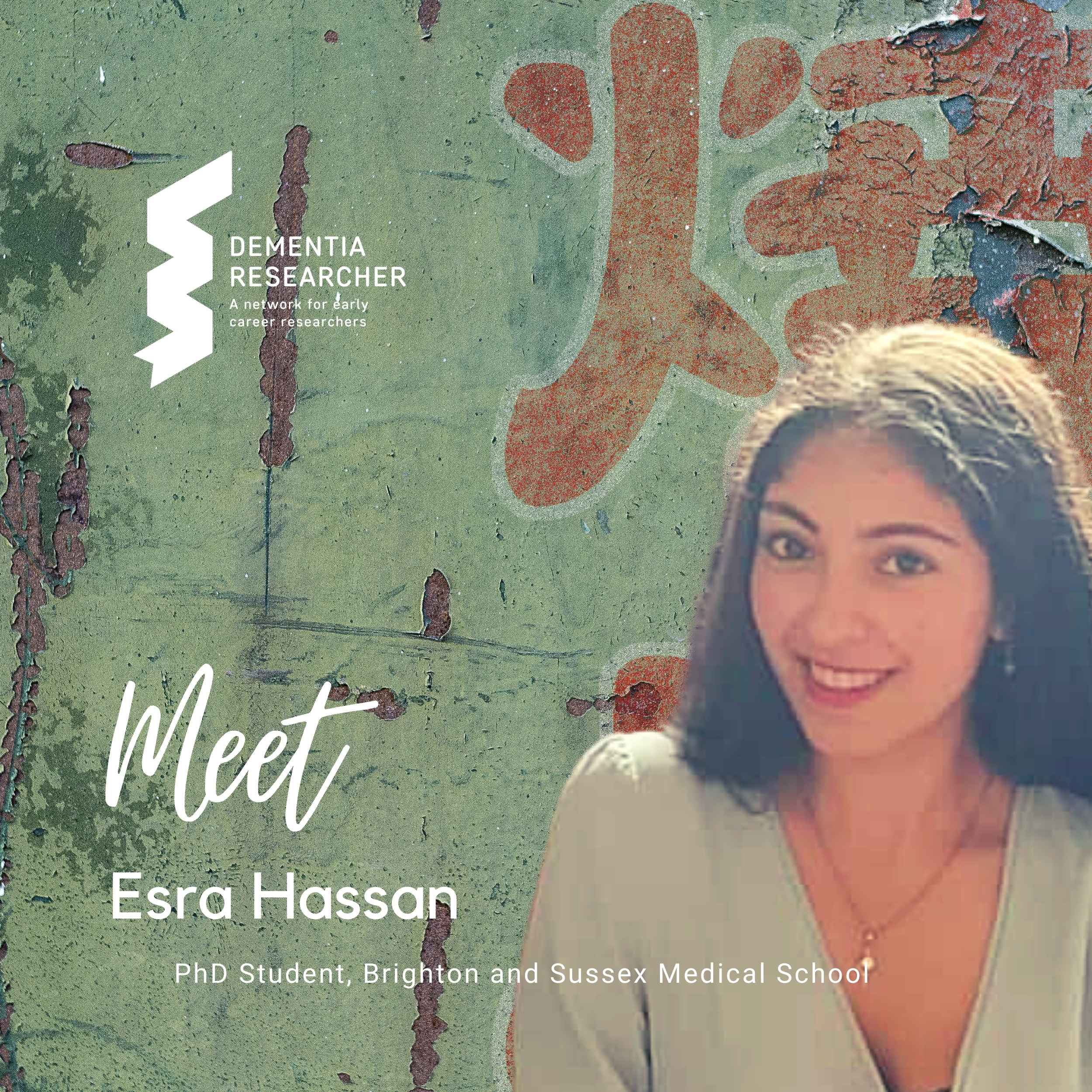
Ep 219Meet Esra Hassan, Brighton and Sussex Medical School
Last week we attended the Alzheimer's Disease International Conference in London. We took time out from the programme to talk with early career dementia researchers to ask them about their work, the challenges they have faced and how they overcame them. In this short interview we talk with Esra Hassan, PhD Student from Brighton and Sussex Medical School. During her MSc Esra completed research in the areas of neuroimaging to detect cognitive biomarkers in anxiety disorders, molecular cancer biology working on Glioblastoma multiforme cells, looking at the endocannabinoid system in Parkinson’s disease and research positions in cognitive neuropsychology. Now she is currently working to establish the drivers and determinants of dementia attitudes in adolescents and understanding how these attitudes form and change over time. Find out more about Esra and her work on our website: https://www.dementiaresearcher.nihr.ac.uk/profile-esra-hassan-brighton-and-sussex-medical-school If you would like to join us and add your profile and short interview to our researchers profile, drop us a line to [email protected]
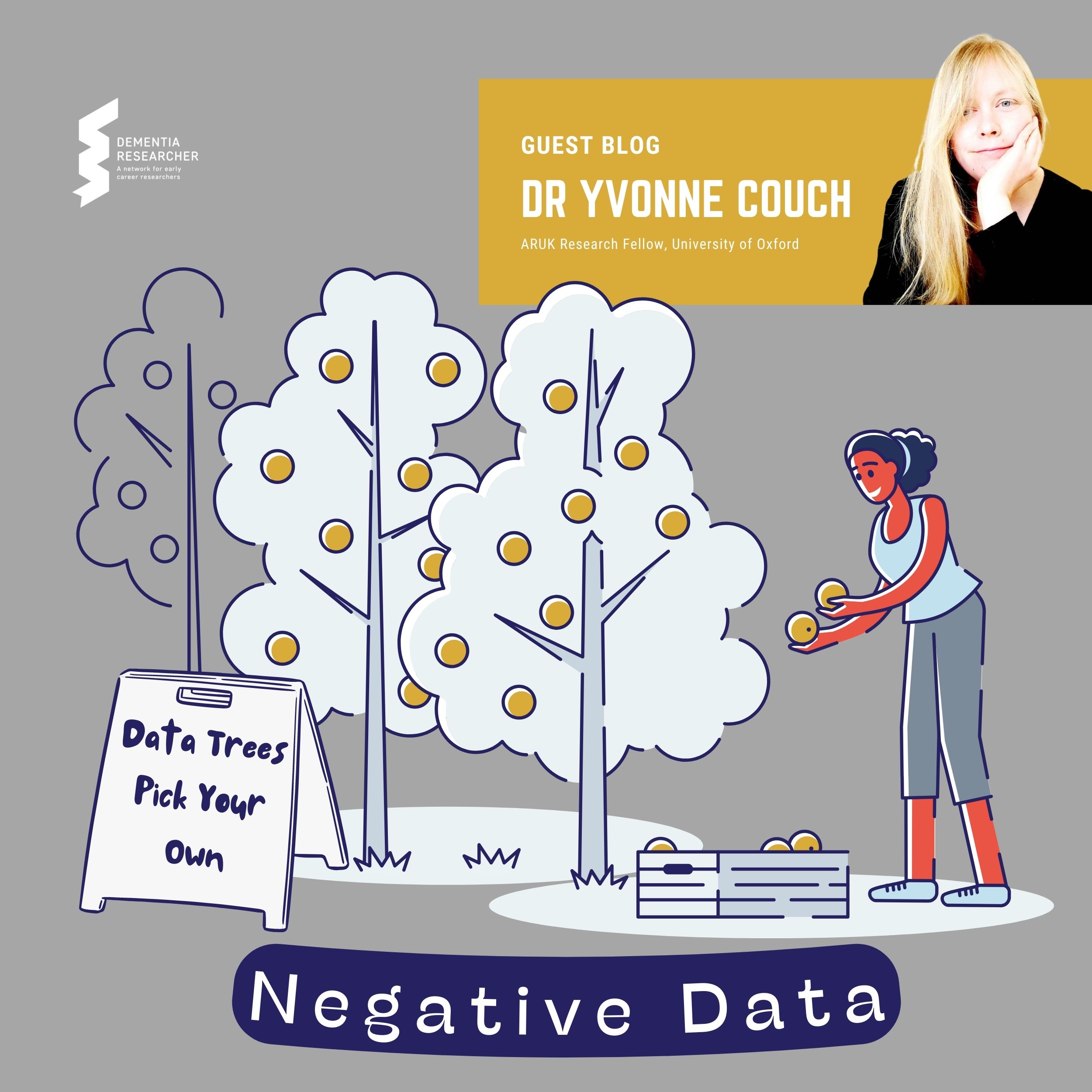
Ep 218Dr Yvonne Couch - Negative Data
Dr Yvonne Couch, narrates her blog written for the Dementia Researcher website. Yvonne was chatting with a friend recently about publishing things, and he was lamenting that he had a ton of stuff that was just sort of languishing unfinished. It was interesting but just not complete enough to be considered a paper. So today we’re going to talk about how we, as early career researchers, can help the scientific field change by thinking about how, where and what we publish - including just what to do with negative data. Find the original text, and narration here on our website. https://www.dementiaresearcher.nihr.ac.uk/guest-blog-negative-data/ -- Dr Yvonne Couch is an Alzheimer's Research UK Fellow at the University of Oxford. Yvonne studies the role of extracellular vesicles and their role in changing the function of the vasculature after stroke, aiming to discover why the prevalence of dementia after stroke is three times higher than the average. It is her passion for problem solving and love of science that drives her, in advancing our knowledge of disease. Yvonne has joined the team of staff bloggers at Dementia Researcher, and will be writing about her work and life as she takes a new road into independent research. _____________________________________________________ Enjoy listening? We're always looking for new bloggers, drop us a line. http://www.dementiaresearcher.nihr.ac.uk
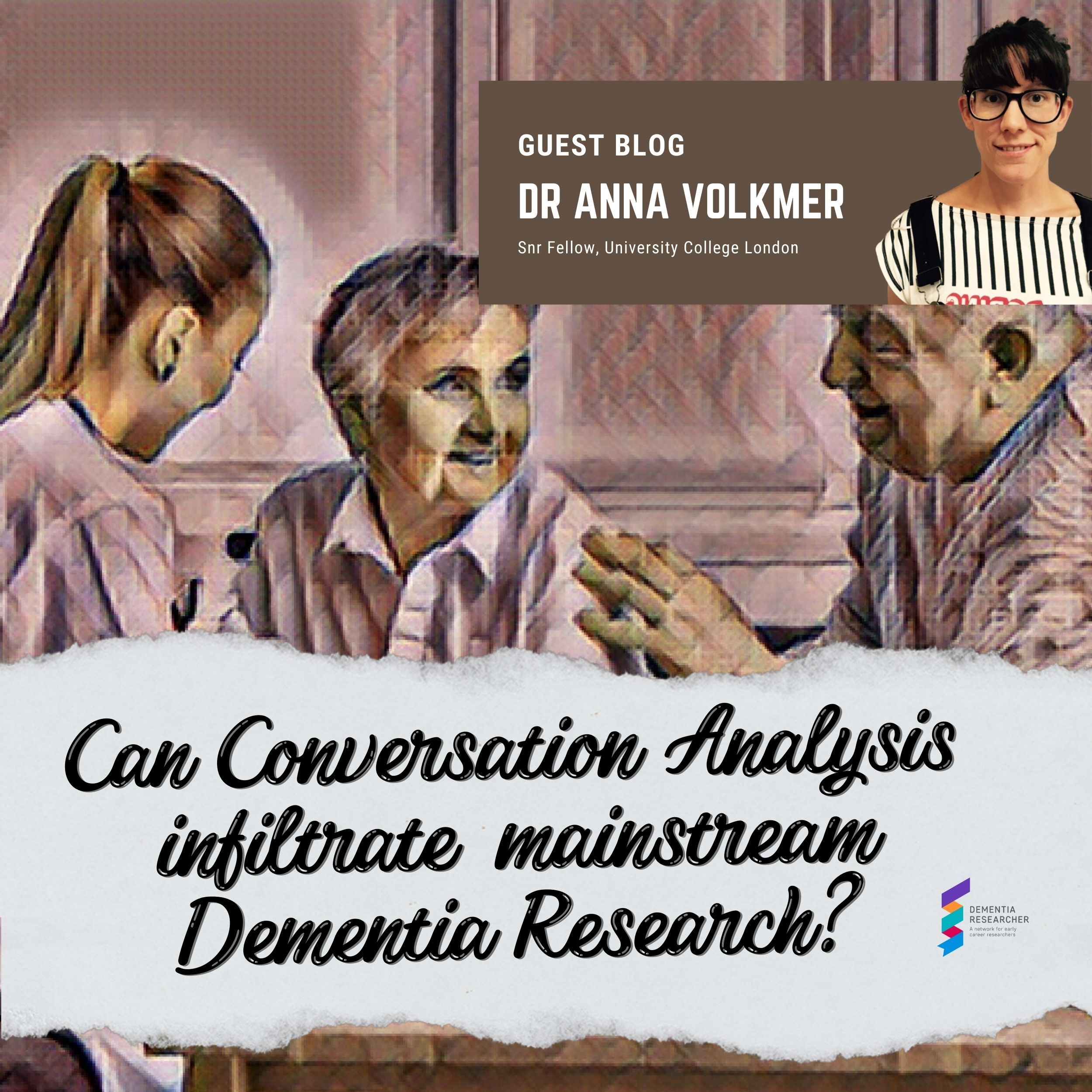
Ep 217Dr Anna Volkmer - Can Conversation Analysis inflitrate mainstream Dementia Research?
Dr Anna Volkmer, narrates her blog written for Dementia Researcher. Research in dementia is developing at a great pace. The race for a ‘cure’ may not be as close as we wish but there is so much more of a focus on developing what we can do to care and support people living with this diagnosis. Incidentally this aligns with a greater focus on, and acceptance of, qualitative research methods as a worthy and rigorous approach worthy of the attention and funding from the greater and more financially generous organisations. So how can qualitative research methods, such as Conversation Analysis break through, and attract funding from funders and find their way into clinical services? Anna discusses in this blog. Find the original text, and narration here on our website. https://www.dementiaresearcher.nihr.ac.uk/guest-blog-can-conversation-analysis-infiltrate-mainstream-dementia-research/ -- Dr Anna Volkmer is a Speech and Language Therapist and researcher in Language and Cognition, Department of Psychology and Language Sciences, University College London. Anna is researching Speech and language therapy interventions in language led dementia and was once voted scariest speech and language therapist (even her children agree). If you would like to write for us, or join out team of regular contributors, drop us a line - [email protected]
Ep 216Dr Sam Moxon - Are we Proactive Enough about Dementia?
Dr Sam Moxon, narrates his blog written for Dementia Researcher. Sam has been doing some soul searching recently, and he got to thinking about health, remembering something that was mentioned in a recent podcast recording. Sam recently hosted a podcast with some pretty eminent researchers (check out the latest show on our main podcast) involved in the Race Against Dementia (RAD) initiative. One of the guests was talking about an interaction he had with Sir Jackie Stewart, the founder of the charity. He was recalling a conversation they shared where Sir Jackie expressed his frustration at how slow things seemed to move in dementia research. That was, I think, a part of the reason he started the charity. He wants to bring that F1 level of speed and innovation into the field. So how can we improve this image of slow progress, and try and feel a little better about our future? Sam explores in this blog. Find the original text, and narration here on our website. https://www.dementiaresearcher.nihr.ac.uk/guest-blog-are-we-proactive-enough-about-dementia/ -- Dr Sam Moxon is a biomaterials scientist at the University of Manchester. His expertise falls on the interface between biology and engineering. His PhD focussed on regenerative medicine and he now works on trying to develop 3D bioprinting techniques with human stem cells, so that we better understand and treat degenerative diseases. Outside of the lab he hikes through the Lake District and is an expert on all things Disney. Enjoy listening and reading our blogs? We're always on the look out for new contributors, drop us a line and share your own research and careers advice [email protected]
Ep 215Dr Clarissa Giebel - From PhD student to supervisor
Dr Clarissa Giebel narrates her blog written for Dementia Researcher. Only a few short years after completing a PhD you will (hopefully) find yourself as a new principal investigators (PIs), thrust into a role that includes administration and management, budgeting, mentoring and — perhaps most difficult — shepherding junior researchers to achieve their full potential. Many researchers receive little training in leadership skills to help them adapt, in this blog we hear from Clarissa as she makes the transition from student to supervisor. Find the original text, and narration here on our website. https://www.dementiaresearcher.nihr.ac.uk/guest-blog-from-phd-student-to-supervisor/ -- Dr Clarissa Giebel is a Research Fellow at the University of Liverpool and NIHR ARC North West Coast. Clarissa has been working in dementia care research for over 10 years focusing her research on helping people with dementia to live at home independently and well for longer, addressing inequalities that people with dementia and carers can face. Outside of her day work, Clarissa has also organised a local dementia network - the Liverpool Dementia & Ageing Research Forum, and has recently started her own podcast called the Ageing Scientist. -- If you would like to write your own blog drop us a line, we're always on the look out for new contributors to write about their research, careers + more [email protected]
Ep 214Dr Aida Suárez-Gonzalez - Top Tips to Nail your Research Job Interview
Dr Aida Suárez-Gonzalez narrates her blog written for Dementia Researcher. Lately Aida has been involved in many interview panels and, coincidentally, also in helping a substantial number of colleagues to prepare for grant and research job interviews. Her repeated exposure to the person specification assessment process in a short window of time has made Aida acutely aware of a few behaviours that she greatly appreciate in candidates - so to help you nail your next research job interview Aida is sharing her top 5 tips in her first contribution as a staff blogger for Dementia Researcher. Find the original text, and narration here on our website. https://www.dementiaresearcher.nihr.ac.uk/guest-blog-top-tips-to-nail-your-research-job-interview/ We're always on the look out for new contributors, if you would like to write and narrate your own blog - drop us a line to [email protected] Don't forget to also listen to our fortnightly - published fortnightly, just look for Dementia Researcher in your podcast app. -- Dr Aida Suarez-Gonzalez is a Clinical Neuropsychologist and Senior Research Fellow at the Dementia Research Centre, UCL Institute of Neurology at Queen Square. With many years clinical experience working in Spain, Aida now investigating non-pharmacological interventions, services and assistive technologies to support people living well with dementia. -- This podcast is brought to you from University College London in association with the National Institute for Health Research, Alzheimer's Research UK and Alzheimer's Society, who we thank for their ongoing support. Enjoy listening? We're always looking for new bloggers, drop us a line [email protected]
Ep 213Beth Eyre - How to deliver an engaging scientific presentation
Beth Eyre narrates her blog written for Dementia Researcher. Giving presentations is something that you can’t always hide from in science, and it’s one of those things that if you put off, they just become more and more daunting. In this blog Beth provides some tips that others have passed on to her and from the experiences she has gainedover the past couple of years. Find the original text, and narration here on our website. https://www.dementiaresearcher.nihr.ac.uk/guest-blog-how-to-give-an-engaging-scientific-presentation/ We're always on the look out for new contributors, if you would like to write and narrate your own blog - drop us a line to [email protected] Don't forget to also listen to our fortnightly - published fortnightly, just look for Dementia Researcher in your podcast app. -- Beth Eyre is a PhD Student at The University of Sheffield, researching Neurovascular and cognitive function in preclinical models of Alzheimer’s disease. Beth has a background in psychology, where she gained her degree from the University of Leeds. Inside and outside the lab, Beth loves sharing her science and we are delighted to have her contributing as a regular blogger with Dementia Researcher, sharing her work and discussing her career. -- This podcast is brought to you from University College London in association with the National Institute for Health Research, Alzheimer's Research UK and Alzheimer's Society, who we thank for their ongoing support. Enjoy listening? We're always looking for new bloggers, drop us a line [email protected]
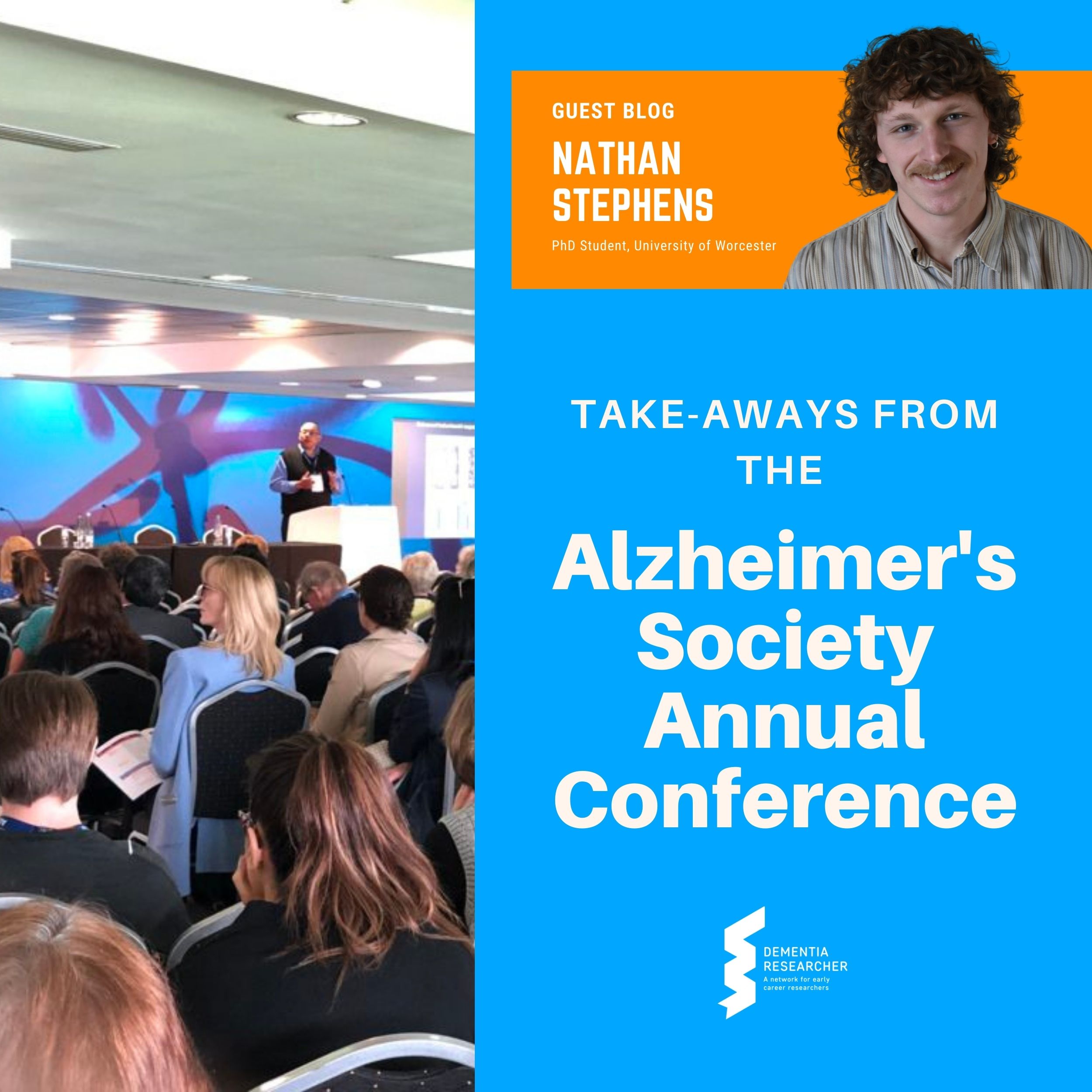
Ep 212Nathan Stephens - Alzheimer’s Society Annual Conference
Nathan Stephens narrates his blog written for Dementia Researcher. Earlier this month Nathan attended the Alzheimer’s Society annual conference at the Park Plaza Hotel London. This was his first in person event, where the focus of the day was on improving early diagnosis. The conference brought together professionals from all knucks and crannies of the health system, as well as academics, students, and most importantly people affected by dementia who played a part in every aspect of the day. In this blog Nathan shares a few of my personal reflections, although, if anyone is reading this who did attend and find his recollection accurate, he apologises - there was a free bar! Find the original text, and narration here on our website. https://www.dementiaresearcher.nihr.ac.uk/guest-blog-alzheimers-society-annual-conference/ -- Nathan Stephens is a PhD Student and unpaid carer, working on his PhD at University of Worcester, studying the Worcestershire Meeting Centres Community Support Programme. Inspired by caring for both grandparents and personal experience of dementia, Nathan has gone from a BSc in Sports & Physical Education, an MSc in Public Health, and now working on his PhD. -- Enjoy listening? We're always looking for new bloggers, drop us a line. http://www.dementiaresearcher.nihr.ac.uk This podcast is brought to you in association with Alzheimer's Research UK and Alzheimer's Society, who we thank for their ongoing support.
Ep 211Dr Yvonne Couch - Money Management
Dr Yvonne Couch, narrates her blog written for the Dementia Researcher website. OK so this one is going to be dull (Yvonne's words, not ours). There, I’ve said it. There will be no humour, no fun historical factoids and nothing exotic or interesting that you might use as pre-dinner conversation starters. But planning a budget for a grant is something that young researchers aren’t inherently prepared for, we often have no formal training and end up making it up as we go along. So in this blog Yvonne will give you some of my, albeit limited, experience in this area of academic life. In order to make this easier we’ll split this into small grants, things that are less than 10k, medium grants of around 250k and large grants of more than 1 million. All of this is UK pounds by the way so if you’re listening in other countries the same rules apply just go in and change the numbers - so get your spreadsheets ready if you're in the middle of a grant application. Find the original text, and narration here on our website. https://www.dementiaresearcher.nihr.ac.uk/guest-blog-money-management/ -- Dr Yvonne Couch is an Alzheimer's Research UK Fellow at the University of Oxford. Yvonne studies the role of extracellular vesicles and their role in changing the function of the vasculature after stroke, aiming to discover why the prevalence of dementia after stroke is three times higher than the average. It is her passion for problem solving and love of science that drives her, in advancing our knowledge of disease. Yvonne has joined the team of staff bloggers at Dementia Researcher, and will be writing about her work and life as she takes a new road into independent research. _____________________________________________________ Enjoy listening? We're always looking for new bloggers, drop us a line. http://www.dementiaresearcher.nihr.ac.uk

Ep 210Hannah Hussain - Tops tips for your first literature review
Hannah Hussain narrates her blog written for Dementia Researcher. For today’s blog Hannah provides provide a guide on how to go about your first literature review. It may sound super daunting. But don't worry, Hannah is 2 years into her PhD, and 4 years into her research career, and she know's a thing or two! In this blog Hannah shares the tools and talks to the focused approach, your literature review needs, do it won't be a frightening task. So here it is, Hannah's complete guide to smashing out your literature review. Find the original text, and narration here on our website. https://www.dementiaresearcher.nihr.ac.uk/guest-blog-tops-tips-for-your-first-literature-review/ -- Hannah Hussain is a PhD Student in Health Economics at The University of Sheffield. As a proud third generation migrant and British-Asian, her career path has been linear and ever evolving, originally qualifying as a Pharmacist in Nottingham, then Health Economics in Birmingham. Her studies have opened a world into Psychology, Mental Health and other areas of health, and with that and personal influences she found her passion for dementia. -- Enjoy listening? We're always looking for new bloggers, drop us a line. http://www.dementiaresearcher.nihr.ac.uk This podcast is brought to you in association with Alzheimer's Research UK and Alzheimer's Society, who we thank for their ongoing support. Enjoy listening? We're always looking for new bloggers, drop us a line [email protected]

Ep 209Dr Sam Moxon - The Mental Struggle of Living with Chronic Illness
Dr Sam Moxon, narrates his blog written for Dementia Researcher. It’s Mental Health Awareness Week and Sam thought it would be a good opportunity to talk about something that he has recently started to experience. It’s very much one of those “this is an issue I have and, by talking about it, maybe anyone else affected will find some comfort or useful advice” sort of blogs, for Sam, this is the challenge of living with a chronic illness, and how that can impact your mental health and not just the physical. Find the original text, and narration here on our website. https://www.dementiaresearcher.nihr.ac.uk/guest-blog-the-mental-struggle-of-living-with-chronic-illness/ -- Dr Sam Moxon is a biomaterials scientist at the University of Manchester. His expertise falls on the interface between biology and engineering. His PhD focussed on regenerative medicine and he now works on trying to develop 3D bioprinting techniques with human stem cells, so that we better understand and treat degenerative diseases. Outside of the lab he hikes through the Lake District and is an expert on all things Disney. Enjoy listening and reading our blogs? We're always on the look out for new contributors, drop us a line and share your own research and careers advice [email protected]
Ep 208Adam Smith - A Mental Health Update
Adam Smith narrates his blog written for Dementia Researcher. It's Mental Health Awareness Week and in this blog Adam discusses his own problems with anxiety, how he is coping and explores where they stem from and why talking about Mental Illness and Mental Health is important, not just to help you, but also to reduce the stigma associated with it. The ISTAART / UCL survey of Early Career Dementia Researchers asked about Mental Health - 57% of people who responded said they had experienced Mental Health problems, with Anxiety, Depression and Loneliness being the biggest challenge. Sadly, only 37% said their employers / institutions were helpful, which is terrible when you consider that the same people reported that it impacted their effectiveness at work, confidence, motivation and how they interacted with co-workers and supervisors. Find the original text, and narration here on our website. https://www.dementiaresearcher.nihr.ac.uk/guest-blog-a-mental-health-update/ -- Adam Smith was born in the north, a long time ago. He wanted to write books, but ended up working in the NHS, and at the Department of Health. He is now Programme Director in the Office of the NIHR National Director for Dementia Research (which probably sounds more important than it is) at University College London. He has led a number of initiatives to improve dementia research (including this website, Join Dementia Research & ENRICH), as well as pursuing his own research interests. In his spare time, he grows vegetables, builds Lego & spends most of his time drinking too much coffee and squeezing technology into his house. _____________________________________________________ Enjoy listening? We're always looking for new bloggers, drop us a line. http://www.dementiaresearcher.nihr.ac.uk

Ep 207Dr Clarissa Giebel - Who Cares for the Carers?
Dr Clarissa Giebel narrates her blog written for Dementia Researcher. It’s Mental Health Awareness Week in the UK, followed by Dementia Action Week next week. So what better time to focus on the mental health of carers for people with dementia and older adults? But who cares for the carers? Clarissa reflects on the challenges for carers and the latest statistics and research. Find the original text, and narration here on our website. https://www.dementiaresearcher.nihr.ac.uk/guest-blog-running-a-journal-club-and-how-to-be-reviewer-2-in-a-safe-environment/ -- Dr Clarissa Giebel is a Research Fellow at the University of Liverpool and NIHR ARC North West Coast. Clarissa has been working in dementia care research for over 10 years focusing her research on helping people with dementia to live at home independently and well for longer, addressing inequalities that people with dementia and carers can face. Outside of her day work, Clarissa has also organised a local dementia network - the Liverpool Dementia & Ageing Research Forum, and has recently started her own podcast called the Ageing Scientist. -- If you would like to write your own blog drop us a line, we're always on the look out for new contributors to write about their research, careers + more [email protected]
Ep 206Dr Yvonne Couch - The Curse of the Three-Year Fellowship
Dr Yvonne Couch, narrates her blog written for the Dementia Researcher website. This is going to be an advice column for those of you currently applying or considering applying for fellowships. Pre-warning, Yvonne was having a bad day whilst writing this so it’s going to be grumpy. There’s a springboard award which she was considering writing this week. So writing this blog probably wasn't the best use of her time... She should be thinking of ideas and reading papers. Because, as it turns out from almost everyone Yvonne talks to, says that she writes a pretty good grant. She knows how to structure it, how to highlight her ideas. She even managed to get fairly far through Wellcome and MRC with little to no input from senior scientists. So we know that Yvonne writes well, and quickly... but currently she isn't doing either. What she is currently doing is doom-consuming pastry and staring at a blank Word document. Actually, it’s not blank. It contains the following crushing phrase: End date of current contract (must be after the end date of the proposed 2-year springboard project).. which is a problem! Find the original text, and narration here on our website. https://www.dementiaresearcher.nihr.ac.uk/guest-blog-the-curse-of-the-three-year-fellowship/ -- Dr Yvonne Couch is an Alzheimer's Research UK Fellow at the University of Oxford. Yvonne studies the role of extracellular vesicles and their role in changing the function of the vasculature after stroke, aiming to discover why the prevalence of dementia after stroke is three times higher than the average. It is her passion for problem solving and love of science that drives her, in advancing our knowledge of disease. Yvonne has joined the team of staff bloggers at Dementia Researcher, and will be writing about her work and life as she takes a new road into independent research. _____________________________________________________ Enjoy listening? We're always looking for new bloggers, drop us a line. http://www.dementiaresearcher.nihr.ac.uk
Ep 205Dr Kamar Ameen-Ali - The importance of including both sexes in preclinical dementia research
Dr Kamar Ameen-Ali narrates her blog written for Dementia Researcher. In biomedical research there has historically been a tendency towards sole inclusion of males, particularly in preclinical animal studies. The reason has often centred on the potential variability of females relating to fluctuations in hormones which could confound the data. But could this bias towards studying males account for poor translation of preclinical to clinical research? In this blog Kamar discusses the importance of including both sexes in preclinical research, and why this might significantly advance progress in dementia research. Find the original text, and narration here on our website. https://www.dementiaresearcher.nihr.ac.uk/guest-blog-the-importance-of-including-both-sexes-in-preclinical-dementia-research/ -- Dr Kamar Ameen-Ali is a Lecturer in Biomedical Science at Teesside University & Affiliate Researcher at Glasgow University. In addition to teaching, Kamar is exploring how neuroinflammation following traumatic brain injury contributes to the progression of neurodegenerative diseases that lead to dementia. Having first pursued a career as an NHS Psychologist, Kamar went back to University in Durham to look at rodent behavioural tasks to completed her PhD, and then worked as a regional Programme Manager for NC3Rs. -- Enjoy listening? We're always looking for new bloggers, drop us a line. http://www.dementiaresearcher.nihr.ac.uk This podcast is brought to you in association with Alzheimer's Research UK and Alzheimer's Society, who we thank for their ongoing support.
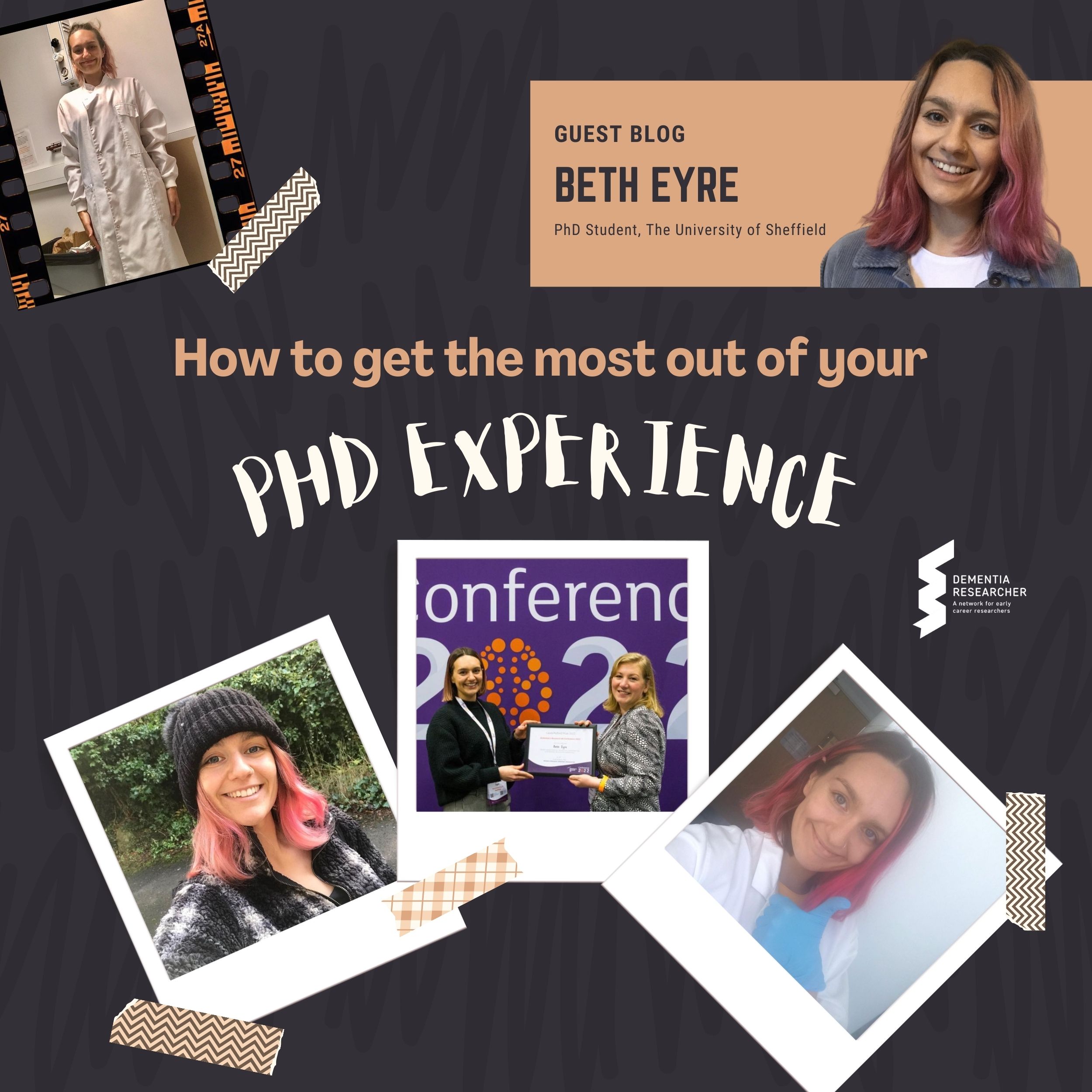
Ep 204Beth Eyre - How to get the most out of your PhD experience
Beth Eyre narrates her blog written for Dementia Researcher. By the time this blog is published, Beth will have finished all of her PhD experiments. That’s right, no more countless hours in a dark room. But as she gets closer to the end, Beth is beginning to think about all the opportunities she has been able to seize. So, in this blog to she share with you all some potential opportunities that are available to PhD students that may help you get the most out of your PhD. Find the original text, and narration here on our website. https://www.dementiaresearcher.nihr.ac.uk/guest-blog-how-to-get-the-most-out-of-your-phd-experience/ We're always on the look out for new contributors, if you would like to write and narrate your own blog - drop us a line to [email protected] Don't forget to also listen to our fortnightly - published fortnightly, just look for Dementia Researcher in your podcast app. -- Beth Eyre is a PhD Student at The University of Sheffield, researching Neurovascular and cognitive function in preclinical models of Alzheimer’s disease. Beth has a background in psychology, where she gained her degree from the University of Leeds. Inside and outside the lab, Beth loves sharing her science and we are delighted to have her contributing as a regular blogger with Dementia Researcher, sharing her work and discussing her career. -- This podcast is brought to you from University College London in association with the National Institute for Health Research, Alzheimer's Research UK and Alzheimer's Society, who we thank for their ongoing support. Enjoy listening? We're always looking for new bloggers, drop us a line [email protected]
Ep 203Nathan Stephens - What is Value? A Concept Analysis
Nathan Stephens narrates his blog written for Dementia Researcher. Have you ever been questioned by a supervisor, colleague, or member of the public about what a certain term actually means? For Nathan Stephens, this word was value. Value quickly became the focal word that the PhD research questions, aims, and methodology grew from. ‘Social Value’ is the primary concept of value that will be used in his PhD. However, it was assumed that being able to conceptualise value in the context of the research more specifically will improve the quality of his thesis. In hindsight, an incredibly optimistic piece of work, Nathan admits that he isn't sure why he thought he could do any better than the likes of Aristotle and Smith. But anyway, he had a crack. Find the original text, and narration here on our website. https://www.dementiaresearcher.nihr.ac.uk/guest-blog-what-is-value-a-concept-analysis/ -- Nathan Stephens is a PhD Student and unpaid carer, working on his PhD at University of Worcester, studying the Worcestershire Meeting Centres Community Support Programme. Inspired by caring for both grandparents and personal experience of dementia, Nathan has gone from a BSc in Sports & Physical Education, an MSc in Public Health, and now working on his PhD. -- Enjoy listening? We're always looking for new bloggers, drop us a line. http://www.dementiaresearcher.nihr.ac.uk This podcast is brought to you in association with Alzheimer's Research UK and Alzheimer's Society, who we thank for their ongoing support.
Ep 202Masha Burelo - Cannabinoids for better sleep?
Masha Burelo narrates her blog written for the Dementia Researcher website. Just like drinking coffee to feel awake, many substances can affect the dynamics of our circadian cycle. Cannabinoids are assumed to enhance sleep due to the somnolence caused by certain doses, but can they improve sleep? Masha explores in her latest blog. Find the original text, and narration here on our website. https://www.dementiaresearcher.nihr.ac.uk/guest-blog-cannabinoids-for-better-sleep/ -- Masha Burelo is a PhD Student at the University of Aberdeen. Her research explores Electrophysiology and behavioural evaluation in preclinical models of Alzheimer’s disease. Masha started her studies in veterinary medicine in Mexico and first became interested in cannabinoids when her dog developed epilepsy, then with close family members struck by Alzheimer's Disease her interest in neuroscience, plants and the brain developed. _____________________________________________________ Enjoy listening? We're always looking for new bloggers, drop us a line. http://www.dementiaresearcher.nihr.ac.uk
Ep 201Clíona Farrell - Dementia in Down syndrome and the role of neuroinflammation
Clíona Farrell narrates her blog written for Dementia Researcher. Down syndrome is caused by having a third copy of chromosome 21, and each year on the 21st of March (the 21st day of the third month) World Down syndrome Day is celebrated worldwide. People with Down syndrome are particularly susceptible to COVID-19, so this year the Down syndrome research community came together online. With participants from research studies, their families and friends, they discussed current research advances, offered advice from specialists and celebrated Down syndrome. Down syndrome is the most common genetic cause of Alzheimer’s disease, however, few researchers study dementia in this context. Here, Clíona highlights her research in this field and explains the importance of the inclusion of people with Down syndrome in Alzheimer’s research. Find the original text, and narration here on our website. https://www.dementiaresearcher.nihr.ac.uk/guest-blog-dementia-in-down-syndrome-and-the-role-of-neuroinflammation/ -- Clíona Farrell is a PhD Student in the UK Dementia Research Institute at University College London. Her work focuses on understanding neuroinflammation in Down syndrome, both prior to, and in response to, Alzheimer’s disease pathology. Originally from Dublin, Ireland, Clíona completed her undergraduate degree in Neuroscience in Trinity College, and then worked as a research assistant in the Royal College of Surgeons studying ALS and Parkinson’s disease. She also knows the secret behind scopping the perfect 99 ice-cream cone.. -- Enjoy listening? We're always looking for new bloggers, drop us a line. http://www.dementiaresearcher.nihr.ac.uk This podcast is brought to you in association with Alzheimer's Research UK and Alzheimer's Society, who we thank for their ongoing support. Enjoy listening? We're always looking for new bloggers, drop us a line [email protected]
Ep 200Hannah Hussain - Can fasting help prevent dementia?
Hannah Hussain narrates her blog written for Dementia Researcher. As we’re in the middle of the holy month of Ramadhan, this got Hannah to thinking... was there a deeper, scientific reason behind fasting. Perhaps a reason that could not be explained at the time. Whether you are Muslim or not, the benefits of intermittent fasting are evident through new and ongoing research. Some of the most renowned doctors promote fasting, all with a slightly different lens based on their area of interest. For example, Dr Ethan Weiss discusses the advantages to cardiological health and weight loss. Dr Rahul Jandial discusses the benefits in terms of increasing your brain’s natural growth factors and improving cognition. Dr Jason Fung is the world leading expert on intermittent fasting and low-carb diets, he discusses a broad range of advantages to this practice from regulating hormone levels to cellular repair. So, we know there are so many benefits – but does fasting impact dementia onset? And if so… how? Hannah explores in this blog. Find the original text, and narration here on our website. https://www.dementiaresearcher.nihr.ac.uk/guest-blog-can-fasting-help-prevent-dementia/ -- Hannah Hussain is a PhD Student in Health Economics at The University of Sheffield. As a proud third generation migrant and British-Asian, her career path has been linear and ever evolving, originally qualifying as a Pharmacist in Nottingham, then Health Economics in Birmingham. Her studies have opened a world into Psychology, Mental Health and other areas of health, and with that and personal influences she found her passion for dementia. -- Enjoy listening? We're always looking for new bloggers, drop us a line. http://www.dementiaresearcher.nihr.ac.uk This podcast is brought to you in association with Alzheimer's Research UK and Alzheimer's Society, who we thank for their ongoing support. Enjoy listening? We're always looking for new bloggers, drop us a line [email protected]

Ep 199Dr Anna Volkmer - Aphasia, public awareness
Dr Anna Volkmer, narrates her blog written for Dementia Researcher. As a researcher and a clinician, it is part of Anna's mission (so to speak) to spread awareness of some of the lesser known aspects of dementia. In her case it is the language difficulties, known as ‘aphasia’, and speech difficulties, known as ‘apraxia’ or ‘dysarthria’. Having this kind of impact is slow work. But earlier this month, following a terribly sad announcement from Bruce Willis’ family, public awareness has been dramatically altered. In this blog Anna provides some insights for those looking to learn more. Find the original text, and narration here on our website. https://www.dementiaresearcher.nihr.ac.uk/guest-blog-aphasia-public-awareness/ -- Dr Anna Volkmer is a Speech and Language Therapist and researcher in Language and Cognition, Department of Psychology and Language Sciences, University College London. Anna is researching Speech and language therapy interventions in language led dementia and was once voted scariest speech and language therapist (even her children agree). If you would like to write for us, or join out team of regular contributors, drop us a line - [email protected]
Ep 198Dr Yvonne Couch - How to Present your Research
Dr Yvonne Couch, narrates her blog written for the Dementia Researcher website. This time Yvonne goes through the ins and outs of a good scientific presentation. What to do and what not to do. Yvonne asks that you bear in mind that she not an expert presenter. Excitable yes, expert no. But I she does know what doesn’t work and that’s important. Yvonne goes through the rough outline you might take in your presentation and talk through what you need to consider for each part, then we’re going to lay down some rules, then she is going to to let you loose to inspire the world (and not bore your colleagues). Find the original text, and narration here on our website. https://www.dementiaresearcher.nihr.ac.uk/guest-blog-how-to-present-your-work/ -- Dr Yvonne Couch is an Alzheimer's Research UK Fellow at the University of Oxford. Yvonne studies the role of extracellular vesicles and their role in changing the function of the vasculature after stroke, aiming to discover why the prevalence of dementia after stroke is three times higher than the average. It is her passion for problem solving and love of science that drives her, in advancing our knowledge of disease. Yvonne has joined the team of staff bloggers at Dementia Researcher, and will be writing about her work and life as she takes a new road into independent research. _____________________________________________________ Enjoy listening? We're always looking for new bloggers, drop us a line. http://www.dementiaresearcher.nihr.ac.uk
Ep 197Dr Sam Moxon - How to Nail Your Conference Abstract
Dr Sam Moxon, narrates his blog written for Dementia Researcher. What’s that you say? An IN PERSON conference? Sign me up!!! You may have noticed in recent months that more and more conferences are promising an in person experience this year. For Sam, this is extremely exciting. He loves conferences and has really missed seeing his friends, colleagues and collaborators (people can be all three!). There is no better place to make new connections, see some exciting new data and let your hair down than a conference. Some our closest collaborators are people we meet in the pub after the end of that day’s sessions (Top Tip: Always take the opportunity to go to one.) First, however, you need to submit your conference abstract. In most cases, your institute will only send you to a conference (they have to pay remember) if you are going to present something. That means you have to prepare and submit an abstract. So how do you do that? In this month’s blog, Sam gives you the best tips to write the perfect abstract. Find the original text, and narration here on our website. https://www.dementiaresearcher.nihr.ac.uk/guest-blog-do-we-need-to-peer-review-the-process-of-peer-review/ -- Dr Sam Moxon is a biomaterials scientist at the University of Manchester. His expertise falls on the interface between biology and engineering. His PhD focussed on regenerative medicine and he now works on trying to develop 3D bioprinting techniques with human stem cells, so that we better understand and treat degenerative diseases. Outside of the lab he hikes through the Lake District and is an expert on all things Disney. Enjoy listening and reading our blogs? We're always on the look out for new contributors, drop us a line and share your own research and careers advice [email protected]
Ep 196Beth Eyre - Networking: what is it and how do you approach it as a PhD student?
Beth Eyre narrates her blog written for Dementia Researcher. When Beth first began her PhD, she heard the word ‘networking’ all the time, it was thrown about in all of my introductory sessions and training reports but she actually had no idea what it really was, or most importantly what it entailed. So, in this blog Beth writes about some of the things she has learned about networking and some things that may help you network during your own PhD. Find the original text, and narration here on our website. https://www.dementiaresearcher.nihr.ac.uk/guest-blog-networking-what-is-it-and-how-do-you-approach-it-as-a-phd-student/ We're always on the look out for new contributors, if you would like to write and narrate your own blog - drop us a line to [email protected] Don't forget to also listen to our fortnightly - published fortnightly, just look for Dementia Researcher in your podcast app. -- Beth Eyre is a PhD Student at The University of Sheffield, researching Neurovascular and cognitive function in preclinical models of Alzheimer’s disease. Beth has a background in psychology, where she gained her degree from the University of Leeds. Inside and outside the lab, Beth loves sharing her science and we are delighted to have her contributing as a regular blogger with Dementia Researcher, sharing her work and discussing her career. -- This podcast is brought to you from University College London in association with the National Institute for Health Research, Alzheimer's Research UK and Alzheimer's Society, who we thank for their ongoing support. Enjoy listening? We're always looking for new bloggers, drop us a line [email protected]
Ep 195Hannah Hussain - The impact of furry friend’s on people with dementia…
Hannah Hussain narrates her blog written for Dementia Researcher. All pet owners know that the bond that they have with their furry friend is hard to explain. And with nearly 50% of the general UK adult population being pet owners – I’m sure quite a lot of you can probably relate. They boost our serotonin and they are just our everything! We know how much they can do for people, providing that unconditional companionship, so what can they do for people with dementia? Well, Hannah wanted to find out more, so she did what any researcher would do – a good old database search and found some interesting results… listen to find out more. Find the original text, and narration here on our website. https://www.dementiaresearcher.nihr.ac.uk/guest-blog-the-impact-of-furry-friends-on-people-with-dementia/ -- Hannah Hussain is a PhD Student in Health Economics at The University of Sheffield. As a proud third generation migrant and British-Asian, her career path has been linear and ever evolving, originally qualifying as a Pharmacist in Nottingham, then Health Economics in Birmingham. Her studies have opened a world into Psychology, Mental Health and other areas of health, and with that and personal influences she found her passion for dementia. -- Enjoy listening? We're always looking for new bloggers, drop us a line. http://www.dementiaresearcher.nihr.ac.uk This podcast is brought to you in association with Alzheimer's Research UK and Alzheimer's Society, who we thank for their ongoing support. Enjoy listening? We're always looking for new bloggers, drop us a line [email protected]

Ep 194Nathan Stephens - Redressing the ‘gold standard’ for evaluating complex interventions
Nathan Stephens narrates his blog written for Dementia Researcher. In this blog Nathan discusses brings forward a debate in the area of evaluating complex interventions. Traditional linear outcome orientated methods of evaluation rooted in positivistic assumptions, such as many standalone RCTs, while providing high levels of rigour, fail to capture emergent outcomes which are the “hallmark of complex programs”. However, the popular opinion that RCTs are the ‘gold standard’ is quickly being redressed, especially for the evaluation of social programmes and even policy change. Traditional techniques have there merits and are defensible choice, but not the ‘best’! Find the original text, and narration here on our website. https://www.dementiaresearcher.nihr.ac.uk/guest-blog-redressing-the-gold-standard-for-evaluating-complex-interventions/ -- Nathan Stephens is a PhD Student and unpaid carer, working on his PhD at University of Worcester, studying the Worcestershire Meeting Centres Community Support Programme. Inspired by caring for both grandparents and personal experience of dementia, Nathan has gone from a BSc in Sports & Physical Education, an MSc in Public Health, and now working on his PhD. -- Enjoy listening? We're always looking for new bloggers, drop us a line. http://www.dementiaresearcher.nihr.ac.uk This podcast is brought to you in association with Alzheimer's Research UK and Alzheimer's Society, who we thank for their ongoing support.
Ep 193Marianne Cranwell - On feeling qualitative research, being naïve, and a wee bit of crying
Marianne Cranwell narrates her blog written for Dementia Researcher. In her first blog for Dementia Researcher, Marianne shares the tale of her unexpected emotional journey. During her PhD project with carers of people living with dementia, she learned how it felt to do qualitative research with people who are living through some of their most difficult moments - she explores how this made her feel, the impact on her research and what she has learned along the way. Find the original text, and narration here on our website. https://www.dementiaresearcher.nihr.ac.uk/guest-blog-on-feeling-qualitative-research-being-naive-and-a-wee-bit-of-crying/ -- Marianne Cranwell is a PhD Candidate in the School of Education and Social Work & School of Health Sciences at the University of Dundee. When not wrangling her two children, Marianne is undertaking qualitative longitudinal research that explores the experiences of co-habiting informal carers of people living with dementia when homecare begins. This research is inspired by her time working in social care, and the families she met during this time where the emphasis was put on the service and the person living with dementia and not on their loved ones. -- Enjoy listening? We're always looking for new bloggers, drop us a line. http://www.dementiaresearcher.nihr.ac.uk This podcast is brought to you in association with Alzheimer's Research UK and Alzheimer's Society, who we thank for their ongoing support.
Ep 192Dr Kamar Ameen-Ali - Do equality, diversity & inclusion policies provide sufficient support for ECRs?
Dr Kamar Ameen-Ali narrates her blog written for Dementia Researcher. Over recent years academic institutions have increasingly sought to establish policies to promote equality, diversity, and inclusion (EDI) initiatives amongst students and university staff. On paper, this sounds like a progressive move towards balancing inequalities which people from under-represented groups face, but how effective have these initiatives been in practice? In this blog, Kamar reflects on whether EDI policies provide sufficient support for early career researchers (ECRs), and considers the wider impact they might have on dementia research. Find the original text, and narration here on our website. https://www.dementiaresearcher.nihr.ac.uk/guest-blog-do-equality-diversity-inclusion-policies-provide-sufficient-support-for-ecrs/ -- Dr Kamar Ameen-Ali is a Lecturer in Biomedical Science at Teesside University & Affiliate Researcher at Glasgow University. In addition to teaching, Kamar is exploring how neuroinflammation following traumatic brain injury contributes to the progression of neurodegenerative diseases that lead to dementia. Having first pursued a career as an NHS Psychologist, Kamar went back to University in Durham to look at rodent behavioural tasks to completed her PhD, and then worked as a regional Programme Manager for NC3Rs. -- Enjoy listening? We're always looking for new bloggers, drop us a line. http://www.dementiaresearcher.nihr.ac.uk This podcast is brought to you in association with Alzheimer's Research UK and Alzheimer's Society, who we thank for their ongoing support.

Ep 191Leanne Greene & Alex Gude - Judging capacity in dementia studies
Leanne Greene narrates the blog written by herself and colleague Alex Gude written for the Dementia Researcher website. Current NIHR guidance advocates that research should strive to improve the inclusion of individuals with dementia, including those who lack capacity (i.e. the ability to make one’s own decisions). Despite this guidance, D-PACT is one of few studies actively including adults who lack capacity through an innovative ‘inclusive recruitment pathway’ and the use of consultees. In this blog Leanne and Alex how D-PACT went about developing a new approach to addressing capasity, and lessons learned from using their new pathway and guidance. Find the original text, and narration here on our website. https://www.dementiaresearcher.nihr.ac.uk/guest-blog-judging-capacity-in-dementia-studies-insights-from-face-to-face-and-remote-recruitment/ -- Leanne Greene is a Programme Manager at University of Exeter. With a background is in neuropsychology, Leanne spent time as an assistant psychologist in the NHS, including working on a specialist dementia ward offering assessment and treatment of organic mental health problems with dementia. Leanee has worked on a number of studies including Dementia- PersonAlised Care Team (D-PACT) project, which aims to develop and evaluate a system for dementia support based in general practice. She is currently, working on developing and evaluating a primary care TaIlored ManagEment of Sleep (TIMES) tool for people living with dementia or mild cognitive impairment. Alex Gude is a Research Assistant at University of Plymouth. Having worked as a social worker with children and families for 10 years, Alex moved into research in 2016 and has worked on a number of projects as part of the Community and Primary Care Research Group at the University of Plymouth. All the projects she has chosen to work on are aimed at improving the mental health and wellbeing of the participants involved. Alex has a partner and two daughters, who are 11 and 14, who all keep her on her toes. _____________________________________________________ Enjoy listening? We're always looking for new bloggers, drop us a line. http://www.dementiaresearcher.nihr.ac.uk
Ep 190Dr Yvonne Couch - Quitting
Dr Yvonne Couch, narrates her blog written for the Dementia Researcher website. Don’t panic. The title was not a confession. Yvonne isn't quitting. At least not yet. But she has been thinking about the motivation to quit a lot lately and in this blog Yvonne shares what she has discovered. First some credit, much of the info in this has been lifted from the amazing A Slight Change of Plans podcast interview with the incredible poker player and psychologist Annie Duke. Annie and the host, Maya Shankar, discuss the psychology behind quitting and the importance of thinking about quitting well, quitting early and deciding to quit. From a researcher’s point of view this is going to have two important bearings on what we do. First, it’s going to play a role in how we decide the path of our science, both the day-to-day experiments and the big picture stuff. And second, it’s going to play a role in how we decide the path of our careers... listen to learn more. Find the original text, and narration here on our website. https://www.dementiaresearcher.nihr.ac.uk/guest-blog-quitting/ -- Dr Yvonne Couch is an Alzheimer's Research UK Fellow at the University of Oxford. Yvonne studies the role of extracellular vesicles and their role in changing the function of the vasculature after stroke, aiming to discover why the prevalence of dementia after stroke is three times higher than the average. It is her passion for problem solving and love of science that drives her, in advancing our knowledge of disease. Yvonne has joined the team of staff bloggers at Dementia Researcher, and will be writing about her work and life as she takes a new road into independent research. _____________________________________________________ Enjoy listening? We're always looking for new bloggers, drop us a line. http://www.dementiaresearcher.nihr.ac.uk