Deep Learning Dialogues
84 episodes — Page 1 of 2
The Power of AI And...
Leading for Human Flourishing in the Age of AI
Season 3 Wrap-up!
Finding the Balance: Environmental Realities, Data Sovereignty, and AI
Beyond the Trap: Why Hidden AI Prompts Fail Educators and Students
The Messy Middle: Navigating Artificial Intelligence in the Classroom
The Messy Middle: Navigating Artificial Intelligence in the Classroom
Critical Thinking, AI Co-Authorship, and the Future of Academic Writing
The Cognitive Death or Deeper Thinking? The AI Tug-of-War
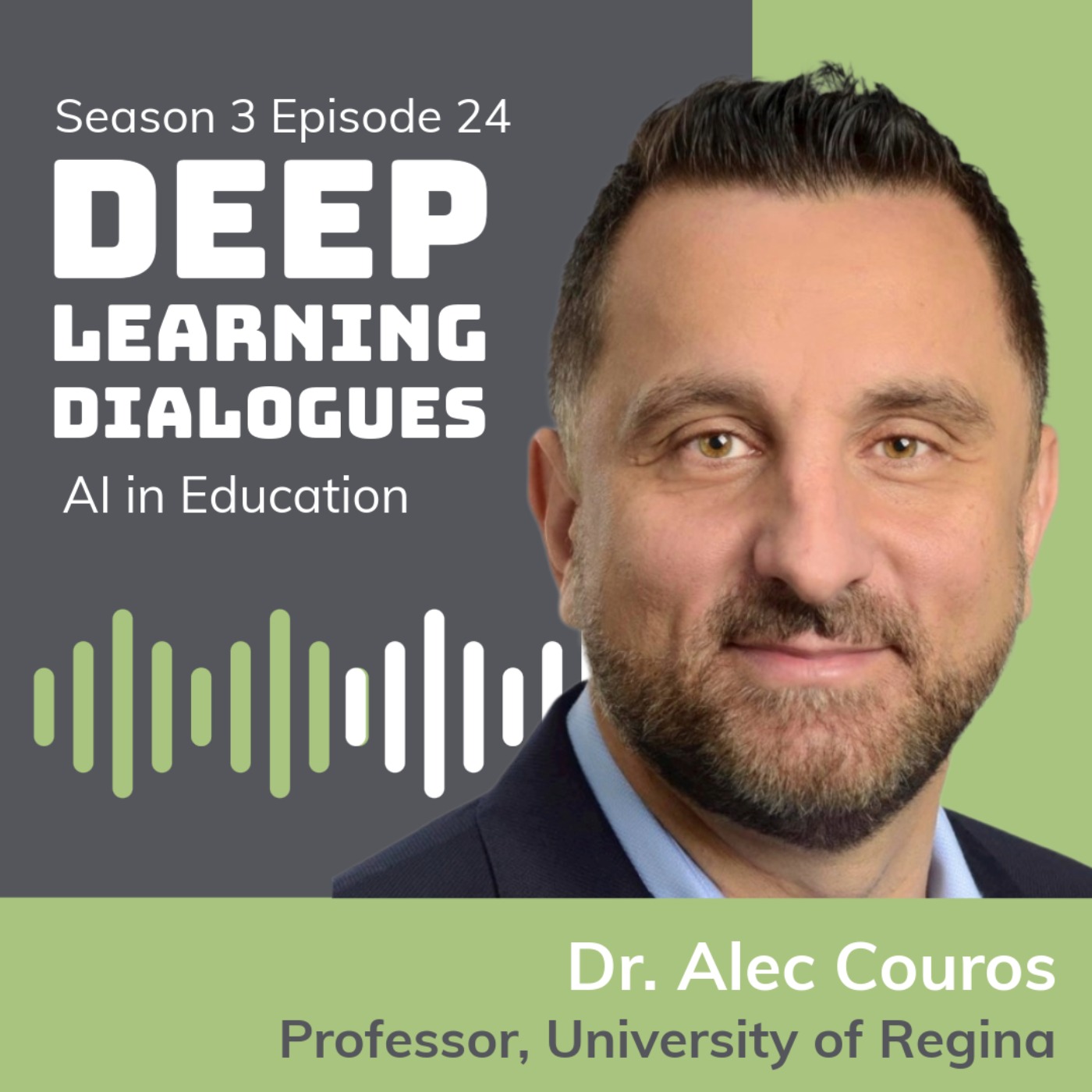
S3 Ep 24The First Draft: Preserving the "Friction" of Human Thinking
In this episode of Deep Learning Dialogues, hosts Whitney McKinley and Katrina Gouett are joined by Dr. Alec Couros to discuss the vital role of "productive struggle" in an era of instant AI outputs. Dr. Couros breaks down the concepts from his viral article, "The Shortcut That Costs Us Everything," warning against a "reverse-Bloom’s Taxonomy" where students analyze AI text without ever learning to compose it themselves. The conversation explores how to "protect the first draft" as a sacred space for human thought and identity. From the risks of "Model Autography Disorder" (MAD) to practical classroom strategies like "Think-Pair-AI-Share," this episode offers a roadmap for using AI as a critical collaborator rather than a replacement for student voice.Episode Links:LinkedInSubstackThink-Pair-AI ShareDr. Alec Couros is a Professor of Educational Technology and Media at the University of Regina and a globally recognized leader in open education and digital citizenship. Throughout his career, he has explored the intersection of technology and pedagogy, recently focusing on the ethical and cognitive implications of generative AI in the classroom. Through his research and popular Substack, Alec advocates for "protecting the human in the loop," emphasizing the importance of preserving the "friction of thinking" and the integrity of the student’s first draft in an increasingly automated world. You can follow his work on Substack or on social media at @courosa.Want to know more?You can check out our: WCDSB GenAI Guidelines, infographics, and Innovation website: https://innovate.wcdsb.ca/Feedback? You can ask your questions or give us feedback on the show here Want to get in touch? Contact Katrina & Whitney by email at: [email protected] and [email protected] or on LinkedIn Hosted on Acast. See acast.com/privacy for more information.
S3 Ep 23Levity and Learning: AI Leadership at St. Benedict CSS
In this episode of Deep Learning Dialogues, hosts Whitney McKinley and Katrina Gouett are joined by Jordan Figueiredo the principal of St. Benedict Catholic Secondary School. Jordan shares his leadership stance on artificial intelligence, moving beyond simple "guardrails" to foster a culture of curiosity and vulnerability among his staff. The conversation explores how to manage the "ping-pong" effect of innovation and how to establish the psychological safety necessary for educators to move from "shadow use" of AI to shared, open practice. From leveraging "lead learners" in staff meetings to using AI "Gems" for analyzing student achievement data, Jordan illustrates how a human-centered approach to technology can actually amplify relationships and professional practice in a large secondary school.Jordan Figueiredo is the Principal of St. Benedict Catholic Secondary School in Cambridge Ontario. Known for his commitment to building a culture of openness and innovation, Jordan focuses on supporting both student and adult learning through collaborative leadership and professional trust. He is an advocate for "being vulnerable on purpose and out loud," encouraging his staff to experiment with new tools like AI without the fear of failure. Beyond his administrative duties, Jordan is active on Instagram (@jordangfigueiredo), where he shares reels aimed at bringing levity and joy to the role of school leadership. He is currently exploring the potential of AI assistants to streamline school operations and better align with strategic system goals.Episode Resource Links:-WCDSB Zero to Infinity Scale-Tutorial Video: How to create a Gem-Webinar: AI-Resistant Assessment: the ADAPT FrameworkWant to know more?You can check out our: WCDSB GenAI Guidelines, infographics, and Innovation website: https://innovate.wcdsb.ca/Feedback? You can ask your questions or give us feedback on the show here Want to get in touch? Contact Katrina & Whitney by email at: [email protected] and [email protected] or on LinkedIn Hosted on Acast. See acast.com/privacy for more information.
S3 Ep 22Students Leading the Way with Benny's Innovator Group
In this episode of Deep Learning Dialogues, hosts Whitney McKinley and Katrina Gouett visit St. Benedict Catholic Secondary School in Cambridge, Ontario to speak with the creators and members of the Benny's Innovator Group (BIG). This student-led initiative, facilitated by teachers Lindsay LeBeau and Lisa Wollziefer, focuses on bringing AI literacy to the school community through interactive workshops. The conversation explores the importance of peer-to-peer learning, where students act as "translators" to help both their classmates and teachers understand how to use generative AI tools effectively and ethically. From discussing the "zero to infinity" mindset to sharing the nerve-wracking but rewarding experience of leading a classroom, students highlight how this program is building essential global competencies and fostering a culture of curiosity and human connection in the age of AI.You can read more about the episode here.About Our GuestsLindsay LeBeau: A teacher at St. Benedict who entered the profession after a 15-year career in nursing. She brings her passion for teaching and healthcare to the school and co-founded BIG to empower students to lead through innovation.Lisa Wollziefer: A teacher at St. Benedict who recently transitioned from elementary to secondary education. With a background in the tech and fitness industries, she co-facilitates BIG and is dedicated to using AI to free up time for deeper human connections with her students.Aliaa, Taha, and Umar: Grade 11 students at St. Benedict and leading members of the Benny’s Innovator Group. Driven by interests ranging from software engineering to a general love of learning, these student leaders facilitate workshops that bridge the gap between complex technology and classroom practice, helping their peers and teachers navigate the ethical use of AI.Want to know more?You can check out our: WCDSB GenAI Guidelines, infographics, and Innovation website: https://innovate.wcdsb.ca/Feedback? You can ask your questions or give us feedback on the show here Want to get in touch? Contact Katrina & Whitney by email at: [email protected] and [email protected] or on LinkedIn Hosted on Acast. See acast.com/privacy for more information.
S3 Ep 21An AI Dialogue with Student Voice at the Center
In this episode of Deep Learning Dialogues, educator Rosie Curie and three of her students Savannah, Dani, and Lilly, discuss the evolving role of generative artificial intelligence in the classroom. Moving away from traditional, rigid rules, the conversation highlights a collaborative approach toward AI literacy, transparency and what it the purpose of school and learning. Rosie and her students describe a sketch note lesson about the illusion of an assignment that helps frame the conversation around AI and academic integrity. The conversation then moves into the development of the "Zero to Infinity" assessment framework, created with student and teacher input to provide clear boundaries and examples of appropriate AI use for specific assignments. The episode explores how involving student voices helps bridge the gap between adult policies and the reality of how these tools are used, ultimately framing education as a journey where AI can support, rather than bypass, the vital struggle of learning.Rosie Curie is a secondary school teacher at St. Benedict Secondary School who is recognized for a practice that prioritizes authentic learning. She is an innovative educator who utilizes creative methods, such as hand-drawn sketch notes, to spark deep reflections with her students about the purpose of school and the nature of deep learning. Her collaborative work with Savannah, Dani, and Lilly was instrumental in refining the "Zero to Infinity" AI framework, ensuring the language and visuals were accessible and meaningful for all learners. Rosie’s approach centers on building trust and empathy, helping students navigate the ethical line between AI as a helpful tool and as a replacement for human thought.You can read the full summary article here.Additional resources:The AI Assessment Scale (AIAS): A Framework For Ethical Integration Of Generative AI In Educational AssessmentGenerative AI Acceptable Use Scale Adapted by Vera CuberoWCDSB Zero to Infinity InformationWCDSB GenAI GuidelinesWant to know more?You can check out our: WCDSB GenAI Guidelines, infographics, and Innovation website: https://innovate.wcdsb.ca/Feedback? You can ask your questions or give us feedback on the show here Want to get in touch? Contact Katrina & Whitney by email at: [email protected] and [email protected] or on LinkedIn Hosted on Acast. See acast.com/privacy for more information.
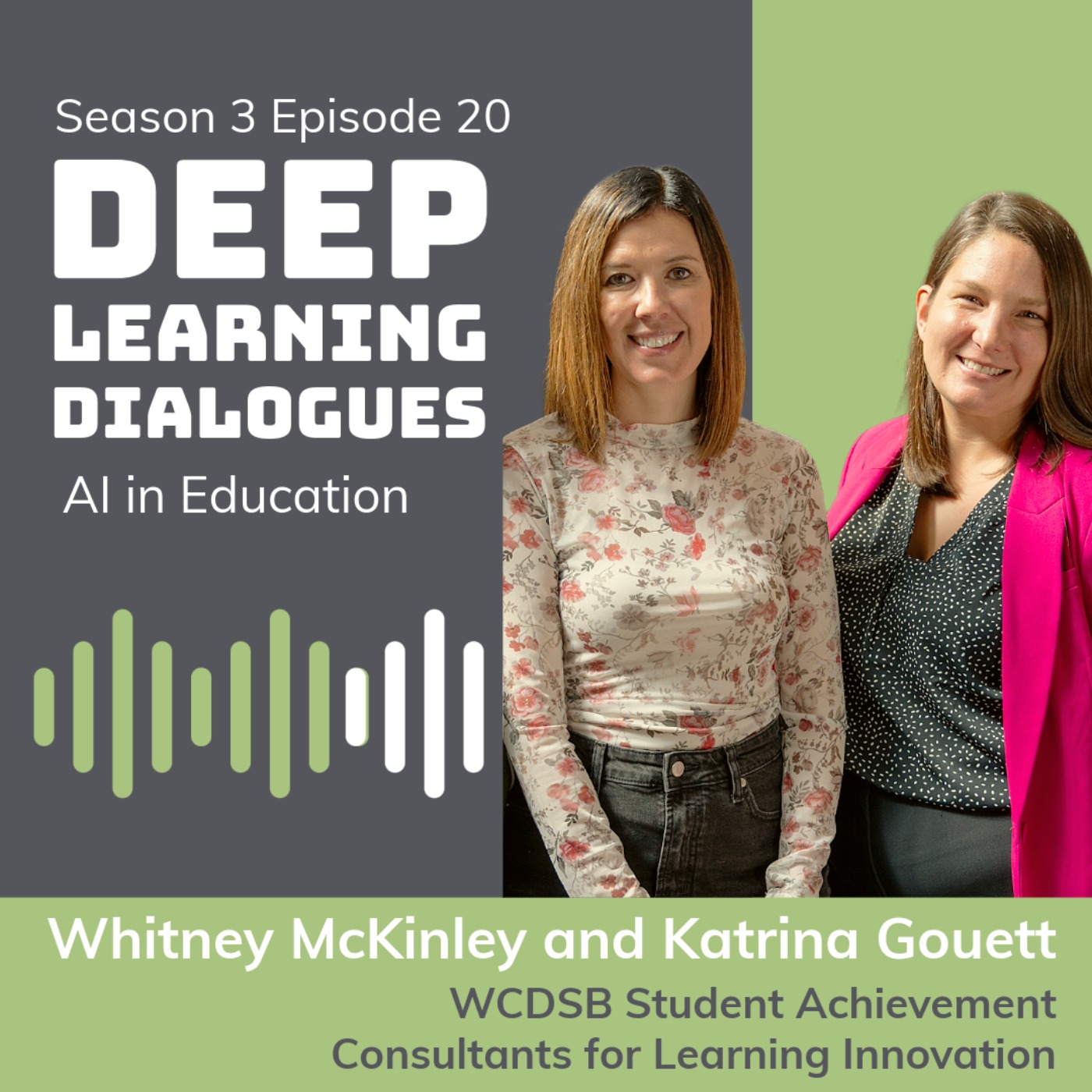
S3 Ep 20From Zero to Infinity: AI Transparency in the Classroom
In this episode of Deep Learning Dialogues, Whitney McKinley and Katrina Gouett dive into the heart of academic integrity in the age of generative AI. Moving away from the "policing" mindset of AI detectors, they introduce the Zero to Infinity scale, a research-based, WCDSB-specific framework designed to bring transparency to the classroom. The conversation highlights how this five-zone tool was refined with WCDSB teachers and students. By focusing on "formation over automation," the hosts discuss how educators can design assessments that prioritize the human process of learning over the final AI-assisted product. You can read the full summary article here.Explore the resources mentioned in this episode:The AI Assessment Scale (AIAS): A Framework For Ethical Integration Of Generative AI In Educational AssessmentGenerative AI Acceptable Use Scale Adapted by Vera CuberoWCDSB Zero to Infinity InformationWCDSB GenAI GuidelinesADAPT FrameworkWant to know more?You can check out our: WCDSB GenAI Guidelines, infographics, and Innovation website: https://innovate.wcdsb.ca/Feedback? You can ask your questions or give us feedback on the show here Want to get in touch? Contact Katrina & Whitney by email at: [email protected] and [email protected] or on LinkedIn Hosted on Acast. See acast.com/privacy for more information.
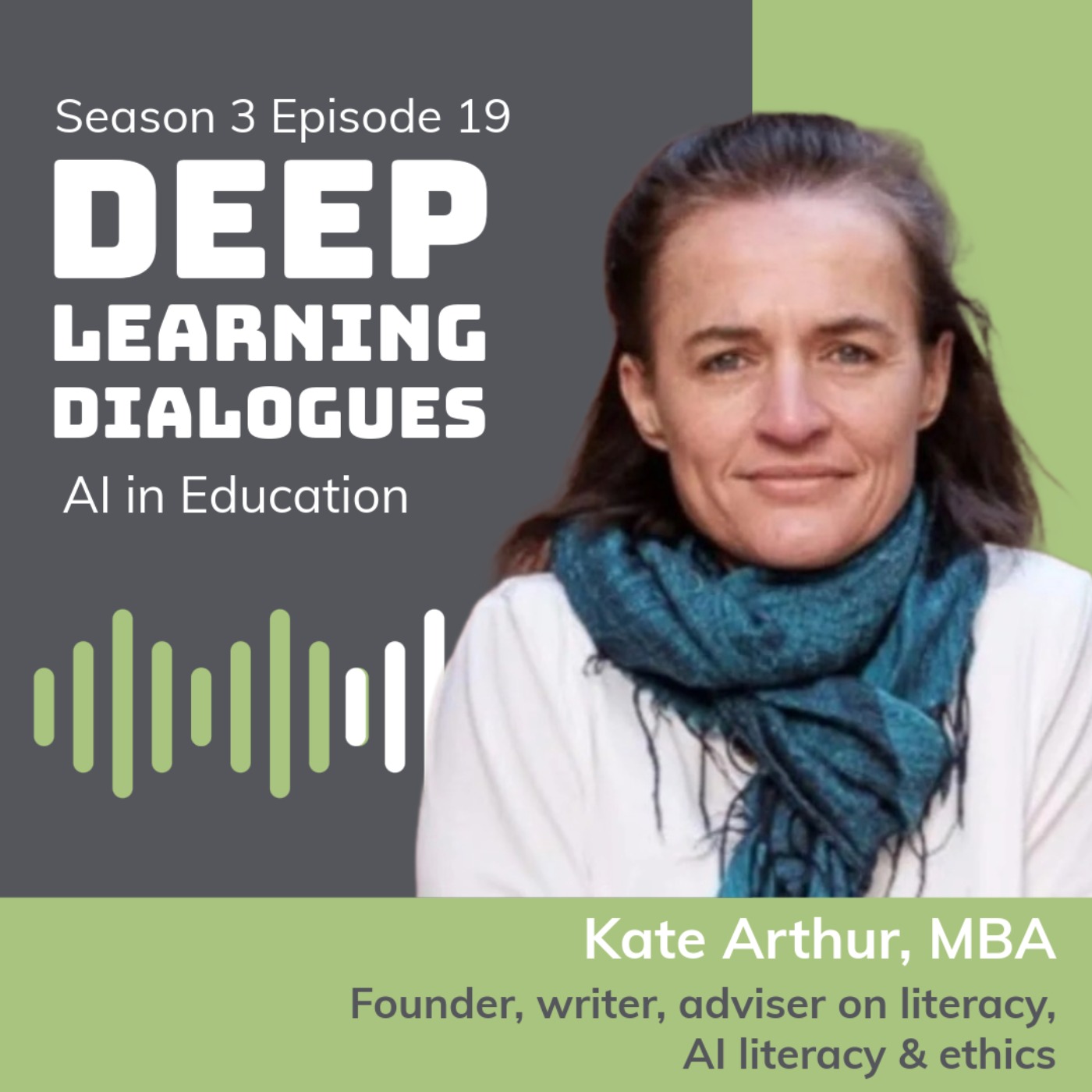
S3 Ep 19Educators: the Chaperons of Knowledge
In this episode, entrepreneur and AI literacy advocate Kate Arthur explores the evolving landscape of education, challenging the traditional model of the teacher as a "knowledge keeper". She suggests a transition toward becoming a "chaperone of knowledge" who guides students through a world where AI often serves as the primary information source. The conversation explores the importance of human agency, the physical and environmental realities of the "cloud," and why AI literacy must be treated as essential social infrastructure to ensure data sovereignty and digital equity. By prioritizing human-centric skills like critical thinking, storytelling, and open curiosity, this episode provides a roadmap for helping the next generation navigate a rapidly shifting technological landscape without losing their unique human voice. You can read the episode summary article here.Kate Arthur is a founder and advocate with over 25 years of experience leading social enterprises at the intersection of technology, education, and ethics. As the founder of Digital Moment, she has introduced digital skills to more than one million youth and thousands of educators globally. An advisor to international bodies such as UNESCO and UNICEF, Arthur contributes to the development of inclusive AI policies and has served as a Canadian delegate to the United Nations. She is the author of Am I Literate? Redefining Literacy in the Age of Artificial Intelligence and the forthcoming Algorithm to Adulthood, focusing on the human skills needed to thrive in an AI-driven world.You can find Kate:LinkedInSubstack On AI & LiteracyWebsiteWant to know more?You can check out our: WCDSB GenAI Guidelines, infographics, and Innovation website: https://innovate.wcdsb.ca/Feedback? You can ask your questions or give us feedback on the show here Want to get in touch? Contact Katrina & Whitney by email at: [email protected] and [email protected] or on LinkedIn Hosted on Acast. See acast.com/privacy for more information.
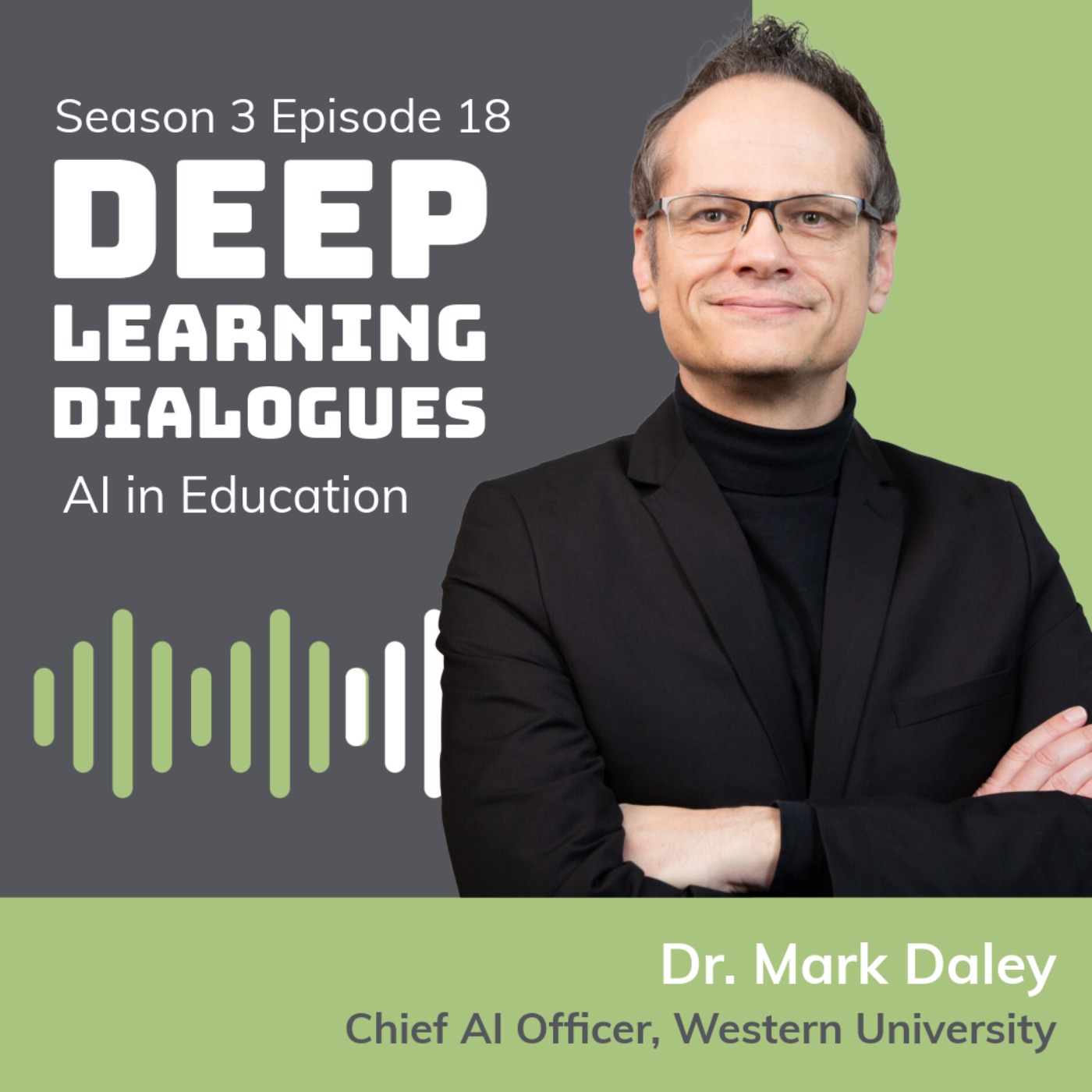
S3 Ep 18Why We Still Teach the Basics When AI Can Do It All
This episode of Deep Learning Dialogues explores the seismic shifts in education and global power triggered by the "step change" in agentic AI. Dr. Mark Daly introduces the "Tower of Abstraction," a metaphor for how technology evolves to hide complexity, and argues that teaching foundational skills like coding and essay writing remains essential, not for the final product, but to build the mental "muscles" required to think and structure logic. The conversation moves from the classroom to the global stage, framing "compute" as a strategic national resource akin to oil or steel and highlighting Canada’s potential as an energy and AI superpower. Ultimately, Daly offers a deeply optimistic vision for the future of K-12 education: as machines automate cognitive labor, the human "value proposition" shifts from being "smart" to being kind, authentic, and connected through the arts and community. You can read the full article summary here.Dr. Mark Daley is Western University’s first-ever Chief AI Officer and a Scholar in Residence in AI at NSERC. A respected researcher in neural computation, his career includes serving as Vice-President Research at CIFAR, where he helped lead Canada’s national AI strategy. Mark is a remarkably multidisciplinary scholar, holding cross-appointments in departments ranging from Computer Science and Biology to Epidemiology and Biostatistics. A frequent "guiding voice" for educators , he is known for his early clarity on why AI detection is mathematically impossible and for his Substack, Noetic Engines, where he explores the intersection of technology and humanity. Recently trained in international mediation in Paris , Mark combines high-level executive leadership with a deep commitment to helping students find "mattering" and purpose in an automated world.Want to know more?You can check out our: WCDSB GenAI Guidelines, infographics, and Innovation website: https://innovate.wcdsb.ca/Feedback? You can ask your questions or give us feedback on the show here Want to get in touch? Contact Katrina & Whitney by email at: [email protected] and [email protected] or on LinkedIn Hosted on Acast. See acast.com/privacy for more information.
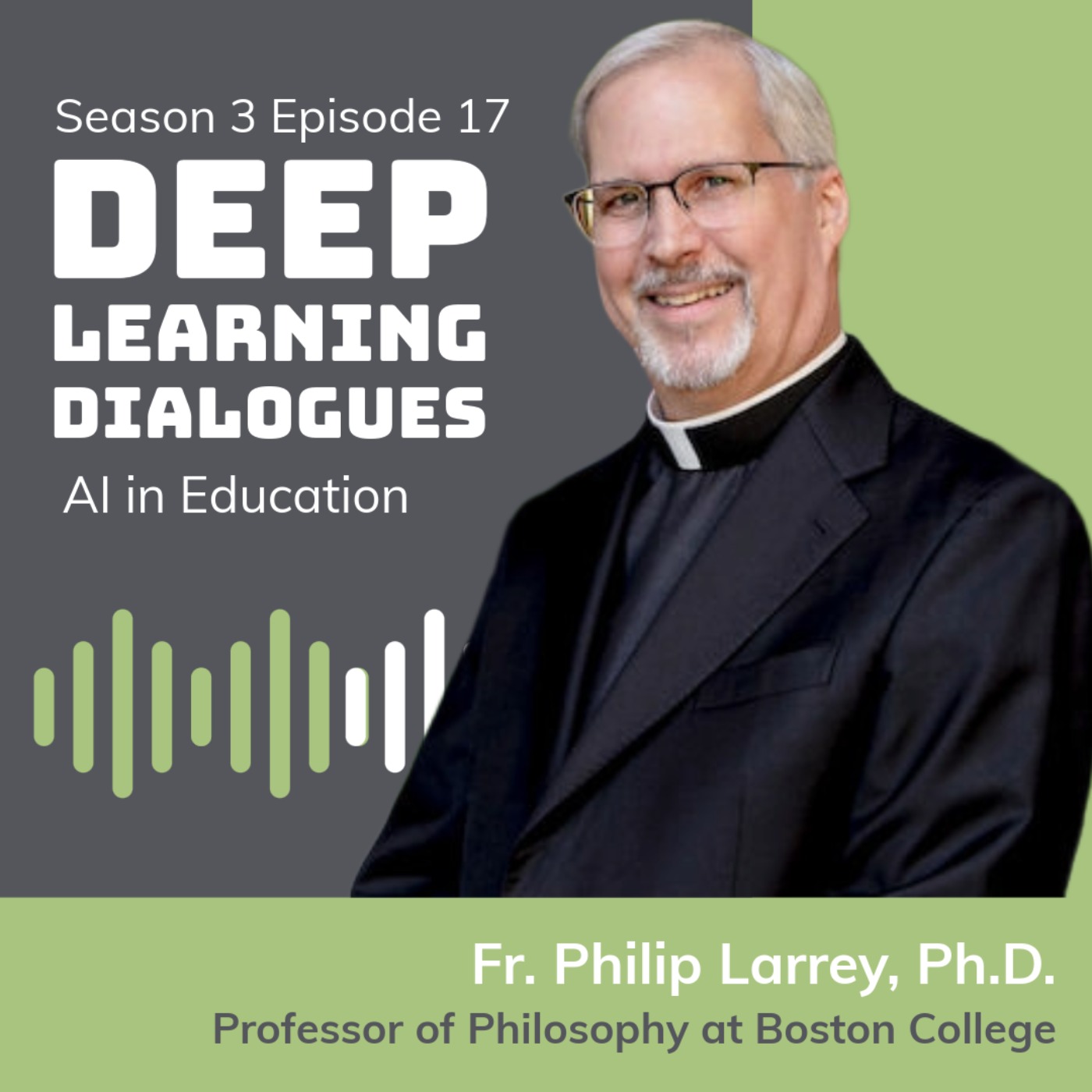
S3 Ep 17The Alignment Problem: Bridging the Gap Between Tech and Tradition
In this episode of Deep Learning Dialogues, hosts Whitney McKinley and Katrina Gouett explore the complex intersection of artificial intelligence and human values with Father Philip Larrey. Under the title "The Alignment Problem: Bridging the Gap Between Tech and Tradition," the conversation delves into the philosophical distinction between a machine's ability to "select" and a human's capacity to "choose". Father Larrey shares insights from his extensive work with Silicon Valley leaders and the Vatican, addressing critical issues such as the "black box" of AI decision-making, the ethical implications of the European AI Act, and how ancient wisdom from thinkers like Aristotle can provide a necessary framework for navigating the future of generative AI. Read the summary here.Fr. Philip Larrey, Ph.D., is a Catholic priest and professor of philosophy at Boston College, where his work focuses on the philosophy of knowledge and the impact of the digital era on society. He previously spent over 20 years in Rome, serving as the Chair of Logic and Epistemology and Dean of the Philosophy Department at the Pontifical Lateran University in the Vatican. As the chairman of Humanity 2.0—a non-profit collaborating with the Vatican to promote human flourishing—he is a leading voice in global discussions on AI ethics and has authored several influential books, including Connected World and Artificial Humanity. Based in Boston, Fr. Philip continues to engage with industry giants and international organizations like the United Nations to bridge the gap between technological advancement and ethical responsibility.Find more information about Father Philip Larrey:https://philiplarrey.com/ LinkedInWant to know more?You can check out our: WCDSB GenAI Guidelines, infographics, and Innovation website: https://innovate.wcdsb.ca/Feedback? You can ask your questions or give us feedback on the show here Want to get in touch? Contact Katrina & Whitney by email at: [email protected] and [email protected] or on LinkedIn Hosted on Acast. See acast.com/privacy for more information.
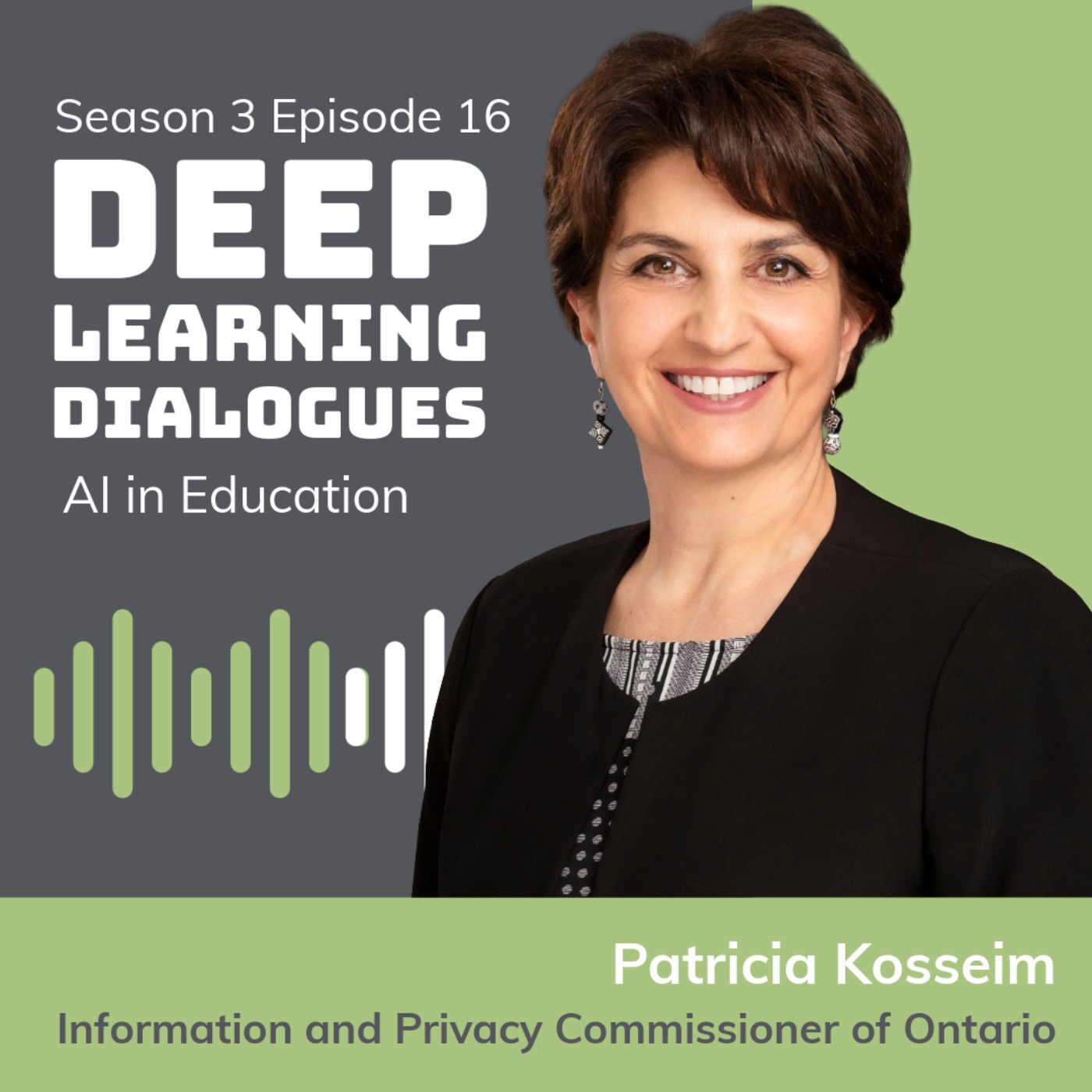
S3 Ep 16Navigating EDSTA: A New Era of Digital Security in Ontario Schools
In this episode, Patricia Kosseim discusses the landmark Enhancing Digital Security and Trust Act (EDSTA). The conversation explores the shifting landscape of student privacy in the age of generative AI. Commissioner Kosseim shares use cases regarding unauthorized "Shadow AI" and offers a roadmap for educators to empower students with the data hygiene skills necessary to navigate a transparent digital future. You can read the article here.Patricia Kosseim is the Information and Privacy Commissioner of Ontario. She is a lawyer by profession and has extensive experience as a senior executive working in complex, inter-disciplinary environments, across public, private and health sectors. Through integration of legal practice, public policy and academic research, she has led large teams and major strategic initiatives to address ethical, legal and social implications of emerging technologies. She connects people and creative ideas to advance critical reflection, converge around common goals and work towards practical solutions. In March 2025, she was awarded the King Charles III Coronation Medal, in recognition of her valuable contribution to Ontario and to Canada.Find further information at:ipc.ca Instagram: https://www.instagram.com/ipc.ontario/Resources Mentioned:2025 Global Privacy Enforcement Network sweep focuses on the protection of children’s privacyPrivacy Pursuit! Lesson PlansA Guide to Privacy and Access to Information in Ontario SchoolsDigital Privacy Charter - 12 commitments supporting teachers and studentsYouth ambassador tool kitYouth advisory councilWant to know more?You can check out our: WCDSB GenAI Guidelines, infographics, and Innovation website: https://innovate.wcdsb.ca/Feedback? You can ask your questions or give us feedback on the show here Want to get in touch? Contact Katrina & Whitney by email at: [email protected] and [email protected] or on LinkedIn Hosted on Acast. See acast.com/privacy for more information.
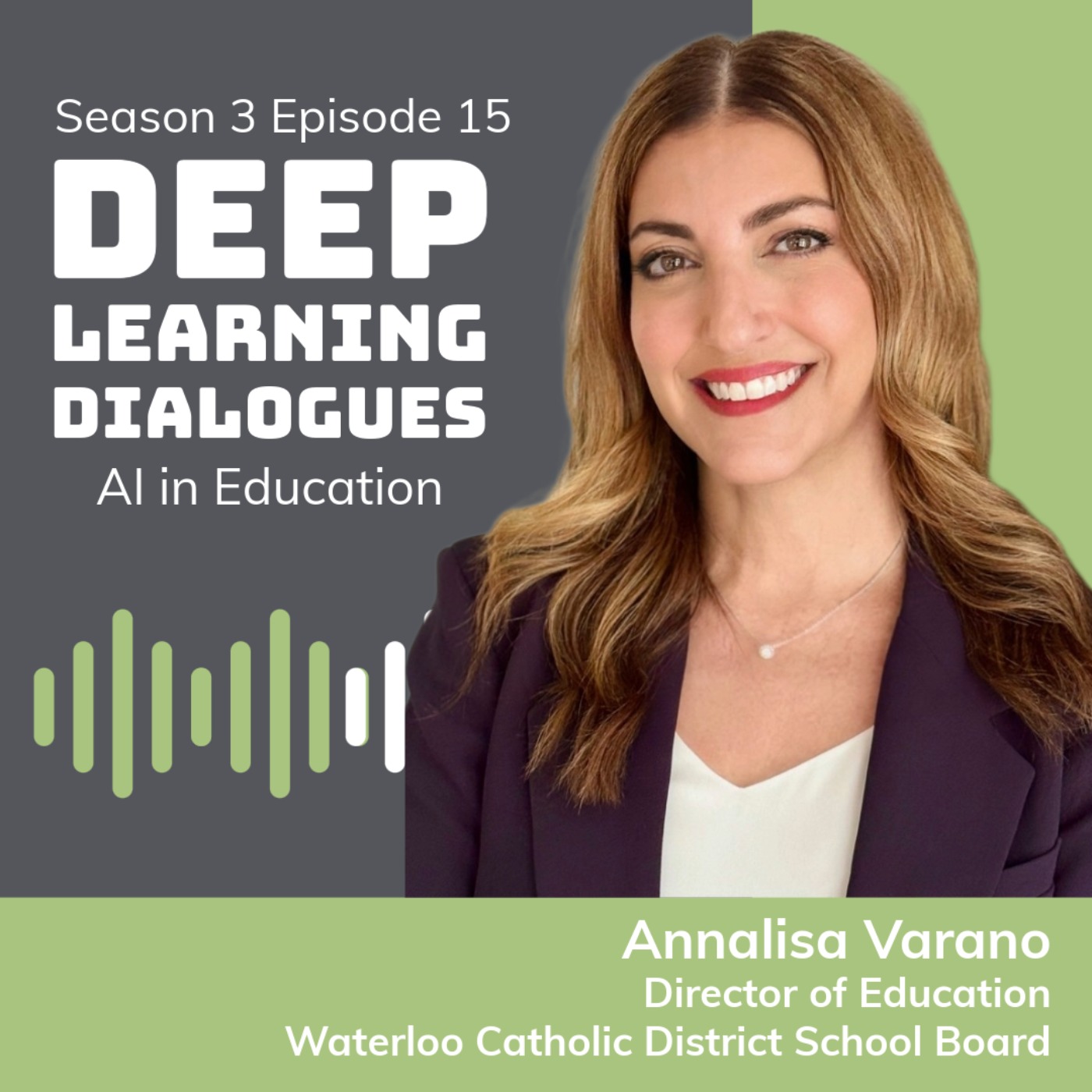
S3 Ep 15The Heart of the Classroom: WCDSB’s Faith-Based Vision for Student-Centered AI
In this episode of Deep Learning Dialogues, WCDSB Director of Education Annalisa Varano explores the intersection of faith, leadership, and generative AI within the Waterloo Catholic District School Board. Adopting a human-centered vision, Varano emphasizes that AI is a tool designed to enhance the sacred relationship between educators and students. The conversation delves into how WCDSB uses Catholic Social Teachings as a "litmus test" for new technology, ensuring every innovation honors human dignity, promotes the common good, and fosters equity. From reimagining authentic assessments to leveraging AI for administrative efficiency, Varano outlines a strategic roadmap where technology serves the mission of the "whole child," grounding the board’s upcoming Multi-Year Strategic Plan in the pillars of learning, serving, and belonging.You can read the full episode summary here.Annalisa Varano is the Director of Education for the Waterloo Catholic District School Board, bringing over 27 years of distinguished experience in Catholic education to the role. Her extensive career includes 23 years with the Simcoe Muskoka Catholic District School Board and global teaching experience in Australia and South Korea. A former President of the Catholic Principals’ Council of Ontario, she has led at the provincial level and overseen diverse portfolios including K–12 student success, virtual learning, and experiential programming. Annalisa is a practicing Catholic and strategic leader dedicated to navigating the future of education through a lens of discernment, equity, and innovation.Want to know more?You can check out our: WCDSB GenAI Guidelines, infographics, and Innovation website: https://innovate.wcdsb.ca/Feedback? You can ask your questions or give us feedback on the show here Want to get in touch? Contact Katrina & Whitney by email at: [email protected] and [email protected] or on LinkedIn Hosted on Acast. See acast.com/privacy for more information.
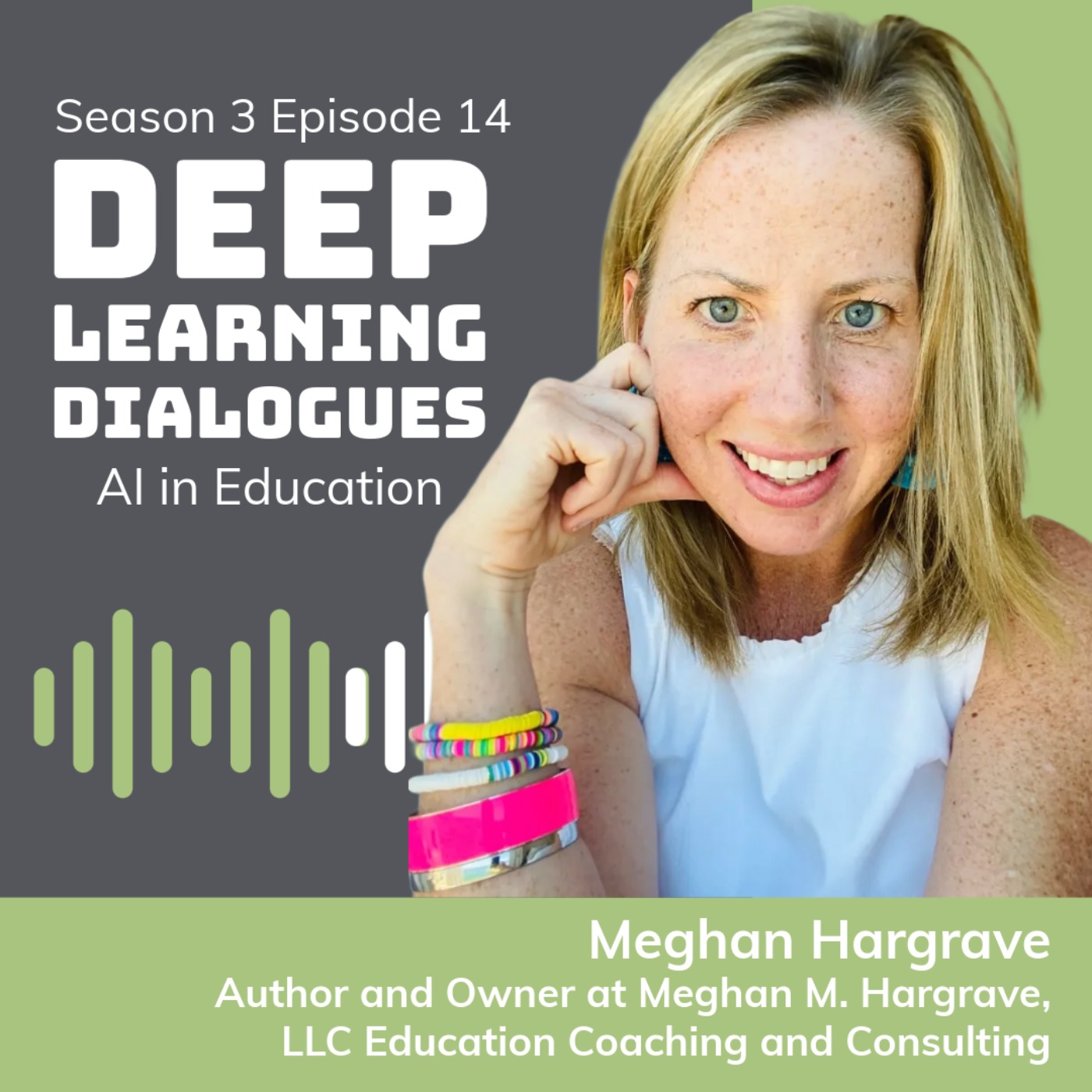
S3 Ep 14From AI Aware to AI Fluent: Practical Steps for Educators
In this episode of Deep Learning Dialogues, hosts Whitney McKinley and Katrina Gouett explore the practical steps required for educators to move from being "AI aware" to "AI fluent". Guest Meghan Hargrave discusses how to bridge the digital divide by integrating generative AI into K-12 classrooms with a focus on purpose and pedagogy rather than just buzzwords. The conversation covers actionable strategies for using AI as a "thought partner" for tasks such as creating formative assessments and brainstorming for Professional Learning Communities (PLCs). Listeners will also learn about the importance of establishing a shared language for AI use within school systems and maintaining a balance between technology and the development of students' authentic personal voices.Read the full summary here.Meghan Hargrave is an educational consultant, coach, and former teacher who specializes in literacy and instructional practices. She is the owner of Meghan M. Hargrave, LLC, where she works with K-12 schools and systems to translate complex research and board demands into practical classroom strategies. As an expert in educational technology, Meghan is the co-author of The Artificial Intelligence Playbook and Teaching Students to Use AI Ethically and Responsibly. Her work focuses on helping educators and caregivers navigate the noise of modern educational technology to support student learning through purposeful, research-grounded tools.You can find Meghan on LinkedIn, Instagram @letmeknowhowitgoes and on her website https://www.meghanhargrave.com/ Want to know more?You can check out our: WCDSB GenAI Guidelines, infographics, and Innovation website: https://innovate.wcdsb.ca/Feedback? You can ask your questions or give us feedback on the show here Want to get in touch? Contact Katrina & Whitney by email at: [email protected] and [email protected] or on LinkedIn Hosted on Acast. See acast.com/privacy for more information.
S3 Ep 13Encountering AI with a Moral Compass: Faith, Ethics, and Education
In this episode of Deep Learning Dialogues, hosts Whitney McKinley and Katrina Gouett engage with Giancarlo Brotto, an educator and AI advocate, to explore the intersection of education, artificial intelligence, and ethics. They discuss the importance of viewing AI as a gift that should serve humanity, the varying perspectives of students and educators on AI, and the need for moral discernment in its use. The conversation emphasizes the role of educators in guiding students through the complexities of AI, the necessity of integrating AI into the curriculum, and the importance of vulnerability and co-learning in the classroom. Brotto calls for a collective effort to ensure that faith-based institutions lead the way in navigating AI's challenges and opportunities.Giancarlo Brotto is a dynamic Canadian educator, strategist, and keynote speaker with over two decades of experience helping schools and ministries harness technology to better serve students. A former university and secondary mathematics teacher, he transitioned into leadership roles and founded PAVE EDU, a company that guides school systems, governments, and businesses through AI adoption. His work focuses on preparing educators and families to thrive in an AI-infused world by grounding innovation in ethics and social-emotional learning. Within the Catholic community, he is known for his presentation Navigating Faith and Wisdom, where he encourages using a moral compass to encounter AI as a gift that aligns with Catholic social teachings.You can find Giancarlo on LinkedIn and Instagram.Show Links:Encountering Artificial Intelligence pdfhttps://paveedu.org/ http://aireadyschools.caWant to know more?You can check out our: WCDSB GenAI Guidelines, infographics, and Innovation website: https://innovate.wcdsb.ca/Feedback? You can ask your questions or give us feedback on the show here Want to get in touch? Contact Katrina & Whitney by email at: [email protected] and [email protected] or on LinkedIn Hosted on Acast. See acast.com/privacy for more information.
S3 Ep 12Redefining Tech Education: Inside Mila’s AI for Good Lab
In this episode, hosts Katrina Gouett and Whitney McKinley welcome Jennifer Addison, Project Manager for the AI for Good Lab at Mila, Quebec’s artificial intelligence institute. Jennifer details the lab’s mission to equip women and gender-diverse individuals with the skills to build machine learning projects, fostering a more inclusive tech culture and inspiring leaders to use AI for social good. The conversation explores the power of curiosity-driven learning and the importance of creating safe, grade-free environments where students feel empowered to ask questions, collaborate rather than compete, and challenge the status quo. They also discuss how K-12 educators can adopt these principles by becoming co-learners alongside their students to navigate the evolving AI landscape together.Jennifer Addison is the Project Manager for the AI4Good Lab at Mila - Quebec Artificial Intelligence Institute. The Lab is a 7-week program that equips women and gender diverse people with the skills to build their own machine learning projects. The program is designed to open doors for those who have historically been underrepresented in the AI industry, contribute to a more inclusive and diverse tech culture and to inspire the next generation of leaders to use AI as a tool for social good.Prior to Mila, Jennifer worked in Human Resources at the Business Development Bank of Canada where she contributed to the development and advancement of the corporate Diversity, Equity, Inclusion and Accessibility strategy. With over a decade of experience in the non-profit sector, in the US and Canada, she specializes in developing and implementing programs designed to address and disrupt structural inequities and discrimination experienced by equity-deserving communities.You can find Jennifer on LinkedInWant to know more?You can check out our: WCDSB GenAI Guidelines, infographics, and Innovation website: https://innovate.wcdsb.ca/Feedback? You can ask your questions or give us feedback on the show here Want to get in touch? Contact Katrina & Whitney by email at: [email protected] and [email protected] or on LinkedIn Hosted on Acast. See acast.com/privacy for more information.
EQAO’s Human-Centered Approach to Artificial Intelligence
In this week’s episode of Deep Learning Dialogues, hosts Whitney McKinley and Katrina Gouett are joined by Dr. Jennifer Hove, Director of Data and Reporting at EQAO, to navigate the complex intersection of artificial intelligence and large-scale assessment. Dr. Hove outlines the agency’s "slow and steady" roadmap to AI adoption, emphasizing a human-centered framework where Ontario educators remain the primary drivers of assessment creation and scoring. The conversation explores how EQAO is looking to leverage technology for quality assurance rather than replacement , the challenges of maintaining academic integrity in a digital landscape , and the rigorous review processes ensuring fairness, validity, and bias mitigation. Tune in for an insightful look at how EQAO is building public trust and preparing for the future of education while keeping student equity at the forefront.Dr. Jennifer Hove is the Director of Data and Reporting at EQAO, where she oversees the agency's psychometrics, data science, research, and IT teams to drive digital transformation and generate actionable educational insights. With over two decades of experience spanning academia, government, and the K-12 sector, Dr. Hove is a recognized leader in educational measurement and assessment analytics. She and her colleagues are two-time winners at the International eAssessment Awards, and she currently serves as a board member for the International e-Assessment Association.Want to know more?You can check out our: WCDSB GenAI Guidelines, infographics, and Innovation website: https://innovate.wcdsb.ca/Feedback? You can ask your questions or give us feedback on the show here Want to get in touch? Contact Katrina & Whitney by email at: [email protected] and [email protected] or on LinkedIn Hosted on Acast. See acast.com/privacy for more information.
S3 Ep 10Walking Quietly with AI: Medicine Wheel Teachings for Ethical Tech
In this conversation, we explore how Indigenous governance and cultural frameworks can guide ethical technology use in education. Sheri Cecchetto introduces the Medicine Wheel as a holistic lens for approaching AI in K–12 classrooms—emphasizing reflection, relationship-building, and responsibility over speed and profit. Together, we unpack themes of digital sovereignty, environmental impact, and the importance of slowing down to make intentional choices about technology. This episode challenges educators to rethink AI literacy by centering Indigenous values and collective care.Sheri Cecchetto is Anishinaabe Kwe from Wabigoon Lake Ojibwe Nation and a field coordinator and sessional instructor in the School of Indigenous Relations at Laurentian University. Her work focuses on Indigenous social work, emergent learning, and decolonizing education. A passionate advocate for Indigenous governance and digital sovereignty, Sherri brings a unique perspective on how cultural teachings can inform ethical AI use. Beyond the classroom, she is an avid beadworker whose art reflects her deep connection to land and community.You can find Sheri on LinkedInLink to "Theory of Water" by Leanne Betasamosake SimpsonWant to know more?You can check out our: WCDSB GenAI Guidelines, infographics, and Innovation website: https://innovate.wcdsb.ca/Feedback? You can ask your questions or give us feedback on the show here Want to get in touch? Contact Katrina & Whitney by email at: [email protected] and [email protected] or on LinkedIn Hosted on Acast. See acast.com/privacy for more information.
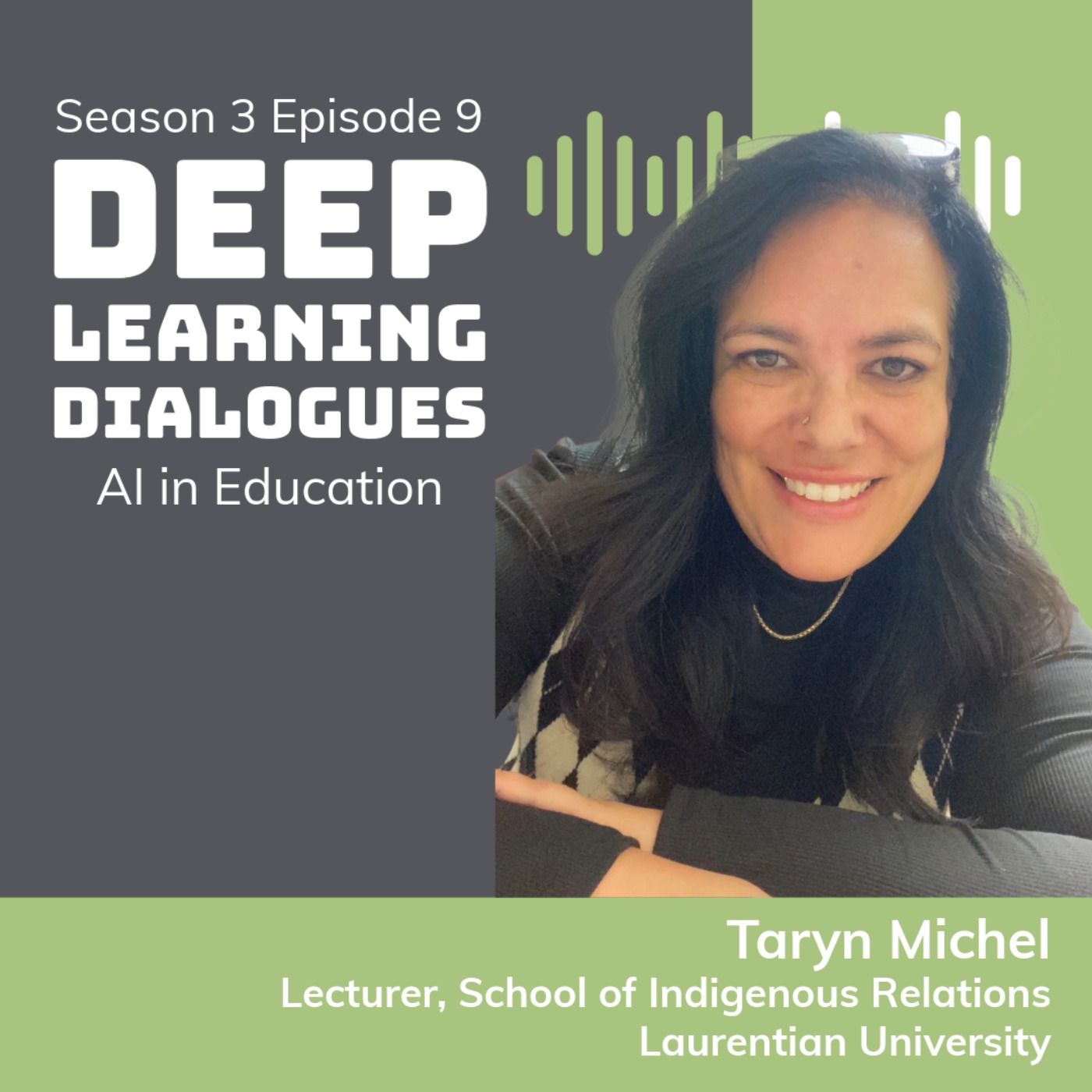
S3 Ep 9Braiding Knowledge: Indigenous Law Meets AI in Education
In this episode of Deep Learning Dialogues, hosts Whitney McKinley and Katrina Gouett sit down with Taryn Michel, an Indigenous educator, law scholar, and community leader, to explore the intersection of Indigenous knowledge systems and artificial intelligence in K–12 education. Taryn shares her journey as a professor in the Bachelor of Indigenous Social Work program at Laurentian University and offers insights into Indigenous data sovereignty, ethical AI use, and the importance of relational learning. From the significance of consent and community co-design to the potential of AI tools like Google Lens in supporting cultural revitalization, this conversation invites educators to reimagine AI literacy through the lens of Indigenous values, including the seven grandfather teachings and the medicine wheel. Tune in to discover how AI can become a relational helper—not a replacement—when guided by intention, respect, and heart work.Taryn Michel is an Indigenous educator, legal scholar, and community leader from Michipicoten First Nation and the Martin Clan. She holds a Juris Doctor with an Indigenous specialization from the University of Ottawa and teaches in the School of Indigenous Relations at Laurentian University, where she also contributes to the sociology of law. Taryn’s work centers on revitalizing Anishinaabe law, promoting community wellness, and mentoring Indigenous students to reclaim space in academic and legal institutions. She serves as a band councilor and as president of the board for the N'Swakamok Indigenous Friendship Centre in Sudbury. Deeply committed to ethical, relational approaches to education and technology, Taryn brings a powerful voice to conversations about Indigenous data sovereignty, AI literacy, and the importance of co-designing educational tools with community.You can contact Taryn by email at [email protected] to know more?You can check out our: WCDSB GenAI Guidelines, infographics, and Innovation website: https://innovate.wcdsb.ca/Feedback? You can ask your questions or give us feedback on the show here Want to get in touch? Contact Katrina & Whitney by email at: [email protected] and [email protected] or on LinkedIn Hosted on Acast. See acast.com/privacy for more information.
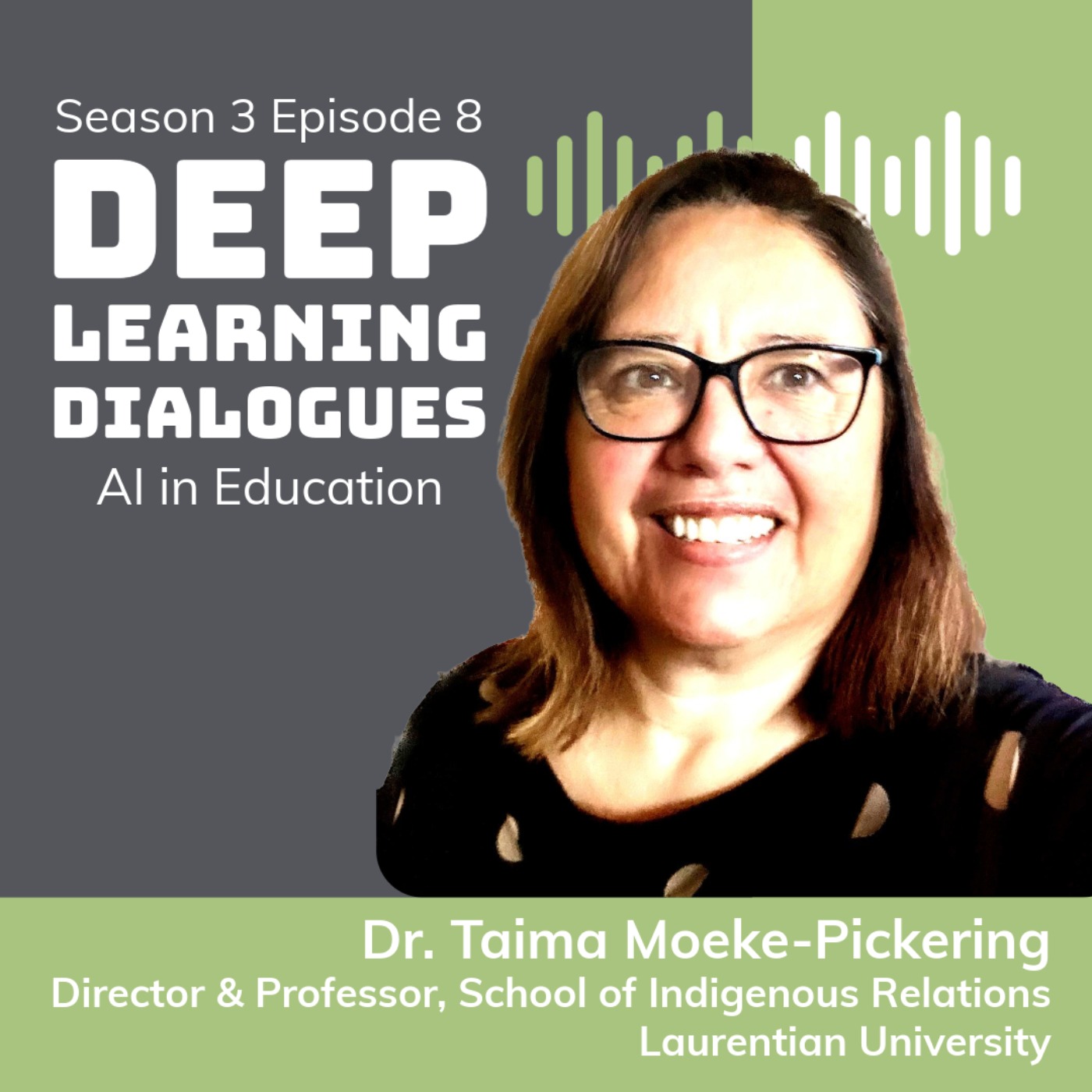
S3 Ep 8AI and the Heart Work: Indigenous Wisdom in a Digital Age
In this powerful episode of Deep Learning Dialogues, we continue our conversation with Dr. Taima Moeke-Pickering, Director of the School of Indigenous Relations at Laurentian University. This episode explores how educators can ethically and respectfully integrate AI into K–12 classrooms while honoring Indigenous knowledge systems. Dr. Moeke-Pickering shares insights on land-based learning, trauma-informed pedagogy, and the importance of “showing up” with intention and care. This episode is a call to rethink how we teach with technology—grounded in values of sustainability, justice, and self-determination. Whether you're new to AI or deeply immersed, this conversation offers both inspiration and practical guidance for educators navigating the AI twilight zone.Dr. Taima Moeke-Pickering is the Director of the School of Indigenous Relations at Laurentian University. With roots in Aotearoa (New Zealand) and tribal affiliations to Ngāti Pūkeko, Tūhoe, and Ngāti Awa, Dr. Moeke-Pickering brings a deeply relational and global Indigenous perspective to her work. Her research focuses on Indigenous methodologies, decolonization, women’s empowerment, and food sovereignty. She is known for integrating participatory approaches like PhotoVoice and for developing educational frameworks rooted in Indigenous knowledge and self-determination. A passionate educator and advocate, Dr. Taima Moeke-Pickering is committed to transforming education through heart work, cultural safety, and community-led innovation.Want to know more?You can check out our: WCDSB GenAI Guidelines, infographics, and Innovation website: https://innovate.wcdsb.ca/Feedback? You can ask your questions or give us feedback on the show here Want to get in touch? Contact Katrina & Whitney by email at: [email protected] and [email protected] or on LinkedIn Hosted on Acast. See acast.com/privacy for more information.
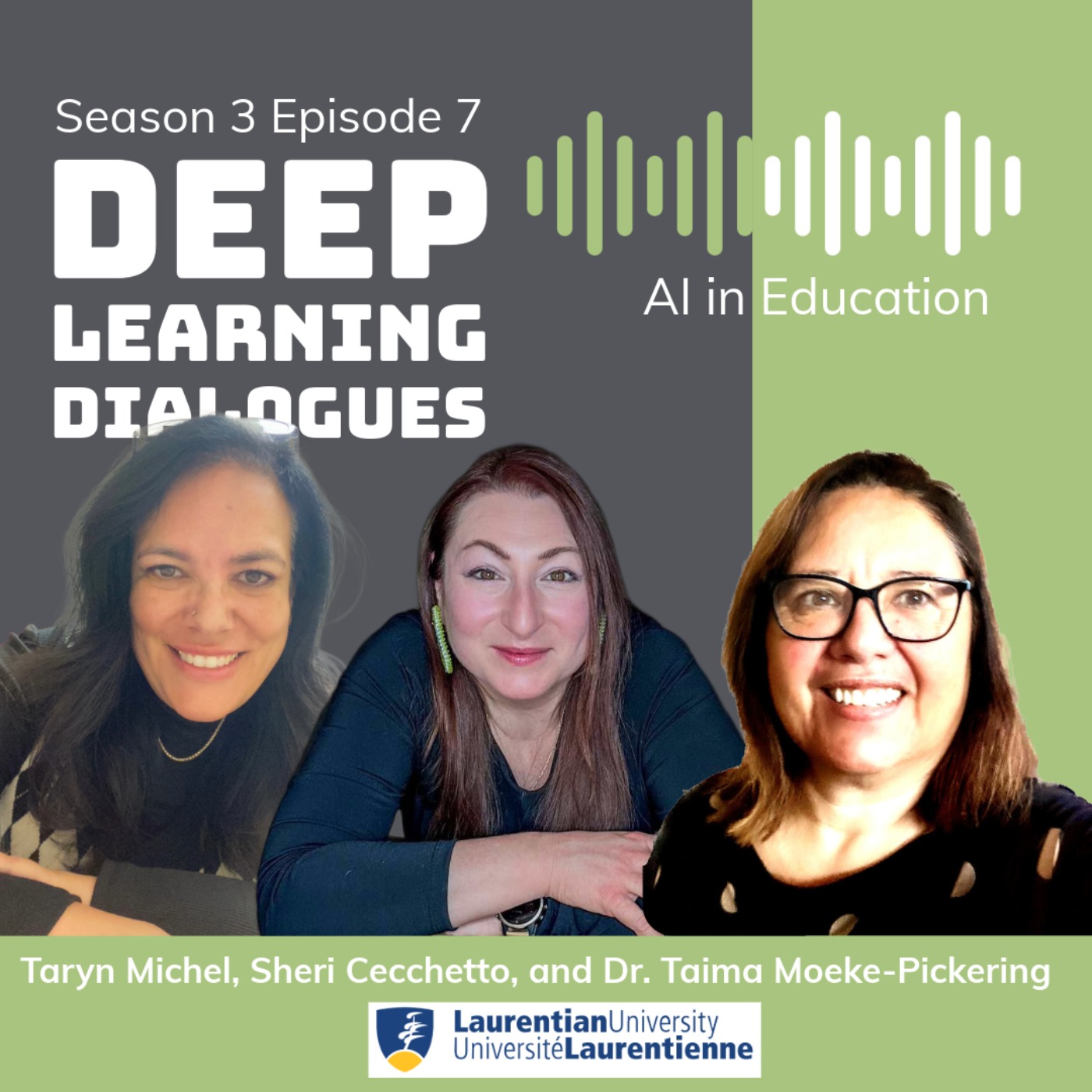
S3 Ep 7Digital Land Back: Indigenous Teachings for AI Justice
In this powerful opening to a four-part series, hosts Whitney McKinley and Katrina Gouett sit down with Dr. Taima Moeke-Pickering, Sheri Cecchetto, and Taryn Michel from Laurentian University’s School of Indigenous Relations to explore how artificial intelligence intersects with Indigenous law, land, and sovereignty. This conversation challenges listeners to rethink AI not as neutral, but as deeply tied to land, community, and responsibility. Through Indigenous teachings, legal frameworks, and personal stories, the guests offer pathways for ethical AI use in education—rooted in reciprocity, environmental justice, and the wisdom of seven generations. This episode is a call to educators to center Indigenous perspectives in shaping the future of technology.Our Guests are:Dr. Taima Moeke-Pickering Director & Professor, School of Indigenous Relations, Laurentian UniversitySheri Cecchetto Field Coordinator & Sessional Instructor, School of Indigenous Relations, Laurentian UniversityTaryn Michel Juris Doctor & Lecturer, School of Indigenous Relations, Laurentian UniversityLink: University of Guelph PresentationWant to know more?You can check out our: WCDSB GenAI Guidelines, infographics, and Innovation website: https://innovate.wcdsb.ca/Feedback? You can ask your questions or give us feedback on the show here Want to get in touch? Contact Katrina & Whitney by email at: [email protected] and [email protected] or on LinkedIn Hosted on Acast. See acast.com/privacy for more information.
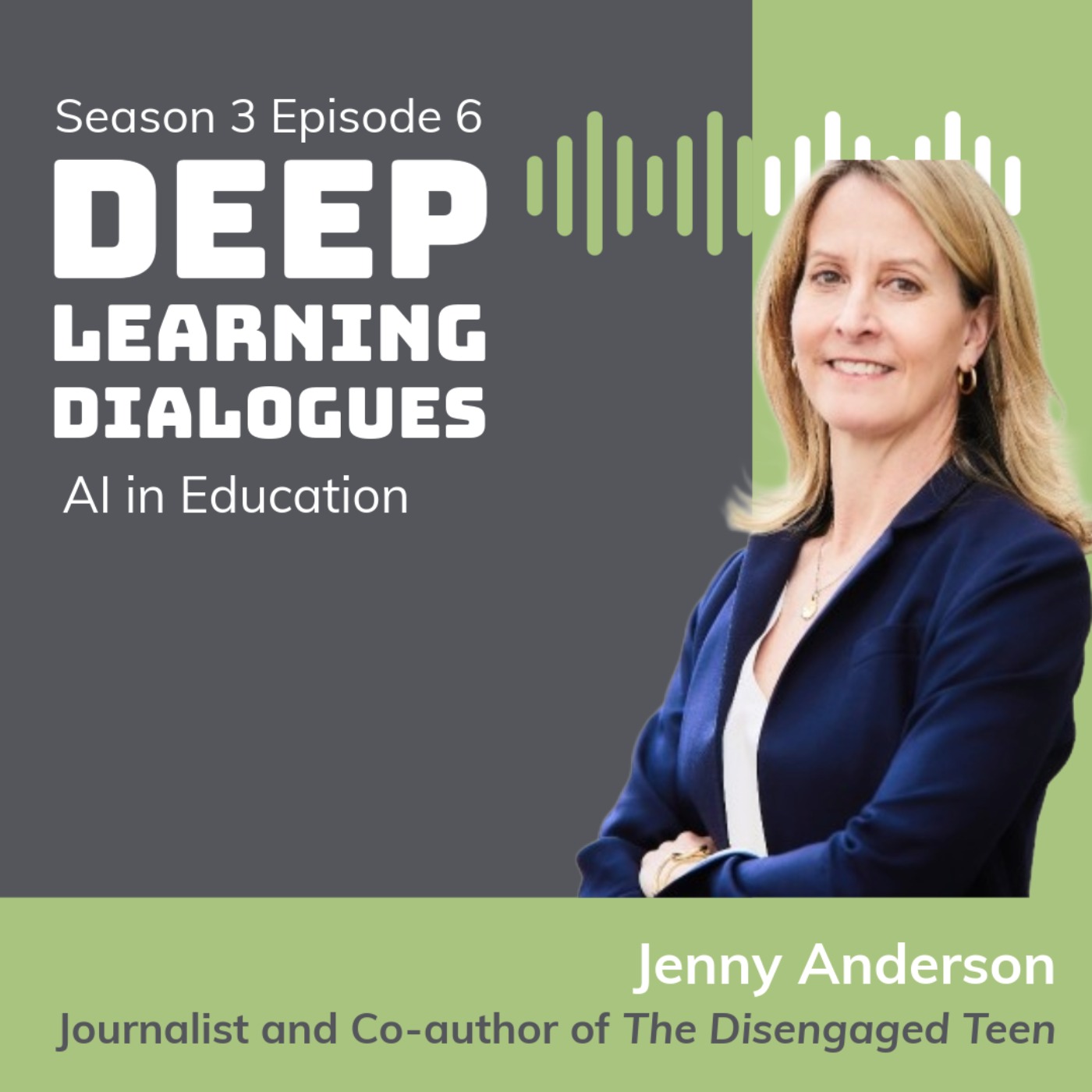
S3 Ep 6The Disengaged Teen: Reimagining Student Engagement in the Age of AI
In this episode of Deep Learning Dialogues, hosts Katrina Gouett and Whitney McKinley welcome award-winning journalist and author Jenny Anderson to explore the urgent challenges of student disengagement and the transformative potential of generative AI in education. Drawing from her book The Disengaged Teen: Helping Kids Learn Better, Feel Better, and Live Better, Jenny shares insights into the four dynamic modes of learning—passenger, achiever, resistor, and explorer—and how educators can help students shift toward deeper engagement. Through real stories, audience questions, and practical strategies, this conversation offers a hopeful and actionable roadmap for fostering curiosity, agency, and meaningful learning in an AI-integrated world.Jenny Anderson is an award-winning journalist and author whose work focuses on student engagement and learning science. After spending a decade covering finance at the New York Times, she made a deliberate shift to what matters most: how young people learn. Her new book, The Disengaged Teen: Helping Kids Learn Better, Feel Better, and Live Better, addresses the youth mental health crisis and unprecedented rates of student disengagement. She continues to write for publications including The New York Times, TIME, and The Atlantic, and shares insights with thousands of education leaders through her Substack newsletter, How to Be Brave.You can also find Jenny on LinkedIn.Want to know more?You can check out our: WCDSB GenAI Guidelines, infographics, and Innovation website: https://innovate.wcdsb.ca/Feedback? You can ask your questions or give us feedback on the show here Want to get in touch? Contact Katrina & Whitney by email at: [email protected] and [email protected] or on LinkedIn Hosted on Acast. See acast.com/privacy for more information.
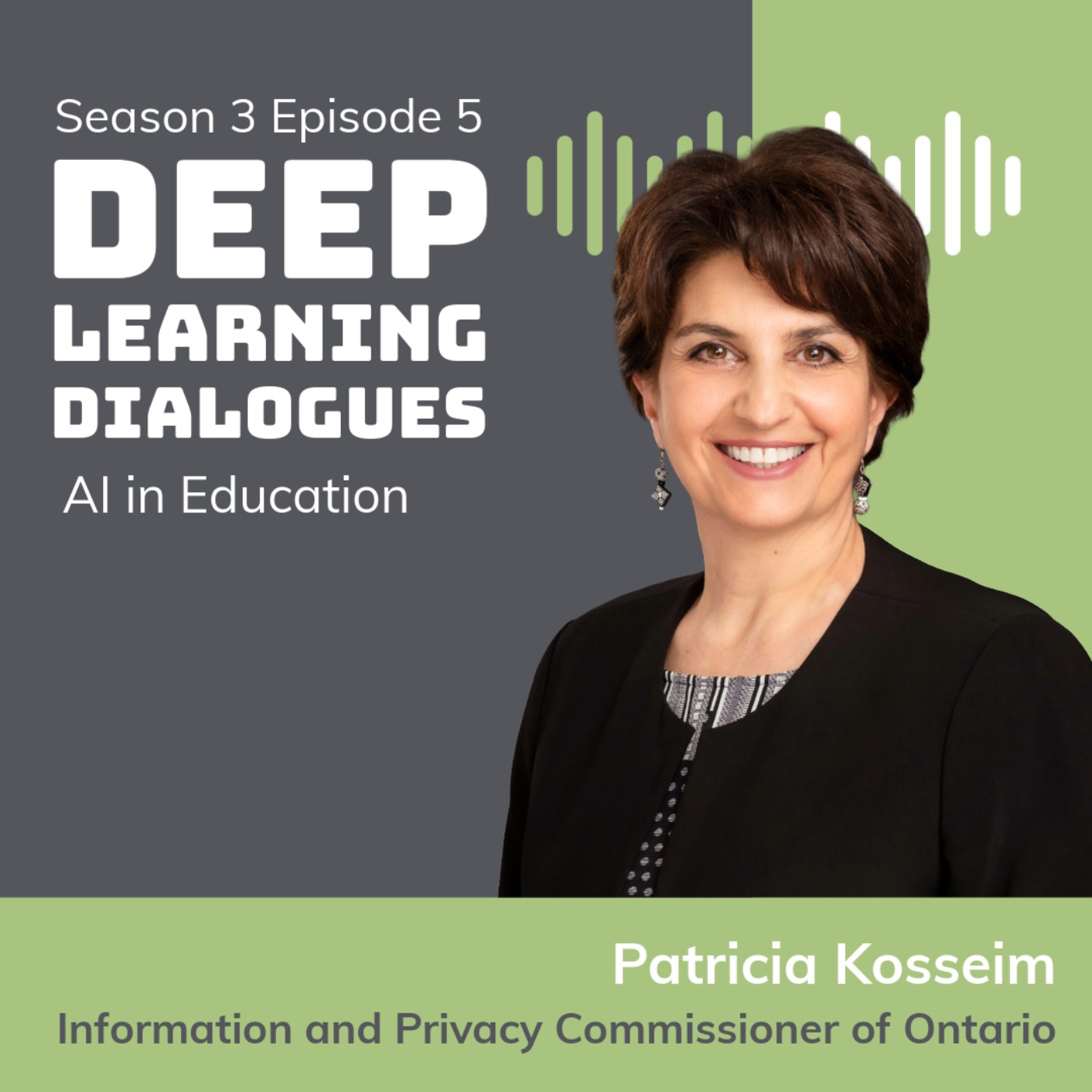
S3 Ep 5Privacy Empathy in the Age of AI: How the IPC is Guiding Ontario’s Schools
In this episode of Deep Learning Dialogues, we sit down with Patricia Kosseim, Ontario’s Information and Privacy Commissioner, to explore the critical intersection of student privacy, educational technology, and artificial intelligence. From the challenges school boards face when negotiating with EdTech vendors to the ethical complexities of AI in classrooms, Commissioner Kosseim offers expert insights and practical guidance for educators. We discuss the importance of “privacy empathy,” the role of the IPC in safeguarding student data, and the resources available to help schools navigate this evolving digital landscape with confidence and care.Patricia Kosseim is the Information and Privacy Commissioner of Ontario. She is a lawyer by profession and has extensive experience as a senior executive working in complex, inter-disciplinary environments, across public, private and health sectors. Through integration of legal practice, public policy and academic research, she has led large teams and major strategic initiatives to address ethical, legal and social implications of emerging technologies. She connects people and creative ideas to advance critical reflection, converge around common goals and work towards practical solutions. In March 2025, she was awarded the King Charles III Coronation Medal, in recognition of her valuable contribution to Ontario and to Canada.Find further information at:ipc.ca Instagram: https://www.instagram.com/ipc.ontario/ A Guide to Privacy and Access to Information in Ontario SchoolsDigital Privacy Charter - 12 commitments supporting teachers and studentsYouth ambassador tool kitYouth advisory council Want to know more?You can check out our: WCDSB GenAI Guidelines, infographics, and Innovation website: https://innovate.wcdsb.ca/Feedback? You can ask your questions or give us feedback on the show here Want to get in touch? Contact Katrina & Whitney by email at: [email protected] and [email protected] or on LinkedIn Hosted on Acast. See acast.com/privacy for more information.
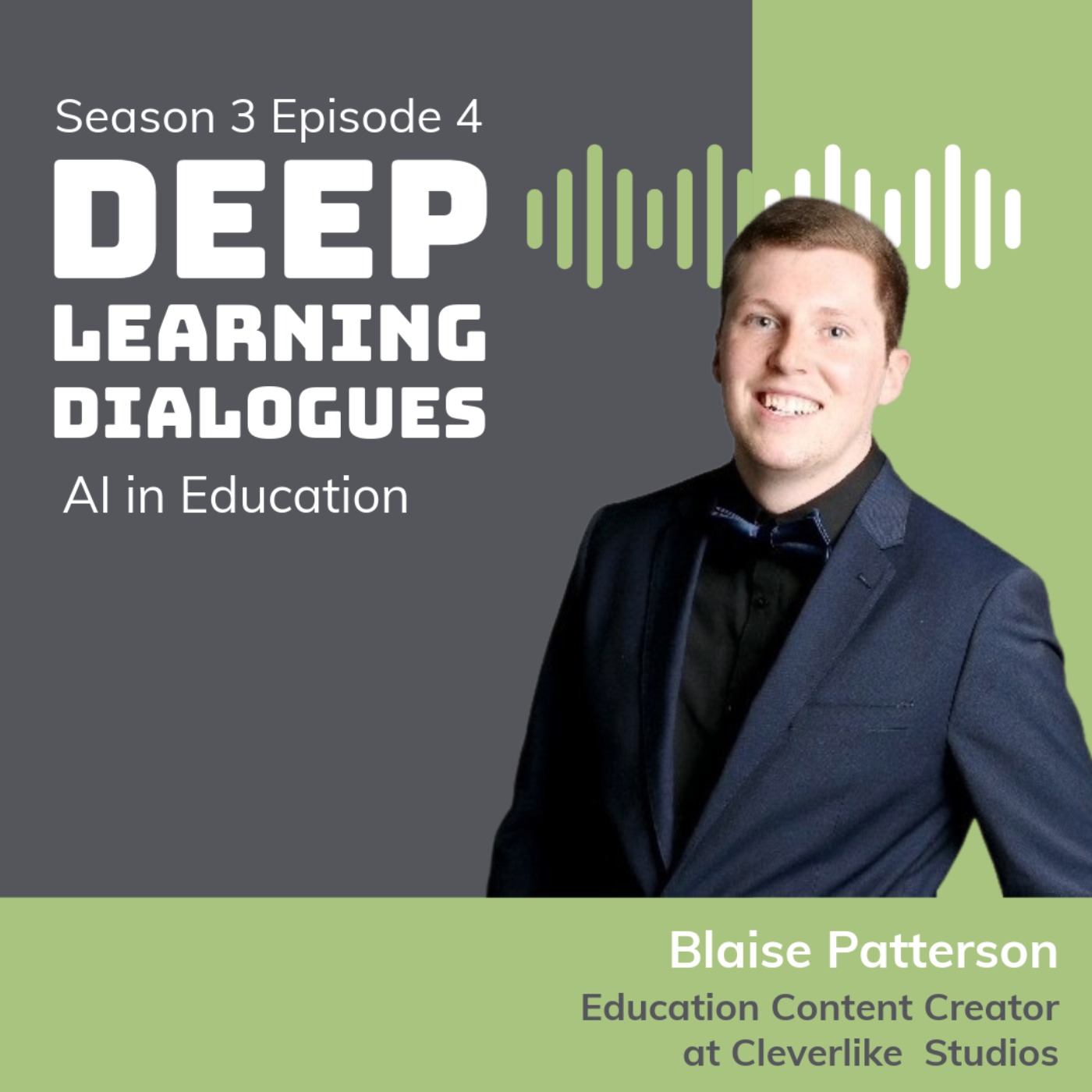
S3 Ep 4Exploring AI Literacy Through Minecraft: The Cyber Safe Dig Deeper World
Join us as we welcome educator and game creator Blaise Patterson to discuss the innovative Minecraft EDU Cyber Safe AI Dig Deeper World. Discover how this interactive experience helps students build AI literacy, digital citizenship, and critical thinking skills through engaging, age-appropriate gameplay. Learn about the challenges of designing meaningful AI education, strategies for supporting teachers, and practical classroom resources for fostering safe and responsible technology use. Blaise Patterson is an Education Content Creator with Cleverlike Studios, where he creates immersive learning experiences using popular video games like Minecraft and Fortnite. With a deep passion for games-based learning, Blaise has developed several Minecraft Education worlds featured in the in-game library and numerous scholastic esports programs. He and his team of learning experience designers and game developers work to transform students from players to creators, equipping them with digital competencies for career readiness. As Director of Industry Partnership with the Ontario School Esports Association, Blaise also builds connections between schools and organizations, supporting teachers in implementing esports programs from daily instruction to district-wide competitions across K-12 and post-secondary education.Want to know more?You can check out our: WCDSB GenAI Guidelines, infographics, and Innovation website: https://innovate.wcdsb.ca/Feedback? You can ask your questions or give us feedback on the show here Want to get in touch? Contact Katrina & Whitney by email at: [email protected] and [email protected] or on LinkedIn Hosted on Acast. See acast.com/privacy for more information.
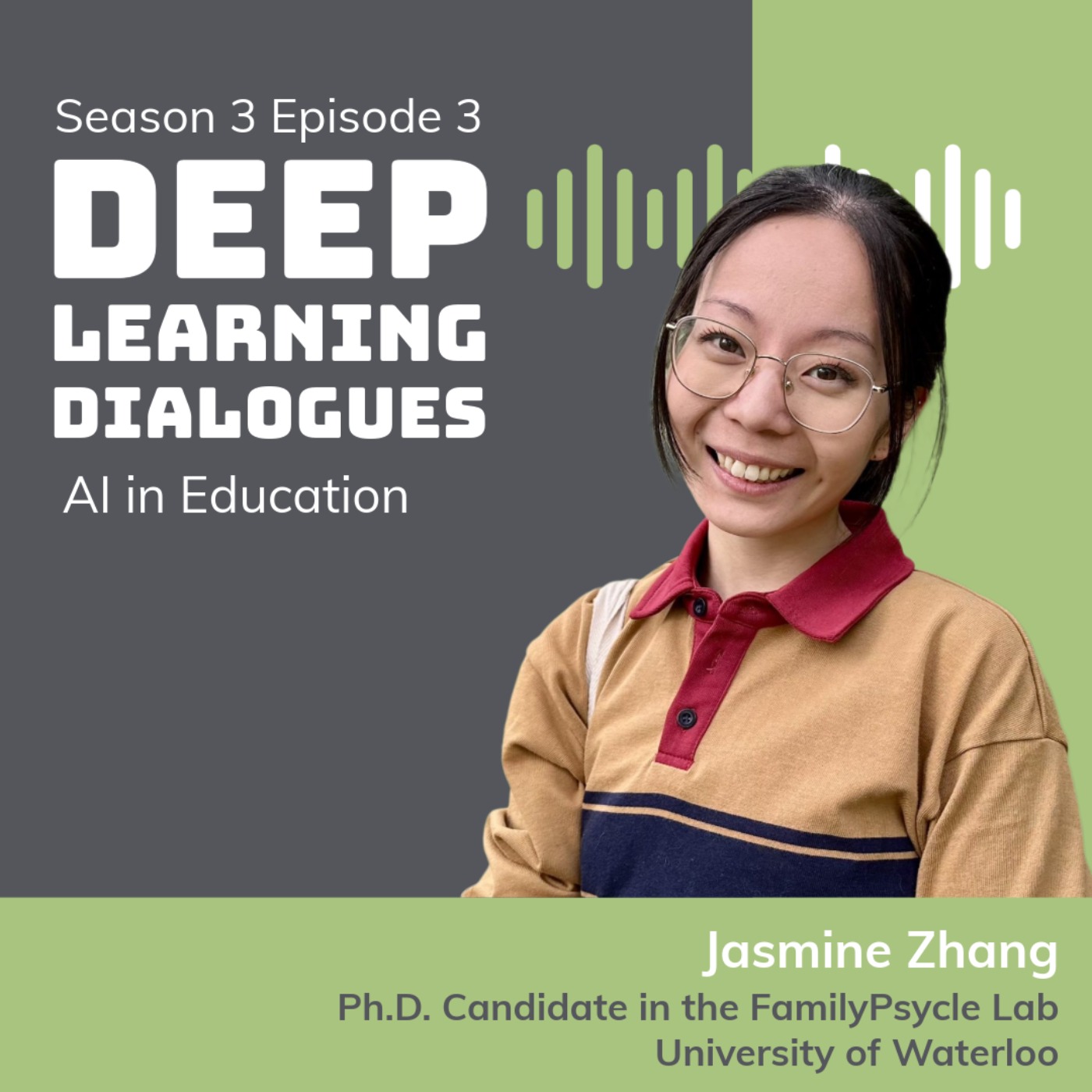
S3 Ep 3From Curiosity to Connection: Kids, Chatbots, and Digital Safety
In this episode of Deep Learning Dialogues, Jasmine Zhang, a PhD student at the University of Waterloo, discusses how digital media and AI companions impact the well-being of children, caregivers, and families. The conversation covers practical strategies for parents and educators, the role of trusted adults, digital literacy, and the challenges and opportunities of AI in mental health and education.Jasmine received her Bachelor of Science (Honours Psychology, Neuroscience and Behaviour) from McMaster University in 2020 and her Master of Arts (Clinical Psychology) from the University of Waterloo in 2022. Since then, she has continued her studies at the University of Waterloo, where she is currently a Ph.D. student in the FamilyPsycle Lab. Her research examines how digital media influences the well-being of children and caregivers through a family-wide lens. Jasmine has also completed clinical training in providing psychoeducational assessment and intervention services for children, adolescents, and adults from various locations in Ontario, including the Centre for Mental Health Research and Treatment at the University of Waterloo, the Waterloo Region District School Board, and Hamilton Health Sciences.Want to know more?You can check out our: WCDSB GenAI Guidelines, infographics, and Innovation website: https://innovate.wcdsb.ca/Feedback? You can ask your questions or give us feedback on the show here Want to get in touch? Contact Katrina & Whitney by email at: [email protected] and [email protected] or on LinkedIn Hosted on Acast. See acast.com/privacy for more information.
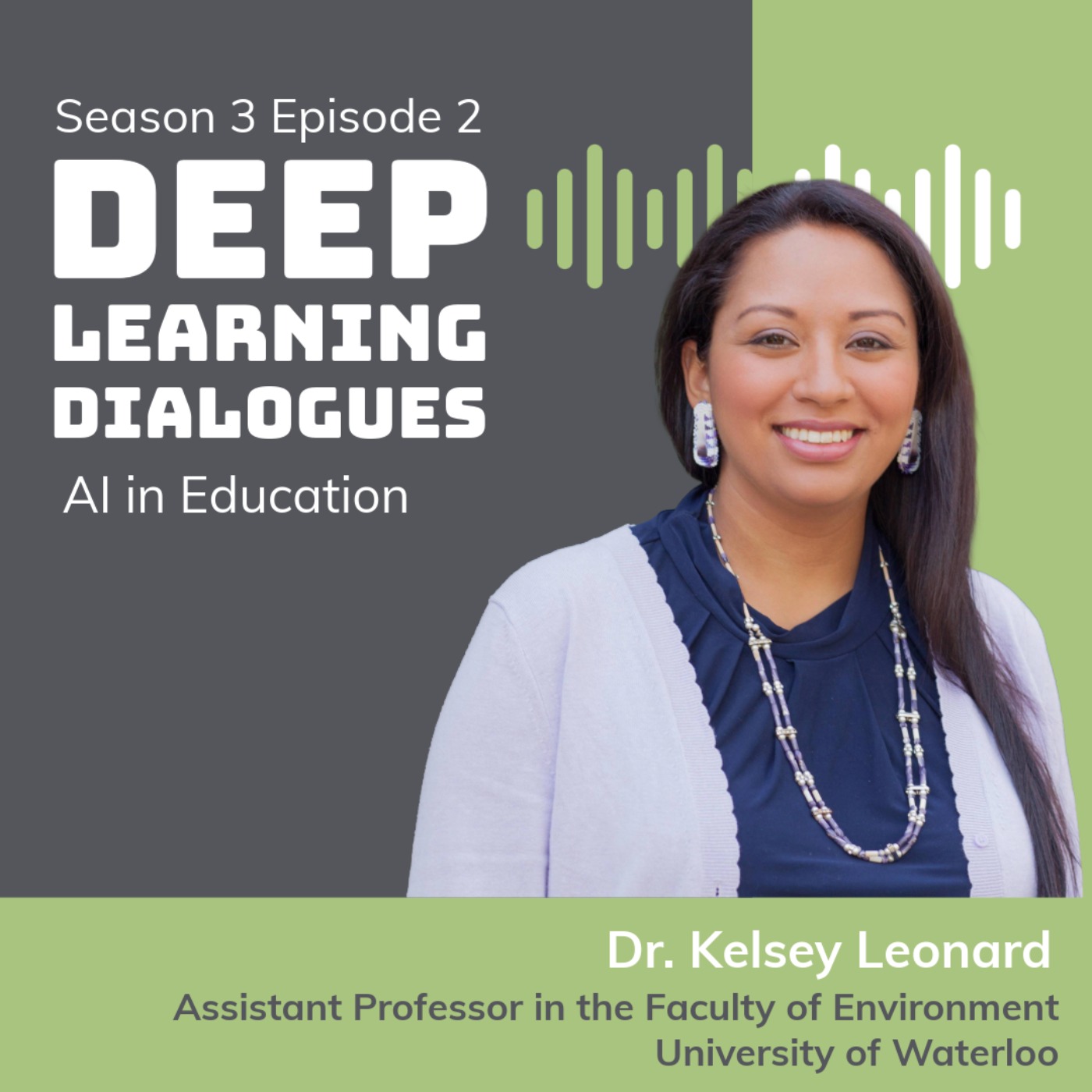
S3 Ep 2Personhood for Rivers: Indigenous Data Sovereignty and Water Rights in the Age of AI
Join us as Dr. Kelsey Leonard explores the groundbreaking concept of granting personhood to rivers and lakes, and discusses how Indigenous data sovereignty can transform water rights in the age of AI. Discover how traditional knowledge, legal innovation, and technology intersect to address water justice, protect Indigenous communities, and shape the future of global water governance. Please note: Due to recording issues in the second half, audio quality varies - however, the content remains compelling and we encourage you to stick with it. We've identified the issue and are taking steps to prevent it in future recordings.Dr. Kelsey Leonard is an Assistant Professor in the Faculty of Environment at the University of Waterloo, where her research focuses on Indigenous water justice and its climatic, territorial, and governance underpinnings. Dr. Leonard seeks to establish Indigenous traditions of water conservation as the foundation for international water policymaking. Dr. Leonard has been instrumental in safeguarding the interests of Indigenous Nations for environmental planning and builds Indigenous science and knowledge into new solutions for water governance and sustainable oceans. In collaboration with a global team of water law scholars Dr. Leonard has published in Lewis and Clark Law Review on Indigenous Water Justice and the defining international legal principle of self-determination under the United Nations Declaration on the Rights of Indigenous Peoples. Her recent scholarship explores legal personhood for water and you can watch her TEDTalk here: TEDTalk “Why lakes and rivers should have the same rights as humans”Want to know more?You can check out our: WCDSB GenAI Guidelines, infographics, and Innovation website: https://innovate.wcdsb.ca/Feedback? You can ask your questions or give us feedback on the show here Want to get in touch? Contact Katrina & Whitney by email at: [email protected] and [email protected] or on LinkedIn Hosted on Acast. See acast.com/privacy for more information.
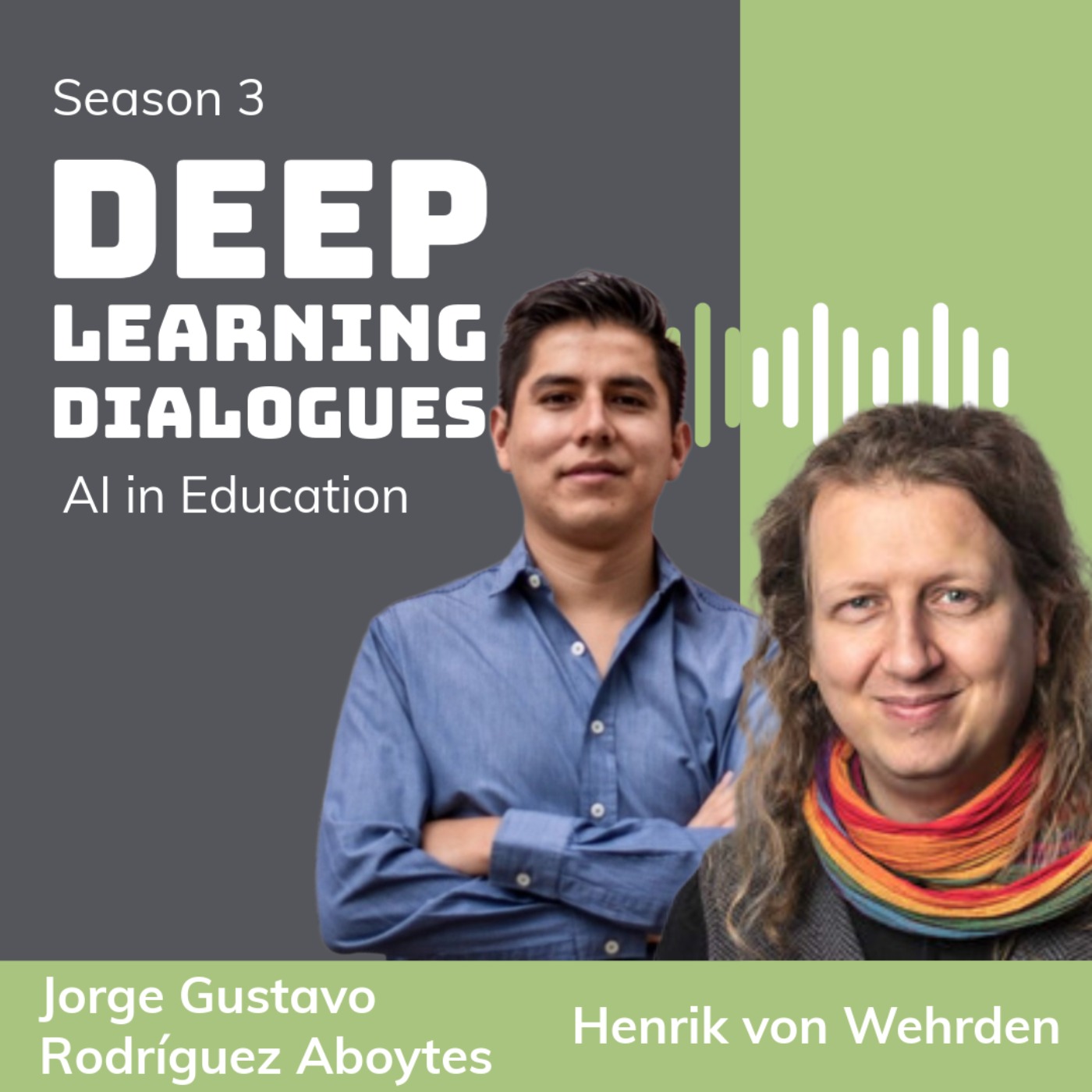
S3 Ep 1SDG Gaps & Opportunities: Empowering Young Changemakers with AI
This episode of Deep Learning Dialogues explores how AI can empower young changemakers to address global sustainability challenges through the UN Sustainable Development Goals framework. Dr. Henrik von Wehrden and Jorge Gustavo Rodrigues Aboytes from Leuphana University share research showing that AI applications favour technical SDGs over social justice goals, creating important gaps in how technology addresses global challenges. The conversation emphasises K-12 students' natural capacity for systems thinking and advocates for using the SDGs as an interdisciplinary learning framework whilst positioning AI as both a powerful educational tool and an object of critical analysis. Key themes include teaching students to critically evaluate AI outputs and consider ethical implications—principles that align with WCDSB's emphasis on transparency, accountability, and human-centred approaches to AI in education.Episode Links:-Article "Artificial intelligence in sustainable development research"-Sustainability Methods Website-Leuphana Sustainable UniversityHenrik von Wehrden is the dean of the faculty of sustainability at Leuphana and member of the methods center. His work focuses on applying methods in a new context to create novel knowledge. His research spans across many spatial scales and groups of organisms, as well as explored the normative dimensions of methodological research.Jorge Gustavo Rodrigues Aboytes holds an interdisciplinary background with degrees in chemical engineering, environmental sciences, and a PhD in Sustainability Science. After working as a consultant in the Mexican textile-fashion sector and enhancing his technical skills through WBS Coding School, he now serves as a Research Associate at the Center of Methods at Leuphana University of Lüneburg. His current focus is on analyzing data to provide solutions regarding sustainability impacts of supply chains, transitions toward sustainable models, and life-cycle assessment of products and services.Want to know more?You can check out our: WCDSB GenAI Guidelines, infographics, and Innovation website: https://innovate.wcdsb.ca/Feedback? You can ask your questions or give us feedback on the show here Want to get in touch? Contact Katrina & Whitney by email at: [email protected] and [email protected] or on LinkedIn Hosted on Acast. See acast.com/privacy for more information.
S3 Ep 1Deep Learning Dialogues Season 3 Trailer
trailerJoin us for season 3! We have an incredible lineup of guests to look forward to. Be sure to subscribe or follow Deep Learning Dialogues in your favourite podcast player. Want to know more?You can check out our: WCDSB GenAI Guidelines, infographics, and Innovation website: https://innovate.wcdsb.ca/Feedback? You can ask your questions or give us feedback on the show here Want to get in touch? Contact Katrina & Whitney by email at: [email protected] and [email protected] or on LinkedIn Hosted on Acast. See acast.com/privacy for more information.
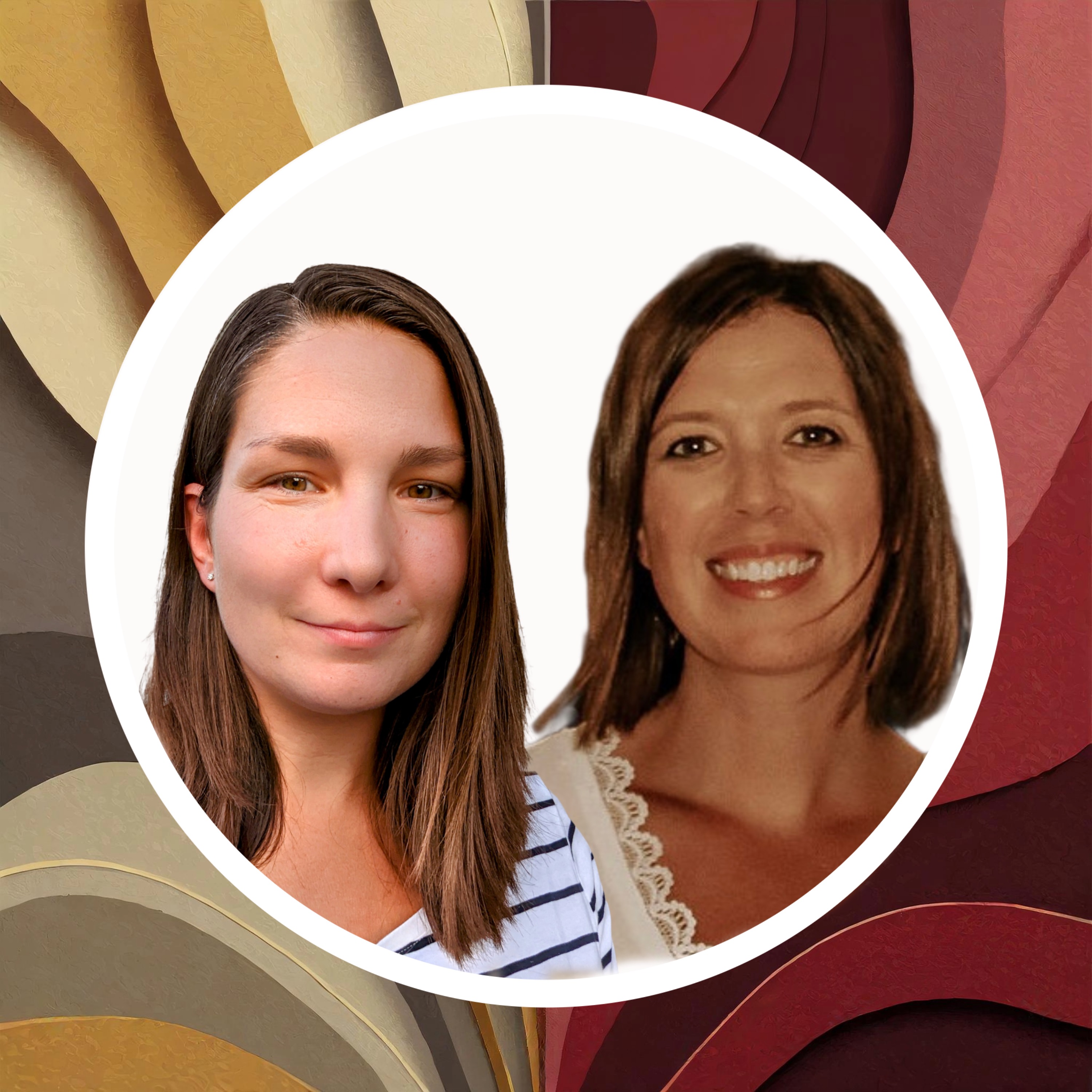
S2 Ep 25Season 2 Finale: From Guests to Insights - Our Biggest Takeaways
Join Whitney and Katrina as they reflect on an incredible Season 2 of Deep Learning Dialogues! After 50 episodes exploring the intersection of AI and education, our hosts turn the tables and interview each other about their biggest takeaways, favourite moments, and the insights that continue to shape their thinking.From Dr. Jean Clinton's reminder that "love builds brains" to Emmanuel Duplàa's challenge to embrace chaos in the classroom, discover which conversations changed their perspectives on everything from post-plagiarism pedagogy to AI consciousness. Whitney and Katrina also share how ideas from guests like Michael Fullan, Keri Ewart, and Chris Bronke are showing up in real classrooms across their school board.As they prepare for a summer break (and Season 3!), this episode offers the perfect opportunity to revisit past conversations and dive deeper into the human-centered approach to AI in education that has defined their podcast journey.Perfect for both long-time listeners and newcomers looking to explore the archives over the summer months.You can contact Katrina & Whitney by email at: [email protected] and [email protected] or on LinkedInFeedback? You can ask your questions or give us feedback on the show here Want to know more?You can check out our: WCDSB GenAI Guidelines, infographics, and Innovation website: https://innovate.wcdsb.ca/Feedback? You can ask your questions or give us feedback on the show here Want to get in touch? Contact Katrina & Whitney by email at: [email protected] and [email protected] or on LinkedIn Hosted on Acast. See acast.com/privacy for more information.
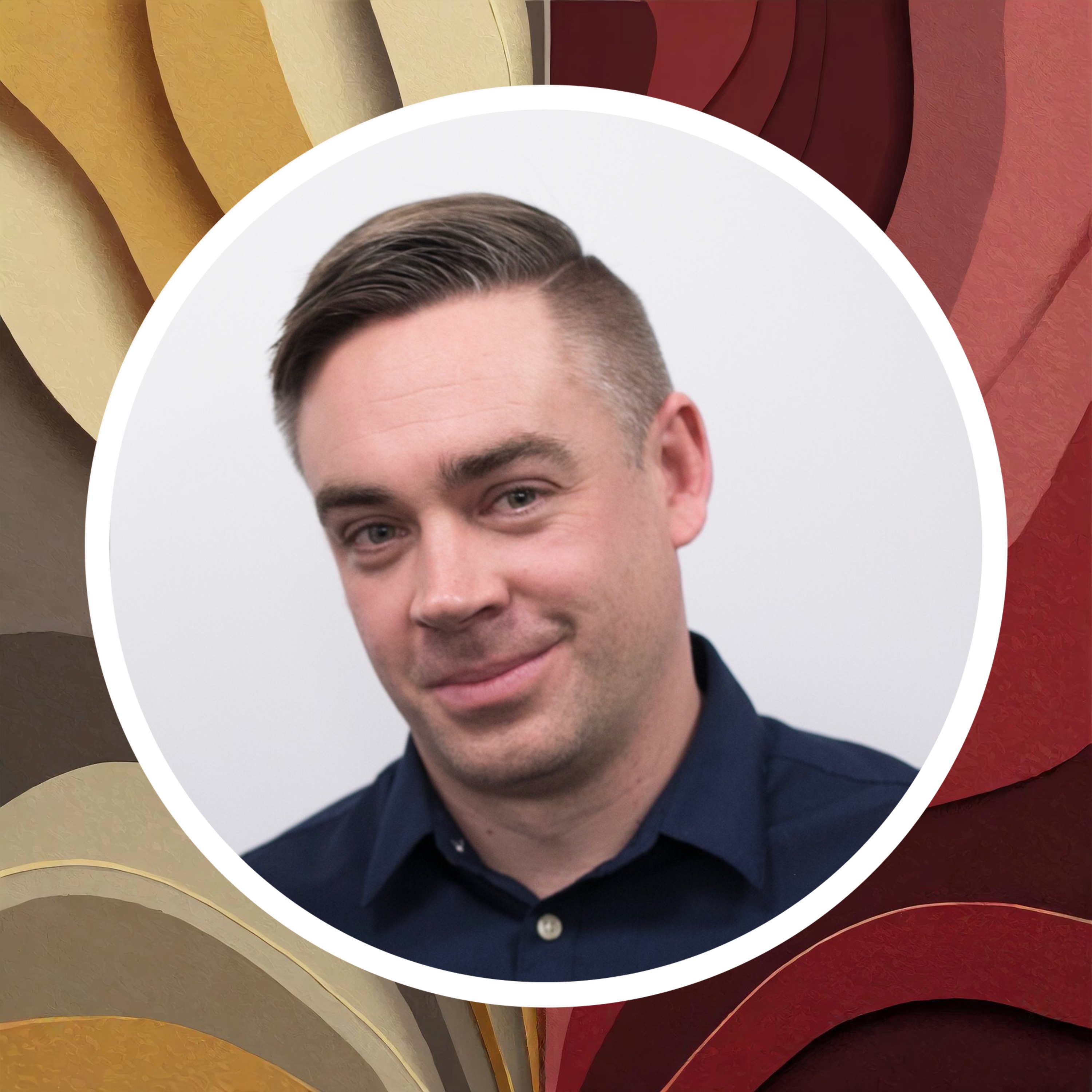
S2 Ep 24Empowering Teachers, Engaging Students: The Wayground Approach to AI in Education
In this episode, we sit down with Andrew Bieronski, Growth Lead for Canada at Wayground (formerly Quizizz), to explore how this innovative EdTech platform is revolutionizing K-12 education through AI-powered tools that truly serve both educators and learners. As a former secondary teacher turned EdTech advocate, Andrew shares insights into Wayground's recent rebranding, their groundbreaking accommodations tool that automatically personalizes learning for every student, and why having educators at the heart of product development makes all the difference. We dive deep into the platform's impressive free-for-schools offering, discuss the critical importance of data privacy in educational technology, and discover how Wayground's UDL approach is helping teachers reduce their workload while still delivering personalized experiences for students across 40+ languages. Whether you're new to AI in education or looking for tools that genuinely understand classroom realities, this conversation reveals why Waterloo Catholic District School Board chose Wayground as their an approved generative AI solution and how it's setting a new standard for inclusive, teacher-friendly EdTech.Andrew Bieronski served as the TELT consultant for the WRDSB for 6 years, and as a secondary educator for a decade prior to that. He looks to leverage technology to modernize pedagogy and assessment practices to improve learning and achievement and is a frequent presenter on these topics. Andrew is the Growth Lead in Canada for Wayground (formerly Quizizz), an educational technology company that is a leader in supporting educators with AI tools in the classroom to foster student learning and engagement. He recently finished his MEd. at WLU with a focus on research in the areas of innovation in educational organizations and the use of artificial intelligence in educational settings.You can find Andrew on LinkedIn, Twitter, or by email at [email protected] Feedback? You can ask your questions or give us feedback on the show here Want to know more? You can check out our: WCDSB GenAI Guidelines, infographics, and Innovation website: https://innovate.wcdsb.ca/Want to know more?You can check out our: WCDSB GenAI Guidelines, infographics, and Innovation website: https://innovate.wcdsb.ca/Feedback? You can ask your questions or give us feedback on the show here Want to get in touch? Contact Katrina & Whitney by email at: [email protected] and [email protected] or on LinkedIn Hosted on Acast. See acast.com/privacy for more information.
S2 Ep 23Evolution, Not Revolution: The AI Literacy Framework Empowering Primary and Secondary Learners
In this episode, we explore the groundbreaking "Empowering Learners for the Age of AI: An AI Literacy Framework for Primary and Secondary Education" with Veronica Ellis, a molecular biologist turned educator at TeachAI. Veronica shares her journey from studying bacteria to developing global AI curriculum, sparked by her experience teaching during the COVID pandemic when technology inequities became starkly apparent. We dive deep into the collaborative framework created by the European Commission, OECD, and Code.org, which structures AI literacy around four key domains: engaging, creating, managing, and designing with AI. Discover how the framework will be integrated into PISA 2029 assessments, making AI literacy a global educational priority, and learn about practical classroom applications. As Guest reminds us, "it's not a revolution, it's an evolution"—building on essential skills we've been teaching for years, just refocused for an AI-integrated world.Veronica Ellis is a content developer and researcher at TeachAI, where she brings her unique background in molecular biology and environmental science to the challenge of integrating artificial intelligence into K-12 curriculum globally. A former 6th grade science teacher in Chicago Public Schools, Ellis' passion for AI education was sparked during the COVID-19 pandemic when she witnessed firsthand the technology inequities facing her students during the shift to remote learning. Growing up in Los Angeles surrounded by the Pacific Ocean and Santa Monica Mountains, her lifelong love of exploration led her to conduct research everywhere from the middle of the Pacific Ocean to the bottom of the Grand Canyon. As an employee of Code.org working within the TeachAI initiative—a collaboration between Code.org, Khan Academy, ISTE, ETS, and the World Economic Forum—Ellis co-developed the groundbreaking "Empowering Learners for the Age of AI: An AI Literacy Framework for Primary and Secondary Education" in partnership with the European Commission and OECD, which will be integrated into PISA 2029 assessments to establish global standards for AI literacy education.You can find Veronica on LinkedInOther Resources:-AI Literacy Framework-Code.org AI Literacy ResourcesWant to know more?You can check out our: WCDSB GenAI Guidelines, infographics, and Innovation website: https://innovate.wcdsb.ca/Feedback? You can ask your questions or give us feedback on the show here Want to get in touch? Contact Katrina & Whitney by email at: [email protected] and [email protected] or on LinkedIn Hosted on Acast. See acast.com/privacy for more information.
S2 Ep 22Beyond Time-Saving: Why Relationships Matter More Than Ever in AI-Enhanced Classrooms
Join us for an enlightening conversation with Dean Shareski, educator, author, and passionate advocate for meaningful learning in schools. Dean challenges common misconceptions about AI in education, arguing that technology's true value isn't just in saving time—it's in enhancing clarity and strengthening the human connections that drive learning. We explore why relationships between students and teachers become even more critical in an AI-enhanced world, discuss community-driven approaches to AI integration, and examine how technology can support teacher well-being rather than replace educators. Dean shares insights from his collaborative work with Advanced Learning Partners and the Waterloo Catholic District School Board, offering practical wisdom for districts navigating AI implementation together and a refreshingly human perspective on education's technological future.Dean Shareski is an educator, author, speaker, and passionate advocate for joy and meaningful learning in schools. Dean has spent his career at the intersection of education and innovation, helping educators reimagine what’s possible in the classroom. A former teacher, curriculum consultant, and community manager at Discovery Education, Dean is widely known for his engaging presentations and his work on professional learning and digital pedagogy. Currently, Dean is partnering with Waterloo Catholic District School Board and Advanced Learning Partners on a province-wide initiative that brings together districts from across Ontario to mobilize and integrate Generative AI in meaningful and responsible ways. His leadership in this project is helping shape how schools across the province understand and leverage AI to support student learning and system transformation.You can find Dean on LinkedIn and on his blog https://ideasandthoughts.org/about/ Feedback? You can ask your questions or give us feedback on the show here Want to know more? You can check out our: WCDSB GenAI Guidelines, infographics, and Innovation website: https://innovate.wcdsb.ca/Want to know more?You can check out our: WCDSB GenAI Guidelines, infographics, and Innovation website: https://innovate.wcdsb.ca/Feedback? You can ask your questions or give us feedback on the show here Want to get in touch? Contact Katrina & Whitney by email at: [email protected] and [email protected] or on LinkedIn Hosted on Acast. See acast.com/privacy for more information.

S2 Ep 21Building Momentum for Change: Small Steps Toward Educational Transformation
In this illuminating episode of Deep Learning Dialogues, we explore how educators can transform assessment practices in the age of AI. Our guest Michelle Sengara shares a powerful framework for "harmonized intelligence" that balances subject matter expertise with technical skills and human connection. Discover why assessment should be the first educational lever we consider—not the last—and how AI can serve as a design partner rather than a replacement for human judgment. This conversation offers both hope and practical strategies for educators navigating technology integration while preserving what matters most: meaningful human learning experiences.As Director of Academic Innovation at York University, and a leading education strategist and consultant, Michelle Sengara is shaping the future of technology-enhanced learning. Her research and design work reimagines education as a dynamic ecosystem of interactions that foster Harmonized Intelligence®—the seamless integration of subject matter expertise, relevant technical aptitudes, and essential human capacities within ANY educational experience.Because in a world of artificial intelligence, education needs to provide spaces and places where people can learn within relevant digital contexts, and with an emphasis on how we as humans are uniquely able to engage with information and ideas in versatile and valuable ways.You can find Michelle at https://www.michellesengara.com/ Want to know more?You can check out our: WCDSB GenAI Guidelines, infographics, and Innovation website: https://innovate.wcdsb.ca/Feedback? You can ask your questions or give us feedback on the show here Want to get in touch? Contact Katrina & Whitney by email at: [email protected] and [email protected] or on LinkedIn Hosted on Acast. See acast.com/privacy for more information.
S2 Ep 20Beyond Speed and Scale: Reimagining AI Through a Climate Justice Lens
In this thought-provoking episode of Deep Learning Dialogues, we welcome Dr. Maria Vamvalis, an educator and researcher with over 20 years of experience in climate justice and transformative learning. She reveals the hidden environmental costs of AI—from carbon emissions to water consumption—and challenges us to reimagine our relationship with technology. Moving beyond a framework of speed, scale, and profit, Dr. Maria Vamvalis offers educators practical criteria for ethical AI use centered on justice, regeneration, and relationships, while sharing actionable strategies to develop critical thinking habits that prepare students to navigate our complex environmental future. You can read the episode summary article here.Dr. Maria Vamvalis, is an educator, facilitator, and researcher with over 20 years of experience working at the intersection of climate justice, transformative learning, and regenerative systems change. Her doctoral work at the University of Toronto explores pedagogies beyond colonial models, while her pioneering initiatives include co-leading Canada's first national climate education course and the Toronto District School Board's Climate Camp. As a consultant with the Critical Thinking Consortium and collaborator with organizations globally, she facilitates inquiry-driven processes that support communities facing ecological challenges, creating spaces of learning that cultivate more just, regenerative futures through approaches centered on deep relationality.You can find Maria on:LinkedInCritical Thinking Consortium (TC²)Feedback? You can ask your questions or give us feedback on the show here Want to know more? You can check out our: WCDSB GenAI Guidelines, infographics, and Innovation website: https://innovate.wcdsb.ca/Want to know more?You can check out our: WCDSB GenAI Guidelines, infographics, and Innovation website: https://innovate.wcdsb.ca/Feedback? You can ask your questions or give us feedback on the show here Want to get in touch? Contact Katrina & Whitney by email at: [email protected] and [email protected] or on LinkedIn Hosted on Acast. See acast.com/privacy for more information.
S2 Ep 19From Macro to Micro: Crafting Culturally Responsive AI Prompts for Education
Join us as we welcome Dr. Keri Ewart for a conversation on AI in education. Dr. Ewart explores the intersection of AI, cultural responsiveness, and literacy, offering practical strategies for educators. Discover the difference between macro and micro prompting, learn about the CREATE framework for culturally responsive AI use, and gain insights on developing AI literacy skills for both teachers and students. This episode provides valuable guidance for educators navigating the rapidly evolving landscape of AI in diverse educational settings while maintaining ethical and inclusive practices.Dr. Keri Ewart is an assistant professor in the Faculty of Education at Wilfrid Laurier University, focusing on AI in education, culturally sustaining pedagogy, and literacy education. Her research focuses on equipping students and educators with the skills and competencies to navigate the changing educational landscape through AI literacy and educational AI. Dr. Ewart integrates critical literacies into inclusive, decolonized learning frameworks, addressing systemic inequalities. With extensive experience in K-12 education, she is committed to empowering students to succeed and advocate for social justice in the 21st century.You can find Keri:LinkedInemail: [email protected]? You can ask your questions or give us feedback on the show here Want to know more? You can check out our: WCDSB GenAI Guidelines, infographics, and Innovation website: https://innovate.wcdsb.ca/Want to know more?You can check out our: WCDSB GenAI Guidelines, infographics, and Innovation website: https://innovate.wcdsb.ca/Feedback? You can ask your questions or give us feedback on the show here Want to get in touch? Contact Katrina & Whitney by email at: [email protected] and [email protected] or on LinkedIn Hosted on Acast. See acast.com/privacy for more information.
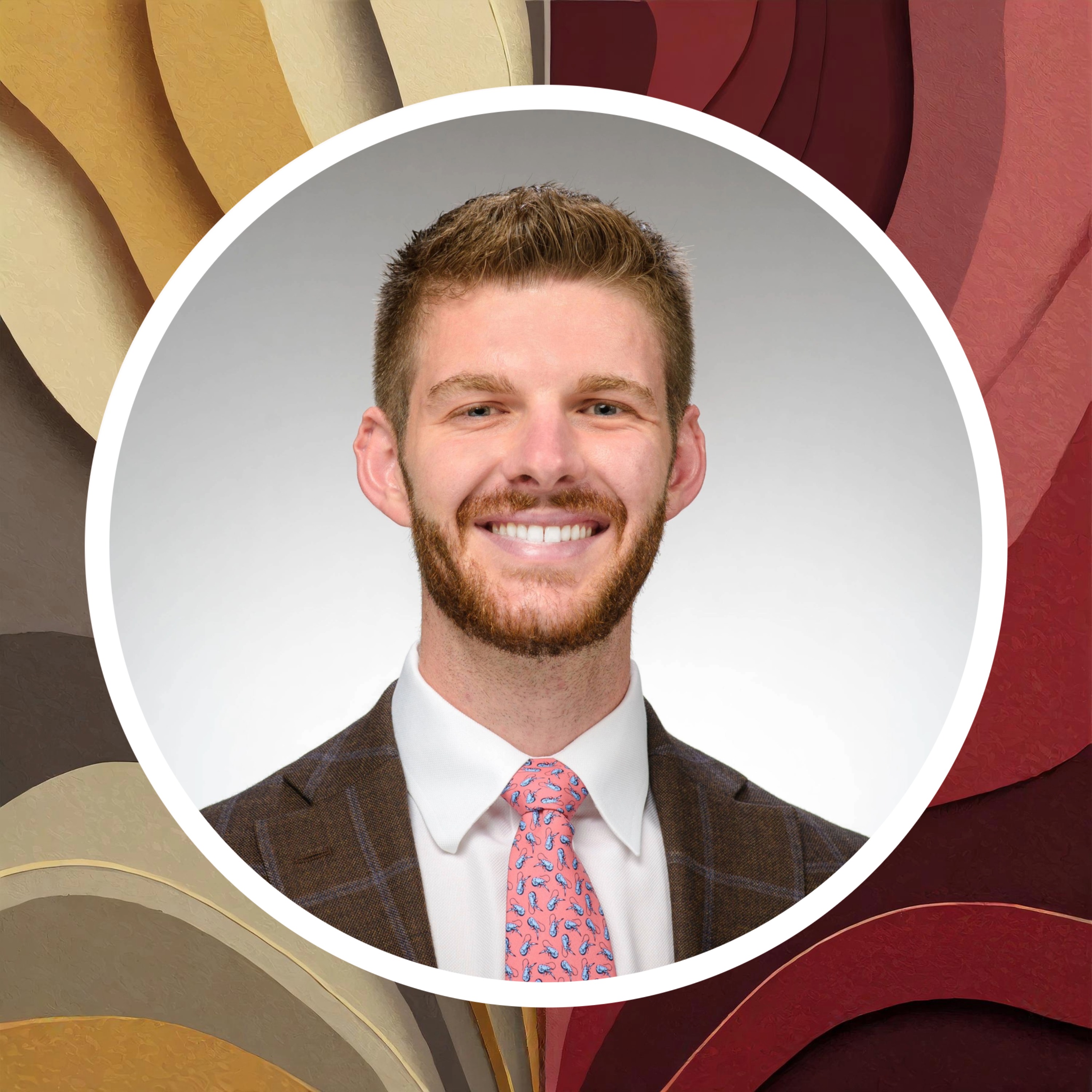
S2 Ep 18AI Through a Catholic Lens: Ethical Education in the Digital Age
Dive into the ethical dimensions of AI in Catholic education with Lewis Poché from the University of Notre Dame's Alliance for Catholic Education. This episode unpacks how Catholic social teachings provide a framework for evaluating AI tools, reveals the hidden environmental and human costs of AI development, and offers practical approaches to fostering AI literacy among students. Poché introduces the Higher Powered Learning Network—a free community supporting Catholic educators—and shares valuable resources for navigating this technological frontier. Join our conversation about using AI as an "exciting and fearsome tool" while staying true to Catholic values in forming young people holistically.Lewis Poché is the Associate Program Director of Higher-Powered Learning (HPL) at the University of Notre Dame’s Alliance for Catholic Education (ACE). In this role, Lewis empowers Catholic school teachers and leaders to leverage technology and innovative, research-based practices to personalize learning and meet the needs of all students. An experienced educator and thought leader, Lewis has presented at numerous conferences on the integration of generative AI in education. He collaborates regularly with faculty, diocesan leaders, school principals, and teachers to explore best practices for implementing AI effectively in Catholic schools. A native of Baton Rouge, Louisiana, Lewis was a member of the 26th ACE Teaching Fellows cohort, teaching middle school math and science at Sacred Heart Nativity Schools in San Jose, California.Feedback? You can ask your questions or give us feedback on the show here Want to know more? You can check out our: WCDSB GenAI Guidelines, infographics, and Innovation website: https://innovate.wcdsb.ca/Want to know more?You can check out our: WCDSB GenAI Guidelines, infographics, and Innovation website: https://innovate.wcdsb.ca/Feedback? You can ask your questions or give us feedback on the show here Want to get in touch? Contact Katrina & Whitney by email at: [email protected] and [email protected] or on LinkedIn Hosted on Acast. See acast.com/privacy for more information.
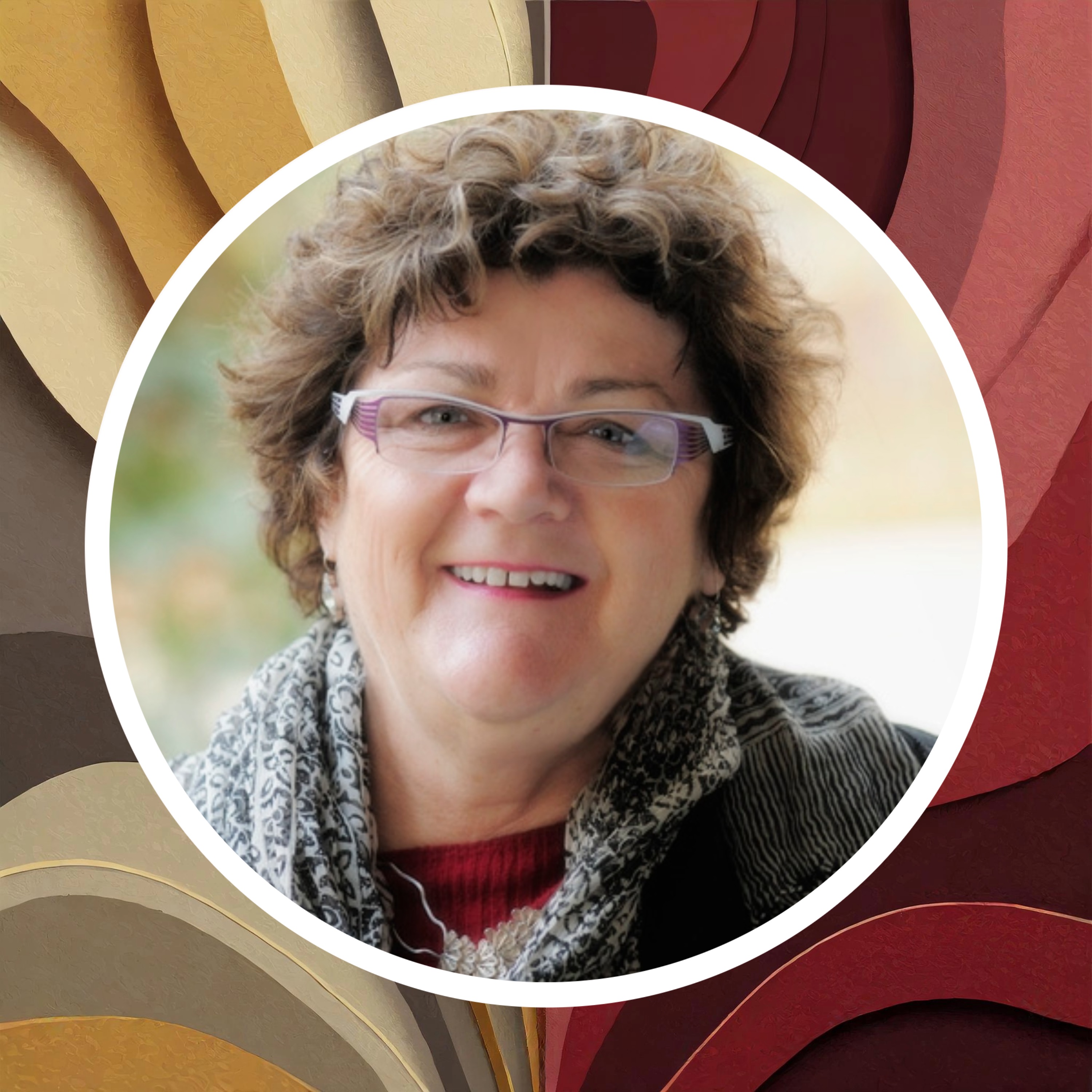
S2 Ep 17Wondering as Brain Food: Critical Thinking in the AI Era
In this thought-provoking episode, renowned child psychiatrist Dr. Jean Clinton explores the delicate balance between technology and human connection in education. Dr. Clinton shares insights on how relationships serve as essential "nourishment" for developing brains and offers practical guidance for educators navigating AI integration in classrooms. From the developmental progression of critical thinking to the importance of "connecting before correcting," she provides a framework for using technology as a tool that expands rather than replaces deep learning. Join us as we discover how wonder, curiosity, and human relationships remain foundational in preparing students for an AI-integrated world.Dr. Jean Clinton is a Clinical Professor, Department of Psychiatry and Behavioural Neurosciences at McMaster, division of Child Psychiatry. She is on staff at McMaster Children’s Hospital with cross appointments in Pediatrics and Family Medicine, and an Associate in the Department of Child Psychiatry, University of Toronto and Sick Children’s Hospital. She is a Fellow of the Child Trauma Academy, as well as a Zero to Three Academy Fellow since 2013. She has been a consultant to children and youth mental health programs, child welfare, and primary care for over 30 years. Dr. Clinton was appointed as an education advisor to the Premier of Ontario and the Minister of Education 2014 - 2018. Dr. Clinton is renowned nationally and internationally as an advocate for children’s issues. She is the author of the highly acclaimed and best-selling book, Love Builds Brains (2020). Learn more about Dr. Jean Clinton HERE Feedback? You can ask your questions or give us feedback on the show here Want to know more? You can check out our: WCDSB GenAI Guidelines, infographics, and Innovation website: https://innovate.wcdsb.ca/Want to know more?You can check out our: WCDSB GenAI Guidelines, infographics, and Innovation website: https://innovate.wcdsb.ca/Feedback? You can ask your questions or give us feedback on the show here Want to get in touch? Contact Katrina & Whitney by email at: [email protected] and [email protected] or on LinkedIn Hosted on Acast. See acast.com/privacy for more information.
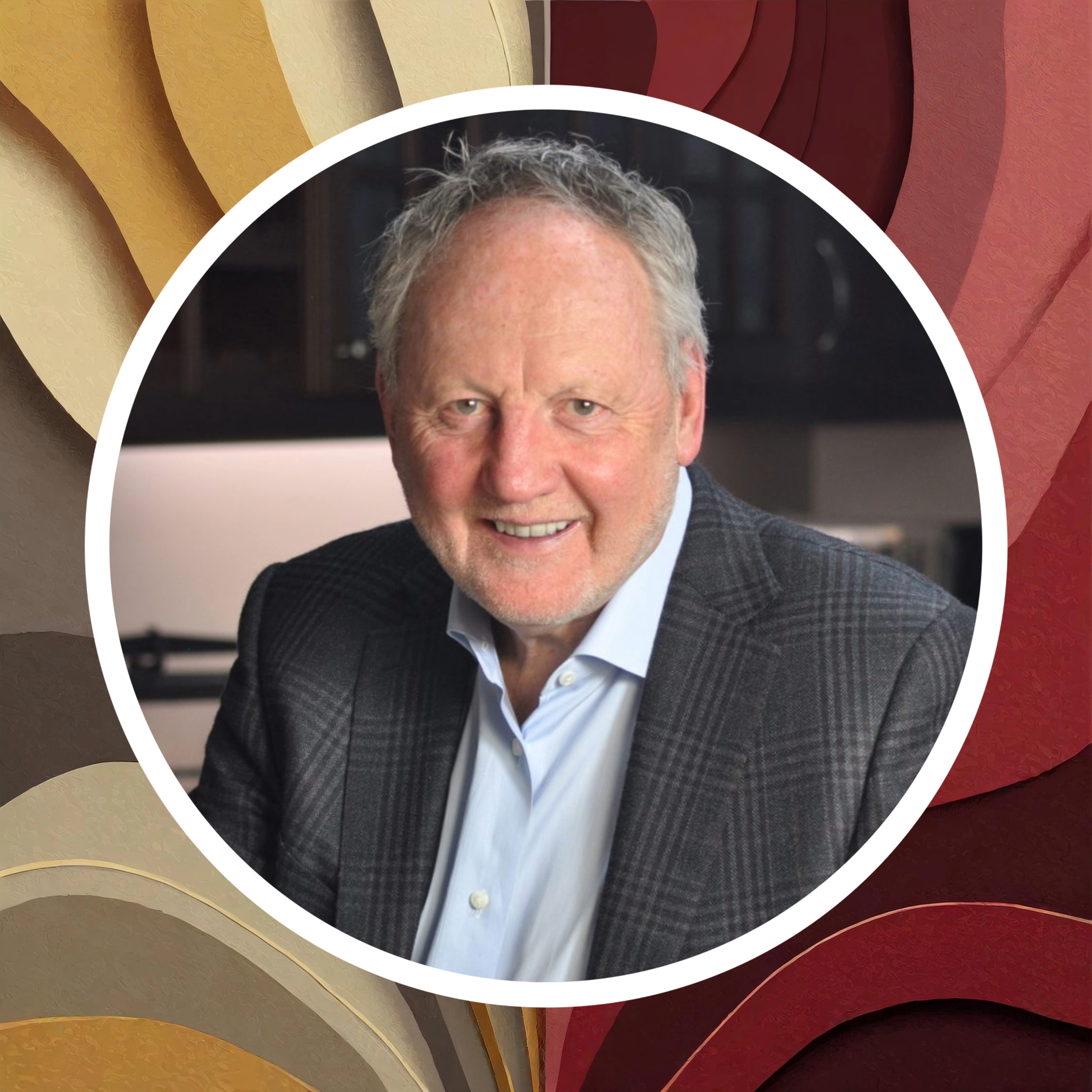
S2 Ep 16Technology as the Accelerator: Finding the Right Drivers
In this special one-year anniversary episode, we sit down with renowned education expert Dr. Michael Fullan to explore how artificial intelligence is creating an unprecedented opportunity for educational transformation. Dr. Fullan, recipient of the Order of Canada and former Dean of the Ontario Institute for Studies in Education, shares his vision for "systemness" - a revolutionary approach to educational change that builds from the bottom up rather than the traditional top-down model.Drawing from decades of experience in educational reform, Fullan challenges us to see beyond the current crisis in education and recognize this moment as an opportunity for meaningful change. He offers practical insights on integrating AI thoughtfully, building cultures of trust and joy in schools, and developing sustainable leadership practices. Whether you're a classroom teacher, administrator, or educational leader, this episode provides a hopeful and practical roadmap for navigating the intersection of AI and deep learning in education. You can read the article here.Michael Fullan, Order of Canada, is the former Dean of the Ontario Institute for Studies in Education, and Professor Emeritus of the University of Toronto. He is co-leader of the New Pedagogies for Deep Learning global initiative (www.deep-learning.global).Fullan served as Premier Dalton’s Special Policy Adviser in Ontario from 2003-2013. He received the Order of Canada (OC) in December 2012 and holds five honorary doctorates from universities around the world. His ‘interim autobiography’, Surreal Change, covers his pre-Covid-19 Pandemic period to 2018. Michael and his colleagues are now working diligently on field-based comprehensive system change in several countries. The goal of this work focuses on the ‘humanity paradigm’ —a deep care and commitment to all living things including equity and equality in theservice of helping all humans cope and thrive in complex societies of the 21st century.Michael Fullan’s latest book, The New Meaning of Educational Change, 6th Edition will be released March 28, 2025You can find Michael at:https://michaelfullan.ca/ Feedback? You can ask your questions or give us feedback on the show here Want to know more? You can check out our: WCDSB GenAI Guidelines, infographics, and Innovation website: https://innovate.wcdsb.ca/Want to know more?You can check out our: WCDSB GenAI Guidelines, infographics, and Innovation website: https://innovate.wcdsb.ca/Feedback? You can ask your questions or give us feedback on the show here Want to get in touch? Contact Katrina & Whitney by email at: [email protected] and [email protected] or on LinkedIn Hosted on Acast. See acast.com/privacy for more information.
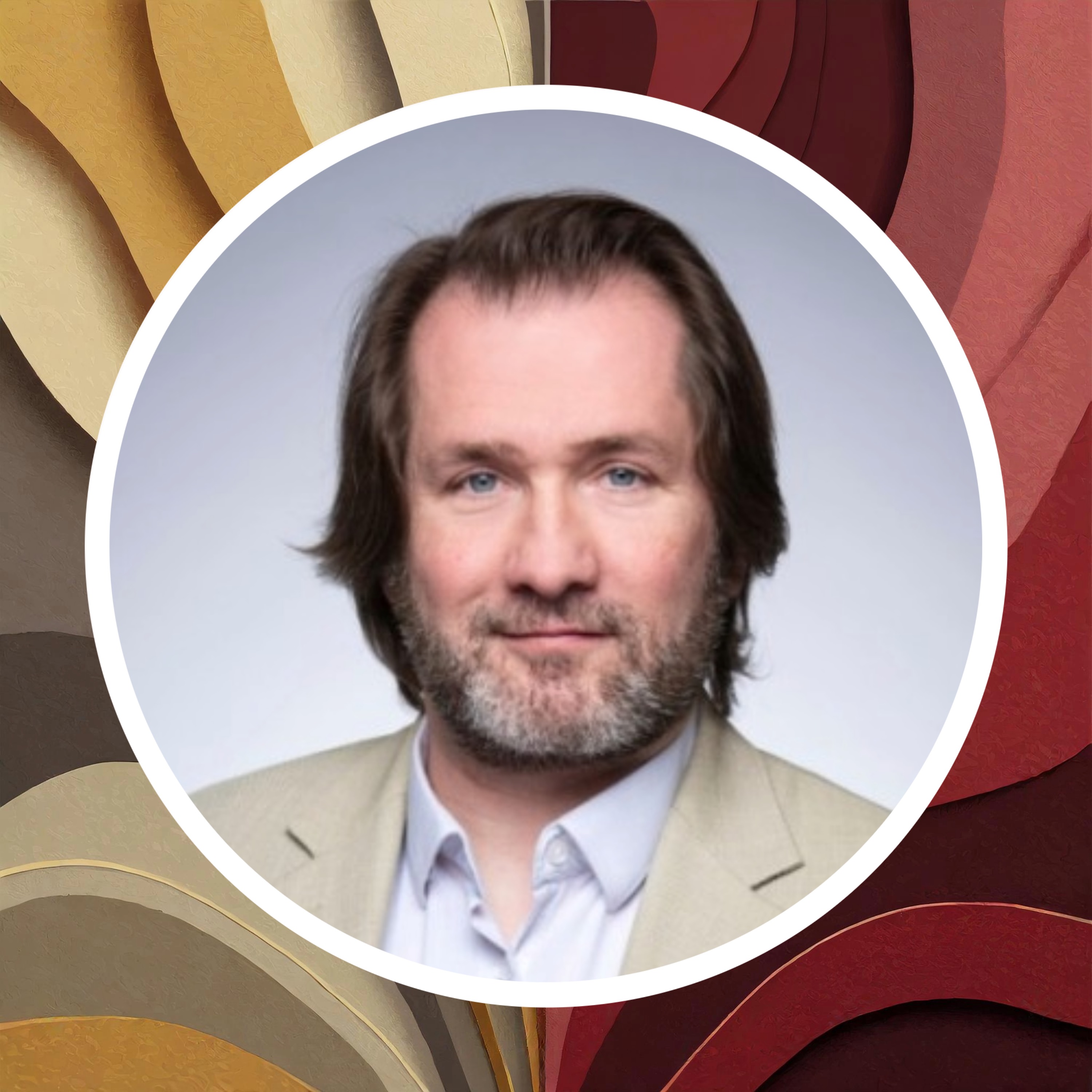
S2 Ep 15Serious Fun: Why Joy Matters in Modern Education
In this illuminating episode, we sit down with Emmanuel Duplàa from the University of Ottawa, who challenges us to rethink what we know about teaching and learning in the age of AI. Moving beyond the traditional classroom model, Professor Dupla shares his revolutionary perspective on why joy isn't just beneficial for learning—it's essential. From discussing how to embrace chaos in the classroom to exploring why we need to "sell interaction, not content," this conversation offers fresh insights into education's future. Whether you're an educator grappling with AI tools, a parent interested in modern learning approaches, or someone passionate about educational innovation, this episode offers practical wisdom about transforming education through the power of authentic learning and "serious fun." Discover why releasing control might be the key to better learning outcomes and how embracing uncertainty could be the antidote to teacher burnout.Read the article hereEmmanuel Duplàa is the Director of Professional Development at the Faculty of Education at the University of Ottawa. He is a professor specialized in information and communication technology (ICT) for learning. After completing a BA in mathematics and a master's degree in cognitive sciences and artificial intelligence, he completed a PhD in education on the unconscious dimensions of online relationships in the context of e-Learning. He participated in different projects on ergonomic design and planning (Institut de Recherche en Informatique et Automatique), on e-learning (Télécom-Paristech and Centre d'Études Supérieures Industrielles) and training aspects of e-Health (TÉLUQ). He is currently conducting research at the Faculty of Education on educational video games, on intergenerational learning, on digital literacies and on design processes in e-learning. Professor Duplàa is a Learning Committe Lead with the LIFE Research Institute.You can find Emmanuel at:LinkedInEmail: [email protected]? You can ask your questions or give us feedback on the show here Want to know more? You can check out our: WCDSB GenAI Guidelines, infographics, and Innovation website: https://innovate.wcdsb.ca/Want to know more?You can check out our: WCDSB GenAI Guidelines, infographics, and Innovation website: https://innovate.wcdsb.ca/Feedback? You can ask your questions or give us feedback on the show here Want to get in touch? Contact Katrina & Whitney by email at: [email protected] and [email protected] or on LinkedIn Hosted on Acast. See acast.com/privacy for more information.
S2 Ep 14Signs Point to Yes: Predicting the Future of AI in Education
Join us for this conversation with Dr. Alec Couros, Professor of Educational Technology and Media at the University of Regina, as we explore the transformative intersection of AI and education. Drawing from his three-decade journey from English teacher to educational technology expert, Dr. Couros provides thoughtful insights into how AI can enhance rather than replace human teaching. The episode features "Future Forecast Magic 8 Ball Edition," where we playfully examine predictions about AI's future in education, from AI teachers to competency-based learning paths. Dr. Couros delves into recent research on AI's teaching capabilities and the approaching reality of Artificial General Intelligence (AGI), while emphasizing the irreplaceable human elements of education - from emotional connections to ethical guidance. Through this rich discussion, we examine how educators can harness AI's potential while preserving the essential human connections that make education transformative.Dr. Dr. Alec Couros is a distinguished Professor of Educational Technology and Media at the University of Regina's Faculty of Education, where he leads innovative research and teaching at the intersection of technology and learning. As an internationally recognized expert in digital education, Dr. Couros has delivered hundreds of keynote presentations and workshops across the globe, sharing his expertise with K-12 educators, higher education institutions, and corporate audiences. His work focuses on empowering learners to harness the opportunities of the digital age while developing critical awareness of its challenges. Specializing in areas including connected learning, digital citizenship, social media in education, digital ethics, and cybersecurity, Dr. Couros has collaborated with educational institutions, government agencies, and corporations to develop comprehensive technology integration policies. His contributions to education and leadership have earned him numerous awards, reflecting his commitment to advancing thoughtful and ethical approaches to digital learning in the 21st century.You can find Alec atBluesky @courosa.bsky.socialLinkedInUniversity of ReginaFeedback? You can ask your questions or give us feedback on the show here Want to know more? You can check out our: WCDSB GenAI Guidelines, infographics, and Innovation website: https://innovate.wcdsb.ca/Want to know more?You can check out our: WCDSB GenAI Guidelines, infographics, and Innovation website: https://innovate.wcdsb.ca/Feedback? You can ask your questions or give us feedback on the show here Want to get in touch? Contact Katrina & Whitney by email at: [email protected] and [email protected] or on LinkedIn Hosted on Acast. See acast.com/privacy for more information.
S2 Ep 13Let's Talk Science: Supporting Teachers, Inspiring Canadian Youth in STEM and AI Literacy
In this episode of Deep Learning Dialogues, we sit down with Dr. Bonnie Schmidt, founder and president of Let's Talk Science, to explore the intersection of AI and education. With over 30 years of experience transforming STEM education in Canada, Dr. Schmidt shares valuable insights on how educational technology has evolved from basic equipment to sophisticated AI tools that can reshape thinking itself. She emphasizes the critical importance of maintaining questioning skills and human curiosity in an AI-driven world, while highlighting Let's Talk Science's extensive free resources for educators, including professional development opportunities, classroom activities, and outreach programs. The conversation delves into crucial topics such as addressing the digital divide across Canadian communities, the role of teachers as coaches in technology-enabled learning, and the continued relevance of the Canada 2067 STEM Learning Roadmap. Dr. Schmidt offers a powerful perspective on the future of education, stressing the need for interdisciplinary approaches and the development of critical thinking skills that will enable students to effectively navigate and utilize AI tools while maintaining their essential human capabilities.Resource Link: Artificial Intelligence ResourcesDr. Bonnie Schmidt, CM, FRSC is the President and Founder of Let’s Talk Science, a national education charity that she started in 1991 while completing a PhD in Physiology. Offering a robust suite of programming for youth, educators and volunteers, the organization has impacted millions of people across Canada since its inception. An active contributor to the scientific and education communities, Bonnie currently serves on the Genome Canada Board of Directors. Recently, she was a member of the Federal Government’s AI Public Awareness Working Group, and in 2020 she was a member of the PISA Expert Strategic Visioning Group to the OECD, which set about developing a new vision for the international science test.You can find Bonnie at:LinkedInLet’s Talk Science Website https://letstalkscience.ca/ by email: [email protected]? You can ask your questions or give us feedback on the show here Want to know more? You can check out our: WCDSB GenAI Guidelines, infographics, and Innovation website: https://innovate.wcdsb.ca/Want to know more?You can check out our: WCDSB GenAI Guidelines, infographics, and Innovation website: https://innovate.wcdsb.ca/Feedback? You can ask your questions or give us feedback on the show here Want to get in touch? Contact Katrina & Whitney by email at: [email protected] and [email protected] or on LinkedIn Hosted on Acast. See acast.com/privacy for more information.
S2 Ep 12Policy, Pedagogy, and AI: Shaping Tomorrow's Education Today
In this episode of Deep Learning Dialogues, we welcome back Dr. Mark J. Daley, Western University's Chief AI Officer and NSERC Scholar in Residence, to explore the intersection of AI, education policy, and classroom practice. From breaking down Ontario's Bill 194 to reimagining assessment in an AI-enhanced world, we examine how today's decisions are shaping tomorrow's education landscape. Join us for an insightful discussion about maintaining human connections while leveraging AI's potential in education.Dr. Mark J. Daley serves as the Chief AI Officer at Western University and is a Professor of Computer Science, focusing his research on neural computation. Recently appointed as Scholar in Residence at the Natural Sciences and Engineering Research Council of Canada (NSERC), he brings extensive experience in higher education administration and the public sector, having previously served as CIO and AVP Research. In 2024, Mark was recognized as one of Canada's top 10 AI experts in McLean's Power List AI. Through his work and writing, including his Substack "Noetic engines," he provides critical insights on AI's integration into education and society while advocating for AI as a public good.You can find Mark at:Noetic engines Substackhttps://ai.uwo.ca/ LinkedInWestern UniversityFeedback? You can ask your questions or give us feedback on the show here Want to know more? You can check out our: WCDSB GenAI Guidelines, infographics, and Innovation website: https://innovate.wcdsb.ca/Want to know more?You can check out our: WCDSB GenAI Guidelines, infographics, and Innovation website: https://innovate.wcdsb.ca/Feedback? You can ask your questions or give us feedback on the show here Want to get in touch? Contact Katrina & Whitney by email at: [email protected] and [email protected] or on LinkedIn Hosted on Acast. See acast.com/privacy for more information.
S2 Ep 11I-Think AI Challenge: Building Critical Thinkers of Tomorrow
In this episode of Deep Learning Dialogues, we explore the innovative I-Think AI Challenge Kit with educator and coach Heidi Siwak. Learn how this unique program is empowering students to become critical thinkers and ethical users of artificial intelligence. From developing comprehensive AI challenge kits to facilitating student-led solutions for educational challenges, Heidi shares insights into how students are moving beyond initial AI skepticism to imagine and create positive applications for their school communities. Discover how the program addresses crucial aspects of AI education, including privacy concerns, bias awareness, and environmental impacts, while fostering students' problem-solving skills for an AI-enhanced future. You can read the full episode summary here.Heidi Siwak is a Teacher Coach at the education charity, I-Think, and creator of the Artificial Intelligence Challenge Kit for grades 6-12 students. Heidi was a classroom teacher in grades K-8 for the HWDSB for many years where she engaged students in innovative inquiry and project-based learning experiences focused on developing critical thinking and problem-solving skills. She is an advocate for student voice and agency. Heidi was seconded to the Ontario Ministry of Education supporting school board innovation research projects and integration of the Global Competencies through the Technology and Learning Fund. The question on her mind right now is, “How can we help students be critical thinkers about and thoughtful users of Artificial Intelligence?You can find Heidi at:email: [email protected]://www.linkedin.com/in/heidisiwak/I-Think Challenge KitsFeedback? You can ask your questions or give us feedback on the show here Want to know more? You can check out our: WCDSB GenAI Guidelines, infographics, and Innovation website: https://innovate.wcdsb.ca/Want to know more?You can check out our: WCDSB GenAI Guidelines, infographics, and Innovation website: https://innovate.wcdsb.ca/Feedback? You can ask your questions or give us feedback on the show here Want to get in touch? Contact Katrina & Whitney by email at: [email protected] and [email protected] or on LinkedIn Hosted on Acast. See acast.com/privacy for more information.
S2 Ep 10Crossover Episode with "AI Dialogues" from the MacPherson Institute
Originally aired on the McMaster University 'AI Dialogues' podcast, this episode features host Stephanie Verkoeyen in conversation with Whitney and Katrina, who share their firsthand experiences implementing generative AI at the Waterloo Catholic District School Board (WCDSB). Drawing from their work in K-12 education, they offer insights into how students and teachers are actively embracing GenAI in the classroom, exploring both the challenges and opportunities that arise. Their conversation bridges the gap between theoretical possibilities and practical applications, providing educators at all levels with actionable perspectives on integrating AI into their teaching practice.Want to know more?You can check out our: WCDSB GenAI Guidelines, infographics, and Innovation website: https://innovate.wcdsb.ca/Feedback? You can ask your questions or give us feedback on the show here Want to get in touch? Contact Katrina & Whitney by email at: [email protected] and [email protected] or on LinkedIn Hosted on Acast. See acast.com/privacy for more information.