Cultural Journalism: All things Cultural, Every Given Sunday at 7 pm PST
52 episodes — Page 1 of 2
S1 Ep 52The Cultural Journalism Conundrum: An Intellectual Odyssey
Episode Title: The Cultural Journalism Conundrum: An Intellectual OdysseySynopsis:The season finale of "The Cultural Journalism Conundrum: An Intellectual Odyssey" delves deep into the contemporary challenges facing cultural journalism. The episode critically examines the detrimental effects of celebrity worship, the erosion of genuine criticism, and the digital revolution's impact on the field.Key Points:The Cult of Celebrity:The episode highlights how the obsession with celebrity culture has overshadowed substantive cultural discourse. Drawing parallels to historical examples like ancient Rome and the Renaissance, it underscores the cyclical nature of celebrity worship and its adverse effects on meaningful cultural analysis.The Death of Criticism:A central concern addressed is the decline of genuine criticism in cultural journalism. The episode emphasizes the importance of fearless critique in fostering intellectual rigour and stimulating cultural progress through historical references to intellectual stalwarts like George Bernard Shaw and Susan Sontag.The Digital Deluge:The digital revolution's impact on cultural journalism is explored, emphasizing the democratization of information alongside the proliferation of noise. The episode advocates for discernment amidst the online cacophony, urging a return to academic rigour and erudition in evaluating cultural discourse.The Way Forward:Proposing a renaissance of intellectual curiosity, the episode calls for a shift away from celebrity gossip towards the exploration of ideas and genuine artistic achievements. It positions outlets like Planksip as catalysts for this transformation, advocating for a rejection of sensationalism and a commitment to elevating the quality of cultural discourse.Conclusion:"The Cultural Journalism Conundrum: An Intellectual Odyssey" concludes with a call to action, urging viewers to confront the dilemmas facing cultural journalism head-on. By rediscovering the audacity of genuine critique, discerning amidst the digital noise, and nurturing a culture of intellectual curiosity, the series proposes a path toward enriching our collective understanding of art, ideas, and the human condition.
S1 Ep 51The Fallacies of Artistic Expressions of Identity: An Unyielding Pursuit of Intellectual Clarity
Episode Title: The Fallacies of Artistic Expressions of Identity: An Unyielding Pursuit of Intellectual ClaritySynopsis:This thought-provoking episode delves into the contentious terrain of artistic expressions of identity. The host challenges the prevalent notion that art must primarily reflect personal identity, arguing instead for a broader exploration of universal themes that transcend individuality.Key Points:The Tyranny of Identity:The episode begins by dissecting the notion that art's primary purpose is to convey personal identity. The host argues that prioritizing identity over artistic merit risks diminishing art's profound potential, turning it into a tool for ideological indoctrination rather than a medium for genuine expression.Historical Precedents:Drawing from history, the episode highlights the works of revered artists like Leonardo da Vinci, Michelangelo, and Shakespeare. These masters, it argues, didn't confine themselves to self-obsessed narcissism but explored themes that resonated universally. By doing so, they created enduring works that continue to captivate audiences across generations.The Pitfalls of Identity-Centric Art:A critical examination of contemporary artistic expressions of identity reveals inherent contradictions. While purporting to promote inclusivity, such art often fosters exclusion by emphasizing divisions between "privileged" and "oppressed" groups. The episode warns against reducing art to mere representations of identity, which risks overshadowing artistic excellence with political agendas.The Danger of Stagnation:The episode cautions against the stifling effect of identity-centric art on creativity and innovation. By confining artistic expression within the narrow boundaries of personal identity, there's a risk of perpetuating repetitive narratives devoid of originality. Art should challenge norms and provoke thought, but it becomes formulaic and predictable when constrained by identity politics.Conclusion:In a stirring conclusion, the episode advocates for reevaluating the prevailing trend of artistic expressions of identity. It urges listeners to embrace a vision of art that transcends boundaries and defies categorization, celebrating works that uplift the human spirit and foster intellectual growth. By doing so, it argues, we can reclaim the transformative power of artistic expression in a rapidly evolving world.Takeaway Message:Through incisive analysis and historical context, this episode challenges listeners to question the pervasive notion that art must primarily reflect personal identity. Instead, it champions a more expansive view of artistic expression that explores universal themes and fosters inclusivity, creativity, and intellectual engagement.

S1 Ep 50Unveiling the Complexities of Cultural Heritage Sites: Challenging the Status Quo
Episode Title: Unveiling the Complexities of Cultural Heritage Sites: Challenging the Status QuoSynopsis:In this thought-provoking episode, we embark on a journey to unravel the intricate tapestry of cultural heritage sites, challenging the simplistic narratives that often surround them. Through rigorous intellectual scrutiny, we explore the complexities and contradictions inherent in these sites, aiming to foster a more nuanced understanding of our shared history.Segment I: The Myth of TimelessnessWe debunk the notion of cultural heritage sites as timeless entities frozen in history, shedding light on the vibrant, evolving centers of human activity they once were. By examining examples like the Pyramids of Giza, we confront the socioeconomic realities of their construction, emphasizing the importance of historical context.Segment II: Preservation vs. ReconstructionDelving into the preservation-reconstruction dichotomy, we question the authenticity of modern efforts to safeguard cultural heritage sites. Through the lens of the Parthenon in Athens, we probe whether reconstruction efforts truly preserve history or distort it, challenging our obsession with maintaining the past.Segment III: Selective NarrativesWe explore how cultural heritage sites often perpetuate selective narratives, overshadowing complex histories. Using the Taj Mahal in India as a case study, we highlight the overlooked labourers and the consequences of selectively highlighting certain aspects of these sites, urging for a more inclusive narrative approach.Segment IV: Appropriation and OwnershipExamining issues of appropriation and contested ownership, we confront the commodification of cultural heritage sites. Using Machu Picchu in Peru as an example, we confront colonial legacies and advocate for the recognition and empowerment of indigenous communities in the management of these sites.Segment V: Beyond Physical StructuresExpanding our understanding of cultural heritage, we delve into intangible aspects such as oral traditions and indigenous knowledge systems. Using the Great Library of Alexandria as a focal point, we emphasize the importance of recognizing cultural diversity and the wealth of knowledge beyond physical structures.Conclusion:In conclusion, we emphasize the necessity of shedding illusions and embracing intellectual rigour in exploring cultural heritage sites. By challenging the status quo and confronting complexities, we can foster a more inclusive and holistic appreciation of our shared cultural heritage, reshaping our collective future through the unapologetic pursuit of knowledge.
S1 Ep 49Challenging Assumptions: Indigenous Perspectives in Contemporary Art
Episode Title: Challenging Assumptions: Indigenous Perspectives in Contemporary ArtSynopsis:In this episode, we delve into the complexities surrounding the inclusion of Indigenous perspectives in contemporary art. While it's often viewed as a progressive move, we uncover such an approach's nuances and potential pitfalls.I. The Perils of Tokenism:Tokenism in contemporary art poses a significant risk to Indigenous perspectives, reducing them to mere tokens for the sake of diversity and political correctness. We emphasize the importance of evaluating Indigenous art based on its artistic merit, honouring creativity, and avoiding the marginalization perpetuated by tokenistic gestures.II. The Pitfalls of Cultural Appropriation:Cultural appropriation within contemporary art can inadvertently perpetuate harmful power dynamics if not approached with caution and respect. We advocate for thoughtful collaboration grounded in mutual respect and understanding, emphasizing the need to amplify Indigenous voices without undermining their agency.III. The Complexity of Indigenous Identity:Indigenous identity is rich and diverse, encompassing a tapestry of histories, languages, and worldviews. We challenge the tendency to homogenize Indigenous experiences and encourage engagement with diverse voices and narratives to appreciate the complexity of Indigenous identities truly.Conclusion:Our exploration highlights the need for a nuanced and critical approach to including Indigenous perspectives in contemporary art. We emphasize the importance of genuine collaboration, mutual respect, and an appreciation for the multifaceted nature of Indigenous identities to create a more inclusive and authentic artistic landscape. Through meaningful dialogue and engagement, we can contribute to a future where cultural inclusivity is celebrated authentically in contemporary art.
S1 Ep 48Cultural Influences in Video Games: A Critical Examination of a Digital Tapestry
Episode Title: Cultural Influences in Video Games: A Critical Examination of a Digital TapestryIntroduction:Video games have evolved into a cultural force, captivating audiences and serving as a medium for storytelling. However, understanding their cultural significance requires critically examining the influences that shape them.The Cultural Prism:Video games reflect their creators' and consumers' cultural motifs, values, and ideologies. They are not only influenced by culture but also have the potential to shape and challenge societal norms.Archetypes and Storytelling:Video game narratives often draw from archetypal themes found in mythology and history. Games like The Legend of Zelda and Mass Effect explore philosophical dilemmas and moral quandaries, while titles such as Assassin's Creed blend historical accuracy with fictional narratives, inviting players to engage with history.Identity and Representation:The question of identity and representation in video games is crucial. While the industry has made strides in diversity, challenges remain. Games like The Last of Us Part II and Tell Me Why challenge traditional gender roles and explore LGBTQ+ experiences, but true inclusivity demands authentic representation beyond shallow stereotypes.Technological Catalysts:Technology plays a pivotal role in shaping video game culture. Advancements in graphics, sound design, and gameplay mechanics reflect cultural preferences and expectations—the rise of multiplayer and online gaming fosters cultural exchange, exemplified by the global esports phenomenon.Conclusion:Video games serve as mirrors reflecting the cultures that inspire them. Engaging critically with their cultural influences requires rigorous examination and historical context. By doing so, we can appreciate video games as cultural artifacts that provoke thought, inspire change, and enrich our shared human experience.
S1 Ep 47The Art of Cultural Critique: Unmasking the Fallacies of Conventional Wisdom
Episode Title: The Art of Cultural Critique: Unmasking the Fallacies of Conventional WisdomIntroduction: In this episode, we delve into the indispensable realm of cultural critique, aiming to scrutinize prevailing norms and ideologies while navigating the seductive allure of conventional wisdom. The Seduction of Conventional Wisdom:Conventional wisdom, a stalwart guardian of societal norms, often stifles critical thinking by perpetuating comfortable narratives and safeguarding the status quo. Cultural critique must equip itself with the tools necessary to challenge this seductive force.Historical References: The Hypocrisy of Cultural Relativism:While an intriguing concept, cultural relativism has often been employed to shield oppressive practices from legitimate criticism. Through cultural critique, we unveil the hypocrisy behind such notions, citing examples like female genital mutilation (FGM) to advocate for universal human rights.Challenging Conventional Wisdom: The Perils of Identity Politics:Identity politics, initially intended for inclusivity and justice, has inadvertently fostered division and intolerance. Cultural critique must question these prevailing narratives, prioritizing individual agency and merit over group identities.Historical References: The Legacy of Martin Luther King Jr.:Referencing the vision of Martin Luther King Jr., we highlight the limitations of identity politics, emphasizing unity and shared humanity over divisive categorizations based on race, ethnicity, or gender.Employing Wit: The Absurdity of Political Correctness:While political correctness aims for inclusivity, it often descends into absurdity, inhibiting honest discourse. Through wit, we expose the flaws of politically correct language, advocating for robust debate and the pursuit of truth.Conclusion:When performed with erudition and incisiveness, cultural analysis reshapes our understanding of the world and paves the way for progress and intellectual emancipation. Let us embrace this art, challenging societal norms and ideologies to foster a more enlightened society.
S1 Ep 46Cultural Perspectives in Documentary Filmmaking: Challenging Assumptions and Unveiling the Myth of Objectivity
Episode Title: Cultural Perspectives in Documentary Filmmaking: Challenging Assumptions and Unveiling the Myth of ObjectivitySynopsis:This episode delves into the intricate relationship between cultural perspectives and documentary filmmaking, dissecting the complexities and limitations that arise when capturing a subject's essence. Through historical analysis, critical examination, and philosophical inquiry, the episode challenges the conventional wisdom surrounding cultural relativism, the myth of objectivity, and the authenticity paradox in documentary storytelling.Key Points:- Cultural Relativism and Documentary Filmmaking: The episode begins by exploring the notion that cultural relativism enhances the authenticity and depth of documentary narratives. However, it highlights the potential dangers of cultural relativism, which can inadvertently reinforce stereotypes and promote ethnocentrism.- The Myth of Objectivity in Documentary Filmmaking: A critical examination of the myth of objectivity reveals that while filmmakers may strive for impartiality, subjectivity and bias inevitably influence filmmaking. The episode emphasizes acknowledging these subjective lenses and engaging in transparent discourse with the audience.- The Paradox of Authenticity: Despite the quest for authenticity in documentary filmmaking, the episode argues that authenticity is a complex and elusive concept. It discusses how cultural perspectives can sometimes lead to oversimplification and objectification of subjects, hindering genuine understanding.- Balancing Cultural Perspectives with Critical Inquiry: The episode proposes a nuanced approach to documentary filmmaking that balances cultural sensitivity with critical inquiry. By incorporating multiple perspectives and challenging assumptions, filmmakers can transcend cultural barriers and deepen their narratives.Conclusion:In conclusion, the episode advocates for a reevaluation of the role of cultural perspectives in documentary filmmaking. It calls for filmmakers to embrace intellectual rigour, engage critically with their subjects, and foster an open dialogue with their audience. By doing so, documentary filmmakers can redefine the boundaries of cultural representation and offer a more comprehensive understanding of the human experience.

S1 Ep 45The Melodic Mirage: Debunking the Mystique of Music and Emotion
Episode Title: The Melodic Mirage: Debunking the Mystique of Music and EmotionIntroduction:In this episode, we embark on an intellectual expedition challenging the conventional wisdom surrounding the alleged connection between music and emotion. Armed with skepticism, reason, and historical inquiry, we delve into the fickle nature of emotional interpretation, explore historical perspectives on music and emotion, and examine the limits of musical understanding.The Fickle Nature of Emotional Interpretation:We interrogate the assumption that that music possesses inherent emotional qualities and question how it consistently transmits feelings across diverse human landscapes. The cultural diversity of musical preferences and their emotional connotations is explored, revealing subjective experiences shaped by cultural, personal, and psychological contexts.Historical Perspectives on Music and Emotion:Notable thinkers like Plato and Nietzsche are discussed. Plato warned of music's potentially corrupting influence on character, while Nietzsche proposed music as a Dionysian force transcending rationality. Both challenged the notion of music as a direct emotional conduit.The Limits of Musical Interpretation:We confront the reality of emotions being elusive and multifaceted, discussing the intricate dance between composer, performer, and listener. The divergence of interpretation from the composer's intent highlights music's inherent ambiguity and the complexity of human emotional experiences.The Emancipation of Sound:The power of music lies not in predetermined emotional resonance but in its capacity to engage and provoke the human mind. Music inspires introspection, ignites the imagination, and transports us beyond mundane realities. Embracing music as a vehicle for intellectual and emotional liberation opens us to infinite possibilities.Conclusion:We bid farewell to the mirage of a direct and universal connection between music and emotion. The illusion of music possessing inherent emotional power is shattered by cultural diversity, human interpretation, and the complexity of emotions. By embracing the intellectual emancipation offered by music, we unlock a gateway to infinite possibilities where sound and thought intertwine.
S1 Ep 44Street Art and Urban Culture: Challenging the Veneer of Rebellion
Episode Title: Unmasking Street Art: Rebellion or Illusion?Synopsis:This episode delves into the complex world of street art and urban culture, questioning its purported rebellion against societal norms. Through critical analysis and historical context, we uncover layers of contradiction and reveal the limitations of its impact on urban landscapes.Key Points:The Illusion of Rebellion: Street art, once hailed as a symbol of rebellion, is now co-opted by the very systems it claims to challenge. We explore how galleries and museums' embrace of street artists transforms their work into commodities, diluting its subversive potential.- Historical Context: By contextualizing street art within the broader history of artistic rebellion, we shed light on its inherent contradictions. While it democratizes art by taking it to the streets, it also raises questions about ownership and imposition on public spaces.- The Limits of Subversion: Despite its claims, street art often fails to bring about tangible social change. We examine how it becomes a tool for urban gentrification, masking socioeconomic inequality rather than challenging it. The impermanence of street art also limits its ability to effect lasting transformation.Conclusion:Street art and urban culture demand a deeper examination beyond their surface-level rebellion. We uncover a more nuanced understanding by scrutinizing motivations, historical antecedents, and outcomes. Only through confronting the systemic issues underlying urban landscapes can we harness the true power of art for genuine societal progress.
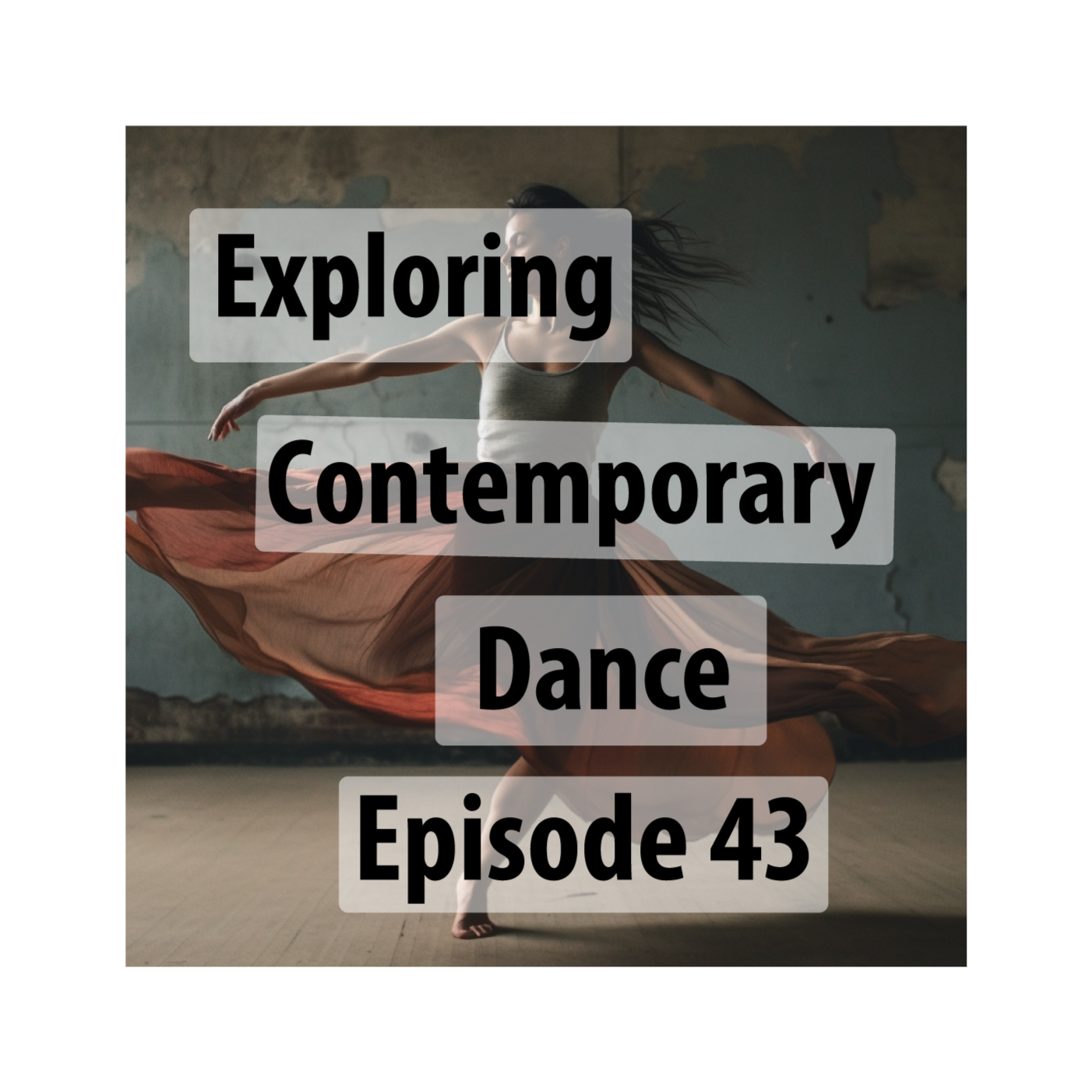
S1 Ep 43Deconstructing Contemporary Dance: The Ephemeral Mirage of Artistic Substance
Episode Notes: Deconstructing Contemporary Dance: The Ephemeral Mirage of Artistic SubstanceThis episode delves into the complex and often contentious world of contemporary dance. Our discussion critically examines what is often seen as an all-encompassing term for various modern movements in dance. We challenge the perceived depth of contemporary dance and explore its inherent limitations.A Flight of Fancy:- Freedom vs. Confusion: We start by discussing the liberating aspects of contemporary dance, comparing it to the structured world of traditional ballet. While it allows for expressive movement, we argue that it often leaves audiences confused due to its lack of clear meaning, questioning whether its ambiguity is intentional or a mask for lack of substance.The Aesthetics of Authenticity:- Expression vs. Discipline: The episode then moves to the rejection of formalized techniques by contemporary dance. We debate whether this rejection leads to genuine expression or lacks clear communication due to the absence of a disciplined structure.Historical Insights:- Innovation vs. Foundation: We draw historical parallels with figures like Isadora Duncan and Vaslav Nijinsky, discussing how their innovative efforts differ from today’s contemporary dance. The conversation revolves around whether current practices in contemporary dance maintain the balance between rebellion and respect for foundational dance principles.The Elitist Charade:- Inclusivity vs. Exclusivity: A significant portion of the discussion is dedicated to the perceived elitism in contemporary dance. We critique that only a "knowing" audience can appreciate its depth, arguing that true art should communicate universally, not just to a select few.Conclusion:- Substance vs. Style: The episode concludes with a reflection on the broader implications of our critique. We discuss how contemporary dance could evolve by embracing clarity, inclusivity, and substance over obscure performances that alienate wider audiences.Throughout the episode, we aim to spark a dialogue on the nature of artistic innovation and artists' responsibility to their audiences. We invite listeners to question and reassess their perceptions of contemporary dance and its place within the broader landscape of art and culture.
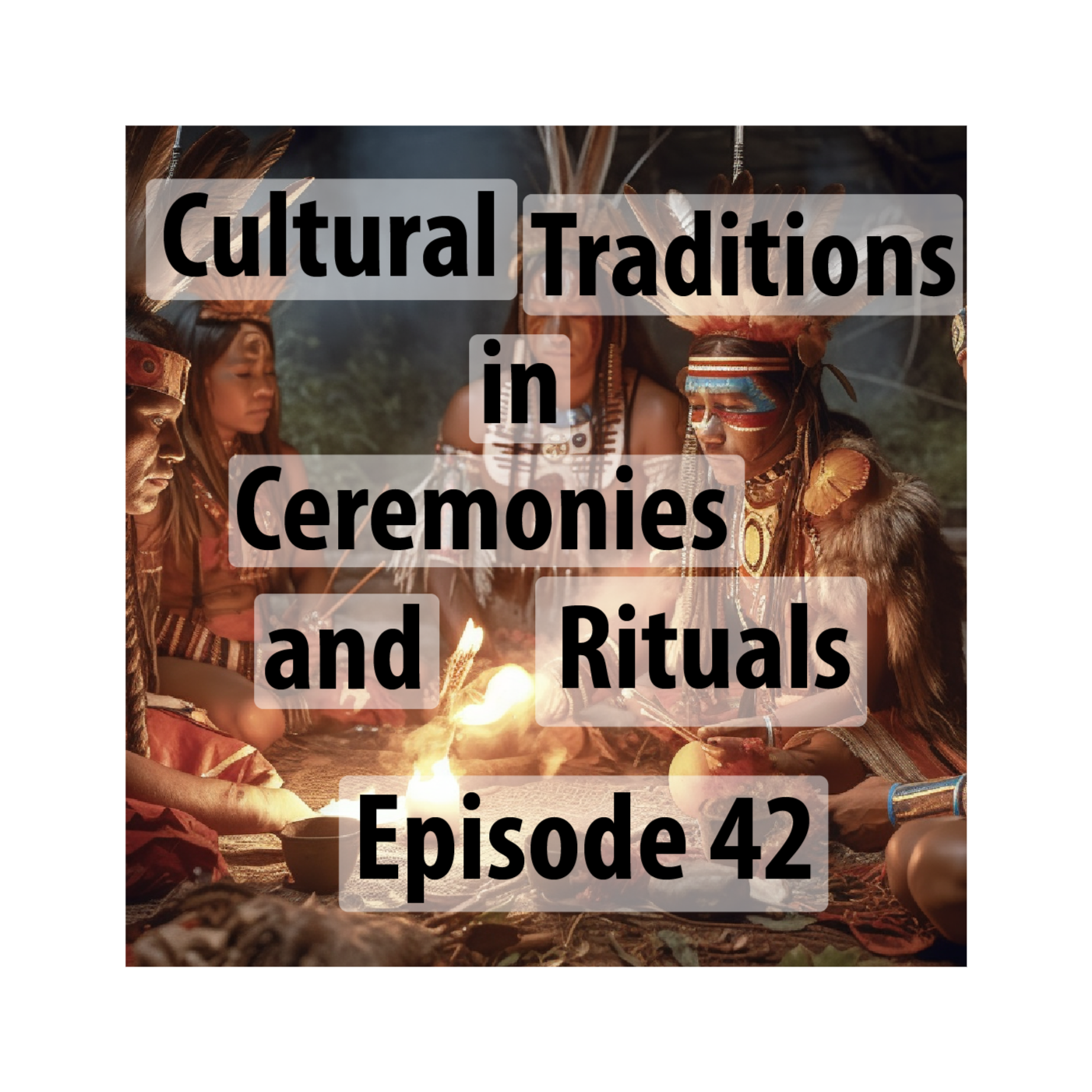
S1 Ep 42Cultural Traditions in Ceremonies and Rituals: An Erudite Exploration
Episode Title: Cultural Traditions in Ceremonies and Rituals: An Erudite ExplorationIntroduction:In this episode, we delve into the intricate world of cultural ceremonies and rituals, unravelling their historical significance and contemporary relevance. We embark on a journey to understand the power and complexities that underlie these practices, questioning their necessity and implications in our rapidly changing world.The Power of Rituals:We explore rituals' captivating allure, pondering whether their potency stems from intrinsic value or psychological comfort. From ancient to modern societies, rituals have served as conduits for cultural expression, spiritual beliefs, and social cohesion. However, we also scrutinize their potential to perpetuate dogma and reinforce social hierarchies, urging critical evaluation of their intentions and consequences.Historical Precedents:Venturing into antiquity, we uncover the origins and evolution of cultural ceremonies and rituals. From sacrificial rites in Aztec society to enigmatic practices in ancient Egypt, we unravel the rich tapestry of human attempts to manipulate the divine. The Enlightenment and the rise of scientific inquiry challenged these traditions, prompting adaptations and transformations, while some rituals stubbornly clung to outdated beliefs.The Value of Cultural Preservation:Advocates for cultural preservation assert the importance of ceremonies and rituals in maintaining continuity and identity. However, we confront the risks of preserving traditions without critical examination, potentially hindering societal growth and perpetuating harmful practices. We emphasize the need for ethical scrutiny, acknowledging the imperative to reassess rituals that propagate inequality or discrimination.Conclusion:In conclusion, we advocate for intellectual rigour in navigating cultural traditions surrounding ceremonies and rituals. While acknowledging their allure and capacity for fostering communal bonds, we caution against their potential to hinder intellectual progress. By critically evaluating historical precedents, scrutinizing values, and considering the necessity of cultural preservation, we aim to chart a balanced path that honours heritage while embracing a more enlightened future.Outro:As we bid farewell to this exploration, we encourage our audience to approach ceremonies and rituals with open minds and unyielding intellectual rigour. In doing so, we may uncover new perspectives and reshape these practices to serve humanity's evolving needs and aspirations better. Join us next time as we continue our journey through the intricate tapestry of human culture.
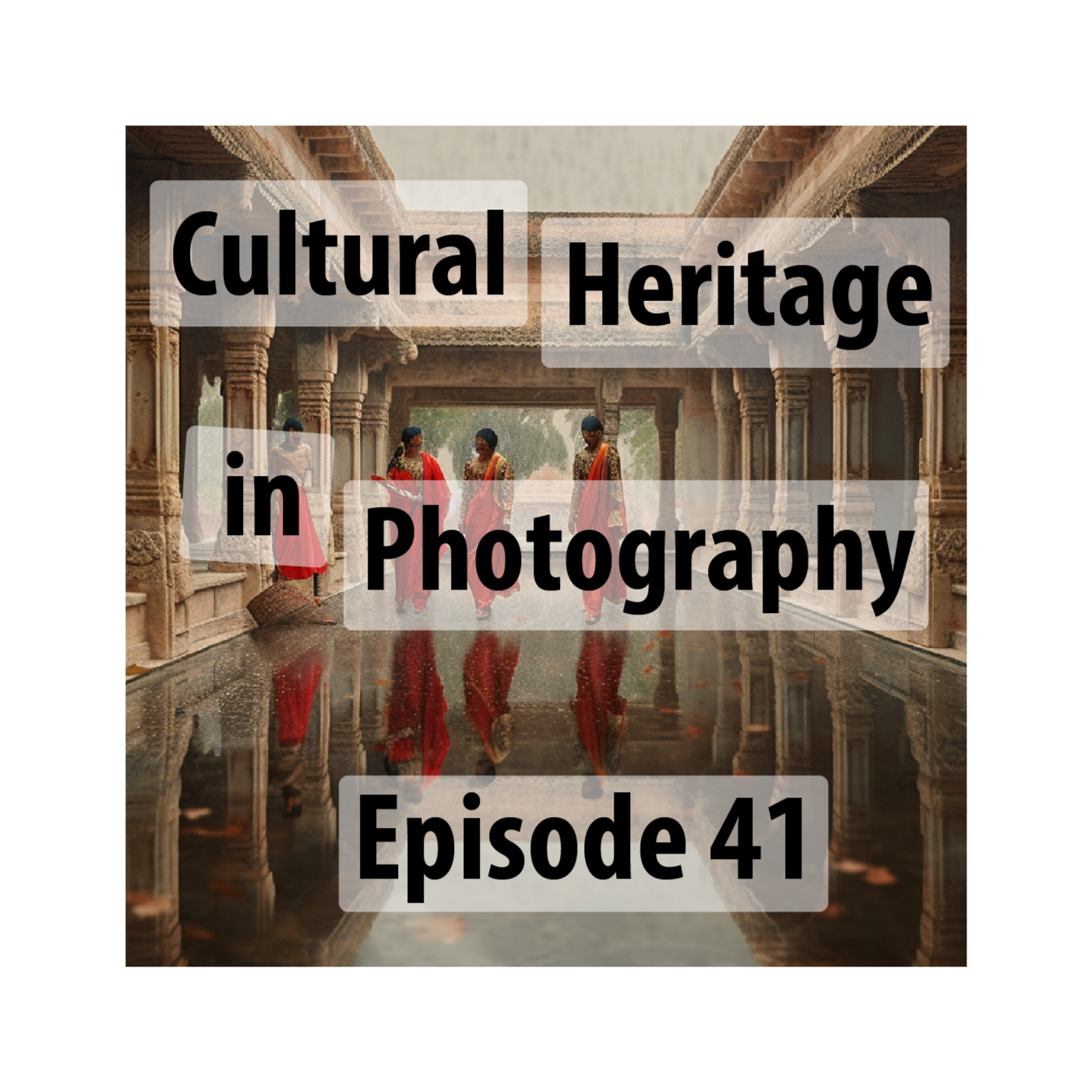
S1 Ep 41Cultural Heritage in Photography: Unmasking the Illusion
Episode Title: Cultural Heritage in Photography: Unmasking the IllusionIntroduction:In an era dominated by digital imagery, exploring cultural heritage in photography is a pressing concern. This episode delves into the intricate relationship between photography and artistic representation, urging viewers to scrutinize the medium's role in shaping narratives and preserving heritage.The Manipulative Gaze:Photography is inherently subjective and reflects the biases and intentions of its creator. This segment highlights how the photographer's cultural background and personal beliefs influence the portrayal of cultural heritage, cautioning against the illusion of objective reality often associated with the medium.Constructing and Perpetuating Stereotypes:Examining historical precedents, this section illuminates photography's role in perpetuating stereotypes. From Orientalist depictions to colonial narratives, the medium has simplified complex cultural identities, reinforcing power imbalances. The episode emphasizes the need to challenge stereotypes and embrace inclusivity in artistic representation.The Illusion of Preservation:While hailed for preserving heritage, photography's limitations in capturing intangible aspects of culture are scrutinized. The episode underscores the selective nature of photographic preservation, urging viewers to recognize the inadequacies in documenting cultural heritage solely through imagery.The Call for an Evolved Perspective:This segment encourages viewers to move beyond surface-level representations and advocates for a holistic approach. Embracing immersive experiences, oral histories, and academic research, the episode calls for critical engagement and the amplification of marginalized voices to foster a more authentic understanding of cultural heritage.Conclusion:Wrapping up, the episode underscores the importance of critically engaging with photography to uncover the true essence of cultural heritage. By challenging conventional narratives and embracing inclusivity, viewers are invited to participate in preserving and celebrating the diverse tapestry of human experience for future generations.
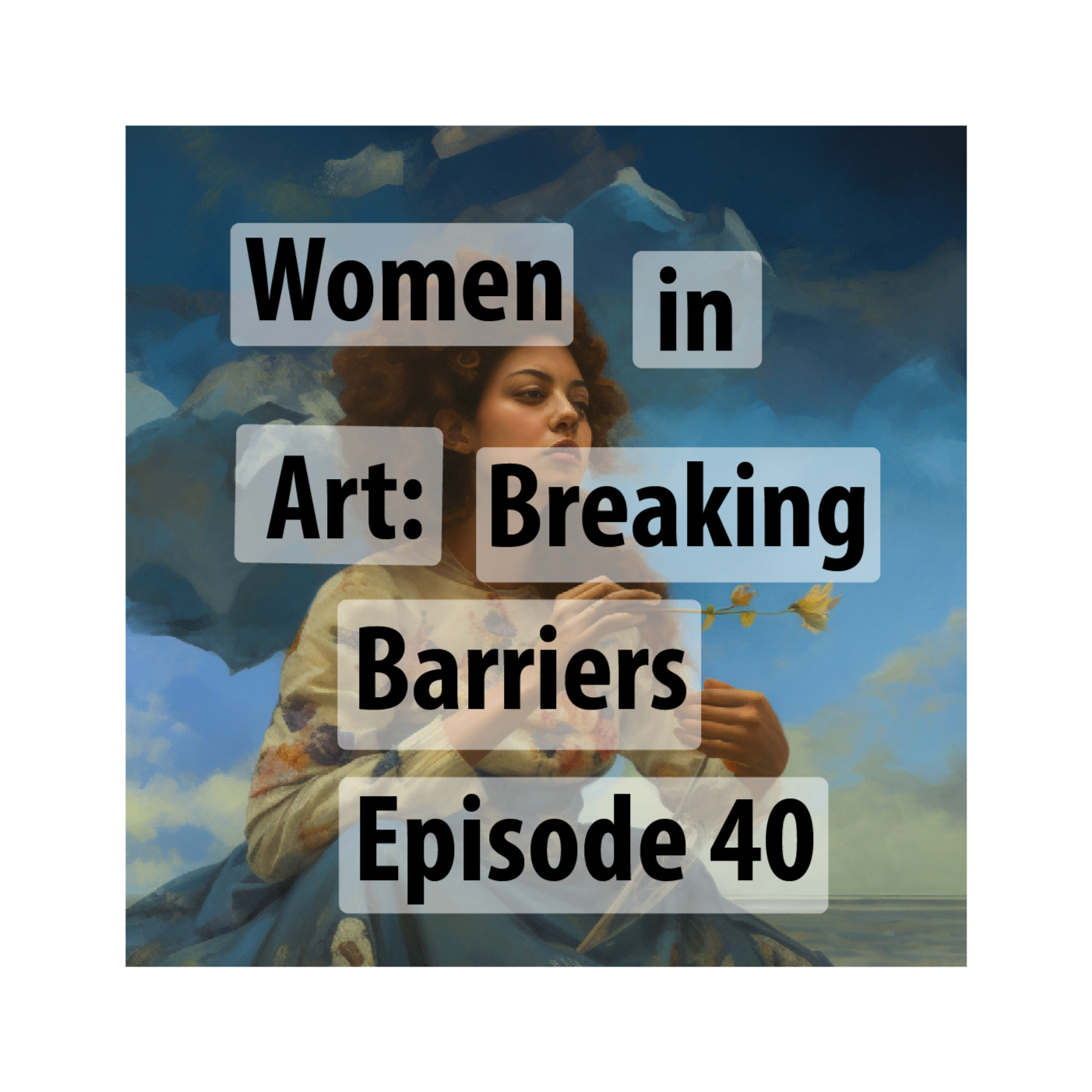
S1 Ep 40The "Women in Art" Narrative: A Critical Examination
Episode Notes: "The 'Women in Art' Narrative: A Critical Examination"This thought-provoking episode delves into the complex and often overlooked narrative of women in the art world. Through a critical examination, we explore the historical context, challenges, and contributions of women artists, shedding light on the systemic barriers they have faced and continue to face in the art community.Historical Context and Systemic BarriersWe start by setting the stage with a historical overview, acknowledging how women artists were historically marginalized and their work often undervalued. The episode discusses the lack of recognition women artists received and their struggle for inclusion in art academies, galleries, and museums. We examine how societal norms and gender biases have historically dictated the types of art women could create and how these creations were perceived.Challenges Faced by Women in ArtThe episode highlights specific challenges faced by women in the art world, including:- Limited Visibility: Women artists have often been left out of art history narratives and exhibitions despite their contributions.- Gender Bias: We discuss how preconceived notions about gender roles have affected the valuation and interpretation of women's art.- Economic Disparities: The episode delves into the financial challenges women artists face, such as lower prices for their work than their male counterparts.Contributions and MovementsDespite these challenges, women have made significant contributions to the art world. The episode celebrates women artists' achievements and unique perspectives across various periods and styles. We also explore how feminist art movements have sought to challenge traditional narratives and create more inclusive spaces for women in art.Contemporary Landscape and Future DirectionsMoving to the contemporary landscape, the episode examines the current state of women in the art world. We discuss recent advancements and ongoing challenges, including the gender gap in gallery representation and leadership positions within art institutions. The episode also considers how digital platforms and social media are changing the game for women artists, offering new opportunities for visibility and engagement.Critical Examination and ReflectionIn the concluding section, we encourage listeners to reflect on the narrative of women in art critically. The episode calls for a reevaluation of how art history is taught and advocates for a more inclusive approach that recognizes the diverse contributions of women artists. We discuss the importance of supporting women in the art community and how we can contribute to a more equitable and eclectic art world.Engagement and ResourcesWe wrap up the episode by inviting listeners to engage with the topic further. We recommend visiting exhibitions that feature women artists, supporting women artists in their communities, and exploring resources that highlight the contributions of women to the art world. The episode notes include links to museums, online galleries, and books that provide deeper insights into the "Women in Art" narrative.In conclusion, this episode not only sheds light on the struggles and triumphs of women in the art world but also serves as a call to action for creating a more inclusive and equitable art community.
S1 Ep 39Inquisitive Gastronomy: Provocatively Venturing into Cultural Cuisines
Episode Notes: Inquisitive Gastronomy - Provocatively Venturing into Cultural CuisinesIntroduction to Cultural Cuisines: In today's episode, we delve into the world of cultural cuisines, exploring the rich tapestry of flavours, ingredients, and culinary traditions that define various cultures around the globe. We stress the importance of approaching these traditions with an open mind and intellectual rigour, challenging long-standing assumptions and exploring the historical narratives that have shaped our understanding of different cuisines.The Culinary Kaleidoscope: We discuss the concept of cultural cuisine and caution against oversimplifying or homogenizing diverse culinary traditions. We emphasize that no cuisine is "pure" or "authentic" in isolation; instead each is a blend of multiple cultural influences shaped by historical events such as migrations, conquests, and trade. This segment challenges the listener to rethink their assumptions about the origins and evolution of different culinary practices.Cultural Appropriation vs. Culinary Evolution: The episode tackles the contentious issue of cultural appropriation in the culinary world, arguing that while cultural sensitivity is crucial, the exchange of culinary ideas across cultures has historically been a source of richness and evolution. We propose a more nuanced understanding that appreciates culinary traditions' interconnectedness and dynamic nature.The Power of Fusion: We explore the concept of fusion cuisine, addressing criticisms that it dilutes cultural authenticity while arguing for its value as an artistic expression that bridges cultural divides and challenges our palates. Through historical examples like the Silk Road, we illustrate how fusion has always been a part of culinary evolution, encouraging listeners to embrace innovative combinations that expand the boundaries of traditional cuisine.Culinary Colonialism: This section delves into colonialism's impacts on global culinary traditions, acknowledging the power imbalances inherent in these historical interactions. However, we also highlight the syncretism that resulted from blending European and indigenous culinary practices, leading to the creation of vibrant new dishes that challenge simplistic narratives of domination and resistance.Historical Prejudices and the Culinary Canon: We critique the concept of a "culinary canon" that has historically favoured European cuisines while marginalizing others. By examining the sophisticated culinary traditions of ancient civilizations like the Persians, Chinese, and Mayans, we challenge listeners to reconsider what constitutes culinary excellence and appreciate global cuisines' depth and complexity.Conclusion: The episode encourages listeners to embark on their gastronomic voyages with curiosity and an open mind. We emphasize the importance of critically engaging with the complexity of culinary practices and celebrate the shared human experience reflected in our global gastronomy.
S1 Ep 38Theatrical Innovations: From Experimental to Immersive
Episode Notes: Theatrical Innovations: From Experimental to ImmersiveIn this episode, we delve into the transformative journey of theatre from its classical origins to the present-day immersive theatre phenomenon. As we traverse the timeline, we uncover how innovation has always been central to the evolution of theatrical arts, pushing boundaries and challenging audience expectations.The Heritage of Theatrical Innovation- The episode begins by tracing theatre's lineage, from ancient Greek amphitheatres to the opulent playhouses of Shakespearean England, highlighting the continuous quest for novelty and progress.- We discuss the significant shift in the 20th century with the rise of experimental theatre, led by figures such as Antonin Artaud and Bertolt Brecht, who defied traditional conventions and emphasized audience interaction.Emergence of Immersive Theatre- We examine the emergence of immersive theatre from the roots of the experimental movement, utilizing new technologies to create engaging, multi-sensory experiences.- The episode highlights the allure of immersive theatre, which promises a full-bodied narrative engagement, breaking the barrier between performers and spectators and inviting the audience directly into the narrative.Critical ExaminationWhile acknowledging immersive theatre's innovative appeal, we urge a critical perspective on its implications for the essence and integrity of traditional theatrical forms.- We discuss concerns that immersive theatre might dilute the theatrical experience by blurring the lines between illusion and reality and reducing the emphasis on narrative and text.The Role of Text and Playwright- The episode emphasizes the traditional role of the playwright and the written word as the cornerstone of theatre, exploring the risks that immersive theatre poses to overshadowing literary tradition.- We stress the importance of maintaining a balance between novel sensory experiences and the rich heritage of scripted narrative.Accessibility and Inclusivity- A significant part of the discussion focuses on the broader implications of immersive theatre, particularly regarding accessibility and inclusivity.- We address the potential challenges immersive theatre may present for individuals with disabilities or sensory sensitivities, emphasizing the need for innovative approaches that do not alienate audience segments.Concluding Thoughts- In wrapping up, we reflect on the importance of balancing embracing innovative theatrical forms and preserving the core elements that define the theatre.- The episode calls for a thoughtful approach to integrating immersive techniques, ensuring they complement rather than detract from the traditional storytelling and emotional depth that theatre offers.This episode comprehensively explores the ongoing evolution of theatre, inviting listeners to ponder the future of this ever-changing art form while considering the balance between innovation and tradition.

S1 Ep 37The Transformative Force of Language: An Incisive Exploration of Poetry and Spoken Word
Episode Notes: "The Transformative Force of Language: An Exploration of Poetry and Spoken Word"Introduction:- The episode begins with exploring the intellectual and transformative power of poetry and spoken word, asserting that these forms of artistic expression are not mere embellishments but profound encapsulations of human experience.- The host sets the stage for a penetrating journey into the heart of poetry and spoken word, challenging conventional wisdom and delving into their historical context and impact.Challenging Conventional Wisdom:- The common misconception of poetry and spoken word lacking practical significance is addressed.- The narrative shifts to highlight the inherent ability of these art forms to encapsulate complex emotions, provoke thought, inspire action, and serve as catalysts for social change, reshaping societies and challenging the status quo.Historical Tapestry:The episode delves into the ancient origins of poetry and spoken word, starting from the oral traditions of ancient Greece, where epic poems like Homer's Iliad and Odyssey shaped cultural identity and collective memory.The discussion moves to the Romantic era, highlighting poets like Wordsworth, Coleridge, and Byron, who used their works to rebel against societal constraints, celebrate individuality, and confront industrial-age injustices, redefining humanity's relationship with the world.Power of Emotional Resonance:- The episode explores how poetry and spoken word resonate deeply with human emotions, allowing individuals to express the inexpressible and find solace, empathy, and catharsis.- Maya Angelou's works are highlighted as transcending racial and gender boundaries, with her poetry serving as a call for equality and justice and empowering individuals to confront adversity.Weapon Against Injustice:- Poetry and spoken word are presented as potent weapons against injustice and tyranny, capable of exposing hypocrisies, dismantling oppressive narratives, and igniting social movements.- The Harlem Renaissance is spotlighted, emphasizing the role of African American poets like Langston Hughes in defying racial stereotypes, championing civil rights, and compelling societal confrontation with racial inequalities.Unapologetic Pursuit of Intellectual Rigor:- The episode encourages a critical engagement with the world through poetry and spoken word, which provide unique perspectives on societal structures, moral dilemmas, and existential questions.- Poets like T.S. Eliot and Sylvia Plath are discussed for their wit and intelligent observation, offering insights into the human condition and provoking self-reflection and examination of life's complexities.Conclusion:- The episode concludes by reaffirming the transformative power of poetry and spoken word in shaping civilizations, challenging social norms, and igniting revolutions.- The host emphasizes the importance of not underestimating the power of words and art in reshaping the world, urging listeners to commit to intellectual rigour and critical engagement to redefine cultural narratives and forge a more enlightened, compassionate society.
S1 Ep 36Cultural Influences in Gaming: Unveiling the Sociocultural Tapestry of Virtual Realities
Episode Notes: Cultural Influences in GamingIntroduction to Cultural Influences in Gaming:Today's episode delves into the profound cultural impacts shaping the gaming industry. Dissecting how gaming transcends being a mere form of entertainment to reflect and challenge societal norms, we explore its role as a medium mirroring our world's sociocultural tapestry.Unearthing Gaming's Cultural Ancestry:Gaming's roots are deeply entwined with human history, tracing back to ancient civilizations. These early games, from Senet in Egypt to strategy games in China, were more than leisure; they imparted moral values, honed strategic thinking, and fostered social bonds. Understanding these origins is crucial to comprehending gaming's deep cultural ties.Historical Perspectives and Societal Reflections:Games like chess have mirrored societal structures throughout history, reflecting and perpetuating the zeitgeist of their times. Analyzing these historical games shows how gaming evolves with societal values, norms, and structures.Intersections of Gaming and Identity:Gaming has become a platform for expressing and exploring cultural identities globally. While games like Civilization allow for nationalistic narratives, this intersection raises questions about representation and inclusivity, underlining the need for games to respectfully reflect diverse cultures and perspectives.Gaming as a Cultural Force:The rise of esports and narrative-rich games like "The Witcher" series illustrates gaming's power as a cultural phenomenon. These developments challenge conventional views on entertainment and highlight gaming's capacity to shape societal norms and engage with complex issues.The Double-Edged Sword of Cultural Influence:While gaming enriches cultural discourse, it also risks perpetuating stereotypes and biases, especially in the portrayal of non-Western cultures. The episode emphasizes the need for sensitivity and research in game development to avoid reinforcing negative stereotypes and misrepresentations.Conclusion and Reflections:We conclude that gaming is a dynamic, multifaceted medium that offers a unique lens on society. As it continues to evolve, the gaming industry faces the challenge of harnessing its cultural impact responsibly. We advocate for a future where gaming entertains, enriches, educates, and fosters inclusivity and understanding across diverse cultural landscapes.Join us in this exploration as we unpack the layers of cultural influences in gaming and understand its potential as a transformative medium in today's digital age.
S1 Ep 35Cultural Diversity in Contemporary Art: A Critical Exploration
Episode Notes: Cultural Diversity in Contemporary Art: A Critical ExplorationOverview:This episode profoundly delves into the intricate relationship between contemporary art and cultural diversity, critically examining the assumptions, challenges, and complexities underpinning this topic. The discussion aims to provoke thought and encourage a more profound understanding of cultural diversity in the art world by scrutinizing historical contexts, market influences, and the nuances of representation.Key Themes:1. Art as a Reflection of Diversity: - Explores the common perception of contemporary art as a mirror of cultural diversity. - Questions the oversimplification of including diverse artists leading to genuine representation.2. Historical Context and Power Dynamics: - Consider how art has historically intertwined with cultural hegemony and power structures. - Discusses the impact of historical power dynamics on the representation and legitimacy of artists from marginalized communities.3. Tokenism in Art Institutions: - Challenges the notion that mere inclusion equals progress. - Highlights the dangers of tokenism and the need for a more profound institutional change to achieve true diversity.4. The Burden of Representation: - Examines the pressures on artists from marginalized communities to represent their entire culture. - Critiques the reduction of artistic contributions to mere cultural or ethnic identifiers.5. Market Influences and Homogenization: - Discusses the contemporary art market's role in shaping cultural diversity discourse. - Analyzes the homogenizing effects of globalization and commercial interests on artistic expression.6. Cultural Appropriation vs. Respectful Exchange: - Investigates the fine line between cultural exchange and appropriation in art. - Emphasizes the importance of sensitivity and awareness in navigating cultural borrowing.7. Pathways to Genuine Cultural Exchange: - Advocates for meaningful dialogue and deeper engagement with cultural heritage and human experiences. - Suggests ways to transcend superficial displays of diversity and foster authentic understanding.Conclusion:The episode concludes by asserting that genuine cultural diversity in contemporary art requires critically examining existing narratives and structures. It calls for dismantling institutional hierarchies, acknowledging the complexities of representation, and promoting genuine cultural dialogue. Through this, the art world can move toward a more inclusive and richly diverse landscape.Discussion Points for Listeners:- Reflect on personal experiences with contemporary art and cultural diversity.- Consider the impact of market forces on artistic expression and diversity.- Discuss ways to support genuine cultural exchange and diversity in the art world.Call to Action:Listeners are encouraged to engage with diverse art forms and participate in conversations that challenge and expand the discourse around cultural diversity in art.

S1 Ep 34Art and Nature: Environmental Perspectives
Episode Notes: "Art and Nature: Environmental Perspectives"In this thought-provoking episode, we explore the complex interplay between art, nature, and the human experience, challenging the romanticized and often simplistic views of nature commonly found in art history. We use historical insights, critical analysis, and a bold intellectual approach to unravel the layers of this multifaceted relationship.Art as a Human Construct: We begin by redefining art as fundamentally a human creation, a lens through which we interpret and interact with our surroundings. This segment challenges the traditional view of nature as an entity to be either idealized or mimicked, proposing instead a more introspective look at how art reflects our cultural and personal engagement with the natural world.Historical Perspectives: Tracing back to ancient civilizations, we explore how different cultures depicted and interacted with nature through art. From the mythological interpretations of the Egyptians to the rational observations of Greek philosophers and onto the scientific curiosities of Renaissance artists like Leonardo da Vinci and Albrecht Dürer, we see diverse perspectives that challenge monolithic views of nature in art.Challenging Conventional Wisdom: The episode critically examines how art has not always been in harmonious dialogue with nature. We discuss the impactful works of Francisco Goya, whose "Disasters of War" series casts a grim reality on the human impact on nature, challenging the idyllic and romantic portrayals that have long dominated the narrative.A New Perspective: Art as Provocation: Here, we pivot to view art not just as a representation or celebration of nature but as a provocateur and catalyst for change. We discuss contemporary artists like Ai Weiwei, whose works demand reevaluating our ecological footprint and challenge viewers to confront uncomfortable truths about environmental degradation.Literary Contributions to Environmental Discourse: Acknowledging the influence of literature, we delve into the writings of Henry David Thoreau and Rachel Carson. Their works, "Walden" and "Silent Spring," have significantly shaped public perception and awareness of our relationship with the environment, illustrating the power of words in the environmental movement.Conclusion: We conclude the episode by advocating for a more critical, nuanced, and comprehensive understanding of the relationship between art and nature. Moving beyond simplistic and romanticized narratives, we argue for a discourse that embraces complexity and provocation, fostering a more respectful and aware engagement with our natural surroundings.This episode is not just an exploration but a call to action, urging listeners to reconsider the role of art in environmental discourse and to engage with the natural world more consciously and responsibly.
S1 Ep 33Harmonic Hegemony: Unraveling the Illusion of Musical Identity
Harmonic Hegemony: Unraveling the Illusion of Musical IdentityIntroduction to the Episode:In this episode, we explore the profound impact of music on human emotion, culture, and identity. Music, a pervasive force in our lives, serves not only as a reflection of our inner worlds but also as a bridge across cultural divides. We challenge the traditional view of music as a static identity marker, exploring its dynamic nature and role in shaping and reflecting our evolving selves.The Malleability of Musical Identity:We discuss that musical preference and identity are not fixed but fluid and adaptable. This segment dives into the idea that music, far from being a rigid reflection of ourselves, changes as we move through different environments and cultural landscapes. The evolution of musical tastes and the spread of genres like jazz and hip-hop illustrate the adaptability of music and challenge the notion of music as an unchanging identity marker.The Fallacy of Musical Nationalism:Here, we scrutinize the idea of music as a tool for nationalistic expression. Using examples like Mozart and Verdi, we argue that music often transcends national boundaries, contrary to nationalism's attempts to claim it. We dissect the romanticized view of folk music as a pure expression of national identity, highlighting the complexities and external influences that shape music traditions.Music as a Catalyst for Cultural Exchange:This part of the discussion focuses on music's role in cultural exchange and hybridity. We explore historical examples, such as the Silk Road and modern instances of musical fusion, to demonstrate how music acts as a conduit for sharing and blending diverse cultural narratives. This segment emphasizes music's power to connect and transform cultures, moving beyond the idea of music as solely a marker of individual or national identity.Conclusion:We conclude by reiterating the complexity of the relationship between music and identity. Emphasizing music's ability to transcend individual and national boundaries, we call for a more nuanced understanding of this relationship. The episode closes with an invitation to listeners to embrace the diverse and ever-changing landscape of musical expression, recognizing its potential to unite different peoples and challenge preconceived notions of identity.Key Takeaways:- Music's identity is fluid, not fixed.- Musical nationalism often overlooks the universal appeal and cross-cultural roots of music.- Music serves as a dynamic medium for cultural exchange and hybridity.- Understanding music's relationship with identity requires acknowledging its complexity and evolving nature.By challenging conventional wisdom, this episode invites listeners to view music not as a static emblem of identity but as a vibrant, dynamic force that shapes and reflects our interconnected world.
S1 Ep 32Cultural Reflections in Literature: Unmasking the Illusions1
Episode Notes for "Cultural Reflections in Literature: Unmasking the Illusions"Introduction:- The episode delves into how literature reflects and refracts cultural complexities.- Challenges the common belief that literature acts as a straightforward mirror of culture, suggesting instead it's more like a prism.- Highlights the episode's aim: to dissect the illusions created by the conventional wisdom surrounding literature and culture.The Fallacy of Monolithic Cultural Representations:- Discusses the misconception that a single literary work can represent an entire culture.- Emphasizes cultures' inherent diversity, dynamism, and the dangers of reductionist views.- Literature is highlighted as just one of many expressions of a culture, incapable of encapsulating a culture's full scope.Shattering the Orientalist Lens:- Examines the issue of Orientalism in literature, where non-Western cultures are portrayed through a lens of exoticism and otherness.- Draws on Edward Said's "Orientalism" to argue against Western literature's reduction of non-Western cultures to stereotypes.- Encourages readers and critics to seek a deeper, more nuanced understanding of cultures.Intertextuality: The Web of Cultural Influence:- Explores the interconnectedness of literary works and how they form a part of a more extensive, intercultural dialogue.- Highlights how literature transcends cultural boundaries, with examples like the impact of the Islamic Golden Age on the European Renaissance.- Suggests literature is a platform for cultural exchange, questioning the idea of fixed cultural identities.Literary Ambiguity: A Call for Critical Interpretation:- Points out literature's inherent ambiguity and subjectivity, allowing for multiple interpretations.- Uses Jonathan Swift's "Gulliver's Travels" as an example to illustrate how literature can critique societal norms and values.- Emphasizes the role of narrative techniques in challenging readers' perceptions and reflecting cultural complexities.Conclusion: Unveiling the Illusions:- Reinforces the need to move beyond simplistic interpretations and understand the nuanced relationship between literature and culture.- Encourages readers to critically engage with literature to uncover hidden truths and gain new perspectives.- Calls for dismantling the Orientalist gaze and a deeper engagement with the complexities presented in literary works.Key Takeaways:- Literature and culture are complexly intertwined, requiring critical analysis beyond surface-level interpretations.- Readers should challenge their preconceptions and engage deeply with texts to appreciate the full spectrum of cultural reflections.- By understanding literature's role in reflecting and shaping cultural narratives, we can better navigate the illusions it creates and uncover the underlying truths.

S1 Ep 31Art and Healing: The Therapeutic Power of Creativity, or Wishful Thinking?
### Episode Notes: Art and Healing: The Therapeutic Power of Creativity, or Wishful Thinking?Introduction to the Debate:The episode explores the complex relationship between art and healing, questioning the often-accepted notion that creativity inherently possesses therapeutic properties. This analysis aims to maintain a critical perspective and examines whether the comforting aspects of art truly translate into genuine therapeutic effects.Defining Therapeutic Power:Therapeutic power is often attributed to art's ability to alleviate emotional distress, promote self-expression, and enhance well-being. However, the episode emphasizes distinguishing between correlation and causation, warning against the potential misinterpretation of the placebo effect as genuine healing.Historical Perspectives:The narrative brings historical examples into the debate, notably Vincent van Gogh, whose art was a product of anguish rather than a source of healing. This discussion challenges the oversimplification of the relationship between creativity and mental health.Individual Experiences and Preferences:The episode argues against the universal therapeutic claims of art, highlighting the subjective nature of art's impact on individuals. It addresses how personal preferences and experiences significantly influence the emotional effect of artistic endeavours.Risks of Overreliance on Art as Therapy:A critical viewpoint on the dangers of substituting art for professional mental health care is presented. While art can complement therapeutic practices, the episode cautions against viewing it as a standalone solution, emphasizing the importance of evidence-based psychological interventions.Questioning Catharsis and Artistic Expression:The episode scrutinizes the belief that cathartic artistic expression equates to therapeutic progress. It argues that while emotional release can be satisfying, it does not necessarily lead to long-term psychological well-being and may not address deeper emotional issues.The Reality of Creative Lives:The narrative challenges the romanticization of the "tortured artist" by discussing the lives of Edgar Allan Poe, Virginia Woolf, and Sylvia Plath. These examples illustrate that profound artistic expression does not guarantee mental health and can coexist with significant personal struggles.Conclusion - A Call for Rigorous Examination:The episode concludes by advocating for a critical and nuanced approach to art as therapy. It encourages listeners not to accept the therapeutic claims of creativity without questioning, urging a balanced perspective that recognizes art's value while understanding its limitations in the context of mental health.Key Takeaways:- Art's therapeutic potential varies significantly among individuals.- Historical and personal evidence suggests complexity in art's impact on mental health.- Artistic activities should not replace professional mental health care.- Emotional release through art does not necessarily equate to healing.- A critical, evidence-based approach is essential in evaluating art's therapeutic claims.

S1 Ep 30World Cinema: Unveiling the Tapestry of Human Experience
Episode Notes: Unveiling the Tapestry of World CinemaIntroduction to World Cinema:- Broadening Horizons: Venture beyond Hollywood to explore diverse narratives and cultural perspectives.- Intellectual Journey: Challenge conventional wisdom and immerse in the global cinematic landscape.The Hegemony of Hollywood:- Global Dominance: Hollywood influences global cinema, shaping narratives and audience perceptions.- Homogenization: The prevalence of formulaic storytelling and the overshadowing of profound themes.Challenging Cultural Hegemony:- Diverse Narratives: World cinema as an antidote to Hollywood’s cultural homogeneity.- Marginalized Voices: Bringing peripheral stories to the forefront, challenging preconceived notions.Historical Narratives and Identity:- Alternative Histories: Films like "Ran" and "Ashes and Diamonds" offer perspectives outside Western narratives.- Complex Identities: Explore the impact of history on personal and societal identity.The Auteur’s Vision:- Visionary Filmmakers: Celebrating auteurs like Bergman, Fellini, and Ray for their unique cinematic contributions.- Human Experience: Films that transcend geographical boundaries, offering universal insights.Cross-Cultural Dialogue:- Bridging Cultures: World cinema as a medium for fostering understanding and empathy between different cultures.- Global Stories: Films like "In the Mood for Love" and "Taste of Cherry" provide windows into varied life experiences.The Emergence of New Cinematic Centers:- Evolving Landscape: Highlighting the rise of new cinematic powerhouses like South Korean cinema.- Fresh Perspectives: The impact of emerging cinematic centers on global storytelling and creativity.The Language Barrier:- Accessibility Challenges: The role of language in limiting access to global cinema.- Breaking Barriers: The growing accessibility of world cinema through subtitles and digital platforms.Conclusion:- Intellectual Endeavour: The importance of exploring world cinema to enrich understanding and foster global connections.- Cultural Exploration: Encourage audiences to break cultural homogeneity and embrace global cinematic experiences.Call to Action: Engage with world cinema to discover the rich tapestry of human experience and foster a deeper understanding of diverse cultures and histories.

S1 Ep 29 Cultural Inspirations in Fashion Design: A Critical Examination of the Tapestry of Influence
Episode Notes: Cultural Inspirations in Fashion Design: A Critical Examination of the Tapestry of InfluenceIntroduction:The episode explores how cultural inspirations significantly shape fashion design, threading traditional patterns, materials, and styles into contemporary fashion while stressing the importance of a critical approach to prevent romanticizing cultural interactions. The discussion underscores fashion design as a reflection of creativity influenced by a myriad of artistic elements.The Dangers of Cultural Appropriation:This segment delves into the sensitive issue of cultural appropriation in fashion, highlighting the problematic aspects of commodifying sacred symbols and traditional designs without respect for their cultural significance. It emphasizes designers' need to navigate the fine line between appreciation and appropriation, promoting respectful dialogue and uplifting marginalized voices.Revitalizing Cultural Traditions:Fashion’s potential to revitalize fading cultural traditions is examined through historical examples like Paul Poiret’s work, which infused Ottoman textiles and Middle Eastern design into Western fashion. The segment discusses the double-edged sword of revitalization, which can lead towhich appreciation and controversy.Moving Beyond Stereotypes:This part critiques the reduction of rich cultures to stereotypes in fashion, advocating for a deeper understanding of the cultural, historical, and social contexts behind the inspirations. It calls for designers to avoid superficial and clichéd representations, highlighting the need for a nuanced portrayal of cultural elements.Reciprocity and Collaborative Exchange:Emphasizes the importance of genuine collaboration between designers and the cultures they draw inspiration from. The discussion advocates for equitable dialogue, mutual respect, and proper representation, encouraging designers to use their platforms to amplify historically marginalized voices.Cameron’s Counterpoints:Cameron offers an alternative perspective on cultural appropriation, discussing the complex historical and cultural dynamics. He examines the Western-centric view and the shifting definitions of cultural theft versus cultural exchange, highlighting the evolving diversity and inclusivity within the fashion industry.Fashion’s Broader Impact:This section explores how fashion reflects and influences cultural shifts, arguing that changes in attire often signal broader societal changes. It touches upon the historical impact of significant events on fashion trends and the evolution of everyday attire, illustrating fashion’s deep interconnection with societal developments.Iconic Fashion Shows:A curated playlist of notable fashion shows is discussed, showcasing the evolution of fashion and its reflection of cultural, social, and artistic shifts. Highlights include groundbreaking shows by designers like John Galliano, Alexander McQueen, and Yves Saint Laurent, demonstrating fashion’s capacity to innovate and inspire.Conclusion:The episode wraps up by reiterating the complexity of cultural inspirations in fashion design. It calls for designers to embrace cultural influences with intellectual rigour, ensuring their work respects, appreciates, and accurately represents the diversity of human creativity, thereby fostering a more inclusive and understanding fashion industry.These notes aim to guide listeners through the critical discussions and insights presented in the episode, enhancing their understanding and appreciation of cultural influences in fashion design.
S1 Ep 28The Ephemeral Mirage: Unraveling the Impact of Social Media on Culture
Episode Notes: "The Ephemeral Mirage: Unraveling the Impact of Social Media on Culture"In this thought-provoking episode, we delve into the paradoxical world of social media and its profound impact on our cultural fabric. The digital age has introduced an illusion of connectivity, where superficial exchanges often replace genuine human interactions. We explore how these platforms' relentless pursuit of perfection fosters a culture of comparison and self-doubt and erodes the authenticity necessary for authentic human connection.Key Themes:1. Illusion of Connectivity: Despite the promise of bridging distances and fostering global understanding, social media often results in superficial interactions. This segment challenges the depth and authenticity of online connections and highlights the emergence of echo chambers that reinforce existing beliefs, hindering meaningful discourse.2. Pursuit of Perfection: Social media promotes an unrealistic standard of flawlessness, leading to a culture of comparison and eroding genuine vulnerability. We discuss how the curated nature of social media content contributes to a distorted perception of reality and diminishes the richness of our cultural diversity.3. Commodification of Attention: Attention is the new currency in the digital age, with platforms designed to captivate users through sensationalism and trivial content. This part examines how social media prioritizes engagement over substance, impacting our cultural values and intellectual depth.4. Historical Perspective: We contextualize social media's impact by comparing it to past technological advancements. This historical comparison helps us understand that while social media shapes culture, culture also shapes its use and influence.5. Role of the Individual: The final segment emphasizes personal responsibility in navigating the digital landscape. It calls for individuals to break free from the cycle of passive consumption and engage in critical thinking and diverse dialogues to prevent the homogenization of culture.Conclusion: Social media's influence on culture is complex and multifaceted. This episode encourages listeners to critically assess the role of digital platforms in their lives and reclaim their agency in shaping a more authentic, diverse, and intellectually vibrant society.Takeaway: The digital age challenges us to discern the real from the virtual, the profound from the trivial. By actively engaging in thoughtful and diverse interactions, we can mitigate the adverse effects of social media and enrich our cultural landscape.

S1 Ep 27Unravelling the Tapestry of Folklore and Mythology: A Critical Inquiry
Episode Notes: "Unraveling the Tapestry of Folklore and Mythology: A Critical Inquiry"Overview:This episode delves into the fascinating realm of folklore and mythology, examining their roles as cultural repositories and impact on our collective consciousness. It underscores the importance of critical scrutiny in separating fact from fiction and exploring the deeper truths behind these ancient narratives.Key Points:1. Origins and Nature of Myths: - Myths are viewed as foundational stories explaining natural phenomena or imparting moral lessons. - It's vital to understand that myths are creations of human imagination, not immutable truths, reflecting diverse cultures and historical contexts.2. Symbolism's Power: - The episode emphasizes the significant role of symbolism in conveying complex ideas and psychological truths through mythological narratives. - Examples like Prometheus and Hermes illustrate how myths encapsulate human aspirations and struggles without necessarily representing historical facts.3. Fluidity and Adaptability of Myths: - Mythology's evolution alongside human societies highlights its malleability and the changing nature of its narratives. - Changes in the Greek pantheon over time exemplify how myths adapt to reflect societal values and developments.4. Challenging Conventional Wisdom: - A critical approach to mythology involves questioning longstanding assumptions and societal norms embedded within these stories. - The episode discusses how myths have historically perpetuated patriarchal structures and reinforced gender inequalities.5. Historical Context and Analysis: - Incorporating historical references and insights from scholars enhances our understanding of myths' universality and psychological significance. - By examining myths through the lenses of historical context and critical analysis, we gain a more nuanced understanding of their underlying messages and societal implications.6. Martine's Perspective: - The narrative explores how ancient communities used mythology to explain natural phenomena and societal structures before the advent of modern science. - It also highlights the enduring role of folklore and mythology in shaping and reflecting societal development and traditions.Conclusion:Exploring folklore and mythology is an active pursuit of knowledge, demanding intellectual rigour and critical inquiry. This episode encourages listeners to look beyond the surface of these narratives, challenging dominant narratives and reevaluating their meanings to understand human culture and psychology better.Reflection:Listeners are invited to reflect on the myths and folklore of their own cultures, considering how these stories have shaped their understanding of the world and themselves. They are encouraged to engage critically with these narratives, fostering a more profound appreciation and a deeper, nuanced understanding of these ancient yet enduring elements of human heritage.

S1 Ep 26Unravelling Cinematic Masters: An Intellectual Journey into Directors and Their Styles
Episode Notes for "Unravelling Cinematic Masters: An Intellectual Journey into Directors and Their Styles"Introduction: The Complexity of Directorial Styles- Explore the concept that directors are celebrated for their distinct styles but are dynamic, evolving with each film.An example is Alfred Hitchcock, known for suspense but showcases a range from "Psycho" to "North by Northwest."The Myth of Singular Style- Directors like Stanley Kubrick are often pigeonholed into a specific style; however, their work spans a broader spectrum.- Kubrick's films, while stylistically meticulous, also delve deep into philosophical themes.Critique of Auteur Theory- Discussion on the auteur theory's limitations, emphasizing the collaborative nature of filmmaking.- Quentin Tarantino's films are highlighted as examples where the collaborative efforts of cast and crew significantly contribute to the final product, challenging the notion of the director as the sole creative force.Historical Context and Filmmaking Evolution- The impact of societal changes and technological advancements on directorial styles.- Steven Spielberg's evolution from creating nostalgic blockbusters to tackling more serious and complex themes.Debunking the Magnum Opus Concept- Argues against the idea of defining a director by a single masterpiece.- Guillermo del Toro's diverse filmography shows a consistent thread of themes and styles beyond just "Pan's Labyrinth."Conclusion: Embracing Directorial Evolution- Encourages a more nuanced approach to studying directors, recognizing their ability to adapt and change.- Calls for appreciation of directors' entire body of work rather than focusing solely on their most famous or critically acclaimed films.Key Takeaways:- Directors are not confined to one style; they evolve and respond to changes in film and society.- Filmmaking is a collaborative effort; acknowledging this fact challenges the traditional auteur theory.- Historical context is crucial in understanding a director's work and evolution.- A director's career should not be reduced to one defining work but should be appreciated, reflecting their versatility and depth.Join us as we delve beyond the surface and uncover the rich tapestry of storytelling, style, and innovation that defines cinema's most revered directors.
S1 Ep 25Art and Technology: Innovations and Collaborations - A Quest for the Genuine or a Mirage of Progress?
Episode Notes: Art and Technology: Innovations and CollaborationsIntroduction to the Dilemma:The episode opens by questioning the romanticized relationship between art and technology, suggesting it's not just a harmonious blend but a complex, nuanced interaction. Art traditionally challenges societal norms and provokes thought, whereas technology focuses on progress and efficiency. The critical question raised: Can these contrasting forces genuinely complement each other?Historical Perspective and Present Dynamics:Art has historically leveraged technological advancements, from photography to digital art, broadening expression forms. However, the episode critically examines whether technology's influence maintains the essence of art or merely transforms it into something superficial, questioning whether accessibility and novelty necessarily equate to artistic depth.Technology's Double-Edged Sword:The narrative explores the potential downsides of integrating technology with art: the loss of the human element, the risk of commodification, and the potential dilution of artistic impact in a hyperconnected, digital-first culture. While technology expands the reach of art, it may also trivialize it, turning unique expressions into transient, quickly forgotten spectacles.Maintaining Artistic Integrity:The discussion advocates for a balanced approach where technology serves as a tool rather than the master, enhancing rather than dictating the artistic process. Historical examples like the impact of photography on painting and the phonograph on live music illustrate how art adapts and thrives, maintaining its essence despite technological advances.The Role of Tradition vs. Innovation:The episode emphasizes the importance of not losing sight of traditional art's virtues in the rush for innovation. While technology can bring new possibilities, art's value lies in its ability to reflect the human condition and stir introspection. It should not merely adorn technology but stand as a crucial counterbalance, challenging and transcending technological limitations.Concluding Reflections:In conclusion, the episode calls for a cautious approach to integrating art and technology. It stresses the importance of preserving genuine artistic expression and not mistaking superficial progress for real innovation. By maintaining a critical eye and respecting the intrinsic values of art, there is potential for a symbiotic relationship where art and technology can coexist, enriching and challenging each other.Key Takeaways:- The relationship between art and technology is complex and multifaceted, not purely harmonious.- True art maintains its depth and humanity despite technological advancements.- Technology should enhance, not dominate, the creative process.- The enduring power of art lies in its ability to challenge, reflect, and transcend the human experience.- A balanced, critical approach is essential in navigating the future of art and technology.

S1 Ep 24Challenging the Mythos of Iconic Literary Destinations
Episode Notes: Challenging the Mythos of Iconic Literary DestinationsIntroduction:- Discussion on the romanticized notion of iconic literary destinations.- Questioning the belief that visiting such places enhances understanding or appreciation of literature.The Fallacy of Geographical Inspiration:- Debunking the myth that specific locations are crucial to unlocking literary greatness.- Examples: Shakespeare's Stratford-upon-Avon, Hemingway's Paris, and Joyce's Dublin.- Argument: True literary prowess originates from the author's intellect and creativity, not physical surroundings.Historical Context and Literary Inspiration:- Emphasis on the importance of understanding literary works' historical and cultural contexts.An example is the Victorian era's influence on Dickens and the Brontë sisters.- Importance of authors' personal experiences and societal influences over physical locations.The Folly of Commemoration:- Critique the excessive commemoration of authors through plaques, statues, and tours.- The risk of these commemorations overshadowing literary works' deeper meanings and themes.- Encouragement to engage critically with literature beyond superficial adulation.Redefining Literary Tourism:- Suggestion to focus on the intellectual and emotional landscapes created by literature.- Reading, contemplation, and discourse are essential in engaging with literary works.- Call to shift focus from physical locations to deeper explorations of themes and human conditions.Conclusion:- Urging listeners to move beyond the notion of literary tourism and explore literature through historical context and critical engagement.- Emphasizing the transformative power of reading and critical thinking over visiting geographical locations.- Invitation to liberate oneself from geographical constraints and embark on an intellectual journey.Key Takeaways:- Literary greatness is not geographically bound but rooted in intellectual and creative exploration.- Understanding the historical context and personal experiences of authors is crucial.- Engagement with literature should go beyond physical commemoration and focus on critical thinking and understanding.- Redefining literary tourism to emphasize the importance of intellectual engagement and the exploration of emotional landscapes within literature.
S1 Ep 23Unmasking the Illusions: Unraveling Global Dance Traditions
Episode Notes for "Unmasking the Illusions: Unraveling Global Dance Traditions"Introduction:- Exploring Dance as a Form of Human Expression: The episode begins by highlighting Dance's unique role in transcending language and cultural boundaries, combining movement, rhythm, and emotion into a universal form of expression.Critical Examination: It sets the stage for a deeper investigation into global dance traditions, challenging conventional wisdom and uncovering the historical, cultural, and political layers behind them.The Dance of Origins:- Questioning Universal Assumptions: The episode questions the romanticized notion of Dance as an innate human impulse, highlighting the importance of recognizing its diverse origins and developments across different cultures.Archaeological Insights: This article discusses how ancient cave paintings and artifacts provide glimpses into the role of Dance in prehistoric cultures, challenging the idea of a singular origin.Exploring Cultural Context:- Cultural Reflection vs. Exoticization: The narrative shifts to how Dance mirrors societal values and dynamics while addressing the issue of exoticization and appropriation by Western cultures.- Beyond Superficial Narratives: Encourages a deeper engagement with the cultural significance of different dance forms, moving past stereotypes to a more nuanced understanding.The Political Choreography:Dance and Power Dynamics examines the historical use of Dance by rulers and elites as a tool for propaganda, control, and political narratives, from courtly ballets to socialist realist dances.- Unmasking Hidden Agendas: Reveals how the promotion or suppression of certain dance traditions reflects broader power dynamics and political agendas.Dance as a Site of Resistance:Empowerment and Identity highlights how oppressed communities, from the African diaspora to contemporary urban dance movements, have used Dance as a form of resistance and cultural preservation.- Challenging Dominant Narratives: Discusses how these acts of resistance through dance challenge established power structures and contribute to social change.Conclusion:A Call for Critical Engagement: The episode concludes by urging listeners to look beyond dance's surface enchantment, appreciate its historical depth, and recognize the complex power dynamics at play.Appreciating Dance's Potential: This section emphasizes Dance's role as a catalyst for social change and an expression of human creativity, advocating for a more nuanced and authentic understanding of global dance traditions.Key Takeaways:Dance is more than just an art form; it reflects history, culture, and politics.- Understanding dance traditions' origins and cultural contexts allows for a deeper appreciation beyond mere entertainment.- Recognizing dance traditions' political and resistance elements can provide insights into broader societal dynamics and struggles.
S1 Ep 22Cultural Influences in Film and TV: Unmasking the Illusions
Episode Notes for "Cultural Influences in Film and TV: Unmasking the Illusions"Introduction: This episode delves into the significant impact that film and television have on society. We explore whether these mediums reflect our current cultural zeitgeist or actively shape and mould societal values. By critically examining the interplay between entertainment and culture, we aim to uncover film and TV's layers of influence on our collective consciousness.The Mirror of Society: - Film and television are often seen as mirrors reflecting societal values and beliefs.- This view oversimplifies the complex relationship between art and society, ignoring the constraints of economics, censorship, and industry standards.- Beyond reflection, these mediums also influence societal attitudes through the selective portrayal of culture, relationships, gender roles, and stereotypes.Historical Precedents: - The use of film and TV for propaganda by totalitarian regimes, such as Nazi Germany and Soviet Russia, demonstrates the potent ability of these mediums to shape public sentiment.- Hollywood's global influence has spread American values and consumerism worldwide, leading to a form of cultural imperialism that often diminishes the diversity of local cultures.Challenging Conventional Wisdom: - Questioning the direct correlation between media consumption and behavioural change is crucial. The relationship is complex and influenced by numerous factors.The industry's ideological biases and profit-driven nature can perpetuate stereotypes and harmful narratives, overshadowing artistic integrity.Intellectual Rigor and Media Consumption: - Engaging critically with film and TV is essential. Viewers should challenge narratives, deconstruct underlying assumptions, and seek alternative perspectives.- Cultivating critical thinking and active engagement can help dismantle clichés and broaden our understanding of different cultures and societies.Conclusion: - The influence of film and television on culture is nuanced and multifaceted.- Recognizing the shaping power of these mediums on cultural narratives is crucial.- By approaching media with skepticism and intellectual rigour, we can foster a more enlightened, critical society and reclaim agency over our cultural landscape.By understanding these dynamics, we can better navigate the cultural impacts of film and TV and promote a more critically engaged viewership.

S1 Ep 21Challenging Conventional Harmonies: An Unflinching Examination of Music Legends and Their Legacies.
Episode Notes for "Challenging Conventional Harmonies: An Unflinching Examination of Music Legends and Their Legacies"In this thought-provoking episode, we dive deep into the complex and often mythologized world of music legends. Through critical analysis, we seek to understand the individuals behind the legends and the intricate interplay between their artistry and personal lives. 1. Legends and Mythmaking: We explore how music legends are often enveloped in a mythical aura that shields them from critical examination. This section questions the process of mythmaking and its impact on our understanding of these artists. We discuss examples such as Wolfgang Amadeus Mozart, whose image as a child prodigy often overshadows his human qualities and societal influences, and Bob Dylan, whose identity as a folk music icon contradicts his actions regarding song credit and authenticity.2. The Complex Legacy of Popular Icons: Here, we dissect the legacies of icons like Elvis Presley and Kurt Cobain. We confront the uncomfortable realities of Presley's appropriation of Black musical traditions and the perpetuation of racial stereotypes. In Cobain's case, we examine the commodification of his suffering and the impact of his tragic allure on his legacy and future artists.3. An Evolving Definition of Musical Greatness: This segment challenges the traditional criteria for musical greatness, which often overlooks artists without mainstream recognition. We discuss jazz musicians such as Mary Lou Williams, Charles Mingus, and Alice Coltrane, whose contributions have been crucial yet not as widely recognized as those of Louis Armstrong or Miles Davis.Conclusion: We encourage listeners to engage critically with the narratives surrounding music legends. By examining these figures' flaws, contradictions, and socio-cultural contexts, we aim to appreciate a broader spectrum of musical greatness.In this episode, we encourage a shift in perspective, inviting listeners to question the conventional wisdom surrounding music legends and to consider the diverse and nuanced realities behind the music and myths.
S1 Ep 20Art as Activism: Unveiling the Paradoxical Veil of Conscience
Episode Notes: Art as Activism: Unveiling the Paradoxical Veil of ConscienceIn this episode, we delve into the profound intersection of art and activism, exploring its capacity to instigate societal change and the complexities inherent in this relationship.Key Themes & Insights:Artistic Expression vs. Activism: We discuss how art has historically transcended political and social norms, emphasizing that not all art is intended to be activist. The works of Pablo Picasso, Wassily Kandinsky, and Marcel Duchamp are prime examples of art for personal exploration rather than social change.Historical Activist Art: The episode examines moments in history where art was a direct vehicle for social critique, such as during the Russian avant-garde movement and the tumultuous 1960s. We highlight how artists like Kazimir Malevich, Robert Rauschenberg, and Yoko Ono used their craft to address societal issues and inspire activism.The Paradox of Activist Art: We unravel the complex nature of activist art, noting the tension between its need for accessibility and art's intrinsic openness to interpretation. This segment also touches on the challenges of reaching diverse audiences and the risk of art becoming too didactic.The Dangers of Instrumentalizing Art: This paper critically discusses the risks associated with using art merely as a tool for activism. We stress the importance of preserving artistic freedom and the potential adverse effects of imposing a political agenda on artists.Expanding Artistic Activism: The episode advocates for a broader understanding of artistic activism, encouraging diverse forms of expression and the idea that societal change requires the collective effort of all sectors, not just the art world.Conclusion: We emphasize the importance of acknowledging the nuanced role of art in activism. While it can be a powerful change agent, there is a delicate balance between promoting social messages and maintaining artistic integrity and freedom. This episode invites listeners to appreciate the diverse spectrum of creative expression and the multifaceted nature of art's relationship with society.Discussion Points:Is it fair to expect all art to carry an activist message?How can artists balance their expression with the potential for social impact?In what ways can non-artists contribute to the activism dialogue?Join the Conversation: We encourage listeners to reflect on the role of art in their own lives and its potential for societal impact. Share your thoughts on our social media channels or in the comments section of our podcast platform.
S1 Ep 19Preserving Cultural Heritage: Challenging the Sanctity of the Past
Episode Notes: "Preserving Cultural Heritage: Challenging the Sanctity of the Past"This thought-provoking episode delves into the complex and often controversial realm of cultural preservation. The episode critiques the conventional wisdom surrounding cultural heritage and its preservation, urging listeners to consider these practices' power dynamics and biases.Key Themes:1. Critical Examination of Preservationist Impulse: The episode begins by challenging the assumption that cultural heritage inherently possesses an immutable value that must be safeguarded at all costs. It highlights how this belief can entrench existing power structures rather than dismantle them.2. The Irony of Romanticizing the Past: A critical perspective on the romanticization of tradition and an uncritical reverence for the past is presented. The episode discusses how history has been selectively preserved to serve the interests of the powerful, often at the expense of marginalized voices.3. Plunder in the Name of Preservation: The episode cites the example of the British Museum and its collection of artifacts acquired during imperial conquests, questioning the ethics of such preservation and the narratives it supports.4. Cultural Ossification vs. Evolution: It argues against freezing culture in time, suggesting that cultural heritage should evolve, adapt, and incorporate new influences to stay relevant and meaningful.5. Bias in Cultural Preservation: The discussion addresses the bias towards dominant cultures in preservation efforts, advocating for including marginalized voices and historically silenced or overlooked stories.6. Resilience and Regeneration of Culture: The episode challenges the notion that culture is fragile and in constant need of saving, pointing out its inherent resilience and capacity for regeneration, as illustrated by examples like the ruins of Pompeii.Critical Takeaways:- Question the Status Quo: Listeners are encouraged to question the conventional wisdom of preservation and whose interests it serves.- Inclusivity in Cultural Narratives: The episode calls for a more nuanced approach to cultural preservation that includes diverse voices and perspectives.- Dynamic Understanding of Culture: The narrative pushes for recognizing culture as a dynamic entity that should not be confined to the past but allowed to grow and change with time.- Challenge the Sanctity of the Past: The discussion urges reevaluating how we honour our cultural heritage, promoting continuous reinterpretation and challenging dominant historical narratives.This episode challenges listeners to rethink cultural preservation, advocating for a more critical, inclusive, and dynamic approach to understanding and preserving our shared heritage.
S1 Ep 18Digital Culture and the Internet Age: An Intellectual Odyssey
Episode Notes: "Digital Culture and the Internet Age: An Intellectual Odyssey"Introduction:- Examination of the digital culture in the Internet Age.- It is essential to navigate the vast landscape of technology and society with critical thinking.The Digital Enlightenment Fallacy:- Critical Viewpoint: Questioning the notion of the digital age as an era of enlightenment due to the democratization of information.- Challenges Identified: Misinformation, echo chambers, and ideological polarization facilitated by the Internet.- Algorithmic Influence: Discuss how search engines and social media platforms amplify biases and limit exposure to diverse viewpoints.Historical Perspectives on the Digital Revolution:- Comparative analysis of the digital revolution with past technological advancements like the printing press.- Unintended Consequences: While there are benefits, technologies also introduce challenges such as privacy erosion and the decline of public discourse.The Dystopia of Hyperconnectivity:- Examination of the effects of constant connectivity on personal boundaries and social interactions.- Cultural Impact: Discuss how digital platforms can create alienation and replace genuine human connections.- Intellectual Impact: The negative effect of instant gratification culture on intellectual rigour and attention spans.The Necessity of Intellectual Vigilance:Call to Action: This message encourages listeners to maintain critical thinking and skepticism in the face of rapid technological changes.- Engagement with Complexity: Highlights the importance of seeking diverse perspectives and engaging with complex ideas.Conclusion:- Reiterates the transformative impact of digital culture while cautioning against its pitfalls.- Empowerment through Knowledge: Stresses the importance of critical inquiry and intellectual curiosity in leveraging the digital age for societal betterment.Key Takeaways:1. The digital age presents opportunities and challenges; it is not inherently enlightened.2. The proliferation of misinformation and reduction in genuine human connection are significant concerns.3. Historical context provides valuable insights into current technological challenges.4. Constant connectivity has significant drawbacks, impacting personal well-being and societal discourse.5. Intellectual vigilance and engagement with diverse, complex ideas are crucial in navigating the digital landscape effectively.
S1 Ep 17Architecture Through the Ages: Challenging the Foundations of Design
Episode Notes for "Architecture Through the Ages: Challenging the Foundations of Design"In this episode, we delve into the rich tapestry of architectural evolution, examining how historical contexts, societal structures, and prevailing ideologies have shaped the built environment around us. We challenge traditional architectural narratives and explore alternative perspectives to understand architecture's true potential in reflecting and serving diverse human experiences.1. The Classical Ideal: Reevaluation- Key Points: Questions the universal application of classical architecture, highlighting its basis in power and exclusion. Critically examines the glorification of symmetry and formality, suggesting a disconnect with the broader human experience.Discussion: This paper explores how classical architecture may not represent the collective human aspiration due to its elitist origins and imposition of social hierarchy.2. Gothic Transcendence: Beyond the Spiritual- Key Points: Investigates the Gothic era's architectural approach, emphasizing its intent to inspire awe and spiritual connection through verticality and intricacy.Discussion: This paper addresses the socioeconomic implications of Gothic architecture, noting its exclusion of the peasantry and the environmental detachment it promotes.3. Modernist Fallacies: Function vs. Humanity- Key Points: Critiques the modernist movement's emphasis on functionalism, which often overlooked human emotional and aesthetic needs.Discussion: This paper highlights the consequences of prioritizing uniformity and efficiency over individuality and comfort, leading to a sterile and impersonal urban landscape.4. Embracing Pluralism and Context in Architecture- Key Points: Advocates for a pluralistic approach to architectural design that respects cultural diversity and human-centric needs.Discussion: This paper encourages a shift from monolithic styles to a more inclusive understanding of architecture that aligns with environmental sustainability and social equity.5. Perspectives on Western Architectural Dominance- Martine's Take: Emphasizes the need for a broader appreciation of global architectural traditions beyond Western paradigms, using personal experiences and historical insights to argue for a more inclusive architectural history.J.C.'s Take: This paper critiques the narrow focus of architectural education and theory on Western structures and ideals, calling for a comprehensive study of global architectural practices.6. Conclusion: Toward a New Architectural Era- Summary: Encourages breaking free from historical dogmas to embrace a future of architectural diversity that prioritizes human experience and environmental harmony.- Action Points: Calls for an open-minded exploration of different cultural architectures and adopting more inclusive and sustainable design practices.Discussion Points for Listeners:- How can architectural education and practice become more inclusive of non-Western traditions?- In what ways can architecture serve as a tool for social justice and environmental sustainability?- Share examples of architecture in your community that reflect cultural diversity or innovative responses to local needs.Engagement:Listeners are encouraged to share their thoughts on the episode's themes via social media or the podcast's website, contributing to a broader conversation about the future of architecture and its role in society.
S1 Ep 16Artistic Expressions of Social Justice: A Critical Examination
Episode Notes: Artistic Expressions of Social Justice: A Critical ExaminationIn this episode, we delve into the intricate relationship between art and social justice, scrutinizing the widely held belief that art is a potent tool for societal change. We dissect the romanticized narrative surrounding artistic expressions of social justice, highlight historical precedents, and confront the limits of symbolism and the challenges posed by the commodification of activism.The Romanticized Narrative: We begin by addressing the idealistic view that art can incite social change, referencing historical examples like Picasso's "Guernica" and Bob Dylan's music. While acknowledging the impact of these artworks on public consciousness, we also emphasize the selective nature of these examples and the limitations of art as an agent of tangible change.Historical Precedents and Ambiguities: The episode then navigates through the ambiguous legacy of artistic activism, questioning whether art can genuinely represent marginalized communities' diverse experiences and aspirations. We discuss the Russian Revolution and the abstract expressionist movement to illustrate the often limited impact of artistic expressions on substantial social change.The Limits of Symbolism: The discussion transitions to the limitations of relying on symbolism and metaphor in artistic expressions of social justice. We argue that, despite their emotional impact, artistic representations often fail to address the root causes of social injustices and dismantle oppressive structures.Commodification of Activism: We critically analyze the commercialization of art and how the commodification of social justice narratives can dilute their potency and transform them into commodities for mass consumption. This segment explores how radical messages are often sanitized and simplified for broader acceptance, leading to superficial engagement with social justice issues.Conclusion and Call to Action: The episode concludes by challenging the romanticized notion of artistic expressions of social justice. We advocate for a multidimensional approach to tackling social injustices, emphasizing the importance of activism, education, and political engagement alongside art. We urge listeners to maintain a critical stance and recognize the complexities and ambiguities inherent in the relationship between art and activism.Throughout the episode, we emphasize the importance of intellectual rigour and the need for a nuanced understanding of the role of art in social justice movements. We encourage listeners to look beyond easy answers and oversimplified narratives in their pursuit of justice and equity.
S1 Ep 15Cultural Festivals: An Examination of Tradition and Its Modern Relevance
### Episode Notes: Cultural Festivals - Tradition vs. Modern RelevanceIntroduction to Cultural Festivals: This episode explores the essence and impact of cultural festivals, diving into their role in preserving heritage and their place in today's society. We examine whether these events are merely nostalgic spectacles or carry a deeper, more meaningful purpose.Ubiquity and Representation: Cultural festivals are widespread, showcasing vibrant costumes, music, and rituals purported to represent diverse cultural traditions. However, we question the authenticity of this representation and the true extent to which these festivals preserve cultural heritage.Commodification Concerns: This segment critically examines how the growing popularity of cultural festivals leads to their commercialization. It discusses the transformation of festivals from meaningful celebrations to entertainment-driven events, potentially causing them to lose their original significance and become hollow representations.Tradition Under Scrutiny: The episode challenges the romanticized view of tradition, probing whether cultural festivals maintain historical accuracy or have been altered over time. We delve into the reliability of human memory and the authenticity of the traditions celebrated.Historical Context and Relevance: An in-depth examination of the origins of cultural festivals, often rooted in ancient religious practices. We discuss the evolution of these festivals and whether they still hold significance or have become rituals rooted in nostalgia.Dangers of Cultural Relativism: This part addresses the ethical concerns associated with uncritically celebrating all cultural practices. It evaluates the importance of scrutinizing festivals to avoid endorsing harmful traditions and stresses the need for ethical discernment in celebrating cultural diversity.Redefining Cultural Festivals: The episode concludes by proposing a new approach to cultural festivals: they should become platforms for dialogue, cross-cultural understanding, and community engagement. We explore how festivals can evolve into transformative experiences that challenge and expand perspectives.Conclusion: This is a call to critically engage with cultural festivals, reimagining them as opportunities to foster a deeper understanding and appreciation of our collective identities and histories, moving beyond mere celebration to meaningful engagement and education.This episode invites listeners to reconsider the significance of cultural festivals in contemporary society. It urges intellectual exploration that balances tradition with critical inquiry and ethical considerations.
S1 Ep 14The Culinary Contours: Provocations at the Nexus of Food and Culture
Episode Notes: "The Culinary Contours: Provocations at the Nexus of Food and Culture"Overview: This episode delves into the intricate relationship between food and culture, exploring how they have co-evolved and influenced each other throughout human history. We unpack the complexities of this intersection through historical analysis, cultural critique, and philosophical inquiry, revealing the layers that define our culinary and cultural identities.Key Themes:1. Cultural Transmission Through Gastronomy: - Main Idea: Food is a vessel for conveying cultural traditions and values. However, the "authentic" cuisine concept is challenged, demonstrating the fluid nature of cultural exchange. - Key Example: Pasta, often seen as quintessentially Italian, originates in ancient China, illustrating the impact of cultural encounters on culinary practices.2. Culinary Hegemony and Cultural Imperialism: - Main Idea: Culinary traditions have historically been used as tools of dominance and imperialism, with colonial powers imposing their food cultures on others. - Key Example: The British colonization of India showcases how local cuisines were marginalized, and foreign dietary habits were enforced, impacting cultural identities.3. Globalization and Culinary Homogenization: - Main Idea: Globalization has led to a homogenization of food cultures, with multinational corporations promoting a standardized, less diverse culinary landscape. - Key Example: The prevalence of global fast-food chains contributes to declining local culinary traditions, fostering a more uniform global food culture.4. Rediscovering Culinary Authenticity: - Main Idea: There is a growing movement towards embracing and revitalizing local food cultures, advocating for sustainability and preserving culinary diversity. - Key Example: Efforts to revive traditional foodways, support local producers, and make informed consumer choices are highlighted as ways to combat culinary hegemony and promote cultural diversity.Conclusion: The episode concludes by emphasizing the importance of questioning and challenging the prevailing narratives around food and culture. It calls for a deeper understanding and appreciation of the rich diversity of culinary traditions and the complex dynamics that shape them. By fostering a more inclusive and reflective approach, we can celebrate and preserve the unique culinary identities that define human cultures.Call to Action: Listeners are encouraged to explore their culinary heritage, support local food producers, and remain critical of the global forces shaping our food systems. This exploration and activism can contribute to a more diverse and sustainable gastronomic future.
S1 Ep 13Stagecraft and Storytelling: Unveiling the Theatrical Charade
Episode Notes: "Stagecraft and Storytelling: Unveiling the Theatrical Charade"This thought-provoking episode delves into the intricate relationship between stagecraft and storytelling, two potent forces in human communication. By examining their influence and interaction, we aim to uncover how they can sway audiences, evoke emotions, and even shape historical narratives. Yet, we urge a critical approach to these powerful tools to avoid falling prey to manipulation and outdated narratives.The Illusion of Reality:We begin by exploring theatre as an art of illusion, where the line between fiction and reality blurs. Through historical examples such as Euripides' "Medea" and Shakespeare's "Macbeth," we discuss how theatre can reflect and challenge socio-political realities while cautioning against conflating dramatized characters with real-life entities.Challenging Conventional Wisdom:The episode questions the effectiveness of stagecraft and storytelling in truly challenging societal norms, referencing Bertolt Brecht's epic theatre. We ponder whether innovative theatrical techniques can become formulaic and lose their impact, emphasizing the importance of continually pushing creative boundaries.Historical References and the Power of Myth:We delve into the role of theatre in myth-making and the reinforcement of cultural narratives, using Shakespeare's works as a prime example. The discussion highlights the importance of understanding these stories' historical and political contexts to grasp their impact.Modern Implications and Perspectives:Drawing on contemporary examples, we consider the use of stagecraft in various contexts, from political maneuvers to everyday Japanese living spaces. The segment emphasizes storytelling's ubiquitous nature, from cave paintings to modern theatre, and its role in shaping human understanding and memory.The Unique Power of Live Theater:The episode celebrates the singular magic of live theatre and its historical evolution from ancient Greek stages to modern proscenium theatres. We examine different theatrical forms, including opera and musical theatre, highlighting their unique storytelling approaches and the immersive experience they provide.Personal Reflections and Case Studies:We share personal anecdotes and case studies, such as the creation and impact of a play written for the 24-Hour Theater Festival, to illustrate the potent combination of story and stagecraft in conveying complex issues like the Great Financial Crisis within a concise and compelling framework.Conclusion:The episode concludes with a call to critically engage with stagecraft and storytelling, encouraging listeners to question underlying intentions, challenge the status quo, and maintain intellectual rigour. By doing so, we aim to unlock the transformative potential of theatre, ensuring it remains a tool for exploration and inspiration rather than mere entertainment or indoctrination.Listeners are invited to reflect on their experiences with theatre and storytelling and consider how these mediums have influenced their perception of reality and societal norms.
S1 Ep 12Artistic Rebellion and Avant-Garde Movements: The Ever-Changing Landscape of Intellectual Ferment
Episode Notes: Artistic Rebellion and Avant-Garde MovementsIntroduction:This episode delves into the nature and impact of artistic rebellion and avant-garde movements. These forces have been instrumental in challenging the status quo and redefining creative boundaries. We explore these movements' roots, motivations, and consequences to understand their role in cultural evolution.The Historical Context of Rebellion:Artistic rebellion is not a new phenomenon; it is deeply rooted in its time's cultural, social, and political contexts. Historical movements like the Italian Renaissance and Cubism acted as responses to their era's prevailing ideologies and conventions, intertwined with broader societal upheavals.Challenging Conventional Wisdom:We question the simplistic view of artistic rebellion as mere defiance. Instead, we examine its nuanced nature and potential pitfalls, such as descending into contrarianism or elitism. The discussion emphasizes the need to differentiate between genuine creative exploration and rebellion driven by the desire for shock value.The Role of Intellectual Rigor:The episode underscores the importance of intellectual rigour in evaluating the motives, methods, and impacts of avant-garde movements. We argue that effective rebellion requires more than just challenging the existing order—it should also offer compelling, thoughtful alternatives that seek truth and beauty.Artistic Rebellion and Intellectual Freedom:We explore how artistic rebellion, underpinned by intellectual rigour, can embody academic freedom, enabling artists to confront oppressive systems and question power structures. However, we also highlight the responsibility that comes with this freedom, including the avoidance of self-indulgence and the pursuit of accessibility and relevance.Conclusion:The episode concludes by reiterating the significance of artistic rebellion and avant-garde movements in broadening the horizons of creative expression. We call for a nuanced, critical engagement with these phenomena, emphasizing the need for transformative, enlightening, and inclusive art. Ultimately, we advocate for an art that engages with humanity's intellectual heritage, challenging preconceptions and contributing to our cultural evolution.Takeaway:Artistic rebellion and avant-garde movements have the power to reshape our cultural landscape. We can harness this power to foster a more enlightened and inclusive art culture by applying intellectual rigour and embracing a nuanced perspective.

S1 Ep 11The Evolution of Music Genres: An Intellectual Exploration
Episode Notes for "The Evolution of Music Genres: An Intellectual Exploration"Welcome to our deep dive into the evolution of music genres, a journey that reflects our collective cultural progression. In this exploration, we dissect music's transformation from its ancient origins to the modern-day melting pot of sounds.1. The Origins: Harmonic Progression and Rhythmic Innovation:We start initially, tracing music back to ancient civilizations and tribal cultures. Here, we challenge the assumption that early music was simplistic. Instead, we suggest that these initial sounds, rooted in cultural rituals and communal experiences, likely possessed sophisticated harmonic progressions and rhythmic innovations far beyond rudimentary folk tunes.2. The Classical Epoch: An Aesthetic Renaissance:Next, we delve into the classical era, which redefined music and human expression. This section highlights the monumental works of composers like Mozart, Beethoven, and Bach, who not only pushed the boundaries of musical composition but also mirrored the philosophical currents of their time. This epoch introduced genres such as the concerto, symphony, and opera, each showcasing unique sonic architectures.3. The Rebellion of Romanticism:Moving into the Romantic era, we examine how composers like Chopin, Liszt, and Wagner broke away from classical traditions, injecting their works with intense emotion and individualism. This period marked a significant shift, showcasing the evolving relationship between music and the human psyche.4. The Dawn of Modernity: A Fragmented Tapestry:As we enter the 20th century, we witness the fragmentation of traditional music genres. This section covers the rise of jazz, which blended African-American traditions with European harmonic concepts, and the avant-garde movements, which challenged established tonal systems. This era reflects the social transformations and technological advancements shaping the musical landscape.5. The Cultural Melting Pot: Fusion and Hybridization:In the postmodern era, we explore the elusive nature of music genres amidst the backdrop of global interconnectedness. We discuss the rise of world music, electronic dance music, and hip-hop, illustrating how these genres represent a fusion of diverse cultural influences.Conclusion: Music as a Reflection of the Human Spirit:We conclude by reflecting on the evolution of music, emphasizing that music genres are dynamic expressions of the human spirit. This exploration underscores music's role as a mirror of human diversity and complexity, offering endless inspiration and understanding.In this episode, we challenge listeners to reconsider preconceived notions of musical genres, recognizing them as living, evolving entities that chronicle our collective human experience. Join us as we explore the intricate tapestry of sounds that have defined generations, shaped cultures, and transcended boundaries.

S1 Ep 10Indigenous Art: Cultural Richness or Tokenistic Commodification?
Episode Notes: Indigenous Art: Cultural Richness or Tokenistic Commodification?Overview:This episode delves into the multifaceted world of indigenous art, challenging prevailing perceptions and exploring its cultural, historical, and economic complexities. We dissect the narratives surrounding indigenous art to uncover the realities behind its reception and commodification.Key Themes:1. The Myth of Pristine Authenticity: - Indigenous art is often viewed through the lens of "pristine authenticity," a romanticized notion that fails to recognize the dynamic nature of indigenous cultures. - This perspective risks turning indigenous art into a commodity, fulfilling a demand for the exotic and reducing rich cultural expressions to stereotypes.2. The Colonial Gaze: - The historical impact of colonialism has profoundly influenced the representation and reception of indigenous art. - Indigenous artists today navigate between preserving their heritage and meeting the expectations of the Western art world, challenging outdated notions of authenticity.3. Power of Cultural Capital: - The Western art world's recognition can bring visibility and pressure indigenous artists to conform to market expectations. - Issues of ownership, exploitation, and unequal profit distribution highlight the ongoing challenges in appreciating indigenous art without perpetuating exploitation or inequality.Critical Points:- Cultural Interconnections: Indigenous cultures are not isolated; they have always been part of broader exchanges. Recognizing this can enrich our understanding of indigenous art beyond the myth of untouched authenticity. - Challenging Stereotypes: We can support a more nuanced and respectful engagement with indigenous art by moving beyond tokenistic commodification.- Agency and Innovation: Indigenous artists assert their agency by blending traditional and contemporary elements, showing that indigenous art is not static but continually evolving.- Economic Disparities: The art market often fails to benefit indigenous communities somewhat, highlighting the need for ethical practices and equitable distribution of profits.Conclusion:To truly appreciate indigenous art, we must engage critically, recognizing its historical depth, cultural significance, and contemporary challenges. This involves supporting indigenous artists on their terms and fostering genuine cultural exchanges that respect and celebrate indigenous creativity and resilience.Call to Action:- Reflect on personal perceptions of indigenous art.- Support indigenous artists and communities by purchasing directly or through ethical platforms.- Educate oneself about the historical and cultural contexts of indigenous art.This episode invites listeners to reconsider indigenous art beyond surface-level appreciation, advocating for a deeper, more informed engagement.

S1 Ep 9Deconstructing Fashion's Illusory Iconography
Episode Notes: Deconstructing Fashion's Illusory IconographyIntroduction to Fashion's Illusions:- Fashion portrays "iconic" moments as permanent and impactful, creating an illusion of significance through curated images from red carpets to runway shows. However, this episode encourages a critical examination of what constitutes an "icon" in the fast-paced fashion world.Understanding Iconography:- The term "iconic" in fashion often equates with popularity rather than enduring significance. This section delves into the history and overuse of "iconic" to describe fleeting fashion trends, urging listeners to distinguish between genuine cultural importance and transient popularity.Challenging the Status Quo:- This segment invites listeners to question the authenticity of universally accepted "iconic" fashion moments. Using the "little black dress" as an example demonstrates how some timeless items are of strategic marketing and media narratives.Historical Context Matters:- The episode emphasizes the importance of understanding the historical context behind fashion icons, like the 1960s miniskirt's association with women's liberation. It argues that the relevance of fashion icons is often tied to their specific cultural and historical moments.The Fickleness of Fashion:- Fashion's inherent transience challenges the permanence of iconic status. The discussion highlights how yesterday's symbols of high fashion, such as Victorian crinoline dresses, can become today's historical footnotes, showcasing the changing nature of what is considered iconic.The Cult of Personality:- The fashion industry's fixation on celebrity and personality cults often overshadows garments' artistic and cultural significance. This part critiques how fashion moments are frequently reduced to who wore what, neglecting the more profound artistic expressions and cultural narratives.A Call for Intellectual Discernment:Listeners are encouraged to look beyond the industry's superficial assertions and engage with fashion as a dynamic interplay between creativity, culture, and history. This section advocates for a more nuanced and critical perspective on the designation of fashion icons.Conclusion:- Concludes that fashion's "iconic" moments blend marketing, societal trends, and historical contexts. By adopting a critical stance, we can move beyond the superficial and appreciate fashion as a form of cultural expression and commentary, challenging and redefining what makes a fashion moment iconic.Call to Action:- Encourages listeners to question and deconstruct the established norms of fashion iconography, fostering a deeper appreciation of fashion as an art form and a cultural phenomenon.

S1 Ep 8Literary Legends: Challenging the Canon and the Cult of Authorship
Episode Notes: Literary Legends: Challenging the Canon and the Cult of AuthorshipIntroduction to Literary Legends- Literary legends: Authors are highly regarded, often considered untouchable and revered.- Importance of reevaluation: Encourages questioning and critical analysis of these figures and their works.The Canon: An Arbitrary Selection- Subjectivity and bias: The literary canon is influenced by social, cultural, and political forces, often favouring white male authors from Western backgrounds.- Exclusion of diverse voices: Marginalizes contributions from other cultures and underrepresented communities.The Cult of Authorship: Demystifying the Icon- Fallibility of authors: Emphasizes that authors are not infallible but prone to biases and limitations.- Overemphasis on individual genius: Neglects literary creation's collaborative and collective nature.The Myth of Timelessness: Understanding Literature’s Evolution- Historical context: Literature reflects the time and society it was written in.- Dynamic interpretations: Encourages ongoing dialogue and diverse interpretations as our understanding evolves.Cameron’s Perspective on Modern Literary Legends- Contemporary literary figures: Discusses the impact and contributions of Truman Capote, Jack Kerouac, Hunter S. Thompson, Amy Tan, Gore Vidal, David McCullough, James Michener, and Louis L’Amour.- Influence and legacy: Each author’s unique contribution to literature and how they challenge or reinforce societal norms.Conclusion: Rethinking Literary Legends- Call for critical engagement: Urges a more inclusive, diverse, and critical approach to studying and appreciating literature.- Dynamic literary landscape: Encourages recognition of literature as an evolving entity, open to new interpretations and perspectives.Key Takeaways: - Challenge traditional views and the established canon.- Recognize the biases and limitations of revered authors.- Appreciate literature as a product of its time and a collaborative effort.- Embrace diversity and inclusivity in literary studies and appreciation.By approaching literary legends with a critical eye and recognizing the evolving nature of literature, we can foster a more inclusive and intellectually stimulating environment for scholarly discussion and appreciation.
S1 Ep 7Masterpieces in Museums: Reconsidering the Cult of Artistic Reverence
Episode Notes: "Masterpieces in Museums: Reconsidering the Cult of Artistic Reverence"In this thought-provoking episode, we delve into the cultural phenomena surrounding the reverence of art within museums. We question the traditional views and explore how the perception of art as sacred relics influences our engagement with it.Key Points:1. The Museum as a Temple: We compare museums and religious institutions, highlighting the solemn atmosphere transforming art into untouchable relics. This segment questions the inherent belief in the intangible nature of artworks and the historical ties between art, religion, and power.2. The Myth of Objective Aesthetics: The episode challenges the notion of universal artistic value, arguing that beauty and artistic merit are subjective. Using Vincent van Gogh as a case study, we reflect on how external factors like market whims, critical acclaim, and historical context shape our perception of what constitutes a masterpiece.3. The Elitist Nature of Museums: This section examines how museums perpetuate exclusivity and elitism through selective displays. We discuss the impact of power dynamics, curatorial choices, and cultural biases on art representation, emphasizing the need for a more inclusive and diverse art world.4. Reimagining the Consumption of Art: We advocate for a shift in how we engage with art, suggesting a move from passive consumption towards interactive and dynamic experiences. The use of technology and digital platforms as tools for democratizing access and fostering a more inclusive art conversation is highlighted.5. Broadening the Definition of Art: The episode calls for an expanded view of what is considered art, recognizing diverse forms from street graffiti to digital installations. We challenge traditional boundaries and encourage openness to the vast spectrum of human creativity.6. Art Beyond Market and Elite Opinions: The narrative questions the dominance of market value and elite opinions in determining artistic worth. We argue for a broader appreciation based on art's potential to provoke thought, evoke emotion, and instigate social change.7. Art as a Catalyst for Change: Finally, we explore art's role in societal transformation, highlighting its history as a tool for critique, dissent, and revolution. This segment inspires listeners to reclaim art's subversive power and use it as a medium for challenging and reshaping our world.Conclusion: The episode concludes by advocating for a critical reevaluation of our relationship with art, calling for an approach that values subjectivity, promotes inclusivity, and leverages technology to break down traditional barriers. We envision a future where art transcends museum walls and becomes a vibrant, accessible, and inclusive dialogue among diverse communities.

S1 Ep 6Captivating Film Festivals: The Mirage of Intellectual Stimulation
Episode Notes: Captivating Film Festivals: The Mirage of Intellectual StimulationIn this episode, we delve into the complex world of film festivals, traditionally viewed as sanctuaries of artistic and intellectual pursuit. However, beneath the surface lies a reality that deviates significantly from this romantic image. Here's what we cover:The Elitist Charade:Film festivals have morphed into platforms for elitism, often under the guise of artistic appreciation. Despite claims of democratizing cinema, these events perpetuate a hierarchy that benefits a select few. Shrouded in mystery, the selection process leans towards films that appease influential curators or align with current political narratives, sidelining bold and innovative works. This elitism narrows the scope of "important" cinema, stifling diversity and impeding true intellectual exploration.The Dumbing Down of Discourse:Contrary to their claim of fostering intellectual engagement, film festivals prioritize entertainment over critical thought. Mainstream appeal overshadows genuine artistic effort, leading to a surge of films that prioritize box office success over intellectual depth. This trend undermines the festivals' supposed dedication to thought-provoking content, as they fall prey to commercial pressures, prioritizing spectacle and profitability over genuine artistic expression.The Commodified Experience:The encroachment of consumerism into film festivals transforms these events from artistic celebrations to commercial enterprises. Heavy corporate sponsorship and relentless marketing efforts overshadow the creative and intellectual aspects, turning festivals into showcases for brand promotion rather than cinematic art. This commodification dilutes the scholarly value and turns the festivals into arenas of consumerism.A Historical Perspective:Understanding the decline of film festivals requires a look back at their origins. Initially, film societies and collectives aimed to create community and intellectual exchange spaces, championing marginalized voices and unconventional stories. However, as festivals grew in popularity, they strayed from these roots, becoming more focused on glamour and profitability, thereby losing their original intellectual and revolutionary spirit.The Way Forward:Significant changes are necessary for film festivals to regain their status as platforms for intellectual and artistic rigor. Transparency and diversity in the selection process, encouragement of challenging works, and an environment conducive to critical discourse are essential steps. By moving away from commercialism and elitism, film festivals can once again become true centers for intellectual engagement and artistic exploration.Conclusion:Film festivals have strayed far from their noble origins, entangled in commercial success and superficiality. It's crucial to confront this reality, challenge existing norms, and advocate for a return to genuine intellectual and artistic engagement. Film festivals can only fulfill their true potential as spaces for meaningful cinematic exploration and philosophical discourse.---These notes aim to provide a comprehensive and thought-provoking overview of modern film festivals' issues and suggest a path toward reclaiming their original purpose and value.
S1 Ep 5The Power of Cultural Dialogue: An Erudite Examination
Episode Notes: The Power of Cultural Dialogue: An Erudite ExaminationOverview: This episode delves into the complexities of cultural dialogue, urging listeners to reconsider preconceived notions and engage with the subject with critical analysis and intellectual integrity. It emphasizes the role of cultural dialogue in fostering societal progress, challenging dominant ideas, and promoting a more profound understanding among diverse worldviews.Key Themes:1. Cultural Hegemony: We examine the concept of cultural hegemony and its implications on diversity. While acknowledging the potential for dominant cultures to impose their norms, the episode illustrates how cultural dialogue has historically been a catalyst for progress, using examples from Ancient Greece and the Islamic Golden Age.2. The Battle of Ideas: The episode addresses the criticisms of cultural dialogue, such as fostering moral relativism, and underscores the importance of intellectual rigour. It champions the idea that cultural dialogue should not be a mere exchange of opinions but a meaningful engagement that tests and refines ideas and values.3. A Historical Odyssey: Drawing lessons from the Renaissance and the Enlightenment, the episode highlights the beneficial outcomes of cultural dialogue. However, it also reflects on the negative aspects of cultural exchanges, such as colonization and cultural imperialism, that overshadowed indigenous cultures, emphasizing the importance of mutual respect and reciprocity.Important Takeaways:Cultural dialogue is essential for societal progress. The episode demonstrates, through historical examples, how intellectual exchanges have led to significant advancements and innovations.- Intellectual rigour is crucial: Engaging in cultural dialogue requires scrutinizing and refining one's beliefs and values in the face of diverse perspectives.- Empathy and mutual respect are foundational: To avoid the pitfalls of cultural hegemony, dialogues must be grounded in a genuine appreciation of different cultures and an open-minded approach to learning and understanding.Learning from history to inform the present: Reflecting on past successes and failures of cultural interactions can help us cultivate more meaningful and respectful dialogues today.Conclusion: The episode concludes by encouraging listeners to approach cultural dialogue with depth, critical thinking, and an open heart. By doing so, we can unlock its transformative potential and contribute to a more inclusive and enlightened global society. Engaging with cultural dialogue is not an easy task but a rewarding challenge that requires intellectual rigour, curiosity, and a commitment to continuous learning and growth.
S1 Ep 4Cultural Identity: A Complex Tapestry of Heritage, Influence, and Self-Reflection
Episode Notes: Cultural Identity - A Complex Tapestry of Heritage, Influence, and Self-ReflectionIntroduction:This episode delves into the profound complexities of cultural identity, challenging the conventional wisdom surrounding it. We explore cultural identity as a mosaic of traditions, values, customs, and shared experiences that shape our perception of ourselves and others. The goal is to enrich our understanding and redefine the parameters within which cultural identity operates.The Myth of Homogeneity:We debunk the assumption that cultural identity implies homogeneity within a group, highlighting the oversimplification of cultural diversity. Historical examples, such as the ancient Greeks and the Islamic Golden Age, illustrate the rich internal diversity and intellectual conflicts that contributed to cultural richness, challenging the notion that cultures are monolithic entities without internal variation.The Fallacy of Static Identity:Cultural identity is an evolving and adaptive construct rather than a static, unchangeable entity. We discuss historical instances of cultural cross-pollination, such as the Silk Road and the European Renaissance, to demonstrate how cultures absorb and integrate diverse influences, continually redefining themselves.The Dangers of Essentialism:This section addresses the problematic nature of essentialism, which reduces individuals to simplistic categories based on ethnicity, nationality, or religion. We argue that such reductionism overlooks the complex reality of individual experiences and fosters stereotypes, obstructing genuine understanding of cultural diversity.The Path to Cultural Understanding:To build a more inclusive society, we emphasize the importance of transcending essentialist notions and embracing cultural diversity. This involves engaging in dialogue, listening to individual experiences, and recognizing personal agency in identity formation. Education is highlighted as a critical tool for dismantling barriers and promoting empathy, critical thinking, and appreciation for cultural diversity.Conclusion:The episode concludes by advocating for a dynamic understanding of cultural identity, recognizing it as a process influenced by various factors rather than a fixed attribute. By questioning established norms and fostering intellectual engagement, we aim to promote a more inclusive global community that values the multifaceted nature of human existence.Key Takeaways:- Cultural identity is more complex than commonly perceived, involving a blend of heritage, influence, and self-reflection.- It is crucial to move beyond stereotypes and embrace cultural identity's dynamic, ever-evolving nature.- Education and open dialogue are fundamental in fostering an inclusive society that appreciates cultural diversity.
S1 Ep 3Cultural Journalism in Action: An Erudite Exploration Amidst the Vortex of Intellectual Endeavors
Episode Notes: Cultural Journalism in ActionIntroduction: The State of Cultural JournalismThe episode begins by addressing the challenges facing cultural journalism today: the impact of digital media, the pursuit of clicks, and the decline in intellectual depth. It highlights the importance of embracing the spirit of a truth-seeking journalist, emphasizing intellectual rigor, critical analysis, and the refusal to conform to superficial trends.The Metamorphosis of Cultural Journalism- Cultural journalism's shift from its noble origins to its diluted state is discussed. The need for a renewed commitment to academic rigour is stressed, alongside the importance of engaging with diverse cultural phenomena and challenging the status quo to transcend mediocrity.The Role of Criticism- The episode explores the essential role of criticism within cultural journalism. It clarifies that genuine cultural criticism is not harmful but illuminating, aiming to expose societal flaws, hypocrisies, and injustices. The segment emphasizes the importance of using criticism to challenge conventional wisdom and encourages cultural journalists to maintain a keen sense of wit and determination.The Historical Perspective- The significance of historical context in cultural journalism is examined. The segment underscores the importance of drawing on historical analysis to provide depth and enduring insights into contemporary issues, highlighting how history shapes our present and future cultural landscapes.The Digital Revolution and Its Impact- The digital revolution's effects on cultural journalism are discussed, noting both the opportunities and challenges it presents. While digital media offers global reach and connectivity, it also risks promoting shallow content and echo chambers. The episode advises cultural journalists to balance technological advancements with intellectual depth and rigour preservation.Intellectual Integrity and the Pursuit of Truth- As described in this section, the cornerstone of cultural journalism is intellectual integrity. The episode stresses the importance of not yielding to external pressures or ideological conformity but maintaining a commitment to truth and intellectual honesty. It calls for cultural journalism to be a platform for dissent, critical analysis, and challenging cultural norms.Conclusion: The Future of Cultural Journalism- The episode concludes by reiterating the transformative potential of cultural journalism when it adheres to principles of erudition, incisiveness, and intellectual rigour. It encourages listeners to engage with cultural content critically, draw upon historical insights, and challenge prevailing narratives to foster a richer, more thoughtful public discourse.Overall, the episode notes underscore the need for a revival in cultural journalism that prioritizes depth, critical thinking, and historical context to combat the superficial trends dominating today's media landscape.