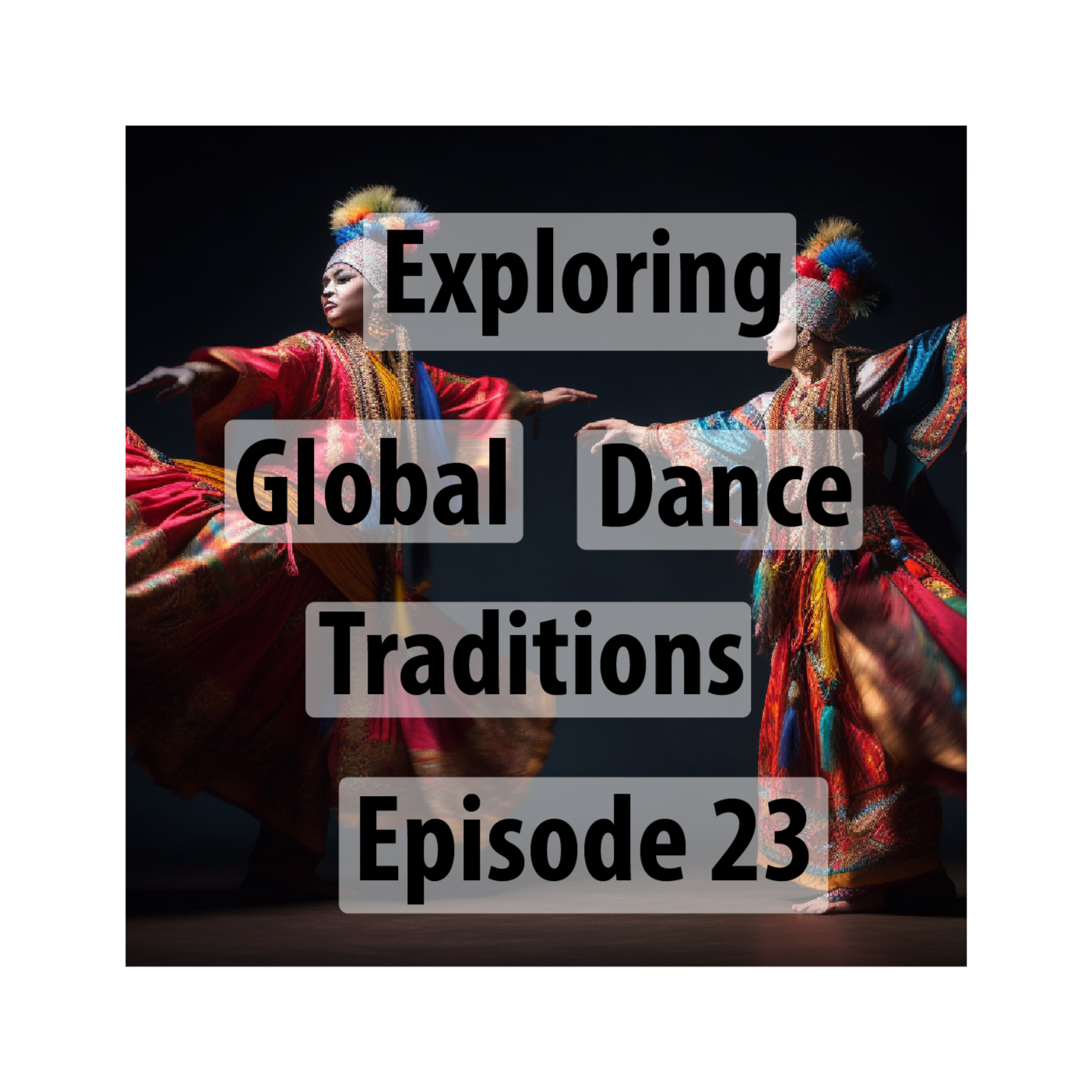
Unmasking the Illusions: Unraveling Global Dance Traditions
Cultural Journalism: All things Cultural, Every Given Sunday at 7 pm PST · Daniel Sanderson
Audio is streamed directly from the publisher (media.rss.com) as published in their RSS feed. Play Podcasts does not host this file. Rights-holders can request removal through the copyright & takedown page.
Show Notes
Episode Notes for "Unmasking the Illusions: Unraveling Global Dance Traditions"
Introduction:
- Exploring Dance as a Form of Human Expression: The episode begins by highlighting Dance's unique role in transcending language and cultural boundaries, combining movement, rhythm, and emotion into a universal form of expression.
Critical Examination: It sets the stage for a deeper investigation into global dance traditions, challenging conventional wisdom and uncovering the historical, cultural, and political layers behind them.
The Dance of Origins:
- Questioning Universal Assumptions: The episode questions the romanticized notion of Dance as an innate human impulse, highlighting the importance of recognizing its diverse origins and developments across different cultures.
Archaeological Insights: This article discusses how ancient cave paintings and artifacts provide glimpses into the role of Dance in prehistoric cultures, challenging the idea of a singular origin.
Exploring Cultural Context:
- Cultural Reflection vs. Exoticization: The narrative shifts to how Dance mirrors societal values and dynamics while addressing the issue of exoticization and appropriation by Western cultures.
- Beyond Superficial Narratives: Encourages a deeper engagement with the cultural significance of different dance forms, moving past stereotypes to a more nuanced understanding.
The Political Choreography:
Dance and Power Dynamics examines the historical use of Dance by rulers and elites as a tool for propaganda, control, and political narratives, from courtly ballets to socialist realist dances.
- Unmasking Hidden Agendas: Reveals how the promotion or suppression of certain dance traditions reflects broader power dynamics and political agendas.
Dance as a Site of Resistance:
Empowerment and Identity highlights how oppressed communities, from the African diaspora to contemporary urban dance movements, have used Dance as a form of resistance and cultural preservation.
- Challenging Dominant Narratives: Discusses how these acts of resistance through dance challenge established power structures and contribute to social change.
Conclusion:
A Call for Critical Engagement: The episode concludes by urging listeners to look beyond dance's surface enchantment, appreciate its historical depth, and recognize the complex power dynamics at play.
Appreciating Dance's Potential: This section emphasizes Dance's role as a catalyst for social change and an expression of human creativity, advocating for a more nuanced and authentic understanding of global dance traditions.
Key Takeaways:
Dance is more than just an art form; it reflects history, culture, and politics.
- Understanding dance traditions' origins and cultural contexts allows for a deeper appreciation beyond mere entertainment.
- Recognizing dance traditions' political and resistance elements can provide insights into broader societal dynamics and struggles.