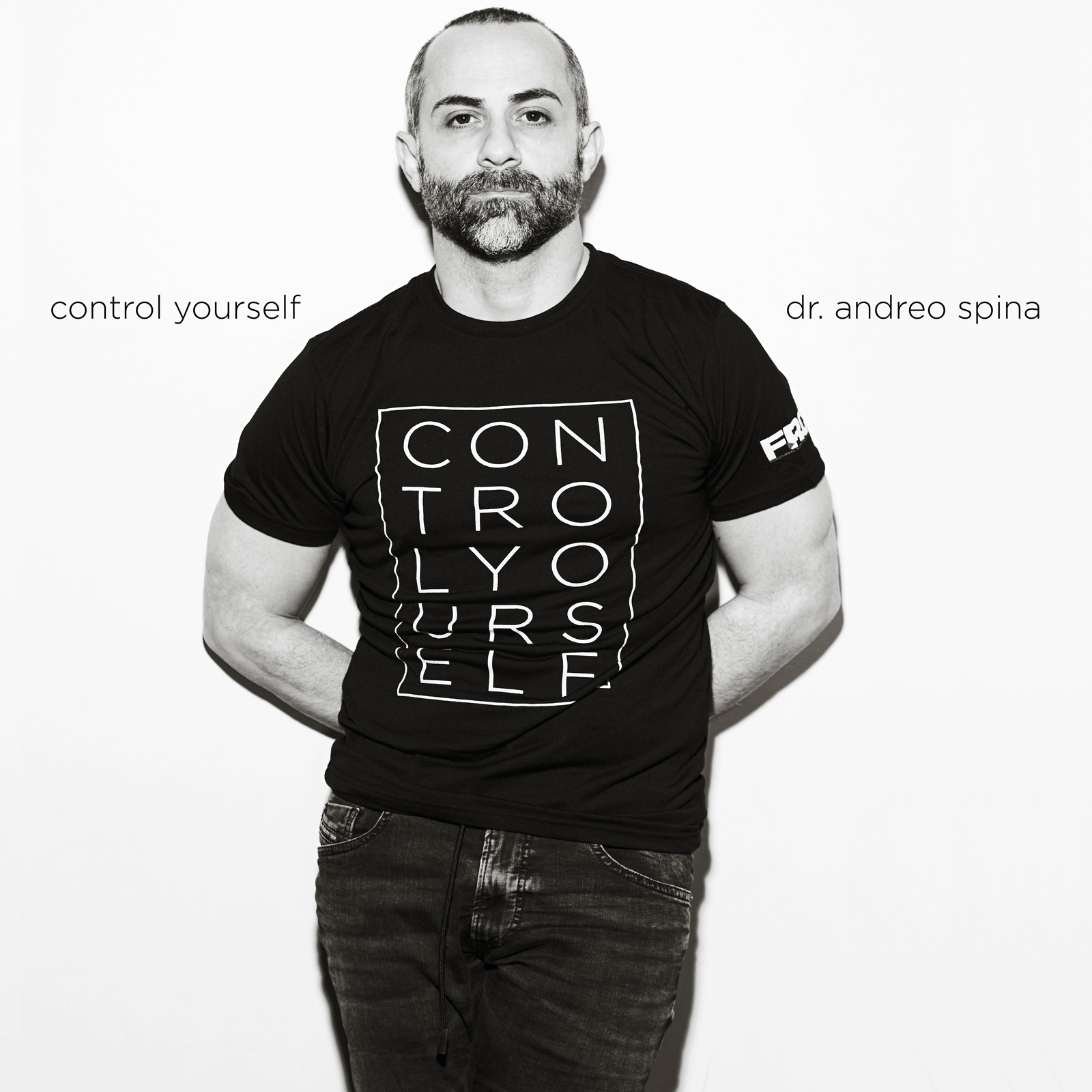
control yourself with dr andreo spina
37 episodes
Ep 37Ep_37: Coaching Under Constraint in the NFL
Training NFL athletes isn’t about chasing perfect programs. It’s about making the right decisions inside real-world constraints. This conversation isn’t about drills or programming trends. It’s about building and maintaining physical qualities during an NFL season — when athletes are competing weekly, managing injuries, absorbing collisions, and still expected to improve. Phil Matusz, former Head Strength and Conditioning Coach for the Pittsburgh Steelers, breaks down what the role actually demands: progressing strength within tight time windows, adjusting around injuries, and balancing performance with recovery week after week. We’ve known Tusz since his time as Head Strength and Conditioning Coach at Boston College. His perspective comes from years operating in elite locker rooms, where programming is dictated by reality — not theory. Full episode available on YouTube. For more information, visit www.functionanatomyseminars.com
Ep 36Ep_36: Flowing with Mike Fitch
In this episode of Control Yourself, Dr. Andreo Spina sits down with Mike Fitch, founder of Animal Flow, for a deep conversation on the art and science of movement education. They discuss how systems evolve over time, what it means to teach with integrity, and how to balance creativity with structure when designing training for humans—not just athletes. Topics include movement variability, joint health, programming, and redefining what “longevity” in training really means. It’s a candid exchange between two educators who’ve spent their careers refining how people move, think, and teach. 🎥 Watch the full conversation on YouTube 👉 Learn more or get certified: www.functionalrangesystems.com 👉 Find Animal Flow classes worldwide: www.animalflow.com
Ep 35Ep 35: Manual Therapy, Palpation, and the Truth About Tissue Change
In this episode of The Control Yourself Podcast, Dr. Andreo Spina is joined by fellow FRS instructor Dr. John Saratsiotis for a focused deep dive into palpation—what it is, what it isn’t, and how it fits into the broader Functional Range Systems approach. Together, they break down some of the most common misconceptions surrounding manual therapy, including the long-standing myth that therapists are “breaking up” scar tissue with their hands. Instead, the conversation shifts toward a more nuanced and evidence-based understanding of how touch and tension serve as inputs that can guide tissue adaptation—when applied with intent. They discuss: The role of palpation as a diagnostic skill Why most injuries happen in “normal” ranges—not end range How reference structures act like anatomical landmarks for tissue assessment The physiological basis of mechanotransduction and why it matters How FRC® practitioners and FR® clinicians alike can sequence inputs for lasting change Whether you’re using palpation to enhance movement assessment or refine your hands-on interventions, this episode is packed with practical insight and clinical gems you can bring straight to the mat, the gym, or the treatment table. 🎧 Stream it now and elevate how you feel, interpret, and influence human tissue. Full episode also available on YouTube.
Ep 34Ep 34_Training to Failure: Myth, Science & Strategy
In this episode, I explore training to failure by analyzing the scientific literature through the lens of first principles physiology. Given the inconsistencies in research, this approach enhances our understanding and helps optimize training programs for hypertrophy and other musculoskeletal outcomes. We explore: * Conflicting research findings on training to failure vs. training with reps in reserve * Differentiating training for hypertrophy vs. strength training * The role of momentary muscular failure vs. technical failure * How beginners vs. experienced lifters should approach training to failure * The concept of muscular strength deficit and neurological access * Why exercise selection and tissue specificity matter * Avoiding the trap of volume overload and injuries You’ll learn how training to failure fits within broader adaptation principles and discover that not all failure is equal, ultimately guiding you to make informed decisions in your training approach. This episode will also touch upon: * Load application that respects capacity and promotes adaptation * Programming that recognizes the difference between skill acquisition and tissue development * The intelligent use of intensity as a biological input, not a motivational tool * Muscular strength deficit: The gap between neural access and anatomical potential * Patterned movement constraint: The neurological consequence of repetitive movement in the same vector * Motor unit recruitment zones: Understanding spatial limitations in patterned hypertrophy work * Stimulate / retrain / de-train framework: Intensity mapped onto recovery and adaptive bandwidth * Adaptive currency: The finite biological resource for generating structural change #FunctionalRangeConditioning #ControlYourselfPodcast #ExerciseScience #TrainingToFailure #TissueAdaptation #FRSInternalStrength #LoadApplication #JointCapacity #NeuromechanicalTraining #StrengthDeficit (edit and add ours as you see fit)
Ep 33Ep 33_Training for Physical Longevity with Josh Halbert
In this episode of Control Yourself, Dr. Andreo Spina is joined by Josh Halbert, FRS instructor, mobility trainer, and co-founder of LearnMobility.com. We dive into longevity, fitness, and the future of online training, as well as the importance of staying mobile as we age. Josh shares his insights on why mobility training is essential, how he approaches functional fitness whether he is working with everyday people or elite athletes looking to prolong their careers and quality of life when they retire. If you're looking to improve your movement, prevent injuries, and live better, longer, you'll enjoy this conversation. 🎧 Listen on Spotify, Apple Podcasts, Google Play & Stitcher. Search: “Control Yourself with Dr. Andreo Spina” #ControlYourselfWithDrAndreoSpina #ControlYourselfPodcast #DrAndreoSpinaPodcast #ControlYourself 🔻🔻🔻 #FunctionalRangeSystems #FunctionalRangeConditioning #FunctionalRangeRelease #FunctionalRangeAssessment #Kinstretch #FRSinternalStrengthModel
Ep 32Ep_32 First Principles Training: A Systematic Approach to Mobility, Strength and Longevity with Alex Nichols
📝 Are you training for mobility, or just stretching aimlessly? In this episode of the Control Yourself Podcast, I am joined by Alex Nichols, manual therapist, strength coach and FRS instructor to break down the science behind mobility, strength, and injury prevention. 📝 What You’ll Learn in This Episode: ✅ Why stretching alone won’t improve mobility ✅ How effective, joint specific assessments reveal hidden limitations ✅ The difference between flexibility, mobility, and usable range of motion ✅ Why movement compensations can hide dysfunctions ✅ How force inputs shape tissue and why passive treatments aren’t enough ✅ The truth about “tight” muscles and what they actually need If you’re a coach, therapist, or athlete, this episode will give you actionable insights to level up your training. 👀👂& Subscribe on YouTube NOW- youtube.com/DrAndreoSpina #ControlYourselfWithDrAndreoSpina #ControlYourselfPodcast #DrAndreoSpinaPodcast #ControlYourself 🔻🔻🔻 #FunctionalRangeSystems #FunctionalRangeConditioning #FunctionalRangeRelease #FunctionalRangeAssessment #Kinstretch #FRSinternalStrengthModel
Ep 31Ep_31 Training Olympic Athletes with Hunter Cook
In the latest episode of the "Control Yourself Podcast," Dr. Andreo Spina interviews strength and conditioning coach Hunter Cook, who shares his experiences working with Olympic gold medalist Sydney McLaughlin. The conversation dives deep into the intricacies of training elite athletes, emphasizing the importance of maintaining joint health and optimizing performance through tailored mobility work. Hunter discusses his approach to assessing athletes, the significance of understanding their unique needs, and how he’s helped Sydney achieve remarkable feats, including her recent gold medals at the Paris Olympics. Listeners will gain insights into the methodologies that underpin successful athletic training while also exploring the human aspects of sports performance and recovery. Don't miss this engaging episode that blends expert knowledge with inspiring stories from the world of athletics.
Ep 30Ep_30: Coffee Talk with Hunter Cook
In this episode, I sat down with @hunterfitness for what was supposed to be a series of short, Q&A posts. However, once we got going, we just kept going. As a result, we are releasing this as a full podcast! Some of the topics we discuss: Sport specific training, recent case studies, and training program alterations Programming for general population and moving well for life The difference between effort and intensity and how it changes client training Training for longevity Athletic injury force profiles and athletic training force profiles - matching one to another Rehab of muscle injuries . . . And many more. Hope you enjoy the chat. Also available on YouTube: youtube.com/DrAndreoSpina
Ep 29Ep_29: The Origin of Human Movement by Means of Natural Selection.
In this episode, I had the privilege of speaking at the Royal College of Chiropractic Sport Sciences of Canada (RCCSS) Move 2020 Virtual Conference: The psychological, biomechanical and neurophysiological implications of human movement. I discussed some foundational FRS® principles in our approach to injury management and athletic development. Topics include: How are movements created? Natural selection for movement during embryologicaldevelopment. The process of joint cavitation and why space matters. Looking through the lens of physics to better understand movement…and many more. This episode provides an overview of the key principles governing the thought process behind training and treating homo sapiens. To see all the graphics, watch on YouTube.
Ep 28Ep. 28: Managing the spine: Exploring blind spots in manual therapy and S&C.
In this episode, I sit down with Dr. Michael Chivers to discuss our ongoing development of the FRS Spine Practitioner course. We touch upon back pain epidemiology, historic approaches to spine training, the shortcomings of spinal literature, the evolution of the bipedal spine, spinal anatomy and neurophysiology physiology, and other topics. This episode, as will the upcoming course, provides vital information for manual practitioners and the S&C community alike who are tasked with the ongoing care of spinal pain and function? You can also watch this episode on YouTube. https://youtu.be/5NhxW5vjWpU
Ep 27Ep. 27: Manage the system, not the symptoms.
In this episode Dr. Spina sits down with Sport Specialist Chiropractor, and FRS Instructor Dr. Michael Chivers to discuss the functional anatomy and clinical management of the shoulder girdle. However, as is usually the case, the conversation ends up following a number of important tangent topics, this time related to the overarching idea of system emergence and how it affects the evolution of human movement, anatomic evolution, injury creation, as well as injury management. This deep dive is invaluable for the listeners of all backgrounds including Strength & Conditioning specialists, Manual Therapists and medical practitioners, as well as those simply looking to improve their physical wellbeing.
Ep 26Ep. 26: The Scar Tissue I Wish You Saw
In this episode Dr. Spina sits down with Dr. John Saratsiotis Physiotherapist, Chiropractor, Biochemist, and lead FRS instructor to discuss a controversial topic in the world of manual therapy and injury management, namely the topic of soft tissue Fibrosis. What is it? How does it form? How does it affect force transmission and the many misconceptions surrounding both its existence following injury as well as soft tissue management. We also cover related concepts including tissue directionality in the fascial system, the evolution of tissue healing in humans, what pain is and the role manual therapy plays in its management, and selection of appropriate therapeutic outcome measures. Complete with scientific references, this talk is a deep dive into the cellular understanding of fibrosis and how it effects human performance making it an important listen for Strength & Conditioning specialists and Manual Therapists alike. To get the most out of this episode, watch it on YouTube where we reference illustrations and scientific sources.
Ep 25Ep.25: Bonus - A chat with John Quint at Westside Barbell
John Quint and I recently visited Tom Barry, Chief Operations Officer of Westside Barbell, and we’ll be co-releasing that episode in the coming weeks. For this podcast, John and I took the opportunity to sit down to discuss John’s history at WSBB and his relationship with Louie Simmons who was a pioneer in developing world, record- breaking strength athletes. We also discuss the present state of strength training and how it has evolved to include training the internal environment. Some of the topics discussed are: The evolution of strength The use of resistance bands in life at WBSS What are the force velocity and force posture curves Internal versus External training What embryology tells us about anatomy Quint’s specialty training for offensive lineman How much strength do you need for sport? And much more. Disclaimer: This podcast does not provide medical advice and it is intended for informational purposes only. It is not a substitute for professional medical advice, diagnosis or treatment. For more information or to seek out an FRS provider in your area, please visit our website. To watch on YouTube, visit Dr Andreo Spina
Ep 24Ep. 24: Everything you wanted to know about ‘exercise’ but were afraid to ask.
In this episode I sit down with FRS Instructor Josh Halbert for a philosophical discussion about the concept of “exercise”. We discuss the merits of using an evolutionary perspective to view exercise, modern approaches to physical training, inherent problems with current approaches, and how to reframe intentions and results through training. Other topics include: The influence of memetic selection on exercise creation The history of sports science Complex system emergence Strength programming for trained vs untrained populations What it means to send physiological signals for sport specific results And multiple other topics Disclaimer: This podcast does not provide medical advice and it is intended for informational purposes only. It is not a substitute for professional medical advice, diagnosis or treatment. For more information or to seek out an FRS provider in your area, please visit our website.
Ep 23Ep. 23: Anatomy Tells A Story
In this podcast, I sit down with FRS Master Instructor Dr. Michael Chivers for a technical discussion about the evolutionary perspective of anatomy with special attention on the hip joint. We explore how evolutionary pressures forged anatomical structures and their influence on the biomechanics of joints and how the FRS Bioflow model differs from traditional understandings of anatomy. We also discuss the concept of tissue force profiles, tissue specificity in palpation and rehabilitation, and clinical examples from our experiences treating and training clients. Some of the specific anatomy discussed includes: Joint space of the hip Capsular tissues and ligament formation in evolution The adductor magnus, longus, and brevis The rectus femoris The gluteus minimus Pain and referral patterns And more... If you would like to see the related anatomy visuals, please watch the podcast on YouTube. https://youtu.be/URYpG5UvjnA Disclaimer: This podcast does not provide medical advice and it is intended for informational purposes only. It is not a substitute for professional medical advice, diagnosis or treatment. For more information or to seek out an FRS provider in your area, please visit our website.
Ep 22Ep. 22: Programming for a Retired Athlete: Case Study.
In this episode Dr. Spina sits down with FRS Master Instructor Hunter Cook to discuss case study of a retired professional baseball pitcher. Though an FRS lens, Hunter and Dre discuss how this athlete’s training was managed over time with reference videos and photos of his progress. Topics covered in the conversation include: The pathophysiological effects of pitching over time The pitfalls of kinetic chain assessment Shoulder dynamics in pitching Establishing active to passive ratios The importance of neurological-biological afferent and efferent communication The relationship between motor learning, skill acquisition and tissue quality Creation and maintenance of cortical action maps Cultivation of musculoskeletal longevity And many more… Whether you are manual therapist, S&C coach or athlete, this episode highlights the intricacies of improving and/or reversing deleterious effects of decades of performing at the highest levels of human athletics. Disclaimer: This podcast does not provide medical advice and it is intended for informational purposes only. It is not a substitute for professional medical advice, diagnosis or treatment. For more information or to seek out an FRS provider in your area, please visit our website.
Ep 21Ep. 21:(Bonus) Case Discussion
In this bonus episode we listen in on a meeting between Dr. Spina and FRS instructors John Quint and Dewey Nielsen as they discuss a variety of topics surrounding two cases of Jiu Jitsu athletes with very different backgrounds. Topics covered in the conversation include the cultivation of absolute strength in non-absolute strength sport athletes; how to prioritize training goals using the FRS Internal Strength Model; the “Training Delusion”; dosing of Internal vs. External training; injury management programming, and many more. Disclaimer: This podcast does not provide medical advice and it is intended for informational purposes only. It is not a substitute for professional medical advice, diagnosis or treatment. For more information or to seek out an FRS provider in your area, please visit our website.
Ep 20Ep 20: The Volume Problem
Volume has largely been viewed as an endlessly positive quality to pursue in current strength and conditioning protocols. However, “more” doesn’t alway equal “better”. In this episode, Dr. Spina sits down with FRS Instructors John Quint and Dr. Michael Chivers to discuss programming and volume issues in training. What are the downsides of pursuing volume? Moreover, what is missing from standard-model training programs? Topics include: What is strength? How to elicit specific endocrine responses towards building this strength. Training inputs and how they can be defined and categorized. Programming and the importance of intensity. Blind-spots in current approaches to clinical rehabilitation. Disclaimer: This podcast does not provide medical advice and it is intended for informational purposes only. It is not a substitute for professional medical advice, diagnosis or treatment. For more information or to seek out an FRS provider in your area, please visit our website.
Ep 19Episode 19: Load Management and Injury Prevention
LOAD > CAPACITY = INJURY. Using this simple equation as a starting point, Dr. Spina explores the idea of Load Management in professional athletics. Specifically, he discusses how a shift in focus to tissue specific training can hedge an athlete's tissue capacity against the increasing loading demands that occur over their career. Topics covered include injury mitigation and management, the physiology of tissue healing, cellular communication and force signalling, loading ‘vacations’ in professional sport, and more. Disclaimer: This podcast does not provide medical advice and it is intended for informational purposes only. It is not a substitute for professional medical advice, diagnosis or treatment. For more information or to seek out an FRS provider in your area, please visit our website.
Ep 18Ep.18: Why does your back still hurt?
In this episode Dr. Spina discusses the management of low back pain and what may be missing from your treatment and/or rehabilitation strategy. Topics include the evolutionary anatomy of the spine, the importance of re-establishing segmental spinal motion, the misunderstandings regarding neutral spine, the need for specificity in treatment and training inputs, and more. Whether you are a therapist, S&C coach, or patient, this podcast will shed light on some of the most common issues in dealing with both acute and chronic low back pain cases, as well as provide ideas to improve long term clinical outcomes. Disclaimer: This podcast does not provide medical advice and it is intended for informational purposes only. It is not a substitute for professional medical advice, diagnosis or treatment. For more information or to seek out an FRS provider in your area, please visit our website.
Ep 17BONUS EPISODE: FRS Internal Strength Model® Roundtable
In this episode Dr. Spina, along with his fellow FRS lead instructors Dr. Michael Chivers, John Quint, and Dewey Nielsen, takes a deep dive into the new Functional Range Systems Internal Strength Model. The conversation covers the evolution of strength training, the distinction between training for strength vs skill in high level athletics, contrasting standard model training with the Internal Strength model, managing force and training volume, and much more. Since its inception, Functional Range Systems has challenged the status quo by offering logical reinterpretations of the scientific literature regarding human optimization. Join the FRS team as they turn their lens to the development and practice of training for strength, its meaning, goals, and execution.
S1 Ep 6Ep, 6: Training the Art of Concentration - A conversation with Josh Halbert
In this episode of the podcast, Dr. Spina sits down for a conversation with conditioning specialist and Functional Range Systems Instructor Josh Halbert about a number of topics including his experience managing and training professional athletes, consciousness and its evolutionary basis, the physiology of meditation and its role in pain management, regular meditative practice, free will and managing motivation, flow state and creativity, building body awareness and control, managing training risk, the over prescription of weight lifting for athletic development, how to bullet-proof your athletes, and many more. Follow: Josh Halbert @GetChimpy @learnmobility Dr. Andreo Spina @DrAndreoSpina For information on upcoming seminars visit us at www.FunctionalAnatomySeminars.com
S1 Ep 8Ep. 5. On The Origins of Human Movement
In this white board session, Dr. Spina sits down to discuss the evolutionary origins of human movement and how an understanding of those origins leads to better exercise selection and programming. Also covered is the concept of movement and exercise prerequisites – Play Basketball? Love yoga? Want to smash your WODS? You love to run? Just remember, all movements have prerequisites and managing them will lead to performance enhancement and ongoing joint health. Ignoring this reality often has devastating, long-term consequences. Although it’s a deep dive, the concepts covered in the podcast are presented in a very digestible manner making it a useful listen for everyone from therapists, to trainers, to athletes or anyone interested in human optimization.
S1 Ep 16Ep 16: Cross-Cast with Don Saladino and Derek Hansen of the D&D Fitness Radio podcast.
For over 20 years, Don has coached actors, athletes, musicians, and business executives pushing them to function at their fullest potential. In 2005, he opened his NYC Gym, Drive 495. He has developed a reputation for training some of the biggest names in Hollywood for the big screen. Ryan Reynolds, Blake Lively, Jake Gyllenhaal, John Krasinski, Emily Blunt, Liev Schreiber, Sebastian Stan, Anne Hathaway, Zachary Levi, Drew Powell, Hugh Jackman, & David Harbour are among his roster of clients who have trained with him at Drive 495. Derek is an International Sport Performance Consultant that has been working with athletes all ages and abilities in speed, strength and power sports since 1988. His coaching career started in Track and Field, providing instruction to sprinters of all ages eventually working with collegiate sprinters, hurdlers and jumpers. His career evolved rapidly working closely with some of the top performers in the world as a coach and a consultant – including Olympic medalists, world record holders, Canadian National team athletes, and professional athletes from numerous sports. He also serves as a performance consultant to numerous professional teams in the NFL, NBA, MLS and NHL, as well as major NCAA Division 1 programs throughout North America, specializing in speed development, strategic performance planning, return-to-competition protocols and neuromuscular electrical stimulation programming. In this episode, I have the pleasure of speaking with Don and Derek across a variety of topics including: ‘Mobility’ vs internal training and how we define it within Functional Range Systems. The approach to my own personal health and fitness. Spine and joint health, as it relates to mobility, stability, & articular health. Movement and movement screening to maximize health and minimize the potential for injury The importance of addressing and managing pain on both a physical and psychological level. iTunes – https://itunes.apple.com/us/podcast/d-d-fitness-radio-podcast/id1331724217 iHeart Radio – https://www.iheart.com/podcast/dd-fitness-radio-28797988/ Spreaker.com – https://www.spreaker.com/show/d-and-d-fitness-radios-show Spotify – https://open.spotify.com/show/5Py2SSPA4mntNwYRm0Opri You can reach both Don and Derek at the following locations: Don Saladino: http://www.DonSaladino.com Twitter and Instagram - @DonSaladino YouTube - http://www.youtube.com/donsaladino
S1 Ep 15Ep.15: Whiteboard Session
In this white board session, Dr. Spina sits down to answer some questions specific to the Functional Range Systems, as well as questions relating to manual therapy as a whole. Topics discussed include – a detailed description of the purpose/utilization of Controlled Articular Rotations (CARs) for articular assessment, training, and therapy; the differentiation between capsular workspace (CW), articular workspace (AW), and global workspace (GW) and how an understanding of these principles can focus/guide force based inputs (therapeutic and/or training); Chronic pain research and management; the neurophysiology of ‘muscle tightness’; the difference between Neurological Tightness vs. Mechanical Tension and how the ability to distinguish the two can rapidly improve clinical outcomes; the histological goal of specific soft tissue treatment; and many more. This episode is a deep dive into the specifics of clinical practice full of big take always, and numerous ‘a-ha’ moments that will interest manual therapists, medical practitioners, and strength and conditioning specialists alike. As this episode is part of our Whiteboard Series, if you’d like to reference Dr. Spina’s notes/illustrations during the podcast, please hop over to our YouTube channel at https://youtu.be/upLI2OzqODU
S1 Ep 14Ep. 14: ‘The Evolution of Eating’: A conversation with 2X NYT best selling author Robb Wolf
In this episode of the podcast Dr. Spina sits down with former research biochemist and 2X New York Times best selling author of ‘The Paleo Solution’ and ‘Wired to Eat,’ Mr. Robb Wolf. Robb has been a long-time authority on nutrition and has served as a review editor for the Journal of Nutrition and Metabolism, and as a consultant for the Naval Special Warefare Resiliency program. The conversation broadly focuses on the evolutionary perspective of human nutrition. Some of the topics covered include: contrasting physical vs. chemical (nutritional) evolution in homo sapiens, How the ‘caveman’ principle applies to understanding human dietary needs, the natural selective pressures that forged the human genome, consciousness and the challenges it presents to maintaining healthy eating habits, the Hedonic Treadmill, why we are wired to move less and eat more, intermittent fasting, the importance of personalized nutritional programming, the research landscape concerning human nutrition, the problems surrounding the concept of the ‘biohacking’, the reserve-capacity hypothesis, and many more. Also discussed are the many myths surrounding Paleolithic eating, plant AND meat based diets, telomeres and human longevity, and caloric restriction.
S1 Ep 13Ep. 13: A Conversation with Dr. Duncan French, Vice President UFC Performance Institute
In this episode of the podcast, Dr. Spina sits down to speak with the Dr. Duncan French, Vice President of Performance at the UFC Performance Institute (UFCPI) in Las Vegas. Dr. French is globally recognized as a leading expert in high-performance sport and is responsible for directing sport-specific technical interfaces that maximize the impact of performance services for UFC rostered athletes. Prior to this role, he led Strength & Conditioning at the English Institute of Sport and was also the head S&C at Newcastle United Football Club in the Barclays English Premier League. He has also co-authored over 60 peer-reviewed scientific manuscripts and seven book chapters. Duncan holds a PhD from the University of Connecticut in Exercise Physiology with a focus on Neuroendocrinology. As such, the discussion focuses largely on the endocrine (hormonal) responses to resistance training and conditioning. Topics include the selection of appropriate training intensities, creating an anabolic environment in the athlete, the role of the hypothalamic-pituitary-adrenal axis (HPA Axis), stress and its effect on hormonal output/metabolism, exercise selection, sport specificity, psychological factors that enhance or depress neuroendocrine output, progressive overload, training accommodation, the role of genetics in high level athletics vs. training effect, and more. Dr. Spina and Dr. French also discuss the inner workings of the UFC Performance Institute which has become the world leader in Mixed Martial Arts research, training, and athlete care.
S1 Ep 12Ep. 12: System Specific Training for MMA Fighters- A conversation with Head S&C Coach of Sanford MMA Dr. Corey Peacock
In this episode of the podcast, Dr. Spina sits down with Dr. Corey Peacock. Dr. Peacock holds a Ph.D. in Exercise Physiology from Kent State University and serves as an associate professor in the Department of Health and Human Performance at Nova Southeastern University. As a researcher , he has contributed to multiple peer-reviewed publications integrating the fields of exercise physiology, athletic performance, and supplementation. He is also head of strength and conditioning for Sanford MMA – a premier professional MMA team comprised of some of the top-ranked fighters in the business including multiple current and former World Champions. The discussion covers a lot of ground on a variety of topics including: ‘The Dark Triad’ psychological profile and its relation to combat sport athletes The effects of genetic ability vs coaching • Dopamine metabolism and its effects on brain function CTE and brain injuries in combat sports The specifics of S&C programming for high level athletes Creating system adaptability in the athletic body Contrast training The mental and physical effects of over training And many, many more MMA enthusiasts, combat athletes, sports performance coaches, trainers, and anyone interested in optimizing human health and performance… This one is for you!
S1 Ep 11Ep.11: Control Yourself Before Controlling Others - A Conversation with Matt Pasquale & Mark Brunswick
In this episode of the podcast, Dr. Spina sits down for a discussion with long time BJJ black belt Matthew Pasquale, and fellow FRS x BJJ brown belt, Mark Brunswick. Topics discussed in this episode include: FRS internal vs external training and its translation to the ability to control yourself in order to better control your opponent Bendy does not mean unbreakable Jiu jitsu injuries and their implications “Correcting” imbalances Training tissue for improved motor learning (new jiu jitsu techniques) and performance optimization The plus side of compensations in human physiology If you have an interest in human movement optimization, martial arts, or a desire for a deeper understanding of training adaptations, this episode is for you.
S1 Ep 10Ep. 10: Roundtable with Dr. Mitch Broser, John Quint, and Josh Halbert
In this episode of the podcast, Dr. Spina sits down for a roundtable discussion with FRS instructors Dr. Mitch Broser, John Quint, and Josh Halbert after teaching the first day of a Functional Range Conditioning certification in Chicago, Illinois. The conversation covers a lot of ground with topics including the common misconceptions regarding strength and strength development, the differences between weight lifting and strength training, programming for strength vs hypertrophy, the adaptation limitations of the human system, long term vs short term programming goals, and many more. Of note, there is also an extensive discussion specifically on the management, rehabilitation, and conditioning of the spine. Here they discuss misinterpretations/limitations of ‘neutral spine’ concept, and those of the current research landscape pertaining to the topic. Full of clinical pearls, training tips, and ‘ah-ha’ moments, this episode is packed with useful information for anyone interested in achieving human optimization.
S1 Ep 9Ep. 9: Creating A Finely Tuned Aerobic Engine – A Conversation with Dewey Nielsen
In this episode of the podcast, Dr. Spina sits down for a conversation with elite performance coach Dewey Nielsen. Dewey has lectured world-wide on the topics of human movement optimization, mobility development, endurance training, and more. He has also worked with and consulted for a number of professional sports organizations in the MLB, NBA, NFL, UFC, etc., and is highly sought out by professional athletes. In addition, Dewey is a long time Brazillian Jiu Jitsu Black Belt instructor, and experienced rock/mountain climber and Alpinist, endurance gravel cyclist…former touring musician…and one hell of a knowledgeable coffee enthusiast. The number of topics covered on this podcast are too many mention but include – programming for elite endurance athletes, the physiology of endurance conditioning, the evolution of sapiens as an endurance dependent species, creating a suitable aerobic base, training recovery strategies, teaching philosophies and training principles in BJJ, verbal and tactile cueing for enhancing motor learning, the pitfalls of human consciousness, and many, many more.
S1 Ep 8Ep. 8: Tissue Specific Training vs Sport Specific Training
In this white-board session, Dr. Spina sits down to discuss a question that is vital to the understanding of any process but especially as it pertains to human optimization - What are your training goals? Do you want to build tissue/muscle? Increase power? Develop greater strength? Are you rehabbing an injury? Do you want to get better at a particular task? Regardless of the answer, we then have to ask - Where should I begin? Listen as Dre explains why the specificity of your answer will directly influence your ability to create lasting biological and neurological change in the bodies of clients, patients, or yourselves. Topics covered in this episode include; understanding Max effort vs Dynamic effort inputs, the pitfalls of pattern training, the anatomy and physiology of muscular contraction, the all-or-none principal of contraction, programming desires vs time constraints, programming for combat sport athletes, and many more. If you enjoy the podcast, please subscribe so you don't miss an episode. If you have the time, please leave us a review.
S1 Ep 7Ep.7: The Range of Motion Compendium - A Conversation with Dr. Michael Chivers
In this episode of the podcast, Dr. Spina sits down to speak with Sports Specialist Chiropractor, and lead Functional Range Systems instructor Dr. Michael D. Chivers. Dr. Chivers has lectured world-wide on a variety of topics pertaining to human health, performance, and optimization. He has worked with countless professional sports teams and organizations in the MLB, NBA, NHL, MLB, UFC, etc., and is a highly sought out manual therapist for professional athletes. The conversation touches on multiple topics related to joint health & physiology, human movement optimization, dynamic systems theory, complex systems, chaos theory, ‘normal science’ vs ‘revolutionary science,’ sports biomechanics, soft tissue treatment applications, and many more. Of note, this episode includes an incredibly detailed discussion on range of motion including how it is defined, what people think it is, what it actually is….and why that vitally matters to manual practitioners, athletes, patients, clients… and everyone else.
S1 Ep 4Ep. 4. The Science of Mechanotransduction and a whole lot more. A conversation with Dr. Roger Menta.
In this episode of the podcast, Dr. Spina speaks with Sports Specialist Chiropractor, Triathlete and FRS Instructor, Dr. Roger Menta on a number of topics including the current state of the literature pertaining to soft tissue therapy, the science of mechanotransduction, force propagation in human tissue, how to effectively consume literature, sport specific programming, managing the endurance athlete, injury prevention, and many more. Visit www.westside-barbell.com , and use the Promo Code: DRE10 to receive: 10% off any Merchandise, Books, Bands, Clothing, and all educational materials One use per customer Active from today, no expiration. Follow: Dr. Andreo Spina @drandreospina Dr. Roger Menta @drrogermenta For more information on upcoming seminars, visit us at www.functionalanatomyseminars.com
S1 Ep 3Ep. 3. Zoomcast with John Quint of Westside Barbell and IFBB Pro Seth Shaw
In this episode of the podcast, Dr. Spina speaks with professional Bodybuilding experts Seth Shaw, and John Quint. Seth is the Mens Bodybuilding overall winner at the 2017 IFBB North American Championships and is an active competing professional bodybuilder in the IFBB. John is a former bodybuilder, a Neuromuscular Therapist, Manual medicine consultant for Westside Barbell, and an Instructor for Dr. Spina’s Functional Range Systems. Discussed is a variety of topics on current bodybuilding science including exercise selection, the force-velocity relationship, competition nutrition, the incorporation Functional Range Conditioning & Kinstretch into professional bodybuilding, tissue growth and adaptation, muscle physiology, increasing muscle mass, the Conjugate methodology, and many more. Visit www.westside-barbell.com , and use the Promo Code: DRE10 to receive: 10% off any Merchandise, Books, Bands, Clothing, and all educational materials One use per customer Active from today, no expiration. Follow: Dr. Andreo Spina @drandreospina John Quint @jquintmnt Seth Shaw @sethshaw_ifbbpro For more information on upcoming seminars, visit us at www.functionalanatomyseminars.com
S1 Ep 2Ep. 2. FRS And BJJ: A Conversation With IBJJF Blackbelt And MMA OG Joel Gerson
In this episode of the podcast, Dr. Spina sits down with his long time Jiu-Jitsu coach Joel Gerson, owner of Revolution Mixed Martial Arts with locations in the Greater Toronto Area (Canada). Joel is one of the pioneers of MMA in Canada and an expert in hand-to-hand combat/MMA instruction with over 25 years of experience. He is a 5 time Canadian Jiu Jitsu Champion and 3 time Ontario Judo Champion. He was also the first man to defeat former champion and Japanese Shoot Fighting legend, Rumina Sato by arm bar submission in his Mixed Martial Arts debut! Topics discussed range from MMA strength and conditioning methodology, a historical view of martial arts pedagogy, training philosophy, keys to motor learning and body control, training and management of the aging athlete, injury prevention for fighters, preparation for grappling competition and many more. Follow: Dr. Andreo Spina @drandreospina Joel Gerson @joelgerson and visit www.revmma.com Mark Brunswick @markbrunswick For more information on upcoming seminars, visit us at www.functionalanatomyseminars.com
S1 Ep 1Ep. 1. The Philosophy of Science: A Conversation With Dr. Shawn Thistle
In this episode of the podcast, Dr. Spina sits down with his friend and colleague Dr. Shawn Thistle, founder of RRS Education to discuss a number of topics including the philosophy of science, the application of scientific literature to daily clinical practice, the consequences of misinformation, how to consume research, and other topics. The also touch on the current state of literature on a number of topics including musculoskeletal medicine, strength & conditioning, posture, joint health, soft-tissue treatment application, pain science, and many more. Follow: Dr. Andreo Spina @drandreospina Dr. Shawn Thistle https://www.shawnthistle.com/ For more information on upcoming seminars, visit us at www.functionalanatomyseminars.com