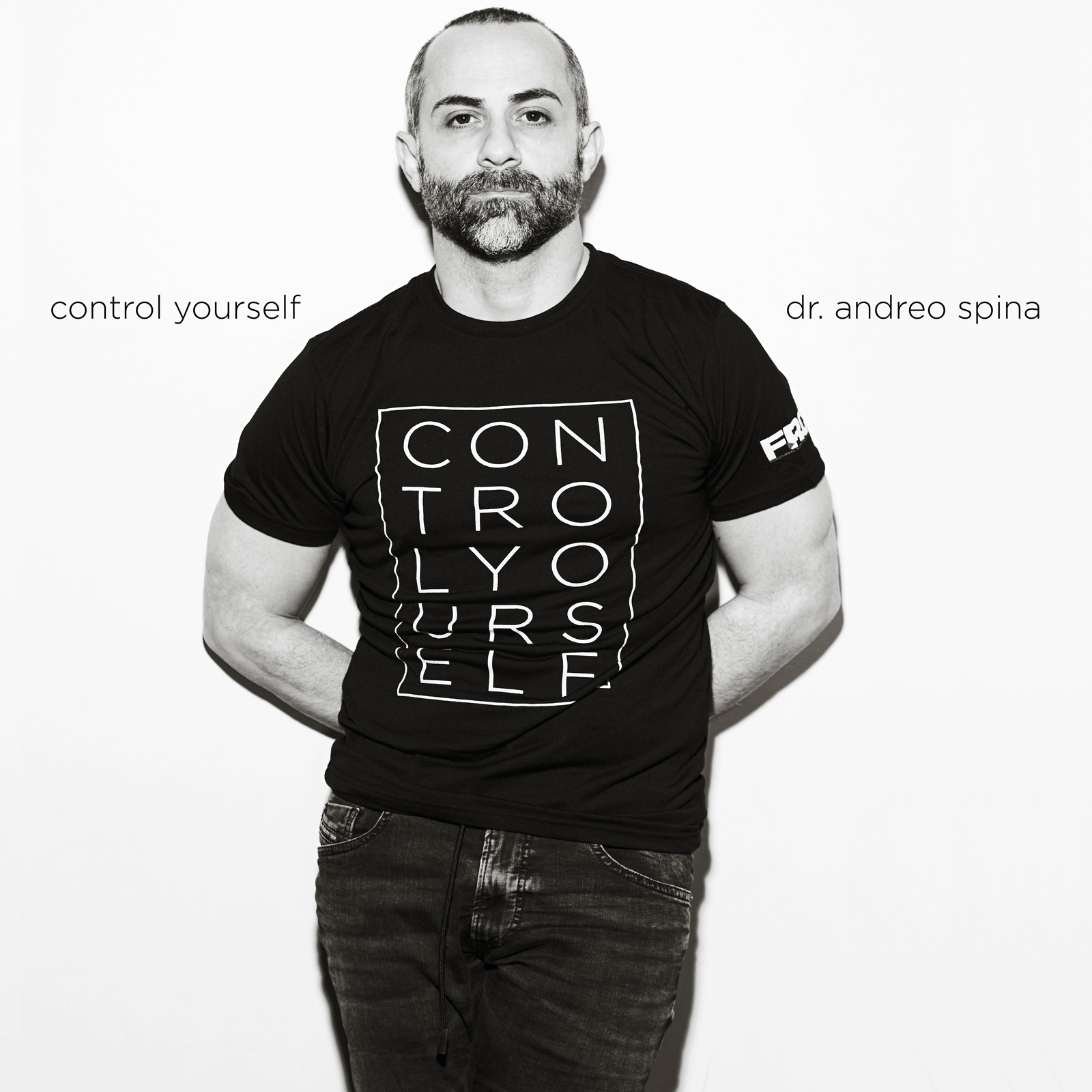
control yourself with dr andreo spina
Dr Andreo Spina
Show overview
control yourself with dr andreo spina has been publishing since 2020, and across the 6 years since has built a catalogue of 37 episodes. That works out to roughly 50 hours of audio in total. Releases follow a roughly quarterly cadence.
Episodes typically run over ninety minutes — most land between 1h 7m and 1h 47m — though episode length varies meaningfully from one episode to the next. None of the episodes are flagged explicit by the publisher. It is catalogued as a EN-language Health & Fitness show.
There hasn’t been a new episode in the last ninety days; the most recent episode landed 8 months ago. The busiest year was 2020, with 14 episodes published. Published by Dr Andreo Spina.
From the publisher
Dr. Andreo Spina interviews a diverse group of educators, athletes, and industry leaders in health & fitness. About Dr. Andreo Spina… A published author, and international speaker on the topics of joint health, human movement, sports performance, and injury management, Dr. Spina's training and manual therapy systems are currently utilized by practitioners world-wide including medical professionals and dozens of professional sports organizations, athletes, and performers in the NBA, NFL, NHL, MLB, MLS, NCAA, UFC and more.
Latest Episodes
View all 37 episodesEp 37Ep_37: Coaching Under Constraint in the NFL
Training NFL athletes isn’t about chasing perfect programs. It’s about making the right decisions inside real-world constraints. This conversation isn’t about drills or programming trends. It’s about building and maintaining physical qualities during an NFL season — when athletes are competing weekly, managing injuries, absorbing collisions, and still expected to improve. Phil Matusz, former Head Strength and Conditioning Coach for the Pittsburgh Steelers, breaks down what the role actually demands: progressing strength within tight time windows, adjusting around injuries, and balancing performance with recovery week after week. We’ve known Tusz since his time as Head Strength and Conditioning Coach at Boston College. His perspective comes from years operating in elite locker rooms, where programming is dictated by reality — not theory. Full episode available on YouTube. For more information, visit www.functionanatomyseminars.com
Ep 36Ep_36: Flowing with Mike Fitch
In this episode of Control Yourself, Dr. Andreo Spina sits down with Mike Fitch, founder of Animal Flow, for a deep conversation on the art and science of movement education. They discuss how systems evolve over time, what it means to teach with integrity, and how to balance creativity with structure when designing training for humans—not just athletes. Topics include movement variability, joint health, programming, and redefining what “longevity” in training really means. It’s a candid exchange between two educators who’ve spent their careers refining how people move, think, and teach. 🎥 Watch the full conversation on YouTube 👉 Learn more or get certified: www.functionalrangesystems.com 👉 Find Animal Flow classes worldwide: www.animalflow.com
Ep 35Ep 35: Manual Therapy, Palpation, and the Truth About Tissue Change
In this episode of The Control Yourself Podcast, Dr. Andreo Spina is joined by fellow FRS instructor Dr. John Saratsiotis for a focused deep dive into palpation—what it is, what it isn’t, and how it fits into the broader Functional Range Systems approach. Together, they break down some of the most common misconceptions surrounding manual therapy, including the long-standing myth that therapists are “breaking up” scar tissue with their hands. Instead, the conversation shifts toward a more nuanced and evidence-based understanding of how touch and tension serve as inputs that can guide tissue adaptation—when applied with intent. They discuss: The role of palpation as a diagnostic skill Why most injuries happen in “normal” ranges—not end range How reference structures act like anatomical landmarks for tissue assessment The physiological basis of mechanotransduction and why it matters How FRC® practitioners and FR® clinicians alike can sequence inputs for lasting change Whether you’re using palpation to enhance movement assessment or refine your hands-on interventions, this episode is packed with practical insight and clinical gems you can bring straight to the mat, the gym, or the treatment table. 🎧 Stream it now and elevate how you feel, interpret, and influence human tissue. Full episode also available on YouTube.
Ep 34Ep 34_Training to Failure: Myth, Science & Strategy
In this episode, I explore training to failure by analyzing the scientific literature through the lens of first principles physiology. Given the inconsistencies in research, this approach enhances our understanding and helps optimize training programs for hypertrophy and other musculoskeletal outcomes. We explore: * Conflicting research findings on training to failure vs. training with reps in reserve * Differentiating training for hypertrophy vs. strength training * The role of momentary muscular failure vs. technical failure * How beginners vs. experienced lifters should approach training to failure * The concept of muscular strength deficit and neurological access * Why exercise selection and tissue specificity matter * Avoiding the trap of volume overload and injuries You’ll learn how training to failure fits within broader adaptation principles and discover that not all failure is equal, ultimately guiding you to make informed decisions in your training approach. This episode will also touch upon: * Load application that respects capacity and promotes adaptation * Programming that recognizes the difference between skill acquisition and tissue development * The intelligent use of intensity as a biological input, not a motivational tool * Muscular strength deficit: The gap between neural access and anatomical potential * Patterned movement constraint: The neurological consequence of repetitive movement in the same vector * Motor unit recruitment zones: Understanding spatial limitations in patterned hypertrophy work * Stimulate / retrain / de-train framework: Intensity mapped onto recovery and adaptive bandwidth * Adaptive currency: The finite biological resource for generating structural change #FunctionalRangeConditioning #ControlYourselfPodcast #ExerciseScience #TrainingToFailure #TissueAdaptation #FRSInternalStrength #LoadApplication #JointCapacity #NeuromechanicalTraining #StrengthDeficit (edit and add ours as you see fit)
Ep 33Ep 33_Training for Physical Longevity with Josh Halbert
In this episode of Control Yourself, Dr. Andreo Spina is joined by Josh Halbert, FRS instructor, mobility trainer, and co-founder of LearnMobility.com. We dive into longevity, fitness, and the future of online training, as well as the importance of staying mobile as we age. Josh shares his insights on why mobility training is essential, how he approaches functional fitness whether he is working with everyday people or elite athletes looking to prolong their careers and quality of life when they retire. If you're looking to improve your movement, prevent injuries, and live better, longer, you'll enjoy this conversation. 🎧 Listen on Spotify, Apple Podcasts, Google Play & Stitcher. Search: “Control Yourself with Dr. Andreo Spina” #ControlYourselfWithDrAndreoSpina #ControlYourselfPodcast #DrAndreoSpinaPodcast #ControlYourself 🔻🔻🔻 #FunctionalRangeSystems #FunctionalRangeConditioning #FunctionalRangeRelease #FunctionalRangeAssessment #Kinstretch #FRSinternalStrengthModel
Ep 32Ep_32 First Principles Training: A Systematic Approach to Mobility, Strength and Longevity with Alex Nichols
📝 Are you training for mobility, or just stretching aimlessly? In this episode of the Control Yourself Podcast, I am joined by Alex Nichols, manual therapist, strength coach and FRS instructor to break down the science behind mobility, strength, and injury prevention. 📝 What You’ll Learn in This Episode: ✅ Why stretching alone won’t improve mobility ✅ How effective, joint specific assessments reveal hidden limitations ✅ The difference between flexibility, mobility, and usable range of motion ✅ Why movement compensations can hide dysfunctions ✅ How force inputs shape tissue and why passive treatments aren’t enough ✅ The truth about “tight” muscles and what they actually need If you’re a coach, therapist, or athlete, this episode will give you actionable insights to level up your training. 👀👂& Subscribe on YouTube NOW- youtube.com/DrAndreoSpina #ControlYourselfWithDrAndreoSpina #ControlYourselfPodcast #DrAndreoSpinaPodcast #ControlYourself 🔻🔻🔻 #FunctionalRangeSystems #FunctionalRangeConditioning #FunctionalRangeRelease #FunctionalRangeAssessment #Kinstretch #FRSinternalStrengthModel
Ep 31Ep_31 Training Olympic Athletes with Hunter Cook
In the latest episode of the "Control Yourself Podcast," Dr. Andreo Spina interviews strength and conditioning coach Hunter Cook, who shares his experiences working with Olympic gold medalist Sydney McLaughlin. The conversation dives deep into the intricacies of training elite athletes, emphasizing the importance of maintaining joint health and optimizing performance through tailored mobility work. Hunter discusses his approach to assessing athletes, the significance of understanding their unique needs, and how he’s helped Sydney achieve remarkable feats, including her recent gold medals at the Paris Olympics. Listeners will gain insights into the methodologies that underpin successful athletic training while also exploring the human aspects of sports performance and recovery. Don't miss this engaging episode that blends expert knowledge with inspiring stories from the world of athletics.
Ep 30Ep_30: Coffee Talk with Hunter Cook
In this episode, I sat down with @hunterfitness for what was supposed to be a series of short, Q&A posts. However, once we got going, we just kept going. As a result, we are releasing this as a full podcast! Some of the topics we discuss: Sport specific training, recent case studies, and training program alterations Programming for general population and moving well for life The difference between effort and intensity and how it changes client training Training for longevity Athletic injury force profiles and athletic training force profiles - matching one to another Rehab of muscle injuries . . . And many more. Hope you enjoy the chat. Also available on YouTube: youtube.com/DrAndreoSpina
Ep 29Ep_29: The Origin of Human Movement by Means of Natural Selection.
In this episode, I had the privilege of speaking at the Royal College of Chiropractic Sport Sciences of Canada (RCCSS) Move 2020 Virtual Conference: The psychological, biomechanical and neurophysiological implications of human movement. I discussed some foundational FRS® principles in our approach to injury management and athletic development. Topics include: How are movements created? Natural selection for movement during embryologicaldevelopment. The process of joint cavitation and why space matters. Looking through the lens of physics to better understand movement…and many more. This episode provides an overview of the key principles governing the thought process behind training and treating homo sapiens. To see all the graphics, watch on YouTube.
Ep 28Ep. 28: Managing the spine: Exploring blind spots in manual therapy and S&C.
In this episode, I sit down with Dr. Michael Chivers to discuss our ongoing development of the FRS Spine Practitioner course. We touch upon back pain epidemiology, historic approaches to spine training, the shortcomings of spinal literature, the evolution of the bipedal spine, spinal anatomy and neurophysiology physiology, and other topics. This episode, as will the upcoming course, provides vital information for manual practitioners and the S&C community alike who are tasked with the ongoing care of spinal pain and function? You can also watch this episode on YouTube. https://youtu.be/5NhxW5vjWpU
Ep 27Ep. 27: Manage the system, not the symptoms.
In this episode Dr. Spina sits down with Sport Specialist Chiropractor, and FRS Instructor Dr. Michael Chivers to discuss the functional anatomy and clinical management of the shoulder girdle. However, as is usually the case, the conversation ends up following a number of important tangent topics, this time related to the overarching idea of system emergence and how it affects the evolution of human movement, anatomic evolution, injury creation, as well as injury management. This deep dive is invaluable for the listeners of all backgrounds including Strength & Conditioning specialists, Manual Therapists and medical practitioners, as well as those simply looking to improve their physical wellbeing.
Ep 26Ep. 26: The Scar Tissue I Wish You Saw
In this episode Dr. Spina sits down with Dr. John Saratsiotis Physiotherapist, Chiropractor, Biochemist, and lead FRS instructor to discuss a controversial topic in the world of manual therapy and injury management, namely the topic of soft tissue Fibrosis. What is it? How does it form? How does it affect force transmission and the many misconceptions surrounding both its existence following injury as well as soft tissue management. We also cover related concepts including tissue directionality in the fascial system, the evolution of tissue healing in humans, what pain is and the role manual therapy plays in its management, and selection of appropriate therapeutic outcome measures. Complete with scientific references, this talk is a deep dive into the cellular understanding of fibrosis and how it effects human performance making it an important listen for Strength & Conditioning specialists and Manual Therapists alike. To get the most out of this episode, watch it on YouTube where we reference illustrations and scientific sources.
Ep 25Ep.25: Bonus - A chat with John Quint at Westside Barbell
John Quint and I recently visited Tom Barry, Chief Operations Officer of Westside Barbell, and we’ll be co-releasing that episode in the coming weeks. For this podcast, John and I took the opportunity to sit down to discuss John’s history at WSBB and his relationship with Louie Simmons who was a pioneer in developing world, record- breaking strength athletes. We also discuss the present state of strength training and how it has evolved to include training the internal environment. Some of the topics discussed are: The evolution of strength The use of resistance bands in life at WBSS What are the force velocity and force posture curves Internal versus External training What embryology tells us about anatomy Quint’s specialty training for offensive lineman How much strength do you need for sport? And much more. Disclaimer: This podcast does not provide medical advice and it is intended for informational purposes only. It is not a substitute for professional medical advice, diagnosis or treatment. For more information or to seek out an FRS provider in your area, please visit our website. To watch on YouTube, visit Dr Andreo Spina
Ep 24Ep. 24: Everything you wanted to know about ‘exercise’ but were afraid to ask.
In this episode I sit down with FRS Instructor Josh Halbert for a philosophical discussion about the concept of “exercise”. We discuss the merits of using an evolutionary perspective to view exercise, modern approaches to physical training, inherent problems with current approaches, and how to reframe intentions and results through training. Other topics include: The influence of memetic selection on exercise creation The history of sports science Complex system emergence Strength programming for trained vs untrained populations What it means to send physiological signals for sport specific results And multiple other topics Disclaimer: This podcast does not provide medical advice and it is intended for informational purposes only. It is not a substitute for professional medical advice, diagnosis or treatment. For more information or to seek out an FRS provider in your area, please visit our website.
Ep 23Ep. 23: Anatomy Tells A Story
In this podcast, I sit down with FRS Master Instructor Dr. Michael Chivers for a technical discussion about the evolutionary perspective of anatomy with special attention on the hip joint. We explore how evolutionary pressures forged anatomical structures and their influence on the biomechanics of joints and how the FRS Bioflow model differs from traditional understandings of anatomy. We also discuss the concept of tissue force profiles, tissue specificity in palpation and rehabilitation, and clinical examples from our experiences treating and training clients. Some of the specific anatomy discussed includes: Joint space of the hip Capsular tissues and ligament formation in evolution The adductor magnus, longus, and brevis The rectus femoris The gluteus minimus Pain and referral patterns And more... If you would like to see the related anatomy visuals, please watch the podcast on YouTube. https://youtu.be/URYpG5UvjnA Disclaimer: This podcast does not provide medical advice and it is intended for informational purposes only. It is not a substitute for professional medical advice, diagnosis or treatment. For more information or to seek out an FRS provider in your area, please visit our website.
Ep 22Ep. 22: Programming for a Retired Athlete: Case Study.
In this episode Dr. Spina sits down with FRS Master Instructor Hunter Cook to discuss case study of a retired professional baseball pitcher. Though an FRS lens, Hunter and Dre discuss how this athlete’s training was managed over time with reference videos and photos of his progress. Topics covered in the conversation include: The pathophysiological effects of pitching over time The pitfalls of kinetic chain assessment Shoulder dynamics in pitching Establishing active to passive ratios The importance of neurological-biological afferent and efferent communication The relationship between motor learning, skill acquisition and tissue quality Creation and maintenance of cortical action maps Cultivation of musculoskeletal longevity And many more… Whether you are manual therapist, S&C coach or athlete, this episode highlights the intricacies of improving and/or reversing deleterious effects of decades of performing at the highest levels of human athletics. Disclaimer: This podcast does not provide medical advice and it is intended for informational purposes only. It is not a substitute for professional medical advice, diagnosis or treatment. For more information or to seek out an FRS provider in your area, please visit our website.
Ep 21Ep. 21:(Bonus) Case Discussion
In this bonus episode we listen in on a meeting between Dr. Spina and FRS instructors John Quint and Dewey Nielsen as they discuss a variety of topics surrounding two cases of Jiu Jitsu athletes with very different backgrounds. Topics covered in the conversation include the cultivation of absolute strength in non-absolute strength sport athletes; how to prioritize training goals using the FRS Internal Strength Model; the “Training Delusion”; dosing of Internal vs. External training; injury management programming, and many more. Disclaimer: This podcast does not provide medical advice and it is intended for informational purposes only. It is not a substitute for professional medical advice, diagnosis or treatment. For more information or to seek out an FRS provider in your area, please visit our website.
Ep 20Ep 20: The Volume Problem
Volume has largely been viewed as an endlessly positive quality to pursue in current strength and conditioning protocols. However, “more” doesn’t alway equal “better”. In this episode, Dr. Spina sits down with FRS Instructors John Quint and Dr. Michael Chivers to discuss programming and volume issues in training. What are the downsides of pursuing volume? Moreover, what is missing from standard-model training programs? Topics include: What is strength? How to elicit specific endocrine responses towards building this strength. Training inputs and how they can be defined and categorized. Programming and the importance of intensity. Blind-spots in current approaches to clinical rehabilitation. Disclaimer: This podcast does not provide medical advice and it is intended for informational purposes only. It is not a substitute for professional medical advice, diagnosis or treatment. For more information or to seek out an FRS provider in your area, please visit our website.
Ep 19Episode 19: Load Management and Injury Prevention
LOAD > CAPACITY = INJURY. Using this simple equation as a starting point, Dr. Spina explores the idea of Load Management in professional athletics. Specifically, he discusses how a shift in focus to tissue specific training can hedge an athlete's tissue capacity against the increasing loading demands that occur over their career. Topics covered include injury mitigation and management, the physiology of tissue healing, cellular communication and force signalling, loading ‘vacations’ in professional sport, and more. Disclaimer: This podcast does not provide medical advice and it is intended for informational purposes only. It is not a substitute for professional medical advice, diagnosis or treatment. For more information or to seek out an FRS provider in your area, please visit our website.
Ep 18Ep.18: Why does your back still hurt?
In this episode Dr. Spina discusses the management of low back pain and what may be missing from your treatment and/or rehabilitation strategy. Topics include the evolutionary anatomy of the spine, the importance of re-establishing segmental spinal motion, the misunderstandings regarding neutral spine, the need for specificity in treatment and training inputs, and more. Whether you are a therapist, S&C coach, or patient, this podcast will shed light on some of the most common issues in dealing with both acute and chronic low back pain cases, as well as provide ideas to improve long term clinical outcomes. Disclaimer: This podcast does not provide medical advice and it is intended for informational purposes only. It is not a substitute for professional medical advice, diagnosis or treatment. For more information or to seek out an FRS provider in your area, please visit our website.