Connected Families Podcast
335 episodes — Page 6 of 7

Ep 81An Honest Conversation About Adoption
Many of the families in the Connected Families community were formed through adoption. This month, during National Adoption Awareness Month, we look more closely at how the Connected Families Framework can be applied to children who joined their family through adoption (or foster care). Whether or not you’ve adopted, you will not want to miss this podcast! Note: In this podcast we are sharing the perspective of three internationally adopted transracial families. We recognize there are many different ways adoptive families are formed. Kids who have entered our families through adoption have experienced trauma. This is an honest conversation about adoption, but the truth is that all kids have experienced some level of trauma. The good news is, a trauma-informed approach to parenting is a key element of the Connected Families Framework. Maybe you have searched and sifted through an overload of parenting advice that has made you even more discouraged. You may have even thought, “Sounds like good advice….for a more ‘normal’ family.” But your family is unique and special, which is exactly how God intended it to be. Be encouraged! You can reach your child in powerful and practical ways. In today’s podcast, three moms on the Connected Families team join together to have an honest and heart-to-heart conversation about some of the ways adoption and trauma have impacted their parenting. Stacy Bellward (podcast host) is joined by Anna Braasch (Executive Director) and Jen Berge (Content Manager) to discuss how the Connected Families Framework provides a profound and gracious approach to trauma-informed parenting. The Connected Families Framework gives a unique perspective for parenting kids from trauma. It offers the tools to navigate different parenting situations across the board. Our Framework provides an approach to connected parenting that communicates to your child–God can redeem all things! In this podcast, you’ll discover: how certain words surrounding adoption can bring hurt or discomfort, and how you can bring words of healing and compassion instead the science of how trauma affects the body, and how it manifests in a child’s emotions, attachment, and daily living the vital importance of safety and connection for kids in a chronically heightened state of fight-or-flight, and how your parenting can set the stage for connection in the midst of it the four levels of the Connected Families Framework, and how they play out both emotionally and practically in trauma-informed parenting Resources mentioned in this podcast: Connected Families Framework The History of “Putting a Child Up” for Adoption Orphan Train (book) The Body Keeps the Score: Brain, Mind, and Body in the Healing of Trauma (book) Connected Families Insiders Team A New Serenity Prayer Bios: Stacy Bellward is the Connected Families Project Manager. She has been married for over 20 years and is a mom of two daughters: One biological and one through adoption from Ethiopia. Stacy loves to be the cheerleader in the Connected Families online courses. She is also an author, speaker, and certified leadership coach. But most of all, Stacy is soaking up all the moments of motherhood, knowing time passes so quickly. Jen Berge is the Content Manager for Connected Families. Jen has been married for over twenty years and has six children ranging in ages from 12-21: four biological, and two added through adoption from Haiti. Jen loves her big family and in her not-so-abundant “free time” she enjoys exercising, attending sporting events, and spending time as a family. Anna Braasch is the Connected Families Executive Director. Anna loves to encourage parents who are struggling. She has experienced infertility, adoption, attachment struggles, and loads of grace and healing. Anna has been married for 25 years and has two kids through adoption from Ethiopia, who are now teenagers. Anna and her family are involved with sports, school events, their church, and the Ethiopian adoption community. .stk-hdlnu82-container:hover{background-color:var(--theme-palette-color-6, #e4eff5) !important;}.stk-hdlnu82-container:hover:before{background-color:var(--theme-palette-color-6, #e4eff5) !important;} Learn more about the Framework Want to dig deeper into Connected Families’ Parenting Framework? Get our FREE ebook, What Kids Need: 4 Messages That Build Identity. Related PostsHow Do I Support My Friend Who Is Adopting?My Misconceptions About Adoption—And, Well, All ParentingWhy Safety Is Crucial for Adoptive Families

Ep 80Why Changing Your Parenting Is So Hard
Why is changing your parenting just so hard? You’ve tried everything to get a better result in your parenting: You’ve read the books, watched the seminars, tried new methods. You know that you want a different approach to your parenting, but you just don’t know what to do or how to do it. And it’s hard! It’s messy to rewire old patterns that have been established over many years. This is true for everyone–you are not alone! We can be tempted to give up when a new strategy doesn’t bring the instant change we think we should be getting. But there is a way forward to lasting change–to a more peaceful and connected relationship with your kids! This podcast will give you the inspiration and the practical tools to navigate the “messy” as you work through new patterns of parenting and become a vessel for God’s grace and truth to your kids. Chad Hayenga (Licensed Marriage and Family Therapist and Connected Families Coach) joins Stacy Bellward (podcast host) to discuss how you can move toward healthier ways of responding to your kids that will bring connection, teach wisdom, and invite lasting change. In the unfailing love and strength of Jesus, you can create new patterns in your family systems that change the trajectory of your family for generations to come! It’s not easy, but there is so much good on the other side! In this podcast you’ll learn: why you hold tight to familiar, unwritten family rules, and how they affect your family dynamicsthe key to changing parenting reactions that get the results you want in the moment, but cost you relationally in the long termhow to recognize big emotions and use the Connected Families Framework to ask yourself, “What’s going on in me?” why kids can become more intense as they learn a new way of connection (even if it’s a good change!) and practical tools to help you navigate the process Mentioned in this podcast: Connected Families websiteThe Key to Unlocking Wisdom and Responsibility in Kids (connection before correction)! Power of Questions online courseBible verses: 2 Corinthians 10:5, Romans 12:2 .stk-q9ud7ra-container{background-color:var(--theme-palette-color-8, #ffffff) !important;background-image:url(https://connectedfamilies.org/wp-content/uploads/2024/10/Transracial-fam-of-3.jpg) !important;}.stk-q9ud7ra-container:before{background-color:var(--theme-palette-color-8, #ffffff) !important;opacity:0.3 !important;} .stk-kl7ldgs {max-width:1500px !important;min-width:auto !important;padding-top:0px !important;padding-right:0px !important;padding-bottom:0px !important;padding-left:0px !important;margin-right:auto !important;margin-bottom:0px !important;margin-left:-38px !important;}.stk-kl7ldgs .stk-img-wrapper{width:28% !important;} .stk-mpt5j1a .stk-block-heading__text{font-size:50px !important;font-weight:900 !important;font-family:"Lato", Sans-serif !important;}@media screen and (max-width:999px){.stk-mpt5j1a .stk-block-heading__text{font-size:50px !important;}}@media screen and (max-width:689px){.stk-mpt5j1a .stk-block-heading__text{font-size:36px !important;}}Give Connection this Year .stk-48208ht {max-width:452px !important;min-width:auto !important;}.stk-48208ht .stk-block-text__text{color:var(--theme-palette-color-3, #293241) !important;}Small connections create lasting love and trust. Your gift supports Christ-centered connection and transformation in families for generations to come. .stk-z162oh8 .stk-button-group{flex-direction:row !important;}@media screen and (max-width:999px){.stk-z162oh8 .stk-button-group{flex-direction:row !important;}}@media screen and (max-width:689px){.stk-z162oh8 .stk-button-group{flex-direction:row !important;}} .stk-hsqa0n1 .stk-button{background:#9b111e !important;}.stk-hsqa0n1 .stk-button:hover:after{background:#556b2f !important;opacity:1 !important;}.stk-hsqa0n1 .stk-button__inner-text{font-size:21px !important;color:var(--theme-palette-color-8, #ffffff) !important;font-weight:600 !important;}.stk-hsqa0n1 .stk-button:hover .stk-button__inner-text{color:var(--theme-palette-color-8, #ffffff) !important;}@media screen and (max-width:999px){.stk-hsqa0n1 .stk-button__inner-text{font-size:21px !important;}}DONATE NOW Related Posts11 Ideas to Help You Stop Yelling at Your KidsCorrect With Good ConsequencesFirst-Time Obedience: Should I Require Immediate Obedience from My Child?How Do You “Be a Better Dad”?How to Be Safe for Your Kids | Ep. 76I Lost My Temper With My Child; Can I Make It Better?

Ep 79Is Mom Guilt Good? | Ep. 79
Mom guilt is real and it feels so heavy. Moms, do you ever find your thoughts spiraling through these statements? “I’m such a mess!” “I can’t get it together and my kids don’t like me!” “I’m a bad mom” Stress, feeling overwhelmed, and lack of sleep can intensify all these feelings. It’s important to know you are not alone in the struggle with guilt and shame. And you don’t have to stay stuck in it. There is always hope! In today’s podcast, Katie Wetsell (pediatric nurse and Connected Families Certified Parent Coach ) joins Stacy Bellward (podcast host) to share her own personal story of how she worked through difficult feelings of mom guilt. Katie shares with us the steps she took to embrace the truth of Jesus’ deep love and grace, and some surprising truths about looking at guilt through the filter of faith. When viewed through the filter of God’s redemptive love and purpose, guilt can actually provide an opportunity for transformation within the safety of God’s gentleness and grace. And when we receive that gentleness and grace from God, we can in turn pour it out and model it to our children. You don’t have to live in the discouragement of Mom guilt! In this podcast, you’ll discover: the difference between guilt and shame and why it matterswhy moms often feel intense guilt about their parenting (and how you can navigate this in a healthy way!)the importance of the first level, Foundation, in the Connected Families Framework ”What’s going on in me?”–to break the cycle of shamehow you can be set free from the lies that keep you stuck in mom guilt through the redemptive and powerful love of Jesus Mentioned in this podcast: Connected Families websiteConnected Families FrameworkConnected Families resourcesBible verses: 2 Corinthians 5:17, Ephesians 6:10-20, 2 Corinthians 12:9, Psalm 139, Hebrews 4:16, 1 John 2:1 About Katie Wetsell: Katie has always had a calling on her heart to care for children. She is a pediatric oncology nurse and pediatric nurse practitioner. After experiencing the benefits of parent coaching through Connected Families herself, Katie later resigned from nursing and became a certified parent coach as well. She and her husband have 4 children (3 boys and a girl) through birth and adoption. Katie is also trained in SPACE treatment to help parents learn how to support their children struggling with anxiety and obsessive-compulsive disorders. For more information or to contact Katie, visit her website Parent With Hope. .stk-go87d51{margin-bottom:0px !important}.stk-go87d51-container{background-color:rgba(232,232,232,0.3) !important;box-shadow:0px 5px 30px -10px rgba(238,108,77,0.3) !important}.stk-go87d51-container:before{background-color:var(--theme-palette-color-5,#e8e8e8) !important} What are your parenting strengths? You’ve got them. Knowing your strengths will help you become the best parent you can be. Knowing your parenting challenges is useful information too. Take our FREE ASSESSMENT. (function() {var script = document.createElement('script'); script.src = "https://paperform.co/__embed.min.js"; document.body.appendChild(script); })()

Ep 78How Do I Get My Child to Obey?
Does God require your kids to obey immediately? Immediate obedience is probably a familiar concept to you. And, to be quite honest, it’s a hot-button topic! If you’ve ever asked yourself, “How do I get my child to obey?” then this is the podcast for you! Or maybe you feel like your demands for first-time obedience seem to bring more tension and discouragement for both you and your child? If so, this podcast will bring you clarity and encouragement as you seek to be a more connected parent! How DO I get my child to obey? Here at Connected Families, we approach this topic with a unique perspective. In today’s podcast, we dissect and unpack this important and sometimes misunderstood issue. Stacy Bellward (podcast host) is joined by Jim and Lynne Jackson (co-founders of Connected Families) as we continue our series about our Connected Families “special sauce”–what makes us unique! Obedience is absolutely important to God and to you as a parent. We encourage you view the bigger picture of how God inspires obedience in His children. Control and fear-based parenting can create a toxic relationship, but a deeper and more connected relationship with your child will lead them toward wisdom. The context for obedience is a deep love relationship overflowing with the fullness of God’s grace. In today’s podcast you’ll learn: why immediate obedience can be a set-up for frustration for both you and childrenwhat the Bible and the life of Jesus tell us about immediate obediencethe importance of examining your own motives as a parent in order to bring the fullness of God’s love to your kidsthe difference between obedience and compliance– and why it matters!how to let go of demands in order to build wisdom and thoughtful responses in your child’s heart You will not want to miss this conversation! It may forever change how you connect with your child as you seek to leave a legacy of wisdom and grace for your family. We would love to connect with you about this, or any other questions you may have! We invite you to contact us. Mentioned in this podcast: Discipline That Connects With Your Child’s Heart online courseThe Prodigal God by Tim KellerBible verses mentioned in this podcast: John 14:23-24, 1 John 5:3, Isaiah 64:6, Matthew 23:25, Luke 15:11-32, Luke 1:17, 2 Corinthians 10:5, Colossians 3:21, Ephesians 6:4 .stk-t380lai-container{background-color:var(--theme-palette-color-8, #ffffff) !important;background-image:url(https://connectedfamilies.org/wp-content/uploads/2024/10/Transracial-fam-of-3.jpg) !important;}.stk-t380lai-container:before{background-color:var(--theme-palette-color-8, #ffffff) !important;opacity:0.3 !important;} .stk-3urjky1 {max-width:1500px !important;min-width:auto !important;padding-top:0px !important;padding-right:0px !important;padding-bottom:0px !important;padding-left:0px !important;margin-right:auto !important;margin-bottom:0px !important;margin-left:-38px !important;}.stk-3urjky1 .stk-img-wrapper{width:28% !important;} .stk-6bssjlr .stk-block-heading__text{font-size:50px !important;font-weight:900 !important;font-family:"Lato", Sans-serif !important;}@media screen and (max-width:999px){.stk-6bssjlr .stk-block-heading__text{font-size:50px !important;}}@media screen and (max-width:689px){.stk-6bssjlr .stk-block-heading__text{font-size:36px !important;}}Give Connection this Year .stk-n9rst8l {max-width:452px !important;min-width:auto !important;}.stk-n9rst8l .stk-block-text__text{color:var(--theme-palette-color-3, #293241) !important;}Small connections create lasting love and trust. Your gift supports Christ-centered connection and transformation in families for generations to come. .stk-ss26qp3 .stk-button-group{flex-direction:row !important;}@media screen and (max-width:999px){.stk-ss26qp3 .stk-button-group{flex-direction:row !important;}}@media screen and (max-width:689px){.stk-ss26qp3 .stk-button-group{flex-direction:row !important;}} .stk-uxgrhkz .stk-button{background:#9b111e !important;}.stk-uxgrhkz .stk-button:hover:after{background:#556b2f !important;opacity:1 !important;}.stk-uxgrhkz .stk-button__inner-text{font-size:21px !important;color:var(--theme-palette-color-8, #ffffff) !important;font-weight:600 !important;}.stk-uxgrhkz .stk-button:hover .stk-button__inner-text{color:var(--theme-palette-color-8, #ffffff) !important;}@media screen and (max-width:999px){.stk-uxgrhkz .stk-button__inner-text{font-size:21px !important;}}DONATE NOW
Ep 77The Key to Unlocking Wisdom and Responsibility in Kids
Your child is misbehaving and you just want it to, “Stop!” You want to bring some control to the situation. Emotions escalate. The key to unlocking a Christ-like identity, wisdom, and responsibility in your kids is not a method or a formula. It’s connection. Parenting is hard! You want to hold your child accountable when they misbehave, but your first reaction as a parent can set the tone for how your child receives that discipline. If you want to know what to do to change the trajectory of a tense encounter with your child listen to this podcast. The result: more peaceful and effective outcomes. Unlocking wisdom and responsiblity in kids “Connection before correction” is part of the “special sauce” that makes our Connected Families Framework unique! In Part Two of this series, Jim Jackson (Connected Families co-founder) and Chad Hayenga (Licensed Marriage and Family Therapist and Connected Families Coach) join Stacy Bellward to show you how to bring connection to your parenting in thoughtful and practical ways. In this podcast you’ll discover: the vital role of connection in the Connected Families Frameworkhow connection outside of correction can build trust and improve your relationship with your child during moments of misbehaviorwhat connection looks like in practical ways in the midst of misbehaviorthe importance of seeing beneath the misbehavior to connect with your child’s heart We are here for you as you seek a more connected relationship with your child! A fantastic place to start is our Discipline That Connects with Your Child’s Heart online course. Parenting resources mentioned in this podcast: Connected Families FrameworkDiscipline That Connects with Your Child’s Heart online course Frustrated by constant discipline challenges? Take 15 minutes to read our free ebook 4 Messages All Children Long to Hear: A Discipline That Connects Overview.

How to Be Safe for Your Kids | Ep. 76
It’s normal to feel stuck in the frustration of trying to “fix” your child’s behavior. Despite exploring numerous parenting resources and methods, does your heart still feel unsettled? Like you, many other parents feel the same way. Patterns of control, yelling, blaming, and shaming only seem to bring greater disconnection in your relationship with your child. You want things to be different. You want to be safe for your kids, but the patterns seem too ingrained.How can you find a better way to discipline; making sure you are safe for your kids while remaining firm? Today’s podcast gets right to the heart of the Connected Families’ unique and profound biblical Framework for parenting. Stacy Bellward (podcast host) is joined by Jim Jackson (co-founder of Connected Families) and Lydia Rex (Connected Families Parent Coach). Together they discuss the deep and lasting impact of the Connected Families Framework in their own families and in the families of those they work with every day. In this podcast, you’ll learn: the vital shift from “fix my child” to “fix myself” as you seek to build an environment of emotional safety how to approach parenting with curious questions instead of judgment as you build safety and wisdom the toxic thoughts and lies that can keep you stuck in shame as a parent, and how you can identify them and replace them with God’s grace and truth why humility is the “currency” of connection in discipline The Connected Families “Secret Sauce” to genuine, heart-level change in parents and children occurs in communicating the most important messages that our kids long to hear: “You are safe with me” and “You are loved no matter what.” In Jesus’ love, you can show up with safety and connection and be the parent YOU long to be. Your own inner work will overflow to your child as you move past shame and despair to love and grace. Parenting resources mentioned in this podcast: Connected Families FrameworkConnected Families Framework MagnetDiscipline That Connects Fall 2021 Online CourseDiscipline That Connects With Your Child’s Heart (book)Bible verses mentioned: Matthew 12:34, Psalm 139, Philippians 1:6, Romans 6:17,18, James 1:19 About Lydia Rex: Lydia Rex is a registered nurse, wife, and mother of two and has worked with families in many capacities throughout her career and personal life. She’s been a student of Connected Families since 2014, and continues to find it incredibly life-giving for her own family. Areas of her experience/special interest include foster care and adoption, attachment difficulties, developmental and learning disabilities including FASD. She brings a trauma-informed perspective to the Connected Families Framework and the desire to see families find peace and healing – not just on the other side, but in the midst of challenges! Use our “Contact Us” form to connect with Lydia. Want more information about Connected Families? Check out our website! Feel free to contact us and let us know how we can come alongside you in your parenting journey. We are here to guide you towards God’s grace for you so that you can pass His grace and truth on to your children!

Why It’s Better to Parent in Community | Ep. 75
Ever feel alone or isolated as a parent? Between navigating your kids’ misbehavior in public, enduring other judgmental parents, and the demands of daily life, staying isolated can often feel easier than attempting social connection and events. Yet parenting without a solid community can bring feelings of anxiety, depression, and loneliness. Just like our kids, we as parents need to feel safety and connection in community too. That comes when we parent in community. What holds us back from parenting in community? And what’s the way forward to more safe, connected, and meaningful parenting relationships? Join us and our guest Heather MacFadyen, founder of Don’t Mom Alone, to hear how she worked through some rough seasons of isolation, and how she learned to build a life-giving parenting community around her. Heather joins Stacy Bellward (podcast host) and Jim Jackson (co-founder of Connected Families) to discuss her inner healing journey, and several life-changing truths that offered her hope and a new perspective. Your child’s choices and behavior don’t define you. When you explore what is going on inside of you as a parent in the safety of God’s grace, you can find hope and a new perspective too. You can dispel the shame and fear that keeps you isolated from parenting in community. In this podcast, you’ll discover: “Isolating ideas” that keep you from interacting with other parents and forming meaningful connection with themThe profound importance of starting with the Foundation of “What’s going on in me?”How shame can keep us isolated from connecting with other parentsThe Connected Families Framework that helps you embrace with grace the humanity of both you and your child We are here for you in your parenting journey. Do you have a parenting testimony to share or have a parenting concern? If so please reach out to us! We hope you have learned life-giving tips today to help you parent with peace and connection. About Heather MacFadyen: Married and a mom to four sons, Heather struggled with the challenges of raising four young boys. She isolated herself from community, fearing embarrassment, rejection, and failure. Slowly she began to reach out to friends again and started to parent in community. Through prayer with friends, God healed wrong identities Heather was holding onto. She started a podcast called “God-Centered Mom” (now Don’t Mom Alone), a show that has been downloaded over 7 million times. Resources mentioned in this podcast: Heather MacFadyen’s website: https://dontmomalone.com/ Don’t Mom Alone: Growing the Relationships You Need to be the Mom You Want to Be by Heather MacFadyen The Soul of Shame: Retelling the Stories We Believe About Ourselves by Curt Thompson Connected Families: Discipline That Connects online course The Connected Families Framework Frustrated by constant discipline challenges? Take 15 minutes to read our free ebook 4 Messages All Children Long to Hear: A Discipline That Connects Overview.
How to Raise a Responsible Student (Who Has a Social Life) | Ep. 74
If you’re like most parents, you want your child to be a responsible student. But you also want them to use their time wisely to they can have an active social life. (Aaaannnnd, it would be great if they were good at athletics, debate, excited about youth group every Wednesday night, AND could get their chores done without complaining. 😊) Whatever your child’s strengths and challenges are, each school year brings a new set of hopes and dreams. You want your child to be a responsible student, but you also want them to learn life skills that will set them up for success outside of school. Want a responsible student? In this podcast, Stacy Bellward (podcast host) is joined by Bonnie Williams and Corrie Thetford (Connected Families Parent Coaches). This conversation will bring you incredibly practical and thoughtful strategies to guide your child toward responsibility in their schoolwork and beyond. Coaching your child to be responsible can be an opportunity to build wisdom and connection. Find out how you can create a foundation of safety today that will open your child’s heart to work as a team with you, as you tackle all that life brings this year. In this episode, you’ll hear: Ways to come alongside with support and encouragement while still holding your child responsible for their schoolwork How certain expectations, beliefs, and demands can negatively impact your efforts to help your childLighthearted curious questions you can ask your child to build wisdom and set them up for successThe importance of discerning what’s under the surface causing anxiety and lack of motivation in your child’s schoolwork battles Have you found yourself trying to figure out how to raise a responsible student? What strategies have helped you and your child navigate homework challenges? Is there something you would love to hear more about in our podcasts? We’d love to hear from you! Resources mentioned in this podcast: Connected Families Framework4 Messages Every Child Longs to Hear (FREE ebook)The “Just Right Challenge” About our guests on today’s podcast: Bonnie Williams has a Master of Education in Special Education. She is a wife and the mother of 3 teenagers. She has supported students with learning and behavior challenges for over 25 years, specializing in working with parents with children ages 3 to 15. Helping families apply the Connected Families Framework is what Bonnie is passionate about. By doing this they can learn new strategies to grow in wisdom and help lead them in having peaceful, grace-filled homes. You can reach her by email at [email protected]. Corrie Thetford has a Master of Arts in Marriage and Family Counseling. At some point she and her husband realized that the way they disciplined was driving a wedge between them and their kids. Because of this they sought coaching through Connected Families. Now, as Connected Families Certified Coaches, they work with other families to experience that same change and restored joy that they found through their coaching experience. Together, Corrie and Alan have founded Building Wise Families. You can learn more about them on the Building Wise Families Podcast. You can reach them by email at [email protected]. If you are not currently following us on Instagram we encourage you to check it out. Our community is growing there and we’d love to partner with you in your parenting with timely encouragement just for you. Find us @connectedfams for your daily dose of parenting tips. Related Posts3 Ways To Help When Your Child Refuses To Do SchoolworkAsking vs. Telling: What Parents Need to Know About Questions & LearningBack to SchoolClassroom Anxiety: It’s Common, and You Can Help | Ep. 73Whose Life Is It Anyway?
Classroom Anxiety: It’s Common, and You Can Help | Ep. 73
Is your child struggling with anxiety about going back to school? How do you navigate the uncertainties of a new school year? If you and your child are feeling stressed about all the changes and upheaval surrounding school, you are not alone! Classroom anxiety is more common than you think. We have some super helpful information to get you and your kids on the right track for a more calm and connected school year! Today’s episode is absolutely packed with essential information and practical application. This podcast will help you better understand and connect with your child in their struggle with anxiety and possibly even trauma. Stacy Bellward (podcast host) and Lynne Jackson (co-founder of Connected Families) are joined by Jessica Sinarski, LPCMH, (Licensed Professional Counselor of Mental Health) and author of the book Riley the Brave Makes it to School. Using brain science research, Jessica equips parents, teachers, and other professionals to meet the needs of kids who are struggling, and to better incorporate effective trauma-sensitive practices into their interactions with children. Beneath the surface, a child’s challenging behavior can often be anxiety. Entering into these tough situations with calm and safety are absolutely key in reaching your child. When kids externalize these big feelings, they need a safe place to land, and to work through, what is really going on in their brains and in their hearts. When you can understand their behavior and safely communicate I am for you, you can better help your child heal. Powerful and practical tools you will gain in this podcast: The research of what is happening in a child’s brain when they are anxious, and how that behavior may play out in unexpected waysHow to help both you and your child when reacting in the “downstairs brain”Understanding the “turtle,” “tiger,” and “porcupine” response in your child (and in yourself!)Practical ways to apply this information to your child’s back-to-school challenges and classroom anxietyThe power of connection within the Connected Families Framework We’ve compiled a list of great resources for you below, and as always, we are here for you and would love for you to connect with us! (Or check out our parent coaching options.) Resources from Jessica Sinarski: Riley the Brave Makes it to School Brave Brains websiteRiley the BraveWhat’s Inside Your Backpack? Connected Families resources mentioned in this podcast: 4 Messages Every Child Longs to Hear (FREE ebook)Connected Families FrameworkSolve That After-School Crabbiness Additional resources mentioned: The Opposite of Worry by Lawrence CohenAttachment Play by Aletha SolterGood News for Little Hearts series (including Buster Tries to Bail) Arnie and His School Tools: Simple Sensory Solutions That Build Success by Jennifer VeenendallConnection Zoo, a play-based learning tool that helps kids build social and emotional skillsGo Zen, online social and emotional learning programs for kids ages 6-15 Guest bio: Jessica Sinarski, LPCMH, equips parents and professionals to be healers for hurting children. Weaving user-friendly brain science into everything she does, she ignites both passion and know-how in audiences. Extensive post-graduate training and 15+ years as a clinician, consultant, and parent educator led her to create the resource and training platform she couldn’t find elsewhere: BraveBrains. Jessica continues to work as a therapist and clinical supervisor at an innovative adoption support agency in Delaware and serves on the board of directors at the largest Head Start provider in the Bronx, NY. She has shared her expertise as a contributor to magazines, blogs, and podcasts. At home, Jessica’s three busy boys will forever keep her laughing and learning. If you are not currently following us on Instagram we encourage you to check it out. Our community is growing there and we’d love to partner with you in your parenting with timely encouragement just for you. Find us @connectedfams for your daily dose of parenting tips.
Ep 72Are We Hardwired to Connect? Part 2- Ep. 72
What does the Bible say about connection in parenting? How do we work that out practically in everyday family life? Of course theology is important. But theology alone doesn’t always tell you how long your kids should play a video game, or how to specifically respond when your child asks tough questions. That’s where scientific research comes in! We’ve heard from countless people the reason they continue to access Connected Families resources is because we integrate science and biblical principles. Our goal is to make what can seem lofty into digestible and practical content for parents. Today’s episode is Part 2 of a discussion about what makes the Connected Families parenting approach so unique–the integration of science and Scripture! Jim and Lynne Jackson (co-founders of Connected Families) join Stacy Bellward (podcast host) to continue the conversation about the Connected Families Framework. In this podcast you’ll hear: How scientific research is integrated in the last two steps of the Framework (“You are CALLED and CAPABLE.” and “You are RESPONSIBLE for your actions.”) The importance of listening to your kids without judgment in order to communicate empathy instead of anxietyThe power of calm, light-hearted questions to grow wisdom and responsibility in your childA more effective way to praise your child (that doesn’t lead to people-pleasing!) We have a ton of great resources below to help you in your parenting journey. We hope these resources can be a helpful avenue of guidance and support for your family. Please contact us with any questions, we are here to help! Resources mentioned in this podcast: Hardwired to Connect (2003 Research Report) or check out this link for a summary of the report Carol Dweck- A Study on Praise and Mindsets (video) Scripture references: Ephesians 2:10, 1 Thessalonians 2:7,8, Psalm 139, Proverbs 29:5, Philippians 1:6, 1 Corinthians 6:12, Colossians 3:12 Build Kids Up with Nourishing Affirmation in 30 Seconds (The “ABC’s of Affirmation”) The Power of Questions: Less Arguing. More Wisdom. (online course) FREE Resources: 4 Messages Every Kid Longs to Hear (ebook) and Perspectives on Spanking (ebook) If you are not currently following us on Instagram, we encourage you to check it out. Our community is growing there, and we’d love to partner with you in your parenting with timely encouragement just for you. Find us @connectedfams for your daily dose of parenting tips.
Are We Hardwired to Connect? Part 1-Ep.71
Are you longing for practical parenting resources that address both the spiritual and the scientific? Why are they both important? God created our souls, brains, and bodies, and He wants us to understand His creation. Research affirms the biblical truth that you and your kids are hardwired to connect. The science of connection combined with the wisdom of God’s Word are the heartbeat of all we do and teach at Connected Families. You won’t want to miss today’s Connected Families podcast! The Connected Families Framework is compelling and effective. Why? Because of the unique and powerful intersection of science and the Bible. In today’s episode, Stacy Bellward (podcast host) is joined by Jim and Lynne Jackson (co-founders of Connected Families). Together they will discuss how you can be empowered as a parent to form a deep and meaningful connection with your child. Learn to utilize scientific research as you implement biblical truth in your parenting to unlock your child’s heart. Instead of a quick behavior fix, turn your child’s heart toward wisdom built on a foundation of love, safety, and connection. You’ll be equipped in your parenting as you learn about: How the latest research applies to and is interwoven into, the first two levels of the Connect Families Framework (“You are SAFE with me.” and “You are LOVED no matter what.”)How the science of connection affirms biblical truth in parentingA powerful sequence to address behavior used by the FBI that you can use in your parentingPractical ways you can implement the Connected Families Framework in daily life Scripture references and resources mentioned in this episode: The 4 Most Important Messages You Can Send Your Kids Connecting: Healing Ourselves and Our Relationships (book by Larry Crabb)Ephesians 1:3, Luke 1:17 , Proverbs 15:1, 1 John 3:1 If you are not currently following us on Instagram, we encourage you to check it out. Our community is growing there, and we’d love to partner with you in your parenting with timely encouragement just for you. Find us @connectedfams for your daily dose of parenting tips.

Ep 70Teach Your Child to Have a Growth Mindset with These Four Steps | Ep. 70
Have you heard the buzz about having a “growth mindset”* versus a “fixed mindset”? How can you teach your child to have a growth mindset? When our kids lack the skills to do what we are asking them to do it can create discouragement in your home. Maybe you’ve even asked yourself the following: “Why isn’t my kid motivated to clean their room?”“How many times do I have to show my child how to load the dishwasher?”“What does it take for my child to notice the towel on the bathroom floor?” It would be great if our kids would just do things they are asked without any difficulties, right? Even better if they actually noticed what needed to be done. Unfortunately, it doesn’t typically happen that way, which leaves everyone feeling frustrated! Growing skills in your kids is important to you, but how do you do that and still communicate safety, love, and connection in your home? In today’s episode, Stacy Bellward (podcast host) and Chad Hayenga (Licensed Marriage and Family Therapist and Connected Families Coach) share a super practical tool you can use today to help your kids build skills with wisdom and connection. It’s called Motivate. Model. Practice. Praise. This is an intentional process built on the idea that lasting skills are both caught and patiently taught. Modelind and teaching your child to have a growth mindset includes taking the time to learn the underlying emotions they experience while learning new skills. Building wisdom and connection affirms to your child, “You are called and capable of growing and learning new things.” Listen in and you will discover : How to practically use the four steps of Motivate. Model. Practice. Praise.The power of wise questions to help motivate your childThe importance of looking within ourselves to understand and change our own responses to our kidsHow to develop a team concept to get you and your child on the same pageA more effective way to praise your child Resources to help you grow skills in your kids: Motivate. Model. Practice. Praise. Proactively Grow Skills Without Demands and ThreatsThe Power of Questions: Less Arguing. More Wisdom. (Online course)Is There a “Miracle Grow” for Good Behavior? The ABC’s of AffirmationConnected Families FrameworkPhilippians 3:13-14 Do you have a comment about something that’s helped you, a question, or something you would like addressed in a future podcast? Contact us, or get in touch with us about our parent coaching options. We’d love to hear from you! *Growth mindset is a term originally coined by Child Psychologist Carol Dweck and popularized by numerous authors. Our use of the term is most closely informed by her work. Download our FREE in-depth ebook Helping Kids With Anger. It will provide thoughtful insights and creative ideas to help your struggling child.
Help! My Child Keeps Unbuckling and the Kids are Spitting! | Ep. 69
Your child keeps unbuckling their seatbelt in a tantrum while you are driving down a busy road. One of your kids spits at his sibling when he gets angry. What do you do when your child has big emotions and actions, and despite your best efforts to implement connection and correction, the behavior doesn’t seem to improve? Maybe you’ve experienced challenging situations like these, and you don’t even know where to start. In today’s episode, Stacy Bellward (podcast host) is joined by Jim and Lynne Jackson (co-founders of Connected Families) to discuss some of the challenging questions parents ask about correction. (Like, “What do I do when my child keep unbuckling?) Using the Connected Families Framework, Jim and Lynne walk through several of these situations, offering unique thoughts about ways to hold your child responsible, but still kindly and firmly communicate, you are safe and loved. In this episode you’ll discover: The Connected Families Framework, and the power of asking wise questions to impart wisdom (instead of just managing behavior)How to search for the underlying issues (such as sensory) that could be contributing to misbehaviorWhat it means to allow your child to experience the natural impact of their choicesDisarming tense situations in unique waysHow to help kids communicate in ways that honor themselves and others Even when the way forward during correction isn’t clear, you can build a bridge to empathy for your child by helping them connect their strong emotions to empowering words. You can help them find a way to communicate what’s going on under the surface of the misbehavior, and guide them to make wiser choices. Helpful resources mentioned in this podcast: Connected Families FrameworkFREE Parenting Assessment Want to learn more? Connection in Correction (Love No Matter What!)Helping Kids With Anger (ebook)“The habit of connecting first makes the bigger issues of life easier to handle.” .stk-dxppfiu-container{background-color:var(--theme-palette-color-8, #ffffff) !important;background-image:url(https://connectedfamilies.org/wp-content/uploads/2024/10/Transracial-fam-of-3.jpg) !important;}.stk-dxppfiu-container:before{background-color:var(--theme-palette-color-8, #ffffff) !important;opacity:0.3 !important;} .stk-p8bm954 {max-width:1500px !important;min-width:auto !important;padding-top:0px !important;padding-right:0px !important;padding-bottom:0px !important;padding-left:0px !important;margin-right:auto !important;margin-bottom:0px !important;margin-left:-38px !important;}.stk-p8bm954 .stk-img-wrapper{width:28% !important;} .stk-pcezetb .stk-block-heading__text{font-size:50px !important;font-weight:900 !important;font-family:"Lato", Sans-serif !important;}@media screen and (max-width:999px){.stk-pcezetb .stk-block-heading__text{font-size:50px !important;}}@media screen and (max-width:689px){.stk-pcezetb .stk-block-heading__text{font-size:36px !important;}}Give Connection this Year .stk-3rv7axg {max-width:452px !important;min-width:auto !important;}.stk-3rv7axg .stk-block-text__text{color:var(--theme-palette-color-3, #293241) !important;}Small connections create lasting love and trust. Your gift supports Christ-centered connection and transformation in families for generations to come. .stk-cod85vi .stk-button-group{flex-direction:row !important;}@media screen and (max-width:999px){.stk-cod85vi .stk-button-group{flex-direction:row !important;}}@media screen and (max-width:689px){.stk-cod85vi .stk-button-group{flex-direction:row !important;}} .stk-kdfjczp .stk-button{background:#9b111e !important;}.stk-kdfjczp .stk-button:hover:after{background:#556b2f !important;opacity:1 !important;}.stk-kdfjczp .stk-button__inner-text{font-size:21px !important;color:var(--theme-palette-color-8, #ffffff) !important;font-weight:600 !important;}.stk-kdfjczp .stk-button:hover .stk-button__inner-text{color:var(--theme-palette-color-8, #ffffff) !important;}@media screen and (max-width:999px){.stk-kdfjczp .stk-button__inner-text{font-size:21px !important;}}DONATE NOW Related PostsA Better Way to Respond to TantrumsAvoiding Power Struggles Is Simpler Than You ThinkBut What About My Toddler?Practical Tips to Turn Uncontrolled Emotional Outbursts into Big WinsThe Secret to Helping a Child Who is Always Angry
Ep 68Christian Discipline: The story behind our unique framework for parenting | Ep. 68
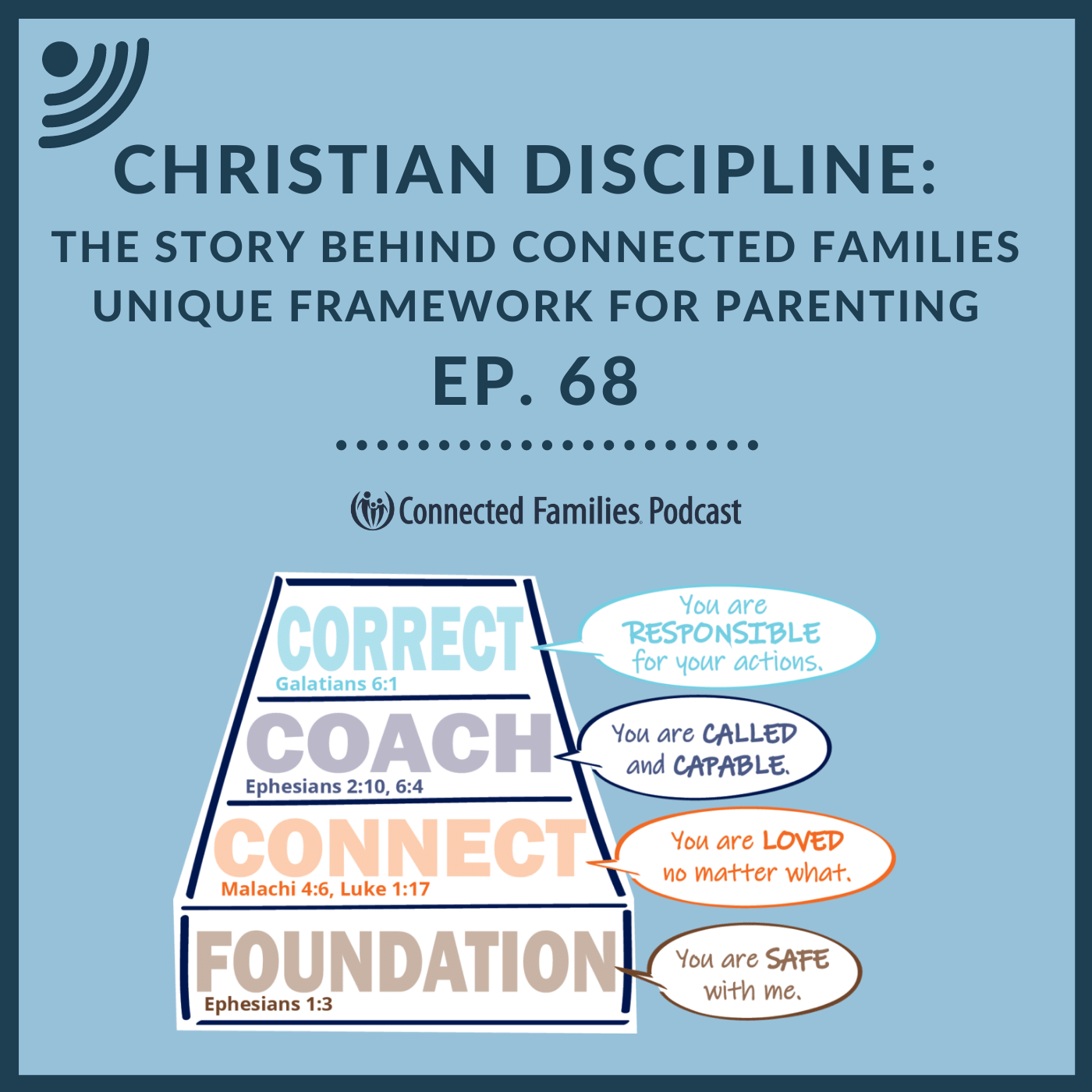
As a parent you might feel overwhelmed with the mountain of resources available to you regarding Christian discipline. From podcasts, to books, to seminars, there is no shortage of available content you could access. But, when you are Christ-follower AND you are tuned into the latest in research and attachment-based parenting, you are looking for something more. Something that combines heart, soul, and body. Connected Families was born from this deeply felt need of parents who were longing for real solutions and a deeper connection with their kids. Chad Hayenga (Licensed Marriage and Family Therapist and Connected Families Coach) hosts Jim and Lynne Jackson (co-founders of Connected Families) for a very special interview about the founding roots of Connected Families and their exciting vision for the future. From a 3:00am wake-up call from God to a community of thousands of parents, hear how God has uniquely guided every step of the Connected Families journey with wisdom and purpose. Join us for today’s podcast to learn more about the past, present, and future of Connected Families! In this episode you’ll hear: How the intensity of Jim and Lynne’s own family informed Connected Families and moved them forward in their ministry to other parents The impact of the Connected Families Framework for parents, within the organization’s team, and within Jim and Lynne’s work as a married couple serving in ministry together The vital role of Connected Families parent communities and the Insiders Team The compelling future vision for the Connected Families ministry Thank you for partnering with us and being a part of our Connected Families community! As always, please reach out to us and let us know how we can continue to come alongside you in your parenting journey. Connected Families resources and opportunities mentioned in this podcast: Discipline That Connects With Your Child’s Heart (book) How to Grow a Connected Family Connected Families Insiders Team .stk-ef1ad82{background-color:var(--theme-palette-color-4,#1e3f52) !important}.stk-ef1ad82:before{background-color:var(--theme-palette-color-4,#1e3f52) !important}.stk-ef1ad82 > .stk-separator__bottom{transform:scaleX(-1) !important} .stk-264e196{align-self:center !important} .stk-437e671 .stk-block-heading__text{color:var(--theme-palette-color-6,#e4eff5) !important}Be the grace-filled parent you want. .stk-9ad39e0 .stk-block-text__text{color:var(--theme-palette-color-8,#ffffff) !important}Maybe a refrigerator magnet can’t transform you, but it can remind you of the change you’re working toward. .stk-cc64109 .stk-button{background:var(--theme-palette-color-1,#ee6c4d) !important}.stk-cc64109 .stk-button:hover:after{background:var(--theme-palette-color-2,#98c1d9) !important;opacity:1 !important}.stk-cc64109 .stk-button__inner-text{font-size:21px !important;color:var(--theme-palette-color-8,#ffffff) !important;font-weight:600 !important}@media screen and (max-width:999px){.stk-cc64109 .stk-button__inner-text{font-size:21px !important}}GET MY MAGNET .stk-58037d1{align-self:center !important} Related PostsAre You Parenting From a Place of Fear? | Ep. 42How to Become an Emotionally Safe ParentLegalism vs Grace: How to Let Go of Perfectionism & Grab Hold of GraceParenting Kids from Hard Places with Unique Needs | Ep. 45The Small Magnet That is Making a BIG Difference

Ep 67My Kid is Looking at Porn
“My kid is looking at porn! What should I do?” Have you experienced this? Or maybe you are concerned about how to prepare your child for future encounters with something inappropriate. Pornography is highly accessible in today’s culture. Marketers seem to sexualize everything to sell products. In a world where we are unable to shield our children from this, how do we respond? Today’s podcast is the third of a three-part series focused on topics that dads often encounter as they seek to lead with grace. Join Jim Jackson (co-founder of Connected Families) and Chad Hayenga (Licensed Marriage and Family Therapist and Connected Families Coach) as they discuss the very sensitive and challenging topic of kids and pornography. As we seek to impart boundaries and wisdom to our kids regarding pornography, our reactions about this topic can either increase shame or invite connection. When we bring God’s grace and truth into the challenge of kids and porn, we can focus on our kids’ hearts and the parent-child connection that they so desperately need to navigate their struggle. You’ll learn in this episode: How to confront a child who has been caught viewing pornographyThe vital importance of connection with your child as you prepare to talk to your kids about pornographyWays in which the Connected Families Framework can empower you to discover: “What is going on in me? What’s it like to be my child?”The ways that shame and secrecy can affect your child’s struggle and your relationship with your child This is not an easy topic to navigate, so please let us know how we can come alongside you, and help bring God’s grace and truth to your family. Bible verses mentioned in this podcast: Galatians 5:16-26Galatians 6:1-2 Matthew 5:27-30Philippians 1:6Philippians 4:6-7 Want to learn more? What to Do When You Catch Your Child Looking at Porn .stk-iyowtol{margin-bottom:0px !important}.stk-iyowtol-container{background-color:rgba(232,232,232,0.3) !important;box-shadow:0px 5px 30px -10px rgba(238,108,77,0.3) !important}.stk-iyowtol-container:before{background-color:var(--theme-palette-color-5,#e8e8e8) !important} What are your parenting strengths? You’ve got them. Knowing your strengths will help you become the best parent you can be. Knowing your parenting challenges is useful information too. Take our FREE ASSESSMENT. (function() {var script = document.createElement('script'); script.src = "https://paperform.co/__embed.min.js"; document.body.appendChild(script); })() Related PostsChild Looking at Porn? Here’s Where to Start.How to Limit Screen Time with Healthy Habits & a Bigger YESHow to Set Boundaries with Screens | Ep. 66Should I Punish My Child for Swearing?What Do You Do with a Minecraft Addiction?

Ep 66Setting Boundaries with Screens | Ep. 66
“My kid is obsessed with gaming! Are they addicted? What should I do?” If you’ve found yourself making these kinds of statements you are not alone. It’s amazing how something small on a screen can have such a big impact. And screens are everywhere. How do you set boundaries when you think your child is addicted to screens? There are real solutions and we are going to dig into them. Today’s podcast is the second of a three-part series focused on topics that dads often encounter as they seek to lead with grace. In this episode, Jim Jackson (co-founder of Connected Families) and Chad Hayenga (Licensed Marriage and Family Therapist and Connected Families Coach) tackle the common but difficult topic of screen addictions (especially video gaming). We’ll dive into important and practical topics such as: How you can use the Connected Families Framework to help your child and yourself have a healthy relationship with screensThe importance of communicating to your child, “You are capable of overcoming this struggle!”How to build wisdom and responsibility in your kids’ video game habits while showing empathy and compassionWays to ask questions and set boundaries with video games that invite conversation and connection with your child Screen addiction is a real thing and it is not easy! Let us know how we can come alongside you as you help your child work through this challenge. We are here to help! Resources mentioned in this episode: Sibling Conflict CourseConnect Families Framework Want to learn more? Why Do Kids Obsess Over Video Games?Healthy Screen Time With Kids–An Oxymoron or Hopeful Possibility?Keep Calm and Stay Connected (to your teen!) Take 15 minutes to learn how to give consequences that teach, rather than simply punish, by downloading our free ebook Consequences That Actually Work. Related Posts3 Secrets to Grow from Screen Time Madness to Gladness This Summer52 Out-of-the-Box Family Bonding ActivitiesHow to Limit Screen Time with Healthy Habits & a Bigger YESHow to Put Screens Back in Their Place | Ep. 34You Don’t Want to Micromanage Your Family: How to Stop Parenting With Anxiety

Ep 65How to Leave a Legacy | Ep. 65
What comes to your mind when you hear the word “legacy”? We feel inspired when we hear stories about the legacy of someone who has made an impact in the world. Hearing these stories may inspire you to want to leave a valuable legacy of your own. OR maybe that idea feels painful to you. You might have regrets and wonder if it’s too late to leave the legacy you had hoped for. Whatever your experience, take heart and be strengthened that today is a new day! This podcast will guide you in taking steps to leave a legacy of faith for future generations. In today’s podcast, Jim Jackson (co-founder of Connected Families) and Chad Hayenga (Licensed Marriage and Family Therapist and Connected Families Coach) discuss how to leave a legacy of faith for your kids. During the month of June, in recognition of Father’s Day, we are focusing on topics geared towards issues that dads often encounter, as they seek to lead with grace. (Moms, listen in too! There’s loads of encouragement here for you as well.) Leaving a legacy is purposefully planting seeds of hope, life, and generosity. It means trusting God’s love to make those seeds grow. It’s never too late to leave a legacy! In this podcast, you’ll learn: Practical and thoughtful ways of leaving a legacy of faith for your childHow to handle shame and past regrets, and leave a new legacy starting todayThe importance of authenticity as a parent, and sharing your own testimony of how God has worked in your lifeThe value of celebrating God’s blessings as a family and sharing those blessings with others Mentioned in this podcast: C.S. Lewis quoteMatthew 6:19-211 Corinthians 3:6-81 Thessalonians 2:11-12Joshua 4:21-22Deut 6:4-9Sibling Conflict Online Course .stk-979td4v{margin-bottom:0px !important}.stk-979td4v-container{background-color:rgba(232,232,232,0.3) !important;box-shadow:0px 5px 30px -10px rgba(238,108,77,0.3) !important}.stk-979td4v-container:before{background-color:var(--theme-palette-color-5,#e8e8e8) !important} What are your parenting strengths? You’ve got them. Knowing your strengths will help you become the best parent you can be. Knowing your parenting challenges is useful information too. Take our FREE ASSESSMENT. (function() {var script = document.createElement('script'); script.src = "https://paperform.co/__embed.min.js"; document.body.appendChild(script); })() Related PostsAdvice for DadsBuilding True Respect and TeamworkFear-Based Compliance vs. Heartfelt Obedience: How to Avoid One & Inspire the OtherHonoring Our Imperfect Dads | Ep. 19Meet Juan and Nita from South Africa“I will love you simply because you are my son.”
Ep 64Help! My Child is Violent! | Ep. 64
You ask your child to do something simple and they respond with violence. Your five-year-old comes at you forcefully with a toy and is going to hit you. Maybe your teenager is physically fighting and things are getting out of hand. You start to realize your child is violent. Now what? As a parent in this situation, you may feel discouragement, fear, anxiety, or even shame. It’s hard to know what to do when your child is physically aggressive, and it’s natural to feel your own emotions escalate as well. You may be wondering, “How can I bring peace to this toxic situation?” Defusing a child who is violent In today’s episode, Jim and Lynne Jackson (co-founders of Connected Families) join Stacy Bellward (podcast host) to discuss the difficult challenges of parenting a child who struggles with being physically aggressive. Jim and Lynne talk through the Connected Families Framework, and how it can help defuse an angry child in the heat of the moment. Longer term, this podcast will help guide you as a parent to provide love, safety, and connection for your child. In this podcast you’ll learn: How to create a strong and confident foundation as a parent: What is going on in me when my child is violent?How your child’s underlying anxiety can often be masked as anger: What’s going on in my child when they explode?Practical and loving ways to provide safety and connection to a child who needs restraint The power of empathy and truthful, compassionate, phrases to communicate to your child: “I am for you, you are loved, we’ll get through this together.” As always, we are here to help and you are not alone! Check out some of our resources below, or reach out to us to learn more about how Connected Families can walk alongside you in your parenting journey. Encouraging verses and resources mentioned in this podcast: James 1:5 Romans 15:13FREE Resources Helping Kids With Anger (FREE ebook)Grace and Truth for Moms (online course)Connected Families Framework Related Posts50 Self-Regulation Activities to Empower Your Child to CalmGot a Strong-Willed Child? So Did This Mom. | Ep. 51Practical Tips To Turn Uncontrolled Emotional Outbursts Into Big WinsThe Awesome Thing About Your Kid’s Misbehavior…What Causes Anger Issues in a Child? | Ep. 46 Do you feel stuck in negative patterns? Feeling isolated? Are you anxious about your kids’ successes or failures? Our Grace and Truth for Moms online course will help you identify and hold on to God’s truth about YOU, and equip you to stop believing toxic lies about yourself. This course is created for small groups, so grab a few other moms and be encouraged!
What’s the Best Way To Handle Shared Parenting? | Ep. 63
Co-parenting, intense emotions, tough transitions – these single-mom challenges can be hard! If you are a single mom, you have probably navigated rough waters in these areas. It may feel so discouraging at times. The good news: There are ways to keep you and your kids steady and growing in wisdom through it all. Emotional security and connection are key. This podcast will walk you through what that can look like in daily life as a single mom. It IS possible to navigate shared parenting in a respectful way. Today we bring you the second part of our podcast series about single motherhood and our Connected Families Framework. Join Stacy Bellward (podcast host) and Lynne Jackson (co-founder of Connected Families) to hear heartfelt and practical insights from single moms about connecting and coaching kids through intense emotions and tough situations. When kids feel loved and connected in the ups and downs of divorce and co-parenting, you can foster a close relationship that will help them feel secure, even while walking through difficult moments. Both you and your children can experience joy and a strengthened faith in trying circumstances. In the words of one single mom: “Even in hard times, with God nothing is wasted!” If you’re not a single mom, dive in anyway! This discussion can still be applied to your situation, and these moms have tremendous wisdom for life’s challenges. Be encouraged and equipped as we tackle important questions such as: How can you connect with your kids through the difficult transitions between caregivers? What are some ways you keep laughter and joy part of your family? How do you equip your kids to respond in faith and wisdom through various challenges? What are some ways you handle your child’s emotional stress when it shows up as intense misbehavior? Resources to help you and your child connect: Helping Kids with their Anger: A creative activity to reduce outbursts and prepare kids for healthy relationships Grace and Truth for Moms (online course) Connected Families FREE Resources Other resources for single moms in the Twin Cities area: Emerge-Twin Cities Beyond New Beginnings (Chaska, MN) Together for Good (St. Paul, MN) Safe Families for Children (nationwide) Related Posts30 Best Pieces of Advice for New Moms (from Real Pros)Being a Single Mom is Exhausting | Ep. 62Grace and Truth for Moms | Ep. 61Legalism vs. Grace: Let Go of Perfectionism & Grab Hold of GraceResilient Children: 15 Little Opportunities to Grow Overcomers at Home Do you feel stuck in negative patterns? Feeling isolated? Are you anxious about your kids’ successes or failures? Our Grace and Truth for Moms online course will help you identify and hold on to God’s truth about YOU, and equip you to stop believing toxic lies about yourself. This course is created for small groups, so grab a few other moms and be encouraged!
Ep 62Being a Single Mom is Exhausting | Ep. 62
Being a single mom is exhausting. And when we hear from single moms, they often say things like, “I feel SO alone.” “I don’t know if I can make it.” “Are my kids and I beyond hope?” Maybe you wrestle with thoughts and beliefs like these too. Do you wonder if God is listening, and working in your difficult situation? Listen in on today’s episode focused on single parenting. We believe the wisdom shared will infuse you with solid truth and precious grace to keep you walking the road of motherhood on a firm foundation. Above all, know that God deeply loves you and your children, and He is ever-present in all of your circumstances. Even if you are in a two parent home, you’ll gain LOTS of wisdom and insight from the two courageous, faith-filled single moms that we interviewed for these podcasts. You are not alone. In today’s podcast, Stacy Bellward (podcast host) and Lynne Jackson (co-founder of Connected Families) walk you through straight-forward conversations about single motherhood. You’ll hear from several single moms, as well as a leader at a local church who ministers to single moms. These moms describe in their own words the ups and downs of single parenthood, and how the Connected Families framework has helped them on their journey. As you lean into God, you’ll be equipped to take care of your own heart and strengthen yourself. With this as your foundation you can be a strong pillar for your children no matter what the circumstances are around you. You and your children are not broken, and you are not alone! In this podcast: In this podcast, we hear from single moms about their parenting journey. These moms give honest and vulnerable responses to the following questions: What key beliefs keep you steady through the ups and downs?How do you draw on a supportive community?What are the ways that you saw God show up to help you through difficult times?How do you deal with negative things an ex-spouse may have said about you to your kids?How do you navigate different parenting styles? If you are a single mom who is looking for parenting guidance, we are here for you! You can check out our resources, or contact us at https://connectedfamilies.org/contact-us/. We recognize that as a single parent, finances may be a hindrance to taking our online courses. Which is why we always offer scholarships. Never hesitate to ask. . Bible verses mentioned in this podcast: Zephaniah 3:17Isaiah 61:1-3Proverbs 3:5-6 Resources mentioned in this podcast: Connected Families-Grace and Truth for Moms (Online Course)Beyond New Beginnings (Chaska, MN)Together for Good (St. Paul, MN)Safe Families for Children (nationwide) Other resources for single moms in the Twin Cities area: Emerge-Twin Cities Do you feel stuck in negative patterns? Are you isolated? Are you anxious about your kids’ successes or failures? Our Grace and Truth for Moms online course will help you identify and hold on to God’s truth about YOU, and equip you to stop believing toxic lies about yourself. This course is created for small groups, so grab a few other moms and be encouraged!

Ep 62Grace and Truth for Moms | Ep. 61
Does the stress and struggle of parenting leave you feeling unworthy or incapable of being the mom you long to be? Do these statements sound familiar? “I’m a failure as a mom and I have ruined my kids!” “I’m an angry parent with an angry child!” Perhaps it feels like you are parenting from a place of discouragement and anxiety. We want you to know that God’s grace runs deep for you, and you are not alone. You can find grace and truth for yourself as a mom. In today’s episode, you will learn how to work through the feelings of doubt and discouragement that many moms experience. In this rebroadcast from 2020, Lynne Jackson (co-founder of Connected Families) joins Heather MacFadyen on her podcast, Don’t Mom Alone. Heather interviews Lynne about the importance of recognizing toxic lies you may believe (about yourself and your kids) and how to replace those lies with God’s grace and truth. You’ll learn to process your difficult feelings and beliefs in a way that helps you to be a vessel of grace and truth for yourself–and for your kids. Discover in today’s podcast: how extreme thinking, perfectionism, and catastrophizing can keep you stuck in a negative parenting cycle practical ways to work through negative emotions and experience God’s healing and peace the importance of having support from other moms who can listen and encourage you encouragement that can help you persevere in living out God’s grace and truth for you and your kids About Heather MacFadyen: Married and a mom to four sons, Heather struggled with the challenges of raising four young boys. She isolated herself from community, fearing embarrassment, rejection, and failure. Slowly she began to reach out to friends again. Through prayer with friends, God healed wrong identities Heather held onto. She started a podcast called “God-Centered Mom” (now Don’t Mom Alone), a show that has been downloaded over 7 million times. Bible verses mentioned in this podcast: Matthew 12:34 Ephesians 4:15 Ephesians 6:4 Psalm 139:14 2 Corinthians 10:5 Resources from this podcast to encourage you: You Are a Daughter of the King speech (design courtesy of Don’t Mom Alone) Trash, Truth, Treasure: Helping Kids Turn Anger into Wisdom Grace and Truth for Moms Online Course Do you feel stuck in negative patterns? Are you isolated? Are you anxious about your kids’ successes or failures? Our Grace and Truth for Moms online course will help you identify and hold on to God’s truth about YOU, and equip you to stop believing toxic lies about yourself. This course is created for small groups, so grab a few other moms and be encouraged!
How Can I Teach My Child to Pray Heartfelt Prayers? | Ep. 60
Do you struggle to teach your child how to pray? How do you instill something deeper when your child just wants to pray for a new xbox? Like many parents, you likely desire to see your kids engage in a meaningful prayer life. That can be hard! Sometimes kids just get bored when we pray! Or find it difficult to get past a surface-level prayer. The good news: There are many practical and effective ways to model and encourage your kids to grow in more heartfelt and personal prayer. Today on the Connected Families podcast, Stacy Bellward (podcast host) talks with Chad and Carma Hayenga about their journey to a deeper and more personal prayer life. You’ll hear how this overflowed to their kids, and positively changed the heart of their family. We trust you will find encouragement and practical tips in this podcast to teach your child to pray and for your family’s prayer journey! In this podcast, Chad and Carma discuss: The transforming power of experiencing Jesus’ presence in prayerHow to transform rote and programmed prayers into a personal conversation with GodA larger vision for your family’s prayer life, as well as practical everyday prayer opportunitiesWays to help kids express their faith creatively according to their personality and giftsParticipating in God’s Kingdom work at home and around the world through prayer More about Chad and Carma: Chad Hayenga is a Marriage and Family Therapist and certified life coach with a background in counseling struggling youth and families. As a prayer intercessor, Carma has a deep passion to see families changed through the power of prayer. Combining their skills, and trusting in the power of the Holy Spirit to effect change, they have seen people experience incredible spiritual freedom. Interested in learning more? Check out this unique coaching option to connect personally with Chad and Carma. Resources about prayer mentioned in this podcast: Prison to Praise by Merlin Carothers Is That Really You, God? by Loren Cunningham Voice of the Martyrs FREE magazine subscription
Help! How do I keep a conversation going with my child? | Ep. 59
Frequently parents focus on conversation skills when there is conflict. But what about in the normal day-to-day interactions? Do you feel like it is more difficult than it needs to be to have a “normal” conversation with your child? Do you feel like you spend a lot of time telling your child what to do instead of asking the right questions? It’s hard when you feel like, “My child won’t talk to me!”Sadly, sometimes our reactions as parents is what shuts the conversation down. Can you relate? If so, this podcast discussion will bring you the honest and hope-giving guidance you are looking for as you desire to have open and honest conversations with your kids. In today’s podcast, Stacy Bellward (podcast host) is joined by Chad Hayenga (therapist and Connected Families parent coach) to talk about how you can engage in meaningful, on-going conversations that bring connection with your child. You can keep the important conversations going with your kids by asking gentle, light-hearted, curious questions that help your child feel safe to open up to you. In this podcast, we’ll discuss: The power of kind and curious questions to unlock a child’s heartKeeping shame out of the conversation with your childHow to respond when kids have doubts about their faith and GodPractical ways to calmly respond when your child says something that triggers you! The importance of your strong, solid foundation in Christ to create stability for your struggling child Connecting to and valuing what is going on in your child’s heart can keep the conversation going for years to come! Parenting resources mentioned in this podcast: The Power of Questions: Less Arguing. More Wisdom. (online course) Want to learn more for when, “My child won’t talk to me!” Stay Curious During Tough Conversations: Why Lectures Never Win Connected Families Framework Related PostsAre You Tired of Having to Nag Your Kids? | Ep. 35My Child Doesn’t Believe in God. Now What?My Child Wants Nothing to Do With Me. Is There Hope?Why Is My Child So Angry? The #1 Unexpected Reason & Practical Steps to TakeYou Don’t Want to Micromanage Your Family: How to Stop Parenting With Anxiety
Ep 58What Should I Do When My Child Is Having a Meltdown in Public? | Ep. 58
You’re in the grocery store. Or the park. Or at a family gathering. And you sense a major meltdown coming. It’s so embarrassing when your child has a meltdown in public – especially when you know other people are watching! Join Jim and Lynne Jackson, co-founders of Connected Families, as they offer practical and down-to-earth solutions to this real-life struggle. This podcast addresses some common questions we frequently hear, such as: “What should I do when my child is having a meltdown in public?”“Is there a time and place for immediate obedience, and what does that look like?”“How can I better connect with my child in a discipline situation?” Along with these helpful insights, you’ll gain a crucial “big picture” perspective of your (and your child’s) identity as God’s beloved children. Not perfect parents with well-behaved kids, but imperfect parents and kids learning together in the love and grace of Jesus. Bible references mentioned in this podcast: The Parable of the Two Sons (Matthew 21:28-32)Jesus’ Warnings to the Pharisees (Matthew 23:25-36) Want to learn more about how to help your child when they meltdown in public? Connected Families FrameworkDiscipline that Connects with Your Child’s Heart (book)FREE Resources to Strengthen Connection with Your Child Download our FREE in-depth ebook Helping Kids With Anger. It will provide thoughtful insights and creative ideas to help your struggling child. Related Posts50 Self-Regulation Activities To Empower Your Child To CalmAvoiding Power Struggles Is Simpler Than You ThinkBut What About My Toddler?Practical Tips To Turn Uncontrolled Emotional Outbursts Into Big WinsWhy Is My Child So Angry? The #1 Unexpected Reason & Practical Steps to Take
Ep 57My Child Quits Everything | Ep. 57
In today’s episode we dig into the second part of our series on raising overcomers! Stacy Bellward (podcast host) and Jim and Lynne Jackson (co-founders of Connected Families) talk about how to help kids develop resilience and, in the process, uncover the unique purpose God has for them. If you feel like your child quits everything too soon then this is the podcast for you. Does your child get stuck in defeat? Or have trouble moving forward when things feel too hard? These can be beautiful opportunities to see the gifts beneath their struggling behavior. You can encourage and strengthen your child to do hard things while communicating to them, “I’m with you in this, we’re going to do it together.” This podcast explores: Two key ingredients you need to help you and your kids work through challengesHow to model resilience with peace and connection when you feel like your child quits everythingThe gift-gone-awry underneath your child’s struggle with resilienceHow to create an environment that can provide the foundation to teach kids resilienceA mother’s story of how she helped her son tackle a frustrating situation Resiliency resources mentioned in this podcast: The Foundations of the Resiliency Framework by Bonnie Benard Want to learn more? 12 Misbehaviors and the Gifts-Gone-Awry Behind Them: Seeing Strengths even in Struggles Connecting to your child through our Connected Families Framework To learn more, register for our online course The Entitlement Fix: Growing Hard Work and Gratitude In Your Kids! This fast-paced 4-session course is designed to give parents a solid strategy for stamping out entitled attitudes, and moving toward greater meaning in life. You’ll learn to take your kids through a simple process for helping your family have constructive conversations about rights, responsibilities, and privileges in your home. You’ll learn graceful responses for the inevitable conflict that emerges when parents confront selfishness. Most importantly, you’ll learn a perspective that grounds all your efforts in eternal truths from the Bible.
Ep 56Raising Overcomers: How to Model Resiliency to Your Kids | Ep. 56
In this raw and candid episode, Stacy Bellward (podcast host) is joined by Jim and Lynne Jackson (co-founders of Connected Families) to discuss both the challenges and the beauty of raising overcomers. When you are in Christ you are an overcomer, and you can graciously raise your child to move beyond feeling overwhelmed to being a resilient overcomer. While in the refuge of God’s grace and hope, trials and challenges can be a profound opportunity to grow resilience in your child. This starts with the foundational mindset that learning and teaching resilience is a process. These challenges also invite you to model resilience to your kids! This podcast dives into: What resilience looks like (and what it doesn’t look like!) Practical dialogues to have with your kids that encourage resilience The importance of modeling your own resilience to your kids The grace and promises of God as He walks with you and your kids through tough circumstances How to communicate to your kids that you are for them; that you are in this together! Encouraging scripture mentioned in this podcast: Philippians 4:13 Romans 15:13 Proverbs 3:5-6 Want to learn more about raising overcomers? Turn a Big Meltdown into a Big Win! Michael Phelps’ Secret…And What it Tells Us About Parenting Build Your Resilience Also mentioned in this podcast: The Entitlement Fix: Growing Hard Work and Gratitude In Your Kids! This fast-paced 4-session course is designed to give parents a solid strategy for stamping out entitled attitudes, and moving toward greater meaning in life. Join us today! At $23, we believe this is a fantastic value. If this is still out of your reach, simply contact us for a scholarship.
Kids Struggling to Sleep? Here’s How to Equip Them to Sleep Well | Ep.55
Do you feel like bedtime struggles are a losing battle? Does bedtime leave you feeling exhausted? Your child wants another glass of water, another bedtime story. They’re afraid of the dark. Or overflowing with wound-up energy from the day. You are exhausted. Frustrated. And if your kids are struggling to sleep, you don’t sleep! We have heard your cries! Kids not going to sleep (or staying asleep) is a fairly frequent concern we hear from parents during coaching sessions. If you feel like you have tried everything and wonder why nothing is working, you’re in the same boat as so many other sleep-deprived families! As parents we sometimes want to push through this time to bring some peace to the end of our day. But what if bedtime could be a way to tap into your child’s heart in a way that makes them feel safe, understood, and loved? What if you change your mindset to see that when your child is struggling to sleep this could be an opportunity for deep connection? It really can be! You can transform difficult bedtime routines into an opportunity for deep and lasting connection with your child. How? In this podcast we’ll introduce you to a unique and holistic approach that gets to the heart of your child. We’ll give practical, science-based, tips that you can use today. Listen in as Stacy Bellward (podcast host) talks with Lynne Jackson, co-founder of Connected Families and author of Transform Bedtime Struggles into Nighttime Snuggles. (Our newest resource!) Together they discuss ways to help prepare both you and your child for a peaceful night of rest. This podcast dives deep into: Obstacles that can hinder kids from a good night’s sleepPractical sleep solutions that really workCalming your child’s body, mind, heart, and spirit to help them sleepHow a connected approach to bedtime can bring peace to your evenings Sleep and parenting resources mentioned in this podcast: eBook: Transforming Bedtime Struggles into Nighttime SnugglesBook: Why We SleepBook: The Opposite of WorryPsalm 4:8Isaiah 41:13Connected Families FREE Resources Want to learn more? Connected Families FrameworkHow to Create a Simple Sensory Diet for Restless, Homebound Kids The sweet bedtime cuddles you dream of deteriorate far too often into mayhem. You’ve got this! Bring peace to your child’s body, mind, heart, and spirit. So they (and you!) can sleep well. Download and read our FREE in-depth ebook Transform Bedtime Struggles into Nighttime Snuggles. Related Posts50 Self-Regulation Activities To Empower Your Child To CalmHow I Helped My Baby Sleep When Sleep Training Was Not WorkingHow to Create a Simple Sensory Diet for Restless, Homebound Kids | Ep. 30How to Stop Attention-Seeking Behavior Before It StartsHow to Teach Your Child Not to Be Scared | Ep. 39
How to Take Advantage of Sibling Rivalry to Explain Emotions and Feelings to a Child
Few things can be more frustrating as a parent than trying to mediate sibling rivalry. You want your kids to be friends but instead they are fighting, badgering, and teasing each other. It feels like you are getting nowhere! You think, “How do I stop him from hitting others?” or “Why can’t my kids just get along?!” But what if we could use sibling conflict as an opportunity to explain emotions and feelings to a child? You know what the cool thing is? Sibling rivalry is the perfect opportunity for teaching emotional awareness and explaining about feelings and emotions to a child. If you’re looking for an emotional intelligence activity, look no further. Just wait for the next time your kids start arguing—probably some time in the next nine minutes. An opportunity to explain emotions and feelings to a child When kids fight with siblings or playmates, their selfish tendencies can get the best of them. But there is real hope: When you as a parent express empathy, you can unlock your child’s big emotions. You can also teach your kids to have empathy for each other. How? By explaining to your child about feelings and emotions, and giving them the language and skills to identify those feelings in themselves and each other. Today’s episode is the second part in a series about The Power of Empathy. Join Stacy Bellward (podcast host) and Lynne Jackson (co-founder of Connected Families) as they discuss this super common challenge. You’ll learn solid steps and practical strategies to help you walk your kids through conflict in a way that strengthens their relationship. You can help your kids learn to value each other and to feel a lasting connection. This podcast is full of insight, ideas, and brain-science as we talk about feelings and emotions and how we explain these to a child. Listen to the podcast to learn: How to apply empathy to sibling conflictHow to help kids connect physical sensations with emotionsCreative ways to teach emotional intelligence in a fun non-shaming wayThe need to understand ourselves before we can understand or have empathy for others and how that relates to teaching our children about feelings and empathy Emotional intelligence resources mentioned in this podcast: Part 1 of our Empathy Series: The Power of Empathy: How to Teach Your Child to “Feel Another’s Feelings” Blog article: Can True Empathy Really Be Taught to Kids?Dr. Dan Siegel: Name It to Tame ItEmotions chartThe “just right challenge”Connected Families “Anger e-book” (FREE!) Want to learn more? Check out our Connected Families Framework In our online course Sibling Conflict: From Bickering to Bonding we teach parents how to teach kids The Peace Process. This process equips kids to work through their own arguments without your constant supervision and refereeing. Join us today so your kids can begin building the relationships you always imagined.
The Power of Empathy: How to Teach Your Child to “Feel Another’s Feelings” | Ep. 53
“How do you think that makes your sister feel?” or “You can’t do that to him!” Sound familiar? As a parent you likely want your child to be known as kind, generous, sensitive, and empathetic. These expectations can cause stress and anxiety if we see our child behaving in a way that lacks the power of empathy. Empathy is a natural skill we are born with, right? Nope. What is natural for kids? To be selfish, egocentric, and not think about the feelings of others. So you might be wondering, “Can empathy be taught to kids?” Absolutely. Today, Stacy Bellward (podcast host) talks with Jim and Lynne Jackson (co-founders of Connected Families). Together they offer hopeful solutions and practical insights that can graciously guide you and your child toward empathy, using our Connected Families Framework for parenting. It may be a longer journey for some kids than others, but you’ll be equipped with the tools to start them in the right direction! In todays episode, you’ll learn: Practical ways to nurture brain pathways that help develop empathyHow to engage with and teach empathy in sibling conflictThe power of gentle, thoughtful questions to draw out empathy from your childHow Jesus modeled empathy Mentioned in this podcast: Hebrews 4:15-16Video: Brené Brown on Empathy (Kid Friendly!) Video: Brené Brown on EmpathyPrayer of Saint Francis Want to learn more? Can True Empathy Really be Taught to Kids?20 Statement that Communicate Empathy to KidsThe Five Powerful Results of Empathy In our Sibling Conflict online course we teach parents how to teach their kids the four steps of The Peace Process. Whether you have constant sibling battles in your home or you want to lay a strong foundation of reconciliation, enroll in the course! You’ll be helping your kids build a lifetime of healthy conflict resolution.
Thinking About How to Fix Your Marriage? Try This. | Ep. 52
Do you ever feel like you want to try and fix your marriage? Or change something about your spouse? The solution to this challenge might surprise you! In this podcast, Jim and Lynne Jackson (co-founders of Connected Families) are hosted by their good friend, Ellie Hope Collins, on her podcast Hope Reclaimed. We are passionate about building strong marriages as a vital piece of the parenting puzzle! In honor of Valentine’s Day, we have a special episode for you on emotionally safe marriages. “Our marriage is all built on this strange, quirky, messy foundation of grace, of safety, of identity in Christ.” -Jim Jackson Listen in as Jim, Lynne, and Ellie have a candid, thought-provoking conversation about building a strong foundation of honesty and communication in marriage. Jim and Lynne share how they have successfully applied parts of the Connected Families Framework to their own marriage. This podcast is full of marriage and communication tips you can use today! We trust you will finish feeling encouraged and equipped. In today’s episode, learn more about: how to embrace your spouse’s quirks without letting them drive you crazy!building a solid foundation of safety by asking, “What’s going on in me?” getting back to connection after conflict.avoiding the “shame-blame” cycle.the sacred role of God’s grace and mercy while working through marriage struggles. Mentioned in this podcast: Matthew 5:23, 24 Matthew 18 Want to learn more? Fighting for Love–Even When it’s Hard What Could Have Ruined Our Marriage How to Parent Together When You’re Total Opposites Host bio: Giving support to men and women healing from divorce, trauma and betrayal, Ellie Hope Collins is the founder of the ministry Hope Reclaimed. Through podcasts, live and virtual events, and the Healing From Divorce Online Course, she has helped thousands of men and women recognize that healing is available. Ellie hails from St. Paul, Minnesota where she lives with her husband, Austin. *This podcast originally aired in July of 2019 .stk-l3zg5qe{margin-bottom:0px !important}.stk-l3zg5qe-container{background-color:rgba(232,232,232,0.3) !important;box-shadow:0px 5px 30px -10px rgba(238,108,77,0.3) !important}.stk-l3zg5qe-container:before{background-color:var(--theme-palette-color-5,#e8e8e8) !important} What are your parenting strengths? You’ve got them. Knowing your strengths will help you become the best parent you can be. Knowing your parenting challenges is useful information too. Take our FREE ASSESSMENT. (function() {var script = document.createElement('script'); script.src = "https://paperform.co/__embed.min.js"; document.body.appendChild(script); })() Related PostsFighting For Love – Even When It’s HardHow I Responded When My Spouse Confessed Attraction for Someone ElseHow to Parent Together When You’re Total OppositesThe Best Defense against “Hook-up Culture” is a Good OffenseWhat Could Have Ruined Our Marriage
Got a Strong-Willed Child? So Did This Mom. | Ep. 51
Your strong-willed child is refusing to choose. You are offering two choices, just like you’ve learned. “Give your child some choices,” they said. “It will help them feel some control,” they said. But your child just stamps their foot and refuses to choose. You asked. We answered! Everyday we receive pressing questions about a wide range of parenting topics. We consider it a privilege to walk this journey with those who are experiencing some of the most challenging aspects of discipline and parent-child connection. And we love to answer listener questions! During the Discipline That Connects with Your Child’s Heart online course, parents ask questions in a moderated format. We wanted to bring some of these questions (and their answers!) to you, our podcast community! Stacy Bellward (moderator for our Discipline That Connects online course) is joined by Jim and Lynne Jackson, co-founders of Connected Families. Jim and Lynne answer some of the most frequently asked listener questions we hear in our online courses and beyond. This is the second episode in a two-part series. You’ll definitely want to hear the answers to these questions! In this episode we answer the questions: “How do I remain patient with my strong-willed and stubborn child refuses to choose? I feel like I am going to lose it!”“Both my 15-month-old and 5-year-old are hitting other kids when they don’t get what they want. How should I respond?”“What are the strengths underneath my child’s misbehavior?”“How do I help my child learn to make it right?” (Coaching kids to think wisely in discipline situations, or when they’ve hurt someone.) It has not been an easy season of parenting. We would love to support you in making the tweaks that will bring lasting change! Join Stacy Bellward and hundreds of other parents from around the world for our upcoming Discipline That Connects online course. This course is offered only twice a year. Join us today! Registration closes on Feb 8th. Mentioned in this podcast: Meet Kara who Lives in Thailand (child struggling with choices mentioned in podcast)Book: Discipline That Connects With Your Child’s HeartPhilippians 4:6-7Connected Families Framework for parenting Want to learn more? Register for our Discipline That Connects With Your Child’s Heart online course this winter. Registration closes on February 8th! Download our FREE eBook 4 Messages Every Child Longs to Hear.Check out our Connected Families FrameworkTo get more insight into today’s topic check out: Connecting with Toddler & Teens During Discipline Download our FREE in-depth ebook Helping Kids With Anger. It will provide thoughtful insights and creative ideas to help your struggling child. Related PostsEnjoy Your Children the Way You Always Wanted To | Ep. 44How to Connect with Your Kids in Any Circumstance | Ep. 47The God-Given Gifts in Your Child’s Misbehavior | Ep. 49Want To Know Your Child’s Strengths?
Your Child Struggles to Transition. Here’s What to Do. | Episode 50
You have work to do and need to move on from playing with your child. They don’t want you to go. And they whine. They fuss. What can you do when your child struggles to transition? You asked. We answered! Everyday we receive pressing questions about a wide range of parenting topics. We consider it a privilege to walk this journey with those who are experiencing some of the most challenging aspects of discipline and parent-child connection. And we love to answer listener questions! Stacy Bellward (moderator for our Discipline That Connects with Your Child’s Heart online course) is joined by Jim and Lynne Jackson, co-founders of Connected Families. Jim and Lynne answer some of the most frequently asked listener questions we hear in our online courses and beyond. This is the first of a two-part series. You’ll definitely want to hear the answers to these questions! In short: Your greatest opportunity to show unconditional love to your child is during a discipline situation! In this episode we answer the questions: “How can I best calm myself when my child is struggling?”“What should I do when my child hits me?”“How can I make bedtime go more smoothly?”“My child wants to keep playing with me and I have things I have to do. What are some ways I can help them transition?” It has not been an easy season of parenting for many of our listeners, and we would love to support you in making the tweaks that will bring lasting change. Join Stacy Bellward and hundreds of other parents from around the world for our upcoming Discipline That Connects online course. This course is offered only twice a year! (Your kids will thank you!) Mentioned in this podcast: The Connected Families Framework for parentingRomans 5:82 Corinthians 10:5 Want to learn more? Register for our Discipline That Connects With Your Child’s Heart online course.Download our FREE eBook 4 Messages Every Child Longs to Hear.Check out our Connected Families FrameworkTo get more insight into today’s topic check out: Safety First: Creating a Culture of Security and Well-Being in Your Home Want to learn more about these concepts? Download our one hour recording of a Discipline That Connects workshop. Related PostsHow to Become an Emotionally Safe ParentHow to Stop Attention-Seeking Behavior Before It StartsThe Small Magnet That is Making a BIG DifferenceTo Spank or Not to Spank?What to Do About the Things Kids Are Scared of At Home | Ep. 40
Ep 47The God-Given Gifts in Your Child's Misbehavior
It takes skill to misbehave! A verbal child often argues with you until you’re exhausted. An emotional child might cry or manipulate. A physical child is more likely to get aggressive or grab something they want. Though it feels frustrating and even counter-intuitive, a shift in attention to your child’s strengths by finding their gift-gone-awry can help. Stacy Bellward is joined by Jim and Lynne Jackson, co-founders of Connected Families. Together they talk about the third part of the Connected Families framework: You are CALLED and CAPABLE! They discuss the transformational idea of finding the gifts beneath your child’s misbehavior. The challenge for parents is to identify the “gift” within the misbehavior; what we call a “Gift-Gone-Awry.” In this podcast* Jim and Lynne share: a life-giving vision to reframe your child’s gifts gone awrythe importance of embracing this challenging visionhow Jesus saw and encouraged a gift-gone-awrypractical strategies for identifying, not suppressing, your child’s gifts We also hear from Jessica, an alum from our Discipline That Connects With Your Child’s Heart online course. She shares a practical example of looking for the gift-gone-awry in a tough situation with her son. Before taking the course, her approach to discipline unintentionally communicated to her son, “You are a problem!” Now their relationship has been transformed as she is learning to view her son as someone gifted for God’s good purposes! Want to learn more? Register for our Discipline That Connects With Your Child’s Heart online course.Download our FREE eBook Four Messages Every Child Longs to Hear.Check out our Connected Families Framework Get more insight into today’s topic: 12 Misbehaviors and the Gifts-Gone-Awry Behind Them Frustrated by constant discipline challenges? Take 15 minutes to read our free ebook 4 Messages All Children Long to Hear: A Discipline That Connects Overview. *This podcast originally aired in September of 2019. Related PostsCommunicating Love in the Midst of Misbehavior | Ep. 12Discipline That Connects With Your Child’s Heart | Ep. 15Teaching Kids to Be Responsible for Their Actions | Ep. 14What Does It Mean to Be an Emotionally Safe Parent? | Ep. 11
Why Demanding Respect From Kids Doesn’t Work | Ep. 48
Recently, we introduced you to Juan and Nita from South Africa. Today, we are excited to bring you a more in-depth interview where they share their heart for their two daughters as well as the 196 children who live in LIV village. They are learning that demanding respect from children often doesn’t work in the long run. Married for almost 12 years, Juan and Nita are the parents of two children and cross-cultural missionaries in their native South Africa. Listen in as they tell of the exciting work God is doing through the Connected Families’ Discipline That Connect With Your Child’s Heart online course. They have seen transformation not only in their own family, but in the school where they work. Nita cried out to God for help both in their home, and in the school where they work. God answered her prayer through a friend who introduced her to the Connected Families resources. After using these resources, Nita noticed significant positive changes in the way she parented and related to her children. Juan works at LIV Village with orphaned and vulnerable children who have experienced trauma. He has seen remarkable changes in both himself and the kids through the principles learned in the Discipline That Connects online course. In this episode you will: Hear the story of God’s work through Connected Families in cross-cultural situations. Discover the power of the Gospel in how God parents us. And also get ideas for how we can extend that same grace to our children. Learn how the Connected Families Framework is lived out in practical, everyday life. Mentioned in this episode: Discipline That Connects with Your Child’s Heart online course The Connected Families Framework Connected Families free resources Ready to dive in and learn more about the Framework? Our 8-session online course, Discipline That Connects With Your Child’s Heart will guide you through each level of the Framework. If you’re looking for a grace-filled way to parent, this course is for you! .stk-cov2efc-inner-blocks{row-gap:0px !important}.stk-cov2efc{background-color:var(--theme-palette-color-3,#293241) !important;background-image:url(https://connectedfamilies.org/wp-content/uploads/2021/05/Optimized-Dad-Kissing-Crying-Daughters-Cheek.jpg) !important;padding-top:0px !important;padding-right:0px !important;padding-bottom:0px !important;padding-left:0px !important}.stk-cov2efc:before{background-color:var(--theme-palette-color-3,#293241) !important;opacity:0.3 !important}.stk-cov2efc-container{background-color:#00000080 !important}.stk-cov2efc-container:before{background-color:#00000080 !important}.stk-cov2efc .stk-block-hero__content{max-width:35% !important;margin-right:auto !important;margin-left:0px !important}@media screen and (max-width:999px){.stk-cov2efc .stk-block-hero__content{max-width:259px !important}}@media screen and (max-width:689px){.stk-cov2efc .stk-block-hero__content{max-width:205px !important}} .stk-53atm2q .stk-block-heading__text{color:#FFFFFF !important}@media screen and (max-width:689px){.stk-53atm2q .stk-block-heading__text{font-size:23px !important}}.stk-53atm2q.stk-block-heading{white-space:normal !important;overflow-wrap:break-word !important;word-wrap:break-word !important;max-width:100% !important}Parent with Confidence Discipline with Love .stk-odcw05t .stk-block-text__text{font-size:18px !important;color:#FFFFFF !important}@media screen and (max-width:999px){.stk-odcw05t .stk-block-text__text{font-size:18px !important}}Take the 8-session online course Discipline That Connects With Your Child’s Heart . .stk-gvj1va8 .stk-button{background:var(--theme-palette-color-1,#ee6c4d) !important}.stk-gvj1va8 .stk-button:hover:after{background:var(--theme-palette-color-2,#98c1d9) !important;opacity:1 !important}.stk-gvj1va8 .stk-button__inner-text{font-size:21px !important;color:var(--theme-palette-color-8,#ffffff) !important;font-weight:600 !important}@media screen and (max-width:999px){.stk-gvj1va8 .stk-button__inner-text{font-size:16px !important}}@media screen and (max-width:689px){.stk-gvj1va8 .stk-button__inner-text{font-size:14px !important}}REGISTER NOW! Related PostsFear-Based Compliance vs. Heartfelt Obedience: How to Avoid One & Inspire the OtherMeet Juan and Nita from South AfricaMeet a Family of Four from MongoliaThis Is Better Than My Old Consequences for a Disrespectful ChildWhat Causes Anger Issues in a Child? | Ep. 46
How to Connect with Your Kids in Any Circumstance | Ep. 47
As you’re heading into some potentially stressful situations over the next few weeks (changing schedules, relatives who might judge your parenting, or not feeling connected to your kiddos) take some time and listen to this encouraging podcast we pulled out of the archives. (This podcast originally aired in 2015.) Jim and Lynne Jackson, co-founders of Connected Families, were interviewed by Heather MacFadyen of the Don’t Mom Alone podcast (formally God Centered Mom). While some of the scenarios may not be relevant to today (car rides to see relatives, eating in restaurants), they give some really practical tips and scripts that can always be used, whatever the circumstance. With an overview of the Connected Families Framework for parenting, you will feel equipped to keep your cool (and even connect!) with your kids during this time. The strategies and stories discussed will give you a vision for hope-filled holidays. Highlights of their conversation: Why kids can behave better at school/other places and fall apart at home.Helping your kids get through challenging scenarios, like traveling and restaurants.How to connect with your kids when you don’t even like them.Do you feel like relatives might judge your parenting? Learn to recognize your need to get your parents’ approval (the grandparents) when kids misbehave. What to do when you are trying to connect with your child and they are not responding. So, maybe while running errands, wrapping gifts, or folding laundry listen to this interview. You’ll be refreshed, encouraged and challenged. You might even come out on the other side of Christmas with an extra measure of joy! Blessings as you lead your family with grace this holiday season! Mentioned in this podcast: Discipline That Connects with Your Child’s Heart online course Sibling Conflict online course .stk-pgvt2z3{margin-bottom:0px !important}.stk-pgvt2z3-container{background-color:rgba(232,232,232,0.3) !important;box-shadow:0px 5px 30px -10px rgba(238,108,77,0.3) !important}.stk-pgvt2z3-container:before{background-color:var(--theme-palette-color-5,#e8e8e8) !important} What are your parenting strengths? You’ve got them. Knowing your strengths will help you become the best parent you can be. Knowing your parenting challenges is useful information too. Take our FREE ASSESSMENT. (function() {var script = document.createElement('script'); script.src = "https://paperform.co/__embed.min.js"; document.body.appendChild(script); })() Related PostsBuilding Wisdom When Kids Want Gifts…and More GiftsChristmas: The Most Wonderful Time of the Year?Family Gatherings | Ep. 16Here’s How to Seize the Opportunity When Your Child Feels DistantTop 4 Tips to Make This the Best Christmas YetWhen Your Child Just HAS To Have That Thing for Christmas…
What Causes Anger Issues in a Child? | Ep. 46
What do you do when your child gets angry? What causes anger issues in a child? When kids respond with angry, aggressive behavior, stress and fear are often the underlying emotions. Children who have experienced trauma often react with heightened fear responses. In this podcast episode, Jim and Lynne Jackson, co-founders of Connected Families, continue their conversation with Lisa Qualls about parenting kids from hard places. Lisa is the co-author, together with the late Dr. Karyn Purvis, of The Connected Parent: Real-Life Strategies for Building Trust and Attachment. In today’s episode, they talk about the importance of nurturing to connect, attach, and create safety with your child. “When we nurture a child we are really disarming that fear response. We’re bringing them into a calm space where they feel and know that they are precious and loved.” -Lisa Qualls As parents, we can learn to understand our child’s fear and how it affects their body. With some basic tools and preparation, you can work to get ahead of your child’s needs and help them avoid a heightened state of fear. You can bring regulation and calm to your child through thoughtful nurture: bringing them close and meeting their needs. In this episode you will: hear practical ways to nurture your child, even when they are angry learn how cortisol affects your child’s body discover tools to meet kids’ sensory needs learn how to disarm fear and meet the physical need Mentioned in this episode: The Connected Parent: Real-Life Strategies for Building Trust and Attachment Karyn Purvis Institute of Child Development “One Thankful Mom” – Lisa Qualls’ website The Adoption Connection – Lisa Qualls’ podcast Connected Families Comprehensive Sensory Activities List 50 Self-Regulation Activities to Empower Your Child to Calm Related Posts50 Self-Regulation Activities To Empower Your Child To CalmParenting Kids from Hard Places with Unique Needs | Ep. 45Why Is My Child So Angry? The #1 Unexpected Reason & Practical Steps to Take .stk-n01ng65{background-color:var(--theme-palette-color-5,#e8e8e8) !important;padding-top:0px !important;padding-right:0px !important;padding-bottom:0px !important;padding-left:0px !important}.stk-n01ng65:before{background-color:var(--theme-palette-color-5,#e8e8e8) !important}.stk-n01ng65-container{box-shadow:7px 5px 30px rgba(72,73,121,0.15) !important}.stk-n01ng65 .stk-block-hero__content{min-height:500px !important;align-items:center !important;display:flex !important} .stk-37i92lj{margin-bottom:0px !important}@media screen and (max-width:689px){.stk-37i92lj-column{--stk-col-order-1:2 !important;--stk-col-order-2:1 !important}} .stk-5pqbp9e{align-self:center !important}.stk-5pqbp9e-container{max-width:450px !important} .stk-swiu53r .stk-block-heading__text{font-size:55px !important;color:var(--theme-palette-color-4,#1e3f52) !important}@media screen and (max-width:999px){.stk-swiu53r .stk-block-heading__text{font-size:50px !important}}You need consequences that work. .stk-j1c4srw .stk-block-heading__text{font-size:35px !important;color:var(--theme-palette-color-4,#1e3f52) !important}@media screen and (max-width:999px){.stk-j1c4srw .stk-block-heading__text{font-size:35px !important}}You need consequences that work. Because your kids aren’t perfect. Neither are you. That’s why you need a plan for discipling your kids in the hard moments. .stk-c5oiolg .stk-block-text__text{color:var(--theme-palette-color-1,#ee6c4d) !important;font-weight:600 !important}Read the FREE ebook, Consequences That Actually Work. .stk-wpf8fjj-container{margin-top:0px !important;margin-right:0px !important;margin-bottom:0px !important;margin-left:0px !important} .stk-h804cnv .stk-img-wrapper{height:750px !important}.stk-h804cnv .stk-img-wrapper img{object-fit:contain !important}@media screen and (max-width:689px){.stk-h804cnv .stk-img-wrapper{width:100% !important;height:500px !important}.stk-h804cnv .stk-img-wrapper img{object-fit:contain !important}}
Parenting Kids from Hard Places with Unique Needs | Ep. 45
Are you parenting a child through adoption or foster care? Are you struggling with bonding to your child or their attachment to you? Your feelings of isolation and discouragement can be very real and overwhelming. As an adoptive parent, maybe you’ve experienced a heightened sense of grief as you search for answers in unfamiliar parenting territory. If you are looking for practical hope, you will find both solidarity and strategies here for your parenting journey. NOTE: Even if you are not parenting a child through adoption or foster care, we encourage you to take the time to listen. You will undoubtedly begin to understand the complexities your friends who have adopted experience daily. You may even pick up a few tips that can be applied in your own family! On today’s podcast: Today on the Connected Families Podcast, co-founders Jim and Lynne Jackson interview special guest, Lisa Qualls. Lisa and her husband are the parents of twelve children by birth and adoption. Lisa is the co-author, together with the late Dr. Karyn Purvis, of The Connected Parent: Real-Life Strategies for Building Trust and Attachment. As a seasoned biological parent, Lisa did not anticipate the extent of the trauma and intense behavior in her children who joined their family through adoption. While witnessing these extreme behaviors, she watched the foundation of her family begin to crumble. After finding new hope and new resources in Dr. Purvis’ book, The Connected Child, the idea for The Connected Parent was born. This book combines real-life strategies taken from Dr. Karyn Purvis’ knowledge, with experiences from Lisa’s everyday life. Listen as Jim and Lynne discuss the foundations of the Connected Families Framework with Lisa. Together they also explore the mission of the Karyn Purvis Institute, and the importance of the foundation of safety and attachment. In this episode you will: find hope and guidance in parenting children from hard placesreceive practical ideas for connecting with your struggling childdiscover the power of using “simple scripts” in your parentinghear about the importance of self-calm in becoming a safe parent learn more about the Connected Families Framework Mentioned in this episode: Connected Families FrameworkThe Connected Parent: Real-Life Strategies for Building Trust and AttachmentKaryn Purvis Institute of Child Development“One Thankful Mom” – Lisa Qualls’ websiteThe Adoption Connection – Lisa Qualls’ podcast Related PostsAdapting Christmas…for children who joined your family through adoptionDoes Giving Time Outs Actually Help Your Child?My Misconceptions About Adoption—And, Well, All Parenting .stk-58k0h6t-container:hover{background-color:var(--theme-palette-color-6, #e4eff5) !important;}.stk-58k0h6t-container:hover:before{background-color:var(--theme-palette-color-6, #e4eff5) !important;} Learn more about the Framework Want to dig deeper into Connected Families’ Parenting Framework? Get our FREE ebook, What Kids Need: 4 Messages That Build Identity.
Enjoy Your Children the Way You Always Wanted To | Ep. 44
Are you scrambling to find clarity and help in your parenting? Are you struggling to find practical tools that bring lasting change? Do you wish you enjoyed your children more? Discover the power of connection and the hope of restoring a more peaceful relationship with your child! How one mom learned to enjoy her children Today’s guest is Emily, an alum of the Discipline That Connects with Your Child’s Heart online course. Emily and her husband have three boys. They experienced many of the typical challenges parents often face, as well as a rough transition in the adoption of their third son. The stress of this transition was causing intense behavior in her children, and Emily knew she needed a different way to discipline than the way she had disciplined prior to their adoption. After hearing from friends who attended a workshop led by Jim and Lynne Jackson, Emily knew this was the way she wanted to parent. She signed up for the DTC online course, and discovered the power of the Connected Families framework. In the course she learned the importance of self-evaluation: “What’s going on in me as a parent?” She also gained a more empathetic view of her children, and found that the way God relates to us can inspire how we connect with our children. Instead of trying to fix her kids’ behavior, Emily began using wisdom to guide her children toward the gifts that God instilled in them. She saw her children soften toward her, and toward the message of the gospel of Jesus’ love. Bringing God’s grace to your parenting Join Stacy Bellward (DTC course moderator) and Jim Jackson (co-founder of Connected Families), as they share Emily’s story. Everything we do and teach at Connected Families flows through the ideas that we present in this online course. In short: it is a way of parenting that brings God’s grace and truth into the daily interactions with your children. In this episode you will: Discover how to build a foundation of connectedness and attachment with your child.Learn the importance of finding the gift gone awry; of looking at the gifting beneath the misbehavior, and helping your children use their gifts the way God designed.Hear how the framework can provide unity of vision with your spouse in parenting.Find hope that you can enjoy your children the way you’ve always wanted to. Mentioned in this episode: Ephesians 2:10 .stk-of2r1pm{margin-bottom:0px !important}.stk-of2r1pm-container{background-color:rgba(232,232,232,0.3) !important;box-shadow:0px 5px 30px -10px rgba(238,108,77,0.3) !important}.stk-of2r1pm-container:before{background-color:var(--theme-palette-color-5,#e8e8e8) !important} What are your parenting strengths? You’ve got them. Knowing your strengths will help you become the best parent you can be. Knowing your parenting challenges is useful information too. Take our FREE ASSESSMENT. (function() {var script = document.createElement('script'); script.src = "https://paperform.co/__embed.min.js"; document.body.appendChild(script); })() Related PostsI Was a Critical Parent: 6 Steps I Took to Find a More Loving WayMy Child Wants Nothing to Do With Me. Is There Hope?To Spank or Not to Spank?Walking in Peace and Joy with Your Kids | Ep. 23Want To Know Your Child’s Strengths?
Parents: Feeling Burned Out? Try This. | Ep. 43
Feeling burned out at the end of the day? Does parenting (and discipline) leave you feeling overwhelmed and discouraged? If you are feeling “parenting burnout” there is help and hope. Perhaps you will identify with our guests today, Nate and Amanda. This couple joins us to discuss the burnout parents often face in the discipline process with their kids. What does parenting burnout look like? Like so many couples, Nate and Amanda were enthusiastic and confident before their children were born. They were ready with ideas about how they would parent and connect with their children. Yet, like many of us, they discovered that the reality of parenting did not always match those expectations. They had great intentions, but struggled to put those intentions into action. As parents, we can get tired and discouraged. Do you feel yourself grasping for control and wanting an immediate fix for your child’s behavior? Often the desire to get the right behavior from our kids can impede the relationship and cause us to lose opportunities to connect. What’s going on in me? Amanda and Nate found new hope and perspective after taking the Discipline That Connects online course. They learned to build a foundation of safety for their children by asking themselves, “What is going on in me?” Amanda noticed that her anxiety about her children’s future caused more exhaustion and brought more tension to the situation. By implementing the practical and biblical strategies they learned together in the course, Nate and Amanda began walking a new path to decrease stress and bring energy back to their parenting. Join Stacy Bellward (DTC course moderator) and Jim Jackson (co-founder of Connected Families), as they talk with Nate and Amanda about the DTC course, and a long term vision for parenting that builds safety and connection. Hear about our unique combination of a biblical framework and a practical science-based approach that can totally shift how you view discipline, and help you build connection with your kids. In this episode you will: Discover how to parent from a place of peace and calm.Learn the value of staying in the moment (and avoid catastrophizing!).Hear practical examples from parents who have been through the course, and how it helped them create more connection with their kids.Learn the power of do-overs and developing new brain pathways to help kids make better choices.Get an overview of the Connected Families framework. Want to learn more? Jim recorded this 38-minute audio thinking about dads (although moms can listen too!). If your wife has recently been digging into our material and is urging you to “get on board!” this is a great place to start!
Ep 42Parenting from a Place of Fear
“My kids will never grow up to be responsible!” “I am a terrible parent, and my child and I will never get along!” Are you parenting from a place of fear? Even catastrophizing a situation? Do you find yourself replaying negative thoughts in your mind about yourself and your child? You are absolutely not alone! It’s easy to let fears about our parenting and our kids grip us and cause anxiety. Toxic beliefs can affect our own hearts, and the hearts of our children. These beliefs are like a recording that plays over and over in our head. We hear a voice that says we don’t measure up, or we make negative assumptions about our kids, and we act out on those beliefs. This kind of thinking can cause us to parent from a place of fear. Your intentions are probably good. You want to become more aware of what’s going on inside your heart, and guide your children from a place of calm and peace. One mom’s story of parenting from a place of fear Join Stacy Bellward (DTC course moderator) and Jim Jackson (co-founder of Connected Families), in an honest conversation about why it is so important to identify our toxic beliefs and replace them with grace-filled truth. Learn practical steps you can take to tame these beliefs and lead your family without fear. Also joining us is Rebecca, a mom who took our Discipline That Connects with Your Child’s Heart online parenting course. Rebecca shares the impact of this course, and how over time it improved her connection with her children. Listen as she shares her struggles with her own fears and toxic beliefs, and how she learned to replace those beliefs with thoughts that encourage safety and connection. In this episode, you will: Gain insight into why we sometimes parent from fear, and wisdom in working toward parenting from joy and peace.Learn to identify toxic beliefs, take those thoughts captive, and replace them with grace-filled truth. Hear practical ways to model self-calming strategies to your kids.Discover more about the Connected Families Framework, and how to build the foundation for connection and safety with your kids. Frustrated by constant discipline challenges? Take 15 minutes to read our free ebook 4 Messages All Children Long to Hear: A Discipline That Connects Overview. Related Posts3 Reasons Kids Misbehave & How You Can Respond With Grace and Love4 Simple Ways to Bridge the Mother-Son DivideAm I a Bad Parent? | Ep. 28My Child Wants Nothing to Do With Me. Is There Hope?Sometimes I Cry About My Parenting MistakesThe Parenting Pitfall We All Get Stuck InYou Don’t Want to Micromanage Your Family: How to Stop Parenting With Anxiety
What to Do When Kids Are Scared of the World Around Them | Ep. 41
Are your kids scared of the world around them? How are you talking about anxiety with your kids these days? In current times coping is harder, and there seems to be more reasons to worry than usual. You may experience tension when your family gathers because everyone views what’s happening in our world through different lenses, and with different opinions. Relationships with some of the most important people in your lives seem at risk. It can be hard to talk about things that concern or upset us. When we are anxious, our kids are the first to know. Kids have a keen radar that senses when things are off in our world. When their radar picks up anxiety, the anxiety spreads. In today’s episode, we discuss the anxiety that can come from things we can’t control, the things that happen outside our walls: Social unrest, pandemics, politics, and school policies and decisions. We WILL have trouble in this world Jesus promises we will have trouble in this world. In the midst of such trouble, you have a unique opportunity to empower your kids to be thoughtful and compassionate in their relationships with others. Learning to approach your kids with grace and wisdom can help keep your family grounded, and growing in God’s love and purposes, during uncertain times. This podcast is the fourth and final episode in a four-part series about anxiety. Listen in as Jim and Lynne Jackson, co-founders of Connected Families, together with close colleague and marriage and family therapist, Chad Hayenga, discuss this relevant topic from a faith-filled, biblically-oriented perspective. In this episode This episode is packed full of rich conversation and practical insights about tough topics. In this episode you will: Explore habits that keep you grounded and help you “take every thought captive.”Discover how to have honest conversations with your kids with a “Big Picture” perspective.Learn how to communicate to your kids: “You are called and capable of figuring out even these really challenging problems!”Hear practical ways to have conversations about big feelings with respect and kindness.Gain insight in how to teach kids to wrestle well with their fears, listen better, and learn from the perspectives of others. The reign and the rule of Jesus’ kingdom is as present and powerful now more than ever. We are all called to be part of this heavenly kingdom. Whatever trouble you are experiencing, the power and force of God’s goodness and grace are the most potent ways to overcome anxiety. Mentioned in this podcast: John 16:33Colossians 3:12,132 Corinthians 10:5John 18:36Philippians 4:6-8Philippians 4:11Matthew 6:25-34Numbers 6:24-26Family Meetings OverviewIs Your Child Refusing to Do Schoolwork?Free Resources from Connected Families Like what you hear? Don’t forget to subscribe, rate, and review Connected Families podcasts so you don’t miss a single episode and others can find us more easily! Want to learn more? This content from this podcast is also available in our blog post called: Teach Your Kids to Trust God…In Times of Unrest and Pandemic. In our online course, The Power of Questions: Less Arguing. More Wisdom., you will learn the art of asking questions that build internal wisdom and character in your kids, and create a culture of teamwork in your family. Join us today! Here is what Mark and Kim had to say after finishing the course: We wish we’d had this training many years ago when starting our parenting journey, but we’ve found that it’s never too late to connect with each other and build up our family team. Changing our perspective and approaching our children (even the ones who are now young adults!) with light-hearted curiosity instead of judgmental lectures is a game-changer. Related PostsHelp! My Anxious Child Cries When Dropped Off at DaycareHow to Teach Your Child Not to Be Scared | Ep. 39My Child is Afraid of Everything | Ep. 38Teach Your Kids How to Trust GodWhat to Do About the Things Kids Are Scared of At Home | Ep. 40
What to Do About the Things Kids Are Scared of At Home | Ep. 40
Mealtime battles, bedtime drama, homework struggles… Can you relate to these anxiety triggers in your home? Often there are deeper emotions under the surface, for both parents and children, that contribute to these conflicts. When we acknowledge and validate the emotions that drive our children’s anxiety, we can better equip them to self-regulate. Validating emotions also helps us avoid anxiety-producing power struggles. This equips us to approach these struggles in a way that empowers our children to feel safe, loved, and capable. We are excited to bring you episode three in our four-part Anxiety Series. Today Jim and Lynne Jackson, co-founders of Connected Families, together with Chad Hayenga, marriage and family therapist, dig deeper on what some of the anxiety triggers might be in your home. Listen in as they talk about separation anxiety, homework, school, mealtimes, and more. In this episode about anxiety triggers you’ll learn: Practical ideas to reduce power struggles at mealtimeHow to approach homework battles with compassion while encouraging responsibility at the same timeHow to validate your child’s anxious feelings Ways to empower your children to feel safe and speak up for what they need Mentioned in this podcast: 7 Practical Tips for Picky Eaters Raise a Healthy Child Who Is a Joy to Feed– Ellyn Satter Responding with Compassion When Kids Don’t Make the Grade Practical Help for Families Struggling with Separation Anxiety Bedtime Struggles Connected Families FREE Resources Like what you hear? Don’t forget to subscribe, rate, and review Connected Families podcasts so you don’t miss a single episode and others can find us more easily! Related PostsDemanding Kids: “I Want 2 Stories, 5 Kisses, and 10 Hugs”Help Your Struggling Child Grieve His Pre-Coronavirus Life | Ep. 31Help! My Anxious Child Cries When Dropped Off at DaycareHow to Teach Your Child Not to Be Scared | Ep. 39My Child is Afraid of Everything | Ep. 38Teach Your Kids How to Trust GodWhat to Do About the Things Kids Are Scared of At Home | Ep. 40What to Do When Kids Are Scared of the World Around Them | Ep. 41Your Child Struggles to Transition. Here’s What to Do. | Episode 50 Sign up below to receive a weekly dose of encouragement straight to your inbox:
How to Teach Your Child Not to Be Scared | Ep. 39
How do you teach your child not to be scared? Bedtime, meals, learning at home, performance anxiety, and separation anxiety can all be sources of anxiety for kids. This is especially true for kids who may be highly sensitive. Kids who struggle with anxiety are often more “on alert” than other children, and don’t always assess danger well. Kids who are anxious can also get their cues from parents. The more we try to create an environment that keeps kids out of a highly-alert state, the more sense of peace and calm the child can feel. In our previous podcast episode, we discussed how modeling a calm spirit is a vital part of calming an anxious child. In this episode, you’ll learn how to empower your children to constructively work through their anxiety, and to experience God’s peace and purpose for their lives. This podcast is the second in a four-part series about anxiety. Listen in as Jim and Lynne Jackson, co-founders of Connected Families, together with close colleague, and marriage and family therapist, Chad Hayenga, explore some of the best ways to encourage kids when they experience anxiety. Among the many practical tools in this podcast, you’ll learn: 3 “Don’ts” that can add to your child’s anxiety.3 “Do’s” that can equip your kids with confidence-boosting skills to handle anxiety.How to help your kids feel empowered with a teamwork mentality, and in their God-given identity to be brave. Mentioned in this podcast: Philippians 4:6,7Ephesians 2:10Joshua 1:9The Opposite of Worry: The Playful Parenting Approach to Childhood Anxieties and Fears (includes the “second chicken” story mentioned in today’s podcast episode)Helping Your Highly Sensitive ChildHow to Create a Simple Sensory Diet for Restless, Homebound KidsBuilding Your Inner Coach-Brett LedbetterDan Siegel: Name it to Tame it Wondering if you have a highly sensitive child? Check out the sister article for this podcast: Helping Your Highly Sensitive Child. Like what you hear? Don’t forget to subscribe, rate, and review Connected Families podcasts so you don’t miss a single episode and others can find us more easily! Related Posts3 Reasons Kids Misbehave & How You Can Respond With Grace and Love3 Unexpected Parenting Strategies to Help Your Highly Sensitive Child ThriveHelp! My Anxious Child Cries When Dropped Off at DaycareHow to Create a Simple Sensory Diet for Restless, Homebound Kids | Ep. 30Teach Your Kids How to Trust GodWhat to Do About the Things Kids Are Scared of At Home | Ep. 40What to Do When Kids Are Scared of the World Around Them | Ep. 41 Frustrated by constant discipline challenges? Take 15 minutes to read our free ebook 4 Messages All Children Long to Hear: A Discipline That Connects Overview.
My Child is Afraid of Everything | Ep. 38
Do you feel like your child is afraid of everything? Where does anxiety come from in our kids? This is a huge struggle parents often face, especially when tensions are high in the world around us. A survey Connected Families conducted in spring of 2020 revealed that 70% of families in the CF community have reported elevated levels of anxiety in recent months. If you are experiencing this, you are not alone! Kids’ struggles and misbehavior can increase everyone’s anxiety and the tension in the home. Our own anxious thoughts about children’s misbehavior can cause us to try harder to control kids, which discourages them and escalates the problem. Our own anxious thoughts about this behavior can cause discouragement in our children, and can also cause us to become more controlling. You have good intentions to help your child manage their big emotions. What can you do to wrestle well with this issue of anxiety in the home? Today’s podcast is the first in a four-part series about anxiety. Listen in as Jim and Lynne Jackson (co-founders of Connected Families) and Chad Hayenga (MA, LMFT, CLC) discuss the root of our anxiety struggles both for kids and for us as parents. In this episode: Learn about the cycle that can cause anxiety in both you and your kids.Think practically about your anxiety and how to model healthy habits to your kids. Discover how to take control of negative thoughts and develop a more peaceful mindset.Identify the Antidote Cycle for growing away from the anxious habits we have. Mentioned in this podcast: Philippians 4:6-9 1 John 4:18 2 Corinthians 10:5 How to Create a Simple Sensory Diet for Restless, Homebound Kids Want to learn more? Our blog post “Are You Micromanaging Your Kids?” Here’s How to Stop gives more practical and helpful tips to stop parenting from a place of anxiety. Like what you hear? Don’t forget to subscribe, rate, and review Connected Families podcasts so you don’t miss a single episode and others can find us more easily! Related PostsHelp! My Anxious Child Cries When Dropped Off at DaycareTeach Your Kids How to Trust GodWhat to Do About the Things Kids Are Scared of At Home | Ep. 40What to Do When Kids Are Scared of the World Around Them | Ep. 41You Don’t Want to Micromanage Your Family: How to Stop Parenting With Anxiety In our online course, The Power of Questions: Less Arguing. More Wisdom., you will learn the art of asking questions that build internal wisdom and character in your kids, and create a culture of teamwork in your family.
What to Say When Your Child Makes Outrageous Statements | Ep. 37
Have you ever heard an outrageous statement from your child? Outrageous statements come in all shapes and sizes and can often trigger disbelief or even outrage in parents. Perhaps that’s why they’re called outrageous statements! It’s tempting for us, as parents, to respond to these situations with immediate correction or a lecture. However, this may result in unhelpful arguments. Hard emotions are often underneath our kid’s outrageous statements. How can we respond with love, connection, and safety to effectively help them grow in wisdom and responsibility? Join Stacy Bellward (ACC), Chad Hayenga (MA,LMFT, CLC), and Jim Jackson (co-founder of Connected Families), as they discuss the power of lighthearted questions in a conversational model that will guide wisdom-building responses in your kids. They also discuss the recently released online course from Connected Families called The Power of Questions: Less Arguing. More Wisdom. In today’s episode, you’ll discover: A useful analogy to help you “dig deeper” to understand your child’s underlying emotions.The power of lighthearted questions to build wisdom in your kids rather than “fix” the behavior.A practical conversational model that creates safety in relationships when confronted with outrageous statements from your kids. Remember, your child is often frustrated and discouraged when they say outrageous things. Learning to find what is going on underneath the surface will better equip you to lead your family with grace. If you want to hear more about what to do when your kids say outrageous things, check out Stop the Crazy All-or-Nothing Thinking with These 4 Steps. Like what you hear? Don’t forget to subscribe, rate, and review Connected Families podcasts so you don’t miss a single episode and others can find us more easily! In our newest online course The Power of Questions: Less Arguing. More Wisdom. you will learn the art of asking questions that build internal wisdom and character in your kids, and create a culture of teamwork in your family. Join us today!
How to Have a Great Summer Without Pestering Your Kids | Ep. 36
Are you feeling anxious about this summer? Summer can be a fantastic opportunity to connect with your kids, but it can also present new challenges. You want to have a great summer, but aren’t quite sure how to get there. Uncertainty and disappointment add an extra level of stress, especially with the new reality of cancelled activities and plans. In this podcast we will explore how to create a sense of teamwork in your family so summer is enjoyable for everyone. We, as parents, may also have our own fears about navigating difficult battles, such as screen time and boredom. We don’t want to spend the all our time nagging, exasperating, and arguing with our kids! Is it even possible to create a memorable summer while, at the same time, helping our kids grow in wisdom and responsibility? Join Stacy Bellward (ACC), Chad Hayenga (MA,LMFT, CLC), and Jim Jackson (co-founder of Connected Families), as they discuss how to build an atmosphere of teamwork and connection with your kids that will equip them and set them up for success. In this podcast, you’ll learn to: Think through your own best hopes for summer. Be thoughtful and proactive in naming potential problem areas. Be intentional and realistic about your summer goals. If you want to learn more, this article complements this podcast well, and has a great story of how a mom used questions to help avoid a power struggle with her toddler. Like what you hear? Don’t forget to subscribe, rate, and review Connected Families podcasts so you don’t miss a single episode and others can find us more easily! Related Posts4 Summer Tips for Parents Excited for (or Dreading) Summer BreakAre You Tired of Having to Nag Your Kids? | Ep. 35Avoiding Power Struggles Is Simpler Than You ThinkHow to Limit Screen Time with Healthy Habits & a Bigger YESHow to Put Screens Back in Their Place | Ep. 34My Kids Fight All the Time! | Ep. 4 In our online course, Sibling Conflict: From Bickering to Bonding, we teach parents how to teach kids The Peace Process. This process equips kids to work through their arguments without your constant supervision and refereeing. Join us! Your kids will thank you.
Are You Tired of Having to Nag Your Kids? | Ep. 35
Does it seem like all you do is nag your kids? Are you frustrated because this is the sixth time you have asked your child to take out the garbage? Nagging and arguing can become the frustrating norm in many of families. Parents have good intentions. We want our kids to grow up to be responsible, right? Our fear and anxiety that our children will not grow up to be responsible adults can cause us to become controlling. This kind of projected negativity has the potential to affect our child’s identity. In fact, brain science reveals that these power struggles can be damaging to our relationship with our kids. Kids may embrace this projected negative identity, which could hinder their ability to grow in God’s good purposes for them. Join Stacy Bellward (ACC), Chad Hayenga (MA,LMFT, CLC), and Jim Jackson (co-founder of Connected Families), as they discuss what it looks like to cut down on nagging and help our kids grow in wisdom and responsibility. They also discuss the recently released online course from Connected Families called The Power of Questions: Less Arguing. More Wisdom. In this episode you will: learn how to break patterns of defensiveness.discover the power of curious questions to create SAFE, productive conversations. receive a 4-step plan for holding kids accountable.hear an overview of this exciting new course! Like what you hear? Don’t forget to subscribe, rate, and review Connected Families podcasts so you don’t miss a single episode and others can find us more easily! Related PostsAvoiding Power Struggles Is Simpler Than You ThinkFun Campfire Questions You Can Use AnytimeHow to Have a Great Summer Without Pestering Your Kids | Ep. 36My Kids Won’t Do Their Chores Without My Nagging | Ep. 5Stop the Crazy All-or-Nothing Thinking with These 4 StepsToddler Discipline Doesn’t Have to Be a BattleWhat to Say When Your Child Makes Outrageous Statements | Ep. 37You Don’t Want to Micromanage Your Family: How to Stop Parenting With AnxietyYour Child’s Grades Don’t Matter (To You) In our online course “The Power of Questions” you will learn the art of asking questions that build internal wisdom and character in your kids, and create a culture of teamwork in your family. Join us today!
How to Put Screens Back in Their Place | Ep. 34
You want to be intentional about screen time with your kids, but you’ve got an uphill battle! The pandemic isn’t making it any easier either. If you’re struggling with how to be intentional about screens, especially when your kids require them more than ever, this is the podcast episode for you. Join Jim and Lynne Jackson, co-founders of Connected Families, as they dive into the challenges of our kids and their screen time. They discuss how best to approach screen time from a place of connection and guidance, not just enforcing rules. These ideas will equip you to lead your family with grace as you help your children feel capable and responsible when it comes to screen time. In this podcast you’ll: Learn techniques and skills to connect with your child during the heat of the moment.Hear role plays involving real-life screen time conflict scenarios.Be given tools and scripts to work with your child to problem solve the issue of screen time together. Note: This podcast has a companion blog post. We encourage you to digest both, as there is different and complimenting content in each. Like what you hear? Don’t forget to subscribe, rate, and review Connected Families podcasts so you don’t miss a single episode and others can find us more easily! .stk-x3wab09{margin-bottom:0px !important}.stk-x3wab09-container{background-color:rgba(232,232,232,0.3) !important;box-shadow:0px 5px 30px -10px rgba(238,108,77,0.3) !important}.stk-x3wab09-container:before{background-color:var(--theme-palette-color-5,#e8e8e8) !important} What are your parenting strengths? You’ve got them. Knowing your strengths will help you become the best parent you can be. Knowing your parenting challenges is useful information too. Take our FREE ASSESSMENT. (function() {var script = document.createElement('script'); script.src = "https://paperform.co/__embed.min.js"; document.body.appendChild(script); })() Related Posts52 Out-of-the-Box Family Bonding ActivitiesHow to Limit Screen Time with Healthy Habits & a Bigger YESWhat Do You Do with a Minecraft Addiction?
What To Do When Kids Interrupt Important Conference Calls | Ep. 33
Working at home can be challenging! And exasperating. In this difficult season where many parents are juggling kids and working from home, our “new normal” is anything but normal. Parents are asking, “How do I stop kids interrupting conference calls?” It’s hard to know how to respond to the challenges of interrupted conference calls. But this can be a great opportunity to help kids feel both loved and successful. Applying the Connected Families Framework for parenting can equip you to Connect, Coach, and Correct from a foundation of Safety. (This article is also available as an audio or video download.) Read this article and apply what you’ve learned to experience a more peaceful conference call! What should you do first when kids interrupt an important conference call? Outside of the immediate challenge, it’s helpful to consider, “What’s going on in me? How do I view this? Am I responsible for having a perfect child?” Feeling shame and embarassment about your child’s behavior during a conference call causes you to react anxiously, which increases your child’s anxiety and neediness. It may be that a light-hearted “sorry for the delay” to participants is appropriate, but avoid the temptation to repeatedly or emphatically apologize. That’s stressful for you and your child. If you are expecting a certain behavior, but haven’t helped your kids both value it and practice it, it’s a setup for frustration! It’s also important to thoughtfully consider, “What’s it like to be my child when I get on a conference call?” Having an unavailable parent can be tough on kids’ anxiety levels! Research shows that our brains release oxytocin under stressful conditions, especially in social isolation. These elevated oxytocin levels drive an urgency to get help when we feel stressed or anxious. Your child’s demands may be a sign of elevated stress levels. In addition, up until age three or four, a child’s worldview generally revolves around himself. That child will probably not be thinking of your personal comfort during that important call for work. Considering all this, it doesn’t have to be perfect! Ditch those profuse apologies, take a deep breath, and remember that these are great opportunities to extend God’s grace and mercy to yourself, and to your child. Want to avoid kids interrupting conference calls? Be proactive. Thoughtful and intentional connection can go a long way! Before your meeting, prepare by connecting well with your child – even if it is just three minutes. Let them know you are delighted in them. Make meaningful eye contact. Fill their cup! Enable them to be peaceful so they can head off to be independent. One mom, who is working from home, stated, “I have been trying to connect with my kids through short bursts of focused, joy-filled attention frequently throughout the day. It seems to be helping them to play independently for longer periods of time, which is helping me to get things done that I need to.” It probably won’t be helpful to just tell kids not to interrupt. It may even cause more anxiety! Coach them and build skills ahead of time to demonstrate what you want them to do instead. If you are expecting a certain behavior, but haven’t helped your kids both value it and practice it, it’s a setup for frustration! How can you set your child up for success? Proactive coaching goes a long way in preventing interruptions: Teach your children appropriate ways to ask for attention, like a tap on the arm. Help them practice this new skill by pretending you are on an important call. Give special signs (thumbs up/wink) that communicate: “I see you and I care!” If they want to show you something, let them know they can put their project or drawing in a pre-designated “waiting spot” until the call is over. Keeping this promise, and attending to it right away when the call is done, will build trust.Teach the importance of peaceful waiting. This can be practiced and modeled throughout the ebb and flow of daily life. Teach conflict resolution to decrease the need for your help in a tussle. Check out our Sibling Conflict online course. One mom who is taking the course said she would previously run in during a sibling conflict as the “judge.” She began implementing some of the skills taught in the Sibling Conflict course. Later on, during another conflict, the mom was going to step in to help a conflict, but her seven-year-old said, “I got this mom! We can solve this!” Evaluate which proactive strategy works best for your child. After coaching and practicing, evaluate what works best. Problem-solve based on what you learn from the times when things go better. Other practical tips that may help: Avoid having kids do school work during your calls. Keep a bin of toys (new or old favorites) reserved only for when you are on calls. Maybe even have a unique bin for each child.Designate special separate spaces for kids during calls.&nbs
Help Your Struggling Child Grieve His Pre-Coronavirus Life | Ep. 31
Like many of us, your child might be grieving his pre-coronavirus life. This challenging time can bring strong emotions to the surface in our kids (and in us as parents). These emotions can be signs of a child’s underlying grief. And difficulty in expressing that grief. Read on to learn why it’s important to allow your children to grieve, and healthy ways to help them process their grief. This article is also available as a video or audio download. Why is it important for our children to grieve? We’re hearing from a lot of parents whose kids still aren’t adjusting well to the new challenges of “Stay-at-Home” orders and social distancing guidelines. Resistance to homework. Power struggles. Tantrums. Withdrawn children. These are just some of the challenges parents are facing. Add to this list the responsibility of managing school work while trying to work from home and you’ve got a recipe for stress and discouragement. Parents tell us they’re trying to help their kids adjust but making little progress. It’s a tough load! Grief is real! Our kids, right along with the rest of us, are dealing with grief right now. It feels unnatural and even overwhelming to lose our normal life rhythms. Our kids are likely grieving the loss of school friends and other activities. Their lives have been turned upside-down and they are probably limited in their ability to process those feelings. Many of us can probably relate to this struggling mom: “Dear Connected Families, I need help figuring out how to help my four year old manage his grief over the loss of his wonderful life at preschool. His teachers at his preschool are so loving and he has wonderful friends there. He misses his teachers and friends and wants to hug them and play with them. I’m doing what I can, I bought new puzzles and books. I’m trying to fill his love tank but he has such intense needs and I have a two year old as well. Please help.” Are we distracting our children from their grief? As your child struggles, your first inclination may be to distract him with “happy things.” But you don’t want to teach your child to sweep their feelings aside and pretend they don’t exist. Instead, view this as an opportunity to teach a valuable lesson in dealing with disappointment. You probably don’t blatantly order your child to toughen up. However, that might be the message your child hears. If you put more energy into trying to relieve your child’s disappointment than you do into validating it, you may drive the mourning inward. Kids need permission to feel sad. Sometimes kids have big feelings of grief. But when invalidated, those feelings get locked up inside and come out in twisted ways. They can only intensify an already difficult situation. Kids need to feel safe and be given permission to express their grief. How to help your child process grief Hard as it is, don’t try to help your kids “get over it.” The best gift you can give them is to be present and to sit with them in their emotions and discontent. Jesus told us, “Blessed are those who mourn, for they will be comforted.” There is a direct link between mourning and comfort. The term here for mourning comes from the Greek word, pentheus. It means to express externally what’s being experienced internally. When the grief is deep, it may take some time for even the most mature among us to express the deep things that are pent up inside. God is patient with us when we grieve. Likewise, our patience and presence with our kids during their grief will help them learn to understand and navigate their feelings. Our patient presence with our kids communicates in a tangible way that God is present with them too. God gives us safety and permission to mourn. As we mourn, we are then able to receive God’s comfort. Grieving in a healthy way Notice how this mom, who is a coaching client, helped her 9-year-old daughter (who does not like questions about her feelings!) to grieve in a healthy way: “They announced today that our schools will now be closed for the rest of the year. Blaire was SUPER upset and angry. She was slamming things on the table, giving me the evil eye and stating all the things she wouldn’t do. I was able to stay calm and remember that she needs me to not take it personally and stay safe. She ran to a private spot. A little while later I joined her and gave her a piece of gum. I didn’t ask her questions, but just said ‘I know this stinks and isn’t what you want. I’m not excited about it either. But we will get through it together.’ Later at dinner I pulled out our feelings chart and we each went around and pointed at all of the feelings we felt today and why. AND Blaire actually did it! It was such a great and logical way for us to talk about feelings in a non-threatening way.” Like this mom, we can give permission to our kids to say their hard feelings. We can safely communic