
ChinaTalk
574 episodes — Page 5 of 12

EMERGENCY POD: AI Diffusion Export Controls
Biden last export control, for real this time! Who does and doesn't get to build datacenters under this new regulation? To discuss, we brought on RAND's Lennart Heim, Jimmy Goodrich, Chris Miller, and Dylan Patel. Outtro Music: Afida Es & the Siglap Boys - jangan goda, Malaysia, 1967 https://www.youtube.com/watch?v=IvXrdwKST1U&ab_channel=schutbart hasnah haron & the spiritual 70's _ bintang pujaan, Malaysia 1977 https://www.youtube.com/watch?v=o4cMsoLttNs&ab_channel=nostalgiahassny Learn more about your ad choices. Visit megaphone.fm/adchoices

Amb. Burns Reflects from Beijing
Can diplomatic charisma prevent crises from escalating? Does the CCP feel conflicted about aligning with the likes of Iran and North Korea? What’s the use of communicating during a great power competition? To find out, ChinaTalk interviewed R. Nicholas Burns, Biden’s Ambassador to China, whose diplomatic career spans 35 years and 8 countries. We discuss… Kissinger’s experience negotiating with the CCP, Why China’s negotiating tactics are so different from those of the Soviet Union, How European allies are helping to push back against Chinese aggression, Great power responsibilities, and whether Chinese leaders truly appreciate the reputational costs of helping the Russians and the Houthis, Biden’s victories with new partners in the Pacific, How diplomats express consequences and draw red lines during international crises, Areas of mutual interest where the U.S. and China can still engage productively, The importance of specialists in the Foreign Service. Outro music: Óró Mo Bháidín - Mary O’Hara Auld Lang Syne - Rendition by The Irish Rovers, originally written by Robert Burns Learn more about your ad choices. Visit megaphone.fm/adchoices

Tech Bros vs MAGA, Immigration, and Whether Tiger Parents Will Win Cold War 2.0
To discuss the Christmas Day MAGA civil war over H1Bs and the future of US immigration policy, ChinaTalk interviewed Divyansh Kaushik, a computer science PhD and vice president of Beacon Global Strategies. We get into… Pro-immigrant attitudes among Trump’s allies in Silicon Valley Creative political maneuvering that could make high-skill immigration reform a reality Whether Vivek is right about American culture aspiring to normalcy Other areas where Elon and the tech right might spend their political influence How nativist backlash could influence Trump’s agenda Why India has yet to produce an influential, home-grown AI lab Special thanks to Mani Subramani, Gauri Subramani, and our anonymous contributor who grew up in China for sharing their reflections on immigrant parenting. Outro song: Kishore Kumar, Rote Hue Aate Hai Sab https://www.youtube.com/watch?v=e18Pgofqpnc Learn more about your ad choices. Visit megaphone.fm/adchoices

China's Best Music of 2024
Jake Newby is the author of Concrete Avalanche, a free newsletter about music from China. You might remember Jake from the Chinese shoegaze election playlist, or from the tracklist he presented on ChinaTalk back in June. Now that the year is over, Jake is here to introduce his picks for the overall most interesting songs to come out of China in 2024. This tracklist includes everything from Afrobeat-influenced Beijing funk endorsed by Gilles Peterson, to an electronic track crafted in a Tibetan monastery featuring Buddhist chanting. You can find links to listen to each track individually on the ChinaTalk substack. Enjoy! 1. Golden Seeds 黄金种子 by Sleeping Dogs 2. Never Broken, Never Healed by Seon Ga 信鴿 3. Aroma Compound by ayrtbh 4. Stage Riot 舞台 by Carsick Cars 5. Hereditary Nightmare 遗 传 噩 梦 by The Swan and Blossoms 天鹅与花朵 6. Kagi 鍵 by Voision Xi 7. 物件 (Object) by Mdprl & Git Bu$y Trio 8. Night Patrol by Fazi 法兹 9. Mantra Of Buddha Akshobhya 不 动 佛 心 咒 by Howie Lee 10. Ghostbomb by Ghostmass 大鬼众 Learn more about your ad choices. Visit megaphone.fm/adchoices
AI Geopolitics in o3's Age with Chris Miller + Lennart Heim
Chris Miller of Chip War and Lennart Heim of RAND check in on the geopolitics of AI. We explore: Chinese labs' algorithmic progress (surprising to everyone but regular ChinaTalk listeners!) The geopolitical implications of scaling on test time compute What is and isn't working with US export controls And a whole lot more this was a great episode! The CSET report I referenced: https://cset.georgetown.edu/publication/chinas-sti-operations/ Chris and Lennart's ChinaTalk in early 2023 https://www.chinatalk.media/p/ai-compute-101-the-geopolitics-of Outtro music: japanese citypop producers collaborating Beijinger Cheng Fangyuan in the 80s! https://www.youtube.com/watch?v=403GCMhZ89Q&ab_channel=Heatwolves itself a cover of this Japanese track but better than the original https://www.youtube.com/watch?v=SyjnkuhRfJA&ab_channel=PopBULL Learn more about your ad choices. Visit megaphone.fm/adchoices

Chinese Pop Culture in 2024
We’ll be getting into the biggest tv show of 2024, a celebrity road trip “will they or won’t they divorce” show which is just as big of a hot mess as it sounds like, rigged nationalist singing competitions, megacorp boy idol capitalism corrupting something as seemingly innocent as a farming reality show, and xinjiang-set tv hit drama. Our guest today is Em who writes Active Faults, one of my favorite substacks that explores the China’s entertainment industry and celebrity fandom. It is a consistently dark read but one of my favorite discoveries this year. https://activefaults.substack.com/ Puttro music: one of those foreigners who showed up the Chinese singers in 歌手, China's 'The Voice" https://www.youtube.com/watch?v=fMpnuYBcA_I Learn more about your ad choices. Visit megaphone.fm/adchoices

Top AI Stories of 2024/2025 + How to Train a Model with Nathan Lambert
Nathan Lambert of the excellent https://www.interconnects.ai/ newsletter and the Allen Institute joins the pod for a rundown of the biggest AI stories of this year and next. We also talk about what he's learned training advanced AI models at the Allen Institute. Outtro Music: Young and Holtful by Young-Holt Unlimited, 1969. https://open.spotify.com/track/5am0dV7aB91Q6sWqIAuurA?autoplay=true Learn more about your ad choices. Visit megaphone.fm/adchoices
EMERGENCY POD: Biden's Final Export Controls Misfire?
Commerce released its much-anticipated chip export-control updates yesterday, December 2. But today's guests are unimpressed. But are we right to have hoped for more? To discuss, I’m joined by Dylan Patel of SemiAnalysis and Greg Allen from CSIS. A disclaimer: We recorded this yesterday the same day the regs were released, and given their complexity our takes are inevitably provisional. We get into: What’s in the new controls: high bandwidth memory, FDPR, and the Entity List. Why key assumptions in Biden’s approach to export controls limited How China’s stockpiling spree may have already rendered these new rules partially obsolete, and what policymakers can do about that going forward. The law-enforcement approach vs. the counterintelligence approach, and whether export controls should be a foreign-policy tool or simply a law-enforcement activity. How the new chip controls are like removing puzzle pieces just one at a time — and why that’s exactly what China wants. The “America First” rationale for domestic chip production. Why the Democrats’ regulatory design philosophy has favored massive complexity to the detriment of enforcement — and what the Trump administration might do differently going forward. Outtro music: From the Netherlands! Mensen by Josine Van Dalsum https://www.youtube.com/watch?v=igRkp_03UHk From Japan! Yadokari - Meiko Kaji https://www.youtube.com/watch?v=CJG2Wozor94 Learn more about your ad choices. Visit megaphone.fm/adchoices

SemiAnalysis on Top Chip Stories of 2024
Dylan Patel, Doug O'Laughlin, Jon from Asianometry and I all chat the biggest semiconductor stories of the year. We get into energy demands for datacenters, Intel, Samsung, Nvidia, SMIC, Huawei, Deepseek and the rise of ChatGPT. Outtro music: Sabicas, Carcelera (Reflejo Andaluz) https://www.youtube.com/watch?v=L2_nX21D8Go Learn more about your ad choices. Visit megaphone.fm/adchoices

Makers of Modern Strategy with Hal Brands
Few books have influenced me as much as the Makers of Modern Strategy series. The three volumes (published in 1942, 1986, and 2023) are indispensable to understanding statecraft, leadership, and the evolution of warfare across millennia. The New Makers of Modern Strategy (2023) is a thousand pages long and analyzes strategy from ancient Greece to the Congo. The man behind this behemoth collection is Hal Brands, a professor at the Johns Hopkins School of Advanced International Studies and a returning ChinaTalk guest. In our conversation, we discuss: The process for compiling such an ambitious collection of essays; Unique insights and new topics covered in the 2023 edition, including Tecumseh, Kabila in the Congo, and Strategies of Equilibrium in 17th Century France; Advice for reading the book effectively; Revolutions in military affairs, from the atom bomb to quantum computers. For reference, you can compare the content of the three volumes with this spreadsheet, courtesy of Nicholas Welch. Outtro music: When This Cruel War is Over (Civil War ballad by Hermes Nye) https://open.spotify.com/track/1Zjcz6B4PromuFFXMWu8hK?si=500b718d8361421b Learn more about your ad choices. Visit megaphone.fm/adchoices

Data Wars and the DOJ
To discuss the Department of Justice’s new proposed rule on data security, we interviewed two brilliant guests from the ChinaTalk Hall of Fame — DOJ National Security Division attorneys Lee Licata and Devin DeBacker. Before DOJ, Lee was an attorney at DHS and then CBP, while Devin was a partner at Kirkland & Ellis and then worked with the Office of White House Counsel. Today we’ll be discussing the DOJ’s new proposed rule on data security. We get into… DOJ’s plan to protect your data from foreign adversaries, How public comments have shaped the proposed rule since the last time we interviewed Lee and Devin, DOJ’s tools for enforcing corporate compliance, The differences between data security regulations, privacy laws, and export controls, Why some public comments get accepted and some get rejected, The DOJ playbook for assembling a dream team of talented bureaucrats. Thanks to Nicholas Welch for hosting this interview! Outtro music: Bad Boys (Theme from Cops) (Youtube link) + Everybody Loves the Sunshine (Takuya Kuroda) (YouTube) Submit comments here. Check out our last show about the DOJ's data security rule here. Learn more about your ad choices. Visit megaphone.fm/adchoices

Music Hour! Chinese Hip Hop Annual Roundup
Antoine, aka 多多底料, is a French Mandarin teacher by day and a Chinese rap enthusiast by night. Today, he’s here with a setlist of his favorite hip hop tracks. His original songs can be found here. Bonne écoute! Track 1: 芳草地 (The Fragrant Meadow) by DIGI GHETTO (艾志恒Asen/thomeboydontkill/mac ova seas/KIV/Mula Sakee/付思遥) Track 2: 威远故事 (The Story of Weiyuan County) by GAI周延 Track 3: 变蓝 (Turning Blue) by 也是福 (Eddie Beatz) feat. PO8 and 喜辰晨 Track 4: 亚特兰蒂斯陷落 (Atlantis Surrenders) by 弗兰德斯坦/C-Low Track 5: 春雪采耳 (Ear Cleanse In The Spring Snow) by 施鑫文月 and 小老虎 (Lil Tiger) Track 6: THE MESSAGE PT.2 by CREAM D and 艾热AIR Track 7: 落幕 (Sunset) by Asen (feat. GALI, 堵琳Caroline) Track 8: 囚 (Cage) by 李佳隆 (JelloRio) Track 9: 恨与爱 (Hate and Love) by AThree Track 10: 不负责 (Why u blame on me?) by Capper and (ノI A I)ノ♡ Track 11: 危险派对 by 王以太 Links to all these songs can be found on the ChinaTalk Substack. Learn more about your ad choices. Visit megaphone.fm/adchoices

Music Hour! Chinese Shoegaze: An Introduction
ChinaTalk columnist Alexa Pan and Jake Newby of the China music substack Concrete Avalanche (https://jakenewby.substack.com/) No election content whatsoever! 1. 'Hohhot Aquarium' - NarrowLaneAngel 窄巷天使 One of the stand-out acts from the Kind of Shoegaze Vol. 1 compilation focused on young Chinese bands that was released at the start of the year, NarrowLaneAngel formed in Inner Mongolia in 2023. In August of that year, they released an eponymous debut EP. 2. 'Limpid' - Forsaken Autumn Based in Shanghai, Forsaken Autumn have been together since 2011, propelled by the talents of britlulu (who also founded the East Asia Shoegaze Festival) and singer Ecke Wu. Released at the tail-end of 2015, Forsaken Autumn’s record Whenere — dubbed “the Chinese Loveless” by one commenter on Bandcamp — is a classic in Chinese shoegaze circles. 3. 'Nostalgia' - Summer Daze Founded in 2021, Summer Daze are another band who featured on the Kind of Shoegaze compilation series from Amemoyo. After a couple of early EPs, they've put out four new singles over the course of this year. 4. 'Firework' - The White Tulips Xiamen music scene stalwart Chen Zhenchao (also known as Soda) has moved away from shoegaze into surf-rock and dream- and city-pop territory with his more recent projects, but in 2015 he and his band The White Tulips delivered the decidedly shoegazey Fondle. It’s re-release on vinyl in 2021 was a nod to its status as a Chinese shoegaze classic. 5. 'Float' - Chocland.doc 巧克力文件岛 Hebei five piece Chocland.doc apparently first came together at a former residence of Eileen Chang, but are seemingly yet to write a song based on Lust, Caution or any of her other novels. "Of course, the name of the band has no meaning," they say, "what you understand is what you understand." 6. 'Is your dream still out-focus' - Lunacid Another one of China's newer shoegaze acts, Lunacid were formed in 2023. The trio hail from Changsha and also featured on the Kind of Shoegaze compilation series. 7. '迷航' ('Dazedtrek') - 哲学思潮 (Philosophy Currents) Formed just last year, 哲学思潮 hail from Nanning in Guangxi province, near the border with Vietnam. Their debut album Dazedtrek was recently made available on Bandcamp. 8. 'Detached' - The Numen Shanghai-based quartet The Numen met on arts review platform Douban and have pursued a shared love of shoegaze and indie-rock since the summer of 2023. They namecheck shoegaze greats such as My Bloody Valentine's Kevin Shields among their influences. 9. 'Cat Tenant (Summer)' - Baby Formula Formed by “three boring people with no expectations for the unknown journey ahead”, Beijing band Baby Formula came seemingly out of nowhere, dropped an impressive eponymous debut album in the autumn of 2013, and then promptly disappeared again. Still, their music continues to resonate over a decade later. 10. 'star' - Dear Eloise As frontman for long-running band PK14, Yang Haisong is one of the godfathers of Chinese post-punk. Yet he’s also played a pivotal role in bringing more experimental, noisy, and yes, shoegazey sounds to the fore. Formed in 2007 with his wife (and one-time PK14 bassist) Sun Xia, Dear Eloise have released a string of atmospheric records over the years and remain an influential act in China. Learn more about your ad choices. Visit megaphone.fm/adchoices
Soviet Ruins and China's Future
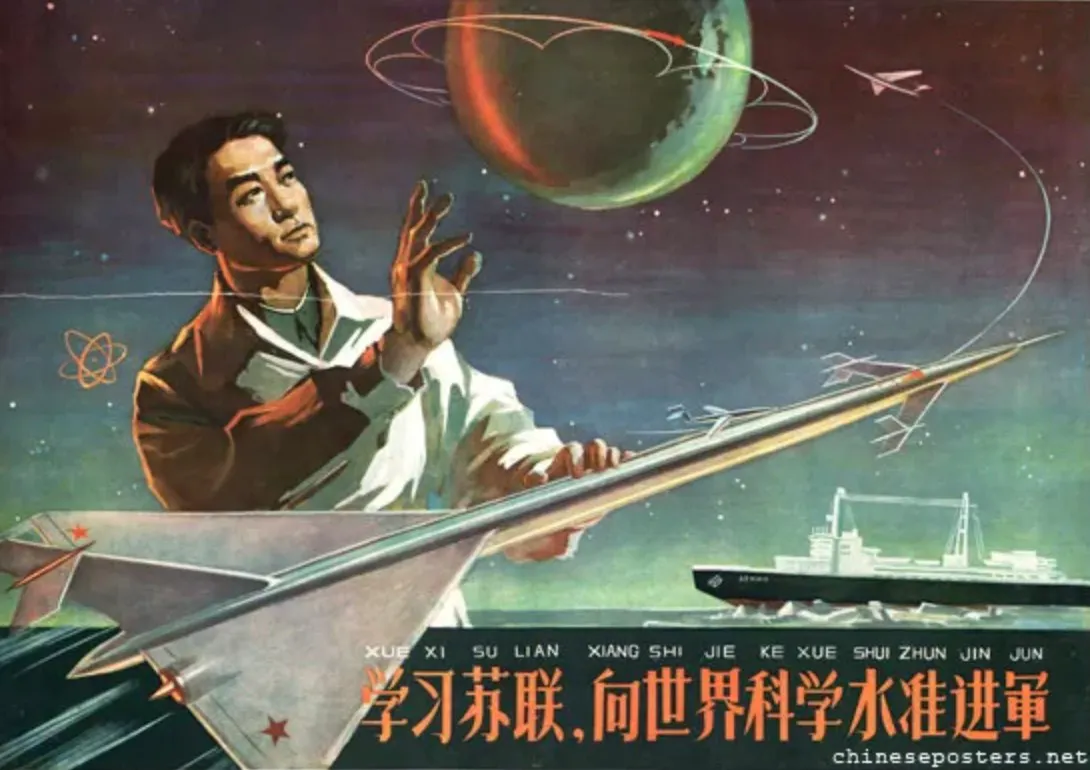
Why did the Soviet Union collapse? Which lessons from Cold War history are relevant for China’s future? To discuss the successes, failures, and strategies of Soviet leaders, ChinaTalk interviewed Yakov Feygin. Feygin is the author of Building a Ruin: The Cold War Politics of Soviet Economic Reform, which examines how various Soviet leaders, institutions, and economists attempted to boost Soviet growth and national power. Co-hosting today is Jon Sine, writer of the Cogitations substack. We discuss: The strengths and limitations of the Stalinist economic model, Khrushchev’s shift to “peaceful competition” with capitalism, Alternative policy paths that could have saved the Soviet Union, How technological optimism shaped Soviet reform efforts, inspiring the CCP in the process, Parallels between the institutions of the Soviet Union and those of contemporary China, The battle between political scientists and historians when analyzing the political economy of authoritarian states. Outro music: Building a Ruin - Skyclad (Youtube link) Links to all the books and papers referenced in this show are available on the ChinaTalk substack. Learn more about your ad choices. Visit megaphone.fm/adchoices
中文版:打造矽盾:台積電與台灣的未來
林宏文是《晶片島上的光芒》一書的作者,這本書深入探討了台積電的歷史、管理方法和國際角色。作為台灣最資深的半導體記者之一、林宏文以其三十多年的行業經驗,為讀者呈現了一個全面而生動的台灣半導體產業發展故事。 訪談中、主要討論了以下幾個關鍵話題: 台積電的創立背景及其在全球半導體產業中的獨特定位 台灣政府在推動半導體產業發展中的角色,特別是工研院和科學園區的貢獻 台積電的管理模式,包括研發與製造部門的平衡以及人才培養策略 台灣半導體產業的國際競爭力,尤其是與三星等競爭對手的比較 台積電在全球地緣政治中的角色,以及"矽盾"這一概念的由來和影響 AI時代對半導體產業的影響,特別是對記憶體和邏輯晶片整合的需求 台灣與美國在看待國際關係上的差異,以及這種差異對台灣國際戰略的影響 Special thanks to the host of this interview, Arrian Ebrahimi of the Chip Capitols substack. Cohosted by ChinaTalk editors Nicholas Welch and Lily Ottinger. Outtro music: Right Here Waiting, by Richard Marx. Youtube Link. Learn more about your ad choices. Visit megaphone.fm/adchoices
Imperial Legacy Part 2: 1949 to Xi's Death
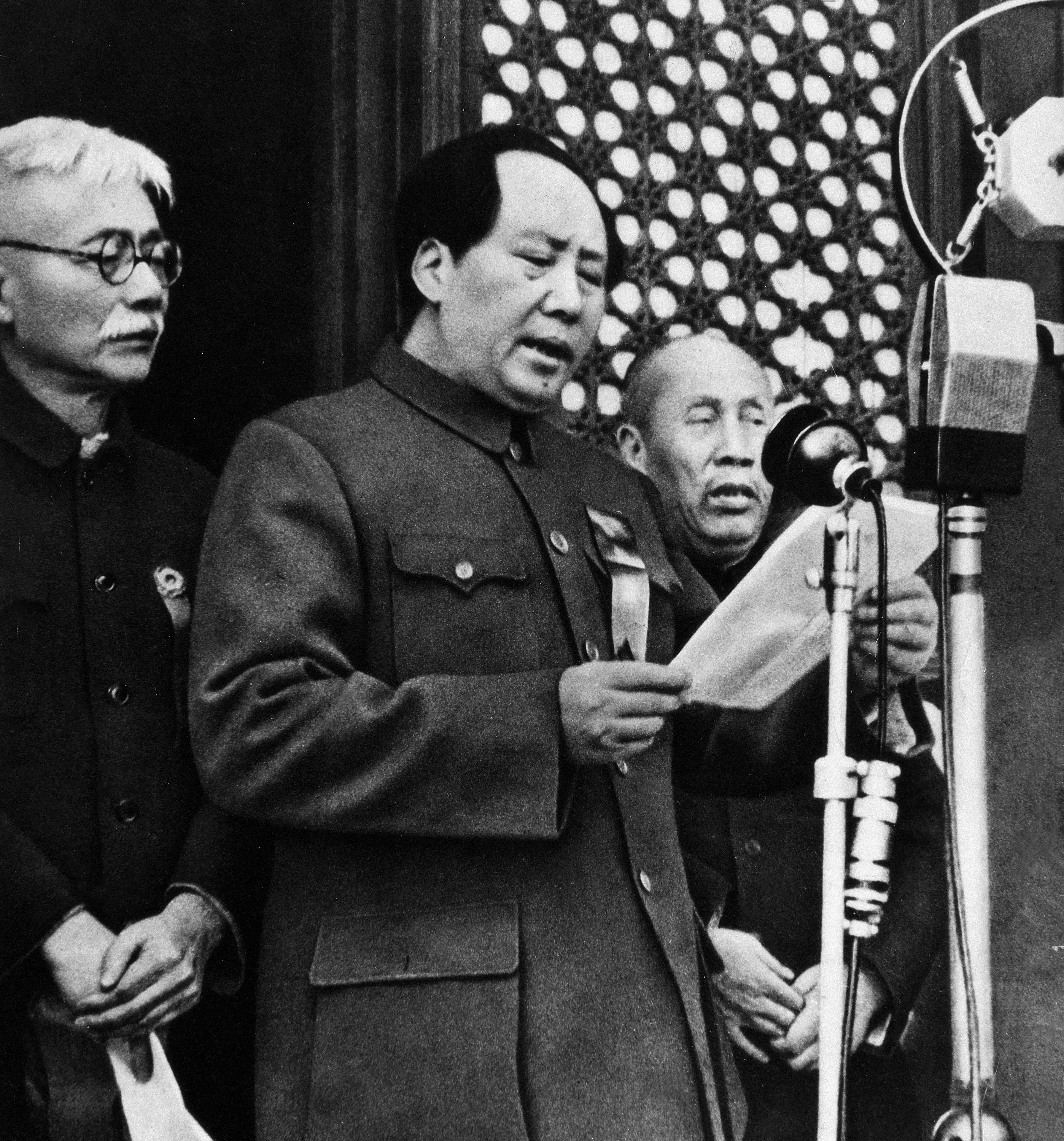
Welcome back to part two of our interview with Yasheng Huang 黄亚生, the author of The Rise and Fall of the EAST: How Exams, Autocracy, Stability, and Technology Brought China Success and Why They Might Lead to Its Decline. We cover a lot of ground in this two-hour installment. During the first hour, we discuss… The aspects of imperial China’s governance Mao chose to embrace, and those he chose to abandon, The factors enabling Mao’s radical policies compared to imperial rulers, Why China was able to grow so much faster than India, despite the setbacks of the Cultural Revolution, Statistical approaches for evaluating the effectiveness of autocratic development models, China’s economic reforms and rural development policies in the 1980s, How the events of 1989 permanently altered China’s trajectory, Whether the rise of Xi Jinping was inevitable, In the second hour, we discuss... The Steelman case for why China needed a leader like Xi Jinping, What sets Xi apart from his predecessors, Succession challenges and the importance of term limits in authoritarian states, Why engagement with China failed to produce political liberalization, How the US could have better leveraged economic relations with China, Creative approaches to human rights advocacy in China. Outro music: Nothing to My Name (一无所有) by Cui Jian (崔健) (Youtube Link) Learn more about your ad choices. Visit megaphone.fm/adchoices
Autocracy, Exams and Stagnation: Imperial China's Modern Legacy
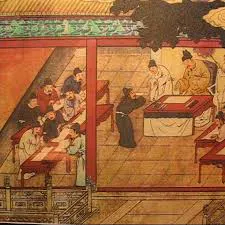
Yasheng Huang 黄亚生 is the author of one of the decade’s greatest books about China — The Rise and Fall of the EAST: How Exams, Autocracy, Stability, and Technology Brought China Success and Why They Might Lead to Its Decline. It’s a rich book, a product of a career of reflections, with each page delivering something novel and provocative. In this first half of our two-part interview, we discuss… How the imperial examination system (known as keju) shaped Chinese governance, culture, and society, Why autocratic Chinese dynasties benefitted from a meritocratic bureaucracy, Statistical methods for analyzing social mobility in imperial China, How the keju system survived the Mongol conquest, What the tradeoffs in the imperial exam system can teach us about the future economic prospects of China and Taiwan. Co-hosting today is Ilari Mäkelä, host of the On Humans podcast. NOTES (Courtesy of Ilari) A Rough Timeline of Chinese history: Pre–221 BCE: Disunity (e.g. Warring States) 221 BCE – 220: Unity (Qin & Han dynasties) 220 – 581: Disunity (“Han-Sui Interregnum”) 581 – 1911: Unity (Sui, Tang, Song, Yuan, Ming, and Qing Dynasties) Historical figures Emperor Wanli 萬曆帝 | Shen Kuo 沈括 (polymath) | Zhu Xi 朱熹 (classical philosopher) | Hong Xiuquan 洪秀全 (leader of the Taiping Rebellion) | Yuan Shikai 袁世凯 (military leader) | Chiang Kai-shek 蔣介石 (military leader and statesman) Modern scholars Ping-ti Ho 何炳棣 (historian) | Clair Yang (economist) | Joseph Needham (scientist and historian) | Daron Acemoglu | James Robinson Historical terms Keju civil service exams | Taiping Rebellion REFERENCES A lot of the original data discussed in the episode is original from Huang’s book. As an exception, Huang references his co-authored article on civil service exams and imperial stability, written with Clair Yang. Outtro music: 等着你回来 by 白光, a 1930s Shanghai starlet https://open.spotify.com/track/0aHMT9dIdPDz094fc37Xq0?si=d1591ff2339d421c Learn more about your ad choices. Visit megaphone.fm/adchoices

R&D Renaissance with Kumar Garg
To discuss America’s comparative advantages in national competition and the structural forces that drive (and limit) innovation, ChinaTalk interviewed Kumar Garg. Formerly an Obama official in the Office of Science and Technology Policy, Kumar spent several years at Schmidt Futures focusing on science and technology philanthropy. He has been a mentor and cheerleader for ChinaTalk over the years, and he is the president of the newly established Renaissance Philanthropy. We discuss: The inspiration behind Renaissance Philanthropy and its focus on mid-scale, field-transforming ideas Strategies for identifying underexplored, high-impact projects — including weather forecasting, carbon sequestration, and datasets on neurocognition Structural challenges for R&D funding at the level of government and universities The role of focused research organizations like OpenAI in accelerating progress and understanding long-term drivers of productivity A wide angle-view of US-China competition and strategic innovation The underresearched importance of alliance management. Outtro music: Song 1 - If ye love me - Thomas Tallis and the Cambridge Singers (Youtube Link) Song 2 - Recercare (I) - Francesco Spinacino and Robert Meunier (Youtube Link) Learn more about your ad choices. Visit megaphone.fm/adchoices

National Intel Council on The IC's Pivot to Asia
Michael Collins is the acting chair of the National Intelligence Council (NIC). He has spent 28 years in the intelligence community, starting as a career analyst in the CIA focused on East Asia before moving into leadership roles. He served as chief of staff for the CIA deputy director and worked on modernization efforts in the agency. We discuss… How the intelligence community informs high-level policymaking, Why different institutional approaches are needed to collect intelligence on non-state actors vs nation-state adversaries, Challenges in assessing China’s technological and military capabilities, “Narrative Intelligence” and areas where intelligence agencies have a unique edge, Strategies for improving long-term forecasting and avoiding groupthink. Outro music: Scorpions - Wind Of Change (Youtube Link) Learn more about your ad choices. Visit megaphone.fm/adchoices

Competition Policy 2025
To discuss the post-election future of US competition policy, ChinaTalk interviewed Peter Harrell and Nazak Nikakhtar. Nazak served in the Trump administration after a long career as a civil servant, where she was instrumental in shaping the Commerce Department’s work on China, first at the International Trade Administration and later leading the Bureau of Industry and Security. Peter worked in the Biden administration on the National Economic Council and National Security Council, focusing on international economics, export controls, and investment restrictions. We discuss… The role of the executive in setting the industrial policy agenda Leadership shortcomings in the Biden and Trump administrations Competition with China — bipartisan consensus, bureaucratic inertia, and strategies to stop wasting time. Advice for America’s next president, from export controls to pharmaceutical decoupling and alliance management Creative approaches to supply chain resilience This is 2023 CSET report Jordan referenced (See the “Understanding the Intangibles section) Outtro Music: Jun Mayuzumi - Black Room (Youtube Link) Learn more about your ad choices. Visit megaphone.fm/adchoices
AI and the Rise and Fall of Great Powers
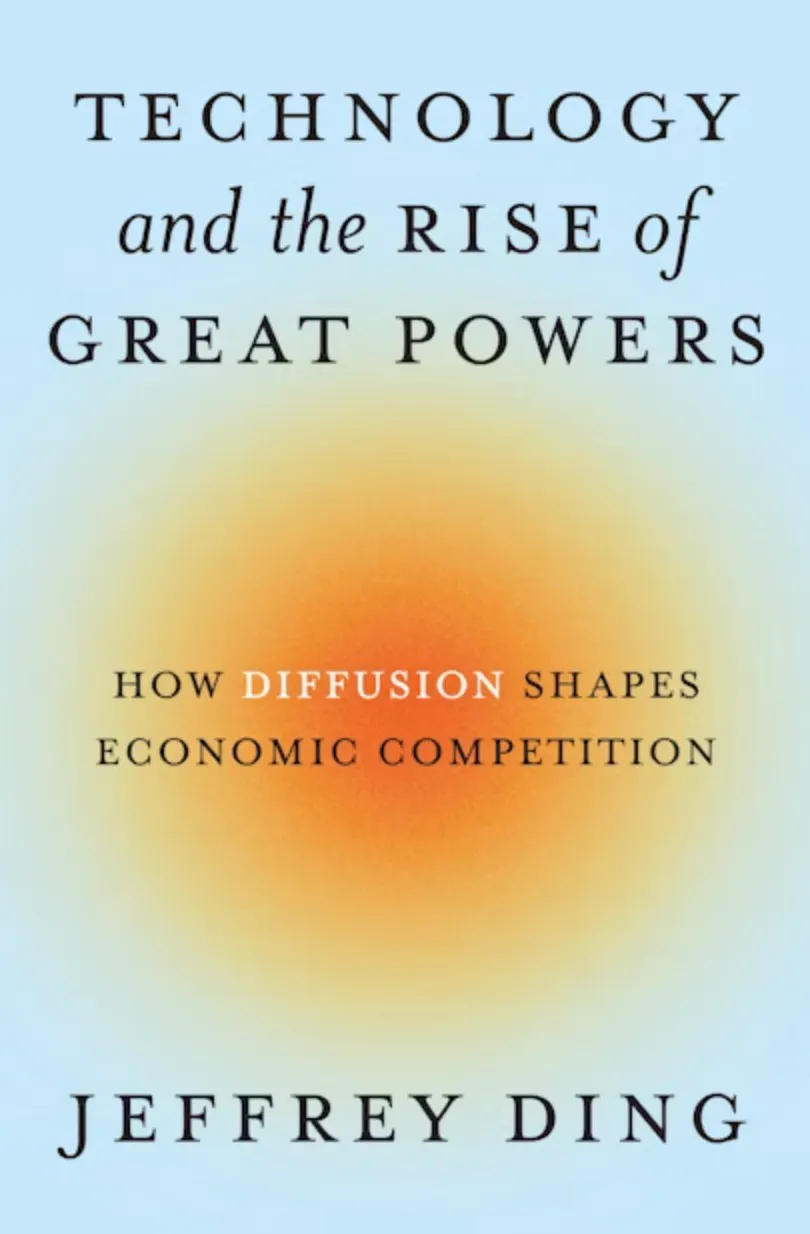
Jeffrey Ding is a professor at George Washington University, leading US scholar on China’s AI, and the creator of the ChinAI Substack. In honor of the publication of his new book, Technology and the Rise of Great Powers, enjoy this interview with Jeff from the ChinaTalk archives. Jeff Ding argues in a 2023 paper that great powers must harness general-purpose technologies if they want to achieve global dominance. That is, diffusion capacity (not just innovation capacity) is critical to economic growth — and China actually fares much worse in diffusion capacity than mainstream narratives imply. In this show, we discuss the historical underpinnings of that argument and apply it to AI today — drawing out policymaking lessons spanning centuries of technologically driven great power transitions. We also get into: Why long-term productivity growth is driven by the diffusion of general-purpose technology, and what makes this so crucial for great power competition; Historical lessons from the UK, Soviet Union, US, and Germany illustrating the cultural and policy roadblocks to tech diffusion; The importance of decentralized systems, and how this helped America win the Cold War Why China’s diffusion capacity lags behind its innovation capacity, and how America should avoid getting locked into any one technological trajectory. Co-hosting is Teddy Collins, formerly of DeepMind and the White House Office of Science and Technology Policy. Outro music: 分享那奇沃夫/Prodby玉的单曲《亚克西》(Youtube Link) Learn more about your ad choices. Visit megaphone.fm/adchoices

History and Future of Global Patent Policy
Thanks to The Innovation Alliance for sponsoring this episode. The Innovation Alliance is a coalition of research and development-based technology companies representing innovators, patent owners, and stakeholders who believe in the critical importance of maintaining a strong patent system that supports innovative enterprises of all sizes. To discuss the domestic and international implications of patent policy, ChinaTalk interviewed Brian Pomper. Brian was the Chief International Trade Counsel to Senate Finance Committee Chairman Max Baucus, and he is now a partner at Akin Gump. We discuss: The history of America’s innovation hegemony, from the signing of the Constitution to patent trolls and Elon Musk Why big tech companies spent decades systematically attacking the foundations of the US patent system The thermonuclear patent war of Apple vs Samsung The evolution of Standard Essential Patents (SEPs) as a battleground for emerging tech competition Why China’s approach to patent litigation is causing controversy in Europe The intersection of patent policy and international trade agreements. Outtro music: Minitel Rose - Magic Powder (Youtube Link) Here's the 2-hour show on global tech standards from the ChinaTalk archives: Global Standards: What's the Deal? Spotify link, Apple Podcasts Link Learn more about your ad choices. Visit megaphone.fm/adchoices

Industrial Icebreaker Policy
Here at ChinaTalk, we break the ice on all things international relations, and today we are diving into a topic that is snow joke — icebreakers! We interviewed William Henagan and Robert Obayda, both directors of the NSC. We discuss: How Canada, Finland, and the United States are leveling up their cooperation in the Arctic through the Icebreaker Collaboration Effort (ICE Pact); The mechanics of industrial policy in the US government; Why cranes matter for national security, and the benefits of using carrots vs sticks; What icebreakers are for, and how Finland is punching above its weight in the NATO alliance. Co-hosting today is former ChinaTalk intern Alexander Boyd, who is currently at the China Digital Times. Outtro music: Arctic Monkeys — A Certain Romance (link) and Mardy Bum (link) Pictured: the Russian icebreaker Yamal. Learn more about your ad choices. Visit megaphone.fm/adchoices

The Pentagon’s Innovation Insurgents
Chris Kirchhoff was a founding member of the Defense Innovation Unit (DIU) and previously worked in the Obama NSC. He recently published a book called Unit X: How the Pentagon and Silicon Valley Are Transforming the Future of War. He wrote: “To the extent present military and civilian leadership is articulating its strategy, it is one built, for the most part, on a continuation of previous programmatic and budgetary trendlines. If there is a strategy for losing a future war in China, this is it.” Unit X traces the evolution of the Defense Innovation Unit (DIU), a group of Pentagon insurgents who are fighting to change how the DoD relates to emerging technologies. We discuss: The origin story of DIU and its early struggles to break Pentagon bureaucracy; How DIU leveraged “waiver authority” to circumvent red tape under Defense Secretary Ash Carter; Why the defense industrial base is ill-equipped to keep pace with technological change; The case for shifting more DoD spending to non-traditional tech companies; Lessons from commercial spaceflight for future AI governance, including potential issues with a “Manhattan project for AI.” Outtro music: 告五人 Accusefive - 愛人錯過 Somewhere in Time (Youtube Link) Learn more about your ad choices. Visit megaphone.fm/adchoices
A BREATHER: Making Clothes in China
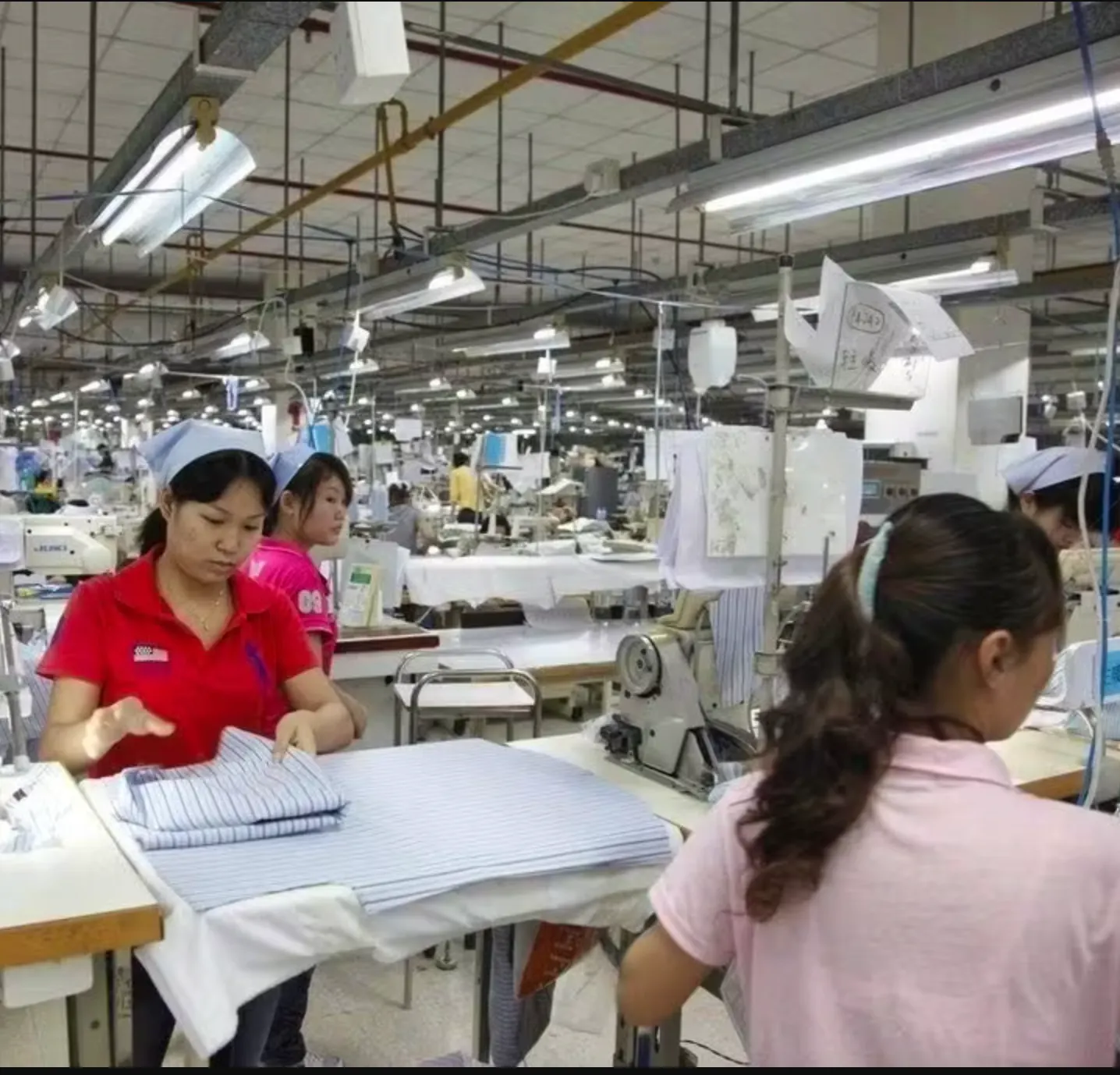
This is a show about globalization, fashion design, and the future of manufacturing-based economic growth. For a breather from the election chaos, ChinaTalk interviewed Will Lasry, Montreal-based designer, manufacturing specialist, and founder of Glass Factory. Will and his team are on a mission to make manufacturing transparent. They fly all around the world making documentaries on clothing factories and playing matchmaker between designers and producers. Check out his Youtube channel here. We discuss: How clothes are made, including the complicated processes behind distressed denim and other trends; What makes a country an ideal destination for manufacturing clothing, and whether rising labor costs will drive the industry out of China entirely; Xinjiang cotton, environmental destruction, and other unethical practices hanging over the fashion industry; Why Gucci and other high-end designers are betting that “Made in India” will soon be even more chic than “Made in Italy.” Co-hosting today is longtime ChinaTalk editor Irene Zhang. Outtro music: Vinida Weng - WAIYA! (Youtube Link) Thumbnail image: Link. Learn more about your ad choices. Visit megaphone.fm/adchoices

EMERGENCY POD: JD Vance's Economics + How to SPR Critical Minerals + Policy Entrepreneurship
What does JD think about currency, tariffs, and industrial policy? How has the Strategic Patroleum Reserve evolved into new relevance with some fun new powers over the past few years, and how can America take lessons from this success and apply them to addressing critical minerals? And what secrets of policy entrepreneurship can Arnab teach me? To discuss we have on Arnab Datta of Employ America and Matt Klein of The Overshoot podcast. Plus we get some parent corner! Outtro music: Melody by Ash Island (matched my mood of wanting to scream things I don't understand) https://www.youtube.com/watch?v=yHWWGm0nxYk Learn more about your ad choices. Visit megaphone.fm/adchoices

Sen. Young on Tech Legislation
Where is Congress on AI? How will a second Trump term impact US innovation? Does Congress have what it takes to step up and legislate in a world without Chevron? To discuss, ChinaTalk interviewed Senator Todd Young of Indiana (R). He’s a rare breed on Capitol Hill these days: an actual legislator. Sen. Young drafted the Chips and Science Act with Sen. Schumer and is the co-author of my personal favorite bill this Congress which aims to establish an Office of Global Competition Analysis. He announced earlier this year that he would not be endorsing Trump’s candidacy this cycle. We get into… Biden’s woes The case for an office of tech net assessment The future of tech legislation post-Chevron The Senate’s AI Policy Roadmap and where the GOP is on AI regulation Chinese espionage and high-skill immigration policy Outtro music: AC/DC - Dirty Deeds Done Dirt Cheap (Youtube Link) Learn more about your ad choices. Visit megaphone.fm/adchoices

EMERGENCY POD: Biden and Shakespeare
How can Shakespeare help explain the dynamics we're seeing around Biden today? We get into King Lear, Richard II, Macbeth and Coriolanus to illustrate themes on conniving courtiers, political marriages, and politicians facing the end. Joining us today: Eliot Cohen, author of The Hollow Crown, two dramaturgs Drew Lichtenberg and Kate Pitt, as well as actor Phil Schneider. Kate's substack: https://shakespearenews.substack.com/ Phil's still looking for an agent! Reach out to me [email protected] to connect with him! Outtro music: https://www.youtube.com/watch?v=pEqnXNsAFL8 Learn more about your ad choices. Visit megaphone.fm/adchoices

A National Vision for Competitiveness
What will it take for the US to remain competitive in 21st-century technologies? Is high state capacity a thing of the past? To discuss, ChinaTalk interviewed David Lin, Abigail Kukura, and Venkat Somala from the Special Competitive Studies Project. SCSP’s new report outlines exactly how America should compete in the tech-powered future of geopolitics. We get into… The role of public-private research partnerships and SCSP’s relationship with the National Security Commission on Artificial Intelligence; A strategy for upgrading US institutions with the help of emerging technologies like AI; The historical decline of government-backed research in the US; China’s industrial espionage and the potential for stolen innovations to consolidate authoritarianism across the globe; Bureaucratic moonshots and techniques for communicating urgency to the slow-moving American polity. Our past episode on tech net assessment: Crafting A National Tech Strategy and Reviving Net Tech Assesment (Spotify Link) (Apple Podcasts Link) Our past episode on bureaucratic moonshots: Peter Harrell on Bureaucratic Barriers to Competition (Spotify Link) (Apple Podcasts Link) Outtro music: SadSvit - Касета (Youtube Link) Learn more about your ad choices. Visit megaphone.fm/adchoices

Scale's Alex Wang on the US-China AI Race
How could AI change the global balance of power? What could the US and allies do to preserve national moats? To discuss, ChinaTalk interviewed the CEO of Scale AI, Alex Wang. In a blog post announcing Scale’s $1 billion fundraising success, Alex wrote that Scale is aiming to grow into the world's data foundry for AI. Alex grew up in Los Alamos, New Mexico, with two physicist parents who worked in the national labs, and he started Scale in college. I am particularly excited to have Alex on the show because he is perhaps the only private-sector AI leader working with the DoD and thinking seriously about the national security implications of AI. We discuss: The three key factors limiting rapid AGI takeoff, and how quickly these barriers will be overcome; China’s strengths and weaknesses in the race for AGI; National security implications for winning (or losing) the AI race; Prospects for AI net assessment and the case for a Manhattan project for data; Methods to prevent AI espionage without kneecapping innovation or profiling immigrants. Outtro music: Zach Bryan - Pink Skies (Youtube Link) Learn more about your ad choices. Visit megaphone.fm/adchoices

Taiwan War + Grand Strategy for Cold War II
Is Cold War II upon us? What should America do to prevent it from becoming a hot war? To discuss, ChinaTalk interviewed Dmitri Alperovitch. Dmitri emigrated from Russia in 1994 at age 13. He co-founded the leading cybersecurity startup Crowdstrike, and has spent the past four years running his new think tank, the Silverado Policy Accelerator. He's also the author of the new book World on the Brink: How America Can Beat China in the Race for the Twenty-First Century. We discuss: Lessons from Cold War crises that almost went nuclear; Underappreciated parallels between the Soviet Union and China today; Groupthink in Washington as well as in Silicon Valley; What a productive economic relationship with China would look like given national security concerns; Some bold military and diplomatic recommendations for Taiwan; … and more! Work with Matt at Open Philanthropy: Clickable link, URL: https://jobs.ashbyhq.com/openphilanthropy/f33460e1-e092-46ae-918a-85338ffad9a3 Kennedy's speech to the American people regarding the Berlin Wall: JFK Library. Outtro music: Leningradskie mosty from 1957 USSR Learn more about your ad choices. Visit megaphone.fm/adchoices

The Best Chinese Songs of 2024 - with Concrete Avalanche
Jake Newby is the author of Concrete Avalanche, a free newsletter about music from China. Today, he's here to play you some of his favorite tracks from 2024 thus far — including everything from psychedelic rock to rare Uyghur folk, and from Beijing kawaii core to Tibetan Buddhist chants mixed with footwork. 00:00:00 'Narcissus' Death' — Backspace (read more) 00:05:38 '红喷泉' — Pepper Heart (read more) 00:09:35 'Mail from the River' (live) — Wang Wen (read more) 00:15:30 '她的力量来自海洋' — Yang Haisong & Wang Xiaofeng (read more) 00:22:32 'Ollie' — 西红、CNdY (read more) 00:26:43 'Lost in Bamboos' — Cola Ren (read more) 00:30:38 'Southern Shanghai' — Voision Xi (read more) 00:34:20 'Liquid' — Duck Fight Goose (read more) 00:36:54 '玉林敬酒歌‘ — Run Run Run (read more) 00:40:35 'Mountains in Yukashima' — Birdstriking (read more) 00:45:38 'SonicBaby' — XIAOWANG (read more) 00:48:25 'My Vagina' — Fakeorgasm (read more) 00:50:25 'Mantra of Vajra Armour' — Howie Lee (read more) 00:54:08 'Bash Bayawan Muqam' — Mekit Dolan Muqam Group (read more) 00:59:13 'Μῆνιν ἄειδε, θεὰ παραμαινομένη ἐμοῦ...' — Ὁπλίτης (read more) Learn more about your ad choices. Visit megaphone.fm/adchoices

Shakespeare and Power
Are politicians and actors two sides of the same coin? Can you become a better public speaker by studying soliloquies? What can Shakespeare teach us about the nature of power? To discuss, ChinaTalk interviewed Eliot Cohen: SAIS professor, military historian, and counselor to Secretary of State Condoleezza Rice. He is also the author of The Hollow Crown: Shakespeare on How Leaders Rise, Rule, and Fall. Co-hosting is Jordan’s little brother, actor Phil Schneider. He recently graduated from Yale where he starred in a production of Hamlet. He’s played Romeo, Octavius Valentine, Richard II, and Leontes. Also, he’s looking for a new agent — reach out at [email protected]! They discuss: Royal/executive power — what getting it does to you, and why relinquishing it is so hard; Court intrigues of yore (and today); Timeless techniques for exhorting and manipulating the masses; What makes a great speech; What it really means to be an effective leader, and how great leaders know when it's time to quit. Nixon's Farewell speech: Youtube link. Outtro audio: Orson Welles Recounts Crossing Paths With Hitler And Churchill. Youtube link. Learn more about your ad choices. Visit megaphone.fm/adchoices

Why America Didn't Invade Taiwan: WWII Lessons for Xi's Invasion
One does not simply invade Taiwan — but George Marshall once thought long and hard about it. In 1944, in the middle of the island-hopping campaign, American war planners set their sights on Japanese-controlled Formosa. What did the American invasion plan look like? Why did Marshall decide to go another route? What lessons do this and other amphibious invasions hold for Taiwan’s current force posture? To discuss, ChinaTalk interviewed US Army Field Artillery Lieutenant Colonel J. Kevin McKittrick, currently at the Air War College in Alabama and a veteran of multiple deployments in Iraq and Afghanistan. Co-hosting today is our resident Taiwan consultant Nicholas Welch. We discuss: The US military’s aborted plan to invade Taiwan during WWII; Why bigger is better when it comes to amphibious assaults; What the US got right and the CCP gets wrong about civil-military relations; Taiwan’s defense concept, and the opportunities presented by “operational pause”; The awful, unending relevance of traditional artillery in modern war; And why the US doesn’t need its own “rocket force” … yet. Outtro music: 被動 (Passive) by 伍佰 Wu Bai&China Blue. Youtube Link. Photo: White House, July 29, 1942. Left to right: Admiral Ernest King, Admiral William Leahy, and General George Marshall. | Wikimedia Commons Learn more about your ad choices. Visit megaphone.fm/adchoices

Preventing an Invasion of Taiwan
Taiwan’s government agencies are battered by 5 million cyberattacks every day. China is holding invasion drills at a replica of Taiwan’s presidential palace in Inner Mongolia. Last week, the PLA openly rehearsed an encirclement of Taiwan in so-called “punishment drills.” What happened to deterrence in the Taiwan Strait? Can the status quo be saved? To discuss strategies for avoiding WWIII, ChinaTalk interviewed Jared McKinney of the Air War College and Peter Harris of Colorado State University, who recently co-authored a monograph entitled, “Deterrence Gap: Avoiding War in the Taiwan Strait.” Co-hosting today is ChinaTalk’s resident Taiwan consultant, Nicholas Welch. We discuss… Evidence of deterrence decay in the status quo; The difference between constraints and restraints, and how they fit together to form a lattice of successful deterrence; Whether symbolic solidarity with Taiwan does more harm than good; The values and costs of strategic ambiguity; How Taiwan can optimize its deterrence posture; Lessons from the dance of death between Iran and Israel; Objective factors for measuring invasion risk, and whether the world should be scared about 2027; How to analyze decision trees for fundamentally irrational decisions; ... and more! Outtro music: MJ116, 辣台妹 (HOT CHICK) - Official music video: MJ116【辣台妹 HOT CHICK】- (youtube link) Learn more about your ad choices. Visit megaphone.fm/adchoices
Sovereign AI
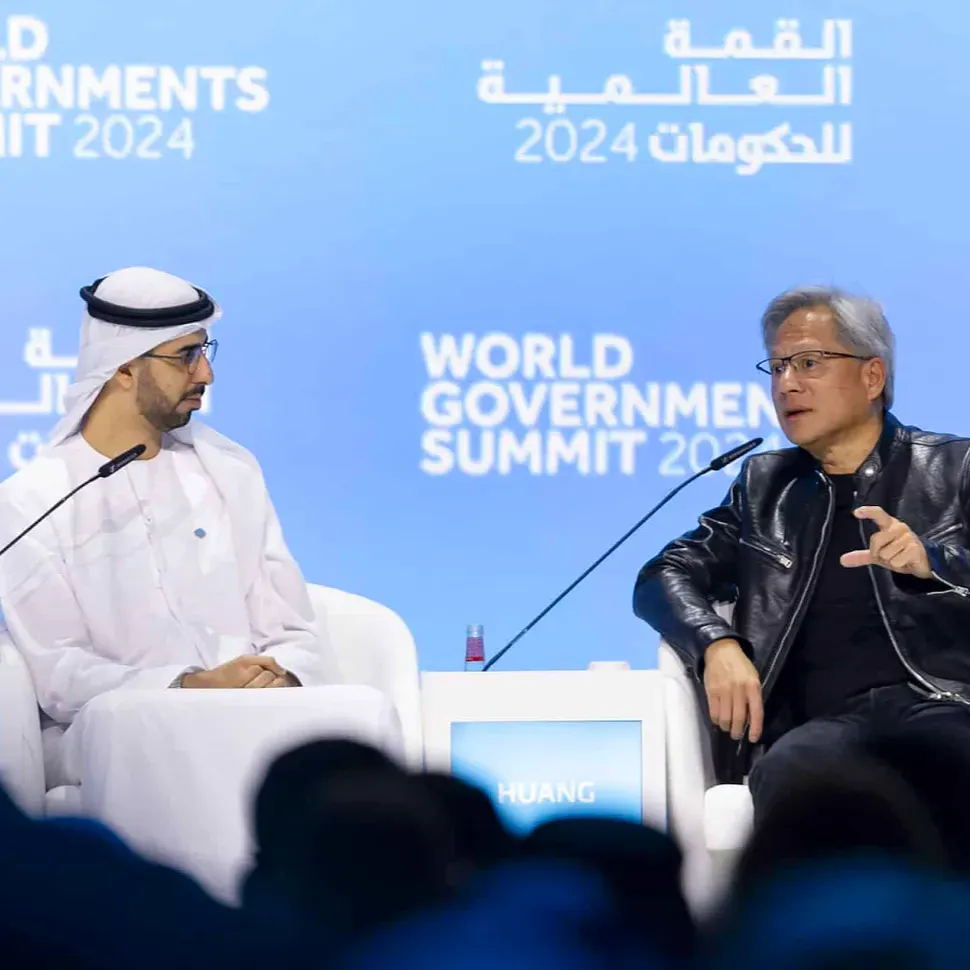
Good AI is good and bad AI is bad, but how do lawmakers tell the difference? Will AI bring the world together or balkanize the internet beyond repair? Why do governments even need cloud computing anyway? To discuss, ChinaTalk interviewed Pablo Chavez, a fellow at CNAS and former Vice President of Google Cloud's Public Policy division, as well as the inestimable investing tycoon Kevin Xu. Xu, formerly of GitHub, is the founder of Interconnected, a bilingual newsletter on the intersections of tech, business, investing, geopolitics, and US-Asia relations. In this interview, we discuss: The digital sovereignty movement and the lessons we can learn from China's Great Firewall; The value and risks of open source architecture in the future of AI governance; Meta’s long history of open source and how Llama fits into that strategy; The geopolitical and cultural forces driving nations to pursue their own AI strategies; The viability of sovereign AI initiatives in the face of global tech giants. Learn more about your ad choices. Visit megaphone.fm/adchoices

AI Roundup: GPT4o, SCSP AI Expo, Open vs Closed
Nathan Lambert of the Interconnects substack and Allen Institute joins for a roundup where we get into: What DC should understand about the Bay Area AI engineer psyche What GPT4o and Google's AI Dev Day mean for the future of AI OpenAI's model spec, and exit, voice, and loyalty in the leading labs Outtro music: Scarlett Johansson's The Moon Song Learn more about your ad choices. Visit megaphone.fm/adchoices

250 Years of US Trade Policy
We're taking one out of the archives! Douglas Irwin is a Dartmouth professor and the author of Clashing Over Commerce: A History of US Trade Policy. On this episode, Irwin provides an overview to the history of U.S. trade policy from the 18th century to the modern day, highlighting significant legislation as well as the formation of important intergovernmental organizations that have sprung up along the way. Outro Music: Janis Joplin, Mercedes Benz 19:53: On the flawed logic behind the Tariff Act of 1930, and the parallels with similarly problematic thinking in the modern day: “There’s absolutely a parallel there because some Democrats in Congress said, ‘You know, we ought to really think about this carefully, and not just our domestic interest but also our export interests, and other countries might retaliate.’ And basically, the reaction of most members of Congress was, Republicans at the time, ‘No, we don’t have to worry about that. This is a domestic piece of legislation, it doesn’t really concern other countries. They’re not going to retaliate.’ And, of course, they did.” 39:40: Doug discusses the tips and tricks behind one example of “tariff engineering”: “The tariffs applied to motorcycles with piston displacements of 700cc and above. What Honda started doing is producing a 699cc version. Now the difference [between the two] is imperceptible, but just by changing that one cubic centimeter, it changed the whole tariff treatment and you avoided a 45 percent tariff and were assessed at a much, much lower rate.” Learn more about your ad choices. Visit megaphone.fm/adchoices

EMERGENCY POD: Biden's Electric Curtain
Brad Setser of CFR talks Biden's new tariffs! Earlier podcast deep dive on Chinese EV policy: ChinaTalk: Why Chinese EVs Will Take Over the World on Apple Podcasts Earlier podcast on the deep history of US trade policy: ChinaTalk: Tarriffs, taxes, and trade: Doug Irwin on ChinaEconTalk on Apple Podcasts Brad's paper: Power and Financial Interdependence (ifri.org) Outtro Music: Golden Earring's Radar Love Here's a fun playlist on the best car songs: https://open.spotify.com/playlist/6l0sSAdFwyCH1yzQX2IrKQ?si=fb3b8fdd29644631 Learn more about your ad choices. Visit megaphone.fm/adchoices

MITRE on S&T Strategy
Charles Clancy is the CTO of MITRE, an American not-for-profit organization managing federally funded research and development centers (FFRDCs) supporting various US government agencies in defense, healthcare, national security, and cybersecurity fields, among others. In this interview, we discuss: What is MITRE and how does it support national science & technology strategy How China threatens America’s infrastructure and university R&D The cyber workforce gap and how AI could fill it Finding mission-driven work for highly skilled technologists How the ecosystem of S&T and R&D funding evolved through the 20th century to today Outtro music: Yung Bae, Magic Yung Bae - Magic (youtube.com) Learn more about your ad choices. Visit megaphone.fm/adchoices

TSMC Takes Arizona
TSMC is taking on Arizona. How's it going? To discuss, ChinaTalk interviewed Viola Zhou, journalist at Rest of World. She has published pieces on Foxconn's quest to make iPhones in India and most recently, a gripping feature about the cultural challenges that TSMC is facing trying to manufacture semiconductors in the USA. Throughout her story, we get a peek into a world of rigid hierarchies, American workers who are slow on the uptake, and culture clash over pornographic desktop flair. Today’s interview discusses: Sleuthing techniques for independent journalism; The challenges faced by Taiwanese semiconductor engineers relocating to Arizona; TSMC’s management style and the complaints raised by new American employees; The similarities and differences between TSMC’s expansion to the USA and Foxconn’s expansion to India; Whether adapting to American work culture will tank the prospects of the new Phoenix Fab. Learn more about your ad choices. Visit megaphone.fm/adchoices
History and Future of India-China Relations
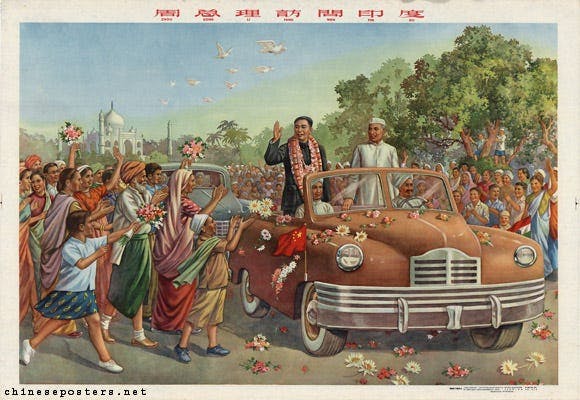
India’s elections are underway! What does the future hold for the world’s largest democracy? Will the election results impact India-China relations? What about India-US relations? To discuss, ChinaTalk interviewed Dr. Raja Mohan, Director of the Institute of South Asian Studies at the National University of Singapore. Co-hosting today is James Crabtree, author of The Billionaire Raj. We get into: What the border disputes between China and India can tell us about the political economy of the two nations; The anti-imperial history that frames India-China relations; Modi’s election prospects and India’s spirit of democracy; What score Biden’s diplomatic team has earned in Southeast Asia; Criticisms of Modi and accusations of democratic backsliding; Opportinities for friction in the US-India relationship, including Trump tariffs, immigration, and Russia; Whether the US is making a “bad bet” on India, and how India is prepared to involve itself during an invasion of Taiwan. Outtro Music: Jhoome Jo Pathaan Vishal-Shekhar, Arijit Singh, Sukriti Kakar, Vishal Dadlani, Shekhar Ravjiani, Kumaar https://open.spotify.com/track/6FAYpZ4jve8vpvTwUvjK6H?si=66c7c984fd52497cs 12 Bande 12 Bande - song and lyrics by Varinder Brar | Spotify Learn more about your ad choices. Visit megaphone.fm/adchoices

Japan's Resurgent Tech Scene
Ryan Takeshita is the Chief Global Editor at PIVOT, a new media outlet in Japan focused on the emerging startup scene. We get into: A stroll through recent economic history leading to today's 'boom times' Why more people are looking to leave traditional occupations for insurgent firms Challenges around demographics and immigration Outtro Music: Idol by Yaosobi https://open.spotify.com/track/1hAloWiinXLPQUJxrJReb1?si=36552bdc34cb4a73 Matsuri No Genzo by Hideo Shiraki and 3 Koto Girls https://open.spotify.com/track/6eTteH1zyZeQKZ2Mu7VC5d?si=230b3d1739d5417e Learn more about your ad choices. Visit megaphone.fm/adchoices
Japan's Economic Security Renaissance
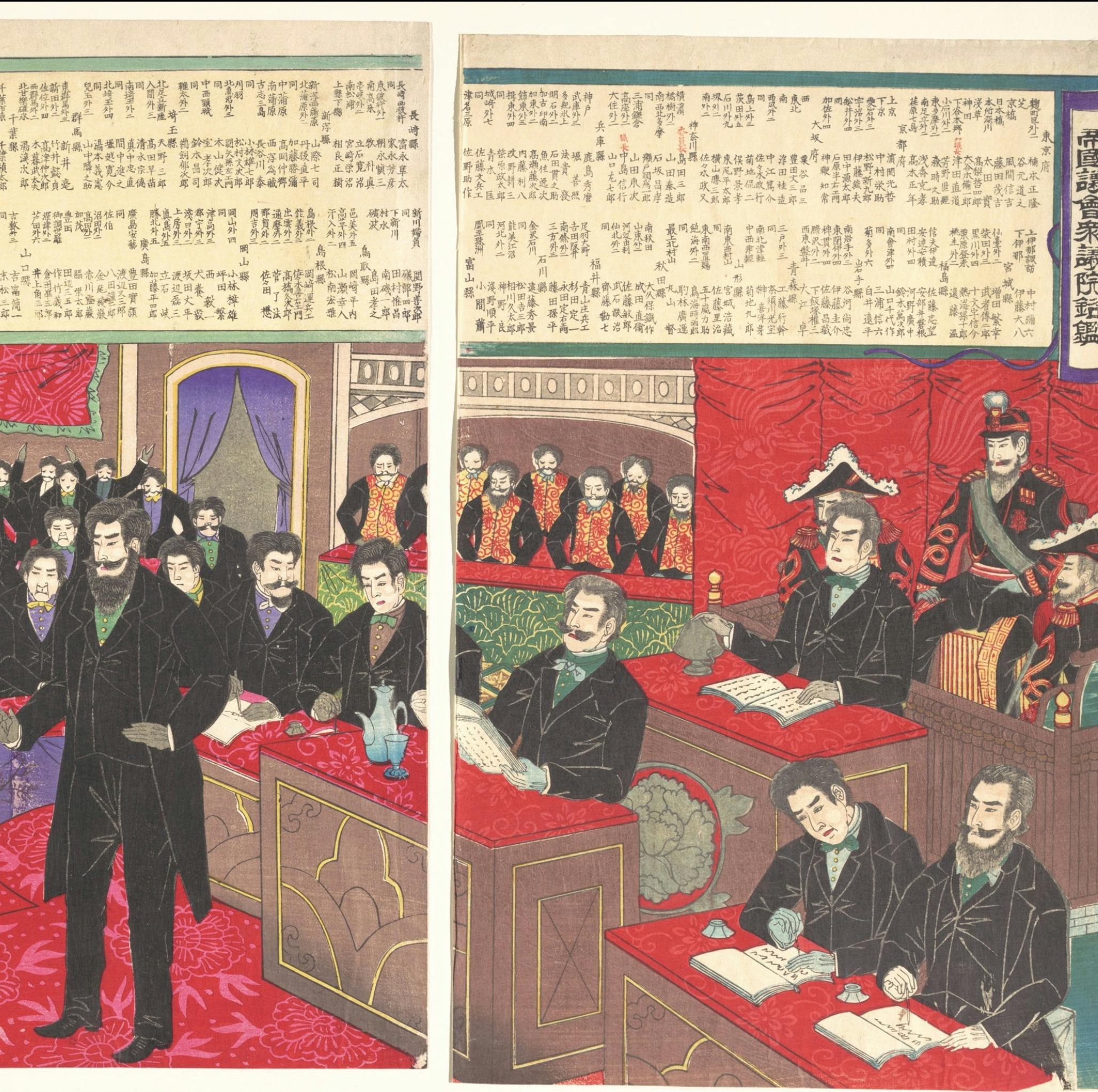
To learn about Japan’s new economic national security policy, export controls, chip policy, lessons from history, and even space policy, we interviewed Kazuto Suzuki. Suzuki-san is a professor at the University of Tokyo. He serves as an advisor to Japan’s Ministry of the Economy, Trade, and Industry (METI) as well as advising Japan’s space program. He served on the UN Security Council's Iran Sanctions Panel, and he also recently established the Institute of Geoeconomics at the International House of Japan. We get into… What Japan’s new economic national security law does, and what it means for global semiconductor supply chains; The state of multilateral export controls; Nippon steel, the US election, and cooperation between East Asian democracies; Historical examples of economic coercion, from the Qing Dynasty to FDR vs imperial Japan to the Senkaku islands; Japan’s goals for space commercialization; … and more! Co-hosting today is Arrian Ebrahimi, student at Yenching academy and author of the Chip Capitols Substack. Outtro Music: Every Breath You Take/Theme from Peter Gunn as featured on the Sopranos The Sopranos - Every Breath You Take (youtube.com) Cover photo: Toyohara Kuniteru III | Illustration of the Imperial Diet House of Commons with a Listing of all Members | Japan | Meiji period (1868–1912) | The Metropolitan Museum of Art (metmuseum.org) Learn more about your ad choices. Visit megaphone.fm/adchoices

A Gut Check on Intel and Nvidia with Asianometry, Fabricated Knowledge, and SemiAnalysis
Just minutes after the Taiwan earthquake yesterday, Dylan Patel of SemiAnalysis, Doug O'Laughlin of Fabricated Knowledge, Jon of Asianometry and yours truly had a brief hang where we got into: Intel's process progress and rocky financial road ahead Reflections out of GTC Jensen's galaxy brain Photo of the woman who saved Intel, Dr. Ann Kelleher, General Manager of Foundry Technology Development. Outtro music: YELLOW黃宣 & 9m88 - 怪天氣 Strange Weather https://www.youtube.com/watch?v=1n_i0JupwRA Learn more about your ad choices. Visit megaphone.fm/adchoices
Amb. Rahm Emanuel on China and Japan
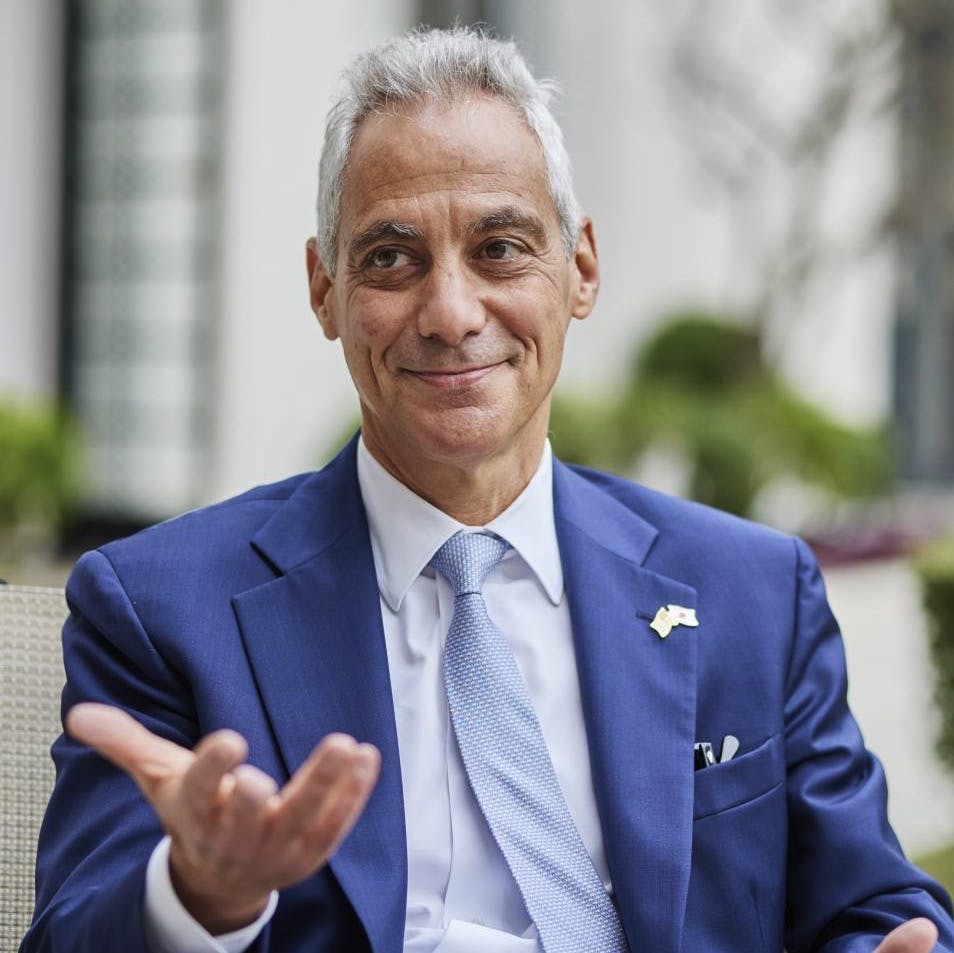
Straight from Tokyo, Japan: an exclusive with Amb. Rahm Emanuel. Before his current posting as US ambassador to Japan, Rahm served as a senior advisor to Bill Clinton, multiple terms in the US House of Representatives, Obama’s first chief of staff, and the mayor of Chicago. If nothing else, you can count on his gloves-off, no-holds-barred approach to politics — and he’s been no different when it comes to China. Notwithstanding reports that even officials in Biden’s NSC have told him to stop “taunting” China, Rahm has been consistently, uniquely willing to say out loud what virtually every other high-ranking US official doesn’t. Of course, the ambassador — or, as his desk placard during his chief-of-staff days read, “Undersecretary for Go Fuck Yourself” — may take issue with that framing. His comments aren’t “critical,” Rahm says, but “truthful.” This interview covers a ton of ground. On China: How the Biden administration is closing the chapter on “hub and spokes,” what tomorrow’s “latticework” architecture will look like, and what Asia-Pacific alliances might look like under a second Trump administration; The future of Japan-Korea, and a peek behind the curtain on how the historic Camp David summit materialized; Rahm’s “3 Cs” for China — calm, conflict, charm — and how US foreign-policy leaders should reckon the mutual inconsistencies among those three; And roads not taken by Xi: why Rahm thinks China’s entrepreneurial culture has taken a nosedive, and what China’s government today is most scared of. And on politics and life: Why “diplomacy” and “politics” are the same thing — and why that’s a good thing; Whether the State Department suffers from a personality deficit, and what makes for a good ambassador; How to heal America’s body politic — post-Trump, post-Recession, post-GWOT; Why Rahm thinks “quality time” with kids is “BS,” and thoughts on raising kids as a time-crunched politician; And what Rahm thinks the biggest emerging threat to the world is. I really enjoyed my trip to Japan, and I’d love a financial excuse to continue recording shows on the country. If you work at JETRO, METI, The Japan Foundation, Mitsubishi, Rakuten, etc. and are interested in seeing more deep coverage of Japan and US-China-Japan relations on this podcast, do reach out! Outtro music: Tadao Hayashi Japanese Harp Trio's 1977 take on I Could Have Danced All Night Tadao Hayashi Harp Trio – The Impossible Dream 1977 (youtube.com) Also from 1977, Tokai by Kaeko Onuki Tokai (youtube.com) Learn more about your ad choices. Visit megaphone.fm/adchoices
Biotech 101
Biotech. What is it? Why should you care? Does biotech really matter for national security? What are China’s biotech ambitions? To find out, ChinaTalk interviewed Jason Kelly, the Chair and Vice Chair of the National Security Commission on Emerging Biotechnology. Jason is the Co-Founder and CEO of Ginkgo Bioworks, a publicly traded firm that provides a horizontal platform for cell programming. Michelle Rozo is currently Vice President of Technical Capabilities at In-Q-Tel, and she previously held positions in Biden’s NSC, the Department of Defense, and on the Hill. Co-hosting today is Chris “CRISPR” Miller, author of Chip War. We get into: The powerful science behind genetic engineering ; How the US government turned biotechnology into a $1 trillion industry over the course of the last fifty years; Why generative AI is destined to revolutionize synthetic biology; And whether China’s national biotech champions can leapfrog the US. Outtro music: Suite Bergamasque: Clair de Lune, No. 3 (youtube.com) Learn more about your ad choices. Visit megaphone.fm/adchoices
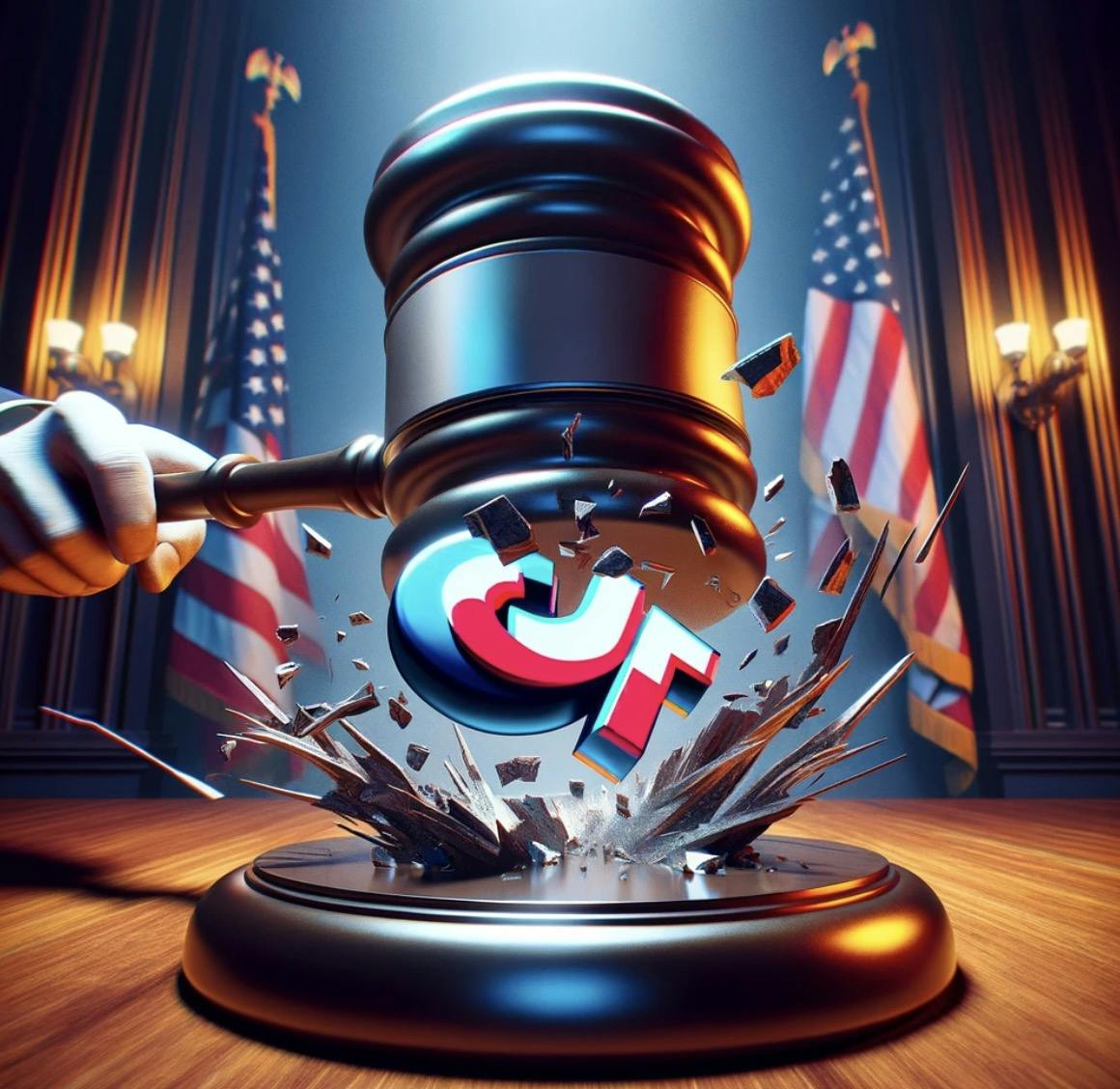
EMERGENCY POD: TikTok Ban!?
Is Congress for real this time? To discuss the US domestic politics of the dramatic rollout and broader social, national, and geopolitical implications of the House's passage of a bill that would force Bytedance to divest from TikTok US, Ben Smith of Semafor joins the podcast. Outtro music: Olivia Rodrigo - Deja Vu 【Sped Up & reverb】 (youtube.com) The Platters - Only You - Lyrics - YouTube Learn more about your ad choices. Visit megaphone.fm/adchoices

Matt Clifford on China, AI Safety, and Entrepreneurship
How do you stand up an effective national AI project? Is the world prepared for the Reformation-level societal change AI could bring? Matt Clifford, according to Politico Britain’s most powerful tech adviser, joins ChinaTalk to discuss! He served as Prime Minister Sunak's sherpa for the UK AI Summit, chairs ARIA, the UK's answer to DARPA, and co-founded Entrepreneur First, a startup incubator with a strong presence throughout Europe and Southeast Asia. We get into: Tech Diplomacy & the UK AI Safety Summit: How countries are waking up to the watershed moment at the advent of powerful new AI, and the surprising commonalities in China’s perspectives on AI safety. Organizational Design at ARIA: What are the challenges creating a world-class science project in government? How can you attract the best people and create the right organizational culture for success? Open Source AI and the Global AI Race — How should we evaluate the approaches to AI across different countries and private actors? What’s the verdict on open source models? Preparing for monumental changes — and why history cautions against expecting business as usual, and how fiction can open our mind to the possibilities. Learn more about your ad choices. Visit megaphone.fm/adchoices

Doomscrolling Chinese Twitter
Chinese Doomscroll, which faithfully records happenings from the wild west that is Weibo (China’s Twitter/X equivalent), won the ChinaTalk award for best China-focussed Substack on 2023. Today we have on the brain behind the newsletter: Molly, who’s been doomscrolling for us since early 2023. We discuss: Why Weibo keeps Molly up at night; Chinese elementary school kids’ academic prowess; How social issues gain attention on the trending list; Terrible bots; And what makes microblogging uniquely compelling. Outtro music is 演员 by Joker Xue 薛之谦: https://www.youtube.com/watch?v=XKuL5xaKZHM Learn more about your ad choices. Visit megaphone.fm/adchoices