
Business Daily
2,128 episodes — Page 13 of 43
Business Daily meets: Property tycoon Sanmi Adegoke
The Nigerian-born businessman tells us about his journey from working in a fast food restaurant and facing racism from some customers, to being inspired to start his own business in London.He also talks about the influence of his Christian faith on his business decisions - and how it opened up a network of business connections which allowed his property portfolio to grow.Sanmi Adegoke's Rehoboth group has now undertaken more than 20 major renovation projects and has £35m worth of property assets under its management.Produced and presented by Dougal Shaw.(Image: Sanmi Adegoke. Credit: A&O Studios)
Eurovision: Making money out of something I love
The Eurovision Song Contest has transformed itself from a TV show experiment to the world's largest live music event. 160 million people are expected to watch this year's competition in Sweden, as 37 countries take part. The acts participating will be hoping to become global superstars following the likes of ABBA, Celine Dion and Måneskin.And outside of the competition many fans around have turned their love of Eurovision into a business: from side-hustles to songwriters. We hear their stories and learn about the economics of having a winning song, and discover the plans for the first ever Eurovision world tour.Produced and presented by Daniel Rosney(Image: Malta entry Sarah Bonnici rehearsing Loop at this year's Eurovison. Credit: Connie Cumming/EBU)
Resurrecting ‘ghost’ whisky distilleries
In Scotland in the 1980s, a slump in the whisky market brought about the closure of some of the country's most iconic distilleries. These sites become known as 'ghost' distilleries - where spirit production has stopped, but where some stock is still available. In this programme, Elizabeth Hotson will be discovering why some of these distilleries are now being brought back to life. She visits the legendary Port Ellen on the Isle of Islay for its much-anticipated re-opening and hears from the master blender there, and she takes a tour of London’s fabled Vintage House. A whisky writer explains what makes a truly great dram and we learn why investors need to be careful if they’re planning to jump on the whisky bandwagon.(Picture: A bottle of Port Ellen whisky bottled in 1980. Credit: Elizabeth Hotson/BBC)Presented and produced by Elizabeth Hotson
The trouble with live music
Elton John, Beyonce, Taylor Swift and Ed Sheeran - all artists who've had sell-out world tours in recent years. And new markets, such as India, are being added to the global tour map. But the same can’t be said for smaller venues. In the UK and Australia, the lights are off, and thousands are closing their doors. We hear from musicians, promoters and the people who run venues; asking why there’s such a contrast between sell out stadium tours and struggling grassroots venues. And we see what the future could hold for India's live music scene. Produced and presented by Megan Lawton(Image: Ed Sheeran performing in Mumbai, India in 2017. Credit: Getty Images)
What hope for Kosovo's economy?
Ed Butler travels to Kosovo to find out what the prospects are for this young, ethnically divided population. After Ukraine, it's Europe's poorest region, where a brutal past still casts a shadow. But it's also a territory full of economic promise – with precious minerals buried underground, and vast vineyards. If only the politics would stop getting in the way.(Image: A wine maker in Kosovo, Milan Lakicevic, standing in front of stainless steel tanks, while holding a bottle of his wine.)Presented and produced by Ed Butler
Meet the trailblazers: The female bike mechanics
Meet Sharvari, Belinda and Brenna, three female bike mechanics from different corners of the world. From setting up a female run workshop in India, teaching skills to other women, or working within elite sport: these three are all making a living in the male dominated world of bike mechanics. Hear their stories and find out what happened when we got them all talking to each other.Presenter/producer: Lexy O'Connor(Photo: Bicycle mechanic Belinda Everett, Credit: Ryan Goff, #rygoff)
Can the Tour de France Femmes deliver?
Over its long history women have been mostly excluded from the Tour de France. Until recently.In 2022, after a long campaign by some of female cycling's biggest names, the Tour de France Femmes was introduced. So how is it doing? And will it ever be on a level footing with the much older and long-established men's race?We hear from competitors, sponsors, broadcasters and race director Marion Rousse.Produced and presented by Lexy O'Connor(Team Jumbo Visma rider Marianne Vos wears the yellow jersey during 3rd stage of the first Tour de France Femmes in 2022: Getty Images)
Tourism cashing in on the ‘pink dollar’
The 'pink pound' or 'pink dollar' is believed to be worth billions of dollars, and tourism is one sector looking to benefit. We find out how the industry is trying to attract LGBT travellers, with countries like Nepal taking steps to be a more appealing destination. Plus, we head to the coastal town of Sitges in Spain, where gay people have been holidaying for more than 100 years.Producer/presenter: Daniel Rosney(Photo: The Nomadic Boys in New Zealand. Credit: The Nomadic Boys)
How can recycling be profitable?
Ireland has just launched a scheme to charge a deposit on bottles and cans which is refunded when consumers return them to recycling machines in supermarkets. The Irish have set up a non profit making company to manage the scheme, funded by the drinks making firms, which should avoid the financial problems that have dogged the industry in the United States. Many privately owned American recycling companies are in danger of going out of business because the fee they get from state governments, under the Bottle Bill, has not been increased for years, even though their costs have soared.Produced and presented by Russell Padmore(Picture: Reverse vending machines for Ireland’s new deposit return recycling scheme)
Business Daily meets: Picsart CEO Hovhannes Avoyan
We speak to the Armenian entrepreneur behind the popular photo editing app used by millions on Instagram, and by businesses too. Mr Avoyan tells us about his childhood, growing up in a country which only gained independence when he was in his 20s. He tells us how this liberation set free his entrepreneurial spirit, and why he relocated his company from Armenia to the US.Produced and presented by Dougal Shaw(Image: Hovhannes Avoyan)
Modest fashion: Inside a $300bn industry
As modest fashion week starts in Istanbul, we look at the growth of this area of the fashion industry.Long considered a faith-based choice, it is gaining in popularity, proven by the modest-friendly options that many leading brands now offer. We hear the thoughts of retailers and designers on why more women are choosing to dress modestly. And content creator Maha Gondal explains how she's bringing her take on modest fashion to her thousands of followers. Plus we look at what can go wrong when brands try to cash in on what they see as a lucrative market. Presented and produced by Megan Lawton(Image: Woman wearing a maxi dress with long sleeves, standing in front of a wall covered with foliage. Credit: Getty Images)
When films disappear
What happens when your favourite movies and TV shows fall off streaming sites? We find out why, speaking to industry insiders, and those preserving our film and TV titles. Plus, we speak to a US-based writer whose programme has disappeared to find out what the impact is on creators when their work no longer exists online.(Image: Man watching TV next to a dog. Credit: Getty Images)Presented and produced by Matt Lines
Where is 'a woman's place' in Ireland today?
Earlier this year, on International Women's Day, the Irish electorate was asked to vote in two referendums on changing Ireland's constitution regarding family and care. One of those questions was whether they wished to remove a reference to the role of women in the home, which some view as being out-of-step with modern Irish society. A lot has changed since the constitution was written in 1937. Ireland is now among the highest-ranking countries in Europe for gender equality. However, in both referendums, voters rejected the bid for constitutional change. In this programme, Leanna Byrne travels back to her home city of Dublin to explore Ireland's story when it comes to women, the family and work; speaking to Irish women about their experiences over the decades to now. (Image: From left to right Niamh O'Reilly, Lorraine Lally and Rena Maycock, who spoke to the BBC World Service in Dublin in March 2024.) Presented and produced by Leanna Byrne
Should I put a wind turbine on my roof?
More of us are searching for cheaper and efficient ways to power and heat our homes. As energy prices remain high, what about taking matters into your own hands and putting solar panels on your roof, or putting a small wind turbine in your garden? Produced and presented by Rick Kelsey(Image: A wind turbine on a roof of a house in Amsterdam. Credit: Getty Images)
Corruption at port
It’s estimated that 90% of traded goods travel over the oceans. But for the seafarers who make that happen, it’s not always an easy process. Thousands of incidents of corruption within the industry have been reported to the Maritime Anti-Corruption Network, who in this episode, tell Ruth Alexander what they’re doing to help the problem. Seafarers can often be put in an impossible position, and one former captain tells us how he was arrested at gunpoint after refusing to hand over a carton of cigarettes to officials.(Picture: A bird's eye view of a container ship at sea. Credit: Getty Images)Presenter: Ruth Alexander Producer: Izzy Greenfield
The rise of women voters in India
As India enters election season, we look at the crucial female vote. For decades, the number of women turning out to vote in India has been low, but that’s changed in the last decade. Now, political parties are deliberately targeting policies at women, to try and win over this key group. We hear from a group of women about their priorities in the 2024 general election - for the workplace, in business, and their day-to-day lives.(Picture: A group of women in India lining up to vote. Credit: AFP)Presented and produced by Devina Gupta
Can you be sued for writing a bad review online?
We depend on online reviews for everything from hotel and restaurant bookings, to what products to buy, and as we hear in this programme, medical and cosmetic procedures. If a customer feels unhappy with a service they've paid for, they might want to leave a bad review. But what happens if the company they're complaining about doesn't like it?In the UK, a cosmetic surgery company, Signature Clinic, is taking some of its former patients to court after they posted negative reviews or comments on support groups. We hear from some of them. (Image: A surgeon putting on surgical gloves. Credit: Getty Images)Presented and produced by Ed Butler
Business Daily meets: game designer Brenda Romero
Brenda Romero's breakthrough game Wizardry is legendary, and she’s made and contributed to more than 50 titles since.Now, with her own company in Ireland, what does she think is the key to a great game? And in a vulnerable time for the industry, what does she think its future holds?(Picture: Brenda Romero. Credit: John Press photos)Presenter: Steffan Powell Producer: Izzy Greenfield
Africa's video gaming boom
There are an estimated 200 million gamers on the African continent.The industry is growing fast, and generating millions of dollars for gaming companies. However, there's a problem - many gamers in Africa don't have access to the credit and debit cards needed for in app purchases. We meet the fintech companies who think they've got a solution. Produced and presented by Mo Allie(Image: A woman gaming on her phone. Credit: Getty Images)
Video games in concert
The music composed for video games has come a long way. Once limited to simple tunes generated by early synthesizer chips, it now encompasses complex musical works composed for full orchestra. Video game music is now also considered a key access point to orchestral music among young people, and concert venues around the world are seeing new and diverse audiences attend live performances of gaming soundtracks. Unsure at first, the classical music world is now embracing the genre - and for good reason. A study by League of of American Orchestras suggests audiences for concerts have dropped by 26% since 2020, with young people being the minority group of attendees.In this episode, we'll hear about the origins of music written for video games; speaking to composers and orchestras who are embracing new audiences and exciting musical works. And we'll go backstage before opening night of a tour showcasing music from a major video game franchise. (Image: Gaming Prom – From 8-Bit to Infinity, The Royal Philharmonic Orchestra conducted by Robert Ames, in the Royal Albert Hall, on 1 August 2022, as part of the BBC Proms.)Presented and produced by Sean Allsop
What’s happening to the gaming business?
Tens of thousands of people in the video game industry have lost their jobs in the past year. The industry itself is valued around 200 billion dollars - one of the biggest in the world. And last year saw some of the biggest releases so far. So with so much success, why are there so many struggles? We speak to two workers who recently lost their jobs in the industry, and hear about the effect it’s had on their lives. Tech expert Matthew Ball tells us why there’s a simultaneous battle between success and struggle, and whether it’ll get any worse. But it’s not all bad news. There’s a lot of opportunity out there for smaller gaming companies in some parts of the world. William Sampson of Roro Interactive tells us why he thinks the future is positive.(Picture: A rear-view shot of a young woman sitting at a desk playing a video game, she is using a mouse and keyboard and wearing a headset. Credit: Getty Images)Presented and produced by Izzy Greenfield
Business Daily meets: Maarten van der Weijden
The Dutch swimmer won gold in Beijing, having been diagnosed with cancer seven years earlier.We hear why he decided to stop competing, and instead turn his attention to charity fundraising - setting up his own foundation and raising millions for cancer research through long-distance swimming endurance events.And how he ensures that the money raised is correctly managed.Produced and presented by Matthew Kenyon.(Image: Maarten van der Weijden setting a new world record in 2021, by swimming continuously against a current for more than 31 hours and 7 minutes. Credit: Getty Images)
Nigeria’s graduates vulnerable to kidnapping
Kidnapping is endemic in nearly all parts of Nigeria, as shown by the recent high profile mass abduction and release of nearly 300 schoolchildren. And for young Nigerians who are taking part in the national youth service programme - NYSC - they are particularly vulnerable as they travel to their postings along the country's long rural roads. Service is mandatory if you want to use your degree - but are the risks just too great now? And what impact does it have on young people’s futures?Produced and presented by Frey Lindsay(Image: National Youth Service Corps (NYSC) members in Ogun State, in 2019. Credit: Getty Images)
The business of scent
Smell is a powerful sense that can evoke memories and spark emotional connections. And it's increasingly big business.In this programme, we lift the lid on the multi-billion dollar fragrance industry; finding out how scent can influence customer behaviour, build teams, and even help to sell houses.We hear from a perfume-maker who crowdsources some of the world's most expensive fragrance ingredients, and visit a 15 million dollar house on the market in London, to find out how the right aroma in a property can entice a potential buyer. And we hear why a major drinks brand has created a fragrance for its company headquarters.(Picture: A woman smelling perfume. Credit: Getty Images)Presented and produced by Elizabeth Hotson
Capturing CO2 from the air
We're in Iceland, where, in attempt to fight climate change, huge machines are being used to pull carbon dioxide out of the atmosphere.And then locking it away deep underground, turning it into stone.The business behind the technology believes this is a crucial step in reducing the amount of CO2 in the air.But how economical, and impactful, is this carbon capture?Presented and produced by Adrienne Murray(Image: A carbon injection site run by Carbfix in Hellisheidi, Iceland. Credit: Getty Images)
The growth of 'quiet luxury'
We explore the fashion trend that involves minimal labels and logos.Loved by celebrities and social media influencers, what is it about the quiet luxury trend that is so appealing – particularly in countries like China?And can you follow the 'stealth wealth' trend on a low budget?(Picture: Woman standing in luxury hotel suite looking at view with curtains blowing in wind. Credit: Getty Images)Presented and produced by Gabriele Shaw
Business Daily meets: ILO Director-General Gilbert Houngbo
Founded in 1901, the International Labour Organisation works with governments of over 180 countries, to help promote internationally recognised labour rights. In all of its 105 year-history, Gilbert F. Houngbo is the first African to be in charge of the UN agency. In this programme, the ILO leader talks to Rahul Tandon about what he's doing to try to tackle some of the biggest global challenges the world currently faces - from unemployment, to migration, to artificial intelligence.And we hear about Mr Houngbo's own journey; from a rural upbringing, to studying in Canada, and how he felt when he was asked to serve as Prime Minister of Togo.(Picture: Gilbert F. Houngbo. Credit: Violaine Martin/ILO)Presenter: Rahul Tandon Producer: Amber Mehmood and Olie D'Albertanson
Is tidal power a viable energy source?
The Pentland Firth is the strait that lies between the far north of mainland Scotland and the Orkney Islands. It's a wild area with some of the fastest tides in the world, where the power of the sea is being harnessed by tidal turbines sitting on the sea bed.But this type of green energy is still very expensive to generate - so what is the future of tidal and wave power? We explore some of the ground breaking projects being developed in the region and speak to companies who are trying to reduce costs to make the energy more viable. Produced and presented by Theo Leggett(Image: A MeyGen turbine being installed on the sea bed. Credit: MeyGen)
The billion-dollar rise of Padel
Padel is a fast-growing sport, attracting investment from celebrities and major brands. What is it about the game that makes it so attractive?We hear from professional players of the sport, and head to Sweden, where the Padel boom, and subsequent bust, might hold some lessons for other countries.(Image: Portuguese football player Cristiano Ronaldo plays Padel during an event in Singapore, 2023. Credit: Getty Images)Presented and produced by Daniel Rosney
How do you keep food cold?
Up to 40% of food in Africa and India is wasted because of a lack of what's called "the cold chain" - the infrastructure keeping food chilled and fresh, from farm to fork. Many small-scale farmers have no access to any kind of refrigeration, meaning they're losing income and wasting food that could otherwise be sold.Devina Gupta meets the entrepreneur who is building pay-as-you-go solar powered cold rooms in India, and hears from farmers, traders and experts on how we can keep food cold as the population grows and the planet warms up.(Picture: A farmer carries a crate of mangoes from an orchard on the outskirts of Bangalore. Credit: Getty Images)Presenter: Devina Gupta Producer: Lexy O'Connor
Will high interest rates be cut soon?
The past few years have been marked by two economic trends that have affected pretty much everyone on the planet. The first is the cost of living crisis that followed the Covid pandemic and was made worse by Russia’s invasion of Ukraine. That saw prices in the shops soar - in many countries they rose by their fastest pace for four decades. The attempt to stamp out this inflation is the second of those big economic trends, as central banks aggressively increased the cost of borrowing. Millions of households and businesses saw the cost of home and company loans shoot up.But the action taken by central banks does seem to have worked in curbing inflation, and now financial markets predict that interest rates in the United States and Europe will be cut this year. But will they reduce them soon?(Picture: Federal Reserve Building in Washington, DC, United States. Credit: Getty Images)Presented and produced by Rob Young
Business Daily meets: Leigh Steinberg
Lawyer Leigh Steinberg had no big dream to become a sports agent. He was a huge sports fan, but the job was not something he was aspiring to – more something that he stumbled across. Today, he's built up a career representing more than 300 professional athletes across a range of disciplines: from big money-making sports like football and basketball, to Olympic gymnastics; building sporting careers worth billions of dollars. His influence in sport is so influential that he's often credited as the real-life inspiration for the sports agent in the film Jerry Maguire, starring Tom Cruise.We speak to Leigh Steinberg about how he started his career as an agent, how he builds a brand around a sports star, and how he's succeeded in such a competitive environment - overcoming some personal struggles along the way. And - how he responds when members of the public approach him with the famous phrase, "Show me the money".(Picture: Leigh Steinberg. Credit: Getty Images)Presenter: Roger Hearing Producers: Matt Lines and Hannah Mullane
Is Saudi Arabia softening its alcohol ban?
An alcohol shop for diplomats has opened in Saudi Arabia. It’s a significant move in a country that has banned alcohol for over 70 years. Some believe in order to transform the tourism economy it is a sign of things to come. In the meantime, Riyadh has become known for making some of the best non-alcohol cocktails in the world. Is this a small policy change, or does it signal a wider relaxation of the rules? We hear from young Saudis about the generational divide in a country trying to change its image.(Picture: A bartender prepares a non-alcoholic cocktail in a bar in Riyadh. Credit: Getty Images)Presented and produced by Rick Kelsey
Why is Temu so cheap?
The Chinese-owned online store has exploded in popularity in the past year, shipping to customers in 49 countries around the world. And its advertising has taken centre stage at one of the world’s most watched events: the Super Bowl. So why is Temu so cheap? And how can it afford to spend hundreds of millions of dollars on advertising to take on its rivals?We hear from experts, politicians and shoppers in China, the US, and the UK about how the company operates, as it seeks to out-pace the competition.(Picture: The Temu logo displayed on the screen of a mobile device. Credit: Getty Images)Presented and produced by Sam Gruet
Would green hydrogen be a drain on Uruguay's water sources?
The government of Uruguay has launched ambitious plans to make hydrogen and green fuels.The country generates far more of its electricity from renewables than most countries - Uruguay produces more than 90% of its electricity from sustainable resources, like wind. And that, the government says, puts it in a good position to start producing green hydrogen.Proponents of green hydrogen production in Uruguay say it will be good for the planet and the country's economy, but could it use too much water?(Picture: Mauricio Caro, a farmer in Uruguay. He worries that if water is taken from the local aquifer to make green fuels, farmers will run short. Credit: Grace Livingstone/BBC)Presented and produced by Grace Livingstone
Business Daily meets: CEO of Proton Andy Yen
Andy Yen is founder and CEO of tech company Proton, best known for its encrypted email service Proton Mail.He was born in Taiwan, studied in California, then moved to Switzerland to work at CERN as a particle physicist. He then set up Proton from Geneva.Dougal Shaw talks to the entrepreneur about growing up in the shadow of China, personal privacy in an age when we live our lives online, and his company’s “cat and mouse” games with Russia over VPN software, which allows people to access the internet without state control.(Picture: Andy Yen)Presented and produced by Dougal Shaw
Stockholm: The capital of music tech?
Spotify and Soundcloud started out as small, music tech startups in Stockholm, and now, several other companies that blend music production and innovation are choosing to set up shop in the Swedish capital. In this edition of Business Daily, we meet some of these new businesses, to see why Stockholm holds such appeal. And we try to find out whether music tech is a profitable sector with a long-term future.(Image: Emelie Olsson, the co- founder of Corite, a music tech startup. Credit: Maddy Savage/BBC)Presented and produced by Maddy Savage
Nato: Who’s spending what?
Wary of the perceived threat from Russia, the countries that make up the Nato Western military alliance are upping their spending on the military. But not fast enough, according to former US president Donald Trump, who has made the issue part of his election campaign.So should governments in Europe be spending more on their collective defence? Do Europeans want them to, or would they rather that money go to things like education and healthcare instead? As Sweden joins the alliance, we look at who is spending what within Nato, who is pulling their weight, and who is not. We speak to people across Europe about what they want, and we talk to one former army chief, who says his country is woefully underprepared to defend itself.Presenter/producer: Gideon Long Additional reporting from Bethany Bell, BBC correspondent in Vienna And additional recording by Maddy Savage in Stockholm and Kostas Kallergis in Brussels(Photo: German Eurofighter Typhoon jets of TLG73 during Nato exercise. Credit: Getty Images)
The sugar price surge
We trace the commodity’s journey from sugar cane farm, to mill, to candy shop, all in a quest to find out why the cost of sugar has gone up. The US is the world's fifth largest sugar producer, with sugarcane grown in the south and sugar beets in the north. Even though the cost of sugar is rising worldwide, Americans pay twice as much as the global average for sugar because of a government policy. Brought about to protect domestic producers, a protectionist policy taxing imports of sugar is actually creating higher prices, a report by the government accountability office found in October.We travel from a candy story in New York, to a sugarcane farm and mill in Louisiana, to find out what the impact will be.Presented and produced by Erin Delmore Additional sound mixing by Cameron Ward and Helen Thomas(Image: A worker climbs onto a front loader beside a pile of raw cane sugar inside a storehouse at a sugar mill in Louisiana. Credit: Getty Images)
European farming’s existential crisis?
There's been a wave of farmers' protests across Europe in recent weeks. France, Germany, the Netherlands, Spain and Eastern European countries have all seen farmers airing their grievances by driving their tractors into towns and cities and blocking roads. There have also been similar demonstrations far beyond Europe, in India. Guy Hedgecoe has been looking at the protests and how some grievances are uniting farmers from different countries while others are dividing them. Because farming is so important for our day-to-day lives, the outcome could affect us all. (Picture: A farmer pours industrial honey during a protest in Madrid. Credit: Getty Images)Presented and produced by Guy Hedgecoe
Business Daily meets: Ben Ainslie
Sir Ben Ainslie is the most decorated Olympic sailor of all time, winning medals at five consecutive Olympic Games. Since then, he's been sailing in the America’s Cup and more recently in the new SailGP league.Now, he's stepping back from some of his sailing responsibilities to concentrate on being a CEO. For this episode of Business Daily, Sam Fenwick talks to Sir Ben about what it takes to run a sailing team, how to monetise the sport, and where he sees its future. (Picture: Sir Ben Ainsley. Credit: Emirates GBR)Presenter: Sam Fenwick Producer: Hannah Mullane
The repercussions of the Hollywood strikes
Last summer marked the first time in six decades that Hollywood’s actors and writers went on strike simultaneously. They hit pause on production over pay and the use of artificial intelligence (AI) in the film industry.The strikes brought the industry to boiling point, but wider issues were simmering for some time.They caused a multi-billion economic toll on those who work in film and television - from crew members to caterers. Businesses burned through savings and piled up debt.This edition of Business Daily unpicks the plot of one of Hollywood's biggest dramas.(Picture: The Hollywood sign is viewed during a clearing storm, January 2024. Credit: Getty Images)Presented and produced by Izzy Greenfield
Disruption and drought in the Panama Canal
The important shipping route runs for 82 km through Central America, connecting the Atlantic and Pacific Oceans.But a long period of dry weather means the water in the canal is very low, reducing the number of boats that can travel though.We travel to Panama to look at the impact this is having on shipping companies, manufacturers and consumers, and find out what the Panama Shipping Company is trying to do about it. Presenter: Michelle Fleury Producer: Nathalie Jimenez(Image: A ship going through the Panama Canal locks. Credit: Panama Canal Authority)
Tourism’s sustainability ambitions
We travel to FITUR - International Tourism Trade Fair.Taking place in Madrid, this year's event was the biggest ever.As the sector is still recovering from the impact of the Covid-19 pandemic, we speak to representatives from countries around the world who are aiming to attract visitors.Plus we focus on responsible tourism, and look at how much emphasis is being placed on sustainability by the travel industry.Produced and presented by Ashish Sharma(Image: Tourists at a beach club in Seminyak, Bali, Indonesia, in May 2022, just after the region opened more broadly to fully vaccinated visitors from overseas. Credit: Getty Images).
How are farmers adapting to climate change?
Up to 10% of areas for major crops and livestock could be rendered unsuitable by climate change by 2050, so what can farmers do to adapt to rising temperatures and extreme weather events?Stefania Gozzer meets a farmer in Spain to see how severe droughts ruined his cereal harvest, and she pays a visit to his neighbour, who has managed to grow tomatoes without watering his fields.Global warming poses huge challenges for agriculture around the world - and various ways of managing its effects are now being practised by farmers. Among them is planting trees next to crops. We hear how this technique changed the life of a Kenyan farmer.(Picture: Farmer in rubber boots walking on dry soil ground. Credit: Getty Images)Presented and produced by Stefania Gozzer
Bonus: Good Bad Billionaire
In this special episode, Ed Butler brings you a podcast from our friends at Good Bad Billionaire. In the series, presenters Simon Jack and Zing Tseng find out how the richest people on the planet made their billions, and then they judge them. Are they good, bad, or just another billionaire? This episode focuses on Warren Buffett - how did he became the richest investor in history?Listen to every episode of Good Bad Billionaire wherever you get your BBC podcasts.
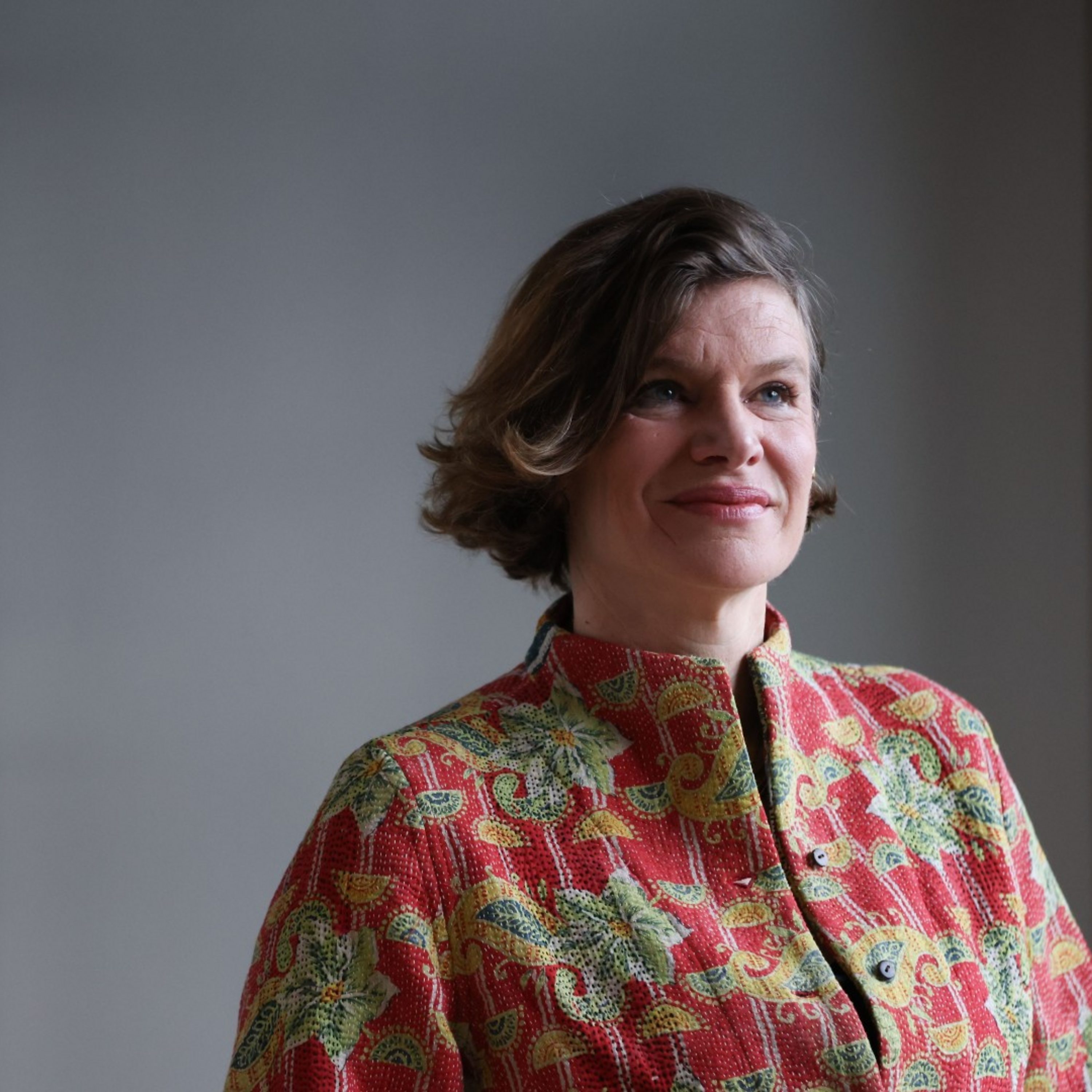
Business Daily meets: Mariana Mazzucato
The world's major consulting firms make an estimated trillion dollars a year, directing governments and businesses on how best to govern.But the economist Mariana Mazzucato argues that outsourcing the brain power of governments to private firms is a dangerous trend. Ed Butler asks her why she thinks it isn't money well spent.(Picture: Mariana Mazzucato. Credit: Getty Images)Presented and produced by Ed Butler
Is it okay to be mediocre at work?
The idea of settling for ‘good enough’ and being mediocre at work is not new… but the case for prioritising other things apart from work has grown rapidly since the pandemic – and hashtags like #lazygirljob have been getting millions of views on TikTok. We find out what mediocrity means for staff and employers, and speak to workers who are embracing this new attitude.We hear from Jaime Ducharme, Time Magazine journalist who wrote an article about mediocrity in the workplace, Gabrielle Judge who started #lazygirljob on TikTok, and Dr Thomas Curran from the London School of Economics.Produced and presented by Clare Williamson(Image: A woman looking bored at work. Credit: Getty Images)
Would you like to work 'near' home?
Work from home, or go into the office? For many businesses and workers it's an ongoing conversation at the moment.But could there be a third way - working 'near' home?New co-working spaces are providing a place for people to do their job close to where they live, but not at home which can be unsuitable and isolating.We also look at the WeWork model - the billion-dollar business filed for bankruptcy protection in the US last year - does that mean the concept isn't viable long term? Produced and presented by Dougal Shaw.(Image: A Patch co-working space in southern England. Credit: Benoit Grogan-Avignon)
Chile's move to a 40 hour work week
We look at the implications as the Latin American country gradually reduces from 45 hours.In April 2023 politicians approved a law in congress saying that businesses need to move towards cutting their hours to help get a better work life balance for employees.This reduction is happening gradually, and the working week is getting shorter by at least one hour per year, over a maximum of five years. We speak to workers and businesses in Chile about the impact - good and bad - that this is having.Presenter: Jane Chambers Technical production: Matthew Dempsey(Image: A group of workers on lunchbreak in Santiago. Credit: Getty Images)