
Books & Writers • The Creative Process: Novelists, Screenwriters, Playwrights, Poets, Non-fiction Writers & Journalists Talk Writing, Life & Creativity
321 episodes — Page 1 of 7
The Nature of Memory: Writers, Composers & Biologists on the Landscapes of Childhood
Beginning to Live: The Art of Existential Freedom w/ EMMY VAN DEURZEN
Translating the Living World: Yann Martel, Georgi Gospodinov & Authors on Ecology and Storytelling
24th US Poet Laureate ADA LIMÓN on Memory, Wonder & Listening to the Living World - Highlights
The Fight for the Future: AI, Privacy & Power with CARISSA VÉLIZ
Exhibit G: Poems, Essays, and Photographs of Gaza with FADY JOUDAH
Science in Resistance: Direct Action for Climate Justice, Democracy in Education w/ FERNANDO RACIMO
ADA LIMÓN on Interconnectedness, Startlement & The Power of Poetry
EMMY VAN DEURZEN on Existential Freedom, Psychotherapy & Finding Meaning - Highlights
Writing the Ruins: Los Angeles, Lost Dreams & the End of Empire - A Road Trip w/ CHIARA BARZINI
AQUA: A Story of Water & Lost Dreams w/ Author, Screenwriter CHIARA BARZINI
Time, Memory & the Art of Translation with GEORGI GOSPODINOV & ANGELA RODEL
Literature is an Antidote to Propaganda - Grief, Memory & Humanity w/ G. GOSPODINOV & A. RODEL - Highlights
How Animals Are Adapting to Cities & Reshaping the Natural World w/ Author & Epidemiologist DAN WERB
Humans as Storytelling Animals: Poets, Novelists & Musicians on the Power of Writing
Our Wild Familiars - DR. DAN WERB on Animals that Live Among Us & Urban Wildlife Conservation - Highlights
Listening to the Living World: Ami Vitale, Yann Martel, Carl Safina, David George Haskell & Others on Climate Change & The Rights of Nature
How Flowers Made Our World: DAVID GEORGE HASKELL on Deep Time, Plant Intelligence & Listening to the Living World
Listening to the Living World: Biologist DAVID GEORGE HASKELL on Flowers, Forests & Songs of Nature - Highlights
Why Do We Listen to the Talkers More Than the Builders Saving the Planet? - TOM CHI - Highlights
Climate Capital with TOM CHI - Google X Co-founder, Founding Partner At One Ventures
S16 Ep 1222The Salt Stones: Seasons of a Shepherd’s Life
Have we forgotten how to truly participate in the natural world? What can the ancient practice of shepherding teach us about ecological healing? How does physical labor connect us to the land, memory and belonging?In this episode of the Speaking Out of Place podcast, Professor David Palumbo-Liu speaks with Helen Whybrow about her book, The Salt Stones: Seasons of a Shepherd’s Life. Besides being a detailed account of the day to day, season by season life on her farm, where she and her family raise sheep, build a broad community, and maintain Knoll Farm, a center for activists, writers, artists and others to share ideas on how to promote healthier and more just ways of living together and in the environment, The Salt Stones is at base about the ways we are losing a sense of belonging, not only with others and with other forms of life on this planet, but also with the cycles of existence, of life and of death. Whybrow shows time and again that it is mostly a matter of developing ways of seeing and noticing what is all around us, and learning about and respecting the ways that generations of people and non-human animals have existed together in sustainable and mutually-dependent ways.Helen Whybrow is a writer, editor and organic farmer whose book about shepherding, land and belonging, The Salt Stones, was longlisted for the National Book Award and chosen as a New Yorker Best Book of 2025. Her other titles include Dead Reckoning (W. W. Norton, 2001) and A Man Apart (Chelsea Green, 2015). She has a master’s in journalism and has taught writing at Middlebury College and the Breadloaf Environmental Writer’s Conference. She and her family farm and steward a refuge for land justice at Knoll Farm in Fayston, Vermont.(0:00) The Salt Stones(2:50) A Lifelong Love of Land and Language(6:50) The Cord: A Story of Lambing and Life(13:40) Literary Influences and Jean Giono(18:15) The Erased Work of Nature(20:30) Radical Intimacy and Participation(23:45) Measuring Diminishment and Listening to Nature(25:15) Lita the Ewe and Complex Ecosystems(29:17) Kulning: The Lost Art of Herding Songs(32:15) Embodied Memory and Physical Labor(37:45) The True Meaning of Belonging(43:30) Radical Hospitality at Noel Farm(46:15) Closing Thoughts on Kinship Episode Websitewww.palumbo-liu.comhttps://speakingoutofplace.comBluesky @palumboliu.bsky.socialInstagram @speaking_out_of_place
S16 Ep 1223Game Over: Metrics, Big Data & Why We Need to Stop Keeping Score w/ C. THI NGUYEN - Highlights
"To be in the process of making things, to be in the process of talking to people about what things mean. The creative process is actually, I think, the most meaningful part of life, but it's very hard to measure. When we get shoved towards a world that demands easy measurables, it's very hard to optimize away from the creative process and optimize towards things that are more static."On this episode of The Creative Process, philosopher C. Thi Nguyen joins us to discuss his new book, The Score: How to Stop Playing Somebody Else's Game. He unpacks the profound concept of "value capture"—the moment we stop caring about the rich, subtle experiences of life and start obsessing over simplified, external metrics like grades, likes, and screen time.Beyond the trap of quantification, C. Thi Nguyen explores the liberating power of games and art. We discuss how true play requires us to step lightly between different rule sets, the difference between art and craft, and how reclaiming our creative process might just be the ultimate meaning of life.(0:00) THE TRAP OF VALUE CAPTURE How external metrics and scoring systems hijack our personal values and creativity(7:09) THE LOGIC OF QUANTIFICATION Why simple numbers travel well but strip away vital human context, from screen time to grades(11:58) THE MAGIC CIRCLE OF PLAY Understanding the difference between a gamified life and the true, disattached beauty of struggle(14:57) ART, CRAFT, AND METRICS Why taking the hard way leads to genuine creative expression, and how to spot value-laden systems(19:34) THE POLITICS OF MEASUREMENT Questioning the assumption that complex human traits, like IQ or consciousness, can be quantified on a single scale(21:31) THE SPIRIT OF PLAY Using constraints to boost collaborative storytelling and learning to step lightly between different rule worldsEpisode Websitewww.creativeprocess.info/podInstagram:@creativeprocesspodcast
S16 Ep 1222The Score: How to Stop Playing Somebody Else's Game with C. THI NGUYEN
We live in a world obsessed with tracking. From our sleep scores to our social media engagement, invisible systems constantly quantify our worth. But when we replace our deepest values with these thin, easily measurable numbers, we lose a part of our humanity. It is time to step outside the magic circle of optimization and reclaim the unstructured joy of being alive. C. Thi Nguyen is a philosopher whose work gets to the heart of the invisible structures that define modern life. He first established himself as a food writer, exploring the sensory world, before turning his intellectual gaze toward the philosophy of games and agency. He’s the author of Games: Agency As Art. His new book is The Score: How to Stop Playing Somebody Else's Game. He argues that when we simplify our values for the sake of a leaderboard, something inside the human spirit begins to die. In it, he explores a concept called "value capture"—the moment we stop caring about the experience and start obsessing over the metric. He joins me now to discuss how we can lead a playful, spontaneous life without getting lost in the scoring systems of the 21st century.(0:00) THE MEANING OF LIFE IS THE CREATIVE PROCESS Why the most valuable parts of life are impossible to measure(6:46) VALUE CAPTURE DEFINED How external metrics and institutional scoring systems take over our personal values(11:38) THE METRICS WE LIVE BY The invisible toll of screen time, credit scores, and daily optimization(19:44) THE LOGIC OF QUANTIFICATION Why simple numbers travel well but strip away vital human context(24:13) THE MAGIC CIRCLE OF PLAY Understanding the difference between a gamified life and the true beauty of struggle(31:56) ART AS A GAME How taking the hard way and avoiding efficiency leads to genuine creative expression(38:48) THE POLITICS OF TECHNOLOGY Why tools and systems like factories and databases are never truly value-neutral(44:23) AI AND HUMAN CREATIVITY Navigating the tension between automated efficiency and expressive human art(50:44) THE POLITICS OF IQ Questioning the assumption that complex human traits can be measured on a single scale(1:01:12) NARRATIVE SCAFFOLDING How structured constraints in role-playing games can actually boost collaborative storytelling(1:10:00) THE SPIRIT OF PLAY Stepping lightly between different rule worlds and reclaiming our agencyEpisode Websitewww.creativeprocess.info/pod@creativeprocesspodcast
S16 Ep 1221Trust, Education & Writing as Resistance w/ AL KENNEDY - Highlights
"The thing that puzzled him was why people don't agree to be fully expressed while they're alive. Why does it only happen in their last moment? Why wouldn't you live being fully expressed?"My guest today is AL Kennedy. She is one of Britain’s most acclaimed and versatile literary voices, a writer who can inhabit the internal life of a soldier in a POW camp, as she did in her Costa Book Award-winning novel Day, as easily as she can navigate the "professional lying" of a modern civil servant.Her latest novel, Alive in the Merciful Country, takes place during the 2020 lockdown. It tells the story of a primary school teacher who receives a confession from an undercover police officer who infiltrated her life decades earlier. It’s a provocative investigation into state power, the "Spy Cops" scandal and the search for mercy in an age of surveillance. It’s a book about the breakdown of trust. We talk about her life, her activism, and why she believes fiction is the only way to tell the truth when the facts are forbidden and how she balances the truth of her novels with the relief of stand-up comedy.(0:00) Finding Your VoiceOn the Alfred Wolfsohn voice method and the power of being fully expressed(2:30) Reading from Alive in the Merciful CountryKennedy shares a passage from her latest novel, exploring hope and resilience in dark times.(4:43) The Myth of Shrinking Attention SpansChallenging the narrative that modern audiences cannot focus, and the importance of engaging storytelling.(6:22) Education and the Foundation of DemocracyThe dangers of dismantling education and how critical thinking protects us from fascism.(10:26) The Spy Cop Scandal and State SurveillanceUnpacking the reality of undercover police infiltrating peaceful protests and intimate lives.(13:59) Lockdown: A Global Pause and the Inrush of EmpathyThe fleeting moment of unified humanity during the pandemic and how it was ultimately betrayed.(17:34) Writing Without Theft: The Ethics of Character CreationKennedy explains her imaginative process and why she refuses to steal details from real people's lives.(28:16) AI, Digital Slop, and the Loss of TrustReflections on artificial intelligence as an unstable plagiarism machine and its impact on truth.(30:03) Nature, Spirituality, and the Merciful CountryFinding healing in the natural world and navigating the future with love and awareness.Episode Websitewww.creativeprocess.info/podInstagram:@creativeprocesspodcast
S16 Ep 1220The Art of Fiction, Democracy & Truth with AL KENNEDY
What happens when the state infiltrates your most intimate relationships? How do we protect the innocence and imagination of children in an increasingly authoritarian world? “"If you have love, eventually you're going to win. It's not that people aren't going to die. It's not terrible things aren't going to happen. But if you stay with that and you stay centered in that, you'll get through and you will not have turned into a monster in order to overcome monsters.”My guest today is AL Kennedy. She is one of Britain’s most acclaimed and versatile literary voices, a writer who can inhabit the internal life of a soldier in a POW camp, as she did in her Costa Book Award-winning novel Day, as easily as she can navigate the "professional lying" of a modern civil servant.Her latest novel, Alive in the Merciful Country, takes place during the 2020 lockdown. It tells the story of a primary school teacher who receives a confession from an undercover police officer who infiltrated her life decades earlier. It’s a provocative investigation into state power, the "Spy Cops" scandal and the search for mercy in an age of surveillance. It’s a book about the breakdown of trust. We talk about her life, her activism, and why she believes fiction is the only way to tell the truth when the facts are forbidden and how she balances the truth of her novels with the relief of stand-up comedy.(0:00) Finding Your VoiceOn the Alfred Wolfsohn voice method and the power of being fully expressed(2:17) Education and the Foundation of DemocracyThe dangers of dismantling education and how critical thinking protects us from fascism.(5:14) The Myth of Shrinking Attention SpansChallenging the narrative that modern audiences cannot focus, and the importance of engaging storytelling.(8:23) Reading from Alive in the Merciful CountryKennedy shares a passage from her latest novel, exploring hope and resilience in dark times.(17:45) The Spy Cop Scandal and State SurveillanceUnpacking the reality of undercover police infiltrating peaceful protests and intimate lives.(22:07) AI, Digital Slop, and the Loss of TrustReflections on artificial intelligence as an unstable plagiarism machine and its impact on truth.(28:29) The Power of the Powerless: Radical WhimsyHow absurdity, humor, and inflatable costumes can disrupt authoritarian mindsets and potential violence.(33:13) Lockdown: A Global Pause and the Inrush of EmpathyThe fleeting moment of unified humanity during the pandemic and how it was ultimately betrayed.(42:53) Writing Without Theft: The Ethics of Character CreationKennedy explains her imaginative process and why she refuses to steal details from real people's lives.(1:29:40) Nature, Spirituality, and the Merciful CountryFinding healing in the natural world and navigating the future with love and awareness.Episode Websitewww.creativeprocess.info/podInstagram:@creativeprocesspodcast
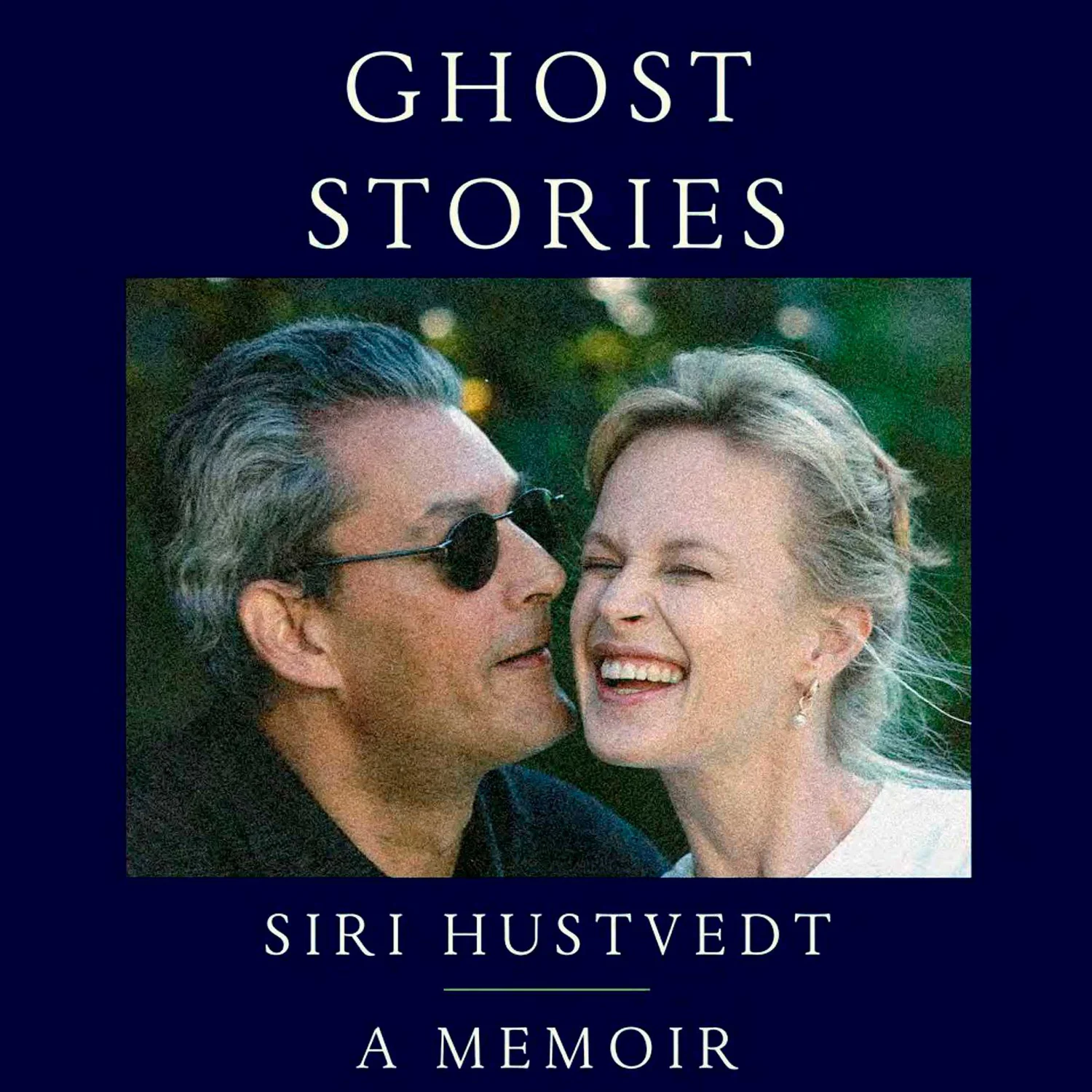
S16 Ep 1219SIRI HUSTVEDT on Love, Grief & Her Late Husband PAUL AUSTER - Highlights
E“Grief is a particular kind of unrequited love. It wasn't unrequited in the past. Usually, we think of unrequited love as you never got to do it, you never had it for yourself. But, in fact, there can be requited love, which is then unrequited love in the paroxysms of grief.”Today, we are honored to welcome a writer whose work has long explored the intimate landscapes of the mind, memory and the heart. Siri Hustvedt’s writing moves between the personal and the philosophical, the literary and the deeply human. Her work bridges collections of essays, non-fiction, poetry, and seven novels, including the international bestsellers What I Loved and The Summer Without Men. Recipient of the Princess of Asturias Award for Literature and the Gabarron Prize for Thought, her work has been translated into over thirty languages. Her new memoir, Ghost Stories, is a reflection on forty-three years shared with her late husband, the writer and filmmaker Paul Auster. In its pages, we encounter not only love and loss, but the quiet persistence of presence, memory, and language itself.(0:00) “We were hugely important to the drama of becoming in our own lives”(2:04) Grief as Unrequited LoveSiri explores the emotional reality of living without Paul Auster, noting that grief occurs because love does not stop when a person dies.(3:19) The Shared Space of a 43-year Marriage(4:36) Reading from Ghost StoriesSiri reads the opening passage of her memoir, detailing how the loss of her husband deranged her sense of time and bodily rhythms.(7:02) How Loss Changes Our Sense of Time(11:24) How Powerful Emotions and a Person's Life Can Play a Role in Illness(13:04) Believing in a Reality that Transcends the Individual(20:06) Physical Love in MarriageOn the importance of physical intimacy in long-term marriages, a reality often left out of grief memoirs.Episode Websitewww.creativeprocess.info/podInstagram:@creativeprocesspodcast
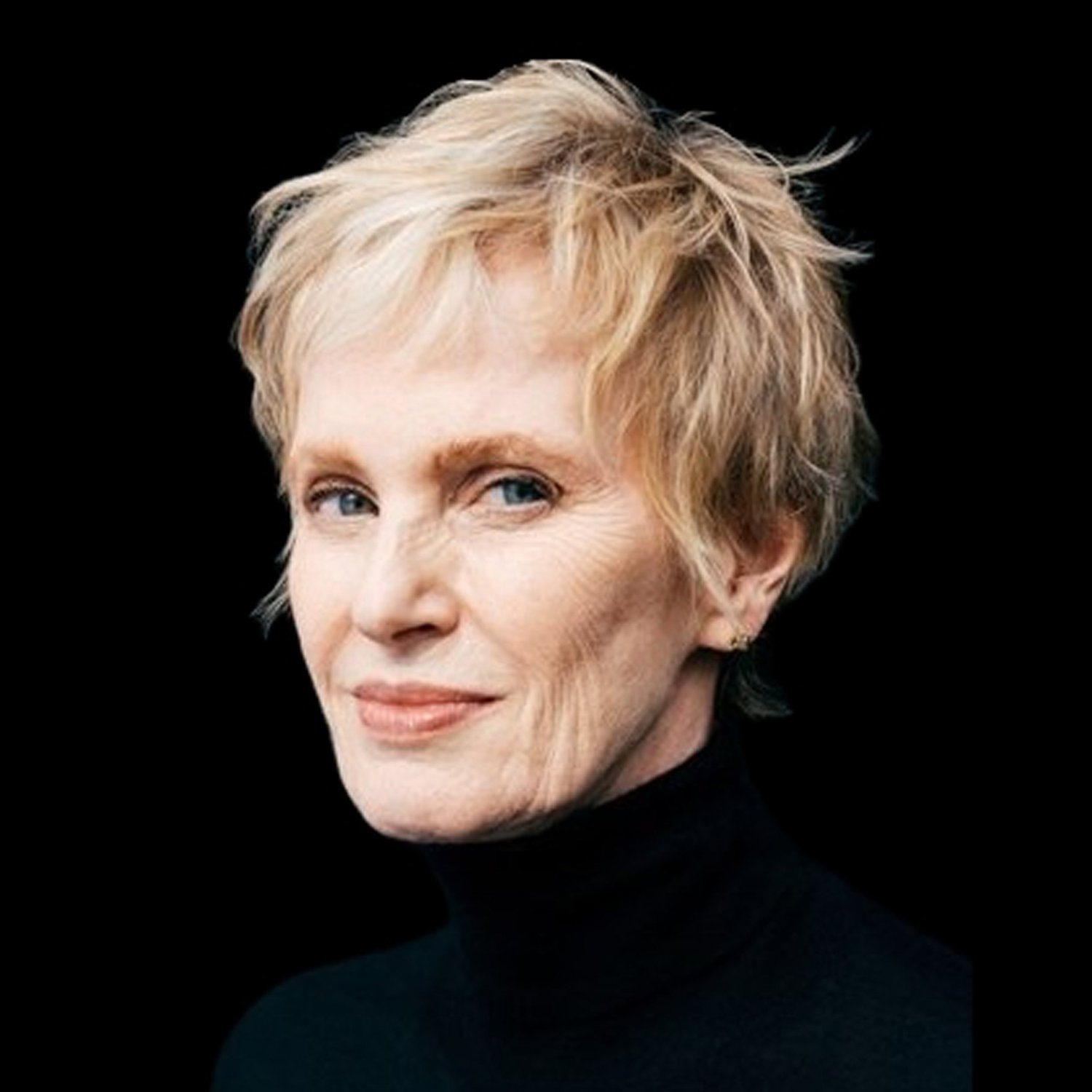
S16 Ep 1218Ghost Stories · A Memoir of Love & Grief
E“Grief happens because you don't stop loving the person who died. The person doesn't exist in your reality anymore. The everyday is not colored and shaped by this other human being, but you don't stop loving the person. So grief is a particular kind of unrequited love. And probably without that dynamic relationship with this person, I would be someone else. And he would've been someone else. I mean, Paul died before me. But we were, I think, hugely important to the drama of becoming in our own lives.”Today, we are honored to welcome a writer whose work has long explored the intimate landscapes of the mind, memory and the heart. Siri Hustvedt’s writing moves between the personal and the philosophical, the literary and the deeply human. Her work bridges collections of essays, non-fiction, poetry, and seven novels, including the international bestsellers What I Loved and The Summer Without Men. Recipient of the Princess of Asturias Award for Literature and the Gabarron Prize for Thought, her work has been translated into over thirty languages. Her new memoir, Ghost Stories, is a reflection on forty-three years shared with her late husband, the writer and filmmaker Paul Auster. In its pages, we encounter not only love and loss, but the quiet persistence of presence, memory, and language itself.(0:00) Grief as Unrequited LoveSiri explores the emotional reality of living without Paul Auster, noting that grief occurs because love does not stop when a person dies.(4:00) Facing Death with CourageThe importance of not hiding from mortality and how discussing end-of-life wishes offered a necessary perspective.(12:37) Reading from Ghost StoriesSiri reads the opening passage of her memoir, detailing how the loss of her husband deranged her sense of time and bodily rhythms.(18:41) The Phantom Limb: ” The beloved is taken away and it feels as if you're amputated or gutted.”(21:50) Grandfather, Father and Son: Generational Traumas Behind Paul Auster's Writing(24:11) How Powerful Emotions and a Person's Life Can Play a Role in Illness(30:09) Feeding the Earth "Paul very pointedly told me that he wanted to be buried in the Jewish mode. And the phrase he used was, “I want my body to feed the earth.”(44:23) Physical Love in MarriageOn the importance of physical intimacy in long-term marriages, a reality often left out of grief memoirs.(54:00) The Philosophy of the BetweenHow relational existence is foundational to life.(1:00:16) The Hubris of Controlling Nature(1:12:00) The Dark History of Statistics(1:32:12) The Art of Learning vs. AI and Automated Outcomes“I think we have to ask ourselves, what is education? What do we want from it? How do we want people to learn?Episode Websitewww.creativeprocess.info/podInstagram:@creativeprocesspodcast

S16 Ep 1211Who Are We? What Makes Us Care? Jim Shepard, Neil Patrick Harris, John Patrick Shanley & Artists Share Their Stories
Can curiosity and empathy be taught? How can we expand our sense of solidarity through stories? In this episode, we explore the internal dialogues of artists, actors and writers to ask what it means to step into someone else's shoes.(0:00) Novelist Jim Shepard discusses Literature as a Tool for Emotional Education and Exploring History(2:05) Tony Award-winning Actor Neil Patrick Harris on Being Moved by Theater and its Ability to Bridge Worlds(3:55) Novelist Katie Kitamura on How a Book is Made in Collaboration with the Reader(5:00) Screenwriter, Playwright Laura Eason on Inhabiting the Hearts of Characters Different from Ourselves(6:03) Academy Award-winning Director Sharmeen Obaid-Chinoy on the Art of Visual Storytelling(6:37) Cinematographer, Director Benoit Delhomme on the Freedom of Handheld Cinematography(7:19) Author Etgar Keret on Looking for Humanity through Shared Intention(8:18) Viet Thanh Nguyen – Opposing Power through Expansive Solidarity(9:27) Adam Moss – Author, Fmr. Editor New York magazine on “The Work of Art”(10:29) John Patrick Shanley – Tony & Academy Award-winning Writer, Director on Finding Value in Ordinary Experiences and the Creative Power of Daydreaming(11:56) Pulitzer Prize-winning Journalist Nicholas Kristof on Why Individual Stories are Necessary to Generate ConnectionTo hear more from each guest, listen to their full interviews.Episode Websitewww.creativeprocess.info/podInstagram:@creativeprocesspodcast

S16 Ep 1217The Healing Power of the Arts: Longevity, Immunity & Wellbeing w/ DAISY FANCOURT - Highlights
"Within society, we seem to have separated the arts out, so they're not so much a part of our daily lives. Often there's something that we feel we should do as a kind of leisure activity or hobby if we have enough time or if we have enough money to engage in them. And this is so fundamentally different to how humans engaged with the arts. When we look back thousands of years, it just was part of the everyday, and I feel like that's a major loss within contemporary societies."Daisy Fancourt is a Professor of Psychobiology & Epidemiology at UCL and the author ofArt Cure: The Science of How the Arts Transform Our Health. A pioneer in the field of psychoneuroimmunology, she directs the WHO Collaborating Center on Arts and Health, where her research influences global health policy and the integration of the arts into medical care.(0:00) The Healing Power of the Arts: Longevity, Immunity & Wellbeing(1:17) Singing to Daphne: How Daisy used singing to comfort her premature daughter in the ICU(2:47) The Story of Russell: How a stroke survivor used art classes to reclaim his life, health, and identity(5:23) A Planet of 8 Billion Artists: Tracing the evolutionary origins of creativity back 40,000 years(8:58) Psychoneuroimmunology. Defining the biological mechanisms: how art reduces inflammation and cortisol(12:42) Art & Longevity. How arts engagement can slow biological aging and alter gene expression(18:24) Safeguarding Creativity. Why we should use AI for routine tasks but protect the human joy of the creative processEpisode Websitewww.creativeprocess.info/podInstagram:@creativeprocesspodcast
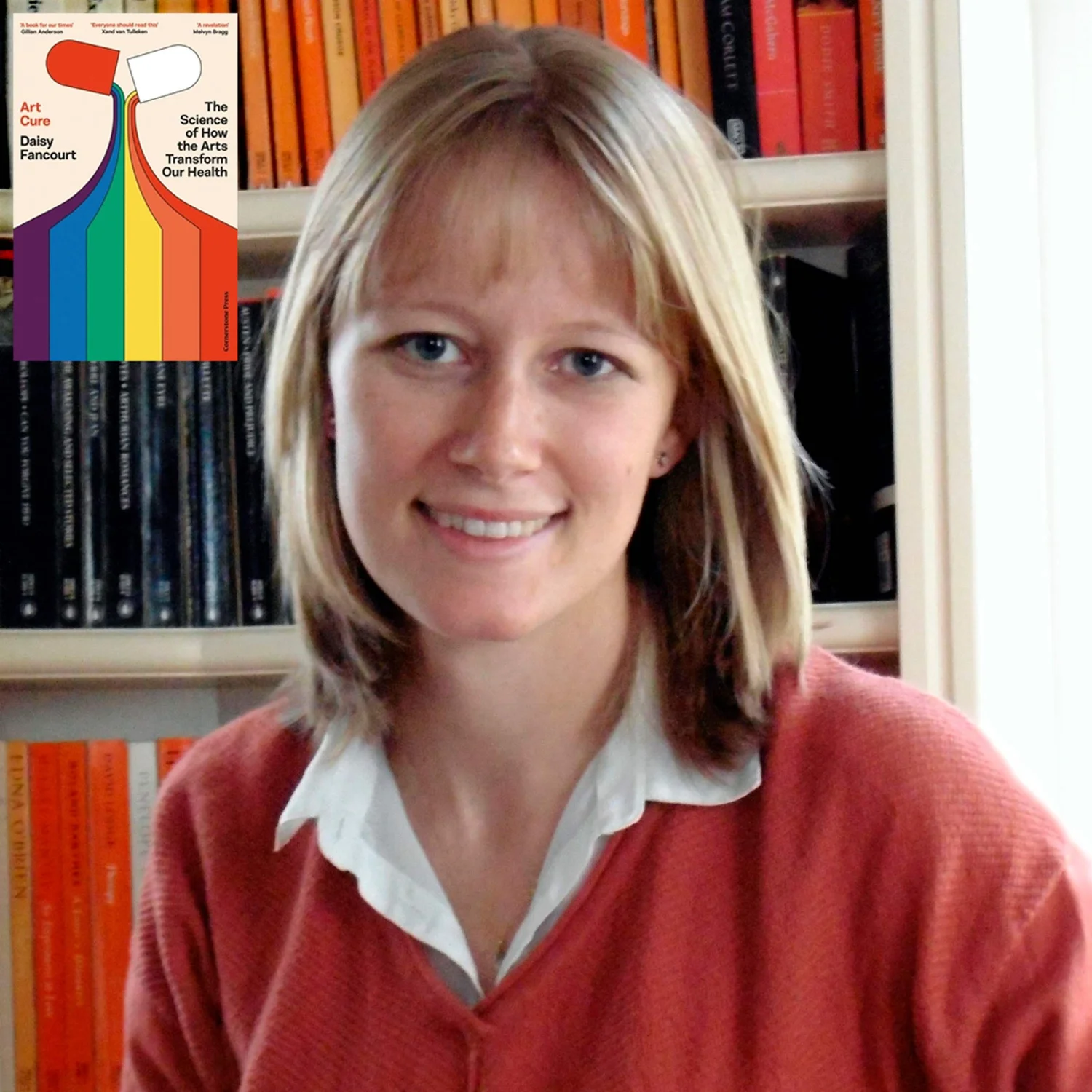
S16 Ep 1216ART CURE: How the Arts Can Transform Our Health with DAISY FANCOURT
Did you know that visiting a museum can lower your cortisol levels? Or that singing can bond a group faster than almost any other activity? We tend to think of the arts as entertainment, but science tells a different story. Today, we explore why creativity is hardwired into our biology and how it can be used to treat everything from postnatal depression to stroke recovery.Daisy Fancourt is a Professor of Psychobiology & Epidemiology at UCL and the author ofArt Cure: The Science of How the Arts Transform Our Health. A pioneer in the field of psychoneuroimmunology, she directs the WHO Collaborating Center on Arts and Health, where her research influences global health policy and the integration of the arts into medical care.(0:00) The Healing Power of the Arts: Longevity, Immunity & Wellbeing(4:14) The Story of Russell: How a stroke survivor used art classes to reclaim his life, health, and identity(9:01) A Planet of 8 Billion Artists: Tracing the evolutionary origins of creativity back 40,000 years(15:30) The Chemistry of Connection. Why singing evolved before language and how it accelerates group bonding(20:32) Psychoneuroimmunology. Defining the biological mechanisms: how art reduces inflammation and cortisol(25:57) The Professional Paradox: Balancing the wellbeing benefits of art with the pressures of a creative career(30:03) Predictive Coding & Play: Why the human brain needs improvisation and why we shouldn't outsource creativity to AI(33:26) Singing to Daphne: How Daisy usedsinging to comfort her premature daughter in the ICU(37:55) World Health Organization, Public Policy & Social Prescribing(46:04) Art & Longevity. How arts engagement can slow biological aging and alter gene expression(58:17) Finding Artistic Reverence in Nature Episode Websitewww.creativeprocess.info/podInstagram:@creativeprocesspodcast

S16 Ep 1209The Wisdom of Nature: Artists & Scientists on The Beauty & Fragility of Our Planet
In this special edition, we hear from our guests from across the arts and sciences. From composers and poets to forest ecologists and climate envoys, they tell the story of our planet. Moving beyond the data of destruction, we explore the intelligence of nature, the ethics of what we eat, and the empathy required to save our future.MAX RICHTER, Composer, Sleep, The Blue NotebooksCARL SAFINA, Author, Becoming WildADA LIMÓN, 24th US Poet LaureateCYNTHIA DANIELS, Grammy Award-winning Sound Eng.SUZANNE SIMARD, Finding the Mother TreeJOELLE GERGIS, Lead Author, IPCC 6th Assessment RptNOAH WILSON-RICH, CEO, Best Bees CompanyINGRID NEWKIRK, PETA FounderBERTRAND PICCARD, Solar Impulse FoundationDAVID FARRIER, Author, FootprintsKATHLEEN ROGERS, Pres, Earth Day NetworkODED GALOR, Unified Growth TheoryPETER SINGER, PhilosopherGEOFF MULGAN, Another World Is PossibleCLAIRE POTTER, Welcome to the Circular EconomyCHRIS FUNK, Dir. Climate Hazards Car.JENNIFER MORGAN, Special Envoy, International Climate ActionTo hear more from each guest, listen to their full interviews.Episode Website

S15 Ep 1206Speaking Out of Place - DAVID PALUMBO-LIU on Reclaiming Our Political Voices - Highlights
On the urgent need to reclaim our political voices, the forces that silence dissent, and how art and poetry are crucial tools for survivalOur guest today is an activist scholar who believes the classroom is inseparable from the public square. David Palumbo-Liu is the Louise Hewlett Nixon Professor of Comparative Literature at Stanford University and a founding faculty member of Stanford’s Program in Comparative Studies in Race and Ethnicity. But his work has long reached beyond the academy. Through his book, Speaking Out of Place: Getting Our Political Voices Back, and his podcast of the same name, he insists that the great global crises of our time—from escalating wars and democratic failures to environmental collapse—are fundamentally crises of value and voice. His recent work has put him on the front lines of campus activism, challenging institutions, resigning his membership from the MLA, a move that highlights the ethical cost of speaking truth to power. We’ll talk about what he calls the "carceral logic" of the modern university, why art and poetry are crucial tools for survival in times of war, and what he tells his students about preparing for a future defined by uncertainty. His perspective is rooted in literature, but his urgency is all about the world we live in now. We will discuss the forces that silence dissent, the "imperial logic" of AI, and what it means to be a moral, active citizen when the systems we rely on are failing.“There is a dispute about what the American Dream is or how it would play out in different circumstances. The American dream has essentially been narrowed into a white Christian nationalist notion of things so that everything that falls outside what they imagine that to be is not only undesirable, but should be the subject of extermination, deportation, and detention. I am heartened by the fact that more of our 'better angels' are emerging with a more capacious and expansive notion of what the American dream could be.”Episode Websitewww.creativeprocess.info/podInstagram:@creativeprocesspodcast

S15 Ep 1204Reclaiming the American Dream with DAVID PALUMBO-LIU – Stanford Professor, Author & Host, Speaking Out of Place
On the urgent need to reclaim our political voices, the forces that silence dissent, and how art and poetry are crucial tools for survival“There is a dispute about what the American Dream is or how it would play out in different circumstances. The American dream has essentially been narrowed into a white Christian nationalist notion of things so that everything that falls outside what they imagine that to be is not only undesirable, but should be the subject of extermination, deportation, and detention. I am heartened by the fact that more of our 'better angels' are emerging with a more capacious and expansive notion of what the American dream could be.”Our guest today is an activist scholar who believes the classroom is inseparable from the public square. David Palumbo-Liu is the Louise Hewlett Nixon Professor of Comparative Literature at Stanford University and a founding faculty member of Stanford’s Program in Comparative Studies in Race and Ethnicity. But his work has long reached beyond the academy. Through his book, Speaking Out of Place: Getting Our Political Voices Back, and his podcast of the same name, he insists that the great global crises of our time—from escalating wars and democratic failures to environmental collapse—are fundamentally crises of value and voice.His recent work has put him on the front lines of campus activism, challenging institutions, resigning his membership from the MLA, a move that highlights the ethical cost of speaking truth to power. We’ll talk about what he calls the "carceral logic" of the modern university, why art and poetry are crucial tools for survival in times of war, and what he tells his students about preparing for a future defined by uncertainty. His perspective is rooted in literature, but his urgency is all about the world we live in now. We will discuss the forces that silence dissent, the "imperial logic" of AI, and what it means to be a moral, active citizen when the systems we rely on are failing.Episode Websitewww.creativeprocess.info/podInstagram:@creativeprocesspodcast

S15 Ep 1204The Writer's Voice: Novelists, Poets, Memoirists & Editors Share Their Stories
How do writers develop their voice, showing us what is important in life?ADA LIMÓN (24th U.S. Poet Laureate, Startlement, The Carrying) explains that her poetry begins with a bodily sensation or curiosity, not an idea. She values the space and breath poetry offers for unknowing and mystery, finding solace in the making and the mess, not in answers. She discusses being free on the page to be her whole, authentic, complicated self.JAY PARINI (Author, Filmmaker, Borges and Me) calls poetry the prince of literary arts—language refined to its apex of memorability. He recounts how his road trip with Borges around Scotland restored him from depression and anxiety following the Vietnam War death of his friend.JERICHO BROWN (Pulitzer Prize-winning Poet, The Tradition, How We Do It: Black Writers on Craft, Practice, and Skill) discusses the rhythm of black vernacular and capturing "symphonic complexity of black life". He shares how he’s found a way not to think about personal risk as he’s writing.ADAM MOSS (Fmr. Editor, New York Magazine; Author, The Work of Art) relates David Simon’s concept of the bounce, in which creativity gains momentum as it is passed between people.VIET THANH NGUYEN (Pulitzer Prize-winning Author, The Sympathizer; To Save and to Destroy) discusses his path to expansive solidarity and capacious grief and how it works against the state's power to divide and conquer. He emphasizes that literature is crucial because authoritarian regimes abuse language; a commitment to the beauty of language is a commitment to truth, and fear is often an indicator of a truth that needs to be spoken.To hear more from each guest, listen to their full interviews.Episode Websitewww.creativeprocess.info/podInstagram:@creativeprocesspodcast
The Ethics of AI with SVEN NYHOLM, Munich Centre for Machine Learning

S15 Ep 1203Writers on Memory, Language & the Power of the Unconscious
How can we use negative spaces in fiction to engage with readers’ imaginations? How are memory and trauma passed onto us through language? How do we become more than the stories we tell ourselves?KATIE KITAMURA (Author, Audition, Intimacies) emphasizes that a book is created in collaboration with the reader, using negative spaces in the narrative structure to allow for reader interpretation, paralleling the space between audience and actor in performance.PAUL LYNCH (Booker Prize-winning Novelist, Prophet Song) discusses the richness and slipperiness of the English language in Ireland, shaped by the overlay of English onto Irish grammatical constructions, resulting in unique phrasing and a capacity to create new constructions.DANIEL PEARLE (Screenwriter, Playwright, The Beast in Me) shares that audiences are fascinated by the unfettered, uncensored ID in characters, reflecting the universal fantasy of acting without consequences. He advises writers to put people who deeply irritate them into a play, as those characters often become the audience's favorites.HALA ALYAN (Novelist, Poet, I’ll Tell You When I’m Home: A Memoir) describes her work as an excavation of the darkest hours and intergenerational trauma carried by her lineage, which has endured repeated exile. She links exile from the body to the larger patterns of not having a place in the world.T.C. BOYLE(Novelist, Short Story Writer, Environmentalist) shares that the creative process involves a magic in reaching for the unconscious and the surprise of the creative process. He emphasizes that art and nature are our salvations, over money. He advocates for solitude in nature—alone on a beach or in the woods—to connect with the natural world.ADAM ALTER (Author of Anatomy of a Breakthrough) discusses the axioms of creativity, noting that being around more people, even those who are "deeply incompetent," is generally beneficial for creativity by providing diversity of opinion and information, preceding the necessary time for solitary focus.SHEHAN KARUNATILAKA (Booker Prize-winning Author of The Seven Moons of Maali Almeida) explains his decision to write in the second person as a way of exploring the spiritual dimension of the internal voice. He posits that the "you" could be a spirit whispering thoughts, leading people (and nations) astray.DANIEL HANDLER A.K.A LEMONY SNICKET (Author, A Series of Unfortunate Events) argues that his books for children and adults are not fundamentally different and says everyone's childhood is full of powerful emotions derived from ordinary injustices, noting that we cry hardest over hurt feelings, not global catastrophes.ADA LIMÓN (24th U.S. Poet Laureate, Startlement, The Carrying) talks about her responsibility as a writer to honor her ancestors, specifically her grandfather, who had to sublimate his creative spirit for safety and belonging, leading her to prioritize grace and freedom in her own writing.To hear more from each guest, listen to their full interviews.Episode Websitewww.creativeprocess.info/podInstagram:@creativeprocesspodcast

S15 Ep 1202The AI Wager: Betting on Technology’s Future w/ Philosopher, Author SVEN NYHOLM - Highlights
“ I think we're betting on AI as something that can help to solve a lot of problems for us. It's the future, we think, whether it's producing text or art, or doing medical research or planning our lives for us, etc., the bet is that AI is going to be great, that it's going to get us everything we want and make everything better. But at the same time, we're gambling, at the extreme end, with the future of humanity , hoping for the best and hoping that this, what I'm calling the AI wager, is going to work out to our advantage, but we'll see.”As we move towards 2026, we are in a massive “upgrade moment” that most of us can feel. New pressures, new identities, new expectations on our work, our relationships, and our inner lives. Throughout the year, I've been speaking with professional creatives, climate and tech experts, teachers, neuroscientists, psychologists, and futureists about how AI can be used intelligently and ethically as a partnership to ensure we do not raise a generation that relies on machines to think for them. It’s not that we are being replaced by machines. It’s that we’re being invited to become a new kind of human. Where AI isn’t the headline; human transformation is. And that includes the arts, culture, and the whole of society. Generative AI – the technologies that write our emails, draft our reports, and even create art – have become a fixture of daily life, and the philosophical and moral questions they raise are no longer abstract. They are immediate, personal, and potentially disruptive to the core of what we consider human work.Our guest today, Sven Nyholm, is one of the leading voices helping us navigate this new reality. As the Principal Investigator of AI Ethics at the Munich Center for Machine Learning, and co-editor of the journal Science and Engineering Ethics. He has spent his career dissecting the intimate relationship between humanity and the machine. His body of work systematically breaks down concepts that worry us all: the responsibility gap in autonomous systems, the ethical dimensions of human-robot interaction, and the question of whether ceding intellectual tasks to a machine fundamentally atrophies our own skills. His previous books, like Humans and Robots: Ethics, Agency, and Anthropomorphism, have laid the foundational groundwork for understanding these strange new companions in our lives.His forthcoming book is The Ethics of Artificial Intelligence: A Philosophical Introduction. The book is a rigorous exploration of everything from algorithmic bias and opacity to the long-term existential risks of powerful AI. We’ll talk about what it means when an algorithm can produce perfect language without genuine meaning, why we feel entitled to take credit for an AI’s creation, and what this technological leap might be costing us, personally, as thinking, moral beings.Episode Websitewww.creativeprocess.info/podInstagram:@creativeprocesspodcast
S15 Ep 1201The Ethics of AI w/ SVEN NYHOLM, Lead Researcher, Munich Centre for Machine Learning
As we move towards 2026, we are in a massive “upgrade moment” that most of us can feel. New pressures, new identities, new expectations on our work, our relationships, and our inner lives. Throughout the year, I've been speaking with professional creatives, climate and tech experts, teachers, neuroscientists, psychologists, and futureists about how AI can be used intelligently and ethically as a partnership to ensure we do not raise a generation that relies on machines to think for them. It’s not that we are being replaced by machines. It’s that we’re being invited to become a new kind of human. Where AI isn’t the headline; human transformation is. And that includes the arts, culture, and the whole of society. Generative AI – the technologies that write our emails, draft our reports, and even create art – have become a fixture of daily life, and the philosophical and moral questions they raise are no longer abstract. They are immediate, personal, and potentially disruptive to the core of what we consider human work.Our guest today, Sven Nyholm, is one of the leading voices helping us navigate this new reality. As the Principal Investigator of AI Ethics at the Munich Center for Machine Learning, and co-editor of the journal Science and Engineering Ethics. He has spent his career dissecting the intimate relationship between humanity and the machine. His body of work systematically breaks down concepts that worry us all: the responsibility gap in autonomous systems, the ethical dimensions of human-robot interaction, and the question of whether ceding intellectual tasks to a machine fundamentally atrophies our own skills. His previous books, like Humans and Robots: Ethics, Agency, and Anthropomorphism, have laid the foundational groundwork for understanding these strange new companions in our lives.His forthcoming book is The Ethics of Artificial Intelligence: A Philosophical Introduction. The book is a rigorous exploration of everything from algorithmic bias and opacity to the long-term existential risks of powerful AI. We’ll talk about what it means when an algorithm can produce perfect language without genuine meaning, why we feel entitled to take credit for an AI’s creation, and what this technological leap might be costing us, personally, as thinking, moral beings.Episode Website www.creativeprocess.info/pod Instagram:@creativeprocesspodcast

S15 Ep 1196BASQUIAT: The Price of Fame w/ Author DOUG WOODHAM - Highlights
“People today are so used to Basquiat's prices being extraordinarily high and rising that it's almost hard for people to understand that wasn't always the case. In the year he died, 1988, a terrific painting by Basquiat might have sold for $30,000. Relative to his other artistic peers, like a great Julian Schnabel painting that cost $800,000. After Basquiat died, some speculative capital entered his market, and his prices did pop, but in the early 1990s, his prices fell apart, and for much of the first half of the 1990s, his work was selling for 80% off what it had been selling before. Auction houses didn't want to include him in their auctions. There was a really good chance he was going to be remembered, but certainly not become a great star. Three key figures believed in him and proceeded to buy almost every available Basquiat in the first half of the 1990s. They were also just passionate believers in his work. But for those three people, it would have taken much longer for Basquiat to achieve acclaim, if ever.”Today, we’re joined by someone uniquely positioned to unpack the art world’s inner workings and to help us understand one of its most mythic figures — Jean-Michel Basquiat. Doug Woodham is the author of the new biography, Jean-Michel Basquiat: The Making of an Icon, the first major life study of Basquiat in over twenty-five years. Drawing on more than a hundred interviews — from family and friends to collectors and curators — Doug traces the rise, fall, and resurrection of an artist who redefined what it means to be a cultural icon. Before turning to writing, Doug served as President of the Americas for Christie’s, one of the world’s leading auction houses. That role gave him an insider’s perspective on how value is created — and mythologized — in the modern art market. In this conversation, we’ll explore not just the man behind the legend, but the powerful machinery that turned Jean-Michel Basquiat into one of the most recognized and commercially successful artists in the world.Episode Websitewww.creativeprocess.info/podInstagram:@creativeprocesspodcastImages courtesy of Doug Woodham and Thames & Hudson. For image credits, see Episode Website.

S15 Ep 1195JEAN-MICHEL BASQUIAT: The Making of an Icon with DOUG WOODHAM, Fmr. President of Christie's Americas
“All of the great artists are there for a reason: because they rebelled in some way. They created a visual vocabulary that felt fresh and new, which excited people. So, the great artists are not built on sort of anthills of sand. They're built on things of substance and of meaning. Though this is not a sufficient condition to become an icon, it's a necessary but not sufficient condition. I think you have to have an interesting and vivid personality or personal narrative that makes you interesting for people to talk about and want to learn about. I think you also have to have a support network of galleries, curators, and collectors who are excited about your work and want to push it forward, not wanting it to be forgotten. Basquiat's visual vocabulary is distinctive and stands out relative to what was being done in the 1980s. That's the sort of strong hill on which his reputation is built. Basquiat benefited from being the first black artist of note who got pushed forward. As in many things, the first benefits.”Today, we’re joined by someone uniquely positioned to unpack the art world’s inner workings and to help us understand one of its most mythic figures — Jean-Michel Basquiat. Doug Woodham is the author of the new biography, Jean-Michel Basquiat: The Making of an Icon, the first major life study of Basquiat in over twenty-five years. Drawing on more than a hundred interviews — from family and friends to collectors and curators — Doug traces the rise, fall, and resurrection of an artist who redefined what it means to be a cultural icon. Before turning to writing, Doug served as President of the Americas for Christie’s, one of the world’s leading auction houses. That role gave him an insider’s perspective on how value is created — and mythologized — in the modern art market. In this conversation, we’ll explore not just the man behind the legend, but the powerful machinery that turned Jean-Michel Basquiat into one of the most recognized and commercially successful artists in the world.Episode Websitewww.creativeprocess.info/podInstagram:@creativeprocesspodcast
S15 Ep 1190On Mind Games, Power & Obsession - Showrunner HOWARD GORDON & Writer DANIEL PEARLE - Highlights
“How do you render something interior filmically? How do you communicate the details of the lost child, of the amount of time of the stuck creative process, and even the exterior, or the externalization of the house as a kind of hellish thing that's barely staying together—literally flooding with waste—and that you can't afford? So those are the details that we had to carefully figure out how to weave. But, you know, when you look at the first 10 minutes, it could be a horror movie. From that moment, a lot can happen. But what's important about it is that it sets the table for what does happen.” -Howard GordonToday, we explore the dark psychology of obsession, guilt, and the thin line between predator and victim. Our guests are two of television's most accomplished architects of high-stakes drama and moral ambiguity: Howard Gordon, the showrunner and executive producer whose work defined a generation of thrillers with 24 and the multi-award-winning Homeland; and Daniel Pearle, an executive producer and writer who brings a distinct, penetrating depth from his background as a celebrated playwright and his work on series like Accused and American Crime Story.Episode Websitewww.creativeprocess.info/podInstagram:@creativeprocesspodcast

S15 Ep 1189The Beast in Me starring CLAIRE DANES - Behind the Scenes w/ HOWARD GORDON & DANIEL PEARLE
“And I think there's also just something about an unfettered or uncensored id that is so captivating. We all have that fantasy of doing exactly what we want with no consequences and sort of letting that go. I think when you see an athlete at the peak of their game, doing that embodied thing and living that dream, or when someone has actually done horrible things that you would never allow yourself to do, there is a fascination there. I had one teacher who said, "Anyone who drives you crazy or that you just cannot stand in life, put them in a play or put them in a scene, and the audience will love them." If someone has really gotten under your skin and you just cannot stand them, and you have a visceral reaction—like, "I just hate this person"—make them a character, and the audience will make them everyone's favorite character. There is something to that.” - Daniel PearleToday, we explore the dark psychology of obsession, guilt, and the thin line between predator and victim. Our guests are two of television's most accomplished architects of high-stakes drama and moral ambiguity: Howard Gordon, the showrunner and executive producer whose work defined a generation of thrillers with 24 and the multi-award-winning Homeland; and Daniel Pearle, an executive producer and writer who brings a distinct, penetrating depth from his background as a celebrated playwright and his work on series like Accused and American Crime Story..Episode Websitewww.creativeprocess.info/podInstagram:@creativeprocesspodcast

S15 Ep 1200On Oneness & Self-Healing w/ LD Chen - Head Coach, Oneness Institute, US & EU - Highlights
Today’s episode is about something most of us long for: feeling healthy in our bodies and calm in our minds – not by pushing harder, but by letting the body restore itself. Our guest today is LD Chen, an entrepreneur-turned-author who discovered the ancient wisdom that healing doesn’t come from trying harder, but from restoring the body’s natural intelligence. LD believes everyone has the right to live peacefully and free from constant stress and anxiety – to move through life with genuine joy, peace, and appreciation. After quickly building a 1,000-person company and then facing burnout and serious health issues, LD’s life changed when he encountered an ancient standing practice called Oneness. He is now the Head Coach of the Oneness Institute for America and Europe, and author of the Amazon bestseller Oneness: The Self-Healing Secret You Were Never Supposed to Know.“Oneness is actually not about learning in the usual way. Most teachings tell you how to learn – how to let go, how to calm down, how to manage anger. Oneness does the opposite: we stand, we train the body to correct the heart, and then we live from that heart.”Episode WebsiteOneness Weekly newsletterTEDx; How AI is changing us- And what means to be humanwww.creativeprocess.info/podInstagram:@creativeprocesspodcast

S15 Ep 1199Oneness: A Way of Living with LD Chen - Author & Head Coach, Oneness Institute, US & EU
“Oneness is actually not about learning in the usual way. Most teachings tell you how to learn – how to let go, how to calm down, how to manage anger. Oneness does the opposite: we stand, we train the body to correct the heart, and then we live from that heart.”Today’s episode is about something most of us long for: feeling healthy in our bodies and calm in our minds – not by pushing harder, but by letting the body restore itself. Our guest today is LD Chen, an entrepreneur-turned-author who discovered the ancient wisdom that healing doesn’t come from trying harder, but from restoring the body’s natural intelligence. LD believes everyone has the right to live peacefully and free from constant stress and anxiety – to move through life with genuine joy, peace, and appreciation. After quickly building a 1,000-person company and then facing burnout and serious health issues, LD’s life changed when he encountered an ancient standing practice called Oneness. He is now the Head Coach of the Oneness Institute for America and Europe, and author of the Amazon bestseller Oneness: The Self-Healing Secret You Were Never Supposed to Know.Episode WebsiteOneness Weekly newsletterTEDx; How AI is changing us- And what means to be humanwww.creativeprocess.info/podInstagram:@creativeprocesspodcast

S15 Ep 1184Listening to the Planet - Writers' Perspectives on Nature, Place & Interconnectedness
How do our environments shape who we are and how we care for the world and each other? There are many solutions to climate change, inequality, and poverty around the world. How can we learn from them and transform our society?Eiren Caffall (All the Water in the World) discusses the importance of embracing complexity and emotional flexibility in facing ecological grief.Irvin Weathersby Jr. (In Open Contempt) discusses the transformative power of meditation and nature, drawing inspiration from Emerson and Thoreau.Jay Parini (Biographies of Steinbeck, Frost, Faulkner…) on the significance of place in literature and life.Natasha Hakimi Zapata (Another World Is Possible) explores the generosity and hope in people’s efforts to build better societies.Audrea Lim (Free The Land) on how personal experiences with public lands influence our views on conservation.Katie Kitamura (Audition, Intimacies) reflects on the role of landscape and memory in her novels.Dr. Bayo Akomolafe (Philosopher, Founder of Emergence Network) discusses his awe for mountains, using them as a metaphor for humility and the search for meaning beyond oneself.For more from each guest, listen to their full interviews.Episode Websitewww.creativeprocess.info/podIG @creativeprocesspodcast

S15 Ep 1183The Arrogant Ape: The Myth of Human Exceptionalism & Why it Matters with CHRISTINE WEBB
“There are many ways in which I think human exceptionalism has seeped into the sciences, but one of the many ways is through the methodologies we use when we compare the intelligence of humans and other species. In particular, in my field, I’m a primatologist by training, comparing the cognitive abilities of humans with the abilities of our closest living relatives, the great apes. Many times, those studies compare the intelligence of captive chimpanzees who are living in highly restricted, manmade environments. Often, these chimpanzees have been separated from their biological mothers at birth. They're often separated from the group during testing. They're subjected to very human-centric experimental paradigms, like playing with plastic puzzle boxes or computer touchscreens, and we're measuring how they perform on these tasks.”In this episode of Speaking Out of Place podcast, Professor David Palumbo-Liu talks with primatologist Christine Webb about her new book, The Arrogant Ape: The Myth of Human Exceptionalism and Why it Matters. The title of the book itself is a concise and precise description of its two constituent halves. First, Webb tells us how science itself, from premodern times onward, has operated with an assumption it keeps reconfirming constantly--that humans are not only exceptional, but also superior to other forms of life. Webb convincingly debunks this science over and over again. And most importantly, she explains how this myth has devastating political, cultural, and environmental consequences. Combining scientific and humanistic studies, we go into some detail about what this arrogance produces, and why we desperately need a much more humble sense of ourselves.Christine Webb is an Assistant Professor in the Department of Environmental Studies at New York University, where she is part of the Animal Studies program. Her research is driven by growing awareness that the ecological crisis demands a profound shift in how we understand other animals and our place among them, leading to two intersecting lines of inquiry. First, her work seeks to elucidate the complex dynamics of animal social life and to apply this knowledge to foundational questions in animal ethics and conservation. Second, she is interested in how prevailing societal norms, values, and institutions shape contemporary scientific knowledge of other animals and the environment, with a critical emphasis on human exceptionalism. Her debut book, The Arrogant Ape: The Myth of Human Exceptionalism and Why it Matters, was recently published with Avery (Penguin Random House) and is being translated into 17 languages.www.palumbo-liu.comhttps://speakingoutofplace.comBluesky @palumboliu.bsky.socialInstagram @speaking_out_of_place

S15 Ep 1176How to Make an Algorithm in the Microwave with Poet MAYA SALAMEH
“Poetry is like one of the great loves of my life, and I think it's probably the longest relationship I'll ever have. I read a lot of poetry. I also wrote these short stories even when I was pretty young, like in second grade, and the stories kept getting shorter and shorter. My family used to go to Damascus in Syria and Lebanon every summer for three months until 2011, when the Civil War broke out in Syria. In 2015, we made our first return after that gap, and my father and I went to Lebanon for two weeks. It's the first time I felt that I belong. To the extent that was true or not, I'm obviously irrevocably American. I speak broken Arabic. I don't think I could ever live in Lebanon or Syria. But for what it was worth at 15 years old, it was a life-changing trip. I wrote my first official poem on the plane back to San Diego from that trip, and I feel that was a formative moment for me. I felt that I had a story to tell and wanted to put it to paper in the form of poetry.”In this episode of the Speaking Out of Place podcast, Professor David Palumbo-Liutalks with poet Maya Salameh about her poetry collection, How to Make an Algorithm in the Microwave, which won the prestigious Etel Adnan Poetry Prize in 2022. The judges remarked, “Maya Salameh’s poetry stood out for its inventiveness in cracking the code of life ‘between system and culture'…The turns and swerves the poems make are astonishing; the expectations they upend are remarkable… It’s a testament to the aesthetic boundaries and intellectual revolt poets of Arab heritage are pushing, breaking, and reinventing.” We talk about what led her to both technology and poetry, language and story-telling, and the challenges and joys of representing life in the diaspora. In a time of war and genocide, Salameh’s poetry shows how patterns of life and reproduction and desire persist. In her readings and discussions of three poems, we find a new lexicon and a new grammar.Maya Salameh is the author of MERMAID THEORY (Haymarket Books, 2026), HOW TO MAKE AN ALGORITHM IN THE MICROWAVE (University of Arkansas Press, 2022), winner of the Etel Adnan Poetry Prize, and the chapbook rooh (Paper Nautilus Press, 2020). She has received fellowships from the National Endowment for the Arts, Sewanee Writers’ Conference, Bread Loaf Environmental Writers’ Conference, and the President’s Committee for the Arts and Humanities, and served as a National Student Poet, America’s highest honor for youth poets. Her work has appeared in The Offing, Poetry, Gulf Coast, The Rumpus, AGNI, Mizna, and the LA Times, among others. @mayaslmhhttps://speakingoutofplace.comBluesky @palumboliu.bsky.socialInstagram @speaking_out_of_place

S15 Ep 1175Empire of AI: Dreams & Nightmares in Sam Altman's Open AI with KAREN HAO
“My book is called Empire of AI because I'm trying to articulate this argument and illustrate that these companies operate exactly like empires of old. I highlight four features that essentially encapsulate the three things you read. However, I started talking about it in a different way after writing the book.The four features are: they lay claim to resources that are not their own, which is the centralization of resources; they exploit an extraordinary amount of labor, both in the development of the technology and the fact that they're producing labor-automating technologies that then suppress workers' ability to bargain for better rights; they monopolize knowledge production, which comes when they centralize talent.”In this episode of the Speaking Out of Place podcast, Professor David Palumbo-Liu talks with investigative journalist Karen Hao. She explains that OpenAI is anything but “open”—very early on, it left behind that marketing tag to become increasingly closed and elitist. Her massive study, Empire of AI: Dreams and Nightmares in Sam Altman’s OpenAI had a rather different subtitle in its UK edition: Inside the reckless race of total domination. She fleshes out the overlap between these two points of emphasis. Hao argues that in general, the AI mission “centralizes talent around a grand ambition” and “centralizes capital and other resources while eliminating roadblocks, regulation, and dissent.” All the while, “the mission remains so vague that it can be interpreted and reinterpreted to direct the centralization of talent, capital, resources, however the centralizer wants.” Karen explains that she chose the word “empire” precisely to indicate the colonial nature of AI’s domination: the tremendous damage this enterprise does to the poor, to racial and ethnic minorities, and to the Global South in general in terms of minds, bodies, the environment, natural resources, and any notion of democracy. This is a discussion everyone should be part of.Karen Hao is a bestselling author and award-winning reporter covering the impacts of artificial intelligence on society. She was the first journalist to profile OpenAI and wrote a book, Empire of AI, about the company and its global implications, which became an instant New York Times bestseller. She writes for publications including The Atlantic and leads the Pulitzer Center's AI Spotlight Series, a program that trains thousands of journalists worldwide on how to cover AI. She was formerly a reporter for the Wall Street Journal, covering American and Chinese tech companies, and a senior editor for AI at MIT Technology Review. Her work is regularly taught in universities and cited by governments. She has received numerous accolades for her coverage, including an American Humanist Media Award, an American National Magazine Award for Journalists Under 30, and the TIME100 AI. She received her Bachelor of Science in mechanical engineering from MIT.www.palumbo-liu.comhttps://speakingoutofplace.comBluesky @palumboliu.bsky.socialInstagram @speaking_out_of_place

S15 Ep 1174Why We Need Stories in Times of Crisis: ETGAR KERET on Healing, Connection & Creativity in the Age of AI - Highlights
“I feel that when you don't tell your story, it's as if you have a limited existence. We can always have some kind of choice, but I'm saying that the story we choose may be the most crucial choice that we make, because this story will affect all the other choices.”Etgar Keret is one of the most inventive and celebrated short story writers of his generation, a voice that captures the absurdities and profound loneliness of modern life with a deceptive, almost casual wit. His work, translated into dozens of languages, uses fantastical premises—from alien visitations to parallel universes—to illuminate the most human of truths. His new collection, Autocorrect, explores a world grappling with technology, loss, and the aftershocks of a global pandemic and, more recently, war. His awards include the Cannes Film Festival’s Caméra d’Or (2007), the Charles Bronfman Prize (2016), and the prestigious Sapir Prize (2018). Over a hundred short films and several feature films have been based on his stories. Keret teaches creative writing at Ben-Gurion University of the Negev. He now has a weekly newsletter on Substack called Alphabet Soup. He's also the new MFA Director of the Jewish Theological Seminary, where he's pioneering a new approach to storytelling. Joining me today from Tel Aviv is the great Israeli writer and filmmaker Etgar Keret.“When I write my stories, I don't want to solve things in life. I just want to persuade myself that there is a way out. Maybe I am in a cell, maybe I'm trapped. Maybe I won't make it, but if I can imagine a plan for escape, then I'll be less trapped because at least in my mind, there is a way. I think that my parents are survivors. They always talked about this idea of humanity. My parents always said to me, when you look at people, don't look at their political views; that's not important. Look at the way that they look at you. If they see you, if they listen to you, if they can understand your intention, even if it's a failing one, they're your people. And if they can't, it doesn't matter.I think that when I came with my mother and father, they thought there are people, there are human beings, and there are people who want to be human beings but are still struggling. And you go with humanity; you go with the person who can go against his ideology if his heart tells him something.”Episode Websitewww.creativeprocess.info/podInstagram:@creativeprocesspodcast