
Bible in a Year with Fr Paul
365 episodes — Page 1 of 8
S2 Ep 365Day 365 - Revelation 20-22
What, then, brothers, ought we to do? Should we grow slack in doing good and give up love? May the Lord never permit this to happen at any rate to us! Rather, should we be energetic in doing “every good deed” [Tit 3:1.] with earnestness and eagerness.… The good laborer accepts the bread he has earned with his head held high; the lazy and negligent workman cannot look his employer in the face. We must, then, be eager to do good; for everything comes from him. For he warns us, “See, the Lord is coming. He is bringing his reward with him, to pay each one according to his work.” He bids us, therefore, to believe on him with all our heart and not to be slack or negligent in “every good deed.” He should be the basis of our boasting and assurance. We should be subject to his will. We should note how the whole throng of his angels stand ready to serve his will. For the Scripture says, “Ten thousand times ten thousand stood by him, and thousands of thousands ministered to him and cried out: Holy, holy, holy is the Lord of Hosts: all creation is full of his glory.” [Isa 6:3.] We too, then, should gather together for worship in concord and mutual trust and earnestly beseech him as it were with one mouth, that we may share in his great and glorious promises. For he says, “Eye has not seen and ear has not heard and human heart has not conceived what he has prepared for those who patiently wait for him.”—St Clement of Rome
S2 Ep 364Day 364 - Revelation 17-19
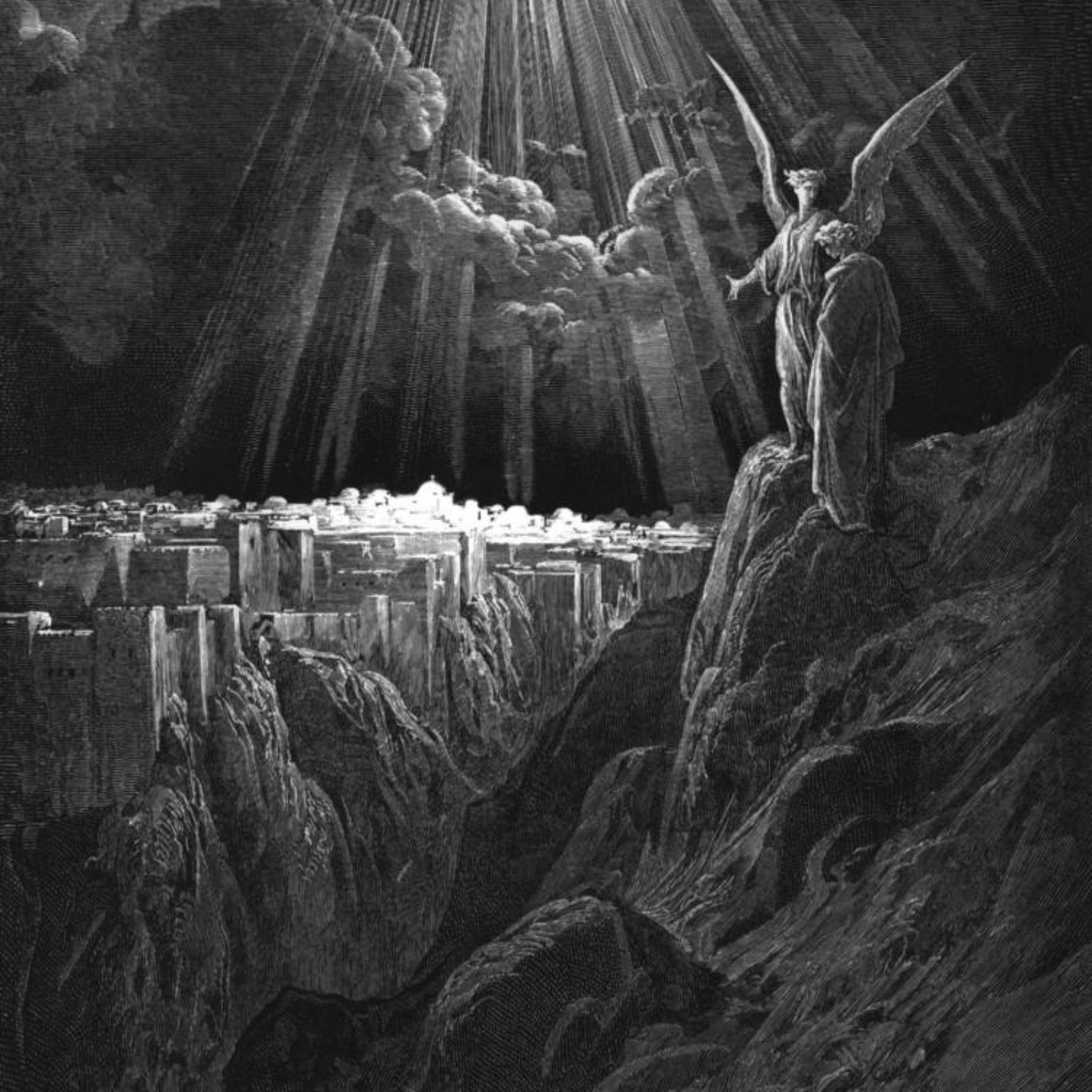
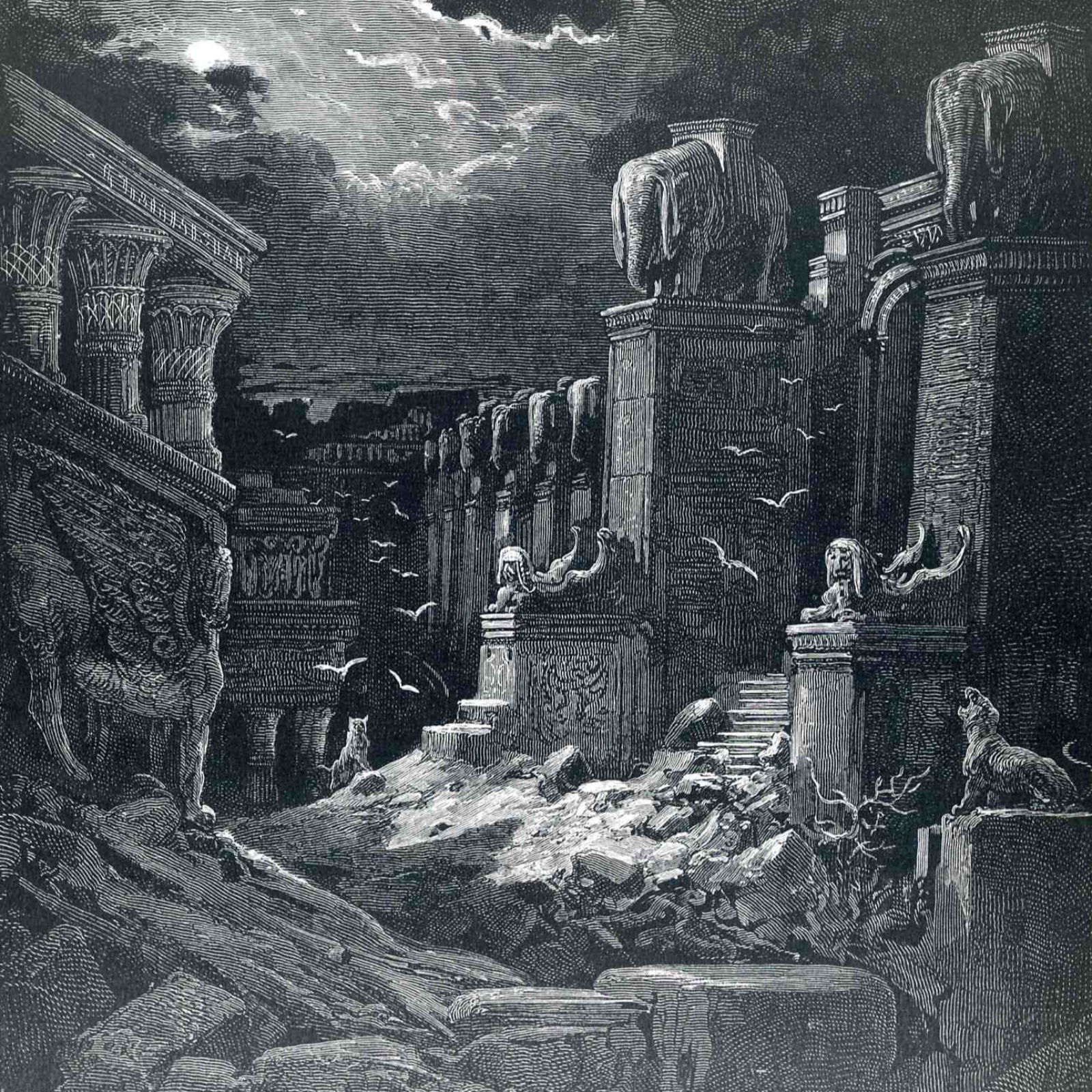
Later, when the seer is commanded to behold the wife of the Lamb, he sees the holy city coming down from heaven, and he says concerning her, “The kings of the earth carried their glory into her.” [Rev 21:24.] For in the world there are two cities, one that arises from the abyss and the other that comes down from heaven. And so now he compares the same ungodliness, which he had described in the form of a harlot made naked and burned up, with the ruins of a deserted city—The Venerable Bede
S2 Ep 363Day 363 - Revelation 13-16
Since then in this world some persons come to the light, and by faith unite themselves to the light and by faith unite themselves with God, but others shun the light and separate themselves from God, the Word of God comes preparing a fit habitation for both. For those indeed who are in the light, that they may derive enjoyment from it and from the good things contained in it; but for those in darkness, that they may partake in its calamities.… For this reason the apostle says, “Because they did not receive the love of God, that they might be saved, therefore God shall also send them the operation of error, that they may believe a lie, that they all may be judged who have not believed the truth, but consented to unrighteousness.” [2Th 2:10-12.] For when [antichrist] arrives, and of his own accord concentrates in his own person the apostasy, and accomplishes whatever he shall do according to his own will and choice, sitting also in the temple of God, his dupes will adore him as the Christ. Therefore he shall deservedly “be cast into the lake of fire,” [Rev 19:20.] [and this will happen according to divine appointment], God by his prescience, foreseeing all this at the proper time sending such a man, “that they may believe a lie, that they all may be judged who did not believe the truth, but consented to unrighteousness.”—St Irenaeus of Lyon
S2 Ep 362Day 362 - Revelation 10-12
He indicates that when he ate the book sweetness would be mixed with bitterness. That is to say, that when he is released from exile, he was to preach the gospel to the nations. This would be a sweet task as regards love, but it would be a bitter work on account of the persecutions that he would endure—The Venerable Bede
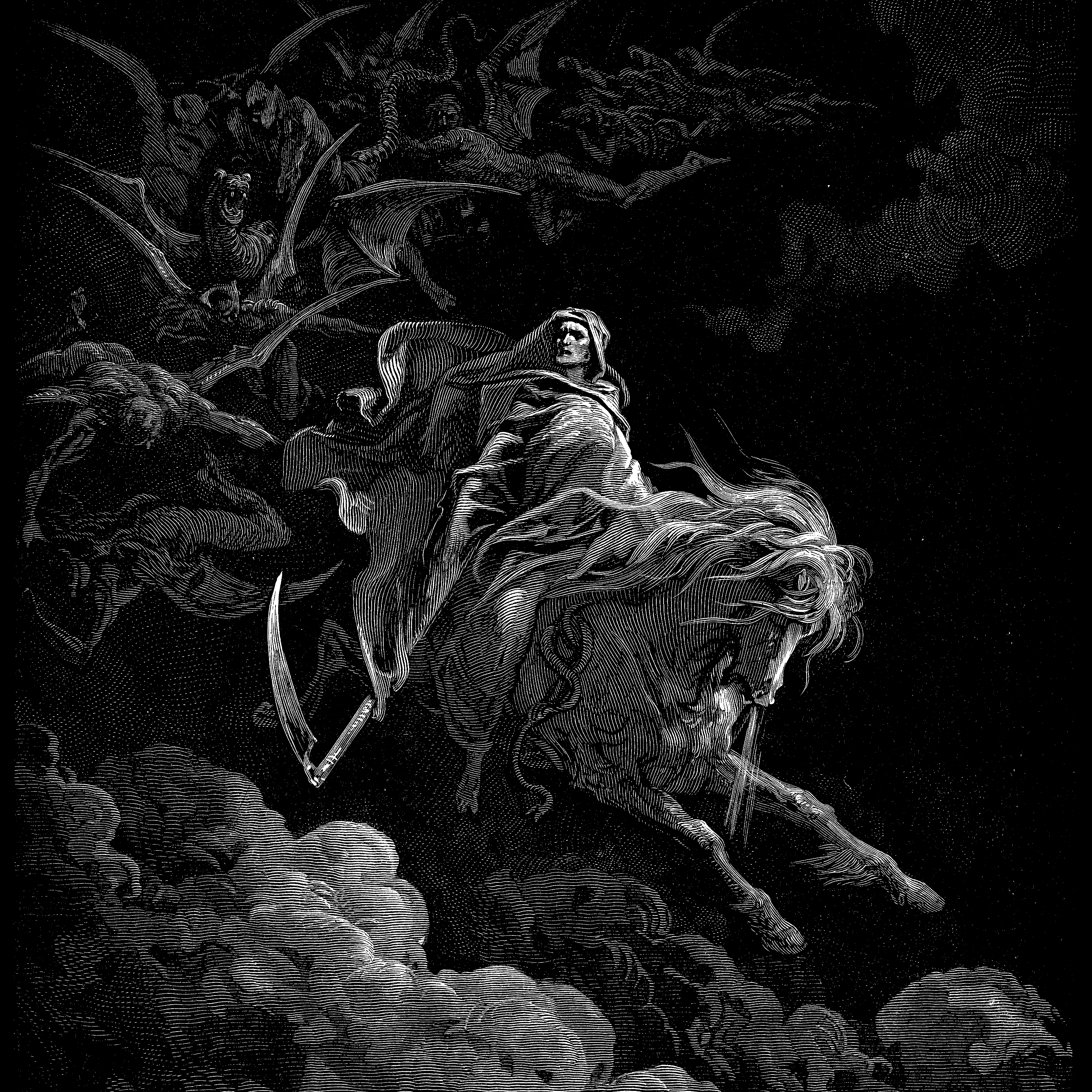
S2 Ep 361Day 361 - Revelation 6-9
With a loud voice [the martyrs] sing of salvation from God, since they recall with great thanksgiving that they have triumphed, not by their own virtue but by his help, in the struggle with the tribulations assailing them—The Venerable Bede
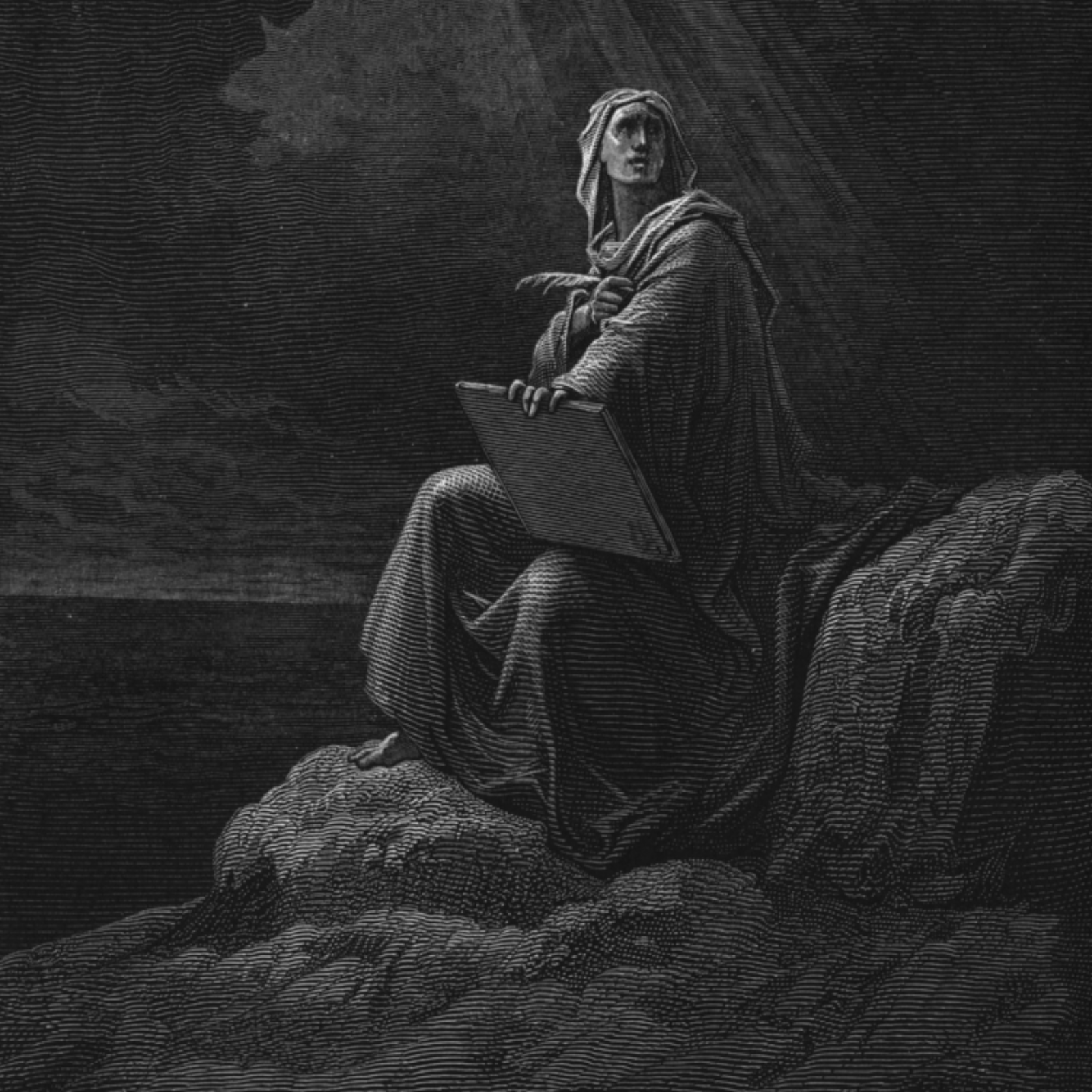
S2 Ep 360Day 360 - Revelation 1-5
Although it was after us that he was made man for us and became our brother by likeness of body, still he is called and is the firstborn of us. Since all people were lost through the transgression of Adam, Christ’s flesh was saved first of all and was liberated, because it was the Word’s body. Henceforth also we, having become joined together with his body, are saved through it. For in his body the Lord becomes our guide to the kingdom of heaven and to his own Father, saying,“I am the way” [Jhn 14:6.] and “the door,” and “through me all must enter.” [Jhn 10:9.] Wherefore he is also said to be “firstborn from the dead,” not because he died before us, since we died first, but because he suffered death for us and abolished it, and therefore, as man, was the first to rise, raising his own body for our sakes. Therefore, since he has risen, we too shall rise from the dead from him and through him—St Athanasius of Alexandria
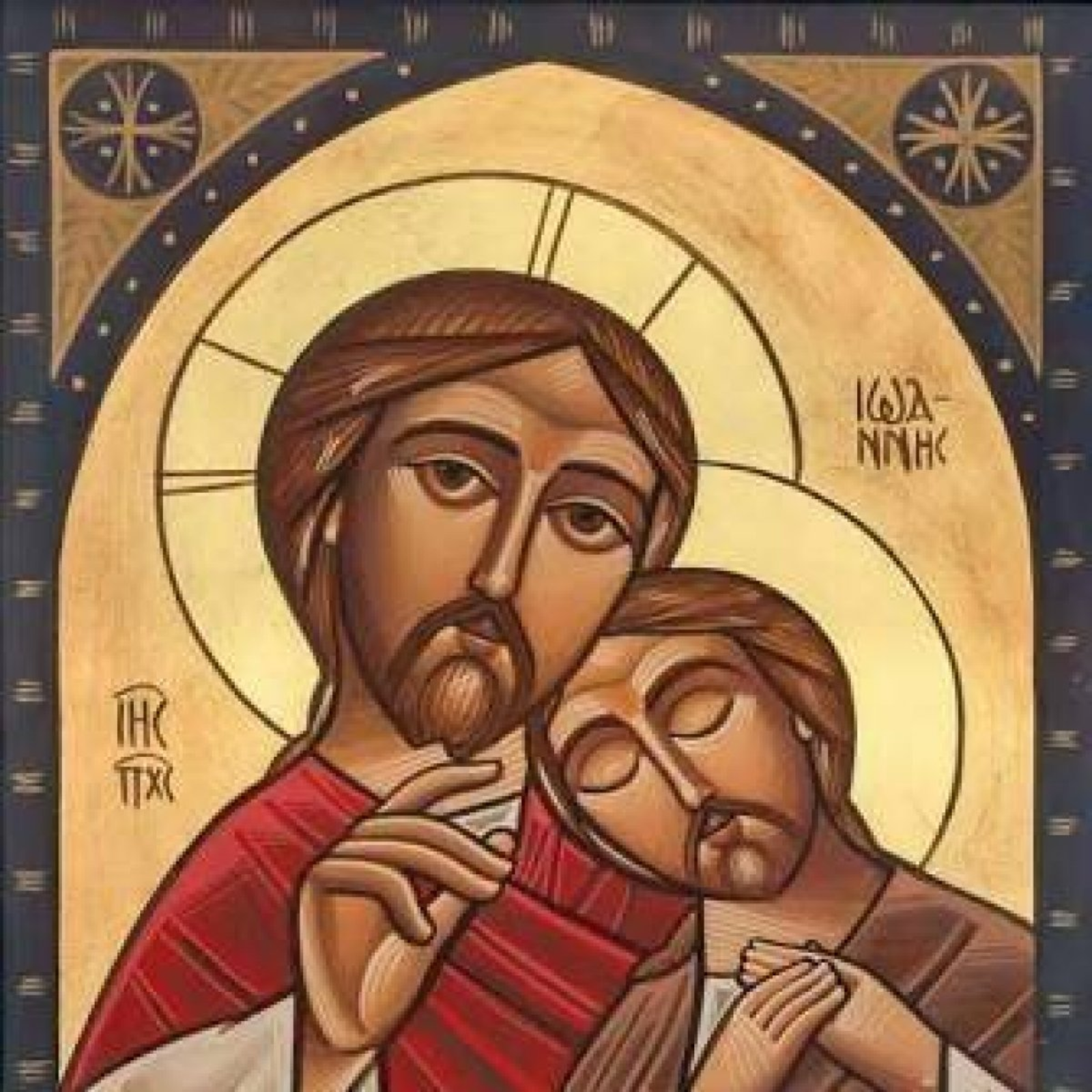
S2 Ep 359Day 359 - 1 John 1-5, 2 & 3 John
This book is very sweet to every healthy Christian heart that savors the bread of God, and it should constantly be in the mind of God’s holy church. But I choose it more particularly because what it specially commends to us is love. The person who possesses the thing which he hears about in this epistle must rejoice when he hears it. His reading will be like oil to a flame.… For others, the epistle should be like flame set to firewood; if it was not already burning, the touch of the word may kindle it—St Augustine
S2 Ep 358Day 358 - Hebrews 9-13
If they are not seen, how can you be convinced that they exist? Well, where do these things that you see come from, if not from one whom you cannot see? Yes, of course you see something in order to believe something, and from what you can see to believe what you cannot see. Please do not be ungrateful to the one who made you able to see; this is why you are able to believe what you are not yet able to see. God gave you eyes in your head, reason in your heart. Arouse the reason in your heart, get the inner inhabitant behind your inner eyes on his feet, let him take to his windows, let him inspect God’s creation—St Augustine
S2 Ep 357Day 357 - Hebrews 5-8
Now, how long shall we saw away along the same line on this question [i.e., what is permitted], when we have a long-standing practice which by anticipation has all but settled the question? Even though no scriptural passage prescribes it, it is strengthened by a custom that certainly arose from tradition. How can anything become normal practice if it has not first been handed down to us? But, you tell me, “You must always have a written source if you are going to plead the force of tradition.”Let us look into the matter, then, of whether or not a tradition without a written source should be accepted. The answer will certainly be no if we cannot adduce examples of other observations which are without written source in Scripture and rest solely on the basis of tradition and yet have come to have the force of custom. To begin, for instance, with baptism: When we are about to enter the water, and, as a matter of fact, even a short while before, we declare in the presence of the congregation before the bishop that we renounce the devil, his pomps and his angels. After that, we are immersed in the water three times, making a somewhat fuller pledge than the Lord has prescribed in the gospel. [See Mat 28:19.] After this, having stepped forth from the font, we are given a taste of a mixture of milk and honey [Cf. 1Co 3:2; 1Pe 2:2.] and from that day, for a whole week, we forego our daily bath. We also receive the sacrament of the Eucharist that the Lord entrusted to all at the hour for supper, at our early morning meetings, and then from the hand of none but the bishops. Further, we make offerings for the dead on their anniversary to celebrate their birthday of eternal life.We consider fasting or kneeling during service on Sundays to be unlawful, and we enjoy the same privilege from Easter until Pentecost. We also are upset if any of our bread or wine falls to the earth at the Lord’s Supper. Lastly, we make the sign of the cross on our foreheads at every turn, at our going in or coming out of the house, while dressing, while putting on our shoes, when we are taking a bath, before and after meals, when we light the lamps, when we go to bed or sit down, and in all the ordinary actions of daily life—Tertullian
S2 Ep 356Day 356 - Hebrews 1-4
You see, those old sacrifices of the people of God also represented in a variety of ways this single one that was to come. Christ himself, I mean, was both a sheep, because of his innocence and simplicity of soul, and a goat because of “the likeness of sinful flesh.” [Rom 8:3.] And whatever else was foretold “in many and various ways” in the sacrifices of the old covenant refers to this single one which has been revealed in the new covenant—St Augustine
S2 Ep 355Day 355 - Jude, 2 Peter 1-3
Those who have chosen to live the glorious and beloved way of life devised by Christ must first be adorned with simple and unblemished faith, and then add virtue to their faith. When this has been done, they must strive to enrich their knowledge of the mystery of Christ and ascend to the most complete understanding of him—St Cyril of Alexandria
S2 Ep 354Day 354 - 1 Peter 1-5
Just as the Lord is the true light who has come into the world for judgment, so that at his coming he may give sight to the blind and blind those who see in the wrong way, so he is also a chosen cornerstone, giving honor to those who join themselves to him in faith and revealing himself to them as a reliable foundation, but to those who do not believe he is not precious but a stone of stumbling and a rock of offense, considered worthless by the builders who have rejected him. These builders are the scribes and the Pharisees—Didymus the Blind
S2 Ep 353Day 353 - Titus 1-3, 2 Timothy 1-4
Paul is speaking here to bishops who have the power of placing presbyters in the individual towns, so that they would hear clearly by what kind of rule correct church order should be maintained.… Originally the churches were governed by a common council of the presbyters. But after one of their number began to think that those whom he had baptized were his and not Christ’s, it was universally decreed that one of the presbyters should be elected to preside over the others, to whom the care of the whole church should pertain, that the seeds of schism might be alleviated—St Jerome
S2 Ep 352Day 352 - 1 Timothy 1-6
But the wise servants of the Lord, who have really put on the new nature created in the likeness of God, [Cf. Eph 4:24.] listen to what he says. They apply to themselves the commandment given to Timothy, “Set an example for the believers in speech, in conduct, in love, in faith, in purity.” They keep the Easter feast so properly that even unbelievers, seeing their orderliness, must say, “God is truly with them.”—St Athanasius the Apostolic
S2 Ep 351Day 351 - Ephesians 1-6
There is a distinction between the death of the body and the death of the soul. There is no reproach in the death of the body as such and hence no moral danger since there is no reproach. The body’s death is merely a matter of nature, not of choice. This death had its origin in the transgression of the first human being, and thereafter it has had its subsequent effect on nature. Its release will be swift. But the death of the soul is the result of free choice. Hence it entails reproach, from which there is no easy release. It is a much weightier task to heal a deadened soul than to raise a dead body, as Paul has already shown. Yet this is what has now happened, incredible as it may be—St John Chrysostom
S2 Ep 350Day 350 - Colossians 1-4
See the wisdom of our teacher and to what a height he immediately raises those who listen to him. He cut a path through the midst of all the angels, archangels, thrones, dominations, principalities, virtues, all those invisible powers, the cherubim and seraphim and set the thoughts of the faithful right before the very throne of the King. By his teaching he has persuaded those who walk the earth to sever the bonds of the body, to take flight and to stand in spirit by the side of him who is the Lord of all—St John Chrysostom
S2 Ep 349Day 349 - Acts 27-28, Philemon
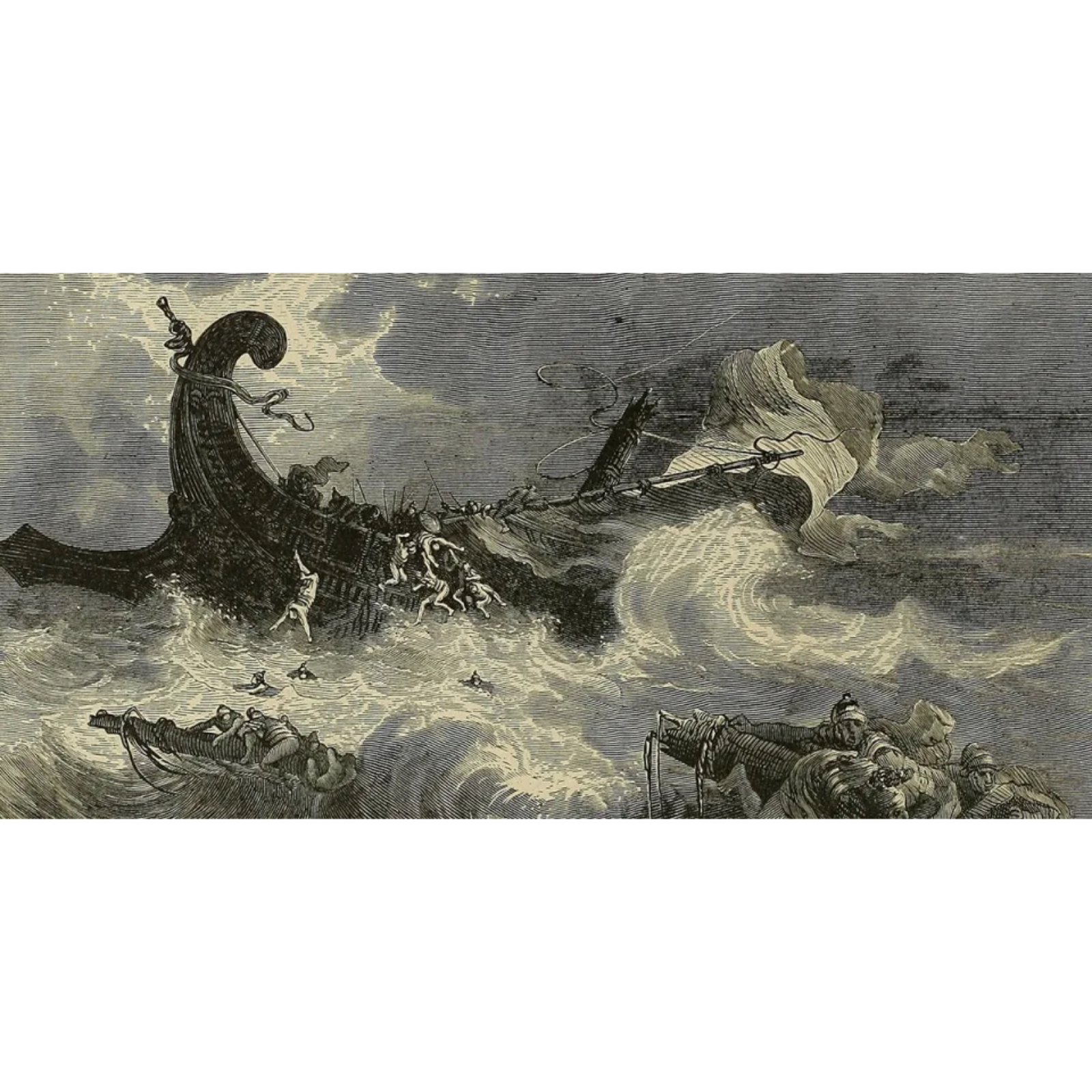
“And they shall be scattered on the merchant ships of foreigners and together plunder the sea.” [Is 11:13 (LXX).] For they, in their wanderings among the nations, had to make use of the passage through the sea, just as though they were flying on it, they made a swift course through the sea so that they might proclaim the gospel to most nations in a short time. Sometimes they went by foot, sometimes through the sea, but instead of employing Jewish ship captains, they hired those who had received the message of Christ. At the same time, they plundered the sea, that is the islands, through which they passed and made known to their inhabitants the salvific teaching. So you may understand this passage, here is one example. The apostle Paul, being one of those whom this passage prophesies, took a course through the sea on his way to Rome, and when he was shipwrecked on the island called Malta he worked a miracle of great astonishment to the inhabitants, and by healing the physically ill, he so amazed the onlookers that he plundered many and drew them to the salvific teaching—Eusebius of Caesarea
S2 Ep 348Day 348 - Acts 25-26
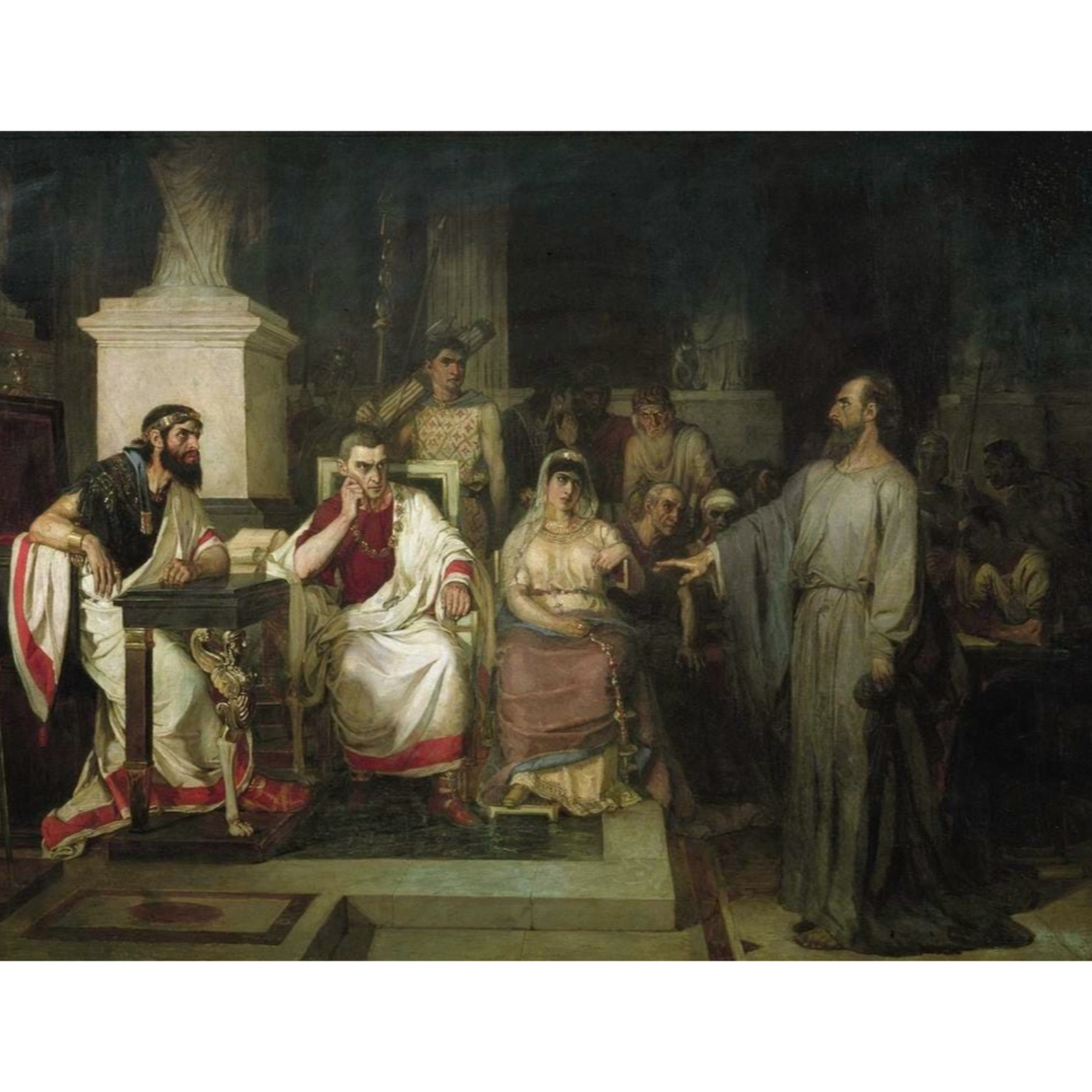
Indeed, up to this time they have heard false reports of our doctrine and are hostile to the cross. If I should then add chains as well, their hatred becomes greater. This is why I removed these, so as to make that more acceptable. For they consider it disgraceful to be chained, because they have not yet tasted the glory that is with us. We must therefore condescend. For once they learn of the true life, they will also know the beauty of this iron and the distinction that comes from these chains.… In the meantime, one must be content that the listeners are not ashamed of the cross. For this reason he proceeds methodically, like a guide who is introducing someone to a palace: he does not force him, before he has seen the vestibules and while he is still standing outside, to survey what is within; for unless he enters and observes everything closely, it will not appear marvelous to him—St John Chrysostom
S2 Ep 347Day 347 - Philippians 1-4
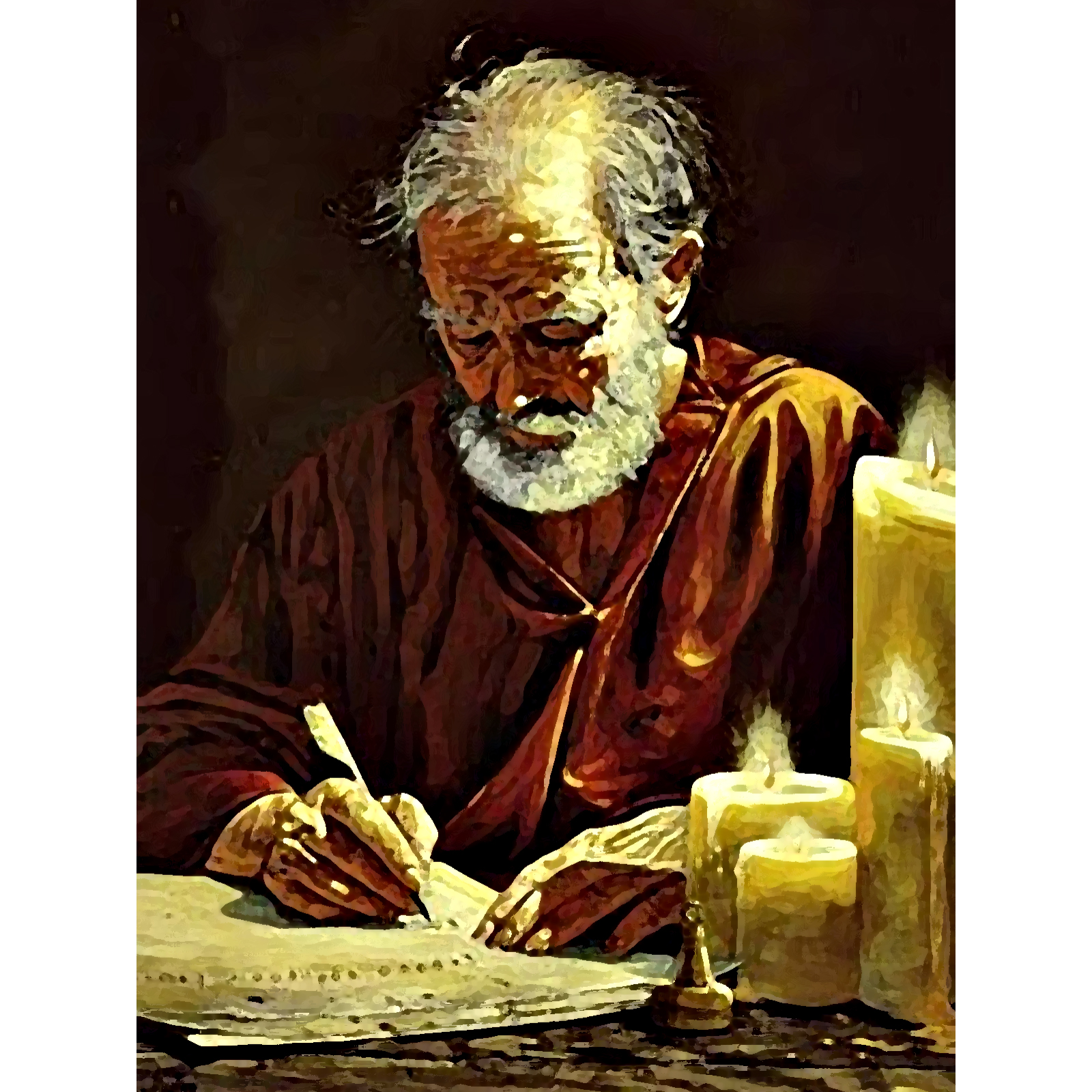
Knowledge therefore comes through faith, and without faith there is no knowledge. How so? It is only through faith that we know the power of his resurrection. For what reasoning could demonstrate the resurrection to us? None, but it is through faith. And if the resurrection of Christ in the flesh is known through faith, how can the nativity of the Word be comprehended by reason? For the resurrection is far more plausible to reason than the virgin birth—St John Chrysostom
S2 Ep 346Day 346 - Acts 22-24
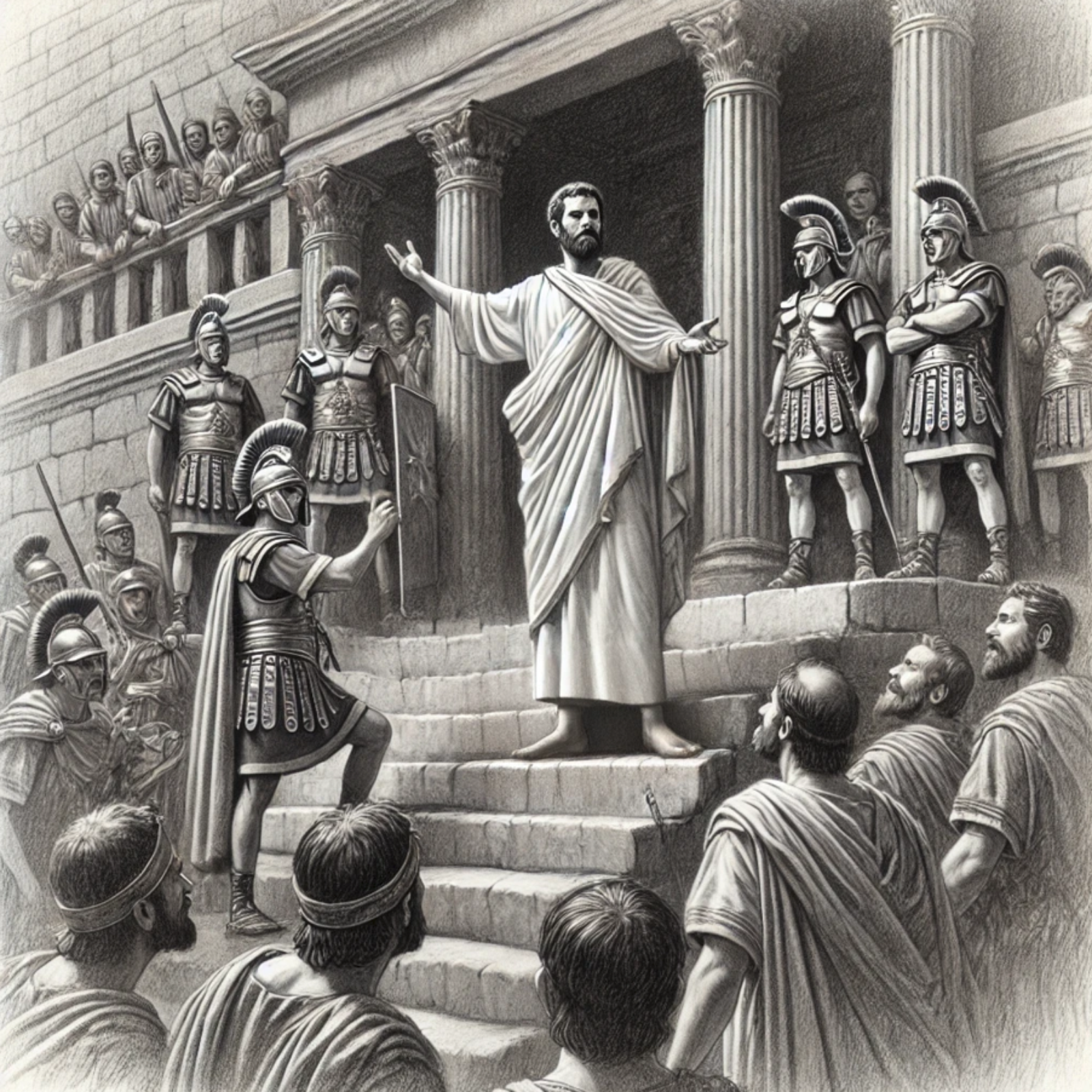
[St Paul] shows that great was his zeal for the worship. His native city, great as it was, he left behind, so far away, and chose to be brought up here for the sake of the law. Look how from the beginning he heeded the law. He mentions these things not only to defend himself before them, but also to show that he was led to preach the gospel not by human intention but by divine power. For educated in the way that he was, he could not have changed all at once. For if he were one of the hoi polloi, it might have been possible to imagine this. But since he was one of those who were most bound by the law, it was not likely that he should change without strong necessity—St John Chrysostom
S2 Ep 345Day 345 - Romans 16, Acts 20-21
Because they saw that the followers of the new grace were less diligent about observing the rituals of the law and the rites of the temple, they became afraid, as we read in the Gospel, that the Romans would come and take away their place and their people. [Jhn 11:48.]—The Venerable Bede
S2 Ep 344Day 344 - Romans 11-15
The fact that Paul adds the words “chosen by grace” seems to me to be significant. He could have said simply that there is a remnant saved by grace, but by adding “chosen” he indicates that there is grace both with and without election. For everyone who is saved has doubtless been saved by grace, but those who have been saved by the election of grace seem to me to be more perfect than the others. For just as Israel includes all those who are descended from the nation of Israel as well as those who worship God with a pure mind and sincere heart, so we may also assume that all who come to faith in Christ come by grace. But those in whom the gift of grace is adorned with the works of virtue and purity of heart will be said to be saved not only by grace but by the election of grace—Origen
S2 Ep 343Day 343 - Romans 6-10
Note how this analogy is different from the subject it refers to. Paul says that the husband dies, so that the woman, freed from the law of her husband, can marry whomever she likes. Paul compares the soul to the woman and thinks of the husband as the passions of sin which work in our members to produce the fruits of death, which are the offspring worthy of such a marriage. The law is given not to take away sin nor to deliver us from it but to reveal what sin is before grace comes. The result is that those who are placed under the law are seized by an even stronger desire to sin and sin even more because of the trespass. But in making this triple analogy—the soul as the woman, the passions of sin as the man and the law as the law of the husband—Paul does not conclude that the soul is set free when its sins are put to death in the way that the woman is set free when her husband is dead. Rather, he says that the soul itself dies to sin and is set free from the law in order that it might belong to another husband, who is Christ. The soul has died to sin, but in a sense sin is still alive. Thus it happens that although desires and certain encouragements to sin remain in us, we do not obey or give in to them because we have died to sin and now serve the law of God—St Augustine
S2 Ep 342Day 342 - Romans 1-5
Moses wrote five books, but nowhere did he put his own name to them … nor did Matthew, John, Mark or Luke. But St. Paul everywhere in his epistles puts his own name. [See 1Co 1:1; 2Co 1:1; Gal 1:1; Php 1:1.] Why? Because the others were writing to people who were present, and it would have been superfluous for them to have announced themselves when they were present. But Paul sent his writings from a distance and in the form of a letter, and so he had to add his name.Why did God change his name and call him Paul instead of Saul? It was so that even in this respect he might not come short of the apostles but that he might also have the same preeminence that the chief of the disciples had [Mrk 3:16.] and on that basis be more closely united with them. Paul also calls himself the “servant” of Christ, and there are many kinds of servitude. One is related to creation, “for all things are thy servants.” [Psa 119:91.] Another comes from faith [See Rom 6:17-18.] and a third is civil subjection, as it says: Moses my servant is dead. [Jos 1:2.] Indeed, all the Jews were servants, but Moses in a special way, since his light has shone most brightly in the community. Paul was a servant in all of these senses, and therefore he puts this term first, in the place of greatest dignity.He says of himself, in all of his epistles, that he is “called,” thereby demonstrating his own candor in admitting that it was not because he sought that he found but that when he was called, he came near and obeyed. [See Act 9:1-19.]—St John Chrysostom
S2 Ep 341Day 341 - 2 Corinthians 8-13
Thus also the apostle Paul, after shipwrecks, after scourgings, after many grievous tortures of the flesh and body, says that he was not harassed but was corrected by adversity, in order that while he was the more heavily afflicted he might the more truly be tried. There was given to me, he says, a thorn in my flesh, an angel of Satan, to buffet me lest I be exalted. Concerning this thorn I asked the Lord three times that it might depart from me. And he said to me: “My grace is sufficient for you: for power is made perfect in weakness.” When, therefore, some infirmity and weakness and desolation attacks us, then is our power made perfect, then our faith is crowned, if though tempted it has stood firm.… This finally is the difference between us and the others who do not know God, that they complain and murmur in adversity, while adversity does not turn us from the truth of virtue and faith but proves us in suffering—Cyprian of Carthage
S2 Ep 340Day 340 - 2 Corinthians 1-7
Moreover, even sorrow, the emotion for which, the Stoics claim, there can be found in the soul of a wise man no corresponding “attitude,” is a word used in a good sense, especially in Christian writings. The apostle, for example, praises the Corinthians because they were sorrowful according to God. Of course, someone may object that the apostle congratulated the Corinthians because their sorrow led them to repentance and that such sorrow can be experienced only by those who have sinned. What he says is this: “Seeing that the same letter did for a while make you sorry, now I am glad; not because you were made sorry but because your sorrow led you to repentance. For you were made sorry according to God, that you might suffer no loss at our hands. For the sorrow that is according to God produces repentance that surely tends to salvation, whereas the sorrow that is according to the world produces death. For behold this very fact that you were made sorry according to God, what earnestness it has wrought in you.”—St Augustine
S2 Ep 339Day 339 - 1 Corinthians 12-16
The Corinthians thought that speaking in tongues was a great gift because it was the one which the apostles received first, and with a great display. But this was no reason to think it was the greatest gift of all. The reason the apostles got it first was because it was a sign that they were to go everywhere, preaching the gospel—St John Chrysostom
S2 Ep 338Day 338 - 1 Corinthians 7-11
So also the blessed Paul “became all things to all men,” not in order that he might gain some sort of advantage but that, with the loss of a part, he might gain all—St Cyril of Alexandria
S2 Ep 337Day 337 - 1 Corinthians 3-6
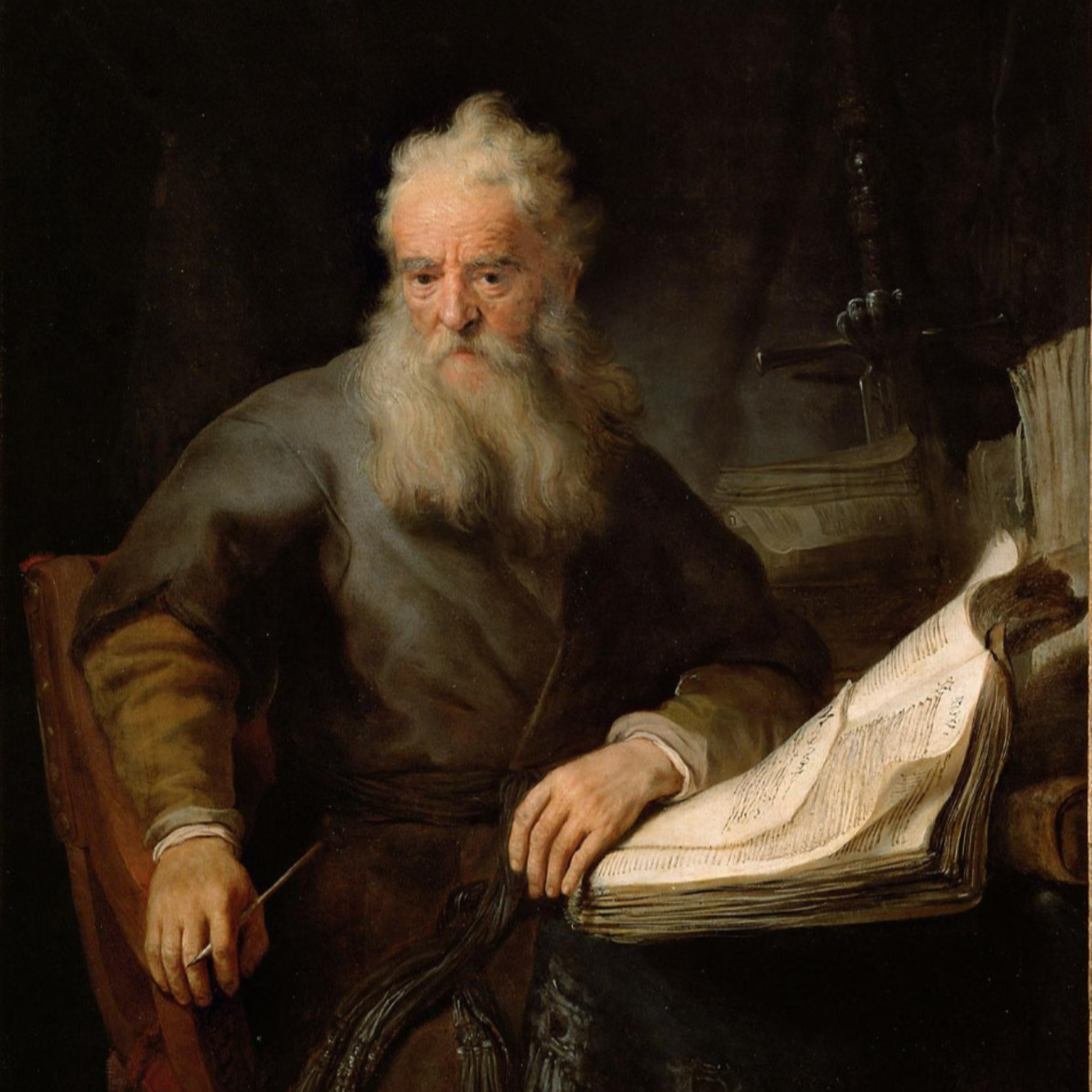
It was the factionalism of the Corinthians that produced jealousy, and that in turn made them carnal. Once they were carnal, they were no longer free to hear truths of a more spiritual kind—St John Chrysostom
S2 Ep 336Day 336 - 2 Thessalonians 1-3, Acts 19, 1 Corinthians 1-2
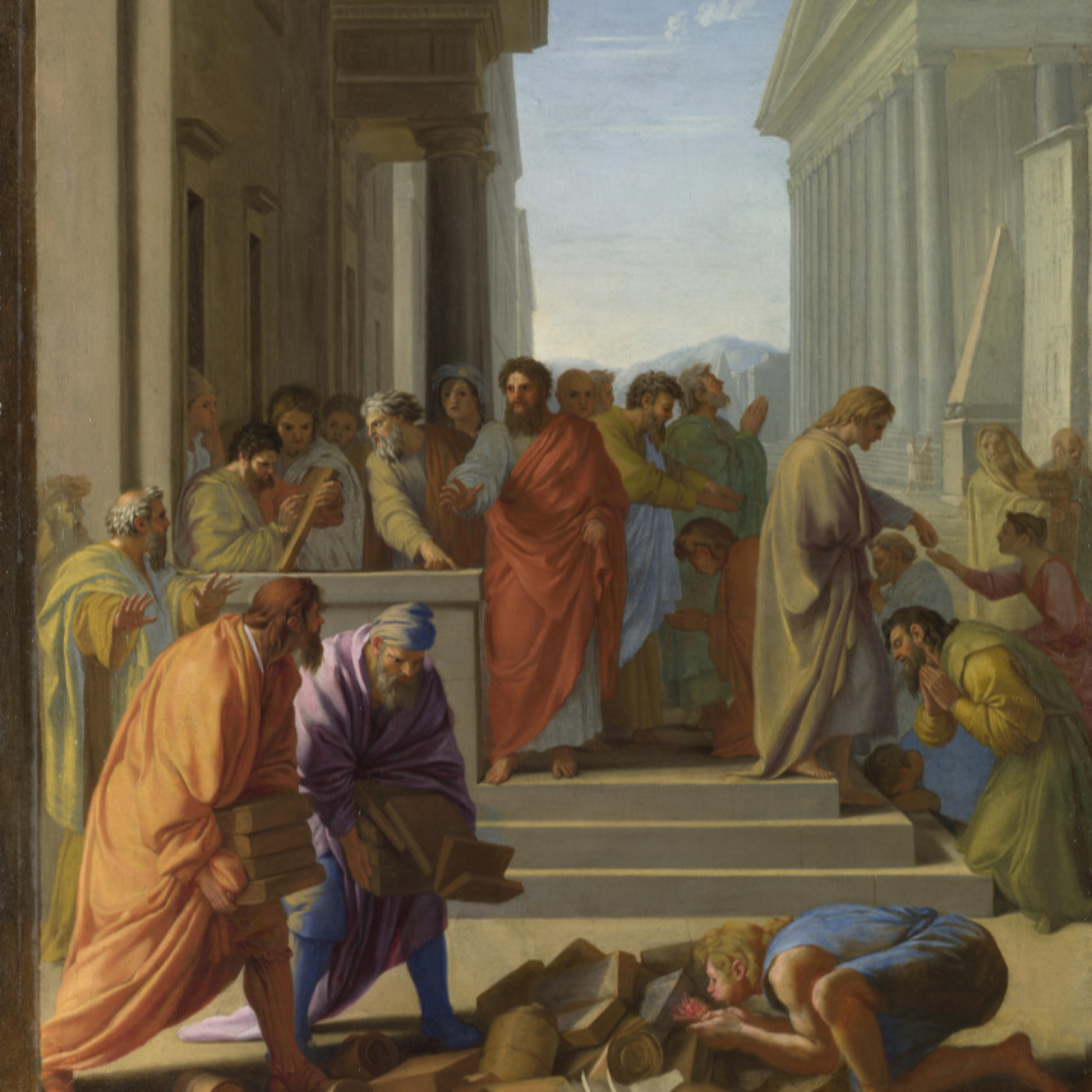
Of the existence of the Holy Spirit … we are taught in many passages of Scripture. For instance, David says in the fiftieth psalm, “And take not your Holy Spirit from me,” [Psa 51:11(50:13 LXX).] and in Daniel it is said, “The Holy Spirit, who is in you.” [Dan 4:6 (in Theodotion’s translation). See Dan 4:9.] But in the New Testament we have proofs in abundance, as when the Holy Spirit is related to have descended upon Christ, [Mat 3:16.] and when the Lord breathed on his apostles after the resurrection and said, “Receive the Holy Spirit,” [Jhn 20:22.] and the angel said to Mary, “The Holy Spirit shall come upon you,” [Luk 1:35.] and Paul teaches us that “no one can say that Jesus is the Lord except in the Holy Spirit,” [1Co 12:3.] and in the Acts of the Apostles “through the laying on of the apostles’ hands the Holy Spirit was given” [Act 8:18.] in baptism. From all of which we learn that the person of the Holy Spirit is of so great authority and dignity that saving baptism is not complete except when performed with the authority of the whole most excellent Trinity, that is, by naming the Father, Son and Holy Spirit. [See Mat 28:19.]—Origen
S2 Ep 335Day 335 - 1 Thessalonians 1-5
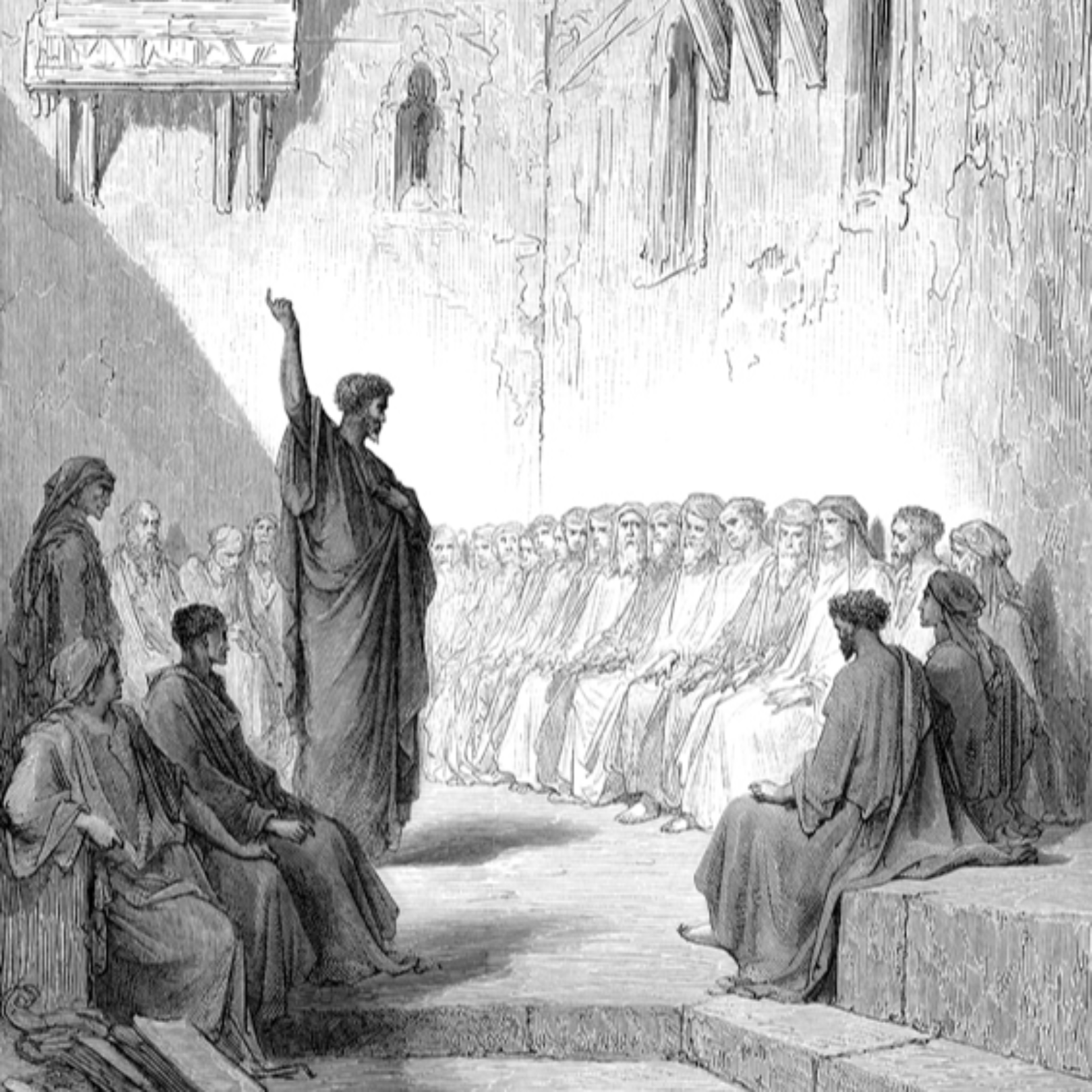
Thus, the obedient and responsive soul gives itself over to the virtuous life. This life is freedom itself, on the one hand, from the chains of this life, separating itself from the slavery of base and empty pursuits. On the other hand, this soul devotes itself to faith and the life of God alone, because it sees clearly that where there is faith, reverence and a blameless life, there is present the power of Christ, there is flight from all evil and from death which robs us of life. For shameful things do not have in themselves sufficient power to compete with the power of the Lord. It is their nature to develop from disobedience to his commands. This was experienced in ancient times by the first man, but now it is experienced by all of us when we imitate Adam’s disobedience through stubborn choice. However, those who approach the Spirit with honest intent, unfeigned faith and an undefiled conscience, are cleansed by the Spirit according to the one who says, “for our gospel was not delivered to you in word only, but in power also; and in the Holy Spirit and in much fullness, as you know.”—St Gregory of Nyssa
S2 Ep 334Day 334 - Acts 16-18
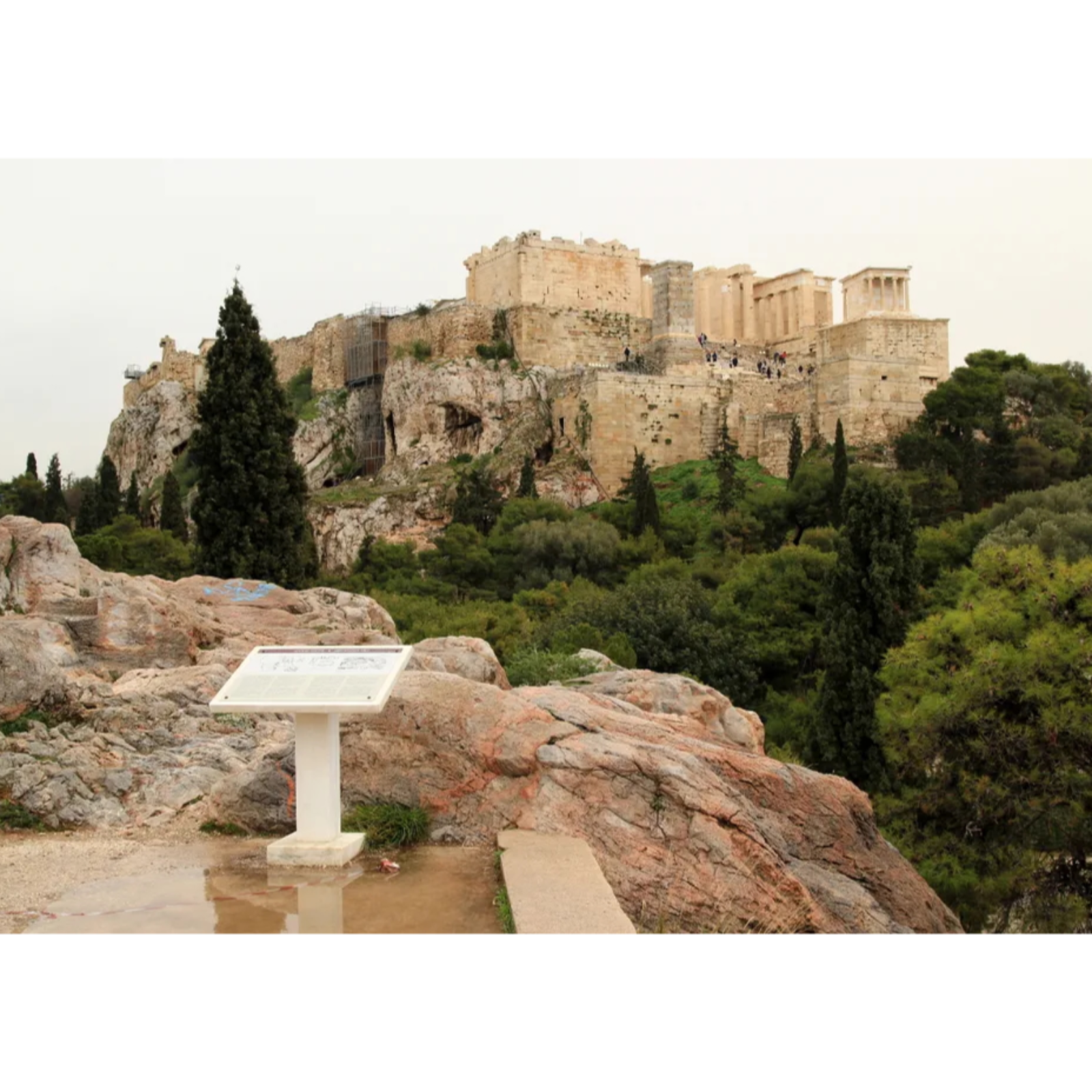
The order of the apostle’s argument deserves careful examination. Among Gentiles the treatment of the apostle’s subject takes the form of a series of steps. First, he teaches that the one God is the originator of the world and of all things, and in him we live and move and are, and we are his offspring. Thus he demonstrates that God is to be loved not only because of his gifts of light and life but also because of a certain affinity of kind. Next, he disposes of the opinion that is the explicit reason for idols [by saying] that the founder and Lord of the entire world cannot be enclosed in temples of stone, that the granter of all favors has no need of the blood of victims, that the creator and governor of all people cannot be created by human hands, and finally that God, in whose image humankind was made, should not be appraised in terms of the value of metals. He teaches that the remedy for such errors is the practice of repentance. Now if he had chosen to begin by destroying the idolatrous rites, the ears of the Gentiles would have rejected [him].When he had persuaded them that there is one God, then he added that by his judgment salvation was given to us through Christ. To him, however, he applied the term man rather than God, and he began with those things which he [Christ] did in the body, describing them as divine, so that it might seem that he was more than a man. [He taught that] death was conquered by the power of one man, and that one who was dead was raised up again from hell (for faith grows little by little), so that when it appeared that he was more than a man, they might believe that he was God. For what difference does it make in what order anyone believes? Perfected things are not sought at the start, but from beginnings one comes to the things that are perfect—The Venerable Bede
S2 Ep 333Day 333 - James 1-5
And how do you go about converting someone? It is like the seeds sown by farmers. They are sown once, but they do not survive forever unless they are carefully nurtured. And unless the tillers of the soil protect the seeds, they will be exposed to the birds and to every seed-eating creature. We are just like this, unless we protect what has been sown in us by constant care, for the devil will snatch it away and our own lethargy will destroy it. The sun dries it up, the rain drowns it, and weeds choke it, so that it is not enough for the sower to pass by once only. Rather he must tend it often, driving away the birds of the air, pulling up the weeds and filling up the rocky places with much soil. He must prevent, block off and eject any form of destruction. Where soil is concerned, everything depends on the farmer, for without him it remains lifeless, ready only to suffer harm. It is not like that with spiritual soil however. For in spiritual matters it is not all up to the teachers; at least half the effort must come from the pupils. It is up to us the teachers to sow the seed but up to you the pupils to do the rest—St John Chrysostom
S2 Ep 332Day 332 - Galatians 2-6
The provisions of the law imply one another. I mean something like this. Attached to circumcision are sacrifice and the observance of days. The sacrifice again entails the observance of a day and place, the place entailing many types of purification. The purifications set up a further string of varied observances. For it is not legitimate for the impure to sacrifice, to intrude upon the holy shrines or to do any such things. Therefore through this one commandment the law drags along many others. Now if you have been circumcised but not on the eighth day; or on the eighth day but without a sacrifice; or with sacrifice but not in the appointed place; or in the appointed place but not under the prescribed forms; or under the prescribed forms but not in a pure state; or in a pure state but purified by inappropriate rites—all these things are wasted. For this reason “he is bound to keep the whole.” “Do not keep part but the whole,” Paul says, “but if it is not of the Lord, do not keep even part.”—St John Chrysostom
S2 Ep 331Day 331 - Acts 15, Galatians 1
How can he say in his letter to the Galatians, “I did not go up to Jerusalem to see those who were apostles before me, nor did I move”? [Gal 1:17.] We suggest this: in the first place because he had not gone up spontaneously but had been sent by others; and in the second place because he did not come in order to learn something [Gal 1:18.] but to persuade others. Indeed, from the beginning he held that opinion that the apostles approved later, namely, that it was not necessary to circumcise. Until that day, however, it had seemed to them that [Paul] was not worthy of faith, but they rather listened more to those who lived in Jerusalem. So [Paul] went up, not in order to gain what he had been ignorant of before but in order to persuade his opponents because those who were in Jerusalem agreed with them. He had recognized from the start what had to be done and needed no teacher. And he had a clear and sure idea, beyond any discussion, of what the apostles would have decreed after a long discussion. Since it had seemed opportune to the brothers that he might learn something about them, he went up not for himself but for them. Even though he says, “I did not go up,” we can explain that. He did not go up at the beginning of his preaching or in order to learn. And he means both these things when he says, “I did not go immediately in flesh and blood.” He did not simply say, “I did not go” but “I did not go immediately.”—St John Chrysostom
S2 Ep 330Day 330 - Acts 13-14
“And now, behold, the hand of the Lord is upon you, and you shall be blind.” It was the sign by which [Paul] was himself converted, and by this he wished to convert this man. And the words “for a season” were spoken by one who seeks not to punish but to convert. For if he had wanted to punish, he would have made him blind forever. This is not what happens here, but only “for a season,” so that he may gain the proconsul. For the man was prepossessed by sorcery, and he had to teach him a lesson by this punishment, just as the magicians [in Egypt] were taught by the boils. [Exo 9:11.]—St John Chrysostom
S2 Ep 329Day 329 - Acts 10-12
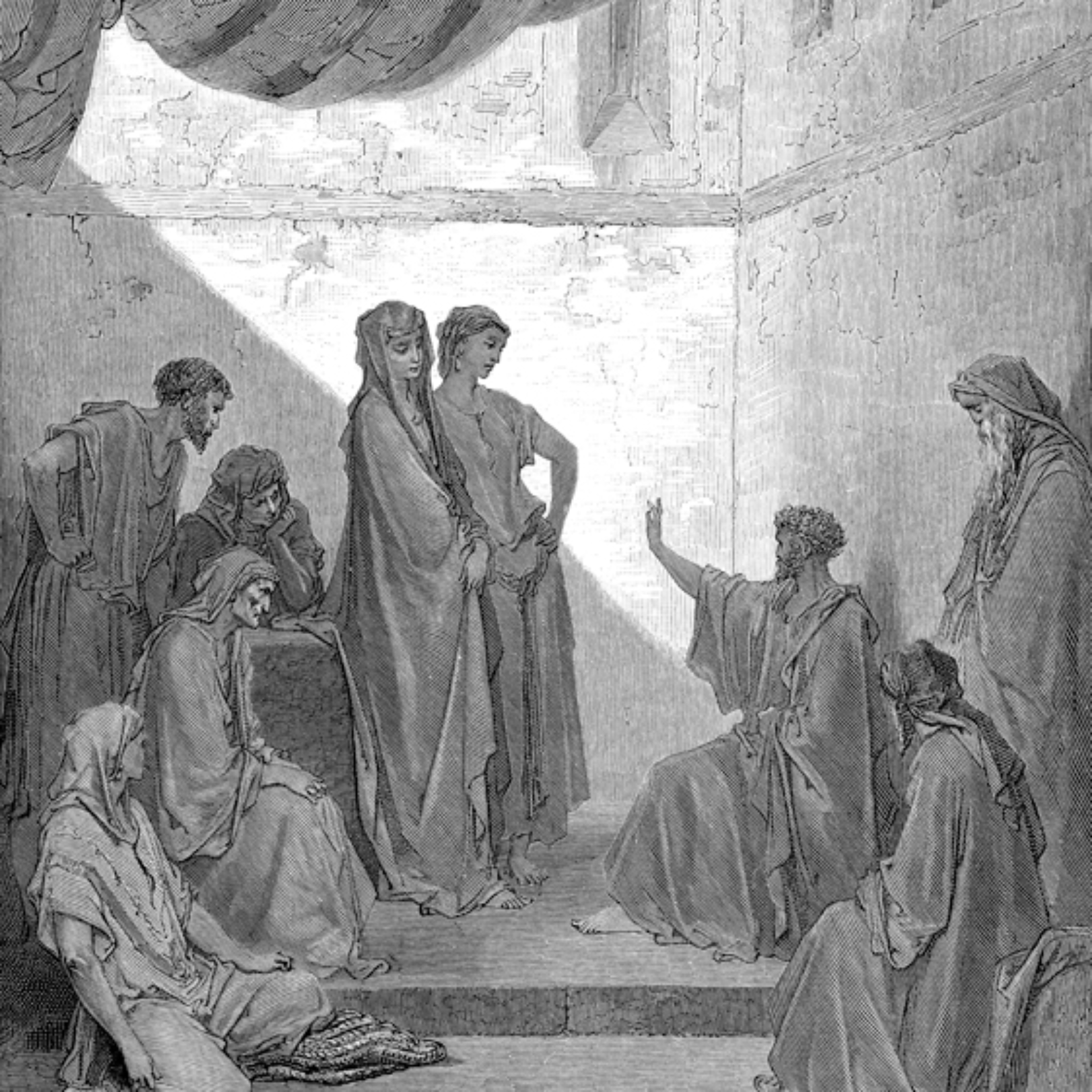
At that time Peter saw a vision in which a heavenly voice answered him, “What God has cleansed, you must not call common.” For the God who had distinguished through the law the pure food from the impure, that same God had cleansed the nations through the blood of his Son, and that is the God whom Cornelius worshiped—St Irenaeus of Lyon
S2 Ep 328Day 328 - Acts 8-9
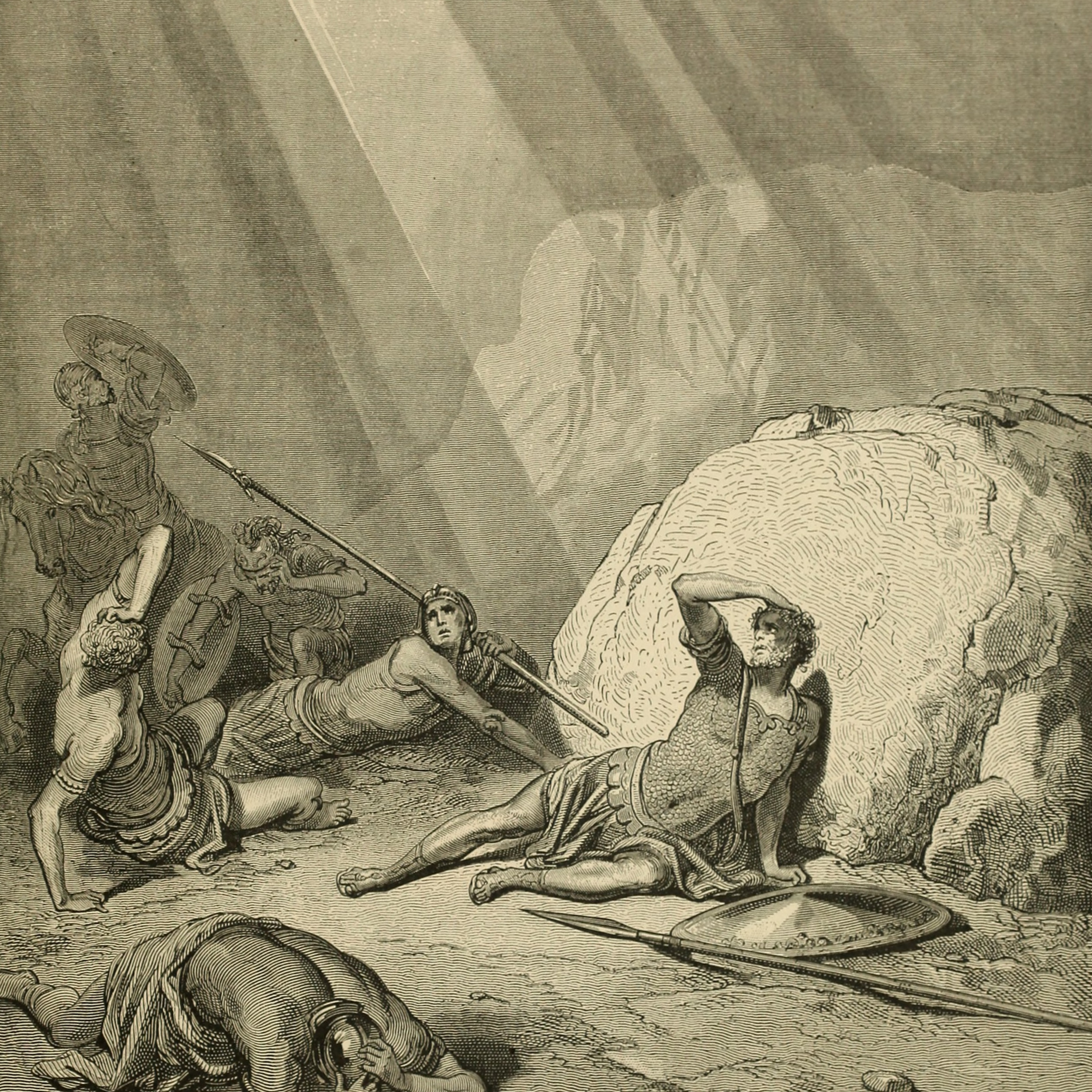
The eunuch was on the road and Paul was on the road, but the latter was drawn by no other than Christ himself, for this was too great a work for the apostles. It was great indeed that with the apostles at Jerusalem and no one of authority at Damascus, he returned from there converted. And those at Damascus knew that he had not come from Jerusalem converted, for he brought letters that he might place the believers in chains. Like a consummate physician, Christ brought help to him, once the fever reached its height. It was necessary that he should be quelled in the midst of his frenzy, for then especially he would fall and condemn himself as one guilty of dreadful audacity—St John Chrysostom
S2 Ep 327Day 327 - Acts 6-7
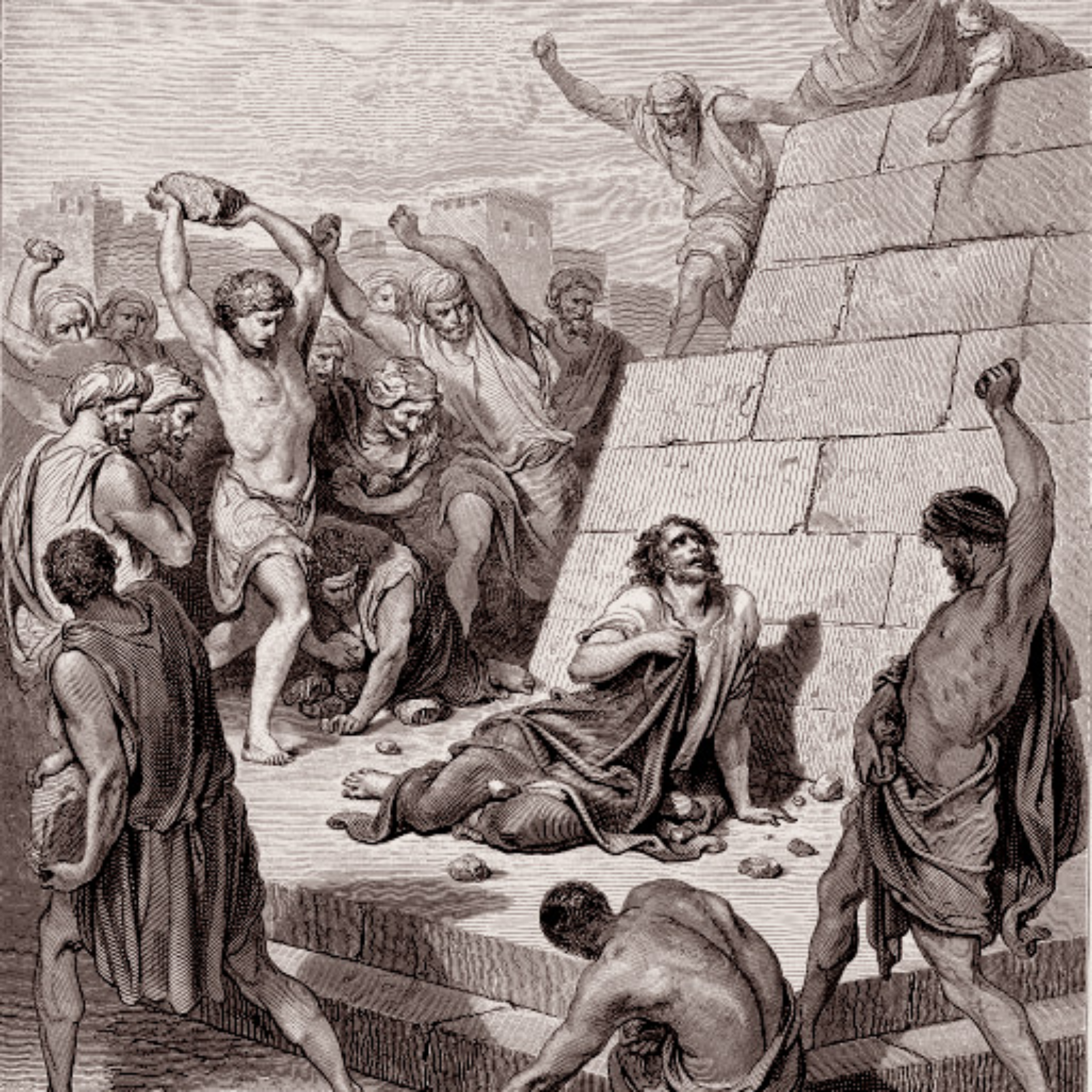
“You always resist the Holy Spirit. As your fathers did, so do you.” When it was not his will that there should be sacrifices, you sacrificed; and when it is his will, you do not sacrifice. When he would not give you the commandments, you dragged them toward you; when you received them, you neglected them. Again, when the temple stood, you worshiped idols; and when it is his will to be worshiped without a temple, you do the opposite.—St John Chrysostom
S2 Ep 326Day 326 - Acts 3-5
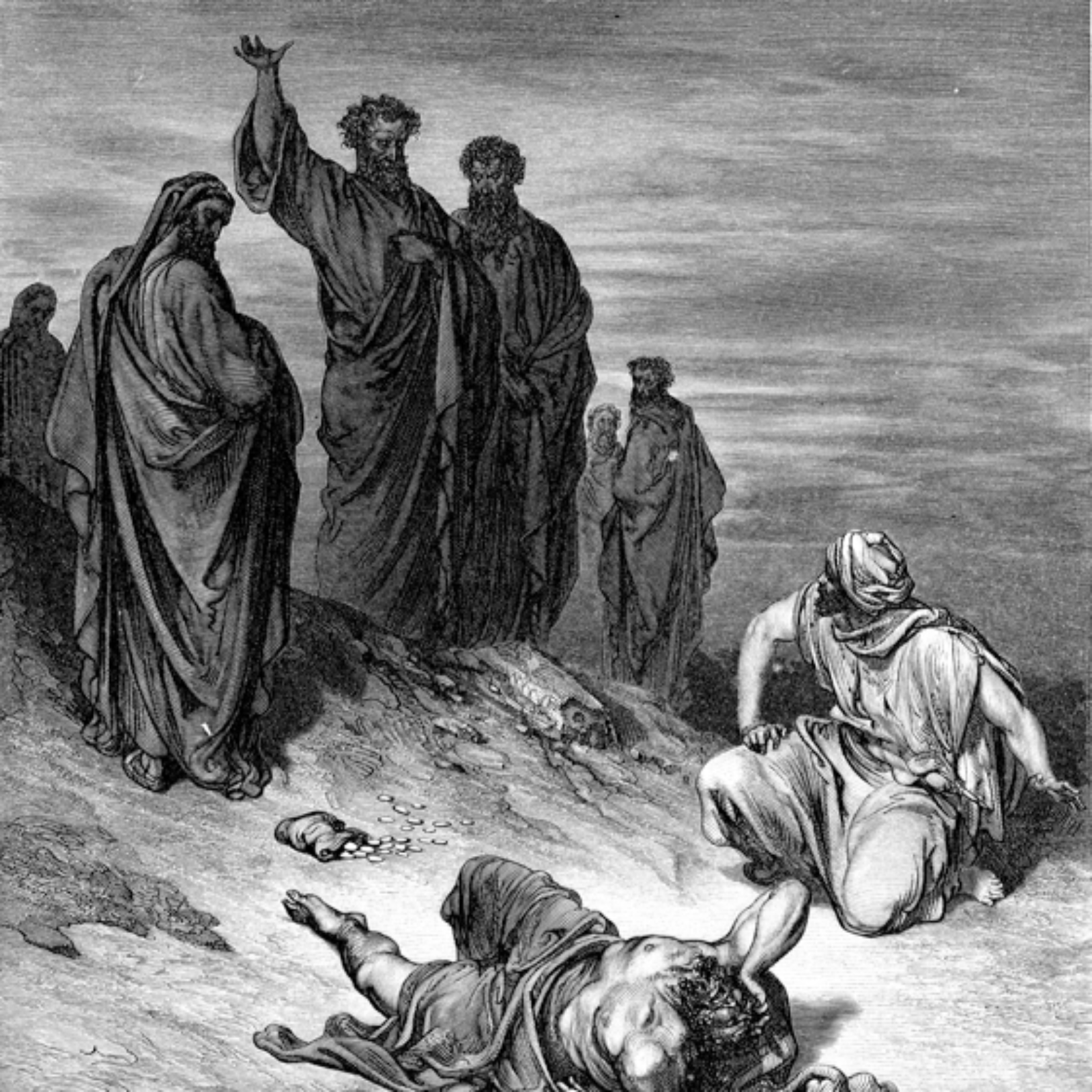
If for gathering sticks one could be stoned to death, much more, it may be argued, ought he be stoned for committing sacrilege. This money was sacred. For the person who withdraws his possessions after he has chosen to sell them and distribute them would be guilty of sacrilege. And if this person, who is taking from his own possessions, is sacrilegious, much more so is he who takes from what is not his own. And do not think that because the consequence now is not the same, the crime will go unpunished. Do you see that this is the charge brought against Ananias, that having made the money sacred, he then took it? For were you not able, says Peter, even after the sale to use the proceeds as your own? For you were not forbidden, were you? Why then after you had promised? See how the devil made his attack from the very beginning, how in the midst of such signs and wonders this man became insensible as a rock!… For sacrilege is a most grievous crime, insolent and full of contempt. We neither forced you to sell, says the apostle, nor to give the money after you have sold. You chose to do so of your own free will. Why then did you steal from the sacred treasury?—St John Chrysostom
S2 Ep 325Day 325 - Acts 1-2
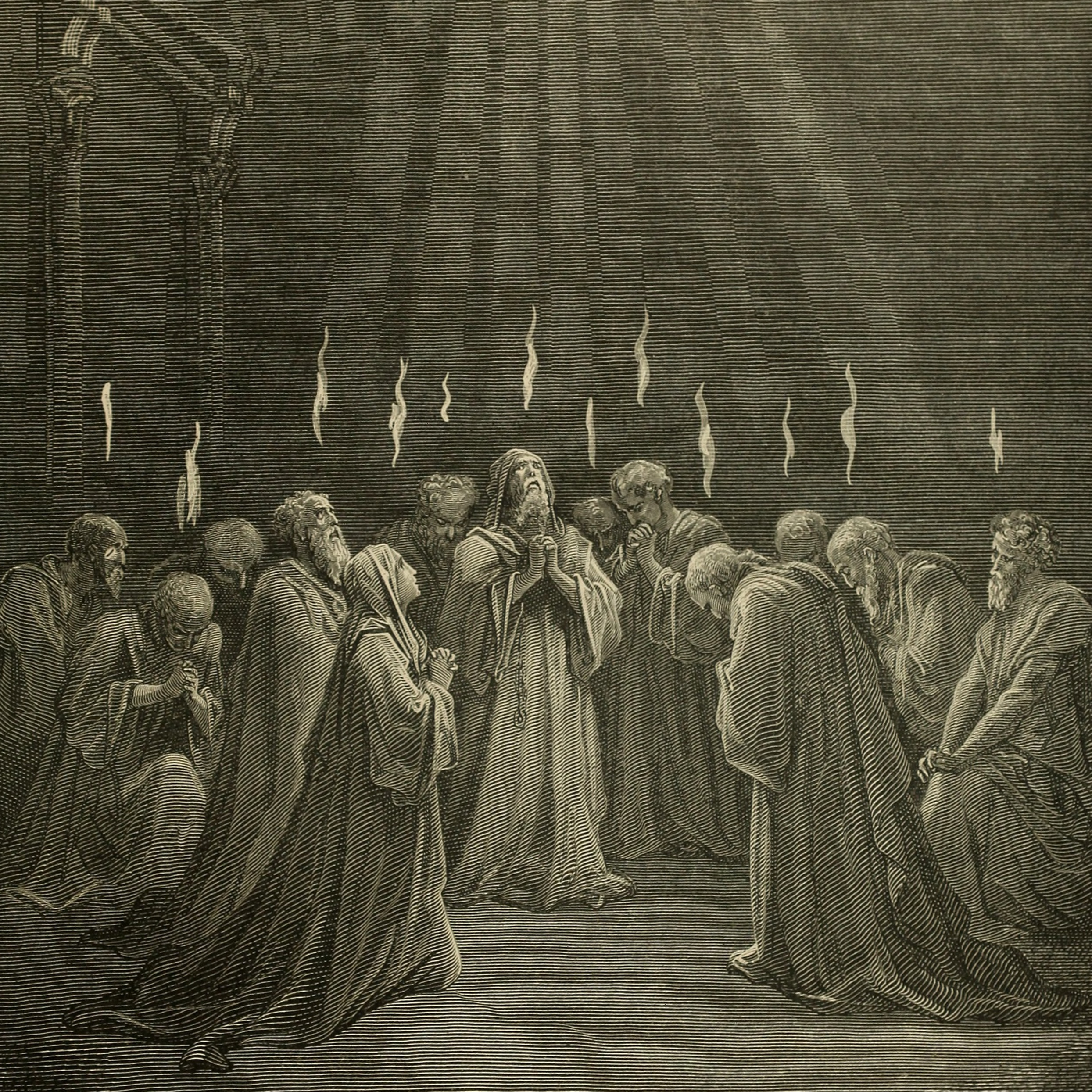
Do you see the type? What is this Pentecost? The time when the sickle was to be put to the harvest and the fruits to be gathered. Look at the reality now, how the time has come to ply the sickle of the Word. The Spirit, keen-edged, came down in place of the sickle. For hear the words of Christ, “Lift up your eyes and see how the fields are ripe for harvesting.” [Jhn 4:35.] And again, “The harvest is plentiful, but the laborers are few.” [Mat 9:37.] He himself, taking [our nature] as the first fruits, lifted it up high and he was himself the first to ply the sickle. For this reason he calls [the Word] also the Seed—St John Chrysostom
S2 Ep 324Day 324 - John 20-21
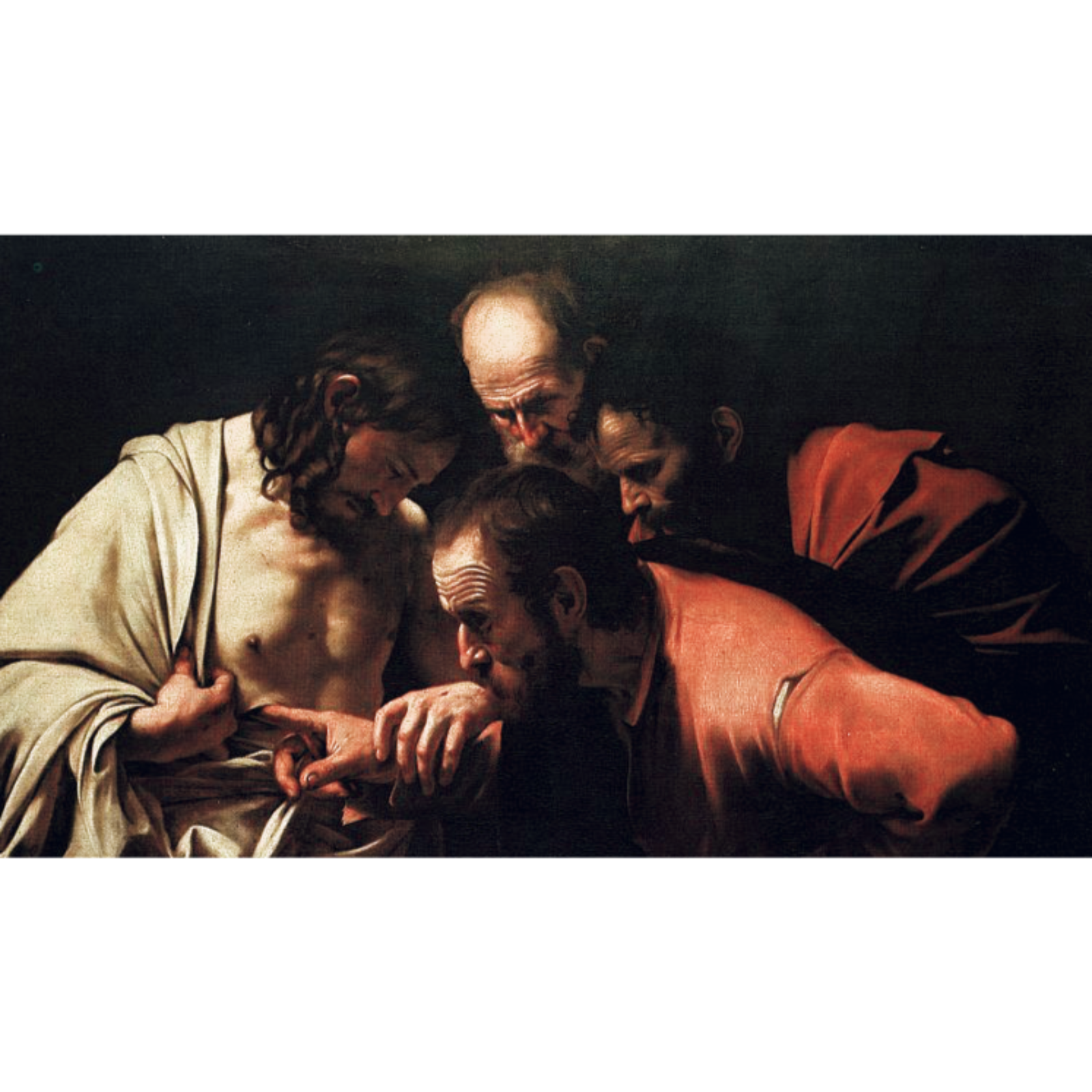
By his unexpected entry through closed doors Christ proved once more that by nature he was God and also that he was none other than the one who had lived among them. By showing his wounded side and the marks of the nails, he convinced us beyond a doubt that he had raised the temple of his body, the very body that had hung on the cross. He restored that body that he had worn, destroying death’s power over all flesh, for as God, he was life itself. Why would he need to show them his hands and side if, as some perversely think, he did not rise again bodily? And if the goal was not to have the disciples think about him in this way, why not appear in another form and, disdaining any likeness of the flesh, conjure up other thoughts in their minds? But he obviously thought it was that important to convince them of the resurrection of his body that, even when events would have seemed to call for him to change the mode of his body into some more ineffable and surpassing majesty, he nonetheless resolved in his providence to appear once more as he had been in the past [i.e., in the flesh] so that they might realize he was wearing no other form than the one in which he had suffered crucifixion. Our eyes could not have endured the glory of his holy body, if he had chosen to reveal it to his disciples before he ascended to the Father. Anyone who reflects on the transfiguration will easily infer this is the case.… since, it says, they could not endure the sight but fell on their faces. [Mat 17:6.]—St Cyril of Alexandria
S2 Ep 323Day 323 - Matthew 28, Mark 16, Luke 24
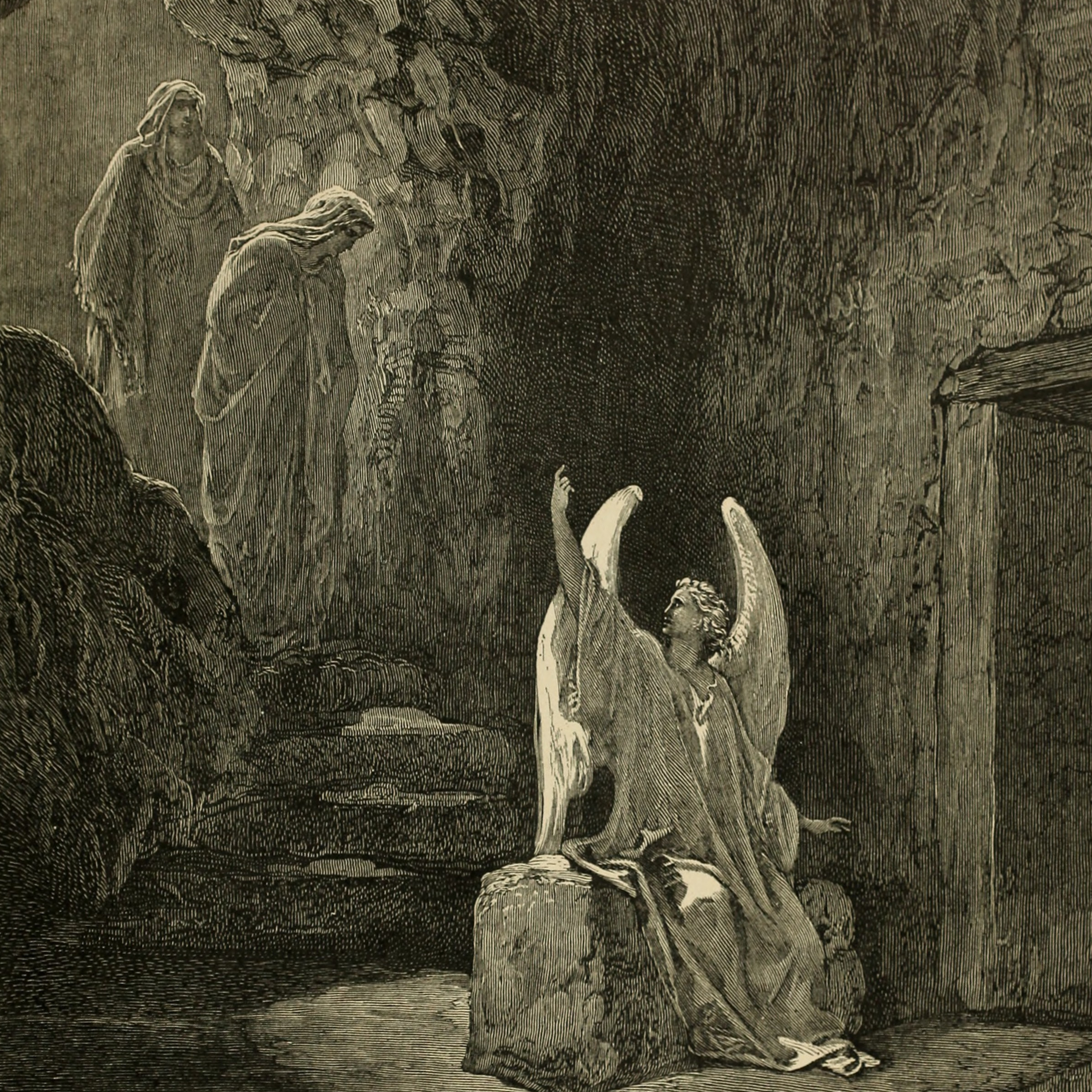
One must not dismiss lightly the question concerning the exact hour at which the women came to the tomb. For if Matthew says, “In the evening of the sabbath, at the dawn of the first day of the week, Mary Madgalene and other Mary came to see the tomb,” what then does it mean that Mark says, “And early in the morning on the first day of the week, they came to the tomb at the rising of the sun”? [Mrk 16:2.] The other two Gospels, Luke and John, do not disagree with Mark; Luke says “early in the morning,” [Luk 24:1.] and John says “in the morning when it was still dark.” [Jhn 20:1.] Both statements are consistent with Mark’s declaration that it was “early in the morning at the rising of the sun,” that is, when the heavens in the east were brightening. But this doesn’t occur except when the sun is very close to rising, a phenomenon which customarily is called the dawn. Therefore Mark does not oppose John, who says “when it was still dark,” for as day is breaking the remaining shadows of darkness diminish only in proportion to the sun’s rising. And Luke’s phrase, “early in the morning,” need not be understood to imply that the sun had already appeared above the horizon but rather is the kind of expression we normally use when we want to signify that something must be done earlier. For when we say “in the morning,” lest we are understood to mean that the sun is already visible, we usually add “very early,” so that we will be understood to refer to the dawn.Thus it is said “in the evening of the sabbath,” as if he had said “in the night of the sabbath,” that is, in the night which follows the day of the sabbath. Matthew’s words themselves, however, are sufficient, for he says, “In the evening of the sabbath, at the dawn on the first day of the week.” This would be impossible if we understood “in the evening” to signify only the first part of the night. For it is not the beginning of the night which “dawns on the first day of the week” but the night which begins to be terminated by the coming of the light. Now the end of the first part of the night is the beginning of the second part, but the end of the whole night is the light. Thus we cannot say that the evening is “at the dawn of the first day of the week” unless by “evening” we intend “night,” which the light brings to an end. In addition, it is divine Scripture’s customary way of distinguishing the whole from the part. Therefore by saying “evening” it signifies the whole night, the end of which is the dawn. Thus the women came to the tomb at dawn, and therefore they came at night, which is signified in Scripture by the designation of evening. For, as I have said, the whole night is included under that name. Therefore, in whatever part of the night they may have come, they came at night; even if they came at the very end of the night, the fact remains without a doubt that they came at night—St Augustine
S2 Ep 322Day 322 - John 19, Luke 23
Isaac is a type of the Lord, a child as a son. For he was the son of Abraham, as Christ was the Son of God, and a sacrifice as the Lord, but he was not immolated as the Lord. Isaac only bore the wood of the sacrifice, as the Lord the wood of the cross. And he laughed mystically, [The name Isaac means “laughter.”] prophesying that the Lord should fill us with joy, who have been redeemed from corruption by the blood of the Lord. Isaac did everything but suffer, as was right, yielding the precedence of suffering to the Word. Furthermore, there is an intimation of the divinity of the Lord with his not being slain. For Jesus rose again after his burial, having suffered no harm, like Isaac released from sacrifice—Clement of Alexandria
S2 Ep 321Day 321 - Matthew 27, Mark 15
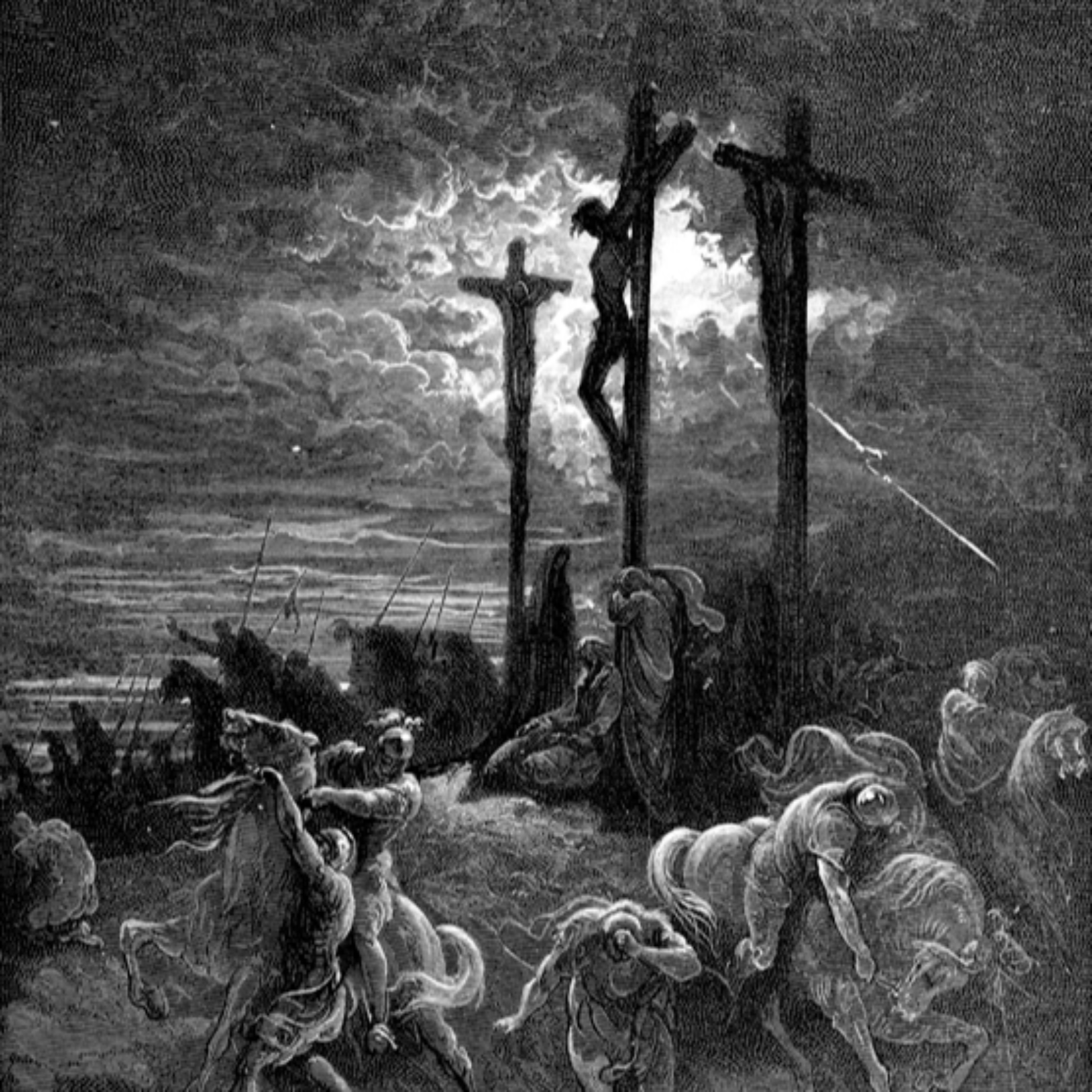
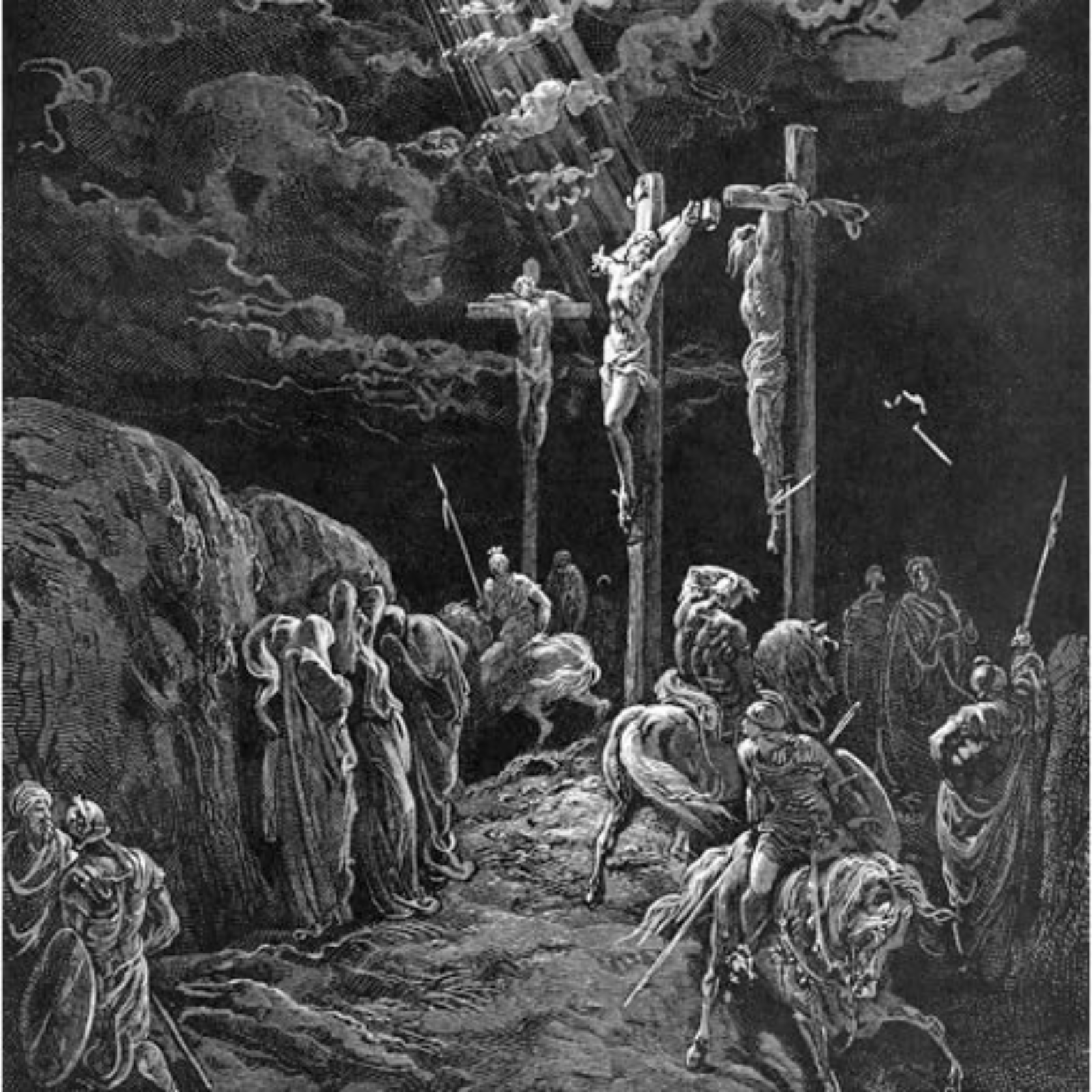
O cross most abominable, most execrable! Did not God rescue the prophets from their dangers? Did God not save the righteous? Why not him? What could equal this folly? The coming of dangers upon the prophets and saints did not injure their honor before God. But what happened to this incomparable person? By what he said and what he did he offended all our expectations to the utmost. He was forever correcting beforehand our assumptions about him. Even when all these ignominies were said and done, they could not prevail, even at that time. The thief who had lived depraved in such great wickedness, who had spent his whole life in murders and house breakings, when these things had been said, only then confessed him. When he made mention of his kingdom, the people bewailed him. These things that were done seemed to testify the contrary in the eyes of many who knew nothing of the mystery of God’s dispensations. Jesus was weak and of no ostensible power; nevertheless truth prevailed even by the contrary evidences.So hearing all these things, let us arm ourselves against all temptations to anger and outrage. Should you perceive in your heart a swelling of pride, seal your breast against it. Set your hopes only upon the cross. Call to mind the humbling things that were then taking place. Then you will cast out as dust all rage by the recollection of the things that were done to him.Consider his words. Consider his actions. Remember that he is Lord and you are his servant. Remember that he is suffering for you, and for you individually. You may be suffering only on your own behalf. He is suffering on behalf of all by whom he had been crucified. You may be suffering in the presence of a few. He suffers in the sight of the whole city and of the whole people of the covenant, both of strangers and those of the holy land, to all of whom he spoke merciful words.Even his disciples forsook him. This was most distressing to him. Those who previously paid him mind suddenly deserted him. Meanwhile his enemies and foes, having captured him and put him on a cross, insulted him, reviled him, mocked him, derided him and scoffed at him. See the Jews and soldiers rejecting him from below. See how he was set between two thieves on either side, and even the thieves insulted him and upbraided him—St John Chrysostom
S2 Ep 320Day 320 - John 18
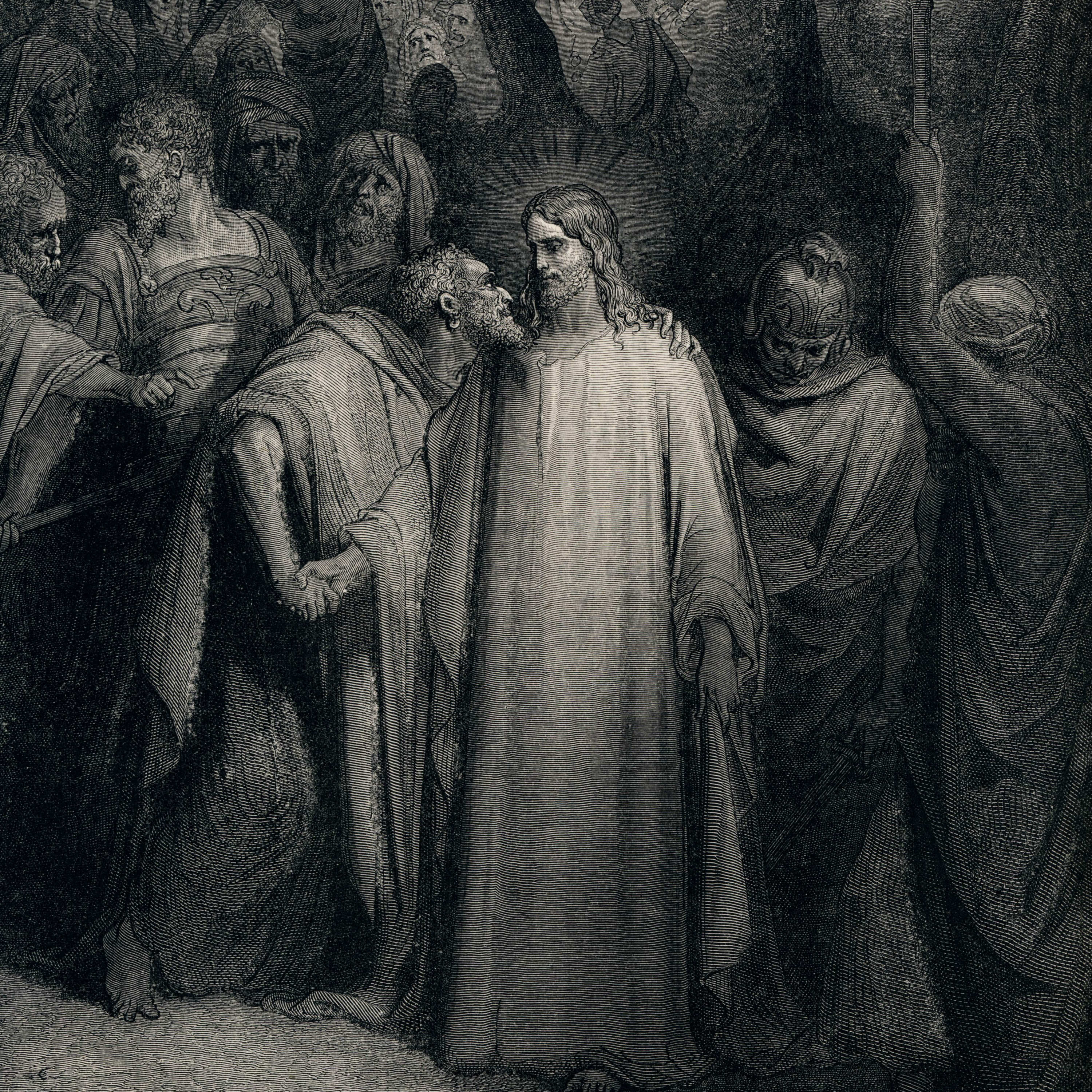
Jesus travels at midnight, and crosses a river and hurries to come to a place known to the traitor, lessening the labor of those who plotted against him and freeing them from all trouble. He also comforts the disciples by showing them that he came to this action willingly when he placed himself in the garden as in a prison—St John Chrysostom
S2 Ep 319Day 319 - John 17
The one who believes in the Son believes also in the Father, for he believes in what is proper to the Father’s essence. And thus the faith is one in one God. And the one who worships and honors the Son, in the Son worships and honors the Father. For the Godhead is one. And therefore the honor is one and the worship is one that is paid to the Father in and through the Son. And the one who worships in this way worships one God. For there is one God and none other … Therefore, these passages [Mrk 12:29; Exo 3:14; Deu 32:39 (LXX); Isa 44:6 as well as Jhn 17:2.] are not written in order to deny the Son or with reference to him at all, but to overthrow falsehood. Notice how God did not speak these kinds of words to Adam at the beginning, although his Word was with him by whom all things came to be. For there was no need before idols came in. But when human beings made insurrection against the truth and named for themselves gods such as they did, then the need arose for such words in order to deny the gods that were not … If then the Father is called the only true God, this is said not to the denial of him who said, “I am the Truth” [Jhn 14:6.] but of those … who by nature are not true, as the Father and his Word are. And so the Lord himself added at once, “And Jesus Christ whom you have sent.” Now had he been a creature, he would not have added this and ranked himself with his creator. For what fellowship is there between the True and the not true? But as it is, by including himself with the Father, he has shown that he is of the Father’s nature. And he has given us to know that of the true Father he is true offspring—St Athanasius the Apostolic
S2 Ep 318Day 318 - John 14-16
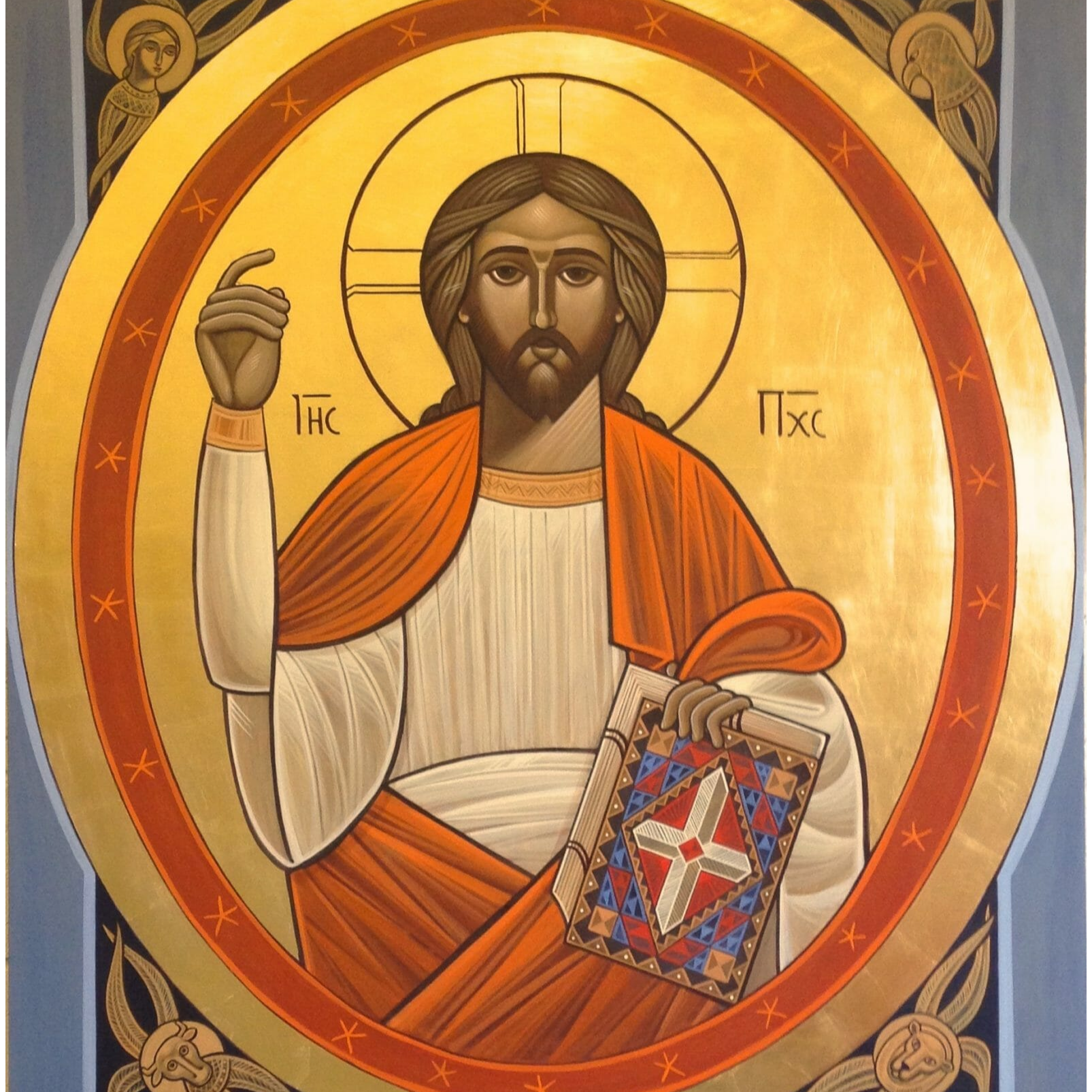
“I am the way.” This is the proof that “No one comes to the Father but by me.” “The truth and the life” prove that these statements will be carried out. “There is, then, no falsehood with me if I am ‘the truth.’ It is also the same if I am ‘life,’ since not even death shall be able to stop you from coming to me. Besides, if I am ‘the way,’ you will need no one to lead you by the hand. And, if I am also ‘the truth,’ my words are not false. If I am also ‘life,’ although you die you shall obtain what I have told you.” His being “the way” they both understood and allowed, but the rest they did not understand. Indeed they did not venture to say what they did not know. Still they gained great consolation from his being “the way.” “If,” he says, “I have sole authority to bring you to the Father, you shall surely come this way. For neither is it possible to come by any other way.”—St John Chrysostom
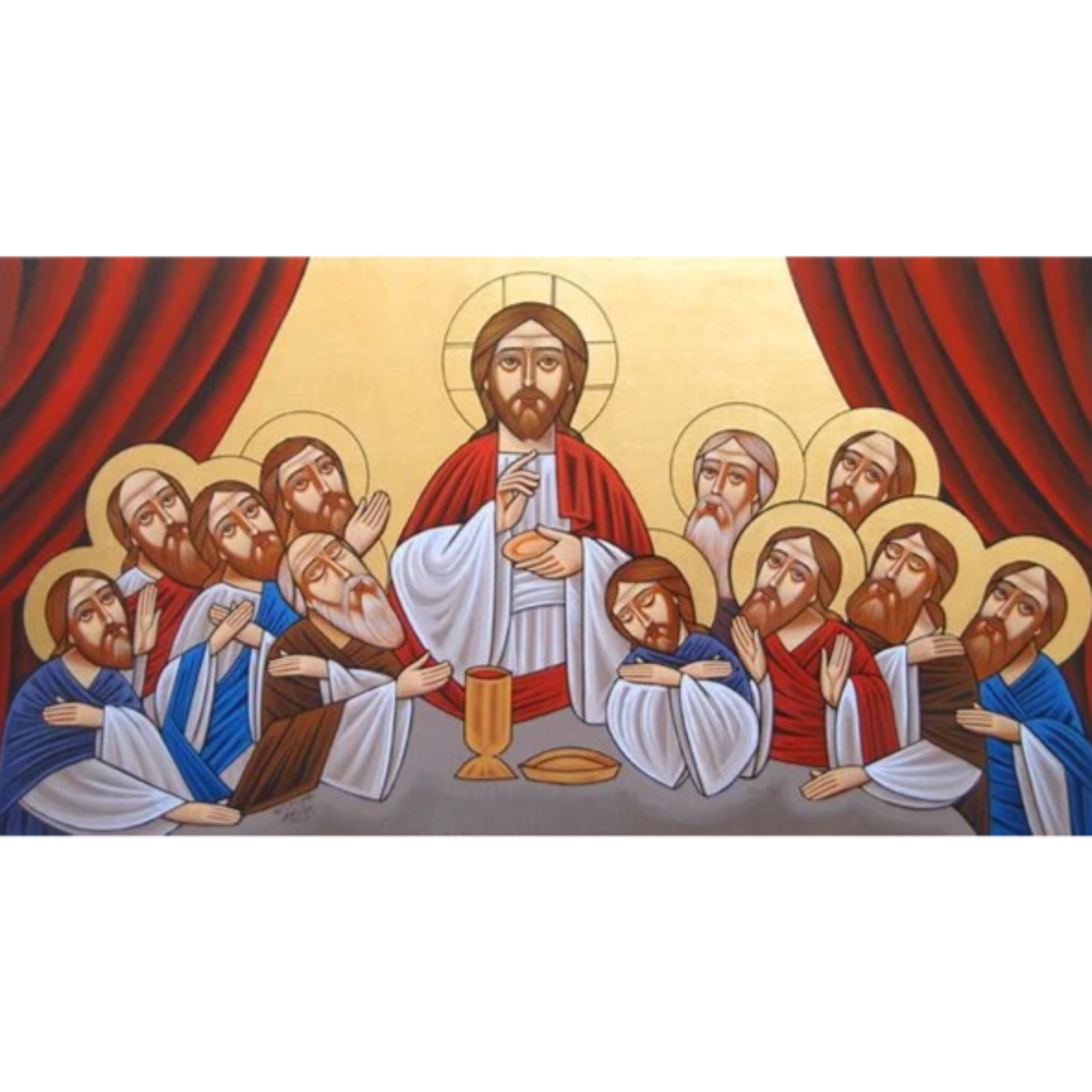
S2 Ep 317Day 317 - Mark 14, Luke 22, John 13
When the president has given thanks and the whole congregation has assented, those whom we call deacons give to each of those present a portion of the consecrated bread and wine and water. They then take it to those absent. This food we call Eucharist, of which no one is allowed to partake except one who believes that the things we teach are true, and has received the washing for forgiveness of sins and for rebirth, and who lives according to the way Christ handed down to us. [Cf. 1Co 11:27-29.] For we do not receive these things as common bread or common drink; but as Jesus Christ our Savior being incarnate by God’s Word took flesh and blood for our salvation, so also we have been taught that the food consecrated by the word of prayer which comes from him, from which our flesh and blood are nourished by transformation, is the flesh and blood of that incarnate Jesus. For the apostles in the memoirs composed by them, which are called Gospels, thus handed down what was commanded them: that Jesus, taking bread and having given thanks, said, “Do this in remembrance of me. This is my body”; and similarly taking the cup and giving thanks he said, “This is my blood”; and gave it to them alone. [Cf. Mat 26:26-28; Mrk 14:22-24; Luk 22:19-20; 1Co 11:23-25.]—Justin Martyr
S2 Ep 316Day 316 - Matthew 24-26
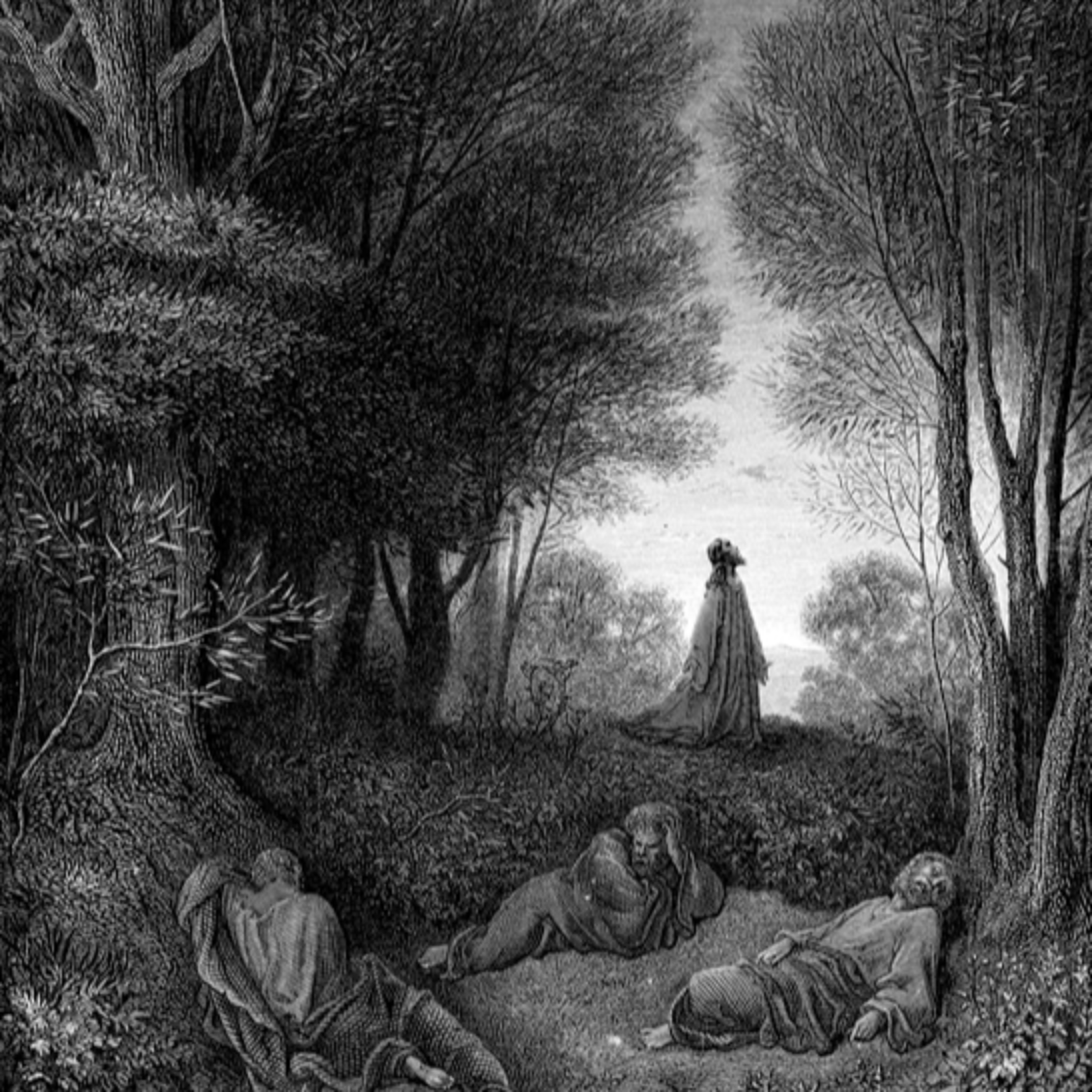
Let them blush with shame who think the Savior dreaded death and said out of fear of suffering, “Father, if it be possible, let this cup pass from me.” After two days, about to celebrate the Passover, he knew that he was to be betrayed and crucified. However, he did not turn away from the snares or take flight in fear. While the rest were unwilling to proceed, he remained unruffled when Thomas said, “Let us go that we may die with him.” [Jhn 11:16.] Wishing to put an end to the earthly festivity and to declare the truth in the passing shadow of Passover, he said, “I have earnestly desired to eat this Passover with you before I suffer.” [Luk 22:15.] Indeed, “Christ, our paschal lamb, has been sacrificed” if we eat it with “the unleavened bread of sincerity and truth.” [1Co 5:7-8.] Furthermore, because he says, “After two days the Passover will be here” and omits a simple explanation, we should seek what is holy. After two days of the brilliant light of the Old and New Testaments, the Passover is celebrated for the world. This Passover, called pesaḥin in Hebrew, is not named after Christ’s suffering as many believe. It refers to the “passing over,” when the destroying angel saw the blood on the doors of the Israelites, passed by and did not strike them down. [Ex 11:1-12:36.] In other words, the Lord, giving help to his people, came down from above. Our passing over—that is to say, pesaḥ—will be celebrated if we put behind us both earthly things and Egypt and move on to heavenly things—St Jerome