Beyond the Thesis With Papa PhD
371 episodes — Page 2 of 8
S6 Ep 30Pépite Papa PhD 001 : La clé de l’entrepreneuriat étudiant – Bien s’entourer
Bienvenue au tout nouveau format d’Au-delà de la thèse – les Pépites Papa PhD. Dans cet épisode, David Mendes s’entretient avec Manon Fantino-Lalonde, une doctorante entrepreneure qui réussit à jongler entre son projet doctoral et son entreprise naissante pour parler de “La clé de l’entrepreneuriat étudiant – Bien s’entourer”. Manon nous dévoile comment elle a démarré son projet entrepreneurial inspiré par un problème médical diagnostiqué lors de son master et parle de l’importance de créer des ponts entre la recherche et la médecine clinique. Elle partage son parcours avec le programme Innovinc de l’Université de Montréal, des programmes Thompson de l’université McGill et partage comment les enseignements tirés de l’entrepreneuriat enrichissent son travail académique. Découvrez comment tirer parti des ressources universitaires tout en menant une vie professionnelle et personnelle équilibrée ! Après avoir terminé un premier diplôme en diététique en France, Manon a poursuivi ses études à la Faculté de médecine de l’Université de Montréal en obtenant un baccalauréat, puis une maîtrise en nutrition. Elle est nutritionniste et membre de l’Ordre professionnel des diététistes du Québec (ODNQ) depuis 2019. Actuellement en deuxième année de doctorat à l’Université McGill, ses recherches visent à mieux comprendre le rôle des facteurs génétiques et environnementaux sur les comportements alimentaires et le risque de maladies cardiométaboliques. Elle a eu l’occasion de présenter une partie de ses recherches lors de la finale de “Ma thèse en 180 secondes” de McGill, où elle a remporté le premier prix dans la catégorie francophone. Points à retenir : Équilibrer compétences académiques et entrepreneuriales : Manon souligne l’importance d’avoir plusieurs cordes à son arc. Les compétences acquises dans le cadre d’un doctorat peuvent grandement contribuer à la réussite entrepreneuriale, et vice versa. L’importance d’utiliser les ressources universitaires offertes : En tant que personne étudiante, il est crucial de mettre à profit les différentes ressources offertes par votre université. Que ce soit des soutiens à l’entrepreneuriat, des services de santé mentale ou des services de préparation à la carrière, on y perd souvent l’accès après l’obtention du diplôme. Valoriser la vulgarisation scientifique : Manon parle de l’importance de la vulgarisation dans l’entrepreneuriat. Savoir expliquer clairement et efficacement son projet à différentes audiences est essentiel, que ce soit pour convaincre des investisseurs, des bailleurs de fonds ou des employeurs potentiels. Pourquoi écouter cet épisode ? Cet épisode de “Pépites Papa PhD” est une source d’inspiration pour ceux qui envisagent l’entrepreneuriat pendant leur doctorat. Manon Fantino-Lalonde y partage son expérience personnelle de jongler entre ces deux mondes, soulignant l’importance de la vulgarisation et des compétences acquises durant son parcours académique. Découvre comment les ressources offertes par ton université peuvent contribuer à façonner pour toi une carrière postdoctorale diversifiée. Envoie-nous tes commentaires : Pour entrer en contact avec nous et partager tes réflexions ou poser tes questions, laisse-nous un message vocal sur speakerpipe.com/papaphd. Nous aimons entendre nos auditeurs et tes retours sont précieux pour l’évolution du balado. Passe à l’écoute : Ne manque pas cet épisode captivant et suis “Au-delà de la thèse avec Papa PhD” sur ton application préférée pour ne jamais rater une occasion d’apprendre davantage sur la réalité du marché du travail après le doctorat. Écoute cette pépite maintenant et laisse-toi inspirer par le parcours de Manon! Liens de l’épisode Programme Innovinc : millenium.umontreal.ca/nos-parcours/innovinc-rbc/ Programmes d’entrepreneuriat Dobson : mcgill.ca/dobson/fr/batir-une-entreprise Séminaire d’entrepreneuriat Jon D. Thompson : mcgill.ca/engineering/alumni/events/thompson-seminar Transcription de l’épisode Manon Fantino-Lalonde : On n’aura jamais autant de services que, finalement, maintenant quand on est étudiant et c’est vrai – le paradoxe, un petit peu, c’est que quand on est étudiant on se sent on se sent mal à l’aise finalement d’utiliser ces ressources en se disant “maintenant je suis là pour mon doc, il faut pas que je fasse autre chose, il faut vraiment que je sois concentrée sur ça.” Mais, finalement, un doctorat, ça nous prépare à cette vie d’adulte, à cette vie je dis vie d’adulte, mais à cette vie, finalement, de travail, voilà, professionnelle. Et l’entrepreneuriat ou toutes les opportunités que l’université nous offre font partie de notre notre parcours. Et ça, c’est important de le garder en tête. David Mendes : Bienvenue sur au-delà de la thèse avec papa PhD, ton inspiration hebdomadaire pour ta préparation à ta carrière de rêve après le doctorat. Toi, de ton côté en ce moment, tu as aussi une activité d’entrepreneuriat. Et ça, ça a vraiment piqué ma curiosité quand tu m’en avais parlé parce que on le sa
S6 Ep 29Papa PhD Gold 001: The Hidden Benefits of Science Communication for Researchers
Welcome to a brand-new Beyond the Thesis with Papa PhD experience – the “Papa PhD Gold” format, where we dive into a past episode of the show to explore the intersection of science, communication, and personal growth as a researcher. In this episode, we are joined by Elodie Chabrol, a passionate advocate for science communication and a scientist who emphasizes the importance of stepping back to view the “big picture” in research. Elodie and David Mendes discuss how engaging in science communication can transform a scientist’s approach to their work and career, from applying for grants to improving public engagement skills. Elodie Chabrol has a PhD in Neurogenetics and is the international director for the Pint of Science festival. She is also a freelance science communicator involved in different freelance projects like training, moderations and podcasts. Elodie’s mission is to make science accessible to everyone, everywhere show the human side of it. Key take-home messages: The Value of Seeing the Big Picture: Elodie shares her insights on how often getting lost in the intricate details of your research, you may neglect the overall context of your work and shares how science communication events encourage scientists to reassess their research from a broader perspective, gaining renewed clarity and purpose. Science Communication as a Learning Tool: By attending events outside your domain, you can gain fresh perspectives and discover innovative ways to communicate your research, as exemplified by Elodie’s transformative experience at a physics scicomm event. Benefits of Science Communication for Researchers: Engaging with lay audiences helps scientists hone their skills in turning complex information into accessible narratives. Feedback from public presentations can lead to new insights and strengthen academic skills like grant and paper writing. Experiences from Pint of Science: Elodie shares feedback from scientists who found value in communicating at Pint of Science events, illustrating how taking part in such initiatives can reignite our passion for our own research. Why Listen? Whether you’re grappling with the challenge of detailing your research for non-experts or looking to refine how you share your scientific journey, this episode provides valuable strategies to incorporate science communication into your professional toolkit. Unlock the benefits of enhanced communication for career growth and personal satisfaction. Connect with Us: Have thoughts about this episode? Want to recommend a guest for us to interview? Share your voice with us! Visit speakpipe.com/papaphd to leave a voice note. We value every piece of feedback and look forward to featuring some in future episodes. Tune In: Don’t miss this insightful conversation aimed at helping you redefine your path Beyond the Thesis. Subscribe to Papa PhD on your favorite podcast platform, and join us next week for another inspiring episode! This episode’s links: Website: www.elodiechabrol.com/ Twitter: @eloscicomm Episode Transcript Elodie Chabrol: Sometimes in research, we’re losing sight of what we’re doing because we are so buried into very deep details on very tiny things that sometimes we are forgetting the big picture. Doing that kind of things brings you back to seeing the big pictures help you it’s also helping you finding cool ways of explaining your research, which is never lost because when you’re gonna apply for a grant, when you’re gonna maybe, apply for a job, apply for whatever, you have to explain the project you want to do and the people in front of you are never gonna be in your domain exactly. David Mendes: Welcome to Beyond the Thesis with Papa PhD, your weekly inspiration for post PhD career development. With me, David Mendes. Elodie Chabrol: When I was watching my lab meetings and I was watching my lab mates presenting their research, most of the times I didn’t understand because they didn’t give me any context. They were just like jumping hard into details. And I was like, what, wait, what what’s happening? And I was completely losing the plot of what they were doing. And this is also a way to discover, like, stuff in your domain in a very cool way. So I would say it’s inspiration on how to do, it’s relaxing, to watch in a cool way science in your domain but usually what I, often advise for your for for researchers or for scientists is to go to events that are not their domain because then they’re going to learn things. If you go to your domain, you might not learn anything. So I I think it’s the the best criticism I got from someone. She was a researcher. She went to, an A Pint of Science Evening and then she came to me and she was like, well, I didn’t learn anything. And I was like, okay, cool. It means it was, simple enough. Then she was like, it was too simple. I was like, cool. Perfect. So because it wasn’t for you to learn something, it was maybe for you to learn a way of presenting, but not for you to learn anything becaus
S6 Ep 28Curiosity – The Cornerstone of PhD Career Exploration With Ashley Moses
Welcome to another episode of Beyond the Thesis With Papa PhD! In this positivity-charged conversation, we’re joined by Ashley Moses, a PhD candidate in neurosciences at Stanford University. Ashley is not only advancing her own research but she’s also created a precious resource, for herself and for her fellow graduate students – PhD Paths – where she shares the journey and career paths of over a hundred PhDs she’s interviewed and who have transitioned into non-academic jobs. During our conversation, you will learn about the importance of professional development during the PhD journey, about the power of networking, and the about what her interviewees are sharig about moving away from academia. Ashley’s story is a testament to the fact that pursuing a non-academic career after graduate school is not a failure, but rather the burgeoning and flourishing of the transferable skills you have developed in graduate school. Tune in to learn how you can embark on this journey one step at a time and find your own path beyond the thesis. Ashley Moses is a PhD Candidate in Neurosciences at Stanford University. She is also the Founder of an incredible resource called PhD Paths, which shares the career paths of 100+ PhDs who have transitioned from academia to industry jobs. Ashley is on a mission to help past, present, and future PhDs find fulfilling careers. What we covered in the interview: 🔍 Start Small, Think Big: Ashley emphasizes the power of starting with one simple step, such as an informational interview or a LinkedIn message to gradually build a robust and living network and lead to richer professional development opportunities during your PhD. 🤝 Networking is Key: Ashley made the importance of networking loud and clear. Meeting people, learning their stories, and understanding their decisions can open doors to opportunities you may not yet realize exist. Even one conversation can be transformative! 🎯 Find Your Tribe: Find a community that supports and shares your career goals – it is crucial for your professional journey and for your mental health. Whether it’s through LinkedIn groups like PhD Pathfinders or other networks, surrounding yourself with like-minded individuals can provide encouragement and shared learning to help you on your path. Ashley’s journey is a testament to the potential we all have to shape our careers while completing our PhDs. 🌍✨ 🎧 Listen to the episode to dive deep into Ashley’s inspiring work and insights! 🔗See the resources section below for her links! This episode’s resources: PhD Paths | Website PhD Paths | Substack PhD Pathfinders | LinkedIn group Be Your Own Best Boss Coach | Enroll in the course! Thank you, Ashley Moses! If you enjoyed this conversation with Ashley, let her know by clicking the link below and leaving her a message on Linkedin: Send Ashley Moses a message on Linkedin! Click here to share your key take-away from this interview with David! You might also like the following episodes: Claudia Belliveau – PhD Job Hunt Best Practices Dr Vikki Wright – Being Your Own Best Boss in Academia Matteo Tardelli – Identifying Your Core Values For The Job Hunt Alessandra Wall – Positioning Yourself Outside Academia
S6 Ep 27Being Your Own Best Boss in Academia With Dr. Vikki Wright
Welcome to another episode of Beyond the Thesis With Papa PhD, where we’re diving deep into the world of academia with Dr. Vikki Wright. Dr. Wright, the founder of The PhD Life Coach, joins David Mendes to share her journey from a full professorship at the University of Birmingham to becoming a life coach empowering PhD students and academics to thrive in their careers. In this episode, we’ll explore how she transitioned from a research-focused role to a teaching and coaching path, emphasizing the importance of finding fulfillment in academic spaces. Vikki shares her insights on developing transferable skills, managing stress, and being your own best boss in academia. Whether you’re struggling with negative self-talk, feeling overwhelmed with the demands of academic life, or simply looking for inspiration on how to navigate your academic career, this episode is packed with valuable advice and insights. Tune in to hear how Dr. Vikki Wright’s experiences and coaching philosophy can help you craft a more fulfilling academic journey. Dr Vikki Wright is the founder of The PhD Life Coach, where she provides a group coaching programme for PhD students as well as one-to-one coaching and online courses. She was a full Professor at the University of Birmingham in the UK until 2022, specialising in both how stress affects health and how to develop transferable skills in PhD students. She hosts The PhD Life Coach podcast which helps PhD students and academics get less overwhelmed and enjoy their work. What we covered in the interview: 🎢 Embrace Diverse Opportunities: Dr. Wright emphasizes the value of multidisciplinary work and collaboration. Don’t be afraid to volunteer for projects outside your immediate research area—this can lead to new, exciting career paths!. 👍 Be Your Own Best Boss: Avoid being your harshest critic. Treat yourself kindly, set realistic goals for yourself, and celebrate your achievements. Self-compassion can make your academic journey more fulfilling and less stressful. 🧠 Cultivate Effective Organizational Skills: Successful management of tasks and time is crucial in graduate school and as an academic. Find tools that work for you and remember—it’s okay to use them imperfectly. What matters is finding the ones that fit your needs and being as consistent as you can. 🎧 Tune into the full episode to hear more insights from Dr. Wright on navigating academia with confidence and joy! 🎙️✨ 🔗See the resources section below for her links! This episode’s resources: The PhD Life Coach | Website Be Your Own Best Boss Coach | Enroll in the course! Thank you, Dr. Vikki Wright! If you enjoyed this conversation with Dr. Wright, let her know by clicking the link below and leaving her a message on Linkedin: Send Dr. Vikki Wright a message on Linkedin! Click here to share your key take-away from this interview with David! You might also like the following episodes: Claudia Belliveau – PhD Job Hunt Best Practices Kelly Guenther and Keri Ohlrich – Making Career Pivots Without Fear Matteo Tardelli – Identifying Your Core Values For The Job Hunt Alessandra Wall – Positioning Yourself Outside Academia
S6 Ep 26PhD Job Hunt Best Practices With Claudia Belliveau
Welcome to another episode of Beyond the Thesis With Papa PhD!In this episode of Beyond the Thesis with Papa PhD, your host David Mendes sits down for a meaningful chat with Claudia, who just wrapped up her PhD and is now stepping into the pharmaceutical industry. They explore Claudia's experiences during her time in graduate school, including her struggles with impostor syndrome, and the proactive steps she took to get ready for life after her thesis. David and Claudia dive into the significance of networking, the art of telling your story in job applications, and the crucial but sometimes neglected skill of negotiating your salary. Claudia also shares some handy tips for navigating the job search, including a Notion dashboard she created to streamline her applications and networking activities. You can expect to pick up some valuable advice on how to tackle the hurdles that come with leaving academia behind and the essential role mental health plays in finding fulfillment in your career. Whether you’re currently in a master's or a PhD program or thinking about making a switch to industry, this episode is packed with insights and inspiration to help you carve out your own path beyond the thesis. Claudia Belliveau holds a PhD in Neuroscience from McGill University and is passionate about making science accessible to all. During her PhD, she founded a scientific consulting company to bridge the gap between science and the public. Alongside her consulting work, she runs a popular Instagram platform with 76,000 followers, where she shares tips, resources, and relatable content for students and researchers. Claudia now works full-time as a freelance scientific consultant and content creator while navigating the transition from academia to the pharmaceutical industry. What we covered in the interview: 💎 Build Authentic Connections: Claudia did something pretty awesome—she reached out for informational interviews on LinkedIn and focused on making real connections. It’s not just about asking for job openings; it’s about engaging in genuine conversations and keeping those relationships alive.⚙ Translate Your Skills for Industry: Sometimes our academic experiences don’t easily translate to the professional world. Claudia tackled this by working with a coach who helped her tell her story in a way that really resonates with folks in the pharmaceutical industry.💪 Stay Open and Resilient: Stepping into a new industry can feel pretty overwhelming, and it doesn’t always happen overnight. But here’s the thing: perseverance really does pay off! Claudia kept at it, networking, refining her skills, and perfecting her personal narrative, and slowly but surely, she started to see those doors open up. It’s all about keeping that momentum going and being ready for new opportunities!🎧 Dive into Claudia's journey and get inspired in your own pivot by listening to the full episode. The next step in your post-PhD career might just be a conversation away!🔗See the resources section below for Claudia's links! This episode’s resources: C. Belliveau Science | InstagramClaudia's Notion job search dashboard | Webpage Thank you, Claudia Belliveau! If you enjoyed this conversation with Claudia, let her know by clicking the link below and leaving her a message on Linkedin:Send Claudia Belliveau a message on Linkedin!Click here to share your key take-away from this interview with David! You might also like the following episodes: Sara Thompson – Out of the Box Careers Post-PhDKelly Guenther and Keri Ohlrich – Making Career Pivots Without FearMatteo Tardelli – Identifying Your Core Values For The Job HuntAlessandra Wall – Positioning Yourself Outside Academia
S6 Ep 25Dans Les Coulisses de la Recherche – 5 ans à enseigner la vulgarisation scientifique à l’IRIC
Bienvenue dans cet épisode spécial d'Au-delà de la thèse avec Papa PhD où je pars derrière le rideau d'un événement unique en son genre : "Dans les coulisses de la recherche". Dans cet épisode spécial, j'accueille dans un format table ronde Sophie-Andrée Blondin, animatrice de l'émission Les Années Lumière sur ICI Première, Thomas Milan, communicateur scientifique et fondateur de l'événement, ainsi que Laurence Côté, doctorante à l'IRIC et participante à l'évènement. Ensemble, on a discuté de l'importance de la vulgarisation scientifique, de l'évolution de la communication dans le domaine de la recherche fondamentale et des défis que la communication de la science comporte dans notre société aujourd'hui. L'échange était riche et dynamique te donnera un aperçu inspirant de comment chercheurs et grand public peuvent dialoguer et s'enrichir mutuellement au travers de la science. Lance l'épisode sur ta plateforme préférée et plonge avec nous au cœur de la recherche et de la communication scientifique. On a parlé, entre autres : Du format original des coulisses de la recherche : L'événement prend une approche unique avec un "speed dating" scientifique, permettant aux jeunes chercheur·e·s de présenter leurs recherches au grand public de manière conviviale et interactive.De l'importance de la formation des jeunes scientifiques en vulgarisation : L'importance de former les jeunes scientifiques à la communication est cruciale, non seulement pour partager leur travail, mais aussi pour renforcer leurs compétences professionnelles.De l'impact de la science et de la vulgarisation scientifique sur le public : Les événements comme celui-ci démontrent l'engagement croissant des scientifiques à expliquer l'impact de leur recherche et à promouvoir la compréhension scientifique parmi le public.Tu aimes Papa PhD ? Laisse-moi un commentaire > ici < - une courte phrase suffit ! Et inclus ton identifiant Twitter – comme ça je pourrai te remercier personnellement !Si cet épisode spécial Dans les coulisses de la recherche t'a plu, fais-leur en part en cliquant sur le lien ci-dessous et en leur laissant un message sur Facebook :Clique ici pour remercier l'équipe des coulisses de la recherche sur Facebook !Clique ici pour partager avec David le principal message que tu retiens de cet épisode !Si tu trouves de la valeur dans le contenu que je t'apporte chaque semaine, clique sur l'un des boutons ci-dessous et renvoie-moi l'ascenceur :) Don sur PayPal Deviens supporter sur Patreon ! Ou paye-moi un café :) Tu aimeras aussi ces épisodes : Boucar Diouf – Le doctorat - un passeport vers la créativité : PapaPhD.com/Boucar-DioufMartin Carli - La vulgarisation grand public : PapaPhD.com/Martin-CarliOlivier Bernard – Déboulonner la pseudoscience : PapaPhD.com/Olivier-BernardMyriam Beaudry – Le doctorat - quand arrêter ? : PapaPhD.com/myriam-beaudry-2
S6 Ep 24How to Embrace Career Pivots Without Fear With Kelly Guenther and Keri Ohlrich
Welcome back to Beyond the Thesis With Papa PhD!I'm your host, David Mendes, and today, we delve deep into the art of pivoting professionally without fear. In this episode we are joined by two extraordinary guests, Kelly Gunther and Dr. Keri Ohlrich, cofounders of Abbracci Group and cohosts of the Breakout podcast. In this episode, we explore the complex and often challenging process of stepping out of life's predestined boxes—the expectations set by society, family, and even ourselves. Kelly and Keri share their personal stories, professional insights, and the powerful narratives of those who have made brave, life-altering changes. Whether it's questioning established norms or boldly deciding to follow a different path, our guests provide a model called the "BREAK" model to help individuals navigate these transitions authentically. Kelly GuentherKeri Ohlrich, Ph. D.Keri Ohlrich, PhD, has more than twenty years of experience on the front lines of human resources, working in leadership positions at a variety of organizations, from startups to Fortune 500 companies. As co-founder of Abbracci Group and coauthor of The Way of the HR Warrior, he continues her mission to share insights from these experiences with others who are passionate about HR excellence. She co-hosts The Breakout podcast to get advice and insights from people breaking free from expectations and shares her experience as a regular guest on many other podcasts, in industry interviews and articles, as well as speaking engagements in the US and abroad.Kelly Guenther is co-founder of Abbracci Group and co-host of The Breakout podcast, in which she brings a holistic approach to HR, focusing not only on the organization but also on the individuals who create the team. She has led sales training programs and certification processes for over 500 VPs, sales executives, and branch managers. Her passion for and commitment to delivering exceptional results has proudly earned her trusted advisor status with her clients. What we covered in the interview: 🧠 Embrace and Understand Your Boxes: We often find ourselves confined in boxes created by societal norms or personal expectations. It’s essential to recognize these boxes and understand their impact on our lives.🤝 The Importance of a Support System: Surround yourself with cheerleaders and lifelong learners. Having advocates who believe in you and encourage your growth can make all the difference.💪 Practice Positive Self-Talk: There's immense power in how we speak to ourselves. Transitioning from negative to positive self-talk can propel you forward, even when facing challenges.🎧 Dive into the full episode to explore more insights on creative pivoting and embracing change.📚 For those interested in digging deeper, check out Kelly and Keri's book, "Whatever the Hell You Want". It's a beacon for anyone looking to break out of limiting boxes and live an authentic life.Let's champion creativity, support one another, and build a network that fosters growth and positive change!🔗See the resources section below for Keri's and Kelly's links! This episode’s resources: The Breakdown Podcast | FacebookThe Breakdown Podcast | InstagramAbbracci Group | LinkedIn Thank you, Kelly Guenther and Keri Ohlrich! If you enjoyed this conversation with Kelly and Keri, let them know by clicking the link below and leaving them a message on Linkedin:Send Kelly Guenther a message on Linkedin!Send Keri Ohlrich a message on Linkedin!Click here to share your key take-away from this interview with David! You might also like the following episodes: Sara Thompson – Out of the Box Careers Post-PhDMary Poffenroth –Navigating Our Fear of ChangeMatteo Tardelli – Identifying Your Core Values For The Job HuntAlessandra Wall – Positioning Yourself Outside Academia
S6 Ep 23Le doctorat : décider d’arrêter – avec Myriam Beaudry
Bienvenue à ce nouvel épisode d'Au-delà de la thèse avec Papa PhD ! Aujourd'hui, on vous apporte la récente conversation de David Mendes avec Myriam Beaudry, nutritionniste de formation et travailleuse autonome, sur son parcours académique et sur les défis qui l'ont menée à prendre la décision difficile d'arrêter son doctorat.Myriam nous parle de la suspension de session, un mécanisme universitaire permettant de faire une pause sans quitter le programme, et de l'importance de prendre soin de sa santé mentale dans un environnement académique où le stress abonde. Elle partage ses expériences personnelles de réflexion et de réévaluation, soulignant qu'il est essentiel de s'écouter et de suivre son intuition quand il s'agit de prendre des décisions importantes. Au long de l'entrevue, tu apprendras comment Myriam a réussi à surmonter ses défis, comment elle a trouvé du soutien auprès de ses proches et comment elle a forgé une nouvelle voie professionnelle tout en restant fidèle à sa passion pour la science. Reste à l'écoute pour une conversation sincère et inspirante sur l'importance de prendre des décisions éclairées pour son bien-être et son bonheur professionnel. Myriam Beaudry est membre de l’Ordre des nutritionnistes-diététistes du Québec. Elle a a complété son baccalauréat en sciences de la nutrition à l’Université d’Ottawa e est également détentrice d’une maîtrise en nutrition de l’Université de Montréal. Myriam a à cœur de conjuguer science et bienveillance par la communication au public.Vulgarisatrice hors-pair, elle donne libre cours à sa créativité et à son plaisir de communiquer sa passion via sa plateforme Instagram (myriam.beaudry.dtp), les médias traditionnels, des balados et sa pratique clinique. Au-delà de sa profession, Myriam est une cycliste passionnée, une personne curieuse, bienveillante et qui est toujours ouverte à élargir ses horizons par le biais de conversations respectueuses. Points à retenir : 🧘♀️ Réflexion personnelle et bien-être : Prends le temps de réfléchir à ta carrière et à votre développement personnel. Ce n'est jamais un échec de réorienter sa vie professionnelle pour aller vers ce qui nous rend heureux.🔑 Écoute de soi et de ses besoins : Écoute les signaux de ton corps et de ton esprit. Il est normal de ressentir le besoin de s'arrêter et de prendre du recul pour se ressourcer.🔑 Soutien et communication : Il est primordial d'aborder les thèmes de la santé mentale et de la pression académique ouvertement. En partageant ton expérience et en demandant de l'aide tu peux faire une grande différence.🎧 Ne manque pas cet épisode inspirant et encourageant sur un sujet souvent tabou. Écoute-le et laisse-nous ton retour sur LinkedIn ou YouTube! #BienÊtreAcadémique #SantéMentale #ChangementDeCarrière #AuDelàDeLaThèse Les ressources de cet épisode : myriam.beaudry.dtp | InstagramScienceRadioBalado | InstagramTête-à-tête avec la science | Spotify Merci Myriam ! Si cet entretien avec Myriam Beaudry t'a plu, fais-lui en part en laissant un commentaire sur ta plateforme d'écoute préférée. Je le lui transmettrai avec plaisir.Tu peux aussi laisser ton commentaire sur X en utilisant ce lien !Si tu trouves de la valeur dans le contenu que je t'apporte chaque semaine, clique sur l'un des boutons ci-dessous et renvoie-moi l'ascenceur :) Don sur PayPal Deviens supporter sur Patreon ! Ou paye-moi un café :) Tu aimeras aussi ces épisodes : Boucar Diouf – Le doctorat - un passeport vers la créativité : PapaPhD.com/Boucar-DioufMartin Carli - La vulgarisation grand public : PapaPhD.com/Martin-CarliOlivier Bernard – Déboulonner la pseudoscience : PapaPhD.com/Olivier-BernardEstefania Dominguez – Le doctorat - une odyssée émotionnelle : PapaPhD.com/estefania-dominguez/
S6 Ep 22How to Uncover Your Core Values With Matteo Tardelli
Welcome back to Beyond the Thesis With Papa PhD!I'm your host, David Mendes, and today, I'm thrilled to dive into an enlightening conversation with Matteo Tardelli, a seasoned professional in the biotech sector and an advocate for aligning career choices with personal values. In this episode, Matteo opens up about the intricate process of uncovering one's core values and how they play a pivotal role in making fulfilling career decisions.We'll explore his journey from academia to industry, touching on his experiences and challenges in job hunting, especially in the realms of biotech and consulting. Matteo also shares practical advice on conducting thorough company research, the significance of informational interviews, and the importance of introspection in the job search process. Additionally, Matteo will discuss his latest book, "Beyond Academia: Stories and Strategies for PhDs Making the Leap," offering invaluable insights for PhD students navigating transitions outside academia.Get ready for an episode filled with actionable strategies, personal anecdotes, and thought-provoking discussions that can help you align your career path with your personal values and find true satisfaction in your professional life. Tune in and let's go beyond the thesis with Matteo Tardelli! Matteo Tardelli transitioned from academia to biotech, management consulting, and MedTech, and now heehelps other PhDs do the same by providing actionable steps and execution plans.His work has been featured in publications such as Nature Careers, Chemistry World, The Biochemist, and Inside Higher Ed. Matteo has spoken on post-PhD career success at Ivy League institutions and has been invited as a panellist at career development conferences across the U.S. and Europe.As the author of The Salmon Leap for PhDs: Swimming Upstream – A Transition from Academia to Industry (2020) and Beyond Academia: Stories and Strategies for PhDs Making the Leap to Industry (2023), his books have become essential reading in the PhD career development space, selling over 4,000 copies on Amazon. His latest book, Beyond Academia, has garnered over 100 positive reviews on the platform. Additionally, he recently launched the BA Newsletter, which features human stories on PhD careers and has already gained hundreds of subscribers. What we covered in the interview: 💎 Identify Your Core Values: Matteo emphasizes the importance of understanding your core values to align your career with what truly matters to you. This might include proximity to family or maintaining a flexible work schedule.🧭 Thorough Job Research: Before applying to a company, conduct informational interviews and connect with former employees on LinkedIn. This due diligence can provide invaluable insights into the company culture and help you avoid potential mismatches.♻️ Genuine Communication: Authenticity in job interviews is crucial. Matteo stresses being straightforward about your values and skills rather than trying to fit an expected mold. This transparency helps ensure your job role aligns perfectly with your personal and professional life.Matteo's journey and advice can be a game-changer for anyone looking to make informed and value-driven career decisions.🌟 For more insights and actionable strategies, listen to the full episode! 🌟🔗See the resources section below for MAtteo's links! This episode’s resources: Matteo Tardelli's Substack | beyondacademiaphd.substack.comMatteo's Twitter | @salmon_phdHis latest book | Beyond Academia Thank you, Matteo Tardelli! If you enjoyed this conversation with Matteo, let him know by clicking the link below and leaving him a message on Linkedin:Send Matteo a message on Linkedin!Click here to share your key take-away from this interview with David! You might also like the following episodes: Sara Thompson – Out of the Box Careers Post-PhDMary Poffenroth –Navigating Our Fear of ChangeAndrew Cep...
S6 Ep 21Navigating Our Fear of Change With Mary Poffenroth
Welcome to another enlightning episode of Beyond the Thesis With Papa PhD!This week, I delve into the intricacies of fear and courage with my guest, Mary Poffenroth. During this discussion about navigating the fear of change, especially relevant for graduate students and early-career professionals facing uncertainty about the future, Mary shares her rich experiences, from studying at Imperial College London to her groundbreaking work on fear and bravery, which has graced the pages of major publications like Forbes, Time, and National Geographic. In this episode, you'll discover practical "neurohacks" designed to help manage fear and anxiety—tools that are accessible to everyone, whether you're dealing with stage fright or the unpredictability of the job market. Additionally, Mary emphasizes the importance of face-to-face networking, finding your niche, and the often misunderstood relationship between fear and courage.Tune in to hear actionable insights, gripping personal stories, and how you, too, can reframe challenges as growth opportunities, all while making fear a less taboo subject. Whether you're navigating academic pressures or career transitions, this episode offers invaluable advice on building resilience and embracing change. Dr. Mary Poffenroth is a scientist, professor, and fear expert who has spent her career researching how we can all live more courageously, every day. From being adopted at birth to being the first – and only – family member to attend college to her first day at NASA and beyond, Mary has dedicated her life to understanding how best to do scary things. Her work has been featured in publications such as Forbes, TIME, Science, TED, Entrepreneur, the Wall Street Journal, SUCCESS Magazine, and Fast Company. Mary has three master’s degrees (biology, psychology, science communication) and a PhD in psychology. Mary shares some of her best stories and strongest courage building, fear fighting neurohacks in her book Brave New You (Hachette, October 2024). What we covered in the interview: 🧠 Neurohacks for Fear Management: Mary shared practical tools like "box breathing" and scent-based techniques to quickly mitigate fear responses. She even demonstrated the calming effect of massaging the area between the thumb and index finger.🧘 The RAIN Method Learn to recognize, assign, identify, and navigate your fears. This method helps you understand the physical signals of stress and categorize them, making it easier to manage and overcome anxiety.♻️ Reframing Rejection: We discussed viewing rejection as a growth opportunity. Think of dealing with setbacks like playing a challenging video game—consistency and persistence are key to success.🔗See the resources section below for Mary's links! This episode’s resources: Website | MaryPoffenroth.comNeurohack card deck | HelloBraveNewYou.comInstagram | @marypoffenroth Twitter | @MaryPoffenrothFacebook | @marypoffenrothTikTok | @marypoffenroth Thank you, Mary Poffenroth! If you enjoyed this conversation with Mary, let her know by clicking the link below and leaving her a message on Linkedin:Send Mary a message on Linkedin!Click here to share your key take-away from this interview with David! You might also like the following episodes: Sara Thompson – Out of the Box Careers Post-PhDJessica Schleider (Rerun) –Dealing With Mental UnrestAndrew Ceperley – Building Fulfilling Academia Adjacent CareersAlessandra Wall – Positioning Yourself Outside Academia
S6 Ep 20My 2025 Wish For You – Have Great Conversations
Join the Beyond the Thesis Skool community! Welcome to another thought-provoking episode of Beyond the Thesis With Papa PhD! I took some time in the middle of my family vacations to record a very short minisode and send you my 2025 wishes of a year full of enriching conversations!Listen through and you will also find a great reading recommendation for this coming year and a call for listener 2025 wishes! Episode Transcript Welcome to Beyond the Thesis with Papa PhD, the podcast that delves into the diverse and impactful roles scientists can play beyond the lab. With me, David Mendes. Hi. David Mendes here and I hope you've had a great holiday break and that 2025 is starting, in the best way possible for you. I've been on break with my family. My kids are still on vacation and so I'm taking a little time to say hi, to wish you a happy 2025 full of the best projects, full of the best results and also to share my wish for you for this coming year. I myself am betting heavily this year on really investing in networking, in meeting and talking with more people outside my, let's say, my comfort zone, outside my immediate circle, and I really, really hope that you can do the same. It's really easy to go through a year so fast and talk to the same, you know, dozen people who are around us in the lab. But it is really, really important for you who are a burgeoning scientist, a burgeoning researcher to expand your network. And meaning also, not only to expand your network in your domain, but to expand the the diversity that exists in your network. Meet people from government, you know, from policy, meet people from industry, get to know how they got the job they got, get to know how you can contribute. It's gonna be more and more important for you to be able to know what's happening outside the walls of university because those places are probably where you are going to eventually land professionally and you really want to land there knowing the terrain or at least having some knowledge of the terrain already. And there's no better way of doing it than talking with people who are who are there, who've been there 5 years, 10 years, who have the same or or whoever Jason, Jason profiles to yours scientifically and to hear their stories of how they got there. I am going to I'm not at the same stage buying, but I'm going to try and do the same, with the podcast, for example, And I I really, really wish for you that this year that's that's starting is gonna be filled with surprising, interesting, enriching, and real and human conversations that will lead you to have a better and better grasp on what is out there professionally for you, but more importantly, where you feel that you are going to fit once you get your degree or or where you're going to fit once you you, you know, finish whichever professional pivot you are in right now. For me, one of the ways I'm going to do this is to get closer to you, the listener. And the first way that I'm doing this, I've just created at the end of last year, a community on Skool.com. It's easy to find. You go to skool.com/paphpd and the community is there. It's a burgeoning, small community of people like you trying to figure out their, you know, the next chapter for their career, be it because they're finishing a degree or because they're pivoting after a first or second job after their their degree. But like I said, my goal with the community is to be able to talk directly with you, and that's why one of the things I do on school is to have regular live sessions, each week, 3 times a week. So you you get to talk directly with me, with other people if they're there too, but you get direct access to me. But also, the other thing that I'm doing there is I'm creating some free courses that I'm publishing there and there only, plus the community is going to have priority in accessing other training or mentoring that I am going to be rolling out this yea...
S6 Ep 19Dealing With Mental Unrest in Grad School With Jessica Schleider [Holiday Mental Health Rerun]
Join the Beyond the Thesis Skool community! The holiday season is here and you may be struggling with anxiety, the fear of evaluation, or just feeling overwhelmed and far from your family or friends. You're not alone.Join host David Mendes with special guest Dr. Jessica Schleider, asociate psychology professor at Northwestern University, as they dive deep into the mental health challenges faced by graduate students around the world, today, in one of the most powerful episodes of Season 5. Jessica L. Schleider, PhD, is Associate professor of psychology at Northwestern University, where she directs the Lab for Scalable Mental Health. Schleider completed her PhD in clinical psychology at Harvard University, her doctoral internship in clinical and community psychology at Yale School of Medicine, and her BA in psychology at Swarthmore College. Her research on brief, scalable interventions for youth depression and anxiety has been recognized via numerous awards, including a National Institutes of Health Director’s Early Independence Award; the Association for Behavioral and Cognitive Therapies (ABCT) President’s New Researcher Award; and Forbes’s “30 Under 30 in Healthcare.” What we covered in the interview: Stigma vs. Support – Jessica uncovers the pressures that push grad students to maintain a façade of unwavering competence and how this hinders their mental well-beingInspiring Journey – Hear Jessica's personal narrative of overcoming a severe eating disorder, inspiring her to revolutionize mental health care accessibility.Cultural Nuances – David and Jessica explore the diverse experiences of international graduate students and their impact on their feelings of unrest and of agency.Empowerment through Single-Session Interventions –practical strategies to reclaim autonomy and agency amidst spiraling anxieties and overwhelming challenges. This episode’s resources: Schleider Lab | WebsiteJessica Schleider | Twitter / XLittle Treatments, Big Effects | Get the Book ! Thank you, Jessica Schleider! If you enjoyed this conversation with Jessica, let her know by clicking the links below and leaving her a message on Linkedin:Send Jessica Schleider a thank you message on Linkedin!Click here to share your key take-away from this interview with David! Leave a review on Podchaser ! Support the show ! You might also like the following episodes: Sheena Howard – How to Leverage Academic BrandingAmal Abuzeinab – Flourishing in Your PhD and BeyondMelissa Gismondi – The Power of Graduate InternshipsTony Stubblebine –Build Authority By Finding An AudienceAs always, if you find value in Papa PhD and in the content I bring you every week, click on one of the buttons below and send some of that value back to me by becoming a supporter on Patreon or by buying me a coffee :) Support the show on Patreon ! Or buy me a coffee :)
S6 Ep 18Build Authority by Finding an Audience With Tony Stubblebine
Join the Beyond the Thesis Skool community! Welcome to another thought-provoking episode of Beyond the Thesis With Papa PhD! In this episode I delve into the art of building authority by finding your audience with Tony Stubblebine, CEO of Medium, who brings a wealth of experience in helping academics and professionals reach broader audiences. During our conversation, we explored the transformative power of blogging as a low-barrier method to share expertise and enhance writing skills.We discussed the importance of taking breaks to avoid burnout, how to change and update beliefs over time, and practical strategies for handling public scrutiny and criticism. Tony shared his personal career evolution, emphasizing the value of communication skills and the unique benefits that public writing platforms like Medium offer for academics.We also touched on the significance of having control over your content, the need for effective communication, and how a well-curated portfolio can outshine a traditional resume. Join us as we break down the steps to not only capture but also engage a meaningful audience, ultimately building your professional authority. Whether you're an academic looking to broaden your impact or a professional aiming to refine your writing, this episode is packed with invaluable insights to help you on your path. Let's dive in! Tony Stubblebine is the CEO of Medium. Previously, he was the owner of some of Medium’s largest publications, including Better Humans, and is the co-founder and former CEO of Coach.me. He lives in New York. What we covered in the interview: 📝 Writing as a Career Tool: Tony emphasizes how blogging can help academics and professionals expand their reach beyond traditional circles. Writing is not just a duty but an opportunity to enhance career trajectories and open new doors.🎯 Audience-Centric Focus: Authority isn't just about knowledge and accomplishments; it's about connecting with and influencing an audience. Effective communication, particularly through writing, plays a crucial role.⚙️ A manageable Writing Process: Tony's three-draft approach—writing for oneself, then for fans, and finally addressing potential criticism—makes the daunting task of blogging more approachable and effective.🔗See the resources section below for Tony's links! This episode’s resources: Website | Medium.comPersonal Page | CoachTony.Medium.com Twitter | @tonystubblebine Thank you, Tony Stubblebine! If you enjoyed this conversation with Tony, let him know by clicking the link below and leaving him a message on Linkedin:Send Tony a message on Linkedin!Click here to share your key take-away from this interview with David! You might also like the following episodes: Sara Thompson – Out of the Box Careers Post-PhDAnca Bodzer –From PhD to Project ManagementAndrew Ceperley – Building Fulfilling Academia Adjacent CareersAlessandra Wall – Positioning Yourself Outside Academia
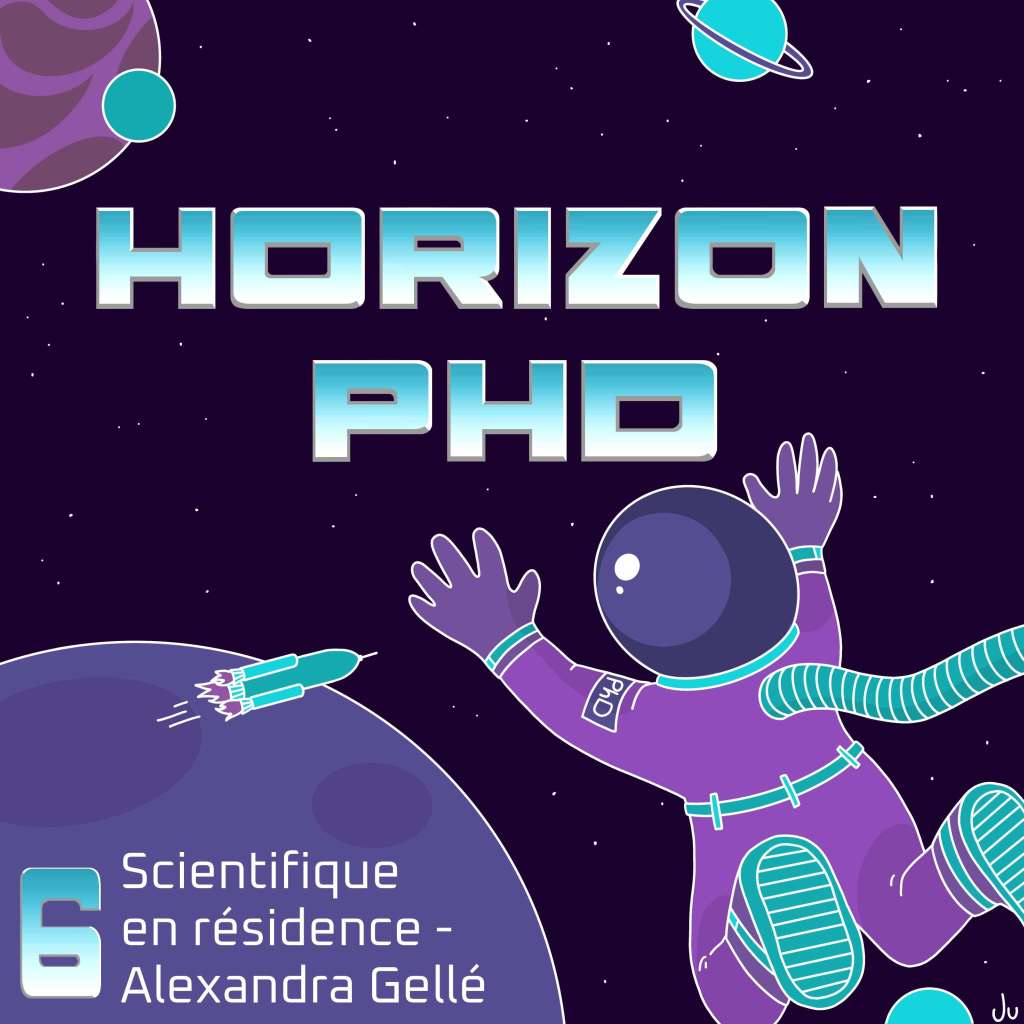
S6 Ep 17Être scientifique en résidence auprès d’un ministère avec Alexandra Gellé
Dans cet épisode d'Au-delà de la thèse, j'accueille Alexandra Gellé, première scientifique en résidence au sein du comité consultatif sur les changements climatiques du ministère de l'Environnement. Ayant récemment terminé son doctorat en chimie verte, Alexandra partage son expérience fascinante dans un poste qui allie recherche, politique publique et communication scientifique. Avec Alexandra, on a parlé des défis qu’elle rencontre, de son rôle diversifié au sein du comité et de son engagement envers des résultats concrets, particulièrement dans le domaine des bâtiments durables et de l'énergie. Prépare-toi à découvrir un parcours inspirant qui démontre l’importance d’intégrer des scientifiques dans les sphères gouvernementales pour une prise de décision fondée sur des preuves. Sois des nôtres pour ce voyage au cœur de l'intersection entre la science, la politique et la société! Avec Alexandra, on a abordé : Un parcours unique : Alexandra a transitionné de la recherche académique vers un rôle gouvernemental, apportant des compétences en matière de vulgarisation scientifique et de communication pour aider à formuler des recommandations concrètes sur les bâtiments durables et les changements climatiques. Impacts concrets et immédiats : Contrairement aux longs projets académiques traditionnels, Alexandra privilégie des résultats tangibles à court terme. Son travail auprès du comité consultatif lui permet de voir l'effet immédiat de son travail sur les politiques publiques. Importance des scientifiques dans le gouvernement : Alexandra souligne la nécessité d'une présence accrue de scientifiques dans le processus décisionnel gouvernemental pour assurer que les décisions soient basées sur des preuves solides et actualisées. Si tu veux en savoir davantage sur les programmes « Scientifiques en résidence » des Fonds de Recherche du Québec, rends-toi sur : PapaPhD.com/HorizonPhDFRQ Bonne écoute et bonne exploration ! Tu aimeras aussi ces épisodes : Hyppolite Dansou – Être scientifique en résidence dans le municipal : PapaPhD.com/horizon-hyppolite-dansou/Horizon PhD – Le consiel scientifique dans un ministère : PapaPhD.com/horizon-phd-darine-ameyedHorizon PhD – Résidence scientifique dans les représentations du Québec à l'étranger : PapaPhD.com/horizon-phd-representationsHorizon PhD – Le conseil scientifique aux villes avec Julie-Maude Normandin : PapaPhD.com/horizon-phd-municipalites
S6 Ep 16How to Position Yourself Outside Academia With Alessandra Wall
Join the Beyond the Thesis Skool community! Welcome to another episode of Beyond the Thesis with Papa PhD, the podcast that explores unconventional career paths for PhD graduates. In today's episode, "How to Position Yourself Outside Academia," our host David Mendes engages in a captivating conversation with Alessandra Wall, an esteemed executive coach, psychologist, and founder of Noteworthy. Alessandra shares her rich insights on how neuroscience can enhance professional interactions and offers valuable strategies for women leaders, particularly those from male-dominated industries. Throughout the episode, Alessandra delves into effective communication techniques, emphasizing the power of emotional storytelling and the strategic use of one's PhD credentials. She also tackles the often daunting task of simplifying complex ideas for broader audiences. With practical advice on managing job interviews, building social capital, and overcoming social anxiety, Alessandra's expertise serves as a guiding light for anyone seeking to leverage their academic skills in new and impactful ways. David and Alessandra also discuss the importance of mentorship, the cultural nuances of academic titles, and the critical role of emotional intelligence in professional settings. So, whether you're contemplating a career pivot or simply looking to enhance your leadership skills, this episode is brimming with actionable insights and inspiring stories to help you thrive beyond the thesis. Tune in and join the conversation! Executive coach, speaker, author, psychologist, and founder, Dr. Alessandra Wall has been coaching top leaders to success for over 20 years.As a women leadership expert, she specializes in supporting senior executives in high-impact, male-dominated industries to lead powerfully and impactfully without compromising their values, career fulfillment, or quality of life.Her work has transformed the lives of hundreds of executive women in the US and Europe and changed workplaces for the better at scores of companies ranging in size from agile start-ups to Fortune 100. What we covered in the interview: 💡 Effective Communication is Crucial: Simplifying complex concepts and using emotional language can significantly enhance your interactions. As Alessandra aptly put it, explain your work as if you're talking to an "intelligent 12-year-old." 🧠 Leverage Neuroscience for Better Interaction: Initiating conversations in a positive emotional state can transform your communication. Strategic breathing techniques and openly acknowledging nervousness can help build rapport during interviews. ⚙️ Transform Academic Skills for Broader Applications Your analytical and strategic skills developed during a PhD can be transformative in various professional settings. Understand and convey the impact you can make with these skills, tailored to diverse audiences. 🔗See the resources section below for Alessandra's links! This episode’s resources: Website | NoteworthyInc.co Thank you, Alessandra Wall! If you enjoyed this conversation with Alessandra, let her know by clicking the link below and leaving her a message on Linkedin:Send Alessandra a message on Linkedin!Click here to share your key take-away from this interview with David! You might also like the following episodes: Sara Thompson – Out of the Box Careers Post-PhDAnca Bodzer –From PhD to Project ManagementAndrew Ceperley – Building Fulfilling Academia Adjacent CareersPaulina Cossette – From Faculty to Editing
S6 Ep 15Le doctorat : une odyssée émotionnelle – Avec Estefania Dominguez
Bienvenue à ce nouvel épisode d'Au-delà de la thèse avec Papa PhD ! Dans cet épisode intitulé "Le doctorat : une odyssée émotionnelle," David Mendes reçoit Estefania Dominguez, formatrice et docteure en didactique des langues et cultures.Forte de son expérience diversifiée, de vendeuse à universitaire, Estefania partage les hauts et les bas de son parcours doctoral, y compris l'isolement, le syndrome de l'imposteur, et la recherche de soutien.Ensemble, David et Estefania discuteront de l'importance du mentorat, de la gestion du temps, et des initiatives collectives pour surmonter les écueils de la thèse. Stephania nous parlera également de son projet "Ma Coach de Thèse" qui offre un accompagnement précieux aux doctorants en quête de guidance et de ressourcement émotionnel.Restez avec nous pour une conversation enrichissante sur le voyage émotionnel que constitue le doctorat et sur les stratégies pour naviguer à travers cette aventure exigeante. Formatrice et docteure en Didactique des langues et des cultures (Université Sorbonne Nouvelle), Estefania crée « Ma coach de thèse » pour proposer l’accompagnement qu’elle aurait aimé avoir pendant son doctorat. Elle considère que le vécu émotionnel de la thèse mérite d’être mieux considéré. Estefania accompagne au quotidien des doctorant.e.s de toutes disciplines et leur offre un espace où leur doutes, difficultés et émotions ont toute leur place. En séances individuelles, lors d’ateliers au sein de sa structure ou des écoles doctorales, elle guide les doctorant.e.s et les masterant.e.s dans leur cheminement pour qu’ils.elles finissent leur recherche sans y perdre leur santé mentale. Les thématiques abordées sont transversales : procrastination, manque de motivation, gestion du temps, organisation, page blanche, émotions, compétences développées en recherche, etc. Quand on définit et on respecte son propre rythme : l'action et la clarté sont au rendez-vous! Points à retenir : 🔑 Communication et soutien collectif : Estefania insiste sur l'importance de ne pas s'isoler durant la thèse. Constituer un groupe de pairs et organiser des sessions de travail collaboratif, comme la méthode Pomodoro, peut offrir un soutien émotionnel et pratique inestimable. 🔑 Gestion du temps et des émotions : Estefania partage ses conseils pour compartimenter le temps et adopter des techniques comme les objectifs SMART et la méthode Pomodoro pour une meilleure gestion de la concentration et de la charge de travail. 🔑 La culture du bien-être : David et Estefania débattent du besoin urgent de remplacer la culture de la performance par une culture du bien-être dans le milieu académique. Estefania encourage une communication ouverte et humanisée entre doctorants et encadrants pour promouvoir la santé mentale et la résilience. Pour écouter l'épisode complet et en savoir plus sur Estefania Dominguez et son initiative "Ma Coach de Thèse", suivez les liens ci-dessous ! 🎧👇 #Podcast #Doctorat #RédactionDeThèse Les ressources de cet épisode : Ma coach de thèse | FacebookMa coach de thèse | Site WebMa coach de thèse | Carte Cadeau Merci Estefania ! Si cet entretien avec Estefania Dominguez t'a plu, fais-lui en part en laissant un commentaire sur ta plateforme d'écoute préférée. Je le lui transmettrai avec plaisir.Tu peux aussi laisser ton commentaire sur X en utilisant ce lien !Si tu trouves de la valeur dans le contenu que je t'apporte chaque semaine, clique sur l'un des boutons ci-dessous et renvoie-moi l'ascenceur :) Don sur PayPal Deviens supporter sur Patreon ! Ou paye-moi un café :) Tu aimeras aussi ces épisodes : Boucar Diouf – Le doctorat - un passeport vers la créativité : PapaPhD.com/Boucar-DioufMartin Carli - La vulgarisation grand public : PapaPhD.com/Martin-CarliOlivier Bernard – Déboulonner la pseudoscience : PapaPhD.
S6 Ep 14Outside the Box Career Paths Post-PhD With Sara Thompson
Join the Beyond the Thesis Skool community! Welcome to another episode of Beyond the Thesis with Papa PhD, the podcast that explores unconventional career paths for PhD graduates.! In today's episode, titled "Outside-the-Box Career Paths Post-PhD," our host David Mendes sits down with Sara Thompson, a seasoned public speaking coach and nonprofit professional. During the conversationm, Sara shares her inspiring journey from academia to the nonprofit sector, shedding light on the challenges and transitions faced by PhD holders when academic roles are limited. Sara's story is a testament to the power of transferable skills and the importance of expanding your network beyond the academic bubble. From her initial aim to enter arts administration to discovering her role at Habitat for Humanity through a serendipitous meeting, Sara illustrates how unexpected connections can lead to rewarding career opportunities. Together, David and Sara delve into strategies for overcoming imposter syndrome, the value of viewing your PhD as versatile training, and the crucial role of presentation skills in career development. Whether you're considering a career shift or looking for inspiration on how to use your advanced degree in new ways, this episode is packed with insights and practical advice. Tune in to hear how Sara’s experiences can help you rethink your career trajectory and embrace new possibilities. Don’t forget to share your thoughts and join the conversation on LinkedIn and YouTube. Now, let’s go beyond the thesis! Sara Thompson has a decade of professional experience working with others to help them reach their public speaking goals. While completing her Ph.D. in Theatre and Performance Studies at the University of Maryland, she realized that academia wasn't the right path for her and started exploring other options of what she could do with her doctoral training. While at Maryland, she taught her department’s oral communication course and soon discovered that helping people find their voices was her passion. It wasn't long before she began her private consulting practice. After completing her PhD, she spent 5 years working in the nonprofit field while coaching and consulting on the side. In November of 2023, she went all in on That Presentation Coach, and has been self-employed ever since. Sara has taught hundreds of people of all ages and from fields as varied as business, law, academia, the sciences, information technology, medicine, and the humanities. No matter what your background or public speaking experience is, she can help. What we covered in the interview: Uncovering Hidden Opportunities: Sara emphasized the importance of expanding your network beyond the academic circle. Believe it or not, a casual conversation about dog walking led to a pivotal job opportunity for her. Focusing on Transferable Skills: Whether it's research, critical thinking, or public speaking, the skills you develop during your PhD are incredibly valuable in various industries. Sarah’s journey to nonprofit management and public speaking consulting is a testament to this! Embracing the Journey and Self-Belief: The transition from academia can be challenging, and imposter syndrome is real. However, adopting the "yes and" mindset from improvisation can lead to unexpected and rewarding opportunities. 🔗See the resources section below for Sara's links! This episode’s resources: Website | ThatPresentationCoach.com Instagram | @thatpresentationcoach Thank you, Sara Thompson! If you enjoyed this conversation with Sara, let her know by clicking the link below and leaving her a message on Linkedin: Send Sara a message on Linkedin! Click here to share your key take-away from this interview with David! You might also like the following episodes: Aditi Paul – Figuring out immigration during graduate school Anca Bodzer –From PhD to Project Management
S6 Ep 13Horizon PhD – Le conseil scientifique dans un ministère avec Darine Ameyed
Cette semaine, j'ai le plaisir de partager avec toi ma récente conversation avec Darine Ameyed dans le cinquème épisode épisode de la série spéciale "Horizon PHD".Au cours de notre conversation, Darine, qui est actuellement cheffe intelligence artificielle et automatisation au Ministère des transports et de la mobilité durable (MTMD), partage son parcours académique et professionnel riche et ses perspectives sur l'impact de la science au-delà du milieu académique.Ensemble, nous avons exploré l'impact tangible que peuvent avoir les projets IA sur la communauté qui nous entoure et l'importance de la collaboration intersectorielle dans ce type de projets.Si tu veux savoir comment tu peux innover et transformer le secteur public avec tes compétences scientifiques, ne manque pas cet épisode inspirant! Avec Darine, on a abordé : Une carrière impactante dans le secteur public : La transition vers le secteur non-académique permet aux scientifiques d'élargir leurs horizons professionnels, de bâtir un réseau plus large et de voir rapidement des résultats tangibles de leur travail sur la communauté. Rôle stratégique de l'IA : Intégrer l'IA et l'automatisation dans les services publics requiert une combinaison d'expertise technique et de vision stratégique, un mandat adapté au profil PhD. Opportunités Pour les Postdoctorants : Le programme de résidence scientifique ouvre des portes pour les scientifiques souhaitant explorer de nouvelles perspectives dans des domaines tels que l'IA et la cybersécurité et contribuer à moderniser les services publics. Si tu veux en savoir davantage sur les programmes « Scientifiques en résidence » des Fonds de Recherche du Québec, rends-toi sur : PapaPhD.com/HorizonPhDFRQ Bonne écoute et bonne exploration ! Tu aimeras aussi ces épisodes : Hyppolite Dansou – Être scientifique en résidence dans le municipal : PapaPhD.com/horizon-hyppolite-dansou/Horizon PhD – Résidence scientifique à la bibliothèque de l'assemblée nationale : PapaPhD.com/horizon-phd-banHorizon PhD – Résidence scientifique dans les représentations du Québec à l'étranger : PapaPhD.com/horizon-phd-representationsHorizon PhD – Le conseil scientifique aux villes avec Julie-Maude Normandin : PapaPhD.com/horizon-phd-municipalites
S6 Ep 12Horizon PhD – Être scientifique en résidence dans le municipal avec Hyppolite Dansou
Dans cet épisode d’Horizon PhD, je m'entretiens avec Hyppolite Dansou, scientifique en résidence à la ville de Sherbrooke. Avec lui, je découvre comment se passe une journée typique pour un scientifique en résidence et Hyppolite explique comment son profil de PhD l'a préparé à ce rôle en raison de sa formation passée et de son expérience avec les municipalités.On a aussi discuté de la richesse des interactions d'Hyppolite avec divers acteurs du milieu ,unicipal et de l'importance d'adapter son travail aux priorités politiques locales.Ne manque pas cette plongée fascinante dans le quotidien d'un scientifique en résidence au service des municipalités et découvre comment cette expérience peut enrichir ton parcours, tant au plan professionnel qu'au plan académique. Avec Hyppolite, on a parlé, entre autres : L'importance de la flexibilité et de la collaboration : Hippolyte met en lumière l'importance de la flexibilité et de la collaboration dans son stage postdoctoral, qui l'apporte à échanger avec différents acteurs municipaux pour adapter son travail aux priorités politiques et aux échéances des élus.Élargissement de l'expertise : Être dans cette position de scientifique en résidence, Hyppolite a pu sortir de sa "bulle" académique et enrichir son expertise en collaborant avec des élus, des acteurs municipaux, et des intervenants privés, tout en appliquant ses connaissances théoriques à des situations réelles.Impact direct sur la prise de décision : En travaillant dans les municipalités, les scientifiques jouent un rôle crucial dans l'éclairage des décisions politiques basées sur des données scientifiques, contribuant ainsi à des développements tangibles au sein de leurs communautés locales.Si tu veux en savoir davantage sur les programmes « Scientifiques en résidence » des Fonds de Recherche du Québec, rends-toi sur : PapaPhD.com/HorizonPhDFRQ Bonne écoute et bonne exploration ! Tu aimeras aussi ces épisodes : Rémi Quirion – Projeter les jeunes chercheur.e.s dans des carrières d'avenir : PapaPhD.com/carrieres-davenir-remi-quirion/Horizon PhD – Résidence scientifique à la bibliothèque de l'assemblée nationale : PapaPhD.com/horizon-phd-banHorizon PhD – Résidence scientifique dans les représentations du Québec à l'étranger : PapaPhD.com/horizon-phd-representationsHorizon PhD – Le conseil scientifique aux villes avec Julie-Maude Normandin : PapaPhD.com/horizon-phd-municipalites
S6 Ep 11La thèse : et après ? Avec Mathilde Maillard
Bienvenue à ce nouvel épisode d'Au-delà de la thèse avec Papa PhD ! Dans cet épisode, je reçois pour une deuxième fois Mathilde Maillard, qui partage avec nous son parcours post-doctoral et ses réflexions sur son passage dans le secteur privé après le doctorat, puis sur son retour à la recherche dans le public. Ensemble, nous abordons l'importance de l'introspection pour orienter sa carrière et l'influence cruciale des réseaux sociaux et des mentors bienveillants.Nous discutons aussi des défis que représente la conciliation de la vie personnelle et professionnelle, de l'entrepreneuriat parallèlement à une carrière académique, et de la valeur d'un environnement de travail humain et soutenant. Une conversation enrichissante si tu te demandes "que faire après la thèse?".Alors, joins-toi à nous et allons au-delà de la thèse avec Mathilde Maillard! Mathilde Maillard est docteure en sciences des matériaux pour la santé depuis avril 2022. Mathilde est également la fondatrice de la microentreprise Bien Dans Ma Thèse, dont l’objectif est de valoriser le doctorat et d’informer sur cette étape académique souvent méconnue.Côté parcours scientifique, Mathilde a travaillé entre la Suisse et la France, débutant à l’École des Sciences Criminelles de Lausanne, puis poursuivant à Bordeaux pour une licence en chimie des matériaux. Ensuite, direction Paris pour un master en ingénierie de la santé, et enfin Lyon, où elle a complété sa thèse de doctorat.Son parcours pluridisciplinaire en matériaux pour la santé est particulièrement axé sur la mise en forme de ces matériaux par fabrication additive, allant des hydrogels aux céramiques. Ses recherches se concentrent sur l'interaction entre les matériaux et la biologie, ainsi que sur les propriétés mécaniques de ces matériaux. Points à retenir : 🔑 Recherche académique vs privé : L'importance de la recherche fondamentale dans les universités, nécessaire car le privé ne peut pas toujours supporter des recherches à long terme. 🔑 Prise en main de sa carrière : L'importance de décider activement de son parcours professionnel plutôt que de se laisser guider passivement. 🔑 Transition et adaptation : Mathilde a partagé comment sa présence active sur les réseaux sociaux lui a permis de saisir des opportunités dans le privé, tout en soulignant les défis rencontrés durant la transition. Suis les liens au bas de la page pour écouter l'épisode complet et découvrez comment Mathilde continue de concilier carrière académique et activités entrepreneuriales. #Podcast #RechercheAcademique #CarrièrePostDoctorale #TransitionProfessionnelle #RéseauxSociaux Les ressources de cet épisode : Bien dans ma thèse | Chaîne YouTubeBien dans ma thèse | Spotify Merci Mathilde ! Si cet entretien avec Mathilde Maillard t'a plu, fais-lui en part en laissant un commentaire sur ta plateforme d'écoute préférée. Je le lui transmettrai avec plaisir.Tu peux aussi laisser ton commentaire sur X en utilisant ce lien !Si tu trouves de la valeur dans le contenu que je t'apporte chaque semaine, clique sur l'un des boutons ci-dessous et renvoie-moi l'ascenceur :) Don sur PayPal Deviens supporter sur Patreon ! Ou paye-moi un café :) Tu aimeras aussi ces épisodes : Boucar Diouf – Le doctorat - un passeport vers la créativité : PapaPhD.com/Boucar-DioufMartin Carli - La vulgarisation grand public : PapaPhD.com/Martin-CarliOlivier Bernard – Déboulonner la pseudoscience : PapaPhD.com/Olivier-BernardRémi Quirion – Projeter les jeunes chercheur.e.s dans des carrières d'avenir : PapaPhD.com/203
S6 Ep 10Le doctorat – passeport vers la créativité avec Boucar Diouf
Posts Bienvenue à ce nouvel épisode d'Au-delà de la thèse avec Papa PhD ! Dans cet épisode spécial, le 300e depuis le lancement de Papa PhD, je reçois Boucar Diouf, scientifique et communicateur hors pair, pour une discussion inspirante et enrichissante. Au fil de notre conversation, Boucar a partagé avec moi son parcours unique de l'océanographie à l'humour, ainsi que son point de vue sur l'importance de suivre sa passion pour la science au-delà des cadres académiques. Dans cette entrevue, tu découvriras comment il a intégré l'humour à la science, d'abord pour enseigner, puis pour promouvoir le dialogue interculturel. Tout au long de notre échange, Boucar offre des conseils précieux pour les jeunes scientifiques, soulignant l'importance de la curiosité multidirectionnelle et de la personnalité, et évoque la sagesse des anciennes générations dans la compréhension de notre lien avec la nature, mais aussi dans le contexte des défis personnels et professionnels. Il a aussi partagé son expérience d'immigration pour le doctorat et les défis de l'adaptation culturelle, tout en mentionnant que c'est la première étape du doctorat, et non la moins importante, pour bien des doctorant·e·s. Prêt à être inspiré·e ? Rejoins-nous pour plonger au-delà de la thèse avec Boucar Diouf ! Boucar Diouf est un scientifique et un communicateur dont la carrière unique mêle humour, science, culture et réflexion sociale. Né au Sénégal, où il a étudié la biologie végétale, Boucar est arrivé au Québec en 1991, où il a obtenu un doctorat en océanographie à l'Université du Québec à Rimouski.Son parcours académique nourrit son style unique, qui allie habilement concepts scientifiques complexes et situations du quotidien. Que ce soit sur scène, dans les médias ou par ses écrits, Boucar Diouf utilise l’humour pour encourager le dialogue, bâtir des ponts entre les cultures et cultiver une plus grande appréciation à la fois de la science et de la diversité humaine.Aujourd'hui, j'ai l'énorme plaisir de l'accueillir pour, avec lui, revisiter son passage au doctorat et sa métamorphose d'océanographe en raconteur de la science, de la société et de la nature humaine.. Points à retenir : 🔑 Suivre ses passions pour une carrière épanouie : Boucar Diouf met en avant l’importance de découvrir ce qui vous passionne vraiment dans vos recherches et activités académiques. En intégrant l'humour à la science, il a pu créer un chemin de carrière épanouissant et original. 🔑 L'importance de la vulgarisation scientifique : Selon Boucar, rendre la science accessible au grand public est crucial. La vulgarisation nous offre un point de contact précieux avec la communauté plus élargie et la société en général. 🔑Cultiver l'humilité et les connexions sociales : D'après Boucar, l'humilité et l'intégration sociale sont essentielles au succès, surtout après avoir obtenu un doctorat. Les relations interpersonnelles et le soutien communautaire jouent un rôle vital dans la réussite professionnelle. Suis les liens au bas de la page pour écouter cet épisode inspirant et assure-toi de partager tes réflexions en commentaire ou sur ta plateforme d'écoute ! #Podcast #Science #Humour #VulgarisationScientifique #Doctorat #Carrière #Inspiration Les ressources de cet épisode : Boucar Diouf Humoriste | Page Facebook Boucar Diouf Humoriste | Page Web Merci Boucar ! Si cet entretien avec Boucar Diouf t'a plu, fais-lui en part en laissant un commentaire sur ta plateforme d'écoute préférée. Je le lui transmettrai avec plaisir. Tu peux aussi laisser ton commentaire sur X en utilisant ce lien !Si tu trouves de la valeur dans le contenu que je t'apporte chaque semaine, clique sur l'un des boutons ci-dessous et renvoie-moi l'ascenceur :) Don sur PayPal Deviens supporter sur Patreon ! Ou paye-moi un café :)
S6 Ep 9Figuring Out Immigration During Graduate School With Aditi Paul
Join the Beyond the Thesis Skool community! Welcome to another episode of Beyond the Thesis with Papa PhD!This week on the podcast, David is bringing you an incredible conversation with Aditi Paul in which they dove deep into her unique career journey from aspiring radio jockey to celebrated professor, and her current mission helping others navigate the complex U.S. immigration system.During this colourful conversation, they discussed the value of diverse experiences, the challenging realities of U.S. visas, and the importance of lifelong preparation and proactive networking.Aditi’s story is a powerful testament to resilience, adaptability, and the immigrant spirit. Don’t miss it! Follow for more insights and inspiration. Aditi Paul is a former professor and mixed-methods researcher based in New York City.In her research, she has used her multidisciplinary background in computer science and communication studies to examine the impact of using human-centered technologies like social networking sites and online dating services.Aditi’s research has been published in top academic journals and has been featured in prominent media outlets such as The Washington Post, Women’s Health, The Telegraph UK, Huffington Post, NBCNews.Today, Aditi is offering clarity to people considering graduate school in the US on the best path to follow to get their EB-1 visa. What we covered in the interview: The Value of Diverse Experiences: Aditi Paul beautifully illustrates how her diverse career aspirations—from radio jockey to entertainment reporter—have converged to help her mentor those seeking EB-1 visas. She emphasizes that seemingly unrelated experiences contribute significantly to future opportunities and personal growth.A Proactive Immigration Strategy is Key: The process of obtaining a visa in the U.S., especially the EB-1 visa for individuals with extraordinary abilities, can be daunting. Aditi shares insightful advice on the importance of early preparation, comparing it to studying for major exams, and stresses the value of building a network and acquiring knowledge over time. Institutional Accountability: Aditi sheds light on the challenges faced by international students, urging institutions to provide adequate support and resources, such as legal assistance, given the financial contributions these students make. She calls for increased accountability and investment in supporting international students’ academic journeys and career transitions.🔗See the resources section below for Aditi's links! This episode’s resources: Website | DrAditiPaul.comBook | The Current Collegiate Hookup Culture Thank you, Aditi Paul! If you enjoyed this conversation with Aditi, let her know by clicking the link below and leaving her a message on Linkedin:Send Aditi a message on Linkedin!Click here to share your key take-away from this interview with David! You might also like the following episodes: Kaitlin Mingirulli – Mastering soft skills in graduate schoolAnca Bodzer –From PhD to Project ManagementAndrew Ceperley – Building Fulfilling Academia Adjacent CareersPaulina Cossette – From Faculty to Editing
S6 Ep 8Non-Traditional Career Paths for PhD Graduates With Andrew Ceperley
Join the Beyond the Thesis Skool community! Welcome to another episode of Beyond the Thesis with Papa PhD! In today's episode, David Mendes chats with Andrew (Andy) T. Ceperley, a seasoned university administrator, consultant, and certified coach.Together, we explore alternative career paths for PhD graduates, such as grant writing and university administration roles, highlighting key transferable skills and the importance of expanding one's academic network throughout our academic journey. Andy recounts his own career journey, from a corporate career in Washington D.C. to becoming a university administrator in multiple universities across the US, and discusses his recent book, "Tonesetters in the Academy."This episode shines a light on the concept of "adjacent" academic careers, the evolving job market, and the importance of mentorship and building relationships beyond one's immediate academic circle. Tune in to hear valuable insights, success stories, and advice on crafting your unique career path in the academic world. Andrew Tracy Ceperley is a seasoned university administrator, a consultant, and a Professional Certified Coach for individuals and teams serving colleges and universities throughout the world. From newer administrators to senior leaders with broad responsibilities and complex portfolios, he has coached hundreds of campus professionals looking to inspire their work with innovation, energy, and authenticity. Ceperley lives in Palm Springs, California with his husband, Skip Horne, and their cat, Dolly. What we covered in the interview: Embrace Curiosity & Adaptability: Andy underscored the importance of maintaining a sense of exploration and curiosity throughout your career. This mindset not only drives personal and professional growth but brings immense satisfaction through ever renewed discovery. Explore Adjacent Career Paths: While many view professorship as the ultimate endpoint for PhD graduates, Andy highlighted the abundance of fulfilling roles outside the tenure track. University administration offers diverse academia-adjacent opportunities to leverage your advanced skills. Build a Strategic Network: Success in academia isn't solely based on credentials. Andy emphasized the significance of creating a supportive network, including mentors (or "Anam Caras") outside your immediate circle. Authentic relationships can open unexpected doors and provide invaluable guidance. 🔗See the resources section below for links! This episode’s resources: Website | AndrewTCeperley.comBook | Tone Setters in the Academy Thank you, Andrew Ceperley! If you enjoyed this conversation with Andrew, let him know by clicking the link below and leaving him a message on Linkedin:Send Andy a message on Linkedin!Click here to share your key take-away from this interview with David! You might also like the following episodes: Kaitlin Mingirulli – Opportunities and Caveats of Generative AIAnca Bodzer –From PhD to Project ManagementAmani Said – How to Make impact with Your CareerPaulina Cossette – From Faculty to Editing
S6 Ep 7S’impliquer dans un comité étudiant avec Hiba Daghar
Bienvenue à ce nouvel épisode d'Au-delà de la thèse avec Papa PhD ! Aujourd'hui, j'ai le grand plaisir de partager avec toi ma conversation avec Hiba Daghar, doctorante en neurosciences au CRHUM. Au long de notre conversation, Hiba a partagé avec moi son parcours académique, ses passions pour la marche et la lecture, et comment ces activités influencent positivement sa santé mentale. Elle a aussi parlé de son implication au sein du comité étudiant du CRCHUM, un rôle qui lui permet de contribuer au bien-être et à la cohésion de la communauté universitaire qui l'entoure.De la lutte contre l'isolement en études post-graduées aux initiatives pour la santé mentale et l'organisation d'événements scientifiques, Hiba à dévoilé les multiples facettes de son engagement et leur impact sur son trajet académique.Rejoins-nous pour apprendre comment le fait de s'impliquer dans un comité étudiant peut t'enrichir tant sur le plan personnel que professionnel.Préparez-toi pour une conversation captivante et pleine de précieux conseils ! Hiba représente le thème de recherche Neuroscience au sein du comité étudiant du CRCHUM. Son projet porte sur la caractérisation de maladies congénitales rares dans différents modèles animaux. Ses travaux portent, entre autres, sur le trouble congénital rare de la glycosylation SRD5A3 et sur la maladie de Cori. Elle s'intéresse particulièrement à la promotion de la recherche scientifique sur les maladies rares. En dehors de son travail de recherche, Hiba s'intéresse à la vulgarisation scientifique et à tout ce qui touche à la santé mentale. À cette fin, elle est active dans différents comités, où elle contribue à l'organisation de symposiums et d'événements de communication scientifique pour le grand public. Dans ses temps libres, elle trouve toujours le temps de faire une bonne randonnée en plein air. Points à retenir : ⚖️ Équilibre de vie : Activités comme la marche et la lecture sont cruciales pour maintenir un bon équilibre mental en dehors des études académiques.🌍 Diversité et communauté : Participer à un comité étudiant offre des interactions enrichissantes avec des personnes venant de divers horizons culturels et académiques.💼 Développement de compétences : Être membre d'un comité aide à développer des compétences transversales et améliore le CV pour les opportunités professionnelles futures.Trouve une foule de conseils pour enrichir ta vie personnelle et académique dans cet épisode!#SantéMentale #ÉquilibreVie #ComitésÉtudiants #Neurosciences #DéveloppementPersonnel #DiversitéCulturelle #Podcast Tu aimes Papa PhD ? Laisse-moi un commentaire > ici < - une courte phrase suffit ! Et inclus ton identifiant Twitter – comme ça je pourrai te remercier personnellement ! Les ressources de cet épisode : Profil X| x.com/DagharHibaComité étudiant du CRCHUM | Page Web Merci Hiba ! Si cet entretien avec Hiba Daghar t'a plu, fais-lui en part en cliquant sur le lien ci-dessous et en lui laissant un message sur LinkedIn :Clique ici pour la remercier sur Linkedin !Clique ici pour partager avec David le principal message que tu retiens de cet épisode !Si tu trouves de la valeur dans le contenu que je t'apporte chaque semaine, clique sur l'un des boutons ci-dessous et renvoie-moi l'ascenceur :) Don sur PayPal Deviens supporter sur Patreon ! Ou paye-moi un café :) Tu aimeras aussi ces épisodes : Julie Lopes – Comment se rendre visible et attractif dans le secteur privé : PapaPhD.com/julie-lopes-adt-2/Carine Monat - Bâtir un trajet qui nous ressemble : PapaPhD.com/Carine-MonatRémi Quirion – Projeter les jeunes chercheur.e.s dans des carrières d'avenir : PapaPhD.com/203Lauriane Gorce – Emploi, impact social et bonheur : PapaPhD.com/Lauriane-Gorce-ADT
S6 Ep 6Mastering Soft Skills With Kaitlin Mingirulli
Join the Beyond the Thesis Skool community! Welcome to another episode of Beyond the Thesis with Papa PhD! Today, we're diving deep into a crucial yet often overlooked aspect of both academic and professional life: soft skills. Joining me is Kaitlin Mingirulli, a Ph.D. graduate in engineering sciences and founder of the Mingirulli Group, dedicated to helping scientists navigate the challenges of grad school and beyond.With Kaitlin, I explore the importance of soft skills such as communication, collaboration, and self-awareness during and after your Ph.D. journey. Kaitlin shares her personal experiences and offers practical advice on managing relationships with advisors, the value of reading body language, and how introverts can excel in people skills.So, whether you're a grad student, an early career researcher, or just someone looking to improve your interpersonal skills, this episode is packed with valuable insights and actionable tips. Tune in and join us as we go beyond the thesis to uncover the true impact of mastering soft skills. Kaitlin Anagnost received her BS degree in Physics from the University of California, San Diego, followed by her PhD in Engineering Sciences from Dartmouth College. While specializing in image sensor design, Kaitlin recognized the importance of soft skills in grad school, the workplace, and at home, and founded Mingirulli Group to help others who need guidance in this area. She now works in Silicon Valley as an engineer and helps others improve their soft skills, graduate school applications, and grad school experiences. What we covered in the interview: The Power of People Skills: Kaitlin shows how soft skills like effective communication, collaboration, and managing advisor relationships during the PhD are invaluable in any workplace. Whether you are an introvert or an extrovert, actively improving your people skills can significantly enhance your career trajectory.Practical Communication Tips: We discussed how to "read the room" and use body language effectively, with tips such as preparing questions in advance and observing body language cues to better understand and engage in conversations.Continuous Improvement: Personal journeys in learning people skills are ongoing. Adhering to consistent communication practices, being aware of situational timing, and practicing self-awareness can go a long way in refining your soft skills.🔗See the resources section below for links! This episode’s resources: Website | MingirulliGroup.comMingirulli Group| Linkedin.com/company/mingirulligroupMingirulli Group| Facebook.com/people/Mingirulli-GroupGrad School Applications Webinar | https://buff.ly/3MPf7dEPhD Advisor-Student RelationshipWebinar | https://buff.ly/47yfmDs Leave a review on Podchaser ! Thank you, Kaitlin Mingirulli! If you enjoyed this conversation with Kaitlin, let her know by clicking the link below and leaving her a message on Linkedin:Send Kaitlin Mingirulli a thank you message on Linkedin!Click here to share your key take-away from this interview with David! You might also like the following episodes: Priten Shah – Opportunities and Caveats of Generative AIAnca Bodzer –From PhD to Project ManagementAmani Said – How to Make impact with Your CareerPaulina Cossette – From Faculty to Editing
S6 Ep 5Reimagining A More Inclusive STEM with Dr. Chris Emdin [Rerun]
Join the Papa PhD Skool community ! Welcome to another insightful episode of Beyond the Thesis with Papa PhD. This week, a treasure from the vault, my Season 4 conversation with Dr. Chris Emdin, a STEM education inclusivity advocate. Join us as we delve into the visionary ideas presented in his latest book, "STEM, STEAM, Make, Dream," where he offers innovative solutions to modern educational challenges.In our conversation, Chris shares his optimism about the boldness, compassion, and potential of the next generation. He passionately discusses the need to integrate maker culture and academic rigor, embrace project-based learning, and move beyond the constraints of standardized tests. We also explore how leveraging technology and promoting inclusivity can transform academic spaces and graduate experiences for people from diverse backgrounds.Chris’s unique approach to education, which includes collaborations with hip hop artists like GZA from the Wu-Tang Clan, creates a revolutionary blend of art and science aimed at engaging historically marginalized communities. He encourages graduate students to stop masking their true selves to fit in, and instead, celebrate their unique identities as an essential strength in academia.Tune in as we tackle the complexities of academic language, the importance of experiential learning, and the critical role of diversity and inclusion in advancing research. This episode is an inspiring journey towards a more inclusive and equitable future in STEM education. Let's get started! Dr. Christopher Emdin is the Maxine Greene Chair for Distinguished Contributions to Education and Professor of Science Education at Teachers College, Columbia University. He is also the Director of Creativity, Innovation and Entrepreneurship At the STEAM DREAM and Ideal Lab.He previously served as Robert Naslund Endowed Chair in Curriculum Theory at the University of Southern California, where he was Director of Youth and Community Partnerships at the USC Race and Equity Center.He is the author of award-winning books including his latest: STEM, STEAM, Make, Dream and From White Folks Who Teach in the Hood. What we covered in the interview: Embracing Authenticity: Chris Emdin encourages graduate students to shed the masks they often wear to fit in and to bring their full, unique selves into their academic journeys. This diversity enriches the academic environment and enhances learning experiences.Innovative Education Models: Emphasizing the integration of maker culture, project-based learning, and affirmations, Chris promotes an educational paradigm shift that moves away from standardized tests and towards more creative, interdisciplinary approaches.Challenging the Status Quo: Chris underscores the need to reimagine educational institutions to make them accessible and welcoming to marginalized communities. Leveraging technology like Zoom to bring experts into the classroom and incorporating cultural references such as hip hop can make learning more relatable and inclusive.🔗See the resources section below for links! This episode’s resources: Chris Emdin | LinkedInChris Emdin | TwitterChrisEmdin.com | WebsiteSTEM, STEAM, Make, Dream | AmazonFrom White Folks Who Teach in the Hood | AmazonRatchetdemic | Amazon Leave a review on Podchaser ! Thank you, Chris Emdin! If you enjoyed this conversation with Chris, let him know by clicking the link below and leaving him a message on Linkedin:Send Chris Emdin a thank you message on LinkedIn!Click here to share your key take-away from this interview with David! You might also like the following episodes: Priten Shah – Opportunities and Caveats of Generative AIAnca Bodzer –From PhD to Project ManagementPaulina Cossette – A Journey From Faculty to EditingStephani Mason – Promoting Diversity in Faculty
S6 Ep 4Réconcilier emploi, impact sociétal et bonheur avec Lauriane Gorce
Bienvenue dans ce nouvel épisode d'Au-delà de la thèse avec Papa PhD, où nous plongeons dans le parcours inspirant de Lauriane Gorce, exploratrice passionnée d'innovation. Lauriane nous rejoint pour discuter de l'importance de cultiver ses rêves d'enfance, de rester authentique et de ne pas s'autocensurer, à travers ses nombreuses expériences professionnelles et académiques. Ensemble avec David Mendes, elle partage ses réflexions sur le rôle crucial des expériences variées, des stages internationaux, et de la boussole intérieure qui guide nos choix au jour-le-jour. Ils aborderont aussi sa transition vers le secteur pharmaceutique, et comment elle intègre aujourd'hui la science ouverte et l'IA responsable pour transformer le développement de médicaments. Restez à l'écoute pour une discussion captivante sur la persévérance, la gestion du stress, et la passion pour les innovations sociétales. Lauriane Gorce a pour mission d’explorer comment les innovations (ce qui est nouveau) peuvent apporter un véritable progrès aux êtres humains et à notre planète (ce qui est meilleur).Elle a travaillé en Europe, en Asie et en Amérique du Nord, ouvrant de nombreuses boîtes noires : science ouverte pour le développement de médicaments ; gouvernance des données et ville intelligente ; reconnaissance vocale et IA responsable ; physique appliquée et traitement d’images ; gestion des risques industriels et interculturalisme ; politiques publiques d’innovation et développement durable ; économie circulaire et infrastructures publiques ; start-ups technologiques et stratégie d’entreprise. Elle est titulaire d’un master en ingénierie généraliste de MINES ParisTech-Université PSL, avec une mineure en affaires publiques et innovation. Points à retenir : Importance de l'individualité dans le monde professionnel : David Mendes et Lauriane Gorce discutent de l'importance de rester authentique et de se démarquer en étant soi-même lors des entretiens d'embauche.Rôle des expériences personnelles dans les transitions professionnelles : Lauriane raconte comment ses diverses expériences, y compris ses moments passés à Singapour, ont façonné sa carrière actuelle dans le secteur pharmaceutique.Gestion du stress et Boussole intérieure : Lauriane évoque son parcours en classe préparatoire, la gestion du stress intense et l'importance de développer une boussole intérieure pour guider ses choix de carrière.Prends quelques moments pour écouter cet épisode. Tu repartiras avec une bouffée d'optimisme, des réflexions profondes et, pourquoi pas, l'élan nécessaire pour poursuivre tes propres rêves.Tu aimes Papa PhD ? Laisse-moi un commentaire > ici < - une courte phrase suffit ! Et inclus ton identifiant Twitter – comme ça je pourrai te remercier personnellement ! Les ressources de cet épisode : Conscience | Site webProgramme de financement « Développer des Médicaments en Science Ouverte » (DMSO) | Page WebRésultats du programme CACHE #2 | Webinaire Merci Lauriane ! Si cet entretien avec Lauriane Gorce t'a plu, fais-lui en part en cliquant sur le lien ci-dessous et en lui laissant un message sur LinkedIn :Clique ici pour la remercier sur Linkedin !Clique ici pour partager avec David le principal message que tu retiens de cet épisode !Si tu trouves de la valeur dans le contenu que je t'apporte chaque semaine, clique sur l'un des boutons ci-dessous et renvoie-moi l'ascenceur :) Don sur PayPal Deviens supporter sur Patreon ! Ou paye-moi un café :) Tu aimeras aussi ces épisodes : Julie Lopes – Comment se rendre visible et attractif dans le secteur privé : PapaPhD.com/julie-lopes-adt-2/Carine Monat - Bâtir un trajet qui nous ressemble : PapaPhD.com/Carine-MonatRémi Quirion – Projeter les jeunes chercheur.e.s dans des carrières d'avenir : PapaPhD.com/203Jean-Sébastien Provost – Accéder au domaine de la science ...
S6 Ep 3A Journey From Faculty to Editing With Paulina Cossette
Join the Papa PhD Skool community ! Welcome back to another insightful episode of "Beyond the Thesis With Papa PhD"! In today's episode, David Mendes sits down with this week's guest, Paulina Cossette, to explore her fascinating journey from academia to a thriving career in editing. Paulina, a former political science professor and author, shares her transition story, highlighting the importance of reframing skills and battling impostor syndrome. Together, they delve into the value of experience outside academia, the challenges of reinventing oneself, and the fulfillment found in new career paths.Whether you're considering a move from the tenure track or seeking balance outside academic confines, this episode is packed with practical advice and inspiration. Join us as we unpack the process of shedding academic identities and embracing new, rewarding opportunities. After spending 12 years in academia as a graduate student and political science professor, and struggling to find joy and work-life balance while working 7 days a week, Paulina finally found the courage to leave the academy in 2019.Since becoming a copy editor, she has built a six-figure business that allows her to live and work wherever and whenever she wants, take real vacations without any guilt, and collaborate with kind, brilliant clients all over the world. Paulina is now sharing what she's learned with scholars who need a change, so they can find joy and true time freedom, too. What we covered in the interview: Reframe and Reskill: Transitioning from an academic career to editing involves reframing your academic skills to appeal to editing agencies. Highlight your precision, timely work, and ability to improve language.Explore Opportunities Beyond Traditional Paths: Many tenured faculty and full professors are moving into editing due to burnout and dissatisfaction with academia. Recognize the variety of career options available to you and the possibility of finding fulfillment in less traditional roles.Join Supportive Communities: Navigating career changes can be challenging, but you're not alone. Engage in communities that offer support through shared experiences and practical advice.🔗See the resources section below for links! This episode’s resources: Website | AcadiaEditing.com"What is Academic Editing and is it Right for Me?" | AcadiaEditing.com/becomeaneditorFacebook | AcadiaEditingServices Leave a review on Podchaser ! Thank you, Paulina Cossette! If you enjoyed this conversation with Paulina, let her know by clicking the link below and leaving her a message on Linkedin:Send Paulina Cossette a thank you message on Linkedin!Click here to share your key take-away from this interview with David! You might also like the following episodes: Priten Shah – Opportunities and Caveats of Generative AIAnca Bodzer –From PhD to Project ManagementAmani Said – How to Make impact with Your CareerStephani Mason – Promoting Diversity in Faculty
S6 Ep 2Generative AI Opportunities And Caveats in Academia With Priten Shah
Join the Papa PhD Skool community ! Welcome to this new episode of "Beyond the Thesis With Papa PhD" where we delve into the transformative shifts in academia and beyond. In today's episode, "Generative AI: Opportunities and Caveats in Academia," David Mendes sits down with Priten Shah, an expert in the application of generative AI in education technology. In their conversation, David and Priten explore the rapid evolution of generative AI, from its early implementations in projects like Sanskrit language processing to the watershed moment of Chat GPT's release in November 2022.They unpack the profound implications of AI in education—highlighting both its immense potential for personalized learning and mastery education, and the ethical concerns it brings, such as plagiarism and over-reliance on AI-generated data, and Priten shares insights into specific AI tools like Perplexity and Elicit for academic research, elaborating on practical applications of AI in creating tailored educational experiences.As we navigate through the benefits and challenges posed by AI, we also examine the crucial need for educators to receive proper training and support to integrate these technologies effectively. So, tune in as we explore how generative AI is revolutionizing the academic landscape while weighing its caveats with careful consideration. Plus, don't miss Priten's thoughts on maintaining authenticity in AI-assisted work and the future of education technology.Enjoy the episode! PRITEN SHAH is CEO of Pedagogy.Cloud, which provides innovative technology solutions to help educators navigate global challenges in a rapidly evolving world. He is the author of Wileys Jossey-Bass publication, AI & The Future of Education: Teaching in the Age of Artificial Intelligence.Priten is also the founder of the civic-focused nonprofit United 4 Social Change. He has a B.A. in philosophy and an M.Ed. in education policy from Harvard University. What we covered in the interview: Revolutionizing Education with AI: Priten Shah discusses the promising applications of generative AI for mastery learning and standards-based learning, highlighting how AI can create personalized practice exercises tailored to students' unique needs and interests.Balancing Benefits and Risks: While AI holds great potential, Priten emphasizes the importance of skepticism and ethical considerations. He warns against over-reliance on AI-generated data for research without proper cross-verification and highlights the need for clear guidance on ethical usage.Empowering Educators and Students: Through tools like socret.ai and various AI research aids like Perplexity and Elicit, AI can significantly support the writing and production processes in higher education, enhancing clarity and efficiency while maintaining human oversight.🔗See the resources section below for links! This episode’s resources: Facebook: Pedagogy CloudWebsite: Pedagogy.cloudWebsite: Pedagog.aiWebsite:NotebookLM.GoogleWebsite: Perplexity.aiWebsite: Elicit.com Leave a review on Podchaser ! Thank you, Priten Shah! If you enjoyed this conversation with Priten, let him know by clicking the link below and leaving him a message on Linkedin:Send Priten Shah a thank you message on Linkedin!Click here to share your key take-away from this interview with David! You might also like the following episodes: Lexa Graham – Using Humor in ScienceAnca Bodzer –From PhD to Project ManagementAmani Said – How to Make impact with Your CareerStephani Mason – Promoting Diversity in Faculty
S6 Ep 1From PhD to Program Management With Anca Bodzer
Join the Papa PhD Skool community ! Welcome to Season 6 of "Beyond the Thesis With Papa PhD", the podcast where we dive deep into the journeys of individuals who have transitioned from academic pursuits to thriving careers in various industries. Today, we have a riveting episode featuring Anca Bodzer, a seasoned program manager specializing in the life sciences vertical. During the interview, Anca shares her insightful journey, transitioning from academia to the localization industry, and the valuable lessons she's learned along the way.In this episode, host David Mendes and Anca delve into the vital importance of authenticity and being genuine in professional interactions and interviews. Anca emphasizes how authenticity is not just a buzzword but a quality highly valued by employers. They explore the significant considerations one should make before pursuing further education or certifications, ensuring it aligns with career goals and personal values.Anca offers a detailed blueprint of her experiences as a project manager and now a program manager, shedding light on the distinctions between these roles and the transferable skills from her PhD that have been invaluable in her career. Together, David and Anca discuss the necessity of learning the language of the new industry when transitioning from academia, and the powerful impact of networking and enduring relationships.Anca's story is one of perseverance, authenticity, and the courageous decision to follow one's inner voice and core values. Whether you're contemplating a similar career move or simply curious about the crossover between academia and industry, this episode is packed with wisdom and actionable advice.Join us as we traverse the path from PhD to program management with Anca Bodzer, and uncover the strategies to translate academic experience into industry success! Anca Bodzer was born and raised in Romania but she moved to Madrid, Spain in 2008 to pursue an MA in Intercultural Communication, Translation and Interpreting. Afterwards, she was awarded a PhD scholarhisp, so 15 years later, she is still living in SpainAnca Bodzer is the holder of a PhD in Translation and Interpreting and she currently works as a Program Manager specialized in the Life Sciences vertical, more precisly in Linguistic Validation of Clinical Outcome Assessments.Anca has strategically pivoted from academia into the localization industry and she has also started her own podcast Languages Surfers as a platform to bridge the gap between professionals from the localization industry and academia. What we covered in the interview: Embracing Authenticity in Your Professional Journey: Authenticity and being your true self are highly valued by employers. Genuine interactions can pave the way for meaningful professional connections and opportunities.Leveraging Transferable Skills: Skills honed during ayour PhD, such as communication, problem-solving, and independence, are highly valuable in the corporate world. Understanding how to articulate these skills in industry language is crucial for a successful transition.The Key Role of Networking: Building and maintaining authentic relationships is vital to your professional development. Networking isn't just about making connections—it's about creating lasting, genuine relationships that can provide support, mentorship, and opportunities.🔗See the resources section below for links! This episode’s resources: Podcast: Language Surfers WebsitePodcast: Language Surfers Spotify Leave a review on Podchaser ! Thank you, Anca Bodzer! If you enjoyed this conversation with Anca, let her know by clicking the link below and leaving her a message on Linkedin:Send Anca Bodzer a thank you message on Linkedin!Click here to share your key take-away from this interview with David! You might also like the following episodes: Lexa Graham – Using Humor in ScienceAndy Churchill –Pre...
S5 Ep 49Pivoting From Academia to the Private Sector With Terence Milstead [Rerun]
In this last stretch of season 5 of Beyond the Thesis with Papa PhD, I am bringing you another treasure from the Papa PhD vault - my great conversation with Terence Milstead, during which he laid out his complete blueprint for a successful career transition from academia into the private sector.Throughout the episode, Terence shares the strategies he used himself, along with the story of his experience pivoting out of his academic career, so be sure to have pen and paper if you are in the process of planning your own transition! Terence Milstead received his Ph.D. in Urban and Regional Planning in 2008 from Florida State University where his research was focused on factors that influence people to invest time, money and emotional energy into upgrading their dwellings, even in unstable housing markets. This question led him to the former Soviet Union on a Fulbright and subsequently to other parts of the globe. But it also ignited a deep interest in qualitative research and the power of deeply listening to others.After completing his Ph.D. Terence started down the academic career path. However, after a few years he realized that a full-time career in academia was not what he had envisioned. So, in 20014, he transitioned to private sector, research-based consulting, relocating to the East Coat. But the path from academic to private-sector consultant was a crooked one and didn't happen overnight. In this episode Terence shares how he came up with a transition plan that ultimately led him to his current position as Head of Qualitative Insights at a global strategic consulting firm based in Washington D.C. Thank you, Terence Milstead ! If you enjoyed this conversation with Terence, let him know by clicking the link below and leaving him a message on LinkedIn:Send Terence Milstead a thank you message on LinkedIn!Click here to share your key take-away from this interview with David! This episode’s resources: Terence Milstead | FacebookTerence Milstead | LinkedinTerence Milstead | Website You might also like the following episodes: Martha Boeglin – Unlocking Your Thesis Writing Super PowersAlbertha Joseph-Alexander – Using Scicomm to Make a DifferenceDavid Giltner – Reconciling the Research and Development MindsetsNatalia Bielczyk – Figuring Out Where You Fit in the Job Market as a PhDAs always, if you find value in Papa PhD and in the content I bring you every week, click on one of the buttons below and send some of that value back to me by becoming a supporter on Patreon or by buying me a coffee :) Now with the added perk of receiving the brand new Papa PhD and PhD Dojo stickers! Support the show on Patreon ! Or buy me a coffee :) Get the Papa PhD Career Readiness Tool kit !
S5 Ep 48Psychologie doctorat et transdisciplinarité avec Pierre-Henri Garnier [Rediffusion]
Salut! Cette semaine sur Papa PhD, je t'apporte un des épisodes les plus écoutés de la saison 3 au long duquel, avec mon invité, Pierre-Henri Garnier, on a parlé psychologie, transdisciplinarité et doctorat, et à la fin de laquelle il a partagé un exercice de réalité virtuelle (sans casque) qui t'aidera à maîtriser ton stress. Bonne écoute! Ce que tu apprendras dans cet épisode : Un exercice d'autohypnose pour t'aider lorsque tu éprouves de l'anxiété ou du stressL'intérêt du doctorat en tant que psychologueL'ambivalence qu'on peut ressentir vers la fin de la thèseL'importance de se sentir soutenu par ses pairs et par son directeur de thèseCe qu'est la cyberpsychologieCe qu'est que l'approche transnumériste en psychologieCe que le passage au doctorat apporte à Pierre-Henri dans son activité libéraleComment les Doctoriales ont ouvert les horizons de Pierre-Henri à l'interdisciplinarité et à la transdisciplinaritéTu aimes Papa PhD ? Laisse-moi un commentaire ici - une courte phrase suffit ! Et inclus ton identifiant Twitter – comme ça je pourrai te remercier personnellement ! Pierre-Henri Garnier est psychologue en libéral au centre interdisciplinaire de thérapie intégrative à Rezé près de Nantes. Il développe notamment une pratique en cyber thérapie utilisant l'hypnose associée à la réalité virtuelle. Il est également docteur en Sciences de l'information et communication. Grace à l'obtention d'une bourse ministérielle, Il a effectué son doctorat sous la direction du professeur Jean-Pierre Courtial, au sein de la maison des Sciences de l'homme à Nantes.Après son doctorat, Pierre-Henri a notamment exercé une dizaine d'années en tant que psychologue au chu de Nantes, en diabétologie pédiatrique puis en soin de support et soin palliatifs.Aujourd'hui il exerce en libéral et ses compétences de docteur structure sa pratique. Elles lui permettent d'être chercheur associé au sein du centre fédératif douleur soin de support et soin palliatifs du chu de Nantes.En lien avec sa pratique de clinicien, il est également enseignant et formateur dans le domaine de la communication et éducation thérapeutique, en hypnose thérapeutique. Il développe notamment avec son ancien directeur de thèse une approche dite transnumériste dans le champ des psychothérapies et nouvelles technologies, la réalité virtuelle plus particulièrement.Un docteur psychologue clinicien transdisciplinaire, transnumériste et passionné de la transe créative et hypnotique. Merci Pierre-Henri ! Si cet entretien avec Pierre-Henri Garnier t'a plu, fais-lui en part en cliquant sur le lien ci-dessous et en lui laissant un message sur LinkedIn :Clique ici pour le remercier sur LinkedIn !Clique ici pour partager avec David le principal message que tu retiens de cet épisode ! Les perles de sagesse de Pierre-Henri : « De mon point de vue de psychologue, il y a tout un travail à faire auprès des étudiants de repérage de ce qui sonne juste pour eux, mais au niveau corporel – pas dans la tête. Sauf que parfois, en tant que doctorant, on est un peu dissocié, on dirait en hypnose. On est plus dans la tête que dans le corps, donc ça peut être vire piégeant d'écouter davantage sa pensée et son intellect que son corps. Et donc, je rejois tout à fait ton message de prévention – chers auditeurs, écoutez votre intuition, ce que vous ressentez et généralement, ça vous guide, en fait. »« Le stress est utile, donc il faut plutôt le filtrer et dialoguer avec lui, et trouver la juste distance entre ce qui est négatif de ce stress-là. On exorcise le côté négatif et on endorcise le côté ressource, sécurisant, positif. Mais l'astuce, c'est vraiment d'être dans le corps, dans la sensation, dans l'exception du corps qui ressent la sécurité. » Les ressources de cet épisode : Pierre-Henri Garnier | LinkedInPierre-Henri-Garnier | FacebookPierre-Henri Garnier | Site WebLes Doctoriales | Site Web – C'est un Wiki - cherche les Doctoriales organi...
S5 Ep 47Does Leaving Academia Make You a Sellout? With Jennifer Polk [Rerun]
To finish season 5 of Beyond the Thesis with Papa PhD, I am bringing you another treasure from the Papa PhD vault - my great conversation with someone who has been hard at work to help PhDs figure out their careers for a long time - Jen Polk of From PhD to Life. Join us on this conversation about a question many of you may have asked yourselves already: is leaving academia tantamount to being a sellout? Jennifer Polk, PhD, is a career coach and educator. In addition to her work with individuals, she regularly facilitates professional development workshops and delivers presentations for graduate students and postdocs. Jen currently serves on the board of directors for CAGS, the Canadian Association for Graduate Studies. She earned her PhD in history from the University of Toronto. Visit her website, FromPhDtoLife.com, to read her writing and learn more about her other services and activities. Thank you, Jen Polk! If you enjoyed this conversation with Jen, let her know by clicking the link below and leaving her a message on Twitter:Send Jen Polk a thank you message!Click here to share your key take-away from this interview with David! This episode’s resources: Jen Polk | LinkedInFrom PhD to Life | TwitterFrom PhD to Life | FacebookFrom PhD to Life | WebsiteIf you find value in Papa PhD and in the content I bring you every week, click on one of the buttons below and send some of that value back to me :) Now with the added perk of receiving the brand new Papa PhD and PhD Dojo stickers, if you become a monthly supporter on Patreon or BuyMeACoffee! Donate safely through PayPal Support the show on Patreon ! Or buy me a coffee :) You might also like the following episodes: Sarah Habibi - Becoming a Full-Time Science CommunicatorAnna Clemens – Best Practices for Paper WritingChris Emdin – Reimagining a More Inclusive STEMPhD Dojo – First Year PhD - Assembling the Expedition Team
S5 Ep 46Best Practices For Paper Writing With Anna Clemens [Rerun]
Are you preparing to write a paper? Do you get anxious, not knowing what the outcome of this long process is going to be? Today, I'm sharing with you a treasure from the Papa PhD vault: my conversation with Anna Clemens, whose specialty is to coach researchers on how to write for journal articles. During our conversation, Anna talked about how to systematize article writing, she talked about the importance of how to communicate with editors, and she also talked about what mindset to have while writing, even if English is not your first language.This episode is a Season 4 favourite and is filled with gold nuggets for you, if you are starting the writing process. Be ready to take notes!Reach out to me or to Anna using the links below, if you have any feedback or any questions for us.Also, I'd love to get to know you better. If you have 60 seconds please fill out the listener survey in this link. Dr Anna Clemens is an academic writing coach with a PhD in Chemistry. In her online program, the Researchers Writing Academy, Anna helps researchers get their papers published in their target journals without procrastinating on the writing. Thank you, Anna Clemens! If you enjoyed this conversation with Anna, let her know by clicking the link below and leaving her a message on LinkedIn:Send Anna Clemens a thank you message on Twitter!Click here to share your key take-away from this interview with David! This episode’s resources: Anna Clemens | LinkedinAnna Clemens | WebsiteFree Training on writing structure with Anna | Register now Leave a review on Podchaser ! Support the show ! You might also like the following episodes: Lexa Graham – Using Comedy in ScienceAndy Churchill – Presenting for ImpactAmani Said – How to Make impact with Your CareerStephani Mason – Promoting Diversity in FacultyAs always, if you find value in Papa PhD and in the content I bring you every week, click on one of the buttons below and send some of that value back to me by becoming a supporter on Patreon or by buying me a coffee :) Support the show on Patreon ! Or buy me a coffee :)
S5 Ep 45Comment se rendre visible et attractif dans le secteur privé avec Julie Lopes
Dans ce nouvel épisode d'Au-delà de la thèse avec Papa PhD, découvre comment devenir visible et attractif dans le secteur privé. Avec mon invitée, Julie Lopes, explore des stratégies comme la visualisation, la présence sur LinkedIn, et le développement d'un mindset positif quand à la recherche d'emploi.Ne manque pas nos conseils pour mieux communiquer avec les entreprises et développer ton réseautage professionnel dès maintenant ! Julie Lopes est docteure en microbiologie reconvertie dans l'entrepreneuriat, puis dans le conseil auprès des étudiant·e·s, doctorant·e·s et docteur·e·s.Sa mission est de les accompagner dans leur développement de carrière après le doctorat. Points à retenir : Valoriser ses ressources intérieures et extérieures : Julie insiste sur l'importance de connaître et de mettre en avant ses propres compétences et expériences, mais aussi de bien comprendre les besoins de l'entreprise pour proposer une véritable valeur ajoutée.Cultiver un réseau professionnel solide sur LinkedIn : La visibilité sur LinkedIn est essentielle, surtout pour les chercheurs. Julie mentionne qu'il y a environ 6000 embauches par jour sur la plateforme ! Il n'est jamais trop tard pour peaufiner votre profil et élargir votre réseau.Prenez le temps de la réflexion et du feedback : La prise de recul, le contrôle du stress et la recherche de feedbacks constructifs sont essentiels pour ajuster son approche et mieux répondre aux attentes des entreprises.Quelles stratégies mettras-tu en place pour améliorer ta visibilité et ton attractivité sur le marché de l'emploi ? Partage tes expériences en commentaire !Tu aimes Papa PhD ? Laisse-moi un commentaire > ici < - une courte phrase suffit ! Et inclus ton identifiant Twitter – comme ça je pourrai te remercier personnellement ! Les ressources de cet épisode : Merci Julie ! RD2 Conseil | LinkedInRD2 Conseil | Site webSi cet entretien avec Julie Lopes t'a plu, fais-lui en part en cliquant sur le lien ci-dessous et en lui laissant un message sur LinkedIn :Clique ici pour la remercier sur Linkedin !Clique ici pour partager avec David le principal message que tu retiens de cet épisode !Si tu trouves de la valeur dans le contenu que je t'apporte chaque semaine, clique sur l'un des boutons ci-dessous et renvoie-moi l'ascenceur :) Don sur PayPal Deviens supporter sur Patreon ! Ou paye-moi un café :) Tu aimeras aussi ces épisodes : Olivier Hernandez – Du génie à l'industrie à l'astrophysique : PapaPhD.com/Olivier-Hernandez-Pt1Carine Monat - Bâtir un trajet qui nous ressemble : PapaPhD.com/Carine-MonatRémi Quirion – Projeter les jeunes chercheur.e.s dans des carrières d'avenir : PapaPhD.com/203Jean-Sébastien Provost – Accéder au domaine de la science des données : PapaPhD.com/Jean-Sebastien-Provost
S5 Ep 44Turn On, Tune In, Master Out – Using Comedy in Science with Lexa Graham
Welcome to another episode of Beyond the Thesis with Papa PhD! Today, we're diving into the fascinating interface between science and comedy. Our guest – Lexa Graham – is a Toronto comedian and writer with a master's degree in chemical engineering. During our conversation, Lexa shares her journey from the lab to the stage, revealing how she struggled with the practical aspects of chemistry but found joy in teaching it, eventually deciding to "master out" instead of pursuing a PhD.In it we explore how Lexa uses humor to make science more approachable, discussing her website DNAatured.com, her 1-on-1 workshops, and her monthly live comedy show, Dirty Science, with which she aims to increase engagement and make complex scientific topics more memorable through laughter.Join us as Lexa explains her transition from academia to comedy, the role of satire in her work, and her veiw on the importance of distinguishing humor from reality in today's age of misinformation. Whether you're a scientist, comedian, or just someone who loves a good laugh, this episode is packed with insights and chuckles. Don't miss it! Lexa Graham is a Toronto comedian and writer with a Master’s degree in Chemical Engineering, and is the creator of DNAtured Journal, a satirical academic journal on academia and science.Lexa runs humour workshops for scientists and other professionals looking to increase their audience engagement, and is a popular host, performer, and panelist for science-based events, including Story Collider, The Association For Science Communicators, Spark After Dark, and The Canadian Association of Science Communicators.Lexa also runs a monthly science comedy show called Dirty Science. What we covered in the interview: Leveraging Humor to Enhance Engagement: Lexa shares how adding humor to science communication can make intricate topics more relatable and memorable for audiences. It fosters a deeper connection and makes learning enjoyable.Navigating Career Paths: We discuss Lexa’s inspirational journey from studying chemical engineering to making her mark in the comedy world, highlighting the importance of flexibility and finding fulfillment in one's career.Challenges of Science-based Satire: We talk about how the pandemic raised the bar in terms of choosing scientific topics and making sure science-based comedy is clearly humorous and not mistaken for real news.🔗See the resources section below for links! This episode’s resources: Website: LexaGraham.caFacebook: Facebook.com/DNAturedjournalX: @denaturedjournal Thank you, Lexa Graham! If you enjoyed this conversation with Lexa, let her know by clicking the link below and leaving her a message on Linkedin:Send Lexa Graham a thank you message on Linkedin!Click here to share your key take-away from this interview with David! Leave a review on Podchaser ! Support the show ! You might also like the following episodes: Vikie Pedneault – Engaging Through ComedyAndy Churchill –Presenting for ImpactAmani Said – How to Make impact with Your CareerStephani Mason – Promoting Diversity in FacultyAs always, if you find value in Papa PhD and in the content I bring you every week, click on one of the buttons below and send some of that value back to me by becoming a supporter on Patreon or by buying me a coffee :) Support the show on Patreon ! Or buy me a coffee :)
S5 Ep 43Conseiller le gouvernement avec un PhD en biochimie avec Gaëlle Bridon
Dans ce nouvel épisode d'Au-delà de la thèse avec Papa PhD intitulé "Du labo au cubicule : Conseiller le gouvernement avec un PhD en biochimie", j'accueille Gaëlle Bridon, qui a transformé son expertise de recherche en biochimie en une carrière dynamique au sein du ministère de l'économie, de l'innovation et de l'énergie. Gaëlle revient sur son parcours allant de la recherche universitaire à la vente d'instruments scientifiques, et partage comment ces expériences l'ont préparée à analyser des projets d'investissement en biotechnologie dans le contexte ministériel. Elle partage aussi des conseils précieux pour les étudiants en fin de doctorat sur la réflexion de leurs aspirations professionnelles et l'importance du réseautage.Rejoignez-nous pour une discussion enrichissante sur les transitions professionnelles, le maintien de l'identité scientifique et les opportunités inattendues au-delà de la thèse. Bonne écoute! Gaëlle Bridon a obtenu un doctorat en biochimie de l’Université de Montréal en 2012 en étudiant au sein de l’unité de recherche en protéomique et spectrométrie de masse bioanalytique sous la direction du Dr Pierre Thibault. Elle est ensuite devenue associée de recherche à l’université McGill pendant 5 ans en œuvrant à la plateforme de métabolomique à l’Institut du cancer Rosalind et Morris Goodman. Elle a par la suite rejoint la compagnie Agilent pendant 5 ans où elle a occupée le poste de spécialiste de produit en spectrométrie de masse pour l’est du Canada, puis le rôle de gestionnaire marketing pour le segment global de métabolisme cellulaire. Elle s’est ensuite rapprochée du secteur des sciences de la vie local au Québec en devenant gestionnaire des communications et analyste-conseil chez BIOQuébec avant de devenir conseillère sectorielle au sein de la direction des sciences de la vie et des technologies environnementales au ministère de l’Économie, de l’Innovation et de l’Énergie. Gaelle est une adepte de la course à pied et de djamboola, elle adore aussi faire la pâtisserie (les macarons français citron-basilic sont les meilleurs !) et jardiner. Avec Gaëlle on a parlé, entre autres : De l'importance de ne pas refuser une opportunité sous prétexte qu'elle semble éloignée de votre domaine d'expertise.De pourquoi il faut être présent et actif sur les plateformes comme LinkedIn pour bâtir un réseau solide.De combien la préparation est cruciale, que ce soit pour une présentation scientifique ou un pitch de vente.De l'importance de valoriser la pluralité des métiers dans la recherche pour enrichir notre communauté.Tu aimes Papa PhD ? Laisse-moi un commentaire > ici < - une courte phrase suffit ! Et inclus ton identifiant Twitter – comme ça je pourrai te remercier personnellement ! Merci Gaëlle ! Si cet entretien avec Gaëlle Bridon t'a plu, fais-lui en part en cliquant sur le lien ci-dessous et en lui laissant un message sur LinkedIn :Clique ici pour la remercier sur Linkedin !Clique ici pour partager avec David le principal message que tu retiens de cet épisode !Si tu trouves de la valeur dans le contenu que je t'apporte chaque semaine, clique sur l'un des boutons ci-dessous et renvoie-moi l'ascenceur :) Don sur PayPal Deviens supporter sur Patreon ! Ou paye-moi un café :) Tu aimeras aussi ces épisodes : Olivier Hernandez – Du génie à l'industrie à l'astrophysique : PapaPhD.com/Olivier-Hernandez-Pt1Carine Monat - Bâtir un trajet qui nous ressemble : PapaPhD.com/Carine-MonatRémi Quirion – Projeter les jeunes chercheur.e.s dans des carrières d'avenir : PapaPhD.com/203Jean-Sébastien Provost – Accéder au domaine de la science des données : PapaPhD.com/Jean-Sebastien-Provost
S5 Ep 42Promoting Faculty Diversity: The PhD Project with Dr. Stephani Mason
Welcome to Beyond the Thesis with Papa PhD! In today's episode, I'm thrilled to have Dr. Stephani Mason join us. Dr. Mason, an associate professor of accounting at DePaul University, is renowned for her impactful work on diversity and representation in academia and beyond. Today, we dive into the transformative impact of PhD programs on career paths and the vital role of researchers in non-academic settings and into the raison d'être of The PhD Project - pomoting diversity in faculty in the accounting/economics space. Join us as Dr. Mason shares insights on preparing individuals to utilize their talents for the public good, the importance of evidence-based decision-making, and the power of mentorship through initiatives like The PhD Project. Listen in to learn how this groundbreaking project has been diversifying corporate America and academia for 30 years, helping underrepresented minorities pursue PhDs in business disciplines. Whether you're interested in educational equity, the PhD journey, or the transformative power of diversity, this episode is packed with wisdom and inspiration! Dr. Stephani Mason is an Associate Professor of Accounting at DePaul University, where she teaches advanced-level undergraduate and graduate courses in accounting and valuation. She earned her Ph.D. in accounting at Rutgers University, her MBA in finance and accounting at the University of Chicago, and her BS in accounting at North Carolina A&T State University. With over a decade working in investment management at JP Morgan Investment Management, the JP Morgan Private Bank, and US Trust, she conducts academic research on accounting/auditing standards, financial regulation, as well as diversity in the accounting and finance industries. Mason serves as a member of The PhD Project Advisory Council (PAC-15), the Black Alliance of Colleges and Employers (BACE) board of directors, the AICPA National Accreditation Commission, Business Valuation Task Force, and Financial Instruments Advisory Group, and the American Accounting Association Meetings Committee and Diversity Initiative. In addition, she is a long-term committee member of the Canadian Academic Accounting Association, British Accounting and Finance Association, European Accounting Association, and Accounting and Finance Association of Australia and New Zealand; is an editorial board member of five academic journals, and founded the WonderWomen of Diversity, a group that hosts discussions about diversity, equity, and inclusion in both the academic and corporate settings. What we covered in the interview: Broadening Horizons Beyond Academia: Dr. Mason discussed the critical need for researchers in non-academic roles, highlighting examples from the medical field and public policy institutions, showing how PhDs can solve complex real-world problems.Diversity and Representation: Emphasizing the importance of diverse perspectives in decision-making, Dr. Mason brings attention to how representation in academia and various professions can close the gap between students' aspirations and career paths, enriching education for all.Supportive Communities and Mentorship: The PhD Project, celebrating its 30th anniversary, provides a supportive network for underrepresented individuals. Mentorship, coaching, and events help individuals navigate their academic journeys and promote diversity in both academia and corporate America.🔗See the resources section below for links! This episode’s resources: Website: PhDproject.orgFacebook: Facebook.com/thePhDprojectLinkedin: Linkedin.com/company/thephdproject Thank you, Dr. Stephani Mason! If you enjoyed this conversation with Stephani, let her know by clicking the link below and leaving her a message on Linkedin:Send Dr. Stephani Mason a thank you message on Linkedin!Click here to share your key take-away from this interview with David! Leave a review on Podchaser !
S5 Ep 41Pushing Through Obstacles in Graduate School with Joe Makkerh [Rerun]
In this episode of Beyond the Thesis with Papa PhD I bring you a treasure from the vault from season 1 of the podcast – my conversation with Joe Makkerh, who shares remarkable journey from the rigours of academic research to the pharmaceutical industry, and ultimately to becoming a business owner. Joe shares invaluable insights on the importance of being approachable, of selflessly helping others, and on the courage to seek help when you need it.In it we delve into the romanticized perception of academia often portrayed in the media versus the actual resilience needed to overcome the failures that are part and parcel of the scientific process. During our conversation we discussed the solitary nature of academic research projects and the blurred lines between personal life and work, exacerbated by the guilt associated with taking time off work—something many graduate students grapple with.We touch upon critical skills acquired during graduate studies, such as problem-solving, rapid research, and data simulation, and their lasting impact on professional life. Joe opens up about his transition from academia to industry, the value of maintaining a strong network, and the importance of continual learning and personal growth.Stay tuned as Joe recounts fascinating anecdotes illustrating the important balance between competition and cooperation in academia. This episode is packed with advice for young graduates, emphasising employability, understanding finance, and the crucial role of relationships in career success.Don’t miss this touching conversation filled with wisdom and practical tips on navigating both academic and professional landscapes. Be sure to subscribe to "Beyond the Thesis with Papa PhD" for more inspiring stories and insightful discussions about life after the PhD. Joe Makkerh is a former scientist, now an entrepreneur working in high-end audio. Since finishing his PhD in cellular and molecular zoology, Joe transitioned from researcher to academic administrator to MBA student to business owner. His academic career has taken him from London to Heidelberg, to Montreal, where he now develops his business. What we covered in the interview: The Power of Asking for Help: Many graduate students struggle with seeking assistance beyond their academic work. It's crucial to realise that asking for help is a strength, not a weakness. Building a supportive network can make a significant difference.Transitioning from Academia to Industry: Moving from the world of academic research to the pharmaceutical industry offered Joe Makkerh valuable lessons in resilience and dealing with failure. Embracing these challenges head-on is key to personal and professional growth.Maintaining Work-Life Balance: The blurred lines between personal life and work can take a toll on health and relationships. Prioritising self-care and setting boundaries is essential for long-term success and wellbeing. This episode’s resources: Website: baetisaudio.com Thank you, Joe Makkerh! If you enjoyed this conversation with Joe, let him know by clicking the link below and leaving him a message on Linkedin:Send Joe Makkerh a thank you message on Linkedin!Click here to share your key take-away from this interview with David! Leave a review on Podchaser ! Support the show ! You might also like the following episodes: Vikie Pedneault – Engaging Through ComedyAndy Churchill –Presenting for ImpactAmani Said – How to Make impact with Your CareerInes Thomas Almeida – A Winding Journey From Biology to MusicologyAs always, if you find value in Papa PhD and in the content I bring you every week, click on one of the buttons below and send some of that value back to me by becoming a supporter on Patreon or by buying me a coffee :) Support the show on Patreon ! Or buy me a coffee :)
S5 Ep 40ComSciCon QC – Ton tube à essai pour apprendre à vulgariser
Dans ce nouvel épisode d'Au-delà de la thèse avec Papa PhD, je plonge au cœur du congrès ComSciCon 2024 pour explorer les évolutions marquantes de l'événement au cours des cinq dernières années et pour avoir le témoignage des jeunes scientifiques qui y participent cette année. Découvre c'est quoi ComSciCon Québec, l'importance grandissante de la communication scientifique pour les jeunes scientifiques et les ateliers innovants proposés durant les trois jours du congrès pour enrichir tes compétences. Mes invité·e·s partagent leurs expériences, l'impact de la communication scientifique sur leur carrière, et l'influence positive de la diversité et de la collaboration dans une communauté dynamique et fleurissante. Ne manque pas cette immersion inspirante dans l'univers de ComSciCon QC, ton tube à essai pour apprendre à vulgariser ! Dans cet épisode, j'ai discuté avec Marion Cossin, Gaële Lajeunesse, Berthié Gouin-Ferland et Billie Maubois de l'évolution de ComSciCon au cours des cinq dernières années. On a parlé du concept de ComSciCon Québec et des activités marquantes de cet événement. Tu découvriras comment Marion a su marier ses talents artistiques et scientifiques, comment Berthié trouve de la sérénité dans la communication, et comment Billie a redécouvert sa voix de vulgarisatrice et tu entendras aussi les témoignages de personnes de la cohorte 2024 sur leur expérience dans cette édition 2024 du congrès. Ensemble, ils ont parlé de l'importance pour eux de la culture de respect et d'inclusivité au sein de l'équipe organisatrice, et de l'impact positif de l'événement sur leur parcours professionnel et personnel.Installez-toi confortablement et préparez-toi à être inspiré·e par ces parcours riches et variés, tous réunis par une même passion : rendre la science accessible et fascinante pour tous. Bonne écoute ! On a parlé, entre autres : De l'importance de la communication scientifique : Marion Cossin et Berthié Gouin-Ferland soulignent comment la communication scientifique aide les jeunes scientifiques à relier des intérêts variés, leur apporte de la sérénité, et leur facilite l'accessibilité et la confiance.De diversité et inclusion au cœur de ComSciCon QC : L'événement favorise une ambiance collaborative et sécuritaire, mettant en avant l'accessibilité aux experts et la reconnaissance du congrès. L'équipe crée une culture de respect, de communication et d'inclusivité au sein de l'équipe et de la cohorte.De l'évolution et de l'impact de ComSciCon QC : Les anciens participants publient dans des grands journaux et réalisent diverses initiatives de vulgarisation et représentent ainsi l'impact durable de l'événement sur les carrières dans la communication scientifique.Tu aimes Papa PhD ? Laisse-moi un commentaire > ici < - une courte phrase suffit ! Et inclus ton identifiant Twitter – comme ça je pourrai te remercier personnellement !Si cet épisode spécial ComSciCon QC t'a plu, fais-leur en part en cliquant sur le lien ci-dessous et en leur laissant un message sur LinkedIn :Clique ici pour remercier l'équipe ComSciCon QC sur Linkedin !Clique ici pour partager avec David le principal message que tu retiens de cet épisode !Si tu trouves de la valeur dans le contenu que je t'apporte chaque semaine, clique sur l'un des boutons ci-dessous et renvoie-moi l'ascenceur :) Don sur PayPal Deviens supporter sur Patreon ! Ou paye-moi un café :) Tu aimeras aussi ces épisodes : Thèsez-vous ! – Écrire sa thèse une tomate à la fois : PapaPhD.com/thesez-vous-adtCarine Monat - Bâtir un trajet qui nous ressemble : PapaPhD.com/Carine-MonatRémi Quirion – Projeter les jeunes chercheur.e.s dans des carrières d'avenir : PapaPhD.com/203Michel Lacasse – Devenir parent pendant le doctorat : PapaPhD.com/Michel-Lacasse-adt

S5 Ep 40Building a Career Out of Making Science Fun With Elodie Chabrol
In this new episode titled "Building a Career Out of Making Science Fun", I sit down with the ever-enthusiastic Elodie Chabrol to dive into the world of science communication. During our conversation, Elodie shares her inspiring journey from a traditional research career to becoming a full-time freelance science communicator.Throughout our conversation, Elodie talks about the challenges and rewards of her career shift and about her overarching goal of countering misinformation through effective science communication. Join us for this energetic conversation and discover how science can be both enlightening and entertaining while bridging the gap between scientific communities and the general public. Elodie Chabrol has a PhD in Neurogenetics and is the international director for the Pint of Science festival. She is also a freelance science communicator involved in different freelance projects like training, moderations and podcasts.Elodie's mission is to make science accessible to everyone, everywhere show the human side of it. What we covered in the interview: Transforming Science Communication: Discover how Elodie has contributed to making science fun and relatable for non-specialist audiences.Pint of Science Festival: Learn about the international festival that brings science to local pubs, offering a relaxed, interactive environment for exchanges with the people behind the research.Inspiring Young Researchers: Elodie discusses how taking part in science communication events helps budding scientists communicate their research effectively and think outside their academic box.Personal Insights: Hear anecdotes from Elodie's journey, including how science communication helped her redefine her identity and broaden her professional horizons.🔗See the resources section below for links! This episode’s resources: Website: www.elodiechabrol.com/Twitter: @eloscicomm Thank you, Elodie Chabrol! If you enjoyed this conversation with Elodie, let her know by clicking the link below and leaving her a message on Linkedin:Send Elodie Chabrol a thank you message on Linkedin!Click here to share your key take-away from this interview with David! Leave a review on Podchaser ! Support the show ! You might also like the following episodes: Vikie Pedneault – Engaging Through ComedyAndy Churchill –Presenting for ImpactAmani Said – How to Make impact with Your CareerInes Thomas Almeida – A Winding Journey From Biology to Musicology
S5 Ep 39Vulgarisation : de la recherche à l’entreprenariat – avec Manon Fantino-Lalonde
Bienvenue dans ce nouvel épisode d'Au-delà de la thèse avec Papa PhD intitulé "Vulgarisation : de la recherche à l’entreprenariat" ! Dans cette entrevue avec Manon Fantino-Lalonde je discute de la vulgarisation scientifique et de son lien avec l'entrepreneuriat scientifique.Au fil de notre conversation, Manon partage son parcours, de son passage par la compétition sportive en France à sa passion pour la nutrition. Ensemble, nous avons a tracé des liens entre la diversité des pratiques et des routines nécessaires à la performance de haut niveau en ski alpin et son approche multidisciplinaire en recherche et en entrepernariat.Une conversation inspirante à ne pas manquer ! Après avoir terminé un premier diplôme en diététique en France, Manon a poursuivi ses études à la Faculté de médecine de lUniversité de Montréal en obtenant un baccalauréat, puis une maîtrise en nutrition. Elle est nutritionniste et membre de l'Ordre professionnel des diététistes du Québec (ODNQ) depuis 2019. Actuellement en deuxième année de doctorat à l'Université McGill, ses recherches visent à mieux comprendre le rôle des facteurs génétiques et environnementaux sur les comportements alimentaires et le risque de maladies cardiométaboliques. Elle a eu l'occasion de présenter une partie de ses recherches lors de la finale de "Ma thèse en 180 secondes" de McGill, où elle a remporté le premier prix dans la catégorie francophone. Avec Manon, on a parlé, entre autres : De l'importance de profiter de tous les services que vous offre votre université pour enrichir votre parcours académique.De la complémentarité entre la recherche académique et l'entrepreneuriat.De de l'effet de levier qu'apporte la vulgarisation à différents plans de votre vie de jeune scientifique.De la vision de Manon pour les années à venir, au plan de la recherche et au plan entreprenarial.Tu aimes Papa PhD ? Laisse-moi un commentaire > ici < - une courte phrase suffit ! Et inclus ton identifiant Twitter – comme ça je pourrai te remercier personnellement ! Merci Manon ! Si cet entretien avec Manon Fantino-Lalonde t'a plu, fais-lui en part en cliquant sur le lien ci-dessous et en lui laissant un message sur LinkedIn :Clique ici pour la remercier sur Linkedin !Clique ici pour partager avec David le principal message que tu retiens de cet épisode !Si tu trouves de la valeur dans le contenu que je t'apporte chaque semaine, clique sur l'un des boutons ci-dessous et renvoie-moi l'ascenceur :) Don sur PayPal Deviens supporter sur Patreon ! Ou paye-moi un café :) Tu aimeras aussi ces épisodes : Olivier Hernandez – Du génie à l'industrie à l'astrophysique : PapaPhD.com/Olivier-Hernandez-Pt1Erika Dupont – Le parcours doctoral est-il au service des jeunes chercheur·e·s ?Rémi Quirion – Projeter les jeunes chercheur.e.s dans des carrières d'avenir : PapaPhD.com/203ComSciCon Québec – ComSciCon QC - Ton tube à essai pour apprendre à vulgariser
S5 Ep 38Leveraging Science Communication as a PhD With Leslie Berntsen
Storytelling is not just a tool for entertainment; it is a powerful medium for communicating complex ideas in a relatable and impactful manner. In this episode of Beyond the Thesis with Papa PhD, Dr. Leslie Berntsen highlights why leveraging science communication is important, as a PhD, and how embedding your results within personal stories makes science more accessible and engaging to the general public. Adding this human touch to how we talk about science allows us to bridge the gap between the scientific community and non-academic audiences. Dr. Leslie Berntsen is a social scientist, once-and-former college professor, and the current Director of Education and Research at The Story Collider. She specializes in inclusive pedagogy, teaching social issues, and popular science communication and is the recipient of four national teaching awards from the Society for the Teaching of Psychology and the Society for the Psychological Study of Social Issues over a seven year period. (She tries to remain as chill about this as a person possibly can.) Leslie’s writing has been featured in The Chronicle of Higher Education, Science, and The Huffington Post, and you can also find the earliest drafts of her forthcoming op-eds on Twitter – which she will stubbornly continue to use until the very last server crashes. Her high school debate team once named her “Most Likely to Color-Code Her Plans to Grassroots Resistance” and she has – with no effort required – been living up to it ever since. What we covered in the interview: The Human Side of Science: Through her work with Story Collider, Leslie aims to highlight the human side of science by tying it to personal experiences and real-life scenarios.Career Development through Storytelling: Leslie sheds light on the value of introspection and self-awareness in developing character and career skills. Whether it is for job interviews, academic presentations, or grant applications, storytelling can be a powerful arrow in a young researcher's quiver.Story Fellows Programs: Story Collider fosters initiatives that encourage university students to use storytelling for public scholarship and science communication. These programs involve workshops where participants craft and present their science-related stories on stage.🔗See the resources section below for links! This episode’s resources: 3 Story Collider storiesNina Christie (harm reduction researcher with a very personal connection to the work)Jaclyn Siegel (anorexia researcher dealing with her own anorexia)Rebecca Brachman (accidentally injected herself with diptheria toxin)Papers on the effects of jargon in science papersThe negative effects of jargon on readers' interest for science and scientific fluency – Shulman et al., 2020 ; Bullock et al., 2019The negative effect of jargon in paper titles on citation – Martinez et al., 2021Leslie's socialsWebsite: leslie-bern.com/contactTwitter: @leslie_bern Carrier pigeon sent to her home 🕊️The Story ColliderListen to the podcastAttend a live show in any of the Home Stage citiesLearn more about their educational programming + plot with them to help bring a STEM storytelling fellowship program to your university: [email protected] Thank you, Leslie Berntsen! If you enjoyed this conversation with Leslie, let her know by clicking the link below and leaving her a message on Linkedin:Send Leslie Berntsen a thank you message on Linkedin!Click here to share your key take-away from this interview with David! Leave a review on Podchaser ! Support the show ! You might also like the following episodes: Sue Ashford – Preparing for life as a PhDJessica Schleider –Dealing With Mental Unrest in Graduate SchoolJonathan Adler – Avoiding Career Narrative PitfallsGloria Mark – Optimizing Focus and AttentionAs always, if you find value in Papa PhD and in the content I bring you every week,
S5 Ep 37Managing Your Imposter Experience During and Beyond Your Degree with Marc Reid [Rerun]
This week on Beyond the Thesis With Papa PhD, I am bringing you a listener favorite about the imposter phenomenon in academia and beyond – my Season 4 conversation with Marc Reid, PhD, author of You Are Not a Fraud - A Scientist's Guide to the Imposter Phenomenon.Imposter feelings are ubiquitous in graduate school and throughout your career, especially after pivots into a new position or a new space.Marc has put a lot of thought into this question and I am super grateful he could come on the show and share his experience dealing with imposter feelings in his own life as a young researcher and what drove him to write a book on the subject.Also, I'd love to get to know you better! If you have 2 minutes, please fill out the Papa PhD listener survey by clicking on this link. Donate to the show and Support this podcast.Marc was born and raised in Glasgow, Scotland.He completed his Masters and Carnegie Trust-sponsored PhD in Chemistry at the University of Strathclyde. Marc was then a postdoctoral research associate at the University of Edinburgh. During that time, he was inducted into the SciFinder Future Leaders in Chemistry programme.Marc’s independent academic career has been fuelled by prestigious Leverhulme Trust and UKRI Future Leaders Fellowships. He has held lecturing positions at the University of Bristol and the Hunter Centre for Entrepreneurship. In 2021, Marc completed the altMBA.His research interests include physical organic chemistry, computer vision, virtual reality, process safety, and the Imposter Phenomenon.He lives with his wife, two kids, and border terrier in 'sunny' Glasgow. Thank you, Marc Reid! If you enjoyed this conversation with Marc, let him know by clicking the link below and leaving him a message on LinkedIn:Send Marc Reid a thank you message on Twitter!Click here to share your key take-away from this interview with David! This episode’s resources: Marc Reid | LinkedinMarc Reid | FacebookYou Are Not a Fraud | Get Marc's bookMarc’s list of failures wouldn’t fit on a short biography (see: https://www.dr-marc-reid.com/cv-of-failures). Leave a review on Podchaser ! Support the show ! You might also like the following episodes: Martha Boeglin – Unlocking Your Thesis Writing Super Powers Anushka Khasnobish – The Power of Mentorship During a Career Pivot Terence Milstead – A Roadmap to Pivoting Into the Private Sector Natalia Bielczyk – Figuring Out Where You Fit in the Job Market as a PhDAs always, if you find value in Papa PhD and in the content I bring you every week and if you're not a nerd like me and don't want to delve into Podcast 2.0, click on one of the buttons below and send some of that value back to me by becoming a supporter on Patreon or by buying me a coffee :) Support the show on Patreon ! Or buy me a coffee :) Get the Papa PhD Career Readiness Tool kit !
S5 Ep 36Thriving as a First Gen Graduate Student With Dominique Louër
In this week's episode of Beyond the Thesis With Papa PhD, I sat down with the Dominique Louër, a 4th-year PhD candidate at McGill University. Dominique shared her journey as a first-gen graduate student overcoming multiple challenges, from losing a supervisor to facing down imposter syndrome. Despite the hurdles she faced, Dominique championed a passion for neurolinguistics and clinched victory at the recent McGill 3MT final. Her resilience and the importance of mentorship and community in navigating academia shone through her story and will be an inspiration to you. Join us to hear Dominique's invaluable insights on pushing past adversity and thriving in pursuit of academic and personal growth! Dominique is a fourth-year PhD candidate in Communication Sciences and Disorders at McGill University, specializing in neurolinguistics. Her research explores the intersection of bilingualism, brain function, and aging. She completed her undergraduate studies in linguistics at the University of Winnipeg and went on to earn two master’s degrees at the University of Waterloo in linguistics and psychology, respectively. Drawing from her multidisciplinary background in linguistics and psychology, she advocates for holistic aging solutions, emphasizing the importance of factors like bilingualism in maintaining cognitive health. In her spare time, Dominique enjoys spending time outside, drinking overpriced lattes with friends, and bouldering. What we covered in the interview: Resilience in Adversity: Dominique opens up about negative feedback in her early educational experiences, her battle with an autoimmune disease post-COVID-19, and a challenging change of supervisor mid-PhD.Passion as a Driving Force: Despite hurdles, her love for research and he passion for exploring the intersections of bilingualism, brain function, and aging keeps her driven. Dominique's determination to contribute holistic solutions to aging and cognitive health fuels her motivation.A Positive Mindset: Dominique recently won a 3-minute thesis competition, exemplifying her ability to effectively communicate complex scientific ideas. Her story is a testament to the power of perseverance and positive outlook.🔗See the resources section below for links! This episode’s resources: Dominique Louër | Twitter Thank you, Dominique Louër! If you enjoyed this conversation with Dominique, let her know by clicking the link below and leaving her a message on Linkedin:Send Dominique Louër a thank you message on Linkedin!Click here to share your key take-away from this interview with David! Leave a review on Podchaser ! Support the show ! You might also like the following episodes: Sue Ashford – Preparing for life as a PhDJessica Schleider –Dealing With Mental Unrest in Graduate SchoolSheena Howard – How to Leverage Academic BrandingMelissa Gismondi – The Power of Graduate InternshipsAs always, if you find value in Papa PhD and in the content I bring you every week, click on one of the buttons below and send some of that value back to me by becoming a supporter on Patreon or by buying me a coffee :) Support the show on Patreon ! Or buy me a coffee :)
S5 Ep 35The PhD Application Process 101 With Don Martin
This week on Beyond the Thesis With Papa PhD, I'm thrilled to welcome Don Martin, an expert in graduate enrollment and the founder of Grad School Roadmap. In this episode, Don shares his personal journey from being the first in his peer group to attend college and graduate school to helping others overcome the hurdles of graduate program applications. We delve into the nuances of the graduate admissions process, emphasizing the importance of interpersonal skills, of good recommendation letters, and also why academic credentials aren't the only predictor of success.Join us as we explore why pursuing a PhD depends on more than mere academic achievements and learn how to find the right graduate program that aligns with both your educational and personal aspirations. And stay tuned for the giveaway of five copies of Don Martin's book - Roadmap for Graduate School! Don Martin spent 28 years in full-time enrollment management, including positions at Columbia, University of Chicago and Northwestern University. He founded Grad School Road Map in 2008 and has coached over 400 Ph.D. applicants since then, with a 97% acceptance rate. What we covered in the interview: The Power of Soft Skills: Don emphasizes the critical role of interpersonal relationships, communication skills, and trust in evaluating a candidate's potential, revealing how these factors can often weigh as heavily as academic credentials.Diversity in Graduate Admissions: Don shares inspiring stories of applicants who, despite not fitting the high academic achiever stereotype, have excelled in their fields.Advice for International Students: For international candidates, Don underscores the importance of doing thorough research on graduate programs, focusing on accreditation, community fit, and personal interactions over mere rankings.Navigating Challenges: We discussed the hurdles faced by minorities and underrepresented groups, and explored strategies to boost self-belief and persistence in pursuing advanced degrees.Don's Personal Journey: From being the first in his family to attend college to guiding prospective grad students, Don's personal mission is deeply rooted in his own educational challenges and triumphs, making his advice not only practical but also empathetic.????See the resources section below for links! This episode’s resources: Don Martin | WebsiteRoadmap for Graduate School | Book Thank you, Don Martin! If you enjoyed this conversation with Don, let him know by clicking the link below and leaving him a message on Linkedin:Send Don Martin a thank you message on Linkedin!Click here to share your key take-away from this interview with David! Leave a review on Podchaser ! Support the show ! You might also like the following episodes: Sue Ashford – Preparing for life as a PhDJessica Schleider –Dealing With Mental Unrest in Graduate SchoolSheena Howard – How to Leverage Academic BrandingMelissa Gismondi – The Power of Graduate InternshipsAs always, if you find value in Papa PhD and in the content I bring you every week, click on one of the buttons below and send some of that value back to me by becoming a supporter on Patreon or by buying me a coffee :) Support the show on Patreon ! Or buy me a coffee :)
S5 Ep 34Preparing For Life as a PhD With Sue Ashford
Welcome to this insightful episode of Beyond the Thesis With Papa PhD, where we delve deep into the complexities of embracing life as a PhD and the broader challenges faced by those in academia, through the prism of our guest's research on high-performing professionals from the gig economy. In this episode I'm joined once again by the Professor Sue Ashford from the University of Michigan, whose prolific research on self-leadership and personal growth sheds light on the unique pressures and opportunities faced by independent workers. Our discussion pivots around the emotional and psychological facets of working outside traditional organizational frameworks—themes that resonate profoundly with both gig workers and academics. Sue Ashford is the Michael and Susan Jandernoa Professor in the Management and Organizations group at the University of Michigan, Stephen M. Ross School of Business. She has previously taught at the Tuck School of Business at Dartmouth College and received her MS and Ph.D. degrees from Northwestern University.Sue’s passion is using her teaching and research to help people to be maximally effective in their work lives, with an emphasis on self-leadership, proactivity, personal growth, and leadership and its development. Her teaching at the Ross School currently focuses on the executive MBA program (negotiation) and several short-term executive education programs (leadership, change, growth). She also teaches regularly in the Leading Women Executives program of the Corporate Leadership Center and for various companies.Sue is an award-winning scholar, having published papers in the fields’ best journals in the areas of leadership development and leader effectiveness, middle management voice and issue selling, job insecurity, and individual proactivity (e.g., self-management and feedback seeking). Her research has been summarized as advice for managers in the Harvard Business Review, the Harvard Business Review blog, New York Magazine and The Conversation. Sue is a Fellow of the Academy of Management, recognizing the top 10% of scholars worldwide. She was awarded the prestigious Career Achievement Award for Distinguished Scholarly Contributions to Management by the Academy of Management in 2017 and the OB Division Lifetime Achievement Award in 2020. Her recent book, The Power of Flexing: How to Use Small Daily Experiments to Create a Life-Changing Growth (Harper Collins), brings together all of her research and teaching over the years into one place to help people grow their personal and interpersonal effectiveness – to be both successful in today’s world and the person they most want to be.In our conversation, Sue emphasizes the critical importance of maintaining a sense of self-value and the dangers of neglecting self-care, which can lead to burnout and exhaustion. Drawing on her substantial work, including the article "Agony and Ecstasy in the Gig Economy," we explore the concept of 'holding environments' and the significance of creating supportive networks that anchor one’s professional life. Whether you're navigating the solitary waters of a PhD or building your post-PhD career, this episode offers valuable perspectives on building resilience and fostering meaningful connections to thrive in increasingly personalized work landscapes. Join us as we chart these intricate terrains on Beyond the Thesis With Papa PhD! What we covered in the interview: Purpose and Self-Value – Understand your WHY to drive productivity and navigate the academic landscape effectively.Intentional Connection – Cultivate relationships that offer support, feedback, and a sense of community. They are as vital as your research.Routine and Flexibility – Learn how small, daily practices can create a framework for innovation and manage the uncertainties inherent in independent work. ???? Sue Ashford's article "Agony and Ecstasy in the Gig Economy" and her book "The Power of Flexing" offer further i...
S5 Ep 33Comment trouver sa tribu après le doctorat avec Mrim Boutla (rediffusion)
Nous ne sommes pas tous faits pareils. Ce qui nous motive, ce qui nous passionne, nos valeurs, nos priorités dans la vie, tous ces traits font de nous qui nous sommes, avec notre style particulier, avec nos besoins particuliers, avec nos tocs particuliers. Cette semaine sur Au-delà de la thèse avec Papa PhD, je t'apporte un autre trésor de la voûte – ma conversation avec Mrim Boutla, où l'on trace des liens entre la neuroplasticité, les différentes approches à l’expérience du doctorat, et les stratégies gagnantes d’exploration de carrière et de recherche d’emploi après le doctorat. Mrim Boutla est une docteure en neuroplasticité devenu coach de carrière. À l'Université de Brown et à la Kelley School of Business (Université de l'Indiana), Mrim a encadré avec succès des centaines de diplômés en arts, des MPA, des MBA et des docteurs pour qu’ils obtiennent des emplois leur permettant de maximiser leur impact et leurs revenus. En tant qu'entrepreneure social, Mrim a reçu le prix AshokaU/Cordes 2013 pour avoir lancé More Than Money Careers en partenariat avec le Dr Mark Albion (professeur fondateur de Net Impact). Le logiciel MTMCareers a permis à plus de 5 000 diplômés de se familiariser, de réseauter et d'être embauchés pour des stages et des emplois qui allient compensations financières et impact social et gestion de l'environnement. Mrim fait office de mentor pour les startups par le biais de I-Corps, HeraHub, NETVA et AccelerateDC. Mi-Suisse et mi-Marocaine, Mrim a été la première de sa famille à suivre des études au-delà de la 9e année. Elle a commencé son parcours aux États-Unis en tant qu'étudiante F-1 et est devenue citoyenne américaine en 2015. Mrim a obtenu une licence/maîtrise en psychologie à l'Université Catholique de Louvain, en Belgique, une maîtrise et un doctorat en sciences cérébrales et cognitives à l'Université de Rochester, et a effectué son stage postdoctoral en neuroplasticité à l'université de Brown. Au-delà du travail, Mrim aime les voyages à l’international et regarder les matchs de la NBA avec sa fille. Ce que tu apprendras dans cet épisode : L'intérêt de bâtir ta mosaïque de passions durant ton doctorat ou au moment où tu commences à explorer tes choix de carrières possiblesChoisir un domaine d'activité professionnelle, c'est shoisir une tribu qui reflète tes valeurs et tes passionsLe chemin vers ton emploi de rêve n'est pas une ligne droite, mais un ensemble de moments souvent inattendus tissés ensemble par tes choix à chacun d'entre euxLes quatre piliers du transfert de compétences développées au doctoratLes perles de sagesse de Mrim:« Je trouve que vraiment qu'on est des êtres très, très sociaux et, donc, trouver ta tribu de personnes comme Papa PhD ou autre, ça te donne un tramplin vers l'espoir, ça te donne un tramplin vers le chapitre prochain. Et c'est ça, en fait qui me donne ma motivation à moi quand je vois dans les yeux ou dans la posture des gens que d'un coup, d'un seul, ils trouvent "Ah, oui! C'est ça dont j'ai besoin pour bouger le Schmilblick un petit peu plus." Et c'est très individuel, mais dans les articles LinkedIn que je partage, je donne beaucoup de ces ressources pour qu'ils puissent un petit peu regarder qu'est-ce qu'il y a d'autre et qu'est qu'il y a ailleurs. »« J'ai découvert autour de moi qu'il y a des gens qui sont fascinés d'accumuler données pour découvrir et comprendre. Et ça, c'est vraiment les académiques. Mais moi, j'étais fascinée de découvrir pour comprendre, mais ma compréhension devait donner place à de l'action, à du changement, à traduire cette découverte dans quelque chose de tangible qui va aider les gens à se comprendre, à comprendre les autres, et puis à bâtir ces ponts de compréhension mutuelle et de résolution de conflits. Et je sais que si je reste dans le domaine académique je peux faire du beau boulot, mais je serai 80 % de mon temps devant MATLAB à analyser des images d'IRM. Et je déteste ça.
S5 Ep 32Avoiding Career Narrative Pitfalls as a PhD with Jonathan Adler
Welcome to a new episode of Beyond the Thesis With Papa PhD!In this episode, David is joined by Jonathan Adler, professor of psychology at Olin College of Engineering to explore the profound intersections of science, story-telling, and identity. Delve into the importance of selecting the right PhD program and lab, and discover Jonathan's unique perspective on understanding life's narrative through the concept of narrative identity.During the conversation, Jonathan shares his insights into the significant function of purpose in our personal stories, the master narratives we can find within academia, and the empowerment we can gain by considering and exploring alternate narratives for life post-graduation. Whether you are struggling in your PhD program, considering diverse career paths, or seeking to reshape the cultural narratives around the PhD, you will find inspiration in this interview. Tune in to discover how telling your stories your way can improve your well-being and forge your identity in powerful ways! Jonathan Adler is a Professor of Psychology at Olin College of Engineering and a Senior Lecturer at Harvard Medical School. He also serves as Editor of Personality and Social Psychology Review. Dr. Adler's research focuses on the relationship between the stories we tell about our lives and our well-being. It has been featured in The New York Times, The Wall Street Journal, The Atlantic, National Public Radio, and many other outlets. In addition, Dr. Adler is a theater director and playwright. His play (co-authored with Jim Petosa), Reverse Transcription, premiered Off-Broadway in July 2022 at The Atlantic Theater Company's Stage 2, produced by PTP/NYC. He lives outside Boston with his husband, their two young children, and an elderly rescue dog. What we covered in the interview: The power of mentorship – how finding the right mentor can critically shape your academic journey and narrative identity, guiding you through your PhD and beyond.Redefining success post PhD – why it's crucial to challenge the traditional academic career trajectories and how graduate programs should evolve to embrace diverse paths to success.Power of Personal Narratives – Discover the relationship between the stories we tell ourselves and our psychological well-being, and the transformative potential of reflecting on and re-telling our life’s story.Whether you're deep in the trenches of your graduate research or reconsidering your academic path, this episode offers valuable insights you won't want to miss. Step beyond the conventional thesis with us and redefine what a PhD journey can look like for you! This episode’s resources: Jonathan Adler | WebsiteGloria Mark | Twitter / XHidden Brain episode | Podcast Thank you, Jonathan Adler! If you enjoyed this conversation with Jonathan, let her know by clicking the link below and leaving her a message on Linkedin:Send Jonathan Adler a thank you message on Linkedin!Click here to share your key take-away from this interview with David! Leave a review on Podchaser ! Support the show ! You might also like the following episodes: Jessica Schleider –Dealing With Mental Unrest in Graduate SchoolSheena Howard – How to Leverage Academic BrandingSue Ashford – Flexing - Building skills through small experimentsMelissa Gismondi – The Power of Graduate InternshipsAs always, if you find value in Papa PhD and in the content I bring you every week, click on one of the buttons below and send some of that value back to me by becoming a supporter on Patreon or by buying me a coffee :) Support the show on Patreon ! Or buy me a coffee :)
S5 Ep 31Building Skills Through Flexing With Sue Asfhord
Welcome to a new episode of Beyond the Thesis With Papa PhD, where we dive deep into the world of personal and interpersonal effectiveness with Professor Sue Ashford of the University of Michigan.In this enlightening conversation, Sue shares insights from her recent book, "The Power of Flexing," revealing strategies for self-leadership and growth that are applicable both inside and outside academia. Whether you're a graduate student finding your path, a career professional seeking growth, or simply someone intrigued by the art of self-improvement, this episode promises to illuminate the path to enhancing your day-to-day effectiveness. Join host David Mendes as he explores with Sue Ashford the subtle art of becoming more approachable, the process of translating scientific research into practical wisdom for a broad audience, and overcoming the universal challenges of feeling isolated and undervalued in your career. Sue Ashford is the Michael and Susan Jandernoa Professor in the Management and Organizations group at the University of Michigan, Stephen M. Ross School of Business. She has previously taught at the Tuck School of Business at Dartmouth College and received her MS and Ph.D. degrees from Northwestern University.Sue’s passion is using her teaching and research to help people to be maximally effective in their work lives, with an emphasis on self-leadership, proactivity, personal growth, and leadership and its development. Her teaching at the Ross School currently focuses on the executive MBA program (negotiation) and several short-term executive education programs (leadership, change, growth). She also teaches regularly in the Leading Women Executives program of the Corporate Leadership Center and for various companies.Sue is an award-winning scholar, having published papers in the fields’ best journals in the areas of leadership development and leader effectiveness, middle management voice and issue selling, job insecurity, and individual proactivity (e.g., self-management and feedback seeking). Her research has been summarized as advice for managers in the Harvard Business Review, the Harvard Business Review blog, New York Magazine and The Conversation. Sue is a Fellow of the Academy of Management, recognizing the top 10% of scholars worldwide. She was awarded the prestigious Career Achievement Award for Distinguished Scholarly Contributions to Management by the Academy of Management in 2017 and the OB Division Lifetime Achievement Award in 2020. Her recent book, The Power of Flexing: How to Use Small Daily Experiments to Create a Life-Changing Growth (Harper Collins), brings together all of her research and teaching over the years into one place to help people grow their personal and interpersonal effectiveness – to be both successful in today’s world and the person they most want to be. What we covered in the interview: The power of meta awareness - how to gain the upper hand over the constant pull of smartphones and social media. Curbing thesis-related anxiety - cutting through the pressure with strategic decision-making tips. Halt the multitasking madness – how "monotasking" can turbocharge your productivity and lower your stress. Recharging in nature's embrace - Gloria's recommendation for a 20-minute nature break as a key to unlocking greater creativity. This episode’s resources: Sue Ashford | WebsiteThe Power of Flexing | Book Thank you, Sue Ashford! If you enjoyed this conversation with Sue, let her know by clicking the link below and leaving her a message on Linkedin:Send Sue Ashford a thank you message on Linkedin!Click here to share your key take-away from this interview with David! Leave a review on Podchaser ! Support the show ! You might also like the following episodes: Sue Ashford – Preparing For Life as a PhDJessica Schleider –Dealing With Mental Unrest in Graduate SchoolSheena Howard – How to...